State Pension Bombshell – Less Than Half British Retirees To Get Full Pension – So the 55 Year Old Plus No Voters Get Their Return – Listen to Gordon Brown at Your peril- He Will Return Towards the End of the GE Campaign To Promise you more Goodies

pensions_2864925b

January 2014; Three quarters of women fear the struggle to survive in old age over pension uncertainty

Three-quarters of women fear they will struggle to get by when they reach retirement age because their current income is too low for a decent pension, a study shows. Research also showed widespread confusion among working age women over the effect of changes to the pension system and the rising retirement age. The study by the Pensions Advisory Service found that almost four in 10 women did not know when they would be able to draw their pension, because of changes to the qualifying age, and six in 10 had no idea if they had paid enough National Insurance.

Overall, it showed that seven in 10 did not feel confident about making decisions when saving for retirement. Meanwhile 76 per cent do not believe they will have enough income to be financially comfortable once stopping work.

Around 40 million people currently of working age will receive the new single-tier pension, which is due to come into effect in 2016, simplifying the state pension arrangements. It will run alongside the Government’s landmark plans to automatically enrol people into workplace pensions.

Michelle Cracknell, chief executive of the Pensions Advisory Service said: “The odds of women being able to provide for a comfortable retirement are stacked against them from the start. “Women are much more likely than men to have career breaks, work part-time and have low-paid service sector jobs. “The price they pay is an incomplete state pension in their own right and not much, if any, private pension to add to it.” http://www.telegraph.co.uk/finance/personalfinance/pensions/10592474/Three-quarters-of-women-fear-struggle-to-survive-in-old-age-over-pension-uncertainty.html

pensionsums_3182847b

April 2014; Government to give life expectancy estimates with pensions advice

Pensions minister Steve Webb has announced plans to give retirees rough estimates of their life expectancy as part of pensions advice from April 2015.

Specialist pensions experts will calculate how long older people have to live, based on their gender, lifestyle and location. The move is a reaction to concerns people will be irresponsible with their pensions, now that there are fewer restrictions around withdrawing their pot in one go.

The news comes a day after Office of National Statistics (ONS) figures revealed people in the UK are living longer, but stark regional contrasts persist. The area with the highest life expectancy is Purbeck in Dorset, where the average woman will now live to 86.6. The figure is 82.9 years for a man in the same region.
In Glasgow life expectancy is 72.6 for men and 78.5 for women.

Webb highlighted this geographical contrast, along with lifestyle considerations, as one of the main reasons behind the policy.

“The idea is that you come to think about retiring, but you don’t know how long that retirement is going to be,” he said. “My idea is to say to somebody, look, someone of your generation, living in this part of the country, you’ve not smoked, you could easily live for 27 years.”

Webb added the consultations would not be bespoke, but based on a chart for people with similar circumstances. He also said the Government was conscious the consultations should not be “crass and insensitive”. http://www.hrmagazine.co.uk/hro/news/1143568/government-life-expectancy-estimates-pensions-advice

purse_2817706b

February 2014; The new state pension winners and losers – and what you can do about it

Single-tier pension winners;

• People who contracted out into a personal pension.

• The self-employed. Currently they are only entitled to the basic state pension of £110.15. Under the new system they will get the full £147 provided they notch up 35 qualifying years.
• Women and part-time workers. Broken work histories and low part-time earnings have meant many have not built up full state pension in the past.

Single-tier pension losers

• People who have never contracted out of the state system.

• Young people. Losses increase over time: someone aged 49 on £26,000 a year will be £29 a week worse off, while someone in their mid-30s will be £40 a week worse off by the time they retire, according to the TUC.

• Existing pensioners. Anyone who reaches state pension before 5 April 2016 will be excluded from the single-tier pension. Some could have got more under the new rules
You win and you lose.

• People in private-sector final salary schemes that are contracted out will get more state pension but will pay more national insurance. Employees currently contracted out will see an increase of 1.4% in their NI contributions from 2016 because their schemes will become contracted in.

What can you do

So if you are a pension loser, is there anything you can do about it? Find out what you have built up so far, so you can work out how much more you need to save. To receive an estimate of your future state pension go to; https://www.gov.uk/state-pension-statement

Think about buying extra years. Millions of people may be able to buy up to £25 a week of extra state pension. It is aimed at pensioners and those due to reach state pension age before April 2016, and will allow people to swap a cash lump sum for extra state pension worth between £1 and £25 a week. It is suggested pensioners will be allowed to pay from £900 to as much as £25,000 to top up their pension.

You may be entitled to top up your state pension with voluntary national insurance contributions (NICs). The 2014/2015 top-up is expected to be around £850 for standard class 3 voluntary NICs. However, you have to be eligible. Those entitled to pay class 3 voluntary NICs include everyone who has reached state pension age (though you can only pay for the past six years), plus some other groups. For more information; https://www.gov.uk/voluntary-national-insurance-contributions/who-can-pay-voluntary-contributions http://www.theguardian.com/money/2014/feb/10/state-pension-winners-losers-single-tier

money_2793808b

January 2015; Fewer than half retirees will receive full state pension

The government has admitted that fewer than half of all pensioners will receive the full £150-a-week new “flat rate” state pension from 2016 despite promises by the work and pensions secretary, Iain Duncan Smith that it will give workers “clarity” about their retirement income. In response to a freedom of information request, the Department for Work and Pensions said only 45% of the 3.5 million people who will retire between 2016 and 2020 will receive the full £150 a week.

The new single-tier pension will from April 2016 replace the existing two-part system of basic state pension plus the state second pension (also known as Serps). A final figure for the combined pensions will be released nearer to the date of introduction, but is expected to be around £150 a week. However it is confirmed that because millions of workers are “contracted out”, they will not be entitled to the full amount.

Under contracting out, employees used a rebate of national insurance contributions to build up a separate private pension pot. Others, such as mothers and the self-employed, have frequently failed to build up a sufficiently long national insurance record to qualify for the full amount. Under the new system, employees will need to have 35 years’ of NI contributions to obtain a full pension, compared to 30 before. The figures reveal that one in three retiring workers will be paid a state pension of no more than £133.56 a week rather than the £150 many have been led to expect.

A pensions advisor said: It is imperative individuals receive a proper state pension forecast. Without this, they could get a nasty shock when they do reach state pension age.” It is possible to obtain an estimate of the state pension you will get at retirement from, https://www.gov.uk/state-pension-statement which also has information on how to pay in extra now to qualify for the full pension. The government says you are more likely to be contracted out – and therefore not eligible for the full new state pension – if you work in public sector organisations such as the NHS, local councils, the civil service or in teaching; http://www.theguardian.com/money/2015/jan/12/half-pensioners-full-state-pension-government

PF-pencharges_2284535b

January 2015; Less than half British retirees to get full pension

The UK government admits that less than half of all British pensioners will receive their full £150-a-week state pension from 2016. The Department for Work and Pensions says only 45% of the 3.5 million people who will retire between 2016 and 2020 will receive the full annuity. The new single-tier pension will from April 2016 replace the existing two-part system of basic state pension plus the state second pension (also known as Serps).

Now Rodney Shakespeare, a London-based professor of economy and political commentator, believes the pension system is being manipulated. “The pension system is part of a general cutback in state benefits of one source and another. Behind this is a collapse of the real economy, and that is because the UK system like that of Europe and in the Western system generally does not put any money supply into productive capacity. It only puts it into the banks and those who have existing assets and it all ends up in a sucking up of wealth to the one percent.”

“Just about half of the people who are retiring in the next year or two are going to have much less in state pension and they had been conned and they had been deceived. They were allowed in the past, in addition to their taxes not to pay an element of the national insurance pension contribution,” Shakespeare went on to say. Under the new system, employees will need to have 35 years’ of National Insurance (NI) contributions to obtain a full pension, compared to 30 before. The figures reveal that one in three retiring workers will be paid a state pension of no more than £133.56 a week rather than the £150 many have been led to expect. http://www.presstv.com/Detail/2015/01/12/392794/UK

Trident to Be Transferred To Wales – Dependent On A large Number Of SNP MP’s Being Returned to Westminster In the General Election

trident

January 2015; Trident – Secret plan for nuclear submarines

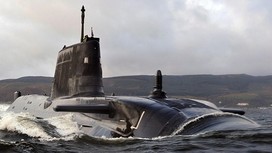
Defence officials have secretly been conducting well advanced, closed-door contingency planning exercises examining proposals to move, from their base at Faslane in Scotland to Wales, Britain’s four Vanguard Trident ballistic nuclear missile armed submarines.

Coulport on Loch Long, eight miles from Faslane, where the warheads are stored (The sites are kept separate for safety reasons) will be converted to munitions storage in support of the conventional fleet.

Eliminating any need to build storage facilities at Milford Haven plans are to retain Trident warheads, not allocated to submarine use, at Aldermaston, in Berkshire. This best case scenario has the advantage of having a direct route, (using the M4) between locations. The change will achieve significant financial savings through the elimination of duplication of security of storage and associated personnel costs.

It is expected savings will be allocated to the build of docking facilities for the submarines, (which is not expected to be significant). The change will be completed within the lifetime of the next parliament. Faslane is to be retained as an operational naval base providing facilities for other submarines of the fleet and an increased basing of surface NATO warships providing security of the northern part of the NATO alliance.

Gordon Brown Announces Plans To Cut Trident Submarines

It is understood relocation of Trident has been agreed with Labour, assuming the SNP are returned to Westminster in large numbers and hold the balance of power. The deal will be implemented in the event of a hung parliament in the 2015 general election and the SNP commit to the support of a Labour government. The SNP yesterday welcomed a YouGov poll showing that, when ‘don’t knows’ are removed, 53 per cent of people in Scotland agree that the UK should give up nuclear weapons.

Labour’s First Minister in Wales, Carwyn Jones, is said have indicated he would be happy to see Trident submarines relocated to Wales, a natural deep water port and work has now begun on the practicalities of shifting Britain’s nuclear defence systems to Pembrokeshire.

Additional financial powers covering a number of areas, similar to proposals for Scotland, are expected to be to be devolved to Wales forming part of the deal.

A Labour spokesman said: ‘Our position on Trident is clear and unchanged. Labour believes Britain should be leading international efforts for multilateral nuclear disarmament while maintaining a minimum, credible independent nuclear deterrent.’ which is a different different position to that of the Tories. http://www.dailymail.co.uk/news/article-2929226/Trident-quit-Scotland-Wales-Secret-plan-nuclear-subs-triggered-rise-SNP.html

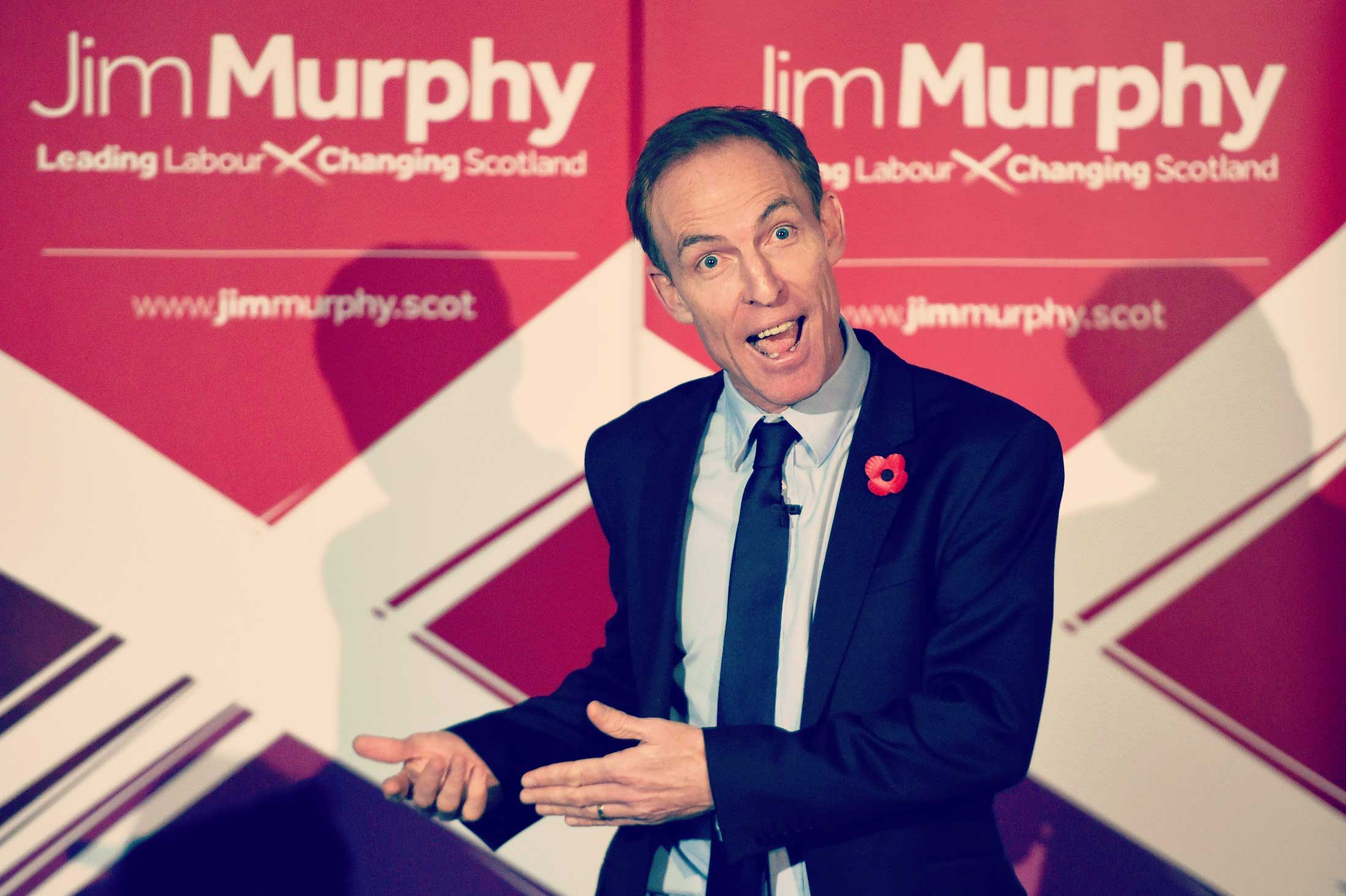
Jim The Unionist Murphy – Politics and Religion – Conflicting Views – Election Strategy 2010 and 2015 – A Summary of Posts to Date

10941007_10152763278625677_6270547849368830058_n

January 2015; Jim Murphy plays the class warrior card

a. If Murphy were a bibulous carnivore, I’m sure he’d happily stand Boris Johnson a beer and a burger for the huge boost the Mayor of London has given his hopes of reigniting Labour’s flame in Scotland. By attacking so vehemently Murphy’s plans to use the taxes on home owners in Chelsea and Kensington to fund an extra 1000 nurses in Scotland, Boris has earned the new Scottish Labour leader’s eternal gratitude. Mind you, I suppose a glass of beetroot juice and a nut cutlet would be a more appropriate reward from Mr Murphy – a teetotal vegan – but the response from Boris, in describing the plan as “vindictive”, has been like manna from heaven for Scottish Labour.

b. It may well have been a wholly cynical and desperately short-term and short-sighted ploy, but these are desperate times, and the one thing that Murphy needs to prove to a one-time Labour congregation in West Central Scotland is that he’s no Blairite Right-winger; rather, that he’s an in-your-face class warrior ready to hammer the toffs. And if someone like Boris Johnson, who’s seen by many as the epitome of an Eton-educated posh boy, takes Jim to task in such terms, then that can only be to Labour’s advantage on the doorsteps of places like Glasgow, Dundee, West Dunbartonshire and North Lanarkshire, which all ignored their former party’s advice and voted Yes in September’s referendum.

c. Murphy’s unashamed, and frankly provocative, plan to equate what is essentially a tax on the English to boost Scotland will increase the pressure to scrap Barnett. The truth, of course, is that there is absolutely no need to use English taxes to pay for the extra Scottish nurses – that was little more than a cheap trick which, thanks to Mr Johnson’s ill-judged intervention, achieved the desired result.

d. Murphy was determined to make an impact with his first major speech as Scottish leader. It wasn’t much of an effort but with a little help from an unlikely friend, he’s succeeded in proving he’s a genuine class warrior who’s not scared of taking on the English, so no doubt he and his cheerleaders will be well satisfied. http://www.telegraph.co.uk/comment/columnists/alancochrane/11329251/Provoking-Boris-Johnson-could-yet-prove-a-masterstroke-for-Jim-Murphy-as-he-plays-at-class-warrior.html

potd-scotland_3025111b

January 2015; Jim Murphy woos voters by insisting ‘I’m no Unionist’

a. Murphy’s campaign to persuade independence supporters to back Labour in the general election has attracted derision after he insisted he had “never been a Unionist”. The Scottish Labour leader said his family’s Irish Catholic background meant that belief in the 308-year-old Union between England and Scotland was not part of his “political tradition”. He said the Better Together referendum campaign had seen a “temporary” alliance between the dogmatic Unionism of the Tories and Labour’s principle of “socialist solidarity” between the people of Britain. The tour hit the headlines after Yes campaigners pelted him with eggs and vitriolic abuse, but since becoming Scottish Labour leader he has attempted to woo those who backed separation on September 18.

b. With opinion polls suggesting the SNP is on course to make major gains in May’s general election at Labour’s expense, he has explicitly appealed to 190,000 people who backed his party at the 2010 general election but voted Yes in the referendum.

c. Murphy emphasised that he was not a nationalist, saying there was no such thing as scottish identity or culture, and questioned whether “the party of Keir Hardie” has to prove how Scottish it is to beat the SNP.

d. Sandra White, an SNP MSP, said the Scottish Labour leader was trying to “rewrite history” to “distance himself from the Tories”. She added: “Does Jim Murphy really expect people to believe that despite having spent the entire referendum campaign arguing for a No vote, he does not believe in the union? It is utter nonsense and a sign of desperation that he would even attempt to claim otherwise.”

e. A Scottish Tory spokesman said: “It’s a great pity that, for short-term political reasons, Murphy now feels the need to distance himself from that great cross-party effort last year. But with Scottish Labour now trying to ape the Nationalists in Scotland, it is perhaps not that unexpected.” http://www.telegraph.co.uk/news/politics/labour/11343778/Jim-Murphy-woos-Yes-voters-by-insisting-Im-no-Unionist.html

murphy55_w_3147325b

January 2015; Murphy: the Scottish Nationalists are ‘sluggish, lethargic and off the pace’

a. Murphy, the new Scottish Labour leader, has described the Scottish Nationalists as “sluggish, lethargic and off the pace,” saying he has been “amazed” at how easy it has been to take them on. Since being elected last month, the former Scotland secretary said he had found the Nationalists far less formidable than he had been warned, despite recent polls which suggest the SNP could be on course to take dozens of seats from Labour at the general election.

b. Murphy said that despite the dire predictions of the opinion pollsters, Scottish Labour was “avowedly more confident” under his leadership, and has a target of not losing a single seat to the SNP. “I’m confident we’ll get there by the general election,” he said. “What you have to do is stand for something, and you say to those people who voted Yes that that was last year’s disagreement, and whether you keep [David] Cameron in power in May is this year’s decision. “The SNP aren’t going to be the biggest party, and the biggest party gets to decide who’s in government.

c. “I’d like to see Scotland lead the UK rather than leave it, and in May we have the chance to lead the UK away from a Tory government. “We’ve done it before, and we can do it again.” He refused to be drawn on whether he would quit his Westminster seat in order to fulfil his pledge to serve as a Member of the Scottish Parliament, even raising the suggestion that he could remain Scottish leader while not being either an MP or MSP. http://www.telegraph.co.uk/news/11377345/Jim-Murphy-the-Scottish-Nationalists-are-sluggish-lethargic-and-off-the-pace.html

tweet_3155064a

January 2015; Will the real Jim Murphy please stand up?

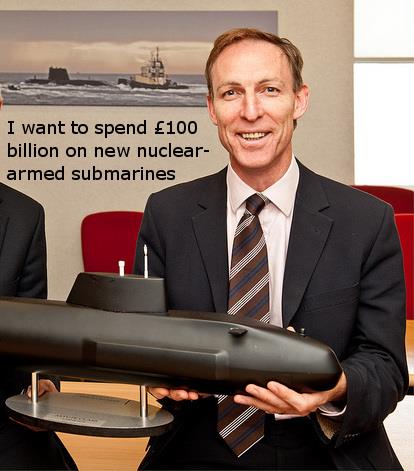
a. Labour supports the British nuclear deterrent and even if a costly replacement for Trident was shelved and something cheaper – like a Cruise-based system – was decided upon, the missiles would still be submarine-launched. And as all of the Royal Navy’s submarines are due to be based on the Clyde within five years, Britain’s independent deterrent would still be situated in Scotland – a fact that the SNP would, presumably, oppose.

b. So what’s Labour to do? Clearly, it’s best option would be to halt that Nat tide and hang onto all those Westminster seats and, thus, help Mr Miliband get that overall majority that the polls are currently saying is beyond his reach. Charged with that uphill task since the beginning of December is Jim Murphy, one of the heroes of the successful defeat of the Nats in the referendum.

c. Whether he goes from champ to chump is now Scotland’s hottest political topic. Murphy is a talented politician – even his Nat opponents concede that – but his main problem at present appears to be that he can’t make up his mind what manner of politician he is.

d. Tagged from the start as an avowed Blairite, he’s been treated as such by those once termed the Brownies in Labour’s ranks and it was unfortunate for Jim that the ‘wrong’ brother won the Labour leadership. The victory for Ed quickly saw Murphy demoted from the defence portfolio to that of international development in the Shadow Cabinet.

e. Although he’s denied the Blairite label, he didn’t help his cause by appointing John McTernan, his former special advisor and also Tony Blair’s one-time political secretary, as his chief of staff when he assumed the Scottish leadership.

f. But in an attempt both to bury that image and also to recapture those Labour voters who voted Yes against their party in the referendum and who now appear to have deserted it in droves, Murphy is brandishing his left-wing credentials.

g. He deliberately picked a fight with Tories like Boris Johnson by saying that he’d use the mansion tax in London to pay for Scottish nurses. He tried to outbid the SNP by saying he’d ban fracking until all the environmental issues connected with it were resolved. He claimed the SNP’s council tax freeze and new property taxes as benefitting the better off and he pledged that a future Labour-controlled Scottish government would re-nationalise the country’s rail services.

h. Bizarrely, at least in light of his sterling service for the No campaign last year, he assured those Labour supporters in West Central Scotland, who associate the term with the sectarian politics of Northern Ireland, by insisting he wasn’t a “Unionist”.

i. Whilst all of this will be seen as pure political posturing to regain that traditional Labour vote, it’s doing nothing for those other Unionists – Tories and Lib Dems – who may be prepared to vote tactically for Labour to stop the Nats. “ Murphy used to say that you can’t win from the Left. But that’s where he is just now and he won’t get many Centre-Right votes from there,” said one senior Tory yesterday.

j. Adding to the confusion is the fact that he won’t tell us if he’s standing for election in his Renfrewshire seat in May’s general election. All of which leads to one obvious question: Will the real Jim Murphy please stand up? http://www.telegraph.co.uk/comment/columnists/alancochrane/11372609/Will-the-real-Jim-Murphy-please-stand-up.html

ed and jim

The Roman Catholic vote – Murphy’s Strategy, (to date) in the 2015 General Election

a. December 2014: Murphy voted morally correct on only 4 out of 36 important moral issues.

i. The Christian Institute maintains a record of each MP’s voting record on moral issues. Murphy’s record is appalling. On the occasion of 36 votes in parliament he voted only 4 times in a morally correct manner. http://www.christian.org.uk/mpvotes.php?selection=&value1=198&submit1=SHOW&value2=1

frjohnkeenan

b. December 2014; Roman Catholic Canon Law & Jim Murphy

i. One of our bloggers wrote to Bishop John Keenan (Paisley) to draw his attention to the public statements of Jim Murphy MP, affirming his support for abortion. Jim Murphy is a Catholic of the Diocese of Paisley who is currently seeking to win the Labour leadership in Scotland. Click here to read more. Under Church law, manifest public sinners – and that includes those who support abortion – cannot receive Holy Communion. This is not a matter left to the discretion of any priest or bishop – Canon # 915 prohibits Communion to public sinners and it is a grave sin for any priest or bishop to flout this law. We’ve had this discussion more than once – click here to reach one of our previous conversations on the topic.

ii. Bishop Keenan declined to reply to our blogger, electing instead to delegate the matter to his Vicar General. Now, Paisley is not New York. You can go for a walk round Paisley and meet yourself on the way back. So, one might fairly expect the Bishop to answer his own mail, especially correspondence on a matter as serious as that under discussion here.

iii. The upshot of the responses from the Vicar General is that the Bishop takes pro-life issues seriously and is dealing with the matter of the “pro-choice” [i.e. pro-murder] MP privately and anyway “neither you nor I are entitled to know what transpires between a bishop and another’s soul.” What the heck does that mean? Nobody is asking what is going on in Jim Murphy’s soul but we have every right to know whether or not the Bishop is doing his duty to protect the MP himself from continuing on his – literally – damnable route by receiving Holy Communion in a manifestly unworthy state, and also whether he is doing his duty to protect the rest of the faithful from being scandalised. If Jim Murphy had publicly admitted to (let’s use a euphemism) “harming” children, the Bishop would have been in front of the TV cameras in jig time to express his shock horror and to discourage Catholics from voting for him. Surely unborn children deserve similarly robust protection from Catholic priests and prelates?

iv. The upshot of our blogger’s response to the Vicar General’s correspondence is that for the bishop to deal with this matter “privately” is not good enough since the scandal is very public and requires the enforcement of Canon 915. http://catholictruthblog.com/2014/12/10/canon-law-jim-murphy-mp/

jim-murphy-mp

c. Comments;

i. Faith of Our Fathers; Jim Murphy should heed the words – What does it profit a Labour Leader if he gains the Whole Party but suffers the loss of his Soul. Or read St Thomas More,s last words – I am Gods good servant, but the Labour Parties Leader with all the trappings first.

ii. Petrus says: I agree with everything said so far. Bishop Keenan would rather take the easy option. I certainly question his commitment to prolife issues if he is unwilling to take a public stance on this. Mr Murphy didn’t hesitate to outline his support for abortion in public. The bishop’s failure to speak out is a cause of scandal to the faithful.

iii. How many Catholic members of the Labour Party will have voted for Mr Murphy not knowing his views on abortion or thinking that the Church really doesn’t have a problem with politicians being pro abortion. I’m afraid Bishop Keenan has the blood of unborn babies on his hands through his silence. We should also remember that the Bishop has also failed to protect the dignity of the Blessed Sacrament by allowing a public sinner to receive Holy Communion.

jim-murphy

d. Dec 2014; My fellow Catholics are the lapsed unionists behind SNP surge in the polls

i. The Catholicism of the Scottish Labour leader Jim Murphy has attracted some attention this week against a backdrop of fascinating political developments in Scotland. For there is plenty of evidence that people of Irish descent have been to the fore in the near – quadrupling of SNP membership to 92,000 since the referendum, which threatens to undo Labour at the 2015 UK general election.

ii. Within weeks of the referendum, Glasgow had a near five – fold rise in SNP membership and nearby Motherwell and Coatbridge had six-fold increases. These are the heartlands of a community once defined by deep Catholic loyalties. Their neighbourhoods are shared with people who adhere to a Protestant culture, but they are less likely to have been at the crest of the SNP wave. According to one poll, just 31% of non Catholics backed independence compared with no less than 57% of Catholics. http://theconversation.com/my-fellow-catholics-are-the-lapsed-unionists-behind-snp-surge-in-the-polls-35343

Mansion tax to fund nurses: Murphy

e. December 2014; Scottish Secular Society Founder Gary Otton accuses Murphy of being “a catholic fanatic”, “a Pope Benedict fan” and “a religious fanatic”.

i. Otton posted four different Facebook threads about Murphy in the space of two days, all making reference to Murphy’s religion and support for denominational schools. Robertson described some of the comments as “disturbing”. He said, “the Scottish Secular Society have posted several stories about ‘Catholic fanatic/extremist/Pope Benedict fan’ Jim Murphy over the past few days. I find it particularly disturbing this constant referral to Jim Murphy as Roman Catholic – what does that have to do with anything? It comes worryingly close to the kind of anti-Catholic sectarianism that plagued the West of Scotland – perhaps it still does. It is of no relevance or interest to me that a particular political candidate is Roman Catholic or not. Mr Murphy should be judged on his political views and abilities, not what church he belongs to. It is ironic that of all groups the Scottish Secular Society continues to highlight religious affiliation as though this were somehow a disqualifying factor.”

ii.Otton defended his remarks. saying, “The Scottish Secular Society have no problem with Mr Murphy’s beliefs, but a very great problem with the way in which we fear they will influence his political decisions. In particular, we don’t approve of support for the idea that bishops can be put in charge of sex education in Catholic schools. We are also concerned that he will defend privileges for organised religion, segregating children on the basis of their parents’ religion in denominational schools with separate staff rooms and entrances. We are utterly opposed to sectarianism in any shape or form. There is also general agreement amongst secularists that unelected religious representatives, both Catholic and Church of Scotland, voting on how Councils should deploy their limited education budgets is absurd. Murphy has been reported in the press praising the US because religion has a bigger role in politics. That is not a scenario the Scottish Secular Society would welcome in Scotland. Opinions on Facebook’s Secular Scotland are personal and social media is the appropriate place to express them. The Scottish Secular Society is the appropriate organisation to challenge the religious privileges.” http://www.dailyrecord.co.uk/news/politics/fury-secular-society-chiefs-sectarian-4775349

jim murphy roars at old lady

f. December 2014; Jim Murphy Fury at Secular Society chief’s ‘sectarian, anti-Catholic’ slur

i. Scottish Labour leadership hopeful Jim Murphy has hit back at remarks from a leading secular society figure accusing him of being “a catholic fanatic”, “a Pope Benedict fan” and “a religious fanatic”. The comments, made by Scottish Secular Society Founder Gary Otton on Facebook, have been dubbed “disturbing” and are “worryingly close to anti-Catholic sectarianism”, according to one of Scotland’s leading religious figures. The next Free Church of Scotland Moderator, Rev David Robertson, said the East Renfrewshire MP has been targeted by opponents because of his catholic faith. http://www.newsrt.co.uk/news/fury-at-secular-society-chief-s-sectarian-anti-catholic-slur-on-scottish-labour-leadership-hopeful-jim-murphy-2828196.html

jim murphy mormons

Murphy’s Strategy in the 2010 General Election – Lovebomb the Catholic voter

a. January 2010; Murphy Makes His Play For the Catholic Vote

i. Terry Sanderson, president of the National Secular Society, said: “Jim Murphy is taking the Labour Party into dangerous territory when he calls on it to make a special play for the religious vote. “His personal religious enthusiasm may be blinding him to the facts. It is no longer the case that clerics can dictate the way their congregations vote. People are too independent-minded now to be herded into the voting booth by religious considerations alone.” http://news.bbc.co.uk/1/hi/scotland/8529789.stm

Puppet on a string

b. February 2010; Jim Murphy – risks alienating voters by over-playing religion

i. Labour’s Scottish Secretary, Jim Murphy, risks alienating the Party’s core vote if he continues to insist that it embrace a religious agenda, says the National Secular Society. Reacting to Mr Murphy’s speech in Westminster today to Labour think tank, “Progress”, Terry Sanderson, president of the National Secular Society, said, “Murphy is taking the Labour Party into dangerous territory when he calls on it to make a special play for the religious vote.

ii. His personal religious enthusiasm may be blinding him to the facts. It is no longer the case that clerics can dictate the way their congregations vote. People are too independent-minded now to be herded into the voting booth by religious considerations alone. The society that we live in today is very different to the one that existed fifty years ago, and we want our politicians to reflect that change. Even in the last twenty years Scottish mass attendance has almost halved.

c. The Labour Party should rein in Mr Murphy before he does it permanent damage. A poll by ComRes published last week showed that half of those who define themselves as Christian say that religion is of “little importance” to them.”

i. He went on to say, “If the Labour Party starts favouring religious voters by promising socially regressive legislation, dictated by out-of-touch and dogmatic religious leaders, it risks alienating huge numbers of people. Other polls have shown that ordinary Catholics are completely out of sympathy with the teachings of the Catholic Church on issues such as contraception, euthanasia, homosexuality and abortion. A 2007 YouGov poll showed that only a quarter of Catholics (and only a seventh of the population) agreed with Catholic dogma on abortion. This suggests allying a political party to religion is electorally very dangerous. This is why the electoral results of the Christian Party are pitiful.”

ii. He added, ” The British Social Attitudes Survey, published last month about religious leaders trying to influence how people vote in an election, showed that 75% of respondents thought that they shouldn’t, while 67% think religious leaders should stay out of Government decision-making. When asked: “If many of our elected officials were deeply religious, do you think that the laws and policy decisions they make would probably be better or probably be worse?” Nearly half of respondents thought they would be worse, whereas only 26% thought they would be better.” http://www.secularism.org.uk/labour-risks-alienating-voters-b.html

d. February 2010; Murphy’s faith card unlikely to win votes

i.. It is interesting to note the Scottish Secretary, Jim Murphy, intends playing, “the religion card to win votes” This is the same Mr Murphy who, last month, was reported as aiming to counteract the threatened opposition of the BNP in his East Renfrewshire Westminster constituency, by uniting, “Christian, Muslim and Jewish groups to battle the party, which he described as ‘abhorrent’”.

ii. However, it should be noted that this is also the same Mr Murphy who was apparently happy to support the present government in its attempts to add further restrictions to the Equality Bill – thankfully blocked by the House of Lords – that would have removed the right of churches and other Christian organisations to refuse to employ persons who do not share their core beliefs, in particular those whose sexual conduct is contrary to the teachings of the Bible. http://www.scotsman.com/news/murphy-s-faith-card-unlikely-to-win-votes-1-792087

e. Comment:

i. Calton jock: at interview Roman Catholic candidates seeking a job as housekeeper to the parish priest might be asked, Do you wear a condom during sex? An affirmative answer would be sufficient grounds to reject the candidate. Bonkers Spud.

ii. Rev C Brian Ross, Motherwell: I think it would be more accurate to say that, instead of “Labour trying to reposition itself as the natural party of religious voters” it is trying once more to get the endorsement of the Roman Catholic Church in particular which used to be taken for granted. Labour knows that a candidate being given the Church’s blessing is worth a lot more than thousands of pounds spent on leaflets through doors. Unless the SNP candidate is called John Paul, I suppose.

iii. Barry Lees, Greenock: You describe MP Jim Murphy as being a “devout” Catholic, that is: he subscribes to all the tenets, beliefs and instructions of that faith. That being so, he cannot speak to other faiths in the way he does because one of his beliefs and prayers he will offer is for the conversion of England, and so the United Kingdom, to the Pre – Reformation beliefs and practices. Others can fill in the many fault lines in his attempt to win votes.

iv. Tom Reilly, Edinburgh: Jim Murphy’s religion, or lack of it, is of no concern to me, nor I imagine to most in Scotland. His use of religion, and his “devout” Catholicism, to further his, and Labour’s, ambitions is disgraceful. To quote Keir Hardie, it is an insult to the founders of the real Labour party. Today’s Labour is no inheritor of those principled, decent men and women, who strove to improve the lot of those at the lower reaches of society.

v. Bill McLean, Dunfermline: Jim Murphy is taking Labour into dangerous territory when he calls on it to make a special play for the religious vote A poll by ComRes published last week showed that those who define themselves as “non-religious” are equal in number to those who say they have a religion. If Labour starts favouring religious voters by promising regressive legislation, dictated by out-of-touch and dogmatic religious leaders, it risks alienating that half of the population who say religion has “little importance” in their lives. Other polls have shown that most ordinary Catholics are completely out of sympathy with the teachings of the Church on issues such as contraception, euthanasia, homosexuality and abortion. Why, then, would they want such issues on the agenda of a political party? His personal religious enthusiasm may be blinding Mr Murphy to the facts. One of those facts is that it is no longer the case that clerics can dictate the way their congregations vote. People are too independent-minded now to be herded into the voting booth by religious considerations alone.

murphy nuc

f. February 2010; Church launches attack on Labour government

i. The Roman Catholic Church in Scotland has accused the Labour government of conducting a “systematic and unrelenting attack on family values”. The attack came as Scottish Secretary Jim Murphy, a practising Catholic, claimed religious faith had a role in British politics. Mr Murphy said in a lecture that Labour best represented people of faith. But Scotland’s most senior Roman Catholic accused the government of “undermining religious freedom”. And a spokesman for the Scottish National Party said Mr Murphy was guilty of “crude electioneering” by trying to “corner the market regarding people’s faith”. A tangible example by the government over the last decade that it acknowledged or endorsed religious values would also have been welcomed Cardinal Keith O’Brien

ii. Mr Murphy focused on the key part “values voters” can play in the election when he delivered the Progress lecture in London on Tuesday evening. He argued that faith values have always been “at the very foundations of the Labour Party”. In his lecture, the Scottish secretary said: “In the US, faith has long played a central part in politics. Not surprising for a country where 60% of people say that God plays an important part in their lives. “But it’s wrong to think that it plays no role in British politics.” The MP for East Renfrewshire added: “Faith voters massively outweigh ‘Motorway Men’ or ‘Worcester Woman’ or any other trendy demographic group identified by marketeers.”

iii. He also told the audience that like faith, the family was “another force for good” and “the most important thing in our country”. The minister added: “As well as providing a supportive intellectual environment, it’s a potential source of financial support in difficult days.” His comments were in contrast to the stated attitude of former Labour communications chief Alastair Campbell. Despite former prime minister Tony Blair’s strong religious faith, Campbell famously said: “We don’t do God”. Mr Blair himself said he had avoided talking about his religious views while in office for fear of being labelled “a nutter”. Jim Murphy said religion was at the “very foundations” of the Labour party

iv. Cardinal Keith O’Brien, the leader of the Roman Catholic church in Scotland, welcomed Mr Murphy’s “recognition of the role played by faith and religion in society”. But he added: “A tangible example by the government over the last decade that it acknowledged or endorsed religious values would also have been welcomed. “Instead we have witnessed this government undertake a systematic and unrelenting attack on family values. This is a charge I personally put to Gordon Brown when we met in 2008 and I have seen no evidence since then to suggest anything has changed.” Ironically, Mr Murphy had been due to mention the Cardinal by name in his speech by saying: “When the Cardinal speaks, people listen.”

murphy

January 2015 A summary of all posts on my blog about Murphy

a. But those same figures argue that his personality, ideology and Westminster background make him ill-equipped for the task at hand. “He’s the Marmite-plus candidate,” one Labour MP told me, noting that his, “fraught relationship” with Douglas Alexander had, “got worse” during the referendum campaign. “Jim Murphy’s the last person you would want to heal the wounds of a divided party.” https://caltonjock.com/2014/08/29/all-about-jim-murphy/

murphy-kelly

b. Murphy’ great idea – the Employment Support Alllowance (EMA) opens the door to George Iain Duncan Smith and the Tories

Murphy was Welfare minister in the last Government and oversaw the introduction of the Employment Support Allowance (ESA), etc, no mention by the faux anti-imperialists about that. He has simply never met a blairite policy or a party-line in his entire electoral life he didn’t agree with. https://caltonjock.com/2014/12/10/jim-spud-murphy-love-him-or-hate-him-he-is-not-returning-to-westminster-holywrood-beckons/

c. Murphy the Quisling

Jim Spud Murphy: I find it difficult to express my disgust for Quisling Murphy. In every situation he takes the smarmy anti Scottish line. Have people like this no pride? Do they ever tell the truth? Is their personal career all that matters? How exactly do they differ from the bankers? https://caltonjock.com/2015/01/13/video-record-exposing-murphys-role-in-the-betrayal-of-the-dunfermline-building-society-be-warned-he-is-a-snake-in-the-grass/

vision murphy

d. Miliband Pulls the strings

So, the argument advanced by Murphy that only Labour can ensure removal of a Conservative government is a misnomer since the influence of the Scottish Labour membership over the mainstream Labour party is restricted and very much neutered by the fact that Miliband calls the shots over national policy which Scottish Labour will need to bend the knee.
https://caltonjock.com/2015/01/12/whos-pulling-murphy-strings-its-a-fallacy/

spud murphy

e. The Student Years

In 1995, the leadership of the National Union of Students forced through their policy dropping support for free education and living student grants, in order to smooth the way for the next Labour government to introduce fees. https://caltonjock.com/2014/12/29/jim-spud-murphy-1992-1997-the-student-union-years-and-his-carefully-planned-and-jammy-rise-to-political-office/

fear murphy

f. Give him the rope and he’ll do the rest

The unionist London parties at Holyrood are trying to kid us on that they are leading the way with the direction that Scotland is taking… but they’re not. Everything they are doing is being dictated by the popularity of the SNP. Issues are being seriously talked about now that unionists laughed at us about just a couple of years ago. A prime example is the the ‘Scottish Six’ and the fact that 8.6% of the licence fee is raised in Scotland but only 2.6% of it is spent here. https://caltonjock.com/2014/12/26/jim-spud-murphy-best-way-to-let-him-hang-himself-is-to-watch-him-in-action-a-selection-of-the-best-of-his-u-tube-videos/

March 2003 The Iraq debate Alex Salmond’s finest hour at Westminster exposed the sanctimonious arguments of Blair who ignored three million marchers and went ahead with the Invasion anyway

salmond

Mar 2003; Alex Salmond’s contribution to the debate

Fundamentally, the debate is not about Iraq, Saddam Hussein, weapons of mass destruction or even oil, though oil is certainly a factor. The debate is about a new world order, with an unrivalled superpower adopting a doctrine of pre-emptive strike, and how we accommodate that and come to terms with that new world order. Eighteen months ago the United States had an atrocity committed against it and it is still in a trauma. The point was made a few minutes ago, and it is undoubtedly correct.

On 12 September 2001, the day after the attack on the twin towers, the United States was at its most powerful. In its moment of greatest extremity, the United States was at its zenith. In addition to its unrivalled military might, it carried total moral authority throughout the world. A hundred or more nations signed messages of sympathy, support or solidarity with the extremity that the United States had suffered.

Now, 18 months later, that enormous world coalition has been dissipated. I do not take the position that it was only a gang of four who gathered in the Azores. I accept that there are more countries—or at least countries’ Governments who are signed up, but the coalition of the willing for the campaign against Iraq is very narrowly based. Anyone who wants confirmation of that should just count the troops: 300,000 United States and British troops, and I understand that 1,000 Australians have been asked for, and 100 Poles have been offered. That is a very narrowly based coalition indeed.

The Prime Minister believes that the way to accommodate the situation is to accept that the United States will be predominant and that the rest must fall into line. They can try to restrain it, but they will have to fall into line with the views of the United States Administration. That is a wrong-headed policy, and it is taking people into ridiculous positions.

In his undoubtedly powerful speech today, the Prime Minister argued that the weapons inspection process had never worked. He came close to saying that it had all been a waste of time. I remember a speech in October last year at the Labour conference in which another powerful speaker went into enormous detail to show how successful the weapons inspection process had been in the 1990s and how it had led to the destruction of chemical weapons, the chemicals used to make weapons, the armed warheads and the biological weapons facility. He concluded that, “the inspections were working even when he(Saddam Hussein) was trying to thwart them.”

I watched that speech on television as did many others. The speaker was President Bill Clinton. The television was doing cutaways to Ministers, including the Prime Minister who all nodded vigorously when President Clinton said that through the 1990s that policy worked and destroyed far more weapons of mass destruction than were destroyed, for example, in the Gulf war. The Prime Minister is now denying what he accepted only last October.

We are told that the majority of the Security Council would have voted for the second resolution, if it had not been for the nasty French coming in at the last minute and scuppering the whole process. Let us get real. Have we listened to what other countries were saying? The Chileans proposed an extension of three weeks, but they were told by the United States that that was not on. In the debate in the General Assembly, country after country expressed their anxieties about not letting the weapons inspectors have a chance to do their work. They were told that the nasty French—I am not sure whether the Conservative party dislikes the French more than the Liberals, or vice versa were being extremely unreasonable, but the French position, and the Chinese position in order to become acceptable, resolution 1441 had to be amended. Everything has been consistent in the opposition of countries that are against a rush to military action.

Somebody should speak up for the French, because their position has been consistent, as has that of the Russians and the Chinese. The Chinese, the French and the Russians issued a declaration on the passage of resolution 1441. It sets out exactly how the British and the United States ambassadors agreed that it was not a trigger for war. The reason that those countries did not want a second resolution was not that it would be a pathway to peace I wonder who dreamed that up in Downing street. The reason was that they saw it as a passport to war, so obviously they opposed a resolution drawn in those terms. The majority of smaller countries in the Security Council and the General Assembly countries did not want to rush to war because they saw that there remained an alternative to taking military action at this stage of the inspection process.

media-alex-salmond

We are told that the Attorney General has described the war as legal. We could go into the legalities and quote professor after professor who has said the opposite, but one thing is certain: when the Secretary General of the United Nations doubts the authorisation of military action without a second resolution, people can say many things about that action, but they cannot say that it is being taken in the name of the United Nations. (1)

The argument is that it will be a salutary lesson, that a dictator will be taught a lesson and that that will help us in dealing with other dictators. I suspect that the cost of the action — I do not doubt the military outcome for a second will be so high in a number of ways that it will not provide a platform for an assault on North Korea or Iran, which form the rest of the “axis of evil”. I do not think that the policy of teaching one dictator a lesson and then moving on to other dictators can work. Most of us know that it will be a breeding ground for a future generation of terrorists. That is not the case because people like Saddam Hussein. The images that will be shown throughout the Muslim world will not feature him, although, without any question, he will be more attractive as a martyr when he is dead than he has ever been while alive. The images that will be shown are those of the innocents who will undoubtedly die in a conflict that will be a breeding ground for terrorism.

Will the nation building work? The record of the United States on nation building has not been impressive. Let me say something about one of the other countries that is being reviled at present Germany, which commits far more troops as a percentage of its armed forces to helping to secure the peace in the various trouble spots of the world for the United Nations.

We are told that the Prime Minister, (this is the essence of his case) will try to restrain some elements in the United States Administration and make them take a multilateral approach, but that, if that does not happen, when push comes to shove he has to go along with their policy. I say that there is a broader United States of America than the United States Government. I believe that many sections of opinion in America would welcome a vote from this Parliament today that says “Not in our name”, because the real America wants to see a stand for peace, not a rush for war.

(1) The UN Secretary-General, Kofi Annan said that if the US and GB went ahead with an invasion of Iraq it would be in breach of the United Nations charter.

article-2270948-1541BC71000005DC-446_308x425

Extracts from other contributions to the debate

Dr. el-Baradei and his teams of inspectors inspectors reported to the UN that Iraq did not  possess nuclear weapons and its biological and chemical weapons stocks and productivity wa severely diminished. This being the case from where is the immediate intent to attack the United Kingdom, the United States, neighbouring states or other states to come from?

It has been suggested that Iraq might not intend to attack anyone but that it could pass them to terrorist organisations. But George Tennet, on behalf of the CIA said: “it is important when talking about what connections countries have with terrorism to distinguish between unconditional terrorist organisations, which would be liable to wish to use weapons of mass destruction, and political terrorist organisations, such as the Mujaheddin-e Khalq Organisation and Hamas, of which there is evidence that Iraq has had connections, would not have a purpose in doing so. And  there is no verifiable evidence of any connection between al-Qaeda and Saddam Hussein.”

Blair said the question is how Britain and the world face security threats of the 21st century which is a weird statement since in the context of the debate he was referring to weapons of mass destruction and the political belief of UK parties is that such matters should be resolved through non-proliferation and multilateral disarmament.

The Bush Administration have adopted a strategy of counter-proliferation. Saying; “It is okay if our friends develop nuclear weapons, but not if our enemies do,” and they choose who are the friends and who are the enemies. In this context it needs to be remembered that Iraq was regarded as a friend and was supplied with weapons and munitions by the US and the UK during the 1980s.

Of more concern is that the policy of the Bush Administration says; “We can develop new nuclear weapons or try to make nuclear weapons more usable, and we can decide to breach the nuclear non-proliferation treaty and the security assurance that we gave under that treaty.” That is a serious aspect of the overall problem of weapons of mass destruction, especially when it is added to the doctrine of pre-emptive war.

Blair made the point that war on Iraq was not on his agenda when he became Prime Minister in 1997, and he said that George W. Bush had told him that two days before 11 September it was not on his agenda. It was on other people’s agenda namely, that of the hawks that George Bush appointed to his Administration.

SalmondPA_468x580

Blair said that the UK needed to view the US as a major power and partner. But there are major misgivings if it means that the United States takes the decision and the UK is expected to follow suit. That is not a partnership. 

If the House of Commons votes for a pre-emptive war against Iraq, the question of precedence needs to be first discussed and resolved because the hawks of the Bush administration have already said that there are plans for other pre-emptive divisive wars.  The US plan of the world of the future identifies closely with the vision set out by Blair in Brighton in 2001, when he spoke of, “the moral power of a world acting as a community”.

r-BILL-CLINTON-large570

President Clinton’s Powerful Speech to the labour party Conference in Blackpool October 2002, (6 months before the invasion of Iraq

https://www.c-span.org/video/?172964-1/foreign-policy-issues

His advice, readily embraced at the time by Tony Blair and all of his ministers was ignored in the rush to war. Bush and Blair ordered the invasion of Iraq in March 2003 and the terrible consequences of this have been visited upon many nations of the World, (in particular Afghanistan and the middle East).

Blair and Bush are now retired and very wealthy earning financial fortunes from speeches, advisory activities in support of many governments around the world and other business.

But many thousands of our armed forces were killed or returned home maimed through physical and or mental injury. The remaining years of their lives will be spent in pain and poverty as will the many thousands of families who lost their sons and daughters.

But Blair get his reward from the Queen. Now Lord Blair he is readying himself for a return to government should the Labour Party displace the Tories at the next General Election.

IRAQ

The War Game – The Reality Of A Nuclear War – The Harrowing Film Produced By The BBC But Never Shown

nuclear-explosion-digital-art-hd-wallpaper-2560x1600-3213

The War Game – The Reality Of A Nuclear War – The Harrowing Film Produced By The BBC But Never Shown

This award winning film was produced by the BBC but never shown on national television due to the messages it carried.

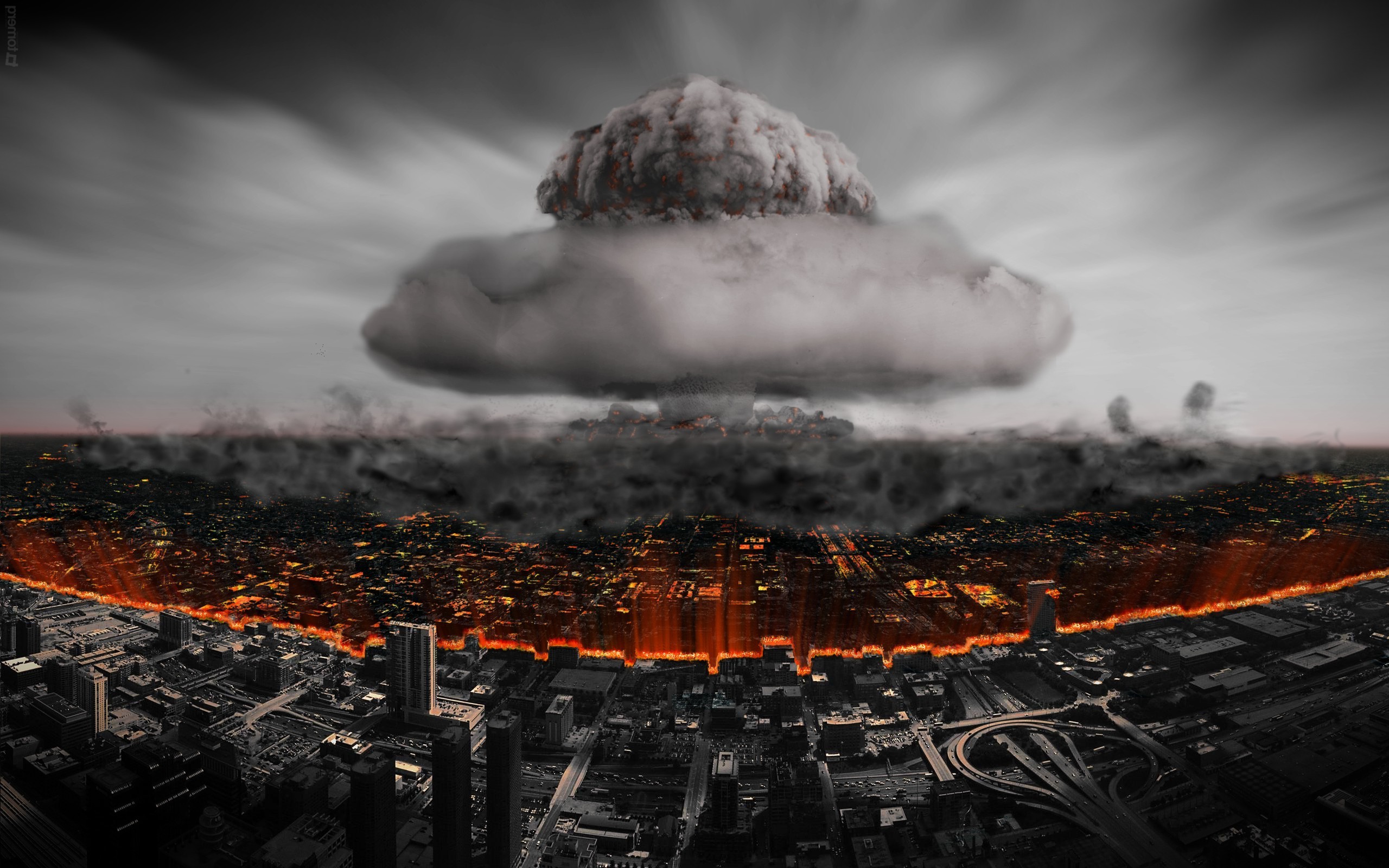
The recent vote in Westminster to retain and further develop Trident nuclear weapons at an astronomical cost expected to exceed £200 billion reminded me of the film I first viewed some 35 years ago. I am fervently against the retention of nuclear weapons which, as sure as night follows day will bring about the scenario enacted in the film.

51a48ba17204653936

We present the US television premiere of Peter Watkins’ film “The War Game,” a graphic portrayal of what would happen in the event of a nuclear attack on Great Britain. The movie was so powerful and realistic that the BBC banned it from TV despite the fact that the film had been commissioned by the BBC and had won an Academy Award in l966 for best documentary. Although it has been shown in a few movie theatres in the US, it has not been presented on TV. “The War Game” is shocking, but is not sensationalized. It was carefully researched and based on actual events which occurred in World War II during and after the mass Allied raids on Germany and the atomic bombings of Japan. Recorded February, 1983 “The War Game” Copyright 1965 Copyright February, 1983 https://archive.org/details/AV_179-THE_WAR_GAME-_THE_REALITY_OF_NUCLEAR_WAR

3i

51a48ba17204653936

Labour’s Legacy to Glasgow – Decay, Failure, Crime, Substance Abuse, Bitterness and Misery.

LiveLeak-dot-com-b5e93c264aa8-186159211broken_britain

Labour’s Legacy to Glasgow – Decay, Failure, Crime, Substance Abuse, Bitterness and Misery.

David lives in the gang-infested inner-city sprawl of Calton – the place with the lowest life expectancy in EUROPE. It is a drizzly Monday morning in Glasgow and the Triple Two Lounge in the shadow of Celtic Park is already doing a roaring trade. Out-of-work bouncer David McCabe stubs out his roll-up and takes a gutsy slurp on the first of his eight daily £2.20 pints of Fosters. Pasty-faced David’s epic, taxpayer-funded booze-ups end with an artery-clogging fry-up washed down with a four-pack of Tennent’s at his subsidised flat nearby. Looking a decade older than his 26 years, David says: “My grandad is 71 and still likes a drink. It doesn’t seem to have done him too much harm.”

images

A boy living in Calton today can expect to live to just 54. Locals living among the graffiti-scarred council blocks of Calton drily observe: “If the booze doesn’t get you here, the blade will.” Calton, along with Easterhouse and Castlemilk in Glasgow, are the only places in Britain where murder – usually by stabbing – is the most common cause of death among the young. Someone is admitted to a Glasgow hospital with knife wounds every six hours. Medics expect as many as three Glasgow smiles – where victims are slashed from mouth to ear – every weekend.

bellgrove

The city’s smartest restaurants, designer boutiques and museums are a short stroll away from Calton, in Merchant City. Yet here down-and-outs swill cider outside homeless hostel the decrepit Belgrove hotel and a “baggie” of heroin is a tenner. The area’s grinding poverty – where 30 per cent are unemployed – would be recognised by Charles Dickens and pioneers of the Labour movement.

simd_20-20_cities_inequality

Today’s Labour Party, after 50 years in power, have failed many of the people of Glasgow’s East End. Last year a World Health Organisation study citing Calton said a “toxic combination” of bad policies, economics and politics creates social injustice that is “killing people on a grand scale”. Local GP Dr Robert Jamieson, 54, has spent the past 22 years working in the heart of Calton. “Drinking has got worse and so has the violence,” he explained wearily. “The healthy and wealthy got healthier and wealthier compared to the poor.

neweastend

Back at the bar, unmarried David, like his father before him, has been on benefits for most of his adult life. He pays for his lager from his £66-a-week incapacity benefit and whatever he can scrounge from family and friends. Overweight and pale, he explained: “I’m on the sick because of my drinking. I’ve got an enlarged liver. “I’ve done a few days work as a bouncer and a cleaner but not recently. My dad has been out of work most of his life.

Full report:

http://www.liveleak.com/view?i=561_1256060940

shettlestonhouse

Japan Follows Scotland and Germany Abandoning Nuclear Power In Favour Of Clean Energy

japan nuclear plant2

1. Japan – Follows the lead of Germany. Scotland and other european countries abandoning nuclear energy

a. TOKYO — Japan said that it would seek to phase out nuclear power by 2040 — a historic shift for a country that has long staked its future on such energy, but one that falls far short of the decisive steps the government had promised in the wake of the world’s second-largest nuclear plant disaster last year. By comparison, Germany, which in 2010 relied on reactors for 26 percent of its electricity, was rattled enough by the Fukushima disaster to announce a move away from nuclear power by 2022.

b. With the long-term energy plan set, the political battle is set to refocus on the struggle by the government to build consensus for reopening the vast majority of the country’s reactors, which were idled after the nuclear catastrophe, amid public opposition to restarts until better safety regulations were in place.

c. With only two reactors operating, Japan struggled through a sweltering summer after parts of the country were asked to conserve electricity use by as much as 15 percent, the second year such requests were made. Power companies fired up old gas- and oil-powered stations and scrambled to secure imported fossil fuels. Despite fears of widespread blackouts, however, none materialized, strengthening nuclear critics’ argument that Japan could do without nuclear energy.

gorani.japan.nuclear.timeline.cnn.640x360

d. Japan is set to significantly increase its investment in clean energy sources. In previous government estimates through 2030, eliminating nuclear power would require investment of $548 billion in solar, wind and other types of renewable energy and $66 billion on power grid technology.

e. Under the new goal, Japan’s greenhouse gas emissions in 2020 would be between 5 percent and 9 percent less than levels in 1990, the documents said. Environmentalists say that a more aggressive push to develop clean energy can further reduce Japanese emissions. “The government must use its new energy strategy as a starting point for a far more ambitious renewable policy, greater energy efficiency measures, and increasingly bold strides toward the sustainable green economy that will secure Japan’s future prosperity,” Greenpeace said in a statement. “A nuclear-free future is not a choice, it’s an inevitability,” it said. http://www.nytimes.com/2012/09/15/world/asia/japan-will-try-to-halt-nuclear-power-by-the-end-of-the-2030s.html?pagewanted=2&_r=0

VARIOUS

Fukuwatersfine

2. Contrast the forward looking plans of Germany, Scotland, most european countries and Japan against the Nuclear energy policy of the Westminster government

a. Development plans are to build at least 8 new nuclear power plants in England, which it is projected will provide around 16 gigawatts of power. The plants are to be built at:

i. EDF Energy intends to build 4 new EPRs (6.4GW) at Hinkley Point in Somerset and Sizewell in Suffolk.

ii. Hitachi Ltd has confirmed plans to build 2 or 3 new nuclear reactors at Wylfa on Anglesey and the same at Oldbury in South Gloucestershire.

iii. NuGeneration plans to build up to 3.6GW of new nuclear capacity at Moorside, near Sellafield. https://www.gov.uk/government/policies/increasing-the-use-of-low-carbon-technologies/supporting-pages/new-nuclear-power-stations

FukushimaRadPlume-298x300

3. Scotland is a world leader in the production of clean energy

At 2015 clean energy produces more power in Scotland than nuclear, coal or gas and this is set to increase significantly. The expertise of Scottish industry is being exported to other countries worldwide and the decision of Japan to embrace renewables over nuclear vastly increases opportunities for Scottish outward looking firms. Recent developments have brought forward the use of wave power and Scotland is in the vanguard in the development of this new technology which the island country of Japan will embrace.

Scotland is getting it right but we need Westminster to provide funds allowing an extension of the national grid to our islands. Lack of grid capacity is delaying clean energy development and power production which in turn is preventing the country from meeting emission targets http://www.scottishrenewables.com/scottish-renewable-energy-statistics-glance/#chart1

Japan_Nuclear_Reactor_Meltdown_fallout1

article-1365781-0B293FB100000578-65_634x614

The Rollercoaster That Is The Oil Business -Ups And Downs But Always At The Top

2008/2009 was a year of turmoil for finance and oil. The price of oil was extremely volatile and in a rollercoaster year oil prices ranged from $45 to over $146.

The year 2014/2015 will reveal a pattern similar to 2008/2009 and the utterings of negative Labour politicians, (such as Jackie Baillie, Dugdale and Murphy) seeking to score points over more forward looking members of the Scottish government, should be given consideration using for guidance previous performances of the Oil companies.

Labour Party politicians are well versed in the politics of envy and the immediate but forward planning is a stranger to their thinking. Conversely the SNP government are planning ahead and gearing laid off staff for the future pick-up of the industry by protecting the on-going training of younger persons.

In 2008/2009, (a year of turmoil) the top 10 performing Companies in the WORLD were:

shell

1. Royal Dutch Shell

Up two spots from last year’s global list, Royal Dutch Shell raked in $15 billion more in sales than Exxon Mobil. And as Europe’s largest oil producer, it doesn’t look to be slowing down: Shell has made a bold move by investing up to $18 billion in a plant in Qatar that would turn natural gas into cleaner-burning diesel fuel. It hopes to bring the Pearl GTL, as the facility is called, online by 2010 and expects it to produce enough fuel to fill more than 160,000 cars per day.

Revenues: USD 458,361.0 millions Rank: 1 (Previous rank: 3) Employees: 102,000 Country: Netherlands. Website: http://www.shell.com/

800px-Esso_Stabekk

2. Exxon Mobil

Exxon pulled in $443 billion in revenues and $45 billion in earnings last year. Its investors reaped some of the rewards, with $40 billion in shareholder distributions, up $4.4 billion from 2007. Exxon is investing heavily in the growing demand for liquefied natural gas, adding four new gas liquefaction facilities in 2009 at a total price tag of more than $20 billion. Each facility will produce 7.8 million tons of liquefied natural gas per year.

Revenues: USD 442,851.0 millions Rank: 2 (Previous rank: 2) Employees: 104,700 Country: U.S. Website: http://www.exxonmobil.com/corporate/

bp

4. BP

After a stellar start to the year — profits for BP’s first and second quarters combined for an impressive $17 billion — the London-based oil company was hit hard, like others in the industry, by tumbling oil prices, causing a fourth quarter loss of $3.3 billion.

Revenues: USD 367,053.0 millions Rank: 4 (Previous rank: 4) Employees: 92,000 Address: London Country: Britain Website: http://www.bp.com

800px-Caltex_station

5. Chevron Caltex

The perennial No. 2 U.S. oil company — behind Exxon — boosted profits by 28% in 2008, more than any other super major on this list. Sophisticated refineries helped Chevron blunt losses from crude’s price drop in the second half of the year. In previous years, Chevron has been able to mask production declines at its oil fields with acquisitions, rising oil prices and its refining business.

But with production rates still lower than five years before, Chevron is spending $23 billion this year to bolster overseas fields and expand refineries. That will take a while to pay off if oil prices remain depressed. The upside of low oil prices for Chevron is that the giant can buy small competitors on the cheap.

Revenues: USD 263,159.0 millions Rank: 5 (Previous rank: 6) Employees: 66,716 Address: California Country: U.S. Website: http://www.chevron.com

The Chilcott Inquiry – Failures Of The Military Elite – Promotion Or Death??

lord boyce

1. The Chilcott Inquiry – The Role Of the Military Elite

a. Top Brass who failed to stand up to politicians over the rush to war in Iraq are likely to face criticism in the long-awaited report

b. Senior military officers advised the inquiry that they were concerned about the pressure of fighting wars simultaneously in Iraq and Afghanistan, shortages of equipment, and an inability to prepare British troops properly for war because Tony Blair did not want the plans to become public.

c. In a democracy, it is the politicians’ job to give orders to the military and expect them to be carried out, but the report is likely to raise questions over whether the Generals could have highlighted more forcefully, warnings about the army’s shortcomings in terms of it’s readiness for war.

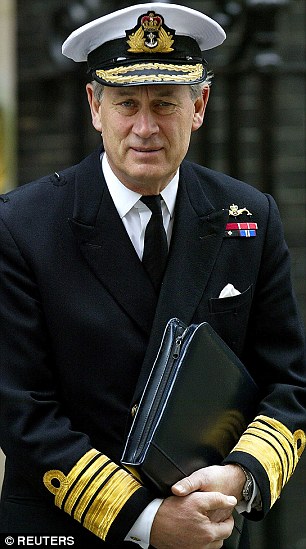
d. Admiral Lord Michael Boyce, the then Chief of the Defence Staff, told the Iraq Inquiry he had been slapped down by ministers for complaining in the run-up to the invasion. He said then Defence Secretary Geoff Hoon, who had never served in the Armed Forces, told him to make his military assessments ‘more of a glass half-full rather than half-empty’.

e. He also said he was banned from buying equipment for troops until four months before the invasion – contributing to shortages of body armour and other kit in the early days of the conflict. Some units, including the 7th Armoured Brigade – the historic and war-hardened Desert Rats – were only battle-ready the day before the invasion.

f. Asked by the inquiry if he had confidence Lord Boyce and Mr Hoon had passed the concerns of the time to the Prime Minister, a sceptical-sounding General Lord Richard Dannatt, then the Assistant Chief of the General Staff, said: ‘They told me they were.’ Lord Boyce said he raised his concerns with Mr Blair – but was given short shrift.

g. It was not until November, just four months before the war, that defence chiefs were able to make ‘overt’ preparations.

DEFENCE Chief 1

h. General Lord Michael Walker, promoted from head of the Army to Chief of the Defence Staff in May 2003 – two months after the invasion – admitted to the inquiry the military was ‘overstretched’. But he has stood accused of pushing politicians to include more ground troops to boost ‘morale’ among soldiers – a claim he vehemently denied. A year later, he said, Britain’s entire military top brass threatened to quit in protest at Gordon Brown’s proposals for savage defence cuts while the UK was fighting on two fronts.

dannat

i. Lord Dannatt, who was involved in planning for the invasion, told the inquiry the ‘desire’ of the Army to send a large force to the war zone was ‘not huge’. But he added: ‘From a professional point of view… there was a bit of a feeling that if the US was going to go in and conduct an operation… there may have been a little bit of a professional feeling, “We should be doing this.”

j. Sir Michael Graydon, a former head of the RAF, said yesterday any criticism in the report would probably look at the advice of the military advisers in drafting the discredited dossiers which made the so-called case for war. http://www.dailymail.co.uk/news/article-2920788/Jeremy-Heywood-accused-defying-vow-release-documents.html

brown

2. I previously wrote to many aspects of Tony Blairs rush to war and the many failures of military heirachy and politicians. A number are listed below.

https://caltonjock.com/2014/10/30/sir-jeremy-heywood-the-iraq-inquiry-other-controversies-are-his-hands-clean/
https://caltonjock.com/2014/10/04/oh-what-a-lovely-war-or-how-the-hell-did-we-end-up-here-again/
https://caltonjock.com/2014/08/29/hoon-defence-secretary-iraq-no-answers/
https://caltonjock.com/2014/08/29/iraq-back-to-haunt-the-uk/
https://caltonjock.com/2015/01/20/lest-we-forget-blairs-legacy-month-of-war-our-young-men-die-for-what-remember-very-recent-past-when-you-vote-for-your-childrens-future-in-2015/
https://caltonjock.com/2014/08/28/afghanistan-the-labour-party/
https://caltonjock.com/2014/08/29/part-time-defence-secretary-at-a-time-of-war/

??????????

Chilcott Inquiry Delays – The Cover Up – The Machiavellian Influence Of Sir Jeremy Heywood

Screen-Shot-2012-09-16-at-20.39.42

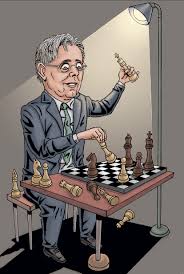
1. It is likely Sir Jeremey Heywood, in his management persona follows the teachings of Machiavelli, in particular the edicts contained in , “The Prince”:

a. “The Prince who rises to power through his own skill and resource (his “virtue”) rather than luck tends to have a hard time rising to the top, but once he reaches the top he is very secure in his position. This is because he effectively crushes his opponents and earns great respect from everyone else. Because he is strong and more self-sufficient, he has to make fewer compromises with his allies.”

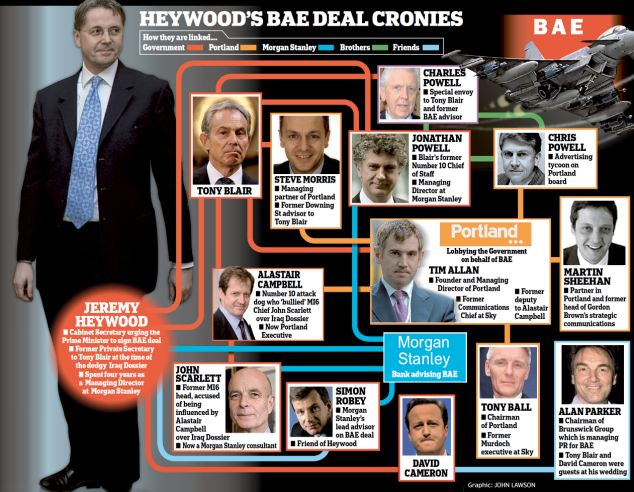
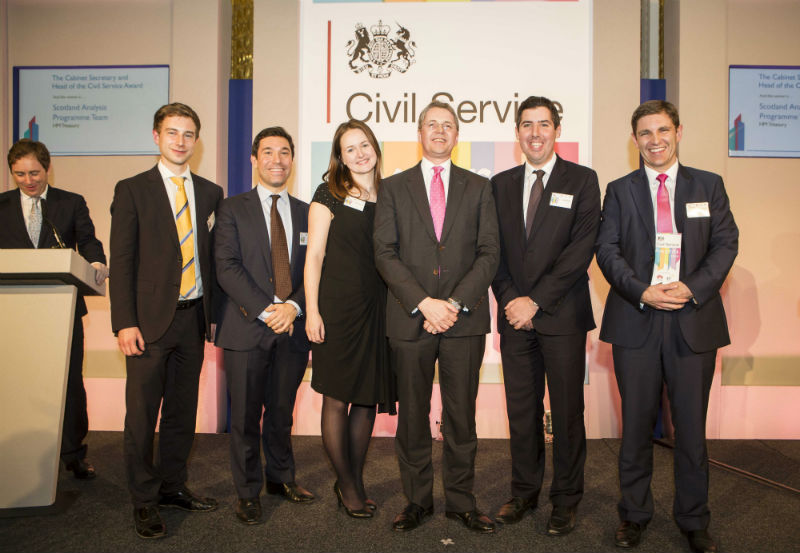
2. There is no doubt Sir Jeremey Heywood is the most powerful man in the United Kingdom. I have reported more on him than any other person. Is he above the law? It would appear this is the case. He is scheduled to appear before a parliamentary committee next week to answer questions about the Chilcott Inquiry delay and relatd matters. But will he provide answers. I doubt it. At his last appearance before a Commons Select Committe he stonewalled on each and every question. His role in the Referendum campaign was pivotal in ensuring a victory for, “The Establishment” which he and those reporting to him abandoned the “Civil Service Code” in pursuit of their own agenda.

??????????

3. January 21 2015; Sir Jeremy Heywood a key Tony Blair aide for four years is under fire for his delaying tactics: Heywood is accused of defying vow to release all documents

a. The role played by the country’s top civil servant in delaying the Iraq Inquiry was in the spotlight last night. Sir Jeremy Heywood, who was responsible for negotiating which documents the panel can publish, will be grilled next week by a Commons committee.

b. Sir John Chilcot complained his inquiry was being stalled because the cabinet secretary was seeking to block the release of correspondence between Tony Blair, Gordon Brown and George W Bush. Sir John had requested the declassification of 130 records of conversations, around 30 notes and papers from 200 Cabinet-level discussions.

images

c. An agreement was finally struck last year but some of the content of the communications will be edited out when the report is published. Critics question whether Sir Jeremy was the right arbiter since he was principal private secretary to Mr Blair in Downing Street from 1999 to 2003, at the time when decisions to go to war were taken.

d. Sir Jeremy’s pivotal role was underlined in a letter from Sir John to David Cameron yesterday explaining the reasons for the further delay. ‘I am pleased to record that since I last wrote the inquiry has reached agreement with Sir Jeremy on the publication of 29 of Mr Blair’s notes to President Bush, subject to a very small number of essential redactions, alongside the inquiry’s final report. Agreement has also been reached on the detail of what material the inquiry will publish in relation to records of conversations between Mr Blair and President Bush, consistent with the principles agreed last year.’

e. Lord Owen, a Labour former foreign secretary, said: ‘When the inquiry was set up, the then prime minister made it quite clear that all British documents should be available. It’s not in my view the job of the cabinet secretary to defy the decision of the prime minister who set it up. I have never known a cabinet secretary to have such a veto. ‘We have in the past had cabinet secretaries who have not had anywhere near as much political engagement as Jeremy Heywood has had. ‘It seems to me that the cabinet secretary hasn’t had that independence of mind that is necessary. I can only say I am worried about it.’

f. Former Tory front bencher David Davis said: ‘The Prime Minister is absolutely right to say the inquiry should be impartial. We have to ask why it has taken so long, and particularly know more about the role of Sir Jeremy Heywood in the delays. ‘He was the principal private secretary of Tony Blair in the run-up to and through the start of the Iraq War. ‘Sir Jeremy was right in the middle of all these decisions. He should be summoned by Parliament to explain what his role was.’

g. Bernard Jenkin, chairman of the public administration committee, said he expected Sir Jeremy would be asked about the delays to the Chilcot report when he appears before MPs next week. ‘We have him coming in front of us and I have no doubt we will ask him one or two questions about it,’ said the Tory MP. ‘He is the conduit between the Government and the inquiry and has brokered the agreement about how the sensitive intelligence and US/UK correspondence would be dealt with. ‘However, he’s not accountable for the conduct of the inquiry itself any more than the Prime Minister. That’s down to Chilcot himself. If Chilcot had felt there was any agenda in dealing with Jeremy Heywood, then he would have absolutely hit the roof.’

article-2213626-155E8E74000005DC-633_634x492

h. A Cabinet Office spokesman said: ‘The inquiry and Government agreed in the inquiry’s documents protocol that the cabinet secretary should be the final arbiter of declassification – that remains unchanged and has the Prime Minister and Deputy Prime Minister’s full support. ‘At the outset the Government assured the inquiry of its full cooperation and it continues to do so.’

i. In the Hutton Inquiry, which was held into the death of David Kelly, it emerged that in a breach of Whitehall procedures, Sir Jeremy had not had minutes taken of four meetings involving ministers and senior officials that had taken place in the 48 hours before the weapons expert’s name was released. Nicknamed Sir Cover-up for preventing the inquiry from seeing the Blair-Bush material, Sir Jeremy’s influence is such that Mr Cameron is said to have once joked: ‘Remind me, Jeremy, do you work for me or do I work for you?’

straw

4. The men in the dock… and how they flourished – While Iraq remains in a state of tumult – with the murderous Islamic State in control of large swathes of the country – the British elite responsible for toppling Saddam Hussein are leading very comfortable lives indeed.

a. TONY BLAIR Prime Minister 1997-2007

The charge: Wildly exaggerated evidence that Saddam posed a deadly threat to Britain, while suppressing advice that war might be illegal. Duped the Cabinet, Parliament and public into backing an invasion he had already agreed privately with George Bush, having assured the president in 2002 that, if Saddam was to be toppled militarily, Britain would ‘be there’.

Where now? Has amassed vast personal wealth – estimated at between £20million and £100million – through speeches and the consultancy firm Tony Blair Associates, whose clients include some of the world’s most notorious despots.

jeremy_heywood_southern_cross

b. ALASTAIR CAMPBELL Blair’s spin doctor and director of communications 1997-2003

Charge: Pivotal role in making the case for war, including the production of the so-called ‘dodgy dossier’ in February 2003. The gravest charge is that he influenced Parliament’s joint intelligence committee and ‘beefed up’ unfounded claims that Saddam could fire weapons of mass destruction in 45 minutes.

Where now? He has enjoyed a lucrative career as an author and TV pundit. Now advising Ed Miliband on the 2015 election campaign.

c. SIR JOHN SCARLETT Chairman: Cabinet Office joint intelligence committee 2001-04

Charge: Described by Campbell as a ‘mate’, he is accused of allowing the PM and his spin doctor to influence the content of the key intelligence reports that led to war.

Where now? Blair named Sir John head of MI6 in 2004 – seen by many as a reward for his role in the buildup to the Iraq invasion. He was knighted in 2007. After stepping down from MI6 in 2009, he joined the board of Times Newspapers.

d. JACK STRAW Foreign Secretary from 2001-2006

Charge: Helped negotiate the November 2002 UN resolution giving Saddam a ‘final opportunity to disarm’ that Blair ultimately used to justify the invasion. Failed to secure a second resolution explicitly backing military action. He sent notes to the prime minister in March 2003, the month of the invasion, offering alternative courses, suggesting that Britain might back the US attack but not participate. Straw admitted to Chilcot that he could have brought the military juggernaut to a halt by resigning.

Where now? Remained in Cabinet until 2010. After retiring from frontbench politics he remained an MP and became a £30,000-a-year consultant to ED&F Man Holdings, a British commodities company.

Investitures at Buckingham Palace

e. LORD GOLDSMITH Attorney General 2001-2007

Charge: Provided the legal advice Blair relied upon to invade. His original memo to the PM on January 30, 2003, stated that UN Resolution 1441 did not sanction use of force and that a further resolution was needed. He then ‘materially’ changed his mind in March, only days before the war began, to state military action would be legal after all. He insisted it was ‘complete nonsense’ to claim he did so because of political pressure.

Where now? Quit on the day Blair left Number 10 and became head of European litigation at London office of Debevoise & Plimpton on a reported salary of £1million a year.

f. SIR JEREMY GREENSTOCK UK permanent representative to the UN 1998-2003

Charge: He was a key figure as the UK and US tried unsuccessfully to push for a second UN resolution explicitly authorising military action. Later told Chilcot the war was of ‘questionable legitimacy’ because of this failure but, crucially, he did not resign in protest.

Where now? In September 2003 he was made the UK’s special representative for Iraq as the ultimately disastrous reconstruction effort got under way. Later held a string of well-remunerated advisory roles, including at the oil giant BP.

g. SIR DAVID MANNING Blair’s chief foreign policy adviser

Charge: Attended meetings in June 2002 and January 2003 in which President Bush and the Labour prime minister drew up secret plans for the invasion. In July 2002, he hand-delivered to Condoleezza Rice, then US secretary of state, a personal letter from Mr Blair to Mr Bush described by critics as a ‘blank cheque’. Sir David also wrote a notorious secret memo after the January meeting which showed the US invasion of Iraq would go ahead with or without UN support.

Where now? Currently an aide to Prince William, he was made a Knight Commander of the Royal Victorian Order in the new year honours list. Also served as ambassador to the US.

h. SIR JEREMY HEYWOOD Blair’s principal private secretary 1999-2003

Charge: His arrival in Downing Street coincided with the advent of so-called Blairite ‘sofa government,’ in which key decisions were taken by a small group of insiders. One of a handful of figures at Downing Street meeting at which it was decided to publicly name Dr Kelly.

Where now? After Iraq he took a senior post at the investment bank Morgan Stanley. Now the most powerful civil servant in Britain. Dubbed Sir Cover-up, he has been partly blamed for the Chilcot delays amid an interminable row over the release of crucial private letters between Blair and Bush.

osb

i. GORDON BROWN Chancellor 1997-2007

Charge: Played little role in making the case for invasion, but angered military top brass by chopping £1billion from the defence budget at the height of the war. Families of dead soldiers say they were sent into battle in 2003 with inadequate equipment. Brown told Chilcot he had never turned down a request for military equipment.

Where now? Set up Chilcot after becoming PM in 2007. Since 2010 election he has been paid tens of thousands in speaking fees but is adamant none of the money goes to him personally.

j. GEOFF HOON Defence Secretary 1999-2005

Charge: His job was to ensure the men he was sending into battle were properly equipped but admitted to Chilcot that troops lacked body armour because Blair ordered him and the head of the Armed Forces to avoid any visible preparations for war.

Where now? Left Parliament in disgrace in 2010 after being caught in a lobbying sting. The following year he landed a lucrative role with AgustaWestland, a defence firm given a £1.7billion MoD contract. http://www.dailymail.co.uk/news/article-2920788/Jeremy-Heywood-accused-defying-vow-release-documents.html

Nicholas_Macpherso_2724400b

5. The Heywood reports:

https://caltonjock.com/2015/01/21/sir-jeremy-heywoods-dambuster-dirty-tricks-team-of-senior-civil-servants-drop-bombs-on-scotland-civil-service-code-doesnt-exist-for-this-lot/
https://caltonjock.com/2014/10/30/sir-jeremy-heywood-a-perfect-manifestation-of-everything-that-has-gone-so-very-wrong-with-the-british-civil-service/
https://caltonjock.com/2014/10/30/sir-jeremy-heywood-chinese-whispers-is-this-anyway-to-run-a-country/
https://caltonjock.com/2014/11/03/politics-scandals-cuts-destruction-and-chaos-yet-he-seems-to-thrive-on-it/
https://caltonjock.com/2014/11/03/sir-jeremy-heywood-new-civil-service-chief-executive-appointed-track-record-failure/
https://caltonjock.com/2014/11/03/sir-jeremy-heywood-warns-cuts-you-aint-seen-nuthin-yet/
https://caltonjock.com/2014/11/02/sir-jeremy-heywood-the-referendum-the-dirty-tricks-department-run-by-civil-servants/
https://caltonjock.com/2014/10/31/sir-jeremy-heywood-sell-off-of-bae-the-last-of-britains-great-british-defence-manufacturers/
https://caltonjock.com/2014/10/31/heywood-the-big-society-debacle-allegations-of-a-misuse-of-government-and-charitable-funds/
https://caltonjock.com/2014/10/31/sir-jeremy-heywood-pfizer-astrazeneca-takeover-bid-hang-on-david-ill-ask-the-wife/
https://caltonjock.com/2014/10/30/sir-jeremy-heywood-european-surveillance-drone-technology-introduction/
https://caltonjock.com/2014/10/30/sir-jeremy-heywood-adored-by-blair-brown-and-cameron-he-knows-just-where-the-bodies-are-buried/
https://caltonjock.com/2014/10/30/sir-jeremy-heywood-the-iraq-inquiry-other-controversies-are-his-hands-clean/
https://caltonjock.com/2014/10/29/sir-jeremy-heywood-edward-snowden-whistleblower-nsa-gchq-data-collection-surveillance-of-individuals-worldwide/
https://caltonjock.com/2014/12/18/sir-jeremy-heywood-the-puppet-master-relocation-of-scottish-banking-hq-to-england/

1421839332-9b909761af53e3ac8d4dc8ec1feccc63-1038x576