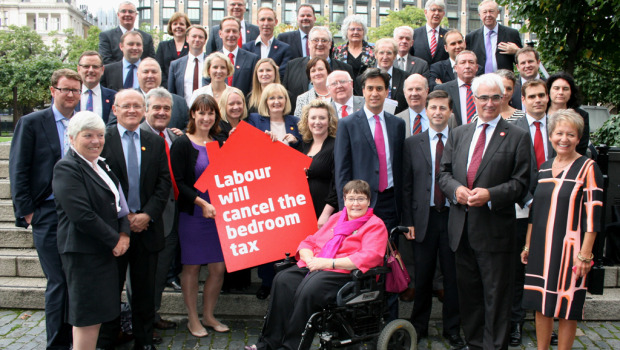
Margaret Curran Labour Party MP for the East of Glasgow and Shadow Secretary of State for Scotland is a Labour Party animal.
1. Labour Party Doctrine;
a. The Labour Party comes, first, last and always.
b. The Labour Party is infallible. Any thing she does or is done in the party name is explained away as always being for the better good of the people.
c. The Labour Party provides a vehicle allowing officers of the party to manipulate the needs and wishes of the electorate so that they are in harmony with the Party’s wishes and the promotion of the officers of the Party.
d. Local officers of the Party promote the myth that they are in place and trusted implicitly to service and protect the needs and aspirations of the local electorate.
e. Nepotism is a good thing since it ensures continuity of electorate representation.
f. Promotion of religious division is to be encouraged, nurtured and maintained in electorate areas where there might be a significant majority of one religion over another. Popularly called, “Divide & Rule.
2. Denis Healey – Oil & Gas Finds – The McCrone Report
a. Healey admitted that the Labour government cheated the Scottish electorate out of the oil and gas finds reported on in the McCrone Report.
b. Margaret Curran, (at that time) was a senior officer of the Labour Party, (through her duties in the University) and enjoyed regular contact with officers of the party of all levels. It is expected Margaret and her close working colleague Johaan Lamont would have been aware of the existence and content of the McCrone document. If not at the time it was presented then soon after.
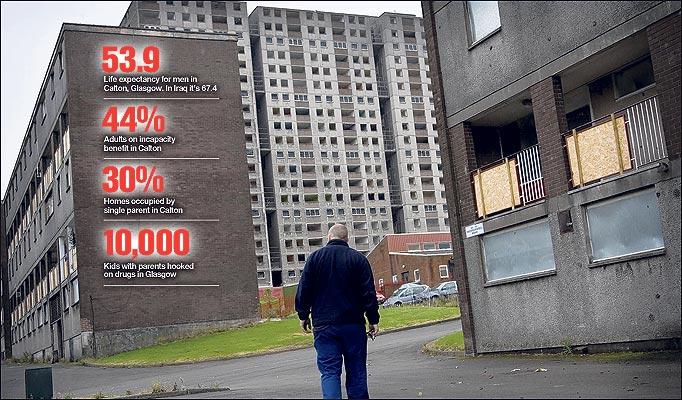
c. Margaret and Johaan represent, (still do) areas of Glasgow with the worst social deprivation, lowest life expectancy and highest infant mortality in the developed world and not a lot has or is being done to improve matters. Set against this damming situation is the fact that the Labour Party and both Margaret and Johaan knew full well, (for the last 40 year’s) that Scotland had massive oil and gas wealth and that the Scottish people have been lied to for decades. I wondered at their behavior and the justification of it then remembered the Labour party creed allows the sacrifice of the electorate for perceived good of the bigger picture of the Labour Party and it’s manifesto.
1. Wrecking tactics, (conceived, organized and ordered by David Cameron) require the billionaire heads of banks and businesses to issue, “gloom and Doom” messages to their Scottish staff and the public in the last few days before the referendum. Frighteners such as; transferring banking activity and employment to London, (adversely affecting 30,000 people employed in the Scottish financial sector). Price increases, across the board in the case of retailers and in particular Supermarkets, (designed to spread negative messages to retailing staff and shoppers).
2. The Banks
3. But the devil is in the detail and David Cameron may yet be hung by his own petard
a. The total cost of employing 30,000 highly trained finance staff in Scotland is approximately £1 Billion.
b. Assuming it might be feasible to locate and purchase 30,000 homes in or near London and transfer staff and their families relocation cost would be in the region of £10 Billion.
c. On-costs, house purchase, mortgage support, travel and other aspects of relocation would require another £50 Billion.
d. Then there is the additional wage bill for 30,000 staff who would attract salaries in line with those in place for London staff .750 Billion.
e. Total cost £61 Billion.
f. Is it financially prudent to relocate staff? No it most certainly is not.
g. I n any event it would not be possible to recruit new staff in London and financially prohibitive to relocate Scottish staff and there is insufficient housing stock available.
h. The solution? Move the brass plate to London effectively registering the banks there, ensuring any financial deficit carried over from the financial crash are retained in London with the UKr Treasury. Note: This will happen regardless of the outcome of the referendum
i. Retain all 30,000 staff in Scotland, effectively outsourced from London. Discharging the same duties as before. Might need some IT investment but this would be minimal.
j. Result. Everybody happy. No unnecessary financial expenditure associated with the changes
4. Supermarkets and Retailers
5. Retailers were put under ruthless, unfair and persistent pressure from David Cameron to back and make public their support for a no vote in the Scottish referendum, (but most refused). However the attack dog, (self appointed) is Sir Ian Cheshire, the, (soon to be replaced) Chief Executive of Kingfisher, the business behind B&Q, the DIY chain. His position is that, “business leaders need to speak out and get the facts in front of Scottish voters who need to make a decision”. “It’s not scaremongering. Independence is possible but there are costs and consequences of separation. I think the current system works well, but people have to decide if it is better.”
6. The thrust of the intervention by the Chief Executives of a few retailers and two of the largest supermarkets, (since withdrawn) is centered around the probability of, “Increased Prices” for goods and services in the event of a, “Yes” vote. Such increases would be justified since goods distribution costs to Scotland are higher than in the rest of the UK.
7. If Scotland votes, “yes” in the referendum, at the date of change supermarkets and retailers would be free to establish new markets in Scotland. Assuming Scotland would retain, “special membership status” within the EU all, “new” markets would be governed by internal market regulations operating within Europe. To that extent any restriction of trade measures that Supermarkets might seek to introduce would need to meet all aspects of the aforesaid regulations. The European Commission may, if provided with reference, decide to order a market investigation so as to ensure a fair extension of the frontiers of competition within Supermarkets operating within England & Scotland.
8. Any costs inflated by carriage charges would need to be measured and imposed equally across the entire supermarket distribution area, (England, Scotland, Wales and Northern Ireland). eg Asda, (based in Leeds) would need to introduce an added carriage cost for distribution to Glasgow, Edinburgh, London, Plymouth, Portsmouth and Cardiff. It would not be permissible to add carriage costs to goods for sale in Scotland to the exception of the same goods for sale in England.
9. Tax – Now That’s Another Thing to Sort
10. UK lax tax laws provide a myriad of loopholes which are widely used for tax avoidance and the Treasury is losing many £ billions of tax revenues each and every year. Five of the UK’ largest banks use tax havens, namely BARCLAYS, LLOYDS, TSB, HSBC, and the ROYAL BANK of SCOTLAND. Just about all of the larger retailers, (supermarkets) and food manufacturers compete for places in the top 10 tax haven users A survey of the UK’s largest 100 public companies revealed that there are over 8,000 linking offshoots involved in business activities, (onshore and offshore) all registered in tax havens. Only 2 out of the 100 public companies had no offshoots registered in tax havens. George Osborne, in a recent speech brought the issue to the attention of the UK public stating the matter needed to be resolved. The task of closing the loopholes and recovering tax due is proving to be just about impossible since the bulk of the offshoot companies were registered in UK Crown dependencies such as, Bermuda, Gibraltar and Jersey.
I lived in Hampshire, England from 1970-1973. Almost weekly local newspapers carried graphic reports of huge numbers of French and Belgian shoppers travelling across the channel to Dover, Folkestone etc. to purchase food, drink and many other household items. Significant savings were achieved even after adding in the cost of a return ticket. In light of the foregoing we considered ourselves lucky that Harold Wilson’s bid to join the EEC in 1967 had been vetoed by General de Gaulle.
But bad tidings awaited the UK in the form of the introduction of the “Common Agricultural Policy” (CAP). The hugely expensive policy had been forced on the EEC by the French who intended retaining their vastly inefficient “peasant farmer” agriculture system. Once this was in place France dropped their objections to the UK joining the EEC. Informed politicians warned the UK public that France needed the UK in the EEC so that finance would be available to fund their inefficient farmers and this proved to be the case.
In 1971 Ted Heath’s Tory government (prodded by the USA) opened negotiations with the EEC once more. Simultaneously they launched an expensive political and media onslaught on the UK public broadcasting the subliminal message that the EEC was simply a trading agreement and there was no threat to the UK’s sovereignty. The conduct of discussions were not openly broadcast and in time many aspects of the agreement disadvantageous to the UK unravelled. But the (USA owned) UK media and press clamoured for membership, through their heavy use of emotive headlines shaping and promoting USA and Tory agenda’s.
Yet again the UK public was subjected to a massive con trick orchestrated by politicians and the media who, whilst extolling the virtues, (as yet intangible) gave no mention of the extortionate costs of joining the EEC. Nevertheless Heath, (assisted by a compliant media and press) without affording the UK public the opportunity of a referendum, agreed a treaty committing the UK to joining the EEC in January 1972.
Within days of joining the cost of living in the UK increased by around 40%, (without any increase in wages). Those of us living in the South of England formed “shopper clubs”. These organised weekend trips to France to purchase, food, drink etc. “The shoe had been transferred to the other foot.” What a nonsense.
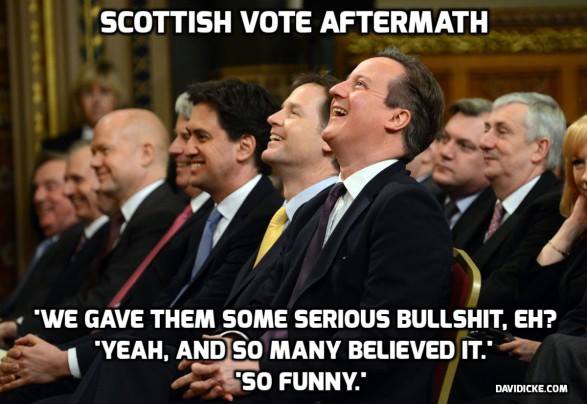
Cameron resurrecting Project Fear bullying tactics in EU Referendum
David Cameron has come under renewed pressure over his conduct during Scotland’s independence referendum – after new revelations that his government put pressure on big business to try and play up anti-independence fears.
As reported today, a leaked letter from Serco has shown that the Prime Minister has pushed corporations to encourage the publication of anti-Brexit information – and makes clear that the UK Government did the same thing during the independence referendum and ‘managed to garner a lot of publicity’.
Commenting, SNP MSP James Dornan said:
“This damning new evidence lays bare the concerted effort of the UK Government to pressurise big business to try and whip up anti-independence fears – and gets to the heart of the sinister, behind the scenes campaign David Cameron ran in the final weeks of the referendum.
“Now we know that the UK government was pressing businesses to garner publicity for anti-independence scaremongering, people in Scotland will view every anti-independence pronouncement from the Tories in the same light – and won’t believe a single word they say on the issue.
“As Prime Minister of the whole UK, David Cameron had a duty to people in Scotland – instead, he put his partisan interest first and actively sought to undermine our economy, and it’s high time he apologised.
“But it’s clear that he hasn’t learned a single thing from the appalling way his government conducted their business during the independence referendum – and seems content to use the same Project Fear bullying tactics on the issue of the EU. “He should make clear that he will eschew the negative tactics of scaremongering from now until June 23rd – and make the positive case for being part of Europe.”
Retailers under pressure from David Cameron to back no vote in Scottish referendum
The UK’s biggest retailers are being ruthlessly pressurized by David Cameron forcing them to intervene in the Scottish referendum debate, pushing his message that a, Yes” vote next week will result in higher prices. He invoked Britain’s defeat of Hitler as part of a plea to around 200 business leaders aimed at preventing Scotland voting for independence. The Prime Minister said that it was as a United Kingdom that the Second World War had been fought and won, and that it was crucial that the country remained undivided.
Cameron’s remarks at the private gathering represent some of his most bizarrely impassioned comments so far, ahead of a referendum which is more finely balanced than at any stage since campaigning got underway. “He (Cameron) emphasized the need for us to do everything we can over the next few days to keep the union together,” said one of those present. “He wants us to highlight the dangers of a Scottish exit in any way we can.”
The so called, “initiative” will take the form of a letter to be released to the UK media in the next day or so. It is being led by Sir Ian Cheshire, the Chief Executive of Kingfisher, the business behind B&Q, the DIY chain. Other retailers understood to have agreed to back the initiative, so far include Marc Bolland, the chief executive of Marks & Spencer, and Charlie Mayfield, chairman of the John Lewis Group. Andy Clarke, the chief executive of Asda, and John Timpson, boss of the Timpson shoe repair business, also support it.
On Thursday night Cheshire confirmed his involvement: “Business leaders need to speak out and get the facts in front of Scottish voters who need to make a decision. It’s not scaremongering. There are costs and consequences of separation and I think the current system works better. Independence is possible but people have to decide if it is better. There needs to be measured debate.” So far, it is understood that Morrisons has refused to add its name and that several other leading retailers are holding back, fearing it would alienate vast numbers of Scottish shoppers. News of the move will fuel concerns in Scotland that a dirty tricks campaign is being co-ordinated through Downing Street
Queen “purred” at the good news her realm would stay intact (for now)
Competition and Supermarkets – A Guidance Note
In the event the Scottish referendum results in Scotland becoming an independent nation. At the date of change supermarkets would be free to establish new markets in Scotland in all respects. Assuming Scotland would retain, “special membership status” within the EU all, “new” markets would be governed by internal market regulations operating within Europe.
To that extent any restriction of trade measures that Supermarkets might seek to introduce would need to meet all aspects of the aforesaid regulations.
The European Commission may, if provided with reference, decide to order a market investigation so as to ensure a fair extension of the frontiers of competition within Supermarkets operating within England & Scotland.
Any costs inflated by carriage charges would need to be measured and imposed equally across the entire supermarket distribution area, (England, Scotland, Wales and Northern Ireland). eg Asda, (based in Leeds) would need to introduce an added carriage cost for distribution to Glasgow, Edinburgh, London, Plymouth, Portsmouth and Cardiff.
It would not be permissible to add carriage costs to goods for sale in Scotland to the exception of the same goods for sale in England.
Gordon MacIntyre-Kemp is the Chief Executive of Business for Scotland. Before joining Business for Scotland he ran a small social media and sales & marketing consultancy and was the founding member of Business for Scotland. With a degree in business and economics, Gordon has worked as an economic development planning professional, and in marketing roles specialising in pricing modelling and promotional evaluation for global companies (including P&G). I rate his site very highly and recommend it to anyone who is seeking the truth on any matter regarding the Referendum
Independence isn’t just for large companies. Small and medium-sized enterprises (SMEs) make up 99.3% of all Scottish businesses and 97% of all Scottish exports. They create the majority of private sector jobs in Scotland. That is why we are sharing the names of another 100 plus job creators from our growing membership.
We believe the food and drink sector will have more opportunities and be a much great priority for an independent Scottish government than it will be for a UK government.
The people of Scotland are making an important decision on September 18th. They are making a choice between becoming a self governing independent national democracy just like almost every other nation on earth or a decision to be governed by a distant, disinterested and dysfunctional Westminster government over which they have no control and absolutely minimal influence within.
The following is the text of a letter sent by Business for Scotland Chair Tony Banks to Tony Hall, Director General of the BBC, calling for the BBC to end its membership of the CBI.
Today 200 Business people from all sorts and sizes of companies from all over Scotland publicly declare that they are voting YES – they see it as “the business and jobs opportunity of a lifetime for this and future generations”.
Dr Philippa Whitford, one of Scotland most respected surgeons, delivered an insightful and hard hitting guest speech at the 2014 Vision for Scotland conference.
Ralph Topping, retiring as Chief Executive of betting giant William Hill plc and is one of Britain’s foremost business leaders with 44 years’ experience, said that a Yes vote will improve “life”.
Many of Scotland’s most successful businesses operate globally. They work across many countries. For them Scotland gaining full economic powers to improve economic growth is a positive or neutral step.
Various reports seeking to identify and analyse events contributing to the financial crisis in the UK of 2007-8, said, with clarity that the financial collapse was entirely avoidable. The, “billionaire bankers of finance” and the UK Treasury charged with stewardship of our financial systems had persistently ignored warnings and declined to raise questions so that they would be able to better understand, and effectively manage ever growing risks within the financial markets thereby protecting the UK public.
That the, “billionaire bankers of finance” suffered nothing in consequence of their actions is now part of the history of the crisis, and has lead the UK public to the belief that the rich are beyond punishment but the man in the street is fair game. Indeed recent changes in taxation now provide Inland Revenue with legal, direct access and withdrawal of tax from the personal accounts of UK taxpayers if, in their view money is owed to them. In essence then the file and record of the greatest financial and most destructive fraud in history has been closed and not one banker has been prosecuted. Unbelievable
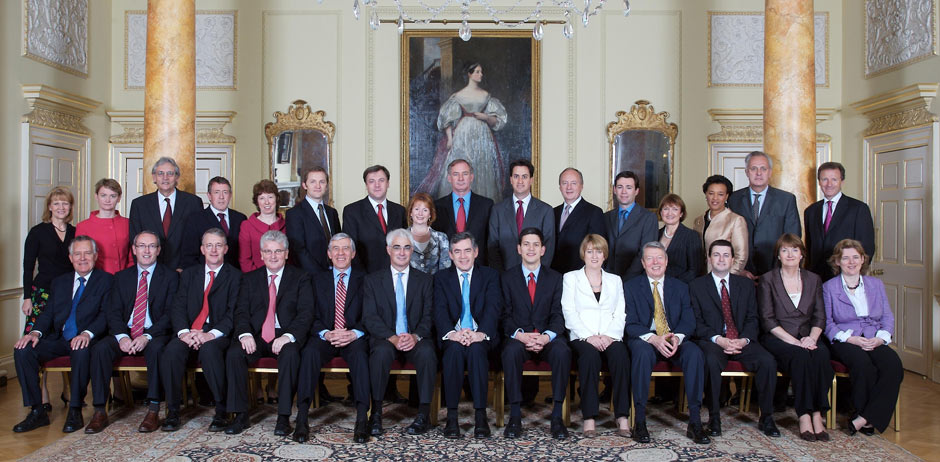
Financial Stewardship in the UK in the period 1997 – 2010 was the responsibility of Gordon Brown and Alistair Darling. They failed the country yet outrageously continue to strut their stuff on the Scottish political stage seeking to direct, in their favor, the outcome of the 2014 referendum. But they are discredited politicians who in their arrogance believe that the Scottish electorate hold them and their jaundiced views in high regard. Not so, as they will find out next week. Vote, Yes” in the referendum.
The Free Market – A Global Ponzie Scheme Designed by the Rich for the Benefit of the Rich
Charles Moore was Margaret Thatcher’s official biographer, and one of conservatism/capitalism’s most high profile supporters in the UK.
He now argues that:
“The rich run a global system that allows them to accumulate capital and pay the lowest possible price for labour.
The freedom that results applies only to them. The many simply have to work harder, in conditions that grow ever more insecure, to enrich the few.
Democratic politics, which purports to enrich the many, is actually in the pocket of those bankers, media barons and other moguls who run and own everything.”
If he, rather belatedly came to this conclusion, perhaps we should pay attention.
The Industrial legacy
In the 1970s and 1980s, the perception was that the trade unions that were holding people back.
Bad jobs were protected and good ones could not be created.
“Industrial action” did not mean producing goods and services that people wanted to buy, it meant going on strike and picketing.
Thatcher Embraces the Rupert Murdoch Philosophy
A key symptom of popular disillusionment with the Left was the moment, in the late 1970s, when the circulation of Rupert Murdoch’s Thatcher-supporting Sun overtook that of the ever-Labour Daily Mirror.
The increasing prosperity and freedom of the ensuing 20 years proved them right.
But the Murdoch scandal revealed how an international company bullied and bought its way to control of party leaderships, police forces and regulatory processes.
Murdoch himself, like a tired old Godfather, told the House of Commons media committee that he was so often courted by UK prime ministers Thatcher, Blair and Brown that he wished they would leave him alone.
The left was correct that the power of Rupert Murdoch had become an anti-social force.
The Right, which includes the Tories, New Labour, Blair and Brown was too slow to see this, partly because it confused populism and democracy.
One of Murdoch’s biggest arguments for getting what he wanted in the expansion of his multi-media empire was the backing of “our readers”.
But the News of the World and the Sun went out of the way to give their readers far too little information to form political judgments.
His papers were tools for his power, not for that of his readers.
When they learnt at last the methods by which the News of the World operated, they withdrew their support.
It was surprising therefore to read defenders of the free press saying how sad they were that the News of the World had been forced to close.
But, In its stupidity, narrowness and cruelty, and in its methods, the paper was a disgrace to the free press.
It was a great day for newspapers when, 25 years ago, Mr Murdoch beat the print unions at Wapping.
But much of what he chose to print on those presses was a great disappointment to those believe in free markets because they emancipate people.
The Right did itself much harm by covering up for so much brutality.
The 2007 Credit Crunch
The credit crunch exposed a similar process of how emancipation can be hijacked.
The greater freedom to borrow which began in the 1980s was good for most people.
A society in which credit is very restricted is one in which new people cannot rise.
How many small businesses could start or first homes be bought without a loan?
But when excessively low pay becomes the norm and loans become the means by which millions finance mere consumption, that is different.
All Those Financial Losses – Someone Needs to pay
When the banks that look after our money take it away, lose it and then, because of government guarantee, are not punished themselves, something much worse happens.
It turns out – as the Left always claims – that a system purporting to advance the many has been perverted in order to enrich the few.
The global banking system is an adventure playground for the participants, complete with spongy, health-and-safety approved flooring so that they bounce when they fall off.
The role of the rest of us is simply to pay.
One thing that is different is that people in general have lost faith in the free-market, Western, democratic order.
They have not yet, thank God, transferred their faith, as they did in the 1930s, to totalitarianism.
But they feel badly let down, gloomy and suspicious and ask the simple question, “What’s in it for me?”. The answer they get is “Austerity”.
What About the Protection of the Eurozone
The eurozone could have been designed by a Left-wing propagandist as a satire of how money-power works.
A single currency is created. A single bank controls it.
No democratic institution with any authority watches over it, and when the zone’s borrowings run into trouble, elected governments must submit to almost any indignity rather than let bankers get hurt.
What about the workers? They must lose their jobs so that bankers in Frankfurt and bureaucrats in Brussels may sleep easily in their beds.
We are bust – both actually and morally.
Extracts from an article written by Matthew Wherry and published in the Telegraph.
a. Demands for Scottish self-rule stem from the fact that Scotland, (unlike any other region in the UK) enjoys a historic status as a nation dating back to before the Tenth Century. Notwithstanding the 1707, Treaty of Union, (imposed upon Scotland against the wishes of it’s people) Scotland retains a distinct set of legal, educational and religious institutions ensuring retention of a separate Scottish identity.
b. UK membership of the European Union (EU) in the late 1960’s brought with it a realization that traditional relationships with England had not, (with the exception of a major depression) delivered anything of note. Conversely power had been systematically removed from Scotland to Westminster. Of particular concern was the removal of heavy industry, (ship building, car manufacture, coal and steel making) which brought with it severe financial hardships, deprivation and child poverty.
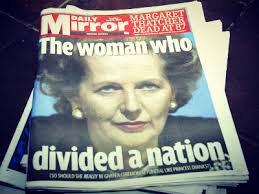
c. The Tory party, (through the dictatorial leadership of Margaret Thatcher) was deemed guilty of the rapid and sustained downturn in the fortunes of Scotland and their parliamentary representation in Scotland went into terminal decline throughout the period 1973-1997. In that period, despite the lack of political representation in Scotland, the Tory Party was returned to power in Westminster, for 18 years creating the offensive anomaly that Scottish political institutions had to be managed by MPs from English constituencies.
d. Undaunted the, “right wing” Tory government set about dismantling the, “Welfare State” an institution held dear in the hearts of many Scot’s. It was this dogma, (finally rejected by the UK electorate) that brought Tony Blair and the Labour party to power in 1997. The success, (in that year) of pro-devolution parties, (not the Tory Party) bringing through legislation, following the successful referendum allowed the creation of a Scottish Parliament for the first time in 300 years.
2. The Tory Party’s Journey to 2014
a. The Tory Party arrogantly maintained their position as a unionist party and had a clear anti-devolution policy for Scotland in the period up to 1945. After the war the Labour government of Attlee nationalized Scottish industries, an action vehemently opposed by the Tory Party who, (when they were returned to power in 1951), gave a small measure of solace to the restless Scot’s, establishing a Royal Commission, (talking shop) on Scottish needs, the outcome of which was the introduction of some debating time within Westminster for Scottish matters. The Tory government did not however support Scottish devolution and the thirteen year period of Tory government, (1951-1964) was devoid of any hope of change for those who desired Scottish self rule.
b. It was the electoral rise of the SNP, (through the election of Winnie Ewing in Hamilton) that changed the Tory Party’s views on Scottish devolution. In 1968 Edward Heath, Tory Party leader gave his, “Declaration of Perth” statement supporting the establishment of a Scottish Assembly. But the issue of devolution lapsed with the Tory Party victory in the 1970 General Election and the failure of the SNP to increase their Westminster representation. The 1968, “Declaration of Perth” was quietly put on the, “back burner” due to other more pressing issues of state.
c. The Labour Party successes in the two 1974 elections and the rise to power of Margaret Thatcher as Tory leader in 1976 brought with it yet another change in the Tory Party’s attitude to Scottish devolution. Thatcher was bitterly opposed to any measure of Scottish self-rule. Her policy did have repercussions however, Alick Buchanan-Smith and his junior and future Secretary of State, Malcolm Rifkind both resigned from cabinet in protest.
d. John Major took up the reins of power from Thatcher in 1992. Faced within the party with a growing movement for change in Scotland he asked a number of senior colleagues to review the matter. The Tory Party was re-elected in the 1992 general election. The clamor for change increased in intensity but John Major dithered and did nothing.
3. The Labour Party’s Journey to 2014
a. The Labour Party, (with it’s centralized approach to government) found it extremely difficult, (still does) to be at peace with the conflicting demands of Socialist ideals within the wider UK and the desire for home rule on the part of the Scot’s.
b. Nevertheless support for Scottish Home Rule, from the formation of the Labour Party had been strong. The Party took a prominent role within the, Scottish Home Rule Association, (SHRA) and the relationship was rewarded when the SHRA supported Keir Hardie’s unsuccessful bid for the Mid-Lanark constituency by-election. However after the 1945 General Election and the euphoria of power that followed the matter of Scottish devolution was considered an irritating sideline by the Labour Party leadership in England, who had, “bigger fish to fry”.
c. Scottish devolution continued to be supported in the period, (1945-1951) by the Scottish Press, who regularly canvassed socialist voters, (support was as high as 80% at times). But the Secretary of State for Scotland, Arthur Woodburn took the view that such sentiment had more to do with austerity measures being forced upon the voters, than any Nationalist fervor. Any expression of disquiet in favor of Scottish home rule was bought off by short term financial improvements. the strong unionist position of the party remained in force as Labour policy until the electoral success of Winnie Ewing and other SNP figures in the late 1960s.
d. It was Harold Wilson’s government that belatedly formed a Royal Commission, (mirroring the 1951 effort) in 1969. The, “Kilbrandon Commission” reported back 4 year’s later in 1973, (they were in no hurry) with a qualified majority report recommending a system of limited home rule. But to no avail since the Labour Party were no longer the Party of government.
e. Two, “on the bounce” General Elections of 1974 brought about the rapid rise of the SNP, and the Labour Party suddenly found it’s voice and added their support in favor of of devolution. But there were serious divisions within the UK Labour Party over the level of home rule to be supported and Jim Sillars together with other labour home rule supporters, unhappy about the watering down of the, “Kilbrandon Commission” recommendations broke free from the English based UK Labour Party and formed the Scottish Labour Party, (SLP). The (SLP) was short-lived and suffered much abuse from the English based Labour party, but it’s policies were influential in shaping the direction of the SNP. Jim stood for election, won and represented the SNP in the UK parliament after a stunning win in the November 1988 Govan by-election.
4. The Liberal Democratic Party’s Journey to 2014
a. The Liberal Party, in opposition from 1922 has been consistent in it’s approach to Scottish home rule, but as a package of measures taking in Wales and Northern Ireland. But the party does get actively involved in any discussions with other parties who might be considering introducing Scottish home rule.
5. The Scottish National Party’s Journey to 2014
a. The SNP mission statement contains one purpose, “Scottish Self Government”. Over the years the aim has become clouded from time to time, some taking the view that a devolved parliament would be a suitable compromise but many others advocating complete independence as the only acceptable outcome of the struggle to recovery Scotland from a one-sided treaty that had brought a once proud nation to it’s knees.
b. The rise to prominence of the Scottish Nationalist Party, (SNP) since 1968, has been breathtakingly fast. Indeed the Party’s share of the vote from that year to 1974 rose to 30.4% taking the party to second place, behind labour in Scotland. It was this sustained rise and cry for independence that brought about the 1979 and 1997 referendums. Both were supported by the Labour Party so why did the first one fail and the second succeed?
6. The 1979 Referendum
a. The 1974-79 Labour Party exercised power as a minority government with the support of the SNP and Liberal party. The Labour Party was divided over the issue of devolution and the passage through Westminster of the necessary legislation for a referendum was fraught with disagreement and took a long time to legislate. The most contentious clause was insisted upon by, George Cunningham, a Scots MP representing a London constituency. The, “Cunningham Amendment” imposed a previously unheard of spoiler (named afterwards as the, “40% rule”), meaning that any registered voter who did not vote would be counted as a, “No” vote. and there needed to be at least 40% of the electorate in favor of the proposal. An almost impossible task for those who favored home rule.
b. But even with a, “loaded dice” the Labour Party remained reluctant to proceed with the referendum. It took a full scale back-bench revolt to drag the Labour party leadership to the ballot box. The referendum failed, entirely due to the 40% rule. A significant majority voted in favor of home rule but just short of the 40%. The Scottish nation was hugely disappointed in the Labour Party rightly believing it’s heart had never been with Scot’s aspirations.
7. The 1997 referendum
a. The Labour Party came to government in 1997 in a landslide election with a clear mandated policy of constitutional change within the UK. proposals included devolution for Scotland, Wales and Northern Ireland as well as the possibility of regional assemblies in England, an elected Mayor for London and the reform of the House of Lords. Issues of devolution were now much less controversial.
b. The other factor clearly distinguishing 1979 from 1997 was the existence of the Scottish Constitutional Convention (SCC), comprised of non-partisan campaigners for home rule and representation from the Labour Party and Liberal Democrats. The SCC had been in existence, in various forms throughout the period 1980 -1997, with the purpose of keeping the agenda for change in the public eye. The Tory Party, “Think Twice” campaign lost out badly to the positive, “Yes Yes” campaign mounted by those in favor of home rule.
8. Summary
Careful study of the foregoing reveals the tortuous route we Scot’s have been forced to take by both Tory & Labour governments who have taken our nation, time and time again to the door of freedom only to slam it shut, just as we Scot’s are about to step through. In compiling the precis I was struck, in the course of my investigations by the number of Scottish rogues featuring in many devious acts of betrayal over the year’s, all embarked on with the purpose of retaining the staus quo, protecting their highly paid salaries and expenses scams in Westminster together with many very well paid consultancy posts with private companies and the nod to get the ermine on at the end of their time in the commons taking up unelected well reimbursed peerages.
Scotland’s time has come. Ignore those who would deny you your right to be governed by politicians you elect. Remain stout of heart. Vote “Yes” in the referendum. Good luck.
Union Barons Run the Unions Not the Members. Yet again the bellicose and unrepresentative voice of UK Trades Unions is being broadcast throughout Scotland directing their membership to vote, “No” in the referendum providing support to the, “Blether Together” campaign. Union bosses, in England seeking to justify their biased views, (clearly at odds with their Scot’s members), insist that the unions, “National” collective view must hold sway over, “Regional” opinion. “It’s one for all and all for one” and that’s put paid to democracy.
Compounding the disgrace a number of Unions even had the audacity to bypass consultation with their members, opting for, then ratifying without consultation the decision to support, “Blether Together” on the verbal vote of a small English based council. A spokesman for the, “Yes” campaign offered, “It was always going to the case that Union controllers discharging their, “National” agenda, (justifying the £billions donated to the Labour party) would, “gerrymander” the outcome of any vote from their Scottish membership.There is a strong suspicion that consultation was not honest and sincere.”
But I am hoping the patronizing strategy of union bosses, (clearly acting in the interests of the, “National” labour party and not their Scottish members) will backfire. Scot’s do not like to be dictated to by persons who have agenda’s to fulfill that are at odds with their own views.
Union members should vote, “Yes” in the referendum so that their Union will be headquartered in Scotland and staffed by officials who exist to provide support to their members. The day’s of the dictatorship Union barons is at an end. Unions are about people not politics.
Gordon Brown is not a man of his word. Read on McDuff
After 300 years of an imposed treaty 2014 is the year Scotland will finally exert it’s right to be free. In 1707 the Scottish Parliament was first suspended then dissolved, (against the will of the people), on the order of group of corrupt peers. Scottish Sovereignty was then moved from Edinburgh to London.
Scot’s never accepted English rule and rebelled in 1715 and 1745. The last rebellion was put down by the Duke of Cumberland and a horde of English and German troops with savagery and 100 years of on-going land and property asset stripping, people expulsion and many other acts of brutality. Written records of which are retained in libraries and homes throughout Scotland and in many other countries of the world where poor unfortunate Scot’s highlanders and their families had been transported to.
It was not until the latter part of the twentieth century that Scot’s were given two constitutional referendums to establish Scottish devolution and even then the powers of full self rule were denied. Whilst responsibility was to be delegated across a restricted range of governance this was tempered with a restriction on authority, which was retained in Westminster through the treasury and MP’s. Scotland, by result remained to be a province of the UK
In an extraordinary turn of events the, “European Union” (EU) surfaced, bringing with it an end to English independence. Tony Blair, Prime Minister signed off the original European constitution then formally negotiated the new European treaty on 20 April 2004 . With the 2005 General Election looming, it was agreed in Westminster that the public would be asked to vote, (after the election) in a referendum for or against acceptance of the new European treaty. As was indeed the case for a number of other countries, some of which voted against acceptance, (France and Holland). There was much panic in Europe following the rejection of the new Treaty. A large number of meetings were held, over a period of time designed to arrive at a consensus finding a way forward. Many changes, (largely superficial) were made and the revamped document the, “Treaty of Lisbon” was created replacing the Constitutional Treaty. In mainland Europe governments voted the revised constitution through their parliaments without undue fuss.
The UK decided upon a different course of action. In their MANIFESTO the newly elected Labour government had included a solemn PLEDGE to give the UK electorate their say in a referendum on the treaty. Gordon Brown, Prime Minister, (who took up post, following the resignation of Tony Blair), elected neither by his MPs nor his party members nor his country insisted there was no need for a referendum. Hardened cynics and europhiles were extremely angered by Brown’s refusal to let the people have their say. This was a Prime Minister who had finally been awarded, (through nepotism) the most powerful job in the land promising, “I will listen and I will learn. I want to lead a government humble enough to know its place, where I will always strive to be – and that’s on the people’s side.” “We’ve got to honour that manifesto. It is an issue of trust for me with the electorate.”
Defending his plan of action Gordon Brown repeatedly quoted his glorious-sounding, “red lines” (key areas of national interest such as justice, home affairs, social security and foreign policy which he had promised to safeguard) as a reason not to hold the referendum – we have protected our national interests, so we have nothing to fear. Dogmatic in his approach he stated the revised treaty was no longer a constitutional matter, although it still contained 40 substantial constitutional changes, and they were the same as were contained in the original constitutional treaty itself. It was therefore fraudulent to pretend the new treaty did not have the same significance as the one previously rejected. The Labour government, elected on a promise to hold a referendum did not have one. The treaty was signed in 2007 by Gordon Brown then ratified 1 December 2009. The UK was now effectively a different country, (against the wishes of the electorate) it had been deprived of it’s independence in 2007, just as as Scotland did in 1707. A scandalous abuse of public trust. Acting as he did, Brown failed to give consideration to the hearts and minds of English national patriotism which is just as potent a subject to the English as independence is to the Scot’s. Politics and trust are intrinsic, without trust politicians are loathed, ridiculed and ignored.
There was perhaps a time when the United Kingdom was of benefit to England and to Scotland. It certainly helped the English to achieve great things. The, “British” did much to save the world from tyranny at the time of the Napoleonic wars, and again in the two world wars of the twentieth century. On balance, the, “British Empire” has been a force for good in the world. But Westminster is too distant and detached from the nationalism of the nations that form it. Lessons from history provide guidance that independence is not the property of a parliament. It is owned instead by the people. The days of the empire have gone forever and Scot’s have a right, enshrined in their constitution to regain their independence, if that is the settled will of the nation. Scottish independence is not a matter for any English person to become actively involved in, (except within the agreed terms of the referendum).
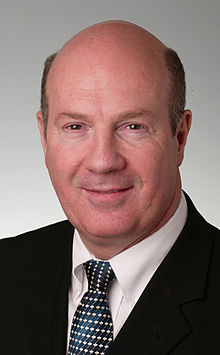
Ian Davidson was born in 1950 in the borders region of Scotland. He migrated north to Strathclyde and was elected to the position of councillor with the Strathclyde Regional Council, where he was employed from 1978 -1992. He gave up his post when he was elected as a Labour MP and has been at Westminster from that time, until 2015. As sitting MP it is expected he will contest Glasgow & South West in the May 2015 general election.
My family lived in the Gorbals in 1955. At that time people were poor, badly housed, undernourished, in ill-health and ill educated. Not a lot has changed since. Visitors to Glasgow are kept well away from Govan being directed to visiting the impressive George Square, the recently built BBC Scotland Headquarters and Science Centre buildings et. al.
But visit Govan, (no way) it is a different world far removed from the glitter and gloss of areas that have been upgraded, through the good auspices of the Glasgow City Council. In Govan the lives of many inhabitants are still blighted by grinding poverty, drug dealing, alcohol abuse, ill health, early death, unemployment and despair. There are other areas of Glasgow in which conditions in Govan are mirrored. A factor common to all of the aformentioned is that for 50 years voters have loyally given their precious vote to Labour politicians whose only interest is to perpetuate the deprivation so that they would be sure of securing another majority at the next election.
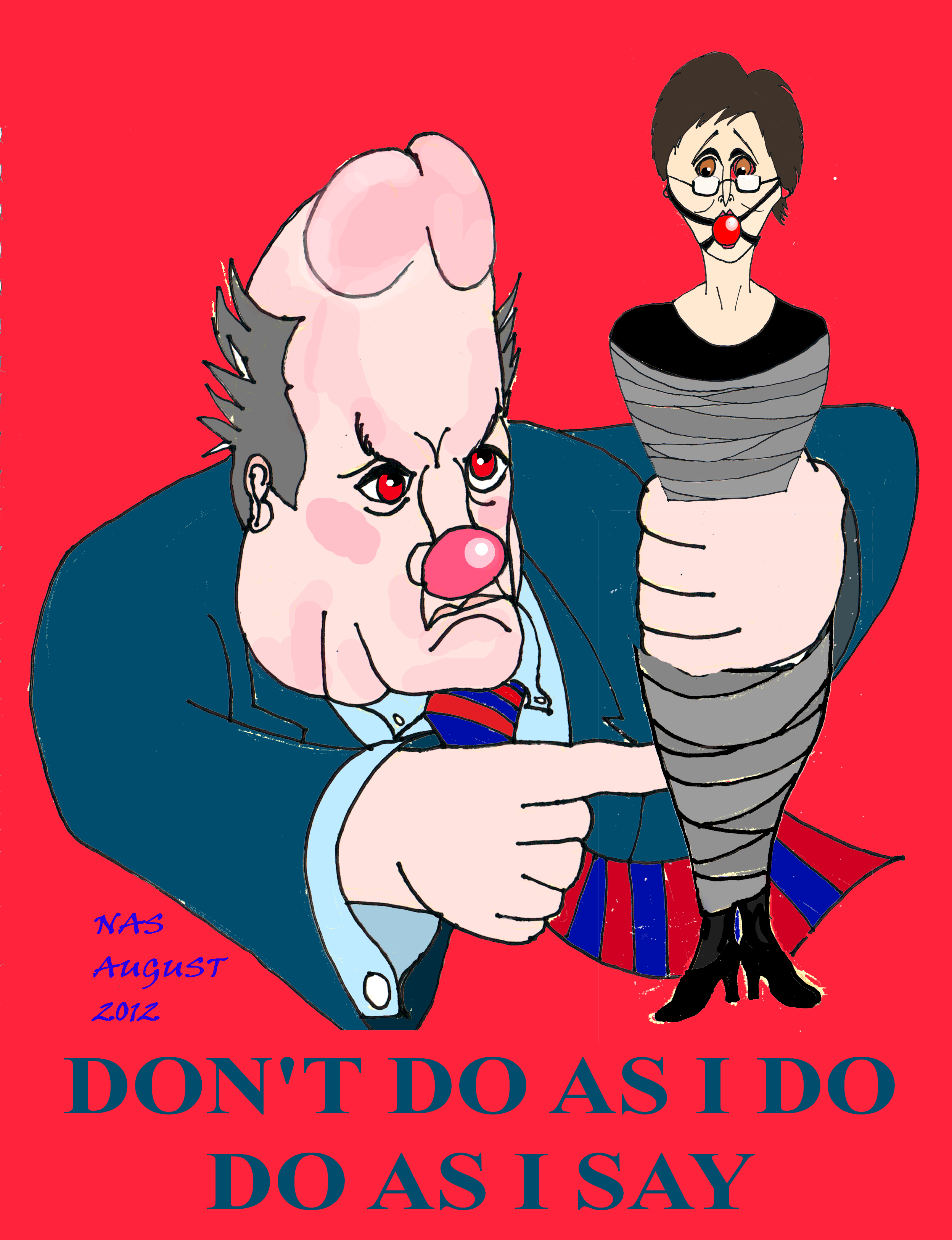
Davidson is Chairman of The Scottish Affairs Select Committee at Westminster. His style of management is dicatorial, strident and overbearing. He tolerates no dispute over any decsions he takes in the name of the committeee he regards as his to control.
Davidson, is probably the most influential of Labour Party policy deciders, “almost anything he say’s goes” where Scottish politics is concerned. He is known to be quite scathing of the Scottish Parliament, in particular the ability of the MSP’s, including Labour elected to it. Scotland would be best advised to remember Davidson’s quote before the referendum, “Once we get our, “No” vote in 2014, we’ll rip so many powers from the Scottish Parliament the neo-Nats might as well meet once a month above a pub, for all they’ll have left to talk about”. So there is a hidden Labour agenda. In the event of a “No” vote, (duly delivered by campaign of fear) the Scottish Parliament, will be first neutered then, in time abandoned.
In the course of the referendum campaign he was vociferous in his oppositon to any form of independence. On one occasion he demanded that the MOD insert a, “get out” clause into a warship contract, due to be signed off with BAE to build frigates on the Clyde so that the MOD could remove the contract to Portsmouth in the event of a “Yes” vote. So much for representing his people, the bulk of Glasgows shipbuilding constituents live in Govan.
In March 2007, Davidson purchased from his, Additional Costs Allowance , reclining furniture costing nearly £1,500 and had it delivered to his Glasgow home at the time he was claiming his Commons allowance on his flat in South London. He said the suite was later driven to London at the taxpayers cost. he subsequently claimed and was reimbursed in full for both bills.
Under the Green Book rules, the allowance can only reimburse MPs for “expenses wholly, exclusively and necessarily incurred when staying overnight away from their main UK residence … for the purpose of performing their parliamentary duties.”
A note of enquiry from a Commons official was concerned Davidson paid a property search agency to help him find a new flat and references records showing Davidson had already claimed £1,000 of taxpayers’ money with nothing to show for it and was concerned about how long the search, at the taxpayers expense would go on.
Davidson explained he wanted to use the agency because — away from home a lot — no time to house hunt — unfamiliar with English house-hunting. He had not expected this to take so long. The market was difficult — not sure how much longer it would take. He added he was, “not sure about terms of contractwith the agency but that he might have to pay £5k in all. He didn’t remember who he spoke to originally or who had authorized this spend.” The final charge to the taxpayer for finding Davidson a flat came to £6,000. The fees’ office agreed a proportion of this sum. He then billed the taxpayer for more than £11,000 to move into the flat.
Expense claims show that Davidson, a member of the Commons Public Accounts Committee, arranged for a handyman from Glasgow to renovate his south London flat between 2005-06 and 2007-08 at a cost to the taxpayer of £5500. He then took the handyman, whom he described as a “family friend”, shooting at two events organized by the National Rifle Association. In one match he was on a Commons’ team against the House of Lords. Davidson said he “could not recall” whether the handyman paid his own costs.
Davidson said permission to employ his “family friend” had been “specifically requested from the fees office and agreed on the basis that it would be cheaper than employing a London firm. He said: “he accompanied me on two occasions to a shooting match with the National Rifle Association. Since a competition had already been arranged to shoot at Bisley, I sought and was given agreement for him to participate as my guest.”
The people of Glasgow (Govan) should reject Davidson and his self serving Labour party colleagues in favour of the SNP who, as entity exist only to serve the people of Scotland. Labour have had enough chances.
To understand the man the Ian Davidson is it is best to view him in action. The videos listed provide just that opportunity.
Labour MP questioned on voting record at Bedroom tax demo
Ian Davidson obsessively repeats his mantras of ‘separatist’ and ‘separation’ – a substitute for argument.
Talking nonsense to the MOD about nuclear weapons
Fijians serving in Scottish Regiments should be easier to spot
Not a happy bunny: Ed Miliband to curtail union power
Shipbuilding and warships
Yew Choob Presents-Ian Davidson.Lyrics by Ninjapenguin
Resident joker, invoking laughter and sneers at draconian cuts planned for Scotland
About article 346 Orders for warships to the Clyde
Monitoring an Anti-Bedroom Tax Demo
Scottish shipbuilding and its shameless politicization
Malcolm Tucker deals with Ian Davidson MP
Caught on Cam, “Stupid Bastard”
Claims Faslane supports 19000 jobs
Disrupts PM Question Time
Ian Davidson MP – Innovative union responses to the cuts
The nuclear issue Faslane and independence-and safe havens.
Your state pension is safe upon Independence
Independence will not affect your state pension
How will saving Clyde yards affect the referendum?
‘Experts’ talk rubbish on referendum questions to Commons committee
What European elites learn: Don’t ask the people!
Are you hiding concessions already made from us? Panic in Labour ranks!
Servicemen and women – Impact of Referendum
Will rUK armed forces still recruit Scots after Scotland’s independence?
Scottish service personnel – pensions and medical records
Wind-up – How will UK government departments communicate with Scottish public?
UK Referendum Rules – how will they apply?
What do you hope to agree? The Labour panic sets in .
The Memorandum of Understanding – Morally and politically binding – but legally?
Section 30 Order – What happens if parties don’t agree?
Requests for assurances that UK Parliament can control the process
Macho posturing and sarcasm by Davidson
The franchise for 16-17 year – old’s and Sect 30
Donation rules – donors from outside of UK. Monaco and Bahamas?
Will Scottish Government seeks to abuse/exploit Commonwealth Games?
Davidson fantasizes that UK can control 2014 date.
Defence in a Post-Independent Scotland
Ian Davidson MP talks nonsense to the MOD about nuclear weapons














 caltonjock