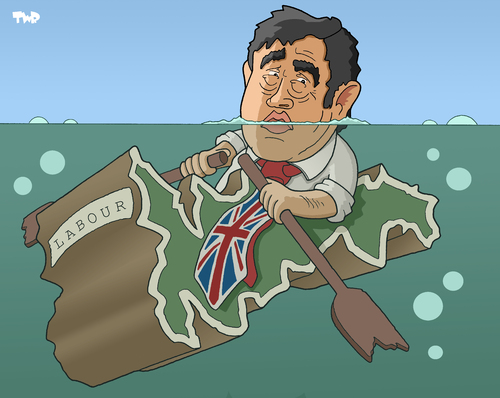
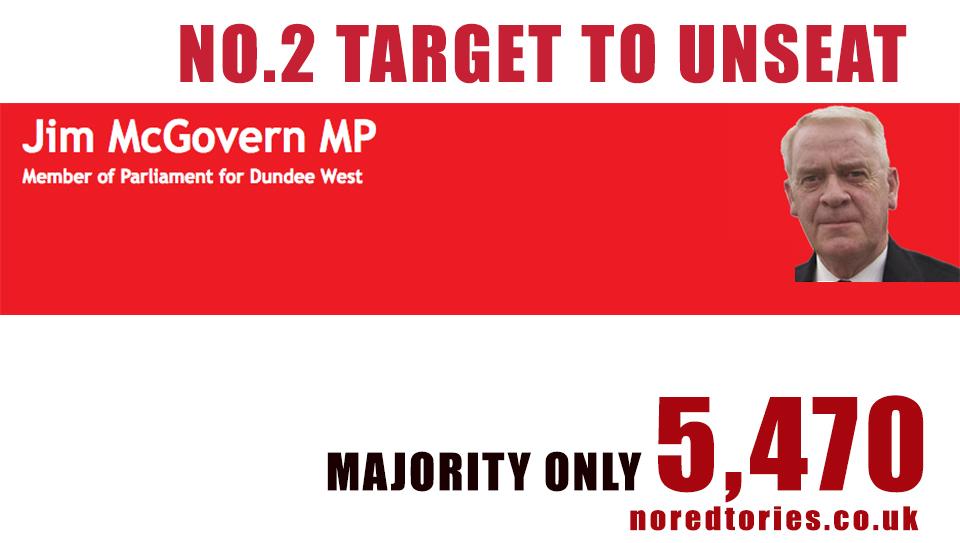
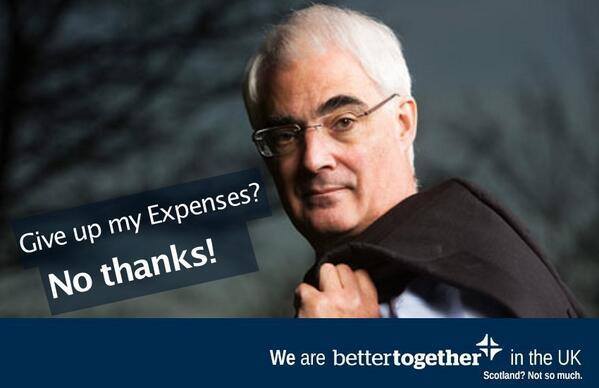
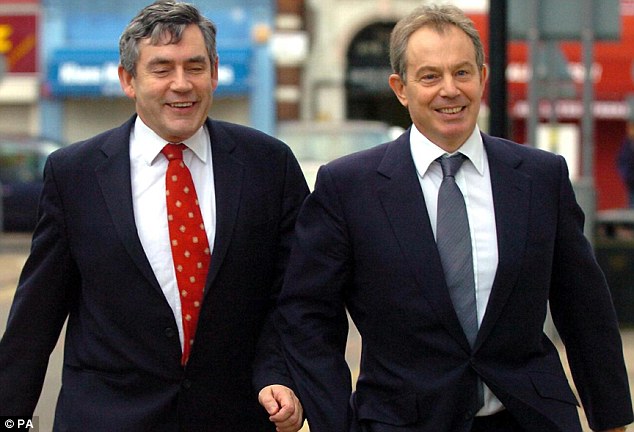
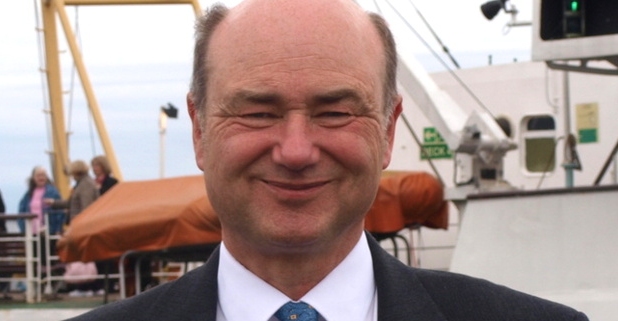
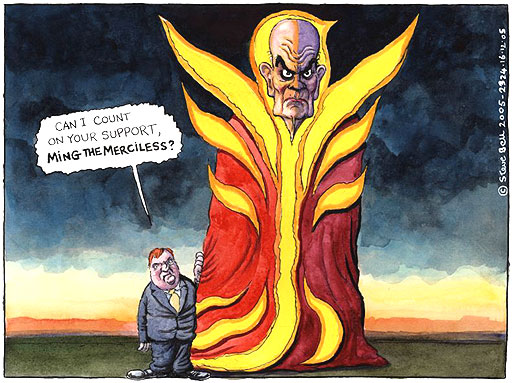
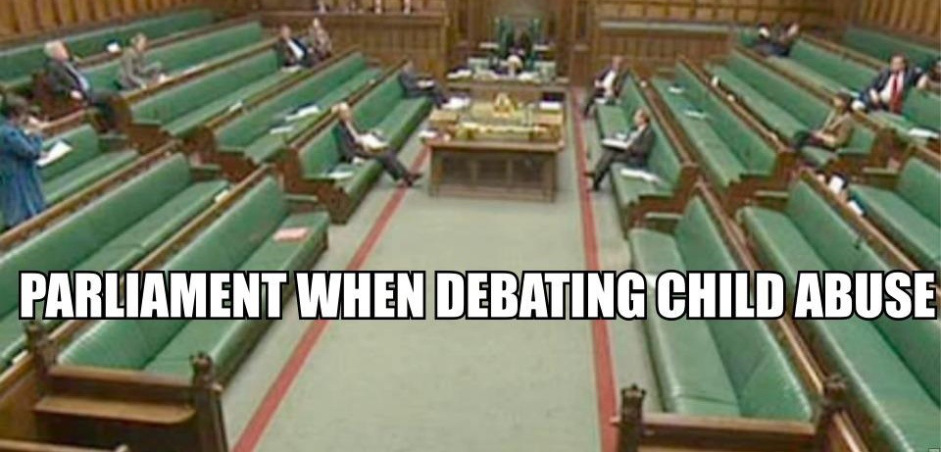
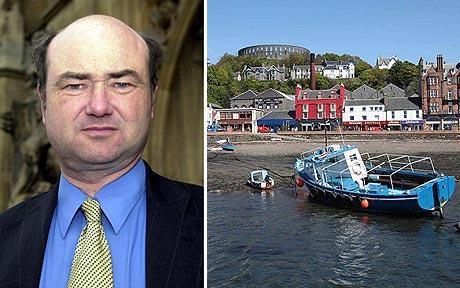
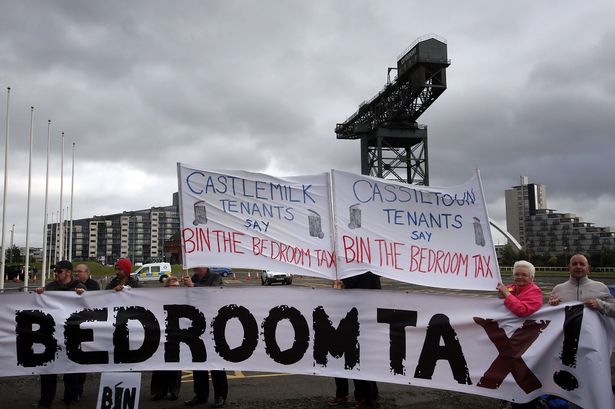
Menzies Campbell and Gordon Brown Planned to Usurp Scots By Any Means Preventing The SNP From Formng a Government


gordon-brown


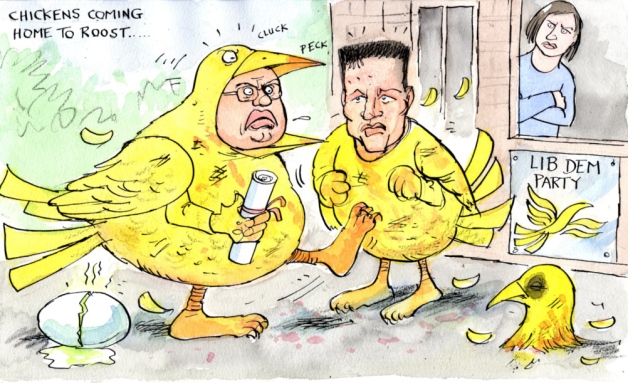
March 2008: Sir Menzies Campbell And Gordon Brown’s Secret Talks On Pact To Deny SNP The Right To Govern Scotland

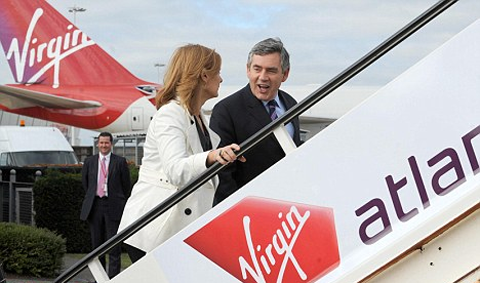
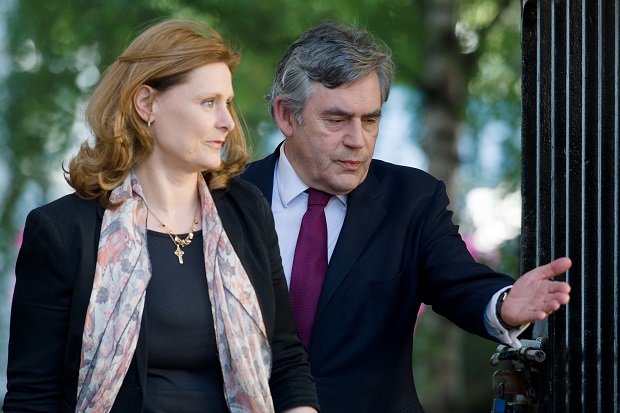
Brown held two secret meetings with Sir Menzies Campbell during the 2007 Scottish election campaign in an attempt to forge a new Labour-Liberal Democrat coalition and keep the SNP out of power.

Brown, the then Chancellor tried to get the agreement of the former Lib Dem leader for an anti-SNP coalition – even though neither had the authority to make such an agreement.

The secret meetings, held behind the backs of their respective Scottish parties and leaders, were disclosed in Sir Menzies’ recently released autobiography.

In Menzies Campbell: My Autobiography, Sir Ming described how he met Brown twice in Edinburgh during the election campaign – once on Easter Sunday and on election day itself, when it was clear that the SNP was ahead in the polls and heading for victory.

On both occasions, Brown asked for a new Labour-Lib Dem coalition as he did not want the SNP to control the Scottish Executive and its 30 billion budget.

Sir Ming told Brown that, although he was also against an SNP-led devolved administration, he could not decide coalition policy, as that was in the hands of the party’s Scottish leader, Nicol Stephen.

Jack McConnell, the then Scottish Labour leader, was not invited to the meetings.

Brown was operating without the knowledge or approval of the Scottish Labour leadership.

News that Brown was working behind the scenes to forge an anti-SNP coalition infuriated Nationalists and embarrassed Scottish Labour leaders, particularly as McConnell made it clear after the SNP won last year’s election that Alex Salmond would be given the chance to form a government.


campbell


Sir Ming wrote that Brown first called him at home on Easter Sunday last year to ask for a discreet meeting.

He stated: “Like me, he was anxious about the possibility of the SNP governing in Scotland, our own backyard. Was there common ground between Labour and the Lib Dems to tackle the SNP together?

He made a number of suggestions. I told him I would have to discuss them with Nicol Stephen. “He then raised possibilities for a new coalition between the Lib Dems and Labour on the assumption that the two parties had enough seats jointly to form a government. ”

Sir Ming wrote that this was difficult for him as such decisions were for Mr Stephen.”

As the election campaign drew to a close, Brown got in touch again.

Sir Ming wrote:

“We met at the same discreet place as before. Throughout the campaign, the polls had put the SNP ahead of Labour. Was there scope for an arrangement between our parties?  What would be the consequences for Scotland and our parties if the SNP used the 30 billion Scottish Executive budget to build support for independence over the next few years?”

Sir Ming also explained how the Scottish Lib Dem leadership team met at his Edinburgh home the night after the SNP’s victory to eat pizza and decide what to do. “After two hours, we packed away our pizza boxes and any possibility of a coalition deal with the SNP.”

Sir Ming also revealed that both he and Tavish Scott, the Lib Dems’ election campaign manager, were against an SNP-Lib Dem coalition, but a deal with Labour was still a possibility.

Brown contacted Sir Ming the next day. Sir Ming wrote that he had to be “circumspect” as he was not supposed to “muscle in” on Scottish party affairs.

By the time Scott went on BBC Scotland’s Politics Show the following day, all forms of coalition had been ruled out for the Lib Dems, which is what he then announced.


backstabbers


Brown was so desperate to keep Alex Salmond from being First Minister he tried to cut a deal to keep him out of power.


The 2007 Scottish General Election

The SNP won the Scottish General Election with 47 MSP’s to Labour’s 46.

Despite all the odds being stacked against them the SNP formed a minority Government and retained power for the full term of the parliament.

But Brown, assisted by his network of spies, the Civil Service and rumour mongers continued with his vindictive attacks on Alex Salmond and his government making life extremely difficult for the newly elected SNP government turning down meetings delaying and denying Scotland effective governance.

But due to the dogged and unstinting efforts of Alex Salmond a way forward was finally agreed through the establishment of a new “Joint Ministerial Committee” comprising the leaders of devolved administrations and representatives of the Westminster government.

Adding insult Brown insisted that the First minister of Wales should undertake responsibilty for agreeing the format and chairing the body at the first plenary session after which Jack Straw would take the chair at meetings.

What a control freak. No Gordon Brown Alex Salmond meetings.


murphy


The 2015 General Election

Brown departed the scene but his legacy lived on in the newly elected leader of the Labour Party in Scotland.

Murphy had a history of doing deals within deals, (the referendum campaign gave truth to this). He would deal with the devil if needed to get a result.

But of note and some encouragement for Scots was the scale of his leadership victory.

Despite the unqualified backing of Miliband, the Labour Party Executive and all of the Scottish group of MP’s in Westminster he only managed to gain about 50% of the total vote.

With 50% of the labour Party in Scotland against him, including all Trades Unions Murphy will not find rich pickings on the left leaning membership of the party.

Noteworthy also was that the Cooperative sponsors who supported a number of Scottish MP’s. did not support Murphy’s election which was very damaging for Murpht and the labour Party.

The SNP sustains a Trades Union support group and many Labour supporters transferred their allegience to the SNP.


Gordon-Browns-Cabinet-001

Systematic Abuse Of The Scottish Electorate By The BBC And Other National Media Organisations Urgent Remedial Action Required


Systematic Abuse Of The Scottish Electorate By The BBC And Other National Media Organisations

In some places it was estimated in the two months run up to the 2010 referendum that approximately 80% of the Scottish electorate had tuned into national television (BBC, ITV Channels, 4 and 5) for their election coverage. Post election research identified complaints from viewers primarily centred around a lack of adequate coverage of important Scottish issues, the bulk of prime time reporting and or discussion being aimed at UK matters. Biased programme presentation and interviewer, in favour of the Labour party also attracted many voters and political party candidates and leaders concerns.

The 2014 referendum produced the highest electoral turnout since WW2, many constituencies reporting figures in excess of 85%. But television coverage of the various campaigns was appallingly bad. Lessons from the 2010 election had not been addressed. In fact the matter of bias in favour of the “Better Together” campaign became the most discussed issue of the referendum. A university professor and other eminent persons produced reports providing undisputed evidence that the BBC, (singled out) in particular broadcast television and radio programmes so weighted in favour of the Better Together campaign that many viewers turned away from old “Auntie” preferring to be advised of referendum matters through mass media outlets. eg. the internet. By the time of the referendum in September 2014 the estimated audience figure for the BBC and other national broadcasters had reduced to approximately 50% of the electorate. A damming indictment of presentation policies forced upon the Scot’s by a biased media.

The Scottish Electorate Deserves A Balanced Informed Television/Radio Coverage Of  Politics. But How Is This To Be Achieved? A cross party alliance should be formed, comprising media reformists and other informed persons. Their mission to insist upon a fair election coverage on Scottish television/radio. Meetings to be held, attended by representatives from television broadcasters in Scotland. The purpose of said meetings to be for broadcasters to agree operational standards. At times of elections and/or referendum  a commitment to broadcast a minimum of two hours each week of political party – or specific subject discussion during prime viewing hours in the four week period before elections. Coverage, evenly balanced, to be monitored by Alliance members so that public interest would be protected.


The Downing Street memos Revealed

BlairMugshot

Pressure is being applied by MP’s insisting that the Chilcott Report be published in full before the end of February. It might be further delaying tactics will be put in place with the purpose of burying the report until after the GE in May.

In terms of actions taken or not by a number of persons of note there is a definitive record available for study from which it is possible to apportion events and authority. Ignore the hype, check the facts. Go to:

http://www.downingstreetmemo.com/memos.html

??????????

UK Energy Policy The Next Ten Years – Industry mandarins Provide a Clear Vision – NOT A Chance

solar-less-expensive-nuclear

UK Energy Policy The Next Ten Years -Industry mandarins Provide a Clear Vision – NOT A Chance

The UK Government has spent years putting its UK-wide subsidy framework for energy in place, so is not about to abandon it, for all the reasons set out in the ‘no’ campaign. Yet critics of the wind industry say that is exactly what should happen. But even if such calls go unheeded there could be less drastic changes. “We would note that there is still a risk that certain areas of energy policy could be included in the further powers that are to be devolved from Westminster to the Scottish Parliament,” analysts at Citigroup said.

Niall Stuart, Chief Executive, Scottish Renewables: “it is important that both governments return to working together to meet the incredibly important challenges facing our country, such as tackling climate change and growing the economy. Renewables can make a significant contribution to both. “Scottish Renewables is calling for a new joint Scottish and UK Government energy policy that balances the interests of Scotland within a single GB energy market; a more open and accountable energy regulator; our islands connected up to the grid and coordinated investment by the UK and Scottish Governments to support our flourishing marine energy sector.”

John Constable, director of Renewable Energy Foundation (REF): “English and Welsh consumers cannot now be expected to go on propping up the freeloaders of the Scottish renewables industry through income support and the socialisation of grid and system management costs, for example the now notorious constraint payments. “We have alternative and competitive low carbon energy sources, including high load factor offshore wind, a major build of combined cycle gas generation, and, provided that it is not subsidised through Contracts for Difference, nuclear. The current situation is not sustainable and a new balance will have to be struck.”

solar-pv-cost-trend

Infinis Energy: Preservation of an integrated UK energy market and the UK-wide applicability of the RO-legislative framework in support of continued investment in renewable energy is necessary.”

Tony Ward, Head of Power & Utilities at EY UK & Ireland: The established dynamic in the energy markets needs to continue its current course. “The UK markets have developed ever-closer and more integrated systems and ways of operating that serve to reduce, then smooth, the cost burden across all users. This also enables investment choices to be made on system-wide merit and help achieve a degree of energy security that can often be taken for granted.

Emily Gosden, Energy Editor: While proposals for further devolution are as yet unclear, Holyrood appears unlikely to be handed complete control of energy matters. However, there are already calls from Scottish renewables groups for Holyrood to have a greater say in determining energy policy, while critics of renewables say Scotland should be forced to pick up more of the costs of the costs and liabilities that are currently shared across the entire UK market in it’s drive for wind farms.

Sir Ian Wood: Made it very clear substantial reforms and more tax breaks were needed to help the industry. It is expected his suggestions will be taken up by the UK government in next year’s Budget. The Government will want to prove its stewardship credentials and hope to secure investments in a number of North Sea projects that are currently on hold amid concerns about rising costs. The “Wood Report” which examined and pronounced upon the remaining potential of the North Sea, identified that the true scale of untapped reserves would be very limited and insufficient for long term planning. Funds would need to be put in place soon to meet the signifcant cost of tax relief for decommissioning the North Sea

21408_40499

Ian McLelland, Edison Investment Research: “Much needed capital injections to some of the smaller cap North Sea oil and gas explorers will move a step closer – via mergers and acquisitions or capital raising on public markets,”

Ben van Beurden, Chief Executive, Royal Dutch Shell: “Shell will continue to work closely with both the UK and Scottish governments to help the industry deliver vital energy supplies through investment in the UK’s oil and gas resources. We look forward to continuing our proud association with Scotland.”

BP: “The North Sea is important to BP and we expect to be an active participant in the oil and gas industry in Scotland for years to come. BP will continue to work closely with both the UK and Scottish Governments to realise our shared ambition of maximising economic recovery from the North Sea.”

Malcolm Webb, chief executive, Oil & Gas UK: “To safeguard the industry’s future, it is particularly important that that the government presses swiftly ahead with fiscal reform as well as the implementation of Sir Ian Wood’s recommendations to maximise the economic recovery of our oil and gas resource.”

http://www.telegraph.co.uk/finance/newsbysector/energy/11108541/Scottish-no-vote-what-next-for-the-energy-sector.html

http://www.telegraph.co.uk/news/uknews/scotland/10177219/SNP-energy-pledge-would-not-stop-power-bills-increasing.html

http://www.scottishenergynews.com/lords-axe-holyroods-power-over-scottish-renewables/

http://yes2014.net/2014/08/05/westminster-rolls-back-devolved-power-to-frack-scotland/

Renewable energy ambitions of the Scottish Ministers “trounce the law of the land”

Alternative Energy Source Pros and Cons

The Aftermath Of The Referendum Press Statements To Be Retained For future reference.

never give up

The aftermath of the referendum brought with it a number of press statements which need to be retained ready to hand for future reference.

BBC biased coverage of the Scottish Independence Referendum criticised.

With no exit poll isn’t there a democratic deficit?
http://www.theguardian.com/commentisfree/2014/sep/18/scottish-vote-no-exit-poll-democratic-deficit

I feel for all those for whom the yes campaign brought hope.
http://www.theguardian.com/commentisfree/2014/sep/19/scotland-lost-opportunity

This glorious failure could yet be Scotland’s finest hour. Forget Bannockburn, the Scots reinvented and re-established the idea of true democracy.
http://www.theguardian.com/commentisfree/2014/sep/20/irvine-welsh-scottish-independence-glorious-failure

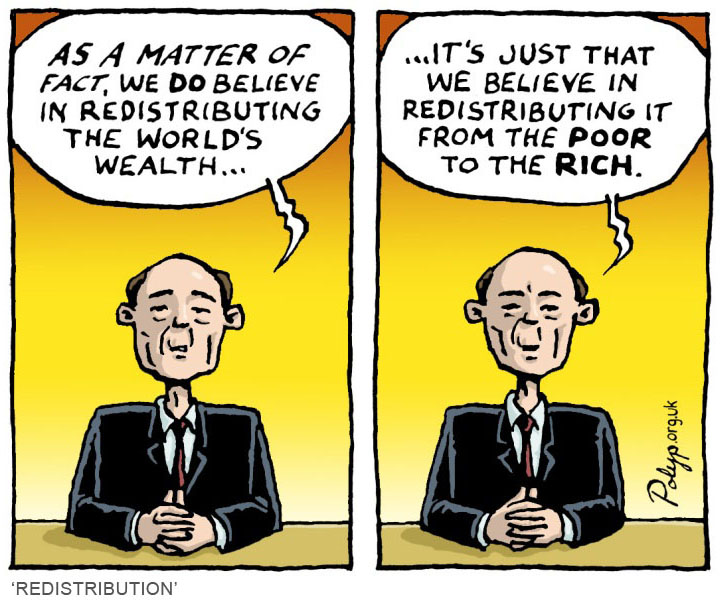
The lifestyle of top executives like Brian have become more luxurious, while ordinary people like Brenda have found it harder and harder to make ends meet.
http://highpaycentre.org/blog/explaining-the-data-the-background-to-our-new-animation

The UK is one of the most unequal countries in the developed world. The gap between pay at the top and bottom is huge. Living standards for everyone – apart from those at the very top – remain squeezed. But we argue, it doesn’t have to be like this.

The gap between rich and poor is the widest in 30 years. Inequality is still rising. If current trends continue, we will have reached Victorian levels of inequality in 20 years.

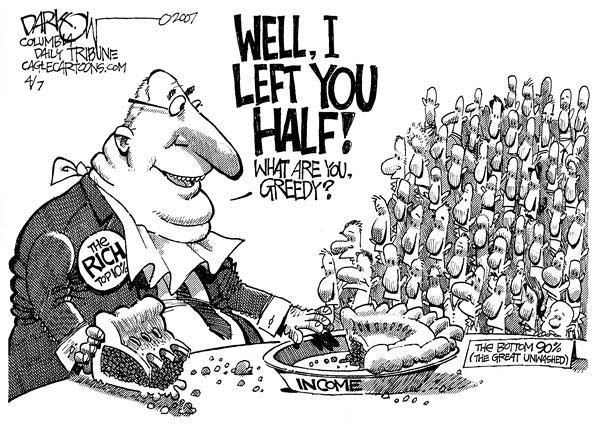
Inequality and the top 10% getting Richer and Richer by the year will Destroy the UK Economy, Democracy and even the NHS.
http://worldinnovationfoundation.blogspot.co.uk/2014/08/inequality-and-top-10-getting-richer.html

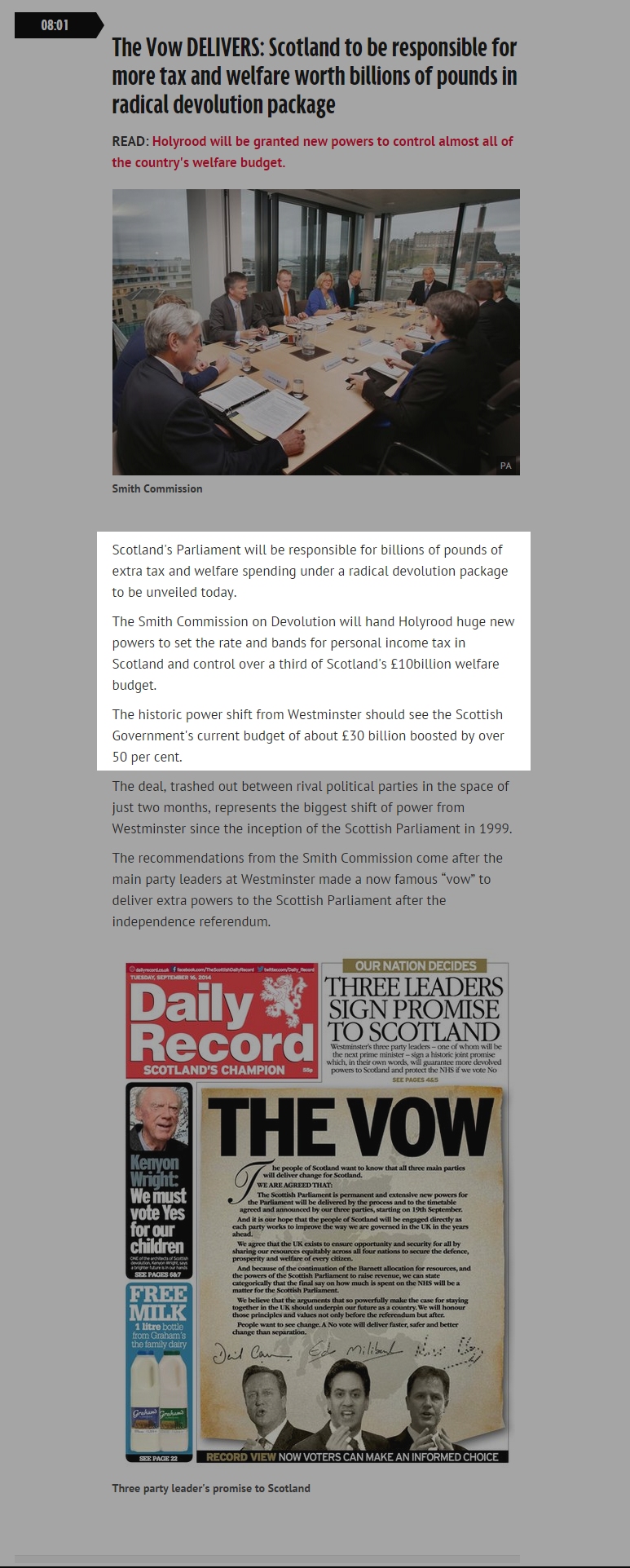
Three main Unionist party leaders signed up to a historic joint statement
http://www.dailyrecord.co.uk/news/politics/david-cameron-ed-miliband-nick-4265992

john McLean

Democracy in the Dark – the Decline of the Scottish Press.

Newspapers don’t just sell news; in fact, that has been an increasingly small part of their function in the last century. Newspapers have been cultural curators, critically evaluating artistic and literary trends, providing a showcase for good writing, informing readers on important developments in science and society. They have provided a forum for informed debate, & promoted their own vigorous opinions on affairs of state, forcing politicians to take note.

But the financial problems of the press are making it harder and harder for them to provide this essential cultural service. Scottish papers, reports the National Union of Journalists, have lost half their journalists in the last decade or so. UK papers with nominally Scottish editions now dominate the Scottish market.

This is becoming a constitutional issue because the Scottish and UK newspapers are almost exclusively unionists – often militantly so. It is right that newspapers have strong editorial views, but it is not healthy when they all have the same editorial views. Iain Macwhirter (political commentator for The Herald and Sunday Herald newspapers).

COMMENTS:

1. That single phrase, about it being right for newspapers to have strong views “but not when they all have the same views”, goes to the heart of a wider debate about the relationship between ownership and editorial content. It also touches on the fact that a large proportion of the Scottish press is Scottish in name only. With the exception of DC Thomson’s operation, the major newspapers are published by companies based in London (and, in The Herald’s case, ultimately in the USA). Now I happen to be agnostic on the Scottish independence debate or, arguably, conflicted. I understand why, even in the 21st century, there remains an insistent pressure for independence from nations that have been colonised or incorporated by other nations. Reality impinges, however. I realise distinct societies that, for one reason or another, have failed to hold on to their nation state status (or never even had one) do need to regain it or achieve it. http://www.saltiresociety.org.uk/news/2014/04/23/iain-macwhirters-democracy-in-the-dark-saltire-series-5-pamphlet-launch-event http://www.allmediascotland.com/press/63999/iain-macwhirter-xxx/

2. They must assert their nationhood as a stage on the road to the eventual dismantling of all such geopolitical boundaries. I’m glad I’m not confronted by a yes-no voting form. But I am, like Macwhirter, concerned that a fake “Scottish national press” has adopted a single view on the matter. http://www.theguardian.com/media/greenslade/2014/apr/25/scottish-independence-newspapers

3. From my point of view, the Scottish press is not serving its audience (the thinking people of Scotland) and that is very sad. However I must say, people have been getting up of their asses and actually doing something about. There is an online scene of bloggers and news sites that are starting to provide an opposing view to the hideously one side unionist pro-UK press. I would like to think that new models for news and opinion will grow out of this. For sure they will be needed , irrespective of the referendum result, to hold politicians accountable, when the traditional newspaper and TV fail to do so, because they become too comfortably close, and because of commercial interest. Thomas William Dunlop reader.

The Referendum – The Queen – Her Think Carefully Slip- The Government- The Hypocrisy – The Reaction of 1000 Scots

throne

One of the most controversial events in the course of the referendum campaign was the intervention of the Queen on the eve of the vote. Her unwelcome involvement had been carefully orchestrated by the Government and partners in the Better Together team comprising the Unionist parties who were concerned that the Scottish electorate were indeed ready to vote for independence which would end the gravy train for all those feeding on the wealth of Scots.

This is the feedback from Scots who were only advised of the true nature of the involvement of the queen through a leaked email released by a horrified whistleblower close to the ACTION.

So she’s not neutral then. She willingly took part in a PR campaign to influence a democratic vote. I would have some respect if she had just come out and said it, but the way it was stage-managed, to make it look as if she just happened to say it as she was meeting a member of the public, leaves a bad taste in the mouth.

The Queen’s neutrality is a bit of a con, really. She gets time with the PM every week to provide ‘guidance’ – in effect, she’s the only lobbyist with a codified constitutional position.

I find it depressing we’ll end up seeing more monarchical interventions.

So she’s not neutral then. Only fools ever thought she was. Ever heard of a monarch in favour of breaking up their kingdom? The ‘No’s’ were shafted, fooled by their ‘betters’ and conned by the lying Unionist politicians. We warned you. but you fell for it anyway.

You can tell by her expression in that photo what a lowlife cretin she thinks Dave is. She probably envies her predecessor, of the same christian name, who could (and very probably would) have ordered him taken to the tower to be beheaded.

If I were a Scot I’d want another ballot. Pronto!

A Constitutional Monarch? Lying bastards.

Next time we include an independent Republic on the manifesto – ditch the anachronism and make a modern state for the 21st century.

I agree. Constitutionally this is a game-changer. The Queen intervened in politics at the behest of the ruling party. Republic of Scotland, anyone?

As the queen represents Wales, leeks are obligatory.

So the snivelling toerag Cameron got the Queen, Gordon Brown and Alastair Darling to save his ungrateful butt – Then he repaid them by revealing private conversations with the Queen and immiediately screwing over Brown and Darling in order to advance his feeble position. The bloke is devoid of a moral compass.

I look at Cameron and I see a walking void, not just sans morality, but sans vision, sans hope, sans thought. He’s a grasping, hungry nothing clad in a suit. There’s not even a will to power there, he lacks the blood-lust of a true Tory that at least marks them out as living creatures.

The final execrable product of the machine-production of politicans for the media age. A hologram reading lines scripted by committee. A golem running on tabloid instructions. A focus-grouped ghost.

I thought it was a moral compass and then the fog cleared and there was just a middle digit pointing north.

One of the (many) advantages of an independent Scotland is we could choose to ditch the Windsor benefit fraudsters and forge ahead as a new republic.
That would be a grown-up country for the 21st century.

errmmm – Salmond wanted to keep this anachronism.

Only because he feared ditching them would be unpopular, for sentimental reasons. I would have gone for Yes with ditching the royals. I would have left NATO too, and established a Scottish currency or joined the euro. But then I wasn’t in charge of the campaign, Alex Salmond was. Maybe next time we will get it right. 2016?

Y’mean he was bein’ dishonest ! Next you’ll be telling me his plans for Scotland’s economy was based on Scotch mist ! A Scottish currency – good idea if Scotland wanted true independence. Who’d have backed it though ? Join the Euro ? thought you wanted independence ?

I wonder what the result would be of a referendum now

I think there has been a moral victory for the yes, nationalists. The establishment is holding this country back

I wonder what the result would be of a referendum now

At least now the truth is coming out, kudos to the guardian for that, what little difference it makes now.

Now repeat after me – “Oil revenue was always seen as a bonus….”

Wow, who would have thought it? You mean a ‘well-wisher’ did not just happen to ask the queen that question and it wasn’t just coincidentally overheard by a
reporter and it didn’t get reported on national news by accident? Well I never. What a great day for democracy.

Buckingham Palace issued a statement which read: “The sovereign’s constitutional impartiality is an established principle of our democracy and one which the Queen has demonstrated throughout her reign. “As such, the monarch is above politics and those in political office have a duty to ensure this remains the case. “Any suggestion that the Queen would wish to influence the outcome of the current referendum campaign is categorically wrong. Her Majesty is simply of the view this is a matter for the people of Scotland.” So …. the Palace lied……………….. http://www.bbc.com/news/uk-scotland-scotland-politics-29200359

I was definitely on the side of no, but the fact the Queen’s neutrality was publicly breached was one of those moments where I genuinely questioned what the fuck this country is even about. It just goes to show what a fustercluck this government is. I see that Cameron’s been trying to position his party as competent and Labour as inviting chaos. What an absolute killer of a joke after the past five years of car-crashes, trainwrecks, blatant mismanagement and unforced errors. The irony of it is so thick and multilayered it’s like a gateaux of whipped double-fat bullshit and thick, moist slices of naked hypocrisy. Christ. It’s getting to the point where I look at our unelected, octogenarian hereditary monarch and go “could she really do a worse job than the clownshow we’ve got running things at the moment?”

They are there to preserve their rule, as they are ‘superior’ to us oiks who actually make this country work.

It’s obvious that the Queen & the rest of her family are right wing Tories, this article is wrong, she has not been “Scrupulous” about getting involved in political issues, in 1977 she spoke out against Scottish independence as well. Funny how she never spoke up for the miners, unemployed or homeless in the Eighties, only when it affects her selfish family. (Independence affects them, due to the vast amount of land they own in Scotland).

Charles wanted to join the Labour party when he was at college, but was told he couldn’t.

Yeah, too patronising…

It’s not difficult to imagine which side of the referendum the Queen was on, really.

Well it’d be a bit embarrassing to be the monarch who presided over the break up of one’s own country.

She’s compromised now. The lid has been lifted on our so-called ‘benign’ monarchy. They still rule this country. This isn’t a democracy.

All those ballot boxes are just a sham then?

Most of them were – mainly the tampered ones..

No actually. The crooked leeches in the City of London bought our Political Class. The Self Proclaimed Talent. The biggest spongers of all. Royal Family is sideshow nowadays. Rather boring one in my book.

You should think very carefully before lending credence to information provided by unattributable whitehall sources.

Quite right, that’s Malcolm Rifkind’s job.

There should be no ‘Queen’ in a modern democracy – anywhere, including those lauded elsewhere in Europe, imho.

Your statement might be correct but for one point. There is NO modern democracy in the UK. So until there is, I’d prefer Elizabeth remain where she is.

errmmm… if push came to shove how far do you think she would go to preserve any sort of democracy ? Not very – she must keep ‘the firm’ in business. I can see why, though.

Coronation of George IV, 1821, Westminster Abbey.

Another vow broken then. As if we didn’t know what side she was on. Protecting her real estate methinks!

Amazing. Idiots ruin the country then ask the one person who is expected to shut up and not air her own opinion, to intervene. I bet she’s well impressed with her current prime minister.

I admire the Queen but I am very disappointed if she allowed herself to be used in this way, There needs to be another vote in Scotland. Polling already shows Yes ahead, if there was to be a rerun now.

Im a yes voter and Scotland does not deserve another referendum. The scots must now face the full onslaught of the austerity agenda that is coming their way maybe then in 10 years theyll finally maken the right choice. Im am deeply ashamed of scotland. I live here and I really wish didn’t at the moment.

Are you being too harsh on yourself and others? Remember the propaganda and fear that Scotland was bombed with. To say ‘does not deserve’ fulfills that awful old saying that ‘the Scots are half in love with failure’. But only half were in love with that. And their regrets are coming out now. It won’t be 10 years.

Here’s how it was reported at the time: A Buckingham Palace spokeswoman said: “We never comment on private exchanges or conversations. We just reiterate what the Queen has always said: she maintains her constitutional impartiality. As the Queen has always said, this is a matter for the people of Scotland.” Except, of course, she did not. In fact she plotted with the government, PM and civil servants to do exactly the opposite and hoodwink the Scottish electorate into favouring a particular choice. All with the connivance and complicity of the media. Failing to remain constitutionally impartial surely forfeits the position of the monarchy as head of state. Republic now! If I were a Scot I’d want a second vote – they’ve been duped.

It also shows the BBC complicit in the charade.

Don’t worry Liz we are definitely listening carefully now, just check the polls….

As a druid, I can’t see why asking voters to “think very carefully” is controversial. Her Madge was basically asking them not to vote frivolously – a trait well-known in the happy-go-lucky Scottish psyche.

I reckon The Queen would still quite enjoy being the Queen of the two existing kingdoms of Great Britain, even if Scotland were an independent/separate place (delete independent/separate according to one´s preferred thoughts on Scotland´s constitutional debate). On 24 June 1953, following her coronation at Westminster Abbey, the crown was carried before Queen Elizabeth II in a procession from the Palace of Holyroodhouse to the High Kirk of St Giles, Edinburgh, where the Honours of Scotland, including the crown, were presented to The Queen during a National Service of Thanksgiving. http://en.wikipedia.org/wiki/Crown_of_Scotland This Pathé News reel footage of the St Giles ceremony is quite remarkable as the Honours of Scotland are handed over and the Scottish Crown is offered to the Queen: http://www.britishpathe.com/video/scotland-welcomes-the-queen-1. Certainly reminds people the United Kindom isn´t quite a “United Kingdom” as it sometimes seemed before the recent debate. And I´m sure the Queen knows this more than most since the crown has been present and represented at the Official Opening ceremonies of sessions of the Scottish Parliament since 1999.

The Pathé reel is also interesting because the Queen, at the advice of the then government, wasn’t dressed for a coronation — lest it inflame nationalist sentiment.

Now you mention him – should we tell him that Princess Margarita of Romania is 93rd in line to the throne? He’d do his nut.

I am somehow bemused by the moral high ground the Guardian takes now. The Guardian made very clear that it opposes the separation. The Guardian threw down the gauntlet. It should have known that others did as well. So why the outrage that they did? The Guardian is equally responsible for the fact that the Scots were taken for a ride.

As a Londoner, I no longer have any belief in the United Kingdom anymore. I’m for a united island but the political paradigm that currently holds it together is inherently right wing and malignant. This latest stunt by the Conservative Party is utter cowardice, as they refrained from such a bellicose vernacular over English sovereignty in the period running up to the referendum, because they knew it would serve to confirm the hatred that the Scots quite rightly have for the Tories. What Cameron wants to preserve England as a matriarchal state that would effectively negate and weaken any form of Left Wing Coalition that decided to form a government. It’s good ol fashioned gerrymandering , the same they used in Northern Ireland.

Well said and entirely correct.It’s just a pity that they are being allowed to get away with this betrayal of Labour after saving Camerons political hide by campaigning to keep the Union intact. It just shows the Tories do not deserve any support by fair minded people.English votes for English people, a ruse to keep the Tories in, that’s what it’s all about. By announcing it against all advice to the contrary Cameron has fueled nationalism even more and guaranteed another referendum in the future just to get his rotten stinking Government another flip of the coin.

Once a dictator, always a dictator. I always thought the Monarchy would save us from Presidents and Dictators who could do what they want, but unfortunately this current Coalition has changed my mind. Bring on the revolution.

Given the Guardian’s pursuit of the publication of Prince Charles’ letters, I look forward to your editorial condemning the monarch’s intervention in party politics. We deserve an apology, not “no comment”.

Reading the article, I think the Queen has intervened in Tory party political matters more than she should.

Palace.of.westminster.arp

“This is purely a matter for the Scots” said Cameron. …………And the Queen and the Treasury and the BBC and the MSM and every World Leader that Westminster could rope-in and some of their Lordships who stated that Independence would lead to the “forces of darkness” taking over the World and causing more children to die in the Third World/Africa and even Saint Bob Geldof giving his tuppence-worth. Yep……a matter “purely for the Scots”, right enough!
I think the one that annoyed me the most, well aside from the prat who sprouted that Scottish Independence would mean the terrorists will win, was that fud Obama. Bet that particular fud couldn’t even find Scotland on a map, if we didn’t have the Nuke Boats here.

The Queen didn’t need to voice her opinion on the referendum – she has the entire establishment in Britain, powerful allies and friends abroad and a not inconsiderable band of obsequious, subservient subjects at her disposal. Nonetheless, independence I feel will come in the next 10 years – I think we needed a kind of dress rehearsal to build up our confidence – but that is growing and consolidating gradually. And in time getting rid of the monarchy and all the inequality and elitism that it represents would please me a great deal.
the ‘think carefully’ remark was carefully planned and thought about and not just an off the cuff remark.

So the monarch did the one thing they are expressly forbidden to do. Become politically active.

Wow, so the queen was part of a thing, a conspi.., no, a thing where powerful people agreed to try to stop Scots voting for the right to self-determination?
It’s incredible. Next, someone will say that the media consp.., no, agreed to help spread fear and stifle the debate.

Just relieved that Severin Carrell is there to keep us informed, the intrepid, investigative sort that he is! I have a queasy feeling that this is all heading to a Tory/UKIP coalition to coincide with the coronation of King Charles.

16 December 2014; The hoo-haw is around the fact that it only needed to swing the minds of 1% of the voters in the Scottish referendum, because the vote was that close. And although it is being officially admitted today, “the intervention” was effectively declared on Radio 4 on the day after the election. I remember one particular interviewee, I can’t remember his office, but in a very Toff accent, he was overjoyed at the Scottish Referendum “No” vote, and he was boasting about how wonderfully tactful had been the Queen’s finely delivered plea at that Sunday Church service. There was no question that this man was a monarchist and a unionist and that he thought the world had been saved from a fate worse than nuclear armageddon. The manner of his boasting was so suggestive that political intervention had been manipulated! Well, the Queen doesn’t care. She’s practically retired anyway, and just more interested in collecting her pension. But if I had been part of the Scottish “Yes” campaign, I would be pissed at her Government.
The Scots were cheated and I wish the Queen hadn’t been stained by this crap.
The Scots were conned into voting ‘No’ by the British establishment, (including the monarchy), with the connivance of the Labour Party. They should be given another chance to decide their own destiny without interference, and be offered another referendum.

We will have another referendum and this time we start with a support base of 45%+ not the 25% we did last time. I have spoken to dozens of No voters that regret their choice. Plus we know where our political classes went wrong last time and won’t make the same mistakes.

The Queen should have absolutely no influence over politics – constitutional or otherwise, full stop. That sleazy politicians were prepared to grovel for help just further illustrates their depravity.

Cameron and George Osborne were so nervous about a yes vote, which would have thrown his premiership into a potentially fatal crisis’ thus says it all Britain. … they don’t give a toss about scotland or the union just their own brass necks.

he Scots make a really bad decision, I’m sure they regret it now, its not just this government all the parties are corrupt to the very core. No one in their right minds would want to be part of the UK.

The point is , the queen, and every governmental force (including covert forces) were at work to ensure Scotland voted the right way. So the vote went the right way. Of course. …surprised?

We all know that when someone uses the phrase “you should think very carefully” it is often used as a somewhat aggressive warning. It can also just mean exactly what it says. We don’t know how it was meant and can only guess. But what is quite clear is that the remark to a “well wisher” was not “off the cuff” at all but was a carefully planted comment designed to be reported widely by the media. I am truly shocked and horrified that the queen conspired to fool the Scottish voters in this way.

I can imagine Cameron crying down the phone to his wife: “Why doesn’t anybody like me? I’m doing the best I caaaaaan *sobs*”.

So this is supposed to be a 21st century democracy.

Makes you want to fking weep.

Fucking vermin, the lot of them.

cabinet secretary and monarch’s private secretary crafted words that voters should ‘think very carefully’

Not to worry next time they won’t have to.

MoS2 Template Master

I’m not familiar with the Constitutional law but I imagined that since the Union of the Crowns preceded the Union of the Parliaments, then it would be perfectly feasible to unwind the parliamentary union without destroying the place of the Queen.

Yep, but then even if there hadn’t been the union of the crowns, there’s an argument in the form of Australia, Canada, New Zealand and much of the Commonwealth, that the queen’s position was as safe as she could have liked.

Quite disgraceful of the politicians and civil service to involve the Queen, and for Cameroon’s comments afterwards.

This acrd the triumphalism afterwards has meant that Scottish independence is now but a matter of time.

That any part of the United Kingdom should end up having so many of its people so very fed up with central government acts and attitudes with regard to their daily lives, and feel so thwarted in democratic opportunity to improve things, is simply damning of central government. And beyond my comprehension.

I don’t know to what extent the press can be used as a reliable source of information. Clearly in times of crisis someone has to have credibility…yet the press spend most of their time decredibilizing the world of politics and politicians by name and in intimate detail; subjects are handled, or not following relatively clear propaganda lines … leading sheep by the nose and leaving others without any credible source of information.

so many of its people so very fed up with central government acts and attitudes with regard to their daily lives, and feel so thwarted in democratic opportunity to improve things, is simply damning of central government. And beyond my comprehension.

Millions of people in Scotland can answer the question posed in your last paragraph – the press cannot be trusted at all, the referendum campaign has opened many eyes to the misleading propaganda in the media(not only on the subject of Scottish independence) and I believe they’d be as horrified as I was if they’d taken the time to read some of the things written about Alex Salmond, in particular, in English newspapers.

Ah kent it wis a fuckin stitch up all along

And the MI6 and the BBC, and every knighthood chasing careerist politician in the world. We will only find out what happened to our freedom when the oil runs out. As per.

So some of the finest political minds of the British establishment got together and came up with the queen casually saying to a “well-wisher” at Balmoral: “Well, I hope people will think very carefully about the future.” And if that hadn’t worked they would have had Bruce Forsythe on every channel at once making a four-hour long, Chavez-style broadcast. Goodness, those clever boffins in Whitehall.

Quite- the sad thing is that people were ever in any doubt about her views on this If this “intervention” actually had impact on the result then God help the poor Scots, they’ll never be free.

Britain’s most senior civil servant and the Queen’s private secretary crafted a carefully worded intervention by the monarch, as No 10 experienced what one senior official described as “meltdown” in the closing stages of the campaign after polls showed growing support for a yes vote. …

The Queen, who has been scrupulous during her 62-year reign in observing the impartiality expected of a constitutional monarch, intervened publicly on 14 September. Speaking after Sunday service outside Crathie Kirk near her Balmoral estate in Aberdeenshire, the Queen told a wellwisher: “Well, I hope people will think very carefully about the future.”

There is no other way to easily put this. If this is true, it was outrageously dishonest deceit, intended to mislead and influence the public in an election.

This was spun to the public, as if the Queen had made an ad lib comment to a well wisher, when all along this was a carefully planned political intervention, contrived by Downing Street and Buckingham Palace

What’s more if this is true, Buckingham Palace deliberately lied to mislead the public. This is what it said in the Telegraph at the time.

Buckingham Palace insiders insisted her remarks were politically neutral but on Sunday night they were being viewed as the clearest sign yet she hopes for a No vote on Thursday. Henry Bellingham, a Tory MP, said Royal observers would be “in no doubt about her views.” http://www.telegraph.co.uk/news/uknews/scottish-independence/11095715/Queen-warns-Scots-to-think-very-carefully-about-referendum-vote.html

Hague-Cameron-adn-Osborne-007

Self-evidently it wasn’t politically neutral if it was carefully drafted by Downing Street “spin doctors”. This would mean that Buckingham Palace definitely lied. There is no other way to put it.

Apparently even the Police were in on this carefully crafted deceit and ruse.

In an extremely rare move, police invited press to observe the exchanges after she and other members of the Royal Family left a service that had included a prayer asking God “to save us from false choices”. http://www.telegraph.co.uk/news/uknews/scottish-independence/11095715/Queen-warns-Scots-to-think-very-carefully-about-referendum-vote.html

This is the type of thing you expect in a tinpot dictatorship.

Surely such high level deceit, and collusion involving Buckingham Palace, No.10, and the Police, to mislead the public like this during an election, was in breach of electoral rules.

This raises serious questions about all elections if the Establishment colludes to fix the results.

What it does tell us is that we shouldn’t believe a word of what the Establishment and media tells us.

Here’s Prince Charles doing a sword dance in Saudi Arabia all dressed up in national costume waving his sword about. Do you think he visited chop chop square? http://www.huffingtonpost.co.uk/2014/02/19/prince-charles-sword-dance-pictures_n_4814227.html

This is why we dont want the English monarchy. Actually, it is probably the most minor of the reasons why we dont want them.

Yep. This is fairly minor in the inbred, idle sponger scheme of things. But still one for the list. Purrrrrrr….. Isn’t that what she said?!

Don’t think it’s all over. It’s not. The inevitable independence is yet to come.

Aye and a 2.8% swing is all that’s needed.

I’m appalled that even now in this day and age we have to endure party cronies and peerage buyers in an unelected House of Lords,and frankly would welcome a referendum on the monarchy.

If being manipulated does not ruffle your feathers then you should ask yourself one question…. Am I really alive?

It’s the travesty that followed the No vote that was and continues to be a disgrace. Cameron wss shedding his crocodile tears over the “effin’ Tories” then as soon as it was in the bag he stuck a massive two fingers up at the country and sought to spin it so hard to his party’s private political advantage that it made our eyes water.

And the Queen endorsed that too. She said: “I hope people feel very stupid for having fallen for my David’s shitty tricks. Weep cretins and know your place. I AM the fucking establishment!” More fools us, eh.

Cameron you said it. Are you going to break another of your statements of English votes on English issues? THOUGHT SO. That’s why nobody can trust the Tories.

I think I will join the anti-monarchy protests the next time the old cow comes to Scotland.

Good idea! I wonder if anti-monarchy protests are allowed in England and Wales? I’ve never seen or heard of any, isn’t that strange?

Read the full story: insiders reveal the full story of how the union was won. Except it isn’t the full story, dear Guardian is it? For a start it conveniently omits the role of this very newspaper in disseminating fear amongst their Scottish readers. I learnt to read – age four – by deciphering the headlines in my parents’ print edition, and it was “my” newspaper for over fifty years, but I cancelled my daily delivery in protest, several days before the referendum. It feels odd after almost a lifetime not to do the Guardian crossword over breakfast! But before other posters rush to accuse me of sour grapes, that simply isn’t true. I respect the majority decision of my fellow Scots and will live with the result, even though I believe a once-in-a-lifetime opportunity was lost. However, I do object to brazen attempts at influencing my vote. By drip-feeding intelligent Scots voters with highly tendentious journalism pre-referendum, The Guardian has quite simply forfeited my trust!

So many organisations and treasured media outlets revealed themselves to be mouthpieces for the empirical elite during the referendum,that many of us have become sadder and wiser. The BBC/mi6 connection genuinely shocked me. I cannot listen even to the Archers now without trying to guess the agenda. Sad but true. I watch Russian news now.

So Cameron is on the verge of seeing the union disintegrate on his watch ,he then shits his pants ,so calls in the supposedly non-political Mr’s Saxe-Bats-Coburg -Windsor and Eton ( “I ahm above it awl” as Liz probably says in private ..to fits of laughter ) to make an obviously biased statement which probably persuaded wavering ,Scottish anti monarchists to vote for independence . These corpulent toffs are shifty ,annoying and sadly very lucky at the same time..i e Cameron’s contribution to the Better Together campaign was merely to convince people that they might be better apart from him and his party .So Cameron the day after the victory announces that we need Tory votes for English voters or whatever thus knifing those politicians in the back who had saved his career as an oily ,nasty ,third rate PM .

I bet there will be a film about this one day called “The Queens Speech “where Liz is shown saving the union from savages ..Gordon Brown will be a minor character despite his contribution to the No campaign being bigger than that of the toffs. In this film Gordon Brown will be Irish.

The ‘deep state’. Says it all. “Every day its a getting closer Just like a roller coaster”. Scotties will be free of Tory, Elitist South East of England.One day yes. Labour first next May though.

Peter Mandelson Mellowing

If we ever decide to opt for true democracy in the UK, we first have to rid ourselves of this parasitic infestation at the top of our political system.

The only other time the Queen let her true personality come to the fore was just after the death of Princess Diana. She was found lacking then, and her interference in Scotland’s bid for independence shows that she’s prepared to prostitute her position for the status quo.

Sell her and her dysfunctional family to the United States, they still believe in fairy tales. We know it’s more a case of no longer Snow White, more like the Wicked Witch of the Woods!

Aye well, Scotland is planning to keep all of her crown estate earnings as part of the Smith commission resolution, so hahahahaha, Lizzy!

Old trick. But always works. Maybe next generation, Scotland.

This dreadful woman doesn’t have the guts, the courage, the common decency to stand up in front of her “subjects” and address them directly, face to face. Instead she demeans herself and her office by mouthing hints and riddles concocted by unelected, unaccountable civil servants to planted stooges within earshot of the complicit media.

This whole episode demonstrates in the clearest possible way what a sham so-called English democracy really is. Brenda, her tribe, and her acolytes between them have betrayed the people of Scotland, England and the rest of the UK by attempting to subvert proper democratic process.

The sooner we rid ourselves of the feudal anachronism of monarchy, the sooner the whole shabby edifice of heredity power and privilege that controls all of our lives can be torn down.

“Think well upon it” said the 1st Charlie who ultimately interfered his head off!

The Guardian lost all creditability under Rushbridger and the Tory cheerleader political editor Wintour. Let us hope new leadership will change the organisation otherwise the Guardian is heading to bankruptcy.

I must confess that when making difficult decisions myself I don’t think it’s once occured to me to wonder what the Queen’s opinion might be.

Funny, I always think “what would the Queen do?” Then do the opposite.

Well this has pushed me towards republicanism much more than previously. I used to think the royal family were OK. Not so much now, I think they should be gotten rid of. Or they can donate all their money to the food bank charities.

This is a PM who has today used the tragic events in Sydney to try to instil fear into the electorate and play on the same fears that the EDL exploit. Who has used the memory of his son to vow never to privatise the NHS his government is currently privatising on the sly. Nothing is beneath him. He makes Tony Blair look like a pretty straight sort of guy. I wonder what job awaits Dave when he’s quite finished wrecking the country and being the queen’s chief tummy tickler.

I was quite appalled at the time by the blatant wheeling in of HM to bolster the No campaign… but I’m even more angry now to read that the supposedly neutral Civil Service orchestrated all this. Civil servants (especially in London!) shouldn’t have been biased towards particular outcomes of the Scottish referendum.

Just as I was ‘angry’ that the civil servants in Scotland were crafting Yes propaganda.

Yes it would seem that for many, a naive respect for ‘democracy’ ended with this farce of a rigged referendum.

I don’t care what the queen thinks of Cameron. I don’t care about their porridge. Her taking sides in a democratic process is A SCANDAL.

I think you need to learn about crown neutrality and what constitutional monarchy means. Did you even read the article? The Queen, who has been scrupulous during her 62-year reign in observing the impartiality expected of a constitutional monarch,

No she is not. As a constitutional monarch of the UK she is obliged to be impartial on all political matters.

It’s actually only customary that she is impartial, she’s not obliged to do anything.

Not even a pathetic attempt to hint at an answer to your factually incorrect statement about her being entitled to stick her oar in. Dont worry no one spotted you seamlessly diverting attention away from your error.

Austerity

Well thank Queenie for that! Seen the price of oil lately? We don’t want to end up like Russia after all…

Just what has the Queen done for Britain considering that her role is largely ceremonial within the British political system? I suppose you you could praise her role as a tourist draw card bringing in the foreign dollar (especially during royal weddings, jubilees etc.), but praising her role as an exemplar of capitalism seems a bit tawdry…..

Who ever listened to this old Queen? The referendum was a fix from beginning to end. Scotland will have it’s freedom from the Westminster clique whether they like or not. Bye bye!

Why would she want Scotland to go independent? That would mean 10% of her minions & 10% of her guaranteed income would be lost.

Politics is the entertainment division of the industrial military complex.-Frank Zappa.

This is why we aren’t giving up

The Monarchy, all of Westminster, Presidents, the EU and big business were against us YES voters.

We done brilliantly to get to 45%.

45% was good. At least you live in a country that respects you enough to give you the option to have a say on your future — most of us don’t have that around the world.

The Queen is for me beyond reproach, however the politicians are just gob shites.

Hear, hear.. I could never forgive the three amigos. And as for that f**kwit Murphy. **”*”**.

Sure the Queen might have discreetly campaigned for the No vote with a choice remark or two but in the end it was the Scottish voters that gave into the fear and chose to remain with a decaying second rate nation….

Second rate is right Shane. No natural resources since Thatcher closed the mines. That’s why the whole thing was engineered by the BBC/mi6. Democracy lost. The vote was a sham.

A “good day” to bury this one, then. Beneath contempt. cobra meeting about some shit in the morning.

Why does it not surprise me that Cameron was panicking? Everything I’ve read about him leads me to believe that the man is a politician who sees everything in terms of the short term benefit of the Tory party. He has no long-term vision whatsoever, other than to try and cling on to power until the literal last moment.

Don’t really mind that the old relic fought to save her lot, but I am concerned to think that there are still people who would base their vote on something so important on what she has to say.

What we are saying is that the whole thing was decided by the vote counters beforehand. The involvement of Lizzy, just proved that they were going to stop at nothing to prevent England losing out on oil, and it’s nuclear dump.
So, after 62 years of “impeccable service” shes buggered it up in the final straight by getting involved at the (Tory led) govts behest. Shameless.

The dopey son writes secret letters to ministers. She takes sides.

The rest of them spend OUR money like water whilst their “subjects” live off food banks to feed childern that live in damp squalid dumps. Will the British people ever wake up to the shame of this democratic monarchy ? Vile, just vile.

All the while mind you while children live in appalling poverty in Scotland with existing tax raising powers gathering dust and real spending on the NHS going down in comparison to what “the evil Tories” in Westminster are spending!

The shame of a bourgeois democracy which ‘allows’ us to elect government ‘over’ us to control the waged slaves.Turkeys voting for xmas is the equivalent. Abolish the wages system. Elect yourselves .Win the world. The philosophers have interpreted the world in various ways, our task is to change it.

how the hell is people should think very carefully rare intervention? lols people need to think very carefully how much they over revere a very old rich person.

I’m trying to reconcile “scrupulous impartiality” with making a clear intervention. “in language which, while broadly neutral, would leave nobody in any doubt about her support for the union”

I suppose, did anyone doubt the Queen would be pro-Union? The fact she had to do this shows what an idiot Cameron was made to look by this whole debacle.

Well, what a surprise. Establishment suggests voting for the Establishment. Who’d have thought it? Her comment was read by many as patronising drivel supporting Project Fear. And this proves them right. Lies, lies and more lies….

I voted YES, but 100% trust the queen, it’s the hangers on I mistrust. The hangers on being her family?

No mention of this on BBC website.

It is extraordinary that she is now looking like George III.

If she is so clued up and always exercises such remarkable statecraft why did she even respond to the question ? Did she think her response would be ignored, tossed aside as opposed to being poured over, analysed and forensically examined ? If she believed her comments would be disregarded the by opening her trap she confirmed what we previously only suspected – she is dim.

Gordon-Browns-Cabinet-001

So, a government that derives its legitimacy from democracy decided to flout its duty to the electorate and centuries of constitutional history to invite an unelected dynast to drop a cryptic comment in order to sway a democratic event. APPALLING.

When are the People of these islands going to wake up and establish the democratic republic they deserve?

the options are not the Queen or George W Bush but between an unelected hereditary linage or a democratic decision of the people.

If she’d chuntered on about the forces of darkness being unleashed, she might have made the top ten.

Didn’t he lose the American colonies…Her Majesty came pretty close with just a 2.8% swing needed

Perhaps, but the monarch was not faced with the dissolution of her kingdom, since an independent Scotland would have retained the Queen as head of state – she would still have been Queen of Scotland and the rest of the UK.

I dont happen to support that, I think having a royal family in the 21st centure is ridiculous and immoral.

Union of crowns was around before the United Kingdom, It is concerning that people don’t know this. The United Kingdom was as is now, based on the politics of the time. Nothing more.

The party that went against the YES voters the most was until 2007 , the main party of Scotland. If in power, the Labour party would not even have given Scotland a referendum. Why they are now royally screwed.

and so cameron says to her maj…..my queen, your maj…..i am but a vaj…all is not serene…in this pitiful scottish scene…perhaps i could i ask you to intervene…after some delightful fish soup…which i shall serve you from this tureen…honk honk!

Scotland Should have another Referendum on their Independence from United kingdom which is just a Satellite state of USSA. and go their own way to get freedom back because are losing it now.

The only way to keep the monarchy out of politics is to dump it. Seize the royals’ wealth, which they first took from the people, and send them packing.

Medieval Lives. Wake me up in 20 years’ time…..zzzzzzzzz

That’s why an unelected head of state is dangerous, no matter how much they shun their power. They can always be used as a prop.

In Ireland we thought very carefully and decided

No established church No unelected upper house of govt No monarchy No proscriptions on the religion of the head of state or partner thereof No hereditary privilege No nuclear weapons No fantasies about “punching above our weight” on the world stage No membership of any military alliance and we have proportional representation and are very fond of it. In addition, we have influence in Europe that the Scots can only dream of (a seat at the table and a veto). Better luck next time Scotland.

‘Scrupulous in observing the impartiality expected of a constitutional monarch’. Apparently not the case with respect to Australia in 1975. Jenny Hocking in her book on Gough Whitlam indicates that the Queen was made aware in September 1975 – 2 months before the event – that Kerr intended to sack Whitlam. Through her Private Secretary she appears to have, at the very least, done nothing to disabuse Kerr of his plans. She was therefore failed to carry out one of her most important roles as monarch which, according to Bagehot, is to ‘advise and to warn’. She apparently neither advised Kerr on the repugnance of his planned actions nor warned Whitlam about the coming coup.

The remark was presented by the queen as a casual off-the-cuff one but was not. It was also presented by the media like that. That is not honest and straightforward even as reporting nor an open and transparent decision-making process from a state within a state no-one knows about. It is a myth like a fairy-tale that the queen is independent of politics.

And how do you know this who back room talk even happened? You believe Cameron? More fool you. Well you can ask Sir Christopher Geidt yourself if you like. But the Palace says:
“We won’t comment on the questions relating to Sir Christopher’s work before joining the royal household.” I’m treading carefully here… the Guardian article on tbis person some have without foundation previously alleged to be a spy begins ‘This article was amended on 31 May 2013 to remove a number of inaccuracies regarding Sir Christopher Geidt in the article, which overstated his role as the Queen’s private secretary in relation to the royal charter for the press. We have also clarified aspects of his legal action against John Pilger and Central Television. We apologise for the errors. Read the PCC adjudication…’ So I’m sure you’re right nothing at all to worry about everything hunky-dory no probs. I agree with both the Palace and Downing Street who are in agreement and say no comment and so should we all God save the queen and all her advisers, and all of us!

Scottish Thistle

The way this was reported in our media (Guardian included) was ridiculous. It was reported as if the Queen was “overheard” saying it. Anyone with half a brain knew it was simply a PR stunt, and yet our so-called journalists reported it as them having overheard it, without question at all. This is just one of many, many examples of this type of gutter journalism that popped up during the indyref campaign. This was to be expected from rags like The Sun and Daily Record, but the Guardian “journalists” were at it too, clearly trying to influence the outcome of a democratic vote in any way they could. Some “fair fight” the indyref turned out to be.

Cameron’s a walking disaster zone with a misplaced superiority complex. Both dim and devious all at the same time.

This whole episode sums him up. He very nearly lost what should have been an unlosable referendum due to his own arrogance and cluelessness. And he then put pressure on the queen to rescue him despite the conflict of interest facing her, or the personal embarrassment caused.

He is a Libra male – that speaks to your 1st para’ [read Cainer]. As to Cameron being ‘alone’ in gettng QE2 to put her ha’penny’s worth in? It took all 3 major political chumps to do that – her Maj is not that stoopid as to align herself to the whims of one [Tory] party leader – that would not be eitable to her Subjects, on the hole… it took all three Amigos to tango and elicit that bone-shaking-comment out of Buck House Inc. damaged and finished future for royals for good as a non-political and neutral body.

Not really a big surprise, you can’t get more London establishment than the Queen.

Keep an eye on the honours lists for the next couple of years and see how many businessmen and bankers that made helpful predictions of doom for the No campaign get their payoff.

Ah the Queenie and Cameron; very much in words popularised by Auden ‘the old gang’. Waning relevance. The ironic thing is that the people of Scotland did not ultimately ‘think very carefully’, but fearfully. Big difference.

Its been here a wee while, Mr Smith -think about it. Its jut taking longer than anticipated as bailiffs are dawdling in issuing eviction orders to some very stubborn tenants who have defaulted on rent for 1000 years 🙂

http://www.parliament.uk/about/how/role/parliament-crown/ Alongside this system, the UK is also a constitutional monarchy. This is a situation where there is an established monarch (currently Queen Elizabeth II), who remains politically impartial and with limited powers. Best tell parliament then that they are wrong and you are right get rid off all these anachronistic vampires and repatriate all the money they have squeezed out of Britain

One needs to think very carefully about the future if Mr Salmond and the referendum ghost return to haunt the corridors of Westminster next year. I’d watch my back Alex if I

Alright I’m stumped, I’m not sure what the monarchy actually does. Brits will have to explain to me why this antiquated figurehead institution is actually supposed to mean anything, and how it somehow is part of a “Democracy”.

As illuminating as these revelations are, it’s all a bit shabby considering the mindless and regressive British nationalism that you were peddling at the time.

How different the outcome would have been if the well wisher outside Crathie had kept off the subject of politics. Damned commoners, but for that the referendum was lost. Not the conniving Establishment and it’s evil henchmen after all then, just some damned peasant who did not know better than to discuss politics in public, begad. Well, finally we know.

Nothing about this scandal on BBC website, I wonder why not?

No doubt 44% of Scottish people thought very carefully about the future and voted YES. Sometime in the future perhaps more Scots will think carefully about the future, and of

the past, and vote YES.

Scotland won’t have another ‘chance’ to go-it-alone. They are part of the Union. Imagine California wanting to declare unilateral declaration of independence? Civil War. Arnie

“I’ll be back” Schwarzeneger may have swung it. Anyway, its not on the cards ref. Haig today blocking future renegade moves up North. Its better together – and why is there so

much antipathy – mainly from North o’ the Border – to the United Kingdom remaining as a viable unit? Cutting off one’s nose to spite one’s face has never made sense to me?

unless one is masochistically inclined with sociopathic leanings. Hi Alex, how’s the weather in Brigadoon laddie?

It was common knowledge it was ‘the talk’ of the aristocracy at all the dinner parties. Darling and Brown were already made fools of by Cameron without the living dead making an

appearance.

We Scots must be very important to the English, so why are we less prosperous than the S.E of England. These people blew up an effigy of our First Minister in celebration of

what ? Perhaps their wealth comes from us ?

So who the hell is this ‘Queen’ person? And why does everyone answer to her? What century do we live in?

The break up is coming, we know who are our enemies now… Scotland will be a republic, just like Ireland.. And I for one will be glad of it… Its time for a breath of fresh

air, and an end to the English caste system.. It will do us all good, to break from the degenerate English establishment, their day is done..

Winning the battle doesn’t win the war. It still amazes me that the head of a church can impose the will of the church on everyone so freely. The church should never be involved

in making policies of the state, IMHO.

Isn’t she German ??? or from Germanic Stock ??? Cameron could get laid in a brothel, The UK is a joke of a nation, no wonder why you guys produce the best comedians you have to

so as to laugh at yourselves as there isn’t much left in Great Britain now is there? The only thing is you guys need to work out is the rest of the globe laughing with you or at

you? The English seem to need Wales/ Scotland and Northern Ireland more than those guys need the English or want the English, Why if the English are so superior why don’t they

go it alone hey do the reverse themselves become Great England and see what they can do?

Video Record Exposing Murphy’s Role in The Betrayal of The Dunfermline Building Society–Be Warned He Is A Snake in The Grass

murphy nuc

March 28 2009; Dunfermline Building Society collapse

Jim “Spud” Murphy Spins the lie. Sews the seeds of doubt about the society’s viability. https://www.youtube.com/watch?v=rv7wMpb1H1s

March 29, 2009 Labour, (Jim “Spud” Murphy) Spins and Lies Against The Dunfermline Building Society

Jim Spud Murphy: I find it difficult to express my disgust for Quisling Murphy. In every situation he takes the smarmy anti Scottish line. Have people like this no pride? Do they ever tell the truth? Is their personal career all that matters? How exactly do they differ from the bankers?

Alistair Darling: He was determined to force through the shotgun sale of Scotland’s largest building society despite an unprecedented backlash from its board and the Scottish Government. His decision meant the Dunfermline Building Society was broken up, its savings business taken over by the highest bidder and the taxpayer footing the bill for losses on its loans. https://www.youtube.com/watch?v=nU3qUt2Xb6k

March 30 2009; Dunfermline Building Society Scandal Unravels, Murphy Lies Exposed

Claims by Jim Murphy, the Scottish Secretary, about Dunfermline Building Society’s financial position have been contradicted by the government’s own appointed administrators KPMG, it emerged yesterday. Speaking last week, Murphy claimed that the society had invested in “reckless” sub-prime investments in the United States, and implied that it was actively involved in buying risky packages of US mortgage debt.

However, the government-appointed administrators, KPMG, have now identified that there were no such investments. Last night a KPMG insider confirmed that Dunfermline Building Society (DBS) was not exposed to American toxic debts and that it was solely commercial property problems in the UK that led to the society’s collapse.

Westminster has taken the so called bad parts. Nationwide have taken the good loan book. So why have they been given £1.6bn. Even if Darling was correct that the society would require £100m that’s a small percentage of the money given to the Nationwide. Isn’t it strange that unionists are so keen to blame the management rather than show concern that Scotland is losing another head office.

Evidence that the chairman is to blame? He has only been in post for 6 months. The Labour Government claimed the DBS needed £60m-£100m & that they had sub-primes debts, when in actual fact they had no sub-prime debt and they only needed 26m. The Scottish government offered 25m and there were loads of other offers. All ignored by Labour.

Labour Took full advantage of the banking situation to bring down the Scottish banking system. Third one in a row! Who do you believe the Uk Labour government or the chairman of the Dunfermline Building Society?? I know who I’d trust! https://www.youtube.com/watch?v=ZR3SICn4Z58

ed and jim

Apr 5 2009; Dunfermline Building Society & Team GB – Interview Jim Murphy

More waffle from Murphy. What a chancer!!! Quoting the Sunday Herald: “CLAIMS BY Jim Murphy, the Scottish Secretary, about Dunfermline Building Society’s financial position have been contradicted by the government’s own appointed administrators KPMG, it emerged yesterday. Speaking last week, Murphy claimed that the society had invested in “reckless” sub-prime investments in the US,… …However, the Sunday Herald understands that the government-appointed administrators, KPMG, have now identified that there were no such investments. https://www.youtube.com/watch?v=GktJWbstod8

Aug 24, 2010 Jim Murphy Tries The hard Sell Seeking to Justify The Unnecessary Takeover Of The Dunfermline Building Society

The Nationwide Building Society has been handed the vast bulk of the core business of the Dunfermline Building Society. So called toxic loans of £22M have been taken on by the government in Westminster. https://www.youtube.com/watch?v=ThK0pEWz5Lg

Sep 1, 2010 Gordon Brown and The Sell-Out of The Dunfermline Building Society

Brown doing his Thatcher act Closing down any form of independent banking in Scotland. Disgraceful centralisation of power emasculating Scotland. Concerns are now raised at the future of Dunfermline’s 530 staff members https://www.youtube.com/watch?v=GboWulxaEh4

Scotland Within The UK Debate Westminster – The First Debate After The Referendum

Palace.of.westminster.arp

13 Oct 2014 Scotland within the UK Debate Westminster Scottish Affairs

The Secretary of State for Scotland (Mr Alistair Carmichael): With permission, Mr Speaker, I wish to make a statement to the House about the position of Scotland within the United Kingdom.

As hon. Members will know, on 18 September the people of Scotland voted in a referendum on independence. I am pleased to report to the House that, by a margin of 10.6%, or by 55.3% to 44.7%, the people of Scotland voted to remain part of the United Kingdom.

The referendum was underpinned by the Edinburgh agreement, signed between the United Kingdom Government and the Scottish Government in October 2012. That agreement ensured that the referendum would have a clear legal base, that it would be conducted in a way that commanded the confidence of both Parliaments, Governments and people, and, most importantly, that it would deliver a fair, legal and decisive expression of the views of people in Scotland—a result that everyone would respect.

More than 2 million people made a positive choice for Scotland to remain part of the United Kingdom. The franchise for the referendum included, for the first time ever in this country, 16 and 17-year-olds. At a time when our elections have suffered from declining participation, the turnout across Scotland was nearly 85%—something that I am sure all across the House would welcome. Politics works best when people take an active interest in supporting the things that matter to them most. It also adds emphasis to the democratic result.

The decision of the people of Scotland was clear: they voted to continue to be part of this family of nations; they voted to continue to work alongside people in England, Wales and Northern Ireland; and they voted for all of us to remain together as a United Kingdom. It is important that everyone now accepts that result. We should all move on from being part of the 55% or the 45% to working for 100% of the people of Scotland.

That is what we are doing. The vow made by the Prime Minister, the Deputy Prime Minister and the Leader of the Opposition during the referendum campaign is already being put into practice. The Smith commission, chaired by Lord Smith of Kelvin, was up and running on 19 September. He will convene cross-party talks to reach agreement on the proposals for further devolution to Scotland. His terms of reference make it clear that the recommendations will deliver more financial, welfare and taxation powers, strengthening the Scottish Parliament within the United Kingdom. But that process is not just about the parties; the referendum opened up civic engagement in Scotland across sectors, communities and organisations, and Lord Smith has made it clear that he wants to hear from all those groups to ensure that the recommendations he produces are informed by views from right across Scottish society.

By St Andrew’s day, Lord Smith will publish “Heads of Agreement”. The Government are committed to turning those recommendations into draft clauses by Burns night 2015. The timetable is demanding, but that is because the demand is there in Scotland to see change delivered, and it is a demand we shall meet. On Friday 10 October, all five main Scottish parties submitted their proposals to the commission. In the case of the Labour, Conservative and Liberal Democrat parties, the

proposals reflect the positions published by the parties prior to the referendum campaign. The Scottish National party and the Green party agreed to join the cross-party talks after the referendum, and they too submitted proposals on Friday—a development that we welcome.

Today I can confirm that the Government are meeting the first step in the further devolution process by publishing a Command Paper. The Command Paper we are presenting today provides a clear, factual summary of the proposals for further devolution in Scotland published by each of the three pro-UK parties, as we committed to do during the referendum campaign. Those plans encompass a broad, complex and often interlinked range of topics, from taxation to borrowing and from welfare to regulation. To inform and assist consideration of each of those proposals, the Command Paper also sets out factual information about the current situation in the key policy areas, as well as presenting some background information about devolution in Scotland to date. The publication is wholly without prejudice to the work of the Smith commission, which will look at proposals from all the parties and others and seek to establish the ground for consensus. This will be the first time in the development of Scotland’s constitutional future that all its main parties are participating in a process to consider further devolution. It is a truly historic moment, and one that I very much welcome.

With all five main Scottish parties working together in collaboration, I am confident that we will reach an agreement that will provide the enhanced powers to the people of Scotland and accountability for the Scottish Parliament while retaining the strength and benefits of being part of the United Kingdom. That was the message heard loud and clear during the referendum campaign, and it is one that this Government, and all Scotland’s political parties, are committed to supporting.

Margaret Curran (Glasgow East) (Lab): I thank the Secretary of State for advance sight of his statement.

Only three weeks ago, in unprecedented numbers, the people of Scotland voted to remain part of the United Kingdom. It was an historic decision, and the result was emphatically clear: the Scottish people voted for pooling and sharing resources across the United Kingdom; they voted to continue with devolution; and they voted for a stronger Scottish Parliament. I wish today to pay particular tribute to my right hon. Friends the Members for Edinburgh South West (Mr Darling) and for Kirkcaldy and Cowdenbeath (Mr Brown), who put the case with so much passion throughout the campaign.

Following the referendum, we can say with confidence that devolution is the settled will of the Scottish people and that we shall have a stronger Scottish Parliament. A vital part of the campaign was the commitment made by the Leader of the Opposition, the Prime Minister and the Deputy Prime Minister to have a strengthened and empowered Scottish Parliament. Led by my right hon. Friend the Member for Kirkcaldy and Cowdenbeath, we guaranteed a clear and definitive timetable for further powers, and I am pleased that the Secretary of State has published the Command Paper ahead of time today. Can the Secretary of State confirm that a motion now appears on the Order Paper detailing that timetable?

The process now ongoing under the leadership of Lord Smith of Kelvin will guarantee that more powers will come to the Scottish Parliament. The Labour party will enter the talks this week in a spirit of partnership and co-operation with the other parties. We will apply a simple test to reaching a conclusion: what outcome respects the result of the referendum and will make the people of Scotland better off? The people of Scotland have voted for pooling, sharing of resources and greater prosperity, and that should guide the commission’s discussions.

The referendum attracted the highest level of participation of any national poll ever held in Scotland. It is important that, as we develop this next stage of devolution, we reflect that. The Secretary of State has mentioned how voluntary organisations can participate. Will he lay out how individual members of the public can contribute to that process too and tell the House how Lord Smith intends to engage with people across every area of Scotland?

We debated the agreement for the referendum two years ago, as the Secretary of State said. At that time, I said that we would spend the campaign vigorously defending devolution from those who would seek to bring it to an end. Over these last two years, that is exactly what the Labour party has done. Not only does this campaign conclude with the devolution settlement secured; that settlement will be strengthened. We will continue to argue that the best future for Scottish people comes from pooling and sharing resources inside the United Kingdom and from a powerhouse Parliament that can again change the lives of people across Scotland. That is what the people of Scotland want, and it is what the Labour party will fight for.

OLYMPUS DIGITAL CAMERA

Mr Carmichael: I thank the hon. Lady for the very constructive tone of her response. Working with people across parties has been an interesting experience, as it always is in Scotland, and it is clear that the process of cross-party working will have to continue if the will of the Scottish people expressed on 18 September is to be honoured. That will become all the more challenging, although I still believe it will be more effective as a result, for having members of the Scottish National party and Scottish Green party on board. A high price will be paid by any political party that does not enter the Smith commission and the process that follows in good faith.

I echo the hon. Lady’s comments about her right hon. Friends the Members for Edinburgh South West (Mr Darling) and for Kirkcaldy and Cowdenbeath (Mr Brown). All Members from Scotland, and a number from beyond it, played their role in giving leadership across the referendum campaign, but her two right hon. Friends indeed played a particularly important and significant role.

The motion on the Order Paper honouring the timetable has indeed been tabled. On the approach of the Labour party and the Government, I should remind the House that under the Scotland Act 2012 any proposal should have cross-party support, should be based on evidence and should not be to the detriment of other parts of the UK. It is the Government’s view, as expressed in the Command Paper today, that that should also be the guiding principle in relation to the current process.

Dr Liam Fox (North Somerset) (Con): Does the Secretary of State accept that throughout the House many believe that further devolution to Scotland can occur only if there is a rebalancing of the entire constitutional settlement, with English votes on English issues? Does he agree that those who say that that would create two classes of MP are being disingenuous? The House has had an imbalance since devolution; many Members have been able to vote on issues such as health and education in England without having to answer to a single voter for those decisions.

Mr Carmichael: I have said many times that the completion of the job of devolution in Scotland and the process we are now undertaking would unlock the door to further constitutional change across the whole of the United Kingdom, and I believe that to be the case. Let me be clear, however, that the timetable we have set out here will be honoured. If other parts of the United Kingdom are able to take advantage and to move along in our slipstream, so to speak, that will be to their advantage, but we will not delay the implementation of the proposals in Scotland for other parts of the UK.

Anas Sarwar (Glasgow Central) (Lab): Scotland has decided and spoken, and it is now the accepted sovereign will of the Scottish people to work in partnership with the rest of the United Kingdom and support it through devolution. One of the lessons from the referendum campaign, though, is that although our country may not be broken, people believe that our political, social and economic model is broken and does not work for ordinary people. That is why I urge the Secretary of State and, indeed, the entire Government not to fall into the trap of thinking that we can just talk about which politician has what power in what building; more important is what politicians choose to do with the powers they have to make a genuine difference to people’s lives. Will the Secretary of State confirm that the process being talked about is separate from the process being mentioned by others—that of English votes for English laws?

Mr Carmichael: On the hon. Gentleman’s latter point, I think I have already made that clear. I very much hope that once we have done this piece of work, we will in Scotland at last be able to move on to using the powers of the Parliament rather than just talking about them.

Sir Malcolm Bruce (Gordon) (LD) rose—

Sir Menzies Campbell (North East Fife) (LD) rose—

Mr Speaker: Ah! Two distinguished Liberal Democrat knights in heated competition—what a delicious choice! I call Sir Menzies Campbell.

Sir Menzies Campbell: Does my right hon. Friend understand the general welcome there has been in Scotland for the fact that change in Scotland should not be held up to enable England to catch up? Having agreed that position, is it not right for the Government, and indeed for him today, to say that, although not in lockstep, there will undoubtedly be progress on constitutional change for the other nations that form the United Kingdom? Particularly with regard to any possible change in the role of Scottish MPs, does he agree that however superficially attractive it might appear, changes to the Standing Orders would be inappropriate, and that such a change to the role of Scottish MPs should undoubtedly be enshrined in primary legislation?

Mr Carmichael: My right hon. and learned Friend is entirely correct about that. This should be something that does more than just affect just the Standing Orders of this House. Indeed, even if it were to be done in that very narrow way, he would, I suspect, be one of the first to remind me that the House guards very jealously, through your office, Mr Speaker, its right to determine its Standing Orders for itself. It has never normally been the practice for Government to lead on these matters.

westminster fraud

Mr William Bain (Glasgow North East) (Lab): Does the Secretary of State agree that the Smith commission process will require compromise and good faith from all political parties in Scotland? Does he also agree that in the agreement that comes we must see the sharing of resources across the United Kingdom? Is not that in keeping with the spirit of the way in which the Scottish people voted on 18 September?

Mr Carmichael: I think Lord Smith has already made it clear that he is not going to deliver independence by the back door. Whatever proposals he comes up with on St Andrew’s night in relation to further devolution, they will be in the context of there continuing to be a United Kingdom, and the constitutional integrity of the United Kingdom will be respected.

Mr Bernard Jenkin (Harwich and North Essex) (Con): Does my right hon. Friend agree that we ought to learn some lessons from this near-death experience of the United Kingdom and the fact that we did not intend the winning margin to be as narrow as 10%? Does he also agree that if we are to avoid another referendum, Westminster politics and Westminster politicians must raise the tone of debate with our Scottish counterparts in order to ensure that we develop more of a relationship of mutual respect, with less opportunity for the nationalists to make mischief?

Mr Carmichael: There are indeed many lessons to be learned from this, and their full extent will probably not be apparent for some time to come. This statement is an important part of the process, because it is very important that the Government, with the official Opposition as well, are able to demonstrate to the people of Scotland that we are making good the commitment that we made in the course of the referendum campaign. Politicians doing what they say they will do in that way is probably the most important thing we can do to restore faith in politics.

Pete Wishart (Perth and North Perthshire) (SNP): The Secretary of State is, of course, right: the referendum was an incredible, transformational event that gripped and energised our whole nation. I am sure he will want to join me in congratulating the Scottish people on the way in which they went about that business. He is also right to say that Scotland is moving on. According to one opinion poll, two thirds of the Scottish people want devolution maximum—everything devolved, other than foreign affairs and defence. Three quarters have said that they want all taxation devolved to Scotland. This is the thing, isn’t it? There might be a Command Paper, but the people in charge of this process are the Scottish people themselves and we will be judged by their good judgment on what they want for their future.

Mr Carmichael: May I say again that I welcome the participation of the hon. Gentleman’s party in the Smith process? I very much hope—in fact, I believe—that that is being done in good faith. However, perhaps the hon. Gentleman should take heed of the 60.19% of the people in his own area who voted to remain part of the United Kingdom. If he tries to subvert the Smith process by getting independence through the back door, as others have said, he will pay a heavy price.

Sir Malcolm Rifkind (Kensington) (Con): Should we not all be grateful to the Scottish National party for having called the referendum? Has it not in fact provided an opportunity for the Scottish people in the 21st century to show that they have come to the same conclusion as their ancestors in 1707 that the best interests of all the peoples of this island are to have a British citizenship in a United Kingdom?

Mr Carmichael: There are, indeed, occasions when we should be grateful to the Scottish National party; they are few and far between, but this may, in the way the right hon. and learned Gentleman describes it, be one of them. It was not, of course, the Scottish National party that called the referendum; it was an agreement between Her Majesty’s Government here and the Scottish Government in Edinburgh—the Edinburgh agreement—that gave the basis for it to happen. It would be helpful for the SNP leadership to now make it clear that we have met the terms of the Edinburgh agreement, that the decision was fair, legal and decisive, and that, accordingly, we will not revisit the process.

Gregg McClymont (Cumbernauld, Kilsyth and Kirkintilloch East) (Lab): As a Labour nominee to the Smith commission, may I welcome the Secretary of State’s constructive comments? In that spirit of constructive dialogue, as we approach the debate about further devolution will he consider bringing forward the public information campaign on the raft of tax powers that are to be transferred to the Scottish Parliament by 2016?

Mr Carmichael: I wish the hon. Gentleman and his colleagues well on the Smith commission; he has a job of work to do, but he is very well qualified to do it. I will give consideration to his question about our public information campaign on the powers already coming from the 2012 Act.

Sir Hugh Robertson (Faversham and Mid Kent) (Con): The Secretary of State is to be commended for introducing the Command Paper in such a timely fashion. Has any thought been given to the lessons learned from this campaign, particularly whether a simple majority of 50% plus one is sufficient for a matter of such far-reaching constitutional implications?

Mr Carmichael: I have thought of little else in the past few weeks. I know that when referendum processes are undertaken in other parts of the world a debate often takes places on the point raised by the right hon. Gentleman. My view continues to be that 50% plus one should be the threshold for any referendum in a democracy.

Mr John Denham (Southampton, Itchen) (Lab): It is clear that Scotland will now get what Scotland wants, and so England must get what England wants. The Secretary of State has outlined a process through which the debate about Scotland’s future reached every corner of Scottish society. Does he agree that, in determining our future, England must have that same opportunity and that to push changes through a narrow Cabinet Committee on an artificially short time scale would be absolutely unacceptable?

Mr Carmichael: In relation to the work of the Cabinet Committee, there is not of course a time scale, except that we are looking towards the next general election in May 2015. I would say to the right hon. Gentleman that we are perhaps more familiar with the process in Scotland than in the rest of the United Kingdom. We have been round this course at least twice: first with the constitutional convention, and then with the Calman commission in 2008. On each occasion, we brought together political parties and the voices of business, trade unions, churches, local authorities and others to build consensus, and then we implemented it. That is the way that people are best guaranteed to get the constitutional change they want.

Mrs Cheryl Gillan (Chesham and Amersham) (Con): The Secretary of State knows that, with the advent of devolution under the previous Labour Government, the number of seats for Scotland in this House was reduced from 72 to 59. With further devolution, will he support a reduction in the number of seats for Scotland in this House?

Mr Carmichael: No.

Tom Greatrex (Rutherglen and Hamilton West) (Lab/Co-op): Further to that question, I note that the Secretary of State has made it clear that implications for other parts of the United Kingdom will follow from this process, and some of those points are set out in the Command Paper. Will he clarify that? On page 43 of the Command Paper, it states that the Liberal Democrat commission’s view is that

“the present level of Scottish representation at Westminster should be retained until a federal structure for the UK has been delivered”. Does that remain his position and that of his Front-Bench colleagues?

Mr Carmichael: That remains the position of my party.

Sir Malcolm Bruce (Gordon) (LD): May I first welcome my right hon. Friend’s Command Paper? As somebody who led our party in the constitutional convention, I welcome the fact that the Scottish Parliament will now get proper tax-raising powers. Does he agree that anything more than 50% looks a lot like home rule and a shared partnership? To those who want devolution within England, may I say, “You have our support, but it is quite difficult to support something that is unclear”? We need a constitutional convention. I suggest that devolution has in every case been accompanied by electoral reform and proportionality, and that should also be a condition in England.

Coronation of George IV, 1821, Westminster Abbey.

Mr Carmichael: It is an important point that devolution has in every case been accompanied by electoral reform, and that institutions to which power is devolved are always elected proportionately. I cannot add a great deal to my answer to the right hon. Member for Southampton, Itchen (Mr Denham) on the need to build consensus in whichever way people in England choose. In Scotland, we have done it in a way that has worked for us twice, and will I believe now work for us a third time. It could work for people in England, but it is for them to make up their own minds about that.

Ian Paisley (North Antrim) (DUP): I welcome the Secretary of State’s statement. I welcome more the resounding result of our Scottish kith and kin choosing to stay within the Union, and I welcome the way in which the debate was fought and won. The implications go well beyond the Scottish highlands and islands or the borders: where Scotland goes with devolution, Northern Ireland invariably follows. What engagement will the Smith commission and Lord Smith have with parties in Northern Ireland to ensure that the outcome reflects the needs of all the United Kingdom in all its diversity, especially the needs of Northern Ireland?

Mr Carmichael: Lord Smith has been charged with building a consensus in relation to further powers for the Scottish Parliament. I am sure that if the hon. Gentleman has a view informed by his experience of devolution in Northern Ireland, Lord Smith will certainly be interested to hear it. Given the remit that we have given Lord Smith, however, I do not expect him to say anything in relation to changes for Northern Ireland.

Iain Stewart (Milton Keynes South) (Con): Will my right hon. Friend assure me that the business community on both sides of the border will be fully consulted on the further devolution of powers over personal taxation, because they shoulder much of the administrative burden? Much as further devolution might be desirable, it must not increase the regulatory burden on wealth and job creators on both sides of the border.

Mr Carmichael: Indeed, the voice of business is very important in this process, as it was throughout the referendum campaign. I know from my discussions with the CBI, the chambers of commerce and others that they are working on their proposals. I urge all collective organisations, individual businesses and individual citizens who have something to say to come forward and say it—this is their time.

Graeme Morrice (Livingston) (Lab): Will the Secretary of State confirm that the decisive no vote was not a vote for the status quo, but a vote for continued change, and that we in this House must deliver and be seen to deliver on our commitments to further Scottish devolution quickly, inclusively and decisively, without tying them to any decentralisation plans for south of the border?

Mr Carmichael: I am happy to give the hon. Gentleman that assurance, which I have already given on two or three occasions this afternoon. There are few things that would be worse for the constitutional integrity of the United Kingdom than our not delivering on the promises that we made or not meeting the timetable. It is because I care so much about keeping the United Kingdom together that I am determined that we will meet the timetable that we have laid out.

Sir William Cash (Stone) (Con): Today’s Command Paper does not contain a section dedicated to the supervening question of the position of European law in relation to Scotland. That is a reserved matter under the Scotland Act 1998. Will the Secretary of State give an absolute and categorical assurance that, having saved the Union of the United Kingdom, under no circumstances will we surrender the Scottish functions to the European Union?

Mr Carmichael: I would be more than happy for the hon. Gentleman to engage directly with Lord Smith. Indeed, I will make every effort to explain to Lord Smith what he might expect.

Mr Brian H. Donohoe (Central Ayrshire) (Lab): In his statement, the Secretary of State said: “It is important that everyone now accepts this result”. The $64,000 question is how long it will be before the SNP demands another referendum.

Mr Carmichael: Demands for a further referendum would have an exceptionally damaging effect on Scottish businesses, Scottish jobs and the Scottish economy. We know that because we can see what happened in Quebec in Canada when the separatists did not accept the outcome and came back a second time. We know what happened to the financial services sector in Montreal. I do not want that to happen in Scotland. Unfortunately, I cannot dictate what the Scottish National party will do, but I say to it that if it does not make it clear that it accepts this result and if it does not engage in the Smith commission in good faith, it will suffer.

Crispin Blunt (Reigate) (Con): As my right hon. Friend congratulates the people of Scotland on the 85% turnout in the referendum, I hope that he will reflect on the 85% of people in the United Kingdom who did not get a vote on the Union: namely, the people of England. He has no mandate from me or my constituents to devolve further powers to Scotland, while expecting my constituents to bankroll it and failing to address the issue of English votes for English laws.

Mr Carmichael: I fear that my hon. Friend does not quite reflect the intricacies of the settlement in the United Kingdom. I invite him to reflect on that at some leisure. I understand completely the concerns that he expresses about the position of England within the United Kingdom. Of course that discussion needs to take place. We have had such a discussion for decades in Scotland and I wish the people of England well in having it, but I cannot emphasise too strongly that that discussion cannot and will not hold up the delivery of the powers to the Scottish Parliament.

Cathy Jamieson (Kilmarnock and Loudoun) (Lab/Co-op): A key principle during the referendum debate was the delivery of fairness in Scotland. I was pleased to hear the Secretary of State confirm that the principle of pooling and sharing resources across the United Kingdom will be fundamental. Will he say more about whether Lord Smith will have access to various resources within the Treasury and the Government so that he can produce further analysis of the various proposals that have been put forward by the different political parties, with the principle of the pooling and sharing of resources in mind?

palce_westminster

Mr Carmichael: The secretariat for Lord Smith’s commission is already supported by civil servants from the Scotland Office, the Cabinet Office and the Treasury. I met Lord Smith on the Monday following the referendum and I told him then—I am happy to repeat this commitment publicly—that any resources that he felt he needed would be given, such is the importance that we attach to the work with which he has been tasked.

Sir James Paice (South East Cambridgeshire) (Con): Does my right hon. Friend agree that one of the holes in the current devolution settlement, as some of us pointed out at the time, is that effectively the Scottish people have representation without taxation? We must ensure that the Scottish Government have not only the power but the obligation to raise some of their taxes, thus increasing their accountability and enhancing democracy.

Mr Carmichael: My right hon. Friend is absolutely right. The completion of the job of devolution requires the Scottish Parliament to be given control of at least half its budget—preferably more in my view, although we will see what Lord Smith comes forward with on that in the fullness of time. It is important for the rebalancing of the political debate in Scotland that we have a Parliament that debates not only how to spend money, but how to raise it.

Katy Clark (North Ayrshire and Arran) (Lab): Does the Secretary of State agree that the high level of participation among ordinary members of the public in the referendum debate was incredibly important, and a stark contrast to the debate leading up to the Scotland Act 2012, which of course delivered substantial further powers to the Scottish Parliament on the taxation and indeed borrowing that come to it? Does he agree that we must listen to the message of that debate, which was that whether people voted yes or no, they wanted change and we have failed to deliver on social justice? Will he hold a public education campaign and ensure that the Government talk not only about the powers that need to be delivered, but about how those powers can be used by the Scottish Parliament to deliver social justice?

Mr Carmichael: Having a short process such as the one we have outlined allows early delivery of those powers, and that will allow us to get on to talking about how we use those powers, not just where they are. I share the hon. Lady’s commitment to progress and social justice, and one thing that is clear from 18 September is that people in Scotland, and elsewhere, understand that these are often complex and subtle problems that we cannot solve just by drawing a line on the map.

David Mowat (Warrington South) (Con): Does the Secretary of State agree that part of this settlement needs to be a public spending agreement that is fair to all four nations of the UK? On that basis, will he be reviewing the Barnett formula to ensure that it continues to reflect relative need and will do so in the future?

Mr Carmichael: Part of the vow made by the three party leaders was that there would be no change to the Barnett formula, and that remains Government policy.

Jonathan Edwards (Carmarthen East and Dinefwr) (PC): With the Wales Bill about to proceed to the other place, what improvements will the UK Government bring to the Bill to reflect the changing constitutional landscape following events in Scotland?

Mr Carmichael: I am afraid that the answer to that question will have to be delivered by my right hon. Friend the Secretary of State for Wales.

Mike Crockart (Edinburgh West) (LD): I thank my right hon. Friend for his statement, and may I echo his call for all of Scotland, whether part of the 45%, 55%, or indeed 65% of my constituents in Edinburgh West who voted no, to now set aside our differences and party affiliations and ensure that the will of the Scottish people is delivered?

Mr Carmichael: I echo that sentiment, and having campaigned on a number of occasions with my hon. Friend in his constituency during the referendum campaign, I was not in any way surprised that his constituents voted by such a handsome margin; it was almost as good as the decision in Orkney—[Interruption.] Shetland also voted no very heavily. The best way to capitalise on that magnificent result is for us in this House to demonstrate good faith in relation to the vow.

Jim McGovern (Dundee West) (Lab): I am mindful of the previous hon. Member’s contribution. At the risk of sounding partisan, we see the separatists’ turnout here today. Are they really the party that stands up for Scotland? They cannot even turn up for Scotland.

Mr Carmichael: I am sure there are good reasons why hon. Members are here or not, and they can explain that for themselves.

Andrew Percy (Brigg and Goole) (Con): The Secretary of State is absolutely right that the vow must be made good on, but the devolution of considerable additional powers to Scotland has a particular impact on the north of England and we need a long-term solution to our constitution. One thing that could very quickly enhance the voice of the north is to deliver English votes for English laws. Can the Secretary of State confirm that there is absolutely nothing to prevent that happening in tandem with the new powers for Scotland?

never give up

Mr Carmichael: To make any change of that sort, it will be necessary for the parties to build consensus and to deliver it through this House. That is something that goes beyond my responsibility.

Mrs Anne McGuire (Stirling) (Lab): Given the enthusiasm of the Scottish electorate during the referendum campaign, how will the Secretary of State maintain the enthusiasm, engagement and transparency of the process, so that on 30 November it does not look as though we have delivered a fix, instead of something that has support among the Scottish people?

Mr Carmichael: I will be more than happy to play my role in the process that the right hon. Lady outlines. There is a duty and an opportunity for all of us, across all the parties, to play a role. The electorate has rebooted politics in Scotland. It is for us now to respond to the initiative that has been taken by the people.

Mr Philip Hollobone (Kettering) (Con): I am told that on all sorts of measures Kettering is the most average borough in England. I would contend that Kettering people are the most fair-minded people in England. I am sure that my constituents would be very happy for Scotland to have lots more powers so that it can decide things for itself. However, what the fair-minded people of Kettering cannot accept—I would like the Secretary of State to try to explain it to them—is the Scottish people receiving premiums for public services, over and above what the average English taxpayer gets in England, unrelated to relative deprivation.

Mr Carmichael: The flow of money between the different parts of the United Kingdom comes and goes at different times over the years. What we have—Scotland has just said that it wishes to continue to be part of this—is a situation in which we all share and pool risks and resources. That is what the people of Scotland have voted for. I hope the hon. Gentleman will sign up to that too.

Sheila Gilmore (Edinburgh East) (Lab): In relation to greater devolution, one proposal that my party made was for the devolution of housing benefit. I appreciate that to some extent that cuts across one of the current Government’s pet projects, universal credit, but will the Secretary of State assure me that his colleagues on the Government Front Bench will be as flexible as possible and willing to see changes that will really help people in Scotland. Incidentally, this proposal might get his Government off one of their uncomfortable hooks—a policy that is not even going to work.

Mr Carmichael: Time will tell exactly what the change to universal credit achieves. On the devolution of housing benefit and other matters, we will wait and see what Lord Smith comes forward with. It is not appropriate at this stage for me, as a Minister, to second-guess what he might come up with, but the Government will respond in good faith when we see his heads of agreement.

Mrs Anne Main (St Albans) (Con): The Secretary of State will be aware that very late in the campaign all three party leaders promised significant extra powers to the people of Scotland. What calculations were done on the costs of implementing any additional powers? I heard the Secretary of State say that all resources would be given in terms of making up the deal, but when will the House see any figures associated with what will happen in the name of giving extra powers to Scotland?

Mr Carmichael: May I gently correct my hon. Friend on one point? The proposals of the three parties that support the continuation of the United Kingdom were published, in some cases, 18 months ahead of the independence referendum, and all certainly were published well before the summer. What was made clear in the latter stages of the referendum campaign was the timetable that would be followed. That was the essence of the new commitment that was made. On the figures that will be available, I am afraid that my hon. Friend will, like the rest of us, have to wait until Lord Smith comes forward with his heads of agreement on 30 November, because we cannot put figures on something that we do not yet know the details of.

Sandra Osborne (Ayr, Carrick and Cumnock) (Lab): These powers are, of course, extremely important, but may I join colleagues on the Opposition Benches in emphasising the need for further devolution to deliver on social justice and equality? That is what the Scottish people voted for, and it is what they want to hear. We are very proud of our young people and the way they conducted themselves and engaged with the campaign, but does the Secretary of State agree that it is illogical to give them a vote for just one election?

Mr Carmichael: I certainly join the hon. Lady in congratulating 16 and 17-year-olds on the enthusiasm and vigour that they brought to the campaign, which was one of the most heartening aspects of the whole process. Although this goes beyond the next general election, I think it would be difficult for any future Government to resist such a change across the whole of the United Kingdom, and, having seen its effect in Scotland, I do not see why anybody would want to.

Michael Connarty (Linlithgow and East Falkirk) (Lab): I commend the Secretary of State for being able to take the heat out of a situation better than almost anyone else in politics. He has taken some heat himself during the campaign. Will he assure me that the people who do not shout the loudest—people who do not gang up on others—will be heard by the Smith commission? I am talking about the quiet people—the 10,000 contacts I had from constituents who said they wanted this to be solved, whether they voted yes or no, and who wanted their group, whether it was a non-governmental organisation or a charity, to be heard by whoever designs the future of Scotland within the Union.

Mr Carmichael: The hon. Gentleman commends me on taking the heat out of the situation. I wonder if that is perhaps an oblique way of saying I am boring if that is what is necessary. I have certainly been accused of an awful lot worse than that during my 13 years as a Member of this House. In terms of engaging the quiet majority who spoke, the hon. Gentleman is absolutely right: it should not just be the squeaky wheel that gets the grease. Anybody who has a view on how Scotland can be better governed should be able to express that view and expect it to be given the respect it will undoubtedly deserve.

Gemma Doyle (West Dunbartonshire) (Lab/Co-op): The people of Scotland have made a positive choice to stay in the UK. There is clearly support for the further devolution proposed by the three parties, and that must now happen and that process must move forward. I understand that there need to be discussions about devolution to other parts of the UK, but will the Secretary of State urge calm among his colleagues? It will be ludicrous if the result of this vote is that we start to rip apart this Parliament because of their ill-thought-out and rushed proposals.

Mr Carmichael: I cannot restate too often the importance of building the broadest possible consensus. It has taken us decades to do that in Scotland, and the Smith commission is just the latest iteration. I believe that parties in England, Wales and Northern Ireland now have to enter into that process with the same good faith we are showing in Scotland. There is no alternative to building that sort of consensus. Reflecting on some of the efforts of this Government, I see no other way of achieving constitutional reform than by building that consensus.

Ms Gisela Stuart (Birmingham, Edgbaston) (Lab): I wish the Secretary of State well in completing the process of devolution to Scotland, but it cannot be denied that that will leave unfinished business in the form of devolution in England to our great cities outside London such as Birmingham. In his capacity as a Cabinet member of the United Kingdom Government, is he talking to his colleagues—particularly the Minister responsible for cities—about how the greater devolution of power to cities in England can take place in tandem with the work that he is doing in Scotland?

Mr Carmichael: I reiterate that I hesitate to use terms such as “in tandem” because they might suggest a link that could cause delay for one process or the other. It is apparent to me that there is an increased appetite for discussing constitutional change, especially in England. I see that among my own family living in England. I think that it is entirely healthy, and I will encourage it in any way I can. The hon. Lady mentioned devolution to cities. I believe that this Government’s record on city deals and on giving opportunities and resources to cities represents one of our biggest successes. It has probably brought more significant change to the way in which England is governed than many people realise.

john McLean

Wayne David (Caerphilly) (Lab): I strongly support more powers for the Scottish Parliament, but as the Secretary of State has said, there is a growing appetite for more devolution throughout the whole of the United Kingdom, perhaps in different forms. Will he therefore support the sensible suggestion that the way forward might well be to have a constitutional convention?

Mr Carmichael: I have already made it clear that I am something of an enthusiast for that process, having been through it north of the border. I have always thought that there were applicable lessons for the rest of the United Kingdom, but I have to tell the hon. Gentleman that I do not see us resolving that issue this side of the general election.

Mr Iain McKenzie (Inverclyde) (Lab): I do not think that it is lost on the Secretary of State, or on any of the hon. Members in this House who took part in the referendum campaign, that there are now deep divisions among the Scottish people. Does he agree that, if those divisions are to be healed to allow people to come together, a good starting point would be for the leadership of the Scottish National party to acknowledge that the question of Scottish independence is now dead for decades?

Mr Carmichael: I have already made it clear that I expect the leadership of the Scottish National party—in whatever shape or form it eventually emerges—to give that commitment to the Scottish people. That was what the party signed up to in the Edinburgh agreement and that was what it was saying in the week before the referendum. I see no reason why it should not stick to that position.

Chris Bryant (Rhondda) (Lab): I am absolutely certain that the events in Scotland will lead to further devolution in Wales and in England, but what analysis has the Secretary of State made of the proposals on English votes for English laws? Would it not be bizarre if Scottish MPs were barred from voting but Scottish peers were allowed to vote on exactly the same legislation? Such peers could include the ninth Earl of Arran, the 14th Earl of Stair, the 16th Earl of Lindsay and, for that matter, Lord Smith.

Mr Carmichael: Lord Smith is not an hereditary peer. As my right hon. Friend the Member for Yeovil (Mr Laws) has already said, where we have devolved, we have devolved to a legislature, be it a Parliament or an Assembly, that is elected proportionally. That has been an important part of the way in which we have gone about the process of devolution, and I think that the people of England should be entitled to that as well. The essential difficulty that the hon. Gentleman touches on is that it is—[Interruption.] He knows my views on an unelected House of Lords. It is very difficult to devolve within Parliament but not the Executive, and that is something that those who want changes of this sort will have to address and explain.

Disgraced Ex Assistant Metropolitan Commissioner Bob Quick – His and Gordon Brown’s Participation In The Damian Green Whistle-Blower Witch-Hunt Fiasco – No Mention Of Computer Porn


July 1985; Gordon Brown, “The Leaker” Sets The Standard For Jim Murphy And Fellow Labour Politicians To Follow

During his long years in opposition Brown became a regular conduit for publicising confidential documents leaked to him by civil servants and he was admired for the way he could put them to good use when attacking the Conservatives.

In distributing his leaks and tip-offs among the political correspondents of Westminster, he had made some friends for life.

Once Labour were in power, he demonstrated an equally deft touch when making use of the journalists he could trust.

The press build-up his Budgets and financial statements was always carefully manipulated to prepare the ground for any changes which he intended to make and Brown has continued as Prime Minister to be Labour’s leading exponent of institutionalised leaking.

The master leaker had the Tory Damian Green arrested on allegations of the same thing whilst he was Prime Minister.  

Yet at the time he was interviewed by the BBC’s Frank Bough in July 1985 he just couldn’t avoid gloating and smirking about the leaks he had orchestrated, received and passed on through his network of minions who were always eager to do his murky deeds.

Many people will have cause to have hatred in their hearts for him.

He has departed the scene as a politician, but he leaves a foul stench that will linger for years to come.

https://www.youtube.com/watch?v=QIrweIqqsOc


December 2008; The Damien Green Fiasco – Scotland Yard Determined To ‘Motor On’ In Tory Leak Case

The Telegraph has learnt that senior officers met with lawyers from the Crown Prosecution Service last week to discuss possible charges against Damian Green and Christopher Galley, who are under investigation over allegations of leaking confidential information.

MPs on the all-party Home Affairs Committee are preparing to launch their own investigation into the affair, in a move which will intensify pressure on the Metropolitan Police and on Michael Martin, the Commons Speaker.

Mr Green, the Tory immigration spokesman, was questioned for nine hours and had his homes and Commons office searched 10 days ago.

He is suspected of receiving leaked documents.

Ten days earlier Mr Galley, 26, an assistant private secretary at the Home Office, was arrested at his home at dawn and taken to Paddington Green, the most high security police station in Britain.

He is suspected of leaking the information.

Senior officials at Scotland Yard, who have been accused of being heavy handed, denied yesterday that they are “backtracking” over their actions or seeking to drop the case.

They remain satisfied that they acted lawfully and proportionately, even though there is understood to have been disagreement at the highest level within the Met over whether Mr Green’s arrest should go ahead.

Sir Paul Stephenson, the Acting Commissioner, was told of the plan in advance and challenged Bob Quick, the head of anti-terrorism at the Yard and the man who ordered the arrest, over the wisdom of the move.

Sir Paul has now called in one of Britain’s most senior police officers to scrutinise his force’s handling of the operation.

Ian Johnston, chief constable of the British Transport Police and chairman of the Association of Chief Police Officers crime committee, will produce an interim report on the case on Tuesday and a full report the following week.

One source said: “We are not looking to drop this action. If Ian Johnston says everything was handled properly, then we will motor on.

We are confident that we have acted legally and the investigative team is happy it took proportionate action.

But a fresh pair of eyes [Ian Johnston] may see it differently to others who are close to the case.”

Mr Martin’s position was eroded yesterday when a Labour MP called for him to quit over the police raid.

Bob Marshall-Andrews said that Mr Martin had lost the confidence of the House after he allowed police to enter the Commons without a search warrant, and should now go.

Mr Marshall-Andrews, who is the first Labour MP to call for the Speaker’s resignation, said that Mr Martin’s handling of the affair represented a “deplorable breach of his duties”.

The Home Affairs Committee investigation, revealed today, is set to be announced this week.

It is understood the official in charge of security for the House of Commons, Jill Pay, the Sergeant at Arms, will be called to give evidence, as will senior Scotland Yard officers including Sir Paul and Mr Quick.

Jacqui Smith, the Home Secretary, and Sir David Normington, her permanent secretary, are also expected to be called.

Mr Martin is not expected to be called, but it is understood his role in the affair will also come under scrutiny.

Commons officials could have demanded that police had a warrant before they searched Mr Green’s parliamentary office, but allowed officers to proceed without one – a decision which has caused widespread anger among MPs.

Mr Martin has announced plans for a separate all-party inquiry into the “Greengate” affair, but it will be launched only after the police have concluded their investigation, which may take months. Mr Green has been bailed until February.

Keith Vaz, the Labour chairman of the Home Affairs Committee, said he feared there could be a long delay before the findings of the formal parliamentary inquiry were known.

He said: “We welcome the fact that the Speaker is setting up an inquiry through a motion put forward by Harriet Harman, but we are concerned by the fact that it is to be delayed until after possible criminal proceedings come to an end.

This is all required rather more urgently than the motion allows.” In a statement to the Commons last week, Mr Martin expressed “regret” that police officers were admitted to the Palace of Westminster without his personal authority.

He claimed that officers did not inform Ms Pay that she could decline their request for consent to carry out a search.

However, in a letter to Ms Smith, which was made public last week, Mr Quick, an Assistant Commissioner at Scotland Yard, appeared to contradict the Speaker’s statement.

Scotland Yard has said that Mr Green was held “on suspicion of conspiring to commit misconduct in a public office and aiding and abetting, counselling or procuring misconduct in a public office”.

The likelihood of a charge is thought to centre on whether the MP directly asked Mr Galley to provide leaked information, which would be illegal.

The Tories insist that they merely received information from a whistle-blower.

Mr Quick is understood to have reassured Sir Paul before Mr Green’s arrest that he was confident that correct procedures had been, and would be, followed.

Both men have applied to be the new Metropolitan Police Commissioner.

When the news of the leak inquiry broke, Mr Galley was moved to an RAF base at taxpayers’ expense to isolate him from reporters and the Westminster rumour machine.

The civil servant was smuggled into RAF Uxbridge in west London and remained there voluntarily for several days in a carefully-planned Home Office operation.

A Home Office spokeswoman refused to comment on the manoeuvre.

The civil servant is understood to have since moved off the base “under his own volition”.

Gordon Brown and Ms Smith have both denied involvement in the decision to arrest Mr Green and insisted that it was purely a matter for the police. (The Telegraph)


labourneveragain(willy)


December 2008; New Laws To Permit Search Of MPs’ Offices Without a Warrant

A new Bill outlined in last week’s Queen’s Speech contains small print allowing officers of the Electoral Commission unfettered powers to search MPs offices or homes.

If the Commons’ Speaker tried to stop the searches, he would be committing a criminal offence.

The details of the Political Parties and Elections Bill, appear to blow out of the water claims by Michael Martin, the Speaker, that in future no MP’s office will be able to be searched without a warrant.

Mr Martin, who is clinging to his job in the wake of the police raid on the office of Mr Green, the Conservative immigration spokesman, made his claim during his statement on the affair in the Commons last week.

Last night Francis Maude, the shadow minister for the Cabinet Office, branded minister’s new plans “alarming” and said they were a further blow to parliamentary privilege.

Currently, Electoral Commission officials are allowed to make unannounced raids, without a warrant, on the offices of political parties, to search for information or documents.

The new Bill seeks to widen these powers to apply to the offices or homes of “regulated doners”, which include MPs.

No warrant would be needed – just a “disclosure notice” issued by the commission itself.

The new laws could also apply to the homes and offices of anyone who has ever made a donation to a political party.

The Speaker told the House of Commons in his statement last week that “from now on a warrant will always be required where a search of a Member’s office or access to a Member’s Parliamentary papers is sought. Every case must be referred for my personal decision as it is my responsibility.”

However, under the new proposals, he would not be consulted and he would face arrest if he resisted.

The Damian Green case has taken a new twist after it emerged that ministers plan to legislate to make it easier for state officials to raid MPs’ offices without a warrant. (The Telegraph)


December 2008; The Damian Green Affair: The Unanswered Questions

* Did the Commons Speaker, Michael Martin, really play such a small part in the decision to allow the police to search Mr Green’s office as he claimed in his Commons statement last week?

* If so, why was he not fully involved in making such a major decision?

* Will the Sergeant at Arms, Jill Pay, explain publicly for the first time why she allowed police to search Mr Green’s House of Commons office without a warrant?

* Whom did the Sergeant at Arms consult before making her decision to give written consent for the search?

* Why was Jacqui Smith, the Home Secretary, not informed in advance of the raid on Mr Green’s offices, as she claims?

*Did Jacqui Smith instruct her staff in advance not to inform her if any opposition politicians were about to be arrested?
*Did the alleged whistle-blower, Christopher Galley, provide Damian Green with any information which threatened national security?

*Did Mr Green ask Mr Galley to leak particular documents?

* Did Mr Galley receive payment or the promise of a job in return for leaking?

* Were the police misled by civil servants about the severity of the leaks?

*Specifically, were police told that the leaks involved high-level state secrets involving terrorism?

* Did Scotland Yard make any attempt to obtain a warrant to search Mr Green’s office?

* If so, were they refused?

* What steps have been put in place by Scotland Yard to protect sensitive and private communications between Mr Green and his constituents, particularly as some of the information may relate to the police themselves?

* Will Gordon Brown, and other senior Labour figures, come under any sort of official scrutiny regarding leaks of government material they obtained and released when Labour was in opposition?  (The Telegraph)


Gordon-Browns-Cabinet-001


December 2008; Speaker Michael Martin Under Pressure As MPs Prepare To Debate Damian Green Affair
MPs are set to increase the pressure on Michael Martin, the Speaker of the House of Commons, when a debate on the way police were allowed to search a Tory MP’s office gets under way at Westminster.

Damian Green, the shadow immigration minister, had both his Commons office and home searched by anti-terrorist police investigating a Whitehall whistle-blower.

Last week Mr Martin admitted that he did not know about the search and blamed his junior officials – in particular Jill Pay, the Sergeant at Arms – for allowing the raid to go ahead without a warrant.

MPs do not usually criticise the Speaker, but that convention will now be put under strain.

Some MPs have openly questioned Mr Martin’s position.

David Cameron, the Conservative leader, used very careful language over the weekend.

He said he “wanted” to have confidence in the Speaker.

Senior Labour figures are now discussing a plan to persuade Mr Martin to announce he intends to stand down at the next election. (The Telegraph)


December 2008; Commons Speaker Michael Martin Under Pressure From MPs

The position of the Commons Speaker Michael Martin is looking increasingly precarious after a poll of MPs found more than 30 backbenchers say they have lost confidence in him.

On the eve of a crucial Commons debate on the Damian Green affair, more than a third of MPs responding to a BBC survey indicated the Speaker should go.

The findings came as more senior figures voiced their misgivings at his handling of the whole affair, while one former deputy speaker said that he should now stand down “with a degree of dignity”.

The survey, by Radio 4’s The World This Weekend programme, approached 130 MPs of whom 90 took part.

Of those, 32 said that they had lost confidence in Mr Martin.

They included eight Labour MPs, 14 Tories, and seven Liberal Democrats.

Another 50 said that they thought the Speaker was in some way “culpable”, including 14 Labour, 22 Tories and 14 Liberal Democrats.

Labour former minister Stephen Ladyman was one of a series of senior backbenchers to express misgivings at one had happened. “It is a very serious matter for a Member of Parliament to lose confidence in the Speaker,” he told The World This Weekend. “We will be incredibly distressed if the inquiry throws up evidence that there was any level of culpability in the Speaker, that he did have the opportunity to do something about it but didn’t do it. “It is a very serious matter and we have to put our loyalty to democracy before our loyalty to the Speaker and our friendship with the Speaker.”

Tory former foreign secretary Sir Malcolm Rifkind said that the concerns were widely shared across Parliament. “I say it with a great degree of sadness that I was deeply surprised and very, very disturbed,” he told The World This Weekend. “One can’t just say it is a small number of people who are worried and concerned. I think most Members of Parliament, regardless of political party, believe the way in which these matters were handled in the last week was seriously flawed. “I don’t think I am being controversial in saying I don’t think that Speaker Martin will go down as one of the great Speakers of the House of Commons.”

Liberal Democrat health spokesman Norman Lamb said that it was “unfair” that the Sergeant at Arms Jill Pay had been left by Mr Martin to shoulder the responsibility for allowing police into the Commons without a warrant. “It is right to say that MPs are reluctant to criticise any Speaker, but I felt that I couldn’t just sit on my hands when a senior member of staff was treated in that way and I think that ultimately we become complicit if we remain silent,” he told the programme.

However the most scathing comments came from the former deputy speaker Michael Morris, now Lord Naseby, who said that he was “amazed” that Mr Martin had not stopped the police from entering. “Why the Speaker was not in lead role is something I find absolutely incomprehensible,” he told The World This Weekend. “He needs to reflect on that situation. I don’t think that it is for the members to necessarily put down a motion of no confidence, because that is a very drastic stage, but I think he needs to reflect on his position frankly. “In my judgment he has let the House of Commons down.” He said that he believed that Mr Martin should now consider stepping down before the next general election in order to give his successor a chance to settle in, “We are all human, we make mistakes. In my judgment he has made a mistake, and a very big mistake, and I think you go out with a degree of dignity,” Lord Naseby said  (The Telegraph)


republicandarling


December 2008; Damian Green Affair Must Never Be Repeated

Sometimes vindication can be a bitter pill.

Despite the intensity of my belief that this government was systematically undermining our historic freedoms, even l was shocked by the senseless and insensitive behaviour of our police force in arresting my close friend and colleague, Damian Green.

Whether it was chaotic mishandling of the first order by the police, the Home Office, and the House of Commons authorities, or the inevitable consequence of a weakened Commons and over mighty Executive, or something even more sinister, we may never know. Whatever the cause, it must never, ever, happen again.

If it is allowed to stand it will fatally undermine the last vestiges of power in the Commons, intimidate legitimate whistle-blowers from highlighting misdeeds and cover-ups in government, and suppress free speech.

We also hear a lot of bogus talk about threats to national security. When this is challenged we are told “we don’t know all the facts.” Well, yes we do, as far as this case goes anyway.

Remember, we are not talking about leaks to the Russians here. We are talking about information that appeared in newspapers, all of which by definition we know about.

That is why this investigation was launched: it has nothing to do with the security of the nation, and everything to do with the psychological insecurity of the Home Office.

The answer lies in making the shield of parliamentary privilege-or democratic protection as it would be better named – a far more robust device.

“The privilege of freedom of speech enjoyed by Members of Parliament is in truth the privilege of their constituents. It is secured to Members not for their personal benefit but to enable them to discharge the functions of their office without fear of prosecution, civil or criminal.”

Those are the words of the House of Commons Privileges Committee, ruling in 1939 that the government would not be allowed to prosecute Duncan Sandys, who had effectively disclosed Britain’s weakness in defence against the looming Nazi threat.

Duncan Sandys had been threatened with prosecution, not for saying what he said, but for refusing to disclose to the government which Civil Servant had given him the information, or help them in their subsequent witch-hunt.

The protections we have as elected representatives should not be absolute – but they should be clear.

A few are currently codified, essentially in the Bill of Rights.

The rest is governed by the House of Commons itself in a combination of convention, consensus and common sense. Last week that combination came apart at the seams.

Members of Parliament do a number of jobs, and each has its implications for privilege.

In dealing with their constituents, they deal in matters of extreme personal trust and confidentiality.

In exposing failings in government, and the associated cover ups, they act more like journalists.

What this all means is that the House of Commons should apply some fairly straightforward tests before allowing the police to ransack the files of an MP and breach the confidentiality of his constituents and informants.

* Firstly, the crime involved should be serious and specific. Neither should it be a widely cast vague charge as “conspiring to commit misconduct in a public office” very much is.

* Secondly, there should be solid evidence. If the MP has not been charged – as Damian Green has not, then this almost certainly means obtaining explicit approval from a Law Officer.

* Thirdly, the charge should not relate to the MP’s legitimate parliamentary activity. The Duncan Sandys case was serious – disclosure of official secrets about military preparedness –yet it was ruled as appropriate Parliamentary action. History proved that judgement right.

* Finally, the intrusion on constituents’ privacy must be absolutely necessary, not some further fishing expedition.

Amid a classic who-said-what-to-whom farrago, the Speaker has been contradicted by the police, who have in turn been contradicted by eminent lawyers.

Even more deplorably, the committee of seven senior MPs proposed to resolve the affair will not even start work until the police (and possibly the courts) have completed their work.

The truth is that the protections we assumed we had for our constituents and whistle-blowers are either not believed in, or are not upheld, by the authorities. Convention has broken down.

The only route left to us is to codify the protections, either in the standing orders of the House, or law, or both.


December 2008; Damian Green Affair: Timeline

MPs are to debate the police raid on the House of Commons office of Tory frontbencher Damian Green amid deepening concern over the role played by Speaker Michael Martin.

Here is a timeline of events surrounding the arrest of the shadow immigration minister:

* October 8: Gus McPherson, Cabinet Secretary calls in the Metropolitan Police to investigate the Home Office leaks.

* November 19: Junior Home Office official Christopher Galley is arrested and suspended from duty.

* November 27: Shadow immigration minister Damian Green is arrested and held by the Metropolitan Police for nine hours, on suspicion of “conspiring to commit misconduct in a public office, and aiding and abetting, counselling or procuring misconduct in a public office”.


December 2008; Labour’s Hypocrisy Over Leaks And Damian Green’s Arrest

Labour cannot shrug off the charge of hypocrisy over the arrest of the Conservative shadow minister Damian Green because under the Blair and Brown governments successive Home Secretaries have engaged in the deliberate and systematic leaking of their own decisions in order to gain political advantage.

Jacqui Smith’s private office at the Home Office was no different to any other in Whitehall.

Right across the various government departments, Labour’s political spin doctors have shown scant regard for the confidentiality of ministerial announcements and they have regularly been trailed in advance through leaks to sympathetic journalists.

The poisonous legacy of Tony Blair’s action in doubling and then trebling the number of ministerial special advisers has been a rapid acceleration in the politicisation of the flow of information from the state to the news media.

Even though young civil servants have had to sign the Official Secrets Act it is no wonder they might occasionally be tempted to leak information.

They work alongside special advisers who also have the status of temporary civil servants but who are not subject to the same rules and who have the freedom to pass on confidential data to journalists.

Tipping off newspapers about the content of forthcoming announcements has become a way of life under New Labour.

When Jacqui Smith defended the Metropolitan Police for arresting the twenty-six-year old civil servant Christopher Galley and the Conservative shadow minister Damian Green she complained about there having been “a systematic series of leaks from the department which deals with some of the most sensitive confidential information in the government”.

But she could just as easily have been giving the job description of one of the many Labour Party spin doctors working at the heart of the government.

There has been a systematic trailing of Home Office decisions on her watch, just as there was during the tenure of her predecessors who showed the same cavalier disregard for parliamentary conventions by pre-empting announcements.

The last of the leaks which preceded the arrests of Galley and Green related to the impact on crime of the economic downturn. “Crunch will send crime soaring” was the Daily Mail’s front-page headline (1.9.2008) over its report about the leak of a “dynamite draft letter” from Ms Smith to the Prime Minister predicting a sharp rise in burglary and violence.

Perhaps the Home Secretary has chosen to overlook the exclusive stories which her own spin doctors have leaked to the News of the World:

* “War on Guns” — an exclusive front-page splash about Ms Smith’s plan to announce a “dramatic gun amnesty to clean up Britain’s streets of fear”. (News of the World 26.8.2007)

* “It’s victory for Sarah” — an exclusive report confirming that the Home Secretary would “push ahead with plans to protect kids from paedophiles in a major victory for our Sarah’s law campaign”. (News of the World 17.2.2008)

The failure of New Labour to recognise their own double standards beggars belief.

Lance Price, a former BBC correspondent who became a Downing Street spin doctor, revealed all when writing about Green’s arrest for the Daily Telegraph (29.11.2008).

He admitted that during the early years of his premiership Tony Blair routinely leaked information which pre-empted government announcements.

Price’s account of the hidden trade between politicians and the news media can hardly be bettered: “I sat in on briefings with senior journalists in which he (Blair) would reveal, ahead of time, the government’s plans in one area or another.

It was my job to do the same on an almost daily basis, and I was paid from the public purse for the privilege”.

Gordon Brown’s difficulty in attempting to castigate Damian Green is twofold:

not only was Brown an assiduous exploiter of leaked documents during his days in Opposition, but he has also become the Labour government’s most prolific and longest-serving trader in government secrets.

Brown learned the hard way how to cover his tracks.

He did not repeat, for example, the mistake he made in a BBC Breakfast interview in 1985 when he owned up to the presenter Frank Bough about the origin of a leak about the latest estimates for supplementary benefits.

Brown: “I was given them by a civil servant who was as concerned as I was about a government that misled people”.

Bough: “You’ve got a very good mole in there, haven’t you?”

Brown: “Well, I don’t know, I’ve got someone who’s very concerned about the public interest”.

A decade later when he was shadow Chancellor he took greater care not to be caught off guard.

In November 1993 he obtained a leaked copy of the government’s latest review of social security and after being interviewed with the document in a report for Breakfast with Frost he complained that it could be seen in close up.

Brown demanded that the shot should be removed from all further news bulletins because he had said “seventeen times that no minister should see it”…and he wanted to “make sure if Virginia Bottomley (Secretary of State for Health) is interviewed by On The Record she doesn’t get to see it”.

But Brown’s quote to end all quotes was from Budget day in 1996 after Labour had made use of an illicitly-acquired document which contained most of the key announcements and which the shadow Chancellor’s aides leaked so comprehensively that it torpedoed Kenneth Clarke’s final Budget for the Conservatives.

“1p off tax today” was the front-page headline in the Sun which thanks to the help of spin doctors like Charlie Whelan correctly pre-empted most of Clarke’s announcements.

But when he was interviewed that morning on Today, Brown could hardly have sounded any more upstanding.

He said that when he personally was offered the chance to read the 94-page pack of Treasury press releases, he refused.

With a general election only months away, Brown must have looked over his shoulder momentarily, remembered his own questionable behaviour in the past, and realised that as the likely future Chancellor it was time, at least in public, to play by the rules of Whitehall and to start attacking leakers.

Had Margaret Thatcher still been in the House of Commons, she would not doubt have been incandescent at the effrontery of Brown’s answer on Today: “Nobody can condone the leak of sensitive Budget matters the day before the Budget…The most important thing to recognise is that the civil servant who did this is serving no public purpose. I don’t think anyone should condone the action”.

In his decade as Chancellor, Brown progressively disregarded virtually all the ballyhoo about pre-Budget purdah and the traditional secrecy surrounding the contents of the Budget box.

During his long years in opposition Brown had become a regular conduit for publicising confidential documents leaked to him by civil servants and he was admired for the way he could put them to good use when attacking the Conservatives.

In distributing his leaks and tip-offs among the political correspondents of Westminster, he had made some friends for life.

Once Labour were in power, he demonstrated an equally deft touch when making use of the journalists he could trust.

The press build-up his Budgets and financial statements was always carefully manipulated to prepare the ground for any changes which he intended to make and Brown has continued as Prime Minister to be Labour’s leading exponent of institutionalised leaking.( Spinwatch)


Michael Gove


December 2008; Gordon Brown Gave Me Leaked Whitehall Secrets – Michael Gove

He was a young Opposition politician motivated by an admirable sort of idealism.

He believed the establishment was arranging things, which mattered hugely to his constituents, entirely on their own terms.

He felt that the public should be informed about big issues which touched on their livelihoods and safety.

So when a leak came, indeed when a series of leaks came, that blew open just what was going on behind closed doors, he shared the information with me.

The young Opposition politician in question? Gordon Brown.

In the early 1990s, when the Prime Minister was in the shadow cabinet, I worked for Scottish Television.

Gordon had cut his teeth as a producer for STV years before.

Not only did he appreciate how broadcast news operated, he was also co-operative towards young journalists at his old station.

That is why he would always make time to troop out to the rain-soaked green outside the Commons to share with me details of the latest leaked document he had received.

As shadow trade and industry spokesman, Gordon was developing a formidable Commons reputation and was clearly in the party’s top three performers.

He had the safest of seats in Fife and a loyal phalanx of supporters within the Scottish Labour Party.

He had no particular need to cultivate his own, very secure, backyard.

But he took the trouble to keep me informed because the leaks touched on a constituency issue that mattered hugely to him – the future of the Rosyth naval base, which was smack on his doorstep.

Over a prolonged period, Gordon was in receipt of a whole series of documents which led him to believe the Government was preparing to do the dirty on Rosyth.

He feared that electoral calculations would lead the Government to favour naval bases in Tory seats down South, when ministers should be standing by Rosyth.

He fought a tenacious campaign, which as a young reporter I appreciated being able to cover.

And what gave the campaign an extra edge and panache, indeed what gave it the ability to dominate the Scottish media and influence Cabinet opinion, was the potency of the leaks.

Papers flowed from the heart of the Ministry of Defence into Gordon Brown’s office and straight onto the nation’s news-desks.

Papers which gave Gordon a fantastic platform. But papers which also, crucially, touched not just on his constituents’ security of employment but also the security of the nation.

For Rosyth was home not just to Type 42 destroyers but was also a base for refitting the nuclear submarines which provide Britain with its deterrent.

And the leaks we received came, as Gordon often pointed out himself, at a time when British forces were committed in the Middle East against Saddam Hussein.

Of course, at the time, Gordon argued he was enhancing our national security.

Securing guarantees for Rosyth’s future was in the national interest, he maintained. And I saw force of the argument then.

But if that justification was valid when Gordon Brown was an opposition politician, then what does it say about the Prime Minister’s attitude now?

It seems hypocritical to say the least for Gordon to argue that my colleague Damian Green has committed some sort of grave sin by publicising information he has received.

Damian has placed information in the public domain, about the Government’s failure to police immigration, which is crucial to the national debate about how we secure our borders.

No-one has argued that the public debate has been cheapened or demeaned by Damian’s actions.

Exposing the fact that thousands of illegal immigrants are working in the security industry is important, and a telling example of the Government’s failure to get a grip on a hugely sensitive issue.

But, in security terms, there’s a difference between what happens with Group Four guards and what happens with Trident submarines.

And it must be clear, even to the most partisan Labour stooge, which is the bigger national security issue.

Police will continue to ask their questions. But that mustn’t stop opposition politicians asking serious questions too.

Why did officials decide that this was a criminal investigation and not a simple matter of breach of an employment contract?

As Maurice Frankel of the Campaign for the Freedom of Information has pointed out, the law was specifically changed in 1989 to ensure these sorts of leaks were employment issues, not criminal matters.

What was the ministerial involvement in launching this investigation and who within Government, at whatever level, has been kept informed about the its progress?

What national security issues are really at stake?

Are they anything like as serious as the nationals security issues raised by the MoD leaks to Gordon Brown in the 1990s?

And if they’re not, then why do the police think it right to arrest someone now when they didn’t then?

Above all, why should the full investigative power of the criminal justice system be used to harass and intimidate a politician who has exposed Government failure?

And why won’t Gordon Brown tell us what he thinks?

He was never so shy 17 years ago when the leaks were all coming his way.  (The Telegraph)


Who’s Pulling Murphy’ Strings? It’s a Fallacy

Murphy is able to claim autonomy for the Scottish Labour branch in the areas where Westminster has devolved authority. This is a must have since to be otherwise would place Murphy at a disadvantage to the SNP.

So, the argument advanced by Murphy that only Labour can ensure removal of a Conservative government is a misnomer since the influence of the Scottish Labour membership over the mainstream Labour party is restricted and very much neutered by the fact that Miliband calls the shots over national policy which Scottish Labour will need to bend the knee.

Not the case where the SNP is concerned. The policies of the party are decided in Scotland by Scots for Scots without regard to the nuances or predilections of Westminster parties. It follows therefore that only a large body of SNP MP’s is capable of removing the Conservatives from office AND holding the National Labour Party to account across the entire range of policy direction and or implementation over the term of the parliament. Any Scot that votes for the Scottish Labour Party branch membership in the General Election would be misguided and gullible and I am confident Scots are wise enough to do the right thing and vote SNP.

Puppet on a string