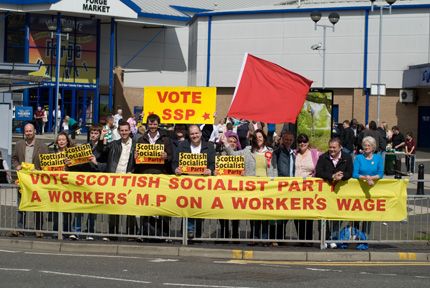
Faslane – The Legacy Scottish Unionists are Content to Hand Over to Their Children – P1 – To Be Continued


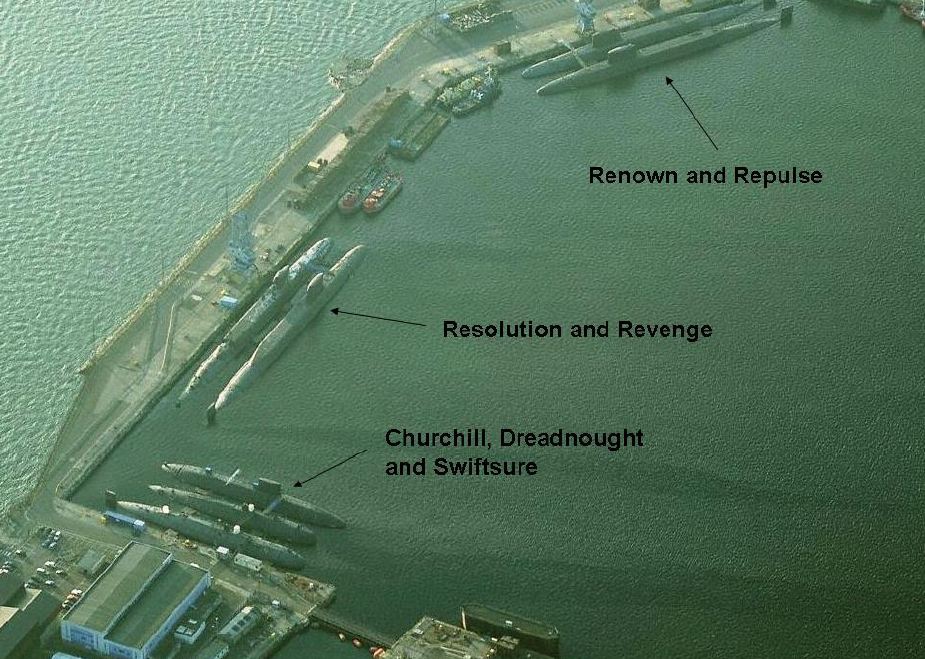
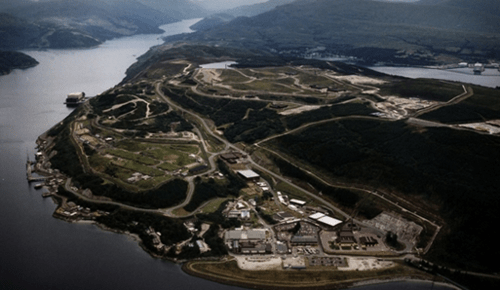
Faslane on the Gare Loch.

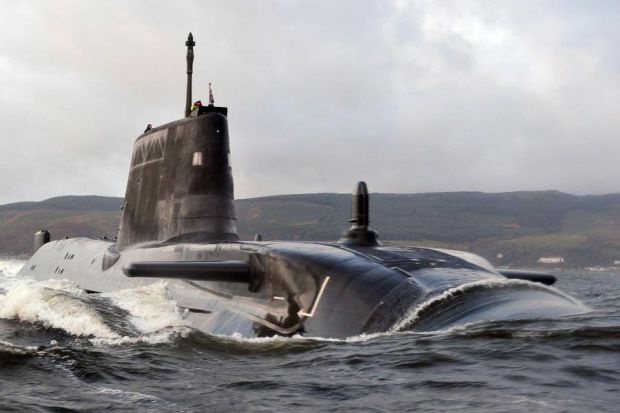
Faslane is home to Britain’s strategic nuclear submarine fleet and is the headquarters of the Royal Navy in Scotland. All four of Britain’s Trident operational strategic intercontinental missile submarines are based at Faslane. More than 7,000 navy and civilian staff work at Faslane – the largest number employed on a single site in the country.

In 2002 the bulk of the operations at Faslane were handed over to Babcock & Wilcox Enterprises, Inc.(BWXT) (sole manufacturer of naval nuclear reactors for submarines and aircraft carriers) who also own Rosyth, in Fife, in a controversial privatisation with the loss of 500 jobs, in a move opposed by trade unionists within the base as well as anti-nuclear campaigners BWXT manage all engineering work on Submarines and Minor Surface Warships including emergency and scheduled maintenance on both Royal Navy and foreign naval vessels;

BWXT provides hotel accommodation on site at Faslane and manages naval messes, accommodating all Royal Navy personnel. It also manages all storage facilities at both Faslane and Coulport and provides cleaning services and grounds maintenance as well as berthing services and radioactive waste processing. At Faslane BWXT also operate the 25,000 DWT Ship-lift, which is capable of docking a Trident Class Submarine. Additionally, at Coulport, the unique floating berthing facility for loading and unloading Trident warheads (the Explosives Handling Jetty) is also operated by BWXT.


The Trident Submarine Fleet 1990 – 2015 – A catalogue of delays and disasters great and small

Commencing early in the new millenium, a multi-billion pound Trident fleet refitting programme, installing a new type of nuclear reactor core (same design as fitted to the Astute class of nuclear hunter-killer submarines) was scheduled to be to be completed at Rosyth. But politics demanded otherwise and the work, together with the multi-billion investment was transferred to HMS Devonport in Plymouth. The result was a massive multi-million cost over-run and the Trident submarine fleet being rendered almost useless for extended periods.

The first of the fleet, HMS Vanguard, was scheduled to complete its refit at the end of 2004 and return to operational use at the beginning of 2005. but extensive fitting problems were encountered replacing the original reactor with the new reactor design (they were different sizes) and delays resulted in the return being eight or nine months late.

The setback was so serious the Ministry of Defence considered sending HMS Victorious, next in line for a refit, and the remaining submarines to the US navy submarine base in Kings Bay Georgia in the US so that the work could be completed within agreed time constraints. Additional information:

 
* Papers reveal nuclear sub doubts. http://news.bbc.co.uk/1/hi/uk/1484952.stm


* Nuclear blunder delays sub refit. http://news.bbc.co.uk/1/hi/uk/1484567.stm


* Trident switch costs extra £180m. http://news.bbc.co.uk/1/hi/england/1761245.stm

 
The proposed Trident replacement, if approved and implemented, is scheduled to start within the next few years will bring with it a myriad of difficulties, hopefully nothing major but history is often repetitive.


Other uses for Faslane

Additional to the nuclear powered and nuclear-armed Trident fleet, Faslane also houses up to five conventionally armed nuclear submarines and Mine Countermeasures ships. Also at Faslane is a Diving Group, who are deployed to clear explosives over a huge remote area off the West coast of Scotland, including Cape Wrath. The Base is also a training centre for naval staff and provides Nato berthing and Command and Control facilities. It also routinely hosts visiting American and French nuclear submarines. In 2001, the marine base at Condor near Arbroath was transferred to Faslane so that marines would provide protection for the nuclear submarine fleet.


The future of the base

The government recently announced that the base is to be massively extended so that the entire UK fleet of submarines, (including conventional submarines)  and submarines laid up, (no longer in operational use) are to be located at or near to Faslane.

Possibly up to 30 deactivated nuclear submarines are docked at Rosyth and Davenport pending a determination about their eventual safe dismantling and disposal.  “Pigs might fly” before a decision is taken and it is possible they will be barged to Scotland for long term docking in some quiet loch not that far from Faslane.

Work commenced at the beginning of 2015 and will take 5 years or more to complete. The end result will be the largest deep water submarine base in the world. Scotland is so lucky (pun)


Tritium is Routinely Dumped in the Gareloch at Faslane – Never Heard of it? – Tritium Can Cause Cancer, Genetic Mutations, or Developmental Defects in Unborn Children – No Threshold or “Safe Dose” of Tritium Has Been Scientifically Established For Any of These Effects.

Fukushima considers ‘controlled discharge’ of toxic water into ocean

Tokyo Electric Power Corp's (TEPCO) official (C) and journalists wearing protective suits and masks stand in front of storage tanks for radioactive water in the H4 area, where radioactive water leaked from a storage tank in August, at the tsunami-crippled TEPCO Fukushima Daiichi nuclear power plant in Fukushima prefecture November 7, 2013.(Reuters / Kimimasa Mayama)

Currently, 400 metric tons of highly contaminated water is being produced at the site on a daily basis. In response, TEPCO has been running a test operation of a high-tech water processing machine called ALPS, which can remove all radioactive materials from the tainted water except tritium. In line with IAEA recommendations, the utility hopes to discharge the processed water after diluting the level of tritium to legally acceptable limits.


Trident nuclear submarine HMS Victorious


TRITIUM – What is it and why all the fuss?

Tritium is radioactive hydrogen a product generated by nuclear power reactors. Like all radioactive substances, tritium is a carcinogen, a mutagen, and a teratogen. The radiological significance of tritium is not related to its inherent toxicity, as it is a very low energy form of radiation, but to its easy incorporation into all parts of the body that contain water.

Tritiated water can be ingested in the liquid form. It can also be inhaled or absorbed through the skin in the form of water vapour or steam, which makes tritium an occupational hazard for nuclear power plant workers.

In pregnant females, tritium ingested by the mother can cross the placenta and be incorporated directly into the foetus. Like all radioactive substances, tritium can cause cancer, genetic mutations, or developmental defects in unborn children (the latter following pre-natal exposure of the foetus). No threshold or “safe dose” of tritium has been scientifically established for any of these effects.


Plymouth march                  Devonport Dockyard                                  Chernobyl nuclear plant

People in Plymouth are fighting plans to dump tritium      Infant leukamia increased in the UK after Chernobyl     Devonport Dockyard processes tritium from submarines


5 July 2001: Scientist raises radiation fear

A scientist has warned that radioactive materials being released in Britain are many times more dangerous than previously believed. Dr Chris Busby says he has found that low-level radiation from the Chernobyl nuclear disaster caused a sharp rise in infant leukaemia in Wales and Scotland.

His warning comes as the Environment Agency considers whether to allow Devonport Dockyard to dump TRITIUM from submarines into the River Tamar in Plymouth. Campaigners had been assured that low-level radiation would not be a health hazard – the same advice given after the Chernobyl disaster in 1986. Devonport Dockyard processes tritium from nuclear submarines.

Leukaemia rates in Plymouth were recently shown to be 25% above the national average among males and 29% above average in females. Some tritium – a weak radioactive form of hydrogen – is already released into the Tamar from the city’s historic naval dockyard.

Dr Busby says the risk of people contracting cancer from low-level radioactivity could be far greater than calculated by the Environment Agency’s advisers. He told BBC News Online: “We have sent the Environment Agency a solicitor’s letter saying they can no longer accept risk levels are safe. “So if they go into court saying they didn’t know, this letter will show they were warned.” Their model fails to predict all sort of risks. Their understanding of radiation risk is faulty.

Last month Dr Busby, from Aberystwyth, presented a paper at a World Health Organisation conference on Chernobyl in Kiev. He said the Chernobyl findings cast serious doubt on the internationally-adopted model used to calculate health risk. His paper says the increased danger comes from radiation absorbed into the body through food and drink. That makes that health risk many times greater than from external exposure. Radiation levels in the UK after Chernobyl were considered too low to have a measurable effect on health.

Dr Busby’s paper says: “Government advice was that food was safe to eat and water and milk safe to drink.” He said: “The models being used to calculate risk to health from low-level radiation are out by a factor of between 100 and 1,000. “When they apply this risk model they find hardly anybody will become ill – the figure is point-zero something. “But their model fails to predict all sort of risks.

“The whole basis of their understanding of radiation risk is faulty. Dr Busby has been advising anti-radiation campaigners who live close to the River Tamar, which divides Devon and Cornwall. They launched Cansar – Campaign Against Nuclear Storage And Radiation – when the Environment Agency announced a public consultation on Devonport Dockyard.

The operating company, has applied to increase tritium emissions by 700%. The tritium is a created in submarine reactors but cannot be dumped legally in international waters.   http://news.bbc.co.uk/1/hi/health/1422130.stm


27 April 2009: Failure after failure at home of Trident fleet

Faslane has been home to the UK’s nuclear missile fleet since Polaris came into service in the mid-1960s, and is now the base for the four Trident missile submarines that replaced it. The facility, known formally as HM Naval Base Clyde, is also the base for the last remaining nuclear-powered Swiftsure hunter-killer and its replacement: four Astute class submarines.

Alongside seven Trafalgar class hunter-killers based at Devonport in Plymouth, these vessels are routinely serviced at Faslane: their nuclear reactors produce radioactive coolant that has to be replaced and need regular maintenance. That waste, which can contain radioactive tritium, cobalt-60, nickel-63, iron-55 and argon-41 gas, is handled and stored using a complex series of storage barges, tanks and pipes deep within the base.

And for nearly five decades, that process has been managed by the Ministry of Defence. That system of self-policing is now under increasing strain. Shocked by repeated safety breaches, the Scottish Environment Protection Agency (Sepa), the government authority that oversees radioactive emissions from civil nuclear sites, is pressing for the legal power to inspect and control Faslane’s nuclear operations.

The most damning report, produced by the MoD in September 2008 after complaints by Sepa, states that failing to abide by safety procedures is a “recurring theme” at Faslane. “This is a cultural issue that HM Naval Base Clyde needs to find a way to address,” it says. The 100-page report, released by Sepa to Channel 4 News, concludes that many of the ageing facilities used to process, store and dispose of radioactive waste at Faslane are not fit for purpose.

Other documents disclose that there have been at least eight radioactive leaks in the last 10 years, bringing the total number acknowledged at Faslane over the last three decades to more than 40.

The MoD admits its facilities fail to meet safety standards requiring that the “best practicable means” are used to control waste. In one case, the poor design of holding tanks has meant radioactive sludge has built up, which presents a “significant radiation hazard”. Those tanks are now going to be taken out of service.

http://www.theguardian.com/environment/2009/apr/27/nuclear-waste-scotland


Faslane naval baseasdsdsadas


16 March 2014: Nuclear bases plan to discharge more radioactive waste into the Clyde

The nuclear bomb and submarine bases at Faslane and Coulport near Helensburgh are seeking permission to increase the amount of radioactive waste they discharge into the Clyde and the air. But the Scottish Environment Protection Agency (Sepa) is coming under mounting pressure to delay giving the go-ahead to the increases until it has been given the tough new statutory powers promised by the Scottish government last week.

The Ministry of Defence (MoD) has submitted plans for the Faslane naval dockyard to pour more liquid waste into the Gareloch as the number of UK nuclear submarines based there rises from five to 14 by 2019. The waste comes from the submarines’ reactors and includes radioactive cobalt-60 and tritium.

The MoD also wants to keep emitting tritium gas to the atmosphere from the nuclear weapons stored at Coulport on Loch Long. Annual emissions of tritium have doubled between 2008 and 2012, and are expected to rise with the introduction of upgraded warhead designs.

TRITIUM: Like all radioactive substances, tritium can cause cancer, genetic mutations, or developmental defects in unborn children (the latter following pre-natal exposure of the foetus). No threshold or “safe dose” of tritium has been scientifically established for any of these effects.

Proposals to shift some submarine work to Coulport will also mean radioactive waste being transported by road between the two bases. The amount of solid waste to be treated and disposed of at Drigg near Sellafield in Cumbria is also due to increase.

The MoD stresses that all the discharges will be within authorised limits, which are being reduced. But critics say that Sepa and the Scottish government should crack down on the pollution.

In the wake of the MoD’s failure to reveal a 2012 radioactive incident at the Vulcan naval reactor in Caithness, the Scottish environment minister, Richard Lochhead, last week promised to end the MoD’s crown immunity from regulation on radioactive pollution.

“This is not the time for an informal gentleman’s agreement,” said John Ainslie, coordinator of the Scottish Campaign for Nuclear Disarmament. “After being bullied by the MoD at Vulcan, Sepa should wait until the Scottish Parliament gives them full power.”

Then they should set legally enforceable limits for discharges from Faslane, he argued. “If Scotland votes Yes, Trident and all nuclear submarines will go and the limits for nuclear discharges can then be reduced to zero.”

http://www.robedwards.com/2014/03/nuclear-bases-plan-to-discharge-more-radioactive-waste-into-the-clyde.html


A Tokyo Electric Power Co. employee monitors the discharge of groundwater into the Pacific Ocean from the Fukushima No. 1 plant, in the facility’s control room


28 May 2014: Tritium levels at Fukushima Excee Pacific Ocean dumping limits

Water sampled from a well at the crippled Fukushima No. 1 nuclear plant has been found to contain levels of radioactive tritium that exceeds the limit for dumping it into the Pacific, operator Tokyo Electric Power Co. said. The discovery was the first report of over the limit tritium in groundwater at the wells since Tepco began discharging water into the ocean last week.

In samples taken from one of the 12 wells on Monday, 1,700 becquerels per liter of tritium was detected, exceeding the maximum limit of 1,500 becquerels, the utility said on Tuesday. Tritium levels in samples taken last month also topped the limit. Tepco stopped pumping water from the well on Tuesday night, and said it plans to step up groundwater monitoring.

http://www.japantimes.co.jp/news/2014/05/28/national/tritium-in-fukushima-groundwater-tops-limit-for-discharge-into-sea#.VgRo42t25Vc


Westminster Unionists Retaining Trident – Scotland To Store Nuclear Weaponry -But There Is a Solution


“Those whom the gods wish to destroy they first make mad!!!!” – Westminster Makes it’s move on the SNP

The Unionist parties at Westminster are agreed on a pact establishing, maintaining and strengthening formal and informal contact with the Scottish Government in Edinburgh effectively sidelining Scottish MP’s at Westminster. It is likely discussion of  “Scottish Business” at Westminster will be restricted to one day weekly so that Scotland’s first minister will be forced to recall MP’s back to Scotland 3-4 days a week to find them something to do!!

The Westminster establishment is making it’s statement, “do not mess with our haloed place. We call the shots.  So there it is Westminster is unafraid of Scottish representation so what is to be done? Well!  unionist MP’s are afraid they may be outflanked by a Scottish Government who may well call upon the people of Scotland once more, to give voice through a referendum requiring the UK government to accept the will of the people in a matter of concern. The Scottish National Party might include in their manifesto a commitment to hold a referendum on Trident.

It is a fact Westminster will refuse to give up Trident and the SNP needs to recognize this. And also that so long as Scotland remains within the Union, Faslane will be used as the operational base for the UK submarine fleet (conventional and nuclear). But!!

Nuclear warheads are another matter. There is nothing to be lost and everything to gain from relocating all warheads to the US submarine base at Subic Bay. British nuclear submarines are wholly compatible with those of the USA and routinely “drop in” to Kings Bay for many operational reasons. Removal of the warheads would be welcomed by the USA and since all the facilities are in place the costs would be very low.

Weapons bunkers at Faslane would be utilised for storage of conventional weaponry so there would be a full take up of facilities in support of the increased fleet. The foregoing might well be put to the people of Scotland in a referendum in  2016-17.  Assuming a positive vote, Westminster would need to give careful thought to the matter. I doubt they would decline the request.  So.  A win win situation is possible.  But Westminster politicians might just “cut their throats” and say No!! Forcing a second independence referendum.


Cameron & Osborne – The Ham & Bud of Politics – Abandon Clean Energy – Financing Exorbitant Nuclear Developments – Politics of a Madhouse ,


Andrew Brown: Brother of the Prime Minister Gordon Brown – Studied journalism at Edinburgh University

2004: Brown was appointed “head of media relations” at EDF, the French utility company. He is now the director of corporate communications. When he took the job, Andrew admitted that, “the energy industry is not something I knew much about before”. Nevertheless, he has been at the forefront of EDF’s expansion in Britain after it bought London Electricity, Sweb and Seeboard. He lives with his wife, Clare, 49, in Victoria, central London, less than half a mile from Gordon’s flat.


11 July 2007 – EDF – UK government clears the obstacles so that EDF can make it’s bid for the nuclear energy market

French energy giant EDF has been at the forefront of the campaign to change perceptions of nuclear power. The company, which operates 58 nuclear reactors in France and is already a big player in the UK electricity market, has said it is ready to invest in a new generation of plants in the UK, provided it gets the go-ahead from government. It has successfully lobbied ministers to introduce a fast-track planning process to make it easier to build new plants avoiding the need for lengthy public enquiries. Chancellor Gordon Brown’s brother, Andrew, is EDF’s head of media relations in the UK. http://news.bbc.co.uk/1/hi/uk_politics/5149676.stm http://www.theguardian.com/business/2006/jul/11/greenpolitics.nuclearindustry1


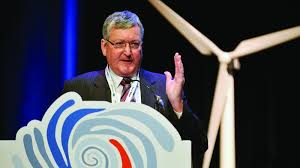
2 November 2013 – Fergus Ewing raises grave concerns in letter to Ed Davey.

Scotland’s Energy Minister, Fergus Ewing, has warned that the UK Government’s Electricity Market Reform proposals could undermine Scotland’s renewables sector and supply chain, while threatening security of supply across the UK, and further price increases on consumers bills as a result.

Mr Ewing also challenged Mr Davey to explain a last minute amendment to the UK Energy Bill that will remove the Scottish Government’s existing powers and discretion over support for renewable technologies across Scotland. The UK Government’s amendment is to be debated by the House of Lords on Monday November 4, 2013.

“We now know that the UK Government has also proposed a last ditch amendment to the Energy Bill, which will allow UK ministers to close the Renewables Obligation in Scotland. I find it extraordinary that the UK Government has chosen to act in this way, and to strip Scottish Ministers and the Scottish Parliament of their powers and discretion in an area of such vital importance.

“The UK Government has produced this amendment with no consultation or explanation. We are deeply concerned about this summary removal of the Scottish Government’s discretion in an area of such vital importance to our people and economy. “As a matter of urgency the UK Government must provide a detailed justification for its action.

http://news.scotland.gov.uk/News/Ewing-highlights-UK-threat-to-Scottish-energy-5be.aspx


4 November 2013 – Lords axe Holyrood’s power over Scottish renewables

Commenting on the debate in the House of Commons on the Lords’ amendment to the UK Energy bill – and in particular Amendment 54 which removed the Scottish parliament’s powers in respect of renewables obligation in Scotland – SNP Energy spokesman Mike Weir said:

“This is an outrageous example of the unionist parties ganging up to remove powers from the Scottish parliament. Worse still they did so by introducing last –minute amendments in the unelected House of Lords, rather than even having the courage to debate it on the floor of the House of Commons. There was no consultation with the Scottish Government or the Scottish parliament prior to the introduction of this amendment, nor when challenged in the Commons did the minister or his Labour front bench counterpart have any reasonable explanation as to why this happened in such an underhand manner.” http://www.scottishenergynews.com/lords-axe-holyroods-power-over-scottish-renewables/


Most political parties are funded by corporations of one sort or another – & thus in turn are open to abuse.

In the UK, 50% of the people working in DECC come from power companies such as EON, EdF RWE etc. It is they who set government energy policy – which naturally suits the power companies. The Tories are highly influenced by the power sector lobby – which cruises around giving money to whoever is in power.

Playing with peoples’ lives for profit seems to be part of what big business is all about. A responsible government wouldn’t allow such cynical views to infect their policies and drive their actions, but the Westminster government seems to share the corporate perspective of seeing pound signs where they should be seeing people, fellow human beings. It’s not simply putting profit before people to say “we want softer targets regardless of what harms our products and actions incur”, it’s treating people as profit; treating humans as fodder, units of expendable cost against the potential to make money. It’s disgusting, and it has to stop. I bet there are a number of politicians and highly placed mandarins receiving bungs or later “moving on” to highly paid “jobs” in the companies they helped. This is not just corruption, it’s the kind of corruption that kills tens of thousands of people every year.


14 January 2014 – UK Energy Policy The Next Ten Years -Industry Insiders Comment

Niall Stuart, Chief Executive, Scottish Renewables: “it is important that both governments return to working together to meet the incredibly important challenges facing our country, such as tackling climate change and growing the economy. Renewables can make a significant contribution to both. Scottish Renewables is calling for a new joint Scottish and UK Government energy policy that balances the interests of Scotland within a single GB energy market; a more open and accountable energy regulator; our islands connected up to the grid and coordinated investment by the UK and Scottish Governments to support our flourishing marine energy sector.”

Infinis Energy: “Preservation of an integrated UK energy market and the UK-wide applicability of the RO-legislative framework in support of continued investment in renewable energy is necessary.”

Tony Ward, Head of Power & Utilities at EY UK & Ireland: “The established dynamic in the energy markets needs to continue its current course. The UK markets have developed ever-closer and more integrated systems and ways of operating that serve to reduce, then smooth, the cost burden across all users. This also enables investment choices to be made on system-wide merit and help achieve a degree of energy security that can often be taken for granted.”


30 August 2014 Wind Energy Smashes UK Electricity Share Record

According to RenewableUK, Britain’s fleet of onshore and offshore wind turbines met 22 per cent of electricity demand during Sunday 17 Aug 2014, setting a new record, comfortably outperforming coal, which met just 13 per cent of demand. Nearly 5.8MW of wind power was generated, which is equal to the power demand of 15 million homes. August 2014 already looks set to be a particularly strong month for the UK wind energy industry, with reports confirming wind turbines also met 21 per cent of demand last week as the UK felt the tail end of Hurricane Bertha. “We’re seeing very high levels of generation from wind throughout August 2014 so far, proving yet again that onshore and offshore wind has become an absolutely fundamental component in this country’s energy mix. It also shows that wind is a dependable and reliable source of power in every month of year – including high summer,” said RenewableUK’s director of external affairs, Jennifer Webber.

Critics pointed out that the National Grid is forced to pay wind turbines millions of pounds to switch off on windy days in order to balance out demand. Last week, it paid wind developers £2.8m and £1.1m to other generators in balancing payments at the time high winds coincided with a period of low demand. Constraint payments are necessary but only until electicity storage capacity is put in place and they will be further reduced following upgrades to the national electricity network, such as the Western Link – a £1bn subsea cable that will bring renewable energy from Scotland to the rest of the UK. Yesterday’s record is the latest in a string of strong performances across Europe for the renewables industry over the past 12 months. Recent data has suggested that Germany and Spain have also delivered record levels of clean energy output in the past six to 12 months, as surveys across Europe have also demonstrated high levels of public support for renewable energy.


8 October 2014 – Why is Hinkley a bad deal for the UK consumer?

The world of energy is changing. The world’s largest private bank, UBS, has recently advised its clients that large centralised power stations (like Hinkley) are not the future (1) solar power, electric cars and cheaper storage batteries are. Meanwhile, tech leaders Google have invested $3.2bn in Nest, a smart home energy company. (2)

Yet our energy policy in the UK seems stuck in the past, with government’s Electricity Market Reform seemed largely to be based on getting nuclear stations built – with a generous price for 35 years of supply (3) for the proposed new 3.2GW EDF reactor at Hinkley which will cost £24.5bn to build and open at the earliest in 2023. (4)

Today the European Commission has decided to approve state aid subsidies for two reactors at Hinkley Point, Somerset – despite the Commission estimating the deal between UK government and NNBGeneco (a subsidiary of EDF) will cost up to £17.6bn in subsidies from the British energy billpayer. (5) However, according to calculations the total (undiscounted) subsidy to Hinkley over its lifetime would be much higher at £37bn, with a £14 increase per household per year. (6)

This is based on a 35-year index-linked price guarantee (‘strike price’) of £92.50 per MWh, which is is almost twice that of the UK wholesale electricity market price of around £50/MWh. This means that the British public funds the difference between the amount EDF will be paid and the market price – which at present seems unlikely to go up much. Nuclear has been delivering power at the same real cost for over 50 years and it would require a huge level of optimism based on little evidence to suppose that historic flat-lining would be changed now. (7)


Already, the cost benefits of learning from building a number of EPRs (the proposed reactor model for Hinkley) (8) across Europe seems to have disappeared because the price for Hinkley seems to be as big or bigger than the first plants in Finland and France. In contrast renewable energy is on a downward price curve, in the case of solar very rapidly indeed, and subsidy may be justified in bringing a technology to its technological potential. Also part of the deal is a whole host of protections – implicit subsidies by any other name – that are specific to Hinkley, including:

* Loan guarantees – If costs overrun or the plant defaults the government (read billpayers) will cover the repayment of the first £10bn to investors.

* There will be two re-negotiations of the strike price, 15 and 25 years after the plant starts to generate. At these two re-openers, the strike price might be increased following raises of operating costs, including increases in fuel costs and maintenance. (9)

* And, another interesting detail is that the deal includes protection against curtailment (the plant stops running) in case of “the evolution of power systems”, according to the CEO of EDF. (10) What this means is that if the energy mix changes to include more renewables, storage, and demand-side management, the plant will be given preferential grid access or payment for power (presumably at the strike price) that would otherwise have been produced. This curtailment risk cover is also understood to extend to changes in political decision making or changes in law based on environmental and safety reasons. (11)

* As a large generating unit, having 3.2GW on the Grid potentially going off at short notice requires the rest of the Grid to accommodate it and these costs – £160m a year – are being shared by everyone including renewable generators, not paid for by the Hinkley development. (12)

In addition to all this – on top of of the Commission’s estimate and outside of state aid considerations – Hinkley will also receive other long-standing protections that are given to all nuclear plants. Firstly, limitations on liability in case of an accident up to £1.06bn (13) – after which bill payers foot the bill (liability costs from Fukushima are around $100bn and rising). And secondly, planned subsidies of as much as £15.72bn for radioactive waste management from new reactors. (14)

All of this adds up to the fact supporting Hinkley is not a cost-effective option for the UK power supply. (15) As Professor Mitchell of Exeter University puts it in relation to the grid arrangements: “There is no justification for nuclear being exempted from paying the additional costs to the system other than to make nuclear look cheaper than it is relative to other sources of electricity.”

The Chief Technology Officer at Siemens has said (16) that renewables developers would ‘give an arm and a leg, at least’ for the kind of terms being offered to nuclear in UK – yet even so, some renewables will be cheaper at a headline level than nuclear by the time Hinkley opens in 2023 at the earliest. But most of the support for Hinkley is not available to low carbon generators like renewables, or not available at the same rate. For example onshore wind will have a lower ‘strike price’ than Hinkley from 2017, (17)
and will in any case now be subject to competitive bidding processes which would lower the price further, again, unlike the Hinkley project. (18)


Hinkley’s 35-year strike price contract is unprecedented – and will mean someone leaving school now could still be paying for this contract after they retire. Not only is Hinkley set to become a huge drain on the public purse, and shifting a huge amount of risk onto the public, but neither of the coalition government parties wanted this heavily subsidised plant in the first place – as you can see from the Coalition Agreement at the start of government. The Lib Dems opposed nuclear and the Conservatives wanted a free market – not subsidies.(19) And it seems that the Commission has done a similar policy volte-face:

* The original Commission analysis was scathing about the deal – especially the lack of competitive tendering for the scheme, (20)

* EDF may be overcompensated for what it is doing (21)

* Energy commissioner Gunther Oettinger described the concept as Soviet’. (22)

The question of the state aid stamp of approval arises because as part of the EU we should be heading to a single market in power, resulting in lower electricity prices. The Hinkley deal is therefore troublesome because of the precedent that is sets, shielding EDF from risks that other market operators are subject to, and meaning an EU member state can arbitrarily buy any power it wants to, leading to an end of any meaningful single market. (23) But this isn’t the end of the Hinkley state aid saga – Austria confirmed it will appeal against the EU Commission decision to allow generous subsidies for Hinkley. (24)

(1)    http://www.theguardian.com/environment/2014/aug/27/ubs-investors-renewables-revolution-
(2)    http://www.utilitydive.com/news/is-google-becoming-an-energy-company/216848/
(3 )   http://markjohnston.org/2014/09/30/hpc-cabinet-briefing/
(4)    http://europa.eu/rapid/press-release_IP-14-1093_en.htm
(5)    http://markjohnston.org/2014/09/30/hpc-cabinet-briefing/
(6)    https://docs.google.com/spreadsheets/d/1FrKsTokbMohXAQp2VMtBCdJ1RrhD5mxsBUHSFPilCn4/edit?pli=1#gid=213032988
(7)    http://www.provedor.nuca.ie.ufrj.br/eletrobras/estudos/thomas1.pdf
(8)   http://millicentmedia.com/2014/01/04/why-will-hinkley-point-c-cost-16bn/
(9)   http://millicentmedia.com/2014/01/04/electricite-de-france-sa-update-on-hinkley-point-cs-project-conference-call-21-october-2013/
(10) http://millicentmedia.com/2014/01/04/electricite-de-france-sa-update-on-hinkley-point-cs-project-conference-call-21-october-2013/
(11) http://markjohnston.org/2014/09/30/hpc-cabinet-briefing/
(12) http://www.theguardian.com/environment/2013/mar/27/renewable-energy-cost-nuclear-reactors
(13) http://www.mng.org.uk/gh/private/nuclear_subsidies1.pdf
(14) http://www.greenpeace.org.uk/media/reports/subsidy-assessment-waste-transfer-pricing-disposal-spent-fuel-new-nuclear-power-stations
(15) http://www.theguardian.com/environment/2013/mar/27/renewable-energy-cost-nuclear-reactors
(16) http://www.carbontrust.com/about-us/press/2014/09/global-wind-expert-offshore-wind-one-of-cheapest-uk-energy-sources-by-2025
(17) https://www.gov.uk/government/uploads/system/uploads/attachment_data/file/263937/Final_Document_-_Investing_in_renewable_technologies_-_CfD_contract_terms_and_strike_prices_UPDATED_6_DEC.pdf
(18) http://www.nortonrosefulbright.com/knowledge/publications/119318/contracts-for-difference-first-allocation-round
(19) https://www.gov.uk/government/uploads/system/uploads/attachment_data/file/78977/coalition_programme_for_government.pdf (page 17).
(20) http://www.greenpeace.org/eu-unit/Global/eu-unit/reports-briefings/2014/State aid SA.34947 (2013C) Greenpeace 2nd Submission (Article 8 Electricity Directive.pdf
(21) http://energydesk.greenpeace.org/2014/01/31/briefing-european-commission-decision-uk-state-aid-hinkley-point-c-nuclear-plant/
(22) http://www.theguardian.com/environment/2013/may/01/nuclear-power-soviet-eu-energy-commissioner
(23) http://markjohnston.org/2014/09/30/hpc-cabinet-briefing/
(24) http://www.greenpeace.org.uk/newsdesk/energy/analysis/comment-why-hinkley-bad-deal-uk-consumer


22 January 2015 – Stop Hinkley welcomes Austrian Government’s legal move against Hinkley

The Stop Hinkley Campaign has today welcomed the Austrian Government’s announcement that it will go ahead with a legal challenge against the European Union’s (EU) decision to allow billions of pounds of subsidies for Hinkley Point C. The group also welcomed the opinion expressed by Dr Dörte Fouquet, a lawyer for the Brussels based law firm Becker Büttner, which specialises in energy and competition law, that Austria’s chances of success were “pretty high.”

Stop Hinkley Spokesperson, Alan Jeffery said: “If Hinkley C goes ahead it would be the most expensive project of any kind ever built, yet it is not what is needed. What people want are warm homes, efficient appliances and bills that are affordable. We need renewable energy sources that aren’t going to damage our climate. We don’t need a massive project that is going to leave us with a legacy of highly dangerous nuclear waste and radioactive emissions into our environment.” http://www.stophinkley.org/PressReleases/pr150122.pdf


24 January 2015 – Japan follows Germany and other european countries – Abandoning Nuclear Power In Favour Of Clean Energy

Japan said that it would seek to phase out nuclear power by 2040 — a historic shift for a country that has long staked its future on such energy, but one that falls far short of the decisive steps the government had promised in the wake of the world’s second-largest nuclear plant disaster last year. By comparison, Germany, which in 2010 relied on reactors for 26 percent of its electricity, was rattled enough by the Fukushima disaster to announce a move away from nuclear power by 2022.

With the long-term energy plan set, the political battle is set to refocus on the struggle by the government to build consensus for reopening the vast majority of the country’s reactors, which were idled after the nuclear catastrophe, amid public opposition to restarts until better safety regulations were in place.


With only two reactors operating, Japan struggled through a sweltering summer after parts of the country were asked to conserve electricity use by as much as 15 percent, the second year such requests were made. Power companies fired up old gas- and oil-powered stations and scrambled to secure imported fossil fuels. Despite fears of widespread blackouts, however, none materialized, strengthening nuclear critics’ argument that Japan could do without nuclear energy.

Japan is set to significantly increase its investment in clean energy sources. In previous government estimates through 2030, eliminating nuclear power would require investment of $548 billion in solar, wind and other types of renewable energy and $66 billion on power grid technology.

Under the new goal, Japan’s greenhouse gas emissions in 2020 would be between 5 percent and 9 percent less than levels in 1990, the documents said. Environmentalists say that a more aggressive push to develop clean energy can further reduce Japanese emissions. “The government must use its new energy strategy as a starting point for a far more ambitious renewable policy, greater energy efficiency measures, and increasingly bold strides toward the sustainable green economy that will secure Japan’s future prosperity,” Greenpeace said in a statement. “A nuclear-free future is not a choice, it’s an inevitability,” it said. http://www.nytimes.com/2012/09/15/world/asia/japan-will-try-to-halt-nuclear-power-by-the-end-of-the-2030s.html?pagewanted=2&_r=0


Scotland – World leader in the production of clean energy

Clean energy produces more power in Scotland than nuclear, coal or gas and this is set to increase significantly. The expertise of Scottish industry is being exported to other countries worldwide and the decision of Japan to embrace renewables over nuclear vastly increases opportunities for Scottish outward looking firms. Recent developments have brought forward the use of wave power and Scotland is in the vanguard in the development of this new technology which the island country of Japan will embrace. Scotland is getting it right but we need Westminster to provide funds allowing an extension of the national grid to our offshore islands since it is a lack of grid access and capacity that is delaying clean energy development and power production which in turn is preventing the UK from meeting emission targets. http://www.environment.scotland.gov.uk/get-learning/energy/third-and-fourth-level/


The Inefficient UK National (Electricity Supply) Grid

The electrical grid is viewed by the public as a natural and strategic asset. As such it is, in the view of many, totally unsuited to the pressures of market forces. But if a market is to operate then application of variable transmission costs make sense.

Electricity transmission loss in transfer forms a small part of overall electricity loss. The real problem with the grid is capacity crunch. The lack of a transmission cable from the islands to the Scottish mainland brings with it much reduced amounts of electricity transfer from the North of Scotland. Supply of electricity to the grid is therefore rationed and this brings with it increased transmission costs. In England there is a lot of demand, but not much generation.

The option of expanding Coal, Gas and Nuclear power stations, (using lease lend contracting) funded, designed, built and operated, using foreign finance and workforces may appear to be attractive and cost effective but fossil-fuels and nuclear have been indulged for far too long. When the cost of cleaning up their long-term residual mess is factored in renewable energy is by far the most cost effective.

But, at this time, entirely due to a lack of forward planning by Westminster governments, short term measures are considered necessary and the Tory government is determined to expand nuclear production, (although the preferred options would breech EU financial rules). The Department of Energy and Climate Change, (DECC) a government funded and civil service staffed, (blinker wearing) policy think tank strongly believes in market forces, but only so far as nuclear is good and renewables are bad. So the future of UK renewable energy looks bleak.

Scotland is rich in renewable energy production resources but this is of no consequence since the “No” vote brought with it the introduction in the next parliament of a “National UK Energy Production Policy Unit” which will direct the development of ALL energy production within the UK. All that has been achieved in Scotland will be set aside in favour of the pursuit of nuclear power expansion.


20 April 2015 – There are tough choices ahead on energy that need to be underwritten by a long-term strategy

David Cameron’s promise in 2010 to lead the greenest government was much welcomed by the UK public. Yet it was abandoned less than two years into the coalition. There were some solid achievements, but too much was lost as the Conservative climate-sceptic right, led for a time by the environment secretary Owen Paterson was allowed to undermine the more ambitious Liberal Democrat-led Department of Energy and Climate Change.

The deal with EDF on the new nuclear power station at Hinkley Point is a significant contribution to meeting targets for a decarbonised energy supply and an 80% reduction in emissions by 2050. But it is telling that the coalition has had to rely so heavily on the one technology that is most compatible with “business as usual”.

The chancellor, George Osborne, has become the leading nay-sayer after scoffing in 2011 that he would never “save the planet by putting Britain out of business”. Lib Dems lost out on ambitious plans for home insulation through the green deal that was compromised by an over-complicated structure, while the green investment bank never got the borrowing rights it needed to fulfil its promise.

The Tories have cast off their green disguise. They have ended subsidies for onshore wind power relying on the market to bring down prices, they are enthusiastic about fracking and they want to build more roads. The Greens, remain committed to creating a zero-carbon economy, even if that is at the cost of economic growth. That will alienate many cash-strapped voters, but their willingness to say the unsayable about the polluting way in which we run UK plc is one reason why, for all the party’s shortcomings, the Green voice deserves to be heard. http://www.theguardian.com/commentisfree/2015/apr/20/guardian-view-britain-choice-2015-energy-policy
Statement: “The deal with EDF on the new nuclear power station at Hinkley Point is a significant contribution to meeting the targets for a decarbonised energy supply.”

Comment: Oh! No it isn’t!!! What is the carbon equivalent of managing ten thousand years of nuclear waste? What is the carbon equivalent of releasing radioactive material from mining, transportation, use and inevitable accidents of radioactive material? What is the carbon equivalent of Three Mile Island and Chernobyl? Buying into the utter bullshit of the nuclear industry is one thing. Fawningly spouting the ‘decarbonising’ agenda is equivalent to suggesting that four-by-fours are environmentally friendly so long as they replace Trabants. Decontextually true and monumentally trite.


8 May 2015 – Contrast the forward looking plans of Germany, most european countries and Japan against the Nuclear energy policy of the Westminster government

Development plans are to build at least 8 new nuclear power plants in England, which it is projected will provide around 16 gigawatts of power. The plants are to be built by:

i. EDF Energy intends to build 4 new EPRs (6.4GW) at Hinkley Point in Somerset and Sizewell in Suffolk.

ii. Hitachi Ltd. has confirmed plans to build 2 or 3 new nuclear reactors at Wylfa on Anglesey and the same at Oldbury in South Gloucestershire.

iii. Nu-Generation plans to build up to 3.6GW of new nuclear capacity at Moorside, near Sellafield.

https://www.gov.uk/government/policies/increasing-the-use-of-low-carbon-technologies/supporting-pages/new-nuclear-power-stations


2 June 2015 – The 2015 Paris Summit

Governments of more than 190 nations will gather in Paris to discuss a new global agreement on climate change, aimed at reducing global greenhouse gas emissions and thus avoiding the threat of dangerous climate change.

Why now? Current commitments on greenhouse gas emissions run out in 2020, so at Paris governments are expected to produce an agreement on what happens for the decade after that at least, and potentially beyond.

Why is this important? Scientists have warned that if greenhouse gas emissions continue to rise, we will pass the threshold beyond which global warming becomes catastrophic and irreversible. That threshold is estimated as a temperature rise of 2C above pre-industrial levels, and on current emissions trajectories we are heading for a rise of about 5C. That may not sound like much, but the temperature difference between today’s world and the last ice age was about 5C, so seemingly small changes in temperature can mean big differences for the Earth. http://www.theguardian.com/environment/2015/jun/02/everything-you-need-to-know-about-the-paris-climate-summit-and-un-talks


2 June 2015 – Plan launched to prevent critical climate change by making green energy cheaper than coal

Scientists and economists have joined forces to launch a global research initiative to make green energy cheaper than coal within 10 years, a target they believe is critical to avoid dangerous climate change. Leading academics warn that the world cannot be saved from global warming unless coal – the dirtiest fossil fuel – is put out of business.

They have called the plan the “Global Apollo” programme and hope to recruit countries from around the world in an international commitment to boost research and development into key areas of renewable energy, storage and electricity transmission. By 2025, they hope the research will mean that wind, solar and other forms of green energy will be able to undercut the cost of burning coal to generate power, making it feasible to keep within the critical 2C increase in global temperatures needed to prevent dangerous climate change.

Sir David King, former UK Government Chief Scientist and one of the architects of the programme said “It all starts with this climate-change risk we’re facing. It’s a looming catastrophe that I think can be avoided. This is a massively important global opportunity and we need to commit ourselves to action. To stay below 2C is going to be very challenging. We need to treat this as an extremely urgent problem. If we delay the progress towards that required pathway it will become far more painful to do so in the future.”

World leaders agreed in 2010 that it was important to limit global temperature increases to 2C which would mean keeping atmospheric carbon dioxide concentrations to within 450 parts per million. However, the burning of fossil fuels, and coal-fired power stations in particular, has resulted in carbon dioxide emissions continuing to increase, with concentrations reaching 400ppm with no signs of abating. Meanwhile, global energy demands are expected to rise by a further third by 2035.

the “Global Apollo” report says “The average temperature is already 0.8C above the pre-industrial level. If it rises to over 2C above that level, there will be serious environmental consequences for billions of people – including increased droughts, floods and storms. Millions will lose their livelihood and have to migrate.”


Renewables:

The worldwide, publicly-funded research and development of renewable sources of energy, such as wind and solar, is estimated to be around $6bn (£4bn) a year. This compares to $101bn spent on annual production subsidies for renewables and $550bn in subsidies for the fossil fuel industry. Research and development could dramatically change the economics of solar energy, for instance, given that the Sun provides 5,000 times more energy to the Earth’s surface than our total human demand for energy. The cost of solar panels, which convert sunlight directly into electricity, has fallen dramatically from just under $10 (£6.60) in 1992 to less than $0.50 today. Wind energy costs are falling more slowly, but this could be transformed with further innovation, the report says.


Electricity storage

Both wind and solar energy are intermittent generators of electricity. If spare electricity generated when the sun is shining and the wind is blowing can be stored for when it is needed on cold nights and windless days, this would help make these renewables more cost effective. The Global Apollo Programme identifies much-needed research into batteries, thermal storage, compressed air, fuel pumps, flywheels, molten salt and pumped hydro-electricity and hydrogen fuel, as the key goals for improving energy storage.


Smart grids

More efficient transmission of electricity by balancing supply and demand more carefully, and improving electricity grid software, could dramatically reduce the unnecessary losses. A major obstacle in the deployment of renewable energy beyond 30 per cent of the grid power is the poor integration of current electricity grids. Smart grids could improve this, and so make green energy more efficient and cost effective. http://www.independent.co.uk/news/science/plan-launched-to-prevent-critical-climate-change-by-making-green-energy-cheaper-than-coal-10290467.html?origin=internalSearch


18 June 2015 – Tory plans to end onshore wind farm subsidies will see ‘bills rise or climate targets missed’, campaigners warn

Conservative plans to end subsidies for onshore wind farms will push up energy bills and leave thousands of jobs in the balance, campaigners have warned. The Government proposal to close the existing scheme for new onshore wind projects a year early has been criticised by campaigners for hitting the cheapest form of clean energy.

Energy Secretary Amber Rudd today announced the plans to close the “renewables obligation” scheme for onshore wind farms from April 2016, fulfilling a Tory election manifesto promise. The Tory Government has said onshore wind farms “often fail to win public support and are unable by themselves to provide the firm capacity that a stable energy system requires” – despite latest Government survey statistics suggesting 67 per cent of people support them.

WWF Scotland director Lang Banks said: “This decision risks undermining the development of the cheapest form of renewables in the country, and is bad news for Scotland’s clean energy ambitions. “Cutting support early for the lowest cost renewable technology is a backward step that will either see bills rise or climate targets missed.” Campaigners have also warned the move sent a “chilling signal” to investors across the UK’s infrastructure sectors – and will leave millions of pounds of investment in the balance.

RenewableUK chief executive Maria McCaffery said: “It means this Government is quite prepared to pull the rug from under the feet of investors even when this country desperately needs to clean up the way we generate electricity at the lowest possible cost – which is onshore wind. “People’s fuel bills will increase directly as a result of this Government’s actions. “Ministers are out of step with the public, as two-thirds of people in the UK consistently support onshore wind. “Meanwhile the Government is bending over backwards to encourage fracking, even though less than a quarter of the public supports it.”

Alasdair Cameron, Friends of the Earth’s renewable energy campaigner, said: “Slashing wind support on the day the Pope calls for stronger climate action, and 24 hours after thousands lobbied their MPs to do more for the environment, shows the Government is living in a different world. “Far from showing global leadership ahead of the crucial Paris climate summit later this year, the government appears to be making the environment pay the price for rash pre-election promises.”

Greenpeace UK energy and climate campaigner Daisy Sands said: “Ministers have just moved to raise everyone’s energy bills by blocking the cheapest form of clean power, whilst continuing to back the impossibly expensive Hinkley C and going ‘all out’ for unpopular, risky, and unproven fracking. “Even if this omnishambles of an energy policy survives the many legal challenges threatened against it, it will send a clear message to international investors that the UK Government is willing to wreck our power sector to please their most ideological backbenchers. “This mistake will cost the UK dearly.” http://www.independent.co.uk/environment/onshore-wind-farm-subsidies-cut-tory-plans-to-end-scheme-for-cheapest-form-of-renewables-will-see-bills-rise-or-climate-targets-missed-10328975.html


25 July 2015 – Energy Secretary Amber Rudd must not let the anti-wind lobby decide Government policy

The UK Government is dressing up drastic cuts in spending on things we need as “cold, hard economic sense”. Ministers seem to be competing in a “Britain’s got austerity” contest with the Chancellor in the role of Simon Cowell. But history shows that markets can be free only if they are regulated to be free. The alternative is that those with the power and capital to pursue their own selfish interest control markets at the expense of society. A free-for-all economy is not capitalism; it is a form of feudalism. Competition is ruthlessly crushed.

The UK has the resources to be a green-energy powerhouse for Europe, it is are blessed with copious wind and bountiful solar potential, from the South-west to Scotland. Green energy represents the biggest potential investment in the rural economy since the agricultural revolution and will help keep farmers, the custodians of our rural environment, on the land. The levy on energy bills has helped leverage billions of pounds of inward investment, long-term skilled jobs and financial support for communities who have seen their other local infrastructure spending slashed.

The previous government had put together, with cross-party consensus, a series of initiatives to support the growth of this market, and help it move to being sustainable; which means being able to compete with established, highly subsidised industries such as fossil fuels. Just as that was about to happen, the support has been cut and the industry left to fend for itself.

What about competition? Surely this will drive down energy prices and make us all better off? We should ask where this competition comes from.The cheapest sources of energy are gas, onshore wind and solar. However, the Government wants nuclear to be competitive (which has a guaranteed price that rises with inflation from 2020, and perverse incentives for the constructors to take their time getting the thing built so that its price could rise to 40 per cent above the “market” rate).


The other alternative is offshore wind, which despite its huge production potential, is still more expensive than nuclear. So Amber Rudd’s competition solution is to subsidise the technologies that are more expensive and undermine the technologies that have used subsidies to reduce their costs to the bill payers.

So here is a problem for Ms Rudd to consider in that “cold, hard economic”’ way she espouses. Capital has choices. There are lots of incentives out there, especially if you want to risk your money developing shale gas or draining the last of the oil from under the North Sea. It is the nature of big capital that it avoids things that look “difficult” and it is unlikely to want to bet against government policy. It will seek the line of least resistance and choose the path to easy money if it can. She needs to understand that her rhetoric, directed as it is towards a narrow interest group of anti-wind campaigners, does make markets. I will say it again: we make the markets we deserve.

A free-for-all energy market will see capital go where it thinks it can make the best (and easiest) returns in the short term, which, right now, are to the expensive but politically palatable technologies such as offshore wind and nuclear. And, of course, oil and gas. It would be easy to say that energy is too complicated and should be left to the experts to argue it out. But remember that your money, via your energy bills, is paying for the next generation of the energy market to be created. You can choose to let the anti-wind lobby put up your energy bill and push us towards technologies that will get only more expensive with time or you can make your voice heard. The voice of cold, hard democratic finance. (Bruce Davis is co-founder of Abundance and visiting research fellow at Bauman Institute, Leeds University) http://www.independent.co.uk/voices/comment/energy-secretary-amber-rudd-must-not-let-the-antiwind-lobby-decide-government-policy-10416197.html


Nuclear Plant Contracts

Proposed new nuclear power stations — are set to cost British taxpayers £20 billion more than predicted in subsidies over their lifetime, according to environmental groups. Adding to problems over operational viability the cost of building the UK’s next-generation nuclear power stations is set to soar by billions of pounds despite massive taxpayer subsidies, according to environmental campaigners.

The Austrian government confirmed it is to take the European Commission to the European Court of Justice over its agreement to a deal that would allow EDF Group and the UK Government to build a new nuclear power station at Hinkley Point C in Somerset

The agreement contains a controversial promise that the UK Government will guarantee the “strike price” (a guaranteed minimum energy price) for Hinkley Point C of £92.50 per MWh. Effectively, the Commission has agreed state subsidies by the UK Government. Independent energy supplier Ecotricity said it is among other companies and organisations considering joining the legal challenge against the European Commission decision.


Cracks, Weird Welds and Delays

The Hinkley Point C proposal has already been hit by many years of delay — mostly because the reactor it is considering using has been plagued with problems. EDF has chosen the European Pressurised Reactor (EPR), a third generation pressurised water reactor (PWR) design. It has been designed and developed mainly by Framatome (now Areva), EDF in France and Siemens in Germany.

However, the first ever EPR nuclear power station under construction in Flamanville, in northwest France, is already massively over budget and seriously delayed. Since construction began In April 2008, the French nuclear safety agency has found that a quarter of the welds inspected in the secondary containment steel liner were abnormal, cracks were found in the concrete base and it also ordered a suspension of concrete pouring on the site.

In November 2014 EDF announced that completion of construction was delayed to 2017 due to delays in component delivery by Areva. In the same month, Areva issued a profit warning and said it would suspend future profit predictions because of problems on a similar EPR power station project at Olkiluoto in Finland.

None of which bears much hope for plans to build a similar one at Hinkley Point. Environmental groups dispute the UK Government’s figures on agreeing a set price — effectively a 35-year taxpayer subsidy to an energy giant to produce electricity. Other energy companies and at least one European country are now taking legal action against the European Commission for agreeing the deal they say is illegal, even calling the technology at the heart of the EPR reactor into question.


3 September 2015 – Former minister Ed Davey says chancellor is pursuing ideologically driven campaign against renewable energy

Ed Davey, the former energy and climate change secretary, has accused George Osborne of putting tens of billions of pounds’ worth of private sector investment at risk with an assault on the green agenda he pioneered. The Liberal Democrat said the chancellor was pursuing “bonkers economics” and an ill-advised and ideologically driven campaign against renewable energy that risked leaving the UK hopelessly dependent in the longer term on fossil fuels such as gas.

Phasing out aid for zero-carbon homes, onshore windfarms and solar arrays are among a raft of measures introduced by the Tories which represented “disastrous” economics, said Davey in his first interview since losing his seat in parliament. “What is frightening is that, despite all that success in low-carbon energy infrastructure, [Osborne] is prepared to send those disastrous signals. It was bad enough in the coalition when they were sending mixed signals but now there is no mixed about it. (http://www.theguardian.com/environment/2015/jul/24/the-9-green-policies-killed-off-by-tory-government)


“It is ‘we don’t want it’ and [renewable energy investors] will go elsewhere and we will lose out on tens of billions of pounds of private sector investment. Canals and railways would not have been built if people had taken this kind of short-term, unimaginative, inward approach. [Osborne] is the opposite of an entrepreneur when it comes to green energy.”

Davey, who lost his parliamentary seat at the last election, revealed that he had been engaged in an almost permanent struggle against leading Tories when he was energy secretary. “We battled every day. There were some Conservatives who were supportive like Greg Barker and Charles Hendry but they were a minority and the push was against the green agenda.

“Onshore wind was the one everyone knew about where we were having daily battles sometimes with Eric Pickles and the Treasury, but it was not just onshore wind – it was everything. I had to fight like a tiger to stop him [Osborne] slashing the budget on fuel poverty and on renewable energy. We succeeded although he still took a chunk out of the ECO [Energy Company Obligation] energy efficiency programme. It was much less than he originally wanted and that fight went on for two months. It was huge.”


Davey, who was tipped as a potential future Lib Dem leader until his election defeat in May, said the Treasury was endlessly trying to underplay the major advances achieved in the energy field because the department was being run by a Lib Dem who was convinced that energy security and climate change were vital issues. “It’s frustrating because we [the UK] were doing so well and also alarming for the economy.

It was an inconvenient truth for George Osborne that the green economy was doing extraordinarily well and the investment in energy infrastructure – primarily low-carbon energy infrastructure – that happened under the coalition government and is in the pipeline to continue was the infrastructure success story of the government. Not transport that he used to go on about, not telecoms, not water – it was energy.”

A Treasury spokesman said: “The government is committed to cutting carbon emissions while also controlling energy bills and saving consumers money. That’s why we’ve taken urgent action on spending to protect households and businesses from higher than expected costs.Government support has already driven down the cost of renewable energy significantly, but it is important that this support is affordable and offers good value for money.” Amber Rudd, Davey’s successor as energy and climate change secretary, has previously insisted that the government takes global warming seriously and subsidies have only been cut where they are not needed any more.


Davey said he had to constantly battle with some of the top bosses from the big six energy suppliers. A couple of them were happy to lobby the Conservatives against him, He has major fears about Osborne becoming prime minister. “I am not convinced he is a climate change sceptic but he is driven by [short-term] economics and I think if he became leader of the Conservative party he would want to scrap the Climate Change Act. Someone ought to ask him that question.”


Ed Davey


But Davey’s main complaint is that the government is happy to build roads or rail with taxpayer money – but will attack subsidies for renewables. “This is another thing I don’t get about Osborne’s economics. They are really bonkers. The vast majority of this investment is private sector. Compare that with roads or railways or flood defences where it’s always the taxpayer. Forget climate change, this is disastrous economics. This is not statesmanship. This is not a good chancellor; this is an ideological, ill-advised chancellor.” http://www.theguardian.com/environment/2015/sep/03/george-osborne-accused-of-disastrous-assault-on-green-agenda


Professor Adam Tomkins – A Visionary or a Plonker? – The Scottish Jury Is Still out – But a Verdict is expected Very Soon (Part 3)


2 March 2015 – Prof Tomkins close links with Jewish society brings unwelcome results

The Palestine Alliance, formed by the Association of Palestinian Communities in Scotland and a number of Palestine solidarity groups, has called on Glasgow University to halt plans to develop links with an Israeli University. Collaboration between the universities is believed to be behind a planned visit to Glasgow University by the Israeli Ambassador to Britain, Daniel Taub, on 2 March 2015.

The plans to link Glasgow University with the Hebrew University in Jerusalem have long been promoted by Professor Adam Tomkins of the university’s law faculty. Tomkins, a prominent no campaigner who served as one of the Tory Party nominees on the Smith Commission, was the recipient of a prestigious scholarship prize from the Hebrew University in 2011 following a period as a visiting professor the previous year. He is reported as saying that the prize would facilitate the next stage of what he hoped would be “a lifelong series of collaborations with colleagues at the Hebrew University. If, as a result, links between Glasgow Law School and legal scholars in Israel are strengthened, this will be an added bonus.”

Dr Essam Hijjawi of the Palestine Alliance, and chair of the Association of Palestinian Communities in Scotland said “Far from being a seat of learning the Hebrew University of Jerusalem has shown itself to be a discriminatory body, denying equal treatment to Arab Palestinians who are citizens of Israel; failing to provide teaching services to the local Palestinian population in Jerusalem whilst providing such services to Jewish groups and has part of its campus is built land stolen from Palestinians and now housing illegal settlements. “Glasgow is home to Palestinians who have been denied the right to live in their home city of Jerusalem and cannot access education at the Hebrew University.

http://www.thefreelibrary.com/Israeli+Ambassador+to+Face+Protests+at+Glasgow+University.-a0403795918

http://glasgowguardian.co.uk/2015/03/02/university-denies-protesters-claims-that-israeli-ambassador-is-here-formalise-links-with-hebrew-university/


24 March 2015 – Professor Adam Tomkins comments on Salmond’s threat to install the labour party in Downing Street

Alex Salmond pledged to lock David Cameron out of Downing Street by saying he would be “voting down” any Conservative minority government using provisions in the Fixed-Term Parliaments Act that would allow Labour to try to form a government.

Professor Adam Tomkins, an expert on constitutional law at the University of Glasgow and a Tory delegate to the Smith commission on extra powers for Scotland, said Salmond’s gambit was “designed to anger the English. He is being very clever. He is modelling the strategy on moves by Charles Stewart Parnell, Irish nationalist leader whose Irish Parliamentary Party used disruptive tactics and filibustering in the Commons in the 1880s to anger British politicians.

He wants the English to give him what he wants, with his fun and games, just to get the English to say bugger off. The threat for us Scottish unionists is that the English aren’t ready for this and the English will overreact in the way that Salmond calculates. He’s going to carry on doing this for as long as he possibly can.” http://www.theguardian.com/politics/2015/mar/24/conservatives-slam-salmond-deeply-sinister-threat-miliband


12 May 2015 – Scotland ‘will not consent’ to Tory plans to scrap Human Rights Act

The Scottish government has said that it will withhold legislative consent on the Conservative proposals to scrap the 1998 Human Rights Act, as it emerged that the SNP has already had informal discussions with Tory backbenchers who oppose the move. The social justice secretary, Alex Neil, told the Holyrood chamber on Tuesday afternoon:  “The Scottish government’s position is that implementation of the Conservative government’s proposals would require legislative consent and that this parliament should make clear that such consent will not be given.”

Tory plans to repeal the act and replace it with a UK bill of rights could lead to a “complete standoff” between Westminster and Holyrood, according to a Scottish government source. A senior SNP source confirmed that the party had been in contact with potential Conservative backbench with a view to bolstering cross-party opposition to the move.

http://www.theguardian.com/law/2015/may/12/scottish-government-human-rights-act-conservatives

Comment: sanz1820

Tompkins is being disingenuous in his assumption that the UK is somehow a family of nations. It is not – it is a completely unbalanced polity where the dominant nation – England – is ten times the size of all the others. Thus the claim that ‘England is not a state’ may be accurate from a constitutional lawyer’s perspective, but ignores the truth that the English do indeed think of themselves as living in a state – one which is variously called ‘England’ or Britain’, the two terms being seen as interchangeable.

The result of this lack of balance within the ‘family’ is the cultural hegemony which manifests itself in ways which probably seem trivial to the good Professor, but which –repeated day after day and year after year – are profoundly dispiriting and ultimately enfeebling.

Whether it’s shipping in southern journalists to BBC Scotland to cover the referendum, employing that ludicrous weather map on BBC TV which makes Skye look half the size of the Isle of Wight, claiming that there exists something called ‘received pronunciation’ which by definition denigrates those of us who speak in our own nation’s voice – I could go on all day.  Sorry Prof – but this is a dysfunctional family, and I want out.

http://derekbateman.co.uk/2014/08/04/write-of-reply/


25 May 2015 – Appointment of Scottish Tory Party Chair Richard Keen QC to the post of Advocate General for Scotland signals Tory backtrack on powers

His appointment follows yesterday’s publication of the Scotland Bill – which falls far short of implementing the Smith Commission recommendations. Previously, Richard Keen stated  “I don’t think it’s the answer just to say ‘more powers’” and has also argued that the rest of the UK should be consulted on what powers should be transferred.  In February last year, Richard Keen said: “I don’t think it’s the answer just to say ‘more powers’. What is the answer to the devolved settlement is to ensure that the powers that Holyrood has are used properly and there is accountability.”

He also stated that any future transfer of powers to Holyrood must involve the rest of the UK, particularly if that involved a federal solution. “I’m not saying no to federalism, because if that’s what the majority want by way of a devolved settlement, that’s what we’ll have,” he said. “But if you want to go that far then you have to consult everybody in the UK, because it affects everybody.”

Richard Keen QC

 
Earlier in the week, Professor Adam Tomkins, who was appointed as an advisor to Scottish Secretary David Mundell, made fun of the fact that the current devolution settlement results in the Scottish Government having to mitigate swingeing cuts made by the UK Government as part of their austerity regime.

See his Twitter exchange with Ian Smart,  a prominent Labour supporter:

* Adam Tomkins: Key test of new Scotland Bill will be whether the welfare clauses deliver Smith. This was where January’s draft clauses fell short.

* Ian Smart?: Indeed. Let’s allow the virtuous Scottish Government to restore the benefits of those sanctioned by the evil UK government

* Adam Tomkins: Exactly. Money where mouth is. https://twitter.com/ianssmart/status/603680320739737600

http://snp.org/media-centre/news/2015/may/keen-appointment-signals-tory-backtrack-powers


Ian Smart Labour friend of  Prof. Adam Tomkins


Adam Tomkins


Earlier this month, the Tories ennobled then appointed Andrew Dunlop – the architect of the hated Poll Tax – to the position of Parliamentary Under Secretary of State for Scotland. Poll tax peer ‘scandal’

Responding to the ennoblement of Andrew Dunlop, and his appointment as the Parliamentary Under Secretary of State for Scotland, the Leader of the SNP Westminster Group Angus Robertson MP said: “This appointment is a scandal. If one thing demonstrates how out of touch the Tories are, it’s the appointment as a government minister for Scotland of an unelected Lord who played a leading role in the imposition of the hated Poll Tax on Scotland. It is hard to believe that following the worst Tory result in a General Election in Scotland since universal sufferage that they could have fallen further in people’s estimation, but they just have with this appalling and anti-democratic appointment. It’s further evidence of the need for a strong Scottish voice at Westminster to hold the Tories to account, that only SNP MPs can provide.” http://www.snp.org/media-centre/news/2015/may/poll-tax-peer-scandal


Dunlop & Cameron


Questions over Cameron’s new independence adviser’s link to poll tax

David Cameron’s right hand man in the fight to save the Union was last night under pressure to explain his role in bringing the hated Poll Tax to Scotland.  Dunlop, who graduated in economics from Glasgow University before moving south, was a special adviser to former Defence Secretary George Younger. By 1988, he had graduated to Mrs Thatcher’s inner circle as one of the seven members of her “policy unit”, specialising in defence, employment, tax reform and Scotland. In that capacity, he must have played a key role in the discussions over the introduction of the hated Poll Tax in Scotland in 1989 – a year earlier than the rest of Britain. After leaving No 10 Downing Street, Dunlop became the managing director of top lobbying firm Politics International. http://www.express.co.uk/news/uk/308827/Questions-over-Cameron-s-new-independence-adviser-s-link-to-poll-tax


Tories used Scotland for poll tax experiment

Secret files released under the 30 year rule have confirmed that senior Tories plotted to “experiment” on Scotland by introducing the Poll Tax. Oliver Letwin – who was then part of Margaret Thatcher’s Policy Unit – wrote a letter in which he suggested using Scotland as an “experiment”, to avoid accusations of “being rash” by proposing it for England and Wales at the same time. The letter concludes “we therefore recommend that, if you are not willing to move to a pure residence charge in England and Wales immediately, you should introduce a mixture of taxes but should rather use the Scots as a trailblazer for the real thing.” Meanwhile his colleague David Willetts – who was part of the same Policy Unit – wrote a memo stating “Scotland and Northern Ireland have their snouts well and truly in the public expenditure trough. The challenge is to find a politically acceptable way of putting them on the same diet as the English.” http://www.snp.org/media-centre/news/2014/dec/filestories-used-scotland-poll-tax-experiment


David Willets MP


20 May 2015 – Study by Bingham Centre for the Rule of Law says UK has reached constitutional crossroads and needs major changes to work effectively

There should be English votes for English laws, according to the study report, whose authors include Prof Sir Jeffrey Jowell QC, the centre director; the historian Prof Linda Colley; Prof Adam Tomkins, professor of public law at Glasgow University; and Prof Tony Travers, director of British government at the London School of Economics. “The United Kingdom has reached a constitutional crossroads and needs major changes to work effectively,” the report says. “The piecemeal development of devolution means that the overall constitutional fabric of the UK has been weakened. “The process should start with a new charter of the union to provide the framework for a fair and durable settlement between the four nations [England, Wales, Scotland and Northern Ireland].”

Further transfer of powers to the Scottish parliament at Holyrood could endanger relationships, the report points out. The SNP’s preferred “extreme form of devolution would seem not designed to preserve the union with the rest of the United Kingdom but to break it” it says. The report, entitled A Constitutional Crossroads: Ways Forward for the United Kingdom, also warns that a constitutional clash between Westminster and the Scottish parliament could be triggered by plans to replace the Human Rights Act with a UK bill of rights.

A refusal by the Scottish parliament to pass a motion of consent could establish different human rights regimes in different parts of the UK, it suggests. “There is a growing sense of unease that the union is at risk of becoming unstuck,” the study notes. “A new settlement is urgent because the present lack of clarity conveys an impression of instability, which can harm our dealings with the outside world.”

http://www.theguardian.com/politics/2015/may/20/urgent-action-needed-to-preserve-united-kingdom-thinktank-says


Professor Sir Jeffrey Jowell KCMG QC, the founding Director of the Bingham Centre for the Rule of Law,

 
20 May 2015 – Second independence referendum should not be held for at least 15 years, according to a group of devolution experts.

The academics also warned that the SNP’s call for ‘devo max’, or full fiscal autonomy, would break up the Union, in a new report published today. Called A Constitutional  Crossroads: Ways Forward for the United Kingdom it calls for the abolition of the Barnett formula, which helps to calculate the block grant to Scotland, because it does not offer a fair solution across the UK. The group also recommend a new ‘charter of the Union’ to protect the UK, English votes for English laws at Westminster and greater decentralisation within England.

Last night the SNP said that a second referendum on independence would be a matter for future Holyrood elections and the Scottish people. Last week SNP sources suggested that Scottish ministers did not need David Cameron’s permission to hold another vote. Technically, the legal right to stage a referendum lies with Westminster. In recent days the Prime Minister outlined his opposition to another vote. But First Minister Nicola Sturgeon has said he has no right to rule one out.

The report, compiled by experts including Professor John Kay, a former adviser to Alex Salmond, Prof Sir Jeffrey Jowell, director of the Bingham Centre for the Rule of Law, Prof Linda Colley, from Princeton University, Prof Adam Tomkins, from Glasgow University, Prof Tony Travers, from the London School of Economics and devolution expert Alan Trench, suggests a Scottish independence referendum be held “no more than once in a generation…. (and) a generation should be considered at least 15 years.”

SNP Justice and Home Affairs spokesman Joanna Cherry said: “Westminster needs to deliver the additional powers which Scotland has been promised – and the recent election result is a huge mandate for further powers beyond those recommended by the Smith Commission. “In terms of a second independence referendum, that is a matter for future Holyrood elections, and whether or not there will be one is ultimately a matter for the people of Scotland.”

http://www.eveningtimes.co.uk/news/13308486.Experts_call_for_no_new_independence_referendum_for_15_years/


Rule of Law


25 May 2015 – Smith Commission academic who pushed for more devolved powers is to advise Tories on turning them into law

Professor Adam Tomkins, who negotiated for the Tories alongside peer Annabel Goldie on the cross-party Smith Commission, has been invited to advise the Secretary of State for Scotland on constitutional matters. The unpaid advisory role will see Prof Tomkins provide advice on a range of constitutional matters, with a primary focus on the passage of the Scotland Bill through Parliament and the delivery of new powers for the Scottish Parliament. He is a legal scholar and John Millar Professor of Public Law at the School of Law of the University of Glasgow. Professor Tomkins said: “It is a great privilege to have been asked to support the Secretary of State for Scotland through this crucial period for Scotland. I look forward to working with the minister and his wider team to provide support for the Scotland Bill process.” The Secretary of State for Scotland David Mundell said: “Professor Tomkins brings unparalleled expertise and depth of knowledge to further support the Scotland Office. His advice and insight will be invaluable as we deliver new powers for the Scottish Parliament.” http://www.dailyrecord.co.uk/news/politics/smith-commission-academic-who-pushed-5760869


Former Scottish Tory leader Annabel Goldie (right) and Professor Adam Tomkins arrive ahead of the first all party talks at the Smith Commission in EdinburghAdam Tomkins


7 June 2015 – From Roundhead to Cavalier: how Tory Scottish Secretary’s advisor wanted to axe the Royal family

The Scottish Secretary’s adviser on the constitution has tried to distance himself from his fiery republican past, admitting some of his views on the monarchy were “a bit extreme”.

Professor Adam Tomkins, who became an unpaid adviser to David Mundell last month, had previously railed against “the weirdness of the present generation of Windsors”. Tomkins, the John Millar Professor of Public Law at Glasgow University, also attacked “the degrading rituals of pomp and servility that accompany majesty”, the “sheer unfairness” of an hereditary head of state, and claimed the royals had a “long history of tax avoidance”. He complained that monarchy was “fundamentally incompatible with democracy” because the Queen confers huge power on ministers allowing them to bypass parliament and escape scrutiny. “You’re either a monarchist or you’re a democrat. You can’t be both,” he wrote. “If you want an accountable government you have to choose to abandon the monarchy.”

Tomkins laid bare his feelings in an article in May 2004, in which he listed the “many arguments against monarchy”. Five months later, he spoke at the ‘Declaration of Calton Hill,’ an event staged by the Scottish Socialist Party to rival the Queen’s official opening of the new Holyrood building.


The Declaration began: “We the undersigned call for an independent Scottish republic”. According to a contemporary report, Tomkins “delivering a damning indictment of the monarchy” and said it was incompatible with democracy. Tomkins also met the artist and author Alasdair Gray at the event, and they went on to co-author a book arguing for a republic called “How we should rule ourselves”. In it, the pair said they were both “of the left” but neither belonged to or endorsed to any party. Tomkins is now an active Conservative.

Gray said he was “sorry” that Tomkins had dropped the republican cause. “I suppose it depends on your degree of prosperity,” he told the Sunday Herald. Tomkins’s past views are sharply at odds with those of his Tory boss in the Scotland Office. In 2013, Mundell said pro-independence republicans were “out of touch… with the people of Scotland” and insisted “the Royal Family are part of the fabric of Scottish life”.

Asked about his republicanism, Tomkins said his interest had been of a “dusty, antiquarian academic” kind and he “didn’t know” if he ever signed the Declaration of Calton Hill. I quite like the pomp and ceremony these days. My republicanism has softened,” he said. Reminded of his written article, he said: “Yes, that sounds like me. That sounds a bit extreme. “It’s the kind of thing I probably would used to have said, but I wouldn’t say that [now]. One of the reasons I don’t worry as much about these things as I did 10 years ago is because many of the legal powers of the Crown have been taken into parliament. The Fixed Terms Parliament Act (FTPA) is a really good example. It used to be the case that the Prime Minister could decide when the next general election was…because they effectively wielded the old prerogative Crown power of dissolution.

“The FTPA rips all that up and it puts that power in the hands of backbenchers. “In the sense of being a parliament man, who thinks parliament should make [key] decisions and not judges or members of the royal family or even ministers, I’m still fully signed up. “But in terms of getting rid of the Queen and having a presidency, I’m probably not signed up to that anymore, because I just don’t see the point. It’s not a priority. It’s not happening.” Former Socialist MSP Colin Fox, who spoke alongside Tomkins at the Declaration of Calton Hill, said: “He’s gone from Cromwell’s side to the Cavaliers. He should be ashamed of giving up on democracy in favour of the divine right of kings and hereditary privileges. Although that does make him pretty much at home in the Tory party.”

http://www.heraldscotland.com/news/13411783.From_Roundhead_to_Cavalier_how_Tory_Scottish_Secretary_s_advisor_wanted_to_axe_the_Royal_family/


Comment: Lorna Campbell,
Odd, to say the least. Youthful rebellion? Perhaps. The kind of One Nation Britain/UK, where Scotland is North Britain, absolutely depends on its structure for our hierarchical society, with the Royal Family at its apex and the hoi polloi at the base. Adam Tomkins has never shown the slightest sensitivity towards separate Scottish institutions, and his entire thrust of argument vis-a-vis human rights is based wholly on English constitutional principles.

He reminds me constantly of a British nabob during the Raj. His adulation of Magna Carta as, seemingly, the foundation on which all our “British” freedoms rest may explain a little his anti royalty views. Unfortunately, it also goes some way to explaining his determined efforts to keep Scotland within the Union.


Adam Tomkins


8 June 2015 – Scottish devolution is finally about to come of age.

Our adolescent politics of grievance is at last to mature into grown-up responsibility. This is what the Smith Commission promised and it’s what the new Scotland Bill delivers. No longer will Scottish ministers be able to blame Westminster for tax and spending decisions they claim not to like. The First Minister and her team will have all the powers they need to take action to reverse their effects or to point Scotland in a different direction.

This for two critical reasons.  Firstly, Scottish ministers will have the power to top up any welfare benefit which they consider to be insufficient. They will also have the power to create wholly new welfare benefits. And secondly, they will have the power to raise taxes in Scotland to pay for this additional public spending.

If John Swinney objects to the Chancellor’s cuts, the new Scotland Bill will enable him to do something about it. He can bring a budget of his own to Holyrood, put up taxes for Scottish taxpayers and spend as lavishly as he wants. Finally, we will find out if the SNP’s actions will meet their rhetoric and, if they do, we will find out if Scotland really is any more Nordic in its commitment to social justice than the rest of the UK is.

Will Scots vote for higher taxes? This is a more pressing – and a far more important – question than whether we might have a second independence referendum any time soon. This is what real, adult politics is about – not the gesture politics of nationalism, but the tough, grown-up questions of what public services we want and how do we propose to pay for them.

The Smith Commission and the new Scotland Bill bring these questions home to Scotland. That’s what home rule is and that’s what it’s getting. All of this will change the nature of the political conversation in Scotland. No longer will it be dominated by bleating about the powers it doesn’t have. Instead, it will focus much more sharply on the ways in which the SNP Government are making such a mess of the powers they do have.

The new Scotland Bill is important because it means the SNP can no longer pretend that governing requires no more than finger-pointing and childish blame-game politics. It’s time for Scotland to come of age, for the Nationalists’ bluff to be called and for home rule.

http://www.dailyrecord.co.uk/news/politics/now-vow-adam-tomkins-changes-5844557


John Swinney


Swinney’s rebuttal
8 June 2015 – Now The Vow: John Swinney: The UK Government has failed miserably in implementing the Smith Commission

Delivering the Smith Commission recommendations was the minimum the UK Government had to deliver – and they have failed miserably. Backed by all parties in the Scottish Parliament, the report proposed new, limited powers for Holyrood in areas such as welfare, employment support and income tax.

Published 10 days ago, the Scotland Bill serves Scotland badly and falls well short of fully implementing the Smith proposals. With our existing powers, we have demonstrated we can make a difference for hard-pressed families – through boosting childcare, freezing the council tax, encouraging more employers to pay the living wage and spending more than £100million a year just to mitigate UK welfare cuts.

With new powers, we can make even more of a difference by using additional economic and welfare policies to protect vulnerable households but also to create jobs, boost investment and grow the economy. Yet the Scotland Bill badly lets Scotland down.

It restricts who the Scottish Government would be able to pay certain benefits to. It fails to devolve the full range of employment support services currently delivered by the Department for Work and Pensions. It contains no powers to create new benefits in devolved areas, if we wanted to, having considered how new welfare powers will complement existing devolved services.

It is missing or restricts powers in areas of consumer protection, energy and the Crown Estate. And if that wasn’t bad enough, the proposed Bill gives Westminster a veto over key policies.

That means I or my Scottish Cabinet colleagues would still have to seek the explicit approval of the relevant Secretary of State before implementing new policies – such as scrapping the bedroom tax. By any definition, that isn’t devolution.

That is why the Scotland Bill must be improved. And if it is to have any credibility, it must be changed to implement the Smith Commission recommendations in full. Doing so should not be seen as some kind of concession from David Cameron’s Government. It would only be delivering what they have already signed up to and already promised the people of Scotland.

This week, the Scotland Bill will be debated at Westminster – and the real work begins to get it into shape. If the Westminster parties are not prepared to honour the promises they made to people of Scotland in the days before the referendum, then SNP MPs will seek to amend the Bill to do just that. We want to remove the UK Government’s veto over key decisions, give the Scottish Parliament an explicit power to create new benefits in devolved areas and ensure that the Scottish Parliament cannot be abolished without the consent of the Scottish people.

These basic changes to the Bill will give future Scottish governments the freedom to exercise new powers without interference. But going forward, we regard what is currently being proposed as the floor – not the ceiling. That’s why we’ll also put forward proposals shortly for more powers to be devolved through the Scotland Bill including employment policy, the minimum wage, welfare, business taxes, national insurance and equality policy – the powers we need to create jobs, grow revenues and lift people out of poverty.

http://www.dailyrecord.co.uk/news/scottish-news/now-vow-john-swinney-uk-5844469


15 June 2015 – UK Government rejects SNP call for full fiscal autonomy

The UK Government has confirmed it is to reject the SNP’s call for full fiscal autonomy, while describing the controversial policy as a “shambles”. David Mundell, the Scottish Secretary, said ministers would not accept an SNP amendment on the issue when the Scotland Bill is debated in the House of Commons on Monday.

Prof Adam Tomkins, a constitutional law expert and adviser to the Scottish Secretary, said that allowing fiscal autonomy would effectively reverse the result of the independence referendum. “What we said last year in the independence referendum was no thanks to independence, and full fiscal autonomy isn’t devolution max, it is independence light,” added Prof Tomkins.

John Swinney, the Deputy First Minister, will call this week for extra powers to give Holyrood further “levers to grow our economy and tackle inequality”. Speaking at the weekend he said: “The Scottish Government believes we should move towards full fiscal autonomy as the best route to fulfil Scotland’s potential. “In the meantime, we are prioritising the transfer of additional powers to incentivise key sectors, raise productivity and attract investment. “Powers over the minimum wage, employment policy and benefits would allow us to build a coherent approach to training, education and support for people out of work or experiencing in-work poverty.”

But Prof Tomkins told the BBC’s Sunday Politics programme it would be irresponsible of the British government to “devolve the national minimum wage, or employers’ national insurance contributions or corporation tax”. He said: “We talked about all of these things around the Smith Commission table and Mr Swinney brought all of these things to the Smith Commission. “We didn’t reject them because of some blind unionist intransigence, we rejected them because they significantly undercut the reason why we have the Union that we voted to stay in last September.” http://www.telegraph.co.uk/news/politics/SNP/11674501/UK-Government-rejects-SNP-call-for-full-fiscal-autonomy.html


17 June 2015 – The BBC is a major problem for Scotland because so many Scots believe it is not impartial.

Well what do you know, we’ve barely had time to recover from the air-raid bombardment that was Project Fear Mk1 when along comes its equally terrifying sibling. Project Fear, you may recall, was what the anti-independence Better Together campaign informally christened its strategy of instilling fear into Scottish voters during the referendum.

Project Fear Mk2 was launched last week and the target of this attack was not independence but its little cousin, Full Fiscal Autonomy. Full Fiscal Autonomy is also known as Devo Max. It is also sometimes technically referred to as Federalism or Home Rule. For those who may not recall, Devo Max/FFA/Federalism/Home Rule was what Scots were promised if they voted No in the independence referendum, as the clip shows. (https://www.youtube.com/watch?v=CKC93MzuILk#t=17)


You’ll note that the clip shows senior BBC presenters telling Scots what was on offer in the event of a No vote. It was garbage. None of the three London based parties had any intention of handing over Devo Max or anything like it. But it was presented as though pledged as such by the BBC.

Thus, the SNP entered May’s General Election pledging to hold these three parties to account. Nicola Sturgeon very specifically spelt out what the SNP would pursue on behalf of the Scottish people. In the short term SNP MPs would seek to have the spirit of the Smith Commission honoured. With more austerity looming the SNP would seek to obtain powers initially in the draft report from Smith, but that were subsequently removed after pressure from Labour. The First Minister also made it clear that the SNP would seek a mandate to pursue what Scots were promised prior to the referendum. The SNP group at Westminster would seek Full Fiscal Autonomy.

During the election campaign, there was much debate surrounding this pledge. Unionists appeared across the media warning Scottish voters that a vote for the SNP would mean a loss of £7.6 billion to Scotland. The message from Labour, the Tories and the Lib Dems was hammered home in phone-ins, debates, interviews and news bulletins.


There was worse though when Ultra-Unionist Professor Adam Tomkins appeared on the Sunday Politics Show in order to provide his views on the SNP’s proposals. Tomkins’ Unionism is of the hard-line variety. The views he expressed on BBC Scotland were not surprising.

But why was he there at all?  Tomkins is an advisor to David Mundell, the sole Tory MP in Scotland. Mundell is also the Secretary of State for Scotland. Mundell has a mandate to represent his local constituents and nothing more. Tomkins doesn’t even have that. Yet here he was making pronouncements on how the UK Government would be responding to the SNP mandate.

During his interview, Tomkins stated that the SNP had not accepted the referendum result. He wasn’t challenged by Gordon Brewer. The irony of his politically bigoted comment was lost on Mundell’s advisor. The SNP is seeking FFA precisely because they have accepted the referendum result. Tomkins and his ilk are in fact refusing to accept the General Election result which saw Scottish voters hand the SNP a whopping mandate.


In fact it isn’t just Tomkins who wants to ignore the General Election result, the BBC in Scotland seems intent on doing the same. The BBC destroyed its reputation during the referendum. It hasn’t changed in any way shape or form.

On Monday June 15th, Radio Scotland covered the issue of FFA. Quotes from Mundell claiming FFA would mean a £5000 bill for all Scottish people peppered news bulletins. But the Tory MP was nowhere to be seen. He apparently refused to be interviewed. There was no representative from the UK Government whatsoever throughout the broadcasts. However in another quite bizarre clip Tomkins was apparently presented as the voice of the UK Government.

The academic appeared again in another clip just before Deputy First Minister John Swinney was interviewed by Gary Robertson. Robertson adopted a now familiar tone and threw every Unionist argument he could find at Swinney. Not one solitary representative of the UK Government faced any scrutiny at all. Whether Mundell’s deputy at the Scotland Office was asked to appear was never revealed. The coverage of FFA was an all-out attack on the SNP.  http://www.ponsonbypost.com/index.php/comment/29-bbc-scotland-is-continuing-where-it-left-off


Bernard Ponsonby

 
18 June 2015 – JK Rowling in Twitter row after questioning claim SNP no longer has ‘anti-English sentiment

Following the general election result – the English-born author, who lives in Edinburgh – spoke out about the abuse she had received after Labour’s crushing defeat. She claimed she was described as “Blairite scum”, a traitor to Scotland and urged to leave the country. She also said that she had SNP friends for whom it was “all about self-determination” and she respected their view, and said she hoped the overwhelming majority of the SNP were not anti-English. However, independence supporters told her to “grow up” and claimed they were tired of her using her influence to “mislead the public”.

Prof Adam Tomkins, an expert on constitutional law and an adviser to David Mundell, the Scottish Secretary, tweeted that as a high profile No voter and an Englishman who had spent 12 years in Scotland he had “experienced no anti-Englishness from SNP”.

Nigel Don, the SNP MSP, said the party counted many people originally from England among its supporters, adding “There is no place for personal abuse of any kind in politics on any side of the debate and the SNP has been crystal clear that such abuse must stop, full stop.” http://www.telegraph.co.uk/news/politics/SNP/11684501/JK-Rowling-in-Twitter-row-after-questioning-claim-SNP-no-longer-has-anti-English-sentiment.html


14 June 2015 – Adam Tomkins on FFA: Sunday Politics Scotland. https://www.youtube.com/watch?v=5HAgntSmuK4
2 July 2015 – Another imbalanced ‘debate’ – Scotland2015.  Sarah Smith Out of Order. https://www.youtube.com/watch?v=_20p3F3Jk_U


28 August 2015 – Joining us now is North Britain’s most impartial Tory.

Spare a thought today for the media.  It was stretching credulity for them to wheel out Adam “IT’S THE LAW!!!!” Tomkins as an ‘impartial expert’ when he was working for the Tory party.  It was even harder for them to do it when he became a special adviser to the Secretary of State for Scotland.  But can they still pull it off now that he’s planning to stand as a Tory candidate in next year’s Scottish Parliament election?  Rest assured that they’ll give it a go.

Tomkins’ announcement of his intentions comes in possibly his funniest blogpost to date.  He tells the story of how he became a Tory, and it basically consists of : “I offered my services to all the unionist parties, and it was the Tories who wanted me unconditionally, so clearly their instincts are correct.”

http://scotgoespop.blogspot.co.uk/2015/08/joining-us-now-is-north-britain-most.html28 August 2015 – I am seeking election to the Scottish Parliament.


ruthconf12ruthconf9

Scottish Conservative Party Conference 2015 – Anyone under 65 awake!!!?

Professor Adam Tomkins – A Visionary or a Plonker? – The Scottish Jury Is Still out – But a Verdict is expected Very Soon (Part 2)


25 January 2014 – Opinion on the SNP’s White Paper Professor Adam Tomkins. https://www.youtube.com/watch?v=dD5iH8YSqiw
30 January 2014 – The hidden costs of independence – Adam Tomkins. https://www.reddit.com/r/Scotland/comments/1wjoin/the_hidden_costs_of_independence_adam_tomkins/


2 April 2014 – Reasons to be Cheerful

The mood music in much of the Scottish press is that it’s all doom and gloom for the No campaign, and that “momentum” is building in favour of a Yes vote in September. Some of my Nationalist friends are making the basic political mistake of believing their own propaganda and are beginning to lose their heads. One even wrote to me last weekend suggesting that it was time I self-administered some Hemlock. Such a lovely thought, that even one’s friends wish upon their political opponents the curse of suicide.

Never has it been more important to remember that we Unionists will win this referendum campaign by being the reasonable ones. Let the petty Nationalists trade in poison. The one thing we won’t do is to win the argument by descending to their gutter level. So … time for a cool, hard-headed and clear-eyed analysis of why it is that the media mood has turned up the heat on the No campaign.

There are four reasons for it:

The polls.

The Labour party’s latest proposals for further devolution.

Tensions within the Better Together campaign.

The idiot rogue minister who told the Guardian that there could be a currency union between an independent Scotland and the rest of the UK.

In this post I consider each of these in turn and I show that, on analysis, none is actually bad for the No camp and, moreover, that none will help Yes.   https://notesfromnorthbritain.wordpress.com/2014/04/02/reasons-to-be-cheerful/


1 April 2014 – United Kingdom(s)? Scotland’s Referendum & Britain’s Future (Part 1). https://www.youtube.com/watch?v=_yXgZtTTTs8&list=PLTJ17sZJveQNiKHEOuHs-1Ewlt4qV0Qv-

United Kingdom(s)? Scotland’s Referendum & Britain’s Future (Part 2). https://www.youtube.com/watch?v=FtDXT5qcI6E&index=2&list=PLTJ17sZJveQNiKHEOuHs-1Ewlt4qV0Qv-

United Kingdom(s)? Scotland’s Referendum & Britain’s Future (Part 3). https://www.youtube.com/watch?v=sEzSDQ6GHss&list=PLTJ17sZJveQNiKHEOuHs-1Ewlt4qV0Qv-&index=3

United Kingdom(s)? Scotland’s Referendum & Britain’s Future (Part 4). https://www.youtube.com/watch?v=MI2BQRcPm90&index=4&list=PLTJ17sZJveQNiKHEOuHs-1Ewlt4qV0Qv-


1 April 2014 – Nicola Sturgeon withdrew from her debate with Adam Tomkins. https://www.reddit.com/r/Scotland/comments/21yra9/it_appears_nicola_sturgeon_has_withdrew_from_her/

2 April 2014 – The Legal Implications of Scottish Independence Professor Adam Tomkins. https://www.youtube.com/watch?v=GLWc1jKXU4E

7 April 2014 – Scottish Independence: Q&A (Part 1) Tomkins 3.35. https://www.youtube.com/watch?v=GZYjylpovfQ

7 April 2014 – Scottish Independence: Q&A (Part 2) Tomkins 4.20. https://www.youtube.com/watch?v=vSTxO9kQgYs


14 June 2014 – An independent Scotland would have no claim to a share of the UK’s assets

Professor Adam Tomkins, said a separate Scotland would only keep UK assets located in Scotland. Scotland would have no claim on a share of assets like military bases and embassies outside its territory. He said Scotland would be entitled to a share of all liquid assets, as well as debt.

First Minister Alex Salmond has claimed Scotland would be due an 8.5 per cent share of all UK assets, including the contents of the British Museum. But Professor Tomkins said:  “The UK’s fixed property in Scotland would become the property of the new Scottish state. Conversely, Scotland would have no claim on the UK’s fixed property in the rest of the UK or overseas. International law provides that State property would remain the property of the continuator State (the UK) unless it was located in the territory of the new State (Scotland). The consequence of this is that institutions of the United Kingdom would automatically become institutions of the rest of the United Kingdom in the event of Scottish independence.” The UK Government backed the claims, saying: “A vote to leave the UK is a vote to leave its institutions.”

But a Scottish Government spokesman said: “Scottish taxpayers have contributed to funding all the assets owned by the UK state over many years. It is only fair and reasonable that Scotland should receive a fair share of the value of these assets on independence.” http://www.express.co.uk/news/uk/457842/Breakaway-Scottish-state-could-not-claim-a-cut-of-UK-assets
Comment:  Tomkins quoted:   International law provides that State property would remain the property of the continuator State (the UK) unless it was located in the territory of the new State (Scotland).”

But if the UK splits into its constituent parts then Scotland and England are the result (as the UK is a treaty joining the countries), no treaty, no UK . No Continuator State. At the ending of the treaty England and Scotland, the new countries would be entitled to a fair share of the former UK’s assets.

If Westminster persisted on insisting Scotland had been extinguished when the UK was formed (but England was not), then how could Scotland continue to have its own laws, courts, borders etc? In fact how can there be a border if Scotland is no more?

Will the EU recognize the former UK government as representing the English? They are neither elected nor recognized as such. Or will the non-existent Scotland walk away from any residual debt held by the Bank of England as they are fully entitled to do?


2 June 2014 – Scottish Tory tax plans Marco Biagi and Adam Tomkins. https://www.youtube.com/watch?v=waXe_UGiW44

13 June 2014 – Tomkins given hard time by Scottish Parliaments European and External Relations Committee. https://www.youtube.com/watch?v=R5bfewl6cjw

11 July 2014 – Devolution and an Evolving UK – Professor Adam Tomkins. https://www.youtube.com/watch?v=LmPAWq3gpV0


20 July 2014 – Adam Tomkins – I am being forced to choose … would I want to stay in an independent Scotland as a No voter?

It is not difficult to tell which side Adam Tomkins is taking in the independence debate. The professor of public law at Glasgow University is sporting a wristband from the pro-union campaign Vote No Borders, while his office in the university’s law school is adorned with a “No thanks” postcard and large Team GB union flag. On his website he describes himself as one of the leading constitutional law scholars in the UK and he’s certainly one of the leading voices arguing the union’s case on the internet. He does so under his own name on Twitter and in various blogs, and he is the force behind Notes From North Britain, the website which bears the tagline “Confessions of a Justified Unionist”.

That said, the pro-union space on the internet is not exactly crowded. There are no pro-union campaigns on the web to rival those of independence supporters such as Wings over Scotland. Tomkins had 3385 followers on Twitter. Wings Over Scotland had 15,200, and fellow independence supporter Bella Caledonia had 16,300.

Tomkins says he could have decided not to take part in the referendum debate, a decision he describes as perfectly valid. Instead, he declared as a No voter early on in the debate as he did not want to “just be an observer”. “I decided I cared so much about this particular issue I was not going to approach it from the position of independent neutrality,” he explains. “Although I hope I have been objective, fair and accurate in my assessment of the legal issues. “I am not a partisan, in the sense I don’t toe anybody’s line.”

Tomkins has been involved in various aspects of the independence debate, including advising the UK Government on legal issues surrounding independence as part of an informal group of lawyers put together by Advocate General Jim Wallace. He was one of two independent advisers to the Strathclyde Commission – the Conservative review of how Scottish devolution should work – and has written a series of blogs for Vote No Borders tackling topics such as such as the legal and political “realities” of what independence would mean.

But his views on the issue have a personal basis. Tomkins was born in England and spent the first 33 years of his life south of the Border, before moving to Scotland in 2003.”I am English and British, but I live in Scotland,” he said. “My wife is Jewish and American, but lives in Britain as she would see it. My kids have dual US and UK nationality and they are Jewish: so multiple identities feel natural and normal. “For me, that is what the independence referendum is all about – it is forcing me to choose, would I want to stay in an independent Scotland as a no supporter? I really don’t want to have to choose between staying in an independent Scotland and returning to the much diminished rump of the UK.”

His best result for Scotland? A “narrow-ish” win for the No campaign – an outcome he argues would trigger much-needed discussion where devolution should go. He says devolving income tax to the Scottish Parliament would transform politics in the country by triggering a “grown-up” argument about tax and spend. He would like to see unionists and nationalists work together to develop devolution further, arguing there has been a “silo” approach to constitutional politics for too long. “The independence referendum has been divisive – it is necessarily divisive because it is a very emotive issue and because it is a binary question of yes or no – so it is necessarily polarising,” he says. “Once we have moved on from that polarising nature of the referendum, we need to move on to something we have never had – an all-party conversation about where we take Scotland’s constitution next.”

http://www.heraldscotland.com/news/13170868._I_am_being_forced_to_choose___would_I_want_to_stay_in_an_independent_Scotland_as_a_No_voter__/


24 July 2014 – Public Institutions after Separation – Professor Adam Tomkins. https://www.youtube.com/watch?v=xBhqTsuEy2k

28 July 2014 – What would happen to the Border? – Professor Adam Tomkins. https://www.youtube.com/watch?v=2gUKR7tb1PE


2 August 2014 – My Country is Britain

‘For me Scottish independence means putting an international border across my country. My country is Britain.’ And there, ladies and gentlemen, is the definitive statement of Unionism in this whole campaign. It comes, not from a BNP online nutter, but from one of the most esteemed Unionist commentators in the debate, the Professor of Public Law at Glasgow University, Adam Tomkins.

Tomkins was hailed by Angus Macleod, Scottish editor of the Times, as the best brain on the subject when he opined against Holyrood having the powers to stage a referendum. He was chosen as the key adviser on the constitution by Ruth Davidson when she set up her devolution commission. He is adviser to the House of Lords Constitution Committee. He is commentator of choice for the BBC on legal issues surrounding independence.

He is the definitive Unionist, happily domiciled in Scotland and totally committed to the retention of the United Kingdom. He makes his declaration at the very top not of a pro Union production but in the intro to Scotland Yet, a documentary on the referendum story from the Yes perspective featuring many faces from the campaign. http://derekbateman.co.uk/2014/08/02/my-country-is-britain/


8 August 2014 – Scotland and the EU – Professor Adam Tomkins. https://www.youtube.com/watch?v=chYmNSfVlWk

25 August 2014 – Experts say No Thanks – Prof Adam Tomkins. https://www.youtube.com/watch?v=TSqgfvDDyg0


19 August 2014 – Crawford Beveridge, Chairman of Scotland’s Fiscal Commission and Council of Economic Advisers says Scotland could refuse to accept any UK debt and comfortably use sterling without a formal deal

Adam Tomkins, a pro-UK constitutional lawyer and adviser to the Tories, said that Sterlingisation would raise significant problems for Scotland’s entry to the European Union, because currency stability is an essential requirement for new member states. He said any doubts about Scotland’s long term currency and its failure to have its own central bank would raise significant questions about its ability to meet the EU’s legal tests for new member states.

“This doesn’t mean that an independent Scotland can’t become a member of the EU; it means that an independent Scotland’s negotiations would be more difficult,” Tomkins said. He claimed that using sterling informally, a policy known as  “sterlingisation”, would require Scotland to have its own financial authorities, use international banks to lend, and to have its own central bank rich enough to bail out Scottish financial institutions in an emergency.

Crawford Beveridge insisted that Scotland had several viable options for its currency, and could refuse to carry forward any of the Bank of England’s debt after independence, if UK ministers vetod a sterling pact after a yes vote. He said the country could comfortably use sterling without a formal deal, or move to set up its own currency as an alternative after independence.

He added that if “politics trumped economics” and the UK rejected a formal sterling pact, an independent Scotland would have the right to pay much less of the UK’s historic debt – or none at all. “There are many other viable options so I’m not that worried about currency, because every other country has one and we’re going to have one too,” Beveridge said, accusing UK ministers of “posturing” over a currency deal.

Fuelling the controversy that Scotland would favour using sterling without a currency union as an alternative “plan B”, Beveridge said sterlingisation could clearly work, as could a new Scottish currency. Pressed during a question and answer session on why the Scottish Fiscal Commission said last year that sterlingisation was only a temporary, transitory option and not a permanent solution, Beveridge agreed that was still the position. “It would be an unwanted transition issue,” he said. “It could last a short period or it could last a long period, I don’t have a specific number of years in my mind.”

http://www.theguardian.com/uk-news/2014/aug/19/scotland-chief-economics-adviser-renege-uk-debt.


29 August 2014 – Scotland and the EU

I have no doubt that, were there to be a Yes vote in next month’s referendum, an independent Scotland would accede to membership of the EU. Eventually. But how this would be done, how quickly it could be done, and on what terms it should be done are three of the “known unknowns” of the independence debate. To pretend otherwise – by insisting that there would be a straightforward, smooth and seamless transition – lacks all credibility. What is clear, however, is that were we to vote Yes, we’d inevitably not be a full member state of the European Union by the SNP’s projected independence day in March 2016. An independent Scotland would start life outside the EU; even thereafter Scotland would enjoy EU membership on terms far less beneficial and generous than those enjoyed now by the UK. https://notesfromnorthbritain.wordpress.com/2014/08/29/scotland-and-the-eu/


Comment: Tomkins view of Scotland and the EU demeans his status as an expert in contitutional Law. The European view would take precedence.


Comment: – French Minister for European Affairs and British Expert on Constitutional Reform back EU membership of an independent Scotland

The former Chief of Staff of the French Minister for European Affairs, Yves Gounin, argues that the independence of Scotland would not cause their immediate expulsion from the European Union but neither could it result in their automatic inclusion. Gounin states that a political negotiation should be undertaken; it would be “the most realistic” approach, he says. Therefore, according to this study published in the journal Politique Étrangère, “the most reasonable” would be to negotiate independence and the EU membership at the same time; therefore the implementation of EU Treaties would not be interrupted at any moment.

Gounin underlines that there are legal and political arguments to defend that an independent Scotland would not be expelled from the EU. He argues that, according to European jurisdiction, the EU is also a union of citizens. He also discusses the founding principles of the EU (such as freedom and democracy), the obligation to negotiate a Member State’s withdrawal from the EU and the “interior enlargement” concept.

In this study, the French expert in EU affairs analyses the succession of states and their effect on international treaties. He assumes that the United Kingdom would be the “continuing state”, while Scotland would be the “successor state”. However, the United Kingdom has not signed the 1978 Vienna Convention on Succession of States in respect of Treaties.

Gounin concludes that, while Scotland would have to be recognised by the United Nations, he also believes that, regarding the EU, the issue has to be resolved following the EU’s own rules. However, there are no precedents of such case within the EU, since the withdrawal of Greenland from the Union, which continued to be part of Denmark, is not applicable.

The former Chief of Staff of the French Minister for the European Union highlights that EU Treaties do not explicitly deal with the issue of secession within a Member State and the membership status of such part. Therefore, the matter is open to interpretation.

Gounin admits there are arguments to defend the necessity to reapply for membership but he also states they are neither “realistic” nor follow “common sense”. He points out that “Brussels” is traditionally not in favour of “state implosions” and that the European Commission has publicly stated that “if a part of a territory of a Member State is no longer part of this State, the [EU] treaties would no longer be applicable”. However, Gounin states that this legal argument is not absolute, since there are other legal and political arguments to be taken into account.

In this vein, Gounin cites the report drafted by David Edward, who used to be the British Judge within the Court of Justice of the European Union between 1992 and 2004. Edward was rejecting Scotland’s automatic expulsion from the EU and was advising for negotiating independence and EU membership at the same time.

Those negotiations would be held between the referendum day and the day independence would be effective, having more than a year to amend EU Treaties accordingly. The former Chief of Staff of the French Minister for European Affairs is supporting such a way out for both Catalonia and Scotland. “A good will negotiation would be in everybody’s interest”

The French expert firmly rejects the idea of placing Scotland in the accession queue. “Common sense prohibits assimilating Scotland to Moldavia, Montenegro or Turkey regarding their right to (re-)accessing the Union”. Gounin argues that is “not realistic” to imagine the return of border controls, the cancellation of EU fundamental rights for citizens or abandoning the Euro. In this vein, he backs the concept of “interior enlargement”, although he acknowledged that this concept is not defined in the treaties.

However, this idea makes a clear distinction between states that are not part of the EU and therefore might not have their legislation in line with the EU and territories that are currently part of the Union, whose citizens are EU citizens and their laws follow European legislation. In addition, Gouning highlights the legal argument resulting from article 50 of the EU Treaty, which deals with the withdrawal of a Member State from the Union.

The Treaties clearly say that the withdrawal is not automatic and has to be negotiated, specifically regarding the relationship of the State with the EU. Therefore, automatically excluding Scotland, without a negotiation, would be quite problematic regarding Article 50.

A third argument presented by the former Chief of Staff of France’s European Affairs Department refers to “the founding principles of the Union: freedom, democracy, equality and rule of law”. Gounin emphasises that it would be “a paradox for the EU to deny the people of Scotland the right to self-determination or, to be more precise, by linking this right to the automatic expulsion from the Union, [which] decreases its effectiveness to zero”.

On top of this, he points out that by doing so, the EU would in fact be interfering with the Member States’ interior policy, something it wants to avoid. By “vetoing” Scotland’s continuity within the EU, Brussels would completely interfere with the self-determination debate.

Finally, “the strongest argument” to support the continuity of Scotland within the EU is that referring to the link between the Union and its citizens. The Court of Justice of the European Union stated that the EU is “a new” international law entity where “subjects are not only the States but also their people”. This makes the EU a completely different international organisation, since there is a European citizenry.

Gounin points out that this dimension has been strengthened over time by numerous treaties and charters. “Even though the European citizenship is added to the national” one and “it does not replace it”, the French expert argues that Scottish citizens could not have their EU rights taken away without seriously “harming” the case-law issued by the Court of Justice of the European Union and therefore damaging the EU’s legal and democratic principles.

http://www.catalannewsagency.com/politics/item/french-study-backs-eu-membership-of-independent-catalonia-and-scotland


3 September 2014 – Scotland might vote no, but the key question is ‘what happens next?’

If there is a Yes vote in September, everything changes. The shock to the rest of the UK will be profound and the asymmetries of the country will be even more pronounced: England would constitute 92 per cent of the rest of the UK instead of its current 85 per cent. If there is a No vote this will mark Scots’ collective recommitment to the Union. But the Union would be foolish to react by breathing a sigh of relief and carrying on as if nothing had happened. The United Kingdom needs a sustainable solution to its territorial constitution: one that works for each of the four nations comprising the state, and one that works for the centre, too.

At the moment we do not even have the institutional architecture through which such a solution may found. We need to build it and we need to set it to work. It should aim at nothing less than a new Act of Union: a framework for the coming generations that will set the nations of the UK at ease with one another. Something extraordinary is happening in Scotland, but it may yet be that its result will be extraordinary for the whole of the United Kingdom. http://www.democraticaudit.com/?p=7774


13 September 2014 – A shattered union: the final days of the Scottish referendum campaign

“My view is that the Union can be saved once,” Adam Tomkins, John Millar Professor of Public Law at the University of Glasgow and an adviser to the No campaign, said. “If No win narrowly, the British state must reinvigorate itself – and that means more devolution. If circumstances require a second referendum in a parliament or two’s time, (5-10 years) “Yes” will win by a country mile.”

Alex Salmond highlighted in his resignation speech, some of the guarantees made in Brown’s timetable already appear hollow – and if the grassroots activism of the continued “Yes” campaign is to have a role, then one must be to ensure that the British state stands by its promises of meaningful devolution.

Cameron’s greatest fear was that he would go down in history as the man who lost the Union. However, the concessions he’ll have to make to save it may be seen among irritated Tory back benchers (http://www.independent.co.uk/news/uk/scottish-independence/david-cameron-faces-backbench-pressure-over-english-votes-for-english-laws-following-scottish-referendum-vow-9747266.html) as exactly that – losing the asymmetrical Union they know and cherish.

Time will tell whether they see 45% of Scotland as nearly half of one of the nations in the Union, or merely less than 4% of the UK population as a whole. http://www.newstatesman.com/2014/09/shattered-union-final-days-scottish-referendum-campaign


14 September 2014 – Legal consequences of Scottish independence, Prof Adam Tomkins. https://www.youtube.com/watch?v=VqpQclCnb6s
16 September 2014 – Professor Adam Tomkins, University of Glasgow. https://www.youtube.com/watch?v=CS36FqVn7ek


17 September 2014 – Adam Tomkins – What Better Together learned too late

I suspect that when the history of the Scottish independence referendum campaign is written neither of the official “designated lead organisations” will come out of it shining. Yes Scotland’s relationship with the Scottish National Party government in Edinburgh has been far too close. Their attempts to make the argument for Yes into a cross-party affair failed.

In the final weeks of the campaign, Yes Scotland disappeared from the airwaves almost entirely, as SNP minister after minister dominated the TV debates (with Patrick Harvie MSP, co-convenor of the Scottish Greens, more or less the only non-SNP Yesser on prominent display). Away from the official Yes Scotland outfit, it is certainly true that the broader Yes movement has been cross-party, but that has had much more to do with the plethora of unofficial grass-roots groups (Women for Independence, National Collective, Common Weal, Bella Caledonia, etc) than it has had to do with the Yes Scotland leader, Blair Jenkins, and his team on Hope Street.

Only 200 metres away, on another of the main arteries in Glasgow city centre, Sauchiehall Street, was the headquarters of Better Together. They had to bear a far greater load than their counterparts in Yes Scotland, for two reasons. First, the government backing them was 400 miles away and led by English Tories. And second, the No side of the argument never produced anything close to the range of grass-roots groups that so galvanised, energised and, indeed, mobilised the campaign for independence. Vote No Borders played its part, as did Working for Scotland and George Galloway’s “Just Say Naw” tour, but their contributions were neither designed nor able to match what was happening on the other side.

There are some things Better Together did brilliantly and some others where, as they say, lessons may be learned. Let’s do the opposite of how the campaign was so often perceived, and start with the positives. First, it should never be overlooked just how unusual a beast in British politics was the Better Together campaign. Even in this era of coalition government in London, can there have been co-operation in peacetime between Conservatives, Labour and Liberal Democrats of the kind we have seen here?

Of course it was sometimes a bit rough. There were disagreements along the way. Yet these occurred as much within the parties as between them. When it was stormy, the calm authority of Alistair Darling anchored the campaign. He may not be the most florid orator, but he had a steady determination and no little steel and, in private, he showed warmth and remarkable generosity. There are few in the No camp more deserving of our admiration than he, whatever the result.

What Better Together did well was to identify the problems with the independence proposals that were put forward by the SNP. Not that this was always very difficult. The No camp’s campaign was about: “What state do you want to live in?” It won that argument hands down. We want to live in a state that keeps the Queen, that keeps the pound, that keeps the UK’s EU membership (opt-outs and all), that stays in Nato and that retains a social union across the whole of Britain.

But the Yes camp wasn’t too bothered if Better Together won all those arguments, because, it turned out, that was not the terrain on which it wanted to fight. For the Yes camp, particularly in the closing weeks, the campaign question was something else entirely: “What kind of Scotland do you want to build, and why do we need to vote Yes in order to build it?”

The nearer polling day drew close, the less the campaign became about statehood and the more it became about policy, from child poverty to social justice, from Gaza to Iraq, and from health service “privatisation” to the bedroom tax and welfare reform. The idea of Yes became a rhetorical vessel into which you could pour all your hopes and aspirations, all your fears and frustrations. What do you want? Vote Yes and you can have it. What’s wrong? Vote Yes and it will go away.

Better Together was slow to see that this was the ground that the Yes campaign found so fertile. Only in the last few weeks of the campaign did it finally realise that we had to do more than explain what was wrong with the other side’s proposals, and that we needed to say something ourselves about the better Scotland we wanted to build, and why we needed to vote No in order to build it. http://www.newstatesman.com/politics/2014/09/what-better-together-learned-too-late

Comment: The letter was published one day before the referendum vote. Clearly Tomkins thought Better Together had lost the argument.


20 September 2014 – Britain is on borrowed time: the future of Scottish independence

Scotland voted No to independence. In answer to the question, ‘Should Scotland be an independent country?’, 1,617,989 voted Yes (44.7%) and 2,001,926 voted No (55.3%) in a massively impressive turnout of 84.6%: the highest ever anywhere in the UK in post-war times.

The result, and campaign, will be rightly mulled over and analysed for years, but in the fast moving aftermath it is important to lay down some thoughts and calm-headed thinking. Scotland has changed and shifted in how it sees itself and its future, as a political community, society and nation. Crucially, how others in the rest of the UK and internationally see Scotland, has dramatically and permanently moved.

https://www.opendemocracy.net/ourkingdom/gerry-hassan/britain-is-on-borrowed-time-future-of-scottish-independence


10 October 2014 – Strathclyde proposals a ‘floor not a ceiling’

In a letter written by the party’s two nominees – Prof Adam Tomkins and constitution spokeswoman Annabel Goldie MSP – the party sets out a vision for reform rooted in the principles of “responsibility, transparency and accountability”. The letter makes clear the party’s commitment to deliver on pledges made prior to the independence referendum to deliver more power to Holyrood. The party’s clear policy, they add, is to ensure the Scottish Parliament is responsible for setting the rates and bands of personal income tax. A share of VAT should also be assigned to Edinburgh, the letter confirms.

The letter from Prof Adam Tomkins and Scottish Conservative constitution spokeswoman Annabel Goldie MSP states:

“We stand by the recommendations and analysis of the Strathclyde Commission. We regard its recommendations as a starting point for further discussion – as a floor rather than a ceiling. It remains our clear policy that the Scottish Parliament should be responsible for setting the rates and bands of personal income tax for Scottish taxpayers and that a share of VAT receipts should be assigned to the Scottish Parliament.

Any plans for further devolution which undermined the Union would run counter to the clearly expressed, settled and sovereign will of the Scottish people. Further, a new constitutional settlement for the Union must accommodate not only the interests and aspirations of Scots, but also the legitimate interests and aspirations of our fellow citizens in England, Wales and Northern Ireland. It would be mistaken to imagine that further devolution for Scotland is of no consequence to the other nations of the United Kingdom.”

http://conservativefriendsoftheunion.com/2014/10/10/strathclyde-proposals-a-floor-not-a-ceiling/


23 October 2014 – One by one the consequences of a No vote are coming home to roost with extraordinary predictability.

The Smith Commission, pictured in the Scotsman squeezed into what looks like a small glass shed boasts all of the talent of Annabel Goldie and Tavish Scott, alongside the egregious Adam Tomkins who managed to squeeze the most contorted and bizarre nonsense about ‘ethnicity’ into his commentary over the past year. His blog ‘Notes from North Britain’ (sic) of August 29 railed against the idea that Scotland – with 1% of the population and 60% of the oil / 25% of the renewable resource – would be allowed to stay within the EU.

Tomkins, who nobody elected to sit on a commission to decide our constitutional future, wrote on May 26: “I am of the view that political differences between Scotland and her southern neighbour are much exaggerated; that it suits those who seek the break-up of Britain to perpetuate such exaggeration; and that arguments seeking to set Scotland up as if it is some sort of northern cure for English diseases are both deluded and dangerous.”

Today he is proved comprehensively wrong after The Times reports: “The results of academic research suggest that an in/out referendum on EU membership would generate a different result on either side of the border — which the first minister has said could trigger a fresh bid for Scottish independence. http://bellacaledonia.org.uk/2014/10/23/eurotrash/


30 November 2014 – Hard talk, hokey cokey and a naked Tory…welcome to Scotland’s future.

In the end it didn’t go down to the wire. One negotiator at last week’s Smith Commission talks offered a wry smile: “The wire was eight o’clock, we walked out of the room at 10 to eight.” But after weeks of bargaining behind closed doors and, frustratingly for the media, with barely a leak about what was going on, the story of what went on is beginning to be told. The SNP were first to break the consensus with John Swinney criticising the package agreed very shortly after putting his name to it. And that has brought forth a tide of niggles, nuggets and naked Annabel Goldie stories as each party jostles to claim credit for what was produced.

It’s worth looking first at whether the Smith Commission proposals are worth claiming credit for. Hogging the headlines are the steps on income tax and welfare. Scotland will get the power to set income tax bands and will collect what’s raised in Scotland. The power to set the tax-free allowance remains with Westminster, though Holyrood can vary it upwards by setting a 0% band which would have the same effect. For all that it looks like a grand gesture handing Scotland control of income tax, there are sceptics.

Professor David Bell of Stirling University and part of the Centre for Constitutional Change explained: “The most likely outcome is Scottish income tax rates will mirror those set at Westminster in the short-term and not move significantly away.” He says a 1p increase in income tax would raise around £400 million. In the grand scheme of things that won’t pay for a lot but it will lose a lot of voters. Professor Bell added: “Politically, it’s become very difficult to change the rate of income tax. It has only reduced over many years. And you have to ask how different the Scottish electorate really is to the rest of the UK. The losers from any tax change make more fuss than the winners.” However, Professor Bell believes the welfare changes are significant. And that part of the agreement was one of the most hotly-contested. The power to create new benefits has been dubbed the “hokey cokey clause” as it was often in the agreement and then back out again.

Smith Commission meeting


The Conservative team of Annabel Goldie and constitutional lawyer Adam Tomkins infuriated their fellow commissioners by constantly shifting position, apparently at the behest of Iain Duncan Smith and George Osborne in Westminster. One opponent called them The Grand Old Duke and Duchess of York. As negotiations became increasingly heated in the final days a break was called at one point in order to try and pin down the Conservative position on whether all elements of the new Universal Credit including unemployment benefits were up for discussion. A so-called “coffee break compromise” was drawn up, only for the Conservatives to trash it soon after on the orders of Westminster. But that then left them with little room to manoeuvre when it came to granting Scotland the power to create its own benefits, essentially giving Holyrood the power to create a separate Scottish welfare system as long as they can raise the money to pay for it.

The SNP were apparently fairly cool on the idea. One negotiator sneered: “The nationalists hate the idea there’s a power but no money with it.” Personality politics played a large part in the outcome. Many on the unionist side are poisonous about John Swinney now since he was apparently a pleasure to work with until the agreement was signed then he started slagging it. Tory Professor Tomkins particularly got up the nose of some negotiators with a number lining up to deride him as a hot shot constitutional lawyer but unused to practical politics. One person who was in the room said: “One of his contributions saw the whole room laughing. But we weren’t laughing with Adam.”

http://www.sundaypost.com/news-views/scotland/the-smith-commission-what-really-happened-behind-the-scenes-1.710504


English votes for English laws: a Tory power grab dressed up in constitutional jargon

Illustration of rival nationalists by Andrzej Krauze


Professor Adam Tomkins – A Visionary or a Plonker? – The Scottish Jury Is Still out – But a Verdict is expected Very Soon (Part 1)

Adam Tomkins


About Professor Adam Tomkins

Professor Adam Tomkins is a British legal scholar and John Millar Professor of Public Law at the School of Law of the University of Glasgow. He was elected a Fellow of the Royal Society of Edinburgh in 2014. He was educated at the University of East Anglia (LL.B.) and the London School of Economics (LL.M.). He taught at the School of Law of King’s College London between 1991 and 2000 and became a fellow at St Catherine’s College, Oxford in 2000, before being elected to the John Millar Chair of Law at Glasgow in 2003. His research interests lie in British, EU and comparative constitutional law.

He has published numerous books in the areas of constitutional, administrative and European Union law, including two, Public Law (2003) and British Government and the Constitution (2007, with Colin Turpin), which are amongst the most widely used by law students in the United Kingdom. He has held visiting appointments at the Universities of Toronto, Queensland, New South Wales and the Australian National University, as well as in several Israeli law schools. He has lectured throughout the world. In 2014 he was a member of the Smith Commission and in the summer of 2009 he was appointed legal adviser to the House of Lords Constitution Committee. He resigned from that position in 2015 in order to become an unpaid constitutional adviser to the Scotland Office in the UK Government.

His political track record persuades the writer that he is a republican who believes in the supremacy of the people over politicans and royalty. Westminster is not therfore the best advert for democracy since it functions solely to meet the needs of the Monarchy, Politicians, business and other lobbying entities over that of the citizens of the country. But needs must and he has tempered his views in recent years advancing the belief that the 1707, “Union of the Crowns” treaty should remain to be the force driving the politics of England and Scotland in the twenty first century and beyond.

His only concession is the qualified support of a limited devolution of powers to England, Scotland, Wales & Northern Ireland. A gifted academic his recent appointment to the post of unpaid advisor to the Scottish Secretary can assist in an enhancement of the performance of the Scottish Secretary, David Mundell. Evidently his recent foray into the jungle that is politics, (taking on a high profile role in support of the Better Together campaign) has triggered a long held desire to actually bring about change he has previously only written of. To achieve the foregoing he joined the Conservative Party in Scotland and will stand for election in a Glasgow constituency. Covering the bases he is also registered as a Conservative Party List member so that he is guaranteed membership of the Scottish Parliament post the 2016 Scottish elections.

He is married to Lauren Apfel. They have 4 children, including one set of twins. Lauren is an American Jew. She was born in New York. Her parents Richard Apfel & Sharon Bickler were married in 1966. They had 3 children. The marriage ended when Lauren was still young. Her father departed the scene to operate his own Media Services Company not far from Florida. Sharon went on to marry Dr CJ Abraham. See: (http://www.scientificadvisory.com/about.html) The combined “new” family increased in size to around 8-9 in total. They reside in Great Neck, New York.

Lauren was a very gifted scholar who graduated from a number of “Top” universities in the USA. She then moved to England attending Oxford University studying the classics, literature and ancient history. It was there she met her future husband, Adam Tomkins. She put a very promising career in journalism on hold so that she would be able to raise her ever increasing family giving them all of her attention. A sacrifice, gleaned from her writing she does not regret. She publishes an excellent magazine for thinking mothers at:

(https://www.facebook.com/brainchildmagazine?pnref=lhc) and a learningsite for children at: (http://www.brainchildmag.com/)


2003 – Public Law – Adam Tomkins – Clarendon Press.

The content of “Public Law” is focused quite firmly on the public law of England. It is ambitious within its sphere but his discussion of general principles is illuminating. There is content that is focussed sharply on the distinctions between written and unwritten constitutions, and between legal and political constitutions. Careful consideration of the way those distinctions play out in the English system can help shed light on important debates in Scotland. English public law deals with the dual constitutional conundrums of European integration and far-reaching internal constitutional reform through devolution, revision of the House of Lords, and the like. The fundamental task of English public law at the dawn of the 21st century is to adapt a venerable and largely successful constitutional order to the fundamental challenges of globalization and the modernization of domestic society. http://www.thefreelibrary.com/Public+Law.-a0145882920


9 October 2004 – Adam Tomkins – Scottish Socialist Party members and other far left groups attend a – Declaration of Independence on Edinburgh’s Calton Hill

On Saturday 9th October Liz (oops, sorry, her maj) officially opened the new £431 million Scottish Parliament building at Holyrood. It was revealed that no one would face criminal charges over the fiasco of overcharging. The Crown Office and the Procurator Fiscal have found no grounds for complaint after a probe into the awarding of contracts for the Holyrood site. It had been claimed that one company, Bovis, was given an unfair advantage when bidding for work on the project.

There was an alternative event just over a mile away atop Edinburgh’s Calton Hill. The Scottish Socialist Party drew up a declaration of independence calling for “an independent Scottish republic built on the principles of liberty, equality, diversity and solidarity.” The declaration of Calton Hill ran from 11am till 1pm and there was a signing ceremony at noon. A crowd of around 500 gathered on a dry, overcast autumn day to hear speakers and entertainers. Constitutional law professor Adam Tompkins of Glasgow University reminded the crowd of the Queen’s previous reluctance to pay tax despite her massive income. He said that the queen had special powers or `prerogatives`, which included being able to appoint anyone she liked as Prime Minister. You cannot sue the monarchy. He said Tony Blair used these special powers to attack Iraq and there would have no Iraq war without the crown. In a democracy it is the people who are sovereign and not the crown! He urged the abolition of the monarchy. “If you want democracy down with the crown!” https://www.indymedia.org.uk/en/regions/scotland/2004/10/298867.html


August 2007 – Memorandum by Professor Adam Tomkins – Putting the Draft Constitutional Renewal Bill in Context

Perhaps of more concern however, is the fact that there appears to be considerable slimming down of ambition. It was stated that “the Government believes that the executive should draw its powers from the people, through Parliament” But there is nothing in the Draft Bill to write such a principle into constitutional law. It was further stated, of the Government’s prerogative powers to deploy troops and to ratify treaties, that “In a modern 21st century parliamentary democracy, the Government considers that basing these powers on the prerogative is out of date.” Again, while changes of detail are proposed in regard to both powers, it is clear that both are intended to remain firmly based on the prerogative, albeit that the exercise of these prerogative powers will be subject to moderately enhanced parliamentary oversight.

One of the most striking features of the discussions were the citations of history. The proposals explored were explicitly set in the context of the United Kingdom’s ongoing, historical constitutional development. A major theme of that development is the transfer of power from Crown to Parliament. A view expressed was that, “reforms have developed the country from a feudal monarchy where the King’s word is law and only a tiny minority had any real influence, to a representative democracy governed through a sovereign Parliament elected by universal suffrage” As matters stand, however, the transfer is incomplete. Britain’s constitution, even now, is not a full parliamentary or democratic one.

The Crown retains very significant powers. Some continue to be exercised by the Monarchy itself (eg, appointment of the Prime Minister, dissolution of Parliament, and royal assent to legislation) but the bulk of the Crown’s powers are now exercised by the Prime Minister and by other Cabinet Ministers and officials (eg, the making of treaties, the deployment of the Armed Forces, the conduct of diplomacy, the governance of Britain’s overseas territories, the appointment and removal of Ministers, the appointment of peers, the grant of honours, the claiming of public interest immunity, and the granting and revoking of passports, as well as others).

It is clear that, as the Government accepted “when the executive relies on the power of the royal prerogative it is difficult for Parliament to scrutinise and challenge government’s actions”. This is a reflection of the view established by the House of Commons Select Committee on Public Administration, which reported in 2004 that, when exercising the Crown’s prerogative powers, Ministers have “very wide scope to act without parliamentary approval” If, as the Government claims, the country is a “representative democracy governed through a sovereign Parliament” then it follows that current constitutional practice with regard to the royal prerogative is contrary to principle.

The transfer of power from Crown to Parliament must be completed. In a representative democracy governed through a sovereign Parliament such a claim would surely be axiomatic. There would be no reason to regard it as either bold or controversial. The starting principle for executive power should be the same for central government as it already is for local government: namely, that the government may exercise only those powers which are expressly or by necessary implication conferred upon it by statute. If this is sufficient for local government why should it not also be for central government?

The personnel of central government is already drawn from Parliament and once in office the government is of course accountable to Parliament for its policies. Given this, there is no reason not to extend the control by Parliament over the government also to its powers. Thus, Government should possess only those powers which the people, through their elected representatives in Parliament, have expressly or by necessary implication conferred upon it by statute. This, it is respectfully submitted, is the constitutional principle on which the governance of Britain and on which a programme of constitutional renewal should be based.

The “national conversation” initiated by the Scottish Executive in August 2007 has at least the potential to lead to radically more fundamental constitutional reform than any proposal contained in the Draft Constitutional Renewal Bill. Parliamentary scrutiny of the future of the Union is a matter for another day, no doubt. Nonetheless, a sense of perspective is called for. http://www.publications.parliament.uk/pa/jt200708/jtselect/jtconren/166/8051304.htm


Comment: And he argues that Scotland should be content to remain with Westminster????


26 May 2010 – Protecting Individual Liberty through Constitutional Reform – Getting Rid of the Human Rights Act

Adams Tomkins sought to ground his defence of parliamentary democracy in political theory. “Our Republican Constitution’, Tomkins (2005, Hart Publishing).” In it he seeks to persuade the reader that that a Bill of Rights and a written constitution fail to give effect in the way that parliamentary democracy does. With whom should power ultimately reside? Should the Courts have the power to strike down Acts of Parliament that are incompatible with our fundamental rights or should our elected representatives have the final say on where the balance between liberty and security lies?

Believers in the judicial protection of human rights, would enhance the power of the Courts with a Bill of Rights, along with a written constitution that would, together, confine the doctrine of the sovereignty of Parliament to the dustbin of history. the theoretical work of Tomkins represents a profound challenge to the belief that protection of liberty is best ensured by weakening the power of parliament in relation to the Courts, rather than strengthening the power of Parliament in relation to government.

https://www.opendemocracy.net/ourkingdom/daniel-jones/protecting-liberty-through-constitutional-reform-response-to-stuart-weir


Comment: Tomkins, a constitutional lawyer, was on the Smith Commission, and is currently an advisor to the Secretary of State for Scotland. His selection by the Scottish Conservatives may be due to the Conservatives policy for a UK Bill of Rights. That requires the repeal of the Human Rights Act. Although, the SNP are signatories to the Smith Agreement they say they would withhold legislative consent with regard to the Human Rights Act. I don’t know what the other parties position is, but the Conservatives plans for a UK Bill of Rights and the impact on the Human Rights Act in Scotland could play a big part in next years elections.


6 May 2011 – British legal scholar Professor Adam Tomkins discusses the country’s constitutional monarchy.

Tomkins is a supporter of Republic (https://republic.org.uk/) – an organisation which calls for the people of Britain to be granted the right to democratically elect their head of state.   https://www.youtube.com/watch?v=vhVbamFf40E


11 November 2011 – Adam Tomkins: Unionist stooge?

Now it is Adam Tomkins’ turn. The University of Glasgow public law professors argument that under its current powers, Holyrood’s referendum on Scottish independence could be – and they argue, probably successfully – challenged in the courts. Despite the calumny and dismay of the newspaper headlines, Professor Tomkins argument should come as no surprise. The Scotsman invites nationalists not to deride Tomkins as a “Unionist stooge”.

There are a number of very good reasons not to do so, and to engage with the arguments he actually makes. However, I’m left with a general sense that folk are uncertain and unclear about Tomkins is actually arguing, and why. Better to understand his case, I thought it would be handy to generate a lightweight(ish!) account of the potential legal controversy surrounding the independence referendum, and to answer a few of the familiar objections many have raised. http://lallandspeatworrier.blogspot.co.uk/2011/11/adam-tomkins-unionist-stooge.html


document

Articles of Union with Scotland, 1707  First 3 pages


21 November 2011 – Scottish Independence Debate – Glasgow University Union celebrates 30 years of world-class debating. https://www.youtube.com/watch?v=swWhEBbz5sk&index=12&list=PLB5d97rZOjDabYaN3O3MMLNkJO9p2lIgl


document


11 August 2012 – Constitutional experts in disagreement over whether the Scottish Parliament has the power to hold an independence referendum.

Speaking on Good Morning Scotland Saturday edition two constitutional experts failed to agree on the issue that has enveloped the BBC and the Labour party in a row over bias. Interviewed on the programme by show joint-host Derek Bateman, Adam Tomkins of Glasgow University claimed that the law was clear and insisted that the Scottish Parliament could not hold a referendum without Westminster permission. However, fellow guest Aileen McHarg of Strathclyde University disagreed and said that the debate was a matter of interpretation and it was possible for the referendum to be held by Holyrood.

“The Scottish Parliament was created by the Scotland Act 1998, and the Scotland Act 1998 is the instrument which delivered devolution for Scotland, it created the Scottish parliament and it provides for the powers that the Scottish parliament has.” said Mr Tomkins. He explained that the Scottish Parliament’s legislative power was limited to that which was devolved to it and as the Constitution was a reserved matter, it had no power to hold a referendum on independence. The academic claimed that to attempt to try to take on more powers would be in breach of law and would be liable to end up in court.

However, Mr Tomkins insistence that the debate was clear cut was challenged by Ms McHarg who pointed out that there was a difference between a consultative referendum, which was what the SNP were proposing and would have no power to bind the Westminster parliament and a legally binding referendum which would compel Westminster to act on the result. Arguing that the Scottish Parliament had the power to hold the former, Ms McHarg said: “There is an argument that there is a difference.” She explained that if the Scottish Parliament legislated to hold a referendum then it had first to be determined what the purpose of the legislation was. The academic explained that this was the key in determining legality.

“The argument that Adam and other people are putting forward is that the purpose of a statute to set up a referendum on independence is to end the Union, because the declared intention of the Scottish government is to bring about independence. “But the counter argument is that that’s not the purpose, the purpose is to consult the Scottish people on their views.”

The debate then became heated as Mr Tomkins angrily tried to intervene. In an exchange reminiscent of Tuesday night’s interview with Labour MP Ian Davidson, Derek Bateman asserted that he would conduct the interview and not Mr Tomkins. A clearly irritated Mr Tomkins insisted that this was not about consulting the Scottish people calling it a “myth that’s got to be scotched”. Mr Tomkins claimed that referendums were formal decision making devices which were about making decisions and not about being consulted. “The Scottish parliament does not have the power to make decisions” insisted the academic.

However when pressed on whether the Scottish Parliament had the power to hold a consultative referendum, Mr Tomkins appeared to concede that such a power was within the Scottish government’s competence answering, “I didn’t say it couldn’t consult, I said it does not have the legislative power to pass an act providing for a referendum on Scottish independence.”

Mr Tomkins assertion was again challenged and it was implied that he was confusing legal effect with political effect. Ms McHarg said: “The legal effect of a referendum which could be passed by the Scottish Parliament is quite clearly, purely and simply to ascertain the views of the Scottish people. It has no legal effect beyond that.” The academic explained that the political effect was something quite different, and that it was an important difference.

In short, Westminster are under no legal obligation to act on the result and thus it may or may not have an impact on the Union. Ms McHarg said that key to the debate was to determine what the referendum related to, whether it was to determine the views of the Scottish people or to end the Union.

The exchange between both academics is sure to have implications for both Government’s in that Westminster’s role is not at all clear cut. Speaking on Tuesday evening, Labour MP Ian Davidson made clear the Unionist intention was for London to take control of the referendum and to apply conditions on the ballot that related to the timing and the question posed.

The Scottish Labour MP conceded that the anti-independence parties believed a rushed referendum would ensure a win for the No campaign. In his interview with Isabel Fraser, Mr Davidson said: “we want to have a speedy referendum… We want to have a referendum because we think we’re going to win quite frankly”.

The debate has implications for both the Yes and the No campaigns, in that if Unionists are seen to be trying to wrest control of the referendum it may result in a backlash at the ballot box. The Yes campaign must ensure that any referendum is seen by the public as legitimate and that accusations of uncertainty and possible legal wrangling are removed.

However the Westminster government may already be in a catch 22 situation in that any assertion that the Scottish government’s ballot has no legally binding authority may in fact unwittingly remove any threat of legal challenge – the ballot will then very clearly be consultative. Similarly, should the Westminster government formally acknowledge that they will recognise the result of the ballot then they could be seen to be bestowing a de-facto legality on the referendum.

http://www.newsnet.scot/nns-archive/index.php?option=com_content&view=article&id=5574:experts-split-on-scottish-parliament-referendum-power&catid=40:referendum&Itemid=112


document


8 February 2013 – An independent Scotland can never hope to manage it’s affairs within the SNP’s suggested timescale and to suggest otherwise is just irresponsible, writes Adam Tomkins

In contrast with the SNP’s deliberate obfuscation, we can be clear about what it would mean in legal terms for Scotland to leave the UK. The rest of the UK would continue and, legally, it would continue as the UK. It would need a new name (the United Kingdom of England, Wales and Northern Ireland) and a new flag (there would be no blue on it anymore) but, in international law, it would be the continuing state. Scotland, by contrast, would be a brand new state. The continuing UK would inherit all of the international legal obligations currently in place in respect of the UK, including its EU membership, its UN and NATO memberships, its seat at the Security Council, as well as treaty obligations under 14,000 different instruments of international law. http://www.scotsman.com/news/adam-tomkins-independence-a-road-to-nowhere-1-2779831
An opposing view: SNP timescale for Scotland’s EU membership “tough but realistic”. “http://www.bbc.co.uk/democracylive/scotland-25952472


28 March 2013 – Adam Tomkins: A West Lothian Answer?

As the House of Lords Constitution Committee pointed out in its short report (http://www.publications.parliament.uk/pa/ld201012/ldselect/ldconst/184/184.pdf) on what was then the Scotland Bill in 2011, while the devolutionary principle of Home Rule has now been accepted, indeed embraced, by all three of the UK’s main political parties, the consequences of devolution for Whitehall and Westminster continue to be unresolved. For Government the key issue that remains open is the funding of devolution and, in particular, the future of the Barnett formula. (http://www.publications.parliament.uk/pa/ld200809/ldselect/ldbarnett/139/139.pdf)

For Parliament, the main ongoing tension concerns the age-old West Lothian Question. This week has seen a potentially significant intervention on each of these matters. In a breakthrough speech delivered in Edinburgh on 26 March Ruth Davidson MSP, the leader of the Scottish Tories, said that the “much-derided and little understood” Barnett formula is in its “death throes as it stands”. Well, I’m not sure about that – I detect no appetite either in Government or Opposition for the Barnett formula to be revisited for the time being – although everyone knows that it will have to be looked at one day.  http://www.scottishconstitutionalfutures.org/OpinionandAnalysis/ViewBlogPost/tabid/1767/articleType/ArticleView/articleId/1395/Adam-Tomkins-A-West-Lothian-Answer.aspx


29 March 2013 – Policies, not Powers

The McKay Commission has published its answer to the West Lothian Question:
http://www.scottishconstitutionalfutures.org/OpinionandAnalysis/ViewBlogPost/tabid/1767/articleType/ArticleView/articleId/1395/Adam-Tomkins-A-West-Lothian-Answer.aspx).

Ruth Davidson, the leader of the Scottish Tories, has said that her party was on the wrong side of the argument in seeking to resist devolution in 1997-99 and has joined the Lib Dems and Labour in pledging that devolution will continue to grow and develop — and not stand still — after we vote No in 2014. Margaret Curran, Shadow Secretary of State, delivered a speech in which she showed how difficult it still is for Labour simultaneously to oppose both the Tories in Westminster and the Nationalists in Holyrood.

I’m a constitutional lawyer. I don’t mind constitutional nerds, and I count several constitutional anoraks among my friends. But I happily recognise that these are minority pursuits. Most politics — quite rightly — is not concerned with constitutional questions, but with matters of tax and spend, social justice, public services, etc. Arguments about what powers should be devolved to Holyrood and what powers reserved to Westminster may keep us small band of constitutionalistas happy and awake into the night, but most folk would much rather hear their politicians talking about something else — anything else — whether it be the. https://notesfromnorthbritain.wordpress.com/2013/03/29/policies-not-powers/


7 September 2013 – Adam Tomkins – Reasons for backing the Union

Father of four Adam Tomkins, a professor of law at Glasgow University. “I regard my country as Britain. I feel neither English nor Scottish. I was born in England and I lived there for 33 years. I know I am in a minority but I don’t regard myself as English or Scottish,” he says. If Scotland were no longer to be part of the rest of the UK, he adds, “I don’t know if I would feel comfortable staying.” He “totally buys” the core message of the pro-UK campaign that Scotland currently “gets the best of both worlds”. He adds: “I have four young children and when I look at them growing up and then I look at friends in London and see the way of life down there, I thank God I don’t live in London. That’s because things have been devolved.” The way Scotland has evolved since devolution is a success story, not a stepping stone, he argues. http://www.scotsman.com/news/eddie-barnes-reasons-for-backing-the-union-1-3081868


Comment:

Mr Tomkins is very happy in Scotland. He’s glad he lives here, especially for the sake of his children. Devolution has proved to be beneficial for the people of Scotland. BUT, because the people of Scotland choose self-determination thus choosing to extend devolution to its optimum; Scottish self-determination, he feels that he may not want to live here. This is quite incredible. He enjoys living in Scotland, it benefits him and his children, he believes that limited government has been successful…but feels that he might have to give this all up because our people choose self determination?!  Sir, your “reasons” for voting against Scottish self-determination do not add up, indeed, they are clear examples of muddled thinking probably caused by the Anti-Independence Alliance’s “Project Fear’s” constant dissembling and misinformation.


14 September 2013 – Who owns Scotland? ..Scandal of the hidden rural lords

A Vote for independence could spark a bitter tug-of-war between Scotland and England over ‘shared’ UK property, a leading law expert warned this week. Glasgow University professor Adam Tomkins predicts that under international law, all government buildings, institutions and organisations could be up for grabs. http://www.thescottishsun.co.uk/scotsol/homepage/news/5432768/Who-owns-Scotland-Scandal-of-the-hidden-rural-lords.html


SNA09LANDGX3_1910098a


26 October 2013 – University Links with Israel – the debate – a bonus for whom?

On 4th February 2011, the Jewish Chronicle Online reported that Glasgow University professor Adam Tomkins was the year’s recipient of the Hailsham Scholarship by the British Friends of the Hebrew University for work promoting understanding between Israel and the UK. The previous year he had been a visiting professor at the Jerusalem university, where he ran a course on national security.

It was reported that the Scholarship would facilitate the next stage of what Prof Tomkins hoped would be “a lifelong series of collaborations with colleagues at the Hebrew University”. In addition the comment “If, as a result, links between Glasgow Law School and legal scholars in Israel are strengthened, this will be an added bonus.” was attributed to Prof Tomkins. It should be noted that Prof Tomkins neither confirmed nor denied the statements attributed to him.


For over two years, Scottish Friends of Palestine questioned the nature of this bonus with Professor Tomkins and the head of the School of Law, Professor Rosa Greaves. We questioned the apparent mandate which Prof Tomkins had to speak on behalf of the School of Law at Glasgow University. While Professor Tomkins was prepared to enter into dialogue, Professor Greaves adopted the mantra of academic freedom and the need to protect free exchange of ideas.

For over two years we supplied information to every single member of the School of Law in relation to the denial of educational opportunity and academic freedom by Israel to the Palestinian under occupation. On this subject the whole University remained mute.

The debate: The question as to why the sacrosanct nature of academic freedom with a state which consistently denies it to others remains unanswered.

Prof Jonathan Rosenhead has been asked to discuss the nature of any bonus for those academics who choose to collaborate with Israel. Why Boycott Israel’s Universities?

Prof Ilan Pappe will argue the case for the academic boycott of Israel. http://www.palestinecampaign.org/events/university-links-israel-bonus/


Adam Tomkins addresses Scottish Republican Rally


BBC Wages Total War Against Scotland’s March Towards Independence – Scotland needs a Media Free of Westminster Oppressive Control – This is a Human Rights Issue


Protest at Pacific Quay


https://caltonjock.com/2014/08/28/bbc-media-bias-protest/


https://caltonjock.com/2015/04/17/the-state-and-media-barons-abuse-of-the-electorate-the-fightback-begins-media-manipulation-is-unacceptable-to-scots/


https://caltonjock.com/2015/12/04/bbc-presenter-kirsty-wark-is-still-around-bbc-2016-election-coverage-to-be-impartial-dont-count-on-it-their-record-is-appalling/


https://caltonjock.com/2014/11/05/bbc-scotland-and-labour-party-in-scotland-network-powerful-politically-corrupt-and-biased-shameful-abuse-of-the-scottish-electorate/


https://caltonjock.com/2014/08/30/the-fall-of-the-bbc-serving-its-own-ends-the-greatest-financial-ponzie-scheme-in-history-cancel-the-licence-fee-let-the-subscriber-decide-its-future/


https://caltonjock.com/2014/08/29/bbc-scotland-post-the-referendum-and-a-no-vote/


https://caltonjock.com/2014/08/30/is-the-bbc-impartial-not/


https://caltonjock.com/2014/08/30/cash-keeps-rolling-in-for-bbcs-six-figure-big-shots/


https://caltonjock.com/2015/08/18/bbc-intends-to-retain-and-gather-yet-more-money-to-its-moneypit-through-an-increased-licence-fee-the-joke-is-on-the-public-nothing-changes/


https://caltonjock.com/2015/06/02/the-new-bbc-chairman-sir-jeremy-heywood-cabinet-secretary-takes-charge-of -recruitment/


https://caltonjock.com/2015/04/19/bombshell-brian-taylors-bbc-blog-wendy-alexander-leadership-the-reason-bbc-banned-the-public-any-public-comment-and-the-reasons-for-the-labour-party-meltdown/


https://caltonjock.com/2015/04/11/the-new-world-order-part-two-the-british-american-project-bap-the-bbc-disinformation-service/


https://caltonjock.com/2015/04/03/people-of-influence-whom-you-hardly-know-andrew-brown-brother-of-gordon-brown-bbc-media-politics-nuclear-energy-he-gets-around/


https://caltonjock.com/2014/09/17/the-whistleblower-the-bbc-herald-and-the-scottish-health-service/


https://caltonjock.com/2015/04/02/people-of-influence-whom-you-hardly-know-well-connected-laura-kuenssburg-bbc-newsnight-senior-correspondent-dad-an-admirer-of-wendy-alexander/


https://caltonjock.com/2015/04/02/people-of-influence-whom-you-hardly-know-tavish-scott-not-so-liberal-msp-and-his-bbc-political-journalist-wife-take-liberties-with-the-public/


https://caltonjock.com/2015/04/02/people-of-influence-whom-you-hardly-know-david-martin-longest-serving-labour-mep-married-to-lorraine-davidson-bbc-journalist-labour-party-spin-doctor/


https://caltonjock.com/2015/04/01/people-of-influence-whom-you-hardly-know-carol-craig-one-time-girlfriend-of-gordon-brown-husband-alf-young-bbc-labour-party-activists/


https://caltonjock.com/2015/04/01/people-of-influence-whom-you-hardly-know-james-naughtie-bbc-presenter-used-to-be-a-scot-lost-his-way-now-a-unionist/


https://caltonjock.com/2015/04/01/people-of-influence-whom-you-hardly-know-andrew-marr-bbc-presenter-labour-party-supporter-you-bet-he-is/


https://caltonjock.com/2015/04/01/people-of-influence-whom-you-hardly-know-sarah-smith-bbc-presenter-does-the-labour-party-leaning-show-do-pigs-grunt/


https://caltonjock.com/2015/03/31/media-coverage-of-politics-in-scotland-unionist-party-agendas-promoted-positively-by-the-bbc-any-contrary-opinion-ridiculed-and-attacked-by-bbc-editorspresenters/


https://caltonjock.com/2015/01/26/the-war-game-the-reality-of-a-nuclear-war-the-harrowing-film-produced-by-the-bbc-but-never-shown/


https://caltonjock.com/2015/01/18/there-is-an-urgent-need-to-introduce-an-independent-bbc-authority-to-investigate-decide-the-outcome-of-level-2-complaints-the-bbc-should-not-be-investigating-themselves/


https://caltonjock.com/2014/11/16/the-british-american-project-bap-the-bbc-and-new-trust-chairman-rona-fairhead/


https://caltonjock.com/2014/11/15/mexican-drug-cartels-money-laundering-hsbc-new-bbc-trust-chair-appointment-akin-to-putting-bankster-foxes-in-charge-of-the-bbc-henhouse/


Rolf Harris A BBC Favorite


https://caltonjock.com/2015/04/01/people-of-influence-whom-you-hardly-know-wendy-alexander-one-time-labour-stalwart-suffered-from-foot-in-mouth-retired-from-politics/


https://caltonjock.com/2015/03/30/douglas-alexander-superior-intellect-but-no-soul-senior-office-holder-in-a-labour-party-devoid-of-any-worthwhile-policies/


https://caltonjock.com/2015/10/11/monetary-policy-on-the-hoof-trusty-bbc-always-on-hand-to-assist-government-in-its-imposition-of-order-media-is-a-dirty-business/


https://caltonjock.com/2015/09/30/bbc-and-the-scottish-press-consign-truthful-political-reporting-to-the-rubbish-bin-in-pursuit-of-a-quick-buck/


https://caltonjock.com/2015/04/10/the-cia-call-the-tune-and-the-labour-party-dances-to-it-scotland-sold-for-american-gold-but-to-the-deep-pockets-of-the-party-not-the-public/


https://caltonjock.com/2014/08/31/media-manipulation-use-of-doctored-and-selective-photographic-imagery/


https://caltonjock.com/2015/12/24/blair-mcdougall-threats-of-an-alien-act-by-westminster-created-a-climate-of-fear-in-scotland-and-bitter-together-prevailed-for-now/


https://caltonjock.com/2015/12/06/broadcast-media-in-scotland-time-for-change-the-scots-are-getting-done-dom/


Broadcast Media and the Press in Scotland – The Scottish Electorate Places Its citizenship In Trust With Journalists – But Is the Trust Misplaced


The Referendum – Scotland Will Overcome the Naysayers and Become a Nation Again


Rigged Scottish Referendum? Why the Anglo-American Establishment is Opposed to an Independent Scotland

It is evident that Scotland’s referendum on independence was “rigged.” neutral observers said there was evidence of electorial fraud. According to observers who were present at the polling offices, there were many more “Yes” votes during the vote count. Scotland, in the course of the referendum, found itself under immense pressure… Those on the UK side campaigning for a No vote had resorted to every violation conceivable.”

Washington and London have a vested interest in Scotland remaining in the UK and referendum results were always going to be tampered with. The Anglo-American military alliance would prevent any possibility of Scottish Independence under their watch. Scotland is a strategic military location. The British government call it ‘Democracy in action” and are content Scotland wishes to remain united with England.

Independent observers said the results were heavily influenced by “Westminster state controlled propaganda” since with the exception of Glasgow and Dundee, those supporting independence failed to register a majority. It was also reported that Prime Minister David Cameron had, (with the illegal clandestine support of the nation’s Civil Service) coordinated a secret propaganda war against Scottish Independence.


He also broadcast an improper speech shortly before the referendum, (ignoring referendum protocol) in which he (almost in tears) publicaly pleaded his case that; the shared history of both countries was worth retaining. He said:

“Our nations share a proud and emotional history. Over three centuries we have built world-renowned institutions like the NHS and BBC, fought for freedom and democracy in two World Wars, and pioneered and traded around the world. Our ancestors explored the world together and our grandfathers went into battle together as do our kith and kin today – and this leaves deep, unbreakable bonds between the peoples of these islands.”

Scotland sadly lost its bid for independence. The final result of Scotland’s referendum was: 55% ‘No’ to remain in the union and 45 % who voted for independence and the mainstream media lead by the BBC will make every attempt to bury the matter. They will produce stories about the growing threat of ISIS in the Middle East or on the personal life of one of the royal’s.

Scotland’s historic vote after 307 years of British rule inspired people across Europe and the World alerted other succession movements including Catalonia and Basque country in Spain to Veneto, South Tyrol, and the island of Sardinia in Italy to Flanders in Belgium.

The reason Westminster opposes independence for Scotland is that they would lose the power of control. They would also lose the benefits of Scotland’s vast natural resources. But it’s not over for Scottish Independence. It is just the beginning and Scots proved it by turning out to vote in huge numbers. What happen’s next? How about a call for a new referendum to be monitored by the international community? That might work.

http://www.globalresearch.ca/rigged-scottish-referendum-why-the-anglo-american-establishment-oppose-an-independent-scotland/5403299


Why an Independent Scotland is Inconvenient for NATO and American Foreign Policy

Firstly, Britain’s nuclear arsenal would no longer be deployed at Faslane, in the west coastline of Scotland where British nuclear-armed submarines are stationed. This would weaken NATO’s position in the North Sea and Arctic regions as it would also limit the usage of Scotland’s ports for U.S. submarine fleets.

Scotland has been a staging ground for NATO’s defenses including “early warning stations” to supposedly counter a Russian attack. The Scottish National Party (SNP) had rejected the idea that Scotland would serve as a nuclear deterrence by banning nuclear weapons. Scotland would not be able to participate in NATO’s defense by contributing just 2 percent of its GDP to join the organization; NATO could refuse its entry on economic grounds.

Scotland would establish its own defense at a cost of £2.5 billion. According to an article by the Telegraph titled ‘Scotland will be powerless to defend itself’ which was written by John McAnally, a former Commandant of the Royal College of Defence Studies. He described Scotland’s military plans if independence were to become a reality:

If the SNP wins independence, it plans to establish a new defence force of some 15,000 regulars and 5,000 reserves. The naval base at Faslane would become the joint headquarters. The Scottish army would include restored infantry regiments, army vehicles, artillery and air defence systems. The air force would have fighter jets, maritime patrols, transport aircraft and helicopters. The navy would include frigates, conventional submarines and marines. There would also be some special forces, and provision for intelligence, counter-terrorism and cyber-security. All this is to be achieved within an annual budget of about £2.5?billion – a fraction of the MoD’s current spending of £34?billion.

Mr. McAnally also explained it would cost the British government billions to rebuild the necessary infrastructure needed to house its nuclear arsenal. He says it would be difficult to find an alternative to Faslane naval base which would also become costly just to relocate:


It is also difficult to envisage a workable alternative to the Faslane naval base, currently home to Britain’s nuclear deterrent and the Navy’s hunter-killer submarines. It would cost many billions to relocate the infrastructure built up over decades, such as the Coulport Naval Armament Depot, which stores torpedoes, missiles and nuclear warheads. If Britain were expelled from Faslane, there is every possibility that it could be forced into unilateral nuclear disarmament.

Why is Britain worried about Scotland’s defense and from whom? Who would attack Scotland? The Western funded ‘ISIS’ terrorist organization? Or from Russia who is threatened by NATO’s expansion close to its borders? Scotland wants peace, not war. They will be diplomatic in every sense when it comes to foreign policy. Whereas Great Britain’s history has only shown to be a force for war and occupation.

As we have seen in the past, countries that don’t want to operate under the ‘New World Order’ apparatus are considered to be enemies of “Democracy,” (Russia is an example.) So to is China, Ecuador, Cuba, Bolivia, Nicaragua, Venezuela, Zimbabwe, Syria and Iran are also enemies of Democracy according to the Anglo-American empire, because the “enemies of Democracy” want their nations to remain a “Sovereign entity”. Not under an “international Order controlled by the West.

Over the years, political and financial elites from the U.S. and Europe have planned for a single global power to control every nation on earth. In the last century, the establishment has called for a single power of authority that can dominate the financial, political and social landscapes of every nation. In 1992, President Clinton’s Deputy Secretary of State, Strobe Talbot was quoted in Time magazine and said “in the next century, nations as we know it will be obsolete; all states will recognize a single, global authority.

National sovereignty wasn’t such a great idea after all.” Well not according to the Scottish people. Although they lost the ‘Yes’ vote, freedom and independence from British rule can still become a reality in the future.


Another Referendum – But a Different Time, A Different Place and A Different Outcome, (Will the Scots Ever Learn?)

The result was 99% yes, but that was in another time, another place, and another independence referendum. This referendum took place a hundred and nine years ago, in Norway, in 1905, where 368 208 voters chose “yes” and only 184 chose “no”.

Only men had the right to vote, but, just as in the Scottish independence debate, women were very much engaged. Not having the right to vote, Norwegian women organised a petition, which gathered nearly two hundred and fifty thousand signatures.

The pace of Norway’s journey towards greater autonomy was slower than that of Scotland. Like Scotland, Norway had shared both the formal head of state (the king) and the parliament with a neighbouring country.

Until 1814, Norway was part of Denmark and political decisions were made in Copenhagen. This year, in 2014, however, Norway celebrated the 200th anniversary of having its own constitution, and its own parliament. Norway broke the bonds to Denmark, but instead entered into a looser union with Sweden, sharing its king and foreign policy and representation abroad. It was nearly a hundred years before this union was also dissolved, and the way in which this happened is what this article is about.


Dissatisfaction was brewing in Norway from the 1860s onwards. As in Scotland of today, the political left was strong. The party which was simply named “Venstre” (“Left”) had a strong presence in the Norwegian parliament and lots of support in the population, whereas Swedish politics were more conservative than it was prepared to tolerate.

This movement thought the Swedish king had too much power. So radicalism and anti-unionism went hand in hand, just as I have observed in the weeks and months leading up to the Scottish referendum. Swedish conservatives were not very happy about this, and became sceptical towards the union as well. It was as if the union was being pulled apart by two sides that were diametrically opposed to one another.

From 1884, “Left” came to power in Norway and from started a hard fight against the union. They demanded that Norway should have its own foreign policy. This was especially important because Sweden at the time wanted a close relationship with Germany, while Norway was looking more towards Britain.

In 1895, it nearly came to a war between the two countries. Sweden terminated the common market that had existed within the union, and this was met with fury in Norway. War was narrowly avoided, and the union shakily continued for another decade.


However, in 1904 things came to a head again when the Swedish prime minister stated that if Norway were to have its own consulates, they would have to stick to Swedish foreign policy. This caused so much political commotion in Norway that the government resigned, and Christian Michelsen came to power as a new and radical prime minister.

The radical Norwegian government dealt with the disagreement over the consulates by passing a law which said that Norway should have independent consulates. This law needed to be signed by the Swedish king, which he refused, and the government then refused to sign his refusal and handed in their letters of resignation, which the king in turn refused to accept because he couldn’t form another government.

Back in Oslo, prime minister Michelsen realised how he could use this as a lever to split up the union: He declared that as the Swedish king was not able to put together a Norwegian government, he had ceased to function as Norwegian head of state.

Both sides had seen where this was going for a while, and the Swedish Crown Prince Gustav was not against dissolving the union. But neither side wanted to take the final responsibility and the “blame” for the breakdown of the union. This twist by Michelsen allowed the Norwegian government to lay the formal “blame” on Sweden, while also being celebrated by the people of Norway for their cleverness.

And Sweden, this time, was not interested in fighting. However, the Swedish people thought the Norwegian government had played dirty. Sweden set down a committee which was to settle the conditions under which Sweden would be willing to accept Norway’s breakout from the union.

Two conditions that Sweden set was that all Norwegian fortresses along the border should be demolished, and that there should be a referendum in Norway. Norway felt it would be a pity to demolish two old fortresses of particular historical interest, and the compromise was that only relatively new fortresses were demolished while the old ones were spared as historical monuments.


People take part in a parade to celebrate Norway's Independence Day outside the Castle in Oslo on May 17, 2015. AFP PHOTO / NTB scanpix /JUNGE, HEIKO NORWAY OUT


Also, the referendum went ahead of the 13th of August, with a landslide win for the “yes” side. In the spirit of peace, a younger member of the Swedish royal family was offered the new position on the Norwegian throne, but he declined. The job instead went to a Danish prince, who became King Haakon the 7th.

The Swedish king Oscar II was much admired internationally for having avoided a war, and he was honoured for his brave and mature handling of the situation at a peace congress in The Hague in 1907.

Although the two countries needed some years to find their feet again without each other, the relationship gradually improved. Today, Norway’s tongue-in-cheek nickname for Sweden is “Sweet Brother”. The borders are open, with no passport controls, and Sweden is among Norway’s closest trading partners and greatest sources of immigration.

In 1905, Norway started out as a tiny independent state of two million people. The two world wars which were soon to follow also took their toll, but an enormous effort, led by the Labour Party, after World War 2 in getting the country back on track and building industry and jobs and the welfare state took Norway out of austerity.

Topped up with the lucky discovery of oil in the 1960s, Norway has now become a nation of 5 million people which sits comfortably at the top of league tables as one of the richest and happiest countries in the world.

http://www.uhi.ac.uk/en/research-enterprise/cultural/centre-for-nordic-studies/mimirs-well-articles/another-referendum-but-a-different-time-a-different-place-and-a-different-result


Churchill – The Scheming Opportunist Who Plotted Against the Government – Manipulating Events Taking Britain to War With Germany – The Cover Up Exposed


The Special Relationship”

The phrase was first used by Churchill in a 1946 speech. It was his way of selling to the British electorate his belief in a high level of trust and cooperation that prevailed between the USA & Britain in economic activity, trade and commerce, military planning, execution of military operations, nuclear weapons technology and intelligence sharing.

Many politicians and large numbers of the Scottish public were less enamoured of the USA having been saddled with meeting the massive cost of the “lease lend contract” negotiated by Churchill & Roosevelt at the start of the war. (The final repayment to the USA was not made until 1966, twenty years after the end of WW2. So much for the special relationship more akin to inviting the placement of a Trojan Horse at the heart of Westminster.

There were many in the Tory Party who questioned Britain’s decision to go to war with Germany in support of Poland since the policy had not been debated at length in Westminster. Such doubts were speedily squashed by the Labour government which was determined to bask in the glory of winning the War with Germany, Japan and their allies. It is said that “the Victor writes the history” and questions such as, could war have been avoided?  were ignored in the glory of triumph.

But in 1982 Robert Harris released an explosive BBC “News-night” report providing previously unknown information about events in the period 1938-45. The report was centred on a former US intelligence officer, Tyler Kent who, up to 1940 was employed as a diplomat, (cyber decoding) in the US Embassy. In 1940 he was arrested, tried and convicted of violating the British Official Secrets Act, (which as an American citizen he was not bound to) by a secret court in London.

In an unprecedented act, again decided upon, in secret, at Presidential level, Tyler Kent’s diplomatic immunity had been removed so that he could be arrested by MI5 and kept secure in a British prison until after the war. There is no record of his trial, which was held in secret. But he was sentenced to 7 year’s in prison, without appeal. He was released in 1945.

The Video: http://www.bbc.co.uk/programmes/p00ctr04


The Strange Case of Tyler Kent was subsequently written up and published – Winston Churchill and Franklin D Roosevelt – Their Conspiracy to Take Britain to War

In May 1940, a 29-year-old American code clerk at the U.S. embassy in London was arrested by British authorities in his apartment. Tyler Kent was charged with having violated the British Official Secrets Act. “For a purpose prejudicial to the safety and interests of the state,” the charge stated, Kent had “obtained a document which might be directly or indirectly useful to an enemy.” He was sentenced to seven years in prison, but was released and returned to the United States after serving five.

Between June 1940 and December 1945, the Kent case was the subject of numerous American newspaper articles. Most were sensational or highly speculative, since reliable information was hard to come by. (At the time, the British press was strictly censored.) Many Americans wanted to know how a foreign government could secretly arrest and put on trial a U.S. citizen who held diplomatic immunity. Congressmen and newspapers speculated as to what the code clerk really knew about rumoured secret arrangements between President Roosevelt and British leader Winston Churchill.

Many wondered if Kent had been jailed to keep him from talking. But preoccupation with the war and official government statements satisfied the curiosity of all but a handful. When Kent returned to the United States in 1945 from British imprisonment, almost all interest in the case had evaporated in the general euphoria of Allied military victory. For many years the Kent story was virtually forgotten.


The passage of time and a more sober awareness of how American presidents operate have encouraged new interest in the case. Dramatic revelations of illegal Presidential actions that emerged from the Vietnam war and the Watergate affair shocked Americans into a bitter realization that their Chief Executive could lie and break the law. In recent years the Kent case has been the subject of several scholarly and semi-scholarly articles.

Highly acclaimed author John Toland devoted several pages to the affair in his 1982 revisionist book on Pearl Harbor, Infamy. In December 1982 the British television program “News-night” examined the Kent case. The broadcast included excerpts from an interview with Kent filmed near his Texas home. Several books about the Kent story are reportedly in preparation. All this testifies to a healthy, growing readiness to critically re-examine President Roosevelt’s fateful path into the Second World War.

Tyler Gatewood Kent was born on March 24, 1911, in Yingkou (Newchwang), northern China, where his father, William P. Kent, was serving as the American Consul. The family had strong roots in Virginia. Kent’s English forebears settled there in 1644. President John Tyler was a distant relative. A grandfather was Speaker of the Virginia Assembly and lieutenant governor.

Tyler Kent attended St. Alban’s School in Washington, D.C., and received his higher education at Princeton (AB, 1931), George Washington University, the Paris Sorbonne, and the University of Madrid. From an early age he showed a remarkable aptitude for languages. Eventually he learned numerous ancient and modern languages. Like his father, Kent chose a career in the State Department foreign service.

His first assignment was to the American embassy in Moscow. From 1934 to 1939, Kent learned first-hand in the Soviet capital about life under Communism. His fluent command of the Russian language helped young Kent to know the Russian people and the realities of Soviet life much more intimately than most diplomats. He developed an intense hatred for the Soviet system and for those who had foisted this monstrous tyranny on Russia.


Image result for churchill quotes images


Like many Americans, Kent was appalled at Roosevelt’s support for Stalin’s cruel and despotic regime. Kent’s personal experience and careful study convinced him that Communism represented a mortal danger to the world, and to the West in particular. President Roosevelt, though, considered the Soviet system a rougher but more progressive version of his own New Deal, both motivated by the same lofty humanistic ideals.

From Moscow Kent was transferred to the U.S. embassy in London. From October 1939 until that fateful 20th day of May, 1940, he served as a code clerk. This was an especially important position there because all diplomatic dispatches from American missions across Europe to Washington were routed through the London embassy’s code room.

When Kent began work, war had already broken out in Europe. U.S. law and overwhelming public sentiment seemed to insure that America would avoid entanglement in the conflict. But from his special vantage point in London, Kent quickly learned that President Roosevelt was doing everything in his power to subvert the law and deceive the people in order to get America into war.

Kent decided to make copies or summaries of diplomatic dispatches documenting Roosevelt’s secret policies and somehow bring them to the attention of sympathetic congressmen and senators. And so he took the course that led to his untimely arrest, briefly made him something of a celebrity, and cost him five years in prison. As he puts it, he got “tangled up in history.” In fact he came very close to changing its course.

As code clerk, Kent intercepted hundreds of diplomatic dispatches between the embassies in Europe and the State Department in Washington. He made verbatim copies of most of the messages and paraphrased summaries of the rest. The most important and incriminating of these was the top secret correspondence between Roosevelt and Winston Churchill, which began with a letter from the President dated September 11, 1939.


Image result for tyler kent and roosevelt images


Until May 11, 1940, Churchill was First Lord of the Admiralty (or head of the British navy). Thus, the exchange of communications between him and Roosevelt until that date was highly irregular because it took place behind the back of the head of the British government, Prime Minister Neville Chamberlain. Officially, heads of state communicate only with their counterpart heads of state, and any communications otherwise are understood to be for the ultimate attention of the counterpart head of state.

In the case of the Roosevelt-Churchill correspondence before May 11, 1940, not only was that exchange designed to be kept secret from Prime Minister Chamberlain, it was indeed something of a conspiracy against him. Churchill wanted to supplant Chamberlain, and Roosevelt himself desired this end. For this reason the exchange was kept especially secret. Until he became Prime Minister himself, Churchill signed his messages to Roosevelt simply, “Naval Person.”

The public revelation of the mere existence of a secret Churchill-Roosevelt exchange behind Chamberlain’s back would have been highly embarrassing to both correspondents. But if Kent had somehow succeeded in making the contents of the exchange known to the American public, there would have been loud demands for Roosevelt’s impeachment.

Kent intercepted and made a complete copy of Churchill’s message to Roosevelt of December 25, 1939 (Telegram 2720) in which Churchill informed the President that British warships would continue to violate American sovereignty to seize German ships within the U.S. three mile maritime territorial zone. However, in order to keep these violations secret, Churchill promised that the seizures would take place out of view from the American shore. “We cannot refrain from stopping enemy ships outside international three-mile limit when these may well be supply ships for U-boats or surface raiders, but instructions have been given only to arrest or fire upon them out of sight of United States shores.”

In his message to Roosevelt of February 28, 1940 (Telegram 490), which was also intercepted and copied out by Kent, Churchill wrote that the British would continue to seize and censor U.S. mail from American and other neutral ships on their way to Europe. “All our experience shows that the examination of mails is essential to efficient control,” Churchill told Roosevelt. This was, of course, a blatant violation of American neutrality and international law.


There was considerable astonishment in the United States when the full extent of Roosevelt’s connivance in the illegal British seizure and censorship of American mail to Europe became known many years after the war. If this message intercepted by Kent had been made public in 1940 or 1941, there would have been a first-rate scandal.

In the secret correspondence between Churchill and Roosevelt intercepted by Kent, the two leaders conspired to insure that the United States government would secretly tolerate British violations of American territorial sovereignty and restrictions on neutral American shipping. The two men wanted to avoid any embarrassing incidents that would provoke public indignation in America over the illegal British actions. They also worked out procedures for joint British-American naval reporting of the location of German surface raiders and submarines which violated at least the spirit if not the letter of United States neutrality.

The fact that Kent’s diplomatic immunity was waived by the U.S. government so that British authorities could throw him into prison is itself proof that the Roosevelt administration was neutral in name only. If Kent had been discovered intercepting dispatches at the American embassy in Berlin, it is inconceivable that the U.S. government would have waived his immunity so that German authorities could imprison him. To the contrary, the Roosevelt administration would have done everything it could to protect him from any possible prosecution and imprisonment by the German government.

In response to a growing clamour in the press and among the public about a possible official government cover-up in the Kent case, the State Department issued a lengthy public statement on September 2, 1944. The cleverly worded document implied, without ever actually making the charge, that Kent had been a German spy. The State Department in effect admitted, however, that it had put British interests ahead of American interests and law in the case.

Kent’s trial had been held in secret, the statement said, “because of the harmful effects to British counter-espionage efforts which were to be anticipated if certain of the evidence became public.” Even more revealing was the official admission that Kent’s extraordinary treatment was because “The interest of Great Britain in such a case, at a time when it was fighting for its existence, was therefore pre-eminent.” At a time, it must be remembered, when the United States was publicly and legally neutral in the conflict between Britain and Germany, the State Department considered British, and not American, interests in the Kent case to be “pre-eminent.”

In 1939 and 1940, the vast majority of the American people wanted to avoid involvement in the European war. They felt that U.S. participation in the First World War had been a catastrophic error and wanted to insure that the mistake would not be repeated. The Congress was likewise committed to a policy of firm neutrality and had passed the Johnson and Neutrality Acts to make sure that America kept out of war in Europe.

The President is constitutionally charged with the duty to execute the will of the American people as expressed through the Congress. The Constitution reserves the power to make war and peace exclusively to Congress. But with brazen contempt for the will of the people, the law and the constitution, President Roosevelt conspired with a small circle of confidants to incite war in Europe and bring the United States into the conflict. He broke his oath to “preserve, protect and defend the Constitution of the United States.”


Image result for tyler kent and roosevelt images


Over the years, numerous lies have been invented and spread about Tyler Kent. The most slanderous is that he was a traitor to the United States and a spy for Germany. In fact, Kent was a genuine patriot who put the welfare of his nation above his own personal happiness and security. He was never charged with violating any American law. Kent acted on the traditional principle that for United States government officials, American interests (and not those of Britain or any other country) come first. He was sacrificed to foreign interests by his own government.

In London Tyler Kent faced a painful dilemma: What should a government official do when he discovers that his boss, the President of the United States, is breaking the law? Kent felt a greater loyalty to his nation and its laws than to President Roosevelt. His sense of honour moved him to collect documentary evidence of Roosevelt’s treacherous crimes and try to bring it before the American people. Kent paid for his “crime” with five years in prison and a tarnished reputation for the rest of his life, while Franklin Roosevelt, who violated the Constitution and numerous laws, was re-elected President and praised as a hero.

If Tyler Kent had somehow succeeded in making public his collection of intercepted documentary evidence, he would have unleashed an enormous public outcry for President Roosevelt’s removal from office. At the very least he would have temporarily halted Roosevelt’s campaign to get America into war. Roosevelt might well have been so discredited that Wendell Wilkie would have defeated him in the 1940 presidential election.

It is difficult to say whether the Kent disclosures would have been enough to bring about Roosevelt’s impeachment. Certainly the documents provide proof of criminal activity sufficient to warrant removal from office. Congress would have been virtually compelled to begin at least preliminary impeachment proceedings. This much can be said with certainty: disclosure of the Kent documents would have dealt a powerful blow to Roosevelt’s prestige and credibility. Tyler Kent might then have significantly altered the course of American and world history.

http://www.ihr.org/jhr/v04/v04p173_Kent.html


More of the Special relationship in action

The Suez Crisis – https://caltonjock.com/2014/09/02/the-1956-suez-crisis-the-special-relationship-stretches-in-one-direction-only/

The British American Project – https://caltonjock.com/2014/11/13/the-british-american-project-the-corrupting-secret-alliance-hidden-from-the-public/

The Atlantic Bridge – https://caltonjock.com/2015/08/01/the-scots-theft-of-our-freedom-by-westminsters-self-serving-elite-can-we-ever-be-free/

The BBC – https://caltonjock.com/2014/11/16/the-british-american-project-bap-the-bbc-and-new-trust-chairman-rona-fairhead/


The Snowden Files – https://caltonjock.com/2014/10/29/sir-jeremy-heywood-edward-snowden-whistleblower-nsa-gchq-data-collection-surveillance-of-individuals-worldwide/

C.G.H.Q. – https://caltonjock.com/2015/04/05/uk-spymasters-keep-tabs-on-you-because-they-love-you-read-this-lot-then-lie-down-in-a-darkened-room-to-recover/

The CIA – https://caltonjock.com/2015/04/10/the-cia-call-the-tune-and-the-labour-party-dances-to-it-scotland-sold-for-american-gold-but-to-the-deep-pockets-of-the-party-not-the-public/

The Influence of the media – https://caltonjock.com/2015/03/25/how-the-media-manipulates-controls-the-minds-of-the-uk-public/


Image result for churchill roosevelt images