1. Senior civil servant snubs the Civil Service Code
a. Sir Nicholas Macpherson, the Permanent Secretary to the Treasury breached the “Civil Service Code” at the time he released to the public his personal views and political advice in regard to the sharing of sterling in the event the Scottish Referendum returned a Yes vote.
b. His uninvited “advice” to the Chancellor of the Exchequer also conflicted with the stated position of the Governor of the Bank of England who had previously advised that an effective union of currencies was feasible, subject to agreement to a number of conditions.
c. When asked to clarify his actions he said “Throughout the debate on economic issues the Scottish Government has sought to cast doubt on the British Government’s position,” It has claimed we’re blustering, bluffing – in effect casting aspersions on the UK Government’s integrity. My view in this case – and it’s a very exceptional case – is that if publishing advice could strengthen the credibility of the Government’s position, then it was my duty to do it. It was important in this specific case, which goes to the heart of the currency issues, that the arguments were exposed before a referendum than after it.”
d. It was later revealed his intervention, together with senior members of the government and members of the “Better Together” campaign formed part of a carefully choreographed exercise in political destabilisation, allegedly called “the Dambusters strategy” by insiders.
e. Noteworthy is his use of the word “we’re” which indicates his actions were politically driven, which he did not deny. Quite disgraceful conduct for a senior civil servant. He should be intructed to resign his position.
f. The Civil Service Code: Political Impartiality:
i. You must: Carry out your responsibilities in a way that is fair, just and equitable and reflects the Civil Service commitment to equality and diversity. You must not act in a way that unjustifiably favours or discriminates against particular individuals or interests.
a. January 29 2014; Carney: sharing sterling between iScotland and rUK could lead to Eurozone-style crises
Sharing sterling between an independent Scotland and the rest of the UK could lead to eurozone-style crises unless firm foundations are put in place, Bank of England governor Mark Carney has said. An effective union would also force a newly-independent Scotland to hand over some national sovereignty, he said in a speech at a business lunch in Edinburgh. He intervened on the technicalities for negotiations less than eight months before people in Scotland decide whether to leave the UK.
b. February 13 2014; Gun for hire
After the lovebombing of Scots last week by David Cameron, his chancellor travelled North to revel in his role as bad cop. The venue for George Osborne’s declaration was a dramatic penthouse with a panorama of Edinburgh Castle in the appropriately named Bread Street. He carried a very large gun to shoot down Alex Salmond’s plan to continue sharing the pound with the rest of the UK after independence, but the bullets were crafted by the longstanding Permanent Secretary to the Treasury, Sir Nicholas Macpherson.
c. February 13 2014; Treasury advice behind currency row
The Chancellor ruled out a currency union with an independent Scotland after “strong” advice from the Treasury’s leading official, which was published today. Sir Nicholas Macpherson told George Osborne that unions are “fraught with difficulty” and raised serious concerns about the Scottish Government’s commitment to making it work. Scotland’s banking sector is too big in relation to national income, the UK could end up bailing the country out and fiscal policy shows sign of diverging, he said.
d. March 7 2014; Danny Alexander: currency union decision is final
Calls for a monetary union between an independent Scotland and the rest of the UK are akin to “embarking on a damaging divorce” but insisting on still sharing a credit card, Chief Secretary to the Treasury Danny Alexander has said. Mr Alexander set out his reasons for rejecting the Scottish Government’s preferred currency solution, as he insisted that the cross-party decision to rule it out was final. He used his speech in Edinburgh to the National Association of Pension Funds (NAPF) to dismiss suggestions that the rejection of a monetary union, which would see an independent Scotland keep the pound, was a politically-motivated and tactical move.
e. March 19 2014; Scare tactic was bang on the money
On February 13th, in a flying visit to Edinburgh, the UK Chancellor, George Osborne, declared that Scotland would be denied use of the pound, if it voted Yes in the referendum.
What followed was a carefully choreographed exercise in political destabilisation, allegedly called “the Dambusters strategy” by Unionist insiders, which shook the Yes campaign to its foundations. It also shook the Union to its foundations.
f. March 23 2014; Osborne’s case against currency union ripped apart by top economist
The Treasury case against a post-independence currency union between Scotland and the rest of the UK has been dismantled as “misleading”, “unsubstantiated” and “the reverse of the truth” by one of the world’s leading economists. Professor Leslie Young, of the Cheung Kong Graduate School of Business in Beijing, accused the UK Government of relying on a “lurid collage of fact, conjecture and fantasy” in making its argument.
g. April 5 2014; Currency furore over mystery of missing memos – No paper trail means Treasury’s position engineered, say SNP
The Treasury was last night at the centre of a growing row over political bias, after admitting it had no record of when its most senior civil servant first advised the Chancellor against a currency union with an independent Scotland. The inability of permanent secretary Sir Nicholas Macpherson to give a precise date is fuelling claims that Westminster’s bombshell rejection of a currency union was cooked up to help the No campaign in the referendum.
h. April 9 2014; Sir Nicholas Macpherson: ‘I was not ordered to rule out sharing pound with Scotland’
i. The Treasury’s top civil servant has rejected SNP claims that he advised against sharing the pound after independence because of political pressure, saying publishing his analysis was “vital to the national interest”. Sir Nicholas Macpherson, the permanent secretary to the Treasury, said the Scottish Government had been “casting aspersions” on Westminster’s integrity and it needed to be made “absolutely crystal clear” that a monetary union was not on the table. He said that George Osborne, the chancellor, had neither told him to write a letter rebuffing SNP proposals for sharing sterling or ordered the advice to be published. The comments came during Sir Nicholas’s appearance before MPs at the Public Administration committee to discuss civil service impartiality and referendums.
ii. A letter written by Sir Nicholas to Mr Osborne warned that a post-independence currency union would be “fraught with difficulty” and became a central part of the Chancellor’s justification for ruling out sharing the pound. Mr Osborne said the “exceptional step” of publishing Sir Nicholas’ internal advice was taken to prove why a currency union wouldn’t work, but Alex Salmond accused the civil servant of being beholden to his “political masters”. Sir Nicholas told MPs that the decision to publish his advice was “not something I entered into lightly” but insisted he remained “unapologetic”.
iii. “Throughout the debate on economic issues the Scottish Government has sought to cast doubt on the British Government’s position,” Sir Nicholas said. “It has claimed we’re blustering, bluffing – in effect casting aspersions on the UK Government’s integrity. “My view in this case – and it’s a very exceptional case – is that if publishing advice could strengthen the credibility of the Government’s position, then it was my duty to do it. “It was important in this specific case, which goes to the heart of the currency issues, that the arguments were exposed before a referendum than after it.”
iv. Sir Nicholas denied that revealing his private advice showed civil service politicisation, saying it was comparable to clarifying the UK Government’s position if questioned by a fellow European Union member state. He also dismissed the suggestion that Mr Osborne strong-armed him into airing views in public. “Ultimately this was my call – the Chancellor is a traditionalist in his approach to the Civil Service,” Sir Nicholas said. “I am quite certain that if I had said that I did not want to publish this advice he would not have pressed me. I thought it was the right thing to do in exceptional circumstances.”
v. Sir Nicholas’s comments will add weight to Westminster’s claim that an unnamed UK minister who controversially said a currency union would be agreed after independence is out of the loop from current Government thinking. The SNP has consistently claimed the UK Government will backtrack on sharing the pound after a Yes vote in the Sept 18 referendum.
vi. Kenneth Gibson, an SNP MSP and convener of the Scottish Parliament’s Finance Committee, said that Westminster’s “currency bluff” had “completely crumbled”. “Regardless of the Treasury’s actions we know the real position of the UK Government as an unnamed Government Minister admitted last week is that ‘there will be a currency union…everything would change in the negotiations if there were a Yes vote’,” Mr Gibson said. “Even Alistair Darling himself has said that a shared sterling area is ‘desirable’ and ‘logical’. It’s time for the No campaign to stop the foolish bluffing, put its money where its mouth is and back sharing the pound.”
i. April 9 2014; Treasury’s top civil servant: publishing advice to UK Govt on currency union was vital to national interest
Sir Nicholas Macpherson, the permanent secretary to the Treasury, said he is “confident” he did the right thing in taking the unusual step of making public his advice to Chancellor George Osborne. All headlines were extracted from The Herald providing continuity of reporting.
The last Labour government embarked on the introduction of many weird and wonderful IT systems all with the purpose of establishing centralised control of information about each and every person in the UK. Just about every scheme failed resulting in the writes off of about £100 million. Be assured Labour politicians are centralisers by nature and in the event the Party is elected to office in May 2015 many more daft projects and subsequent writes off will occur. The largesse of a Labour government can be effectively neutered by a large number of SNP MP’s who with influence on government will be able to ensure proper accountability so that developments are thought through and implemented efficiently.
1. December 8 2003; Reid Announces £2.7 billion of NHS IT contracts
a. Health Secretary John Reid today announced the award of contracts, which he promised would lead to every NHS patient having their own individual electronic NHS Care Record by 2010. The pledge came on the day the Department of Health announced the award of three crucial contracts, worth a total of £2.7 billion, to deliver key components of the National Programme for IT (NPfIT) in England. He added: “Patient records will be available 24-hours a day, seven days a week to ensure that vital information about an individual’s health and care history can be available instantly to health professionals who have authorised access.”
b. Under the contract BT is to provide basic NHS Care Records by late 2004. The national record system is to be fully available by 2010. By then individual patients will be able to securely access their electronic records online. NHS IT director-general Richard Granger, said he anticipated patients should start to be able to access their records online long before 2010. “We anticipate that getting internet access to records will happen far before that… We’re still working out the detail but at the moment we predict Q4, 2004.” http://www.ehi.co.uk/news/primary-care/588
2. April 1 2005; NHS Connecting for Health (CFH) Agency (part of the UK Department of Health) formed Replacing the NHS Information Authority
a. Part of the Department of Health Informatics Directorate, with the role to maintain and develop the NHS national IT infrastructure. It adopted the responsibility of delivering the NHS National Programme for IT (NPfIT), an initiative by the Department of Health in England to move the National Health Service (NHS) in England towards a single, centrally-mandated electronic care record for patients and to connect 30,000 General practitioners to 300 hospitals, providing secure and audited access to these records by authorised health professionals.
3. September 4 2006; New inquiry into Troubled NHS IT upgrade – Auditors to launch yet another inquiry into the NHS IT upgrade project.
a. The National Audit Office only reported in June on the scheme to link 30,000 GPs with 300 hospitals in England. The programme, run by a government agency called Connecting for Health, has proved controversial, with a cost over-run of £4.1 billion. The original NAO report criticised delays in the project and said it was facing a challenging future, but was not as hard-hitting as expected.
b. Last month, the BBC revealed that a number of alterations had been made to the original draft after it was circulated to officials involved in the 10-year project. The NAO insisted the overall findings had not been changed amid criticism from opposition MPs. The project has also been dogged by criticisms from doctors, who say they were not consulted properly and that the new systems are a risk to patient confidentiality. These systems include an online booking system, a centralised medical records system for 50m patients, e-prescriptions and fast computer network links between NHS organisations. The NAO said the exact remit and timescale of the new investigation had not been decided yet. “When we published the report we said we may revisit it and that is what we are doing,” said a spokesperson.
c. MPs said the announcement was welcome after the controversy over the last report. Greg Clark, of the Public Accounts Committee, said: “We felt the original report raised more questions than it answered. “We will be following this with interest.”
d. A spokeswoman for Connecting for Health said the agency had always expected another inquiry and it would “co-operate fully”. Shadow Health Secretary, Andrew Lansley, said: “Ministers are taking an utterly complacent view when the IT programme is running two years late and there are major question marks over the delivery of software and effective user involvement.” http://news.bbc.co.uk/1/hi/health/5313974.stm
4. September 29 2006; Little delay’ to NHS IT upgrade
a. The upgrading of NHS computers will not see “significant” delays despite a firm pulling out of most of its work on the project, the government has said. Accenture has handed over £1.9bn of its contracts to the US company Computer Sciences Corporation. It is the latest hitch for the £6.2bn Connecting for Health programme which saw delays following problems at another contractor, iSoft. But Health Minister Lord Warner denied the scheme had suffered a “huge blow”. Connecting for Health aims to link more than 30,000 GPs with nearly 300 hospitals by 2014. Lord Warner told BBC Radio 4’s World Tonight: “We cannot expect a 10-year programme on this scale… a massive civilian project, to actually never have any hiccups along the way.” But he stressed: “I don’t believe this will mean any significant delay. CSC have got a good track record…”I would expect there to be a smooth transfer of responsibilities.”
b. Accenture had responsibility for the roll-out in the North East and East of England but is making big losses on the work and faced fines for late delivery. However, the firm will keep responsibility for other parts of the NHS programme.
c. The Conservatives have called for the project to be reconsidered. Shadow health minister Stephen O’Brien said Accenture’s withdrawal poses “embarrassing questions” for Health Secretary Patricia Hewitt. “With Accenture – the most experienced of the primary contractors saying they are going to cut their losses – that seriously undermines confidence in the whole programme,” he said.
d. Last week, the magazine Computer Weekly reported there had been 110 major technical glitches to the project in last four months. Connecting for Health said the performance compared “favourably” with the IT provisions of other large-scale organisations. http://news.bbc.co.uk/1/hi/health/5390850.stm
5. November 12 2006; Health service IT boss ‘failed computer studies’- His Mum reveals all
a. The expert in charge of the government’s ailing £12bn computer modernisation programme for the NHS might expect to face criticism from IT experts, disgruntled doctors and even political opponents. But this weekend, it was his own mother who revealed he failed his university computer studies course.
b. Richard Granger, the tough 42-year-old management consultant who runs the government’s Connecting for Health project, initially failed his computer studies course at Bristol University – and took a year off as a result. He was only allowed to resit the exam after she appealed on his behalf, and he went on to gain a 2:2 in geology.
c. His mother, Mary Granger, spoke to The Observer about her surprise at her son’s role in the ambitious initiative that was supposed to transform the NHS’s computers and allow patient records to be kept electronically. She hasn’t spoken to her son for 10 years after a family row, but she is now campaigning to save the local hospital in Huddersfield, West Yorkshire, which is losing some services to another local trust, and believes the computer modernisation plans are a gross waste of money. ‘I can’t believe that my son is running the IT modernisation programme for the whole of the NHS,’ she said. http://www.theguardian.com/society/2006/nov/12/epublic.technology
6. January 27 2009 Public Accounts Committee Investigation – Project over-run £9.7 billion
a. The National Health Service (NHS) needs modern Information Technology (IT) to help it to provide high quality services to patients. The National Programme for IT in the NHS (“the Programme” or NPfIT) was set up to provide such services, using centrally managed procurement to provide impetus to the uptake of IT and to secure economies of scale. It constitutes the largest single IT investment in the UK to date, with expenditure on the Programme revised upwards to £12.4 billion over ten years to 2013–14. In summary, we draw four overall conclusions:
i. The piloting and deployment of the shared electronic patient clinical record is already running two years behind schedule. In the meantime the Department has been deploying patient administration systems to help Trusts urgently requiring new systems, but these systems are not a substitute for the vision of a shared electronic patient clinical record and no firm plans have been published for deploying software to achieve this vision.
ii. The suppliers to the Programme are clearly struggling to deliver, and one of the largest, Accenture, has now withdrawn. The Department is unlikely to complete the Programme anywhere near its original schedule.
iii. The Department has much still to do to win hearts and minds in the NHS, especially among clinicians. It needs to show that it can deliver on its promises, supply solutions that are fit for purpose, learn from its mistakes, respond constructively to feedback from users in the NHS, and win the respect of a highly skilled and independently minded workforce.
7. September 22 2011; £12bn NHS computer system is scrapped… and it’s all YOUR money that Labour poured down the drain
a. Ministers are to axe Labour’s disastrous £12billion NHS computer scheme. The Coalition will today announce it is putting a halt to years of scandalous waste of taxpayers’ money on a system that never worked. It will cut its losses and ‘urgently’ dismantle the National Programme for IT – a monument to Whitehall folly during Labour’s 13 years in power. The biggest civilian IT project of its kind in the world, it has already squandered at least £12.7billion. Some estimates put the cost far higher. Analysts say the sum would have paid the salaries of more than 60,000 nurses for a decade.
b. The decision to accelerate the dismantling of the scheme has been made by Health Secretary Andrew Lansley and Francis Maude, the Minister for the Cabinet Office. It follows new advice produced by the Major Projects Authority, set up by the Coalition to review Labour’s big financial commitments to see if they provide value for money. The authority said the IT scheme, set up in 2002, is not fit to provide services to the NHS – which as part of austerity measures has to make savings of £20billion by 2014/15. It concluded: ‘There can be no confidence that the programme has delivered or can be delivered as originally conceived.’ The report, seen by the Mail, recommends the Government should ‘dismember the programme and reconstitute it under new management and organisation arrangements’. The NHS computer scheme will go down as one of the most egregious examples of Labour’s incompetence and waste
September 2 2006; Nimrod Crashes – British Servicemen killed in Afghanistan 14
Twelve RAF personnel, a Royal Marine and an Army soldier were on board the RAF Nimrod MR2 which came down in the southern province of Kandahar. The reconnaissance plane, based at RAF Kinloss in Scotland, belonged to the Nato-led force battling the Taleban. Officials said the incident appeared to be an accident. The 12 RAF personnel on board the were all based at Kinloss and from the Moray area, a spokesman from the base said. All next of kin have been informed.
Nato forces say the plane was supporting the Nato mission in the area. The pilot is believed to have radioed ground staff about a technical fault shortly before the aircraft came down. The crash brings the death toll of UK forces personnel in Afghanistan to 36 since the start of operations in November 2001. The crash is thought to be the biggest single loss of British troops in Iraq or Afghanistan since military operations began there in 2001.
Those who died were: Flight Lt Steven Johnson, Flt Lt Leigh Anthony Mitchelmore, Flt Lt Gareth Rodney Nicholas, Flt Lt Allan James Squires, Flt Lt Steven Swarbrick, Flt Sgt Gary Wayne Andrews, Flt Sgt Stephen Beattie, Flt Sgt Gerard Martin Bell and Flt Sgt Adrian Davies. Also named were Sergeant Benjamin James Knight, Sgt John Joseph Langton and Sgt Gary Paul Quilliam. The soldier who died was Lance Corporal Oliver Simon Dicketts from the Parachute Regiment and Royal Marine Joseph David Windall.
The crew reported a fire shortly before the crash and the Mail says the crash highlights concerns “over the poor standards of British military equipment”, quoting the RAF describing the plane as “old”. The Guardian says the fleet was due to be replaced more than five years ago.
Chief of the Air Staff Air Chief Marshal Sir Glenn Torpy said a routine air-to-air refuelling had taken place just before a mayday call was received. Indications are a technical problem was linked to a blaze, he told Channel 4. “We have definitely got an early report that the pilot reported a technical problem connected with fire,” he said. The Nimrod was said to have completed routine mid-air refuelling at 20,000 ft (6,000 m). “It was obviously carrying out a surveillance operation over Afghanistan and all the indications from the circumstances, from the information that we have at the moment, are that it was technical malfunction,” the air chief marshal said.
Angus Robertson, the SNP MP for Moray, said: “This is tragic news for the families and friends of the service personnel at RAF Kinloss. “It brings home the terrible danger that our service personnel face and that they perform their duties with selflessness. “Our thoughts go out to everybody connected with the victims and RAF Kinloss at this time.” http://news.bbc.co.uk/1/hi/world/south_asia/5308622.stm
September 4 2006; British soldiers killed in Iraq attack 4
Two British soldiers, Gunner Samuela Vanua and Gunner Stephen Wright of the 12 Regiment Royal Artillery died from injuries suffered in Monday’s explosion near the town of Ad Dayr, north of Basra in southern Iraq. Their patrol was targeted by a roadside bomb and small arms fire near the town of Ad Dayr at about 1300 local time. Another two soldiers were injured – one seriously – and have been taken to the Shaibah Logistics Base by helicopter for emergency medical treatment. The deaths bring the total number of UK soldiers killed in operations in Iraq since the 2003 conflict to 117. http://news.bbc.co.uk/1/hi/uk/5312344.stm
September 4 2006; British soldier among Kabul bomb dead 4
A British soldier has been killed and a further three injured in a suspected suicide bombing on a Nato convoy in Kabul. The latest fatality brings the death toll of UK forces personnel in Afghanistan to 37 since the start of operations in November 2001. http://news.bbc.co.uk/1/hi/uk/5312356.stm
September 4 2006; Kabul suicide bomber kills British soldier 2
A British soldier has been killed and another very seriously injured in a suicide bomb attack on a Nato convoy in the capital. An Afghan interior ministry spokesman told Reuters news agency the suicide bomber had rammed his car into the convoy. http://news.bbc.co.uk/1/hi/world/south_asia/5311464.stm
September 4 2006; Army ‘just’ coping, says general
The new head of the British Army warned that his soldiers can only “just” cope with the demands placed on them by ministers. General Sir Richard Dannatt, who took over from Sir Mike Jackson last week, said: “We are running hot, certainly running hot. “Can we cope? I pause. I say ‘just’.”
Foreign Office Minister Kim Howells said he did not think that the British Army was overstretched but other Nato countries should be doing more. He added: “There has got to be an effort right across Nato and not just concentrated on a certain number of countries like the UK and Canada.
Shadow Defence Minister Gerald Howarth, said the Tories had predicted that British troops would “get sucked into a very much more fierce counter insurgency operation”. However, Parliament was assured by John Reid, the then defence secretary, that this would not be the case, Mr Howarth told BBC Radio 4’s World at One.
Col Tim Collins, who commanded the First Battalion of the Royal Irish Regiment in the 2003 invasion of Iraq, said the British troops needed more resources. “We have to ensure our troops have sufficient fire power and numbers to ensure the best chance that our servicemen will achieve their mission, and with the lowest cost in lives. Cutting corners and saving money, the basest of all motives, may well cost lives and could spell disaster for the UK. “It’s a very dangerous environment, nothing like what was conceived when the force package was put together.”
Senior Conservative MP Sir Peter Tapsell told the BBC that British forces were involved in a battle which could not be won. The former soldier said: “Of course they’re overstretched and they’re doing a wonderful job in the circumstances but it really is childish nonsense to think that just adding a few thousand more troops from Nato countries or from anywhere else is going to do the trick. “We couldn’t do the job if we had a hundred thousand men there.” http://news.bbc.co.uk/1/hi/uk/5311544.stm
September 6 2006; British soldiers killed by Afghan mine 7
Two British soldiers have been killed and four others “very seriously injured” by a landmine in Afghanistan, the Ministry of Defence (MoD) has said. They were part of a Nato-led security patrol which had strayed into an unmarked minefield. A seventh soldier received minor injuries in the incident in Helmand province, southern Afghanistan. The MoD said the injured were being treated at a military medical facility at the main British base in Helmand, Camp Bastion, and that it was too soon to establish exactly how the incident happened. A statement from the headquarters of the Nato-led International Security Assistance Force (Isaf) in Kabul confirmed seven soldiers were injured. “There was no contact with insurgents during the incident,” it said. “An extraction operation was successfully undertaken and the injured evacuated to an Isaf medical facility. “Sadly one soldier has since died of his wounds.” http://news.bbc.co.uk/1/hi/uk/5320900.stm Later report stated Corporal Mark William Wright, 27, from Edinburgh, of the Parachute Regiment, died attempting to save the life of an injured paratrooper. http://news.bbc.co.uk/1/hi/uk/5325718.stm
September 25 2006; MoD dismisses Chinook death claim Follow up to previous report
The Ministry of Defence has dismissed claims a UK soldier died in Afghanistan because the helicopter rescuing him accidentally set off landmines. A report in the Sun newspaper said that the Chinook sent to help Corporal Mark Wright and his colleagues caused the explosions because of downdraft. However, an MoD spokesman said there was no evidence for the claims. Cpl Wright, 27, from Edinburgh, of the Parachute Regiment, died on 6 September in the Helmand province. An MoD spokesman said: “It is regrettable when soldiers take their view of an incident – especially one involving a death – to the media rather than their own chain of command.” The corporal died after a patrol strayed into an unmarked minefield. He was attempting to save the life of an injured paratrooper when he was killed in the incident in which five soldiers were injured, with three of them losing their legs. They had all been part of a Nato-led security patrol. It has been alleged that Cpl Wright specifically asked that a Chinook should not be sent and that the helicopter eventually left empty.
September 9 2006; British soldier dies two days after shooting 1
The death of Lee Darren Thornton, 22, from Blackpool, who died on Thursday, was said to have “numbed” colleagues. The gunner served in 58 Battery, 12 Regiment Royal Artillery – the same unit that lost two soldiers on Monday. http://news.bbc.co.uk/1/hi/world/middle_east/5326874.stm
September 10 2006; Ex-army officer blasts Afghan campaign
Captain Leo Docherty was so unhappy with operations in Helmand province he quit the British Army last month. The campaign was “a textbook case of how to screw up a counter-insurgency” the ex-aide de camp to the commander of the UK taskforce told the Sunday Times. He also criticised a lack of equipment and tactics which he said had turned Afghans against British forces. “Having a big old fight is pointless and just making things worse, Now the ground has been lost and all we’re doing in places like Sangin is surviving” the former Scots Guardsman was quoted as saying.
He added: “All those people whose homes have been destroyed and sons killed are going to turn against the British. “It’s a pretty clear equation – if people are losing homes and poppy fields, they will go and fight. I certainly would.” Capt Docherty described the campaign as “grotesquely clumsy” and said the British were no different to US forces by bombing and strafing villages. He said when troops took the town of Sangin they did not have night-vision goggles and were so short of vehicles they had to borrow a pick-up truck. The British threw away the opportunity to win over locals by failing to carry out development work because of a lack of support, Capt Docherty added. http://news.bbc.co.uk/1/hi/uk/5332570.stm
September 19 2006; Defence Secretary says Taleban fight ‘hard but winnable’
UK troops have been involved in heavy fighting with the Taleban after taking over from a US-led coalition in southern Afghanistan in July. This month 19 servicemen have lost their lives, including 14 who died when an RAF Nimrod reconnaissance aircraft crashed.
The threat posed by the Taleban in Afghanistan has been under-estimated, the UK defence secretary has admitted. Des Browne said the fight had been “even harder than we expected” but insisted Nato was pursuing a “noble cause” and its mission would succeed. Addressing the Royal United Services Institute, he urged other Nato members to respond to a call for 2,500 extra troops for Afghanistan. “Nato nations must decide whether to back their investment, re-affirm their original intent and send a clear signal that Nato as an alliance is strong and determined to see the task through,” Mr Browne said.” http://news.bbc.co.uk/1/hi/uk/5358654.stm
September 22 2006; British Army Army Major calls RAF support ‘useless’
The RAF are “utterly, utterly useless” in protecting troops on the ground in Afghanistan, a major with the main UK battle group says in a leaked e-mail. Major James Loden of 3 Para, based in the north of the southern province of Helmand, said more troops and helicopters were desperately needed. He said “plenty of tears” had followed Harrier incident when pilot ‘couldn’t identify the target’, fired two phosphorous rockets just missing our own compound so that we thought they were incoming RPGs [rocket-propelled grenades], and then strafed our perimeter missing the enemy by 200 metres.
The head of the British Army, General Sir Richard Dannatt, hit back, saying the RAF had performed “exceptionally”. “Irresponsible comments, based on a snapshot, are regrettable,” he added in a statement. The Ministry of Defence had earlier confirmed the e-mail was genuine. The “tears” Maj Loden refers to were “not tears of exhaustion or frustration”, a spokesman said. http://news.bbc.co.uk/1/hi/world/south_asia/5371392.stm UK military deaths in Afghanistan and Iraq. Interactive presentation. http://www.bbc.co.uk/news/uk-10634102
September 23 2006; Dead soldier’s emotional letter
The fiancee of a soldier killed in Iraq has released an emotional letter which he wrote with instructions for it to be opened only in the event of his death. Lee Darren Thornton, 22, from Blackpool, serving with, 58 Battery, 12 Regiment Royal Artillery, died two days after being hit on patrol in Basra on 5 September. In a letter to Helen O’Pray, 21, Gunner Thornton tells the “love of his life” she had “shown me what love is and what it feels like to be loved”.
The couple had planned to marry in August 2008. The letter, which the soldier had left with his fiancée in April with instructions she was only to open it should he die, says: “I know God put me and you on this earth to find each other, fall in love and show the rest of the world what true love really is. “I know this is going to sound sad but every night I spent away I had a photo of you on my headboard. “Each night I would go to bed, kiss my fingers then touch your face. I put the photo over my bed so you could look over me as I slept.”
I miss him dearly and this letter just shows how much I meant to him. “Well now it is my turn to look over you as you sleep and keep you safe in your dreams.” It tells how she was the “love of my life, girl of my dreams”, “my soul mate” and “my whole world” without whom “I am nothing”. It says she had “shown me what love is and what it feels like to be loved”. Miss O’Pray, a student, from Marton, Lancashire, told how she felt reading the letter. “There are no words to describe how I felt when I read the letter for the first time,” she said. “I loved him so much. He was kind, generous and everything you would want in a man.
Miss O’Pray told the Times newspaper she decided to make the letter’s contents public ahead of the service. He was the 118th member of the British armed forces to die while serving in Iraq since the conflict began in March 2003. http://news.bbc.co.uk/1/hi/uk/5373094.stm
September 23 2006; Thousands at city’s anti-war demo
Thousands of anti-war protesters have gathered in Manchester for what organisers said was “one of the biggest mobilisations outside London”. Demonstrators were protesting against government policies in the Middle East and nuclear weapons, on the eve of the Labour Party conference in the city. The theme was “Time To Go” – a call to get troops out of Iraq and Afghanistan.
Police estimated 20,000 people took part. Stop The War Coalition had said it expected about 100,000. One of the organisers, Yasmin Ataullah of the British Muslim Initiative, told the BBC they put the figures of demonstrators at 40,000 or higher. “This is one of the biggest mobilisations outside London and I think there are tens of thousands here – 40 or 50,000 at least,” she said. The march began in Albert Square outside the city’s town hall, before heading down Lower Mosley Street, Deansgate, Market Street, Cross Street and back to Albert Square for a rally.
Some protesters lay down in the road as part of a “die-in” to symbolise the number of casualties in Iraq. Andrew Murray, chairman of the Stop The War Coalition, which helped organise the event, said: “The tens of thousands of people marching through Manchester represent the opinion of the majority of people in this country.” They held up banners which read “time to go” and “bring troops home”. Supt John O’Hare, public order commander at Greater Manchester Police, said: “We estimate that up to 20,000 protestors came to Manchester to take part in the ‘Stop the War’ march. “On behalf of GMP I would like to extend my thanks to the organisers and those who took part in today’s protest, for co-operating with us and behaving peacefully and lawfully.” http://news.bbc.co.uk/1/hi/england/manchester/5373128.stm
September 28 2006; One mother’s son
Every time Lesley Frost hears of casualties among UK soldiers, her heart freezes as her thoughts turn to her son Jay, a British Army officer, posted to Afghanistan. When I heard Jay was going to Afghanistan, my initial reaction was absolute panic. Although he hadn’t lived at home for the previous five years, the thought of him going so far away filled me with apprehension. He has always visited regularly and I suppose I’ve known he was just a few hours away if I needed him. He was home in Devon on leave for the week before he flew out. Most of this time was spent sorting out his kit and catching up with family and friends, but we also spent a lot of time talking about Afghanistan. We discussed the situation there, how he felt about going, how I felt about him going. We even had the dreaded conversation about what to do if the worst happened. This increased my anxiety but Jay remained calm, positive and at times excited. Above all, he was proud. Proud to be chosen to do the job he was going to do and proud to be serving his country.
Saying goodbye was the hardest part. I drove him to the airbase to catch a 6am flight. I stayed in the car while he took his kit inside. It was April, it was dark, it was cold and raining. As I watched all the other lads arriving, dressed in khaki camouflage uniforms and carrying huge amounts of kit, the enormity of what was happening hit me. Some were laughing and joking, some were sombre. I felt so proud as I watched them preparing to leave their families and serve their country. I knew they were about to experience conditions and circumstances the majority of us back home can never imagine. This triggered the tears I swore I would keep under control.
Keeping in touch has been easier than I expected. His letters sometimes take up to three weeks to get here, and sometimes two or three arrive at once. He’s tried to make telephone contact once a week. Two weeks was the longest we went without hearing from him, but for us, the expression “no news is good news” really does apply. For the first few months we also got regular e-mails. These came to be eagerly anticipated by family and work colleagues. They were entertaining and newsy, complete with pictures and descriptions of his surroundings and experiences. True to form, they were filled with great wit and compassion.
News of the first British soldier to be killed in Afghanistan during my son’s tour came as a huge shock. He was home on compassionate leave at the time, and the thought of him going back into what I began to appreciate was a war zone made my blood run cold. The nagging doubt never goes until the name is confirmed – then it’s relief first, guilt, then grief again for those affected this time Every time I hear news that a British soldier has been killed, everything freezes, just for a minute. My heart begins to race, my legs take on a life of their own – or just fail completely – and a cold hollow feeling grows in the pit of my stomach. It seems like this goes on forever but I’m sure in reality, it’s just a moment or two. The logic clicks back in and I start thinking rationally again. Even when you’re pretty sure it’s not your son, the nagging doubt never goes until the name is confirmed. That’s when the next roller-coaster of emotion begins. Relief first, followed by guilt, followed by anger and then grief again. Grief for the soldier and for the relatives who are affected this time. I have mixed feelings about the news coverage of Afghanistan – too little is known about the situation, and we hear little about why British troops are there in the first place. http://news.bbc.co.uk/1/hi/magazine/5376428.stm
September 29 2006; UK majority ‘oppose Afghan fight’
Most people in the UK oppose British military operations in Afghanistan, a survey conducted for the BBC suggests. Only 31% support the decision to deploy 5,000 troops to fight the Taleban, while 53% of the population are against the move, according to the ICM poll.
Nato is extending its mission to cover the whole of the insurgency-hit nation. Meanwhile Defence Secretary Des Browne has rebuffed reports that commanders wanted soldiers withdrawn from Iraq to bolster the UK presence in Afghanistan. “My view, and military commanders share this view, is that we have a vital job to do in Iraq. We have a responsibility to the Iraqi people. “There is no division between us and military commanders about what we are doing at the moment,” Mr Browne told BBC Radio 4’s The World at One.
Currently Britain has nearly 5,000 troops in Afghanistan – including 3,600 in the violent Helmand province – with a further 900 on the way. A separate development will see the 12,000 US troops involved in Operation Enduring Freedom – a mission in Afghanistan which is separate to the Nato deployment – coming under Nato control. The decision will give the alliance a total of 32,000 soldiers.
Asked why British troops were fighting in Afghanistan, 63% said it was to help the Afghan government fight the Taleban. Some 71% believed it was part of the international fight against al-Qaeda, while 46% thought they were focusing on cutting the supply of drugs from the country. Mr Browne said he believed support for British military operations would increase “as we begin to see the results and improvements” of spreading the Nato force to all areas of Afghanistan. http://news.bbc.co.uk/1/hi/uk_politics/5393030.stm
September 29 2006; Mistakes made in Iraq, says Straw
Former Foreign Secretary Jack Straw has described the current situation in Iraq as “dire”. Mr Straw, who held the job at the time the UK decided to take part in the 2003 war, said there were things he regretted about the campaign. Speaking on BBC One’s Question Time, he said “I think many mistakes were made after the military action – there is no question about it – by the United States administration. Why? Because they failed to follow the lead of Secretary (of State, Colin) Powell. “The State Department had put in a huge amount of effort to ensure there was a proper civilian administration put in straight away afterwards.”
Mr Straw, now Leader of the House of Commons, said some people would see the Iraq war as “Tony’s folly” but that was not a view he believed would stand “in time” about Prime Minister Tony Blair’s role. He said that while he felt the current situation in Iraq was “not satisfactory” he had expressed such a view before leaving the post. “I certainly said there were mistakes made,” he told Question Time. Mr Straw added that there were people in the US administration in 2003 who wanted to invade Iraq “in any event” but he did not believe President George W Bush was one of them. “The thing that people forget in this situation is the successful efforts Tony Blair made, which I played a part, to shift the American administration from that position to one where we took it to the United Nations,” he said. http://news.bbc.co.uk/1/hi/uk_politics/5390784.stm
September 30 2006; West ‘will fail’ without Pakistan
Pakistan’s president has warned the West would be “brought to its knees” without his country’s co-operation in the so-called war on terror. “If we were not with you, you won’t manage anything,” said President Pervez Musharraf in a BBC Radio 4 interview. He said the Taleban, not al-Qaeda, was now the focus of the struggle against militancy in the region. “The greatest danger today is if the Taleban movement gets converted into a people’s movement,” he warned.
Earlier this week Tony Blair assured Gen Musharraf a leaked paper condemning Pakistan’s intelligence service did not reflect his government’s view. In the leaked report, a naval commander at the Ministry of Defence (MoD) claimed Pakistan’s intelligence service, ISI, had indirectly helped the Taleban and al-Qaeda. In the BBC interview Mr Musharraf rejected these claims and said ISI’s support was vital.
He also claims the US and Britain had a historic debt to pay as Pakistan had helped “win the Cold War” for the West. He argued that the West’s strategy in Afghanistan towards the end of the Cold War helped to create the conditions which led to al-Qaeda’s rise. President Musharraf said mujahideen fighters went into the area from all over the world and the West armed and trained the Taleban. He said Pakistan was then left “high and dry”. His comments develop arguments he has made over the past few days at meetings with US President George W Bush and Tony Blair and a speech given in Oxford.
Gen Musharraf said the Pakistani government’s aim in the country’s tribal border areas was to “wean the people away” from supporting the Taleban, pointing out that while al-Qaeda was mainly comprised of “foreigners”, the Taleban’s support was more locally based. He denied the suggestion that the tribal elders with whom the government has forged a recent agreement are a front for the Taleban. He said the tribal elders were the “only way” to establish support from the local population: “The army cannot get them on our side”.
Of the leaked MoD paper, British defence officials claimed it was written by a junior official, was unfinished and had not been seen by anyone who actually makes government policy. After two hours of talks on Thursday Downing Street said Gen Musharraf had accepted Mr Blair’s reassurances. http://news.bbc.co.uk/1/hi/world/south_asia/5394278.stm
The TTIP agreement will be signed off this year. It will be an all encompassing agreement without exemptions except where opt-outs are in place at the time of signing. Mr Cameron and the Westminster government will represent the UK (including Scotland) and as such any commitment by Westminster will be binding upon Scotland, including areas presently devolved to Scotland. The NHS in Scotland will be up for grabs by private healthcare except that it is made clear the TTIP does not apply to areas proscribed by the Scottish parliament and this is not clear at the time of writing. Time is not on Scotlands side.
September 25 2006; Stolen Bones from dead US bodies parts used in NHS operations
Health watchdogs have named 25 UK hospitals which have bought potentially contaminated body parts allegedly stolen in the US. In one case a bone from New York was used in a hip replacement operation at the Royal National Orthopaedic Hospital, in Stanmore, Middlesex. It has also emerged that some patients have not been told about concerns surrounding implanted bones. In total 82 bone parts were used in so called allograft operations involving potentially dozens of UK patients. The source of these bones are dead bodies in the US. There are concerns that some of them may have been stolen.
Police in New York are investigating claims that the managers of a company called Biomedical Tissue Services took body parts without the consent of next of kin. They have also been accused of falsifying safety records which might otherwise have shown if the tissue or bone was infected with diseases such as HIV or hepatitis. The bones were eventually bought by a Swindon-based company which sold them on to hospitals in the UK. Following the US investigation the company recalled all the unused bones in October 2005.
In the US the regulatory authority the FDA has advised doctors to offer patients testing to check if they have contracted any diseases from possibly infected bones and tissue. In the UK the Medicines and Healthcare Regulatory Authority has concluded that the possibility of infection is low and has left it up to individual hospitals to decide whether to tell patients what has happened.
The BBC has learnt that patients treated at the Royal London Hospital, Guys Hospital, and the Royal National Orthopaedic Hospital have not been told about the recall of bones or offered follow up tests. Other hospitals such as Mayday University Hospital in South London and Airedale General Hospital in Keighley have been told about concerns surrounding the source of their bone implants.
Other hospitals returned bones they had bought before they were implanted. The Northern General Hospital in Sheffield says it returned a whole arm bone costing over £700. The MHRA has sent out a letter to the NHS Trusts affected by the recall advising that follow up tests are unnecessary. A spokesman said it was up to doctors to decide whether to tell their patients about the bone recall. The full list of hospitals, uncovered by the BBC, is:
Airedale General Hospital, KeighleyBUPA Hartswood Hospital, BrentwoodBUPA Hospital, CardiffDerriford Hospital, PlymouthDoncaster Royal Infirmary, DoncasterGuy’s Hospital, LondonLlandough Hospital, LlandoughMayday University Hospital, CroydonNorth London Nuffield Hospital, EnfieldNorth Staffordshire Royal Infirmary, Stoke-on-TrentNorthern General Hospital, SheffieldNorthwick Park and St Marks Hospital, HarrowParkside Hospital, WimbledonRoyal London HospitalRoyal National Orthopaedic Hospital, StanmoreScunthorpe General HospitalSomerset Nuffield Hospital, TauntonSouthend HospitalSt George’s Hospital, LondonTaunton & Somerset Hospital, TauntonTorbay HospitalUniversity Hospital of Wales, CardiffWarrington Hospital Wellington Hospital, LondonWessex Nuffield Hospital, Eastleigh http://news.bbc.co.uk/1/hi/health/5364242.stm
NHS privatisation/TTIP covered in 4 minutes
this is one area of competition we can do without. Health care is too important to give it away to the private money making sector. Regulations like this are allowing corporations to sue governments for not allowing them to exploit their resources! This is shockingly evil! this must be stopped immediately! https://www.youtube.com/watch?v=E2AMNmigWzQ&feature=youtu.be
War on Want comments
War on Want Executive Director, John Hilary, said: “The European Commission can no longer be in any doubt as to the strength of public feeling against this transfer of power to big business. Record numbers have said no to the prospect of corporate courts in Europe, yet the EU is still pressing ahead regardless. The TTIP negotiations should be abandoned rather than risk an end to our national democracy.”
The vast majority of these agreements do not include the kind of guarantees that the EU would like to see. This will also have to be an important element of our reflection when considering how to best deal with the question of investment protection in EU agreements, as failure to replace them by more advanced provisions will mean they remain in force – with all the legitimate concerns they have been raising over the last months”, the Commissioner highlighted. http://trade.ec.europa.eu/doclib/press/index.cfm?id=1234
Europe Releases its TTIP Proposals on Intellectual Property
Secrecy is trade negotiators’ stock-in-trade, and it has allowed them to sneak through rules on topics such as copyright and patents that would never pass muster under public scrutiny. EFF has not hesitated to call them out over this, whether the trade agreement in question is the Trans-Pacific Partnership, the Transatlantic Trade and Investment Partnership (TTIP) between Europe and the United States, or the Trade in Services Agreement (TISA).
But we also gave credit last year to Europe for committing to make some incremental changes to improve the transparency of the TTIP neogtiations, by releasing its negotiating texts and giving access to all TTIP texts to members of the European Parliament. We weren’t alone, being joined by 47 other civil society groups and experts from around the world in calling on the TPP negotiators to follow Europe’s lead on transparency. https://www.eff.org/deeplinks/2015/01/europe-releases-its-ttip-proposals-intellectual-property
1. April 16 2012; BBC presentations lead news website to question impartiality of BBC presenters around Scottish Independence
a. A Scottish news website is carrying videos that have been released on YouTube which it claims …“have appeared to cast significant doubt on the willingness and ability of the BBC to cover the [Scottish] independence referendum in an impartial manner”.
b. The leaked videos feature in-house presentations by four senior BBC presenters giving explanatory background briefings on the referendum question.
c. Newsnet Scotland says the target of the videos … “is believed to be an audience of junior BBC staff.”
d. Newsnet Scotland, which admits strong nationalist leanings is part of its editorial policy and seeks full fiscal autonomy or independence, alleges: “The presenters, including BBC Scotland’s political editor Brian Taylor, are shown attacking the fairness of the SNP’s proposed referendum question and claiming that Alex Salmond is ‘not impregnable’.
e. “The First Minister is also accused of wanting a devo-max option on the ballot paper in order to give him a ‘parachute’ should Scots fail to back independence.
f. “In the presentations, Scotland is described as being in financial deficit and requiring subsidy. Claims are also made that the SNP are ‘changing policy in order not to frighten the horses’.
g. “Brian Taylor is shown claiming that Alex Salmond wants to delay the referendum in order to ‘sow dissent’ amongst Unionist parties, and says: ‘He [Salmond] wants a contest as close as possible to the next UK general election because he believes that by then his Unionist opponents will be fighting each other rather than fighting independence and Alex Salmond. He wants to sow dissent among them’.
h. “Mr Taylor also claimed that the Scottish government’s proposed referendum question was not straightforward and simple. The BBC Scotland man suggested it was designed to elicit a positive response.
i. “On the proposed question: ‘Do you agree that Scotland should be an independent country?’ Mr Taylor says: ‘Straightforward, simple – except it’s not.
j. “’The word ‘agree’ according to psephologists is a welcoming word, it draws people in. People like to agree, they don’t like to disagree so the word there is good.”
k. “Mr Taylor added: ‘Why does Alex Salmond favour a second question, devo max, and devo plus, why not just go for independence, which is the one he has the mandate for?
l. “’He wants a fall-back, he wants a parachute should independence fail to win’.”
n. presentations from senior BBC presenters on the independence referendum debate. Some views expressed call into question the ability of the BBC to provide impartial coverage.
2. Comments:
a. Now we are in to 2014 if proof be needed, read Newsnet Scotland articles on BBC bias against Scottish Independence.
b. How can we find out who ordered this presentation to be made in the first place and were Taylor,Neil et al given direction on the content ? Furthermore, who was in the audience listening to this ‘propaganda’ and are they now responsible for the production, editing and presentation of programmes we are now watching ?
c. The BBC says they are even handed this proves otherwise.
d. I find this to be genuinely disturbing. If you have any doubt that the staff of the BBC are past-masters in deception and double-speak watch this video and learn! The sole message of the seminar, never openly expressed, is “Scottish nationalists are our enemies. This is how we will misrepresent them.”
e. I am delighted that this is being picked up by the wider media community, having found this and other material including the Andrew Neil briefing while searching for BBC footage on other issues, I was struck by the impression that this event was nothing short of a Ministry of Propaganda meeting to discuss the State TV strategy to be adopted in the run up to Scotland’s vote.
f. Brian Taylor isn’t anti-Scottish, he’s just really dependent on the union. Neil is an exiled Scot with little ties to Scotland. He supports the union so that he can keep pretending London is the same country as Scotland. The current settlement works for him and he wants to retain it for personal reasons. They’re not anti-Scottish, but they are selfish. They want to use their positions to push the vote in they’re favour and the problem is that they are part of the BBC and meant to be Un-biased.
g. the usual BBC propoganda and scots sellouts trying to save thiere High salary low effort jobs. when we win our freedom I hope the new Scottish Broadcasting Corp sacks every one These guys are really worried about their jobs aren’t they?
h. Interesting that most of the facts here a positive for an Independent Scotland, the econemy for example. Almost like ok guys how do we make all this stuff look bad. Also the UK can’t exist with the KINGDOM of Scotland. Wales and Ireland (Northern) didn’t join the UK they where already part of the Kingdom of England.
i. Where is the part where they tell the audience of journalists from the BBC how to be impartial when dealing with the facts? I must have missed that bit. He does get it spot on but totally wrong on other points, Can you imagine some of the other meetings which take place well behind closed doors.
j. The “How to Stop the Scots” seminar.
k. The BBC shows its true red white and blue colours and its inablity to provide the impartial reporting its own charter declares is its foundation principle. Basically when it comes to anything anti British establishment the BBC are full of shite.
l. At 30:00 a really key admission. For UK it’s a ‘deficit’ (which nearly all countries big and small are dealing with), however.. For Scotland it’s a ‘subsidy’ (which we generously recieve from London- even though the English are sick of paying it). Ladies and gentlemen of the BBC, there’s yer bias.
m. Nobody said: ‘ok guys how do we make all this stuff look bad’. But we all know that the questions posed will have to be answered. Or are pro-independence voters happy to ignore the unknowns? I think not.
n. What I want to know is, who attended this presentation? Are we now to assume that all BBC presenters, producers & editorial staff will follow the lead of Brian Taylor & Andrew Neil?
o. The BBC Trust have just censored Newsnight Scotland over their report on the Irish Minister’s views over EU membership after NS refused to investigate the issue of malpractise.
p. Has Newsnight Scotland received an apology from Ian Davidson after his totally unfounded claims when he accused them of bias live on air? This video clip is proof that Davidson was wrong in his accusations and until an apology is forthcoming he should be excluded from any further BBC programmes.
q. ‘Westminster is being nice to Scotland, but if we leave the Union, that’s when the gloves come off’ What is England going to do, invade us?
r. Andrew Neil has been Westminster based since the 80’s, he probably won’t even be eligible to vote ( assuming he doesn’t have a well used Scottish residence). Remember, we pay for this ex Rupert Murdoch mouthpiece and his oversized friend.
s.Hey if Scotland isn’t a successor state to the UK we don’t have to inherit their debt. Yay for us.
t. They close down comments perhaps to conceal the real tenor of public opinion. Perhaps the upcoming vote is going to be jiggered with fake votes. In Quebec in 1995, our unconstitutional and illegal referendum was NOT about “secession” or “independence” but was an attempt to blackmail Canadians into accepting the EU system for ALL of Canada, as the basis of North American Union. Some quarter million FAKE citizenship ID’s were created in the half-decade prior: 217,000+ people ALL now UNTRACEABLE.
u. “BBC Scotland has decided to correct the errors contained in an online article it published on Saturday,Fully two days after one of the most blatant pieces of politically motivated articles ever published by the state broadcaster appeared as the number one story in Scotland, the corporation quietly removed the offending fiction and replaced it with fact..” comment on how the BBC used headlines claiming the Deputy F.M made statements when she did not say anything that the headlines claimed
v. My response to this… I’m not paying your license tax for this pravda shite! Stick your BBC up your backside! As for Andrew Neil…
w. I’m not sure whether to like this, ’cause it shows how biased the BBC is, or dislike it, because of the content.
x. Brian Taylor gets paid too much by the BBC and he spends his wages on steaks and chips. What a waste of our TV license fee!
y. BBC Scotland’s online department are coming under increasing pressure to explain their decision to suspend comments from political blogs.Alone amongst BBC broadcast regions, the blogs of veteran editor Brian Taylor and Douglas Fraser have been closed down to comments from the general public for months, media watchdog programme ‘Newswatch’ highlighted the decision to remove the comment facility from the Scottish online blogs Youtube search “Newswatch exposes BBC Scotland censorship.avi ”
z. The Union of the UK is between two countries Scotland and England, Scotland leaving ends that UK and it creates two new states If Scotland has to E.U re-apply then so must England/rUK. Shengen and the Euro are not preconditions of membership E.U law states both are members now and will continue to be Neil lies on this and this video shows the BBC Bias not just as an institution but individual presenters and the reveal a group mindset that is almost overwhelmingly Unionist in its logic and conclusions.
3. June 14 2014; BBC Scotland facing questions for allowing pro-union Better Together group to use crew and film ad at Glasgow HQ
a. BBC Scotland is facing claims that it breached its editorial and commercial guidelines by allow pro-union campaign group Better Together to use the broadcaster’s Glasgow HQ and an in-house crew to film a cinema ad.
b. The BBC has denied there was any breach of its guidelines and said that political parties can use facilities on a commercial basis, but concerns have been raised by former BBC broadcaster Derek Batemen that the BBC is operating in a “grey zone”.
c. Better Together commissioned creative agency BD Network to make the ad, The Scotsman newspaper reported. The agency sub-contracted work to production firm Early, which the Scotsman reports was co-founded by former executive producer at BBC Entertainment Martyn Smith.
d. The advert was shown in cinemas last month, but cinema chains including Odeon, Cineworld and Vue later decided to ban all referendum advertising from outlets.
e. BBC guidelines state: “Any activity involving a third party that could potentially undermine the BBC’s editorial integrity must be referred, in advance to the editorial policy department. Examples of such organisations include: political parties, government departments and foreign government; lobbying organisations…”
f. Guidelines also state that the “value and reputation of the BBC brand may be damaged if any part of the BBC is seen to be associated with inappropriate third parties”.
4. June 29 2014; Over 2000 people attend a peaceful demonstration against BBC anti-independence bias.
a. Hundreds of people gathered outside BBC Scotland’s Pacific Quay headquarters in Glasgow at the weekend for a demonstration highlighting alleged ‘BBC bias’ in Scottish independence referendum coverage favouring the No campaign.
b. The protest shone a spotlight on claims of bias that have spiralled since the publication at the beginning of the year of research by University of the West of Scotland media politics professor John Robertson, which showed an apparent pro-No weight in broadcast coverage in Scotland ahead of the referendum.
c. According to Professor Robertson’s research, between September 2012 and September 2013, BBC Scotland broadcast 272 news items considered favourable for the No campaign against 171 favourable to Yes. The study also found that statements which made use of academic, scientific or independent evidence favoured the No campaign on 22 occasions compared to four for the Yes side.
d. Furthermore, the research claimed BBC Scotland had finished broadcasts with unchallenged anti-independence claims 28 times, while unchallenged pro-Yes statements came at the end of a broadcast only eight times.
e. The research showed a similar alleged bias in broadcast reports from STV, although critics’ anger has been directed largely towards the taxpayer funded BBC.
5. June 30 2014; I was bullied by BBC over academic report on indyref bias – the Scottish media blackout must end
a. Professor John Robertson, media politics professor at the University of the West of Scotland and author of an academic study that claimed Scottish news broadcasts leaned more favourably towards the No campaign on Scottish independence, recounts the aftermath of his report and the implications for Scottish democracy.
b. When I published academic research at the beginning of the year examining the impartiality of broadcast news reporting ahead of the Scottish independence referendum, I didn’t expect one of the subjects of my report – BBC Scotland, no less – to take such a strong reaction to the findings..
c. Senior BBC figures reported me to senior staff at my university and colleagues of mine were even warned to ‘stay away’ from me. I see this as a clear form of bullying by a powerful corporation. The great crime I’d committed was in publishing the results of a study which indicated that BBC Scotland’s coverage of the Scottish independence referendum between September 2012 and September 2013 noticeably favoured the No campaign.
d. The Fairness in the First Year? Study was a year-long content analysis using fairly objective measures of fairness and balance to assess mainstream TV coverage of the Scottish independence referendum. The imbalance the research identified was more marked in the BBC/Reporting Scotland coverage than in the ITV/STV coverage, although both broadcasters fell significantly more towards favourable coverage for No than Yes statements.
e. The study found that, overall, there was a greater total number of ‘No statements’ compared to Yes; a tendency for expert advice against independence to be more common; a tendency for reports to begin and end with statements favouring the No campaign; and a very strong pattern of associating the Yes campaign arguments and evidence with the personal wishes of Scottish First Minister Alex Salmond. Taken together, the coverage was considered to be more favourable for the No campaign.
f. Though absent in mainstream media reporting, the research received massive interest online, especially – and somewhat predictably – in Yes campaign blogs. Newsnet Scotland reported 10,000 hits on the day it reported the findings, and I received more than 100 personal emails of support.
g. One email I hadn’t been expecting came directly from BBC Scotland’s head of policy and corporate affairs on 21 January 2014. He expressed serious concerns about the methodology, accuracy and language used in the report, and felt so strongly that he by-passed my head of school and dean of faculty and went straight to the university principal.
h. What triggered the head of policy and corporate affairs to write in such aggressive terms and to report me to my own employer over an academic study has never been explained to me, but needless to say I have received full support at all levels on my academic right to ask questions of power.
i. The first study prompted the commissioning of a second. Pro-independence website Newsnet Scotland crowdsourced enough funds to sponsor a study into the impartiality of BBC Radio Scotland’s flagship politics show, Good Morning Scotland. The research was carried out by staff in the Creative Futures Research Institute at the University of the West of Scotland in Ayr, and it again indicated a problem in the balance of news reporting.
j. The broadcasts were balanced in crude, numerical terms, but in every other aspect were unfair to the Yes campaign and sat more favourably towards Better Together. Broadcasts began too often with bad news for Yes and featured heavy repetition of such messages over several hours in a manner conducive to unconscious absorption of warnings.
k. Statements from the Yes perspective were often reactive while those favouring Better Together were commonly initiating. Interviewers tended, too often, to adopt aggressive techniques with Yes supporters while only doing so on two recorded occasions with Better Together supporters.
l. Finally, in the selection and use of expert witness of dubious credibility and of evidence from partisan sources, the broadcasts were clearly unfair to the Yes campaign.
m. With only months to go until the independence referendum, the BBC clearly needs a system of monitoring and balancing its content to limit the admittedly unavoidable intrusion of bias to a minimum. It is worrying that research of this kind is required in a democracy, and it is similarly worrying that this report has been largely ignored by the BBC and mainstream media.
n. I fear we have witnessed the collusion of broadsheet, radio and TV journalists in their refusal to criticise each other’s ethical behaviour. Until this point, I naively though Scotland was rather more equipped to expose elite collusions.
o. As for the BBC, the private attempts to quieten this research and their public policy of ignoring it are at odds. Indeed, when I was summoned in March to give evidence to the Scottish parliament’s education and culture committee on broadcasting, the BBC remained silent despite being present at the committee and attempts by callers and audience members to raise ‘the UWS study’.
p. The BBC’s contradictory behaviour has helped fuel the eruption of protests outside BBC Scotland’s Glasgow headquarters, but whether public distrust is enough to force the introduction of balance checks in time for the independence referendum remains to be seen.
6. September 11 2014; Conference attended primarily by foreign journalists hijacked by Nick Robinson
a. Nick Robinson BBC reporter was provided with fully comprehensive answers to a number of rambling questions by an always patient Alex Salmond. Robinson acknowledges answers by nodding his head in agreement at the end. Video length 6 mins 52 seconds. https://www.youtube.com/watch?v=jp8gYWUnKCc
7. September 11 2014; Same conference different approach by “Better Together supporting media” – Alex Salmond goes to war with BBC over RBS ‘leak’
a. Daily Telegraph article accompanied by a heavily edited video, (2 min 02 secs). An irate Alex Salmond today declared war on the BBC after the Corporation disclosed Royal Bank of Scotland’s decision to move its headquarters to England if there is a Yes vote. The First Minster accuses Nick Robinson of heckling him and demands the Corporation cooperate with a leaks inquiry over RBS’s announcement. http://www.telegraph.co.uk/news/uknews/scottish-independence/11089702/Alex-Salmond-goes-to-war-with-BBC-over-RBS-leak.html
8. September 11 2014; Same conference Robinson’s take on events – BBC bias and propaganda at it’s finest
a. You made a bit of a boob by editing out Alex Salmond inviting Nick to ask a question in the first place, then going on to fully answer his question. You just gave idiots the opportunity to say “he didn’t answer his question”. No matter, people can see in other videos that he answered it, and answered it very comprehensively. Nick is just another Government lickspittle, the people of Scotland however, have an uncanny ability to see through people like that.
b. I am absolutely disgusted. Disgusted by the actions of not only the bbc journalists but of the obvious bbc editorial line that has, for 2 years plus, stymied and belittled a democratically elected campaign that looks only for the chance to be given a level forum and an equal oportunity to put across its case for the independence debate. To do that, it is the right of the people of scotland to be given an honest & unbiased, unedited and wholly accurate version of events for them to be able to use that information and their own free will to decide their opinion. The question of self determination for every man woman and child on this earth is of the utmost importance and is not to be taken lightly, which is why I think that only a transparent and open conversation with no bias or self imposed connotations whatsoever by either side is the only way that a fair and just conclusion can be reached. Emancipation through education. This is clearly not happening and something must be done!!
c. The vote was fixed by the paedophiles in westminister, the British Bias Corporation are a disgrace and everybody should stop paying their licence fee as I have done and refuse to listen to their news which has been put together by the english scum, look at the way they portray old cow liz and the rest of the dole scroungers in its family, that shows the level of bias they truly have.
d. ‘Paxman for example always says “You’ve not answered the question”‘ – but viewers can decide for themselves if they agree with Paxman or not, as they are allowed to witness the reply. In this instance Nick Robinson took it upon himself to make the decision for us.
e. I thought Nick Robinson was a good honest reporter now I know he must have worked for a newspaper like the News of the World perhaps he should seek a similar post based on the accuracy of his comments. Perhaps reporters for the BBC have their own agenda, ie London is always right and is in fact the centre of the universe
f. Well done Alex you ripped him a new one, Nick is a Tory supporter.
g. As an American, I look forward to welcoming Scotland to the club of ”formerly ruled by Westminster” and will make a special trip to Scotland for a job well done. Britain was a fine idea, but it is time to move on.
h. Ever tried the BBC complaints procedure its designed to put you off anyway done it and called robinson and the BBC liars waiting on a answer i won’t hold my breath
i. I am sure this has already been posted, but just in case you missed it. The blatant laying of BBC’s Nick Robinson that Alex Salmond refused to answer a question, when in fact, he did answer the question…twice. SHAME ON THE BBC.
10. September 12 2014; Balance failure in BBC Scottish independence referendum coverage ‘wrong and not acceptable’ says Channel 4’s Stuart Cosgrove
a. Channel 4’s director of creative diversity, Stuart Cosgrove, has slammed the lack of journalistic scrutiny of Scottish independence referendum ‘scare headlines’ and called for a re-think at the BBC on the nature of balance and due impartiality.
b. Speaking on BBC Radio Scotland, Cosgrove said misreporting over claims the Royal Bank of Scotland would move jobs to England in the event of a Yes vote had been shown to be lacking substance and scrutiny after RBS issued a clarification to the media confirming any move would be relevant to “operations, not people”.
c. He told BBC presenter John Beattie: “I think elsewhere in the media and elsewhere within this organisation, the last 24 hours have allowed people to assume that this is about job losses in Scotland and the loss of great, significant investment.
d. “It’s clearly now is not, and yet another story when investigated the day after is proved to not have anything like the substance [it seemed].”
e. “The lack of scrutiny of this and the idea that people just wanted scare headlines I think is an outrage, particularly at this stage in the referendum when there’s so much to talk about and where journalism should be coming alive.
f. “Let’s just take the BP example; we are being told that BP are moving to London. Really? What exactly are they going to do given the £200m they’ve recently invested in offshore drilling technology – where are they going to be drilling? Hemel Hempstead? Of course they’re not.”
g. The comments came amid a media storm when Scotland’s First Minister Alex Salmond challenged the BBC’s Nick Robinson in a heated press conference exchange, and accused the Treasury of leaking sensitive financial information regarding RBS to the BBC.
h. Cosgrove added that following the referendum there should be an examination of how the BBC measured balance and impartiality in its coverage, saying that applying election coverage models to the referendum when the main parties are unionist could limit time given to voices from the Yes side.
i. “One of the things I’d like to challenge, and I think it’s something we’ll need to talk about once the referendum’s over – and I think it has a significant impact on this institution, the BBC – is the nature of balance and due impartiality,” he said.
j. “Yesterday, I was watching the rolling BBC News very closely and it was clear that notions of balance were being predicated on a party political basis. It would go from Cameron to Miliband to Clegg and back.
k. “If you look at it as a different premise – it’s a yes/no question – then Patrick Harvie of the Greens, who is not the leader but is a significant political person within the Yes campaign, should have had exactly the same coverage as Ed Miliband.
11. September 14 2014; “The Drum”, picks up the story – BBC claims Scottish independence campaign coverage ‘rigorously impartial’ as campaigners protest outside Pacific Quay offices
a. As a crowd of Yes campaigners demonstrated outside of the headquarters of BBC Scotland on the afternoon of Sunday 13 September, with a banner being used to call for the sacking of the corporation’s political editor, Nick Robinson, the BBC released a statement to deny the accusations that its coverage was biased.
b. A BBC spokesperson told The Drum: “We believe our coverage of the referendum has been rigorously impartial and in line with our guidelines on fairness and impartiality.”
c. The Yes campaign has reacted following a clash between Scottish First Minister Alex Salmond and Robinson earlier in the week during a press conference where Salmond demanded an inquiry into who leaked the decision by the Royal Bank of Scotland to relocate its headquarters to England in the event of Scottish independence.
d. Robinson had attempted to push Salmond for a response on the economic significance of such a decision by the bank, which led to Salmond accusing him of ‘heckling’. Speaking afterwards to BBC Radio Scotland, Salmond said of the leak: “What concerned me is not the impact on jobs because there will be none…what really concerns me is how this
a. My understanding is that Nick Robinson, was not singled out by protestors because he asked difficult questions but because the he is responsible for the BBC One news’ brutal edit of Salmond’s response at the press conference on Thursday. The two questions and answers can be viewed online and was broadcast live on BBC News channel. The BBC Political Editor SHOULD be asking politicians questions that affect us. Nick Robinson’s report, however, stated that Scotland’s First minister “did not answer”.
b. Robinson does not work for Fox News yet, he is paid by our BBC. Because of broadcasters like him and recent cover ups, the BBC is now seen as a self-serving state-funded agenda network. He is helping to destroy the corporation.
13. September 26 2014; Scottish news website Bella Caledonia launches ‘buycott’ plan to redirect BBC licence fee funds amid bias row
a. Scottish politics site Bella Caledonia has announced plans to launch a ‘buycott’ – a request for readers in Scotland disillusioned with the Scottish mainstream media to redirect licence fee or newspaper subscription payments into funding Scotland’s alternative media scene.
b. Mike Small, editor and founder of the website – which launched in 2007 and has already raised six-figure sums from public donations to fund content – announced the plans on the BBC’s Scotland 2014 programme during a debate about alleged pro-union bias of the mainstream media during the referendum campaign.
c. He told the programme: “Tomorrow we’ll be launching a buycott to re-channel energy for people who want to give up their licence fee to the BBC or their commitment to newspapers and pay instead to online services, and that’s going to happen in a huge way.”
d. During the studio debate with BBC editorial policies chief adviser Rick Bailey and John McLellan of the Scottish Newspaper Society, Small warned that “complacency” from the BBC in their response to accusations of bias would drive people further towards alternative online media services, and said the website’s coming plans would “completely transform” Scotland’s media.
e. “Some people call it the fifth estate, where people are enabled citizens who are empowered to know how to translate media and create content, and that’s what we’re doing,” he said. “There’ll be podcasts, video, blogs, all sorts of content that will completely transform the media landscape in Scotland, and that’s about to happen.”
f. At its best, Bella Caledonia attracted more than 500,000 unique users a month in the run up to Scottish independence referendum, peaking at one million in August, and it has branched its investment out into creating a print product, ‘Closer’, in a bid to reach readers who are not online.
g. A more comprehensive outline of Bella Caledonia’s plans will be published later today on its website.
14. October 17 2014; Social media more influential information source than newspapers in Scottish independence referendum
a. Mainstream media coverage assisted only 28 per cent of voters in Scotland when making a decision on the issues they considered most important in the Scottish independence referendum last month, according to YouGov research commissioned by News UK.
b. The figures showed that despite 71 per cent of respondents saying they had gathered general information on referendum issues from TV and radio and 60 per cent from newspapers and their websites, more than two thirds (68 per cent) of voters said that mainstream media coverage of the issues concerning them most in the referendum debate had not helped them reach a decision.
c. More than half of respondents (54 per cent) said they got general information on social media and other websites, and 44 per cent said they took information directly from the Yes and No campaigns.
d. However, when asked about information that did influence decisions, more people said they’d used information from social media and other websites (39 per cent) than newspapers (34 per cent), although TV and radio was the strongest source (42 per cent), and nearly a third (30 per cent) said they used information from the Yes and No campaigns when deciding how to vote.
e. The figures were unveiled by News UK chief executive Mike Darcey at Press Gazette’s News On The Move event in London on Thursday. The poll had 1,268 respondents.
f. Darcey said the referendum campaign highlighted the role newspapers play in political polls.
g. “A great example of how newspapers can really foster a debate is the recent independence referendum in Scotland,” he said.
h. “It was the Sunday Times poll, for better or worse, showing the Yes camp ahead, that threw the No campaign into turmoil and sparked an entirely new debate about the sort of powers that would be devolved if Scotland voted to retain the union.”
i. The Scottish independence referendum debate sparked media controversy when protests erupted outside the BBC’s Scotland HQ in Glasgow amid accusations from voters that there was a pro-union bias in mainstream media coverage.
j. Of the mainstream newspapers, weekly title the Sunday Herald was the only publication to back Yes, while the Scotsman, Daily Record and Guardian and all the other dailies declared in favour of a No vote with the exeption of the Scottish Sun which did not take a stated position.
15. October 16 2014; Survey reveals voters turn to newspapers for information on Scottish Independence Newspapers central to healthy political debate News UK CEO tells Press Gazette conference
a. A new survey suggests that newspapers played a greater role in determining how people voted in the Scottish Independence referendum last month than either social media or the campaigns themselves. The research conducted by YouGov for News UK revealed that 60% of voters said they relied on newspapers (and their websites) for the majority of their information on the independence debate.
b. This compared to 54% who said they obtained their information from social media and 44% from the ‘Yes’ or ‘No’ camps directly.
c. The research results were unveiled by Mike Darcey, CEO of News UK, at Press Gazette’s third annual “News on the Move” conference today. In the wake of the research he said:
d. Just think about that for a minute. In the recent Scottish referendum, held at a time when the digital revolution was in full flow, newspapers played a more significant role than either social media or the political campaigns themselves. Newspapers remain central to healthy political debate and the Scottish referendum just proved it.
e. Mr Darcey highlighted the Sunday Times YouGov survey published on 7th September 2014 as a key moment in the debate. He said:
f. It was the Sunday Times poll, showing the ‘yes’ camp ahead, that threw the ‘no’ campaign into turmoil and sparked an entirely new debate about the sort of powers that would be devolved if Scotland voted to retain the Union.
g. The latest ABC figures show that people also turned strongly towards The Times, as the paper of record, for politics during the week of the vote. An extra 70,000 copies were sold across the UK including 10,000 extra copies of the Scottish edition between Wednesday and Saturday. At the weekend following the vote, The Sunday Times also sold an additional 20,000 copies.
March 2008: Sir Menzies Campbell And Gordon Brown’s Secret Talks On Pact To Deny SNP The Right To Govern Scotland
Brown held two secret meetings with Sir Menzies Campbell during the 2007 Scottish election campaign in an attempt to forge a new Labour-Liberal Democrat coalition and keep the SNP out of power.
Brown, the then Chancellor tried to get the agreement of the former Lib Dem leader for an anti-SNP coalition – even though neither had the authority to make such an agreement.
The secret meetings, held behind the backs of their respective Scottish parties and leaders, were disclosed in Sir Menzies’ recently released autobiography.
In Menzies Campbell: My Autobiography, Sir Ming described how he met Brown twice in Edinburgh during the election campaign – once on Easter Sunday and on election day itself, when it was clear that the SNP was ahead in the polls and heading for victory.
On both occasions, Brown asked for a new Labour-Lib Dem coalition as he did not want the SNP to control the Scottish Executive and its 30 billion budget.
Sir Ming told Brown that, although he was also against an SNP-led devolved administration, he could not decide coalition policy, as that was in the hands of the party’s Scottish leader, Nicol Stephen.
Jack McConnell, the then Scottish Labour leader, was not invited to the meetings.
Brown was operating without the knowledge or approval of the Scottish Labour leadership.
News that Brown was working behind the scenes to forge an anti-SNP coalition infuriated Nationalists and embarrassed Scottish Labour leaders, particularly as McConnell made it clear after the SNP won last year’s election that Alex Salmond would be given the chance to form a government.
Sir Ming wrote that Brown first called him at home on Easter Sunday last year to ask for a discreet meeting.
He stated: “Like me, he was anxious about the possibility of the SNP governing in Scotland, our own backyard. Was there common ground between Labour and the Lib Dems to tackle the SNP together?
He made a number of suggestions. I told him I would have to discuss them with Nicol Stephen. “He then raised possibilities for a new coalition between the Lib Dems and Labour on the assumption that the two parties had enough seats jointly to form a government. ”
Sir Ming wrote that this was difficult for him as such decisions were for Mr Stephen.”
As the election campaign drew to a close, Brown got in touch again.
Sir Ming wrote:
“We met at the same discreet place as before. Throughout the campaign, the polls had put the SNP ahead of Labour. Was there scope for an arrangement between our parties? What would be the consequences for Scotland and our parties if the SNP used the 30 billion Scottish Executive budget to build support for independence over the next few years?”
Sir Ming also explained how the Scottish Lib Dem leadership team met at his Edinburgh home the night after the SNP’s victory to eat pizza and decide what to do. “After two hours, we packed away our pizza boxes and any possibility of a coalition deal with the SNP.”
Sir Ming also revealed that both he and Tavish Scott, the Lib Dems’ election campaign manager, were against an SNP-Lib Dem coalition, but a deal with Labour was still a possibility.
Brown contacted Sir Ming the next day. Sir Ming wrote that he had to be “circumspect” as he was not supposed to “muscle in” on Scottish party affairs.
By the time Scott went on BBC Scotland’s Politics Show the following day, all forms of coalition had been ruled out for the Lib Dems, which is what he then announced.
Brown was so desperate to keep Alex Salmond from being First Minister he tried to cut a deal to keep him out of power.
The 2007 Scottish General Election
The SNP won the Scottish General Election with 47 MSP’s to Labour’s 46.
Despite all the odds being stacked against them the SNP formed a minority Government and retained power for the full term of the parliament.
But Brown, assisted by his network of spies, the Civil Service and rumour mongers continued with his vindictive attacks on Alex Salmond and his government making life extremely difficult for the newly elected SNP government turning down meetings delaying and denying Scotland effective governance.
But due to the dogged and unstinting efforts of Alex Salmond a way forward was finally agreed through the establishment of a new “Joint Ministerial Committee” comprising the leaders of devolved administrations and representatives of the Westminster government.
Adding insult Brown insisted that the First minister of Wales should undertake responsibilty for agreeing the format and chairing the body at the first plenary session after which Jack Straw would take the chair at meetings.
What a control freak. No Gordon Brown Alex Salmond meetings.
The 2015 General Election
Brown departed the scene but his legacy lived on in the newly elected leader of the Labour Party in Scotland.
Murphy had a history of doing deals within deals, (the referendum campaign gave truth to this). He would deal with the devil if needed to get a result.
But of note and some encouragement for Scots was the scale of his leadership victory.
Despite the unqualified backing of Miliband, the Labour Party Executive and all of the Scottish group of MP’s in Westminster he only managed to gain about 50% of the total vote.
With 50% of the labour Party in Scotland against him, including all Trades Unions Murphy will not find rich pickings on the left leaning membership of the party.
Noteworthy also was that the Cooperative sponsors who supported a number of Scottish MP’s. did not support Murphy’s election which was very damaging for Murpht and the labour Party.
The SNP sustains a Trades Union support group and many Labour supporters transferred their allegience to the SNP.
Systematic Abuse Of The Scottish Electorate By The BBC And Other National Media Organisations
In some places it was estimated in the two months run up to the 2010 referendum that approximately 80% of the Scottish electorate had tuned into national television (BBC, ITV Channels, 4 and 5) for their election coverage. Post election research identified complaints from viewers primarily centred around a lack of adequate coverage of important Scottish issues, the bulk of prime time reporting and or discussion being aimed at UK matters. Biased programme presentation and interviewer, in favour of the Labour party also attracted many voters and political party candidates and leaders concerns.
The 2014 referendum produced the highest electoral turnout since WW2, many constituencies reporting figures in excess of 85%. But television coverage of the various campaigns was appallingly bad. Lessons from the 2010 election had not been addressed. In fact the matter of bias in favour of the “Better Together” campaign became the most discussed issue of the referendum. A university professor and other eminent persons produced reports providing undisputed evidence that the BBC, (singled out) in particular broadcast television and radio programmes so weighted in favour of the Better Together campaign that many viewers turned away from old “Auntie” preferring to be advised of referendum matters through mass media outlets. eg. the internet. By the time of the referendum in September 2014 the estimated audience figure for the BBC and other national broadcasters had reduced to approximately 50% of the electorate. A damming indictment of presentation policies forced upon the Scot’s by a biased media.
The Scottish Electorate Deserves A Balanced Informed Television/Radio Coverage Of Politics. But How Is This To Be Achieved? A cross party alliance should be formed, comprising media reformists and other informed persons. Their mission to insist upon a fair election coverage on Scottish television/radio. Meetings to be held, attended by representatives from television broadcasters in Scotland. The purpose of said meetings to be for broadcasters to agree operational standards. At times of elections and/or referendum a commitment to broadcast a minimum of two hours each week of political party – or specific subject discussion during prime viewing hours in the four week period before elections. Coverage, evenly balanced, to be monitored by Alliance members so that public interest would be protected.
Pressure is being applied by MP’s insisting that the Chilcott Report be published in full before the end of February. It might be further delaying tactics will be put in place with the purpose of burying the report until after the GE in May.
In terms of actions taken or not by a number of persons of note there is a definitive record available for study from which it is possible to apportion events and authority. Ignore the hype, check the facts. Go to:
UK Energy Policy The Next Ten Years -Industry mandarins Provide a Clear Vision – NOT A Chance
The UK Government has spent years putting its UK-wide subsidy framework for energy in place, so is not about to abandon it, for all the reasons set out in the ‘no’ campaign. Yet critics of the wind industry say that is exactly what should happen. But even if such calls go unheeded there could be less drastic changes. “We would note that there is still a risk that certain areas of energy policy could be included in the further powers that are to be devolved from Westminster to the Scottish Parliament,” analysts at Citigroup said.
Niall Stuart, Chief Executive, Scottish Renewables: “it is important that both governments return to working together to meet the incredibly important challenges facing our country, such as tackling climate change and growing the economy. Renewables can make a significant contribution to both. “Scottish Renewables is calling for a new joint Scottish and UK Government energy policy that balances the interests of Scotland within a single GB energy market; a more open and accountable energy regulator; our islands connected up to the grid and coordinated investment by the UK and Scottish Governments to support our flourishing marine energy sector.”
John Constable, director of Renewable Energy Foundation (REF): “English and Welsh consumers cannot now be expected to go on propping up the freeloaders of the Scottish renewables industry through income support and the socialisation of grid and system management costs, for example the now notorious constraint payments. “We have alternative and competitive low carbon energy sources, including high load factor offshore wind, a major build of combined cycle gas generation, and, provided that it is not subsidised through Contracts for Difference, nuclear. The current situation is not sustainable and a new balance will have to be struck.”
Infinis Energy: Preservation of an integrated UK energy market and the UK-wide applicability of the RO-legislative framework in support of continued investment in renewable energy is necessary.”
Tony Ward, Head of Power & Utilities at EY UK & Ireland: The established dynamic in the energy markets needs to continue its current course. “The UK markets have developed ever-closer and more integrated systems and ways of operating that serve to reduce, then smooth, the cost burden across all users. This also enables investment choices to be made on system-wide merit and help achieve a degree of energy security that can often be taken for granted.
Emily Gosden, Energy Editor: While proposals for further devolution are as yet unclear, Holyrood appears unlikely to be handed complete control of energy matters. However, there are already calls from Scottish renewables groups for Holyrood to have a greater say in determining energy policy, while critics of renewables say Scotland should be forced to pick up more of the costs of the costs and liabilities that are currently shared across the entire UK market in it’s drive for wind farms.
Sir Ian Wood: Made it very clear substantial reforms and more tax breaks were needed to help the industry. It is expected his suggestions will be taken up by the UK government in next year’s Budget. The Government will want to prove its stewardship credentials and hope to secure investments in a number of North Sea projects that are currently on hold amid concerns about rising costs. The “Wood Report” which examined and pronounced upon the remaining potential of the North Sea, identified that the true scale of untapped reserves would be very limited and insufficient for long term planning. Funds would need to be put in place soon to meet the signifcant cost of tax relief for decommissioning the North Sea
Ian McLelland, Edison Investment Research: “Much needed capital injections to some of the smaller cap North Sea oil and gas explorers will move a step closer – via mergers and acquisitions or capital raising on public markets,”
Ben van Beurden, Chief Executive, Royal Dutch Shell: “Shell will continue to work closely with both the UK and Scottish governments to help the industry deliver vital energy supplies through investment in the UK’s oil and gas resources. We look forward to continuing our proud association with Scotland.”
BP: “The North Sea is important to BP and we expect to be an active participant in the oil and gas industry in Scotland for years to come. BP will continue to work closely with both the UK and Scottish Governments to realise our shared ambition of maximising economic recovery from the North Sea.”
Malcolm Webb, chief executive, Oil & Gas UK: “To safeguard the industry’s future, it is particularly important that that the government presses swiftly ahead with fiscal reform as well as the implementation of Sir Ian Wood’s recommendations to maximise the economic recovery of our oil and gas resource.”
The UK is one of the most unequal countries in the developed world. The gap between pay at the top and bottom is huge. Living standards for everyone – apart from those at the very top – remain squeezed. But we argue, it doesn’t have to be like this.
The gap between rich and poor is the widest in 30 years. Inequality is still rising. If current trends continue, we will have reached Victorian levels of inequality in 20 years.
Democracy in the Dark – the Decline of the Scottish Press.
Newspapers don’t just sell news; in fact, that has been an increasingly small part of their function in the last century. Newspapers have been cultural curators, critically evaluating artistic and literary trends, providing a showcase for good writing, informing readers on important developments in science and society. They have provided a forum for informed debate, & promoted their own vigorous opinions on affairs of state, forcing politicians to take note.
But the financial problems of the press are making it harder and harder for them to provide this essential cultural service. Scottish papers, reports the National Union of Journalists, have lost half their journalists in the last decade or so. UK papers with nominally Scottish editions now dominate the Scottish market.
This is becoming a constitutional issue because the Scottish and UK newspapers are almost exclusively unionists – often militantly so. It is right that newspapers have strong editorial views, but it is not healthy when they all have the same editorial views. Iain Macwhirter (political commentator for The Herald and Sunday Herald newspapers).
COMMENTS:
1. That single phrase, about it being right for newspapers to have strong views “but not when they all have the same views”, goes to the heart of a wider debate about the relationship between ownership and editorial content. It also touches on the fact that a large proportion of the Scottish press is Scottish in name only. With the exception of DC Thomson’s operation, the major newspapers are published by companies based in London (and, in The Herald’s case, ultimately in the USA). Now I happen to be agnostic on the Scottish independence debate or, arguably, conflicted. I understand why, even in the 21st century, there remains an insistent pressure for independence from nations that have been colonised or incorporated by other nations. Reality impinges, however. I realise distinct societies that, for one reason or another, have failed to hold on to their nation state status (or never even had one) do need to regain it or achieve it. http://www.saltiresociety.org.uk/news/2014/04/23/iain-macwhirters-democracy-in-the-dark-saltire-series-5-pamphlet-launch-eventhttp://www.allmediascotland.com/press/63999/iain-macwhirter-xxx/
2. They must assert their nationhood as a stage on the road to the eventual dismantling of all such geopolitical boundaries. I’m glad I’m not confronted by a yes-no voting form. But I am, like Macwhirter, concerned that a fake “Scottish national press” has adopted a single view on the matter. http://www.theguardian.com/media/greenslade/2014/apr/25/scottish-independence-newspapers
3. From my point of view, the Scottish press is not serving its audience (the thinking people of Scotland) and that is very sad. However I must say, people have been getting up of their asses and actually doing something about. There is an online scene of bloggers and news sites that are starting to provide an opposing view to the hideously one side unionist pro-UK press. I would like to think that new models for news and opinion will grow out of this. For sure they will be needed , irrespective of the referendum result, to hold politicians accountable, when the traditional newspaper and TV fail to do so, because they become too comfortably close, and because of commercial interest. Thomas William Dunlop reader.
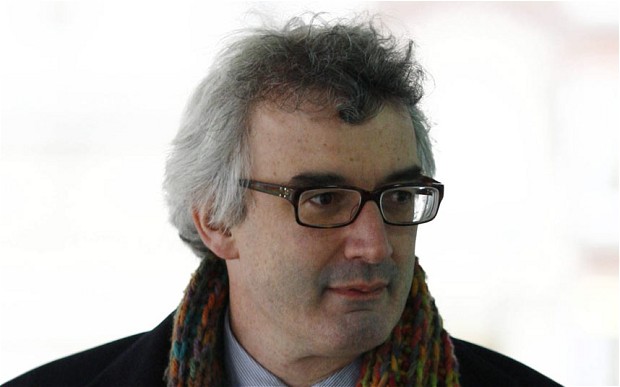
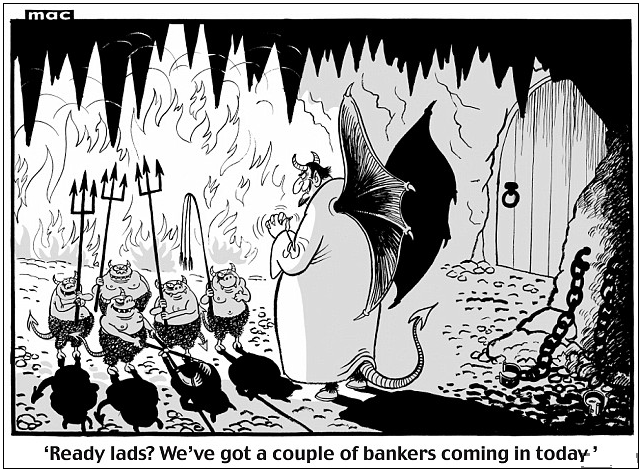
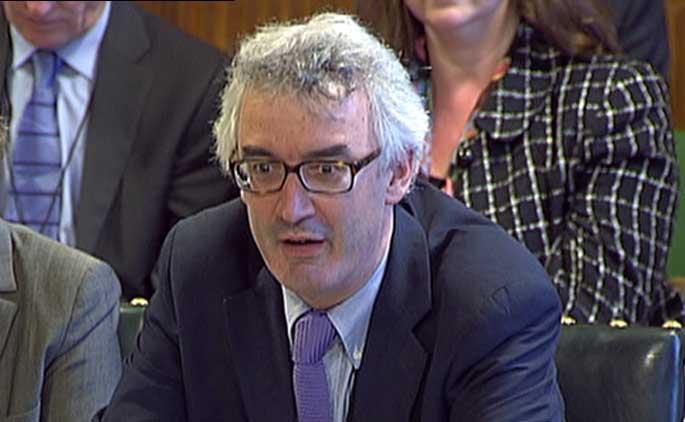
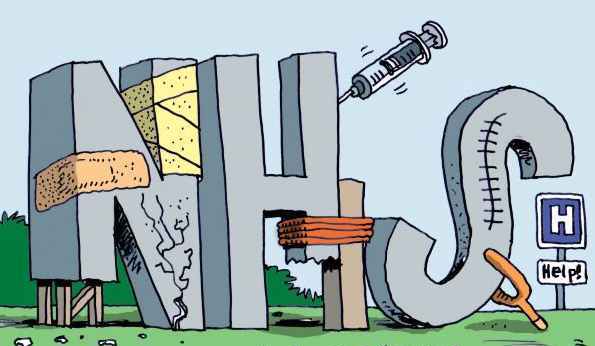
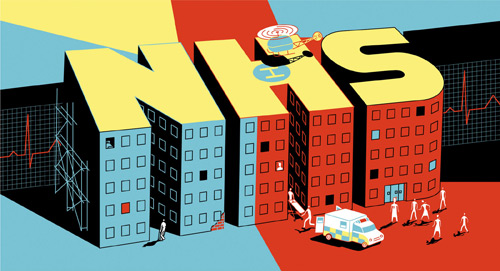
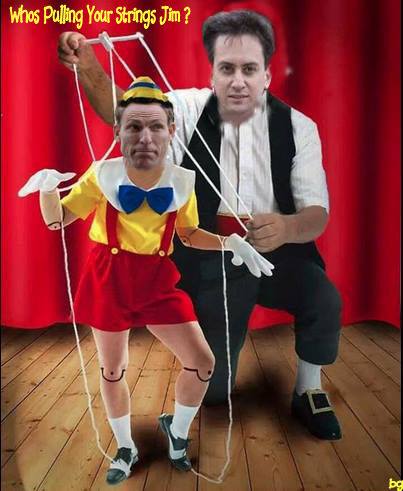
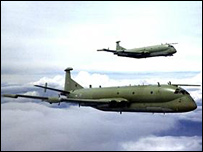

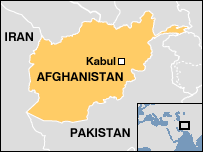
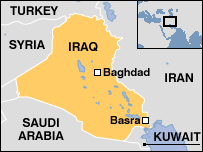


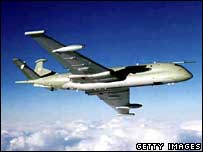


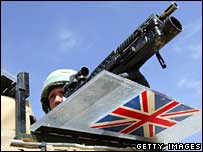

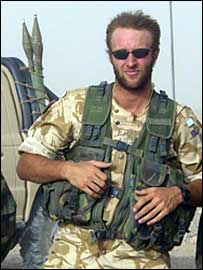



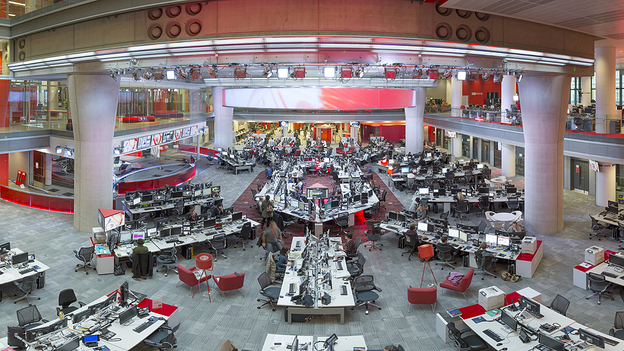


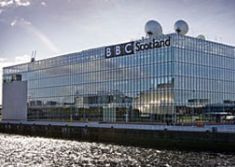

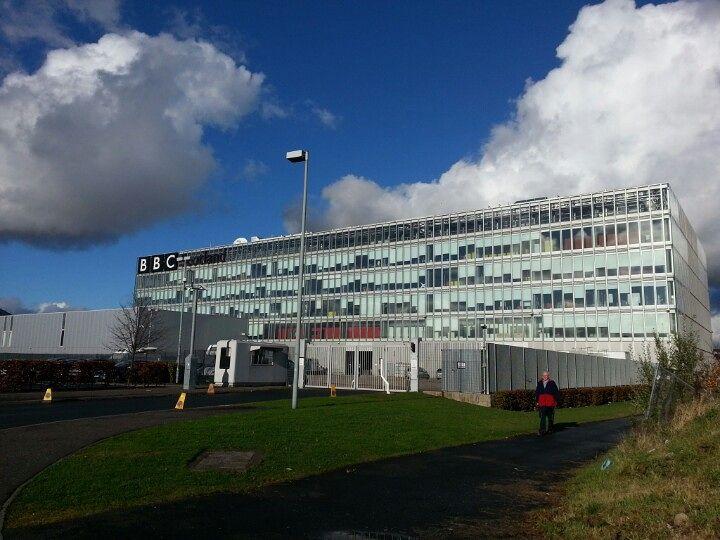

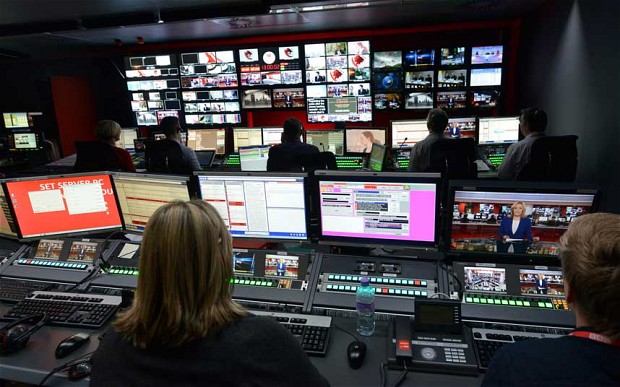
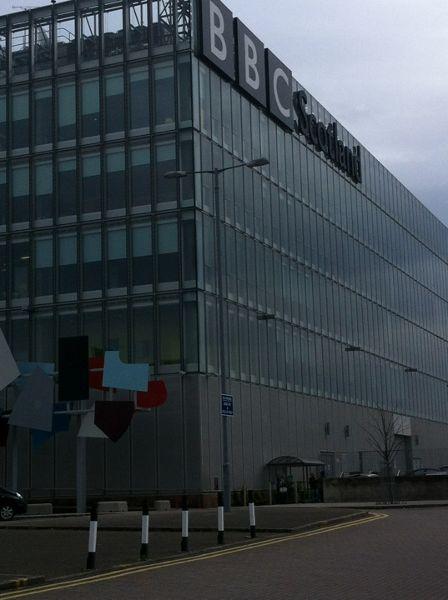


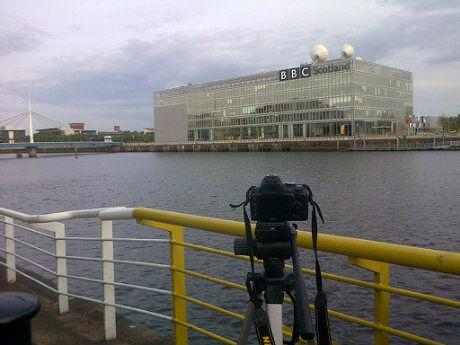






 caltonjock