Is the Labour Party at War with the Zionists? If Affirmed Will the Party Split? The Track Record of the Zionists is Impressive


Image result for ken livingstone images

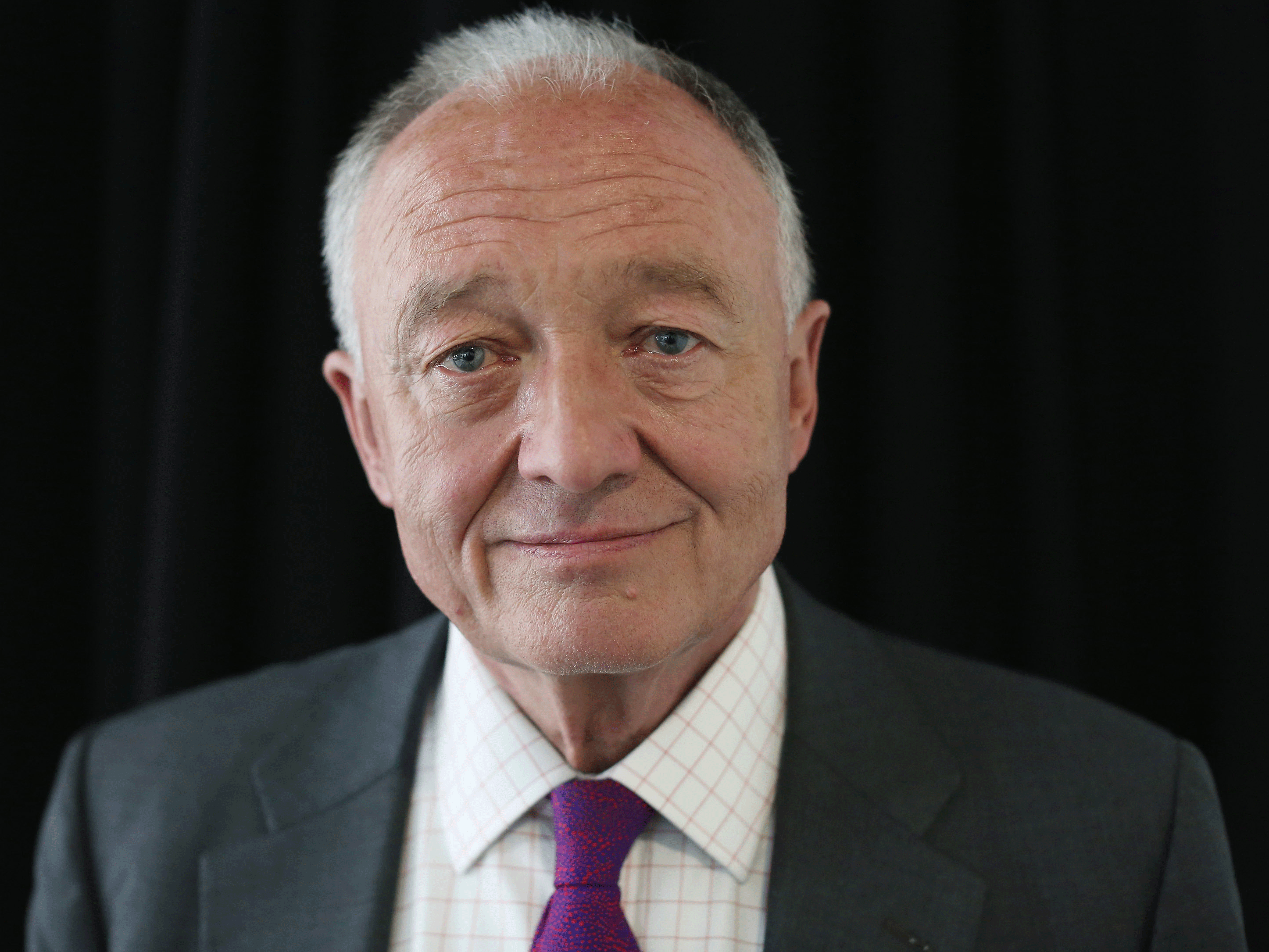
Ken Livingstone


20 April 2016: Ken Livingstone leaves the Labour Party in turmoil after claiming Hitler backed moving Jews to Israel

When Jeremy Corbyn finally suspended Naz Shah, a Labour MP, for anti-Semitic comments on Wednesday afternoon he had hoped to draw a line under the furore engulfing his party. By Thursday morning, however, his friend and close ally Ken Livingstone had single-handedly reignited the row after deciding to mount an extraordinary defence of Ms Shah live on BBC Radio London.

Mr Livingstone, who sits on Labour’s National Executive Committee, claimed that Ms Shah’s suggestion that Israel should be “relocated” to the US was not anti-Semitic. He said that she had been “smeared” by the “Israel lobby” and even invoked Hitler to support his position. “There’s been a very well-orchestrated campaign by the Israel lobby to smear anybody who criticises Israeli policy as anti-Semitic,”

he said. “I had to put up with 35 years of this. It’s completely over the top but it’s not anti-Semitic. Let’s remember when Hitler won his election in 1932, his policy was that Jews should be moved to Israel. “He was supporting Zionism – this is before he went mad and ended up killing six million Jews.”

http://www.telegraph.co.uk/news/2016/04/28/how-ken-livingstone-left-labour-in-turmoil-after-claiming-hitler/


Image result for hitler images

Adolf Hitler


But Is Judaism and Zionism the same thing? Well: “All poodles are dogs, but not all dogs are poodles.” Ken Livingstone, with his long track record of supporting Palestinian human and political rights, was entirely correct in his assertions at interview with Vanessa Feltz on BBC Radio London.

But the row has rumbled on for 6 months bringing with it mass resignations of MP’s from Corbyns Shadow Cabinet and a challenge to his position as Leader of the party. Which the rebels duly lost. But will the large group of Labour Lords and Labour MP “Friends of Israel” now back off and allow Corbyn to get on with his job? Early indications are that Mandelson and his ilk will re-group and take another tack. Could be an interesting year ahead.

But in any event there are differing views of world events in the period 1918-1945. Ken voiced his and was castigated as being Anti-Semitic which is a load of nonsense.


Image result for anti semitic images


Zionism

But the facts, (as presented by Cheryl b. Who is Jewish and contributes articles to care2.com) are indisputable and worth a good read.

From its’ inception, many rabbis warned of the potential dangers of Zionism and openly declared that Jews should stay away from it like one would from fire. They made their opinions clear to their congregates and to the general public. Their message was that Zionism was a chauvinistic racist phenomenon which had absolutely naught to do with Judaism. They publicly expressed that Zionism would definitely be detrimental to the well being of Jews and Gentiles and that its effects on the Jewish religion would be nothing other than destructive. Further, it would taint the reputation of Jewry as a whole and would cause utter confusion in the Jewish and non-Jewish communities.


Image result for jewish faith images

Jewish couple


1900: Leading Jewish religious authorities predict great hardship befalling humanity generally and the Jewish people particularly, as a result of Zionism.

To be a Jew means that either one is born to a Jewish mother or converts to the religion with the condition that he or she make no reservations with regard to Jewish law. Unfortunately there are many Jews who have no inkling whatsoever as to the duties of a Jew. Many of them are not to blame, for in many cases they lacked a Jewish education and upbringing. But there are those who deliberately distort the teachings of our tradition to suit their personal needs.

It is self understood that not just anyone has the right or the ability to make a decision regarding the philosophy or law of a religion. Especially matters in which that person has no qualification. It follows then that those individuals who “decided” that Judaism is a nationality are to be ignored and even criticized.

It is no secret that the founders of Zionism had never studied Jewish Law nor did they express interest in our holy tradition. They openly defied Rabbinical authority and self-appointed themselves as leaders of the Jewish “nation”. In Jewish history, actions like those have always spelled disaster. To be a Jew and show open defiance of authority or to introduce “amendment” or “innovation” without first consulting with those officially appointed as Jewish spiritual leaders is the ideal equation to equal catastrophe.

One can not just decide to “modernize” ancient traditions or regulations. The spiritual leaders of contemporary Judaism better known as Orthodox rabbis have received ordination to judge and interpret matters pertaining to the Jewish faith. These rabbis have received their rights and responsibilities and form a link in the unbroken chain of the Jewish tradition dating all the way back to Moses. It was these very rabbis who, at the time of the formation of the Zionist movement, foresaw the pernicious outcome that was without a doubt lined up.


Image result for zionism images


Grand Rebbe Teitelbaum, zt’lIt was a man possessing outstanding Judaic genius, and a level of uncontested holiness who enunciated the Jewish stance regarding Zionism. This charismatic individual did not mince his words.  Straight to the point he called Zionism “the work of Satan”, “a sacrilege” and “a blasphemy”.

He forbade any participation with anything even remotely associated with Zionism and said that Zionism was bound to call the wrath of God upon His people. He maintained this stance with unwavering bravery from the onset of Zionism whilst he was still in Hungary up until his death in New York where he lead a congregation numbering in the hundreds of thousands.

Grand Rabbi Teitelbaum, scion to a legacy of holy mystics and Hassidic Masters unfortunately had his prediction fulfilled. More than six million Jews were horribly murdered. All in punishment for Zionist stupidity. The Holocaust, he wept, was a direct result of Zionism.


Image result for zionism images


Zionist leaders made a point of displaying abysmal contempt for their Jewish brothers and sisters by inciting the Angel of Death, Adolf Hitler, and then actively participating in their extermination. They took the liberty of telling the world that they represented World Jewry. But who appointed them leaders of the Jewish People?? It is no secret that these so-called “leaders” were ignoramuses when it came to Judaism. Atheists and racists too.

These are the “statesmen” who organized the 1933 trade boycott against a Germany, already on its knees, in the aftermath of WWI and the harsh terms of the Treaty of Versailles, particularly the reparations that Germany had to pay to the Allies, which prevented the German economy from recovering and a World still in the grips of the 1929 economic crisis.

The boycott brought calamity upon the Jews of Europe. At a time when America and Britain were at peace with mad-dog Hitler, the Zionist “statesmen” forsook the only plausible method of political amenability; and with their trade boycott incensed the leader of Germany to a frenzy encouraging him to implement the “Final Solution”, ( already part of the Nazis’ racist ideology). Genocide began, but the leaders of the World Jewry sat back and did nothing.


Image result for zionism images


1933 -1938: The Jewish problem drifted down the list of political difficulties


6-15 July 1938: President Roosevelt convened the Evian conference, to deal with the Jewish refugee problem.  A Jewish Agency delegation headed by Golda Meir (Meirson) ignored a German offer to allow Jews to emigrate to other countries on payment of $250 a head. But the Zionists made no effort to influence the United States and the 32 other countries attending the conference to allow immigration of German and Austrian Jews.
1 February 1940: Henry Montor, executive vice-President of the United Jewish Appeal refused to intervene for a shipload of Jewish refugees stranded on the Danube river, stating that “Palestine cannot be flooded with… old people or with undesirables.”

1941-1942: German Gestapo offered all European Jews transit to Spain, if they would relinquish all their property in Germany and Occupied France and on condition that:

a) none of the deportees would travel from Spain to Palestine; and

b) all the deportees would be transported from Spain to the USA or British colonies, and there to remain; with entry visas to be arranged by the Jews living there; and

c) $1000.00 ransom, payable for each family to be furnished by the Agency, payable upon the arrival of the family at the Spanish border at the rate of 1000 families daily.

The Zionist leaders in Switzerland and Turkey received this offer with the clear understanding that the exclusion of Palestine as a destination for the deportees was based on an agreement between the Gestapo and the Mufti.  The answer of the Zionist leaders was negative, with the following comments:

a) Only Palestine would be considered as a destination for the deportees.

b) The European Jews must accede to suffering and death greater in measure than the other nations, in order that the victorious allies agree to a “Jewish State” at the end of the war.

c) No ransom to be paid


The response to the Gestapo’s offer was made with the full knowledge that the alternative was the gas chamber. The treacherous Zionist leaders betrayed their own flesh and blood. Zionism was never an option for Jewish salvation. Quite the opposite, it was a formula for human beings to be used as pawns for the power trip of several desperadoes. A perfidy! A betrayal beyond description!


Image result for holocaust images


17 December 1942: Both houses of the British Parliament declared readiness to find temporary refuge for endangered persons. The British Parliament proposed to evacuate 500,000 Jews from Europe, and resettle them in British colonies, as a part of diplomatic negotiations with Germany. Within two weeks the motion had attracted a total of 277 Parliamentary signatures in support. But on Jan 27 1943 when the next steps were being pursued by over 100 M.P.’s and Lords, a spokesman for the Zionists announced that the Jews would oppose the motion because Palestine had been omitted as a destination.


1943: The British government granted visas to 300 rabbis and their families to the Colony of Mauritius, with passage for the evacuees through Turkey. The “Jewish Agency” leaders sabotaged this plan with the observation that the plan was disloyal to Palestine, and the 300 rabbis and their families should be gassed.


16 February 1943: Romania offered 70,000 Jewish refugees of the Trans-Dniestria the opportunity to leave at the cost on payment of $50 each. On Feb 24 1943 Stephen Wise, President of the American Jewish Congress and leader of the American Zionists issued a refusal (published in the New York papers) to the offer and declared no collection of funds would seem justified.


Image result for holocaust images


18 February 1943: Yitzhak Greenbaum, Chairman of the Rescue Committee of the Jewish Agency, addressing the Zionist Executive Council in Tel Aviv Feb18 1943 said, “when they asked me, “couldn’t you give money out of the “United Jewish Appeal” funds for the rescue of Jews in Europe, I said NO! and I say again, NO!…one should resist this wave which pushes the Zionist activities to secondary importance.”

During the course of the negotiations, Chaim Weizman, the first “Jewish statesman” stated: “The most valuable part of the Jewish nation is already in Palestine, and those Jews living outside Palestine are not too important”. Weizman’s cohort, Greenbaum, amplified this statement with the observation “One cow in Palestine is worth more than all the Jews in Europe”.

And then, after the bitterest episode in Jewish history, these Zionist “statesmen” lured the broken refugees in the displaced persons camps to remain in hunger and deprivation, and to refuse relocation to any place but Palestine; only for the purpose of building their State.


1944: At the time of the Hungarian deportations, a similar offer was made, whereby all Hungarian Jewry could be saved. The same Zionist hierarchy again refused this offer (after the gas chambers had already taken a toll of millions).


1944: The Emergency Committee to “Save the Jewish People” called upon the American government to establish a War Refugee Board. Stephen Wise testifying before a special committee of Congress objected to the proposal.


Image result for holocaust images


1947: Congressman William Stration sponsored a bill to immediately grant entry to the United States of 400,000 displaced persons. The bill was not passed after it was publicly denounced by the Zionist leadership.
23 February 1956: The Hon. J. W. Pickersgill, Minister for Immigration was asked in the Canadian House of Commons “would he open the doors of Canada to Jewish refugees”. He replied “the government has made no progress in that direction because the government of Israel….does not wish us to do so”.


Image result for holocaust images


1972: The Zionist leadership successfully opposed an effort in the United States Congress to allow 20,000-30,000 Russian refugees to enter the United States. Jewish relief organizations were being pressured to abandon the refugees in Vienna, Rome and other European cities. The pattern is clear!!! Humanitarian rescue efforts are subverted to narrow Zionist interests.

The foregoing facts are written here with consternation and unbearable shame. How can it be explained that at a time during the last phase of the war, when the Nazis were willing to barter Jews for money, partly because of their desires to establish contact with the Western powers which, they believed, were under Jewish influence, how was it possible one asks that the self-proclaimed “Jewish leaders” did not move heaven and earth to save the last remnant of their brothers?


Image result for holocaust images


January 1941: Zionists propose a Military Alliance with Hitler

It would be wishful thinking if it could be stated that the contribution of the leaders of the Zionist movement was confined to simply sitting back and ignoring the plight of their dying brothers and sisters. But, not only did they publicly refuse to assist in their rescue, they actively participated with Hitler and the Nazi regime. In early January 1941 a small but important Zionist organization submitted a formal proposal to German diplomats in Beirut for a military-political alliance with wartime Germany.

The offer was made by the radical underground “Fighters for the Freedom of Israel”, better known as the Lehi or Stern Gang. Its leader, Avraham Stern, had recently broken with the radical nationalist “National Military Organization” (NMO) over the group’s attitude toward Britain, which had effectively banned further Jewish settlement of Palestine. Stern regarded Britain as the main enemy of Zionism. This remarkable proposal “for the solution of the Jewish question in Europe and the active participation of Zionists in the war on the side of Germany” is worth quoting in full:


Image result for stern gang images


“The NMO which is very familiar with the goodwill of the German Reich government and its officials towards Zionist activities within Germany and the Zionist emigration program takes the view that common interests can exist between a European New Order based on the German concept and the true national aspirations of the Jewish people.

Cooperation is possible between the New Germany and a renewed, folkish-national Jewry. The establishment of the Jewish state on a national and totalitarian basis, and bound by treaty, with the German Reich, would be in the interest of maintaining and strengthening the future German position of power in the Near East.

On the basis of these considerations, and upon the condition that the German Reich government recognize the national aspirations of the Israel Freedom Movement mentioned above, the NMO in Palestine offers to actively take part in the war on the side of Germany.

This offer by the NMO could include military, political and informational activity within Palestine and, after certain organizational measures, outside as well. Along with this the “Jewish” men of Europe would be militarily trained and organized in military units under the leadership and command of the NMO.

They would take part in combat operations for the purpose of conquering Palestine, should such a front be formed. The indirect participation of the Israel Freedom Movement in the New Order of Europe, already in the preparatory stage, combined with a positive-radical solution of the European-Jewish problem on the basis of the national aspirations of the Jewish people mentioned above, would greatly strengthen the moral foundation of the New Order in the eyes of all humanity.

The co-operation of the Israel Freedom Movement would also be consistent with a recent speech by the German Reich Chancellor, in which Hitler stressed that he would utilize any combination and coalition in order to isolate and defeat England”.


Image result for stern gang images


On the basis of their similar ideologies about ethnicity and nationhood, National Socialists and Zionists worked together for what each group believed was in its own national interests. This is just one example of the Zionist movements’ collaboration with Hitler for the purpose of possibly receiving jurisdiction over a minute piece of earth, Palestine.

And to top it all up, brainwashing! How far this unbelievable Zionist conspiracy has captured the Jewish masses, and how impossible it is for any different thought to penetrate their minds, even to the point of mere evaluation, can be seen in the vehemence of the reaction to any reproach. With blinded eyes and closed ears, any voice raised in protest and accusation is immediately suppressed and deafened by the thousandfold cry: “Traitor,” “Enemy of the Jewish People.” Credit Cheryl b who contributes articles to: care2.com


Complete original text published in: David Yisraeli, The Palestinian Problem in German Politics 1889-1945 (Israel: 1947) pp. 315-317). The Wall Street Journal December 2, 1976

 
Other informative Links:

http://www.realnews247.com/brutal_zionist_role_in_holocaust.htm
http://www.counterpunch.org/2011/03/04/denying-nazi-zionist-collusion/
https://rainbowwarrior2005.wordpress.com/2009/02/01/did-you-know-about-zionist-collaboration-with-the-nazis/
http://aldeilis.net/english/category/zionism/c90-zionism-and-the-holocaust/
http://www.israelversusjudaism.org/holocaust/victims.cfm


Image result for israel images


Brian Wilson – Unionist Labour Party – Politics Before People Advocate – Hates the Thought of an Independent Scotland – A Sad Figure


Image result for brian wilson labour images


Brian Wilson

Brian Wilson former Labour party minister at Westminster and in Scotland has been at the forefront of Scottish and Westminster politics for nearly 40 years.

He is an accomplished author and Journalist responsible for many hard hitting articles almost always attacking the SNP government. He is always vociferous in his defence of the Union and consistently voted against any form of Scottish home rule.

He retired from front line politics at the age of 55 taking up a new career in business concentrating on re-establishing Nuclear power as the main source of electricity supply in the UK.

He fully supported the 2003 invasion of Iraq and active in the Labour government as the trade minister successfully negotiated a small number of rebuilding projects to a total of around £1bn. The value of the contracts was a pittance when set against the total for all reconstruction contracts thought to be in the region of £300bn, all of which went to USA based companies. So much for the “special relationship” which brought death and injury to many fine young servicemen and women. The main company benefiting was AMEX (remember the name it features again and again in this article.

Wilson holds directorships in a number of energy related businesses and continues to publicly comment on UK government energy policy, particularly on the subject of nuclear power, which he is a supporter of, and has written opinion pieces in national newspapers as well as appearing on television news programmes to air his views.  He has called for Britain to retain a balanced energy policy with contributions to our electricity needs from nuclear, renewable’ s, clean coal and gas.

Wilson took a great deal of interest in Cuba which (when Trade Minister in the Labour government) he visited on a number of occasions in an effort to improve political and trade links. He recently set up a new company and is Chairman of Havana Energy Ltd; Developing  Renewable Energy Strategies for Cuba and the Caribbean. The company was recently awarded a lucrative renewable contract by the Cuban government.  Read over his recent conference speech: http://www.havana-energy.com/downloads/WWEC2013HavanaEnergySpeech.pdf”


Image result for brian wilson labour images


Other executive positions held:

Non-executive director of Amec Foster Wheeler   Appointed, 26 October 2005, non-executive director of AMEC Nuclear Holdings Ltd, the nuclear services arm of AMEC plc. The announcement boasted that the firm was the UK’s largest private nuclear services business. Wilson said “It is vital to have a British company of AMEC Nuclear’s standing involved in every aspect of the industry. There is a huge amount of essential work to be done at both home and abroad, including clean-up and decommissioning, and I want to see the maximum level of participation from the UK in that process”.

non-executive director of Celtic plc

Chair of the UK Operations Board of Airtricity:  UK arm of an international renewable energy company developing wind farms in Scotland and  the UK, USA and Europe. Supplies renewable energy to over 43,000 customers in Ireland and Northern Ireland.

Chair of Flying Matters:  A lobbying organisation supporting the aviation industry. It was wound up at the end of April 2011 following the withdrawal of four founding members including BA, BAA and Virgin Atlantic.


Image result for brian wilson labour images


A closer look at  notable events in which his involvement is evident. The first, in 1996 condemns Wilson for his actions after leaving government

1996: Former Tory transport minister Steven Norris is set to take a job heading a private bus company, it emerged yesterday as Labour condemned a “jobs- for-the-boys” scandal.

Brian Wilson, Labour campaigns spokesman, said: “This is a public scandal. Common decency dictates he should not walk out of government and start taking money from one of the beneficiaries of his policies. This will heighten the public impression that Tory ministers legislate for their own futures rather than the national interest.”

http://www.independent.co.uk/news/uk/politics/ex-minister-accused-of-job-scandal-1351066.html


Image result for brian wilson labour images


1997: Labour was last night at the centre of a fresh home rule row after one of the party’s senior campaign strategists, Brian Wilson claimed a future Scottish parliament would not be allowed to hold a referendum asking the people of Scotland if they wanted independence.

Opponents say Wilson, who heads Labour’s rebuttal unit, had gaffed and was completely wrong when he told an Irish radio programme that a Scottish parliament could not hold an independence referendum stating that the Scottish government did not have the powers to legislate and only Westminster could approve such a move. Daily mail April 22, 1997


Image result for brian wilson labour images


1998: A number of Labour MPs face “yellow cards” over their poor voting record in the Commons. Party leaders are to “name and shame” laggards in a drive to tighten discipline and end revolts. They are believed to include Scottish Minister Brian Wilson, Local parties are to be sent voting records and persistent offenders will even risk being dumped as Labour MPs. A senior whip claimed that Mr Wilson, could not be relied on to turn up for votes.  The Mirror June 5, 1998


Image result for brian wilson labour images


2001: Amec, in partnership with British Energy is to be awarded a contract to build the largest wind-farm in Europe (up to 300 wind turbines) on Lewis, at a cost of £600m .

The project was unveiled by construction and energy minister Brian Wilson on Lewis last Thursday.

British Energy and Amec are already working in partnership to build an offshore wind farm of 30 turbines near Skegness. http://www.building.co.uk/amec-to-build-%C2%A3600m-scottish-wind-farm/1014547.article


Image result for brian wilson labour images


2001: Foreign Office Minister Brian Wilson embarrassed the Labour Party yesterday by calling for the construction of a new nuclear power station in his constituency.

Wilson wrote to the chairman designate of British Energy, Robin Jeffrey, urging him to think about replacing the ageing Hunterston B nuclear power station in North Ayrshire.

But the Minister’s desire for a new nuclear plant runs counter to Labour’s last election manifesto, which claimed there was no case for new reactors.

No one from the Labour Party would comment officially yesterday, insisting it was a constituency matter, but party managers will not be happy Mr Wilson has given such strong support to nuclear energy when the party is split on the issue. …The Mail March 15, 2001


Image result for brian wilson labour images


2001: It is an open secret in the closed and murky world of Scottish Labour. To say that Brian Wilson and Henry McLeish do not see eye- to-eye is an understatement.

In the name of keeping Tony Blair’s commitment to devolution on track, the two men buried their deep-rooted antipathy in the wake of Labour’s first general election landslide in 1997.

Mr Wilson stifled his conviction that delivering a Scottish parliament was like handing a badly wrapped gift to the Scottish National Party, while Mr McLeish took delight in his role as devolution minister at Westminster.

But under the deceptively calm surface, dangerous currents of dislike between the two MPs continues to swirl . …The Scotsman June 9, 2001


Image result for brian wilson labour images


2002: So now we know. John Birt, former director general of the BBC, spilled the beans about a conspiracy at the highest levels of Government to prevent Scotland having a normal broadcasting service.

During 1997 and 1998 almost everyone in Scotland was in favour of what was called ‘The Scottish Six’ – a 6pm BBC TV news programme run from Scotland by BBC Scotland and reporting the events of the world through Scottish eyes.

Supporters included the Church of Scotland, which criticised the broadcaster over its ignorance of Scottish affairs, BBC Scotland staff themselves and the public at large.

Only two members of a specially gathered audience opposed the move to a ‘Scottish Six’ – Labour’s Brian Wilson, now Energy Minister, and Lord ‘Gus’ MacDonald, former boss of Scottish Television. By everyone else, it was seen as a natural development which would match the devolution of some powers to a Scottish parliament. Daily Mail October 21 2002


Image result for brian wilson labour images


2002: AMEC has secured a major petrochemical contract in South East China to work on the design and construction of a new US$2.7 billion petrochemical facility in Shanghai “- one of the largest overseas investments yet to be made in China.

AMEC’s role, as part of the owners Integrated Project Management Team (IPMT) – is central to the successful management of the design, construction and commissioning phases of the project.

This first phase has a value of around $US 60 million and is expected to grow substantially as the project progresses.

The Minister for Industry, Energy and Construction, Brian Wilson said “This is a magnificent result for AMEC and British industry.

I recently visited Shanghai and was hugely impressed by the opportunities available to UK companies”. http://archive.amecfw.com/news/2002/amec-in-major-chinese-petrochemical-win


Image result for brian wilson labour images


2002: AMEC and 50/50 joint venture services partner Fluor Daniel will participate in South Korea’s first offshore gas development following the signing of an initial £6 million two-year services contract with the Korean National Oil Company (KNOC).

Brian Wilson, UK Minister for Energy, attending the contract signing ceremony in Manila, Philippines, said: “It is an extremely exciting concept that operations of this kind can effectively be supported remotely from Aberdeen and other centres in the AMEC network, as necessary.

This is an extension of the principle that expertise developed in the North Sea can now be utilised on a global basis, while securing jobs at home and valuable contacts for British companies worldwide.” http://www.contractorsunlimited.co.uk/news/030113.shtml


Image result for brian wilson labour images


2004: Amec has won a contract worth £300m forming part of a $1bn (£550m) contract to rebuild water and sewerage networks in Iraq.

The deal is the biggest so far by a UK company for reconstruction work in the war-torn country, but otherwise British firms have lost out.

The combined successes sent Amec’s share price up 3% to 305p. It is still in the running for two more pieces of work, one in transport, the other related to justice and security, which could be worth up to $1.2bn.

Brian Wilson, the prime minister’s special envoy in Iraq who lobbied in Washington said: “This is a US-funded contract and I have no doubt that, as funding sources diversify, British companies will play an even bigger part in rebuilding Iraq.” https://www.theguardian.com/business/2004/mar/25/politicsandiraq.iraq


Image result for brian wilson labour images


2004: More nuclear power stations must be built if Britain is to meet its energy needs, a former Labour minister said yesterday. Brian Wilson, MP for Cunninghame North, denounced a policy of running down the nuclear industry as “irrational and irresponsible”.

He told an energy conference in Glasgow, organised by the Scottish TUC, that new figures showing Britain was failing to meet its own greenhouse gas reduction targets “put the tin lid” on the argument for building new nuclear stations. …The Herald December 14, 2004 Wilson lobbying for the nuclear industry. There’s a surprise.


Image result for brian wilson labour images


2005: Amec and Fluor team have approached the government about buying the Sellafield-based British Nuclear Group (BNG) offer to take ailing British Nuclear Group private. This would complete the break-up of fuel and reprocessing operator BNFL.

In April, the ownership of Sellafield and a further 20 nuclear sites passed from the control of BNG to the newly created Nuclear Decommissioning Authority (NDA), along with the liability for dismantling them.

The state-controlled NDA will enter into contracts with private firms, (such as AMEC) to decommission the sites from 2008, when an interim arrangement allowing BNG to continue managing them will run out.

Amec, which last week paid £38 million for nuclear services consultancy NNC Holdings, is expanding aggressively into the nuclear market, having made acquisitions in France, Canada and the US. It wants to buy all or part of BNG and is hoping that a sale process will begin soon. https://www.theguardian.com/environment/2005/jun/26/energy.business


Image result for brian wilson labour images


2006: The minister in charge of approving wind-farms in Scotland was accused last night of a blatant conflict of interest over his links with two private companies bidding to build the turbines.

Allan Wilson is Labour’s deputy enterprise minister in Scotland and is ultimately responsible for deciding if wind-farm projects should be given the go-ahead. But it has now emerged he also spent several years as election agent for Brian Wilson – the former Labour energy minister who recently became a director with two energy companies bidding to build wind-farms.

Last night, the revelations sparked an outcry among anti-wind-farm campaigners, who argued the close relationship between the men represented a conflict of interest and could breach the strict ministerial code. …Daily Mail January 26, 2006


Image result for brian wilson labour images


2007: Richard Caborn, the former trade minister, has been approached to become director of a nuclear alliance bidding for the £5bn-plus contract to clean up Sellafield.

He is just one of many high profile Labour politicians to join the nuclear industry’s payroll as a lobbyist. He is understood to be ready to accept the non-executive post with the alliance formed by Amec of the UK and fellow nuclear clean-up specialists Washington Group of the US and France’s Areva. It is thought the job could be worth up to £96,000 a year.

Former energy minister Brian Wilson is a non-executive director of the nuclear division of Amec and more recently, another former Labour trade minister, Ian McCartney, was recruited by Fluor of the US.

Of note is that the Washington Group already employs Lord O’Neill, the Labour peer and former chairman of the trade and industry select committee, as a consultant. O’Neill is also chairman of industry body the Nuclear Industry Association.

Companies are competing for a slice of the £73bn decommissioning market in the UK, with the clean-up of the sprawling Sellafield site representing at least half this sum.

If, as expected, the government sanctions the construction of new nuclear reactors later this year, more lucrative contracts will be up for grabs.

Having on board politicians with inside knowledge of the Department for Business, Enterprise and Regulatory Reform (Berr), trade unions and regulators is a great asset for bidders. https://www.theguardian.com/business/2007/nov/11/amec.nuclearindustry


Image result for brian wilson labour images


2007 Labour Party hypocrisy exposed. Peter Mandelson’s spin doctor Derek Draper was fired after his links with nuclear industry lobbyists was revealed by the press. The lobbyists regrouped and flooded the media conducting a sustained and sophisticated public relations campaign, using climate change, using energy security, saying that nuclear was cheap and safe.

There are certainly no shortage of links between the nuclear industry and the New Labour establishment. Former energy minister Brian Wilson is now a non-executive director of Amec Nuclear, a client of BNFL, the government-owned nuclear reactor operator.

Since 2004, BNFL has used lobbyists Weber Shandwick to help it push the case for new nuclear plants. Weber Shandwick’s UK arm is headed by Colin Byrne, the Labour Party’s former chief press officer.

French energy giant EDF has also been at the forefront of the campaign to change perceptions of nuclear power. Chancellor Gordon Brown’s brother, Andrew, is EDF’s head of media relations in the UK.

The company, operates 58 nuclear reactors in France and is already a big player in the UK electricity market, has said it is ready to invest in a new generation of plants in the UK, provided it gets the go-ahead from government. It has successfully lobbied ministers to introduce a fast-track planning process to make it easier to build new plants without lengthy public enquiries.

Yvette Cooper, housing and planning minister, and wife of Mr Brown’s closest political ally Ed Balls, also has links to the nuclear industry. Her father, ex-trade union official Tony Cooper, is the former chairman of the Nuclear Industry Association, and is currently a director of the Nuclear Decommissioning Authority. He has been one of the most vocal champions of the industry’s green credentials.

One of the most well-connected nuclear lobbyists is Alan Donnelly, former leader of the Labour group in the European Parliament. Mr Donnelly’s company, Sovereign Strategy, represents US engineering giant Fluor, one of the world’s biggest nuclear contractors, which is currently vying for a slice of the UK’s £70bn nuclear clean-up market – but like other US firms, such as Bechtel, also has an eye on future nuclear build.

On its website, Sovereign Strategy, offers among other services, “pathways to the decision makers in national governments”. Its board members include Tory peer Lady Maitland and pro-nuclear Labour peer Lord Cunningham, Tony Blair’s former “cabinet enforcer” and the ex chairman of the Friends of Sellafield campaign.

Lord Cunningham is also “legislative chair” of the Transatlantic Nuclear Energy Forum, an organisation founded and run by Mr Donnelly, that aims to foster “strong relationships” between nuclear power companies and governments.

Tony Blair has spoken at events organised by Sovereign Strategy, including 2005’s North East Economic Forum in his Sedgefield constituency, where he was reportedly introduced by a Fluor executive.

Friends of the Earth Chief said “Labour has often castigated the old boy network, the public school tie and so on, but they have a similar network. It depends who you know in the unions or ex-Labour ministers. People may accept that as the way things are, but there needs to be more transparency.” http://news.bbc.co.uk/1/hi/uk_politics/5149676.stm


Image result for brian wilson labour images


2009: Parkmead Group bank in false market claim. A company that numbers Tom Cross, chief executive of Dana Petroleum, and Brian Wilson, the former energy minister, among its non-executive directors has come under fire for creating “false market” in its own shares after putting misleading information into the market.

Ken Olisa, former chairman of Parkmead and now a non-executive director of Thomson Reuters and founder of Restoration Partners, alleges that the Aim-listed boutique investment bank, which specialises in the oil and gas sector, “has repeatedly failed to properly communicate with the market.” He also alleged that the company created a “false market” in its own shares.

Olisa commented further saying “Everyone who put money into Parkmead, including widows and the orphans, has lost money as a result of this and other corporate governance abuses by the company, but they don’t seem to have any recourse, The people whose job it is to enforce the regulations don’t see enforcement as particularly important. They are too preoccupied with systemic risk.”

What matters  said Olisa “is that Parkmead’s shares fell by 20% as a result of the second announcement, so there had clearly been a false market for over a year.” Regulatory authorities stand accused of failing to intervene. http://www.ianfraser.org/corporate-goveranance-abuse-at-parkmead/


Image result for brian wilson labour images


2012: This is an example of the “spoiling” role of the Scottish Office who conspired with the Unionist parties in Scotland to defeat the wishes of the Scottish electorate in the independence referendum.

The UK Treasury used public finances allocated to Scotland to recruit a suitable individual located within Scotland in order to counter the campaign for Scottish independence (There were no UK Treasury employees based in Scotland).

The role, which was advertised by the UK government department, committed to pay the successful applicant £50,000 of public cash in order to promote the benefits of the Union.

The role was to become redundant in December 2014, immediately after the independence referendum. Now there’s a surprise. Might be a unionist businessman will apply.

Well, well, well. Shortly after, “The Scotsman” published the following:

“Brian Wilson charged with promoting Scottish enterprise both at home and abroad. His role will see him use his expertise to promote the Scottish economy and business environment, and encourage more firms to engage in international business, with the view to growing Scottish exports. He said “I am very willing to make whatever contribution I can to supporting Scottish and other UK companies overseas, and by encouraging more of our businesses to become exporters.”

How is this to work? Wilson will need to cooperate with the Scottish Government, a Government which he does not think should exist and endlessly disparages. He also represents Irish commercial interests in green technology. How can he represent Scottish interests in this field?  He also has financial interests in Nuclear power which the Scottish Parliament ( not just the SNP ) opposes.

He is a British Nationalist who has done nothing to further Scottish interests. Part of the Westminster government campaign against Scottish independence. But using Scottish funds for the purpose is yet another insult foisted upon Scots. http://www.scotsman.com/news/politics/former-labour-mp-brian-wilson-appointed-business-ambassador-for-scotland-1-2499843


Image result for brian wilson labour images


2013: Celtic FC getting sucked into the Labour Party Co-operative Bank Scandal. As well as the evolving local Glasgow scandal of Celtic receiving cheap land deals from a Scottish Labour controlled Glasgow City Council and Greater Glasgow Health Board.

Celtic have been using the land as security to obtain cheap interest rate loans from the Labour riddled Co-operative Bank, most likely through former Chairman John Reid and Director Brian Wilson, both Labour party heavyweights. Now that’s what you call doubling up on corrupt leverage.

The Co-operative Bank, due the drug dealing antics of ex-chairman, ‘Crystal Methodist’ Paul Flowers, a Labour ex-councillor, is soon to experience a forensic examination of it’s ‘policy’ of giving risky loans at low interest rates to Labour party connected entities.

In 2006, when the Labour party was close to bankruptcy, the Co-Op Bank bailed the party out and in March this year gave them a loan of £1.2 million at the preferential low rate of 4%.

Compare this with Celtic’s Co-op Bank debt facility of £34 million at 1.5%. Celtic’s interest rate is ridiculously low and market loss-making.

Here we have the alignment of Celtic and Labour benefiting from the same low loans corruption. Hmmm, a coincidence?

Well Celtic’s loans were obtained while John Reid, ex-minister of the Blair Labour govts and Brian Wilson, who was Labour Energy Minister were on the Celtic Board.

John Reid was chairman of Celtic from 2007 until 2011. Brian Wilson joined the Celtic board in 2005 where he remains a Director.

Note: All of the Co-operative Bank – Celtic mortgages were created during their tenures therefore so were the loans based on those securities. https://footballtaxhavens.wordpress.com/2013/11/24/celtic-fc-getting-sucked-into-the-labour-party-co-operative-bank-scandal/


Image result for brian wilson labour images


2013: Mike Small of bellacaledonia wrote of Brian Wilson:

Wilson in standard mode this week: apoplectic. The sense of self-importance and enshrined right-to-rule is most evident with Unionist politicians like Wilson but the sheer hypocrisy is breathtaking.

Last week he used his regular platform in the Scotsman to pour disdain on the Scottish Government’s use of consultants to give expertise on defence, referring to “paying consultants substantial sums of public money” as if such a thing was anathema.

This week he is bemoaning the fact that the nuclear industry doesn’t have the feather-bedding it does in England. He cheers for the idea of a Hinkley C and calls Scotland’s energy policy “Salmond’s nuclear fatwa” (memo to Brian, it’s called a mandate).” http://bellacaledonia.org.uk/2013/10/23/nuclear-meltdown/


Image result for brian wilson labour images


2014: George Monbiot, published a scathing analysis of Brian Wilson (extract below) and his ilk just before the referendum (The Guardian 9th September 2014)

“Of all the bad arguments urging the Scots to vote no – and there are plenty – perhaps the worst is the demand that Scotland should remain in the Union to save England from itself.

Responses to last week’s column suggest that this wretched, snivelling, apron-strings argument has some traction among people who claim to belong to the left.

Consider what it entails: it asks a nation of 5.3 million to forgo independence to exempt a nation of 53 million from having to fight its own battles.

In return for this self-denial, the five million must remain yoked to the dismal politics of cowardice and triangulation which have caused the problems from which we ask them to save us. Brian Wilson, the sage of Scottish politics claimed in a recent article published in The Guardian:

“A UK without Scotland would be much less likely to elect any government of a progressive hue. We must combine against the “forces of privilege and reaction” (as he lined up with the Conservatives, UKIP, the LibDems, the banks, the corporations, almost all the right-wing columnists in Britain and every UK newspaper, (except the Sunday Herald) – in the cause of “solidarity” http://www.monbiot.com/2014/09/09/england-the-brave/


Image result for brian wilson labour images


2014: Rev. Stuart Campbell is no fan of Wilson, (with good reason) He wrote an article highlighting, (not for the first time) another one of Wilson’s flights of fancy:

“Alert readers will already be aware that former Labour MP, minister and nuclear-power lobbyist Brian Wilson is one of our least favourite figures in the independence debate.

A man utterly consumed by tribal hatred of the SNP – even by the standards of Scottish Labour, which is no mean accolade – his Scotsman columns are some of the most mendacious, bilious propaganda to be found in the country, to the extent that we don’t even link to them in our “Zany Comedy Relief” section.

Today, however, he’s outdone himself in spectacular style. His latest newspaper article is a foaming-mouthed diatribe (poorly researched) about postal charges, based on the price of sending a letter from Northern Ireland to the Republic. http://wingsoverscotland.com/brian-wilson-is-a-liar/


Image result for wind farm images


2016: The content of this article is mind blowing, exposing many Labour politicians that have climbed on board the gravy train piggy-backing financially on knowledge and influence gained at the expense of the electorate. http://www.countrydoctor.co.uk/politics/politics%20-%20Government%20corruption.htm


Image result for nuclear plant images


2016: on April 29th, we bade farewell to a great Scottish comedy talent. For the journalist, political commentator and former Labour MP Brian Wilson penned his final column for the Scotsman newspaper.

When I call Wilson a Scottish comedy talent, I’m thinking of a particular strain of Scottish comedy. I’m thinking of Walt Disney’s Scrooge McDuck, and John Laurie’s Private Frazer in the much-loved wartime sitcom Dad’s Army, and the Reverend I.M. Jolly, one of the characters essayed by the late Rikki Fulton in his sketch show Scotch and Wry.

Like those three, Brian Wilson is dour and crabbit and negative, traits commonly attributed to the Scots, but is so over-the-top about it that he becomes hilarious.

Though there’s a slight difference. The actors and animators who created Scrooge McDuck, Private Frazer and the Reverend I.M. Jolly weren’t being serious.

When the glowering, gurning, face-like-a-skelped-arse Wilson sits down at his computer and thumps out another thousand-word missive of misery and more misery for the Scotsman, he is being serious. He means it. That’s the real him. Which usually makes me fall off my perch laughing.

Seriously though, he’s had a sane attitude to energy policy, favouring a combination of renewable’s and nuclear power. I don’t like the idea of nuclear power, but I think with global warming hanging over us like the Sword of Damocles we don’t have any choice now but to continue using it. Mind you, I suspect Wilson’s opinions on the subject are coloured by his private financial interests.

From 2003 to 2004 he was director of a company called Virtual Utility Limited, which supposedly was involved in wind-farms.

While in 2005 he was appointed non-executive director of AMEC Nuclear Holdings Ltd, the ‘nuclear services arm’ of AMEC.

Oh, and while he was special envoy to Iraq, who won part of a half-billion-pound deal to reconstruct the country’s water and sewage systems? Why, AMEC did!  Funny, that.

http://bloodandporridge.co.uk/wp/?tag=brian-wilson


Image result for nuclear plant images


2016: Hinkley C Nuclear Plant: Britain’s Biggest Political Scandal.  Why would Britain or any supposedly sane country sign the world’s most insane energy contract ever? There is only one answer – deep scandalous multi-million pound systemic political corruption.

The international corporate nuclear industry has bought all three of Britain’s political parties. It is the most scandalous classic example of The Corrupted Political System Pillar of The Prostitute State.

Senior figures or members of their families from Labour, (including Brian Wilson) the Lib Dems and the Tories all are political prostitutes working for the notoriously corrupt nuclear industry. They are lining their pockets to push through the biggest heist ever perpetrated on the British people.

A list of nuclear industry lobbyists across the four pillars of The Prostitute State including politicians, journalists, academics and lobbyists is listed here:

http://www.powerbase.info/index.php/Category:Individuals_linked_to_the_push_for_nuclear

https://www.permaculture.co.uk/news/%5Bdd%5D%5Bmm%5D%5Byy%5D%5Bnid%5D/hinkley-c-nuclear-plant-britains-biggest-political-scandal


Image result for dounreay nuclear plant images


The Braes of Doune wind-farm disaster

Airtricity Brian Wilson (later chairman) executive member applied to build a 50-turbine wind ‘farm’ on the Braes of Doune, near Stirling, in 2002. The site was to prove contentious not only on account of its visual prominence but because of its peatland habitat and its proximity to the River Teith. This had recently been designated by the European Union as a Special Area of Conservation to protect important populations of salmon and lamprey.

For the most part, those that opposed the development were people for whom ‘the environment’ was not the abstraction of the urban middle class but the place where they lived and worked, often in the footsteps of parents and grandparents. Some were experienced conservationists, others, farmers, anglers and the like but all had a lifetime’s wisdom as countrymen and a deep knowledge of the locality. They were folk who tolerated rather than welcomed the rules and regulations that underpin modern rural life, for whom the river had been a steady part of that life, its special qualities perhaps taken for granted but its well-being never hitherto in doubt.

It certainly never crossed their minds that it would fall to them to defend its ecological integrity against the actions of a powerful developer and the confused and supine response of the environmental authorities. However, despite the strutting assurances of the developer, the bland prose of the ‘statutory bodies’ and brash politicians’ talk of ‘targets’, ‘job opportunities’ and so on, they spotted that something was wrong with the project almost the moment it got underway.


Image result for Scandal on the Braes images


Early in 2004, news emerged of a destructive peat-slide at a wind farm at Derrybrien, Co Galway, a site also featuring deep peat soils and nearby protected waterways.

Probing alleged planning irregularities, the EU’s Environment Commissioner called it ‘an environmental disaster’ and began legal action against the Irish government. Shortly after, the Scottish Executive called on Airtricity to assess the risk of a similar event on the Braes. Expert advice was that the assessment, which downplayed the risk, was inadequate.

Without consulting either the public or SNH on the issue, the Executive (in breach of the EIA Directive) consented the project and explicitly postponed full assessment to a later date. This. The habitats Directive lays down strict rules for developments that might damage areas like the River Teith. In short, a project must not damage a protected area and, if there is any ‘reasonable scientific doubt’ on that score, planning consent must be refused.

A purportedly new peat-slide risk assessment submitted after consent was only a re-hash of the old one and did not rely, as the Directive requires, on the ‘best available scientific knowledge’. The risk had never been properly assessed even though it was known to be serious:

At a hitherto undisclosed meeting with the Executive in March 2005, (in recognition of the risk of peat-slide) the developer agreed to drop 13 turbines from the scheme, all scheduled to be sited on deep peat. The peat-slide contingency plan was shown to be well below standard and reliant on a technique that failed at Derrybrien.

As construction proceeded, competent observers reported widespread pollution of hitherto pristine waterways to SNH and SEPA. The response was at best indifferent and at times dismissive so they circulated a pictorial report and expert commentary on environmental Issues at the Braes of Doune. Politicians who followed up this report were assured that there were no significant ecological issues which was not true.

It is an indictment of the planning and supervisory regimes that members of the public had to invest so much time and spend, literally tens of thousands of pounds of their own money to try and get the Scottish Executive to fulfil its international obligations and the environmental authorities to do their job.
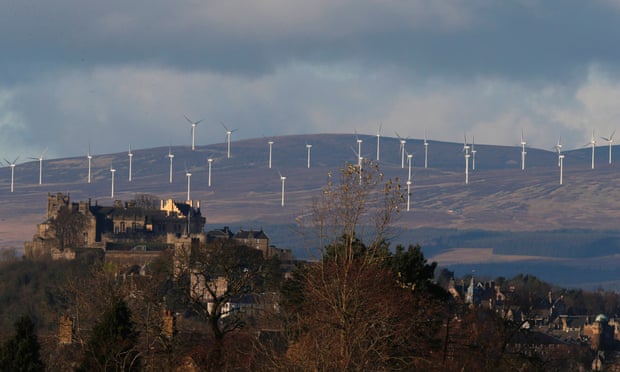


Image result for Scandal on the Braes images


The Follow up

A complaint alleging that the Scottish Executive had breached European Directives in consenting the Braes of Doune wind-power project was submitted to the European Union’s Environment Commissioner in April 2006.

The Ardoch Burn owner complained to the EU’s Environment Commission that the conduct of the Scottish Executive over Airtricity’s planning application breached both Directives in the way it consented the project and the Habitats Directive in the substance of the consent. Endorsing an authoritative report challenging the official line on the incident, he noted inter alia that:

1. Floating roads were sinking into the bog and destroying its acrotelm, creating potential rupture points and a risk of future land slips;

2. Check dams erected to halt the peat slide were ‘totally ineffective’;

3. Drainage essential for site operation was increasing the turbidity and silt load of streams;

4. Straw-lined silt beds designed to filter run-off were demonstrably failing;

5. The intense precipitation incidents that characterise the SW Grampians would render them equally ineffective at the Braes of Doune and put the River Teith at risk.


Image result for Scandal on the Braes images


Stirling Council Failures

Despite the foregoing proper (and expertly informed) concerns the official response was peremptorily dismissive and the dialogue soon petered out. This was unsurprising since, by the time Stirling Council made its final or implementing decision on 16 December 2005, work had been underway on the site for over five months. There was little prospect of an official rethink on environmental grounds.

As a condition of the consent, Stirling Council had to approve a plan for coping with a slide should one occur. In June, McAlpine (the contractor) submitted a draft of its Peat Slide Contingency Plan that in effect combined assessment, mitigation and contingency planning. A second draft, dated September, provided the first acknowledgement in the record of the cut in turbine numbers: 11 turbines were omitted from the list.

A note to Airtricity shows frustration with progress as late as October, a year after consent and nearly six months since construction started:

“The plan lacks a sensible logic . . . this plan is fundamental to protection of water courses in the worst case scenario. At present, a range of potential causes of instability are identified but the plan does not go on to identify the risks associated with them and the implications for this site. In my view, the plan should address: causes of instability, risks associated, prevention/minimisation/mitigation for each cause, identification of residual effects and associated risks, in that order.”
Another note the following week complained that:

” It is not fair to expect consultation authorities to keep reviewing and repeating the same comments, comments we have in some cases been making since June . . . I would be grateful if
Airtricity would take a role in reviewing and approving methods statements before they are issued

Airtricity promised to do just that but stressed the urgency of its situation:

“Our project is nearing a critical stage in terms of financial close and achieving additional funding from the bank and it is really important that I have the support of all the consultees to achieve method statement approval”

Given that it was poor work by its own contractors, that was delaying approval, it is not clear what support the writer felt entitled to. In any case, the company was boasting of a favourable political climate in which to negotiate with bankers. It had just set up a ‘UK Operations Group’ with former energy minister Brian Wilson as non-executive chair.

A press release explained that:

One of the Group’s functions will also be to set up a strong communications link with the UK Government, the Scottish Parliament, the Scottish Executive and the Northern Ireland Office . . . Eddie O’Connor, Chief Executive of Airtricity, said: “It is a pleasure to operate in the UK where the Government is committed to the growth of the renewable energy sector . . .Brian Wilson is a keen advocate of renewable energy . . . His industry and political insight will be invaluable to Airtricity as we undergo ambitious expansion in the UK.”
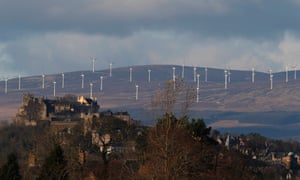


Wind turbines turn at the Braes of Doune Wind Farm near Stirling Castle, Scotland December 5, 2014.


The Scottish Executive Failures

The Scottish Executive called for a peat-slide risk assessment of the Braes of Doune but:

1. Consented the project without considering that risk. It deferred it to post-consent evaluation even though it was
indubitably a ‘main effect’ of the project;

2. Did not consult on it before the ‘principal’ consent and never consulted the public on it.


And yes!! there was at least one massive peat-slide which needed in excess of 5,000 tonnes of rock creating a 10 meter bridge to bring it to a halt.  Take time to read the full report:

http://www.windsofjustice.org.uk/wp-content/uploads/2015/11/scandalonthebraes-lores1.pdf
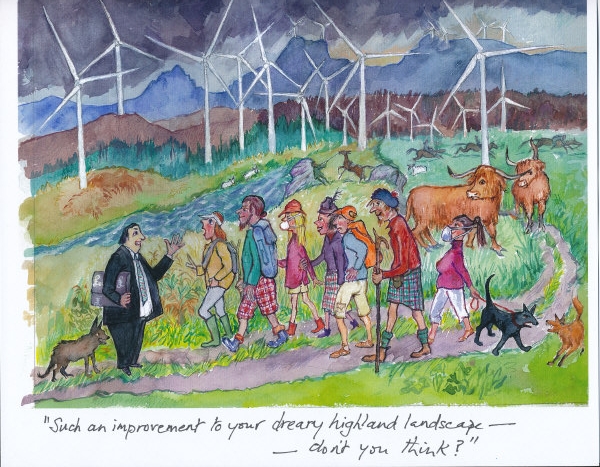


Image result for wind farm disaster images


Scottish Pensioners to reap the reward for voting against independence – There might be another chance -Grab it and vote Yes


Image result for poor pensioner images


On the Andrew Marr show on Sunday 18 September 2016 Work and pensions secretary Damian Green said he would not reverse Iain Duncan Smith’s devastating welfare cuts which have unfairly targetted the poorest members of society creating hardship and increasing the levels of poverty beyond that which is unacceptable in a developed society. Giving advance warning that pensioner benefits would be next, he made it clear major changes in support, all to the detriment of pensioners is in the Tory government future plans.

He said “I can clarify that whilst the government has no immediate plans for further cuts in the current parliament it is giving attention to targetting pensioners at a future date. Over time we need to look at the issue of inter-generational fairness.”


Image result for poor pensioner images


Experience has enlightened me to the vagaries of the Westminster government, to which Scottish pensioners have ever been vulnerable. But a few platitudes ensures pensioners acquiesce which makes them a useful tool of politicians.

The 2014 Scottish referendum was the “nadir” of the pensioners who were eagerly gullible, grasping at the straws of acceptance of the retention of a United Kingdom that had served them so badly in the past.

I published two informative articles, before the referendum hoping they would persuade pensioners to vote “Yes”. Evidently my words fell on deaf ears. But hopefully pensioners will have learned their lesson providing support to the bid for independence next time.


Image result for poor pensioner images


https://caltonjock.com/2014/08/28/gordon-brown-and-the-labour-party-friends-of-scottish-pensioners-not-on-your-nellie/

https://caltonjock.com/2014/09/01/scotlands-old-age-pensioners-driven-to-poverty-sacrificed-on-the-alter-of-bankers-greed-and-an-uncaring-government/

https://caltonjock.com/2015/04/15/pensioners-beware-this-has-not-gone-away-the-snp-would-have-no-part-in-policies-such-as-this-westminster-unionists-would/

https://caltonjock.com/2016/02/21/scottish-state-pensions-rip-off-scots-nearing-retirement-who-voted-to-stay-with-the-union-read-this-and-weep/


Image result for poor pensioner images


Libya – Another Mess Created by Powerful Western Allies Driven by a Desire for the Country’s Resources – An uncertain future – A War without End.


Image result for libya images war


 The Assassination of Colonel Khadaffi was ordained by President Obama and Hilary Clinton

Tony Blair urged Khadaffi to find “a safe place to go” as part of a managed process of political change before the situation reached “the point of no return”. Failure to accept the offer would result in his capture or death.

Hillary Clinton’s controversial private emails recently revealed that Tony Blair’s office fully advised her office of the details of his conversation with Khadaffi She was told that Blair had said to Khadaffi: “The absolute key thing is that the bloodshed and violence must stop. If you have a safe place to go then you should go there, because this will not end peacefully unless that happens and there has to be a process of change. That process of change can be managed and we have to find a way of managing it. I have talked to people and everyone wants a peaceful end to this.”

Blair later telephoned No 10 to say that he had been contacted by “a key individual close to Khadaffi (his son) and that the Libyan dictator wanted to “cut a deal” with Britain. Cameron, who ordered RAF air strikes against Khadaffi’s forces – did not take up the offer. http://news.sky.com/story/blair-urged-gaddafi-to-flee-libya-to-avoid-death-10344435


Image result for libya images war


21 Oct 2011: Hillary Clinton arrived in Libya 2 days before the Assassination of Khadaffi and assumed operational control

In a meeting with the allied forces chiefs she said: “Washington wants to see Libyan leader Muammar Khadaffi captured or killed.” Behind the secret visit there was evidently an agenda in Washington ensuring American ‘fingerprints’ would be all over the so-called ‘success’ of NATO in Libya. But killing Khadaffi would be an illegal assassination and managing that was the real purpose of Clinton’s apparently spontaneous visit.


Image result for libya images war


23 October 2011: Agreement finalised between Khadaffi and the Allies that he and his supporters in Sirte would be granted a safe passage to another country – The convoy would fly white flags on all vehicles and weapons would be reduced to side arms only.

Khadaffi and 66 of his followers departed Sirte, in broad daylight so there would be little chance of mistaken identity, to be attacked with hellfire missiles launched from drones, controlled from the USA. The “white flag” convoy was incinerated. The destruction of the convoy was a war crime.

The actions of the allies after the event was yet more disgraceful since in accordance with Islamic Law Muslims are supposed to be buried not later than one day after death. But the bodies of Khadaffi and members of his family were held and a cold room and on public display for over a week without explanation.

Adding to the over driven hype, orchestrated by the allies shortly after, there is the weird press briefing that Khadaffi had been found cowering in and was forcibly dragged from a drainpipe. The subsequent filmed abuse of the former leader of the country was disgracefully distributed to television audiences world wide together with a filmed interview of the United States’ Secretary of State, Hillary Clinton, laughing and expressing delight with Khadaffi’s death, stating, “We Came, We Saw, He Died.” https://www.youtube.com/watch?v=Fgcd1ghag5Y


Image result for libya images war


Others relevant articles previously published on my blog

https://caltonjock.com/2015/07/24/libya-a-failed-state-and-festering-sore-obama-blames-cameron-and-sarkozy-for-the-shambles-they-will-need-to-sort-it-out-expect-uk-forces-will-be-deployed-to-libya-for-a-long-war/
https://caltonjock.com/2015/05/30/17-april-2011-washington-post-interview-with-saif-al-islam-gaddafi-son-and-heir-of-libyan-leader-moammar-gaddafi/
https://caltonjock.com/2015/05/30/libya-sledgehammers-and-nuts-gaddafis-airforce-was-grounded-on-day-one-on-receipt-of-a-warning-from-the-un/
https://caltonjock.com/2015/05/29/libya-ripped-apart-by-the-west-now-they-cannot-put-it-back-together-again-another-human-disaster-attributed-to-the-greed-of-the-west/
https://caltonjock.com/2015/01/09/libya-ghaddafi-blair-lockerbie-al-meghri-rothschild-ghaddfis-son-mandelson-the-true-story/
https://caltonjock.com/2015/05/30/libya-when-airstrikes-go-wrong-it-is-the-innocents-that-suffer/
https://caltonjock.com/2016/01/04/the-thin-red-line-to-be-painted-in-the-sands-of-libya-once-again-but-at-what-cost-how-many-more-of-our-young-men-and-women-are-to-be-sacrificed-on-the-alter-of-oil-worship-for-a-pittance-of-a-wage/


Image result for libya images war


Summary: Can the USA be trusted to police the world fairly? I think not.!!! As an independent nation ( which I hope becomes a reality soon) Scotland should declare the much vaunted one sided “special relationship” to be at an end. Nuclear weaponry, lease loaned by the USA to the UK should be removed from the West of Scotland without delay.


Image result for libya images war


Corbyn V Labour Friends of Israel – How many bodies will the Internecine strife in the Labour party claim –


Image result for corbyn images


Smearing Corbyn – with friends like his who needs enemies?

The Labour right and its “new Labour” MP’s, under the leadership of Mandelson et al is determined to smear their party leader, Jeremy Corbyn as being in league against Jews together with a myriad of unnamed anti-Semites in their defence of Palestinian human rights. The “roll-out” of the tried and tested tactic of, ” guilt by association.”

But a look back at the Labour Party’s record in office exposes its vicious racist policies and warmongering which led to the death and disability of many thousands of young British servicemen and women coupled with a similar fate in the case of many hundreds of thousands of innocents in Afghanistan, Iraq, Libya, Syria and other theatres of conflict generated by the “Allies”. War without end!!!!!

The right wing press (see below) attacks Jeremy Corbyn daily and it is evident there is not to be an honest debate about the future direction of the party. More it is about the all powerful Jewish lobby “The Labour Friends of Israel” which is insistent on retaining control over the party’s approach to the seemingly endless Israel/Palestine conflict and the vision of peace that will prevail. The politics of spin, jiggery pokery and attack dog politics is back on the agenda with a vengeance.

Will the lobby fight dirty? Yup!!! A very full smear bucket is handed to the press and supporters. Corbyn is charged with being unelectable, perhaps because he and his team avoid the politics of spin and little substance that caused so much damage to UK citizens over the last four decades. In truth he has learned from lessons handed down to him by Ed Milliband and his pathetic group of failures who had the election on a plate and “blew it” big time.


Image result for scottish images free


How does the foregoing affect Scotland ?

The outcome of the battle for the hearts and minds of the Labour Party in England and Wales is important for Scotland and independence. A win for Corbyn would be to the advantage of Scotland since it would most likely lead to internecine warfare within the labour party in Scotland.

Dugdale might then resign passing the leadership of the Party “branch office” in Scotland to someone whose politics are more finely tuned with the politics of the party masters in London.


Image result for scottish images free


The UK press acts in unison against Corbyn – Why?

23 April 2012: How the Jewish Chronicle is trying to smear Jeremy Corbyn MP http://liberalconspiracy.org/2012/04/23/how-the-jewish-chronicle-is-trying-to-smear-jeremy-corbyn-mp/

16 Aug 2015: U.K. Jewish Newspaper Sounds Alarm On Anti-Israel Opposition. http://matzav.com/u-k-jewish-newspaper-sounds-alarm-on-anti-israel-opposition-leader-contender

19 Sep 2015: Jeremy Corbyn Riles Jews With Staunch Criticism of Israel . http://www.whatreallyhappened.com/content/jeremy-corbyn-riles-jews-staunch-criticism-israel

30 Jun 2016: The Jewish Chronicle is trying to smear Jeremy Corbyn. http://www.totpi.com/uk-labour-leader-jeremy-corbyn-compare-israel-isis/

1 Jul 2016: Corbyn’s Labour Party ‘not safe for Jews’ blasts MP. http://www.mirror.co.uk/news/uk-news/jeremy-corbyns-labour-party-not-8321784

11 Sep 2016: Why Jews in Labour place little trust in Corbyn. https://www.theguardian.com/commentisfree/2016/sep/10/labour-left-antisemitism-jeremy-corbyn-israel

13 Sep 2016: The Left’s Jewish Problem: Corbyn, Israel and Anti‑Semitism. https://www.theguardian.com/books/2016/sep/13/the-lefts-jewish-problem-corbyn-israel-and-antisemitism-dave-rich-review

13 Sep 2016: Corbyn purges top Jewish donor. http://www.dailymail.co.uk/news/article-3783399/Jeremy-Corbyn-reignites-race-row-engulfing-Labour-launches-vicious-act-revenge-purges-Jewish-donor-criticised-regime.html

13 Sep 2016: Why Corbyn’s rise makes British Jews afraid. http://www.telegraph.co.uk/news/politics/Jeremy_Corbyn/11879662/Why-Jeremy-Corbyns-rise-makes-British-Jews-afraid.html

13 Sep 2016: Why Jeremy Corbyn Scares British Jews So Much. http://forward.com/news/320934/why-jeremy-corbyn-scares-so-many-british-jews/


Image result for scottish images free anti semitism images


Jeremy Corbyn and the Momentum movement – Its Aims appear to be laudable

● Organise in every town, city and village to secure the election of a progressive left Labour Party at every level, and to create a mass movement for real transformative change to:

o Redistribute wealth and power from the few to the many;

o Put people and planet before profit and narrow corporate interests;

o End discrimination, advantage and privilege based on class;

o Target growth not austerity, invest to create tomorrow’s jobs and reverse privatisation of railways, the energy sector and public services.

o Provide protection at work and strong collective bargaining to stamp out workplace injustice.

o Ensure decent homes for all in public and private sectors through a big house­building programme and rent controls.

o Support workers and their trade unions defending the interests of their members, families and communities.

o End discrimination based on race, religion, sex, sexual orientation, gender identity, disability or age.

● Transform Labour into a more open, member-­led party, with socialist policies and the collective will to implement them in government.

http://www.peoplesmomentum.com/about


Image result for scottish independence images


Alex Rowley is no Puppet and the Battle is on for the leadership of the Labour party in Scotland – Lets Hope Alex Wins This Time


Image result for alex rowley images


About Alex Rowley

Alex Rowley was born in Dunfermline and raised in Kelty. He attended Edinburgh University, graduating with an MA Honours in Sociology and Politics, and an MSc in continuing education. He was also a local councillor with Fife Regional Council between 1990 – 2012 and was elected to the post of first leader of the new Fife Council in 2012 and served the Council until his election to the Scottish Parliament in 2014.  He was close to Gordon Brown, acting as his agent within the constituency and was muted to be a strong contender for the office of First Minister of the recently formed Scottish parliament.


Image result for scottish ;labour party cartoons


20 May 1999 – Rowley Sacked by Labour Party Bosses in London

First elected to the post of General Secretary of the Scottish Labour Party (1 May 1998 – 31 May 1999).

Outlining his vision for the future growth of the party in Scotland he expressed a view that having modernised Scotland’s political institutions and introduced a Scottish Parliament, the party needed to change it’s structure including proposals giving the Labour Party in Scotland freedom from London control.

All hell broke loose and he was summoned to Millbank in London, where he was told the party had nowhere for him in its future planning.  He was then invited to resign from his post as General Secretary of the Scottish Labour party a decision which provoked anger in Scotland.  Senior Labour sources in London denied that the general secretary of the Scottish Labour Party had been sacked on the instructions of London-based officials. They said that Alex Rowley had left the post of his own volition saying his task of helping the party win the Scottish Parliamentary elections had been completed and he wanted to move on to new challenges.

At interview Alex Rowley stated:

“After the election there was a discussion about the future direction of the party.  The “discussion” continued for a couple of weeks and I decided it was best for me to leave. I am not getting into a debate about this now, but there is a discussion for the Labour Party in Scotland to hold. If you modernise the political institutions it is only natural to see how the party organisation has to change. You ask yourself if the party is still in line with the political institutions. All I have ever said is that there needs to be far greater discussion about that. It would be inappropriate to go into detail but a number of factors were involved in my departure after only a year in the job. I think the party has to change quite a lot. We have to have a good look at this and also at how policy is made. There must be a real partnership in power in Scotland. We have the Scottish Policy Forum and that can be seen as positive. But we also need to look at the membership and how it can have a greater say. I point to the fact that 30,000 members is not something to be proud of. We need to increase the membership. I flagged this up at the Scottish conference and said that there should be a root and branch rethink about the party organisation in Scotland.  But it became apparent in recent weeks and months that this was going to be difficult.  I won’t go into the reasons, but I decided it was in my best interests to leave. Now I have a number of things to consider and I have been having discussions with various people. There are several options for me to consider. But in the meantime I will be taking a well-earned rest.”


Image result for alex rowley tony blair


20 May 1999 – Parliament: Scotland: Labour’ London Bosses sack Scots party chief

The Labour Party in Scotland launched a month-long review of its structures yesterday after the dismissal of Alex Rowley, its general secretary.  The sacking, by the party’s London headquarters, provoked consternation in Scotland, where Labour is sensitive to claims that it is run from England. There were suggestions Mr Rowley had fallen foul of the continuing battle for power between Blair and Brown. The recent surprise appointment of “Bully-Boy” John Reid as Secretary of State for Scotland was also seen as confirmation of the party’s London headquarters strong grip on power in Scotland. (The Independent)


Image result for john reid images


26 January 2001 – John Reid at centre of row over intimidation – new Northern Ireland minister “tried to frustrate standards inquiry”

Only four weeks ago John Reid, the new Northern Ireland secretary, was at the centre of a row for threatening and intimidating witnesses who gave evidence to an inquiry by Elizabeth Filkin, the parliamentary standards commissioner, into the illegal use of taxpayers’ cash for the benefit of the Labour party. She claimed that Mr Reid’s conduct amounted to “an attempt to frustrate my investigation”.

The report contained an extraordinary tape-recording showing an increasingly irascible Reid pressing witness Alex Rowley, the former general secretary of the Scottish Labour party, just before he was due to be interviewed by Ms Filkin on the scandal.

The inquiry began after a complaint by journalist Dean Nelson, then with the Observer. He reported that Reid, then Scottish secretary, and John Maxton, Labour MP for Glasgow Cathcart, had employed three researchers, paying their salaries from the MPs’ official allowances. He claimed that the three, contravening the rules governing publicly funded MPs’ researchers, were involved in Labour party campaigning. One was Reid’s son, Kevin.

The parliamentary commissioner upheld the complaint, but MPs on the standards and privileges committee overturned her findings. The money was about £16,000 to pay the salaries of the researchers; and not all their working time was spent on Labour party campaigning. There is no suggestion that Reid misused the money for any other purpose.

The main body of Ms Filkin’s report, however, concentrated on the way Reid and Maxton – who later apologised – had interfered with four witnesses to the inquiry. They were Alex Rowley, John Rafferty, former Scottish Labour party campaign co-ordinator, Paul McKinney, former Labour party director of communications in Scotland and Willie Sullivan, former Scottish development officer for the Scottish Labour party.

Ms Filkin said:

“the conduct of Reid caused serious and increasing concern” as my inquiries proceeded. I was left with the impression that many witnesses felt under considerable pressure as to what they should, or should not, say to me and how far, if at all, they should co-operate with my inquiry.”

In a strongly worded conclusion she found that loyal members of the Labour party had been put under enormous pressure not to provide her with evidence that could damage Reid’s explanation.

On Mr Rowley in particular, she said:

“It is clear that Mr Rowley felt, and continues to feel, under pressure from Reid to say things to me which he does not wish to say and which he regards as not wholly accurate or even misleading.  And so far as other witnesses are concerned, he has told me ‘I have to say to you that I find it quite astonishing that many young people such as Annmarie Whyte (Scottish Labour party office manager) are being put in the position by one of the most senior politicians in Scotland that they are having to give dishonest information to the parliamentary commissioner for standards. I have been told that others whom you have contacted have felt under immense pressure’.”

Ms Filkin commented in her report “I view this conduct by Reid as an attempt to frustrate my investigation. I have, for example, received evidence from Mr Rowley that, during two conversations shortly after my investigation began, Reid made threats of a particularly disturbing kind to Mr Rowley, the thrust of which was that if he “gave evidence which admitted doing wrong” he “could face criminal prosecution and risked not being adopted by the party as a parliamentary candidate.”

She reported:

“Mr Rowley was so concerned by Reid’s attitude that he decided, albeit reluctantly, to record their next conversation on tape. During these exchanges, which took place during a telephone call, it is clear, both from his choice of words and the tone he adopts, that Reid is seeking to agree a line with Mr Rowley which falls short of a full and comprehensive account of the events of which they both have knowledge. Thus, at one point Dr Reid says to Mr Rowley “You don’t have to tell any lies. Do you know what I mean?” And later he adds “They cannot prove anything, Alex.”  Towards the end of the conversation Reid strongly discourages Mr Rowley from giving evidence to my enquiry on oath.”

She further reported

“I would add that Mr Rowley’s protectiveness towards former colleagues and his continuing loyalty to the party made him initially unwilling to allow me to treat either his statement alleging threats to him by Reid or the transcript of his telephone conversation with Reid as evidence which I could quote in my report. But after it became clear to him that pressure was being applied both to him and other witnesses and that Reid had impugned his integrity as a witness, he decided reluctantly to change his mind.”

Maxton told Filkin that three of the witnesses had been dismissed by the Labour party and alleged that “they apparently bear a grudge against Reid as a result” and he had become “the unlucky and unwilling victim of that grudge.”

Reid accused Mr Rowley of only pursuing the case because he had talked to the Observer and that “he may feel he cannot back out from this serious attack on my probity.”

Filkin concluded:

“I have no reason to believe Reid’s explanation of Mr Rowley’s possible motives in giving evidence in support of the complaint. In any case, Reid’s theory begs the question as to why, if they are not true, Mr Rowley should have made the allegations to Mr Nelson in the first place.”

MP’s at Westminster later failed to uphold her complaint on the grounds that it was “not proven.” They said the tape contained no threats, and what Reid said could have had an innocent explanation. (The Guardian)


Image result for alex rowley images


19 December 2014 – MSP Alex Rowley MSP writes off travel expenses

The Scottish Parliament has released figures for MSPs’ parliamentary expenses for 2014/15, which revealed that Cowdenbeath MSP Alex Rowley had not submitted any personal travel claims. Of his decision not to claim for travel expenses, he said:

“My place of work is in the constituency and in Edinburgh. I take the view that none of my constituents would be paid to get to their place of work. If people were travelling from Kelty to Glenrothes to work they wouldn’t get paid for that. I just take the view that many of my constituents work in the capital and have to pay the cost of getting there, so I will do likewise. I have no personal expenses that come to me direct. We do run up expenses because we’re there to provide a service for people. But, in terms of me personally gaining from expenses, I think that’s unacceptable.  Politicians are viewed as being at it all the time and that they are greedy but I think I have a responsibility to explain to people where the money is going. The key thing for me is that I can look any constituent in the eye and explain any costs I incur doing my job and be sure that I am not expecting anything more or less than any person I represent.  Most of all I think it is crucial that we bring about full transparency for all expenses claimed by politicians and that is why I am using the material published by the Scottish Parliament on expenses and giving more detail on this on my website.”


Image result for jim murphy images


12 May 2015 – Alex Rowley and Elaine Smith warn – the Labour Party in Scotland is heading for “disappearance” in Scotland

Rowley, the MSP for Cowdenbeath, quit his role as Labour’s local government spokesman at Holyrood and urged Murphy to stand down. Another Labour MSP, Elaine Smith, backed his call saying the party needs “new direction.”  Scotland’s only Labour MP Ian Murray accused those criticising Mr Murphy of “digging knives into the party”.

Pressure has been growing on the Scottish Labour leader to step down following last week’s general election results. Labour lost all but one of its 40 Scottish seats to the SNP in last Thursday’s election.  Murphy’s once-safe majority in East Renfrewshire – a seat he had held for nearly 20 years – was eliminated by the SNP’s Kirsten Oswald.

Unison Scotland has also called for a “radical change in approach” from the Labour party in Scotland.  The union said it was not its place “to initiate a change in leadership” but said if there was a wider movement proposing change it would “not oppose it.”

The call comes after both the Unite union and the train drivers’ union, Aslef, also called on Murphy to resign.


Image result for scottish home rule images


22 May 2015 – Alex Rowley: Labour in Scotland must become the party of Home Rule or Labour will not survive

Alex Rowley addressed the outcome of the 2015 General Election with the undernoted statement:

“As I watched the General Election results come in on the television in the early hours of May 8, I was not shocked there was a move away from Labour and we were getting beaten, but shocked by the scale of the defeat. It is clear we need a fundamental review of both strategy and practice. To me, it was obvious this defeat was not just a question about leadership, although the strategy which had been followed by the leadership was an issue that did need to be reviewed. I questioned what had happened after the major review led by Jim Murphy in 2011. We could not say the strategy there was sound. We bounced from focus group to focus group making policies up as we went along with no real clarity of what Labour in Scotland actually stood for. We needed then, as we need now, a proper analysis of where we are and what went wrong. If the General Election result is to be applied to the 2016 Scottish election, the outcome could lead to Labour losing every constituency seat and seven MSPs and the return of a SNP Government with an overwhelming majority. Even with a disastrous low of 24 per cent of the vote, the PR system would be kinder to us than first past the post and we would get somewhere in the region of 31 list seats while the SNP would have around 74 seats. However, that does not take into account the fact the Greens and others may do better. Thirty-one seats for Labour may well be very ambitious. The prospect means many in Labour who have their sights set on Holyrood are keen to get onto Labour’s list. But this is a short-sighted strategy which will solve nothing in the longer term. If it is the case that by May 2016 we have been unable to progress from the current all-time low, my view is we will just sink even lower. Some may well save their careers for a wee bit longer, but the party will not survive. So what to do? Some were rather annoyed about Johann Lamont’s comment last year about the UK party leadership treating Scottish Labour as the branch office. I have heard many say this is not a description they recognise. However, I am afraid I do and believe it must be addressed in order for Labour in Scotland to move forward with a more progressive approach that sets the future agenda. We need to move beyond tinkering with party rules and learn the lessons from sister parties across Europe where there is a strong federal system. It is crucial we take a far greater degree of control of the policy and decision-making while remaining committed to being part of a wider UK party where appropriate. We need to become the party of Scottish Home Rule and our opening salvo to Westminster and the UK Labour Party must be that the current relationship between Scotland and the rest of the UK is untenable and will require radical change. Defining what Labour in Scotland stands for is key. Labour exists to advance the social and economic case of working people across the country through an agenda that puts fairness and equality at its heart. Labour must fundamentally move its approach to one that focuses on issues and solutions that we represent, as opposed to focusing on what other parties do. The party should exist not to oppose the SNP but to address the issues in our communities and bring about a more inclusive and prosperous country. The attack-style politics is not working. Where we can work with the SNP, such as finding a long-term solution to funding local government, then we should, and where we think their approach will be damaging, such as ending the Barnett formula, then we should make the case. Where we believe the SNP is not delivering, we must put forward our alternative, not simply attack their failure. On the constitution, we must move away from the politics of fear to the politics of hope and ambition through pressing the case for further devolution and setting out how we will use the powers, both in Edinburgh and in London, to deliver our vision. We must build a radical and progressive movement for change in Scotland that embraces devolution, progresses localism and delivers fairness. We must also encourage open debate, whether that is over the renewal of Trident or over the role of the welfare state. Labour in Scotland must reflect the views of members and the communities we seek to serve.”


Image result for scottish labour party images


7 June 2015 – Rowley backs Scottish Labour ‘autonomy’

A Senior Labour MSP has called yet again for the party in Scotland to become autonomous to help it to rebuild after last month’s SNP landslide. Speaking at a conference of Labour members in Fife,  Alex Rowley called for support for:

“a transformation of Labour and how it functions within the UK with the party in Scotland becoming an autonomous political party in its own right.”

Unsurprisingly the SNP welcomed Rowley’s comments, calling on Labour to have an “open discussion” about full fiscal autonomy. This followed last night’s votes on the Scotland Bill in the House of Commons where Labour twice failed to vote on full fiscal autonomy, abstaining on both votes,  despite attacking it week in and week out in the Scottish Parliament.

Commenting, Stewart Maxwell MSP, said:

“Alex Rowley’s comments on the merits of Scotland being in control of its own finances are to be welcomed – now the other candidates to form the next Labour leadership in Scotland should follow his lead.”


Image result for alex rowley


8 June 2015 – Kezia Dugdale rejects calls for a separate Scottish Labour party

Scottish Labour leader Kezia Dugdale has dismissed calls for a separate Scottish party. Her comments were in response to Cowdenbeath Labour MSP Alex Rowley saying the best way to rebuild after May’s election defeat was to free the party from the “constraints” of UK Labour. Dugdale said:

“I’d like to see us on more regular occasions have a slightly different, a more nuanced position on the issues in Scotland, standing up for Scotland’s interests. We can do that with greater party autonomy, that doesn’t mean we are an independent party, that would mean completely separating ourselves off from our UK colleagues and I don’t want to do that, I don’t think that’s right.”

Dugdale, further said she believed a separate party would go against the logic of the result of the independence referendum. She accepted responsibility for her role in the general election debacle that saw Labour lose all but one Scottish seat, and admitted that Scottish Labour’s problems can not be fixed overnight. But said she believed herself to be the best qualified person to turn Scottish Labour’s fortunes around.

At the same hustings Jeremy Corbyn was the only leadership candidate not to dismiss the notion of a separate party, pointing out many Labour supporters had voted yes in the referendum and for the SNP in the general election.

(Common Space)


Image result for alex rowley


16 June 2015 – Labour Scotland’ should be open to full fiscal autonomy, says Alex Rowley

Scottish Labour deputy leader front runner threw down a challenge to his opponents that the party must fully embrace devolution and be open to discussions about full fiscal autonomy.

Alex Rowley, MSP for Cowdenbeath and former shadow spokesman for local government, said:

“Labour needs to turn the political debate around and focus on what powers should stay at Westminster, rather than on what powers should come to Holyrood. The powers that come with Smith need to be delivered to the letter and we need to make sure that happens, and post-Smith – as I don’t see Smith as the end of devolution – we need to take that agenda forward. Rather than arguing for what powers should come from Westminster to Scotland, we should instead be arguing what powers should be kept at Westminster.”

Rowley, former general secretary of the Scottish Labour party, sensationally quit his front-bench role last month following Murphy’s failure to stand down after the devastating General Election defeat.  He has since drawn up a strategy for the future of the party, arguing for it to become independent from UK Labour. He has also written a discussion paper on the subject, calling for a new “Labour Scotland” to become the party of Home Rule. He wrote:

“Labour Scotland needs to lead the agenda in terms of devolution and we can’t lead the agenda when we continually have to check with UK Labour about what we can or cannot say. An autonomous Scottish Labour party would be driving the agenda in Scotland. Our focus should be on what powers we need for success as a nation, and then argue for those based on that premise. We need to set that out in our 2016 manifesto agenda. We should not be talking Scotland down and telling Scotland what it can’t have. Post-Smith we need to have an open discussion, including about full fiscal autonomy.”

However, Rowley denied his position amounted to a split from the UK party. He said:

“I want to work in a devolved country in a strong Scottish Parliament but remain in the UK and have an autonomous Scottish Labour party which is setting the agenda in Scotland for Scotland. There is a big difference in that and breaking away from the Labour party in the UK. I am not arguing for a breakaway party and I think people who interpret my position in that way are trying to muddy the waters.”

Rowley’s views are likely to be popular among grass roots Labour members – many of whom were opposed to the party standing alongside the Conservatives in the “Better Together” alliance.

Last night party members welcomed Rowley’s stance. “Alex is a serious politician and deep thinker who recognises the serious trouble the party is in and is giving some clear answers about how it should move forward,” said one.

Another added “I like what Alex Rowley is saying. His views may alienate some, but get the support of others. He is also the only politician who appears to be coming up with something fresh, something apart from we need to listen to what people are saying.”

Meanwhile, in the party’s leadership contest almost three-quarters of Scottish Labour’s parliamentarians have backed Kezia Dugdale to be their next leader.  Dugdale, now has the support of 27 MSPs as well as Labour’s only Scottish MP Ian Murray and the party’s two MEPs David Martin and Catherine Stihler.  Rowley is among a group of MSPs throwing their weight behind Dugdale.

Dugdale said:

“Politics in Scotland has changed fundamentally and the Scottish Labour Party have only one chance to get it right. But this leadership election isn’t just about transforming Scottish Labour, it is about stepping up and regaining the trust of the people of Scotland.”

It was recently revealed that the party had only around 13,000 members north of the Border, about a tenth the size of the SNP membership.

(The National)


Image result for scottish labour party images


13 July 2015 – Alex Rowley – Scottish Labour deputy leadership candidate condemned Labour leadership for abandoning commitment to tax credits.

The announcement by Harriet Harman that Labour will not oppose the Tory attack on Tax Credits left many Labour members confused and angry. Alex Rowley said:

“We must unite in our condemnation of her stance which as so many are now saying “notinmyname.” For many, being in work is not a safeguard against poverty.”  Today in Scotland, 350,000 people receive tax credits, 71 per cent of whom – 250,000 – are in work. So make no mistake, the majority of those who receive tax credits are on low paid work. When the financial crash came, tax credits were what enabled families to get by, and now they persist at a time when the working poor outnumber, for the first time, those out of work who are living in poverty.  So we must recognise the importance of tax credits in supporting low paid workers and whilst I agree that our ultimate goal must be to end poverty low pay, that will not happen immediately but removing tax credits or elements of the entitlement will hurt children and drive people out of work.”


Image result for alex rowley


18 August 2015 – Alex Rowley will push for more “devolution” for Scottish Labour to set own agenda

Alex Rowley will continue to fight for a more autonomous Scottish Labour in his new role as deputy leader of the party north of the Border.

Rowley, (who significantly has no role in Keiza Dugdale’s newly appointed front bench team), believes shaking off the perception of the party in Scotland being ‘‘branch office’’ of the UK Labour Party is necessary after its disastrous General Election. That would mean the party’s MP Ian Murray and any future MPs would take direction from north of the Border, even if this contradicted stances taken on those issues at the UK level.

Launching his deputy leadership campaign message in The National in June, Rowley said:

“We must build a radical and progressive movement for change in Scotland that embraces devolutions, progresses localism and delivers fairness. We must also encourage open debate and discussion, whether that is the renewal of Trident, the role of the welfare state and how to build a fairer more equal society. Labour in Scotland must reflect the views of members and the communities we seek to serve and we will do that by engaging in an open and transparent approach rebuilding the trust that once made Labour the workers’ party and put us at the heart of every community.”

Last night a source close to Rowley said in his new role he would be pushing for a more autonomous Scottish party. “He believes that policy for Scotland has to come from Scotland and the party needs to be completely run by the leadership in Scotland.  In terms of MPs, he is of the view that they should be taking their direction from the party in Scotland. It might take time, but he knows that is the direction the party has to move in and there is no going back from that. The branch office label will not be acceptable any-more.

Alex will be saying ‘yes, we are united with our Labour comrades across the UK, but if the party members in Scotland are thinking a certain way that is the approach MSPs and MPs should take’.”

Rowley, MSP for Cowdenbeath, defeated fellow MSP Richard Baker and Glasgow city council leader Gordon Matheson to win the deputy leadership race on Saturday, while Dugdale beat Eastwood MSP Ken Macintosh to become leader. The contest followed former leader Jim Murphy’s resignation in June, following the loss of 40 of the party’s 41 MPs at the General Election.

Rowley quit Murphy’s front-bench team in protest at the leader continuing in his post for several weeks after the defeat. Murphy’s predecessor Johann Lamont resigned following last September’s referendum, accusing her London bosses of treating the party in Scotland like a “branch office”.

Rowley said:

“Some were rather annoyed about Johann Lamont’s comment last year about UK party leadership treating Scottish Labour as the branch office. I have heard many say this is not a description they recognise.” However, I recognise it and believe it must be addressed in order for Labour in Scotland to move forward with a more progressive approach. We need to become the party of Scottish home rule and our opening salvo to Westminster and the UK Labour Party must be that the current relationship between Scotland and the rest of the UK is untenable and will require radical change.”

(The National)


Image result for alex rowley labour


30 June 2016: Dugdale off to the USA attending an indoctrination course – But her deputy Alex Rowley is not fit to lead the party in her absence

Dugdale’s attendance on the US State Department’s International Visitor Leadership Program this month may also create a headache for her party, with relations between the two at a low ebb insiders are speculating about who will lead the party when she is abroad.

It is understood Dugdale will remain in charge while she is away and a rota for Shadow Cabinet members will be in place to provide day-to-day cover.

A senior Scottish Tory source said: “It’s no surprise Scottish Labour is responding to the upheaval at Westminster with added chaos of its own. Scottish Labour needs to get a grip, not descend into further turmoil over its internal splits.”

An SNP spokesperson said: “At a time of national crisis, with the UK economy in turmoil following the EU referendum result, political parties have a duty and a responsibility to step up to the mark, show some leadership, and work to find a way forward. It is shameful that both the Tory UK government and the Labour opposition have instead chosen to abdicate their responsibilities. They have no plan and rather than uniting to come up with one they are indulging in infighting and naval gazing at the expense of the country.” (The Herald)


Related image


19 August 2015 – Kezia Dugdale unveils new Scottish Labour front bench

Scottish Labour leader Kezia Dugdale has unveiled her new “Blairite” gender-balanced team – but there are no front bench seats for any of the party’s MSPs who are backing Jeremy Corbyn in the race to be UK party leader.

Prior to choosing her cabinet, Ms Dugdale said: “I want a Scotland where power, wealth and opportunity are in the hands of the many, not the few. I want a country where a young person’s ability to get on in life is determined by their potential, work rate and ambition, not by their background.

The idea of simply shadowing government ministers is outdated. Of course we must hold the SNP government to account for its failings on schools, our NHS and policing – and we will do that. But I want to shake things up and have a fresh start. We need to be out and about across Scotland. The key focus of every single member of my front bench team will be setting out a positive Labour vision of transforming Scotland.”

(edinburghnews.scotsman)


Image result for alex rowley


22 August 2015 – Scottish Labour deputy backs Trident referendum and says Corbyn would make “first class” leader

Scottish Labour’s new deputy leader, Alex Rowley has called for a referendum to decide whether Britain renews the Trident nuclear deterrent and said left winger Jeremy Corbyn would make a “first class” boss of the UK party.  In his first major interview since winning the deputy contest, the former Fife Council leader warned that it was “obvious” that his party must change and regain trust or face annihilation in Scotland. On Trident, he said he did not believe the case had been made for renewal, potentially signalling a split at the top of the party.

Party leader Kezia Dugdale has said a debate over Trident at October’s party conference is “not impossible”, but is known to favour multilateral disarmament meaning international agreements would be struck before Britain’s nuclear arsenal is reduced or eliminated.

While Labour has not supported unilateral disarmament since 1987, Rowley said party members should have their say over renewal of the Clyde-based weapons system, believing the decision is so significant it should be put to a national vote. “It’s a massive issue, and there’s been no debate within Labour, or within the country. It is a military issue, with serious question marks over whether it is the best way to defend the country, but it’s also a moral issue. On such a massive issue, there should be debate across the party, the country, and a referendum. I have not seen the case made as to why we would renew, but the most striking thing is a complete lack of debate.”

Mr Rowley is to push ahead with plans to create a far more autonomous party north of the border, saying he recognised the stinging criticisms of former leader Johann Lamont when she described Scottish Labour as being run like a “branch office” from London, with previous attempts by Jim Murphy to emphasise Scottish Labour’s independence seen as “a gimmick”. He will move to give members a greater say over policy, in line with a pledge from Ms Dugdale, saying one of the “tragedies” of the New Labour era was that internal debate had been “shut down.”

He would not publicly reveal who he is backing for the UK leadership, saying he would work with whoever won. However, he strongly hinted that he supported Mr Corbyn, despite Ms Dugdale warning that a victory for the MP risked leaving the party “carping on the sidelines”. He added “All I would say is that I’m very encouraged by the type of debate taking place within the Labour Party at grass-roots level… I want to see a progressive Labour Party, and we need change. On the question of Jeremy Corbyn and attacks that have come his way in terms of electability, I have no fears whatsoever that if the Labour membership elect him, he [wouldn’t be] be a first class leader. I have read his policy agenda and there is not a lot in there I would disagree with.”

Mr Rowley added that he was unconcerned at reports that Ms Dugdale privately backed Richard Baker for the deputy leadership, saying she had his complete support. The 51-year-old dismissed suggestions that a poor performance next year would lead to pressure for her to resign, saying Ms Dugdale would remain leader for “many, many years” meaning he would be too old to stand for the leadership when she eventually stood down. On the issue of further devolution, he said measures set out in the Scotland Bill would not be “the end of the journey”, and called for a “friendlier, open discussion” about what should remain under Westminster control.

He added: “I campaigned for a No vote because I believed it was in Scotland’s best interest to have significant devolved power. Whether it’s full fiscal autonomy or other powers, if it can be demonstrated it’s in Scotland’s best interest to go down that road then that’s what I’ll support. We can’t keep closing the debate down, and end up with a country divided.”

(The Herald)


Image result for anti trident images


22 August 2015 – Scottish Labour deputy leader calls for referendum on Trident renewal

On Friday, the First Minister became the latest high-profile figure to sign a statement calling for plans to replace Trident to be cancelled. Nicola Sturgeon added her name to the “Rethink Trident” statement, which is organised by the Campaign for Nuclear Disarmament (CND) and Compass. The statement says the country can “ill-afford to be spending in excess of £100 billion on replacing Trident with a new generation of nuclear weapons.”

Labour leadership front runner Jeremy Corbyn and Deputy Leader of the labour Party in Scotland Alex Rowley also supported the aims of the “Rethink Trident” statement. Rowley also said the veteran left winger would make a “first class” boss of the UK party. He said “I have no fears whatsoever that if the Labour membership elect him, he wouldn’t be a first class leader.”

SNP MSP Bill Kidd, co-president of Parliamentarians for Nuclear Non-Proliferation and Disarmament, said:

“I very much welcome Alex’s rethink on Trident. He joins a coalition of voices from across politics, civic Scotland and military experts calling on the UK Government to abandon its plan to waste £100 billion replacing these morally abhorrent nuclear weapons. I hope now that Alex will join the First Minister in signing CND’s “Rethink Trident” statement. With Labour’s support, Scotland could speak with one voice on this issue and form a powerful collective voice against spending billions on obscene weapons of mass destruction.”

(The Courier)


Image result for alex rowley


25 August 2015 – Dugdale’s cringe-worthy interview. Clearly Alex Rowley has hit a nerve

It’s beyond belief that she’s the party leader in Holyrood, another startling selection. It’s so disheartening that in the UK system we have a party that has completely abandoned the people they continuously lie about representing.  It’s shameful. I want full nuclear disarmament, I want jobs, I want investment into the NHS, not a new class of nuclear submarines.

Jim Murphy’s pro renewal answer was insulting, Labour want ‘unilateral disarmament of nuclear weapons around the world’ but seek the renewal of our own weapons of mass destruction. Kezia Dudale’s going to ‘create more space’ for a debate around the issue. It sounds like, ‘she’s buying time’, because our better together, red Tory labour branch office is in disarray about the idea of Jeremy Corbyn becoming the new leader.

Dugdale has no credibility left, she’s a career politician, she says only plans to stay in politics for 10 years. She’s already passively vilified the campaign of Jeremy Corbyn. I hope he’s elected and gets shot of her right away. Dudgale is a Red Tory, shamelessly discrediting her own father. Ultimately, she’s leading labour to another wipe-out in Holyrood next year, a split party with the Tory’s being elected again in 5 years time.

https://www.youtube.com/watch?v=l6USg9mxfdQ


Image result for alex rowley


Alex Rowley – The Elephant in the Room

It is entirely possible there will be civil war in the Labour party in England if Corbyn is elected leader. The fallout will most likely spread rapidly to it’s branch office in Scotland where the newly appointed Scottish Labour front-bench team is predominately comprised of “Blairite” members including the leader Kezia Dugdale.

The 2016 Scottish elections are just a few months distant and it is likely Dugdale will insist (without much argument from London) on taking her party forward with a manifesto limited in vision, that will be firmly rejected by the Scottish electorate. In the event this scenario is enacted Dugdale will most likely resign together with many of her supporters.

Alex Rowley is an obvious choice in this case, to take up the reins of power. He is an astute politician of conviction who has argued for many years for a fully autonomous Scottish Labour Party. He is, as her unwanted Deputy leader a very serious rival to Dugdale’s leadership. It is of note he is not a member of her Front-Bench team.


Image result for alex rowley


1 July 2016: Alex Rowley calls for Labour to ‘stand united’ and back Jeremy Corbyn

Alex Rowley, who broke ranks on Thursday to publicly back the UK leader despite his boss Kezia Dugdale being in favour of him quitting, said the party’s focus should be on uniting against the Conservatives in the wake of Brexit rather than turning on themselves.

But he was attacked by senior colleagues for alleged double standards over his passion about the EU referendum, including a claim that he did not attend Scottish shadow cabinet to discuss the Leave vote.

Mr Rowley wrote: “Following the Brexit vote Labour had a duty to show leadership in a time of great upheaval. Our MPs should have put the blame squarely on those who called for this referendum and ran campaigns of mis-truths and hate. The Tories have divided our country, jeopardised our economy and allowed far-right extremists to feel justified in attacking people on our streets. Regardless of their opinion of Jeremy Corbyn, there was a responsibility on every Labour MP to be a collective strong UK opposition offering leadership and direction. We are witnessing the Tories at their weakest, in turmoil over a leadership election whilst the UK is leaderless, and now we sadly find ourselves in the same situation.”

(The Courier)


Related image


3 July 2016: Scottish Labour at war: Relations between Dugdale and her deputy have “completely broken down”

The relationship between Scottish Labour leader Kezia Dugdale and her deputy has completely broken down, according to a senior party source. Her friend’s claim that Alex Rowley has been undisciplined and cannot be relied on to support her. But her deputy hit back robustly, saying: “I think it’s absolutely shocking. I am not going to get into the gutter. That’s where these people want to be. They are destroying the Labour party.”

The tensions may get worse this month when Dugdale flies to the US for a leadership programme, creating a potential power vacuum.

Labour at Westminster has undergone a traumatic week after dozens of Corbyn’s colleagues quit their ministerial posts and called on the left-winger to quit. Dugdale and Rowley, who were elected leader and deputy leader of Scottish Labour last year, clashed on Corbyn’s future. The split became evident last week when the party’s sole MP, Ian Murray, quit as Corbyn’s shadow Scotland secretary. Despite Murray being a close ally of Dugdale, Rowley accused the MP of putting “self-interest before the needs of the country”.

Dugdale later said it would be “difficult” for Corbyn to continue in post – a clear indication she wants him to resign – but Rowley signed a letter backing the embattled left-wing leader. One senior Scottish Labour source said: “Their relationship has completely broken down.”

(The Herald)


Image result for dugdale rowley images


21 July 2016: Deputy leader Alex Rowley calls for Labour to debate the independence option

Scottish Labour’s deputy leader wants independence to be included in a new national conversation on Scotland’s future following the Brexit vote and said he would not oppose a second referendum.

Alex Rowley also said he would continue to support Jeremy Corbyn and revealed he had voted for him in the UK party leadership contest. “The issue is now in the hands of our membership. I voted for Jeremy Corbyn and I will be voting for him again.”

Rowley, who is at odds with his boss Kezia Dugdale over Corbyn continuing as leader, said he wanted to open up a national discussion about what would be the best way forward for Scotland.

“The First Minister has made clear that independence is on the table, and if you are going to have an open, informed and honest discussion about the options available, then that must include every option,” said the Mid Scotland and Fife MSP. It’s my intention to have discussion forums across the area I represent but we need to have these discussions across Scotland. The Tories have got us into this mess and the implications of Brexit are massive. It’s about our children’s and our grand-children’s future and we need to consider what is best for Scotland.”

Rowley also said:

“I have lost count of the number of people who have asked whether I support a second referendum on independence. My response is that I would not oppose such a referendum. I accept the SNP were clear in their manifesto that the Scottish Parliament would have the right to hold another one if there was a ‘significant and material change’ in the circumstances that prevailed in 2014 – such as Scotland being taken out of the EU against our will.”

He added that it remained “an unknown quantity” what the UK will look like outside of the EU, meaning that another referendum would be “a very different proposition” from the 2014 vote.

Rowley said:

“It is difficult to assess what will be in the best interests of the people of Scotland but we can set some guiding principles. These should include what is best in terms of our economy and jobs, pensions and dignity in retirement, free high quality education, health and public services and the security of our nation.”

(The National)


Image result for scottish ;labour party cartoons


Brexit Pitfalls – Passenger and Freight Air Travel – Scottish Independence Benefits – Its a “no Brainer”


Image result for ryanair images


Ryanair – Brexit – Air Passenger Duty

The National reported today that Ryanair chief Michael O’Leary anticipates lower growth in airline traffic resulting in financial loss to his business over the next few years, whilst Brexit is being negotiated at Westminster.

Referring to the Scottish Government’s intention to reduce or remove “air passenger duty” he said ” you scrap it and we will begin the process of doubling our traffic the following day and I think we would go from 5 million to 10 million passengers within about 2 years. Scotland will benefit through a massive increase in traffic,tourism and jobs.

Independence would bring further benefits to Scotland since remaining with the EEC will ensure retention of the “status quo” which would not be the case for England & Wales.


Image result for ryanair images


Air Transport explained

Currently, the single aviation market allows UK airlines certain freedoms not enjoyed by countries outside the EEC. These freedoms are:

1. The right to fly between EU countries;

2. The right to fly within an EU country (known as ‘cabotage’).

The restriction in the first freedom would have an immediate impact on UK airlines using EU airspace. Furthermore, it would not be possible to fly between the UK and a member state if the airline is based in a third member state. In other words, a German airline would not be able to service the routes between the UK and any EU country besides Germany (see rows 3 and 4 in Table 1 below). This in turn would significantly restrict competition and air traffic from the UK.

For the same reason, the restriction of cabotage would mean that fewer airlines could serve the UK domestic market (see row 6 of the table below). While the impact on domestic flights might be relatively small, the restrictions on the UK–EU market could be significant, restricting competition and driving up airfares.

Market liberalisation reform such as that put in place in the EU has had major impacts on the aviation sector. Estimates suggest that traffic growth following market liberalisation averages between 12% and 25%.[2] For the single market in the EU, traffic growth doubled in the four years after liberalisation compared with the four years before it, and a report on the post-liberalisation market by the UK Civil Aviation Authority (CAA) suggested that there were significant competitive benefits, such as declines in the market share of national carriers in both international and domestic flights.

These flight restrictions would also affect UK airports. Under the EU–US Open Skies agreement, a US airline can operate flights between two points in the EU. Absent such an agreement with the UK, traffic from US airlines could be diverted to other hub airports such as Dublin.

More broadly, the UK would need to renegotiate airline services agreements with the EU and other partners in order to allow market access. Any such agreement could take several years to implement, however. Indicatively, the Open Skies deal took four years of negotiation to finalise. If there were a gap in these agreements in the interim period, the reduction in capacity would push airfares up.

Most immediately, there would be a reduction in operators able to fly from the UK to EU member states, as described above. This could be partially offset by UK airlines switching operations away from Europe. Estimates are that if all flights operated by third-country airlines were removed, airfares for UK passengers would rise by 15–30% depending on the amount of capacity reallocation.

These restrictions cannot simply be overcome by airlines setting up subsidiaries in Europe, because ownership restrictions do not allow non-EU investors to own a controlling interest in an EU airline.

High-value freight is also transported in bellyhold on passenger flights. This type of freight would be affected by the changes to passenger services described in the section above.

The impacts of Brexit under different scenarios and possible ways to mitigate them are summarised in the table below.

http://www.oxera.com/Latest-Thinking/Agenda/2016/Brexit-implications-for-the-transport-sector.aspx


Brexit – Smoke and Mirrors designed to Split the Scots – Time to Prepare for the Fightback


Image result for brexit images


4 July 2016: The United Kingdom and its exit from the European Union.
Road Transport

Trade agreements will have to be renegotiated and UK legislation decoupled from EU regulations. Depending on negotiations, a full Brexit – which includes an exit from the European Economic Area – seems likely, to be followed by the re-imposition of a ‘hard border’ between Britain and the countries remaining in the EU. Where will that border be?

Between the continent and England, certainly; between Northern Ireland and the Republic, possibly; but also, potentially, between England and a Scotland that somehow manages to persuade the rest of the EU that it is still part of it. If Brexit were comprehensive, trucks crossing those borders may again require the paperwork that drivers had to deal with prior to 1993 and the opening of the single European market. Carnets to cross borders, finite in number, may have to be applied for. http://transportoperator.co.uk/2016/07/04/how-brexit-could-affect-road-transport/


Image result for brexit images


Maritime Transport

The maritime industry would be the most directly affected, given the importance of freight to the sector. Any changes in trading patterns would be especially relevant for UK ports, which themselves are responsible for handling around 90% of the UK’s trade.

Under Brexit, the UK would lose the ability to trade freely with EU member states, at least until and unless a free trade agreement is put in place, which would have the following implications. (Delays in negotiations could mean a significant period trading under World Trade Organization, WTO, agreements.)

1. UK trade would be subject to tariffs and import duties. In the WTO scenario, trade between the UK and EU member states would take place under most-favoured nation tariffs. In 2014 the EU’s average tariff rate was 5.3%.

2. UK trade would be subject to customs clearance. There would also be an increase in administrative costs. According to the WTO, around 8% of the financial cost of importing goods by sea comes from customs clearance. The World Bank estimates that the customs clearance process adds around a day to the import process for a single freight container. However, for multi-stop journeys through Europe, separate customs checks would be needed for each country a lorry had travelled through. Instead of a seamless journey off a ferry and onto a motorway, a lorry would have to wait while each separate pallet is checked, requiring extensive investment in parking facilities at UK ports and/or extensive queues in France (if customs clearance were moved there) or UK port towns.

Overall, World Bank estimates suggest that the additional customs requirements could add costs to trade. However, the scope of the impact is potentially more important. The EU is the UK’s largest trading partner. Some 49% of the UK’s trade in goods is with EU members. There is also evidence of a large increase in trade under EU membership. HM Treasury estimates show that EU membership increases trade with EU members by between 68% and 85% relative to a baseline position of WTO membership.

http://www.oxera.com/Latest-Thinking/Agenda/2016/Brexit-implications-for-the-transport-sector.aspx#_ftn8


Image result for brexit images


Impact on Scotland.

Remaining part of the UK is not an option since Scotland would be further removed from the EEC with resultant adverse effects experienced by being at the end of an expensive supply chain.

An independent Scotland would, (assuming operational systems for the movement of goods and services to and from Scotland through England remain in place largely unchanged) still be severely disadvantaged.

The way forward is to significantly further develop the Ro-Ro (roll-on, roll-off) container port at Rosyth which would bring much welcomed business to Scotland. Facilities would also be expanded so that free movement of members of the EEC ( avoiding the channel ports and English customs) could be guaranteed through the re-introduction of passenger traffic.

A brief history of the Rosyth-Zeebrugge service follows so that the reader will be able to gain an understanding of events to date.


Image result for brexit images


1999: Rosyth – Zeebrugge ferry service

The European Commission backed a feasibility studies, costing £100,000 looking into the viability of a North Sea ferry service linking Rosyth in Fife with Zeebrugge. It is expected that a new ferry service would bring greater prosperity and could create 1500 jobs.

A Scottish Enterprise spokesman said: “We are all aware that the roads are getting very congested in England and the east coast seaports in England are getting extremely congested as well. We are now also seeing engineering advances which mean you can get from the east coast of Scotland to continental Europe by ship in something like 15 or 16 hours. The service, will depend on a new breed of fast ferry not yet seen in Britain, covering the 400 mile crossing at speeds of up to 30 knots.”


Image result for brexit images


2001: Euro ferry docks on the Forth

A feasibility study by Scottish Enterprise concluded that a new service between Scotland and Europe to be commercially viable. The study showed that most Scots would prefer to travel from a home port rather than the English port of Hull. A steering group was then set up to evaluate business plans from interested operators.

The aim is to have a daily ferry link for freight and passengers with a crossing time of around 16 hours to a port in Belgium, the Netherlands or France. It is estimated that such a service could boost the long-term survival prospects of the Rosyth yard.


Image result for brexit images


2002: New ferry link makes waves

Scotland’s first passenger and freight ferry to continental Europe has set sail from Rosyth in Fife. The crossing to the Belgian port of Zeebrugge takes more than 17 hours, but will save passengers and truckers having to drive via Hull or the English Channel ports. Each ferry can carry more than 1,000 passengers, 120 cars and 100 commercial vehicles. The development brings Scotland closer to Europe.

A representatives of the Road Haulage Association said: “There is a lot of potential for people using the service. There is new drivers’ hours regulations coming into effect in the next two years in the working times directives that is going to seriously restrict what hauliers can do. So this ferry gives them great advantages from Scotland and I just hope they give it a chance. We will be encouraging them use the service.


Image result for brexit images


2003: Ferry service needs more freight

Operators of Scotland’s continental ferry service have said it needs to attract more freight traffic to ensure its survival. But Superfast Ferries said the route has been a huge success, attracting 100,000 passengers so far, many of whom were new tourists to Scotland. The figure is more than double the number expected.

Tourism body VisitScotland said: “It’s a fantastic, direct access from the continent, right into the heart of Scotland and it is bringing new visitors who tend to drive and stay for longer than those arriving by air.

But there are concerns the service cannot survive without increased freight traffic, which is slowly growing at about 4% a month.

The Road Haulage Association (RHA) commented: “A number of major players are now using the ferry. Upcoming regulations restricting driver hours, could see increased freight only business. At present the way that this ferry is working, especially with just the trailers going, it’s saving on driver time, it’s just the goods that are on the ferry being met at both ends.”

Forth Ports, Chief Executive Charles Hammond said: “the it was still early days for the route. We’re still in a start-up period, but we’re building on that and we’re very confident that Superfast and the ferry service are here to stay,”


Image result for brexit images


2008: Ferry firm to axe Rosyth service

A ferry firm running services from Scotland to continental Europe is to stop operating out of Rosyth blaming fuel costs and lower than projected passenger numbers for the decision. The Scottish Government said it was “disappointed” as it was “a commercially successful service”.

The crossing to the Belgian port takes about 18 hours. and saves passengers and truckers having to drive via Hull or the English Channel ports. Each ferry can carry more than 1,000 passengers, 120 cars and 100 commercial vehicles. A statement from the company’s board of directors said: “We regret to announce the discontinuation of the Rosyth to Zeebrugge ferry service.”

The Scottish Transport Minister said: “Scottish Ministers are strongly committed to the continuation of this route, and will pursue all viable options to achieve continuity of a commercially operated service. The government will seek to identify an alternative commercial operator for the service.

A representative of the South East Scotland Transport Partnership (Sestran) said: ” the decision is difficult to understand on commercial grounds”. The ferry is currently operating at capacity and actually turning away potential business. The loss of the ferry link will inevitably impact upon the economy of the region, and that of Scotland as a whole, as travellers and freight companies seek access to ferry services elsewhere.”

A spokesman for Forth Ports said: “This is disappointing news as the ferry link is an important part of Scotland’s access to European markets. Our own analysis shows that the route could easily attract 60,000 freight units, within a potential marketplace of 200,000 freight units, making this a viable, profitable route for an operator with the right mix of vessels and frequency of sailings.”

A CBI Scotland’ spokesman said: “As a nation on the periphery of major export markets in Europe it is crucial that Scotland maintains excellent transport links to the continent. The Superfast ferry has made a significant contribution to this over recent years, and it would be a great loss if that service was to cease, as it would reduce the range of affordable, practical and reliable transport options open to freight operators and manufacturers.”


Image result for brexit images


2008: Optimism over Rosyth ferry talks

Negotiations to find a new operator for the Rosyth to Zeebrugge ferry are “ongoing”. Forth Ports said it was “optimistic” that negotiations could be concluded in “a short space of time” and it would be keeping the terminal operational.

The Scottish Government said the route was still “economically viable”. A spokeswoman added: “We will continue to work closely with our partners in Forth Ports and Fife Council to do everything possible to secure a successful outcome.”

The chief executive of Forth Ports PLC, described the ferry as of “vital strategic importance to Scotland”. He added: “I can confirm that negotiations with a new operator are ongoing. Since commencing in 2002, the Rosyth – Zeebrugge ferry has been successful, carrying almost one million passengers and 200,000 freight units. We look forward to building on this success, especially on the freight side where we see significant expansion opportunities.”


Image result for brexit images


2008: Dutch ferry operator for Rosyth

Dutch ferry company Norfolkline is to revive the Rosyth to Zeebrugge route, with the service starting up again in the spring, it has been confirmed. Part of the Danish Maersk group, it will operate a passenger and freight service using a new vessel.

Unveiling the new operator for the route Mr Salmond said: “Securing the continuation of this service is a real success story and hugely important to Scotland’s economy. We have worked closely with Forth Ports to ensure Scotland maintains a direct ferry link to Europe and I am delighted to announce today that Norfolkline will now operate the Rosyth-Zeebrugge route adding maintaining connections with major European markets is vital for Scotland at a time of global economic challenges. In the six years this route has been operating, it has carried nearly one million passengers, 4.2 million tonnes of freight and in 2005 generated around £3.4m of tourism expenditure in Scotland. And of course by removing 1.38 million lorry miles from Scotland’s roads it is an important contribution to the fight against climate change.”

The managing director of Norfolkline, said: “I am very happy to announce that Norfolkline will revive the Rosyth-Zeebrugge service starting next Spring. Norfolkline will run a passenger and freight service with three departures from each port every week. With the introduction of a brand new ferry, we hope to provide a comfortable and environmentally friendly crossing to our customers.”

The South East of Scotland Transport Partnership (Sestran) chairman, said: “Sestran believes that a direct ferry link between Rosyth and Zeebrugge is vital to the future development of the south east of Scotland. We are very relieved that a new operator has been found to run this important route. If the service had ended it would have had serious consequences for the region’s economy, as travellers and freight companies sought access to ferry services elsewhere.”

Under the waterborne freight grant, a Scottish Government-administered scheme, up to two million euros would be available to Norfolkline, subject to the criteria for the grant being fulfilled. However, Norfolkline has not made a request for funding at the moment, and said it was running the service from “a robust commercial base”.


Image result for mushroom management quotes


2010: Passenger ferry service from Rosyth to Zeebrugge to end

Scotland’s only direct passenger ferry service to mainland Europe is to cease, it has been announced. The route operator, has blamed insufficient passenger demand for the move. The passenger service will continue the end of December.

Andreas Teschl, from the DFDS Group, said: “We are aware that the ferry service has provided an important link between Scotland and the continent so it is a matter of deep regret that we have had to take the decision to no longer operate passenger services on the Rosyth to Zeebrugge route in the future. “We know this decision will be disappointing to many people and we would like to thank all those who have supported us, particularly the Scottish government, the travel and transport industry, as well as those passengers who have used the service.”
2011: A new freight service from Scotland to mainland Europe has launched.

DFDS Seaways is running the service from Rosyth to Zeebrugge with two ships, and four departures a week sailing from each port. Route director Allan Hull said: “The freight service between Rosyth and Zeebrugge has been very popular with the haulage industry which has recognised the benefits of the route providing the only direct Ro-Ro (roll-on, roll-off) link between Scotland and the continent. While it was a matter of deep regret that the passenger service had to be withdrawn, we saw potential in enhancing the freight service to meet increased demand from the sector. Our new schedule will see two Ro-Ro ships operate on the route with the number of sailings increasing from three to four departures a week. This will increase overall weekly capacity by 25%.”

The Scottish Transport Minister said: “The Rosyth to Zeebrugge ferry route is an important link between Scotland and the continent. Although we are disappointed by the decision to withdraw the passenger service, we have requested that DFDS keep this under review. The current weather conditions certainly highlight the benefit of having a direct route to Europe, not to mention the significant positive impact it delivers in relation to climate change by removing a significant number of lorry miles from our roads.”


Image result for brexit images


2014: Fresh fears over Scottish European ferry link

Fresh doubts have been raised about the future of the freight ferry service between Rosyth and Zeebrugge. Forth Ports chief executive Charles Hammond has written to the Scottish government voicing his concerns about European environmental legislation. He said rules coming into force at the start of 2015 will increase costs disproportionately. The Scottish government said it has already provided “significant support” to the service. It added that it would look at any further proposals brought forward by the industry.

The new concerns have been prompted by the EU Sulphur Directive. It will force shipping operators to switch from high-sulphur marine fuel oil to more expensive marine gas oil. North Sea and English Channel operators are allowed to fit exhaust scrubber systems as an alternative, although these are expensive and not suitable for all existing vessels.

Mr Hammond believes the cost on the longer Scottish route will be much greater than its rivals suggesting that the additional cost for the Rosyth service will be twice as great as that for Teeside. He wrote: “This has the potential to severely impact on the financial viability of existing freight ferry service into and out of Rosyth. Indications are that the disproportionate costs increases for the Scottish ferry service will not be acceptable to the current users of the service and that alternative freight routes will be used, utilising southern UK port and transferring the traffic to road.”

A Scottish government spokesman said: “We understand DFDS has been consulting customers on the options to deal with the impacts of the EU Sulphur Directive, which comes into effect next year. The Scottish government has provided significant support to the service, within EU State Aid rules, and will continue to support any proposals for EU funding brought forward from the industry.


Image result for mushroom management quotes


2014: Three bodies agree ‘safe’ future of Scottish European ferry link

DFDS Seaways, the Scottish government and Forth Ports have agreed to continue the freight ferry service between Rosyth and Zeebrugge. The three bodies signed a memorandum of understanding (MoU) to continue direct freight ferry services from Scotland to continental Europe.

In August, doubts were raised about the service’s future due to European environmental legislation. Capacity on the route will be increased following customer requests. MoUs are formalised decisions between two or more parties. The organisations agreed to continue the service under the management of DFDS Seaways.

Previous concerns over the route were prompted by the EU Sulphur Directive, which will force shipping operators to switch from high-sulphur marine fuel oil to more expensive marine gas oil. North Sea and English Channel operators are allowed to fit exhaust scrubber systems as an alternative, although these are expensive and not suitable for all existing vessels.

DFDS Seaways and Forth Ports have also announced that infrastructure improvements at Rosyth terminal mean that containers can be double-stacked, therefore increasing freight capacity.

Mr Smedegaard CEO of DFS Seaways said: “We have always been very committed to this route and we are very satisfied that with good dialogue with the Scottish government and Forth Ports we were able to find a solution to maintain the service in light of the forthcoming sulphur requirements, which will pose enormous challenges for the transport industry.”

Senior Vice President Kell Robdrup commented: “We would like to thank all stakeholders involved for their continued support for this environmentally-friendly mode of transport and we look forward to welcoming additional customers making use of the only ferry service directly linking the continent and Scotland”.

http://www.bbc.co.uk/news/uk-scotland-edinburgh-east-fife-29896285 http://www.dfds.com/freight-shipping/routes-and-schedules/rosyth-zeebrugge


Image result for mushroom management quotes


Aberdeen – Enlightened Electorate or a City of Luddites? – The 2017 GE Provided the Answer – It embraced the Unionist’s and Sided with Westminster. So Sad


Image result for aberdeen images


Aberdeen – Enlightened Electorate or a City of Luddites?

Aberdeen is a lively, cosmopolitan city located in North East Scotland, famous for its beautiful architecture and as a gateway to Scotland’s spectacular castle and whisky country. The city has been the hub of the UK’s energy industry for nearly 50 years and has enjoyed a high quality of life and low unemployment.

The city offers a wide range of activities and opportunities through its vibrant sports and social scene, its cultural events calendar and its world renowned research and education institutes, to its network of business and employment support services.

Politically Aberdeen was a labour stronghold until 2003 when the Liberal Democratic and Conservatives parties formed a governing coalition.

The 2007 election saw the demise of the Conservative and the rise of the Scottish Nationalist Party. There was no overall control and the largest party, the Liberal Democrats formed a governing coalition with the Scottish Nationalist party.

The newly formed local government instructed completion of a full financial review. This revealed a financial black hole of massive proportions and the matter was referred to Holyrood and the police for investigation (reports below).

The 2012 election brought more change. The Scottish Nationalist Party gained more seats but not enough to take control. Labour, the largest party formed a coalition with the Conservatives.

The Council’s political leaders have been obstructive, at times offensive (almost to the point of misrule) to any initiative muted by the Scottish government in Holyrood, often by-passing it airing issues through a compliant press and the office of the Scottish Secretary, David Mundell (most likely the conduit for the Conservatives on the Council).

The level of undemocratic actions and misguided decisions of the administration alienated it from many Aberdonians, but local government elections were held on 4 May 2017 and the electorate returned  a Tory/Labour council. The logic of  many voters is beyond understanding

What follows is a number of historical events applicable to Aberdeen many of which are indicative of incompetence, misrule and activities bordering on criminality. Quite why they failed to persuade the good people of Aberdeen to dump Labour and Torys defeats me.


Marischal Square image

New look Aberdeen – Hated by the public but approved by the council


9 October 2014: Aberdeen City Council has reinforced the belief that it is surely one of the most distasteful and sleekit of local authorities.

It has played a dirty game over the development that it once boasted would be Marischal Square – a great opportunity for a civic space it once promised – an idea that captured the mood of the city’s citizens browned off by a recent diet of lacklustre plans lacking in ambition and confidence.

Did they say square? They did. Did. Not any more. Because square there aint. Unless you follow the logic of Cllr Boulton who, in reply to being challenged on the great disappearing square, muttered something along the lines of – the whole area is a kind of square.

It is clear the Labour- led coalition which includes a Tory and Independents while happy to provide a blank sheet for the developers eager to build shops, offices and a hotel were less interested in what the people of the city wanted. Did I say less interested? Not interested.

Of course councils ignoring the wishes of the people is not a new phenomenon but disappointing nevertheless whenever it occurs and when it doesn’t even try to modify the commercial aspects of the design as a sop to public opinion.

The final decision was taken away from the Planning Committee and put to full council to ensure the commercial proposal went through, as councillors would be more or less voting along party lines. This was nothing short of politicising the scheme and a scandalous manipulation of power on a project that is so controversial.

Cllr Willie Young is reported to have indicated on July 17th this year that the decision had already been taken to go ahead with the Muse development causing consternation among opposition councillors opposed to the deal.

https://lenathehyena.wordpress.com/tag/aberdeen-city-council/


After-note:

1.The projected and budgeted cost of relocating the Council Headquarters to the Marischal College was around £30m. The final bill will be around £140m.

This gives rise to the public view that the approved new builds have been put in place as income generators. The finance raised from Aberdonian’s to be used to help offset the massive overspend. So it is “sod the public and the park” and the Aberdeen taxpayer can be used to clear the overspend.

2. The demolition of Aberdeen City Council’s former headquarters (St Nicholas House) was delayed following the discovery of asbestos which had to be cleared from the site by the council before any sale could be processed. The work costing many £ million was not included in the forecast costs. No matter the Aberdeen taxpayer absorbed the overspend through their rates.


 The former council headquarters at St Nicholas House was to make way for a new civic square, hotel and office.
The square was subsequently removed from the plans in favour of a larger private development


28 August 2008 : Aberdeen is Europe’s oil capital, but its council suffered a financial crisis, so what went wrong? Behind the granite facade lies a city in municipal ruin.

This year the city council decided to close many welfare facilities in a round of cuts alleged to be as high as £50 million – a vast amount for a council with an annual budget of £417 million.

“How could this happen in Europe’s oil capital, a city full of millionaires?”

Bewilderment that was reflected around the country that a city, home to an industry worth an estimated £15 billion annually, could not afford to pay for its services.

The council was hauled before the auditors at the Accounts Commission.

The Accounts Commission said previous coalition councils had spent £10 million over limit for at least the previous five years and “did appear to have the capacity for change”. The impression of poor management was further reinforced during the commission’s inquiry, when the council leader appeared unable to answer questions on policy.

No-one resigned or even accepted blame – Len Ironside, retained the role of leader of the opposition. Only chief executive Douglas Paterson took early retirement from his £127,000 a year post after a scandal involving a £10 million under-sale of properties.

http://www.scotsman.com/news/aberdeen-city-council-special-report-behind-the-granite-fa-231-ade-lies-a-city-in-municipal-ruin-1-1088387


February 1997: Aberdeen City Council – Demand for Labour councillor Ramsay Milne to quit

A political row blew up yesterday when the Liberal Democrats on Aberdeen City Council called for the resignation of Labour councillor Ramsay Milne following criticism of him in a report by the Local Government Ombudsman. The report, censured the former Aberdeen District Council for maladministration and criticised Mr Milne for breaching the national code of local government conduct.

The Ombudsman’s report followed a complaint relating to a controversial land deal under which the council paid £400,000 to Grampian Healthcare NHS Trust for land in Cornhill Hospital on which the Castlehill Housing Association was to develop property, including homes for dementia sufferers.

The development proposals drew several protests from nearby residents but were eventually approved. Councillor Milne was involved in the deal in his capacity as estates planning officer of the trust. When it was discussed in committee and at council he did not declare an interest because, he explained, he stood to make no personal gain out of the land disposal.

The complaint to the Ombudsman was about the lack of an environmental assessment and although he expressed sympathy he did not uphold it. However, commissioner Frederick Marks said that while Councillor Milne’s conduct did not give rise to the complaint he viewed his conduct as a breach of the national code of conduct on a number of occasions.


After-note:

At 2016 Mr Milne is the Chairman of:The Planning Development Management Committee charged with primary responsibility for ensuring the effective and proper disposal of the Development Management and Building Standards responsibilities of the Council.

This is the same person who as a senior manager in a similar position with Grampian Healthcare authorised the sale of Health Service property for a sum of £2!!! (See below)

May 29 2006: Brother-in-law of the former First Minister, Jack McConnell, McLuckie is the millionaire owner of property company Camvo 37.

In 2007, retired detective sergeant, Alistair Watson – the officer behind the ‘cash for honours’ enquiry that dogged Tony Blair – sparked an investigation into McLuckie’s dealings with the Scottish Executive by writing to the Metropolitan Police.

Apparently, five houses and a plot of prime building land had been sold to Camvo 37 by the Executive for just £2 in 2004 on the site of the former Ladysbridge Hospital, near Banff, Aberdeenshire, is now worth upwards of £1million. Mr. Watson is quoted as saying:

There is something which appears not quite above board about this deal. It raises a number of serious questions about the relationships between all those involved and the Labour Party.

What I want to know is why was this sale of what had been a public asset not put out to tender? Like any other public asset it should have been put up for sale in public. Also why is it that property worth supposedly only £2 is now worth one million just three years after-wards?

And the NHS Grampian official responsible for the sale to Mr McLuckie’s company was at one time a prospective Labour Party MSP. He is now a Labour councillor. It would appear to the average man in the street that spending £2 and making a million from it is quite a bit of luck no matter how expert the property speculator behind it. It smells and not just a little.

It was also reported that ‘six months before negotiations over the Ladysbridge deal opened, another company he owned, Choices Community Care, donated more than £2,000 to Mr McConnell’s election funds

Follow-up:

Apparently, ‘The Inland Revenue tried to stall the sale after discovering Camvo 37 was benefiting from public cash being used to develop the site.

But it was pushed through by NHS Grampian property transaction manager * Ramsay Milne, who was on a list of prospective MSP candidates selected by Labour in 1998. He is also a Labour councillor in Aberdeen.

This refers to the fact that ‘Inland Revenue district valuer (DV) Jim Campbell tried to halt the deal in 2004 when he discovered Camvo 37, the firm run by the First Minister’s brother-in- law Robert McLuckie, was to receive £120,000 from an Executive quango, Communities Scotland, to help build new homes on the land.

Another £230,000 of NHS and council cash was spent renovating the existing houses even though the DV said the company should pay. Paperwork relating to the deal had explicitly stated that Camvo 37 should cover all costs associated with the development rather than relying on grants.

Further, ‘Camvo agreed to use its new acquisitions solely to care for adults with learning difficulties for the subsequent 20 years. It built four homes on the site, and rented them out to ‘Choices, a Livingston-based firm which provides care facilities for people with learning disabilities. Mr McLuckie was on the board of Choices until February this year when he sold his stake as part of a £10 million management buyout.

Records for the 2004/05 financial year show that Camvo 37 had debts of £1.4 million. It made a loss of £2,044 from a turnover of £141,239, making the grant Camvo gained from Communities Scotland three-quarters of its annual turnover. The strictest penalty the company faced was £255,000 for paying less than the market value of the site and failing to keep its promise.

At one point, Jack McConnell was questioned about his brother-in-law’s financial dealings but refused to be drawn in to the argument. As it turned out, in June 2007, the deal was given the all-clear by Health Minister Andy Kerr.

Earlier, in 2002, Choices Community Care, which largely provides community care services in Motherwell and Wishaw, secured £337,000 worth of business in Mr McConnell’s constituency, which was brought to the public’s attention by SNP council leader Richard Lyle.

http://powerbase.info/index.php/Robert_McLuckie


Image result for police scotland images


17 February 2009: Grampian Police in probe on council land sale – Officers pass internal report to fiscal

Fraud squad police have investigated the sale of millions of pounds of Aberdeen City Council properties and prosecutors were today examining a police report into the controversial council property sell-offs, which spending

watchdog Audit Scotland said were almost “bordering on neglect”. Property was sold off by Aberdeen City Council for £5.5 million less than its potential value on the open market and one senior council official was sacked.

A Grampian Police spokeswoman said: “We have made inquiries, assisted by Aberdeen City Council, and the information obtained was the subject of an internal report to the procurator fiscal.

http://www.afc-chat.co.uk/forums/index.php?showtopic=19819


Image result for audit images


2009: Audit Scotland Report on the sale of properties in Aberdeen 2000-2004

There is a lack of evidence to support the valuation at which properties were sold and there are cases where the Council may have achieved a better price

Of the 26 disposals considered, internal audit concluded in eleven cases that there was a lack of evidence to support the valuation at which the property was sold. Such a high proportion indicates weaknesses in procedures and in senior management supervision and control.

In particular, internal audit found:

• Cases where no valuation report was prepared or where valuation reports were not signed off by the Principal Surveyor.

• Evidence that valuations were prepared after property deals were agreed with purchasers or where there is no evidence to support valuations.

• The potential loss of more than £5 million in proceeds from disposals, based on a comparison of valuations by Asset Management with those obtained by internal audit from independent surveyors.

As part of the investigation, internal audit commissioned independent chartered surveyors to value properties and the District Valuer to provide additional advice on Carden House. The following table summarises the information contained in the internal audit report on the main transactions showing a potential loss:


                                                                                                                                        Property/site                              Potential value (£)                Proceeds

College Street Car Park                     3,630,000                     1,800,000

Land at Carnie                                   1,065,000                        365,000

Seafield Club and Allotments            2,930,000                         685,000

Site at Earnsheugh                               20,000                                 100

Land at Powis Terrace                         372,000                         275,000

Carden House                                1,250,000                          590,000

Total                                               £9,267,000                     £3,715,100                                                                                                                                                                                                                       There is of course a degree of subjectivity in such valuations and in some cases the maximum potential value would have been dependent on planning approvals. However, based on these figures, it is clear that the Council may have achieved more across these six properties. In total, this could have exceeded the amount achieved by more than £5.5 million (£9,267,000 less £3,715,100).

While the independent valuations are important in quantifying the financial consequences, the valuers’ comments provide useful additional insight on the deficiencies in the Council’s processes. The importance of option appraisal is highlighted as a key recurring point. In the case of Seafield, for example, where there is a potential loss of £2.2 million, the valuers note that investigations of alternative uses for the site would have resulted in
substantial additional capital receipts.

The most serious comment by independent valuers relates to the College Street car park where they concluded that the proceeds may have been double the £1.8 million achieved. Based on the information available and their opinion on open market value, they concluded that the deal struck by the Council was ‘extremely poor and almost bordering on negligent’


Image result for unfair dismissal cartoon pictures


Monday, 31 March 2008: Aberdeen Council Sex Case Manager Wins Case

A council manager forced to quit his job after complaining about senior colleagues having sex in the office has won his case for unfair dismissal. Former leisure manager Tom McNeil, 52, was accused of breaching the confidentiality of a report by his employers at Aberdeen City Council. He was also claimed to have made defamatory remarks about a woman he claimed to have seen engaged in a sexual act in the office. Mr McNeil had lodged a complaint about the senior manager cavorting with another manager behind a partition.

He also complained that on another occasion, later that year in 2004, the female senior manager, who cannot be named for legal reasons, was seen by Mr McNeil performing oral sex on then manager Brian Woodcock. And he claimed Mr Woodcock then asked him “would you like a cup of tea and a piece of cake?” when he spotted him.

Mr McNeil reported both incidents to his bosses, including the chief executive of Aberdeen City Council – Douglas Paterson, but claimed he was then the victim of a witch hunt. Mr McNeil, who worked with the council for 32 years, has been awarded £26,028 after taking the council to an employment tribunal in Aberdeen.

Today he described his win as “absolutely brilliant”. He said: “The council has caused themselves damage yet again and the tax payers will be left to foot the bill for this 20-day tribunal. I was asked to run Garthdee Ski Slope and was then bullied into getting the centre to make a profit. But it was in financial difficulties, I told them but they wouldn’t listen. There’s a bullying culture at the council from the top down, if you don’t believe their point of view you get kicked out. The staff are not to blame, they work really hard – this comes right from the top. This woman went to all costs to protect her lover, and she is still there when she should have been investigated. I had no choice but to leave. The allegations against me were scandalous. This has never been about the money, I just wanted to clear my name.”

The tribunal found that the relationship between the two managers, who were married to other partners at the time, was “well-known” to every senior manager and “probably to more than 90 per cent of their employees”. And it was described by one witness as being “the talk of the steamie”.

Mr Woodcock, who was in charge of the Garthdee Ski Centre, was later suspended and investigated after allegations relating to financial matters but the other senior manager remains in employment at the council. Woodcock was then sacked from his post after allegedly sending “inappropriate” emails to the owner of the Garthdee Sports and Alpine Adventure centre in the city. He later sued Aberdeen City Council and was awarded more than £100,000 in a settlement.

When Mr McNeil was given his role, he advised the council chief executive the £2.3 million ski centre would always run at a loss but was told to make it work.

The tribunal ruled that evidence given by chief executive Douglas Paterson was truthful but criticised him for his lack of recollection of crucial matters that he might have been expected to remember.

The tribunal heard how the council was involved in a “sex for favours” scandal and council solicitor, Mary Kearns, claimed Mr McNeil was one of the managers involved. But Mr McNeil, now a business development manager, said he was subjected to a witch hunt because the chief executive wanted to get rid of him.

It was alleged he had breached the confidentiality of an investigation and had made “defamatory” remarks against the woman while expressing his concerns about the conduct of her relationship with Brian Woodcock in the workplace. The female manager had also alleged that Mr McNeil was a “sexual harasser”.

The tribunal found that Mr McNeil should not have discussed a confidential report but held that his remarks were not defamatory due to the council not having investigated his claims the woman and Woodcock engaged in a sexual act in the council office. It held that Mr McNeil was unfairly constructively dismissed by the council but awarded him half the compensation he was entitled to because he had contributed 50 per cent to his dismissal because of his conduct.

http://www.careappointments.co.uk/care-news/scotland/item/19758-Aberdeen/Council/Sex/Case/Manager/Wins/Case


Image result for social services fail images


2006-2008: Aberdeen City Council – Performance Inspection of Social Work Services by the Social Work Inspection Agency (SWIA)

A performance Inspection of Aberdeen City Council’s social work service was commissioned early and completed late 2007 and published in a report in June 2008.

Main findings were;

1. The Council’s performance failed to rate above ‘adequate’ against any of ten areas for evaluation. ‘Resources and capacity building’ and ‘leadership and direction’ were both evaluated as ‘unsatisfactory’.

2. The report also contained findings from a follow-up inspection of criminal justice social work in the city, following an earlier inspection in 2006. There was a lack of progress in improving service performance and scrutiny of the service by senior operational, strategic and corporate managers was rated unsatisfactory.

3. Her Majesty’s Inspectorate of Education (HMIE) published a report of a joint inspection of services to protect children and young people in the Aberdeen City Council area in November 2008. The reports were critical of the performance of Aberdeen City Council, across the range of services inspected. Each inspection was due to be followed up during 2009. Because the findings were so serious, the audit and inspection agencies agreed to co-ordinate timetables and activities.

http://www.scie-socialcareonline.org.uk/performance-inspection-of-social-work-services-aberdeen-city-council-follow-up-report/r/a11G00000017xYSIAY


Image result for it security fail images


August 2013: Aberdeen City Council gets £100,000 penalty for IT security failings

The ICO said information included details relating to the care of vulnerable children by social services. The information was released after a council employee accessed council documents, including meeting minutes and detailed reports, from a home computer. A file transfer program on the machine automatically uploaded the documents to a website, publishing sensitive information about several vulnerable children and their families.

The council was informed and the original documents were removed, before the incident was reported to the ICO. The ICO’s investigation found that the council had no relevant home working policy in place for staff and did not have sufficient measures to restrict the downloading of sensitive information from the council’s network.

Ken Macdonald, assistant commissioner for Scotland at the ICO, said: “In this case Aberdeen City Council failed to monitor how personal information was being used and had no guidance to help home workers look after the information. The council also had no checks in place to see whether existing data protection guidance was being followed. The result was a serious data breach that left the sensitive information of a vulnerable young child freely available online for three months. We would urge all social work departments to sit up and take notice of this case by taking the time to check their home working setup is up to scratch.”

The council is currently in the processes of agreeing an undertaking with the ICO, which commits the organisation to improving its compliance with the Data Protection Act.

http://www.computerweekly.com/news/2240204497/Aberdeen-City-Council-gets-100000-penalty-for-IT-security-failings


Image result for aberdeen council property sale images

Council cutbacks


2014: Capital Allocation underspend

Aberdeen City Council reported that they had underspent by 45% against their 2013/14 capital budgets.

Reasons offered for the underspend included unexpected withdrawal of, or delays caused by, external partners in projects to develop new waste management facilities, build a new bypass (the Western Peripheral Route) and introduce hydrogen-powered buses.

Ongoing underspending will result in the council not having the most appropriate assets in place to deliver services effectively.


Willie Young, labour candidate for Aberdeen Donside by-election

Aberdeen city council’s finance convenor Willie Young


2016: 38degrees have placed a petition on line castigating the Councils performance

If you think that the current Labour Conservative administration at Aberdeen City Council is not fit for purpose can I ask that you sign this petition please? The intention is to confront them with a vote of No Confidence and to have them removed from office.

Why is this important?

The current Labour and Conservative administration at Aberdeen City Council took office in May 2012. Almost immediately they awarded senior council executives (themselves) a 5% pay increase while most other council staff were given nothing. Up until then the Labour Party had been opposed to pay increases for management at the council.

http://newsnetscotland.com/index.php/scottish-politics/5005-labour-group-in-aberdeen-council-accused-of-hypocrisy-over-pay-award

In February 2014, Willie Young offered the First Minister of Scotland a train ticket to visit him, claiming Aberdeen wasn’t getting it’s fair share of public money and wanted to discuss it.

http://www.eveningexpress.co.uk/news/local/councillor-makes-fare-offer-to-salmond-1.235340

Later that month Willie Young voted NOT to accept £7.3 million boost in funding for Aberdeen City Council, why? Was it to make the Scottish Government, First Minister and the SNP look bad? Wouldn’t this extra funding have given Aberdeen it’s fair share as Mr Young wanted? Unsurprisingly the First Minister accused the ruling Labour Party of incompetence and in response to that on the 3rd March 2014 Willie Young and Aberdeen City Council proposed to ban Scotland’s democratically elected First Minister from all Council Buildings. The administration are having a vote on this on Wednesday 5th March.

http://www.falkirkherald.co.uk/news/scottish-news/council-votes-on-salmond-city-ban-1-3326999

What is clear is that these officials, Willie Young in particular, spend more time, energy and money (public money at that) hating our First Minister and the SNP than they do doing their jobs.

What the Labour Party fail to realise is that the money they awarded themselves is public money. All property owned by Aberdeen City Council is public property and owned by the people of Aberdeen and NOT the administration or the Labour Party so they have no right to ban anyone because of their politics. The £7.3 million Willie Young should have accepted would, if used properly, have benefited the City.

The Labour Conservative admin in Aberdeen seem more interested in playing politics with attempts to discredit and oppose the First Minister and the SNP at every opportunity regardless of the cost to the city and as a result are neglecting their duties to serve the people of Aberdeen.

https://you.38degrees.org.uk/petitions/vote-of-no-confidence-in-aberdeen-city-council


Image result for aberdeen council property sale images


controversial land deals and the Labour party – A wee gander at the Grampian Region


Image result for jack McConnell images

Lord Jack and Lady Bridget McConnell


29 May 2006: Scotland’s First Minister Jack McConnell  was facing demands last night to set up an inquiry into a controversial land deal involving his brother-in-law.

A company part-owned by Robert McLuckie, the brother of Jack McConnell’s wife, Bridget, bought three quarters of an acre of land for £1 as well as five houses on the site of a former hospital in Banff, also for £1. Details of the sale have been met with widespread local anger.

Councillor John Cox, from Banff, said that news of the deal had come as a complete shock and added that the community had been devastated by the closure of the hospital. “How could this ever happen? A full public investigation needs to be launched to find out why the land was allowed to be sold for that price,” he said.

Ladysbridge Hospital in Banff, which cared for people with learning difficulties, closed its doors in 2003. A local developer bought most of the grounds at market value so that the site could be transformed into a village.

But Camvo 37, the property development firm of which Mr McLuckie is co-owner, was able to buy part of the site for the token price of £1 in August 2004. It also acquired four semi-detached houses and one detached house, all former nurses’ homes, for the same sum.

The sale, which was not made on the open market, came after lawyers acting for the Scottish Executive took over negotiations from the owners of the hospital, NHS Grampian. It was decided to sell it for the peppercorn sum because the buyer was said to be a community care provider and part of the contract demanded that the site be used only for the care of people with learning disabilities.

After 20 years the contract allows the company to do what it likes with the property. If the company decides to break the contract before then, it will have to pay £255,000 to the Scottish Executive, a figure said to be well below the market value for the houses and land.

Stewart Stevenson, the Scottish National Party MSP for Banff and Buchan, said that he planned to look into the sale. “It’s very important that matters like this are dealt with in an open and transparent way,” he said. “I certainly want to know more about this deal and intend to talk to the health authority.”

Murdo Fraser, the Scottish Conservative deputy leader, challenged Mr McConnell to confirm that the transaction was conducted within the rules. “We need assurances from the Executive that the proper procedures were followed. If they were and this is the market value for this property, then there’s not any problem with the fact that Jack McConnell’s relative is the buyer. But if there is a discrepancy, then it is a matter for serious concern and it may be appropriate for the Auditor-General to investigate.”

A spokesman for Mr McConnell said: “He has no interest whatsoever in his brother-in-law’s trading arrangements or in decisions that NHS Grampian makes — it is a matter for them.”

A spokesman for Camvo 37 said: “The purchase of Ladysbridge was done in a proper manner.”

An NHS Grampian spokesman commented: “The sale fully complied with national transaction guidelines and external professional advice was used throughout the negotiations. We are satisfied that the terms of the sale benefited both the ex-patients and the NHS, which had the substantial burden removed of upkeep and maintenance of an unused site.”

Until recently Mr McLuckie was involved in the care industry as owner of Choices Community Care, a company based in Livingston. http://www.timesonline.co.uk/newspaper/0,,170-2201390,00.html


March 2006: What the Press wrote:

1. Paul Gilbride, ‘McConnell’s relative faces probe into £2 property deal,’ The Express, 26 March 2007.

2. Mark Howarth, ‘Police probe into £2 land deal by McConnell in-law,’ Mail on Sunday, 25 March 2007.

3. Maggie Barry, ‘New Quiz over £1m Hospital Land Deal: Minister under fire after Holyrood answer,’ The Mirror, 5 March 2007.

4. Mark Howarth, ‘Probe call over £1m land Jack’s brother-in-law was given for £2: Demand for Auditor General to investigate sale to McConnell’s millionaire relative,’ Mail on Sunday, 4 March 2007.

5. Mark Howarth, ‘Revealed, the cash handout to Jack’s millionaire in-law: Property company was given £100,000,’ Mail on Sunday, 4 June2006.

6. ‘McConnell grilled after in-law buys £1m land for £2,’ The Express, 29 May 2006.

7. Tim Pauling, ‘Ladysbridge sale process gets all-clear,’ AberdeenPress and Journal, 13 June 2006.

8. Patricia Kane, ‘The First Minister’s brother-in-law, the infamous Red Rose dinner and the contracts worth £337,000 in McConnell’s own constituency,’ Daily Mail, 22 November 2002.


Image result for property company images


29 May 2006: Brother-in-law of the former First Minister, Jack McConnell, McLuckie is the millionaire owner of property company Camvo 37.

In 2007, retired detective sergeant, Alistair Watson – the officer behind the ‘cash for honours’ enquiry that dogged Tony Blair – sparked an investigation into McLuckie’s dealings with the Scottish Executive by writing to the Metropolitan Police.

Apparently, five houses and a plot of prime building land had been sold to Camvo 37 by the Executive for just £2 in 2004 on the site of the former Ladysbridge Hospital, near Banff, Aberdeenshire, is now worth upwards of £1million. Mr. Watson is quoted as saying:

There is something which appears not quite above board about this deal. It raises a number of serious questions about the relationships between all those involved and the Labour Party.

What I want to know is why was this sale of what had been a public asset not put out to tender? Like any other public asset it should have been put up for sale in public. Also why is it that property worth supposedly only £2 is now worth one million just three years after-wards?

And the NHS Grampian official responsible for the sale to Mr McLuckie’s company was at one time a prospective Labour Party MSP. He is now a Labour councillor. It would appear to the average man in the street that spending £2 and making a million from it is quite a bit of luck no matter how expert the property speculator behind it. It smells and not just a little.

It was also reported that ‘six months before negotiations over the Ladysbridge deal opened, another company he owned, Choices Community Care, donated more than £2,000 to Mr McConnell’s election funds


Image result for Ladysbridge Hospital images

Ladysbridge Hospital Building


Follow-up:

The Inland Revenue tried to stall the sale after discovering Camvo 37 was benefiting from public cash being used to develop the site.

But it was pushed through by NHS Grampian property transaction manager * Ramsay Milne, who was on a list of prospective MSP candidates selected by Labour in 1998. He is also a Labour councillor in Aberdeen.

This refers to the fact that ‘Inland Revenue district valuer (DV) Jim Campbell tried to halt the deal in 2004 when he discovered Camvo 37, the firm run by the First Minister’s brother-in- law Robert McLuckie, was to receive £120,000 from an Executive quango, Communities Scotland, to help build new homes on the land.

Another £230,000 of NHS and council cash was spent renovating the existing houses even though the DV said the company should pay. Paperwork relating to the deal had explicitly stated that Camvo 37 should cover all costs associated with the development rather than relying on grants.

Further, ‘Camvo agreed to use its new acquisitions solely to care for adults with learning difficulties for the subsequent 20 years. It built four homes on the site, and rented them out to ‘Choices, a Livingston-based firm which provides care facilities for people with learning disabilities. Mr McLuckie was on the board of Choices until February this year when he sold his stake as part of a £10 million management buyout.

Records for the 2004/05 financial year show that Camvo 37 had debts of £1.4 million. It made a loss of £2,044 from a turnover of £141,239, making the grant Camvo gained from Communities Scotland three-quarters of its annual turnover. The strictest penalty the company faced was £255,000 for paying less than the market value of the site and failing to keep its promise.

At one point, Jack McConnell was questioned about his brother-in-law’s financial dealings but refused to be drawn in to the argument. As it turned out, in June 2007, the deal was given the all-clear by Health Minister Andy Kerr.

Earlier, in 2002, Choices Community Care, which largely provides community care services in Motherwell and Wishaw, secured £337,000 worth of business in Mr McConnell’s constituency, which was brought to the public’s attention by SNP council leader Richard Lyle. http://powerbase.info/index.php/Robert_McLuckie
* At August 2016 Ramsey Milne is the convener of the Aberdeen City Council Planning and Development Management Committee. The Aberdeen Council blog (to follow) makes further mention of him.


Image result for ladysbridge village banff images


22 August 2016: Ladysbridge Hospital – The ugly duckling now a very lucrative swan

The hospital, which once cared for people with learning disabilities, closed in 2003. A local building company (Ladysbridge Village Limited) bought part of the site at market rates,thought to be around £1.5m. Hospital buildings and associated land was sold to Choices Community Care for a peppercorn cost of £2.

This peaceful rural haven has since been turned into a small rural village. The site offers various housing options. The original substantial stone building has been lovingly restored, with character and original period features, providing spacious townhouses and a series of traditionally built customised houses are available set in ample plots in the surrounding woodland. Approximate value of land and property £30M!!!!!!!! http://www.ladysbridgevillage.co.uk/siteplan.html


Image result for unfair dismissal cartoon pictures


9 June 1999:  Pregnant Woman wins unfair dismissal sacking claim

A mother-to-be who claimed she lost her job because of her condition has won her sex discrimination claim and #3000 compensation.

Senior care assistant Rhonda Roy, from Maryfield, Edinburgh, was told her temperament and disposition made her incompatible for the job by Livingston-based Choices Community Care Services Ltd, which denied sex discrimination.

The tribunal heard she discovered she was pregnant three months after starting work on a day care project for adults with severe learning disabilities.

She went off sick and wrote seeking assurances she would not be placed at any risk and would not have to work on nights alone.

After a series of letters was exchanged, managing director Robert McLuckie finally dismissed her, saying that her natural temperament and disposition were incompatible with the stress associated with the job. The tribunal said there was nothing to support this and ruled that Ms Roy was unfairly dismissed and ordered the company, of Craigshill, Livingston, to pay her a total of £3000 including £700 for injury to her feelings. But the tribunal also found she played a part in events by the consistently sharp and uncompromising tone of her letters.  http://www.heraldscotland.com/news/12268147.Pregnant_woman_wins_unfair_sacking_claim/


Image result for robert mcluckie labour

Robert McLuckie


17 June 2008: Millionaires airport rage – Jack McConnell’s brother-in-law in flight delay bust-up.

The boozed-up brother-in-law of former first minister Jack McConnell spent the night in cells after an airport bust-up. Millionaire businessman Robert McLuckie hurled abuse at airline staff and police after guzzling white wine as he waited for a Globespan flight at Edinburgh airport.

Yesterday, he was fined £200 at the city’s sheriff court after he admitted breach of the peace.  The court heard McLuckie had snapped after a delay of more than six hours and launched into a foul – mouthed tirade as other passengers looked on.

The brother of McConnell’s wife Bridget bellowed: “I’ll never fly Globespan again” and told airport staff to “get to f***” and “f*** off”. They called police and McLuckie was arrested when he told officers: “F*** off. I am leaving.”

The aircraft eventually took off at 1.20am yesterday – but without the care home millionaire who was on his way to a cell at Drylaw police station in Edinburgh. McLuckie – who has no previous convictions – lost it on Sunday after the 16.30 Globespan flight from Edinburgh to Barcelona was delayed until yesterday morning.

The court heard McLuckie, 47, of Livingston, West Lothian, is the director of a company who provide care homes for the elderly and deals in property. He does not pick up a salary but receives share dividends.

Sheriff Elizabeth Jarvie asked what McLuckie’s annual income was and he replied: “£100,000 in a bad year and pounds 1million in a good year”. The sheriff asked if it had been a good year or a bad year and McLuckie replied: “A bad year.”

McLuckie’s lawyer said the businessman regretted the incident, which had upset his wife and children and other passengers. He said his client planned to write to Globespan staff to say sorry. McLuckie denied a charge of struggling with police, which was accepted by the Crown.

McLuckie hit the headlines last December after causing a disturbance at a posh charity bash.  The property millionaire also hurled sectarian abuse at two singers after booing their tribute to soldiers killed in Iraq.  http://www.dailyrecord.co.uk/news/local-news/businessman-arrested-after-ediburgh-airport-2633604

Image result for Ladysbridge Hospital images