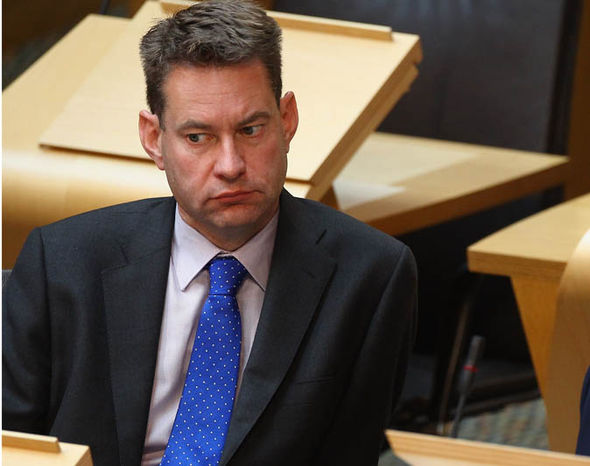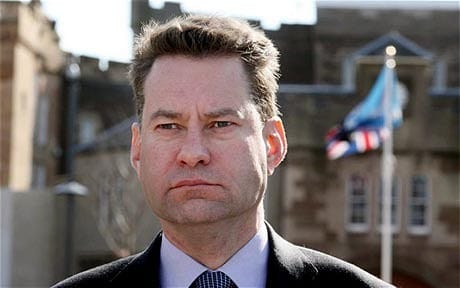
Murdo Fraser – Deputy Deadwood – 18 Years An Unelected MSP – Spongebob Personified


images


53jedprnbimv404ipadn2xosjk4ut8.jpeg.gallery


The Near Death and Signs of Recovery of the Tory Party in Scotland

Murdo Fraser first stood for election to Holyrood in 1999 but was unsuccessful. Undeterred he turned his sights to bigger things and fought for a seat in the Westminster election in 2001(and failed). Never one to give up easily he lowered his expectations once again and sought to be elected to Holyrood in 2003, 2007, 2011 and for a record fifth time in 2016. On each occasion he failed succeeding only in garnering a lower share of the vote each time his name was entered onto the ballot paper.

But the Tory party were determined that talented Murdo would never be lost to Scottish public service and added his name at or near to the top of their proportional representation list which provided opportunity for a number of failed candidates to be elected to Holyrood as second class MSP’s. Murdo was so elected in 1999, 2003, 2007, 2011 and 2016. A record unsurpassed by any other nominee.

It is noteworthy that the Scottish devolution Bill’s inclusion of proportional representation (so vehemently opposed by the Tory’s) saved the party from oblivion in the first four terms of government. But the practice of retaining the same persons for election, time after time resulted in an ageing pool of candidates (old talentless Tory’s) and subsequent recurring failure at the polls.

The party desperately needed a complete overhaul if it was to command a place in Scottish politics. This was facilitated by a “night of the long knives” in 2011, bringing with it a change of leadership (Cameron acolyte Ruth Davidson) coupled with the introduction of new office management, staff and Central Office financial support and the establishment of clear and unambiguous lines of communication with the office of the Tory Party in London.

Autonomy was a dead duck. Scottish Tory party members would toe the line or suffer the consequences. A new agenda was then put in place tasked with ensuring Holyrood’s independence from Westminster would be marginalised, reduced then eliminated over time.


rut


Murdo-Fraser-007
Getting Rid of the Deadwood – Three Strikes and You’re Out

Jackson Carlaw (Deputy Party leader) announced that long-serving Conservative MSPs would be forced to stand down from the Scottish Parliament from the 2015 election if they failed to win a constituency seat. They would only be able to serve three or four consecutive terms as list MSPs, who are elected using a complicated system of proportional representation to represent one of eight regions of Scotland.

He said the change would be applied retrospectively, meaning a series of the party’s most high-profile figures would have to win a constituency at the next election or step aside if a three-term limit was imposed. They included Murdo Fraser, (the bookies’ favourite in the contest to succeed Annabel Goldie as Tory leader) who is serving his third full term as a Mid Scotland and Fife regional list MSP.

The change aims to address the situation whereby the same people are nominated time and again, regardless of their performance, (such is the loyalty of the party’s rank-and-file that they consistently choose the same people no matter how poorly they perform). Carlaw said “I realise it’s going to be unpopular with some and it is controversial, but I believe we have to substantially renew the face of its party, not its name. Leadership requires the taking of tough decisions.

Only three MSPs of the 15-strong Conservative group at Holyrood have constituencies of their own, with the remainder relying on the regional list for their seats. Some have used the system to win re-election since devolution started in 1999. (The Telegraph)


SNP-514831


That’s it. Murdo has been sponging off the Scottish taxpayer for around 18 years at a gross cost of approximately £2million. Contributing nothing of substance he seems to spend an inordinate time (well he’s got plenty of it) twittering nonsense. But surely he is deadwood and what the hell happened to the 3 strike rule policy???


murdo-fraser_1990245c


Bank of England Sacrifices Scotland’s Economy to Protect the Overheated London Property Market – Oh Yes They Did and They Will Do It Again – Wake Up Scotland


Rates


5 November 1999: Scotland ‘Sacrificed’ as Interest Rates Rise

The Bank of England was accused yesterday of sacrificing Scotland’s economy after slapping on another interest rate rise to stop the over heating in the London property market.

Scotland’s hard pressed business community said the result of the boom in house prices in the south east was to pile more misery onto Scots firms.

The Monetary Policy Committee announced another 0.25 per cent hike in base rates to 5.5 per cent which will further strengthen the pound making life even more difficult for Scottish exporters.

Yesterday Scots business groups queued up to blast the decision, saying the Bank of England was ‘ignoring the pain being suffered in Scotland’. … (Daily Mail)


advertdraft2b

 
17 March 2017: The Bubble is about to burst once again

Inflation is now at its highest rate for nearly four years. The pace of increase is relentless. Households and businesses are being forced to cut back on expenditure and The Bank of England is under increasing pressure from the City of London to increase interest rates. Changes are primarily attributed to:

* Brexit. There is an increasing picture of “doom and gloom” within the UK (at all levels) in response to the March 29 triggering of Article 50. Many are of the view that this will bring with it a long period of difficult discussions with no guarantee of success.

* A weakening pound. An negative impact of the June referendum on membership of the EU. Reducing benefits of hedging increases in the price of food (bringing to an end nearly three years of supermarket price cuts)

* The heating up of the London housing market (foreign buyers)

* Escalating fuel oil costs. The commodity is priced in US Dollars and the fall in the value of Sterling against a major upturn in the cost of a barrel of crude doesn’t help matters.

* Imports – including food. Nearly three years of cost cutting in the supermarkets is at an end and increasing cost of production are being passed on to the consumer.

* Above inflation wage increases. Companies are under pressure to award annual wage increases well in excess of inflation and the bandwagon effect is bringing industrial action to the fore.

In recent months corridor conversations (in the Treasury) have focused on monetary policy and just how long the excess inflation over target will be accepted before the Bank takes remedial action.

There is anxiety that tackling inflation by increasing interest rates might only be achieved at the expense of shoppers and small businesses. But the UK consumer and small businesses are a major factor in driving the economy forward and it is crucial that the purchasing power of wages is not reduced to levels against which buyers would cease to spend.


35FED32E00000578-3675608-image-a-5_1467798269011


17 March 2017: Help to Buy Scheme and the Overheating Housing Market

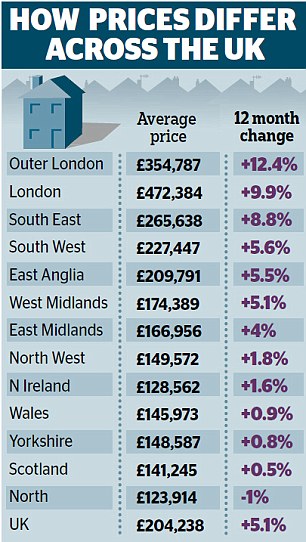
The Tory government’s “Help to Buy” mortgage guarantee scheme,(ended on 31 Dec 2017) largely enjoyed success in London (where the bulk of property’s valued between 200K — £600K are located). The measure, designed to help first time buyers get into the housing market had the undesired effect of heating up the property market in London with house prices rising in double inflation figures.

The house price surge was not so evident in Scotland. Indeed in some deprived areas house prices actually fell. Cameron and Osborne’s con-job on the Scottish electorate had been successful. London had been protected at the expense of Scotland’s property sector.

The warping of the housing market came to the attention of the EU’s financial risk watchdog who warned recently that the UK had a property market that risked overheating in the low interest rate economy.

Correcting measures will need to be introduced requiring buyers to find much larger deposits against lowered borrowing limits. It is entirely possible housing values could be reduced into negative equity sparking the dreaded property “fire sales”.

The Bank of England also cautioned last month that any improvement in household finances seen since the 2008 crisis “may have come to an end”.


_85740551_4ic7gmsg


17 January 2017: Property Market in Scotland Takes a Hit Whilst the overheated London market Prospers

The City of Aberdeen has seen the biggest drop in property values across the whole of the UK in 2016. Given that the overall UK property market has and is predicted to continue increasing in value, it is shocking that Aberdeen saw prices down by nearly 10%.

It is not only Aberdeen which has been affected in Scotland as the country accounts for seven of the 16 areas covered. Accompanying Aberdeen in its property price woes is Inverclyde who took second place in the list of areas with the largest drop in property values with a near 8% fall.

Biggest price falls in London It has been an up and down year for London with the changes to stamp duty tax for buy to let investors and the uncertainty caused by a Brexit vote. Although

the capital has remained strong in the face of adversity, homeowners in Hammersmith and Fulham won’t be feeling great about their investment in one of the most expensive markets in the world. It is the only borough to have seen prices decline, down -2.10% in the last year whilst the capital as a whole has seen values rise by over 7%.

http://www.luxuriousmagazine.com/2017/02/uk-property-price-drops-2016/ .


gold1


Jackson Carlaw – Tory Party in Scotland – Deputy leader (Ruth Davidson’s Third Choice) – A Long History of Despair and Failure Yet He Pontificates in Holyrood at the Taxpayer’s Expense


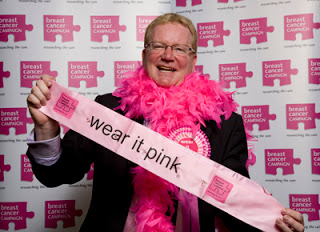
MSP's 'Wear It Pink' for Breast Cancer Campaign 2009


Jackson Carlaw

Carlaw stood as the Conservative candidate in the 1982 Queen’s Park By-election (failed) and in the 1983 GE in Pollok (failed)

He gave up seeking election to Westminster and then turned his attention to Holyrood standing as a candidate for Eastwood in the 2003, 2007 and 2011 parliament elections (failed 3 times).

He was looked after by the Tories and was elected on the party list system in 2007 and 2011 representing the West of Scotland.

In 2016 he gained the support of the 10,000 Jewish electorate in Eastwood and was elected, by a narrow margin as its MSP. (sixth time lucky)
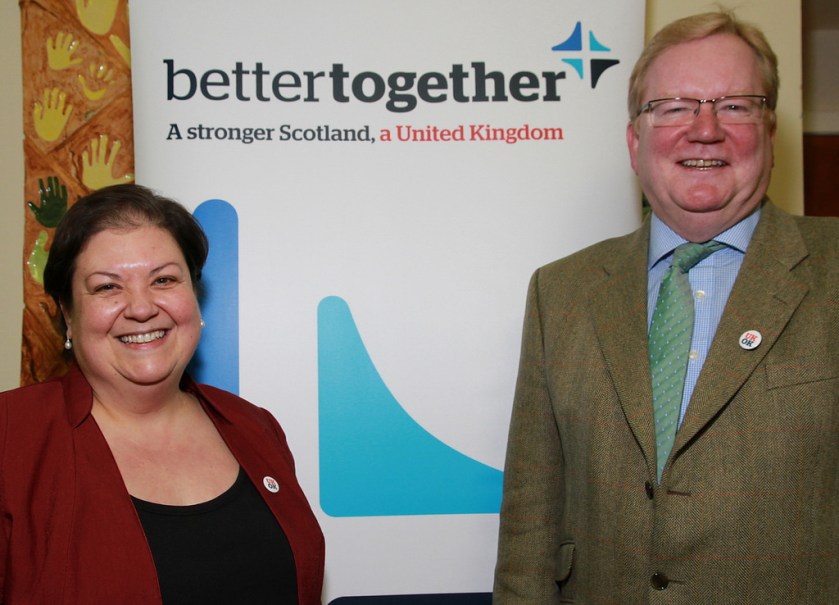
 

12067937064_c05001cfc2_b


23 March 2003: A top Tory whose car firm crashed owing more than £24million is to stand in the Holyrood elections.

But Jackson Carlaw, former deputy chairman of the Scots Tories, won’t be campaigning on his business record. Carlaw, 42, was boss of car giants First Ford, which once boasted a £77million turnover but went into receivership in November 2002. The receiver its debts include £4million to the B.O.S. , £1.5million to Customs and Excise and thousands of pounds to 300 staff. (Sunday Mail)

He was also a director of Wylies Automotive Services (trading as Auto Contracts) which went into administration in February 2002. The contract hire and leasing firm is being wound up, and 18 people have lost their jobs. The latest available documents lodged with Companies House reveal its four directors took £163K from the company in the year ended 2000, when losses were £39K, compared with more than £290K in 1999.

 

111036992-465106


8 October 2003: Hutchesons’ parents query Carlaw’s role – Surprise over choice after collapse of two businesses

Parents at one of Scotland’s most prestigious private schools are questioning the appointment of Jackson Carlaw, a former governor, to lead its strategic review, just months after two of his businesses collapsed. They are astonished by the development, especially when Hutchesons’ Grammar is embroiled in controversy over perceived falling standards and concerns about finances.The board of governors yesterday defended the appointment, saying it was not only ”grateful” to Carlaw for undertaking the job, but for using his extensive knowledge for the Glasgow school’s good.

Carlaw became a Hutchesons’ governor in 2001 but resigned in July to take up the new post. His remit is ”to ensure the school remains at the forefront of modern educational expectations”. The school refused to say how much he was being paid for the part-time role. Issues surrounding the appointment are expected to be raised at the forthcoming annual meeting.

Jack Irvine, who has two children at Hutchesons’, said: ”It beggars belief that a failed businessman has been appointed to the position.” He added: ”Other parents I have spoken to are also astonished by the appointment, bearing in mind Hutchesons’ has access to some of the finest brains in the west of Scotland, including successful businessmen.” Other parents, who asked not to be identified, expressed little confidence in the appointment. One said: ”With his track record, I cannot understand how it is considered he will turn fortunes around.” (The Herald)

 

jc


10 Oct 2003: Mystery of lost paintings at collapsed firm Carlaw was director of car hire company

A collapsed company headed by Jackson Carlaw the Scottish Conservative party executive member and failed MSP candidate in Eastwood is at the centre of a mystery surrounding 22 missing works of art. The firm’s private records reveal ownership of 50 pieces as investments, including paintings – but only 28 have been recovered, according to Ernst and Young, the administrator.

Latest available accounts to December 2000 disclose under the heading Investments: ”Paintings, at a cost of £69,028, were acquired by the company during the year from Wylies Ltd, a subsidiary company.” Descriptions of the works have not been released, but are believed to include 10 still life paintings; five cameo pieces with maritime themes; three Glasgow and Edinburgh tenement scenes; three maritime sculptures on driftwood, and a painting of a naked woman.(The Herald)
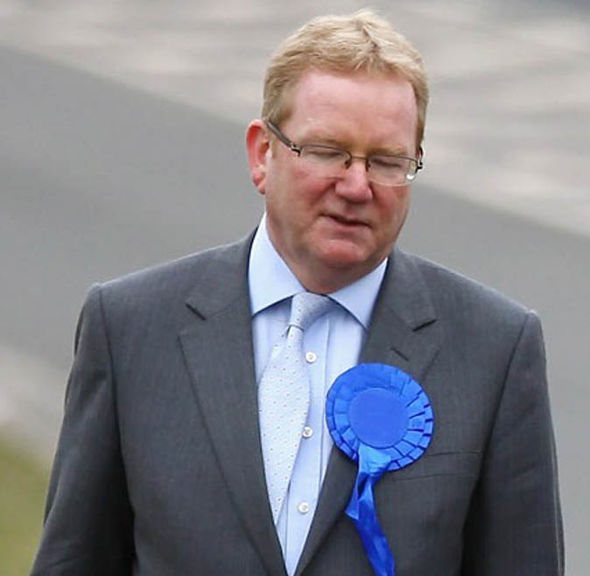
 

Jackson-Carlaw-739330


12 April 2005: Top Tory under fire for racist jokes

A senior Scottish Tory was castigated yesterday for making racist jokes at the launch of the Conservatives’ election manifesto. Jackson Carlaw, a long-time party activist in Scotland and a former office holder, gave the opening speech to welcome activists before the arrival of Michael Howard, the party leader. He made a series of jokes, most of which failed to raise even a titter, including one about Chinese tourists and another about the Zimbabwe president Robert Mugabe’s chiropodist.

Carlaw said he had met a Chinese couple in Edinburgh who said they were “Tories”. He said he was delighted, until he realised they meant “tourists” not “Tories”. He remarked that announcing he was a Tory ten years ago was the equivalent of a “death sentence” but insisted that times had changed and that the Tories were now accepted in Scotland. Indeed, he argued, defeat was no longer an option for the Conservatives, adding: “The only person recorded as saying ‘de-feat’ is marvellous is Robert Mugabe’s chiropodist.” Carlaw had come to the end of his speech, but Mr Howard had still not arrived at the Hampden Park conference suite where the manifesto launch was taking place, so Carlaw continued to make jokes (none of which drew much of a laugh from his audience) to pass the time until the Tory leader arrived.
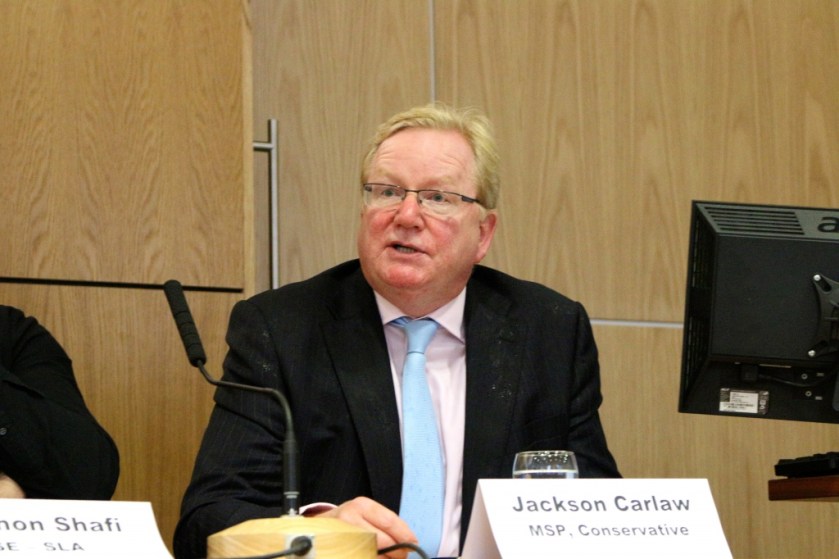
 

IMG_6017


12 June 2005: Tory who told racist jokes appointed deputy chairman of Scottish party

The Scottish Conservatives’ post-election nightmare continued last night after the party was forced to defend itself against accusations of sexism and racial insensitivity. Opposition politicians lined up to denounce the Tories for appointing Jackson Carlaw, the man who told racist jokes at the party’s recent election launch, to the post of interim deputy chairman. The Conservatives were also put on the back foot by Carlaw’s predecessor, Mars Goodman, who accused the party of being a “back- slapping boys’ club”. Carlaw was promoted after a meeting yesterday at the Conservative party headquarters in Edinburgh. The vacancy had been created by the departure of Goodman, who was forced to resign earlier this month after writing a highly critical report about the performance of chairman Peter Duncan during the general election campaign. (Sunday Herald)


index


28 February 2006: Close vote as Scots Tories elect new deputy chairman

Bill Walker, the 77-year-old former Tory MP, was last night elected as deputy chairman of the Scottish Conservatives – beating Jackson Carlaw, the incumbent, by just eight votes. Mr Walker, as well known for his robust right-wing views as he was for wearing the kilt in the Commons as an MP, secured 2,518 votes to Mr Carlaw’s 2,510 in a ballot of Tory party members which saw a turnout of 37 per cent. Last night a spokesman for the Tory party refused to comment on the signal Mr Walker’s election would send out for the party, which is now led in the UK by David Cameron, 39, who will speak to the Scottish conference in Perth later this week. … (The Scotsman)

 

Jackson Carlaw 1


7 January 2007: Goldie under siege by Carlaw as Tory rival bids to oust party leader

Scots Tory leader Annabel Goldie is facing a determined bid to unseat her from the Parliament. In an internal vote to take place this week party members are to be asked to rank candidates for the forthcoming election,with only those at the top of the list likely to make it to Holyrood. But Goldie is now facing an aggressive campaign by fellow candidate and Thatcherite stalwart Jackson Carlaw who has issued a thinly veiled attack on the leader in his bid to beat her in the vote. In a ‘communication’ sent to party members in the West of Scotland, Carlaw declares: “Wherever I go, people say they want robust leadership and someone who will take the fight to Labour. …(Scotland on Sunday)
 

53jedprnbimv404ipadn2xosjk4ut8.jpeg.gallery


23 August 2010: Tory MSP Jackson Carlaw under fire over sick Gordon Brown suicide ‘joke’

Carlaw caused anger when he asked followers on micro-blogging site Twitter if the former PM was visiting Beachy Head on a charity walk, before saying: “Alas, not.” The East Sussex cliffs are a notorious suicide spot. Carlaw’s jibe came in a chat with a pal John McGlynn. McGlynn mocked Brown’s plans to take part in the walk next month for WaterAid, raising cash for fresh water in developing countries. He used the site to tweet: “Gordon Brown on a charity walk, this is only because nobody would pay to hear him speak or read his book! Such a joke.” West of Scot land MSP Carlaw replied: “Beachy Head? Alas, not.” The tweet has been deleted from Twitter but it was copied to Carlaw’s Facebook page.

Labour MSP Ken Macintosh said: “How Carlaw ever thought making these sick comments was acceptable is beyond me. He should be ashamed of himself and apologise immediately. The Tories need to think long and hard about whether he is fit to hold office.” It is not the first time Carlaw has hit trouble. In 2005, he was castigated for making racist jokes at the Tory party’s Scottish manifesto launch. (Daily Record)


a jackson carlaw


3 September 2011: Tory leadership candidate Carlaw accuses rivals of appeasing Salmond

Tory MSP Jackson Carlaw launched his campaign to lead the party in Scotland with a demand for an early referendum on independence and a suggestion that supporters of more powers for Holyrood want to “appease” nationalism.The West of Scotland MSP opened his campaign to replace Annabel Goldie with a slogan of “a strong Scotland in a Great Britain” at a launch event in Glasgow yesterday, where he criticised the policies of the retiring leader and his current rival for the leadership, Murdo Fraser. Carlaw, the Scottish Tory transport spokesman, wants an independence referendum before any further moves to hand more responsibilities to the Scottish Parliament beyond the Scotland Act, which is set to extend Holyrood’s tax-raising powers. … (The Scotsman)


_89632726_sundaypolitics-stcclean


15 September 2011: Tory List MSPs will be forced to stand down

Long-serving Conservative MSPs will be forced to stand down from the Scottish Parliament at the next election if they fail to win a constituency seat, under a radical plan by a leadership candidate to introduce fresh blood into the party. Jackson Carlaw told the Daily Telegraph they would only be able to serve three or four consecutive terms as list MSPs, who are elected using a complicated system of proportional representation to represent one of eight regions of Scotland.

Significantly, Carlaw said he would apply the change retrospectively, meaning a series of the party’s most high-profile figures would have to win a constituency at the next election or step aside if a three-term limit was imposed. They include Murdo Fraser, (the bookies’ favourite in the contest to succeed Annabel Goldie as Tory leader) who is serving his third full term as a Mid Scotland and Fife regional list MSP.

The change aims to address the situation whereby the same people are elected time and again, regardless of their performance, because rankings on the regional list are decided by loyal Conservative members. Carlaw, whose candidacy has not been endorsed by any Tory MSPs, argued the change would be a far more effective method of reinvigorating the party than Mr Fraser’s “superficial” plan to change its name. “I was very impressed by what David Cameron did at Westminster to refresh the party,” he said. “I would ask the (party management) board to consider term limits of MSPs being elected three times or re-elected three times consecutively on the list. “I realise that’s going to be unpopular with some, I realise it’s controversial, but I believe we have to substantially renew the face of its party, not its name. Leadership requires that you take tough decisions.”

Carlaw emphasised the new rules would apply to himself. The 52-year-old is serving his second term as a West Scotland list MSP having failed to win the Tory target seat of Eastwood in May. The changes would apply in the 2016 election and he said he would be “happy” for them to be retrospective. Only three MSPs of the 15-strong Conservative group at Holyrood have constituencies of their own, with the remainder relying on the regional list for their seats. Some have used the system to win re-election since devolution started in 1999.

List seats are allocated to parties using a formula based on the number of votes they received and taking account of the number of constituencies they hold in each region. Candidates are given seats according to a ranking decided by Tory members, but such is the loyalty of the party’s rank-and-file that they consistently choose the same people no matter how poorly they perform.

Carlaw suggested that long-serving list MSPs were being rewarded for electoral failure. “At the end of the day, if you’ve had four terms as a list MSP, that’s four times you’ve failed to win your (constituency) seat,” he said. “Nobody is entitled to sit permanently in parliament. There’s a generation of talent emerging now that I think we’ve got to do our very best to promote.” (The Telegraph)
 

12068163636_1f4ecb8e50_b


19 October 2011: Jackson Carlaw not impressed with the leadership Qualities of Ruth Davidson

He says he has a lot of time for Murdo Fraser, “he has been “tested in battle”. But mention Ruth Davidson, (who has emerged as perhaps his main challenger for the top job) and a more venomous tone comes out.

Question: “Won’t she be a breath of fresh air; a walking, talking sign that the Tories in Scotland have changed”?

Answer: “You cannot simply say I’m the new kid on the block and therefore the world is going to come and flock to vote Scottish Conservative & Unionist – someone who has been parachuted in from absolutely nowhere, who we know nothing about, who has no political agenda that we know about, who has fought no campaigns.

Ruth Davidson’s own performance in Glasgow [at the May election] wasn’t terribly impressive. Moreover, she failed to win the list-ranking ballot in her own seat and none of the constituency chairmen in Glasgow are supporting her. The idea that you simply say because somebody is new, that is going to save the party, I’m afraid I simply don’t buy it.” (The Scotsman)
 

IMG_4156 800x540


20 August 2012: Tory cancer drug scare angers SNP

The SNP has accused the Tories of distributing “discredited and factually incorrect” leaflets that scaremonger about the lack of availability of Abiraterone, a new treatment for prostate cancer.

Kenneth Gibson MSP accused Tory health spokesman Jackson Carlaw of “astonishing arrogance” in distributing the leaflets, “despite it being nearly a week since the drug’s approval by the Scottish Medicines Consortium – and advice offered to him to withdraw the leaflet run.”

Mr Gibson said that while on a constituency walkabout yesterday morning he noticed that the Tory leaflet was still being put through doors by Royal Mail, adding that he was now taking the matter to the Scottish Parliament Corporate Body. He said “Despite it being pointed out that his leaflet is both scaremongering and inaccurate, Jackson Carlaw seemed determined to keep delivering this scaremongering nonsense, including this weekend – nearly a week after abiraterone was approved by the Scottish Medicines Consortium. The leaflet and its delivery have been paid for by the Parliament and states: “The cost of this publication has been met from parliamentary resources”.

“I am writing to the corporate body of the Scottish Parliament to complain about the Mr Carlaw’s series of errors over this leaflet and its distribution. He has had ample opportunity to withdraw his leaflet but his persistence to spread mistruths is astonishingly arrogant. Scaremongering and spreading false information is bad enough but the Tories are stooping to new lows if they think for a minute that they can push lies and then expect the taxpayer to pick up the bill.” (Morning Star)


28128183423_9f819cde5e


6 July 2013: Top Scots Tory blasted for anti-depressants comments

A leading disability campaigner blasted Scottish Tory Jackson Carlaw today after he accused doctors of leaving patients “parked” on anti-depressants.The Scottish Tories’ deputy leader had called for a “concerted effort” to get people off medication – even though his own party’s welfare cuts have driven people to suicide.

Carlaw said that anti-depressants had “a place in treating some mental-health problems,” but the Scottish government had spent almost £90 million on such prescriptions since 2010. “People cannot just be parked on anti-depressants. We need solutions that will see them beat the condition and return to positive mental well-being”.

But disability rights campaigner Susan Archibald said “the Westminster coalition’s policies only worsened people’s depression. From a Conservative, when their whole welfare reform is denying people any happiness whatsoever? They seriously don’t have a clue.  Dozens of deaths have now been linked to the Con-Dems’ attack on Britain’s welfare state, making national headlines.”

In May, 53-year-old Birmingham woman Stephanie Bottrill stepped in front of a lorry after penning a note to her son explaining that she could not afford another £80 a month in rent under the bedroom tax. Ms Bottrill’s death came less than a month after father and fiancée Iain Hodge took his own life in his East Kilbride flat, having been sanctioned for 10 weeks for refusing to attend workfare placements despite having a serious blood disorder that prevented hard labour.

A Scottish government spokeswoman said that the drugs were only prescribed “in line with good clinical practice,” including ongoing supervision. (Morning Star)


Carlaw-598695


28 April 2014: Former labour Strategy Director Alastair Campbell’s interview of Alex Salmond (14 March 2014) BEFORE the annexation of the Crimea

Mr Salmond expressed a view that it was a “good thing” confidence had returned to Russia and said that Mr Putin was “more effective” than his portrayal by the press suggested. Pressed further he went on to say “Well, obviously, I don’t approve of a range of Russian actions, but I think Putin’s more effective than the press he gets I would have thought, and you can see why he carries support in Russia”.

Asked if he admired the Russian leader, he said: “Certain aspects. He’s restored a substantial part of Russian pride and that must be a good thing. There are aspects of Russian constitutionality and the inter-mesh with business and politics that are obviously difficult to admire. Russians are fantastic people, incidentally, they are lovely people.” The remarks were made on MARCH 14 (as Mr Putin faced widespread condemnation from the international community with Russian and Ukrainian troops squaring off in Crimea).

The usual suspects labelled the remarks “insensitive and ill-judged” and said the First Minister’s admiration for a man with such a “controversial” record on human rights did not reflect well on Scotland. Carlaw, Scottish Conservative deputy leader, said: “his views make a mockery of the Scottish Government’s faux outrage over the Crimea situation”. (The Telegraph)

But on the same day this surfaced

28 April 2014: Official Russian news agency Itar-Tass reported that David Cameron’s office wants support on the Scottish independence referendum from Putin’s government

Itar-Tass, citing a source in the Conservative Prime Minister’s office, said Britain was “extremely interested” in referendum support from Russia, which this year holds the presidency of the influential G8 group of rich industrial nations. The state-owned agency (acknowledged as the Kremlin’s official mouthpiece before and after the end of Communism) said the Cameron aide had warned Scottish independence could “send shock waves across the whole of Europe”. The report sparked criticism last night from Alex Salmond. He said: “This report from Russia raises serious questions about the UK Government’s underhand tactics. If this is accurate, then Westminster has been caught red-handed trying to stir up hostility to Scotland instead of representing Scotland’s interests – it seems the No Campaign’s self-named ‘Project Fear’ has now gone global.” Jackson Carlaw (evidently ashamed of his government’s dialogue with Mr Putin, said nothing) (http://archive.is/1vRJJ)
 

1470070241-b8fc9814366143e71bd1fb76b2d795a6-600x814


2 December 2016: Tory MP Jackson Carlaw on the wrong track with attack on Yousaf’s train use

Scottish Tory deputy leader & Eastwood MSP Carlaw’s attack on Humza Yousaf hit the buffers yesterday after he wrongly said the Transport Minister hadn’t boarded a Scot Rail carriage since MSPs returned after the Holyrood election. caught the train since May 2016. Carlaw said: “Commuters will be furious that the train network is deemed good enough for them, but not seemingly good enough for the man in charge.”

However, the Tories were looking at the wrong expenses.

The SNP said the Transport Minister’s commute was covered by the Scottish Government rather than the Parliament, and that he had taken the train just about every week. Carlaw had accused Yousaf of having “never set foot on a train” apart from for publicity pictures.

SNP MSP James Dornan pointed out that the latest expenses release showed that Carlaw himself had only made five train journeys and mostly used his car. He said: “The Tories are on the wrong track with this ridiculous claim. Humza takes the train most weeks to commute between Glasgow and Edinburgh in his ministerial role and it would be wrong for him to bill his parliamentary expenses for ministerial travel.

In contrast Carlaw has made only five train journeys since May, far fewer than Mr Yousaf took in his first two months as Transport Minister. The Tories’ efforts to personally attack the Transport Minister instead of contributing to improving our train service have well and truly hit the buffers.” (The National)
 

IMG_4157 800x540


Gordon Brown Sets Out His Case For Scotland’s Independence – I Kid You Not – Thank You Gordon


58769


Scotland – The Relatively Good Years – 1880 -1914

Between 1880 and 1914, Scotland’s relative position within the United Kingdom was improving. Before World War One, Scotland was, first of all, one of the high growth and high employment regions of the United Kingdom.

In 1913 Scotland’s unemployment rate was only 1.8% (of the insured, labour force) contrasted with 8.7% (in London). Coal output rose from 12.4% to 14.8%, Steel from 14.8% to 20.8% , and shipbuilding retained a third share of UK output.

Scotland’s more open economy – with indigenous control linked to a greater predominance of family firms, (as opposed to joint stock companies) offered limited opportunities for mergers, amalgamations and monopolies.
The Scottish business system still bore the signs of its origins in small family enterprises. Although the period from the 1890’s to the First World War involved numerous company amalgamations, the new combines differed only a little from their predecessors.

Amalgamations involved the fusion of independent family concerns into a holding structure in which there was little reorganisation at the technical or financial levels …Many dominant firms were either family firms, which had adopted the joint stock form concerns which had grown up on the basis of old family firms, or groups of family firms held together through a holding company. Only in the case of the railways and some newer firms in oil and electricity was the family principle not to be found. (Scott & Hughes: Anatomy of a Scottish Capital)

If wages did not match United Kingdom averages, they were rising faster than in the rest of Britain. And while Scotland’s social problems were immense (for example, one half of Scots lived in one or two roomed houses) there were signs of social improvement, such as in the fall in infant mortality rates between 1871 and 1911. The Scottish Infant Mortality rate was actually below that of England and Wales.

If there were symptoms of a deeper malaise affecting the industrial economy, as the severity of the 1906-1908 recession indicated, and if Scotland was both overdependent on a small group of stable industries and suffering because of a high level of capital exported abroad (in preference to reinvestment in the home economy), it was still possible for politicians to argue that Scotland’s economic difficulties were temporary and that the dominant trend was one of improvement. (The Search for Wealth and Stability, I Levitt), ( The Scottish Poor Law and Unemployment, T Snout).

These economic and social characteristics helped to determine political attitudes. Middle class support veered towards Conservatism after 1886 and working class voters became dependent on Liberalism, the Liberals were after all a party of all Scotland rural and industrial.

Their support owed little to their political organisation or the representativeness of their candidates (in 1910, of fifty-nine Liberal MP’s, twenty-five were lawyers, none were working men and many were Englishmen).

Rather the resilience of Liberalism owed more to the relevance of the Liberal philosophy, as demonstrated by the appeal of the social and economic views posted by Gladstone in his Midlothian speeches, as early as 1879. (The Scottish MP since 1910 : His background and performance, C Larner)


bb


The Impact on Scottish Society of the First World War – The Development of the One World Economy and Associated Politics

By the late nineteen twenties, Scotland was a very different kind of economy and society. First, Scotland’s economic base was contracting. The striking feature of the inter-war years, in contrast with the late nineteenth century was the persistently wide margin of unemployed resources.

Scotland’s share of British output fell from 11.8% in 1907 to 10.5% in 1924 and only 8.8% in 1935 ), and with around 10% of the British labour force, Scotland had nearly 15% of British unemployment throughout the inter-war years, with an estimated three fifths of the workforce experiencing at least one period of unemployment during the 1920’s .
The most striking problems were in the staple industries – agriculture, mining, steel, engineering and textiles – which had formed the basis of Scotland’s industrial progress before 1914. While in 1907, they represented more than half (53%) of all output, by 1924 they accounted for only 48% and by 1935 only 39% of output (Depression and Recovery – British Economic Growth, 1919-1939, B Alford), (No Gods and Precious Few Heroes, C Harvie), (The Impact of Unemployment on the Development of Trade Unionism in Scotland, E Kebblewhite).
The Performance of Scotland’s Basic Industries, 1911-1929
M Tons          Coal            Iron         Steel         Shipbuilding
1911-13         22.7            1.32        1.3               676.0
1918-20        17.1             0.97        1.8              617.2
1927-29        16.8             0.61        1.3              544.3
The foregoing table illustrates the difficulties faced by coal, iron and steel and shipbuilding after the war. As early as 1921, officials in the Scottish Office realised that Scotland’s economic problems were permanent, rather than temporary. Diagnosing a picture of unrelieved blackness a confidential report remarked:

“The main belt of severe unemployment and accompanying distress runs through the mining, steel and shipbuilding areas of Fife, Edinburgh, Stirling, Linlithgow, Lanark, Dumbarton, Renfrew and Ayr … It is difficult to pick out any industrial occupation as being principally affected by unemployment, almost all are in bad condition.”

The report suggested that those engaged in export trade and the means of export were worse off than those engaged in home trade, while only certain luxury services were remarkably vigorous. It added that an estimated 25,000 miners were in excess of capacity of the mines for for years to come.


Gordon-Brown


More than 400,000 Scots left the country during the nineteen twenties. It was a group that contained a disproportionate number of lower middle class and skilled manual workers. Throughout the period of the inter-war years unemployment was never less than 10%. And the numbers in metal industries and mining fell dramatically between the 1921 and 1931 censuses, by 23% and 18% respectively.

Shipbuilding, whose Clyde output had fallen-four fold between 1920 and 1923 employed 100,000 workers in 1920 but only 50,000 in 1925 and only 10,000 in 1932.

Scotland’s economy was becoming increasingly corporate in its organisation. Three trends stand out in the inter-war years, “economic concentration, anglicisation (Englishing) of control and the growth of government regulation”.


4221396001_4425255744001_gordon-brown-thm


By 1923, mergers had brought three of Scotland’s seven banks into the hands of English banks. The vertical cartellisation of shipping, shipbuilding and steel production through company amalgamations resulted in Colville’s becoming a centre for steel, shipbuilding and shipping interests in the West of Scotland. This development was also closely associated with the rise of Lithgow in shipbuilding and together these firms became the pivot of Scottish heavy industry.

In whisky distillers, in brewing Scottish Brewers, and in textiles Jute industries, (with Coats and Linen Threads) became dominant, and the rail companies became part of London dominated cartels. Expansion of these companies tended to occur through the direct acquisition of other companies rather than through the older holder company form.

Monopolization in each of the major industrial sectors was producing the large corporations of the modern period.

Generally, the twenties saw little redistribution of income between rich and poor. What redistribution in wealth which did take place in the period was within the top fifth of the population and not from rich to poor. Scottish infant mortality was higher than in England and Wales. And it was outward mobility through emigration more so than upward mobility through education that did most to lessen the potential tensions in Scottish society.


The Labour Party and political change in Scotland 1918-1929 : the politics of five elections. Gordon Brown (https://www.era.lib.ed.ac.uk/handle/1842/7136 )


Nicola-Sturgeon-and-Gordon-Brown-780811


The British American Project Wields Power Over Scotland Through Scottish Born Daniel Defoe’s


p040csdx


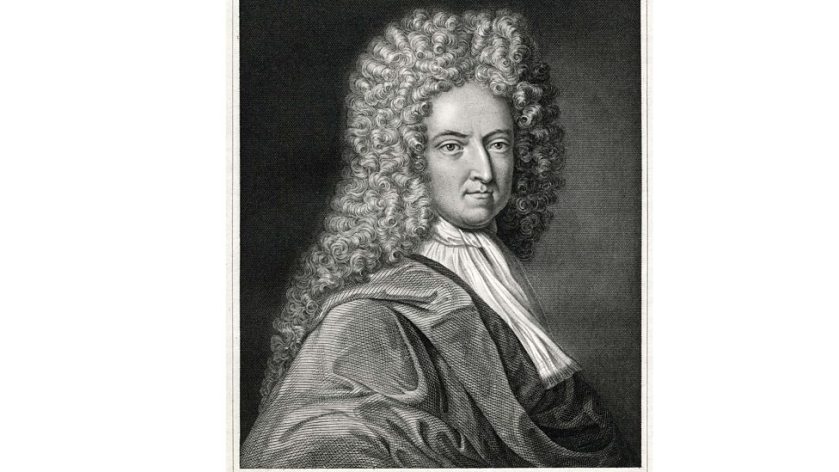
Daniel Defoe The Spy – The Inspiration For the Agents of The British American Project (BAP)

Daniel Defoe was a key contributor to the Act of Union between England and Scotland in the 1700s and in fact worked as a spy for the then Chancellor of the Exchequer, Robert Harley.

Defoe was working in turbulent times; he strongly associated himself with Scotland, and he travelled in Catholic Europe and around Wales and Scotland.

Defoe had been raised in the Presbyterian movement, (Scotland did not persecute Presbyterians) making him a dissenter in the eyes of the English government; A Union, he felt, would help Scotland both financially and in terms of security. Protestant England would also benefit by the association as threats to its security from across the channel were frequent.


Defoe was asked by English spymaster Robert Harley to continue visiting Glasgow and Edinburgh, but to work as a secret agent of the Crown. Using his writing of ‘The History of the Union of Great Britain’ as a cover, he was instructed to use his time monitoring and noting public and private perceptions around the proposed Union, and to report back directly to King William, of whom he was a great supporter.

This was undoubtedly dangerous as the Union was hugely controversial, particularly in Scotland. And contemporary accounts show that Defoe’s own swagger, and the irresistibility of hinting at his important role in coffee houses, very nearly made his role short-lived.

More publicly he ghost-wrote speeches and wrote essays and pamphlets promoting the Union, one of which got him in to trouble as giving in to his satirical vein, he suggested furiously that non-conformists like himself should be killed. That earned him prosecution and the stocks.

(BBC Radio 4)


STL20USA_653510k


The British American Project

Founded in 1985 by Reagan and Thatcher and Rupert Murdoch (to perpetuate the close relationship between the United States and Britain) the British-American Project for the Successor Generation (BAP) has a membership of “1200 leaders and opinion formers”, drawn equally from both countries.

The project is sponsored by several well-known businesses including Monsanto, Philip Morris (tobacco), Apple, British Airways, BP Coca-Cola, Unilever.

It holds an annual conference to which journalists are not invited and at which everything said is, officially at least, not to be repeated to outsiders. It rarely features in the mainstream media – instead, it makes tantalisingly vague and fleeting appearances in those corners of the internet where conspiracy aficionados gather.

In real terms it is a “Trojan horse” for American foreign policy, primarily recruiting Britons of liberal or left-of-centre inclinations and political talent and connections when they are young, indoctrinating them with propaganda about the virtues of American capitalism and America’s role in the world, and then watching them approvingly as they steer British politics in an ever more pro-Washington direction.


LauraLuvsMay-min-e1473350242928-370x223


In the summer of 1997, a few weeks after New Labour won power, a striking article about the election appeared in a privately circulated newsletter. Under the cryptic headline Big Swing To BAP, the article began, “No less than four British-American Project fellows and one advisory board member have been appointed to ministerial posts in the new Labour government.”

The under-noted list provides a sample of the extent of the odious presence in British politics of persons whose loyalty is firmly placed with the US. In addition to politicians, the BBC and press are extensively represented.

Labour Party: Edward Miliband, David Miliband, Douglas Alexander, Wendy Alexander, Baron Mandelson, Baron Robertson of Port Ellen, Baroness Symons, Jonathan Powell, Baroness Scotland, Geoff Mulgan, Sadiq Khan, Matthew Taylor.

Conservatives: David Willetts, Stephen Dorrell, Alan Sked (founder of Ukip), Rishi Saha.

Journalists: Isabel Hilton, the Independent, the Guardian; Yasmin Alibhai-Brown, The Independent, London Evening Standard; Charles Moore, Daily Telegraph, Sunday Telegraph, The Spectator; Rowan Pelling, Daily Telegraph, Daniel Franklin Executive Editor of the Economist, Martin Vander Weyer, Business editor of the Spectator and Gideon Rachman, The Spectator, Chief Foreign Affairs Columnist .     and many, many more.

BBC: Jeremy Paxman,  Evan Davis, James Naughtie, William Crawley, Jane Hill, Ben Hammersley, Trevor Phillips, Margaret Hill, Laura Kuenssberg

http://www.britishamericanproject.org/

http://powerbase.info/index.php/British_American_Project


britishamericanprojectorg7e868

This document provides evidence confirming the extent of the political power wielded by members of the British American Project (BAP). Note the high profile of Laura Kuenssberg who has been selected for high office within the project. (Shades of  1707 and Daniel Defoe). No friend of Scotland methinks


poor-little-rich-girl-e1485668115720


10313359_632088540199769_6748727047123860742_n


Conference -The EU-US Relationship

Committee: Policy and Resources Date(s): 21 October 2010 Subject: Joint event with British American Project on the EU-US relationship Report of: Director of Public Relations For decision

Proposal: This report proposes that the City of London Corporation, in partnership with the British American Project, organises a high profile event on the EU-US relationship at a cost not exceeding £8,000 (including a contingency of £1,000) to be allocated from your Committee’s Policy Initiatives Fund 2010/11 and charged to City’s Cash.

Recommendation: Your Committee is recommended to agree that the City of London Corporation should organise this event on the EU-US relationship at a cost not exceeding £8,000 to be allocated from your Committee’s Policy Initiatives Fund 2010/11 and charged to City’s cash.


e2u-6j3z


Background: The British American Project (BAP) exists to help maintain the long-standing relationship between Britain and the United States. BAP brings together young people who have achieved distinction in their field. Their annual four day conference chooses 20-24 from each side of the Atlantic, to debate issues of importance to both countries. Delegates come from a wide variety of backgrounds and include rising stars from the world of business, government, the voluntary sector, the media and the armed forces.

BAP has a very impressive list of alumni which includes the Leader of the Opposition Rt Hon Ed Miliband MP, the Executive Editor of the Economist Daniel Franklin and the Higher Education Minister Rt Hon David Willetts MP. As well as their annual conference BAP organise a number of high profile events during the year. Recent BAP events have featured the US Ambassador Louis B Susman, the Chief Political Correspondent of BBC News Laura Kuenssberg and Deputy Head of Communications (Digital) in No 10 Downing Street Rishi Saha.

In November 2008, the City of London Corporation organised a highly successful seminar, in partnership with BAP, on the implications of President Obama’s election for the global financial services industry (the approved budget being £9,000). The event was chaired by Jim Naughtie of the Today Programme and the panel discussion featured the Business editor of the Spectator Martin Vander Weyer and the Chief Foreign Affairs Columnist Gideon Rachman. The seminar and subsequent reception were attended by over 150 guests from the worlds of politics, business and media.


untitled


Proposal: It is proposed that the City of London, in association with BAP, organise another high profile event either in Guildhall or a Livery Hall to consider the EU-US relationship. The event will consist of a high level panel discussion before an invited audience followed by a reception. James Naughtie of the Today programme has already indicated he would be available to chair the discussion. The seminar would be followed by a reception. This report therefore proposes that the City of London organise this event at a cost not exceeding £8,000 (including a contingency of £1,000), with the funding to be allocated from your Committee’s 2010/11 Policy Initiatives Fund (categorised under the “Events” section of the Fund). This estimated cost is based on room hire and related costs (including a/v equipment) and hospitality costs for a reception for up to 150 guests.

 

cover022-goldsmith-web


Financial and Risk Implications: The option of the City Corporation providing support at a lower level has been considered and discounted because the BAP approached the City Corporation with a request that it acts as the sole funder and sponsor for the event and, given the relevance of the subject to the role of the City as the world’s leading international financial centre, this request is considered fully appropriate. There is no possibility of meeting the proposed financial support from existing local risk resources because this proposal entails, in common with other requests for funding events, research or related projects by think tanks and similar other non-profit organisations, a substantial one-off item of expenditure, for which no provision has been made in the Public Relations or other local risk budgets.

The current uncommitted balance available within your Committee’s Policy Initiatives Fund for 2010/11 amounts to some £271,000, prior to any allowance being made for any other proposals on today’s agenda.


Jane Cummins


Consultees: The Chamberlain and the Comptroller and City Solicitor have been consulted in the preparation of this report and their comments incorporated within it.

Conclusion: Organising a high profile event on the EU-US relationship accords well with the City of London’s core aims and fits in well with key elements of the community strategy. The event will also allow for high quality interaction with a number of the City of London’s key audiences including the City financial, political and media and the impressive BAP alumni list in particular.


Gluggle-UKUSA-2


Willie Rennie & the Lib/Dem’s – (In Government With Labour) – Forced Through The Intermediary Technology Institutes Scheme – Against the Wishes of the SNP- Investments Cost the Taxpayer £230Million – But Was Willie Ecstatic at the £600K Return


17310397-jpg-gallery


The Labour and Liberal Democratic Party Coalition Government – (1999-2007)

In 2002 Labour and the Liberal/Democrat’s formed a powerful coalition government in Scotland. Their political dominance over a fractured opposition provided opportunity for their politicians to introduce novel and untested working arrangements.

The Liberal/Democrats had enjoyed a long and successful history representing Scottish constituencies and had in place an efficient lobbying machine, advancing to government the interests of a number of multi-national organisations and other UK based companies. McEwan-Purvis was one such company, operating in or around Holyrood between 2001-2006.

With the assistance of government ministers, the company introduced direct links between the government and the commercial sector, (Willie Rennie’s input was substantial but largely unnoticed) through the introduction of an ALEO (given the title “The Intermediary Technology Institutes” (ITI)). Opposition party and public protests questioning the integrity of the scheme, “fell on deaf ears” and a new way of working to government was adopted by Scottish Enterprise and given a budget of budget of £450m.

The scheme, launched in 2003, was aimed at turning innovative ideas in Scottish universities into commercial triumphs, attracted hundreds of millions in public cash. However, only £600,000 was ever received in royalties.

ITI had badly malfunctioned; chronically failing to deliver the economic objectives envisaged by Scottish Enterprise and the Scottish Government. The ten year programme produced very little of the expected commercial outputs, such as new tech start-ups and licensing revenues, and was prematurely terminated by Scottish Enterprise in 2010.

This article identifies some of the characters and circumstances that resulted in such a massive loss to the Scottish Taxpayer. The route to the truth may be convoluted and lengthy but it is important Scottish electorate is appraised of the shortfalls of those who seek their vote.


static1-squarespace-com


McEwan-Purvis – A Lobbying company with direct links to the Liberal Democratic Party (operating between 2001-2006).

There were two directors and 5 shareholders: (Jeremy Purvis – Sam McEwan – Willie Rennie – Jayne Struthers – Jacqueline Wilson)

Jeremy Purvis: graduated from University in London. He then worked full-time for Sir David Steel in the House of Commons and ran his office in the House of Lords. In 1998 he moved to Edinburgh to work for political lobbying firm GJW.

In 2001 he established, with a fellow director, his own strategic communications consultancy, advising clients on communications. He was elected to the Scottish Parliament in May 2003 (suggesting that he ceased to be a director of the company before June 2003).

In August 2013 he (Baron Purvis of Tweed) was elevated politically when he was appointed to the post of “working peer” for the Liberal Democratic party, in the House of Lords.

He represents the Liberal/Democratic party on: “The Commission on Parliamentary Reform which is an independent group, established in October 2016 by Ken Macintosh, the Presiding Officer of the Scottish Parliament It expected to report by June 2017.


article-3653
Sam McEwan: Was employed (from 1993) as Media Manager at “Scottish Enterprise.” (advising on public affairs issues in the software, textiles, food and biotechnology industries).

Before founding McEwan & Purvis he was manager of the Edinburgh based political lobbying firm GJW (now Weber Shandwick Worldwide).


rsz_screen_shot_2015-03-01_at_113639_am-2

 
Willie Rennie ran the Scottish Young Liberal Democrats whilst studying at college in Paisley. After graduation he left Scotland to work for the party in Cornwall, returning to Scotland in 1997 to take up the post of chief executive of the Scottish Liberal Democrats, moving on to the post of chief of staff in the new Scottish Parliament from 1999-2001.

From 2001-6 he worked for the lobbying company McEwan Purvis, primarily providing supporting advice to the Royal Society of Chemistry and the arms manufacturer Raytheon.

In 2006, Rennie won the Westminster seat of Dunfermline and West Fife in a bye-election. At Westminster, he was a member of the Lib/Dem shadow defence team, and also chair of their parliamentary campaigns unit. In November 2006 at Westminster PMQ’s Rennie (Lib/Dem defence spokesperson) asked the Prime Minister:

“After the conflict ended, cluster bombs used in Lebanon by Israel resulted in 159 casualties, including 23 deaths so far. In Geneva last week, why did the UK not support calls from the UN Secretary-General, the International Committee of the Red Cross and 27 nations for urgent action? In Oslo next year, will the Prime Minister push for a ban on those indiscriminate bombs, or does he agree with the Minister of State, Ministry of Defence, who has responsibility for the armed forces, who strongly advocates the use of such bombs?”

What a chancer, (and thick with it) Rennie was a Lobbyist employed with McEwan Purvis, (the Liberal/Democratic commercial organ) who had the merchants of death as their client. Yes, it was “Raytheon” – one of the World’s largest weapons manufacturer. Looks like “Oor Willie” is not only a political opportunist but the worst kind of hypocrite seeing as Raytheon is a proud manufacturer of, you guessed it, CLUSTER BOMBS.

He failed to hold the seat in the 2010 GE and returned to Scotland once more taking up a newly created post as special adviser to Scottish Secretary Michael Moore then Danny Alexander.

He was elected leader of Scotland’s Lib/Dems after their demolition in the 2011 Holyrood elections. In his first address to party members he stated that under his leadership the party would rediscover its soul and rebuild trust with voters. He was an honourable man who would have no truck with anyone in public office who did not measure up to the exacting standards he demanded of himself. Those who failed, for any reason would be expected by him to resign.

And so to “Frenchgate”. The exposure of former Scotland Secretary Alistair Carmichael, after much prevarication by himself, of his disgraceful, underhand leadership and devious direct involvement, with others in an attempt to smear Scotland’s First Minister Nicola Sturgeon.

There were strident across the political spectrum, the public and the press for the exposed rogue and liar to stand down from the seat he won by a whisker in the Westminster Election for Orkney and Shetland. But he didn’t. That he took his place at Westminster brings politics into disrepute. And Willie and his principles. Scotland waited in vain for the word “Resignation” It was not to be.

Finally, after much pressure Willie issued the following statement:

“I have discussed the serious nature of the publication of the Scotland Office document with Alistair Carmichael. He fully understands the impact it has had on his reputation. He deeply regrets his actions, has accepted responsibility for his error of judgement, apologised to Nicola Sturgeon and the French Ambassador and declined his ministerial severance payment. I have known Alistair for almost thirty years and have worked closely with him in parliament for almost a decade. I have always been impressed by his energy, dedication and professionalism. He has served Orkney and Shetland for fourteen years and has been elected on four separate occasions. It is clear to me that recent events are an aberration. As a liberal I believe that people deserve a second chance. I hope fair minded people would agree that Alistair Carmichael should be given that second chance.”


Clients of McEwan-Purvis

Raytheon: At that time the fifth largest defence manufacturer in the world. The company had four business areas: Missile Defense; Intelligence, Surveillance and Reconnaissance; Precision Engagement; and Homeland Security. It was most famous for missiles. The company is a global leader in the development and deployment of advanced technology missile systems and air combat and strike systems”. Products include the AIM-9 Sidewinder air-air missile, the AIM-120 AMRAAM air-air missile and the Tomahawk Block IIIC Cruise Missile. and the now banned cluster bomb.

Royal Pharmaceutical Society (Scottish branch):

Royal Society of Chemistry:

Association for Science Education in Scotland:


yemen-air-strikes


Dec 2002: Scottish Parliament Science Information Service

In December 2002 the Scottish Parliament launched a one-year pilot Science Information Scheme for MSPs at the Scottish Parliament. The Scheme was promoted as a collaborative project between the Scottish Parliament Information Centre (SPICe), the Royal Society of Edinburgh (RSE) and the Royal Society of Chemistry (RSC) in association with the Institute of Physics in Scotland and the University of Edinburgh.
Scheme purpose

To ensure all MSPs had access to rapid, reliable and factual information on science, engineering and technology-related issues in order to help inform Parliamentary debates on scientific issues.
Scheme Operation

The scheme was operated through a group of 52 Topic Co-ordinators who acted as “sign posts” directing MSP queries to the appropriate expert. Queries were directed to these Topic co-ordinators through the RSC Parliamentary Liaison Officer or SPICe.
Political lobbying connection

The contacts named at the end of the press release included the Royal Society of Chemistry. The contact was named as Willie Rennie of the political lobbying company McEwan Purvis. This indicated that Rennie was passing himself off as working for a learned society while in reality he was employed by and a shareholder in the PR firm. It is common knowledge that science related organisations enjoy strong corporate links and that they routinely promote pro-corporate views on science issues.
Biased briefings

The scheme, (guaranteed to be rapid, and impartial) was run jointly by the parliament, the Royal Society of Chemistry and the Royal Society of Edinburgh, in association with other learned or scientific bodies.

Some briefings for MSPs were provided through the scheme on an anonymous basis and initially the list of “Topic Co-ordinators” was kept confidential to avoid “inhibiting” their ability to provide “free and frank” advice.

After a long struggle the Green Party gained access to the list under the freedom of information (FIA) and discovered that among the Topic Co-ordinators were Sir Tom McKillop, (then chief executive of Astra/Zeneca) and other academics with ties to industry which the Greens said made them partisan. (1)

(1) The GM crops/agrochemical divisions of Astra/Zeneca and Novartis merged in 2000 under the name Syngenta. As of 2008 Syngenta is one of the major producers of GM crops.

Perhaps not coincidentally, the SPICe briefing on GM crops was described by Dr Sue Mayer, director of campaign group Genewatch and a member of the UK Government’s Agriculture and Environment Biotechnology Commission, as “highly biased and pro-GM”.
Protests against the Scheme

Mark Ballard, the Green MSP, wrote to Holyrood’s chief executive asking for a review of the Scottish Parliament science information service saying “The scheme must be open, transparent and objective. I am deeply concerned that people providing information feel the need to hide behind a cloak of anonymity.”

Professor David Miller of Strathclyde University, who runs the internet group spinwatch claimed the parliament has been naive in its dealings with the private sector and its lobbyists. He pointed out that Willie Rennie, now a LibDem MP, effectively ran the science information scheme while working for a PR agency hired by the Royal Society of Chemistry – the kind of linkage between learned societies and private lobbyists who could represent other clients, which made it impossible to be confident of the impartiality of advice.


Bn4PEgaMBj7j5HJQ8do0091061


The Intermediary Technology Institutes (ITI)

Ignoring the critics warnings, (at the end of the 2003-2004 trial period) the Scheme was formally adopted by the Scottish government and titled, “The Intermediary Technology Institutes” (ITI).

Its mission statement included the statement: “to drive innovation in research and development within Life Sciences, Energy and Digital Media sectors.”

To facilitate the foregoing the ITI’s commissioned research programmes to generate assets for onward commercialisation by Scottish companies supporting Scotland’s economic growth.

(http://powerbase.info/index.php/Scottish_Parliament_Science_Information_Service) (http://www.dmiller.info/articles/16-teaching/124-greens-science-briefings-could-be-biased-by-business)


Audience_700px


14 Jan 2009: Scottish Enterprise takes charge of failed ITI scheme

Scotland’s flagship technology commercialisation body is to lose its independence and come under the direct control of its main financial backer, Scottish Enterprise.

In a move to cut spending, the Intermediate Technology Institute (ITI) will become part of the publicly funded enterprise quango.

The surprise decision means that the ITI chairman, will step down and the organisation’s non-executive board will be disbanded at the end of the month.

In November, the chairman said that the organisation – set up in 2003 to commercialise intellectual property – faced a shortfall in its budget, allocated annually from Scottish Enterprise. Last year the group had a budget of £38.1 million.

The same month, Scottish Enterprise said “in future the two organisations will be working more closely together”, but the merger surprised business groups and politicians.

Scottish Enterprise yesterday said there would be no compulsory redundancies among the organisation’s 80 staff but promised there would be a review of its funding.

A spokesman denied the merger was a failure of strategy on behalf of Scottish Enterprise and said it would knock out duplication between the two organisations.

Last year, Scottish Enterprise undertook a major restructuring as more than half of its employees moved out to a new organisation, Careers Scotland, and its annual budget was slashed from £329m to £283m.
BACKGROUND to ITI

The Intermediate Technology Institutes (ITI) were set up by Scottish Enterprise in 2003 to commercialise technology based research and intellectual property in a ten-year programme with an overall budget of £450 million.

ITI Scotland oversees divisions in three main research areas: energy in Aberdeen, life sciences in Dundee and techmedia in Glasgow.

In its latest annual report, ITI Scotland said it had so far spent £134 million on 25 commercialisation projects and filed 132 patents.


scottish-enterprise-globe-illustration_634


11 Sep 2013: Holyrood urged to back Scottish Enterprise probe

The Scottish Parliament has been urged to back calls for Audit Scotland to investigate a failed Scottish Enterprise scheme (ITI) which wasted more than £230 million of taxpayers’ money. The scheme, launched in 2002, was aimed at turning innovative ideas in Scottish universities into commercial triumphs, and attracted hundreds of millions in public cash.

However, only £600,000 was ever received in royalties, and it was wound-up in 2009 having been deemed a spectacular failure. No full-scale investigation has ever taken place into why the programme did not succeed and Audit Scotland has been asked to find out what went wrong to ensure mistakes are not repeated in future, and to obtain an explanation as to how so much cash could have been wasted.


300px-lobbying_awards_logo


Monday 19 Jan 2015: Academics warn policy-makers must learn from their mistakes

New research examining the controversial Scottish Government funded innovation initiative – the Intermediate Technology Institutes (ITIs) – was published this week by a team of entrepreneurship researchers from the Universities of St Andrews, Glasgow and Edinburgh.The work examines the spectacular failure of the programme.

The ITIs were an extremely ambitious policy intervention launched in 2003 by Scottish Enterprise with a budget of £450m. Designed to have a major transformational impact on the Scottish economy, its main aim was to produce new high-technology start-ups and to dramatically increase the levels of business expenditure on research and development (R&D).

The researchers concluded that the ITI badly malfunctioned; chronically failing to deliver the economic objectives envisaged by Scottish Enterprise and the Scottish Government. The ten year programme produced very little of the expected commercial outputs, such as new tech start-ups and licensing revenues, and was prematurely terminated by Scottish Enterprise in 2010.

In the first independent and objective assessment of the initiative, the research examined the reasons for this policy failure.
Three comments are worthy of note

(1) The ITI programme was based on an outdated linear view of innovation. The critical stumbling block behind the policy’s failure was the inability of policy makers to properly diagnose the nature of structural problems within the Scottish entrepreneurial ecosystem.

While policy failures in the sphere of innovation policy are numerous and costly, such failures are rarely acknowledged by policy makers, as was the case of the ITIs. Arguably, this prevents the ability to learn from past mistakes.”

(2) A number of factors contributed to ITI : The research undertaken was too ‘far from market’, fitted poorly with the innovation needs of Small and medium-sized enterprises (SME’s) had too many restrictions in terms of the usage of the intellectual property (IP) and the licensing conditions were prohibitively expensive.

Innovation policy makers need to become less focused on generating the supply of new IP and more focused on increasing the ability of Scottish SMEs to undertake innovative activities and to absorb external sources of knowledge. A critical mass of innovative SMEs will provide more of a seed-bed for new tech start-ups than policies to stimulate and protect.

(3) Lessons need to be learnt to prevent similar and costly policy failures being repeated. This entails being open with external researchers and stakeholders with information and data to further understanding of the performance of policies and, crucially, the causes of failure.

The authors of the report expressed concern that Scottish politicians may not have fully absorbed the lessons from the failure of the initiative.


big_thumb


MP’s, Lawyers, Councillors, Ex-Councillors, Land Developers, Charities, Gangsters and the Labour Party – An Abuse of the Scottish Electorate – Part 5 – £600M – Ponzi Frauds


********************************************************************************************************************************************************************************************************************************

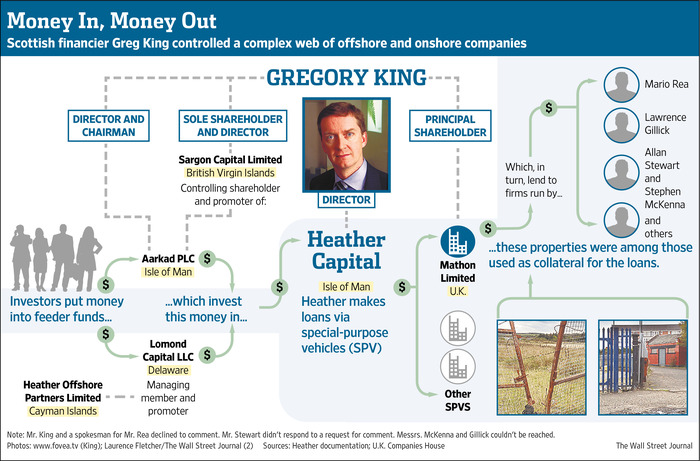
£600million Ponzie Scheme – Glasgow and West of Scotland –  Mathon Ltd – Heather Hedge Fund – Gregory King –  Aarkad PLC – Peter Watson – Scottish lawyer and Sheriff –  Rea brothers – Lanarkshire gangsters – Steven Purcell – Allan Stewart & Stephen McKenna – Lanarkshire fraudsters – Lawrence Gillick – Bankrupt and fraudster – King & Co – Private Bank – Cannon’s Law Practice, Glasgow

*********************************************************************************************************************************************************************************************************************************

Heather Capital: How a £600 Million Hedge Fund Vanished – Big named Investors Ripped Off

In September 2008, Gregory King, a Scottish lawyer turned hedge-fund entrepreneur, celebrated his 40th birthday at a clubhouse near his Spanish villa. Several hundred of his friends, family and business associates descended on the Mediterranean for an elaborate party. As the night wore on, Mr. King got up and thanked his guests. He was riding high. After all, his hedge fund, Heather Capital, had swelled to $600 million, according to fund literature.

The fund had pulled in money from some big-name investors. The £141 billion Ontario Teachers’ Pension Plan and a fund run by Nicola Horlick, a London asset manager once known as the city’s “superwoman,” were investors. And so were what reads like a who’s who of the Swiss private-banking world, as well as several major specialist hedge-fund investors and even two doctors in the U.S., according to a share register of a Heather feeder fund from December 2009 and internal Heather documentation.

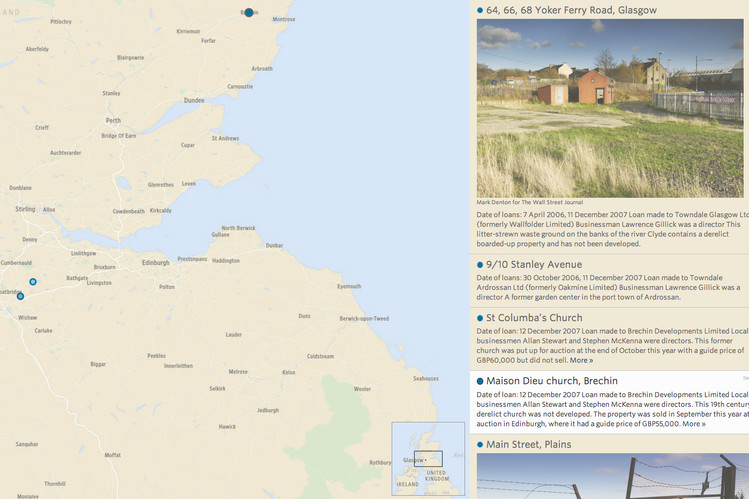
Heather aimed to profit from lending directly to companies—stepping into the void created as big banks pulled away from making loans themselves. Within months of the birthday bash, however, Heather itself had folded—another apparent victim of the global credit crisis. When a hedge fund fails, its manager is usually able to return at least something to investors. Not this time. A look through the wreckage of Heather yields a surprising discovery: There is almost nothing there. Many of the loans to companies are non-collectable. Many of the commercial properties against which the fund said it lent were left lying derelict.

Fund liquidators who have been working for years to salvage some assets now allege in court filings that many of the loans to property developers were in fact “a fabrication and a sham.” No criminal cases have been brought. An examination by the Journal shows that behind Heather’s rise and fall lies a murky tale. How did Mr. King persuade investors to part with their money? And where did it all go? Heather Capital lent money secured against Scottish real estate, but investors lost everything when it collapsed. Liquidators said many of the loans amounted to “a sham.”

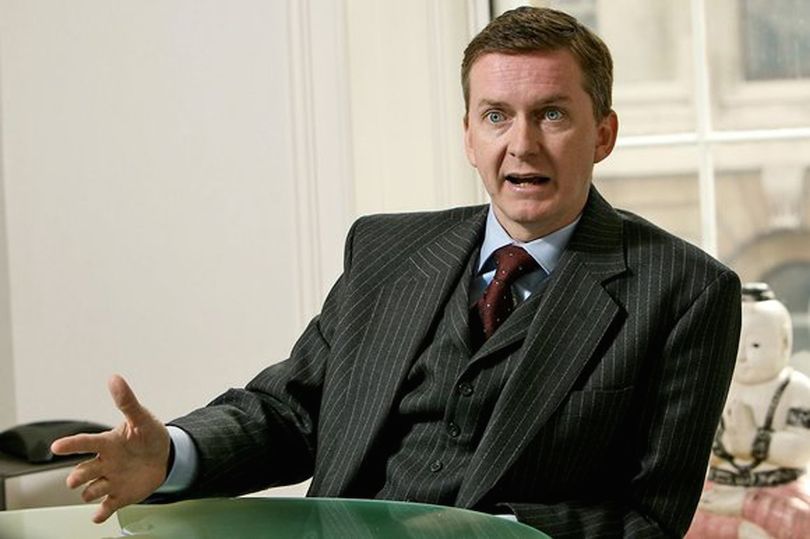
Mr. King hails from a family of Glasgow bookmakers and moneylenders. His cousin is Stefan King, one of the country’s most prominent bar and nightclub owners. His father is Hugh King, chairman of a bookmakers’ trade group, who drives a silver Bentley. Gregory King trained as a lawyer in Scotland and went to the University of Chicago’s business school. He came back to Glasgow and started a car dealership, which is still in business. The dealership made headlines in 2002 when Mr. King’s business partner was brutally murdered in what is one of Scotland’s most notorious unsolved crimes.

In 2004, Mr. King decided to try to start a hedge fund. He travelled across North America and Europe to find clients. He dressed smartly and gave polished presentations to prospective investors in a gentle Scottish accent. One investor described Mr. King as “friendly and engaging” and “completely down to earth.” Documents shown to investors included a 17-page due diligence questionnaire answering hundreds of potential queries about the fund.

Mr. King made investing in the fund sound “bulletproof,” said the investor, who lost money. “He knew how to say the right thing,” said the investor, adding that “he made it sound like he had this little niche.” Mr. King would talk openly about his family’s background during investor meetings. In a video posted on YouTube in late 2007, Mr. King talked of the Kings’ more than 90 years in money-lending. “There’s no projects that we’ve lent on, which you wouldn’t want to lend your own money on,” he said in the YouTube interview. “We see ourselves as a very low-risk lender in these markets.” He said Heather dealt with “property professionals.” He had a big-name executive, Santo Volpe, co-founder of hedge-fund firm Eden Rock, advise Heather on how to raise money from institutional investors.

Mr. Volpe says Mr. King was a personal friend who “didn’t know anything about hedge funds. That is why he asked me to help him set up his fund.” “I never had any input on the investment activities of Heather,” Mr. Volpe said, adding he was never remunerated by Heather. He said he doesn’t know where Mr. King is now.

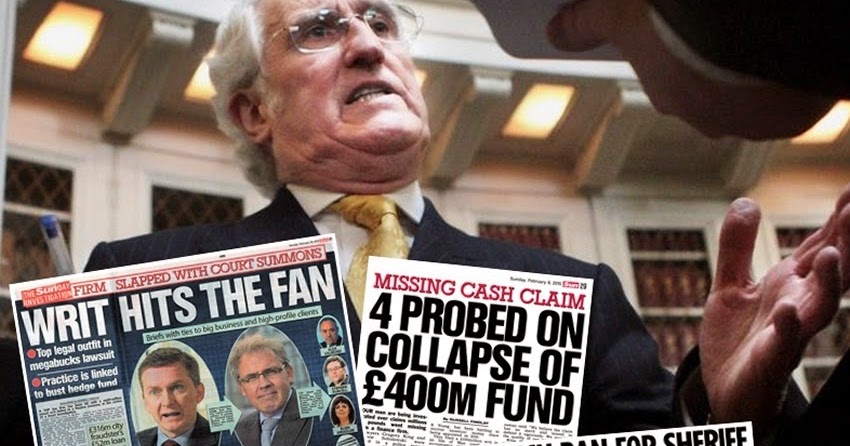
One of Mr. King’s funds hired as a director Peter Watson, a high-profile Scottish lawyer and part-time judge who has been on a committee debating press regulation in Scotland.

Mr. King talked up Heather on CNBC and, in an interview published in March 2008 in the Financial Times, said Heather had only had one loan default in three years. Heather’s performance figures were the stuff of hedge-fund investors’ dreams. Heather said it made money every single month between January 2005 and August 2008, averaging slightly more than 1% a month, or about 13% a year, according to a September 2008 presentation. That summer, Vatican records show, Mr. King became a knight of the Pontifical Order of Pope St. Sylvester.   Cash poured in.

But there had been signs of trouble, including highly unusual statements in Heather’s accounts. In the 2006 and 2007 accounts, auditor KPMG had flagged around £150 million of loans that Heather had made to Gibraltar-based companies, some of which, according to the accounts, were connected to Mr. King. KPMG said it didn’t know what the money had been lent out for. Meanwhile, another investor was troubled that Heather said it couldn’t reveal who it lent money to because of debtor privacy laws. In an internal memo, the investor described that reason as “trite and unconvincing.”

Major financial Investors in the fund included, Banque Privée Edmond de Rothschild Europe, Bordier & Cie, Peak Partners, Bank Julius Baer & Co., Quilvest, Union Bancaire Privée a unit of HSBC Private Bank, Bramdean Alternatives and the Ontario Teachers’ Pension Plan

Mr. King ran Heather for years from an office in Gibraltar. Now he lives in a villa in a country club whose members include corporate chief executives. It has two golf courses and stables and describes itself as “possibly the most beautiful site in Europe.” The club sits behind a guardhouse a short drive into hills above the town of Marbella, Spain. The Mediterranean stretches out below.

In late 2008 and early 2009, amid the financial crisis, worried investors pulled their money out of hedge funds across the board. Heather’s clients were no different. Heather quickly stopped giving them their cash, and it was put into liquidation in 2010. Liquidators took control of Heather and began looking for investors’ money. It was identified that some of the money ended up back in Glasgow, far from the world of high finance.

A chief beneficiary appears to have been Mr. King himself. According to Heather’s financial reports filed at the Isle of Man’s companies registry, he personally took nearly £52 million in fees between 2005 and 2008. The money was paid to a British Virgin Islands company controlled by Mr. King, and the amounts were in large part justified by Heather’s supposedly sterling performance.

But performance turned out to be anything but. In 2008, according to the accounts, Heather wrote down £76 million on its loans and £92 million on foreign-exchange losses. There was a pattern. Heather would make large loans, ostensibly for property development. The loans often wouldn’t be paid back, leaving the beneficiaries with the cash. Over the years, much of the cash Heather raised from investors appears to have been disbursed this way.

Heather made many loans through a British entity called Mathon Ltd., which was also controlled by Mr. King. But an examination of lending and land records shows that Mathon often lent money against poor-quality properties. They include rundown churches, derelict pubs on the outskirts of Glasgow and a former garden centre in a Scottish port town.

At many of the sites, there is no sign that Heather’s borrowers carried out development. Industrial land in a village outside Glasgow had rubbish strewn around its rusting, broken gates. A pub called The Winning Post had, after being vandalized, been demolished and now consists of nothing more than a few rocks on a vacant lot. And a site on the banks of the river Clyde in the working-class district of Yoker lies strewn with litter, with its remaining buildings boarded up. Mathon’s liquidators say in a court filing that they have minimal documentation of the loans it made.

An examination revealed that some of Mathon’s borrowers—the purported developers of the sites—were unusual. Five companies that received 10 loans from Mathon listed boxing promoter Mario Rea as a director or secretary. Another loan was made to a company of which Mario’s twin brother, Carlo, was director and cousin Anthony was secretary. Regulatory filings show that 9 of these 11 loans are still outstanding.

In 2008. Scottish authorities charged Mario and Carlo Rea with money-laundering offences unrelated to Mathon, but the charges were later dropped. Mario Rea was found guilty last year of assault at a cinema near Glasgow and sentenced to 200 hours of community service. The U.K.’s Insolvency Service barred Mario Rea from serving as a director for seven years in 2011 and cousin Anthony Rea for nine years in 2010 for unexplained money transfers, involving in part companies that borrowed from Mathon.

Other beneficiaries of Mathon loans were firms part-owned by businessman Lawrence Gillick. Two firms each borrowed money from Mathon in 2006 and 2007. Regulatory filings show that none of those loans have been paid back. Mr. Gillick was declared bankrupt in 1980, according to government records. And in the 1990s, the Salvation Army obtained a court judgement against him, forcing him to sell a property, after the charity lost £8.8 million in an alleged fraud.

Companies controlled by Scottish businessmen Allan Stewart and Stephen McKenna also received at least 11 loans from Mathon. Most of these were not paid back, according to regulatory filings. According to government notices, Mr. Stewart had been banned by a court from serving as a company director for seven years in the 1990s.

By December 2010, liquidator Paul Duffy of Ernst & Young had realized that the quality of the real estate that Heather had seized when loans defaulted was “very poor,” and he told investors they were unlikely to get anything at all, according to a letter to investors. A spokesman for Ernst & Young said the liquidation of Heather and its feeder funds is complex and progress had been hampered by “the initial dearth of information.”

With so few answers, liquidators are now turning up the heat. Civil proceedings in the High Court in London have raised the possibility of fraud. In a case in which Mathon’s liquidators sought disclosure of documents, the liquidators said properties valued on Mathon’s books at around £161 million had been sold for just £8 million. They alleged that the loan book was a sham concocted to hide the fact that money may have been embezzled.

The High Court judge hearing the dispute concluded there is strong indication that “fraudulent conduct exists even though the precise nature of the fraud and the identities of those involved still needs to be ascertained.” Investors, meanwhile, have been left with few answers.

King

2010-2011 – Scottish Crime & Drug Enforcement Agency

In 2010, the Law Society of Scotland received allegations that Cannon’s Law Practice, in Glasgow was involved in the embezzlement of millions of pounds of cash linked to Heather Capital and Gregory King, a director of Mathon Ltd and Heather Capital’s founder. The society completed a financial audit of the company and submitted a report to the Scottish Crime & Drug Enforcement Agency, who obtained search warrants and recovered documentation from the company in July 2011. Information recovered identified that millions of pounds had passed through Cannon’s client account in relation to a series of offshore transactions involving their client, Gregory King.

Police Scotland submitted reports to the Crown Office. The Lord Advocate – Frank Mulholland – is still to decide on whether any prosecutions will take place in relation to the collapse of Heather Capital and the hundreds of millions of pounds lost to private investors. A legal insider said it would be a difficult proposition for the Crown Office to deny any knowledge of the SCDEA raid on Cannons Law firm in 2011 or knowledge of what would have likely been a lengthy SCDEA investigation prior to warrants being served.

14 Feb 2015: Suspension of Sheriff Watson

In February 2015, Sheriff Peter Watson was suspended by Scotland’s top judge Lord Gill, after the Judicial Office received enquiries from the media in relation to a multi million pound writ naming Watson among a slew of allegations in the £400m collapse of Heather Capital, a hedge fund set up by Spanish based Gregory King. It has since been reported Watson held a number of directorships in firms linked to the collapsed hedge fund – directorships including Aarkad PLC, based in the Isle of Man. Mathon – another company linked to the collapsed hedge fund, and a directorship of King & Co, a private bank set up by the Hedge Fund’s founder – Gregory King.

18 Aug 2015: Heather Capital (Hedge Fund) collapse – Court of Session – Lord Woolman Presiding

Lord Woolman:: Heather Capital Ltd (‘HC’) was incorporated in the Isle of Man in 2005. Prior to its liquidation in 2010 it had received investments exceeding $400 million. The present action has been raised in its name by the liquidator. The first defender is the firm of Levy & McRae. The other defenders are individuals, who were partners in the firm in the period from 1 January 2007 to 31 December 2008.

The liquidator contends that the company was defrauded of a sum of about £90 million. The scheme involved the transfer of funds to companies incorporated in Gibraltar that were owned or controlled by one of Heather Capital’s directors, Gregory King. A firm of solicitors in Gibraltar, Hassans, acted in these transactions. According to the liquidator, in early 2007 Heather Capital’s auditors raised queries about these transactions. Subsequently, Mr King sought to conceal their true nature.

One of the transactions concerned a company called Westernbrook Properties Limited. On 4 January 2007 the sum of £19 million was paid into the first defender’s client account. It was paid out 5 days later to an account with HSBC Private Bank in Monaco held by a Panamanian company. On 24 January 2008 the sum of £9.4 million was paid into the first defender’s client account. It was paid out on 28 March to the client account of Hassans. On 23 December 2008 a payment of £200,000 was made to the eighth defender, Mr Peter Watson, from Hassans’ client account. The case was continued.

Comprehensive analysis of Watson’s activities here:

https://petercherbi.wordpress.com/tag/peter-watson/

MP’s, Lawyers, Councillors, Ex-Councillors, Land Developers, Charities, Gangsters and the Labour Party – An Abuse of the Scottish Electorate – Part 4 – Murder & Drug Trafficking


********************************************************************************************************************************************************************************************************************************

Infamous Red Rose Dinner Motherwell 2002 – Jack McConnell, Frank Roy, John Reid & the labour Party in Scotland – Murder of Justin McAlroy. Trial & conviction of William Gage – Robert Wright & Les Brown Drug Traffickers

*********************************************************************************************************************************************************************************************************************************

March 2004: William Gage jailed for 20 years for killing of gangster Justin McAlroy

On the 3rd of March 2002 convicted drug dealer, Justin McAlroy co-hosted, (with his father) a charity fundraising dinner for the Labour Party, at his father’s Motherwell based, golf and country club . A number of Labour Party dignitaries, including Frank Roy, MP for Wishaw, Jack McConnell, and John Reid, the former home secretary attended. Also present were a number of Special Branch bodyguards, senior police officers and a surveillance team from the Scottish Drugs Enforcement Agency (SDEA) who maintained a 24 hour surveillance on drug dealer, Justin McAlroy. The event was one of the now infamous “Red Rose Dinners”, which raised funds from businessmen, (including the building firm run by Labour Party supporter Tommy McAlroy who donated thousands of pounds to the Scottish Labour party.) for Jack McConnell and other Labour election campaigns .

The SDEA had recently tailed Justin McAlroy to and from Europe, at the time he travelled to Estonia where he held meetings with a number of local businessmen (who were arrested at a later date, while trying to smuggle a multi-million pound consignment of heroin into Scotland.) McAlroy had been openly boasting about various meetings between himself and senior figures within the Russian Mafia and claimed he had previously travelled out to meet them and had also entertained them in a Glasgow hotel.

On 7 March 2002, four days after the charity dinner Justin McAlroy stepped out of his Mercedes jeep outside his house and was shot dead. The SDEA, asked why they had not witnessed nor filmed the incident said that (after four years of 24 hour surveillance and despite Justin McAlroy’s serious criminal activities and associates) they had decided that McAlroy was no longer a person of interest and removed the surveillance. It transpired after that the surveillance operation on McAlroy had been lax since he had been fully aware, (for many months) of the SDEA surveillance of himself (confirmed by his widow Tracy to the Jury at the High Court in Glasgow.)

It was revealed later that Justin McAlroy had slipped more than ten thousand pounds into the Labour party coffers during the charity dinner. The revelation was serious since it would be difficult to announce publicly that McAlroy, a suspected gangster and heroin importer, with links to the Russian Mafia had donated to the Party. So the donation was not declared. In an amazing twist the local party secretary, who worked in the Wishaw office (shared by Jack McConnell and Frank Roy) was subsequently jailed for misappropriating the money!

While it is clear that major heroin barons do amass millions of pounds, that money comes from ten-pound deals. Every tenner comes from someone finding their house burgled or some poor pensioner being kicked to death for their meagre pension money.

On the 2nd of May 2002, two full months after Justin McAlroy murder (it was alleged by solicitor Bob Kerr) that the MP for Wishaw Frank Roy had been contacted by a person connected to Justin McAlroy.

Kerr claimed that one of the police officers involved in the murder enquiry told him that the MP for Wishaw Frank Roy had contacted a senior officer in charge of the murder enquiry and somehow put pressure on the officer to make a bogus arrest in order that Justin McAlroy case would be closed quickly. The very next morning William Gage was arrested and charged with the murder.

Follow up: Gage was tried and convicted of the murder of McAlroy on 7 February 2004 and sentenced to 20 year’s without remission. He is still in Shotts Prison. He has consistently denied the offence but despite two appeals he remains in jail.

Full story:

https://innocent.org.uk/2016/04/08/man-kept-in-prison-due-to-spurious-immuendo-2006/
http://paulviking.websitetoolbox.com/post/police-are-creating-an-us-and-them-environment-1523749
http://s11.invisionfree.com/Creativewriters/ar/t2291.htm
http://shirleymckie.myfastforum.org/ftopic420-0-asc-200.php
https://www.theguardian.com/uk/2009/jun/23/glasgow-murder-case-review
http://www.express.co.uk/news/uk/298466/Drug-dealer-s-murderer-loses-second-appeal
https://stv.tv/news/scotland/west-central/295263-man-jailed-for-gangland-murder-of-drug-dealer-has-appeal-rejected/
https://youtu.be/OIwySfSNxjs Part 1 Gage speaks from prison
https://youtu.be/sQm6bKKNt9k Part2 Gage speaks from prison

After-notes:

Justin McAlroy had been under surveillance for many months. He had contacts with figures in Glasgow’s underworld and was also owed someone £50k. Jack McConnell must have been aware of  this well before attending a fundraiser at Justin’s dads club. McConnell had signed a police warrant allowing them listen to phone calls. Police drug agency officers visited Jack days before the dinner. Police say they was no surveillance on the night of the murder due to being “short staffed”. In a largely circumstantial case, when did the crown ever care about proof?

What is unbelievable is that Willie Gage was charged with putting six bullets into Justin. This does not fit the profile of Gage who had been convicted of armed robbery some years earlier. The jury were not told that he was not armed at the time of the robbery. He had been recruited as the getaway driver and  his co-accuse, (the gunman in the jewellery robbery) had brandished a toy pistol. There was no armed robbery. Anyone arranging a contract killing would have the sense to hire a competent hit-man not someone who had never carried a weapon. And there is the unresolved question about the lifting of the surveillance. Why was it removed? There is also the matter of the man that had visited Justin just 4 days before his murder to tell him he was running out of time to pay his debt.

The McAlroy Link to Estonia was later confirmed when it was revealed that Tommy McAlroy, and his son Justin secretly visited the country and were seen meeting drug smugglers in Estonia. He claimed they were discussing a bakery business with Robert Wright and Les Brown, businessmen friends of Justin and himself.

16 October 2005: After 70 court hearings costing the Scottish taxpayer £1Million, drug smuggler set to walk free from Estonian jail.

A heroin trafficker whose four- year battle to stay in the country cost Scots taxpayers £1million was finally extradited last week – only to be told he could walk free. Millionaire Les Brown, 49, admitted trying to flood Scotland with heroin when he appeared in court in Tallinn, Estonia. But prosecutors said he could be free in two weeks as he spent so long in jail fighting extradition.

Brown, of Bearsden, Glasgow, and associate Robert Wright, 38, of Bathgate, West Lothian, were accused of trying to bring huge amounts of heroin into Scotland in 2000. Their car and driver were snared in the Baltic with a fuel tank stuffed with the drug after a cross-border police operation.

Brown made a mockery of the justice system by repeatedly appealing against extradition and clocked up more than 70 court hearings. The duo’s various excuses included: They were secret agents for MI5. The jail in Tallinn was not up to standard. The Russian Mafia were out to get them. Brown had a dodgy heart.

Brown was flown to Tallinn and pleaded guilty to being involved in a drugs syndicate. He admitted his part in the scam and was remanded while prosecutors prepared papers for the sentencing judge. The Estonian justice system takes into account the length of time spent on remand in other countries and it is expected that Brown will be set free and told to leave the country.” (Sunday Mail)

Robert Wright

20 Jan 2008: Heroin Smuggler Robert Wright Turns Security Tycoon

One of Scotland’s biggest drug traffickers has reinvented himself as a security tycoon selling advice to police and the Disney Corporation. Heroin smuggler-turned-security consultant Robert Wright welcomed undercover reporters into his steel lined, bomb-proof offices and bragged about his big-money contracts. His change of career has fuelled claims that the new security industry watchdog, The Security Industry Authority (SIA) are failing to root out criminals.

Wright, convicted in Estonia in 2005 describes himself as a consultant to Sheffield-based Feba Custodia. He and another Scots gangster, Lewis “Scooby” Rodden, boasted of raking in cash from South Yorkshire Police, Asda and Disney stores.

Wright said: “I am working in security again. Believe it or not, I am working with the police in Sheffield on an advisory capacity – on the CCTV liaison unit.” Showing off the fortress-like building where he works, he said: “It’s completely bomb-proof, all steel-structured – you can see the pillars in the corner. There’s a membrane around it. It’s phenomenal.” Bragging about his high-profile clients, Wright said: “There’s all the Asdas. We do Disney stores. The M1, Sheffield city centre.” And he boasted that Feba have even been awarded the SIA’s industry gold standard which strengthens contract bids

He said: “The security firm I have started have just been approved by the SIA Approved Contractors’ Scheme.” But he warned: “Just to reiterate what I’ve said – everything we’ve been talking about, everything I’m doing, is completely confidential.”  (The Record)

8 Apr 2008: Drug Smuggler to Lose Art Collection in Crime Seizure

Drug trafficker, Robert Wright, convicted of attempting to traffic heroin worth a potential £2.8m into Scotland agreed to part with his art collection to pay for a crime profits seizure. He will lose an oil painting by leading Scottish artist Peter Howson along with works by painter Frank McFadden. (The Herald)

13 Feb 2011: Convicted Heroin Dealer Robert Wright Allowed to Sell £610k Mansion Despite Drugs Plot

A major heroin smuggler is free to flog his £610,000 mansion … as it wasn’t targeted under proceeds of crime laws. Security firm boss Robert Wright, has put sprawling home “Ten Acres” on the market. The house has six bedrooms, snooker room, cinema and is set in 10 acres of land. Buyers are told the driveway is big enough to park a fleet of 20 cars. At one time Wright owned his own Formula One racing car and a fleet of other expensive motors. Wright’s wife Gillian paid £275,000 for the property in the village of Westfield, near Bathgate, West Lothian, 12 years ago. (The Record)


MP’s, Lawyers, Councillors, Ex-Councillors, Land Developers, Charities, Gangsters and the Labour Party – An Abuse of the Scottish Electorate – Part 3 – The Lanarkshire Connection


*********************************************************************************************************************************************************************************************************************************

The Rea brothers – Major crimes in Lanarkshire – fraud – money laundering – Multi Million £ Ponzie Scheme – Glasgow City & North Lanarkshire labour Councils – Greg King Glasgow Tycoon – Imran Hussain

*********************************************************************************************************************************************************************************************************************************

14 Dec 2008: “Red Rose” Twins Arrested in Money Laundering swoop

Two boxing promoters have been arrested in a massive dirty money investigation. Twins Carlo and Mario Rea, 30, were among six men held in a Scottish Crime and Drug Enforcement Agency swoop early on Friday. The millionaire brothers were arrested at their homes shortly after 6am and charged with money laundering offences. The Lanarkshire businessmen also face charges under the Misuse of Drugs Act.

The Reas are former friends of wanted VAT fraudster Imran “Immy” Hussain who is exiled in Dubai. Customs officers want to question Hussain in connection with a £500million carousel scam.

The twins took charge of Dalziel Park, in Motherwell, six years after it was at the centre of the Red Rose Dinner controversy. The then First Minister Jack McConnell was embarrassed when it emerged he had attended a fundraising dinner with suspected drug dealers and gangsters.The Reas Dubai-based firm Flyright bought the club from tycoon Tommy McAlroy for £2.5million.

A SDEA spokeswoman said: “Six males, between 20 and 54 years, were arrested and charged for money laundering and Misuse of Drugs Act offences. “They were released from custody and a report is being submitted to the procurator fiscal. This is part of a long-running SCDEA investigation.” (Daily Record)

18 Jul 2010: Cash probe brothers lose hotel after going bust with £2.5m debts

A Luxury hotel and country club linked to the Rea family (at the centre of a dirty money probe) has gone bust with debts of £2.5million. The Dalziel Park and Conference Centre, was forced into the hands of administrators after they failed to pay their creditors.

In 2008, Mario and twin Carlo were arrested as part of an investigation by the Scottish Crime and Drug Enforcement Agency (SDEA) into money laundering and drugs offences. It has now emerged that Mario Rea, 31, has had his assets frozen by Crown prosecutors. The hotel, in Motherwell, is set to be sold after banking bosses called in the administrators to take charge of the firm, Dalziel Assets Limited. Under the terms of the Licensing Act (Scotland) 2005 any business which goes into administration automatically loses its permanent drinks licence.

The family took charge of the hotel in 2007 after buying it for more than £2million. Banking group Santander, who provided security for the purchase, claim they are owed £2.5million from Dalziel Assets Limited. The administrators KPMG have admitted they are unlikely to recoup the money. (Daily Record)

1 Jan 2012: Dalziel Park Country Club Championship Golf Course Destroyed – Property markedly Devalued

Last week, Anthony Rea and Nadia Wright were banned by the Insolvency Service for a total of 16 years after £4million went missing from the club, which is now in administration.

Half of the 18 holes at Dalziel Park (linked to a money laundering probe) have been ripped apart and.are unplayable after thieves stripped out tons of valuable topsoil from fairways and greens – leaving an ugly lunar landscape.The systematic vandalism – using plant equipment – has been reported to police three times.

Administrator Blair Nimmo, of KPMG, has drafted in security to prevent more damage at the hotel and conference centre in Motherwell, Lanarkshire. He said: “We’ve never had anything like this before. “Usually, we wouldn’t have 24-hour security on a bit of land. “We’ve heard several rumours and are worried about damage done to any assets we control. It’s very disappointing.”

A club insider said: “Some of the damage was done last year and it’s on an industrial scale. “The members were furious. A deal was done to sell the topsoil for a football club’s new training ground but that fell through. “It was once a championship course. Now you can only play nine holes. “One theory is that whoever was responsible was trying to drive down the price that the administrators KPMG will be able to charge.” (Daily Record)

Jan 8 2012: A millionaire boxing promoter at the centre of a drugs and dirty money probe has been banned from being a company director.

Mario Rea, 33, landed the seven-year directorship ban for failing to explain where £578.4k paid into the bank accounts of property firm DMR Assets came from. Rea, who ran DMR with twin brother Carlo, also refused to reveal to Insolvency Service investigators why £776.5k was withdrawn from the firm. Of that, £637.9k was taken from the company’s accounts between November 2007 and December 2008. Another £138.6k was withdrawn from the client account of the firm’s lawyer between July 2008 and January 2009. The twins were directors of the Coatbridge-based firm, which went into administration in January 2009 with debts of £3million.

Mario Rea, previously one of the owners of the plush Dalziel Park hotel and conference centre in Motherwell, was disqualified from holding a directorship at Airdrie Sheriff Court last month. He lives in one of Scotland’s most expensive streets – Countess Gate in Bothwell, Lanarkshire. The Insolvency Service said: “We take steps to remove individuals whose conduct is not in the public interest. The disqualification means he will be banned from acting as a company director, or in any way controlling a company, until December 26, 2018.”

It was recently revealed that the Rea twins – along with four other men – had been arrested and charged with drugs and money-laundering offences by the Scottish Crime and Drug Enforcement Agency. (Daily Record)

Mario Centre
22 September 2013: Thug Tycoon Twins Convicted of Vicious Attacks on Members of the Lyons Crime Clan

Thug tycoon brothers Mario and Carlo Rea have been found guilty of assaulting members of the Lyons crime clan.

The latest attack was in front of terrified kids at a cinema pick ‘n’ mix counter. Failed businessman Mario, 34, was accused of pulling a knife on Liam Boyle, 32, in front of terrified kids at a cinema pick ‘n’ mix counter. He admitted assault but the charge was altered to say he used a key and not a blade. He is now awaiting sentence.

Days earlier, both twins were convicted of a street attack which put another Lyons hood in hospital. Eddie Lyons Jr was severely beaten at the birthday party of Rea associate Barry Cushley in August 2011. The Rea twins were arrested for the attack, which was caught on CCTV in Coatbridge town centre.

Lyons was previously shot twice in a drugs war with the rival Daniel gang, and has also been cleared of attempted murder. He was not named on the charge sheet in the Reas’ case, suggesting he did not co-operate with police. The charge said the Reas assaulted an unknown male by repeatedly punching and kicking him on the head and body. They were both handed 18-month restriction of liberty orders at Airdrie Sheriff Court on Tuesday, and told to do 200 hours’ community service.

On Thursday, Mario’s jury trial for the assault on Boyle began at Hamilton Sheriff Court. He carried out the attack in August 2012 at the Vue Cinema in the town while on bail for the assault on Lyons, but said he acted in self-defence. Cinema manager Alison Dryden told the court the venue was busy at the time with children going to afternoon screenings. She said she saw Mario leaving a queue and going towards the pick ’n’ mix area, where he punched Boyle, who was with a small boy.

Ms Dryden told the court she saw Rea holding what appeared to be a five-inch knife to his victim’s face. After she was cross-examined, Rea, of Bothwell, Lanarkshire, pled guilty to an amended charge which replaced “knife” with “key”. He also admitted repeatedly hitting Boyle before pushing him through a fire escape. Sheriff Joyce Powrie deferred sentence until December 17.

The twins’ convictions delighted detectives who have seen them walk away from serious probes involving drugs, money laundering and violence. One source said: “The Reas love to strut around posing as successful young businessmen, but the reality is they’re just a couple of neds.”

In 2007, we revealed that the twins were targeted in a major probe by the now defunct Scottish Crime and Drug Enforcement Agency. They were among six men charged over drugs and money laundering, but the Crown dropped the case.

Mario and a sacked North Lanarkshire Council planning official were reported to the Crown for alleged corruption over a land deal, but that case was also dropped. And both twins were arrested in connection with a street attack on ex-boxer Craig Windsor snr. Again, prosecutors did not proceed.

As well as the Lyons fall-out, the Reas have been at the centre of a feud with drugs ban boxer Craig Windsor jnr, who police have told to back off. Mario is serving a seven-year ban from being a company director. He failed to explain where £578.4k in a property firm’s accounts came from, or why £776.5k was withdrawn from it. In June last year, we also told how Mario had been warned that his life was in danger from a crime gang with links to the Real IRA. (Daily Record)

1 Nov 2015: Cops fail in bid to stop controversial businessman operating as a landlord

Former boxing promoter Carlo Rea was on North Lanarkshire Council ’s register of accredited private landlords. Police tried to block the renewal of Rea’s ­registration but the bid was thrown out by ­councillors in North Lanarkshire at a meeting held in private. A source said: “The police told the council they thought Rea’s ­application should be rejected. “The fact their request was rejected is disappointing but not surprising.”

The 37-year-old twins have also been linked to the ­£600million collapse of offshore hedge fund Heather Capital, run by Glasgow lawyer Greg King. His fund loaned DMR Assets Ltd, which was run by the Reas, £4.8million to develop plots of derelict land across central ­Scotland. When DMR went bust, administrators were able to claw back just £1.8million.

The Rea twins were at the ­centre of a 2008 ­Scottish Crime and Drug ­Enforcement Agency probe and charged with drugs and money laundering offences. But Crown Office prosecutors dropped the case in March 2012 due to insufficient evidence.

In 2013, Carlo and Mario were ­convicted of attacking Eddie Lyons Jr – a member of the Lyons crime clan – at the birthday party of Rea ­associate Barry Cushley in ­Coatbridge in 2011. Both Reas were handed 18-month restriction of liberty orders at Airdrie Sheriff Court and told to do 200 hours’ ­community service.

Also in 2011, the twins were arrested in connection with a street attack on ex-boxer Craig Windsor snr but prosecutors did not proceed with charges.

North Lanarkshire Council said a ­sub-committee considered whether Carlo Rea should stay on the register. A ­spokesman said: “The ­committee decided that Carlo Rea remained a fit person to be on the register.” Police Scotland said: “We can confirm we did raise an objection in relation to this matter. However we note the council’s decision.”

In 2009 North ­Lanarkshire Council planner Danny Welsh, 43, was sacked for ­taking gifts from Mario. Charges against the pair were dropped but Welsh lost an unfair sacking claim.

The Insolvency Service barred Mario from serving as a director for seven years in 2011 for ­unexplained money transfers.

He was sentenced in 2013 to 200 hours’ community service for assaulting Lyons associate Liam Boyle with a key at a cinema.  (Daily Record)

10 Dec 2015: Dalziel Park Used as an Illegal Waste Dump

A businessman has been ordered to do unpaid community work after he admitted illegal dumping in Motherwell. Carlo Rea had waste including stones and soil sent to upmarket Dalziel Park where he owned the hotel and golf course.

Rea appeared at Airdrie Sheriff Court last week and admitted acting as an unlicensed waste carrier between March and July 2011. He was ordered to do 180 hours of unpaid work as a direct alternative to prison.

The court heard that throughout the four-month period Rea’s company OTL Plant & Haulage Contractor transported more than 5,000 tonnes of waste soils and stones to Dalziel Park although no waste management licence or exemption was in force at the site. Carriers are supposed to ensure that waste is taken to a suitably licensed facility which can accept and treat waste appropriately.

Rea also failed to register his company as a licensed waste carrier or produce notes describing the waste type and where each waste load had been taken to. The rules are in place to ensure waste is disposed of correctly and to deter illegal dumping.

The Scottish Environment Protection Agency was alerted to the breaches following an investigation into illegal dumping at Longriggend, near Airdrie. A SEPA spokesman said: “The unravelling of this case has been a long process, involving a number of different companies and individuals from the waste industry. “Dumping waste illegally is not only reckless, it can cause serious harm to the environment which over time could start to contaminate the surrounding landscape if left unchecked. “Providing business to unlicensed groups or individuals is not only illegal, it undercuts legitimate waste carriers, promotes bad practice and starts to impact on the wider industry.”

Rea ran the Dalziel Park hotel and leisure complex for a number of years and promoted boxing events there. He is no stranger to the courts. He and his twin, Mario, were given community service for assault in 2013 and last year Carlo, of Coatbridge, got another unpaid work order for driving while disqualified. Two months ago North Lanarkshire Council allowed him to stay on its list of accredited landlords despite a police objection.The twins were targeted in a police drugs and money laundering probe a number of years ago, but the case was dropped.(Motherwell Times)

mps-lawyers-councillors-ex-councillors-land-developers-charities-gangsters-and-the-labour-party-an-abuse-of-the-scottish-electorate-part-2- the Lap-Dancer Clubs


********************************************************************************************************************************************************************************************************************************

Lap dance club owner Steven MacDonald  – Mortgage Arranger – Iain Mulholland, (brother of Scotland’s top prosecutor Lord Advocate, Frank Mulholland )

********************************************************************************************************************************************************************************************************************************


14 Jun 2014: Immigration Raid on Lap Dance Club
Immigration officers raided a Glasgow city centre lap dancing club. Home Office enforcement vans arrived at Diamond Dolls in Mitchell Street at around 6pm yesterday. Officers from Police Scotland were stationed at the door for several hours. A spokesman for Police Scotland said: “Officers were in attendance supporting the UK Border Agency.” Diamond Dolls was the focus of the first episode of recent Channel 4 documentary series. (highbeam.com)

15 Jun 2014: Police Blitz Tycoon’s Dirty Dance Empire:

Police launch a massive, synchronised operation against a tycoon’s lap-dancing empire. Scores of officers swooped on three clubs and the home of businessman Steven MacDonald. Officers from Police Scotland, the Security Industry Authority and the new UK Visas and Immigration unit hit Glasgow’s Diamond Dolls club, Baby Dolls show-bar in Edinburgh and Club Earth nightclub in Livingston. Macdonald was on holiday when investigators arrived at his Livingston home as part of the raids at 6pm on Friday. Officers were looking for victims of human trafficking, illegal workers and drugs. (highbeam.com)

6 Nov 2014: Lap dancing Club Tycoon Has His Assets Frozen amid Probe

A ban on the sale of properties housing two well known lap dancing clubs has been made as part of an investigation into proceeds of crime. Prosecutors have secured court orders preventing the sale of the buildings containing Glasgow’s Diamond Dolls and Edinburgh’s Baby Dolls in a civil proceeds of crime action against adult entertainment tycoon Steve MacDonald.

The Crown Office’s Civil Recovery Unit (CRU) confirmed it was pursuing Mr MacDonald, who fronts the body that lobbies for most of the country’s strip clubs, because it believes his assets are the product of illegal activity. A Crown spokesman said: “The CRU has ongoing civil recovery proceedings against Steven MacDonald. (highbeam.com)

7 Dec 2014: Strip Joint Bosses Booted Off Holyrood Task Force

Two lap dancing bosses have been booted off a Holyrood taskforce investigating human trafficking. Steven MacDonald and Tony Cochrane were told they were no longer welcome less than six months after joining the group. Joint conveners MSPs Christina McKelvie and Jenny Marra decided the pair should no longer be members of the all party taskforce that also includes experts, campaigners and individuals. Labour’s Marra, whose Private Members’ Bill will result in tough new trafficking laws, informed the men’s lawyer Janet Hood of the decision. Hood, convener of the Scottish Law Society’s Equality and Diversity Committee, was also axed as a group member. (highbeam.com)

9 Nov 2015: Police Clamp Down on Dirty Dance Clubs

Lap dance bosses say police have launched a secret war on their industry after five more venues were raided. More than half Scotland’s 17 clubs have now been targeted in the crackdown. In Aberdeen, Private Eyes, Silhouettes and Number Seven Club were swooped on by a four-man police team on the same Saturday night. Dancers were interviewed individually and fingerprinted in the unannounced raid – but no arrests were made. Another target was Fantasy Palace in Shandwick Place, Edinburgh. Around a dozen investigators from Police Scotland, the Border Agency and the Security Industry Association spent an hour questioning staff including dancers. (highbeam.com)

15 Mar 2015: Lap dance Club Boss in MSPs Probe Call

A lap dancing tycoon has asked watchdogs to probe two MSPs who kicked him off a human trafficking taskforce. Steven McDonald was removed from the cross-party group just months after joining. Fellow lap dancing boss Tony Cochrane and lawyer Janet Hood were also told they were no longer welcome by Labour’s Jenny Marra and SNP’s Christina McKelvie. All three were locked out of a Holyrood summit on trafficking last year. Now McDonald wants the Commissioner for Ethical Standards in Public Life to investigate. He claims Marra and McKelvie breached MSPs’ Code of Conduct. (highbeam.com)

27 Mar 2016: Scottish Law Chief, Frank Mulholland’s Brother, arranged the £550k loan (Which is the Subject of a Dirty Money probe by the Prosecutor’s Office)

The brother of Lord Advocate Frank Mulholland is at the centre of a dirty money probe into a lap dance tycoon’s business empire.

Iain Mulholland, the younger brother of Scotland’s top prosecutor who announced he was standing down last week, helped prepare paperwork that secured businessman Steven MacDonald a huge loan now being probed by the Crown Office. Prosecutors hunting assets linked to organised crime claim MacDonald conned bank bosses into lending him enough cash to buy his Diamond Dolls strip club.

Investigators at the Crown Office, led by his brother, who seize dirty money, property and other assets linked to organised crime claim the businessman lied on a mortgage application to get a £552k cash injection from the Bank of Scotland to purchase the property in Glasgow city centre. Mortgage broker Iain Mulholland arranged MacDonald’s loan application through his First to Mortgage firm. The loan is now the focus of a major investigation by the Civil Recovery Unit (CRU). In 2012, Mulholland opened a new company building contractor Inglis PM Ltd of Glasgow. He is the sole director.

Chartered Accountants RES Associates also prepared documents for the Bank of Scotland application before the money was paid. Mulholland has been spoken to by CRU investigators scouring the documents around the purchase of Diamond Dolls. They say paperwork claimed MacDonald earned between £193k and £272k a year. But he told HM Revenue and Customs in his tax return that he earned just £19k in 2007-8.

His lawyers said the application was based on cash he could have taken from all his businesses including Edinburgh lap dancing clubs Baby Dolls and Big Daddy O’s, which is now closed. During proceedings, he was asked about property in Dubai. He told the court that he no longer spoke to Mulholland. (highbeam.com)

29 Jan 2017: Lap dance Club Boss Plans to host a £1K table dinner for Nigel Farage
A controversial lap dance tycoon at the centre of a dirty money probe is behind a fat cat dinner for Brexit mastermind Nigel Farage. Steven MacDonald is trying to organise a black-tie Q&A night with the former Ukip leader. Macdonald, who owns clubs in Glasgow and Edinburgh – met the politician at a private event last year. Now he wants to bring Farage north of the Border to talk to entrepreneurs about Britain’s divorce from the EU and Donald Trump’s White House victory. Those attending the dinner would be charged about £1k a table. (highbeam.com)