A Judge recommended for a senior judicial role by Nicola Sturgeon had previously found the First Minister committed professional misconduct in a Law Society probe of Sturgeon’s failure to provide legal service protections for a domestic violence victim
The Judge who was a case manager for the Law Society of Scotland from September 1998 to March 2003 released a five page report in December 1998, which found Sturgeon guilty of three counts of professional misconduct: Namely:
1.Failing to raise interdict as instructed. 2.Misleading client about legal aid application. 3.Failing to properly consider the client’s financial circumstances
The report concluded:
“The complaint in this case has been identified as professional misconduct by breach of code of conduct and conduct unbecoming a solicitor.”
For reasons not explained the Law Society cleared Sturgeon, who gave up a promising career and left the legal profession.
So- dead and buried eh!!! Not quite!!
The incident was not reported in the media but surfaced again early March 2021 when a former journalist published details on “twitter” (since deleted).
But the information was out there for the public consumption and comment and a press legal expert assessed the material which named a Scottish newspaper and a “spiked” story on Sturgeon.
The legal expert said he hoped the Committee on the Scottish Government Handling of Harassment Complaints would scrutinise the information available and ask further questions of the First Minister.
He said:
“In view of suggestions on social media platforms – a former journalist held this information for a number of years, and approached several newspapers seemingly without success – people may reasonably expect questions to be asked of why this story has not come to light until now and the method of travel to the media”.
Adding:
“Was there motive in withholding this story involving Scotland’s First Minister, either by a newspaper, a political party or a journalist? I am curious to find out. However, I am also curious as to why no one with the information offered the material in evidence to the long running Scottish Parliament investigation of issues involving Alex Salmond. Given the First Minister responded to questions on what appear to be references to the investigation of Sturgeon and a newspaper deal”.
“MSPs should ask rigorous questions of anyone involved in this matter given the situation we face where information now exists alleging the Sheriff complaint probe of Scotland’s First Minister was allegedly swapped for a story on harassment complaints and a Police investigation of Alex Salmond in the summer of 2018”.
And there is more to the story
It was later alleged that the story had been filed with a Scottish newspaper for publication in June 2018 and had support from the editor to be published – until a “Political editor” at the newspaper voted the story down.
The deleted tweet went on to allege that some weeks later, the same newspaper which did not publish the story on Sturgeon – was leaked details of the harassment complaints against Alex Salmond and the investigation by Police Scotland – which subsequently led to Alex Salmond being charged with 14 offences, including two counts of attempted rape, nine of sexual assault, two of indecent assault, and one of breach of the peace. At the subsequent trial, he was cleared by a jury trial – heard by Scotland’s Lord Justice Clerk – Lady Dorrian.
And the Political editor was!!!!
As political editor of the Daily Record David Clegg revealed former first minister Alex Salmond was facing allegations of sexual assault. The story won him Journalist of the Year, Political Journalist of the Year and Scoop of the Year at the 2018 Scottish Press Awards.
Ekklesia is a public policy thinktank, (one of the UK top 5) headquartered in Edinburgh and London, which examines the role of beliefs and values in shaping policy and politics for the furtherance of social and environmental justice. It is supported by a charitable trust but is fully independent.
Terms Of Reference for the proper discharge of the Smith Commission
The Commission is charged with securing recommendations to deliver more financial, welfare and taxation powers to strengthen the Scottish Parliament within the United Kingdom based on wide consultation with political parties, civic society, businesses and individuals across Scotland.
It is recognized that this is an extremely challenging and complex task and this submission will therefore focus on two areas. The need for civic participation and the principles which it is believed should rest at its core.
The Commission advised against a mere “shopping list of powers”, and there is concurrence with this view. The issues involved in achieving a radically improved devolved settlement for Scotland require a more wholistic approach.
There is little confidence that the top-down nature of the Commission’s structure, with two representatives each from the political parties who currently sit in Holyrood, but no solid framework for civic participation, is adequate to this challenge, and the Commission membership needs to be expanded to better reflect public opinion.
Adequate Time and Scope For Popular Participation:
The scale and complexity of the Commission’s remit relate directly to chronology. Whilst there is recognition of the pressure to produce Heads of Agreement by 30 November 2014 on the path to a legislative process by January 2015, there is concern that this timetable does not allow realistic time for adequate consultation with the people of Scotland.
Lord Smith responded to this concern by arguing that, effectively, consultation expands to fill the time available for it, and that discipline is no bad thing in this respect.
While recognizing the weight of his observation it is argued that there is a balance between efficiency, quality, reach and coherent outcome to be achieved which cannot automatically be resolved on the side of brevity.
The 18 September referendum on Scottish independence and the two years of debate that preceded it were an unprecedented ‘democratic moment’ in the history of this country and the islands of which it is part.
What was particularly significant was the revival of ‘town hall politics’, the extraordinary level of local engagement, and the growth of political and constitutional literacy at a grassroots level in Scotland.
The energy for change and development came not from top-down institutions but from ordinary people and communities.
To be consistent with this reality, the form of delivery of the Commission and the framing of its proposals needs to make time for genuine and extensive public discussion of the Heads of Agreement, so that it is the people of Scotland and not simply the representatives of political parties or other vested interests who are consulted and involved in the process of agreeing the instruments for devolving power within and across the nation.
Key Practical Principles and Yardsticks To Be Observed:
The foundation is committed to social justice, equality, conflict transformation and non-violence, the localization of power, environmental sustainability and public dialogue as procedures (not just theories) capable of bringing people together from different belief backgrounds and experiences in the creation of common purpose. We would urge attention to the following principles in determining the outcomes of the Commission.
Subsidiarity:
The principle of subsidiarity is that central authority should have a subsidiary (that is, a supporting, rather than subordinate) function in political and constitutional organization, performing only those tasks which cannot be performed effectively at a more immediate regional or local level.
In the case of the Smith Commission, there is a public desire for outcomes that demonstrably allow and encourage the possibility of further sharing of power from the Scottish Parliament to regions and communities.
Recognition of Nationhood:
The Commission should recognize Scotland as nation (that is, a geographical unit capable of enabling a large group of people to be united in their diversity of language, culture, environment and economic life ) rather than simply a region of the UK.
This is because of the strong desire for self-determination expressed both by those who voted for independence in September 2014, and by many who voted to remain part of the United Kingdom while responding positively to the promises of “substantial powers” and “what would amount to home rule” or (so-called) “devo-max” made by representatives of the largest Westminster parties during the run-up to the referendum.
In other words, recognition that Scotland as a national entity provides, on practical grounds and in terms of scale, the genuine possibility of ensuring the kind of political, social, economic and ecological accountability that can make life better for people within its embrace especially those who are currently suffering from levels of poverty and deprivation which is wholly inconsistent with the natural and manufactured resources available to those who live in Scotland, whatever their background or nationality.
A ‘Family Of Nations’:
Both during and after the referendum, the UK has been spoken of as a ‘family of nations’. But there are genuine practical, economic, political and legal difficulties to achieving straightforward federalism in a country marked by enormous differences of size (with England housing 85% of the population of the British isles) and financial power (with the City of London, in particular, operating as a virtual city state and therefore strongly shaping, intentionally and otherwise, the political disposition of the largest Westminster political parties).
It is hoped that the proposals emerging from the Smith Commission, while taking a generally federal shape, will remain open to other possibilities in the future, notably that of confederalism an association of states in which each member state retains substantial independent control over internal and external affairs, with sovereignty pooled and shared by agreement.
This enables the combining of a high level of autonomy and self-determination with interdependence and conviviality pointed towards a post national way of thinking and acting in a globalized world.
As Canon Kenyon Wright (widely regarded as the father of the Constitutional Convention and the present devolution settlement in Scotland) observed that devolution has two in principle limitations.
The Embedding Of Devolved Power:
First, it is incomplete. The recent debate about the impact of a UK-wide decision which could potentially see the withdrawal of Scotland from the European Union against the will of the majority of its people is illustrative of this.
Second, and especially important for the work of the Smith Commission, it is only conditional.
In other words, devolution is power on loan; power ultimately retained rather than given. It can be withdrawn, as has been seen recently in Scotland’s case in relation to the 2013 Energy Act.
This is crucial. For Westminster to retain the permanent power to grant, alter, or rescind powers devolved to the Scottish Parliament would leave Scotland insecure and the United Kingdom as a whole fundamentally unreformed.
A core principle for the Commission should therefore be to ensure that devolved powers granted to Scotland are underwritten by a legal framework that ensures their durability and stability.
The Capacity To Disavow the Threat Of Mass Destruction:
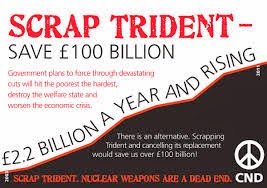
It is recognized that it is not within the remit of the Commission to recommend substantial devolution of powers in the area of foreign affairs and defence (security) policy, but it is regarded as axiomatic that the people of Scotland should not have to have weapons of mass destruction, namely the Trident nuclear submarines based at Faslane on the Clyde, imposed on their territory without, as a minimum, democratic consent of a kind not provided within the current United Kingdom settlement.
Nuclear and other weapons of mass destruction are not only immoral but illegal in international law.
An equilibrium between powers granted and the capacity and resources to utilize them for public benefit:
It is extremely important that political and constitutional powers granted to the Scottish Parliament and Government under a devolution settlement are matched by the tax-raising, financial and economic powers required to enable them to deliver measurable benefits to people and communities.
The right of civic engagement, consultation and assembly:
The institutions of governance and policy should be invested in the capacity of people and communities to determine their own lives, rather than the other way round.
The principle of establishing processes that are open to shaping by citizen’s assemblies and popular participation is important and rooted in the notion of ‘radical democracy’ moving beyond merely liberative democracy to the capacity to embrace difference and antagonism in public life/policy in ways that enable dominant power relations to be challenged by those otherwise marginalized by lack of resources, education or status in society.
It is recognized that this principle is more relevant in terms of the outcomes of the deployment of specific powers (judging them morally and practically in terms of their impact on the poorest and weakest, recasting them to give such people a real stake in determining better outcomes, along lines suggested by Scotland’s Poverty Truth Commission). Nevertheless, it is important to bear it in mind in formulating the settlement of powers within national institutions
Specific proposals for devolved powers and their grounding.
The following would be a good basis for establishing the kind of principles enumerated before:
Power over all franchise and electoral law residing in Scotland: This would would allow 16-18 year‐olds to vote in Holyrood election, allowing Scotland to develop and deploy a fairer electoral system creating conditions for a proper power of public recall.
Comprehensive economic powers: This would need to include borrowing as well as taxation. The aim would be the capacity to deliver social, environmental and financial security and measures of redistribution.
Full control over employment law and employment rights, including industrial relations and health and safety legislation.
The welfare system: This would enable Scotland to create a fabric of social security and comprehensive welfare suitable for a modern society, and appropriate to the needs of disabled and sick people and the most vulnerable.
Energy powers: This would involve control over industrial emissions standards, the generation of community renewables, energy efficiency and the proper assertion of public purpose over power companies.
Transport policy: To enable the creation of a community owned and oriented integrated and environmentally sustainable public transport system in Scotland.
Full powers over human rights and equalities law: This would enable Scotland to retain the Human Rights Act if it was scrapped by the United Kingdom Parliament, and also full consonance with European and international instruments.
The right to refuse participation in illegally and morally flawed international wars and conflicts, and to refuse the stationing of weapons of mass destruction on Scottish soil.
The right, as part of family of nations, to retain membership of the European Union if the majority of those voting in a referendum on the topic in Scotland so determine.
Constitutional Consultation:
In view of the complexity of these issues and the need for public and civic participation, there should be thoughtful proposals for a proper constitutional convention for Scotland, and for the other nations of the United Kingdom. Full document here:
November 2014; Simon Barrow’s blog › The Smith Commission: what WeSaid and What Has Happened
There has been, and will be, much debate about Smith following its publication late last month. It is probably the case that as much as the Westminster parties were ever going to be prepared to concede is in its proposals. But the idea that this amounts to ‘Home Rule’ or ‘devo max’ (everything other than foreign affairs and defence) is far from true; as is the assertion that this is the maximum that can be achieved. It is but one package, developed out of conversation – constructive but inevitably compromised – by five of the six parties that played a large part in the September independence referendum campaign.
Richard Murphy of Tax Research
Is among those who have made a powerful case that the tax solution proposed by Smith is the worst possible for everyone involved, and essentially part of a two-pronged trap set by the UK government.
The other involves EVEL (English votes for English laws). The whole settlement can also be questioned in terms of the lack of balance between new powers and resources to deliver with or from them – something we specifically warned about.
Of course there are positives, too. Those have to be built on. But people in Scotland and elsewhere on these islands will be necessarily sanguine about the adequacy of what is on the table.
The Smith Commission process, set in motion by the deliberately vague and highly politicised ‘Vow’ by the Conservative, Labour and Liberal Democrat leaders, was from the outset constrained by a timetable which ensures minimum public involvement and consultation.
One of the major planks in Ekklesia’s submission was about this failing. It can be somewhat mitigated as Heads of Agreement are considered, but at present we can have no confidence that it will be.
Nevertheless, as the energy for change continues in Scotland, there remains, throughout all these flawed processes, the hope that the case for more substantial constitutional and political change can be pushed for across these islands – for the benefit of people in Wales and the English regions, too.
That will of necessity involve tackling ‘the London question’ – the impact of the quarter mile City State which now shapes Westminster politics and much else on the British and Irish isles.
November 2014; Scotland’s Tax Solution Is The Worst Possible For Everyone
Richard Murphy is a chartered accountant and economist. He has written widely, and blogs frequently. He has appeared in many radio and television documentaries on taxation issues. He has also presented written and oral evidence to select committee committees of the House of Commons and House of Lords. Richard has been a visiting fellow at Portsmouth University Business School, the Centre for Global Political Economy at the University of Sussex and at the Tax Research Institute, University of Nottingham.
There appears to be broad consensus this morning that Scotland will get devolved powers over all income tax on earnings but not savings in the review of its authority to be announced today. Some other taxing rights, which are much less contentious, will also be devolved.
I have to say I am very worried about this compromise solution for Scotland. In saying so I stress I was in favour of independence and felt Scotland should have embraced its own currency: little else made sense in September. Two months on a worst possible outcome for everyone now seems to be the option.
The settlement reached appears to be based on the premise that tax’s sole purpose is revenue raising and that Scotland must have taxing powers if it spends. At the core of my concern is my belief that this is wrong. Tax has not less than six purposes:
1) It reclaims the money that a government has spent into an economy
2) It reprices goods and services that the market misprices
3) It redistributes income and wealth
4) It raises representation in democracies as people are motivated to vote by tax
5) It reorganises an economy
6) It regulates money by giving it value in exchange by requiring that tax be paid using the state currency.
You will note that none of these refers to raising revenue and that’s appropriate. We know governments can and do spend money they do not have and we know governments can also spend without ever borrowing: QE has proved that. This is why I refer to tax collection as the reclamation of money the government has already spent into the economy using the power a state has to create money at will.
The trouble is Scotland does not have that power to create money. That will, as the whole referendum debate focussed upon, stay with London. So Scotland ends up with revenue collection rights but no control over money: that’s half a power at best. And it has even been denied the right to reprice necessary parts of the economy to achieve the goal of redistribution which many think absolutely vital to economic recovery because tax rates on savings and rents are going to be taken out of its control meaning it can only redistribute earned income – which is precisely what is probably not needed in Scotland.
What’s the outcome? A mess, is the best answer. The West Lothian question remains on the table and is too uncomfortable to answer. UK fiscal control is reduced, and Scotland has powers too limited to really effect change. Macro economic policy will be hard to deliver. The practicalities of administering two, related, domestic tax systems will be enormously difficult (who will be resident in Scotland, and how will they know?). And Scotland will remain frustrated that some real reforms will remain beyond it for time to come.
If ever we wanted to know that the No vote in September was a very big mistake this is the proof. We will now live as two nations with two tax systems and no macro economic control on some key issues living under one umbrella state with one currency that no-one can be sure they control. That’s the definition of a macro-economic mess in the making. I am, I think, appropriately worried. There could have been worse outcomes – and they may still come – but this is a potential nightmare in the making.
Established on 12 May 2010 the (NSC) of the United Kingdom is a Cabinet Committee tasked with overseeing all issues related to national security, intelligence coordination, and defence strategy. At a stroke it increased the power of the Prime Minister, who chairs the Council, and brought senior Cabinet ministers into national security policymaking, giving them access to the highest levels of intelligence.
From 1 April 2015, the council oversees a newly created Conflict, Stability and Security Fund, (CSSF) financed with more than £1 billion annually.
UK National Intelligence
Headquartered in Whitehall, City of Westminster, London the intelligence agencies are at the heart of the national intelligence machinery. The national intelligence machinery has the three Intelligence and Security Agencies, SIS, GCHQ and MI5/6 at its heart, with work also carried out by the Defence Intelligence and the Joint Terrorism Analysis Centre.
The Joint Intelligence Committee (JIC)
The (JIC), operates within the Cabinet Office and is responsible for assessments and intelligence briefings that look at both tactical and strategic issues of importance to national interests, primarily in the fields of security, defence and foreign affairs.
The JIC’s permanent members are senior officials from the Cabinet Office, including the JIC Chairman, the Chief of the Assessments Staff and the National Security Advisor, as well as officials from the Foreign & Commonwealth Office, the Ministry of Defence, the Home Office, the Department for International Development, HM Treasury and the agency heads.
The JIC also feeds their assessments into the NSC which is the main forum for the collective discussion of the government’s objectives for national security, in which a range of relevant departments participates. It is charged with examining more specific national security areas and overseeing and coordinating all aspects of Britain’s security.
The Prime Minister is advised by the head of the NSC secretariat, the National Security Adviser, who is responsible for coordinating and delivering the government’s international security agenda.
The UK Stabilisation Unit
Formed by the Labour government in 2003 it is a civilian force providing greatly increased capacity for planning and rapid reaction including the deployment of military reservists in a civilian capacity and police deployments. The unit’s remit was expanded in 2015, to include crisis response and conflict prevention and control was transferred to the UK National Security Council. The unit, located in Whitehall is funded (£1 billion annually) by the Conflict, Stabilisation and Security Fund. It is now a much enlarged and powerful cross-government team tasked with ensuring all departments of government have unfettered access to specialist support and resources when dealing with some of the trickiest policy challenges.
Andrew Dunlop – Scottish born thorn in the side of Scottish nationalists
The quiet assassin. He has been closely associated with the Conservative Party for most of his adult life. First as a special adviser SPAD to the Defence Secretary (1986 – 88) then as a member of Margaret Thatcher’s Policy Unit (1988 – 1990).
The demise of Thatcher brought his early career to a halt and he moved away from active politics to found and develop his own strategic communications consultancy business. Over 20 years later he sold the business, for a very tidy sum of money, to the Brussels-based Interel Group (lobbyists). The return to power of the Tory Party in 2010 sparked his interest in politics once again and he linked up with his friend and former colleague David Cameron, in his former role of SPAD, (2012 to 2015), with specific responsibility as the principal adviser on Scotland and devolution to the Prime Minister and Chancellor of the Exchequer.
He was elevated to the House of Lords in 2015 allowing Cameron to take him into government where he served as a minister in the UK Government as Parliamentary Under-Secretary of State for Scotland and Northern Ireland between 2015 and 2017.
In the Lords, he is a member of the UK Constitution Committee and an Expert Member of the UK Civilian Stabilisation Group. Retaining contact with Scottish affairs he is currently a Board member of the Scottish Council for Development and Industry.
A supporter of Boris Johnson he is reputed to be formulating and implementing Tory government policies for Scotland. In this respect, he revealed his thinking in a speech he made in the course of a debate on the “possible effects of Brexit on the stability of the Union of the parts of the United Kingdom”. He said:
“Attention should be paid to the machinery of intergovernmental relations, which needs to be strengthened. We also need to look at the cross-UK synergies, weakened since devolution, which need to be reinvigorated. We need to pursue a decentralised, pan-UK strategy for rebalancing the economy, driven by city regions across the country. This means moving away from seeing everything through a four-nation prism. Many of the problems confronting Glasgow, for example, are similar to those of Manchester or Birmingham. They provide embryonic structures which can be built upon. There are two years until the next Holyrood elections. Strengthening our union must be an urgent priority whatever our post-Brexit future.”
Boris Johnson is determined that there will be no more independence referendums and devolution will be be rendered impotent bypassed by UK government agencies operating within Scotland but not responsible to the Scottish government. And The UK Stabilisation Unit is closely monitoring Scottish politics, events and personalities and has resources available to deal with any disruption or attempts at destabilisation of the UK.
November 2020: The SNP organised Kangaroo Inquiry and the fishing expedition seeking information damaging to Alex Salmond
The Inquiry remit was:
“To consider and report on the actions of the First Minister, Scottish Government officials and special advisers in dealing with complaints about Alex Salmond, former First Minister, considered under the Scottish Government’s “Handling of harassment complaints involving current or former ministers and procedure and actions in relation to the Scottish Ministerial Code.”
SNP inquiry convener Linda Fabiani wrote to Angus Robertson and said MSPs wanted to know:
“Whether, in your capacity as leader of the SNP group in the House of Commons, you had any interactions/ communications with the First Minister, Scottish Government officials or special advisers regarding any allegations or formal complaints against Alex Salmond about sexual harassment ?”
But there is no mention in the remit of SNP meetings or involvement of Westminster based SNP MP’s. She was out of line.
How “knowledge of allegations or formal complaints about sexual harassment against the former First Minister was shared within senior figures in the party of Government to inform its consideration of the Scottish Government’s handling of complaints”.
This request had absolutely no relevance to the unsubstantiated allegations made by two civil servants which was the matter the committee were remitted to investigate and report on.
“Is there any other information relevant to the committee’s remit of considering the Scottish Government’s handling of complaints about Mr Salmond?”
Weird one this!! A judge had already ruled that the Scottish Government’s handling of complaints against Alex Salmond had been tainted with prejudice and illegal. Anything offered up to the committee by Robertson would be irrelevant.
Robertson, who is considered an ally of Ms Sturgeon and who had been steamrollered by her, into position to stand for Holyrood in the Edinburgh Central seat the next year told the committee he did not possess any information relevant to its remit.
But he continued: Now you ask there was an incident: “In 2009 I was called by an Edinburgh Airport manager about Alex Salmond’s perceived ‘inappropriateness’ towards female staff at the airport. I was asked if I could informally broach the subject with Mr Salmond to make him aware of this perception. “I raised the matter directly with Mr Salmond, who denied he had acted inappropriately in any way. I communicated back to the Edinburgh Airport manager that a conversation had happened. The matter being resolved, and without a formal complaint having been made, it was not reported further.”
Ekklesia is a public policy thinktank, (one of the UK top 5) headquartered in Edinburgh and London, which examines the role of beliefs and values in shaping policy and politics for the furtherance of social and environmental justice. It is supported by a charitable trust but is fully independent.
Terms Of Reference for the proper discharge of the Smith Commission
The Commission is charged with securing recommendations to deliver more financial, welfare and taxation powers to strengthen the Scottish Parliament within the United Kingdom based on wide consultation with political parties, civic society, businesses and individuals across Scotland.
It is recognized that this is an extremely challenging and complex task and this submission will therefore focus on two areas. The need for civic participation and the principles which it is believed should rest at its core.
The Commission advised against a mere “shopping list of powers”, and there is concurrence with this view. The issues involved in achieving a radically improved devolved settlement for Scotland require a more wholistic approach.
There is little confidence that the top-down nature of the Commission’s structure, with two representatives each from the political parties who currently sit in Holyrood, but no solid framework for civic participation, is adequate to this challenge, and the Commission membership needs to be expanded to better reflect public opinion.
Adequate Time and Scope For Popular Participation:
The scale and complexity of the Commission’s remit relate directly to chronology. Whilst there is recognition of the pressure to produce Heads of Agreement by 30 November 2014 on the path to a legislative process by January 2015, there is concern that this timetable does not allow realistic time for adequate consultation with the people of Scotland.
Lord Smith responded to this concern by arguing that, effectively, consultation expands to fill the time available for it, and that discipline is no bad thing in this respect.
While recognizing the weight of his observation it is argued that there is a balance between efficiency, quality, reach and coherent outcome to be achieved which cannot automatically be resolved on the side of brevity.
The 18 September referendum on Scottish independence and the two years of debate that preceded it were an unprecedented ‘democratic moment’ in the history of this country and the islands of which it is part.
What was particularly significant was the revival of ‘town hall politics’, the extraordinary level of local engagement, and the growth of political and constitutional literacy at a grassroots level in Scotland.
The energy for change and development came not from top-down institutions but from ordinary people and communities.
To be consistent with this reality, the form of delivery of the Commission and the framing of its proposals needs to make time for genuine and extensive public discussion of the Heads of Agreement, so that it is the people of Scotland and not simply the representatives of political parties or other vested interests who are consulted and involved in the process of agreeing the instruments for devolving power within and across the nation.
Key Practical Principles and Yardsticks To Be Observed:
The foundation is committed to social justice, equality, conflict transformation and non-violence, the localization of power, environmental sustainability and public dialogue as procedures (not just theories) capable of bringing people together from different belief backgrounds and experiences in the creation of common purpose. We would urge attention to the following principles in determining the outcomes of the Commission.
Subsidiarity:
The principle of subsidiarity is that central authority should have a subsidiary (that is, a supporting, rather than subordinate) function in political and constitutional organization, performing only those tasks which cannot be performed effectively at a more immediate regional or local level.
In the case of the Smith Commission, there is a public desire for outcomes that demonstrably allow and encourage the possibility of further sharing of power from the Scottish Parliament to regions and communities.
Recognition of Nationhood:
The Commission should recognize Scotland as nation (that is, a geographical unit capable of enabling a large group of people to be united in their diversity of language, culture, environment and economic life ) rather than simply a region of the UK.
This is because of the strong desire for self-determination expressed both by those who voted for independence in September 2014, and by many who voted to remain part of the United Kingdom while responding positively to the promises of “substantial powers” and “what would amount to home rule” or (so-called) “devo-max” made by representatives of the largest Westminster parties during the run-up to the referendum.
In other words, recognition that Scotland as a national entity provides, on practical grounds and in terms of scale, the genuine possibility of ensuring the kind of political, social, economic and ecological accountability that can make life better for people within its embrace especially those who are currently suffering from levels of poverty and deprivation which is wholly inconsistent with the natural and manufactured resources available to those who live in Scotland, whatever their background or nationality.
A ‘Family Of Nations’:
Both during and after the referendum, the UK has been spoken of as a ‘family of nations’. But there are genuine practical, economic, political and legal difficulties to achieving straightforward federalism in a country marked by enormous differences of size (with England housing 85% of the population of the British isles) and financial power (with the City of London, in particular, operating as a virtual city state and therefore strongly shaping, intentionally and otherwise, the political disposition of the largest Westminster political parties).
It is hoped that the proposals emerging from the Smith Commission, while taking a generally federal shape, will remain open to other possibilities in the future, notably that of confederalism an association of states in which each member state retains substantial independent control over internal and external affairs, with sovereignty pooled and shared by agreement.
This enables the combining of a high level of autonomy and self-determination with interdependence and conviviality pointed towards a post national way of thinking and acting in a globalized world.
As Canon Kenyon Wright (widely regarded as the father of the Constitutional Convention and the present devolution settlement in Scotland) observed that devolution has two in principle limitations.
The Embedding Of Devolved Power:
First, it is incomplete. The recent debate about the impact of a UK-wide decision which could potentially see the withdrawal of Scotland from the European Union against the will of the majority of its people is illustrative of this.
Second, and especially important for the work of the Smith Commission, it is only conditional.
In other words, devolution is power on loan; power ultimately retained rather than given. It can be withdrawn, as has been seen recently in Scotland’s case in relation to the 2013 Energy Act.
This is crucial. For Westminster to retain the permanent power to grant, alter, or rescind powers devolved to the Scottish Parliament would leave Scotland insecure and the United Kingdom as a whole fundamentally unreformed.
A core principle for the Commission should therefore be to ensure that devolved powers granted to Scotland are underwritten by a legal framework that ensures their durability and stability.
The Capacity To Disavow the Threat Of Mass Destruction:
It is recognized that it is not within the remit of the Commission to recommend substantial devolution of powers in the area of foreign affairs and defence (security) policy, but it is regarded as axiomatic that the people of Scotland should not have to have weapons of mass destruction, namely the Trident nuclear submarines based at Faslane on the Clyde, imposed on their territory without, as a minimum, democratic consent of a kind not provided within the current United Kingdom settlement.
Nuclear and other weapons of mass destruction are not only immoral but illegal in international law.
An equilibrium between powers granted and the capacity and resources to utilize them for public benefit:
It is extremely important that political and constitutional powers granted to the Scottish Parliament and Government under a devolution settlement are matched by the tax-raising, financial and economic powers required to enable them to deliver measurable benefits to people and communities.
The right of civic engagement, consultation and assembly:
The institutions of governance and policy should be invested in the capacity of people and communities to determine their own lives, rather than the other way round.
The principle of establishing processes that are open to shaping by citizen’s assemblies and popular participation is important and rooted in the notion of ‘radical democracy’ moving beyond merely liberative democracy to the capacity to embrace difference and antagonism in public life/policy in ways that enable dominant power relations to be challenged by those otherwise marginalized by lack of resources, education or status in society.
It is recognized that this principle is more relevant in terms of the outcomes of the deployment of specific powers (judging them morally and practically in terms of their impact on the poorest and weakest, recasting them to give such people a real stake in determining better outcomes, along lines suggested by Scotland’s Poverty Truth Commission). Nevertheless, it is important to bear it in mind in formulating the settlement of powers within national institutions
Specific proposals for devolved powers and their grounding.
The following would be a good basis for establishing the kind of principles enumerated before:
Power over all franchise and electoral law residing in Scotland: This would would allow 16-18 year‐olds to vote in Holyrood election, allowing Scotland to develop and deploy a fairer electoral system creating conditions for a proper power of public recall.
Comprehensive economic powers: This would need to include borrowing as well as taxation. The aim would be the capacity to deliver social, environmental and financial security and measures of redistribution.
Full control over employment law and employment rights, including industrial relations and health and safety legislation.
The welfare system: This would enable Scotland to create a fabric of social security and comprehensive welfare suitable for a modern society, and appropriate to the needs of disabled and sick people and the most vulnerable.
Energy powers: This would involve control over industrial emissions standards, the generation of community renewables, energy efficiency and the proper assertion of public purpose over power companies.
Transport policy: To enable the creation of a community owned and oriented integrated and environmentally sustainable public transport system in Scotland.
Full powers over human rights and equalities law: This would enable Scotland to retain the Human Rights Act if it was scrapped by the United Kingdom Parliament, and also full consonance with European and international instruments.
The right to refuse participation in illegally and morally flawed international wars and conflicts, and to refuse the stationing of weapons of mass destruction on Scottish soil.
The right, as part of family of nations, to retain membership of the European Union if the majority of those voting in a referendum on the topic in Scotland so determine.
Constitutional Consultation:
In view of the complexity of these issues and the need for public and civic participation, there should be thoughtful proposals for a proper constitutional convention for Scotland, and for the other nations of the United Kingdom. Full document here:
November 2014; Simon Barrow’s blog › The Smith Commission: what WeSaid and What Has Happened
There has been, and will be, much debate about Smith following its publication late last month. It is probably the case that as much as the Westminster parties were ever going to be prepared to concede is in its proposals. But the idea that this amounts to ‘Home Rule’ or ‘devo max’ (everything other than foreign affairs and defence) is far from true; as is the assertion that this is the maximum that can be achieved. It is but one package, developed out of conversation – constructive but inevitably compromised – by five of the six parties that played a large part in the September independence referendum campaign.
Richard Murphy of Tax Research
Is among those who have made a powerful case that the tax solution proposed by Smith is the worst possible for everyone involved, and essentially part of a two-pronged trap set by the UK government.
The other involves EVEL (English votes for English laws). The whole settlement can also be questioned in terms of the lack of balance between new powers and resources to deliver with or from them – something we specifically warned about.
Of course there are positives, too. Those have to be built on. But people in Scotland and elsewhere on these islands will be necessarily sanguine about the adequacy of what is on the table.
The Smith Commission process, set in motion by the deliberately vague and highly politicised ‘Vow’ by the Conservative, Labour and Liberal Democrat leaders, was from the outset constrained by a timetable which ensures minimum public involvement and consultation.
One of the major planks in Ekklesia’s submission was about this failing. It can be somewhat mitigated as Heads of Agreement are considered, but at present we can have no confidence that it will be.
Nevertheless, as the energy for change continues in Scotland, there remains, throughout all these flawed processes, the hope that the case for more substantial constitutional and political change can be pushed for across these islands – for the benefit of people in Wales and the English regions, too.
That will of necessity involve tackling ‘the London question’ – the impact of the quarter mile City State which now shapes Westminster politics and much else on the British and Irish isles.
November 2014; Scotland’s Tax Solution Is The Worst Possible For Everyone
Richard Murphy is a chartered accountant and economist. He has written widely, and blogs frequently. He has appeared in many radio and television documentaries on taxation issues. He has also presented written and oral evidence to select committee committees of the House of Commons and House of Lords. Richard has been a visiting fellow at Portsmouth University Business School, the Centre for Global Political Economy at the University of Sussex and at the Tax Research Institute, University of Nottingham.
There appears to be broad consensus this morning that Scotland will get devolved powers over all income tax on earnings but not savings in the review of its authority to be announced today. Some other taxing rights, which are much less contentious, will also be devolved.
I have to say I am very worried about this compromise solution for Scotland. In saying so I stress I was in favour of independence and felt Scotland should have embraced its own currency: little else made sense in September. Two months on a worst possible outcome for everyone now seems to be the option.
The settlement reached appears to be based on the premise that tax’s sole purpose is revenue raising and that Scotland must have taxing powers if it spends. At the core of my concern is my belief that this is wrong. Tax has not less than six purposes:
1) It reclaims the money that a government has spent into an economy
2) It reprices goods and services that the market misprices
3) It redistributes income and wealth
4) It raises representation in democracies as people are motivated to vote by tax
5) It reorganises an economy
6) It regulates money by giving it value in exchange by requiring that tax be paid using the state currency.
You will note that none of these refers to raising revenue and that’s appropriate. We know governments can and do spend money they do not have and we know governments can also spend without ever borrowing: QE has proved that. This is why I refer to tax collection as the reclamation of money the government has already spent into the economy using the power a state has to create money at will.
The trouble is Scotland does not have that power to create money. That will, as the whole referendum debate focussed upon, stay with London. So Scotland ends up with revenue collection rights but no control over money: that’s half a power at best. And it has even been denied the right to reprice necessary parts of the economy to achieve the goal of redistribution which many think absolutely vital to economic recovery because tax rates on savings and rents are going to be taken out of its control meaning it can only redistribute earned income – which is precisely what is probably not needed in Scotland.
What’s the outcome? A mess, is the best answer. The West Lothian question remains on the table and is too uncomfortable to answer. UK fiscal control is reduced, and Scotland has powers too limited to really effect change. Macro economic policy will be hard to deliver. The practicalities of administering two, related, domestic tax systems will be enormously difficult (who will be resident in Scotland, and how will they know?). And Scotland will remain frustrated that some real reforms will remain beyond it for time to come.
If ever we wanted to know that the No vote in September was a very big mistake this is the proof. We will now live as two nations with two tax systems and no macro economic control on some key issues living under one umbrella state with one currency that no-one can be sure they control. That’s the definition of a macro-economic mess in the making. I am, I think, appropriately worried. There could have been worse outcomes – and they may still come – but this is a potential nightmare in the making.
I know not whether you have ever thought of the subject which I am to bring under your notice, but I own it has always been a favourite theme with myself, and I address these few lines to you in particular, because I believe you have too much candour to refuse to listen to sentiments that you may be opposed to, or to pronounce opinions absurd, simply because they are not popular, and not recommended fluence.
The Union between Scotland and England was one of the blackest transactions in history; and, like every other measure originating in selfishness, fraud, and injustice, that Union is producing its natural fruits, and promises very soon to realize the worst consequences that our Scottish ancestors anticipated from it — to become, in short, a positive practical nuisance.
In this light the Union is already begun to be considered by many in Scotland, and I should not be surprised but an agitation may ere long be commenced on this side of the Tweed with respect to that matter, which will not merely vindicate Scotsmen from the apathetic indifference with which they have long regarded national rights, but which will, if wisely conducted, be productive of results far transcending in importance every scheme that has yet been propounded for the elevation of our land.
Deeply and conscientiously as I am opposed to the Union however, my hostility does not arise because this bad thing and the other bad thing has been done by England to Scotland. It was easy to foresee, from the nature of the compact entered into between the two kingdoms, that Scotland would be continually getting rubs of this description, and that when England had a purpose of her own to serve, however prejudicial it might be to her weaker neighbour, no obstacle would be allowed to stand in the way of its attainment.
But I base my opposition to the Union on broader ground. I see in it the reduction of my country to a state of vassalage and dependence which no man ought to brook, and which is the more intolerable when one reflects on the treasure that was wasted, the blood spilt, and the heroism displayed by our forefathers to guard their posterity against those very evils of which we have daily cause to complain. And, indeed, in thinking indignantly over these things, I often wonder all the while, whether I am treading on Scottish soil, and if it can be possible that the people I am surrounded by, are the descendants of those who fought at Bannockburn and Stirling Bridge.
It is in vain to tell me that Scotland has thriven since the Union, and that the tranquillity and ease we enjoy is not too much to pay for the annihilation of our independence and very name as a nation : slavery might, on the same principle, be upheld as a good thing by its abettors, because the victims of that system are said to be well cared for, and to get fat under it. But I maintain that the so-called prosperity of Scotland is not owing to the Union, but to the intelligence and indomitable perseverance of Scotsmen; and I have yet to learn that the same, and even an infinitely greater, amount of prosperity might not have been the lot of our country had there been no Union at all.
Sure I am, that when Scotland had her own kings and her own parliaments, she was not behind England in the arts of civilized life, or the means of defence either; and as we contemplate her at the present day, she surpasses her southern sister in energy and enterprise, and in all those moral and physical qualities that ought to make a people prosperous and happy.
But although Scotland has thus abundantly within herself the elements of becoming a great nation, she is sternly interdicted from stretching out her arms and bringing those elements into play : England must first be consulted before a single step can be taken by Scotland in any walk of improvement; and here it is that the Union is felt to be a degrading and oppressive grievance.
Then, again, as to political advancement, the returns to Parliament demonstrate that our people are more inclined to take on the impress of democratic institutions than the English are; yet this avails us nothing, for the voice of our Scottish members, in the misnamed British Senate, is drowned amidst the tumultuous clamours of iron-hearted Tories, bloated corruptionists, and hordes of other venal creatures, who have been sent by the pure and enlightened constituencies of England to manage the business of the realm, and to bear down all opposition before them.
Nay, such is the direful effects of the Union on the progress of Scotland, that (without stopping to enumerate the instances in which it has been manifested of late) though the aspirations of the Scotch after national regeneration were to be of the most magnificent and compendious description, and enforced in Parliament by the patriotic fire and fervid eloquence of another Andrew Fletcher of Saltoun, John Bull would scowl upon and laugh at all such schemes, just because he did not understand them, and had not a soul to be moved by them.
With these facts before me, and looking at the practical bearings of the whole subject, I venture to assert, that had Scotland been blessed with an independent government of her own, uncontaminated by English influence, cheering as the picture is that she now’ presents in some particulars, it would have been more cheering still.
Scottish enterprise would have had a wider field to exert itself in than it has, the land which God intended to he dug and cultivated minutely, would not have been lying waste or locked up in the custody of a few selfish aristocrats, who, besides spending the produce of it on hunting horses, idleness, and luxury, have the power, when it pleases them, to beggar, starve, and banish, the men and women born on it, and who have a better title to live by their industry on the fruits of it than their tyrants have.
The Highlands and Isles of Scotland, instead of exhibiting, as they now do, the unsightly spectacle of vast experimental gardens of misrule and despotism, would have been (under the eye of a paternal legislature of our own, always ready and on the spot to examine into the wants and necessities of those secluded regions), flourishing and productive provinces; and the chieftains living there, as Fletcher says, would have got “knocked on the head,” had they dared to tread down and rob their clansmen, as they have for half a century past done, and are still doing.
Enormous as these evils are, however, it is, I fear, almost hopeless for the people of Scotland to try and grapple with them while the Union with England continues. England is herself subject to the rod of an imperious oligarchy, whose ancestors, in the days of William the Bastard, won her by the sword, and it is the interest of these men that the privileges of their order, to pillage, and destroy mankind, should in no corner of the British empire be trenched on, or even called into question.
Hence Highland destitution and misery; hence such large ill-gotten estates as those of the Dukes of Sutherland and Buccleuch,— estates which, instead of belonging to two men, ought to be broken up and parcelled out in property among tens of thousands of men.
Now, Sir, I put it to you to say, whether we, as Scotchmen, ought to endure such a state of things as this? Or whether Edward the first, better known as the Murderer of Wallace, whose fiendish hatred of Scotland was so inveterate, that he spent his last breath in malediction her, could have desired to have our country more thoroughly under his feet than the Queen of England and her Parliament have it at this moment?
Some worthy well-meaning individuals propose to counter balance the malign effects of English ascendancy, by contending for having what they call “federal parliaments,’’ to manage local concerns. But this implies English connection, a thing I, for one, abhor; and, besides, the only benefit that a local parliament could confer upon Scotland, would be that it might save persons the expense of sending agents to London to look after their interests, which are probably as well attended to there already, as they would be even in Edinburgh; for, I believe, it is notorious, that when any local Scotch affair, not involving points of Divinity or Politics, is to be legislated on, English members do not trouble the House much with their presence, and the Scotch, in general, thereby get all their ends quietly accomplished.
Moreover, it is a degradation of the whole question, and a useless expenditure of our strength, to try and stir up a general movement for the sake of the paltry advantages that a mere federal parliament would confer on us, and Scotsmen, in volunteering their aid and countenance to forward such projects, give but too much colour to the supposition that they unintentionally act and think as if their country had always been an appendage of England, and that they are in the habit, like the Irish, of obsequiously blessing England for any little favour she might deign to dole out to them.
No! Scotland in her best days never dealt with England on these beggarly conditions, and when she comes to treat with that realm again, she will, I trust, assume an attitude that will atone for the foul stain the Union cast on her, and the parties who conclude the treaty will not be a parcel of crazed “gown-men,” who valued not national honour, provided they could get their own fanatical Presbyterian Kirk preserved, or treacherous nobles and gentry, who had often before sold their native land to her enemies; but, they will be the high-minded people of Scotland at large, who, animated by a consciousness of their own integrity and their own strength, have bravely combined to rid their country of a yoke that was gradually enslaving and destroying her, and to restore her to that rank among the States of Europe which she of old so respectably filled.
Yes, Scotland, condemned and despised Scotland, has still a soul to aspire to more dignified aims than the ability of getting a few local bills passed now and then by a sort of mock legislature of her own ; and as it is no doubt taken for granted by federalists that we are to swear allegiance to the same chief magistrate that the English do, this very circumstance of itself, though we had a federal parliament sitting at the back of Saint Giles’ tomorrow, would always give England the pretence to levy what taxes she pleased on Scotland, and to enmesh us in expensive wars and other abominations, just as she is doing at present. Such, appearing, then to me to be the results of federalism, I can see no cure for the evils of the Union, no method by which the practical skill and mental resources of Scotchmen can be fully and fairly developed, both at home and abroad, but to cast off all legislative connection with England whatever, and to acknowledge no other intimacy with that kingdom than what friendly intercourse, unlimited trade, and mutual protection from unprovoked foreign aggression require.
Mankind, Sir, will not now be contented with half-and-half temporary expedients. Truth is what is sought for ; and there being no denying that a crisis has arrived when Scotland, in order to keep pace with the spirit of the age, behoves to occupy a far different position from what she has hitherto done with reference to England, it is necessary that that position, to be free and unfettered, must, to all intents and purposes, be an independent and absolute, not a controllable and subordinate one. In other words, I contend for Scotland having the same power that she possessed in the days of her Alexanders, Roberts and James’s, to enact her own laws, levy her own taxes, enter into what treaties she pleases with foreign dominions, supply her own means of defence, internally and externally ; and while she studiously avoids interfering with, or encroaching on the privileges of other kingdoms, she will he as jealous and watchful in protecting herself from similar aggression.
Let Scotsmen but once in this manner assume to themselves the exclusive management of their own affairs, in their own way, and I much mistake them if they do not make Scotland, as to all that concerns her social, educational, and material weal, in reality “ the envy of surrounding nations.’’
Every spot of earth capable of tillage, which is now lying barren and useless, would be brought into cultivation; pauperism, and that revolting practice which our Scottish nobles and gentry have so long with impunity, to the eternal disgrace of the nation, been permitted to indulge in, viz. the “clearing” of estates, and compulsory banishment of our fellow countrymen into foreign climes, would no more be heard of, there would be no lack of employment for every man who is able and willing to work; the deserted glens of the Highlands in particular would be re-peopled as of old with thousands of industrious mountaineers, who would have freedom to enjoy the fruits of their labour without the dread of any rapacious landlord or domineering factor to burn their houses above their heads, scatter their poor families, and expel them from their holdings.
But the question occurs, How are these animating prospects to be realized, and what mode of government t. would be best suited to promote the interests of Scotsmen, and perpetually secure to them the complete enjoyment of those prerogatives and benefits I am supposing to be within their reach?
It seems to me, that, for these purposes, the Union ought to be dissolved out and out, and that the same deed which annuls the Union ought to invest every sane man, without exception, with the privilege of electing those who are to rule over him. But as the right exercise of the suffrage would be incompatible with the existence of monarchy. and a hereditary feudal aristocracy, both these useless, tyrannical, and all-devouring institutions would require to be swept away, and the nation declared to be a Republic, open to exchange commodities with the whole world, without let or hindrance.
To such an adjustment of affairs as this, the genius of our people, and the condition of our country, seem both to be peculiarly adapted, and it has the additional merit of being just and expedient in itself, and of harmonizing essentially in spirit with those enlarged schemes for the settlement of Scotland which were advocated at the time of the Union by that generous and enlightened patriot to whom I have already alluded, viz., Fletcher of Saltoun,—a man who devoted his life to the extirpation of despotism, and the establishment of freedom all the world over, and who was inspired with a detestation of English domination, and desire to advance the welfare of Scotland, which many of our noisy declaimers of this age would do well to try and imitate.
But whatever form of government the Scottish people may choose for themselves, it is manifest that an entire separation from England, in a political and legislative sense, is imperative, both for our safety and well-being. England is obviously actuated by maxims at home and views abroad, which will prove ruinous to herself, and, of course, involve in a like fate every other state that has the misfortune to be entangled with her. I ask the people of Scotland then to take these things into consideration, feebly and inadequately expressed though they be ; and if my poor attempts to arouse my countrymen from their slumbers, and to touch them with a sense of the degraded position they occupy, shall have the effect of bringing an advocate into the field better qualified than I can pretend to be to go into details, and to do justice to the subject generally, I will have got my utmost wishes gratified.
Of yore Scotsmen required no stimulus to prompt them to install an energetic exertion, when their rights were trampled on, and their national honour invaded. How much stronger is the necessity now for our resuming a portion of the spirit of our ancestors, when our fatherland, in consequence of being united to England, has been sunk into a contemptible province, stripped of her very name, deprived of the power to remove those crying evils which afflict her, both socially and politically and when she is left with no other memorials of her former dignity and independence but the moss- covered ruins of her palaces and citadels, whose gigantic fragments but too emphatically tell what Scotland once was, and what she now is.
Never was the destruction of an ancient state more complete and humiliating than that of Scotland;—never did a people consent so tamely to surrender their liberties, and submit themselves to the overbearing dictation of another kingdom, as the Scotch have done. No amount of prosperity, whether commercial or agricultural, can excuse or palliate mean conduct like this ; and however much we may boast ourselves of our enlightenment, and the pretended happiness we enjoy under English rule, were our unpolished, but brave, honest, and shrewd Scottish ancestors to rise from their graves, and to behold in us their descendants the wreck and prostration of that glorious principle of nationality which burned so intensely in their bosoms, and for which they so often enthusiastically fought and bled, they would utterly disown and despise us.
Vastly rich investors in biomedical companies are funding a myriad of transgender organizations worldwide
The power of the business group is frightening. Women’s safe spaces have been wiped out and previously secure doors are opened to any man who choses to identify as a woman. A rapid cultural change is happening at a meteoric pace without consideration for women and girls’ safety, or public debate.
The English language is being assailed with with new pronouns coupled with a sustained assault on those organisations/individuals who fail to adopt them. Laws mandating new speech are being passed. Laws overriding biological sex with the amorphous concept of gender identity are being institutionalised. Anyone daring to voice opinion contrary to the “new way” are being ostracised from society and their livelihoods threatened.
But is the attack on society really about body dysphoria, could there be a hidden agenda with financial gain as the driving force?
Surely not capitalism, a vehicle notorious for consuming social justice movements?
Oh yes it is. The transgender lobby and associated organizations is funded by these billionaires (selected from an even longer list) through their organizations and corporations:
Jennifer Pritzker (a male who identifies as transgender) Martine Rothblatt (a male who identifies as transgender and transhumanist) Tim Gill (a gay man) Drummond Pike. Warren and Peter Buffett. Jon Stryker (a gay man) Mark Bonham (a gay man) Ric Weiland (a deceased gay man whose philanthropy is still LGBT-oriented)
The mechanics of change
Separating transgender issues from LGBT infrastructure is not an easy task, but the wealthiest donors have been funding LGB institutions well before they became LGBT-oriented, and only in some instances are monies earmarked specifically for transgender issues. Some of these billionaires fund the LGBT through their myriad companies, multiplying their contributions many times over in ways that are also difficult to track.
Financial support is sifted through anonymous funding organizations such as the Tides Foundation, founded and operated by Drummond Pike. Large corporations, philanthropists, and organizations send enormous sums of money to the Tides Foundation, specifying the direction the finance is to go and have the funds get to their destination anonymously. The foundation creates a legal firewall and tax shelter and funds political campaigns, often using legally dubious tactics.
The financers identified and others, including pharmaceutical companies and governments, (including the SNP) are providing millions to LGBT causes.
Global spending on LGBT is now estimated to be £400m.
From 2003-2013, reported funding for transgender issues increased more than eightfold, growing at three times the increase of LGBTQ funding overall, which quadrupled from 2003 to 2012.
The spike in funding occurred at the same time transgenderism began gaining traction worldwide. The investment is sufficient to provide impetus to changing laws, uprooting language and forcing new speech on the public and too censor and create atmospheres of threat for those who do not comply with gender identity ideology.
Transgenderism: The New Medical and Lifestyle Market
The first gender clinic for children opened in Boston US in 2007 and over the past ten years, more than 30 clinics for children with purported gender dysphoria have opened for business in the United States, the largest serving 725 patients.
In support of the foregoing, there has been an explosion in transgender medical infrastructure across the United States and increasingly in the wider world to “treat” transgender people. In addition to gender clinics proliferating, hospital wings are being built for specialized surgeries, and many medical institutions are clamouring to get on board with the new developments.
Doctors are being trained in cadaver symposiums across the world in all manner of surgeries related to transgender individuals, including phalloplasty, vaginoplasty, facial feminization surgery, urethral procedures, and more.
More and more corporations are covering transgender surgeries, drugs, and other expenses.
Endocrinologists seeking the fountain of youth in hormones for more than a generation, and the subsequent earnings for marketing those hormones, are still on a quest for gold.
Puberty blockers are another growing market. The plastic surgery arm of medicine is staged for an infusion of cash as well as organ transplants, especially womb transplants for men identifying as women who may want future pregnancies.
These surgeries are already being practiced on animals and the first successful womb implant from a deceased female donor to another female has already been a success.
Biogenetics is poised to be the investment of the future, says Rothblatt, who has headed a massive pharmaceutical corporation and is now heavily invested in biogenetics and transplants.
Transgenderism has certainly made its way into the marketplace, so it seems important to consider the implications of this as we pass laws regarding transgender individuals’ and our civil liberties.
Transgenderism sits square in the middle of the medical industrial complex, which is by some estimates even bigger than the military industrial complex.
With the medical infrastructure being built, doctors being trained for various surgeries, clinics opening at warp speed, and the media celebrating it, transgenderism is poised for growth.
The LGB, a once-tiny group of people trying to love those of the same sex openly and be treated equally within society, has likely already been subsumed by capitalism and is now infiltrated by the medical industrial complex via transgenderism.
Who Works to Institutionalize Transgender Ideology?
Much more important than funds going directly to the LGBT lobby and organizations, (only a fraction of which trickles down to assist people who identify as transgender) is the money invested by financers, governments, and technology and pharmaceutical corporations to institutionalize and normalize transgenderism as a lifestyle choice. They are shaping the narrative about transgenderism and normalizing it within the culture using their funding methods. Hardly a coincidence when the very thing absolutely essential to those transitioning are pharmaceuticals and technology.
The Financiers
The case study that follows is used to reduce the length of this article and because it exemplfies the system.
The Pritzkers are an American family of philanthropic billionaires worth around $30bn, a fortune gestated by Hyatt Hotels and nursing homes. They now have massive investments in the medical industrial complex. Examining just a few of provides indication of their reach and influence as a family, especially as regards the transgender project and their relationship to the medical industrial complex. It is important to remember that transitioning individuals are medical patients for life and the Pritzker family are not an anomaly in their funding trajectory or investments in the medical-industrial complex.
Jennifer Pritzker: Once a family man and a decorated member of the armed forces, now identifies as transgender. He has made transgenderism a high note in philanthropic funding through his Tawani Foundation. He is one of the largest contributors to transgender causes and, with his family, an enormous influence in the rapid institutionalization of transgenderism.
Some of the organizations Pritzker owns and funds are especially noteworthy to examining the rapid induction of transgender ideology into medical, legal and educational institutions.
Pritzker owns Squadron Capital, an acquisitions corporation, with a focus on medical technology, medical devices, and orthopaedic implants, and the Tawani Foundation, a philanthropic organization with a grants focus on Gender & Human Sexuality.
Pritzker sits on the leadership council of the Program of Human Sexuality at the University of Minnesota, to which he also committed $8m over the past decade. Among many other organizations and institutions Pritzker funds are Lurie Children’s Hospital, a medical centre for gender non-conforming children, serving 400 children in Chicago; the Pritzker School of Medicine at the University of Chicago; a chair of transgender studies at the University of Victoria (the first of its kind); and the Mark S. Bonham Centre for Sexual Diversity Studies at the University of Toronto. He also funds the American Civil Liberties Union and his family funds Planned Parenthood, two significant organizations for institutionalizing female-erasing language and support for transgender causes. Planned Parenthood also recently decided to get into the transgender medical market.
Pritzker funds strategically, as does his family, by giving to universities that become beholden to his ideology, whose students go on to spread gender ideology by writing pro-trans articles in medical journals and elsewhere.
Pritzker’s uncle and aunt, John and Lisa Pritzker, gave $25m to the University of California at San Francisco for a centre of children’s psychiatry. Jennifer likewise funds hospitals and medical schools where the alumni go on to create transgender specialties and LGBT medical centre’s, even though lesbians, gays, and bisexuals don’t need specialized medical services.
Penny Pritzker: Served on President Obama’s Council for Jobs and Competitiveness and Economic Recovery Advisory Board. She was national co-chair of Obama for America 2012 and national finance chair of Obama’s 2008 presidential campaign. To say she was influential in getting the American president elected would be an understatement.
As Obama’s secretary of commerce, Pritzker helped create the National Institute for Innovation in Manufacturing Biopharmaceuticals (NIIMBL), by facilitating an award of $70 million from the U.S. Department of Commerce, the first funding of its kind. Obama made transgenderism a pet issue of his administration, holding a meeting at the White House (the first ever) for transgenderism.
The administration quietly applied the power of the executive branch to make it easier for transgender people to alter their passports, get cross-sex treatment at Veteran’s Administration facilities, and access public school restrooms and sports programs based on gender identity. These are just a few of the transgender-specific policy shifts of Obama’s presidency.
Penny Pritzker funds the Harvard School of Public Health and, with her husband through their mutual foundation, the Pritzker Traubert Family Foundation, are funding early childhood initiatives as well as providing scholarships to Harvard University medical students.
The Boston Children’s Hospital Gender Management Services wing physicians are all affiliated with Harvard Medical School. Penny Pritzker also sat on the board at Harvard, where student life offices teach students, many of whom go on to lead U.S. institutions, that “there are more than two sexes.”
J.B. Pritzker: Brother of Penny he is an American venture capitalist, entrepreneur, philanthropist, and business owner. He is co-founder of the Pritzker Group, a private investment firm that invests in digital technology and medical companies, including Clinical Innovations, which has a global presence.
Clinical Innovations is one of the largest medical device companies and in 2017 acquired Brenner Medical, another significant medical group offering innovative products in the fields of obstetrics and gynaecology.
He provided seed funding for Matter, a start-up incubator for medical technology based in Chicago. He also sits on the board of directors at his alma mater, Duke University, where they are making advances in cryopreserving women’s ovaries.
He was elected governor of Illinois in 2018 and put $25 million into an Obama administration public-private initiative totalling $1 billion for early childhood education.
He and his wife, M.K. Pritzker, donated $100 million to North-western University School of Law, partly for scholarships and partly for the school’s “social justice” and childhood law work.
There doesn’t seem to be a sphere of influence that is untouched by Pritzker money, from early childhood education and universities to law, medical institutions, the LGBT lobby and organizations, politics, and the military.
If the Pritzker’s were the only ones funding the institutionalization of transgender ideology they would still be fantastically influential, but they are joined by other exceedingly wealthy, influential white men, who also have ties to the pharmaceutical and medical industries.
Listed below are several current activities of Pritzker-funded medical school alumni and recipients of Pritzker money.
James Hekman: Founded the LGBT medical care center in Lakewood Ohio.
David T. Rubin: Sits on the advisory board of Accordant/CVS Caremark, the largest pharmaceutical chain in the United States. CVS acquired Target department stores’ pharmacies in 2015. Target, is the site of a major social controversy about unisex bathrooms and is a corporate funder of the trans-pushing Human Rights Campaign activist group.
Loren Schecter: Is the author of the first surgical atlas for transgender surgery, author of pro-trans journals, was awarded for legal advocacy of transgenders, performs reconstructive surgeries, and is director of transfeminine conferences sponsored by World Professional Association of Transgender Health (WPATH). He also performs reconstructive surgeries at Weiss Memorial Hospital in Chicago. Schecter is also the “surgeons only sessions chair” on the Scientific Program Committee of the newly formed United States arm of WPATH (World Professional Association of Transgender Health), USPATH, holding conferences in Los Angeles for surgeons in transgender surgeries.
Robert Garofalo: A gay man, is director of the St. Lurie children’s gender clinic, head of the hospital’s division of adolescent medicine, and a professor of paediatrics a: North-western University, which J.B. Pritzker (whom we will meet later) funds.
Benjamin N. Breyer: Is chief of urology at San Francisco General Hospital and a professor at the University of California at San Francisco, specializing in transgender surgery.
Nicholas Matte: Teaches at the Mark Bonham Centre for Sexual Diversity Studies at the University of Toronto, with a specialty in queer studies. Pritzker also funds the Bonham Centre. He lectures around the US on transgender issues, and espouses the idea that we are not a sexually dimorphic species.
Mark Hyman: Is the Pritzker Foundation Chair in functional medicine at the Cleveland Clinic and director of the Cleveland Clinic Centre for Functional Medicine. Cleveland Clinic conducted the United States’ first uterus transplant.
Baylor College of Medicine: Is on the receiving end of the Pritzker School of Medicine’s “pipeline programs” for people studying to be doctors. Baylor is where the nation’s first child was born from a uterus transplant as part of an experimental program funding the procedure for 10 women in order to develop uterus transplants ultimately health insurance and taxpayers will pay for rather than being relegated to elective infertility treatment.
Jennifer Pritzker: Has also helped normalize transgender individuals in the military with a $1.35 million grant to the Palm Center, a University of California, Santa Barbara-based LGBT think tank, to create research validating military transgenderism. He has also donated $25 million to Norwich University in Vermont, a military academy and the first school to launch a Naval Reserve Officers’ Training Corps program.
Pritzker’s funding is worldwide reaching other countries via WPATH, in conferences for physicians studying transgender surgery and funding of international universities.
Pharmaceuticals, and technology giants worldwide support the transgender agenda
Along with support by pharmaceutical giants such as Janssen Therapeutics, the health foundation of a Johnson and Johnson founder, Viiv, Pfizer, Abbott Laboratories, Bristol-Myers Squibb Company, and Boehringer Ingelheim Pharmaceuticals, major technology corporations including Apple, Google, Microsoft, Amazon, Intel, Dell, and IBM are also funding the transgender project. In February 2017, Apple, Microsoft, Google, IBM, Yelp, PayPal, and 53 other mainly tech corporations signed up to an amicus brief seeking the authority of the U.S. Supreme Court to prohibit schools from keeping private facilities for students designated according to sex.
Summary
Society needs to look urgently at the what the real agenda is in commissioning a lifetime of anti-body medical treatments for less than 1% of the population.
Conflating civil rights with a manufactured medical issue only perpetuates and grows the problem.
Transgenderism is classed as a medical problem for the gender dysphoria of children who need puberty blockers and are being groomed for a lifetime of medicalization, but also as a brave and original lifestyle choice for adults.
The underlying suggestion is that we are all trans human, that changing our bodies by removing healthy tissue and organs and ingesting cross-sex hormones over the course of a lifetime can be likened to wearing make-up, dying our hair, or getting a tattoo. If we are all trans human, expressing that could be a never-ending saga of body-related consumerism.
The massive medical and technological infrastructure expansion for a tiny (but growing) fraction of the population with gender dysphoria, along with the money being funnelled to this project by those heavily invested in the medical and technology industries, seems to make sense only in the context of expanding markets for changing the human body.
Trans activists are already clamouring for a change from “gender dysphoria” to “gender incongruence” in the next revision to the international register of mental diagnosis codes, the ICD-11.
The push is on for insurance-paid hormones and surgeries for anyone who believes his or her body is in any way “incongruent” with his or her “gender identity.”
Bodily diversity appears to be the core issue, not gender dysphoria. That and unlinking people from their biology via language distortions, to normalize altering human biology. Institutionalizing transgender ideology does just this.
The ideology is being promoted as a civil rights issue by wealthy, white, men with enormous influence who stand to personally benefit from their political activities.
The foregoing article summarises one published in the Federalist by Jennifer Bilek in February 2018: Lots more information here:
Scotland’s – Claim of Right Act 1689 states: “That the sending of an army in a hostile manner upon any part of Scotland in peacetime is contrary to law”
The Birth of Red Clydeside
Before and during the First World War, there was no statutory standard working week in the UK although it was generally accepted that the norm was 54 hours.
During the war the coalition government attempted to impose, “the Munitions Act,” “the Dilution of Labour Act” and the “Defence of the Realm Act,” upon workers providing the government with draconian powers to negate long-fought-for pay rates and conditions for skilled work, and to crack down on opposition. The measures were resisted strongly by the Clyde Workers’ Committee (CWC) in Glasgow.
At the war end the armed forces were demobilized and returned home to the labour market. The infusion of the large body of new workers seeking work in an rapidly shrinking economy base resulted in a steep rise in the unemployed and resultant hardship and discontent.
In the absence of any initiative from the government in Westminster a number of Trades Unions in Glasgow addressed the issue and brought forward proposals which if accepted by the government and employers would reduce the working week to 40 hours expanding the labour market and reducing unemployment.
After weeks of negotiations a provisional agreement was achieved, between government, employers and some Union officials, providing for the introduction of a 47 hour week, (applicable to shipbuilding and engineering trades only) at some time in 1919.
Shop Stewards of the (CWC) in Glasgow rejected the offer and tabled a counter bid supported by limiting the standard working week to 40 hours with paid tea-breaks (removed under the 47 hour week offer) restored.
1919 The Battle of George Square
A strike meeting (over 3,000 attended) was held at the St Andrews Halls on Monday 27 January. Immediately after which 40,000 workers downed tools, answering the call to strike. By Friday 31 January the number of workers on strike had risen to 60,000 plus. United action by workers, (on this scale) had not been seen in Scotland since the Weavers of Glasgow’s, Calton District had engaged their employers in a long and bitter dispute over wages and basic justice in 1787, which ended with the murder of a number of weavers by government forces. A later insurrection in 1820 again ended in the death of protestors and deportation to the colonies of many activists and their families.
On Friday 31 January the strikers were invited to a meeting in George Square at which it was intended that the Lord Provost Sir James Watson Stewart would issue the official response from the Westminster government to the unions’ request for government intervention in the dispute. A large crowd of strikers (marshalled by a large police force) gathered in George Square to witness the statement. But faced with a noisy crowd the Lord Provost instead invited representatives of the CWC (led by David Kirkwood) and the Glasgow Trades Council (represented by Emanual Shinwell) into the Glasgow City Chambers for a briefing.
Not long after the start of the briefing the Lord Provost was alerted to trouble outside the City Chambers and asked Kirkwood and Shinwell to intervene and establish order. They agreed, left the meeting and ventured outside, to be immediately ambushed by a group of police who knocked Kirkwood to the ground and arrested the delegation on a charge of “instigating and inciting large crowds of persons to form part of a riotous mob. What sparked the riot has never been formally established but many witnesses (independent of the incident) blamed the actions of mounted police, who it is alleged (acting on secret government orders) had launched a baton wielding charge on the crowd without provocation.
What is fact is the impact of the confrontation between the protestors and the police. The crowds attempts to get away from George Square were thwarted by “night stick” wielding police who had deployed forces at each of the potential escape routes effectively “Kettling” the protestors. This resulted in pitched battles between armed police and unarmed demonstrators. The folly of precipitating the confrontation dawned (too late) on the police as a riot then ensued, over which they had no control. Iron Railings, cobble stones and bottles were used in defence against the police truncheons and dispersing the crowd proved to be beyond the police presence. The fighting between the police and protestors spread to other parts of the city and throughout the day and well into the evening many men women and children suffered injuries inflicted by an out of control police force. There were many arrests and Duke Street Prison was filled to capacity. Many strikers were later tried at the High Court in Edinburgh and sentenced to varying jail terms.
English soldiers posing with their tanks Glasgow 1919
The Bolshevist Uprising in Glasgow
An uneasy calm returned to Glasgow, over the weekend but the intervention of the “Scottish Secretary” who described the rioting as a “Bolshevist Uprising” proved to be the catalyst for deploying the armed forces to the streets of Glasgow.
The Coalition government (led by David Lloyd George) over-reacted, sending 10,000 English soldiers (heavily armed with heavy machine guns, howitzers and Tanks) to Glasgow.
The “Battle Group” (the largest deployment of English soldiers on Scottish soil since the Battle of Culloden) arrived on Friday 7 February 1919.
Tanks at the Cattle Market Glasgow 1919
Martial Law was imposed on Glasgow and this was strictly enforced on the public by zealous English soldiers who took control of the City Centre positioning heavy machine guns on the top of the Post Office building and The North British Hotel.
A large howitzer was placed at the entrance to the City Chambers. City-wide English soldiers were deployed in force patrolling the streets, completing stop and search and ID checks on Glaswegians and guarding the docks, power stations and other key installations.
An eyewitness said ‘the whole city bristled with tanks and machine guns’.
The force was withdrawn from Glasgow on 16 February and located, for a time in barracks elsewhere in Scotland.
The government fearing that Scottish soldiers might not obey orders to take action against their countrymen issued orders that they would be confined to barracks for the duration of the deployment of the English force to Glasgow.
The Highland Light Infantry (almost exclusively Glaswegian) were disarmed and detained in Maryhill Barracks.
English soldiers being transported to Glasgow 1919
After the Riot
Manny Shinwell, William Gallacher and David Kirkwood were jailed for several months. The striking workers returned to work with the guarantee of a 47-hour week, ten hours less than they were working beforehand.
Three years later, in the 1922 GE, Scotland elected 29 Labour MPs, (including the 40 Hour Strike organizers and Independent Labour Party members Manny Shinwell and David Kirkwood.). The epithet of Red Clydeside was established.
110 years later – Are there parallels to be drawn?
Scottish society has changed little in the last 110 years. Much of the poverty that existed at the time of the riot is still present today. Unionist governments in Westminster have taken Scotland’s young men to war in Iraq, Afghanistan, Libya, Syria, Serbia and other countries, without justification, spending obscene amounts of money whilst imposing massive cuts in key services such as education, welfare, infrastructure, and the NHS.
Social housing building in Scotland has been stagnant under successive Unionist Tory & Labour) governments and this has placed many families at the mercy of greedy landlords who raise rents without justification.
In Glasgow there are many hundreds of newly refurbished flats lying empty, the cost of purchase being well beyond that of the typical Glaswegian. A situation that forces many families onto the streets. Where is the affordable housing promised by successive Tory and Labour governments?
The banking crash of 2007/8 brought with it many job redundancies and house repossessions as the resultant depression impacted on the economy. Yet not one UK banker went to jail for participating in the biggest banking frauds in history. Instead they were rewarded for their efforts, being allowed to operate much as before including awarding themselves and their fraudulent colleagues with undeserved massive multi-million pound bonuses whilst many thousands of Scots were thrown of society’s scrapheap never to work again.
Ten years later the Unionist government in Westminster was still asset stripping the poor through the use of an “Austerity Plan” put in place by the Tory Party. A plan which took on debt from the Labour government of around £800 billion and increased it to nearly £2 Trillion.
Iceland meantime jailed the bankers, imposed massive restrictions and returned their economy to balance within 5 years.
Blackman is MP for Aberdeen North and Deputy Westminster Leader
On Westminster politics she said:
“I am so passionate about trying to improve parliament to make it better reflect the diversity of those who live in our country. Being a member of parliament should not be a job only for middle-aged men. I believe better laws and decisions are made if they’re proposed and scrutinised by folk from a wide variety of backgrounds. Politics isn’t about making speeches in parliament or in council chambers – it’s about the people we help every day and the positive impact we can make in our communities.”
A Guardian interviewer reported. She is markedly less keen to talk about Scottish independence, the SNP’s founding principle. Her belief being that she is not in Westminster to pressure the government for a referendum. She stated;
“I don’t think most folk in their daily lives give two hoots about whether Scotland is a member of the union. The constitutional issues are not the biggest concern for an awful lot of people and, in fact, I very rarely talk about Scottish independence in the chamber.”
Diversity in politics
Lesbian Joanna Cherry was sacked as the SNP’s Westminster spokesperson for not being “inclusive” enough over the issue of gender recognition:
“Things have moved forward some since the 1980s,” her erstwhile colleague Kirsty Blackman snarked.
To which Cherry responded with aplomb: “I’ll ignore the ageism. I wouldn’t expect a privileged young straight woman to know what it was like for lesbians in the 1980s.”
Nine months on from that event WOKE activism in Scotland continues to marginalise lesbians and erase women who are now termed “uterus-havers” and “menstruators”. Feminists are now focused solely on reducing the manliness of men. Think long and hard on the actions of President Joe Biden who on his first day in office was forced to sign an executive order eroding women’s long held sex-based rights. A change since implemented by the SNP in Scotland against the wishes of the electorate.
Calls for reform by electors of the grossly unfair feudal system of land distribution and ownership in Scotland are persistently ignored by an SNP government which gives matters of lesser importance a higher priority.
Owners of huge estates are comprised of dukes, peers and carpetbaggers whose inherited lands were gifted to them courtesy of the “clearances” which forced many hundreds of thousands of Scots from their lands and country in support of the aims and aspirations of a corrupted system of privilege benefiting the lickspittles of British gentry. And the “New School” landowners are made up of foreign based rich businessmen and English institutions. This article highlights one such institution:
The Church of England;
Owns land and forestry estates in Scotland with a combined size larger than Renfrewshire. All of which is business rates and tax free. Adding insult to injury the church is rewarded with a near £800k annual tax free subsidy from the Common Agricultural Policy (CAP) to maintain the land courtesy of the Scottish taxpayer. And all profits from their Scottish lands goes back to England to be invested in all sorts of weird, and dubious ventures.
The Church of England operates a Charitable Foundation with a book value in excess of 10bn
The foundation is managed by Church Commissioners and accrues tax free interest providing around 16% of the Church’s annual income requirements.
The foundation also inherits the wills of bishop’s and cathedrals adding to the overall income. Such wills and are comprised of large tracts of land and buildings which are let to farmers generating income which is used to meet the salaries and accommodation of the clergy.
The church left huge areas of land undeveloped and capitalised on it at the time of the Industrial Revolution which brought with it a massive expansion of towns and cities in England.
Many of these ancient land holdings in England and abroad still remain in the church’s’ ownership, e.g. the highly valued Hyde Park Estate in West London. And the church still benefits financially from ownership of many other prime central London residential property’s, department stores and media outlets built on this land.
Up to the end of WW2 the bulk of the church’s assets was in real estate and government securities, but the church commissioners widened the portfolio of investments to include; shares, bonds, commercial property, (including purchase of land for coal mining and planting of forestry) and other many other business assets.
In the latter part of the 20th century the task of managing the fund overwhelmed the church commissioners and the Archbishop of Canterbury asked the Chancellor of the Exchequer and the Governor of the Bank of England to appoint policy committee to advise the commissioners’ about ethical investment policy.
Over time the role of the policy advisory committee diminished in favour of retaining professional, “Fund Managers” who are expected to subscribe to the commissioners approach to ethical investments, which is always to avoid a short term quick profit in favour of more secure long term returns.
The Church of England investment portfolio includes ownership and development of forestry in the South of Scotland in excess of 120,000 acres. The ” Fund managers” claimed around £6m (tax free) from the CAP over a period of 10 years.
In December 2014: U.P.M. (Sweden) sold around 6500 hectares of land and 14 large forests to the Church of England for £51m. A contract rider ensures U.P.M. Tilhill will be contracted by the church to maintain then harvest the timber on its Scottish estates over many years. A multi-million £ contract any taxes on the profits from which will be given over to the government’s of Sweden and England.