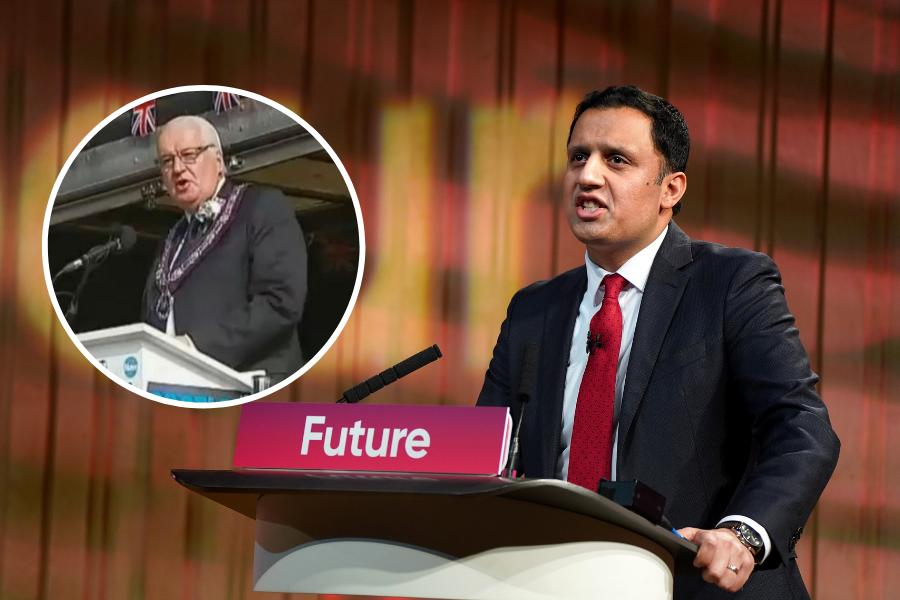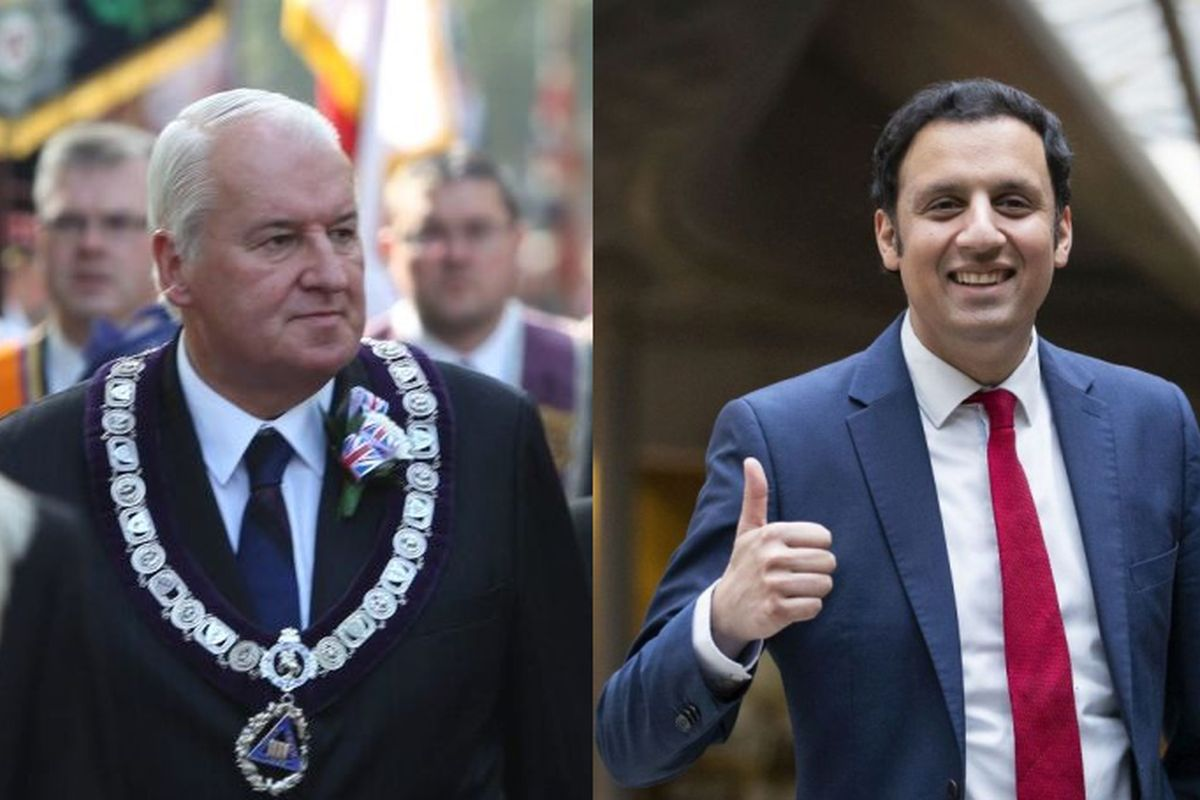
In the past 2 weeks, I have been advised by 7 SNP officeholders/members of long-standing that they were in receipt of a letter from a more senior party official advising their suspension from official duties and any party political activity pending investigation of their behaviour and possible dismissal from the Party. I viewed four of the letters and the content of each is very blunt and very similar.
But how many more letters are in existence or in the pipeline?
Is there a Stalinist doctrine purge underway or is the spectre of McCarthyism on the horizon?
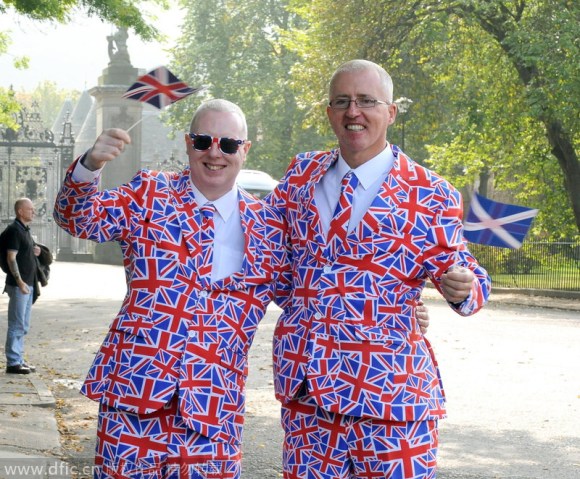
The Unionist press and media made claims that a resurgence in the fortunes of the Tory Party in the last Council elections was part-attributed to a transfer of the protestant Orange Order away from the Labour Party to the Tory Party which had courted the Order by changing its title back to the “Conservative and Unionist Party.”
The Torys benefited again in the next General Election when the Labour Party voter base in Scotland collapsed due to in-fighting over the political direction the Party would commit to.
The polarisation of Scottish politics appeared to be established. The Conservative and Unionist Party claimed the right to defend the Union and the influence and role of Labour and the Liberal Democratic Party had been reduced to that of political spoilers.
But the Tory Party is well capable of “shooting itself in the foot” and Boris Johnson’s government duly did so with its mishandling of Northern Ireland post-Brexit where the Republican voter base now marginally exceeds the Unionists increasing the likelihood of an early referendum and the reunification of Ireland.
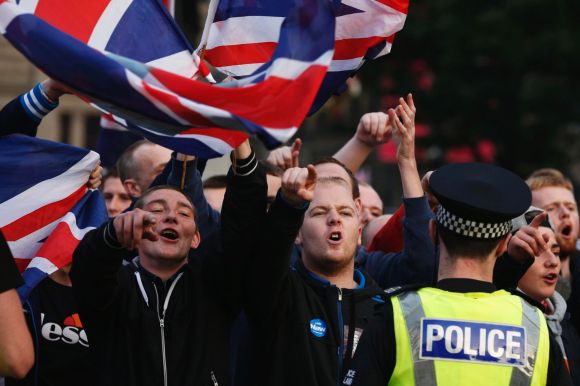
The article that follows provides a detailed history of the Orange Order in Scotland and its capacity for disruption.
The Orange Order in Scotland
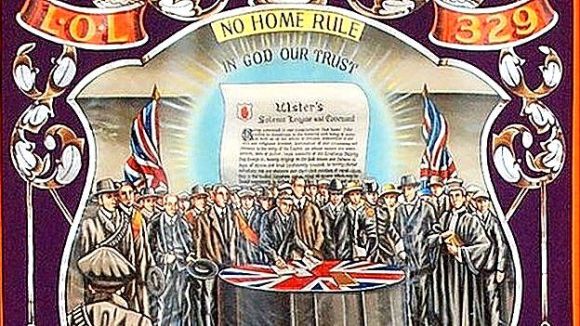
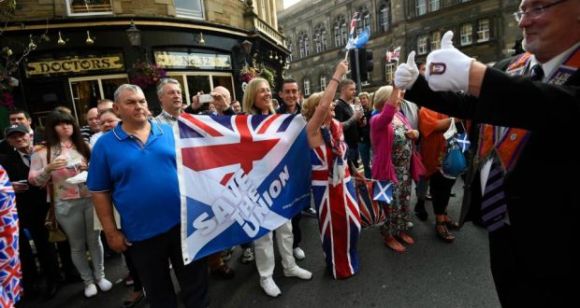
The Orange Order first surfaced in the north of Ireland in 1795. Its constitution commits members to the defence of Protestantism and the British Crown. It provides a focus for Protestant ethnic groups in Scotland and Northern Ireland.
Although its promoted activities are focused on social and religious matters the political dimension has always been considered to be of prime importance and the Order has provided a number of political activists and leaders at many levels of Scottish political society.
The Order is not exclusively an Irish import to Scotland since the politics of native Scots in the West of Scotland is historically sectarian in nature.
This ensured the political growth of the Irish-Protestant working class in Scotland would be influenced by native Scots who were more inclined to embrace socialist ideology as opposed to confrontation.
The loss of many thousands of young Scots soldiers and the depression after WW1 changed the mindset of Irish immigrants and their descendants who became more reliant on the Order to ensure their place in Scottish society. This brought with it a significant increase in membership and a much enhanced Order presence in the politics of Scotland in the 1920-1939 period.
At the end of WW2 and up to the late 1950’s the Order was influential in ensuring the political direction of the Protestant working-class vote in the Central belt of Scotland.
The industrial downturn and slum clearance programmes in Scotland brought about the establishment of overspill areas, such as Easterhouse and Castlemilk. Expansion of town and village living; Coatbridge, Airdrie, Motherwell, Hamilton and the new town of Cumbernauld.
Similar programmes were completed in Edinburgh and the East of Scotland forming overspill areas such as Muirhouse, Sighthill and the new towns of Glenrothes and Livingston.
The impact of the changes on the Order was significant. Membership fell sharply as the population of the Central belt of Scotland became more dispersed and the influence of the Order was lessened markedly.
But although much reduced in numbers the Order in Scotland is still influential in Protestant communities.
Membership has remained consistent in the West of Scotland (in or around Glasgow) and North Lanarkshire
West Lothian, in the East of Scotland, is an Order stronghold and there are a significant number of lodges in Renfrewshire, Wigtownshire and Ayrshire.
Conversely, there are few lodges in Edinburgh, Dundee, Aberdeen and the Highlands and Borders regions.
Male members of the Order
The highest ever male concentration of the Order in Scotland was recorded at 10% in Govan and Rutherglen, but overall Scottish male membership density rarely exceeded two per cent. In 2017 the figure is reduced to less than 1%. For comparison male membership of the Order in Belfast routinely peaks at around 20%
Membership Patterns
In Glasgow, at the Ward level, pockets of the Order are to be found in; Govan (Kingston), Ibrox, Kinning Park, Fairfield, Kingston, Rutherglen, Cowcaddens, Drumchapel, Maryhill, Possil, Cowlairs, Baillieston and Bridgeton.
Causes of Membership Change
Order membership improved following the introduction of licensed social clubs coupled with an ever-increasing appeal of soccer and paramilitary activity in Northern Ireland. Spikes and fluctuations in membership are also attributed to a number of factors:
Threats to Protestantism: marked decrease in Scottish Protestant church membership and increasing secularisation resulting in declining church attendance and Pastoral influence.
Threats to the Union: e.g. a visit to Scotland by the Pope
The Northern Ireland Troubles of 1969-90
In the 1960s and throughout the troubles the policies of the Order in Scotland became ever more militant answering the perceived threat to the Union by Nationalists.
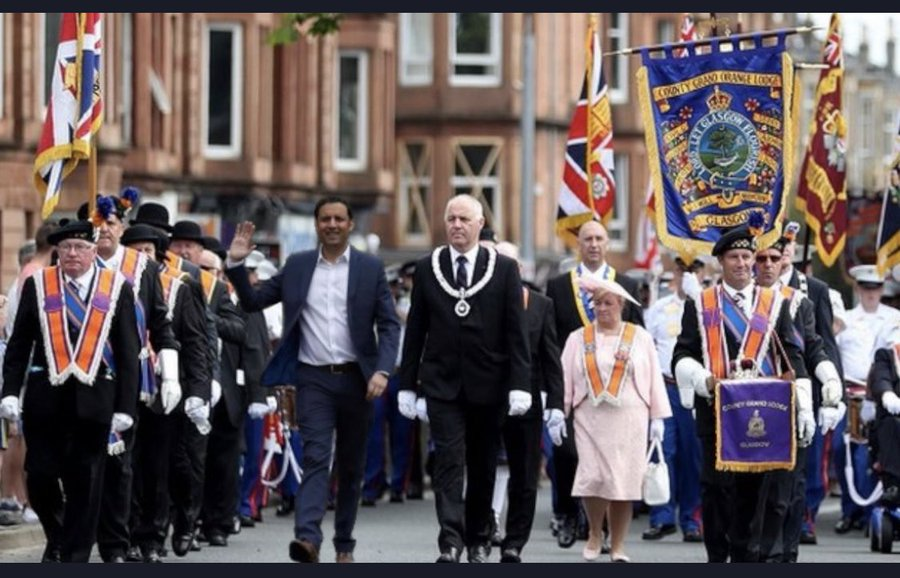
“Scottish” Lodges and their bands travelled to Northern Ireland in increasing numbers during the “Marching” season. Over time the distinct “Scottishness” of marching lodge members was replaced with “Ulsterness”. Scottish saltires were replaced with the Red hand of Ulster and the Union Jack. Surveys identified that Order members claimed their identity to be “British” and it was the protection of the “Union” that drove them to go to Ulster each year.
The Grand Lodge of Scotland which supported financial contributions to Ulster was also heavily involved politically, throughout the period with the many different factions in Ulster and UK governments. The Order benefited from the troubles achieving the highest ever level of membership in many years.
The Sea Change
The 1982 visit of the Pope proved to be the turning point for the Order and its steady decline in membership and influence. Hard-line “Ulsterised” rank and file members demanded militant action preventing the visit but were not supported by senior Order officers or the Grand Lodge.
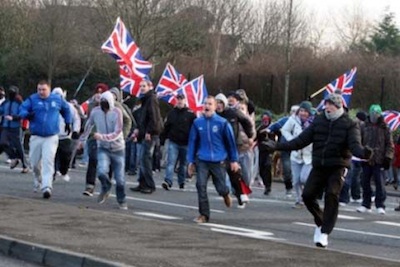
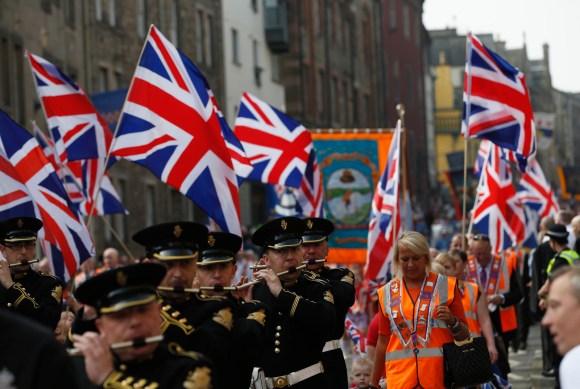
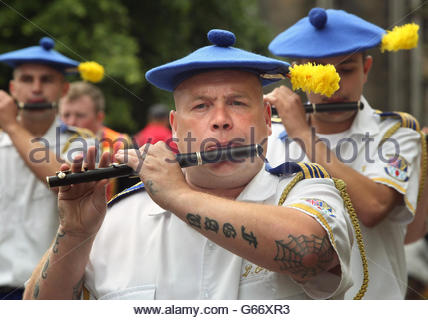
A number of small groups ignored instructions and went ahead with protests causing an amount of disruption. The failure of the Grand Lodge to establish control encouraged lodges to ignore instructions forbidding them from introducing Sunday opening, the sale of alcohol and singing and dancing. An added impact was the increasing militancy and unruly behaviour of marching bands and their supporters. Bands had evolved from the Scottish pipe bands of the 1960s, first to the accordion, then to “blood and guts” flute bands whose average membership age was under 30y. Despite suspensions, the bands continue to perform at many “Orange Walks” in Scotland and Northern Ireland.
Influence
The Order in Scotland can be credited with the establishment of a working-class Unionist Tory base through the lodge system and its influence over political events in Glasgow up to the start of WW2 was substantial resulting in a number of Tory Orange Order MPs being elected to Westminster. The Order had little purchase however in the rest of Scotland since there were no other significant Orange Order clusters.
The Scottish Unionists’ successful political recruitment and retention strategies up to the early 1960s were centred on cultivating the votes of the Order membership without compromising its aims and ideals. But the Tory party alienated many members of the Order when it turned away from Unionism retaining only “Conservative” in its title. Many Order members drifted away to the Labour party.
Thatcher’s agreement to support the 1985 Anglo-Irish Agreement proved to be the catalyst that severed links between the Order and the Tory Party in Scotland. Disillusioned Order members, supported by the Grand Lodge formed a political block to the Tory Party using their votes tactically making claim to a reduction in the number of Tory MP’s in Scotland.
Political observers have inclined to the view that the withdrawal of their support had less impact on the fortunes of the Tory party in Scotland blaming other Thatcher actions against Scotland.
Freemasonry in Scotland
The Scottish Protestant tradition of Masonry stretches back to the middle ages and the organisation of Freemasons in Scotland is broadly similar to that of the Orange Order. Indeed there is a school of thought that supports the view that the Order first adopted the rules of Scottish Freemasonry and amended them to suit their own needs. It is of no surprise that the Orange Order has done so well among Scottish Protestants.
Scotland’s total of around 170,000 Masons is the largest Masonic membership rate worldwide making it a Protestant institution guaranteed its place in Scottish society.
The stability of Scottish Freemasonry is attributed to its “articles of association” which require members to be strictly apolitical and non-religious, unlike the Orange order, (with 70% of its Scottish membership clustered in Central Scotland.)
It is also important to draw attention to class differences between the two groups of Protestants in Scotland. In Glasgow, Masonic Lodge halls are primarily located in the more affluent West of the City and in the satellite villages and small towns on the city’s outskirts. Major concentrations of Masonic lodges are also to be found in the Borders, Highlands and the Northeast. Other lodges are located, in Aberdeen, Dundee, Edinburgh and Perth. Conversely, Orange Order Lodge Halls are located in working-class areas of Glasgow and similar locations in other towns in the West of Scotland.
Summary
In the last 30 years, Scottish Protestant church membership and attendance have fallen significantly and the Grand Lodge is increasingly impotent in the control of younger, often more militant members who challenge its right to dictate policy in regards to the support of Ulster Orange men.
The continued presence of the Order is directly attributed to the past influx of Irish-Protestant immigrants and their descendants and its power is only retained in areas of historic Irish-Protestant immigration such as Larkhall, Airdrie and parts of West Lothian. Overall however the strength of the Order, (even in the West of Scotland) is relatively weak.
Radical gender ideology is taking over public schools and harming children
In late March 2022, the Heritage Foundation hosted an event titled, “How radical gender ideology is taking over public schools and harming kids.”
One of the speakers was Abigail Martinez, a mother of four from California. She shared, for the first time, the utterly heart-breaking story of the suicide of her daughter Yaeli.
According to Abigail, Yaeli was a happy “girlie girl” through her early childhood. She loved singing and dancing and wearing princess dresses. But in her teenage years, she began to exhibit signs of depression. Abigail informed the school and sought their help something she now regrets.
Yaeli allegedly became convinced, thanks in part to school psychologists, that she was a boy and wanted to be called Andrew, which her mother allowed. But the change did not give her daughter the happiness she sought. After an attempted suicide, Yaeli (now Andrew) ran away.
School officials told social services that Andrew would be ‘better off out of the house’ and she was placed in foster care at 16-years-old.
Abigail said “When I went to court, I asked the judge to please let my daughter have a psych evaluation.” The school social worker insisted that she needed to be affirmed as transgender, and so, the judge denied Abigail’s request.
In September of 2019, Yaeli committed suicide by kneeling in front of an oncoming train. It was her mother, Abigail, who was left to bury the literal pieces of her daughter and live every day with the loss. Not the school social worker, not the principal, not the judge, not her teachers. Tragically Abigail’s story is extreme but not unique.
Also speaking at Heritage was mother, January Littlejohn, who shared the story of her daughter’s confrontation with gender ideology.
January and her husband Jeffrey, filed a suit in the U.S. District Court in October 2021 seeking “vindication of their fundamental rights to direct the upbringing of their children” after their daughter’s school failed to notify them that their 13-year-old daughter had entered a school-sanctioned gender transition plan without their consent. A situation that the newly introduced “Parental Rights in Education” bill prevents.
But how could education authorities and teachers possibly think it’s their role to teach this kind of content to children? The answer is they think that isn’t just their duty, but their right.
The scaremongering tactics of LGBTQ++ activist groups is not a spontaneous backlash against States introducing parental rights in education bills.
It is a rerun of government and LGBTQ++ sponsored “critical race theory” debates that embroiled education authorities and school boards across the US in 2021.
In the course of many debates parents were told they had no right to oversight over their children’s curriculum and weren’t entitled to a say on anything.
During a debate between two favoured candidates for the governorship of Virginia, one said: “I believe parents should be in charge of their kids’ education.” In response the second candidate said: “I don’t think parents should be telling schools what they should teach.” The views of candidate one clearly resonated with Virginia parents, since they elected him Governor and only a month later parents in Virginia reasserted their rights to have a say about what their own children were being taught in classrooms. (Summary of an article written by Bethany Mandel)
23 Jul 2014: Summary of the Human Rights Council panel discussion on the safety of journalists
On the question of who could be considered a journalist, the High Commissioner confirmed that, from a human rights perspective, all individuals were entitled to the full protection of their human rights whether the State recognized them as journalists or not; whether they were professional reporters or “citizen journalists”; whether or not they had a degree in journalism; and whether they reported online or offline. In this context, she reminded the Council that the Human Rights Committee had, in its general comment no. 34, defined journalism as “a function shared by a wide range of actors, including professional full-time reporters and analysts, as well as bloggers and others who engage in forms of self-publication in print, on the Internet or elsewhere”.
She also drew the attention to General Assembly resolution 68/163, in which the Assembly acknowledged that journalism was continuously evolving to include inputs from media institutions, private individuals and a range of organizations that seek, receive and impart information and ideas of all kinds, online as well as offline, in the exercise of freedom of opinion and expression, thereby contributing to shape public debate. The High Commissioner therefore urged States to approach the issue under discussion from a human rights perspective, and to protect journalists and other media workers in the broadest sense.
28 Mar 2022: Florida Governor Ron DeSantis signed House Bill-Parental Rights in Education
The bill builds on the Parents’ Bill of Rights, which was signed into law in Florida last year, and is part of the Parent focus on protecting parental rights in education.
The Bill passed into law in Florida on 28 March 2022, reinforces parents’ fundamental rights to make decisions regarding the upbringing of their children. It prohibits classroom instruction on sexual orientation or gender identity from age 5 to 8 and prohibits instruction that is not age appropriate for children beyond that age and requires education authoritues to adopt procedures for notifying parents of any proposed change in services from a school regarding a child’s mental, emotional or physical health or well-being.
Governor Ron DeSantis statement
“Parents’ rights have been increasingly under assault around the nation, but in Florida we stand up for the rights of parents and the fundamental role they play in the education of their children. Parents have every right to be informed about services offered to their child at school, and should be protected from schools using classroom instruction to sexualize children as young as 5 years old.”
Lieutenant Governor Jeanette Nuñez
“Parental Rights in Education empowers Florida’s parents and safeguards our children. This bill refuses to allow school boards and teachers unions the ability to hide information about students from their parents. In addition, it prohibits classroom discussion from age 5-8 on gender orientation and sexual identity. The bill has been maliciously maligned by those who prefer slogans and sound bites over substance and common sense. Florida will not back down to LBGTQ+ activists and WOKE corporations and politicians and their tired tactics that are steeped in hypocrisy. As a mother of three, I am committed to protecting the rights of parents.”
Commissioner of Education Richard Corcoran
“Parents play the No1 role in a child’s life and I am thankful for the Governor, Legislature and so many parents who continue to stand up for parents’ rights to be the foremost authority involving their children. Greater parental involvement leads to a better quality of life for children and this important legislation helps ensure Florida’s educators collaborate with parents to ensure students are learning and flourishing, and I am thankful for the States’ commitment to all of Florida’s 2.9 million public school students.”
Senate President Wilton Simpson.
“Parents have a fundamental right to make decisions regarding the upbringing of their children, and schools should not be keeping important information from them. Children belong to families, not the state. Parents are not the enemy, they are a child’s first and best advocate. This legislation strengthens the Parents’ Bill of Rights Act, safeguarding the rights and responsibilities of parents to decide how best to raise their children.”
Speaker Chris Sprowls.
“The government should never take the place of a parent. We’re taking a firm stand in Florida for parents when we say instruction on gender identity and sexual orientation does not belong in the classroom where 5-8 year old children are learning. It should be up to the parent to decide if and when to introduce these sensitive topics. This shouldn’t be controversial, and a majority of Americans agree. Only LBGTQ fanatics think the classroom curriculum should include teaching little children about gender identity.”
Representative Joe Harding
“This bill is about protecting our children, empowering parents and ensuring they have the information they need to do their rightful job of raising their child.”
Senator Dennis Baxley
“Florida is ensuring Parental Rights are honored in our schools.
January Littlejohn, Parent
“I want to thank our Governor who has been steadfast in his leadership and his unwavering support for parental rights in our great state. When parents are excluded from critical decisions affecting their child’s health and well being at school, it sends the message to children that their parent’s input and authority are no longer important.”
Erin Lovely, Parent
“You never know how you will feel or react to something until it affects you or your family or your children, personally. Under this bill, it protects the fundamental rights of parents to make choices regarding the upbringing of their children and it prohibits classroom discussion about sexual orientation and gender identity in an inapproriate setting.”
Schoolteachers rule over parents rights in Scotland
The current debate over gender discussions in Scottish schools is driven, in part by seemingly endless revelations highlighting the SNP government, education authorities and teachers alleged abuse of their privileged positions in society through the compulsory imposition on children of the LGBTQ+ agenda.
Teachers are briefed to “create an environment that fosters the exploration of sexual orientation, gender identity, and expression.” actively undermining the traditional role of parents through the witholding of information on their children’s inclusion in LGBTQ+ clubs, and the tactics they use for identifying and recruiting them at an early age including tracking their internet use.
Advice is available to teachers on best practice for subverting parents, deflecting obstructive communities, and discussions of the principals of gender identity and sexual orientation and includes the provision of LGBTQ+ information and support to teenage club organisers who equip members with the confidence to answer questions resolving issues that might be raised by interfering parents who do not wish their child to be involved in such activities.
Anonymity is maintained since the retention of written membership records is discouraged and teachers routinely disguise the true nature and purpose of clubs by giving them names such as “Community Skills Club”, “Equality Club” etc.
Any indications of parental opposition “fighting-back” are defused by ensuring teenagers are briefed to first emphasise to their parents the negativity of bullying and its links to children who might be “different” before going on to highlight “gender identification” and the support of it which authority argues is the key to the success of the schools anti-bullying policies.
On occasion parents who continue with their objections are being asked to consider removing their children to private education.
The Scottish Government has said it legislates for the majority not the minority and LBGTQ+ policies will be retained and greatly expanded in Scottish schools.
Unknown to many parents the book “Gender Queer” is readily available for student consumption in Scottish schools. It tells a story of a child struggling with gender conformity through adolescence to adulthood and includes a number of graphics of LGBT sexual experiences.
Cartoons include descriptive situations such as “coming out,” discovering “auto androphilia” (defined as a female sexually aroused by the thought of having male genitalia), and bonding with friends over erotic gay fanfiction.
“Gender queer” is dictionary defined as “of, relating to, or being a person whose gender identity cannot be categorized as solely male or female.” and discussions of alternative gender identities like “genderqueer” a form of the mental illness “gender dysphoria” are increasingly prevalent in classrooms from kindergarden age.
But there is a growing public concern about school curriculums requiring such discussions and an ever increasing number of graphically explicit publications and parents are pressurising local authorities and the Scottish Government, (with little evidence of success) to forbid instruction on sexual orientation and gender identity in primary schools.
The Clearances had repercussions for the British Army
In 1854 Britain declared war on Russia and all was not going well. Highland regiments, so conspicuous in the past, were now equally conspicuous by their absence. “Where are the Highlanders?” was asked.
The Duke of Sutherland hastily travelled from London to Dunrobin Castle and enquired why there were no Highland volunteers.
An elderly gentleman replied:
“Your Grace’s mother and predecessors applied to our fathers for men upon former occasions and our fathers responded to their call. They made us liberal promises, which neither them nor you performed. We are, we think, a little wiser than our fathers, and we estimate your promises of today at the value of theirs.”
“Besides you should bear in mind that your predecessors and yourself expelled us in a most cruel and unjust manner from the land which our fathers held in lien from your family.”
“I do assure your Grace that it is the prevailing opinion in this country, that should the Czar of Russia take possession of Dunrobin Castle and Stafford House next term, that we could not expect worse treatment at his hands than we have experienced at the hands of your family for the last 50 years.”
In Sutherland there were no volunteers. The young men who refused to volunteer called a public meeting stating:
“We have no country to fight for. You robbed us of our land and gave it to the sheep. Therefore, since you have preferred sheep to men, let sheep defend you.”
“we are resolved that there shall be no volunteers or recruits from Sutherland shire.”
“Yet we assert that we are as willing as our forefathers were to peril life and limb in defence of our Queen and country were our wrongs and long-enduring oppression redressed, wrongs which will be remembered in Sutherland by every true Highlander as long as grass grows and water runs.”
Paisley born in 1994 she was educated at Lourdes Secondary School, Glasgow, and the University of Glasgow, where she was awarded a first-class honours degree in Politics and Public Policy in June 2015.
Formerly a Labour Party supporter she said she was a “traditional socialist”, citing Tony Benn as her enduring political hero despite his opposition to Scottish independence.
A member of the Scottish National Party (SNP), she has been the MP for Paisley and Renfrewshire South since 2015.
Her defeat of Douglas Alexander, a Labour MP and Shadow Foreign Secretary, was unexpected and entirely due to the collapse in popularity of the Labour Party in Scotland.
Worked in a local chippie before entering politics.
Only a few days after her election to parliament, on 1 July 2015, it was announced that she had been appointed to the Work and Pensions Select Committee.
She made her maiden speech on 14 July 2015 and criticised the Tory government’s approach to unemployment and the growing need for food banks. She said: “Food banks are not part of the Welfare State. They are a symbol that the welfare state is failing.” She also took the government to task over cuts to housing benefit and State Pension Inequality (WASPI).
In a 2016 interview, while expressing concern about displays of arrogance and sexism towards her from other MPs, she labelled Westminster an “old boys club totally excluded from reality”.
And in 2017, she considered not standing for a second term expressing her frustration that: “so little gets done and it is a pain to travel to and from London every week”.
But despite her lack of enthusiasm she decided to stand again at the 2017 general election. And in a controversial campaign she was heckled by protestors who were angry at the decision of the SNP Government to close the sick children’s ward at the Royal Alexandra Hospital in her constituency.
But she was re-elected albeit with a much reduced majority. She stood again in the 2019 general election and was elected.
She is a strong critic of the Tory government’s rollout of Universal Credit, maintaining that delays in payments have serious negative effects on claimants and she is critical of how loans must be paid back later.
She said in Parliament that the government was like a: “pious loan shark except that instead of coming through your front door they are coming after your mental health, your physical well-being, your stability, your sense of security that is what the experience is for all of our constituents. Plunging people into debt and hunger causes anxiety and distress and the eviction of families from their homes does not incentivise work.’
21 Jul 2018 Black admits to health issues
Elected MP for Paisley and Renfrewshire South in 2015, and re-elected in June 2017 she said that the long hours, frequent travelling and stress of three years working as Paisley’s MP had taken its toll on her health and well-being and the pressure of being a public figure was something she was still adjusting to.
She said: “It’s absolutely horrendous. I hate it. But I will strive to help the people in my community who have fallen through the cracks. I have no desire to be famous or to be the face of something, or have a profile. I just want to do a good job. If that means shining a spotlight on something then I’ll do it but I don’t want it shone on me. The whole reason I’m in this job is to try and help the people I feel weren’t getting enough help before we were elected.”
On issues affecting her own personal life, she said: ” it is not something I plan to open the door on. I’ll talk to anyone about politics or whatever but my life’s my business. I suppose it’s the kind of thing where one day, maybe, but right now I’m an MP.
You only need to know what my political opinions are, you don’t need to know about my personal life. Asked about her decision to “come out”, she replied “I’ve never been in”.
Comment: But even allowing for the impact of stress which might be attributed to the foregoing, which incidentally can be applied to to all Scottish MPs, her attendance record at parliament is poor.
And her staff back in Glasgow are clearly also adversely affected by the stress their MP suffers from since she/they seem incapable of providing an acceptable level of services to her/their constituents.
Her/their letter response rates to constituent requests for assistance has been measured at just 27% in contrast her colleague Ronnie Cowan (Inverclyde) who achieved an 81% response rate, Ian Blackford 80%, Michael Weir 77%, and so on.
Attendance 2017- Mhairi Black 57.7% Ian Blackford 88.5% Kirsty Blackman 92.3% David Linden 91.0% Stewart McDonald 80.8% Joanna Cherry 89.7% Deidre Brock 85.9% Alan Brown 89.7%
18 Dec 2017: I need a life of my own
In an interview with the “Holyrood” magazine she said: “People need to recognise that I have a life of my own and I have responsibilities to the people in it.
They’ve looked after me and supported me because they recognise that I’m fighting a political battle that needs fought just now but no one has the energy to keep going forever.
I’m tired of sitting in constituency surgeries and despite what’s been said, I have been doing them from the very start having people coming to me with all these problems, and saying to me this is horrible, I can’t live, I can’t survive, it’s terrible, and I’m agreeing with them but when they ask me what I can do about it, I’m like, ‘well, we can raise it in parliament’.
I can press, I can twist arms but fundamentally, they [the UK Government] don’t need to give a thing.
21 Feb 2020: Black promotes the LBBTQ cause with a visit to a Primary School with drag act “Flowjob”
Flowjob was introduced to the children at Glencoats Primary in Paisley by Black, as “Flow” and read pupils a story in drag. After revelations in the press that Flojob’s social media profile contained sexually explicit material Education Secretary John Swinney said the “Flowjob” visit should not have happened.
Concerned parents and Renfrewshire Council apologised for the “concern the incident had caused”. Black took to social media later and accused concerned parents of “homophobia”.
25 Feb 2020: Black and an unfortunate incident at a Paisley primary school
What on earth is going on in my old home town of Paisley?
Mhairi Black, local MP and the SNP’s Scottish spokesperson at Westminster, is at the centre of an extraordinary row. She took a drag queen a character who travels under the name “Flowjob” apparently to read a story at a school in the town. Incredibly, the children were in Primary One, that is they are just starting out on the journey of life.
Those who have scrutinised Mr Flowjob’s online accounts tell me that they feature all manner of highly sexualised material. Saying that there is fury from parents and the wider community is putting it mildly. The Scottish media is reporting a tidal wave of outrage.
Black further inflamed the situation lashing out at critics, accusing them of homophobia.
The SNP’s top new spindoctor become embroiled after musing in a late-night tweet that he couldn’t see what the fuss is about when parents take their children to the pantomime featuring drag acts. Sometimes in Glasgow panto, I’m told, the Krankies are involved. Foote tweeted: “I could be wrong but do thousands of parents not voluntarily take their primary age kids along to see drag acts in pantomime every Christmas?” It turned out Foote could be wrong.
The following morning he clarified his position, stating: “In hindsight this tweet lacked the necessary qualification around some of the legitimate parental concerns about social media posts. I was attempting to make too broad a point.”
Attempting to make too broad a point. That’s one way of putting it. Recent convert to the cause of Scottish Independence and immediately appointed by Sturgeon, to the post of Party spin-doctor.
Foote, a former editor of The Daily Record, needs to watch out with the ever suspicious Nats. He is credited as one of the original authors of “The Vow” – the devolutionist pledge promising Scotland more powers to which Gordon Brown put his name in the final days of the 2014 referendum campaign when the Unionist side needed help.
The Vow was, it is said, literally drawn up on the back of a beermat by Foote and a Unionist associate. They then had it done up like a mock scroll and put on the front page of the tabloid Daily Record, to the fury of the Nats who saw it as a last minute attempt to hoodwink the voters.
This latest Paisley-rooted row follows the resignation of Gay MSP, Derek Mackay, over a sexting scandal. The disgraced Mackay used to run the local council and is MSP – still – for a seat which takes in part of Paisley.
What is happening to the place and its politicians? Paisley has actually been doing rather better with a long-running programme of regeneration. The SNP seems more interested in degeneration.
As a Paisley person, albeit one in exile, I am flabbergasted. One half of the town was until 2015 represented by the cerebral son of the manse Douglas Alexander for Labour. While I can imagine Douglas opting to take a Nobel Prize-winning economist in to tell Primary One pupils an improving story about income redistribution and regional policy, he would never for a second think it a remotely good idea to do what Black has done.
A seasoned observer of the Scottish scene says that Paisley’s other MSP George Adam, the straight-laced SNP chief whip (no jokes about whips here), will not like any of this either: “George is an old-fashioned guy who thinks the local electorate think the party should be getting on with the day job rather than the flowjob.”
But then perhaps some of the voters in my home town prefer the Black approach. Sufficient numbers of Paisley persons adore Black and they made her MP. The self-defined working class hero Black is actually from a nice part of Paisley, called Ralston, overlooking the golf course, incidentally. But this is rarely mentioned. (Iain Martin-reaction.life)
Flowjob
26 Feb 2022: Black under fire from feminist campaigners
Current 2004 GRA legislation requires a medical diagnosis of gender dysphoria in order to obtain a Gender Recognition Certificate. Labour MP Angela Eagle submitted a motion calling for the current act to be scrapped in favour of a self-identification system.
Speaking in a Commons debate Black pointed out that one to two per cent of the world’s population are born with sex characteristics that don’t match the binary of male and female. She Added: “People often think that we have male and female but the truth is that one to two percent of the global population is born intersex which means they represent characteristics of both sexes. To put that in perspective, one to two per cent of the population are ginger.
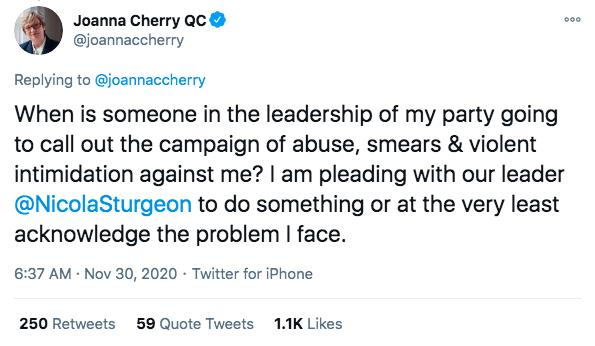
Also in the debate SNP MP Joanna Cherry said clashes over trans rights have become so toxic that MPs are “afraid” to debate the issue. she said: “I have received death and rape threats for raising concerns about calls for people to be able to obtain legal recognition more easily if they want to change gender and I have been vilified for speaking out about the impact reforms could have.
But if we lose clarity over what the words male and female mean it will make it more difficult to set and enforce clear and simple rules for female-only services and women’s sport. And women should not be expected to share their intimate spaces, such as public toilets, with men”. She added: “MPs are afraid to engage in this debate because of the potential backlash from campaigners”
But “For Women Scotland” blasted Black’s comments as ignorant and offensive and in a follow up Twitter post they said: “She recycles old, misinformed nonsense about “intersex” being as prevalent as red-heads. And she is clearly unaware that most people with differences in sex development (DSDs) are unambiguously male or female.
Standing on chairs in Parliament’s Sports and Social bar, a band of portly gentlemen are bellowing out Scottish folk songs. A young barmaid, only in her early twenties yet a seasoned veteran when it comes to turfing out unruly Westminster soaks, approaches a new SNP MP and politely asks him to pack it in. Words are exchanged. Multiple witnesses allege a drunken ‘f— you’ is uttered. Defeated, the barmaid retreats behind the bar to mocking male laughter. So upset is she by the incident, she will leave her job a few weeks later. ‘They’re only just getting started,’ sighs a Labour wag as he reaches for his coat. The conquering horde of Scots Nats have come to town and they are making themselves heard.
SW1 certainly expected the worst from the new SNP cohort. As the Glasgow East MP Natalie McGarry puts it, ‘They thought we would come down waving flags, with our faces painted blue and white.’ Yet those preconceptions were not without substance. An extraordinary, never-before-seen document written by disgruntled SNP aides — and passed to me while researching this article — reveals that even the party’s own employees have been horrified by their MPs’ behaviour for a while. In their own staff’s words, the Westminster group are described as ‘complete arseholes’ while Angus MacNeil is accused of being ‘arrogant, demanding and in general behaving like a five-year-old… [He] has some problems understanding why he is here, although the Sports and Social bar is extremely happy that he is.’
To find out whether the new intake are living up to their reputation, Westminster’s watering holes are the only place to begin. The Sports and Social is traditionally a Labour haunt, earning it the nickname ‘Sports and Socialist’. Just two weeks after polling day, to quote one Blairite boozehound, it had been ‘colonised’ by the Scots. Such are their imperial ambitions, SNP MPs confirm with almost embarrassed smiles their plans to have it officially renamed the ‘Rabbie Burns Bar’.
At kicking-out time, it’s over to the infamous Strangers’ Bar. A taxpayer-subsidised tot of Scotch here is just £2.55, yet despite the SNP’s arrival, the managers have not had cause to double their orders. ‘Most of them only drink champagne,’ claims my man behind the bar, only half-joking. His theory is that the £67,000-a-year MP’s salary is a considerable pay rise for many of his new punters, and that they are enjoying their newfound riches in style. This is an allegation heartily rebuffed by ‘real ale man’ and Midlothian MP Owen Thompson, who is having beer from his local Stewart brewery shipped in and put on tap.
Bubbly or ale in hand, the terrace is a place where MPs forget the adversarial nature of the chamber and, their inhibitions loosened, have a good gossip with politicians from other tribes. Not so the Nats, of whom one rival party hand complains they ‘all stand together in a huddle by themselves, not talking to anyone else’. A case of dour Scots? Natalie McGarry insists she has had ‘a good bit of conversation’ with ‘amenable’ Labour colleagues, but that while ‘some Tory MPs are unfailingly polite, some of them are stuck up their own bahookies.’ I barely have time to ask how one might spell that, before she is telling me what happens when the SNP stick to non-alcoholic beverages. ‘A cabinet minister came up to us,’ McGarry recalls, ‘and said “Fruit juice? I would have thought you Scots would have been on the booze.”’ In an example of Westminster Jockophobia, she claims the minister’s aide then turned to her boss and sneered: ‘Now they’re here we’ll have to start nailing things down.’
There are eight new SNP MPs under 30, and the younger generation have quickly taken over Westminster’s premier 3 a.m. dive: the Players Bar in the Charing Cross Theatre. When 20-year-old Mhairi Black is not wowing the House with her eloquence, she is impressing revellers on the dance floor. ‘A bit reserved early on, but that’s understandable,’ reports a fellow clubber. ‘She was dancing away with the rest of us by the end of the night.’ Black’s colleague Stuart Donaldson, the 23-year old MP for West Aberdeenshire, has meanwhile undergone something of a transformation. ‘He was the most socially awkward person here when he first turned up,’ laughs an admiring colleague. ‘Now you never see him without his harem of attractive blonde girls.’ He would not be the first Honourable Member to find the trappings of power have improved his success with women, but he might be one of the youngest.
After a night out, where do the SNP regiment go to lay their weary heads? ‘The last thing you want is folk swanning around Belgravia on the taxpayer,’ warns the highly rated Argyll and Bute MP Brendan O’Hara, adding without a hint of irony: ‘A lot of folk are in Pimlico.’ That would be the highly desirable central location dubbed the ‘second Belgravia’ by estate agents. O’Hara himself is taking advantage of gentrification: ‘I’m down in Elephant and Castle. I lived in London in the 1990s and it had an awful reputation. Someone said to me, “Look at Elephant and Castle,” and I thought, “Oh I don’t think so.” But what a transformation! What you could get in Glasgow for your IPSA [expenses] allowance here, well you could get anything you want. It’s remarkable.’
The ginger-bearded Owen Thompson is a Midlothian man at the weekend, but during the week he lives in Kensington. He tells me of his initial shock at being quoted a price of £350 a week for a high-end property in west London, but was chuffed to haggle £25 off the final price: ‘Doing my bit for the taxpayer.’ Early hopes for flat shares between laddish MPs petered out, leaving much of the new contingent dotted around Vauxhall and Kennington. ‘Almost everyone I know lives within walking distance of Parliament,’ explains O’Hara. A Tory source recounts recently bumping into the SNP deputy leader and relative Westminster veteran Stewart Hosie outside the Scot’s ultra-luxury apartment at Great Minster House, where a flat can fetch up to £6 million. ‘Even I can’t afford to live here,’ exclaimed the envious Tory, to which Hosie protested: ‘It’s a shoebox!’
Other than the cosy living arrangements, what has been the biggest surprise? ‘The food,’ says Paisley and Renfrewshire North MP Gavin Newlands, gushing about the ‘good value’ of the subsidised Commons cafeteria. Outside of the Parliamentary estate, the Nats have been a little more adventurous. Natalie McGarry is outed by colleagues as the organiser of an SNP team dinner at the upmarket Cinnamon Kitchen in the heart of the City. The sister restaurant of Westminster’s opulent Cinnamon Club, the Kitchen’s extensive menu offers spiced red deer for £29 and Pinot Noir at £100 a bottle. Forty-five out of the 56 SNP MPs attended.
‘This isn’t a change of job, it’s a change of life,’ admits O’Hara, and for him the most difficult adjustment has been the Palace of Westminster itself. ‘Labyrinth doesn’t begin to describe it,’ he says. ‘I find myself running up staircases and wandering around for hours thinking, “How do I get back?” I’d love to get into the mind of the architect.’ For McGarry, the change in climate has caused more serious concerns: ‘I woke up one morning and I had massive lumps all over me!’ Had moving 400 miles nearer to the equator left her susceptible to tropical diseases? ‘I went into a tailspin thinking I had bed bugs, so I went to the nurse. She just scoffed at me.’ The Nats were expecting plenty of bite south of the border, but they had not bargained for mosquitoes.
Watching them sip champagne on the Commons terrace and hearing about their fine dining and luxurious flats, one cannot help but feel the SNP’s new intake are already becoming the very metropolitan elite they claim to despise. ‘There is a real danger with that,’ admits Owen Thompson. ‘It is absolutely in your face all the time. I hope we’re not showing we’re all getting caught up in the establishment.’
‘You could get into bad habits,’ cautions McGarry. ‘I think people could get swept into the Westminster state of mind.’ She advises colleagues ‘to get out of that bubble’, warning it is ‘not healthy’ to ‘socialise too much’. O’Hara disagrees, insisting ‘it’s really important that we don’t go around as a tribe and that we get to know a lot of people down here.’
But one man is resolute. ‘I’m not going out,’ scowls Gavin Newlands: ‘I don’t want to be part of the bubble. It’s almost a different planet down here, rather than a different city.’ A different planet indeed, and its gravitational pull is proving hard for the SNP to resist.