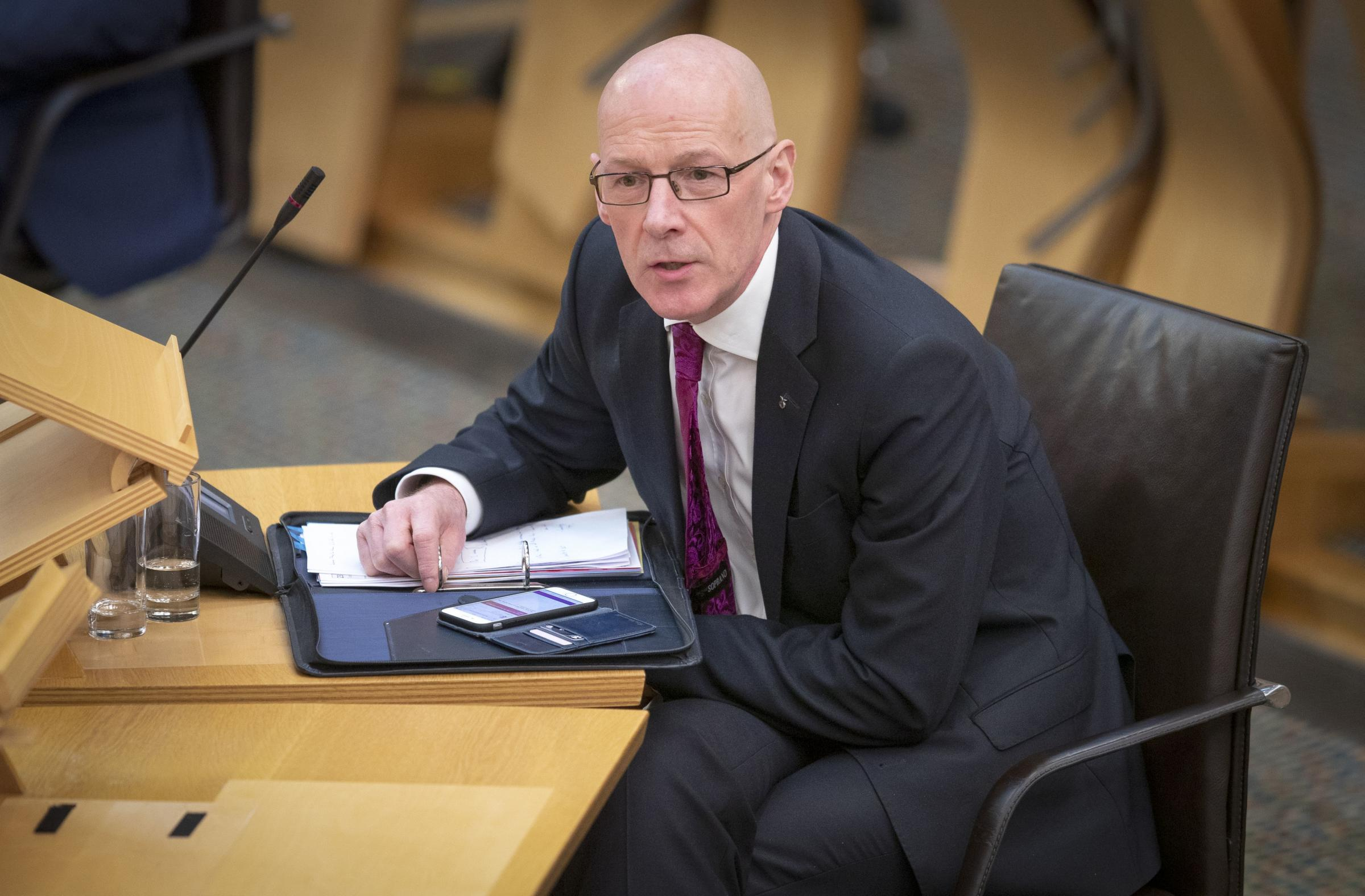
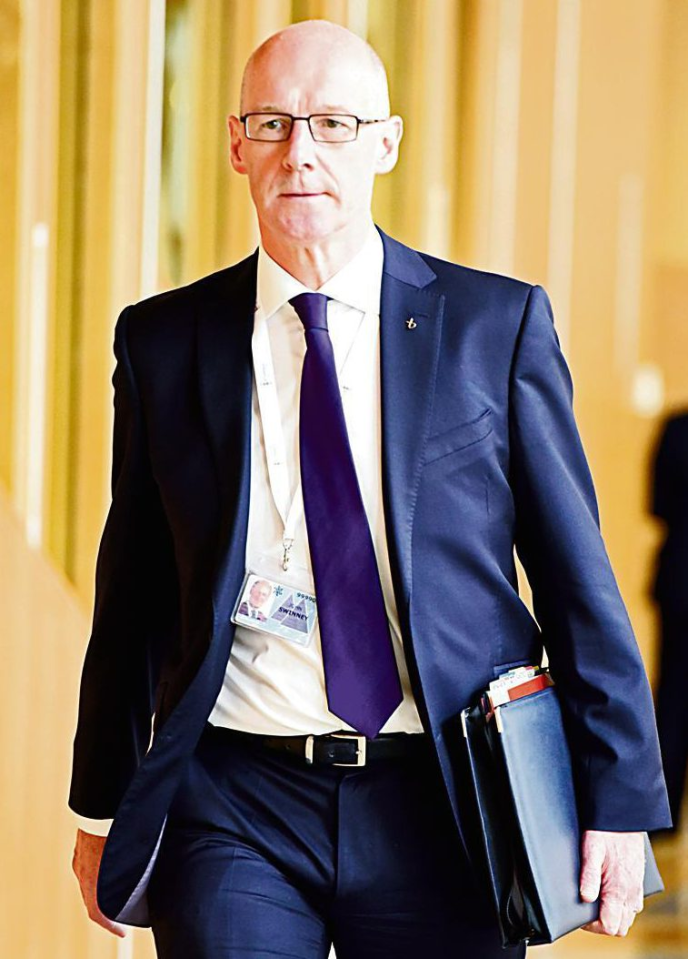
A view of the Career of Jo Farrell Police Scotland’s New Chief Constable

Jo with ? on her appointment to Durham Nov 2016

Police Scotland and financial stress-Chief Constable resigns

Sir Iain Livingstone dramatically advised in February 2023 that he was quitting his post some two years before the end of his employment contract announcing deep concern about “systemic under-funding” of the authority which severely compromised the ability of the police force to investigate crimes due to budgetary pressures. Not long after press releases warned that the Police force was hopelessly underfunded due to unsustainable salary costs brought about by excessive increases in the wage bill not financed by the Government. Some media outlets forecast that 1500 job cuts would need to be implemented within the year. Livingstone, who had been responsible in recent years for building the force wanted no part of the imminent many nights of long knives.

Police Scotland recruiting a “WOKE” Chief Constable: The post was advertised at great cost throughout the UK, in journals and in the press and contained the brief that the new chief constable would be in position by June 2023. The successful candidate would be expected to possess the qualities of ownership, collaboration, support, inspiration, critical analysis, innovation and open-mindedness and would confirm they understand their own emotions and know which situations might affect their ability to deal with stress and pressure.

There were only two applicants. Not surprising the post is toxic!! Police Scotland’s deputy chief constable, Malcolm Graham and the chief constable of Durham Constabulary, Jo Farrell.

Ms Jo Farrell: Who came to prominence across the UK in June 2021, when her contract was controversially extended by three years by the Labour Party-controlled Durham Police Authority, only weeks before she had cleared the Labour leader Sir Keir Starmer and his deputy Angela Rayner of breaching strict Covid lockdown regulations in Durham, in April 2021, after they had been pictured drinking beer and eating a takeaway curry with colleagues. An event given the title “Beergate” by the media. Farrell concluded there had been no breach of the ban on indoor mixing as the gathering was work-related. Her critics alleged she had been got at!!!!

Sam Fowles is a constitutional barrister, lecturer at the University of Oxford, and Director of the Institute for Constitutional and Democratic Research. He wrote: Durham police have a history of deference to power. They refused to fine Dominic Cummings, then a senior government advisor, for his (now infamous) Covid infected trips to Durham and Barnard Castle (despite admitting that he likely committed an offence). A week later, they fined two people (not members of the government) for the same thing. It was claimed the decision was based on a policy of not taking retrospective action on lockdown breaches. While Farrell was not prepared to make an exception for Dominic Cummings, a senior government official, she appears to have done so for the leader of the opposition. This shouldn’t be about politics. I have no party affiliation so no particular dog in this fight. But one’s support for the Labour or Conservative parties should be irrelevant to one’s commitment to democratic norms. The police must protect the public, not wield the law as a weapon against the government’s political enemies. Anything else is an abuse of power. Regardless of the outcome of its investigation, Durham Constabulary and Jo Farrell have serious questions to answer.

Mr Malcolm Graham: whose career began in 1995 at Lothian and Borders Police, was formerly assistant chief constable for major crime, public protection and local crime when Police Scotland was created in 2013. He became Deputy Chief Constable in 2019. A police source said before the interviews that the last quote counted against Graham being appointed.

Jo Farrell was successful in her application and will take on the post in early October 2023.

About Jo Farrell

Recently appointed to the post of Chief Constable of Police Scotland there is a paucity of information about her personal life of career before 2002 when carefully staged photo opportunity releases began to appear.

Jo Farrell was born on September 1968 in Merseyside, England. Nothing much is known about her early life except that her family moved to Cambridgeshire when she was about 15yo from where she attended Sheffield Polytechnic, completing a degree in Business in 1991, before starting a career in the police force as a Constable in Cambridge, gaining promotion in 1996.

In 2002, aged 34yo, she joined Northumbria Police as a Chief Inspector, gaining promotion to the rank of Assistant Chief Constable, overseeing community policing and communications .

In November 2016, aged 48yo she joined Durham Constabulary as the force’s Assistant Chief Constable and was promoted to the role of Chief Constable in June 2019, aged 51yo.

Farrell is a very private individual and chooses not to share any information about her family. But an article published by the Scottish Daily Express suggests that she is married to a retired police officer. Her family is comprised of three children, two stepsons and a daughter.

Chief Constable Livingstone His “institutionally racist” Police Force Jo Farrell and Storm Babet

What a bummer. Livingstone, as Chief Constable, was responsible for policing in Scotland for six years and was therefore accountable for the perilous financial state of the force when he resigned. But he was weirdly commended by the press and other organisations for his resignation statement admitting the force he had led for six years was “institutionally racist and sexist”. FM Humza Yousaf said the admission was a “moment of vindication” for people of colour in Scotland. Livingstone did not explain his statement or the significance of his contribution which was remiss since he had been with the force in a very senior role from its inception some 10 years before. No blame to be attributed to himself!!! and he must have known his words would have a devasting impact on an already demoralised force.

That was it. No presentation of evidence showing the areas of responsibility where his force had failed where racism, sexism, discrimination and crimes had been commonplace or what had been done by his senior officers to address the issues and take corrective action.

Police Scotland ended up where it is today because the past ten 10 years have been marked by senior police officers presiding over a proliferation of non-disclosure agreements (NDAs) preventing former officers and members of the public from reporting racism, sexism, misogyny and other wrongdoing. Those who spoke out were ignored and castigated whilst guilty parties were protected and promoted resulting in the rise of management mediocrity in the force.

Fallout: Newly appointed £250pa Chief Constable – Jo Farrell, perhaps recognising she had been handed a “poisoned chalice” decided she needed to complete an externally sourced urgent investigation into the financial viability and structural organisation of the authority and recruited Assistant Chief, Gary Ridley, a trusted colleague from her previous place of employment with Durham Police Authority to assist her.

It is not known if she consulted with any of her management team colleagues or gained the authority of her reporting managers before taking the action which is unprecedented in Scotland. Police operational matters are rarely revealed to the public and answers may never be provided to the public.

A charge from Durham Police Authority to Police Scotland for Ridley’s time, travel, accommodation and subsistence, if recovered would be around £9000 weekly. Let us hope the financially challenged organisation negotiated a part-freebie, at the very least.

And early reports released through the “Chinese whispers” grapevine are not encouraging. Rumour had it that a brutal cull of police officers and civilian workers is to be expected with up to 1500 positions being left unfilled forming part of a staff reduction and coupled with large numbers of early retirements clearing out the less able from the force. But even that might not be enough to restore order.

Leading Durham Pride 2021

Scotland’s new Chief Constable Jo Farrell promised to prioritise trust, confidence, high performance, and officer and staff wellbeing as she took command of the national police service on Monday, 9 October 2023

Chief Constable Farrell made a commitment to focus on threat, harm, and risk, and on prevention and problem solving, during a swearing-in ceremony at Police Scotland Headquarters, Tulliallan.

She also committed to prioritising the wellbeing of Police Scotland’s officers and support staff.

Chief Constable Farrell said: “I believe passionately in the value policing brings to our communities: keeping people safe from harm, protecting the vulnerable, bringing criminals to justice, solving problems, and reducing offending. We stand up for and with our communities, which strengthens them, improves their well-being, and allows them to prosper.

“My operational focus is on threat, harm, and risk. Police Scotland will focus on prevention, problem-solving and proactivity, and on looking after our hard-working officers and staff so our people can deliver our vital public service.

“Police Scotland is a highly credible public sector organisation known for its compassion and it attracts huge public support. It is a privilege to be entrusted with the leadership of so many talented, professional, and courageous police officers, staff, and volunteers.”

Storm Babet 18 – 21 October 2023

On Monday 16 October 2023, the Met Office issued yellow and amber, (increased to red in Scotland) weather warnings, (repeated daily until Saturday 21 October 2023 covering most of Scotland, and the northeast of England, that a 500-mile-wide wall of hefty rain and 70mph+ gale-force winds would dump around 10 inches of rain on the affected areas causing widespread flooding, power cuts and travel disruption between Wednesday and Saturday. Warnings were issued that the heavy rain would create “fast-flowing and deep floodwaters” posing “danger to life” and essential services such as road, rail, sea, air travel, electricity, gas, water and mobile phone signals would be disrupted. Travel by road was discouraged due to the dangers presented by excessive surface water exacerbated by debris blocking drainage systems and culverts, etc. Rivers would be unable to cope with catchments saturated from recent heavy rain and flooding and major flooding was expected. The east coast main rail line connecting Aberdeen to the rest of the UK, with its history of coastal landslides was expected to close.

Noteworthy Events between 16-21 October 2023

18-20 October, Rescue teams had to be deployed to Brechin, Angus, and other areas in the county after flood defences were breached and hundreds of homes were flooded and/or left surrounded by water. And the picture had not improved much despite the sterling efforts of many volunteer rescue teams. 27,000 homes were left without power for days and many cold wet, hungry and depressed Scots had to be rescued and taken to secure centres. The RAC reported that the huge amount of rainfall continued to make road travel inadvisable, and impossible in many areas due to floodwaters, fallen trees and debris.

19 -21 October, a 57-year-old woman’s body was recovered from the North Esk River in Angus, Scotland after she was swept into the Water of Lee. A tree hit a van on the B9127 road in Whigstreet, Angus, killing the 56-year-old driver. The east coast rail network between Aberdeen and the rest of the UK was closed. A man was trapped inside his vehicle in floodwater near Marykirk, Aberdeenshire. Police searched until 23 October when they found him dead inside the vehicle. A large plane skidded off a runway due to the high winds whilst landing at Leeds Bradford Airport, causing the airport to close. All of the passengers were evacuated from the plane safely. 45 workers were airlifted off of the Stena Spey drilling platform in the North Sea by HM Coastguard after four of the platform’s eight anchors detached themselves due to the severe weather. Scottish and Southern Electricity Networks finally restored power to around 36,000 customers, but 700 properties were still waiting to have power restored. Other power outages included 40,000 Northern Powergrid and 14,000 Scottish Power customers.

On Friday 20 October, at the height of the storm the recently appointed Chief Constable of Police Scotland, Jo Farrell, commandeered an on-duty traffic police officer to drive her to her home in Northumberland and an ex-colleague from Durham police, a resident of Gateshead home to Gateshead……… Part 1

Storm Babet and JO Farrell’s abuse of her authority

It was against the foregoing background that Jo Farrell decided at the height of the storm, at the end of an exhausting week, which she now regrets, to commandeer an unmarked police car to chauffeur herself and Ridley to their homes in Northumberland and Gateshead.

The car was driven by a traffic police officer, (one of only two officers covering the Lothians) who was forced to abandon his duties and return to his Livingstone Depot and swap cars following his removal from his more appropriate duties, providing emergency cover for the public, for over 6 hours covering a round trip of about 250 miles. Other aspects, some with lesser consequence include the driver illegally deploying a “blue light” to speed up his response to the newly issued instructions and the increased risk to himself driving unnecessarily in very hazardous conditions.

The source of the leaked information told The Scottish Sun: “It’s an awful lack of judgement – and a kick in the teeth to frontline officers.”

Tory shadow justice secretary Russell Findlay said: “The new chief constable is tasked with making extremely difficult financial decisions which makes her misuse of police resources even more jarring. There are many unknown details and unanswered questions, including what, if any, consideration was given to the safety of the officer who was ordered to complete this 250-mile round trip in dangerous weather conditions.”

Recently retired Serious Crime and Drug Squad officer, Simon McLean told The Sun newspaper: ‘It’s inappropriate and not the impression you want to make on your new force in the first few weeks – misusing resources like that, it’s terrible”

David Threadgold, chairman of the Scottish Police Federation, commenting on Farrell’s apology said: “If the Chief Constable has made an error of judgment then it’s appropriate she apologises for that.”

The Scottish Police Authority (SPA) said it was “aware the Chief Constable used a police vehicle following the cancellation of a * scheduled train journey. The chair had discussed this with the Chief Constable who had apologised. The authority ­considers the matter closed”. *Play on words and circumstances. Police Scotland and Scottish Rail issued train cancellation notifications followed by an announcement of the closure of the rail network much earlier than offered.

The newly appointed Chief Constable will not be surrounded by friendly faces in the force and many leaks, some very damaging may be released to the press over the next year. Will Jo Farrell survive? Four Chief Constables departing in difficult circumstances in a short period and her dodgy start after only 11 days in post does not augur well for her future.

Police Scotland civilian finance chief has been handed a secret early retirement pay-off after making a failed bullying claim against the Chief Constable.

Deputy Chief Officer David Page, who earned up to £195,000 a year, accused Jo Farrell of ‘prolonged patterns of bullying’.

Mr Page lodged his grievance shortly after she took up her post in October last year, inheriting financial turmoil as the service faced budget cuts of up to £20million

symbol

But a Scottish Police Authority (SPA) probe established she had ‘no case to answer’.

Mr Page, a former Army intelligence officer, has been off sick since he made the claim, and yesterday it emerged he had taken voluntary early retirement. 

The SPA said it could not provide details of his settlement.

Probe into bullying cleared Chief Constable Jo Farrell

Scottish Tory justice spokesman Russell Findlay said: ‘The paying public are entitled to know the terms of substantial pay-outs involving highly paid individuals in charge of state bodies, especially where there have been allegations of wrongdoing.

‘After more than a decade of policing scandals, it is incumbent on ministers, the SPA and the Chief Constable to rebuild the trust of frontline officers and the public.’

Ms Farrell – former chief constable of Durham Constabulary – apologised last year after she commandeered a police vehicle to be driven 120 miles from Edinburgh to her home in Northumberland, after her train was cancelled.

Gary Ridley, the assistant chief officer at Durham, was also in the car from Edinburgh and was dropped off at his home in Gateshead.

Mr Page, 61, went off sick shortly after Ms Farrell took up the £248,724-a-year job and his concerns partly related to Mr Ridley’s ‘unpaid advice’ to her on issues including budget challenges, strategic planning and reducing bureaucracy. 

Mr Page had similar responsibilities and it is understood he claimed he was treated with disrespect, which amounted to alleged ‘bullying’ behaviour – a claim that was later rejected. 

At a meeting of Holyrood’s criminal justice committee last year, Ms Farrell defended bringing in Mr Ridley, saying: ‘Having been in policing for more than 30 years, I have a network of people whom I know bring value to policing, and Mr Ridley is one of them.’

Outlining the scale of the financial crisis at Police Scotland, Mr Page told the SPA in September last year that ‘slash and burn’ budget cuts would be needed and that ‘every penny is a prisoner’.

The SPA confirmed that Mr Page had left the force after eight years’ service. 

It said he ‘exited the organisation under terms consistent with the current approved voluntary redundancy/voluntary early retirement scheme’ but refused to comment on the detail of the sums involved for ‘data privacy reasons’.

According to the SPA’s annual accounts, the ‘cash equivalent transfer value’ of Mr Page’s pension in March last year was £306,000.

A Police Scotland spokesman said: ‘The Chief Constable’s aim is to bring the frontline of Scottish policing to the strongest position possible within the resources available.’

The Moat disaster

Jan 2016: Northumbria Police V David Rathband’s family

The High Court case of former policeman David Rathband’s family who allege the senior officer, Supt. Jo Farrell, in charge of the manhunt for Raoul Moat, had failed in her duty of care by not issuing a timeous warning to police officers on duty on the night their brother was shot by Moat.

Former policeman David Rathband, 42, was blinded when crazed gunman Moat shot him twice in the face and permanently blinded him as he sat in his stationary patrol car at a roundabout on the outskirts of Newcastle. Unable to cope with the stress he committed suicide in 2012 by hanging himself at his home in Blyth.

Relevant Events: A massive manhunt was already underway for crazed gunman Moat in the North East of England after he had shot and murdered two people. On the night of PC Rathband’s shooting, Moat spoke to a Northumbria Police call handler for almost five minutes, saying he would kill any officer who came near him, that he was not coming in alive and that he was hunting for officers to kill. He ended the call at 00.34.

Unsuspecting, on-duty, PC Rathband, who was not advised of the immediate threat to his life had parked his patrol car close to a roundabout, on the outskirts of Newcastle and was shot by Moat twice in the face and permanently blinded only eight minutes later, at around 00.42. Moat later turned the gun on himself after he was cornered by armed police.

The QC for the family told the court Supt. Farrell should have issued a warning after Moat issued his threats. He said: “An appropriate warning is not rocket science. It’s a very simple warning commonly used by police forces, “keep mobile”.

Moat was wanted for murder and he had phoned the police. He had made threats to shoot or hunt for police officers. There should have been a warning, a simultaneous warning that was easy to compose, easy to formulate and easy to disseminate. And which would have had the impact of telling the police officers they were at risk.”

The QC defending the conduct of Supt. Farrell told the court a finding against the force would engender defensive policing and harm future police operations. He said: “It would distort operational thinking. It could deny the police the freedom to act in the way they deem necessary and in the public interest. What Supt. Farrell has regard for the public interest. What would happen with operational disruption and what would happen to the public? It is not melodramatic to propose that if Supt Farrell had rushed there would have been a different family with a different complaint, possibly equally as serious. That’s the balance Supt. Farrell had to consider in the heat of the moment.”

The judge later rejected their claim, saying it was “well-established law” that police did not owe the public or officers a “private law duty of care” when making operational decisions.

Afternote: Police officers and the Public should take careful note of the judgement. Bad policing decisions resulting in injury or death are defensible in law. Sad but true

Supt. Farrell – Northumbria Police Authority V the Late PC Rathband’s family

Additional reporting: The judge ordered PC Rathband’s family to settle Northumbria Police Authority’s £100,000 costs that day. With added costs over the next few months, the charge against them was increased to around £200,000. A warning indeed to anyone contemplating a similar action against authorities in the future and there are some who will support the protection of the system over claims from individuals. However, the judge may have delivered a judgement that fitted the needs of the state by avoiding creating a precedence.

About Raoul Moat: Northumbria Police Authority was forewarned, (before Moat’s release from prison where he had done time for assaulting a child under the age of 8 and his ex-girlfriend) in an extensive written report provided to it by, the Prison Authorities about Moat’s mental instability, and his placement from prison, of an order with a gun supplier for a modified shotgun and his much stated to fellow lags of his intention to cause chaos on his release. No mention is given to this information which if it had been given the attention it deserved would have alerted Supt. Jo Farrell and avoided unnecessary casualties.

The 5 shells Moat pumped into his first victim, the boyfriend of his ex-girlfriend had all been modified to kill, (metal pellets removed and replaced with a single lump of lead shot). Shells used to wound his girlfriend and PC Rathband were unmodified.

The judge laboured the point that Supt. Jo Farrell, the Incident Officer in the Control Room, had been placed in an impossible situation having been given less than 5 minutes to decide whether to alert police officers, deployed in the area near the place where Moat had telephoned a few minutes before and briefed police of his intent to continue taking his revenge on society by tracking down and dealing with any police officer who had previously arrested him. One officer on duty fitted the bill PC David Rathband.

Cumbria shootings: Derrick Bird’s rampage: The timeline of events on 2 June 2010 during in taxi driver Derrick Bird shot dead 12 people and injured 11 more in west Cumbria. The massacres in Cumbria only 4 weeks previously should have alerted the Northumbria Police Authority to give serious consideration to abandoning “single-car deployment” when Moat started his killing spree the day before he shot PC Rathband. https://www.bbc.co.uk/news/10259982

PC Rathband and his previous association with Moat: Moat, had an extensive record of minor misdemeanours and his contact with elements of crime in Northumbria was well established. He also operated a small gardening business, owned a truck and was a regular user of the A1. There had been a spate of scrap metal thefts and Northumbria Police Authority decided to crack down on the criminals.

PC Rathband routinely patrolled the A1 and had arrested Moat, whom he suspected was transporting stolen scrap metal. A day later he spotted Moat on the street and checked the follow-up report and was astonished to note that, yet again Moat had been released with the recommendation “NFA” (no further action).

The Rathband Tapes – 14 podcasts – Listen in then decide if Northumbria Police Authority senior officers covered themselves in glory

For over a decade, conversations between the late David Rathband and his ghostwriter Tony Horne, have remained locked in a vault. Now for the first time, Tony shares them with David’s twin, Darren – and you. Darren and Tony walk you through the story from its humble beginnings in Staffordshire to its tragic end in Northumberland. You will hear, David’s own account of being shot and the subsequent trial of the two accomplices in the case, the untold story of dealing with becoming blind and the fatigue of the endless admin involved, tensions he held within Northumbria Police, depression, Pride of Britain Awards. Going from hero to zero overnight, and ultimately how the twins warned that David’s suicide was inevitable. In this emotional and painful story – albeit with the twins’ dark sense of humour, you will hear David. In his own words. https://tunein.com/podcasts/True-Crime/The-Rathband-Tapes—Trailer-p3739208/

David before Moat shot him
David after Moat shot him

Scots Rejected Cameron’s EVEL legislation and the Right to Rule Scotland From Westminster When They Declared Independence in May 2015

2014 David Cameron, only one day after the 2014 Scottish Independence Referendum, took a giant public dump on Scots by introducing English Votes for English Laws (EVEL) without consultation, which is at variance with the 1707 Treaty of Union. A position that was later toughened up to become a “veto” in the Conservative 2015 election manifesto.

But Cameron had blundered badly, having (with other political leaders) signed a public “vow” committing Westminster to substantially extending devolution to Scotland, only to slap a series of retrospective conditions on it. A huge kick in the teeth to the “no” voters in Scotland, and not wise. But Cameron had blundered and his jacket would hang from a shuggly peg from then on.

Months later, in the 2015 UK General Election, Scots responded electing 56 MPs from 59 seats available. A result which exposed the fraud exacted on Scotland by Westminster Unionists in September 2014. This was a declaration of independence.

The opportunity to declare independence was shunned by Nicola Sturgeon, the recently elected SNP Party Leader, who was basking in the acclaim of LGBTQ activists, her Government and its massive cohort of newly elected MP’s who decided to go to London and settle down gaining themselves, the SNP and those associated with it around £40 million each year plus a very generous non-contributory pension from the public purse. That is around £200 million over the lifetime of a parliament.

Sturgeon, in pursuit of agenda’s other than independence and not always within her competence studiously ignored the will of the Scottish electorate which returned an independence supporting majority of MP’s in every General Election since the 2015 landslide an undeniable fact that the 2015 declaration of independence remains extant.

Ardent Thatcherite and unionist Michael Forsyth went on to challenge the way in which Cameron played the EVEL card. He said: “Instead of going up to Scotland the next day (after the referendum) and saying ‘look we’ve got to look at this now from the point of view of the whole United Kingdom’ and started the English votes for English laws thing which was not a unionist position and that shattered the unionist alliance in Scotland against the breakup of the United Kingdom. I don’t support English votes for English laws. It doesn’t seem to me to be a very good policy to try and deal with the rise of Scottish nationalism by stirring up English nationalism. We need to find ways of binding the United Kingdom together, of binding that partnership together. Questioning the legitimacy of SNP, MPs is unwise and runs counter to the assurances offered during the referendum about guaranteeing an inclusive UK and I have limited sympathy for Labour, who now find themselves being devoured by the nationalist tiger.”

Forsyth’s views matched what I thought the morning after the Scottish referendum – that Cameron was playing a partisan game that was certain to inflame Scottish nationalism with an English betrayal only hours after the vote, damaging the Union he claimed to champion in the interests of short-term electoral gain.

But when Cameron made his play to English nationalism he did not think through what the impact would be in Scotland and was arrogant enough to assume that it didn’t matter now the Referendum was done, or insincere enough in his professed concern for the Union (which is part of his Party’s name) that he didn’t actually care as long as it boosted his chances of re-election this time round. David Cameron, fool or knave? It’s a hard choice (though there is an obvious answer).

Early Warning: Liz Lloyd Is Not Finished With Scotland Witnessed With Her Recent Appointment By Flint Global As A Specialist Partner Delivering Insight and Analysis On Issues Including Scotland, Politics In Scotland & the UK, Constitution.

Liz Lloyd not done with Scotland

Liz Lloyd, former Strategic Adviser and Chief of Staff to the First Minister of Scotland recently took up an appointment with Flint Global as a Specialist Partner delivering insight and analysis on issues including Scotland, politics in Scotland & the UK, and the constitution.

The appointment should alert Scottish independence supporters to her the nature of her tenure as Chief of Staff and Strategic Adviser to Sturgeon.

Scotland is an English colony since it exists under the full political control of England’s politicians and is being progressively occupied by English settlers who decided the outcome of the 2014 Independence Referendum

The “Picture Post” (1938-1957) portrayal of Scotland perpetuated the themes of Empire and Identity.

Its depiction of Scottish history was scarce and comment was largely restricted to the institutional differences from England and coverage of pageantry.

The narrative it promoted conveyed the residual strengths of the British Empire, with increases in royal visits suggesting “concessions to combat the perception of Scotland’s diminishing nationhood.”

Because of the publications adherence to an overarching sense of Britishness, no coherent idea of Scottish national identity in or for itself emerged.

Instead, Scottish articles were conveniently subsumed under a handful of stock categories, each of which played a part in the representation of British culture, in a sense “the stories we tell ourselves about ourselves.” The “we” here was an English one that looked at Scotland.

Much boiled down to the presentation of stereotypes: picture stories about the kilt, ships being built and launched, and miners coming from the “filth of the pit” to “the row of mean, sordid houses”, of “grey fishing villages.” In sharp contrast there is the scenic beauty of the landscape. And then there was Glasgow.

Scotland was imagined either as a place of “grave beauty” and “wild, infertile districts such as the Highland [deer] forests”; or the home of scandalous urban poverty, appalling housing and rickets.

 
Symbolism of Crown Authority

The symbolism is clear from depictions of George VI opening the Empire Exhibition in Glasgow and the richly ceremonial images of Queen Elizabeth’s 1952 trip to Edinburgh.

A photo-essay of her rain-sodden voyage in the Hebrides was rather less formal, although the opening line of text served to remind readers of the ritual aspect: “To go to Scotland in August has been a habit with the Royal Family since Queen Victoria’s time.”

“Bed Socks for a Queen” sought to make the link between everyday working life in Scotland and the wardrobes of the grand: “Through five generations, this factory in Edinburgh has been making quality footwear for monarch, soldier, sportsman and glamour girl.”

Meanwhile, the effort to convey an impression of Anglo-Scots unity led to some extraordinary tweaking of the historical record. A wartime propaganda piece juxtaposed photographs of Fort George with images of Culloden Moor where the names on the stones are the same names which label wooden crosses in the sands of the Egyptian desert now.

The men of the Highland Division – the men who stormed the Axis lines at El Alamein – are the kith and kin of the clansmen who rose for Bonnie Prince Charlie in the ’45 … neither the men nor the lands they live in have changed … they’re fighting for the same age-old Highland cause.

The saddest part about the Battle of Culloden is the fatalities on either side– nearly 2,000 Jacobites were killed. Only 50 died on the British side.

Scottish military stories were few, although articles about clan gatherings, Highland games, and the aforementioned kilt, in conflating “Highlander” with “Scot”, provided a spurious sense of national singularity.

Unsurprisingly, discussions of a separate national identity were few during the war years. However, an intermittent dialogue around nationalism was ongoing.

Some Scots blamed Westminster’s dismissal of independence claims for Scotland’s manufacturing industry falling into dereliction.

Yet, railed Compton Mackenzie embracing the Scots audience, “it is our own fault”; so long as “we” submit to London control, we can only blame ourselves for industrial decline, unemployment and rural depopulation.

His 1939 article stressed growing political support for the Nationalists, sporting a photograph of graffiti with the caption “few Englishmen have heard much of the discussion on Home Rule for Scotland – but a plea for it covers almost every bridge on the Edinburgh-Glasgow road.”

Mackenzie’s article unleashed a slew of correspondence. Some questioned the wisdom of publishing material suggesting British disunity in the face of impending world war, blithely adding that “Scotland sends its best to England and we are glad to have them”.

But political nationalism resurfaced very quickly in 1945.

Responding to a line in the King’s speech at the opening of the first post-war Parliament that “the special problem of Scotland” would gain ministerial attention, the Nationalist John Kinloch described how the country’s greater resources, output and manpower were accompanied by greater unemployment, poverty and death rates, a predicament he attributed to “Scotland’s subordinate governmental position.”

When subsequently the devolution minded Scottish National Assembly drew up a Covenant supported by thirty-six percent of the Scottish electorate, Fyfe Robertson remarked that “the English press can almost be accused of a conspiracy of silence” for ignoring important constitutional concerns.

His subsequent investigation asking “Are 2,000,000 Scots Silly?” reported “a new liveliness and confidence largely due to a new awareness of nationality.”

Despite Robertson’s claim of “massive” English indifference, the article sparked a rush of letters, an edited postbag being published under the heading “The Question That Has All Britain Talking.”

For all this, the next month, as “Queen Elizabeth of Scotland” rode in state up the Royal Mile, a decidedly unionist Picture Post praised the protective loyalty of the Royal Company of Archers, contending that “If the Scottish Republican Army were to start any trouble they would soon resemble a row of over-patriotic pin-cushions.”

queen
Elizabeth was never crowned Queen of Scotland

Sport, Arts and Entertainment

Sports coverage as existed tended towards elitist pursuits – deer stalking and grouse shooting, yachting, rugby union, and – guaranteed to captivate visually – skiing.

Despite its mass popularity, and, indeed, its importance as a lighting-rod for the solidarity of skilled workers, football received scant coverage.

Until a 1955 initiative which saw the launch of “A Great Scottish Football Series” profiling all the major teams in successive issues, the only stories are a piece considering the precarious survival of amateurism, and two negative articles about fan behaviour. “The Football Ticket Stampede” (1952) attempted to explain an incident when 12,000 Glaswegians waiting for tickets for the England v. Scotland game ran amok.

An English sports journalist noted that the Rangers v. Celtic match was traditionally considered “an opportunity to get rid of your empty bottles and vent your religious bigotry.” His article drew indignant responses from many Scots, some accusing the author of being anti-Celtic, others anti-Rangers, others simply arguing that in highlighting the Old Firm’s routine rivalry he was promoting a caricature. “He airs, in true English fashion, the old lie that civil war is our national pastime.” Outside Glasgow, argued another, “people go to see a football match, not two teams representing different religions.”

 
Moral and Social Issues

For a country supposedly steeped in Presbyterian culture, discussion of religion was rather thin: a photo-essay on the parish kirk of Burntisland, showing “the whole history of the Reformation made permanent in stone”; a quirky tale about the Arbroath padre using ship-to-shore radio telephones to entertain fishermen; and a story about the activities of industrial chaplains questioning the contention that “the Church has lost touch with the workers.”

Nevertheless, complemented by articles on the Iona community’s mission “to bring Christianity to the workers of Glasgow”, this struck a tone very much in sympathy with the magazine’s visual ethos, where locals were pictured engaging in social activity.

Commentary on social issues ranged from health and education to youth crime and immigration. In a debate conducted via the letters page concerning the scourge of “young thugs”, a reader commented give one family a house with modern conveniences; another a room in which there are no sanitary arrangements, in which plaster is falling off the walls and people are forced to sleep four or five in one bed.

Which will be the readier to conform to social laws? Which will produce the delinquent children? This is glaringly obvious in Glasgow, where housing conditions are the worst in Scotland and criminal figures are the highest.

The problems of the “swarming tenement” were being dealt with, but “not always imaginatively” through re-housing schemes lacking in social amenities, as the image of the violence-prone slum continued to cling to the city.

Some Glaswegians protested that this was distortion, others that “slums are not an excuse for filth”, while “I’ve had it drummed into me that England is the most democratic country in the world. I find it hard to believe after seeing those slums…. Thank you for opening my eyes.”

Health and social welfare

When doctors attributed Scotland’s singular failure to improve tuberculosis mortality to “scandalous overcrowding in insanitary, badly-ventilated and sunless houses” and lack of hospital accommodation, the Picture Post showed people being encouraged to attend mobile X-ray units using incentives such as raffle tickets and images of futuristic infirmaries.

Holiday advertisements taken out by bus and ferry companies and holiday resorts portrayed yachting on the Clyde, the diverse delights of Arran, pony-trekking, and school adventure holidays. The escapism was further highlighted by photographs of spectacular mountain scenery, majestic sea cliffs and snowbound landscapes.

By 1945 readers were suggesting that the “private wilderness” be handed over to ex-servicemen to farm – “Why does the Government talk about emigration to the Dominions, when Scotland is almost vacant” – and, indeed, land settlement schemes were being developed. The question was posed: “Why can’t the Highlands … be opened up for the Gorbals dwellers?”

“I went on a tour in the Highlands and the conditions are awful”, added a correspondent, “deserted shielings and poverty-stricken crofts, next to mansions whose owners only come in the grouse season and take no interest in their poor tenants”, while another cited “appalling” unemployment figures and referred to “one long tale of misery” since 1745 with “huge areas denuded of people” to make way for sporting estates.

Reconstruction and Modernity

During the inter-war years the Labour Party “pushed the notion of a democratic and radical Scotland which had been under the heel of a corrupt aristocracy … The Scots were a democratic and egalitarian people.”

But the Party did not betray any lasting nationalist commitment and in the immediate post-war years Scottish developments were very much regarded as part-and-parcel of Britain’s wider economic renewal.

Picture Post published a “Plan for Britain” in January 1941. The modernizing vision of “rationally ordered sites and spaces” was embraced by Tom Johnston, appointed by Churchill in February 1941 as Secretary of State for Scotland.

A Labour stalwart, Johnston was “a giant figure …promised the powers of a benign dictator” went on to set up some thirty-two committees and developed planning perspectives in concert with the various socio-economic issues.

Johnston’s single most successful venture, the Hydro Board, was designed to alleviate a British fuel crisis while promoting industrial recovery, re-population and electrification in the Highlands.

Power generation carried much symbolic weight in the push for reconstruction. However, initial proposals were strongly opposed.

A graphic feature on the Glen Affric scheme set the alliance of “beauty lovers” fearing the loss of sanctuary, holiday resort and sporting preserve against the plight of local people.

While the text conveyed a good deal of technical detail, economic and political, regarding the progress of hydro-electrification, its human dialogue came from conversations with the local crofters.

Subsequently, a reader wrote in to re-iterate the stark contrast between the lovely landscape and the “abject poverty” and “backwardness” of its inhabitants.

“New hope for the Highlands” ran another article, as “Highland glens light Highland homes.” With dams “surprisingly hidden in the hills”, aqueducts and pylons were “a small price to pay for new prosperity” and relative national efficiency, the more so as a UK fuel crisis loomed.

Re-forestation and ranching added optimism, yet with “roads inadequate beyond belief”, “archaic farming methods” and “progressive deterioration of morale and opportunity” the Highland economy remained precarious, albeit that the sight of Highland cattle presented “A Highland Idyll.”

In January 1955, Picture Post released a special supplement. “Festival Scotland” which was both informative and promotional, a shop window of the nation’s attractions and advertisement of its successes.

It provided a potted inventory, incorporating articles on religion, the arts, nationalism, food, fishing, Highland games and Gaelic, but also shipbuilding, shopping, manufacturing, the Scottish joke, history and national identity.

In a foreword, the Lord Provost of Edinburgh noted that he regarded the Edinburgh Festival as “the focus of the post-war revival of Scotland.”

For the tourist, there was advice on “where to go and what to see” from the Secretary of the Scottish Tourist Board as well as guidance on “How to see Scotland”, each itinerary “a gateway to romance” in places “where the dolce far niente of the Mediterranean is matched by the quiet Celtic ways and gentle manners.”

Similarly, Nigel Tranter stressed the urgency of building a Forth river crossing, whether a bridge or a tunnel: “right in the heart of industrial Scotland, precious hours are wasted while cars, lorries and ambulances wait for overworked ferry boats.” Doubtless these writers added weight to debate – much nationalistic, much eccentric yet there is something of the feel of a patrician coterie pontificating from their shared literary quarter in New Town Edinburgh.

Dalmellington, Ayrshire

Nevertheless, a certain gritty realism remains apparent, for instance in a fine portrait of Dalmellington. Here much is redolent of the emerging community studies tradition in British sociology, with its analysis of social segmentation, gendered mores, statistics of religious observation, and anthropological, almost colonial distancing – “Even the “natives” can be sub-divided, for the men who have come down from the now abandoned hillside hamlets … still cling together. You can see at the local dances how much Dalmellington is a man’s world … the young men stood in large clusters talking to each other. There are 1,709 adult communicant members of the Church of Scotland.”

The daily dominance of the mining industry is evoked in the accompanying pictures and their captions, which highlight the day-shift waiting for the bus at 6 a.m., then leaving the pit at 2.30 in the afternoon; meanwhile, the text beside an image of the Saturday dance notes: “it was a grand evening – even for the back-shift who couldn’t get there till after eleven.” There is also a debunking of stereotypes – “curiously enough, Dalmellington does not look like a typical mining village… you do not find there the long, repetitive rows of houses … Instead you see a large country village built around a square … at the edges you find twentieth-century suburban-style houses.” Finally, we read: “There is the insularity of the villages, and, on the other hand, there are the young people’s July excursions to Blackpool.”

This is mid-1950s Scotland in the throes of modernization and a tension between cultural continuity and economic change. Subsequent readers’ letters endorse the “strong community spirit of Dalmellington’s citizens”, extending this sensibility to the city:

Although I have lived in Glasgow all my life I do not think of myself as a Glasgow man. When I was a child the word “home” as it was used by my parents meant not the city tenement, where we lived, but a croft on the Isle of Mull. There may be thousands of Glasgow citizens like me, and perhaps it is because to so many of us our real background is in the Highlands, or the country places, that Glasgow, despite its size, is … like an overgrown village.

Complaints over London dominance of the BBC were being addressed as the network sought to embrace regional broadcasting, they saw no cause for alarm, continuing to represent Scotland as resolutely provincial. (This was, after all, one area of the country where people were still getting their news stories from the press.)

In this imaginary of the nation “Edinburgh is a village where everybody meets everybody else” Characters abound in the Old Town, for it retains many of the qualities of a self-contained community. Neighbours are known to each other.” Glasgow’s “warm-hearted loyalty” draws much praise, while the nation becomes a cultural space in which each major city is given a defining character.

A story about Inverness strikes at the contradictions of capitalism: “Inverness is the great paradox of the Highlands today, the shining example of prosperity and growing population amid economic malaise and depopulation.”

These contradictions are played out in a number of articles concerning the Hebrides. “The Last of the Gaelic” bemoans the “hopeless stand” of a once-widespread language, the “wild, departed spirit” of a dying way of life on Eriskay. Once “peopled by enterprising fishermen”, but now “an island of the old and infirm, with a few horses laden with “creels” to act as transport”, Eriskay’s way of life is being rapidly dispersed by “the dramatic invasion of an air service from the mainland.”

Seaweed-processing came and went on South Uist, where, however, more obviously political concerns had emerged over the proposed siting of a guided missile range. A local wrote to warn that “the entire peace of the island, as well as its crofting and craftsman traditions are likely to be shattered … by the arrival of troops.”

He was not alone: “The Fighting Priest of Eochar” presents “the story of a courageous Hebridean and his fight to save the future of his parish”, the very place that had been so sympathetically photographed the previous year. Again, in the images, there are the expressive rugged faces, mirroring the wind-torn landscape; again, the odd juxtaposition of a precious living on the cusp of change: “On her croft, by the rocket site, a woman finds barbed wire – and wonders.”

Meanwhile, some Hardy images of figures silhouetted against a broad sky suggest a vanishing spiritual purity in a mechanistic industrial age: “the eternal bounty and struggle of life in its simplest, and at the same time, most profound form. I came away from the Crofters’ Isle cleansed and refreshed.”

This dialectic of tradition and modernity, development and dependency, finds broader resonance across the Highland region. “No Future for the Highlands?” asks: “What shall we do to arrest the process of decay … which threatens disaster in the North?” The inner malady of depopulation and ruined cottages. “Some townships will perish within a generation”;

A futuristic shot of Herculean engineering, carries the caption: “Due for completion in 1957, the Loch Shin hydro-electricity scheme employs 900 men, nearly 4/10 of them from the Highlands. But the permanent staff may total only 30.”

Against such brooding concern, “The Road to the Isles” is sanguine. A picture of a woman at a water pump might not suggest progress or engagement in the process post-war industrialization. But the caption suggests otherwise: “Where guidewives gossip in Gaelic, in the old village of Glencoe. Crofting has ceased, and most of then men are employed in the aluminium works at Kinlochleven.”

Vignettes of the triumph of the machine age find their crudest visualization in a photograph of fish being blown sky-high. The caption reads: “Depth charge in the loch. Seventy tons of gelignite are detonated to destroy pike and perch before this water is stocked with young salmon from the hatcheries.”

Dounreay: Radioactive waste was disposed down the Shaft from 1959 to 1977, when an explosion ended the practice

” As with the guided missiles on South Uist, the motives for scientific advancement concerned strategies other than the strictly socio-economic. They indicated the continuing role of Westminster government in the political management of change. External control of the Scottish economy was welcomed as inward investment.

Where Clydeside shipbuilding, like other heavy industries, had figured in the wartime propaganda effort and “men who build the ships that sail the seven seas” were still honoured reflecting the mood of post-war optimism in its embrace of manufacturing as the route to economic buoyancy.

Promotion of the “American Invasion” was accompanied by photos of the Queen visiting an adding machine factory, a “bonnie Scots lassie” checking clock mechanisms, more “Scots girls at work on assembling components of electronic devices”, rubber footwear, mechanics at an IBM plant.

Here were the newly “thriving towns” of the Central Belt, its oil refineries, rolling mills, and, indeed, fresh orders for the shipyards.

“Let Glasgow Flourish” brought characterful resilience to the fore: “Thrice within a couple of centuries, Glasgow has reeled from the impact of economic forces beyond its control.

Each time it has recovered. Now it faces the hazards and opportunities of a new industrial age…. Here is vitality, energy in abundance. Here is the Vulcan’s forge of the North.”

Cue pictures of busy quaysides, locomotive and tobacco production, golf club manufacturing, and “a pavement of biscuits” on the conveyor belt at the Glengarry Bakery, churning out “a quarter of the total chocolate biscuit output of Britain.”

In the “breath-taking panorama of Glasgow”, was an optimism underpinned by commitment to adaptation and diversity. And not just in the big conurbations. A social commentator said “Kilmarnock has been called “a planner’s delight, ready-made for prosperity.” Where else can one find such a remarkable variety of industry? With full employment, progressive businessmen, and a rigorous spirit of craftsmanship, its future seems secure.

“But is the town really slump-proof?” With images of tractor assembly lines, shoe patterns, distilleries, men at Glenfield and Kennedy, hydraulic engineers, “leading organisation of their kind in the British Commonwealth”, and sub-heads such as “Cushioned against depression”, the answer was a resounding Yes!

Mass production without tedium, in the highly modernised assembly department of British Olivetti, Ltd., at Queenslie Industrial Estate, a young lass from Airdrie, dexterously plays her part in the building of a portable typewriter. Many of these machines go to Australia and New Zealand; also to Africa.

“The Hospital of the Future” provided “an exclusive peep into the first complete new hospital to be built in Britain since the war” at Alexandria. Futuristic architectural images accompanied the “new design for living – for patients and hospital staff.”

The fight against urban health problems was still being conveyed by photo-journalists with characteristic vigour. In March 1957, a double-page feature showed long queues awaiting X-raying under the banner “Glasgow Blasts TB.”

TB Epidemic in Scotland. X-Ray Coaches deployed from all over the UK to Assist

Caused by overcrowded houses and poor diet.

While nationalization, new towns, engineering projects, tourism and Edinburgh Festival culture were promoted as the New Scotland, so the meaning of nationhood came under fresh scrutiny as unionist-nationalism declined.

Contradictions surfaced over the presentation of national identity, and, relatedly, land use and access, that are still important today. “An American in Scotland” opined “they have mountains like the Alps and roads like Burma”.

while the historical Scotland author, Nigel Tranter provocatively argued that a new road should be built through the Cairngorms. It was only, he said, “the remoteness of legislators, hunting, shooting and fishing interests, those benefiting from other roads and the sanctity-of-the-wild enthusiasts” that were preventing the construction of “a glorious, a darling road.

Likewise, when a reader responding to an article on the “strange collapse” of Scotland’s former aviation industry pleaded “Let us concentrate on our tourist industry and have more beaches, better roads and better hotels rather than more factories, with their dirt and smoke”, he was effectively arguing for the preservation of an invented tradition – romantic tourism – within a framework of modern industrial development. In grasping the horns of a dilemma first captured visually through the hydro-electric debate, both writers were perhaps more prescient than they imagined.

Conclusion

1955 was a pivotal point, for it was in this year that two significant events occurred:

A General Election on 26 May in which the Unionist party reached its zenith of 51% of the Scottish vote, never to be achieved again.

The promotion of British national identification through Tory anglicisation and the growth of Nationalism in Scotland.

A complete run of Picture Post is available in the National Library of Scotland. A fully searchable archive may also be consulted via (http://www.gale.cengage.co.uk/picturepost) 

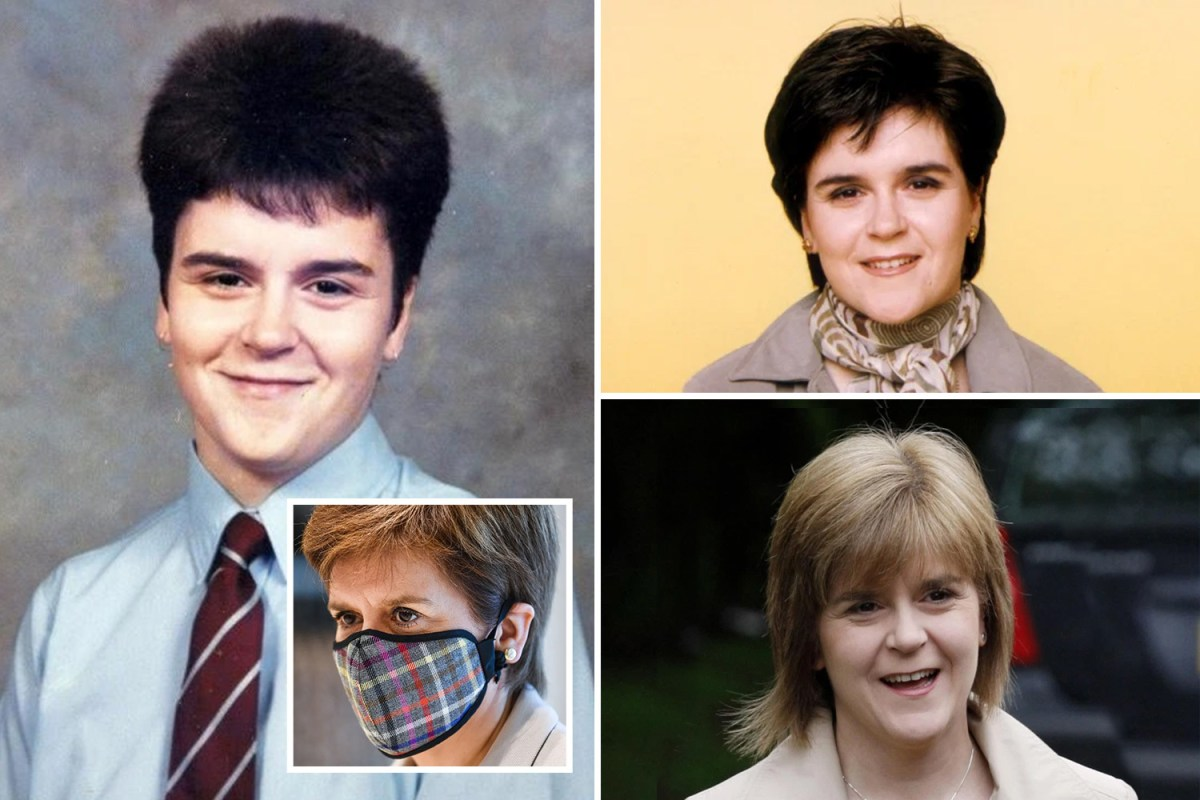
Nicola Sturgeon – Nippy Sweetie to Glamour model-

Hype was the name of the game

Her demeanour, dress sense and confrontational behaviour was evident in her student days and her aborted legal career and lifestyle before politics.

But Nicola Sturgeon claimed she earned her nickname because she tried to emulate male politicians aggressive and adversarial practices at the start of her parliamentary career.

She claimed she was surrounded by “middle-aged white men” and behaved in a way about conforming and fitting in. That was also reflected in how she dressed.

Her belief was that fitting in with the behaviour of men required females to become adversarial and aggressive in pursuit of winning their arguments since assertive, aggressive, and adversarial male politicians are seen as strong leaders.

But her recurring failure to gain a seat as an MSP by popular vote was a worry for the Party leadership and Angus Robertson finally persuaded her to abandon her long held feminist principles and abandon her “nippy sweety” behaviour.

Sturgeon, the fashion icon and Scotland’s first lady in waiting was relaunched at the start of the Scottish Independence campaign in early 2014

The makeover and extensive coaching designed to improve her delivery of policies to the public and parliament must have cost the Party many millions with a new expensive outfit being produced every day and many Scots believed the massively hyped transformation was real and would deliver change and were happy to clinb on-board the “Sturgeon for Independence” bandwagon.

The period 2014-2023 exposed the disgusting scale of the Robertson/Sturgeon “ponzie scheme” and Unionist media outlets are actively participating in the continued cover-up of the abuse of the Scottish electorate.

John Smythe continues with his investigation of the Alex Salmond Debacle

4 September 2023: The Alex Salmond Debacle

Michael McElhinney’s journal: FOI release: Information requested:

Please could you provide the following information in regards to the diary/journal of Scottish Government civil servant Michael McElhinney which it was reported was provided to Police Scotland in February 2019 and returned to the Scottish Government on 1st May 2020:

Q: Who had access to this diary/journal before February 2019?

A: The author of the notebook, Scottish Government HR and Police Scotland had access to the notebook before February. What is referred to as a ‘diary/journal’ is more accurately described as a notebook containing work notes.

Follow up: The Scottish Government HR would include Leslie Evans, Judith Mackinnon & Nicola Richards amongst others.

23 September 2018: Police Scotland response: You have been advised by the SG that the diary/journal was provided to Police Scotland on 15 November 2018. I can confirm that on 15 November 2018, the SG provided Police Scotland with redacted photocopies of the diary/journal and not the physical diary/journal.
I maintain our position that we did not come into possession of the government-issued diary/journal of the SG civil servant Michael McElhinney until February 2019.

Q: Who provided this diary/journal to Police Scotland in February 2019?

A: The notebook was handed to the police by Scottish Government HR as part of the “OP Diem”, criminal investigation. Please note that this took place on 15 November 2018 and not in February 2019 as specified in your request.

Follow up: But this response is at odds with that of Police Scotland’s statement that the diary/journal was provided to Police Scotland in February 2019.

23 September 2023: Police Scotland response: To be of some assistance and in order to be as transparent as possible I can confirm that prior to Police Scotland being provided with redacted photocopies of the diary/journal on 15th November 2018, Police Scotland had been afforded access to/sight of the diary/journal by Scottish Government on 7th September 2018. In relation to your additional questions, I can confirm that as part of its investigation, Police Scotland sought to speak with officials and staff at the Scottish Government. The existence of the diary came to light during the course of those investigations. Police Scotland then sought access to the diary/journal.


Comment on Police Scotland revelation: So the Police had sight of the diary/journal on 7 September 2018. Why did they not take possession of it at that time? Was it to allow time for the SG to redact much of the content? Which they deferred requesting from the SG until 15 November 2018 and were only provided with heavily redacted photocopies. That the actual diary was not in the hands of Police Scotland until 13 February 2019? makes no sense. Custody of the diary should have been enacted by Police Scotland investigators on 7 September 2018.

Q: Given that it was a diary/journal allegedly containing information on historical incidents relevant to the Police investigation why was it not provided to the Police much earlier? In late August 2018 for example?

A: Having conducted appropriate and proportionate searches, the Scottish Government holds no recorded information within the scope of your request. As noted above, the notebook was provided to Police Scotland at their request on 15 November 2018.

Follow-up: “Op Diem” commenced on 14 September 2018 but the police did not request the diary until 15 November 2018 (3 months elapsed). Begs questions? Who told the police there was a diary? Why was it not passed to Police Scotland by HR at the start of the investigation? Why is there no record of the diary in the personal diaries of any of the HR team members?

Q: When the diary/journal was returned to the Scottish Government on 1st May 2020 who had access to it?

A: It was returned by Police Scotland on 1st May 2020 to the author of the notebook.

Q: Where is this diary/journal now?

A: The Scottish Government does not have the information you have requested. Although photocopies of some pages were retained, the notebook itself is no longer held by the Scottish Government.

Follow-up: Photocopies of some of the pages were retained yet the Scottish Government does not know where the actual diary/journal/notebook is now.

Q: How could ‘journalists’ David Clegg and Kieran Andrews have obtained this diary/journal from the Scottish Government as they mention in their book BREAK-UP?

A: Having conducted appropriate and proportionate searches, the Scottish Government holds no recorded information within the scope of your request.

Follow up: Stock answer from the Scottish Government. We don’t know guv!!! But assuming safeguards were in place the information could only have been made available to the journalists by the author or a very senior member of the HR team.

Q: Can an ordinary member of the general public obtain access to the contents of the diary either with or without suitable redactions?

A: I have interpreted this part of your request as a request for information in the notebook referred to. The Scottish Government does not have the information you have requested. This is because, as noted above, the notebook is no longer held by the Scottish Government. But in relation to photocopies of pages that are held by the Scottish Government, we are unable to provide the information that you have requested because an exemption under section 26(c) of FOISA (prohibitions on disclosure: contempt of court) applies to that information. The exemption applies because disclosure of any of the information in this part of your request would be likely to lead to the identification of individuals and so would breach orders made under the Contempt of Court Act 1981 and accordingly the information requested is exempt from disclosure This exemption is not subject to the ‘public interest test’, so we are not required to consider if the public interest in disclosing the information outweighs the public interest in applying for the exemption.

I have noted that you refer to the possibility of suitable redactions being made. However, I have concluded that it would not be possible to redact the information requested in such a way as to ensure that there would be no realistic prospect of identifying a complainer. In determining whether there is a realistic prospect of identification, account may be taken of information already in the public domain.
Given this information, I consider that there is a realistic prospect that third parties could seek to combine the information that you have requested with other readily accessible information and thereby identify individuals.

Follow up: Contrary to the views of the SG, David Clegg & Kieran Andrews acted in contempt of court in publishing information from the diary/journal in their book, together with extracts from the Leslie Evans Decision Report. It is illogical that the Scottish Government has taken no legal action against the book authors.

Q: Has Michael McElhinney kept a diary/journal for every year he has been in the Scottish Government?

A: Civil Service managers regularly keep a notebook for work notes. This is common practice across the SG.

Follow up: The diaries should be secured in the government archives for at least 6 years which is common practice.

Q: If Michael McElhinney kept a diary/journal for every year then why is only one diary/journal ever referenced?

A: Having conducted appropriate and proportionate searches, the Scottish Government holds no recorded information within the scope of your request but as noted above, the Scottish Government provided the notebook to Police Scotland at their request.

Follow up: An unacceptable response. Diaries/Journals of senior managers are archived in compliance with SG policy.

Q: Was the diary/journal of Michael McElhinney created solely to cover alleged incidents involving staff?

A: The answer to your question is no.

Follow up: Diaries/journals exclusively cover a year from April to March. The information provided to the police contained details of incidents from a number of years and would be recorded in a number of diaries. Provision to Police Scotland of a single diary/journal encompassing all of the incidents indicates that the so-called diary/journal may have been compiled from memory by the author, possibly with the assistance of colleagues, after the Civil Service investigation had been referred to a judicial review in the last week of August 2018.

Police Scotland to rigorously enforce the Hate Crime & Public Order Act – But is there to remain a force within a force ?

Humza Yousaf’s Hate Crime and Public Order (Scotland) Act is to be implemented in early 2024.

Police Scotland has set up a dedicated hate crime unit to enforce the controversial new laws coming into force early next year. The legislation consolidates existing law and extends protection for vulnerable groups with a new offence of “stirring up hatred”.

Under the Act, offences are considered “aggravated” – which could influence sentencing – if they involve prejudice on the basis of age, disability, race, religion, sexual orientation, transgender identity or variations in sex characteristics.

Critics fear a disproportionate amount of police time will be diverted into policing toxic gender culture wars, with an over-emphasis on “pursuing hurtful words but not violent conduct”.

They claim the new laws will also have a “chilling effect” on free speech and warn that campaigners supporting women’s rights may find themselves facing accusations of transphobia.

Helen Joyce, director of advocacy with human rights group Sex Matters, said:

“The establishment of a new, dedicated hate crime unit at Police Scotland sends a sinister message to those who advocate for women’s and children’s rights. Humza Yousaf’s dangerous hate crime law erodes free speech and has already been delayed due to difficulties facing the police.”

Former Scottish Justice Minister Kenny MacAskill said:

“Police Scotland are in danger of taking their eye off the ball. All new legislation requires training for officers. But the establishment of a unit when it should be part of the day job gets things out of kilter. The main hate crime has always been and remains misogyny and domestic violence. Sectarianism and racism also remain scars on our society. The danger here is that the focus moves onto those who have been most vocal in demanding action even when statistics and all the evidence show it to be very small indeed. Nobody denies that hate offences against transgender should be prosecuted but there’s a clear danger that a unit such as this reacts to those siren voices seeking to find it under every stone or seeing it in every social media post. Maybe resources should continue to address domestic violence and the other curses that blight our land, not seek new vogues for a demanding few.” (The Express)

An exchange of views confirms there is no such entity as the Scottish Labour Party

Angela Bretherton for Scottish Labour Political Candidate 12/13/19

Calton Jock sent message:

The London-controlled Labour Party in Scotland really is a dead parrot – Scotland needs to form Its Own Labour Party – fully supporting Scottish independence – no time for dithering –get it done now.

Angela Bretherton for Scottish Labour replied:

Stop spreading bitterness and divisiveness get off the internet and help people.

Calton jock replied:

No bitterness on my part. Only sadness that the party I supported for many years has lost its way. London officials should have no say in the running or policies of Scottish Labour.

Angela Bretherton for Scottish Labour replied:

They have very little say. We have our own sec but we do work together because that’s the whole point of democratic socialism. I’ve missed the point. Nationalists dominate but that doesn’t mean they are right. Poverty doesn’t recognise borders, and neither does climate change.

Calton Jock replied:

Read the blog post. Alex Rowley was correct 20 years ago and he was removed by London-based officers of the party.

We need to at least discuss the policy of independence.

The Labour Party in England will do what it always does over the next few years.

Many nights of the long knives and ever widening rifts between Momentum and the Blairites.

Scottish labour need not go down that road. At the very least absolute autonomy as proposed by Alex Salmond in 1999 and oft repeated since.

Angela Bretherton for Scottish Labour replied:

That’s kind of missing the point though isn’t it but yeah i suppose if you want to get on the independence vote then yeah that’s the way to go.

Calton Jock replied:

Thank you for getting back to me. I wish you every success in the future. Hopefully as a member of a truly autonomous Scottish labour Party. I attended meetings addressed by Manny Shinwell so that gives my age away.

Angela Bretherton for Scottish Labour replied:

Oh I lived here in Scotland for 32 years but the anti English brigade have just been given a green light don’t feel welcome here any longer pastures new.

Calton Jock replied:

I lived in Catterick for 10 years and for another 10 years I lived in Devon.

I always felt welcome and never ever expeienced any anti-Scots behaviour.

I do not expect any Anti-English sentiment to surface in Scotland. Most likely anti Westminster.

Angela Bretherton for Scottish Labour replied:

Well it did the last referendum and it did at the hustings it’s there and it was a terrible time not just for me but my Scottish kids who are grown up now so I believe it will unfortunately.

Calton Jock replied:

But the behaviour of the Con/Dem government , the Better Together lot and the Unionist media was absolutley appalling and Blair McDougall freely admitted that instructions to his ever increasing team of English based activists was to campaign with all the dirt they could muster no matter the truth of anything.

I wrote extensively on my blog about the abhorrent behaviour of London based civil servants who freely admitted they had breached the strict code of the service that forbids any civil servant from participating in politics.

Angela Bretherton for Scottish Labour replied:

Yes it was I am not disputing that it’s just happened. not a fan of britnat either it’s all wrong.

Calton Jock replied:

I enjoyed our discussion this evening and I do hope you will take time to read some of my blogs.

The Labour Party in Scotland really does need to find a way of relating exclusively to Scots and I also hope you extend your residence here.

It is after all is said and done your country by adoption. Best wishes Calton Jock

Labour will reverse the financial damage caused to WASPI women. We will compensate those women affected by state pension age changes. This means 6,800 women in Perth & North Perthshire will be £15,400 on average better off after 5 years. No longer a commitment

Rejected by the Scottish Electorate in 2015 Murphy stages a comeback as the main man advising Starmer

In the 2015 UK general election SNP won 56 of the 59 Scottish constituencies. Labour was just about eliminated as a political force retaining one and losing 40 MP’s. Jim Murphy the so-called leader of the Scottish Labour party resigned and disappeared from the political scene.

Having licked his wounds for a few months Murphy established a political consultancy business “Arden Strategies” in October 2015 with himself the only director and sole employee.

The years 2015-2018 were lean for Murphy in terms of political consultancy contracts when Corbyn was the Labour Party leader. The future was not promising. In one year the agency was valued at less than 4k.

But Murphy’s fortunes showed a marked upturn when the “old boys” of Tony Blair’s “New Labour” faction, financed by all powerful Jewish Zionists declared that Corbyn’s voter friendly “Momentum” supporters and himself were anti- semite and removed him from the Party leadership role in 2019.

Murphy speedily established a friendship with the new Labour Party Leader Keir Starmer promoting his own performance and loyalty to the “New Labour” Party while serving in the Governments of Blair and Brown. Political consultancy contracts flowed thick and fast to “Arden Strategies”.

In 2020 the value of the company exceeded 1.5m a figure doubled by the beginning of 2023.

The employee base is now around 40, growing fast as the next UK GE begins to beckon, with many prominent “New Scottish Labour” figures from the past, including Ken Macintosh and Blair McDougall working with Murphy.

The company first registered in Scotland transferred its business base to London reflecting its progress and references to Murphy and Scottish politics has been removed from the company literature.

“Arden Strategies” is being promoted as an international enterprise promising potential corporate clients information and support from the “inside track” of the Labour Party, (of government).

The UK GE strategy and policies of Labour Party in Scotland are being formulated under the direction of Keir Starmer advised by Murphy and his team, Sarwar has very limited input.

A local referendum in Berwick on Tweed provided a 60/40% majority in favour returning the area to Scotland – Time to register this with Westminster – Berwick is an integral part of Scotland

Barracks at Berwick on Tweed home of the Scottish Borderers

Berwick – Ripped From Scotland By The Bloody Hands of Edward Longshanks and His Successors – But Not Assimilated Into England Until 1974

With Westminster being almost 350 miles away from Berwick-upon-Tweed, its residents do not feel connected to English politics. With bagpipes playing and Scottish flags fluttering in the wind, you could be forgiven for thinking you were in Scotland.

But this is Berwick-upon-Tweed, part of Northumberland – the most northern town in England and just two-and-a-half miles from the Scottish border.

It has a turbulent history – passing between English and Scottish hands at least 13 times, starting with King Edward 1st who slaughtered and/or destroyed just about everyone and everything in the town, (children, adults, livestock and grain) for having the temerity to pledge their allegiance to Scotland.

The killing, raping and plundering went on for days and the streets of Berwick ran red with the blood of the innocents.

With the Scottish Parliament in Edinburgh just over an hour away by road, and Westminster more than six hours by car, do the people feel more Scottish than English?

Well the answer was provided by the people of Berwick in 2008 when ITV carried out an unofficial referendum to find out if residents would prefer their town to be part of Scotland.

The poll saw 1,182 (60%) of voters wished to becoming part of Scotland again with 775 (40%) preferring to stay with the England.

Significantly the poll included residents of Greater Berwick, the 5 mile area south of the Tweed which was added to Berwick as its population expanded from the 15th century.

The Scottish Parliament was convened again in 1999, for the first time since 1707 following a devolution referendum.

And many Berwick Scots watched with aching hearts longing to be to be part of Scotland once again.

One local said:

“As devolution cut its teeth and aged, Berwick people became aware of the differences perhaps more than anyone else in England because [Scotland] is so close and we can see what’s happening just over the border,”

Berwick – Home of The Royal Scots Borderers

The Royal Scots Borderers, 1st Battalion The Royal Regiment of Scotland, defenders of Berwick and freemen of the town marched through Berwick after returning from Afghanistan.

Locals turned out in force to welcome their boys home and many were adamant Berwick should be returned to Scotland.

Berwick residents felt the town was detached from what was happening at Westminster. “They do nothing for us at this end of the country,” one said. “Nothing. This is like the back of beyond as far as London is concerned.”

Another resident born and raised in Berwick, waved a Scottish flag as she watched the parade with her Scottish born husband. When asked if she felt her hometown should be part of Scotland, she said “Berwick is just a lost town:

“My youngest son came out of the Army two years ago and there are no jobs. There is nothing for him, From Parliament in London to Newcastle, that’s where it stops.”

A Brief Recap of Berwick’s History

In Anglo-Saxon times, Berwick-upon-Tweed was part of the Kingdom of Northumbria – an area stretching between York and Edinburgh.

In 1018, following a battle between the Scots and the Northumbrians, it became part of Scotland.

Its importance as a Scottish town grew and, by the Middle Ages, it was the richest port in the country.

In 1296, England’s King Edward I captured Berwick-upon-Tweed, beginning a period of warfare between the two nations which saw the town change hands 13 times.

The last time it changed hands by force was in 1482 when it came under English control.

But this imposed control was never ratified, indeed the Pope declared its control by England was illegal and it remained independent, with legal documents referring to it as being of the Kingdom of England but not within it.

In 1885, it became part of the county of Northumberland for administrative purposes but was only fully integrated into England in 1974.

Significant other events occurring in 1974

1974 and the first of many millions of barrels of oil was delivered from the North Sea to St. Fergus and the true worth of it was hidden from Scotland. The link between both events was not accidental. The Hidden from Scots McCrone Report was circulated within the ranks of very senior Unionist politicians

See report: https://oilofscotland.org/mccronereport.pdf

Unionist’s at Westminster forward planning foresaw the possibility of Scotland gaining independence and limited the damage from losing North Sea oil and gas.

1999 Tony Blair and Donald Dewar agreed a secret plan which transferred Scottish oilfields to England. The sea border takes its line from Berwick, and after the secret deal with Blair and Donald Dewar English sea borders were illegally altered so that England could claim a lot of oil and gas installations it previously never owned.

https://oilofscotland.org/scottish_north_sea_oil.html

Scottish border should be 5 miles south of the Tweed estuary

North Sea oil Will Last For 100 Years

Scottish waters will continue to provide oil for another 100 years, twice as long as previous estimates, according to industry analysts.

Dr Richard Pike, a former oil industry consultant and now the chief executive of the Royal Society of Chemistry, said: “Rather than only getting 20 to 30 billion barrels we are probably looking at more than twice that amount.”

His analysis is supported by petroleum experts who believe there are some 300 fields off the coast of Britain still to be explored and tapped properly.

Dr Pike claims that the industry knows the true figures but refuses to release them because of commercial secrecy.

A spokesman for UK Oil and Gas, the offshore industry’s trade association, said: “The current estimates are that there are around 25 billion barrels left.” they’re lying.

Summary

The 1974 arbitrary annexation of Berwick, into Northumberland by Unionist politicians at Westminster and the 1999 secret redrawing of the sea border between Scotland and England were acts of international theft and the Scottish Government should refer the matters to the World court for a ruling forming part of a political campaign to regain Berwick from England’s avaristic Unionists.

Political campaigning should include establishment of a local branch of Scottish Independence supporters and the nomination of Scottish Independence candidates for every electoral office applicable to Berwick, starting with the next UK G.E.

Note: The Labour and Tory Parties maintain branch offices in Scotland, passing them off to unwary Scots as fully autonomous parties responsible for all aspects of policy which is not the case. They are controlled by Unionist politicians at Westminster.