01 Nov 2017: James Dornan MSP, without consulting Ms “A”, sent details of a twitter exchange between Mark McDonald and Ms “A”, to John Sweeney, which he had retained for over a year without the knowledge or permission of either person.
02 Nov 2017: Mark was invited by John Swinney and Liz Lloyd to a meeting at which he was informed that there had been “chatter” among Party members about him in relation to the “Me2” movement.
03 Nov 2017: Lloyd then convened a second meeting with Mark at which she showed him a copy of his messages to Miss A. She did not provide the name of the person that had supplied it to her. but she did say that a complaint that had been lodged against him by an SNP Party member (Dornan). She advised him that his position as a minister of the government was no longer tenable and he would need to resign.
05 Nov 2017: Mark resigned as minister for childcare and early years.
07 Nov 2017: In a weird turn of events Sturgeon dismissed the notion that Mark should resign from Holyrood claiming that “Some may well have thought it was not serious enough to resign for.” Sturgeon’s statement suggested Sweeney and Lloyd acted against Mark McDonald without her knowledge or authority.
08 Nov 2017: Alerted by Sturgeon’s intervention of her belief that the reasons for Mark’s dismissal from his minister post was probably without foundation the SNP “hit squad” identified an urgent need to establish a “Moorov doctrine” pattern of harassment against Mark without delay to prevent his escape from the justice they had decided on.*
(*) The Moorov doctrine is a mechanism which applies where a person is accused of two or more separate offences, connected in time and circumstances. In such a case, where each of the offences charged is spoken to by a single credible witness, that evidence may corroborate, and be corroborated by, the other single witnesses, so as to enable the conviction of the accused on all the charges.
11 Nov 2017: A special investigation team, including an ex police officer was contracted, at considerable cost, to “dig for dirt” on Mark.
16 Nov 2017: A third potential complainer surfaced. Mark’s Party membership was immediately suspended and a team of private investigators including an ex-policeman were contracted at considerable expense, to complete investigations and report their findings to the Party’s Compliance Officer by 3 December 2017.
05 Dec 2017: Mark was summoned to meet with representatives from the SNP following which they issued a surprising “no further action” statement saying there was no criminality involved in the allegations against him. But the allegations although trivial were not dismissed. An expensive investigation had revealed nothing of note. Or so it seemed!!!!! The “Moorov Doctrine” manouvre had failed to produce results.
But Dornan continued his unfair pursuit of Mark and demanded that the full content of the allegations forming the “Moorov Doctrine” should be sent to the Ethics Commissioner for decision.
Mark was suspended from Holyrood for one month but left politics at the end of parliament in 2021.
Weeks later the incident came under scrutiny of the press and revealed the bad faith of the “witchfinders” in the upper echelon’s of the SNP who claimed to be fair minded.
The heavily canvassed and reluctant complainant and many other Party members attended the Party’s 2015 Xmas function.
The complainant was a young researcher new to the Party scene who underestimated the adverse effect of over indulging in alcohol consumption. She became quite enamoured with a much older married man Jamie Hepburn, MSP and left the party to continue their tryst.They were away for some time.
Later in the evening Mark noted her behaviour and condition had further deteriorated due to the alcohol and he decided to remove her to the safety of his nearby accommodation. She slept on his bed and he curled up in a quilt on the floor. The next day the young lady had no recollection of the previous evening but witnesses confirmed the accuracy of events to the SNP investigators. Ms A , when interviewed by private investigators, said her overnight stay in Mark’s bedroom had been uneventful and had no cause to register a complaint against him.
She then spoke to Hepburn who suggested she shouldn’t mention anything about the evening to anyone.
Hepburn was subsequently summoned to attend a meeting with very senior SNP people.
The content of the meeting was not recorded but a dossier was compiled and sent to Bill Thomson, the Commissioner for Ethical Standards in Public Life in Scotland, for decision. There was no mention in it of the Xmas party or of Hepburn’s inappropriate behaviour. His abuse of a young vulnerable female researcher was whitewashed from the probe.
That left a minor matter of the loan of the deposit on a flat of £476.14 that Mark had asked his staffer to pay for him in May 2016, and a three week delay in reimbursing it.
The Standards Commissioner’s investigation found that Mark’s conduct had “showed a lack of respect” over the flat deposit. That was it!!! No complaint registered and the incident could not be judged by the ethics Commissioner on a single weak case.
Comment: The absence of any judgement by the Ethics Commissioner on Hepburn’s tryst with the young vulnerable staffer leads to the conclusion that Hepburn’s role in events had been excluded from the dossier for political purposes.
The Commissioner’s opinion that Mark had shown a “lack of respect” in paying back the loan was subjective and warranted no mention in his summary opinion and its inclusion reduced the charges against Mark to a farcical level which was unpalatable when combined with the knowledge that Mark had been under severe stress at the time as he was waiting to find out if his father had terminal cancer.
Ms A was not offered up by the SNP investigation team to speak to the Ethics Commissioner because of the risk of exposing her disgraceful behaviours at the Xmas party.
Her evidence provided to the Ethics Commissioner, via a solicitor nominated by the SNP, stated she did not wish to participate in the investigation, except to confirm her agreement to the factual information set out in the report. The report made no mention of the conduct of Jamie Hepburn whose career blossomed at the expense of Mark’s.
In August 2019 I was raped in my home by a man pretending to be a pizza delivery driver. The first trial in January 2020 resulted in a hung jury and the retrial was delayed until March 2021 on account of covid-19. During this time the defendant was remanded in custody.
I had worked in the criminal justice system as a probation officer so was used to the court process. However, I was shocked at the conduct of the defence barrister, and his portrayal of me as a consenting partner in my opinion contributed to the outcome of each trial.
Anything Goes
After the first occasion I read about the process of trials and what was appropriate. I am aware that CPS must take several issues into account when deciding whether a prosecution can go ahead and that stereotypes about victims should not play a part. However, the defending barrister broke all of these rules and although he was reined in by the judge a few times the point had been made. On account of having worked as a probation officer, although thirty years previously, it was claimed that I should have been able to talk the defendant out of raping me. No reference was made to my age of sixty five and that the defendant had threatened me with a large kitchen knife which he pointed at my throat and drew across my neck. An example of the belief that women are responsible for men’s behaviour ?
Damned if you do, damned if you don’t
In such cases where the victim is the only witness part of the defence’s role under the current system is to discredit her. Bearing in mind that the jury have to be convinced of guilt beyond all reasonable doubt this can prove precarious for victims. I was under threat by the defendant for seven hours, latterly in my bedroom where the five counts of rape took place. At one point he became interested in my books and I encouraged discussion to distract him from further violence. He was particularly interested in some books about witchcraft which my daughter had bought for a degree module on genocide and a reference book which I had bought several years ago out of interest. The defendant had mentioned these books to the defending barrister who asked me whether I was a witch at both trials. He was reprimanded at the first but not the second trial. As well as being an attempt to discredit me in the jury’s eyes I felt as if I was being tried as a witch in that everything that I did to stop him from using the knife to seriously injure or kill me, which I experienced as a real threat, was held against me. A modern day equivalent of the ducking stool.
Decriminalisation of rape
The defence challenged my account of events by relaying the defendant’s story which sounded like a mix of a Mills and Boon novel and a porn movie. A domestic scene of drinking coffee and washing up was included. I was ridiculed and constantly asked why I had not taken various actions to escape despite having been under serious threat and terrified. At the first trial it was claimed that the knife was used to cut the non existent pizza.
The jury found the defendant not guilty. As well as being in shock about the verdict I was concerned for my safety in view of his possible feelings of anger at having been on remand for nineteen months and knowing where I live. He had also seen me that day on the video which was my evidence in chief. I had already asked, on the advice of the witness support service, for a restraining order to be made in the event of an acquittal. The judge refused to make an order as there was no evidence of harassment.
“Within seven days of his release the defendant was again remanded in custody for sexual assault. This is an indictment on the current system which gives rapists excuses for their behaviour and lends credit to their stories which in turn gives them a sense of entitlement. These men are a danger to women.”
Expert juries?
Issues such as offending cycles which are typical of sex offenders’ behaviour are little known to the public as a whole. On account of their specific nature sex offences should be treated differently and not follow the current adversarial process where the victim’s right to justice is effectively cancelled out by the defendant’s. There appears to be an assumption that the victim is lying and being possibly retraumatised by the trial does not allow her voice to be heard fairly. Jury members could have their subjective opinions about rape and it has been suggested that sometimes female jurors take an unsympathetic attitude to a female victim in order to reassure themselves that the rape happened because she did or did not act in a certain way and that if they act differently they will not be at risk of rape. How a victim responds to rape is entirely individual and cannot be predicted as it depends on circumstances. Therefore a line of questioning about her actions or lack of actions can unfairly influence a jury.
Is a panel made up of experts about sex offender behaviour and how victims respond to trauma the way forward ? Maybe this would challenge the current low conviction rate of rape cases and act as a deterrent to rapists whose sense of entitlement is encouraged by the current system.
A conspirator is someone engaged in a conspiracy—a secret plan by multiple people to do something evil or illegal.
Murrell in a statement to the Holyrood Inquiry stated that Party policy dictated the handling of complaints within the Party was the responsibility of the Party Executive and it did not share case details with any other organisation unless the complaint highlighted a “clear act of criminality”, and at no time in the Autumn of 2017 did the Party inform any Scottish Government civil servant or special advisor of a complaint by a Party member against a minister of the Government.
He lied!!!
His assertion doesn’t fit the conduct of Liz Lloyd who, in asking for Mark McDonalds resignation contravened the ministerial code applicable to Special Advisors.
31 October 2017: Ann Harvey, principal assistant to the chief whip at the SNP’s Westminster Group reported to the Inquiry that she had received 16 text messages, some from SNP HQ, to her private number, each one fishing for information which could be damaging if used against Alex Salmond.
A few persisted in asking for confirmation that Sue Ruddick ( a personal friend and ex colleague of Ann) had been physically assaulted by Alex while they were campaigning together during the 2008 General Election campaign. Her answer to that enquiry was a categorical rebuttal there was no physical aggression at any time on the part of Alex.
What’s up? Someone at the top of the SNP chain of command authorised a canvassing of staff for complaints. Hardly a spontaneous response as later claimed. Digging the dirt for long forgotten incidents.
01 Nov 2017: James Dornan MSP, was contacted by someone from SNP Party headquarters who was canvassing for any complaints against Party officials. He responded, without consulting Miss “A”, by copying the enquirer details of a twitter exchange between Mark McDonald and Miss “A” of 26 September 2016, which he had retained for over a year without the knowledge or permission of either party.
02 Nov 2017: Mark was invited to attend a meeting with John Swinney and Liz Lloyd, to be informed that there had been “chatter” among Party members about him in relation to the “MeToo” movement.
03 Nov 2017: Lloyd convened a second meeting with Mark at which she showed him a copy of his messages to Miss A. She did not provide the name of the person that had supplied it to her. but she did say that a complaint that had been lodged against him by an SNP Party member. She advised him that his position as a minister of the government was no longer tenable and he would need to resign.
04 Nov 2017: Sturgeon telephoned Mark in the afternoon and told him he would be expected to resign from the Government.
05 Nov 2017: Mark resigned as minister for childcare and early years. He was suspended later by the SNP following receipt of undisclosed “new” information about his conduct.
07 Nov 2017: In a strange turn of events Sturgeon dismissed the notion that Mark should resign from Holyrood claiming that “Some may well have thought it was not serious enough to resign for.”
Points to Swinney and Lloyd acting against Mark McDonald without the knowledge or authority of Sturgeon or of the SNP Chief Executive Peter Murrell, (see his quote above)
01 Nov 2017: Witness A said that following the publication of her blogs James Dornan MSP, her boss, had been contacted by someone from SNP Party headquarters and without consulting her he copied the enquirer the private Twitter messages of 26 September 2016, which he had retained for over a year without her knowledge or permission. His actions fit the profile of senior officials of the SNP who retain information which they use later to bring to account officers and/or staff who might fall foul of the Party hierarchy.
02 Nov 2017: Mark was invited to attend a meeting with John Swinney and Liz Lloyd, to be informed that there had been “chatter” among Party members about him in relation to the “MeToo” movement.
03 Nov 2017: Lloyd convened a second meeting with Mark at which she showed him a copy of his messages to Miss A. She did not provide the name of the person that had supplied it to her. but she did say that a complaint that had been lodged against him by an SNP Party member. She advised him that his position as a minister of the government was no longer tenable and he would need to resign.
04 Nov 2017: Sturgeon telephoned Mark in the afternoon and told him he would be expected to resign from the Government.
05 Nov 2017: Mark resigned as minister for childcare and early years. He was suspended later by the SNP following receipt of undisclosed “new” information about his conduct.
07 Nov 2017: In a strange turn of events Sturgeon dismissed the notion that Mark should resign from Holyrood claiming that “Some may well have thought it was not serious enough to resign for.”
Comment: Mark’s resignation would have cleared the way for Alex to return to frontline politics since at that time his political standing was untarnished. Sturgeon needed to keep Mark in post until the “Get Salmond” strategy was in place.
16 Nov 2017: Mark was suspended by the SNP after a third complainer surfaced.
03 Dec 2017: The SNP compliance officer instituted an investigation. This was done by hiring a team of private investigators who reported their findigs on 03 Dec 2017.
05 Dec 2017: Mark was summoned to meet with representatives from the SNP following which they issued a “no further action” statement saying there was no criminality involved in the allegations against him.
Mark announced to the press that he had contacted the national secretary of the SNP, and the chief whip of the parliamentary group, to resign from the Party with immediate effect saying: “while at no stage was my behaviour in any way physically abusive, and while it was certainly not my intention to cause any upset, discomfort or offence to those concerned, it is clear through the concerns highlighted in the report that I have done so.” He went on the state that it was his intention to return to Holyrood to sit as an independent MSP until the next Holyrood election in 2021. He defended his decision to remain in his £62,000-a-year job claiming it to be “morally justified”.
Comment: Murrell in a statement to the Holyrood Inquiry stated that Party policy dictated the handling of complaints within the Party was the responsibility of the Party Executive and it did not share case details with any other organisation unless the complaint highlighted a “clear act of criminality”, and at no time in the Autumn of 2017 did the Party inform any Scottish Government civil servant or special advisor of a complaint by a Party member against a minister of the Government. His assertion doesn’t fit the conduct of Lloyd who contravened the ministerial code applicable to Special Advisors. She should have been dismissed.
11 Mar 2018: Mark said that releasing the report would “address a lot of misconceptions.” and said that as long as steps were taken to protect the identity of any women involved, he would be happy to see the report published. [But] if it was to be released, it would have to be done so in a redacted fashion, because people shouldn’t be identified or feel the need that they have to identify themselves.
Mark, who had undertaken counselling about his behaviour, said: “I don’t dispute that I behaved in a way that fell below the professional standards that should be expected of me, but if we are to say that people cannot make a mistake and then rehabilitate and return, what message are we sending out more widely? What are we saying about the concept of rehabilitation? Are we saying that it’s impossible?” Asked if he should be considered a sex pest, he said “I would hope not,” and followed up saying: “I want to show that my behaviour was not all that I am. One of the hardest parts of this is having a version of you held up in front of you that you don’t recognise as you. And it doesn’t tally with how you see yourself. And having to come to terms with the idea that maybe you’re wrong about yourself. And maybe other people see you very differently. I want to come back and demonstrate, yes to colleagues, yes to constituents, but also to my kids, that this wasn’t all that I was. That this wasn’t the sum of me, because otherwise this will be their truth.”
12 Mar 2018: James Dornan MSP, to the Convener of Standards, Procedures and Public Appointments Committee: I wish to lodge a formal complaint against a Member of the Scottish Parliament, namely Mark McDonald. I have a member of staff who was a targeted victim of harassment and sexual innuendo at the hands of this member. This member of staff would like to remain anonymous, if possible, to prevent any further hurt or distress.
My staff member first approached me to tell me of her distress at the end of 2016. I encouraged her to take it further but as Mark was a Government Minister at the time she was both afraid and anxious at the prospect. My staffer kept me informed of any contact from Mark and it was only at her insistence that I did not take this further.
Mark sent her highly inappropriate messages on social media, which my staff member immediately showed me. I also witnessed him show unwanted attention within the Parliament grounds on a number of occasions. On one occasion I had to leave an event I was hosting to escort my staff member to a waiting car as she was sure Mark was waiting for her. As we left the building he was standing close to the exit, and I have no doubt he was indeed waiting for her.
When the “Weinstein” allegations started to break my staff member reported Mark to the Scottish National Party. The change in the perceived public response to victims helped enable her to do so.
In July 2017 my staff member became so unwell due to stress she was admitted to Wishaw General Hospital with a stroke, she then spent several months rehabilitating and six months off of her work, which had a massive impact on my office and on her life. It would be wrong of me not to mention that she was under other extreme pressure, but this was compounded by Mark who should have known better and who, in my opinion, used his position to harass her.
The Party conducted an investigation, including an investigation into allegations from other staffers, and Mark resigned from the SNP, left the SNP parliamentary group and his position as a Government Minister.
However, Mark has now indicated that he will be returning to the Scottish Parliament. In my view having Mark in the same workplace as his victims would be clear negation of the duty of care that the parliament has to all its members of staff. In any other workplace I would expect my staff member to be protected from this kind of behaviour and the Scottish Parliament should be no exception.
12 Mar 2018: Dornan launched his bid to get Mark barred from Holyrood as an independent MSP with a public demand and press release demanding “speedy” action, arguing Mark’s presence at Holyrood would be a “clear negation” of the Parliament’s duty of care to staff he graphically told how Mark had bombarded one of his female employees with “inappropriate messages” and “unwanted attention “and described her as: “a targeted victim of harassment and sexual innuendo” who he had to escort from the Scottish Parliament because Mark “was waiting for her”. He went on to tell the press that the staff member “was very unwell due to stress” and had been admitted to hospital with a stroke. Clear breech of the “Code of Conduct” for MSP’s. Dornan’s actions denied Mark a fair hearing of the facts.
14 Mar 2018: Clare Haughey, Convenor of the Standards, Procedures and Public Appointments Committee issued a copy of her reply to Dornan: “We do not think it would be appropriate for the Standards, Procedures and Public Appointments Committee to undertake its own investigation since there is no procedure or precedent for the Committee to do so. While It is in no one’s interest that this matter becomes drawn out we understand that due process must be followed and this will take time regardless of who carries out the investigation. In referring the matter to the Commissioner for Ethical Standards in Public Life in Scotland the Committee is confident the Commissioner will recognise this.
16 Mar 2018: Complaint against Mark McDonald MSP: To: The Commissioner for Ethical Standards in Public Life in Scotland: From: Clare Haughey MSP, Convener, Standards, Procedures & Public Appointments Committee: In exercise of the powers conferred by section 12 of the Scottish Parliamentary Standards Commissioner Act 2002 (“the 2002 Act”), and by virtue of Rule 3A.2 of the Standing Orders of the Scottish Parliament the Standards, Procedures and Public Appointments Committee of the Scottish Parliament gives the following direction to the Commissioner for Ethical Standards in Public Life in Scotland: With reference to the attached letter of complaint, received from Mr James Dornan MSP dated 12th March 2018, alleging that a member of Mr Dornan’s staff was a targeted victim of harassment and sexual innuendo by Mr Mark McDonald MSP, that the Commissioner: Undertake an investigation into the complaint about the conduct of the member of the Parliament. Take into account any information which may relate to the complaint. Treat the complaint as admissible. Further, the relevant provisions which are to be treated as having been identified by the Commissioner for the purposes of the first test within section 6 of the 2002 Act are sections 7 (1) of the Code of Conduct for Members of the Scottish Parliament (“the Code”) including in particular section 7 (6) of the Code (and formerly sections 7.1.1 and 7.2.3 of the 6th edition of the Code in force from 29 April 2016 to 29 August 2017). Treat the complaint as having met all the requirements specified within section 6 (5) of the 2002 Act. MSP/2119/17-18/23 Appendix 1 The Committee look forward to receiving your Report at the conclusion of your, investigation.
Summary of Commissioners meeting with Witness A: Began working for James Dornan, MSP at the end of May 2016. Worked in Dornan’s constituency office on Mondays and Fridays and on other days in his office at the Scottish Parliament. Also an elected member of her local district council.
Described herself as a gregarious, outgoing and friendly person. However, sometime after she had taken up the role with Dornan, she had to deal with difficult issues due to her treatment by the local council and in the press and because of other issues which occurred in her own family.
Referred to social media links between party members as the means by which she first had any contact with Mark. She thought it would have been during the campaign for the Holyrood election in 2016, when Mark had been a candidate in the North East Region. It was much earlier than this.
There were occasional social media exchanges, originally on a public twitter feed. At some point there were direct messages between Mark and herself which were of a more private nature. She could not recall the point at which the direct messages began nor by whom they had been initiated. These did not cause her any particular concern, albeit that she had commented once or twice to Dornan that the respondent was “quite full on”.
Explained that she exchanged greetings with Mark at the Parliament, after the 2016 election, and that the direct messages became a bit more personal, both on Twitter and on one or the other’s Facebook page. She acknowledged that some were in response to messages she had posted about abuse which she had received in her local council role. This is a social contact relationship accident waiting to happen. A powder keg existence. Her stress levels appear to be off the chart.
After the 2016 election, Mark was appointed as the Minister for Childcare and Early Years, and Dornan was elected as Convener of the Education and Skills Committee. Explained that, in terms of the hierarchy within the party, this meant that Mark as a junior minister, was in a position which was significantly senior to her as a staffer.
Began to feel that Mark was being too friendly towards her, given his ministerial and family status. Although Mark and Dornan had offices in separate parts of the parliamentary estate, it was common for ministers, members and staffers to meet in the parliament’s ground floor restaurant or in the garden lobby. She formed the impression that Mark frequently appeared to be around when she was there.
Said she had received an email from Mark on 26 September 2016 asking if she wished to meet for coffee. An event was to be hosted that evening by Dornan on behalf of Colleges Scotland in the former Members’ Dining Room at the Parliament and she was under pressure with the added responsibilities for the event that evening. Having discussed the invitation with Dornan. Witness A declined. She had a feeling that it was not work related, and that it was “different” and she felt she was being pestered by Mark. Said that Mark had attended the event, but she could not recall any interaction with him. But Mark did not attend the meeting
Planned to walk to Waverley Station to catch a train home. However, when she went to leave, she said that she saw Mark in the garden lobby at the foot of the stairs leading down from the room where the event was being held. He was wearing a jacket and carrying a leather bag on his shoulder. She felt that Mark was waiting for her and she did not feel sufficiently secure to walk to the train station by herself. Too agitated to take a taxi. Aware that Dornan could not leave the event at that time. Contacted a friend and asked him to collect her from the parliament in his car. He contacted her some time later and said that he was parked across the road from the public entrance to the parliament. Could not recall precisely, but thought that around 20 minutes would have passed between her making contact and his arriving outside the parliament. Motherwell to Edinburgh in 20 minutes!!
Asked Dornan to accompany her to the car, which he did. She could not remember retrieving her belongings from Dornan’s office in the Members’ Block. She thought that Dornan might have fetched them for her. Said that on the way out of the parliament building with Dornan, they passed Mark who was loitering in the area at the foot of the stairs between the cash machine and the allowances desk which lead down from the room where the event took place. Said that Mark asked if she was leaving and going to the station, and that Dornan replied, frostily, that she was not. Said that Mark walked alongside her and Dornan to the turnstiles at the Canongate exit. Abject nonsense. Exposed as such in Dornan’s complaint
Explained that, at this point in her life, she was still under what she described as “mega pressure” in the council and in the media. Stressful existence holding down two jobs.
Said that later that evening, when she was at home, she received a direct twitter message from Mark saying “that’s twice you’ve dingyed me.” Dingyed: meaning: To be ignored. When someone says something and you ignore them they would say “dingyed” She did not reply, but received a further message from Mark saying that his phone had tried to autocorrect the previous message to “you’ve fingered me,” and adding “how awkward would that be?” Fingered me: A rude gesture in which the middle finger is extended upright and shown to another person to convey frustration, anger, contempt, etc. She felt that the message was testing her, to see how she would respond, and it caused her to burst into tears.
Was concerned that she had upset a government minister, a senior member of the Party. Forwarded them to Dornan then deleted them. She was unconcerned about any adverse reaction to her publicly posted letter to Jeremy Corbyn, the Labour Party leader. Said that Dornan phoned her and said that he intended to report Mark in respect of his behaviour towards her. She also made contact with a lawyer friend who said that she had to report it. However, she was not willing for any report to be made.
Said that she had no further contact with Mark until the SNP conference, later in the year. At the conference, she had moved an amendment to a motion which Mark had proposed, because she thought that she was right and she wanted to hurt him. Not very nice. Why did she wish to hurt him? Vindictive behaviour without good reason. Possibly stressed!!!
Said that Mark’s behaviour was different towards her in the Parliament’s garden lobby and restaurant after the evening of the Colleges Scotland event in that he appeared to be avoiding making contact with her. But wasn’t that what she wanted?
Expanded on the difficulties which she had been experiencing as a local councillor, including what she described as a smear campaign against her. She also referred to a specific, unfounded allegation which she considered was simply designed to discredit her. Stressful events.
Made reference to how she had been described in the press, for example, in terms of her glamorous appearance. There were also family issues. [These involve sensitive personal data, which are withheld, given that it may be made public at a later stage.] Stressful events.
Said that two complaints had been registered against her about alleged breaches of the local district Councillors’ Code of Conduct and these were being investigated at the time. Stressful events.
Said that as part of her recuperation she had gone abroad on what had been planned as a family trip. At that time, the allegations about Harvey Weinstein became public. She decided to write two blogs, about her own experience of sexual harassment in the council and in the parliament.
She also wrote an open letter to Jeremy Corbyn about her treatment by Labour councillors. She noted that Mark and others had been tweeting about how disgraceful the Harvey Weinstein situation was. Her conversion to the cause of the WOKE activists was swift and not unexpected. One of her children was transitioning at the time.
01 Nov 2017: Said that following publication of her blogs Dornan had been contacted by someone from SNP Party headquarters and without consulting her he copied the enquirer the messages of 26 September 2016, which he had retained for over a year without her knowledge or permission. His actions fit the profile of senior officials of the SNP who retain information which they use at a later date to bring to account officers and/or staff who might fall foul of the Party hierarchy.
Was contacted by an official from the SNP who asked if she wished to make a complaint and decided to do so. Someone at SNP headquarters was conducting a witch-hunt. Said she was aware that Mark had sent an apology to another woman, but she had only seen Mark’s public apology. Said that it would have gone a long way if he had sent an apology for the hurt which he had caused her, via Dornan or the Party, together with a commitment to avoid her. It was the absence of such an assurance that convinced her that she could not return to work at the parliament whilst Mark was there. But an apology or assurance was never requested from Mark.
14 and 21 Jun 2018: Commissioner for Ethical Standards in Public Life in Scotland: Decisions of the Standards, Procedures and Public Appointments Committee Committee: The Committee met to consider the findings of the Ethical Standards Commissioner to a complaint from James Dornan MSP about Mark McDonald MSP in which Dornan alleged that a female member of staff employed by him was a “targeted victim of harassment and sexual innuendo at the hands of” Mark:
Investigation and findings:
Witness B provided evidence to the SNP investigation indirectly, via a solicitor nominated by the SNP. She did not wish to participate in the investigation, except to confirm her agreement to the factual information set out in the report being disclosed. The facts were not disputed by Mark.
Witness B worked in Mark’s parliamentary office in a variety of roles both before and after his re-election in May 2016, but ceased to do so some weeks after his appointment as a minister.
Following the election and his appointment as a minister, the respondent decided to take a lease of a flat in Edinburgh. At the point at which a deposit was due to be paid, Mark said he was not in a position to pass across his card details or to make payment in person and he asked his assistant, Witness B, to make the payment on his behalf, intending to reimburse her. She agreed. The deposit of £476.14 was paid on 28 May 2016. This was reimbursed by the respondent on 21 June 2016.
Mark indicated that it was not uncommon for members’ staff to be asked to undertake tasks which were outside the scope of normal duties and he referred to the pressures which followed his ministerial appointment and to concurrent family health issues in respect of the delay in making payment. However, he accepted that it had been wrong to ask his member of staff to pay the deposit on his behalf. He also acknowledged that, having done so, he ought to have reimbursed her sooner. Mark regretted his actions and advised that he had issued a written apology to Witness B following the investigation of the complaint by the SNP.
12 Mar 2018: Married Jamie Hepburn, MSP, was implicated in the privately conducted SNP investigation into allegations of harassment against Mark. Reports were that at the Party’s 2015 Xmas function Hepburn was embroiled in a tryst with Witness B, an SNP staffer,
Witness B, a young lady who was over 10 years his junior was witnessed leaving the party with Hepburn. They were gone for a considerable period. Witness B was a vulnerable young party researcher and it was inappropriate for Hepburn, a married government minister, to have been romantically involved with her. Witness B later slept overnight in Mark’s room and though there was no suggestion anything happened between them rumours persisted.
Witnesses to the events that evening confirmed the accuracy of the allegations to the SNP investigators during their evidence gathering in support of Witness B’s allegation against Mark.
Witness B, when interviewed by private investigators contracted by the SNP, said her overnight stay in Mark’s bedroom after the 2015 Xmas party had been uneventful and there was no cause to register a complaint against Mark. She spoke to Hepburn later and he suggested she shouldn’t mention it to anyone. Hepburn was subsequently summoned to attend a meeting with very senior SNP people .
The SNP produced a dossier which was sent to Bill Thomson, the Commissioner for Ethical Standards in Public Life in Scotland for decision. The damming information about Hepburn’s involvement was whitewashed from the probe and not included in the dossier.
Witness B, preferred to provide evidence to the Commissioner through an SNP contracted solicitor prompting the Commissioner to comment: “ Witness B did not wish to participate in this investigation except to confirm her agreement to the factual information set out in this report being disclosed.”
The only information on her complaint related to a deposit on a flat of £ 476.14 that McDonald asked her to pay for him in May 2016 but failed to reimburse for a further three weeks. The Standards Commissioner’s investigation ultimately found that McDonald ’s conduct towards Witness B had “showed a lack of respect” over the flat deposit.
The absence of judgement on Hepburn’s tryst with Witness B or any comment on the allegation of harassment by Mark that triggered the SNP investigation lead to the conclusion that Hepburn’s role in events had not been included in the dossier for political purposes. Thomson’s report singularly addressed the incident in which Mark was a bit lax in failing to pay loan of money back to “Witness B”. The Commissioner’s opinion being that Mark had shown Witness B a “lack of respect”. An unbelievable comment on a matter so trivial its inclusion rendered the allegation against to a farcical level and made with the knowledge that Mark had been under severe stress a the time he was waiting on and being informed his father had terminal cancer.
Witness A was employed by James Dornan MSP as office manager from the end of May 2016. She is a member of the SNP and was also an elected member of the local district Council a post she gave up at the time of the 2017 election.
The evidence given by Witness A and by Mark indicates that contacts between them began on public social media pages around the time of the 2016 Holyrood election campaign. Mark thought that the contact began in late 2015.
At some stage, which neither party could pinpoint given the passage of time, they also began to exchange private messages on twitter or Facebook. In his evidence Dornan described this as “fairly innocent stuff”.
Witness A stated that, after the initial public exchanges, there were direct messages between her and Mark which were of a more private nature. She could not recall by whom they had been initiated. She advised that these did not cause her any particular concern albeit that she commented to Dornan that some of the respondent’s messages seemed ‘quite full on’. There was no evidence suggesting that these early exchanges involved inappropriate behaviour on the part of Mark.
Dornan described Witness A as being very friendly, and said that she was always interacting with people on social media. Witness A described herself as gregarious, outgoing and friendly.
Mark was aware that Witness A had an interest in matters concerning children and early years, which was his ministerial remit. He considered that it was appropriate for him, as the responsible minister, to seek to discuss these matters with another interested, elected representative.
Mark had been due to speak at a conference in Inverness on the morning of Friday, 30 September 2016. His plan was to travel from Inverness to Glasgow by train and stay the night there ahead of speaking at an early years conference in Glasgow the following morning.
He recollected a discussion with Witness A on private social media about the possibility of meeting up for a drink in Glasgow after work on the Friday. He advised that Witness A had declined on the basis that she would be attending a fund raising event in her local area.
Witness A said that she had become concerned that Mark was becoming too friendly towards her. Dornan said that he had been aware of Witness A’s concern that Mark was persisting in making approaches to her, and was “not taking the hint”.
This appears to have been based in part on Witness A’s impression that Mark frequently appeared to be present when she was in common parts of the Parliament, such as the ground floor restaurant or the Garden Lobby.
Witness A said that Mark’s behaviour towards her in these areas of the Parliament was markedly different after the events of 27 September 2016.
However, neither Dornan nor Witness A was able to identify any specific incidents or behaviours which stood out in this context. I do not, therefore, consider that I can give any weight to this aspect of the complaint.
Witness A said that, at some point during the day on 27 September 2016, Mark sent an email asking if she would like to meet for a coffee at the Parliament. This was not disputed by Mark, although he was unable to trace the email containing the invitation.
He said that it was common for members and staff to be gathered in the Garden Lobby area of the Parliament, having discussions over tea or coffee. Given that both he and Witness A had an interest in the same areas of policy and practice, he saw nothing exceptional in seeking to catch up in that way.
Witness A said she found the invitation to be intrusive, in the context of her growing concern about Mark’s apparent persistence. She felt pestered by Mark. It is not clear from the evidence whether Witness A replied to the invitation. Mark’s recollection was that he had contacted Witness A on a number of occasions on that day suggesting that they should meet for a coffee. However, neither Witness A nor Mark had made reference in their evidence to multiple contacts on that day.
Dornan was due to host an event at the Parliament on the evening of 27 September 2016. The event was for Colleges Scotland and was held in the Members’ Room, which is situated on the first floor of the Parliament building. The event began at 6 pm, and Witness A attended along with Dornan.
Witness A advised that her intention had been to leave the event and walk from the Parliament to Waverley station to catch a train home. However, at some point during the evening, she formed the opinion that Mark was waiting in the Garden Lobby with the intention of intercepting her as she left the building.
Witness A did not wish that to happen, and became agitated. She stated that she did not feel confident to leave the building on her own and walk to the station, nor even to take a taxi. Witness A contacted a friend and asked him to collect her in his car and drive her home. He agreed. Dornan later escorted Witness A from the Parliament building to the waiting car and she was driven home.
Mark’s version of what happened that evening is that, after Decision Time at approximately 5 pm, he went back to his office in the Ministerial Tower. He attended to some ministerial correspondence, then left the office and went down the stairs which lead to a lobby area outside the entrance to the Members’ Room. He had no reason to go in to the event, and did not do so.
Mark said that he then went down the stairs to the Garden Lobby, and crossed it to go to the bar, in order to see if any of his backbench colleagues were there. Finding that there were none, he claims that he walked back across the Garden Lobby, left the Parliament building, and returned to his flat. He denies that he waited, or skulked, in the Garden Lobby area.
Mark recalled passing Witness A on the stairs between the first floor and the Garden Lobby, as he was heading down towards the bar. Mark said that they had a brief conversation in which Witness A asked how he was getting on, and about his ministerial work.
He thought that something might have been said about not having managed to meet up for coffee. The evidence given by Dornan and Witness A about the circumstances surrounding the Colleges Scotland event is inconsistent. This is perhaps not surprising, given that it occurred some 18 months before the complaint was submitted.
Witness A gave evidence to the effect that Mark attended the event in the Members’ Room but that she did not speak to him other than possibly to say “Hi”. Dornan could not recall if Mark did attend. Mark denied that he attended.
Witness A said that she saw Mark in the Garden Lobby area, and that he was wearing a jacket and carrying a leather bag on his shoulder. She claims to have seen him from the event. However, that is not physically possible. In order to be able to see someone in the Garden Lobby area, it would be necessary to exit from the Members’ Room, walk a short distance across the lobby area outside the room and look or walk down the stairs which lead to the Garden Lobby.
Witness A was uncertain as to the time which elapsed between her making contact with the friend who came to collect her and the point at which he did so. She estimated that it must have been about 20 minutes.
Witness A claims that the respondent was skulking in the Garden Lobby area, between the cash machine and the Allowances desk, throughout that period. The friend who drove to the Parliament to collect Witness A recalled clearly that he was at, or just leaving, Motherwell station when he received her request. His view was that it would have taken approximately 45 minutes to drive from there to the Parliament.
Witness A was accompanied by Dornan when she left the Parliament building. Her evidence was that they passed Mark on their way out. In fact, she said that he walked alongside them for the short distance between the Parliament’s Pass holders’ exit and the turnstiles at the foot of the Canongate. Witness A recalled that Mark spoke to them as they were leaving the building, and asked if she was going to the station. She did not respond but she said that Dornan did so, frostily.
Dornan recalled that they had had to walk past Mark, who was waiting inside the Parliament building. He said that he had been asked by Witness A not to say anything to Mark. He was not certain if Mark had said anything as they passed. Witness A recalled that the car was parked across the road from the public entrance to the Parliament building, outside Holyrood Palace. That accords with her friend’s recollection.
Dornan was less clear in his evidence as to where the car was parked. Mark denied that he saw or spoke to Dornan that evening. I have concluded that there was a lapse of approximately 45 minutes between Witness A making contact with her friend and his arriving to collect her. There is no evidence to support Witness A’s assertion that Mark was waiting, or skulking, in the Garden Lobby area throughout the period between her making contact with her friend and leaving the Parliament building. I considered that for Mark to have done so would have amounted to quite exceptional behaviour. I have therefore concluded, on the balance of probabilities having regard to the evidence available to me, that Mark did not wait for an extended period of time in the Garden Lobby area of the Parliament for Witness A to leave the Colleges Scotland event. Similarly, the evidence led me to conclude that Mark did not attend the Colleges Scotland event in the Members’ Dining Room. My conclusion is supported by the fact that none of the photographs of the event, which are available on the Colleges Scotland website, show the respondent being in attendance. Given his status as a minister, I would have expected him to feature, had he been there. I do not doubt that Witness A saw Mark that evening. Nonetheless, her recollection in relation to when and where she saw him cannot be reconciled with my conclusion that mark did not attend the Colleges Scotland Event and the physical impossibility of observing the area in which it is alleged that Mark loitered from the Members’ Room. The evidence suggests that Witness A could not, therefore, have observed Mark at, or from, the event except possibly fleetingly as he passed on his way down from the Ministerial Tower. Mark’s description of his meeting with Witness A that evening was that they met, and had a brief conversation, on the stairs. I noted that Witness A stated in her evidence that, when she saw Mark, he was wearing a jacket and carrying a leather bag. She said that her belongings must have been collected at some point in the evening from Dornan’s office in the Members’ Block, but she could not recall if or how she had done so. The most direct route between the Members’ Room and Dornan’s office is via the stairs and the Garden Lobby. If Witness A did retrieve her belongings from the Members’ Block, it is therefore quite possible that she passed Mark on the stairs leading to and from the Garden Lobby. That would also be consistent with the limited timings which can be established. These are that: the event started at 6 pm; Witness A contacted her friend at approximately 6.30 pm and was collected by him approximately 45 minutes later. On balance, in the light of all of the evidence available to me, I prefer Mark’s explanation of his meeting with Witness A that evening. There is then a question as to whether Mark spoke to Witness A and to Dornan as they left the building. Mark denied that he had done so. Dornan said that he and Witness A had had to walk past Mark, but that he could not recall Mark speaking to them. Witness A recalled Mark speaking and Dornan responding to him in frosty terms. I considered, given the circumstances, that it would have been strange for there to have been no conversation, if indeed they had passed in close proximity. In the light of the contradictory evidence of Dornan and Witness A, and Mark’s denial, I have been unable to reach a conclusion as to whether Mark was present at the point when Dornan and Witness A left the Parliament building. However, even if Mark was present and did walk to the turnstiles with Dornan and Witness A, there is no evidence to suggest that either did or said anything inappropriate at the time.
Witness A said she had received message from Mark at 19.51 which she opened and read when she got home from the event at the Parliament building on 27 September 2016. Mark does not dispute that he sent them. He does not have a record of any messages received by him as part of an exchange of which they might have formed part. In the absence of any contrary evidence, I have concluded on the balance of probabilities that the messages were sent on the evening of 27 September 2016. Witness A said that the messages caused her considerable upset, and that she burst into tears on reading them. She said that she was under “mega pressure” at the time and she convinced herself that the messages had been sent to test her reaction. At the same time was concerned that she had angered a government minister whose responsibilities were relevant to the committee of which Dornan was convener.
Mark claimed that the messages represented misguided humour on his part, referring to a couple of failed attempts to meet up with Witness A. He said that there was no malice on his part, nor any intention to engage in any form of innuendo. However, he accepted that the messages caused hurt, and acknowledged that there could be a distinction between intention and interpretation. He had recognised the problem, and for that reason had taken the decision to resign as a minister and issue an apology.
The reference in the second of the three messages to being “dingyed” twice supports Witness A’s evidence that she had rejected his attempts to arrange a meeting, and that she found them unwelcome. There is clearly an element of sexual innuendo in the third message. Even if the messages were a clumsy attempt at humour on the part of Mark, they were wholly inappropriate. Mark accepted that. Witness A said that she forwarded the messages to Dornan that evening. Dornan’s evidence was that he was furious, and wanted to confront Mark. However, he did not, because Witness A did not want him to take that course of action. Mark challenged Dornan’s interpretation of events, on the basis of a light hearted public social media exchange between him and the complainer later on the evening of 27 September 2016. Whilst I have no doubt that Witness A did forward the messages to Dornan this was on an unspecified date as it was he who provided them to the investigation.
Dornan makes reference to Witness A being admitted to hospital with a stress induced “stroke” in July 2017. and refers to Witness A being “under other extreme pressure” at the time, and alleges that this was compounded by Mark’s harassment of Witness A. Witness A provided more detail about the deterioration in her health which led to her being hospitalised in June 2017, and the factors which she considered had contributed to her condition. It was identified by medical staff as an extreme reaction to stress. The factors included difficulties which she had experienced in her role as an elected member of Council, including two complaints to the convenors office about her conduct, family circumstances, and the way in which she had been portrayed in the media. It is clear that Witness A was subject to pressures in more than one area of her life. However, I am not in a position to make any judgement as to the extent to which the conduct of Mark, or Witness A’s perception of it, contributed to the impact of those pressures on her health.
Mark expressed surprise that no earlier attempt was made to raise with him the concerns of Dornan or of Witness A. He drew attention to the social media exchange with Dornan late in the evening of 27 September 2016. He noted that Dornan continued to behave towards him in a friendly manner in the Parliament after that evening. Mark also made specific reference to the day of the Scottish Cup Final in Glasgow between Celtic and Aberdeen, on 27 May 2017. His evidence was that Dornan collected him from the hotel, and they campaigned together in East Renfrewshire, before Dornan drove him back to Hampden Park for the match, all on an apparently friendly basis. It does appear that the relationship between Dornan and Mark was cordial which somewhat weakens the evidence he gave earlier.
Conclusions: Section 7.2.3 of the 6th edition of the Code is headed Treatment of Staff and includes a statement that: “Complaints from staff of bullying or harassment, including any allegation of sexual harassment, or any other inappropriate behaviour on the part of members will be taken seriously and investigated.” The provision clearly applies to the staff of MSPs. However, there is no definition of “harassment”. I have therefore had regard to the definition set out in section 26 of the Equality Act 2010. The Committee is unanimous in the decisions reached on the complaint.
Firstly, it agrees with both the findings in fact and the conclusion of the Commissioner that Mark failed to treat one witness with respect, and that his conduct towards her involved sexual harassment, and that he also failed to treat a second witness with respect in relation to a financial matter. The Committee agrees with the Commissioner’s finding that both behaviours were in breach of the Code of Conduct for MSPs. Secondly, the Committee considers that the breaches justify the imposition of sanctions on Mark. While the Committee’s role in the complaints process is specifically focused on considering the Commissioner’s findings in fact and conclusion, the Committee would also like to comment more generally on the nature of the complaint. The Zero Tolerance statement agreed by the Presiding Officer, the Chief Executive and the party leaders on 12 June 2018 provides clear definitions of sexist behaviour and sexual harassment and makes it clear that these behaviours do not belong in the Parliament. The Committee fully endorses this statement. In the Committee’s recent report on sexual harassment and inappropriate behaviour the Committee identified a number of potential areas in which the Code of Conduct could be strengthened and the Committee will pursue these revisions in the coming parliamentary year.
Decisions: The Committee looked at the full range of sanctions available to the Parliament and agreed that the sanctions placed on Mark should send a clear signal about the seriousness of his conduct, but should not have a financial impact on his staff nor unduly impact on his ability to represent his constituents. Mark was excluded from proceedings of the Parliament for a period of one month. His salary for the month was withheld and he was barred from Holyrood for one month.
Afternote: An explicit provision in the Code of Conduct states that Members must not disclose, communicate or discuss any complaint or intention to make a complaint to or with members of the press or other media prior to the lodging of the complaint or during Stage 1 and 2 of the procedure for dealing with complaints. The Convener had issued a reminder of this provision in her statement on 08 March 2018 and said that proper processes must be observed in order to ensure a robust outcome so that the Commissioner and the Committee would be enabled to carry out their work without any external interference or influences and the Committee considered it unacceptable that the confidentiality requirements had been blatantly flouted more than once during the course of the investigations. This was disrespectful to the process and those involved, as well as to the Committee and the Parliament. A matter of concern is that before the Committee had even seen the Commissioner’s report, its findings had been released to and discussed with the media, by James Dornan MSP.
Noteworthy is that the complaint notified to the Committee by Dornan was not upheld since it had been compiled in collaboration with Witness A nearly 18 months after the alleged events. In a short statement Mark said: “The manner in which Dornan chose to publicise his complaint, and make lurid allegations against me, has had a significant and lasting impact upon my personal mental health and wellbeing, and has affected my family. I am grateful that his allegations were not upheld, as I have always denied them.
Summary of Commissioner’s interview with Mark McDonald, MSP
Mark confirmed that he was first elected to the Scottish Parliament in 2011, to represent the North East Scotland Region. In 2013 he stood down to contest the Aberdeen Donside seat, for which he was elected in June of that year and re-elected in May 2016. He is a dedicated advocate for individuals on the autistic spectrum, leading members debates on the issue and asking questions of the Scottish Government. He has been a member of the Scotland Advisory Committee of the National Autistic Society and a trustee of the charity, Friendly Access, which looks to create a more accessible environment for individuals with sensory disabilities. He has been a member of many committees in the parliament, but most recently sat on the Finance Committee and the Devolution & Further Powers Committee. In addition, he served on a number of Cross Party Groups (CPGs) including Oil & Gas, Carers, Epilepsy and Mental Health (which he co-convened). He served as a Parliamentary Liaison Officer to the Deputy First Minister, John Swinney having previously been Parliamentary Liaison Officer to Alex Salmond during his tenure as First Minister. A very busy politician dedicated to bettering the existence of children in need and those with sensory disabilities.
On 20 May 2016, he received a phone call from the First Minister’s office asking him to attend at Bute House the following day. He was then invited to become Minster for Childcare and Early Years. Mark then had to move parliamentary office, from the Members’ Block to the Ministerial Tower. Mark had leased a flat on Royal Park Terrace from 2013, which he had to terminate following a leak from the upstairs property which brought down the bathroom ceiling. He moved to serviced apartments near the parliament which were not to his liking.
His election to office in 2016 prompted him to find better accommodation a task not made easier since his appointment as a minister of government entailed significant time consuming commitments. Mark’s parliamentary assistant offered to assist with the search and securing of a flat and she was happy to attend the installation of broadband in the flat. When it came to paying the fee, Mark said he was not in a position to make the payment physically, or in person and asked his assistant to make payment on her credit card, which he would then reimburse. She agreed to do this and the payment was made at the end of May 2016. He repaid the loan 3 weeks later, on 21 June 2016.
Mark said he regretted the incident and acknowledged that he should not have asked his staff member to pay the fee and that, having done so, the repayment should have been made sooner.
In mitigation, Mark explained that his father had been undergoing tests at the time which resulted in a diagnosis of terminal cancer and whilst he did not offer that the request he had made was normal, he did say that it was common practice for MSP’s to ask their staff to do things outside the normal scope of their duties, Mark added that he had made a written apology to the person concerned following an investigation by the SNP.
In terms of social contact with Witness A following the election in 2016, Mark said that Witness A was an elected local district councillor with a keen interest in the area of children and young people for which he had ministerial responsibility and they had and they communicated openly and regularly on these matters and before his promotion they had also regularly indulged in more relaxed conversations on social media. He provided copies of twitter exchanges from May to July 2016 and explained that he no longer had copies of earlier exchanges. He and Witness A also conversed in person at a number of events, such as an SNP conference in Aberdeen in 2015.
He went on to explain that following his ministerial appointment in 2016, he had been interested in speaking to elected representatives at local council level (she was an elected local councillor) with an interest in the agenda for children and young people, formally or informally, about alignment of policy and approaches and Witness A had expressed a willingness to participate but she was employed as a staffer for another MSP and it would be inappropriate to take her away from her duties to facilitate discussions. They circumvented the problem by routinely meeting for coffee in the garden lobby area and whilst he had no recollection of the arrangement that would have been the nature of any approach and invitation for coffee, had there been one.
Regarding the alleged incident at the Colleges Scotland event in the parliament in September 2016, Mark said that the allegation that had been suggested to him at the time he was interviewed by the SNP investigation officers related to his alleged behaviour in connection with an equality network event hosted by Mr Dornan in November 2016. There was no such event. Mark said that he had advised the SNP investigators that he had a recollection of an occasion when he had met Witness A on the stairs leading to the garden lobby at the parliament but he was adamant he did not attend the Colleges Scotland event in September 2016.
On reviewing his diary, he noted that on that day he had a number of ministerial meetings in the course of the day but had nothing booked for the evening. After Decision Time at the parliament he had done what he normally did and went up to his office to work through his ministerial papers. He was also scheduled to lead an important debate on early learning and child care later in the week and he spent time preparing for this.
At the conclusion of that period, he left the office and went down the stairs from the ministerial tower, coming out by the lift next to the members’ restaurant, where the College Scotland event was in process. He did not go into the event, because he was not required to be there and he had no indication that anyone from his constituency would be attending or wished to speak to him.
He proceeded to the stairs leading to the garden lobby and met witness A who was coming up the stairs to the event. He recalled a very brief but cordial conversation in passing, to the effect that they would not be able to meet for coffee which they had discussed earlier due to her other duties.
Mark referred to the SNP Conference in March 2017 at which he and Witness A spoke on the platform together on a resolution in relation to child care, on which he was leading and in which she had an interest. He said that Witness A later messaged him on an open social media channel to ask about the policy of the SNP government on a child care issue, as an example of Witness A’s willingness to engage with him some months after the events alleged to have taken place in September 2016.
He also referred again to the debate in the Parliament in which he was leading and said that he sent messages to Dornan and all the other contributors to the debate, congratulating them on their good speeches. He said that Dornan responded positively and he had continued to be cordial afterwards.
Providing evidence of this Mark said In May 2017, he travelled to Glasgow for the Scottish Cup final match between Aberdeen and Celtic. Dornan collected him from his hotel in Glasgow and drove him to East Renfrewshire, where they campaigned together. Dornan then drove him to Hampden for the match. At no time did Dornan mention any problem or issue between them. He provided photographs from the day as proof of the good relationship he referred to.
Mark said he was disappointed that Dornan has not raised the allegations with him providing the opportunity to correct his behaviour as provided for in the procedures set out in the Code of Conduct for MSPs which required an approach to business managers or to the Parliament’s HR department if there were concerns about about the treatment of staff.
Mark accepted that he had sent an unsolicited but not unusual twitter message to Witness A. He said that its content was a poor attempt at humour referring to their failed attempts to get together. There was no malice, nor any attempt to engage in any form of innuendo. However, he accepted that it had been received in a way which did not match the intent.
He was first given sight of the message which he had previously deleted, on 04 November 2017 when he was shown it by Liz Lloyd who told him she has been told to instruct him to offer his resignation from his minister post immediately. Confronted with the evidence he did so.
In regard to the timing of the message he could not confirm the date he sent it since it was not date stamped but the SNP investigation team alleged he had sent it in November 2016.
Giving the matter further thought Mark said he recollected a twitter exchange with Witness A in the last week of September 2016 in which they discussed the possibility of meeting up in Glasgow the next weekend, when he would be addressing an early years conference. After speaking at a conference in Inverness on Friday, 30 September 2016 Mark anticipated travelling by train and staying overnight in Glasgow where he would have some free time before the conference scheduled for the Saturday morning.
Witness A had declined the invitation because she had a fund raising event in her local area. Mark said that he had not made any approach to Witness A with nefarious intent. There had been many friendly twitter exchanges between them both in private messages and on public social media.
Mark also produced copies of what he described were humorous exchanges on social media in public between him Dornan on 23 July 2017 and a thank you from Dornan for Mark standing in for him at an event at the SNP conference in October 2017.
He also referred to items on social media in June 2017 which confirmed that Witness A had not, in fact, suffered a stroke, to material allocating blame for her condition to three other causes, and in September 2017 showing her return to work at the Parliament and drew attention to reports in the Daily Record and the Daily Telegraph on 09 November 2017, following his ministerial resignation, in which Witness A was quoted as commenting on people’s behaviour changing but made no reference to his behaviour towards her going beyond the messages nor to his behaviour contributing towards the health episode as now alleged. Whilst he was not seeking to diminish the health issues, nor to avoid responsibility for his actions, Mark did not consider that he should have to take responsibility for matters in which he had no involvement.
Mark had issued two written apologies. One to Witness B which had been accepted. And the other to Witness A in which he had accepted and regretted that he had let his standards fall in relation to his relationship with her, meeting the requirement she had requested of him in her complaint to the SNP.
He further explained that had apologised for any upset and hurt which had arisen as a result of his behaviour, and also to say that his intention was to demonstrate through his future conduct that he had changed as a result. He added that, until very recently, he had mistakenly thought that he enjoyed positive relationships on a personal level. The realisation of how he was perceived had been hurtful and had forced a period of reflection on what he could do to change that perception.
August 2018: Mark issued a press release advising his intent to leave politics at the end of the present parliament. He wrote: “It has been one of the greatest privileges of my life to have had the opportunity to represent the constituency of Aberdeen Donside, and prior to that the North East of Scotland region, in the Scottish Parliament. “I grew up in, and live in, the constituency I represent and thus it has always had an importance to me, which I have sought to emphasise through my advocacy on behalf of constituents and communities. “I am, however, acutely aware that none of these achievements will be the things which people will associate with me, and that my time in office will forever be defined by the mistakes I have made, and for which I have paid a significant and lasting price. When I returned to parliament in 2018, I made it clear that I would demonstrate through my conduct that I had reflected upon the errors of judgement I had made in my interactions with people, where I had misunderstood how the power dynamics as a government minister, or MSP, could lead to interactions being perceived differently by those who I had regarded as friends or colleagues. I hope that I have been able to demonstrate such change. I will have to live forever with consequences of those mistakes and the upset that they caused, and it is appropriate for me to reiterate here the apologies I have made before. I continue to seek to make right the things I got wrong. I am also acutely aware that any election campaign in which I played a part would be one which would focus far less on the important issues which affect the communities I represent, and would instead be one defined around my presence. I believe the constituents and communities of Aberdeen Donside deserve a range of candidates whose sole focus is on how they can improve the life circumstances of those they represent, and while that is the primary motivation which I have to do the job, I recognise that for it to be a reality I cannot be one of those candidates. After speaking to those closest to me to make them aware of my decision, I am taking the opportunity to formally announce that I shall be stepping down from parliament at the 2021 election. I shall continue for the next twelve months, as I have done since my first day in the job, to represent the communities of this constituency to the best of my ability, and I look forward to continuing to meet constituents and organisations to enable their voices to be heard.”
08 Mar 2020: In a press interview Mark said he considered committing suicide shortly after his suspension from the SNP in November 2017 and again four months later in March 2018. He said: “After my suspension ended and I returned to work there seemed to be a mentality among some MSPs that I should have been given a harsher punishment. I never said my conduct did not merit any sanction and I duly served the punishment. I had hoped that since I demonstrated that I truly reflected on my behaviour and hoped that most people who encountered me would say I was not the person I was in 2017. But in coming back to parliament, I felt I was being punished multiple times for the same thing. I haven’t spoken about this before but recent events have made me feel like we can’t carry on with this culture where people can’t atone for their mistakes. At Holyrood we talk a good game about these things. I haven’t seen any of it from within the SNP with a few honourable exceptions.”
James Dornan, b1953 is a Scottish National Party (SNP) politician and is the Member of the Scottish Parliament (MSP) for Glasgow Cathcart.
He joined the Scottish National Party in 1996 and represented the Langside ward on Glasgow City Council between 2007-2012. SNP group leader on the council until June 2011. He was elected in the 2011 Parliamentary elections, having failed to be elected in the Ayr Constituency 2003 and the Glasgow South-West Constituency in the 2005 UK general election.
He was also selected to be the SNP candidate in the 2009 Glasgow North East by-election, but stood down after it was reported that he may have breached charity law by acting as an “unpaid” partner-director of Culture and Sport Glasgow while he was covered by a protected trust deed – an arrangement which avoids a court-ordered bankruptcy. He was appointed SNP Depute Whip in 2012.
25 February 2020: Dornan announced he would not be standing at the 2021 Scottish Parliament election. However, in July 2020, he reversed his decision and announced that he would put himself forward again for election.
Later in July 2020, the SNP National Executive Committee voted have an all-woman shortlist for the Glasgow Cathcart Scottish Parliamentary constituency, ending his bid of standing for the seat again. Dornan announced he would challenge it. The SNP National Secretary reversed the all-woman shortlist permitting Dornan to stand. Dornan elected as the MSP for Glasgow Cathcart Scottish Parliamentary constituency.
Dornan courts publicity and thrives on controversy. Listed below are a few of his more recent headlines
14 Apr 2023: James Dornan, one of the SNP’s most active MSPs on social media, has been called out for his ‘grotesque’ conflation of homophobia and parents concerned by the harms of gender beliefs.
Reader comment: This little gargoyle goes out of his way to be controversial. This alphabet of genderism is divisive and unhealthy, call yourself what you want but women need to be protected. Now an organisation has had to change venues at least twice because of threats, just because their beliefs don’t toe the line with this rabbles outlook. These clowns shout and bawl about Democracy, they wouldn’t recognise Democracy if it bit them in the arse. Dornan is a hater full stop and him and the rest of them think they are our betters. What a state our little country is in.
12 Oct 2022: Glasgow MSP James Dornan has come under fire from domestic violence activists for making a deeply insensitive analogy for backing a statement online that compared Scotland’s relationship with the UK, to someone attempting to end a relationship with an abusive family member.
25 Jun 2022: Controversial SNP MSP James Dornan caused a social media furore after he retweeted a ludicrous conspiracy theory tweet from arch nationalist Bill Cruickshank who tried to claim that an ongoing controversy surrounding sex pest MP Patrick Grady was just the “Brits” trying to smear top SNP figures.
Westminster leader Ian Blackford was urged to resign due to his handling of the situation and the fact that the party only suspended Mr Grady for two days.
Despite it being a very serious situation, with Grady’s victim revealing he was “traumatised” due to the lack of support from the SNP.
05 Mar 2022: James Dornan was accused of hypocrisy after slamming Scottish Labour for selecting a former senior Orange Order as a prospective councillor.
In a post on Twitter he raised the question: “How could Sarwar support Dunbar while also following Holyrood’s strict policy on challenging racial and religious prejudice.
A Twitter responder pointed out that Dornan had form when he promoted the exact same thing when he and fellow Glasgow councillor Feargal Dalton posed in front of a banned Irish Republican terrorist group’s flag.
22 Feb 2022: James Dornan has apologised for making it seem like he thought the abuse suffered by a female journalist was imaginary, when he said her woes were imaginary. He said he did not mean “woes” that were “imaginary”. Confused!!!
But Dornan is full of hot takes. Remember the time he was forced to apologise for using the word “fag” in relation to then Tory MP Ross Thomson?
He later clarified he was referring to the public school practice of “fagging”, not the modern understanding of the word. He said he’d “apologised for any misunderstanding of the use of the word”. Hmm.!!!
And Dornan was reported to the Ethical Standards Commissioner for warning Jacob Rees-Mogg that “if your god exists you will undoubtedly rot in hell”.
After that particular foot-in-mouth moment, Dornan was forced to set his Twitter account to private. If only he’d kept it that way.
23 Nov 2021: It’s been some months since the last report on the antics of James Dornan, the SNP MSP and amateur Hate-Finder General.
The gaffe-prone Glaswegian managed, in the space of just one week, to get himself embroiled in multiple minor scandals after accusing an Edinburgh bus company had stopped services on St Patrick’s Day because of ‘anti-Irish racism’ (an untrue claim for which he had no evidence) and then for refusing to apologise for claiming Rangers’ players had sung a sectarian tune (another untrue claim based on poorly-doctored footage).
Three weeks later he also told the Catholic leader of the Commons Jacob Rees-Mogg: ‘If your God exists you will undoubtedly rot in hell.’ Nice!
Undaunted by past controversies, the amateur sleuth is back on the detective trail again. The Sherlock Holmes of Holyrood has deduced that the perpetrators of an attack on his office – in which a sign was taken down and allegedly urinated upon – were none other than… Gers fans.
But is there any evidence that ‘Rangers supporters’ taking ‘out their anger and hatred’ were responsible for this act? More than 24 hours after naming and blaming the Ibrox club, Dornan is yet to corroborate his claims.
He has posted screenshots from a Rangers website in which anonymous users express their hopes that supporters were responsible – but crucially, nothing to show that they were in fact responsible. In light of Dornan’s habit of throwing around allegations without evidence, it seems only fair to ask: does he have any proof to back up his accusations?
As mentioned previously, it’s not the first time Dornan – the poor man’s Mike Russell – has had run-ins with Rangers. In March 2019, the Celtic-mad MSP was forced to apologise to Rangers fan group Club 1872 after complaining they ‘abuse him regularly’ on their website and that moderators fail to monitor their user content.
Amusingly, this is the same MSP who subsequently penned an article for the Times titled: “Keep politics out of football and we’ll all be winners.”’ A member of Scotland’s governing party using his position to repeatedly demonise one of his city’s biggest clubs? Even Poirot wouldn’t have trouble solving this one.
6 Jun 2021: Dornan was forced to apologise for falsely claiming a bus company was discriminating against Irish Catholics when he suggested that Lothian buses cancelled their services on St Patrick’s Day over fears ‘Irish Catholics were to blame for the rise in anti-social behaviour which was proven to be false
15 Feb 2018: Deputy Leader of the SNP: So far the only definite candidate is James Dornan.
Dornan, MSP for Glasgow Cathcart, is a scowl in search of a grievance.
It’s as if the Almighty decided to sculpt an entire person around the word ‘haw’.
He is the embodiment of Wee Man Syndrome and the strain of angry middle-aged man that Scottish nationalism is so adept at recruiting.
Dornan speaks in a furious garble of indictments. ‘Westminster! … [rolling grunt]…Tories! … [indistinct argle-bargle] … Unionists! … [unfortunate run-in with a vowel]’ Every now and then a plucky verb makes a break for it, like Steve McQueen in the Great Escape.
Choosing Dornan would be good for diversity. The SNP would have a deputy leader who speaks English as a third language. It would also be top comedy value.
Dornan once mounted a campaign for Scottish Athletics to pay staff the living wage, leaving the national sports body to explain gently that it already did.
In January, he declared that repeal of the Offensive Behaviour at Football Act – which sees football fans lifted for singing songs deemed offensive – would ‘take us back to the 1970s’. The Act was passed in 2012.
Publishing Scotland is a registered charity, governed by a main Board of Trustees with responsibility for overall policy setting and financial matters. It is very generously supported by the Scottish Government, with finance released to it through Creative Scotland, (annual charitable distribution between £75-£100million) It is also part funded by annual subscriptions from the membership. And from profits from a trading subsidiary company: BookSource, which has an annual turnover of £10-£ 12million turnover.
Booksource: Is a subsidiary company of Publishing Scotland. Managing Director Davinder Bedi who joined Publishing Scotland as Finance Manager in 1996. Retaining his position as a Director of Publishing Scotlandand he now spends most of his working time developing BookSource of which he is the Managing Director with charge of the £10-£12m business. He is married to Kirsten Oswald the MP for East Renfrewshire.
The Sandstone Press is an active member of Publishing Scotland: Police are investigating fraud allegations over £295,000 of taxpayers’ money given to the publisher of a book of Nicola Sturgeon’s speeches. Officers from the financial crimes unit are probing claims rules were broken when Highlands and Islands Enterprise (HIE) awarded grants and loans to Sandstone Press of Inverness. The firm, run by SNP supporter Robert Davidson, was given £120,000 in the 12 months leading up to the publication of Women Hold Up Half the Sky: Selected Speeches of Nicola Sturgeon.
SNP minister Angus Robertson cancels book promo at event paid for by own department. Angus Robertson cancelled his appearance last night – after the Sunday Mail started asking about the £30,000 handed to it by a Creative Scotland, on of the departments of Government under his control.
In the Autumn of 2017, Nicola Sturgeon instructed Leslie Evans to complete a review of the harassment policy of the Government and to bring forward proposals for change drafting revised procedures in line with the Scottish Government’s transparency in government drive. The review was completed and the consensus was that they required very little updating but for no identifiable reason a decision was taken to write up new procedures which when in place would render the long standing and successful ” fairness at Work” policy redundant. James Hynd compiled the first and second drafts of the new procedures thereafter fully involving Nicola Richards and Judith MacKinnon and others in the process resolving issues refining the policy.
It was this work that brought about the perverse introduction of an untried, unauthorised by the UK Government, and illegal procedure in law for receiving and resolving complaints of harassment against former Minsters.
Ignoring all warnings the new procedures were signed off by Nicola Sturgeon in late December 2017. Less than 2 weeks later, in January 2018, two complainants came forward with allegations of harassment against Alex Salmond under the new rules.
To the uninformed observer it appeared there had been “malice aforethought” and the complainants had been waiting for the new rules to come into force since no effort was made to register the allegations in the previous 4 years. The complainants alleged incidents they said occurred in 2013 (four years before).
Mackinnon, who had no direct management authority over the complainants spoke to both of them at length on a number of occasions whilst she was still involved in the process of developing the new policy opening herself to accusations that she had acted in a manner bordering on encouraging the complainants to proceed with formal complaints against Alex Salmond. When legally challenged on the matter in the high court the Government legal team accepted there had been a “significant amount of inappropriate direct personal contact” between Mackinnon and the complainants.
Evans, who appointed Mackinnon to formally investigate the allegations said she had acted on the advice of a senior colleague in Human Resources (Richards). But also had discussions with the complainants and in doing so compromised the procedures she and Mackinnon had only recently put in place.
Noteworthy events
07 November 2017: Hynd, Richards and MacKinnon exchange opinions on how to deal with harassment complaints against former Ministers. McKinnon tabled a “routemap” of a policy which suggested application to former Ministers. Hynd not happy advised seek legal opinion. The team are clearly in the early stages of introducing procedures against former Ministers.
08 November 2017: Hynd delivered a first draft procedure applying only to Former Ministers. Referring to his work and that of MacKinnon he said that “neither of the pathways involving Ministers lo
23 November 2017: Richards sent an e-mail to Evans, copied to Mackinnon “we would need to consult with the individual before disclosing to another party or the Police because of the risk of the matter getting into the press and the individuals being identified. We have a duty of care for our staff which means we shouldn’t do something that puts them at risk, so if they don’t want us to share information or go to the police, it would be very difficult to justify (sic) doing so (without putting them at risk of being identified and wider impacts).
23 – 28 November 2017: Cluster of emails between Richards, MacKinnon, Allison and Russell discussing their approach to the 2 complainants included meeting with and sharing the content of the draft policy procedures.
23 November 2017: Gillian Russell. The soundboard officer getting a wee bit hot under the collar. Instructions unclear. This was subsequently changed on 9th January 2018 to read “SG as employer will not refer specific cases to police without the knowledge/consent of the employee.”
24 November 2017: The input of Lloyd to the process was understated by Evans. They couldn’t fart without her permission!!!!
29 November 2017: Russell wrote to Ms A “as agreed, I sent your narrative on in confidence to Nicky (Richards) and Judith (Mackinnon). I have now been asked by Nicky and Judith if you would be prepared to speak to them following receipt of your narrative. As part of this discussion Nicky would like to share with you the developing policy for handling complaints against former and current ministers. This would give you an opportunity to test whether this would have helped at the time and also to consider next steps.” Later that day Ms A agreed to do so but reiterated her wish to speak first personally with Sturgeon.
29 November 2017: Richards, met with Evans, who then went on to have a “summit meeting with Sturgeon, “to discuss the development and next move” of a new harassment procedure against former ministers.
01 December 2017: Hynd sent the “eighth” harassment policy draft to Richards. Note the not so subtle change in the procedure to fit the Ms B complaint against Alex.
04/05 December 2017: Richards, redrafted parts of the “eighth” draft procedure completing her work 2334 hours on the evening of 5 Dec. She then forwarded it as the “Ninth” draft, under cover of an email, to Evans, Hynd, MacKinnon, and an unnamed lawyer. The email stated: “As discussed earlier today, I’ve made some revisions to the process.”
Comment: There was evidently some urgency in moving the matter forward to a conclusion, confirmed in yet another email in which Richards wrote: “I’ve updated the timeline – and this is the final version of the policy I’ve sent to Evans.” The “air” of finality clearly suggested that the Civil Servant team, supported by legal opinion were confident it would be signed off and introduced as policy.
05 December 2017: Procedure recast yet again. In all eight previous drafts of the complaints procedure up to 05 December 2017, the First Minister had a central role. She was to be informed as soon as a formal complaint against a former Minister was made. She was to take any steps necessary to ensure the former Minister cooperated with the investigation. She was to be informed when the investigation of the complaint was completed, and any further action on the complaint was hers to consider and take.
In the ninth draft, sent out by Richards at close to midnight on 05 December 2017, all of this was suddenly gone. The First Minister now had no role at all. The Permanent Secretary would now decide whether a complaint against a former Minister was well-founded, and the Permanent Secretary would determine what further action was to be taken on it.
06 December 2017: At 0528 hours Evans emailed Richards, Hynd, and a third person writing, “Spoke with John S (Swinney?) last night. We agreed you would send up tweaked codes in draft without any letters just now. and as discussed, info on the steps and touchpoints involved in the process also useful. Keep me posted back in the office tomorrow but happy to talk. John (Swinney?) also I’m sure.”
06 December 2017, Richards sent a “Ninth” draft to Evans, already calling it the “final version” of the procedure. She was right. This version was essentially what was approved by the First Minister on 20 December 2017, and was the procedure used against Alex Salmond.
06 December 2017: Richards, met with Ms B and shared with her the content of the “Ninth” draft procedure.
Afternote: In her statement to the Holyrood Inquiry Richards said she shared the “Ninth” draft policy with Ms B in part so she could make an “informed decision” about whether to make a formal complaint. She went on to say ” the reasons why we shared that, we were trying to establish, in terms of our learning as an organisation, whether this would have made any difference to them at the time, would it have made it more possible to raise issues about a first minister or former first minister?
It was done so that if they decided to proceed to formal complaint, they had an awareness of the policy likely to be applied.” She followed up by saying “As well as sending Ms B the draft policy I had a hard copy of it when I spoke to another woman but she did not come forward with a complaint”.
Answering a question about an email she sent to another possible complainer, (copied to the investigating officer, MacKinnon) in which she suggested to her that she should wait until the New Year before making a complaint she said: “I think I was going on holiday the next day”. But she lied: The woman sent the hard copy procedure was being fished to register a complaint and she subsequently did.
06 December 2017: Mackinnon, met with Ms A and after sharing the draft procedures gained from her confirmation that had the new procedures been in place at the time she was sexually harassed it would have been of benefit providing clear instructions as to the courses of action available to her.
06 December 2017: In written evidence submitted to the Holyrood Inquiry, Deputy Chief Constable Fiona Taylor said that Police Scotland had been consulted on legal content and procedures appropriate for inclusion at the time a new complaints policy that included current and former ministers was in the process of being finalised. The Police advised that: “where criminality was suspected, individuals should be directed to support and advocacy services, to enable them to make informed decisions about whether or not to report matters to the police”. Police Scotland advised the Scottish Government not to launch investigations into potentially criminal allegations of harassment, warning civil service staff were not trained to investigate or “engage with victims”. The Government persisted with their enquires between December 2017 and August 2018 raising: “a number of hypothetical questions” about its harassment policy that appeared to be about a “specific set of circumstances”. The hypothetical questions suggested more than one victim of potential criminality and as such, it was stressed that without knowledge of the detail any risk that a suspect might present could not be properly assessed or mitigated.
Early January 2018: There was an exchange of emails instigated by Mackinnon between herself and the police. MacKinnon: “Wonder if you can help – hypothetically speaking of course. “If, after an internal investigation, the Scottish Government becomes aware that a member of staff has been the subject of a potential criminal act, can you advise if there is a difference depending on whether the employee reports the issue to the police themselves or the Scottish Government reports it on behalf of the employee…”
Police response: “It makes no difference who reports it to police. The employee would be the victim and the Scottish Government would be the witness. I hope this helps but slightly concerned regarding the level of discussion which is clearly ongoing at your end but I guess that will be for Scottish Government to manage and navigate.”
MacKinnon replied: “Can I check one more thing with you? Who makes the decision to press charges? If the complainers, victims, didn’t want to could the Scottish Government decide they wanted to press charges? Or is it down to the Crown Office and Procurator Fiscal ?”
Police response: “I would be able to attend and provide advice directly to the victims regarding the full process, should they decide to report, however, I can’t give the victims hypothetical advice.”
McKinnon sent another flurry of emails to police the next day saying she had questions on behalf of the potential victims.
The police replied: “Providing an email response to any queries the victim(s) have is not how I would conduct this.”
MacKinnon replied: “I realise I am being very cloak and dagger about this, but we feel that, for the moment, if we can provide some written responses that would be most helpful at this stage. Your offer of face to face contact I am sure, if we go down the route of reporting, will be welcomed, but at the moment the final outcome of the investigation has not been found and the decision for next steps also cannot be made.”
The email correspondence indicates the police officer sought advice from a superior officer over concerns a face-to-face meeting with victims was being blocked. The officer replied: “I have sought advice from Detective Sergeant (redacted) as this is not how Police Scotland would ordinarily interact with victims and warned her over “the levels of discussions taking place”
The email flurry ended with MacKinnon informing the police she was going on annual leave and they should contact Richards, her boss. The email exchanges were not provided to the Holyrood Inquiry who carried out an investigation into the governments handling of the case. But the Inquiry heard evidence from both civil servants who said police involvement had not been the “intention” of the complainants initially.
Murdo Fraser MSP, who was on the inquiry, commented: “This information reveals another glaring flaw in the government’s disastrous handling of sexual harassment complaints against Alex Salmond. Despite all the grave mistakes made during the whole sordid affair, not one person has been sacked. Nobody has accepted responsibility. Nobody has been held accountable.”
Sources close to Alex Salmond said: “These are extraordinary revelations about a cloak and dagger operation being mounted by the Scottish Government. The emails add to the already huge ammunition in Alex Salmond’s legal case against the Scottish Government. since they indicate there was a secret operation suggesting extreme prejudice against Alex Salmond and substantial malice on behalf of Scottish Government officials.”
Aternote:
In her evidence to the Holyrood Inquiry Evans said: “We took advice from Police Scotland because we wanted to ensure that the procedure was appropriate and sympathetic, and that it was effective in terms of encouraging people to use it. The police’s view, which we adhered to and which is reflected in the procedure, is that the process must be led by the victim – by the people who are bringing concerns or complaints. If they wish to go to the police, they are at liberty to do so at every stage in the operation. However, as our investigation… reached its conclusion, the Scottish Government (Evans) informed by legal advice (that would be her unreported meeting with the Lord Advocate, on 22 August 2018) decided that three of the complaints would not be passed on to appropriate support services as a first option, but would be be referred to Police Scotland without informing the complainants.” Evans should have told the Inquiry: “I ignored the advice from police and presided over a monumental cock-up which cost the Scottish taxpayer nearly £2million.”
About Judith MacKinnon
In the summer of 2017 Leslie Evans who had no personnel management qualifications needed to strengthen her team. She recruited Judith Mackinnon, an experienced human resources manager, to a newly created, (very well remunerated) position. This is the same person that was previously Head of Human Resource Governance at Police Scotland. Hardly a recommendation for employment in the Scottish Government given the many scandals in the force in the years she was in post. See her record here:
The full version of events is here. It is very long and I am adding information to it as it comes to hand. Best to have a cup of coffee and a biscuit before/ during the read.
Keir Starmer Aided by The John Smith Foundation To Launch Their Assault on Scotland
The Leader of the Labour party, Sir Keir Starmer intends to launch a new devolution deal for Holyrood as part of an attempt to revive Labour’s fortunes in Scotland. Pressure has been building within the Labour movement pushing it towards a “devo-max” proposal that would see the Scottish Parliament take control of more powers and would also include the reform of the House of Lords to give greater representation to the UK’s nations and regions at Westminster.
The John Smith Foundation and its supporters will muster all guns in support of Starmer and the 5th columnists and 77 Brigade will be active.
Judged by the Company they Keep
Effective political strategy nullifies opposition and is usually revealed after the event But the SNP are confident they have absolute control and that any challenges to their political agenda can be first contained and eliminated aided by a group of vociferous individuals who only joined the Party within the last eight years and whose political affiliations are questionable.
Fifth Columnists and the Havoc They Generate
The Westminster, London based Zionist financial cartel loosely titled the Government of the people is well versed in the art of deception as its response to the scare of the 2014 Scottish Independence Referendum proved.
Remedial action was necessary to maintain unionist control and this required that the SNP should first be neutered then merged with the Labour Party branch in Scotland.
The mission would be achieved over a period not exceeding ten years through the use of fifth Columnists who would join the SNP and operate from within bringing about fundamental changes to the pursuit of Scottish independence.
What follows is conjecture but is based on my near 60 years of political activism in Scotland.
If only 20% of what I offer up is true then the SNP government will be forever dammed by its actions and betrayal of the founding principle of the Party, namely full independence for Scotland and divorce from the Westminster Zionist elite that control it.
Westminster Strategy
Glasgow University, a safe haven for Unionists for over 300 years has been selected by Westminster to be the operational control centre.
Baroness Smith, the master spy and widow of Principal Bilderberger, the Late John Smith, set up the John Smith Centre to operate from there.
A growing number of SNP activists and officias are linked to the discredited charity which is a front for the Fife-based Integrity Initiative and 77 Brigade Spying organisations controlled and funded by the Foreign Office in Westminster.
The SNP spokesperson for Defence & Member of the Foreign Affairs Committee, Stewart McDonald MP, Douglas Chapman MP, Chris law MP and SNP frontbench adviser Neal Stewart, enjoyed a fully-funded trip to Ukraine in 2018. The funding source has never been revealed. But in Westminster on their return they regularly took up parliamentary time criticizing Russia. But contributed not a jot about Scottish Independence.
Members of the group and its leader Alyn Smith MP also featured in the November 2020 paper from the SNP Westminster group submitted to the UK Government, an “integrated review of foreign policy and defence.”
Amid the verbiage, there is a clear shift towards multilateralism, a disingenuous softening of the party’s commitment to unilaterally ratifying the UN Treaty on Prohibiting Nuclear Weapons, and a call for Lossiemouth to be the hub for combined Scottish, UK and US P-8 maritime bombers.
A number of SNP MSP’s succumbed to the temptation of the American dollar and followed trails previously trod by Tony Blair and Gordon Brown in the 1990s when they left the UK as staunch supporters of unilateral disarmament only to return two weeks later as confirmed multilateralist’s in line with the policies of the USA.
In Jul 2016, Labour Party Leader Kezia Dugdale MSP, Jenny Gilruth MSP, Nicola Sturgeon’s Civil Service chief of staff (the Executioner) Elizabeth Lloyd and Daily Record Journalist David Clegg enjoyed a two-week working holiday in the USA.
The invitation to attend the all-expenses-paid jaunt had been extended by the organisers of the USA Government-funded International Visitor Leadership Programme.
The inclusion of a pseudo civil servant and a tabloid journalist surprised some.
Clegg would go on to later exclusively reveal intimate details of charges of sexual harassment against Alex Salmond. The government official that leaked the information to him has never been revealed.
Gerrymandering the Membership of the NEC By the NEC
The 2020 election process for the NEC introduced a fundamental change to the governance of the party with the NEC deciding its future direction. Independence was placed on the back burner in favour of Devo-Max.
To facilitate their plans the Party leadership imposed restrictive rules on branch management ensuring that NEC would be enabled to veto and force changes to candidate shortlists so that a marked prevalence of WOKE activists would be listed. The process was duly adopted early in the late summer of 2020 and the NEC has been castrated and is now contolled by WOKE activists.
And What About Independence?
The question is best answered by looking back to the 2014 referendum when only 2 days before the vote the Unionists played their final card and offered Devo max, an option just short of total independence in exchange for a “no” vote.
Scots fell for the ploy which was publically supported by the entire Unionist community and the Queen herself.
Gordon Brown issued a solemn promise stating “There will be no backtracking on the promise, my iron fists will prevent it.”
Gentle John Sweeney, led the Nationalist team in the subsequent negotiations and was completely outflanked by the Unionists who reneged on many of their “Devo max” pledges.
Nothing further was heard from Gordon Brown or any of the other Unionist leaders.
Scottish voters were furious at the betrayal but unable to reverse the outcome of the referendum they bided their time until the next election only 6 months on and decimated the Unionist party’s in Scotland returning a nearly full house of SNP MPs to Westminster with a clear mandate to declare independence. But Sturgeon failed the nation by refusing to open negotiations. So Scots were left at the alter by Quisling politicians once again. But there remains in place this binding statement
“Reflecting the sovereign right of the people of Scotland to determine the form of government best suited to their needs, as expressed in the referendum on 18 September 2014, and in the context of Scotland remaining within the UK, an enhanced devolution settlement for Scotland will be durable, responsive and democratic. And it is agreed that nothing in this report prevents Scotland from becoming an independent country in the future should the people of Scotland so choose.”
Sturgeon’s near 50 conversations with Alex between April and July 2018 are evidence of her inability to delegate to Evans the authority to investigate the allegations so she contented her ego and passed on the responsibility whilst retaining overall control.
In her written submission to the Holyrood Inquiry Sturgeon finally admitted to the meeting on 29 March 2018, claiming to have previously “forgotten” about it. The pre-arranged meeting in the Scottish Parliament of 29 March 2018 was ‘forgotten’ about because acknowledging it would have rendered ridiculous Sturgeon’s later claim in Parliament that she believed that the meeting on 02 April 2018 at her private residence was SNP Party business.The attendance of Liz Lloyd, in her formal capacity as Chief of Staff proves this was not true. The meeting exclusively discussed Government business.
Sturgeon also told the Holyrood Inquiry that prior to meeting with Alex at her private residence on 02 April 2017 she did not know the Scottish Government was dealing with complaints, she did not know how the Scottish Government intended to deal with the complaints and she had not made any effort to find out how the Scottish Government was dealing with the complaints or to intervene in how the Scottish Government was dealing with the complaints and she first learned of the complaints against Alex when he visited her home on 02 April 2018.
Sturgeon’s assertion that the meeting on 29 March 2018 was ‘fleeting or opportunistic’ was untrue. The evidence from Aberdein was that he was told of the allegations in early March 2018 by Sturgeon’s Chief of Staff, liz Lloyd, who arranged a meeting between Aberdein and Sturgeon on 29 March 2018 to discuss matters arising. At the meeting it was agreed Sturgeon would meet with Alex at her private residence on 02 April 2018……… Self-evidently only Sturgeon could issue an invitation to her private home.
In reality therefore all participants to the meeting of 02 April 2018 were fully aware of what the meeting was about, why it had been arranged and what was to be gained from a shared understanding of the allegations and the scope of the new Scottish Government procedure.
Sturgeon’s claim that it was ever thought to be about anything other than the allegations made against Alex is wholly false. And, in the presence the other participants she did promise to intervene and put an end to the investigation at the appropriate time.
Moreover she pledged to engage in and closely monitor the progress of the allegations and report the status of that progress to Alex personally over the following months.
Murrell’s evidence to the Holyrood Inquiry suppports the view that the meeting was official Government business. He said: ” Nicola met Alex at our private residence in Glasgow on 02 April 2018. She said she couldn’t discuss the details. I didn’t press the matter only found out what the meeting was about four months later.” His revelation surprised the Holyrood Inquiry since they had tacitly accepted Sturgeon’s assertion that she had agreed to meet Alex in her home in her capacity as SNP leader, rather than on government business, raising questions about why Murrell, as the Party’s Chief Executive, had not been invited to participate in the meeting.
22 April 2018: 20:31: Alex to Sturgeon: “it would be help if I could call you on WhatsApp 10.30am and 12 noon tomorrow.”
22 April 2018: 21:05: Sturgeon to Alex: “I’ll be in the car until 1100 on way to Inverness so 10.30 will be ok. I’ll not be free again after that until 12.30/1300. There will be others in car so I’ll not be able to talk openly…it’ll be later in day before I can be in private.”
22 April 2018: 22:03: Alex to Sturgeon: “In which case I will Phone just after 10.30am with update and we can perhaps speak properly later on.”
23 April 2018: Alex to Sturgeon: “My legal team has writtten to Evans seeking to resolve matters through mediation We believe her responses to date are unacceptable and her judgements flawed in law.”
Sturgeon’s recollection: Alex sent me a message on 22 April 2018 asking to speak to me by phone. As previously advised to Parliament, I spoke to him by phone on 23 April (the substantive call took place early evening after a call in the morning had to be aborted due to poor signal). He asked me if I would make the Permanent Secretary aware that I knew about the investigation and encourage her to accept his request for mediation. I said that I was not willing to do so. A special adviser was in the room with me during this call, though not on the line.
24 April 2018: Evans responded rejecting the offer of mediation as the investigation “is still in the fact finding stage” stating that, as such, mediation would “not be appropriate at this time.” The letter reiterated that, if Alex was planning to make a substantive response, he should do so by 25 April 2018.
25 April 2018: Alex wrote to Evans stating that a response would be provided the following day.
26 April 2018: Alex wrote to Evans about the rejection of the offer of mediation and asked for clarification as to what stage the procedure was at in light of her comment that it was in the fact-finding stage. The letter raised a number of issues with the procedure and information supplied to date and noted that he disputed “most of the factual content of the allegations”. An offer of mediation was made for a second time.
26 April 2018: Strongly worded letter from Alec’s legal team to Evans indicating discontent with her approach and seeking clarification of a number of issues that need to be resolved before Alex participates any further.
27 April 2018: MacKinnon wrote to Ms B. A letter was received last night (26 April from Alex Salmond, via his solicitor). A reply will be issued next week after further consideration. The letter included specific responses to some of the incidents raised but not all of them. A number of individuals have been identified as witnesses for interview – not currently employed by the Scottish Government. There is also a suggestion that the names of current civil servants could be provided as witnesses, but assurance around confidentiality is sought. Overall, the position is that most of the factual content of the causes for concern is disputed. He denies that he ever harassed any civil servant. The fairness of the procedure is also disputed.
Alec Salmond’s solicitors have repeated their offer of mediation. Mediation is an informal way in which to try to resolve a dispute between parties. It would be helpful to know if this is something you would be prepared to engage with, at any stage. I can’t provide much more information on what might be involved or what a successful outcome might look like as we don’t have any detail of this. It is proposed that it might involve Alex Salmond, a mediator and you talking in an informal session about the complaint. Mediation would not replace the formal process, but any outcome could be referred to by the Permanent Secretary in her final decisions. Whatever your decision, we would provide the appropriate support for you. If you could consider, perhaps over the weekend, and let me know early next week – that would be helpful. The reply will set out intended timelines for the next stage, which I will share with you once they have been confirmed. In the meantime take care. Best wishes Judith “
30 April 2018: Evans secretary, wrote to Alex noting that the offer of mediation had been put to the complainers and that they had declined it. The letter further stated that Alex’s substantive response of 26 April 2018 would be passed to MacKinnon for her consideration. Evans defended the retrospective nature of the procedure.
30 April 2018: Alec’s legal team exchanged correspondence with Evans explaining the unfairness of the procedure which failed to provide the accused with full details of the charges together with witness statements The process credibility was further challenged with the unacceptable protocol allowing the Investigating Officer total authority over who should be called as a witness then deciding what questions would be asked of them.
02 May 2018: MacKinnon updated Richards as to the progress of the investigation.
08 May 2018: Alex wrote to Evans raising issues around the procedural unfairness and incompetency of the procedure. The letter listed information which had not been made available to him including statements from the complainers and witnesses and Ministerial diary entries.
10 May 2018: Mackinnon as Investigating Officer, contacted witnesses provided by Alex.
15 May 2018: Evans office contacted MacKinnon for an update on the investigation. The response stated that statements from witnesses proposed by Alex should be complete by 25 May 2018.
30 May 2018: MacKinnon sent an email update to Evans office and to Richards stating that two witness statements had been taken. MacKinnon had set a final deadline of 6 June 2018 for another witness to make a statement and said that if a statement could not be taken by then she would proceed without his evidence.
31 May 2018: It was becoming clear that the substantial arguments Alex’s legal team were making in correspondence against the legality of the procedure were not having any impact with Evans.
The team advised Alex that it was impossible to defend himself against the complaints under such a flawed procedure. They advised that a petition for Judicial Review would have excellent prospects of success given the Government were acting unlawfully. Alex was extremely reluctant to sue the Government he once led and he wanted to avoid the damage both to the Scottish Government and the SNP which would inevitably result. To avoid such a drastic step, he resolved to let Sturgeon view the draft petition for Judicial Review. As a lawyer, and as First Minister, he assumed that she would see the legal jeopardy into which the government was drifting. He also sought a further meeting.
31 May 2018: 11:24: Alex to Sturgeon: “In Glasgow tomorrow – could we meet?”
31 May 2018: 11:39: “Sturgeon to Alex: “Tomorrow’s very difficult – is it urgent?”
31 May 2018: 11:45: “Alex to Sturgeon: “Next few days. I could do tomorrow evening or Monday from lunchtime onwards.”
31 May 2018: 11:46: ” Sturgeon to Alex: “The only time I could possibly do tomorrow is around 4. Is it about what we spoke about before?”
31 May 2018: 11:56: Alex to Sturgeon: “Yes”
31 May 2018: 11:56: Alex to Sturgeon: “4 is fine – same place?”
31 May 2018: 17:07: Sturgeon to Alex: ” Tomorrow is actually proving tricky given other stuff I’ve got on. I’m trying to juggle a couple of things – will confirm later/in morning if 4pm possible and if not suggest alternative.”
31 May 2018: 19:23: Alex to Sturgeon: “I suggest just two of us – I can leave you with some material to digest over weekend Meeting itself need not take long but tomorrow would be best if poss.”
01 June 2018: 07:51: Sturgeon to Alex: “Sorry but I just can’t do today – I don’t have time to get home given other stuff. Happy to speak on phone over weekend and see what else is possible.”
01 June 2018: 09:36: Alex to Sturgeon: “Phone not appropriate – there is material you need to see and assess privately. Can I come to you Sunday or very first thing Monday?”
01 June 2018: 13:37: Sturgeon to Alex: “I’m not at home at weekend and in Aberdeen on Monday. In any event, I’d prefer a quick chat first to understand the purpose of giving me material. We’ve already spoken about why I think me intervening is not right thing to do. Happy to talk on what’s app at some point over weekend.”
03 June 2018: 10:15: Alex to Sturgeon: “My recollection of our Monday 2 April 2018 meeting is rather different. You wanted to assist but then decided against an intervention to help resolve the position amicably. Now is different. I was intending to give you sight of the petition for JR drafted by senior counsel. You are a lawyer and can judge for yourself the prospects of success which I am advised are excellent. This will follow ANY adverse finding against me by the PS in a process which is unlawful. You are perfectly entitled to intervene if it is brought to your attention that there is a risk of your Government acting unlawfully in a process of which you had no knowledge. Indeed it could be argued that is your obligation under the Scotland Act is to ensure that all government actions are consistent with Convention undertakings The JR will be rough for me since the hearing will almost certainly be made public but at least I will have the opportunity to clear my name and good prospects of doing so – but for the Government? One further thing to consider. Thus far we have been able to confine evidence offered to the general (and mostly ridiculous) matters. This has had the benefit of keeping everything well clear of current administration. When we go to Court we will have to produce evidence to demonstrate prior process (which incidentally Evans has admitted!). If you want to discuss privately then I can come to you in the North East on Monday.”
Sturgeon’s recollection: In her statement to the Hoyrood Inquiry she said: Alex sent me a further message on 3 June 2018. Both the tone and content of this message led me to conclude that legal action by Alex against the Scottish Government was a serious prospect. I decided that I should make Evans aware of this, and I wrote to her on 06 June 2018.
At this juncture, it may be helpful to briefly set out for the Committee why I had not previously informed Leslie Evans of my contact with Alex Salmond or my knowledge of the investigation. The relevant sections of the Ministerial Code (4.22 and 4.23) seek to guard against undisclosed outside influence on decisions that Ministers are involved in. It seemed to me that this was the opposite situation. This was a decision I was excluded from and it seemed to me that the risk of inadvertently and unintentionally influencing it would arise if those undertaking the investigation were aware of my knowledge of it. The risk even if theoretical and subconscious would be that considerations of what I might think would influence the decisions taken. Further, according to my reading of these sections of the Code, my contact with Alex Salmond once notified would have had to be made public. This could have compromised the confidentiality of the process. My judgment, therefore, was that the best way to protect the process was not to make my knowledge of it known. This judgment changed when I had reason to believe that legal action against the government was being considered.
05 June 2018: Alex wrote to Evans, to “consolidate objections to the proceedings as a whole”. The letter was passed to MacKinnon on 11 June 2018.
05 June 2018: 14:02: Sturgeon to Alex: “Hi – I have been considering your message and what I need to do in light of it. If you still want to meet, I can do tomorrow evening in Edinburgh and update you then.”
05 June 2018: 19:24: Alex to Sturgeon: “Happy to meet – soonest I can get to Edinburgh is around 8.30. I take it this is totally informal, one to one.”
05 June 2018 19:40: “Sturgeon to Alex: “Ok – happy for it to be one to one – will have to be either parliament or Bute, whatever you prefer. The alternative if its easier is Aberdeen on Thursday night – I’ll be there from around 8, staying in hotel somewhere near beach ballroom I think.”
05 June 2018: 20:08: Alex to Sturgeon: “Yes Thursday much better, thanks. I’ll be there for 8.30 to give you time to settle in.”
05 June 2018: 20:12: Sturgeon to Alex: “Ok. It’s the Hilton hotel at the beach.”
05 June 2018: 20:17: Alex to Sturgeon: “Grand”
07 June 2018: 19:00: Sturgeon to Alex: ” You should go to the Platinum reception at the back of hotel later. There’s a private room arranged there for us to meet in.”
07 June 2018: 19:07: Alex to Sturgeon: “OK thanks. Traffic was bad but now well on the way. Should arrive c 8.40 and will give 5 minute warning on approach.”
07 June 2018: 19:09: Sturgeon to Alex: “I’m running late too – but should be there just before you.”
07 June 2018: 19:14: Alex to Sturgeon: “OK shall we make it 8.50 so we are not rushing”
07 June 2018: 19:25: Sturgeon to Alex: “I’m ok for as soon as you get there.”
07 June 2018: 19:36: Alex to Sturgeon: “Grand”
07 June 2018: 20:46: Sturgeon to Alex: “Now in Aberdeen 5 minutes or so.”
13 June 2018: Alex wrote to Evans seeking assurances of confidentiality, stating specifically that sharing details with Sturgeon would be a breach of confidentiality. The letter also restated his position that Evans, had “no jurisdiction to apply the 2017 procedure.”
18 June 2018: The Scottish Government received a FOI request specifically asking if there had been complaints about Alex’s conduct. The deadline for response to the FOI request was noted as 16 July 2018. See reply dated 20 September 2018
19 June 2018: Alex offered lawyer-to-lawyer discussions by email to Evans office. This was rejected. The offer was made again on 21 June 2018 and was rejected with a note that “since a formal process is underway it is best if you continue to make representations direct to Evans”.
20 June 2018: MacKinnon drafted a summary of “Where we are now…” The document contained notes in relation to the FOI which had been received.
21 June 2018: Evans wrote to Alex (responding to his letters of 5 and 13 June 2018). The letter stated that the she remained satisfied that the procedure is “fair and legally competent”. The letter also noted that the Scottish Government “continues to take all reasonable steps to maintain the confidentiality of the investigation” but noted that “an absolute guarantee of confidentiality” could not be given because of the Government’s statutory obligations “including those in relation to Parliament and Freedom of Information legislation.”
26 June 2018: Alex wrote to Evans offering arbitration as a means to address the dispute on the issue of “competency and illegality” of the procedure. Clarification was also asked around what was meant by statutory duties in relation to not giving a guarantee of confidentiality. An exemption in FOI legislation was highlighted.
04 July 2018: Evans responded to Alex stating that she remained satisfied that the procedure is “fair and competent” and rejected the offer of arbitration. Alex was also advised of the receipt of a FOI request.
05 July 2018: 21:18: Alex to Sturgeon: “Nicola. I have slept on the content of the latest letter from Evans rejecting arbitration. Two points. I want to make to you privately. Firstly, the explanation given in the letter is that arbitration is rejected because the SG is confident in the legality of the process. With respect, that entirely misses the point. The SG may well believe it is lawful. My Senior Counsel believes it is unlawful. That’s the whole point of the arbitration. The legality will have to be resolved either in private (in a confidential and binding arbitration) or in public at the Court of Session.
The SG, and you, have everything to gain from arbitration. If my legal advice is wrong, I will accept that and the current process proceeds. If the SG legal advice is wrong, you discover that without losing in a public court. Adopting an arbitration process also guarantees confidentiality for the complainers, regardless of what happens. Secondly, Evans has now intimated that an FOI has been submitted. The SG response to that request is of the utmost importance. Confirmation of even the existence of a specific complaint will be sufficient to start a process which leads to the near certainty of these matters becoming public.
My legal advice is that a “neither confirm or deny” response which avoids acknowledging the existence of any documents can be issued under section 18 of the FOI Act which covers S38 (1) (b) {personal information}. It is critical that this happens. There remains a way to resolve this but it requires the PS to be encouraged to accept that confidential arbitration offers the best solution and to ensure that the FOI is carefully handled. I hope you will do so but time is now very short.”
09 July 2018: Alex wrote to Evans seeking confirmation that an exemption would be applied under the terms of the Freedom of Information (Scotland) Act 2002 and that material would not be released. The letter also renewed the offer of arbitration.
11 July 2018: Alex wrote to Evans covering the offer of arbitration as well as raising a subject access request under the Data Protection Act 2018, for access to diaries relating to his period in office.
12 July 2018: Evans responded to Alex’s letters of 09 and 11 July 2018 rejecting the offer of arbitration stating that the Scottish Government was not in a position to confirm how it would deal with the FOI request. The letter also noted that Mackinnon “is concluding her investigation and is likely to submit her final report Evans by close of business on Monday
13 July 2018: Alex wrote to Evans on the matter of arbitration stating that it was not intended to cover “the substance of the causes of concern” but the dispute on “competency and illegality.’
13 July 2018: 11:01: Alex to Sturgeon: “Grateful for your message via ??. Happy to meet privately. Understand you are away from Monday so given developments presumably this weekend best? I have material which it is important for you to see. I will happily come to you.”
13 July 2018: 11:22: Sturgeon to Alex: “I’m supposedly on leave from Monday but not going away – I’ll be at home so could do next week if that’s easier (except Thursday/Friday). Weekend is a bit busy with one thing and another – late tomorrow afternoon probably only time that works. Let me know what you prefer.”
13 July 2018: 14:03: Alex to Sturgeon: “Great – can we make it tomorrow late afternoon then – I am just rearranging something and will confirm asap.”
13 July 2018: 15:13: Alex to Sturgeon: “Tomorrow confirmed for late afternoon. – give me your best time and place. Thanks.”
13 July 2018: 15:56: Sturgeon to Alex: “It’ll have to be my house – I should be home by 4 so that’s best time. Just so you know, I have to go out again around 6.”
13 July 2018: 15:58: Alex to Sturgeon: “4 it is then.”
13 July 2018: 15:59: Sturgeon to Alex: “Ok”
14 July 2018: 15:45: Alex to Sturgeon: “Ten minutes away.”
14 Jul 2018: Alex met with Sturgeon at her home in Glasgow. There was no one else at this meeting. Sturgeon’s recollection of the meeting: The next contact between Mr Salmond and I was on 13 July 2018, which led to our third and final meeting being arranged for 14 July 2018 at my home. By this time, I was again anxious – as Party Leader and from the perspective of preparing my party for any potential public issue – to know whether his handling of the matter meant it was likely to become public in the near future. It was clear at the meeting that he was still seeking a process of arbitration around his concerns about the procedure. He had formed a belief that it was me who was blocking arbitration. I told him that was not the case and I was not involved in the decision. I also suggested to him that given their seriousness, he should engage on the substance of the complaints and not just focus on procedure
15 July 2018: 22:42: Alex to Sturgeon: “Many thanks for making the time yesterday. I am grateful that you will correct the impression being given that you are against arbitration or that it is somehow against your interests. I know that you need to reflect further on how to progress things beyond that and am not blind to the difficulty of legal advice being suspicious of arbitration. I am genuinely at a loss as to what the downside is for anyone, complainers, SG or me or you. The reasons given to date have been meaningless or more recently just a misrepresentation of your position. If there are good legal reasons then surely they can be set out for you/us. I will wait to hear how you are able to proceed. I am also giving much thought to your advice and thinking deeply about how arbitration on process might open up the space and opportunity to address and resolve the underlying matters, as far as is possible, to everyone’s satisfaction.”
16 July 2018.” Letter from Evans to Alex providing him with information requested under a subject access request on 11 July 2018.
16 July 2018: 14:57: Alex to Sturgeon: “Message content redacted by the Parliament on basis of legal professional privilege of Alex Salmond.
16 July 2018: Sturgeon told the Holyrood Inquiry that she had told Evans of her 14 July 2018 meeting with Alex and the subsequent messages. She also made her aware of Alex’s belief that she was blocking arbitration. Given the risk of legal action, she did not want any suggestion that an opinion attributed to me (which I hadn’t expressed) was influencing decisions I had no part in. She reiterated to Evans that she must reach whatever decisions she considered appropriate.
18 July 2018: Evans wrote to Mr Callum Anderson Levy and McRae
“Thank you for your recent letters, in which you have raised your concern about the fairness of the Scottish Government Procedure. I want, first of all, to assure your client that I am approaching these important issues with the greatest of care and with an open mind. It remains the view of the Scottish Government that our Procedure is fair and legally sound. We have ensured from the outset that your client had every opportunity to provide a statement of his recollection of the events described in the “causes for concern” set out in my letter of 7 March 2018.
We granted a number of extensions to the initial deadline for such a statement to be provided. Your client was also offered the opportunity to speak to the Investigating Officer directly but he declined to do so. Your client has chosen not to provide a substantive response to the complaints made by Ms A and Ms B (causes for concern A – I) although he has made clear his denial that any harassment took place.
Your letter of 26 April 2018 included quotations “in short none of the allegations are admitted” and “I categorically deny that I have ever harassed any civil servant”. Although you continue to express concern about the overall fairness and legality of the Procedure your letter of 26 April 2018 did include a substantive response to causes for concern J – K.
That letter also identified 5 witnesses to be interviewed – limited to those causes for concern only. Contact information for those witnesses was provided by you on 8 May 2018. Witnesses were interviewed by the Investigating Officer and their statements were finally agreed by all parties by 28 June 2018 after a number of postponements and delays.
You have proposed arbitration in relation to the Procedure and explained why you consider it to be appropriate. The Scottish Government has explained in previous letters and in exchanges between legal representatives why we do not agree. However, for completeness and to ensure our position is understood we make the following points. First, we consider that we have given your client a fair opportunity to address the complaints, and that the procedure which we have followed is a fair one.
We do not consider that arbitration would be appropriate to the circumstances. This is an investigation of serious complaints made by civil servants involving a former Minister. Submitting the process to an external decision maker would not be appropriate. As the decision maker, I have to balance a range of interests, and to ensure a Procedure which is fair both to your client and to the complainers.
Arbitration of the SG process would not involve the complainers. As decision maker I have a duty to bring the investigation to a conclusion as efficiently and timeously as possible.
Arbitration would cause unavoidable further delay. However tightly a remit were drawn, it seems unlikely that it would be possible to separate the procedural points which you have raised from issues of substance or content in a way which would allow those procedural concerns to be addressed.
Your client has provided a substantive response to causes for concern J – K. However, it remains my view that his interests and those of the investigation as a whole would best be served by him providing a substantive response to each of the causes for concern – and it is a matter of regret that he has chosen not to do so.
Consequently I am offering your client, even at this late stage, a final opportunity to provide any further representations about the complaints made by Ms A and Ms B. Given the time that has elapsed since first notifying your client of the investigation you must confirm if your client wishes to take up this opportunity no later than 11 am on 19 July 2018.
Any further representations must be received by 3 pm on Friday, 20 July 2018 if they are to form part of my consideration. Should your client choose not to take up this final opportunity I shall proceed to consider the report on the basis of the information he has already provided and will write to you again to inform you of the outcome.
18 July 2018: 20:52: Alex to Sturgeon: “As you see the time allowed is tomorrow at 1100 hours.
18 July 2018: 1305: Sturgeon telephoned Alex at 13.05 hours to say that arbitration had been rejected and suggested that this was on the advice of the Law Officers. She urged him to submit a substantive rebuttal of the specific complaints against him and suggested that the general complaints already answered were of little consequence and would be dismissed, and then assured him that his submission would be judged fairly. She told him he would receive a letter from Evans offering him further time to submit such a rebuttal which duly arrived later that day.
As it turned out the rebuttal once submitted was given only cursory examination by MacKinnon in the course of a single day and she had already submitted her final report to the Permanent Secretary. Alex’s view was that it was believed that his submission of a rebuttal would weaken the case for Judicial Review (his involvement in rebutting the substance of the complaints being seen to cure the procedural unfairness) and that Sturgeon’s phone call of 18th July 2018 and Evans letter of the same date suggesting that it was in his ‘interests’ to submit a substantive response was designed to achieve just that. Nasty and unbecoming of senior officers of Government.
19 July 2018: Alex responded to Evans letter of 18 July 2018 stating that he would make further representations about the complaints by 1500 hours on 20 July 2018.
18 July 2018: MacKinnon advised Ms A that the final report was with Evans for decision. Note: The report comprised 212 pages, and the annex 8 pages.
20 July 2018: 22:37: Alex to Sturgeon: ” A full rebuttal of all complaints went in by the deadline today. Let us see how it is judged.”
20 July 2018: Alex wrote again to Evans making observations on the Scottish Government’s position on arbitration and on the unfairness of the process to date. A statement on concerns A to I was also attached.
22 July 2018: MacKinnon submitted her final report to Evans. Reduced to: 49 pages
23 July 2018: Ms A and Ms B were contacted to seek their response to Alex’s statement attached to his letter of 20 July 2018.
The full story, as I have it at 22 April 2023 can be found here:
The Alex Salmond Stitch-Up – Events on 06 June 2018:
In her statement to the Holyrood Inquiry Sturgeon said: Alex Salmond sent me a message on 03 June 2018. Both the tone and content of this message led me to conclude that legal action by Alex Salmond against the Scottish Government was a serious prospect and I decided that I should make Leslie Evans aware of this and wrote to her on 06 June 2018.
At this date Sturgeon had deliberately withheld from Leslie Evans, any knowledge of Geoff Aberdein’s three March 2018 meetings with Liz Lloyd, or his two further meetings with herself on 29 March 2018 and 02 April 2018 or her meeting with Alex Salmond at her home on 2 April 2018 or her firm promise to Alex Salmond (witnessed) to close the Inquiry, when faced with the reality that the Procedure was illegal and the threat of legal action.
Sturgeon in withholding the information committed a blatant breech of and compromised the Procedure and the Ministerial Code sections (4.22 and 4.23), (Guard against the release of previously undisclosed or confidential information which might compromise decisions in matters that Ministers are involved in) as were her unauthorised meetings with Geoff Aberdein and Alex Salmond.
Another incident confirming Alec Salmond was unfairly targeted by Sturgeon
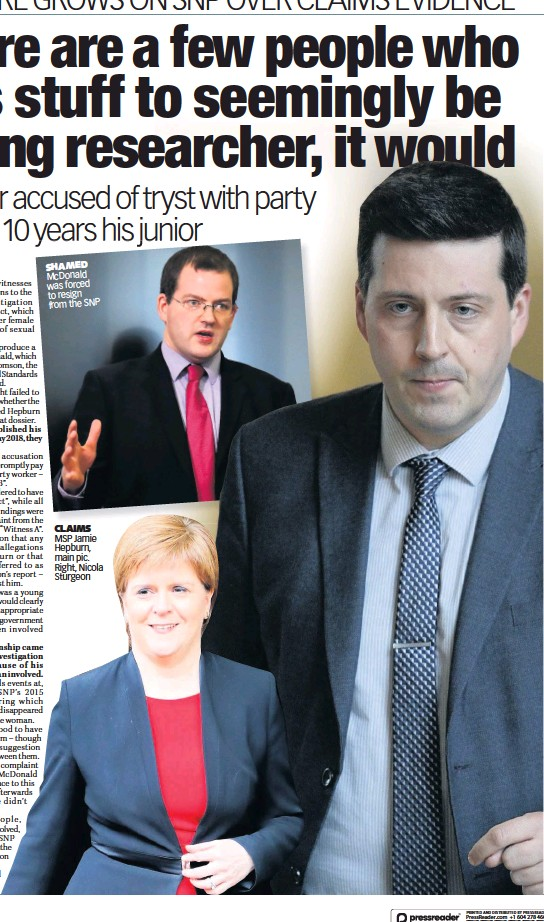
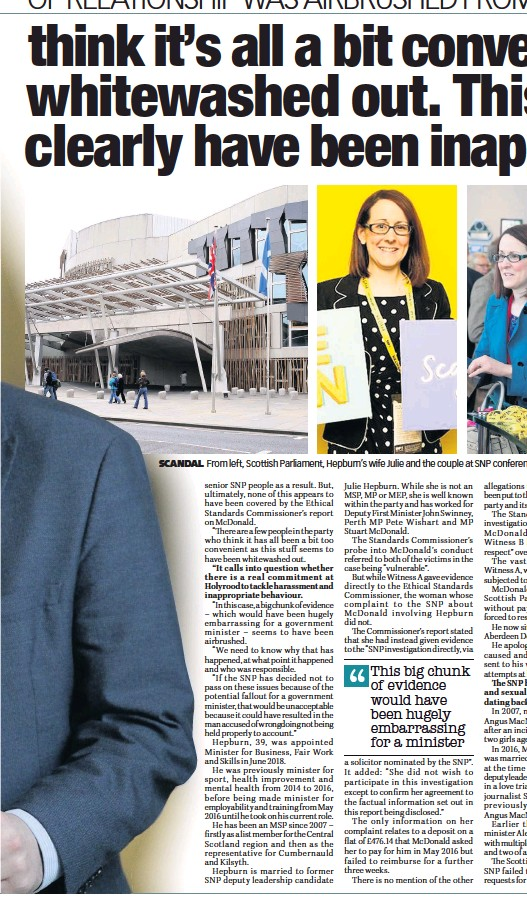

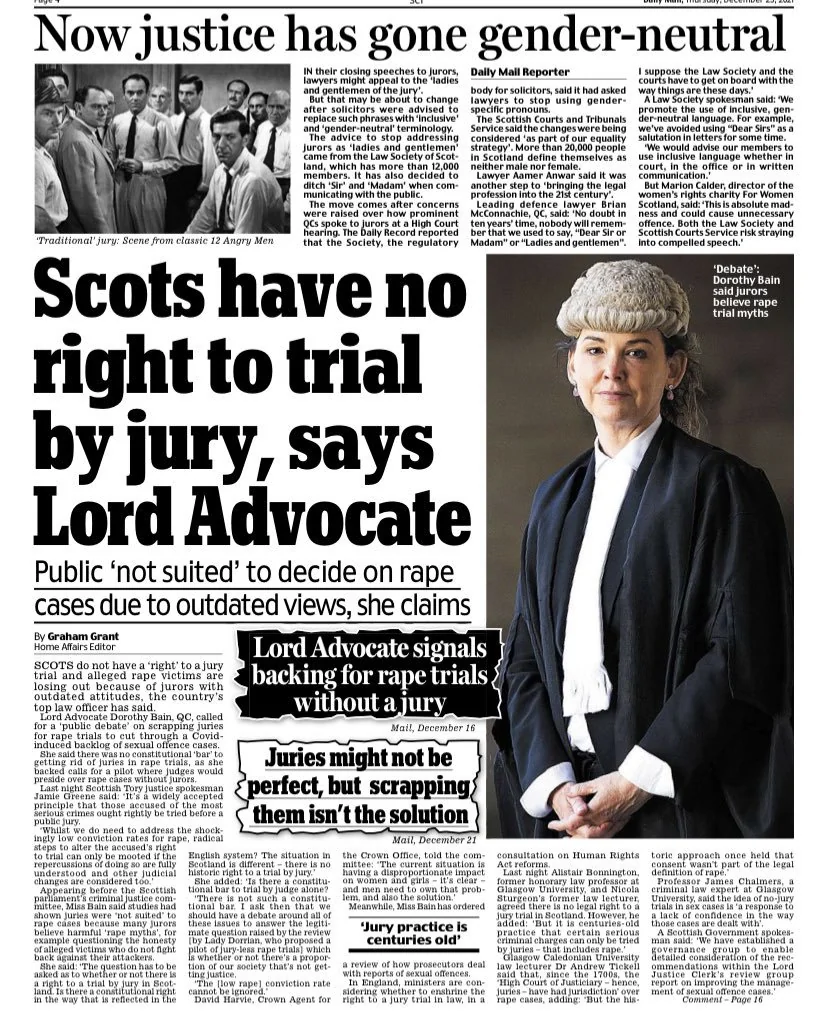
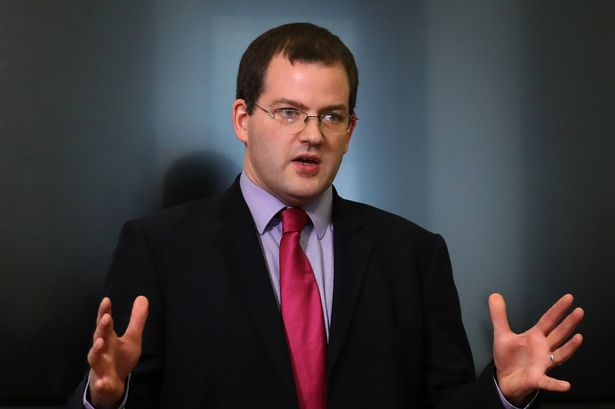
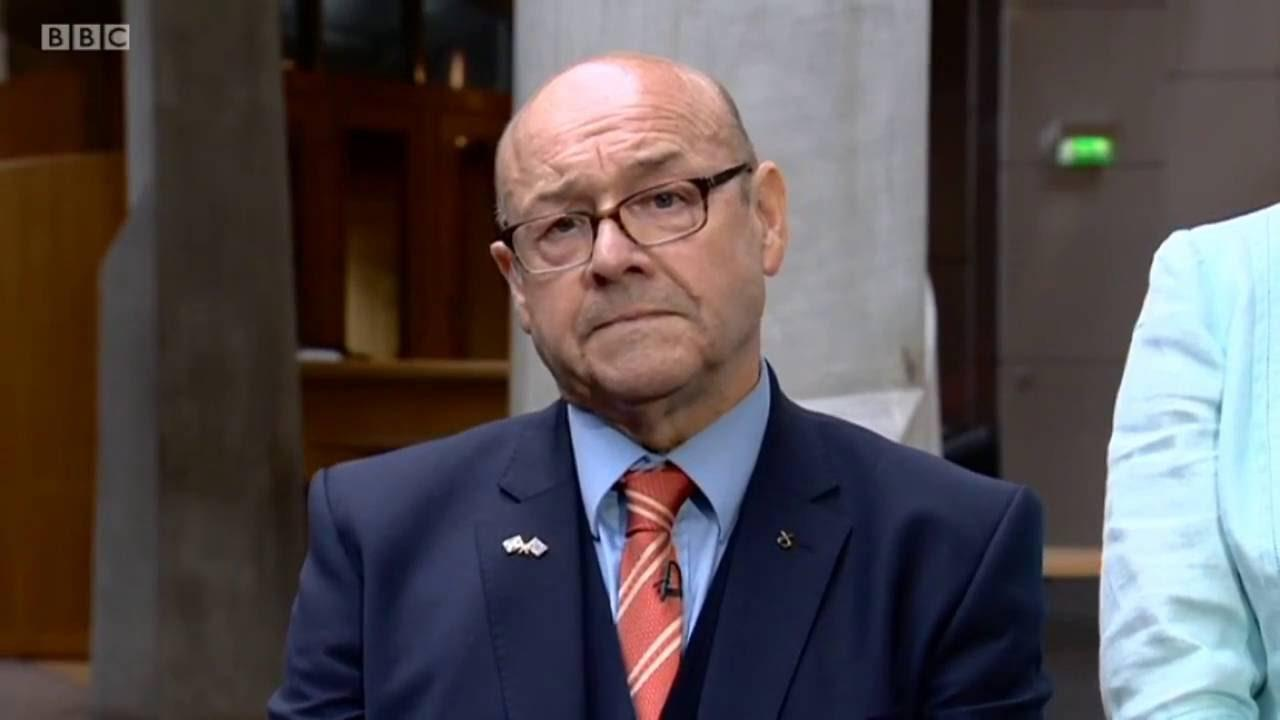
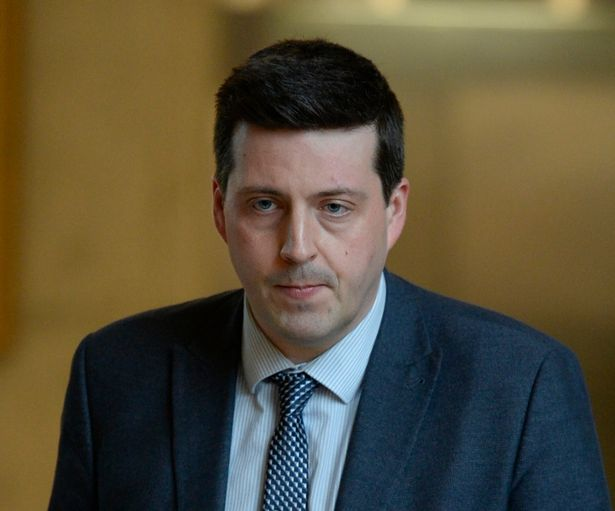
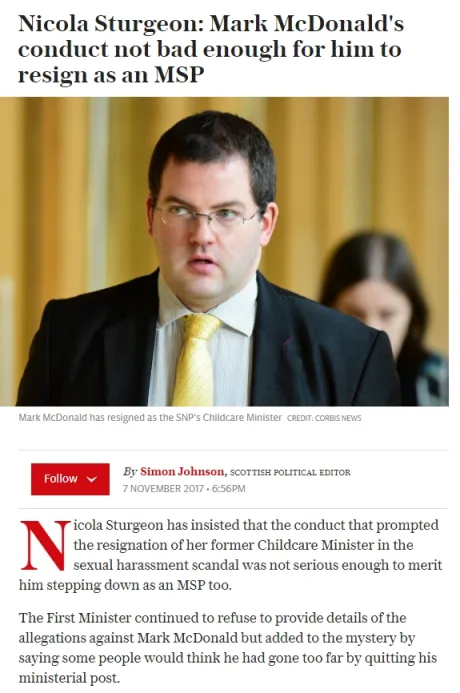


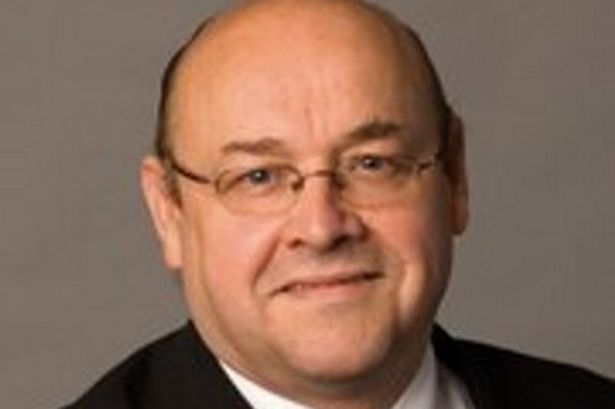
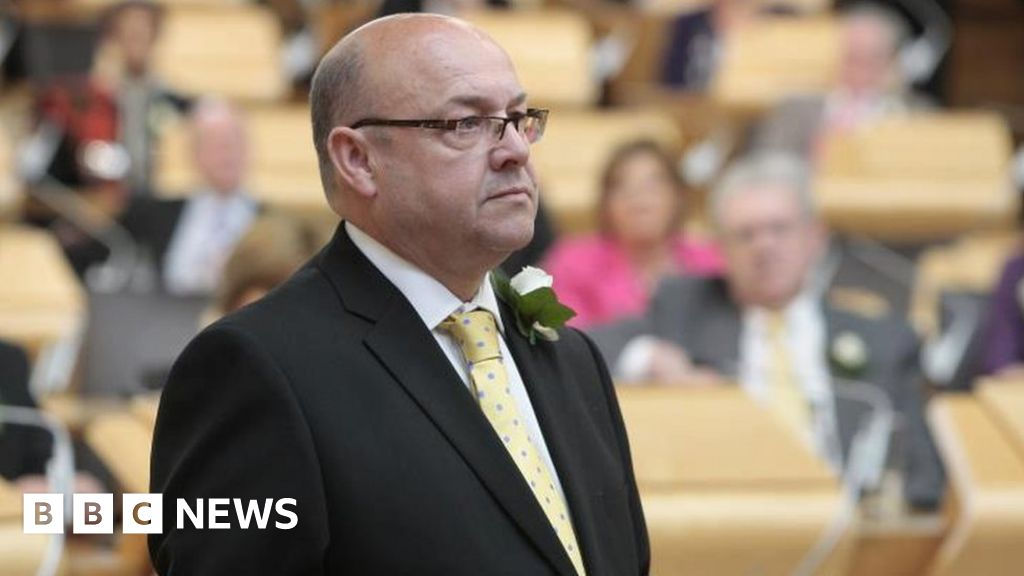

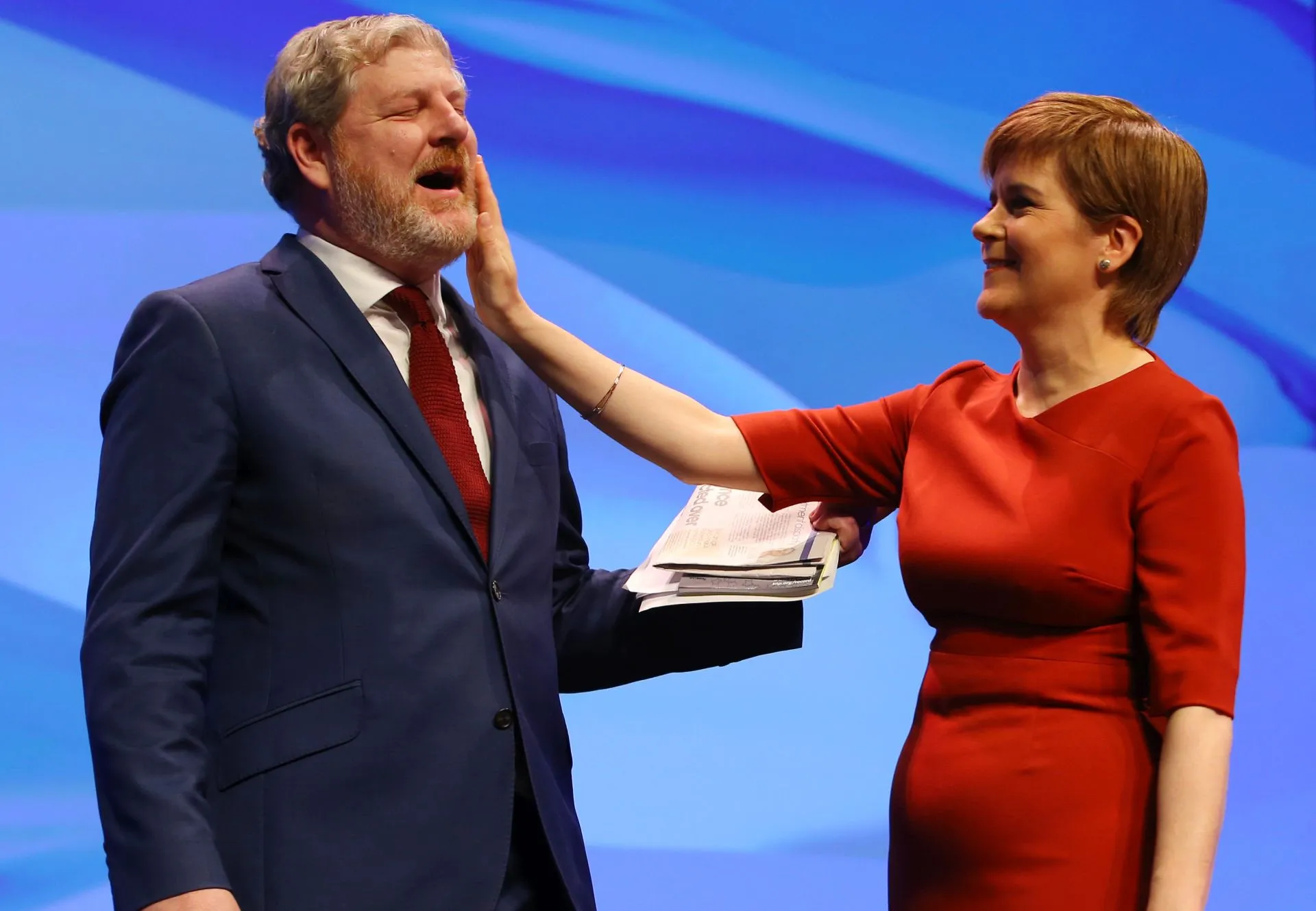

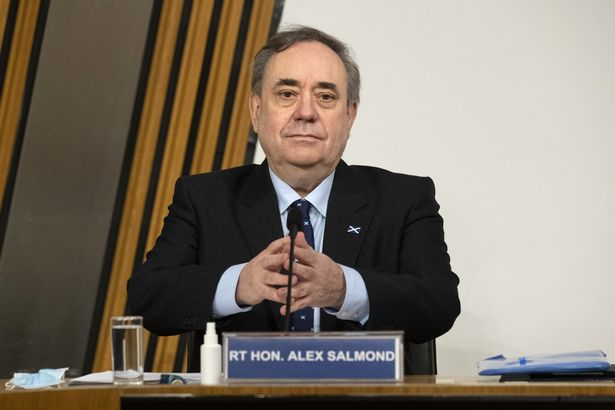

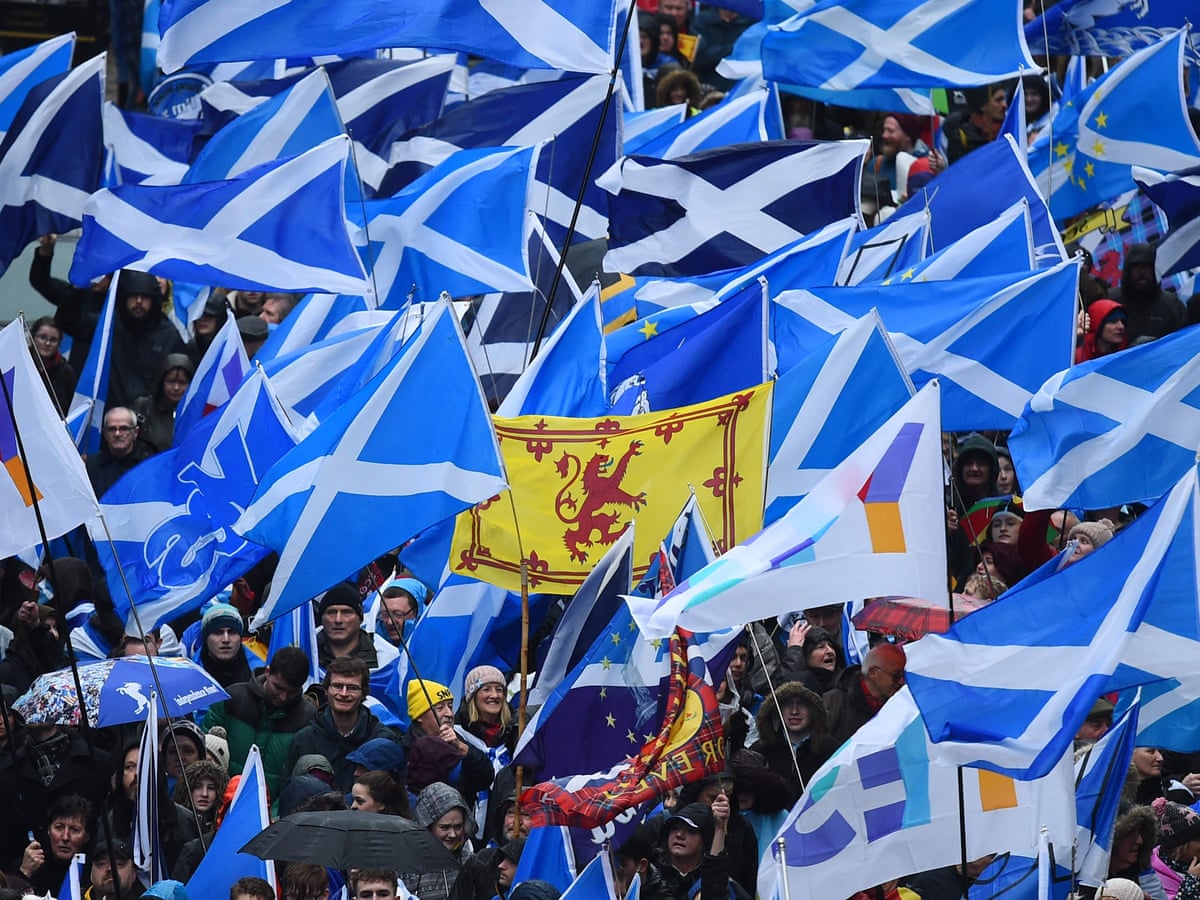




 caltonjock