Carousel Banking RBS Losses

Let’s get back to 2007.

At the time RBS, HBOS and others were in danger of failing, the UK Treasury finally stepped in, (after much dithering on the part of Alistair Darling et.al.) with some financial assistance.

The main package of financial support, had been provided, to the Bank, (at least 3 weeks before) by the USA.

80% of losses in the market, were attributed to RBS London based business operations.

Lets look forward, (to an independent Scotland)

Westminster politicians, (in a rather purile fashion) continue to broadcast that an independent Scotland, should not expect English taxpayers to stand behind failing Scottish banking institutions.

A reminder; 80% of losses at RBS in 2007 were attributed to (Carousel Banking) in London. That would be one liability removed.

All banking crisis, (in a world free trade market) are global and losses will always be shared between countries. Myths, (mischeviously circulated by Westminster politicians) are pure piffle.

In a banking crisis banks will call upon many Central Banks as a lender of last resort. That is the over-riding role of Central Banks in the jurisdictions that they have control over. e.g. 80% of losses attributed to London in 2007 would still be the responsibility of a UK government.

Don’t let them scare you into submission. Vote, “yes” to independence

The final word – An Independent Scotland Can Retain Sterling as Its Currency If It Wishes To Do So – Official – Yet Another Westminster Scare Rebuffed


Image result for Scottish independence finance images


Currency in an independent Scotland

The Financial Times revealed the true extent of an independent Scotland’s riches and the Scot’s are not the, “subsidy junkies” the BBC and, “Bitter Together” campaigns would have you believe. In an independent Scotland prudent bankers will accept there are solid business reasons for spreading the risk of any future failure. This they will achieve by retaining their businesses in a proven energy rich Scotland.

In the event of an economic collapse and bankruptcy in England, perhaps brought about by a run on sterling by investors following an implementation of BREXIT. many, faced with large increases in interest repayment rates and a massive property crash, coupled with a large increase in unemployment, will move their capital and souls to Scotland.

The chief executive of Royal Bank of Scotland made it clear the bank will adapt its business for an independent Scotland. Pointing out that RBS has been in Scotland for nearly 300 years he said: “It’s really important that the Scottish people get the opportunity to vote, and then if I need to adapt my business to serve England, Scotland, Wales and both the Republic of Ireland and Northern Ireland, then I will.”   http://www.theguardian.com/business/2014/feb/12/scotland-independence-rbs-london-ross-mcewan

Related image


Official – Scotland Can use Sterling without a currency union – Guernsey and Jersey do it

In the 2014 referendum the UK Chancellor and others supporting “Better Together” repeatedly stated that Scotland would not be allowed to retain sterling as its currency without asking permission of the UK government. But Alistair Darling, (leader of Better Together) finally admitted, on national television (In his final debate with Alex Salmond) that Osborne was talking p**h. Scotland could use sterling if it wished to do so.

Peter Spence, (an acknowledged expert in the fields of; Central banking, financial markets and wider issues in economics) writing for the respected financial journal,”Cityam”  rebutting the Chancellors statement said “Proponents of Scottish independence might prefer an example closer to home. The British crown dependencies of Guernsey and Jersey have just such an arrangement with the UK, and has been managing just fine since the pound became its currency in 1834.”

His position was further clarified by Sam Bowman, (Research Director at the Adam Smith Institute), who said “an independent Scotland would not need England’s permission to continue using the pound sterling, and in fact would be better off using the pound without such permission.”

Rules were published by the EU in 2006 – “Monetary and exchange-rate agreements between the European Community and Third Countries.” The paper states: Guernsey and Jersey are “sovereign with regard to their monetary regime”. See: http://ec.europa.eu/economy_finance/publications/publication658_en.pdf”

.

Image result for Scottish independence finance images


Debunking the Westminster Promoted Negative Myths of a Currency Union


Related image


A Currency Union

The Scottish National Party recently committed to retaining £ sterling as the currency of an independent Scotland until such time as it is deemed prudent to adopt a replacement, (mirroring the successful policy of the Irish Free State).

Already the vultures are circling with their portents of a doom claiming the lack of a “Bank of last Resort” will prove to be a weakness which will be seized on by desperate Unionists and used to discredit the policy.

But it is opportune to know the views of independent thinkers armed with a depth of financial acumen.
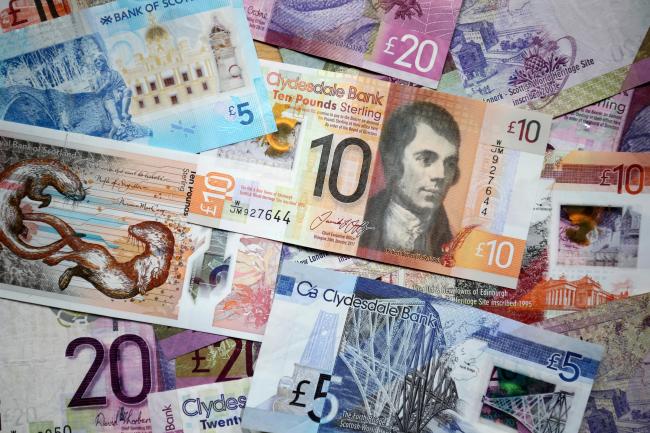
 

Image result for currency union england scotland


Currency Union. Experts in Finance Offer a View

Deutsche Bank.

In 2014 the UK government dismissed a currency union with an independent Scotland, but,  in practice it would be impossible for the Treasury to unilaterally sever the Scottish banking system from the rest of the UK without major risks to the financial stability of the rUK banking sector.


Citigroup.

The head of the “European Group-of-10 currency strategists” at Citigroup said:

“Given the close economic ties between the two and assuming that these ties need not weaken going forward, the potential introduction of a currency union need not adversely affect trade and other flows.”


University Dean. Professor Angus Robertson.

The rUK’s debt to GDP ratio will rise significantly, with possible consequences for its credit rating. At the same time, Scotland’s debt burden will be much lower than rUK’s in all cases.


 University Dean. Professor Andrew Hughes-Hallett

an expert in economics and public policy at George Mason University in the US:

“There’s nothing which the Bank of England or the rUK could do to stop Scotland using the pound”.

 

Related image


Effects of Currency Unions on Trade and Output

Independent evidence provided through academics and economists all point to a currency union being the only logical choice in particular where neighbouring countries also share a language it is the common sense approach that they can profit by sharing a currency.
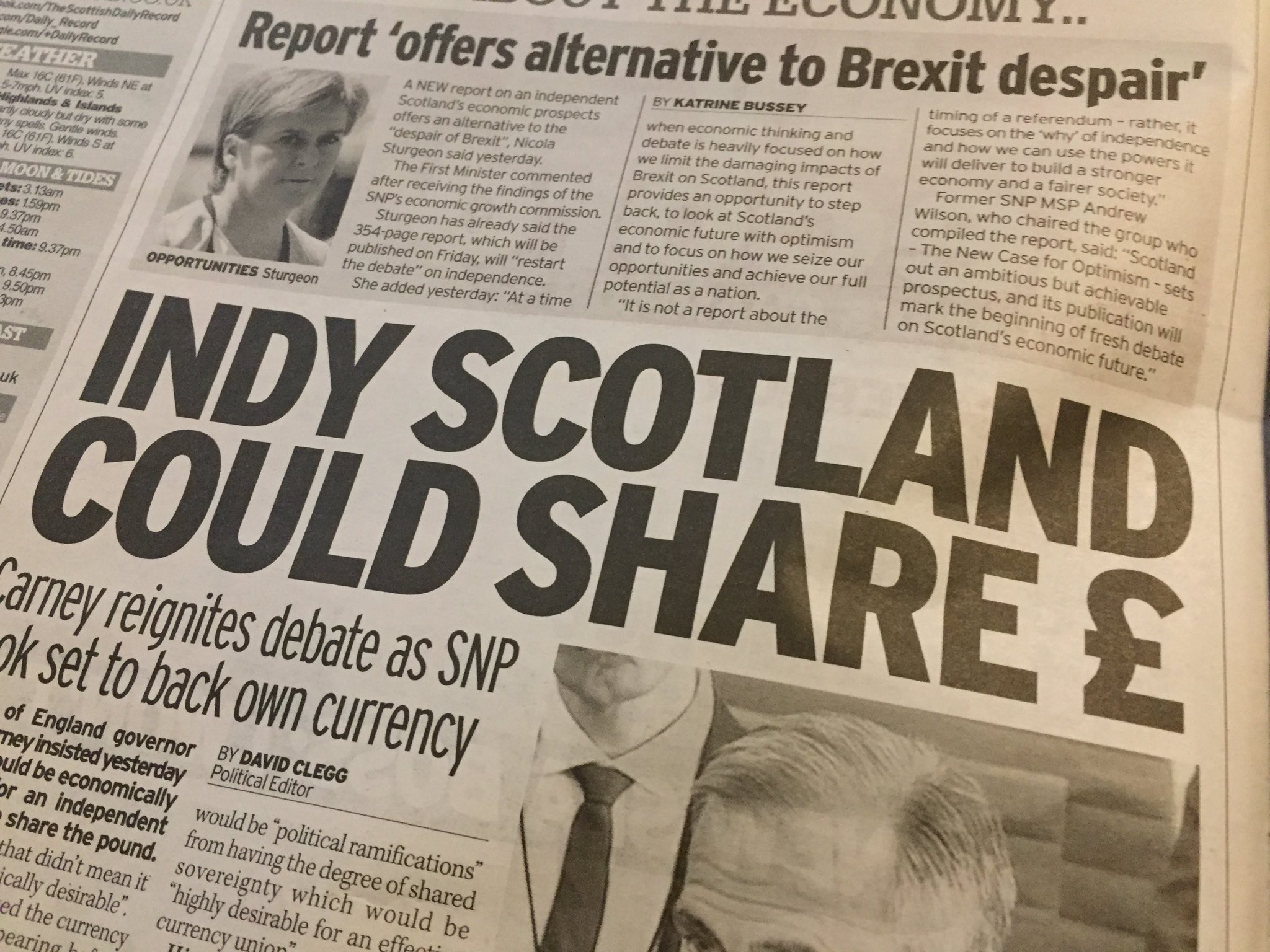
 

Image result for currency union england scotland


Who Needs a Bank of Last Resort

Myths govern modern central banking. Like many myths, they contain an element of truth that has been distorted by exaggeration and misapplication.

Myth One:

Central banks are intrinsically necessary for market economies. But history and theory belie this. Example:

The Bank of Canada was not founded until 1935 but the Canadian banking system survived the Great Depression with no major bank failures.

In contrast, thousands of U.S banks failed, despite the existence of the Federal Reserve.

These large-scale failures were only ended by President Roosevelt’s imposition of a bank holiday, not by any Federal Reserve contribution to banking stability.


Myth Two:

Central banks are needed as a lender of last resort—that is, to supply liquidity in times of financial stress when short-term lending freezes up.

The US Federal Reserve’s lending in the aftermath of Lehman’s collapse in 2008 is the new textbook example of this function.

But this argument has the causality exactly backwards.

Walter Bagehot, the eminent 19th-century British economic journalist, coined the phrase “lender of last resort” in his classic book, “Lombard Street.”

He recognized this was an essential function for the Bank of England. However, the context is often dropped.

Bagehot knew that a central bank inevitably resulted in a concentration of reserves within that institution, making it the lender of last resort.

But he did not believe that a central bank was inevitable or desirable.


Related image


Time for some radical rethinking

For Bagehot, “the natural system” was the one “which would have sprung up if Government had let banking alone.”

There would have been “many banks of equal or not altogether unequal size.”

He described this as “the many reserve system,” in which each bank held reserves for itself, which he believed would have meant a stronger banking system.

In modern parlance, Bagehot’s celebrated “lender of last resort” is a second-best solution—second to a world of competitive banks and no central bank.

From 2011 the function of the Bank of England to act as a “lender of last resort” has been subsumed in favour of the better solution. Banks are now required by law to maintain sufficient financial reserves to cover all eventualities.

This is a good read:

(http://www.cato.org/publications/commentary/debunking-myths-about-central-banks)


Image result for currency union england scotland


An Englishman for Independence

This is a must view/listen for all those who have a vote in an Independence Referendum.

(https://www.youtube.com/watch?v=LOm5U1Rsvu8&feature=player_detailpage)
 

Image result for currency union england scotland


For the serious reader to study.

Click to access w7857.pdf

Click to access w9435.pdf


Image result for currency union england scotland


Don’t Be Persuaded by the Anti Independence Unionist Political Hype – One Of Britains Best Ever Chancellor’ Reveals the Truth – Scotland Would Thrive Without England Dragging It Down


2D0B063700000578-3258726-image-m-74_1443886121189

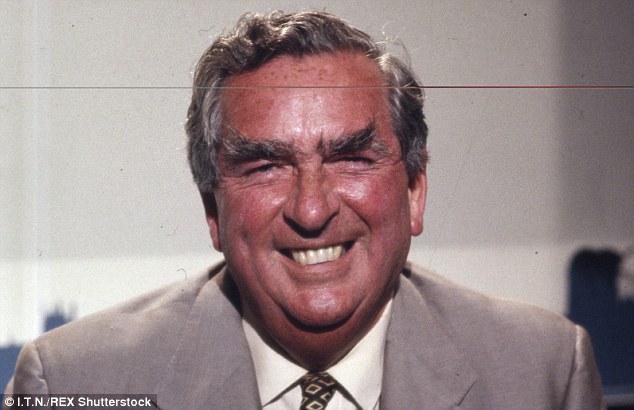
Denis Healey


Can Scotland Go It Alone

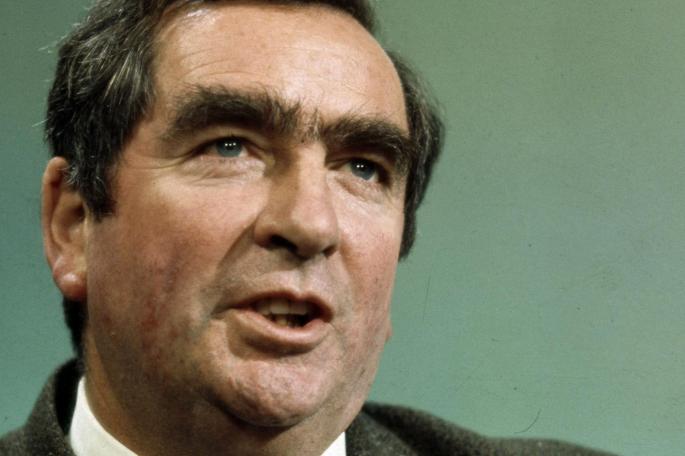
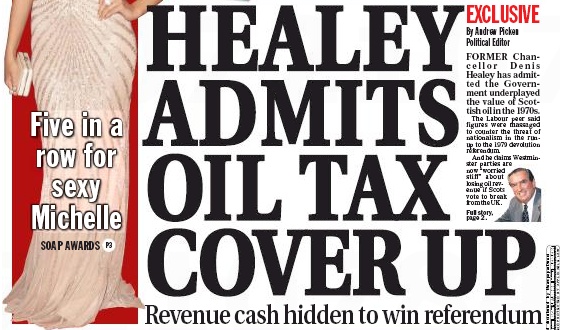
The views of one of the best economists in the UK in the last 100 years, the late Denis Healey, former Chancellor of the Exchequer in Labour governments 1970-1979 are as relevant today as they were in the past.

He was asked if he supported the cause of those who wished Scotland to become an independent nation once again given that the Scot’s were overly financially subsidized by England and the oil & gas resources were the property of the UK.


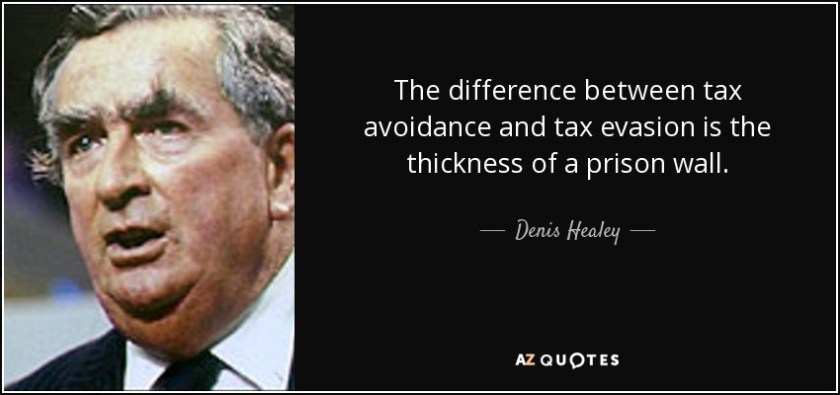
quote-the-difference-between-tax-avoidance-and-tax-evasion-is-the-thickness-of-a-prison-wall-denis-healey-52-11-00

His answer was surprisingly blunt and not widely reported. He said:

“I think England would suffer enormously if the income from Scottish oil and gas stopped but if the Scots want independence they should have it and England would just need to adjust.

index

Asked if he expected an independent Scotland would survive, economically. he said:

“Yes, I would think so… and they have the oil, gas and renewable energy”.

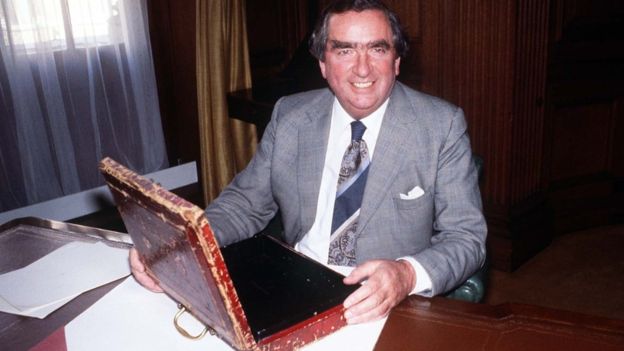
_85893000_bd8a6111-1940-4070-a68f-b7eccabfe596

Asked about his thoughts about claims that Scotland being subsidized by England he reminded the questioner that Joel Barnett, (he of the Barnett formula), was his deputy at the Treasury at the time the share of the national income pot Scotland should receive was decided.

He added:

” Scotland pays more than its fair share and these myths are simply perpetuated to cloud the issue by those that are opposed to independence.”

methode_times_prodmigration_web_bin_79bcfb53-0753-315f-afb2-56a6aeb61217

On Scotland keeping the pound, he said:

“I don’t see why Westminster could say the Scot’s couldn’t share it. Scotland would gain from the arrangement but so would the rest of the UK”.

posthealey

UK Debt Out of Control

Interest bill on UK’s £1.27 trillion debt to hit £1bn a week

The Uk taxpayer is forking out £1billion every week !!!! yes £1billion a week!!! just to pay off interest on the largest debt of any country in the world, (£1.3 trillion and rising). I hope Scotland goes for plan B but tying the currency to the $US

http://www.telegraph.co.uk/finance/economics/10849333/Interest-bill-on-UKs-1.27-trillion-debt-to-hit-1bn-a-week.html

Scottish Pound Gathers Strength

Hong Kong Money Market Boosts Scottish Independence.

At the time Scotland re-enters the world stage as an independent country, use of sterling will become the subject of debate within the worlds money markets. Retention of Sterling, without a, “lender of last resort” is gaining ground as a preferred option,(mirroring that adopted by a thriving Panama which adopted the $US as it’s currency) given that the Westminster treasury is very heavily over committed, in any event, carrying the heaviest financial deficit in the world.

It is likely the Scottish pound will gain in value against the rUK pound in the financial markets of the world. Anyone possessing Scottish notes, in any volume, would be well placed to make a fair bit of profit. The Chinese plan long term and are apparently ahead of the game.

In a week that has seen Britain discuss the future of sterling and the possible break-up of the United Kingdom, Hong Kong’s money changers have provided an unwitting boost to the Scottish independence movement by offering a separate – and more favourable – rate for Scottish pound notes. Currency exchange company Mega Foreign Exchange listed the Scottish pound in its exchange rates, valuing it higher than the English pound. Yesterday it was offering HK$11.50 for a Scottish pound but HK$11.30 for an English one.

http://www.scmp.com/news/hong-kong/article/1224903/scottish-independence-gets-boost-hong-kongs-money-markets