Tory Placeman Tomkins Asks the Scottish Parliament to Trust the Westminster Government and Support Their Centralising of Devolved Powers – History Indicates Such Support Would be Folly


The Application of Laws in England and Scotland before 1707

The principles of Roman Law, a system of ‘rights’ and ‘obligations’ prevalent in European countries was used to develop Scots law over many hundreds of years before 1707.

Whilst, in England, lawmaking evolved by writing “Common Law” into statute, using the decisions of judges as precedence. The two systems are not entirely compatible.


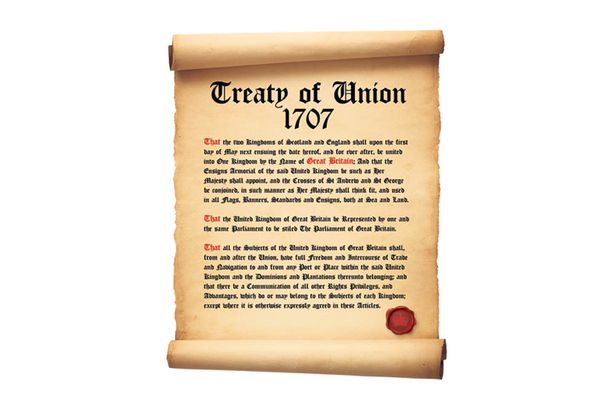
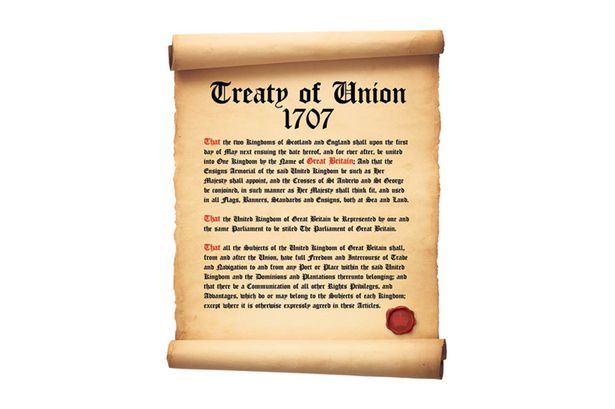
The Treaty of Union (1707)

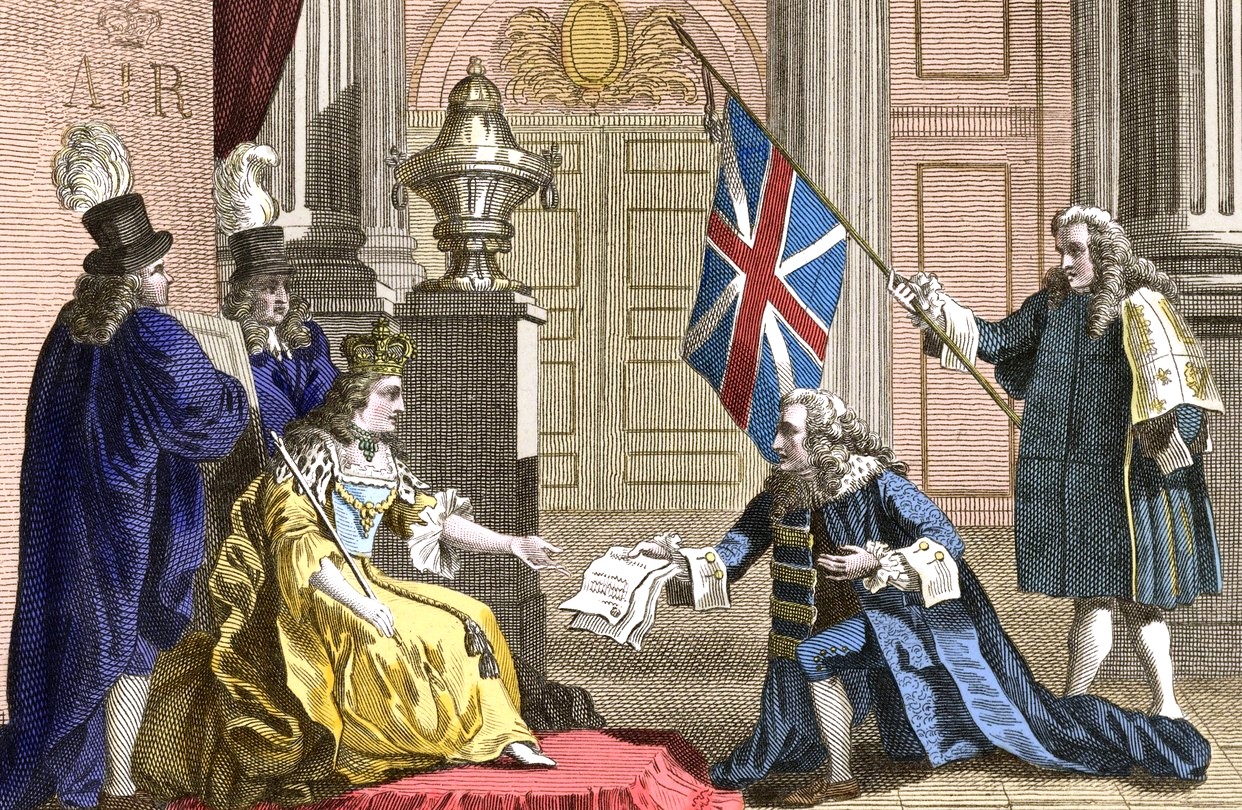
Article 19 of the 1707 Treaty of Union with England stated that the laws of Scotland would remain in place and the authority of the Scottish College of Justice, Court of Session and Court of Justiciary would be retained by Scotland.

But the merging of the two parliaments brought with it (in direct contravention of Article 19 of the Treaty) the move to England of Scottish politicians and lords and with them the removal of legislative power to Westminster which was finalised by the transfer of the “right of appeal” from the Scottish judiciary to the House of Lords.

Essential reading: The Union and the law. – David M Walker former Regius Professor of Law in the University of Glasgow (1958-1990.) http://www.journalonline.co.uk/Magazine/52-6/1004238.aspx


Illegal replacement of Scots law with English law.

Despite assurances to the contrary from Westminster and a legal commitment in the 1707 treaty, there have been many reforms to the Scottish judicial system and legal procedures over the years so that it conforms with English practice.

The Home Secretary in the 1820s, Robert Peel sought to justify changes on the grounds that the Scottish system was “totally different from English practice and repugnant to English feelings”.

In the mid Nineteenth century the industrial revolution brought with it new areas of public policy such as public health, working conditions and many other practices and these were legislated for by Westminster, without consultation with the Scottish judiciary, further challenging the uniqueness of the Scottish system.

And in the later part of the nineteenth century, commercial law was assimilated and Scottish law replaced by English-based measures such as the Partnership Act 1890 and the Sale of Goods Act 1893.

The weakening of Scots Law by the Westminster political establishment became so overtly routine that Lord Rosebery, in 1882, speaking in the House of Lords voiced Scottish fears of the creeping Anglicanisation of Scottish law stating that legislation was framed on the principle that “every part of the United Kingdom must be English, because it is part of the United Kingdom”.


Acts of the Westmnister parliament imposed on Scotland

The Treason Act – 1708 – This harmonised the treason laws of England and Scotland, effective from July 1709.

The English offences of high treason and misprision of treason were extended to Scotland, and the treasonable offences then existing in Scotland were abolished.

When the Scottish Parliament was set up in 1998, treason and treason felony were among the “reserved matters” it was prohibited from legislating about, ensuring that the law of treason remained uniform throughout the United Kingdom.


Disbandment of the Privy Council – 1708 – The Privy Council, and the great offices of state, including the chancellor, secretary and treasurer, were abolished after the Acts of Union 1707, with rule direct being implemented from London.
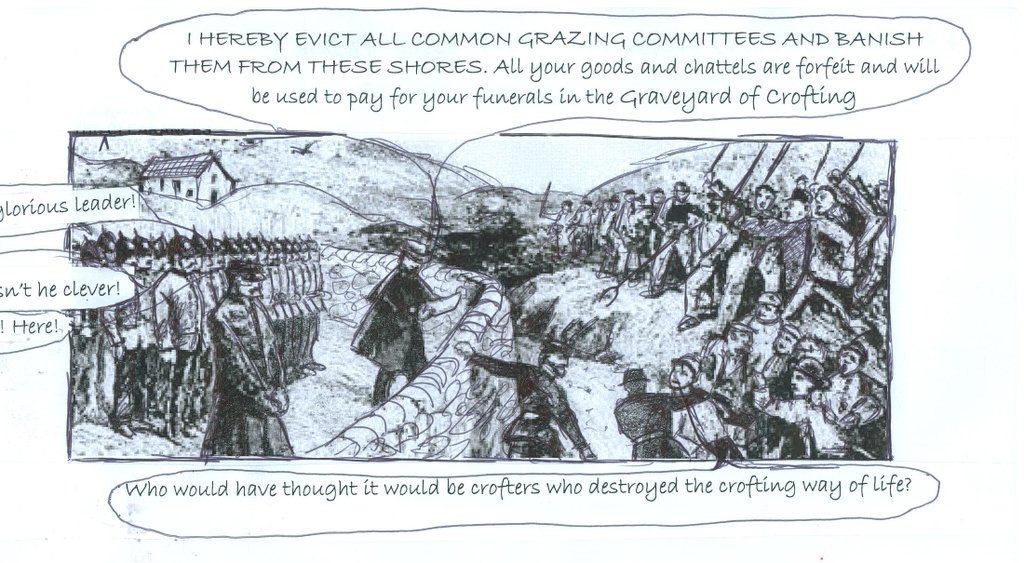


The Scottish Runrig System of land ownership

Up to mid eighteenth century land tenure in Scotland was maintained using the “runrig system.”

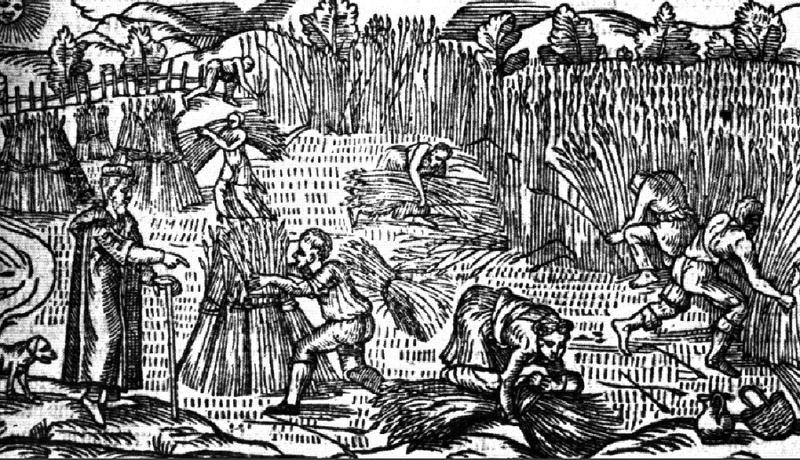
Agricultural land was divided into towns or townships, comprising an area of cultivable “in-bye” land and a larger area of pasture and rough grazing. The “in-bye” was divided into “rigs” which were periodically reassigned among the tenants of the township so that no individual had continuous use of the best land.

Tenants would have a few rigs under their tenure, and it would be their job to fertilise the earth using dung from their own animals. Ploughing, planting and reaping, the farmer cultivated and cared for the land producing crops to feed the family, and hopefully have some left over to barter with.

The “rig” was a strip of ploughed and cultivated land usually 20 feet wide, and high. Only the crown of the rig was ploughed and half the width between them was taken up by huge “baulks” or open spaces filled with briars, nettles, stones and water separated from the next Rig by a “run”, which was left uncultivated.

The high rigs served as a method of water drainage for the crop, given the prevalence of rain in Scotland.

The “baulks” provided shelter from the buffeting winds and a rich habitat for beneficial insects and birds that, in the absence of chemical pesticides, did a good job of eating many of the pests that would damage a crop.


The Scottish Society of Improvers

The Society of Scottish Improvers was founded in 1723 and included in its 300 members the Dukes, Earls, Lairds and Landlords of Scotland.

Exports to England increased from 1707 and the Society members were determined to increase agriculture output improving their profit margins.

Haymaking was introduced along with the English plough and foreign grasses, the sowing of rye grass, clover, turnips and cabbages was introduced.

lime was put down, roads built and woods planted.

Drilling and sowing and crop rotation was introduced and the introduction of the potato to Scotland in 1739 greatly improved the diet of the peasantry.

The Lothians became a major centre of grain, Ayrshire of cattle breading and the borders of sheep.


The Enclosure Acts – 1707-1860

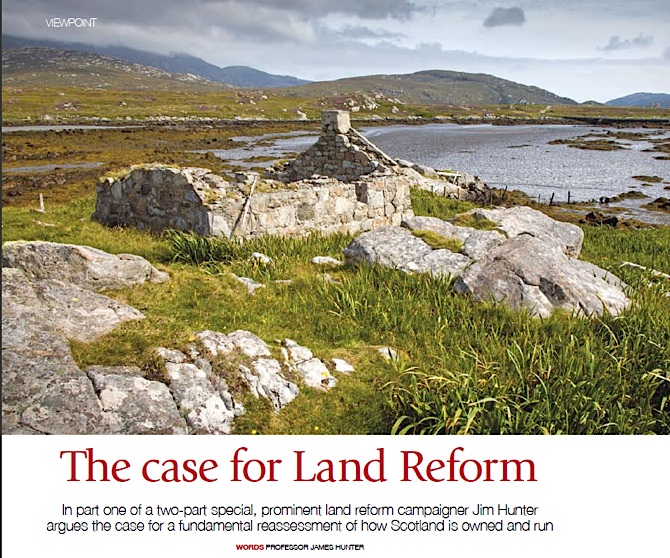
The Enclosure Acts were a series of Westminster Acts of Parliament displacing rigs, free pasture and common land in Scotland, creating legal property rights to land.

Between 1707 and 1914, thousands of individual Enclosure Acts were legislated encompassing millions of acres of Scotland.

The joined land was divided into crofts and initially given over to tenants under fixed tenancy based on the amount of land that they owned before the act.

But often the land was uncultivated and useless and owners, who were required to to fence the land in order to live on it, couldn’t afford to do this forcing them to sell or give up the land and move into urban areas.

Authorities also forcibly implemented the enclosure acts through the eviction of crofters that did not own land.

They also evicted people who said they owned land, but who could not prove it.

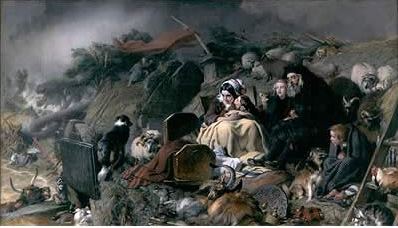
This resulted in tens of thousands of displaced and homeless people who were forced to leave Scotland to take up their lives in the new colonies of Canada and the Americas.

Many thousands of Scots died due to the appalling conditions on board inadequate overloaded shipping and the Westminster parliament and Lords will be forever dammed by their actions

So, after stealing the land from village farmers, the landed aristocracy forced poor labourers off the “village commons” land and enclosed it as their own property.

The increase in their landholdings enabled them to cultivate ever larger fields.

The entitlement to land enjoyed by landowners in present day Scotland was built on the imposition by Westminster of a a brutal feudal system.

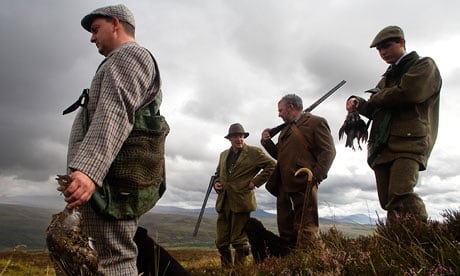
Over half of Scotland is owned by less than 500 people which equates to the most concentrated pattern of land ownership in the developed world.

Further reading: https://www.theguardian.com/uk-news/2013/aug/10/scotland-land-rights


The Disarming Act – 1716:

After the inconclusive Battle of Sheriffmuir the 1715 Jackobite rebellion withered and the clansmen drifted back to the glens.

English reprisals were swift and brutal. Many estates were forfeited and thousands of Clansmen were imprisoned and or sent as slaves to the plantations in the English colonies.

The purpose of the 1716 Disarming Act was to remove all weapons from Scotland.

It failed in its purpose as the bulk of weapons handed in were old, rusty and useless the Scots preferred to hide their weapons away to be used another day.



Disarming Act – 1725

There was a further unsuccessful Jacobite uprising in 1719 in which the Earl of Seaforth and other Jacobite chiefs, supported by a body of Spanish soldiers, were defeated by General Wightman and the Royal Navy.

This affair led to more determined legislation: “An Act for more effectual disarming of the Highlands in that part of Great Britain called Scotland, and for better securing the peace and quiet of that part of the Kingdom by which the men of the clans are required to surrender their – “…broad swords, targets, poynards, whingers or durks, side pistols, guns or any other warlike weapons.”

The man given the job of enforcing the measure was Major General George Wade, Commander in Chief of his Majesty’s Forces in North Britain.

Wade (an Irishman) estimated that there were, at that time, some 20,000 clansmen capable of bearing arms in the Highlands.

Half of that number, he advised, were potential Jacobites… but only around 2,500 weapons were surrendered.


Letters of an English Gentleman in the North of Scotland – 1730

There is an account of the attitude of English outsiders towards the Highland people and their culture in the writings of Captain Edmund Burt, a government engineer, who wrote his “Letters from a Gentleman in the North of Scotland” in the 1730s.

Recording first-hand experiences of his time with Wade in the Highlands he had this to say:

“Various reasons are given both for and against the Highland dress. Against it is that it distinguishes the natives as a body of people distinct and separate from the rest of the subjects of Great Britain, and thereby is one cause of their narrow adherence among themselves, to the exclusion of all the rest of the kingdom…”

He continued “…but the part of the habit chiefly objected to is the plaid, which is calculated for the encouragement of an idle life in lying about upon the heath, in the daytime, instead of following some lawful employment and that it serves to cover them in the night when they lie in wait among the mountains, to commit their robberies and depredations and is composed of such colours as altogether, in the mass, so nearly resemble the heath on which they lie, that it is hardly to be distinguished from it until one is so near them as to be within their power, if they have evil intention…”

The implications of Burt’s writings are that, south of the Highland Line, among folk who were properly dressed, there was an absence of idleness and criminality.

His words also expose the political dimension and racial prejudice against the highlanders, of English thinking “…that it renders them ready at a moment’s warning, to join in any rebellion, as they always carry their tents with them.”

Burt provides further evidence of the prejudice in another of his letters “…there are some among the English who are so prejudiced, that they will not allow there is anything good on this side of the Tweed.”

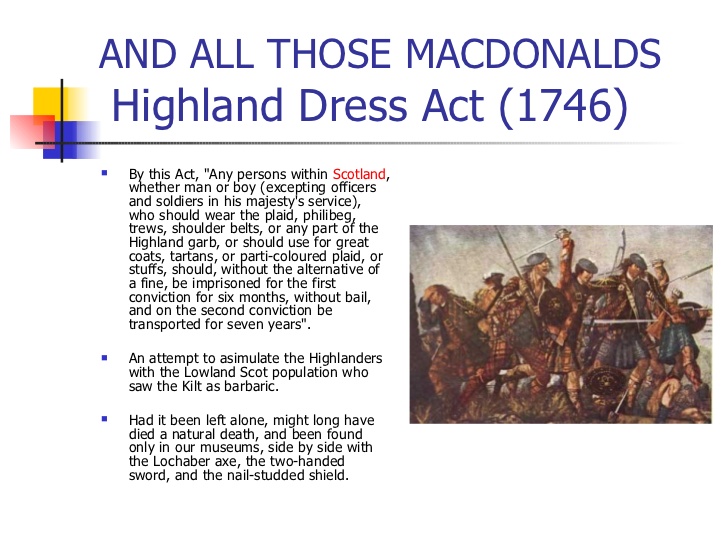
Burt’s observations, sixteen years before the introduction of the 1746 dress act is a harbinger of the racial and cultural intolerance of England against Scots, expressed in the years that followed by the legislation against highland clothing.
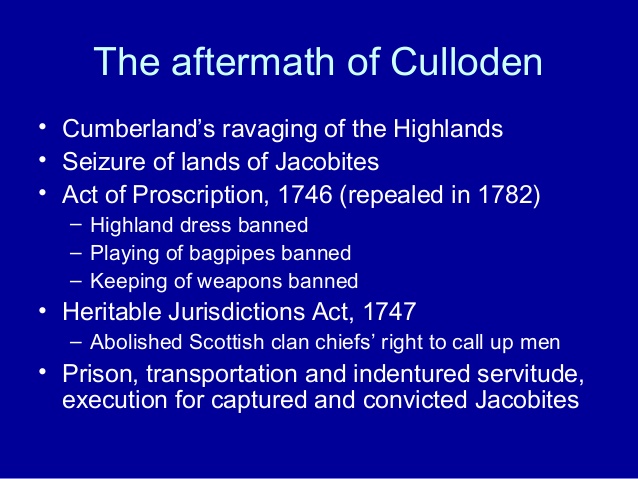


The Dress Act – 1746:

On the 2nd of August 1745, Prince Charles Edward Stuart, eldest son of James (VIII & III – the “Old Pretender”), landed on the isle of Eriskay with seven companions.

When the standard of Royal House of Stuart was raised at Glenfinnan, Highland clans rallied to the cause.

The subsequent course of the ‘Forty-Five Rebellion has been so oft recorded, and is so well known, that suffice it to say, the army of “Bonnie Prince Charlie” looked for a time set to victory, with the Jacobites reaching Derby by December.

There was panic in the House of Hanover, with King George II preparing to flee to the Continent.

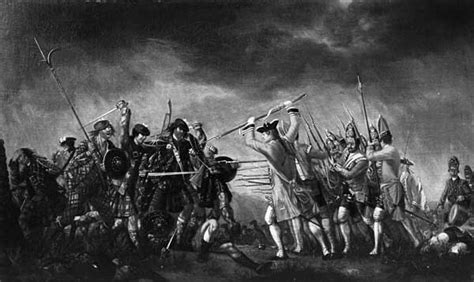
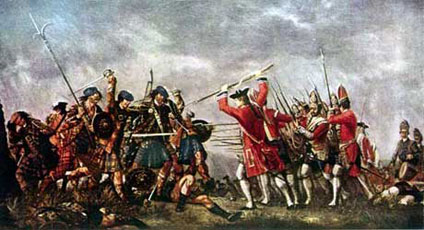
But when the promised french force, crucial to the success of the rebellion failed to materialise, Lord George Murray, counselled a Jacobite retreat and  on the 16th of April 1746, the army of Charles Edward was defeated by that of the Duke of Cumberland on Culloden Moor, outside Inverness.

There followed a bitter excess of reprisals –

As Commander-in-Chief, Cumberland was responsibile for the many atrocities committed in the aftermath of the rising, for he instigated them, actively assisted by his Generals – Hawley in particular – and junior officers, whose brutish behaviour, especially when, as they frequently were, drunk, is well documented.

This was an era when murder, rape, pillage and burning were common to the losing side in any fight but, even so, the reprisals against the ordinary highland people were, to any normal mind, excessive and left an evil memory”   (The Highland People – James D. Scarlett)

This was the mood against which the Dress Act of 1746 was drafted and passed by Lord Chancellor Hardwicke:

The purpose of it was to eradicate the military threat, to the Westminster government, of the Jacobite Highland clans, and to eliminate the culturally separate identity of the Highland people.

“From and after the first day of August, 1747, no man or boy, within that part of Great Britain called Scotland, other than such as shall be employed as officers and soldiers in his Majesty’s Forces, shall, on any pretence whatsoever wear or put on the clothes commonly called highland clothes (that is to say) the plaid, philabeg, or little kilt, trowse, shoulder belts, or any part whatsoever of what peculiarly belongs to the highland garb and that no tartan, or party-coloured plaid or stuff shall be used for great coats, or for upper coats. and if any such person shall presume after the first day of August, to wear or put on the aforesaid garments, or any part of them, every such person so offending, being convicted thereof by the oath of one or more credible witness or witnesses before any Court of Justiciary shall suffer imprisonment, without bail, for six months, and on being convicted for a second offence, shall be liable to be transported to any of his Majesty’s plantations overseas and to remain there for seven years.”

The Westminster parliament in London, with breathtaking arrogance, laid down the law dictating how Scots might clothe themselves in their own land.

As might be expected, in each instance the law was treated, in large part, with the contempt it deserved and in 1782, thanks largely to the efforts of the Duke of Montrose, the hated 18th century Dress Act was repealed.


Acts against Roman Catholics

The failed Jackobite rising of 1715 brought with it an Act appointing commissioners to inquire into the estates of popish recusants with a view to confiscating two-thirds of each estate.

The scope of “An Act to oblige papists to register their names and real estates” added an additional expense of all transactions in land, the more galling as Catholics were doubly taxed under the annual land-tax acts.

In 1722 an act was passed was passed “Granting an aid to his Majesty through the levy of a tax upon Papists” by which the sum of one hundred thousand pounds was wrung from the impoverished Catholics.

These punitive acts and other legislation against catholics remained in place throughout the reigns of, George II and his successor, George III.

Repealing the acts was a long, slow, gradual, and complicated process, the chief measures of relief being;

The First Catholic Relief Act of 1778, which enabled Catholics to inherit and purchase land repealing the Act of William III, rewarding the conviction of priests.

The second Relief Act of 1791, which relieved all Catholics who took the oath therein prescribed from the operation of the Penal Code.

The Catholic Emancipation Act of 1829 which removed punitive anti-catholic legislation.

Disqualifications against Catholics still in force are those which prohibit the sovereign from being or marrying a Catholic, or any Catholic from holding the offices of Prime Minister or Lord Chancellor.


The Scotland Act  – (1998)

The Westminster parliament passed a law (the Scotland Act 1998) which stated that Scotland could set up and run its own parliament and in 1999, a Scottish Parliament was convened for the first time in nearly 300 years.

This was a major development for Scottish politics and Scots law since it returned some powers to make their own laws on certain topics to the new Scottish Parliament.

It is of note therefore that the Scottish Parliament only exists because of a recent law passed by the UK parliament which means that Westminster retains ultimate control of the Scottish Parliament, including the power to dismantle it at will.

An important rider highlights that Acts passed by the Scottish Parliament can be challenged.

Sections 28 and 29 of the Scotland Act 1998 set out the competencies of Holyrood and state that legislation will be ultra vires if it relates to matters reserved to the UK Parliament or would be incompatible with EU law or the European Convention of Human Rights.

Questions over the legitimacy of Acts of the Scottish Parliament are known as ‘devolution issues’.

These can arise in any court but the ultimate court for determining these issues is the Judicial Committee of the Privy Council in London.

This highlights the importance of Scots retaining an awareness that Scotland is not separate from the rest of the UK, only some legislative powers been devolved and the UK parliament still makes the bulk of laws affecting Scotland contrary to Article 19 of the 1707 Treaty of Union.

Credit to wikipedia
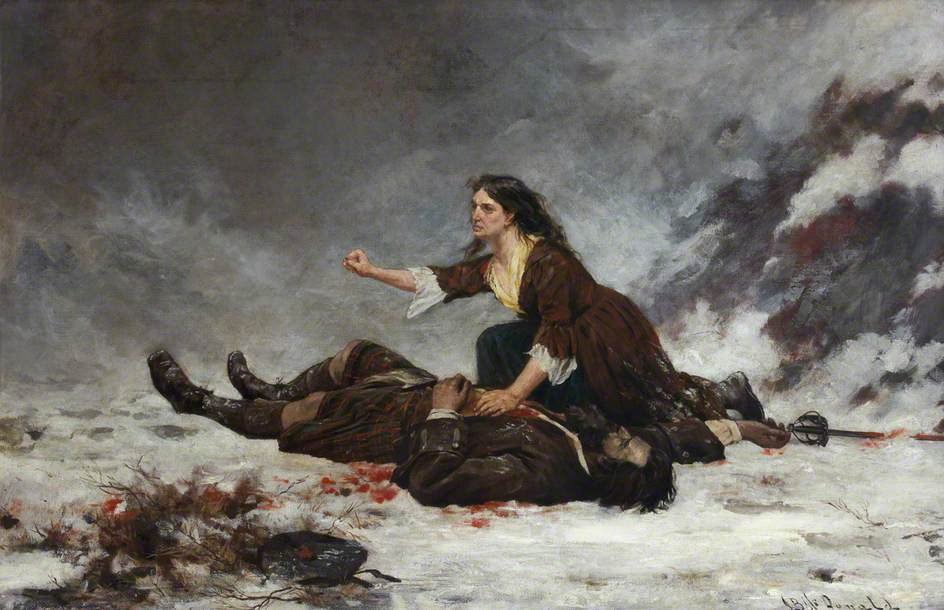


The Scottish rising of 1820 -Unionist spies betrayed the cause – many innocents were murdered by English soldiers – 23 Scots were tried for High Treason and Sedition and were sentenced to death by hanging

The 1820 Scottish Uprising

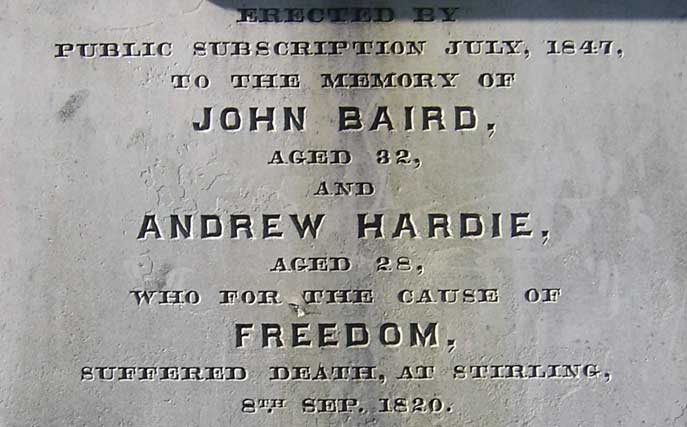
James Wilson, Andrew Hardie & John Baird (all weavers) were accused by the Crown of being leaders of the “1820 Rising”, a group of Scots campaigning for universal male suffrage, better working conditions and a Scottish parliament. They, together with 19 others, mostly weavers: Thomas M’Culloch, Benjamin Moir, Alex Latimer, Alex Johnstone, Andrew White, David Thomson, James Wright, William Clackson, Thomas Pink, Alex Hart, John Barr, William Smith, Thomas M’Farlane, John Anderson, John M’Millan, Andrew Dawson, Allen Murchie, Robert Gray, William Crawford and James Cleland were tried for the crime of ” high treason” at Stirling high court on 14 July 1820. All 23 were found guilty as charged and on 4 August 1820  were sentenced to death by hanging.

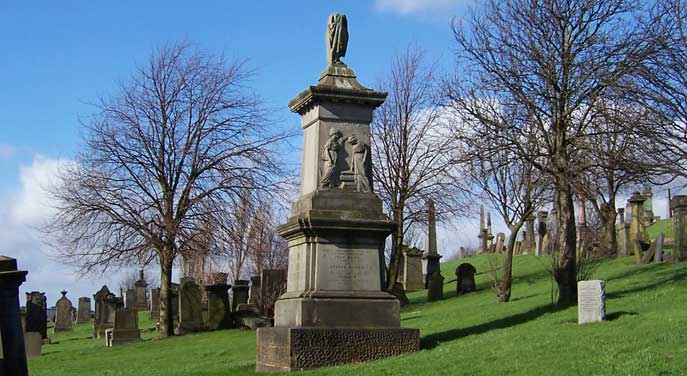
Martyrs Monument Glasgow

The Executions of James Wilson, Andrew Hardie, and John Baird

James Wilson was executed on 4 August 1820 in Glasgow. On mounting the cart that was to take him to the scaffold, the headsman was seated before him, cloaked in black, his face covered, holding a large axe in his right hand and a knife in his left. “Did you ever see sic a crowd as this?” Wilson remarked casually to his executioner. At five minutes to three, he mounted the scaffold and several minutes later his body was convulsing on the end of a rope, where it remained for half an hour, before being lowered and decapitated by the masked executioner, who held the bloody head aloft and proclaimed: “This is the head of a traitor.” The crowd jeered and shouts of,  “It is false, he has bled for his country!” were heard and reported in the Glasgow Herald the next morning. Barely a week later, on 8th September 1820, Andrew Hardie, from Glasgow, who told the spectators, (‘I die a martyr to the cause of truth and injustice’) and John Baird, from Condorrat, met the same fate in Stirling: The death sentence on the other 19 was changed to penal servitude for life and on 15 August 1820 they were transported to the colony of New South Wales in Australia.

Westminster Government Conspiracy

It later transpired that the Westminster government, through the agency and double-dealing of spies, actually incited the rising in the first place. But why would a government, gripped by fear of a popular revolution, incite a general strike in Scotland? To answer this question, we must unearth the roots of the 1820 Rising. In 1795, following the public stoning of King George III’s carriage as it travelled to Westminster, parliament completely redrew the laws for treason, with the effect that holding public meetings in support of reform could lead to the stiffest penalties that the courts were at liberty to dispense. The period following the American Revolution was a time in Scotland when groups including enlightened aristocrats, members of the rising middle classes, professional people, calling themselves “Friends of the People” pushed gently for reform. The weavers in Scotland were skilled and literate people who traditionally worked to commission, chose their own hours, and managed their own lives in a way that was denied to many factory workers and along with other skilled artisans, they formed an aristocracy of labour and were proud, independent, and increasingly radical in their outlook. After the Battle of Waterloo, a wicked recession gripped the UK and 1816 was a particularly black year for Glasgow, resulting in major bankruptcies across the city and its environs. This sparked a gathering of tens of thousands at Thrushgrove near Glasgow, demanding but not gaining reform and the situation worsened over the next four years so that by 1820 the stage was set for the rising that would result in the deaths of James Wilson, Andrew Hardie and John Baird and penal servitude for 19 other Scottish martyrs.

The Committee for Organising a Provisional Scottish Government

There existed in Scotland a covert group called  “the Committee for Organising a Provisional government,” which consisted of committed radicals, elected by their respective unions, who would assume responsibility of organizing the new social structure of Scotland in the aftermath of a successful rising. However, it became clear in retrospect that the committee had also been infiltrated by Westminster government spies, who were rife at the time, being one of the government’s most important defences against underground radical activities. The committee had the misfortune to convene in Marshall’s Tavern in Glasgow’s Gallowgate on March 21, 1820, in the presence of a spy. John King, a weaver from Anderston. King left the meeting early, just before the entire committee was arrested and detained in secret by the authorities. This is a vital point in relation to the events that unfolded over the next few weeks, because the organizing committee, the body of people who would be the centre of any radical rising, were off the streets and obviously not able to organize very much from their prison cells.

Glasgow Remembering the Martyrs of 1820

King and Other Unionist Spy’s Activate the Rising

The very next day, King was present at another meeting of important radicals in Anderston in Glasgow. It was also attended by another three men, also government spies: John Craig, a weaver, Duncan Turner, a tin-smith, and Robert Lees, described only as “the Englishman.” King took the initiative at this meeting and reported that a large-scale rising was imminent and that all those present should make themselves ready for armed conflict.

The 1820 Proclamation

The following day, on March 23, the spy, Duncan Turner, unveiled plans for a provisional government and revealed a draft of a proclamation, inciting widespread revolt, that was to be posted around the city for the public’s attention. This proclamation is pivotal to the whole history of the rising, and, given that the real “Committee for Establishing a Provisional Government” was in jail, the proclamation was later identified as the work of government agents, and part of a larger plan to sink the radical movement in Scotland once and for all. The events that transpired provides the evidence against King and his associates, all pointing in the direction of the Westminster government treachery and entrapment.

The Rising

On April 1, 1820, the citizens of Glasgow awoke to find the proclamation posted around the city, urging them all “to desist from their labour from and after this day…and attend wholly to the recovery of their Rights.” The proclamation opened with a rousing ideological plea for liberty: “Equality of Rights (not of property) is the object for which we contend, and which we consider as the only security for our Liberties and Lives.” The plea continues to the soldiery, asking if they could really, “plunge…Bayonets into the Bosoms of Fathers and Brothers at the unrelenting Orders of a Cruel Faction.” Strong words, and if the proclamation had been a government plan to draw underground radicals out into the open, they would have perhaps been shocked at the level of response from ordinary people and workers all over West and Central Scotland. The following Monday, people from many different trades, but especially weaving, stopped work. They were not only refusing to work, but were in many cases preparing for war. Reports flooded in of groups of men engaged in military drills, and making weapons such as pikes from any material that could be obtained. Revolt was in the air. On Tuesday 4 April, the spy, Duncan Turner, the issuer of the proclamation, was mustering a group of about 60 men in Germiston, and using all his arts of persuasion to convince the men to march to the Carron Works in Falkirk, where they could obtain arms for the coming battles. Not all were convinced, but he rallied those that would go with promises of meeting more men on the way to help them in their mission. He himself would be engaged in organizing other initiatives and wouldn’t accompany them on their long march. The leader of the group was the ill-fated Andrew Hardie, and Turner gave him half a card, which, he assured him, would match exactly with another half card held by a man waiting for him in Condorrat; a man at the head of another group of fighters. In this way the group would grow, swelling its ranks until it arrived at Carron.

The Carronshore Ambush

Waiting in Condorrat was John Baird, at the head of five men, holding the half card that had been given to him by none other than John King in one of his many guises. Both Hardie and Baird were no doubt expecting to unite with a small army when they matched their cards, and were obviously disappointed when they did match cards in the early hours of the morning. However, John King promised more support before they reached Carron, and he himself would ride ahead to rally these supporters. It is known that by this time the army already knew of a plot to take Carron, as a Lt. Hodgson had set off from Perth to protect Carron from an attack expected that day, Wednesday 5th April. Also, the band of radicals was spotted and reported twice following their departure from Condorrat, confirming for the authorities that trouble was afoot. The next time the band met King, they had been marching all night, and King told them to leave the road and wait at Bonnymuir while he mustered support from Camelon. This was the last the group was to see of King. Nor did they see more armed men rallying to their cause: instead they were shortly to meet opposing troops, with Lt Hodgson at their head, who had also left the road and incredibly found their way straight to Hardie and Baird’s band on Bonnymuir. The ensuing battle was nothing more than a skirmish, whereby Hodgson’s force of 32 soldiers, after a volley of shots from the radicals, easily overpowered them with a cavalry charge. Two soldiers and four radicals were wounded. In total, 19 of the radicals were taken prisoner and sent to Stirling Castle. The event in itself hardly constitutes a major rising, but other isolated disturbances were taking place across West and Central Scotland, and the journey of Hardie and Baird showed that at the fore of radical thinking was union with other groups in different parts of the country. However, the government seemed always to be one step ahead of the radicals, with inside knowledge at every step; also, the core organizers had been in jail since March 21st, without public knowledge, and some very suspicious men were acting on their behalf. The whole event was a plot hatched by Westminster government agent provocateurs in order to draw the radicals into open battle. On the fateful day of April 5th, troops took up position all over Glasgow, and although radical movements were reported all day, no attack was forthcoming.

Image result for Martyrs monument glasgow

Martyrs monument Glasgow

Betrayal of James Wilson

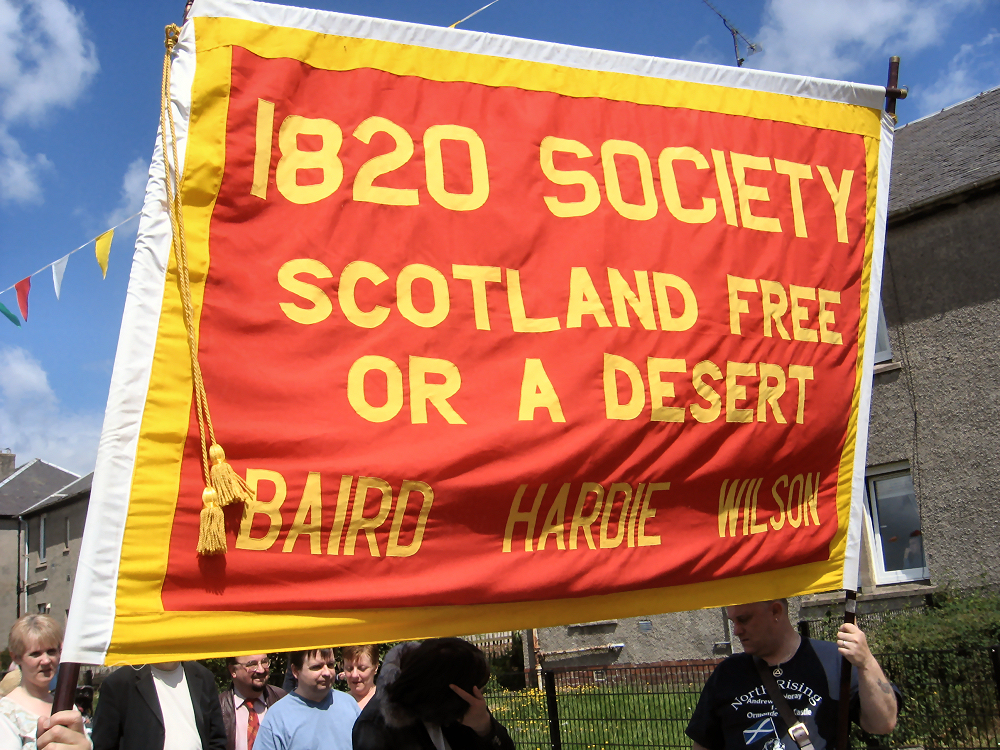
Also on April 5th, the awful fate of James Wilson was starting to unfold. Again, one of the spies was involved, this time the “Englishman” Lees, who sent a message to the Strathaven radicals that the rising had started. Wilson left with a small force of 25 the following morning, carrying a banner that declared “Scotland Free or a Desert.” By the time they neared East Kilbride, they were tipped off that an army ambush lay between them and their destination at Cathkin. Wilson returned to Strathaven, while his men avoided the ambush and reached their destination to find no action at all at Cathkin. By the following evening, the authorities had discovered the identity of 10 of the group, including Wilson, and held them under lock and key.

New Lanark 1820

English Soldiers Massacre Citizens of Greenock

The worst violence against civilians occurred on Saturday 8th April when the authorities tried to move a group of prisoners from Paisley to Greenock. The citizens of Greenock attacked the soldiers who had been ordered to move the prisoners. Even after they had completed their task, the soldiers still had to fight their way back out of the town as the crowd pelted them with stones. The army opened fire, killing eight people, including an eight-year-old child, and wounding 10 others. The government’s retribution was harsh, examples were to be made, and they took the form of the executions of Wilson, Hardie and Baird and the transportation to the colony’s of 19 others. The rising was over. There are some who regard the tragic events of 1820 as minor and of little historical importance in comparison to other Scottish rebellions. But they marked an intensification of the desire of Scots for human rights reform and their own government and the martyrs, James Wilson, Andrew Hardie, and John Baird serve as examples to those who feared that nothing can be done in the face of such a powerful centralized state as Westminster governance.

Further reading, BBC Archives:

http://www.electricscotland.com/history/1820/1820_rising.htm

https://www.academia.edu/1632963/_Betrayed_by_Infamous_Spies_The_Commemoration_of_Scotlands_Radical_War_of_1820

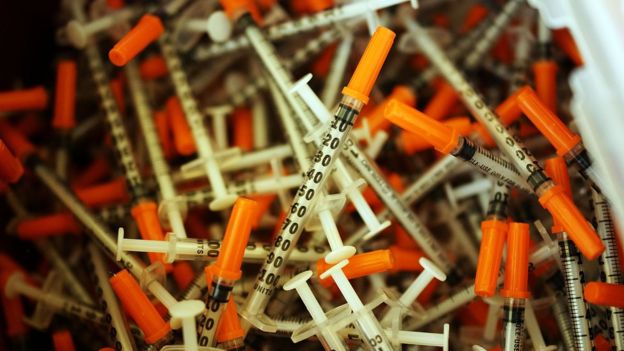
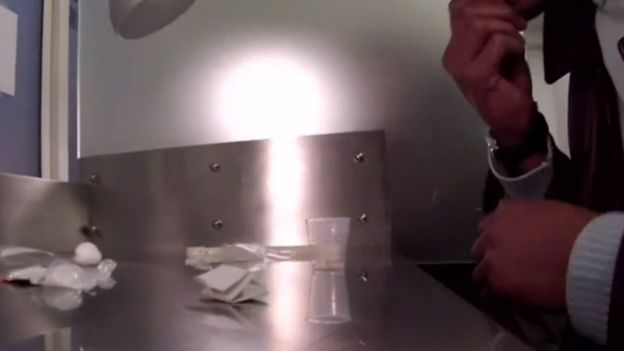
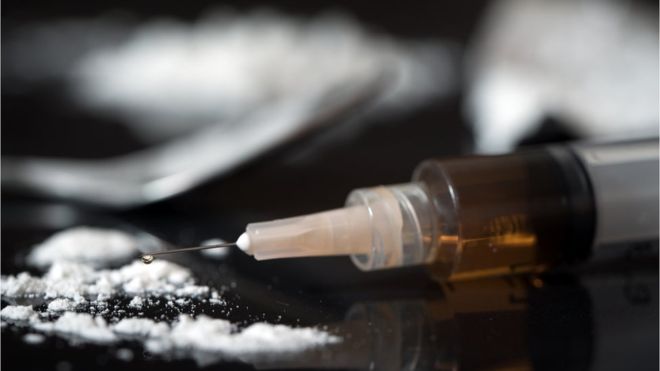
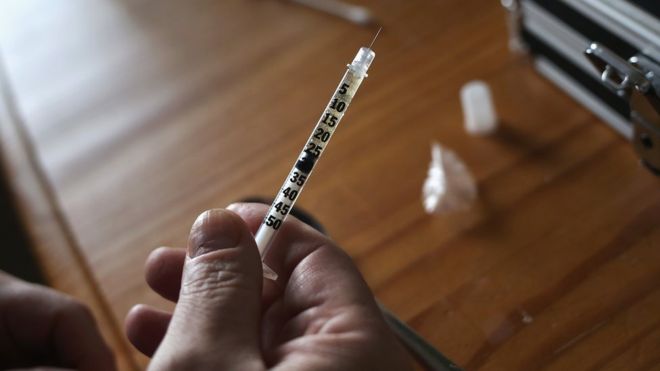
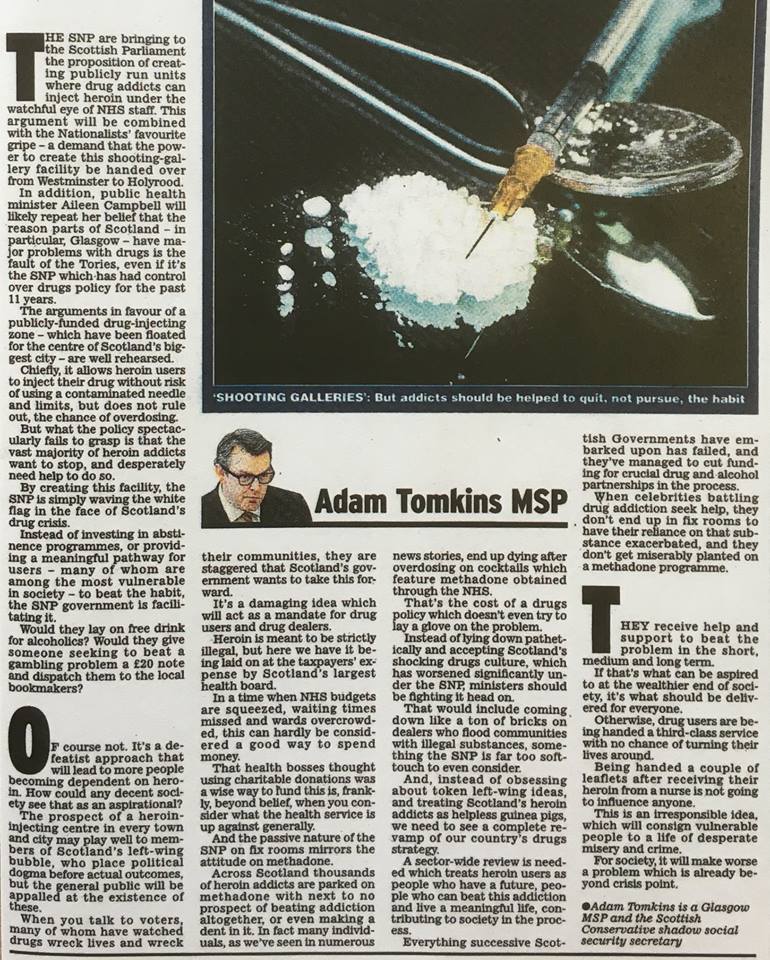
Tory Luddite Tomkins Mocks the SNP Government Attacking Proposals For Safe Drug Taking Facilities – But fails to Bring Forward Any Answers to the Question – How do you reintegrate people to Society who were not integrated in the first place?


Drug-Control Policies in Britain

The late Prof Geoffrey Pearson was an eminent and highly respected Criminologist noted for his research into violence among the young.

In his journal, The New Heroin Users (1987) he gave a voice to users and addicts, confounding many stereotypes concerning this demonised group, who were concentrated in areas already suffering unemployment, poor housing and poverty.

He carried out a number of studies of drug use among young people in care, of drug markets, and the policing of drugs and was a member of the committee that carried out the 1971 inquiry into the misuse of drugs in the UK.

He was not a supporter of the UK government approach to drug taking and clarified his understanding of the issue in his paper:

Abstract from: “Drug-Control Policies in Britain,” Crime and Justice 14 (1991): He wrote:

“The British approach to heroin addiction has been widely misunderstood. The “British system” did not break down in the 1960s under the pressure of an upsurge in heroin misuse.

The 1960s heroin phenomenon was a relatively minor difficulty almost entirely confined to London and failed to dislodge the medical profession from its central role in the British response to serious drug misuse.

During the 1980s, however, a major heroin epidemic spread rapidly through a number of towns and cities in the North of England and Scotland, concentrated mainly in areas of high unemployment and social deprivation.

Government-sponsored responses have included high-profile mass media campaigns and a strengthening of the law-enforcement effort. Even so, the “British system” has remained essentially intact.
In response to the threat of drug-related HIV transmission, public health remedies have reasserted themselves against the prevailing rhetoric of “law and order.”

Essential Reading:  Drugs and the Law – REPORT OF THE INDEPENDENT INQUIRY INTO THE MISUSE OF DRUGS ACT 1971

http://www.druglibrary.org/schaffer/Library/studies/runciman/default.htm”

https://www.independent.co.uk/news/obituaries/professor-geoffrey-pearson-criminologist-noted-for-his-research-into-violence-among-the-young-8693631.html


Jul 2017: Tory government rejects advice of its own Advisory body

The UK government dismissed a call from its own advisory body to consider introducing drug consumption rooms.

The Advisory Council on the Misuse of Drugs (ACMD) had said the rooms would provide a safe space for users to take class A drugs under the supervision of medical professionals.

The Tory government said it had no plans to approve drug consumption rooms and whilst it is committed to taking action to prevent the harms caused by drug use the official approach continues to be prevention of class A drug use in communities and helping drug dependent addicts recover, while ensuring that drugs laws are strictly enforced”.


10 Nov 2017: Scottish Lord advocate fails to back ‘fix room’ plan

Scotland’s top prosecutor refused to back a controversial plan to set up the UK’s first so-called “fix room”.

The proposed injecting facility in Glasgow aimed to give drug addicts a safe environment to inject under supervision.

The proposal was being driven by the city’s Health and Social Care Partnership (HSCP) which had planned to create an injecting facility between Trongate, Saltmarket and the River Clyde, by 2018, after a steep rise in HIV cases.

However, the scheme had required Lord Advocate James Wolffe QC to allow possession of street-bought heroin within the facility.

Glasgow, which has an estimated 13,600 problem drug users, has seen a growing number of addicts diagnosed with HIV.

Health officials put the cost to NHS Greater Glasgow and Clyde at more than £29m. (BBC News)


12 Dec 2017: Call for drug laws to be devolved to Scottish Government

The Scottish government is seeking devolution of drugs laws to allow users to take heroin safely under medical supervision.

This follows a ruling by the Home Office in London, which controls drug legislation, that introduction of a “fix room” would be illegal under existing UK drug enforcement policy and it expected Scottish police to enforce the law. (BBC News)

In 2016, 170 drug-related deaths were recorded in Glasgow – from a record total across Scotland of 867.

The previous year there had been 47 new diagnoses of HIV among those who inject drugs, compared with a previous annual average of 10.

NHS Greater Glasgow and Clyde (NHSGGC) published “Taking away the chaos,” a review of the health needs of those injecting drugs in public places.

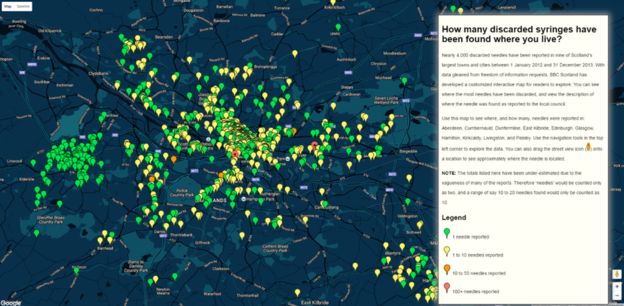
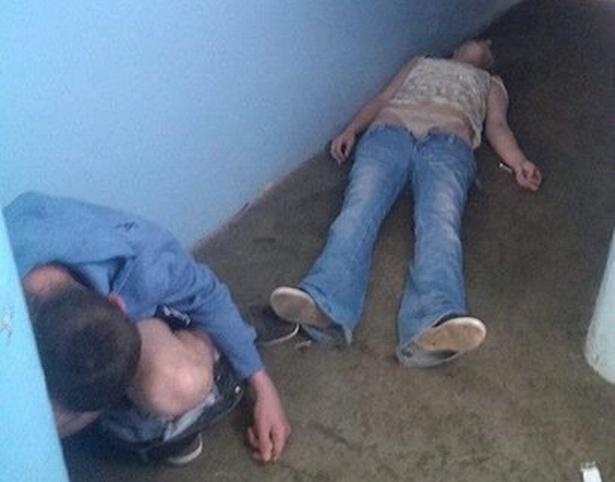
It said: “Public injecting in Glasgow is concentrated in lanes, closes, car parks, and public toilets of the south-east city centre and adjoining areas of the east end.

“Several informal drug consumption areas have been found in abandoned buildings and makeshift huts.”

A spokesman for Glasgow HSCP said: “We are continuing to work on our proposal to open a safer drug consumption facility in Glasgow.

“We have had initial discussions with the Scottish Government on how we can best secure the legislative framework needed to ensure the facility can open legitimately.” (BBC News)


23 Apr 2018: Typical Tory Tomkins Politisizes Scottish Approach to Drug Addict Care

The Express published an article written by Tomkins in which he attacked the SNP government wrongly attributing the proposed introduction of safe facilities to it, cheapening the efforts of highly qualified medics, social services experts and other people determined to improve the lives of drug users. See the article:


Denmark’s ‘Fix Rooms’ Give Drug Users A Safe Haven

Martin Jensen smokes heroin.

In the past, when this gaunt-faced Dane had to hide in elevators and stairwells to feed his addiction, he probably wouldn’t have been so willing to advertise that fact. Back then, his days were spent scouring Copenhagen — mostly the notorious Vesterbro neighborhood — for places to smoke, out of sight of the police and children.

He says he never felt safe, understandably, given what happened to one of his friends.

“My friend, he [was trying to] get some sleep, when he had smoked,” Jensen recalls.

That’s when an arsonist stopped by.

“They put gasoline here, on top of his head. And put on fire and just let him …” Jensen trails off, though he notes the friend survived.

All this is by way of explaining why, for Jensen, this year has meant the difference between “hell” and “heaven.”

It’s not that he’s quit — though he is taking methadone, which has helped him cut back.

It’s that now he has a place to come and take his drugs in peace.

In June 2012, the Danish Parliament passed legislation making it possible for municipalities to open so-called drug consumption rooms (known in Denmark as “fix rooms” and elsewhere, more specifically, as supervised injection sites) — facilities where adults with serious addictions can bring their illegal drugs and take them, legally, under the watchful eye of a nurse.

Within four months, Copenhagen had opened the first.

Two other cities have since followed suit. Full article at:

https://www.npr.org/sections/parallels/2013/12/16/246606797/denmarks-fix-rooms-give-drug-users-a-safe-haven”


27 May 2015: Denmark’s injection rooms save 300 lives

Denmark’s legal drug injection rooms have saved upwards of 301 lives according to figures from the Health Ministry.

The country’s five injection rooms – located in Copenhagen, Odense and Aarhus – allow drug users to get their fix in controlled environments and under the watchful eye of healthcare professionals.

According to a Health Ministry report released on Wednesday, heroin and other drugs have been injected by around 4,300 registered users some 355,255 times since the rooms opened in 2012.

The vast majority – 94 percent – of injections took place in Copenhagen.

In 301 instances, the drug user overdosed but thanks to the presence of the rooms’ personnel there was not a single death.

“On that background, the evaluation concludes that the injection rooms must be seen to limit the risk of death and injuries,” a Health Ministry press release read.

The report also stated that the injection rooms have helped health professionals come in contact with addicts that they would not otherwise reach if the drug use remained on the streets.

There were 354 instances in which a user asked for help in breaking their habit.

According to the evaluation, it is not just users who have benefited from the injection rooms.

“Also the residents in those areas where drug abusers hang out and used to take their drugs in the streets, stairwells and hallways have noted that there aren’t as many used needles [lying around],” the ministry release stated.

The volume of used needles in Copenhagen has fallen by nearly 80 percent since the nation’s first injection room was opened there in the autumn of 2012.

The Danish Health and Medicines Authority said last year that the injection rooms deserve the lion’s share of the credit for the fact that drug-related deaths have reached their lowest level in nearly 20 years.

https://www.thelocal.dk/20150527/denmarks-injection-rooms-save-hundreds-of-lives”


Scotland – Englands First Colony – Ravished – Pillaged – Blockaded – Betrayed – Castigated – Absorbed on False Promises – Brexit is Our Chance to Right the Wrongs of the Past – All We Need is a Referendum


The Alien Act – Bully Boy Nation England Forces a Treaty of Union On Scotland

The 1701 Alien Act was the culmination of the England’s efforts to subjucate Scotland, and the negative impact was huge.

An embargo on Scottish goods to both England and its colonies, enforced by a naval blockade of Scottish ports and a large English army force in Berwick, cut maritime trade by fifty percent, crippling Scotland’s already fragmented economy which was struggling to recover after twenty five percent of Scotland’s total liquid capital had been lost during the Darien Scheme.

The Act also threatened inheritance rights for Scottish nationals living in England, causing unrest among Scotland’s elite.

Through this piece of legislation, English Parliament hinted at the dangers of refusing to unite the two nations.

England had the power to destroy the Scottish economy and take away the property of many of its citizens, and unless Scotland agreed to their proposals that was exactly what they would do.

In 1706 Scotland relented, activating a provision added to the end of the Alien Act that suspended the legislation as a whole following Scotland’s entrance into negotiations leading to the 1707 Act of Union with England.


Earl of Seafield


Second Thoughts On the Union – The First Earl of Seafield and His Attempt to Repeal the 1707 Treaty of Union

On 2nd June 1713 the Earl introduced a Bill in the House of Lords to repeal the 1707 Treaty of Union citing amongst the grievances of the Scots:

1. The dissolution of the Scottish Privy Council.

The Treaty of Union 1707 with England preserved the Scottish Legal System. Article XIX providing “that the Court of Session or College of Justice do after the Union and notwithstanding thereof remain in all time coming within Scotland, and that the Court of Justiciary do also after the Union … remain in all time coming.

But soon after the Union, the Union with Scotland (Amendment) Act 1707 combined the English and Scottish Privy Councils and decentralised Scottish administration through the appointment of justices of the peace in each Scottish shire to carry out administration.

In effect it took the day-to-day government of Scotland out of the hands of politicians and into those of the College of Justice who would report to the officer in post in the newly created position of Scottish Secretary of State in Westminster.


2. The Treason Act.

The Scottish Act, which was relatively humane was abandoned in favour of the more barbarous English Treason Act.

Section III of the Act required the Scottish courts to try cases of treason and misprision of treason according to English rules of procedure and evidence.

When the Scottish Parliament was established in 1998, treason and misprision of treason were designated as “reserved matters,” meaning they fell outside the jurisdiction of the Scottish government.


3. The incapacitating of the peers.

After the Scottish Parliament passed the ratifying Act it turned to the question of Scotland’s future parliamentary representation.

Article 22 of the Treaty had decreed that 16 peers and 45 commoners were to represent Scotland at Westminster, It would be for Scotland’s Parliament to settle the detail.

At this time the Edinburgh parliament was a unicameral body which, by the eve of the Union, had grown to consist of a ‘theoretical’ total of 302, made up of some 143 hereditary peers, 92 ‘shire’ or county commissioners, and 67 burgh commissioners.

Inevitably, Scotland’s loss of its representative body – symbolizing the loss of national sovereignty – in favour of a much reduced representation at Westminster produced deep resentment among the Scottish populace.

At the end of January 1707, following a series of ill-attended sittings, the Scottish Parliament passed legislation setting out the procedures for electing the 16 peers and 45 commoners. The 16 representative peers were to be chosen by the entire body of Scottish peers through ‘open election’ rather than by ballot.

Each elected peer was to serve for the duration of one Parliament. Upon the dissolution of Parliament all Scottish peers would be summoned by royal proclamation to the Palace of Holyroodhouse, where the names of peers were called over and each peer would then read out his list of 16 nominees.

It became standard practice for governments to canvass their preferred choices, thus ensuring a controllable bloc of support in the Upper House. The practice of electing “representative peers” of Scotland was to continue until it was abolished by the Peerage Act of 1963.

Scots legal experts were frustrated that from 1712 the House of Lords in Westminster was also the Court of Appeal for Scottish cases.

This led to “miscarriages of justice” caused by a lack of understanding of Scots law by English judges.

Scots landowners with English titles were angry in 1711 when they were prevented from taking their seats in the House of Lords.


4. The introduction of many new taxes on Scotland

After 1707, new taxes imposed on Scotland by Westminster increased the prices of Scottish goods for export to England and abroad greatly benefitting English manufacturers but to the severe detriment of Scot’s.

Duties on linen in 1711 and 1715, and the Soap Act of 1714 upset many people in Scotland.

The Salt Tax of 1711 was especially unpopular and resulted in riots.

The Malt Tax, introduced in 1713 in defiance of the Treaty of Union was imposed on the Scottish brewing industry and undermined a wide range of Scottish endeavours and entrenched a culture of evasion, amongst poor Scots who relied on a diet of inexpensive ale.

The cumulative effect of the new taxes served only to reduce legitimate trade in Scotland whilst encouraging smuggling and in some instances outright resistance.

As a result of increased goods duties, there were attacks on customs officers and an increase in the smuggling of goods into Scotland.

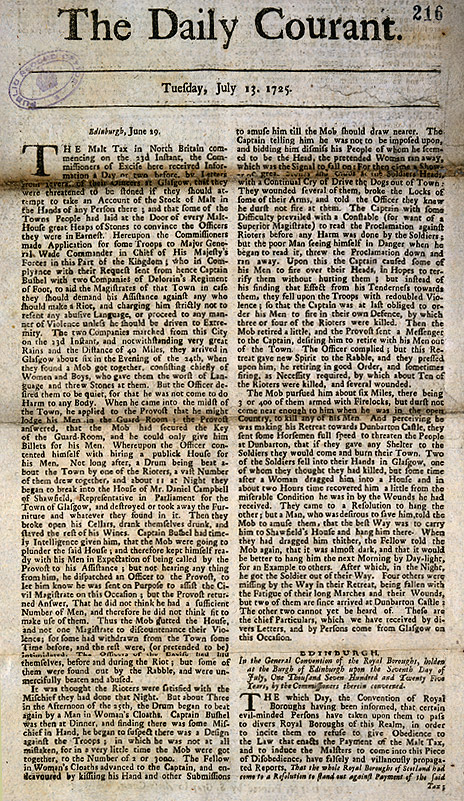
The Malt Tax Riots in 1725 and the Porteous Riot in 1736 both highlighted popular resentment for English intervention in the name of integration.


5. The deliberate ruination by Westminster of Scottish trade and manufacturing

Despite the promises made by England during the unification process, economic rehabilitation in Scotland was an abject failure.

While there were apparent economic benefits for the nobility and landowners, who “sensed that union would open up new opportunities to them through being able to sell their cattle and other produce to England” they represented a very small part of the socio-economic makeup of Scotland.

The benefits of maritime trade afforded to them by the union only applied to the elite, (this is still the case in 2014) and the rest of Scotland faced a new, far less attractive economic reality after 1707.

The expansion of the cattle and sheep industries in Scotland to compensate for increased demand in England also led to many tenants being forcibly cleared off of their land in order to maximize grazing.

This accumulation of injustices only served to strengthen resistance to the Union of 1707 in both the Lowlands and the Highlands and, as their economic situation worsened many turned to Jacobitism as a solution to their problems, one that supported “the old monarchy” and was inherently Scottish.


6. Introduction of the English Enclosure Act

There was great unrest as a result of introduction of the English “enclosures” system of land allocation, replacing the Scottish “runrig” system.

There were outbreaks of fence-smashing by labourers who had fallen on hard times through not being able to afford “enclosures.”


7. The Irish Diamension – The Wool Act

Westninster prohibited any export of manufactured woollen goods from Ireland in 1699.

A protection of trade measure designed to ensure English farmers and woollen manufacturers would be allowed to operate without competition.

The restrictions on the woollen trade greatly distorted the importance of the Irish linen industry, particularly in Ulster and in 1696 a Bill was passed through Westminster which encouraged the manufacturing of linen in Ireland free of tax at time of export to England and other foreign trade.

But Scotland was not considered. Linen taxes were imposed on Scotland to the detriment of the trade and its rapid closure due to the high cost of exporting the yarn and finished goods.


Outcome of the Debate

The response from the English peers who favoured the Union’s continuance principally underscored its importance in terms of protecting the succession.

At this point the coherence of the Scots’ assault broke down as some of their English allies moved in favour of adjourning the debate and suggested that separate legislation should be drafted for protecting the nation.

When the House came to divide, the bill for dissolving the Union lost by just 4 votes, and even then only because of the employment of proxies.

A few days later the malt bill passed the Lords and was enacted on 10th June.

The failure of the Scots’ rebellion was largely down to their inability to secure the unqualified support of key members of the Whig opposition.

For many of these the affair was simply an opportunity to embarrass the administration and when it came to the crunch were found to be absent from the House.

Even for those who believed genuinely that something needed to be done to improve the condition of the Scots, several preferred to concentrate on securing an amended version of the malt bill rather than threatening the Union itself.

Inevitable Rebellion: The Jacobite Risings and the Union of 1707 – Lindsay Swanson – PSU HST 102 – December 17, 2014

https://thehistoryofparliament.wordpress.com/author/epeplow/


Syria – The US, UK and French Have Given Up On Regime Change in Syria – New Strategy is to Establish a New State East of the Euphrates – More Blood to Be Spilt


6 May 2018: Tensions Rising Between Syrian Army, Kurds Amid Creation of US Bases

The probability of all-out war between the Syrian army and Kurdish militias in northern Syria has intensified amid reports of the creation of more new US bases, along with reports of a possible deployment of troops from a Saudi-led ‘Arab coalition’.

There are also reports of a growing French presence in areas of Syria under Kurdish control.

Tensions have been running high since the US sent yet another convoy of weapons to Kurdish militants in the Tal Beidar region and Kurdish forces’ actions fortifying their positions has increased the danger of a direct confrontation with the Syrian Army.

Also this week, around 30 villagers were killed in a US-led coalition airstrike in the village of al-Fadel in southern Hasakah, prompting Damascus to submit another letter of complaint to the United Nations about the coalition’s “massacres” against the Syrian people and its attempts to undermine the country’s sovereignty and territorial integrity.

The letter also accuses Washington of providing “systematic support” for Daesh.


Syria – The US, UK and French Are Intent on Regime Change Regardless of the Expressed Will of the Syrian People

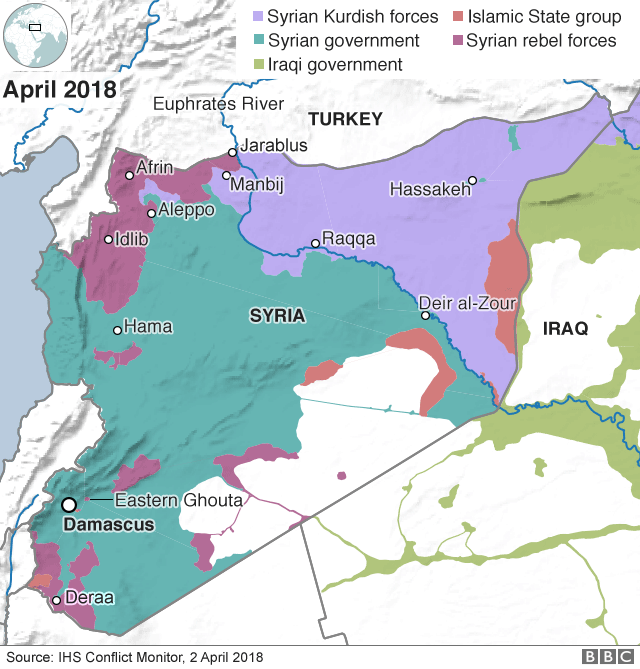
In the summer of 2017 the Syrian Army liberated large parts of their eastern provinces, re-establishing a land re-supply route stretching from Iran to Syria and the formidable Hezbollah forces based in the Lebanon.

This was unpalatable to the Western allies and a major offensive was launched against the Syrian army, by the US, UK, Israel and France.

The offensive, when fully completed removed the Iran-Iraq-Syria-Lebanon land route diminishing Iran’s ability to channel funds and armaments to Hezbollah adversely affecting Syria’s ability to trade with Iraq and Iran further complicating Syria’s post-war reconstruction plans.


The Syrian government and its allies became extremely concerned about the increasing build-up of French, UK and US (FUKUS) forces in Syria, East of the Euphrates and along the border with Jordan, claiming it to be an illegal occupation designed to partition the country.

Referring the matter to the UN Security Council the Syrian government pointed out that the countries concerned did not have a mandate from the UN Security Council nor an invitation from the Syrian government to be in Syria and they should be withdrawn without delay.

President Trump is previously reported indicating his intention to withdraw allied forces from Eastern Syria if and when the situation was improved.

Since that time the Allies declared the war against ISIS to be at an end.

But the occupation of Syria goes on.

It now appears the agenda has changed and (FUKUS) intend to occupy Syria, East of the Euphrates, perhaps on a permanent basis.

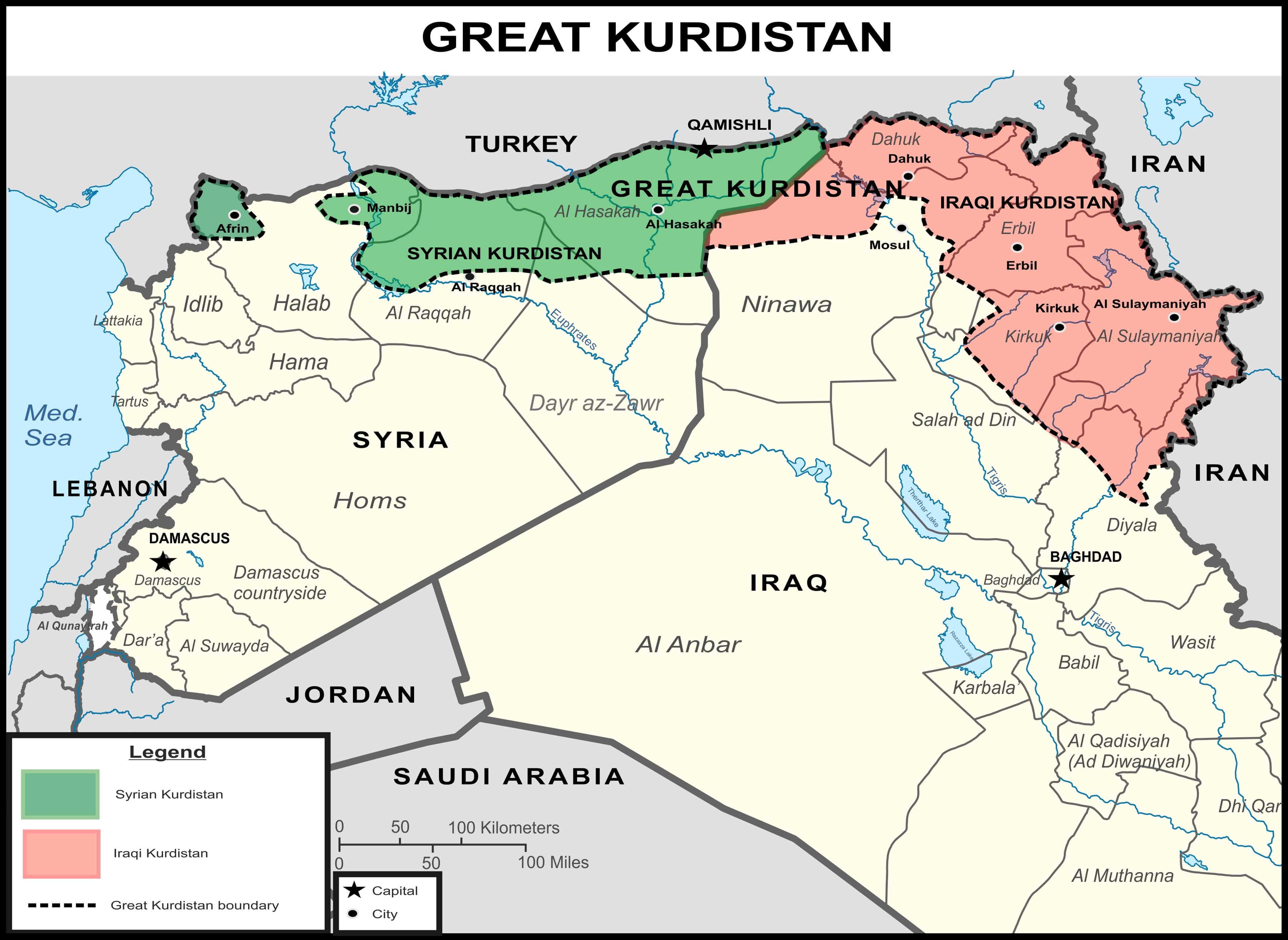
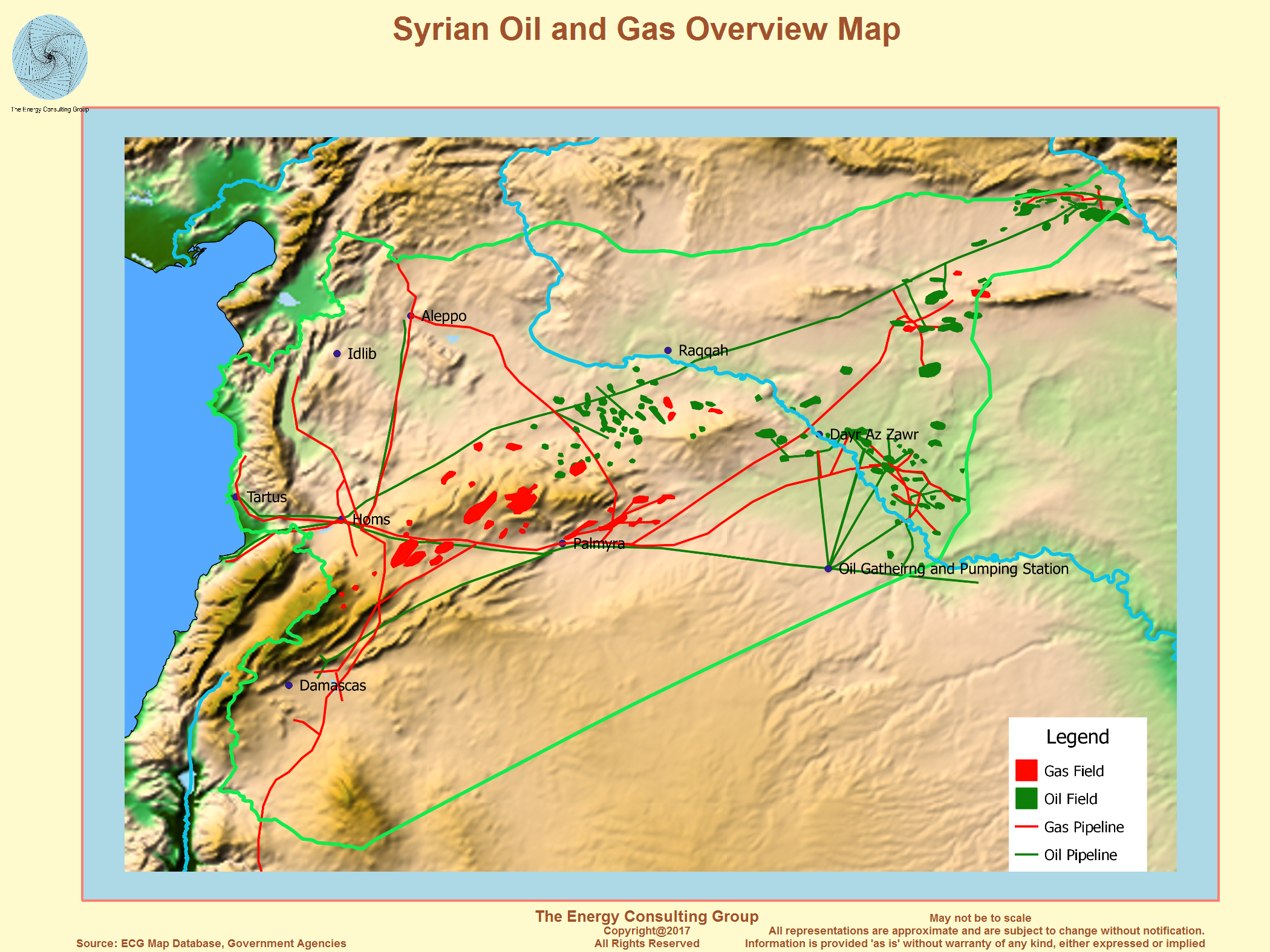
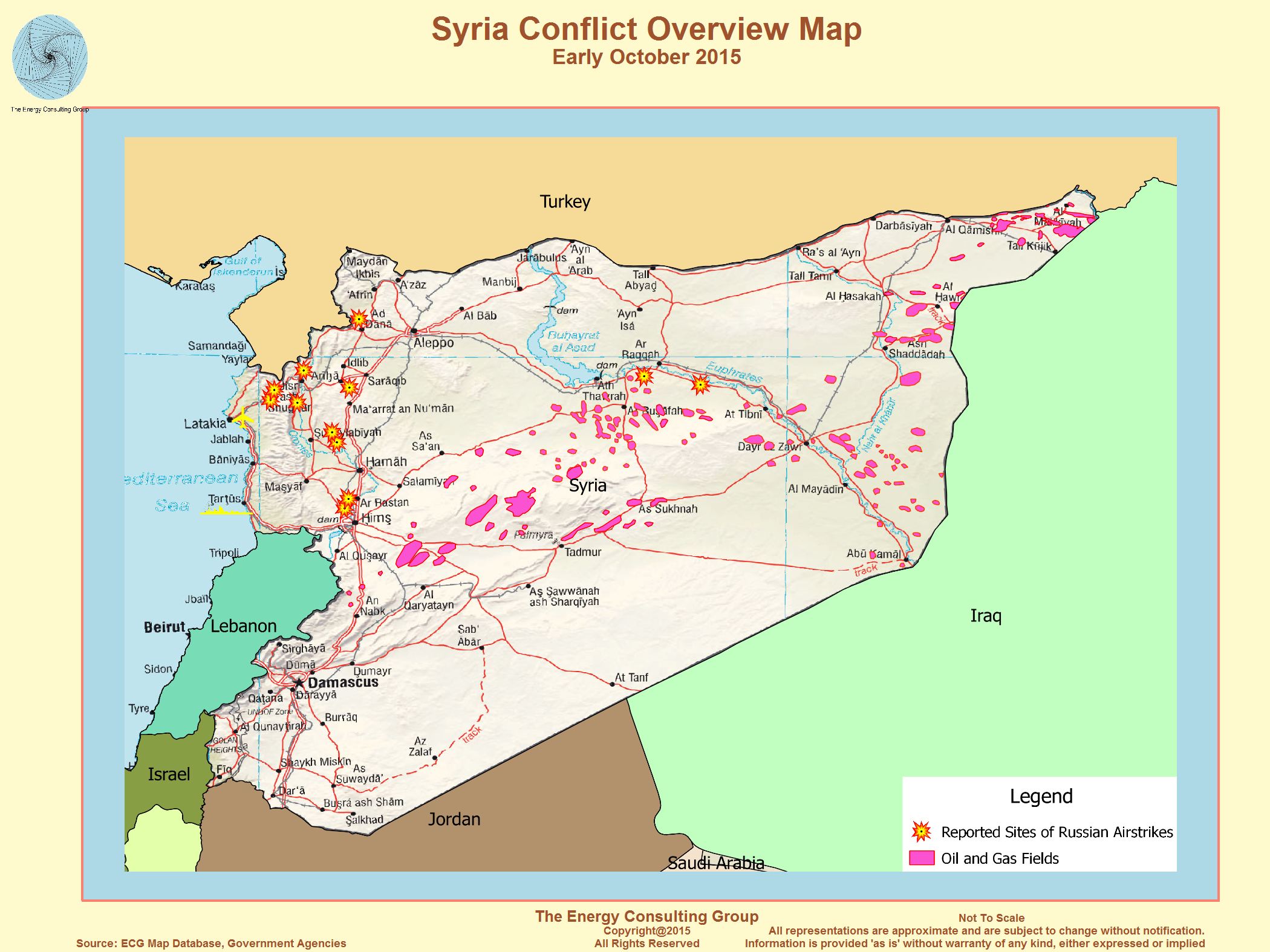
This will ensure control of the countries most productive oil and gas fields remains with groups loyal to (FUKUS) denying the Syrian government, and most likely Turkey and Iraq, who would otherwise delight in further military action intent on reducing the Kurd presence and influence to the East of the Euphrates.

The scene is set for further military confrontation, similar to the recent battle for control of the Deir-el-Zour oil field, which resulted in the death of around 200 Russian irregulars and an unspecified number of Syrian soldiers, as the Syrian government seeks to re-establish control of the region.

War without end regardless of cost


Attempted Murder of Former Russian Spy Sergie Skripal – The Facts Without the Waffle – Who did it? – You Decide


MI6 handler:Pablo Miller & Sergie Skripal


15 Aug 2017: This Will Blow Your Mind – Required Reading Before Taking in the Rest of the Article

We think we are more connected to the world, when in reality it’s the opposite. We no longer trust the world we live in precisely because of Facebook, Google and Twitter who now have dominance over the global narrative, themselves braided and intertwined into the architecture of the establishment and their handlers.

According to the 2017 Edelman TRUST Barometer trust in the British media has fallen 4 places in just one year to seventh from bottom globally, behind countries such as Turkey, Poland and Russia, none of which are considered to have a free press.
In fact, trust in the four institutions of government, business, media and NGO’s has taken a dramatic dive in just the last three years alone.
Military designed disinformation campaigns are being used against us to ensure we fall into line. This is a world concocted by a faulty and deceitful media operated and managed by the neurosis of government and its agencies.

Just six people control about 80 percent of all printed media in Britain and an even smaller number controls nearly 90 percent of what is seen on the Internet. The same exists in the USA and across Europe.

Allegations of government officials pressuring and even threatening editors and journalists are now rife in the industry.

Mainstream media was literally choked by government information officers peddling propaganda, disinformation and fake news and now we, the people are directly targeted by the surveillance systems the public paid for but had no control over.

Full article here: http://truepublica.org.uk/united-kingdom/mainstream-media-the-spies-who-choked-me/


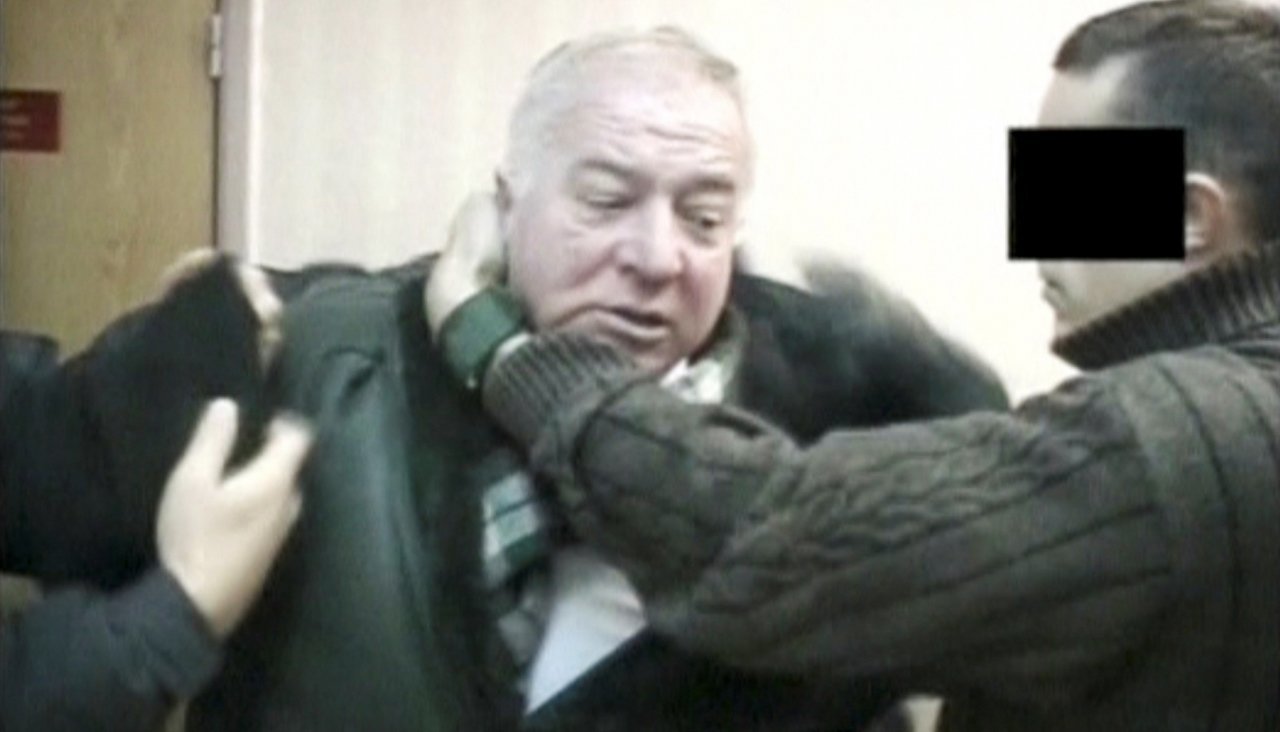
Skripal arrested in Russia


5 Mar 2018: Attempted Murder of Former Russian Spy

Ex-Russian spy Sergei Skripal, 66, former colonel in Russia’s Military Intelligence Directorate and his daughter, 33-year-old daughter, Yulia, – are in a critical condition in Salisbury after being exposed to an ‘unknown substance’

Skripal was one of four Russians exchanged in 2010 for 10 Russian “sleeper agents” discovered in the United States. Four years before, he had been sentenced to 13 years in prison for treason, providing British intelligence with information about Russian security agents.

He decided to seek permanent residence in Great Britain and led a quiet life in Salisbury, where he reportedly bought a four bedroom house for £340,000 cash.

It is unclear why Skripal decided to resettle specifically in Salisbury, but Pablo Miller, the MI6 agent who recruited him also resides in the town.

It is also reported that Skripal had been awarded an MI6 pension on his arrival in the UK in 2010, in return for giving speeches to defence and security officials and for providing “consultancy” to the intelligence services.

Skripal’s wife, Lyudmila, lived with him in Salisbury until her death a few years ago. His son died from liver failure in 2017 in St. Petersburg. Yulia’s Facebook page states that she had moved to Salisbury in 2010, with her parents, but had returned to Moscow a few years later.


Sergie Skripal in Salisbury.


1 Mar 2018: Skripal is reported to have visited the local police station to advise of his concern for his safety and well being.


Yulia Skripal


1 Mar 2018: Skripal Planning a Return to Russia?

It was revealed by Victoria Skripal (niece) that Yulia’s current partner is a high ranking official in the Russian security services and Yulia had travelled from Russia to Salisbury to be together with her father on the date of her late brother Alexander’s birthday and the first anniversary of his death.

Secondary business included the formal completion of paperwork pertaining to the transfer to Yulia of “Power of Attorney” over the affairs of her father and her late brother who both own properties in Russia and where her late brother has a bank account, balance £200,000 approx.

Skripal, previously formally pardoned for his crimes against the Russian state, was negotiating his return to Russia in exchange for information proving that MI6 had fabricated the Trump Dossier in order to delegitimize President Trump. He also wished to be with his elderly mother (87) in her final years.


Detective Sergeant Nick Bailey

Yulia & Sergie Skripal in Zizzi restuarant but who is the photogapher?


4 Mar 2018: Detective Sergeant Nick Bailey

Detective Sergeant Nick Bailey, resides near to the Skirpal residence and it is feasible that he pulled a protective escort duty at the time the Skirpals were away from their home on 4 March 2018.

All photography of the officer portays him in uniform but his normal attire would be civilian clothes. If the duty is affirmed his involvement in the incident would need to be revised.

A photograph of Skripal and his daughter reported to be at lunch in the Zizzi restuarant on the day of the incident appeared in the press.

In it the person taking the photograph appeared to be at lunch with the Skripals. But is the person mirrored Nick Bailey? If it is this is where he might have become infected with the toxin.

There are other aspects of his involvement in the incident that raise further enquiry:

It is reported by the police force that Nick first went to the aid of the Skripals long after after they had been in receipt of medical aid from an unprotected qualified doctor and other first aiders for about 15 minutes.

Assistance that continued unbroken until Skripal and his daughter were removed from the scene and taken to hospital. Between 30-45 minutes.

Why is it that all those involved in the care of the Skripal’s with the exception of Nick were unaffected?

The police offered that Nick may have been contaminated through a transfer of the agent from the doorknob of the Skripal residence when he went there after they had been removed to hospital.

This begs more questions:

The doorknob explanation is “false news”. Delivery of the toxin was confirmed to be by mouth in liquid form.

This rules out the house visit as the place Nick became contaminated. What other explanation is there?

Why did Nick feel the need to go to the house?

Did he have a doorkey?

Did he enter the house?

If he did enter the house why did he not secure the open windows before leaving?

Did he remove anything from the house?

Why did he drive alone to the hospital in a marked police car well after the incident?

When did he begin to feel unwell?

When and at what time was he admitted to hospital?

At the time of his visit to the Skripal home, why did Nick not remove to a safe place the £4000 valued Persian house cat, a second cat and guinea pig pets?

The cat, “Nash Van Drake” was found weeks after the incident, starving and dehydrated in a ‘distressed state’ in the Skripal home.

A veterinary surgeon had to euthanise the animal to “alleviate its suffering.”

Skripal’s two guinea pigs were also found dead in the course of the discovery.

Were the dead animals tested for the presence of the toxin?

If affirmative what were the findings?

The £4000 Persian cat was put down days after Yulia had recovered. Did she give her permission?


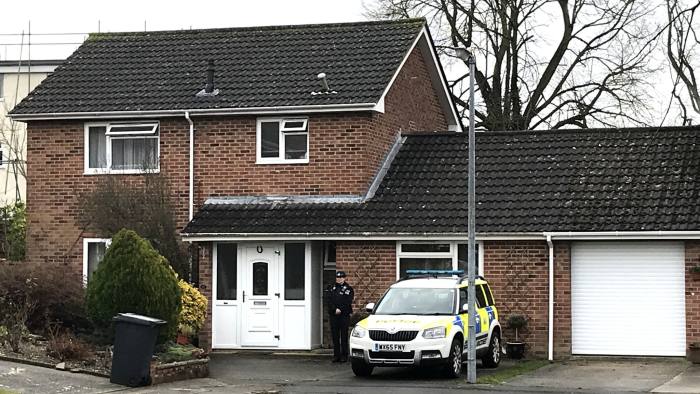
Skripal home in Salisbury. Note the open windows


4 Mar 2018: Sequence of events

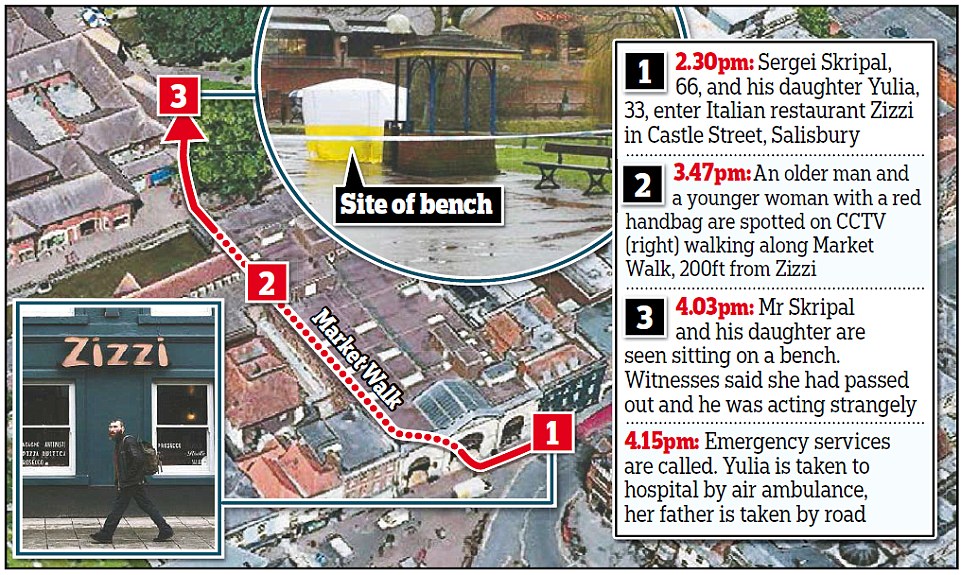
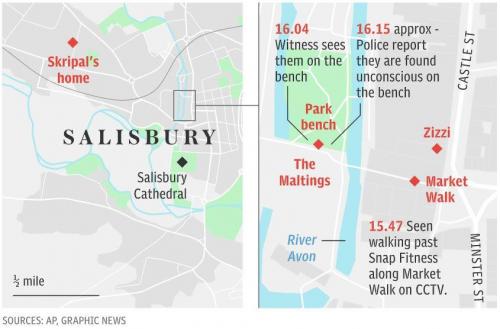
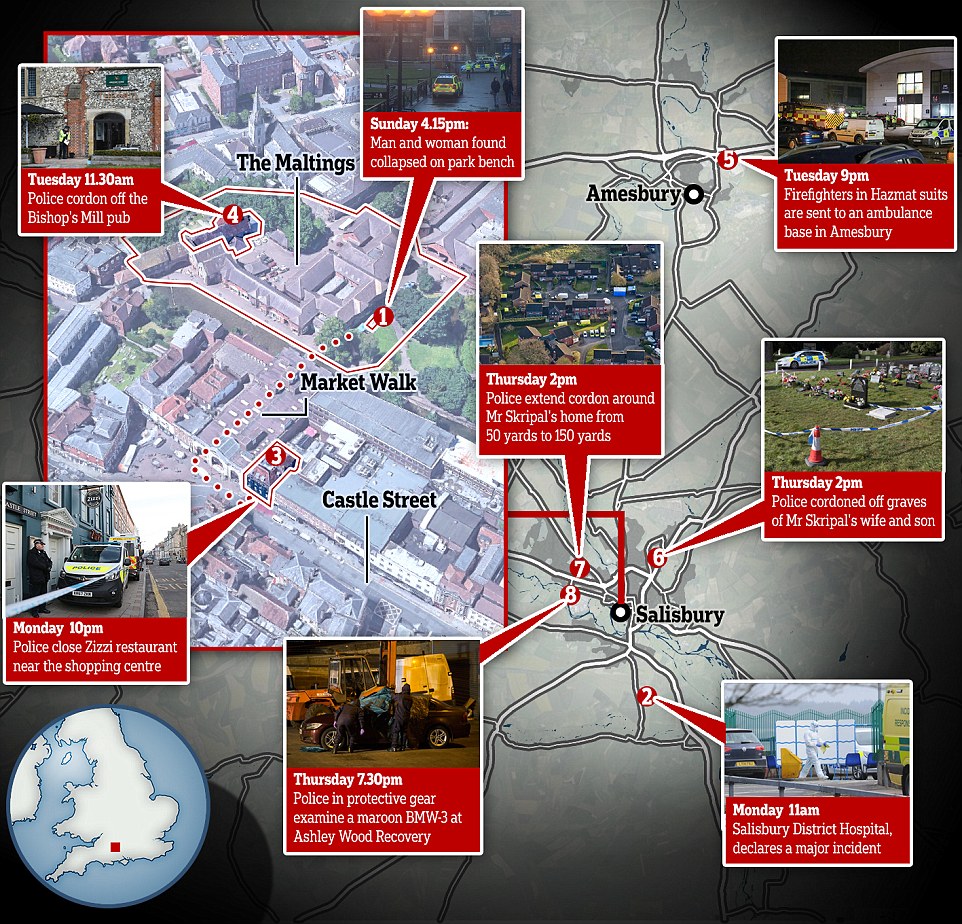
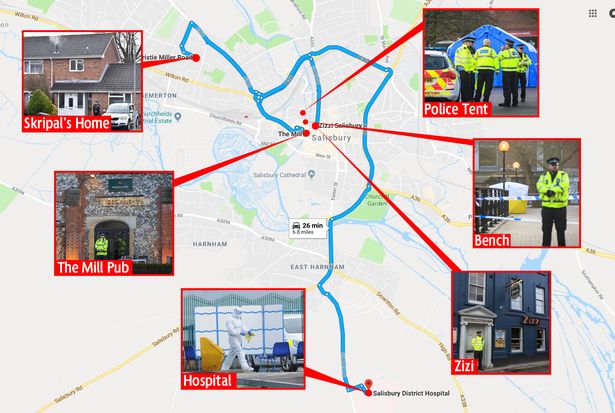
1255 – 1335: Left home. Visited cemetery.

1335 – 1340: Travelled by car to The Maltings. Parked up in the car-park.

1340 – 1415: Drinks in the Bishop’s Mill Pub.

1415 – 1545: In the Italian Zizzi Restuarant. Yulia reportedly opened a “gift from friends” as they consumed a meal. Soon after Skirpal began acting irrationaly.

A witness, who saw the pair at the restaurant said Mr Skirpal was acting “very strange” and was “very agitated”.  He seemed to lose his temper… and he just started screaming at the top of his voice, he  wanted his bill and he wanted to go.”

Traces of the agent were found in the restuarant some days after the incident.

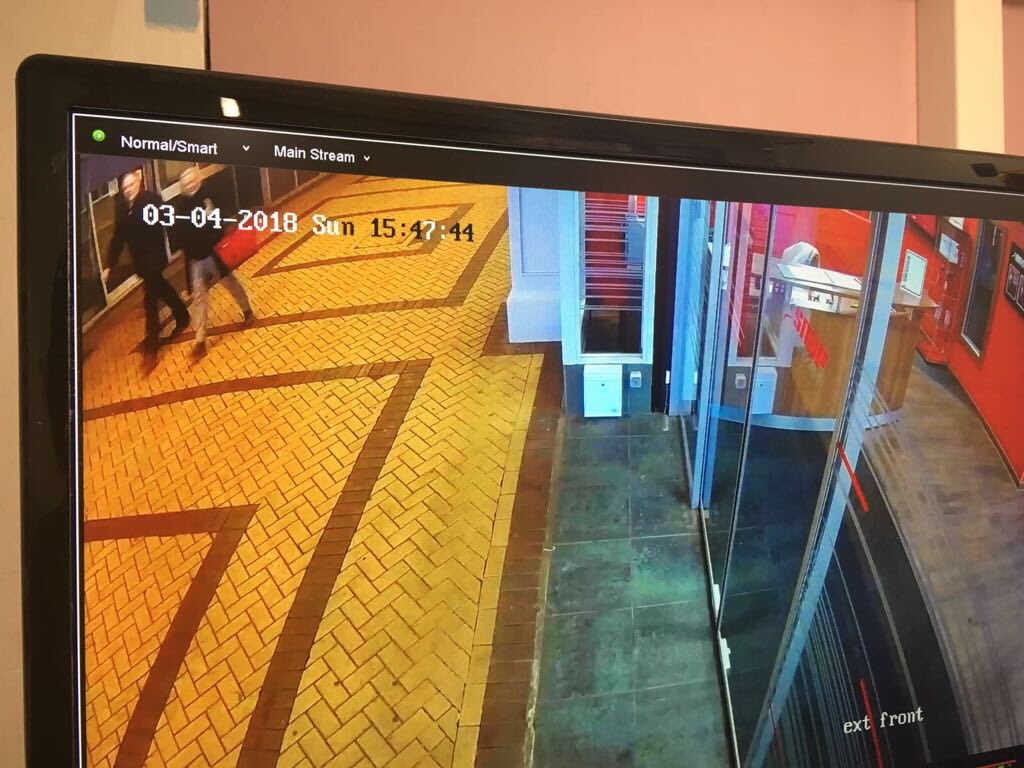
1545 – 1548: CCTV footage of Skripal and Yulia in the Maltings Shopping Centre walking towards the bench were they were found distressed shortly after. (https://t.co/RotGv7wEdZ)

1600 – 1615: Skripal and daughter found on park bench comatose, frothing at mouth, contracted pupils, vacant stare, convulsions, evidence of vomiting.

Attending doctor described Yulia as “vomiting and fitting” after losing control of her bodily functions.

The doctor, one of the first people on the scene described how she found Ms Skripal slumped unconscious on a bench, vomiting and fitting.

She had also lost control of her bodily functions.

The woman, who asked not to be named, told the BBC she moved Ms Skripal into the recovery position and opened her airway, as others tended to her father.

She said she treated her for almost 30 minutes, saying there was no sign of any chemical agent on Ms Skripal’s face or body.

The doctor said she had been worried she would be affected by the nerve agent, but added that she “felt fine”.

1615 – 1645: Police, ambulance and Air ambulance arrived at scene.

Yulia transferred to hospital by Air ambulance. Father transported by road to same hospital.


6 Mar 2018: Skripal Poisoning – Suspicious Substance Identified at Scene

Authorities declined to name the toxin to which the pair were suspected to have been exposed, but local media soon reported the substance found at the scene to be similar to fentanyl: a lethally strong opioid available even on Salisbury’s soporific streets.

But the UK government was already hinting at Russian involvement. The Home Secretary, Amber Rudd issued a brief statement on Monday 6 March 2018 after visiting the site. She said:

“The attempted murder of Sergei Skripal and his daughter, Yulia, using a nerve agent was a “brazen and reckless” act.

On Tuesday 6 March 2018, She briefed MP’s stating:

“This was an “outrageous crime and the government will act without hesitation as the facts become clearer. It would be inappropriate to speculate on whether the Russian state might have been involved in the attack.

It is a police investigation and findings should be based on “facts, not rumour”.

That same day local police were stood down from the investigation and ordered to pass the matter to a police anti-terrorist unit.


Sergie and Yulia leaving Zizzi’s


6 Mar 2018: Expert comment

Dr Jennifer Cole, an associate fellow at the Royal United Services Institute for Defence and Security Studies, said anyone manufacturing nerve agents needs advanced chemical knowledge and some form of laboratory. “With something that dangerous you need to know exactly what you’re doing, particularly so that you don’t get it on yourself.

It wouldn’t be difficult to manufacture in the UK – it wouldn’t have to be imported.”

Dr Cole added that when nerve agents are absorbed through the skin or inhaled, they are very fast-acting. “The fact that there doesn’t seem to have been anyone with them when they collapsed points to it being ingested (swallowed).

Antidotes do exist to several nerve agents but their effectiveness relies on them being administered immediately to counteract their rapid effect onthe nervous system.”


Accused Russia of the Murder Attempt


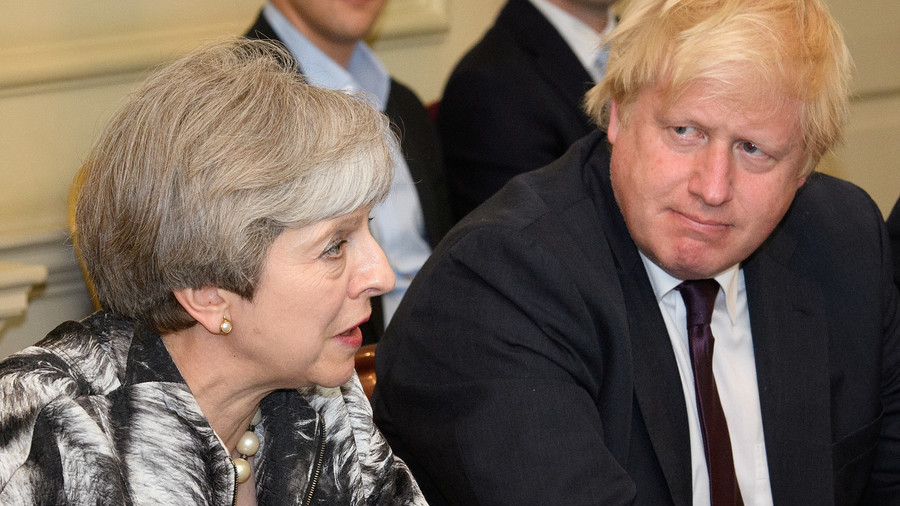
7 Mar 2018: The Russians Did It says Prime Minister May and Boris Johnson

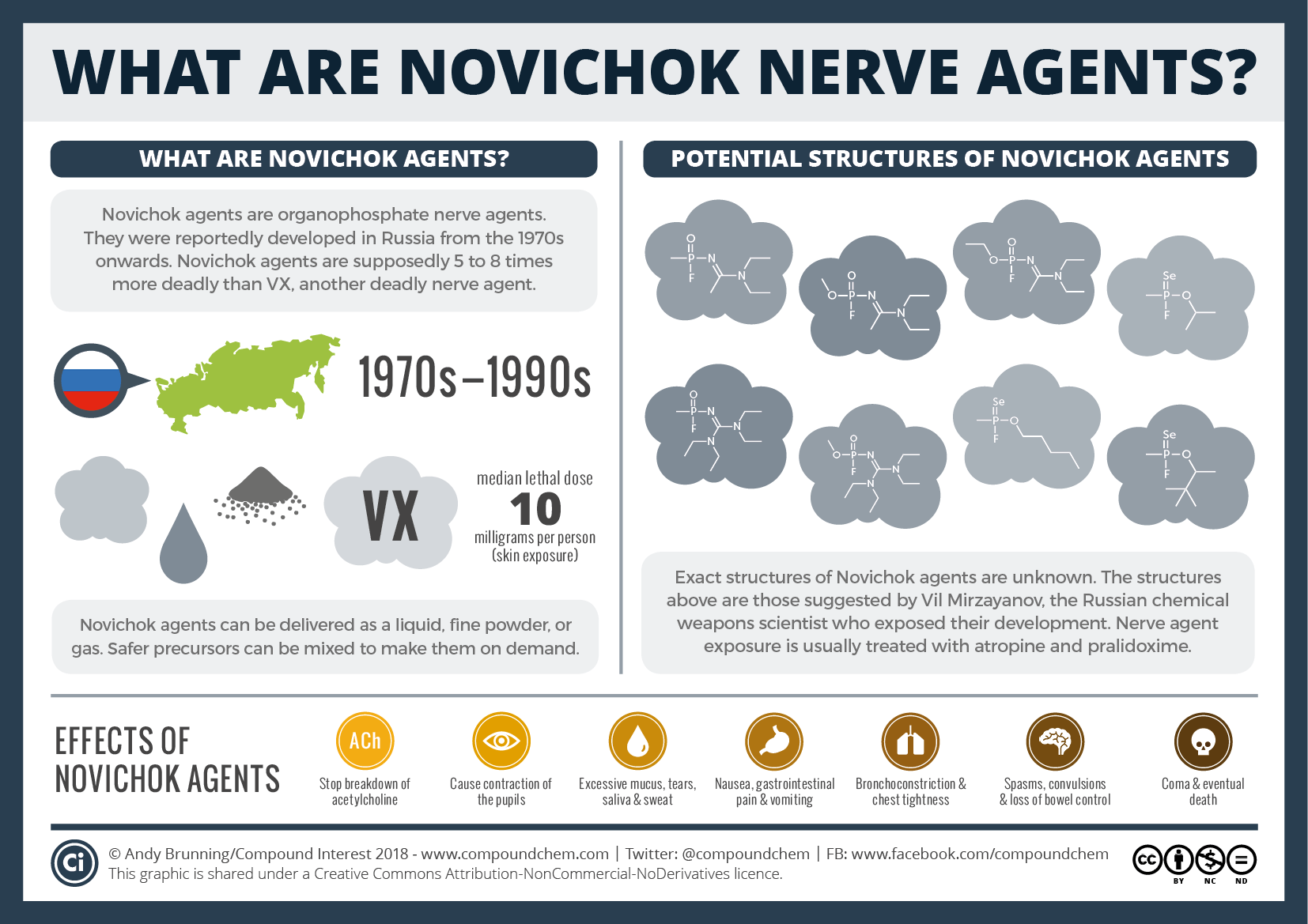
Experts at Porton Down laboratories have identified the substance used as a military-grade nerve agent “of a type developed by Russia”, and part of a group of such agents known as Novichok.

Prime Minister Theresa May gave Moscow 36 hours to “provide full and complete disclosure of the Novichok programme” to the Organisation for the Prohibition of Chemical Weapons.

The OPCW is the implementing body of the Chemical Weapons Convention, which entered into force in 1997 and has 192 member states.

May said police were still investigating how the dose of the nerve agent was administered. But who is responsible?

“The government has concluded that it is highly likely that Russia was responsible for the act against Sergei and Yulia Skripal,” May said.

She added that Britain had reached the verdict based on its knowledge that Russia had previously produced the agent and could still do so, the country’s “record of conducting state-sponsored assassinations” and its analysis that Moscow views some defectors as legitimate targets for killing.

Foreign Secretary Boris Johnson said the Skripal case has “echoes” of Alexander Litvinenko, a Russian dissident who died of Polonium poisoning in a 2006 attack attributed to Moscow.

Moscow  denied involvement in the Salisbury attack and accused Prime Minister may of an attempt to “discredit” Russia.

A police statement, issued later stated,  “we are not declaring a person of interest or a suspect at this time”.


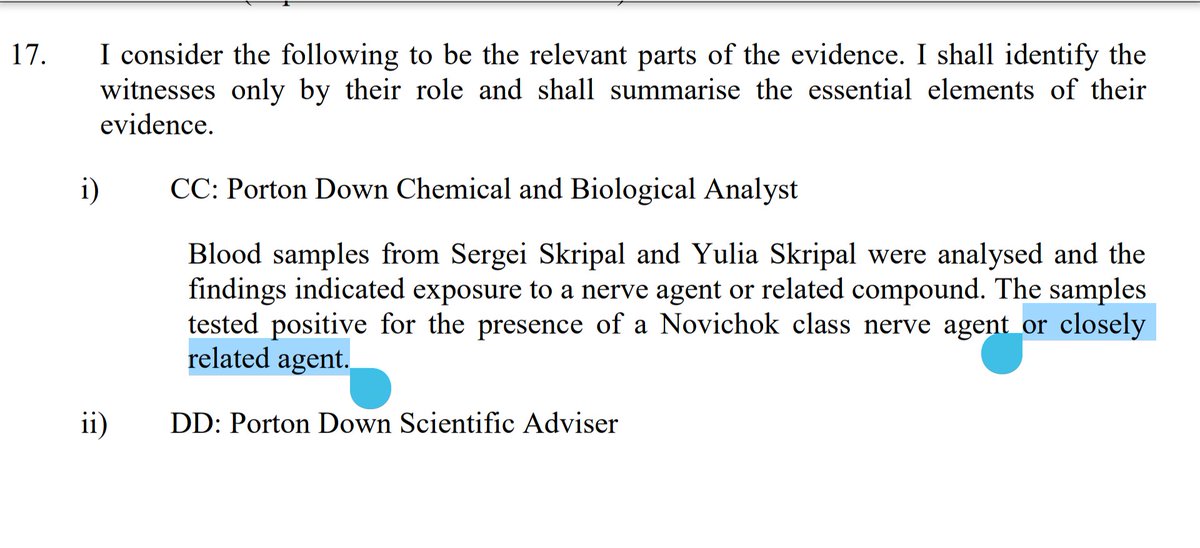
Porton Down statement: Novichuk or closely related agent


9 Mar 2018: Russian Ex-Pats Add Fuel to the Fire

Valery Morozov, a former construction magnate who fled Russia after revealing corruption, claimed last night that Sergie Skripal, 66, was still working, and remained in regular contact with military intelligence officers at the Russian embassy.

He added that, as a result, he had decided to steer clear of Skripal for his own safety.

Speaking to Channel 4 News he said: “If you have a military intelligence officer working in the Russian diplomatic service, living after retirement in the UK, working in cyber-security and every month going to the embassy to meet military intelligence officers – for me, being a political refugee, it is either a certain danger or, frankly speaking,  I thought that this contact might not be very good for me because it can bring some questions from British officials.”

Andrei Lugovoi, another former Russian agent, stated that Skripal had been pardoned in Russia so no one from there would be after him. “I don’t rule out that this is another provocation by  the British.

Whatever happens on British territory, they start yelling: “He was killed, he was hung, he was poisoned!” and that Russia is to blame for everything. This is to their advantage.”

Igor Sutyagin, yet another Russian traitor flown to Russia in 2010 in an exchange of spies-also said, “I don’t think that Skripal would be targeted, because he was pardoned.”


9 Mar 2018: Poisioned British-Russian Double-Agent Has Links To the Hilary Clinton Presidential Campaign

There are indicators pointing to a strong connection between the Skripal case and the anti-Trump/anti-Russia propaganda drive run by the Obama administration and the Hillary Clinton election campaign.

See my posts:

https://caltonjock.com/2018/04/14/dirty-tricks-trumpgate-and-skripal-all-roads-lead-to-london-and-mi6/

https://caltonjock.com/2018/04/04/porton-down-director-distances-his-establishment-from-prime-minister-mays-accusation-that-russia-is-responsible-for-the-nerve-agent-attack-on-skripal-and-his-daughter-but-we-must-trust-information/

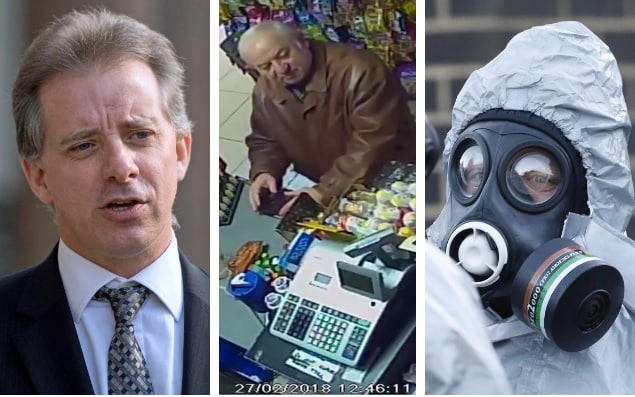
Skirpal’s MI6 handler and close neighbour in Salisbury, Pablo Miller, now retired, is employed as a security consultant by Orbis Business Intelligence.

In it’s employ Miller actively participated with Steele and a number of Russian contacts, (in the UK and Russia) in the process of compiling a controversial dossier, (since dismissed as entirely false) on US presidential candidate Donald Trump.

Orbis is owned by Christopher Steele’s company which was paid by Glenn Simpson of Fusion GPS working for the Clinton campaign to make up or find ‘dirt’ about Trump.

Steele had spent more than twenty years in M.I.6, most of it focussing on Russia.

For three years, in the nineties, he spied in Moscow under diplomatic cover. Between 2006 and 2009, he ran the service’s Russia desk, at its headquarters, in London.

He is fluent in Russian, and widely considered to be an expert on the country.

Steele was an MI6 undercover agent in Moscow around the time when Skripal was recruited and handed over Russian secrets to the MI6.

He also ran the MI6 Russia desk so anything about Skripal will have passed through him. It is very likely that they personally knew each other.

If there is a connection between the dossier and Skripal, which seems likely, then there are a number of people and organizations with potential motives to kill him.

Lots of shady people and officials, on both sides of the Atlantic were involved in creating and running the anti-Trump/anti-Russia campaign.

There are several investigations on-going and some very dirty laundry may yet be revealed.

Removing Skripal whilst attaching the blame to Russia looks like an opportune way to get rid of a potentially troublesome witness.

But the important question of motive has not yet been asked nor answered and this weakens any assertions attaching blame to Russia.

It was certainly not vengeance for Skripal’s earlier spying since he had been in Russian jails for four years and had lived openly in Salisbury for eight, providing many opportunities for the Russian’s to top him if they wished to.

Also faced with an already belicose and increasingly belligerent UK government and media Russia did not need to attract any more anti-Russian propaganda in the “western” media.

The former British ambassador Craig Murray suspects a different motive and culprit: (Craig Murray @CraigMurrayOrg – 10:21 AM – 8 Mar 2018)

“Russophobia is extremely profitable to the armaments, security and spying industries and it reinforces intellectually challenged voters in their Tory loyalty. Ramping Russophobia is the most convincing motive for the Skripal attack.”

Former Ambassador Murray also pointed out that Salisbury, where the incident took place, is just 8 miles away from Porton Down, a chemical weapon test site run by the British government.

As the BBC noted in a report about the place: “chemical agents are still manufactured on site.”

More likely motives can also be found in the statement:

“It is no surprise that the UK government, and the US, are promoting a “wicked Putin’s Russia” story eagerly embraced and circulated to a gullible public, by the British media since it allows the implentation of further wide ranging sanctions and other punitive actions against Russia all with the purpose of starting the process of “Regime Change.”


15 Mar 2018: Craig Murray Former UK Ambassador: The Novichok Story Is Indeed Another Iraqi WMD Scam

As recently as 2016 Dr Robin Black, Head of the Detection Laboratory at the UK’s only chemical weapons facility at Porton Down, a former colleague of Dr David Kelly, published in an extremely prestigious scientific journal that the evidence for the existence of Novichoks was scant and their composition unknown. Full report here:

(http://truepublica.org.uk/united- kingdom/novichok-story-indeed-another-iraqi-wmd-scam/)


13 Apr 2018: Defence Laboratory Chief Executive wrong to say Salisbury Novichok nerve agent could “probably” only be made by a state actor

Eminent scientists disagree with Porton Down statement, read:

https://www.commonspace.scot/articles/12644/exclusive-scientist-defence-laboratory-chief-executive-wrong-say-salisbury-novichok


14 Apr 2018: Swiss Laboratory says Incapacitating Agent ‘BZ Toxin’ was used in Salisbury

Blood Samples of the persons infected were provided by the UK to the Organisation for the Prohibition of Chemical Weapons (OPCW). These were were passed to the Swiss State Spiez Chemical Laboratory for analysis.

The lab is an internationally recognized centre of excellence in the field of the nuclear, biological and chemical protection and is one of the five centres permanently authorized by the OPCW.

Their findings indicated the presence of a novichuck agent and an incapacitating binding toxin known as 3-Quinuclidinyl benzilate or BZ.

The BZ toxin had never been produced in Russia, but was in service in the US, UK, and other NATO states.

The presence of the BZ toxin nullified the potency of the Novichuck agent so that ingestion would only incapacitate a victim for a period of between 2-5 days from which there would be an expectancy of a full recovery.

The Swiss Centre sent the results to OPCW. But the UN chemical watchdog limited itself only to confirming the presence of a novichuck agent without mentioning anything about the other facts presented in the Swiss document.

The Russian Foreign Office asked OPCW to comment on the issue which in their view suggested the attack on the Skripals might have originated in the UK or the US.

Moscow also believes that the entire Skripal case lacks transparency and that the UK is not interested in an independent inquiry.

“We get the impression that the British government is deliberately pursuing the policy of destroying all possible evidence, classifying all remaining materials and making a transparent investigation impossible,” the Russian ambassador to the UK, Alexander Yakovenko, said during a press conference.

The Russian foreign minister also said that London refused to answer dozens of “very specific” questions asked by Moscow about the Salisbury case, as well as to provide any substantial evidence that could shed light on the incident.

Instead, the UK accused Russia of failing to answer its own questions, he said, adding that, in fact, London did not ask any questions but wanted Moscow to admit that it was responsible for the delivery of the chemical agent to the UK.


http://www.moonofalabama.org/2018/03/spy-posions-spy-and-the-anti-trump-campaign.html#more

https://www.yahoo.com/news/ex-russian-spy-drama-know-191546394.html

https://www.theguardian.com/world/2000/mar/25/russia.iantraynor1

https://www.independent.co.uk/news/uk/crime/sergei-skripal-freelance-spying-targeted-russian-spy-double-agent-poisoning-nerve-agent-salisbury-a8246686.html

https://www.globalresearch.ca/another-false-flag-skripals-black-persian-cat-russia-did-it/5635112?utm_campaign=magnet&utm_source=article_page&utm_medium=related_articles

http://www.dailymail.co.uk/news/article-5503849/Was-Russian-spys-daughter-REAL-target-nerve-agent-attack.html

Dirty Tricks – Trumpgate and Skripal – All Roads Lead to London and MI6


Note:  This article is a follow up to the undernoted link.

(https://caltonjock.com/2017/11/17/trump-putin-congressional-investigation-moving-finger-of-fate-pointing-at-the-tory-party-and-stirling-university-on-the-hook-as-well/)


Boris Johnson – Trump – The Tory party

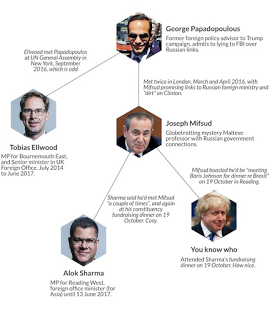
Three senior past and present Foreign Office ministers, including the foreign secretary, Boris Johnson, were targeted by individuals identified by the FBI as central to their investigation into Trump-Russia collusion.

Alok Sharma MP said: “I did not introduce Mifsud to Boris Johnson and I don’t think anyone else did either.”

But indications of Russian efforts to make contacts with British officials could prove embarrassing for Johnson, who was asked about possible foreign interference in Britain last week and replied: “I haven’t seen a sausage.”

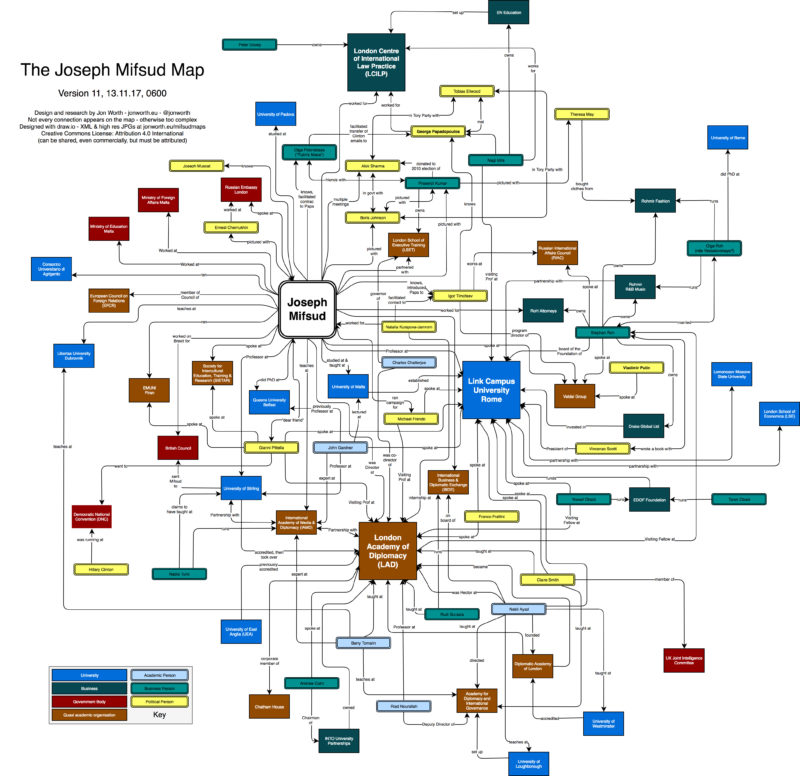
But there were meetings and encounters between British ministers and two individuals named in FBI indictments unsealed last week – George Papadopoulos, a foreign policy adviser for Donald Trump’s campaign, and a “London professor” with high-level connections to the Russian state, subsequently identified as a Maltese academic, Joseph Mifsud.

Alok Sharma, a Foreign Office minister until June this year and MP for Reading West, confirmed he had met Mifsud “a couple of times” and he had attended a fundraising dinner in his constituency on 19 October this year, where he had “briefly greeted” him.

An email from Mifsud to a colleague, uncovered by Byline, the crowdfunded independent journalism site, revealed Mifsud had told a colleague he would be “meeting Boris Johnson for dinner re Brexit” on that date. Sharma confirmed Johnson was the guest speaker at the event.

The revelation comes as an investigation into foreign influence places him in a web of relationships between a known Russian spy, Sergey Nalobin, expelled from Britain in 2015, and Matthew Elliott, the chief executive of Vote Leave, the official Leave campaign headed by Johnson.

A witness said: “We’re starting to have a much clearer picture from America of how the Russian state sought to influence the US election and I think there are multiple questions to be asked about how and in what ways the Russian state may have been exerting influence in British politics.

Given the gravity of the allegations against Mr Papadopoulos, the government should make public any meetings these two individuals had with British officials and what was discussed.”

Even more questions are raised by a meeting between Papadopoulos and Tobias Ellwood, then a senior minister in the Foreign Office, at the UN general assembly in New York in September 2016.

This was when Papadopoulos was still working for the Trump campaign and, according to the FBI’s documents, had made multiple contacts through his intermediary – the “London professor” – with “high-level Russian officials”.

Ellwood’s meeting occurred after Papadopoulos had discovered in April that the Russians had “dirt on Hillary Clinton” in the form of “thousands of emails” but before WikiLeaks started publishing her emails in October.

Ben Bradshaw, the MP who has been one of the few voices asking questions about possible Russian interference in British democracy, said the Foreign Office’s explanation that such a meeting was “routine” was implausible.

“In my experience, it is not normal for a minister to meet party campaign operatives while on official government business.”

He added: “If Mr Papadopoulos’s role was as junior as Trump has been claiming, I would be surprised that a minister as senior and experienced as Mr Ellwood would agree to meet him.”

More here: https://www.theguardian.com/politics/2017/nov/04/boris-johnson-brexit-russia-trump


September 2015:  Senior Republican Opposed to Trump Nomination – Commissioned a Damaging Dossier From Fushion GPS

In September 2015, a wealthy Republican donor who strongly opposed Trump put up the money to hire a Washington research firm run by former journalists, Fusion GPS, to compile a dossier about the real estate magnate’s past scandals and weaknesses.

Fusion GPS, headed by a former Wall Street Journal journalist known for his dogged reporting, Glenn Simpson, most often works for business clients.

But in presidential elections, the firm is sometimes hired by candidates, party organizations or donors to do political “oppo” work — shorthand for opposition research — on the side.

It is routine work and ordinarily involves creating a big, searchable database of public information: past news reports, documents from lawsuits and other relevant data.

For months, Fusion GPS gathered the documents and put together the files from  Trump’s past in business and entertainment, a rich target.

After Mr. Trump emerged as the presumptive nominee in the spring, the Republican interest in financing the effort ended.

But Democratic supporters of Hillary Clinton were very interested, and Fusion GPS kept doing the same deep dives, but on behalf of new clients.

Simpson then hired Christopher Steele, a former British intelligence officer with whom he had worked before.

Steele, in his early 50s, had served undercover in Moscow in the early 1990s and later was the top expert on Russia at the London headquarters of Britain’s spy service, MI6.

When he stepped down in 2009, he started his own commercial intelligence firm, Orbis Business Intelligence.

As a former spy who had carried out espionage inside Russia, Steele was in no position to travel to Moscow to study Trump’s connections there.

But instead he hired native Russian speakers to call informants inside Russia and made surreptitious contact with his own connections in the country as well.

Steele wrote up his findings in a series of memos, each a few pages long, that he began to deliver to Fusion GPS in June and continued at least until December.

By then, the presidential election was over, and neither Steele nor Simpson was being paid by a client, but they did not stop what they believed to be very important work.

The memos described two different Russian operations. The first was a year long effort to find a way to influence Mr. Trump, perhaps because he had contacts with Russian oligarchs whom Mr. Putin wanted to keep track of.

According to Steele’s memos, he used an array of familiar tactics: the gathering of “kompromat,” compromising material such as alleged tapes of Mr. Trump with prostitutes in a Moscow hotel, and proposals for business deals attractive to Mr. Trump.

Word  of the dossier reached Capitol Hill and Senator John McCain, Republican of Arizona, obtained a copy from David J. Kramer, a former top State Department official who works for the McCain Institute at Arizona State University.

McCain then passed the information to James B. Comey, the F.B.I. director. who decided to sit on it until after the Presidential election.


September 2016:  Unverified Dossier Creates a Crisis For Trump

Recently retired British spy, Christopher Steele, was tasked  to build a file on Donald J Trump’s  ties to Russia.

This week, explosive details — unsubstantiated accounts of frolics with prostitutes, real estate deals that were intended as bribes and coordination with Russian intelligence of the hacking of Democrats — were summarized  in a top secret intelligence report.

Trump denounced the unproven claims as a fabrication, a Nazi-style smear concocted by “sick people.”

It further undermined his relationship with the intelligence agencies and cast a shadow over the new administration.

 James R. Clapper Jr., director of national intelligence, issued a statement decrying leaks about the matter and saying of the Steele dossier that the intelligence agencies had “not made any judgment that the information in this document is reliable.”

Much of the report remained out of reach — most critically the basic question of how much, if anything, in the dossier was true.

But the  debacle offered a glimpse of the hidden side of US presidential campaigns, involving private sleuths-for-hire and secret agents of foreign countries looking for the worst they can find about the next American leader.


Early April 2016: Dirty Tricks Campaign Orchestrated by the Clinton Team, Hakluyt & Co (UK), Papadopoulos, Mifsud and UK security services – Discrediting Trump in Favour of Clinton

Categorised as a nonentity by Trump’s campaign team yet Papadopoulis wielded a powerful fist in London as Trump’s foreign policy advisor.

Undoubtably the “Daniel Defoe” of the Trump presidential campaign he  nearly succeeded in getting Hilary Clinton into office.

Claire Smith Head of UK intelligence committee


27 April 2016: Trump’s Delivers his first Foreign Policy public statement (edited by his Europe and, Middle East advisor), George Papadopoulos
“We desire to live peacefully and in friendship with Russia. We want to ease tensions and to see “improved relations with Russia, so that this horrible cycle of hostility  can be ended and soon. Good for both countries.” I want to make a deal that will be beneficial to Russia and the US.”


Claire Smith & Joseph Mifsud


4 May 2016: Prime Minister Cameron told by George Papadopoulos to Say Sorry to Trump or the Risk Special Relationship

As Trump’s chances of gaining the Republican Party nomination for President of the US increased the diplomatic service hurriedly changed it’s foreign policy backing away from Hilary Clinton adopting a more pro-republican approach.
This was confirmed in an article published in the Associated Press (AP) stating:
“British diplomats have been ordered to mend fences and David Cameron
should apologise for calling Donald Trump “divisive, stupid & wrong” said, a foreign policy adviser to the Republican frontrunner.”

George Papadopoulos, the lawyer advising Trump on Europe and the Middle East revealed that the Trump Team had been shocked to be attacked by the British Prime Minister, that Trump was considering a tour of both regions but that he had yet to be invited to Britain by the government.

 Cameron had recently rejected calls to ban Trump from the UK after the tycoon proposed barring Muslims from the US but said that Trump’s remarks were “divisive stupid and wrong”.

I think if he came to visit our country he’d unite us all against him,” Mr Cameron.”


Early May 2016: Australia’s High Commissioner to the UK- Alexander Downer Provides Key Information to the FBI & Clinton Team

Russiagate was triggered by slipshod conversations in a swanky bar in London, between Australia’s High Commissioner to the UK, Alexander Downer, who was based in London, and a drunk junior Trump foreign policy adviser George Papodopoulous.

The pair reportedly discussed the alleged Russian “dirt” on Hillary Clinton while they were drinking in a bar in London.

Downer is closely tied with The Clinton Foundation via his role in securing $25 million in aid from his country to help the Clinton Foundation fight AIDS.

But he is also a member of the advisory board of the secretive London Based Hakluyt & Co.,  an intelligence firm set up in 1995 by three former UK intelligence officials and described as “a retirement home for ex-MI6 (British foreign Service Intelligence) officers.”

And whereas research group Fusion GPS received all the media attention Hakluyt is “a more powerful and mysterious opposition research and intelligence firm… with significant political and financial links to former Secretary of State Hillary Clinton and her 2016 campaign”.

When the information Papadopoulos had disclosed to the Australian diplomat was passed by himself to Clinton and the FBI,  the bureau opened an investigation that soon became one of its most closely guarded secrets.

It had not been prompted by the dossier compiled by former British spy’s, but by Trump campaign foreign policy adviser George Papadopoulos boasting to a top Australian diplomat about Russia’s dirt on then Democratic nominee Hillary Clinton.


Claire Smith – Head of the UK Joint Intelligence Committee


Trump and Russiagate – All Roads Lead to London and MI6

1.   Boris Johnson met with Misfud on 19 Oct 2017.

(https://www.politico.eu/article/boris-johnson-pictured-with-london-professor-from-fbi-russia-probe/amp/)

2.  Misfud worked in Riyadh for a “think tank” run by the former head of Saudi intelligence, Prince Turki al Faisal.

(https://archive.fo/minut#selection-1597.0-1597.147)

3.  Misfud and Claire Smith of the UK Joint Intelligence Committee and eight year member of the UK Security Vetting panel both trained Italian security services at the Link university in Rome.

(https://archive.fo/YX9jq#selection-341.263-347.99)

4.  Alexander Downer in London, closely associated with Hakluyt (now Holdingham Group Ltd) a private MI6 outfit, met with Papadopulos. The FBI used AD’s statement about Misfud to open the FISA interception warrants against the Trump camp.

(http://www.news.com.au/world/britain-is-concerned-about-australias-links-to-hakluyt-security-firm-created-by-former-mi6-agents/news-story/5d6a3c7ccbd5cd9992379aeecaa5e3dc)

5.  It was former UK MI6 officer Christopher Steele who compiled the smear filled “Steel Dossier” funded by Hillary Clinton.

6.  The UK government approved the giving of the Steele dossier to President Obama and the FBI.

7.  It was the UK government that issued a press suppression notice (DA Notice) about Steele.

Downing Street defends move to protect identity of ex-MI6 agent behind Trump dossier.

Tory MPs urge Theresa May to distance the UK government from report by Christopher Steele.

(https://www.ibtimes.co.uk/downing-street-defends-move-protect-identity-ex-mi6-agent-behind-trump-dossier-1600837)

8.  Steele used former UK ambassador Sir Andrew Wood to funnel the dossier to the Trump hating Senator John McCain.

Sir Andrew Wood, McCain’s ‘go-between’ confirm’s he acted as a “go-between” informing Sen. John McCain about the controversial “dossier” containing salacious allegations about then-candidate Donald Trump.

(http://www.foxnews.com/politics/2017/12/11/inside-trump-dossier-handoff-mccains-go-between-speaks-out.html)

9.  Paul Wood, a reporter routinely operating within UK military and intelligence covert operation zones verifies key claims alleged in the content of the Christopher Steele compiled Trump dossier.

(http://www.bbc.co.uk/news/world-us-canada-39435786)

10. Executives with London-based Hakluyt & Co. contributed thousands of dollars to 2016 Democratic presidential nominee’s campaign.

(https://www.lifezette.com/polizette/meet-hillary-clintons-other-more-powerful-shadowy-oppo-research-firm/)

11. Robert Hannigan, former head of British intelligence agency GCHQ, is another personality of note in the formation of the Russiagate narrative and its deep links to the UK.

Hannigan announced he would step down from his leadership position with the agency just three days after the inauguration of President Trump, on 23 January 2017.

His career profile noted that Hannigan had flown to Washington D.C. to personally brief the then-CIA Director John Brennan on alleged communications between the Trump campaign and Moscow.

What is so curious about this briefing “deemed so sensitive it was handled at director-level” is why Hannigan was talking director-to-director to the CIA and not Mike Rogers at the NSA, GCHQ’s Five Eyes intelligence-sharing partner.


Summary.

It is clear, in concentrating on Russia those having an interest in US affairs have been looking in the wrong place – and at the wrong country – to unearth the so-called ‘foreign meddling’ in the 2016 US election.

All roads lead to London and MI6.

My next post will provide information linking ex-Russian spy Sergei Skripal  to MI6 and Anthony Steels’s report on Trump.


Information Links

https://archive.fo/UPHNc (Hannigan)

https://www.motherjones.com/politics/2016/10/veteran-spy-gave-fbi-info-alleging-russian-operation-cultivate-donald-trump/

https://archive.fo/6jtGe (Trump Dossier)

 https://archive.fo/o/rcOpz/www.businessinsider.com/who-is-george-papadopoulos-pleaded-guilty-fbi-russia-contacts-2017-10 (Papadopoulis)
 https://archive.fo/o/rcOpz/https://www.justice.gov/file/1007346/download    (Papadopoulis)

https://archive.fo/o/qn3BY/https://www.nytimes.com/2017/12/30/us/politics/how-fbi-russia-investigation-began-george-papadopoulos.html (Downer)

https://www.nbcnews.com/video/comey-confirms-fbi-investigating-any-links-between-russia-and-trump-campaign-902047811951

https://archive.fo/o/rcOpz/www.businessinsider.com/how-democrats-republicans-view-mueller-trump-russia-probe-2017-12

 https://archive.fo/8Cjao (Carter Paige)

The UK Admits Defeat and Smuggles the White Helmets Out Of Syria into Jordan. But Just a Mo!!! the Bulk of The 800 plus Syrian Agitators are to be Awarded UK Citizenship


22 Jul 2018: Israel Smuggles White Helmets and their dependents out of Syria into Jordan

Syrian forces tightened their grip on the last rebel-held area in Southern Syria forcing the Western Allies funded al-Nusra Front group to get out of Syria immediately. They and their dependents were transferred to Jordan via Israel.

The Israel Defense Forces (IDF) described the move as an “exceptional humanitarian gesture,” adding that it “continues to maintain a non-intervention policy regarding the Syrian conflict.”

A spokesman for the Jordanian Ministry of Foreign Affairs said that up to 800 White Helmets and their dependents will be held in a restricted area in Jordan for up to three months before onward transfer, meeting a legally binding pledge to be resettled in Britain, Germany and Canada.

The United Kingdom was quick to celebrate the evacuation, with UK Foreign Secretary Jeremy Hunt tweeting: “fantastic news” further describing the White Helmets as “the bravest of the brave,” and adding “in a desperate situation this is at least one ray of hope.  Thank you Israel and Jordan for acting so quickly on our request.”

Tellingly it is worthy of comment that the US is not providing residence to any of the dissedent group or their dependents which means that the UK will be required to provide homes and sustenance to the majority of the 800 plus refugees!!!!!!!!!!!!


A look back at some of the UK funded disgraceful activities of the White Helmets in Syria


Planned Invasion of Syria in the Spring of 2018 by the Western Allies

Late 2017 the Syrian Army liberated parts of their eastern provinces, re-establishing a land route stretching from Iran to Syria and the formidable Hezbollah forces based in the Lebanon.

This was unacceptable to the Western allies and a major offensive was launched  against the Syrian army in the west of the country, from US, French & UK warships and on the border between Iraq, Jordan and Syria in the spring of 2018.

The primary purpose of the offensive was to establish a permanent western allies presence in in eastern and central Syria encompassing all major oilfields

The offensive, will close the Iran-Iraq-Syria-Lebanon land route diminishing Iran’s ability to channel funds and armaments to Hezbollah adversely affecting Syria’s ability to trade with Iraq and Iran.


The White Helmets

“The White Helmets fed phony images of ‘humanitarian disasters’ and ‘war crimes’ to the compliant press of the nations funding their organisation, with the explicit purpose of forcing the imposition of a no-fly zone in Syria providing unhindered movement of terrorist groups within the country.


The Origins of the White Helmets

The White Helmets were a “propaganda machine” supporting the regime change ambitions of the US, UK, Israel and France and a number of violent extremist groups operating in Syria.

The group took an active, often armed role in the terrorist war on the legitimate Syrian government.

A huge number of allegations relating to inhumane and often violent abuses is documented against the White Helmets, including their prevalent use of human shields.

Whereever Al Qaeda and Daesh operated in the country, the group most surely followed.

Their support was also logistical, monitoring and reporting on Syrian and Russian forces, flight patterns etc.

The group was founded in March 2013 not in Syria, but in Turkey – and not by concerned local civilians, but by James Le Mesurier, a British private security specialist and former military intelligence officer.

While no mention of him is to be found on the White Helmets’ official website in 2018, Le Mesurier’s work in the UK armed forces took him to several far-flung theaters of conflict, including a spell as intelligence coordinator for Pristina City, Kosovo soon after the NATO intervention.

After leaving the army, he worked for a number of organizations, including a term as Vice President for Special Projects at the private mercenary organization “The Olive Group”, which has since merged with “Academi” – formerly known as “Blackwater”, the infamous US private military contractor.

In a 2014 interview Le Mesurier implied the founding of the White Helmets was largely serendipitous – he was holidaying in Istanbul, and felt compelled to help civilians in Syria after hearing harrowing stories of devastation from refugees who had fled across the border.

But his presence in Turkey was neither coincidental, nor spontaneous. It happened just as the Syrian civil war was turning in Assad’s favor, and the Western Allies push for regime change was running out of steam.

The ease with which he secured significant financial assistance from the UK and USA is quite remarkable

By Le Mesurier’s own account, he quickly raised around US$300,000 in initial funding from the UK and US, among others, a figure that before long ballooned to over US$100 million when Western NGOs and Gulf states started stumping up cash.

Other foreign backers included the Netherlands ($4.5 million), Germany ($4.5 million), Denmark ($3.2 million) and Japan (figure undisclosed).

Equipment and supplies have also flowed from a number of EU member states.

As of February 2018, the group’s funding stood at over $150 million.


2 Mar 2018: Advance Warning – Terrorists Prepare Chemical Attacks to Discredit Damascus

Russian statement: “Syrian terrorists are preparing provocations involving chemical warfare agents in Eastern Ghouta, which will be used by western states as a pretext for accusing Damascus of the use of chemical weapons against the Syrian civilian population.

They have bombarded residential areas in Damascus in the last 24 hours, firing a total of 28 mortar rounds and they also continue to violate the current ceasefire regime not only in Eastern Ghouta but in Aleppo and Latakia provinces.


7 Mar 2018: Fake News Alert: Media Stirred Over White Helmets’ ‘New’ Horror Movie

Pictures allegedly showing the White Helmets’ filmmaking studio in Syria’s Eastern Ghouta have appeared on social media, prompting numerous news agencies to assume that the group is producing another “documentary” movie about the “atrocities” of the Syrian government.

Syrian activist Penelope Stafyla posted the footage to her Facebook profile to show the “media industry” and the “Hollywood production” of the White Helmets; the images featured fake human limbs, theatrical grease-paint, a plastic bottle with some substance that looked like blood, etc.

She suggested that the group was shooting another film to demonize President Assad as well as to accuse the Syrian government of using chemical weapons against civilians.


17 Mar 2018: Advance warning – Eastern Damascus – Western Allies to Stage a Chemical Attack

US-trained terrorist groups using chemical weapons will serve as a pretext for the United States and it’s allies to attack Syria.

A significant number of warships including two aircraft carriers have been deployed to the Eastern Mediteranian, Persian Gulf and Red Sea in preparation for cruise missile strikes.

A statement issued by the Russian General Staff said:

“Jabhat al-Nusra terrorists along with the White Helmets are preparing a staged chemical attack.

There are 20 chlorine containers in their possession and the incident will be widely broadcast in the Western media.

American instructors have prepared several groups of militants to carry out provocations.

The toxic agents were delivered to southern Syria, through Israel, disguised as humanitarian aid.”

Earlier this month US Envoy to UN Nikky Haley threatened a Washington strike against Damascus in the event chemical weapons were used by Syrian forces.


19 Mar 2018: Eastern Ghouta-Humanitarian Aid

The Russian General Staff issued a statement updating the media;

“Tomorrow, another UN humanitarian convoy, consisting of 25 buses and heavy vehicles will head to Douma to assist the city’s population.

Today one can say that the situation in Eastern Ghouta has radically changed.

Right now you are witnessing a humanitarian operation of a unique scale.

Just today, 26,610 civilians left through the humanitarian corridor, while the entire number of people, who’ve left has reached 44,639.

Those in the city, in need,  have received 445 tons of food, essentials and medicines.”

Latest reports indicate that Syrian troops have already liberated more than half of the area, which terrorists have controlled since 2012.

But it is known that 10,000 to 12,000 terrorists are still in the city suburb and are continuing to shell the area which remains a hot spot on the Syrian map.

On February 24, the UN Security Council unanimously adopted Resolution 2401 that urged all conflicting sides to immediately stop all hostilities and adhere to a humanitarian pause across Syria in order to ensure the safe delivery of humanitarian aid, as well as medical evacuation of those injured.

Russia also proposed an initiative of organizing a five-hour daily pause in hostilities to ensure humanitarian supplies and evacuations from the area.


8 Apr 2018: US to Attack Syria

A President Trump security adviser has said that the US will not rule out launching a cruise missile attack in response to news reports about a chemical attack on the terrorist-held area of Duma in Eastern Ghouta, Syria.

In a tweet Trump accused Russian President Vladimir Putin, Moscow and Tehran of backing Syrian President Bashar Assad despite the alleged use of chemical weapons by the regime, adding that Damascus would pay a “big price.”

He further stated that the alleged “mindless” chemical attack was a “humanitarian disaster for no reason and that there were many dead, including women and children. in an area in lockdown and encircled by Syrian Army, making it completely inaccessible to outside world.”

State Department spokesperson Heather Nauert said “The Syrian government may have again used chemical weapons on people.

Reports from a number of contacts and medical personnel on the ground indicate a potentially high number of casualties, including among families hiding in shelters.

These reports, if confirmed, are horrifying and demand an immediate response by the international community.

State Department, Steven Mnuchin said “Trump’s National Security team will consider the possible plans of actions in relation to the chemical attack messages in Syria.”

The United Nations also commented on the situation, saying that the alleged use of chemical weapons if true is “abhorrent” and required “thorough investigation.”

The statements were issued only hours after the Russian Foreign Ministry had warned of the possible provocations involving the use of chemical weapons in Syria.

Earlier in the day, the Russian Defense Ministry strongly refuted the allegations of the use of chemical weapons in Syria, which had been spread by NGOs, including the infamous White Helmets, who have long been suspected of supporting terrorists.

The major aim of the US is to accuse the Syrian government forces of using chemical weapons and justify possible military intervention in Syria from abroad, according to the ministry.

The Syrian government has denied allegations of using chemical weapons in the city of Douma in Eastern Ghouta, saying it doesn’t need such measures to stop the terrorists.

Last month, Damascus announced that several foreign experts were operating to stage a chemical attack, which would be carried out with the help of the infamous White Helmets and would be covered by mainstream media.

The same warning was issued by the Russian Center for Syria reconciliation in January.

Following unconfirmed allegations concerning the use of chemical weapons by Damascus spread by Syrian terrorists in the early hours of 7 Apri 2017, the United States launched 59 Tomahawk cruise missiles at the Syrian military airfield in Ash Sha’irat, about 40 kilometers (25 miles) from the city of Homs.

Trump said the attack was a response to the alleged use of chemical weapons in Syria’s Idlib, which Washington blamed on the Damascus authorities.

Damascus slammed that move, calling it “aggression,” while Moscow noted at the time that there was no evidence, proving Damascus’ role in the alleged chemical attack and had demanded a thorough probe into the incident.

Commenting on the new accusations against the Syrian government, Russia has multiple times reiterated its position that all chemical weapons had been removed from Syria mid-2014


Russian Missiles Ready in Syria


8 Apr 2018: Russian Forces In Syria On Combat Alert As US Considers List Of Targets To Attack Government Forces

Russian forces deployed in Syria have been put on combat alert, in the country’s provinces of Tartus and Latakia where Russian military facilities are located.

Meanwhile, Israeli TV, citing US officials, claimed that the US military is to provide President Trump with a “set of options for carrying out strikes against the Syrian government.”

A few hours earlier, a group of Israeli top officials and public figures officially called on Trump to conduct missile strikes against Syrian government forces in response to an unconfirmed chemical attack in Douma.

In turn, Trump forgot that confirmation of an attack by Syrian government forces had not yet been provided when he stated in a tweet that “Animal Assad” will pay a “big price”.  He also blamed “President Putin, Russia and Iran” for the incident.

Earlier, the Russian Foreign Ministry denounced chemical attack reports as “hoax” and warned that military actions against Syria could lead to the “gravest consequences.”

The conflict in Syria is on the brink of yet another large-scale escaltion by the Western Allies.


9 Apr 2018: Macron & Trump Exchange Data ‘Confirming’ Chemical Weapons Use in Douma

The President of France strongly condemned chemical attacks against citizens of Duma in Eastern Ghouta on April 7.

The French president and the US president exchanged information and analysis data, confirming the use of chemical weapons. The statement reads:

“Trump and Macron decided to coordinate their actions and initiatives within the UN Security Council, which is to meet on Monday, April 9, 2018 in New York, in order to condemn disrespect for Resolution 2401, as well as the repeated use of chemical weapons.”

On Sunday, nine out of 15 members of the UN Security Council urged the convocation of an emergency meeting to discuss reports about alleged use of chemical weapons in Syria.

Russia convened a separate meeting of the UN Security Council to discuss increasing threats to international peace and security.

Credit: Vanessa Beeley. Independent Journalist and Sputnik


Is Adam Tomkins Kosher or Is He a Modern Day Daniel Defoe? – Read This Then Decide For Yourself


Image result for scottish tory  israel links


Is Adam Tomkins a Latter Day Daniel Defoe ? His Close Links to the U.S. State Department Certainly Suggest He Might Well Be the Spy Defoe Reborn


Related image

Tories (friends of Israel) off to Israel on a fully funded jaunt. (Is that a dead rat on the pathway?)


Links with Israel

Tomkins, a Professor with the University of Glasgow, School of Law has worked with Aharon Barak,  former president of Israel’s, “Supreme Court”, who Israeli human rights group Yesh Gvul described as:

“The judicial designer, enabler and backer of the regime of human-rights abuses in the Occupied Territories.”

Often speaking of his desire to “strengthen ties between Glasgow Law School and legal scholars in Israel” Tomkins gained his reward in winning the Hebrew University’s Hailsham Scholarship for his work in promoting links between the UK and Israel.

As an MSP at Holyrood he was instrumental in setting up the Friends of Israel lobby group established with the purpose of :

” Engaging with Israel, building links based on business, culture and academia as well as exploring and countering issues of antisemitism at home and abroad.”


Image result for scottish tory  israel links


Edinburgh Festival

Again, in pursuit of his on-going mission supporting Israel he hijacked the Holyrood parliament tabling two motions of little consequence except that they promoted the Israel agenda. Namely:

Tory Party MSP’s, tabled two Scottish Parliament motions congratulating the International Shalom Festival on its Edinburgh Festival Fringe event, organized by the Confederation of Friends of Israel, Scotland. A day-long celebration of the cultural diversity of Israel. And emphasizing that boycotts against Israel must be opposed.

The motion stated that Parliament:

“Stands with the organizers and artists associated with the festival in advocating peace and security for the world’s only Jewish state, and applauds everyone who seeks to foster closer cultural links between Scotland and Israel”.

The second motion acknowledged:

“That the event was aimed at building cultural bridges with Israel… that this was through an cultural exhibition that demonstrated the different communities in Israeli culture.  Further stating:

“It believes that the fringe must be a festival at which culture is embraced rather than boycotted, and hopes to see the return of The International Shalom Festival in 2017 for another successful outing”.

The motions, supported by all 18 Tory MSP’s, were tabled not long after a delegation of Tory MSP’s enjoyed a controversial fully funded trip to Israel and the illegally occupied West Bank

Note: Protesters demonstrated outside the peace festival venue, reminding those entering that, “Your tickets are covered in Palestinian blood”.


Image result for scottish tory  israel links

Tory Friends of Israel on their all paid jaunt to Israel and the new territories


Family Ties

Gillian is the sister of Lauren Apfel, wife of Adam Tomkins, Tory MSP and constitutional affairs spokesman for the Tory party in Scotland.

She and her husband Rodney Ford are senior diplomats with the US State Department.

She was influential in deciding US foreign policy when deployed to Bagdhad, Iraq and, not to be outdone, her husband Rodney,  as a foreign diplomat actively influenced the outcome of political events in a number of countries in Africa over a period of 20 years.

This short review of their involvement in the affairs of African and Middle East nations exposes the hypocrisy of US foreign policy under the last four president’s and the callous support provided by the UK government.

Between them the the two nations are culpable in the destruction of many countries in Africa and the Middle East, all in pursuit of control of their assets.

What is puzzling is the decision of Tomkins to take up residence in Scotland, for which he has no affiliation, when he would be guaranteed a more financially lucrative career in the US where his wife’s family enjoys significant political clout.

Reflecting on his his participation in Scottish politics I am reminded of Daniel Defoe and his infamous spying role in support of England at the time of the 1707 Treaty of Union.


Rodney Ford


Rodney Ford: Diplomat. Foreign Service Institute. Department of State: Washington D.C.

Experience:

September 2017 – Present. Foreign Service Institute. Language Student – Italian

August 2016 – June 2017. Graduate Student – National Security Studies. National Defense University – National War College. Washington D.C.

August 2014 – August 2015.  U.S. Department of State. Deputy Director, Bureau of African Affairs, Office of Public Diplomacy and Public Affairs. U.S. Department of State. Washington D.C. Oversee the allocation of more than $38 million in public diplomacy programming, providing daily policy guidance and program support to 49 Public Affairs Sections across Africa, and oversee public diplomacy personnel assignments for the Africa Bureau in Washington and in the field.

July 2013 – July 2014. Spokesperson. U.S. Embassy Baghdad, Iraq. Responsible for all media-related activities advancing the U.S.-Iraq Strategic Framework Agreement.

August 2010 – July 2013. Information Officer. U.S. Embassy Rabat, Morocco. Served spokesperson and senior adviser for all media-related activies for the U.S. Mission to the Kingdom of Morocco.

July 2007 – July 2010. Public Affairs Officer. U.S. Embassy Antananarivo, Madagascar. Directed U.S. public diplomacy efforts in Madagascar and the Union of the Comoros. Advised the Ambassador on issues related to U.S. interests in Malagasy and Comoran media.

June 2004 – December 2006. Assistant Cultural Affairs Officer. Bureau of Afican Affairs. Managed full range of U.S. exchange programs with South Africa.

2002 – 2004. Consular Officer. U.S. Department of State.


Gillian Apfel


Gillian Apfel: Diplomat. US Department of State

Experience:

Sep 2017 – Present. Foreign Service Officer. U.S. Department of State. Arlington, Virginia. Studying Italian at the Foreign Service Institute in preparation for assignment at the US Embassy in Rome.

Aug 2015 – Aug 2017. LNA Coordinator. U.S. Department of State.

Sep 2014 – Aug 2015. Consul. Vancouver, British Columbia, Canada

Aug 2013 – Aug 2014. American Citizens Services Chief. Baghdad, Iraq. Refugee Coordinator for Admissions. Working at the US Embassy in Baghdad resettling Iraqi refugees in the U.S.

Jul 2012 – Jul 2013. Program Officer, Working at the Operations Center in Crisis Management Support. U.S. Department of State. Washington D.C.


Kagame & Clinton


President of Rwanda – Paul Kagame

The Rwandan government’s warped historical record of massacres in Central Africa was used to provide credence to President Paul Kagame’s 25 year totalitarian rule in Rwanda.

It was also used to justify the U.S.-backed invasion, occupation and plunder of the immensely resource rich Democratic Republic of the Congo, despite many U.N. reports documenting Kagame’s army’s atrocities in both Rwanda and Congo.

Kagame was shielded by powerful friends, including Clinton, Blair and Obama. But any attempt to cling to power beyond 2017 would not be supported by the US, the UK and the EU.

Kagame is a longtime ally of former president Clinton who presented him with a Global Citizen Award in 2009. Asked about his closeness to Kagame, Clinton said that war crimes, crimes against humanity and genocide crime that Kagame is accused of in U.N. reports had never been adjudicated in a court of law. Critics commented that U.S. administrations made sure that Kagame was never indicted by an international court.


Cameron & Kagame


26 Jul 2010: Campaign group sues UK government for enabling DR Congo violence

Global Witness is taking the British government to court for allegedly failing to report companies trading Congolese “conflict minerals”. The organization alleged that British companies had been trading in minerals controlled by armed groups in DR Congo in defiance of United Nations sanctions introduced in 2008 and 2009.

Global Witness said groups controlling the trade in minerals such as tin and tungsten use the money generated to buy arms to fund campaigns against civilians. A group legal adviser said it was applying to the High Court in London for an order requiring the government to put forward for sanctions British firms violating the UN resolutions.

She said: “We approached the UK government in early 2009 once sanctions were passed where you could list entities supporting armed groups for sanctions. We decided to take advantage of that and requested they put forward certain names. But no action was taken.

Further evidence again came up during that period, which showed that these companies were breaking sanctions. In eastern DR Congo there are still high levels of violence. By the UK government not taking action it allowed the funding of armed groups in these areas and allowing the conflict to perpetuate.”

The UK’s Foreign Office released a statement stating, “the government expects all British companies operating in the minerals sector in the DR Congo to follow high standards of due diligence. We will continue to take reports that they are not doing so seriously, and will assess in each case whether there are grounds to consider recommending to UN partners that sanctions measures be imposed or supporting proposals for listings made by other states.”

(http://en.rfi.fr/africa/20100726-campaign-group-sues-uk-government-enabling-drc-violence)


Aug 2010: UN report shows Rwanda massacred Hutus in DR Congo

A UN report detailed the mass killing of Hutu refugees by Rwandan forces in the Democratic Republic of Congo in the late 1990s. The document investigated allegations of genocide and other human rights abuses in eastern DR Congo, between 1993 and 2003 when over a million Hutus fled to DR Congo in the wake of Rwanda’s 1994 genocide.

In a Wikileaks expose, Clinton Foundation staffer Amitabh Desai wrote:

“Rwandan Ambassador said criticism of Kagame seems to have quieted, partly due to Clinton and Blair’s unwavering support. Kagame and Rwanda very much appreciate their unflinching support.”

The report identified “systematic attacks” against Hutu refugees by the Rwandan army – and the Congolese rebel group the AFDL – in the years 1996 to 1998. Kagame spent many weeks attempting to quash the report and threatened to pull Rwandan troops out of UN peacekeeping missions over the allegations.

(http://en.rfi.fr/africa/20100827-un-report-shows-rwanda-massacred-hutus-dr-congo-says-le-monde)


25 Nov 2011: U.S. backed the invasion of Eastern Congo on Obama’s inauguration day

There was a U.S.-backed campaign to destabilize, depopulate and colonize Eastern Congo/Zaire since the first U.S.-supported invasion of 1996, which occurred under President Clinton, and which followed the U.S. destabilization and coup d’etat in Rwanda.

In 2001 the U.S. and its allies, again deployed their proxy army, the Rwandan Patriotic Front (RPF), comprising many child soldiers, in a secret campaign to balkanize Congo and create a Republic of the Volcanoes in the region. The mission was to expand Rwanda through the annexation of the Kivu and Maniema Provinces.

Fellow participants Uganda also with U.S. support, set out to annex the Ituri province. The campaigns were backed by multinational corporations, and the goals were political, military and economic. So President Barack Obama invaded Congo, the heart of Africa, on his Inauguration Day?

The U.S.-backed military invasion of 20 Jan 2009 included U.S. military commanders, special forces, military advisers, technicians and other U.S. military personnel, and it involved weaponry supplied by the U.S. and Britain.

(http://sfbayview.com/2011/01/u-s-backed-the-invasion-of-eastern-congo-on-obamas-inauguration-day)


Clinton & Kagame


2 Jan 2014: Rwanda’s former spy chief ‘murdered’ in South Africa

Kagame’s former chief of external intelligence, Patrick Karegeya, was found murdered in a posh Johannesburg hotel.  In exile, Karegeya had secretly been advising South African and Tanzanian intelligence.

Kagame officially denied involvement in the assassination, but speaking on the matter to a domestic audience shortly thereafter, said: “You can’t betray Rwanda and not get punished for it.”

Comment: So the U.S. supported a President complicit in the murder of former spys resident in foreign lands.

(https://www.theguardian.com/world/2014/jan/02/rwanda-former-spy-chief-karegeya-murdered-kagame)


Patrick Karegeya, Murdered


14 Jul 2015: Rwanda parliament votes in favour of Kagame’s third term

Rwandan legislators voted in support of a referendum allowing President Paul Kagame a third term in power, backing a petition signed by millions of citizens.  The Rwandan constitution, adopted in 2003, limited the number of presidential  terms to two, and therefore barred Kagame — elected first in 2003 and again in 2010 — to stand for a third term.

But petitions signed by a total of two million people demanded that Kagame be allowed to stay in office. Parliament subsequently amended the constitution allowing Kagame to run for a third term of office. Addressing the press Kagame said that he was open to going or remaining based on what Rwandans decided ahead of 2024.


Kagame


Dec 2015: US State Department briefing by Rodney Ford

Bureau of African Affairs spokesman Rodney Ford said the U.S. will not support Rwandan President Paul Kagame’s bid to abolish Rwanda’s constitutional term limits so that he can remain in power. Ford’s statement came as a surprise because Rwandan President Paul Kagame has been such a close, longstanding and useful ally and “military partner” to the U.S.

The statement was, however, unequivocal: It read:

“ The United States supports the principle of democratic transition in all countries in the region through free, fair, and credible elections, held in accordance with current constitutions, including provisions regarding term limits. The United States believes that democracy is best advanced through the development of strong institutions, not strongmen. For that reason, we do not support changing constitutions to benefit the personal or political interests of individuals or parties. Changing constitutions and eliminating term limits to favor incumbents is inconsistent with democratic principles and reduces confidence in democratic institutions. We are committed to support a peaceful, democratic transition in 2017 to a new leader elected by the Rwandan people.”

Comment: Kagame ignored the US State Department instruction and got himself elected yet again. And the US is still backing him because they need his army to police other states.

(http://sfbayview.com/2010/08/political-cost-of-standing-with-kagame-mounts-by-the-hour)


Kagame


5 Aug 2017: Kagame re-elected president with 99% of vote in Rwanda election

Paul Kagame, 59, the controversial president of Rwanda, won a landslide victory in the African state’s election, securing a third term in office, extending his 17 years in power. The result will surprise no one, inside or outside Rwanda.  Kagame won international praise for the stability and economic development he brought Rwanda since the 1994 genocide, when an estimated 800,000 people were killed, but he has also been accused of running an authoritarian, one-party  state.


1 Dec 2014: Nigeria ends U.S. mission to counter Boko Haram

In May 2013, the U.S. Army posted a story on its official website announcing that soldiers and special operators would train a Nigerian 650-man Ranger battalion to fight Boko Haram, marking the first time that U.S. troops would train their African counterparts for a mission other than peacekeeping.

Col. John Ruffing, chief of US Army Africa’s Security Cooperation Division, said: “It is not peacekeeping — it is every bit of what we call decisive action, meaning those soldiers will go in harm’s way to conduct counterinsurgency operations in their country to defeat a known threat.”

But only 8 months later it emerged that the Nigerian government had terminated the U.S. effort to train a battalion of its troops to fight Boko Haram, an Islamist terrorist group responsible for abducting hundreds of schoolgirls earlier in the year.

According to Rodney Ford of the State Department. Who stated:

“We regret the premature termination of this training, as it was to be the first in a larger planned project that would have trained additional units with the goal of helping the Nigerian Army build capacity to counter Boko Haram.  The U.S. government will continue other aspects of the extensive bilateral security relationship, as well as all other assistance programs, with Nigeria. The U.S.government is committed to the long tradition of partnership with Nigeria and will continue to engage future requests for cooperation and training.”

The move followed the U.S. refusal to sell Cobra helicopters to Nigeria. The transfer being denied over concerns that Nigeria couldn’t properly use and maintain the Cobras, a State Department spokeswoman said.

The decision drew criticism from Nigeria’s ambassador to the U.S., who said it would hinder the country’s efforts to bring down Boko Haram.


South Sudan Army training


The United States Is Illegally Sponsoring an Army That Recruits Child Soldiers

American law prevents military aid to countries that employ child soldiers—but that hasn’t stopped the US in South Sudan where approximately 13,000 children have been recruited into armed groups, according to the United Nations children’s Fund (UNICEF).

In 1996, the United States began funneling military equipment through nearby Ethiopia, Eritrea, and Uganda to rebels in southern Sudan as they battled for independence.  A decade later, after the civil war ended in a peace deal, Washington officially began offering military “assistance” to the SPLA, according to State Department documents.

At that point, without fanfare and far from the prying eyes of the press, the United States launched a concerted campaign to transform the SPLA from a guerrilla force into a professional army. Asked about the scope of the training, Rodney Ford, the State Department’s Bureau of African Affairs spokesperson, said:

“ The US government began a comprehensive defense professionalization program which started in 2006 and continued after the referendum and independence of South Sudan until December 2013. This assistance included infrastructure, vehicles, human rights training, logistics, administration, medical, military justice, finance, and English language training among an array of other military subjects. The US government, for example, conducted a comprehensive medical program with the South Sudanese military which entailed procuring mobile field hospitals, building clinics, training nurses and improving the military’s medical infrastructure.”

Ford emphasized that no “lethal equipment” was provided and noted that the lessons were designed to “give soldiers the tools and skills that would benefit the civilian population.”

It sounded almost like they were building a South Sudanese Peace Corps. In reality, there was more to it. US support was not strictly a kumbaya effort of medical clinics and human rights instruction. It included:

Training and equipping of the elite presidential guard.

Construction of a new SPLA headquarters in Juba.

Renovation of a training center at the SPLA Command and Staff College in Malou, a town north of the capital.

Construction of the headquarters of two SPLA divisions in the towns of Mapel and Duar.

Training programs for general officers and senior instructors.

Deployment of a “training advisory team” to guide the overhaul of intelligence, communications, and other key functions.

Employment of Kenyan and later Ethiopian instructors to teach basic military skills to SPLA recruits.

Provision of secure voice and data communications to SPLA general headquarters.

Development of riverine forces and up to 16 tactical watercraft.

Military police instruction.

Training of commando forces by Ethiopian troops.

Establishment of a non-commissioned officers academy at Mapel with training from private contractors and later US military personnel.

Comment: Disgraceful support of military forces largely staffed by under aged children. But the oil is the key factor.

(https://www.thenation.com/article/united-states-sponsoring-army-recruits-child-soldiers)


Judge Hussen Al-Anbaki, his family:


16 Aug 2014: Time running out for Iraqi judge who jailed terrorists

In 2008, the U.S. Congress authorized a Special Immigrant Visa program to allow Iraqis, Kurds and Afghans who had worked for the U.S. government and were now in danger for doing so, to immigrate to the U.S.

For more than five years, Iraqi Judge Hussen Al-Anbaki worked alongside U.S. troops battling to bring terrorists to justice only to be denied safe haven in the USA.  Now he’s engaged in an even bigger fight — trying to get himself and his family into the U.S.

In a letter to Al-Anbaki, Gillian Apfel, refugee coordinator for the U.S. Chief of Mission, stated:

“You were not actually employed by or on behalf of the U.S. government. Your work with the Law and Order Task Force was the result of a cooperation agreement between Multi-National Force Iraq and the government of Iraq.”

A local state prosecutor and a New Haven immigration lawyer are spearheading an effort to convince the U.S. government to issue Al-Anbaki and his family special visas.

They say with U.S. troops gone from Iraq terrorist groups have become emboldened and are assassinating judges, and they are worried Al-Anbaki is next on their list.

Deputy Assistant State’s Attorney Emily Dewey Trudeau, defending, said:

“This is not just about wanting a better life for himself and his family, this is about wanting a life. Their lives are now in peril because he helped us. As an investigative judge, Al-Anbaki worked within the Iraqi judicial system gathering evidence on terrorism against both American soldiers and Iraqi citizens that he would then present before an Iraqi trial panel. He done it because he believed it was the right thing to do because these were people not only dangerous to the Americans in Iraq, but to the Iraqi people as well,”

Trudeau went on to say that it had been the judge’s decision not to be on the U.S. government’s payroll. He believed he could do a better job if he was considered neutral. She said:

“He purposely remained neutral as a member of the Iraqi judiciary, but he did receive other compensation from the U.S. We supplied him with a secure housing facility so he could carry out his work without getting killed.  If I had hired someone in Iraq to keep up my WiFi, giving them a paycheck, that person would be eligible to come to the U.S., but not the judge. He tries to come here and gets the door slammed in his face.”

The 2006, murder and execution by insurgents of Army Specialist David J. Babineau and captured Private First Class Kristian Menchaca and Private First Class Thomas L. Tucker is worthy of comment. She said:

” Eight thousand American and Iraqi soldiers, searched for three days before  finding their bodies. They had been tortured and mutilated and rigged with an improvised explosive device.  Judge Al-Anbaki volunteered to lead the investigation into their deaths. It was the first time an Iraqi judge had worked to get justice for Americans murdered in Iraq. He also rode with convoys of U.S. troops into insurgent territory to interview potential witnesses to the kidnapping and murder of the two soldiers. He was instrumental in persuading local Iraqis to come forward and testify against terrorists, something that had never been done before because people were too afraid. He convinced them to have faith that the legal system would bring bad people to justice. Eventually, as a result of his efforts, a terrorist was convicted in the case. While on one hand it was disappointing that only one of the terrorists were convicted, the fact that there was a conviction through the Iraqi judicial system was a victory, and it did bring some justice to the families of the soldiers that were killed,”

Referring to another incident, she said

” On Nov. 14, 2006, paramilitary gunmen in the uniforms of Iraqi National Police commandos raided a building belonging to the Ministry of Education in Baghdad’s Karrada district and arrested around 100 members of staff from two departments and around 50 visitors. The bodies of those kidnapped were found buried in shallow graves in 2012.  Judge Al-Anbaki again volunteered to get involved. His work required him to question at length many senior officials of Prime Minister Nouri al-Maliki’s government who were responsible for corruption and sectarian violence. In doing so the  judge placed the lives of his family and himself in great danger. But he believed he could use the Iraqi justice system to weed out corruption and terrorists from the government.”

Comment: A cold unfeeling response from Gillian Apfel,  to a plea for help from someone who put his own and his family’s lives in jeopardy in support of the US.

(https://www.newstimes.com/local/article/Time-running-out-for-Iraqi-judge-who-jailed-5693338.php)


Hilary Clinton & Gillian Apfel

Porton Down Director Distances His Establishment From Prime Minister May’s Accusation That Russia Is Responsible For the Nerve Agent Attack On Skripal and His daughter – But We Must Trust Information Provided By MI5 and MI6 – Just As We Did in 2002


Extracts from Hansard: House of Commons: Tuesday 24 September 2002

The Prime Minister (Mr. Tony Blair):

Today we published a 50-page dossier, detailing the history of Iraq’s weapons of mass destruction programme, its breach of United Nations resolutions, and its attempts to rebuild that illegal programme.

As the dossier sets out, we estimate on the basis of the UN’s work that there were up to 360 tonnes of bulk chemical warfare agents, including 1.5 tonnes of VX nerve agent; up to 3,000 tonnes of precursor chemicals; growth media sufficient to produce 26,000 litres of anthrax spores; and over 30,000 special munitions for delivery of chemical and biological agents.

All of this was missing and unaccounted for.

It is actually an 11-year history: a history of UN will flouted, of lies told by Saddam about the existence of his chemical, biological and nuclear weapons
programmes, and of obstruction, defiance and denial.

His weapons of mass destruction programme is active, detailed and growing.

The policy of containment is not working. The weapons of mass destruction programme is not shut down; it is up and running now.

I am aware, of course, that people will have to take elements of this on the good faith of our intelligence services, but this is what they are telling me, the British Prime Minister, and my senior colleagues.

The intelligence picture that they paint is one accumulated over the last four years. It is extensive, detailed and authoritative.

It concludes that Iraq has chemical and biological weapons, that Saddam has continued to produce them, that he has existing and active military plans for the use of chemical and biological weapons, which could be activated within 45 minutes, including against his own Shia population, and that he is actively trying to acquire nuclear weapons capability.

On chemical weapons, the dossier shows that Iraq continues to produce chemical agents for chemical weapons; has rebuilt previously destroyed production plants across Iraq; has bought dual-use chemical facilities; has retained the key personnel formerly engaged in the chemical weapons programme; and has a serious ongoing research programme into weapons production, all of it well funded.

In respect of biological weapons, again, production of biological agents has continued; facilities formerly used for biological weapons have been rebuilt; equipment has been purchased for such a programme; and again, Saddam has retained the personnel who worked on it prior to 1991.

In particular, the UN inspection regime discovered that Iraq was trying to acquire mobile biological weapons facilities, which of course are easier to conceal.

Present intelligence confirms that it has now got such facilities.

The biological agents that we believe Iraq can produce include anthrax, botulinum, toxin, aflatoxin and ricin-all eventually result in excruciatingly painful death.

As for nuclear weapons, Saddam’s previous nuclear weapons programme was shut down by the inspectors, following disclosure by defectors of the full, but hidden, nature of it.

That programme was based on gas centrifuge uranium enrichment.

The known remaining stocks of uranium are now held under supervision by the International Atomic Energy Agency.

That is the assessment, given to me, of the Joint Intelligence Committee.

In addition, we have well founded intelligence to tell us that Saddam sees his WMD programme as vital to his survival and as a demonstration of his power and influence in the region.

Our case is simply this: not that we take military action come what may, but
that the case for ensuring Iraqi disarmament, as the UN itself has stipulated, is overwhelming.

I defy anyone, on the basis of this evidence, to say that that is an unreasonable demand for the international community to make when, after
all, it is only the same demand that we have made for 11 years and that Saddam has rejected.

If people say, “Why should Britain care?”, I answer, “Because there is no way this man, in this region above all regions, could begin a conflict using such weapons and the consequences not engulf the whole world, including this country.”

Hansard Tuesday 24 September 2002.