3 December 2014: The Smith Commission: what Was Said and What Has Happened
There has been, and will be, much debate about Smith following its publication late last month, including further analysis on Ekklesia. It is probably the case that as much as the Westminster parties were ever going to be prepared to concede is in its proposals.
But the idea that this amounts to ‘Home Rule’ or ‘devo max’ (everything other than foreign affairs and defence) is far from true; as is the assertion that this is the maximum that can be achieved.
It is but one package, developed out of conversation – constructive but inevitably compromised – by five of the six parties that played a large part in the September independence referendum campaign.
The other involves EVEL (English votes for English laws). The whole settlement can also be questioned in terms of the lack of balance between new powers and resources to deliver with or from them – something we specifically warned about. Of course there are positives, too. Those have to be built on. But people in Scotland and elsewhere on these islands will be necessarily sanguine about the adequacy of what is on the table.
The Smith Commission process, set in motion by the deliberately vague and highly politicised ‘Vow’ by the Conservative, Labour and Liberal Democrat leaders, was from the outset constrained by a timetable which ensures minimum public involvement and consultation.
One of the major planks in Ekklesia’s submission was about this failing. It can be somewhat mitigated as Heads of Agreement are considered, but at present we can have no confidence that it will be.
Nevertheless, as the energy for change continues in Scotland, there remains, throughout all these flawed processes, the hope that the case for more substantial constitutional and political change can be pushed for across these islands – for the benefit of people in Wales and the English regions, too.
That will of necessity involve tackling ‘the London question’ – the impact on the quarter mile City State which now shapes Westminster politics and much else on the British and Irish isles. It will also involve much more thought and response on the implications of Smith. http://www.ekklesia.co.uk/node/21100
3 December 2014: The tax solution proposed by Smith is the worst possible for everyone involved, and essentially part of a two-pronged trap set by the UK government.
Richard Murphy is a chartered accountant and economist. He has written widely, and blogs frequently. He has appeared in many radio and television documentaries on taxation issues. He has also presented written and oral evidence to select committee committees of the House of Commons and House of Lords. Richard has been a visiting fellow at Portsmouth University Business School, the Centre for Global Political Economy at the University of Sussex and at the Tax Research Institute, University of Nottingham.
His views. There appears to be broad consensus this morning that Scotland will get devolved powers over all income tax on earnings but not savings in the review of its authority to be announced today. Some other taxing rights, which are much less contentious, will also be devolved. I have to say I am very worried about this compromise solution for Scotland. In saying so I stress I was in favour of independence and felt Scotland should have embraced its own currency. little else made sense in September. Two months on a worst possible outcome for everyone now seems to be the option.
The settlement reached appears to be based on the premise that tax’s sole purpose is revenue raising and that Scotland must have taxing powers if it spends. At the core of my concern is my belief that this is wrong. Tax has not less than six purposes:
1) It reclaims the money that a government has spent into an economy
2) It reprices goods and services that the market misprices
3) It redistributes income and wealth
4) It raises representation in democracies as people are motivated to vote by tax
5) It reorganises an economy
6) It regulates money by giving it value in exchange by requiring that tax be paid using the state currency.
You will note that none of these refers to raising revenue and that’s appropriate. We know governments can and do spend money they do not have and we know governments can also spend without ever borrowing: QE has proved that. This is why I refer to tax collection as the reclamation of money the government has already spent into the economy using the power a state has to create money at will.
The trouble is Scotland does not have that power to create money. That will, as the whole referendum debate focussed upon, stay with London. So Scotland ends up with revenue collection rights but no control over money, that’s half a power at best. And it has even been denied the right to reprice necessary parts of the economy to achieve the goal of redistribution which many think absolutely vital to economic recovery because tax rates on savings and rents are going to be taken out of its control meaning it can only redistribute earned income – which is precisely what is probably not needed in Scotland.
What’s the outcome? A mess, is the best answer. The West Lothian question remains on the table and is too uncomfortable to answer. UK fiscal control is reduced, and Scotland has powers too limited to really effect change. Macro economic policy will be hard to deliver. The practicalities of administering two, related, domestic tax systems will be enormously difficult (who will be resident in Scotland, and how will they know?). And Scotland will remain frustrated that some real reforms will remain beyond it for time to come.
If ever we wanted to know that the No vote in September was a very big mistake this is the proof. We will now live as two nations with two tax systems and no macro economic control on some key issues living under one umbrella state with one currency that no-one can be sure they control.
That’s the definition of a macro-economic mess in the making. I am, I think, appropriately worried. There could have been worse outcomes – and they may still come – but this is a potential nightmare in the making.
10 November 2014: Ekklesia – Submissions to the Smith Commission – Expert Observations and Warnings to Scotland of The Trap
Ekklesia is a public policy thinktank, (one of the UK top 5) headquartered in Edinburgh and London, which examines the role of beliefs and values in shaping policy and politics for the furtherance of social and environmental justice. Christian in background and orientation, It works with people across and beyond the spectrum of religious and non religious conviction. It is supported by a charitable trust but is fully independent of both political parties and faith bodies.
The Proper Discharge Of the Commission’s Terms Of Reference:
The Smith Commission is charged with securing recommendations to deliver more financial, welfare and taxation powers to strengthen the Scottish Parliament within the United Kingdom based on wide consultation with political parties, civic society, businesses and individuals across Scotland. It is recognized that this is an extremely challenging and complex task. Our submission will therefore focus on two areas. The need for civic participation and the principles which we believe should rest at Holyrood.
The Commission has advised against a mere ‘shopping list of powers’, and we concur with that. The issues involved in achieving a radically improved devolved settlement for Scotland require a more wholistic approach. We are not convinced that the top-down nature of the Commission’s structure, with two representatives each from the political parties who currently sit in Holyrood, but no solid framework for civic participation, is adequate to this challenge, and we will therefore suggest an addition and amplification.
Adequate Time and Scope For Popular Participation:
The scale and complexity of the Commission’s remit relate directly to chronology. While we recognize the pressure to produce Heads of Agreement by 30 November 2014 on the path to a legislative process by January 2015, we are concerned that this timetable does not allow realistic time for adequate consultation with the people of Scotland. Lord Smith has responded to this concern by arguing that, effectively, consultation expands to fill the time available for it, and that discipline is no bad thing in this respect. While recognizing the weight of this observation we would argue that there is a balance between efficiency, quality, reach and coherent outcome to be achieved which cannot automatically be resolved on the side of brevity.
The 18 September referendum on Scottish independence and the two years of debate that preceded it were an unprecedented ‘democratic moment’in the history of this country and the islands of which it is part. What was particularly significant was the revival of ‘town hall politics’, the extraordinary level of local engagement, and the growth of political and constitutional literacy at a grassroots level in Scotland.
The energy for change and development came not from top-down institutions but from ordinary people and communities. To be consistent with this reality, the form of delivery of the Commission and the framing of its proposals needs to make time for genuine and extensive public discussion of the Heads of Agreement, so that it is the people of Scotland and not simply the representatives of political parties or other vested interests who are consulted and involved in the process of agreeing the instruments for devolving power within and across the nation.
Key Practical Principles and Yardsticks To Be Observed:
Ekklesia is committed to social justice, equality, conflict transformation and non-violence, the localization of power, environmental sustainability and public dialogue as procedures (not just theories) capable of bringing people together from different belief backgrounds and experiences in the creation of common purpose. We would urge attention to the following principles in determining the outcomes of the Commission.
Subsidiarity:
Derived from Christian (especially Catholic) social teaching, but applicable to the kind of mixed belief society that Scotland and the British isles are now becoming, the principle of subsidiarity is that central authority should have a subsidiary (that is, a supporting, rather than subordinate)function in political and constitutional organization, performing only those tasks which cannot be performed effectively at a more immediate regional or local level. In the case of the Smith Commission, therefore, we would wish for outcomes that demonstrably allow and encourage the possibility of further sharing of power from the Scottish Parliament to regions and communities.
Recognition of Nationhood:
We would wish that the Commission recognize Scotland to be a nation (that is, a geographical unit capable of enabling a large group of people to be united in their diversity of language, culture, environment and economic life ) rather than simply a region of a larger state. We make that point not in any ‘essentialist’ way, since Ekklesia is and has been critical of overly determinist notions of nationhood or statehood, but because of the strong desire for self-determination expressed both by those who voted for independence in September 2014, and by many who voted to remain part of the United Kingdom while responding positively to the promises of “substantial powers” and “what would amount to home rule” or (so-called) “devo-max” made by representatives of the largest Westminster parties during the run-up to the referendum. In other words, recognition that Scotland as a national entity provides, on practical grounds and in terms of scale, the genuine possibility of ensuring the kind of political,social, economic and ecological accountability that can make life better for people within its embrace especially those who are currently suffering from levels of poverty and deprivation which is wholly inconsistent with the natural and manufactured resources available to those who live in Scotland, whatever their background or nationality.
A ‘Family Of Nations’:
Both during and after the referendum, Britain has been spoken of as a ‘family of nations’. This complements the point we made in 4.b, above. Our own view is that there are genuine practical, economic, political and legal difficulties to achieving straightforward federalism in a country marked by enormous differences of size (with England housing 85% of the population of the British isles) and financial power (with the City of London, in particular, operating as a virtual city state and therefore strongly shaping, intentionally and otherwise, the political disposition of the largest Westminster political parties). We therefore hope that the proposals emerging from the Smith Commission, while taking a generally federal shape, will remain open to other possibilities in the future, notably that of confederalism an association of states in which each member state retains substantial independent control over internal and external affairs, with sovereignty pooled and shared by agreement. This enables the combining of a high level of autonomy and self-determination with interdependence and conviviality pointed towards a post national way of thinking and acting in a globalized world.
The Embedding Of Devolved Power:
As Canon Kenyon Wright (widely regarded as the father of the Constitutional Convention and the present devolution settlement in Scotland) has observed, devolution has two in principle limitations. First, it is incomplete. The recent debate about the impact of a UK-wide decision which could potentially see the withdrawal of Scotland from the European Union against the will of the majority of its people is illustrative of this. Second, and especially important for the work of the Smith Commission, it is conditional. In other words, devolution is power on loan; power ultimately retained rather than given. It can be withdrawn, as has been seen recently in Scotland’s case in relation to the 2013 Energy Act. This is crucial. For Westminster to retain the permanent power to grant, alter, or rescind powers devolved to the Scottish Parliament would leave Scotland insecure and the United Kingdom as a whole fundamentally unreformed. A core principle for the Commission should therefore be to ensure that devolved powers granted to Scotland are underwritten by a legal framework that ensures their durability and stability.
The Capacity To Disavow the Threat Of Mass Destruction:
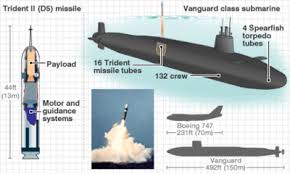
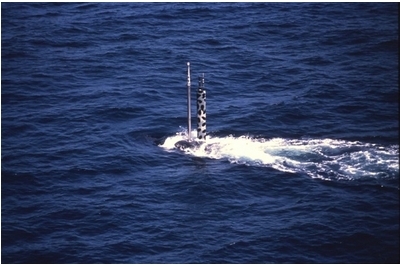
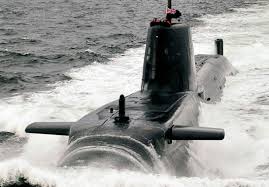
While we recognize that it is not within the remit of the Commission to recommend substantial devolution of powers in the area of foreign affairs and defence (security) policy, we regard it as axiomatic that the people of Scotland should not have to have weapons of mass destruction, namely the Trident nuclear submarines based at Faslane on the Clyde, imposed on their territory without, as a minimum, democratic consent of a kind not provided within the current United Kingdom settlement. This should be addressed. Ekklesia will, of its own volition, continue to argue that nuclear weapons and other weapons of mass destruction are not only immoral but illegal in international law.
An Equilibrium Between Powers Granted and the Capacity and Resources To Utilize Them For Public Benefit:
It is extremely important that political and constitutional powers granted to the Scottish Parliament and Government under a devolution settlement are matched by the tax-raising, financial and economic powers required to enable them to deliver measurable benefits to people and communities.
The Right Of Civic Engagement, Consultation and Assembly:
We see the institutions of governance and policy invested in the capacity of people and communities to determine their own lives, rather than the other way round. This notion has been developed as a ‘claim of right’, an assertion given moral and theological weight from within our Christian tradition (in association with others in a plural environment) by the Rev Dr Ian Fraser, among others, in recent Scottish history. The principle of establishing processes that are open to shaping by citizen’s assemblies and popular participation is an important one for us, rooted in the notion of ‘radical democracy’ moving beyond merely liberative democracy to the capacity to embrace difference and antagonism in public life/policy in ways that enable dominant power relations to be challenged by those otherwise marginalized by lack of resources, education or status in society. We recognize that this principle is more relevant in terms of the outcomes of the deployment of specific powers (judging them morally and practically in terms of their impact on the poorest and weakest, recasting them to give such people a real stake in determining better outcomes, along lines suggested by Scotland’s Poverty Truth Commission). Nevertheless, it is important to bear it in mind in formulating the settlement of powers within national institutions.
Specific Proposals For Devolved Powers and Their Grounding. The Following Would Be A Good Basis For Establishing the Kind Of Principles Enumerated Above:
* Power over all franchise and electoral law residing in Scotland: This would would allow 16-18 year-olds to vote in the 2016 Holyrood election, allow Scotland to develop and deploy a fairer electoral system, and create conditions for a proper power of public recall.
* Comprehensive economic powers: This would need to include borrowing as well as taxation. The aim would be the capacity to deliver social, environmental and financial security and measures of redistribution.
* Full control over employment law and employment rights, including industrial relations and health and safety legislation.
* The welfare system: This would enable Scotland to create a fabric of social security and comprehensive welfare suitable for a modern society, and appropriate to the needs of disabled and sick people and the most vulnerable.
* Energy powers: This would involve control over industrial emissions standards, the generation of community renewables, energy efficiency and the proper assertion of public purpose over power companies.
* Transport policy: To enable the creation of a community owned and oriented integrated and environmentally sustainable public transport system in Scotland.
* Full powers over human rights and equalities law: This would enable Scotland to retain the Human Rights Act if it was scrapped by the United Kingdom Parliament, and also full consonance with European and international instruments.
* The right to refuse participation in illegally and morally flawed international wars and conflicts, and to refuse the stationing of weapons of mass destruction on Scottish soil.
* The right, as part of family of nations, to retain membership of the European Union if the majority of those voting in a referendum on the topic in Scotland so determine.
27 November 2014: Smith Unveils his devolution package – Events of the day as they unravelled
08.00 Good morning. At 08.30, Lord Smith of Kelvin will unveil a new devolution deal to Scotland that will grant Holyrood powers over income tax and welfare spending. The cross-party commission was set up after the unionist parties promised greater powers for Scotland in the event of a no vote in the independence referendum, in a pledge known as ‘The Vow’. The deal is being hailed as the biggest transfer of powers to Scotland since the Scottish Parliament was set up 15 years ago. It has been drawn up in little over two months. The deal includes:
Full control in Scotland over income tax rates and bands, but not the personal allowance threshold.
More control over welfare, including the rate of Disability Living Allowance ands its successor PIP, Attendance Allowance and Carer’s Allowance. Scottish ministers will have the power to top up Universal Credit to effectively abolish the “bedroom tax”.
Control over Scottish Parliament elections will be devolved, allowing SNP ministers to press ahead with plans to give 16 and 17 year olds the vote.
08.10 The devolution of income tax goes beyond what Labour intended. Gordon Brown warned the devolution of income tax would be a “trap” because it would force Scottish MPs to surrender significant voting rights in Westminster over budgets – putting the Union itself at risk. Under the deal, however, we expect Scottish MPs to retain votes over budget votes.
Asked why the reversal in position, Jim Murphy, running to lead Scottish Labour, said this morning: “I’ve changed my mind.” “I listened to the people of Scotland in the referendum, who wanted real change but in the United Kingdom. We changed our mind, and reflected on the wishes of the people of Scotland. “I think this morning very many of those Yes voters who are not dyed-in-the-wool SNP people, they will be pretty satisfied with this deal. “But the second thing is that important parts of pooling and sharing of resources within the UK remain, the Barnett formula will remain, issues about the state pension will remain, and the ability to deal with a downturn in the economy will remain by Universal Credit and things like that remaining part of the UK. “So I think it’s a remarkable deal and a best of both worlds deal: really strong devolution but Scotland remaining part of the UK.”
08.20 Gordon Brown issued a statement, saying: “The Vow to deliver a stronger Scottish Parliament within the UK has been kept, as promised, and the timetable for draft laws to be published in January will now be honoured, as promised.” He said that the Smith Commission has ruled that income tax is a “shared UK tax” and that a reserve power to levy a UK-wide income tax has been retained. “The Commission has rightly REJECTED the Conservative proposal ? from the day after the referendum for excluding Scottish MPs from voting on Budget income tax decisions. It has rightly ? recommended that the whole of the House of Commons, including Scottish representatives, will ? always ? vote on? every aspect of UK Budget tax decisions.”
08.30 Lord Forsyth, John Major’s Scottish Secretary, has attacked the reforms to income tax as “piecemeal” that will be easily avoided, as the wealthy can take their income as dividends. “This is why it’s mad to rely on income tax as your main source of revenue. If the proposals are that dividends in income should be not taxed, they can change to have most of their income in dividends and avoid the Scottish rate of tax. I think we could end up if people think more powers to the Scottish parliament means more money… this has not been thought through,” he told Newsnight last night. “The Labour party’s idea that we should have a constitutional convention for the whole of the United Kingdom, and not do this piecemeal reform as a panic measure to the rise of the nationalists and the result of the referendum.”
08.40 Boris & Co: Now give powers for England. Local government leaders including Boris Johnson, the Mayor of London, have called for negotiation similar to that in Scotland to agree a comparable package for English local government. The letter, entitled What is good enough for Scotland, stated: “We leaders and supporters of local government in England of all parties and types of local government congratulate Scotland on the measure of devolution they have worked for and that is now proposed by the Smith Commission.
We call upon central Government and party leaders to recognise that local government should be the vehicle for devolution in England and to now negotiate with us using a similar non-party Commission to agree a comparable package of measures for local government in England which can appear in the Manifestos and be enacted after the General Election.”
09.00 Lord Smith of Kelvin opened the press conference. He praised political leaders for coming together after the “bruising” referendum. The Scottish Parliament will be “stronger” with “more tools to pursue its tools and objectives”, he says, after the biggest transfer of powers since it was created. It will be “more accountable” because more spending will be funded from tax within Scotland. Specific mentions:
New borrowing powers alongside tax raising and the Barnett Formula block grant.
The Parliament will get the first ten per cent of VAT.
Receipt of Air Passenger Duty.
Control over how elections are run.
The number of msp’s to be elected to parliament and how they are to be disqualified.
Power to give 16 and 17 year olds a vote.
Scotland will get power over disability and care benefits.
Control of unemployment programmes, welfare subsidies, cold weather, winter fuel & funeral payments and the maternity grant.
Powers to create new benefits.
The Scottish Government will be given a bigger role in EU negotiations.
Urging the Scottish people to be “patient” for the delivery of the new powers. he said: “Change of this magnitude cannot be rushed through.” He says inter-governmental working “needs to be improved”.
David Cameron and Nicola Sturgeon must meet to discuss outcomes soon after after 25 January 2015 and the Speakers of the Commons and the Scottish Parliament should meet to discuss how public understanding of the new settlement can be improved. Some believe the commission has gone too far, others not enough,” he said, “but my work is done – responsibility now passes to the Scottish Government.”
09.15 John Swinney, the Scottish finance minister and Deputy First Minister, said the proposals lacked job creation powers, welfare powers, control over personal allowance or national insurance that will allow Scotland to succeed. “I regret these powers have not been delivered.” He said they recognised the Smith Commission could not grant independence but they hoped it would allow Scotland to succeed economically.
They say this does not happen. “We welcome the new powers – as we support all progress for Scotland – and pledge to use them when they are in place in the best interests of the Scottish people. We also welcome the acknowledgement of the ‘sovereign right’ of the people of Scotland, and our ability to proceed to independence if we so choose. “But the proposals clearly do not reflect the full wishes of the people of Scotland, and also fall far short of the rhetoric from the No campaign during the referendum.
Then, Gordon Brown promised ‘nothing less than a modern form of Scottish Home Rule’ and ‘as close to a federal state’ as the UK can be. That was the context for the “extensive new powers” promised in the Vow. Regrettably, the Westminster parties were not prepared to deliver the powerhouse parliament the people of Scotland were promised – under these proposals, less than 30 per cent of our taxes will be set in Scotland and less than 20 per cent of welfare spending will be devolved to Scotland.
That isn’t Home Rule – it’s continued Westminster rule.” “Most significantly, the proposals do not include the job-creating powers that Scotland so badly needs to get more people into work and grow the economy, or welfare powers to tackle in-work poverty.” That claim is based on these two sentences in the report:
“Reflecting the sovereign right of the people of Scotland to determine the form of government best suited to their needs, as expressed in the referendum on 18 September 2014, and in the context of Scotland remaining within the UK, an enhanced devolution settlement for Scotland will be durable, responsive and democratic.”
“It is agreed that nothing in this report prevents Scotland becoming an independent country in the future should the people of Scotland so choose.”
09.30 On Twitter, ‘betrayal’ is now trending in Glasgow, which voted yes. A sample reaction from Yes voters:
09.40 John Redwood, the standard bearer for the Tory right, warns Scottish MPs voting on English income tax will be “unjust”. He wants a new settlement where the Speaker will declare which issues are English only. “I’m here to speak for England, and what we need is the ability to make a decision on behalf of England, just based on the votes of the English MPs at Westminster. Or in some cases we may be doing it with Wales and Northern Ireland if the issues are not devolved there, but not with Scotland, because the issues have been devolved to the Scottish Parliament. “Now that Scotland is going to get this mighty power to choose the tax rates and the bands for income tax, [it’s important] that Scottish MPs don’t come to Westminster and then impose an income tax rate or income tax band on England that we don’t want. It would be quite unjust if Scottish MPs were still able to vote on our income tax when they could not vote on their own income tax, and when Scotland had her right to choose her own income tax without us.”
09.50 Nick Clegg says the parties have over-delivered on The Vow. “Call it Vow Max, Vow Plus Plus,” he tells his weekly radio show on LBC. “Because what you have got in the Smith Commission, which I think is truly remarkable, is the devolution over money so that Scotland now will be responsible for the majority of the money that it spends which is a good thing. “This is not asking more of English tax-payers. It is saying that if the Scottish people and the Scottish politicians they elect want to do more things, on welfare for instance, they have got the freedom to raise it for them themselves and they will have, basically, a new welfare system for them to manage themselves in Scotland.
They will have to fund it but they will be allowed to take responsibility for it. “That is basically Home Rule and that is something that Liberals down the ages have argued for over a long period of time. We also need Home Rule for Sheffield for Liverpool for Newcastle… we need devolution, decentralisation across the country.”
– Scotland can set the rates and thresholds of income tax, but the personal allowance will remain set in Westminster. All the revenue will stay in Scotland. It will be administered by HMRC, with any extra costs footed in Scotland.
– Scotland will take the first 10 percentage points (i.e. half) of VAT receipts.
– Scotland will have have the power to borrow on the international markets, within a “prudential borrowing regime consistent with a sustainable overall UK framework.”
– Scotland will have control on air passenger duty from Scottish airports, and can scrap it.
– Power over the running of Scottish Parliament elections, including spending and the age of the franchise and the number of MSPs.
– Consultation with Scottish ministers on negotiations with the European Union, and allowing Scottish Government ministers to speak on behalf of all of the UK at the Council of Ministers in Europe.
– The Crown Estate i.e. Government land will transfer to the Scottish Parliament. This includes the seabed, rural estates, stretches of coast line and mineral and fishing rights.
But it will not cover “critical national infrastructure” covering defence, oil and gas.
– The Scottish Government will have a role in reviewing the BBC’s charter and the BBC – vilified in the referendum campaign by nationalists – will have to answer to the Scottish Parliament’s committees.
– Scotland will have a greater say over running the Maritime and Coastguard Agency, the Northern Lighthouse Board, Ofcom and Ofgem.
– the ability to top-up benefits payments to cancel out the so-called Bedroom Tax.
– Benefits for carers, the disabled and the ill; cold weather, funeral payments, maternity grants and winter fuel payments.
– The right to create new benefit payments.
– The running of back-to-work schemes for the unemployed.
– The report calls for “serious consideration” to devolving control over abortion and call for immediate consideration.
– It calls for a discussion around the devolution of medical rules on embryology, surrogates and medicines.
– Tribunals will transfer to Scotland, except the Special Immigration Appeals Commission and the Proscribed Organisations Appeals Commission.
– Transport will be devolved, including the power to set speed limits, and allowing the state to bid for rail franchises.
– The level of so-called Green Levies on fuel bills will remain in Westminster, but how they are raised will be devolved.
– Scotland will take control of onshore oil and gas licencing, but off-shore will remain a UK-wide issue.
– Scottish ministers can request competition authorities investigate issue in Scotland.
– Scotland takes control of consumer advocacy, and will have the power to prevent the spread of payday loan shops and fixed odds betting terminals.
Powers explicitly staying with Westminster are:
– The Barnett Formula, setting the block grant from Westminster, will remain.
– The state pension, including the pension age.
– National Insurance, Inheritance Tax, Capital Gains Tax, Corporation tax, fuel duty, oil and gas receipts remain controlled by Westminster.
– Universal Credit, the new DWP system for delivering working age benefits, including the rates and sanctions regime
– The Equality Act will remain UK wide, but Scotland will be able to set new rules such as gender quotas.
– The Treasury retains overall responsibility to manage risks and shocks to the economy, including a power to levy UK-wide taxes if required.
10.50 David Cameron welcomed the Smith Commission, and says the case for English votes for English laws is now “unanswerable”. He will unveil proposals before Christmas. “I’m delighted with what’s been announced. We are keeping our promises and we’re keeping our United Kingdom together. I always said that a ‘no’ vote didn’t mean no change. Indeed, we made a vow of further devolution to Scotland. And today we show how we’re keeping that vow and we’ll continue to keep that promise.
“The Scottish Parliament is going to have much more responsibility in terms of spending money. But it will also have to be accountable for how it raises taxes to fund that spending. And I think that’s a good thing. “I think the report today also makes the case for English votes for English laws unanswerable and we’ll be taking action on that shortly. And I think, taken together, this extra devolution for Scotland and dealing with the all the issues in our United Kingdom will make our United Kingdom stronger. So it’s a good day for the UK.”
10.58 On Twitter, the Smith Commission becomes #smithscommission;
11.04 Jim Murphy, the Labour leadership front runner, says the deal means the SNP will no longer be able to blame London for failing to deliver. “The Vow made during the referendum campaign has not only been delivered – it has been exceeded. “This huge package of new powers is a good deal for Scotland. More decisions about Scotland will be taken here in Scotland, without losing the financial security that comes with the Barnett formula. “The days of political parties in Scotland promising the earth but blaming someoneelse for their failure to deliver are well and truly over. There will be no hiding place for those parties which preach social justice but duck for cover when called to act.”
11.15 In the Commons, MPS discuss the Smith Commission;
Alistair Carmichael, the Scottish Secretary, says the measures “will be implemented without hesitation, without reservation and without equivocation”. He says “work starts today” to turn recommendations into draft legislation by Burns Night in January 2015. “For the first time over 50 percent of the money spent by the Scottish Government will be raised by the Scottish Government,” he said.
Alistair Darling, the former Chancellor, said devolution must do nothing “that undermines the integrity of the United Kingdom.”
Stewart Hosie, the SNP Deputy Leader, said the SNP “won’t stand in the way” of the package but says it has not turned the Scottish Parliament into a “powerhouse”, and says the Scottish voters have been let down.
Carmichael chided Stewart Hosie’s tone and said he had failed to welcome the deal. “He predictably and depressingly seeks to claim this is not the fulfilled.” He waved a copy of today’s Record, which declared: “The Vow Delivered”. He demanded the SNP respected the outcome of the referendum for a generation. He went on to say, “Britain needs federalism,” but held back from saying that’s what the report achieved.
Redwood demanded English MPs have control over English taxes. Carmichael dodged the question a little, and said that the Smith Commission ruled that income tax is a UK-wide tax. MPs shouted “Rubbish!”.
Carmichael is asked if the UK Treasury will have to undewrite Scotland’s extra borrowing. He responded; “Scotland will be liable for any debts it incurs under its new borrowing powers”. (How that works in theory and practice is not clear since the UK retains responsiblity for overall fiscal framework.)
Carmichael is asked whether Scottish control of income tax could trigger a low-tax race between England and Scotland. “That is indeed one of the possible consequences,” he responded.
Pete Wishart (SNP, Perth) said the package is disappointing.
Carmichael said Wishart just wanted independence. “He lost. It’s about time he and his party came to terms with that loss. For him and his party to try and get independence by the back door does not respect the views of the Scottish people as expressed in the referendum. He has a duty to speak for the 60.91 per cent of his own constituents who rejected independence.”
Philip Davies asks “how those people who wanted the status quo should have voted in the independence referendum.” Carmichael said it was clear that a “vote for no was not a vote for no change”.
Chi Onwurah, Labour MP for Newcastle, asked about air passenger duty and the competition from Scottish airports v northern English airports. Carmichael said it was for her and her city to propose the new powers they wanted.
Asked about English votes for English laws, he said: “I am confident that England will get what England wants, when England decides what it is it wants.”
12.20 Elsewhere in the world, the price of Brent Crude has fallen to the lowest level in four years as Opec meets. http://www.bbc.co.uk/news/business-30223721 The Yes campaign’s finances were built on assumptions of oil at $113 a barrel. It’s now $75.75. Under the Smith Commission, oil revenues will not be devolved – to SNP chagrin.
12.40 A number of aspects outstanding will be clarified in time by Westminster:
What English votes for English laws really mean – and whether MPs from north of the border will be barred from voting on income tax bands and rates in the rest of the UK. Details are due to be set out by Mr Cameron before Christmas but the PM’s official spokesman said that the principle would be that the differentiation would apply to “all financial matters”. Some elements of income tax would remain UK-wide, he pointed out, such as the allowance thresholds and how income was defined – and there would “continue to be a UK Budget”.
Asked specifically if MPs from north of the border would be excluded from voting, for example, on a change to income tax bands or rates in the rest of the UK, he declined to give detail of specific plans. But he added: “Where you see significant areas of devolution, there is an important principle there in terms of English votes for English laws. The Prime Minister was pretty clear when he was in front of the select committee that he thinks he is going to bring forward proposals which are going to reflect that because that is the fair thing to do.”
Ed Miliband insisted the settlement meant Scottish MPs WILL vote on English budgets. “The system of tax reliefs remains at a UK level, other aspects of the income tax system remain at the UK level. “I think it’s part of the integrity of the UK that it continues to be the place that Scottish MPs vote on the budget. The Smith Commission itself recognises that in their report.
13.30 Labour are concerned about regional airports in the north of England, and tax competition from lower levels of air passenger duty in Scotland.Is a tax race brewing? Balls and Umunna wrote to their Tory counterparts. “All of our parties support the Smith Commission conclusions and its principle that implementation should not cause detriment to the UK as a whole nor to any of its constituent parts. And cause neither the UK Government nor the Scottish Government to gain or lose financially simply as a consequence of devolving a specific power.
It is important that, in implementing the Smith recommendations in relation to Air Passenger Duty, this principle is upheld. This means ensuring that English Regional Airports are not disadvantaged. English Regional airports cannot be faced with continuing uncertainty and risk through not knowing whether they will be significantly disadvantaged should a future Scottish Government introduce changes to Air Passenger Duty. It is therefore imperative that the UK Treasury leads work across Government – and working with the Scottish Government – on a mechanism to ensure that English airports, particularly in the North of England, are not disadvantaged.”
27 November 2014: The last-minute pledge by Unionists in the independence referendum debate on more powers to be sent to the Scottish Parliament is broken.
The Record also claims, (breathless with excitement) that “Scotland will be allocated £5 billion of VAT receipts, 50 per cent of the VAT take in the country”. But the Smith report makes abundantly plain that this too will NOT result in any extra money for the Scottish Government’s budget. Quote: “The receipts raised in Scotland by the first 10 percentage points of the standard rate of Value Added Tax (VAT) will be assigned to the Scottish Government’s budget. These receipts should be calculated on a verified basis, to be agreed between the UK and Scottish Governments, with a corresponding adjustment to the block grant received from the UK Government in line with the principles set out in paragraph 95.” Paragraph 95 is the section which explicitly says that any changes should not result in an increase or decrease to the Scottish Government budget.
What that means is that any “extra” money assigned in VAT will be immediately clawed back from the block grant – in other words, the amount of money in Holyrood’s budget will be exactly the same, but some of it will be labelled differently. Westminster, to all practical intents and purposes, will hand Scotland a tenner with one hand and take back two fivers with the other hand.
Worrying facts about the Smith Commission causes concern.The following is what was said: “Agreed plans to give Holyrood new powers over abortion law, lotteries and health and safety at work were dropped from the Smith Commission at the 11th hour leaked drafts have revealed. The documents show that a range of major powers were set to be devolved to Scotland as part of the Unionist “ vow” made during the independence referendum but were axed in the final days of negotiations. They include full devolution of abortion law and creation of a separate Scottish Health and Safety Executive. Both were downgraded to the status of “additional issues for consideration “and may or may not be devolved in the future.” http://wingsoverscotland.com/and-now-for-the-truth/
Plans to give the Scottish Government more control over the treatment of asylum seekers and a greater say in the governance of the BBC were removed at the instigation of the Unionist parties. A draft dated November 21st included proposals to devolve income tax personal allowance, employers’ National Insurance contributions, Inheritance Tax, and the power to create new taxes without Treasury approval. However these were never adopted into the agreed text.
1 October 2014: More than 106,000 Scots have backed an online petition to ensure the three amigo’s deliver their vow of “extensive” new powers for Scotland.
As the independence referendum campaign came to a head, David Cameron, Ed Miliband and Nick Clegg vowed to devolve extensive new powers to Holyrood in the event of a No vote on September 18. Now, more than 100,000 Scots have backed an online petition, made on the political activism website 38 Degrees, calling on the party leaders to fulfil their solemn promises.
Last night, former First Minister Gordon Brown pledged to hand the petition to the Commons demanding extra powers for Scotland during a debate on October 16. Brown said: “The issue is not whether we have change or not. Change is guaranteed. But the question is whether it comes with strings attached. “The petition is a call for unity around the original undiluted programme of strengthening the Scottish Parliament and I urge more people in Scotland to sign.”
It reads: “The Westminster party leaders promised the Scottish people new democratic powers on a clear timetable. “But since the referendum, David Cameron has said he wants to link democratic powers for Scotland to other changes like banning Scots MPs from voting on some issues in the UK parliament. This could mean the promise gets delayed or broken. That’s unacceptable. “Let’s tell all the party leaders – a promise is a promise. You can’t add extra conditions now.” Gordon Brown, Nicola Sturgeon and Johann Lamont all gave the petition their backing yesterday. http://www.dailyrecord.co.uk/news/politics/sign-up-over-106000-scots-4359935
10 October 2014: Nicola Sturgeon calls for Holyrood to be handed maximum home rule as Scottish Government proposals for change are lodged with Lord Smith of Kelvin’s commission.
Unveiling plans for a radical transfer of power submission to the Smith Commission it is effectively independence lite. It calls for almost everything to be passed to Holyrood except key UK-wide issues such as currency policy, foreign affairs and defence. Nicola Sturgeon said she still chases her dream of independence but insisted her revised plan will not break up the UK by the back door. She also claimed the unionist parties risk failing to live up to their promise if they do not improve their proposals for Lord Smith, also lodged yesterday. Outlining her plans in Glasgow, Nicola Sturgeon said: “I firmly believe that Scotland should be an independent country. However, I accept the result of the referendum and acknowledge independence will not be the result of the Smith commission process.”
The SNP said their proposals amount to maximum self-government. They include transfer of all tax revenue to Scotland, including income tax, national insurance, corporation tax and fuel duty. All domestic spending decisions, such as welfare, should be made in Holyrood. And they want control of rail policy, employment policy, energy and broadcasting.
Labour, the Tories and Lib Dems largely sent in initial proposals published months before the referendum, which Nicola Sturgeon criticised. She said: “I’m sitting here very openly saying this process isn’t going to deliver what I want for Scotland, which is independence. I think the quid pro quo for the other parties is to recognise that those proposals do not amount to what people now expect to be delivered.”
24 October 2014: Treasury’s RBS email leak came from Westminster ‘referendum dirty tricks’ department
The UK Treasury has been accused of running a, “political dirty tricks department” spinning against Scottish independence after it emerged sensitive information about Royal Bank of Scotland plans to leave the country in the event of a Yes vote was leaked by a civil servant in charge of, “referendum communications” within the department. The email, sent to journalists the week before the referendum, stated RBS had plans to move its base to London in the event of independence, triggering headlines viewed as a blow to the Yes campaign.
It was issued while the RBS board was meeting to discuss the matter, and before the bank had made a statement to the financial markets – a breach of trading rules. First Minister Alex Salmond demanded a criminal investigation into the matter, while Edinburgh financier and Independent Midlothian councillor Peter de Vink, an RBS shareholder, also asked the Financial Conduct Authority (FCA) and police to investigate.
The Sunday Herald has now obtained a copy of the email, which shows it was sent by a civil servant who is head of Scottish Referendum Communications at the Treasury. City of London Police are also now probing the complaint by de Vink and are in the process of contacting, “relevant individuals and organizations”. SNP Treasury spokesman Stewart Hosie MP yesterday said the fact the email had been sent by the head of Scottish Referendum Communications was an, “extraordinary revelation”. He said: “The previous claims by the Cabinet Secretary [Sir Jeremy Heywood] that the Treasury was, “promoting financial stability” in revealing RBS plans has been totally blown apart by the revelation that it was actually a pro-active email from an official in a so-called, “Scottish referendum unit” and released while the RBS board was actually in session.
“It seems that the London Treasury had a political dirty tricks department operating throughout the referendum campaign. However, the huge problem they now face is the increasing likelihood that this particular trick was not just dirty but illegal.” Hosie added: “I will now table a series of Parliamentary questions on this issue to add to the proper and comprehensive investigations which must now take place.”
The Treasury email was sent to journalists at 10.16pm on September 10, around 25 minutes before the RBS board meeting on the issue had finished. It contained a response to a statement issued by Lloyds Banking Group which stated it had contingency plans to establish “new legal entities” in England in the event of a Yes vote. But it also gave a quote from a “Treasury source” which said: “As you would expect, RBS have also been in touch with us and have similar plans to base themselves in London.”
The following day, RBS issued a statement to the markets which confirmed its intention to, “redomicile” in the event of a Yes vote, but added it would intend to retain a, “significant level of its operations and employment in Scotland”.
RBS chief Ross McEwan also issued a letter to staff in the morning saying the business was based in Scotland because of the, “skills and knowledge of our people, and the sound business environment”. It added, “So far, I see no reason why this would change should we implement our contingency plans … I know many of you will have already heard about this first in the media. My apologies for that, on this occasion this was unavoidable.”
Heywood, head of the civil service, subsequently rejected demands by Salmond that the matter be investigated. He stated the Treasury email had been issued following a newspaper report, which quoted an RBS source as stating that the bank would follow Lloyds in its plans to move its registered HQ out of Scotland in the event of a Yes vote.
In a response to Salmond, he claimed it was, “simply a confirmation of the Treasury’s understanding of RBS’ contingency planning”. He added, “The Treasury judged that it was important to set this out – at a time when the UK financial markets were closed – given their overarching responsibility for maintaining financial stability in the UK.”
Salmond subsequently wrote to the head of the FCA, the Chief Constable of Police Scotland, and the Commissioner of Police for the City of London urging action over the alleged leaking of market-sensitive information. He stated the grounds for his belief a criminal offence may have been committed, including: that decisions of such a substantial nature should be a matter for the bank to report “openly and transparently” to markets; and that there had been improper disclosure of market-sensitive information, which is “tantamount to insider dealing”. He also raised concerns the action by the Treasury would have potentially created uncertainty if its information had differed from the position taken by the RBS board when its meeting had concluded.
De Vink, who filed complaints on the potential leaking of market sensitive information two days after the Treasury email was sent, said he has now been contacted by City of London Police and invited to attend an interview next month. He said: “They have asked would you come in and talk to us, which is what I am going to do in November. “I told them while it is a political issue, that doesn’t take away that what happened was absolutely unacceptable.” De Vink also criticised the FCA for a lack of response, describing its attitude as “lackadaisical”. “I find it incredible that these things are allowed to happen,” he added, “If anyone else would have done that they would have had the book thrown at them and quite understandably.”
The Sunday Herald asked the FCA if the complaints were being investigated. A spokeswoman said it was unable to comment on individual complaints. A spokesman for City of London Police confirmed it had received the letter from de Vink and added: “We are now speaking to the relevant individuals and organisations.” The Treasury claimed the person who sent the email was a “junior civil servant”, despite his position as head of Scottish Referendum Communications.
In a previous role he was press officer to former financial secretary to the Treasury, Greg Clark. The Treasury also refused to give any details of who approved the email being sent out. Last night, a spokesman for the Treasury said: “As is a matter of public record, the Cabinet Secretary has written to the former [sic] First Minister on this matter, and rejected any suggestion of improper actions by civil servants.”
Jim McKay commented. Heywood stated the Treasury email had been issued following a newspaper report, which quoted an RBS source. He must have reference for that report? Newspaper, date and edition. And what RBS source? Smoke and mirrors. He’s lying.
15 September 2014: Westminster’s three main party leaders sign up to a historic joint statement that was demanded by the Daily Record on behalf of the people of Scotland.
The three main party leaders today promised that a No vote will mean a stronger Scottish Parliament and total protection for the NHS. David Cameron, Ed Miliband and Nick Clegg have signed up to a historic joint statement. In their own words, they pledge to work together to transfer more powers to Holyrood if Scots reject independence on Thursday. The Prime Minister, his Lib Dem deputy and the Labour leader also promise to ensure that no one other than the Scottish Parliament can cut vital public services such as the NHS.
The agreement was brokered by former prime minister Gordon Brown and Scottish Labour. It will give Scots who remain unsure about separation complete confidence that, if there is a No vote, Scotland will still be given much more control over its future. Brown has already outlined a fast-tracked timetable for transferring more powers from Westminster to Holyrood if Scots vote No. This new pledge means that all the parties with a chance of forming the next UK government have guaranteed the “extensive” new powers will be put on the statute book next year. The joint statement also rubbishes claims from the SNP that the Barnett Formula for calculating Scotland’s budget could be changed to leave us less money for public services. It pledges “Because of the continuation of the Barnett allocation for resources, and the powers of the Scottish Parliament to raise revenue, we can state categorically that the final say on how much is spent on the NHS will be a matter for the Scottish Parliament.”
Last night, Brown said more powers for Scotland are now “locked in” to a No vote on Thursday. And he said the agreement for a timetable for change that will reshape Scotland’s role in the Union is now backed up by a public pledge to deliver. Brown added “In the past few days, I have been travelling the country, speaking at more than 30 rallies and town hall meetings. I want to sum up what I have heard. People want change. Whether it is because global economic forces are making their jobs less secure, of inferior status, lower paid and restricting the opportunities for their children, or whether it is in response to concerns about the bedroom tax, food banks and the future of public services, it is absolutely clear that people want change.
But while change through the establishment of the Scottish Parliament in 1997 was the “settled will” of the Scottish people, it is clear that the nationalists’ proposal for change through independence is not. Not even the most ardent and optimistic nationalist would claim that there is an overwhelming majority for separation, as there was for devolution. I believe that there is, however, a programme of change that can bring the people of Scotland together. I sense that people want change that can unite Scotland, rather than divide Scotland. They want to know that a No vote does not mean no change and instead seek guarantees of change, locked in and clear assurances that from September 19, the pace of change will not stall but speed up. But they want a promise of change they can trust – without the risks and uncertainties of an irreversible separation.
I believe they are saying to us, Give us the guarantees of change and with these guarantees, we can vote for a strong Scottish Parliament within the UK. We have heard important statements in Glasgow on Friday by Ed Miliband and Scottish Labour Party leader Johann Lamont and in Aberdeen by the Prime Minister. I believe that tonight, having listened to what the pro-devolution parties are saying, we can give these guarantees, that lock in change that is better, faster, fairer and safer than anything the SNP can offer through independence. So let us lock in three guarantees that will deliver the best deal for a stronger Scottish Parliament within the United Kingdom. The guarantees that we now have pave the way to the future – a great Scotland as a driving, successful and vibrant nation playing its full part in Great Britain. I believe what I am saying locks in a period of constitutional improvement and progress in preference to the risk-laden and dangerous change offered from an irreversible separation from which there is no going back.”
Cameron backed the timetable for more powers in an emotional speech in Aberdeen yesterday. He told more than 800 party members and activists that the UK is not a “perfect country” and pledged to change it. The PM added: “The question is, how do you get that change? “For me it’s simple. You don’t get the change you want by ripping your country apart. You don’t get change by undermining your economy and damaging your businesses and diminishing your place in the world.” Cameron said the plans outlined by the pro-UK parties amounted to “real, concrete” change. He added: “The status quo is gone. This campaign has swept it away. There is no going back to the way things were. A vote for No means real change. We have spelled that change out in practical terms, with a plan and a process.
If we get a No vote, that will trigger a major, unprecedented programme of devolution, with additional powers for the Scottish Parliament – major new powers over tax, spending and welfare services. We have agreed a timetable for that stronger Scottish Parliament – a timetable to bring in the new powers that will go ahead if there is a No vote. A White Paper by November, put into draft legislation by January. This is a timetable that is now agreed by all the main political parties and set in stone and I am prepared to work with all the main parties to deliver this during 2015. So a No vote means faster, fairer, safer and better change.”
Cameron seemed close to tears as he made a direct appeal to Scots to vote No. He admitted that many people might be tempted by a Yes vote just to get rid of his Government. But he warned Scots not to “mix up the temporary and the permanent”. With his voice breaking, Cameron added: “Don’t think, I’m frustrated with politics right now, so I’ll walk out the door and never come back”. If you don’t like me, I won’t be here forever. If you don’t like this Government, it won’t last forever. But if you leave the UK – that will be forever. The different parts of the UK don’t always see eye-to-eye. Yes, we need change and we will deliver it. But to get that change, to get a brighter future, we don’t need to tear our country apart.” He asked Scots to consider what would provide the best future for them and their family when they cast their vote. Cameron said: “As you stand in thestillness of the polling booth, I hope you will ask yourself this – will my family and I truly be better off by going it alone? Will we really be more safe and secure? Do I really want to turn my back on the rest of Britain and why is it that so many people across the world are asking, ‘Why would Scotland want to do that? Why?’ And if you don’t know the answer to these questions – then vote No.” The Promises:
Guarantee One
* New powers for the Scottish Parliament.
* Holyrood will be strengthened with extensive new powers, on a timetable beginning on September 19, with legislation in 2015.
* The Scottish Parliament will be a permanent and irreversible part of the British constitution.
Guarantee Two
* The guarantee of fairness to Scotland.
* The guarantee that the modern purpose of the Union is to ensure opportunity and security by pooling and sharing our resources equitably for our defence, prosperity and the social and economic welfare of every citizen, including through UK pensions and UK funding of healthcare.
Guarantee Three
* The power to spend more on the NHS if that is Scottish people’s will.
* The guarantee that with the continued Barnett allocation, based on need and with the power to raise its own funds, the final decisions on spending on public services in Scotland, including on the NHS, will be made by the Scottish Parliament.
* The Scottish Parliament will have the last word on how much is spent on health. It will have the power to keep the NHS in public hands and the capacity to protect it.
15 September 2014: David Cameron makes emotional plea to Scotland as independence vote looms
In an emotional speech on his last visit to Scotland before Thursday’s independence referendum, the prime minister warned that a yes vote would end the UK “for good, for ever” and would deprive the Scottish people of a shared currency and pooled pension arrangements. He also asked people not to mix up the temporary and the permanent, saying neither he nor the government would “be here forever”.
A Guardian/ICM poll shows that 63% of voters in England and Wales objected to the post-independence currency union sought by Alex Salmond, the Scottish first minister. Most people in Scotland, previous polls have shown, want a deal on sterling. Cameron, whose voice was close to breaking, spelled out what he believed would be the costs of independence. “It is my duty to be clear about the likely consequences of a yes vote. Independence would not be a trial separation. It would be a painful divorce,” he said. He said he would be “utterly heartbroken” by a yes vote and listed the benefits of UK membership that the people of Scotland would lose, including a shared currency, armed forces built up over centuries and pension funds that would be sliced up “at some cost”. Independence would mean Scotland’s border with England – and the sea routes to Northern Ireland – would become international frontiers, Cameron said, and that more than half of Scottish mortgages would suddenly be provided by banks in a foreign country.
“We want you to stay,” he said. “Head and heart and soul, we want you to stay. Please don’t mix up the temporary and the permanent. Please don’t think: ‘I’m frustrated with politics right now, so I’ll walk out the door and never come back.’ “If you don’t like me – I won’t be here forever. If you don’t like this government – it won’t last forever. But if you leave the UK – that will be forever,” he said.
In the short term, Cameron has to decide whether to recall parliament in the event of a yes vote, as early as the weekend or next Monday, a move that would disrupt Labour’s annual conference in Manchester. Blair Jenkins, chief executive of Yes Scotland, said Cameron’s speech “was the same litany of empty threats and empty promises we have come to expect from the no campaign – and he is the prime minister who has been orchestrating the campaign of ridiculous scaremongering being directed against Scotland. A yes vote would give Scotland its “one opportunity” to ensure it had job creation powers and end government by parties that Scottish voters did not elect, which presided over a vast increase in food banks and new nuclear weapons systems its politicians had rejected. Instead of believing the word of a Tory prime minister on a very few more powers, the people of Scotland can get all the powers we need to build a better, fairer country by believing in ourselves and voting yes,” he said.
Cameron’s comments came as Ed Miliband prepared for a return visit to central Scotland on Tuesday when the Labour leader is expected to try to woo back disillusioned Labour voters who have largely driven a late surge in support for independence. Taking the opposite tack to Cameron, his ally in the Better Together campaign, Miliband said he believed the yes campaign had delivered a clear message to UK parties that change was needed. He insisted Labour would be the best vehicle for unseating the Tories in 2015 and delivering more progressive policies. “The will of the people of Scotland for economic and political change has been heard and we will deliver,” he is expected to tell a rally. Contrasting his offer with “a future of separation and risk” offered by an irreversible yes vote, Miliband added: “I ask the people of Scotland to lead that change of our whole British constitution.”
That message risked being undermined by a Guardian ICM poll which showed Labour’s support has dipped by three points to 35% across the UK, bringing the Tories to within two points at 33%. The findings are likely to increase voter anxieties in Scotland that Labour could fail to beat the Tories next May. Miliband’s offers of further significant tax and welfare powers for Holyrood were challenged by one of Scotland’s leading campaigners for greater devolution. Writing for the Guardian, Ben Thomson, founder of campaign group Devo Plus, said he was close to voting yes to independence because he was so disappointed by the failure of the UK parties to make an ambitious, concrete offer for greater tax powers, beyond a promise to agree new powers next year.
In a further push by the no campaign, all three UK leaders – Cameron, Miliband and Nick Clegg, the Lib Dem leader – signed a front page pledge in the Daily Record newspaper entitled “the vow”. It promised they would give the Scottish parliament a legal guarantee of its independence from Westminster and to protect the Treasury’s funding system, known as the Barnett formula. Along with a “categoric” statement that Holyrood had the final say on Scottish health service spending, both are major new commitments, pushed for by the paper after it accused the three leaders last week of making weak promises on devolution.
Giving Holyrood its own legal standing instead of having its power gifted to it and controlled by Westminster under Labour’s original devolution settlement in 1998 was a key demand of Gordon Brown, the former Labour prime minister, earlier this year. The Scottish National party has repeatedly claimed that English and Welsh politicians would force Scotland to accept cuts or the loss of the Barnett formula if there was a no vote, accusing Westminster parties of being fickle.
Miliband is due to spend the rest of the week in Scotland, making a series of speeches in central Scotland and campaigning into polling day on Thursday, as Labour attempts to persuade its core vote to back the UK and to vote heavily in the referendum. Brown sought to bolster that offensive by insisting that his party’s plans to increase the tax powers and legal status of the Scottish parliament were “locked-in by a triple guarantee”. Brown said the three guarantees were that Holyrood would be given legal protection from meddling by Westminster, as well as extra powers; there would be a “clear statement of purpose for the UK guaranteeing fairness”; and a guarantee that Holyrood had the freedom to spend more on the NHS, using its new powers to set income tax rates.
On Monday the Organisation for Economic Cooperation and Development, an international thinktank, warned that a yes vote was a potential risk to the global economy, the eurozone and emerging markets. Arguing that the UK was an important member of the group of rich countries, its secretary general, Angel Gurria, said: “We clearly believe that better together is perhaps the way to go.”
Property website Zoopla said a flood of homes being put up for sale in the event of a yes vote could lead to a repeat of a 17.5% fall in Scottish house prices, which took place during the financial crisis of 2008.
Albert Edwards, strategist at French bank Société Générale, questioned whether a yes vote could have wider implications across Europe. “The obvious market conclusion is for a weaker sterling – but a proper old fashioned crisis is plausible. But maybe that is too parochial a vision. The sequence of events which might flow from a yes vote may be as unpredictable and as uncontrollable as those of the late 1980s in eastern Europe, which led to the ultimate demise of the USSR,” said Edwards.
The White House reaffirmed on Monday its belief that it would be better for Scotland to stay in the UK. Press spokesman, Josh Earnest, repeated what President Obama said in Brussels earlier this year. “The president said that from the outside the US has a deep interest in ensuring that one of the closest allies that we’ll ever have remains strong, robust and united and an effective partner with the US. This is a decision for the people of Scotland to make; we certainly respect the right of the individual Scots to make a decision along these lines, but as the president said, we have an interest [pause] in seeing the United Kingdom remain strong, robust, united,” Earnest said.http://www.theguardian.com/uk-news/2014/sep/15/david-cameron-emotional-plea-scotland-independence
18 September 2014: Experts say the “No” vote has resulted in political stability in the UK. “The union is like a damaged marriage” stated an anonymous Conservative MP
Despite Civil Service orchestrated baseless threats from companies like The Royal Bank of Scotland, to move operations to England in the event of a “Yes” vote, many Scots dismissed such threats as scaremongering. Furthermore, the Canadian example also suggests that the narrow “No” vote will prolong constitutional uncertainty, causing problems for businesses and jobs in Scotland.
Although Westminster promised to extend “home rule powers” to Edinburgh, the narrow majority of “No” votes will not end the discussion over Scottish independence and pro-independence voters will most likely seek a fresh mandate for a new referendum in a few years’ time, the so-called ‘never-endum’ scenario.
A YouGov poll revealed that almost two-thirds of people in Scotland are unsure what powers are to be devolved so the “no” voters have no idea of what “extensive new powers” Westminster promised.http://sputniknews.com/analysis/20140918/193047983.html
18 September 2014: The British state is an imperial behemoth that can only look on in panic as Scots scramble for the lifeboats
In Scottish city centres right now, you’re rarely out of sight of a yes badge. The vibe was summed up by an Edinburgh cabbie: “We’re being invited to run our country. It’s very exciting. Maybe we can show how things can be done differently”. It’s not just him. Polls have shown the yes vote surging. It’s worth noting how remarkable this is. The only UK party supporting independence is the Greens. Of all of the local Scottish and British papers, only the Sunday Herald backs yes. The official story has long been that it’s only a few angry men in kilts who care about this.
But in the internet age, officials don’t get to write the stories any more. There were always people who had little time for flags, tartanry and shortbread, but who wanted to escape a political system that has made Britain one of Europe’s most unequal counties. And it is these people – a better organised and vastly more powerful version of the occupy movement – that the Westminster parties and their media partners failed to consider.
It’s this movement that has mobilised thousands to come together at meetings and online to imagine and plan out a better country; which has spurred them into activism, often for the first time in their lives; which has laughed together at the arrogance of disconnected rulers; and which has learned together as it has gone along. It’s this movement that attracted my cabbie to the first, then second, then third political meetings of his life – all in the past month.
These people created their own media and founded their own organisations. They are young, energetic, enthusiastic, funny. They looked the British state straight in the eye and saw through its illusions. The hierarchies of a steeply unequal country reward loyalty and elite connections while punishing independence of mind. No wonder kids from “the regions” are running rings around the “gurus” of a floundering establishment.
It isn’t just about activist groups. Visiting one of Edinburgh’s gurdwaras with Scots Asians for Yes, the people I met were typical. Some were undecided; some were no. Most were yes. And what distinguished the yeses was this: they were discussing how to persuade relatives and friends. They collected data-filled booklets to talk through with their families. They had become Google and Twitter aficionados, digging out and sharing information that debunks the horror stories our politicians use to frighten us away from anynotion that another world is possible. With social media, Paul Mason once wrote, “truth moves faster than lies, and propaganda becomes flammable”.
It’s against this self-organised network that the British state is flagging. Research from Edinburgh University shows that the more information people have, the more likely they are to vote yes. In the face of mass peer-to-peer education, the puffed-up power of elites melts away: polls show most Scots no longer believe what Westminster MPs say. As David Cameron and George Osborne and Ed Miliband huff and puff and woo and cajole the people of Scotland, more and more simply look these politicians up and down, shrug, and say: “You have no power over us any more.”
It’s their own fault. Westminster’s parties have made conventional politics so bland that people barely pay attention. To win elections they have got used to flashing simplistic messages in front of our eyes – we don’t notice or care that we’re being patronised. And because they destroyed their pesky grassroots, they failed to spot that the referendum isn’t an election. People are paying attention, are thirsty for information, and don’t take kindly to their leaders treating them like idiots or trying to bully them.
Yet as the polls narrow, they offer a timetable to nowhere and fly from Downing Street a blue and white symbol of their utter failure to understand what’s happening. In a sense, this gets to the core of what the referendum is about. Because the vote on independence isn’t just about escaping Westminster’s supercharged neoliberalism – though it offers that chance too. There’s also a different story of the modern age here: the network v the hierarchy. Do Scots want to huddle behind the clumsy, centralised British bureaucracy, or join the network of nations? Now the age of empires is over, do we want to stay on a Titanic, which once brutally ruled the waves? Or is it time to join Europe’s flotilla of more human-sized countries, more responsive to each of our needs, but capable of huddling together in a storm?
The British state was built for a previous era, to run a vast and violent empire built at a time when centralisation brought power. In the roaring flames of the second world war it was softened enough to be bent a little towards justice. But that was a blip. Those days are gone.
The rebellion in Scotland right now is against a rapidly centralising state in an age when information is diffuse and people have the capacity to organise themselves more than ever. It’s against an elitist structure in an age of mass education. It’s against a system built to keep us out. And there’s a simple way to tell, whatever the result, that yes voters have history on their side: look at the pathetic campaign mustered by the British state to defend itself. Watch Westminster’s wide-eyed panic as a widely predicted surge in the polls emerges. And ask yourself – would a functional state have failed to see this coming? http://www.theguardian.com/commentisfree/2014/sep/18/scotland-yes-campaign-voting-british-state
Angela Eagle
19 September 2014: Conservatives Praise Role of Former Labour Prime Minister Brown in Independence Campaign
Former Labor Prime Minister Gordon Brown has been praised for his contribution to the Scottish independence campaign by Conservative Minister for State for Scotland David Mundell. He said,”Gordon Brown played a very significant role as have a large number of other people. I listened to Gordon’s speech and it was very, very impressive. http://sputniknews.com/world/20140919/193075895.html
19 September 2014: Scottish Referendum: David Cameron and the Queen seek to ease tensions
David Cameron and the Queen will hope to calm tensions after the heated Scottish referendum campaign when they make conciliatory statements on Friday after the formal declaration of the result. The prime minister is planning to make an early appearance in Downing Street to outline a package of constitutional reforms, amid increasing confidence in No 10 during the early hours of Friday that the pro-UK side would prevail. Cameron is expected to use the occasion to show that the coalition is committed to delivering the pledge, outlined by the leaders of the three main UK parties in the final days of the campaign, to deepen Scotland’s devolution settlement.
But Michael Gove, the Scottish-born Tory chief whip, made clear early this morning that the prime minister would present a balanced package to ensure that voters in England, Wales and Northern Ireland do not feel they have lost out. Gove even suggested that Scottish MPs may be banned from voting on English-only matters at Westminster as government sources said that the Barnett formula, which guarantees extra public spending in Scotland, would be part of the changes.
The Queen, who is understood to have watched the referendum debate with close interest, is planning to issue a written statement in the afternoon. It is understood that the monarch, who was praised by both sides during the campaign, believes that it is important to send a message of reconciliation after the heated debates. In a rare intervention on the political stage the Queen said last weekend that she hoped voters would think “very carefully” before voting. Her remarks, delivered outside Crathie Kirk near her Balmoral estate in Aberdeenshire after the Sunday morning service, were interpreted by the no camp as a helpful intervention.
The prime minister wants to move quickly to show he will stand by his word as he confirms the timetable to devolve greater powers, over taxation and welfare, to the Scottish parliament. Cameron, Ed Miliband and Nick Clegg issued a joint pledge after Gordon Brown warned the main UK party leaders that they needed to make a dramatic intervention to fight a late surge to the SNP.
Cameron is facing calls from Tory MPs to balance the powers for Holyrood by denying Scottish MPs the right to vote on English-only matters at Westminster and to reform the favourable funding arrangements for Scotland in the Barnett formula. Claire Perry, the rail minister, became the first Conservative frontbencher to speak out when she warned against “promises of financial party bags”.
Gove, who has been canvassing opinion among Tory MPs, indicated that the prime minister is heeding the concerns of Perry and scores of backbenches. The chief whip told the BBC: “If, as seems likely, there is a no vote then the prime minister will be saying more not just about the need to make sure that the interests of Scotland are protected but how we bring the whole UK together and what the means for Northern Ireland, Wales and England. The critical thing is there needs to be change in order to ensure that Westminster works better for the people of England, Wales and Northern Ireland.”
Gove ruled out the idea of an English parliament. But he suggested that the West Lothian question, which asks why Scottish MPs are entitled to vote on education and health in England while English MPs are unable to influence such matters in Scotland. He indicated that this could involve denying Scottish MPs to ability to vote on such areas.
The indication from Gove that No 10 is prepared to restrict the voting rights of Scottish MPs may spark a coalition row after Danny Alexander, the Liberal Democrat chief secretary to the Treasury, ruled out the proposal on Wednesday. Labour, which holds 41 of the 59 Scottish seats at Westminster, will be opposed to tinkering with the Barnett formula.
It is understood that the prime minister will move to reassure Tory MPs who are alarmed at the favourable funding arrangements for Scotland enshrined in the Barnett formula which ensures that an extra £1,200 per head of public money is spent per head in Scotland. Many Tory MPs were alarmed when the joint guarantee by Cameron and the other UK leaders appeared to guarantee the Barnett Formula. But the commitment was carefully worded to guarantee “the continuation of the Barnett allocation for resources”.
It is understood that this means that devolving greater tax raising powers to the Scottish parliament will lead to a claw back in the Scottish block grant which is underpinned by the Barnett Formula.
A command paper setting out the reforms will be published within the next few months. This will be followed by draft clauses on a proposed bill in the new year that will be formally introduced to parliament after the UK general election next May. Conservative backbenchers lined up to demand separate powers for English MPs shortly after the polls closed, underlining the pressure on Cameron to act. Many are angry at what they see as their leader’s complacency that forced him to offer “bribes” to the Scots to stay in the last day of the campaign. Led by former cabinet minister John Redwood, up to 100 MPs could be prepared to veto the Scottish devolution package if England is not given what they consider to be an equal deal.
Their core demands are that Cameron must address the West Lothian question – why Scottish MPs are allowed to vote on English-only issues – and the Barnett formula – the Treasury mechanism that divides up funding between the four nations of the union. They are unlikely to be placated if the prime minister simply says he will implement the McKay Commission, which recommended a greater say for English MPs on English issues without banning Scottish MPs from voting on any legislation.
One of the new voices to pile pressure on Cameron was Boris Johnson, the London mayor and candidate for Uxbridge, who said Scottish MPs should no longer have a say on legislation that just affects England. He told Sky News: “Let’s not give any more sauce to the goose until we’ve given some sauce to the gander.”
Liam Fox, a former Tory defence minister, also said the West Lothian question and the funding settlement between all UK nations would become “unavoidable” .
Others to raise concerns included transport minister Claire Perry, Conor Burns, Andrew Percy, and Michael Fabricant. From Labour, Diane Abbott, a former shadow minister, and John Denham, a close adviser to Miliband, said it would have to be considered.
Other senior figures in Labour, including Jim Murphy, the shadow development secretary, expressed reluctance to ban Scottish MPs from voting on English issues. Allowing this to happen would put any Labour prime minister dependent on Scottish MPs for a majority in a very difficult position. For example, Scottish MPs would potentially not be able to vote for a budget, after tax powers have been devolved. http://www.theguardian.com/politics/2014/sep/19/scotland-independence-david-cameron-queen-address-tension
19 September 2014: Scotland votes no: the union has survived, but the questions for the left are profound
Like the battle of Waterloo, the battle for Scotland was a damn close-run thing. The effects of Thursday’s no vote are enormous – though not as massive as the consequences of a yes would have been. The vote against independence means, above all, that the 307-year Union survives. It therefore means that the UK remains a G7 economic power and a member of the UN security council. It means Scotland will get more devolution. It means David Cameron will not be forced out. It means any Ed Miliband-led government elected next May has the chance to serve a full term, not find itself without a majority in 2016, when the Scots would have left. It means the pollsters got it right, Madrid will sleep a little more easily, and it means the banks will open on Friday morning as usual.
But the battlefield is still full of resonant lessons. The win, though close, was decisive. It looks like a 54%-46% or thereabouts. That’s not as good as it looked like being a couple of months ago. But it’s a lot more decisive than the recent polls had hinted. Second, it was women who saved the union. In the polls, men were decisively in favour of yes. The yes campaign was in some sense a guy thing. Men wanted to make a break with the Scotland they inhabit. Women didn’t. Third, this was to a significant degree a class vote too. Richer Scotland stuck with the union — so no did very well in a lot of traditonal SNP areas. Poorer Scotland, Labour Scotland, slipped towards yes, handing Glasgow, Dundee and North Lanarkshire to the independence camp. Gordon Brown stopped the slippage from becoming a rout, perhaps, but the questions for Labour — and for left politics more broadly — are profound.
For Scots, the no vote means relief for some, despair for others, both on the grand scale. For those who dreamed that a yes vote would take Scots on a journey to a land of milk, oil and honey, the mood this morning will be grim. Something that thousands of Scots wanted to be wonderful or merely just to witness has disappeared. The anticlimax will be cruel and crushing. For others, the majority, there will be thankfulness above all but uneasiness too. Thursday’s vote exposed a Scotland divided down the middle and against itself. Healing that hurt will not be easy or quick. It’s time to put away all flags.
The immediate political question now suddenly moves to London. Gordon Brown promised last week that work will start on Friday on drawing up the terms of a new devolution settlement. That may be a promise too far after the red-eyed adrenalin-pumping exhaustion of the past few days. But the deal needs to be on the table by the end of next month. It will not be easy to reconcile all the interests – Scots, English, Welsh, Northern Irish and local. But it is an epochal opportunity. The plan, like the banks, is too big to fail.
Alex Salmond and the SNP are not going anywhere. They will still govern Scotland until 2016. There will be speculation about Salmond’s position, and the SNP will need to decide whether to run in 2016 on a second referendum pledge. More immediately, the SNP will have to decide whether to go all-out win to more Westminster seats in the 2015 general election, in order to hold the next government’s feet to the fire over the promised devo-max settlement. Independence campaigners will feel gutted this morning. But they came within a whisker of ending the United Kingdom on Thursday. One day, perhaps soon, they will surely be back.
20 September 2014: Gordon Brown said draft legislation on the Scotland Bill will be ready in January as he warned the UK’s main party leaders the eyes of the world are on them
after their vow to deliver extra powers to Scotland. The former prime minister, who has spearheaded an accelerated timetable for Holyrood to get more powers, said he would ensure the commitment given by the leaders of the three main Westminster parties is adhered to. Nationalists have already raised concerns that the schedule Mr Brown set out for further devolution will not be met. But speaking just two days after the referendum, in which 45 per cent of Scots voted for independence, with 55 per cent wanting to remain in the UK, Mr Brown said: “The promises that were made last week about change, about the delivery of further devolution, must be, and I believe, and will ensure, will be delivered. These are men who had been promise makers, and they will not be promise breakers, and I will ensure that that these promises that have been made are upheld.”
Mr Brown, the MP for Kirkcaldy and Cowdenbeath, said a resolution had been issued which would be placed in the House of Commons on Monday, which had been signed by him, the Prime Minister, Mr Miliband and Mr Clegg. This calls on the Government to lay down a command paper taking in the devolution proposals from the three different parties by the end of next month, and for draft clauses of a new Scotland Bill to be ready by the end of January. Mr Brown told an audience at Dalgety Bay Primary School in Fife: “I can ensure to you that this promise that people were doubting on the airwaves and on the Twittersphere last night, the civil service are already working on the proposals. Decision day was Thursday, delivery day started on Friday. They are working on the timetable but also on the detailed plans so that the publication will indeed be the end of October.”
He added: “To ensure that they are locked in and ensure that there is proper scrutiny, so everybody knows this deadline will be adhered to, I have called, with the permission of the Speaker of the House of Commons, a debate in the House of Commons which will take place in the first week back at Westminster on Thursday October 16. In that debate I will want to ensure that the instructions to deliver have become a plan to deliver and not just a timetable to deliver but a certainty that we will deliver. I am utterly convinced that whatever else happens, I am absolutely sure that unconditionally the timetable that I set out, that will be delivered.” The Parliamentary motion:
That this House…
• welcomes the result of the Scottish independence referendum and the decision of the people of Scotland to remain part of the United Kingdom.
• recognises that people across Scotland voted? for a Union based on the pooling and sharing of resources and for the? continuation of devolution inside the United Kingdom.
• notes the statement by the prime minister, deputy prime minister and leader of the opposition regarding the guarantee of and timetable for further devolution to Scotland.
• calls on the government to lay before Parliament a Command Paper including the proposals of all three UK political parties by 30th October and to consult widely with the
Scottish people, civic Scotland and the Scottish Parliament on these proposals.
* further calls on the government to publish heads of agreement by the end of November and draft clauses for the new Scotland Bill by the end of January 2015.
Gordon Brown said he hoped in the coming weeks Scotland could now “build a new constitution within a new union”. He said the new powers coming to Scotland would mean that in the future there “could be no bedroom tax imposed on Scotland ever again, there could be no poll tax imposed on Scotland again”.While he said there was now a “deep desire” for change, he added “The change that is going to happen in my view can meet the needs and aspirations of the vast majority of the Scottish people.”He said this, together with previous legislation, would mean Holyrood has “powers over health, over housing, over transport along with powers over the environment and land use, powers over jobs, the economy and job creation”.
He also stressed the need for the governments in Edinburgh and London to work together, not just on devolution, but on the major issues facing Scotland. “There is no way forward other than co-operation between the Scottish and UK Government to deal with the problems of jobs, young people’s skills, opportunities for the future and economic change. Instead of this stand-off, instead of them talking to themselves but not each other, instead of this war of attrition between a Scottish Government and a UK Government, let them both get together, let them address the economic challenges of Scotland together.”
He went on “I hope we can move beyond the old, that we can start a new chapter now. I hope the government of Scotland and the government of the United Kingdom will come together, not just to deliver the devolution we have been promised but to deal with basic social and economic challenges that we can only address if we do them together and not apart.” http://www.dailyrecord.co.uk/news/politics/gordon-brown-sets-out-proposals-4291765
Lord Smith
23 September 2014: The peer tasked with building a consensus around new powers for Scotland has advised his work will not be easy and he cannot force an agreement between the political parties.
Robert Smith, Lord Smith of Kelvin, urged Scotland’s political parties, which have separate devolution proposals, to show “courage and compromise” in reaching an agreement. He set out details of his Scotland Devolution Commission and started talks with Scotland’s political parties during a visit to the Scottish Parliament today. He said: “Following the referendum we have a willingness, shared by all five of Scotland’s main political parties, to strengthen the powers of the Scottish Parliament. “My message today to the political parties is a simple one – Scotland expects you to now come together, work together and agree the detail of what those powers should be. “Time is tight but this is not an exercisein thinking about what we could do; that has been done. It is about agreeing on what we will do. “My job is to create a process through which agreement is reached, but I cannot force an agreement. It will not be easy; it will require positive intent, courage and compromise from all parties. But I have confidence that our political leaders will rise to the challenge and I look forward to working with them.”
The commission will hold cross-party talks and civic engagement to produce recommendations for further devolution by November 30. This will be informed by a UK Government command paper, to be published by October 31, and will result in the publication of draft clauses by January 25. The recommendations will deliver more financial, welfare and taxation powers to the Scottish Parliament. A set of proposals – the heads of agreement – will be published by the commission, independent of both the UK and Scottish governments, based on the views of the five political parties and with input from the wider engagement programme.
Over the course of today, Lord Smith will meet with the Presiding Officer and representatives of the Scottish Conservative Party, Scottish Labour, Scottish Liberal Democrats, the Scottish National Party and the Scottish Green Party. He will invite each party to nominate two representatives, at least one of which should be a member of the Scottish Parliament, to take part in the cross-party talks.
He will also ask each party to prepare a written submission on their views on strengthening the Scottish Parliament within the United Kingdom. The names of the party representatives will be published by September 26. Later this week, Lord Smith will write to Scottish civic institutions and business groups, seeking their views on strengthening the Scottish Parliament within the United Kingdom. Next week, he will announce plans for how individual Scots can share their views on the issue. http://www.dailyrecord.co.uk/news/politics/reaching-agreement-further-powers-scotland-4308584
23 September 2014: First Minister Alex Salmond promised the SNP party would play a full part in strengthening the Scottish Parliament, with Labour, the Lib Dems and the Tories pledging to do the same.
Scotland’s party leaders vowed yesterday to bury the referendum hatchet and work together for more powers for Holyrood. On a landmark day at the Scottish Parliament, the leaders pledged to move on from the frenzied Yes or No debate – for the good of the country. And the outgoing First Minister and SNP leader promised his party would play a full part in strengthening the Scottish Parliament, with Labour, the Lib Dems and the Tories pledging to do the same. The mood changed as Lord Smith of Kelvin, the man charged with building cross party agreement for more powers, called for courage and compromise from politicians.
Salmond said: “The Scottish Government will contribute fully to a process to empower the Scottish Parliament and the Scottish people. We will bring forward constructive proposals for doing this.” He said Scotland can emerge the “winner” after years of energising, and sometimes bitter, debate on the constitution. And he added: “Wherever we’re travelling together, we’re a better nation today than we were at the start of this process. We are more informed, more enabled and more empowered. As a result of that, our great national debate in my estimation will help us make a fairer, more prosperous and more democratic country. And in all of that, all of Scotland will emerge as the winner.”
Scottish Labour leader Johann Lamont congratulated old rival Salmond for giving Scots the chance to have their say. She said it was now clear that staying in the UK was “the settled will of the Scottish people. But she added: “No one believes Scottish politics can go to business as usual.” Lamont said she enjoyed shouting at people as much as anyone, but that could no longer be the way to do politics. She pledged to work with the SNP on child care, protecting the NHS and other big issues including land reform. And she pleaded: “Let us not lapse into the debates of the past and be found wanting.” Davidson and Rennie echoed Lamont’s plea for politicians to move on and focus on Scotland’s needs. And Harvie said the massive involvement of young people in the referendum debate had brought a “generational change” to politics.
The Holyrood debate came eight days after UK party leaders David Cameron, Ed Miliband and Nick Clegg made a front-page vow in the Daily Record that Scots would get more power over tax and welfare if we voted to stay in the Union. They also promised that the Barnett Formula, which determines how public funding is divided across the UK, would not be scrapped despite demands from Tory backbenchers. Salmond said Scotland now has “a responsibility to hold Westminster’s feet to the fire to ensure the pledges are met”. He said: “That’s not just a job for the Scottish Government, it is one for all parties in the Parliament. Indeed, we might well argue there is a special obligation on the unionist parties. They promised further devolution. It is essential they deliver.”
Lord Smith, fresh from successfully guiding the Commonwealth Games in Glasgow, watched the speech from the public gallery. He said earlier: “My job is to create a process through which agreement is reached, but I cannot force an agreement. It will not be easy. It will require positive intent, courage and compromise from all parties. But I have confidence our political leaders will rise to the challenge.” Over the day, he met Holyrood’s presiding office and politicians from all parties. The names of two people from each party to work with him will be published by the end of the week, and he will seek the views of civic groups, business and the public. http://www.dailyrecord.co.uk/news/politics/scotlands-party-leaders-vow-bury-4313734
25 September 2014: Cameron to Apologise to Queen for gaffe
David Cameron is to make an unprecedented apology in person to the Queen, after being caught privately describing her as “purring” in pleasure at the result of the Scottish referendum result. A chastened Prime Minister admitted he was “very embarrassed” and “extremely sorry” over the gaffe, which came as he chatted with billionaire media tycoon Michael Bloomberg in New York. Downing Street has already contacted Buckingham Palace to offer the PM’s apologies and it is understood that Mr Cameron will say sorry in person when he next meets Her Majesty for one of his regular audiences.
The Prime Minister came under fire after being picked up by a TV microphone on Tuesday telling former New York mayor Bloomberg of the relief he felt at not having to inform the Queen that Scotland had left the United Kingdom. As the pair arrived for a press photo-opportunity, the PM smiled broadly as he recalled how he was able to tell her it was “all right” after the referendum resulted in a victory for the No camp. “The definition of relief, if you are Prime Minister of the United Kingdom, is ringing up Her Majesty the Queen and saying ‘Your Majesty, it is all right, it’s okay’,” he said. “That was something. She purred down the line.”
The comments were condemned as “crass and incompetent” by SNP MSP Dennis Robertson, though Buckingham Palace declined to comment. Speaking to reporters in New York, Mr Cameron was asked whether he regretted the comment and whether he would apologise. He replied: “Yes and yes.” And he added: “Look, I’m very embarrassed by this. I’m extremely sorry about it. “It was a private conversation, but clearly a private conversation that I shouldn’t have had and won’t have again. “My office has already been in touch with the Palace to make that clear and I will do so as well.” http://www.thecourier.co.uk/news/politics/pm-to-apologise-for-queen-gaffe-1.593841
28 September 2014: Cameron red-faced over Purrgate
David Cameron today vowed “never again” to discuss his conversations with the Queen after being challenged whether he was ashamed to have been overheard saying she had “purred” when told the result of the Scottish independence referendum. The Prime Minister told the BBC One Andrew Marr programme he regretted the exchange between himself and former New York mayor Michael Bloomberg, which was overheard by TV cameras at the United Nations this week. Mr Cameron said: “(It is) one of those moments when you look back and kick yourself very hard. “It was not a conversation I should have had, I am extremely sorry and very embarrassed about it. “I have made my apologies and I think I’ll probably be making some more.” Asked if he felt ashamed, the Prime Minister added: ” I’m very sorry about it… I’m not going to ever discuss my conversations with the Palace ever again.”
Downing Street has already contacted Buckingham Palace to offer the Prime Minister’s apologies and it is understood that Mr Cameron will say sorry in person when he next meets Her Majesty for one of his regular audiences. As the Prime Minister and Mr Bloomberg arrived for a press photo-opportunity, Mr Cameron smiled broadly as he recalled how he was able to tell the Queen it was “all right” after the referendum resulted in a victory for the No camp. “The definition of relief, if you are Prime Minister of the United Kingdom, is ringing up Her Majesty the Queen and saying ‘Your Majesty, it is all right, it’s okay’,” Mr Cameron said. “That was something. She purred down the line.” http://www.thecourier.co.uk/news/politics/pm-reveals-fresh-talk-with-queen-1.603248
30 September 2014: Cameron ‘reveals fresh talk with Queen’
David Cameron has reportedly breached royal protocol once again by sharing another private conversation he had with the Queen on a visit to Chequers. It has been claimed he told Tory MPs gathered at his country retreat last week to discuss English devolution about a time the monarch had to be corrected by his curator. She apparently said the original of the Anthony van Dyck painting they were viewing – described as A Family Group – was in the Royal Collection at Windsor Castle. The awkward moment – when she was informed her version was a copy – was said to have unfolded during a tour of the stately home with the Queen and the Duke of Edinburgh in February, their first visit in almost two decades.
The faux-pas, revealed in the Evening Standard, could see Mr Cameron forced to make a second apology in a week after he was recorded saying the Queen had “purred” down the phone to him when he called with the Scottish independence result. And to add to his embarrassment, an art historian has since claimed the Queen was in fact right. Bendor Grosvenor, who writes the blog Art History News, says he has consulted the index of a catalogue of van Dyck works which indicates the Prime Minister’s residence only has copies of the group pictures that match the description of the piece apparently discussed.
He went on: “The Queen – who knows her art – was absolutely right. The two group portraits by van Dyck that would match the description given here of A Family Group are the so-called ‘Great Piece’ of Charles I and Henrietta Maria with Charles II and Princess Mary, and The Five Eldest Children of Charles I. “Both are in the Royal Collection. Chequers has a copy of part of the former – with just Henrietta Maria and Princess Mary – and a full-scale copy of the latter. “These are both listed in the 2004 Van Dyck catalogue raisonne as copies.
“If the curator at Chequers really did not know that van Dyck’s original was indeed in the Royal Collection, they should be sent to the Tower. Equally, if the PM was making the story up as a good yarn, he should be sent to the Tower too. “There are two genuine van Dycks at Chequers, small head and shoulders portraits of Charles I and Henrietta Maria.” Asked what advice he had for Mr Cameron, Mr Grosvenor quipped: “Perhaps he needs a new curator.”
Ukip leader Nigel Farage told the newspaper: “I’m pleased the Tower of London moat is being filled with ceramic poppies at the moment to commemorate First World War soldiers. “But if the prime minister makes any more comments like this we should start to think about using the inside of the Tower as well.” On Sunday, the Prime Minister told The Andrew Marr Show that he regretted being recorded telling former New York mayor Michael Bloomberg that the Queen had “purred” down the line to him. He has indicated he will say sorry in person when he next meets the Queen for one of his regular audiences. Downing Street refused to comment on the latest matter, saying it was a “private conversation”.
Mr Cameron made the first gaffe during a private conversation with US media tycoon Michael Bloomberg during a visit to New York last week, which was overheard by television cameras. Asked whether he had given his apologies to the Queen about that incident yet, Mr Cameron told ITV1’s Good Morning Britain: “My office has already registered that very strongly with the Palace and I will do so in person when we next have our audience. “But I think I have probably said enough about those audiences, so I won’t say any more.” In an interview with Channel 4 News, Mr Cameron was asked whether his description of the Queen “purring” was demeaning to women in general and the monarch in particular. He replied: “I deeply regret that entire conversation. It was a private conversation but nonetheless it’s a conversation I shouldn’t have had. “I’ve said what I’m going to say about that. I regret it, I’m sorry about it, it won’t happen again.” http://www.thecourier.co.uk/news/politics/pm-reveals-fresh-talk-with-queen-1.603248
3 December 2019: Police Watchdog chief Susan Deacon quits SPA claiming the system is “fundamentally flawed”
In her resignation letter, the former Labour MSP for two terms and health minister said there was “little more” she could do to make the governance and accountability of policing work effectively.
Independent observers commented that her resignation and criticism of the way the national police force is scrutinised and held to account could be construed as a political grenade thrown into Scottish politics just before the December 2019, General Election
The vice-chairman of the SPA, David Crichton, who will lead the SPA until a new appointment is made did not support the assertions of Prof Deacon. He stated:
“I and our team believe that the system of governance and accountability for policing in Scotland that was envisaged by the founding legislation is a sound one and works effectively. While we respect Susan Deacon’s right to resign from her post our collective focus will be on working together with our dedicated staff team to build on recent progress, deliver the actions and improvements already identified, and redouble the SPA’s focus on the issues of greatest importance to policing and the public.”
In Parliament, the three stooges, sensing blood, piled into the First Minister
Scottish Labour said the resignation “raises serious questions” about the SPA’s ability to oversee Police Scotland”.The Scottish Conservatives described the SPA as “an organisation in crisis”.
Wee Willie Winkie Rennie said the police was “in crisis once again” and claimed there was a “toxic mix of chaos and complacency”.
First Minister Nicola Sturgeon rejected opposition claims and said, “The police are not in crisis and I think it does a disservice to police officers around our country who are working so hard to keep us safe to say so. The SPA will continue with the improvements which were being made to governance and accountability”.
Justice Secretary Humza Yousaf said there had been “significant improvement across many facets of the police service in Scotland.
Adding, “As Ms Deacon, herself acknowledges, our police service is in a much stronger place now than prior to her appointment”.
She certainly knows just when to raise her profile gaining maximum right-wing media coverage but the words of the vice-chairman of the CPA hold more potency. But a dig into her past is revealing since it exposes the incompetence of the Labour Party and herself at the time they held power over Scots.
11 January 2000: The NHS is coping with the crisis, says Health Minister Susan Deacon.
Really? That is not how things will look to the vast majority of the public.
The health service of the fifth largest economy on the planet should be able to deal with an outbreak of winter flu, no matter how virulent, without hospitals having to go on red alert, cancel hundreds of non-emergency operations or trawl around the country in search of intensive care beds.
This is not a picture of a service ‘coping’, but of one seemingly on the point of collapse.
The Minister’s insistence that hospitals and GPs are handling the enormous strain of the epidemic is at odds with the anecdotal evidence from medical staff around the country.
1 May 2000: It’s Desperately Leaking Susan – Deacon Accused of Spinning Stories
Health Minister Susan Deacon was last night accused of being the source behind a bid to destabilise the Scottish Cabinet.
Senior Labour figures believe she is behind briefings aimed at discrediting pretenders to Donald Dewar’s job.
Yesterday it emerged that the First Minister is likely to step down next year. He fuelled speculation by claiming he would not “cling to the office” if he was no longer wanted.
His departure looks certain to spark a bruising leadership battle and many believe Deacon is already staking her claim.
Other, more experienced, candidates include Wendy Alexander, Tom McCabe, Jack McConnell and favourite Henry McLeish.
Weekend reports claimed a “stop Henry McLeish” campaign was being run by senior members of the Cabinet.
17 May 2000: Heart hospital abandons surgeon search Heart surgeon crisis ‘will last a year
Glasgow Royal Infirmary has moved to end the crisis in Scotland’s heart transplant service by trying to train a home-grown team of surgeons.
The development comes after failing to recruit experts from elsewhere, a senior cardiologist revealed last night.
However, it will take up to a year to have a trained team in place.
The hospital is in discussions with three city surgeons with previous experience of performing heart transplants, in the aim of resuming the life-saving operations, suspended this month, at the start of next year.
The move to train its own team reflects the GRI’s continuing failure to recruit transplant surgeons from elsewhere in the UK or around the world.
6 July 2000: Lanarkshire mafia in the frame as Susan Deacon takes the rap for poor Health Service Delivery
She looked, said one Labour MSP yesterday, “completely hyper”.
Another added a particularly Glaswegian twist to descriptions of the health minister’s demeanour during that fractious meeting of the Scottish parliamentary Labour group – “She had a face like fizz”.
If Susan Deacon was annoyed by the dressing down delivered to ministers in front of her colleagues, it is not hard to see why.
There was some delight taken in her discomfort, but still, the impression exists that Deacon is yet another victim of the party’s Old Labour-style “Lanarkshire mafia”.
That is the loose term given to the group of male ministers which employs the tactics of the old party machine to stop those they regard as too radical or a threat.
30 August 2000: Hospital waiting lists rise by 5% – Health Minister Susan Deacon warns poorly-performing NHS Trusts they can expect a visit from hit squads
Hospital waiting lists have grown by 5% in the space of three months, according to figures published yesterday by the Scottish Executive.
They show that in-patient and day-case waiting lists totalled 86,549 at the end of June, 4215 up from the end of March.
The number of patients waiting more than 12 months grew by 81 to 553 at the end of June.
NHS Trusts which have contributed to the increase can expect a visit soon from the Executive Health Department’s hit squads, or performance management teams said Health Minister Susan Deacon.
But she pointed out that more patients were being treated more quickly, with eight out of 10 Scots now receiving treatment within three months of joining a waiting list, and hospitals across the country increasing their activity.
7 November 2000: Labour Party Rob NHS – Outcry as Money Is Transferred to Pay off Council House Debts
A massive £44m has been transferred from the Scottish health budget to pay council house debts.
The move has embroiled Health Minister Susan Deacon in a new row over NHS spending.
It will also shock hard-pressed hospitals – Tayside alone has a £12m.
Most of the £44m will be spent reducing the £1b council housing debt in Glasgow.
The money had been left over as a result of changes, made by the Labour Government in 1998, to the way hospital trusts were run.
It is being transferred despite a Labour Party manifesto pledge at the 1997 election that any savings from abolishing the Tory system of running the NHS would be spent on direct patient care.
Last night a health department spokesman defended the decision, saying it was ‘old money’ generated before devolution and held by the Treasury in London.
The only way it could have been accessed, he said, was by paying off debts.
He insisted it would have been lost to Scotland altogether if it had not been switched to the housing budget.
8 November 2000: The Truth about Health Service’s Missing Millions
The truth behind £44m of NHS money transferred out of the health budget was exposed last night after officials admitted it could instead have been invested back in hospitals.
On Monday they insisted the cash had to be spent on reducing council housing debt in Glasgow or it would be lost altogether because of strict Treasury rules.
But 24 hours later, after persistent questioning from the Scottish Daily Mail, health department officials agreed that, despite the complex financial procedures, the money could all have been spent on health.
The admission placed fresh pressure on Health Minister Susan Deacon to fight to have all the money returned to her budget.
18 November 2000: Waiting Lists Scandal; Health Minister under Attack as NHS Queues Increase by 15 Per Cent
The Scottish Executive faced criticism last night after it emerged that hospital waiting lists have risen by 15 per cent in the past 12 months.
Official figures show that there are now more people waiting for operations than there were when Labour came to power in 1997.
The number of people on waiting lists has risen over the course of the past year by 11,187, or 14.8 per cent, and there are now 86,540 people on waiting lists, way above the Government’s target of 75,000.
23 November 2000: ‘Clueless’ Health Minister Is in the Dark over Waiting Lists
Health Minister Susan Deacon came under attack yesterday after making an embarrassing blunder.
On a visit to Tayside, she was forced to admit that she did not know the hospital waiting list figures for the area.
Her admission was in spite of a massive 47 per cent increase in the list in the past year.
Miss Deacon was being interviewed on a local radio station during a visit to Dundee to meet new Tayside Health Board chairman Peter Barnes, and Jim McGoldrick, the new chairman of the Tayside University Hospitals NHS Trust.
Asked to comment on the increases in local waiting lists, she said: ‘I don’t know the figures for here’.
She then tried to divert the question to Paul White, chief executive of the Tayside NHS trust.
15 December 2000: Deacon’s Shot in the Arm for NHS; as the Health Minister Unveils Her Blueprint for a Major Overhaul of the Health Service, Labour Is Again Snared in a Row about Rising Waiting Times
Health Minister Susan Deacon promised a shake-up of the Scottish health service yesterday to speed up treatment and give patients a better service.
Miss Deacon published the Executive’s National Health Plan, which set out a series of targets and deadlines for treatment and revealed plans to streamline the management of local health boards and trusts.
The plans were given a cautious welcome by many health professionals, but some medical experts warned the proposals were too general and did not contain enough detail to bring about real change.
Experts drew up the plan in response to widespread dissatisfaction with the way the Executive was running the health service.
The results of a poll conducted for the Executive and disclosed exclusively in the Scottish Daily Mail, showed eight out of ten Scots believed Labour had failed to make any improvements to the health service.
Miss Deacon admitted patients were concerned about the care they received. She said:
“There were many concerns. Too many delays, too much fragmentation and too much waiting. Too little information and poor communication came up time and again. People felt that too often the NHS did things to them, rather than with them. They wanted to be cared for as well as cured”.
The plan also includes a series of new targets for waiting times, proposals to involve patients in decision-making and a determination to streamline the structure of health boards and health trusts.
Miss Deacon said no patient would have to wait more than nine months for hospital treatment – three months less than current waiting times.
The Health Minister said reducing waiting times was a priority for the Scottish Executive, and said she also wanted to ensure a patient’s journey from GP to the hospital to home was better and faster.
Miss Deacon also announced a shake-up of the structure of the NHS with trusts and boards to be replaced by a single board held accountable for the whole of the local health system.
She also plans to end the so-called ‘postcode lottery’ of treatment, which means some drugs and treatments are available in different parts of the country, depending on local decisions made by boards and trusts.
Miss Deacon said:
“We will work to end the postcode lottery of care which grew up under the Tory internal market”.
15 March 2001: Strike threat at four Glasgow hospitals
Hospitals in Glasgow face the threat of chaos after a decision by medical secretaries to hold a ballot on strike action.
Union leaders warned yesterday that the dispute over pay and conditions could bring major disruption at the Royal Infirmary, Gartnavel, Stobhill, and the Western Infirmary.
More than 500 secretaries, employed by North Glasgow University NHS Trust, are demanding more money and better conditions.
Glasgow NHS hospitals faced disarray last night when medical secretaries began a three-day strike over pay.
As hundreds of secretaries marched from Glasgow’s George Square to the City Halls, hospital bosses conceded that waiting lists and non-emergency operations could be affected.
Nearly 300 secretaries at ten hospitals voted 91.3 per cent in favour of strike action after talks broke down between health workers union Unison, and North Glasgow NHS Trust after 14 months.
Staff in the north of Glasgow rejected a national offer that would see many staff awarded a 30 per cent pay increase over four years and voted to continue their own dispute.
They felt the deal would not apply to every member of staff and failed to recognise their skills.
2 November 2001: Medical secretaries walkout over pay
More than 300 medical secretaries walked out yesterday after claiming health chiefs had reneged on a deal to improve pay and conditions.
The secretaries, who work for North Glasgow NHS Trust, opted to strike indefinitely after negotiations to settle the dispute collapsed. Unison, the health service union, accused trust officials of going back on a promise to grade medical secretaries on the same scale as hospital managerial staff.
Unison claimed they had changed the timescale when secretaries would receive pay rises.
The trust confirmed that it would not upgrade secretaries until April.
Carolyn Leckie, branch secretary of Unison, said yesterday:
“The trust has failed to honour an agreement and that is why we have taken this stance.”
21 Feb 2017: Malpractice’ claim at Glasgow City Council
Police have met senior figures at Glasgow City Council amid allegations of malpractice, it has emerged. It follows claims of cronyism within the land and environmental services department. A long-running internal investigation has been looking at a number of issues, including alleged procurement irregularities. The department’s executive director resigned last November.
Police Scotland said their inquiries were at an early stage but it is understood officers have taken an interest in issues that arose through Glasgow City Council’s internal investigation and that the local authority would be willing to co-operate with police. It is also confirmed that a meeting took place recently between the council and police and that some of the issues spoken about involved people outside the council.
The land and services department looks after services such as cleansing, bin collection, park, roads to environmental health and trading standards. The department has about 4,000 employees and a revenue budget of £190m. In November 2016 its executive director Brian Devlin – whose salary was about £120,000 – resigned after five years in the role.
It is understood that Mr Devlin was spoken to during the internal investigation. The others interviewed by the internal investigators included two members of staff with close personal links to housing repair company Mears Scotland, which had also been at the centre of a local controversy over council contracts in neighbouring North Lanarkshire.
One is the son of its managing director who is married to Glasgow’s Lord Provost Sadie Docherty. The other is the partner of an executive with Mears who is now working in a different role at the council. Mears currently has no major contracts with Glasgow City Council and the company has denied wrongdoing.
A spokesman for Labour-run Glasgow City Council said it would not be appropriate to comment on an ongoing internal investigation but the broader issue of openness and transparency within Glasgow City Council is set to be a key theme in the campaign ahead of May’s local elections.
Supporters of the Labour administration may argue that the internal investigation demonstrates that they take such matters seriously. But, the SNP believe that, in general, the council could do more to ensure it is transparent and seen to be so.
The leader of the SNP group on the council, Susan Aitken, stressed she did not wish to comment on this specific investigation or any of the individuals concerned. She said: “Glasgow SNP have already expressed serious concerns about public trust in the council in the light of a number of incidents over the years and have committed to appoint an independent expert to conduct a root and branch review of governance if elected.”
Councils are expected to follow tight procurement rules and statutory procedures to ensure an open and transparent process is followed for any contract being awarded – major contracts also have to comply with EU law.
They should never be awarded on the basis of personal connections and no company tendering for a contract should be given an unfair advantage or disadvantage. It would be seen as bad practice – and possibly a breach of rules – for anyone with a close personal connection to a company to be involved with decisions on whether or not they are awarded a contract. Any allegation a council employee was able to give one company bidding for work an unfair advantage, through for instance sharing information, would also be taken very seriously.
Recommendations on who to award significant contracts to are made by council officials, although the actual decisions are taken by committees of councillors. It is unusual for these committees to go against the officials’ recommendations. Police Scotland said: “A matter has been raised with the police and inquiries are at an early stage to assess this information.” (BBC Scotland news)
16 Jan 2016: Glasgow Labour split over ‘missed opportunity’ to appoint a woman as City Treasurer
A split has opened up in Glasgow City Council’s ruling Labour group over the elevation of Philip Bratt to City Treasurer.
Concerns were raised at a recent meeting of Labour councillors that the leadership was failing to honour a commitment to gender equality. The Labour group recently passed a motion in support of the Women 50/50 campaign which calls for legislative quotas for women on public boards, in the Scottish Parliament and in local councils. The drive for equality was launched in September 2014 by Scottish Labour leader Kezia Dugdale and has since been backed by First Minister Nicola Sturgeon as well as dozens of MSPs and councillors.
Glasgow City Council leader Frank McAveety has increased the number of female Labour councillors on the executive committee from one to three, with the Labour group also contributing seven men. But it has been claimed that recommending Philip Bratt to replace Paul Rooney as City Treasurer was a “missed opportunity” to increase women’s representation at the top of the local authority. It is understood several councillors criticised the leadership when the Labour group was told at a private meeting last Monday that Mr McAveety would put forward Mr Bratt.
One Labour councillor, who asked not to be named, said: “It flared up because of the appointment of Philip Braat. Some of the group members argued it should be a woman because of the motion. During the discussion Frank (McAveety) asked Archie (Graham, Labour’s equalities spokesman and deputy leader of the group) to try defend the line on woman not needing to be appointed.”
Councillor Judith Fisher, who spoke out at the meeting, said: “It’s a matter of public record that the Labour group unanimously agreed to support the Women 50/50 campaign and the realisation of gender balance of Labour appointments at all levels of the council. The progress of moving from one woman executive member to three should be appreciated. However, I will continue to press for full gender balance to become a reality. A council that reflects the city it represents leads to better decision making.” (The Evening Times)
7 Feb 2016: Glasgow Council leader Frank McAveety makes threat of legal action after complaint about leadership
Glasgow council leader Frank McAveety has taken legal advice after a complaint about his administration was sent to Scottish Labour leader Kezia Dugdale.
An individual claiming to be a party councillor made a number of claims about his leadership and said morale in the city chambers was at “an all-time low”. However, a spokesperson for McAveety described the claims are “completely untrue” and raised the prospect of legal action.
McAveety became council leader for the second time after succeeding Gordon Matheson in the post. However, his spell in charge has been marked by tensions in his group and damaging leaks.
The Sunday Herald revealed McAveety’s allies had been critical of council chief executive Anne-marie O’Donnell over a perceived lack of detail on budget cuts and McAveety, a Labour MSP between 1999 and 2011, declined to offer his full support for her when asked.
The new leader also faced questions from his colleagues over the appointment of councillor Phil Bratt as city treasurer. Bratt is perceived to be one of a number of McAveety allies handed key posts and some councillors believe the leadership has failed to give enough top jobs to women.
It can now be revealed that an anonymous letter, written on local authority headed notepaper and signed by a “concerned Labour councillor”, was sent to Dugdale directly at Holyrood. The author provided unflattering commentary of McAveety’s leadership and made a number of claims about the mood inside the council. The individual wrote: “Morale is at an all-time low amongst elected members and council officers.” A party source said the letter was received and passed to Labour headquarters in Glasgow’s Bath Street. (The Glasgow Herald)
17 Feb 2016: Glasgow City Council in open warfare as under-fire Labour boss McAveety removes spin chief
The deepening rift ripping through Scotland’s largest council has erupted as its leader removes one of his senior officers in the clearest sign yet of a civil war tearing through the Labour-run authority. Frank McAveety, leader of Glasgow City Council, has forced his director of communications Colin Edgar out the door and into one of the authority’s arms-length organisations.
McAveety has had a long-standing distrust of his media chief, linking with with both the previous regime at the council under Gordon Matheson and connected to senior figures in the Labour Party hierarchy the leader and his inner circle claim actively oppose them. Edgar, who has held the post for almost a decade and was a former communications boss of Scottish Labour, will take on a similar role at Glasgow Life, the council-owned arts and leisure trust.
Part of his remit will be taken on by McAveety’s special advisor, the former BBC journalist and media chief at quango Strathclyde Partnership for Transport Bob Wylie. Councillors and fellow officers are being told today that Edgar’s new post is to improve the communications operation within Glasgow Life, as it prepares to merge with the Glasgow City Marketing Bureau and bid for international events.But it has been an open secret that there had been a communication breakdown between McAveety and Mr Wylie and their communications chief.
One senior Labour figure said: “Colin is a highly respected professional, who has been in the fire with two council leaders before Frank, so why he would need to do this is not entirely clear. He knows how to speak to the press, has their trust and has a subtle professionalism which is invaluable to his senior officers as it should be to the political leadership.” Another said: “Several people in the administration have made no secret of their views on senior officers. Who’s next then? Is this how they want to run their administration?”
Susan Aitken, leader of the council’s SNP group, said: “Cllr McAveety’s hapless administration just seems to be lurching from one calamity to another. “Not only is the Labour group itself rife with infighting, it now also seems that the leader of the council is unable to maintain decent working relationships with highly experienced senior council officers. “Cllr McAveety’s mind is quite clearly not on his day job and that shows in the complete lack of constructive ideas coming out of his administration to address the real problems in service delivery that many Glaswegians are experiencing.”
(The Glasgow Herald)
13 Mar 2016: Problems Mount for Frank McAveety at Glasgow City Council
Frank McAveety’s leadership of Glasgow council has suffered another blow after one of his top officials was signed off sick. Brian Devlin will be recuperating away from the city chambers amid claims morale amongst senior officers is low.
McAveety replaced Gordon Matheson as local authority leader last year, but his Labour administration has lurched from one controversy to another. The former MSP’s internal party critics believe he lacks vision and has appointed male loyalists to key posts. However, there has also been tension with the council’s top officials, who are key to pushing through the leader’s policies.
As revealed by the Sunday Herald, McAveety’s political allies criticised the council chief executive Anne-marie O’Donnell at a Labour group meeting in December over a perceived lack of detail on budget cuts. McAveety refused to give the official full backing.
The leader then removed Colin Edgar from his post as head of communication and service development after a breakdown in their working relationship. McAveety reportedly had a “long-standing distrust” of Edgar, a respected PR professional who has been given a similar job at the council-owned Glasgow Life.
It has now emerged that Devlin, the executive director of Land and Environmental Services, was signed off sick last week. Devlin is in charge of a huge council department including cleansing, parks, roads, environment and sustainability and other related services. The remit spans the management and maintenance of the road transport network and the array of parks and open spaces under the local authority’s control.
A spokesman for the council refused to say whether Devlin had signed off with stress, or whether he had complained about any Labour councillor. He said: “We have a duty of care to all of our employees. Mr Devlin is absent from work on sick leave and we cannot comment further on personal matters.” A council source said relations between the McAveety camp and top officials was “very poor”.
A spokesperson for the SNP Group on the city council said. “There is chaos at the heart of Glasgow Labour and until they are removed the city will be continue to be plagued by poor leadership and score settling. The people of Glasgow are the losers here.” (The Glasgow Herald)
15 Apr 2016: Glasgow City Council “shoring up” public relations operation as ex-BBC journalist bids for contract
Cash-strapped Glasgow City Council could be about to bolster its public relations operation by handing a lucrative contract to an ex-BBC journalist. Former political correspondent John Morrison is among the consultants contending for the chance to provide “independent analysis” of the local authority’s digital presence.
Last year council leader Frank McAveety handed a well paid senior special adviser job to another ex-BBC reporter, Bob Wylie, who was previously in charge of public relations at Strathclyde Partnership for Transport (SPT) during an expenses scandal.
It emerged in 2010 that officials had clawed back more than £100,000 and gone on foreign fact-finding trips. Mr Wylie later handed back expenses racked up during a junket to Manchester on the day Rangers played in the 2008 UEFA Cup final.
Sources claim the council’s public relations programme has been “floundering” recently and Mr McAveety is thought to be keen to “shore up” the operation. A council spokesman confirmed that the local authority is “conducting a review of council communications, with special reference to developing digital communications”.
Mr Morrison, who runs a Glasgow-based public relations company, said: “They’ve spoken to me but there is nothing agreed.” He later issued a statement which said: “Morrison Media Strategies is a communications and media training company. We have discussions with companies and organisations every day. We don’t talk about them.” ( The Barrhead news)
Brian Devlin
22 May 2016: City Council’s perfect storm as senior boss suspended and prominent politician quits Labour administration
Scotland’s largest council has faced a day of trauma following the suspension of one of its senior officers and a political resignation which leaves the ruling Labour administration’s majority teetering on the brink.
Glasgow City Council announced it had suspended its £120,000-a-year-plus head of land and environmental services Brian Devlin pending an internal investigation, understood to focus on the award of contracts. Mr Devlin had recently returned to work following a period of ill health amid claims of low morale and deep divisions between senior members of the administration and top officers. It is understood Mr Devlin’s lap top has been retained by the council as part of the probe.
The announcement followed the unrelated resignation of former chief whip and chair of the Labour group, Aileen Colleran, who will continue as an independent until next year’s local elections.
Ms Colleran, who is married to SNP MP Chris Stephens, cited disillusion with the party nationally and personal circumstances, including claims she has been treated with “suspicion and mistrust”. Her resignation, combined with a number of suspensions and by-election defeats, has brought the Labour administration within a seat or so of losing its overall majority on the council.
A coup or vote of no-confidence in council leader Frank McAveety is unlikely, whoever it is certain to add a burden to what is expected to be a tumultuous year for the authority in the run up to next year’s council poll. (The Glasgow Herald)
Frank McAveeety
4 Jun 2016: Investigation into allegations of council corruption intensifies
The assistant to a key Glasgow City Council official has been suspended amid ongoing internal investigations into procurement irregularities. Joan Parr was sent home on the same day as her superior, the £120,000-a-year director of land and environmental services, Brian Devlin, last month.
Sources said internal auditors have seized computers from the pair as they look in to a series of concerns insiders say include the “award of contracts”.
Ms Parr is the partner of Steve Kelly, an executive with housing repair giant Mears Scotland, whose friendship with the leader of North Lanarkshire Council, Jim McCabe, helped sparked a civil war in Labour last year.
Her suspension comes as councils across west central Scotland apply intense scrutiny to public procurement contracts after North Lanarkshire Council announced an investigation into sweeping allegations of corruption.
A council spokesman said: “A member of staff has been suspended on a precautionary basis, pending an internal investigation. It would be inappropriate to comment further while that is ongoing.”
Mr Devlin picked Ms Parr, an existing council employee, to work as his assistant when he was hired by Glasgow to head his department, which deals with everything from roads maintenance to rat catching, in 2011.
He was suspended shortly after returning to work following a period of ill health amid grumbling about low morale in his department and talk of divisions between officials and the new council leadership of Frank McAveety.
A source said Mr Devlin was under scrutiny “both on performance and integrity”. The executive, who is originally from North Lanarkshire but lives in Kirkintilloch, East Dunbartonshire, came to the council from engineering firm Amey after a career in local government.
At the time of his appointment, he said: “I’ve been responsible for very similar services in previous jobs, but I’m well aware that what sets Glasgow apart is not only the scale of the operation, but also the expectation that we will be bold and take a lead in meeting the many challenges public services face, while delivering better for communities.”
He hit the headlines shortly after taking up his post when it emerged he had helped to hire the now late former Labour cabinet minister Tom McCabe – no relation to Jim McCabe – as a £50,000-a-year policy adviser.
His department then hit the headlines again in 2013 when it emerged it had failed to renew planning permission for its only landfill, Cathkin Braes, which lies just outside Glasgow’s boundaries in South Lanarkshire. (The Glasgow Herald)
16 Jun 2016 Half of Labour’s female councillors in Glasgow to quit over “macho” council
A Major exodus from Glasgow’s ruling Labour administration is set to deepen rifts within the authority, with almost half the party’s female councillors expected to quit politics.
It is understood that six female politicians, including Lord Provost Sadie Docherty, have signalled they will not to seek re-election amid claims of a “macho culture” within the council.
Mrs Docherty is the only one of those standing down next year to have served more than one term of office, the others having only entered front-line politics in 2012. ( The Herald Scotland)
All about Frank McAveety from 1997 to 2015 -Enough to make your hair curl
Frank McAveety
Frank McAveety – The Silver Fox- His Rise, fall and Resurrection
A young New Labour supporter came to prominence in Glasgow City Council in the late 1990’s. His promise to the electorate was to eliminate corruption and modernise the Administration which had been in power for many a year. With the backing of Tony Blair and Gordon Dewar Frank proceeded to exercise a night of the long knives getting rid of the Lord Provost Pat Lally and his supporters.
The saga caused immense damage within the Labour party in Glasgow and lasted for around 2 years. Frank and his supporters emerged victorious and full of confidence in his ability he undertook his new job with great gusto to the chagrin of many Glaswegians.
Blair & Dewar
13 Oct 1997: Frank McAveety Elected as New Glasgow City Leader
6 Feb 1998: Put labour Party before Lally says McAveeny
Glasgow council chief Frank McAveety last night pleaded “Put loyalty to Labour before loyalty to Lally.” McAveety said his council comrades must ditch veteran Lord Provost Pat Lally to let Glasgow flourish again. And the 36-year-old council leader used the language of a Mafia don when he said: “When there’s a disagreement in the family it’s always painful. But the head of the family has to make the right decision. And that’s what I’m going to do.”
McAveety is now locked in a power tussle with Lally, who at 73 is 37 years his senior. Labour’s highest disciplinary court handed Lally an 18-month suspension from party office last week after a sleaze busting probe. http://www.highbeam.com/doc/1G1-61464316.html
Pat Lally
6 Feb 1998: Dewar thought to be orchestrating Labour moves to oust Glasgow leader; Lord Provost Lally is hanging by a thread
The future of Patrick Lally as Lord Provost of Glasgow appeared to be in even greater jeopardy last night after strong indications that Labour Party moves to oust him are being driven by Scottish Secretary Donald Dewar. Sources in London disclosed yesterday that Mr Dewar has been detailed to oversee the civic crisis in Glasgow and support a modernising strategy aimed at restoring the city’s tarnished image.
The disclosure emerged as the new council leadership team of Councillors Frank McAveety and Charles Gordon were today expecting a letter from the Scottish Labour Party. The letter will detail the conclusions of a National Constitutional Committee inquiry last weekend, which applied an 18-month ban on the Lord Provost attending Labour Group meetings along with an 18-month ban on holding Labour Party office. http://www.highbeam.com/doc/1P2-23675303.html
Donald Dewar
17 Feb 1998: McAveety to take first steps to unseat Lally
Glasgow Council leader Frank McAveety is expected to win his spurs with the Labour Party hierarchy today by taking steps to unseat the man whose support helped him into the post. Lord Provost Pat Lally and his depute, Baillie Alex Mosson, face removal from office after being found guilty by a disciplinary hearing of breaching Labour Party rules.
The party’s National Constitutional Committee banned them from the Labour Group for 18 months and suspended then from holding party office for a similar period. Although the NCC has not specified in what way the two civic leaders have offended.
The new leadership team of Mr McAveety and Councillor Charles Gordon seem to be following the the party line nationally that if they are not fit to be members of the Labour Group, then they are not fit to be Lord Provost and Deputy Lord Provost. http://www.highbeam.com/doc/1P2-23679150.html
Pat Lally Veteran Politician and former Lord Provost of Glasgow Pat Lally
4 July 1998: Lally Sues Labour over Sleaze Crisis
The Labour leadership received another blow last night when Pat Lally revealed he is to sue them for damages over his suspension from the party following sleaze allegations. His action will outrage party leaders still smarting at the embarrassment of being forced to drop their action against Mr Lally, Lord Provost of Glasgow.
Mr Lally’s decision also dashed any hopes Labour had of drawing a line under the issue, and raised fears that if the legal action drags on it could damage the party as it begins campaigning for next year’s elections to the Scottish parliament. http://www.highbeam.com/doc/1G1-110680813.html
Frank McAveety
19 Feb 1999: The Lord Provost who took on his party and won makes a dramatic exit from local government; Lazarus decides to walk
He is a man who divided a city and a local Labour Party. LAZARUS has finally decided on an exit from his colourful career in local government. It is a decision of his own making and not imposed by his enemies, primarily his bitter opponents in the city council Labour group and their sponsors in the Scottish Labour Party.
Lord Provost Patrick Lally will go down in Glasgow folklore as the man with more resurrections than his Biblical comparator, and also the man who took on the Labour Party and won. His detractors will hail the departure of a politician who set up “a system” – some say presidential – that many had to struggle against for years. Http://www.highbeam.com/doc/1P2-23727872.html
9 Apr 2000: How the Party I Once Loved Let the Flag of Justice Fall
As Lord Provost of Glasgow, Pat Lally – known as Lazarus because of his many political comebacks – faced his toughest battle in 1997 when Labour launched an inquiry into alleged sleaze within the local authority. Council leader Bob Gould publicly claimed that members had been willing to trade their support for overseas trips.
The accusations were never fully investigated. But caught in the political fallout, Lally found himself accused of bringing the party into disrepute by abusing his position. They were widely held to be trumped-up charges.
In the second and concluding extract from Lally’s autobiography, Lazarus Only Done It Once, the veteran politician reveals how he stood up to the might of the party machine and ultimately forced it into a humiliating climbdown.
The hearing into the sleaze allegations that had been brought against me took place in a ground floor committee room of Scottish Labour Party headquarters in Glasgow on a cold but bright day in January 1998. But, given the circumstances, it might just as easily have been the April of George Orwell’s novel, 1984. The party’s National Constitutional Committee, with national officer Mike Penn playing the equivalent role of ‘procurator fiscal’, had gathered to ‘try’ me.
But from the tone of the committee’s introductions, it was apparent they wished proceedings to be conducted in an informal manner. Their mood seemed light-hearted, almost chummy. While I regarded 48 years of membership of the Labour Party something of great value, I felt that these people did not see it that way. http://www.highbeam.com/doc/1G1-109691360.html
Pat Lally
Frank McAveety was a strong willed character whose time in office as Leader of Glasgow City Council was likened by some to 1930’s Chicago. He courted personal publicity and media attention.
There were some who earmarked him for high office in the wider labour Party. His star was in the ascendency. But the public and City employees did not always agree with his chosen method of operation which to many was over much dictatorial. Consensus was not his strongest quality.
Frank McAveety
13 Mar 1998: McAveety makes surprise switch in home rule race
The leader of Scotland’s largest local authority plans to desert his post to seek a seat in the new devolved parliament. Frank McAveety, who was installed as head of Glasgow City Council by Labour chiefs last year, wants to be one of the first intake of MSPs.
His decision will surprise many in Labour circles, who expected him to see through reform of the council, which has suffered from a litany of sleaze allegations. Mr McAveety joins some of the most senior Labour councillors in Scotland in applying to be a Labour candidate. Party leaders will be acutely aware of the problem posed by selecting too many candidates from local government backgrounds. http://www.highbeam.com/doc/1G1-109825411.html
23 Apr 1998: You can’t vote me out, says McAveety
The Labour leader of Glasgow City Council has agreed every one of his colleagues can be challenged for their posts – except for himself and his deputy. Frank McAveety was attacked by opposition politicians for agreeing impending elections which exempt any challenge for his job. He was accused of Stalinism by Conservatives, who urged him to open his position to the vote. As well as across-the-board elections at the Labour group meeting, the council’s standing orders will be changed to make it easier to oust senior figures.
Mr McAveety has been in touch with national Labour Party officials to agree the holding of an annual general meeting. But Mr McAveety and his deputy, Charlie Gordon, will not accept challenges to their own positions at the meeting, which they hope to hold next month. http://www.highbeam.com/doc/1P2-18653663.html
Jack the Lad
5 Aug 1998: Strikers say McAveety to blame for care protest
Striking social workers yesterday accused Frank McAveety, the Labour leader of Glasgow City Council, of engineering the circumstances that led to their protest.
A mass meeting of more than 1,000 home carers voted to continue the unofficial strike that began when three colleagues were suspended for following union advice and opposing new working practices. http://www.highbeam.com/doc/1P2-18663604.html
Donald Dewar
26 Aug 1998: McAveety backs council tax crackdown
The Labour leader of Glasgow City Council gave his personal backing yesterday to an investigation into staff who have not paid their council tax. Frank McAveety, who was elected on a mandate to root out corruption, is understood to have been deeply embarrassed by the disclosure that 7,700 employees, including some in the finance department – responsible for collecting council and poll tax – had arrears of £4m.
Mr McAveety said “We have identified staff members who are in arrears and asked them to make the payments of their debts. We have issued them all with a letter and we now expect them to pay. If they don’t, then under the finance regulations the council will be able to collect the money at source by arresting wages”. http://www.highbeam.com/doc/1P2-18669901.html
Tony (me me) Blair
19 November 1998: Price of 800 jobs for zero council tax rise
Glasgow’s Labour administration warned yesterday of a further 800 redundancies to prevent a council tax rise, provoking union and opposition anger. Labour leader Councillor Frank McAveety infuriated council workers by stating: “Our purpose on the council is to deliver services to the people of Glasgow.
We’re not an employment agency. But we’ll have to work with the unions to ensure minimal impact on jobs.” With the possibility that many of the redundancies might be compulsory.
Unison’s Glasgow branch secretary Angela Lynes accused Labour of sacrificing workers to enhance its election prospects in May. “The tone of Councillor McAveety’s statement is disgusting,” she said. http://www.highbeam.com/doc/1P2-23713537.html
SScots in the square
30 Mar 1999: Sign or lose your jobs, city librarians warned
Glasgow’s Labour leadership took striking librarians head-on yesterday by demanding they sign a new contract of employment or lose their jobs, writes John MacCalman, Municipal Correspondent. The contract offers pay enhancements to librarians in exchange for more “flexible” working practices. Labour leader, Councillor Frank McAveety, said: “It’s quite clear what the new contract is indicating. The contract is enhancing the core payment. “It’s addressing the concerns about loss of allowances and it is making the libraries provision central to change in Glasgow.
Those staff who believe in that agenda will have no difficulty in accepting this contract.” He refused to state what would happen to staff who refused to sign but the implication was quite clear – they would be regarded as having dismissed themselves. http://www.highbeam.com/doc/1P2-23730935.html
17 Feb 1998: Glasgow Council Apologises For Ripping Up George Square
Council chiefs last night apologised to the people of Glasgow after bulldozers ripped the heart out of George Square. City council leader Frank McAveety admitted the Policy and Resources Committee had decided on the pounds 200,000 facelift without the public being told.
Work started last Thursday when the square’s famous Swedish white beam trees where chopped down by workmen with chainsaws. Council bosses said the 75-year-old trees were felled because they had Dutch elm disease.
And yesterday, bulldozers moved into the square to tear up the colourful flower beds and the grass. The move sparked angry protests from green pressure groups Friends of the Earth and the Scottish Tree Trust. But Mr McAveety said: “The work will leave the square as green as ever. “The work can only enhance what is a most important public space. “We have apologised. We can’t deny that the public were not told about the work. “We regret the inconvenience the work has caused but the surface of the square needed upgrading.”
18 Feb 1998: Council leader Frank McAveety – the man who turned the heart of Glasgow into a huge building site
Daring to enter George Square, even though citizens want his head on a plate he posed proudly beside diggers ripping it up. Voters are furious at him for ordering workmen to fell 75-year-old trees and rip up flower beds. But braving the wrath of voters, he beamed widely as he told of his plans for a new, improved city centre. As Glasgow gears up to become the City of Architecture and Design next year, the George Square development has become the 16th in the city centre.
From the Broomielaw to Sauchiehall Street, clanking machines are tearing it apart. McAveety insisted that just as we have New Labour, Glasgow would have New George Square. But the council have come under attack for letting work begin without telling the public. Bidding to save face, he posed smiling beside the eyesore. Yes, McAveety conceded, the pounds £200,000 project had come as a surprise to businesses but insisted it’s for everyone’s good.
People were sickened to see the scenes of devastation. McAveety said: “We’ll have an upgraded surface and permanent entertainment space. We will replace the trees which have Dutch Elm Disease. This is a reasonable upgrading, but any substantial change to the square would involve all the citizens of Glasgow.” But some are unconvinced. One, Graeme Robertson, said: “This is a disgrace – we’re supposed to be attracting tourists and the politicians have ripped the place apart.” Sheila McIntyre added: “The square looked fine as it was.” Environmental groups have also expressed dismay at the devastation. McAveety said: “I understand the concerns, but would ask people to wait.”
Other projects which have turned the city into a massive building site are causing chaos. On Buchanan Street, pavements are littered with debris from a huge shopping centre. Pedestrians have to dodge scaffolding on West George Street outside a new hotel. Work is under way on a bar, restaurant and flats in Renfield Street and housing in Sauchiehall Street. Renovation at Central Station, the refurbishment of an office block and another conversion have created “chicanes” on busy Hope Street. And contractors are working on a restaurant and pub on North Frederick Street, a tax office on Montrose Street and refurbishment in George Street. ( The Free Library)
George Square (winning design)
14 Years later: 12 Jul 2012: George Square redevelopment: We ask the councillors
It’s been dubbed ‘red square’ by those who are scathing of the choice of bright floor colour. For some it is just an embarrassment but for others who are more cynical, the crimson carpet which smothers George Square was nothing more than a gleeful snub to the opposition from a triumphant Labour in the post 1997 era. Regardless of its heritage, the red asphalt which covers the area at the heart of the city could be soon set to disappear in yet another multi million pound development.
In a plea to residents, Baillie Matheson is appealing for ideas and opinions from local people on what should be done in the form of a consultation which will take place online and in focus groups. He wants to hear everyone’s views and has pledged to listen to any ideas put forward. “Glaswegians regard George Square as the very heart of the city, so whatever goes on there is very important to the people. But at the moment, George Square looks tired. We deserve to have a square of international significance. I want the people of Glasgow to get a public square they deserve.” he said. (STV News)
13 Apr 2013: Glasgow City Council leader defiant over George Square allegations
Embattled leader Gordon Matheson of Glasgow City Council believes he will lead the city beyond the 2014 Commonwealth Games. He made the prediction as he stands accused of multiple breaches of the councillors’ code of conduct centering on the controversial design competition to revamp George Square.
In an interview with STV’s Bernard Ponsonby on Tuesday, Mr Matheson was defiant over his conduct and stated that he believed his position was safe beyond the Games that are being hosted in Glasgow next year. The Public Standards Commissioner for Scotland is looking into the allegations he acted improperly during the redesign process, which collapsed amid public outcry.
The Royal Incorporation of Architects in Scotland submitted a complaint about Mr Matheson, alleging that the Labour leader compromised the legal nature of the process and showed improper bias towards a particular design. Kerr Robertson, the former lead architect and projects director with the local authority, has also submitted evidence to the commissioner, saying he was told by council staff “Gordon Matheson would be allowed to choose the winning design”. STV understands that at least one other council official is ready to corroborate Mr Robertson’s claims regarding Mr Matheson. (STV News)
Devolution In 1999 the newly formed Scottish parliament presented Frank with the opportunity to progress his career. He stood down from the position of Leader of Glasgow District Council and gained a seat in the newly formed Scottish Government.
He was promoted to the role of Deputy Minister of Local Government. His future seemed assured. In the period 2000 – 2004 Frank proved to be a controversial character who maintained a high public profile. But progress he did .
10 Mar 1999: McAveety accused of transfer conflict
The controversy over Glasgow’s housing stock transfer reached new depths of bitterness yesterday when leader Councillor Frank McAveety found himself being reported to the council’s Standards Committee for an alleged conflict of interest.
The complaint has been made by Scottish Socialist councillor, Tommy Sheridan who feels his Labour opponent should not have been “proposing and pushing forward” the stock transfer after having been appointed Labour’s housing spokesman for the new Scottish Parliament.
Councillor Sheridan said: “That is a severe conflict of interest which deserves to be investigated by the Standards Committee and I will be calling on the chief executive to call an emergency meeting of the committee in order that this can be raised. http://www.highbeam.com/doc/1P2-23729400.html
25 Jun 1999: Are You Trying to Take the Michael Portillo – Frank? McAveety Is Dyeing to Look like Tory Ladies’ Heart-Throb
He’s so vain he probably thinks this item is about him – and he’s right. Deputy Minister for Local Government Frank McAveety is the softer face of socialism.
There have been quips about his smart appearance and even suggestions he is slightly vain. Female admirers have even said he rivals Tommy “Sunbed” Sheridan for the post of First Minister Of Good Looks. And yesterday the 36-year-old gave his critics more ammunition when he admitted that he had dyed his hair brown to get rid of traces of grey beginning to show through. To make matters worse, with a swept-back new style, he now bears a startling resemblance to former Conservative minister Michael Portillo – darling of the Tory blue rinse tendency.http://www.highbeam.com/doc/1G1-60417912.html
17 Aug 1999: Not again, Minister; McAveety told by Labour not to dumb down but it was a photo call too good to miss
It seemed like the perfect opportunity for a politician who likes to get in front of the camera. Slip on a pair of trendy sunglasses and join an aspiring teenage rap band for photo call. But Frank McAveety, the newly-appointed Deputy Minister for Local Government, been officially instructed to stop participating with the more outlandish requests of photographers.
Labour spin doctors believe the trendy politician’s behaviour is out of step with position as a serious Scottish statesman and they have informed the New Labour devotee to be more ‘conservative’ in his approach and acquire some gravitas. Even then Mr McAveety just had to get in on the act and adopted a hip-hop stance for the young band. http://www.highbeam.com/doc/1G1-109790501.html
22 Sep 2000: The Scottish Labour Lib/Dem Government and the New Scottish Parliament
It took nearly 300 years to get a Scottish parliament back up and running, but only one year to make people wonder if it was worth the struggle. “All right, heads up and pay attention” the Scotsman said welcoming the legislators back this month for their second try at proving whether Scots can govern themselves. “The silly season is officially over. Time now for the totally absurd season to begin.”
If the political news from the tumultuous first session was bad, the headlines the same day in, The Record suggested that the summer off had not made things any better “Exam Chaos Spreads. Waiting Lists Soar. Beleaguered Ministers’ Careers Take Turn for the Worse. Union Chiefs Threaten Autumn of Discontent.”
The new Parliament — the first in Scotland since 1707 — the fruit of Prime Minister Tony Blair’s program known as devolution, which aimed to decentralize power in the United Kingdom and give more self-determination to Britons who live here, in Wales, in Northern Ireland and eventually in the regions of England.
While the new Parliament can weigh in with decisions on issues like agriculture, education and health and housing, Scotland retains ties to the British Parliament, which continues to regulate strategic areas like defence and social security. For that reason, 16 Scots are Peers in the House of Lords and 45 are members of the House of Commons.
When it first opened, the Scottish Parliament set itself up for a bruising first round, awarding members commemorative medals before they had done anything more substantive than working out their salaries, bonuses, parking spaces and vacation grants.
Then it laid out plans for a grand new home in an inaccessible part of Edinburgh that was to cost $75 million by first estimate and $300 million by current ones. All of this was gleefully chronicled by Scotland’s 21 robustly competitive papers, which turned from a passionate commitment to the idea of devolution to ferocious resentment of the real thing.
“There is a real schizophrenia in this country, said Frank McAveety, the Deputy Minister for local government. The Scottish press lobbied harder than anyone for a parliament, but now that they’ve got it, they’re queuing up to give it a good kicking.”
The lawmakers found themselves heckled in the streets and sneered at in the newspapers. Billy Connolly, the Scottish comic actor and playwright, dismissed them as ”a wee pretendy parliament.”
A seemingly innocuous motion to remove a regulation that limits teachers’ freedom to discuss homosexuality with students seeking counsel provoked a multimillion-dollar campaign of loudspeaker trucks, pickets and billboards accusing the lawmakers of condoning sexual perversion.
When a scandal erupted in the spring over a badly flawed new system of college entrance exams, the Parliament was blamed for letting it happen.
Meanwhile, the lawmakers were seen to be neglecting the real problems affecting Scotland — a feudal landowning system, decrepit housing, an urban drug epidemic, homelessness, an underperforming tourist agency, and inadequate health services for people who live in Britain’s harshest climate and are known for eating too much fried fatty food and indulging in too little exercise to work it off.
Frank McAveety, the gravel-voiced Glaswegian deputy Minister for local government, was perhaps just a little too gallus for his own good. Famous for his quick wit and terrible jokes, he was known to be a supporter of Jack McConnell in the run-up to the leadership election.
Mr McAveety let it be known he would be switching his support to Mr McLeish, a move widely condemned as brazen opportunism, even by his own colleagues, who were preparing to support Mr McLeish themselves.
Mr McAveety presumably thought this would save his skin, just when the huge Glasgow housing stock transfer was making progress, with the potential to save his home city up to £1bn of desperately needed money. McConnell won’t forget. http://www.highbeam.com/doc/1P2-23824810.html
In 2004 Frank’s fortunes started to look less rosy due to a number of adverse events which exposed his lack of effective political judgement.
6 Mar 2004: Scottish Opera lovers express concern over future direction in letter to culture minister
The Friends of Scottish Opera has launched a campaign asking Frank McAveety, the culture minister, to preserve the future of “an essential part of the fabric of Scotland’s musical life”. The group sent a letter to Mr McAveety, demanding Scottish Opera remains able to produce major performances in the main Scottish theatres.
Several hundred people have already signed the letter, and 150 others have written directly to their MSPs. There are about 1,700 Friends of Scottish Opera, paying £28 to £70 to support opera in Scotland and receive early news of tours and concerts. The group’s manager, Anne Higgins, said she was driven by concern over a letter from Scottish Opera’s chief executive, Christopher Barron, to supporters last month. http://www.highbeam.com/doc/1P2-13041347.html
24 Apr 2004: five months of deliberations on a cultural strategy for Scotland, arts minister Frank McAveety announced yet more deliberations
Being Scotland’s arts minister can apparently feel “like a whale swimming in some vast ocean, hoping that someone, somewhere will get the message”. The real effects, says Frank McAveety, begin to emerge 10 to 15 years down the road.
As a youngish politician, McAveety has time on his side, yet he was in a rush on Thursday morning. The marine reference was not his, but that of playwright David Greig, read on the train through from his native Glasgow to his Edinburgh workplace and hastily added to the final version of his long-awaited and much-heralded statement on the arts, to set its course for a generation.
That amendment was why opposition MSPs got the statement only 10 minutes before it was made, which they gave by way of an excuse for lamely producing a series of desultory questions which failed to grasp the significance of the moment. http://www.highbeam.com/doc/1P2-10002057.html
14 Jun 2004: Scottish Opera’s Armstrong Describes Executive’s Behaviour as “Brutal and Shameful”
Sir Richard Armstrong, Artistic Director of Scottish Opera, speaking out for the first time about the emergency funding plan which will reduce the company to half of its current staff and will result in a “dark season” in 2005-06, described the Scottish Executive’s behaviour as “brutal and shameful,” and claimed that the executive had an “agenda to reduce the size of the company,” writes Phil Miller.
Miller writes that Armstrong claimed the Executive “had deliberately targeted the opera’s main scale work because it believed it was watched only by a select and elitist audience. I listened the other day to Radio Scotland and caught an interview with Frank McAveety,” Armstrong is quoted as saying. “My jaw dropped in disbelief when the question of the dark season came up and he said ‘Well, Scottish Ballet went dark for two years’. “The ballet went dark because the company was on its last legs . . . the opera is there, delivering what is considered to be the best work of its kind in the UK. Shut it down – why? These constant calls for ‘excellence’ (from the executive): it is there, standing right in front of them, and all they want to do is destroy it. I just don’t get it. It’s a desperate situation for Scotland, not just for Scottish Opera. Where are they going next – who are they going to target next?” (Opera News Scotland)
16 Jun 2004: Sheriff Ridicules Minister’s Fear
A sheriff ridiculed the Tourism Minister Frank McAveety as he cleared two anti-war protestors of terrorising him in the street. Mr McAveety said he had felt the “worst intimidation in his life” while canvassing on Glasgow’s south-side. Sheriff Graeme Warner said the Labour MSP “must live a very sheltered life”.
School teacher Nicola Fisher, 32, was found not guilty and John Harper, 33, not proven of causing a breach of the peace and harassing Mr McAveety. Glasgow Sheriff Court heard the incident took place in the Govanhill area of the city last April. Sheriff Warner said the Labour MSP had “completely blown his credibility” by claiming intimidation. (BBC News Scotland)
18 Jun 2004: Frank McAveety’s uncharacteristic reticence
As a former member of the Scottish Opera Chorus in the Alexander Gibson, Arthur Oldham, Peter Hemmings era, I am deeply saddened at the proposals for the company’s future. If the Scottish Executive, the Scottish Arts Council and the Scottish Opera board implement the planned nine-month “shutdown” and make the full-time chorus redundant it will be a national disgrace.
Much has been written in The Herald and other newspapers throughout the United Kingdom (and further afield) – by and large condemning the proposals – but what concerns me is that, in spite of the anger which has been generated, the culture minister, Frank McAveety, has been uncharacteristically reticent. Surely we are due another sparkling performance on the BBC’s Newsnight programme at least? http://www.highbeam.com/doc/1P2-23570280.html
19 Jun 2004: McAveety has the dreaded ‘full support’ of first minister – McConnell backs arts minister amid Scottish Opera fiasco
Frank McAveety, the beleaguered arts minister, last night received what many football managers have long regarded as an effective death sentence – a vote of full confidence from his boss. The statement from Jack McConnell’s official spokes-woman – “The first minister has full confidence in his minister for culture” – was possibly not what he wanted to hear after a week in which Mr McAveety was condemned by a sheriff, and the Scottish Opera crisis came to a head with the sacking of the chorus. Some observers believe the cumulative damage is now too great to save Mr McAveety, the man who once led Glasgow City Council, but is almost as famous for his record collection and love of Celtic FC. http://www.highbeam.com/doc/1P2-23570388.html
24 Jun 2004: Out to lunch’ minister’s apology
Tourism Minister Frank McAveety has been forced to apologise unreservedly for misleading parliament after turning up late for question time. Mr McAveety told MSPs he was detained on ministerial business, but was actually having lunch in the canteen.
Presiding Officer George Reid accepted the minister’s apology over what has already been dubbed “porky pie-gate”. First Minister Jack McConnell told Mr McAveety that his behaviour fell below the standard expected of a minister. A spokeswoman for the Scottish Executive said: “The first minister and Mr McAveety have spoken.
“The first minister has accepted his apology for, and his explanation of, the events at question time today. The first minister has made it clear to the minister that he feels his behaviour today falls below the standards he expects of his ministers and must not happen again.” Mr McAveety, whose portfolio also includes culture and sport, was due to have answered the very first question of the hour-long question time session. http://news.bbc.co.uk/1/hi/scotland/3837403.stm
29 Aug 2004: The political interview: Culture Minister Frank McAveety entertains
Frank McAveety thinks Scotland has a real story to tell about its culture. He gets passionate about involving people, especially children. And he isn’t eating humble pie about the Scottish Executive’s much-pilloried invention of “cultural entitlements’.
If rumour is right, though, Scotland’s minister for tourism, culture and sport may not be eating much pie at all in the new parliament canteen. He has had a troubled year: in early June he trespassed on the territory of the theoretically arms-length body, the Scottish Arts Council (SAC), to announce a £7m “rescue” package for Scottish Opera. Rescue actually meant redundancy – of the entire chorus. Only recently has the company announced that 20 chorus contracts will be temporarily extended, with 54 jobs to go from other fields. http://www.highbeam.com/doc/1P2-10004780.html
6 Sep 2004: McAveety charges jacket to taxpayers
Culture Minister Frank McAveety has been accused of wasting taxpayers’ money after he bought a £280 jacket on expenses. The Glasgow MSP charged the public for the dress kilt jacket, using regulations that allow ministers to claim the cost of clothes for official duties. Mr McAveety wore the jacket at the Cannes Film Festival in May.
Tory finance spokesman Brian Monteith said: ‘I think it is outrageous. The trews I wear at official functions I have paid for myself and I don’t think ministers should expect the taxpayer to pay for theirs.’ The row is the latest of a series to hit Mr McAveety in recent months. http://www.highbeam.com/doc/1G1-121732974.html
Frank had been returned to his MSP post in the 2003 and 2007 and gave impression he was content with his lot taking on chairmanship of some committees. But true to form he could not avoid the attention of the media for long.
19 Jul 2009: Labour MSP Frank McAveety-People in Glass Houses!!!
Labour MSP Frank McAveety has attacked the SNP’s record on physical education in schools, calling on Ministers to ‘get serious on sport’. Former Sports Minister McAveety is a fine one to talk. Not only did he once miss a vote because he was busy eating pies, but his Labour five-a-side football team played so poorly in a recent Holyrood tournament that they were relegated to the consolation cup.
15 Jun 2010: Top Scots politician quits committee chair post after lecherous comments about ‘dark, dusky’ girl, 15, in public gallery are picked up on parliament microphones
The girl lusted over as ‘dark and dusky’ by a senior Labour politician is just 15 years old. Frank McAveety was caught on camera ogling a girl he spied in a public gallery of the Scottish parliament. He last night quit as convener of Holyrood’s petitions committee after lurid comments he made about the girl, who was on a work placement with another MSP, were inadvertently picked up on TV.
The married former Scottish culture minister was seen ogling the dark-haired girl in the viewing gallery while speaking to his committee clerk. He was then heard to say: ‘There’s a very attractive girl in the second row. Dark and dusky. ‘We’ll maybe put a wee word out for her. She’s very attractive, very nice, very slim. ‘The heat’s getting to me. She’s got that Filipino look – the kind you’d see in a Gauguin painting.’ The girl at the centre of the comments was on a work placement with the Green Party.
Yesterday the gaffe-prone MSP – who has two children – handed in his resignation as committee convener to Labour leader Iain Gray, apologising for any offence his actions may have caused. But opposition parties last night questioned why Mr McAveety had not been sacked when his comments were first revealed.
Nationalist backbencher Sandra White said the Glasgow Shettleston MSP’s departure called Mr Gray’s leadership into question. She said: ‘Frank McAveety’s comments were utterly inappropriate and he has done the right thing by resigning – it’s just a shame his party leader does not seem to know what that is.
‘Iain Gray should have taken action yesterday as soon as this matter came to light.’ As well as falling foul of Labour bosses, 47-year-old McAveety is likely to be in hot water with his wife Anita.
Mrs McAveety, a blonde and fair-skinned primary school teacher, was at home yesterday afternoon. Speaking from the door of the family’s modern semi-detached house in North Glasgow, the mother-of-two seemed upset. But, when asked about her husband’s comments, she said: ‘I have nothing to say.’
SNP petitions committee member John Wilson, MSP, said: ‘It was clearly an unguarded comment and he has been caught out. Every politician has to be on their guard when they are in front of a microphone or camera.’
Labour last night replaced Mr McAveety as convener of the petitions committee with Midlothian MSP Rhona Brankin. His other role as the party’s sports spokesman will be taken over by Glasgow Anniesland MSP Bill Butler.
Tendering his resignation yesterday, Glasgow Shettleston MSP Mr McAveety said: ‘I would not want the incident to detract in any way from the work of the committee.’ (The Daily Mail)
20 Jun 2010: George Square – Let’s Party
Oh look! There are big tents up in Glasgow’s George Square. Oh, goody! Something exciting must be happening. Maybe it’s a summer version of that sweet little skating thing that happens at Christmas. It’s great. We all look forward to that. So this is bound to be great too, since this is the start of our tourist season, and the council will doubtless be acutely aware it’s important that visitors think well of us, in our progressive, modern, world-class country. Let’s go closer and see what the city fathers and mothers have arranged for us. It’s a competition. Bottom-of-the-barrel “celebrities” will stare at a succession of young women in tight swimwear and decide which one has the biggest breasts, the longest legs, the whitest teeth and the shiniest hair. We’re back in the Dark Ages … the proof is Frank McAveety. http://www.highbeam.com/doc/1P2-25221532.html
25 Aug 2010: Frank McAveety under fire for hiring ‘coffin dodger’ remark candidate
The disgraced Labour MSP has come under fire after it emerged that he had hired a former Labour election candidate who had been sacked after making derogatory remarks about old people and ethnic minorities.
An SNP MSP has reacted angrily to the news that Stuart McLennan had been employed by Frank McAveety to work in the Labour MSP’s constituency office in Glasgow. MacLennan was sacked as Labour’s candidate for Moray during the general election campaign when it emerged that he had labelled old people “coffin dodgers”. He also made offensive references to ethnic minorities and alluded to sectarian football songs.
Mr MacLennan is not the first person suspended by the Labour party to have been controversially re-employed. In July, developers Allan Stewart and Stephen McKenna, both Labour party donors, announced they had given disgraced former Labour boss Steven Purcell a post with their charitable foundation.
The businessmen are behind several housing projects in and around Glasgow. In 2007, shortly after the Labour controlled Glasgow council agreed to pay them £1.7 million for a plot of land, one of their firms gave £5000 to Scottish Labour. In 2006 Mr Stewart gave £4100 to his local Labour party in East Kilbride. (Newsnet Scotland)
6. Frank lost his seat at Holyrood in the 2011 SNP landslide victory. Cast out to the ranks of the unemployed he beavered away in Glasgow local politics with the purpose of rehabilitating his career within local government, where he had enjoyed great success before hanging on the coat-tails of the Labour Party.
But first there were issues from his time in Holyrood that had surfaced and needed to be resolved. The “McAveety Bus” issue rumbled on for months, (he bought the bus using his parliamentary allowance allegedly for use within his constituency. There were also alleged abuses of the expenses allowances levelled against him by a previous colleague. All a bit messy.
16 Jun 2011: Labour Naive, says McAveety
The Scottish Labour Party failed to win the 2011 Holyrood election because it was naive, failed to give people a reason to support it and did not distinguish between ruling parties in Scotland and Westminster. The claim is made in an article in The Herald today by former Glasgow Shettleston MSP Frank McAveety who lost the party’s third- safest seat in Scotland.
As Labour starts a review into its collapse, Mr McAveety said those leading the review – Eastwood MP Jim Murphy and Sarah Boyack, who lost her Edinburgh Central seat and is only back at Holyrood because of the list system – said the party “failed to give people a reason to vote Labour and more worryingly we failed to understand that it is about who runs the Scottish Parliament, not who is in power at Westminster”. http://www.highbeam.com/doc/1P2-28922387.html
7 Sep 2011: Labour councillor cull continues as more big names face the axe
The Herald reports that so far 17 of Labour’s 47 councillors in Glasgow have been deselected for the elections next year. Not quite clear if there will be more to deselections to emerge but given that there will also some standing down voluntarily it is clear that most of the current Labour Group will not be Labour candidates next time.
Certainly councillors, of any party, should not take being reselected for granted. But it is by no means clear that the deselections in Glasgow have been carried out for the right reasons. Apparently someone from London called Ken Clark has been carrying out the interviews and has been “brutal.”
The report adds: It is understood candidates are quizzed on their political guile, local activities and asked to describe “the Nolan Principles”, which govern standards in public life. It comes as Labour faces the biggest challenge to its grip on the council in over 30 years on the back of the SNP’s buoyant performance in May’s national election.
But names are also emerging of potential replacements, including former MSPs Frank McAveety and Bill Butler, ex-councillor Chris Kelly, James Adams, an RNIB campaigns manager who works with Anas Sarwar, Soryia Siddique, a lecturer at Cardonald College, and Aileen McKenzie, another ally of the Sarwar dynasty.
A Labour spokesman said: “We have had huge interest from party members in Glasgow, with over 100 applying to stand for the council for Labour, so competition is tougher than in previous years. “Labour will be fielding Glasgow’s finest in May but we are taking nothing for granted.”
Political guile is all very well but there is a case for having a mix of strengths in a group of councillors. There might well be those with experience in residents associations or through their jobs (businessmen, teachers would be examples) which might well be practical beneficial to them as being effective councillors. But they might be less strong on making speeches or writing press releases. Should they be ditched? Not if there are others who can cope with the political cut and thrust.
Also if you are deselecting someone it should be done diplomatically and sensitively. Labour are the nasty party in trying to make it as unpleasant as possible. This ritual humiliation of asking councillors what the Nolan principles are is pointless. (Incidentally for any Labour councillors reading this who are yet to have their selection interview the principles are Selflessness, Integrity, Objectivity, Accountability, Openness, Honesty and Leadership.)
Talking of selflessness the councillor allowances in Glasgow and the other Scottish councils (imposed by Holyrood) are quite excessive. The basic allowance in Glasgow is £16,234. Furthermore 59 of the 79 councillors are paid an extra allowance of one kind or another. At the moment Labour have 49 councillors. In this context for them to have “over 100” people offering to be Labour candidates does not strike me as particularly impressive. (conservativehome)
17 Sep 2011: Do Unto Others as You Would Have Them Do to You
As a former English teacher, Frank McAveety should have been aware of this quotation from John Dryden “Be nice to people on your way up because you might meet ’em on your way down.” When McAveety first cut the hours of one of his constituency staff and then sacked him because “he was not fulfilling the duties expected of him”, he might have felt that Cllr Andy Muir was dispensable.
In fact he did, because McAveety was then allegedly part of the Labour cabal that decided that Andy Muir was also useless as a councillor and had him deselected (leaving an opening for the same downward travelling Frank McAveety to stand for Glasgow Council next May).
Employers are not always transparent in their reasons for dismissal of their employees, and there is an alternative reason for cutting McAveety’s staff. The MSP Expenses Scheme gives an allowance for Members’ Support Allowances split into two categories – Office Cost Provision and Staff Cost Provision.
Most MSPs reasonably transfer money from office cost to staff. It has always been unusual to transfer money the other way round. However McAveety was one of the rare examples of an MSP cutting his staffing costs, to fund his office costs – including his mobile surgery (the infamous “McAveety’s bus”).
Mr Muir may either have been disgruntled, or found a core of moral fibre not previously apparent. Whichever, Muir has just gone off to Strathclyde Police to allege that information in his possession, relating to Mr McAveety’s allowance claims as an MSP, suggests that the claims may have not been as pure as snow.
At least Muir was fulfilling an election pledge. Back in 2008 his campaign literature said “Andy Muir will work hard to direct our share of extra police where local people feel they are needed”. Strathclyde Police are probably very well aware that disgruntled employees will be bearing grudges, but can also give very useful information on activities that need investigation.
Since Muir is a member of the Strathclyde Police Authority, and sits on the Complaints and Professional Standards Committee, his complaint could hardly be summarily dismissed.
Newsnet Scotland has an interest in this story too, because on 8 March this year, they published an article on “McAveety’s bus”. Unlike Mr Muir, they never alleged that McAveety did anything illegal but noted that his response to their suggestion that his use of public monies had been inappropriate was to say that “the costs have been approved by the Parliamentary authorities and are within the overall cost envelope for office costs.”
The implication, of course, in that statement is claims have been subjected to forensic enquiry before approval. This is wholly misleading. The job of the staff at the SPCB is to ensure that there is an appropriate invoice for the claim and that it fits in with the appropriate head of expenditure, and that there is sufficient balance left to meet the claim.
The total responsibility is on the MSP to certify that the claim is appropriate in terms of “value for money “ and “efficiency and effectiveness” in line with para 1.1.2 of the Members’ Expenses Scheme.
Although Mr McAveety suggested that there were “significant inaccuracies” in their report, he failed to respond to their request that he specify these so that they could be corrected prior to publication. Should the polis come knocking on his door, he will be required to give answers to them. (Newsnet Scotland)
19 Sep 2011: Cash probe for former minister McAveety
Former Labour MSP Frank McAveety is facing a police probe into overtime and bonus payments claimed on his Holyrood expenses. The ex-culture minister is facing allegations of ‘financial irregularities’ at his former constituency office in Glasgow.
Andy Muir, a former parliamentary assistant to Mr McAveety and a Glasgow councillor, has given a statement to police about events during his employment in the office between 2008 and 2010.
It is understood the allegations centre on payments running into several thousands of pounds paid to Mr Muir, who was sacked last year. Reports yesterday suggested the police probe was looking into the trail the money took after it was paid into Mr Muir’s bank account.
18 September 2011: Pressure grows over McAveety cash probe
Labour was under pressure last night to suspend former Culture Minister Frank McAveety as police launched an investigation into bonus and overtime payments claimed through his parliamentary allowances. Strathclyde Police confirmed on Friday it was investigating a complaint about alleged financial irregularities at McAveety’s former constituency office in Glasgow Shettleston. Andy Muir, a serving Glasgow Labour councillor, volunteered a statement to CID officers this week about events during his employment in the office between 2008 and 2010. ( The Herald Scotland)
24 September 2011: McAveety is held off Labour list amid probe
Ex Minister and MSP Frank McAveety has been kept off Labour’s approved list of candidates for next year’s municipal election amid a police probe into financial irregularities. Labour’s Glasgow branch has ruled Mr McAveety will have to be re- interviewed following the news last week that a city councillor and former aide of the ex-MSP for Shettleston had contacted police about the use of public money at his constituency office. Mr McAveety said he was “happy” to be re-interviewed, a move which he described as “procedural”. However, Labour sources said the re-interview plans “did not look good” for the former culture and sport minister. http://www.highbeam.com/doc/1P2-29712270.html
15 January 2012: The poverty campaigner who walked away with £500k of poor kids’ cash
The head of a charity set up to tackle poverty in one of the poorest parts of Scotland has been given a golden goodbye worth £500,000 by Labour councillors.
Ronnie Saez landed a package worth around six times his salary after being made redundant from his post as chief executive of Glasgow East Regeneration Agency (GERA). His exit deal comprised a “severance payment” of £42,000 and a £470,000 boost to his pension, which included a discretionary £208,000. According to an internal report leaked to the Sunday Herald, the pension top-up was paid using reserves earmarked for the redevelopment of a school in Dalmarnock, a deprivation black-spot.
Three of the five GERA directors who approved the Saez deal were Labour councillors in Glasgow. The GERA chair was James Coleman, a former deputy council leader; the vice-chair was Councillor Catherine McMaster; and the third councillor was George Redmond, who signed off the accounts last month. Since leaving GERA, Saez has set himself up as a consultant, briefly going into business with Frank McAveety, the former Labour MSP.
15 May 2012: From Holyrood to George Square – the return of Frank McAveety
Returning to Glasgow City Council – the place where it all began 24 years ago for the former English teacher – he’s just been through a week of induction and is setting up home in his new office. Twelve months after the shock loss of his Scottish parliamentary seat in the east end of Glasgow, Frank McAveety is once again representing the people of Shettleston. Some might say he is a glutton for punishment. He last entered the city chambers as a councillor 13 years ago, and there have been many changes in the administration of local government since then.
For the last year, McAveety has worked as a consultant helping to get young people into jobs and then for sports outfit Sidekix as an education coordinator. He says the experiences more than prepared him for the slog of the Labour doorstep campaign – where candidates were ordered by party chiefs to chap hundreds of doors and meet constituents every week. Despite numerous boundary changes, McAveety represented the east end of the city for 23 years, first as a councillor, then as an MSP. As an MSP, he was a government minister on three occasions, so surely it might seem like a bit of a step down to return to local politics after the prestige of ministerial positions? “With local government and Scottish Parliament you’ve got two very different roles,” he says.
I don’t think one is any more important than the other. I think the role of being an effective local councillor and delivering services that are effective and make a difference to the citizens of Glasgow is a noble role. I’ve got a lot of commitment. I was brought up to believe you should put something back. The local Labour party wanted a strong group of candidates to stand. On assessment they certainly believe I still have a lot to offer.” http://news.stv.tv/west-central/99809-from-holyrood-to-george-squarefrank-mcaveety-returns-to-politics/
4 Jul 2012: Glasgow East End Derelict Primary School Arson Attack leads to asbestos Scare
Councillor Frank McAveety met with members of the Shettleston community on Tuesday to discuss the recent asbestos scare in the area. The public meeting saw discussion around the possibility of asbestos exposure after a derelict school building was set alight in May, scattering asbestos fibres into the air. St Mark’s Primary School on Muiryfauld Drive, Shettleston was closed in late 2010 and lay derelict until it was torched by vandals in May this year. Now the community may be at risk after Glasgow City Council confirmed that asbestos fibres had been identified in the gutters of houses in the surrounding area. Asbestos exposure has been linked to the development of diseases like malignant mesothelioma, a rare and untreatable form of lung cancer. The community meeting prompted worried residents to vent their frustration about potential asbestos exposure and the perceived lack of care shown by the local authority.
“This was a disaster waiting to happen” said one of the first residents to arrive at the St. Mark’s Church Hall for the community discussion. “The school was sitting there, empty, for ages and we knew it would be targeted by bored kids in the neighbourhood. What we didn’t know was that it was full of asbestos” the worried resident continued. “It was a sunny day and most people in the area were outside when the fire broke out. No-one told us about toxic dust or anything, and we all carried on regardless.” “I’m furious that me and my kids have been put in danger.”
Frank McAveety, who chaired Tuesday’s meeting, said “It was great to have everyone under one roof at a time when concerns are running high. The worrying accounts of local residents who didn’t receive accurate information on the incident demonstrate a real need for the Council to be more proactive in reassuring the public. There are other buildings in the East End that are equally vulnerable. Lessons must be learned from this. Now is the time for action, and I’m working with the people of Shettleston to get answers to key questions that arose last week. (BBC Scotland News)
St Marks School on Fire
20 Aug 2012: Councillor Frank McAveety has been given the job of making cycling the most popular activity in the city.
The former sports minister said he was determined to see biking overtake walking, football, swimming and dancing as the city’s favourite sport. Following the Olympic success of Sir Chris Hoy and the prospect of top-level track cycling at the eponymous velodrome and mountain biking course at the 2014 Commonwealth Games, the campaign hopes to encourage all forms of cycling.
As reported in the Evening Times, Bradley Wiggins’ recent victory in the Tour De France resulted in a rise of interest in the sport. Mr McAveety said: “We are looking for ways we can drive forward radical changes for cycling in the city. (The Evening Times)
31 Mar 2013: Thousands March From Glasgow Green to City Chambers – To say ‘Axe the bedroom tax.’
Labour MP Ann McKechin, MSP Frank McAveety and Glasgow City Councillor George Redmond were among the group who marched. Arriving in George Square, Westminster MP Ann McKechin said ‘I’m not surprised at this turnout. People are shocked by the scale of this unfair and unjust tax. The Westminster government doesn’t understand the full impact it will have.’
But Labour politicians were castigated by different speakers. Said one: ‘They might have marched near the front but it is inconsistent with what they are doing to the families they are victimising in the learning disability community in Glasgow. Glasgow City Council has these families on its hit list by closing three of the seven day centres they use.’
Campaigners against the closure of Glasgow’s day centres were out in force. Another speaker put it more bluntly: ‘Glasgow City Council should be ashamed of themselves. They have influence and power. They should tell all Housing Associations in Glasgow and Glasgow Housing Association that there must be NO EVICTIONS in the city. We need to know who’s side they are on.’
The same speaker highlighted the £100 billion cost of the Trident refit and warheads for Faslane nuclear base. She urged people to support a March on Easter Monday from Glasgow to Faslane which they intended to shut down for the day. ‘All these things are connected. They say there is no money, so attack the poor. But they can spend billions on weapons which can wipe out half of humanity. If we stand together we have the power, strength and determination to stop evictions and end this bedroom tax policy.’ http://www.localnewsglasgow.co.uk/tag/msp-frank-mcaveety/
Frank is reportedly readying himself for the post of leader of Glasgow District Council, if Gordon Matheson is elected to the post of Deputy leader of the Labour party in Scotland. Lazarus rising indeed!!!!!!
Gordon Matheson
28 Jun 2015: Pressure builds on Matheson as coup plotters push on
Gordon Matheson is under growing pressure to quit as Glasgow City Council leader after it emerged his Labour colleagues had drafted a letter designed to topple him within weeks ( The Herald Scotland)
5 Jul 2015: Labour rebels dig in after disciplinary threat over Matheson
Rebel Labour councillors in Glasgow last night said they would defy a “heavy-handed” attempt to stop them discussing the future of city leader Gordon Matheson. Around half the ruling Labour group have so far signed a motion demanding an extraordinary general meeting (EGM) on August 10 in order to oust Matheson. ( The Herald Scotland)
10 Sep 2015: Glasgow Labour elect a not so new council leader to take the administration towards the 2017 Scottish local elections.
Frank McAveety, a former Scottish Government minister who led the council from 1997-99, won the support of his councillor colleagues by 24 votes to 19 over competitor Malcolm Cunning. McAveety’s election marks a transfer of power after Gordon Matheson left the role following his failure to be selected at deputy leader of the Scottish Labour party.
Speaking on Good Morning Scotland, McAveety said: “I’m delighted for the opportunity to lead my home city for the second occasion. Ultimately, yesterday [his election meeting] was a conversation about how we want to move the city even further forward. “Obviously Labour face a major challenge in Scotland and we need to rebuild. One of the ways to rebuild is by good and effective local government.”
McAveety also gave his explanation for why a majority of Glaswegians had backed Scottish independence: “In the later few weeks of the referendum campaign there was a desire for a fairer Scotland and a fairer Glasgow, and also a sense of protecting public institutions like the health service. “Those are core Labour values…it’s not a surprise that there were people persuaded by the Yes Campaign that [independence] was the best way to do that.”
McAveety lost his seat in the Scottish parliament at the 2011 election, but was then returned as a Glasgow councillor the following year. He has been involved with culture and local government policy over the past 20 years, including serving on the board of The Arches (which is now being shut down).
McAveety previously resigned from the Scottish Parliament’s petitions committee after inappropriate comments about a 15-year-old audience member.
He was also forced to apologise for “misleading parliament” after failing to show for ministerial questions due to eating a plate of mince pie and beans. The incident was termed ‘Piegate’. In the same year McAveety took anti-war protestors to court for alleged harassment, but had his claims dismissed by sheriff Graeme Warner. Warned said McAveety “over-egged the pudding” in his evidence. An SNP activist in Glasgow said McAveety had too much “baggage” to stop an SNP victory. https://commonspace.scot/articles/2389/frank-mcaveety-faces-snp-challenge-as-new-leader-of-glasgow-city-council
24 Sep 2015: Glasgow is not a nationalist city says Frank McAveety
In his first in-depth interview since taking the biggest job in Scottish local government, Frank McAveety said he had inherited a pro-independence city because voters wanted a different style of politics. Describing himself as a “believer in making big shifts”, he questioned whether First Minister Nicola Sturgeon had delivered for constituents in Glasgow, accusing her of a “selfie” approach to politics.
Questioning the impact the SNP has had in its eight years in power, the Glasgow City Council leader accused it of taking “a showbiz variety of what it is to be a Government”, adding that it created an illusion of change but shied away from major decisions.
The former Scottish Executive minister and MSP took the reigns at Glasgow a fortnight ago following the decision by predecessor Gordon Matheson to stand down after his failed bid to become Scottish Labour’s deputy boss.
Since then he has been taking stock of the scale of his challenge in both running the country’s largest city in the context of dwindling financial resources and being the figurehead for Labour at a time when it looks like losing control of Glasgow for the first time in four decades.
Speaking ahead of his first council official business as leader, Mr McAveety said he had “clear ambitions” which would materialise in the coming months over what the council under his leadership would do. He said local government had caught itself in a “Gordian knot” with the Scottish Government over finances and was seeking a meeting with Ms Sturgeon to discuss areas of mutual interest.
He said, “I’m a product of a city that gave opportunity because of the values of the Labour Party. And I don’t believe its a city defined by nationalism. The Yes vote that was narrowly returned was because people wanted politics to be different and they also wanted people committed to “how do we build fairness and opportunity”.
Glasgow’s SNP group leader Susan Aitken said: “Frank McAveety’s astonishing arrogance is all-too-typical from Labour in Scotland. Mr McAveety may be content to stick his fingers in his ears and attempt to ignore reality but he simply won’t be able to avoid his own party’s legacy of failure in our city, compared to the SNP’s record of delivery in government.” ( The Herald Scotland)
Anne Marie O’Donnell
13 Dec 2015: Glasgow Council leader Frank McAveety declines to offer full support for chief executive Anne Marie O’Donnell
Glasgow City Council leader Frank McAveety has refused to give full backing to the local authority’s first female chief executive. McAveety’s allies criticised Anne Marie O’Donnell at a private Labour meeting last week over a perceived lack of detail on budget cuts.
Asked if he had “full confidence” in her, the leader told the Sunday Herald: “Given the scale of the unprecedented budget cuts we are facing, everyone in the council leadership – councillors and senior officials – is working together to meet these challenges and protect vital services in Glasgow.”
Glasgow City Council, which has had to make huge spending cuts in recent years, is expecting further bad news this week when Finance Secretary John Swinney announces his budget. Local authority leaders are privately expecting a five per cent cut that will severely impact on front-line services. McAveety, who is enjoying his second stint as leader after succeeding Gordon Matheson, is said to be worried about the political impact of the cuts in the run-up to the next council elections.
A council insider, speaking on condition of anonymity, said three of McAveety’s allies criticised the chief executive at a recent Labour group meeting. The frustration was borne out of a belief that O’Donnell had not come with good enough ideas on how to redesign services and make up the looming budget shortfall.
It is understood her presentations to Labour councillors have not gone down well. Another council source said O’Donnell was appointed when Matheson was leader and was perceived to be closer to him than McAveety. O’Donnell secured the post last year after the retirement of long-standing chief executive George Black.
She was the council’s executive director of corporate services from 2011, with responsibility for legal services, elections, human resources, procurement, city resilience, customer and business support, and corporate governance.
A solicitor, she joined Glasgow District Council in 1991 and, following local government reorganisation, was promoted to chief solicitor in 1996. She has also been assistant head of legal and administrative services and had a two-year secondment as depute director of social work services.
O’Donnell said last year after being unveiled as chief executive: “I am delighted and humbled to have been appointed. This is a really exciting time for Glasgow. “There is no doubt the next few years will be challenging for everyone in local government, but I believe we have the energy, the ideas and, crucially, the best people to meet those challenges.”
Susan Aitken, the SNP group leader on the council, said: “It’s a sure sign that an administration has run out of ideas when they start attacking council staff. Glasgow Labour are in a mess – riddled with in-fighting and patently lacking in strategy, vision or effective leadership. “Frank McAveety should take responsibility, do the job he’s paid to do, sort out the disaster area that is his own group, and stop trying to dump the blame for his mess on council officers.”
29 May 1998: Stirling Council staff take to streets over jobs
Council services in the Stirling area were badly affected yesterday by the first all-out strike to hit a Scottish authority since local government reorganisation three years ago. More than 1,000 members of the public service union, Unison, took part in the action in protest at 20 compulsory redundancies which the council said are necessary to save £400,000 this year. Pickets were mounted on all the main council offices in Stirling and more than 200 banner-waving strikers marched from the council headquarters at Viewforth to a rally outside the Albert Hall. http://www.highbeam.com/doc/1P2-18659533.html
19 June 1998: Labour debt row hits Stirling Council.
Opposition politicians last night called for an immediate public inquiry after it was revealed that a third Labour-controlled council has recorded substantial losses with in-house contracts. After recent revelations of ‘black hole’ debts of more than £4m in North Lanarkshire and £3.5m in East Ayrshire, it has emerged that the Direct Labour Organisation at Stirling Council has debts of £500,000. This figure look likely to rise by another £400,000 because of a dispute with the Scottish Office over road management work. Stirling wants £388,000 for lost business when the Government allocated road closure work to other organisations. http://www.highbeam.com/doc/1G1-109836624.html
15 August 1998: Private guards for Big Mags Brood and Taxpayers Will Foot the Bill
Members of the notorious Haney clan are to get private security protection paid for by the taxpayer. They’ve been targeted by irate neighbours since being rehoused in Bannockburn, Stirlingshire. Nearly £8,000-worth of damage has been done to homes occupied by John Haney – ex- husband of infamous Big Mags – and their daughter Valerie. Most of the 16-strong family from hell are convicted criminals and they were driven out of Stirling’s tough Raploch estate last year by residents fed-up with constant trouble. Since then they have lived in temporary accommodation. But, last week, John and Valerie were allocated council homes on a previously quiet Bannockburn estate. http://www.highbeam.com/doc/1G1-60664628.html This family saga went on for years
15 August 1998: Private security protecting houses planned for Haneys
A Private security firm has been called in by a local authority to protect houses that were to be occupied by two members of a so-called family from hell. Stirling Council said the move followed discussions with police after several thousand pounds worth of damage was inflicted on two houses in a Bannockburn estate due to be occupied by a daughter and former husband of “Big Mags Haney”. Feelings have been running high in Bannockburn after it was confirmed that Ms Valerie Haney, 30, and Mags Haney’s ex-husband John, had been allocated houses within 800 yards of each other in Bogend Road and Douglas Street. A petition was raised and poster campaign begun after news of the council’s plans to house the Haneys became clear. http://www.highbeam.com/doc/1P2-23705084.html
11 September 1998: Government taskforce urged over DLOs
The Government was yesterday urged to set up a special task force to investigate the problems of council direct labour organisations. The demand by the Scottish Liberal Democrats follows the publication of an independent report which warns Stirling Council to take action to end poor management practices or face continuing losses in two of its key DLOs. The Labour-controlled council admitted in June that its road and building maintenance DLOs had lost more than £1.1m between them in the past financial year. The authority confirmed yesterday it was “concerned” at the contents of the confidential report by consultants, PricewaterhouseCoopers. Its publication comes as Scottish Secretary Donald Dewar continues his review of all council DLOs in Scotland. http://www.highbeam.com/doc/1P2-23701916.html
12 September 1998: Stirling Council warns that more jobs could go
A Labour-controlled council has announced it is considering another wave of redundancies in order to prevent its loss-making Direct Labour Organisations from producing further deficits. More than 50 jobs have already gone from Stirling Council’s DLOs, and yesterday it was forecast that 30 more could disappear soon. In June independent consultants were called in after the council admitted that its roads maintenance DLO had lost £586,000 in the last financial year, and its buildings maintenance DLO had lost £500,000. Their damning report, leaked but still not published by the council, warned that drastic action was needed to prevent the two DLOs, which together employ 250 people, from being a continuing drain on the council’s finances. http://www.highbeam.com/doc/1P2-23701813.html
23 September 1998: The Council Paying Its Staff More for Not Doing the Job
Council workers are being paid bigger bonuses if they do not get the job done, it was revealed yesterday. Stirling Council’s roads bonus scheme means employees pick up more money the longer a job takes and acts as a disincentive to improved productivity, accountants said yesterday. It was also revealed that the works organisation is on target to make a second massive loss. The Labour-controlled council heard yesterday that its Direct Labour Organisations are set to lose another £800,000 this year, on top of the £1.1 million announced in June. In a report to members of Stirling Council’s resources committee, technical services director Arthur Nicholls admitted yesterday there was a ‘crisis’ in the authority’s buildings maintenance and roads DLOs. http://www.highbeam.com/doc/1G1-109803464.html
28 December 1998: Petrol-Bomb Gangsters; Thugs Set Street Ablaze in Lawless Village That ‘Needs a Wyatt Earp
Gangs of youths threw petrol bombs, terrorising a village and leaving residents afraid to go out at night. Their latest mindless act of vandalism follows several assaults and acts of destruction with 2,000 street lamps being bent in half. The growing reputation for ‘near anarchy’ in the former mining village of Plean, Stirlingshire, has led to a call for ‘a latter day Wyatt Earp’ to clean up the crimewave. The new outbreak of trouble came on Thursday night when a gang threw the makeshift petrol bombs, Molotov cocktails, in the main street and set fire to the roadway as the fuel spread. An off-duty fire officer who was passing at the time alerted the fire station at Maddiston.http://www.highbeam.com/doc/1G1-110693229.html
8 March 2002: The Corrosive Culture of the Labour Party’s Rotten Little Fiefdoms; Cronyism and Corruption Hand-in-Hand across Scotland
Amid the storm raging this week over the revelations about Labour party cronyism in Fife Council, one question has arisen from the maelstrom. Is this just a little local difficulty – or does it highlight the situation throughout Scotland? After 23 years in local council politics and another three on the national stage at Holyrood, I can safely vouch for the latter. Labour cronyism is so embedded within our political life that we almost take it for granted, and deem it acceptable. The situation in Fife is not an isolated incident, no matter how hard Labour try to blame it on poor old Henry McLeish. It is a microcosm of the wider malaise. Something is rotten in the state of Scotland. Nowhere is that more the case than in Glasgow, my own political territory. It is widely said that when parents are seeking a present for their son’s 21st birthday, no gift does more for their career prospects in the city than a Labour Party membership card. http://www.highbeam.com/doc/1G1-83709823.html
15 March 2003: Provost suspended as trust’s land deal is investigated by police
A proposed land deal involving one of Scotland’s leading businessmen and a council provost is under investigation by police. The deal involved Tom Allison, chief executive of Clydeport, and Tommy Brookes, provost of Stirling Council, who was last night suspended by the Labour party. Mr Allison, a non-executive director of Celtic FC, said there was nothing clandestine about the deal and he would be happy to co-operate with police. It is alleged Mr Brookes broke a code of conduct for councillors by becoming too closely involved in Mr Allison’s bid to buy seven acres of land near Stirling Castle to build a house. http://www.highbeam.com/doc/1P2-23530773.html
21 March 2003: Provost stripped of title after land deal; Stirling Council acts over code of conduct breach
The Labour provost of Stirling was ignominiously stripped of the title yesterday after breaching a national code of conduct. The move was thought to be a first of its kind in Scotland. Tommy Brookes was also removed from Stirling’s planning panel, its licensing board, Central Scotland police board, and Stirling Tourist Board, although he remains a councillor and JP for the time being. Mr Brookes’s fellow councillors sealed his fall from grace in a unanimous vote after hearing a report about his recent activities and alleged “irregularities” in a proposed £395,000 land deal. Last night, Mr Brookes, 62, who had been provost since 1996 and a councillor since 1984, apologised for his actions, but insisted he had acted honestly. http://www.highbeam.com/doc/1P2-23526354.html
3 May 2003: Dirty tricks claims and jeers as former Stirling provost is beaten
The vote in Stirling was marred when Tommy Brookes, the former provost, lost his Sauchenford seat to Michael O’Brien, the Labour candidate, by 176 votes. The result was booed by Mr Brookes’s supporters, who accused Labour of dirty tricks in the suspension of Mr Brookes from the party following an inquiry into a proposed land deal last month. Mr Brookes, who stood as an independent, was sacked as provost after becoming the centre of a police corruption inquiry over allegations that he abused his position in an attempt to help a director of Celtic Football Club to buy a derelict farm. He was also stripped of the chairmanship of the 377-year-old council-administered charity which owns the land at the centre of the allegations, and from membership of the Central Scotland Police Board after the council felt he breached the national code of local government conduct. http://www.highbeam.com/doc/1P2-23537312.html
8 June 2004: ‘Midden’ City Facing Rats Danger
A Scots city faces being overrun by rats because of a wheelie-bin fiasco. Stirling Council switched the main collection of household waste from a weekly to a fortnightly schedule. Now rubbish is left to rot in the streets for weeks because of faulty equipment and an intransigent workforce, it is claimed. As a result Stirling has been branded a ‘medieval midden’ by tourism chiefs and health experts have warned of a return of diseases not seen since the Industrial Revolution. Since the switch, rats have been on the increase, as have the danger of Weil’s disease – an infection spread by the vermin’s urine – and food poisoning. http://www.highbeam.com/doc/1G1-118056677.html
18 May 2007: Labour Links With the Unionist Party’s to Take control of Stirling Council
In Stirling, former teacher and now Labour councillor Margaret Brisley was elected to represent the authority as its new provost. She was nominated by Labour group leader Corrie McChord and seconded by Liberal Democrat group leader Graham Reed. Ms Brisley’s appointment was made at the first meeting of the new council since the election. It returned eight Labour councillors, seven SNP members, four Conservatives and three Liberal Democrats. http://news.bbc.co.uk/1/hi/scotland/tayside_and_central/6668951.stm
20 April 2008: PPP plan approved against expert advice – Johann Lamont refused to call in £100m plan for government consideration
A Former Labour minister rejected advice from senior officials to delay a deeply flawed and highly controversial £100m plan for new schools and homes in Stirling and Dunblane, the Sunday Herald can reveal. Top-secret documents disclose that the deputy communities minister in 2005, Johann Lamont, was strongly urged by government planners to call in the application for consideration by ministers. The plans were lambasted by advisers as “questionable”, “worrying” and “poor”. Stirling Council, which promoted the development, was also accused of “procedural failings” and of maximising profit at the expense of decent housing. “Stirling Council’s judgement in carrying out its statutory duty under the terms of planning legislation has been heavily clouded by its conflict of interests, ” warned the official advice to the minister. http://www.highbeam.com/doc/1P2-16428457.html
Calls For Print Firm to be Investigated for Providing Bogus Invoices To Jim Devine
There have been calls for an investigation into the printing firm that provided bogus invoices for ex Labour MP Jim Devine after it emerged that the company’s director is also a Labour councillor. Mr Devine is currently awaiting sentence after being found guilty of fiddling his MP’s expenses by using bogus invoices to claim public cash. It has emerged that a director at Armstrong Printing Ltd, Margaret Brisley, is also a sitting Labour councillor at Stirling council. Armstrong printing was named in the ex Labour MP’s trial as the firm that supplied Mr Devine with receipts for work that was never undertaken.
Witnesses told the court how the former Scottish Labour MP contacted the printing firm in March 2009, asking them to send him receipts for thousands of pounds worth of work that was never done and that he never paid for. Mr Devine subsequently received two sets of invoices for over £5000 marked “received with thanks” after director and shareholder Bill Lockie overruled former company secretary Jennifer McCrea, who had refused to sign off Mr Devine’s “strange” request.
In May 2009 documents leaked to the Telegraph newspaper caused outrage after it revealed the extent of expenses abuse at Westminster and investigations were carried out into the claims of several MPs. A short while later in July 2009 company director Jennifer Coyne resigned from Armstrong Printing. Bill Lockie’s directorship was terminated just a few months later in November that same year.
Jim Devine was eventually charged with fraud relating to public cash claimed using the bogus invoices. A few months after Mr Devine was charged, Jennifer McCrea had her employment with the printing company terminated. At his trial the ex Labour MP claimed to have received advice from senior Labour whips who he alleged told him to obtain receipts for work. This was denied by the MPs during questioning when they gave evidence. The printing company received thousands of pounds for work carried out for other Labour politicians. The revelations have led to calls for an investigation into the companys’ links with the Labour party.
John Wilson, an SNP MSP for Central Scotland, said there were questions the firm had to answer. Mr Wilson said: “Armstrong Printing has to state whether the practice of providing receipted invoices to MPs before the work was carried out was common or not. All the MPs who used their publicly-funded allowances to give work to this firm need to list all the jobs that were carried out. The company’s links to Labour need to be fully investigated.”
28 November 2012: Armstrong Printing in voluntary liquidation owing up to 30 creditors
The £300,000 turnover company, which produced publicity materials such as flyers and brochures, placed itself in voluntary liquidation on 29 October 2012. But like a Pheonix rising Companies House states that on 16 October 2012, Armstrong Printing’s Brisley registered a new company called Armstrong Printing (Alloa).
Comment: This is so wrong, they were still ordering supplies right up to the moment they placed themselves into liquidation. They created this new company while they were still trading. Paid themselves off and then said what is left can be handed out to suppliers by Baker Tilley. As you can imagine……no money will be paid out!! The new company they have created is being used as a print management company/digital print. They have contacted all their old clients with a view to retaining them via this new company. All I can say is if you trade with them now…..you deserve to get stung! http://www.printweek.com/print-week/news/1135503/armstrong-printing-voluntary-liquidation-owing-creditors
21 February 2011: John Park and Claire Baker deny any wrongdoing over ME2 Communications printing work
Two Labour MSPs from Fife have staunchly denied any wrongdoing after questions were raised about £11,000 of public money paid in their name to a company set up by a party official. John Park and Claire Baker are under scrutiny for £11,283.33 of printing work carried out by ME2 Communications in March 2008 — just months after the firm was founded by Sarah Metcalfe and her husband John. Sarah Metcalfe is Labour’s director of research and strategy in the Scottish Parliament.
The SNP have likened the revelations — which emerged on the NewsNet Scotland website at the weekend — to the case of shamed Labour MP Jim Devine, who earlier this month was found guilty of making two dishonest expenses claims totalling £8385. During his trial, Mr Devine claimed he had been told by a senior colleague to get a “friendly printer” to provide false invoices. However, Mr Park and Mrs Baker said the work was above board and had been approved by the Scottish Parliament’s allowances system.
Mr Park said the firm was paid £4720.38 to design, print and distribute an annual report from his first year in the parliament in 2007. It was also paid £2533.92 for similar work on a consultation document on an apprenticeships bill he proposed that year. That document is still available on the Scottish Parliament website and clearly states it was “designed and produced” by ME2 Communications. Meanwhile, Mrs Baker, who is married to Labour’s justice spokesman Richard Baker, said the £4029.03 paid to the firm in her name was for her annual report that year. The firm designed the documents and then sourced and paid other firms to print and distribute them. The printing costs for the annual reports, which were distributed to thousands of homes across the Mid Scotland and Fife region, would have been considerable. ME2 Communications invoiced the parliament authorities directly, meaning Mr Park and Mrs Baker were not involved directly with the financial transactions. “We paid what I thought was a reasonable price for the newsletters we got sent out,” Mrs Baker told The Courier. “I was pleased with the quality of the work.” She added that the payment was signed off by the parliament’s allowance watchdog as being reasonable. Mr Park said he had an audit trail for the work and the origins of the firm had been reported in the press at the time. “I still have copies of the documents, and anyone who is interested can see where the money was spent,” he said.
However, a spokesman for the SNP said, “This could have very serious implications for the MSPs involved and for Labour. Dodgy accounting and false expense has plagued the Labour Party, and this story sounds all too familiar in the aftermath of Jim Devine’s invoices. “John Park and Claire Baker must be fully open with any investigation that follows these revelations. Dodgy expenses may be no shock to those at Westminster, but at Holyrood we have a much more transparent system, and I hope that there has been no wrongdoing here.” ME2 Communication was compulsory dissolved by Companies House on August 21, 2009, for failing to submit accounts. Mr Metcalfe, a designer, subsequently went to work in Gordon Brown’s parliamentary office in Kirkcaldy. http://www.thecourier.co.uk/news/local/fife/john-park-and-claire-baker-deny-any-wrongdoing-over-me2-communications-printing-work-1.39546
18 February 2012: Stirling council’s £214m budget defeated over detail
An SNP-led local authority has been left in limbo and embroiled in bitter recriminations after it failed to pass its budget. The deadlock came after Labour members of Stirling Council rejected an amendment they had proposed themselves, causing the motion to be defeated at a meeting. The minority Nationalist administration had been prepared to accept the Labour amendment to its original plans, which sought to change a fraction of the £214m budget. Labour accused the SNP of attempting to “steal” its alternative proposal and voted against its amendment, having been told it was too late to withdraw it on Thursday evening. Yesterday, Provost Fergus Wood said no progress could be made until the parties reconvene at the earliest opportunity. http://www.highbeam.com/doc/1P2-30746110.htmlhttp://asairfecht.blogspot.co.uk/2012/05/conversations-with-my-mp-willie-bain.html
25 February 2012: Council’s tax cut decision condemned
A local authority yesterday became the first in four years in Scotland to cut its council tax. Stirling Council agreed to the 1% cut which takes the average band D levy down from £1209 to £1197. The decision to shave £12 a year off the average household bill was taken as councillors passed the 2012-13 budget at their second attempt. Labour and Tory councillors voted the measure through in an “alternative” budget, after rejecting the minority SNP administration’s proposals. It will mean the majority of households in the area will see a weekly saving of 23p. The SNP group called the cut “fiscally imprudent” and “irresponsible”, while the LibDem group leader said it was a “cynical” vote-grabber ahead of the council elections on May 3. http://asairfecht.blogspot.co.uk/2012/05/conversations-with-my-mp-willie-bain.htmlhttp://www.snp.org/media-centre/news/2012/mar/confusion-continues-over-labours-vote-no-show
11 May 2012: Labour and the Unionists Will Run Stirling
Labour will run Stirling in a pro-Union administration with the Conservatives, which means the SNP will not have control of landmarks such as Bannockburn and the Wallace Monument in the run-up to the independence referendum. It is a major blow for the Nationalists, who have been running the city as a minority and had more councillors elected at last week’s Stirling council elections than any other party. Labour had earlier struck deals to run the three largest cities, ruling as a majority in Glasgow and as the largest party in coalitions in Edinburgh and Aberdeen. http://www.highbeam.com/doc/1G1-289319316.htmlhttp://www.bbc.co.uk/news/uk-scotland-tayside-central-18008844
11 May 2012: Rainbow Coalition of Tories, Liberal Democrats and Independents force SNP out of Office Despite being the Biggest party
The SNP is being “frozen out” of power in councils across Scotland, as the local government map becomes clearer after last week’s election.The Nationalists suffered major blows yesterday as they lost control in First Minister Alex Salmond’s backyard of Aberdeenshire, as well as the key stronghold of Stirling – despite being the biggest party in both areas. Labour also seized control in West Lothian and East Dunbartonshire and governs almost half of Scotland’s 32 councils. Mr Salmond is the MSP for Aberdeenshire East and the Nationalists claimed 28 seats in the local council last week, twice as many as the second placed Conservatives. But a rainbow coalition of Tories, Liberal Democrats and Independents has combined to form a ruling alliance on Aberdeenshire Council. …
22 June 2012: Weapons Ban at Anniversary Rally Sparks New Battle of Bannockburn
It is revered as the place where Scotland won its freedom from the ‘auld enemy’, with a victory in battle that has resonated down through the ages. But now people wanting to commemorate the anniversary of the Battle of Bannockburn this weekend have been banned from carrying replicas of the very weapons used in the historic clash as they make their way to the battlefield. For decades a colourful rally has been held on the site of the battle, near Stirling, with a procession through the town beforehand. In recent years, many of those taking part wore traditional Jacobite or medieval costumes complete with swords, axes, daggers and shields. However, following reports of an “incident” at last year’s march, where a car on the route was allegedly hit with a shield and a Union Flag was burned, Stirling Council ordered those taking part to lay down their arms, saying no weapons would be allowed to be carried during the march, even if they were safely sheathed in a scabbard. http://www.highbeam.com/doc/1P2-31615613.html
18 April 2013: Stirling Council Impose Shambolic Bus Cuts
The announcement of a number of bus cuts in the Stirling area has been dubbed ‘shambolic’ by opposition councillors. Last week Stirling Council’s Environment and Housing Committee agreed policy savings of around £313,000 from the Support Transport Services budget. The cuts were quickly met with criticism from opposition councillors, including Green Councillor Mark Ruskell who said: “The way these bus cuts were made in committee was utterly shambolic, with no consultation, mis-leading information about services and costs, and no analysis on how these cuts impact on services across the remaining network. Guillotining bus services at this scale using blunt criteria not only fails to recognise the impact on ordinary people, it plays directly into the hands of operators like First Group who are driven by maximum profitability rather than service. Watch this space.” On Dunblane High School S8 bus service he added, “It will be a shock for many Dunblane parents to learn that from after the Summer their children will have to walk up to two miles out and two miles back in all weathers to get to school. Having a single bus service run for pupils entitled to free travel beyond two miles and paying users within two miles made sense, the decision to cut the S8 just puts the cost pressure onto Education to run their own entitlement only service.” http://www.stirlinggreens.org.uk/?p=204
27 August 2013: Labour’s Stirling Disgrace
Threatening to sack staff unless they agree to work longer for less money comes straight from the Margaret Thatcher school of economics. But for it to be happening at a Labour-led council is utterly astounding. Labour are the people’s party, set up to protect the rights of workers. Staff at Stirling Council, which Labour run in an unhealthy coalition with the Tories, have been sent a letter warning that if they don’t agree to an attack on their terms and conditions they will be out on their ear. To their credit, many of the workers refuse to be bullied and went on strike yesterday. You might hope it is the Tory influence that has led to this outrageous attempt to bully workers. http://www.highbeam.com/doc/1G1-340863832.html
28 August 2013: Pay-Cut Council Blew £8000 on Office Revamp: Fury over Provost’s New Curtains
A cash-strapped council who want staff to work longer for less money splashed out almost £8000 doing up their provost’s office. Almost half of the cost went on carpets and more than £2500 was spent on curtains. Stirling Council have to save £24m over the next four years. And they are in the middle of a dispute with workers after asking them to take a 0.5 per cent pay cut and work an extra hour a week. But our sister paper the Stirling Observer has found out that the authority – run by a Labour-Tory coalition – agreed to a revamp for Provost Mike Robbins’s office. SNP councillor Alasdair MacPherson said: “I have constituents who are struggling to keep the roof over their heads and are losing their jobs as a direct consequence of the provost’s unholy alliance with the Tories. http://www.highbeam.com/doc/1G1-341060821.html
10 October 2013: Row over Bid to Replace Saltire with the Union Flag at Council
Labour and Tory councillors have launched a bid for the Union flag to replace the Saltire as the main symbol over a local authority’s headquarters. The parties, who run Stirling Council in coalition, said they were standing up for “symbols the men and women of Stirling have fought and died under for 300 years”. They added that it was a bid to form part of the debate over next year’s independence referendum and would reflect the diversity of views in the area. However, the move has been criticised by opposition leaders, coming at a time of tens of millions of pounds worth of cuts and industrial action at the council, and by academics, who have said it is a turn-off for voters.
11 October 2013: Councillors Back Down in Flag Row
Plans to replace the Saltire with the Union flag as the main symbol over Stirling Council’s headquarters have been dropped. Labour and Tory councillors who are part of the ruling coalition between the parties said they were standing up for “symbols the men and women of Stirling have fought and died under for 300 years”. However, Tory Callum Campbell and Labour’s Danny Gibson cancelled their motion hours before a meeting at which it was expected to be passed. Cllr Gibson blamed the decision on “an atmosphere of negativity”. Cllr Campbell said it had been undermined by “the vitriolic tone of Nationalists”. Dr Peter Lynch, a history and politics lecturer at Stirling University, said the episode had made the city and council look dreadful.http://www.highbeam.com/doc/1P2-35302997.html
19 February 2014: Wrecking Amendment Delays St Margarets Primary New School Build
Initial plans would have seen the new school completed by October of this year, but this was delayed when Councillors Neil Benny and Margaret Brisley tabled a motion to instruct officers to “commence consultations with the Cowie community about a potential new community facility to include a joint campus arrangement for the schools” which Cllr MacPherson described as a “wrecking amendment.” And now the Tory-Labour administration’s capital budget plans suggest the building of the school will be extended into 2018 – five years after the initial proposal.
The minutes of the October meeting read “Cllr MacPherson pointed to the separate identities of the two existing schools and the funding that had already been spent on upgrading Cowie Primary School. He also expressed concern that the timetable to replace St Margaret’s Primary School could be adversely impacted by this additional consultation and asked where the funding for the campus would be found from.”
Cllr MacPherson cammented “On the night the Council was due to approve the funding for the new school Councillor Brisley and her Tory coalition partner Cllr Benny tabled a wrecking amendment which proposed the possibility of building a joint campus for the two schools in Cowie. I did not support this proposal for several reasons, the main one being the delay it could create. Council officers were sent back to consult with the Cowie community on the proposed joint campus. I attended one of the briefing sessions only two weeks ago and was astonished to learn that the wrecking amendment campus idea was no longer on the table. Their budget proposals clearly showed that the new school and nursery is to be built over a 4 year period from 2014 and would not be completed until 2018 at the earliest. http://www.stirlingnews.co.uk/news/roundup/articles/2014/02/19/489062-questions-raised-over-apparent-delays-to-plans-for-new-school-for-cowies-st-margarets-primary/?mode=print
29 June 2014: Stirling Council conspired with Westminster and the media to spoil Battle of Bannockburn anniversary
It seems somehow fitting that there was a political battle in Stirling yesterday. The city was host to two sets of military-themed festivities, with the UK government having decided to hold Armed Forces Day there in a move transparently aimed at wrecking the commemorations of the 700th anniversary of the Battle Of Bannockburn.
25 June 2015: Unionist Stirling Council Cabal in SNP Snub at New School
You would think that after the recent seismic events in Scottish politics, Labour locally, would have learned its lesson?
First in 2012 there was their toxic alliance with the Tories at Stirling Council in the shape of a formal coalition; this was later affirmed during the Better Together campaign when once again they both stood side-by-side. Strangely enough, most of us could fathom what electoral fate awaited them (Labour seem to have been blissfully unaware), and sure enough to their cost, they achieved near wipe out in Scotland during May’s General Election which saw 56 out of 59 SNP MPs returned to Westminster with Labour reduced to just one! On the night the disastrous campaign they fought locally, which was full of anti-SNP rhetoric and lies, was largely mirrored on the ground when their candidate (and Stirling Council leader) polled her worst results in the Castle ward, where SHE is the ward Councillor. Talk about the proverbial slap in the face?
But it appears that lessons have still not been learned as once again the Tory/ Labour administration play games by thinking they can simply ignore the biggest party on Stirling Council in the hope that they will just go away. This morning I was saddened to read an article from Bannockburn ward Councillor, Alasdair MacPherson, someone who is held with a lot of regard by his constituents, and is known not only as a champion of the worker, but also for his dislike of anything Tory, whatever the colour. The article reads:
“It’s a massive day for Cowie tomorrow. After many years of campaigning the first turf will be cut for the new St. Margaret’s primary school and community nursery. I and my fellow SNP elected members have campaigned for this day for nearly ten years.” said Alasdair.
“The Tory and Labour coalition who run Stirling Council have disgracefully not invited me, Stirling’s MSP Bruce Crawford, or our new MP Steven Paterson to the event. You would have thought Labour would have learned their lesson by now about jumping into bed with the Tories. I emailed Labour and the Tories asking for a formal invitation to the event – but they ignored my email. However as tomorrow’s event is taking place on publicly owned land I am inviting myself to the event so I do not miss out on the big day. It will take more than a cabal of Tories and Red Tories to stop me attending.”
So readers, Alasdair will turn up tomorrow, like the awkward uncle at a wedding, and do his bit for the community he was elected to represent. No amount of politically motivated skulduggery will keep him from the task in hand and I’m sure he will receive the warmest of welcome’s from his constituents.
To those who are denying him the courtesy of even an invite for something he has fought tirelessly for, for nearly ten years – you should hang your heads in shame! The lack of democratic decency which you show now will be reflected through the ballot boxes at the Stirling Council elections in May 2017.
The Labour Party in Dunbartonshire – A lifetime of unfettered power – A local governance of corruption and abuse of the trust of the electorate. What follows provides a brief record of local political events, primarily in West Dunbartonshire from 1996. It is not comfortable reading but a “Yes” vote in the referendum and election of an SNP MP in the 2015 General Election gives hope that the voters have decided enough is enough and get the rest of the Labour acolytes out of office.
Caroline Glashan
28 April 1996: Dumbartonshire – The Council of Cowards – Cameras near Murder Scene Removed after Drug Threats
On the morning of 24 August 1996, the severely battered body of 14 year old Caroline Glachan was found by a drug addict in the Leven river near Loch Lomond. She failed to return home after she had gone to meet a new boyfriend the previous night. She was not robbed or sexually assaulted. More than 14 years later, the apparently motiveless murder has still not been solved.
Surveillance cameras that could have trapped the killer of schoolgirl Caroline Glachan were removed only months before by the council because of threats from drug dealers. Caroline was last seen alive on Saturday night by friends at a small shopping centre in a Dunbartonshire housing estate which, until May, had been monitored by closed-circuit television cameras.
Her battered body was discovered the following afternoon semi-submerged in the River Leven where it runs through a known haunt of drug addicts. The cameras at the Ladyton shop row in Bonhill, where Caroline lived with her mother, were dismantled three weeks after being installed when a primary school janitor, who monitored the equipment, was theatened by drug dealers.
27 September 1997: The O’Malley’s – Ten relatives linked with a Council sports complex under financial investigation
In The heart of a bleak Scottish housing estate a building meant to improve the lives of the community stands empty – a monument to local authority sleaze. Thousands of pounds have gone astray and, amid a raft of accusations of abuse of powers, councillors met this week to discuss how they came to lose control of a publicly funded project to one family. Meanwhile the head of the family, nine of whose relatives served on the staff and management committee, continued to protest his innocence in the face of an unexplained and irretrievable overspend of more than £46,000.
The case of the O’Malleys and West Dunbartonshire Council shows in miniature the problems Labour face in their efforts to tackle corruption all over Scotland. West Dumbarton Activity Centre will remain firmly shut as council, police, Inland Revenue and Department of Social Security investigations continue. This week the council revealed more findings of its continuing investigation into the running of the centre.
A report by Michael Watters, chief executive of West Dunbartonshire Council, alleges six relatives of unemployed painter and decorator John O’Malley served on the centre’s management committee at various times. They included his sisters Esther O’Malley and Mary Gregg, his son John O’Malley junior, son-in-law Ian Devlin, sister-in-law Yvonne Harrison and brother-in-law Gordon Casey. http://www.highbeam.com/doc/1G1-110768368.html
30 January 1998: Labour faced a fresh wave of sleaze accusations last night.
In West Dunbartonshire, chief executive Michael Watters wrote to the provost to complain about two senior councillors. And in Edinburgh, a councillor accused fellow members of exerting pressure on officials to secure extra funding for their wards. Mr Watters made a series of allegations against council leader Andrew White and Labour group secretary James McCallum. He accused them of trying to dismiss him, and of attempting to dig up dirt on his deputy, Ian Leitch. http://www.highbeam.com/doc/1G1-110684142.html
4 February 1998: West Dunbartonshire questions
The SNP group on West Dunbartonshire Council believes that there is a concerted effort being made by the Labour Party at all levels to cover up the doctoring of reports, intimidation, and dirty tricks being carried out by Labour councillors in West Dunbartonshire. A comparison of the final paragraph of the letter to The Herald from Angus Macleod of the Labour Party with the notice of motion submitted to the council by the Labour group reveals remarkable similarities (February3). “This council affirms that it requires an authority which is efficient, effective, and responsive to the community” (Labour group). “Our councils should be efficient, effective, and responsive to their local communities” (A Macleod). http://www.heraldscotland.com/sport/spl/aberdeen/the-temperature-of-in-council-fighting-can-be-gauged-by-two-letters-how-wattersgate-hit-boiling-point-1.345751http://www.highbeam.com/doc/1P2-23675560.html
2 March 1998: SNP lead attack on ‘unjust’ Cosla inquiry
The controversy surrounding an inquiry into strife-ridden West Dunbartonshire Council deepened last night as the local SNP leader attacked the procedures as “flawed and contrary to the rules of natural justice”. The Cosla inquiry was called to investigate claims by the council chief executive, Mr Michael Watters, that two leading members of the ruling Labour Group, council leader Andrew White and group secretary James McCallum, connived to try to oust him and his deputy. It was revealed that Cosla representatives had met Mr Watters in advance of instituting the inquiry to advise him that his position was untenable and he should resign. This led to concerns being raised about the impartiality of the inquiry. http://www.highbeam.com/doc/1P2-23684929.html
7 March 1998: Wattersgate inquiry ‘a breach of justice.’ Councillors warned they would have to foot bill for ‘backstabbers’ charter’
Labour councillors at war with their chief executive and his deputy were warned last night that if they proceeded with an inquiry they would be “breaching natural justice” and faced having to pay for it out of their own pockets. Councillors in strife-torn West Dunbartonshire Council were confronted with the shock news four days before they are due to begin an inquiry into allegations by chief executive Michael Watters that two leading members of the council’s Labour group were conniving to try to get rid of him and his deputy, Mr Ian Leitch.http://www.highbeam.com/doc/1P2-23684395.html
7 March 1998: An investigation into a Scottish Council was scrapped yesterday.
A senior official at West Dunbartonshire Council blocked the investigation which was due to begin on Tuesday, saying it would be in breach of natural justice. In an astonishing report to councillors on the procedures to be adopted by the inquiry team, the legal manager, Stephen Brown, claimed the council would have to completely revise its inquiry guidelines. Problems have arisen out of one area of the inquiry, which was to focus on allegations from the chief executive, Michael Watters, that Andrew White, leader of the Labour-led council, and the group secretary, Jim McCallum, connived to get rid of him and his deputy, Ian Leitch.http://www.highbeam.com/doc/1P2-18653243.html
11 March 1998: Labour’s ‘natural justice’ flawed Yet again
So flexible is New Labour’s concept of natural justice that it should be sponsored by one of our leading latex manufacturers. In the case of the so-called Wattersgate scandal in West Dunbartonshire Council, the elastic was stretched so tight that the hold on credibility could not be sustained. The grip has given and the smack on Labour councillors’ faces, and on Cosla ones, will be no less painful for being figurative. But it will be no surprise that the Labour Party has once again been caught on the rebound in its crusade to sort out local government. http://www.highbeam.com/doc/1P2-23681222.html
11 March 1998: Panel ‘not appropriate’ – Council inquiry team quits
The Cosla investigation into the Wattersgate scandal gripping West Dunbartonshire Council was in tatters last night after the three- man inquiry team withdrew. The extraordinary turn of events followed a weekend council report that warned councillors they would be breaching natural justice if they went ahead with the flawed inquiry and could be surcharged for the £1100-a-day costs.
The man heading the inquiry, Professor John Fairley, initially expressed the hope it was “only a minor hiccup”. He said he had proposed “using tried and tested procedures” and hoped to get down to business soon. However, Professor Fairley, director of the Centre for Public Policy and Management at The Robert Gordon University, did a U-turn yesterday and told the council in a letter he was withdrawing from the inquiry, which was set up by Cosla to look at claims by chief executive Michael Watters that two leading Labour councillors, leader Andrew White and group secretary James McCallum, had connived to try to get rid of him and his deputy. http://www.highbeam.com/doc/1P2-23681235.html
24 April 1998: Court ban threat over bias claim; Labour hits back in Wattersgaterow
The Chief Executive at the centre of the “Wattersgate” scandal is preparing to go to the Court of Session over alleged bias on the part of two members of a grievance committee set up to investigate his complaints against two senior Labour councillors. Labour-controlled West Dunbartonshire Council will be given an ultimatum by Mr Michael Watters either to change the make-up of the investigating committee or face a legal challenge.
Mr Watters is prepared to bring forward written evidence of bias on the part of two members of the three-man committee – councillors Jim Flynn and Duncan Mills. They are due to start the inquiry next Wednesday into Mr Watters’ complaints that the leader of the council, Andrew White, and Labour group secretary Jim McCallum connived to try to get rid of him and his deputy, Ian Leitch.
1 July 1998: A Labour provost has been criticised by appeal judges over his handling of a shopkeeper’s application for an off-sales licence.
George Cairney, the recently installed provost of West Dunbartonshire Council, played a key role in having the request rejected. As chairman of the board, Councillor Cairney visited the next door shop run by the objector and had a private conversation with the owner before giving him a friendly wave as he left.
The judges at the Court of Session said Mr Cairney’s actions, as chairman of the licensing board, left him open to suspicions of bias. They stressed that, although there was no suggestion that Mr Cairney had tried to influence fellow board members, justice had not been seen to be done. The shopkeeper, Zafar Mahmood, will now be granted the licence, which councillors have voted twice to refuse.
A Minister in the Scottish Executive has admitted publicly to being in favour of scrapping Trident, it was confirmed last night as the Opposition SNP moved to exploit Government concern at the controversial judgment of a Greenock sheriff who ruled that Trident was illegal. In the wake of Sheriff Gimblett’s ruling that the nuclear deterrent based on the Clyde contravened the law as viewed by the International Court, the Opposition SNP last night asked if ministerial collective responsibility in Scotland applied to reserved as well as devolved areas. Ms Jackie Baillie, Deputy Minister for Communities, replied to a CND questionnaire posted on the Internet before the Scottish Parliament elections saying she supported the scrapping of Trident. http://www.highbeam.com/doc/1P2-23761938.html
15 May 2001: Erskine Bridge charges ‘Taking a Toll’ on the community
Scotland’s transport minister Sarah Boyack has been asked to remove toll charges on the Erskine Bridge because they are strangling the economy of a small local authority. People living in West Dunbartonshire are losing out on 500 new jobs, it is claimed, because firms are deterred from moving to the area by the high tolls on the bridge which crosses the Clyde. The council’s Labour leader, Andy White, wants the executive to scrap the 60p each-way toll to give the local economy, already damaged by the pull-out of Polaroid and closure of the J&B bottling plant, a chance to recover. Councillor White said yesterday that Ms Boyack has the opportunity to abolish charges when she reviews the operation of the bridge in July. http://www.highbeam.com/doc/1P2-18792779.html
Comment: Tolls were eventually dropped on 1 April 2006 (5 year’s after the urgent request submitted by the Dumbartonshire Council leader) hardly inspiring work by Jackie Baillie. But note the reason the tolls were stopped: TOLLS on the Erskine Bridge will be scrapped from April 1 to relieve congestion on the Kingston Bridge and Clyde Tunnel. Ending the 60p each way charge for cars is expected to cost the Scottish Executive, the owner, around £4m a year. But the cost is dwarfed by the GBP20m lost to the economy each year because of workers and hauliers being stuck in jams in the tunnel and on the Kingston bridge.
24 January 2002: West Dunbartonshire is officially Scotland’s worst council
Scotland’s least efficient council – with the lowest council tax collection and highest absenteeism rates – will be confirmed today as West Dunbartonshire. The unenviable title comes with new figures from the Accounts Commission, the spending watchdog. The findings come a week after West Dunbartonshire was revealed to have the country’s worst rent arrears, failing to collect almost a quarter of the money owed by its tenants. The new figures show that the council – which covers Clydebank, Dumbarton, Vale of Leven and west Loch Lomond – last year had the country’s worst council tax collection rate and its highest staff sickness level.
12 October 2006: Council in crisis set to face public hearing. Damning report of bullying and poor morale prompts inquiry
Leaders of a crisis-hit local authority are to face unprecedented scrutiny after the official Scottish council watchdog yesterday announced it is to hold a public hearing into the running of its affairs. The hearing, announced by the Accounts Commission for Scotland, followed a damning Audit Scotland report published last week which delivered a devastating assessment of poor management and political leadership at West Dunbartonshire Council. The local authority’s councillors and officials were heavily criticised in the report, carried out earlier this year, which identified a culture of bullying and poor staff morale. It also attacked decisions made in secret, unstable management, and in- fighting between councillors and officials.
30 November 2006: Leading Labour politicians yesterday launched a public broadside on their own party’s leadership of a Scottish council, with the local MP calling for Holyrood ministers to send in a hit squad to force change. A series of astonishing accusations flowed at Clydebank Town Hall during an unprecedented public hearing held by the Accounts Commission, the local authority watchdog. Last month it was handed a highly critical report on West Dunbartonshire Council by Audit Scotland and opted to air the issues in public. The hearing continues today. Jackie Baillie, Labour MSP for Dumbarton, alleged there had been repeated cases of bullying, while John McFall, MP for West Dunbartonshire and chairman of the Commons Finance Select Committee, claimed a cabal of councillors had allocated millions to favour their own wards. http://www.highbeam.com/doc/1P2-23642046.html
Comment: Funny how Baillie and McFall said nothing until the audit report identified failings. Clearly a move to distance themselves from the chaos and misappropriation of finance ongoing within the constituency.
2 December 2006: The long history of efforts to curb Labour misbehaviour on West Dunbartonshire Council
The Scottish Executive has warned it is prepared to take action against a local authority which has come under heavy criticism from watchdogs. Decision-making and leadership at West Dunbartonshire Council were found wanting by the Accounts Commission. A public hearing into the running of the local authority also raised concerns about a “culture of bullying”. But the council criticised the watchdog for its “negative” focus and insisted it was performing well in many areas. The executive’s warning comes five days after council leader Andy White announced his resignation after nine years in the job.
Local Government Minister Tom McCabe voiced concerns about the findings, which he described as “not good enough”. Mr McCabe said he would consider what action could be taken. “I expect the council to accept these findings in full and put in place a recovery process without delay,” he said. “If they do not, I will have to consider what further action may be necessary.” A written warning could be issued and, if the situation did not improve, the council could be taken under ministerial control. The council would have more than three months to implement a “comprehensive improvement plan”, during which the executive said it would monitor the situation.
The hearing, which took place earlier this year, highlighted “significant deficiencies” in corporate decision-making at the council, which was not as “open and transparent” as it should have been. There was concern that individuals were afraid to give evidence in public for fear of reprisals.
The commission also heard allegations of bullying and harassment from councillors and trade union representatives. It stated: “We are concerned by the assertion that individuals were afraid to give evidence in public for fear of reprisals. “This issue of a culture of bullying and harassment, whether real or perceived, must be addressed immediately.”
The authority was not in a position to deliver best value for residents and must accept outside help to push through improvements, according to the commission. Alastair MacNish, chair of the commission in Scotland, said there were “serious problems” at the council. “People in West Dunbartonshire deserve better and need to know that these problems are being addressed,” he said.
However, a council spokesperson said: “We believe that we made a well-evidenced case to the Accounts Commission and are very disappointed that – while they recognise some of the council’s strengths – their findings focus more on the negative parts of the Audit Scotland report.” The council said education and social work were performing well, despite deprivation in the area, and claimed the commission had also accepted there was effective working with community partners. The spokesman added: “The findings have chosen to focus negatively on issues of decision-making, leadership, scrutiny, relationships and morale. “We have recognised that, like all councils, we are not perfect, but we are far from being the worst performing council in Scotland.” The unprecedented step of holding the hearing took place after a critical Audit Scotland report on behalf of the commission.
11 December 2006: Deputy leader of crisis-torn council will not stand again
The deputy leader of a crisistorn council is set to quit his post, having just secured an £80,000 contract from the council for his graffiti-cleaning business. Councillor Jim Flynn, number two at West Dunbartonshire Council, told party colleagues at the weekend that he will not stand again at the May election. His announcement comes days ahead of a report by the council watchdog, the Accounts Commission, which is expected to be highly critical of the local authority’s political leadership. Those at the party meeting were surprised to hear Mr Flynn explain that his decision to quit came after the passage last week of the Adoption Bill at Holyrood, which has raised controversy because it gives gay couples the right to adopt.
12 December 2006: The leader of West Dunbartonshire Council is to resign next week.
Councillor Andy White said he could no longer tolerate the behaviour of two of his fellow Labour councillors and some Dumbarton Labour Party members. Cllr White alleged he had been subject to vindictive and personal abuse by some politicians after investing resources in schools in Clydebank. He will formally step down at a meeting next week when the local authority said a new leader would be appointed. http://news.bbc.co.uk/1/hi/scotland/glasgow_and_west/6173207.stm
16 December 2006: Council under fire after staff ‘too scared’ to give evIdence Minister threatens to take full control
The official council watchdog has raised fears about staff in a West of Scotland council being unwilling to raise their criticisms of the leadership for fear of reprisals. The Accounts Commission included concerns about the alleged culture of bullying and harassment at West Dunbartonshire Council among a series of damning findings into the local authority. The long-running battle between the Labour-run council and its watchdogs was stepped up yesterday, with the second devastating critique of poor leadership, inadequate scrutiny by councillors, poor morale, and lack of clarity behind the allocation of millions of pounds. The council responded it was “disappointed” that the Accounts Commission had been so negative in its findings. http://www.highbeam.com/doc/1P2-23642733.html
21 December 2006: Council chief suspended in Labour clampdown West Dunbartonshire faces tough action
Labour has suspended one of its most senior representatives in Scotland, blocking him from standing for the party at next year’s elections. Andy White, leader of West Dunbartonshire Council until he was replaced yesterday, faces unprecedented action from party headquarters, after months of growing pressure through political channels and the official council watchdog. His suspension by the party’s Local Government Governance Panel, came on the day Communities Minister Malcolm Chisholm decided to send a hit-squad in to the council’s housing department, another unprecedented move. The minister has imposed an external team in response to concerns raised by the Scottish Executive’s housing regulator, Communities Scotland. http://www.highbeam.com/doc/1P2-23646418.html
4 February 2007: Dunbartonshire council leader facing motion of no confidence
The leader of a Labour-run council faces dismissal by his colleagues next month, after an attempt at voting him out of office failed this week. Martin Rooney, who was voted leader of West Dunbartonshire Council less than two months ago following a party headquarters move against his predecessor, did not face a motion of no confidence on Monday night, but only because Labour rules ban decisions being revisited within three months. Jim Flynn, the group whip and housing convener who tabled the motion, was suspended by party headquarters only hours before the vote on Monday. That effectively blocks him from standing for Labour at the elections in May. He has faced criticism for the manner in which council contracts were placed with the graffiti-cleaning company he runs.http://www.highbeam.com/doc/1P2-23652016.html
1 March 2007: Council members bid to oust Jackie Baillie MSP
Labour councillors turned on their local MSP yesterday, demanding her resignation over local hospital services. Jackie Baillie, the Dumbarton Labour MSP and former communities minister, was attacked by four Labour members of West Dunbartonshire Council, including former leader Andy White. They sided with the Scottish National Party and independent councillors at a full council meeting which brought the ruling administration to the brink of collapse. Martin Rooney, who replaced Andy White after his forced resignation in December, could count on only six of the 16 people elected as Labour councillors in 2003. Several stayed away while four rebels voted against the Labour line and sought revenge on Ms Baillie for her public attacks on them. http://www.highbeam.com/doc/1P2-23649148.html
The cdif outbreak occurred at the Vale of Leven Hospital in West Dunbartonshire
16 March 2007: Labour headquarters extends its purge of senior figures in West Dunbartonshire Council, while deciding to expel the former council leader and his deputy.
Andy White, who led the council until December, has been recommended for expulsion by the ruling National Executive Council (NEC) in London, and it is a formality for the disciplinary panel to oust him.The same is true for former deputy leader, Jim Flynn, the housing convener. Five other councillors who recently resigned can expect to have future membership applications blocked. That affects Denis Agnew, who was elected on Monday as the third leader of West Dunbartonshire Council in three months. His deputy, Jackie Maceira, resigned on Sunday, and is also not welcome to return. http://www.highbeam.com/doc/1P2-23649889.html
18 May 2007: Can the SNP tame Wild West Dunbartonshire? Labour has paid the price of corrosive tribal wars within the council
It should have come as no surprise – indeed, it was an outcome thoroughly predictable – that the night of the election count in West Dunbartonshire should have ended with a brawl outside a pub. It involved members of the Labour Party, and the former deputy provost and her husband left with bruised heads, arms and feet in the fracas. Welcome to Wild West Dunbartonshire, one of a number of former Labour strongholds now under SNP control. It is at local level, rather than Holyrood, where Labour’s reversal of fortune has been most dramatic. But the toppling of Labour in West Dunbartonshire is a particularly awesome fall. How could the unthinkable have happened here? http://www.highbeam.com/doc/1P2-13105211.html
21 December 2008: West Dunbartonshire Council in the news again – Labour Grandees, MP John McFall and MSP Jackie Baillie accused by Councillor and former colleague, (in a letter to the Labour Party General Secretary) of overseeing a “thuggish” clique within the Labour Party in Scotland. McFall is the chair of the powerful House of Commons Treasury select committee, while Baillie is a former minister and ex-chief of staff for Labour at Holyrood.
Marie McNair, who has served on West Dunbartonshire Council for five years, said the politicians, who ran her local party forced their will on party decisions quelling any opposition by intimidation. She also claimed to have suffered sexist abuse by a party member and that she was shouted down at meetings for challenging decisions. The allegations were contained in a letter of resignation sent by McNair to Colin Smith, the Scottish Labour general secretary, which said: “It fills me with despair that such thuggish and intimidatory behaviour has been tolerated and covered up by the Labour Party. The contents of McNair’s letter were read out in public at a meeting of the SNP-led council. http://www.thesundaytimes.co.uk/sto/news/uk_news/article139064.ece
Marie McNair
18 January 2009: Councils bid to work together crumbles . . . and taxpayers are left to pick up the bill
Calls to reform Scotland’s councils were stepped up last night after three authorities wasted time and money trying to collaborate on a cost-saving IT project only to end up falling out over it. Inverclyde, West Dunbartonshire and Perth & Kinross started disagreeing within weeks of an initial deal to buy a new payroll and human resources system in 2007. Last month it emerged the trio had gone their separate ways, two after obtaining their own legal advice, and bought three systems instead of one at prices far higher than they expected. Critics of Scotland’s patchwork of 32 councils said the case illustrated the need for authorities to be made to co-operate. http://www.highbeam.com/doc/1P2-19766817.html
29 November 2012: Public meeting of the Clydebank Trades Union Council
The panel comprised Gil Paterson (SNP MSP for Clydebank and Milngavie), : Jackie Baillie (Labour MSP for Dumbarton), Chairman Tom Paterson (Secretary of Clydebank TUC), Stephen Boyd (Assistant Secretary of Scottish TUC) and Cathy Leach (Scottish Pensioners’ Forum). Baillie roasted by many of those present who outed her as a liar on many of the issues she sought to defend.
Former SNP leader Alex Salmond’s father Robert dies aged 95
The father-of-four passed away at the Erskine Home for ex-servicemen on Monday 5 June. His funeral is expected to be held in West Lothian next week.
Former first minister Mr Salmond said it was a “very sad week” for all the family.
Mr Salmond also paid tribute to staff at Erskine Hospital for their care in his father’s final years.
He said: “Dad passed away peacefully on Monday night at Erskine and now will be taken home to Linlithgow where he spent all of his days, apart from his wartime service in the Royal Navy.
Torpedoed in action
Robert Salmond was in the Royal Navy during the war.
As a petty officer he served on two aircraft carriers, and was responsible for repairing radios on the planes.
He was on the Fleet Carrier, HMS Indomitable, when she was torpedoed supporting the invasion of Sicily in 1943.
When the Indomitable sailed for Norfolk, Virginia, for repairs, Mr Salmond senior and his team were transferred to the newly commissioned escort carrier HMS Hunter and he saw further action in the Salerno landings, before being diagnosed with TB and confined to hospital for the remainder of the war.
Alex and his Dad
June 2017: Jackie Baille – Has No Shame – Her Hatred of Alex Salmond Knows No Bounds
Baillie’s original tweet came during the 6 June leaders’ debate on S.T.V. shortly after Nicola Sturgeon claimed Scottish Labour Kezia Dugdale had told her, following the Brexit vote that ”Labour should stop opposing a referendum” on Scottish independence.
Getting straight onto the attack mode Baillie fired off a tweet with both barrels stating: “Nicola Sturgeon told me once that she really liked Alex Salmond. Really! That was two days after he resigned.” #scotdebates.”
Her Tweet was delivered only a few hours after Alex Salmond had made public the death of his father Robert aged 95 who passed away at the Erskine Home for ex-servicemen on Monday.
Alex Salmond said: “Dad passed away peacefully on Monday night at Erskine and now will be taken home to Linlithgow where he spent all of his days, apart from his wartime service in the Royal Navy.
Baillie faced a barrage of criticism on Twitter:
Councillor Katy Loudon wrote: “That’s a really classy tweet given Alex’s circumstances today. Shameful.”
Isobel Huntly added: “What is it with Labour’s personal attacks. It’s shameful. You are bringing our politics into disrepute.”
Baillie responding to the furore caused by her conduct later apologised saying she was unaware of the news when she had posted on social media.
Labour web row: ‘I wish Salmond’s father would die’
ALEX SALMOND’S 90-year-old father was yesterday forced to issue a defiant message after a twisted Labour supporter said online that he wished he would
The First Minister described the taunt as “pathetic” and the SNP called for the offending website, which is only open to Labour Party supporters and used by the Holyrood leadership, to be shut down.
The sick jibe was made by “Daniel Kelly”, a member of the “Scottish Labour for Scotland” group on the social networking website, Facebook.
It came after Mr Salmond cancelled an appearance on the BBC’s Question Time on Thursday night because he had to attend a family funeral the following day.
In a comment taken to refer to the death of the First Minister’s elderly aunt, Kelly wrote: “Don’t you wish his dear old dad did the same.”
However Royal Navy veteran Robert Salmond, who was on board HMS Indomitable when she was torpedoed during the Second World War, said: “This person is in for a disappointment – there’s no way I’m pegging out before the Cup Final.”I’ve been waiting all my life for a Hearts/Hibs final, and I’m going to be there in three weeks’ time.
“In any case, I survived the war so I can survive the comments of some nyaff on the Internet.
“I’m not into computers, so this stuff doesn’t bother me – it just sounds like someone has a lot of growing up to do.”
Ironically, the nonagenarian, who still lives in the family home in Linlithgow, West Lothian, was a Labour voter until he was put off for life by a rude canvasser.His son, who spent yesterday campaigning in Fife and Glasgow ahead of Thursday’s council elections, added: “This is the lowest of the low, just pathetic.”
Scottish Labour leader Johann Lamont, her deputy Anas Sarwar, shadow Scottish Secretary Margaret Curran and Tony Blair’s spin doctor Alastair Campbell are all members of the Facebook group.
Labour officials insisted they had no knowledge of Kelly and did not believe he is a member of the party.
However, he identifies himself as a staunch supporter and is Facebook friends with Ms Lamont, Mr Sarwar and Mrs Curran, as well as dozens of high-ranking Labour politicians including former First Minister Jack McConnell, MPs Cathy Jamieson, Ian Davidson, Tom Harris and Tom Watson, and MSPs Jackie Baillie, James Kelly, John Park and Lewis Macdonald.A spokesman for the SNP said: “Johann Lamont and Anas Sarwar should immediately resign from this website, which should also be shut down.”
Incredibly, Labour attempted to distance themselves from the uproar and described it as a “desperate smear” by the Nationalists.
A spokesman said: “This desperate smear campaign falls at the first hurdle because this Facebook page is not owned, managed, or operated by Scottish Labour, and it will not detract from the rantings and ravings of SNP candidates – sacked or otherwise – online.
“Political parties are responsible for their candidates and officials, but members of the public must be responsible for their own behaviour.”Privately, officials said they found the comment “absolutely reprehensible” and urged the moderator of the Facebook page to have Kelly banned. (The Express 29 April 2012)
Jacqueline Marie Baillie
Was born in the far east, 15 January 1964, to a Portuguese father and Scottish mother. She was schooled at the exclusive private St Anne’s School, Windermere in the English Lake District (annual boarding fees were £21,000 a year) and later studied at Cumbernauld College, Strathclyde University and the University of Glasgow. She lives in Dumbarton with her daughter. Appointed, Chair of the Scottish Labour Party in 1997, she was first elected to Holyrood as MSP for the Dumbarton constituency at the inaugural election for the Scottish Parliament in May 1999. She was re-elected in 2003, 2007 and 2011.
26 October 1999: Minister Jackie Baillie backs scrapping Trident
A Minister in the Scottish Executive has admitted publicly to being in favour of scrapping Trident, it was confirmed last night as the Opposition SNP moved to exploit Government concern at the controversial judgment of a Greenock sheriff who ruled that Trident was illegal. In the wake of Sheriff Gimblett’s ruling that the nuclear deterrent based on the Clyde contravened the law as viewed by the International Court, the Opposition SNP last night asked if ministerial collective responsibility in Scotland applied to reserved as well as devolved areas. Ms Jackie Baillie, Deputy Minister for Communities, replied to a CND questionnaire posted on the Internet before the Scottish Parliament elections saying she supported the scrapping of Trident.http://www.highbeam.com/doc/1P2-23761938.html
Henry McLeish
13 November 2001: Baillie rules herself out of leadership race
Jackie Baillie, the social justice minister, yesterday ruled herself out of the race to become the next First Minister. She said she had no intention of standing for the top job in Scottish politics, because it would deny her time with her daughter. Ms Baillie, popular among MSPs, party members and the unions is seen as “a safe pair of hands”. Her reputation in the executive is as a solid, capable operator with a good line in putting down the opposition parties in the parliament chamber.
She had been tipped, along with Angus MacKay, the finance minister, as a potential “stop Jack” candidate, because she is seen as being close the wing of Labour loyal to Gordon Brown, the Chancellor, whose allies had initially made it plain they were determined to prevent Jack McConnell, the education minister, succeeding Henry McLeish as First Minister. http://www.highbeam.com/doc/1P2-18815617.html
Jack McConnell (now Lord)
28 November 2001: Mcconnell exact’s his revenge
Jack McConnell cast half the Scottish Cabinet into the political wilderness yesterday in a devastating display of ruthlessness. The new First Minister wreaked a deadly revenge on colleagues who opposed his leadership bid. In a dramatic reshuffle, four of the most senior figures in Scottish politics were summarily sacked, while another was humiliated into resignation. Tom McCabe, Jackie Baillie, Angus MacKay, Sarah Boyack and Susan Deacon were all relegated to the backbenches where they are free to nurse their grievances.
Mr McConnell had lulled the casualties into a false sense of security by insisting there would be no ‘night of the long knives’. They thought their jobs were safe when he repeatedly stressed that Scotland needed a period of stability following the resignation of former First Minister Henry McLeish. But yesterday their careers were in tatters following a merciless purge. He replaced them with a string of his leftwing loyalists, most of whom have no ministerial experience.
The new Finance Minister is backbench MSP Andy Kerr, who masterminded Mr McConnell’s public confession about his adulterous affair. He is joined at the Cabinet table by Mr McConnell’s acolyte Patricia Ferguson, who becomes Parliament Minister, and fellow close colleague Lord Watson (the fireraiser).
30 November 2006:Labour politicians(McFall & Baillie) launch a public broadside on their own party’s leadership of a Scottish council
Constituency MP called for Holyrood ministers to send in a hit squad to force change. A series of astonishing accusations flowed at Clydebank Town Hall during an unprecedented public hearing held by the Accounts Commission, the local authority watchdog. Last month it was handed a highly critical report on West Dunbartonshire Council by Audit Scotland and opted to air the issues in public.
Jackie Baillie, Labour MSP for Dumbarton, alleged there had been repeated cases of bullying, while John McFall, MP for West Dunbartonshire and chairman of the Commons Finance Select Committee, claimed a cabal of councillors had allocated millions to favour their own wards. http://www.highbeam.com/doc/1P2-23642046.html
Comment: Funny how Baillie and McFall said nothing until the audit report identified failings. Clearly a move to distance themselves from the chaos and misappropriation of finance on going within the constituency.
John McFall MP ( Baron McFall of Alcluith)
27 February 2007: The pork-barrel component of Trident
I suspect there is only one job Jackie Baillie is anxious to protect at the moment. Mrs Baillie has put on a bravura performance pretending to be concerned with employment while actually defending Scotland’s place as a humble cog in the US military industrial machine and her own interest in the pork-barrel arrangements which flow therefrom. Trident is about the British taxpayer subsidising the US defence industry and providing, gratis, an ICBM submarine squadron to the US Navy. The pork-barrel part is that impoverished / Labour – dominated (same thing, really) areas like Mrs Baillie’s constituency (20% of households living in poverty) get very few relatively well- paid, ferociously subsidised defence jobs. http://www.highbeam.com/doc/1P2-23649065.html
1 March 2007: Council members bid to oust Jackie Baillie MSP
Labour councillors turned on their local MSP yesterday, demanding her resignation over local hospital services. Jackie Baillie, the Dumbarton Labour MSP and former communities minister, was attacked by four Labour members of West Dunbartonshire Council, including former leader Andy White. They sided with the Scottish National Party and independent councillors at a full council meeting which brought the ruling administration to the brink of collapse.
Martin Rooney, who replaced Andy White after his forced resignation in December, could count on only six of the 16 people elected as Labour councillors in 2003. Several stayed away while four rebels voted against the Labour line and sought revenge on Ms Baillie for her public attacks on them. http://www.highbeam.com/doc/1P2-23649148.html
Andy WhiteMartin Rooney
19 October 2007: Reasons to be cynical
Jackie Baillie has tabled a question at Holyrood about the cost of the summit “Scotland Without Nuclear Weapons” convened by the Scottish Government. Her concerns, (related to the cost of the hire of a hall and some sandwiches) is in stark contrast to her support of political policies forcing the Scottish taxpayer to fork out billions of pounds being the nations share of the Trident renewal programme. This new charge being, added to the billions already paid for Trident system.
Ms Baillie has become Scotland’s most vociferous supporter of nuclear weapons, no doubt in the hope of continuing to save her political skin as MSP for Faslane. http://www.highbeam.com/doc/1P2-23671352.html Comment: But she said she was anti-Trident ?
21 December 2008: West Dunbartonshire Council in the news again
Labour Grandees, MP John McFall and MSP Jackie Baillie stand accused by a Councillor and former colleague, (in a letter to the Labour Party General Secretary) of overseeing a “thuggish” clique within the Labour Party in Scotland. McFall is the chair of the powerful House of Commons Treasury select committee, while Baillie is a former minister and ex-chief of staff for Labour at Holyrood.
Marie McNair, who has served on West Dunbartonshire Council for five years, said the politicians, who ran her local party forced their will on party decisions quelling any opposition by intimidation. She also claimed to have suffered sexist abuse by a party member and that she was shouted down at meetings for challenging decisions.
The allegations were contained in a letter of resignation sent by McNair to Colin Smith, the Scottish Labour general secretary, which said: “It fills me with despair that such thuggish and intimidatory behaviour has been tolerated and covered up by the Labour Party. The contents of McNair’s letter were read out in public at a meeting of the SNP-led council. http://www.thesundaytimes.co.uk/sto/news/uk_news/article139064.ece
Marie McNair
2 January 2012: Baillie criticised over ‘out-of-date’ superbug figures
Labour was yesterday accused of scoring an own goal after it used statistics from its time in office to describe Scotland as the “superbug capital of Europe”.
Shadow Health Secretary Jackie Baillie produced figures showing Scotland joint top with Sweden on 9.5% of admissions resulting in an infection. The UK was fourth worst on 9%, just after Greece, with Germany, Lithuania and Latvia under 4%, according to the Scottish Parliament Information Centre. The European average was 7.1%.
Ms Baillie said: “Being the superbug capital of Europe is an accolade no country wants. These figures show that, despite recent progress, the SNP government still has a long way to go in the battle against healthcare associated infections (HAIs).
5 January 2012: Baillie’s false statements another injustice to Scottish healthcare workers – Labour owe health workers another apology
The SNP has called on Labour to apologise to health workers after Jackie Baillie admitted her claims that NHS patients had to share blankets in a Paisley hospital were wrong – weeks after the health board provided proof there was no truth in her accusations.
SNP MSP George Adam has written to Johann Lamont asking her to investigate Ms Baillie’s remarks and apologise to the staff of NHS Greater Glasgow and Clyde for her health spokespersons false statements.
Ms Baillie made the allegations, despite NHS Greater Glasgow and Clyde saying, when the matter “was raised a few weeks ago”, that they provided “proof that there was no truth in this claim”. She later admitted in a newspaper that they were wrong
Mr Adam, SNP MSP for Paisley and a Member of the Scottish Parliament’s Public Audit Committee, said:
“To knowingly make incorrect claims in her conference speech beggars belief. She should be ashamed of herself for talking Scotland’s health service down yet again.
Ms Baillie knew her allegations were wrong as NHS GGC had addressed them weeks before. I have written to Scottish Labour leader Johann Lamont, asking her to investigate these remarks and apologise to the staff of the Royal Alexandra for her health spokespersons false statements.
Ms Baillie is a repeat offender in smearing Scotland’s NHS. It was only in December she tried to pass off “new figures” for infection rates as ones gathered under the SNP, when in fact they were collected in 2005/06, when Labour were last in power.
And this follows her infamous “Winter Watch” campaign last year, which had nothing to do with improving the NHS, and everything to do with her finding new ways to talk down the NHS and its hard-working staff.
She must explain why she made an assertion in her conference speech which had already been comprehensively rebutted by the Health Board several weeks before.
This is not only disrespectful to our health professionals – it has caused alarm among patients and their families. Labour’s health spokesperson should instead be acknowledging the hard work and dedication of our NHS workforce.”
Notes:
1) In her speech to Labour conference at the weekend, Jackie Baillie stated that “In one hospital in Greater Glasgow and Clyde patients are even having to share blankets because of the cuts.”
2) However, responding to the blanket claims, NHS Greater Glasgow and Clyde, said: “This matter was raised with us a few weeks ago, and we were able to provide proof that there was no truth in this claim. Extra blankets are available in all our hospital as and when patients need them.”
5) Details of Jackie Baillie’s “Winter Watch” campaign – asking for patients and staff to report “any strains in the NHS” and then suggesting the information will be used by the Labour Party – can be found at http://www.scottishlabour.org.uk/winterwatch
29 November 2012: A video recording of a public meeting of the Clydebank Trades Union Council
The panel comprised Gil Paterson (SNP MSP for Clydebank and Milngavie), : Jackie Baillie (Labour MSP for Dumbarton), Chairman Tom Paterson (Secretary of Clydebank TUC), Stephen Boyd (Assistant Secretary of Scottish TUC) and Cathy Leach (Scottish Pensioners’ Forum).
Baillie roasted by many of those present who outed her as a liar on many of the issues she sought to defend.
28 October 2012: Jackie Baillie Trident job loss claims challenged by official MoD figures
Claims by Labour MSP Jackie Baillie that the Trident nuclear weapons system sustains 11,000 Scottish jobs have been called into question following a Freedom of Information request by Scottish CND. Figures obtained from the Ministry of Defence by the nuclear disarmament group show that the total number of jobs directly linked to Trident is a mere 520. According to official figures, of the 520, 159 are employed by the Ministry of Defence and 361 are employed by contractors.
Labour MSP Jackie Baillie has been a regular critic of the SNP’s policy over the siting of nuclear weapons on the Clyde. Ms Baillie has repeatedly claimed that having Trident creates 11,000 jobs, with thousands more set to be generated through plans to expand the naval base. Speaking on her official Labour party website, Ms Bailie said: “There are over 11,000 jobs dependent on the base.
The SNP would remove Trident, devastating our local economy and turning Helensburgh into a ghost town.” Ms Baillie also claimed that the renewal of the nuclear weapons system and the expansion of the base would create thousands more jobs and added: “The SNP also fail to acknowledge that almost 3,000 new jobs will be created with the impending expansion of the base. These too would be jeopardised by the SNP plans to scrap Trident.”
Dismissing his Labour opponent’s claim as nonsense, SNP MSP, Bill Kidd, said: “Trident is, in reality, a jobs-destroyer, and attempts to justify the presence of weapons of mass destruction on the Clyde in terms of jobs is the worst kind of nonsense, as Jackie Baillie knows only too well.” http://newsnet.scot/2012/10/baillie-trident-jobs-claim-challenged-by-official-mod-figures/
14 September 2013: Scottish Labour wall of silence as Baillie Bedroom Tax claim denied by London chiefs
A wall of silence from Scottish Labour has emerged following MSP Jackie Baillie’s claim that Labour are set confirm they will axe the Bedroom Tax if they win the next UK general election.
Speaking on BBC Radio Scotland’s Good Morning Scotland programme, Ms Baillie was asked if a new Labour government would abolish the Bedroom Tax.
Responding, she said: “We are very clear. Labour rejected this approach when it was put to them in government, for social landlords. We have campaigned for its abolition. “Yes we will abolish it. My understanding is that you can expect an announcement relatively soon.”
However, following Ms Baillie’s comments London Labour distanced itself from the Scottish Labour MSP stating, “It goes against what we are saying – we haven’t made that pledge to date,” their spokesperson added “Ms Baillie has gone a bit too far with this one”.
Labour MP and Shadow Cabinet member Helen Goodman says Labour would keep the bedroom tax for people who refused to move if offered smaller accommodation. https://www.youtube.com/watch?v=AO-91baVvHI
2 July 2014: It’s High Time Labour Put the People First
A Million people in Scotland now live in poverty, according to the latest official figures – a big rise. Things will get worse – another 70 per cent of the UK Government’s welfare cuts have still to come. Shamefully, yesterday’s figures revealed six out of 10 children living in poverty had a parent in work. Yesterday, I heard Jackie Baillie, Labour’s welfare spokeswoman at Holyrood, argue that Scotland benefited from the “strength and security” of the UK. That simply makes no sense. Where’s the “security” in a million people in poverty?
24 September 2014: Dumbarton & Vale MSP Jackie Baillie calls for unity after Referendum – West Dunbartonshire votes Yes in Independence Referendum despite Westminsters promise of new powers
Joyce White, chief executive of West Dunbartonshire Council, announced at Clydebank’s Playdrome leisure centre that 62,496 votes had been cast in the area — a huge 87.9 per cent of those registered with a majority in favour of independence.
“Unionist” and “Better Together” campaigner MSP for Dumbarton and the Vale, Jackie Baillie said whilst she was delighted with the overall outcome of the referendum, she was disappointed that the people of Dumbartonshire had not supported her and her fellow Unionist camaigners.
But she added: “Our own ballot box sampling (of the postal ballots) suggested a majority of people in the Dumbarton and Lomond wards voted No to independence. I do however understand that there will be some people who are disappointed with the result. “In the debates and doorsteps discussions I found there was more that united us than divided us about our vision for Scotland. It’s vital we now come together as one team to address that shared vision and make devolution work for Scotland.”
An SNP representative said he would want to see more powers for job creation, defence, welfare and energy efforts to be given to Scotland “as soon as possible”. He also said he wanted further discussion on matters involving external affairs to also be considered. He continued “any offering from the Westminster establishment must be open, honest and transparent to be trusted by the people of Dumbarton and the Vale.
This is what the people of Dunbartonshire thought of Jackie Baillie:
Laura Finlay: Personally I can’t stand this woman so am fairly biased, but this sounds like a threat. We have to be unified or we will not get extra powers, really?! I believe we should be unified in getting rid of labour, forging forward to an independent Scotland.
Bobby Campbell: Jackie Baillie and her failed Labour party are liars, but don’t take my word for it, let’s do a last week/this week comparison: Last week: Only a no vote will save the NHS. Only a no vote will secure your pension. If it isn’t broke don’t fix it, vote no, The oil is running out.
This week: Only a vote for labour will save the NHS, it’s nearly destroyed. You can have your pension when your 70 now, winter fuel payment you say? It will take labour ten years to fix broken Britain. The oil has another 20 years above the 50 it already has.
Elaine Lainey McMonagle: Why would she need to “make sure” we get the powers when she promised we would most definitely get what we were promised! I don’t think back tracking will work now.
Colin Robertson: Jackie you refused to talk to anyone who wasn’t undecided while door chapping in dumbarton, you could not answer any questions we put to you, and the overall way you conducted yourself throughout the referendum was appalling, the way I heard you try to scare our elderly, the most vulnerable of our society with lies about losing their pension was unbelievable, this area does not agree with u on matters. You do not speak for me or anyone else in the area.
Janine Croft: Open honest and transparent? That’s an absolute cheek! Scaring the older people, lying to the community to suit yourselves, only speaking to those who suit you. Open, honest and transparent is exactly what you guys have not been. To expect any trust back from “your” community is a complete disregard of events over the last few months and weeks, and quite frankly, an insult!
Mark McGill: Here’s yer P45
Laura Finlay: Bye bye baillie, baillie goodbye !!!!
Stevie Mahoney: Get tae Jackie, and take yer pal Gemma wae ye. Yer done here. Maybe Asda are looking for folk.
Dougie McCann: The vow was on day after the 19th a motion would be tabled. It wasn’t and it’s still not on list of parliament future business.
Shaun Mills: have a look through the comments Jackie, the only unity you see here is unilateral dislike for you... the manner in which you and the rest of the better together campaign carried yourselves in this referendum was dishonourable and has contributed to.
Peter Devers: Up eh road butterbean.
Caroline McAllister: She lost the last drop of credibility she had when she dropped off the No Thanks posters at the Orange Lodge. She legitimised their harassment of the public who challenged them for removing YES posters while they put up BT posters. She is a snake in the grass.
Heather Fluffmum: Aire Well, you know where she can stick it…
Sharon McLeish: A Letter asking the true number of people who would have been put out of work by the scrapping of Trident under the freedom of information act was confirmed as 250!! I believe the number quoted by Jackie Baillie was 11,000. Plus those jobs would probably have been transferred to other new positions that would have needed to be created in organising the new independent Scotland’s Defence plans.
Carol Adair: The only thing this woman is not united with is reality! Wake up and smell the YES vote Ms Baillie – Dumbarton has rejected your party’s no campaign – go peddle your ‘Better together’ nonsense somewhere else!
James Slaven: Total idiot ! Down with the red Tory goons !
Paul Mclaughlin: Ironic coming from the woman who was fueling flames about yes campaigns vandals on polling day – a disgrace. Trying to claw back respect – guaranteed to be an act of self interest.
Mark McGill: No more labour!!!
John Cameron: Every word she’s uttered in the past two years has been lies in order to make sure her nose stays in the trough alongside the rest of the piggies. Who’d be daft enough to believe her cr@p now? Hope she has an up to date CV because it’s looking like she’ll need one the next time West Dumbartonshire takes to the polls.
Jean Moore: Why on earth would anyone listen to this blatent liar. Her days are numbered, cherio Jackie.
Nicola Stevenson: Love the unite in hatred for this poor excuse of a human being!!
Martin Kerr: We will unite to rid ourselves of Jackie and Gemma Doyle
Chris Mahoney: Jackie Baillie’s time is out. Labour are a are a spent force in West Dunbartonshire.
John McIllaney: Get rid of her..my home town voted yes, why keep her in comfort when she didn’t represent you..get rid of baillie!
Shona Logan: BSc Hons Hope she enjoys her farewell party. She’ll need to take doggy bags home after it to feed herself when she gets booted out of a job.
Kevin Woolfries: Hahaha Labour are finished in Scotland and anyone who’s for them are delusional Scum bye bye.
Jaine Hepburn: She is a horrible woman just like the rest of the red tories, they lied and used scaremongering all through a campaign where they should have been honest, truly think they are over in Scotland.
Dave Ó Conghalaigh: Throughout this whole campaign, she only cared about herself and getting on TV. She has spent the last few years attacking the SNP, while not just ignoring the people she’s supposed to represent, but frightening the most vulnerable members of our society with downright lies! I’m very happy that it’s looking likely we’ll finally see the last of her after the next election.
Scott McErlean: She’s a smug arrogant disgrace IMO and the MP Doyle is hopeless, I wouldn’t have left her in charge of the St Pats tuck shop.
Craig Denver: For to long they have taken Dumbarton voters for granted. Job centre for u hahahahahahahahahahaha.
Joanne Flynn: Jackie you are a disgrace to the Scots. Hang your head in shame.
David Ross: She let us all down and she knows it. And now she is shackled to her new Tory friends policies.
Claire Ritchie: The labour party is dead in this area after everything that’s gone on in the last few weeks – an extremely thin line separates them from the tories! Since the referendum results I’ve been so fed up and disappointed.
Lynne Kennedy: Who ate all the pies ? Jackie Baillie .. who told all the lies ? Jackie Baillie ….
Mark McGill: Kilmalid are always hiring temps at this time of year lol.
Donald Farquhar: So is she suggesting that the promises of her party are not enough, that the voting public must also hold the parties accountable?? Sounds like she is endorsing people power at the ballot box if the promises made by her party are not kept. Good to know she is holding herself accountable to Labour promises.
31 October 2014: It was a funny old FMQs yesterday, with half the contributors deputising for someone else.
LibDem Alison McInnes stood in for Willie Rennie, who is recovering from spinal surgery. Apparently, and in a first for his party, he now has one.
Meanwhile Jackie Baillie took the place of Johann Lamont, who suffers from another common back problem at Holyrood, multiple stab wounds.
As is traditional with Labour slayings, Ms Baillie began with breathtakingly fake praise for the ex-leader she reportedly knifed. Ms Lamont (good riddance) had been a passionate and committed public servant, she sniffed, dabbing away tears with a bloodied stiletto. http://www.highbeam.com/doc/1P2-37339346.html
Jackie Ballie Consummate Liar Exposed
Labour’s demand for more public cash to operate as an opposition party at Holyrood was attacked as “rank hypocrisy”. A wise old Scotsman once said, “Labour are like the pigeons in George Square…When they’re down they’ll eat out of your hand..but when they’re up they’ll shit on your head!” http://www.youtube.com/watch?v=RKdxprjVsnk
Labour MSP Jackie Baillie ploughs on with her condemnation of a proposed SNP cut to Corporation Tax, even as Andrew Kerr twice attempts to point out that Labour cut it the last time they were in power. (Kerr says by 2p, but Gordon Brown in fact cut it twice by a total of 5p and promised additional cuts. http://www.youtube.com/watch?v=FRe5WaZWID4&feature=youtube_gdata_player
19 November 2015: First Minister holds shameful Jackie Baillie to account
You need to look no further than Labour’s Jackie Baillie to see why the people of Scotland have rejected this unionist party in their droves. Baillie shamelessly prodded Nicola Sturgeon by saying “She hopes the FM will eventually agree with Labour in restoring the cuts to tax credits”. When asked in a recent interview how Labour would pay for restoring the cuts, her answer was ridiculous gibberish that insulted the intelligence of every Scot.
The hypocrisy of Baillie is breathtaking…as the First Minister pointed out, Labour voted with the Tories against devolving tax credits and voted for spending £167 Billion on “independent” Trident nuclear missiles, that we can’t use without America’s permission, while children go hungry and homeless. Needless to say, the First Minister held her to account in no uncertain terms and exposes her shameful hypocrisy. Video and report here: : https://www.youtube.com/watch?v=dKkX9TXYDIUhttp://atrueindependentscotland.com/first-minister-holds-shameful-jackie-baillie-to-account/
28 January 2016: The Daily mail and Jackie Baillie sink to unplumbed depths
Today she took part in a Daily Mail Tory hate fest against Dr Philippa Whitford MP, whom the Mail accuses of being on the make because, over Christmas she did a few days work at her local hospital while fellow surgeons were unable to work, because of ill-heath, I believe. (Staff illness is something that would be avoidable even if Ms Baillie were cabinet secretary for health. No one wants a sick surgeon wielding a knife over them and regulations on this are pretty strict.)
Prior to being an MSP, Ms Baillie was employed in administration work with East Dunbartonshire Council and Strathkelvin District Council. She may therefore be unaware that medical doctors and surgeons are require to keep their skills honed in order that they may be able to continue to work in their speciality. Two stories here:
21 March 2016: Watch: Jackie Baillie’s disastrous interview. To call it car crash would show a lack of respect for automotive accidents
With the Scottish Parliament elections set to take place in May, the SNP are expected to once again top the polls. As for the other parties, Kezia Dugdale’s beleaguered Scottish Labour will be attempting to fight off Ruth Davidson’s conservatives for second place.
So, with Dugdale desperately needing to win back disillusioned voters, she may live to regret sending Jackie Baillie, the Scottish MSP, onto yesterday’s Sunday Politics. In an interview with Gordon Brewer, Baillie attempted to put forward her party’s new economic policy which claims to offer a way to end austerity which is not ‘prescriptive’. Alas Brewer was unconvinced, suggesting that the policy amounted to promising to put people’s taxes out without knowing what the money will be spent on: Full story here:
22 April 2016: Jackie Baillie Goes Rogue on Labour with support for Trident Nuclear Weapons Upgrade
Jackie Baillie has gone rogue over Trident after refusing to back her party’s manifesto commitment to opposing the renewal of the nuclear weapons system.
The Labour politician currently MSP for the Dumbarton constituency is standing for re-election. She is also at the top of the party’s West of Scotland regional list. But questions are being raised about her suitability as a Party (list) candidate after she publicly vowed to defy the Party’s official policy on Trident.
A report published last year by union umbrella group the STUC and the Campaign for Nuclear Disarmament stated just 520 civilian jobs at HMNB Clyde are “directly reliant on Trident”, 132 of which are held by workers from Argyll and Bute and 178 by staff from West Dunbartonshire. The STUC, which calls for the establishment of a Defence Diversification Agency, says alternative roles can be found or created. At the STUC congress in Dundee this week, Jane Carolan of Unison said her union has a “proud record of defending quality employment”, but argued replacing Trident would be “catastrophic”.
She said Government figures show no jobs would be lost for 15 years, adding: “For the cost of Trident we could have 100,000 more firefighters, 120,000 nurses, 120,000 teachers. It is a gross misallocation of taxpayers money, our money, where there are so many more vital and constructive ways in which it could be spent.”
Yesterday Craig Edwards of Clydebank, who questioned Baillie on Trident at the hustings, said he knows no-one employed on the system but many opposed to it.
He said: “Night and day, the Ministry of Defence is transporting nuclear material through our streets. Jackie Baillie’s view has nothing to do with local jobs, it is to do with her protecting her own job. Her argument has always been the local economy is so reliant on it, but the Helensburgh economy has almost collapsed. It has empty shops. It is a fallacy.”
SNP Dumbarton candidate Gail Robertson, who is also standing on the regional list, said: “I don’t think Jackie Baillie can justify being a list candidate for Labour given what we are hearing about their manifesto. They are campaigning in opposite directions.”
26 October 1999: Minister Jackie Baillie backs scrapping Trident
A Minister in the Scottish Executive has admitted publicly to being in favour of scrapping Trident, it was confirmed last night as the Opposition SNP moved to exploit Government concern at the controversial judgement of a Greenock sheriff who ruled that Trident was illegal. In the wake of Sheriff Gimblett’s ruling that the nuclear deterrent based on the Clyde contravened the law as viewed by the International Court, the Opposition SNP last night asked if ministerial collective responsibility in Scotland applied to reserved as well as devolved areas. Ms Jackie Baillie, Deputy Minister for Communities, replied to a CND questionnaire posted on the Internet before the Scottish Parliament elections saying she supported the scrapping of Trident.http://www.highbeam.com/doc/1P2-23761938.html
Cowal Conservative Lunch Club – Lunch – Jackie Baillie and lunch with those of a similar political outlook
Date: Friday, 7th February 2014: Time: 1215 hrs for 1230 hrs: Venue: Argyll Hotel, Argyll St., Dunoon PA23 7NE: Speaker: Jackie Baillie MSP: Lunch with tea or coffee: £10
14 March 2013: Scots charitable donations exceed £100 more per year than wealthy Londoners
It is a cruel stereotype: that Scotsmen have a tendency towards thrift that sometimes borders on the downright tight-fisted.
According to a survey released today, it is entirely unfair. Quite the reverse, in fact – it shows that Scots are in fact the most charitable people in the UK.
More than 42 per cent of those in Scotland give money after watching a TV charity appeal – well above the national average of 25 per cent.
Scots are more likely to donate to sponsorship requests from friends and family, with 65 per cent giving compared to the national average of 54 per cent.
Scots are also more responsive to charity emails – with 18 per cent saying they prompt a donation, versus a national average of just 12 per cent.
The results were found by online charity donation service Give as you Live in a survey of 2,000 people.
The poll also showed that Londoners donated almost £100 less – £268 – despite earning 35 per cent more than the Scots.
Overall Scotland was the most generous nation in the UK £356 on average, followed by Wales on £328 and England on £285. (The Mail)
17 June 2015: There is no end to it – English control over Scottish charities continues to expand – Big money is at stake and they are determined to seize control of it
The Royal National Institute of Blind People (RNIB) is planning to transfer staff and services from Scotland to, “Action for Blind People” (ABP), which currently runs all the charity’s services in England.
Staff in Scotland say there has been no explanation of how the strategy will work or evidence provided that it will benefit the 180,000 Scots with vision problems who currently receive help.
Unison’s voluntary sector organiser for Scotland said: “There is a complete lack of transparency about the business rationale for this move, what it will mean for the general public or how it will be of any benefit to service users. People are utterly baffled about what is going on.”
There are also questions over whether the Scottish Government, or the public, will be happy providing government funding to an English-based charity. (The Herald)
12 October 2015: The head of a leading Scottish charity has resigned in the wake of a furious internal row over the transfer of staff to a London-based partner organisation.
John Legg, the RNIB’s director in Scotland, had led it for more than 10 years.
He was known to have opposed RNIB UK’s move to run its Scottish operation from London under the auspices of “Action for Blind People”, a decision which was viewed by many staff north of the border as an English ‘takeover’.
RNIB UK insists that Mr Legg left by choice but speculation is rife as to how and why his departure has come about.
An employee (representing more than 200 RNIB Scotland workers) said: “Staff are shocked and dismayed. No reason was given, but it is obvious that he was pushed for not toeing the party line of centralisation on London (The Herald)
23 July 2015: Asthma charity to quit Scotland in London Switch
Asthma UK is currently consulting on proposals to concentrate staff in London.
But it has been urged to think again by campaigners who fear its work will be undermined in Scotland. (The Herald)
15 August 2015: Experts have voiced fears that more health charities will shut their Scottish offices in the wake of a number of high – profile cases.
It is understood that around half a dozen organisations are thought to be looking at the possibility of moving staff to England. (The Herald)
2015: Scottish animal charity donations are misdirected to England
Thousands of Scot’s routinely donate to the Royal Society for the Prevention of Cruelty to Animals (RSPCA) believing the money will assist the efforts of the society in Scotland.
But, in Scotland, it is the charity, the Scottish Society for the Prevention of Cruelty to Animals (SSPCA) that responds to calls about cruelty to animals. Charitable donations in Scotland should be made to the SSPCA, not the RSPCA whose responsibilities are with England.
Scottish Charities in Name Only – Power Rests with England
2017: There are calls for the creation, registration and management off Scottish Charitable Societies and similar organisations who would be enabled to lobby appropriate Scottish Government Ministers, tailoring their activities to Scotland, in recognition of our different laws and social services.
In the last 10 years many “so called” UK charities, operating in Scotland have closed their doors in Scotland and transferred their headquarters (HQ) and operational control to England, some retaining a Scottish branch under the control of England
At present, qualifying charities in Scotland (regardless of the location of their HQ) are allocated approximately £500m annually by the Scottish government.
But control of and distribution and use of the Scottish government supplied finance and other charitable donations collected in Scotland is vested with their English based HQ’s.
One in Five of Britain’s 1500+ charities spends less than 50% of total income on good causes.
Gina Miller, founder of the “True and Fair Foundation” said: “It is an utter disgrace that so much of the money people generously give is going to feed large charity machines, which are often characterised by obscene overheads and salaries, aggressive fundraising, and bloated marketing and publicity departments; resulting in questionable levels of charitable spending.”
The report is a mind blowing expose’ of the charity sector:
There is a call for the establishment of a “Scottish Society for the Blind” (SSB) which can concentrate on lobbying the appropriate Scottish Government Ministers, tailoring its activities to Scotland, and our different laws and social services.
Bluntly, if these charities based in England close their doors in Scotland, then new doors should be opened and the door closed to the so-called “National” (as in UK) ones.
The “Third Sector” in Scotland is allocated many £ millions annually by the Scottish government, much of it arising from the Big Lottery Fund. It is a nonsense to give financial support to charitable organisations that are based in England.
The Scottish government should introduce legislation requiring charities benefit-ting from government support, to be registered and managed in Scotland.