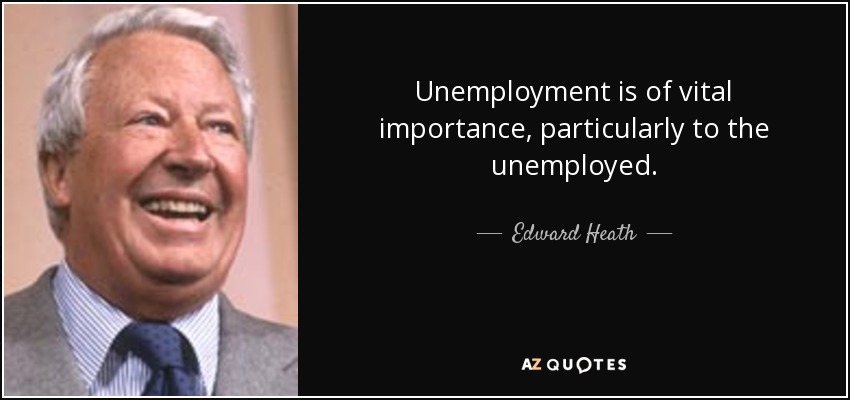
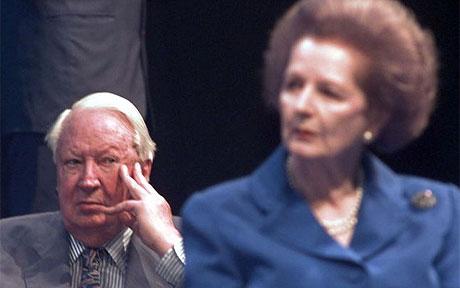
1972. The discovery of oil in the North Sea, stirred Prime Minister, Edward Heath’s concerns about the poor state of the Scottish economy and perceiving a need for change, he initiated a policy review.
His secretary wrote to Cabinet members;
“As you know, the point has recently been put to the Prime Minister that the benefits of oil production brought ashore in Scotland should accrue, and be seen to accrue, to the Scottish economy.
The Prime Minister sees considerable force in the arguments, believing it would be difficult to stress too highly the psychological gains which would come from the revival of the Scottish economy being seen to be something from which Scotland was achieving from its own resources, not just by the grace and favour of the Government at Westminster or of English industry.” Adding: “The Prime Minister understands that novel arrangements may be required to achieve this result.”
Heath’s proposals created alarm at Westminster and led to many “on and off the record” meetings and an outpouring of confidential minutes and memos between various factions within and outwith government and the civil service,
Primary contributors objectors were: Gordon Campbell, (later Baron Campbell of Croy) the Scottish Secretary of State and head of the Department of Trade and Industry and Anthony Barber, the Chancellor of the Exchequer,
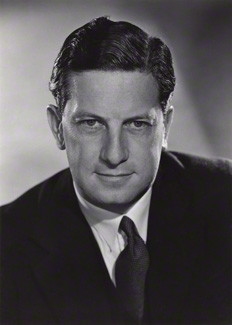
Baron Campbell of Croy
In stating their opposition to Heath’s proposals, the Westminster establishment voiced concerns about taking oil revenues away from the Treasury.
A senior official at the Scottish Office, in London, wrote in a memo to Downing Street:
“The oil discoveries have raised speculation in Scotland on the financial aspects and will continue to do so. But, the Secretary of State for Scotland, Mr Campbell, would not wish to see directpayments from the oil revenues, as these would be too late to be really useful and would raise a new principal causing difficulties if applied in other contexts.
On the general question of the financial relationship of central Government with Scotland, the present has been evolved over many years and the types and amounts of grants, for example to local authorities for housing and education…follow formulae which recognize special circumstances and needs where they exist. Mr Campbell considers that to dismantle this system, besides being a Herculean task, would resurrect innumerable issues now mercifully dormant.”
In a memo, Treasury officials said they too were looking at aspects of the Prime Minister’s request and argued against it strongly, saying that Scotland took a markedly larger share of public spending than she contributed to public revenue.”
The same Treasury officials later said there could be: “no question of hypothecation” of oil revenue to finance Scottish expenditure.
Other Unionists in opposition to Heath’s proposals presented a uniform front, unanimously suggesting that aims would be better met by investment in infrastructure and the fostering of fabrication yards and supply companies.
Their strident opposition to Heath’s proposal garnered support, and culminated in the submission of an alternative proposal, transferring all revenue gathered from the oil bonanza to the Treasury in Westminster.
The Unionist consensus was that, “any change in the financial relationship between Westminster and Scotland would resurrect innumerable issues, (a veiled reference to Scottish Independence) now mercifully dormant”.
Edward Heath, blindsided, and out-voted in cabinet, accepted their proposal. Scotland has been ripped off since.
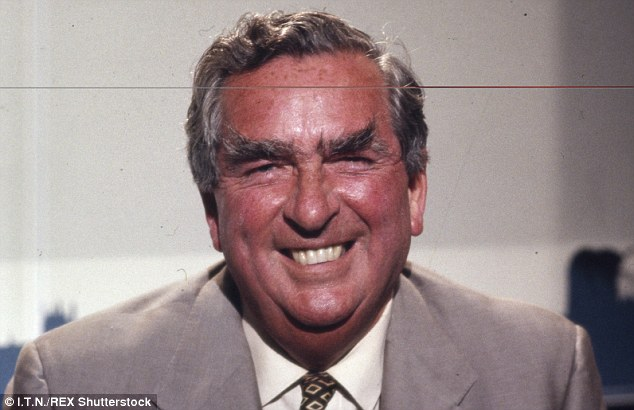
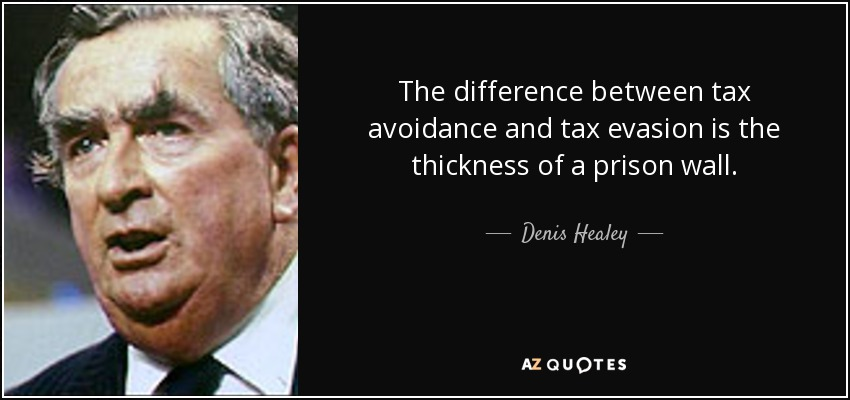
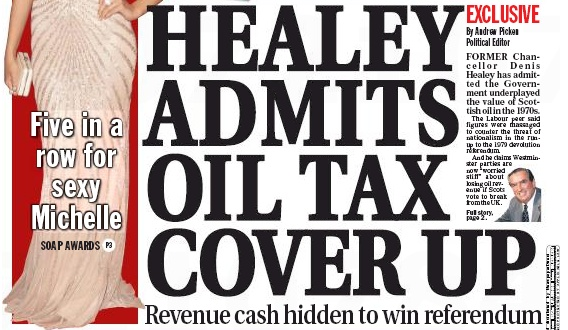
The views of one of the best economists in the UK in the last 100 years, the late Denis Healey, former Chancellor of the Exchequer in Labour governments 1970-1979 are as relevant today as they were in the past.
He was asked if he supported the cause of those who wished Scotland to become an independent nation once again given that the Scots were overly financially subsidized by England and the oil & gas resources were the property of the UK.
His answer was surprisingly blunt but not widely reported. He said:
“I think England would suffer enormously if the income from Scottish oil and gas and renewable energy stopped but if the Scots want independence they should have it and England would just need to adjust.
Asked if he expected an independent Scotland would survive, economically. he said:
“Yes, I would think so… and they have the oil, gas and renewable energy”.
Asked about his thoughts about claims that Scotland was being subsidized by England he reminded the questioner that Joel Barnett, (he of the Barnett formula), was his deputy at the Treasury at the time the share of the national income pot Scotland should receive was decided.
He added:
” Scotland pays more than its fair share and these myths are simply perpetuated to cloud the issue by those that are opposed to independence.”
On Scotland keeping the pound, he said:
“I don’t see why Westminster could say the Scots couldn’t share it. Scotland would gain from the arrangement but so would the rest of the UK”.
TheScottish Affairs Select Committee is a Committee of the House of Commons. Its remit is to examine the expenditure, administration and policy of the Office of the Secretary of Scotland and relations with the Scottish Parliament. It also looks at the administration and expenditure of the Advocate General for Scotland.
Unlike the Scottish Grand Committee, MPs from constituencies outside Scotland can, and do, sit on the Scottish Affairs Committee.
Composition
Chairperson: Pete Wishart MP: Shadow Cabinet member, SNP Leader of the House of Commons. (Position attracts an annual salary around £20k.)
Members Mhari Black: Shadow Cabinet Member SNP Spokesperson (Scotland) Deirdre Brock: Shadow Cabinet Member SNP Spokesperson (Food and Rural Affairs) Andrew Bowie: Tory MP, West Aberdeenshire and Kincardine Alberto Costa: Tory MP, South Leicestershire Sally Anne Hart: Tory MP, Hastings and Rye Douglas Ross: Tory MP, Moray John Lamont: Tory MP, Berwickshire, Roxburgh and Selkirk John Cruddas: Labour MP, Dagenham and Rainham Liz Twist: Labour MP, Blaydon Wendy Chamberlain: Liberal Democrat MP, North East Fife
Note: Shadow Cabinet SNP, MP’s, are allocated a performance allowance, around £10k, using “short money” funding provided by Westminster.
11 members (3 SNP 8 Unionist)
Tensions on the Scottish Affairs Committee bubbled over, after MPs again pressed the idea of replacing Pete Wishart as chairman.
A number of MPs on the committee are unhappy that long-serving chairperson Wishart took up an SNP frontbench role that is “distracting” him from his duties.
MPs called for Joanna Cherry to take on the role after Wishart asked committee members to change the time of meetings to fit in with his new responsibilities as shadow Commons leader.
In a stormy clash before a meeting, MPs demanded Wishart put any proposals on changing committee three times to a vote, which he refused to do. Committee sources branded the row “pathetic”, adding:
“Pete is getting more and more desperate as he tries to cling on to his taxpayer-funded additional salaries as chair of the committee, and SNP, Shadow Cabinet Member, refusing to even consider other SNP members taking over. It’s been suggested that this is getting party political but, of course, we are only in this situation because he is putting his party role ahead of the committee continuing with its scheduled dates and times. The fact that Pete refused to allow a vote on the matter is pathetic. and disrespectful to the committee and its members. The time has come for Pete to choose between his party or the committee.”
Sturgeon snubs Scottish Affairs Committee chairperson, Pete Wishart’s invitation to discuss her record in government.
The Scottish Affairs Committee invited the First Minister discuss its recent inquiries, including into welfare, education and renewable energy. But she declined the invitation to appear with her office citing “responsibilities and range of commitments”.
In a letter to Pete she wrote: “Thank you for your invitation to appear before the House of Commons Scottish Affairs Committee. Unfortunately, due to my responsibilities and range of commitments, I will have to decline the invitation. In any event the committee is aware, I am accountable to the Scottish Parliament for the decisions and actions of the Scottish Government in relation to the issues you refer to.”
Committee chairman, SNP, MP, Wishart expressed disappointment at his Party leaders decision. He said: I am “surprised” at the length of time it took for her to respond. Our committee is focussed on reports and inquiries that are relevant to the people of Scotland, and it would have been helpful to have explored the issues with the her. In this Parliament we have had inquiries and reports on universities, renewable energy and public sector broadcasting issues that cut across responsibilities of both Parliaments. The invitation remains open to her and we hope that some time in the future she may be in a position to reconsider her decision.”
Special Advisers are excluded from the line management structure of the civil service
The Constitutional Reform and Governance Act 2010 and the Ministerial Code, dictates that all appointments of special advisers in the Scottish Government are to be made by the First Minister who is personally responsible for the management, welfare and conduct of special advisers, including discipline.
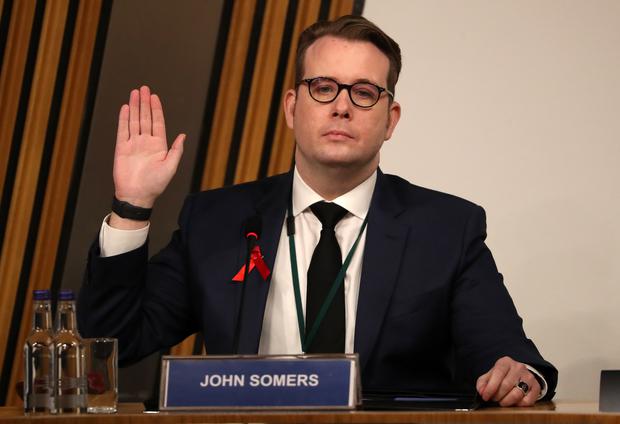
20 & 21 November 2017: John Somers, Principal Private Secretary, to the First Minister met privately with Ms “A”, at her request, in the First Minster’s office at which time she told him that she was not registering a formal complaint about Alex Salmond and said that she wished only to be permitted a personal meeting with Nicola Sturgeon.
Ms “A” was denied access to the First Minister by Somers and was instead subjected to intense pressure from senior civil service managers and other senior political and legal persons to register a complaint against Alex Salmond, with an assurance that it would be resolved to her satisfaction through use of “newly drafted” all-encompassing procedures, which she would have a hand in compiling. In this regard she placed her trust in and was used by the Scottish government as a sacrificial lamb in a political vendetta against Alex Salmond.
The foregoing reveals the duplicity of the Scottish Government’s assertions that it was only interested in the welfare of Ms “A”. If she was a civil servant then the actions taken may have been appropriate, but inexcusably inappropriate if she was a “Special Adviser”. Her line manager was Nicola Sturgeon!!!
The establishment of the Scottish Parliament in 1999 posed questions about the future of Scottish MP’s at Westminster since responsibility for attending to the bulk of issues raised by constituents was transferred to Members of the Scottish Parliament (MSP’s) who devote many hours each week fulfilling them. Contact with interest groups and work with local community groups and Party members by MSP’s is also more frequent. Estimates are that the workload of Scottish MP’s was reduced by around 70% (25 hours weekly).
Scotland’s MP’s continue to enjoy the same benefits, privileges and allowances as English MP’s who’s role has remained unchanged. Idle hands find time for mischief and the absence of any tangible promotion of the cause of Scottish independence and claims of MPs promoting LBGTQ agendas, wild partying, alcohol consumption, extra marital sex affairs and harassment both physical and sexual within the group is embarrassing and of increasing concern to constituents.
Something needs to be done to ensure the Scottish taxpayer is provided with value for money. One avenue would be for MP’s to give up around 70% of their Salaries and allowances to their constituency foodbanks. In any event Scots are not getting it from the present group of SNP MPs.
MP Annual Benefits and Allowances
Salary & Pension: £120-£140k
Staffing: Annual allowance: £150- £180: Staff, pooled services and incidental expenses of volunteers.
Office: Annual charge: £14-£20k: Rent, stationery, telephone, broadband, and other costs attributed to running a constituency office.
Accommodation: Annual Charge: £25-£40k: Meeting costs incurred as a result of working from two permanent locations. Unless there are exceptional circumstances, it is usually only possible to claim for accommodation and associated costs in either Scotland or London, not both.
Travel and Subsistence: Annual charge: £12-£18k: Travel between Scotland and Westminster, within the constituency, and elsewhere on parliamentary business.
The party was thrown out of power in North Lanarkshire after just 84 days in an emergency meeting triggered by the former leader resigning over a sexual misconduct scandal. Full story here:
North Lanarkshire Labour Party leaders covered up a child porn scandal to protect their control of the Council
Labour boss Jim Logue and his deputy Paul Kelly are the subject of a no confidence motion promoted by one of their former party colleagues, Councillor Sam Love. It was recently revealed how David Fagan, a councillor in Airdrie, was arrested over alleged child images on September 7, but not suspended by Labour until September 29. At the time of the arrest, Labour was fighting a bitter by-election in neighbouring Coatbridge.
The council chief executive learned of the arrest and “broad nature” of the alleged offences on September 8, then told Mr Logue, who in turn told Mr Kelly. However most Labour councillors were not informed for another three weeks, when Mr Fagan was suspended by Labour HQ, fuelling speculation that the matter was kept quiet until after Labour had won the by-election in Coatbridge North on September 22.
The ward fight was a high-profile one for Labour, with Jeremy Corbyn appearing with the candidate and Scottish leader Kezia Dugdale boasting about the win in her UK conference speech as evidence of Labour’s ability to defeat the SNP. Labour beat the SNP by fewer than 200 votes – a margin that would have been wiped out by bad publicity over Mr Fagan if his arrest been widely known, opposition parties claim.
Cllr Love, a former housing convener who resigned from the Labour group in March, is now asking other councillors to sign a no confidence motion in Mr Logue and Mr Kelly. It calls for their “immediate resignation… for a wilful breach of trust and for failing to act in the best interests” of the council, and claims they “withheld information” given to them by the chief executive “regarding charges brought against a North Lanarkshire councillor”. It goes on: “It is entirely wrong that a serious disciplinary decision appears to have been delayed in an attempt to gain political advantage. As elected representatives we have a duty to be open and transparent. We therefore request that an emergency council meeting is called immediately and [Cllrs Logue and Kelly] should resign from their council positions forthwith.”
The council Labour group is due to discuss the situation next Monday. A Labour source said: “Monday is going to be a big day for the group. It’s going to be volatile. None of us came into public service for this kind of nonsense.” In a leaked statement, Cllr Kelly told other Labour councillors that Cllr Love’s motion was “pathetic” and “disgraceful”, and urged them not to respond. He said the statute under which Cllr Fagan was charged was not known until September 29, adding: “Even now, we are still not aware of the precise allegations against him. When we were informed that he had been charged – but not what he had been charged with – on September 8, both myself and the Council Leader sought assurances from the Chief Executive that he had taken all necessary measures. We were assured that this was the case. “David Fagan is subject to live legal proceedings.
It is pathetic that some would seek political opportunity when those proceedings are ongoing. It is disgraceful that those same people would suggest that either the council leader or myself would seek political advantage in the actions we have taken.” A Crown Office spokesman said: “The Procurator Fiscal has received a report concerning a 52 year old male in connection with alleged incidents said to have occurred between 25 and 30 June 2016. The report remains under consideration.” The council declined to comment. Full details here:
The illegal introduction of a lookback harassment procedure for ex-Scottish government ministers
A warning against introducing a new procedure was sent from the Cabinet Office in London to Leslie Evans who halted the process
Nicola Sturgeon wrote to leslie Evans explicitly instructing her to proceed with the compilation and introduction of the new policy.
The policy was clearly targeted at former SNP ministers since no warning of the new policy was ever sent (a legal requirement) to the many former ministers who might be affected by it in the future.
The reason for caution on the part of the Cabinet Office in London was attributed to the probability of inviting a landslide of complaints against former Westminster ministers dating back many years. There are still no “lookback” procedures in place in London , Wales or Northern Ireland.
John Reid (later Lord John) was a persistent Sex Predator.
In 1994, when he was Shadow Defence Secretary, he was witnessed by several people sexually harassing Dawn Primarolo, a fellow MP,
One person said: “John came lurching up and said to Dawn, “I want to have sex with you, I want to f*** you, you want it as well.”
Dawn’s friend and neighbouring Bristol Labour MP Jean Corston, intervened and, according to a source, said to Reid “You are a disgusting creature. Get away from her,” adding, “That’s it, I’m going to report you.”
Corston, now a Baroness, told colleagues she raised the matter with the late John Smith, commenting, “It won’t be happening again.”
A Labour insider said: “Dawn was on the verge of tears. She said Reid had been harassing her over a period of years and had propositioned her in the bar. It was very painful for her.”
Note: Compare John Smith’s conduct against the nudge, nudge, wink, wink, charges levelled against Alex Salmond which when tested in court were found to be completely unworthy of the serious attention given to them by the Crown Office, the Scottish government, the police and the judiciary.
A recap of the first two articles: David Clegg and his persistent pursuit of Alex Salmond: Extracted from: “Break-Up: How Alex Salmond And Nicola Sturgeon Went To War” written by former Daily Record political editor David Clegg and Times journalist Kieran Andrews.
Clegg’s singular and persistent unfruitful pursuit over many months, seeking from Scottish government employees and civil servants, information that would be damaging to Alex Salmond was in direct contravention of a number of the conditions contained in the news editor’s “code of Practice”. As was the inaccurate reporting of fact evidenced by the malicious and irresponsible headline claiming that Alex Salmond had been reported to the police over sexual assault allegations which was not the case.
The truth of the matter is that on 21 August 2018 the Crown Agent, according to the police informed them of the Government’s intention to release a story of the fact of the complaints to the press and the Chief Constable and another senior officer strongly advised against it and refused to accept a copy of the internal misconduct investigation report. The exchange of views confirmed the urgent desire of the Scottish Government to get the information into the public domain.
Just two days later, on Thursday 23 August 2018, without informing the police of the decision to ignore their advice not to do so the Scottish Government informed Alex Salmond’s legal team of its intention to release a statement at 1700 hours. Alex Salmond’s legal team advised in return that they would interdict the statement pending the outcome of the Judicial Review petition and the government withdrew its intent to publish information to the public. An interdict was not processed on the strength of the government undertaking.
The bombshell was dropped at 1600 hours with the information that the Daily Record newspaper had phoned the Scottish Government press office with knowledge of the story but without confirmation it could not publish. Confirmation was not forthcoming from the Scottish government.
Then, at 2000 hours an employee of the Daily Record telephoned claiming confirmation of the leaked information had been received and the story would be published that night. The story broke at 2200 hours.
A follow up story was published on Saturday, 25 August 2018 containing specific details from the leaked complaints demonstrating that their informant had access to the Permanent Secretary’s decision report or an extract from it.
The leaking of the information was a prima facie criminal act, deeply damaging to the interests of Alex Salmond and a blatant invasion of the privacy of the complainants as well as a direct contravention of the assurances of confidentiality given to all.
The conclusion of the legal authority who assessed validity of the complaints was that they were “sympathetic to the thesis that the leak came from a Government employee”. But legal action action could only be instructed if the police investigated matters and identified the person(s) who leaked the information.
Editors code of Conduct
Accuracy:
i) The Press must take care not to publish inaccurate, misleading or distorted information, including headlines not supported by the text.
ii) The Press, while free to editorialise and campaign, must distinguish clearly between comment, conjecture and fact.
Privacy
i) Everyone is entitled to respect for his or her private and family life, home, health and correspondence, including digital communications.
ii) Editors will be expected to justify intrusions into any individual’s private life without consent. Account will be taken of the complainant’s own public disclosures of information.
Harassment:
(i) Journalists must not engage in intimidation, harassment or persistent pursuit.
Leslie Evans and the Lord Advocate’s rush to judgement
The Chief Investigating Officer, Leslie Evans, in her evidence to the parliamentary Committee on 8 September 2020 was economical with the truth when said she was not “completely aware” of how the police referral was made, when records revealed the referral was actioned on her specific instruction by Ms Richards, via the unusual route of the Deputy Crown Agent, who was sent the documentation on 22 August 2018, although the covering letter was dated 20 August 2018 indicating the order had been issued by Leslie Evans on that date..
A Sunday Post newspaper article reported on 26 August 2018, that the referral was on the advice of the Lord Advocate which is sort of confirmed by Leslie Evans in her [Redacted] evidence to the Committee that the referral was made “on legal advice”.
The Deputy Crown Agent in turn arranged a meeting with the Chief Constable and another senior officer who, quite correctly, refused to accept the documentation on the grounds that it might prejudice their enquires.
The documentation also clarified that the reference of the report to the police via the Crown Office was very much against the wishes of both complainers who in early August 2018 had informed, first Ms McKinnon then Ms Richards, who, acting on the instructions of Leslie Evans had “sounded out” the complainers on their attitude to a criminal case.
The action of Leslie Evans in referring her report to the police was a blatant betrayal of trust who told the Parliamentary Committee on 17th November 2020, that the interests of the complainers were always at the “forefront” of her consideration.
Records also show that the view of the complainants when embarking on the process in November 2017 was that any police referral had to respect their wishes. A request that was acceded to on 25 July 2018, that their views were “central to any decisions” on police referral. Indeed Ms Richards, specifically highlighted the view of the complainers against criminal proceedings, but her assertions were ignored by Leslie Evans.
Intent to thwart the Judicial Review
Of great significance is the indecent haste of the Scottish government on Thursday 23 August 2018, who ignoring the advice of the police not to do so to informed Alex Salmond’s legal team of its intention to release a statement at 1700 hours.
Alex Salmond’s legal team advised in return that they would interdict the statement pending the outcome of the “Judicial Review” petition and the government formally withdrew its intent to publish information to the public. An interdict was not processed on the strength of the government undetaking.
Had Leslie Evans successfully transferred investigating responsibility of her “Internal Misconduct Investigation Report” to the police on 20 August 2018 the action would have conveniently rendered the continuance of the “Judicial Review” unnecessary.
Confirmation of an intent to side-line the “Judicial Review” is alluded to in a Ms Richards email of 28th August 2018, in which, in an update of the progress of the “Judicial Review”, she included advice from the Scottish government legal department which referred to the “prospects of suspending” the Judicial Review behind a criminal investigation.
The Internal Misconduct Investigation Report
The response of the Scottish government to the illegal leak of confidential information to the Daily Record, on 23 August 2018, is contained in a report which has been classified “strictly confidential” with distribution has been restricted to a few senior government officials.
A few, heavily redacted but informative extracts have been released for public consumption through the Information Commissioners Office (ICO).
Namely:
3.5 To progress the investigation, a witness would be needed who would be willing to provide information about the method of disclosure (for example, by hard copy being passed in person) and the identity of the culprit.
3.6 The Daily Record declined to provide information as to how or by whom they came by the copy of the report, relying on the journalistic exemption within the DPA 2018, clause 14 of the Editors Code of Practice and s.10 of the Contempt of Court Act 1981.
3.7 23 members of staff were identified as having knowledge of, or involvement in, the internal misconduct enquiry. These members of staff were interviewed by the Data Protection Officer at the SG as part of their Data Handling Review. The interviews did not disclose any information which would enable a suspect to be identified.
3.8 In the absence of any information coming to light, or any witness coming forward, there was insufficient evidence to point to any specific suspect and to allow the investigation to move forward. The matter was closed.
Comment:What a can of worms!!.
The police were not asked by the Scottish government to investigate the 23 August 2018, criminal leak of confidential information.
This despite the Daily Record blatantly breaching rules 1,2 and 3 of the editor’s “code of conduct”.
That the Daily Record was permitted to decline, (without a legal challenge), to provide information as to how or by whom they came by the copy of the report, relying on the journalistic exemption within the DPA 2018, clause 14 of the Editors Code of Practice and s.10 of the Contempt of Court Act 1981 is a travesty of justice and a betrayal of the 2 complainants and Alex Salmond.
David Clegg and his persistent pursuit of Alex Salmond: Extracted from: “Break-Up: How Alex Salmond And Nicola Sturgeon Went To War” written by former Daily Record political editor David Clegg and Times journalist Kieran Andrews.
David Clegg:
“In the afternoon of 23 Aug 2018 I was working in a quiet corner of a Dundee coffee shop when I received the most memorable email of my life. It was from the Daily Record’s head of news, Kevin Mansi, and contained just five words and a picture. “Anon letter that’s come in.”
The unremarkable introduction meant I nearly spat out my coffee when my phone loaded the attachment, a scanned copy of a 100-word document which had arrived at the newspaper’s Glasgow office that morning. The contents, headlined “Scottish Government reports Salmond to police”, were absolutely incendiary. An anonymous whistle-blower was claiming that two women had made sexual misconduct complaints against the former first minister. The government had investigated the allegations before passing them to the police. A summary of the most serious charge was also included. It described an alleged late night sexual assault by Mr Salmond on a young female civil servant.
The claims were so extraordinary that the natural reaction was to dismiss them as the work of a crank. Yet on an initial reading my instinct was that several elements of the document seemed authentic. The dry language used to summarise alleged behaviour that would ultimately become a criminal charge of sexual assault with intent to rape could only have been penned by a civil servant. The small details also felt right – in particular the use of the three letters FFM to describe Salmond. It was an abbreviation for former first minister that would mean nothing to the general public but which I had heard many times in political circles.
On balance, my judgment was that it was entirely plausible that the account was genuine. It was also safe to assume that if it wasn’t a hoax then we were in a race against time to break the story. If this information had reached us, it would not be long until other media organisations also got wind of it. For all we knew, a similar package could have arrived at the office of every newspaper in the country that morning. We had to proceed with speed, caution and care. I immediately left the cafe and sprinted the half-mile back to my house.
The race was now on to verify the accuracy of the information independently so we could publish regardless of on-the-record confirmation. All the journalists involved were acutely aware that the slightest inaccuracy in any subsequent story could have disastrous consequences.
I began methodically contacting sources who had been useful in recent months in the hope they could provide further corroboration. Tellingly, I found I was unable to get any senior Scottish Government special adviser to answer their phone. Meanwhile, Mansi worked his extensive police contacts. It was not until 2000 hours that we had enough confidence in our information to contact Salmond directly to give him the opportunity to present his version of events.
I was in my small home office when I dialled his mobile number and heard that distinctive voice click onto the line. I had last seen the former first minister the previous year when I took him for a long lunch in Glasgow two weeks after he lost his Westminster seat. His tone was much colder on this occasion. “Yes, David, what can I do for you?” he asked. My heart was pounding as I replied: “We’re doing a story on the allegation the police are looking at. Should I be speaking to a lawyer, or is there a comment I should take from you?” There was a long pause. “And which allegation is this, David?” “The one from December 2013 at Bute House.” “And what’s the detail of it, sorry, David?” “That a staff member at Bute House was harassed or assaulted after a function.”
In the terse three minute conversation that followed, Salmond avoided being drawn on the substance of the complaints and focused on fishing for more information on the status of the police investigation and inquiring into who was the source of the story. He also asked for the allegations to be put to him in writing, a request I duly obliged.
With the Record’s print deadline looming, an urgent conference call was convened to discuss whether to publish in the event of no substantive response to the details of the allegations being received from the Scottish government, Police Scotland or the former first minister. This was a big call for the new editor David Dick, who had only been in the post a few months and was now dealing with the biggest story any Scottish newspaper had tackled in living memory. After a brief discussion, he decided he was happy for us to proceed and I began writing.
At 2132 hours an email from Salmond’s lawyer, David McKie of Levy & McRae, dropped into my inbox. Its contents were breath-taking. He did not dispute the existence of the allegations or even make a threat of defamation action. Instead, he warned that publication would be a breach of privacy and cited the recent high profile finding against the BBC regarding coverage of the police investigation into pop legend Sir Cliff Richard. An accompanying statement from Alex Salmond insisted he was completely innocent of any wrong doing and would fight to clear his name and he would be taking the Scottish Government to court over its botched handling of sexual harassment complaints.
Comment 1: A Daily Record employee had already telephoned the Scottish government press office at 2000 claiming confirmation of the accuracy of the leaked information had been received. Clegg’s assertion that he had been contacted by Alex Salmond’s legal team at 2132 hours did not impact on the decision by the editor of the Daily Record to publish
Comment 2: Clegg’s singular and persistent unfruitful pursuit over many months, seeking from Scottish government employees and civil servants, information that would be damaging to Alex Salmond was in direct contravention of a number of the conditions contained in the news editor’s “code of Practice”. As was the inaccurate reporting of fact evidenced by the malicious and irresponsible headline claiming that Alex Salmond had been reported to the police over sexual assault allegations which was not the case.
The truth of the matter is that on 21 August 2018 the Crown Agent, according to the police informed them of the Government’s intention to release a story of the fact of the complaints to the press and the Chief Constable and another senior officer strongly advised against it and refused to accept a copy of the internal misconduct investigation report.
The exchange of views confirmed the urgent desire of the Scottish Government to get the information into the public domain.
Just two days later, on Thursday 23 August 2018, without informing the police of their decision to ignore their advice not to do so the Government informed Alex Salmond’s legal team of its intention to release a statement at 1700 hours. Alex Salmond’s legal team advised in return that they would interdict the statement pending the outcome of the Judicial Review petition and the government withdrew its intent to publish information to the public. An interdict was not processed on the strength of the government undertaking.
The bombshell was dropped at 1600 hours with the information that the Daily Record newspaper had phoned the Scottish Government press office with knowledge of the story but without confirmation it could not publish. Confirmation was not forthcoming from the Scottish government.
Then, at 2000 hours an employee of the Daily Record telephoned claiming confirmation of the leaked information had been received and the story would be published that night. The story broke at 2200 hours.
A follow up story was published on Saturday, 23 August 2018 containing specific details from the leaked complaints demonstrating that their informant had access to the Permanent Secretary’s decision report or an extract from it.
The leaking of the information was a prima facie criminal act, deeply damaging to the interests of Alex Salmond and a blatant invasion of the privacy of the complainants as well as a direct contravention of the assurances of confidentiality given to all.
The conclusion of the legal authority who assessed validity of the complaints was that they were “sympathetic to the thesis that the leak came from a Government employee”. But legal action action could only be instructed if the police investigated matters and identified the person(s) who leaked the information. More on this in the next article.
Editors code of Conduct
Accuracy:
i) The Press must take care not to publish inaccurate, misleading or distorted information, including headlines not supported by the text.
ii) The Press, while free to editorialise and campaign, must distinguish clearly between comment, conjecture and fact.
Privacy
i) Everyone is entitled to respect for his or her private and family life, home, health and correspondence, including digital communications.
ii) Editors will be expected to justify intrusions into any individual’s private life without consent. Account will be taken of the complainant’s own public disclosures of information.
Harassment:
(i) Journalists must not engage in intimidation, harassment or persistent pursuit.
How strong are family ties? Nicola Sturgeon’s family hail from Sunderland
Nicola Sturgeon’s family has its roots in the North East of England. With this in mind can the region benefit from the SNP and her rise or will it be overtaken by a fresh thrust for independence?
Arthur Street, Ryhope, Sunderland, was home to Sturgeon’s great-grandfather, Englishman and shipwright Joseph Mill.
His daughter, Sturgeon’s Grandmother, Margaret Mill, was born in Sunderland in 1920.
Sturgeon’s Grandfather, Robert Sturgeon, a gardener, was born in Ayrshire in 1920 and relocated to the North of England where he married Sunderland born Margaret Mill in 1943.
Their son Robert Sturgeon, Nicola Sturgeon’s father, was born in Ayrshire in 1948. He married Joan Ferguson b 1952 in Ayrshire on 29 December 1969. Their daughter Nicola was born in Ayrshire on 19 July 1970.
The rise of the SNP left many in the North East and Cumbria questioning the region’s future relationship with Scotland.
“The North East shares a lot in common with Scotland and there’s a common cause to be made with our neighbours,” says Jonathan Blackie, a visiting professor at Northumberland University. “But given the current political situation, it’s difficult to see how we can thrive by working together when there are so many things pulling us apart.” The new political situation that he refers to is the SNP now has 56 MPs at Westminster.
David Cameron has also said he will devolve more powers to the Scottish Parliament as recommended by the Smith Commission, which makes those living on the border nervous.
“Nicola Sturgeon has played a blinder, she’s put Scotland in a position where it can’t get loose,” says Rob Johnston, the chief executive of the Cumbria Chamber of Commerce. “It’s not the number of SNP MPs, it’s the fact that Scotland is now speaking with one voice. “They can attract money and investment north of the border and that presents a real challenge for Cumbria.”
In the Scottish Independence referendum, 67% of people in Berwickshire, Roxburgh and Selkirk voted to maintain the Union, making it an area that many thought the SNP would find hard to breakthrough in the general election. But it did!!! reflecting yet another English political betrayal.
Calum Kerr, SNP, the constituency MSP said: “I actually think there are many parallels between what I want for the South of Scotland to what people in the North of England want. They want their voices to be heard and they want powers to make a difference to their region. If I can build a distinctive voice for the South of Scotland, people in the North of England should support that, and in fact, work with me because they will also feel the benefits.”
To the south of Calum Kerr’s constituency sits Northumberland, the English county with the highest number of castles, a lasting testament to the fractious historical relationship that the north of England has had with its Scottish neighbours. The differences on the border are no longer territorial, but the rise of the SNP is certainly creating new political and economic tensions. (BBC 2015)
Comment: An article chock full of innocuous innuendo with the implication of its underlying intent only slightly disguised. Will she pursue independence or will her family ties with England dictate her actions?















 caltonjock