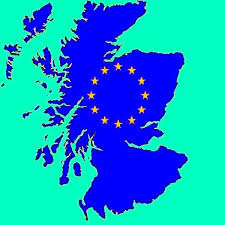
The Labour Party And A Promise Betrayed – A Scottish Parliament with Full Home Rule – Scots Never Forget Those Who Renege On A Promise


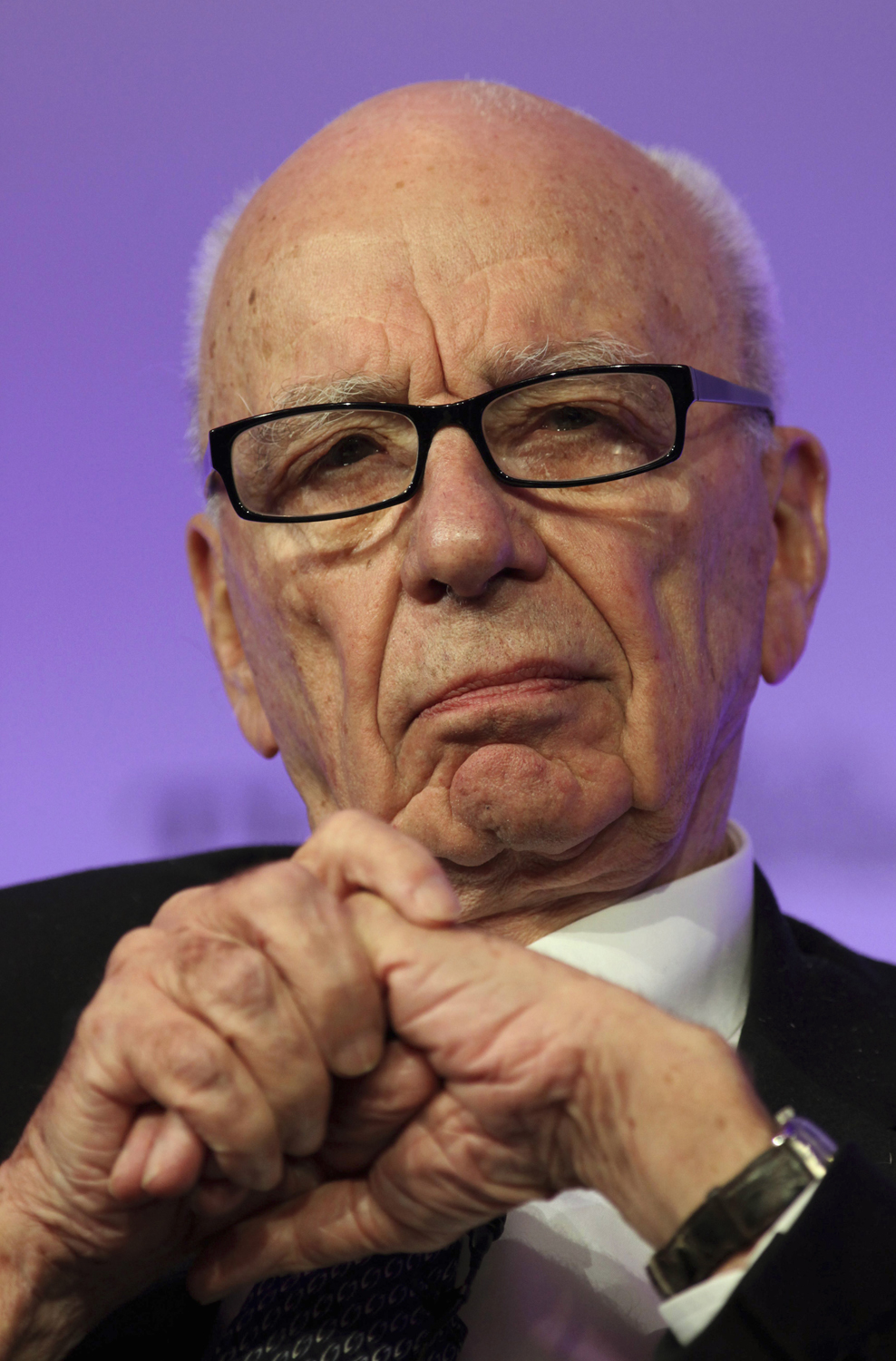
article-2270948-1541BC71000005DC-446_308x425News Corp Chief Executive Rupert Murdoch attends The Times CEO summit at the Savoy Hotel in Londonimagesert


1999: A Promise Betrayed- A Scottish Parliament with Full Home Rule

New Labour under the leadership of Tony Blair fell under the spell of the USA and Press baron Murdoch. The lurch to the right brought with it new thinking about Scottish devolution, to which he had been forced against his will, to commit to by John Smith politicians within the new government as part of the leadership campaign. The difference agreed to by Blair was the emphasis to be placed on Scottish devolution and the amount of powers to be transferred to it.

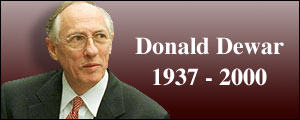
Donald Dewar, good friend of John Smith and keen supporter of Scottish Home Rule reluctantly agreed to devolution with minimum powers with a promise that, over time the authority of the new parliament would be expanded to full home rule effectively creating a UK federal State with a central governing body taking charge of concerns with an external bias. He died before the commitment would be honoured. New Labour reneged on their commitment.

Scot’s have long memories and provided with the opportunity through the ballot box removed the Labour Party from power over Scottish political affairs and on 7 May 2015 the rout will be complete with the rejection of the Labour Party in Scotland.

It could all have been so different. Had John Smith lived Scotland would have benefitted from full Home Rule and the Labour Party would have retained the trust of the Scottish electorate.


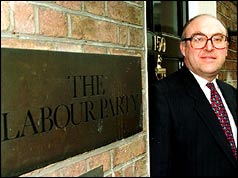
_40138863_labour_hq_238_973669_dewar_300


April 2014: John Smith – Scotland’s lost leader

In a remarkably prescient 1992 speech at Strathclyde University John Smith questioned the nature of British democracy, warning that people were losing faith in the democratic process; arguing government had become remote and overly centralised.

He objected to the clawing of power back to the centre, the stifling of voices of dissent and the closing down of channels of open and accountable government.

He argued that democracy needed reform and the process of centralisation needed to be reversed and he wanted to restore people’s faith in their system of government.

Key to that reform was, he believed, the conscious devolution of power to the nations and regions of the UK, and the first step was the establishment of a Scottish Parliament, effectively committing the Labour Party to establish that parliament as the “settled will” of the Scottish people.

Smith was a convert to devolution in the Seventies, not because he saw it as a means of killing “nationalism stone dead” or to buy time for a Labour government, but because he saw it as a means of addressing a democratic deficit, bringing politicians closer to the people and making them more accountable for their actions.

While administrative powers were increasingly ceded by Whitehall to the Scottish Office, answerable only to the secretary of state, there was no corresponding devolution of political control over Scottish affairs to the Scottish people over areas of policy that had a direct impact on the lives of Scots. That had to change.

A Scottish Parliament, he believed, was essential to the democratic governance of “our nation”, by which he meant the United Kingdom not just Scotland and in Smith’s view “unfinished business”. Devolution was in the interests of the UK, not just Scotland, and a key part of the democratic renewal of the British constitution and its civil institutions.

It would be a parliament to legislate on matters unique to Scotland but with a government in Westminster to address the wider concerns of the UK as a whole. Mike Elrick:  Press Officer to Labour leader John Smith


_39170727_smith_family_238

Red Tories In Scotland Increasing Distribution Of Leaflet’s Full Of Lies – Lying Liebour Needs Exposing


10421442_1576557939296854_5882639338242870288_n


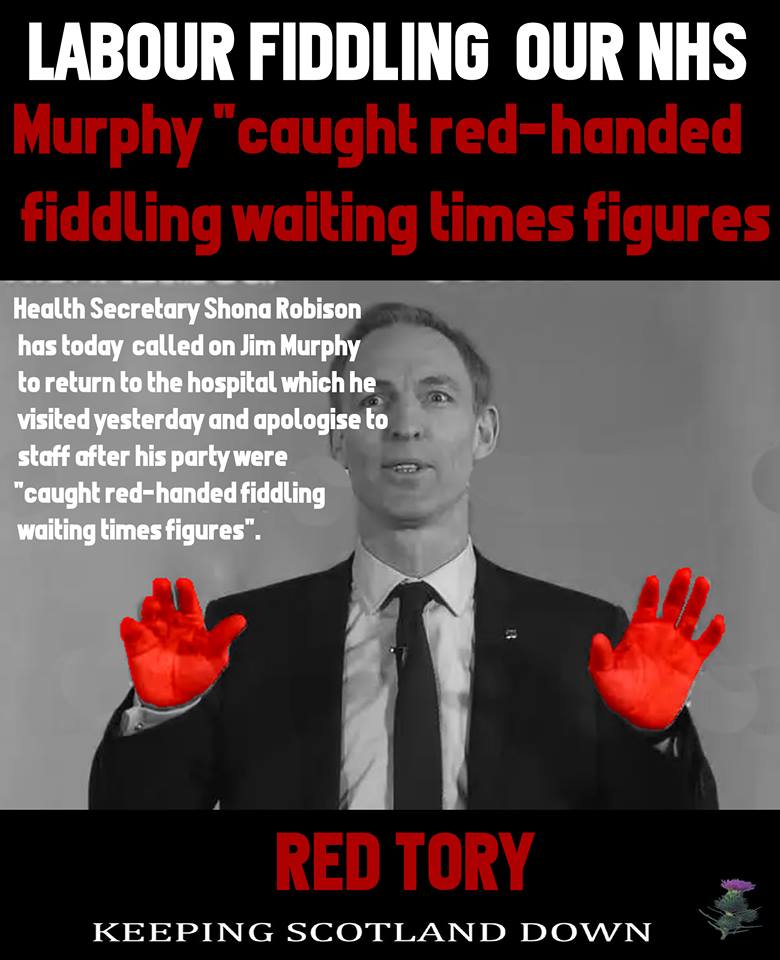
Murphy at it again with his GE leaflet lies. These need to be challenged in public so that Scots attention is drawn to the misinformation policy of the Red Tory Party


1476021_10206042867729189_3232204409655431274_n


February 2013: The Living Wage

The living wage, designed to reflect the actual cost of living, is paid voluntarily by some employers. The SNP Scottish government has guaranteed the living wage to its own staff and says it would like to extend its application. EU employment law does not provide for a universal living wage.

In a recent statement Nicola Sturgeon said “We don’t disagree with the objective of making payment of the living wage a mandatory requirement of public contracts. We’re the first Scottish government to adopt the living wage for all of our employers and we encourage all other employers, public private, third sector, to pay their staff the living wage.”

The Chair of the Scottish Living Wage Campaign Peter Kelly said “With the problem of in-work poverty continuing to increase, the Scottish Government’s continued support for the Living Wage must be congratulated. Today’s announcement will ensure that some of the lowest paid workers in the public sector will receive a wage increase that will provide real help in these difficult times. We look forward to working with the Scottish Government to ensure that more employees across Scotland can get the benefit of the living wage.”
http://wayback.archive-it.org/3011/20130201193655/http://www.scotland.gov.uk/News/Releases/2012/11/Livingwage051112#


10959602_1573471849559266_2127018768988301529_n


May 2014: Zero Hours Contracts

The SNP government position: “Zero-hours contracts are not always appropriate and present many people on benefits with real challenges in managing their income. While the UK government is encouraging the use of zero hours contracts, the Scottish SNP Government has been looking at options available to tackle the issue within its limited powers. As employment policy is reserved to Westminster, this is yet another example of how we can do things differently, and better, with independence.”
http://www.snp.org/media-centre/news/2014/may/jobseekers-forced-work-zero-hours-contracts

February 2015: Press release from Jim Murphy announced that Scottish Labour will abolish exploitative zero hours contracts and make work pay for Scottish families.

He said “In this May’s election, Scotland can choose to end the scandal of exploitative zero hour contracts by sending Scottish Labour MPs to kick out the Tories and form a UK Labour Government. There are 84,000 proud Scots who are too often forced into zero hour contracts. Too many are left worried about whether they will have enough work and wages to be able to put food on the table from one week to the next. Many are blocked from getting credit they can afford and turn to extortionate pay day loans. It’s no way to treat people who want to work hard and get on in life. When working families prosper Scotland prospers, when people have decent pay and conditions they spend more and Scotland’s economy grows. That’s the way to build a fairer Scotland. Too many Scots who want to work rather than be on benefit are caught in a cycle of poverty pay. They have no idea what they will earn from one week to the next. In 2015 too many Scots are still exploited for their labour. I am determined to change that once and for all. In May we can replace the Tories with a Labour Government who will ban exploitative zero hour contracts. The SNP had their chance to ban zero hour contracts last year and they let people down. It’s time to bin these exploitative contracts once and for all.” https://www.politicshome.com/document/press-release/murphy-%E2%80%93-%E2%80%9Cwe-will-call-time-zero-hour-contracts-make-work-pay%E2%80%9D

April 2015: Ed Miliband pledged that workers on zero-hours contracts will have the right to regular employment after 12 weeks. The policy, will be included in Labour’s election manifesto. So Murphy is at it again. Employment rights are not delegated to the Scottish Parliament as such he will need to conform to the will of the English Labour party.
https://www.politicshome.com/economy-and-work/articles/story/labour-crack-down-zero-hour-contracts


1506983_10153211757141979_196950206439454195_n

March 2015: Rent Controls

Rent controls were in place from 1915-1989 in the UK after legislation was passed in the House of Commons in response to the Glasgow rent strike of 1915. Margaret Thatcher’s Conservative government got rid of the controls in 1989.

Since that time, private rent prices have skyrocketed, and campaigners say a cap on rents would save billions in housing benefit payments which, they argue, is effectively a subsidy for landlords.

Nicola Sturgeon said the Scottish Government is consulting on the introduction of rent controls to address high prices in the private-rented sector in Scotland.

During a questions session after her lecture at the London School of Economics (LSE), she was asked by a member of the audience about what the Scottish Government would do to tackle “the housing crisis” in Scotland, and specifically whether she would consider the introduction of rent controls, which is a cap on the prices landlords can set rents at.

She replied the most fundamental issue was “to build more houses”, adding that the Scottish Government scrapped the right-to-buy scheme because it didn’t make any sense to lose that investment into social housing.

She further added that the government “were consulting” on the issue of rent controls, saying that there was a “strong argument for it. But, she stated it must be balanced with a need for “a good and high quality supply of private sector housing.” https://commonspace.scot/articles/731/scottish-government-considering-introduction-of-rent-controls-first-minister-says


10986667_435491989949015_629596733385012287_n

A Labour Victory Will Be Handing Unfettered Power To The Irresponsible Politicians Who Flogged Our Gold Reserves For A Pittance – A Large Group of SNP MP’s Will Be Able To Moderate Their Behavior

29405-royalty-free-cartoon-clip-art-of-a-stack-of-gold-coins-near-a-pot-of-leprechauns-gold-by-andy-nortnik


Browns Bottom – Sale of Britains Gold

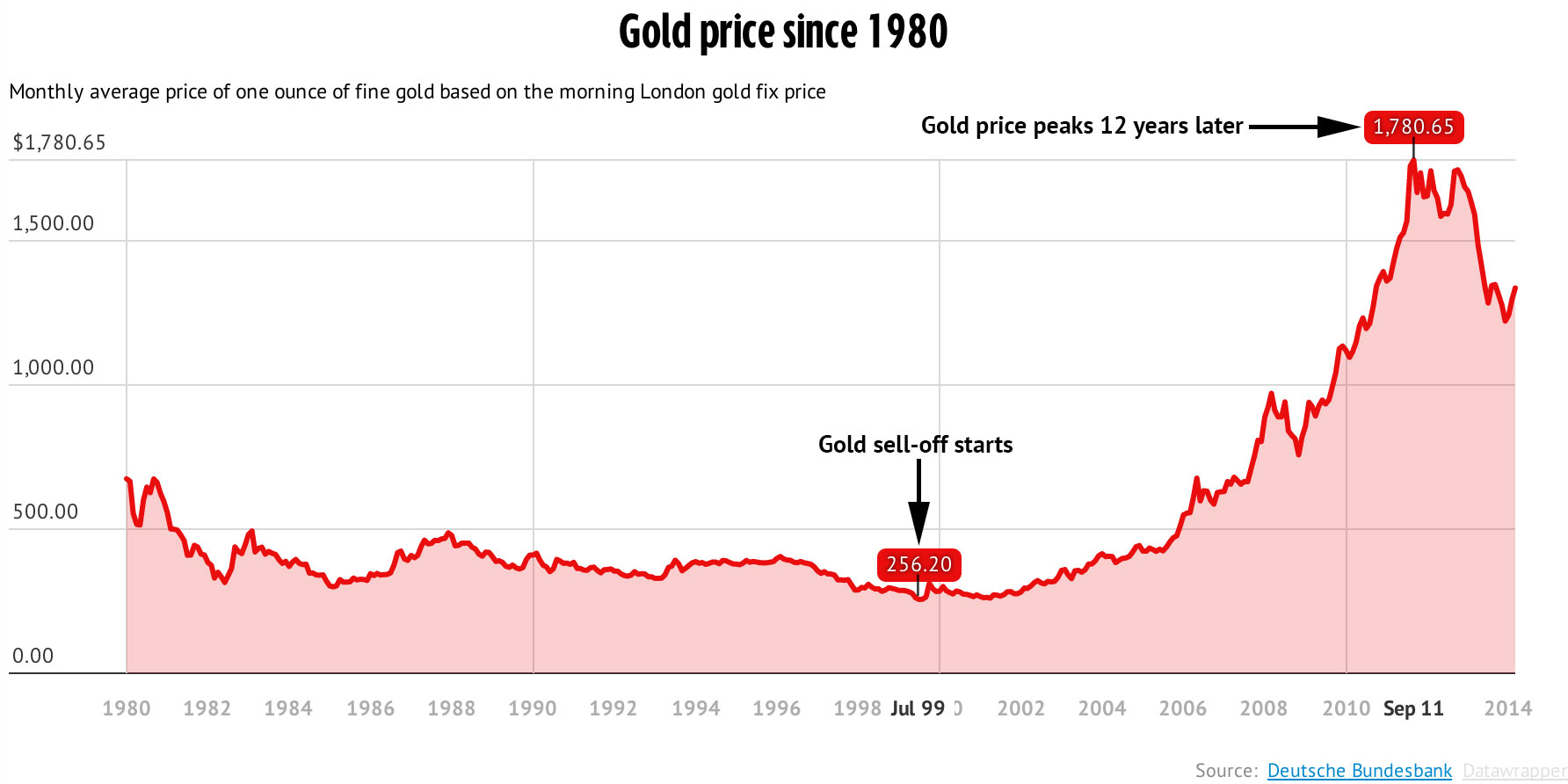
Newspaper headlines, at the time summarised Gordon Brown’s decision to sell off Britains gold reserves at the bottom of the market as “the worst economic judgement ever made by a chancellor.”

Ed Balls, Shadow Chancellor and Ed Miliband, Leader of the Labour Party, were close aides to Brown when, between 1999 and 2002, he ordered the sale of almost 400 tons of the gold reserves when the price was at a 20-year low. Since then, the price has increased manyfold meaning the decision cost taxpayers an estimated £20 billion. A huge amount which would have eased the burden of austerity which has been borne by the taxpayer in the period 2010-15 and is expected to continue until at least 2020.

It is understood that Brown pushed ahead with the sale despite serious misgivings at the Bank of England. It is not thought that senior Bank experts were even consulted about the decision, which was driven through by a small group of senior Treasury aides (Balls & Miliband) close to Brown.

After a public outcry and many aborted “freedom of information” requests the Information Commissioner was finally forced to hold a series of “private” meetings with the Treasury following which he agreed for much of the paperwork to remain hidden from the public so there has only been a “limited” release of information.


Gold_price_in_USD
Where did it go wrong?

* The price of gold has increased markedly since Brown sold more than half of Britain’s reserves.

* The Treasury pre-announced its plans to sell 395 tons of the 715 tons held by the Bank of England, which caused prices to fall.

* The bullion was sold in 17 auctions between 1999 and 2002, with dealers paying between $256 and $296 an ounce. In January 2015 gold was selling at $1400 an ounce.

* The taxpayer has lost an estimated £20 billion, five times the amount lost when Britain left the ill-fated Exchange Rate Mechanism in 1992.

http://en.wikipedia.org/wiki/Sale_of_UK_gold_reserves,_1999%E2%80%932002


GoldSaleBrown

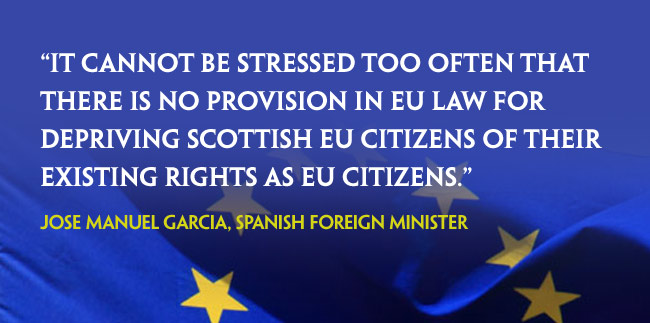
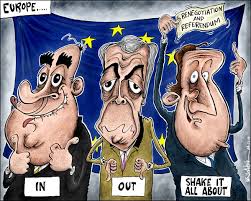
A brief history – England and Wales Voted To Leave The EU – Scotland Voted To Remain – Early indications are that the Unionist parties will opt to remain with the UK – This could be the start of another bitter battle for independence

EU_flag-0011             20111029_brd001_0           images4


11 February 2013: The Labour Party Has Not ruled out a referendum On EU Membership

The Shadow Chancellor Ed Balls said the party could not afford to be painted as against letting people have their say and it would be “stupid” to rule out a referendum on Europe. He said Labour should be arguing for reform in Brussels without being against a referendum in principle.

Mr Balls’s remarks came as David Cameron today attacked Labour’s position on a future referendum. He said leader Ed Miliband could not criticise him for creating “uncertainty” – without saying if Labour was in favour of a poll or not.

Mr Balls insisted Labour had “absolutely not” ruled out a referendum. He said: “As long as we don’t allow ourselves to be caricatured as an anti-referendum party, which we’re not – we’ve absolutely not ruled out a referendum – I personally think that for now this is quite a comfortable position for us. “If we allow ourselves either to be the ‘status quo party’ on Europe, or the ‘anti-referendum party’ on Europe, then we’ve got a problem. “But I think we would be pretty stupid to allow ourselves to get into either of those positions.”

Mr Balls’s remarks appear to contradict Labour’s original position on holding a referendum. After Mr Cameron announced his plan to hold an in-out referendum by 2017, Mr Miliband said Labour’s position was: “We don’t want an in/out referendum.”

He said such a move would put “Britain through years of uncertainty and take a huge gamble with the economy”. A Labour source said it was “ridiculous” to suggest there was a difference between Mr Miliband and Mr Balls’s remarks.

The source said Labour was against announcing a referendum that would take place in four years time. The source added: “As Ed Miliband set out in his speech at the CBI in November, Labour believes our priorities should be to promote growth at home and secure influence abroad. “Both Ed Miliband and Ed Balls believe announcing an in/out referendum at the moment will not help either of these priorities.”  http://www.mirror.co.uk/news/uk-news/eu-referendum-labour-stupid-rule-1704313


126392_600                  Steve Bell 28.11.14            jose-manuel-garcia-scottish-independence


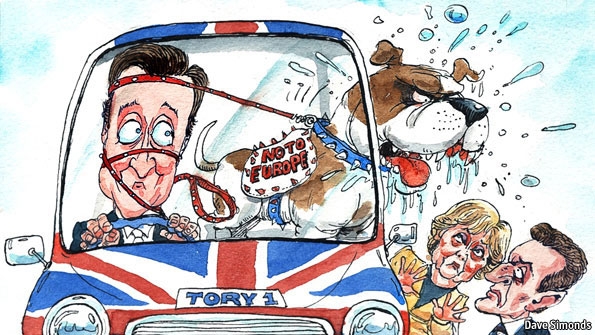
29 October 2014: Cameron rejects giving Scotland veto in EU referendum

Prime Minister David Cameron rejected on Wednesday a proposal by the Scottish National Party (SNP) that the United Kingdom should only quit the European Union after a future referendum if a majority in each of its four constituent parts vote to do so.

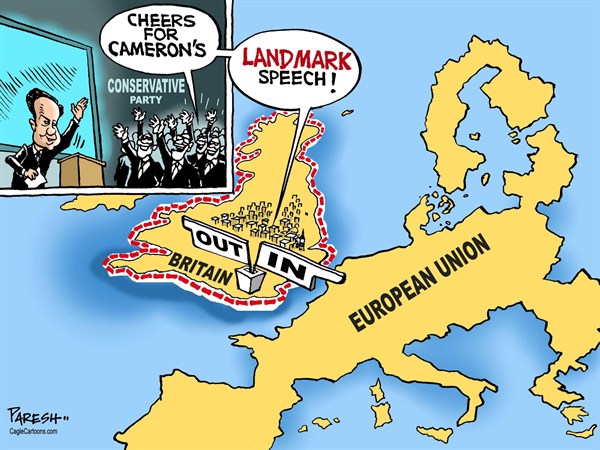
Cameron has promised a referendum in 2017 on Britain’s continued EU membership if his Conservative Party, which has grown increasingly Eurosceptical, wins a 2015 national election.

Incoming SNP leader Nicola Sturgeon said earlier on Wednesday the United Kingdom’s EU exit should only go ahead if approved by majorities in Scotland, Wales and Northern Ireland as well as in England, home to 85 percent of the UK population.

“We are one United Kingdom. There will be one in/out referendum (for the EU) and that will be decided on a majority of those who vote. That is how the rules should work,” Cameron told the Westminster-based UK parliament in response to Sturgeon’s proposal.

Scotland, Wales and Northern Ireland have varying degrees of autonomy but the British government in London controls foreign policy and is not legally required to consult the regional administrations over issues such as EU membership.

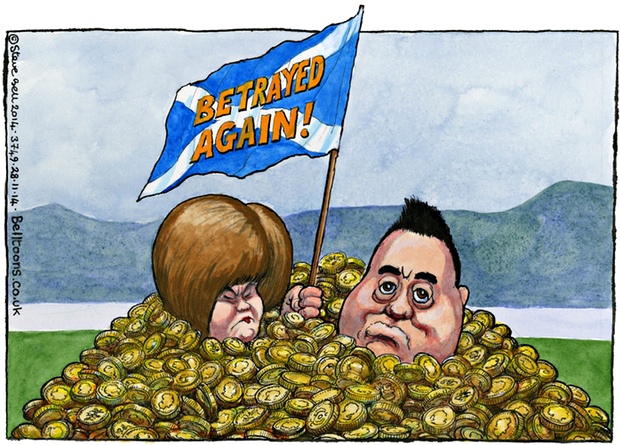
However, the SNP criticised the stance, saying that London’s promises of real constitutional change after Scots rejected independence were being broken. “This knee-jerk rejection by the Prime Minister to a perfectly reasonable and balanced proposal to reflect Scotland’s interests in Europe flies in the face of what he and the No campaign promised during the independence referendum,” said Pete Wishart, an SNP member of the British parliament.

Polls show that Scots, are more likely to back EU membership than the English. The SNP have said that they are not seeking another referendum on Scottish independence, but that this depends on circumstances such as continued EU membership.

Scotland’s First Minister, Nicola Sturgeon said it would be wrong to force Scotland’s five million people to leave the EU against it’s own wishes. http://uk.reuters.com/article/2014/10/29/uk-britain-eu-scotland-idUKKBN0II1EV20141029


74487894_saltireeu_gettytwo-150x150                      _73026463_73026462                imagesweri


18 February 2015: UK’s Labour under pressure over EU referendum as senior official quits

Britain’s opposition Labour Party came under pressure to offer voters a membership referendum on leaving the European Union on Wednesday after a senior official quit over the issue and a major donor prepared to call for a policy U-turn.

Unlike Conservative Prime Minister David Cameron, Labour has resisted offering such a referendum in the run-up to a close May 7 national vote, arguing it would hang a “closed for business” sign over Britain and that an EU exit would be disastrous.

It has said it would only offer a referendum if it deemed there was a substantial further shift of powers from London to Brussels, something that’s neither imminent nor likely.

But some in the left-wing party, parts of which have a tradition of Euroscepticism, argue it’s undemocratic to deprive voters of a say on something polls show many feel uneasy about.

There’s also disquiet — from a tactical viewpoint less than three months before the election — that Cameron’s Conservatives are the only ones offering to renegotiate Britain’s EU ties before holding such a referendum if re-elected.

On Wednesday, a former head of Labour’s ruling body, the National Executive Committee, said she was leaving the party and switching her support to the anti-EU UK Independence Party (UKIP) because she was “disillusioned” by its Europe stance.

Writing in the Daily Telegraph newspaper, former NEC chair Harriet Yeo said she had been told many senior Labour lawmakers favoured a referendum but had been asked not to speak out. “I cannot support this approach,” she wrote. “It is time to decide whether we remain in the EU. The only party I trust to offer us that choice is UKIP.”

Her resignation came as a major Labour donor prepared to urge Ed Miliband, the party’s leader, to commit to hold a referendum. “If Ed Miliband becomes prime minister in May and renegotiates without committing to a referendum, he will inevitably weaken the UK’s bargaining position,” businessman John Mills, who donated 1.65 million pounds to Labour in 2013, will tell a conference in London.

In remarks prepared for delivery to the event on alternatives to EU membership, he will say that other EU members will be more likely to take renegotiation seriously if there’s a substantial risk of Britain leaving the EU. http://uk.reuters.com/article/2015/02/18/uk-britain-politics-europe-idUKKBN0LM00A20150218


Ed Miliband and shadow chancellor Ed Balls                          arton5776


10 March 2015: Brown warns against making Scottish referendum mistakes with Europe

Gordon Brown has warned that those in favour of the UK’s membership of the European Union are running the risk of losing an referendum on the issue. In an article for this morning’s Guardian, he writes that Eurosceptics are using the same tactics of the pro-independence campaign in the Scottish referendum, which was closer than many predicted.

The former Prime Minister wrote:

“A poll that started off as a contest between two patriotic visions of Scotland’s future – one inside Britain one outside – descended into a choice: are you for Scotland or against Scotland? Thousands were persuaded that a yes vote was the only way to show themselves to be patriotic Scots.

“Anti-Europeans are slowly, and with surprisingly little public acknowledgement, pulling off the same trick by framing Europe – the subject of what could be the next referendum – in the same way. What should be a choice between two patriotic futures for Britain – one as part of Europe and one outside it – is already descending into a more basic emotional choice: are you for Britain, or are you for Europe?”

It is interesting that the premise of Brown’s piece seems to be an acceptance that an EU referendum is, if not inevitable, then at least likely. This would be at odds with Labour policy, as the party is heading into the election with a firm opposition to a referendum.

Brown says that if untackled, UKIP would engender widespread feeling that “blames foreigners, targets immigrants, engenders a siege mentality against the outsider and says that Britain is barely recognisable to those who believe in it.”

He is not the first major Labour figure to lend his support and advice to the pro-EU cause; Better Together chair Alistair Darling said on announcing his retirement from the Commons that he wanted to be more active campaigning for EU membership, while Alan Johnson is understood to share similar sentiments from inside Parliament.

Brown, who is standing down from Parliament this May, argues that there is a danger of “fighting with the wrong weapons” and that a “fact-based campaign” could alienate those who already feel left behind by politics:

“Sadly we pro-Europeans are in danger of fighting with the wrong weapons: a worthy, London establishment-led corporate-financed fact-based campaign of “the great and the good”, whose commitment to Europe is admirable but whose prominence will be used by anti-Europeans to justify the allegation that Europe is for an elite who don’t understand the real Britain.”

While all of this is an intriguing intervention from the former Chancellor, it has been largely overshadowed by his belief that Britain leaving the EU would make the country like North Korea, “out in the cold with few friends, no influence, little new trade and even less new investment.” http://labourlist.org/2015/03/brown-warns-against-making-scottish-referendum-mistakes-with-europe/


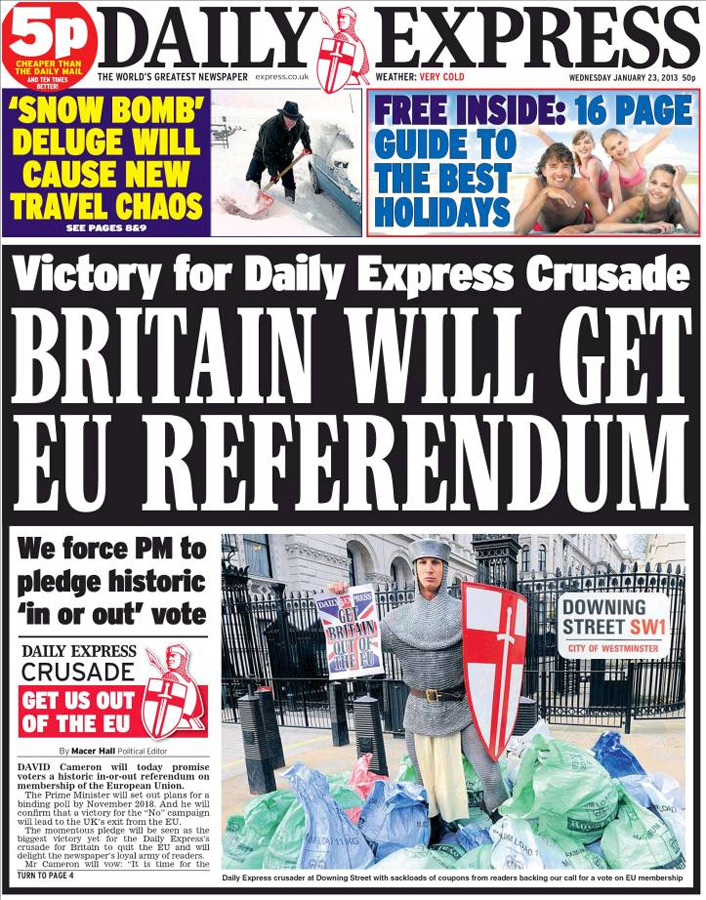
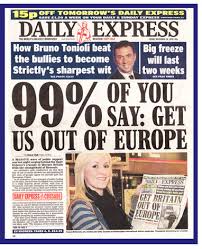
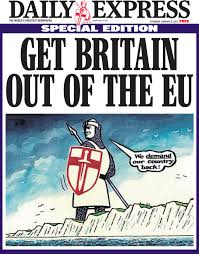
daily-express-23012013                            imageshiol                                imagesrghio


31 January 2015: What are we going to do about the EU?

It would be reasonable to expect that austerity measures would be top of the 2015 GE agenda but the truth is that there is little difference between the big Westminster parties on austerity.

Sure the Conservatives are looking to claim Labour will raise the deficit with un-costed policies, but Labour also seem to be keen to show themselves as strong on the economy by denying that they will tax and spend.

Normally the parties would look for a unique selling point such as the SNP’s “Stronger for Scotland” but the Westminster parties have no substantial points of difference on key policies.

The exception being UKIP, the party that David Cameron really has to beat to win a majority, and that is why the UK General Election arguments will largely focus on the EU.

Last year Ipsos – Mori stated that 53% of Scots would vote to stay in the EU and 34% to leave, and Survation found that Scots were 5% less likely to support leaving the EU than the average for the rest of the UK.

I believe that if Labour doesn’t also offer a referendum on EU membership they won’t win outright, so I predict that regardless of who wins in May we will have an EU referendum.

That support for EU membership will rise in Scotland, especially given the SNP Government’s popularity and its full on commitment to EU membership, and that the rest of the UK will, through UKIP’s influence, move towards the exit door but it is too tight to call.

But will the Labour referendum include a veto for Scotland & Wales. If the Labour Party line is the same as the Tory and Lib/Dem Party’s will the Scottish Labour Party conform with the London labour Party or will it support the will of the Scottish electorate? http://www.businessforscotland.co.uk/what-are-we-going-to-do-about-the-europeans/


images33                                        imageshiol                               imagesnnnnh


Ruth Davidson – Ardent supporter of remaining in the EU Sees her future with the UK

Scottish Conservatives leader Ruth Davidson said she was strongly against a second referendum in a hastily arranged speech outside her party’s headquarters following Sturgeon’s address.

Davidson said: “I do not believe a second independence referendum will help us achieve that stability nor is it in the best interests of Scotland.

“The 1.6 million votes cast in this referendum in favour of Remain do not wipe away the two million No votes that we cast less than two years ago.

“Also, we do not address the challenges of leaving the European Union by leaving our own union of nations, our biggest market and our closest friends. I believe in Scotland’s place within the United Kingdom today as much as ever.

She added she believes the “strength, security and durability” of the United Kingdom will endure. http://stv.tv/news/politics/1358515-sturgeon-second-indyref-is-on-the-table-following-brexit/


Results by Country


24 June 2016: Cameron resigns (in October 2016) as Prime Minister following referendum defeat

The secretary of state for Scotland David Mundell has offered to meet the Scottish Government to discuss the country’s “next steps”.  Mundell said: “David Cameron has been a great leader of my party and of our country. I was proud to be one of his first supporters during the 2005 leadership election and I have never regretted that decision for a moment. “His achievements in rescuing our economy and in social reform will stand the test of time. Today he has once again put country before self.  “As the Prime Minister made clear this morning, the UK Government is absolutely committed to working closely with the Scottish Government to ensure they are fully involved in the negotiation process. The Prime Minister has already spoken to the First Minister and I have today offered to meet with the Scottish Government in Edinburgh to discuss next steps. The United Kingdom has fundamental strengths and this is a time for calmness and deliberation – not pushing other personal or political agendas.”

http://stv.tv/news/politics/1358491-cameron-to-stand-down-as-prime-minister-following-referendum-defeat/

Security Report Confirms That Tory’s Dance to the Russians Tune – Cast Yer Eye Over This!!


Boris Johnson plans tough laws to crack down on foreign takeovers ...


Report on alleged Russian interference in UK politics

The Tory Government has nobbled Westminster’s powerful Intelligence and Security Committee (ISC) by loading it with right-wing apparatchiks.

https://www.bbc.co.uk/news/uk-politics-53349212


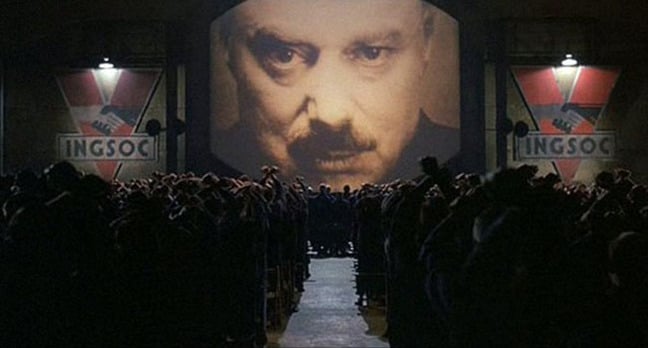
1984


Russian Influence on Boris Johnson’s government and the Tory Party

Boris Johnson’s Tory Party delayed publication of a report by the UK secret services into claims that the Russians adversely influenced the  EU referendum and the 2017 General Election.

The Tory’s stated that the primary reason for deferring publication until after the 2019 General Election was to ensure a level political playing field.

But the report was with Boris Johnson on 17 October 2019 and the process of approval of publication was usually around 10 days.

The Chairman of the investigating committee, Tory, Dominic Grieve accused Johnson of “sitting on the report” because it contained damaging allegations about the conduct of Tory politicians.

And the claims were that a friend of Boris Johnson, Alexander Temerko, one-time Russian defense ministry official had recently donated in excess of £1.5m to the Tory Party and that another eight Russian businessmen had also given significant sums of money to the Party.

And the Russians just kept turning up. A female Russian Tory Party donor, Lubov Chernukhin, former wife of  Putin supporter, Vladimir Putin ally, Vladimir Chernukhin, donated around £0.5M  and gifted another £160K to play tennis with Boris.

Grant Shapps, Tory Transport Minister defended the decision to delay publication offering that the government of the day was not allowed to publish anything politically controversial during an election “Purdah” period. But “purdah” was not in force in October for a General Election not due until December.


uk-spies-write-how-to-catch-a-terrorist-guide-1426110718-3134


Cameron asked Putin and other world leaders to speak out against Scottish independence

In 2014 Russia retained the role of the presidency of the influential G8 group of industrial nations placing President Putin in a position of increased influence over world affairs.

Tass, Kremlin’s mouthpiece reported that David Cameron had written and warned Putin and many other nations that Scottish independence would “send shockwaves across the whole of Europe”.

The news was released a few days after reports of the creation of an anti-separatist alliance between Cameron and the Spanish government.

The Westminster government’s anti-independence civil service team also bragged that they had employed underhand tactics and orchestrated the “Project Fear Campaign” globally.

Asked to comment Alex Salmond said, “It is shameful that Cameron refuses to debate in front of the people of Scotland, but is perfectly willing to lobby against Scotland’s interests around the world adding credibility to reports that he lobbied the Spanish prime minister to speak out against Scottish independence and this after their foreign minister had already made perfectly clear that Scotland’s referendum was a matter for the people of Scotland. This kind of behaviour shows exactly why Scotland should represent our own interests as an independent nation. We will be a responsible global citizen and a good friend to our neighbours in the rest of the UK.”

https://www.heraldscotland.com/news/13140055.camerons-plea-to-putin-help-me-stop-salmond/


Surveillance graffiti image via shutterstock


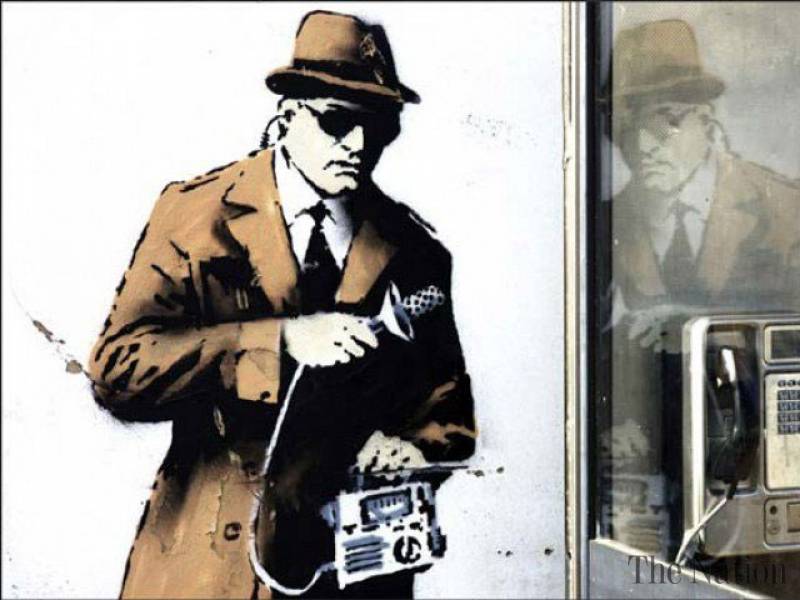
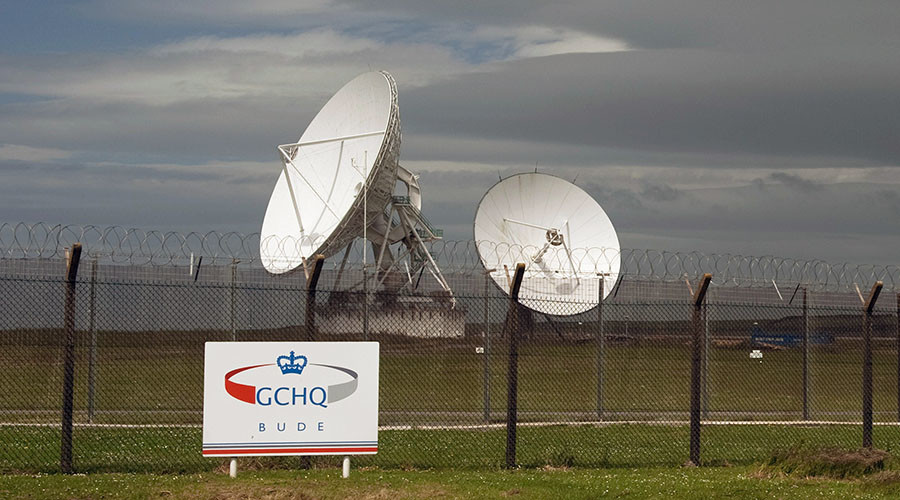
Holyrood targeted by British spooks at GCHQ

SPOOKS have changed top-secret rules so they are free to spy on MSPs. Explosive documents show that the UK’s electronic eavesdropping agency last month dumped guidelines that had constrained spies from tapping MSPs’ phones or hacking their emails.

The revelations about GCHQ will spark fury at Holyrood and reignite conspiracy theories about the role of the security services in fighting the growth of pro-independence feeling.

They are also likely to bolster fears the intelligence community was monitoring politicians’ and activists’ communications during the referendum campaign.

The fact that the change to existing guidelines was made in the aftermath of the September 18 vote might be viewed as an action taken to cover previous activities.

Internal policy documents obtained by the Record show GCHQ – responsible for mass surveillance in Britain – had extended the decades-old Wilson doctrine to MSPs until March of this year.

The convention is named after former prime minister Harold Wilson, who pledged in 1966 that MPs’ and peers’ phones would not be tapped.

In December 1997, then PM Tony Blair said it extended to electronic communication, including emails.

However, the policy was never officially extended to cover the devolved parliaments in Scotland, Wales, and Northern Ireland once they were set up in 1999.

And while GCHQ said it had voluntarily treated MSPs in the same way as MPs until March this year, it can be revealed that they have now changed the policy so MSPs are no longer included.


GCHQ taps fiber-optic cables for secret access to world’s communications

Britain secretly gained access to the network of cables which carry the world’s phone calls and internet traffic and processes vast streams of sensitive personal information which it shares with its American partner, the National Security Agency.

http://www.theguardian.com/uk/2013/jun/21/gchq-cables-secret-world-communications-nsa


655d00df25c2faac79185f6d2da541f3


The Five Eyes Alliance

The United States, Canada, Britain, Australia, and New Zealand participate together in an electronic eavesdropping cooperative called “The Five Eyes Alliance”

http://www.theatlantic.com/politics/archive/2013/06/is-the-five-eyes-alliance-conspiring-to-spy-on-you/277190/


© Kieran Doherty


British spies snoop on YouTube and Facebook

The British government taps into the cables carrying the world’s web traffic at will and spies on what people are doing on some of the world’s most popular social media sites, including YouTube, all without the knowledge or consent of the companies.

http://investigations.nbcnews.com/_news/2014/01/27/22469304-snowden-docs-reveal-british-spies-snooped-on-youtube-and-facebook?lit


GCHQ


UK spies attacked anonymous hackers

The blunt instrument used by the British secret service to target hackers also interrupted the web communications of political dissidents who did not engage in illegal hacking.

http://www.nbcnews.com/feature/edward-snowden-interview/exclusive-snowden-docs-show-uk-spies-attacked-anonymous-hackers-n21361


Press-and-Censorship-by-Arcadio-Esquivel-Cagle-Cartoons-La-Prensa-Panama-1-400x548


British spies use sex and dirty tricks tactics

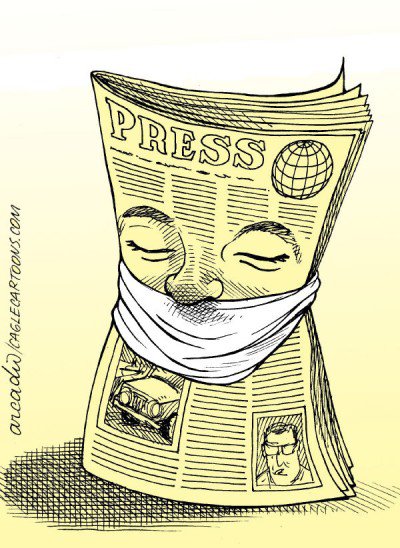
British spies developed “dirty tricks” for use against nations, hackers, terror groups, suspected criminals, and arms dealers including releasing computer viruses, spying on journalists and diplomats, jamming phones and computers, and using sex to lure targets into “honey traps.”

http://www.nbcnews.com/feature/edward-snowden-interview/exclusive-snowden-docs-show-british-spies-used-sex-dirty-tricks-n23091


dont-spy


Brexit removes European human rights court rulings making it illegal for the government and or its agencies to engage in the mass surveillance of the public

The European Court of Human Rights (ECHR) ruled mass surveillance to be illegal.

The Court ruled that article 8 of the European Convention on Human Rights (ECHR) (the right to privacy)  included “sufficiently precise, effective and comprehensive” measures limiting surveillance to only people it suspected of crimes.

But the Tory government National Security Act (2011), contravenes (ECHR) since a minister of the government is able to approve a police request to search people’s houses, mail, phones, and laptops if they are seeking to protect national security a process that does not require judicial review or approval. And the law does not provide the circumstances under which the surveillance can be ordered (unlike other parts of the same law).

A minister can also order the surveillance for 90 days and extend it by another 90 days and there is no obligation to delete any of the information gathered during that time once the surveillance is ended. All highly questionable.


One Way You Can Help Fight Against Political Interference in ...


Gordon Brown – Cloned From Machiavelli – Scotland Will Be Well Rid When He Eventually Departs Politics

brownGordon BrownPortrait_of_Niccolò_Machiavelli_by_Santi_di_TitoNiccolò Machiavelli


Gordon Brown, the master leaker, when he was Prime Minister, had the Tory Damien Green arrested on allegations of leaking information . Yet in July 1985, at the time he was interviewed by the BBC’s Frank Bough, he just couldn’t avoid gloating and smirking about the leaks he had orchestrated, received and passed on through his network of minions who were always eager to do his murky deeds. Many people will have cause to have hatred in their hearts for him. He has departed the scene as a politician, but he leaves a foul stench that will linger for years to come. https://www.youtube.com/watch?v=QIrweIqqsOc

Former UK Prime Minister Gordon Brown expressed his preference for a return to office of a right-wing, austerity driven, David Cameron led Conservative/Ukip Government at the next British General Election in 2015 rather than support Scottish independence.

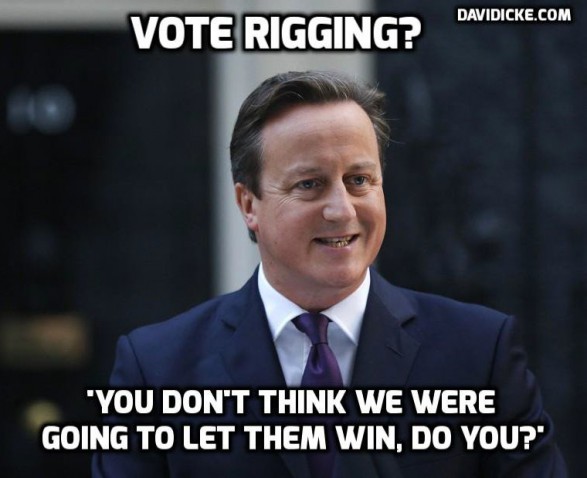
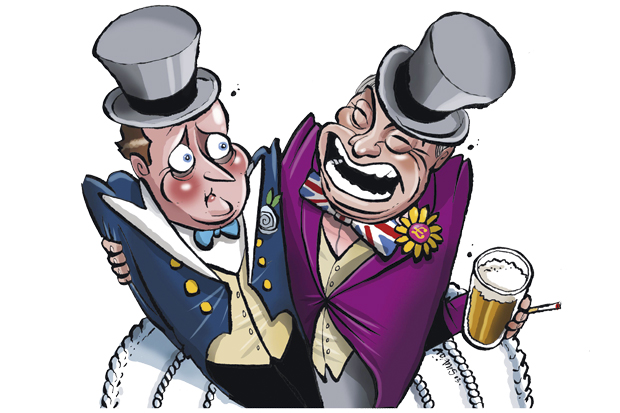
brownBrown  westminster-rigged-scottish-independence-voteCameronNigel_Farage_of_UKIPFarage

14 September 2014: Former UK Prime Minister Brown Prefers Tory/UKIP Government to Scottish Independence

Former UK Prime Minister Gordon Brown expressed his preference for a return to office of a right-wing, austerity driven, David Cameron led Conservative/Ukip Government at the next British General Election in 2015 rather than support Scottish independence.

Answering the question, “are there are any circumstances, such as a widely speculated a David Cameron Conservative/Ukip coalition Government being formed, that would convince you to back a Yes vote, he said, “it cannot just be about hating one policy or disliking a particular Government. It cannot just be about what you feel about the issue of the moment. You have got to take the long view. You have got to look ahead. I think people will conclude from experience that we are an interdependent world and that sharing, co-operation, solidarity, neighborliness is the way forward.

With recent opinion polling showing around a third of Labour party voters planning to vote Yes in the independence referendum he was asked whether the Labour Party’s credibility had been damaged by campaigning so closely alongside the Conservatives, who have only one elected MP in the whole of Scotland. He had no answer.   http://sputniknews.com/politics/20140914/192928906.html

Ukipimagesbb

19 September 2014: Conservatives Praise Role of Former Labour Prime Minister Brown in Independence Campaign

Former Labor Prime Minister Gordon Brown has been praised for his contribution to the Scottish independence campaign by Conservative Minister for State for Scotland David Mundell. He said,”Gordon Brown played a very significant role as have a large number of other people. I listened to Gordon’s speech and it was very, very impressive.  http://sputniknews.com/world/20140919/193075895.html

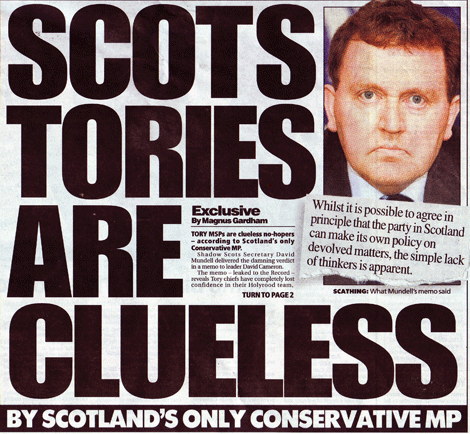
_47645472_mundell_goodclueless

18 September 2014: Experts say the “No” vote has resulted in political stability in the UK. “The union is like a damaged marriage” stated an anonymous Conservative MP

Despite Civil Service orchestrated baseless threats from companies like The Royal Bank of Scotland, to move operations to England in the event of a “Yes” vote, many Scots dismissed such threats as scaremongering. Furthermore, the Canadian example also suggests that the narrow “No” vote will prolong constitutional uncertainty, causing problems for businesses and jobs in Scotland.

Although Westminster promised to extend “home rule powers” to Edinburgh, the narrow majority of “No” votes will not end the discussion over Scottish independence and pro-independence voters will most likely seek a fresh mandate for a new referendum in a few years’ time, the so-called ‘never-endum’ scenario.

A YouGov poll revealed that almost two-thirds of people in Scotland are unsure what powers are to be devolved so the “no” voters have no idea of what “extensive new powers” Westminster promised. http://sputniknews.com/analysis/20140918/193047983.html

After the Scottish referendum.imageswe

people-of-influence-whom-you-hardly-know-Andrew Brown-Brother of Gordon Brown-BBC-Media-Politics-Nuclear Energy-He Gets Around


Andrew Brown.jpgAndrew Brown   brownGordon Brown (Brother)


Andrew Brown: Studied journalism at Edinburgh University

1987: Became an assistant producer for Newsnight before joining Channel Four News two years later. He became a programme editor in 1994, and worked on scripts for the presenter Jon Snow.


BBC Newsnight


1996: Took over as the editor of ITN’s political programme Powerhouse.


'Same old, same old.'

2003: left to become the director of media strategy at Weber Shandwick, an international PR company. Colleagues described him as a “very calming, very thoughtful, very mature person with a gentle sense of humour”. David Brain, the joint chief executive of Weber Shandwick, said he was hired, “not for his links to his brother but because he is a top-quality broadcaster. I am sure that, if there were any conflicts of interest, we would find a way to resolve them.”


unnamed


2004: Became the head of media relations at EDF, the French utility company. He is now the director of corporate communications. When he took the job, Andrew admitted that, “the energy industry is not something I knew much about before”. Nevertheless, he has been at the forefront of EDF’s expansion in Britain after it bought London Electricity, Sweb and Seeboard. He lives with his wife, Clare, 49, in Victoria, central London, less than half a mile from Gordon’s flat.


edf energy_0


2007: French energy giant EDF has been at the forefront of the campaign to change perceptions of nuclear power. The company, which operates 58 nuclear reactors in France and is already a big player in the UK electricity market, has said it is ready to invest in a new generation of plants in the UK, provided it gets the go-ahead from government. It has successfully lobbied ministers to introduce a fast-track planning process to make it easier to build new plants without lengthy public enquiries. Chancellor Gordon Brown’s brother, Andrew, is EDF’s head of media relations in the UK. http://news.bbc.co.uk/1/hi/uk_politics/5149676.stm http://www.theguardian.com/business/2006/jul/11/greenpolitics.nuclearindustry1


EDFEDF Atomic Energy   clare-rewcastle-brownClare Rewcastle


29. Clare Rewcastle: Is a British investigative journalist. She is married to Andrew Brown

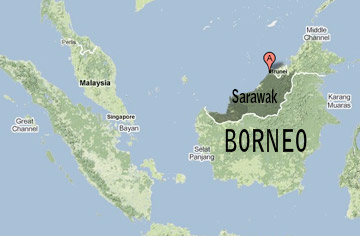
a. Born in Sarawak to British parents (before the territory joined Malaysia) and attended the local primary school. Her mother, Karen, was a midwife who helped look after indigenous babies at remote clinics.

She moved to the United Kingdom when she was eight, attended private boarding school and subsequently obtained her masters degree in international relations from the London School of Economics.

She became a journalist, joining the BBC World Service in 1983.

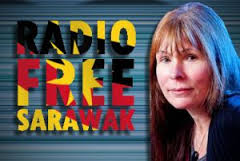
She is the founder of, “Sarawak Report” and, “Radio Free Sarawak” which are openly critical of the Barisan National-led state government of Sarawak.


0401sarawakSarawak  imagesoiRadio Free Sarawak


http://en.wikipedia.org/wiki/Clare_Rewcastle_Brown

http://www.telegraph.co.uk/news/worldnews/asia/malaysia/10159557/Activist-sister-in-law-of-Gordon-Brown-deported-from-Malaysia.html

http://www.independent.co.uk/environment/green-living/fight-for-the-borneo-rainforest-gordon-brown-celebrates-the-role-of-journalist-clare-rewcastle-2237427.html

http://www.abc.net.au/7.30/content/2011/s3191901.htm


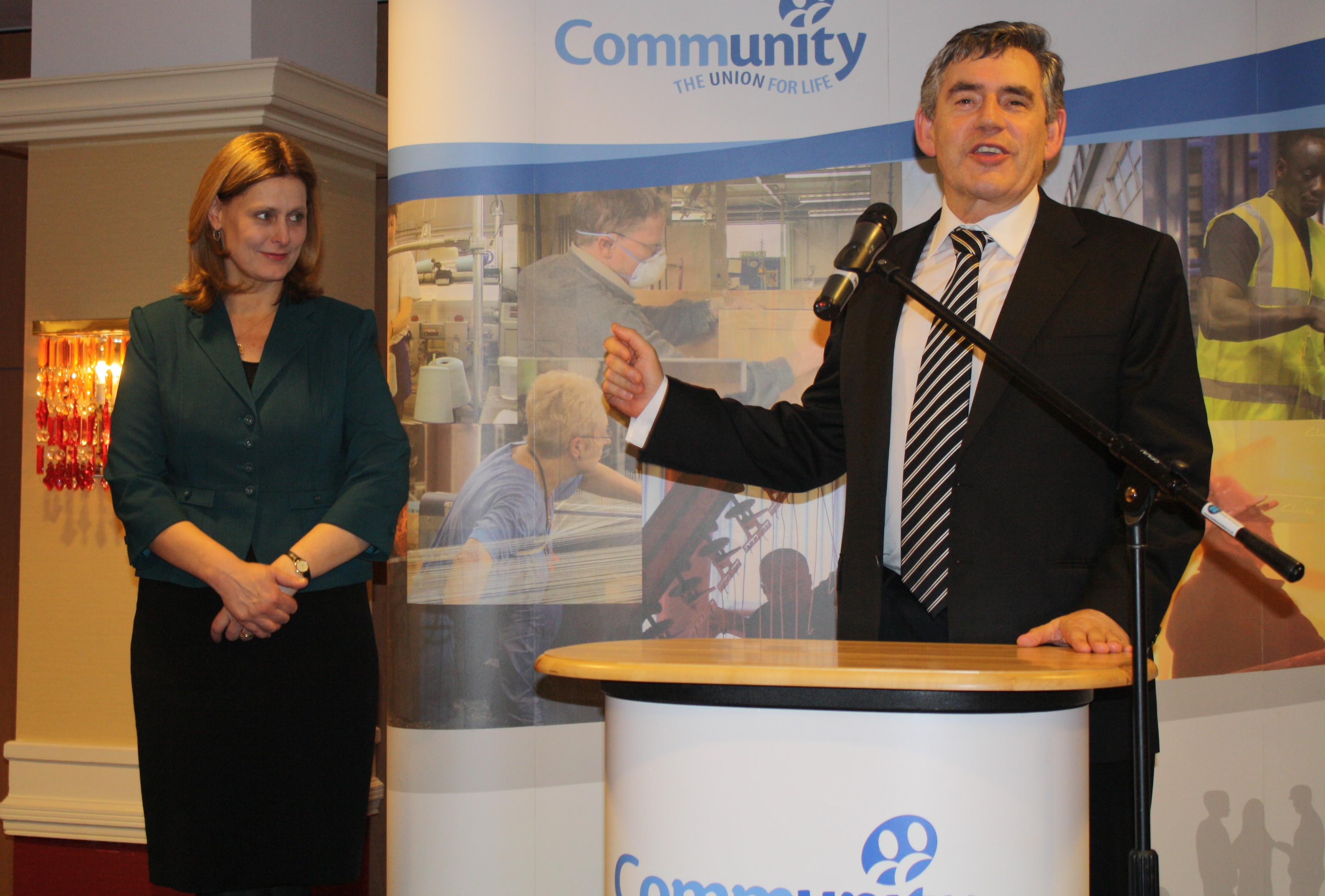
Gordon_and_Sarah_BrownGordon & Mrs Brown

Italian Born Laura Kuenssberg Is Descended from Austrian Geman Nobility – Her G.Grandfather and Other Members of the Wider Kuenssberg Family Embraced the Ideals of the NAZI Party – Her Background Reveals Her What Drives Her Politically – A Nippy Sweetie Scots Should See Her for What She Is

Laura Kuenssberg’s Great, Great grandfather was a world-renowned cloth manufacturer who built his business (photo) in Brandenburg, Germany. He employed over 500.


800px-Fabrik_Samson-001


Laura Kuenssberg’s Great Grandfather Dr. Eberhard Kuenssberg – Legal Historian – The Third Reich

Eberhard von Kuenssberg was educated evangelically and attended schools in Graz and studied law in Vienna from 1899 to 1904.

His dissertation “The Forest in German Mountain Law” (1904) received the first prize of the Samitsch Foundation.

After leaving the legal state exams in Austria, he took an Austrian scholarship to Munich for two semesters, where he became acquainted with the founder of legal archaeology, Karl von Amira, who impressed him and became his model.

In 1905, Richard Schröder (who had initiated the 1896 project of a dictionary of the older German legal language) employed Kuenssberg as a research assistant for the dictionary.

In 1910 he qualified for the study, authorship, and publication of eight of the old German legal language for legal history.

In recognition of his decision, he was awarded the Prussian Red Eagle Order. He also received a “Free German” nationality.

Kuenssberg was not fit for military service (due to a heart defect) and during WW1, he engaged in voluntary nursing.

He founded the first German Einarmschule in Ettlingen in 1915, which he directed until December 1918, and wrote a multi-handed manual for one-armed people.

After the prescribed time as a private lecturer (and after the death of Schroeder), he was appointed titular professor in Heidelberg in 1916.

He took over the leadership of the German legal dictionary in 1917 and laid down the keywords, sources and the scope of the articles, and wrote many of his own.

In addition to his legal work, he gave lectures and exercises for lawyers and philologists on the subject of legal history.

In 1924 he was admitted to the Heidelberg Academy of Sciences.

In 1928 he became a professor of the Prussian Academy of Sciences in Berlin, the bearer of the legal dictionary.

He retained his special position in the Heidelberg Faculty (From 1928 -1941) and his publication of the legal dictionary (even though his wife Katharina (1883-1978), born Samson, was of Jewish descent).

After the war, the Heidelberg Faculty pointed out to the Reich Ministry of Education that Kuenssberg had actively supported National Socialism (NAZI) ideals and was the leading authority in the development of the German legal dictionary having compiled and released four of eight volumes.

Kuenssberg unexpectedly died of complications arising from an operation (ulcers) in 1941.

The Kuenssbergs had ensured that their five children had left Germany before his death.

One son, Ekkehard Kuenssberg (1913-2000), continued his medical studies in Edinburgh and became a well-known physician in Scotland.

Dr Katharina Kuenssberg (nee Samson) was a distinguished biologist. The daughter of wealthy cloth manufacturer Gustav Samson, and Anna Goldschmidt, (daughter of Jewish couple Hermann and Rosalie Goldschmidt.) was to be deported at the beginning of 1942, (but this was prevented by the intervention of the Dean of the Heidelberg Law Faculty Eugen Ulmer).

Her granddaughter said later:

“My grandfather did not die from cancer in 1941, rather he was murdered on the operating theatre table by the surgeon at the orders of the Gestapo. My uncle, Dr. Ekke von Kuenssberg, interviewed the surgeon after the war ended in 1945 as to why a simple ulcer surgery ended in death. The surgeon apologized to my uncle. He had no choice as the Gestapo in the operating theatre had given him orders that my grandfather was not to come out alive.

My grandparents sent all their children out of Germany as they were well aware of the negative changes going on in Germany under Hilter. Who wouldn’t? my mother had to leave school in 1935 because of anti-Semitism.

My grandfather was disgusted that Austria and Germany had been taken over by a working-class man, a unionist, who spent two years in a psychiatric hospital and then, had taken over Austria and Germany. Previously, nobles had a major part in all governance of Austria and Germany.”

Katherina Kuenssberg lived in Castle Finstergrün from 1941 until the end of WW2.


Laura Kuenssberg’s Grandfather Ekkehard von Kuenssberg (1913-2001) – Former General Practitioner

Ekkehard was Educated at Schule Schloss, Salem,(1) where he was head boy, led on to Innsbruck University where he studied science.

A family decision was made that Ekkehard should leave Innsbruck and go to the United Kingdom to continue his education.

The account of his journey to Edinburgh and how he was accepted as a student by Edinburgh University medical school is a wonderful story in itself which is documented in the university graduates’ association journal.

He graduated in 1939. In addition to his academic studies) he had time for play, and gained a blue for hockey, founded the university ski club, and was a co-founder of the yacht club.

His alien status in 1939 restricted the range of medical jobs he was allowed to do, and in May 1940 he was interned for five months.

On release from internment, he returned to Edinburgh and became a locum to Dr. C E Munro, who was on war service.

Thrown into general practice at the deep end his workload was enormous.

Poverty, overcrowded housing, and men away at the war all created problems additional to the difficulties of dealing with illness with a limited pharmacopeia.

In February 1944 Ekkehard achieved his desire to join the forces and was commissioned as a subaltern in the Royal Army Medical Corps.

Three years later he was demobbed in the rank of lieutenant colonel, having been an assistant director of hygiene in East Africa.

More Here:

http://www.bmj.com/content/suppl/2002/03/07/324.7337.616.g.DC1


salem

 Ekkehard Von Kuenssberg (1913-2001) was Head boy at Schule Schloss, Salem


Ekkehard von Kuenssberg – Prince Philip – Salem School – Hitler Youth and Universal Fascism

During World War I, Prince Max von Baden had been chancellor, while the Oxford-trained Hahn first served as head of the Berlin Foreign Ministry’s intelligence desk, then as a special adviser to Prince Max in the Versailles Treaty negotiations.

Von Baden and Hahn set up a school in a wing of Schloss Salem, employing a combination of monasticism and the Nazis’  “strength-through-joy” system.

At first, an ardent supporter of the Nazis, Hahn, who was part Jewish, embraced the more centrist elements of the Nazi Party.

Ownership of the school transferred to Prince Berthold, Margrave of Baden, (Queen Elizabeth’s uncle).

Through the influence of his sister Theodora, (Prince Berthold’s wife) a young Prince Philip was enrolled at the school

At the time of Prince Philip’s arrival, it was controlled and directed by the Hitler Youth and the Nazi Party, and the curriculum was centered on Nazi “race science”.

ROYAL5


Gordonstoun School

Hahn’s powerful NAZI connections permitted him to escape the concentration camps but he left the school  Prince Philip’s arrival and established a new school in Scotland, called Gordonstoun.

It would play a major role in rearing all the male children of Queen Elizabeth II and Philip.

Hahn became an important adviser to the Foreign Office in London, urging policies of appeasement based upon appeals to the “centrist” Nazis.

But according to confidential records released long after the war Dr Kurt Hahn,the German-born founder of Gordonstoun (attended by generations of the Royal Family was a suspected Nazi spy.)

MI5 agents in Edinburgh and the Secretary of State for Scotland were convinced in 1940 that Dr Kurt Hahn should be interned.

But MI5 in London and the Home Office regarded him as free from suspicion.

Rumors circulated there was a photograph of Hahn with Hitler and there were claims that during the First World War Hahn ‘connived in measures calculated to break British morale’.

He was also accused of spreading propaganda, blaming the 1919 Treaty of Versailles for the Second World War and advocating the return of colonies to Germany.

The revelations were contained in Scottish Office files released under an Open Government initiative passed by Parliament.

Gordonstoun, near Elgin, which catered for 150 boys, also came under local suspicion.

It was strategically sited between two RAF aerodromes, ran navigation courses for pupils and had a look-out post over the Moray Firth.

Five masters and 11 boys were interned by the order of the Home Secretary but Hahn was not.

A school full of refugee German teachers and pupils inevitably fell under suspicion.

In the summer of 1940, the school was evacuated and Hahn set up similar establishments in Wales and the Highlands.

The Duke of Edinburgh and Princes Charles, Andrew and Edward were educated at Gordonstoun, which maintained Hahn’s emphasis on self-reliance and practical skills.


01timthumb.php


The Kuenssberg family

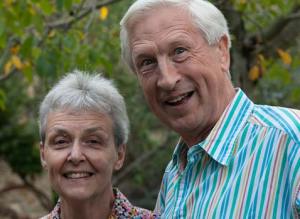
Laura is the daughter of Scottish businessman, Professor Nick Kuenssberg, OBE and his wife Sally Kuenssberg, CBE.

Her brother David and sister Joanna are employed with the British Diplomatic Service.

Joanna was appointed High Commissioner to Mozambique as of April 2014.

http://www.scotsman.com/business/management/business-interview-nick-kuenssberg-1-2819213


25238682.jpg.gallery

Career profile of Professor Nick Kuenssberg OBE


Coats-Paton

Nick was employed in an executive position with Coats-Paton, from 1965 and spent a deal of time expanding the company in South America.

In Peru during the late 1960s, he became gained notoriety as a shrewd operator.

At the time the government enacted laws providing for the financial protection and reimbursement of employees in the country.

But Nick found a legal way around the reforms so that all of the employees of Coats-Paton would be exempt from the benefits of the legislation.

This was a time of sweatshops in the textile industries and Nick helped deny rights to his employees.

A study of the timeline of Coats-Patons factories opening globally reveals a hard-line capitalist approach.

When, in developing countries, they were faced with challenges to their mode of operation the company simply “upped sticks” and transferred their power looms to more receptive countries taking full advantage of weaker legal systems and lower wages.

Following a number of mergers, the company is now known as Coats PLC.

It operates sites (together with other multinationals) in many countries worldwide, including India, Peru, Columbia, Ecuador, Brazil, the Philippines, Venezuela, Pakistan, and Turkey.

In the 1970’s World Trading Authorities applied pressure intent on bringing to an end the shoddy business practices of Coats-Paton and other multinationals which were revealed to be tantamount to slavery.

At around this time, Nick transferred his skills to the European side of the business returning to Scotland in 1978.

In a March 2013 interview, he appeared to vindicate the denial of legal rights to his Peruvian workforce, calling the enacted governmental reforms a disaster.

(http://www.scotsman.com/business/management/business-interview-nick-kuenssberg-1-2819213)

In 2007 Coats was fined €110 million by the European Commission for participation in cartels with Prym, YKK and other companies to fix and manipulate the prices of zips and other fasteners, and of the machinery to make them.

One of the cartels ran for twenty-one years.

An appeal in 2012 to the General Court of the European Union was dismissed, and the fine upheld.

(https://en.wikipedia.org/wiki/Coats_Group#Controversy)

More information here:  (http://politicalreformedfutures.blogspot.co.uk/2016/05/laura-kuenssberg-heratige-of-sweat.html)


Nick-Kuenssberg-ICAS-photo-226x300


28 Mar 1995: Finlay and Kuenssberg Fall on Their Swords as company struggles

A boardroom coup at Dawson International, the Pringle sweaters business, has led to the resignations of its chairman and managing director.

They are carrying the can for a string of bad news, culminating yesterday in the announcement of 500 job losses in Scotland and the closure of two factories.

The market, which has been looking for scapegoats for Dawson’s poor performance, pushed the shares 4.5p higher to 104p.

Over the past three years, they have underperformed the market by almost two-thirds.

In a move thought to have been precipitated by disgruntled institutional investors, including PDFM, Royal Insurance, M&G and Schroders, Sir Ronald Miller, chairman, has been replaced by non-executive Derek Finlay, and Nick Kuenssberg, managing director for less than a year, is succeeded by Peter Forrest, a divisional head.

Investors are annoyed that they stumped up £45m in a one-for-four rights issue last May to restore Dawson’s badly mauled balance sheet. The shares are currently well below the 120p issue price.

At the time, Sir Ronald told investors that have taken the decision to implement essential rationalization in the US, the group was in a strong position to achieve growth again.

Sir Ronald, who joined Dawson in 1968, had been chairman for the past 12 years. He and Kuenssberg are expected to receive pay-offs relative to their respective £200,000 and £135,000 salaries. The company is looking for a new chief executive.

The cost of adjusting is expected to be £10m covering site closures and job losses. Those are divided between the Pringle operation, where a factory at Arbroath is to be closed and at Blackwood Brothers, Dawson’s yarn-spinning company, which is suffering from reduced demand for high-quality carpets.

Pringle is reeling under lower sales and higher raw material prices and will make a loss this year. Its retail operations are also to be run down.

http://www.independent.co.uk/news/business/heads-roll-as-dawson-sheds-500-1613256.html


2573023370


The Kuenssberg’s & the Labour Party

Nick enjoys a friendship with the (Labour Party) Alexander family (from Paisley).

He contributed financially, together with others to the labor party in Scotland’s leadership campaign of Wendy Alexander.

Problems surfaced when it was revealed that she had failed to declare the contributions to the Electoral Commission and she was forced to withdraw her nomination. She resigned from Scottish politics.
 

13979934642_8dc9713df2_m


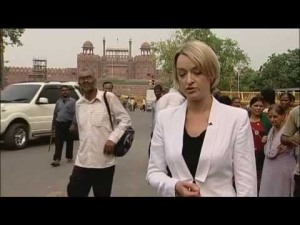
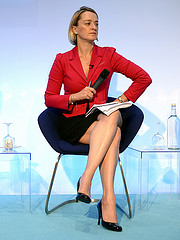
Laura Kuenssberg was born in Italy, while her father was employed there with Coats Viyella. 

She studied history at the University of Edinburgh, followed by a journalism course at Georgetown University in Washington D.C., where she worked on an NBC News political programme.

She has worked in France, and in the United States, satisfying her serious election geek tendencies by covering two White House races.

On returning to Britain, she worked for local radio and then cable television in Glasgow, before joining BBC North East and Cumbria in March 2000.

She won a regional Royal Television Society award for her work as Home Affairs correspondent and went on to produce segments for the Social Affairs editor Niall Dickson.

She then worked for Channel 4 News for a time before returning to the BBC.

She is married and lives in London.

http://www.theguardian.com/media/2013/nov/12/bbc-newsnight-itv-laura-kuenssberg .
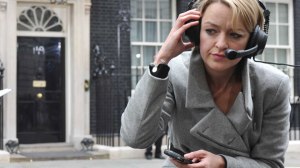
 

e2acea5d654e410974afb15250f4a9c0b8c96631Laura_Kuenssberg_and_Rachel_Reeves_MP


2010: Kuenssberg rejoined the BBC in 2004 as Chief Political Correspondent for BBC News

In her seven years in Westminster, she reported for a wide range of BBC programmes including the 10 O’clock News, Today and News-night, ultimately working as the chief political correspondent for the BBC News Channel during the 2010 General Election.

She enjoyed an extremely good relationship with the Downing Street police officers, and benefited from this in May 2010, when her presence was so ubiquitous in the period between the general election and the formation of a coalition government under David Cameron.

Surviving on a diet of egg sandwiches and adrenaline, for hour after hour and day after day the 33-year-old, blonde-bobbed Scot described, debated and analyzed the most enthralling election campaign for decades.

http://www.webcitation.org/5xWzukw3E
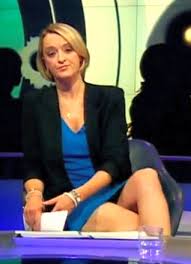
 

imagesrobbie gibb


On 12 November 2013 Kuenessberg awarded hefty £200,000-a-year contract by the BBC

She subsequently returned to the BBC as chief correspondent and a presenter of Newsnight (average audience slipping badly in recent years reduced to just 600,000 viewers).

The deal, which angered many BBC staff, came after the Corporation had been widely criticized for the high salaries paid to executives and on-screen stars.

http://www.dailymail.co.uk/news/article-2547970/BBC-hands-new-presenter-Laura-Kuenssberg-200-000-year-deal-600-000-viewers-thats-33p-each.html

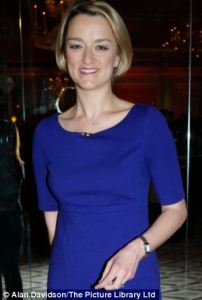
 

6a00d83451b31c69e20120a5293b6b970b article-2583113-1C2CF89100000578-694_306x455


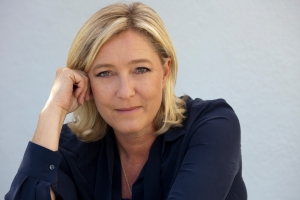
Video in which Marine Le Pen put Laura Kuenssberg from BBC News-night back in her box.

The typically agenda-driven bias was well in evidence here when Kuenssberg tried to get Le Pen to say that UKIP and her party were fellow travellers.

Ms. Le Pen was adept retaining control of the interview not allowing herself to be pigeonholed.

There was much to admire at the way she admonished Kuenssberg.

http://www.youtube.com/watch?v=83NsHR5-0-Y
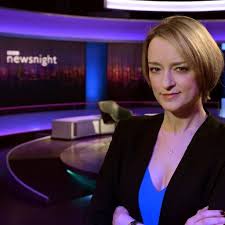


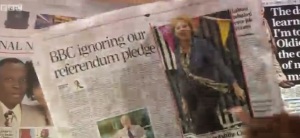
34  4313c0c17e30d44057ddc256cee9a173_largeMs. Le Pen0BBC ignoring


3 May 2016:  Twitter erupts as BBC struggle to keep Tory Election Fraud under..

The term ‘BBC bias’ has been bandied about a lot recently, and many are questioning the political neutrality of commentators such as Laura Kuenssburg.

It’s easy to see how many have come to these conclusions, given that Kuenssburg’s last 6 consecutive tweets – spanning from April 28th – have all been about one person: Jeremy Corbyn – as opposed to anything that could potentially damage the Conservatives.

When you combine Kuenssburg’s unashamedly negative Jeremy Corbyn obsession, with her Daily Politics sidekick Andrew Neil – Chairman of the zealously Conservative media outlet, The Spectator –  it’s not hard to see why many are now questioning why the BBC’s political department is keeping a potentially huge Conservative scandal subdued.

http://evolvepolitics.com/twitter-erupts-bbc-struggle-keep-tory-election-fraud-wraps-may-elections/


Twitter erupts as BBC struggle to keep Tory Election Fraud under wraps until after May elections


7 January 2016: BBC producer deletes blog where he admits political manipulation before PM questions

A BBC producer has admitted in a BBC blog – now deleted – that Andrew Neil, Laura Kuenssberg and himself manipulated the news to negatively impact Jeremy Corbyn during Prime Minister’s Questions yesterday.

In the blog, the producer – Andrew Alexander – openly admits the BBC team were not just reporting the day’s news but trying to influence it: “this was a story where we could make an impact” .

Alexander also admitted the BBC team were fully aware that their actions would influence events: “we knew his resignation just before PMQs would be a dramatic moment with big political impact”.

And expressed pleasure in seeing the PM use their actions to attack the Labour leader Jeremy Corbyn: Full story here:

https://tompride.wordpress.com/2016/01/07/bbc-producer-deletes-blog-where-he-admits-political-manipulation-before-pm-questions/
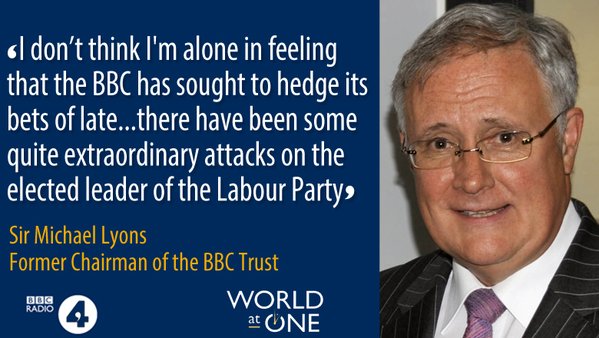
 

160512-Lyons


8 January 2016: BBC Admit intentionally damaging Corbyn leadership with contrived live resignation

Damning figures show that sixty percent of the pieces involving Corbyn during his first seven days of his leadership were negative.

What is more surprising is that these figures do not even include one of the worst culprits:

The BBC.

Shortly after Jeremy Corbyn’s election as leader of the Labour Party in September, the BBC were accused of an ‘anti Corbyn bias’ and challenged with a 61,000 strong petition demanding that they stop using the prefix ‘left-wing’ when reporting on events related to his leadership.

But before he even won a stunning 59.5% of the vote, ensuring the largest democratic mandate of any Labour leader in modern history, Jeremy Corbyn was subject to what a source from his leadership campaign went as far as describing a ‘complete hatchet job’.

The Panorama episode in question was alleged to have attracted a large number of complaints, but the BBC refused to release the figures.

Former BBC political editor, Nick Robinson, even wrote to his colleagues over concerns about the BBC’s bias towards Corbyn, and Channel 4’s Michael Crick issued a stunning rebuke to broadcasters referring to non-left MPs as ‘moderates’.

Despite these protestations, as we begin a New Year, it is evident that the BBC has not taken any New Year’s Resolutions to become a little bit more balanced in the face of a broader, more inclusive political spectrum.

Full story here:

http://evolvepolitics.com/bbc-admit-intentionally-damaging-corbyn-leadership-contrived-live-resignation/

http://www.heraldscotland.com/resources/files/41748 (The full story)

Laura Kuenssberg anti-Corbyn


people-of-influence-whom-you-hardly-know-Tavish Scott-Not-So-Liberal-MSP-and-his-BBC-Political-Journalist-wife-take-Liberties-with-the-Public


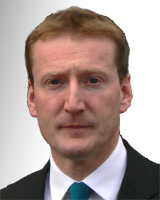
Tavish Scott, Liberal Democrat MSP for Shetland. Divorcee Married Kirsten Campbell BBC Political Journalist.

Deputy Minister for Finance, Public Services and Parliamentary Business between May 2003 and June 2005. Appointed Minister for Transport in the Scottish Cabinet on the 29th June 2005, holding the post until the 2007 election.


tavish-scott


November 2006: Scandal. The Edinburgh Accommodation Allowance Scheme.

One of the biggest winners from the scheme appears to be Tavish Scott, the Liberal Democrat MSP for Shetland, who is responsible for Scotland’s transport network. He is charging the public nearly £1000 a month in mortgage interest payments to help him buy a £380,000 house in Edinburgh. He has doubled the amount he bills the taxpayer for the property perk despite making a £36,000 profit last year on another flat bought with help from the public purse. And he previously claimed rent on a flat which at the time was owned by his sister.

The revelations are further blows for the widely discredited Edinburgh Accommodation Allowance. The parliamentary scheme allows MSPs to either claim mortgage interest payments on a property in the capital, or to rent, or to stay in a hotel. The allowance is also deeply unpopular because it has allowed several MSPs to make substantial profits on properties bought with the help of taxpayers’ money. One of the biggest winners from the scheme appears to be Scott, the Liberal Democrat MSP for Shetland, who is responsible for Scotland’s transport network.

Land registry documents show that most MSPs have used the allowance to buy small flats in central Edinburgh costing between £80,000 and £100,000. But Scott has taken advantage of the generous system by purchasing a house last year in Morningside worth £380,000, on a mortgage of £265,000. Parliamentary records show he is now billing the public £979 a month in interest payments on his mortgage – the highest charge of any MSP. Scott is also entitled to claim the £1920 council tax on his new band-G house. An identical property for sale in the same street, inviting offers over £350,000, has three bedrooms, a “lovely private garden”, and a conservatory and patio.

The purchase of the house is only part of the Lib/Dem minister’s use of the accommodation allowance. The MSP bought his first property through the scheme in 2002, a £112,000 flat at Lower London Road sold to him by his sister. Figures show he claimed around £500 a month in mortgage payments for the property. He sold the flat last year for £148,000, pocketing £36,000 in profit. This allowed him to buy the much bigger property in Morningside. This purchase coincided with Scott’s changed personal circumstances. By 2005, he was separated from his wife and dating BBC journalist Kirsten Campbell.

The electoral roll shows a “Kirsten Campbell” is registered at the new property. The minister is now charging the public almost double the amount he charged for his previous flat, up from £500 to £979 a month. Scott has also left himself open to criticism regarding his rental arrangements prior to buying his first taxpayer-funded flat in 2002. That property was bought by Scott’s sister in 2000 – just months after her brother was elected to Holyrood – and sold to him two years later. However, council records show a Tavish H Scott was on the electoral roll for this flat in 2001.

The LibDem MSP was claiming rent for staying in his sister’s property. Scott, a business studies graduate, earns around £50,000 for representing Shetland, while ministers are entitled to a further £39,000. He has claimed more than £50,,000 in Edinburgh Accommodation Allowance payments since 1999. http://forum.caithness.org/archive/index.php/t-16987.html


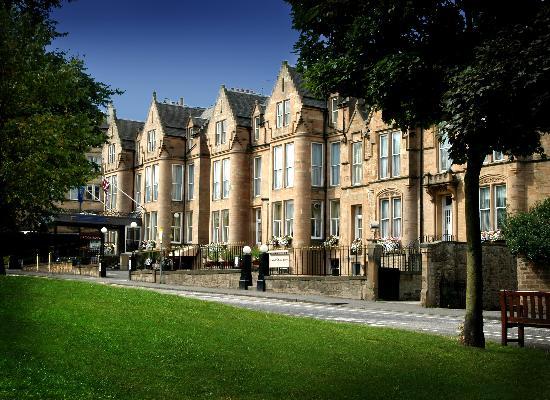
best-western-bruntsfieldTypical Morningside house


Kirsten Campbell: BBC Scotland political correspondent. Girlfriend then wife of Tavish Scott Lib/Dem MSP and Minister.

May 2004: BBC Scotland was forced to defend its political coverage last night after a senior reporter revealed she was in a relationship with a Liberal Democrat minister, but was to carry on in her current role. Kirsten Campbell, BBC Scotland’s political correspondent, and Tavish Scott, deputy finance minister, yesterday announced they had been romantically involved for around six weeks.The couple are understood to have made the declaration amid mounting speculation.

Scott, MSP for Shetland, is separated but not divorced from his wife of 14 years, with whom he has three children. He said, “Given media interest in my separation last year, I have decided to avoid any speculation by confirming that I am in a relationship with Kirsten Campbell and have been since last month.” He refused to give further details or say if an engagement was being planned. Ms Campbell, added, “It’s early days. I consider myself lucky to have found such a wonderful man.” She said she told her employers of the relationship around two weeks ago to ensure there was, “no question of any impact on my integrity or credibility, or the BBC’s integrity or credibility”. She added, “If this relationship becomes serious then I will have to move out of political coverage.”

http://www.heraldscotland.com/sport/spl/aberdeen/reporter-backed-by-bbc-over-holyrood-romance-journalist-and-senior-msp-confirm-their-relationship-1.85807


cunn_show


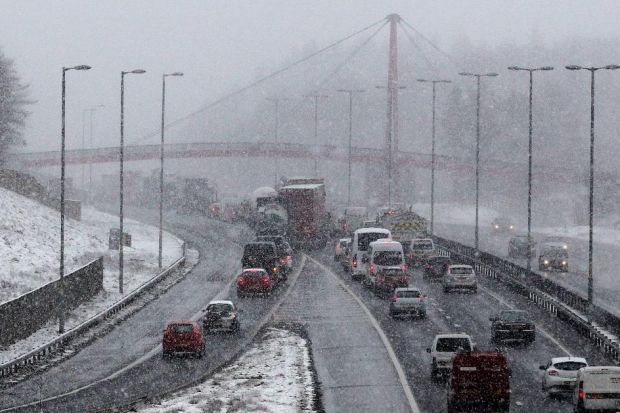
December 10 2010: Kirsten Campbell, BBC Scotland political correspondent and wife of Scottish Liberal Democrat leader Tavish Scott was lead reporter on last week’s BBC presentation “Scotland at a standstill” story which covered the totally unexpected extreme weather that hit Scotland overnight.

She reported that – Scottish Transport Minister Stewart Stevenson had apologised and resigned over his handling of the chaos brought on by the unexpected extreme winter weather.

The resignation of Stewart Stevenson, Minister of Transport had been self-inflicted but was ultimately unnecessary. He was not forced to resign because of the bad weather. He was not even forced to resign because of the councils’ handling of the bad weather. He was forced out of his job because of his initial reaction to last week’s snowfalls. With hundreds of people trapped in their cars overnight, Mr Stevenson went on the BBC the following morning and tried to brazen it out. The Scottish Government’s response had been first class, he said and then he went on to blame any failures on others for not being more accurate with the forecasts. It was entirely the wrong approach and despite his later apology, the mood among the opposition, some sections of the media and a small number of furious motorists had, by this time, swung against him. They demanded a culprit and, as a result, Mr Stevenson was forced from his job.

Quality newspapers however, printed pieces on the poor forecasts. Several respected commentators aired the view that there was little Stevenson could have done. Newspaper letter columns called for personal responsibility. “I’m all for bashing the Nats,” said one writer in The Scotsman, “but surely this comes down to common sense. Everybody could see for themselves what the conditions were like.” Significantly, the BBC continued with it’s rabid approach, the corporation was determined to set the agenda, and it succeeded when the tabloids later followed its lead and pilloried Stevenson. There was no exploration by BBC Scotland of the many different agencies involved in keeping Scotland running (or not), such as the quango Transport Scotland, councils, the police, and private road maintenance companies.

BBC Scotland point blank refused to engage with any arguments other than political cock-up. BBC Scotland repeatedly played a single interview with one frustrated driver demanding – after some prompting by the BBC interviewer – “the transport minister should take the blame”. In doing so the BBC angled the story in the way a newspaper editor might run a campaign, going for the jugular.

But newspapers are not regulated by a charter committing them to editorial values such as “no significant strand of thought is knowingly unrepresented”. Thursday night’s Newsnight went so far as to use the M8 blockages as a metaphor for the failure of devolution itself. By Sunday the thaw had come and Stevenson had gone. But BBC Scotland continued to re-run the Monday night Newsnight, on the Politics Show Scottish opt-out. They twice replayed the clip of Stevenson’s now infamous interview. The very familiar angry motorist also got another outing, along with the selective use of weather forecasts. It was tabloid television and about as useful to the public as a jack-knifed lorry.  http://www.bbc.co.uk/news/uk-scotland-11976328


Spring weather March 22..