The West Coast of Scotland – A Land and Sea Nuclear Death Zone -The Real Reason the Unionists Are Desperate to Hang On to Scotland (part1)


jw151v3-final.png


The West Coast of Scotland – An Island Fortress – A Sea and land Nuclear Death Zone

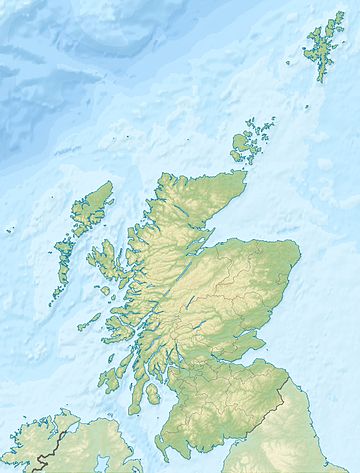
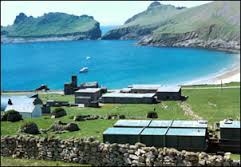
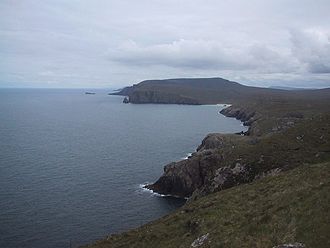
The west coast of Scotland is one of the most intricate and beautiful landscapes in the world.

Children, when asked to draw maps of Britain, usually depict it as a muddle of spikes and blobs reaching into the Atlantic.

From the Solway Firth in the south to Cape Wrath in the north, estuaries and sea lochs bite far into the high and uneven ground of the mainland.

Offshore lie 589 islands, as well as numerous rock islets and reefs.

The largest and most westerly chain, the Outer Hebrides, provides a 150-mile-long barrier to the wind and seas which blow and swell, uninterrupted by land, all the way from North America.

The barrier means that coastal waters are relatively sheltered. Glaciation has also made them remarkably deep.

In the few miles between the island of Raasay and the mountains of Torridon the sea reaches down in places for more than 1,500 feet—the greatest sea depth off the British coast.

North of the Firth of Clyde there are very few towns or large villages, and none other than Oban and Stornoway of a scale that might support a medium-sized supermarket.

The population of the Hebrides peaked in the census of 1841, but then came clearances and potato blight and the vanishing of the herring shoals.

Large tracts of the west coast are empty, visible life confined to sea birds, seals, rabbits, deer, and the descendants of the sheep that Highland landlords exchanged for people (deported to Glasgow and Canada) in the nineteenth century.


_82231758_jetscrown


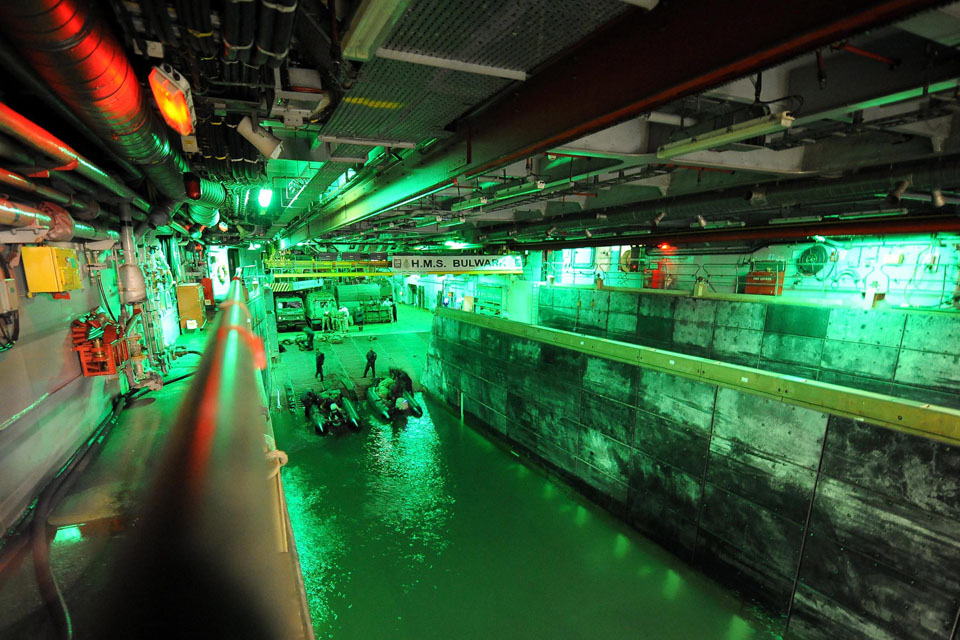
These conditions—deep water, few people on the land, plus easy access to Soviet navy routes—made the west coast of Scotland an ideal place to maintain, test and store all kinds of weaponry during the Cold War.

And to continue a technical, military history that began a hundred years ago with torpedo ranges in the Clyde sea lochs and anthrax trials which poisoned the island of Gruinard (the plan, ‘Operation Vegetarian’, was to wipe out Germany’s cow population by bombing them with anthrax-infected cattle feed).

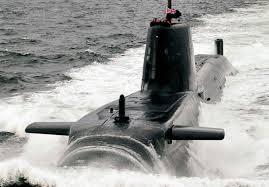
Today, the Scottish west coast continues to be the most heavily armed region of Britain and quite possibly Europe, offering mountains and glens for low-flying fighter and bomber exercises, sea and moorland for uranium-depleted artillery fire, underground storage for nuclear weapons and naval fuel, emergency moorings for nuclear submarines.

The loveliness of the changing light on sea and mountain makes it hard to imagine the ominous technology buried beneath.


_82076900_ussanzio


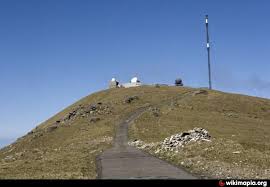
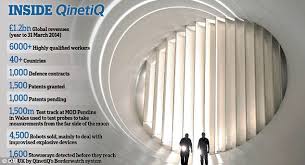
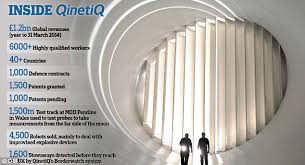
The missile testing range on South Uist, now run by the Anglo-American defence company QinetiQ, was set up in the 1950s to test the Corporal nuclear missile system bought from the USA.

It is one of the busiest such ranges in the world, and one of the longest, stretching far into the Atlantic. In a secret report from 1981, declassified in 2002, the Naval Radiation Protection Services (NRPS) discovered that between 1967 and 1980 the launching site and surrounding area had been contaminated by large amounts of Cobalt-60, a radioisotope sprayed from the back of moving missiles to help radar track them.

The report concluded that ‘both the ammunition technicians at RA Range Hebrides and possibly the general public were being placed at unnecessary radiological risk’.

An earlier investigation in 2002 found that 352 drums of waste from the decontamination process were buried at the range.

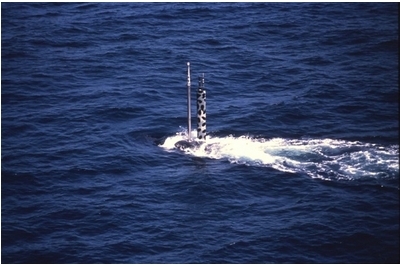
Most submarine exercises in Europe take place off the west coast of Scotland.

Following the sinking of the trawler Antares by the submarine Trenchant in 1990, a system called ‘Subfacts’ was introduced.

This divides the seas off the west of Scotland into ‘Submarine Exercise Areas’ (SEAs) and a daily broadcast tells fishermen which to avoid.

In November 2002, the nuclear-powered submarine Trafalgar crashed into the Isle of Skye at fifteen knots and a depth of fifty metres while practising torpedo evasion tactics.


index


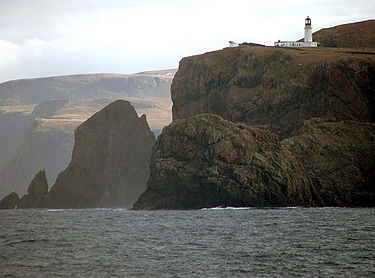
The most north-westerly point on the British mainland is an 8,400-acre weapons range and army exercise area.

Cape Wrath (a Norse word for ‘turning point’) has the highest sea cliffs on mainland Britain.

The Naval Gunfire Support Range is used by Royal Navy and other NATO vessels as a practise area for 4.5-inch and 5-inch guns.

The cliffs, an important nesting ground for birds, rise to almost 1,000 feet and are used as ranging marks for the guns.

Nearby Garvie Island is the only place in Europe where aircraft can drop live 1,000lb bombs.

Cape Wrath assumed greater importance when US ships lost access to ranges in Puerto Rico in 1999 after a civilian was accidentally killed.



9812661-large


In November 1990, the nuclear-powered attack submarine Trenchant caught the Kintyre-based trawler Antares’ nets and dragged her to the bottom of the Arran Trench, between the Isle of Arran and the mainland.All four crew of the Antares drowned.

Among the submarine crew were officers reaching the end of the six-week ‘Perisher’ submarine commanders’ course.

The subsequent inquiry blamed ‘partial breakdown in the watch-keeping structure and standards’ on board Trenchant.

Every summer, aircraft, surface ships and submarines in the west of Scotland are brought together for the ‘Neptune Warrior’ war game.

Elaborate scenarios written by military planners test the preparedness of officers and men.

These might be exercises in ‘conventional warfare’, a terrorist attack by patrol boats, ‘Bosnian enclave’-type situations, or even how to deal with troublesome members of the press.


imagesvvfg


Luce Bay is a QinetiQ-owned testing range for weapons launched from jets and helicopters.

Damage to the marine environment from bombing exercises is such that the sea bed has been fitted with special mattresses to absorb the explosions.

The bay is also used for NATO training exercises. In September 2003, a NATO exercise named ‘Northern Light’ practised a large-scale amphibious landing employing around fifty ships and submarines and thirty-four aircraft.

The Defence Evaluation and Research Agency’s Noise Range at Loch Goil can provide sound analysis of all the systems on a ship or submarine.

The loch, which is deep and quiet, is lined with hydrophones which map the unique sound signature of a vessel.


1634439_-_main


There are many fuel stores holding hundreds of thousands of tons of petroleum under Scotland’s glens.

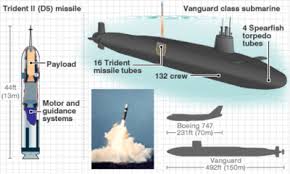
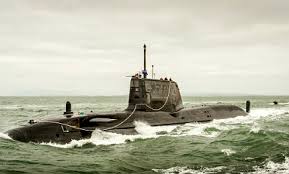
In addition to the nuclear-powered and nuclear-armed Trident fleet at Faslane also houses five conventionally armed Swiftsure-class nuclear submarines, ships of the Third Mine Countermeasures Squadron and the Northern Ireland Squadron.

In 2001, Commachio Company of the Royal Marines was transferred to Faslane to protect the submarine fleet.

Faslane will also house the new Astute-class submarines and Trident’s replacement.

The armament testing range at Dundrennan near Kirkcudbright covers 4,500 acres and its danger zone extends over 120 square miles of the Solway Firth.

Since 1982, more than 6,000 depleted uranium shells, usually in the form of anti-tank munitions, have been fired from the range into the Solway Firth.

Most of the twenty tons of shells remain on the sea bed. Depleted uranium has a half-life of 4.5 billion years.

Dundrennan is also the planned site for controversial electro-magnetic ‘super-gun’ trials on behalf of the US military.

The gun is able to hurl a projectile at 7,500 mph, more than five times the top speed of Concorde.

Each shell will be about a foot long and as narrow as a broom handle.

The kinetic force with which it hits its target will be so great that it is unlikely to require any explosive warhead.


1f23_3780


Faslane, the base for the Trident submarine fleet, employs 7,000 people (primarily military) and stretches along the banks of the Gare Loch behind razor wire, guarded by armed police and infrared cameras.

At the mouth of the loch is the ‘degaussing range’ at Rosneath, where submarines are demagnetized to ensure they do not trigger floating mines.


_82232557_troopspa


A ‘Z’ Berth is a jetty or mooring buoy for nuclear submarines in case of emergencies. Scotland has five.

When plans for the ‘Z’ Berth in Loch Ewe were discovered, all 500 residents around the loch were issued with potassium iodate tablets as a precautionary measure.

The 200-odd warheads that comprise Britain’s nuclear deterrent are stored in air-locked vaults behind concrete and steel blast doors buried in the hillside at Coulport, twenty-seven miles from Glasgow.


imageschhym


The Greenland-Iceland-UK Gap was a key battleground in the Cold War.

Soviet submarines based at the pens on the Kola peninsula had to pass through the gap before going on patrols around the world and could be detected and tailed.

The US took responsibility for the Greenland to Iceland sector, the UK for the rest.

The primary defence from the 1970s on was SOSUS, a system of underwater hydrophones strung out at depth across the ocean, which was said to be able to hear a submarine 1,100 miles away and pinpoint its location to an area of ten square miles.

Portpatrick, on the Scottish mainland, overlooks the narrow channel between Scotland and Northern Ireland.

At its deepest point is a long trench, Beaufort Dyke, which was used for dumping munitions and radioactive waste after the Second World War.

An estimated 1.7 million tonnes of weapons including artillery shells, phosphorous flares, mortars, incendiaries and cluster bombs have been jettisoned off boats, supposedly into the dyke.

Two tonnes of low – and medium-level radioactive waste have been added to the Irish Sea by private companies, including the defence contractor Ferranti.

Around 14,000 tonnes of phosgene-charged rockets were also dumped into Beaufort Dyke.

Phosgene was used by both the Germans and the Allies. It is a colourless poison gas, designed to incapacitate rather than to kill, which acts as an acute respiratory irritant, causing severe lung damage.


images


In 1995, 4,000 phosphorous incendiary bombs were washed up on Mull, Oban, Arran and other parts of Scotland’s west coast.

A British Gas pipeline had been laid through the heart of the dump and its trenching machine dispersed thousands of shells.

Subsequent enquiries found that bombs had been dumped well short of the intended site, some only three miles offshore in as little as fifty metres of water.

http://granta.com/Military-Landscapes/


330px-Cliffs_East_of_Cape_Wrath_-_geograph.org.uk_-_931672


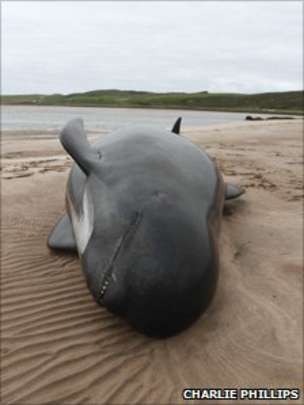
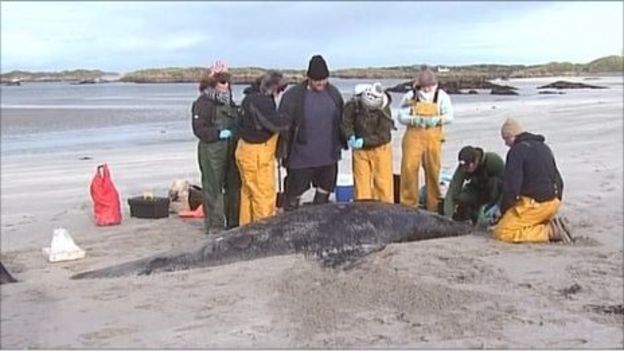
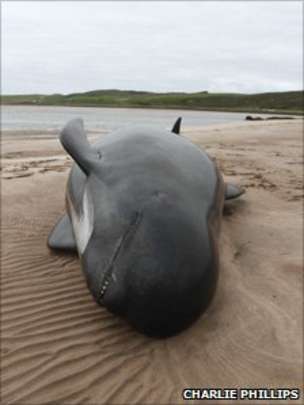
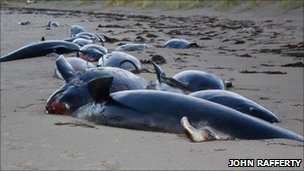
Cape Wrath – Killing Ground of the Whales

The Ministry of Defence (MoD) owns a 59 square kilometres (23 sq mi) area of the cape, known as the Cape Wrath Training Centre.

The cape has been used for training exercises from the early years of the 20th century, with the first bye-laws established in 1933 to allow use of the area as a firing range.

The area was used originally as a naval gunnery range and was bought by the MoD in 1999.

Since 2005 the area has been used as a multi-nation services training area and is one of the sites used in the Joint Warrior exercises, Europe’s largest military exercise, and by other NATO operations.

Training is allowed on up to 120 days a year, usually taking place in the spring and autumn, although times can be unpredictable.

The range is usually open for public access during the summer period and there is rarely firing on Sundays.

The MoD owns a number of the surviving buildings in the area and operates observation posts and sentry posts during training.

It is used for naval gunfire practice and for army artillery and mortar range firing.

Disused military vehicles are often used as targets.

The RAF uses An Garbh-eilean (Garvie Island) as a target for a range of training operations.

It is the only place in the Northern Hemisphere where NATO forces combine land, air and sea capabilities in assault mode for training manoeuvres, deploying ordnance up to 1,000-pound (450 kg) bombs.

Firing on the range is controlled from Faraid Head close to Balnakeil.


nato-firemore-beach


In 2008 a heath fire was caused on the range during a period of live firing using Tracer (phosphourus) ammunition. An area of around 137 hectares (340 acres) was affected.

Scottish Natural Heritage estimated that the area would take 10 years to return to its normal environmental conditions.

Concern has also been raised of the effects of military exercises on nesting birds, on sheep during lambing season and the effects of noise on local residents.

A shell fired during exercises caused concern in 2002 when it landed 8 miles (13 km) off target near the mouth of Loch Eriboll and around 1 mile (1.6 km) from houses.

The MoD expressed an interest in extending its land holdings on the Cape in 2012 after being given the opportunity to purchase 24 hectares (59 acres) surrounding Cape Wrath Lighthouse by the Northern Lighthouse Board.

The plans were opposed by the Durness Development Group which cited concerns that historic buildings might be destroyed and that visitors may be unable to access cliff top paths.

The group registered an interest in the land using community right to buy legislation and a petition opposing the sale attracted thousands of signatures.

In May 2013 the MoD announced that it would not be continuing with the purchase.

https://en.wikipedia.org/wiki/Cape_Wrath


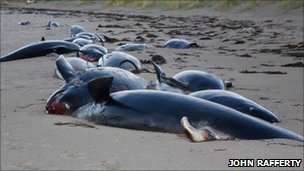
_50060837_whales


4 August 2002: Why sonar harms whales and dolphins

Environmental campaigners in America are concerned about a new danger to the world’s whale population.

It’s sonar – powerful sound waves used by submarines and ships to track activity underwater.

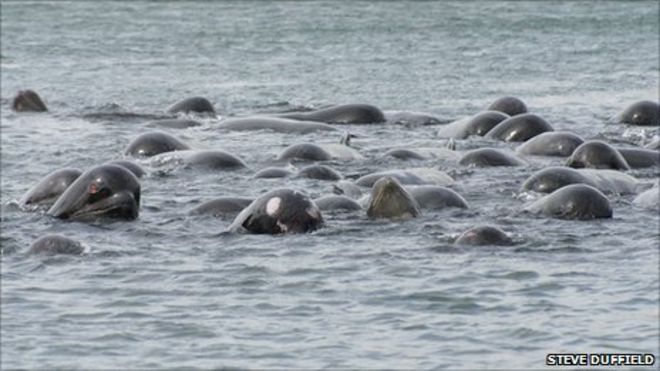
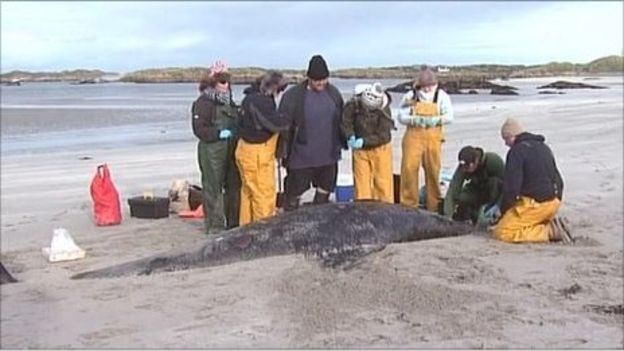
Research has shown that the sonar waves can be heard by whales and dolphins – and campaigners believe it may be causing the whales to beach.

The American navy starts using a controversial new low-frequency system next month, even though some types of sonar have already been blamed for causing stranding.

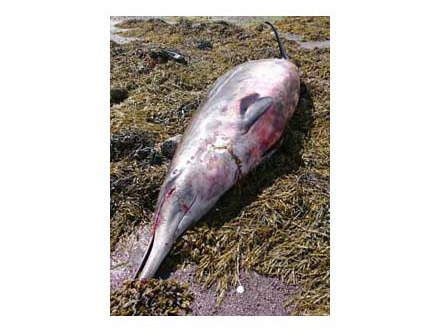
It was a stranding of rare beak nosed whales in the Caribbean which gave scientists their first proof of the harm sonar can inflict. In spite of the efforts of local people, six whales died.

Post mortem examinations found that their inner ears had been severely damaged.

Whale experts believe mid-frequency sonar caused the stranding.

This new sonar system is lower and louder and travels a great deal further.

The noise can be likened to a jumbo jet taking off.

The American Navy says it needs the more powerful device to keep track of potentially threatening submarines.

But it’s continuing to research into the effects of sonar on marine life.

A consultant to the United States Navy said:  “There is no finite correlation between low frequency sonar and negative effects on marine wildlife. Can marine life hear it?  Yes. Does it have a major effect? We don’t know.”

This uncertainty alarms wildlife groups. They’re now threatening legal action to protect sea-life from the sonar.

Whale campaigners views are unequivocal “Very intense sound can have severe consequences, even death.

It causes us great concern that the navy proposes to deploy one the loudest sound systems devised by man over 80 per cent of the world’s oceans without really understanding what the implications are.”

http://news.bbc.co.uk/1/hi/programmes/breakfast/2168168.stm


_52850807_pilotwhalessouthuist


7 August 2007: Whale fears silence US Navy sonar

In a legal action brought by a coalition of animal welfare groups against the US Navy the Navy has been ordered not to use mid-frequency sonar equipment during training exercises off the coast of California.

A federal judge ruled in favour of the campaigners who argued that the devices harmed marine mammals in the area.

They said noise pollution from sonar disorientated whales, causing them to become stranded on beaches.

A navy spokesman said they would appeal because the injunction jeopardised the nation’s safety and security.

The campaigners, in a statement following the ruling, said “The court’s order confirms that during sonar testing and training, the navy can and must protect whales and other marine life in the extraordinarily rich waters off our southern Californian coast.

The federal judge recognised that the Navy’s own assessment concluded that the sonar exercises would “cause widespread harm to nearly 30 species of marine mammals, including five species of endangered whales”.

The US Navy’s Third Fleet commander said “This court decision prevents us from using active sonar. It potentially puts American lives and our national security at risk.”


_49839441_whales


In 2006, a UK government-commissioned report called for more research into the effects of noise pollution on marine animals.

It concluded that there were many noise sources in the seas, including seismic surveys for oil and gas, shipping, offshore wind farms, military sonar and scientific research.

The study by the Inter-agency Committee on Marine Science and Technology (ICMST) identified 13 cases of stranding by whales and dolphins that appeared to be linked to noise adding that most of the cases did involve naval vessels.

http://news.bbc.co.uk/1/mobile/sci/tech/6934715.stm


2e33_5cf6

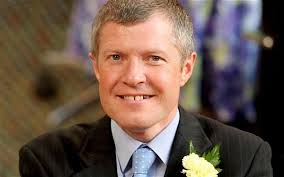
Willie “off with his head” Rennie and his double standards – Time To Resign Willie


imagesaadf


Willie “off with his head” Rennie and his double standards
Willie Rennie, at the time he was elected leader of Scotland’s Lib Dems after their demolition in the 2011 Holyrood elections promised to “rediscover the party’s soul and rebuild trust with voters”. Willie claimed to be an honourable man who would have no truck with anyone in public office who did not measure up to exacting standards he demanded of himself. Those who failed, for any reason would be expected by Willie to resign. Indeed there were occasions when it seemed Willie couldn’t rise to speak or give interview to a compliant Unionist press without a shout of “Off with his/her head”. In his time as leader willie has called for the resignation of:

* Former First Minister, Alex Salmond
* Former SNP Justice Secretary, Kenny MacAskill.
* The Head of Police Scotland, Stephen House.
* The head of the Scottish Council for Voluntary Organisations, Martin Sime.
* Former SNP Transport Minister Stewart Stevenson. (Forced from office because he failed to control extreme weather conditions and heavy snowfall.) But should we be expecting a politician to control the weather? Willie had no doubt. The answer was a resounding Yes!! He had to resign.


The-Liberal-Democrats-Hol-006images


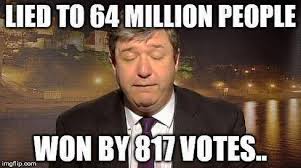
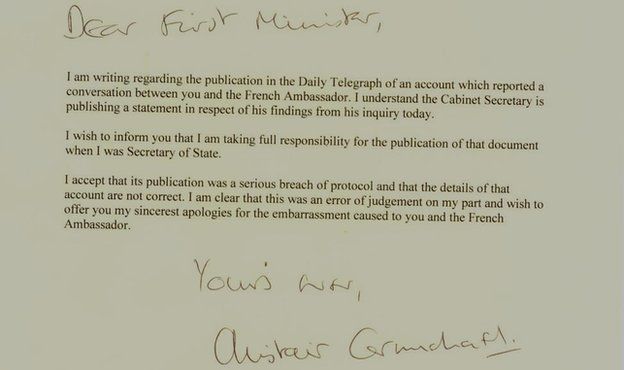
But hold on just a mo! What about “Frenchgate”? The exposure of former Scotland Secretary Alistair Carmichael, after much prevarication by himself, of his disgaceful, underhand leadership and devious direct involvement, with others in an attempt to smear Scotland’s First Minister Nicola Sturgeon. There have been strident calls from across the political spectrum, the public and the press for the exposed rogue and liar to stand down from the seat he won by a whisker in the Westminster Election for Orkney and Shetland. Based on voters intent throughout Scotland it is extremely doubtful that (given his deceitful behaviour, without shame lying about Nicola Sturgeon) Carmichaels ability to retain his seat would have been very badly compromised. So that he took his place at Westminster brings politics into disrepute.

And what about Willie and his principles? Scotland waited and waited for an utterance and the word “Resignation” It was not to be. Finally, after much pressure Willie issued the following contemptible statement:

“I have discussed the serious nature of the publication of the Scotland Office document with Alistair Carmichael. He fully understands the impact it has had on his reputation. He deeply regrets his actions, has accepted responsibility for his error of judgment, apologised to Nicola Sturgeon and the French Ambassador and declined his ministerial severance payment. I have known Alistair for almost thirty years and have worked closely with him in parliament for almost a decade. I have always been impressed by his energy, dedication and professionalism. He has served Orkney and Shetland for fourteen years and has been elected on four separate occasions. It is clear to me that recent events are an aberration. As a liberal I believe that people deserve a second chance. I hope fair minded people would agree that Alistair Carmichael should be given that second chance.”


imagesnnmj9747629-large_83174913_letter


The Scottish public are not stupid. Willie Rennie’s blind hatred of the Scottish National Party has no place in Scottish politics. He should resign his post immediately and allow some other fair minded person to lead the Lib/Dem Party before he leads it to oblivion.


imagesxsfrenni578refer rennie

Austerity – Is For the Thick “Jocks” Up In Scotland – Down Here In London We Take Their Money and Spend It – Spend It – Spend It – Keep Your Oil Flowing In Our Direction – Keep Them Confused Ruthie – We Love You


article-0-05FC44EE000005DC-153_468x286

 
My top staff aren’t worth their extravagant pay extraordinary confession from boss of RBS

The boss of bailed-out Royal Bank of Scotland revealed that many of his top staff ‘aren’t worth’ their extravagant pay and bonus deals.

In an extraordinary admission, the chairman said legions of traders and financiers at RBS’s investment bank were not generating enough profits to justify their lavish rewards.

He told a conference on restoring trust in the banking industry: “I’m sure that we’re paying many people who aren’t worth it – maybe that’s the issue.”

The declaration by the RBS boss is also likely to inflame public anger over the pay deals on offer at the bank, which has received more than £45b in government cash since its implosion.

More than 100 bankers at the group’s investment banking wing were paid a bonus of at least £1million last year – even though the Edinburgh based giant racked up losses in excess of £28billion.


Steph_Braclays


But, defending the practice of handing fat bonuses to staff at its so-called “casino” division – even if it meant that some bankers were paid too much for their efforts he said: “We see people who are worth a lot of money (to us), who when they leave take a lot of business with them,”

He further claimed that RBS, which is 84 per cent owned by the taxpayer, was powerless to rein in rewards as this would trigger a walk-out of top staff. He said: “If you are the bank that decides to cut bonuses for the most important people, you’ll be the first with a franchise-destroying defection.”

So the UK electorate is forced to stand back and witness a rapid, public funded banking recovery from a financial crisis created through the greed of those who stand to benefit most.

Seizing the opportunity and with embarrassing haste, banks embarked on a virtually unprecedented hiring spree, driving up wages across the London Square Mile.

RBS, which employs 160,000 staff across the globe, last night maintained that very few of its staff enjoy bumper bonuses and salaries.

But the bank handed out a gigantic £1.3billion to its 16,800 investment bankers last year. On average, this is equal to a bonus of around £77,400 each.

But, in mitigation the Chairman offered that RBS had “virtually” eliminated cash bonuses, with most rewards paid out in shares and other stock, and staggered over a number of years so that they can be clawed back.


imagesaaas


His comments were echoed by Barclays chairman, who added that “unilateral action by any single bank (would) not provide a practical solution” to the problem of ever-rising pay for “star” performers.

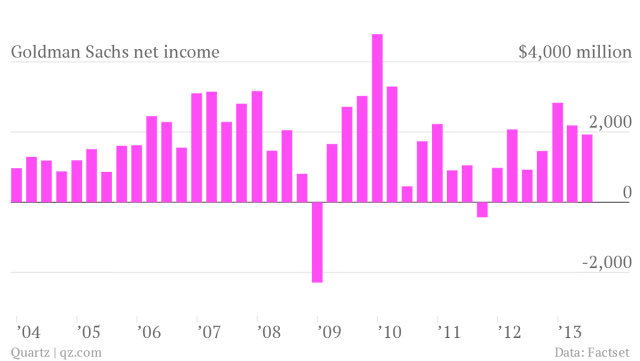
The revelations lift the lid on the bonus arms race that is currently sweeping through the Square Mile. Goldman Sachs recently handed tens of millions in bonuses to its 80 London-based partners to prevent more senior staff defecting to rivals.

The headline is incomplete, should it not have read “My top staff aren’t worth their extravagant pay”, but “what the hell, we are being subsidised by the taxpayer so lets make hay while the sun shines”.

They and all of the banking industry know that those in government have not the guts or the brains to stop one of the massive injustices of all time. Instead they hit the soft target, the Taxpayer. (Daily Mail)


goldman-sachs-net-income_chart-1images

 
A Boom in Hedonistic “Greed is Good” Spending is Sweeping Through London

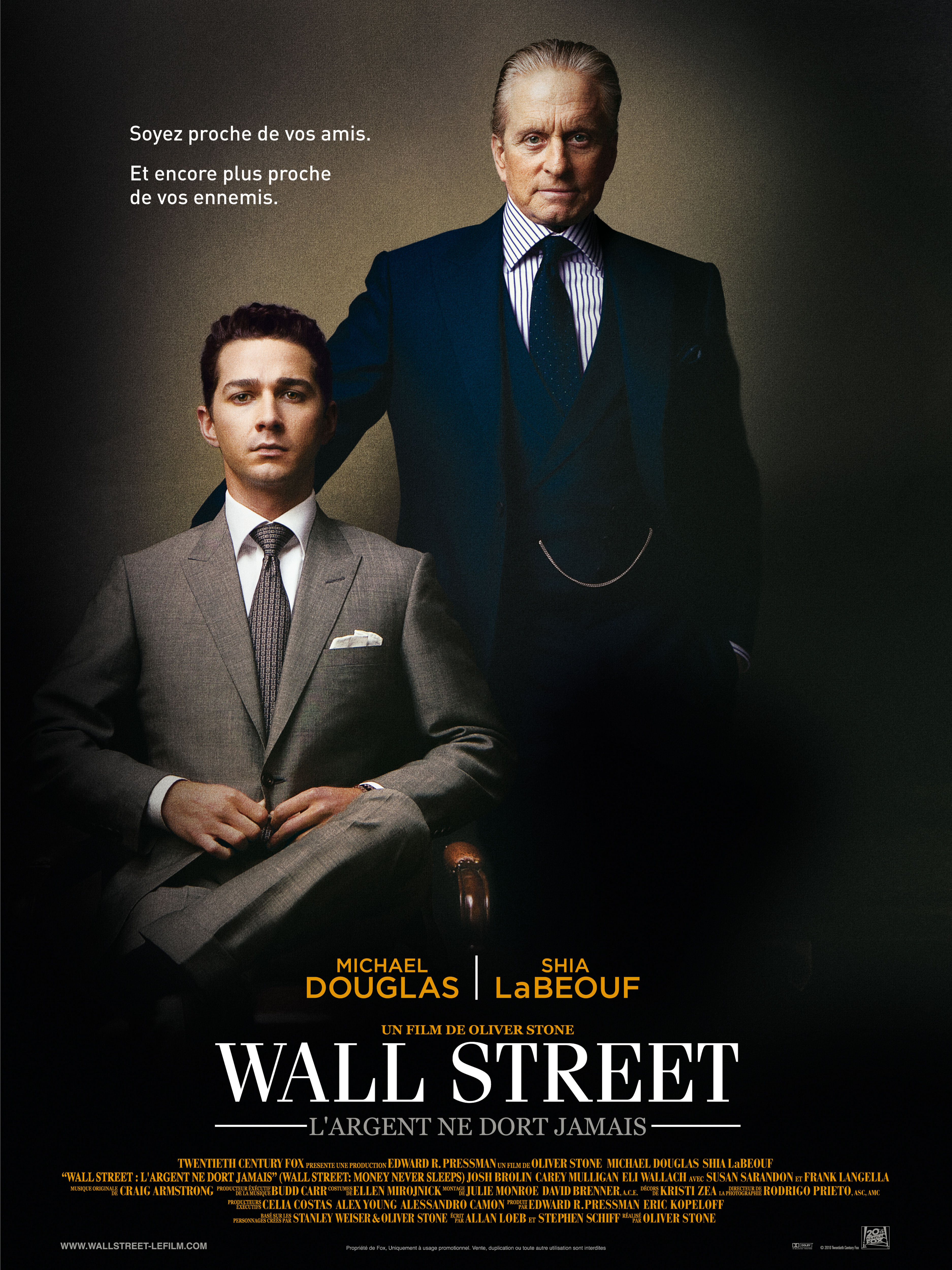
The return to “flaunting it” mirrors the conduct of the cinematic symbol of eighties excess, (Michael Douglas’s amoral trader Gordon Gekko.) West End stores, clubs and restaurants have been astounded by the sustained growth in guilt-free spending.


WallStreetMoneyNeverSleeps20102article-2217534-0D1B423B000005DC-936_233x423


A spokesman for Selfridges said: “The range and style is more obvious’ or ostentatious than ever. Stuff is just flying off our shelves. There are a lot of £1,000-plus shoes being sold.”

Particularly popular are Alexander McQueen Loki’ankle boots at £2,195 a pair and Christian Louboutin Margot platform shoes costing £1,575.


yPresidentw_0


fashion and luxury goods groups report that sales of their  £1000 Prada bags had exceeded expectations. The ‘Neverfull’ handbag from Louis Vuitton at £900 is very popular


article-0-1D84044500000578-463_634x947mulberry-handbags-kate-middletonMULBERRY BAYSWATER BAG 000


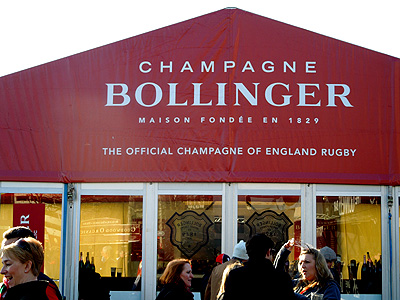
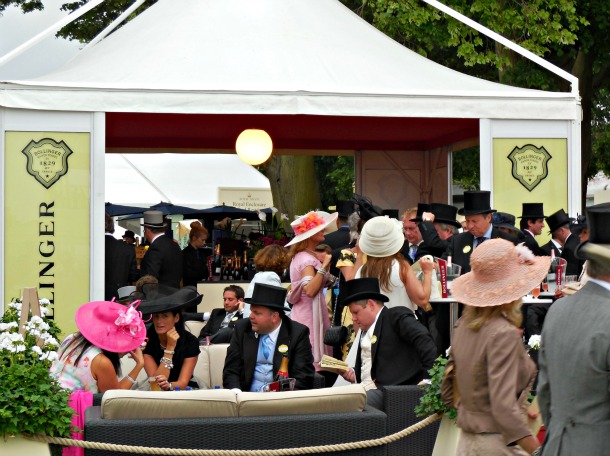
Bollinger UK, imports £140 a bottle Special Cuvée into Britain because demand is so strong. A spokesman said: there was a time when people certainly didn’t want to be seen with an expensive bottle of champagne — but we’re past that phase now.”


England-Rugby-UKascot11


Bugatti and Ferrari have sold out of their latest models


bugatti-veyron-super-sport-TitanServicev1.aspx


The spending boom is being fuelled by the prospect of yet another year of bumper bonuses in the City — an estimated £10billion will be handed out this winter

And there is the influx of rich high spending Arabs influx of high-spending

The opening of a number of rejuvenated nightclubs and hotels after sumptuous makeovers is also being seen as a sign that it is acceptable to be rich.


1b0147d534a8432e7aa6e9bd150786da


Tottenham Court Road lap dancing hangout Spearmint Rhino, which fell heavily out of favour during the credit crunch years, is booming. A club spokesman said: “We sold out of  £395 a bottle champagne last night.


asweRhino-6bfrt


He went on: six City guys came in and dropped £5,000 to take the VIP area for the evening.

A few nights ago we had four guys from the Middle East who bought £20,000 in chips for dances and drinks. After service charges they spent £24,000.

It’s great to be back to the days of five or six years ago. Those sort of customers are starting to come back, there’s been a huge increase just in the past five or six weeks.”


Countries+in+the+middle+east+with+most+powerful+people806260356


London is also being assisted by France’s burka ban with many wealthy Arabs boycotting Paris. Saudis who divert to London spend an average of £40,000 each.

They will easily spend £5,000 or £10,000 a night on the casino tables at Les Ambassadeurs (in Park Lane) or treat their friends with the best champagne as Scott’s.


423453c2d703f91a503370fe1b34f9a6Beautiful Middle eastern woman in niqab traditional veil against a white background


The Arabs absolutely love the British. They must have the best of everything and do their shopping in Mayfair.


PresidentKate-Mulberry-Bags-IKON-Damsels-org-1CelebritywithMulberryStyleHandbags


Mundell and the Strippers – So No Truth In the Scandal – The Telegraph and Mirror Eliciting Public backlash Without Foundation and the Frenchgate Affair Provides Evidence That They never learn

spearmintrhinogirl-260x350


5 March 2010: One of David Cameron’s Shadow Cabinet dragged drunk from a strip club

One of David Cameron’s Shadow Cabinet was dragged drunk from a strip club, it was claimed yesterday. The scandal was exposed in the Tory-supporting Daily Telegraph but the individual was not named. Shadow Scotland Secretary David Mundell, 47, the only Tory MP north of the border, denied rumours it was him.


OLYMPUS DIGITAL CAMERA


The father-of-three, who separated from his wife before the last election, repeatedly refused to comment when the Mirror first put the claims to him. He also passed up nine chances to refute he was a regular at the Spearmint Rhino lap-dancing chain. But several hours later he issued a “categoric denial” through the Conservative Campaign HQ.


inside-spearmint-rhino-800


A party spokesman said: “What was said in the Telegraph today is not him. I can tell you that 100%.” The spokesman said he couldn’t comment on whether Mr Mundell was a regular at strip joints, saying: “I don’t know.” Earlier Mr Mundell had pleaded he needed time to read the Telegraph before responding to claims that he was the politician involved.


article-2217534-0D1B423B000005DC-936_233x423


Asked whether it was true he goes to Spearmint Rhinos, he said: “I’m not making any comment on that.” He added: “I’m not going to make any comment whatsoever until I have seen this piece.” http://www.mirror.co.uk/news/uk-news/we-quiz-top-tory-mp-on-lapdancing-205562


4281982


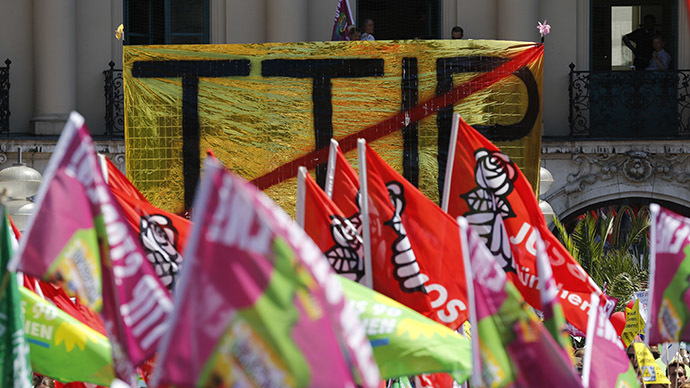
TTIP – UK and NI Education Provision To Be Turned On It’s Head – Rapid Expansion of Free Schools Planned


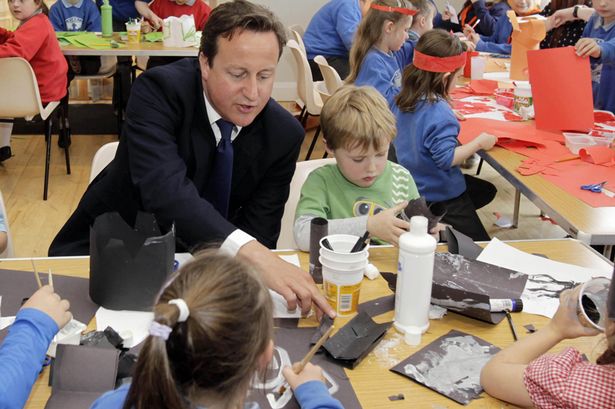
David-Cameronpooo


TTIP and Education Provision in the UK

A direct consequence of TTIP – It is anticipated state education will be dismantled over an extended period of 10 years to be replaced with Schools free from Council Controls – changes will apply in all countries making up the UK and NI – Rupert Murdoch has been reorganising News International bringing in educationalists anticipating major investment in education delivery in time.


20110727_117087461_w

More than 3,000 new independent schools would be set up by a Conservative Government in the most radical shake-up of British education since the war. This week’s Tory conference will be told the local authority monopoly over schools would be abolished within weeks of the party coming to power – a move that would almost certainly trigger mass strikes. Scores of ‘bog standard’ comprehensives could be driven out of business by ‘free schools’, funded by the taxpayer but with a private school ethos. http://www.dailymail.co.uk/news/article-1063398/Tories-promise-3-000-independent-schools-parent-power-revolution.html


8df2da7e-aa64-11e3-8bd6-00144feab7de.img
27 July 2011: News Corp looking to set up its own free schools in the UK and NI

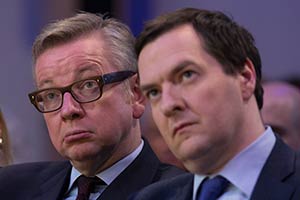
Of all the meetings that cabinet ministers had with News International executives (on average, a member of the cabinet met a Murdoch executive every three days), it is Michael Gove’s that are the most eye catching. The Education Secretary listed 11 meetings at which executives from the company were present, including seven with Rupert Murdoch. Gove met the News Corp head more times than any other minister.

Here’s the full list:

19 May 2010 Rupert Murdoch, Rebekah Brooks, plus more than ten others. Dinner and general discussion.

10 June 2010 Rebekah Brooks, plus several others. Dinner and general discussion.

17 June 2010 Rupert Murdoch, Rebekah Brooks and News International executives and senior editors. Lunch and general discussion.

21 October 2010 Rupert Murdoch, Rebekah Brooks, James Harding (The Times), Dominic Mohan (The Sun), James Murdoch (News Corporation), Colin Myler (News of the World), John Witherow (Sunday Times) plus more than ten others. Dinner after Centre for Policy Studies lecture.

30 November 2010 Rebekah Brooks, Will Lewis (News International), James Harding (The Times). Academy visit.

17 December 2010 Rebekah Brooks, plus several others. Social.

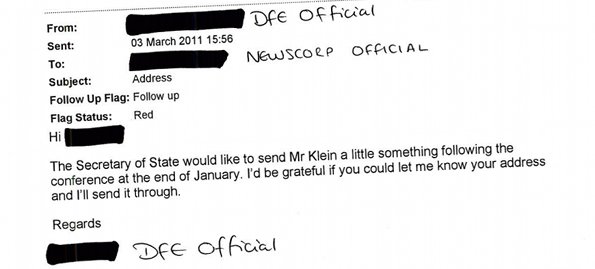
25 January 2011 Joel Klein (now News Corporation, former Chancellor of the New York City Department of Education and Assistant Attorney General to President Clinton), visiting UK as guest of DfE to explain and discuss US education policy success, including large conference platform and assorted dinners with senior figures from education and the media, including Rupert Murdoch. Including private and public events https://en.wikipedia.org/wiki/Joel_Klein

31 January 2011 Rebekah Brooks, plus several others. Dinner hosted by Academy sponsor Charles Dunstone.

19 May 2011 James Harding (The Times), Rupert Murdoch, James Murdoch (News Corporation), Rebekah Brooks. Breakfast and general discussion.

16 June 2011 Rupert Murdoch plus several others. Dinner and general discussion.

26 June 2011 Rupert Murdoch , plus several others. Dinner and general discussion.


92ad62be-aa64-11e3-8bd6-00144feab7de.img


It all suggests, as Andy Burnham said, a rather strange set of priorities. The shadow education secretary noted that in his first seven months, Gove “didn’t manage to visit a single sixth form college, further education college or special school.”

So, what’s the explanation? Gove is, of course, a former Times journalist, who, we know from the register of members’ interests, received £5,000 a month for his weekly column. He is also due to write a biography of Viscount Bolingbroke for the Murdoch-owned Harper Collins. Then there’s his friendship with Murdoch consigliere Joel Klein (he sat next to Wendi Deng at the select committee hearing).

The former chancellor of the New York department of education, who is now the head of News Corp’s new “management and standards committee” and the CEO of its growing education division. Significantly, it was Klein’s charter schools that served as one of the key inspirations for Gove’s “free schools” project.

A spokesman for Gove said: “He’s known Rupert Murdoch for over a decade. He did not discuss the BSkyB deal with the Murdochs and isn’t at all embarrassed about his meetings, most of which have been about education which is his job.” The News Corp head, it seems, is taking an increasing interest in the subject.

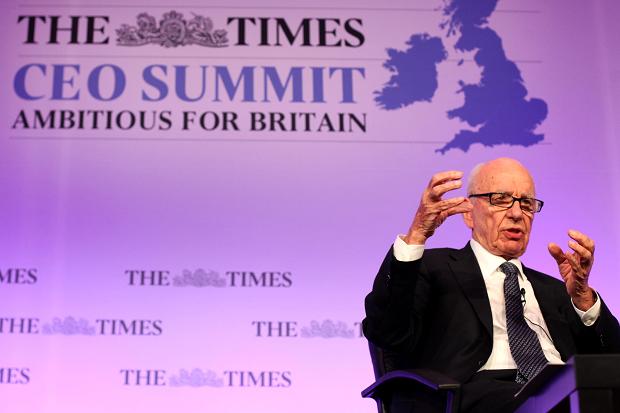
At last month’s Times CEO summit he called for all pupils to be provided with tablet computers, adding that he would be “thrilled” if 10 per cent of News Corp’s revenues came from education in the next five years. Wireless Generation, an education technology company recently acquired by Murdoch for $360m, was awarded a a $27 million no-bid contract by the New York education department.  http://www.thetimes.co.uk/tto/business/ceo-summit/article3070325.ece

It begs the question of whether News Corp is looking to set up its own free schools. In response to such a query, Times columnist and executive editor Daniel Finkelstein tweeted:  “News Corp is indeed taking an interest in the creation of new schools. That is precisely what mtgs were about!”

Update: The Sun’s former political editor George Pascoe Watson (now a partner at Portland Communications) notes on Twitter “Is News Corp looking to set up its own free schools?  The Sun+Civitas already have done.” A glance at the Civitas website shows that the Sun funds a Saturday school at the Ensign Youth Club in Wapping.  http://www.newstatesman.com/blogs/the-staggers/2011/07/murdoch-news-education


89078525_Murdoch_171830c
6 March 2015: David Cameron plans a huge expansion of controversial fee schools.

The Prime Minister will announce plans for at least 153 new ones on top of the 255 already open. Mr Cameron will say:  “Every time I celebrate the opening of a fee school… I’m so glad, that many more parents can share the peace of mind you feel when your child is getting a great education.” Since 2010 parents have been able to set up fe schools, but some closed due to bad management.

The draft speech was sent to axed fee school architect Michael Gove but not the current Education Secretary. According to the leaked draft of the speech, Mr Cameron will say: “We’re going to dramatically expand the fee schools programme.

I am announcing 48 new ones. “And I’m saying that if you vote Conservative, at least 153 will open in the next Parliament – providing 100,000 good school places.” Fee schools were introduced in 2010 to allow parents and community groups to set up their own establishments.
http://www.mirror.co.uk/news/uk-news/david-cameron-plans-massive-expansion-5288276


eu-parliament-ttip-trade.si


9 July 2015: EU Parliament backs TTIP resolution

Despite vocal criticism, the EU Parliament has approved a non-binding resolution on the controversial Transatlantic Trade and Investment Partnership, bridging a gap in protracted negotiations on the secretive trade pact between the EU and the US.

The resolution was approved by the majority of the parliament with 436 ‘Yes’ votes coming up against 241 ‘No’ votes in Strasbourg on Wednesday in hopes of influencing the TTIP negotiations between European Commissioner for Trade Cecilia Malmstrom and the USA.

Washington insists that for negotiations to be successful a dispute body must be incorporated into the final agreement.

http://rt.com/news/272563-eu-parliament-ttip-trade/


gove_klein_gift
19 February 2015: Tories in Scotland attempt to get Schools to opt-out

Ruth Davidson Tory Party Leader in Scotland, at First Ministers questions, sought to get the First Minister to agree to release a primary school in East Dunbartonshire from local authority control.

As a proponent of the fee schools model being deployed in England, Davidson questioned whether the Scottish Government would, in accordance with the parents’ wishes, allow the school to be transferred away from the local authority and into a trust.

This comes on the back of the First Minister stating in December that she would listen with an open mind to any suggestion that would improve Scotland’s education system.

Sturgeon agreed to meet with the parents, listen to their concerns, and if required explain to them why she would not allow any possibly transfer.

However, she refused Davidson’s request for a ‘Parents Power’ law, which would enable such transfers to occur.

Michael Gove – Lord Chancellor – Cameron & Osborne Loyalist to the Core – Now Wielding the Power He Believes Is His Right


4.gettyMichael Gove7d169d0f-0163-4ae5-881e-db81ce58e8d1-2060x1236


Buzzfeed Links. All worthy of checking out to gain a flavour of Michael Gove

13 May 2013: Gove and his advisors – either through stupidity or mischievousness – failed to place me, my website, or the lesson into its appropriate context. His criticisms betray a lack of knowledge, understanding, and interpretation that would make a GCSE History student blush with shame. http://www.buzzfeed.com/lukelewis/read-this-history-teachers-spectacular-response-to-being-ins#.bbG3padmy

30 September 2013: 11 Strange Facts About Michael Gove – A curious character. A very curious character. http://www.buzzfeed.com/aljwhite/11-strange-facts-about-michael-gove-dnmr#.cl8DlnGoA

3 February 2014: Michael Gove Was Introduced As A Fan Of “Real Ale And Real Women” On A TV Quiz Show – videos – The future education secretary appeared on “Top Club” in the 1990s. http://www.buzzfeed.com/jimwaterson/michael-gove-was-described-as-a-fan-of-real-ale-and-real-wom#.duDkbKEaM


2013-11-14-GoveCaption-


27 March 2014: Watch Michael Gove Rap Wham! Lyrics – The education secretary spat out George Michael and Andrew Ridgeley’s rhymes while on a school visit. http://www.buzzfeed.com/jimwaterson/watch-michael-gove-rap-wham-lyrics#.lbV473dey

3 May 2014: Attacking Michael Gove is one the best tactics for UK political parties in the run up to the next general election, according to a BuzzFeed/YouGov poll of 1,900 people. http://www.buzzfeed.com/jimwaterson/attacking-michael-gove-is-one-of-the-easiest-ways-to-win-in#.ayK3wlkPa

19 May 2014: Michael Gove’s Converter Academy Schools Disproportionately Serve Wealthy Families. Researchers warned in 2010 that the Education Secretary’s academies policy would increase educational inequality. http://www.buzzfeed.com/jonstone/michael-goves-academy-schools-disproportionately-serve-wealt#.ro6AweDaV


2700


9 June 2014: Michael Gove believes that Britain must stand up to fundamental Islam, part of his reputation as one of the few members of the cabinet who could be branded a true neo-conservative. http://www.buzzfeed.com/jimwaterson/michael-gove-wrote-a-book-on-islamist-extremists-and-this-is#.sl8YVk8OE

10 June 2014: Michael Gove, the education secretary who yesterday announced that “British values” will be actively promoted in all schools, has previously branded attempts to define Britishness as “rather unBritish”. http://www.buzzfeed.com/jimwaterson/michael-gove-previously-said-it-was-unbritish-to-define-brit#.ueVy3ABZ5

15 June 2014: Please Take A Moment To Enjoy This Video Of Michael Gove Falling Over http://www.buzzfeed.com/lukelewis/please-take-a-moment-to-enjoy-this-vine-of-michael-gove-fall#.unBGmbDng


540695_532291630173703_1425159679_n-1


20 June 2014: Nick Clegg’s advisers argued private companies should be allowed to run state schools for profit, Michael Gove’s former aide has claimed. Dominic Cummings, who spent four years pushing through reforms as the education secretary’s special adviser, says top members of the Deputy Prime Minister’s team argued in favour of schools being run for profit during the early years of the coalition government. http://www.buzzfeed.com/jimwaterson/nick-cleggs-team-supported-for-profit-state-schools-claims-e#.bgVx03LjA

22 September 2014: Who Said It: Dolores Umbridge Or Michael Gove? Was it the Hogwarts high inquisitor or the former UK education secretary? (16 questions) http://www.buzzfeed.com/danieldalton/give-it-a-gove#.glDvE9MxY


birmingham


The Long and Winding Road to a Devolved Parliament in Scotland


imagebfrtwestminster-rigged-scottish-independence-voteYOU WILL


1960: The Long and Winding Road to a Devolved Parliament in Scotland

1967: In the late 1960s, support in Scotland for the pro-independence Scottish National Party was growing (seen spectacularly in Winnie Ewing’s victory at the Hamilton by-election of 1967). This created panic at Westminster and both Tory and labour Party’s responded.

1968: The Conservative Party in Scotland was traditionally a unionist party. But at the Conservative Party Conference of 1968, held in Perth in Scotland, Edward Heath announced a party policy of support for devolution. Heath then formed a constitutional committee chaired by former Prime Minister Sir Alec Douglas-Home.

1970:  The committee produced “Scotland’s Government”, a report that recommended the creation of a Scottish Assembly with 125 elected members and powers to initiate and discuss bills. However, all Bills were to require approval of the United Kingdom Parliament.

1970: The 1970 General Election was won by the Conservative Party, and Heath became Prime Minister. However, the electoral weakness of the Nationalists removed the political pressure for devolution, causing it to slip from the agenda.

1974: The two general elections of 1974 saw the return of a minority Labour Government and advances by the Nationalists (they won 7 seats in the February election and 11 in the October election). Labour was thus dependent on Nationalist support in Parliament.

1979: Despite opposition from within its own party, the labour government passed the Scotland Act 1978. This act provided for devolution, subject to approval by a referendum which took place in 1979. The referendum had been “rigged to fail” by the labour Party and the required mandate for devolution was not delivered.

Under the leadership of Margaret Thatcher the Conservatives had returned to a policy of opposing Scottish devolution. However, former Tory leader Alec Douglas-Home was still able to urge Scots to vote ‘no’ to Labour’s proposal in 1979, with the promise that a Conservative government would offer a “better” bill.

A general election was held late 1979, which was won by the Conservatives, who despite being the only major party now opposing constitutional reform and a reducing return of MP’s in each election in Scotland, went on to win electoral victories in 1983, 1987 and 1992 steadfastly ensuring that no further legislative progress would be made.


16479369taylor10313359_632088540199769_6748727047123860742_n
1980: Campaign for a Scottish Assembly

The Campaign for a Scottish Assembly (CSA), was formed in the aftermath of the 1979 referendum that failed to establish a devolved Scottish Assembly. Launched in 1980 and led by Jack Brand (1) and later headed by Jim Boyack (father of current MSP Sarah Boyack), the CSA contained individuals committed to some form of Home Rule for Scotland. Most were members of the Labour Party, but many Scottish National Party members actively participated.

The CSA kept up the pressure for devolution in the early years of the Conservative government of Margaret Thatcher, which was totally opposed to any form of Home Rule. Faced with the Tory Party intransigence the CSA came to the stance that the cause of Scottish devolution would be best served by a convention with more democratic legitimacy invested in it.

The CSA organised a committee, chaired by Professor Sir Robert Grieve,(2) which published the “Claim of Right for Scotland.” The Claim held that it was the Scottish people’s right to choose the form of government that best suited them (a long-established principle, first formally stated in the Declaration of Arbroath, 1320), and which also recommended the establishment of a convention to discuss this.


243-charged-in-medicare-fraud-schemes-showcase_image-3-a-8324blair_for_president.1Nicholas_Macpherso_2724400b
1989: The Scottish Constitutional Convention

The Convention was established in 1989 after prominent Scottish individuals signed the Claim of Right, and superseded the role of the CSA.

Various organisations participated in the Convention, such as the Labour Party, the Liberal Democrats, the Scottish Green Party, the Communist Party, the Scottish Trades Union Congress, the Scottish Council for Development and Industry, the Small Business Federation and various bodies representing other strands of political opinion as well as civic society in general. Representatives of the two largest churches – the Church of Scotland, the Catholic Church – as well as smaller church groups were involved as were some non-Christian communities which decided to participate.

Initially the Scottish National Party (SNP) participated, but the then party leader Gordon Wilson, along with Jim Sillars, decided to withdraw the SNP from participation owing to the convention’s unwillingness to discuss Scottish independence as a constitutional option.

The Conservative government of the day was very hostile to the convention and challenged the local authorities’ right to finance the convention, although the courts found that they were in fact entitled to do so.

Under its executive chairman, Canon Kenyon Wright, (3) the convention published its blueprint for devolution, Scotland’s Parliament, Scotland’s Right, on 30 November 1995, St Andrew’s Day. This provided the basis for the structure of the existent Scottish Parliament, established in 1999.

1. http://webcache.googleusercontent.com/search?q=cache:r4-BT9CjwDEJ:www.heraldscotland.com/comment/obituaries/dr-jack-brand.23032638+&cd=1&hl=en&ct=clnk&gl=uk

2. http://www.heraldscotland.com/sport/spl/aberdeen/professor-sir-robert-grieve-1.654593

3. https://en.wikipedia.org/wiki/Kenyon_Wright#cite_note-2


corrupt10429238_845482792148489_3740684647203776803_narticle-1216555-069CAFEC000005DC-334_634x497


The Scotland Act 1998

1998: The election of Labour in 1997 led to a second devolution referendum. Again the Conservatives opposed devolution in the 1997 debate but this time their opposition was unsuccessful, and the Scottish Parliament was created by the Scotland Act 1998. Subsequent to its creation, the Conservative Party indicated its acceptance of Scottish devolution as an irreversible political fact.


heath_1662259c_47645472_mundell_goodGordon-Browns-Cabinet-001
September 2007: Council of Economic Advisers (Scotland)

The Council of Economic Advisers (CEA) is a group of eminent economists and captains of industry who advise the Scottish Government. It was established in 2007, meeting for the first time on 21 September. Minutes of its quarterly meetings will be published a fortnight after each meeting. It is intended that the council will publish an annual report on the condition of the Scottish economy. Members at time of establishment:

Sir George Mathewson (convener), former chief executive and then chairman of the Royal Bank of Scotland; previously chief executive of the Scottish Development Agency
Frances Cairncross, Rector of Exeter College at Oxford University; previously journalist at The Economist, chair of the Economic and Social Research. Author.
Sir Robert Smith, chairman of the Weir Group and Scottish and Southern Energy; non-executive director of 3i group, Standard Bank Group and Aegon UK; chair of the Smith Group
Professor Andrew Hughes Hallett, Professor of Economics and Public Policy at George Mason University and visiting Professor of Economics at the University of St Andrews; has been consultant for the World Bank, the International Monetary Fund, the Federal Reserve Board, the United Nations, the OECD, the European Commission and various central banks.
Professor Alex Kemp, Schlumberger Professor of Petroleum Economics at the University of Aberdeen; previously advised the World Bank, the United Nations, and various governments
Jim McColl, Chairman and Chief Executive of Clyde Blowers
Professor Frances P. Ruane, Director of Ireland’s Economic and Social Research Institute; previously Associate Professor of Economics at Trinity College, Dublin
Professor John Kay, a fellow of St John’s College, Oxford, visiting professor at the London School of Economics, regular contributor to the Financial Times; previously Director of the Institute for Fiscal Studies, Professor at the London Business School and the University of Oxford
Crawford Beveridge, Executive Vice President and Chairman of Sun Microsystems in Europe, the Middle East and Africa; previously Chief Executive of Scottish Enterprise
Professor Finn Kydland, Henley Professor of Economics at the University of California, Santa Barbara; awarded the Nobel Prize for his work in dynamic macroeconomics
Professor Sir James Mirrlees, Professor Emeritus at Cambridge University and distinguished professor-at-large at the Chinese University of Hong Kong; awarded the Nobel Prize forhis work on economic models and equations about situations where information is asymmetrical or incomplete.    http://www.gov.scot/Topics/Economy/Council-Economic-Advisers/Membership


baron anthony barber10887311_881722198527066_4373403534109587671_oarticle-2270948-1541BC71000005DC-446_308x425
December 2007: The Calman Commission

The Commission on Scottish Devolution, also referred to as the Calman Commission, Scottish Parliament Commission or Review was established by an opposition Labour Party motion passed by the Scottish Parliament on 6 December 2007, with the support of the Conservatives and Liberal Democrats. The governing Scottish National Party opposed the creation of the commission. Its terms of reference were “To review the provisions of the Scotland Act 1998 in the light of experience and to recommend any changes to the present constitutional arrangements that would enable the Scottish Parliament to better serve the people of Scotland, that would improve the financial accountability of the Scottish Parliament and that would continue to secure the position of Scotland within the United Kingdom.”
https://en.wikipedia.org/wiki/Commission_on_Scottish_Devolution


Palace_of_Westminster,_London_-_Feb_2007bisbzllieaacvqj10455324_10152545977986753_7487026676145808252_n

November 2008: Expert group examining new powers for Holyrood has “tampered with the evidence” to suit the Labour Party, one of its own economic advisers suggested last night.

Professor Andrew Hughes Hallett, one of 11 economics experts tasked with examining tax powers north of the border, said its final report did not have “much legitimacy” because it was skewed towards preserving the status quo. Hughes Hallett said he had wanted the expert group to look at whether the Scottish Government should be given the power to borrow money but claims this was glossed over in the final report. He told Scotland on Sunday: “Had it been a criminal issue, you would call it tampering with the evidence by not considering all the options.”

The Calman Commission, which was set up to look at all aspects of constitutional reform, itself appointed an expert group of economists to specifically study the case for extending the tax powers of the Scottish Parliament. Hughes Hallett was a member of that group, which published its report earlier this month, laying out options for giving Holyrood greater financial powers.

In the final version of the report, compiled by the experts under the leadership of Professor Anton Muscatelli, the principal of Heriot-Watt university, Hughes Hallett said debt was hardly mentioned. He said: “There is a very brief note that debt and borrowing may be necessary, but there is no discussion of any of the consequences or consideration of how much debt a Scottish Government can issue.

The issue is how we can manage debt and how it can be issued. It would be helpful to know what that was.” Hughes Hallett added that he could understand why the Labour Government might not want such issues fully explored if ministers were not keen on handing over more powers to Holyrood. He said: “You can see from the London end why they might not want to get into some of these issues.

I can understand the political view from London that you don’t want to go into it. “I could imagine that if you’re a sitting government, you probably have vested interest in keeping things more or less as they are. There may be all sorts of political reasons for keeping things as they are and they are legitimate. But they are not reasons to keep options out of the discussions.”

Hughes Hallett explained that the ability to issue debt was essential if Scotland were to replace the current Barnett Formula funding mechanism with an assigned taxation system, which would see the Scottish Government’s funds being calculated on the basis of the tax revenues paid by Scots to the UK Treasury.

He said the ability to issue debt was essential because tax revenue adjusts quickly to variations in income, but public expenditure for projects such as new schools and hospitals adjust at a slower pace. Therefore the ability to raise money by going into debt is essential to keep projects going when tax revenue diminishes during economic downturns. “You can’t just close hospitals and schools every time the economy slows down,” Hughes Hallett said.

He also argued that the report had omitted to explore fully the merits of other economic models that could form the basis for a new constitutional settlement for Scotland. “If you have to decide what you want and if people can’t find that laid out, it (the report] doesn’t have much legitimacy.

“What’s missing here is any consideration of how these sorts of schemes might work.” Hughes Hallett said the report failed to examine the “trade-offs” between various systems. The economist claimed the report did not properly analyse the advantages and disadvantages of the Barnett Formula, assigned taxes and fiscal autonomy.

A Scottish National Party spokesman said: “From what we know about the Calman Commission, it doesn’t meet the challenges of the times in that Scotland needs to build a lion economy, but it appears that all it has produced is a constitutional mouse. Certainly what was intended to be a an entirely independent review has become far too closely connected and controlled by the UK Government.”

A Calman Commission spokesman said: “This was an independent report, which was handed to the commission and it would be inappropriate for Sir Kenneth Calman to make any comment.”

http://www.scotsman.com/news/calman-evidence-was-tampered-with-1-1301807


David-Cameron-008CAuLDuzWYAEN8-C.jpg largecameron_2663053b


December 2008: Limited Powers transferred to Scotland over planning and nature conservation matters at sea

During 2008, agreement was reached to transfer responsibility for all planning and nature conservation matters at sea up to 200 miles from the Scottish coast to the Scottish Government. The change has implications for the offshore industry, wind and wave power and to a lesser extent, fishing, though responsibility for fishing quotas remains an European Union issue and oil and gas licensing and permitting remains a reserved matter.


imagesbhyuno-austerity-britain-ukmandelson


August 2009: Scottish Independence Referendum Proposal Rejected

In August 2009 the SNP announced a Referendum Bill would be included in its package of bills to be debated before Parliament in 2009–10, with the intention of holding a referendum on the issues of Scottish independence in November 2010. The bill did not pass due to the SNP’s status as a minority administration, and due to the initial opposition to the Bill from all other major parties in the Scottish Parliament.


v3-blair-bushB0BQhVdIMAAJPNS.jpg largeimages111


July 2011: Scottish Independence Referendum Proposal Passed  By Scottish Parliament

Following the Scottish Parliament general election, the SNP had a majority in parliament and again brought forward an Independence Referendum Bill. The Scottish Government also suggested that full fiscal autonomy for Scotland (known as “devo-max”) could be an alternative option in the vote.


dunlop6Pensioners-in-Scotlandnashmurray-460x335


May 2012:  Negotiation of the Edinburgh Agreement (2012)

The UK government legislated to provide the Scottish Parliament with the powers to hold the referendum. The “devo-max” option was not included, however, as the Edinburgh Agreement stipulated that the referendum had to be a clear binary choice between independence or the existing devolution arrangements. The Scottish Independence Referendum (Franchise) Act 2013 was passed by the Scottish Parliament and campaigning commenced.


dunlop3Baroness+Thatcher+Holiness+Pope+Benedict+XVI+G4PY6aoExDFl11174908_899738300083865_2185826260044367931_n


September 2014

Two days before the referendum was held, with polls very close, the leaders of the three main UK political parties publicly pledged to devolve a form of “devo-max” to the Scottish Parliament if independence was rejected. They also agreed to a devolution timetable proposed by Gordon Brown.

Approximately 25% of the electorate had voted by “Postal Ballot” at the date of Gordon Brown and the three main political party’s  intervention Under the rules of the referendum the entire process should have been declared null and void and the referendum re-run with the 2 options being placed before the electorate. This was not done.

Voting took place on 18 September 2014 and independence was rejected by a margin of 45% in favour to 55% against. The following day David Cameron announced the formation of the Smith Commission to “convene cross-party talks” concerning “recommendations for further devolution of powers to the Scottish Parliament”.

https://en.wikipedia.org/wiki/History_of_Scottish_devolution


Scottish-Referendum42Scottish-Referendum43Scottish-referendum46


The Scotland Bill – If You Wish To Keep A Cobra As A Pet – You Must First remove it’s fangs


wtr80pmx8zxqb6391tozm9f0ih55jy


3 February 2015: If you wish to keep a cobra as a pet – First remove it’s fangs

There is no guarantee that a future UK Government could not hold up Holyrood decision-making indefinitely under Scotland’s new devolution settlement, according to a Scotland Office minister.

The Westminster establishment has repeatedly dismissed SNP claims that they have written a right of “veto” into the draft devolution law to prevent Holyrood making benefit changes that Westminster might find unacceptable.

But implementation of any proposed Scottish benefit change must be agreed beforehand with the UK Government, fuelling SNP accusations that Westminster could use this clause to hold up benefit changes unpalatable to Westminster for years.

David Mundell, Scotland’s only Conservative MP and junior minister in the Scotland Office, told Holyrood’s Welfare Reform Committee that he would personally make sure an agreement on benefits does not take years.

But he said he “couldn’t guarantee” he would be around after the 2015 general election. But, he said it would “not be feasible in terms of the political reality” for any future government to hold up Scottish benefits amid the inevitable outcry it would provoke from MSPs.

But he refused to commit to redrafting the “Scotland Bill” removing the SNP’s supposed “implication” of veto, saying only that the clauses “are out for discussion and consideration” and open to Scottish Government “feedback”.


imagebfrt


Q & A Session
SNP MSP Kevin Stewart: “Could you give us some clarity on how long a consultation between the two governments could go on for?”

Mundell: “Over my period in the Scotland Office I found that sometimes these matters can be resolved in hours and sometimes they take considerably longer. But I am making it clear that there is goodwill on our part in terms of bringing these objectives about.”

Stewart: “Can you confirm to the committee that it would not be a matter of many years for one of these consultations to be dragged over?”

Mundell: “If it’s anything to do with me, which I can’t guarantee, it would not be a matter of years.”

Stewart: “As you say, you can’t guarantee that it will be you. Could you confirm that one of these consultations cannot go on indefinitely, which is effectively a veto?”

Mundell: “Nobody wants to see that happening. I think everybody also understands the politics of Scotland, the respect that the UK Government has demonstrated for the Scottish Government and the Scottish Parliament, and would not engage in that sort of subversive delay because it would simply not be feasible in terms of the political reality. I’m sure you (MSPs) and others would be making that point. There would be no intention to veto proposals put forward by the Scottish Government, either upfront or by some sort of behind the scenes way.”

Stewart: “So it would have been better if the language in the draft clauses had been put in a different way?”

Mundell: “The draft clauses are out for discussion and consideration. There is an opportunity for the committee, for individuals within the parliament, for the Scottish Government, and we’re in a very close dialogue with John Swinney who is leading for the Scottish Government in these matters in relation to the clause. If there is particular feedback in relation to the clauses then that can be given.”

Stewart: “But you can categorically say that although the implication in the language in the clause is of veto that there is no veto.”

Mundell: “Well, I wouldn’t have taken that implication of veto. I take the clear position of working together, but there is no veto.”

http://www.thecourier.co.uk/news/politics/david-mundell-promises-goodwill-under-devolution-settlement-1.823271


Scottish-ReferendumvbScottish-Referendumnnm

Seems to me Cameron and the Tory’s are setting out to de-fang the Scots

The Scottish Referendum – Part 8 (Final) – July 2015 – Cameron Set’s Out To Exact His Revenge On Scotland – His message “You Do Not mess With the Fonz”


snp


1 July 2015: Tories vote to keep veto over Holyrood’s welfare powers

Tory MPs voted to keep Westminster’s veto over the Scottish Parliament’s new welfare powers during last night’s debate on the Scotland Bill in the House of Commons. It was the third day of scrutiny of the Bill and the Conservative Government refused to accept any amendments put forward by the SNP or Labour.

Despite cross-party consensus from just about every Scottish MP on scrapping the vetoes in the Scotland Bill, Secretary of State for Scotland David Mundell refused to budge and claimed that no such veto existed – despite the report from the Scottish Parliament’s cross-party Devolution (Further Powers) Committee saying that it did. Dr Eilidh Whiteford, the SNP’s spokesperson on social justice and welfare, said Mundell was acting as if he believed the other parties were “a oot o step but oor Jock”.

As well as the amendment to scrap the veto, there were votes in the House of Commons debate that, if passed, would have devolved National Insurance, employment support programmes and housing benefit to Holyrood. All were defeated. A Labour amendment to allow the Scottish Government to top up reserved benefits, and mitigate against Tory cuts, was also defeated.

Speaking after the vote Whiteford told The National she was “very disappointed”. She added: “We’ve seen so little willingness from the Tory Government to listen to the democratic aspirations of the people of Scotland, and to progress when it is clear that the overwhelming majority of Scotland’s elected parliamentarians recognise the need to remove the veto from the Scotland Bill to bring it line with Smith Commission recommendations. “The Secretary of State’s position seems to be ‘they’re a oot o step but oor jock’ as there’s huge consensus from Scottish MPs that we need to put this matter beyond all doubt.”


scotland-polls-13-use


During the debate, SNP MP Pete Wishart pointed out that so far the Government had accepted no amendments and expressed concern that the Tories may try and make changes to the Scotland Bill in the House of Lords. Responding for the Tories, Priti Patel, Minister for Employment, asked the SNP to give the Government the “benefit of the doubt”.

Mundell, who was described by North Ayrshire and Arran MP Patricia Gibson as a shameless “colossal governor-general”, said the Bill did meet the spirit and substance of the Smith Commission and the SNP amendments could be described as “Smith-plus”.

The Government, Mundell said, was “listening to the points being made about the amendments, but we are also listening to what everyone is saying about the Bill in its current form and how it reflects Smith. Much of what is being said is predicated on the view that the Scottish Government and the UK Government are always at odds. That is simply not the case, and it should not be given common currency. On 90 per cent of issues, the two governments worktogether very closely for the benefit of the people of Scotland.

They are working together closely on very serious ongoing issues at this moment, and there are absolutely no problems and no need to resort to external review processes. The Smith process established a shared response for welfare, and I think that it shows that we must adopt a new mindset. That, to me, is what the spirit of the Smith Commission is about. Working together in a shared space. A commitment to doing that is as important as anything in the Bill.”

Earlier in the day, Deputy First Minister John Swinney wrote to Mundell to criticise him for claiming the two men had “productive discussions” over the Scotland Bill. He wrote: “There will have to be clear movement by the UK Government, otherwise it is becoming harder to justify that description.”

After the debate SNP leader in the Commons, Angus Robertson, was scathing of the Conservatives. The Moray MP said: “This was typical Tory arrogance – a single Tory MP refusing to listen to the representatives of the people of Scotland”. “We saw cross-party support on the Opposition benches for SNP amendments being voted down by a Tory government with a single MP in Scotland.

“At a time of savage cuts to the welfare state by the Tories – causing real hurt to hard-working families and vulnerable people, and driving more and more people to foodbanks – the choice is between having welfare powers in Scotland’s hands, or leaving them in the hands of Iain Duncan Smith and George Osborne.” There will be further debate of the Scotland Bill on Monday.

http://www.thenational.scot/politics/tories-vote-to-keep-veto-over-holyroods-welfare-powers.4685   http://services.parliament.uk/bills/2015-16/scotland.html


Scottish-Referendumnnm


2 July 2015: In the face of fears his Tory Government would use their Westminster majority to railroad through the Scotland Bill without consulting others, David Mundell gave assurance he would work hard to build consensus.

Just four days ago, Scottish Secretary David Mundell promised the people of Scotland he would listen to them. His words could not have been clearer and are worth repeating. “I have always made clear – and again I mean it – that we will listen to sensible suggestions which will be to the benefit of Scotland within the United Kingdom. Indeed the whole point of having the Bill examined line by line in Parliament is so people can suggest changes.” Lofty and welcome words. Unfortunately, Mundell’s actions since have provided no evidence whatsoever that he meant them.

On Tuesday night in Westminster, a rare and perhaps unprecedented event occurred. The SNP and the Labour Party joined forces on an issue of constitutional politics. Both parties wanted to beef up the Bill’s proposals on welfare to allow Scotland to design a different benefits system if so desired. When those bitter enemies are agreed on something, it surely merits close attention.

What happened next was a sickening slap in the facefor Scotland and democracy. Tory MPs trooped through the lobby to thwart the proposals – despite 58 of Scotland’s 59 MPs giving them their backing. There was no consultation. No conversation. No listening to reason. Scotland is rightly horrified by the UK Government’s brutal welfare cuts.

The powers provided by the Scotland Bill will go a long way to giving those of us north of the Border the opportunity to protect the most vulnerable in our society. But in the aftermath of the SNP’s stunning general election result, everybody has to accept the goalposts have moved. Smith now looks like a baseline for further devolution, not the blueprint.

Of course, Mundell is not really the man in the driving seat at all. No, the Tory’s sole Scottish MP is just the monkey. It is David Cameron who is the organ grinder.


No-celebrationsEnglish Students parachuted in to Help the No Campaign Celebrate in Glasgow


Since the Prime Minister stepped out of No10 in the early hours of September 19 last year, his attitude to Scotland has changed dramatically. He is no longer the man whose “heart would break” if Scotland voted for independence.

He is now the PM who spent the general election questioning the legitimacy of Scots MPs. There are now serious doubts about his commitment to Scotland’s part in the UK. The Tories’ actions have been a gift for the SNP.

Nationalism thrives on grievance. And Cameron is giving Scots a lot to feel aggrieved about. He was a signatory to The Vow of more powers published in the Daily Record just before the referendum. And he has a moral obligation to live up to those commitments.

That means implementing Smith and treating Scotland’s elected representatives with respect regardless of their political party. This includes the inevitable row over his English Votes for English Laws proposals, which are expected to be introduced to Westminster today.

It is not too late for the Tories to live up to their promise and take heed of the desires of the people of Scotland. But the clock is ticking.

http://www.dailyrecord.co.uk/opinion/news/record-view-you-said-you-5986177


thevow


2 July 2015: ‘EVEL’ announced for English MPs

The government will give MPs from English constituencies a new “veto” over laws affecting England only. Commons Leader Chris Grayling said the change, also applying in some cases to Welsh MPs, would bring “real fairness to our constitutional arrangements”.

SNP leader Nicola Sturgeon called the plan “staggering in the extent… of its hypocrisy and incoherence”.

Labour said it was an “outrage” that ministers wanted to rush into making “profound constitutional change”. Shadow Commons leader Angela Eagle criticised the ‘back of a fag packet’ proposals and said the plans risked creating two classes of MPs. She further accused the Conservatives of a “cynical” attempt to “manufacture itself a very much larger” majority in the Commons.

Under the proposals, all MPs would continue to vote on all key stages of legislation. But English MPs – and in some cases English and Welsh MPs – will have a veto in Westminster when debating matters that have been devolved to the devolved administrations. “MPs will debate the changes on 15 July,” Mr Grayling said, and the system will be changed using the rules – known as standing orders – that dictate how Parliament conducts its business.

With more powers set to be devolved to the Scottish Parliament after September’s independence referendum, Tory MPs have said it is not right that MPs representing Scottish constituencies can continue to determine laws affecting England only. Mr Grayling told MPs that Scotland, Wales and Northern Ireland were getting a “stronger voice” and that it was “only fair” to do the same for England. “The Speaker will be asked to certify which bills or parts of bills relate to England or England and Wales only,” he said.

* The Speaker will judge which parts of a bill relate to just England, or England and Wales.
* An England-only committee stage will consider bills deemed “England-only in their entirety.
* Membership of this committee will reflect the number of MPs each party has in England.
* Where sections of legislation relate only to England or England and Wales, agreement of a “Legislative Grand Committee” will be required.

There will be no changes in the House of Lords, Mr Grayling said. But where Lords amendments are certified as England or England and Wales only, a “double majority” system applies, meaning it will need a majority of both the whole House of Commons and MPs representing English or English and Welsh constituencies. Tablet computers will be used to count MPs’ votes as they walk through the voting lobbies so officials can instantly register whether they have used their veto in votes where the “double majority” rule applies.


Scottish-ReferendumbnEnglish University Students Celebrate in Glasgow
To jeers from opposition benches, Mr Grayling said   “Today we are answering the West Lothian Question”, a reference to the constitutional anomaly that lets Scottish, Welsh and Northern Ireland MP at Westminster vote on measures that only apply in England.

The SNP’s Pete Wishart described the English votes policy as a “cobbled together unworkable mess”, and said it was “totally unacceptable”. He said this policy showed that the Tories were doing their best to ensure Scotland would become an independent country. His party leader Nicola Sturgeon said: “The Tories have produced a constitutional shambles -staggering in the extent of its hypocrisy and incoherence.

Under these plans – which are all about cutting Scottish MPs out of votes which impact on Scotland and our budget – the Tories are proposing an ‘English veto’ and ‘double majority’. I have been very clear that, at least in part, the level of support for independence will be determined by what the Tory government at Westminster does, as well as what the SNP Government does.

And there is no question that the great disrespect shown to Scotland in these proposals is likely to have more people asking whether Westminster is capable of representing Scotland’s interests at all.”

Labour’s Sir Gerald Kaufman, the father of the house, said the title of the motion, English votes for English laws, “sounds racist”. He added: “This government is undermining the whole basis of British democracy, right through from when the Magna Carta was signed.”

http://www.bbc.co.uk/news/uk-politics-33351688


Shattered Whitehall sign 800Scottish-Referendummn


3 July 2015: The First Minster says the PM’s proposal for English votes for English laws will drive the UK to the brink of separation.

Nicola Sturgeon threatened David Cameron with another independence referendum yesterday after he moved to restrict the voting rights of Scots MPs. The First Minister claimed the Tories are pushing Scots towards breaking up the UK by showing “great disrespect” with their proposals for EVEL – English votes for English laws. The row exploded after Cameron announced his Government will give MPs from English constituencies a new veto over laws affecting England only.

Commons Leader Chris Grayling said the change, also applying in some cases to Welsh MPs, would bring “real fairness to our constitutional arrangements”.

The First Minister branded it a “constitutional shambles staggering in the extent of its hypocrisy and incoherence”. Her comments were echoed by Labour and the Lib Dems after

Grayling outlined details of the proposed changes, which were promised in the Conservative manifesto. A new parliamentary stage will be introduced for passing laws that only affect England. English MPs will be asked to accept or veto legislation before it passes to its third and final reading for all MPs.

There will also be a separate committee stage for English MPs for Bills not affecting Scotland and Northern Ireland – meaning legislation can be amended without the consent of all MPs in the Commons. But there will be further opportunities to overturn any changes. Controversially, the Tories will try to introduce EVEL by simply changing standing orders – the rules which govern parliamentary procedure. Opponents say any such significant constitutional change should require proper legislation that can be scrutinised by all MPs.


Scottish-referendum

MPs are currently debating a Scotland Bill that will devolve new tax and spending powers to Holyrood. But Nicola Sturgeon said the EVEL proposals  “ride roughshod over the democratic rights of the people of Scotland”. She predicted the Tory approach would boost support for Scottish independence.

She said: “I have been very clear that, at least in part, the level of support for independence will be determined by what the Tory Government at Westminster do, as well as what the SNP Government do. And there is no question that the great disrespect shown to Scotland in these proposals is likely to have more people asking whether Westminster s capable of representing Scotland’s interests at all.”

Labour and the Lib Dems also voiced fears the changes could drive Scotland closer to independence. Labour Shadow Scottish Secretary Ian Murray said: “These proposals are a constitutional wrecking ball – they go far beyond what was previously discussed and risk reducing the UK’s democratic processes to rubble. “They will fan the flames of nationalism and are nothing more than a brazen attempt to secure party-political advantage for the Conservative Party.

Less than one year ago, the people of Scotland voted to remain within the Union of the UK. Now the Conservatives are once again placing that Union in jeopardy.”  Murray repeated Labour’s call for a new constitutional convention to discuss the future of devolution. He said: “It seems increasingly clear that the Conservatives’ sole concern is to gerrymander the UK’s democratic processes in order to cement their electoral advantage within England, regardless of the consequences for the rest of the UK.

http://www.dailyrecord.co.uk/news/politics/nicola-sturgeon-warns-second-referendum-5992182


Scottish-Referendumvb

The Scottish Referendum – Part 7 – June 2015 – Heavily Redacted Draft Scotland Bill Debated at Westminster- It Is Clear the Tories Are Intent On Ignoring the Wishes Of the People Of Scotland


treasury123
11 June 2015: Westminster finance experts (the Office for Budget Responsibility) (OBR) claim SNP’s oil revenue predictions are wrong

Nicola Sturgeon was yesterday told to abandon her plan to take control of Scottish finances after independent experts wiped £35b off projected oil revenue. The eye-watering cut would leave just £2b from the North Sea over the two decades from 2020 – down from an earlier estimate of £37b.

The Office for Budget Responsibility (OBR) delivered their projection as the SNP pushed ahead with proposals for full fiscal autonomy (FFA). Their policy would mean Holyrood taking control of tax-raising and spending powers.

Dugdale delivered her party’s own expert – endorsed oil analysis. It charted how oil prices fell from more than $100 a barrel during the independence referendum campaign to a low of $45 in January before rising again to $65 after only three months. SNP backbenchers shouted down Labour’s analysis as a “Mickey Mouse” project.

Deputy First Minister John Swinney accused Dugdale of being “out of touch with public opinion”. adding “She has been going on and on about full fiscal autonomy for nine months, all the way up to the general election. And the Labour Party delivered the worst performance they have delivered in 90 years.”  What full fiscal autonomy is about is building on the powers of this Parliament – powers that over the last 16 years have seen an  improvement in the economic performance of Scotland.

Our GDP per head used to be sixth in the UK. It is now third, behind London and the south-east. Our productivity has increased from 96 per cent of UK levels in 1999 to being in line with UK levels in 2012.

Where we can exercise distinctive economic policies in Scotland, we can transform the economic performance of this country. For me, that is what fiscal autonomy is all about. It’s about enabling this Parliament to take the decisions that are right for Scotland, not to be at the mercy of a Tory chancellor that comes along one Thursday and takes £100m out of our budget without a by your leave.”

Tory Scottish Secretary David Mundell said: “What this shows is how right the Scottish people were not to believe the wildly exaggerated claims that were made about oil revenues in last year’s referendum campaign.”

http://www.dailyrecord.co.uk/news/politics/nicola-sturgeons-dream-full-fiscal-5868062


Scotland-set-for-income-t-012


11 June 2015: Smoke and Mirrors – Westminster Unionist partys’ offer of devolution of limited fiscal powers to Scotland is driven by the dogma of doing just the minimum to keep Scotland in the UK, whilst reserving power to Westminster.

Preservation of the Ruth Davidson named “pocket money parliament” will be assured if Scots politicians allow themselves to be conned into accepting the proposals presently on offer. What we have is the illusion of a transfer of power with, pinned to it, a not so subtle £6billion reduction in the “Barnett Formula” financial allocation.

This will require the Scottish Government to find new sources of finance, (without borrowing money from the markets) so that existing benefits can be retained and new measures introduced providing assistance to those in need, (eg. removal of the bedroom tax). Income Tax rises would be a consequence, even for the Standard Rate taxpayer since Higher Rate taxpayers in Scotland are insufficient in number to bear the cost of any new financial requirements.

Scotland’s government will only be totally responsible when they have access and authority over all of Scotland’s resources and financial income, but Westminster will never willingly allow that since with absolute power retained by Westminster, solving problems in the Scottish economy through increased income tax and other personal taxes will only serve to make the Holyrood parliament very unpopular.

This proven tactic of delegating responsibility without authority suits the Westminster agenda. The “Unionist” partys’ are determined to impose their will, (no matter how long it takes) and Scotland will be asset stripped by stealth so that it becomes ever poorer and increasingly dependent on Westminster’s whims reducing the confidence of Scot’s in their ability to build, without Westminster’s benign governance, a better future for Scot’s as an equal partner within the United Kingdom.

Witnessed by their actions, in the months following the referendum it is clear Westminster remains to be in the business of building failure into any devolved powers instead of doing the right thing, identifying what has the best chance of succeeding and transferring relevant powers and authority to Scotland.

If Westminster is serious about creating a federal state then the truly radical approach would require a team of independent advisors to go away, investigate the construction and governance of successful multi-state countries eg Germany, then report back.  Unresolved Aspects:

* The Barnett Formula. Should be retained until reductions are agreed between Westminster and devolved governments.
* Vat collection. Without the ability to vary rates needs to be addressed.
* The Scottish government should be able to raise and lower income tax.
* Multinationals operating out of Scotland, (Tesco, Asda, Morrisons, RBS, BOS, etc) should be liable for tax collection on their sales.
* Authority should be devolved allowing Scotland to gather taxes from Capital trusts etc. who may be practicing tax avoidance by registering in the Bahamas, Channel Isles etc.
* Corporation Tax and Air Passenger Duty, including variance authority should be devolved.
* Oil, fuel taxation, excise duty (whisky) should be devolved.

Scottish fiscal autonomy, stopping short of full political independence, forming part of a federal or confederal constitution for the United Kingdom is the way forward. The Scottish Government would be responsible for all financial matters in Scotland, making payments to the UK government covering Scotland’s share of the cost of providing agreed specified UK-wide services, such as, defence and the conduct of foreign relations.  https://en.wikipedia.org/wiki/Full_fiscal_autonomy_for_Scotland


slick-nic


23 June 2015: In a bid to gain sweeping powers over Scottish finances, Deputy First Minister John Swinney published legislation that he hopes will secure full fiscal autonomy.

John Swinney yesterday pushed ahead with a bid to gain sweeping powers over Scottish finances. The Deputy First Minister published draft legislation which he hopes will secure full fiscal autonomy, Including the proposals in amendments they want to see adopted through the Scotland Bill at Westminster.

He said “The draft clauses we are publishing would, if implemented, not only provide for agreement on full fiscal autonomy, but would transfer control of business taxes, the minimum wage, working age benefits, employment and equality laws to Holyrood – new powers that give us a better mix of tools to boost the economy, tackle poverty and build a fairer society.”

He went on to say that he envisaged transition to full fiscal autonomy would take “some years” to complete and until full handover is complete, he wanted to retain the Barnett formula which is used to spread cash around devolved administrations. But the UK Government branded the move “as far away from sensible as you can get”. And opponents claimed the falling oil price had blown a hole in SNP finance projections.

http://www.dailyrecord.co.uk/news/politics/snp-unveil-bold-financial-wishlist-5932592


snpnhjk
29 June 2015: The new Scottish Secretary in the Tory cabinet wants the Scottish electorate to hold him to account for delivering The Vow.

When I told Parliament I wanted Scots to hold me to account for delivering The Vow published in theDaily Record before the independence referendum, I meant it. Today sees the start of one of the most important stages in making that happen and delivering to Scotland the powerhouse Parliament we deserve. Over the next 48 hours, MPs will be debating our plans to give a huge range of tax and welfare powers to Holyrood through the Scotland Bill. How these powers are used will have a direct effect on how much money a future Scottish government take from our pay packets and the level of benefits paid in Scotland.

Scotland indicated a wish for a strong Scottish Parliament within a strong United Kingdom. My party, along with all of Scotland’s other main political parties, promised to deliver on that after the last general election. Now most of the big ticket items are agreed – even the SNP accept the Scotland Bill will give the Scottish Parliament big new powers over tax and welfare. And there are serious changes too in areas like energy, transport and elections which often barely get a mention. At this crucial moment in making good on that promise, I want to spell out exactly what we are doing, why we are doing it – and maybe bust a few myths at the same time. The Vow front page

Q. Is the Scottish Parliament being made permanent?

A. The Scottish Parliament is here to stay – and now the law will spell that out. It is inconceivable that our Holyrood Parliament could be abolished without the consent of the Scottish people. If any government ever tried, it would spell the end of the United Kingdom, plain and simple. The Scotland Bill puts that into law in black and white for all to see, as the Smith Commission said it should.

Q. What about the talk of “vetoes”?

A. There are no vetoes – it’s as simple as that. In some areas, Scotland’s two governments will have to agree the timing of when a change is made, because these are huge transfers of power and money and we need to make sure we do it right. But the new laws also make it impossible to hold things up unless there is an incredibly powerful practical reason for doing it – not just because we disagree on the policy. That’s not a veto, it’s just plain common sense and it’s what people keep telling me they want to see – Scotland’s two governments working together to guarantee big changes in areas like welfare take place smoothly and without disruption to the public.

Q. Should we go further in devolving tax and welfare powers?

A. First, let’s remember what IS being devolved: tax powers worth £15b – including control over how much income tax comes out of your pocket – and a welfare package of £2.5b. Taken with everything else in the Bill, they will make Holyrood one of the most powerful devolved parliaments anywhere in the world. They reflect what we voted for in the referendum – more big decisions taken in Scotland, while remaining part of the United Kingdom. It delivers in full the recommendations of the Smith Commission set up to deliver The Vow.

Those recommendations were signed off by all five of Scotland’s main political parties, including the SNP. And it is a package of tax and welfare powers which will work in the best interests of Scotland. For example, no one – not even the SNP – is calling for pensions to be devolved. Why? Because it would be wrong to lumber our children and grandchildren with the burden of funding the state pension on their own. Instead, the cost can be shared across the UK. We share risks and rewards with our friends, family and neighbours in England, Wales and Northern Ireland. In other words, what we clearly said we wanted when we went to the polls in the referendum.
Q. So there’s no chance of changing the Bill?

A. I didn’t say that. I have always made clear – and again I mean it – that we will listen to sensible suggestions which will be to the benefit of Scotland within the United Kingdom. Indeed the whole point of having the Bill examined line by line in Parliament is so people can suggest changes. But those changes must reflect the will of the people as seen in the referendum result, must improve the Bill – and must make sense for Scotland.
Q. What about full fiscal autonomy (FFA) then? Is that on the cards?

A. No – because that is about as far away from sensible as it is possible to get. Let’s put it into context: Accepting the SNP plan would leave us with £10b less to spend by the end of this Parliament. And, according to the SNP’s own figures on oil tax income which were slipped out last week, it could be even worse. Last year the Scottish Government spent £10b on education and justice – that’s everything from schools and colleges to our police force, prisons and courts. Under FFA, that budget would disappear and the black hole would have to be plugged with either massive tax rises or severe cuts in public services. The SNP might think that’s a price worth paying to get closer to their dream of independence, but I don’t think it is – and I don’t think Record readers do either. This is a “deal or no deal?” moment for fans of FFA. They can either vote for a more powerful Scottish Parliament or they can support a plan that would cost Scotland the same amount as we currently spend on schools, the police and courts combined. It’s a no-brainer.
Q. What happens next?

A. I want to get this Bill turned into law by early 2016 – in time for the Holyrood elections. That is important because we need to know how the next Scottish government are going to spend our money. For the first time, Scotland’s political parties will have to look voters in the eye and say whether or not they plan to take more out of our pay packets through taxes. That is the logic of what the SNP say they want to do – yet they seem awfully shy about being upfront with voters about it. That is where the focus of attention should now rest – it’s the next great debate in Scottish politics. This Scotland Bill really will give those who want the honour of serving in our Scottish Parliament real power. It’s time for them to start telling us how they will use it.

http://www.dailyrecord.co.uk/news/politics/stand–deliver-daily-record-5966180#rlabs=10


wtr80pmx8zxqb6391tozm9f0ih55jy


29 June 2015: It’s a good sign that the Scottish Secretary is keen to push on with legislation to improve devolution.

Today David Mundell insisted the Scotland Bill would be hammered out and ready to go in time for next year’s Holyrood election. The Bill is supposed to be the result of The Vow his party and others on the No side of the referendum campaign signed up to and offered to Scotland last September. It doesn’t please everyone, naturally. Holyrood’s all-party devolution committee have already complained it doesn’t fully reflect the Smith Commission recommendations on further devolution. On the headline items, many will disagree with Mundell’s words. The SNP have made clear they don’t believe the Bill properly ensures Holyrood’s permanence. John Swinney raised complaints about “vetoes” left at Westminster over key powers.

But once the Bill is enacted, Holyrood should have much greater powers to make decisions and changes. Failure to deliver The Vow would have serious consequences. With the Bill in train, most people will be keen for politicians to resolve then move on from groundhog-day battles. If the legislation delivers on the promises, the Scottish Parliament will indeed be all the stronger. And with that, voters will finally be able to hear what our politicians plan to do with the powers. http://www.dailyrecord.co.uk/news/politics/record-view-scotland-bill-must-5967294


Untitledmju


30 June 2015: MPs say Scotland Bill calls are being ‘ignored’

David Mundell (Tory) dismissed accusations that UK ministers are not listening to those who want the Scotland Bill strengthened. It follows complaints in the Commons and a letter from Deputy First Minister John Swinney suggesting that Scottish proposals are being ignored. The government has again won a series of Commons votes – ignoring calls for the legislation to be amended. The third day of debate has been focusing on welfare powers. As with Monday’s debate on taxation Mundell insisted that the Scotland Bill lives up to the spirit of the Smith Commission’s recommendations.

The SNP and Labour backed each others calls for Holyrood to have unrestricted power to create new benefits and top up existing ones – as well as seeking other changes. But despite a written complaint from the Scottish government that calls from Scottish MPs were being resisted, Mundell said he was listening and would reflect before the next stage of the bill’s parliamentary progress later this year. MPs are deciding which additional powers will be given to the Scottish parliament. Mundell has previously said the UK government would not back any amendments to the Scotland Bill that were “bad for Scotland”. The bill will give further control to the Scottish Parliament over taxation, VAT revenues and welfare.

Mr Swinney said that during the previous day’s committee stage of the legislation on taxation the UK government had “again resisted all amendments, whatever their support amongst MPs from Scottish constituencies”. The deputy first minister quoted Mr Mundell’s response to the SNP MP Tommy Sheppard, when he cited evidence of “productive discussions” with Mr Swinney and his willingness to address issues raised by Holyrood’s Devolution (Further Powers) committee. Mr Swinney said: “There will have to be clear movement by the UK government otherwise it is becoming harder to justify that description.”

Meanwhile, Labour’s Ian Murray said Scotland would be able to mitigate Conservative cuts to tax credits or other welfare under Labour and SNP plans to give Holyrood the power to create new benefits and top up existing payments. Murray said Labour amendments to the Scotland Bill, some of which are backed by the SNP, would effectively give the Scottish Parliament the power to design its own welfare system.

If MPs pass the proposals in the Commons, Scotland would be able to therefore create additional benefits to lessen the effect of welfare cuts by the UK government, for example reported Tory plans to cut tax credits, Murray said. Moving a series of amendments, the Labour frontbencher said: “There would be an ability to create a system that allowed you to mitigate the reduction in tax credits. Murray said that Labour’s amendments would implement the recommendations of the cross-party Smith Commission in spirit and in substance while ensuring the welfare state remains UK-wide and allows the pooling and sharing of resources across the union.

He added: “I want to be clear that fundamentally our amendments will ensure that the Scottish Parliament has the unrestricted power to create any new benefits in areas that are devolved, in addition to the guarantees of the UK benefits and pensions system and the power to top up any benefits that remain reserved to this parliament.”

Mundell said that MPs must respect the referendum result and accept that people in Scotland voted to remain part of a United Kingdom where there’s benefit from sharing risks and resources with all other parts of the UK. He said: “The fact that no Scottish MP has tabled an amendment to devolve UK pensions speaks volumes. It tells us that even the supporters of independence accept there are parts of welfare where it makes sense to share resources and risks with the rest of the UK.

It is clear that pensions are safer and more affordable if we work with everyone else in the UK and that it would be wrong to devolve UK pensions. MPs have to respect the referendum result where people in Scotland voted to remain part of a United Kingdom and hold on to the benefits of being part of the UK. Looking after people in Scotland who are retired, unwell or out or work is now a shared space where the UK and Scottish governments need to work together.”

http://www.bbc.co.uk/news/uk-scotland-scotland-politics-33323387


snpbghgh
30 June 2015: SNP’s FFA amendment is voted down by Labour and the Tories

An SNP amendment to the Scotland Bill that would give the Scottish Parliament full fiscal autonomy was defeated in a vote in the House of Commons last night by 508 votes to 56. A Labour amendment that would have set up a commission to analyse FFA was defeated 376 to 192 with Secretary of State for Scotland David Mundell saying he did not need a commission to know that Full Fiscal Autonomy would be a “disaster”.

Ian Murray MP suggested that the bill would be a “sobering response to a key manifesto commitment of the Scottish National Party”. The SNP voted against the amendment claiming that it was proof that Labour thought Scotland “too small, too poor and too stupid for any powers at all”.
After the vote Perth MP Peter Wishart tweeted  “The Tories response to improving the Scotland bill and giving Scotland what it voted for is to say No. Labour just say we can’t”.

The Scotland Bill clauses on devolving income tax were criticised by opposition MPs for not matching up the Smith agreement. SNP Deputy Leader Stewart Hosie told MPs: “The taxation powers are very limited – even if one includes the VAT assignation, the Scottish Parliament would raise around 50% of devolved expenditure”. However, excluding the VAT assignation the figure falls to barely a third.

That’s important because many of the submissions to the [Scottish Parliament’s] devolution committee called for more. It’s also important because it doesn’t match with what the UK Government said in their command paper, Scotland in the United Kingdom, which claimed, ‘as a result of the Smith Commission agreement, the Scottish Parliament will control around 60% of spending in Scotland and retain around 40% of Scottish tax’.

Mundell said the Tory changes would give “unprecedented flexibilities” to the Scottish Parliament on income tax. He said: “The Scottish Parliament will retain the receipts from income tax that they are responsible for. This represents a significant devolution of powers with Scotland retaining around £11 billion of income tax receipts. This accounts for over 90% of income tax receipts collected in Scotland.

This gives Scotland greater fiscal autonomy with incentives to increase employment and increase wage growth. And I would emphasise to MPs that there are no restrictions on this power. If the Scottish Parliament wants an income tax system with a dozen different rate bands these powers allow them todo that. Similarly, to answer issues raised in the debate, if they want to set a zero rate of income tax they can.”

MPs also debated the anomaly that sees Police Scotland and the Scottish Fire Service pay VAT, unlike every other police force and fire service in the country. Speaking during the debate, Central Ayrshire MP, Philippa Whitford argued that £33 million a year could be poured back into frontline services. David Gauke, the financial secretary to the Treasury said that the Scottish Government knew that the VAT bill would be a consequence of the merger of Scotland’s eighth forces.

Gauke said: “This was a choice of the Scottish Government with their eyes wide open that the VAT refund scheme was not available in the event of that reform. There are often many claims, many arguments that are made in respect of the VAT refund schemes that we have and requests that this be broadened and applied to additional organisations. That comes with significant fiscal cost. There may well be a case for argument’s sake that this should be looked at, but I don’t think we should look at this in isolation because of a particular decision that was made in one case.”

Ian Blackford said that it was now a matter of respect “We keep hearing about the issue of respect. We all know the reasons why the Scottish Government brought these moves forward – because it creates efficiency” the MP for Skye said, “if there is genuinely this feeling of mutual respect between the government in Scotland and the government in Westminster, all we simply have to do is make sure that we get the VAT back and invest that in front line services.”

Welfare will be the main focus of today debate on the Scotland Bill. Both the SNP and Labour have tabled amendments would give Holyrood greater powers over benefits and employment law than those already in the Bill. The SNP amendments would see the removal of any clause that could give Westminster a veto over Holyrood’s new powers. The party also wants Holyrood to be given control over working age benefits, benefits relating to children, and employment support programmes.

And it wants control over National Insurance contributions, employment law and equal opportunities being given to MSPs. Labour’s proposals include giving a final say on benefits rates for the Scottish Parliament, unrestricted power to create new devolved benefits, a power to top up benefits, including in reserved areas, and the full devolution of housing benefit.

http://www.thenational.scot/politics/snps-ffa-amendment-is-voted-down-by-labour-and-the-tories.4647


tdp_wshs_fellows