Author: caltonjock
Ruth Davidson and the Tory Party Surge in Scotland a load of Tosh – Yet Another Media Manipulative Headline Created by the BBC Assisting Their Westminster Paymasters
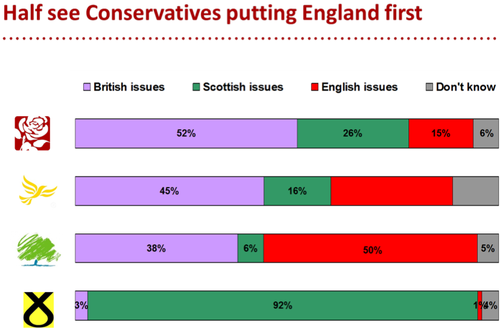
11 Sep 2011: Only 6% of Scots think Scottish Tories put Scotland first
Polling of 1,500 Scottish voters for the Tory Party in Scotland before the Holyrood elections asked whether certain parties put mainly English, Scottish or British issues first. The Scottish Conservatives were seen as the most English and the least Scottish… and by some distance.
Murdo Fraser (MSP) said the finding strengthened his argument that the Scottish party needed a new identity: “No problem was ever solved by brushing it under the carpet. We have watched our vote decline at every election since the inception of the Scottish Parliament, and this polling tells us exactly why.
We have been fooling ourselves for almost 15 years and we must not allow it to go on. There is a belief amongst some that if we bide our time for another 10 years, things will get better. But we said that 10 years ago. It hasn’t got better, and it never will without radical change.
The anti-change approach will ultimately drag us down to a single-figure vote share, a single-figure number of seats in the Scottish Parliament, no seats at Westminster and effectively the end of the centre-right in Scotland. (conservativehome)
10 August 2012: Ruth Davidson Castigates lazy Scots for being content to live off handouts from Westminster
Ruth Davidson, the leader of the Scottish Conservative Party claimed that nearly 90 percent of Scots households are currently “living off state’s patronage,” reports. At a Tory conference on Monday, Davidson cited that only about 283,080 households in Scotland – 12 percent of the total number – pay more in taxes than what they receive in public services from the state. In addition, due to the dominance of the public sector in Scottish life, she said that state spending now represents at least one-half of Scotland’s wealth.
She thundered: “It is staggering that public sector expenditure makes up a full 50 percent of Scotland’s GDP and only 12 percent of households are net contributors, where the taxes they pay outweigh the benefits they receive through public spending. The rotten system of patronage, which denies so many people real choices in their lives, has created a corrosive sense of entitlement which suits its political gang masters.”
Referring to the exalted 12 percent who are “responsible for generating Scotland’s wealth,” she rhetorically asked: “I wonder how many of them work on public sector contracts.”
Citing data from the Office for National Statistics, Davidson said that the average Scottish household uses £14,151 more in public services every year than it pays out in taxes. Even middle-income Scots, she noted, consume £20,000 more in state spending than they pay out. Only Scotland’s wealthy, that is, those who account for the top 10 percent of earners, pay £17,205 more in tax than they receive in public services.
She also alleged that over-dependence on the public trough has created a generation of Scots who are hopelessly loyal to the Labour and Scottish National Party, at the expense of the Tories. “If the gang master state is the only provider people can see for their housing, education and employment, it’s no surprise those who seek to break the stranglehold find barriers in their way,” she declared.
It contradiction, the Telegraph reported that on the whole Scotland paid 9.6 percent of the United Kingdom’s total tax bill, while accounting for only 9.3 percent of British public spending. (IBTimes)
20 Jan 2010: Ruth Davidson, ex BBC journalist was shortlisted for the Ultra-Safe Bromsgrove Worcestershire, England seat. But was not selected as the candidate.
17 Apr 2016: Scottish Tory leader Ruth Davidson quit her well-paid job as a popular drive-time radio presenter with the BBC in 2009 in order to stand for Holyrood. (The Guardian)
Comment: The written word condemns the Tory party spin, Ruth Davidson’s political career was focused on gaining a seat at Westminster for an English constituency. Her failure to gain the trust of English Tory party activists altered her thinking and prompted a return to Scotland to stand for election to Holyrood an institution she had previously slagged off for being all spend and no accountability. She eventually managed to gain a place as a list MSP.
12 May 2016: The Tory Party Surge- Yet another BBC fantasy designed to manipulate the outcome of the election
Using the 2014 referendum as a bench mark it is evident that Scot’s polarised their vote’s around one of two banners. The Green Party and the SNP voted “yes” and the Unionist party’s voted “no”.
Utilising the same benchmark, assessing the performance of each of the parties in the 2016 Scottish Parliamentary election is relatively straight forward.
The “New Labour ” element of the miscalled Scottish Labour Party returned to the Tory Party they had deserted (in preference for Tony Blair) nearly 20 years before.This had the effect of increasing the Tory Party vote by nearly 19%. No great effort was demanded of Davidson since voters had decided upon their choice of party some two year’s before.
Tory claims of a massive surge in their support enhanced by the popularity of Davidson is abject nonsense and they know it. The electorate had simply returned the Tory Party base vote to the pre-Thatcher days – between 24-25%.
The collapse of the Labour Party seems to be terminal, with their support amongst the electorate being reduced to a rump 18-20%. Two decades before, the base vote would have been much enhanced by voters loyal to the Party.
A resurgent SNP benefited from good governance and in retaining the confidence of the electorate laid claim to a substantial 49% of the overall Scottish vote and a historical third term in office.
The decline of the other Unionist Party, the Lib/Dem, by nearly 4% confirms well established pattern of rejection by Scottish voters, with only Orkney, Shetland and the largely rural North Fife sticking with it.
The Green Party’s common sense approach to opposition politicking ensured it’s love affair with the electorate also continued with a near 5% increase in their vote.
Applying the outcome of the election to the 2014 referendum provides the following result:
SNP + Green (Yes) 53.5%
Tory, Labour & Lib/Dem 46.5%
Ruth Davidson, in her after election victory speech made the silly claim “The increase in the Tory Party’s share of the vote sends a clear message to the SNP and their supporters that there is no appetite for another referendum.”
But her speech and that of other Unionist Party leaders betrayed their fear of another referendum since the SNP manifesto had not included any reference to another referendum.
The outcome of the election (without any campaigning by the SNP) also gave every indication that another referendum would result in a “yes” vote.
The first use of the term “Tory surge in Scotland” was introduced into the election coverage by the BBC in it’s balanced election coverage a couple of weeks before the election.
And was speedily picked up and given maximum coverage by the compliant Scottish Press. Another example of the blatant misuse of the power of media manipulation by the Westminster government and the BBC.
It was incredulous to many voters that the party of rampant “austerity”, and ever increasing levels of family and child poverty, had gained votes in Scotland despite the wanton freezing of the elderly fuel allowance (against a 20% depreciation in the allowance purchasing performance), and the reviled bedroom tax, ruthless attacks on the disabled and health and welfare benefits so much admired by many countries worldwide.
There is still hope that members of the Labour party in Scotland will “grasp the nettle” and get onside with their fellow Scot’s taking up the mantle of freedom, rejecting the “federalist” policies of Kezia Dugdale which will only result in total rejection of the Labour Party by Scot’s.
In any event the future is now much clearer, the polarisation of Scottish politics is complete. The die has been cast. The Unionist Party’s have been exposed as a bunch of bully’s with no interest in the Scot’s except as a source of income and armed forces. The future is ugly (without effective representation), for Scot’s unless they vote with their hearts and minds and break free from the oppressive yoke of Westminster.
Another Independence Referendum is on the Horizon – Next Time Scots Should Heed the Opinions of Those Who Believe in an Independent Scottish Nation
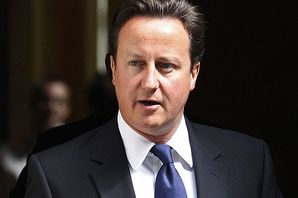
David Cameron: English Politician: “It would be wrong to suggest that Scotland could not be another successful, independent country.”
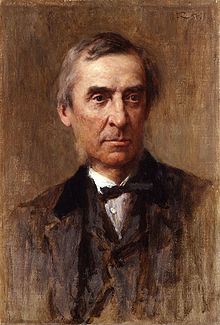
James A Froude: English Historian: “No nation in Europe can look with more just pride on their past than the Scots, and no young Scotsman aught to grow up in ignorance of what that past has been.”
Michael Fry: Historian: Broadcaster: Political Activist: “Scots can only solve their problems once they rule themselves and take responsibility for their actions as an independent nation.”
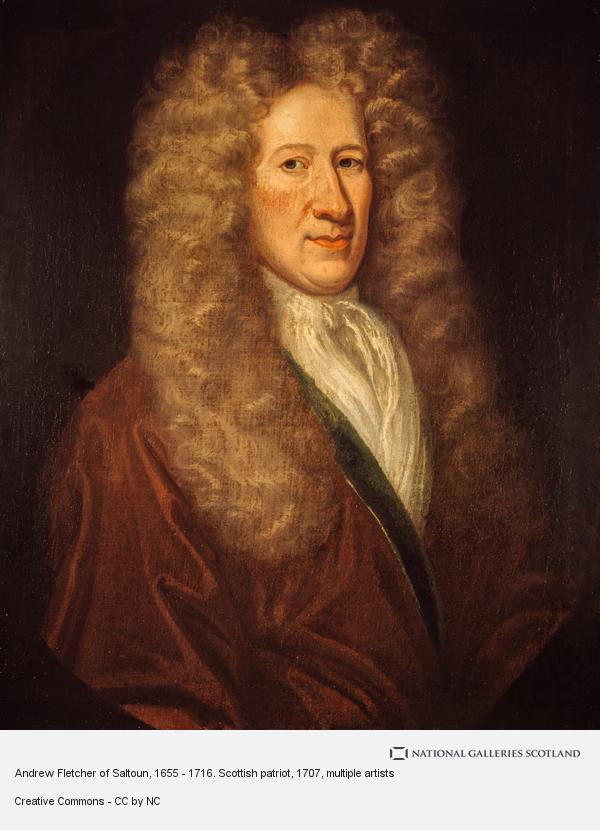
Andrew Fletcher of Saltoun- Opponent of the 1707 Union: “I knew a very wise man who believed that if a man were permitted to make all the ballads, he need not care who should make the laws of the nation. The Scots deserve no pity, if they voluntarily surrender their united and separate interests to the mercy of a united parliament, where the English shall have so vast a majority.”
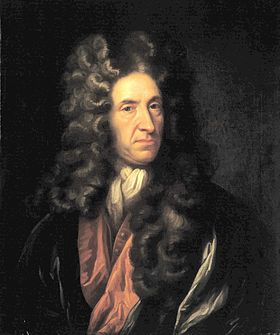
Daniel Defoe: English Author: Spy: ” The Scots are as diligent, as industrious, as apt for Labour and Business, and as capable of it, when they are abroad, as any People in the World; and why should they not be so at Home? and, if they had Encouragement no doubt they would. Scotland has had many an ill picture drawn for her in the world; and as she has been represented in False Draughts, no wonder the Injury’s she has suffered are intolerable. All the Spies sent hither have carried back an ill Report of the Land, and filled the World with weak Banters and Clamour as they know not what.” A spy repents: Written on his return to Scotland (a few year’s before his death) where he witnessed the abject poverty and starvation of a once proud Scottish nation living under the brutal yoke of the Westminster brokered Union.
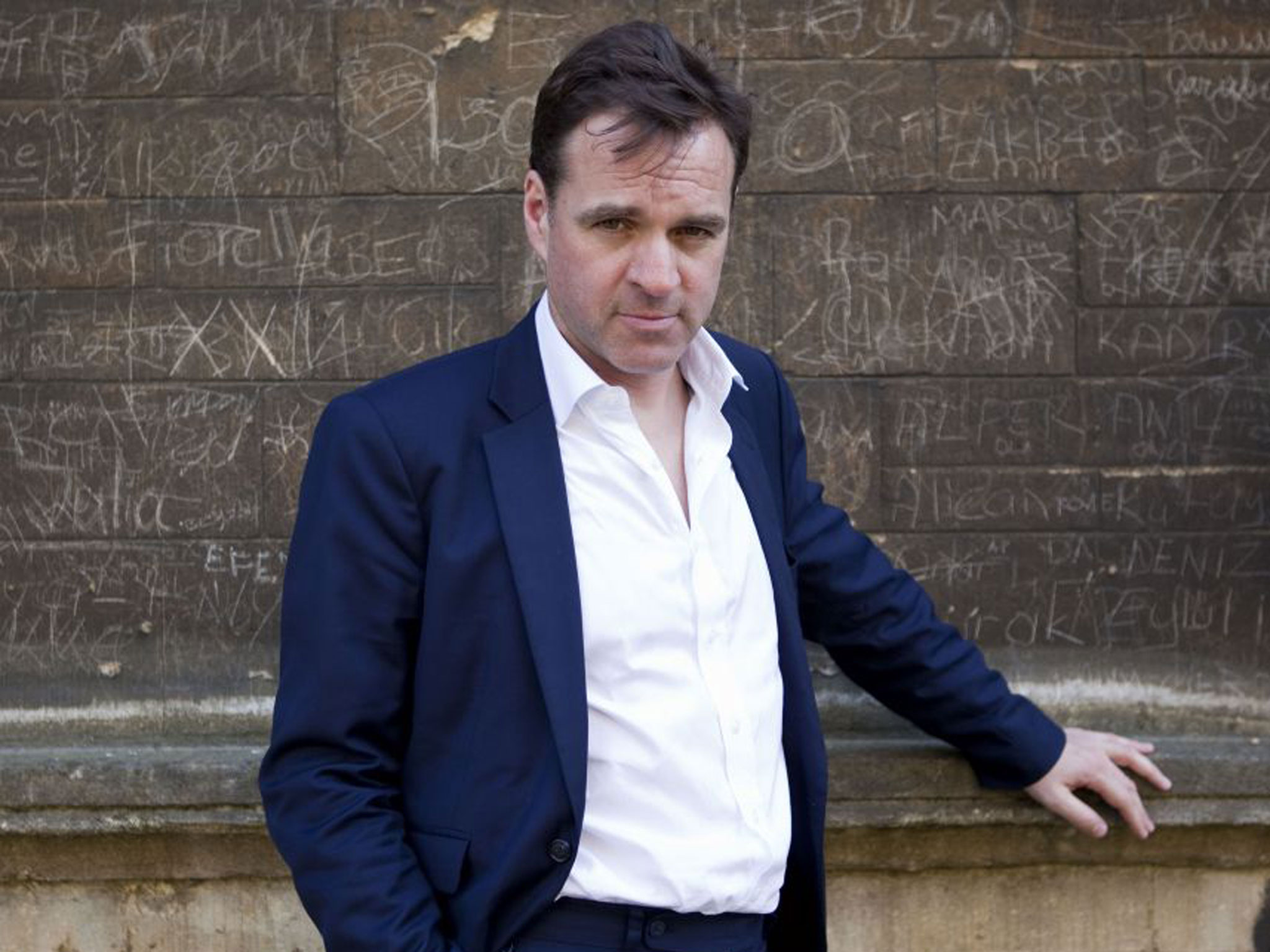
Professor Nial Ferguson: Historian: “Devolution gives Scots the illusion of self-government but not the reality of it. The parliament cannot flourish while it acts as a mere channel for aid from England. Independence would be preferable to this half-way house.”
Winifred M Ewing: Politician: “We must push the Parliament to campaign for more powers and we must campaign for those powers out in the country. The concept of fiscal autonomy is one that is easy to understand and one which attracts widespread support already. The control of our own resources is essential for we are the only country to have discovered oil and still to have become no better off. We also have vast supplies of the key resource of the twenty-first century – water – whilst there is a scarcity of it elsewhere, including England, and we have a huge ability to generate power by wind and other methods. Far from coming to the end of our riches, we are just coming into them.”

Sir Thomas Farmer: Businessman: “Nobody in the C.B.I. nor any other organisation is in a position to say independence would be bad for Scotland. At the end of the day these comments are an insult to Scots and Scotland as a nation.”
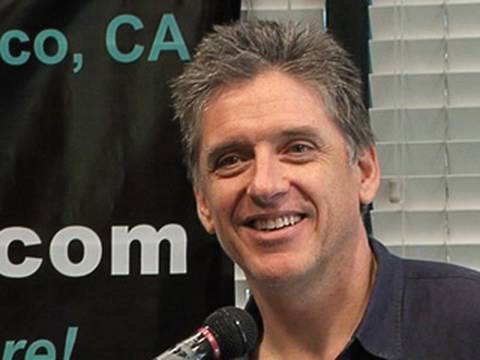
Craig Ferguson: Television Presenter: “I’m more comfortable here in America than I was in England. America is a natural place for a person from Scotland. Culturally, it didn’t feel like that much of a leap for me. It just kind of works for me. But for better or worse I’ll always be Scottish. Perhaps I would never have exceeded my expectations if I had been born somewhere else.”
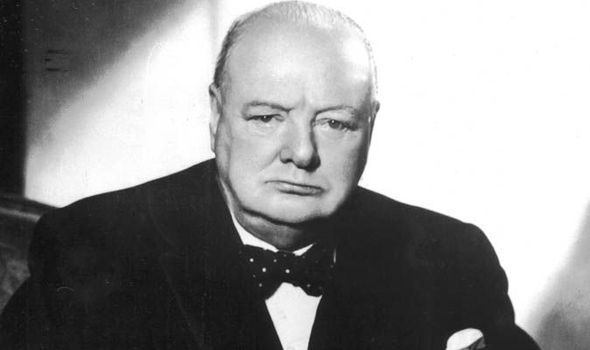
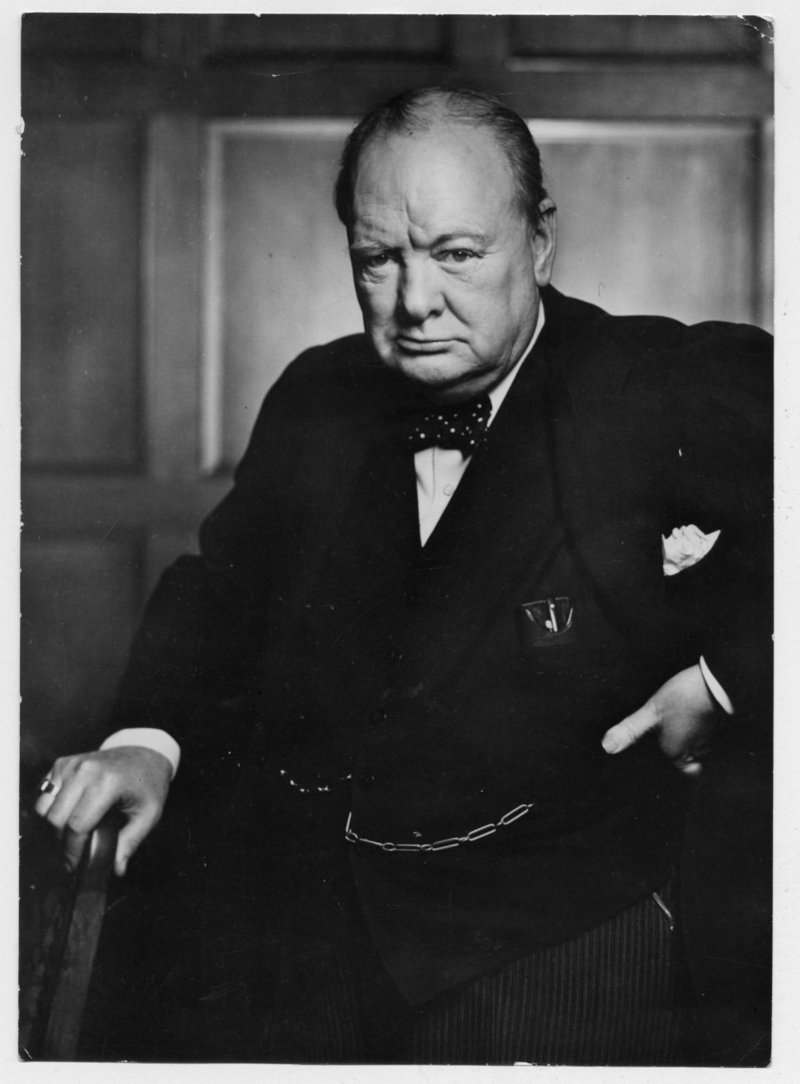
Winston Churchill: English Politician: “as to the future, we have to secure for Scotland a much more direct and convenient method of bringing her influence to bear upon her own purely domestic affairs. There is nothing which conflicts with the integrity of the United Kingdom in the setting up of a Scottish Parliament for the discharge of Scottish business. There is nothing which conflicts with the integrity of the United Kingdom in securing to Scotsmen in that or in some other way an effective means of shaping the special legislation which affects them and only them. Certainly I am of opinion that if such a scheme can be brought into existence it will mean a great enrichment not only of the national life of Scotland, but of the politics and public life of the United Kingdom.”
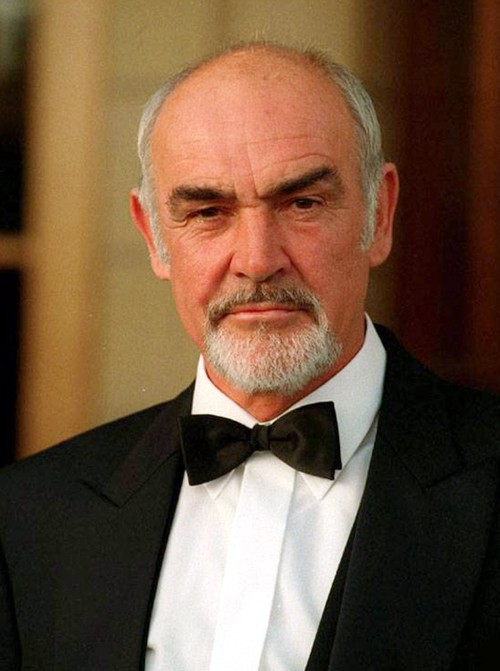
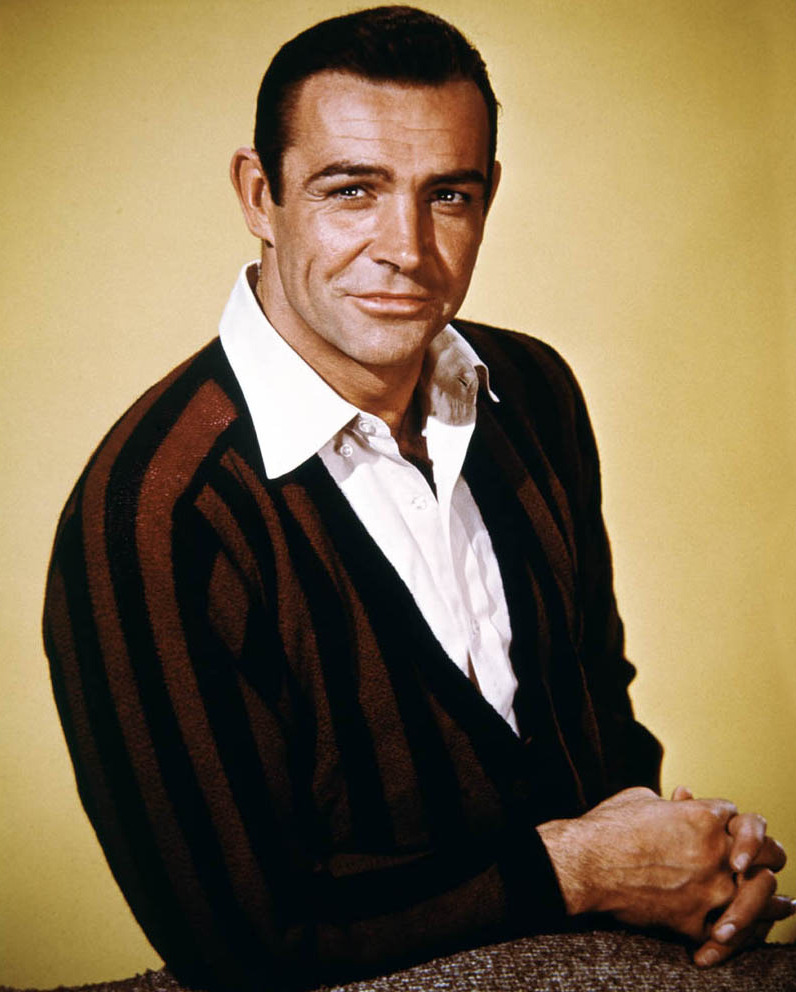
Sean Connery: Actor: “Over the centuries the Scots have accepted the fact of English domination. You’ve only got to look at the figures to realise Scotland is a perpetually depressed area. Why else do the Scots have to leave Scotland to make a good living?”
Sean Connery: Actor: “I’ve always been hopeful about Scotland’s prospects. And I now believe more than ever that Scotland is within touching distance of independence and equality. The first step towards this was winning Scotland the right to a separate parliament in 1997 and the second was electing an SNP Government last year. I believe we have what it takes to take the third step, and I am convinced it will happen in my lifetime.”
Edward J Cowan: Historian: “The Declaration of Scottish Independence, 6 April 1320 is the first articulation of the idea that a king is elected by his subjects and if he steps out of line he can be deposed by them. It appeals to universal values. It appeals to the freedom and dignity of the individual but it also appeals to the freedom and dignity of the nation.”
Donald Dewar: Politician: “And there shall be a Scottish parliament. I like that. For me, for any Scot, today is a proud moment. Another stage on a journey begun long ago and which has no end. This is not just about our politics and our laws.It is about who we are, how we carry ourselves. “
Robert B C Graham: Politician: Author: “I regret, as a Scotsman, because we have always had a good name for business, that those traitors who sold our country [in 1707] got so little for themselves. £26,000! Why, their patron saint, Judas, got almost as much, taking into consideration the greater purchasing power of money when he did his deal.
Voltaire: “We look to Scotland for all our ideas of civilisation.”
Irvine Welsh: Novelist: “Swedes, Norwegians and Danes remain on amicable terms; they trade, co-operate and visit each other socially any time they like. They don’t need a pompous, blustering state called Scandinavia, informing them from Stockholm how wonderful they all are, but (kind of) only really meaning Sweden.”
Kevin Bridges: Comedian: “I think we should have an English vote first and let England make the first move – if they want us to leave, then we’ll stay.”
Frankie Boyle: Comedian: “I think half the country will have had their dreams and hopes destroyed, so it will be pretty much business as usual for everybody.”
Frankie Boyle: Comedian: “For 3 million you could give everyone in Scotland a shovel, and we could dig a hole so deep we could hand her over to Satan in person. (on Margaret Thatcher)”
Winston S. Churchill: English Politician: “Of all the small nations of this earth, perhaps only the ancient Greeks surpass the Scots in their contribution to mankind.”
James W. Robertson: Journalist: “But I do like Scotland. I like the miserable weather. I like the miserable people, the fatalism, the negativity, the violence that’s always just below the surface. And I like the way you deal with religion. One century you’re up to your lugs in it, the next you’re trading the whole apparatus in for Sunday superstores. Praise the Lord and thrash the bairns. Ask and ye shall have the door shut in your face. Blessed are they that shop on the Sabbath, for they shall get the best bargains. Oh yes, this is a very fine country.”
Samuel Johnson: Writer: “Oats. A grain, which in England is generally given to horses, but in Scotland supports the people.”
Samuel Johnson: Writer: “Freedom is an idea that no tyrant will ever crush.”
William McIlvanney: Poet Politician: “Son, it’s easy tae be guid oan a fu’ belly. It’s when a man’s goat two bites an’ wan o’ them he’ll share, ye ken whit he’s made o’. Listen. In ony country in the world, who are the only folk that ken whit it’s like tae leeve in that country? The folk at the boattom. The rest can a’ kid themselves oan. They can afford to hiv fancy ideas. We canny, son. We loass the wan idea o’ who we are, we’re deid. We’re wan anither. Tae survive, we’ll respect wan anither. When the time comes, we’ll a’ move forward thegither, or nut at all.”
Robert Burns: Poet and Political Commentator: “My heart’s in the Highlands, my heart is not here; My heart’s in the Highlands a-chasing the deer; A-chasing the wild-deer, and following the roe, My heart’s in the Highlands wherever I go.”
Benjamin Franklin: US Politician: “Did not strong connections draw me elsewhere, I believe Scotland would be the country I would choose to end my days in.”
Evelyn Glennie: “Scotland has never ceased to amaze the world with its forward vision, bold action and great educational institutions. Nothing makes me more proud than to promote this wonderful land with all its richness and diversity wherever I go.”
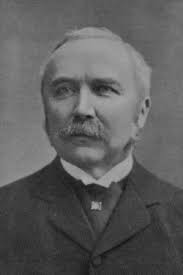
Sir Henry Campbell-Bannerman (1836-1908): Politician: “Even good government can never be a substitute for government by the people themselves.”
Robert Carlyle: Actor: “The Stone of Destiny is about being Scottish. It’s not about moaning, complaining or crying about the fact that Edward stole it in 1296. It’s more about what it means to the Scottish psyche.”
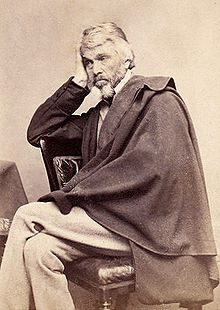
Thomas Carlyle (1795-1881): Writer and Sage: “It is noteworthy that the nobles of the country (Scotland) have maintained a quite despicable behaviour since the days of Wallace downwards – a selfish, ferocious, famishing, unprincipled set of hyenas, from whom at no time, and in no way, has the country derived any benefit whatever.”
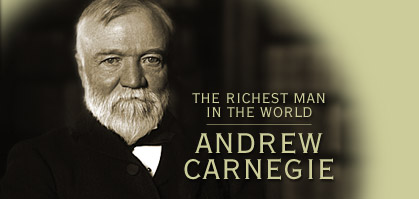
Andrew Carnegie: Industrialist: Philanthropist: “America would have been a poor show had it not been for the Scots.”
Westminster and the City of London – Nests of Financial Vipers Plundering the Nations Wealth – Consigning the Poor to Early Death – Sacrificed on the Alter of Austerity
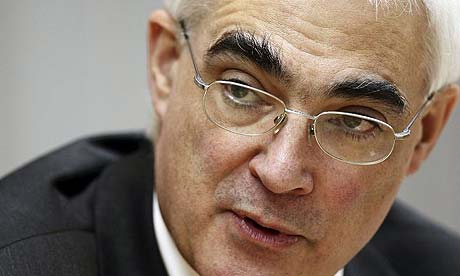
Alistair Darling – His Unmitigated Disastrous Treasury brief from 1992-98 and 2007-10
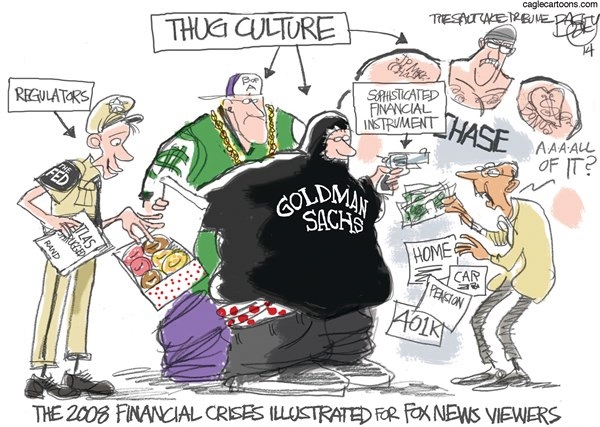
Darling was central to the economic calamities of the New Labour Government. His record included a fixation with financial services and a property boom – which drove growth, but at the expense of manufacturing and production. It also facilitated an ever increasing disparity between the North and South within the UK – as the wealth division between the City of London and the rest became a gulf. And it included a record of poor financial oversight and regulation which led to the banking crash and contributed to the deepest recession since the 1930s.
Critics further highlight the desperation of an economic clique in Whitehall to provide tax support to hedge funds and financial capital above the overall health of the economy. Darling was very much in the forefront of this.
His response to the banking crisis was an extension of this economic strategy. He sought to deflect criticism from himself onto Prime Minister, Gordon Brown and Mervyn King at the Bank of England. But he cannot separate himself from the decisions that led to the crisis. He was Labour spokesman on Treasury Affairs and then Chief Secretary to the Treasury across the period of 1992-1998. Together with Gordon Brown, Tony Blair and Ed Balls, he was an architect of – if not at least heavily complicit in – the deregulation and tax cuts which let the financial sector spiral out of control.
In his time as Chancellor serious errors and misjudgements on his part led to the banking crisis. Not least his proclamation of an extended period of UK austerity, proclaiming the need for cuts “deeper and tougher” than those instituted by Margaret Thatcher. His “new deal” also resulted in a massive cut in capital investment when it should have been expanded in the wake of credit crisis to boost growth, jobs and revenue.
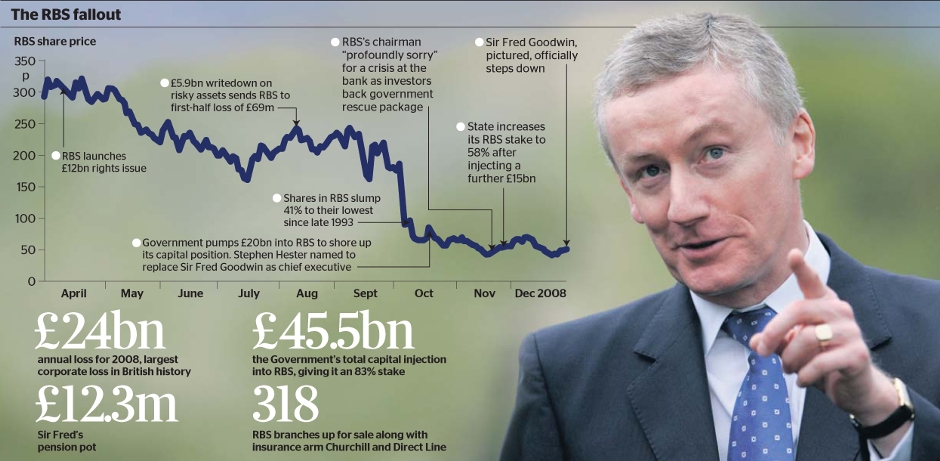
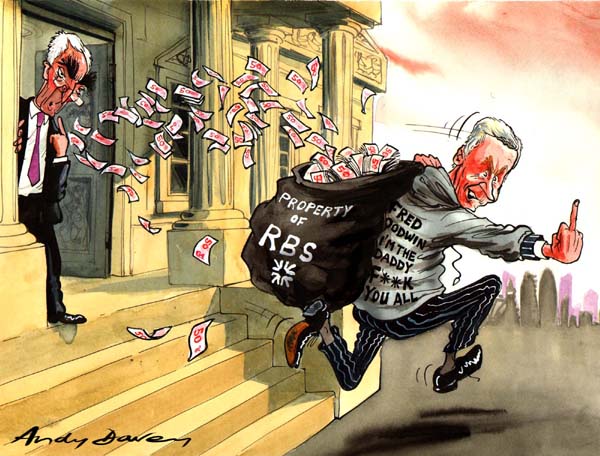
Darling – His Indecision – Incompetence and Reliance on Advice From Fred (the Shred) Goodwin
In May 2012, the former Governor of the Bank of England, Sir Mervyn King criticised the lack of action by Alistair Darling and the last Labour government when, in September 2007, (in the earliest days of the banking crisis) the first UK Bank, sorry English bank, Northern Rock, failed, which King said could have cost up to one million people their jobs. Decisive action would have at least mitigated the problems encountered by other Banks including HBOS and RBS a year later.
Darling learnt no lessons from the collapse of Northern Rock and his March 2008 Budget speech just six months after the first UK bank collapse makes embarrassing reading today: “…we have maintained confidence and stability in the banking system … We have turned welfare into work and borrowing into wealth creation.”
It was the UK regulatory authorities headed by Chancellor of Exchequer Alistair Darling that had the powers to investigate the RBS / AMRO take over but ignored the fact that no due diligence was done by RBS on a deal worth £49 billion before they gave its approval for the world’s biggest bank take over deal that brought about the collapse of the Royal Bank.
Incredibly, the FSA overlooked the rules on capital by allowing Goodwin and RBS to dip below 4%, below the minimum regulatory requirement on capital, to do the ABN Amro deal.
So much for relying on the UK regulatory body and compounding the errors Fred Goodwin ( at that time) was still an adviser to Alistair Darling as Chancellor, and a member of a key Treasury body advising Labour months after the banking crisis and quitting RBS.
Additional Information at: http://www.businessforscotland.co.uk/cameron-demands-apology-for-rbs-mess-from-darling-and-brown/
Ten Years of Unnecessary Austerity – The Rich Grow Richer and the Poor Die Earlier
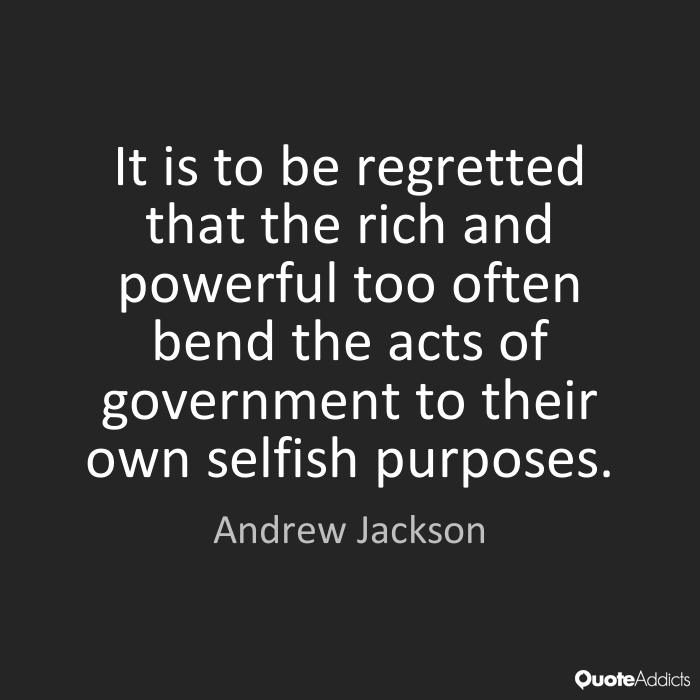
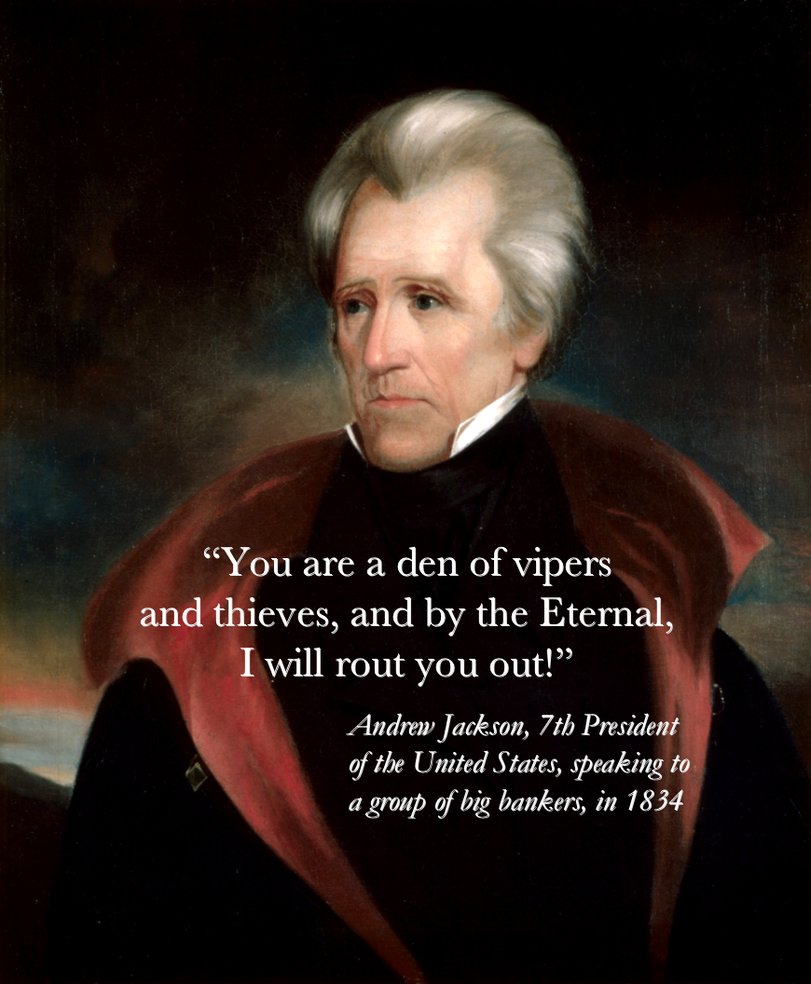
In 2007 the UK had urgent need for a leader capable of resolving a banking crisis brought about by the greed of bankers and investors The country were blessed with Gordon Brown and Alistair Darling when it desperately required a figure of the status of US President Andrew Jackson who when confronted with greed and avarice of a similar scale shut the entire system down and introduced a banking system that catered for the needs of the citizens of the US.
Jackson made many speeches but this one to the bankers and investors is most apt in this circumstance:
“Gentlemen! I too have been a close observer of the doings of the Bank of the United States. I have had men watching you for a long time, and am convinced that you have used the funds of the bank to speculate in the bread stuffs of the country. When you won, you divided the profits amongst you, and when you lost, you charged it to the bank. You tell me that if I take the deposits from the bank and annul its charter I shall ruin ten thousand families. That may be true, gentlemen, but that is your sin! Should I let you go on, you will ruin fifty thousand families, and that would be my sin! You are a den of vipers and thieves. I have determined to rout you out, and by the Eternal, (bringing his fist down on the table) I will rout you out!”
On September 10, 1833, Jackson removed all federal funds from the Second Bank of the U.S. and redistributed them to a number of state banks. Jackson succeeded in destroying the bank. Problem solved.
Darlings Solution Let the Rich Get Richer Those Most In Need Can Carry the Burden of Debt
UK Alistair Darling abused his office when he instructed the Bank of England to print money (with no gold reserves to back it) and to flood the financial markets with £billions through a system called “Quantitative Easing”. The vast bulk of the new money was simply handed over (without precondition and minimal interest charge) to banks whose finances were in dire straits. When this initiative failed, in some circumstances e.g.. The Royal Bank of Scotland, he purchased all the banks bad debt (at the expense of every UK taxpayer) placing the country at greater financial risk as the major shareholder in banks with no future.
From that time, bolstered many times by newly printed money through further quantitative easing the UK stumbled from one financial crisis to another and incurred fresh debt, measured in £trillions to a number of financial institutions.
It is accepted in financial circles that the UK may never be able to balance the books despite an ever expanding period of austerity (now 10 years) imposed on the 95% of taxpayers who can ill afford the loss of income.
Pensions are at risk of default and poverty is widespread and growing relentlessly. A recent report placed 30,000 early deaths firmly with austerity measures.
But austerity does not extend to the bankers, investors and hedge funds who maintained their place of business off-shore. Despite carrying massive financial debt, (largely guaranteed by the taxpayer) many thousands of bankers and staff attract obscene and unjustified huge annual bonuses so that they would not be inconvenienced by the austerity measures in place throughout the country. What a kick in the teeth for the vast bulk of the electorate.
I expect Andrew Jackson would have allowed the banks to default, whilst insisting that banks honour payment of protected savings. There might have been many losers but they would have been heavily outnumbered by the winners. And the bankers, investors and Hedge Funds would have taken a massive hit. The rich and greedy, having dug themselves into a hole would have been required to get their shovels and dig themselves out.
But, the beast that is Westminster protected the few at the expense of the many. And Scotland still rejected independence. I despair.
A Look at the US and President Trump
Within days of taking up the Presidency of the US President Trump ordered that statues of Winston Churchill and President Andrew Jackson, (consigned to the basement at the start of President Obama’s term of office) would be returned to their rightful place in the entrance to the White House. The order may appear to be of little significance but time might reveal the importance of the change.
I expect their are many in the UK who look across the pond and wonder at the springtime madness that seems to be gripping the political scene in the US. In particular the wanton violence in the streets and university campuses of States favouring the Democratic Party.
The violence is not spontaneous being organised and funded by faceless individuals, groups and organisations pursuing agenda’s designed to wear down the newly appointed President Trump and his administration.
The recent furore over a temporary (3 month) executive order banning the free movement of individuals to and from a small number of countries (previously proscribed by President Obama) had a single purpose, to challenge law and order and embarrass the newly elected President. And the women marching in protest against Trump (for allegedly giving voice to a liking for “pussy”) should be ashamed of their conduct and protests, which would have served better purpose had they been directed at the barbaric treatment of women in Saudi Arabia and many other Islamic States.
The insidious agenda of disruption, protest and release of privileged information is being orchestrated by parties under threat from President Trump and his Administration.
It is rumoured that the Federal Reserve (the President has no control over it’s decisions) is planning to undermine President Trump’s much lauded infrastructure improvements through a process of interest rate hikes and other anti-inflationary measures. Money and Credit will dry up. And the UK will suffer from the fallout.
The video “Storm Clouds Gathering” provides an excellent brief in support of the foregoing. I highly recommend a viewing: https://youtu.be/1MmfCX2H7N8
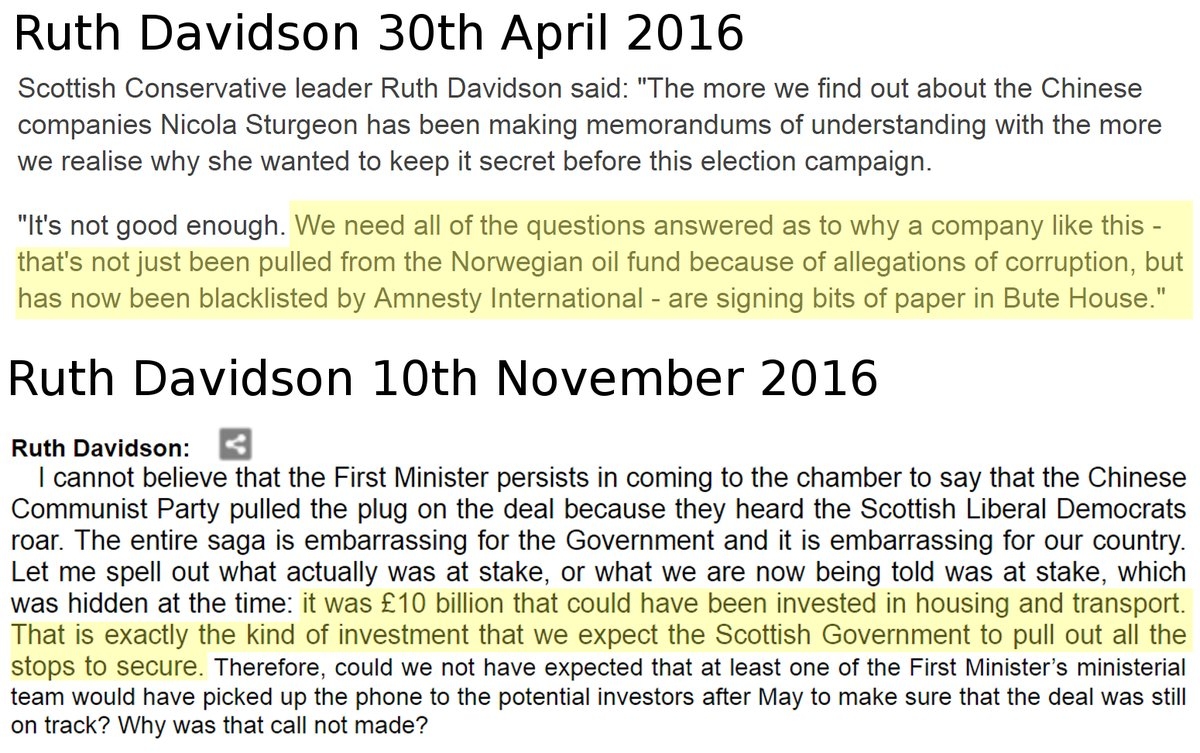
Chinese Inward Investment in Scotland Snookered – Another Victim of Davidson’s – Dugdale’s and Rennie’s Whimsical Persecution – A Long Read But Important to the Cause For Scotland’s Independence
2010: Chinese Inward Investment Potential
Chinese worldwide investment expansion from 2009 attracted many entrepreneurs who wished to grasp any business opportunities which might arise. To facilitate this Sir Richard Branson formed the “E2Exchange” a network of talented budding and established business people.
This in turn spawned the “88Initiative” a company which specifically targeted young Chinese students for business skills development (founders, Sir Richard Heygate and Sir Paul Judge.)
The initiative led to the formation of the Chinese “Sinofortune Group”. It was this company that intended introducing up to £10billion of inward investment to Scotland. Details below:
2011: E2Exchange Network – President Richard Branson
Founded in 2011, E2Exchange has developed into an exciting, thriving and powerhouse network of ambition, investors, and innovation; exchanging ideas and opportunities within a trusted community driven by a motivation to help entrepreneurial businesses prosper.
They are a hub for 10,000 scale-up and established entrepreneurs, sophisticated investors, world-class corporate service providers and experienced non-executive directors driving economic growth in the UK, with ambitions to expand this globally.
“I am delighted to be the Honorary President of E2E. Supporting entrepreneurs who do not have access to networks and other resources to grow their businesses is critical to helping build a prosperous, equitable world for all.” Richard Branson
28 Nov 2013: The 88 Initiative: Putting guanxi into Great Britain
Two of the City’s most prominent ‘knights’ have joined forces with an entrepreneurial network to create greater ties between UK businesses and Chinese investors. Millionaire and City veteran Sir Paul Judge is having a party round at his on 20 December and it promises to be a Christmas party with a mission.
High up in east London’s ‘The Panoramic’ building, Chinese entrepreneurs, high net worth individuals, representatives from Chinese family businesses, Chinese students, local entrepreneurs and private equity professionals will all be chatting over a few glasses of eggnog, as they look out over the Thames. It’s the second event by the 88 Initiative and building ties between UK and Chinese businesses is the aim of the game.
The 88 Initiative, a venture designed to improve relations between Chinese businesses and investors and their UK peers, is not the brainchild of Judge though; his long-time friend Sir Richard Heygate (former partner at McKinsey and inventor of the online ATM, no-less) came up with the idea. Sir Richard has joined forces with E2Exchange, an organisation for entrepreneurs, for which another Sir Richard (Branson of course) is the honorary president – in order to launch the 88 Initiative.
With its inaugural event in September in the bag and the second one speeding towards it, the 88 Initiative is close to clinching investment deals for a number of UK-based companies.
Why now?‘ There are many ultra-high-net worth Chinese investors who want to invest into British businesses but don’t have the relationships in the UK to do this,’ explains Shalini Khemka, chief executive of E2Exchange.
Central to Chinese business culture is trust, so we are helping Chinese investors build relationships in the UK to gain that trust to facilitate investment flows into SMEs and help accelerate their growth.’
After leaving McKinsey, Sir Richard worked on a number of start-ups and soon realised there was no institutional funding for UK entrepreneurs,’ he said. ‘I came across fantastic British inventions which had simply run out of money and died off or been sold for a fraction of their value. ‘I was talking with a friend, one of the biggest immigration lawyers in the UK, and he pointed out China has the largest pool of venture capital in the world. And while the UK is keen to attract Chinese wealth, China needs UK innovation.’ Sir Richard, like many a British businessperson and politician before him, realised China could hold the answer to many of our investment problems.
But the classic problem when it comes to doing business with the Chinese is their emphasis on trust and building strong relationships before signing any deals. It’s not as easy as rocking up and swinging your start-ups around. ‘The generation in power in China is not easy to deal with,’ explains Sir Richard. ‘Mostly, they don’t speak English and rely on something called guanxi – business trust.
There’s no point in heading over to China, organising meetings and going to cocktail parties unless you have a high level of guanxi.’ While lecturing at the Said Business School, Sir Richard came up with what he thought might be a solution.
He was lecturing at the college and met a swathe of Chinese students – he was vastly impressed with their entrepreneurialism and saw this generation as holding the key to doing business with the older generation. ‘I was so impressed with what an inspiring bunch the Chinese students were,’ he says. ‘Many have three or four degrees each, they’re very hard working and open minded.
I realised maybe these people were the bridge and so I decided to work with the younger generation. I’ve become friendly with six or seven groups of young entrepreneurs, building guanxi, and through them gained access to high net worth individuals and venture capital firms in China.’
Together the E2Exchange and Sir Richard are hoping to use the 88 Initiative to do a number of things; identify, mentor and fund new ventures in both the UK and China; seek out suitable UK brands who can branch into the Chinese market and build long term partnerships with Chinese family businesses; encourage UK venture capitalists to open their portfolios to Chinese investment banks and corporations. Phew. That’s no mean feat.
The initiative is currently on the verge of three deals involving UK businesses; a wine brand, a healthcare company and a hotel deal and ‘there are lots more in the hopper’. It is formalising the 88 incubator for joint China/UK entrepreneurs, setting up two agencies in China (one west coast, one inland) and launching a new venture capital firm with Rob Wylie of Wheb Partners as chairman.
All stations are go. The timing of the 88 Initiative couldn’t be better. Thanks in no small part to some tussling on George Osborne’s part, London is due to become the designated trading outpost for the Chinese currency – the renminbi – at the end of 2014, early 2015. According to commentators, this will open the floodgates for Chinese investment in the UK.
The odd Lloyds building here, Manganese Bronze there, will pale in significance. Organisations such as the 88 Initiative will hopefully smooth this change of gear and help entrepreneurs as they try to do business with the Chinese. ‘For UK SMEs looking to expand overseas, China is a huge market and there are significant benefits for Chinese investors who want to invest into UK businesses,’ explains Khemka ‘Chinese investors are keen to invest in UK businesses if they can see that the companies have high quality brands, with real potential in their home market.’
Khemka’s experience of dealing with UK-based entrepreneurs has taught her that although the opportunities are out there – our home-grown start-ups and small businesses aren’t taking them.‘Many UK entrepreneurs still do not realise the huge potential that the Chinese market offers their businesses,’ says Khemka. ‘With those entrepreneurs who are aware, there is some inertia because of the language and cultural barriers and also the lack of understanding regarding how Chinese investment and business operates.
We can support companies by giving them more confidence, through introducing them to the right people and helping them build relationships with the most influential networks and investors.’ Eighty-eight is the luckiest number in Chinese culture but it looks like the success of the 88 Initiative will have little to do with luck and a lot to do with guanxi – something we bet we’ll all be hearing a lot more of… (management today, 88-initiative)
2016: Sinofortune Group – Linked to 88 Initiative and E2Exchange
Sir Richard Heygate, a member of the E2Exchange, founded the 88 Initiative in 2012 with Sir Paul Judge, a City of London boardroom veteran and former director general of the UK’s Conservative Party, and set out to bring to the UK some of the billions of private and public money that China was looking to invest across the globe.
Peter Zhang was a research associate at York University’s Management School – and was a founding committee member of the China Innovation and Development Association which received Chinese embassy-level support from 2009. It seems to be something of a hothouse conduit for the billions of investment that came after President Xi’s visit to Britain in 2015.
The Group is a Chinese company and has been taken as a model for China’s state-run capitalist strategy. It was incorporated in London in July 2015. The joint majority shareholders are managing director, Peter Zhang and the Liaoning Fortone International Investment Group, a subsidiary of Liaoning Fortone Group, an engineering- and construction-focused conglomerate based in the north-eastern Chinese city of Shenyang that lists its main business activities as “mega project investment.” The “Sino” part of the “SinoFortone” name comes from Sinolinks, a company formed by Peter Zhang in Hong Kong in 2012.
Professor Yu Xiong, the Chair of Technology and Operations Management at Northumbria University’s Newcastle Business School, knows Zhang from his university days and also has, he says, advised SinoFortone and the British and Chinese governments on joint cooperation business strategies (indeed, he is also a director of a SinoFortone business).
According to Yu, SinoFortone relies heavily on State funding but because of a slowdown on the release of funds – caused by a very real fear of corruption and tightened due diligence – the majority of this funding is not actually secured. “From my understanding they have signed some deals and secured some funding but Sinosure have not yet approved most it.”
Sir Richard Heygate, former company director who resigned from the group in December 2016, said SinoFortone’s commitment had fallen apart when China’s state export credit agency, Sinosure, refused to provide finance.
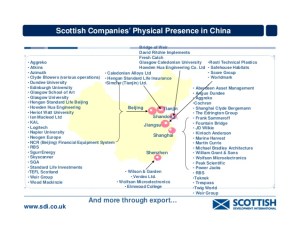
In the Autumn of 2015 Chinese investment in the UK increased markedly. Scotland attracted new opportunities some of which were sourced through ” Asia Scotland Institute” a charitable company of repute based in Edinburgh. One such company was SinoFortone (UK).
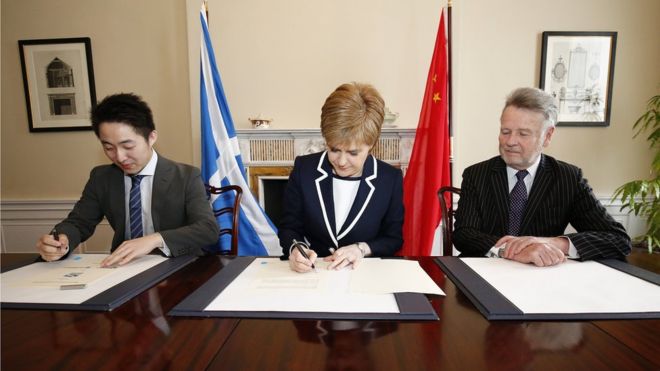
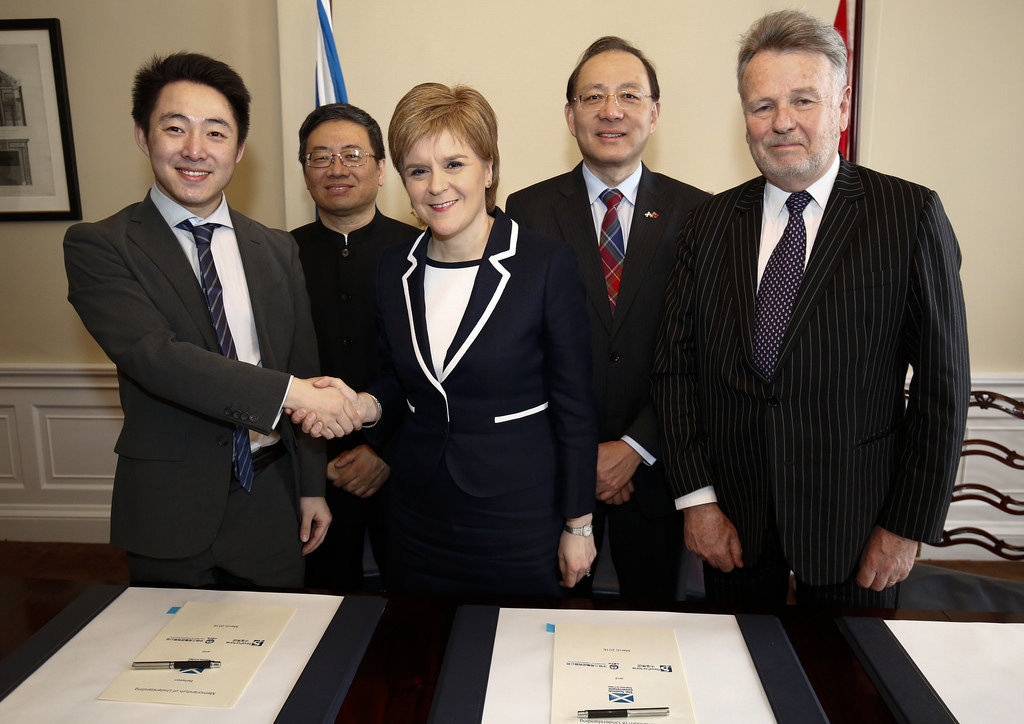
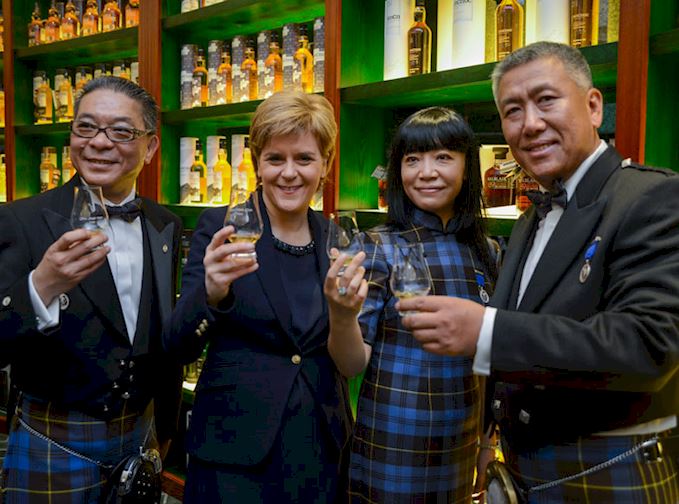
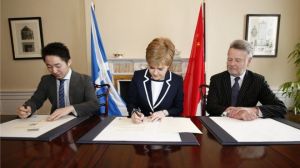
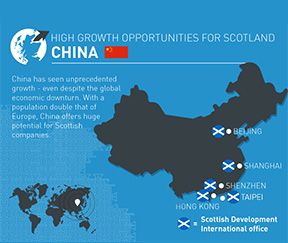
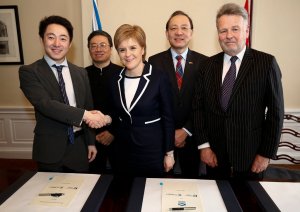
After many months of quiet diplomacy (required behaviour when dealing with Chinese businessmen) in April 2016, Scotland’s First Minister signed a “Memorandum of Understanding” (MoU) with SinoFortune committing government to further discussions which it was anticipated would lead to significant inward investment to Scotland.
The understanding was concluded within the General Election “Purdah” period and this prevented any major announcement. But the anti -SNP Scottish press decided to “go for the Kill” and broadcast news of the venture widely each day adding a series of “spoilers” designed to discredit the Scottish government.
Opposition group leaders in Holyrood “climbed aboard the bandwagon” claiming ignorance of any discussions with Chinese companies, lodging a series of unfounded outrageous allegations of misrule by the Scottish government. The sequence of events is detailed below:
Oct 2015: Asia Scotland Institute Chairman’s Letter To the First Minister of Scotland – Infrastructure Funding Opportunity from China – Chinese Investment in Scotland
I was in touch with your office last week and you may recall had written to you prior to your visit to China earlier this year. Although currently in the United States, I return to Edinburgh by the end of this month and am writing as agreed with your office to resuscitate my original communication, particularly in view of the successful and recent Chinese visit to England.
Prior to your own visit to China Sir Richard Heygate wrote the following:- “I will say that there has not been a single private conversation I have had with senior Chinese figures that has not ended up discussing how the RMB will replace the Dollar as international currency.
I doubt if top politicians will admit this, but it has an overwhelming feeling in the business community. How this will play out in the international world, I cannot predict, but all trends show that China will be overtaking the US in GDP in the near future.”
Sir Richard added this piece of advice for yourself and remember he knows the Chinese well and has great relationships with some very significant Chinese individuals and companies. “Keep answers simple. The Chinese hate smart complexity as they feel one is trying to fool them. They also love “visions” and “dreams” in a way we have long forgotten. You should emphasis your dream for Scotland and stress how the Scots traded so heavily with China in the past and that you are committed to get people to do the same today”.
Focusing on moving matters forward, I have encouraged Sir Richard Heygate (copied on this email acting for the two Chinese potential funding companies, to allow you and your colleagues to address the question of what major infrastructure projects might be explored with the Chinese in the coming months.
The recent announcements of significant transactions in England during the Chinese State Visit have prepared the ground for similar large projects in Scotland. I look forward to hearing back from you and arranging a meeting in Scotland in early November to see how we can take the initiative forward. (Roddy Gow, Asia Scotland Institute)
8 Apr 2016: Letter from the Scottish Government to SinoFortone (UK)
The Memorandum of Understanding (MoU) does not commit the Scottish government to any specific projects and that full due diligence would of course be undertaken should the MoU ultimately result in any projects. It is also emphasised that the MOU is not a binding legal agreement and emphasised that this had been made clear in public statements.
Note: In the period 27 October 2015 – 9 April 2016 there was a copious exchange of correspondence between various parties, the bulk of which appeared to be directed to the need for clarification of matters arising from a proposed investment of Chinese capital into Scotland. Full details are to be found at: “http://www.gov.scot/Resource/0050/00500943.pdf”
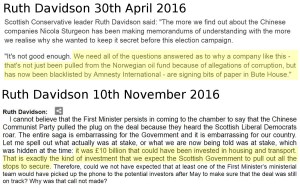
14 May 2016: Holyrood questions lodged about China firms agreement
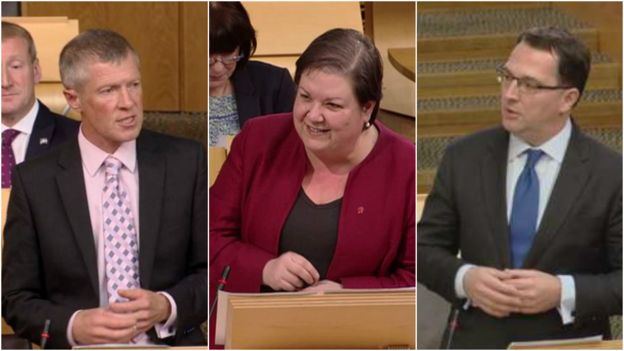
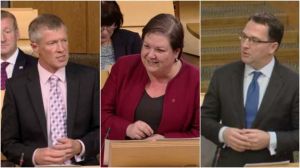
Dozens of questions about the Scottish government memorandum of understanding with Chinese firms were lodged during the first session at Holyrood. Wullie Rennie lodged a total of 28 questions, all on the topic of the China agreement and government memoranda of understanding.
He asked a series of questions about whether government officials were aware of the Norwegian blacklisting, their assessment of the firm’s human rights record, what advice was taken before signing the memorandum, and whether the government would suspend the memorandum until it had investigated concerns.
Ms Sturgeon said no firm investment plans had been made and insisted that due diligence would be carried out. (BBC News)
31 May 2016: Scottish government China Deal Correspondence Released
In a chamber debate about the economy, Wullie Rennie said it was now clear that aides had tried to “Tippex” China Railway out of the deal after “devastating revelations” from Norway’s pension fund and Amnesty International, which he said had “condemned” the firm. He said “no due diligence” had been done on the company before the memorandum was signed, and said the Scottish government should be “embarrassed”.
Meanwhile, Scottish Conservative MSP Alex Johnstone said the SNP had “dodged and weaved for weeks” over the deal. He said: “Finally when forced to publish the facts, the SNP blames opposition parties for asking questions. It’s classic SNP: duck scrutiny and then go on the attack when challenged.”
And Scottish Labour said the SNP had “misled people” about Mr Souter’s involvement in the deal, with Jackie Baillie calling for a parliamentary statement from Mr Brown and an investigation by the Economy Committee.
‘Unfounded assertions’
Responding for the Scottish government, Mr Brown said the papers “show how misguided opposition politicians have been about the China investment memorandum, exposing their assertions as unfounded.
It is clear that while all potential investment has to be considered carefully, opposition parties should be wary about deterring potential investment. The full set of papers we are releasing shows the approach taken by the Scottish government to potential investment in Scotland was entirely appropriate throughout the process.
The papers confirm that the interest from Chinese investors with the potential of up to £10bn of investment in a range of private and local authority projects was serious and credible, but that discussions remain at an early stage, with no specific projects or any investment whatsoever agreed.” Full details: “http://www.gov.scot/Resource/0050/00500943.pdf”
Britain was expected to benefit from Chinese inward investment as a result of the visit to Britain by the Chinese President in the summer of 2015. It did but suffered a sharp reverse due to a number of unexpected events. These are detailed below:
May 2015: Asian Infrastructure Investment Bank Formed in China
In recent years the Chinese economy boomed due to a worldwide free trade agreement resulting in the accumulation of substantial cash reserves. The Chinese Central Bank authorised foreign inwards investment and also looked abroad, to other countries for opportunities to enter into joint business and infrastructure projects.
The UK government was not slow to respond to the Chinese initiatives and announced a new era of open trade. China then created a new funding structure the “Asian Infrastructure Investment Bank.”
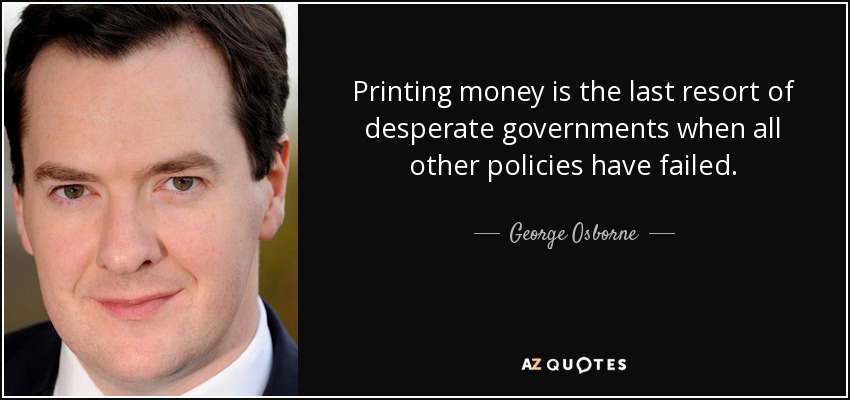
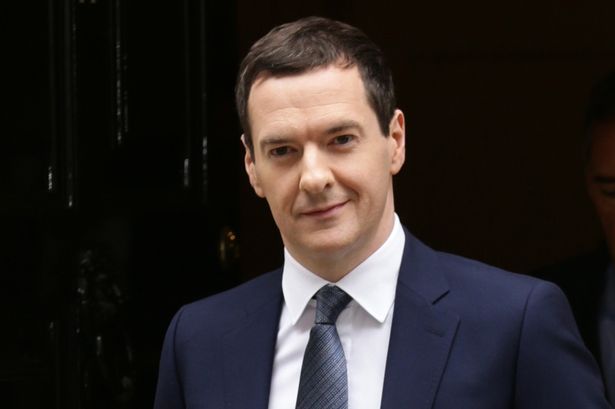
George Osborne, Chancellor of the Exchequer, went off to Beijing to sign up to the new arrangement and during his visit announced that the UK would be a founding member of the new bank.
The US authorities were furious that he had placed the US/UK alliance at risk. Not to be put off George then advised his hosts of the new HS2 rail link between London and the North of England and the opportunity for joint China/UK major infrastructure investment.
Note: Following his defeat in the 2015 General Election Danny Alexander was repaid with a peerage for his loyalty to the UK Chancellor, George Osborne. He was further rewarded with the appointment to the post of vice president and corporate secretary of the Asian Infrastructure Investment Bank. In this position he would have been fully conversant with developments in Scotland.
Wee Wullie Rennie’s claim, in the Holyrood parliament that he had been kept in the dark about the initiative by the Scottish government beggars belief. The number of questions he raised in Holyrood betrayed the level of his knowledge of events. It is entirely possible leaks published in the Scottish press originated with the Lib/Dem Party
Jul 2015: Chinese President In First Visit To The UK For Over Ten Years
During the official four-day visit President Xi Jinping and his wife, Peng Liyuan stayed at Buckingham Palace as guests of the Queen and attended a state banquet. Mr Cameron and the President held two days of talks, including Chinese investment in UK infrastructure and business ventures for British companies in China.
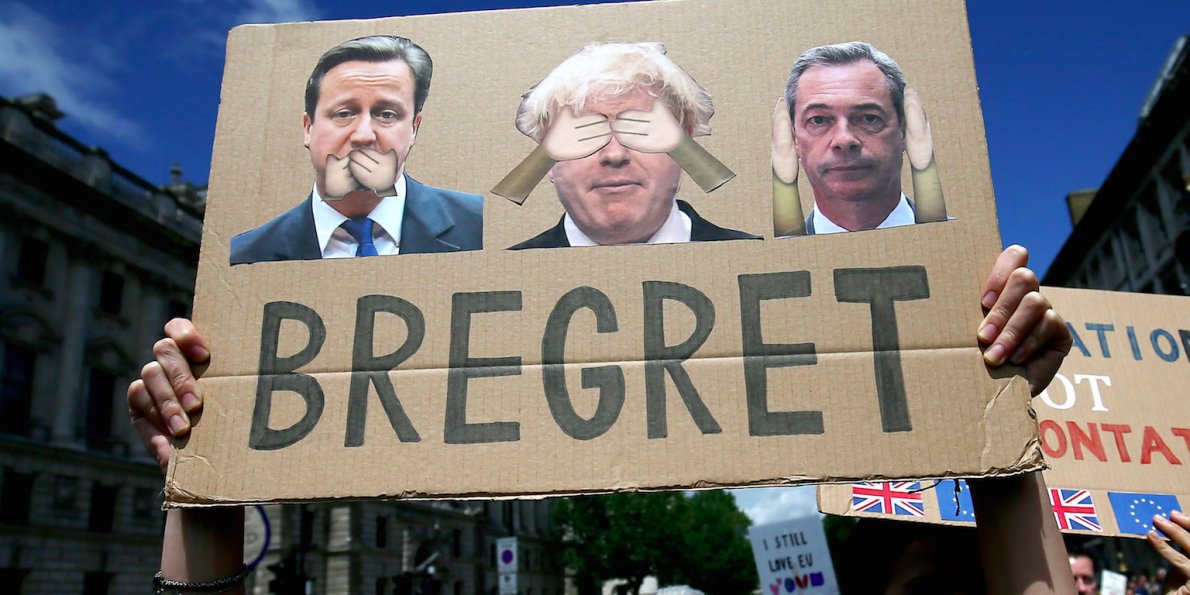
Jun 2016: Britain Votes to leave the European Union
The unexpected referendum vote (on June 23) to leave the European Union caused much anxiety in Beijing who had expected to use the UK as a base to expand into Europe.

Jul 2016: UK Prime Minister Theresa May delayed approval of the nuclear power station at Hinckley Point
The shock decision (July 28) by the newly appointed UK Prime Minister, Theresa May, to defer approval of the nuclear power plant at Hinkley (part-funded by French/Chinese investment) caused consternation in France and Beijing. It appeared the US had voiced concerns about the project and others in the pipeline would be compromising the security of NATO.
China’s response was to highlight the huge inward investment of Chinese finance into the UK economy, the planned expansion of trade and that diplomatic and trade links had existed years between China and Britain for many hundreds of before the creation of the USA.
They also highlighted that the vote in the June referendum to leave the EU had been assisted by a vision of Britain outside the EU with closer links to new markets such as China.
Also that Inter government discussions had been held exploring new trade deals and it was imperative that open trade arrangements were put in place so as to ensure active participation in the “Made in China 2025”, initiative which addresses China’s declining competitive advantage in manufacturing by encouraging Chinese companies to make better-quality products. The scheme presents a golden chance for British firms to manufacture and supply high-tech equipment, design and consultancy.
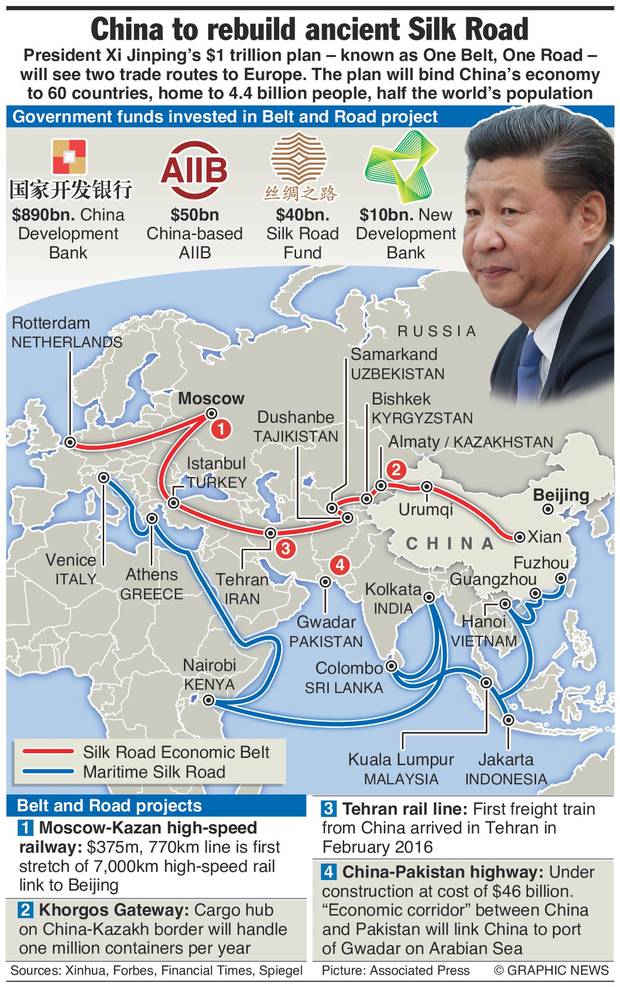
Reference was also made to arrangements currently in place which include British employees working with many Chinese companies world wide on multi-billion pound projects forming part of the “One Belt, One Road” initiative which is designed to revive the ancient silk roads, connecting China with its neighbours and beyond, through investment.
And failure to sign off the nuclear power station agreement could also jeopardise the HS2 infrastructure development. She signed the agreement. But the damage had been done.

Aug 2016: Blow to UK Economy As China Clamps Down on Overseas Investment
Chinese overseas deals worth almost $75 billion were cancelled last year as a regulatory clampdown and restrictions on foreign exchange caused 30 acquisitions with European and US groups to fall through.
A quarter of the value of commercial property deals that were in the market on 23 June, the day of the EU referendum, have since fallen through as investors tread cautiously amid uncertainty around Brexit negotiations. (Himanshu Singh: Citywire)
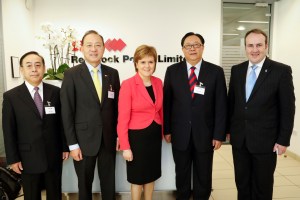
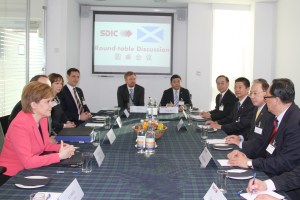
There is early promise that 2017 will be a better year for Britain and Chinese relations. Red Rock Power Ltd has been established in Edinburgh and the Chinese Console wrote to a Scottish newspaper clarifying China’s commitment to inward investment worldwide. Details below:
15 Nov 2016: China-Scotland Inward Investment – Renewable Energy Development
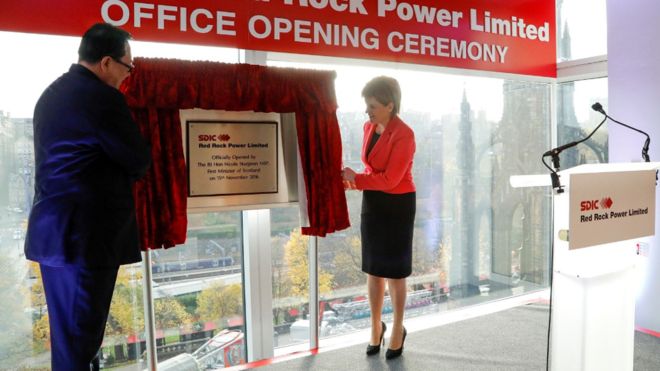
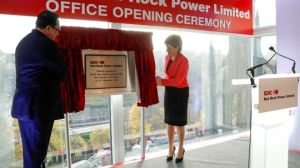
On 15 November, Red Rock Power Limited, a subsidiary of Chinese “State Development and Investment Corporation” (SDIC), officially opened its office in Edinburgh.
Managing Director, Mr. Wang said that with the Chinese President Xi Jinping’s successful state visit to the UK, a “Golden Era” of the relationship has begun, providing a strong support for the offshore wind power cooperation between China and Scotland.
As Scotland has rich marine resources, excellent investment environment, comprehensive offshore operating experience and outstanding professionals, the Chinese side has full confidence in the investment and development of Scottish offshore wind power projects, and wishes to work together with its counterparts to make a role for business cooperation between China and Scotland.
SDIC looks forward to participating in Scottish economic development in more areas for mutual benefit.
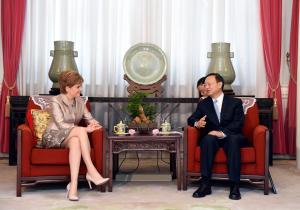
First Minister Sturgeon expressed her warmest congratulations on the office opening of Red Rock Power Limited. She said China is an important partner to Scotland, and the both sides are strongly complementary with each other in economic cooperation. http://www.fmprc.gov.cn/ce/cgedb/eng/xwdt/t1416271.htm
17 Nov 2017: The Chinese Consul General in Scotland replied to an article entitled “Questions over China Deal Remain”, raising doubts about Chinese investment.
At the beginning of this millennium, Chinese investment is widespread throughout the world. For consecutive years, its outbound direct investment (ODI) has kept the third place in the world.
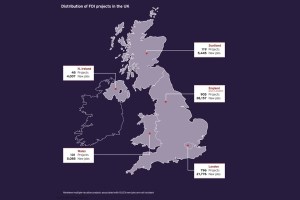
2015 saw China’s non-financial ODI reach a record $118.02 billion and over 30,000 Chinese enterprises operate in 188 developing and developed countries and regions. From January to September this year, its non financial ODI has already overtaken last year’s figure with an accumulative investment of $134.2 billion, up 53.7 percent year-on-year.
As the world’s second largest economy, China has become the second biggest trading partner of the UK outside EU, with the latter as a main destination for Chinese outbound investment.
For the past five years, Chinese investment in Britain has surpassed its combined investment in Germany, France and Italy. A recent example is the significant breakthrough in the Hinkley Point nuclear project with Chinese investment.
Meanwhile, Chinese investors aren’t sitting idle in Scotland with some large enterprises already setting their foot here in the fields of oil and gas as well as renewable energy. This year saw another major Chinese investment in offshore wind farms.
As a major player on the global stage of investment, Chinese enterprises work hand-in-hand with their counterparts in the spirit of mutual respect and trust, achieve wins for both sides and contribute to global economic and social development. In doing so, Chinese investment enjoys a good reputation and warm reception worldwide. (Scotsman 17 Nov 2016)
Wee Wullie His nose is always in the trough

UK Minister of Defence Ratchets Up the Hard Talk – Russia Exercises Its Right of Reply – Very Perplexing for the UK Electorate – Is It All Really Necessary?
Sir Michael Fallon, Minister of Defence
The Last Honest Journalist in the UK
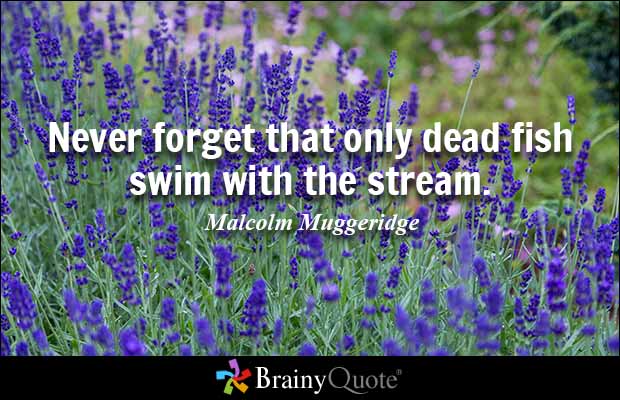
“In the eyes of posterity it will inevitably seem that, in safeguarding our freedom, we destroyed it. The vast clandestine apparatus we built up to prove our enemies’ resources and intentions only served in the end to confuse our own purposes; that practice of deceiving others for the good of the state led infallibly to our deceiving ourselves; and that vast army of clandestine personnel built up to execute these purposes were soon caught up in the web of their own sick fantasies, with disastrous consequences for them and us.” Malcolm Muggeridge.
12 Aug 2015: The British Army is to be sent to the Ukraine to train the Ukraine Defence Forces
The United Kingdom Secretary of State for Stoking up Conflict, Michael Fallon, just announced (during a visit to Kiev that the British Army) is going to be investing more UK taxpayers’ money into training the Ukrainian army, increasing the number of soldiers in the programme from just over 1,000 to around 2,000 by the end of the year. Another Battalion of the Highlanders Regiment is being deployed
But Article 10 of the Minsk II Accords states the following: There will be a pull-out of all foreign armed formations, military equipment, and also mercenaries from the territory of Ukraine under OSCE supervision. Disarmament of all illegal groups.
Judge for yourselves: Is this in compliance with Minsk II? Or is it a flagrant violation of it?
During his visit he told Ukrainian Prime Minister that the visit “reaffirmed the UK’s support”. and went on to say: “Seven thousand people have already died in the Ukraine, right on the doorstep of Europe … This is not a frozen conflict, it’s still red hot. We are not going to turn our back on Ukraine.”
Of course he conveniently forgot to mention that the majority of those 7,000 or so dead people are civilians in the South East of Ukraine (they are Ukrainians too), who died at the hands of the Ukrainian Armed Forces, or the so-called volunteer battalions such as the one led by arch Nazi Stepan Bandera.
Three questions to Mr Fallon:
1. Is the UK Government going to sanction itself for violating the Minsk II Accords?
2. In reaffirming the UK Government’s support for “Ukraine”, do we include those “Ukrainians” who have been shelled relentlessly by the “Ukrainian” Government?
3. Are we going to be training any of those nice chaps with the SS runes?
http://www.theblogmire.com/michael-fallon-and-those-nice-chaps-with-the-ss-runes/
Stepan Bandera’s Ukraine’s irregular force
29 Sep 2016: Uk to Take up Leadership Role of the European Nations Very High Readiness Joint Task Force (VJTF) in 2017
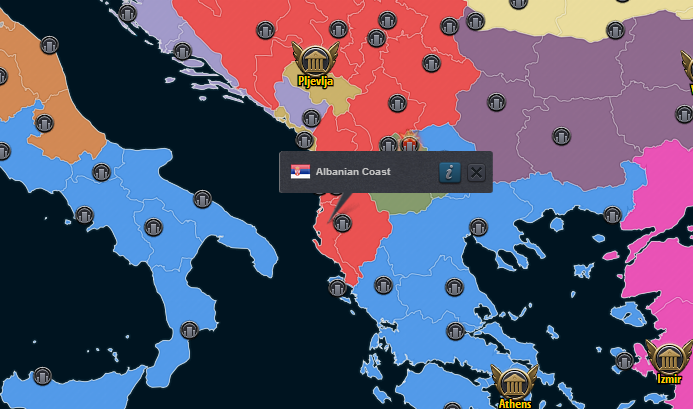
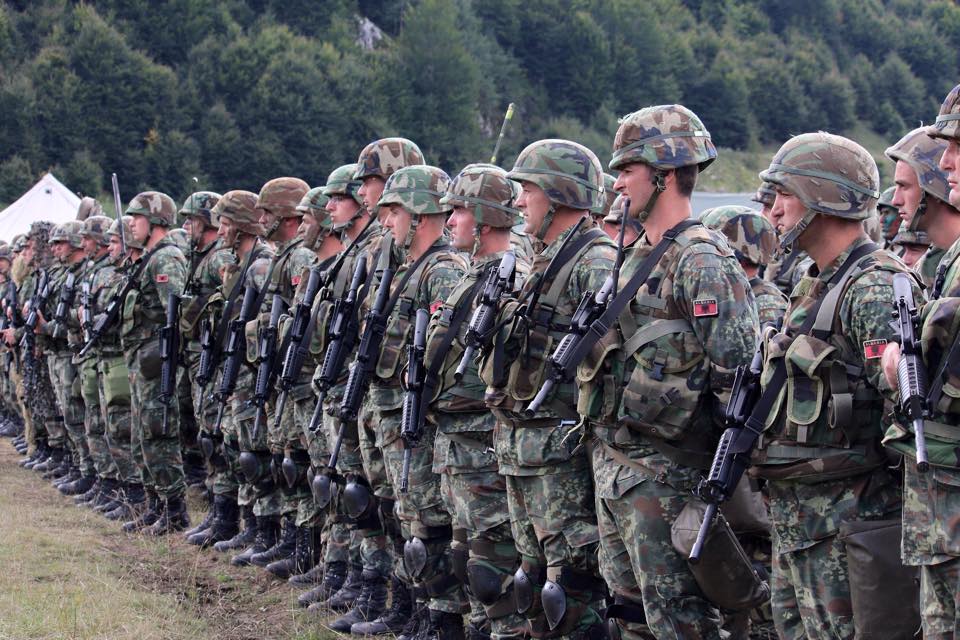
UK armed forces are building a stronger relationship with Albania by working side-by-side on NATO exercises improving mutual effectiveness meeting security challenges in the Balkans.
Soldiers from the Army’s Grenadier Guards and Royal Marines from Kilo Company 42 Commando joined Albanian troops and personnel from the US, Kosovo and Montenegro in Biza in a combined field training exercise.
https://www.gov.uk/government/news/uk-powers-up-albania-defence-partnership
8 Oct 2016: 2,300 UK maritime forces take part in exercise with Albania
An amphibious task group, the Joint Expeditionary Force Maritime comprising Royal Navy and Royal Marines joined Albanian forces for an exercise in the Adriatic and the Gulf, reinforcing the UK’s relationships with allies, ensuring the task group’s response readiness.
the UK force was led by the warships HMS Ocean and HMS Bulwark supported by Navy vessels RFA Mounts Bay and MV Eddystone, a Tailored Air Group made up of Chinook, Merlin, Wildcat and Apache helicopters, and lead elements of a Royal Marine Commando group, Royal Navy divers and Commando engineers.A small number of Army and Royal Air Force personnel also took part.
The Minister of defence, Sir Michael Fallon said: “The contribution of maritime forces as well as two Royal Navy warships underlines the UK’s strength at sea and our strong defence partnership with Albania. The UK is committed to work with Albania meeting security challenges in the Balkans and demonstrates the ability the UK has to deploy highly effective maritime forces at short notice, anywhere in the world.
In addition to this exercise, the UK has over 3,000 military personnel deployed on operations around the world, underlining Britain’s global military footprint.
https://www.gov.uk/government/news/2300-uk-maritime-forces-take-part-in-exercise-with-albania
9 Oct 2016: Russia must be held accountable for its war crimes, Defence Secretary Sir Michael Fallon said today.
Sir Michael said “a much more aggressive Russia” had made the decision to be a “competitor” to the West, as he accused it of murder and war crimes in Syria. He said: “The regime is bombing its own people, its own children, its own women, and it’s being aided and abetted by Russia. There’s increasing evidence that Russia is party to the slaughter that’s now going on. We hoped Russia would become a partner to us in the West, but clearly Russia has decided to be a competitor.
They said that right at the beginning they were going to come in and help us fight Daesh (ISIS), they haven’t done that. They’ve been helping (Syrian president Bashar) Assad bomb his own people, they’ve been flexing their muscles in the Black Sea, they’ve been militarising in Crimea, we’ve seen this pressure on the Baltic states, and they’ve tried to interfere in elections — they even tried to interfere on the Dutch referendum on the Ukraine association agreement.”
28 Nov 2016: Sir Michael Fallon has warned NATO is “prepared to defend” any of its member states amid rising tensions between Russia and the West.
Fallon, said Vladimir Putin has been testing the alliance’s resolve with recent military manoeuvres, which included stationing nuclear weapons in firing distance of Europe. He said Nato had to respond to Moscow and is fully “prepared” to come to the defence of any member state.
He continued: “Testing, that’s what he’s [Putin] been doing. We’ve seen long-range aviation, Russian bombers flying down the edge of our flight region, more submarine activity, manoeuvres on the borders outside the Baltic states and across the border from Poland, more maritime activity in the Baltic, we’ve had this cruiser group sail through the English Channel. So, Putin, I think is testing the alliance and we have to respond.”
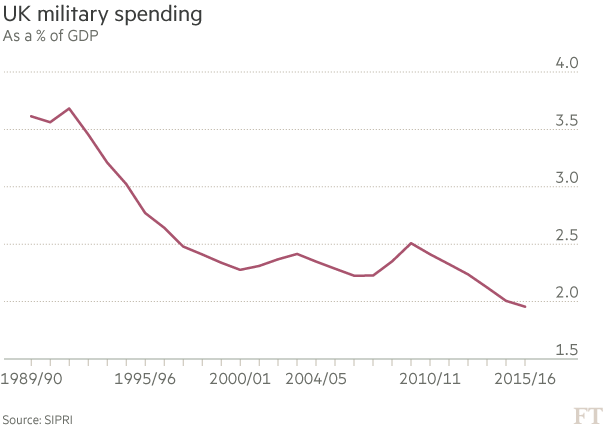
The Secretary of Defence also called for NATO members to increase military spending to meet the guidelines which say nations should spend two per cent of their GDP on defence as the alliance “pulls itself together”.
4 Feb 2017: Michael Fallon – The Nutty Brit
Enter Sir Michael Fallon, the Defence Secretary of the Poodle-in-Chief, the United Kingdom, who insinuates that Russia is launching a campaign of cyber attacks targeting democracy in the west, “weaponizing misinformation”.
Is he nuts? Firstly, Russia is a democracy and has a President who enjoys an 80%+ approval rating . Secondly, Fallon should publish any supporting facts in public for all to see. Thirdly, what is this nonsense about “misinformation”? Misinforming whom about what?
About Misinformation:
Who forged papers falsely linking Saddam Hussein to yellow-cake uranium produced in “Nigeria” (in fact it is from Niger and the document was forged by guess who?)
Who provided “concrete intelligence” to the UK’s bed-master about Saddam Hussein’s Weapons of Mass Destruction (in fact a thesis copied and pasted from the Net and sexed up by Blair and his spin doctors)?
Who was it that invaded Iraq based on shamefaced lies?
Who supported terrorists in Libya that they had listed as proscribed?
Who lied about Syria, claiming that the elected government was using chemical weapons against their own soldiers?
Who supported terrorist groups in Syria who cut the heads off small boys?
Who Staged an illegal coup in Ukraine, backing a motley bunch of fascists, terrorists and murderers.
Who perpetrated massacres of Russian speaking Ukrainians and threatened to clear the Ukraine of Jews?
Who copied and pasted photographs from the Net from two decades before and relating to another country claiming President Assad was murdering civilians (when the photography pertained to a NATO massacre in Iraq two decades before)?
Who conducts 24-hour-a-day cyber terrorist attacks against western publications?
The international community is fast losing patience with the UK and its partner in crime across the Atlantic. It is a fact that the world does not need the UK or USA. They need the World.
If the US and UK wish to do something worthwhile, they could assist other countries resolving the contamination of the Worlds oceans. Today a whale beached itself in Norway trying to die because it had so many plastic bags in its stomach it was driving the poor creature…to suicide. When a whale decides that death is better than the living hell humankind has created, then something is wrong.
So instead of bickering and threatening other nations, the US and UK could do something in tune with the hearts and minds of humankind.. Timothy Bancroft-Hinchey Pravda.Ru
http://www.pravdareport.com/opinion/columnists/04-02-2017/136783-trump_shut_up-0/
Top Army General Warns Minister of Defence Sir Michael Fallon That the UK Armed Forces are Incapable of Defending the British Isles – Yet He Insists on Strutting the World Stage Talking About Military Action Against Russia Reality Check Required
19 May 2016: Defence Minister, Philip Hammond ‘tried to court-martial senior general
General Sir Richard Shirreff, who served as Nato’s deputy supreme allied commander for Europe until 2014, said before standing down from the post the Government was taking “one hell of a risk” by cutting the regular army. In his book ‘2017: The War with Russia’, published today, Sir Richard claims he was summoned by the head of the Army after his remarks in March 2014, who told him the Foreign Secretary wanted disciplinary action against him.
Formal action would have involved a court-martial and, fortunately for (Mr Hammond’s) political reputation — “it also seems he had not appreciated that I reported to Nato and not to him — wiser counsel prevailed. But the damage to our armed forces… had already been done. It’s the duty of senior soldiers engaged with politicians not to think like politicians, not to make life easier for politicians, but to be prepared to lay out the military consequences of political decisions, and I sense that is something that has got blurred in recent years.”
Sir Richard, who was the army’s third most senior officer, said the level of cutbacks to the British military means the armed forces might not be able to deploy an effective force for war. There has been a hollowing out, a cutting away at muscle and damn nearly bone in UK defences which puts us in a very different position from where we were even ten years ago.
I would question whether the UK could deploy a division for war — I think that’s highly unlikely. The notion of deploying a division for war as the UK did in Iraq in 2003 and Iraq in 1991 is frankly almost inconceivable.” Sir Richard also hit out at what he branded “increasingly irrelevant” political leadership and claimed Britain has become “semi pacifist” in recent years. The former general suggests Vladimir Putin’s regime “has set itself on a collision course with the West”.
14 August 2016: Scandalous splurge – Ministry of Defence doubles spending on on ‘experts’ to £91million as it cuts troops to the bone
Whitehall defence chiefs employ over 2,395 pen-pushers (many on salaries over £60K) in its Finance Department, at an annual cost in excess of £75million. It also employs 282 lawyers at a cost to the taxpayer of £26 million.
But last year it still spent another £17.8 million on legal consultants. And £57million on other experts in areas such as “change management.”
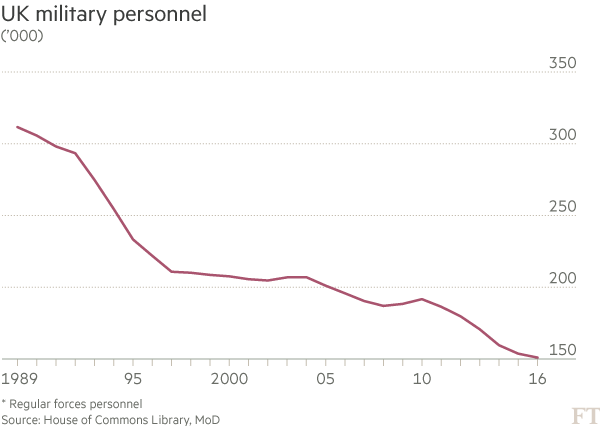
In recent years, the Army has axed 18,000 personnel, the RAF 6,000 and the Navy 3,000. In March the MoD announced it was closing 10 sites across the UK reducing the size of its built estate by 30 per cent.
The chief of the UK National Defence Association, said: “For the MOD to be lavishing so much public money on “consultancy” is scandalous and an insult to all the soldiers, sailors and airmen who have lost their jobs in the last few years in wave after wave of penny-pinching Defence cuts.”
17 Sep 2016: Gen Sir Richard Barrons, Senior General of the British Armed Forces accuses the government of leaving the UK vulnerable to a military attack
General Sir Richard Barrons served as Commander Joint Forces Command, one of the six ‘Chiefs of Staff” leading the UK Armed Forces until April 2016. He was responsible for 23000 people worldwide and a budget of £4.3Bn, delivering intelligence, Special Forces, operational command and control, information systems and communications, logistics, medical support, and advanced education and training across the Armed Forces. His military career includes leadership from Captain to General on military operations in Bosnia, Kosovo, Northern Ireland, Iraq and Afghanistan – often as part of US-led coalitions
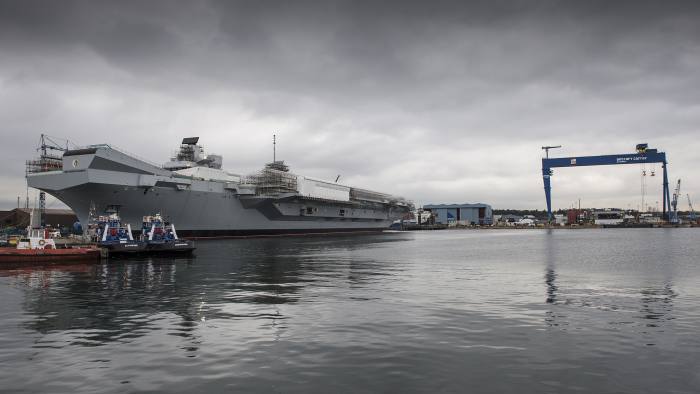
In a long memo (written just before his retirement), to the Secretary of State for Defence, Sir Michael Fallon he warned that key capabilities had been sidelined to cut costs. His warning stated that the government was simply “preserving the shop window” with items “large ticket items” such as aircraft carriers and “capability that is foundational to all major armed forces has been withered by design.”
He continued: “Counter-terrorism is the limit of up-to-date plans and preparations to secure our airspace, waters and territory. Neither the UK homeland nor a deployed force could be protected from a concerted Russian air effort. The army has grown used to operating from safe bases in the middle of its operating area, against opponents who do not manoeuvre at scale.”
He further warned that crucial manpower in all three armed services is “dangerously squeezed and there is a sense that modern conflict is ordained to be only as small and as short term as the UK wishes and is able to afford which is absurd. The failure to come to terms with this will not matter at all if we are lucky in the way the world happens to turn out, but it could matter a very great deal if even a few of the risks now at large conspire against the UK.”
The memo was sent to Defence Secretary Michael Fallon, following the government’s decision to increase defence spending by nearly £5bn ($6.5bn) by 2020-21, reaching Nato’s target to spend 2% of GDP on defence until 2020.
But the vast bulk of the projected increase in defence spending includes the purchase of “big ticket” items, New type 26 destroyers, 2 aircraft carriers (without aircraft or crews), 48 x F35 Joint Strike Fighter aircraft (not available from the USA for some years yet). Replacement of the Trident nuclear missile systems and accompanying nuclear submarines. Conventional forces are reduced to their lowest level ever, including reservists and recruitment is stagnant.
Note:
The F35 joint strike aircraft (US built) is the most expensive combat aircraft ever built for the UK. But payloads are restricted and with a complement of 48 the RAF will only be able to place 6 in the air in any combat situation. In any event the aircraft will not be available much before 2020. Plans are to deploy the new carriers equipped with complements of US aircraft and flyers but the logistics of joint deployment of forces has yet to be discussed and may never get off the ground in which case the carriers will be mothballed for a few years.
Britain has 6 x type 45 destroyers. 4 are tasked to protect the new carriers. The remaining 2 destroyers are needed for the defence of the UK mainland & islands. And the foregoing provides no time for maintenance. The Type 45 destroyers are unable to operate in warm climates for any length of time due to design faults and this restricts their deployment to the North Atlantic. So the navy will need to confine deployment of the new carriers to the same area. Hardly inspiring.
The army has not deployed forces for training in tank warfare since 2003 and skills have been lost or waned. Plans are to upgrade the remaining ageing Challenger tanks but not until other higher priority items are completed. Russia’s new “Armata” tanks outspeed and outgun the Challenger and are equipped with an active protection system that further reduce the efficacy of existing UK anti-tank weapons by over 50%.
The UK’s operates a fleet of 6 x AWACS planes, (providing long-range radar coverage and command hubs for deployed forces). They are hopelessly outdated and require ever increasing downtime for maintenance. It is known that only 1 aircraft is guaranteed to be airworthy at any time.
http://www.ibtimes.co.uk/british-armed-forces-ill-prepared-attack-uk-says-retired-commander-1581819
1 Nov 2016: Army’s new £3.5bn mini-tanks are ‘DEATH traps’ that are only useful against ‘incompetent enemies’ who cannot hit them with heavy artillery
Hundreds of Ajax mini-tanks are due to be supplied to the Army next year with the full order of 600 delivered to the Ministry of Defence by 2024.
But sources have claimed the delivery could be delayed due to complications with a revolutionary weapons system fitted on board each tank, although the MoD has insisted the project will be completed on time and will provide the ‘best’ tanks.
Critics claim the ‘lightly armoured’ tanks cannot stand up to heavy artillery and say the weaponry on board is not sufficient – with the gun having already ‘stopped working’ during foreign trials. Raising concerns about the new tanks, one former defence official told The Times: ‘It is fine if you are operating against incompetent enemies, but if you are up against a peer enemy this thing is useless, it’s a death trap.’
The Ajax armoured vehicles will travel at speeds of up to 40mph and have been touted as the first ever fully digital armoured fighting vehicle in UK military history.
The 589 tanks are said to become the ‘eyes and ears’ of the British Army on the battlefields of the future. The new vehicle will allegedly give the army enhanced intelligence, surveillance, protection, target acquisition and reconnaissance capabilities, and it will be able to defend itself with a highly effective 40-millimetre cannon, which was developed jointly with France.
However, critics claim the cannon has already encountered problems during routine testing in overseas trials and say it is simply not up to the job of defending rival power from countries such as Russia. Referring to an alleged complication with the cannon’s turret – a section attached to the weapon to feed ammunition to the barrel – a source claimed: ‘As soon as the turret was subject to vibration and bumps the [feeding] mechanism failed. ‘My understanding is that there are quite a few reasons why the programme has been delayed’.
In addition, there are reported concerns that the barrel life of the weapon system is too short to function adequately – although the MoD says the new technology ‘can’t be compared to previous technology’. The turret and feeding mechanism on the cannon is being supplied and tested by defence firm Lockheed Martin, while the cannon and ammunition are being developed by BAE Systems and Nexter.

The Ajax tanks are being supplied to the MoD by US defence company General Dynamics, as part of a £3.5bn deal. A spokesman for Lockheed Martin admitted ‘issues did arise in recent trials’ on the weaponry but said ‘early indications point to a component failure and not a design flaw’, The Times reported. BAE systems said the cannon had passed ‘stringent qualification trials’ and said there were no issues with its performance or when it will be delivered. ‘Deliveries to date to the UK Ministry of Defence are ahead of schedule,’ a spokesman said.
The MoD said the project is ‘running to time and cost expectations’ and insisted the tanks were ‘the best in class’. delivering internationally best-in-class standards of scalable protection, reliability, mobility, lethality, and all-weather surveillance. Prototype vehicles are currently being put through a rigorous trials process, with successful live firings taking place in April and more to come. ‘As planned, the Army will take delivery of the first production vehicles in Spring 17.


UK Defence Secretary in waiting
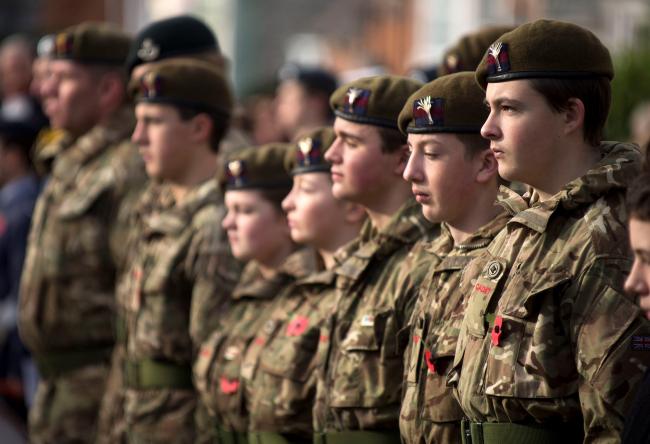
UK Armed Forces Fail to Achieve Recruiting Targets – The Answer – Introduce compulsory Military Training Into the Educational Curriculum and fund Army Cadet Units In State Schools
6 Mar 2015: Children in State Schools to complete “readiness for war” education projects
A government-issued teaching resource which includes a task asking pupils to devise a plan for going to war, is presenting a “sanitised” and “positive” view of life in the armed forces, claims a prominent educationalist and citizenship expert.
In a report joint-issued by campaign groups “ForcesWatch” and Quakers in Britain about the ‘British Armed Forces Learning Resource’ A former director of curriculum resources at the Citizenship Foundation accused the government of trying to boost recruitment through a “biased” piece of literature.
He said: “Its aims, judging from the text, appear to be to present a positive, sometimes sanitised, view of the armed forces, to boost recruitment, and advocate for more combined cadet forces in schools. I believe this is completely unacceptable, and that the document should be withdrawn and redeveloped in such a way that students can be enabled to learn about the role of the military in our society and in national and international affairs in a way which is educationally-sound, balanced, and which respects the rights to freedom of belief of students and their families.”
A government spokesman said that The learning resource had been commissioned by the office of the prime minister with the support of the Department for Education (DfE) and Ministry of Defence (MoD) and its aims were entirely consistent with the government’s strategy to promote a ‘military ethos in schools’.”
The resource pack includes a foreword by the prime minister, five chapters of information about the armed forces, and a series of suggested activities. One suggested activity stated: “Devise a plan for how to go to war. Include how you will get there, what equipment and people you will need.”
http://schoolsweek.co.uk/teaching-resource-asks-pupils-to-devise-a-plan-for-war/
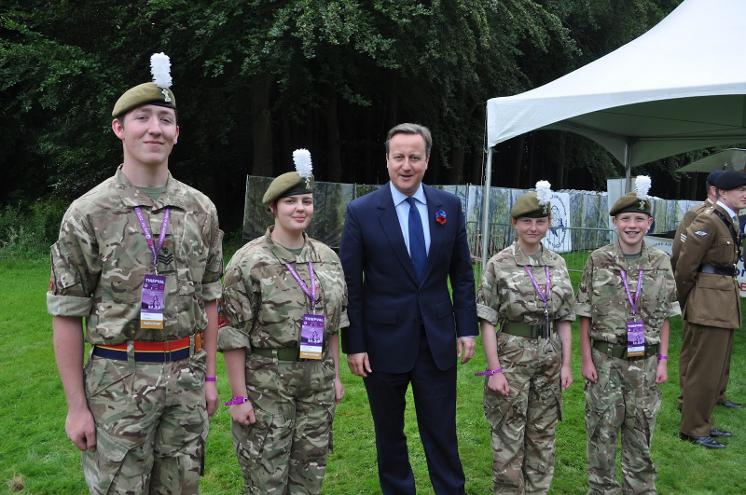
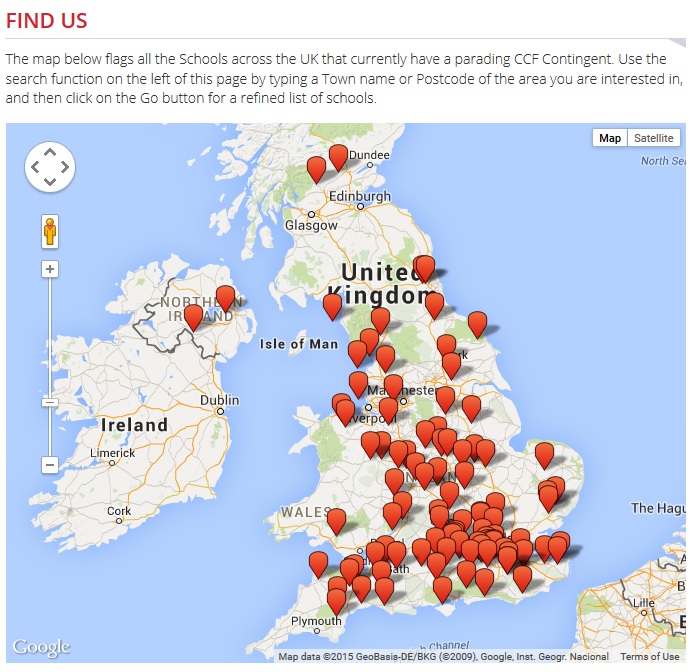
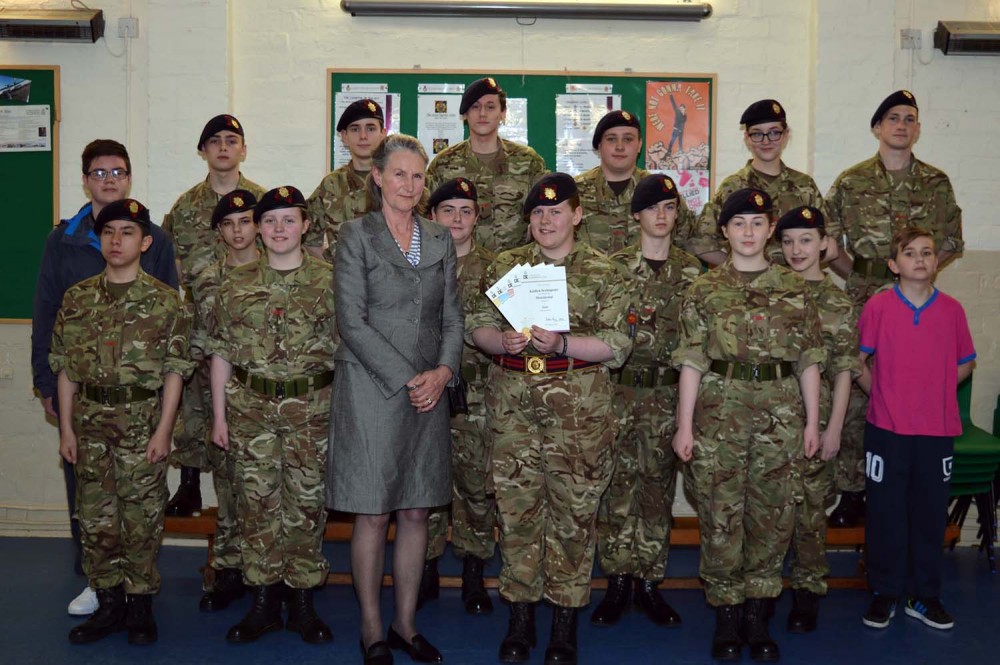
5 May 2016: The number of cadet units in state schools is to increase five-fold by 2020, George Osborne announced in the Summer Budget.
The Chancellor pledged to create cadet forces in 500 state schools. Most would be in “less affluent areas”. According to the Ministry of Defence (MoD), as of April 1 last year there were about 131,000 cadets in the UK, divided between the Combined Cadet Force (42,950), a scheme run through schools, and the Army Cadet Force (41,000).
A Treasury spokesperson said that the money required, £50million would not be diverted from schools but would instead come from fines levied on banks. “In the last government, £450 million was given to support military causes and emergency services. This builds on that repertoire. “This has been billed as a priority for the government and the initiative was launched by the prime minister in 2012, when he said he would increase the number of cadet units. This will make sure there is the same quality of cadet experience across all schools.”
Last year, David Cameron announced a £1 million bursary scheme for state school cadet units, funded with fines from banks caught up in the Libor rate-fixing scandal. On top of this bursary, Mr Cameron pledged £11 million in 2012 to set up a further 100 cadet units in state schools by 2015 under the Cadet Expansion Programme (CEP).
The Combined Cadet Force says on its website: “The CEP is part of the Government’s aim of promoting military ethos in schools; to instil values in young people that will help them get the most out of their lives, and to contribute to their communities and country. “This means pupils developing qualities such as self-discipline, loyalty and respect, strong leadership, teamwork and resilience, which will help them achieve excellence and shape their future.”
Details for the scheme are still minimal. The Summer Budget document states: “CEP £50 million – to increase the number of cadet units in state schools to 500 by 2020.”
The MoD recently faced criticism after Schools Week revealed last month that it had requested access to sensitive data in the National Pupil Database so it could “target its messaging” around military careers.
A spokesperson for “ForcesWatch”, a campaign group scrutinising army recruitment policies, said: “This is a huge amount of money to fund yet more military activities in schools at the expense of universal provision which is accessible to all students.”
4 Oct 2016: Armed Forces cadet units are to be set up in 150 schools
Defence Secretary Michael Fallon announced the first of the new units would be established in Birmingham’s Rockwood Academy to boost efforts to instil ‘British values.’
On his visit to the school, he said: “This used to be a ‘Trojan Horse’ school. “It has been turned around completely and instead of promoting religious segregation, today, as a new academy, it is instilling British values with a school cadet unit that will parade this afternoon, serving the Queen and country.”
He added the Armed Forces were driving opportunity for young people across the country. He said: Look at how the Armed Forces provide the most apprenticeships. Helping people develop skills that benefit our military – setting set them up for better careers in civilian life.I am setting a target to deliver 50,000 apprenticeships over this Parliament.”
Mr Fallon rehearsed attacks on the Labour Party over Trident and wider defence policy – insisting ‘waving the white flag’ would not keep the country safe. He said instead, the Conservative Government was investing in a new generation of equipment and tackling threats from ISIS, Russia and North Korea.
But the shadow defence secretary, dismissed the speech. He said: “Michael Fallon’s speech was a smokescreen, designed to deflect from the Tories legacy of failure on defence. The reality is their devastating cuts since 2010 have weakened and demoralised our Armed Forces, leaving them poorly-equipped, over-stretched, under-paid and too often living in squalid conditions.The Tory obsession with cost-cutting means they are not even using British steel to build our ships and vehicles. ‘They have systematically undermined our industrial communities, ripping up Labour’s Defence Industrial Strategy and spending billions overseas, instead of investing in British jobs and British steel. For Labour, our Armed Forces personnel and veterans will always come first. We will tackle the decline of wages and pensions, the decay of on-base housing and the shocking lack of support for veterans.”
8 Feb 2017: Fallons Nose out of joint as Scottish government rules out Army Cadet Force units in Scottish state schools
Army cadet units will not be permitted to operate in state schools north of the Border, the Scottish Government has confirmed. Ministers said there was no change to the long-standing policy in Scotland that units could not be based at council-run schools.
The intervention came after UK defence minister Sir Michael Fallon suggested he wanted more units to be allowed in Scotland during a discussion about a pilot project at Maxwelltown High School, in Dumfries (Mundell’s seat of power).
A Scottish Government spokeswoman added: “There is no proposal being progressed to introduce a UK Government scheme to establish cadet units in Scottish schools. “The pilot at Maxwelltown High School is significantly different to the UK Government scheme, which we have made clear is not suitable for introduction in Scotland’s schools because it does not contribute to the curriculum. Instead of separate cadet units, our approach is focused on how voluntary youth organisation the Army Cadet Force can contribute to the Scottish curriculum as part of our national youth work strategy.”
Note: Forces recruitment is at an all time low and shows no sign of recovery. The introduction of cadet units in state run schools is advance planning by Fallon who will be hoping the measures will produce an increase in recruits. Hence the reference to 50,000 apprenticeships”
The Libor Scandal – BBC Panorama Withheld The names of Those Responsible – Read My Report For the Full Facts Published 2 Months Before the BBC
Time For Scotland To Escape the Madness
The outcome of the next UK general election is already established. The Tories will be returned to power and Scots will be subjected to rule (for another 5 years) by a government it did not vote for. There is so much to be done to progress Brexit to the conclusion desired by the Tories and anything, anyone or any organisation that stands against their intent will be destroyed.Scotland’s final opportunity for independence needs to be grasped and a campaign put in motion before the spring of 2017.
In support of the foregoing I looked back at the banking scandal that brought the World to it’s knees and the many years of austerity forced upon Scots by Cameron, Osborne and the financially well off who were determined that the massive financial deficit would be recovered from the many, (who had done nothing wrong) rather than the financial gangsters that had created the problem.
A couple of high profile Bankers, (Bob Diamond and “Fred the Shred” Goodwin) were forced to retire, with the promise of huge personal pension schemes, coupled with obscene lump sum final settlements. But not one Banker faced court proceedings.
Instead the Banking system continued very much as before (as though nothing untoward had occurred) . Obscene Bonus schemes were retained and further extended so that Bankers would be assured austerity would not be applied to the financial services.
If not the bankers and the rich this left the burden of financial restraint with the Chancellor of the Exchequer, George Osborne to resolve. Which he did, borrowing many billions of pounds from nameless but very rich institutions, who had avoided the financial crash!!! Payback was charged to the UK electorate so that the many settled the debts of the rich. Unfair.
The remaining part of this report provides historical data proving that the financial excesses of the recent past were no accident and they will be repeated again and again by a financially corrupt electoral system that allows a bunch of spivs to exercise authority over Scots who deserve better governance.
.
30 Jun 2012: Cameron allies linked to City firms are under scrutiny over interest rate fixing
Senior Tories were dragged into the interest rate-fixing scandal as fresh evidence emerged that the banking industry denied there were any problems with “the integrity” of Libor five years ago.
It has been revealed that the Conservative deputy chairman, Michael Fallon, is a board member of a leading brokerage firm that dominates the rates market and which has been asked to co-operate with the Financial Services Authority’s investigation into malpractice across the City. Fallon is a close ally of David Cameron and a senior member of the Treasury select committee that will question the Barclays chief executive, Bob Diamond, this week, prompting demands from Labour that he should declare an interest.
The Prime Minister continues to resist calls from Ed Miliband for a Leveson-style inquiry into rate-fixing. The Government is to set up an “urgent independent review” into Libor (the London inter-bank lending rate), but Labour continued to press for a judge-led inquiry. The review will consider the future operation of the Libor rate and the possibility of introducing criminal sanctions, a Treasury source said.
Class-action lawsuits are being filed in the US by plaintiffs that held financial products that depended on Libor. Any lawsuits that arise are likely to dwarf the fines that Barclays has already paid, perhaps running into the tens of billions across the industry. The IoS can also reveal that the Bank of England was aware of concerns over Libor five years ago, and discussed it in at least two meetings with representatives of some of the City’s biggest financial institutions.
Fallon, the MP for Sevenoaks, has been a director of interdealer broker Tullett Prebon since 2006, standing down in 2010 when he ran unsuccessfully for chairman of the select committee, before being reappointed that year. Tullett Prebon is not under full investigation by the FSA into manipulation of Libor but has responded to “requests for information”. A City source close to the investigation said it was “extremely unlikely Tullett Prebon would not be investigated” at some point, and sources at the firm, asked if employees could have engaged in wrongdoing, said they could “never say never”. There is no suggestion of wrongdoing on the part of Fallon or the company. In a statement the firm said: “Tullett Prebon, like probably all firms in the City, has been responding to requests for information from the regulators. To date, we have had no cause to suspend or otherwise discipline any employee in connection with this inquiry.”
Labour said the Tory deputy chairman had “serious questions” to answer over his role at the firm, given his key role in Parliament’s inquiry into the rate-fixing scandal, which is thought to extend far beyond the wrongdoing at Barclays. Labour MP Simon Danczuk said: “Across the banks there are serious questions about who knew what and when and that must include the deputy chair of the Conservative Party. We have to get to the bottom of the Libor fixing scandal, and the Government must also agree to calls by Ed Miliband and Ed Balls for a proper independent inquiry into the culture of banking.” The questions over the role of Fallon followed the revelation that one of the Prime Minister’s closest advisers, the former Tory party treasurer Michael Spencer, is under scrutiny by the FSA. Mr Spencer’s brokerage firm ICAP is one of a number of institutions alleged to have helped to manipulate bank interest rates while he was treasurer of the Conservatives.
Mr Cameron said yesterday that he needed to “think this through carefully” whether there should be a judge-led inquiry into the Libor scandal. Fallon and Mr Spencer are not the only Tories with close links to the City, prompting concerns that the party is not enforcing tough action against the banking industry. Francis Maude, the Cabinet Office minister, was paid by Barclays to sit on its Asia-Pacific advisory committee between 2005 and 2009. A spokesman for Mr Maude said last night the minister was “absolutely not” aware of any wrongdoing at Barclays and that the committee met “three times over a couple of years”, was purely advisory and had no executive function. Fallon declined to comment.
Court documents filed in the US accuse Bank of England officials of failing to act on questions about “the integrity of Libor” raised during meetings of the Money Markets Liaison Group as early as 2007.The meeting was chaired by the BoE deputy governor, Paul Tucker, and attended by officials from institutions including at least seven that have since been named in Libor investigations.
The British Bankers Association assured group members of its “quality control measures”, and said that “they speak to contributing banks regularly.” The decision not to investigate further effectively enabled British bankers to go unchecked for more than a year. The FSA finally joined the investigation into Libor manipulation in October 2009, after other countries had already launched their own inquiries. A Bank spokesman said last night it was “nonsense” to suggest it had been aware of any Libor-fixing in 2007 or 2008.
The Conservative Party Connection
Michael Fallon: Deputy chairman of the Conservative Party, close ally of David Cameron and a reliable defender of the Government on the airwaves, the 60-year-old is a board member of Tullett Prebon Plc, a leading brokerage firm that dominates the rates market and which is being asked to co-operate with FSA inquiries. He resigned his directorship in the days after the coalition was formed, but was reappointed in September 2010. He receives a quarterly fee of almost £7,000 for 20 hours’ work.
George Osborne: In a statement to the Commons, the Chancellor of the Exchequer described the Libor scandal as a “shocking indictment of the culture at banks like Barclays in the run-up to the financial crisis”. But at the time that brokers were swilling Bollinger and fixing rates, Mr Osborne was trying to convince the City that he was not some callow newcomer but a chancellor in-waiting.In 2007, bruised by hostile briefings that he wasn’t up to the job, he made strenuous efforts to court the City, through the Conservative City Circle. This week he condemned his opposite number, Ed Balls, for failing to regulate the banks, but in 2007 he backed a Tory policy report written by John Redwood which called for deregulation of the mortgage market.
Michael Spencer: Spencer is a former treasurer of the Conservative Party. The 57-year-old, a close friend of David Cameron, is head of ICAP, a brokerage firm alleged to have helped manipulate bank interest rates while he was also Tory party treasurer from 2006 until October 2010. ICAP is being investigated by regulators over claims the Libor lending rates were rigged. He remains chairman of the Conservative Foundation, a body launched in 2009 for the party to receive legacies free of inheritance tax. He was among a list of party donors to have enjoyed “kitchen suppers” in the PM’s Downing Street flat.
Francis Maude: The Cabinet Office minister is a key Tory moderniser. He was a member of Barclays’ Asia-Pacific Advisory Committee for much of the boom from 2005. In an entry in the Register of Members’ Interests, he said: “My duties were to attend committee and other meetings by phone or in person; other advice and consultation by e-mail.” He received payment of £9,230.23 after tax for 15 hours’ work in 2009, and resigned at the end of that year. He joined the coalition government in May 2010.
2012: The Wheatley Report
David Cameron (acting on heavily publicised issues in the UK relating to the credibility of LIBOR) refused opposition proposals to appoint a Judge Led inquiry and instead commissioned Martin Wheatley, a managing director at the Financial Services Authority (FSA), to prepare a review of the way LIBOR was managed.
The outcome of that review (the Wheatley Review) was published in 2012. It proposed a ten point plan which was accepted. Key recommendations accepted: “https://www.gov.uk/government/uploads/system/uploads/attachment_data/file/191762/wheatley_review_libor_finalreport_280912.pdf”
Just about every major bank worldwide was caught in the net of price fixing scam of LIBOR. The cost to investors, home owners, mortgage holders was incalculable but exceeded many billions of dollars and brought about the Worlds financial crisis. Fines on banks are still being processed but exceed billions of dollars US.
In the UK only one LIBOR rate fixer ( middle management level) has been tried and convicted. The bankers got away with the biggest scam in history thanks to the Tory government.
2 Jul 2015: Financial Conduct Authority (FCA) – Osborne Strikes again
Having produced an excellent report it was no surprise when Martin Wheatley was asked to take on the leadership of the FCA charged with getting to grips with the banks, establishing order from chaos ensuring banking business in the UK met with the highest standards possible. He set about the task with purpose and quickly brought bankers to heel. But Martin had made enemies in the banking system and soon paid the price with his job. He was advised by Osborne that his 3 year contract would not be renewed. Having none of it Martin resigned his post.
In a parting statement Martin took a coded swipe at Osborne, saying that he had “unfinished business” and that the job of tidying up investment banking was far from complete. He went on to express disappointment that George Osborne had refused to renew his contract as chief executive of the Financial Conduct Authority,(FCA) despite the authority levying billions of pounds in fines and making top-level attempts to reform the culture of trading floors.
He also made it clear that the culture of investment banking remained largely unreformed despite several years of scandals. He said: “The top of organisations have understood the environment . . . but I still think it is quite hard to deliver. It’s tough and it takes time.
As we saw with FX [the foreign exchange-rigging scandal], there are some parts, the wholesale parts of financial services, where it is actually not yet seen as relevant. There’s still a view that: ‘Well, that’s a caveat emptor market’ and big financial players trading with one another. That’s the area that has much further to go.” Mr Wheatley’s damning appraisal of the City will pile further pressure on the FCA and Mr Osborne as the search gets under way to recruit a successor for the handover in September.
The chancellor will have the final say on any hiring decision but will want to avoid the perception that he has replaced a chief executive known for taking a hard line on wrongdoing with one more sympathetic to the big banks.
John Griffith-Jones, the chairman of the FCA, declined to say whether he had supported Osborne’s decision. “The appointment, or the question of renewal of Martin’s contract in March, is a decision for the chancellor. It is the job of the board, in particular the chairman, to run the organisation,” he said.
Wheatley left little doubt that if he had remained in charge of the FCA the banking industry would have faced no respite in his tough approach to regulation. He had considered banning some firms from trading as an alternative to fines, he said. “The use of trading bans, or, in our terms, ‘variations of permission’, is something we actively look at each time we feel that we’ve got to take an action. Those variations of permission can be removing somebody from part of the market, or a significant part of the market, for a period of time,” he said.
Wheatley’s remarks came after the FCA’s annual meeting, where members of the public questioned senior executives on the regulator’s actions. At a fiery session in central London, Mr Wheatley and his team faced repeated criticism for their handling of the compensation process for victims of the mis-selling of interest rate hedging products.
Wheatley defended the FCA-led redress scheme, pointing out that nearly £2 billion had been paid back to small and medium-sized businesses. Several small businessmen argued that no bank had been fined despite overwhelming evidence of the systematic mis-selling of tens of billions of pounds of interest rate swaps to customers who did not understand what they were buying.
Wheatley later said that banks could still face action from the regulator for their behaviour. “We haven’t ruled out that there will be actions taken at some point,” he said. It was this statement that brought about his downfall. There would be no further pursuit of Bankers so long as the Tories were in power at Westminster.
6 January 2016: It is shamefully clear now that Osborne has let the banks off the hook
The banks are no longer in the doghouse – or, at least, not so far as the government is concerned. Never mind that their manipulation of financial markets against the interests of their customers is still fresh in the mind and that the courts are handing down prison sentences for those found guilty. Forget all that stuff about high-street banks mis-selling financial products to their customers, you and me in other words, for which they have had to set aside a colossal £26bn to meet claims. It is, apparently, time to move on. Of course, there has been no announcement as such. This is a case where you look at the facts and draw your conclusions. For me, the final proof came with this week’s announcement by one of the City’s two regulators, the Financial Conduct Authority (FCA), that it was abandoning its plan to inquire into the culture of banks.
Compare this withdrawal with what this same regulator said less than a year ago about the importance of culture: “Our Risk Outlook 2014/15 noted how important embedding cultural change would be to regaining the trust of consumers, as well as achieving our objectives. This remains true for the coming year and the foreseeable future… We continue to address conduct issues arising from failures in firm culture and are committed to ensuring this momentum is not lost.” Now this commitment has gone. How did this come about? The most plausible starting point is April 2015. With just a few weeks to go before the General Election, the giant bank HSBC announced that it had ordered a review into whether it should move its headquarters out of Britain, thus damaging London’s reputation as a global hub for finance and investment.
The Chancellor of the Exchequer, George Osborne, cannot have liked the sound of this. Threatening to move domicile is frequently used by large international companies as a way of bringing pressure to bear on national governments. Just seven weeks later in a Mansion House speech in June, Mr Osborne made plain his discomfort. He said he wanted Britain to be “the best place for European and global bank HQs”, adding: “It’s in our national interest to be so.” At the same time, the door to the doghouse was to be left open: “Our financial services industry in Britain has, in recent years, been seen as part of the problem – now it must become part of the solution… Now we can raise our ambition and ensure we have the best, and most competitive, financial services in the world”.
Except that the Chancellor himself doesn’t have the key in his own pocket. It is the FCA which opens or closes the door. And under its tough chief executive, Martin Wheatley, the prospect of the lock being turned seemed remote. So Mr Wheatley would have to go. Thus seven weeks later, 17 July, Mr Wheatley was sacked. Osborne said “different leadership” was needed to take the regulator forwards. “Britain needs a tough, strong financial conduct regulator.
The government believes that different leadership is required to build on those foundations and take the organisation to the next stage of its development,” he said. In proceeding thus, the Chancellor had had a stroke of luck. For under Mr Wheatley’s leadership, the FCA had committed a serious error some months earlier. It had deliberately leaked a story to the Daily Telegraph stating that the regulator was planning an inquiry into 30 million pensions and savings policies sold from the 1970s to 2000 with a focus on high fees and bad service.
Within seconds of the stock markets opening, shares in insurance companies crashed as shareholders took fright at the likely damage to their investments. The regulator took 15 hours to respond, in a reaction deemed “seriously inadequate” in an independent report. Osborne immediately declared himself “profoundly concerned” and described the events as “damaging both to the FCA as an institution and to the UK’s reputation for regulatory stability and competence”. From then onwards Mr Wheatley was at the mercy of the Chancellor.
Meanwhile, Osborne had opened another door to bankers – the door to his own office. Since the 2015 General Election, he has privately met with representatives of the banks five times. This compares with no meetings in the same period of 2014. And as the bank chiefs walked into his office, they will have known that they had a lot going for them despite their poor treatment of customers and brushes with the law. They would be speaking to a Chancellor who, reassuringly, believes in deregulation, who is comfortable with a minimum state and who wants to keep down levels of income tax.
They would know, too, that the government couldn’t be complacent about the City’s future. For there are constant threats from Brussels as well as competition from financial centres in the East.
So here I try to put myself into the bankers’ shoes and I imagine they say to Osborne something like this: “Look, we both really want the same thing. You want to keep the City as the world’s pre-eminent financial centre. And we want to feel comfortable doing business here. That means, to be frank, lighter regulation and lower taxes. So we can do a deal, surely?’
The Chancellor seems to have listened and the FCA seems to have caught the drift. So at the same time that it called off its inquiry into bank culture, it also announced that it would be taking no formal action against HSBC following indications that the bank’s Swiss unit had been giving customers a helping hand with their tax liabilities. So the door to the doghouse swings on its hinges. The bankers are no longer there and will not be returning any time soon.
Aberdeen Needs an “Untouchables Unit” to Free it From the Financial Mismanagement of the Incompetent Con/Lab City Council

The Newly Built Events Complex Aberdeen (TECA)
Aberdeen’s replacement exhibition centre, built using finance borrowed from the London Stock on a long term loan, cost £425m to build has been devalued by KPMG and is now worth only £318.7m. A whacking great financial loss from which it doubtful the council will ever recover.
Alex Nicoll the leader of the SNP on the council, said: “It is incredibly concerning that the value of only recently completed property investments have dropped so much in such a short time.
Council co-leader Douglas Lumsden said: “In respect of valuation, it is important citizens look at the council’s total value of assets which the accounts show the council’s net worth is £1.21bn.”
Comment: But the council owe the city of London £1bn

Aberdeen (there is a mafia in Aberdeen) its called “lab-Con”
The city has returned the labour and or Tory party to power in all but one election in the last 20 years and is very much a Unionist party stronghold. In every circumstance domination of the electorate for an extended period of time by parties of a particular leaning leads to an abuse of power and this is very much the case in Aberdeen where the Unionists reign supreme.
In the May 2017 election it was hoped that voters would seriously consider the appalling record of financial and administrative mis-management, abuse of power, rejection of the wishes of the majority of city residents expressed in the Union Gardens proposal referendum and many other insults visited upon voters. There was a genuine hope that the SNP would be given a chance at local government but, yet again the Aberdeen electorate decided to ignore the misdeeds of the City Councillors and returned the Unionists to power.
2005 The Italian Mob (and there is a real Mafia Presence)
Antonio La Torre and Michele Siciliano, brothers of Augusto La Torre, the former head of the powerful crime clan from Mondragone and influential members of the Camorra Mafia, came to Aberdeen in 1984.
They opened the Pavarotti and Sorrento restaurants, expanding into health and fitness centres, import-export food firms, pubs and betting shops in Aberdeen, Dundee, Stirling, Edinburgh, Glasgow and Inverness. They and their lieutenants were also involved in dealing in luxury cars.
Their many property deals included buying city council land (College Street) for peanuts, building a car park then selling it on for a massive profit purchasing a city centre building, on the cheap and converting it into flats gaining a six-figure profit.
Expanding their empire, they also set-up a number of phantom companies, in Scotland and Italy enabling bank loan credit guarantees’ providing the finance necessary to purchase building materials, plant machinery, office equipment, computers and huge amounts of wine, pasta and olive oil and other produce from Campania for use in restaurants in Aberdeen and throughout Scotland.
But as soon as the phantom firms got the cash, they were bankrupted and the money was diverted into other accounts. They were both extradited to Italy in 2005 to serve long prison sentences. Disposal details of their massive property and business portfolios has not been released but much of it was sold off before extradition procedures were complete. Much more information here:
(https://kennyfarq.medium.com/a-brush-with-the-neapolitan-mafia-in-aberdeen-e43cd6fdb874)

College Street Car park
2006: Audit Scotland investigated council property sales and identified major deficiencies bordering on fraud.
The report was passed to the Police Fraud Squad for further investigation. They have not yet reported back.
“The most serious comment by independent assessors related to the College Street car park where they concluded that proceeds from sale should have been double the £1.8 million achieved. They concluded that the deal struck by the Council was ‘extremely poor, bordering on negligent’.
(http://www.audit-scotland.gov.uk/docs/local/2008/nr_080430_aberdeen_property.pdf)

2007 Newly Elected SNP and Liberal Democrat City Council Ask Police to Investigate Potential Fraudulent Sale of Council Property
A police investigation has been ordered into potential fraud surrounding transactions in which Aberdeen city council sold some of its assets for up to £5.5 million below their market value.
Grampian Police confirmed it was called in by the new Liberal Democrat and SNP administration after senior officers requested details of transactions up to 2006.
And a damning report, published by the accounts watchdog, Audit Scotland, revealed “serious deficiencies” in a series of deals in which six council-owned assets were sold for £3.7 million when their maximum potential value was £9.2 million.
The transactions included the sale of land at the Seafield Club and allotments for £685,000 when the maximum potential value was £2,930,000, and the sale of the College Street multi-storey car park for £1.8 million when its potential value was £3,630,000.
The council faces a special hearing by the Accounts Commission into its finances. Read the full blog:
2008 Final Audit Scotland Report Findings:
Over the past three years expenditure by the Labour City Council has been significantly in excess of its budget, giving rise to concern over diminishing reserves leading to the need for a substantial package of savings. Councillors accepted the views of the Controller of Audit, who also identified a reluctance, on the part of some to fully appreciate of the seriousness of the financial difficulties the Council faced.
In regard to the report by the Controller of Audit on the property sales investigation, the Council accepted there were significant procedural shortcomings which would need to be addressed as a matter of priority.
The incoming SNP/LibDem Council was forced to implement a 4 year programme of austerity measures designed to ensure a balanced income and expenditure.
In the 2012 election voters punished the SNP/LibDem Council for imposing stringent cuts over the previous four years and returned Labour/LibDem council to office. Voters have very short memories!! The need to make the cuts was forced on the SNP/LibDem Council by the Auditor mitigating the financial mismanagement of the Unionists.

Redeveloped Aberdeen City Chambers (projected cost £20m Actual cost £140m)

2009: Union Square Development
The College Street car park (built on ground) purchased from the City Council for peanuts, by the Italian brothers, who sold it on for a large mark-up and a car park build, was resold, to Hammerson PLC forming part of the £250 million Union Square regeneration project in the heart of Aberdeen.
The development was built by Miller Construction and included multiple shopping units, a civic square, multi storey car parks and a hotel with conference facilities.

In May 2012 Labour formed a coalition Council Administration. Crockett was elected Council Leader.
Not long after taking charge the Unionist conducted a referendum seeking the electorate’s views on a city centre development. The outcome failed to return a “no” vote and was set aside by Barney Crockett who said “I am not bound by the views of the voters. Aberdeen Council business is restricted to local policy issues and these are not subject to the whims of referenda.”
In 2014 Crockett circulated a Unionist political letter, (using Council finance) promoting “Better Together” rejecting independence. It said: said, “Aberdeen is stronger now and will be stronger in the future – as a partner within the United Kingdom.”
He failed to note that Aberdeen’s safety, (from the policies of Westminster politicians) is guaranteed by oil and energy whilst the rest of Scotland gets weaker suffering the ravages of increasingly right wing governments, based in the city/state of London whose only interest in Scotland is the revenue it gathers from its colony to the North
Barney Crockett epitomizes everything that is wrong with the Unionists. The public votes but the Con/Lab council decides. It is their way or the highway. What a sad city led by a bunch of self serving bunch of incompetent opportunists. Read the full report:

Barney and friend Unionists together in Harmony
2014: Mafia Tightens Its Grip on Aberdeen
Aberdeen is a “mafia Stronghold” for a notorious crime syndicate which controls swathes of the city’s economy, according to a new report from the European Union organisation “Transcrime” who advised that the Naples-based Camorra crime organisation, linked with many killings, in Europe maintains a stronghold in catering, retail, transport finance and property sectors in Aberdeen.
An Unconcerned Barney Crockett said; “I think the attraction of Aberdeen is that they can swap over a lot of (laundered) money without trace, because Aberdeen is a thriving business environment. But I am totally confident that there is no involvement in public works of any description.”
Comment:
Dream on Barney!!!What about the sale of city property at knock-down prices to Antonio La Torre and Michele Siciliano.
http://www.scotsman.com/news/mafia-tightens-its-grip-on-aberdeen-1-3516206


Alistair Darling
Gordon Brown
Fred the Shred Goodwin
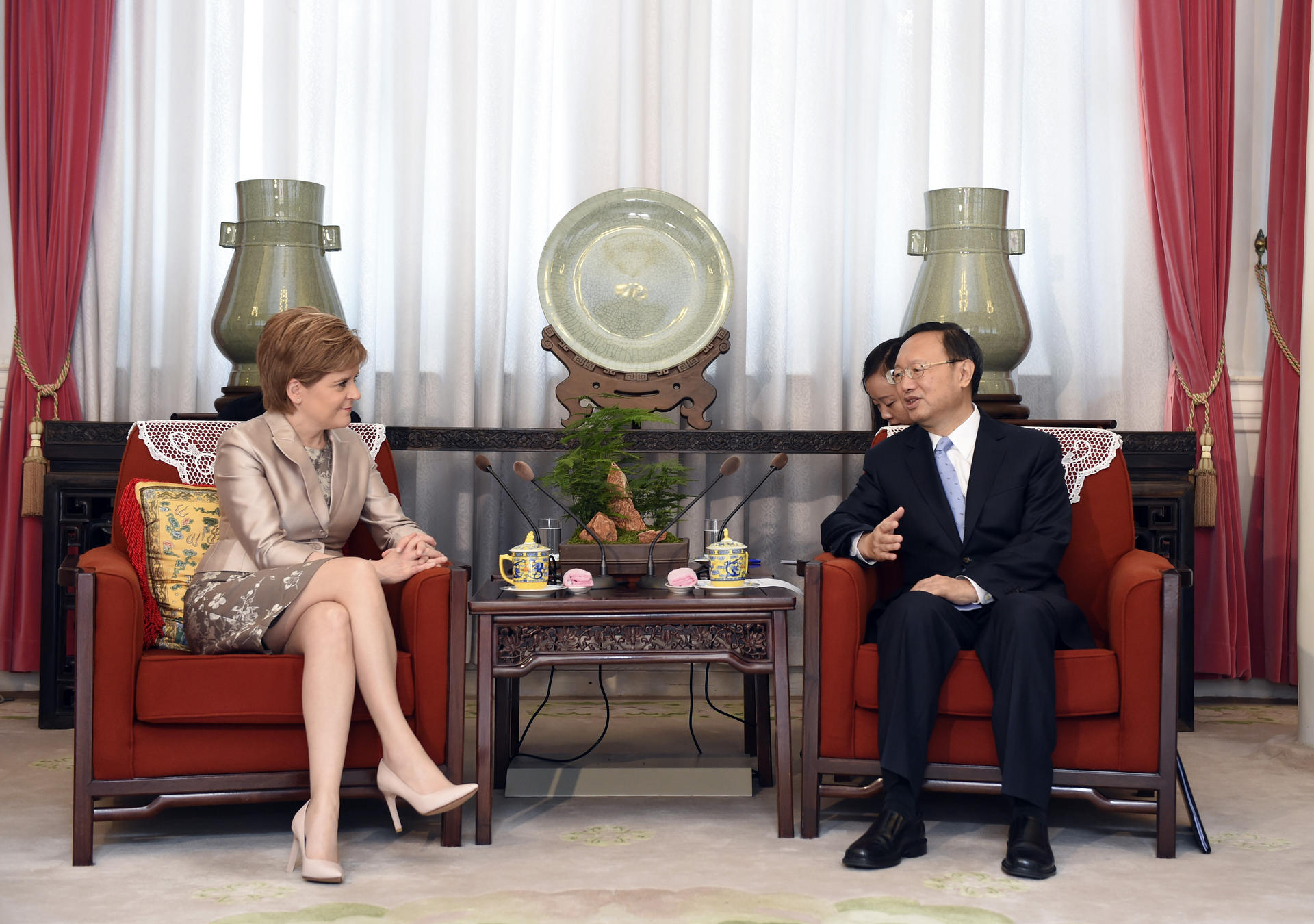


Albanian army unit
Albanian Soldier
Albanian airforce