tory-mp-for-gordon-colin-clark-the-multi-millionaire-elected-by-deluded-voters-in-the-north-east-of-scotland-promised-much-delivered-little


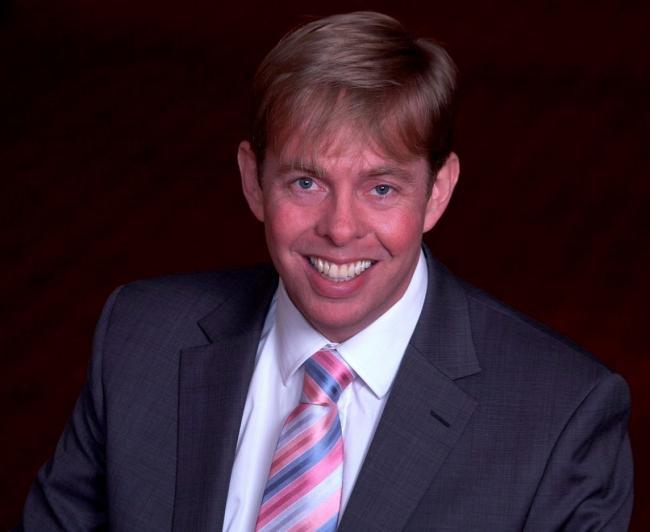
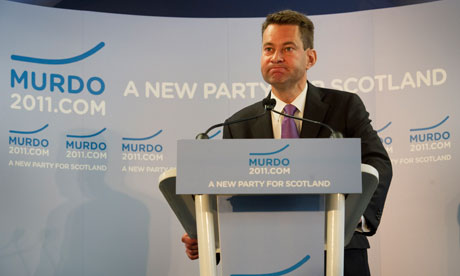
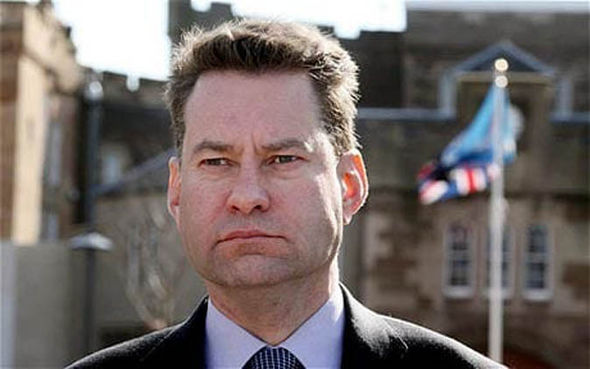
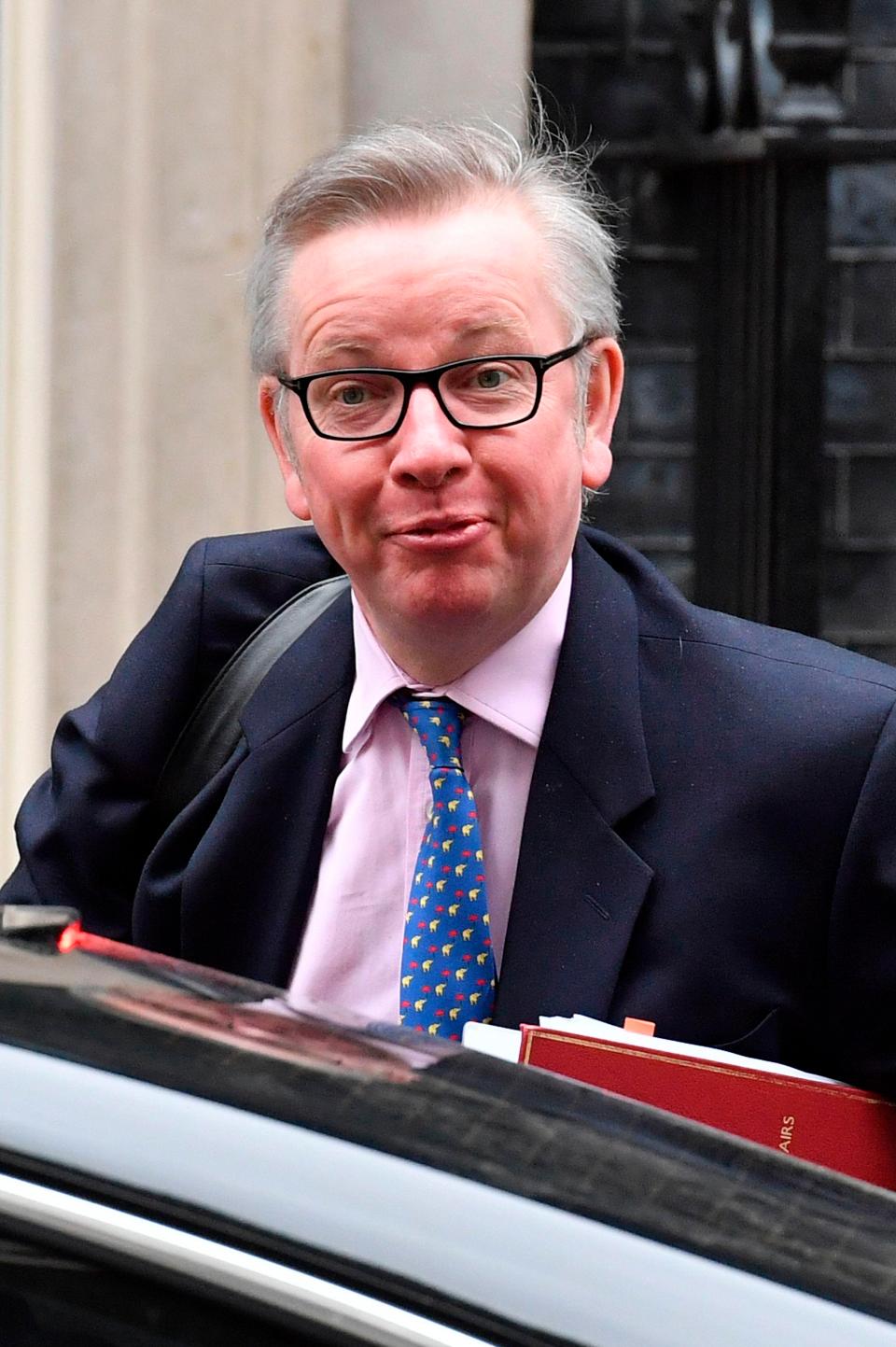
Colin James Clark

Multi-Millionaire Colin James Clark was born 20 May 1969.

His father Robbie owned a 1000 acre+ farm and three cottages (rented out) near Auchterless, In 1990.

His early career in agriculture to him to Lincolnshire where he developed an interest in organic farming of products for direct sale.

Circumstances forced his return to Scotland in 2005 and his acceptance of the task of overall management and development of the farming business of Thomastown Farm and Cottages when his brothers expressed a preference to pursue careers not involving farming.

He is the owner of Finask House a Category B Listed property in Daviot, Aberdeenshire, valued at around £1.5 million.


Business and Financial interests outside politics: R&M Clark Farmers

Selling finished beef cattle and store lambs are the main enterprises with annual purchase of 1,400 Continental cross steers and 1500 store lambs.

The aim of the business is to pile on the beef over a period of 60 days then get them to the market.

The Scottish taxpayer provides substantial financial support to the business by way of farming subsidies. In the years 2015/2016, the enterprise was advanced a total of £213,129.00p


Nessgro Ltd:

Clark shares a controlling 50% interest and is Chairman of Inverness based Nessgro Ltd (annual turnover £1.5m and growing) which specializes in organic root vegetable production on 120 hectares of land.

It has its own wash factory and packhouse which allows a direct to customer sale business.

The company was awarded the prestigious Grower of the Year in 2007 and in 2013 won the Marks and Spencer’s Scottish produce category as well as their Champion of Champions Farming for the Future Award.

The Scottish taxpayer provides substantial financial support to the business by way of farming subsidies. In the year 2016, the enterprise was advanced a total of £134,049.00p


 There is no Scotland claim

Edith Davidson, from Innerleithen, wrote to Marks & Spencer after gaining information that the high street giant was labelling Scottish whisky as British.

She spoke of her shock after Marks & Spencer responded telling her to respect the result of the 2014 referendum and accept that Scotland was now “a part of the country known as England”.


Shareholding (more than £70K) – Clark’s extensive investment portfolio and pensions are managed by Balmoral Asset Management Ltd (Edinburgh)

Shareholding:

Sciemus Ltd; technology and insurance

The Lloyd’s insurance consultancy operating in the space, power, renewable energy, cyber and mining industries, has recently formed an investing partnership with offshore Bermuda registered HSCM Bermuda.

Maven Capital Partners UK LLP (Maven)

Maven Capital Partners is an independent alternative asset manager, with over £415m of assets under management.

Maven was formed in 2009 after a buyout of the Aberdeen Asset Management private equity business and operates from a nationwide network of regional offices.

They arrange finance for management buyouts, acquisition finance, expansion capital and development capital, for companies valued at up to £25 million throughout the UK.

More detail here: (https://www.crunchbase.com/organization/maven-capital-partners)

Examples of Marven/Clark recent financial investments

Maven Capital Partners has led a £5.5m investment into Flexlife, an Aberdeen-based energy service business. In the face of significant competition for the mandate from other private equity houses, Maven has syndicated the deal with the respected energy sector fund, Simmons Parallel Energy. The new funding package will help support Flexlife through its next phase of development.

Maven Capital Partners has bought a controlling stake in the R&M Engineering oil services business from Robbie Mackay in a £5 million deal that shows its faith in the potential of the North Sea market.

The Glasgow-based private equity investor believes R&M Engineering could enjoy years of strong growth amid booming investment in the North Sea.

Based in Huntly, Aberdeenshire, R&M Engineering provides services like the design and fabrication of modules and pipework for oil rigs that are being refurbished or for new facilities.

Private equity firm Maven Capital Partners has led a £14 million management buyout of Forfar- based specialist mechanical and hydraulic engineering firm, Rmec Ltd.

Glasgow-based Maven has invested £7.5 million to support the Rmec buyout, which will be utilized to expand its rental fleet, further develop its workshop and storage facilities and bolster its management team.

Rmec specializes in the manufacture, maintenance, repair, testing, recertification and rental of well services equipment for the oil and gas industry.

It currently employs 20 staff and is reported to have generated sales in the region of £9 million in the most recent financial year.

In March 2013, Maven clients invested £4.6 million to acquire the former Clarence Hotel in Llandudno, North Wales.

The property had been vacant for some time and the existing structure will be comprehensively refurbished, along with a limited new-build on parts of the upper floor, to provide 82 en-suite bedrooms to Travelodge’s specifications with a further two retail units on the ground floor.

The transaction qualifies for BPRA (Business Premises Renovation Allowance) which enables UK taxpaying investors to claim tax allowances against much of the capital invested in refurbishing the empty building and returning it to commercial use.

The completed development is scheduled for completion in Spring 2015.

Maven Capital Partners has secured £7 million of funding to deliver an new hotel development in Glasgow’s Merchant City. The Glasgow-based private equity firm said the funding scheme, utilizing the benefits of the Business Premises Renovation Allowance (BPRA), will include the purchase of Telfer House, a currently empty office building.

Maven said the building will be refurbished into a 96-bedroom ibis Styles hotel, which will be managed by a specialist hotel management company, RedefineBDL.

Ramsay Duff, of Maven Capital Partners, said: “We are delighted to have secured this opportunity for our investors, offering useful tax incentives with a high quality underlying property asset.


Politics

10 Jun 2017: A crowd-funder begging advert: Please donate to support Colin and send him to represent the Gordon constituency at Westminster.

Only Colin can join and contribute to the Government at Westminster.

Fighting an election costs money as we need to produce letters, leaflets, posters, and campaigning materials to help Colin get his message out across the Gordon and beat Alex Salmond. We need £2000.


Tory defense of the independence of Scottish affairs

The 2017 General Election returned a baker’s dozen of Conservative Scottish MPs to Westminster.

Ruth Davidson’s force provided the numbers allowing a minority of English MP’s to form a UK government with a barely operational majority (with the support of the Democratic Unionists furnished with a £1.5 billion bribe).

Forming part of the campaigning strategy the party machine in Scotland spread the rumour that Scots Tories returned to Westminster would act as a party within a party, taking instructions from Ruth Davidson.

But that undertaking has proved to be yet another “pie in the sky” unfulfilled promise primarily due to the reality that Tory Unionist MP’s were elected to office without a workable manifesto.

There is the added fact that Ruth Davidson’s Scottish MPs are obliged to work under the Whip system which demands absolute obedience from MPs under threat of removal of party support from any MP who might wish to abstain or vote against the government.

The concluding factor is Brexit. Very few elected politicians in Scotland, (including a significant number of Scottish Unionist MPs) voted to leave the European Union but the entire block of Tory MPs will be required to vote with the government in all events pertaining to Brexit. Hardly acceptable politics, MP’s voting against the wishes of their constituents.


1 Jan 2018: Scottish Tory Unionist MP’s Contrived Attempt to Muddy the Waters on Broadband Revealed As A Cynical Ploy To Cover Tory Government Failings (https://caltonjock.com/)


17 Jan 2018: Brexit

Scotland’s 13 Tory MPs chose to please Theresa May over standing up for their constituents when they voted for Whitehall’s “naked power grab” from Holyrood.

During the final stages of the EU withdrawal Bill, the Tories refused to vote with all other Scottish MPs to back a Labour amendment which would have meant powers repatriated from Brussels after Brexit would have come to Scotland. (The National)


Scottish Tory MP’s vote to carry on with wage repression and increased austerity measures

The Tory government defeated a Labour Party amendment to the Queen’s Speech calling for an end to cuts to the police and the fire service, the end of the 1% public sector pay cap and to give emergency and public services a fair pay rise by 323 to 309 votes.

Northern Ireland’s 10 DUP MP’s despite speaking out against austerity before the election agreed to vote with Conservative MP’s to give Theresa May the majority she needed after she agreed a £1.5billion bung to Northern Ireland to win their votes.

There was much criticism from bodies representing Britain’s 5 million emergency and public services staff of the government’s refusal to rethink public sector cuts after their response to recent terrorist events and the courage of firefighters who risked their lives in the Grenfell Tower blaze.

Especially after Theresa May told a nurse on BBC Question Time that there is “no magic money tree” for a pay rise to stop nurses having to turn to food banks and payday loans in the run-up to her snap election, before agreeing to part with £1.5billion in return for DUP support.

The 13 Scottish MPs should have abstained since the business had no direct impact on Scotland but they voted with the government against the amendment. So much for independent thinking.

Andrew C Bowie (Conservative – West Aberdeenshire and Kincardine)
Colin Clark (Conservative – Gordon)
David Duguid (Conservative – Banff, and Buchan)
Luke Graham (Conservative – Ochil and South Perthshire)
Bill Grant (Conservative – Ayr, Carrick, and Cumnock)
Kirstene Hair (Conservative – Angus)
Mr Alister Jack (Conservative – Dumfries, and Galloway)
Stephen Kerr (Conservative – Stirling)
John Lamont (Conservative – Berwickshire, Roxburgh, and Selkirk)
Paul Masterton (Conservative – East Renfrewshire)
David Mundell (Conservative – Dumfriesshire, Clydesdale, and Tweeddale)
Douglas Ross (Conservative – Moray)
Ross Thomson (Conservative – Aberdeen South)


4 Dec 2017: Gordon MP Colin Clark took time out to volunteer during a collection for the Trussell Trust foodbank.

The Scottish Conservative MP joined local councillor Lesley Berry and others at the Inverurie Tesco on Harlaw Road. Speaking afterward, Mr. Clark said: “Local people from Inverurie and the surrounding area gave very generously.

We collected a lot of tinned and non-perishable food. “The Trussell Trust provides a fantastic service, which is so important at this colder time of year as we approach Christmas.

“Having met with Trussell Trust in the past, foodbanks provide a safety net and often help people engage with the relevant authorities. “We spend a lot of time doing constituency casework helping people who are finding the welfare system complicated. “Trussell Trust provides for many of those people in crisis and emergency situations.”

The Trussell Trust is a poverty charity that relies heavily on volunteers. More than 40,000 people across the UK volunteered with a foodbank over the past year, helping to get food to people in crisis. (Inverurie Herald)

Comment: Bloody cheek. It is Tory Party welfare cuts that have driven many people to despair as without funds they need to seek the assistance of charities.


18 Dec 2017: Colin Clark’s voting record in Parliament

Colin Clark, Conservative MP, votes the same way as other Conservative MPs. He has never rebelled against his party in the current parliament.


17 Jan 2018: Debate in the House of Commons – Cancer Treatment Policy

Henry Smith Tory MP for Crawley – Like many people in this room today, I have lost a family member to blood cancer. Five and a half years ago, my mother died from acute myeloid leukemia, also known as AML, an extremely short time after diagnosis. With conditions such as AML, there is an incredibly short time—sometimes just a matter of days—between being diagnosed and this form of blood cancer taking a life.

A report has been published with a focus on the implementation of the cancer strategy for England, but committee members are keen to learn from examples of good practice in Scotland, Wales and Northern Ireland.

Colin Clark Tory & Unionist MP for Gordon – In 2015 in the Grampian NHS Board area, which includes my constituency of Gordon, there were 265 new diagnoses of leukemia, lymphoma or myeloma, forming one in every 12 diagnoses in the area that year.

In the same year, 106 lives in the Grampian area were taken by these cancers. It is crucial that we leave no stone unturned in the fight against blood cancers.

That includes research and development, on which the UK Government has a strong record that I very much hope will continue.

I would like to take this opportunity to pay tribute to the dedicated staff of Aberdeen Royal Infirmary, which serves my constituency.

The work of the staff in its oncology department is second to none and has saved countless lives over the years.

The start of treatment in Aberdeen Royal Infirmary’s new state-of-the-art radiotherapy department in 2014 was a welcome step forward in the treatment of blood cancers and other cancers in the north-east of Scotland.

The new building will enable the team to deliver new techniques and new forms of therapy to more and more patients—a development that can only be good.

Across Scotland, vacancy rates for consultants and nurses are disappointingly high, However, as with Her Majesty’s Government, budgets are constrained and oncology at the ARI has not been spared, unfortunately, from long-running staff shortages.

For a department that treats cancer patients not just in Gordon but across the north-east of Scotland and even further afield, that is obviously very concerning.

NHS staff and patients must have the security of knowing that their local oncology department is, and always will be, adequately staffed and given the support that it deserves.

Comment: Clark could not resist show-boating. His contribution to the debate was confined to repeating Tory party dogma always critical of the SNP government regardless of truth or a comparison of facts with the NHS in England, on staffing.


Philippa Whitford Shadow SNP Spokesperson (Health) – In Scotland, there is the new medicines fund and in England, there is the cancer drugs fund, a slight downside to which is that it is only for cancer.

That might not be a problem for the patients that we are concerned about in this debate, but it is for people with some other diseases.

However, the fund plays a role for drugs that have not yet reached the point of being passed by NICE, but for which some hope is felt.

There was obviously great anxiety when seven key treatments were removed from the cancer drugs fund a few years ago.

Something else that happened a few years ago was that a limit started to be put on the holy grail treatment of bone marrow and stem cell transplant, in those patients with a recurrence were not given the opportunity for a second transplant between the summer of 2016 and the spring of 2017, because that was no longer being commissioned.

Politicians and those high up in organizations such as NHS England need to be conscious that trying to balance the books may pull the rug from underneath people.

The gap of three quarters of a year will have been catastrophic for some people who might have benefited. That must be recognized when decisions are made.

In the Scottish NHS, we do not have mechanisms such as 100-days commissioning, and hearing about it highlights to me how time, energy and people are wasted in trying to knit together a system that has become fragmented.

For the cancer nurse specialists or doctors to have to try to plug a gap, or for patients to fall through the gap because, as was said in one briefing, there are CCGs and commissioning groups that do not even know they are responsible for commissioning that care after the 100 days, is a waste.

I spent more than 30 years working as a breast cancer surgeon and I would not want to have to waste clinical time trying to deal with the gaps between stools.

I think that the friction between what NHS England commissions and what CCGs are responsible for must be looked at.

Data and the auditing of performance are important for driving through the improvement of any service.

I do not mean such things as waiting times, on which we all collect data, but actual clinical standards—how someone is treated and what we would expect.

What would all the clinicians in the area think was good practice?

I do not mean shutting things down, or units being threatened by the Care Quality Commission.

Having developed the breast cancer standards in Scotland in 2000, I can say that sitting in a room with all the breast teams of Scotland and looking at the data in a big PowerPoint on the wall is a dynamic tool for getting people to change practice.

No one goes to work wanting to be the worst team in their country, region or area. Having access to actual clinical data is a great driver of quality.

In England, work is being done on setting up cancer dashboards for the four commonest cancers.

In Scotland, we have them for the 11 commonest cancers.

We have had Scotland-wide breast cancer data since 2003.

I have seen the quality go up simply from our all meeting every year, looking at the data and challenging each other and discussing the data—and sharing solutions.

Whatever problem a unit faces—whatever the reason for their performance going down—someone else in the room will have had that problem before, and solved it.

Such peer review and sharing of practice drives things forward.

One of our big hopes for the cancer alliances is that they will redevelop what existed in cancer networks, which we still use in Scotland: people meet, support each other, and share practice.

The importance of research has been mentioned. As a great believer in the European Union and the things that we have gained from it, I am anxious about our leaving the European Medicines Agency, about the loss of its support mechanism on rare diseases, and about the possibility that we will be outside the clinical trials regulation system, which is designed vastly to reduce the paperwork involved in taking research forward in a clinical trial.

In the end, what we want to come from the research is new treatment—new drugs.

The UK is dynamic in the life sciences and the development of new pharmaceuticals, but the rather bizarre thing is that often our doctors do not get to use them.

For people working in hospitals, that is getting to be a negative feedback loop. We do not get paid extra if we put patients into trials.

There is an enormous amount of paperwork, and people inevitably stay well after time to make sure that things function.

If suddenly at the end of the trial period, when they might be getting the drug funded, they cannot get access to the drug for several years, until it gets through NICE in England or the Scottish Medicines Consortium, those people feel, “Who is gaining? It is not my patients.”

The full debate can be found here. (https://www.theyworkforyou.com/whall/?id=2018-01-17a.358.4&s=speaker%3A25678#g368.1)

Comment: A marked difference. Philippa provided informed comment explaining the different and more effective cancer treatment policies in place in Scotland.


10 Jan 2018: Gatwick Airport noise

Thomas Tugendhat Chair, Foreign Affairs Committee – I beg to move, that this House has considered growth and noise reduction in Gatwick Airport. The issue of aircraft noise is incredibly important to me, and I am afraid that many in the Chamber will have heard me speak about it many times. Indeed, I have received more correspondence on this issue than on any other since I was elected.

That is unsurprising for those of us who live under the flightpath in the beautiful villages of west Kent, which are the most beautiful in England, as we all know—I declare an interest because our home is there.

The impact of aviation noise on the economic prosperity and environmental sustainability of our communities has been severe.

Colin Clark Conservative, Gordon – I will just say how important the south-east airports are to the regional airports and how important economically the south-east airports are to Aberdeen.

I know that he will visit the north-east soon, so today I will highlight the heliport at Aberdeen.

During his campaigning on noise, I would also like him to emphasise the issue of helicopters, because, as he is well aware, helicopters dwell, as opposed to just flying in on a flight-line.

The residents of Dyce, near Aberdeen International airport, are blighted by the noise from helicopters.

I would be very grateful if he could remember helicopters as well as fixed-wing aircraft.

Christopher Chope Conservative, Christchurch – Order. This is a debate on a narrow subject—growth and noise reduction at Gatwick airport. Okay?

Comment: Clark just cannot resist broadcasting the negative regardless of the relevance of the content.


10 Jan 2018: House of Commons Prime minister’s Question Time

Colin Clark Conservative, Gordon – Does the Prime Minister welcome the findings of the Social Research survey

(http://natcen.ac.uk/media/1528078/NatCen-What-Scotland-Makes-Of-Brexit.pdf)

that the majority of Scots believe that the rules on trade and immigration should be the same in Scotland as in the rest of the UK? It looks like they agree that we are better together.

Theresa May The Prime Minister, Leader of the Conservative Party – My hon. Friend has raised a very important point. People across the UK want to see controlled immigration—that is people in Scotland as well as people in the rest of the United Kingdom.

As we leave the European Union, we will be able to introduce our own immigration rules and to control that immigration to Britain from Europe.

The only point of differentiation is that, of course, we do have a Scotland-only shortage occupation list to recognise the particular labour market needs in Scotland.

For the most part, that actually matches the UK-wide shortage occupation list, which shows that this is an issue for the whole of the UK, and that we need the same policy approach.

Comment: A planted question for Theresa May advertising publication of the report, the views and opinions of which contained in the report are those only of Prof John Curtice, Professor of Politics at Strathclyde University.

Clark was selective in deciding the question for the Prime Minister highlighting a comment positive for the Tory government.

He ignored comments on Agriculture and Fishing which indicated over 60% of the Scottish electorate wished both to be devolved.


Scottish Tory Unionist MP’s Contrived Attempt to Muddy the Waters on Broadband Revealed As A Cynical Ploy To Cover Tory Government Failings


Development of Broadband in Scotland

The subject has been heavily politicised by Tory MP’s recently elected to represent Scottish communities, leading to a huge amount of hot air and misinformation.

The purpose of this article is to highlight aspects of a number of debates at Westminster and in the press. References and dates are provided so that readers can access full scripts of meetings so that they will be able to assess the correctness of the extensive paraphrasing of various statements.


26 Oct 2017: Theresa May Attacks Scotland’s Broadband Coverage

There were red faces for the Tories, in the Commons yesterday after Theresa May attacked the Scottish Government over superfast broadband roll-out, an issue that’s wholly reserved to the Westminster Government.

During Prime Minister’s Questions, Tory MP Luke Graham attacked the Scottish Government for not doing enough to get superfast broadband out to householders.

He said: “As of 2016, 17 per cent of the premises of in Scotland were without superfast broadband. This is compared with just 11 per cent for the UK as a whole.”

Graham then asked the Prime Minister to join with him in “calling on the Scottish Government to do more and to constructively engage with departments in Westminster to deliver this crucial service to communities in Scotland”.

The Prime Minister replied: “Can I say to my honourable friend, I think we all recognise the importance of broadband and fast broadband being available to people in our constituencies. It is for the Scottish Government to deliver this. (The National)

Comment: The Scottish Government had to intervene, given the importance of high quality broadband to the economy and the Westminster Government’s “lack of ambition” rolling out broadband access across Scotland’s widespread rural areas.


Matthew Hancock


16 November 2017: Westminster Debates: Digital, Culture, Media and Sport: Digital Infrastructure Investment

Colin Clark: Does the Minister agree that it is vital that the Westminster Government should invest in digital infrastructure if productivity is to be improved, particularly in rural areas like Gordon in northern Scotland ?

The constituency which I represent is a big part of Aberdeenshire, but is rated 613th for broadband performance in Scotland. That is disappointing for constituents and disastrous for business.

Matthew Hancock The Minister of State, Department for Culture, Media and Sport: Absolutely. The Westminster Government is ensuring that we roll out the current generation of technology.

In terms of the next generation of technology the Westminster Government will deal directly with local representatives and authorities in Scotland by-passing the Scottish Government, because the Westminster Government intend to control the agenda for telecoms change ensuring networking upgrading is prioritised in areas suited to the political climate at that time.

Comment: Scots be fore-warned. The Thatcher-like asset stripping “agenda” that will follow Brexit will render a government in Scotland null and void with consequences. (theyworkforyou)


Mundell


22 November 2017: Westminster Debates: Rural Communities in Scotland: Broadband

John Lamont MP: BT and “Openreach” are not without blame.

Following negotiations and demands from Ofcom, “Openreach” is now a legally separate entity, but it is still wholly owned by BT’s parent holding company, BT Group plc.

The situation we find ourselves in, in Scotland, with a massive digital divide between urban and rural, has been entirely created by historical decisions made by the Westminster Government centralised control and direction of BT.

Had BT been instructed to invest in Scotland’s network in the way that it should have, both governments would not be facing these difficult challenges today.

BT has been permitted by the Westminster government to systematically pick off the low-hanging fruit in broadband roll-out, focusing it attention on cities and commercially viable areas to the exclusion of the much harder-to-get residents in Scotland’s rural communities because of the additional costs it would incur and which the Westminster Government would not finance.

By design the Westminster Government has forced many rural communities in Scotland to look at self-help options to find solutions for their poor broadband connections when “Openreach” has refused to help. Scots are innovative and smart, but many have struggled with the bureaucracy of the schemes and the cost involved.

Ofcom’s December 2016 report, “Connected Nations”, which has been referred to, describes the urban-rural divide well, states:

“While 89% of premises in the United Kingdom can receive superfast broadband, there are 1.4 million premises that cannot get download speeds greater than 10 megabits per second. Those are disproportionately in rural areas, and the problem is particularly bad in Scotland.”

Comment: The vast bulk of rural areas are in Scotland and they have suffered greatly from many decades of under investment by the Westminster government. Rural communities in the Scottish Borders and in the Highlands need to be given an increased broadband development priority fully financed by the Westminster controlled “Openreach” corporation. (theyworkforyou)


Fergus Ewing


01 Dec 2017: Setting the record straight on broadband in Scotland – By Fergus Ewing Msp

Scottish Conservative MPs at Westminster have spent the past weeks spreading misinformation on the facts of broadband in Scotland culminating in this letter to the First Minister:

Dear First Minister,

Over the last week, you have made a number of remarks regarding the roll-out of broadband in Scotland. Ultimately, we are all in agreement that the priority is people having the decent broadband connections they need, because we know that broadband is not a luxury; it is crucial for businesses and individuals across Scotland. However, we have serious concerns about the speed of broadband roll-out in Scotland and your Government has questions to answer. To be clear, we are not disputing what you have done. We are criticising what you have not done.

In 2014, the UK Government allocated over £20m for Phase 2 of the superfast broadband roll-out to the Scottish Government, designed to deliver superfast broadband coverage to 95% of UK premises by the end of 2017. Three years later, not only has your Government failed to deliver this roll-out, it has failed to start procurement for it.

As MPs in Westminster, broadband is one of the issues raised most consistently by our constituents, especially for those of us representing rural seats. So we would be grateful if you could provide us with answers to these straightforward questions:

First, why have some English local authorities not only contracted the second phase. but have moved onto the third, before the Scottish Government have even got started procuring Phase 2

Second, do you accept that Scotland is behind every single English local authority, the Welsh Government and Northern Ireland in its approach to Phase 2

Third, can you confirm that every local authority region in Scotland will see new broadband delivery in both 2018 and 2019? We look forward to a Swift response.

You have spoken of the Scottish Governments ambition on broadband. This is to be welcomed and targets such as R100 are laudable. But the time of promises is over – we need to see delivery so that the people of Scotland get the broadband they need. We are copying this letter to the Secretary of State for Scotland, the Minister for Digital, and your Cabinet Secretary for the Rural Economy and Connectivity.

Letter signed by Tory MP’s: Alistair Jack, Andrew Bowie, Colin Clark, Stephen Kerr, John Lamont, David Duguid, Paul Masterton, Bill Grant, Kirstene Hair and Ross Thomson.


The Scottish Government’s Cabinet Secretary responsible for digital connectivity, Fergus Ewing MSP, responded to their comments and set the record straight: Superfast broadband availability in Scotland has increased at a faster rate than other UK nations. He wrote.

Dear Members of Parliament:

There has been a great deal of misinformation from the UK Government on broadband delivery in Scotland in recent weeks. I am delighted, therefore, to take this opportunity to set the record straight, by answering the three questions outlined in your letter.


1. Why have some English local authorities not only contracted the second phase but have moved onto the third, before the Scottish Government have even got started procuring Phase 2?

The short answer is we didn’t choose to do DSSB in phases. English local authority projects were of a far smaller scale than our Digital Scotland Superfast Broadband (DSSB) programme and required additional phases.

Rather than taking forward 32 individual local authority-led procurements, we took the joint decision with local government partners, and the UK Government, that we would aggregate public investment across two regional projects in Scotland. This created a scale that has dwarfed any other project in the UK, extending broadband access to over 800,000 premises across Scotland so far, with further deployment to follow throughout 2018.

The success of this approach, and the resultant scale of our ‘Phase 1’ project, removed the need to progress a Scottish ‘Phase 2’ project in a similar timescale to other parts of the UK. In effect, the DSSB programme is Phases 1, 2 and 3 rolled into one.

The idea that Scotland is behind the rest of the UK simply because we haven’t yet launched a second procurement is laughable. The DSSB programme was constructed to avoid the need for successive small-scale procurements.

The success of this approach is demonstrated by the coverage figures. The most recent Ofcom data shows that Scotland has made the fastest progress of any of the UK nations in extending superfast access.

Now that the coverage footprint of DSSB is known, it makes sense to launch a new procurement, which we will do in the coming weeks. Crucially, we are doing this to deliver our commitment to 100% superfast broadband access by 2021 – a commitment that does not exist anywhere else in the UK.


2. Do you accept that Scotland is behind every single English local authority, the Welsh Government and Northern Ireland in its approach to Phase 2?

I completely reject this claim. As outlined above, the DSSB programme has delivered more than any other Phase 1 project anywhere in the UK. It will continue deployment throughout 2018, at which point the new Reaching 100% (R100) programme will kick in.

Prior to our intervention, broadband coverage in Scotland had lagged behind the rest of the UK for a variety of reasons, including the challenging nature of our geography, low population density and the regulatory environment. The scale of investment delivered through DSSB, and the speed at which it has deployed, has seen Scotland close the gap on catch the rest of the UK in coverage terms.

As noted above, the latest Ofcom figures demonstrate this: superfast broadband coverage in Scotland increased by 14% over the previous 12 months – the largest increase of any of the UK nations; and that percentage coverage in Scotland is now higher than in many English local authorities.

We are now ready to launch the R100 programme; but it is important to understand that the R100 programme is not equivalent to the Phase 2 projects progressed elsewhere in the UK. It will deliver superfast access to every premise in Scotland. No other part of the UK has made such a commitment.

The UK Government appears happy to stop at 95% superfast coverage across the UK and consign those in the most rural areas to the slow-lane in terms of speeds, either through a 10Mbps Universal Service Obligation or by seeking a hastily constructed deal with BT to deliver something similar.

I wholeheartedly agree with John Lamont, who argued in the recent Westminster Hall debate on broadband, that the UK Government should have set the broadband USO at a higher speed than 10Mbps.

The Scottish Government does not believe that 10Mbps is acceptable for rural Scotland; which is why we will invest to ensure that 30Mbps is available to every home and business.

It is deeply unfortunate that the UK Government, which has the power to set a superfast USO or to invest directly in high-speed infrastructure across all of the UK, have chosen to do neither.

I would hope that the leadership shown by the Scottish Government would be welcomed by all Scottish MPs and, indeed, that you will urge the UK Government to match the ambition that we are showing in what is, of course, a reserved area.


The three amigo’s


3. Can you confirm that every local authority region in Scotland will see new broadband delivery in both 2018 and 2019?

The Digital Scotland Superfast Broadband (DSSB) programme will continue to deliver throughout 2018, utilising Gainshare and other residual funds within both contracts, and this will extend into every local authority area.

We will formally launch the R100 procurement process in the coming weeks. This procurement will take place in parallel with continuing DSSB delivery through Gainshare, and we expect that R100 deployment will be underway across all of Scotland in 2019.

The truth is that the Scottish Government, and our local authority partners, have developed an enviable delivery track record on broadband in recent years. The DSSB programme has delivered broadband access at a scale unmatched anywhere else in the UK.

800,000 premises and counting now have broadband available as a result of our investment. Audit Scotland has recognised the success of the programme and Ofcom figures demonstrate that the coverage gap has been closed.

It is hugely unfortunate that a new intake of Scottish MPs appear intent on overlooking the facts, and underplaying what has been a success story for Scotland. This should be an opportunity for us to celebrate the success of the DSSB programme – a joint investment between our two Governments – and to collectively turn our attention to finishing the job through the R100 programme.

Instead, the UK Government has committed just £20.99 million to the programme – less than the amount allocated to Devon and Somerset for a less ambitious programme, and substantially less than the Scottish Government’s planned investment. Persuading UK Ministers to address this disparity in funding would seem to me to be a far more fruitful use of your time at Westminster than parroting baseless and false claims about broadband delivery in Scotland. I trust this response sets the record straight. (Fergus Ewing)


21 Dec 2017: Full Fibre & 5G Broadband – Questions Answered in the Commons 

The Minister for Digital (Matt Hancock): The Westminster Government will control the implementation of the new full fibre and the 5G programme directly through local representatives and authorities to ensure efficient delivery.

Alan Brown (Kilmarnock and Loudoun) (SNP): Scottish Tory Back Bencher’s are agreed that clause 11 of the European Union (Withdrawal) Bill is flawed and amounts to a power grab. Is the Westminster Government’s ill-judged proposals for broadband not the same, and is it not time that the Minister worked with the Scottish Government instead of trying to bypass them?

Mrs Anne-Marie Trevelyan (Berwick-upon-Tweed) (Con): My constituency of North Northumberland is on the southern side of the border, (just a line on a map as far as my constituents are concerned). The entire community (despite implementation of broadband being devolved to local authorities) is still struggling to get the broadband it needs and many of my small villages are cut off. Will the Minister commit that, in 2018, we will see progress in the rural communities in England?

Matt Hancock: The Westminster Government controls all aspects of telecommunications in the UK and is increasingly mindful of the need to ensure delivery of acceptable levels of broadband to the rural communities of Northern England and in the Borders of Scotland.

Brendan O’Hara (Argyll and Bute) (SNP): In this the season of good will, will the Minister join me in congratulating the Scottish Government following last week’s announcement that, despite it being a reserved ​matter, they are to invest £600 million in rolling out 30 megabit superfast broadband across Scotland, with priority given to rural Scotland, thereby making Scotland a truly world-class digital nation by 2021?

Matt Hancock: I will certainly join the hon. Gentleman in wishing a merry Christmas to everybody in the Scottish National Party and the SNP Government in Scotland. (Hansard)

Comment:

Matt Hancock MP, UK Minister for Digital evidently needs to justify the Westminster Government’s ill judged decision to deny the Scottish Government any input to the development of 5G networking. On 23 Oct 2017 he was quoted saying:

“I’m delighted that more than 800,000 Scottish homes and businesses have now had their internet speeds boosted as part of our UK wide rollout of superfast broadband. By the end of this year 95 per cent of UK properties will have access to superfast speeds, but more needs to be done to make sure no-one is left behind. We know just how important broadband is in the digital age, and we’ll continue to support Digital Scotland delivering on the ground so that by 2020 everyone in Scotland will have access to a fast, reliable and affordable internet connection.” (ispreview)

The contribution of Mrs Anne-Marie Trevelyan (Berwick-upon-Tweed) (Con) was significant since it revealed the duplicity of the Westminster Government’s claims to be more efficient at rolling out broadband to rural communities than the Scottish Government


23 Sep 2015: Clark Integrated Computers – Turrif and Fyvie

Austen and Graham Clark are brother’s of the recently elected MP for the Gordon constituency Colin.

Whilst wealthy Colin remained in farming and other business, including politics, in his spare time, his brothers established their own computer support company based in the former Towie Tavern between Turrif and Fyvie.

A very real success story the award winning firm delivers a wide range of information and communications technology products and services to clients throughout Scotland and beyond through strategic partnerships with vendors such as Cisco, Microsoft, HP, Dell and Apple.

Asked why the brothers built an IT company in the middle of the Aberdeenshire countryside the response from Austen was:

“A rural location was not without its challenges but a 100 megabit per second fibre optical cable running past the front door, easier access to routes north and the very nature of the business meant that Towie Tavern was as good as any other location. It is also easier to get to for most of our staff who must be glad they don’t have to commute to and from traffic congested Aberdeen every day.”

The company aims to double the size of its business over the next 3 to 5 years as technological advances continue to be developed at a rapid pace.

The full article can be found here: http://www.pressreader.com/uk/the-press-and-journal-aberdeen/20150923/282351153575701

Comment: Well, well. Over 2 years ago Colin Clark’s brothers were so enamoured with the 100 megabit per second high speed connection available, out in the sticks in Turrif and Fyvie that they started their computer business in that rural part of the Gordon constituency. But brother Colin is so besotted with Tory Party dogma and following the party line that he sees fit to stand up in Westminster and blaming the Scottish Government for failing to roll-out broadband in Scotland’s rural communities well realising that he is talking absolute twaddle.


Scottish Police Force & VAT – The Facts Are – It was Labour That Did It – And Very Nearly Got Away With It


21 November 2007: Top Scottish civil servant ‘knew of VAT bill for the newly formed Scottish Police Services Authority early 2005

The top civil servant at the Scottish Government’s Justice Department was warned in 2005 that the new Scottish Police Services Authority would incur VAT.

The revelation came just a day after the news media revealed a major blunder by the previous Labour administration and civil servants and means the authority, which was set up to create cost savings and centralise procurement, will have to pay VAT.

Civil servants only contacted Her Majesty’s Revenue and Customs (HMRC) with their full case for exemption in September 2007 despite the fact the planning for the body started under the Labour Party administration, more than two years ago and the authority became active under the Labour Party administration in April 2007 this year.

Andrew Keddie, former convener of Fife’s police board and a member of the Common Police Services Committee, which preceded the authority, warned Robert Gordon, head of the Justice Department, in late 2005 that the creation of the SPSA would be too costly because it would not be VAT exempt. … (The Herald)

Comment: Amazing what turns up in the archives. It was Labour that committed the Scottish police force to the VAT bill not the SNP.


Luke Graham – MP – Another Tory Carpetbagger From England – He is a Snake in the Grass – Scots Need to Waken Up- Update at end of article


The Graham’s of Swindon

Paul Sean Graham was born in the USA in 1958 USA. He married an English girl, Suzanne Elizabeth Graham (nee Wheeler) in 1984. At the time of the marriage he apparently had a son Daniel Aaron Graham b 1975.

15 Dec 1998: The Graham family formed, Amplecom Limited. 50 Fairlawn, Swindon, Wiltshire, United Kingdom, SN3 6EU (Change of address notified: 5 September 2016. Dorcan Business Village, Murdock Road, Swindon, United Kingdom, SN3 5HY:)
Paul Sean Graham and Daniel Aaron Graham were the company’s directors. Additionally, director’s assignments were supported by a secretary – Suzanne Elizabeth Graham.

Luke Patrick Graham worked as a director from 19 January 2016 until his resignation date, 30 June 2017. Murdock Road, Dorcan, Swindon, Wiltshire, SN3 5HY, England. The company is still operating.


Luke Patrick Graham was born in 1985, in Eldene, Swindon and attended Dorcan Comprehensive School in Swindon where he excelled in drama and art, joining the Dorcan Performing Arts Group. Once asked to comment he said: “Drama got a lot of people engaged at school – many may not have been before and that is why the performing arts group was set up. There was a big gap for extra curriculum clubs at Dorcan at the time and it slowly grew in popularity. It is still going today and it is great to see that it is still strong with lots of people as members.”

Graduating from the University of Sheffield in 2006, with a BA in Economics and Social Policy he remained in Sheffield and took up employment with the University union from July 2006-2007.

He relocated to London late 2007 and took up employment with Tesco PLC where he was initially tasked to finance duties, including production of performance reports. Tesco were expanding into Asia and in 2008 Luke volunteered to move to China to assist with the ill-fated challenge of developing new shopping centres in Beijing before moving on to Thailand where he completed similar duties.

In 2012, he left Tesco and joined a recently formed “Tough Mudder” venture in the USA where he remained for just under 2 years

In 2014, he returned to the UK and took up a short term contract of employment with Marks and Spencer PLC, employed in Marketing & Strategy. Whilst there he was seconded to the, HRH Princes’ Accounting for Sustainability Project.


May 2015 General Election: Ochil & South Perthshire

A guddle of a constituency, grouping traditional labour voters in the old mining communities, farmers in the farmlands around Crieff and the rich people of Auchterarder. The seat throws up weird and wonderful results from time to time. But opinion polls suggest that the SNP could win a staggering 55 of Scotland’s 59 Westminster seats and the prize will fall to Tasmina Ahmed-Sheikh, an ex-Tory, ex-Labour ‘political butterfly’ who is now one of the SNP’s biggest hopes.

The Tory’s recruited a young Englishman, from Swindon, Luke Graham, to fight for the seat. He had no previous links to the constituency or indeed Scotland and his selection confirmed the lack of talent available to Ruth Davidson and her revitalized party.

He had no place of permanent residence in the constituency making use of an accommodation address satisfying candidacy qualification rules (Clearly no intention of hanging around if defeated).

It was hoped Graham would spring a surprise but this would be dependent on the bulk of the anticipated collapse in the labour vote transferring to his cause, which is not what the forecasting pundits were thinking.

The Tory’s encouraged constituents to vote tactically to defeat the SNP but this was a forlorn hope. There was an 18% + swing to the SNP. But the Tory candidate’s vote held up well.

Party        2010          2015           Change
SNP         27.63%     46.00%       +18.37%
Lab          37.91%     28.43%        -09.48%
Cons       20.49%     20.71%        +00.22%
Lib Dem  11.40%     02.56%         -08.84%

Summary

The Tory polling strategy was to conduct a high visibility public campaign concentrated on blanket canvassing of areas of the constituency where the Tory vote is traditionally strong.

The subsequent gathering of a Tory support figure more than matching that of previous elections proved this political judgement to be sound.

In contrast the SNP stuck to the old ways maintaining a high public profile in towns and larger villages with a higher population density, contacting rural voters by telephone and or promotion leafleting which is impersonal and less effective that doorstepping potential voters.

A campaigning policy weakness that went unnoticed by the SNP in the wake of the landslide victory gained from the collapse of Labour and Lib/Dems.


23 Jun 2016: EU Referendum – Britain Stronger In Europe Campaign

Luke Graham, an avid supporter of Britain’s membership of the EU took on the duties of finance director of, Britain Stronger In Europe, dubbed “Project Fear” by sections of the media.

The group unsuccessfully campaigned in favour of the United Kingdom continuing membership of the European Union in the 2016 British referendum. It was launched in London on 12 October 2015 and declared as the official “Remain” campaign for the referendum by the Electoral Commission .

In the referendum, 51.9% voted in favour of leaving the EU, which meant that the Britain Stronger in Europe campaign failed to achieve its goal.

In August 2016 the Electoral Reform Society published a highly critical report on the referendum and called for a review of how future events are run. Contrasting it very unfavourably with the ‘well-informed grassroots’ campaign for Scottish independence, It was described as “dire” with “glaring democratic deficiencies” which left voters bewildered.

The report noted a generally negative response to establishment figures with 29% of voters saying David Cameron (a Remain supporter) made them more likely to vote leave whilst only 14% said he made them want to vote remain.

Looking ahead, the society called for an official organization to highlight misleading claims and for Ofcom to define the role of broadcasters are expected to play in any future referendum.


05 Sep 2016: Tech and the Beancounters

Following his failure in Scotland and in the EU Referendum he made his way home to the more hospitable surroundings of Swindon with the purpose of getting back to work in finance and IT.

Thus motivated he first re-joined his parent’s company in January 2016 then formed a new company (with his father and brother), “Tech & the Beancounters”. Company Address: 50 Fairlawn, Swindon, Wiltshire, United Kingdom, SN3 6EU. Provision of financial management services. Directors and Main Shareholders: Luke Graham, Paul Sean Graham, (father) and Daniel Aaron Graham, brother?


Liz Smith Landlady


6 Apr 2017: General Election – Ochil & South Perthshire

The UK Prime Minister called a surprise General Election, to be completed on 6 June 2017. The decision to go to the country seeking a new mandate to govern was prompted by opinion polls indicating the Tory Party would command a majority following the election.

The Tory’s in Scotland were also on a high following a good showing (overtaking labour) in the Scottish local elections.

Ruth Davidson was spotted riding a water buffalo across Scotland beating the drum for her party, promoting for all she was worth that the battle for the hearts and minds of Scots would be between the SNP and the Tory’s, the other party’s reduced to fringe voting status.

Key constituencies would be those previously commanding large numbers of Labour voters. Tactical voting would dictate the daily discourse of the media by party’s opposed to the SNP that the Labour vote was up for grabs. But to which political party would Scot’s Labour voters turn.

Tasmina Ahmed-Sheikh MP, would be defending the seat against a Tory candidate who at 6 May 2017 had not yet been chosen by Ruth Davidson. The SNP majority of around 9,000 votes was thought to be insurmountable and the seat unwinnable. Excepting that a scandal of significant proportion would engulf the SNP candidate which was unlikely. But!!!!!!


03 May 2017: Luke Graham Nominated Candidate for Ochil & South Perthshire General Election 8 Jun 2017.

Sponsored by: Alexander Stirling Fraser Mair, 82yo Perthshire, multi-millionaire landowner and entrepreneur, who leases, Stables Cottage, Madderty, Woodend, Crieff PH7 3PA to Elizabeth Smith, MSP, Shadow Cabinet Secretary for Education.

Luke Graham, the Tory carpetbagger from Swindon notified the Electoral Commission that his place of residence was Stables Cottage. It is assumed therefore that he was temporarily residing with Miss Smith when in the constituency whilst retaining his home address in Swindon.


12 May 2017: SNP General Election candidate, Tasmina Ahmed-Sheikh embroiled in misconduct probe by legal watchdog related to former career as lawyer

The spoiler

The revelation sparked calls from rivals for her immediate suspension and for Nicola Sturgeon to say when she found out about the matter. But in a statement, the SNP said the probe was over “administrative matters” and Ms Ahmed-Sheikh would be “continuing her campaign to be a strong voice for the people of Ochil and South Perthshire”.

Before her election in 2015, she worked with Glasgow law firm Hamilton Burns. The Law Society of Scotland does not comment on whether it is carrying out misconduct probes and would only confirm Ms Ahmed-Sheikh did not renew her annual practicing certificate last October.

In a statement released through SNP HQ, Ms Ahmed-Sheikh said: “I’m proud of my 17-year career in the legal profession. I am aware that issues have been raised with the Law Society in relation to administrative matters during my time at my former firm. The Law Society has a duty to uphold professional standards and they must be allowed to do so without prejudice. In the meantime, I’m getting on with fighting this election campaign and seeking re-election to stand up for the people of Ochil and South Perthshire.”


8 Jun 2017: Ochil & South Perthshire General Election Campaign

The Labour Party and Lib/Dems tried hard early on but then sunk without trace leaving it a two horse race between the SNP and the Tory’s for the seat.

Graham was all over the constituency like a rash, in his battle bus (land rover) greatly assisted by a strong, brash Tory team of activists, not that many of whom spoke with a local dialect.

His daily schedule was always full of engagements and he milked the media for attention with great success getting them to repeat often and loudly his party dogma slogan, “no indy ref2”.

The Tory’s also constantly encouraged constituents to vote tactically to defeat the SNP

Tasmin’s campaign was rather muted although quietly effective by comparison but she appeared to be pre-occupied dealing with the unwelcome and intrusive media attention given over to her private life. but this was a forlorn hope.

There was a 21.00% swing to the Tory’s. The SNP candidate’s core vote held up well. But Labour and Lib/dem voters transferred their loyalty to the Tory’s.

Party          2010        2015            Change         2017           Change
SNP           27.63%   46.00%        +18.37%        35.30%       -10.70%
Lab            37.91%    28.43%       -09.48%         20.00%       -08.40%
Cons         20.49%    20.71%       +00.22%         41.50%      +20.80%
Lib Dem    11.40%    02.56%       -08.84%          03.20%      +00.60%

Summary: Graham deserved his win. He outclassed all other candidates, conducting doorstepping and canvassing in all weathers. The next election might well bring about a different result since Graham was elected due to the miserable performance of Labour and the Lib/Dems and any improvement next time would see the end of the Tory Party.


28 Jun 2017: Westminster: Queen’s Speech — Emergency Service Staffing and Pay

Opposition party’s called on the Government to end the public sector pay cap and give the emergency and public services a fair pay rise. The motion was denied by the Tory government. Scottish Tory MP’s including Graham, voted in support of the Westminster government.

Comment: The SNP Scottish government has lifted the pay cap awarding staff at least a 3% pay increase.


29 Jun 2017: Queen’s Speech — Energy Prices — Europe — Tuition Fees — Public Sector Pay — Minimum Wage — Student Grants — 29 Jun 2017

Tory MPs, including Luke Graham, other Scottish MP’s and the DUP voted:

Against an energy price cap.
Against a properly resourced industrial strategy.
Against maintaining the benefits of the European Single Market and Customs Union.
Against maintaining the existing rights of EU nationals living in the UK and EU nationals living in the EU.
Against increased funding of public services.
Against scrapping university tuition fees.
Against restoring Education Maintenance Allowance, maintenance grants and nurses’ bursaries.
Against ending the public sector pay cap.
Against increasing the minimum wage.

Comment: Brutal measures from a government determined to continue with the imposition of harsh austerity measures, rewarding the rich minority of society whilst destroying the will to live amongst the many.


7 Jul 2017: Westminster Parliamentary Session: Register of Members’ Financial Interests – Luke Graham, (Ochil and South Perthshire)

Graham declared his financial interests indicating he would be in receipt of occasional travel and associated expenses from the companies with which he retained an interest.

1. Shareholdings: over 15% of issued share capital Tech & the Beancounters Ltd; accounting and finance (a subsidiary of Amplecom Ltd). (Registered 04 July 2017)

2. Miscellaneous Unpaid director of Tech & the Beancounters Ltd. I will receive occasional travel and associated expenses. (Registered 04 July 2017)

3. Unpaid adviser to the Finance and Resource Committee of Sheffield Union. (Registered 04 July 2017)

4. Until 30 June 2017, Director of Amplecom Ltd, 16 Dorcan Business Village, Murdock Road, Swindon, Wiltshire SN3 5HY. No payments since my Election. (Registered 06 July 2017)


10 Jul 2017: Telecom’s Bill (England) Luke Graham Contributes to the Debate

My hon. Friend will agree that the age disparity between young and old can be bridged through the internet and through proper broadband and mobile connections, particularly in rural constituencies and especially those in Scotland.

Although some powers have been devolved—unfortunately no SNP Members are here tonight to speak on such an important issue—I hope that my hon. Friend and the Minister will recognize the important role that Westminster can play in all the nations of the UK by giving funding and offering direction for broadband and mobile.

Intervention by Lindsay Hoyle Chairman of Ways and Means, Chair, Panel of Chairs. Order!!

Mr Graham. This Bill is for England and Wales, not for Scotland. So we need to deal with England and Wales and not drift too far

Comment: Dear! Dear! Luke. That is the reason no SNP members were present at the debate.


19 Jul 2017: Westminster Speech by Luke Graham – Armed Forces (19 Jul 2017)

On the positives, does the hon. Gentleman recognize the contribution of our cadet training forces across the United Kingdom, such as the 383 Alloa Air Training Corps in my constituency, and that we are investing in youth, which will help supply the manpower for our forces in the future?

Comment; Well then now we know the agenda. More young men and women to be recruited to be led by Donkey’s. Enough already I say!!!


31 Jul 2017: Luke Graham MP’s Office Opening in Alloa

Luke Graham opened a constituency office at 32 Primrose Street Alloa.


11 Sep 2017: Westminster Debates – European Union Integration

There have been votes in Parliament on the degree of the UK’s integration with the European Union. Specific matters voted on include the UK’s opt out from the European Union Police and Criminal Justice Measures and the establishment of a European Union External Action Service. Luke Graham consistently voted against more EU integration.

Remember, Graham is the chappie who took on the role of Finance Director of the “Britain Stronger In Europe Campaign.” He claimed to be a “die hard” Europhile. He speaks with forked tongue methinks

11 Sep 2017: Luke Graham voted to end the supremacy of EU law in UK law; to convert EU law into domestic law on the UK’s exit from the European Union and to give ministers the power to correct deficiencies in retained EU law.

11 Sep 2017: Luke Graham voted to end the supremacy of EU law in UK law; to convert EU law into domestic law on the UK’s exit from the European Union and to give ministers the power to correct deficiencies in retained EU law.

14 Nov 2017: Luke Graham voted not to require courts or tribunals to have regard to anything done on or after exit day by the European Court, another EU entity or the EU.

21 Nov 2017: Luke Graham voted against requiring the UK Government to report on changes to EU legislation which form part of UK law, and against requiring the Government to consider adopting such changes to ensure that the rights of workers and employees in the UK are no less favourable than they would have been had the UK remained a member of the EU or EEA.

21 Nov 2017: Luke Graham voted against the European Union Charter of Fundamental Rights remaining part of UK law on the UK’s withdrawal from the European Union.

21 Nov 2017: Luke Graham voted against retaining general principles of EU law derived from EU treaties, direct EU legislation and EU directives, as part of UK law after the UK leaves the EU, and voted to only retain those general principles deriving from European Court [of justice] case law.


25 October 2017: Prime Ministers Questions – Luke Graham asks a Loaded Question

“As of 2016, 17% of premises in Scotland are without super-fast broadband, compared with just 11% for the UK as a whole. Will my right hon. Friend join me in calling on the Scottish Government to do more and to engage constructively with Departments here in Westminster to deliver this crucial service to communities in Scotland?”

Mrs May: “I say to my hon. Friend that we all recognize the importance of broadband and of fast broadband being available to people in our constituencies. He is absolutely right—the Members of the Scottish National Party come down here and spend a lot of time talking about powers for the Scottish Government, but actually it is time that the Scottish Government got on with using their powers for the benefit of the people in Scotland.”

Comment: Telecom’s and broadband roll-out is not a delegated matter. It is for the Westminster government to decide and implement policy.


14 Sep 2017: Point of contact with Ochil and South Perthshire MP unveiled

Recently elected MP Luke Graham has opened a constituency office in Crieff. Located at 2 Comrie Street, the new office will give residents and business owners direct contact with their Conservative MP.


15 Nov 2017: Luke Graham and his Tory MP Colleagues Claim credit for sorting out the VAT charge on the Scottish Police Force

The Scottish government, with the support of the Tory Party merged its eight forces into a single body. HMRC indicated that the change would necessitate a change in VAT qualification since the new body would report direct to the Scottish Government which was not registered for VAT.

The SNP made representations over nearly 3 years, to the appropriate persons within HMRC and Tory government ministers at Westminster asking that a minor change be made to the legislation so that the Scottish Police force would not be disadvantaged over all other police bodies in other parts of the UK. Scotland’s plea for justice was rejected out of hand time and time again.

Then, late 2017 the Chancellor finally agreed the ruling was unfair and it was withdrawn, (but not backdated). The Westminster government broadcast the news through the usual media outlets praising the lobbying skills of the new group of Scottish Tory MP’s who had been sent to Westminster at the 2017 General Election. Needless to say Scot’s were outraged that their elected government requests had been studiously ignored over years, by the Tory government in Westminster. The matter also raised questions about the poor negotiating skills of David Mundell, the Scottish Tory Secretary of State for Scotland who had apparently done nothing to pursue the matter before the intervention of the little group of new blood Tory MP’s that had recently joined him at Westminster. An uninspiring lot of opportunists !!!

Luke Graham tweeted: “Great to hear PM recognize it is Scot Tory MPs representing Scot Police & Fire on VAT, not SNP who caused charge first place!”

Comment: But the 2011 Tory Manifesto Committed the party to reforming the police forces in Scotland thereby incurring the Vat Charge. An extract:

“Scottish Conservatives are committed to maintaining Police numbers over the next Parliament and in order to ensure we can achieve this at a time when the public sector has to make savings, we will merge Scotland’s eight police forces into one.”


12 Dec 2017: Westminster – The “Meaningful Vote” amendment to the EU (Withdrawal) Bill

The Tory Government was defeated after the House of Commons voted in favour of former Attorney General Dominic Grieve’s Amendment 7 to the European Union (Withdrawal) Bill – to amend Clause 9 of the Bill to require the final Brexit deal with the EU to be approved by statute passed by Parliament – by a majority of just 4.

309 MPs voted for the Amendment,  247 Labour MPs, 34 SNP MPs, 12 Lib Dem MPs, along with 4 MPs from Plaid Cymru, the Green MP and one Independent.

305 MPs voted against the Amendment. All Conservatives, 2 Labour MPs (disobeying their whip to back the Amendment) and all 10 DUP MPs.


13 Dec 2017: Luke Graham’s Performance in the commons at Westminster

He has spoken in debates on 126 occasions which is very high.
He has voted 65 times after debates. Never once against the Tory government


Assessment

A very capable young man who has adapted to politics well. He is always ready to promote himself in the media. Interested in acquiring a good working knowledge of constituency matters and in this respect he has ensured his profile is always to the fore through his twitter and Facebook pages.

His stay in the constituency long term is not assured and so far as can be ascertained he simply lodges at the home of Liz Smith Tory MSP on some  weekends when he returns to Scotland from Westminster to complete constituency surgeries etc.

His permanent address is still listed as being in Swindon, with his Dad and Mum and near to his business interests, declared to Parliament.

Getting inside his mind is impossible in normal circumstances but here is a short glimpse:

Swindon is never too far away in his mind and he often reminisces about his time in the town and at Dorcan.

Reflecting on his short time in Scotland he said:

  “I’m proud of Swindon. It is where I come from and I think people see that. I have always felt very strongly about being British and my parents still live in Swindon so when I go to see them, I feel like I’m going home.”

Videos of interest: (https://www.youtube.com/watch?v=6PdgBswuYGk) and (https://ieondemand.com/presentations/rolling-forecasting-for-the-future)


2017/18 update

4 Sep 2018: Graham promoted to PPS for the Cabinet Office

Brown nosing has its rewards. His unqualified support of Theresa May and her government has been recognized by his very early promotion to the Cabinet Office as parliamentary private secretary.

His remit includes responsibility for the constitution, civil service and he is to lead on communication and relations between Westminster and Holyrood.  The latter role will require his focus on Brexit, as it evolves, concentrating on constitutional issues.

His new duties will require a greatly extended presence in Westminster but Graham assured his constituents he would still give Ochil and South Perthshire his support.


Image result for luke graham mp brexit


21 Jun 2017: Graham’s Place of Residence Questioned by Voters

Ian McCubbin (Wings over Scotland)

I have been researching Luke Graham MP. He is not resident in Scotland. Never has been. He apparently lives with Liz Smith MSP, in her rented accommodation at Madderty, Perthshire, at an address owned by Alistair Mair former director of Caithness Glass and STV.  A well known Tory activist and benefactor. Graham’s home is in Swindon. Wonder how many other new Scots Tory MPs are not Scottish by residence?

Ken500 (Wings)

Luke Graham is committing electoral crime. He should be reported to the electoral authorities and the Police. He has made false declaration. Candidates have to be resident in the constituency. To stand for election. Liz Smith (Alistair Mair) has committed electoral fraud as well by aiding and abetting him to make false declaration. Gerrymandering. Punishable by prison.

Ken500 (Wings)

Candidates do not have to be resident in the constituency they are contesting (though I think they should).

Two of the four candidates on my ballot paper 2 weeks ago had addresses outwith the constituency, described only as “an address in Edinburgh West/Glasgow North East”.

It is necessary for ten people on the electoral roll in the constituency to nominate the candidate. That seems to be all, provided the candidate meets other criteria – UK/Irish/Commonwealth citizen with leave to remain, etc. I’ve read the Electoral Commission guidelines – if anyone else can find statements about residency qualifications, that would be interesting.

Police and Crime Commissioners in England and Wales have to be ordinarily resident in the area they seek to represent; one of them was accused of not doing so in 2012. The issue was whether or not he had lied on his nomination form (no, apparently).

Also, Paul Nuttall was criticized during the Stoke by-election because he claimed to be already living there, when he had not moved into the address he gave. Again, the issue was whether or not he lied. But it didn’t disqualify him.

If there is no is no need for residential requirement for election. Why was the Swindon address not given. Or is Luke Graham decamping in Liz Smith accommodation owner by the Tory donor guy. It is obviously not Luke Graham’s abode. Is he in temporary accommodation. Is there not a requirement for permanent residence. Voter need residential qualification. Often conforming with council tax information and confirmed declaration of residency. Does Luke Graham not pay council tax? Or have council tax record. A tax dodger?


a person holding a wine glass: A whisky 'nosing' CREDIT: GETTY


23 May 2018: Graham Fully Supports “Made in Britain” Branding of Whisky and other Scottish Products

Theresa May condemned the Scottish Government’s “appalling” behaviour after MPs were told it did not want the Union flag and the word British on food and drink labelling.

SNP ministers were accused by Graham of leaning on Marks and Spencer after documents showed that officials telephoned the high street giant “to seek clarity on the situation” after Scotch whisky was listed on its website as being from the UK.

A separate briefing marked “urgent” was sent to Nicola Sturgeon over Tesco’s decision to change the branding on Scottish strawberries from the Saltire to a Union Flag.

Luke Graham, the Scottish Tory MP, and a former M&S employee, asked Mrs May at Prime Minister’s Questions if she would stand with him “against this petty bullying and support companies that are proud of Scottish and British produce”.

The Prime Minister said she “absolutely agreed”, adding: “We should all be proud of Scottish and British produce, of produce from any part of our United Kingdom.

“And I think it is frankly appalling that the Scottish government did not want to see the Union Flag and the word British on produce.

“It’s not only appalling, it fails to reflect the vote that took place in Scotland, which showed that people in Scotland want to stay part of the United Kingdom.”

It emerged last week that in a briefing to Fergus Ewing, the Scottish Rural Affairs Minister, a civil servant said that M&S had promised to “urgently investigate” the categorization of Scotch and reported back that there had been an error.

Although the company confirmed that the website had been changed, officials then suggested that it issue a public message to “clarify” that the mistake had been rectified. They also promised that Mr Ewing “would respond positively” if M&S did so.

A separate briefing on Tesco strawberries recommended that “no formal action is taken at Cabinet Secretary level at present”, but asked whether Mr Ewing wanted a meeting “in the near future” with the supermarket.

Both cases prompted a series of SNP supporters to write to Scottish ministers, with one questioning whether it was “an attempt by Westminster at a spot of brainwashing or is there something more sinister going on.”

The Scottish Government said the documents showed it had raised public concerns “in a constructive manner”. (Telegraph)


a sign on the side of a building: M&S was contacted about its signage for Scotch CREDIT: GETTY


The Bonded Warehouse Association (Whisky Trade)

The BWA has over 80 companies as members throughout the UK and has established very close links to Government, regulatory bodies and other Associations. The BWA will engage on a strategic and partnership level to ensure that its members have a powerful voice which is acknowledged and listened to along with a consistent approach and vehicle to influence future policy.

And Graham sponsored this lot to a free dinner party at  Westminster. https://www.thebwa.com/about-us


"We need a radical, counterintuitive revolution in the Conservative party if we are to survive.”


18 Mar 2018:  Graham to lead Young Conservatives Campaign to Win Over Millennial Voters

The campaign follows yet another relaunch of the much maligned Young Conservatives, then called Conservative Future, following nearly three years in mothballs after a bullying scandal, (Mark Clarke, who ran the infamous Road Trip 2015 was accused of bullying a young activist, Elliot Johnson, shortly before he committed suicide).

The campaign, led by Scottish Conservative Luke Graham, (who, shocking political pundits unseated an opponent with a massive majority) is being being developed with the activist the recently formed and well funded “rust-belt Tory” group with seats in Scotland and the north of England and is aimed at appealing to a generation of young voters who the Tories claim are not as left-wing as portrayed.

Tory Party chairman Brandon Lewis said the youth arm of the party would seek to engage with “thousands of young people who keep being told they must be Corbynistas, but aren’t.”

Leading the Young Conservatives and discharging the duties  of PPS in Theresa May’s cabinet office begs the question. Where does he find the time for constituency matters? The constituents of Ochil and South Perthshire are being short changed.


Scottish Brexit Legislation


7 Oct 2018: Luke Graham (MP) Fully Supports Westminster Proposals For Farming in Scotland

The Scottish Conservative group submitted their own plans for farming, in Scotland, to Westminster, to be included in an amended bill, allowing amendments to be made to the draft Agriculture Bill so that it will have the same effect in Scotland as it does in Wales and Northern Ireland. The legislation outlining post-Brexit policy in Scotland subsequently had its second reading at Westminster.

Commenting on behalf of the Scottish Conservatives, Luke Graham MP said:


“Scottish Conservatives are doing what the Scottish Government failed to do, offering Scottish farmers a brighter future. Farmers need time and support to adapt to changes in agriculture policy. We have known since 23rd June 2016, that farming policy is going to change once we leave the European Union. The Scottish Government have had over 2 years to prepare and come up with a plan, but they have utterly failed to do so. They have continually let farmers down through playing grievance politics instead of doing their job of governing for Scotland. We are urging the Scottish Government to endorse these amendments so they can deliver for Scottish farmers. The U.K. Government offered to make provisions for the devolved administrations, creating a mirror framework to what is planned in England. Both the Welsh Government and Department for Environment in Northern Ireland have asked the U.K. Government to legislate on their behalf, but the SNP have rejected the proposals.”

What a perversion of the truth this chappie spouts. Agricultural policy was devolved from Westminster to Holyrood nearly twenty years ago. The Tory government is intent, (against the expressed wishes of Scots and their government)  on centralizing farming policy on Westminster post-brexit.

The Westminster Tory agenda is now exposed. It will concentrate all decision making on Westminster over time, leading to the closure of Holyrood


Image result for luke graham mp brexit


Graham at Westminster Votes to remove all aspects of EU Integration from Statute

Avid supporter of Britain’s membership of the EU, Luke Graham, was the finance director of, Britain Stronger In Europe”.

The group was launched in London on 12 October 2015 and declared as the official “Remain” campaign by the Electoral Commission and unsuccessfully campaigned in the 2016 British referendum in favour of the United Kingdom retaining membership of the European Union.

Luke’ epiphany: His moment of sudden and great revelation or realization.

“But it happened that as I was on my way, approaching Westminster, a very bright light suddenly flashed through my rail carriage, and I covered my eyes then heard a voice saying Luke, Luke, why are you not supporting the Brexit? And I answered, who the hell are you? and the voice replied, I am a “silly billy” Tory who needs you to support Brexit, and those who were with me were also blinded by the light, but did not understand why the “silly billy” Tory was speaking only to me. And I said what do you want me to do? and the “silly billy” Tory said proceed to Westminster and follow the words and deeds of Saint Michael Gove. and I did.” and I have been well rewarded.”

Talk about a somersault:Ochil and South Perthshire voters were conned.

  • On 11 Sep 2017: Luke Graham voted to end the supremacy of EU law in UK law; to convert EU law into domestic law on the UK’s exit from the European Union and to give ministers the power to correct deficiencies in retained EU law.
  • On 11 Sep 2017: Luke Graham voted to end the supremacy of EU law in UK law; to convert EU law into domestic law on the UK’s exit from the European Union and to give ministers the power to correct deficiencies in retained EU law.
  • On 14 Nov 2017: Luke Graham voted to end the supremacy of EU law in domestic law and to remove the mechanism which enables the flow of new EU law into UK law.
  • On 14 Nov 2017: Luke Graham voted not to require courts or tribunals to have regard to anything done on or after exit day by the European Court, another EU entity or the EU.
  • On 21 Nov 2017: Luke Graham voted against requiring the UK Government to report on changes to EU legislation which form part of UK law, and against requiring the Government to consider adopting such changes to ensure that the rights of workers and employees in the UK are no less favourable than they would have been had the UK remained a member of the EU or EEA.
  • On 21 Nov 2017: Luke Graham voted against the European Union Charter of Fundamental Rights remaining part of UK law on the UK’s withdrawal from the European Union.
  • On 21 Nov 2017: Luke Graham voted against retaining general principles of EU law derived from EU treaties, direct EU legislation and EU directives, as part of UK law after the UK leaves the EU, and voted to only retain those general principles deriving from European Court [of justice] case law.
  • On 12 Dec 2017: Luke Graham voted to allow laws which were required by the UK’s membership of the European single market to be weakened, removed or replaced by Ministers after the UK’s withdrawal from the EU. 
  • On 13 Dec 2017: Luke Graham voted to allow ministers to withdraw the UK from the European Economic Area, the European single market.
  • On 20 Dec 2017: Luke Graham voted against the UK retaining the EU’s common customs tariff and common commercial policy.
  • On 17 Jan 2018: Luke Graham voted for the United Kingdom to leave the European Union.
  • On 17 Jan 2018: Luke Graham voted for the United Kingdom to leave the European Union.
  • On 13 Jun 2018: Luke Graham voted against making the UK’s withdrawal from the EU conditional on seeking, as an objective for the UK’s negotiation of the withdrawal agreement, full access to the internal market of the EU rather than merely European Economic Area membership.
  • On 13 Jun 2018: Luke Graham voted against making the UK’s withdrawal from the EU conditional on seeking, as an objective for the UK’s negotiation of the withdrawal agreement, an international agreement which enables the United Kingdom to continue to participate in the European Economic Area.
  • On 13 Jun 2018: Luke Graham voted against largely retaining the EU “Charter of Fundamental Rights” as part of UK law following the UK’s withdrawal from the European Union.
  • On 13 Jun 2018: Luke Graham voted not to make incompatibility with the general principles of EU law actionable in the UK courts following the UK’s withdrawal from the union.
  • On 13 Jun 2018: Luke Graham voted against steps designed to ensure that the UK’s withdrawal from the EU does not result in the removal or diminution of any rights, powers, liabilities, obligations, restrictions, remedies and procedures that contribute to the protection and improvement of the environment.
  • On 17 Jul 2018: Luke Graham voted against making retaining membership of the European medicines regulatory network a government objective.


Graham launches new look young conservatives

Image result for luke graham mp brexit


UK in Breach of the 1968 Nuclear Non Proliferation Treaty But the Government Couldn’t Give a Toss for the Concerns of the Electorate – Population of Numpties Happy to be Ruled Over


US – UK – Mutual Defence Agreement – (MDA) – Year Zero – 1958

1958: the US and the UK signed the Agreement For Cooperation on the Uses of Atomic Energy for Mutual Defence Purposes – also known as the Mutual Defence Agreement (MDA).

The implications of the agreement were shrouded in mystery until 2004 when the UK public, fed up to the back teeth with the warmongering governments of the UK and USA forced a more open discussion of the implications of signing a new 10 year MDA) agreement.

Private reports surfaced and revealed some, but not all of the extent of the abuses of the 1968 Nuclear Non- Proliferation Treaty (NPT). This included the formalised exchange of classified nuclear information, weaponry, shared facilities, advanced technology and a range of materials including plutonium, enriched and highly enriched uranium and tritium.


21 Apr 2004: The Secretary of State for Foreign and Commonwealth Affairs was asked if he planned to lay before the House any amendments to the renewal of the 1958 Agreement for Co-operation on the Uses of Atomic Energy for Mutual Defence Purposes between Her Majesty’s Government and the United States of America.

The Government obliged, but not until 21 June 2004:

“The amendment to Article III bis of the 1958 Agreement will extend that provision to 31 December 2014.

The 1958 Agreement underpins all nuclear defence co-operation between the US and the UK; without it the US Government cannot share nuclear technology or transfer materials to the UK.

Cooperation under the MDA has been of considerable mutual benefit and it is in the national interest of both the US and the UK to continue.”

No mention of the 1968 (NPT) which superseded the 1958 treaty


22 Jun 2004: The government was asked if the negotiations with the United States for the renewal of the MDA had been concluded and whether there would be an opportunity for Parliament to debate its terms.

The Parliamentary Under-Secretary of State at the Ministry of Defence, replied that the amendments and an explanatory memorandum to the (MDA) were signed on 14 June by US and UK representatives and laid before Parliament on 21 June under the Ponsonby Rule (established in 1924, based on practices going back to 1892, enabling the Crown to formally ratify treaties 21 days later).

He added that he could not undertake to find Government time for a debate but would give due consideration to any request from the House of Commons Defence Committee and the Liaison Committee for a debate.

In response to a follow-up question about why the confidential intelligence contents of the MDA have never been disclosed to Parliament, He said that “the practice should continue because of the necessity for great confidentiality and because of the use that such information would be to other would-be nuclear states. In other words, it might well assist proliferation”.


24 Jun 2004: Early Day Motion – Calling for a Sponsored debate in Government time in advance of possible ratification of the treaty

Supported by 51 Labour, SNP and Lib Dem MP’s – US-UK 1958, Mutual Defence Agreement (MDA) (10 Year Renewal) & the 1968 Nuclear Non Proliferation Treaty (NPT)

“That this House notes the proposed 10-year extension to the 1958 United Kingdom-United States Agreement for Cooperation on the uses of Atomic Energy for Mutual Defence purposes and  believes that the extension of this bilateral treaty undermines United Kingdom and United States’ commitments under Article 1 of the 1968 Nuclear Non-Proliferation Treaty (NPT), for which they are depository states, which states each nuclear-weapon State Party to the Treaty undertakes not to transfer to any recipient whatsoever nuclear weapons or other nuclear explosive devices or control over such weapons or explosive devices directly, or indirectly.”

The request for a debate was ignored and quite disgracefully, the Labour Government extended the treaty for 10 more years, without any parliamentary scrutiny, only a few days before the 2004 Summer Recess.


legal or Illegal?

The New Labour government justified the secrecy surrounding the 2004 (MDA) renewal, and the questionable use of the Crown Prerogative as a substitute for parliamentary democracy, on the basis that “such information might well assist proliferation”.

Well, there is no doubt that the provisions of the (MDA) have assisted the vertical proliferation of nuclear capability in the United States and the United Kingdom for over half a century. Indeed, that is explicitly what it stands for.

Legal experts found that it was “strongly arguable that the renewal of the Mutual Defence Agreement (MDA) is in breach of the nuclear Non-Proliferation Treaty” (NPT) and outlined the justification for such a finding under applicable treaty law and successive treaties.

“The breach’ referred to is covered by Article I of the (NPT) which states that each nuclear-weapon State Party to the Treaty [China, France, Russia, the UK and the USA] “undertakes not to transfer to any recipient whatsoever nuclear weapons or other nuclear explosive devices or control over such weapons or explosive devices directly or indirectly.”


2014: Renewal of the US – UK – (MDA)

20 Jan 2014: Caroline Lucas, Green Party MP asked of the Secretary of State for Defence:

“What the timetable is for his planned renewal in 2014 of the 1958 US-UK Mutual Defence Agreement and what steps have been taken to facilitate renewal of that agreement to date?”

The answer was delegated to the junior Defence Minister Philip Dunne, who could manage no more than: “Work is under way in the UK and US to amend the treaty by the end of 2014.”


29 Jul 2014:

No surprise then: Cameron and the Tory government ignore the UK public and Westminster by tracing the footsteps of the Blair/Brown New Labour Government

A new agreement critical to Britain’s Trident nuclear weapons system, was signed the other day by British and US officials. Whitehall was silent. And the UK public had to rely on the White House, and a message from Barack Obama to the US Congress, to tell us that the 1958 UK-US Mutual Defence Agreement (MDA) had been updated.

A new amendment to the treaty will last for 10 years. Obama told Congress it will “permit the transfer between the United States and the United Kingdom of classified information concerning atomic weapons; nuclear technology and controlled nuclear information; material and equipment for the development of defence plans; training of personnel; evaluation of potential enemy capability; development of delivery systems; and the research, development, and design of military reactors.”

The UK, Obama added, “intends to continue to maintain viable nuclear forces into the foreseeable future.” It was in America’s interest, to continue to help Britain “in maintaining a credible nuclear deterrent”.

There was no word from the Foreign and Commonwealth Office, the Whitehall department responsible updating the UK – US treaty. Parliament, a spokesperson said in response to questions, would be informed “at an appropriate time”. MPs would have a 21 day window before the end of the year in which they could debate the issues involved.

However, the content of the new agreement will remain secret. To reveal them, Whitehall officials say, could “assist proliferation” of nuclear weapons.

That is a curious comment given that both the US and UK insist the agreement does not in any way breach their obligations under the nuclear non-proliferation treaty (NPT).

The updated agreement, means that Britain is stepping up its cooperation with the US over the design of nuclear warheads, raising new questions about the independence of the UK deterrent. Increased cooperation with the US on warhead design and the exchange of material crucial in the manufacture and stockpiling of nuclear weapon is vital to the Trident system.


Legal or Illegal?

Though the agreement is incorporated in US law, it has no legal status in Britain.

The executive director of the British American Information Security Council (BASIC) said that though the agreement is an international treaty that requires regular ratification, it had never been debated in the Commons. Adding: “With the deepening of technical collaboration that shapes the procurement decisions here in London over nuclear weapons programmes, in a manner that stretches or breaks Article 1 of the (NPT), it is high time we took this relationship and its consequences for international security seriously.”

Article 1 of the (NPT) states: “Each nuclear-weapon state party to the treaty undertakes not to transfer to any recipient whatsoever nuclear weapons or other nuclear explosive devices or control over such weapons or explosive devices directly, or indirectly…”

A briefing paper drawn up for ministers and Ministry of Defence officials argues that actual physical “movements under the (MDA) do not involve nuclear weapons or devices”. Therefore, the agreement does not contravene the letter of the (NPT.)

There is another, even broader, issue which the government does not want to open up for debate.

The joint Commons/Lords committee on the National Security Strategy has chided the government for not taking such an important issue seriously enough.

“I am afraid that there is little sign that the government has really taken on board the need to put some serious effort into planning for the next National Security Strategy” said former Labour foreign secretary, and chair of the committee, Margaret Beckett. She added: “I fear that — just as in 2010 — the next NSS will be cobbled together at the last minute after the election, as an adjunct to the spending review, rather than guiding the incoming government’s decisions on spending priorities.

“In the run up to the election it is inevitable that the political parties will be focusing on their different policy priorities, but — when it comes to national security — there are strong arguments for identifying where there is common cause.”

Referring to government claims, the committee described as “wholly unrealistic” the assumption that there will be “no shrinkage in the UK’s influence” despite the rise of Asian powers and Britain’s relative economic decline. “Any national security strategy based on this is wishful thinking rather than credible strategy,” the committee said earlier this year.


Full details here:

Click to access House%20of%20Commons%20Standard%20Note%20UK-USA%20Mutual%20Defence%20Agreement%202004.pdf

http://www.parliament.uk/edm/2003-04/1407
http://www.basicint.org/blogs/2014/02/us-uk-mutual-defence-agreement-renewal-2014-foregone-conclusion
https://www.theguardian.com/world/defence-and-security-blog/2014/jul/29/nuclear-weapons-us-uk-cooperation


Rupert Soames – Cameron’s Secret Fixer Screwed the Scots in 2014 and Nearly Succeeded in Screwing the Brexiteer’s in 2016. So like his Grandfather


           Rupert Soames


Rupert Soames – Winston Churchill’s Grandson – A Business Opportunist?

Departing Oxford University with a third class degree was hardly an inspiring career start for well connected rich boy Rupert and his future was unclear, except that he entered politics as many of his wider family had done previously.

But Arnold Weinstock, CEO of General Electric Company (GEC) rescued him from a lifestyle to which he would be unsuited and gave him a job with the company. He remained with GEC for nearly 15 years progressing through increasing levels of responsibility.

The key to his success was a studious adoption and adaptation of Weinstock business philosophy which had created a business empire comprising over 150 companies and a workforce in excess of 250,000.

After GEC he moved into finance working his way up in the banking software company Misys before falling out with its founder over policy direction.

He was a year unemployed before taking up the post of CEO with Aggreko in 2003 where he achieved a measure of success expanding the company into new business ventures worldwide.

Then Serco came knocking and unable to resist the challenge he applied for and got the job of CEO on a salary package in excess of £2million annually.


2013: Serco

Serco, the Service Company, a corporation so large no one had ever heard of it in 1990, except the Tory party who outsourced to it just about every public service it had not already privatised.

In 10 years it expanded taking over service provision on long contracts, for health, schools, roads, prisons, RAF ground maintenance, naval support, immigration, refugee control, accommodation, the Olympics, The Commonwealth games. The list is endless.

The profits made by Serco from the UK taxpayer registered in the £billions. The value of the company soared to around £6Billion as it took on huge commitments in Australia and other southern Hemisphere nations. The workforce registered around 130,000 at its peak. Investment trusts loved the company reaping immense financial benefits year on year.

But then it all went wrong.

Early in 2013 an aspiring civil servant in the Ministry of Justice picked up an anomaly. Thousands of ex-criminals, freed suspects and timed served prisoners and dead people were apparently still being fitted with tracking devices and being monitored at a cost to the taxpayer of about £50million annually.

Many months of investigation later and following the company’s refusal to accept it was not appropriate to charge the government for monitoring people who were no longer in the justice system and/or were long dead, Serco was banned from bidding for any new contracts with the government, initially for 6 months and the fraud squad were asked to investigate all contracts presently in place.

The ban hit Serco where it hurt most, revenue started to fall quickly as more and more questions about probity were raised by the press and other media. Almost 25% of the company’s annual revenue was dependent of the UK government. “Ripping off the UK taxpayer” headlines were heeded by the stock markets and Serco’s share price hit the rocks. And there were further revelations about potential fraud in respect of a patient transfer contract in London and East Anglia valued at £290million

Serco started to fall apart as investors withdrew their funds and opposition politicians attacked government incompetence. Day after day new allegations surfaced and the management board were forced to act as the company was about to go “belly up.” In October 2013 the Chief Executive fell on his sword and resigned as did a number of other key personnel.

Not long after his departure a damming report was published bringing to the attention of the UK public, horrors being inflicted by Serco, on the most vulnerable people in the country highlighting a disgraceful level of service provision and management of refugee centres at Yarn Wood and Wakefield. Here is a summary of what was witnessed;

“The rooms were home to rats and cockroaches. Pregnant women were placed in poor housing with steep stairs. Food poisoning was common. Some private contractors did not pay council fees, and tenants’ heating and electricity had been disconnected.” This hellish place is called Angel Lodge.”

Serco was forced to introduce immediate organisational and management changes meeting the requirements of their contracts with government through the provision of accommodation fit for human habitation.

But, leaderless and rudderless Serco lurched from one crisis to another over the next 6 months before accepting an offer to manage the company, from English businessman of note Rupert Soames who was at the time the CEO of the Scottish company Aggreko that specialised in the manufacture and supply of temporary power supplies for projects all over the world.

Aggreko had recently benefited from from a merger with a much larger and well resourced US company, was on a sound footing financially and no longer needed his management skills.

Accepting the offer from Soames was a no brainer for Serco which was in dire straights. The company was in desperate need of a CEO unsullied by business scandals possessing influence on the UK government.

Not long after taking up the post of CEO, Soames identified the company was in a very perilous financial state and went to the market seeking around £200million to keep it afloat.

But bad news kept on coming. There were complaints about unacceptable contract performance in respect of refugee, immigration, accommodation provision and sexual abuse at Yarn’s Wood where female asylum seekers were housed. Something had to be done fast to remedy the situation or the company would sink without race.

Soames moved quickly, recruiting proven managers with whom he had worked previously. His new team examined the books and identified risky contracts and or contracts that provided little, if any financial return.

These were speedily disposed of to other companies. He then ensured a full payment of the outstanding debt in respect of the prisoner monitoring shambles to the Ministry of Justice. But Serco continued to Haemorrhage money despite the changes

By the late summer of 2014, Soames had decided to make major changes to Serco.

He would restructure the company directing it’s activity wholly to support of government contracts. All other business would be sold off. The human cost would be the loss of many thousands of employees and a loss of annual financial revenue of about 30%.

But the changes would not be without risk and he needed to be assured of the Tory led coalition government support through the extension of and award of new contracts. He got that from his friend David Cameron, then leader of the Tory party.


2014: The Scottish 2014 Independence Referendum and big Business Support of the Union

Early spring 2014 and the CBI nailed its colour to the Union cause without consulting their membership. The BBC, a member was onside with the decision in contravention of its commitment to the public to be even handed in all respects

Late August 2014. Scotland is subject to a Unionist “shock and awe” campaign signed up to by over one hundred business leaders who say that the economic case for independence is badly flawed and Scotland would be assured of a successful future only if it rejected calls for independence. A campaign letter issued at the start stated:

“Uncertainty surrounds a number of vital issues including currency, regulation, tax, pensions, EU membership and support for our exports around the world; and uncertainty is bad for business. Scotland’s economy is growing. We are attracting record investment and the employment rate is high. We should be proud that Scotland is a great place to build businesses and create jobs – success that has been achieved as an integral part of the United Kingdom. The United Kingdom gives business the strong platform we must have to invest in jobs and industry. By all continuing to work together, we can keep Scotland flourishing.”

HSBC, The Co-operative Bank, BHP Billiton, Edrington, (owners of the Macallan and the Famous Grouse), The BG Group, Cairn Energy, The Weir Group and many other businesses ranging from farming to fishing with technology, energy and finance thrown in were also actively involved sending personal letters to employees and shareholders beseeching them to vote for the Union cause.

Concerns were raised concerning the probity of the letter, when it was revealed that it had been orchestrated through the cabinet office of David Cameron who had stated publicly, on many occasions that he would not interfere with the referendum process believing it was a decision to be made by Scots alone. Scottish businessmen that signed to letter were numbered in single figures which galled those who intended to vote for independence.

More on this later.


2015: Serco and the Red Road Refugees

With the referendum safely out of the way the Westminster government boldly extended additional control of immigration and refugee support to Serco and the abuse continued.

More and more vulnerable people were moved to Glasgow’s Red Road flats, long declared unfit for human occupation. But Scots were outraged and through public pressure they forced Glasgow City Council to clear the flats of refugees, flatten the affront to modern society and rehouse the immigrants and refugees.

Orchard & Shipman, an estate leasing company based in London, England had been sub-contracted by Serco to manage the re-housing process and took scores of Glasgow City Council and district properties to its books.

Quality varied in range from barely acceptable to good, but rental charges to the UK government increased significantly over the Red Road housing, providing greatly increased profits for Serco who charged the exchequer the premium rental rate regardless of the actual accommodation rental charges.


2016 The European Union Referendum

A leaked letter revealed the real extent of David Cameron’s plotting against the Brexit campaign at the time he was still supposed to be renegotiating the UK’s membership of the EU. He had colluded with big business to fight the Anti – Brexit cause.

Pro-Brexit politicians, such as Boris Johnson were affronted, claiming that Cameron’s efforts in Europe, seeking a renegotiation of the UK’s terms of membership was a fraud and called for an independent inquiry into the matter.

The secret strategy included asking FTSE 500 companies to warn their shareholders of the catastrophic effect on the UK economy if the Brexit campaign was successful and was referenced in a letter dated 8 February 2016, from Serco boss Soames to Cameron 11 days before the latter’s renegotiation deal with the EU was complete. But Cameron had been advising the Commons that he ‘ruled nothing out’ unless he won concessions from the EU.

Boris Johnson raged, “Now we learn that some fat cats have been secretly agreeing to campaign for remain while angling for lavish Government contracts. It makes us look like a banana republic. And it is also now beyond doubt that the so called renegotiation was a fiction designed to bamboozle the public. It was a meaningless mime, a ritual, a kabuki drama in which the outcome was utterly preordained. This is not the far-reaching and fundamental reform we were promised.’

Soames letter stated; “There were two points I thought I might follow up on. The first is how to mobilise corporates to look carefully at the risks Brexit represents. In this respect I am working with Stuart Rose (the head of Britain Stronger in Europe) with a view to contacting FTSE 500 companies who have annual reports due for publication before June and persuading them that they should include Brexit in the list of key risks. All public companies are required to set out in their annual report an analysis of key risks.”

In February 2016 Serco was one of 200 businesses to sign a public letter in support of EU membership.

The timing of Soames letter to Cameron had significance since it was written days after Cameron had delivered a speech calling for sweeping prison reforms. Part of the content contained a Soames argument that the private sector had only around 15% of the UK prison’s market and this did not represent value for money for the taxpayer.

Brexiteer’s were furious and demanded to know how many other businesses Cameron had hatched secret deals with and what promises had been made. Tory MP Steve Baker said: “This is proof that big corporates are being asked to gang up on hard-working British families to try to bully them into staying in the EU. There is a coordinated attempt to use company reports as campaigning documents.” And Labour Leave campaigner Gisela Stuart said: “Today George Osborne accused the Leave campaign of inventing conspiracies. Now we see that David Cameron is knee deep in one.” Serco denied there was any link between support for the EU and trying to secure state contracts.


Rupert Soames 8 February 2016 Letter to David Cameron

“Thank you for a very useful meeting last week. There were two points I thought I might follow up on. The first is how to mobilise corporates to look carefully at the risks Brexit represents. I am d Stuart Rose (the head of Britain Stronger in Europe) with a view to contacting FTSE 500 companies who have annual reports due for publication before June and persuading them that they should include Brexit in the list of key risks…

“During the Scottish referendum campaign we managed to garner a lot of publicity as a series of companies formally stated in their annual reports that independence for Scotland was a major risk.”

So there we have it. The tactic worked against the Scots in the 2014 referendum. Worth another outing.


2016: The CBI Gets Involved seeking to influence the outcome of yet another referendum

Just as it did in 2014 at the time of the Scottish Independence referendum the CBI flexes its muscles in support of Cameron and the anti – brexiteers

The CBI chief said bosses should explain to employees the adverse implications of Brexit on their businesses. The organisation, representing around 200,000 firms, backed staying in the European Union and insisted the move was; “not about telling people how to vote” but rather about responsible business leaders explaining the impact a Brexit would have on company growth, their jobs and their communities. We believe that if Britain left the EU, it would be more difficult for us to win EU government contracts, and we regard this as a risk to the business.

Vote Leave blasted the CBI’s advice and said it was ‘highly regrettable’ to see “bosses gang up on staff” in an anti-democratic abuse of power by the EU-funded CBI which supported the ERM and the single currency.”

Microsoft followed CBI advice and wrote to all 5000 of its staff in the UK advising while the decision was one “for individual voters to make” Microsoft’s view “was that the UK should remain in the EU.”

Soames, grandson of Winston Churchill, said he would argue “‘ferociously” for the UK to remain in the EU whatever the result of the PM’s renegotiation. In recent years, Serco has secured contracts worth £3.2billion to run private prisons in England and Wales. It has also won contracts with the Home Office worth £704million to run immigration removal centres and accommodation for asylum seekers. Since joining the company in 2014, former Eton pupil Soames has been entitled to a salary and pension worth more than £1.1million a year. He can also pocket an annual bonus of up to £1.275million.


Queensferry Bridge Snagging Work – South Bound Traffic Diverted to Forth Road Bridge For 5 Days – Little Inconvenience to Drivers – But All Bridges Have Problems From Time to Time Even Tory Built Projects


Building Bridges – A Sorry Tale From the past

The story of the first Severn Bridge is one of incompetent management on the part of the DfT from the start. And the Welsh taxpayer had to meet the cost of the debacle. Consider the following:

The Severn Bridge opened in 1966. Build cost £8million. The Queen described it as “the dawn of a new economic era for South Wales”.

Run as a toll bridge, providing finance for bridge maintenance, its design and build soon revealed major faults with resulting high repair costs.

The Tory government decided to give the bridge back to Freeman Fox, the construction company in the mid 1990’s

But who would finance the deal? The bridge debt had risen to £100million. The answer was the taxpayer, who had to foot the bill so that the, “Severn Crossing” company would be able to sign off the contract for maintaining the bridge.

The subsequent inquiry identified DfT mismanagement.


Freeman Fox had designed and built a revolutionary lightweight box girder bridge which was excellent for light traffic but not heavy use.

A consequence of the bridge design was that the stress load on the boxes increased quickly as the weight of traffic was cubed. And the cube weight transfer would be doubled for dead load compared to live load. That is traffic stopping on the bridge creating massive stress compared to moving traffic. Additional strain would also be placed on the bridge uprights if heavy trucks stopped on the bridge just over an upright.

So lorry convoys were forbidden and traffic jams were to be prevented.

But the DfT placed the toll booths incorrectly forcing a build up of traffic on the bridge at busy times, and they allowed lorry convoys.

When challenged the DfT said that British lorry drivers would never accept a “bridge-master”, a traffic police officer, whose job would be to split up lorry convoys, allowing 5 cars then a lorry, 5 more cars, then a lorry etc.

Just ten years after opening bridge use was first closed then reduced to single lane traffic for extensive periods, resulting in major delays.

Repair costs exceeded £80million, ten times the cost of the build.


The Union for the Mediterranean – UK to Be Excluded After Brexit – A Major Blow For Future Trade


President Sarkosy’s Legacy – Recruiting the Southern Mediterranean Countries to the EU Cause

Oct 2007: In a major speech near to the start of his term of office President Sarkosy proposed the setting up of a “Union of the Mediterranean” mirroring the EU but including only states with the Mediterranean as a common border. The group would be led by France.

Although not rejected immediately the proposal was recognised as having the potential to create major difficulties.

If taken forward it would replace the 1995 Barcelona Process & Neighbourhood Policy (ENP) and place at risk many of the major policy initiatives implemented from that date.

Turkey, whose application to join the EC was well advanced, rejected the proposal claiming it to be a subterfuge designed to deny Turkey it’s place within Europe.

Chancellor Merkel, who had not been consulted on the matter said the idea was non-starter so far as Germany was concerned since it would force Germany to turn to Eastern Europe for expansion of markets and France would be drawn to the Mediterranean for the same purpose. Effectively bring the EU to an end

Other members of the EU also rejected the concept on the basis that the change would result in a massive expansion of the number of administrative institutions and associated costs.

The outcome of prolonged discussions was to remit the Sarkosy idea to the 1995 Barcelona Process & Neighbourhood Policy (ENP) group for development within that structure.

The group’s initial response was that the absence of any tangible moves towards democracy in the states to the south of the Mediterranean precluded any significant expansion of the existing agreement but every effort would be made to develop the policy.


Jul 2008: Major Progress on EU & Mediterranean Cooperation

The Union for the Mediterranean (UfM) was created by 43 Euro-Mediterranean Heads of State and Government on 13 July 2008 at the Paris Summit for the Mediterranean.

The Secretariat of the Union for the Mediterranean, based in Barcelona and the first permanent structure dedicated to the intergovernmental Mediterranean partnership, is the operational institution that empowers this regional dialogue between the UfM Member States and stakeholders, fostering synergies among them and promoting cooperation projects and initiatives with a direct impact on the lives of people.

The UfM constitutes a framework for political, economic and social relations between the European Union and the Southern and Eastern Mediterranean countries and is inspired by the goals set out in the Barcelona Declaration, namely working towards the creation of an area of peace, stability, security and shared economic prosperity, as well as full respect for democratic principles, human rights and fundamental freedoms and promotion of understanding between cultures and civilizations in the Euro-Mediterranean region. http://ufmsecretariat.org/who-we-are/


Will the UK be Excluded From Membership after Brexit Bites??

The EU has invested in excess of 20billion Euro’s in the partnership since 1995 and there is tangible evidence of a positive outcome in the future.

But the UK will play no part in it. An negative  is the loss of financial investment, to date and in the future.


Jack Straw to Colin Powell – A Few Weeks After the 7 Years In the Making Chilcot Report – The Brexit Vote Was a Silver Lining Reducing Public Interest on Chilcot. The Story Has Faded Altogether Here In The UK


“To initiate a war of aggression, therefore, is not only an international crime; it is the supreme international crime differing only from other war crimes in that it contains within itself the accumulated evil of the whole.”–Nuremberg Trial Proceedings


1 million march on Westminster to stop the invasion of Iraq


6 Jul 2016: The Chilcot report, the U.K.’s official inquiry into its participation in the Iraq War, has finally been released after seven years of investigation.

Statement by Sir John Chilcot:

We were appointed to consider the UK’s policy on Iraq from 2001 to 2009, and to identify lessons for the future.

In 2003, for the first time since the Second World War, the United Kingdom took part in an invasion and full-scale occupation of a sovereign State. That was a decision of the utmost gravity.

Saddam Hussein was undoubtedly a brutal dictator who had attacked Iraq’s neighbours, repressed and killed many of his own people, and was in violation of obligations imposed by the UN Security Council.

But the questions for the Inquiry were: whether it was right and necessary to invade Iraq in March 2003; and whether the UK could – and should – have been better prepared for what followed.

We have concluded that the UK chose to join the invasion of Iraq before the peaceful options for disarmament had been exhausted. Military action at that time was not a last resort.

Full report here: http://www.iraqinquiry.org.uk/the-report/


The Evidence

A huge amount of evidence was considered over the course of the Inquiry. Full details here: http://www.iraqinquiry.org.uk/the-evidence/


23 Jul 2002: The Infamous Downing Street Memo

The Downing Street Memo, sometimes called the “smoking gun” document of the Iraq War has now been declassified.

According to the Memo, the British cabinet…….including Blair………was informed by Richard Dearlove, then head of British intelligence, that the U.S. government was being consciously deceptive about its case for war.

Dearlove, the memo reads, “reported on his recent talks in Washington. … Bush wanted to remove Saddam, through military action, justified by the conjunction of terrorism and WMD. But the intelligence and facts were being fixed around the policy.”

Full Memo here: http://www.iraqinquiry.org.uk/media/210955/2002-07-23-minute-rycroft-to-manning-iraq-prime-mi-nisters-meeting-23-july.pdf


28 Jul, 2002: An enlightening letter from Blair to George W. Bush

The noticeable first thing is its tone: It reads like an adult trying to placate a heavily armed 8-year-old. Blair wrote:

“I will be with you, whatever.”

“Getting rid of Saddam is the right thing to do.”

“Suppose it got militarily tricky.”

“Suppose the Iraqis feel ambivalent about being invaded.”

“If we win quickly, everyone will be our friend.”

“We shouldn’t go in alone.”

Full letter here: http://www.iraqinquiry.org.uk/media/243761/2002-07-28-note-blair-to-bush-note-on-iraq.pdf


24 Jun 2016: United Kingdom votes for ‘Brexit,’ toppling government, crashing markets

The United Kingdom voted to end 43 years of European Union membership after a divisive referendum campaign that prompted Prime Minister David Cameron to announce he would resign.

The vote sent global markets crashing over the potential dismantling of a union designed to ensure peace and security for a continent ravaged by two world wars.

Full article here: https://www.usatoday.com/story/news/world/2016/06/24/britain-votes-leave-european-union/86324662/


6 Jul 2016: Summary and Conclusions – The Role Of Tony Blair

The Report’s executive summary makes former Prime Minister Tony Blair, who led the British push for war, look terrible.

According to the report, Blair made statements about Iraq’s non-existent chemical, biological, and nuclear programs based on “what he believed” rather than the intelligence he had been given.

The U.K. went to war despite the fact that “diplomatic options had not been exhausted.”

Blair was also warned by British intelligence that terrorism would “increase in the event of war, reflecting intensified anti-U.S./anti-Western sentiment in the Muslim world, including among Muslim communities in the West.”


4 Jul 2016: Leaked Emails – Colin Powell – Iraq War Architect – Jack Straw Expressed Relief That Brexit Distracted From U.K. War Inquiry (2 days before the report was published) !!!!!

Newly leaked emails show how Jack Straw, a key U.K. architect of the Iraq War expressed relief that the Brexit vote to leave the European Union would reduce media coverage of the devastating results of an inquiry into the United Kingdom’s role in the war.

On July 4, former British Foreign Secretary Jack Straw emailed former U.S. Secretary of State Colin Powell to discuss the upcoming release of the Chilcot report ………..a document detailing the British government’s inquiry.

The report probed, among other things, the depth of private British commitment and support for the American-led war in Iraq.

In anticipation of coming press coverage, Straw asked Powell to review a statement in a Word document he drafted. (https://www.documentcloud.org/documents/3107008-ChilcotStatement169706Draft1.html).


He wrote that the “only silver lining of the Brexit vote is that it will reduce medium term attention on Chilcot…..though it will not stop the day of publication being uncomfortable.”

Powell told Straw he should also share the statement with Condoleezza Rice and that he would contact Richard Armitage……..two other Bush-era officials who were involved in planning and executing the war.

He showed scepticism toward a part of Straw’s statement that claimed that an additional United Nations resolution prior to the conflict would have avoided the invasion.

He wrote back to Straw, “I can’t agree or disagree with your judgement that a second resolution would have prevented conflict.

I doubt it, but I don’t know.” (In Straw’s final statement released to the press the claim remained (http://www.manchestereveningnews.co.uk/news/greater-manchester-news/chilcot-report-blair-war-crimes-11570046).


Nearly a month later, on 3 Aug 2016, Powell emailed Straw to tell him that the Chilcot report “didn’t amount to anything over here” and that he assumed the inquiry simply “faded away.”

Jack Straw replied  “Yes, the Chilcot story has faded altogether here too.

It was unpleasant on the day but almost all the focus was on Tony,”

He noted that “there is some stuff about some relatives of soldiers killed in Iraq trying to get a legal action started against Tony but it’s hard to see how that could work.”


Trump – Russia – For Profit Education – The Gordian Knot Unravelled – Multi Billion Profits at Risk With A Clinton Presidency – So She Had to Go


The Trump-Russia Story

The 2017 Special Counsel investigation is an ongoing investigation in the United States led by former FBI Director Robert Mueller as special counsel under supervision of the United States Department of Justice.

Mueller is exploring any coordination or Criminal conspiracy between Donald Trump’s 2016 presidential campaign and the Russian government as part of the election interference that Russia conducted against the U.S. in 2016.

The investigation has expanded to include several lobbying firms, including the Podesta Group and subsumed several existing FBI investigations including those involving former campaign chairman Paul Manafort and former National Security Advisor Michael Flynn.

On October 30, 2017, Manafort and his business partner Rick Gates surrendered to the FBI on charges brought by the special counsel unrelated to the Trump campaign.

On the same day, Mueller’s team revealed that former Trump campaign adviser George Papadopoulos had pleaded guilty on October 5 to making false statements to FBI agents about contacts he had with agents of the Russian government while working for the Trump campaign in 2016, and was cooperating with investigators.

What is unravelling is a series of events so huge it potentially involves international espionage, off-shore banks, dodgy real estate deals, mobsters, money laundering, poisoned dissidents, computer hacking, and the most shocking election in American history.

This and the three previous article provide detail supporting contact/ links between:

A member of Trump’s foreign policy advisory panel, George Papadopoulous, Professor Joseph Mifsud, Prasenjit Kumar Singh, Boris Johnson, Alok Sharma, Andrew Colin, Jeffrey T Leeds, Colin Powell, The Hon. Rupert Soames OBE

It also attempts to provide evidence of working relationships within/between the following organisations:

INTO university partnerships, Leeds Equity Partners, The London Academy of Diplomacy, Stirling University, The London School of Executive Training (LSET), The Vavaldi Club, The Brexit Campaign, The Tory Party, The Link Campus University in Italy, ‘Globalistics’ in Moscow


Jeffrey T Leeds and Spouse


Multi-Millionaire – Jeffrey T Leeds

Leeds, a Marshall Scholar at the University of Oxford, graduated summa cum laude from Yale University with a B.A. degree in History and his J.D., magna cum laude, from Harvard Law school.

He founded Leeds Equity Partners a leading New York based Private Equity Firm focusing on the Education, Information Services, and Training Industries and is also a director of publicly trading companies:

BarBri, Inc.,
Evanta Ventures
Knowledge Factor
INTO University Partnerships
RealPage, Inc.

and is a member of:

The Board of Directors of the Association of Private Sector Colleges and Universities.
The Council on Foreign Relations.
The Board of Visitors at The Colin L. Powell School for Civic and Global Leadership.


Jeffrey T Leeds Partner and Colin Powell


Leeds Equity Partners, LLC

Founded by Jeffrey T. Leeds and Robert A. Bernstein in 1993, Leeds Equity Partners, LLC, the New York-based private equity fund focused exclusively on investing in the Knowledge has raised and managed more than $1.1 billion of capital.

It announced recently that it has signed and closed a £66M investment in INTO University Partnerships Limited (“INTO”) in return for a 25% equity stake.

Founded in 2005 by Andrew Colin and based in Brighton, United Kingdom, INTO is a leader in partnering with premier universities around the world to increase student capacity, drive additional revenue and support greater international student mobility.

Since 2005, INTO has developed 16 university partnerships in the United Kingdom, United States and Asia.

All of INTO’s partnerships share the common theme of forming long-term relationships with high quality universities in order to attract talented students from international markets outside the universities’ traditional target geographic areas.

Current partners include the University of Exeter, Newcastle University, Oregon State University, Colorado State University, the University of South Florida and Nankai University.

“We are delighted to invest in INTO,” said Jeffrey T. Leeds, President and Co-Founder of Leeds Equity Partners.

INTO’s founder directors, have built a successful, impactful business because they understand the complexities of the higher education marketplace as well as the needs of students.

“We look forward to helping them to continue to build an industry-leading, relationship-driven model that helps universities meet their increasingly complex challenges.”

INTO’s founder and Chairman, Andrew Colin said, “We are thrilled to welcome Leeds Equity as our investor and partner and appreciate this strong vote of confidence in both our team and business model.

There is a powerful cultural fit between our two organizations. Throughout our discussions I was particularly impressed with their commitment to our vision.

We look forward to leveraging their expertise, strategic insight and resources as we continue to innovate and grow.”

“In an era of soaring demand and declining public funding, INTO, working with its global network of world-class universities, is a strategic enabler,” said Carter Harned, Managing Director at Leeds Equity Partners.

“INTO’s transformational model, supported by private sector investment, has already demonstrated its impact to major public universities on both sides of the Atlantic.

This investment will support those endeavours and, through this model, continue to deliver exceptional experiences and outcomes to students and innovative capacity building solutions to great universities around the world.”

The Board of Advisors of Leeds Equity Partners:

Chairman General Colin L. Powell, former Secretary of State, National Security Advisor, and Chairman of the Joint Chiefs of Staff.
Dr. Barry A. Munitz, former Chancellor of the California State University school system and CEO of the J. Paul Getty Trust.
Thomas F. (“Mack”) McLarty III, President of McLarty Associates and former White House Chief of Staff under President William J. Clinton.
Dr. Rod R. Paige, former Secretary of Education under President George W. Bush.
Richard W. Riley, former Secretary of Education under President William J. Clinton and two-term Governor of South Carolina.
Tim J. Fitzpatrick, the former CEO of Sallie Mae Corporation.
Timothy P. Shriver, Chairman of the Board of the Special Olympics.


13 Feb 2014: Colin Powell Chairs Business Accused of Systematically Defrauding Veterans

US veterans return home to earn a college degree, many say they have been defrauded out of their education benefits from a company chaired by none other than retired general and former Secretary of State Colin Powell.

Powell is the chairman of the advisory board to Leeds Equity Partners, an investment firm that co-owns for-profit college mega corporation EDMC, the parent company of the Art Institutes, Argosy University, Brown Mackie College and South University.

Leeds is part of a consortium of investors including Goldman Sachs and Providence Equity Partners that took control of EDMC in 2006.

Over the years, EDMC has developed a history of aggressively targeting returning veterans to use their GI benefits at EDMC-owned schools. Increasingly, many veterans complain about low quality programs.

They also claim they have been deceived by EDMC’s recruiting tactics, including false promises of high paying jobs after graduation and degrees that cost far more than what students say they were led to believe when enrolling.

https://www.republicreport.org/2014/colin-powell-veterans/


About INTO University Partnerships – The Sales Pitch

INTO University Partnerships specializes in large-scale transformational partnerships that support and drive leading universities’ internationalization goals.

Within university led partnerships, INTO expands opportunities for students to pursue higher education by investing in the resources, systems and processes to deliver a first-class student experience.

The company has over 1,400 staff working on INTO projects and generates annual revenues of £160m.

The company estimates that more than 50,000 students will have enrolled at INTO centres by the end of the 2012-13 financial year.

The investment value of its infrastructure projects currently exceeds £200m. Projections see the company more than doubling in size over the next 5 years.

INTO’s partnership model provides investment and access to resources beyond the scope and capacity of individual universities.

Students benefit from university-designed and delivered programs, highly supportive learning environments and state-of-the-art learning and living spaces while enjoying full access to their host university’s campus facilities, resources and services.

The company currently operates a student recruitment network with 31 offices in 17 countries.

For investors, INTO provides access to the fast growing international higher education market, in a highly diversified portfolio of leading higher education brands.


21 Sep 2016: Stealing America’s Future: How For Profit Colleges Scam Taxpayers and Ruin Students’ Lives: Author: David Halpern

Seven of America’s ten biggest for profit colleges, which collectively received about £6billion in taxpayer money last year, have in recent months and years been under investigation or sued by law enforcement agencies for deceptive practices.

Yet these companies continue to market themselves as affordable places to build successful careers, and they continue to enrol new students and deposit their federal grants and loan checks.

But the public are become increasingly aware that many of the for profit colleges, the career training schools that bombard TV, websites, and city buses with slick ads promising high-paying careers are a bad deal for students, and that some are simply scams.

These schools have been caught luring students…. veterans, single mothers, and others struggling to get ahead with false claims about the cost of programs and the value of degrees, and then leaving them unemployed and buried in debt.

The for profit college industry has been taking more than £25 billion annually.

A key reason why such predatory for-profit colleges have been able to continue receiving billions annually in taxpayer dollars while ruining the financial futures of students across the country is that national power players…….. politicians, lawyers, academic leaders, celebrities……….. have been willing to vouch for these companies, serving as their paid lobbyists, board members, investors, and endorsers.

Yet again, Washington has created a monster, one so big that it can work its will on the political system even after the facts have heavily discredited it.

Full story here: https://www.republicreport.org/wp-content/uploads/2016/01/D-Halperin-Stealing-Americas-Future-ebook.pdf


21 Sep 2016: Diploma Mills A Student Speaks Out

For anyone interested in the threat posed by for-profit colleges and universities, Diploma Mills will illuminate both the history, as well as the present state, of these parasitic marketing-based sales organizations.

A graduate of a public state University, I received a full scholarship to a well-known for-profit for “graduate studies” through a professional organization.

After four courses, I knew I had to quit. The quality of the education was so poor as to be non-existent.

Many of my classmates (matriculating from the for-profits’ undergrad programs) were woefully underprepared for the rigours of a “real school”, yet they found a watered-down curriculum based largely on “team projects” to mitigate their academic weaknesses.

I would go so far as to say that at least 5% were functionally illiterate.

No matter: no entrance exams or undergraduate requirements here. Even at no cost, the education wasn’t worth it:

I can only imagine the hundreds of thousands of students paying full price (around 2 to 3 times state university tuition) for a piece of paper that will yield little in the marketplace.

In light of this experience, I found Diploma Mills to be a clear and intellectually honest indictment of the entire bankrupt model of for-profit education.


12 Oct 2011: Obama Backs Off Following Lobbying Blitz – Rules Constraining For Profit Colleges Greatly Diluted

Last year, the Obama administration vowed to stop for-profit colleges from luring students with false promises. In an opening volley that shook the £25billion industry, officials proposed new restrictions to cut off the huge flow of federal aid to unfit programs.

But after a ferocious response that administration officials called one of the most intense they had seen, the Education Department produced a much-weakened final plan that almost certainly will have far less impact as it goes into effect next year.

The story of how the for-profit colleges survived the threat of a major federal crackdown offers a case study in Washington power brokering.

Rattled by the administration’s tough talk, the colleges spent more than £12million on an all-star list of prominent figures, particularly Democrats with close ties to the White House, to plot strategy, mend their battered image and plead their case. Full story here:

Full story here: http://www.nytimes.com/2011/12/10/us/politics/for-profit-college-rules-scaled-back-after-lobbying.html


21 Sep 2016: Countering the Obama “war” on for profit schools and expanding the business

Emails reveal that Leeds sometimes asked Powell, beyond publicly lending his reputation to Leeds’ firm and investments, to help him make connections for his education properties.

In one exchange, Leeds asked Powell for help luring former Microsoft CEO Bill Gates into for-profit education ventures, writing in April 2015, “My guys met with some Gates people this week who are signalling strongly that they will be investing, for the first time, in private equity funds in the education space. Would you consider calling Bill and letting him know about us and your relationship to us?”

The previous year, Leeds sought a Powell connection in a Central Asian dictatorship: “Question for you: did you or do you know people in Kazakhstan? One of our companies (INTO) is working on a large contract with leading business people in that country to facilitate their sending students to the UK and US. Would you know senior political and business leaders? The daughter of the former head of security is involved.”

Leeds’ employment of Powell was not unusual. Many of the largest for profit colleges have retained well-connected lobbyists and esteemed former government officials — from Trent Lott to Dick Gephardt, Marc Morial to Bob Dole — as they sought to expand business, prevent accountability measures, and soften bad publicity.

These respected figures have seemed all too happy to oblige, in exchange for fees, notwithstanding the mounting accusations that the patron schools have engaged in widespread fraud.

As a private company, Leeds Equity Partners is not required to disclose how much it has paid Powell for his services. But the emails reveal multiple financial arrangements between Leeds and Powell.

In a message to his son, a former chairman of the FCC turned lobbyist for the cable industry, Powell noted that he was in negotiations to be paid an additional salary “in the ball park” of $100,000 by one of Leeds’ leadership training academies.

“Don’t know if I ever mentioned that I am on a nice monthly retainer with Leeds equity,” Powell added to the message. “I chair his advisory committee over all his holdings and have an equity position in one.”

Full story here: https://www.republicreport.org/2016/leaked-powell-emails-detail-ties-to-key-for-profit-college-investor/


14 Jun 2017: Trump Dismantling Rules Constraining Predatory For Profit Colleges Abusers

The U.S. Department of Education under Secretary Betsy DeVos this week began the process of dismantling the rules issued under President Obama to constrain the predatory abuses of for-profit colleges.

At the end of the troubling first day of what’s called negotiated rulemaking, members of the public were given an opportunity to speak. I was the only person to get up to speak. I said this:

“This proceeding is blocking a regulation that was carefully considered and carefully crafted to protect students and taxpayers from predatory college abuses.

What the Department now is doing is a bad idea, and I have submitted public comments explaining why I believe that.

But that’s the Washington DC perspective on what’s going on here — injury to a rule. From the perspective of those hard working Americans who have been defrauded and abused by for-profit colleges — veterans, single mothers, immigrants, the forgotten Americans whom President Trump promised to fight for — this proceeding, and this Department’s failure to act on 99,000 pending applications for relief, is about something much more urgent.

Almost all the students seeking relief attended for profit colleges. Many were left with useless credits and degrees from high-priced, low-quality programs.

They were deceived into enrolling and left without the careers or salaries they were promised.

Many nonetheless faithfully pay down their student loans every month, even if that leaves them with little money for rent, food, clothes for their children.

This proceeding, and the delay in acting on claims, is causing immense hardship and heartbreak for those Americans.

My colleagues and I know these men and women. They’re good people. All they wanted was a chance to pursue their dreams and make better lives for their families.

They’re not asking, as Secretary DeVos recently suggested, for “free money”; only to have some of their debts cancelled, so they have some chance for a future.

But instead of standing with them, Secretary DeVos and this Department are now standing with the people who have caused the harm, the people who have pocketed billions and required taxpayer bailout after taxpayer bailout.

There is no sound public policy rationale for delaying and rewriting the borrower defence rule.

The rule would quickly start saving money for taxpayers, by pushing the Department to remove from federal aid those predatory schools that produce widespread loan defaults.

But the issue papers prepared by the Department for this meeting reveal its determination to cancel legitimate protections for students and taxpayers.

I know and respect some owners and executives of for-profit schools. Some really do want the best for their students. The industry has many good teachers.

Some owners expressed legitimate concerns during past rule makings. But over eight years of the last administration, the Department took those concerns into consideration, and I believe we ended up with rules and policies that are more than fair to schools, rules that penalize bad actors while rewarding colleges that actually help students train for careers.

This process today is, instead, about the corruption of our system. It’s about the blatant desire of some for-profit colleges, which are associated with political appointees, donors, and friends of this administration, to go back to the recent bad old days, when they could act with impunity — deceiving and abusing students in order to maximize profits.

Their misconduct, which has led to scores of federal and state law enforcement actions, and is still very much ongoing, has been a national scandal. And this proceeding extends and embodies that scandal.

State attorneys general — Republicans and Democrats — will continue to fight against for-profit college fraud.

Responsible Members of Congress, media outlets, and advocates for students and veterans will continue to expose abuses, and more prospective students will get the truth about bad actors in this industry, even if your Department continues to weaken enforcement efforts, relax oversight of accreditors, approve sham conversions to non-profit status, and gut accountability rules.

The Department will be on the wrong side of history, the wrong side of justice, and the wrong side of our people. Keep the existing borrower rule. Help these students.”

https://www.republicreport.org/2017/confirmed-trump-trashing-rules-to-protect-students-from-predatory-colleges/