Oh What a Tangled Web the Tory Party Weaves with Vitol

Oh What a Tangled Web the Tory Party Weaves with Vitol

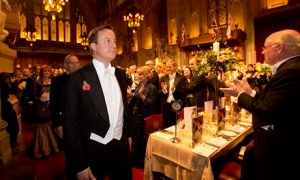
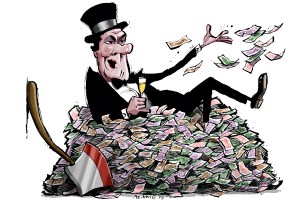
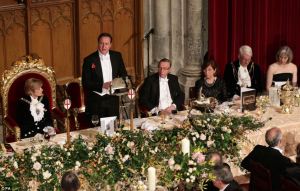
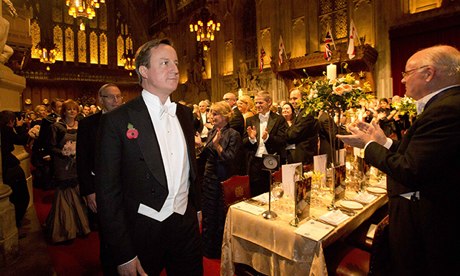
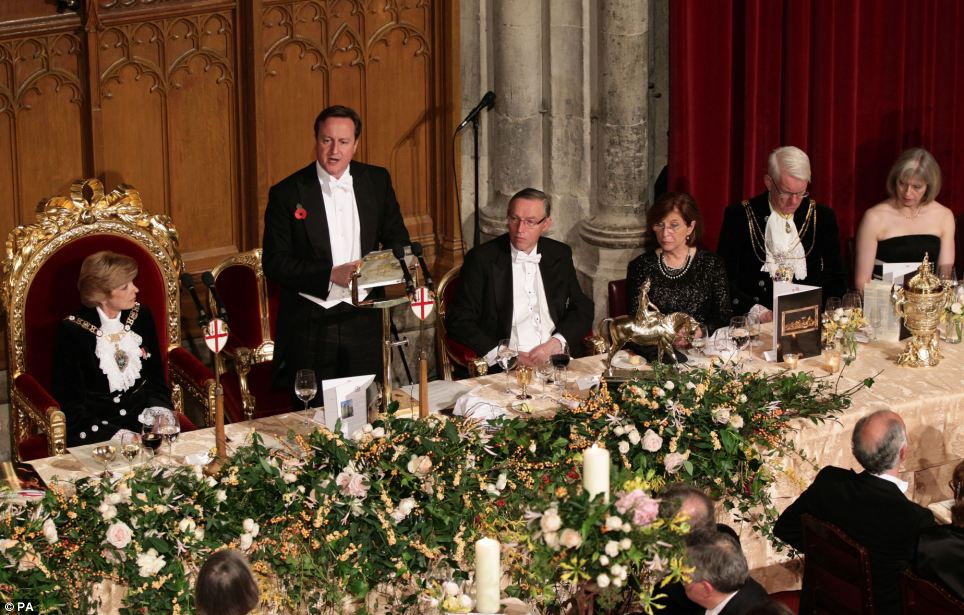
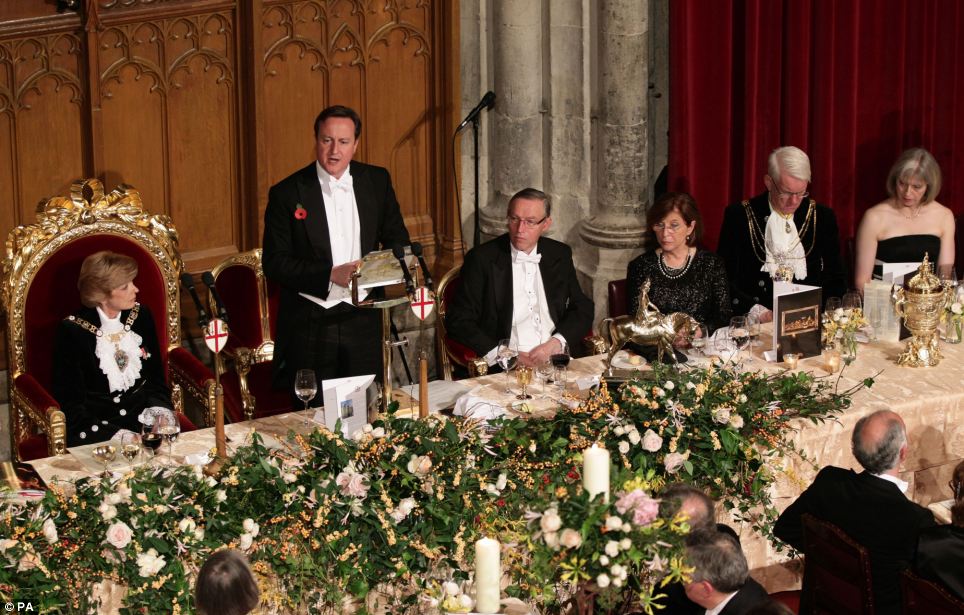
Privately held Vitol SA is led by its long-time CEO Ian Taylor, a Scotsman – The company is the World’s Largest Oil Trader and is one of the Tory Party’s largest financial donors, thus ensuring privileged access to David Cameron and other senior Conservative government ministers. Taylor, attended a private dinner organised by David Cameron, in Downing Street, on 2 November 2011. The event was described as a, “social dinner for strong and long-term supporters of the party, with whom the PM has a strong relationship”. In November 2013 he was invited to dinner at Chequers. In February 2014, the former Tory Energy Minister Charles Hendry MP, became a £60,000-a-year Vitol consultant.

Taylor is one of the Tory Party’s largest and most reliable donors. In the run up to the 2010 election he gave the party £125,000 and since June last year he has given the party £116,000. Overall his donations since 2006 amount to around £1m. He is also under a degree of hostile scrutiny in the referendum campaign in Scotland. His £750,00 donation towards the pro-union ‘Better Together’ and similar campaigns is subject to an increasing amount of criticism. It’s widely accepted in the trade that his act is an attempt to make sure North Sea assets don’t escape Vitol’s grasp through Scotland voting for independence.

In the period 2010-2013 Vitol completed a number of sanction, (UN imposed) busting purchases, (making use of the company’s Swiss registration) buying large stocks of Iranian fuel oil at well below market prices then selling it on the Rotterdam spot market for a premium, making a financial killing, completely undermining Western efforts to choke the flow of petro-dollars to Tehran placing pressure on Iran’s suspected nuclear weapons program. The actions of Vitol side-stepping the UN approved sanctions on Iran is evidence the company is not concerned for the security of not only the West but the entire world. The UK is a vociferous critic of Tehran’s nuclear program and a leading advocate of the EU sanctions bypassed by Vitol.”

In recent weeks, Vitol has been identified to be in negotiations seeking to finance a Russian oil company targeted by US sanctions against President Putin. The US sanctions proscribe ROSNEFT from receiving new long-term loans from US banks and investors as well as targeting the company’s chief executive, Igor Sechin, who is close to President Putin. If successful Vitol will transfer $2Bn to ROSNEFT, in exchange for supplies of refined products over the next five years. The deal would boost ROSNEFT’s cash reserves and, if agreed, would help mitigate the effect of US sanctions that wiped five per cent off the its share price when they were announced last week. It is still a possible target for EU sanctions as well, although most observers believe it will be hard to get agreement among all 28 member states for such dramatic action. Mr Taylor is a director and a significant shareholder in Vitol so would be likely to benefit directly from the deal with ROSNEFT.

Igor Sechin, is a former Deputy Prime Minister of Russia and a close ally of president Vladimir Putin, ROSNEFT has undertaken a string of acquisitions which have transformed it into the world’s largest listed oil company. As well as the $55bn purchase of TNK-BP, the company has in the last year bought ITERA and SIBNEFTEGAS, two significant Russian gas producers, the gas business of ALROSA, the diamond miner, and refineries in Germany and Italy.

Talks on the ROSENEFT deal began before the downing of Malaysian Airlines flight MH17 and last night Vitol refused to say whether they were ongoing. They said, “Our client relationships are confidential,” adding that, “any conflict in which innocent civilians are caught up is tragic”. They further stated Vitol was, and would remain, “fully compliant with all applicable international laws and regulations”.

In 2013 Vitol entered into partnership with another trading firm, GLENCORE, to give another $10bn loan to ROSNEFT in return for future oil supplies. The close links between the two companies mean that the Conservative party is indirectly benefiting from profits made in collaboration with a company with intimate links to the Kremlin.

Yesterday, “The Independent” revealed that Vitol pays just 10.5 per cent tax on its global profits, which totaled nearly $15bn (£8.8bn) over the past nine years. A fraction of the standard UK tax rate for its hugely profitable London operations. Vitol achieves this by “confirming” its deals in low-tax Switzerland even if they have been negotiated in London. Google, another very large company, was only recently, very strongly criticised for operating similar tax techniques, by the House of Commons Public Accounts Committee). Revelations therefore, about Vitol’s tax arrangements and business dealings in Russia will risk embarrassing David Cameron who has led calls for tighter sanctions against Moscow despite his own party’s ties with wealthy oligarchs.

http://www.independent.co.uk/news/uk/politics/major-tory-donors-company-in-talks-to-finance-sanctioned-russian-oil-giant-9627198.html
http://www.heraldscotland.com/politics/referendum-news/silence-over-no-donation.20640745

The foregoing provides informative details of the, “ducking and diving” of the Tory party and Vitol. They are toying with the Scottish electorate determined upon gaining a, “no” vote in the referendum for their own ends, not to enhance the wellbeing of Scot’s. I am voting, “Yes” to independence and I encourage all who live in Scotland and have a vote to vote, “Yes” and send this lot on their way.

http://www.energyvoice.com/2014/08/video-north-sea-resource-produce-700million-barrels/

http://www.heraldscotland.com/politics/referendum-news/silence-over-no-donation.20640745

Economist delivers damning verdict on Treasury Low oil forecasts

Economist delivers damning verdict on Treasury oil forecasts – 18 Aug 2014

One of Scotland’s most respected economists has delivered a damning verdict on Treasury oil forecasts, arguing tax revenues over the next four years could nearly double those predicted. Professor Sir Donald Mackay described the figures from the Office for Budget Responsibility (OBR) – which recently downgraded its outlook for the North Sea – as “precisely wrong”. In a detailed analysis, the former advisor to the Secretary of State for Scotland – including the last four Conservatives to hold the post – backs the position taken by industry body Oil and Gas UK.

Prof Mackay notes the industry expects a major increase in production in the next two to three years as new fields such as BP Clair and Statoil’s Mariner come onstream. The former Scottish Enterprise chairman argues Westminster has been downplaying the potential impact of oil and gas revenues on an independent Scotland, which he believes will be “much greater” than suggested. He describes the OBR as being “hopelessly at sea” in its predictions of future oil prices, which he says are based on a flawed system that is not used by oil companies themselves. He adds: “We don’t need to do any serious extrapolation to arrive at sensible estimates of what output is likely to be over the period to the end of this decade. “In February 2014, the Wood Review concluded that ‘production hit a new low’ last year, but a number of larger new fields are about to come onstream in the next two or three years, and that could take production back to the level of two to three years ago where it could be sustained for the remainder of this decade”. He adds that would yield Scottish Government tax revenues from 2014-15 to 2018-19, close to twice those of the OBR. Prof Mackay states: “I would suggest that this scenario is likely to pass the Keynesian test of being ‘roughly right’, while the OBR’s forecasts are likely to be ‘precisely wrong’.”

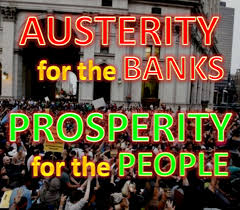
Last night First Minister Alex Salmond, said the UK Government’s position on oil and gas was becoming “increasingly threadbare.” He added: “It is ever clearer that next month the people of Scotland have a choice between continued austerity with a No vote, or new prosperity and opportunity with a Yes vote.”

North Sea find could produce for 35 years

An oil field due to begin production east of Shetland could produce oil until 2050, it has emerged. Xcite Energy said yesterday that its Bentley find – one of the North Sea’s largest untapped resources – could produce more than 300million barrels of oil over 35 years. The firm plans to use enhanced oil recover techniques right from the start to maximise recovery. A trading update yesterday revealed that the field has proven, probable and possible reserves totaling 317million barrels. http://www.energyvoice.com/2014/08/video-north-sea-resource-produce-700million-barrels

More Oil Investment

23rd Jul 2014; Chancellor George Osborne announces plans for a “game changer” tax break to boost North Sea oil and gas exploration.

Mr Osborne, speaking during a visit to Bibby Offshore Ltd in Westhill, Aberdeenshire, said, “We are announcing the consultation on a really big new tax break which the industry themselves. I think have described as a, “game changer” for the North Sea oil and gas exploration – that’s the ultra high pressure, high temperature tax break field allowance. “This will mean we can go ahead with some really big investments in the middle of the North Sea, particularly the Culzean field, and that will create billions of pounds of investment, thousands of jobs. It’s an example of us responding to the requests of the industry. “They wanted us to support these new developments, and it is part of a broader strategy to make sure we have an oil and gas regime that is fit for the future, fit for the maturity of the North Sea basin, and also one that is going to secure jobs and investment here in Aberdeen and Aberdeenshire for many decades to come.”

Mr Osborne said, “the allowance for ultra high pressure, high temperature fields will create billions of pounds worth of investment and thousands of jobs.
Industry body Oil and Gas UK last night welcomed the move and said the current tax regime had been a “barrier to investment”. The government said the new allowance would build on Sir Ian Wood’s recommendations for maximising economic production of oil and gas. Sir Ian’s review estimated there are between 12-24billion barrels of oil remaining, although the Office for Budget Responsibility (OBR) recently revised down its forecasts. The new allowance, designed to support investment in “technically challenging” projects and encourage exploration in surrounding areas, will reduce tax on a portion of a company’s profits from 62% to 30% at current rates.

1972 – The North Sea Oil is Scotland’s and Benefits from Production should be credited to the Scottish Economy – Edward Heath Prime Minister


Edward Heath. The North Sea Oil is Scotland’s

1972. The discovery of oil in the North Sea prompted Prime Minister, Edward Heath to initiate a policy review.

Downing Street civil servant, Robert Armstrong wrote to members of the Cabinet;

“As you know, the point has recently been put to the Prime Minister that the benefits of oil production brought ashore in Scotland should accrue, and be seen to accrue, to the Scottish economy.

The Prime Minister sees considerable force in the arguments believing it would be difficult to stress too highly the psychological gains which would come from the revival of the Scottish economy being seen to be something from which Scotland was achieving from its own resources, not just by the grace and favour of the Government at Westminster or of English industry.”

The Scottish Secretary of State, Gordon Campbell, (later Baron Campbell of Croy) and the, Chancellor of the Exchequer, Anthony Barber stridently opposed the suggestion and gathered support, to an alternative proposal, transferring all revenue gathered from the oil bonanza to the treasury in Westminster.

The political consensus being that;

“any change in the financial relationship between Westminster and Scotland would resurrect innumerable issues, (A veiled reference to Scottish Independence) now mercifully dormant.”

Edward Heath, blind-sided, and out-voted in cabinet accepted their proposal.

Scotland was then systematically ripped off for the next 40 year’s. View the story;

http://news.bbc.co.uk/1/hi/scotland/2617525.stm


Scottish Fisheries – Another Treacherous Westminster Betrayal of Scotland – And they are Still At It


1970 EEC Common Fisheries Policy

Edward Heath and the Tory government in Westminster committed the UK to full membership of the EEC Common Fisheries Policy, with the  knowledge that this would bring about the destruction of the, “Scottish Fishing Fleet” and associated communities, placing thousands on the dole, with no prospect of other work. The decision had been taken knowing that English and Welsh fishermen would benefit from membership. Scotland was written off.

Scottish fishing communities continue to suffer the effects of the betrayal, since Westminster has insisted, (excluding Scotland) on leading any discussions, (North Sea fishing stock conservation issues etc.) with the EEC.

The way to correct the injustices meted out by Westminster is to appoint someone from the Scottish government to lead a team from the UK meeting, negotiating and agreeing policies with other EEC members.

Recently released government documents locked away from public scrutiny for 30 years provide evidence of the skulduggery,

http://www.scotsman.com/news/politics/top-stories/heath-knew-policy-would-kill-fish-fleet-1-634422


Fisheries Policy Scotland 2014/15

The Scotland Office maintained regular contact with representatives from the fisheries sector in order to represent their interests across the UK Government and within the European Union.

In June 2014, the Secretary of State for Scotland held discussions with the Shetland Fishermen’s Association on the reformed Common Fisheries Policy and particularly on measures that can be taken to help fishermen meet the new EU landing obligations.

In August 2014, the Scotland Office facilitated a visit by the DEFRA Secretary of State to Peterhead where she discussed how the UK Government could support the mackerel sector in the face of the Russian food import ban.

The Scotland Office contributed to the preparations for the negotiations on annual fisheries quotas which this year helped Ministers secure sustainable increases to quotas for many of Scotland’s whitefish and prawns fleets at the December 2014 Council.

Scotland Office Annual Report 2014/15


Summary

Fisheries policy decided in London without involvement, consultation or contribution from the Scottish government. Mundell and his representatives preferring to bypass elected MSP’s dealing direct with fishermen’s representatives in piecemeal fashion. The approach ensured the Westminster government retained an overarching control of fishermen’s livelihoods. Classic use of “divide and Rule” tactics by the leader of the UK government of Scotland


Scottish fishing grounds


Constitutional Nation Status – They Way Forward Within the EU

Scotland may be granted “special status” amongst the regions of Europe, an issue first discussed at the convention which worked on the new European constitution in the early 2000’s.

This was the award of “constitutional region” to those areas which had enough autonomy to have legislative authority and the power to implement European directives.

The proposal was not followed up in the subsequent treaty but with increased powers Scotland will cross a new threshold, that of a “Constitutional Region”, even if it is not independence.

The European authorities will respond positively to this development of Scotland’s status and open the way for other stateless nations of Europe.

There are also implications arising from the new relationship with Westminster, namely that of Scotland’s status as an “Constitutional Region” within the EC.

The precedence has been set by Belgium who devolved a number of powers from central government to the Flemish and Walloon parliaments of the country.

At European summits on agriculture which is one such devolved responsibility, the Belgian team is represented by a Minister from either Flanders or Wallonia.

Meeting the terms of the “Vow” the devolution of new powers from Westminster to Holyrood also impacts on Scotland’s relationship with the EC since the vast bulk of gas, oil, renewable energy and fishery resources are to be found in Scotland and it beggars belief that Westminster should seek to continue to deny Scotland its rightful place at EC meetings leading or having a voice as a full member of negotiating teams representing the UK.

The EC closely monitored the Scottish referendum campaign and is now alerted to the increasing discontent of Scots, Corsicans and Catalonians.

The genie is “out of the bottle” and the democratic demands for recognition of “constitutional regions” will not be denied for much longer.

It is to be expected that MEP’s representing “constitutional regions” may create a pressure group advancing their case in the EC parliament.

Mini-summit meetings of the governments of Scotland, Corsica, Catalonia and Northern Ireland would further enhance their case for representation in devolved matters.


Research Funding Scares

Sir Paul Nurse, Scottish Research Scientist, (in a letter to, The Times) recently claimed, (together with a number of his associates) funding, from UK institutions may be withheld in the event of Scottish independence He recently repeated the claim at a, “Better Together” event where he appeared alongside former Prime Minister Gordon Brown. Clearly scaremongering, (as is the want of those on the, No” campaign bench.

I much prefer the honest views of the eminent scientist Professor Anne Glover. Ignore the negative hype. Vote, “Yes” to independence in September.
http://www.hutton.ac.uk/about/interview-professor-anne-glover

Should Boot’s be given the The Boot?

Should Boot’s be given the The Boot?

New research shows that Alliance Boots, the high street chemist and pharmaceutical giant, has avoided more than £1 billion in tax since it went private six years ago through taking on excessive debts, profit shifting and corporate restructuring. This report, Alliance Boots & The Tax Gap, published by War on Want, Unite the Union and Change to Win, exposes the full scale of Boots’ tax avoidance for the first time.

At a time when Alliance Boots is trying to sell additional services to the NHS, the lost tax revenue from Alliance Boots has tangible effects on the British public. Using the tax Alliance Boots avoided, the government could have funded:

1. More than two years of total prescription charges for all of England.
2. The starting salary of more than 78,000 NHS nurses for a year– roughly 120 additional nurses each constituency.
3. Over 185,000 hip replacements.
4. More than 5 million ambulance call outs.

http://www.waronwant.org/campaigns/tax-justice-now/18010-boots-billion-pound-tax-dodge-report

What a bunch. These tax avoidance loopholes should be denied to companies operating in the UK. Boots is only one of a huge number of tax dodging enterprises. Many of them provide financial support to the Tory party. Vote, “Yes” in the referendum so that Scotland will be enabled through independence to ensure tax collection is applicable to all.

Privatisation of the NHS in England.

Privatisation of the NHS in England.

First you bring the Doctors to Heel. Then you bypass them through the widespread use of private healthcare contracting using large conglomerates with their place of business registered off shore, Bahamas, Switzerland etc. This ensures profits are maximised but the UK taxpayer is well and truly ripped off, and we talking big money. Over ten years around £1trillion profit.

The undernoted information provides evidence of the privatisation. Be assured where the NHS in England goes the NHS in Scotland will surely follow, by fair means or foul. There is so much at stake for Scotland. A, “no” vote in the September referendum will bring the changes to Scotland. A, “Yes” vote will free Scotland from the clutches of Westminster. Vote not for your father. Vote for your children.

GPs across England face being fined if they don’t make use of a new e-referral system that is due to be launched by the end of this year, according to plans being developed by NHS England. The e-referral system, which has been modeled off popular flight-booking websites, is central to Health Secretary Jeremy Hunt’s plans to create a paperless NHS by 2018. It is hoped that if this target is met it could deliver the government savings of £4.4 billion a year.

According to specialist health publication Pulse, NHS England has set its sights on getting 100 percent of practices using the new system by 2017 and that it is considering penalties for Gps that don’t use it to make referrals. Speaking to MPs on the Public Accounts Committee this week, chief executive of NHS England, Sir David Nicholson, said that they were looking at an “incentive stroke penalty system” to maximise uptake.

The system will allow ‘anyone to anyone’ referrals, with GPs able to refer to any NHS service and diagnostics. It will also be designed for mobile and patients will be able to book follow-up appointments via the system. Sir David told MPs: “GPs, of all our clinicians across the NHS, are probably the most technically advanced. They’ve got more digital systems than almost anybody. So it’s not that they’re frightened, they just don’t like the way the system works and it affects their patients they think they don’t want different ways, and we’ve been unable to persuade them of that.

“But I think we’re getting to the point here, where we’ve heard from e-referrals implementation, is that we want to get a system where we can make it a mandatory system as we go forward.” He added: “The question we’ve got to ask is, in a sense – to get as wide a support for it as we can – and then: What is the incentive stroke penalty system we want to put in place to ensure that it actually works?”

By March 2015 everyone in the UK should be able to get online access to their health records held by their GP, according to Jeremy Hunt, and there should be a clear plan in place to enable secure linking of these electronic health and care records wherever they are held. The NHS Commissioning Board will be leading the implementation and it has set a clear expectation that hospitals should plan to make information digitally and securely available by 2014/15.

http://www.computerworlduk.com/news/public-sector/3502156/nhs-england-plans-fines-for-gps-not-using-new-e-referral-system/

Alternative Providers of Medical Services (APMS) contracts To be Offered Exclusively to Private Healthcare Providers

All new GP, Alternative Providers of Medical Services (APMS) contracts To be offered exclusively to Private Healthcare providers

NHS Contract Terminology

1. Personal Medical Services contracts (PMS)
Contracts are agreed between NHS England and GP practices, together with funding arrangements. In England, approximately 40 per cent of GP practices are on PMS contracts.

2. General Medical Services (GMS)
practice-based contract rewards practices for essential services, as well as additional services that practices can choose to offer.

3. Alternative Providers of Medical Services (APMS)
Under APMS, PCTs are able to contract for primary medical services with commercial providers, voluntary sector providers, mutual sector providers, social enterprises, public service bodies, GMS and PMS practices (through a separate APMS contract) and NHS Trusts and NHS Foundation Trusts.

Contracting Policy

Exclusive All new GP contracts will be opened up to bids from the private sector by NHS England in a move that GP leaders have warn marks the ‘death-knell’ of traditional life-long general practice. As a tide of practices face closure, because of competition law they will replaced with time-limited, (usually 5 year) APMS contracts instead. The move has taken GP leaders by surprise, with the GPC seeking urgent legal advice about the move. Some have warned it will lead to the privatisation of the NHS with surgeries replaced with ‘short-term, profit making ventures’.

http://www.nhsemployers.org/your-workforce/primary-care-contacts/general-medical-services
http://www.nhshistory.net/personal_medical_services.htm

Click to access apms-standard-contract-june14.pdf

http://alternativeprimarycare.wordpress.com/2009/07/15/alternative-providers-of-medical-services-apms/
http://www.pulsetoday.co.uk/home/stop-practice-closures/revealed-all-new-gp-contracts-will-be-thrown-open-to-private-providers/20007596.article
http://www.computerworlduk.com/news/public-sector/3502156/nhs-england-plans-fines-for-gps-not-using-new-e-referral-system/

The foregoing changes are now well under way in England. High street pharmacies will be increasingly offering a range of services previously the remit of GP’s. Computerised private patient records will be made available to contractors. GP service provision will be dismantled over a period of 5-10 years in favour of large Private Healthcare providers. The Scottish government recently restated that healthcare provision in Scotland will not be subject to such abuse, which favours profiteering by large private healthcare contractors. But in the event of a, “No” vote the English NHS model in all respects will be imposed, (by stealth) on Scotland. Scot’s who wish to retain the existing Scottish NHS should vote, “Yes” in the referendum.

A few views from senior NHS medical staff

An NHS England spokesperson said: ‘Under the GMS regulations there is scope to enter into a temporary contract but this is AT CLEAR ODDS WITH PROCUREMENT LAW and the 2013 regulations so best practice would dictate that this should not be used when APMS effectively does the same job and does not come with the same risks attached. “GMS can still be entered into upon reversion from PMS and the new form of PMS contract may be entered into by way of renegotiation (ie variation) but in respect of procurements, yes they should all be on APMS.”

GP leaders are warning that, with practices under increasing workload and financial pressure, strict tender requirements could exclude smaller practices from primary care and drive the invasion of private providers and they are advising practices to seek alternatives to contract termination, for example by merging, when partners reach retirement in order to avoid losing, “invaluable” GMS and PMS contracts.

GPC chair Dr Chaand Nagpaul said he was surprised to hear about the national policy that would, “spell the death knell of the whole ethos of long-term, continuity of care in the way general practice operates”. He said the GPC was seeking urgent legal advice on whether NHS England was correct in asserting that APMS contracts were the only way to satisfy international procurement law. He added: “It’s extremely unfortunate, and highly ill-advised that area teams should be undermining secure, long-term sustained provision of general practice through APMS contracts. There is nothing to stop an area team choosing to use a PMS or GMS as a contract, on the grounds that it offers a local population the best mechanism for the provision of general practice services.”

Dr Tony Grewal, Medical Director at Londonwide LMCs said they were worried about the moves in the capital that would replace family doctors with, “short-term, profit making ventures that went against the ethos of primary care”. He added: “APMS is only for five years, potentially renewable, which means that you cannot invest time, you can’t invest in the long term. It’s designed for people to go in, to make a profit, and to go out again. Which is not, in my opinion, what general practice is about.” “What it means is, over a reasonably short period of time, given the rate at which practices are closing at the moment, you are going to have significant proportions of general practice services in London, being run by the commercials or big conglomerates.”

Dr David Jenner, GP contract lead at the NHS Alliance and a GP in Cullompton, Devon, warned that the move would mean that independent GPs would struggle to compete with larger healthcare corporations. He said, “Often minimum requirements of IT, quality, financial backing, in practice can make it difficult for small providers to effectively compete”. “It can be a very inefficient way of procuring a service of limited value. There is also the danger of providers bidding low to win the contract and then being unable to meet the terms of it.”

BMA Council member and Lewisham GP Dr Louise Irvine said, “I’m worried about that becoming the new model of care, we’ve already seen new models of private companies bidding for these APMS contracts, some of them have been successful and it’s hard for ordinary practices to bid against them.” She added, “It’s very much part of a trend, it’s part of this big push to privatise, to commercialise and bring in private, for profit companies to run more and more, not just primary care, but community and secondary hospital care.”

Wind Energy Smashes UK Electricity Share Record

Wind Energy Smashes UK Electricity Share Record

Wind turbines met 22 per cent of power demand on Sunday 17 Aug 2014, while coal contributed just 13 per cent. Yesterday’s high winds may have been frustrating for anyone out and about, but they also helped set a new record for wind power on the grid.

According to RenewableUK, Britain’s fleet of onshore and offshore wind turbines met 22 per cent of electricity demand during Sunday 17 Aug 2014, setting a new record, comfortably outperforming coal, which met just 13 per cent of demand.

Nearly 5.8MW of wind power was generated, which is equal to the power demand of 15 million homes, the trade association said.

August 2014 already looks set to be a particularly strong month for the UK wind energy industry, with reports confirming wind turbines also met 21 per cent of demand last week as the UK felt the tail end of Hurricane Bertha.

“We’re seeing very high levels of generation from wind throughout August 2014 so far, proving yet again that onshore and offshore wind has become an absolutely fundamental component in this country’s energy mix,” said RenewableUK’s director of external affairs, Jennifer Webber. “It also shows that wind is a dependable and reliable source of power in every month of year – including high summer.”

The latest figures also confirmed that solar power provided three per cent of power on the grid yesterday, while hydroelectric plants produced one per cent.

Constraint Payments – (A Temporary Measure)

Critics pointed out that the National Grid is forced to pay wind turbines millions of pounds to switch off on windy days in order to balance out demand. Last week, it paid wind developers £2.8m and £1.1m to other generators in balancing payments at the time high winds coincided with a period of low demand.

Constraint payments are necessary but will be much reduced following upgrades to the national electricity network, such as the Western Link – a £1bn subsea cable that will bring renewable energy from SCOTLAND to the rest of the UK

Yesterday’s record is the latest in a string of strong performances across Europe for the renewables industry over the past 12 months. Recent data has suggested that Germany and Spain have also delivered record levels of clean energy output in the past six to 12 months, as surveys across Europe have also demonstrated high levels of public support for renewable energy.

Afternote

Never mind oil, Scotland is the leading renewable clean energy producer in Europe. The UK electricity grid is dependent upon Scotland’s clean electricity and this dependency is expected to increase to around 50% by the year 2020.

A, “Yes” vote in the referendum will ensure Scotland benefits directly from the income generated by electricity production. A, “No” vote will result in the UK National Grid claiming production as a national asset, (to be controlled by Westminster). A yes vote is the only sensible way forward.

http://www.businessgreen.com/bg/news/2360817/wind-energy-smashes-uk-energy-share-record

The Inefficient UK National (Electricity Supply) Grid

The electrical grid is viewed by the public as a natural and strategic asset. As such it is, in the view of many, totally unsuited to the pressures of market forces. But if a market is to operate then application of variable transmission costs make sense.

Electricity transmission loss in transfer forms a small part of overall electricity loss. The real problem with the grid is capacity crunch. The lack of a transmission cable from the islands to the Scottish mainland brings with it reduced amounts of electricity transfer from the North of Scotland. Supply of electricity to the grid is therefore rationed and this brings with it increased transmission costs. In England there is a lot of demand, but not much generation. The installation of an electrical supply cable link from the islands to the Scottish mainland, (regardless of the outcome of the referendum) is crucial to the future of the National Grid.

The option of expanding Coal, Gas and Nuclear power stations, (using lease lend contracting) funded, designed, built and operated, using foreign finance and workforces may appear to be attractive and cost effective over electricity but fossil-fuels and nuclear have been indulged for far too long on cleaning up their long-term residual mess and when the cost of this is factored in renewable energy is by far the more cost effective.

A recently published, (heavily biased) OFGEM report is very positive about the use of renewable energy, but not at this time. Entirely due to a lack of forward planning by Westminster governments, short term measures are considered necessary, in England. The Con/Dem government is determined to expand nuclear production, (although the preferred options would breech EU financial rules). The Department of Energy and Climate Change, (DECC) is undecided and a government funded and staffed, (blinker wearing) policy think tank strongly believes in market forces, but only so far as nuclear is good and renewables are bad. So the future of UK renewable energy looks bleak.

Scotland is rich in renewable energy production and does not need to commit to the Westminster governments dogma. But a, “No” vote will bring with it the introduction in the next parliament of a, “National UK Energy Production Policy Unit” which will direct the development of ALL energy production within the UK, (including Scotland). All that has been achieved in Scotland will be set aside in favour of the pursuit of nuclear power expansion. But there is remedy available, vote, “Yes” in the referendum so that Scotland will be able to continue the good works in place and planned. We do not need to follow a lead to destruction.