TTIP – UK and NI Education Provision To Be Turned On It’s Head – Rapid Expansion of Free Schools Planned


David-Cameronpooo


TTIP and Education Provision in the UK

A direct consequence of TTIP – It is anticipated state education will be dismantled over an extended period of 10 years to be replaced with Schools free from Council Controls – changes will apply in all countries making up the UK and NI – Rupert Murdoch has been reorganising News International bringing in educationalists anticipating major investment in education delivery in time.


20110727_117087461_w

More than 3,000 new independent schools would be set up by a Conservative Government in the most radical shake-up of British education since the war. This week’s Tory conference will be told the local authority monopoly over schools would be abolished within weeks of the party coming to power – a move that would almost certainly trigger mass strikes. Scores of ‘bog standard’ comprehensives could be driven out of business by ‘free schools’, funded by the taxpayer but with a private school ethos. http://www.dailymail.co.uk/news/article-1063398/Tories-promise-3-000-independent-schools-parent-power-revolution.html


8df2da7e-aa64-11e3-8bd6-00144feab7de.img
27 July 2011: News Corp looking to set up its own free schools in the UK and NI

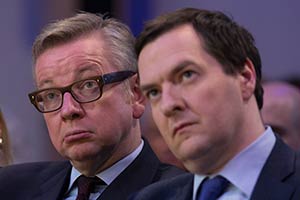
Of all the meetings that cabinet ministers had with News International executives (on average, a member of the cabinet met a Murdoch executive every three days), it is Michael Gove’s that are the most eye catching. The Education Secretary listed 11 meetings at which executives from the company were present, including seven with Rupert Murdoch. Gove met the News Corp head more times than any other minister.

Here’s the full list:

19 May 2010 Rupert Murdoch, Rebekah Brooks, plus more than ten others. Dinner and general discussion.

10 June 2010 Rebekah Brooks, plus several others. Dinner and general discussion.

17 June 2010 Rupert Murdoch, Rebekah Brooks and News International executives and senior editors. Lunch and general discussion.

21 October 2010 Rupert Murdoch, Rebekah Brooks, James Harding (The Times), Dominic Mohan (The Sun), James Murdoch (News Corporation), Colin Myler (News of the World), John Witherow (Sunday Times) plus more than ten others. Dinner after Centre for Policy Studies lecture.

30 November 2010 Rebekah Brooks, Will Lewis (News International), James Harding (The Times). Academy visit.

17 December 2010 Rebekah Brooks, plus several others. Social.

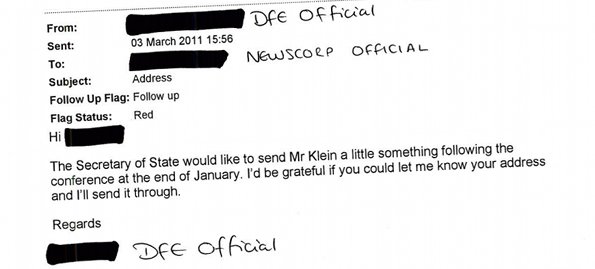
25 January 2011 Joel Klein (now News Corporation, former Chancellor of the New York City Department of Education and Assistant Attorney General to President Clinton), visiting UK as guest of DfE to explain and discuss US education policy success, including large conference platform and assorted dinners with senior figures from education and the media, including Rupert Murdoch. Including private and public events https://en.wikipedia.org/wiki/Joel_Klein

31 January 2011 Rebekah Brooks, plus several others. Dinner hosted by Academy sponsor Charles Dunstone.

19 May 2011 James Harding (The Times), Rupert Murdoch, James Murdoch (News Corporation), Rebekah Brooks. Breakfast and general discussion.

16 June 2011 Rupert Murdoch plus several others. Dinner and general discussion.

26 June 2011 Rupert Murdoch , plus several others. Dinner and general discussion.


92ad62be-aa64-11e3-8bd6-00144feab7de.img


It all suggests, as Andy Burnham said, a rather strange set of priorities. The shadow education secretary noted that in his first seven months, Gove “didn’t manage to visit a single sixth form college, further education college or special school.”

So, what’s the explanation? Gove is, of course, a former Times journalist, who, we know from the register of members’ interests, received £5,000 a month for his weekly column. He is also due to write a biography of Viscount Bolingbroke for the Murdoch-owned Harper Collins. Then there’s his friendship with Murdoch consigliere Joel Klein (he sat next to Wendi Deng at the select committee hearing).

The former chancellor of the New York department of education, who is now the head of News Corp’s new “management and standards committee” and the CEO of its growing education division. Significantly, it was Klein’s charter schools that served as one of the key inspirations for Gove’s “free schools” project.

A spokesman for Gove said: “He’s known Rupert Murdoch for over a decade. He did not discuss the BSkyB deal with the Murdochs and isn’t at all embarrassed about his meetings, most of which have been about education which is his job.” The News Corp head, it seems, is taking an increasing interest in the subject.

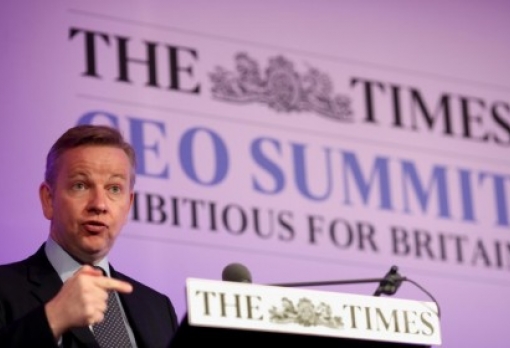
At last month’s Times CEO summit he called for all pupils to be provided with tablet computers, adding that he would be “thrilled” if 10 per cent of News Corp’s revenues came from education in the next five years. Wireless Generation, an education technology company recently acquired by Murdoch for $360m, was awarded a a $27 million no-bid contract by the New York education department.  http://www.thetimes.co.uk/tto/business/ceo-summit/article3070325.ece

It begs the question of whether News Corp is looking to set up its own free schools. In response to such a query, Times columnist and executive editor Daniel Finkelstein tweeted:  “News Corp is indeed taking an interest in the creation of new schools. That is precisely what mtgs were about!”

Update: The Sun’s former political editor George Pascoe Watson (now a partner at Portland Communications) notes on Twitter “Is News Corp looking to set up its own free schools?  The Sun+Civitas already have done.” A glance at the Civitas website shows that the Sun funds a Saturday school at the Ensign Youth Club in Wapping.  http://www.newstatesman.com/blogs/the-staggers/2011/07/murdoch-news-education


89078525_Murdoch_171830c
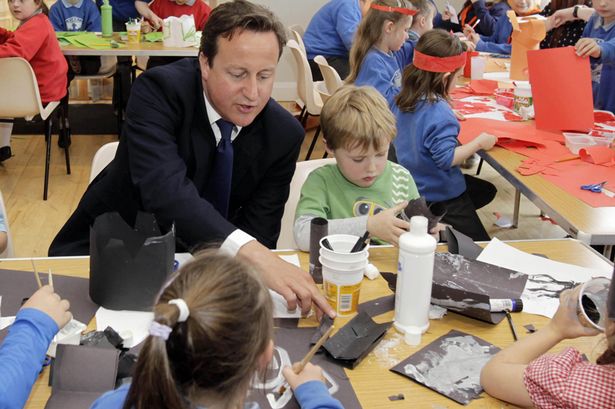
6 March 2015: David Cameron plans a huge expansion of controversial fee schools.

The Prime Minister will announce plans for at least 153 new ones on top of the 255 already open. Mr Cameron will say:  “Every time I celebrate the opening of a fee school… I’m so glad, that many more parents can share the peace of mind you feel when your child is getting a great education.” Since 2010 parents have been able to set up fe schools, but some closed due to bad management.

The draft speech was sent to axed fee school architect Michael Gove but not the current Education Secretary. According to the leaked draft of the speech, Mr Cameron will say: “We’re going to dramatically expand the fee schools programme.

I am announcing 48 new ones. “And I’m saying that if you vote Conservative, at least 153 will open in the next Parliament – providing 100,000 good school places.” Fee schools were introduced in 2010 to allow parents and community groups to set up their own establishments.
http://www.mirror.co.uk/news/uk-news/david-cameron-plans-massive-expansion-5288276


eu-parliament-ttip-trade.si


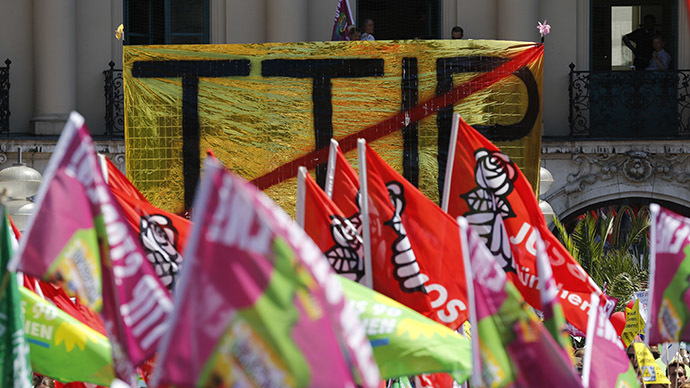
9 July 2015: EU Parliament backs TTIP resolution

Despite vocal criticism, the EU Parliament has approved a non-binding resolution on the controversial Transatlantic Trade and Investment Partnership, bridging a gap in protracted negotiations on the secretive trade pact between the EU and the US.

The resolution was approved by the majority of the parliament with 436 ‘Yes’ votes coming up against 241 ‘No’ votes in Strasbourg on Wednesday in hopes of influencing the TTIP negotiations between European Commissioner for Trade Cecilia Malmstrom and the USA.

Washington insists that for negotiations to be successful a dispute body must be incorporated into the final agreement.

http://rt.com/news/272563-eu-parliament-ttip-trade/


gove_klein_gift
19 February 2015: Tories in Scotland attempt to get Schools to opt-out

Ruth Davidson Tory Party Leader in Scotland, at First Ministers questions, sought to get the First Minister to agree to release a primary school in East Dunbartonshire from local authority control.

As a proponent of the fee schools model being deployed in England, Davidson questioned whether the Scottish Government would, in accordance with the parents’ wishes, allow the school to be transferred away from the local authority and into a trust.

This comes on the back of the First Minister stating in December that she would listen with an open mind to any suggestion that would improve Scotland’s education system.

Sturgeon agreed to meet with the parents, listen to their concerns, and if required explain to them why she would not allow any possibly transfer.

However, she refused Davidson’s request for a ‘Parents Power’ law, which would enable such transfers to occur.

Michael Gove – Lord Chancellor – Cameron & Osborne Loyalist to the Core – Now Wielding the Power He Believes Is His Right


4.gettyMichael Gove7d169d0f-0163-4ae5-881e-db81ce58e8d1-2060x1236


Buzzfeed Links. All worthy of checking out to gain a flavour of Michael Gove

13 May 2013: Gove and his advisors – either through stupidity or mischievousness – failed to place me, my website, or the lesson into its appropriate context. His criticisms betray a lack of knowledge, understanding, and interpretation that would make a GCSE History student blush with shame. http://www.buzzfeed.com/lukelewis/read-this-history-teachers-spectacular-response-to-being-ins#.bbG3padmy

30 September 2013: 11 Strange Facts About Michael Gove – A curious character. A very curious character. http://www.buzzfeed.com/aljwhite/11-strange-facts-about-michael-gove-dnmr#.cl8DlnGoA

3 February 2014: Michael Gove Was Introduced As A Fan Of “Real Ale And Real Women” On A TV Quiz Show – videos – The future education secretary appeared on “Top Club” in the 1990s. http://www.buzzfeed.com/jimwaterson/michael-gove-was-described-as-a-fan-of-real-ale-and-real-wom#.duDkbKEaM


2013-11-14-GoveCaption-


27 March 2014: Watch Michael Gove Rap Wham! Lyrics – The education secretary spat out George Michael and Andrew Ridgeley’s rhymes while on a school visit. http://www.buzzfeed.com/jimwaterson/watch-michael-gove-rap-wham-lyrics#.lbV473dey

3 May 2014: Attacking Michael Gove is one the best tactics for UK political parties in the run up to the next general election, according to a BuzzFeed/YouGov poll of 1,900 people. http://www.buzzfeed.com/jimwaterson/attacking-michael-gove-is-one-of-the-easiest-ways-to-win-in#.ayK3wlkPa

19 May 2014: Michael Gove’s Converter Academy Schools Disproportionately Serve Wealthy Families. Researchers warned in 2010 that the Education Secretary’s academies policy would increase educational inequality. http://www.buzzfeed.com/jonstone/michael-goves-academy-schools-disproportionately-serve-wealt#.ro6AweDaV


2700


9 June 2014: Michael Gove believes that Britain must stand up to fundamental Islam, part of his reputation as one of the few members of the cabinet who could be branded a true neo-conservative. http://www.buzzfeed.com/jimwaterson/michael-gove-wrote-a-book-on-islamist-extremists-and-this-is#.sl8YVk8OE

10 June 2014: Michael Gove, the education secretary who yesterday announced that “British values” will be actively promoted in all schools, has previously branded attempts to define Britishness as “rather unBritish”. http://www.buzzfeed.com/jimwaterson/michael-gove-previously-said-it-was-unbritish-to-define-brit#.ueVy3ABZ5

15 June 2014: Please Take A Moment To Enjoy This Video Of Michael Gove Falling Over http://www.buzzfeed.com/lukelewis/please-take-a-moment-to-enjoy-this-vine-of-michael-gove-fall#.unBGmbDng


540695_532291630173703_1425159679_n-1


20 June 2014: Nick Clegg’s advisers argued private companies should be allowed to run state schools for profit, Michael Gove’s former aide has claimed. Dominic Cummings, who spent four years pushing through reforms as the education secretary’s special adviser, says top members of the Deputy Prime Minister’s team argued in favour of schools being run for profit during the early years of the coalition government. http://www.buzzfeed.com/jimwaterson/nick-cleggs-team-supported-for-profit-state-schools-claims-e#.bgVx03LjA

22 September 2014: Who Said It: Dolores Umbridge Or Michael Gove? Was it the Hogwarts high inquisitor or the former UK education secretary? (16 questions) http://www.buzzfeed.com/danieldalton/give-it-a-gove#.glDvE9MxY


birmingham


The Long and Winding Road to a Devolved Parliament in Scotland


imagebfrtwestminster-rigged-scottish-independence-voteYOU WILL


1960: The Long and Winding Road to a Devolved Parliament in Scotland

1967: In the late 1960s, support in Scotland for the pro-independence Scottish National Party was growing (seen spectacularly in Winnie Ewing’s victory at the Hamilton by-election of 1967). This created panic at Westminster and both Tory and labour Party’s responded.

1968: The Conservative Party in Scotland was traditionally a unionist party. But at the Conservative Party Conference of 1968, held in Perth in Scotland, Edward Heath announced a party policy of support for devolution. Heath then formed a constitutional committee chaired by former Prime Minister Sir Alec Douglas-Home.

1970:  The committee produced “Scotland’s Government”, a report that recommended the creation of a Scottish Assembly with 125 elected members and powers to initiate and discuss bills. However, all Bills were to require approval of the United Kingdom Parliament.

1970: The 1970 General Election was won by the Conservative Party, and Heath became Prime Minister. However, the electoral weakness of the Nationalists removed the political pressure for devolution, causing it to slip from the agenda.

1974: The two general elections of 1974 saw the return of a minority Labour Government and advances by the Nationalists (they won 7 seats in the February election and 11 in the October election). Labour was thus dependent on Nationalist support in Parliament.

1979: Despite opposition from within its own party, the labour government passed the Scotland Act 1978. This act provided for devolution, subject to approval by a referendum which took place in 1979. The referendum had been “rigged to fail” by the labour Party and the required mandate for devolution was not delivered.

Under the leadership of Margaret Thatcher the Conservatives had returned to a policy of opposing Scottish devolution. However, former Tory leader Alec Douglas-Home was still able to urge Scots to vote ‘no’ to Labour’s proposal in 1979, with the promise that a Conservative government would offer a “better” bill.

A general election was held late 1979, which was won by the Conservatives, who despite being the only major party now opposing constitutional reform and a reducing return of MP’s in each election in Scotland, went on to win electoral victories in 1983, 1987 and 1992 steadfastly ensuring that no further legislative progress would be made.


16479369taylor10313359_632088540199769_6748727047123860742_n
1980: Campaign for a Scottish Assembly

The Campaign for a Scottish Assembly (CSA), was formed in the aftermath of the 1979 referendum that failed to establish a devolved Scottish Assembly. Launched in 1980 and led by Jack Brand (1) and later headed by Jim Boyack (father of current MSP Sarah Boyack), the CSA contained individuals committed to some form of Home Rule for Scotland. Most were members of the Labour Party, but many Scottish National Party members actively participated.

The CSA kept up the pressure for devolution in the early years of the Conservative government of Margaret Thatcher, which was totally opposed to any form of Home Rule. Faced with the Tory Party intransigence the CSA came to the stance that the cause of Scottish devolution would be best served by a convention with more democratic legitimacy invested in it.

The CSA organised a committee, chaired by Professor Sir Robert Grieve,(2) which published the “Claim of Right for Scotland.” The Claim held that it was the Scottish people’s right to choose the form of government that best suited them (a long-established principle, first formally stated in the Declaration of Arbroath, 1320), and which also recommended the establishment of a convention to discuss this.


243-charged-in-medicare-fraud-schemes-showcase_image-3-a-8324blair_for_president.1Nicholas_Macpherso_2724400b
1989: The Scottish Constitutional Convention

The Convention was established in 1989 after prominent Scottish individuals signed the Claim of Right, and superseded the role of the CSA.

Various organisations participated in the Convention, such as the Labour Party, the Liberal Democrats, the Scottish Green Party, the Communist Party, the Scottish Trades Union Congress, the Scottish Council for Development and Industry, the Small Business Federation and various bodies representing other strands of political opinion as well as civic society in general. Representatives of the two largest churches – the Church of Scotland, the Catholic Church – as well as smaller church groups were involved as were some non-Christian communities which decided to participate.

Initially the Scottish National Party (SNP) participated, but the then party leader Gordon Wilson, along with Jim Sillars, decided to withdraw the SNP from participation owing to the convention’s unwillingness to discuss Scottish independence as a constitutional option.

The Conservative government of the day was very hostile to the convention and challenged the local authorities’ right to finance the convention, although the courts found that they were in fact entitled to do so.

Under its executive chairman, Canon Kenyon Wright, (3) the convention published its blueprint for devolution, Scotland’s Parliament, Scotland’s Right, on 30 November 1995, St Andrew’s Day. This provided the basis for the structure of the existent Scottish Parliament, established in 1999.

1. http://webcache.googleusercontent.com/search?q=cache:r4-BT9CjwDEJ:www.heraldscotland.com/comment/obituaries/dr-jack-brand.23032638+&cd=1&hl=en&ct=clnk&gl=uk

2. http://www.heraldscotland.com/sport/spl/aberdeen/professor-sir-robert-grieve-1.654593

3. https://en.wikipedia.org/wiki/Kenyon_Wright#cite_note-2


corrupt10429238_845482792148489_3740684647203776803_narticle-1216555-069CAFEC000005DC-334_634x497


The Scotland Act 1998

1998: The election of Labour in 1997 led to a second devolution referendum. Again the Conservatives opposed devolution in the 1997 debate but this time their opposition was unsuccessful, and the Scottish Parliament was created by the Scotland Act 1998. Subsequent to its creation, the Conservative Party indicated its acceptance of Scottish devolution as an irreversible political fact.


heath_1662259c_47645472_mundell_goodGordon-Browns-Cabinet-001
September 2007: Council of Economic Advisers (Scotland)

The Council of Economic Advisers (CEA) is a group of eminent economists and captains of industry who advise the Scottish Government. It was established in 2007, meeting for the first time on 21 September. Minutes of its quarterly meetings will be published a fortnight after each meeting. It is intended that the council will publish an annual report on the condition of the Scottish economy. Members at time of establishment:

Sir George Mathewson (convener), former chief executive and then chairman of the Royal Bank of Scotland; previously chief executive of the Scottish Development Agency
Frances Cairncross, Rector of Exeter College at Oxford University; previously journalist at The Economist, chair of the Economic and Social Research. Author.
Sir Robert Smith, chairman of the Weir Group and Scottish and Southern Energy; non-executive director of 3i group, Standard Bank Group and Aegon UK; chair of the Smith Group
Professor Andrew Hughes Hallett, Professor of Economics and Public Policy at George Mason University and visiting Professor of Economics at the University of St Andrews; has been consultant for the World Bank, the International Monetary Fund, the Federal Reserve Board, the United Nations, the OECD, the European Commission and various central banks.
Professor Alex Kemp, Schlumberger Professor of Petroleum Economics at the University of Aberdeen; previously advised the World Bank, the United Nations, and various governments
Jim McColl, Chairman and Chief Executive of Clyde Blowers
Professor Frances P. Ruane, Director of Ireland’s Economic and Social Research Institute; previously Associate Professor of Economics at Trinity College, Dublin
Professor John Kay, a fellow of St John’s College, Oxford, visiting professor at the London School of Economics, regular contributor to the Financial Times; previously Director of the Institute for Fiscal Studies, Professor at the London Business School and the University of Oxford
Crawford Beveridge, Executive Vice President and Chairman of Sun Microsystems in Europe, the Middle East and Africa; previously Chief Executive of Scottish Enterprise
Professor Finn Kydland, Henley Professor of Economics at the University of California, Santa Barbara; awarded the Nobel Prize for his work in dynamic macroeconomics
Professor Sir James Mirrlees, Professor Emeritus at Cambridge University and distinguished professor-at-large at the Chinese University of Hong Kong; awarded the Nobel Prize forhis work on economic models and equations about situations where information is asymmetrical or incomplete.    http://www.gov.scot/Topics/Economy/Council-Economic-Advisers/Membership


baron anthony barber10887311_881722198527066_4373403534109587671_oarticle-2270948-1541BC71000005DC-446_308x425
December 2007: The Calman Commission

The Commission on Scottish Devolution, also referred to as the Calman Commission, Scottish Parliament Commission or Review was established by an opposition Labour Party motion passed by the Scottish Parliament on 6 December 2007, with the support of the Conservatives and Liberal Democrats. The governing Scottish National Party opposed the creation of the commission. Its terms of reference were “To review the provisions of the Scotland Act 1998 in the light of experience and to recommend any changes to the present constitutional arrangements that would enable the Scottish Parliament to better serve the people of Scotland, that would improve the financial accountability of the Scottish Parliament and that would continue to secure the position of Scotland within the United Kingdom.”

https://en.wikipedia.org/wiki/Commission_on_Scottish_Devolution


Palace_of_Westminster,_London_-_Feb_2007bisbzllieaacvqj10455324_10152545977986753_7487026676145808252_n

November 2008: Expert group examining new powers for Holyrood has “tampered with the evidence” to suit the Labour Party, one of its own economic advisers suggested last night.

Professor Andrew Hughes Hallett, one of 11 economics experts tasked with examining tax powers north of the border, said its final report did not have “much legitimacy” because it was skewed towards preserving the status quo. Hughes Hallett said he had wanted the expert group to look at whether the Scottish Government should be given the power to borrow money but claims this was glossed over in the final report. He told Scotland on Sunday: “Had it been a criminal issue, you would call it tampering with the evidence by not considering all the options.”

The Calman Commission, which was set up to look at all aspects of constitutional reform, itself appointed an expert group of economists to specifically study the case for extending the tax powers of the Scottish Parliament. Hughes Hallett was a member of that group, which published its report earlier this month, laying out options for giving Holyrood greater financial powers.

In the final version of the report, compiled by the experts under the leadership of Professor Anton Muscatelli, the principal of Heriot-Watt university, Hughes Hallett said debt was hardly mentioned. He said: “There is a very brief note that debt and borrowing may be necessary, but there is no discussion of any of the consequences or consideration of how much debt a Scottish Government can issue.

The issue is how we can manage debt and how it can be issued. It would be helpful to know what that was.” Hughes Hallett added that he could understand why the Labour Government might not want such issues fully explored if ministers were not keen on handing over more powers to Holyrood. He said: “You can see from the London end why they might not want to get into some of these issues.

I can understand the political view from London that you don’t want to go into it. “I could imagine that if you’re a sitting government, you probably have vested interest in keeping things more or less as they are. There may be all sorts of political reasons for keeping things as they are and they are legitimate. But they are not reasons to keep options out of the discussions.”

Hughes Hallett explained that the ability to issue debt was essential if Scotland were to replace the current Barnett Formula funding mechanism with an assigned taxation system, which would see the Scottish Government’s funds being calculated on the basis of the tax revenues paid by Scots to the UK Treasury.

He said the ability to issue debt was essential because tax revenue adjusts quickly to variations in income, but public expenditure for projects such as new schools and hospitals adjust at a slower pace. Therefore the ability to raise money by going into debt is essential to keep projects going when tax revenue diminishes during economic downturns. “You can’t just close hospitals and schools every time the economy slows down,” Hughes Hallett said.

He also argued that the report had omitted to explore fully the merits of other economic models that could form the basis for a new constitutional settlement for Scotland. “If you have to decide what you want and if people can’t find that laid out, it (the report] doesn’t have much legitimacy.

“What’s missing here is any consideration of how these sorts of schemes might work.” Hughes Hallett said the report failed to examine the “trade-offs” between various systems. The economist claimed the report did not properly analyse the advantages and disadvantages of the Barnett Formula, assigned taxes and fiscal autonomy.

A Scottish National Party spokesman said: “From what we know about the Calman Commission, it doesn’t meet the challenges of the times in that Scotland needs to build a lion economy, but it appears that all it has produced is a constitutional mouse. Certainly what was intended to be a an entirely independent review has become far too closely connected and controlled by the UK Government.”

A Calman Commission spokesman said: “This was an independent report, which was handed to the commission and it would be inappropriate for Sir Kenneth Calman to make any comment.”

http://www.scotsman.com/news/calman-evidence-was-tampered-with-1-1301807


David-Cameron-008CAuLDuzWYAEN8-C.jpg largecameron_2663053b


December 2008: Limited Powers transferred to Scotland over planning and nature conservation matters at sea

During 2008, agreement was reached to transfer responsibility for all planning and nature conservation matters at sea up to 200 miles from the Scottish coast to the Scottish Government. The change has implications for the offshore industry, wind and wave power and to a lesser extent, fishing, though responsibility for fishing quotas remains an European Union issue and oil and gas licensing and permitting remains a reserved matter.


imagesbhyuno-austerity-britain-ukmandelson


August 2009: Scottish Independence Referendum Proposal Rejected

In August 2009 the SNP announced a Referendum Bill would be included in its package of bills to be debated before Parliament in 2009–10, with the intention of holding a referendum on the issues of Scottish independence in November 2010. The bill did not pass due to the SNP’s status as a minority administration, and due to the initial opposition to the Bill from all other major parties in the Scottish Parliament.


v3-blair-bushB0BQhVdIMAAJPNS.jpg largeimages111


July 2011: Scottish Independence Referendum Proposal Passed  By Scottish Parliament

Following the Scottish Parliament general election, the SNP had a majority in parliament and again brought forward an Independence Referendum Bill. The Scottish Government also suggested that full fiscal autonomy for Scotland (known as “devo-max”) could be an alternative option in the vote.


dunlop6Pensioners-in-Scotlandnashmurray-460x335


May 2012:  Negotiation of the Edinburgh Agreement (2012)

The UK government legislated to provide the Scottish Parliament with the powers to hold the referendum. The “devo-max” option was not included, however, as the Edinburgh Agreement stipulated that the referendum had to be a clear binary choice between independence or the existing devolution arrangements. The Scottish Independence Referendum (Franchise) Act 2013 was passed by the Scottish Parliament and campaigning commenced.


dunlop3Baroness+Thatcher+Holiness+Pope+Benedict+XVI+G4PY6aoExDFl11174908_899738300083865_2185826260044367931_n


September 2014

Two days before the referendum was held, with polls very close, the leaders of the three main UK political parties publicly pledged to devolve a form of “devo-max” to the Scottish Parliament if independence was rejected. They also agreed to a devolution timetable proposed by Gordon Brown.

Approximately 25% of the electorate had voted by “Postal Ballot” at the date of Gordon Brown and the three main political party’s  intervention Under the rules of the referendum the entire process should have been declared null and void and the referendum re-run with the 2 options being placed before the electorate. This was not done.

Voting took place on 18 September 2014 and independence was rejected by a margin of 45% in favour to 55% against. The following day David Cameron announced the formation of the Smith Commission to “convene cross-party talks” concerning “recommendations for further devolution of powers to the Scottish Parliament”.

https://en.wikipedia.org/wiki/History_of_Scottish_devolution


Scottish-Referendum42Scottish-Referendum43Scottish-referendum46


The Scotland Bill – If You Wish To Keep A Cobra As A Pet – You Must First remove it’s fangs


wtr80pmx8zxqb6391tozm9f0ih55jy


3 February 2015: If you wish to keep a cobra as a pet – First remove it’s fangs

There is no guarantee that a future UK Government could not hold up Holyrood decision-making indefinitely under Scotland’s new devolution settlement, according to a Scotland Office minister.

The Westminster establishment has repeatedly dismissed SNP claims that they have written a right of “veto” into the draft devolution law to prevent Holyrood making benefit changes that Westminster might find unacceptable.

But implementation of any proposed Scottish benefit change must be agreed beforehand with the UK Government, fuelling SNP accusations that Westminster could use this clause to hold up benefit changes unpalatable to Westminster for years.

David Mundell, Scotland’s only Conservative MP and junior minister in the Scotland Office, told Holyrood’s Welfare Reform Committee that he would personally make sure an agreement on benefits does not take years.

But he said he “couldn’t guarantee” he would be around after the 2015 general election. But, he said it would “not be feasible in terms of the political reality” for any future government to hold up Scottish benefits amid the inevitable outcry it would provoke from MSPs.

But he refused to commit to redrafting the “Scotland Bill” removing the SNP’s supposed “implication” of veto, saying only that the clauses “are out for discussion and consideration” and open to Scottish Government “feedback”.


imagebfrt


Q & A Session
SNP MSP Kevin Stewart: “Could you give us some clarity on how long a consultation between the two governments could go on for?”

Mundell: “Over my period in the Scotland Office I found that sometimes these matters can be resolved in hours and sometimes they take considerably longer. But I am making it clear that there is goodwill on our part in terms of bringing these objectives about.”

Stewart: “Can you confirm to the committee that it would not be a matter of many years for one of these consultations to be dragged over?”

Mundell: “If it’s anything to do with me, which I can’t guarantee, it would not be a matter of years.”

Stewart: “As you say, you can’t guarantee that it will be you. Could you confirm that one of these consultations cannot go on indefinitely, which is effectively a veto?”

Mundell: “Nobody wants to see that happening. I think everybody also understands the politics of Scotland, the respect that the UK Government has demonstrated for the Scottish Government and the Scottish Parliament, and would not engage in that sort of subversive delay because it would simply not be feasible in terms of the political reality. I’m sure you (MSPs) and others would be making that point. There would be no intention to veto proposals put forward by the Scottish Government, either upfront or by some sort of behind the scenes way.”

Stewart: “So it would have been better if the language in the draft clauses had been put in a different way?”

Mundell: “The draft clauses are out for discussion and consideration. There is an opportunity for the committee, for individuals within the parliament, for the Scottish Government, and we’re in a very close dialogue with John Swinney who is leading for the Scottish Government in these matters in relation to the clause. If there is particular feedback in relation to the clauses then that can be given.”

Stewart: “But you can categorically say that although the implication in the language in the clause is of veto that there is no veto.”

Mundell: “Well, I wouldn’t have taken that implication of veto. I take the clear position of working together, but there is no veto.”

http://www.thecourier.co.uk/news/politics/david-mundell-promises-goodwill-under-devolution-settlement-1.823271


Scottish-ReferendumvbScottish-Referendumnnm

Seems to me Cameron and the Tory’s are setting out to de-fang the Scots

The Scottish Referendum – Part 8 (Final) – July 2015 – Cameron Set’s Out To Exact His Revenge On Scotland – His message “You Do Not mess With the Fonz”


snp


1 July 2015: Tories vote to keep veto over Holyrood’s welfare powers

Tory MPs voted to keep Westminster’s veto over the Scottish Parliament’s new welfare powers during last night’s debate on the Scotland Bill in the House of Commons. It was the third day of scrutiny of the Bill and the Conservative Government refused to accept any amendments put forward by the SNP or Labour.

Despite cross-party consensus from just about every Scottish MP on scrapping the vetoes in the Scotland Bill, Secretary of State for Scotland David Mundell refused to budge and claimed that no such veto existed – despite the report from the Scottish Parliament’s cross-party Devolution (Further Powers) Committee saying that it did. Dr Eilidh Whiteford, the SNP’s spokesperson on social justice and welfare, said Mundell was acting as if he believed the other parties were “a oot o step but oor Jock”.

As well as the amendment to scrap the veto, there were votes in the House of Commons debate that, if passed, would have devolved National Insurance, employment support programmes and housing benefit to Holyrood. All were defeated. A Labour amendment to allow the Scottish Government to top up reserved benefits, and mitigate against Tory cuts, was also defeated.

Speaking after the vote Whiteford told The National she was “very disappointed”. She added: “We’ve seen so little willingness from the Tory Government to listen to the democratic aspirations of the people of Scotland, and to progress when it is clear that the overwhelming majority of Scotland’s elected parliamentarians recognise the need to remove the veto from the Scotland Bill to bring it line with Smith Commission recommendations. “The Secretary of State’s position seems to be ‘they’re a oot o step but oor jock’ as there’s huge consensus from Scottish MPs that we need to put this matter beyond all doubt.”


scotland-polls-13-use


During the debate, SNP MP Pete Wishart pointed out that so far the Government had accepted no amendments and expressed concern that the Tories may try and make changes to the Scotland Bill in the House of Lords. Responding for the Tories, Priti Patel, Minister for Employment, asked the SNP to give the Government the “benefit of the doubt”.

Mundell, who was described by North Ayrshire and Arran MP Patricia Gibson as a shameless “colossal governor-general”, said the Bill did meet the spirit and substance of the Smith Commission and the SNP amendments could be described as “Smith-plus”.

The Government, Mundell said, was “listening to the points being made about the amendments, but we are also listening to what everyone is saying about the Bill in its current form and how it reflects Smith. Much of what is being said is predicated on the view that the Scottish Government and the UK Government are always at odds. That is simply not the case, and it should not be given common currency. On 90 per cent of issues, the two governments worktogether very closely for the benefit of the people of Scotland.

They are working together closely on very serious ongoing issues at this moment, and there are absolutely no problems and no need to resort to external review processes. The Smith process established a shared response for welfare, and I think that it shows that we must adopt a new mindset. That, to me, is what the spirit of the Smith Commission is about. Working together in a shared space. A commitment to doing that is as important as anything in the Bill.”

Earlier in the day, Deputy First Minister John Swinney wrote to Mundell to criticise him for claiming the two men had “productive discussions” over the Scotland Bill. He wrote: “There will have to be clear movement by the UK Government, otherwise it is becoming harder to justify that description.”

After the debate SNP leader in the Commons, Angus Robertson, was scathing of the Conservatives. The Moray MP said: “This was typical Tory arrogance – a single Tory MP refusing to listen to the representatives of the people of Scotland”. “We saw cross-party support on the Opposition benches for SNP amendments being voted down by a Tory government with a single MP in Scotland.

“At a time of savage cuts to the welfare state by the Tories – causing real hurt to hard-working families and vulnerable people, and driving more and more people to foodbanks – the choice is between having welfare powers in Scotland’s hands, or leaving them in the hands of Iain Duncan Smith and George Osborne.” There will be further debate of the Scotland Bill on Monday.

http://www.thenational.scot/politics/tories-vote-to-keep-veto-over-holyroods-welfare-powers.4685   http://services.parliament.uk/bills/2015-16/scotland.html


Scottish-Referendumnnm


2 July 2015: In the face of fears his Tory Government would use their Westminster majority to railroad through the Scotland Bill without consulting others, David Mundell gave assurance he would work hard to build consensus.

Just four days ago, Scottish Secretary David Mundell promised the people of Scotland he would listen to them. His words could not have been clearer and are worth repeating. “I have always made clear – and again I mean it – that we will listen to sensible suggestions which will be to the benefit of Scotland within the United Kingdom. Indeed the whole point of having the Bill examined line by line in Parliament is so people can suggest changes.” Lofty and welcome words. Unfortunately, Mundell’s actions since have provided no evidence whatsoever that he meant them.

On Tuesday night in Westminster, a rare and perhaps unprecedented event occurred. The SNP and the Labour Party joined forces on an issue of constitutional politics. Both parties wanted to beef up the Bill’s proposals on welfare to allow Scotland to design a different benefits system if so desired. When those bitter enemies are agreed on something, it surely merits close attention.

What happened next was a sickening slap in the facefor Scotland and democracy. Tory MPs trooped through the lobby to thwart the proposals – despite 58 of Scotland’s 59 MPs giving them their backing. There was no consultation. No conversation. No listening to reason. Scotland is rightly horrified by the UK Government’s brutal welfare cuts.

The powers provided by the Scotland Bill will go a long way to giving those of us north of the Border the opportunity to protect the most vulnerable in our society. But in the aftermath of the SNP’s stunning general election result, everybody has to accept the goalposts have moved. Smith now looks like a baseline for further devolution, not the blueprint.

Of course, Mundell is not really the man in the driving seat at all. No, the Tory’s sole Scottish MP is just the monkey. It is David Cameron who is the organ grinder.


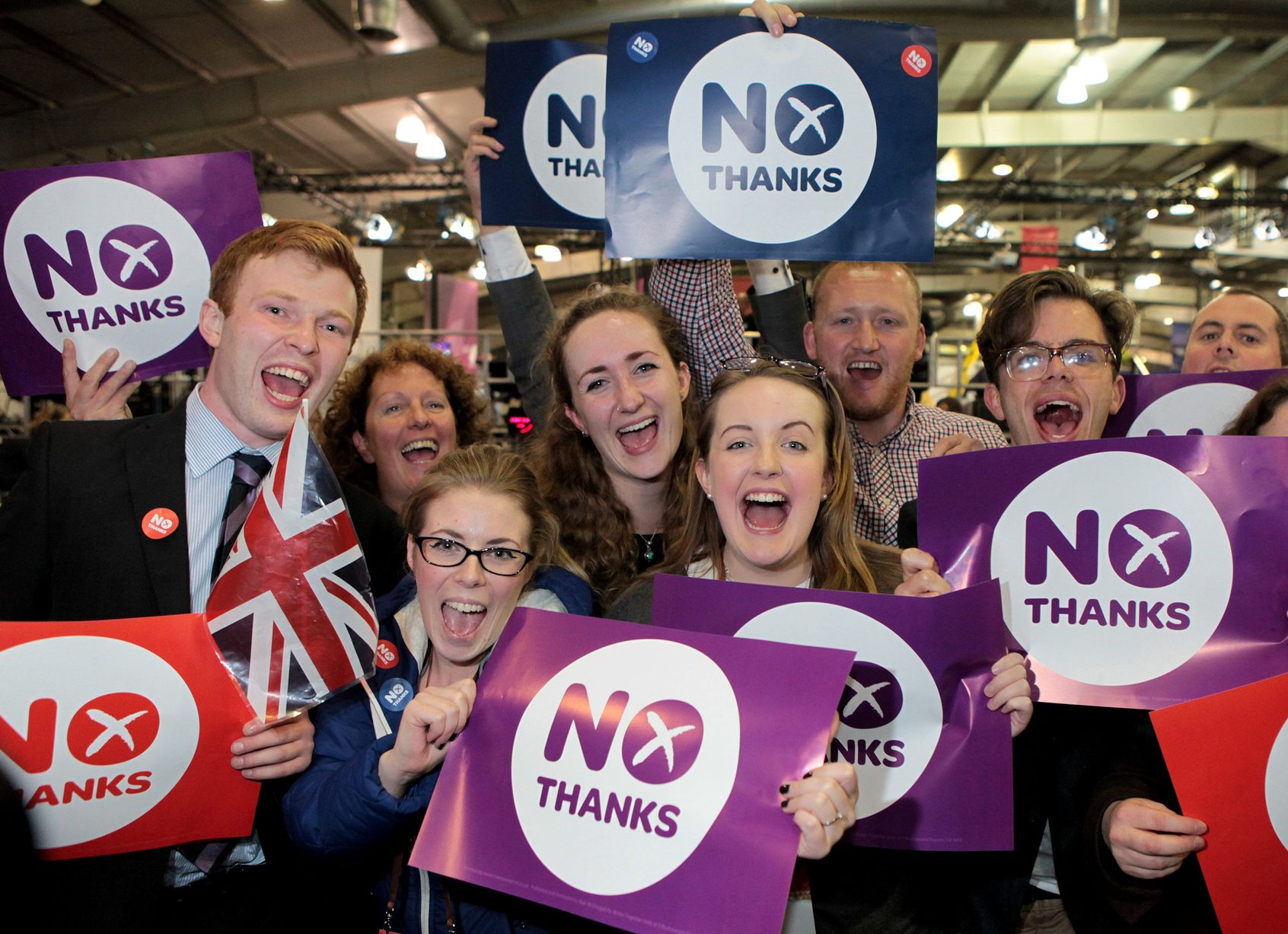
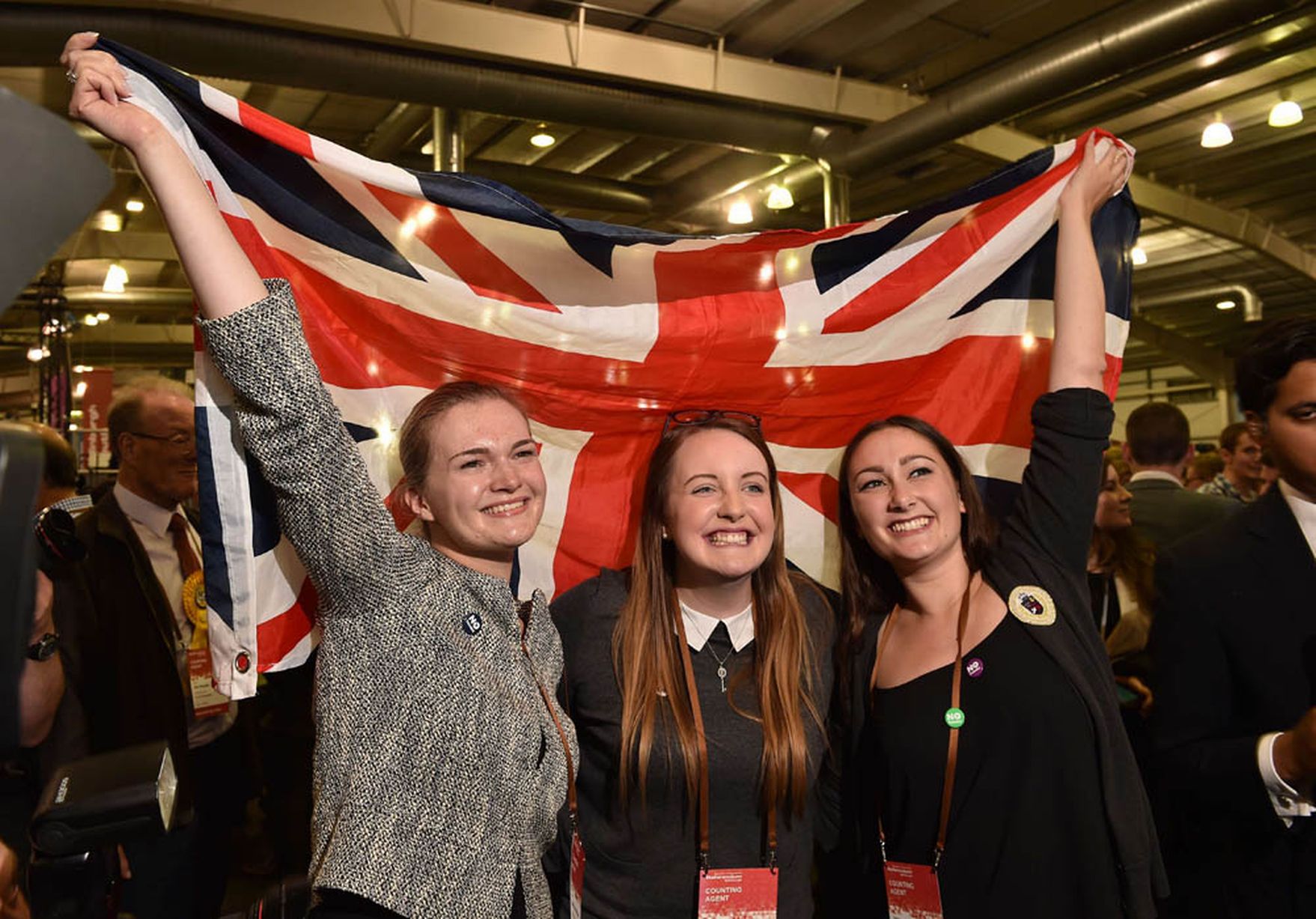
No-celebrationsEnglish Students parachuted in to Help the No Campaign Celebrate in Glasgow


Since the Prime Minister stepped out of No10 in the early hours of September 19 last year, his attitude to Scotland has changed dramatically. He is no longer the man whose “heart would break” if Scotland voted for independence.

He is now the PM who spent the general election questioning the legitimacy of Scots MPs. There are now serious doubts about his commitment to Scotland’s part in the UK. The Tories’ actions have been a gift for the SNP.

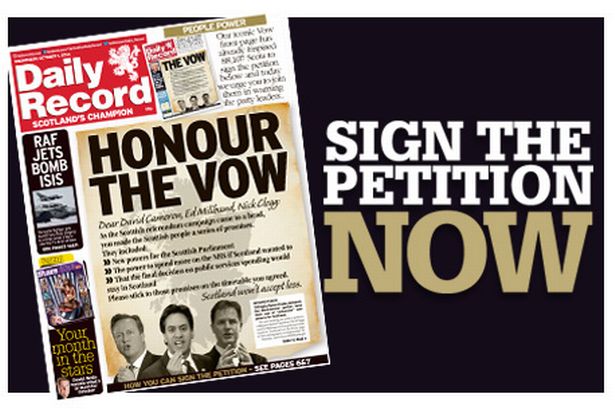
Nationalism thrives on grievance. And Cameron is giving Scots a lot to feel aggrieved about. He was a signatory to The Vow of more powers published in the Daily Record just before the referendum. And he has a moral obligation to live up to those commitments.

That means implementing Smith and treating Scotland’s elected representatives with respect regardless of their political party. This includes the inevitable row over his English Votes for English Laws proposals, which are expected to be introduced to Westminster today.

It is not too late for the Tories to live up to their promise and take heed of the desires of the people of Scotland. But the clock is ticking.

http://www.dailyrecord.co.uk/opinion/news/record-view-you-said-you-5986177


thevow


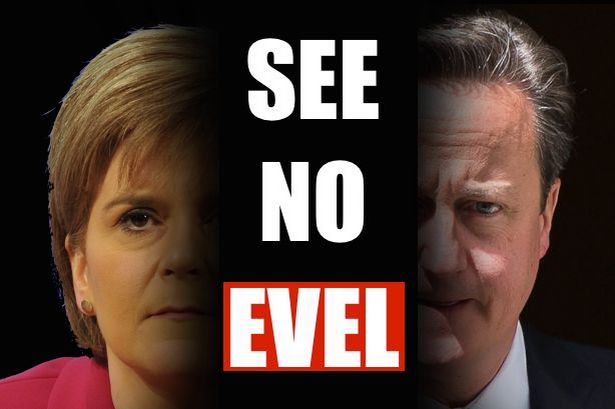
2 July 2015: ‘EVEL’ announced for English MPs

The government will give MPs from English constituencies a new “veto” over laws affecting England only. Commons Leader Chris Grayling said the change, also applying in some cases to Welsh MPs, would bring “real fairness to our constitutional arrangements”.

SNP leader Nicola Sturgeon called the plan “staggering in the extent… of its hypocrisy and incoherence”.

Labour said it was an “outrage” that ministers wanted to rush into making “profound constitutional change”. Shadow Commons leader Angela Eagle criticised the ‘back of a fag packet’ proposals and said the plans risked creating two classes of MPs. She further accused the Conservatives of a “cynical” attempt to “manufacture itself a very much larger” majority in the Commons.

Under the proposals, all MPs would continue to vote on all key stages of legislation. But English MPs – and in some cases English and Welsh MPs – will have a veto in Westminster when debating matters that have been devolved to the devolved administrations. “MPs will debate the changes on 15 July,” Mr Grayling said, and the system will be changed using the rules – known as standing orders – that dictate how Parliament conducts its business.

With more powers set to be devolved to the Scottish Parliament after September’s independence referendum, Tory MPs have said it is not right that MPs representing Scottish constituencies can continue to determine laws affecting England only. Mr Grayling told MPs that Scotland, Wales and Northern Ireland were getting a “stronger voice” and that it was “only fair” to do the same for England. “The Speaker will be asked to certify which bills or parts of bills relate to England or England and Wales only,” he said.

* The Speaker will judge which parts of a bill relate to just England, or England and Wales.
* An England-only committee stage will consider bills deemed “England-only in their entirety.
* Membership of this committee will reflect the number of MPs each party has in England.
* Where sections of legislation relate only to England or England and Wales, agreement of a “Legislative Grand Committee” will be required.

There will be no changes in the House of Lords, Mr Grayling said. But where Lords amendments are certified as England or England and Wales only, a “double majority” system applies, meaning it will need a majority of both the whole House of Commons and MPs representing English or English and Welsh constituencies. Tablet computers will be used to count MPs’ votes as they walk through the voting lobbies so officials can instantly register whether they have used their veto in votes where the “double majority” rule applies.


Scottish-ReferendumbnEnglish University Students Celebrate in Glasgow
To jeers from opposition benches, Mr Grayling said   “Today we are answering the West Lothian Question”, a reference to the constitutional anomaly that lets Scottish, Welsh and Northern Ireland MP at Westminster vote on measures that only apply in England.

The SNP’s Pete Wishart described the English votes policy as a “cobbled together unworkable mess”, and said it was “totally unacceptable”. He said this policy showed that the Tories were doing their best to ensure Scotland would become an independent country. His party leader Nicola Sturgeon said: “The Tories have produced a constitutional shambles -staggering in the extent of its hypocrisy and incoherence.

Under these plans – which are all about cutting Scottish MPs out of votes which impact on Scotland and our budget – the Tories are proposing an ‘English veto’ and ‘double majority’. I have been very clear that, at least in part, the level of support for independence will be determined by what the Tory government at Westminster does, as well as what the SNP Government does.

And there is no question that the great disrespect shown to Scotland in these proposals is likely to have more people asking whether Westminster is capable of representing Scotland’s interests at all.”

Labour’s Sir Gerald Kaufman, the father of the house, said the title of the motion, English votes for English laws, “sounds racist”. He added: “This government is undermining the whole basis of British democracy, right through from when the Magna Carta was signed.”

http://www.bbc.co.uk/news/uk-politics-33351688


Shattered Whitehall sign 800Scottish-Referendummn


3 July 2015: The First Minster says the PM’s proposal for English votes for English laws will drive the UK to the brink of separation.

Nicola Sturgeon threatened David Cameron with another independence referendum yesterday after he moved to restrict the voting rights of Scots MPs. The First Minister claimed the Tories are pushing Scots towards breaking up the UK by showing “great disrespect” with their proposals for EVEL – English votes for English laws. The row exploded after Cameron announced his Government will give MPs from English constituencies a new veto over laws affecting England only.

Commons Leader Chris Grayling said the change, also applying in some cases to Welsh MPs, would bring “real fairness to our constitutional arrangements”.

The First Minister branded it a “constitutional shambles staggering in the extent of its hypocrisy and incoherence”. Her comments were echoed by Labour and the Lib Dems after

Grayling outlined details of the proposed changes, which were promised in the Conservative manifesto. A new parliamentary stage will be introduced for passing laws that only affect England. English MPs will be asked to accept or veto legislation before it passes to its third and final reading for all MPs.

There will also be a separate committee stage for English MPs for Bills not affecting Scotland and Northern Ireland – meaning legislation can be amended without the consent of all MPs in the Commons. But there will be further opportunities to overturn any changes. Controversially, the Tories will try to introduce EVEL by simply changing standing orders – the rules which govern parliamentary procedure. Opponents say any such significant constitutional change should require proper legislation that can be scrutinised by all MPs.


Scottish-referendum

MPs are currently debating a Scotland Bill that will devolve new tax and spending powers to Holyrood. But Nicola Sturgeon said the EVEL proposals  “ride roughshod over the democratic rights of the people of Scotland”. She predicted the Tory approach would boost support for Scottish independence.

She said: “I have been very clear that, at least in part, the level of support for independence will be determined by what the Tory Government at Westminster do, as well as what the SNP Government do. And there is no question that the great disrespect shown to Scotland in these proposals is likely to have more people asking whether Westminster s capable of representing Scotland’s interests at all.”

Labour and the Lib Dems also voiced fears the changes could drive Scotland closer to independence. Labour Shadow Scottish Secretary Ian Murray said: “These proposals are a constitutional wrecking ball – they go far beyond what was previously discussed and risk reducing the UK’s democratic processes to rubble. “They will fan the flames of nationalism and are nothing more than a brazen attempt to secure party-political advantage for the Conservative Party.

Less than one year ago, the people of Scotland voted to remain within the Union of the UK. Now the Conservatives are once again placing that Union in jeopardy.”  Murray repeated Labour’s call for a new constitutional convention to discuss the future of devolution. He said: “It seems increasingly clear that the Conservatives’ sole concern is to gerrymander the UK’s democratic processes in order to cement their electoral advantage within England, regardless of the consequences for the rest of the UK.

http://www.dailyrecord.co.uk/news/politics/nicola-sturgeon-warns-second-referendum-5992182


Scottish-Referendumvb

The Scottish Referendum – Part 7 – June 2015 – Heavily Redacted Draft Scotland Bill Debated at Westminster- It Is Clear the Tories Are Intent On Ignoring the Wishes Of the People Of Scotland


treasury123
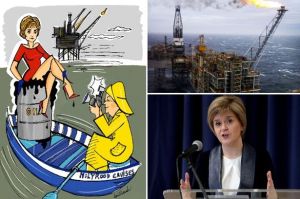
11 June 2015: Westminster finance experts (the Office for Budget Responsibility) (OBR) claim SNP’s oil revenue predictions are wrong

Nicola Sturgeon was yesterday told to abandon her plan to take control of Scottish finances after independent experts wiped £35b off projected oil revenue. The eye-watering cut would leave just £2b from the North Sea over the two decades from 2020 – down from an earlier estimate of £37b.

The Office for Budget Responsibility (OBR) delivered their projection as the SNP pushed ahead with proposals for full fiscal autonomy (FFA). Their policy would mean Holyrood taking control of tax-raising and spending powers.

Dugdale delivered her party’s own expert – endorsed oil analysis. It charted how oil prices fell from more than $100 a barrel during the independence referendum campaign to a low of $45 in January before rising again to $65 after only three months. SNP backbenchers shouted down Labour’s analysis as a “Mickey Mouse” project.

Deputy First Minister John Swinney accused Dugdale of being “out of touch with public opinion”. adding “She has been going on and on about full fiscal autonomy for nine months, all the way up to the general election. And the Labour Party delivered the worst performance they have delivered in 90 years.”  What full fiscal autonomy is about is building on the powers of this Parliament – powers that over the last 16 years have seen an  improvement in the economic performance of Scotland.

Our GDP per head used to be sixth in the UK. It is now third, behind London and the south-east. Our productivity has increased from 96 per cent of UK levels in 1999 to being in line with UK levels in 2012.

Where we can exercise distinctive economic policies in Scotland, we can transform the economic performance of this country. For me, that is what fiscal autonomy is all about. It’s about enabling this Parliament to take the decisions that are right for Scotland, not to be at the mercy of a Tory chancellor that comes along one Thursday and takes £100m out of our budget without a by your leave.”

Tory Scottish Secretary David Mundell said: “What this shows is how right the Scottish people were not to believe the wildly exaggerated claims that were made about oil revenues in last year’s referendum campaign.”

http://www.dailyrecord.co.uk/news/politics/nicola-sturgeons-dream-full-fiscal-5868062


Scotland-set-for-income-t-012


11 June 2015: Smoke and Mirrors – Westminster Unionist partys’ offer of devolution of limited fiscal powers to Scotland is driven by the dogma of doing just the minimum to keep Scotland in the UK, whilst reserving power to Westminster.

Preservation of the Ruth Davidson named “pocket money parliament” will be assured if Scots politicians allow themselves to be conned into accepting the proposals presently on offer. What we have is the illusion of a transfer of power with, pinned to it, a not so subtle £6billion reduction in the “Barnett Formula” financial allocation.

This will require the Scottish Government to find new sources of finance, (without borrowing money from the markets) so that existing benefits can be retained and new measures introduced providing assistance to those in need, (eg. removal of the bedroom tax). Income Tax rises would be a consequence, even for the Standard Rate taxpayer since Higher Rate taxpayers in Scotland are insufficient in number to bear the cost of any new financial requirements.

Scotland’s government will only be totally responsible when they have access and authority over all of Scotland’s resources and financial income, but Westminster will never willingly allow that since with absolute power retained by Westminster, solving problems in the Scottish economy through increased income tax and other personal taxes will only serve to make the Holyrood parliament very unpopular.

This proven tactic of delegating responsibility without authority suits the Westminster agenda. The “Unionist” partys’ are determined to impose their will, (no matter how long it takes) and Scotland will be asset stripped by stealth so that it becomes ever poorer and increasingly dependent on Westminster’s whims reducing the confidence of Scot’s in their ability to build, without Westminster’s benign governance, a better future for Scot’s as an equal partner within the United Kingdom.

Witnessed by their actions, in the months following the referendum it is clear Westminster remains to be in the business of building failure into any devolved powers instead of doing the right thing, identifying what has the best chance of succeeding and transferring relevant powers and authority to Scotland.

If Westminster is serious about creating a federal state then the truly radical approach would require a team of independent advisors to go away, investigate the construction and governance of successful multi-state countries eg Germany, then report back.  Unresolved Aspects:

* The Barnett Formula. Should be retained until reductions are agreed between Westminster and devolved governments.
* Vat collection. Without the ability to vary rates needs to be addressed.
* The Scottish government should be able to raise and lower income tax.
* Multinationals operating out of Scotland, (Tesco, Asda, Morrisons, RBS, BOS, etc) should be liable for tax collection on their sales.
* Authority should be devolved allowing Scotland to gather taxes from Capital trusts etc. who may be practicing tax avoidance by registering in the Bahamas, Channel Isles etc.
* Corporation Tax and Air Passenger Duty, including variance authority should be devolved.
* Oil, fuel taxation, excise duty (whisky) should be devolved.

Scottish fiscal autonomy, stopping short of full political independence, forming part of a federal or confederal constitution for the United Kingdom is the way forward. The Scottish Government would be responsible for all financial matters in Scotland, making payments to the UK government covering Scotland’s share of the cost of providing agreed specified UK-wide services, such as, defence and the conduct of foreign relations.  https://en.wikipedia.org/wiki/Full_fiscal_autonomy_for_Scotland


slick-nic


23 June 2015: In a bid to gain sweeping powers over Scottish finances, Deputy First Minister John Swinney published legislation that he hopes will secure full fiscal autonomy.

John Swinney yesterday pushed ahead with a bid to gain sweeping powers over Scottish finances. The Deputy First Minister published draft legislation which he hopes will secure full fiscal autonomy, Including the proposals in amendments they want to see adopted through the Scotland Bill at Westminster.

He said “The draft clauses we are publishing would, if implemented, not only provide for agreement on full fiscal autonomy, but would transfer control of business taxes, the minimum wage, working age benefits, employment and equality laws to Holyrood – new powers that give us a better mix of tools to boost the economy, tackle poverty and build a fairer society.”

He went on to say that he envisaged transition to full fiscal autonomy would take “some years” to complete and until full handover is complete, he wanted to retain the Barnett formula which is used to spread cash around devolved administrations. But the UK Government branded the move “as far away from sensible as you can get”. And opponents claimed the falling oil price had blown a hole in SNP finance projections.

http://www.dailyrecord.co.uk/news/politics/snp-unveil-bold-financial-wishlist-5932592


snpnhjk
29 June 2015: The new Scottish Secretary in the Tory cabinet wants the Scottish electorate to hold him to account for delivering The Vow.

When I told Parliament I wanted Scots to hold me to account for delivering The Vow published in theDaily Record before the independence referendum, I meant it. Today sees the start of one of the most important stages in making that happen and delivering to Scotland the powerhouse Parliament we deserve. Over the next 48 hours, MPs will be debating our plans to give a huge range of tax and welfare powers to Holyrood through the Scotland Bill. How these powers are used will have a direct effect on how much money a future Scottish government take from our pay packets and the level of benefits paid in Scotland.

Scotland indicated a wish for a strong Scottish Parliament within a strong United Kingdom. My party, along with all of Scotland’s other main political parties, promised to deliver on that after the last general election. Now most of the big ticket items are agreed – even the SNP accept the Scotland Bill will give the Scottish Parliament big new powers over tax and welfare. And there are serious changes too in areas like energy, transport and elections which often barely get a mention. At this crucial moment in making good on that promise, I want to spell out exactly what we are doing, why we are doing it – and maybe bust a few myths at the same time. The Vow front page

Q. Is the Scottish Parliament being made permanent?

A. The Scottish Parliament is here to stay – and now the law will spell that out. It is inconceivable that our Holyrood Parliament could be abolished without the consent of the Scottish people. If any government ever tried, it would spell the end of the United Kingdom, plain and simple. The Scotland Bill puts that into law in black and white for all to see, as the Smith Commission said it should.

Q. What about the talk of “vetoes”?

A. There are no vetoes – it’s as simple as that. In some areas, Scotland’s two governments will have to agree the timing of when a change is made, because these are huge transfers of power and money and we need to make sure we do it right. But the new laws also make it impossible to hold things up unless there is an incredibly powerful practical reason for doing it – not just because we disagree on the policy. That’s not a veto, it’s just plain common sense and it’s what people keep telling me they want to see – Scotland’s two governments working together to guarantee big changes in areas like welfare take place smoothly and without disruption to the public.

Q. Should we go further in devolving tax and welfare powers?

A. First, let’s remember what IS being devolved: tax powers worth £15b – including control over how much income tax comes out of your pocket – and a welfare package of £2.5b. Taken with everything else in the Bill, they will make Holyrood one of the most powerful devolved parliaments anywhere in the world. They reflect what we voted for in the referendum – more big decisions taken in Scotland, while remaining part of the United Kingdom. It delivers in full the recommendations of the Smith Commission set up to deliver The Vow.

Those recommendations were signed off by all five of Scotland’s main political parties, including the SNP. And it is a package of tax and welfare powers which will work in the best interests of Scotland. For example, no one – not even the SNP – is calling for pensions to be devolved. Why? Because it would be wrong to lumber our children and grandchildren with the burden of funding the state pension on their own. Instead, the cost can be shared across the UK. We share risks and rewards with our friends, family and neighbours in England, Wales and Northern Ireland. In other words, what we clearly said we wanted when we went to the polls in the referendum.
Q. So there’s no chance of changing the Bill?

A. I didn’t say that. I have always made clear – and again I mean it – that we will listen to sensible suggestions which will be to the benefit of Scotland within the United Kingdom. Indeed the whole point of having the Bill examined line by line in Parliament is so people can suggest changes. But those changes must reflect the will of the people as seen in the referendum result, must improve the Bill – and must make sense for Scotland.
Q. What about full fiscal autonomy (FFA) then? Is that on the cards?

A. No – because that is about as far away from sensible as it is possible to get. Let’s put it into context: Accepting the SNP plan would leave us with £10b less to spend by the end of this Parliament. And, according to the SNP’s own figures on oil tax income which were slipped out last week, it could be even worse. Last year the Scottish Government spent £10b on education and justice – that’s everything from schools and colleges to our police force, prisons and courts. Under FFA, that budget would disappear and the black hole would have to be plugged with either massive tax rises or severe cuts in public services. The SNP might think that’s a price worth paying to get closer to their dream of independence, but I don’t think it is – and I don’t think Record readers do either. This is a “deal or no deal?” moment for fans of FFA. They can either vote for a more powerful Scottish Parliament or they can support a plan that would cost Scotland the same amount as we currently spend on schools, the police and courts combined. It’s a no-brainer.
Q. What happens next?

A. I want to get this Bill turned into law by early 2016 – in time for the Holyrood elections. That is important because we need to know how the next Scottish government are going to spend our money. For the first time, Scotland’s political parties will have to look voters in the eye and say whether or not they plan to take more out of our pay packets through taxes. That is the logic of what the SNP say they want to do – yet they seem awfully shy about being upfront with voters about it. That is where the focus of attention should now rest – it’s the next great debate in Scottish politics. This Scotland Bill really will give those who want the honour of serving in our Scottish Parliament real power. It’s time for them to start telling us how they will use it.

http://www.dailyrecord.co.uk/news/politics/stand–deliver-daily-record-5966180#rlabs=10


wtr80pmx8zxqb6391tozm9f0ih55jy


29 June 2015: It’s a good sign that the Scottish Secretary is keen to push on with legislation to improve devolution.

Today David Mundell insisted the Scotland Bill would be hammered out and ready to go in time for next year’s Holyrood election. The Bill is supposed to be the result of The Vow his party and others on the No side of the referendum campaign signed up to and offered to Scotland last September. It doesn’t please everyone, naturally. Holyrood’s all-party devolution committee have already complained it doesn’t fully reflect the Smith Commission recommendations on further devolution. On the headline items, many will disagree with Mundell’s words. The SNP have made clear they don’t believe the Bill properly ensures Holyrood’s permanence. John Swinney raised complaints about “vetoes” left at Westminster over key powers.

But once the Bill is enacted, Holyrood should have much greater powers to make decisions and changes. Failure to deliver The Vow would have serious consequences. With the Bill in train, most people will be keen for politicians to resolve then move on from groundhog-day battles. If the legislation delivers on the promises, the Scottish Parliament will indeed be all the stronger. And with that, voters will finally be able to hear what our politicians plan to do with the powers. http://www.dailyrecord.co.uk/news/politics/record-view-scotland-bill-must-5967294


Untitledmju


30 June 2015: MPs say Scotland Bill calls are being ‘ignored’

David Mundell (Tory) dismissed accusations that UK ministers are not listening to those who want the Scotland Bill strengthened. It follows complaints in the Commons and a letter from Deputy First Minister John Swinney suggesting that Scottish proposals are being ignored. The government has again won a series of Commons votes – ignoring calls for the legislation to be amended. The third day of debate has been focusing on welfare powers. As with Monday’s debate on taxation Mundell insisted that the Scotland Bill lives up to the spirit of the Smith Commission’s recommendations.

The SNP and Labour backed each others calls for Holyrood to have unrestricted power to create new benefits and top up existing ones – as well as seeking other changes. But despite a written complaint from the Scottish government that calls from Scottish MPs were being resisted, Mundell said he was listening and would reflect before the next stage of the bill’s parliamentary progress later this year. MPs are deciding which additional powers will be given to the Scottish parliament. Mundell has previously said the UK government would not back any amendments to the Scotland Bill that were “bad for Scotland”. The bill will give further control to the Scottish Parliament over taxation, VAT revenues and welfare.

Mr Swinney said that during the previous day’s committee stage of the legislation on taxation the UK government had “again resisted all amendments, whatever their support amongst MPs from Scottish constituencies”. The deputy first minister quoted Mr Mundell’s response to the SNP MP Tommy Sheppard, when he cited evidence of “productive discussions” with Mr Swinney and his willingness to address issues raised by Holyrood’s Devolution (Further Powers) committee. Mr Swinney said: “There will have to be clear movement by the UK government otherwise it is becoming harder to justify that description.”

Meanwhile, Labour’s Ian Murray said Scotland would be able to mitigate Conservative cuts to tax credits or other welfare under Labour and SNP plans to give Holyrood the power to create new benefits and top up existing payments. Murray said Labour amendments to the Scotland Bill, some of which are backed by the SNP, would effectively give the Scottish Parliament the power to design its own welfare system.

If MPs pass the proposals in the Commons, Scotland would be able to therefore create additional benefits to lessen the effect of welfare cuts by the UK government, for example reported Tory plans to cut tax credits, Murray said. Moving a series of amendments, the Labour frontbencher said: “There would be an ability to create a system that allowed you to mitigate the reduction in tax credits. Murray said that Labour’s amendments would implement the recommendations of the cross-party Smith Commission in spirit and in substance while ensuring the welfare state remains UK-wide and allows the pooling and sharing of resources across the union.

He added: “I want to be clear that fundamentally our amendments will ensure that the Scottish Parliament has the unrestricted power to create any new benefits in areas that are devolved, in addition to the guarantees of the UK benefits and pensions system and the power to top up any benefits that remain reserved to this parliament.”

Mundell said that MPs must respect the referendum result and accept that people in Scotland voted to remain part of a United Kingdom where there’s benefit from sharing risks and resources with all other parts of the UK. He said: “The fact that no Scottish MP has tabled an amendment to devolve UK pensions speaks volumes. It tells us that even the supporters of independence accept there are parts of welfare where it makes sense to share resources and risks with the rest of the UK.

It is clear that pensions are safer and more affordable if we work with everyone else in the UK and that it would be wrong to devolve UK pensions. MPs have to respect the referendum result where people in Scotland voted to remain part of a United Kingdom and hold on to the benefits of being part of the UK. Looking after people in Scotland who are retired, unwell or out or work is now a shared space where the UK and Scottish governments need to work together.”

http://www.bbc.co.uk/news/uk-scotland-scotland-politics-33323387


snpbghgh
30 June 2015: SNP’s FFA amendment is voted down by Labour and the Tories

An SNP amendment to the Scotland Bill that would give the Scottish Parliament full fiscal autonomy was defeated in a vote in the House of Commons last night by 508 votes to 56. A Labour amendment that would have set up a commission to analyse FFA was defeated 376 to 192 with Secretary of State for Scotland David Mundell saying he did not need a commission to know that Full Fiscal Autonomy would be a “disaster”.

Ian Murray MP suggested that the bill would be a “sobering response to a key manifesto commitment of the Scottish National Party”. The SNP voted against the amendment claiming that it was proof that Labour thought Scotland “too small, too poor and too stupid for any powers at all”.
After the vote Perth MP Peter Wishart tweeted  “The Tories response to improving the Scotland bill and giving Scotland what it voted for is to say No. Labour just say we can’t”.

The Scotland Bill clauses on devolving income tax were criticised by opposition MPs for not matching up the Smith agreement. SNP Deputy Leader Stewart Hosie told MPs: “The taxation powers are very limited – even if one includes the VAT assignation, the Scottish Parliament would raise around 50% of devolved expenditure”. However, excluding the VAT assignation the figure falls to barely a third.

That’s important because many of the submissions to the [Scottish Parliament’s] devolution committee called for more. It’s also important because it doesn’t match with what the UK Government said in their command paper, Scotland in the United Kingdom, which claimed, ‘as a result of the Smith Commission agreement, the Scottish Parliament will control around 60% of spending in Scotland and retain around 40% of Scottish tax’.

Mundell said the Tory changes would give “unprecedented flexibilities” to the Scottish Parliament on income tax. He said: “The Scottish Parliament will retain the receipts from income tax that they are responsible for. This represents a significant devolution of powers with Scotland retaining around £11 billion of income tax receipts. This accounts for over 90% of income tax receipts collected in Scotland.

This gives Scotland greater fiscal autonomy with incentives to increase employment and increase wage growth. And I would emphasise to MPs that there are no restrictions on this power. If the Scottish Parliament wants an income tax system with a dozen different rate bands these powers allow them todo that. Similarly, to answer issues raised in the debate, if they want to set a zero rate of income tax they can.”

MPs also debated the anomaly that sees Police Scotland and the Scottish Fire Service pay VAT, unlike every other police force and fire service in the country. Speaking during the debate, Central Ayrshire MP, Philippa Whitford argued that £33 million a year could be poured back into frontline services. David Gauke, the financial secretary to the Treasury said that the Scottish Government knew that the VAT bill would be a consequence of the merger of Scotland’s eighth forces.

Gauke said: “This was a choice of the Scottish Government with their eyes wide open that the VAT refund scheme was not available in the event of that reform. There are often many claims, many arguments that are made in respect of the VAT refund schemes that we have and requests that this be broadened and applied to additional organisations. That comes with significant fiscal cost. There may well be a case for argument’s sake that this should be looked at, but I don’t think we should look at this in isolation because of a particular decision that was made in one case.”

Ian Blackford said that it was now a matter of respect “We keep hearing about the issue of respect. We all know the reasons why the Scottish Government brought these moves forward – because it creates efficiency” the MP for Skye said, “if there is genuinely this feeling of mutual respect between the government in Scotland and the government in Westminster, all we simply have to do is make sure that we get the VAT back and invest that in front line services.”

Welfare will be the main focus of today debate on the Scotland Bill. Both the SNP and Labour have tabled amendments would give Holyrood greater powers over benefits and employment law than those already in the Bill. The SNP amendments would see the removal of any clause that could give Westminster a veto over Holyrood’s new powers. The party also wants Holyrood to be given control over working age benefits, benefits relating to children, and employment support programmes.

And it wants control over National Insurance contributions, employment law and equal opportunities being given to MSPs. Labour’s proposals include giving a final say on benefits rates for the Scottish Parliament, unrestricted power to create new devolved benefits, a power to top up benefits, including in reserved areas, and the full devolution of housing benefit.

http://www.thenational.scot/politics/snps-ffa-amendment-is-voted-down-by-labour-and-the-tories.4647



tdp_wshs_fellows

The Scottish Referendum – Part 6 – May 2015 – the Aftermath of the General Election -Tories On the Backfoot But Recover and Make Their Moves On EVEL


JS63008084


12 May 2015: David Cameron Preparing to offer more powers to Scotland

David Cameron is preparing to offer the Scottish Parliament powers in excess of The Vow proposals agreed by the Smith Commission. New Tory Scottish Secretary David Mundell has signalled that the Prime Minister is open to delivering full tax and spending powers to Holyrood. Speaking in Downing Street after being appointed yesterday, Mundell – the sole Scottish Tory MP – said the all-party commission’s proposals for further devolution would be up for negotiation. Echoing Nicola Sturgeon’s words after Scotland returned 56 SNP MPs, he added: “I can give the absolute guarantee it will not be business as usual.”

The SNP want to go further than The Vow proposals thrashed out after the referendum and have control over welfare, employment, business taxes, national insurance and equality policy. But Cameron could offer Full Fiscal Autonomy, the SNP manifesto policy that gives Holyrood full tax powers and would end the Barnett formula – worth £7.6billion a year to Scotland.

The Tories will expect their proposals for English votes for English laws to be carried in the Commons, locking out Scottish MPs from key budget decisions and increasing the Conservative majority from 12 to a comfortable 71 votes.

Mundell said: When the Smith Commission proposals are put forward, they will provide an opportunity for debate and discussion. The Government have, I think, a very radical set of proposals to bring new powers to Scotland.”

SNP deputy leader Stewart Hosie said: “Powers we will prioritise are employment policy including minimum wage, welfare, business taxes, national insurance and equality policy –the powers we need to create jobs, grow revenues and lift people out of poverty. This makes it important that we have a big group of SNP MPs to defend Scottish interests.”

http://www.dailyrecord.co.uk/news/politics/prime-minister-open-new-powers-5682051


mundell


12 May 2015: The First Minister, who greeted her MPs outside Westminster yesterday, said she was “not planning” to hold another referendum but refused to rule it out.

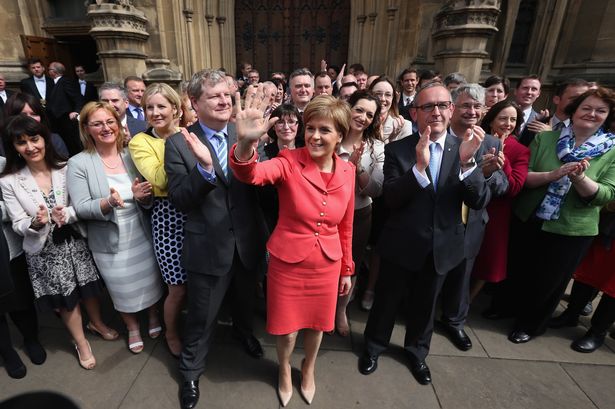
The band of nationalist brothers and sisters gathered at the St Stephen’s entrance of Westminster in a dramatic display of the SNP’s election success. Nicola Sturgeon said she was “not planning” to hold another referendum but refused to rule it out. The First Minister spelled out her position “We had that debate and that vote last year, and Scotland, against my better efforts, opted to stay part of the United Kingdom, to stay part of the Westminster system. I’m not planning another referendum. Why I stop short of saying I absolutely guarantee it is the same reason I don’t think David Cameron has got any right to rule it out.”

Supporters at the Parliament gate wielded a huge saltire to challenge the Union flags that dominate the Whitehall skyline. A massive scrum of photographers shouted at the gathering MPs: “Can you go back, can you go back?” They were not asking the SNP group to turn home, but to move further away so the lenses could fit them all in. Not all could make it. Western Isles MP Angus MacNeil was delayed by bad weather. But almost every other corner of Scotland was represented. Former First Minister Alex Salmond joined the throng at the last minute and enjoyed the moment as much as any. He acknowledged that in light of the electoral progress he made the right decision to stand aside as First Minister and return to Westminster as a humble backbencher. He will not challenge Angus Robertson, the sole nominee for the group leadership position, when SNP MPs meet formally today.

Gordon MP Salmond said: “I loved being First Minister but everyone has his time.” Looking around at his dozens of smiling new colleagues, Salmond added: “I think things are turning out not too badly, as I see it.” As well as representing most of Scotland, the new MPs looked like a cross-section of Scottish society. Dundee West MP Chris Law, like a typical Scottish tourist, was keen to see the spot in Westminster Hall where William Wallace had been tried. Law – pony-tailed, bearded and 6ft 6in – turned up in his three-piece tweed suit. He had vowed to wear tweed for the duration of the five-year parliament. With London beginning to swelter in 24C sunshine, that second referendum can’t come soon enough for him. http://www.dailyrecord.co.uk/news/politics/nicola-sturgeon-insists-david-cameron-5681295


snpbghgh


15 May 2015: David Cameron will come under pressure today to live up to his vow of more powers for Scotland after MSPs attacked the scale of his offer.

The Prime Minister is meeting Nicola Sturgeon in Edinburgh where calls for a more wide-ranging deal are certain to dominate talks. The meeting comes a day after a cross-party Holyrood committee warned Cameron’s current plan falls short of proposals in the Smith Commission. Bruce Crawford, convener of the devolution committee said: “We call on the new UK Government to consider our report as a matter of urgency and to work with the Scottish Parliament to help ensure we have legislation that achieves the objectives all five parties on the committee signed up for. We are disappointed that the currently proposed legislation sells Smith short.”

Lord Smith’s commission was set up in the aftermath of last year’s No vote to hammer out a new plan at breakneck speed. It was a key part of the vow Cameron made with Ed Miliband and Nick Clegg in the run-up to the referendum. Draft legislation was then drawn up by the previous Tory-Lib Dem coalition Government. But in a report published yesterday, the devolution committee warned the draft does not meet “the spirit or the substance” of Smith. The report highlighted a lack of power over benefits and confusion over tax, among other failings. Tory MSP Alex Johnstone, who sits on the committee, said: “What we have here, on studying it, is imperfect. I would highlight for example the area of tax where there is simplicity and clarity, but comparing that with the area of benefits and welfare there is a lack of clarity.”


JS63217993


Lib Dem MSP Tavish Scott added “I have no difficulty whatsoever in demanding the full intent of what we agreed on a cross-party basis is implemented by the Government. It doesn’t really matter what has happened in the past.” Cameron is facing calls for more powers which go much further than Smith, after the SNP’s stunning gains in the general election last week. Sturgeon warned on Wednesday that the Prime Minister would be responsible for fast-tracking a second independence referendum unless he meets key SNP demands. Last night, Cameron insisted he “remains true to the promise” that he’ll make Holyrood one of the most powerful devolved parliaments in the world. He said: “Scotland has two governments and it is the duty of the First Minister and myself to respect each other’s roles and responsibilities and to work together for the benefit of all the people of Scotland. As more powers are devolved to Scotland, it is time to move beyond the debate about processes and focus on those bread and butter issues that affect every family in our United Kingdom – jobs, homes, good schools and strong public services, and dignity and respect in retirement.”

The UK’s Scotland Office, now led by Tory David Mundell, pledged to hold a full parliamentary discussion “where differing views can be heard”. A spokesman said: “The UK Government is committed to delivering more devolved powers through the package outlined by the cross-party Smith Commission. “We will work to bring forward a Scotland Bill on this basis and ensure the Scottish Parliament becomes one of the most powerful devolved parliaments in the world.”

Sturgeon said: “As I have made crystal clear, the general election result last week and the overwhelming mandate that has given the SNP, means that it simply cannot be business as usual when it comes to Westminster’s attitude to Scotland – whether on public spending or on more powers for Scotland.” http://www.dailyrecord.co.uk/news/politics/david-cameron-prepares-talks-nicola-5700442


JS63584566JS63584651

 
15 May 2015: David Cameron arrives in Edinburgh for first talks with Nicola Sturgeon as First Minister pushes for extra devolution powers

David Cameron arrived in Edinburgh for talks with First Minister Nicola Sturgeon, with further devolution for Scotland expected to dominate. Ahead of the meeting, he said the UK Government will “remain true” to its promise to implement the Smith Commission agreement on further devolution for Scotland. Ms Sturgeon will press Mr Cameron to go beyond the Smith package and hand even more powers to Holyrood, arguing that it would be “inconceivable” for the UK Government to ignore the democratic will of Scottish people as expressed in the SNP’s election victory.

The Smith package, which would allow the Scottish Government to set rates and bands of income tax and give it control over £2.5 billion of welfare spending, will be taken forward in a new Scotland devolution bill in the first Queen’s speech, Mr Cameron said. A joint Holyrood committee has already backed the Scottish Government’s view that the draft clauses for the bill, published by the UK Government before the election, do not reflect the full Smith Commission proposals. In addition to the Smith package, the First Minister wants powers over employment policy including the minimum wage, welfare, business taxes, National Insurance and equality policy to be devolved as a matter of priority.

Some Conservative politicians have urged Mr Cameron to consider offering a more radical package of devolution to Ms Sturgeon, including full fiscal autonomy – full control over tax and spending – but there are no indications that the Prime Minister intends to go beyond the proposals contained in the Smith Agreement. Ms Sturgeon has dismissed claims in some reports today, which quote a senior SNP source in Westminster that the party would push ahead with a referendum without the Prime Minister’s permission. Her representative said: “These claims are totally wrong – there are no such plans. “The position is crystal clear: the general election was not a mandate for another referendum. There will only be another referendum if and when the people of Scotland back such a proposal at a Scottish Parliament election.”


JS62956225


Speaking ahead of his meeting with Ms Sturgeon, Mr Cameron said: “I am here today to underline my commitment to our United Kingdom and Scotland’s important place within it. That means remaining true to the promise we made to implement the all-party Smith agreement to make Scotland one of the most accountable and powerful devolved parliaments in the world.

It also means recognising those things which unite us in these islands: the achievements we have made together, the institutions we have built together, our great social history, the common economic challenges we face today and the strength which comes from pulling together for the common good in the future. This is our One Nation agenda in action.

Scotland has two governments and it is the duty of the First Minister and myself to respect each other’s roles and responsibilities, and to work together for the benefit of all the people of Scotland.

As more powers are devolved to Scotland, it is time to move beyond the debate about processes and focus on those bread-and-butter issues that affect every family in our United Kingdom – jobs, homes, good schools and strong public services, and dignity and respect in retirement. These are the building blocks we need to provide a brighter future for people in every part of our country.”

Scottish Secretary David Mundell has said that the parliamentary process for the new Scotland Bill which will take the Smith proposals forward will provide “an opportunity for debate and discussion”. The SNP could table amendments to that legislation but it would have to persuade a majority of Conservative and labour MPs at Westminster to support any changes.

Meanwhile, Holyrood’s Devolution Committee already concluded that the draft clauses for the new bill should not be recommended for legislative consent by the Scottish Parliament in their current state. The committee – which includes unionist and nationalist MSPs – urged the UK Government to undertake “proper consultation” and present redrafted proposals reflecting the full intent of Smith for Holyrood’s consent next year.

Ms Sturgeon said  “I am looking forward to serious and substantial talks with the Prime Minister. We will take forward a constructive and co-operative approach in our dealings with the UK Government. But, as I have made crystal clear, the general election result last week, and the overwhelming mandate that has given the SNP, means that it simply cannot be ‘business as usual’ when it comes to Westminster’s attitude to Scotland – whether on public spending or on more powers for Scotland.

The proposals of the Smith Commission are a good starting point but the election result shows that people all across Scotland are keen to move beyond the extra powers it identified. The endorsement this week by the STUC (Scottish Trades Union Congress) of new powers for the Scottish Parliament, including over issues like the minimum wage and employment law, shows the depth of support within civic Scotland for substantial new powers for Holyrood.

Scotland expects these powers to be delivered – and I expect the Prime Minister and his Government to recognise the democratic mandate that now exists to deliver them.” http://www.dailyrecord.co.uk/news/scottish-news/david-cameron-arrives-edinburgh-first-5701906


JS63582077
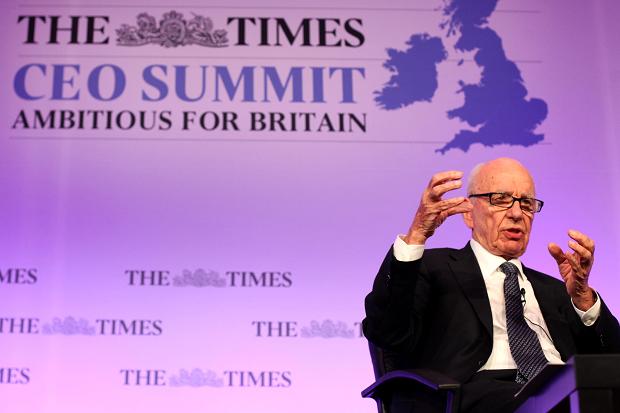
 
15 May 2015: Prime Minister David Cameron today opened the door to a fresh round of talks on new powers for Scotland

After a meeting at her official residence, Cameron said: “The First Minister wants to send some proposals for me to look at and I’m happy to examine proposals. There’s going to be a debate, of course there will be a debate. “I don’t rule out making other changes if sensible suggestions are made.” But the Tory leader ruled out the SNP’s plan to raise enough tax in Scotland to pay for services, known as full fiscal autonomy. It is believed further devolution is the main topic of conversation. Full fiscal autonomy was a key plank of the SNP’s election manifesto.

Cameron said: “I don’t support full fiscal autonomy. “I want people in Scotland to know that the whole of the United Kingdom stands behind your pensions, stands behind unemployment benefit, will stand behind Scotland if it has a difficult year, if the oil price goes down. That’s what I believe in, the solidarity union as well as the United Kingdom that’s about defence and foreign affairs and all the institutions we have built together. I think the option of full fiscal autonomy is not a good option for Scotland inside the United Kingdom.”

There was speculation after the election last week from senior Tory strategists that Cameron could put Sturgeon on the spot by offering just such a deal. Cameron is already hearing loud calls to significantly boost his current offer, particularly on welfare, the minimum wage and business taxes.

The SNP secured an astonishing 56 MPs who will relentlessly push for a better deal. And a cross-party group of MSPs this week said the UK Government’s blueprint for devolution falls short of proposals agreed by the Smith Commission. Lord Smith’s commission was set up after last year’s No vote to hammer out a new plan for the rapid transfer of power. Yesterday, Cameron conceded: “We’re going to look again at welfare and make sure the clauses reflect what that agreement was.”

Sturgeon said: “I want Scotland to have full fiscal autonomy, David Cameron doesn’t, but what we said in our manifesto was that there were priority powers over and above the Smith Commission that we wanted to see devolved. So, what we are talking about are business taxes and employment legislation, the minimum wage and more powers over welfare. As a priority, I want to get our hands on the levers that really matter as quickly as possible.”

Shadow Scottish Secretary Ian Murray – the only Labour MP left in Scotland – said: “Labour stood on a platform of ensuring that the final say on benefits rests with the Scottish Parliament and promising a Home Rule Bill within 100 days, so we welcome attempts to deliver quickly on further devolution. “Whatever the SNP’s political ambitions, they must not accept a Tory deal that cuts Scotland’s budget.”

http://www.dailyrecord.co.uk/news/politics/prime-minister-david-cameron-opens-5704235


JS67273407

The Scottish Referendum – Part 5 – January – April 2015 – Con/Dem Politicians & Westminster Based Civil Servant Teams Render Draft Scotland Bill Proposals Impotent


JS63217728


19 March 2015: Stunning survey shows Yes would win a new referendum while our poll also points to the SNP winning the bulk of Scotland’s 59 seats in May.

A majority of Scots now back independence just six months after the referendum No vote, according to a sensational new poll. The bombshell survey shows that a repeat vote on Scotland’s future would see the public narrowly back a split by 51 per cent to 49 per cent. The poll of more than 1000 Scots also found a growing appetite for another referendum on independence in the near future. And in more bad news for unionists, the SNP has increased its already commanding lead over Labour at Westminster – they’re now on course for an astonishing 53 of the 59 seats at May’s general election. The results underline the growing feeling that the constitutional question is far from settled despite the two-year debate on independence that culminated in last year’s historic vote. How would you vote if there was another referendum tomorrow asking Should Scotland be an independent country? Yes 45% No 43% Undecided 11% Rather Not Say 1%

First Minister Nicola Sturgeon has already U-turned on her pre-referendum vow that the ballot was a “once in a generation” event. She now insists there should be another referendum whenever a majority of Scots want it. And according to polling firm Survation that day could come a lot quicker than some people think. The poll found 80 per cent want another referendum at some point in the future – but a majority now want it before 2025. However, the most explosive finding is that support for independence is now ahead. How will you vote in the General Election in May? SNP 47% Labour 26% Tories 16% Lib/Dems 4% Others 7%
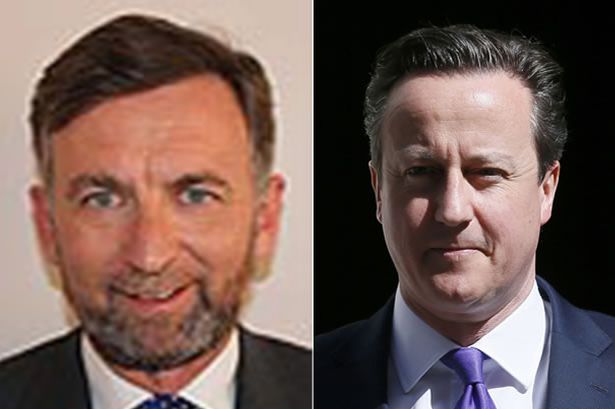
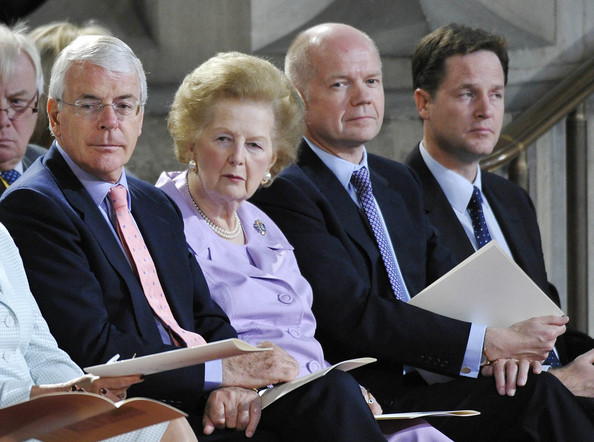
It showed that 45 per cent of Scots would vote Yes if there was another referendum held tomorrow – the exact same percentage as backed indy on September 18. But only 43 per cent say they would vote No. The remaining 12 per cent are undecided or did not want to reveal how they would vote. If the don’t knows are excluded you would be left with a 51 per cent Yes to 49 per cent No referendum result. Should Scotland be an independent country? (Excluding Don’t Knows). Yes 51% No 49%

In fact, it revealed the SNP have actually increased their massive lead in the polls over Labour. Forty-seven per cent of Scots now plan to vote SNP on May 7, up two points from our last poll in February. Support for Labour fell two points to 26 per cent. The Tories rose one point to 16 per cent and the Lib Dems dropped another point to a humiliating four per cent. If our results were repeated in the actual vote, the SNP would win 53 seats and Labour just FIVE. The Lib Dems would lose all but one of their 11 Scots MPs and the Tories would be entirely wiped out in Scotland.

SNP Westminster leader Angus Robertson said: “This is another welcome poll – it shows that support to give Scotland a strong voice at Westminster by returning a team of SNP MPs to stand up for Scottish interests remains very high. “By contrast, Labour continue to pay the price for being on the same side of so many arguments as the Tories, including their joint commitment to imposing even more spending cuts. “We take nothing for granted and will work extremely hard to win people’s trust on May 7 so that we can deliver jobs and growth in place of Westminster cuts, power for Scotland and the non-renewal of useless and expensive Trident nuclear weapons.”

Our poll also looked ahead to the 2016 Holyrood elections and put the SNP on an incredible 50 per cent support for the constituency vote compared with Labour’s 26 per cent. On the regional list vote the SNP are on 39 per cent compared with Labour’s 23 per cent. http://www.dailyrecord.co.uk/news/politics/exclusive-bombshell-daily-record-poll-5366657


JS63584651


8 April 2015: David Cameron rules out second independence referendum

David Cameron has dramatically ruled out a second independence referendum under the Tories – even if the SNP wins the 2016 Scottish election. The Conservative leader said he believed the independence question was “settled for a generation” and emphatically ruled out an early re-run of the vote. The Prime Minister made clear he was not envisaging another campaign to keep the Union together under his watch. He told The House magazine, a Westminster journal: “I believe it’s settled. I quote Alex Salmond, ‘settled for a generation, possibly for a lifetime’, is what he said. And I’m sticking with that.”

A second referendum would require another Section 30 order giving time-limited powers to Holyrood to stage the vote. But Cameron made it clear that he does not contemplate a Tory-led government agreeing to the move, even if the SNP win a majority at Holyrood in 2016. “I think there was a very big debate in Scotland , a very big moment, a very big turnout. But it was pretty decisive, a ten point margin is pretty decisive,” he said. Asked what his position would be if the SNP win the Holyrood elections with a manifesto commitment to a second referendum, Cameron replied: “That issue is settled.”

Angus Robertson, the SNP’s General Election Campaign Director, said “As the First Minister has made clear, It is the people of Scotland – not David Cameron or any other politician – who will decide when any future referendum on independence might be.” http://www.dailyrecord.co.uk/news/politics/david-cameron-rules-out-second-5481128#rlabs=59


Lord-SmithLord Smith

The Scottish Referendum – Part 4 – December 2014 – Informed Feedback – Westminster and It’s Loyal Civil Servant’s Have Set A Trap – Scotland Needs to Back off From the Deal Or get Stung badly


JS62959703David Mundell


3 December 2014: The Smith Commission: what Was Said and What Has Happened

There has been, and will be, much debate about Smith following its publication late last month, including further analysis on Ekklesia. It is probably the case that as much as the Westminster parties were ever going to be prepared to concede is in its proposals.

But the idea that this amounts to ‘Home Rule’ or ‘devo max’ (everything other than foreign affairs and defence) is far from true; as is the assertion that this is the maximum that can be achieved.

It is but one package, developed out of conversation – constructive but inevitably compromised – by five of the six parties that played a large part in the September independence referendum campaign.

The other involves EVEL (English votes for English laws). The whole settlement can also be questioned in terms of the lack of balance between new powers and resources to deliver with or from them – something we specifically warned about. Of course there are positives, too. Those have to be built on. But people in Scotland and elsewhere on these islands will be necessarily sanguine about the adequacy of what is on the table.

The Smith Commission process, set in motion by the deliberately vague and highly politicised ‘Vow’ by the Conservative, Labour and Liberal Democrat leaders, was from the outset constrained by a timetable which ensures minimum public involvement and consultation.

One of the major planks in Ekklesia’s submission was about this failing. It can be somewhat mitigated as Heads of Agreement are considered, but at present we can have no confidence that it will be.

Nevertheless, as the energy for change continues in Scotland, there remains, throughout all these flawed processes, the hope that the case for more substantial constitutional and political change can be pushed for across these islands – for the benefit of people in Wales and the English regions, too.

That will of necessity involve tackling ‘the London question’ – the impact on the quarter mile City State which now shapes Westminster politics and much else on the British and Irish isles. It will also involve much more thought and response on the implications of Smith. http://www.ekklesia.co.uk/node/21100


JS63008084
3 December 2014: The tax solution proposed by Smith is the worst possible for everyone involved, and essentially part of a two-pronged trap set by the UK government.

Richard Murphy is a chartered accountant and economist. He has written widely, and blogs frequently. He has appeared in many radio and television documentaries on taxation issues. He has also presented written and oral evidence to select committee committees of the House of Commons and House of Lords. Richard has been a visiting fellow at Portsmouth University Business School, the Centre for Global Political Economy at the University of Sussex and at the Tax Research Institute, University of Nottingham.

His views. There appears to be broad consensus this morning that Scotland will get devolved powers over all income tax on earnings but not savings in the review of its authority to be announced today. Some other taxing rights, which are much less contentious, will also be devolved. I have to say I am very worried about this compromise solution for Scotland. In saying so I stress I was in favour of independence and felt Scotland should have embraced its own currency. little else made sense in September. Two months on a worst possible outcome for everyone now seems to be the option.

The settlement reached appears to be based on the premise that tax’s sole purpose is revenue raising and that Scotland must have taxing powers if it spends. At the core of my concern is my belief that this is wrong. Tax has not less than six purposes:

1) It reclaims the money that a government has spent into an economy

2) It reprices goods and services that the market misprices

3) It redistributes income and wealth

4) It raises representation in democracies as people are motivated to vote by tax

5) It reorganises an economy

6) It regulates money by giving it value in exchange by requiring that tax be paid using the state currency.

You will note that none of these refers to raising revenue and that’s appropriate. We know governments can and do spend money they do not have and we know governments can also spend without ever borrowing: QE has proved that. This is why I refer to tax collection as the reclamation of money the government has already spent into the economy using the power a state has to create money at will.

The trouble is Scotland does not have that power to create money. That will, as the whole referendum debate focussed upon, stay with London. So Scotland ends up with revenue collection rights but no control over money, that’s half a power at best. And it has even been denied the right to reprice necessary parts of the economy to achieve the goal of redistribution which many think absolutely vital to economic recovery because tax rates on savings and rents are going to be taken out of its control meaning it can only redistribute earned income – which is precisely what is probably not needed in Scotland.

What’s the outcome? A mess, is the best answer. The West Lothian question remains on the table and is too uncomfortable to answer. UK fiscal control is reduced, and Scotland has powers too limited to really effect change. Macro economic policy will be hard to deliver. The practicalities of administering two, related, domestic tax systems will be enormously difficult (who will be resident in Scotland, and how will they know?). And Scotland will remain frustrated that some real reforms will remain beyond it for time to come.

If ever we wanted to know that the No vote in September was a very big mistake this is the proof. We will now live as two nations with two tax systems and no macro economic control on some key issues living under one umbrella state with one currency that no-one can be sure they control.

That’s the definition of a macro-economic mess in the making. I am, I think, appropriately worried. There could have been worse outcomes – and they may still come – but this is a potential nightmare in the making.

http://www.taxresearch.org.uk/Blog/2014/11/27/scotlands-tax-solution-is-the-worst-possible-for-everyone/Richard Murphy of Tax Research 


JS62995178

The Scottish Referendum – Part 3 – November 2014 – Getting Down to Business -Westminster Backtracking Begins In Earnest


Debate3876


10 November 2014: Ekklesia – Submissions to the Smith Commission – Expert Observations and Warnings to Scotland of The Trap

Ekklesia is a public policy think­tank, (one of the UK top 5) headquartered in Edinburgh and London, which examines the role of beliefs and values in shaping policy and politics for the furtherance of social and environmental justice. Christian in background and orientation, It works with people across and beyond the spectrum of religious and non ­religious conviction. It is supported by a charitable trust but is fully independent of both political parties and faith bodies.


JS62943568


The Proper Discharge Of the Commission’s Terms Of Reference:

The Smith Commission is charged with securing recommendations to deliver more financial, welfare and taxation powers to strengthen the Scottish Parliament within the United Kingdom based on wide consultation with political parties, civic society, businesses and individuals across Scotland. It is recognized that this is an extremely challenging and complex task. Our submission will therefore focus on two areas. The need for civic participation and the principles which we believe should rest at Holyrood.

The Commission has advised against a mere ‘shopping list of powers’, and we concur with that. The issues involved in achieving a radically improved devolved settlement for Scotland require a more wholistic approach. We are not convinced that the top-down nature of the Commission’s structure, with two representatives each from the political parties who currently sit in Holyrood, but no solid framework for civic participation, is adequate to this challenge, and we will therefore suggest an addition and amplification.


JS62032908


Adequate Time and Scope For Popular Participation:

The scale and complexity of the Commission’s remit relate directly to chronology. While we recognize the pressure to produce Heads of Agreement by 30 November 2014 on the path to a legislative process by January 2015, we are concerned that this timetable does not allow realistic time for adequate consultation with the people of Scotland. Lord Smith has responded to this concern by arguing that, effectively, consultation expands to fill the time available for it, and that discipline is no bad thing in this respect. While recognizing the weight of this observation we would argue that there is a balance between efficiency, quality, reach and coherent outcome to be achieved which cannot automatically be resolved on the side of brevity.

The 18 September referendum on Scottish independence and the two years of debate that preceded it were an unprecedented ‘democratic moment’in the history of this country and the islands of which it is part. What was particularly significant was the revival of ‘town hall politics’, the extraordinary level of local engagement, and the growth of political and constitutional literacy at a grassroots level in Scotland.

The energy for change and development came not from top-down institutions but from ordinary people and communities. To be consistent with this reality, the form of delivery of the Commission and the framing of its proposals needs to make time for genuine and extensive public discussion of the Heads of Agreement, so that it is the people of Scotland and not simply the representatives of political parties or other vested interests who are consulted and involved in the process of agreeing the instruments for devolving power within and across the nation.


JS50955420


Key Practical Principles and Yardsticks To Be Observed:

Ekklesia is committed to social justice, equality, conflict transformation and non-violence, the localization of power, environmental sustainability and public dialogue as procedures (not just theories) capable of bringing people together from different belief backgrounds and experiences in the creation of common purpose. We would urge attention to  the following principles in determining the outcomes of the Commission.

Subsidiarity:

Derived from Christian (especially Catholic) social teaching, but applicable to the kind of mixed belief society that Scotland and the British isles are now becoming, the principle of subsidiarity is that central authority should have a subsidiary (that is, a supporting, rather than subordinate)function in political and constitutional organization, performing only those tasks which cannot be performed effectively at a more immediate regional or local level. In the case of the Smith Commission, therefore, we would wish for outcomes that demonstrably allow and encourage the possibility of further sharing of power from the Scottish Parliament to regions and communities.


1


Recognition of Nationhood:

We would wish that the Commission recognize Scotland to be a nation (that is, a geographical unit capable of enabling a large group of people to be united in their diversity of language, culture, environment and economic life ) rather than simply a region of a larger state. We make that point not in any ‘essentialist’ way, since Ekklesia is and has been critical of overly determinist notions of nationhood or statehood, but because of the strong desire for self-determination expressed both by those who voted for independence in September 2014, and by many who voted to remain part of the United Kingdom while responding positively to the promises of “substantial powers” and “what would amount to home rule” or (so-­called) “devo-max” made by representatives of the largest Westminster parties during the run-up to the referendum. In other words, recognition that Scotland as a national entity provides, on practical grounds and in terms of scale, the genuine possibility of ensuring the kind of political,social, economic and ecological accountability that can make life better for people within its embrace especially those who are currently suffering from levels of poverty and deprivation which is wholly inconsistent with the natural and manufactured resources available to those who live in Scotland, whatever their background or nationality.


JS51800599

A ‘Family Of Nations’:

Both during and after the referendum, Britain has been spoken of as a ‘family of nations’. This complements the point we made in 4.b, above. Our own view is that there are genuine practical, economic, political and legal difficulties to achieving straightforward federalism in a country marked by enormous differences of size (with England housing 85% of the population of the British isles) and financial power (with the City of London, in particular, operating as a virtual city state and therefore strongly shaping, intentionally and otherwise, the political disposition of the largest Westminster political parties). We therefore hope that the proposals emerging from the Smith Commission, while taking a generally federal shape, will remain open to other possibilities in the future, notably that of confederalism an association of states in which each member state retains substantial independent control over internal and external affairs, with sovereignty pooled and shared by agreement. This enables the combining of a high level of autonomy and self-determination with interdependence and conviviality pointed towards a post ­national way of thinking and acting in a globalized world.


JS62955012


The Embedding Of Devolved Power:

As Canon Kenyon Wright (widely regarded as the father of the Constitutional Convention and the present devolution settlement in Scotland) has observed, devolution has two in­ principle limitations. First, it is incomplete. The recent debate about the impact of a UK-wide decision which could potentially see the withdrawal of Scotland from the European Union against the will of the majority of its people is illustrative of this. Second, and especially important for the work of the Smith Commission, it is conditional. In other words, devolution is power on loan; power ultimately retained rather than given. It can be withdrawn, as has been seen recently in Scotland’s case in relation to the 2013 Energy Act. This is crucial. For Westminster to retain the permanent power to grant, alter, or rescind powers devolved to the Scottish Parliament would leave Scotland insecure and the United Kingdom as a whole fundamentally unreformed. A core principle for the Commission should therefore be to ensure that devolved powers granted to Scotland are underwritten by a legal framework that ensures their durability and stability.


JS60777642


The Capacity To Disavow the Threat Of Mass Destruction:

While we recognize that it is not within the remit of the Commission to recommend substantial devolution of powers in the area of foreign affairs and defence (security) policy, we regard it as axiomatic that the people of Scotland should not have to have weapons of mass destruction, namely the Trident nuclear submarines based at Faslane on the Clyde, imposed on their territory without, as a minimum, democratic consent of a kind not provided within the current United Kingdom settlement. This should be addressed. Ekklesia will, of its own volition, continue to argue that nuclear weapons and other weapons of mass destruction are not only immoral but illegal in international law.

An Equilibrium Between Powers Granted and the Capacity and Resources To Utilize Them For Public Benefit:

It is extremely important that political and constitutional powers granted to the Scottish Parliament and Government under a devolution settlement are matched by the tax-raising, financial and economic powers required to enable them to deliver measurable benefits to people and communities.


JS62993259


The Right Of Civic Engagement, Consultation and Assembly:

We see the institutions of governance and policy invested in the capacity of people and communities to determine their own lives, rather than the other way round. This notion has been developed as a ‘claim of right’, an assertion given moral and theological weight from within our Christian tradition (in association with others in a plural environment) by the Rev Dr Ian Fraser, among others, in recent Scottish history. The principle of establishing processes that are open to shaping by citizen’s assemblies and popular participation is an important one for us, rooted in the notion of ‘radical democracy’ moving beyond merely liberative democracy to the capacity to embrace difference and antagonism in public life/policy in ways that enable dominant power relations to be challenged by those otherwise marginalized by lack of resources, education or status in society. We recognize that this principle is more relevant in terms of the outcomes of the deployment of specific powers (judging them morally and practically in terms of their impact on the poorest and weakest, recasting them to give such people a real stake in determining better outcomes, along lines suggested by Scotland’s Poverty Truth Commission). Nevertheless, it is important to bear it in mind in formulating the settlement of powers within national institutions.


JS61418782


Specific Proposals For Devolved Powers and Their Grounding. The Following Would Be A Good Basis For Establishing the Kind Of Principles Enumerated Above:

* Power over all franchise and electoral law residing in Scotland: This would would allow 16-18 year-olds to vote in the 2016 Holyrood election, allow Scotland to develop and deploy a fairer electoral system, and create conditions for a proper power of public recall.

* Comprehensive economic powers: This would need to include borrowing as well as taxation. The aim would be the capacity to deliver social, environmental and financial security and measures of redistribution.

* Full control over employment law and employment rights, including industrial relations and health and safety legislation.

* The welfare system: This would enable Scotland to create a fabric of social security and comprehensive welfare suitable for a modern society, and appropriate to the needs of disabled and sick people and the most vulnerable.

* Energy powers: This would involve control over industrial emissions standards, the generation of community renewables, energy efficiency and the proper assertion of public purpose over power companies.

* Transport policy: To enable the creation of a community owned and oriented integrated and environmentally sustainable public transport system in Scotland.

* Full powers over human rights and equalities law: This would enable Scotland to retain the Human Rights Act if it was scrapped by the United Kingdom Parliament, and also full consonance with European and international instruments.

* The right to refuse participation in illegally and morally flawed international wars and conflicts, and to refuse the stationing of weapons of mass destruction on Scottish soil.

* The right, as part of family of nations, to retain membership of the European Union if the majority of those voting in a referendum on the topic in Scotland so determine.

Constitutional Consultation:

In view of the complexity of these issues and the need for public and civic participation, we would favour thoughtful proposals for a proper constitutional convention for Scotland, and for the other nations of the United Kingdom. http://www.ekklesia.co.uk/sites/ekklesia.co.uk/files/submission_to_the_smith_commission_0.pdf


CS81721080


27 November 2014: Smith Unveils his devolution package – Events of the day as they unravelled

08.00 Good morning. At 08.30, Lord Smith of Kelvin will unveil a new devolution deal to Scotland that will grant Holyrood powers over income tax and welfare spending. The cross-party commission was set up after the unionist parties promised greater powers for Scotland in the event of a no vote in the independence referendum, in a pledge known as ‘The Vow’. The deal is being hailed as the biggest transfer of powers to Scotland since the Scottish Parliament was set up 15 years ago. It has been drawn up in little over two months. The deal includes:

Full control in Scotland over income tax rates and bands, but not the personal allowance threshold.

More control over welfare, including the rate of Disability Living Allowance ands its successor PIP, Attendance Allowance and Carer’s Allowance. Scottish ministers will have the power to top up Universal Credit to effectively abolish the “bedroom tax”.

Control over Scottish Parliament elections will be devolved, allowing SNP ministers to press ahead with plans to give 16 and 17 year olds the vote.


JS50016280


08.10 The devolution of income tax goes beyond what Labour intended. Gordon Brown warned the devolution of income tax would be a “trap” because it would force Scottish MPs to surrender significant voting rights in Westminster over budgets – putting the Union itself at risk. Under the deal, however, we expect Scottish MPs to retain votes over budget votes.

Asked why the reversal in position, Jim Murphy, running to lead Scottish Labour, said this morning: “I’ve changed my mind.” “I listened to the people of Scotland in the referendum, who wanted real change but in the United Kingdom. We changed our mind, and reflected on the wishes of the people of Scotland. “I think this morning very many of those Yes voters who are not dyed-in-the-wool SNP people, they will be pretty satisfied with this deal. “But the second thing is that important parts of pooling and sharing of resources within the UK remain, the Barnett formula will remain, issues about the state pension will remain, and the ability to deal with a downturn in the economy will remain by Universal Credit and things like that remaining part of the UK. “So I think it’s a remarkable deal and a best of both worlds deal: really strong devolution but Scotland remaining part of the UK.”


JS47543289


08.20 Gordon Brown issued a statement, saying:  “The Vow to deliver a stronger Scottish Parliament within the UK has been kept, as promised, and the timetable for draft laws to be published in January will now be honoured, as promised.” He said that the Smith Commission has ruled that income tax is a “shared UK tax” and that a reserve power to levy a UK-wide income tax has been retained. “The Commission has rightly REJECTED the Conservative proposal ? from the day after the referendum for excluding Scottish MPs from voting on Budget income tax decisions. It has rightly ? recommended that the whole of the House of Commons, including Scottish representatives, will ? always ? vote on?  every aspect of UK Budget tax decisions.”


JS47069475


 08.30 Lord Forsyth, John Major’s Scottish Secretary, has attacked the reforms to income tax as “piecemeal” that will be easily avoided, as the wealthy can take their income as dividends. “This is why it’s mad to rely on income tax as your main source of revenue. If the proposals are that dividends in income should be not taxed, they can change to have most of their income in dividends and avoid the Scottish rate of tax. I think we could end up if people think more powers to the Scottish parliament means more money… this has not been thought through,” he told Newsnight last night. “The Labour party’s idea that we should have a constitutional convention for the whole of the United Kingdom, and not do this piecemeal reform as a panic measure to the rise of the nationalists and the result of the referendum.”


JS47065652


08.40 Boris & Co: Now give powers for England. Local government leaders including Boris Johnson, the Mayor of London, have called for negotiation similar to that in Scotland to agree a comparable package for English local government. The letter, entitled What is good enough for Scotland, stated: “We leaders and supporters of local government in England of all parties and types of local government congratulate Scotland on the measure of devolution they have worked for and that is now proposed by the Smith Commission.

We call upon central Government and party leaders to recognise that local government should be the vehicle for devolution in England and to now negotiate with us using a similar non-party Commission to agree a comparable package of measures for local government in England which can appear in the Manifestos and be enacted after the General Election.”


JS46808303


09.00 Lord Smith of Kelvin opened the press conference. He praised political leaders for coming together after the “bruising” referendum. The Scottish Parliament will be “stronger” with “more tools to pursue its tools and objectives”, he says, after the biggest transfer of powers since it was created. It will be “more accountable” because more spending will be funded from tax within Scotland. Specific mentions:

New borrowing powers alongside tax raising and the Barnett Formula block grant.

The Parliament will get the first ten per cent of VAT.

Receipt of Air Passenger Duty.

Control over how elections are run.

The number of msp’s to be elected to parliament and how they are to be disqualified.

Power to give 16 and 17 year olds a vote.

Scotland will get power over disability and care benefits.

Control of unemployment programmes, welfare subsidies, cold weather, winter fuel & funeral payments and the maternity grant.

Powers to create new benefits.

The Scottish Government will be given a bigger role in EU negotiations.

Urging the Scottish people to be “patient” for the delivery of the new powers. he said:  “Change of this magnitude cannot be rushed through.” He says inter-governmental working “needs to be improved”.

David Cameron and Nicola Sturgeon must meet to discuss outcomes soon after after 25 January 2015 and the Speakers of the Commons and the Scottish Parliament should meet to discuss how public understanding of the new settlement can be improved. Some believe the commission has gone too far, others not enough,” he said, “but my work is done – responsibility now passes to the Scottish Government.”


JS46708122


 09.15  John Swinney, the Scottish finance minister and Deputy First Minister, said the proposals lacked job creation powers, welfare powers, control over personal allowance or national insurance that will allow Scotland to succeed. “I regret these powers have not been delivered.” He said they recognised the Smith Commission could not grant independence but they hoped it would allow Scotland to succeed economically.

They say this does not happen. “We welcome the new powers – as we support all progress for Scotland – and pledge to use them when they are in place in the best interests of the Scottish people. We also welcome the acknowledgement of the ‘sovereign right’ of the people of Scotland, and our ability to proceed to independence if we so choose. “But the proposals clearly do not reflect the full wishes of the people of Scotland, and also fall far short of the rhetoric from the No campaign during the referendum.

Then, Gordon Brown promised ‘nothing less than a modern form of Scottish Home Rule’ and ‘as close to a federal state’ as the UK can be. That was the context for the “extensive new powers” promised in the Vow. Regrettably, the Westminster parties were not prepared to deliver the powerhouse parliament the people of Scotland were promised – under these proposals, less than 30 per cent of our taxes will be set in Scotland and less than 20 per cent of welfare spending will be devolved to Scotland.

That isn’t Home Rule – it’s continued Westminster rule.” “Most significantly, the proposals do not include the job-creating powers that Scotland so badly needs to get more people into work and grow the economy, or welfare powers to tackle in-work poverty.” That claim is based on these two sentences in the report:

“Reflecting the sovereign right of the people of Scotland to determine the form of government best suited to their needs, as expressed in the referendum on 18 September 2014, and in the context of Scotland remaining within the UK, an enhanced devolution settlement for Scotland will be durable, responsive and democratic.”

“It is agreed that nothing in this report prevents Scotland becoming an independent country in the future should the people of Scotland so choose.”


JS46704519


09.30 On Twitter, ‘betrayal’ is now trending in Glasgow, which voted yes. A sample reaction from Yes voters:

The SNP should NOT accept this deal. Barnett Formula IS being cut. That is NOT acceptable. It’s a betrayal. https://twitter.com/hashtag/BETRAYAL?src=hash

These banners are all over the east end of Glasgow. Telling labour that they won’t forget https://twitter.com/hashtag/indyref?src=hash


JS46703439


09.40 John Redwood, the standard bearer for the Tory right, warns Scottish MPs voting on English income tax will be “unjust”. He wants a new settlement where the Speaker will declare which issues are English only. “I’m here to speak for England, and what we need is the ability to make a decision on behalf of England, just based on the votes of the English MPs at Westminster. Or in some cases we may be doing it with Wales and Northern Ireland if the issues are not devolved there, but not with Scotland, because the issues have been devolved to the Scottish Parliament. “Now that Scotland is going to get this mighty power to choose the tax rates and the bands for income tax, [it’s important] that Scottish MPs don’t come to Westminster and then impose an income tax rate or income tax band on England that we don’t want. It would be quite unjust if Scottish MPs were still able to vote on our income tax when they could not vote on their own income tax, and when Scotland had her right to choose her own income tax without us.”


JS46694715


09.50 Nick Clegg says the parties have over-delivered on The Vow. “Call it Vow Max, Vow Plus Plus,” he tells his weekly radio show on LBC. “Because what you have got in the Smith Commission, which I think is truly remarkable, is the devolution over money so that Scotland now will be responsible for the majority of the money that it spends which is a good thing. “This is not asking more of English tax-payers. It is saying that if the Scottish people and the Scottish politicians they elect want to do more things, on welfare for instance, they have got the freedom to raise it for them themselves and they will have, basically, a new welfare system for them to manage themselves in Scotland.

They will have to fund it but they will be allowed to take responsibility for it. “That is basically Home Rule and that is something that Liberals down the ages have argued for over a long period of time. We also need Home Rule for Sheffield for Liverpool for Newcastle… we need devolution, decentralisation across the country.”


JS46694339


10.00 A re-cap from the report – in full here – on what the deal proposes: https://www.smith-commission.scot/wp-content/uploads/2014/11/The_Smith_Commission_Report-1.pdf

– Scotland can set the rates and thresholds of income tax, but the personal allowance will remain set in Westminster. All the revenue will stay in Scotland. It will be administered by HMRC, with any extra costs footed in Scotland.

– Scotland will take the first 10 percentage points (i.e. half) of VAT receipts.

– Scotland will have have the power to borrow on the international markets, within a “prudential borrowing regime consistent with a sustainable overall UK framework.”

– Scotland will have control on air passenger duty from Scottish airports, and can scrap it.

– Power over the running of Scottish Parliament elections, including spending and the age of the franchise and the number of MSPs.

– Consultation with Scottish ministers on negotiations with the European Union, and allowing Scottish Government ministers to speak on behalf of all of the UK at the Council of Ministers in Europe.

– The Crown Estate i.e. Government land will transfer to the Scottish Parliament. This includes the seabed, rural estates, stretches of coast line and mineral and fishing rights.

But it will not cover “critical national infrastructure” covering defence, oil and gas.

– The Scottish Government will have a role in reviewing the BBC’s charter and the BBC – vilified in the referendum campaign by nationalists – will have to answer to the Scottish Parliament’s committees.

– Scotland will have a greater say over running the Maritime and Coastguard Agency, the Northern Lighthouse Board, Ofcom and Ofgem.

– the ability to top-up benefits payments to cancel out the so-called Bedroom Tax.

– Benefits for carers, the disabled and the ill; cold weather, funeral payments, maternity grants and winter fuel payments.

– The right to create new benefit payments.

– The running of back-to-work schemes for the unemployed.

– The report calls for “serious consideration” to devolving control over abortion and call for immediate consideration.

– It calls for a discussion around the devolution of medical rules on embryology, surrogates and medicines.

– Tribunals will transfer to Scotland, except the Special Immigration Appeals Commission and the Proscribed Organisations Appeals Commission.

– Transport will be devolved, including the power to set speed limits, and allowing the state to bid for rail franchises.

– The level of so-called Green Levies on fuel bills will remain in Westminster, but how they are raised will be devolved.

– Scotland will take control of onshore oil and gas licencing, but off-shore will remain a UK-wide issue.

– Scottish ministers can request competition authorities investigate issue in Scotland.

– Scotland takes control of consumer advocacy, and will have the power to prevent the spread of payday loan shops and fixed odds betting terminals.

Powers explicitly staying with Westminster are:

– The Barnett Formula, setting the block grant from Westminster, will remain.

– The state pension, including the pension age.

– National Insurance, Inheritance Tax, Capital Gains Tax, Corporation tax, fuel duty, oil and gas receipts remain controlled by Westminster.

– Universal Credit, the new DWP system for delivering working age benefits, including the rates and sanctions regime

– Housing benefit, maternity pay, statutory sick pay, bereavement allowance and child benefit.

– the National Minimum Wage.

– The Equality Act will remain UK wide, but Scotland will be able to set new rules such as gender quotas.

– The Treasury retains overall responsibility to manage risks and shocks to the economy, including a power to levy UK-wide taxes if required.


free-scotland_2106018c


10.50 David Cameron welcomed the Smith Commission, and says the case for English votes for English laws is now “unanswerable”. He will unveil proposals before Christmas. “I’m delighted with what’s been announced. We are keeping our promises and we’re keeping our United Kingdom together. I always said that a ‘no’ vote didn’t mean no change. Indeed, we made a vow of further devolution to Scotland. And today we show how we’re keeping that vow and we’ll continue to keep that promise.

“The Scottish Parliament is going to have much more responsibility in terms of spending money. But it will also have to be accountable for how it raises taxes to fund that spending. And I think that’s a good thing. “I think the report today also makes the case for English votes for English laws unanswerable and we’ll be taking action on that shortly. And I think, taken together, this extra devolution for Scotland and dealing with the all the issues in our United Kingdom will make our United Kingdom stronger. So it’s a good day for the UK.”


Debatevbgt


10.58 On Twitter, the Smith Commission becomes #smithscommission;

This Charming Mandate For Radical Change #smithscommission — Robert Hutton (@RobDotHutton) https://twitter.com/hashtag/smithscommission?src=hash

heaven knows i’m miserable vow. #smithscommission euan mccolm (@euanmccolm) https://twitter.com/hashtag/smithscommission?src=hash

Please please please let me get greater fiscal autonomy #smithscommission — Steve Van Riel (@steve_vr) https://twitter.com/hashtag/smithscommission?src=hash


Debatenghy


11.04 Jim Murphy, the Labour leadership front runner, says the deal means the SNP will no longer be able to blame London for failing to deliver. “The Vow made during the referendum campaign has not only been delivered – it has been exceeded. “This huge package of new powers is a good deal for Scotland. More decisions about Scotland will be taken here in Scotland, without losing the financial security that comes with the Barnett formula. “The days of political parties in Scotland promising the earth but blaming someoneelse for their failure to deliver are well and truly over. There will be no hiding place for those parties which preach social justice but duck for cover when called to act.”


Debateffgh


 11.15 In the Commons, MPS discuss the Smith Commission;

Alistair Carmichael, the Scottish Secretary, says the measures “will be implemented without hesitation, without reservation and without equivocation”. He says “work starts today” to turn recommendations into draft legislation by Burns Night in January 2015. “For the first time over 50 percent of the money spent by the Scottish Government will be raised by the Scottish Government,” he said.

Alistair Darling, the former Chancellor, said devolution must do nothing “that undermines the integrity of the United Kingdom.”

Stewart Hosie, the SNP Deputy Leader, said the SNP “won’t stand in the way” of the package but says it has not turned the Scottish Parliament into a “powerhouse”, and says the Scottish voters have been let down.

Carmichael chided Stewart Hosie’s tone and said he had failed to welcome the deal. “He predictably and depressingly seeks to claim this is not the fulfilled.” He waved a copy of today’s Record, which declared: “The Vow Delivered”. He demanded the SNP respected the outcome of the referendum for a generation. He went on to say, “Britain needs federalism,” but held back from saying that’s what the report achieved.

Redwood demanded English MPs have control over English taxes. Carmichael dodged the question a little, and said that the Smith Commission ruled that income tax is a UK-wide tax. MPs shouted “Rubbish!”.

Carmichael is asked if the UK Treasury will have to undewrite Scotland’s extra borrowing. He responded; “Scotland will be liable for any debts it incurs under its new borrowing powers”. (How that works in theory and practice is not clear since the UK retains responsiblity for overall fiscal framework.)

Carmichael is asked whether Scottish control of income tax could trigger a low-tax race between England and Scotland. “That is indeed one of the possible consequences,” he responded.

Pete Wishart (SNP, Perth) said the package is disappointing.

Carmichael said Wishart just wanted independence. “He lost. It’s about time he and his party came to terms with that loss. For him and his party to try and get independence by the back door does not respect the views of the Scottish people as expressed in the referendum. He has a duty to speak for the 60.91 per cent of his own constituents who rejected independence.”

Philip Davies asks “how those people who wanted the status quo should have voted in the independence referendum.” Carmichael said it was clear that a “vote for no was not a vote for no change”.

Chi Onwurah, Labour MP for Newcastle, asked about air passenger duty and the competition from Scottish airports v northern English airports. Carmichael said it was for her and her city to propose the new powers they wanted.

Asked about English votes for English laws, he said: “I am confident that England will get what England wants, when England decides what it is it wants.”


Debatecder


12.00 Update on borrowing: the PM was asked about this at the Liason Committee last week. He said borrowing would be capped at £2.2 billion and the UK is the lender of last resort. http://data.parliament.uk/writtenevidence/committeeevidence.svc/evidencedocument/liaison/evidence-from-the-prime-minister-2014-15/oral/15649.html


Debateccd


12.20 Elsewhere in the world, the price of Brent Crude has fallen to the lowest level in four years as Opec meets. http://www.bbc.co.uk/news/business-30223721 The Yes campaign’s finances were built on assumptions of oil at $113 a barrel. It’s now $75.75. Under the Smith Commission, oil revenues will not be devolved – to SNP chagrin.


Debatebtuo


12.40 A number of aspects outstanding will be clarified in time by Westminster:

What English votes for English laws really mean – and whether MPs from north of the border will be barred from voting on income tax bands and rates in the rest of the UK. Details are due to be set out by Mr Cameron before Christmas but the PM’s official spokesman said that the principle would be that the differentiation would apply to “all financial matters”. Some elements of income tax would remain UK-wide, he pointed out, such as the allowance thresholds and how income was defined – and there would “continue to be a UK Budget”.

Asked specifically if MPs from north of the border would be excluded from voting, for example, on a change to income tax bands or rates in the rest of the UK, he declined to give detail of specific plans. But he added: “Where you see significant areas of devolution, there is an important principle there in terms of English votes for English laws. The Prime Minister was pretty clear when he was in front of the select committee that he thinks he is going to bring forward proposals which are going to reflect that because that is the fair thing to do.”

Ed Miliband insisted the settlement meant Scottish MPs WILL vote on English budgets. “The system of tax reliefs remains at a UK level, other aspects of the income tax system remain at the UK level. “I think it’s part of the integrity of the UK that it continues to be the place that Scottish MPs vote on the budget. The Smith Commission itself recognises that in their report.


Debatebtop


13.30 Other matters arising;

Nicola Sturgeon ‘wants to impose stealth tartan tax’. http://www.telegraph.co.uk/news/uknews/scotland/11263852/Nicola-Sturgeon-wants-to-impose-stealth-tartan-tax.html

Nicola Sturgeon attacks Scotland powers deal agreed by SNP. http://www.telegraph.co.uk/news/politics/SNP/11259179/Nicola-Sturgeon-attacks-Scotland-powers-deal-agreed-by-SNP.html

Ed Miliband trys to win back Yes voters in Scotland. http://www.telegraph.co.uk/news/politics/ed-miliband/11260800/Ed-Miliband-attempts-to-win-back-Yes-voters-in-Scotland.html


Debatebhyi


13.30 Labour are concerned about regional airports in the north of England, and tax competition from lower levels of air passenger duty in Scotland.Is a tax race brewing? Balls and Umunna wrote to their Tory counterparts. “All of our parties support the Smith Commission conclusions and its principle that implementation should not cause detriment to the UK as a whole nor to any of its constituent parts. And cause neither the UK Government nor the Scottish Government to gain or lose financially simply as a consequence of devolving a specific power.

It is important that, in implementing the Smith recommendations in relation to Air Passenger Duty, this principle is upheld. This means ensuring that English Regional Airports are not disadvantaged. English Regional airports cannot be faced with continuing uncertainty and risk through not knowing whether they will be significantly disadvantaged should a future Scottish Government introduce changes to Air Passenger Duty. It is therefore imperative that the UK Treasury leads work across Government – and working with the Scottish Government – on a mechanism to ensure that English airports, particularly in the North of England, are not disadvantaged.”

http://www.telegraph.co.uk/news/uknews/scotland/scottish-politics/11257164/Scottish-devolution-Smith-Commission-report-as-it-happened.html


Debate3876


27 November 2014: The last-minute pledge by Unionists in the independence referendum debate on more powers to be sent to the Scottish Parliament is broken.

The Record also claims, (breathless with excitement) that “Scotland will be allocated £5 billion of VAT receipts, 50 per cent of the VAT take in the country”. But the Smith report makes abundantly plain that this too will NOT result in any extra money for the Scottish Government’s budget. Quote: “The receipts raised in Scotland by the first 10 percentage points of the standard rate of Value Added Tax (VAT) will be assigned to the Scottish Government’s budget. These receipts should be calculated on a verified basis, to be agreed between the UK and Scottish Governments, with a corresponding adjustment to the block grant received from the UK Government in line with the principles set out in paragraph 95.”
Paragraph 95 is the section which explicitly says that any changes should not result in an increase or decrease to the Scottish Government budget.

What that means is that any “extra” money assigned in VAT will be immediately clawed back from the block grant – in other words, the amount of money in Holyrood’s budget will be exactly the same, but some of it will be labelled differently. Westminster, to all practical intents and purposes, will hand Scotland a tenner with one hand and take back two fivers with the other hand.


Debatea67899


Worrying facts about the Smith Commission causes concern. The following is what was said: “ Agreed plans to give Holyrood new powers over abortion law, lotteries and health and safety at work were dropped from the Smith Commission at the 11th hour leaked drafts have revealed. The documents show that a range of major powers were set to be devolved to Scotland as part of the Unionist “ vow” made during the independence referendum but were axed in the final days of negotiations. They include full devolution of abortion law and creation of a separate Scottish Health and Safety Executive. Both were downgraded to the status of “additional issues for consideration “and may or may not be devolved in the future.http://wingsoverscotland.com/and-now-for-the-truth/


Debateasdf


Plans to give the Scottish Government more control over the treatment of asylum seekers and a greater say in the governance of the BBC were removed at the instigation of the Unionist parties. A draft dated November 21st included proposals to devolve income tax personal allowance, employers’ National Insurance contributions, Inheritance Tax, and the power to create new taxes without Treasury approval. However these were never adopted into the agreed text.

http://www.heraldscotland.com/politics/scottish-politics/revealed-the-devolution-powers-shelved-at-the-last-minute-from-smith-comm.25999250


Debatebgty