Systematic Abuse Of The Scottish Electorate By The BBC And Other National Media Organisations Urgent Remedial Action Required


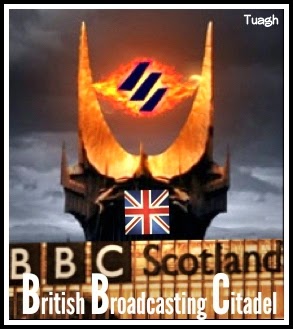
Systematic Abuse Of The Scottish Electorate By The BBC And Other National Media Organisations

In some places it was estimated in the two months run up to the 2010 referendum that approximately 80% of the Scottish electorate had tuned into national television (BBC, ITV Channels, 4 and 5) for their election coverage. Post election research identified complaints from viewers primarily centred around a lack of adequate coverage of important Scottish issues, the bulk of prime time reporting and or discussion being aimed at UK matters. Biased programme presentation and interviewer, in favour of the Labour party also attracted many voters and political party candidates and leaders concerns.

The 2014 referendum produced the highest electoral turnout since WW2, many constituencies reporting figures in excess of 85%. But television coverage of the various campaigns was appallingly bad. Lessons from the 2010 election had not been addressed. In fact the matter of bias in favour of the “Better Together” campaign became the most discussed issue of the referendum. A university professor and other eminent persons produced reports providing undisputed evidence that the BBC, (singled out) in particular broadcast television and radio programmes so weighted in favour of the Better Together campaign that many viewers turned away from old “Auntie” preferring to be advised of referendum matters through mass media outlets. eg. the internet. By the time of the referendum in September 2014 the estimated audience figure for the BBC and other national broadcasters had reduced to approximately 50% of the electorate. A damming indictment of presentation policies forced upon the Scot’s by a biased media.

The Scottish Electorate Deserves A Balanced Informed Television/Radio Coverage Of  Politics. But How Is This To Be Achieved? A cross party alliance should be formed, comprising media reformists and other informed persons. Their mission to insist upon a fair election coverage on Scottish television/radio. Meetings to be held, attended by representatives from television broadcasters in Scotland. The purpose of said meetings to be for broadcasters to agree operational standards. At times of elections and/or referendum  a commitment to broadcast a minimum of two hours each week of political party – or specific subject discussion during prime viewing hours in the four week period before elections. Coverage, evenly balanced, to be monitored by Alliance members so that public interest would be protected.


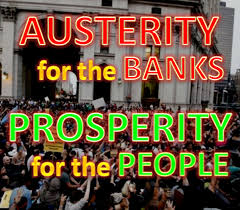
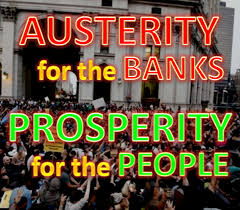
7 May – Decision Day – Are You For Austerity Or Prosperity – I Am Fed Up To The Back Teeth With The Former -I choose The Latter


imagessfbcsdimagesvry


Austerity 2015 -2020 (at least) – Get Ready to Rumble

Just to be clear: There are vast differences between the published policies of a Tory or Tory/UKIP or Labour or Tory/Labour or Tory/Lib/Dem or Labour Lib/Dem government post May 2015.

So, in opposition the performance of the losers will be dictated by the manifesto that they campaigned on.

The Scottish electorate has a choice. Elect any of the foregoing and suffer the brutal imposition of unfettered austerity far worse than experienced over the last 5 years.

OR Elect a powerful group of SNP MP’s who, in opposition will strongly defend Scots providing temperance to the aforesaid austerity measures, extracting from government concessions rightfully due to Scotland.


6a00d83451b31c69e201543783ca22970cimageB4xNT5GIcAEb1_C.png medium


Reflecting upon the recent referendum and the much vaunted “Vow” of devolution of increased powers, these are still unclear and uncertain.

But evidence to date indicates the Scottish government will simply be allocated a number of newly devolved responsibilities but with authority retained at Westminster.  All aspects of which to be implemented within existing or inadequately increased budgets.


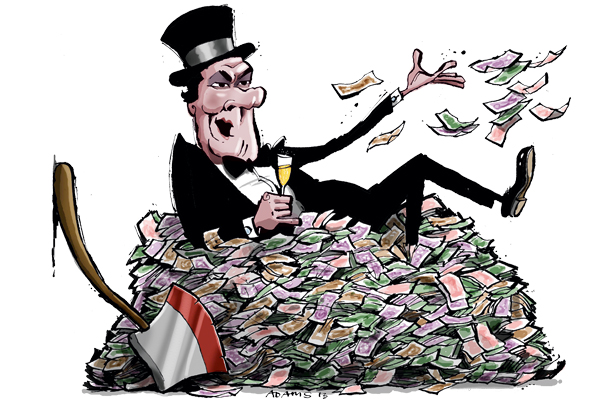
12-days-of-a-privileged-christmas-david-cameron-george-osborne-political-cartoon-550UkipBBC_Scotland_Citadel


Paraphrasing a Recent health service statement by Labour Shadow Health Secretary Andy Burnham:

Andy Burnham indicated that he had the backing of Party Leader Ed Miliband and Shadow Chancellor Ed Balls to set out his vision for one service looking after the whole person through the merging of of social and health care provision.

We need to get the application of health policies consistent across England, Scotland and Wales.

That would be a good thing, all nations in the UK pulling in the same direction as opposed to pulling our separate ways.

Devolution, in its early days, was about doing something different but it needs now to embark on a different phase where we start talking again more about a UK-wide policy because in the end, that helps everybody.”

https://www.holyrood.com/articles/editorial/burnham-sets-out-vision-%E2%80%9Cwhole-person-service%E2%80%9D


austerity-britain_2537768bscottish-labour-mps-who-voted-for-the-tory-welfare-cap1Iain Duncan Smith Retroactive


Gordon Browns Centralised UK Education Policy proposal giveaway during referendum campaign:

Gordon Brown proposed and self endorsed the idea of a UK-wide education system – which could only mean taking powers away from Scotland and giving them back to Westminster – on the very day Alistair Darling and the No campaign are desperately trying to say that they stand for more powers for Scotland.”

http://www.scotsman.com/news/education/gordon-brown-scots-want-uk-wide-school-system-1-3445973


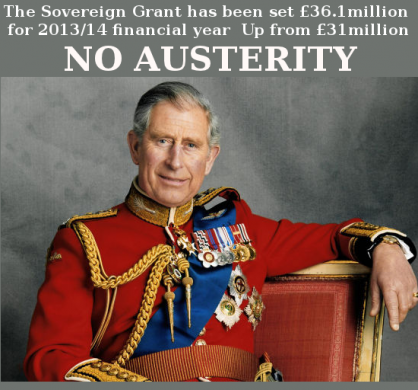
charles-austerity-418x390imagesvryDid You Know workfare unemployment statistics


The Next 10 Austerity Years – Who is promising what?

The Tories will:

* Markedly reduce spending on welfare.

* Enforce harsher immigration policies.

* Expand means-testing across ALL benefits and pensions, (including pensioners).

* Introduce fee paying education across the UK.

* extend workfare programmes for unemployed.

* Replace Trident, (£1Billion).

* Further strengthen the bedroom tax.

* Introduce/Retain 40p top rate income tax.

* Cut £30Billion out of the economy – from where? the pockets of the long serving public

http://www.wsws.org/en/articles/2013/10/05/tory-o05.html


no-austerity-britain-ukbnausterity2012


Labour Will:

* Markedly reduce spending on welfare.

* Enforce harsher immigration policies.

* Expand means-testing across ALL benefits and pensions, (including pensioners).

* Introduce fee paying education across the UK.

* extend workfare programmes for unemployed.

* Replace Trident, (£2Billion).

* Using Gordon Brown’s tactics cut £20billion out of the economy – From the pockets of the long suffering public.

http://www.scotsman.com/news/uk/labour-will-keep-austerity-says-miliband-1-3300839


csddcposterAusterityB-Du0FeIMAAkyA8.jpg large


ULIP – Lib/Dem

Will comply and participate fully in the implementation of the the policies of whatever government is elected.


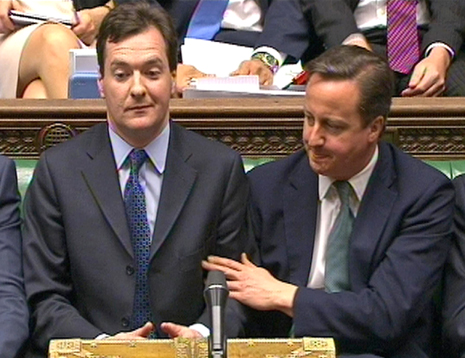
brown-thatcher_2532387b1924386_1583245425294772_2404802118282311511_nPM 'has full confidence in Osborne'. File photo dated 21/03/12 of Prime Minister David Cameron patting the arm of Chancellor of the Exchequer George Osborne after he delivered his Budget statement to the House of Commons, London, as Downing Street insisted today that the Prime Minister has Òfull confidenceÓ in George Osborne amid press reports that he is facing backbench pressure to sack the Chancellor. Issue date: Friday February 1, 2013. See PA story POLITICS Tories. Photo credit should read: PA Wire URN:15685387


The SNP will not implement any of the foregoing unfair austerity measures.


REFERENDUM _97Little ChickenHardie_elect


The Final Week Of The 2015 General Election In Scotland – No More The Dogsbody – Scots Are More Than Equal And The SNP Will Ensure This At Westminster


10891543_10200359113057645_2152538000516619062_ned and jim


Less than a week away from the 2015 General Election and Labour Party strategy is still unclear

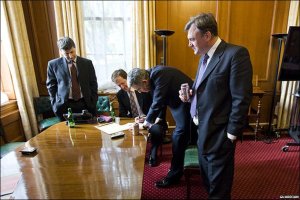
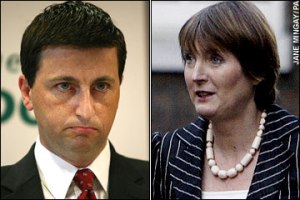
All is not well within the leadership team. The uneasy truce between Ed Balls, Douglas Alexander, Yvette Cooper, Jonathan  Cruddas and Ed Miliband is not fit for purpose and there are indications that the Party is becoming resigned to defeat. It ended up in this state because the persons concerned failed to agree the share of power and accountability. Strategies favoured by each of the policy shapers:


_47840873_gordon-brown-writes-lette-005news-graphics-2007-_652258a


* Ed Balls, his wife Yvette Cooper and Douglas Alexander:

Assume loyalty of the working class is a given and concentrate efforts on swing voters, (5%-10%)?  Volatile and risky but winning the swingers over would provide enough votes allowing the Party to form a government without need for assistance from any other party.
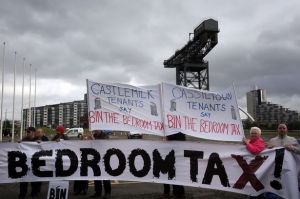


6a00d8341d417153ef011278da983128a4Demonstration-over-bedroom-tax-outside-the-Liberal-Democrat-conference-in-Glasgow


* Jonathan Cruddas, Labour’s Policy Coordinator:

Pursue a policy of containment, work hard and regain the working class vote so badly neglected by the Blair and Brown governments? If successful the Party would benefit from a return of around 31%.  Insufficient to form a government but perhaps sufficient to form a coalition with the Liberals or SNP or both.
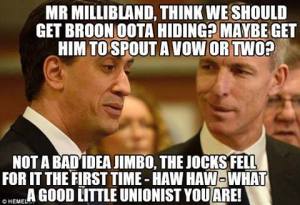


10986667_435491989949015_629596733385012287_n


Milibands quandry. Returns indicate the Party is in poor shape in Scotland. It is possible 20-50 seats could be lost to the SNP. The Liberals are also in decline being punished for supporting the Tory Party over the last 5 years so there is no guarantee they will gather sufficient MP’s to provide enough support allowing the Labour Party to form a government.

Option One chosen: Assume loyalty of the working class is a given and concentrate efforts on swing voters, (5%-10%)?
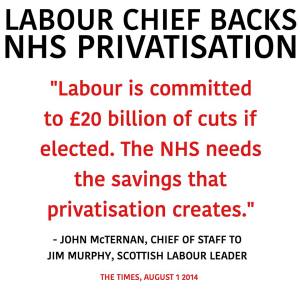
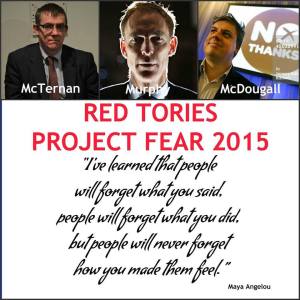


McTernan againfear murphy


So who will win the day?  Cameron’s strategy of divide then rule is well tried, tested and has had it’s successes. But the dividing weapon needs to be secure. If it is vulnerable it can be redirected. The divider he is using is Scotland, but demonising the SNP designed to generate ill-will in England against the Scots polarising opinion in favour of Cameron may well alienate Scot’s living in England in significant numbers.

Taking the Tory Party to the centre ground allows UKIP free reign over the extreme right of the Tory and labour Party’s. Cameron’s projection is that he will be assured of the support of any MP’s from this source which, with the addition of the Lib/Dem’s will provide him with MP’s in numbers sufficient to gain a majority but the numbers might fall short.


This leaves the left as the only ground in England, within which the labour Party can operate reasonably freely, but the upsurge in the fortunes of the SNP forces a move away from option one to option two. The Labour party will need to work very hard in the last few day’s to regain the English working class vote.

Miliband remains hopeful the late change in strategy will provide Labour with enough MP’s to form a coalition minority government together with the Lib/Dem’s, Plaid Cymru and a few MP’s from NI.  The minority government would be provided with assurances from the SNP they would not use wrecking tactics against it.


The most likely outcome of the election is a Labour minority government and it is crucial that Scotland returns the maximum number of SNP MP’s so that they will be able to exert influence on the new government bringing forward policies favourable to Scotland.


balls3


A look back at events from 2010-15 is useful, being a source of information explaining the apparent failure of the Labour Party, (handed all of the advantages of being in opposition against an unpopular coalition government) to make gains.


shettlestonhouseimagesLiveLeak-dot-com-b5e93c264aa8-186159211broken_britain


The Expenses Scandal

2007: With his wife Yvette Cooper, Ed Balls was accused of  “breaking the spirit of Commons rules” using MPs’ allowances to help pay for a £655,000 home in North London. It was alleged that they bought a four-bed house in Stoke Newington, North London, and registered it as their second home (rather than their home in Castleford, West Yorkshire) in order to qualify for up to £44,000 a year subsidising a reported £438,000 mortgage under the Commons Additional Costs Allowance. This is despite both spouses working in London full-time and their children attending local London schools. http://aangirfan.blogspot.co.uk/2008/10/balls-sex-and-nazis.html
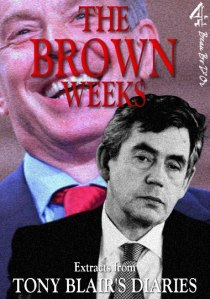


mandelsongordon-brown-diaries


The Rise of the SPADS

2010: Cabinet members appear out of nowhere. Peter Mandelson fiddles with his controls and yet another cloned version of himself shimmers into life. Yet another yes man or woman who can “send the right message” but avoid “doing the right thing”.

The background of successful cabinet members is strikingly similar. The typical New Labour apparatchik starts by studying Philosophy, Politics and Economics at university (known as PPE). After graduation they rattle around in law or journalism for a short time before landing a job as a SPAD for an incumbent cabinet minister.

The successful ones keep their heads down, control the media agenda and impress their boss they are then shuffled onto the candidate list of a Labour safe seat over the heads of local party members with the nod that this candidate has the favour of senior ministers. Bob’s your uncle they are members of parliament and on their way to cabinet.

Consider a potted Curriculum Vitae of three of the recent Labour Party leadership front runners:

* David Milliband: The National Council for Voluntary Organisations, the Commission on Social Justice then Tony Blair’s Head of Policy.

* Ed Balls: The Financial Times and then economic adviser to the then Shadow Chancellor Gordon Brown.

* Ed Miliband: Brief career in television journalism then speech writer and researcher for Harriet Harman.

The three enjoyed no reputation within the Labour movement and little experience in the workplace. But they were shoe-horned into power equipped only with theoretical knowledge combined with an arrogant self riotousness born from ambition.

They profess to know a lot but they understand nothing. They have no feel for the issues which they discuss because they have never engaged with the world in any real way.

When they debate a workers rights or a company’s bottom line they do not understand the obstacles faced by a working man or the imperatives of business. Everything is an abstraction to be air brushed away by some glib sound byte or grand scheme masterminded by a theorist and managed by a consultant.

How did Douglas Alexander become an MP let alone Secretary of State for International Development?

As always it’s not what you know but who you know. The shadow Trade and Industry Secretary for whom Mr. Alexander worked as a SPAD was none other than Gordon Brown, (though his friendship with Tony Blair did him no harm).

There is a place in politics for people who understand the media but that place is not making policy and if parties continue to allow ministers to choose their successors then we shall become the worlds first nemocracy – A nation ruled by nobodies.

http://talkingbollocks.net/2010/04/24/nemocracy-in-the-uk-%E2%80%93-government-by-nobodies/
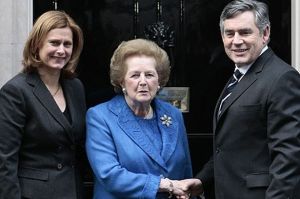


magaret-thatcher-and-gordon-brown-pic-pa-758894358154B2394000005DC-0-image-a-77_1419725205898


2011: Ed Balls appointed to the key role of Shadow Chancellor

He faced the challenge of establishing his own political identity having first exercised influence as an unelected player in a powerful political partnership. The Brown-Balls era from 1997 to 2004 was near enough a political marriage. He has a public reputation as a polarising politician, not afraid of political combat and he has also been the Labour figure keenest to take on the Conservatives on the major political clashes of the day.

Balls unsuccessful in his bid to lead the Party in the 2010 Labour leadership race because of a perception of incumbency. He was perceived to offer continuity rather than change, enabling opponents to mobilise new cohorts of activists and members in particular. His reputation is one of experience and expertise and he is acknowledged by friend and foe to be Labour’s most formidable economist.

The alliance between the two Eds is not ideal and there are some who despair about the inevitability of a repeat of Blair – Brown tensions between the two Eds. There are others who are concerned about the creation of another, “Brownite” takeover.

But Balls is an able political strategist and he is certainly unlikely to act to the caricature his opponents paint. He is well capable of forging some cross-cutting alliances. He was, for example, a key influence in the decision not to join the euro.

As Shadow Chancellor his duty is to contest the economic strategy of the government. His challenge is to do so in a way that continues to shift public opinion against government claims that the current approach is both necessary and fair.

Though one of the big beasts of the Westminster jungle he remains relatively unknown to the general British public and it is difficult to decide with any degree of confidence if he is an asset or liability to his party. http://www.nextleft.org/2011/01/on-ed-balls-as-hillary-clinton.html
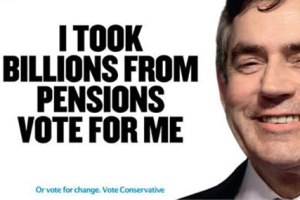


cached.imagescaler.hbpl.co.ukbrown pocketmoney


2011: Documents show the key role played by the Shadow Chancellor Ed Balls in a “brutal” plot to destroy Tony Blair, and how Gordon Brown ignored warnings over the profligacy of Labour’s spending plans and the damaging impact of key tax policies.

http://www.telegraph.co.uk/news/8566987/Labour-coup-The-Ed-Balls-files-database.html


10993098_436475866517294_2032262041814994997_n


2011: A large number of documents including private letters between Tony Blair and Gordon Brown reveal the rift at the heart of Labour after the 2005 general election, and how Gordon Brown pushed ahead with plans to spend billions of pounds of extra taxpayers’ money despite being warned that it was being wasted.

http://www.telegraph.co.uk/news/politics/labour/8569502/Labour-spending-the-Ed-Balls-files-database-released.html


article-2270948-1541BC71000005DC-446_308x425


2011: Did Ed Balls apologise for policy errors the labour Party made in government?  Not quite. He made a fairly vague, half hearted apology but omitted mention of;

* Selling Gold reserves on the cheap, losing tens of billions in the process.

* Creating an employment market where immigrants got preference over the indiginous population as 66% of new jobs under Labour went to immigrants.

* Creating a housing policy where first time buyers are locked out of the market.

* Removing MIRAS but relaxing rules on tenant landlords and allowing them tax relief.

* Increasing Public Sector waste faster than Public spending:

* Twelve billion on failed NHS IT project.

* Billions more on dodgy PFI contracts

* Billions more on pointless jobs i.e. Health and safety co-ordinators, Political correctness monitors of the work place.

* Hundreds of millions for trades union modernisation.

http://playpolitical.typepad.com/labour_party/2011/09/watch-ed-balls-apologises-for-some-of-labour-mistakes-in-his-conference-speech-but-continues-to-blam.html


10881702_1551717875067997_8281966087651607890_n


2011: One reason Mr Balls performed so poorly in last year’s Labour leadership elections – coming a distant third behind both Miliband brothers  was his contamination because of his association with Mr Brown.

Even if the general public might not have entirely understood the relationship, those in the party did. Mr Balls is a clever man, but he puts his considerable intelligence to uses that do not always further the truth.

He seems to have that old Stalinist trait, once so popular in his party, of arguing whatever serves the interests of the party, irrespective of where it sits with any principles he might have. It took some gall on his part, not that anyone has ever accused him of lacking that, to talk about the adverse effect that the Coalition’s policies were having on unemployment.

http://www.dailymail.co.uk/debate/article-2041980/Labour-Party-Conference-2011-Would-buy-used-economy-Ed-Balls.html


murphyjackie baillie


2011: Labour leader Ed Miliband used a Labour Friends of Israel lunch this week to emphasise his family connection to the country that gave refuge to his grandmother.

In a highly personal speech to mark the publication by LFI of a collection of essays entitled Making the Progressive Case for Israel, he said: “I wouldn’t be here today if it weren’t for the state of Israel”. His mother’s family were sheltered by Polish Catholics during the Holocaust, and his grandmother later settled in Israel.

Mr Miliband also spoke about an emotional visit he had made to Yad Vashem with his mother to memorialise the Polish rescuers on the “Avenue of the Righteous”. In a speech clearly aimed to allay fears that Mr Miliband did not have the same commitment to Israel as his predecessors Gordon Brown and Tony Blair, the Labour leader emphasised his admiration for Israeli democracy.

The audience included key members of the New Labour aristocracy, including Douglas Alexander, Ed Balls, Yvette Cooper, Tessa Jowell and Alan Johnson as well as rising stars such as Luciana Berger, Mary Creagh, Michael Dugher, Rachel Reeves and LFI chair John Woodcock.

http://www.thejc.com/news/uk-news/58414/ed-milibands-links-israel


backstabbersmurphy nuc


2012: An experienced Labour representative admits: “Now’s not the time to climb the greasy pole. It’s probably going to be eight years before we’re back in power. We’re not hungry enough for it yet.”

Another MP, with a wry laugh, adds simply: “We don’t have enough power to have power bases.” That may be the case, but an examination of the current party dynamic is important.

Without further ado, let’s shed some light on the “hard yards of opposition”. The Players; Ed Miliband, Ed Balls and Yvette Cooper, David Miliband, Alistair Darling, Jim Murphy, Douglas Alexander and Tom Watson. Unlike Tony and Gordon’s meal-deal, forces are at work to ensure the next Labour takeover will not leave the party with an upset stomach for quite so long.

http://www.totalpolitics.com/articles/298832/interrogating-labourand39s-power-bases.thtml


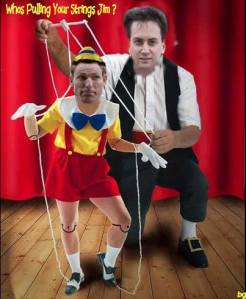
Puppet on a string10997052_619280628202582_652910006_n


2014: In these European elections Labour is clear that walking away from our biggest market, the European Union, would be bad for our economy. We are much better placed to shape Europe’s future, fight for our national interest and back businesses and jobs if we are fully engaged rather than having one foot out of the door.

The status quo is not good enough. We need to see real change in Europe to respond to public concerns, deliver better value for money for taxpayers and secure rising prosperity.


simd_20-20_cities_inequality1623566_460836310730482_406097192584783842_n


2014: Labour’s pledge to introduce ‘tough fiscal rules’ is branded a sham as a report warned that the party would still be free to go on a £28billion spending spree after the next election.

Shadow Chancellor Ed Balls attempted to repair Labour’s battered economic reputation earlier this year by announcing a ‘binding fiscal commitment’ to get day-to-day government spending out of the red by 2020.

But yesterday a report by the respected Institute for Fiscal Studies said the pledge fell well short of George Osborne’s promise to bring total government spending back into the black over the same period.

The study said Labour’s plans would allow Mr Balls to spend £28billion more than the Chancellor over the course of the next parliament, all of it borrowed.

But the IFS warned that it would also burden future generations with even more crippling levels of debt. A Treasury source said: ‘This analysis confirms Labour haven’t learned their lesson – their policy would mean £28billion of additional borrowing.

This would mean higher taxes, higher mortgage rates – and would risk Britain’s future economic security. They must never be allowed anywhere near our economy again.’ Tory MP Charlie Elphicke branded Mr Balls a ‘spendaholic’. He added: ‘This report shows that Labour’s claim it is getting serious about the economy is a sham. They are addicted to spending, borrowing and debt.’

The IFS report reveals that Britain faces years more austerity, whichever party wins the next election. Tory plans would require £46.3billion of cuts during the parliament, only £8.7billion of which have been spelt out so far.

http://www.dailymail.co.uk/news/article-2763079/Shadow-Chancellor-Ed-Balls-lines-28bn-spending-spree-claiming-ll-tough-debt.html?ITO=1490&ns_mchannel=rss&ns_campaign=1490



blair_for_president.1balls9


2014:  The U.K. Labour Party hardened its opposition to leaving the European Union, drawing a dividing line with Prime Minister David Cameron’s Conservatives less than eight months before next year’s national elections.

Labour’s spokesmen on finance and on foreign affairs, Ed Balls and Douglas Alexander respectively, used separate speeches to the party’s annual convention in Manchester, Northwest England, today to stress the economic gains of remaining in the 28-nation EU and warn the governing Tories against harming the national interest by exiting the bloc. “We’re not going to earn our way to higher living standards by walking away from our biggest single market,” Balls said. “Let us say loud and clear, walking away from Europe would be a disaster for British jobs and investment.”

http://www.businessweek.com/news/2014-09-22/labour-warns-of-eu-exit-disaster-as-election-lines-drawn


balls210978624_433808866783994_747877177723272237_n


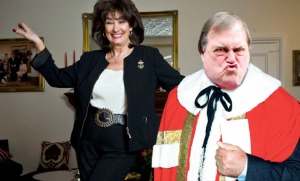
2014: John Prescott accuses Ed Miliband of showing a severe lack of ambition and of delivering an underwhelming party conference performance:

In his last party conference speech before the General Election, Mr Miliband set out his intention to put the NHS at the heart of the party’s plan for the next 10 years.

However, speaking without notes, he left out entirely a passage on reducing the country’s £75bn deficit.

Mr Prescott said the Opposition leadership appeared to have resigned itself to not winning an overall majority at the 2015 general election and was seeking only to shore up its “core vote”. “Ed seems to be pursuing a core vote strategy of getting 31% of traditional Labour supporters with a few ex-Lib Dem voters,” the former deputy prime minister wrote in the Sunday Mirror.

Ed Balls hit back at Lord Prescott’s criticism and said: “John Prescott is a fighter. Sometimes literally.” He added: “John is clear in his article that we should learn from 1997 and I agree. “The lesson we learned in 1997, when John and I worked together, is if you as a party come along – which happened in previous elections for us before 97 – with promises which couldn’t be paid for then you get into trouble. “Everything in 97 was costed and paid for, everything in 2015 costed and paid for, no spending requiring more borrowing. “The people who are making unfunded commitments are now the Tories and the Liberal Democrats.”

http://news.sky.com/story/1347614/prescott-criticises-milibands-timid-approach


prescott_11301aprezza


2014:  80% of Conservative MPs are thought to be members of Conservative Friends of Israel, (AFP). But Shadow Foreign Secretary Douglas Alexander is said to have made the decision that the Labour Party will support a motion recognising Palestine. Alexander has previously said “Palestinian statehood is not a gift to be given, but a right to be recognised.”

Supporters of Labour for Israel, (LFI) against the motion, include shadow Chancellor Ed Balls and shadow ministers Caroline Flint, Jim Murphy and Liam Byrne all members of the LFI group.

http://www.middleeasteye.net/news/uk-labour-party-suffering-internal-revolt-over-support-palestinian-statehood-1224348115


B4xNT5GIcAEb1_C.png medium


2015: The inside story of the Labour reshuffle that never was.

Interesting rumours have been trickling out of the PLP and Labour HQ over the past fortnight about the seemingly imminent reshuffle. Uncut has pieced together various accounts to give a view of just what has been going on.

Earlier this month, amid the fall-out from the Scottish referendum and Labour conference, as MPs’ discontent with Ed Miliband bubbled up into the press, a plan was hatched by the leader’s inner circle.

A move so bold that it would reset the political clock, seize the attention of the journalists and demonstrate Ed Miliband’s leadership credentials.

A long awaited reshuffle was overdue and its centre-piece was to be Ed Balls’ ejection from his brief as shadow chancellor.

Tensions between the leader’s office and Ed Balls’ team have been well-documented.

Ed Balls was not Miliband’s first choice as shadow chancellor – that was Alan Johnson – and from the leaked e-mails last year, where Ed Balls was described as a “nightmare,” by Miliband’s advisers, to the two Eds’ splits over whether to retain the 50p rate of tax and their widely aired disagreement on whether to back or bin HS2, the relationship has always been uneasy.

With Labour trailing the Tories by twenty points on the economy and discontent on the left and right of the party with Labour’s economic offer, the rationale for action was obvious.

Balls’ potential destination was unclear. One option canvassed was foreign secretary with Douglas Alexander becoming a full time general election co-ordinator.

However, the preferred choice was a switch to home affairs, with his wife, Yvette Cooper, becoming shadow chancellor. Come what may, Ed Balls would have been furious, but to cause trouble in the run-up to the general election would have been difficult.

All the more so, if his wife was the shadow chancellor, a role it would have been difficult for Cooper to turn down, especially given her own ambitions to lead the Party if Labour is defeated next year.

http://labour-uncut.co.uk/2014/10/15/the-inside-story-of-the-labour-reshuffle-that-never-was/


10455324_10152545977986753_7487026676145808252_n


2014: Kevin Maguire in the New Statesman in 2011 suggested the tension between the two Eds has been there for while:

“A BlackBerry ban isn’t exactly a Clause Four moment but Ed Miliband needs to start somewhere to stamp his authority on Labour.

During a shadow cabinet meeting not every frontbencher listened raptly as Ted addressed his lieutenants.

The young leader was miffed to see his former Treasury line manager, Ed “Bruiser” Balls, more engrossed in sending texts and emails.

“I know BlackBerrys are interesting,” said a hurt Ed, interrupting both himself and the shadow chancellor, “but so are people.” Bruiser doesn’t do blushing but looked up and smiled apologetically.

Chairman Ed resumed and, giggled my snout, so did Bruiser, who moments later was tapping his phone again.

Sounds to me like an authority issue.” They just don’t on very well, do they? Yet they are stuck together because neither of them has the popularity to remove the other.

Mr Miliband gave a poor Party Conference speech, but then so did Mr Balls. Thus we have an alliance of shared weakness.

That is not the best launchpad for Labour to go into the General Election.

http://www.conservativehome.com/leftwatch/2014/10/balls-seems-to-have-beaten-off-an-attempt-to-oust-him-as-shadow-chancellor.html




Scottish-Referendum42Scottish-Referendum43Scottish-referendum46


The Mansion Tax – Pie in the Sky?

Ed Balls, (Shadow Chancellor) in his speech, (explaining the monetary policy of a future Labour government) said that additional substantial finance would be found and allocated to the National Health Service. One of the measures proposed is the introduction of a, “Mansion Tax” on homes worth more than £2million. Reaction has been mixed but on balance there is doubt the tax would result in the release of any measurable amount of new money.
My Comment

There are many that would applaud the introduction of a mansion tax, but it would need to be modified in a number of areas so that cash poor, property rich owners, e.g. pensioners would not be punished for a house purchase made many years before in a now affluent area. Proposals are to defer tax collection in such cases until after death which would adversely impact upon inheritance benefits to be passed on to surviving family members.

Introduction would be made difficult since many owners, (assisted by estate agents and solicitors) would endeavor to find ways of reducing the sales value of their houses. Tax revenues would therefore, be difficult to identify and collect, possibly in the first 2 years of introduction and any measure of success might only be achieved through the establishment of a new government body payment of which would adversely impact on any net revenue. The roll back in property values under £2million would also add to the consequent depression in house values.

Net revenue from the tax, (95% of which would be gathered from homeowners in London and the South East of England) would be well below Labour Party projections, (most likely to be under £700Million). Transfer of finance to the National Health Service, would be put in place at the start of a new governments term of office. The Scottish National Health Service would benefit since £70Million would be given over to Scotland. A small re-distribution of wealth which, for the turmoil it is likely to bring with it is an exercise in futility.

I expect the Mansion tax will be, “kicked into touch” in favor of a UK wide property revaluation, since the last one was done over 25 years ago, well before the various property bubbles, crashes and subsequent increases occurred. The revaluation would increase the levels of, “Council Tax” substantially, but income generated, (which might be in excess of £15Billion would be spread evenly across the UK.

Austerity Measures-Child Benefit to be Frozen by a Labour Government

Austerity Measures-Child Benefit to be Frozen by a Labour Government
Under austerity measures introduced by the Conservative-Liberal Democrat coalition Government, child benefit has been frozen from 2010 to this year. Tory Chancellor George Osborne has already said it should increase by 1 per cent in 2015-16. But Mr Balls said the restraint should continue for another year. With inflation running at around 2 per cent, it means the value of child benefit is falling further in real terms.

Mr Balls said, “I want to see child benefit rising again in line with inflation in the next parliament. “But we will not spend money we cannot afford. So for the first two years of the next parliament we will cap the rise in child benefit at 1 per cent”. “It will save £400 million in the next parliament. And all the savings will go towards reducing the deficit.”

The Children’s Society, Chief Executive Matthew Reed said, “Labour’s announcement on plans to cap child benefit rises comes after repeated squeezes on this bedrock of the family budget. “It represents a major real-terms cut to 13 million children. “Policy is about making choices and the shadow chancellor has made a choice, to look for savings by cutting help for children.

“Child benefit has already been frozen from 2010, and then increased by just 1% this year, falling well below rising prices. “Now this proposal will compound that loss, seeing average families facing a £400 cut in child benefit per year by 2017. “We urge the shadow chancellor to reconsider so that children and their already struggling families do not suffer even more unnecessary hardship.”
Families charity Gingerbread, (President J K Rowling) commented, “Child benefit helps to pay for essentials like food and clothes. For many parents, single parents especially, it can be a lifeline.” “Freezing child benefit will raise relatively little in terms of government savings, but means cutting vital support at a time when families are struggling to make ends meet and the number of children living in poverty is projected to rise rapidly over the next few years.” “This proposal would only make it harder for families to pay the bills.”
Summary

An independent Scotland would not have taken around £400 each year from families with children. A matter not given a deal of attention to by the President of Gingerbread. A bit late now.

2015 General Election and it’s aftermath – What next for the UK?

2015 General Election and it’s aftermath – What next for the UK?

Mythical new powers for Scotland have yet to be brought forward, for discussion between political parties in Scotland and any, “relevant groups or individuals within Scotland”. The UK Government appointed Lord Smith is Heading a Commission aiming to get agreement between the SNP, Scottish Labour, the Scottish Liberal Democrats, Scottish Conservatives and Scottish Greens on the way forward by 30 November 2014. Each of the 5 main political parties is to be asked to nominate two representatives to take part in cross-party talks.

The mission of the Commission is to produce, by 31 October 2014, an agreed, “Command Paper”, setting out the issues and proposals for change. The Paper will then be sent to Westminster for review, discussion, change where considered necessary and production of a, White Paper” by 25 January 2014. Mechanisms for change, (Acts of Parliament) reflecting agreed outcomes are to be prepared, ready for implementation, in the period February to April.

Implementation of proposed, “new” legislation is to be deferred to a newly elected parliament, at Westminster. It is anticipated readings in the Commons and the Second Chamber coupled with a binding vote in Parliament will be complete before the end of Jun 2015.

There is the caveat that an incoming, “new” government cannot be held to account in regard to proposals for change agreed but not implemented before it’s term of office. So it is possible the entire discussion period could well be an exercise in futility. We will not know until next July, at the earliest and the political scene in the UK and the World will be much changed by that time. There is a saying apt for this situation, “Delay is the most invidious type of Denial”. Is Scotland to be denied?
What Needs to be done in Scotland in the next few weeks

The Labour Party in Scotland has been wounded through it’s support of the Tory Party and the, “Better Together” campaign. The damage might well be temporary in nature, previous history indicates a number of Labour voters, particularly in the West of Scotland are tribal in their approach to politics and might well choose to be guided in their voting, as previously by church and community ,(Labour) activists.

Membership of the of the proposed, “Commission” is designed to, “divide and Rule”. Those in favour of substantial meaningful new powers are outnumbered 6 to 4.

There is also the matter of the members of the many, “Yes for Independence” groups that spontaneously formed and worked tirelessly throughout the campaign. Who is to speak for them? The SNP & Green Party should take up the mantle, without undue delay convening early meetings seeking the views of the foregoing important persons.

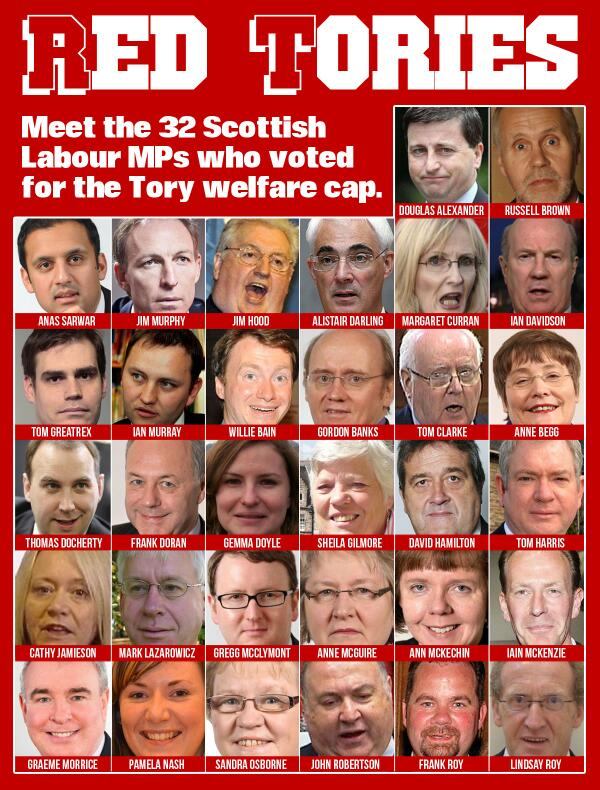
Then there is the May 2015 General Election which is just around the corner. Johaan Lamont is under pressure to stand down in favour of a stronger leader experienced in the hustle & bustle of UK politics. Jim Murphy has been muted in the press and despite protestations from some members of the party it is entirely likely he will take up the reins of power of a yet to be formally created, “Westminster Group” of the party in Scotland assisted by a deputy, probably Anas Sarwar. The role of the Scottish labour Party activists and MSP’s would be to take direction from and provide support to the Westminster Group as directed by Jim Murphy. I fully expect there will be speedy movement in the Labour Party to get things under way so that early attention can be given to healing the wounds created by the Referendum campaign.

Back to the, “Yes” campaigners. Are they up for the new battle for the hearts and minds of the Scottish Electorate? I think not. From my observation of many contributions to a number of, “blogs” the vast majority are still morosely, “licking their wounds” and in some cases insisting on fighting on hoping to overturn the result of the Referendum, which is not going to happen.

The, “Yes” campaign needs to rapidly re-group basing it’s broad strategy and forward thinking on that of the SNP, which in turn should broaden it’s base, for the period of a Westminster government, (2015-2020) forming a political group, “The SNP Alliance” encompassing any of the various smaller political parties, in Scotland that are prepared, (for the better future of Scotland) to place their political ideologies on the back burner agreeing to be bound by the rules of the, “Alliance” for the period of the next Westminster parliament.

This would allow the, “Alliance” to nominate a single candidate for election to each constituency in Scotland maximizing representation in Westminster at a crucial period in the history of Scotland.
Back to Westminster in May 2015

Should the Tory Party be re-elected with a small majority, (reliant on a number of smaller parties for support) it will bring forward New Scottish legislation, linking it with measures resolving the, “West Lothian” question. The Labour Party and possibly some other MP’s would vote against the package since it would effectively ensure it would never again take up the reins of government. A substantial group of Scottish , “Alliance” members would be in position enabled to get the package through.

A Labour Party government, with a small majority, (dependent upon it’s Scottish MP’s) would be honour bound to submit the, “package for change” to Parliament without recommendation, allowing a free vote, hoping that proposals pertaining to the, Lothian Question are rejected but allowing changes for Scotland to be implemented. A strong, “Scottish Alliance” presence
would be enough to ensure the defeat of the labour government bringing in the new legislation for England.
Summary

Much to do. little time to do it. Leadership is crucial at this time. I would offer Alex Salmond is best placed to bring about the creation of the Scottish Alliance allowing Nicola Sturgeon to get on with her new role as leader of the SNP

Labour Party Manifesto Plans for the 2015 General Election

Ed Balls set out the direction a future Labour Government would take, if elected. Overall it seems his proposals would increase the budget deficit to around £100Billion. This would require funding and bets are the party would need to increase personal taxes significantly OR borrow the money from the World Bank adding the new loan to the £1.8trillion the country already owes. What a disaster!! A terrible legacy to be handed over to our children. Meantime bankers and their ilk are picking up salaries and bonus packages well in excess of £3Million  each year. The very very rich need to give much much more back to society.

Labour Party Manifesto Plans for the 2015 General Election
1. Mistakes Made by the Last Labour Government.

a. Labour admitted the previous administration had got it wrong on immigration, tax, regulating the banks and tackling poverty. But insisted they had learned lessons of the past, and would not repeat them in the future. In an attempt to persuade voters to trust the Party with the nation’s finances,the Shadow Chancellor apologized for failing to regulate the banks in the last labour government. He said, “While it was the banks which caused the global recession, and it was the global recession which caused deficits to rise here in Britain and around the world, the truth is we should have regulated those banks in a tougher way”. “It was a mistake. We should apologize for it. And I do.”

b. On immigration, he said there should have been tougher rules on immigration from Eastern Europe. He added: ‘It was a mistake not to have transitional controls in 2004 and we must change the rules in the future.’ He went on: ‘We didn’t do enough to tackle the underlying causes of rising spending on housing benefit and in-work poverty. “So the next Labour government will raise the minimum wage, build more homes to get the housing benefit bill down and cap overall spending on social security”.
2. List of Things to be Introduced and Scrapped.

a. Child benefit increases to be capped at 1 per cent until 2016-17

b. Married couples tax break to be scrapped.

c. Retirement age to be increased further for Both Sexes.

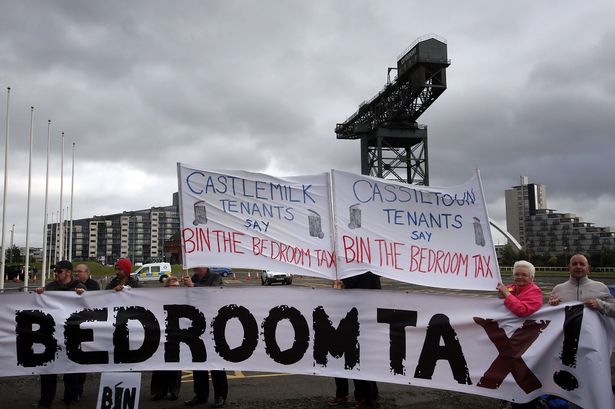
d. Bedroom Tax to be scrapped.

e. NHS Bill to be repealed.

f. Benefits Cap to be retained at £26,000.

g. Winter Fuel Allowance to be means tested and removed from the richest 5 per cent of pensioners.h. Ministers’ pay cut by 5 per cent, and frozen until nation’s books are balanced.
i. Mansion tax on homes worth more than £2million to be introduced.

j. Minimum wage to be increased to £8-an-hour by 2020.

k. Compulsory jobs guarantee for young people and long-term unemployed to be introduced. (paid for by a new tax on Bankers)

l. Free childcare for working parents to be extended to 25 hours a week. (Funded by a new Bank Levy)

m. Business rates for 1.5 million business properties to be reduced. (funded by cancelling a planned cut in Corporation Tax)

n. Top rate of tax at 50p to be scrapped. (Reversing the coalition’s decision)

o. Firms paying workers the living wage hourly rate of pay to receive tax breaks.
3. Stating the Case for Financial Prudence

a. Labour vowed to restore the broken link between the wealth of the nation and family finances. “While our economy is growing again most working people are still not seeing any benefit from the recovery.” “This is our task: not to flinch from the tough decisions we must make and to show the country that there is a better way forward.” “Three years of lost growth at the start of this parliament means we will have to deal with a deficit of £75 billion – not the balanced budget George Osborne promised by 2015. And that will make the task of governing hugely difficult.” “Working people have had to balance their own books. And they are clear that the government needs to balance its books too.” No new spending commitments funded by extra borrowing

b. Ministers’ salaries were cut by 5 per cent when the coalition came to power and left at that level for the whole parliament, in the aftermath of the expenses scandal. Labour to reduce salaries by a further 5 per cent-reducing a cabinet minister’s salary by almost £7,000 to around £127,800.

c. Married couples allowance, worth £200 a year to couples where one partner does not pay income tax, due to be introduced next year, is to be scrapped saving £3 billion. money to be used introducing a lower 10p starting rate of income tax providing a tax cut for 24 million people on middle and low incomes.
4. Balancing the Books’ by 2020.

a. Analysis claims that Labour tax policies could cost the UK 300,000 jobs and more than £25billion in GDP. A, “Centre for Policy Studies” report analyses ten major tax announcements made by the Opposition, including an increase in corporation tax for most firms from 20 per cent to 21 per cent, a new top rate of income tax of 50p, a mansion tax on expensive homes, and a new financial transactions tax.
5. a. How Will the Deficit be Eliminated?

Questioned about how a future Labour government should tackle the the deficit Labour insisted their manifesto would contain no new spending commitments funded by extra borrowing. However, there is increasing pressure from many in the Labour Party to put up taxes instead of cutting spending.

42 per cent argued for more tax rises
18 per cent wanted spending cuts
7 per cent call for increased borrowing and
4 per cent said there is no need to reduce the deficit

6. A ComRes survey for BBC Sunday Politics found that;

85 per cent of Labour candidates thought the level of public spending was, “‘about right”‘
10 per cent said it was, “too low”
4 per cent said it was, “too high”

7. A survey of 73 Labour candidates by ComRes showed most want to see more tax rises to tackle the deficit, with only 18 per cent supporting cuts to public spending. But poverty groups warned the moves to prove Labour would be tough on the deficit would only make it harder for families to pay the bills.
8. Comments on the Proposals

a. Conservative Treasury Exchequer Secretary Priti Patel said, “The speech isn’t a serious plan for the economy – Labour would put the deficit up, not down.” “Savings on ministerial pay only cut a minuscule fraction of the deficit – less than 1 per cent of 1 per cent.” “For all the bluster, Labour still refuse to admit that they spent too much and they have opposed every decision we’ve taken to cut the deficit. “All a Labour government would offer is more inefficient spending, more taxes and more debt than our children could ever hope to repay.”

b. Simon Walker, Director General of the Institute of Directors, said Labour was, “on the wrong track if they think that raising taxes is the way to secure the economic recovery.” He added, “Bringing back the 50p rate of income tax will raise an insignificant amount for the taxman while sending a clear signal that Britain doesn’t want wealth-creators. Labour’s previous success came because they recognized the importance of enterprise in creating a prosperous society.” “To prove that they are pro-business, Labour must drop the commitment to this self-defeating, envy-driven tax.” “Recent cuts to corporation tax have benefited all businesses and made the UK a competitive place to invest. We would strongly urge Labour to think about the consequences for growth and jobs before hiking rates.”

c. The limit on increases to child benefit is expected to save £400 million over five years. However, it comes after Mr Balls has spent four years criticizing the coalition for cuts and changes to child benefit. Child benefit is paid at £20.50 a week for the first child and £13.55 for every other child, regardless of parental income. Since January 2013, families where one parent earns more than £50,000 have seen their child benefit cut, and those on more than £60,000 have lost it altogether.

d. Under austerity measures introduced by the Conservative-Liberal Democrat coalition Government, child benefit was frozen from 2010 to this year. Tory Chancellor George Osborne has already said it should only increase by 1 per cent in 2015-16. But Mr Balls said the restraint should continue for another year. With inflation running at around 2 per cent, it means the value of child benefit is falling in real terms.
Mr Balls said: ‘I want to see child benefit rising again in line with inflation in the next parliament. ‘But we will not spend money we cannot afford. So for the first two years of the next parliament we will cap the rise in child benefit at 1 per cent. ‘It will save £400 million in the next parliament. And all the savings will go towards reducing the deficit.’

e. The Children’s Society, chief executive Matthew Reed said, “Labour’s announcement on plans to cap child benefit rises comes after repeated squeezes on this bedrock of the family budget. “It represents a major real-terms cut to 13 million children. “Policy is about making choices and the shadow chancellor has made a choice, to look for savings by cutting help for children. “Child benefit has already been frozen from 2010, and then increased by just 1% this year, falling well below rising prices. “Now this proposal would compound that loss, seeing average families facing a £400 cut in child benefit per year by 2017. “We urge the shadow chancellor to reconsider so that children and their already struggling families do not suffer even more unnecessary hardship.”

f. Families charity Gingerbread. Chief Executive Fiona Weir said, “Child benefit helps to pay for essentials like food and clothes. For many parents, single parents especially, it can be a lifeline.” “Freezing child benefit will raise relatively little in terms of government savings, but means cutting vital support at a time when families are struggling to make ends meet and the number of children living in poverty is projected to rise rapidly over the next few years.” “This proposal would only make it harder for families to pay the bills.”

http://www.yorkshirepost.co.uk/news/main-topics/politics/labour-would-raise-retirement-age-and-scrap-winter-fuel-allowance-1-6853326
http://www.dailymail.co.uk/news/article-2764937/Labour-conference-Ed-Balls-defends-child-benefit-cap-party-candidates-want-tax-rises.htm