My top staff aren’t worth their extravagant pay extraordinary confession from boss of RBS
The boss of bailed-out Royal Bank of Scotland revealed that many of his top staff ‘aren’t worth’ their extravagant pay and bonus deals. In an extraordinary admission, the chairman said legions of traders and financiers at RBS’s investment bank were not generating enough profits to justify their lavish rewards. He told a conference on restoring trust in the banking industry: “I’m sure that we’re paying many people who aren’t worth it – maybe that’s the issue.”
The declaration by the RBS boss is also likely to inflame public anger over the pay deals on offer at the bank, which received more than £45b in government cash since its implosion.
More than 100 bankers at the group’s investment banking wing were paid a bonus of at least £1million last year – even though the Edinburgh based giant racked up losses in excess of £28billion.
But, defending the practice of handing fat bonuses to staff at its so-called “casino” division – even if it meant that some bankers were paid too much for their efforts, he said: “We see people who are worth a lot of money (to us), who when they leave take a lot of business with them,”
He further claimed that RBS, which is 84 per cent owned by the taxpayer, was powerless to rein in rewards as this would trigger a walk-out of top staff. He said: “If you are the bank that decides to cut bonuses for the most important people, you’ll be the first with a franchise-destroying defection.”
So the UK electorate is forced to stand back and witness a rabid, public funded banking recovery from a financial crisis created through the greed of those who stand to benefit most. Seizing the opportunity and with embarrassing haste, banks embarked on a virtually unprecedented hiring spree, driving up wages across the London Square Mile.
RBS, which employs 160,000 staff across the globe, last night maintained that very few of its staff enjoy bumper bonuses and salaries. But the bank handed out a gigantic £1.3billion to its 16,800 investment bankers.
On average, this is equal to a bonus of around £77,400 each. But, in mitigation, the Chairman offered that RBS had “virtually” eliminated cash bonuses, with most rewards paid out in shares and other stock, and staggered over a number of years so that they can be clawed back.
His comments were echoed by Barclays chairman, who added that “unilateral action by any single bank (would) not provide a practical solution” to the problem of ever-rising pay for “star” performers. The revelations lift the lid on the bonus arms race sweeping through London’s square mile.
Goldman Sachs recently handed tens of millions in bonuses to its 80 London-based partners to prevent more senior staff defecting to rivals.
The headline is incomplete, should it not have read “My top staff aren’t worth their extravagant pay”, but “what the hell, we are being subsidized by the taxpayer so let’s make hay while the sun shines”.
They and all the banking industry know that those in government have not the guts or the brains to stop one of the massive injustices of all time. Instead, they hit the soft target, the Taxpayer. (Daily Mail)
A Boom in Hedonistic “Greed is Good” Spending is Sweeping Through London
The return to “flaunting it” mirrors the conduct of the cinematic symbol of eighties excess, (Michael Douglas’s amoral trader Gordon Gekko.) West End stores, clubs and restaurants have been astounded by the sustained growth in guilt-free spending.
A spokesman for Selfridge’s said: “The range and style is more obvious’ or ostentatious than ever. Stuff is just flying off our shelves. There are a lot of £1,000-plus shoes being sold. Particularly popular are Alexander McQueen Loki’ankle boots at £2,195 a pair and Christian Louboutin Margot platform shoes costing £1,575.“
fashion and luxury goods groups report that sales of their £1000 Prada bags had exceeded expectations. The ‘Neverfull’ handbag from Louis Vuitton at £900 is very popular
Bollinger UK, imports£140 a bottle Special Cuvée into Britain because demand is so strong. A spokesman said: there was a time when people certainly didn’t want to be seen with an expensive bottle of champagne — but we’re past that phase now.”
Bugatti and Ferrari have sold out of their latest models
The spending boom is being fuelled by the prospect of yet another year of bumper bonuses in the City — an estimated £10billion will be handed out this winter. And there is the influx of rich high spending Arabs influx of high-spending
The opening of a number of rejuvenated nightclubs and hotels after sumptuous makeovers is also being seen as a sign that it is acceptable to be rich. Tottenham Court Road lap dancing hangout Spearmint Rhino, which fell heavily out of favour during the credit crunch years, is booming. A club spokesman said: “We sold out of £395 a bottle champagne last night. He went on: “six City guys came in and dropped £5,000 to take the VIP area for the evening. A few nights ago we had four guys from the Middle East who bought £20,000 in chips for dances and drinks. After service charges, they spent £24,000. It’s great to be back to the days of five or six years ago. Those sorts of customers are starting to come back, there’s been a huge increase recently.”
London is also being assisted by France’s burka ban, with many wealthy Arabs boycotting Paris. Saudis who divert to London spend an average of £40,000 each. They will easily spend £5,000 or £10,000 a night on the casino tables at Les Ambassadeurs. The Arabs absolutely love the British. They must have the best of everything and do their shopping in Mayfair Lane or treat their friends with the best champagne as Scott’s.
17 January 1701 – An Address to King William in London from the Scottish Chancellor, Patrick, Earl of Marchmont, concerning events in Caledonia.
We your majesty’s most faithful and dutiful subjects, the noblemen, barons and burgesses of the Scottish parliament, do in all humility represent that we are of sound mind, and do and shall ever most heartily acknowledge, that God raised your majesty to be our great deliverer, by whom our religion, liberties, rights and laws were rescued and restored into the happy estate and condition within which we now enjoy them.
Not least amongst the blessings was that your majesty desired the Kingdom to introduce measures for raising and improving the trade of the nation, and you were pleased in the year 1693 to give the royal assent to an act of parliament authorizing societies and companies in general, and then by act of parliament in the year 1695, to elect and establish “The Company of Scotland, Trading to Africa and the Indies,” And, with the powers, privileges, liberties and immunities contained in the said act, by virtue and warrant whereof letters patent were also granted for the same effect under the great seal of this your ancient kingdom.
But though the act and patent contained nothing save what is agreeable to the law of nations and to the use and custom every where in like cases, yet no sooner were they expedited and the founders began to act than, to the great surprise of the said company and of this whole kingdom, the kingdom of England take offence and acting against the company place upon it great and grievous hardships.
First there was the address, made in December 1695 by both houses of the parliament in England wherein they complained to your majesty of our said act of parliament for granting to the said company the privileges and immunities therein mentioned, as likely to bring many prejudices and mischiefs to all your English subjects concerned in the trade or wealth of that nation
And at the same time the House of Commons ordered an inquiry to be made to establish who were the advisers and promoters of our said act of parliament and acting on the information so gathered did move and make several prosecutions, even against the subjects of this kingdom who did not so much as reside in England, and only were acting by virtue and warrant of our said act of parliament and your majesty’s patent, whereby our said company was also disappointed and frustrated at the loss of the subscriptions of our own country men and others in England to the value of about £300,000.
And further, the House of Lords, by another address to your majesty, upon the twelfth of February 1698, persisted with the opposition made against our company and their colony of Caledonia in Darien in the continent of America, on the grounds of it being prejudicial to their nation and detrimental to its trade.
They went on to use the aforementioned statement to justify certain proclamations emitted in the year 1699 by the governors of the English plantations against our said company and their colony as agreeable to the above mentioned address of both houses of parliament, alleging that the same did proceed upon the unanimous sense of that kingdom in relation to any settlement we might make in the West Indies, and gave forth their resolution that the settlement of our colony at Darien was inconsistent with the good of the plantation trade of England.
All which being laid before us by our said company, and having fully considered the same, we have unanimously concluded and passed the resolve that the votes and proceedings of the parliament of England and their address presented to your majesty in December 1695 in relation to our act of parliament establishing our Indian and African Company, and the address of the house of lords presented to your majesty in February last, were an unwarranted meddling in the affairs of Scotland and an invasion upon the sovereignty and independence of our king and parliament.
Secondly, when our company sent their deputies to the German City of Hamburg, about the month of April 1697, to establish a treaty with that city and its inhabitants establishing free commerce to join with them according to the warrant contained in our act of parliament and your majesty’s patent, these deputies were immediately upon their arrival opposed by Sir Paul Rycault, an Englishman resident in that city, and a Mr Cresset, your majesty’s English envoy at the court of Lunenburg.
Both made several addresses to the senate of that city in prejudice of our company, and at length gave to the senate a memorial in your majesty’s name as king of Great Britain, stating that they represented your majesty, and the said deputies endeavoured to open to England a commerce and trade with the City of Hamburg by making some convention or treaty with them and had commanded the City fathers to notify the Luneburg Senate that, if they should enter into any convention with Scottish men, your subjects, who had neither credential letters, nor were otherwise authorized by your majesty, you would regard such proceedings as an affront to your royal authority and would not fail to resent it.
And then, noting that the City of Hamburg, without regard to their remonstrations did offer to make conventions or treaties with the Scottish deputation, proceeding upon the supposition that they were vested with sufficient powers, they repeated their complaint beseeching the said Luneburg Senate, in your majesty’s name, to remedy the matter since the City of Hamburg were intent on proceeding to enter into a contract with said Scotsmen were not instructed with due credentials and also expressly invading their rights and privileges.
Your majesty was graciously pleased to signify to the company, once and again by your secretaries, that you had given orders to these ministers not to make use of your majesties’ name and authority to obstruct the company in the prosecution of their trade with the inhabitants of that city, which, nevertheless, the said English ministers altogether misrepresented.
Which being also complained of to us by the company and duly considered by us, we have unanimously concluded and passed another resolve that the memorial presented in your majesty’s name as King of Great Britain to the senate of Hamburg, upon the seventh of April 1697, by Sir Paul Rycault, then resident in that city, and Mr Cresset, your majesties’ envoy extraordinary at the Court of Lunenburg, were most unwarrantable, containing manifest falsehoods and contrary to the law of nations injurious to your majesty and an open encroachment upon the sovereignty and independence of this crown and kingdom, the occasions of great losses and disappointments to the said company and of most dangerous consequence for the trade of Scotland now and in the future.
Thirdly, your majesty’s favour of forming the company, having been very acceptable to the whole of Scotland and having the financial support of many subscribers of all degrees and from all parts, and having procured a greater advance of money for a venture then was ever made before, the council and directors of the company thought good to make some settlement for a plantation. And, having considered that by the for-said act of parliament they were limited in their planting of colony’s either to places not inhabited or to other places with consent of the natives and inhabitants, and not possessed by any European prince or state.
And having investigated available information understood that that part of Darien in America, where they thereafter fixed, was no European possession, they set forth well equipped with ships, men and provisions, which, arriving upon that coast in November 1698, the founders of the colony did not only find the place uninhabited, but also treated and agreed with the chief men of the natives near to the place, whom they found in an independent and absolute freedom, and, being very kindly and friendly by them admitted, our colony took possession and settled upon the most complete right of a place, void and unoccupied and with the consent of all the neighbouring natives that could have any pretence to it, and thus the company hoped they had made a good settlement and happily prevented others having designs for the same place in such manner as might tend to the advantage of all your majesty’s dominions.
But when they believed that their matters were thus in a hopeful and prosperous condition, they were exceedingly surprised to hear that proclamations had been published by the governors of the English plantations placing an embargo on the company as enemies, debarring them from all supplies, and that these proclamations had been executed against Darien with the utmost rigour, forbidding our men wood, water and anchorage, and all sorts of provisions, even for money, contrary to the very rules of common humanity: and, within some weeks after, the company was informed that their colony had deserted Darien to the great loss and regret of the whole of Scotland.
And though the Company sent out a very considerable second mission to repossess Darien, the same rigorous execution was still continued against them. Which proclamations proceeding, as we believe, and that from the very style and variations that may be observed in them, from the error of the governor’s mistaking, as it is like from some cautions given them for prevention and not from direct orders, we are persuaded were not emitted by your majesty’s warrant, beside that they were executed with an unheard of rigour.
And therefore, upon a further complaint from our company in this matter, we have most unanimously concluded and past a third resolve in these terms: that the proclamations in the English plantations in April, May, June and September 1699 against our Indian and African Company and colony in Caledonia were and are injurious and prejudicial to the rights and liberties of the company, and that the execution of these proclamations against the settlers sent out by the said company was inhumane, barbarous and contrary to the law of nations and a great occasion of the loss and ruin of our said colony and settlement of Caledonia.
And we taking to our further consideration the proceedings of our company in making the said settlement and how they punctiliously observed the condition of the for said act of parliament and patent in making their plantations in no European possession, with the greatest caution both to fix in a place void and uninhabited and also with consent of all the neighbouring natives that could have the least shadow of pretence thereto, and that yet on the other hand the said planters have been treated by the Spaniards, first at Carthagena and then in the very seat of our colony and like ways in old Spain, with all insolences and hostilities, not only as enemies but as pirates.
We thought it our duty, for vindicating and securing our said company and colony from all imputation or charge that has been or may be brought against them, to pass and conclude with the same unanimity a fourth resolve: that our Indian and African Company’s colony of Caledonia in Darien in the continent of America was and is legal and rightful, and that the settlement was made conform to the act of parliament and letters patent establishing the said company, and that the company, in making and prosecuting the said settlement, acted warrantable by virtue of the said act of parliament and patent.
We, having thus found the for said invasions to be manifest encroachments upon the undoubted independence and sovereignty of this your majesty’s ancient crown and Scotland and unanimously passed the above-mentioned resolves and votes for asserting the rights and privileges of our said company, and also for asserting our company’s right to their colony of Caledonia, we have further thought good to lay the same before your majesty by this our solemn address.
And, therefore, do with all humble duty and earnestness beseech your majesty to take this whole matter to your royal consideration and to prevent all encroachments for the future that may be made, either by your English ministers abroad or any other to the prejudice of this kingdom and our said company, or any project of trade that we may lawfully design, and to assure our said company of your majesty’s royal protection in all their just rights and privileges, and to grant them your countenance and concurrence for reparation of their losses, especially those great losses and damages that they and their colony have suffered by the injuries and violences of the Spaniards.
And further, we represent to your majesty that the press ganging of Scots by the English for their sea service is contrary to the natural right and freedom of the subjects of Scotland, ought to be absolutely discharged.
All which we represent to your majesty with the greater confidence, as being most assured that none of your kingdoms and subjects are or can be more dutifully and zealously affected to your majesty’s royal person and government than we and the good subjects of your ancient kingdom of Scotland are, and shall ever continue to testify by laying out our selves for your majesty’s service to the utmost of our power.
Signed in presence by warrant and in name of the estates of the Scottish parliament may it please your majesty, your majesty’s most humble, most obedient and most faithful subject and servant, Patrick, Earl of Marchmont, Lord High Chancellor to the Parliament of Scotland, 17 January 1701
Patrick, Earl of Marchmont
King William of England was never crowned King of Great Britain, yet his two representatives insisted on referring to him as this in 1697, (10 years before the Treaty of Union was signed). This reveals the duplicity of William and his cronies in Westminster. He sold out Scotland, then fell off his horse and died before he could enjoy the fruits of his deceit.
Baron John Reid – Labour MP – leader of the Monklands mafia – sex predator
Reid was a Cabinet Minister who led nine different departments and left a trail of destruction behind in each of them. It is no wonder he was known as “Wreck it and Run”.
Baroness Dawn Primarolo, is a British Labour Party politician who was an MP from 1987 until 2015 when she stood down. She was nominated for a life peerage in 2015.
In May 2007 Cabinet Minister Reid, announced that he wouldn’t stand against Gordon Brown for the party leadership and would be leaving the Cabinet.
At the time, rumours were circulating in Westminster that a tabloid was preparing to run a scandal story if he announced his candidacy.
The newspaper concerned was the Mail on Sunday, who ran the story alleging that Reid had been sexually harassing a fellow MP, Dawn Primarolo. An extract from the report stated:
“He is a drunken sex predator who, when he was Shadow Defence Secretary in 1994, was involved in a second incident, witnessed by several people.”
Describing events, one witness said: “John came lurching up and said to Dawn, “I want to have sex with you, I want to f*** you, you want it as well.”
Labour MP later Baroness Jean Corston who was present intervened and said to Reid: “You are a disgusting creature. Get away from her,” adding, “That’s it, I’m going to report you.”
Another Labour insider said: “Dawn was on the verge of tears. She said Reid had been harassing her over a period of years and had propositioned her in the bar. It was very painful for her.”
Reid was summoned by Labour leader, John Smith who read him the riot act, telling him to stop drinking and giving him a one time warning that he would be dismissed from the party if there was any further nonsense. (http://iaindale.blogspot.co.uk/2007/05/dirty-past-of-dr-john-reid.html)
2014 Independence referendum – Reid Accused “Yes” campaigners of sex harassment. Rich coming from him!!!
In a public speech, Reid accused Scottish supporters of independence of running offensive misogynistic campaigns using the “language of abuse” against female unionists such as J K Rowling and businesswoman Michelle Mone. (https://www.dailymail.co.uk/news/article-2756558)
Reid Censured by the Parliamentary Commissioner for Standards
Reid became the first senior cabinet member ever to be severely censured by the Parliamentary Commissioner for Standards, Elizabeth Filkin. He was accused of using taxpayer’s money, to pay the salaries of his son and other staff who were working for Labour’s electoral campaign. In the course of the inquiry, it emerged that Reid had held, “discussions” with witnesses, “which in unparliamentary language sounded a lot like threats”. (http://www.guardian.co.uk/Northern_Ireland/Story/0,2763,659705,00.html)
Reid and the Medical Consultant’s excessive salary increases
As Health Secretary, Reid was responsible for introducing a revised medical consultants’ contract. The final recurring cost of his “new deal for medical consultants” took up a significant amount of the new money allocated by the treasury for the entire staff of the NHS in England and created large recurring financial deficits for health boards
Lobbygate at Holyrood
Kevin (my father is John Reid) Reid, then a media lobbyist boasted to potential customers of his contacts, “I worked for Jack (McConnell) and for Wendy (Alexander—Minister for Communities) and for Henry (McCleish—Enterprise Minister) and for Donald (Dewar—First Minister) on a one-to-one basis. I also worked with the Labour Party media team, briefing and monitoring the press team each evening.” (http://www.wsws.org/articles/1999/oct1999/scot-o06.shtml)
The Ukraine – The forced marriage of two independent States
At the end of WW2, the Province of Ruthenia was ceded to the Soviet Union by a restored Czechoslovakia. The Western province was then merged with the Russian-speaking province of Novarossya and a new state, “The Ukraine” was formed. Relations between the two provinces were never other than barely tolerant. A state of affairs not assisted by failing crops and famine in Novarossya which created the “haves” in the West and “have-nots” in the East. The USSR then invested in agriculture in Western Ukraine and in heavy industry and shipping in the mineral and seaport rich, (coal and the Crimea) East.
This is the pseudo country that gained its freedom when the USSR collapsed. The Ukraine has never really been a single entity and this being the case, the Eastern State of Novarossya had every right to hold a referendum and then declare independence from the Western State of Ruthenia.
February 2014: President Obama admitted the US orchestrated a coup in Western Ukraine so that the Ukrainians would be brought on-side expanding NATO.
Obama told Fareed Zakaria, a member of both the Council For Foreign Relations (CFR) and Rockefeller’s Trilateral Commission, that the United States “brokered” the coup in Ukraine in February 2014.
Obama’s candid admission did not come as a surprise following the release of a recorded conversation between Victoria Nuland, the US-Assistant Secretary of State for European and Eurasian Affairs, and Geoffrey R. Pyatt, the US Ambassador to Ukraine.
Their conversation centred on ousting Ukrainian president Viktor Yanukovych and replacing him with one of several hand-picked US State Department choices. Nuland formally instructed Pyatt to “have the UN glue this thing” then dismissively added “fuck the EU” for its lack of leadership over the crisis.
The U.S. orchestrated “transition,” as Obama characterized it, resulted in the appointment of right wing fascists to key positions in the Kiev government and this led to the launching of an invasion of the Eastern State of Novarossya by the forces of the former confectionery magnate turned Ukrainian president, Petro Poroshenko.
Western Ukraine’s war on those in the Eastern province who refused to accept the US backed government in Kiev resulted in the death or injury of over 5,000 people, mainly civilians.
2014: Russia Reacts
But Putin was determined Eastern Ukraine and the Crimea Peninsula, the base for the Russian fleet, would not transfer allegiances under duress to an ever expanding NATO, and he authorized a peaceful takeover of the Crimea.
Following on from a successful referendum of the mainly Russian-speaking population, he formally annexed the Crimea, returning it and the large Russian Naval base back to Russia.
The EU and the USA imposed sanctions on Russia. Putin imposed “counter-sanctions” on the EU and abandoned any dialogue with Europe then turned to the East and quickly established a new banking and business treaty (BRICS) with China, India, Brazil, South Africa and a host of other nations.
Russia, which had previously opened its economy to European and US capital, witnessed thousands of Western companies withdrawing investment and set about replacing them with companies from their new partners.
Yet again, the old saying, “every loser wins” aptly fits. The pro-western euphoria of perestroika embraced by President Gorbachev and Russia was unfortunately ended by the US and the EU, and any future business will be entirely pragmatic regardless of leadership.
January 2017: Eastern Ukraine in flames as Western Ukraine forces breach peace accord
The situation in the Donbas deteriorated sharply after Western Ukrainian security forces struck powerful artillery barrages on the positions of the defending forces of the Eastern Province of Novorossiya and residential areas of Donetsk, as well as settlements of Makeyevka, Yasinovataya, Gorlovka and Dokuchaevsk. A power line was damaged in the shelling and electricity supplies to the Donetsk filtering station were curtailed.
A resident said that the scale of destruction and the intensity of the attacks, in which many homes were destroyed, mirrors that of the hostilities of 2014 and speaking about the current situation said:
“The Western Ukraine armed forces shell us all around the clock. It appears that they are completing a pre-planned mission to destroy water supplies. They targetted a major filtering station. There are other infrastructure losses, but the worst is civilian casualties.
The Organization for Security and Co-operation in Europe (OSCE) monitors do nothing to stop the attacks, confining their efforts to recording the impact of the Western Ukraine forces attacks and their expansion within the exclusion zone. The situation has worsened dramatically in recent days because the Minsk Accord has had little effect on the aggression of the forces of Western Ukraine.”
December 2021:Russia, NATO and the US where do we go from here?
Hard line officials in the State Department in Washington continue to pressurize Kiev to use military action to bring an end to the referendum supported autonomous Eastern province, which would compel Russia to protect its mainly Russian-speaking population, triggering a large scale conflict. Such action will be supported by Western propaganda which will go into overdrive portraying Russia as an aggressive enemy, determined to coerce Ukraine into seeking peace, when the truth is that Russia is only defending its own people.
Sanctions will be imposed, but these will constitute an acceptable risk when compared to the inherent dangers incurred by an encirclement of Russia by NATO forces who do not take Russia’s warnings seriously.
Indeed, a number of NATO members still view Russia through the prism of the Cold War, which, in their view, Russia lost, ruling out the relationship of equals promised by Gorbachev and Reagan.
Experts at the Center for Security Studies of the Russian Academy of Sciences, believe that the US and NATO will continue with their provocative expansionist actions, so long as Russia appears to be reluctant to do anything about it.
The US State Department in Washington perceives Moscow’s diplomatic, rational approach to foreign relations as weakness and is basking in the confidence of its victory. There can be no place for peace in such a scenario. Russia needs to get tough with the West.
Commenting on the growing crisis, Russian Foreign Minister Lavrov recently stated:
“If the US and NATO continue to avoid discussions, Russia will take measures to ensure that its security, its sovereignty and territorial integrity does not depend on anyone else,”
But following an online discussion between the US and Russian presidents, the parties agreed to set up a body that would formulate and agree proposals related to security guarantees for Russia. To facilitate the foregoing, Russia agreed to prepare a document based on the concept of indivisible security and its legal guarantees. This will be forwarded to the President of the US. United States for study and promulgation. It is to be hoped that the US “deep state” does not nullify the initiative.
But, it will be impossible to fully resolve the conflict in Ukraine until other difficulties are first settled. Namely, Russia being given a key role within the European security system. NATO cannot be expanded to the detriment of the interests of other countries, and relationships pertaining to European security that evolved after the Cold War need to change.
Tritium is radioactive hydrogen a product generated by nuclear power reactors. Like all radioactive substances, tritium is a carcinogen, a mutagen, and a teratogen. The radiological significance of tritium is not related to its inherent toxicity, as it is a very low energy form of radiation, but to its easy incorporation into all parts of the body that contain water.
Tritiated water can be ingested in the liquid form. It can also be inhaled or absorbed through the skin in the form of water vapour or steam, which makes tritium an occupational hazard for nuclear power plant workers.
In pregnant females, tritium ingested by the mother can cross the placenta and be incorporated directly into the foetus. Like all radioactive substances, tritium can cause cancer, genetic mutations, or developmental defects in unborn children (the latter following pre-natal exposure of the foetus). No threshold or “safe dose” of tritium has been scientifically established for any of these effects.
Scientist raises radiation fear
A scientist has warned that radioactive materials being released in Britain are many times more dangerous than previously believed. Dr Chris Busby says he has found that low-level radiation from the Chernobyl nuclear disaster caused a sharp rise in infant leukaemia in Wales and Scotland.
His warning comes as the Environment Agency considers whether to allow Devonport Dockyard to dump TRITIUM from submarines into the River Tamar in Plymouth. Campaigners had been assured that low-level radiation would not be a health hazard – the same advice given after the Chernobyl disaster in 1986. Devonport Dockyard processes tritium from nuclear submarines.
Leukaemia rates in Plymouth were recently shown to be 25% above the national average among males and 29% above average in females. Some tritium – a weak radioactive form of hydrogen – is already released into the Tamar from the city’s historic naval dockyard.
Dr Busby says the risk of people contracting cancer from low-level radioactivity could be far greater than calculated by the Environment Agency’s advisers. He told BBC News Online: “We have sent the Environment Agency a solicitor’s letter saying they can no longer accept risk levels are safe. “So if they go into court saying they didn’t know, this letter will show they were warned.” Their model fails to predict all sort of risks. Their understanding of radiation risk is faulty.
Dr Busby, from Aberystwyth, presented a paper at a World Health Organization conference on Chernobyl in Kiev. He said the Chernobyl findings cast serious doubt on the internationally-adopted model used to calculate health risk. His paper says the increased danger comes from radiation absorbed into the body through food and drink. That makes that health risk many times greater than from external exposure. Radiation levels in the UK after Chernobyl were considered too low to have a measurable effect on health.
Dr Busby’s paper says: “Government advice was that food was safe to eat and water and milk safe to drink.” He said: “The models being used to calculate risk to health from low-level radiation are out by a factor of between 100 and 1,000. “When they apply this risk model they find hardly anybody will become ill – the figure is point-zero something. “But their model fails to predict all sort of risks.
“The whole basis of their understanding of radiation risk is faulty. Dr Busby has been advising anti-radiation campaigners who live close to the River Tamar, which divides Devon and Cornwall. They launched Cansar – Campaign Against Nuclear Storage And Radiation – when the Environment Agency announced a public consultation on Devonport Dockyard.
The operating company, has applied to increase tritium emissions by 700%. The tritium is a created in submarine reactors but cannot be dumped legally in international waters. http://news.bbc.co.uk/1/hi/health/1422130.stm
Safety failure after failure at Faslane
Faslane has been home to the UK’s nuclear missile fleet since Polaris came into service in the mid-1960s, and is now the base for the four Trident missile submarines that replaced it. The facility, known formally as HM Naval Base Clyde, is also the base for the last remaining nuclear-powered Swiftsure hunter-killer and its replacement: four Astute class submarines.
Alongside seven Trafalgar class hunter-killers based at Devonport in Plymouth, these vessels are routinely serviced at Faslane: their nuclear reactors produce radioactive coolant that has to be replaced and need regular maintenance. That waste, which can contain radioactive tritium, cobalt-60, nickel-63, iron-55 and argon-41 gas, is handled and stored using a complex series of storage barges, tanks and pipes deep within the base.
And for nearly five decades, that process has been managed by the Ministry of Defence. That system of self-policing is now under increasing strain. Shocked by repeated safety breaches, the Scottish Environment Protection Agency (Sepa), the government authority that oversees radioactive emissions from civil nuclear sites, is pressing for the legal power to inspect and control Faslane’s nuclear operations.
The most damning report, produced by the MoD in September 2008 after complaints by Sepa, states that failing to abide by safety procedures is a “recurring theme” at Faslane. “This is a cultural issue that HM Naval Base Clyde needs to find a way to address,” it says. The 100-page report, released by Sepa to Channel 4 News, concludes that many of the ageing facilities used to process, store and dispose of radioactive waste at Faslane are not fit for purpose.
Other documents disclose that there have been at least eight radioactive leaks in the last 10 years, bringing the total number acknowledged at Faslane over the last three decades to more than 40.
The MoD admits its facilities fail to meet safety standards requiring that the “best practicable means” are used to control waste. In one case, the poor design of holding tanks has meant radioactive sludge has built up, which presents a “significant radiation hazard”. Those tanks are now going to be taken out of service.
Faslane and Coulport nuclear bases plan to discharge even more radioactive waste into the Clyde
The nuclear weapon and submarine base at Faslane near Helensburgh is proposing to increase the amount of radioactive waste discharged into the Clyde and the air as the number of UK nuclear submarines based there rises from five to 14. The waste comes from the submarines’ reactors and includes radioactive cobalt-60 and tritium.
The MoD also wants to keep emitting tritium gas to the atmosphere from the nuclear weapons stored at Coulport on Loch Long where annual emissions of tritium doubled between 2008 and 2012, and are expected to rise with the introduction of upgraded warhead designs.
TRITIUM: Like all radioactive substances, can cause cancer, genetic mutations, or developmental defects in unborn children (the latter following pre-natal exposure of the foetus). No threshold or “safe dose” of tritium has been scientifically established for any of these effects.
Proposals to shift some submarine work to Coulport will also mean radioactive waste being transported by road between the two bases. The amount of solid waste to be treated and disposed of at Drigg near Sellafield in Cumbria is also due to increase.
The MoD stresses that all the discharges will be within authorised limits, which are being reduced. But critics say that Sepa and the Scottish government should crack down on the pollution.
In the wake of the MoD’s failure to reveal a 2012 radioactive incident at the Vulcan naval reactor in Caithness, the Scottish environment minister, promised to end the MoD’s crown immunity from regulation on radioactive pollution.
“This is not the time for an informal gentleman’s agreement,” said the coordinator of the Scottish Campaign for Nuclear Disarmament. “After being bullied by the MoD at Vulcan, Sepa should wait until the Scottish Parliament gives them full power.”
Then they should set legally enforceable limits for discharges from Faslane, he argued. “If Scotland votes Yes, Trident and all nuclear submarines will go and the limits for nuclear discharges can then be reduced to zero.”
A Tokyo Electric Power Co. employee monitors the discharge of groundwater into the Pacific Ocean from the Fukushima No. 1 plant, in the facility’s control room
2014: Tritium levels at Fukushima exceed Pacific Ocean dumping limits
Water sampled from a well at the crippled Fukushima No. 1 nuclear plant has been found to contain levels of radioactive tritium that exceeds the limit for dumping it into the Pacific, operator Tokyo Electric Power Co. said. The discovery was the first report of over the limit tritium in groundwater at the wells since Tepco began discharging water into the ocean last week.
In samples taken from one of the 12 wells on Monday, 1,700 becquerels per litre of tritium was detected, exceeding the maximum limit of 1,500 becquerels, the utility said on Tuesday. Tritium levels in samples taken last month also topped the limit. Tepco stopped pumping water from the well on Tuesday night, and said it plans to step up groundwater monitoring.
The Legacy of the (Butcher) Duke of Sutherland, His Cronies & The Rape, Pillage and Theft of the Highlands of Scotland
In 1854 Britain declared war on Russia. Highland regiments, so conspicuous in the past, were now equally conspicuous by their absence. “Where are the Highlanders?” was asked. The Duke of Sutherland hastily travelled from London to Dunrobin Castle and enquired why there were no Highland volunteers, an elderly gentleman replied:
“Your Grace’s mother and predecessors applied to our fathers for men upon former occasions and our fathers responded to their call. They have made us liberal promises, which neither them nor you performed. We are, we think, a little wiser than our fathers, and we estimate your promises of today at the value of theirs; besides you should bear in mind that your predecessors and yourself expelled us in a most cruel and unjust manner from the land which our fathers held in lien from your family. I do assure your Grace that it is the prevailing opinion in this country, that should the Czar of Russia take possession of Dunrobin Castle and Stafford House next term, that we could not expect worse treatment at his hands than we have experienced at the hands of your family for the last 50 years.”
In Sutherland there were no volunteers. The dwindling number of men said: “We have no country to fight for. You robbed us of our land and gave it to the sheep. Therefore, since you have preferred sheep to men, let sheep defend you.” Those young men who refused to volunteer called a public meeting stating: “we are resolved that there shall be no volunteers or recruits from Sutherland shire. Yet we assert that we are as willing as our forefathers were to peril life and limb in defence of our Queen and country were our wrongs and long-enduring oppression redressed, wrongs which will be remembered in Sutherland by every true Highlander as long as grass grows and water runs.”
Over half of Scotland is owned by just 500 people, few of whom are actually Scots. As Britain’s great land-owning aristocratic families decline, a new breed of foreign laird is exploiting Scotland’s arcane land laws to buy up tracts of the Highlands and islands – Europe’s last great wilderness. The revelation comes in two new books which examine who owns Scotland. The authors have searched through ancient deeds and estate agents’ sales brochures to compile the most detailed picture of land ownership for a generation.
They show that most lairds no longer hail from Britain’s tweed-clad huntin’, shootin’ and fishin’ classes; these days your local feudal overlord is more likely to be a self-made continental millionaire or an entrepreneur from Dubai, Egypt, Malaysia, Hong Kong or plain old America. The findings have sparked a political row north of the border. Many of the new lairds are absentee land-owners who, environmentalists claim, neglect Scotland’s greatest asset – the land itself.
Nationalist MPs and crofters, frustrated by the failure of Westminster politicians to bring Scotland into line with England and other European nations by abolishing feudal structures and regulating land use, are drawing up plans to limit foreign land ownership and introduce environmental codes for all estates.
The two books, “Who owns Scotland now?” and “Who owns Scotland”, update John McEwen’s ground-breaking attempt to sketch Scotland’s land-owning geography 30 years ago.
His study revealed that ancient British families dominated the hills, straths, glens and islands, controlling lucrative salmon beats and deer stalking from the Borders to Barra.
Since the Fifties and Sixties, however, the decline of some of the most distinguished and notorious names in the Highlands – the clan chiefs of the Frasers of Lovat, the Sutherlands and the Wills tobacco family paved the way for new owners to take to the hills.
Andy Wightman, author of, “Who owns Scotland”, recently published in April, explains: “Some of the old landowners like the Duke of Buccleuch, the Duke of Atholl and Cameron of Lochiel have survived. Their old money is still good and some of their estates have expanded. But other families have fallen on hard times and a new group of landowners has stepped in swiftly to take their place. Many of these are from overseas and as they move in, a new pattern of land ownership is emerging.”
All over Scotland there are now glens and peaks that are forever Swiss, Danish, Malaysian, Middle-Eastern and American. One year ago the whisky distilling MacDonald-Buchanan family sold off the Strath Conon estate in Ross-shire, which they had held for three generations. The new kilted monarch of the 50,000-acre glen is Kjeld Kirk-Christiansen, who runs the huge Danish Lego corporation.
On the Hebridean island of Eigg, Keith Schellenberg, the fantastically wealthy former captain of Britain’s Olympic bobsleigh team who once described “his” islanders as “drunken, ungrateful, lawless, barmy revolutionaries”, sold up as part of a divorce settlement with his second wife Margaret Udny-Hamilton. The new laird is the chain-smoking, beret-wearing “fire” painter, “Professor” Marlin Eckhard Maruma from Stuttgart.
Visitors to Queen’s View in Glen Avon, where Queen Victoria used to look out on her Royal fiefdom, now look down on land owned by the mysterious businessman behind the Kuala Lumpur-based Andras conglomerate. He bought the 40,000-acre estate, once owned by the Wills family, for £6m last year.
Some ancient aristocratic families have hit the buffers in spectacular fashion. The Lovat Frasers’ downfall began when three family members died suddenly; one was gored to death by a buffalo in Tanzania, another collapsed while hunting, and the third succumbed to old age.
Others have been crippled by debt. Losses in the Lloyd’s insurance market forced Lord Kimball, a Lloyd’s Name, to sell the 47,000-acre Altnaharra estate in Sutherland. Whatever the cause, the result is that fewer than half of the big Highland estates are owned by Scots.
“It’s a dramatic change,” said George Rosie, the veteran Scottish land- reform campaigner. “In the 19th-century, parliament passed an Act allowing foreigners to buy any property. As Britain was then the biggest rooster on the midden, the idea that any foreigner would be able to buy into Britain was risible. But now there are millions of wealthy foreigners and Scotland is ripe for the plucking. And plucked we have been.”
Some of the new wave of overseas buyers enjoy good relations with locals and have earned environmentalists’ praise for their land management practices. Paul van Vlissingen, the Dutch businessman whose “holiday cottage” is the eight-bedroom white-washed Letterewe lodge on the banks of Loch Maree in Wester Ross, has helped to fund a new swimming pool and re-introduced native woodland on his 80,000-acre estate.
Other lairds, however, have been accused of barring access to walkers and neglecting the natural environment. “Mountain Closed” signs appeared on estates north of Ullapool. In Perthshire, His Excellency Mahdi Mohammed Al Tajir, from the United Arab Emirates who owns the Blackford Estate, home of Highland Spring mineral water, was accused of abandoning farms to nature on the slopes of the Ochil Hills.
The winds of change are increasing
Nationalist politicians say Scotland’s free market in land (one of the few countries in Europe which allows wealthy foreigners to buy up unlimited amounts of land with no questions asked) has created a “land lottery”. And, while far-sighted landowners are welcome, they say new measures will need to be introduced limiting the size of their holdings and removing property from owners who neglect their land.
The Scottish National Party, set up an independent land commission and unveiled limited new proposals which encouraged the Scottish Crofters’ Commission to support crofting communities in their efforts to raise money to take over their marginal plots. In Scotland, land is suddenly a political issue.
Dr James Hunter, a Skye-based environmental historian, said: “Land has moved up the agenda ever since the first crofters took over their land in Assynt 1992. That showed that land ownership patterns could change. Since then we have had controversies over the Knoydart estate and other Highland wilderness areas. “
The “winds of change” unsettled landowners who launched an unprecedented campaign to counter reformers’ demands. At a special public meeting Graeme Gordon, convenor of the Scottish Landowners’ Federation representing 4,000 estate owners north of the border who manage some seven million acres claimed that the debate over land ownership was based on “dangerous generalisations and misleading assertions”.
He told his audience that the “majority of landowners were committed custodians of natural heritage who provide jobs, housing and security for remote communities often at a personal financial loss”.
The battle for the Highlands is only just beginning.
1972. The discovery of oil in the North Sea, stirred Prime Minister, Edward Heath’s concerns about the poor state of the Scottish economy and perceiving a need for change, he initiated a policy review.
His secretary wrote to Cabinet members;
“As you know, the point has recently been put to the Prime Minister that the benefits of oil production brought ashore in Scotland should accrue, and be seen to accrue, to the Scottish economy.
The Prime Minister sees considerable force in the arguments, believing it would be difficult to stress too highly the psychological gains which would come from the revival of the Scottish economy being seen to be something from which Scotland was achieving from its own resources, not just by the grace and favour of the Government at Westminster or of English industry.” Adding: “The Prime Minister understands that novel arrangements may be required to achieve this result.”
Heath’s proposals created alarm at Westminster and led to many “on and off the record” meetings and an outpouring of confidential minutes and memos between various factions within and outwith government and the civil service,
Primary contributors objectors were: Gordon Campbell, (later Baron Campbell of Croy) the Scottish Secretary of State and head of the Department of Trade and Industry and Anthony Barber, the Chancellor of the Exchequer,
Baron Campbell of Croy
In stating their opposition to Heath’s proposals, the Westminster establishment voiced concerns about taking oil revenues away from the Treasury.
A senior official at the Scottish Office, in London, wrote in a memo to Downing Street:
“The oil discoveries have raised speculation in Scotland on the financial aspects and will continue to do so. But, the Secretary of State for Scotland, Mr Campbell, would not wish to see directpayments from the oil revenues, as these would be too late to be really useful and would raise a new principal causing difficulties if applied in other contexts.
On the general question of the financial relationship of central Government with Scotland, the present has been evolved over many years and the types and amounts of grants, for example to local authorities for housing and education…follow formulae which recognize special circumstances and needs where they exist. Mr Campbell considers that to dismantle this system, besides being a Herculean task, would resurrect innumerable issues now mercifully dormant.”
In a memo, Treasury officials said they too were looking at aspects of the Prime Minister’s request and argued against it strongly, saying that Scotland took a markedly larger share of public spending than she contributed to public revenue.”
The same Treasury officials later said there could be: “no question of hypothecation” of oil revenue to finance Scottish expenditure.
Other Unionists in opposition to Heath’s proposals presented a uniform front, unanimously suggesting that aims would be better met by investment in infrastructure and the fostering of fabrication yards and supply companies.
Their strident opposition to Heath’s proposal garnered support, and culminated in the submission of an alternative proposal, transferring all revenue gathered from the oil bonanza to the Treasury in Westminster.
The Unionist consensus was that, “any change in the financial relationship between Westminster and Scotland would resurrect innumerable issues, (a veiled reference to Scottish Independence) now mercifully dormant”.
Edward Heath, blindsided, and out-voted in cabinet, accepted their proposal. Scotland has been ripped off since.
James Wilson, Andrew Hardie & John Baird (all weavers) were accused by the Crown of being leaders of the “1820 Rising”, a group of Scots campaigning for universal male suffrage, better working conditions and a Scottish parliament.
They, together with 19 others, mostly weavers: Thomas M’Culloch, Benjamin Moir, Alex Latimer, Alex Johnstone, Andrew White, David Thomson, James Wright, William Clackson, Thomas Pink, Alex Hart, John Barr, William Smith, Thomas M’Farlane, John Anderson, John M’Millan, Andrew Dawson, Allen Murchie, Robert Gray, William Crawford and James Cleland were tried for the crime of ” high treason” at Stirling high court on 14 July 1820.
All 23 were found guilty as charged and on 4 August 1820 were sentenced to death by hanging.
Martyrs Monument Glasgow
The Executions of James Wilson, Andrew Hardie, and John Baird
James Wilson was executed on 4 August 1820 in Glasgow. On mounting the cart that was to take him to the scaffold, the headsman was seated before him, cloaked in black, his face covered, holding a large axe in his right hand and a knife in his left. “Did you ever see sic a crowd as this?” Wilson remarked casually to his executioner.
At five minutes to three, he mounted the scaffold and several minutes later his body was convulsing on the end of a rope, where it remained for half an hour, before being lowered and decapitated by the masked executioner, who held the bloody head aloft and proclaimed: “This is the head of a traitor.” The crowd jeered and repied with shouts of, “It is false, he has bled for his country”!!!
Barely a week later, on 8th September 1820, Andrew Hardie, from Glasgow, who told the spectators, (‘I die a martyr to the cause of truth and injustice’) and John Baird, from Condorrat, met the same fate in Stirling.
The death sentence on the other 19 was changed to penal servitude for life and on 15 August 1820 they were transported to the colony of New South Wales in Australia.
Westminster Government Conspiracy
It later transpired that the Westminster government, through the double-dealing of spies, actually incited the rising in the first place.
But why would a government, gripped by fear of a popular revolution, incite a general strike in Scotland?
To answer this question, we must unearth the roots of the 1820 Rising.
In 1795, following the public stoning of King George III’s carriage as it travelled to Westminster, parliament completely redrew the laws for treason, with the effect that holding public meetings in support of reform could lead to the stiffest penalties that the courts were at liberty to dispense.
The period following the American Revolution was a time in Scotland when groups including enlightened aristocrats, members of the rising middle classes, professional people, calling themselves “Friends of the People” pushed gently for reform.
The weavers in Scotland were skilled and literate people who traditionally worked to commission, chose their own hours, and managed their own lives in a way that was denied to many factory workers and along with other skilled artisans, they formed an aristocracy of labour and were proud, independent, and increasingly radical in their outlook.
After the Battle of Waterloo, a wicked recession gripped the UK and 1816 was a particularly black year for Glasgow, resulting in major bankruptcies across the city and its environs.
This sparked a gathering of tens of thousands at Thrushgrove near Glasgow, demanding but not gaining reform and the situation worsened over the next four years so that by 1820 the stage was set for the rising that would result in the deaths of James Wilson, Andrew Hardie and John Baird and penal servitude for 19 other Scottish martyrs.
The Committee for Organising a Provisional Scottish Government
There existed in Scotland a covert group called “the Committee for Organising a Provisional government,” which consisted of committed radicals, elected by their respective unions, who would assume responsibility of organizing the new social structure of Scotland in the aftermath of a successful rising.
However, it became clear in retrospect that the committee had been infiltrated by Westminster government spies, who were rife at the time, being one of the government’s most important defences against underground radical activities.
The committee had the misfortune to convene in Marshall’s Tavern in Glasgow’s Gallowgate on March 21, 1820, in the presence of a spy. John King, a weaver from Anderston left the meeting minutes before the entire committee was arrested and detained in secret by the authorities.
This is a vital point in relation to the events that unfolded over the next few weeks, because the organizing committee, the body of people who would be the centre of any radical rising, were off the streets and obviously not able to organize very much from their prison cells.
King and Other Unionist Spy’s Activate the Rising
The very next day, King was present at another meeting of important radicals in Anderston in Glasgow. It was also attended by another three men, also government spies: John Craig, a weaver, Duncan Turner, a tin-smith, and Robert Lees, described only as “the Englishman.” King took the initiative at this meeting and reported that a large-scale rising was imminent and that all those present should make themselves ready for armed conflict.
The 1820 Proclamation
The following day, on March 23, the spy, Duncan Turner, unveiled plans for a provisional government and revealed a draft of a proclamation, inciting widespread revolt, that was to be posted around the city for the public’s attention. This proclamation is pivotal to the whole history of the rising, and, given that the real “Committee for Establishing a Provisional Government” was in jail, the proclamation was later identified as the work of government agents, and part of a larger plan to sink the radical movement in Scotland once and for all. The events that transpired provides the evidence against King and his associates, all pointing in the direction of the Westminster government treachery and entrapment.
The Rising
On April 1, 1820, the citizens of Glasgow awoke to find the proclamation posted around the city, urging them all “to desist from their labour from and after this day…and attend wholly to the recovery of their Rights.”
The proclamation opened with a rousing ideological plea for liberty: “Equality of Rights (not of property) is the object for which we contend, and which we consider as the only security for our Liberties and Lives.”
The plea continues to the soldiery, asking if they could really, “plunge…Bayonets into the Bosoms of Fathers and Brothers at the unrelenting Orders of a Cruel Faction.” Strong words, and if the proclamation had been a government plan to draw underground radicals out into the open, they would have perhaps been shocked at the level of response from ordinary people and workers all over West and Central Scotland.
The following Monday, people from many different trades, but especially weaving, stopped work. They were not only refusing to work, but were in many cases preparing for war.
Reports flooded in of groups of men engaged in military drills, and making weapons such as pikes from any material that could be obtained. Revolt was in the air.
On Tuesday 4 April, the spy, Duncan Turner, the issuer of the proclamation, was mustering a group of about 60 men in Germiston, and using all his arts of persuasion to convince the men to march to the Carron Works in Falkirk, where they could obtain arms for the coming battles.
Not all were convinced, but he rallied those that would go with promises of meeting more men on the way to help them in their mission. He himself would be engaged in organizing other initiatives and wouldn’t accompany them on their long march.
The leader of the group was the ill-fated Andrew Hardie, and Turner gave him half a card, which, he assured him, would match exactly with another half card held by a man waiting for him in Condorrat; a man at the head of another group of fighters. In this way the group would grow, swelling its ranks until it arrived at Carron.
The Carronshore Ambush
Waiting in Condorrat was John Baird, at the head of five men, holding the half card that had been given to him by none other than John King in one of his many guises.
Both Hardie and Baird were no doubt expecting to unite with a small army when they matched their cards, and were obviously disappointed when they did match cards in the early hours of the morning.
However, John King promised more support before they reached Carron, and he himself would ride ahead to rally these supporters. It is known that by this time the army already knew of the plot to take Carron, as a Lt. Hodgson had set off from Perth to protect Carron from an attack expected that day, Wednesday 5th April.
Also, the band of radicals was spotted and reported twice following their departure from Condorrat, confirming for the authorities that trouble was afoot.
The next time the band met King, they had been marching all night, and King told them to leave the road and wait at Bonnymuir while he mustered support from Camelon.
This was the last the group was to see of King. Nor did they see more armed men rallying to their cause: instead they were shortly to meet opposing troops, with Lt Hodgson at their head, who had also left the road and incredibly found their way straight to Hardie and Baird’s band on Bonnymuir.
The ensuing battle was nothing more than a skirmish, whereby Hodgson’s force of 32 soldiers, after a volley of shots from the radicals, easily overpowered them with a cavalry charge.
Two soldiers and four radicals were wounded. In total, 19 of the radicals were taken prisoner and sent to Stirling Castle. The event in itself hardly constitutes a major rising, but other isolated disturbances were taking place across West and Central Scotland, and the journey of Hardie and Baird showed that at the fore of radical thinking was union with other groups in different parts of the country.
However, the government seemed always to be one step ahead of the radicals, with inside knowledge at every step and the core organizers had been in jail since March 21st, without public knowledge, and some very suspicious men were acting on their behalf.
The whole event was a plot hatched by Westminster government agent provocateurs in order to draw the radicals into open battle. On the fateful day of April 5th, troops took up position all over Glasgow, and although radical movements were reported all day, no attack was forthcoming.
Betrayal of James Wilson
Also on April 5th, the awful fate of James Wilson was starting to unfold. Again, one of the spies was involved, this time the “Englishman” Lees, who sent a message to the Strathaven radicals that the rising had started.
Wilson left with a small force of 25 the following morning, carrying a banner that declared “Scotland Free or a Desert.”
By the time they neared East Kilbride, they were tipped off that an army ambush lay between them and their destination at Cathkin.
Wilson returned to Strathaven, while his men avoided the ambush and reached their destination to find no action at all at Cathkin.
By the following evening, the authorities had discovered the identity of 10 of the group, including Wilson, and held them under lock and key.
English Soldiers Massacre Citizens of Greenock
The worst violence against civilians occurred on Saturday 8th April when the authorities tried to move a group of prisoners from Paisley to Greenock.
The citizens of Greenock attacked the soldiers who had been ordered to move the prisoners. Even after they had completed their task, the soldiers still had to fight their way back out of the town as the crowd pelted them with stones.
The army opened fire, killing eight people, including an eight-year-old child, and wounding 10 others.
The government’s retribution was harsh, examples were to be made, and they took the form of the executions of Wilson, Hardie and Baird and the transportation to the colony’s of 19 others.
The rising was over. There are some who regard the tragic events of 1820 as minor and of little historical importance in comparison to other Scottish rebellions. But they marked an intensification of the desire of Scots for human rights reform and their own government and the martyrs, James Wilson, Andrew Hardie, and John Baird serve as examples to those who feared that nothing can be done in the face of such a powerful centralized state as Westminster governance.
2017: CIA files: US & Soviet nuclear submarines’ collision off the coast of Scotland nearly sparked a global war
Newly declassified CIA files indicate that a US submarine laden with 160 warheads collided with a Soviet vessel off the coast of Scotland in 1974. Experts say it could easily have caused nuclear war. The files seem to confirm the long-rumoured Cold War incident occurred near Holy Loch, Argyll, where the US once had a permanent nuclear base. Chillingly, the crash took place just 30 miles (48 km) off the coast of Glasgow. While the US never officially confirmed the crash had taken place, the documents show it was reported at the highest levels at the time in a memo to Henry Kissinger – then Secretary of State to President Gerald Ford – on November 3, 1974.
The memo told Kissinger: “Have just received word from the Pentagon that one of our Poseidon submarines has just collided with a Soviet submarine.
“The SSBN James Madison was departing Holy Loch to take up station when it collided with a Soviet submarine waiting outside the port to take up trail.
“Both submarines surfaced and the Soviet boat subsequently submerged again. There is no report yet of the extent of damage. Will keep you posted,” the message assured Kissinger.
Experts said that in the confusion of the collision it is perfectly feasible a war could have been sparked.
“The James Madison was a ballistic missile submarine armed with 16 Poseidon missiles with 160 nuclear warheads,” nuclear weapons expert Hans Kristensen told the Times.
In the worst case scenario, the collision could have triggered explosions that ignited the ballistic missile fuel and ejected or destroyed the warheads, said Kristensen.
There was also a clear possibility for a war “if the crew on one of the submarines had misinterpreted the collision as an attack and decided to defend itself and sink the other submarine,” he added.
The revelation comes just days after it emerged a British test-fired Trident missile veered off course towards Florida during an exercise in June 2016.
The Holy Loch A Local Reports On The UK Government Red Herring
The Scottish press advised the public that resources would be deployed, (long after the US navy had gone) to clear debris left on the bottom of the loch by US nuclear submarine maintenance.
But they were looking for something else in the Holy Loch and they soon found it. Their fleet of cleaning ships left suddenly after a few days.
Earlier, in the course of a conversation with the local media a previous US base commander had strongly advised that they should support calls for the sea bed to be left alone after the US submarines had gone.
Some time after all shellfish in or around the Holy Loch died suddenly for no apparent reason. Strangely the sea bed in Rothesay Bay is probably more of a midden than the Holy Loch due to the many years it was a naval base but there has never been a suggestion that it needed cleaning up. The incidence of Non-Hodgkins Lymphoma and other leukaemia’s and cancers around the Holy Loch in the last two decades is reported to be three times the national incidence. The BBC made a film called “Tin Fish” starring Emma Thompson on the Holy Loch (written I think by Paul Murton from this area whose brother died very young of leukaemia) which dealt with the cancer threat of nuclear submarine bases but the the entire political content of the film was edited out before it was broadcast. I know. all of this because the hotel I owned was the base used for the film
Is there a Sunken Nuclear Submarine or Some Other Nuclear Debris Resting at the bottom of the Holy Loch?
A frightening thought. One wonders what is lying at the bottom of the lochs near hand the Clyde. I used to visit Rothesay as a young lad. My memories are of a paradise. The water was a clear blue, and we played happily in it for many hours in the course of the day. A walk along the shore was an adventure, there was an abundance of sea life to wonder at and collect for eating later. Today the island is a very sad place, having been on the receiving end of a constant battering for the last 50 years. The environment might never recover from the excesses of the military occupation of the lochs and ports. What is sad is that the Scottish public will not exercise their vote and bring about independence, and it is only that which will guarantee our children a future free of the aftermath of nuclear weaponry, even it remains unused.
November 1985 Hansard: Nuclear Defence Installations: Cancer Incidences
Question: To ask Her Majesty’s Government: Whether they are aware of reports that:
(i) in the vicinity of the US submarine base at Holy Loch, the cancer rate among under 25s is three times the Scottish average.
(ii) in the vicinity of Rosyth where Polaris submarines are refitted, leukaemia in under 15s is three times the Scottish average
(iii) there is an exceptionally high rate of cleft palate and hare lip among children of crewmen of the first Polaris submarine “Resolution”; and whether they will initiate public inquiries in any of these cases.
Answer: The Government are aware of the reports to which the noble Lord has referred and will consider any relevant information put to them relating to the incidence of cancer or hereditary conditions in these areas
Incidences of note
In 1978 high levels of Cobalt-60 were discovered in the Holy Loch.
In October 1985 two lorries carrying Polaris warheads collided at Helensburgh.
There is a high incidence of fires and mishaps at both Coulport and Faslane and the frequent use of fire engines and other emergency vehicles.
There are known leaks of radiation from working submarines (for instance from a Polaris submarine on patrol in June 1994) and there are the known accidents, leaks and routine venting of radioactive materials that occurs in the nuclear reactors that provide materials for the subs, for instance the tritium discharges at Chapelcross.
There are many incidents of bombs being dropped whilst being hoisted into position. In 1981 at the Holy Loch, a Poseidon missile containing 10 warheads was being winched into the submarine USS Holland when the winch ran free and the missile fell 17 feet and smashed into the side of the USS Los Angeles. Detonation of the warhead trigger system, which very luckily did not occur this time, could have dispersed plutonium dust as far as the centre of Glasgow. (tridentploughshares.org).
Nuclear Link That Radiates Real Fear
Near the US nuclear submarine base at Holy Loch, it has been found that at Dunoon and the loch-side villages the death rate from cancer among people under 25 is three times the Scottish average, and the death rate from leukaemia among children under 15 is over five times the Scottish average. Another survey conducted among the families of officers and men who had served on nuclear submarines found an unusually high proportion of children borne by their wives after such service had a cleft palate or hare-lip.
Radiation kills, maims, and causes unquantifiable genetic damage. It is impossible for the nuclear industry or the Government to sustain any longer their claim that child cancers around nuclear sites is just coincidence. And, for that reason alone, the extension of nuclear power is an unacceptable price to pay in damaging and painfully killing increasing numbers of people. (Michael Meacher Minister of State, Labour).
Dec 2012: Petition PE1458 Petitioner Peter Cherbi (PC) submitted his”Register of Interests in Judges” Petition to the Scottish government
PC had previously asked the Scottish Court Service & Judiciary of Scotland to provide details of a register of interests in members of the judiciary in Scotland. Both indicated there was no register of interests in members of the judiciary in Scotland, and there were no plans to create one. Similarly, there was no register of hospitality for members of the judiciary.
This concerned PC greatly and he called on the Scottish Parliament to urge the Scottish Government to create a Register of Pecuniary Interests of Judges Bill or amend existing legislation to require all members of the Judiciary in Scotland to submit their interests & hospitality received to a publicly available Register of Interests. The purpose of the measure being to increase the transparency of the judiciary and ensure public confidence in judicial actions & decisions.
In support of his petition PC provided details of the New Zealand Register of Pecuniary Interests of Judges Bill, which he believed could be used as a model for similar legislation in Scotland stating: “I believe the same aims of the New Zealand legislation, are compatible with the public interest in Scotland and to promote the due administration of justice by providing the public with greater transparency within the judicial system. Details here: http://www.legislation.govt.nz/bill/member/2010/0240/latest/DLM3355002.html
The full bill stated:
“It is a time-honoured principle of Western democracy that public servants of every kind must be beyond reproach, and suspicion thereof. Public confidence in the standard of behaviour and conduct observed by leading servants of the people is a cornerstone of social harmony and political stability. A threshold of confidence to that end should ideally be enshrined in constitutional and legislative form. Little scope should be available for individual discretion or subjective perception.
The principle of transparency in this respect pertains in particular to issues of financial (pecuniary) interest. Nothing undermines public confidence in a nation’s institutions and procedures more than suspicion that a public servant may have, and especially proof that one has, suffered a conflict of interest arising from a pecuniary interest in a particular dealing in which he or she was professionally involved.
The correct balance in this respect appears to have been achieved over the years–the public interest in such annual statements is significant without appearing prurient, and few complaints have been voiced by those on whom the obligations are placed. There seems to be a general acceptance that such exercises are in the public interest and are neither unduly onerous nor revealing.
No such practice, however, has been observed in the case of the judiciary. Recent developments within New Zealand’s judicial conduct processes suggest that application of the same practice observed by the other two branches of government might assist in the protection of the judiciary in future.
Being obliged under law to declare pecuniary interests that might be relevant to the conduct of a future case in which one is involved would relieve a judge from a repetitive weight of responsibility to make discretionary judgements about his or her personal affairs as each case arises. Having declared one’s pecuniary interests once, in a generic manner independent of any particular trial, a judge may freely proceed in the knowledge that, if he or she is appointed to adjudicate, public confidence for participation has already been met. Yet care is to be exercised to ensure that the final decision is left to the individual judge whether to accept a case. There should be no intention of external interference into the self-regulation of the judiciary by the judiciary.
This is the reasoning behind this draft legislation–the Register of Pecuniary Interests of Judges Bill. The purpose of the Bill, as stated, is to promote the due administration of justice by requiring judges to make returns of pecuniary interests to provide greater transparency within the judicial system, and to avoid any conflict of interest in the judicial role.” (The Herald)
Feb 2013: Register of Interests in Judges Petition – Lord President rejects Register of Interests proposal
Lord Gill claimed in his letter of 5 February 2013 to the PPC, “The introduction of such a register could also have unintended consequences. Consideration requires to be given to judges’ privacy and freedom from harassment by aggressive media or hostile individuals, including dissatisfied litigants. It is possible that the information held on such a register could be abused. These are significant concerns. If publicly criticized or attacked, the judicial office holder cannot publicly defend himself or herself, unlike a politician. The establishment of such a register therefore may have the unintended consequence of eroding public confidence in the Judiciary. It also raises whether such a measure would have an adverse impact on the recruitment and retention of the Judiciary.”
PC commented:
“In consideration of points raised earlier by Lord Gill against a Register of Interests in the Judiciary. Contrary to Lord Gill’s point of view, there is no evidence to suggest the publication of Registers of Interest and Hospitality by other bodies within the justice system have adversely affected any operations, nor has the publication of such information in the media appeared to have caused any problems, harassment, privacy issues or undue harm to those others in the justice system who are covered by Register of Interests. Rather, the publication of such Registers of Interest has created a level of transparency and accountability in other parts of the justice system which currently does not exist within the judiciary. (The Herald)
April 2014: Conflicts of interest for judges are revealed
Judges and sheriffs are having to make public why they stand down from cases because of conflicts of interests. People can now see online how the interests of sheriffs and judges have impacted on cases through the Judicial Office for Scotland (JOS) which has recently introduced a register of recusals, which shows cases where judges or sheriffs have absented themselves. There have been four cases over the past month where sheriffs have recused themselves, including one where a sheriff was known to a witness and another where one had previously represented a client. However, despite pressure from campaigners there is no sign yet of a judicial register of interests. But a Holyrood committee is considering proposals that would require judges and sheriffs to publish their outside interests, including details of their finances.
Members of the judiciary, unlike other senior public servants, do not need to give any details of their external sources of income. Yesterday, it emerged that a sheriff had presided over a court hearing involving Tesco at the same time as he held shares in the multinational supermarket giant. The Sunday Herald reported yesterday that Sheriff Principal Dunlop, QC, did not absent himself because having shares in a company that is party to a court action does not require a member of the judiciary to step down from a case. Members of the judiciary, unlike other senior public servants, currently do not need to give any details of their external sources of income. (The National)
Apr 2014: shareholdings of the top judge opposed to register of interests
A top judge and staunch opponent of a register of interests in the judiciary has shareholdings in several investment funds. Lord Gill, who has been critical of plans to require judges to publish their financial interests, made the declaration in his capacity as a board member of a court’s quango. It can also be revealed that his predecessor as Lord President, Lord Hamilton, declared shares in dozens of companies when he was in post.
In a written submission to the Scottish Parliament’s public petitions committee, Lord Gill argued that a register of interests for judges and sheriffs was unnecessary, adding that their privacy could be impacted by “aggressive media or hostile individuals”. He wrote: “The establishment of such a register therefore may have the unintended consequence of eroding public confidence in the judiciary.”
The Lord President declined Parliament’s invitation to elaborate on his argument in person, a snub he was within his rights to deliver as judges cannot be compelled by law to give oral evidence to Holyrood. The Lord President instead agreed to a private unofficial meeting with two MSPs.
However, despite his hostility to a register, Lord Gill was required as a Scottish Court Service (SCS) board member to declare shareholdings and membership of outside bodies. Other board members included Lord Justice Clerk Lord Carloway, Sheriff Principal Dunlop, Lord Bannatyne and sheriffs Iona McDonald and Grant McCulloch.
Lord Gill, then the de facto leader of Scotland’s judges, declared shares in Henderson UK Growth Fund, Newton International Growth Fund, Aviva Investors UK Equity Fund, Terrace Hill Group and Vestry Court Ltd.
Sheriff McDonald declared shares in seven companies: pharmaceutical giant GlaxoSmithKline, banks HBOS and Barclays, Royal Dutch Shell, Standard Life, Unilever and Equiniti.
Lord Hamilton, a previous Lord President, registered shares in 33 firms in 2011. These included Barclays, BSkyB, BP, Centrica, Nestle SA, Rio Tinto, Statoil, ASA, National Grid, HSBC bank and Edinburgh Dragon Trust.
The declarations raised the assertion, if Lord Gill and other senior colleagues were compelled to register financial interests as SCS board members, that all judges and sheriffs should be requiered to do the same.
However, in a letter to the Committee, Lord Gill said: “the SCS entries are an entirely different matter. The requirement of those judicial office holders who are members of the SCS to register their interests arises in the context of their membership of a public body”. The disclosure of their interests arises from their work as board members, which may involve the placing of contracts and employment questions. It is not related to their holding judicial office.” (The Herald)
Jan 2015: The legal watchdog who quit after supporting a register of interest for judges has been backed by the woman who replaced her.
Moi Ali was appointed as the country’s first judicial complaints reviewer in 2011 but resigned last year claiming she had no power and got no co–operation from law chiefs. She was also criticised by Scotland’s top judge, Lord Gill, over her support for a register of interest for judges.
But her successor Gillian Thompson has also given her backing for a register. In a letter to the committee, she wrote: “We live in an age in which transparency about interests and activities of those in the public eye is regarded as good practice. There is a perception that anything less is the result of attempts to hide things. In the case of judges, it is clear that court users and the public more widely seek reassurances of fairness and impartiality.”
Lord Gill has repeatedly dismissed calls for a register of interests. But PC said: “Two judicial complaints reviewers in a row have supported a register while Lord Gill suspiciously clings to secrecy and refuses to accept transparency must be applied equally to judges as it is to everyone else in public life.”
Holyrood’s petitions committee are considering a submission by legal campaigner PC for a judicial register of interests which could details gifts, hospitality and links to outside bodies such as law firms. (The Herald)
May 2015 Sturgeon supports Lord Gill in rejecting calls for a register of financial interests
Sturgeon rejected calls for a register of judges’ financial interests, saying the current rules were “sufficient” and the proposal for a register, put forward by campaigner PC, was unnecessary. Adding: “The Scottish Parliament’s public petitions committee is currently looking into whether judges as well as sheriffs and justices of the peace should be required to register their external financial interests in the way other senior public figures are, including MPs, MSPs, board member of public bodies and councillors”. But openly declared her support to Lord Gill, in a letter to the convener of the committee writing: “The Scottish Government considers that such a register of judicial interests is not necessary and that the existing safeguards – the Judicial Oath, the Statement of Principles of Judicial Ethics and the system for complaints against the judiciary – are sufficient to protect individuals from judicial bias. The position of the judiciary is different from that of MSPs and others who hold public office. The judiciary cannot publicly defend themselves”.
PC commented: “I am surprised Nicola Sturgeon supports a judicial ban on transparency just because judges have been asked to declare their substantial interests. We are always told, if you have got nothing to hide, you have nothing to fear. What are the judges hiding, and what do they fear? There cannot be one set of rules for judges and another for everyone else. A register of interests will enhance public trust in the justice system, not detract from it”. (Scottish Legal News)
May 2019: Scotland’s judges may soon have to register their interests after the Scottish Parliament’s Justice Committee defied the Scottish government and judges on the issue of transparency.
Seven years after he raised a petition on the issue, journalist and legal issues campaigner PC admitted last night he was surprised that Holyrood’s Justice Committee were going to keep his petition “live” and take the matter up with Scotland’s most senior judge, the Lord President, Lord Carloway.
He commented further: “I am happy to hear that the Justice Committee are taking this petition forward and the supporting comments from MSPs today who clearly understand the value of bringing a register of interests to Scotland’s courts. Thanks to media coverage, the issue has remained in the public eye and interest for seven years, and public debate has led to people asking why judges should exempt themselves from transparency and accountability – which are the core principles of any justice system. The benchmark evidence from Scotland’s first judicial complaints reviewer, Moi Ali, contributed in great measure to how the Public Petitions Committee took the work forward, with MSPs backing the petition in a major debate in Parliament, and through the seven years of work by the Public Petitions Committee. Perhaps it is now time for our judiciary to reflect on why they have resisted calls for transparency for seven long years. Where the Lord President and Scottish Government have failed to act, I look forward to the Justice Committee moving forward on this issue, and creating legislation for a publicly available register of judges’ interests, with proper rules and full, independent scrutiny in a manner which is equivalent to the register of interests which many other public servants, including our elected representatives and Scottish ministers, must sign up to.” (The herald)
Jun 2021: Scotland: The Scottish government has confirmed judges will be forced to register their financial interests.
The present system provides that judges must declare relevant interests in a case before them, but they are not required to register such interests before a trial, which is entirely contrary to the practice in other jurisdictions. In a statement to the press, Justice Secretary Keith Brown said: “The SNP manifesto contained a commitment to create a register of interests in members of the judiciary to improve transparency and trust in the justice system. Now the new government is in place, we will start looking at ways this register can be introduced.” (Scottish Legal News)
3 Aug 2021: After ten years of near fruitless Holyrood committee discussions, probes, meetings and lobbying by legal vested interests, the Scottish government has agreed to the creation of a Judicial Register of judges’ interests in all members of Scotland’s judiciary. The long delayed legislation was approved by the Scottish Parliament’s Justice Committee – after a failed last-minute Tory attempt to shut the petition down. Led by then MSP Justice Committee Convener – Adam Tomkins of the Scottish Conservatives
The register will provide information on judges’ backgrounds, figures relating to personal wealth, undeclared earnings, business & family connections inside & outside the legal profession, membership of organizations, property and land, offshore investments, hospitality, details on recusals and other information routinely lodged in registers of interest across all walks of public life in the UK and around the world.
10 Sep 2021: The Rangers Administration malicious prosecution case illustrates why Scotland’s Prosecutors & Judiciary must be required to register, declare & publish all their interests and all details of their recusals from court hearings
As the justice system awaits proposed reforms including the creation of a Register of Judges’ Interests it should not be forgotten how entangled Scotland’s judiciary were in the organised, motivated & malicious prosecution of Rangers Administrators, by the Crown Office and Procurator Fiscal Service (COPFS) and Police Scotland.
In February of this year, Scotland’s top law officer Lord Advocate James Wolffe QC gave a statement at the Scottish Parliament in which he conceded the prosecution of two of Rangers administrators was a malicious prosecution. He went on to publicly apologise to the two men who were wrongly prosecuted during a fraud investigation carried out by the Crown Office and Police Scotland, in relation to the sale of Rangers Football Club.
David Whitehouse and Paul Clark settled out of court with the Crown Office and were awarded £10.5m each in damages. Legal costs are thought to total more than £3m with the final cost to the public purse is projected to be around £100m.
Lord Advocate James Wolffe released a qualified apology for the malicious prosecution but denied anyone had acted with malice, prompting accusations that he was “brushing an appalling state of affairs under the carpet”.
Summary: The foregoing provides a short summary of events that occurred between 2012-2021.
I greatly admire Peter Cherbi who never gave up and finally triumphed over many obstacles he was confronted with by an establishment elite determined to protect and preserve privacy procedures and related systems they had evolved over many years.
Much more information pertaining to the subject and many other tales from the courts can be found at (https://petercherbi.wordpress.com)


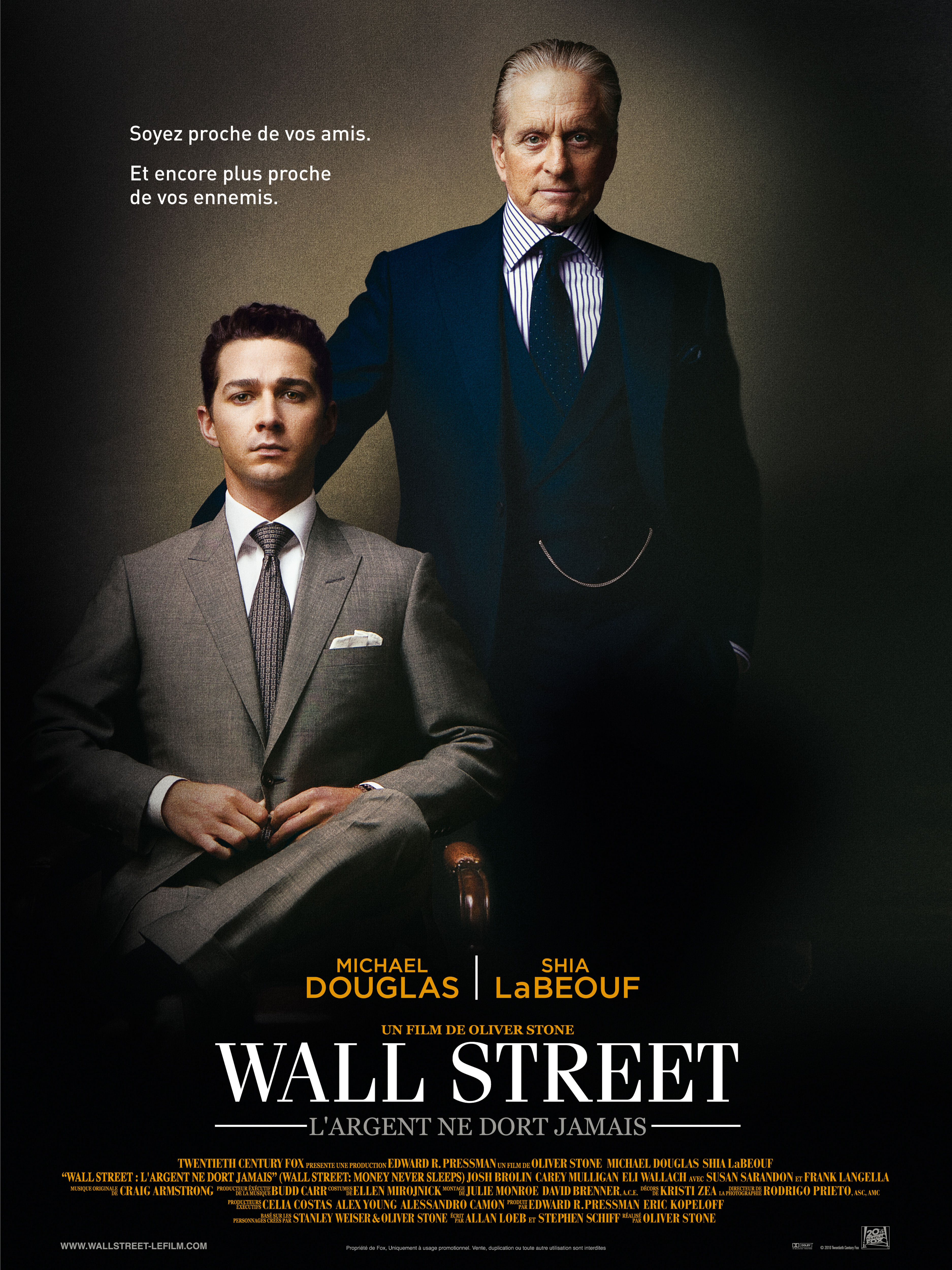

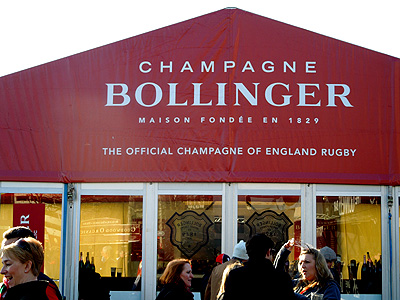
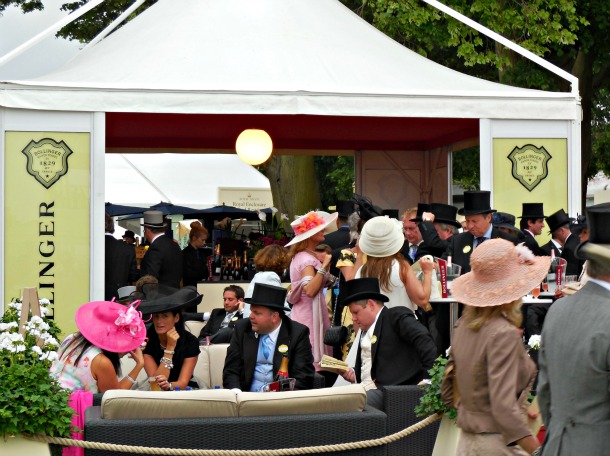




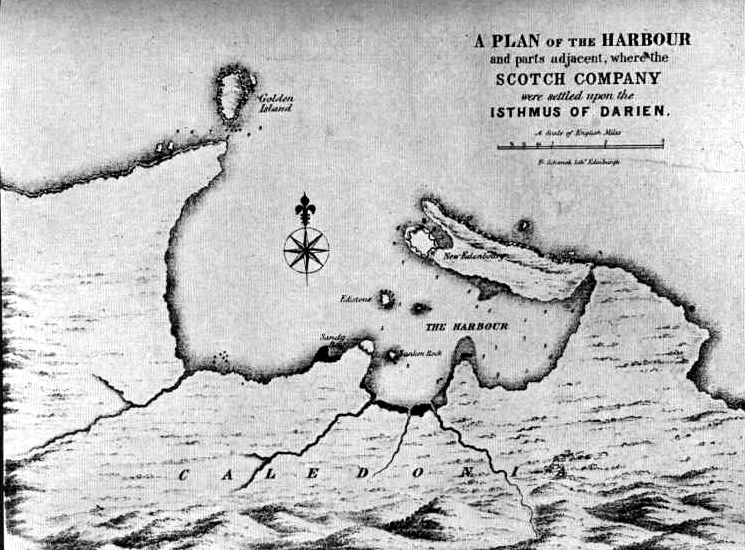

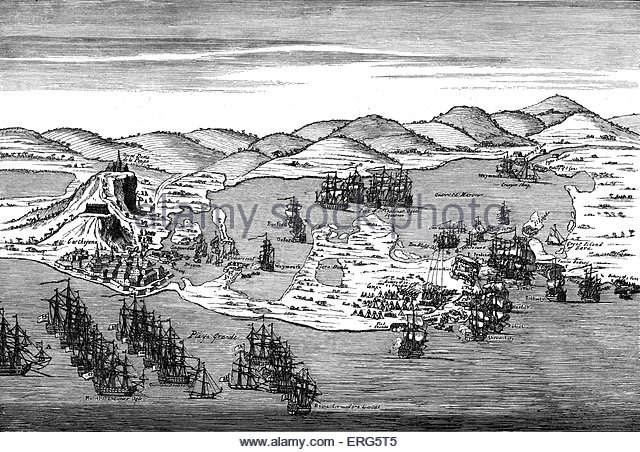
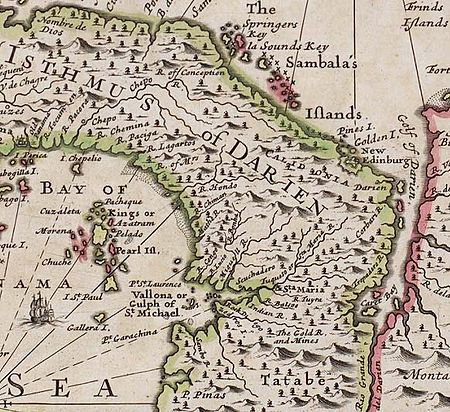
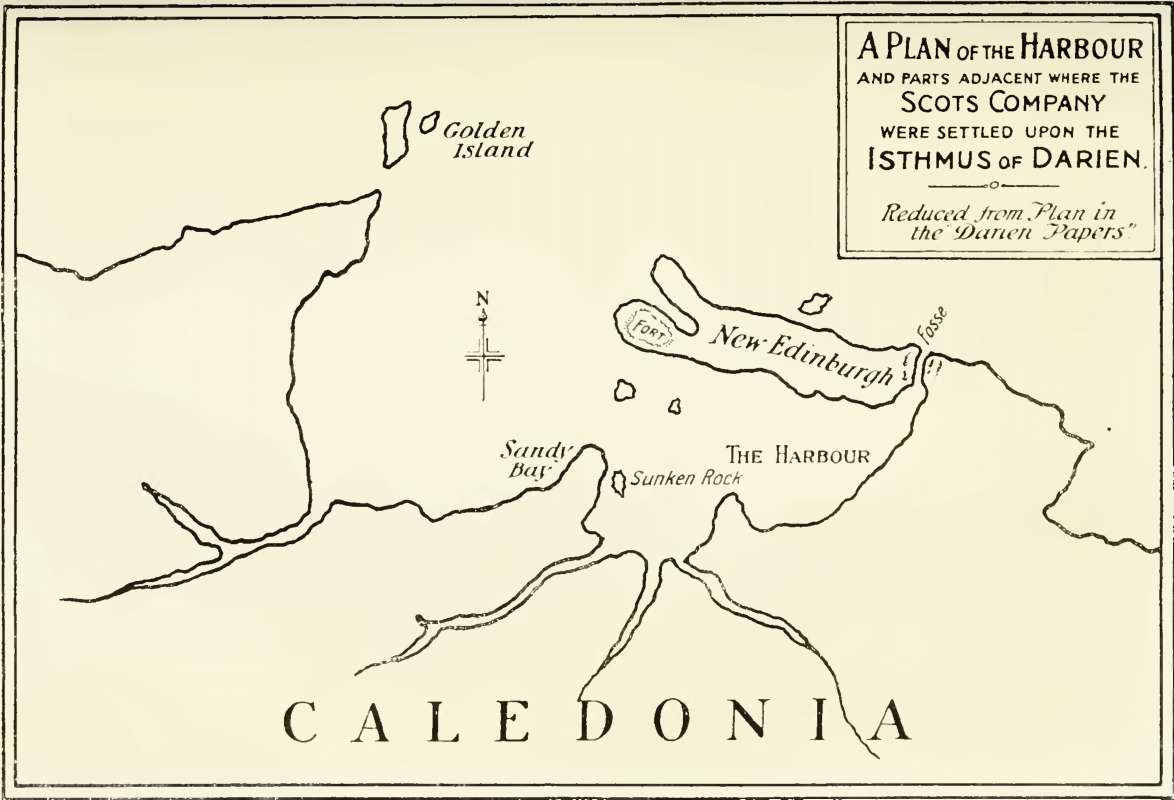



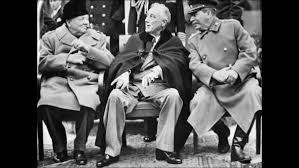




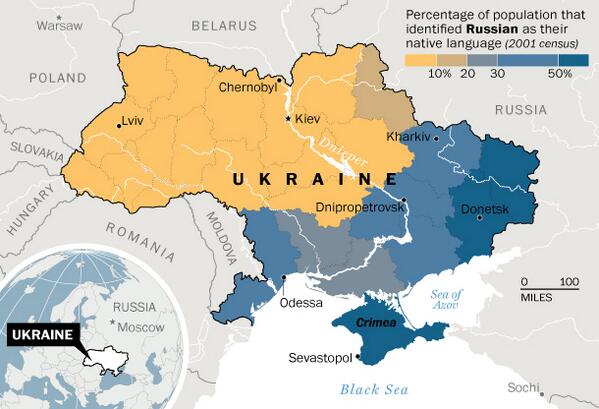


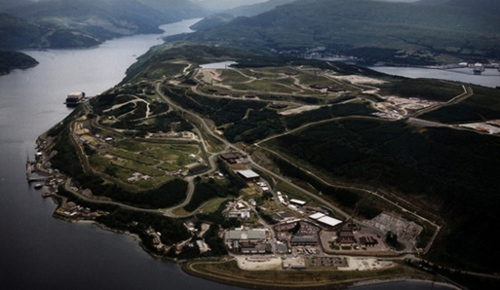
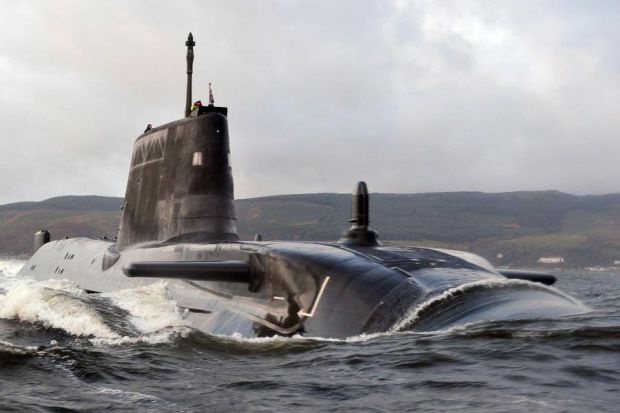




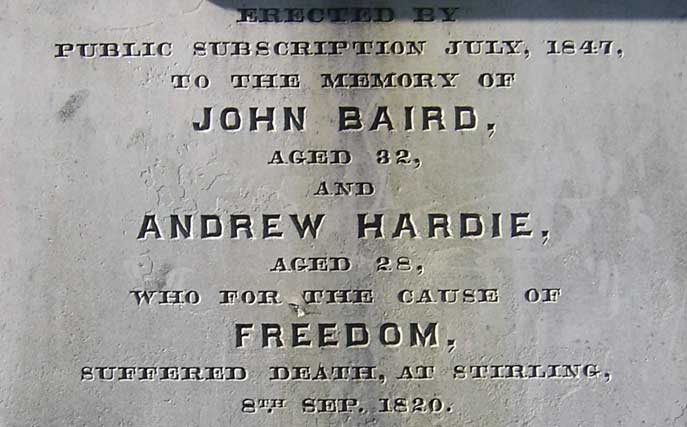



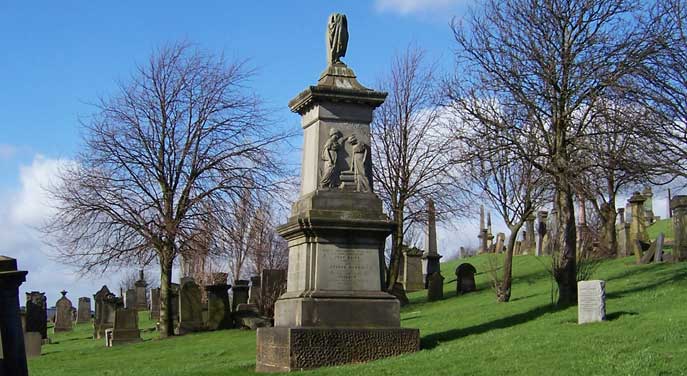

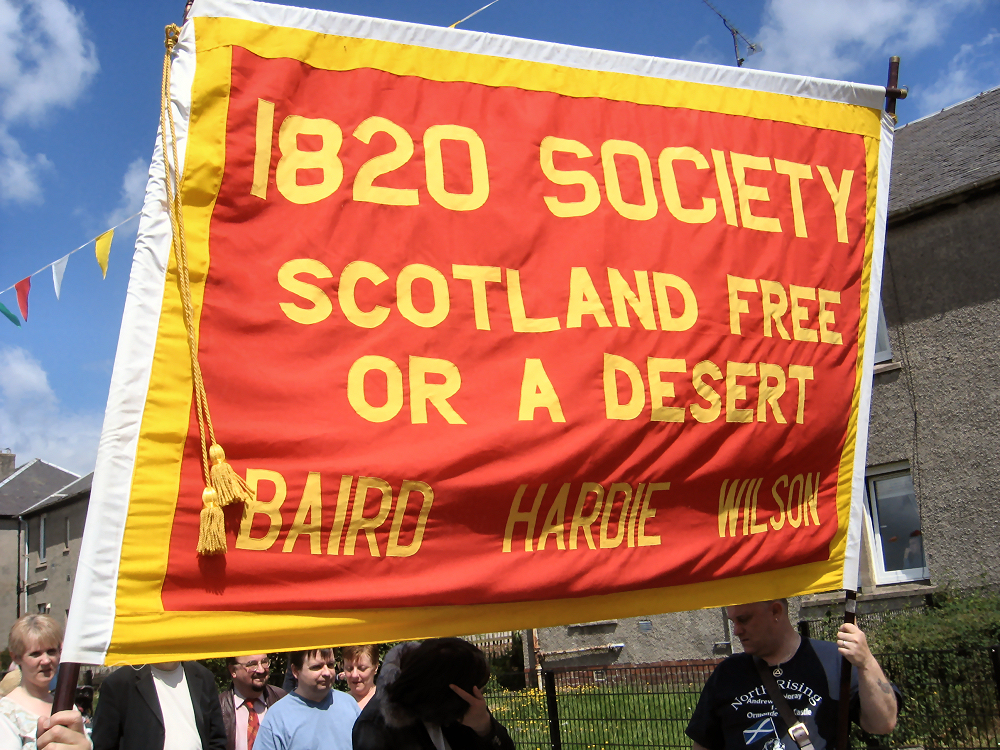


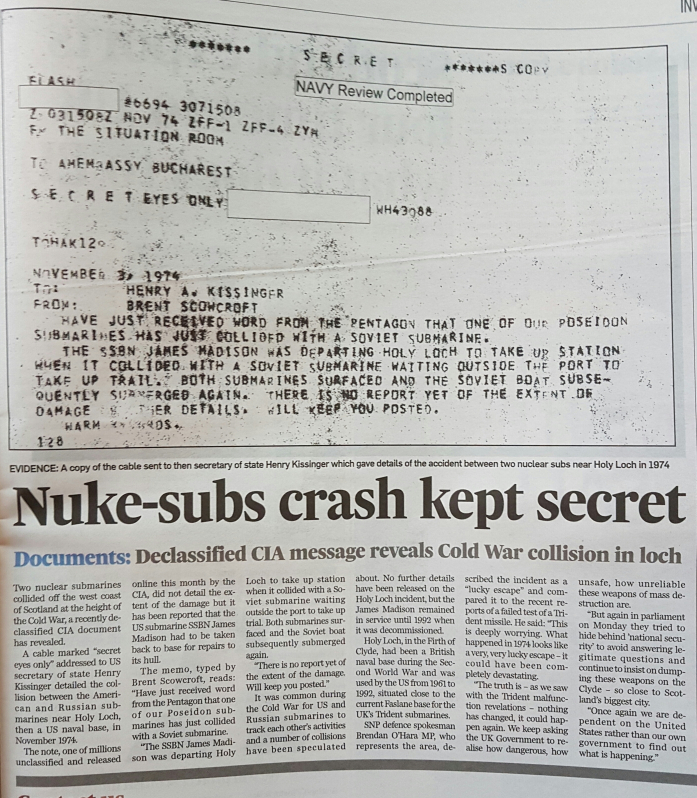
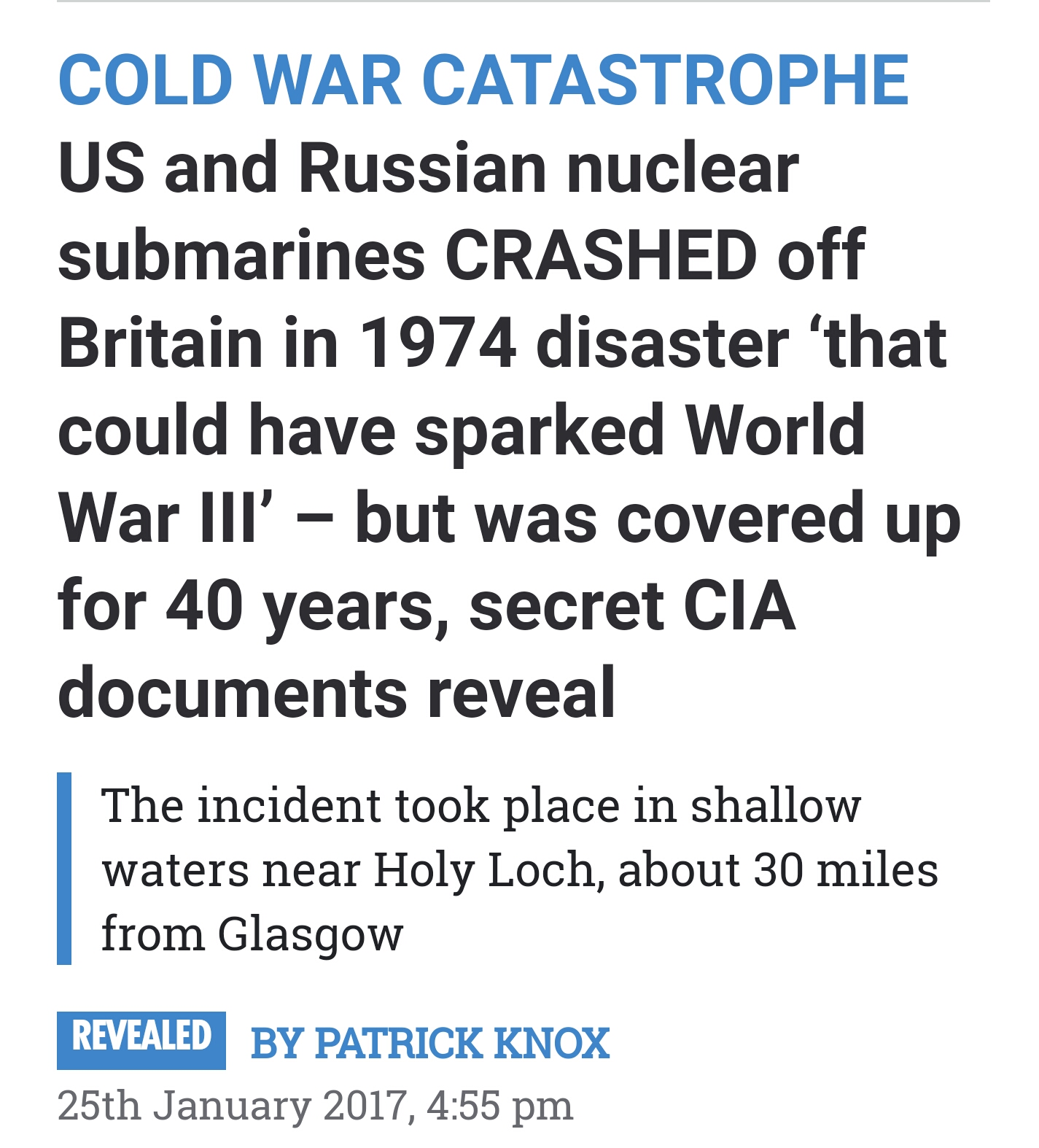
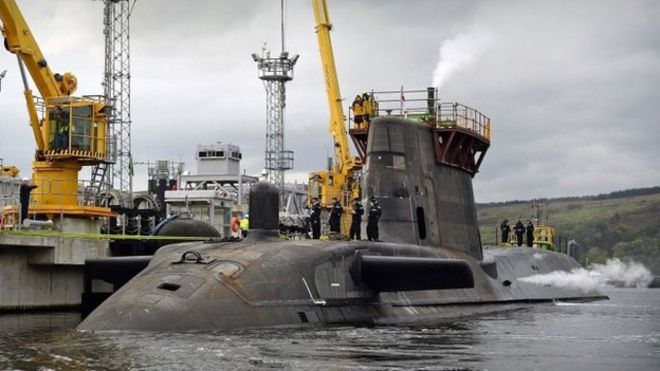
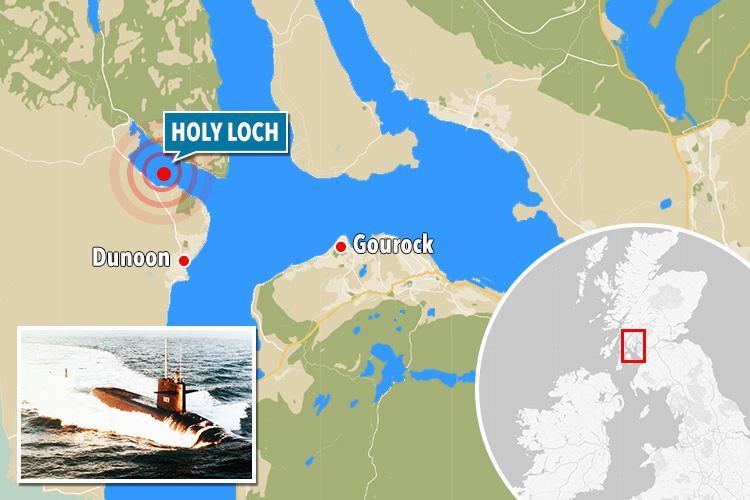
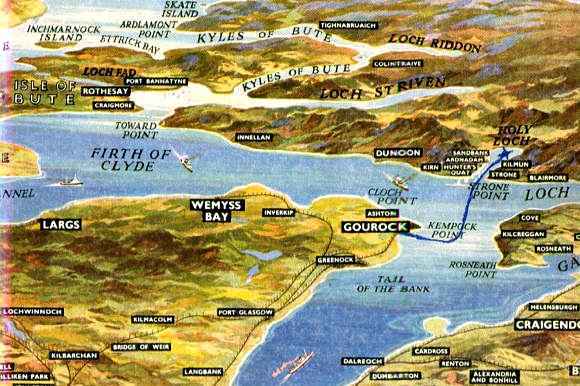



 caltonjock