Programme for International Student Assessment (PISA) – The 2015 Report
Judging one country’s performance against another, blindly utilising information contained in a PISA report is unsafe since there are so many conflicting characteristics to consider. It is only really useful to compare a country’s previous performance and economic performance against the present report to identify if it has improved or declined and even then basing judgements on performance figures alone is unsafe. It is better to read the report taking guidance from the information to be found at: “https://fullfact.org/education/what-you-dont-find-out-about-englands-educational-performance-pisa-league-table”
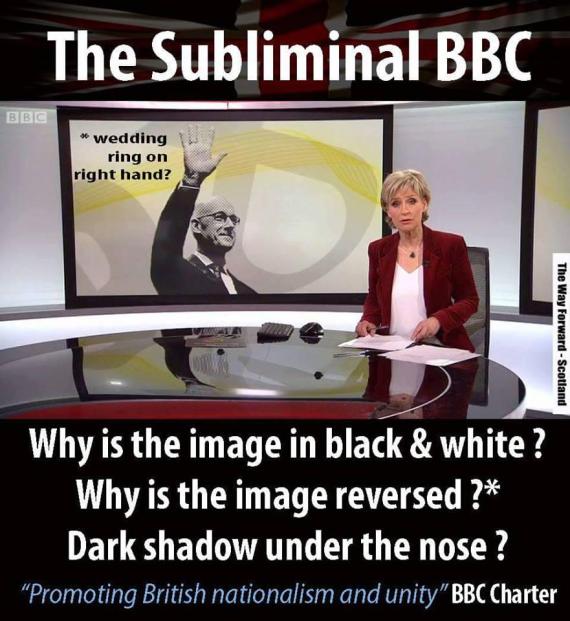
With the foregoing in mind, the BBC headline grabbing report “http://www.bbc.co.uk/news/uk-scotland-scotland-politics-38207729” (as usual) seeks to pervert the truth, placing perceived blame for failings in the performances of 15 year old pupils, in its entirety on the SNP government. Par for the course, this is a blatant attempt to distort the truth, (yet again).
This is the truth:
In 2012 a major core academic subject study of 500,000 students aged 15, (conducted by the Organisation for Economic Co-operation and Development (OECD)) identified that the performance of British schoolchildren had failed to improve over the period 1997-2012 despite a multi-billion pound rise in education spending, (under the New Labour government) taking the spend on education above the world average.
The difference in performance was particularly significant when compared to pupils in the Far East, (China, Singapore, Hong Kong, South Korea and Japan) but in general terms teenagers in other developed countries of the world (Switzerland, the Netherlands, Finland, Poland, Germany, Estonia, Ireland, Canada, Australia and New Zealand) were also edging ahead of the UK.
The review ranked the UK 26th for maths, 23rd for reading and 21st for science. An overall performance markedly similar to previous years (but the first time ever that the UK had failed to make the top 20 in any subject.) Other countries had improved in the same period giving the effect that education in the UK was foundering. Within the UK, England, Scotland and Northern Ireland achieved broadly similar results but Wales lagged behind in all three disciplines.
In 2012 around £60K was invested in each child a figure only bettered by a few other nations. For comparison this was double the amount spent by the world leader, China, meaning that its performance would have been even better if it had invested the same amount of financial support as the UK.
Another major concern in the report drew attention to the much vaunted (by the Labour government) year-after-year rise in headline test results (between 1997 and 2010,) fuelling concern over “grade inflation” (dumbing down standards artificially improving results. The revelation further fuelled allegations that the £30 billion rise in spending, (under Labour) had been wasted casting a major shadow over the Labour government’s education record since it had failed to translate into improved standards.
The study recommended that:
* Much greater emphasis should be given to the selection and training of teachers, encouraging them to work together, prioritising investment in teacher quality, not classroom sizes.
* Teachers should be set clear targets and outcomes, coupled with autonomy in the classroom.
* The status of the teaching profession should be placed higher in society (mirroring that of the Police). Providing opportunity for recruitment and retention of a much higher quality of students.
* Whilst the need for reform was urgent it was crucial to take time, completing a wide ranging consultation of all interested parties and other nations before introducing any further changes to an already badly bruised service.
Sir Jeremy Heywood, Downing Street Cabinet Secretary Issues Warning letter About Information Leaks – letter is Leaked to the press the Day After
Prime Minister, Theresa May instructed her Cabinet Secretary to take urgent action preventing government officials from leaking information to journalists. He acted immediately, issuing a warning memo to permanent secretaries in government departments to say that the “spate of corrosive leaks” must end. The content of the memo was passed on to a national newspaper within days. In the memo said: “Anyone found to have leaked sensitive information will be dismissed, even where there is no compromise of national security.” He then set out plans to review areas vulnerable to leaks and to place security teams in charge of ramped-up inquiries into who was passing information on.
https://www.theguardian.com/politics/2016/dec/04/government-memo-brexit-leaks-leaked-cabinet-secretary Comment: Hoisted with his own petard methinks. His gathering, organisation and direction of the (fifth column) of English senior civil servants who conducted a very effective fear campaign against Scots before and throughout the 2014 Independence referendum was reprehensible. And adding insult to injury the salaries and expenses of the team were charged to the Scottish Office. I have added information below providing explanation of the rightful grievances held by Scots against corrupt civil servants who gloated at an after Independence party that they had thoroughly enjoyed their time away from routine duties stuffing the Scots who had the effrontery to challenge Westminster
Heywoods team of Fifth columnists scuppered the Scots in 2014
2014: Westminster Civil Service, “Devolved Countries Unit”, (Dirty Tricks) campaign team wins “special” Cabinet Secretary and Head of the Civil Service Award
The award, in recognition of the team’s outstanding achievement in making a difference on an issue of national significance, (the Referendum) was presented by the ”Cabinet Secretary and civil service head Sir Jeremy Heywood. The proud team commented afterwards;
Paul Doyle; “This award is not just for the Treasury, it’s for all the hard work that was done by all government departments on the Scotland agenda. The reality was in all my experience of the civil service, I have never seen the civil service pull together in the way they did behind supporting the UK government in maintaining the United Kingdom. It was a very special event for all of us.”
William MacFarlane, Deputy Director at HM Treasury, (Budget and Tax Strategy); “As civil servants you don’t get involved in politics. For the first time in my life, suddenly we’re part of a political campaign. We were doing everything from the analysis, to the advertising, to the communications. I just felt a massive sense of being part of the operation. This being recognised [at the Civil Service Awards], makes me feel just incredibly proud.”
Shannon Cochrane; “we’ve learned that it is possible for civil servants to work on things that are inherently political and quite difficult, and you’re very close to the line of what is appropriate, but it’s possible to find your way through and to make a difference.
Mario Pisani Deputy Director at HM Treasury, (Public Policy); “In the Treasury, everyone hates you. We don’t get thanks for anything. This is one occasion where we’ve worked with the rest of Whitehall. We all had something in common, we’re trying to save the Union here, and it came so close. We just kept it by the skin of our teeth. I actually cried when the result came in. After 10 years in the civil service, my proudest moment is tonight and receiving this award. As civil servants you don’t get involved in politics. For the first time in my life, suddenly we’re part of a political campaign. We were doing everything from the analysis, to the advertising, to the communications. I just felt a massive sense of being part of the operation. This being recognised [at the Civil Service Awards], makes me feel just incredibly proud.”
http://www.civilserviceworld.com/articles/news/hm-treasury-team-wins-special-civil-service-award Comment; Any mention of the team members in the New Year honours list would be the ultimate kick in the teeth. It was always my understanding that Civil Servants were strictly apolitical and deployment to duties such as described is forbidden. But Sir Jeremy Heywood simply ignores the rules as he sees fit.
Revealed: Treasury’s RBS email leak came from Westminster ‘referendum dirty tricks’ department
The UK Treasury has been accused of running a, “political dirty tricks department” spinning against Scottish independence after it emerged sensitive information about Royal Bank of Scotland plans to leave the country in the event of a Yes vote was leaked by a civil servant in charge of, “referendum communications” within the department. The email, sent to journalists the week before the referendum, stated RBS had plans to move its base to London in the event of independence, triggering headlines viewed as a blow to the Yes campaign.
It was issued while the RBS board was meeting to discuss the matter, and before the bank had made a statement to the financial markets – a breach of trading rules. First Minister Alex Salmond demanded a criminal investigation into the matter, while Edinburgh financier and Independent Midlothian councillor Peter de Vink, an RBS shareholder, also asked the Financial Conduct Authority (FCA) and police to investigate.
The Sunday Herald has now obtained a copy of the email, which shows it was sent by a civil servant who is head of Scottish Referendum Communications at the Treasury. City of London Police are also now probing the complaint by de Vink and are in the process of contacting, “relevant individuals and organizations”. SNP Treasury spokesman Stewart Hosie MP yesterday said the fact the email had been sent by the head of Scottish Referendum Communications was an, “extraordinary revelation”. He said: “The previous claims by the Cabinet Secretary [Sir Jeremy Heywood] that the Treasury was, “promoting financial stability” in revealing RBS plans has been totally blown apart by the revelation that it was actually a pro-active email from an official in a so-called, “Scottish referendum unit” and released while the RBS board was actually in session.
“It seems that the London Treasury had a political dirty tricks department operating throughout the referendum campaign. However, the huge problem they now face is the increasing likelihood that this particular trick was not just dirty but illegal.” Hosie added: “I will now table a series of Parliamentary questions on this issue to add to the proper and comprehensive investigations which must now take place.”
The Treasury email was sent to journalists at 10.16pm on September 10, around 25 minutes before the RBS board meeting on the issue had finished. It contained a response to a statement issued by Lloyds Banking Group which stated it had contingency plans to establish “new legal entities” in England in the event of a Yes vote. But it also gave a quote from a “Treasury source” which said: “As you would expect, RBS have also been in touch with us and have similar plans to base themselves in London.” The following day, RBS issued a statement to the markets which confirmed its intention to, “redomicile” in the event of a Yes vote, but added it would intend to retain a, “significant level of its operations and employment in Scotland”.
RBS chief Ross McEwan also issued a letter to staff in the morning saying the business was based in Scotland because of the, “skills and knowledge of our people, and the sound business environment”. It added, “So far, I see no reason why this would change should we implement our contingency plans … I know many of you will have already heard about this first in the media. My apologies for that, on this occasion this was unavoidable.”
Heywood, head of the civil service, subsequently rejected demands by Salmond that the matter be investigated. He stated the Treasury email had been issued following a newspaper report, which quoted an RBS source as stating that the bank would follow Lloyds in its plans to move its registered HQ out of Scotland in the event of a Yes vote.
In a response to Salmond, he claimed it was, “simply a confirmation of the Treasury’s understanding of RBS’ contingency planning”. He added, “The Treasury judged that it was important to set this out – at a time when the UK financial markets were closed – given their overarching responsibility for maintaining financial stability in the UK.”
Salmond subsequently wrote to the head of the FCA, the Chief Constable of Police Scotland, and the Commissioner of Police for the City of London urging action over the alleged leaking of market-sensitive information. He stated the grounds for his belief a criminal offence may have been committed, including: that decisions of such a substantial nature should be a matter for the bank to report “openly and transparently” to markets; and that there had been improper disclosure of market-sensitive information, which is “tantamount to insider dealing”. He also raised concerns the action by the Treasury would have potentially created uncertainty if its information had differed from the position taken by the RBS board when its meeting had concluded.
De Vink, who filed complaints on the potential leaking of market sensitive information two days after the Treasury email was sent, said he has now been contacted by City of London Police and invited to attend an interview next month. He said: “They have asked would you come in and talk to us, which is what I am going to do in November. “I told them while it is a political issue, that doesn’t take away that what happened was absolutely unacceptable.” De Vink also criticised the FCA for a lack of response, describing its attitude as “lackadaisical”. “I find it incredible that these things are allowed to happen,” he added, “If anyone else would have done that they would have had the book thrown at them and quite understandably.”
The Sunday Herald asked the FCA if the complaints were being investigated. A spokeswoman said it was unable to comment on individual complaints. A spokesman for City of London Police confirmed it had received the letter from de Vink and added: “We are now speaking to the relevant individuals and organisations.” The Treasury claimed the person who sent the email was a “junior civil servant”, despite his position as head of Scottish Referendum Communications.
In a previous role he was press officer to former financial secretary to the Treasury, Greg Clark. The Treasury also refused to give any details of who approved the email being sent out. Last night, a spokesman for the Treasury said: “As is a matter of public record, the Cabinet Secretary has written to the former [sic] First Minister on this matter, and rejected any suggestion of improper actions by civil servants.”
Jim McKay commented. Heywood stated the Treasury email had been issued following a newspaper report, which quoted an RBS source. He must have reference for that report? Newspaper, date and edition. And what RBS source? Smoke and mirrors. He’s lying.
Scottish Affairs Committee Meeting – 2015 – Scottish Office – Matters Arising From the 2014 Independence Referendum– in attendance
Chair: Welcoming Francesca Osowska, OBE, Director, of the Scotland Office, to the Scottish Affairs Committee; the chairman said “we are very grateful for you coming along today. If you would like to introduce yourself and say what you do, and if there is an initial statement that you want to make to the Committee, please feel free to use that time.”
Francesca Osowska: Thank you very much. I am Francesca Osowska. I am Director for the Scotland Office and I am also Principal Accounting Officer for the Scotland Office and the Office of the Advocate General. I have no opening statement, other than that I am very pleased to appear before the Committee to answer questions on the Scotland Office and the Office of the Advocate General Annual Report and Accounts for 2014-15.
Chair: One of the things that struck me, perhaps you could explain to me how this works is that there are 100 staff currently employed within the Scotland Office. Is that correct, roughly 100 staff?
Francesca Osowska: Yes.
Chair: The last year, as I think we touched on, has been a particularly trying year, with lots of pieces of significant and substantial work, particularly the referendum and the Smith Commission. What do you see as the main issues and challenges and the main thrust of your work as you go forward over the next year or two years in the parliamentary term?
Francesca Osowska: We have a strong constitutional role, primarily in relation to the Scotland Bill, which, as you are aware, is passing through these Houses at the moment. That is a key priority for the Scotland Office. In addition we continue to be the voice of Scotland in Whitehall, so our work with other Government Departments across Whitehall, in terms of ensuring that they appreciate the devolution settlement and that they are conscious of the Scottish context, will continue. Similarly, we are the voice of the UK Government in Scotland and, again, we work co-operatively with other Government Departments who have reserved responsibilities in Scotland to ensure that the UK government can work effectively in Scotland.
Chair: Do you have any sense of the balance? I am quite intrigued by seeing that you are the voice of Scotland and Whitehall and the voice of the UK Government in Scotland. How would you see that balancing out in terms of the commitment to either of those fine offices?
Francesca Osowska: In terms of numbers of staff?
Chair: No, not in terms of numbers of staff but about how much time or effort. Do you see yourself primarily as the voice of Scotland in Whitehall or do you see more of a role as being the voice of the UK Government in Scotland? How would you characterise the effort that is put on to each of those very laudable aims and objectives?
Francesca Osowska: If I were to take those objectives along with our constitutional objectives which, as I mentioned, include the Scotland Bill, but also include responsibilities in terms of Scotland Act orders and LCMs—then I would say that we give those equal weight.
Margaret Ferrier: Looking at the 2015-16 budget for the Scotland Office it was set at £5.8 million in the 2013 spending round, but the most recent main estimate asked Parliament to approve an additional £3 million for capability enhancement. What are these additional funds for?
Francesca Osowska: In terms of the out turn for 2014-15 the total combined out turn for the Office of the Advocate General and the Scotland Office was £7.7 million. You will appreciate that that did include an uplift from the original budget setting process that occurred in 2010.
At that point, a referendum was not anticipated; a lot of the work in terms of 2014-15 has been the follow through or was related to the referendum, so the work in the run up to the referendum, contributing to the Scotland analysis papers for example, supporting Ministers as they gave public information to inform the debate about the referendum, and that explains the increase in that provision.
Margaret Ferrier: These public Ministers, are you meaning UK Ministers?
Francesca Osowska: Yes.
Margaret Ferrier: Not Scottish Government?
Francesca Osowska: No.
Margaret Ferrier: The Annual Report and Accounts show that general administration costs rose by about 8% from £7.2 million in 2013-14 to £7.7 million in 2014-15. Why do you feel the general administration costs are rising? Is there another reason, other than the referendum debate that was taking place?
Francesca Osowska: No. As I said earlier, the very initial budget was set in 2010 as part of that spending review. The referendum was not anticipated at that point and this increase represents the resources dedicated by the Scotland Office to supporting the work of the UK Government, overall, in informing the referendum debate.
Kirsty Blackman: The Scotland Office had allocated to it and spent an extra £3 million helping UK Government Ministers with information about the referendum, mainly?
Francesca Osowska: In terms of the increase, there are a number of different figures being talked about here. It might be helpful if I wrote to the Committee after this hearing to set out the sequence of events, because there were uplifts granted and changes in the Budget made from the original 2010 provision at different periods, including during the course of 2013-14, so I do not think it is entirely correct to say it was a single jump of £3 million.
In terms of what that money delivered and the outcomes that the Scotland Office delivered, I would refer the Committee to chapter 3 of the report. That sets out quite a detailed analysis of the outcomes and the outputs from the five objectives set by the Scotland Office, and certainly part of that work and a focus of that work in 2014-15 was in relation to the run-up and then the after-events—including the Smith Commission—of the referendum.
Chair: It would be helpful if you write to the Committee to explain properly what that £3.3 million did account for. What we are hearing is that this might have been the figure that was used for the referendum campaign, for the “No” campaign, and used by UK Ministers to take part in the referendum. Would that be roughly a correct characterisation of that spending?
Francesca Osowska: However, in answer to your question, Mr Chairman in relation to “Was this a way of the Government funding the ‘No’ campaign?” this was to fund the activities of UK Government civil servants, in line with the civil service code. All activities undertaken by civil servants in my Department would meet a propriety test, yet I think you would agree that in the run-up to a referendum, obviously when Ministers want to be more visible, when we need to ensure that there is a good flow of public information.
Francesca Osowska: Common Purpose Member
Scotland Office – A Political Propaganda Unit maintained to retain supremacy over Scotland
The Scotland Office occupies plush Dover House in Whitehall and is supposed to look after our interests down south. But its role has shrunk dramatically since devolution in 1999.
It has been revealed that 20 staff, employed to deal with mail, replied to 1252 letters in 2006-2007 – just over one per member of staff every week. The letter scandal follows a series of damning reports on money-wasting at the department.
In 2009/10 around 50 staff, (working between Edinburgh and Dover House, in London,) claimed £75,000 hotel expenses spent £8000 contracting a supplier to provide and maintain office greenery (plants).
Matthew Elliot, of the Taxpayers’ Alliance, said: “These figures show how little work the Scotland Office is doing at the same time as it is costing taxpayers an extortionate amount.
David Mundell accused of turning Scotland Office into ‘marketing campaign for the Union’
A row has broken out over the cost of the Scotland Office’s press operation. The Scotland Office plans to increase its complement of communications officers to nine in the current financial year, at a cost of £474,000.
Launching a fierce attack on the spending James Dornan (SNP) said: “The Tory government are implementing massive cuts to spending on public services and slashing the incomes of the poorest through welfare cuts, and many Scots will be shocked that they are spending over 430 per cent more on press officers for David Mundell. It is clear that the Scotland Office’s only role is as a marketing campaign for the Union. Scotland did not choose a Tory government, yet it is now paying hundreds of thousands to promote Tory policies.”
In response a UK government in Scotland spokesman said: “The UK Government has a duty to inform the public about its policy and work. These modest year-on-year increases bring the office into line with similar UK departments. It also adds new functions such as digital communications, ensuring key information reaches as many people in Scotland as possible.”
The UK Government of Scotland. Where the hell did that come from?
The cost of provisioning Mundell’s recently created UK government in Scotland is extortionately high and is ever increasing year on year without justification or satisfactory explanation. Indeed a House of Commons report submitted in 2005/2006 recorded that the Scotland Office was hopelessly overstaffed and recommended a 50 per cent establishment reduction.
But from the time the Tory Government took up the reins of government salary costs have increased year on year, but it is only recently that the method in the apparent madness of the Tory Government has surfaced. The Scotland Office is no longer a team existing to assist Scotland and it’s devolved government. It is the UK Government of Scotland. Its supremo is David Mundell assisted by the unelected, (but highly paid) Lord Dunlop.
Francesca Osowska in a number of her evasive statements to the Scottish Affairs Committee misleadingly glossed over the expensive and extensive work of a large group of (supposedly politically neutral) Civil Servants who actively supported the objectives of the “Better Together” campaign. A gross misuse of public finances and Civil Servants authorised by David Cameron and Sir Jeremy Heywood.
In addition the matter of the vastly oversized Scottish Office staffing establishment was referred to but she seek to justify retention of the previously advised 50+ excess staffing of the Scottish Office over the Welsh Office. In consequence at least 50+ unjustified posts are charged to Scotland’s block grant each year.
The political slush fund created by the foregoing is an ever increasing Tory Party financial nest egg (skimmed off Scotland’s block financial grant) abused by the Scottish Office for questionable purposes, such as:
* Creation of a Downing Street based, anti – Scottish independence fifth column civil service team.
* Production, printing and distribution (to the homes of the entire Scottish electorate) of millions of anti-devolution propaganda.
* Hiring Special Advisors (SpAds), often sons, daughters, other relations, friends of ministers or other MP’s.
Glasgow Rangers Scottish Fan-base and Scottish Independence
The total number of fans, family dependents and associates of voting age in Scotland is estimated to be between 250,000-350,000. Of these guestimates are that around 30% voted Yes in the 2014 referendum. Allocating the remainder to the “no” vote increases that total by 175,000 – 245,000. The numbers are significant and much work needs to be done (between now and the date if the next referendum) to convince the bulk of the Unionist supporting fans and their dependents that their future is with a Scotland free from the false utopia that is Westminster. But the challenge is immense and an understanding of what drives them is crucial to the outcome. The message to the supporters favouring independence is, “Ditch the Union Jack, wrap yourselves in the blue of Scotland and claim your freedom from a system that has sent the grim reaper on many occasions to claim the lives of many hundreds of thousands of your countrymen and women in the name of patriotism and visited, oppression, mayhem, theft and suffering on many millions of Scots.”
Glasgow Rangers – From the Start
In the early years of the nineteenth century, Scotland was the most Protestant country in the world, and probably the most literate. The immigrants who then began to drift in from Ireland – first in a trickle then, after the Famine, in a torrent – were sharply differentiated from the society they were joining – or at least intending to live alongside. They were Catholic, many of them Gaelic-speaking, as big a proportion semi-literate at best. To an extent that was never true south of the border, Catholicism in Scotland emerged as a specifically Irish phenomenon – now presenting cut-price competition for a disciplined Protestant working class with, already, a well-developed sense of its own place and entitlements.
Celtic was founded in 1888 with a conscious perspective of giving expression to the sense of identity of the Catholic-Irish community. Within five years the club had, astonishingly, established itself as the leading side in the – admittedly still semi-organised – Scottish football set-up.
The underdogs, or at least the underdogs’ colour-coded representatives, were suddenly top of the pile. Celtic’s first honorary president (jointly with the archbishop of Glasgow), Land League leader Michael Davitt, exulted: “The Celtic club is the pride of the Irish race”.
Small wonder that many in Scotland who associated themselves with the kirk, the Queen and the Tartan establishment felt a jolt of angry disbelief at what seemed the overthrow of the natural order of things. It was inevitable that any side which came forward to put a halt to the upstarts’ swagger would become a focus for Protestant loyalty – and Loyalism. Rangers stepped up to the mark.
The club had been founded in 1872. It was now, 10 years on, that the “no Catholics need apply” signs were erected around Ibrox. The establishment of a Harland and Wolff shipyard brought a fresh influx of Belfast Protestant shipyard workers, hardening attitudes and helping give Glasgow sectarianism its razor’s edge. The ideological character of Rangers which was to persist for more than a hundred years was set by the material circumstances of the time.
Competition between the separate sections of the working class for jobs, status and access to resources constantly replenished resentments and reinforced division. There was nothing ersatz or merely symbolic about the howls of hate exchanged at Parkhead or Ibrox on Saturday afternoons. The social function of football was to give unrestrained raucous expression to the underlying tensions of workaday life, the champions of each tradition going out uniformed to do battle on their supporters’ behalf.
And thus, with the occasional, soon-corrected stumble off the narrative line, things were to remain until the 1960s when, the world over, old certainties began to fragment and fade. Traditional industries declined, dragging down old elites. The Conservative and Unionist Party went into its free-fall phase. The role of religion receded. The influence of the Orange Order on business, the professions, the civil service, the judiciary etc began steadily to weaken. Rangers “constituency” was shrinking.
Celtic’s triumph in the European Cup in 1967 and the completion of the nine-in-a-row run of League titles brought the football dimension of this harsh new truth home to Ibrox.
Graeme Souness, a self-professed right winger and trophy hunter who had spent little time in the country of his birth and his good friend David Murray took over ownership of Rangers at the beginning of 1988/89 and established close friendships with a number of Thatcher’s Tory party MP’s and associated activists. He went on to dismantle many of the Clubs hallowed traditions which did not endear him to many fans but his arrogance knew no bounds and he ploughed on regardless of consequence in single minded pursuit of gaining success for the Club. Which he achieved but at an excessive unsustainable financial cost.
It was the desire for European success which prompted Murray to borrow massive sums from the Bank of Scotland using the assets of the club as collateral. And it appeared to work to the Clubs advantage, the money helped lure top-flight players to Ibrox and Rangers re-established themselves as the number one Club in Scotland. And all this was achieved without anyone (apart from Murray and a tight-knit coterie around him – as well as, presumably, account managers at the Bank of Scotland) – knowing that the club was meantime sinking ever deeper into what Americans might call the doo-doo.
Rubber stamping the new regime had been formalised on March 10, 1990, when Murray, (a personal friend of Malcolm Rifkind and the Conservative Party leadership in Scotland and London), organised a visit of Margaret Thatcher to Ibrox Stadium to make the Scottish Cup semi-final draw before the quarter-finals had been played. This was one of the proudest days of Graeme Souness’s life as he gloried in showing his heroine round the wonderful new stadium and introduced her to his players, all instructed to be smartly dressed for the occasion. She described the stadium as ”legendary” and said: ”It leads the UK in the excellence of its facilities.” The visit confirmed Glasgow Rangers as a Unionist entity which exists as much today as it did then.
After a number of years at the top of Scottish football successive failures to qualify for European competitions brought about a financial crisis and this linked to Inland Revenue investigations of wrong doing resulted in the club folding in default of a number of loans. A new club was then formed and had to compete at the lowest levels of the Scottish Football League. After 5 years in the lower leagues the new Glasgow Rangers returned to the Premier Division in 2016. (1)
(1) It is noteworthy that in a number of important legal actions associated with its financial mismanagement the Club was represented by Richard Keen QC, (now Baron Keen of Elie) a Conservative Party politician who was appointed Advocate-General for Scotland on 29 May 2015. Keen is one of Scotland’s richest men.
16 May 2008: Murdo Fraser and his Ill-Judged Remarks
Will Fraser, the deputy leader of the Scottish Conservatives ever learn? Protest in haste and repent at leisure. He must learn to contain his enthusiasm, or prejudice, before rushing out statements that turn out to be not exactly adjacent to the truth.
Questioning the heavy handed use of Manchester riot police against Glasgow Rangers fans, he also voiced concern about the approach of the Manchester city authorities in coping with the invasion of so many Rangers fans. It was chastening when a somewhat chagrined Mr Fraser, a few hours later, had to eat his words when he’d seen what the rest of Scotland saw – namely Fraser’s peace-loving Rangers fans attacking the forces of law and order in the most bestial fashion.
Fraser, in statement number two said: “The attacks on police officers and paramedics are deplorable and have to be condemned without reservation.” The moral of this story is that when it comes to issues of public order, politicians shouldn’t rush to judgement – especially when it comes to the supporters of Glasgow Rangers, or any other, football club. One cannot believe that the fact that Mr Fraser is a supporter of the Ibrox club played any part in his initial statement. Perish the thought.
Comment:
Murdo Fraser, like other Tories really believes that by defending sectarian bigots and by identifying the Tories with a club like Glasgow Rangers will endear them to the Scottish working class. This reminds me of the 1996 Tory Conference in Perth when they had a piper outside playing the sash. The fact is that the working class in Scotland have left these bigoted and outdated attitudes behind them at least 40 years ago. Even if Murdo Fraser’s remarks do get the Tories an extra few votes, he has lost his party ten times as many votes. I can’t stand Labour but the Tories are so stupid and so outdated they deserve to be heading for complete extinction.
13 November 2011: Unionists and their sectarian tweets – Ruth Davidson’s staff provoke outrage
On April 17th, the day of a Scottish Cup semi-final match between Aberdeen and Celtic, Taylor wrote: ‘Hope the sheep absolutely hump the tims today’ –(tim is a term of anti-Catholic abuse.)
Taylor is not the first member of her staff to embroil her in a sectarian related controversy. At the very beginning of her recent campaign for the leadership of the Scottish Tories, Ruth Davidson had to fire her Holyrood assistant Ross McFarlane – Mr McFarlane was filmed burning a European Union flag in Glasgow while sectarian remarks were made by a companion. At the time of the incident, Mr McFarlane was the president of the GUCA, as well as being Ruth Davidson’s Holyrood election agent.
The cases of McFarlane and Taylor have highlighted Davidson’s ties to Glasgow University Conservative Association (GUCA) – according to their website Ms Davidson is the group’s honorary president. She attended GUCA’s annual dinner Friday 11th. It has been noted that Ms Davidson when referring to her party repeatedly uses the name Conservative and Unionist – the emphasis on Unionist being evident. A spokesman for the Scottish Tories said: “The allegations against Mr Taylor have been fully investigated and he has been issued with a formal warning. Mr Taylor deeply regrets the comments and he apologises for any offense he has caused.”
26 October 2012: Threats and intimidation at the hands of Rangers’ ‘fans’
Channel 4 news broadcast a report bringing to public attention alleged intimidation (by a hardcore minority the clubs fans,) of those perceived to be instrumental in the relegation of Glasgow Rangers to the fourth tier of Scottish football. The content was controversial and generated a fair amount of press coverage. Aspects of the report surfaced again in the course of the 2014 Scottish independence referendum campaign. https://www.channel4.com/news/by/alex-thomson/blogs/threats-silence-intimidation-rangers-fans
22 July 2014: Glasgow Rangers fans on Scottish Independence
Pre-match interview of a group of Rangers supporters revealed an astonishing level of vitriolic malice aimed at anything supportive of Scottish independence. One fan, wearing an England football top was particularly intimidating, (check the video at 2:31)
14 September 2014: Last Week Tonight Show – Hosted by Political Commentator( Englishman) John Oliver
Oliver hosts a very popular weekly show on HBO. It usually finds its way to U-Tube and is highly recommended viewing. Just before the 2014 Scottish Referendum he presented his analysis of the referendum campaign in his usual irreverent fashion. Gaining an understanding of his views requires the viewer to enjoy the humour but assimilate the messages. As example his analogy (comparing the relationship between England and Scotland and Harry Potter and Ron) is classic observation. “I’ll have all the powers, and your brothers can die fighting my wars.”
19 September 2014: Vice news report on the outcome of the referendum
A well made documentary concentrating on the euphoria of Unionist supporters and the pain of Yes voters.
20 September 2014: Vanguard Bears Rangers Supporters Organise Clash with Independence Supporters in George Square
It was early evening. Independence supporters had gathered earlier in the day in George Square with the purpose of peacefully discussing the shock outcome of the referendum, less than 36 hours before. At around 18:30 a group of about 200 Glasgow Rangers fans (gathered by the Vanguard bears) entered the square and started intimidating the despondent “Yes” voters. Police attended in numbers and soon established control of a potentially explosive situation. But there were casualties, caused by Rangers Unionist fans attacking “Yes supporters without cause or reason.
16 January 2015: Glasgow Rangers: A club in danger of losing its identity
From Scotland’s favourite team to financial free fall. How an illustrious football club became an emblem of a faltering belief in Britain
Ibrox stadium, August 25 2011: Rangers FC, the Scottish club that is one of the most famous names in world football, are 15 minutes away from being knocked out of Europe by the champions of Slovenia. The team needs one more goal to take the game into extra time. This is the moment that, traditionally, a home team would be rallied by its fans bellowing, baying, singing a rousing song. Instead, the Glasgow crowd strikes up a weary chorus of the British national anthem, “God Save the Queen”. Rangers fail to score.
Soon, the whole club is in need of divine intervention. Without the funds from lucrative European cup competition, years of hubris and inept leadership catch up with Rangers. In February 2012, it enters administration. Four months later, it is liquidated. Following votes by other clubs, a new incarnation of the club that has been champions a record 54 times starts the 2012/13 season in Scottish football’s fourth tier.
Rangers draws much of its support from working-class fans in Glasgow and the west of Scotland, many of whom identify themselves as Protestant unionists. A spectator at the game said: “It seemed to me that too many fans are more concerned about defending Britishness than supporting Rangers.”
Today Rangers is a faded emblem of a faltering belief in the UK: a Scottish institution in Britain and a British institution in Scotland. Its rise and fall reflects not only how a football club lost sense of financial reality but much of its identity, too. Its story represents an imperfect microcosm of contemporary Scottish and British history.
17 April 2016: Twitter – Murdo Fraser wrote: Rangers 5 Celtic 4 – The Queen’s 11 deliver Her Majesty the perfect Birthday present. The Scottish Cup
Replies:
* Just watch the singing. I’d have thought keeping football well apart from the politics of the constitution might be advisable.
* Dry your eyes Of course the Queen is a Rangers fan. And a Tory. And a unionist. Like all good folks.
* What’s more embarrassing – following a Glasgow club when you’re from Perth or being a Tory? It’s a toughie!
* Police Scotland. After your pep talk with players might be worth blowing in this supposedly responsible politicians ear!!
* What is the connection with rangers and the queen. Can you explain please?
* Is this really the sort of acceptable comportment from an MSP who represents all, regardless of how/who they vote/support?
* You sir are a right wing disgrace of a politician.
* Were you elected to serve only certain people in Scotland? Remember who pays your salary and behave yourself man!
* Why are you trying to stir up tension? You need to answer this.
* We are trying to move on from this bile you headcase.
* Lost the right to say the queens 11 when they diddled millions in tax good luck with your career.
* Perth based Tory Rangers fan in popular cultural reference shocker. We need a summit + special police powers.
* A Tory, Rangers, Royalist in the unionist and conservative party. It’s hardly earth shattering news.
* Her perfect Birthday present would be the Rangers paying back of her stolen taxes.
* Sure the Queen would be happier if your club paid the tax that they cheated her out of for all those years. Shameful Comment.
* I think she’d prefer them to deliver their taxes to her Revenue & Customs officers.
* Of course they are the Queens 11, they love to avoid tax too. All in it together.
* The daftest thing abut this tweet is the thought that the Queen cares what the score with Rangers was! Ill-judged tweet though.
* Aye Murdo, I’m sure there wont be anyone more thrilled about the Rangers result than Queen Elizabeth II.
* Do you think it’s suitable to be condoning the politicisation of football when there is such tensions?
* Glad you’re able to rise above the sectarian bile associated with the old firm. Oh, wait…
* Great to see politicians at the vanguard of progress towards a Scottish society not blighted by the bile of sectarianism. Pun.
* Scotland’s shame back on the agenda.Could you explain what you mean to my wee granddaughters.
* What has the birthday of a 90 year old Englishwoman who lives 400 miles away got to do with a Scottish football match?
* Congrats on the result. Any comment on the tens of thousands of people singing sectarian songs in the Rangers end yesterday?
* Pleased to hear Rule Britannia being sung by only a few at Hampden Must mean something for the Queens11 & dinosaurs like you.
* Did you really tweet that? My god man, what is wrong with you?!
* What else might Her Majesty like? Loyalists burning saltire’s in George Sq again? GSTQ’s verse about crushing rebellious Scots?
* The queen cares about *Rangers as much as you do the working class.
* Rangers fans know your a toxic Tory. Jog on with your opportunistic crap!
* Can’t believe I just read this, with this causing such a divide across our nation, did you really think this was a good idea?
* Sectarianism is alive and well.
* Amazing you haven’t got further in life than the Scottish Tory party with this level of emotional intelligence pal.
* If the good people of Perthshire are thick enough to vote for you, they deserve you, numpty!
* Well you’ve just lost my vote.
* What a vote winner, even the demographic you are trying to appeal to know won’t buy it!
* Couldn’t care less for your football rivalry, but this is utter filth, same old bigot Tories.
* It may be a good idea to keep the political and religious nonsense out of football, a lot of young folk are atheist/agnostic
* When all right minded individuals are trying to eradicate sectarianism from football. This is your contribution. Shameful.
* To refer to the queens 11 after the tax dodging schemes does take a brass neck. But fair play your stupidity is a lesson 2 all
* Not the brightest tweet by a Tory politician. But when are they ever……?
* Scraping the barrel going for the Bigoted wife beaters but spose an another votes a vote
* Don’t mind the fitba stuff it’s the whole ” I’m a Tory ” thing that gives me the boak
* Another reason not to vote Tory. Arrogance personified. Shouldn’t you support you’re local club over a Glasgow club. Shameful!
* I’m a Rangers fan & I’m delighted by the result but associating anything beyond football with this fixture is irresponsible.
* Good to see some Rangers FC fans take Murdo to task for the toe curling creepiness of his remarks.
* Representing all areas of Scottish society eh? Bigotry is not one,not in my name, shame on you! As a veteran I am appalled
* There’s a reason football and politics shouldn’t be mixed.
* I’m a Rangers fan and I wouldn’t post this tripe grow up your supposed to be a candidate to become an MSP.
* Disgusting behaviour for a politician to write something like this.
* Wow!!! Look at all the attention you got, what you were after obviously.
* Absolute shocking comment but typical of a Tory. Shameful every sense
* No wonder no-one votes conservative with tubes like you rocking about
* As much common-sense as your political capability, zero
* You should be ashamed of yourself Mr Fraser.
* An irresponsible and harebrained comment.
* Oh grow up, for Pete’s sake. What a truly moronic post.
* Typical Tory Unionist wee mindset. It was only a game of football
* And now garnering support from UKIP. Result Murdo. You must be so proud
* Am I missing something? Why is a politician tweeting such pish? What does the queen have to do with football?
* Why is this comment bigoted ? who gives two craps if the Queen is Hun.
* Time to break out the Lambeg drum and march up the Garvaghy Road. Her Maj would be proud
* What a sanctimonious tweet,can you also add how proud you must clearly be of your fans sectarian singing-bile like your tweet
* Celebratory sectarian nonsense on old firm day. Surely Ruth_E_Davidson has something to say on the matter? Scotland’s shame
* Ruth_E_Davidson you must be proud of your right hand man Ruth? Shocking and unprofessional personified.
* Ruth_E_Davidson you’ve just lost my planned second vote. This is seriously one of your candidates?
* Your comments are very naive, your an educated public servant and you should really think about stoking sectarian tensions
* Ridiculous coming from a grown man never mind someone in a responsible position. Absolute buffoon!! Get well Soon Rupert.
* Bringing football into politics, it’s already all over F.B. proves you bring football and religion into politics Scotland’s shame.
* I was never a fan of yours Murdo but I never thought you could sink this low. #shame.
* Ruth_E_Davidson Ruth between this & your head of media tweeting pornography what is going on within the conservative party!?
* Despair at the quality of our presumptive political class, sometimes.
* Insightful & helpful tweet from an idiot MSP.
* What a way to polarise one section of the electorate. Well done. I take it your not looking for votes from any other teams fans.
20 July 2016: Brexit May Be Scotland’s Chance at Independence
Scottish nationalists may have failed in their 2014 bid for independence, but that wasn’t the end of the story. They’ve grown in strength and numbers, and now have another chance to push for a split from the United Kingdom. This video explores the resilience of the independence movement, how Brexit’s boosted its case, and why some say it’s is bad thing.
23 May 2016: The Rangers Forum – Scottish Cup Final – Rangers v Hibernian – A supporter Sent Adam Tomkins (MSP) an e-mail
I’m writing to hopefully discuss the disgusting scenes witnessed at Hampden yesterday. I would write to Nicola Sturgeon, but she’s already made it quite clear that she has no interest in condemning it, in fact, on the contrary.
At the age of 29, and having attended hundreds of football matches at both Ibrox and Hampden, I’ve never seen scenes like yesterday. As a Rangers supporter, it’s safe to say I feared for my safety, and to watch Rangers player getting attacked was my worst moment as a Rangers fan.
I appreciate there’s not a huge amount that can be done with the SNP in control, but I was curious to hear your thoughts on the matter, none the less, and hoped as the main opposition, you would be the best person to contact (I should mention I’m a local constituent).
Any suggestions on what can be done to take the matter further would be greatly appreciated. I think I speak for the majority of Rangers fans when I say that we can’t accept what happened yesterday getting swept under the rug by the SNP.
Adam Tomkins responded:
I was at the game: not on a corporate freebie but with Rangers season-ticket holders in the Rangers end. I used to be a season-ticket holder myself at Ibrox.
I have tweeted several messages about the disgraceful and dangerous actions of the Hibs fans in storming the pitch at the final whistle. Like you, I was appalled by what I saw. It is important that the police and SFA inquiries proceed without political interference, but I will be looking for answers to two sets of questions in particular:
* Why Hibs fans were allowed to reach Rangers players who were still on the field of play?
* Why the police seemed (to me) to take quite a while to restore order?
It is the job of MSPs to press for answers to questions such as these and you may be assured that I will not rest until I have them. I will be discussing with colleagues in the Parliament tomorrow morning what further action we as MSPs should take at this stage. As the father of four young children, a number of whom enjoy coming with me to football matches, I share your concerns. What follows, in case of interest, are the lines the Scottish Conservatives have put out today:
“The events after the final whistle at Hampden on Saturday ruined what should have been a day of celebration for the whole of Scottish football; not only the culmination of a long cup competition but the first time that two teams outside the top tier have competed in the final. While Hibs supporters will rightly wish to celebrate winning their first Scottish Cup in 114 years that can be no excuse for the reported assaults on players and officials, nor the destruction of the fabric of our national stadium.
l understand that Police Scotland have set up a unit to track down the perpetrators, and I would urge them to ensure that all routes are taken to identify and charge those involved in these criminal acts. Thereafter, it will be for Parliament to determine how best to review the performance of Police Scotland in responding to this disorder.
The hard work of the footballing authorities, the police, football teams and their supporters has meant that significant progress has been made in the past two decades in making attending football matches in Scotland safer and more enjoyable, sadly the scenes on Saturday represent a significant setback for that progress.” This is not the end of this matter, but I hope you can see from the above that we have made a start in getting to the bottom of this, with a view to ensuring that all relevant lessons are learned. With very best wishes: Adam Tomkins MSP: Conservative MSP for Glasgow : http://forum.followfollow.com/showthread.php?1084645-Adam-Tomkins-MSP
Forum members comments:
* Bravo Mr Tomkins, I actually trust this guy to do his best for us, most unusual for a politician.
* I’m heartened to read that response from Adam Tomkins MSP
* Thank you Mr.Tomkins and I trust that you will be vigilant when the SNP and Labour attempt to whitewash this affair.
* Puts his party leader to shame. If this guy was in charge, they would get more votes.
* One of the reasons why I voted Conservative for the first time in recent elections.
* That is the difference between a real political party and a shower of charlatans (SNP and Labour).
* Impressed with that response. Wee Nicola is my constituency MSP. I emailed her. Still waiting.
* He was one of my lecturers at uni. Self important, loves the sound of his own voice and very committed to the union. Didn’t know he was a bear. That reply is very good. Hope he delivers.
* Good reply, I hope he shares it with his party leader. She could learn from Prof Tomkins.
* I’ve written to mine whose constituency covers Hampden. Not expecting much … he’s an SNP ass-licking knob-end
* Just remember this is the result of voting Conservative in the Glasgow region. Far from a wasted vote. Correct, don’t give SNP or Labour your votes, they despise Gers fans.
* He is one of the reasons I voted conservative for the first time
* Puts his party leader to shame. If this guy was in charge, they would get more votes. She was too busy getting married. Don’t suppose she gave much thought to the game.
* Excellent response. I don’t know why we don’t vote more conservative in Scotland. SNP are fascist. Labour/liberals a joke.
* That is a good reply. Glad to see that we have someone our side. I was at the game (as I was in 1980) and Saturday was a lot worse.
* Best political response so far…..sadly maybe the only one. Saturdays troubles and concerns should transcend politics.
* Excellent reply from Mr Tomkins, it’s good to know we have a politician on our side, I may need some advice later.
* Read about him. Said he is a constitutional lawyer (whatever that is ) and academic and probably the cleverest person at Holyrood.
* Just gained a vote for Tory next elections. Bravo to him, hopefully he keeps his word.
23 November 2016: Scotland to receive an £800m Boost to its Capital Budget (spread-over 5 years)
The money will be allocated to the Scottish Government over the five years through to 2020-21, as a result of increased infrastructure spending announced in the Autumn Statement.
But the money comes after reductions to the amount the Holyrood administration has to spend, which SNP ministers have branded “unacceptable”.
Prior to the Chancellor’s statement, Scottish Finance Secretary Derek Mackay said: “Our discretionary budget will have been cut by £3.3 billion in real terms, or 10.6%, since 2010-11 and within this, our capital budget will have fallen by £600 million, or 15.7%.”
Comment: Tory government hypocrisy – Massive budget cuts over 5 years balanced by a few heavily promoted projects worth a pittance.
Government spending on the maintenance of the UK’s existing physical assets and development of new projects — schools, hospitals, housing, roads, bridges, tunnels, rail, equipment and energy projects — has been ruthlessly reduced, (over £15bn) by the Conservative government, since 2010.
The foregoing conflicts with every budget statement, made by the Chancellor of the Exchequer (from 2010 to 2016) who formally committed the government to an increase in capital expenditure, in real terms in each financial year.
Between 2009-10 and 2013-14 capital allocations to schools, communities and local government was reduced by nearly 60% following a government decision to cut many previously approved projects, including the Labour government’s Building for Schools programme of works project in 2010. The capital spend on housing was cut by nearly 65% in the same period and whilst the level of cuts in Health and Defence was much less these services were still unable to complete essential capital works.
Mandatory cuts were also imposed without regard to recurring financial commitments in support around 1000 PFI schemes costing around 4bn annually (a commitment expected to be in place for for at least 30 years at a cost to the UK of £120bn plus.) Noteworthy is the added burden at the end of contract period of either renewing agreements or a purchase of the estate, (which would be prohibitive.)
The UK’s highways bodies invested heavily in PFI (about triple the level of other agencies). This does not bode well for the future of the highways North of London with the massively expensive imminent HS2 development on the horizon taking priority. But the highway PFI will continue to be a drain on capital finances.
The vast majority of pensioners rely on the State pension for survival
Pension Payments are Unsustainable and Invite Radical Change
The cost of pension support to the UK exceeds £110bn annually. Expenditure will automatically uplift by at least 2.5% each year (up to 2020) meeting the Tory government “triple lock” commitment to pensioners. Overall expenditure will rise even further, as the percentage of the population grows older.
Projections are that £1 of each £6 of public expenditure will be on pensions against an optimal level of £1 of each £10. But how is a £45bn cut in cost to be achieved? Note the “triple lock” commitment ends in 2020, which may signal the introduction of radically revised pension arrangements including the end of the “triple lock” and a further qualifying age rise offsetting the increasing number of pensioners.
The influential, Taxpayers’ Alliance (no friend of state pensioners) is lobbying the government hard pursuing a reduction in the cost of pension support, to a level matching the economic reality of the UK’s financial situation and one that does not benefit pensioners to the financial detriment of the working population, many of whom have not had a pay rise for many years.
A Department of Work and Pensions spokesman said recently: “The government has protected the incomes of millions of pensioners with the triple lock and is committed to continuing this uprating mechanism for the state pension until 2020.” (note the cryptic qualification)
Scottish pensioners and anyone who might be over 60 years old should reflect on the facts that the financial care of pensioners within the UK is not encouraging and a careful study of projected arrangements in an independent Scotland is warranted before casting their vote in any future Scottish Referendum.
Fiscal policies of the UK government are adversely affecting pensioners
25 October 2016: Mundell’s son (the MSP) says that the SNP’s pursuit of a ‘Norway-style’ deal with the EU could force a Scottish English Border
He said: “This is yet more evidence that the SNP are only interested in breaking up our United Kingdom as the European Union are not interested in giving a separate deal for Scotland yet now we hear they want a ‘Norway style deal’ that would only succeed in creating a border between ourselves and England. This is hugely misguided from the SNP who know that the UK exports market is worth four times as much to the economy than our exports to the European Union. Instead of this grandstanding, they should be promoting the important links between ourselves and major cities in the North in a bid to boost economic growth in Scotland. The vote to leave the European Union was conducted as the United Kingdom and our interests will be best served by negotiating as the United Kingdom. People in Dumfries-shire voted overwhelmingly to remain part of the Union two years ago and will not be impressed by the SNP looking to put up borders between our friends a matter of miles away.”
Mundell’s and new wife Catherine- extending the political dynasty in Dumfriesshire
Border controls between England and Scotland will mirror those in place between the Republic of Ireland and Northern Ireland
The Republic of Ireland and Northern Ireland have functioned extremely well, (without a hard border,) for nearly 100 years. A clear statement of intent has been issued by Westminster stating that there will be no change in this arrangement after Brexit. The same ruling would be extended to the Scotland England border
However, a recent poll indicated that this fear scare, (much trumpeted by the 2 Mundell’s) no longer bothered around 47% of Scottish voters who would be happy to see the introduction of border controls which would inconvenience England much more than it would Scotland.
Mundell’s at the count in Dumfries
21 October 2016: Mundell gets an answer from his own electorate — Would you like another independence referendum? (The Cumnock Chronicle)
A consultation has been launched to reconsider the question of Scottish independence before the UK leaves the EU. Now, the Border Telegraph and Peeblesshire News want to find out if you’re in support of another referendum following the announcement from Holyrood. The Scottish Government claim the draft bill has been prepared to protect Scotland’s interests in light of the UK vote to leave the EU and the overwhelming vote across Scotland to remain. By having the bill available, the government says it will allow all options for the Scottish Parliament to protect Scotland’s continuing relationship with Europe. The draft bill proposes that any referendum would be run in a way similar to 2014, with technical adjustments to reflect recent changes in elections law and procedures such as individual registration.
Do you want another independence referendum? Readers voted: Yes: 82% No; 18%
Another independence referendum holds no fear for Scots who believe in democracy.
The referendum will be conducted under the same rules as in 2014. This provides a voice (denied them in the recent EU referendum) for 16 and 17 year-olds and EU citizens residing in Scotland. This has the potential to add 150,000 more pro-European voters to the 1,811,911 remain voters that voted in the referendum.
An analysis of voting history in Scotland indicates another Scottish independence referendum will produce this result: Yes: 55% No: 45%
Throughout the 2014 referendum campaign Unionist supporters, press and media conditioned Scots to believe that the UK was a “family of equals” who would continue to enjoy the benefits of EU membership, but only if the vote was to remain with the UK. The fear tactic worked a treat.
Only 2 years after, in the 2016 EU referendum Scotland and Northern Ireland voted to remain with the EU but the big clunking fist of Westminster voted to leave. So tough on the Scots and Irish. The UK is to leave the EU. Yet again Westminster has said “jump” to the Scots. But will the reply be “how high?” or “get stuffed!!”
Just had to get her in
13 October 2016: Row brewing over new powers for Holyrood post Brexit
Scottish Secretary David Mundell has indicated Holyrood will not automatically be handed more powers when the UK leaves the EU. He said the devolution settlement would undoubtedly be changed as a result of Brexit, but insisted how would be “subject to debate and discussion”.
In the commons Mundell said: “It’s self-evident that, because the devolution settlements within the UK are predicated on the basis that the UK was a member of the EU, then those devolution settlements will be changed by the UK leaving.” But he added: “Those will be matters which will be subject to debate and discussion.” Asked by an SNP MP to “categorically rule out” the “re-reserving” of powers to Westminster. Mr Mundell did not.
Unsure of their Loyalty
25 November 2016: Mundell’s suggestion more powers could be transferred to the Scottish Parliament as a result of Brexit a “smokescreen”
In a recent BBC interview he said: “What I think hasn’t been fully understood and is only just beginning to be debated – which is what I want to encourage – is that by leaving the EU that will have a fundamental change on the devolved settlement here in Scotland and indeed elsewhere in the United Kingdom. For example, and I think self-evidently, agriculture and fisheries are two of the issues currently exercised at European level. Both the NFU in Scotland and the Scottish Fishermen’s Federation are coming forward with their views as to how these sort of powers should be taken forward post leaving the EU. But there will be significant powers in the area of the environment and there are also powers in relation to the criminal justice system as well.”
Scotland to be stripped of its devolved powers and powers returned to the UK post Brexit will not be transferred to Scotland
In the event Brexit is adopted Holyrood will lose a significant number of devolved powers due to the fact that there is no clearly defined UK single market at present and Westminster will need to establish one which operates in its favour. To achieve this the UK government will greatly expand the range of powers that are reserved to Westminster.
To facilitate this a review will be conducted encompassing (but not exhaustive): whisky, food and drink, fishing, farming, creative industries, manufacturing, construction,engineering, medical research, oil and gas, renewables, global transport, tourism, IT, financial services and education.
In addition as powers presently transferred to the EU in 1998 are transferred back to the UK they will not then be devolved to Scotland. E.G. fishing, agriculture. Scotland will lose out again when Westminster tightens its control of the political agenda.
Lucy Frazer (1972), is a Conservative Party politician.
Born and raised in Leeds, Yorkshire. She is the descendant of Russian Jewish immigrants. (Frazer is a common Jewish surname)
Her paternal Great Grandfather was Jewish immigrant: Barnet Frazer. ( A tailor to trade, Russian born (1880-1933) settled in Leeds (married Elizabeth (1870-1925) in 1897.
Her maternal Great Grandfather was Jewish immigrant: Soloman Leviten. (Russian born (1870 – 1923) settled in Leeds (married Elizabeth Perlston (1875-1940) in 1898.
Her paternal Grandfather was Hyman Frazer (1908-1985) (mathematician, barrister and educationalist, Headmaster of Gateway College in Leicester, married in Leeds in 1933.)
Her maternal Grandmother was Yetta Leviten (1913-1995) (Last born of 8 children)
Her father, Colin Peter Frazer, was a partner in the collapsed Leeds legal firm Fox Hayes. (see below)
Lucy was educated at Leeds Girls’ High School, an independent school in Headingley, a suburb of the City of Leeds, followed by Newnham College, Cambridge, where she was President of the Cambridge Union. She worked as a barrister in commercial law specialising in major insolvency and restructuring cases, including being a member of the legal team in the Fox Hayes v. Financial Services Authority court case in 2010, and went on to become a QC in 2013 at the age of forty.
She is married to millionaire businessman, David Bernard Leigh, (Levy?) Possessing an MA in Social and Political Sciences from Cambridge University and a post-graduate legal qualification from the College of Law, London he is a Director of a number of financially successful concerns.
Lucy successfully stood (after a bit of controversy. See below) for election to Westminster in 2015 and is the current Member of Parliament (MP) for South East Cambridgeshire.
2011: Lucy Frazer’s Father Guilty of “Boiler Room” Fraud Promoting Unauthorised Financial Promotions
The Financial Services Authority (FSA) has found the Leeds-based law firm Fox Hayes partners to be personally liable for breaches of the “Conduct of Business” (COB) in relation to the approval of at least 20 financial promotions for five overseas unauthorised entities between February 2003 and June 2004. UK customers (670) purchased shares totalling approximately $20 million which are now of little or no value.
The FSA imposed a fine of £454,770 on the now defunct Fox Hayes partnership: comprising Mr John Robert Manning, Mr Stephen Maurice Coupland, Mr Ian David Coupland, Mr Philip Leigh Drazen, Mr Malcolm Richard Jones, Mr Richard Geraint Jones, Mr Colin Peter Frazer and Mr Ian Brill.
2014: Two international share swindlers are starting lengthy jail sentences after being convicted in the biggest ‘boiler room’ investment case ever brought by the Serious Fraud Office.
Australian businessman Jeffrey Revell-Reade, 49, was sentenced on Friday to eight and a half years in prison, and his British accomplice Anthony May, 58, was jailed for seven years and four months after they were found guilty at South London’s Southwark Crown Court of conspiracy to defraud. The two men controlled a string of bogus stockbroking firms based in Spain that used false claims and high-pressure phone calls to persuade more than 1,000 investors to part with about £70million for shares that proved worthless.
A third man, Robert Manning, 63, formerly senior partner in Leeds solicitors Fox Hayes, was accused of pocketing several hundred thousand pounds in return for lending his firm’s name to promotional mailshots issued by the brokers and collecting payments from investors, but the jury cleared him on a charge of corruption.
Daniel Gooding, 39, of Brentwood, Essex, was sentenced to seven years after the court heard he was the manager who ran the telemarketing sales teams in Spain. Shaun Rumsey, 33 of Basildon, Essex, Philip Morris, 38, of Biddenden, Kent, and Jon Emery, 36, of Romford, Essex, were each jailed for five years.
Ian Hughes, 34, of Hainault, Essex, was sentenced to four years. Gooding’s sister Emma Farmer, 41, was jailed for three years. Her mother, Michelle Coleman, 62, was given a 21-month sentence, suspended for two years, after she admitted laundering £252,425, of which she kept £158,000.
The Serious Fraud Office investigation – codenamed Operation Steamroller – lasted seven years and involved enquiries in the US, Hong Kong and New Zealand. Revell-Reade was extradited from Australia in 2012, and May was arrested in Spain several months later.
Revell-Reade is believed to have made about £37million from the frauds. He bought three apartments in Marbella, Spain, and a £5million luxury home in Wimbledon, South-West London, as well as hiring private jets and spending £13,000 on Rolex and Cartier watches.
July 2003: Tresaderns & Partners, based in Madrid, was linked to an earlier boiler room scam, and Spanish company records showed it was posing as a credit checking business, not a stockbroker. The information was made known to solicitors Fox Hayes, together with the warning that it was putting its own reputation on the line in fronting for crooks. What was not known at the time was that, unknown to his partners, the law firm’s boss Mr John Robert Manning had done a secret deal with Revell-Reade that earned him 4 per cent of all the cash raised from victims.
In 2004, I investigated Atlantic Wine Agencies, an Australian vineyard company whose shares were marketed by Tresaderns and by the fully licensed – but disreputable – London broker Pacific Continental Securities. I named Revell-Reade as one of those behind the scam.
Much later, the Financial Services Authority found evidence that he virtually controlled the London firm behind the scenes. It was heavily fined and went bust in 2007. The fraud charges against the share crooks also involved two other offshore brokers, Price Stone and Anderson McCormack.
Evidence was given that Revell-Reade had held meetings with Fox Hayes to discuss how to respond to MoS revelations. And when too many awkward questions were raised, one firm would disappear and a new name would take over. I warned against the two new boiler rooms in 2006 and named Daniel Gooding as a main player.
But just as interesting as those in the dock are the names that cropped up in evidence but faced no charges. One man deeply involved in dealing with Fox Hayes was David Rycott. More than 20 years ago, he ran a rip-off commodity investment firm in London called DPR Futures. He was cleared of fraud charges at the Old Bailey and went on to run an unlicensed foreign exchange dealership before leaving the country.
Another was London lawyer Andrew Greystoke. He threatened to sue me when I reported in 2009 that his firm Atlantic Law had been fined for its links to Anderson McCormack and three other boiler rooms.
The case against Revell-Reade, May and their sales manager, Gooding, revolved around three scams, but there were more: Hoffman Philips, City Allied, Eagle Star International and others. They even took over a Berlin broking firm, Atlantic Capital, that was shut down after it was raided by police in 2007.
David Bernard Leigh (Levy) and Borderless Higher Education
Over the next decade it is anticipated upwards of 10 million students will be seeking university placements outside the country of their birth so that they will be able to gain enabling qualifications assuring a successful career in an ever increasing international market. The uncompetitive UK higher education system is not yet fully adjusted to the new reality.
Government and University authorities have been slow in recognising that the number of international students coming to Europe, embracing for-profit institutions is increasing steadily and a smaller number of UK based students are expressing interest in completing their first year of study enrolling with a for-profits institution (with lower fees than public funded universities.)
The progression of borderless education has introduced to the UK, the for profit, “Pathway Centre” meeting demands of an ever increasing number of international students. The emergence of these for-profit universities in England did attract comment in the national media, but the rapid growth of private study centres offering international students pre-degree “pathway” courses into higher education has remained below the radar. Yet thousands of international students now study at these for profit centres which offer courses linked to a guaranteed place on a degree course at a partner university.
The global leader the “Study Group” has, as it’s Chief Executive Officer (CEO) David Bernard Leigh (Levy?) The Group operates its own colleges, preparing students for international academic success in collaboration with leading universities across the UK, Europe, North America and Australasia providing on and off-campus education through International Study Centres (ISCs).It’s global recruitment teams enrolled over 73,000 students from 145 countries in 2015.
And a number of UK universities have embraced the Pathway concept including, the “Northern Consortium” institution, (comprising the universities of Bradford, Huddersfield, Leeds, Leeds Metropolitan, Liverpool, Liverpool John Moores, Manchester, Manchester Metropolitan, Salford, Sheffield and Sheffield Hallam.)
David Bernard Leigh also retains directorships with:
*The Hall School Charitable Trust. A fee paying private school for boys.
* The London Carlbach Shul Trust. Objectives: Advancement of the orthodox Jewish religion by the establishment continuance and support of an orthodox Jewish synagogue.
* International Entertainment Holdings Limited. Worlds largest performing arts group, operating theatres, producing, theatrical productions. Greg Dykes Chairman. Value £600million.
* EDU-UK Bondco PlC. Holding company and 3 subsidiaries.
21 January 2014: Resignations follow Cambridgeshire Tory vote ‘shambles’
Members of the Conservative Party in Cambridgeshire have resigned over concerns about the selection of a general election candidate. Lucy Frazer had been selected by David Cameron to stand for selection in a primary for the safe seat of South East Cambridgeshire. The local party looked at the election again after allegations votes had been miscounted, but chose not to rerun it. The votes actually put another candidate in the lead.
At an emergency meeting of the local Conservative Party a majority of members voted to keep her as the candidate. Peter Johnson, Conservative councillor (who later resigned) said “If there is any doubt with an election, you should rerun it. We have become a laughing stock. We continue to compound that by trying to justify the decision. It is totally untenable. There are others I know who have resigned who are party workers. They work for the party at election time. They have gone and I don’t know how the party is going to replace them.”
2015: Lucy Frazer’s Sharon Stone Moment in the House of Commons
She flashed more than she bargained for in a short skirt at yesterday’s PMQs. She sent social media into a frenzy when she sat behind Prime Minister Theresa May and appeared to copy the seductive pose made famous in the 1990 film Basic Instinct.
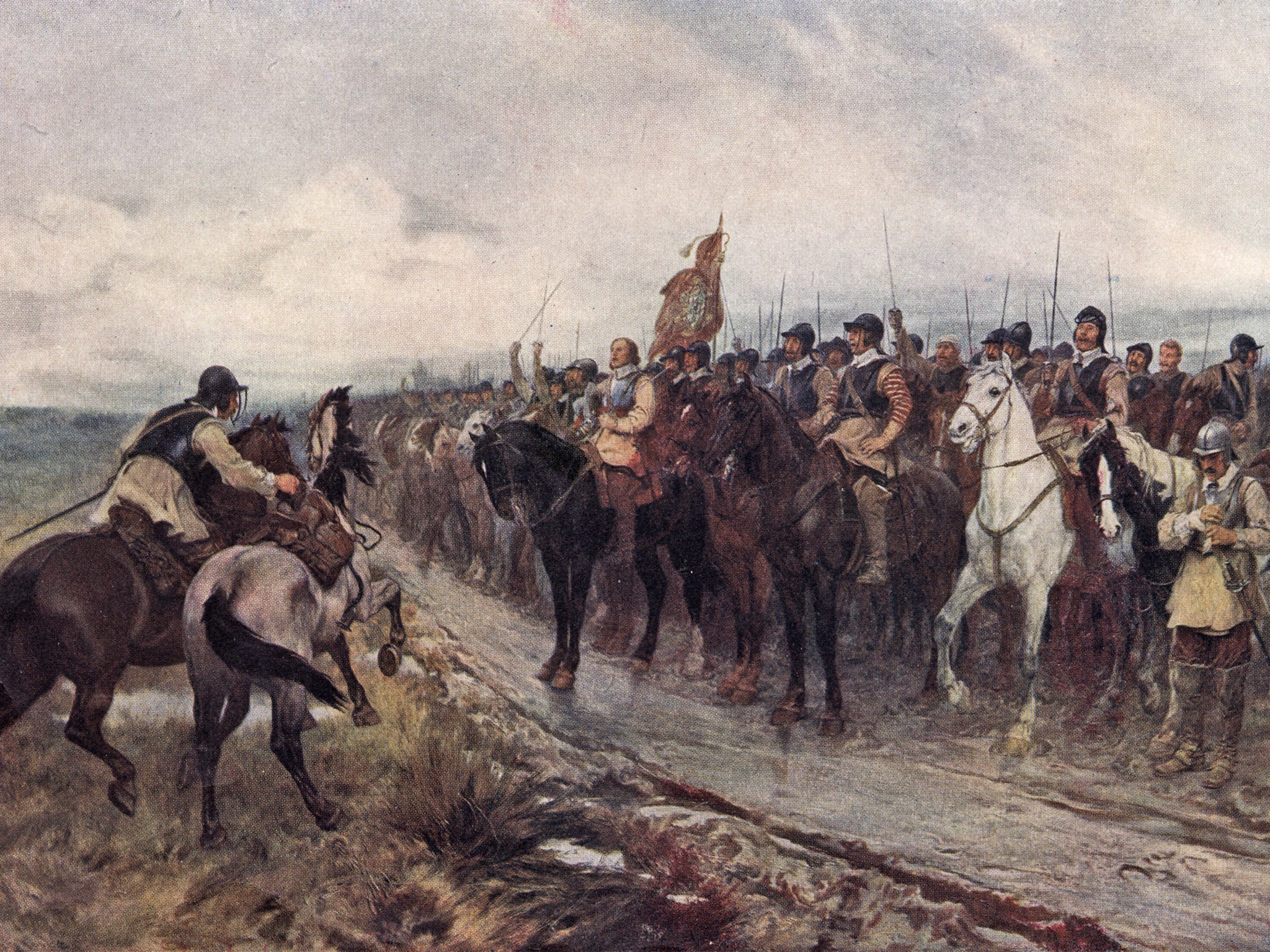
2015: Lucy Frazer Praises Cromwell’s Purge of Scots after the Battle of Dunbar
In her maiden speech in the Commons at Westminster, Lucy Frazer, MP for Cambridgeshire South East, praised Oliver Cromwell, (who was born in her constituency) for his treatment of the Scots Covenanters after the “Battle of Dunbar” when he despatched over 5,000 captive soldiers into slavery. Amid much laughter on the Tory benches she went on to offer her colleagues a view that the answer to the “West Lothian Question”, might be to follow Cromwell’s lead and banish troublesome Scots to the colonies as slaves.
The speaker was invited, by public petition to rule that she should make a statement to the House apologising for the remarks which had caused great offence to Scots viewers of the Parliamentary Channel and many other UK residents He refused to intervene stating that she was free to say anything that she wished to in Parliament.
His support of Ms Frazer needs to be set against his rebuke of Scottish MP’s only a few days earlier when he told them that “clapping” was not allowed in the Commons. Clarification of the rules of the game regarding Scots. It is perfectly acceptable to propose that troublesome Scots MP’s should be clapped in irons to be sold as slaves and shipped to the colonies, but Honourable Members must not support the proposal by clapping.
Addressing the banality of her speech it might have been possible to dismiss it (and the conduct of her colleagues) had her comments been “off the cuff” but they had been carefully crafted, written and rehearsed beforehand indicating an undefined level of complicity revealing the patronising ambivalent attitude (towards Scots) of Unionist MP’s at Westminster.
That she felt able to make fun of so many young Scots, murdered and enslaved in only one of many Holocausts inflicted by the English on Scotland over many centuries is even more sickening when her own family background is revealed.
The Battle of Dunbar
Following defeat in the English Civil War, Charles I was executed in January 1649. After declaring the establishment of a Commonwealth in England Cromwell took his “New Model Army” over to Ireland and quelled any uprising in a number of victories over Irish supporters of the monarchy.
Charles II was forced to abandon his plans to use Ireland as a military base to win back the throne of England and turned his attention to Scotland, taking advantage of Scottish outrage at the presumption of the English Parliament in executing Charles I, who had been King of Scotland as well as England. Negotiations between Charles and a delegation from the Scottish government opened in the Netherlands in March 1650 which resulted in the signing of the “Treaty of Breda” in May and Charles’ arrival in Scotland in June 1650, where he was proclaimed King Charles II of Scotland
The Commonwealth Council of State in London was alarmed when the treaty was signed and resolved to mount an immediate invasion of Scotland to forestall the possibility of a Scottish attack on England and in July the English Parliament, expecting Charles to initiate a Scottish led campaign for the English crown, launched a pre-emptive invasion of Scotland.
Oliver Cromwell was appointed commander-in-chief. His battle hardened army comprised seven regiments of horse, nine of foot and six companies of dragoons, numbering around 15,000 men in total. Marching north via York, Durham and Newcastle, Cromwell mustered his forces at Berwick-on-Tweed on 19 July 1650. He crossed the border on 22 July 1650. Crucially, the army was supported by a large supply fleet, which landed at Dunbar a few days before the battle.
The Scottish Parliament belatedly became aware of English preparations for an invasion and, on 25 June 1650, ordered that a new force comprising around 10,000 foot and 3,000 horse be recruited and trained to reinforce the Army of the Covenant which numbered around 1500 foot soldiers and a small cavalry force.
Whilst his ageing father the Earl of Leven took overall command, his son, Lieutenant-General David Leslie son of the Earl of Leven undertook day to day control of the Scottish army (reporting to a Kirk commission headed by Sir Archibald Johnston.) The commissioners insisted that drill or military operations would not be carried out on the Sabbath and attempted to purge the army of all Engagers and potential Royalist supporters and, as the campaign developed, the commissioners interfered in military decisions regarding strategy and tactics.
The summer of 1650 was extremely cold and wet and the Scottish army, (largely comprised of raw recruits aged between 12-18) was still mustering when Cromwell crossed the border from Berwick on 22 July 1650.
Playing for time (to train his young soldiers) Lord Leven directed the construction of an extensive line of earthworks between Edinburgh and Leith which allowed the Scottish army to take up an impregnable defensive position. He also ordered the destruction of all crops and the removal of all livestock between Edinburgh and the border so that Cromwell’s army would have to get all its supplies from England.
The English army advanced to within a few miles of Edinburgh but Cromwell realised that the Scottish lines of defence were too strong to risk a direct assault and retreated to the port of Dunbar so that he could occupy its sheltered harbour, securing a sea-route for supplies. Then, under cover of his warships bombarding Leith, Cromwell deployed his troops in battle order in an attempt to draw the Scottish army out into the open.
The Covenanter committee were keen to attack the English force but the seasoned soldier, Lord Leven was equally determined to avoid a pitched battle with his inexperienced army and stayed stubbornly dug in behind the defences.
It rained heavily all week and Cromwell was forced to withdraw, (harassed by Scottish Lancers) first to Musselburgh then to Dunbar for shelter. His army was exhausted, many were sick from cold and flu and food rationing was severe since the supply ships had given priority to the carriage of munitions rather than food. The stand-off lasted throughout August.
The Scottish army had increased in number over the period, swelling to around 20,000 and Lieutenant-General David Leslie Sir Leslie, seized upon the opportunity to move his force around Cromwell cutting off his escape route south to Berwick. Cromwell now finally had Leslie offering battle, but his “New Model Army” was at a severe disadvantage. Cromwell was forced to meet the challenge, achieving what was arguably the most dramatic victory of the Civil Wars.
On 1 September 1650, Leslie took up a commanding position overlooking the English encampment at Dunbar. Trapped between the sea on one side, the Covenanters’ impregnable position on the other, and with the road back to England blockaded, it seemed that Cromwell had no option but to attempt to evacuate his troops by sea.
On the morning of 2 September, however, the Covenanters played into Cromwell’s hands by marching down from the commanding heights of Doon Hill. The decision to come down from the hill to attack the English army on level ground has traditionally been ascribed to the godly committee that accompanied the army, and is widely condemned as a tactical blunder.
However, the strength of the Scottish position precluded any possibility that Cromwell would attack up the steep slopes of Doon Hill. Lacking heavy artillery, the Scots could do nothing to hinder the English army. Furthermore, the bad weather was worsening and the Scottish army had no shelter from the wind and rain on the exposed hilltop.
During the morning and afternoon of 2 September, the Covenanter army moved down from the hill and drew up in an arc aligned with the course of a stream called the Broxburn, with the coast on the right flank. On the left of the Scottish position, the Broxburn passed through a deep ravine; on the right, towards the coast, the ground levelled out and the stream was crossed by the road from Dunbar to Berwick.
While the Scottish army re-deployed, Cromwell brought the English army forward from Dunbar to form a battle-line on the northern side of the Broxburn. Skirmishing broke out during the late afternoon of 2 September when an advance guard of lancers moved forward to cover the cumbersome manoeuvring as the Scots moved into their new positions.
By nightfall, the Berwick road was successfully blocked. Cromwell was left with a choice between evacuating his army by sea or forcing a way through the Scottish blockade to escape by land. However, while observing the new Scottish position, Cromwell and Lambert both identified a tactical flaw in the deployment.
The Scottish line was awkwardly positioned between the Broxburn river and the slopes of Doon Hill, leaving the centre and left flank with little room for manoeuvre.
At a council of war that night, the English officers agreed to mount an all-out assault on the Scottish right flank early the next morning, with the objective of turning the flank and disrupting the whole position by driving the Scots into the constricted centre. During the night, while the Scots rested uncomfortably in rain-soaked fields, Cromwell used the darkness and heavy rain to cover the redeployment of his army.
The battle line along the Broxburn was abandoned and the English army stacked up, one brigade behind another, across the Berwick road. Around 7,500 infantry and 3,500 cavalry were fit to fight on the morning of 3 September.
The leading vanguard comprised six cavalry regiments comprising 9,000 men and an infantry brigade of around 2,000 men. The vanguard was supported by two more infantry brigades of around 2,500 men each. Cromwell’s own regiment of horse were held in reserve, brigaded with two companies of dragoons. The remaining dragoons mounted guard along the edge of the Broxburn to cover the English artillery, which was deployed on rising ground overlooking the Scottish left wing.
The disposition of the Scottish army is not exactly known, but most of the cavalry (numbering around 2,500 troopers) were stationed on the right wing between the Berwick road and the coast, facing the 16,000 strong English vanguard. A cavalry force, numbering around 1,500 was stationed on the left wing. Between the wings of cavalry, there were five brigades of infantry numbering around 10,000.
The Battle of Dunbar began at about four o’clock on the morning of 3 September 1650, when the English vanguard, advanced in force securing the crossings of the Broxburn on the Scottish right flank. Scottish piquets were driven back but raised the alarm. An infantry brigade advanced in support the English cavalry, a fierce firefight and artillery exchange ensued. After nearly an hour, both sides stopped firing and waited for first light, which came at about 5.30 a.m.
Many of the senior Scottish officers had left their units during the night to seek shelter from the foul weather and by result the Scottish army had not fully regrouped by the time the English attack resumed at first light. The attack, spearheaded by a cavalry regiment advanced swiftly across the Broxburn and routed the first line of the Scottish Lancers on the Scottish right flank but the second line of Scottish Lancers fought back and forced the English cavalry to retreat back across the river.
Meantime an English infantry vanguard of 3,000 advanced across the Broxburn and attacked a Scottish brigade of 2,000 (made up almost entirely of raw recruits) on the extreme right of the Scottish infantry line. The Scottish line buckled but a second brigade first halted the English advance then forced it to retreat back across the river. Denied an early breakthrough Cromwell immediately ordered another infantry brigade into action in support of the retreating infantry force. The fall-back was reversed and the Scottish infantry brigades were engaged in a “push of pike” battle.
Cromwell then hit back deploying two regiments of cavalry 3,000 to attack the Scottish cavalry, (reduced through the earlier attrition to around 1,000.) The Scottish cavalry was put to flight leaving the infantry on the right flank of the Scottish army exposed. Cromwell seized the opportunity and ordered his own Regiment of Horse into battle attacking the exposed Scottish right flank
The routing of the Scottish cavalry opened the possibility of a decisive victory over the Scottish army, rather than simply breaking the blockade of the road back to England and Cromwell ordered his cavalry to attack the exposed Scottish infantry right flank. This forced the Scots infantry to fight on two fronts and pushed them into the forces to their left reducing their ability to manoeuvre effectively. After a desperate battle lasting two hours the heavily outnumbered Scots on the right flank were forced to fight a protracted withdrawal eventually conceding defeat in the village of Haddington. Scots forces on the left flank abandoned the battle and escaped to the North. Cromwell went onto ruthlessly ransack Edinburgh and other Scottish towns and cities and take control of the country south of the Highlands.
descendants of Scottish soldiers sold as slaves by Cromwell after the battle of Dunbar
The battle left nearly 5,000 Scots dead. 6,000 Scottish soldiers (aged between 13 and 25) were taken prisoner. Of these about 1,000 sick and wounded were released to go home. The remaining 5,000 battle weary Scots prisoners were forced to complete a brutal 8-day, 118 miles forced march south to the English city of Durham with virtually no rest (the first 28 mile stage to Berwick being undertaken non-stop through the night) and with no food or water, other than what could be scavenged. About 1,000 prisoners died en route to Durham from a combination of hunger, exhaustion and probably dysentery. Others were executed and some escaped.
Around 3,000 Scottish soldiers were subsequently imprisoned in Durham Cathedral and Castle, (unoccupied since worship had been suppressed by order of Cromwell). The condition the Scots were kept in were utterly appalling. Records indicate that the Scots died at an average of 30 a day between 11 September and 31 October and it seems this reached over 100 a day with virtually no food, clean water or heat and the linked spread of disease and infection. In total a further 1,700 prisoners died. Their bodies were thrown into pits dug by the prisoners in and around Durham Cathedral and castle.
Of the 5,000 men who started the march from Dunbar only 1300 were still alive less than two months later. Nine hundred were sold as slaves and transported to the New World, (mainly Virginia, Massachusetts and the Barbados colony in the Caribbean.) 500 elected to fight with the French army against the Spanish. They were still fighting seven years later.
There is no memorial to these unknown Scottish soldiers (who died horrible deaths at the hands of their English captors in Durham Cathedral or Castle.) They lie in anonymity and without Christian burial (on foreign soil in the place they were imprisoned,) far from their homes and the graves of their loved ones.
Remains of Scottish soldiers uncovered at Durham Cathedral
Skeletons of Scottish prisoners of war, from the Battle of Dunbar and subsequently murdered by Cromwell’s soldiers have been discovered in a mass grave close to Durham cathedral
Scotland’s – Claim of Right Act 1689 states: “That the sending of an army in a hostile manner upon any part of Scotland in peacetime is contrary to law”
The Birth of Red Clydeside
Before and during the First World War, there was no statutory standard working week in the UK although it was generally accepted that the norm was 54 hours.
In the course of the war the coalition government attempted to impose upon workers, ” the Munitions Act,” “the Dilution of Labour Act” and the “Defence of the Realm Act,” all giving the government draconian powers to negate long-fought-for pay rates and conditions for skilled work, and to crack down on opposition.
The measures were resisted strongly by the Clyde Workers’ Committee (CWC) in Glasgow.
At the war end the armed forces were demobilized and returned home to the labour market.
The infusion of the large body of new workers seeking work in an rapidly shrinking economy base resulted in a steep rise in the unemployed and resultant hardship and discontent.
In the absence of any initiative from the government in Westminster, a number of Trades Unions in Glasgow addressed the issue and brought forward proposals which if accepted by the government and employers would reduce the working week to 40 hours expanding the labour market and reducing unemployment.
After weeks of negotiations a provisional agreement was achieved, between the government, employers and some Union officials, providing for the introduction of a 47-hour week, (applicable to shipbuilding and engineering trades only) at some time in 1919.
Shop Stewards of the (CWC) in Glasgow rejected the offer and tabled a counter bid supported by limiting the standard working week to 40 hours with paid tea breaks (removed under the 47-hour week offer) restored.
A strike meeting (over 3,000 attended) was held at the St Andrews Halls on Monday 27 January 1919.
Immediately after the meeting 40,000 workers downed tools, answering the call to strike.
By Friday 31 January 1919 the number of workers on strike had risen to 60,000 plus.
United action by workers, (on this scale) had not been seen in Scotland since the Weavers of Glasgow’s Calton District had engaged their employers in a long and bitter dispute over wages and basic justice in 1787, which ended with the murder of a number of weavers by government forces.
A later insurrection in 1820 again ended in the death of protestors and deportation to the colonies of activists and their families.
On Friday 31 January the strikers were invited to a meeting in George Square at which it was intended that the Lord Provost Sir James Watson Stewart would issue the official response from the Westminster government to the unions’ request for government intervention in the dispute.
A large crowd of strikers (marshalled by a large police force) gathered in George Square to witness the statement. But faced with a noisy crowd the Lord Provost instead invited representatives of the CWC (led by David Kirkwood) and the Glasgow Trades Council (represented by Emanual Shinwell) into the Glasgow City Chambers for a briefing.
Kirkwood knocked to the ground outside the Glasgow City Chambers
Kirkwood and Shinwell under arrest outside the Glasgow City Chambers
Not long after the start of the briefing the Lord Provost was alerted to trouble outside the City Chambers and asked Kirkwood and Shinwell to intervene and establish order.
They agreed, left the meeting and ventured outside, to be immediately ambushed by a group of police who knocked Kirkwood to the ground and arrested the delegation on a charge of “instigating and inciting large crowds of persons to form part of a riotous mob.
What sparked the riot has never been formally established but many witnesses (independent of the incident) blamed the actions of mounted police, who it is alleged (acting on secret government orders) launched a baton wielding charge on the crowd without provocation.
What is fact is the impact of the confrontation between the protestors and the police.
The crowds attempts to get away from George Square were thwarted by “night stick” wielding police who had deployed forces at each of the potential escape routes effectively “Kettling” the protestors.
This resulted in pitched battles between armed police and unarmed demonstrators.
The folly of precipitating the confrontation dawned (to late) on the police as a riot then ensued, over which they had no control.
Iron Railings, cobble stones and bottles were used in defence against the police truncheons and dispersing the crowd proved to be beyond the police presence.
The fighting between the police and protestors spread to other parts of the city and throughout the day and well into the evening many men women and children suffered injury from the police.
There were many arrests and Duke Street Prison was filled to capacity.
Many strikers were later tried at the High Court in Edinburgh and sentenced to varying jail terms.
English soldiers posing with their tanks Glasgow 1919
An uneasy calm returned to Glasgow, over the weekend but the intervention of the “Scottish Secretary” who described the rioting as a “Bolshevist Uprising” proved to be the catalyst for deploying the armed forces to the streets of Glasgow.
The Coalition government (led by David Lloyd George) over-reacted, sending 10,000 English soldiers (heavily armed with heavy machine guns, howitzers and Tanks) to Glasgow.
The “Battle Group” (the largest deployment of English soldiers on Scottish soil since the Battle of Culloden) arrived on Friday 7 February 1919.
Tanks at the Cattle Market Glasgow 1919
Martial Law was imposed on Glasgow and this was strictly enforced on the public by the English soldiers who speedily took control of the City Centre positioning heavy machine guns on the top of the Post Office building and The North British Hotel.
A large howitzer was placed at the entrance to the City Chambers. City-wide English soldiers were deployed in force patrolling the streets, completing stop and search and ID checks on Glaswegians and guarding the docks, power stations and other key installations.
An eyewitness said ‘the whole city bristled with tanks and machine guns’.
The force was withdrawn from Glasgow on 16 February 1919 and located, for a time in barracks elsewhere in Scotland.
The government fearing that Scottish soldiers might not obey orders to take action against their countrymen issued orders that they would be confined to barracks for the duration of the deployment of the English force to Glasgow.
The Highland Light Infantry (almost exclusively Glaswegian) were disarmed and detained in Maryhill Barracks.
English soldiers being transported to Glasgow 1919
After the Riot
Manny Shinwell, William Gallacher and David Kirkwood were jailed for several months.
The striking workers returned to work with the guarantee of a 47-hour week, ten hours less than they were working beforehand.
Three years later, in the 1922 GE, Scotland elected 29 Labour MPs, (including the 40 Hour Strike organizers and Independent Labour Party members Manny Shinwell and David Kirkwood.).
The epithet of Red Clydeside was established.
100 years later – Are there parallels to be drawn?
Scottish society has changed little in the last 100 years. Much of the poverty that existed at the time of the riot is still present today.
Unionist governments in Westminster have taken Scotland’s young men to war in Iraq, Afghanistan, Libya, Syria, Serbia and other countries, without justification, spending obscene amounts of money whilst imposing massive cuts in key services such as education, welfare, infrastructure, and the NHS.
Social housing building in Scotland was stagnant under successive Unionist Tory & Labour) governments and this has placed many families, (struggling to cope) at the mercy of greedy landlords who raise rents without justification.
In Glasgow at 2019 there are many hundreds of newly refurbished flats lying empty, the cost of purchase being well beyond that of the typical Glaswegian. A situation that forces many families onto the streets.
Where is the affordable housing promised by the Tories and Labour governments?
The banking crash of 2007/8 brought with it many job redundancies and house repossessions as the resultant depression impacted on the economy.
Yet not one UK banker went to jail for participating in the biggest banking frauds in history.
Instead they were rewarded for their efforts, being allowed to operate much as before including awarding themselves and their fraudulent colleagues with undeserved massive multi-million pound bonuses whilst many thousands of Scots were thrown of society’s scrapheap never to work again.
Ten years later the Unionist government in Westminster is still intent on asset stripping the poor using as excuse the “Austerity Plan” put in place by the Tory Party.
A plan which took on a debt from Labour of around £800 billion and increased it to nearly £2 Trillion and rising.
Iceland meantime jailed the bankers, imposed massive restrictions and returned their economy to balance within 5 years.
Gary Smith – BBC in Scotland’s Head of News and Current Affairs
The new Head of News at BBC in Scotland, (succeeding “bully boy” John Boothman) is a 54-year-old Scot who grew up in Glasgow and attended Kelvin-side Academy.
He went on to study English at Glasgow University and did a post-graduate journalism course at Cardiff University.
He is a London based Scot who has been with the BBC news and current affairs team in England for over 17 years.
In that time he has been the, Political Editor of BBC News, Assistant Editor BBC Nine O’clock News and UK News Editor at the Television Centre in London.
A company man whose loyalty to the corporate body of the BBC is unquestionable he will strengthen the already strong links between London and Scotland.
The chain of command will start and end in London.
It is rumoured Gary was not the choice of senior managers at the BBC in Scotland, their preference being to promote from within.
To that end a well established fiery, female journalist and news presenter was encouraged to believe she was a “shoo in” applied and had been interviewed for the post and rejected by the London based selection panel.
If true portents for the future are not good.
But Gary is a proven team leader possessing excellent communication skills and it expected he will soon win the team over. (BBC Speak)
The infusion of “new blood” is also touted to be the start of a process leading to the elimination of the invidious influence on the present News and Current affairs team of the Labour Party in Scotland replacing it with the political dogma of a more reliable Unionist minded party.
The introduction of Gary will be followed by journalists, selected from approved sources outwith BBC Scotland.
The coup will not be bloodless but career conscious incumbent personnel will be sifted out silently without protest, over time.
At interview Gary won over the interview panel by offering this vision;
“I’ve a passion and commitment for providing accurate, clear, informative, honest journalism with integrity and impartiality.
After 30 years in broadcast journalism, this is the job I’ve always wanted.
The story of Scotland in a devolved UK is one of the most important themes of this decade.
Reporting and analysing this with insight, accuracy and impartiality for audiences both in Scotland and the rest of the UK is one of the biggest challenges faced by the BBC now and in the coming years.
I am very keen to focus on not just one platform ahead of others but to share content across the different platforms we provide our news on, whether that is TV, radio, the web or social media.
Content is at the centre of what we do and the best journalism has to be spread across all our platforms as much as possible to ensure we reach the biggest audience.
We also have to ensure our journalism is relevant to our entire audience.
That means different content in different places.
Younger people get their news differently from the way we have traditionally delivered news in the BBC.
So connecting with a younger audience through social media is crucial.
We have to keep abreast of developing platforms.”
BBC Management
BBC in Scotland Management – Realistic or Wishy Washy?
Managers at the BBC in Scotland have been pressing the executive in London to commission a flagship “Scottish Six” news programme to help answer ever growing complaints about its weak coverage of Scottish affairs.
They have also been seeking a substantial expansion of the BBC in Scotland’s news and programme-making budget, including funding a third national radio service for Scotland.
Ambitious plans adding an extra digital television channel and new online programming have been abandoned in the wake of swingeing spending cuts.
But their proposals are encountering substantial resistance from BBC executives in London.
It is also rumoured that any extra funds for news and current affairs are being ear-marked towards other projects, including a beefed up Korean service.
Questioned by the media, Smith said that no decisions had been taken on what BBC news output for audiences in Scotland will look like in future.
But a BBC news review is underway and, forming part of that different programme formats and audience research will be conducted before any conclusions are arrived at.
A core essential will be the ambition to deliver the best possible news offering for the audience in Scotland.
Announcing big changes in the corporation’s coverage of public life in Scotland Smith said, “the news is to be sharper in style, tougher and more analytic.
The BBC has become “overstretched” in recent years, with reductions in staffing but no fall off in output.
It’s time now to live within our means, time to focus on our core programmes”.
The Infamous “Scottish Six”
Under media pressure in Scotland the BBC executive in London confirmed it is pressing ahead with controversial plans for a Scottish Six flagship news programme.
Corporation bosses said they would soon begin trialling a new hour-long news programme that could replace both Reporting Scotland and the Six O’clock News north of the Border.
Three options for a new format, are under consideration but no decision had yet been taken on which, if any, would be introduced.
Some staff in the BBC in Scotland, News and Current Affairs team are said to be angry that they presently do not have the manpower or resources to handle new programmes and have threatened to boycott the project unless senior management agree to a full consultation.
BBC Scotland’s head of news Gary Smith is understood to have spoken to staff yesterday in a bid to allay fears.
Critics fear the change is likely to lead to more parochial programming and Scottish Labour culture spokeswoman Claire Baker MSP said: “Whilst I have welcomed the review of news coverage in Scotland as a result of new powers coming to Holyrood, I have always said that any change must strike a balance between Scottish news coverage and the continuing demand for quality international and relevant UK wide reporting.
A Scottish Six must be fully consulted with staff and more importantly the general public, with focus groups showing a clear desire for a UK perspective on UK and international stories.
Any changes to BBC news coverage must be made for the right reasons and quality must always be maintained.”
A BBC Scotland spokesman said: “We’ve said very publicly that we are conducting a news review at present and we’ll be looking at various different programme formats and carrying out audience research as part of that process.
We have told our news teams that we will be carrying out some non-broadcast pilots and we’ll obviously talk to staff as we proceed with this work and discuss fully any implications on them.
No decisions on our future output will be taken until that work is concluded, but ultimately our aim is to deliver the very best news for our audiences here in Scotland.”
Extract from: Prof John Robertson Expose of BBC bias
The Scottish Six – An Insiders Comments
Proposals for a “Scottish Six” submitted for consideration and approval, by the BBC in Scotland management were met with derision by executives in London.
But accepting political reality required a debate, draft proposals were not rejected but were “put out to the long grass” with a loose commitment to arrive at a final decision towards the end of 2016.
Difficulties to be resolved are associated with implementation and how content from overseas will be gathered and shared with material from the UK network.
It was suggested that Scottish correspondents employed as foreign correspondents or as specialists in London might routinely contribute to the presentation of the new programming.
Overall control of direction and editorial decision needs to be firmly established together with lines of responsibility between staff based in Scotland and management, journalists and presenters in London.
An option to be given consideration is the introduction of a direct replacement for the BBC1 Six O’clock news or a stand-alone programme which might air on BBC2 Scotland mid-evening, possibly replacing the nine-o-clock news..
But, regardless of whichever option is finally chosen the BBC’s current regional news programme “Reporting Scotland” on BBC1 will be scrapped after less than three years on air.
The competition from the S.T.V. news programme, “Scotland Tonight” has rendered the flagship current affairs show Scotland 2016 (anchored by Sarah Smith) unviable with less than 30,000 viewers and reducing.
Staff associated with the programme will be redeployed to other projects.
News night will be resurrected and broadcast nightly throughout the BBC network, (including Scotland).
Radio Scotland’s The Big Debate with Gordon Brewer and Douglas Fraser’s Business Scotland weekend slots will also be shut down.
Sarah Smith will be given yet another chance to succeed at something justifying her huge salary transferring to the newly created non-job post of “Scotland Editor.”
Her role will reflect the re-alignment of UK politics following the 2015 General Election.
The key purpose of the new look service is to provide greatly enhanced UK coverage and analysis of significant stories for the pan-UK audience across all network output, including the Six and Ten O’clock News, the Today programme, the radio bulletins and the BBC News website.
Seems to be simply an input of news content, (with a slightly Scottish bent from time to time) from the BBC in London.
Disgraceful broadcast by the BBC
Gary Smith Recruits two new managers to the BBC in Scotland team in Glasgow
The reorganisation of the News and Current Affairs team is underway with a vengeance.
As projected Gary Smith is determined to stamp his authority and style on the weak team he inherited.
He has recruited (S.T.V.’s) Howard Simpson to be the team’s News Editor.
Simpson was instrumental in the launch of “Scotland Tonight” the S.T.V. programme that wiped the floor with the poor BBC offering chaired by Sarah Smith.(now shut down)
Simpson, in a public statement said:
I am a strategic, creative thinker and a journalistic leader who inspires strong teamwork.
I have over fifteen years experience in TV production and nearly ten years in senior management.
I have an exceptional record in change management and in the discipline of meeting financial targets that serve business requirements.
Above all I am a great communicator who creates opportunities and delivers results.
I have managed and adapted the S.T.V news team for the best part of the last decade.
This has meant leading change through licence renewal, the onset of a bespoke Edinburgh 30 minute daily news programme, the conceptualisation, launch and ongoing success of Scotland Tonight, as well as the genesis of a multi platform news-gathering model.
I have worked with I.T.V. Sport in discussing our opt outs for U.E F.A. Champions League and International Friendlies and the S.P.F.L for securing unique S.T.V. content.
I maintain that a news division can only ever be as good as its people.
I have found that newsrooms work best from the bottom up.
I believe that a news assistant is as important as a senior editor.
They all have to be facing the same way and believe in the project.
In conclusion, I can lead and react to an ever changing news agenda.
I led S.T.V. news to an R.T.S. Scotland award for news programming last year for our coverage of the Clutha tragedy.
I am a programme maker – one of the most successful is Scotland Tonight which is superior to its rivals in tone, style and depth.
I think strategically and want to play a part in shaping Scotland’s news and current affairs output within the wider changing political and technological culture.
I am a leader – I have an unblemished record in change management; building and crucially, rebuilding team cultures that are highly motivated and results focussed. In short, people like to work for me.
Matt Roper has also been recruited from ST.V. to the News and Current Affairs team and appointed to the newly created post “Editor of Mobile and Online.”
Roper was formally digital editor of S.T.V. with responsibility. for online news, current affairs and sport output.
He was also involved in the launch of S.T.V.’s “News App.” and was a key player in the successful launch of Scotland Tonight’s online presence.
Where are we now?
Scotland’s relationship with the British Broadcasting Corporation (BBC) has travelled full circle and we are effectively back at 1926.
Scottish broadcasting autonomy is a duck that never flew under the strict corporate governance of a State controlled entity.
The introduction of Gary “the grey man” Smith and his centralised policy driven agenda to the Glasgow News and Current Affairs Team is the ultimate betrayal of Scotland. It is now a dead duck.
A young Duchess of Sutherland: Between 1811 and 1820, about 15,000 crofters were forcibly removed from their Sutherland-shire homes, opening up thousands of profitable sheep-farming acres. The statue of the 1st Duke near Golspie – “The Mannie” – is regularly vandalised to this day.
Scotland’s Holocaust
Throughout the 17th and 18th century’s a huge part of Scotland, to the South, North and West of Glasgow and to the North, West and South of Edinburgh was divided into large estates and formally given over to the ownership of a rich elite group of English Baron’s, Earl’s and Scottish Lairds who swore an oath of fealty to the the throne of England.
Similar loyalty was not assured of Scots whose presence on the estates pre-dated the new ownership by many centuries and remedial measures designed to eliminate the problem were approved. The remedy selected by the Westminster Unionist government was the removal from the land of many thousands of Scots families.
This would be coupled with transportation of those affected to Canada, Australia and other parts of the “new world”.
A consequence of the brutally enforced forced removal of entire families from their homes meant that those affected had to live rough in the open over many months. In consequence many thousands of Scots died of starvation, disease and cold. To ensure there would be no return their homes were destroyed leaving tens of thousands to an uncertain but hazardous fate.
Survivors were later transported, (many in bondage) to Canada, Australia and other parts of the “new world” never to return to the land of their birth. A substantial number failed to survive the voyages being forced to remain below the decks in the squalor of hopelessly overcrowded, unseaworthy ships. The, “clearances” as they were later called were Scotland’s holocaust.
Buoyed by the success of their measures the Unionist government in Westminster went on to inflict similar policies on countries large and small in the course of expanding the Empire.
An image of an evicted Scottish family circa 1895 photographed on the ruins of their house
Over Half of Scotland Is Owned by Just 500 Individuals and They are Primarily Foreigners
Starting just after the end of WW2 the wealth of England’s great land-owning aristocratic families rapidly declined and a new breed of foreign laird exploited Scotland’s arcane land laws to buy up huge tracts of the Highlands and islands.
At the beginning of the twenty first century a majority of lairds no longer hail from England’s tweed-clad huntin’, shootin’ and fishin’ classes. These days the local feudal overlord is more likely to be a self-made continental millionaire or an entrepreneur from Dubai, Egypt, Malaysia, Hong Kong or plain old America. Sad events indeed in Europe’s last great wilderness.
All over Scotland there are now glens and peaks that are forever Swiss, Danish, Malaysian, Middle-Eastern and American. A small selection:
* The owner of the 50,000-acre, Strath Conon estate in Ross-shire, is Kjeld Kirk-Christiansen, who runs the huge Danish Lego corporation.
* The Hebridean island of Eigg, was recently sold (as part of a divorce settlement) by Keith Schellenberg, (the fantastically wealthy former captain of Britain’s Olympic bobsleigh team) who once described “his” islanders as “drunken, ungrateful, lawless, barmy revolutionaries”. The new laird is the chain-smoking, beret-wearing “fire” painter, “Professor” Marlin Eckhard Maruma from Stuttgart.
* The 40,000-acre Queen’s View estate in Glen Avon was recently purchased (for £6m), by a mysterious businessman, (Mr Salleh) reputedly behind the Kuala Lumpur-based Andras conglomerate.
* The 30,000-acre Braulen estate around Glen Strathfarrar in the North-west Highlands in Inverness-shire is owned by non-Scot of no name. It was the scene of a legal battle over land access. The owner took Scottish Natural Heritage to court to prevent the agency sending in nature conservation inspectors on parts of its land.
* The Dunecht Estates, spread over 77,000 acres, in Aberdeenshire and Kincardineshire are owned by the Hon Charles Pearson who resides in England on Shotters Farm, Lickfold from which he spends a deal of his time managing a large Estate in Sussex.
* Blackford Estate, home of Highland Spring mineral water is owned by, His Excellency Mahdi Mohammed Al Tajir, from the United Arab Emirates. He stands accused of abandoning farms on the slopes of the Ochil Hills.
Scottish Lairds enjoying their land Destruction of Scottish society in favour of wool and mutton,
The findings sparked a political row in Scotland. Nationalist politicians saying Scotland’s free market in land, (it is one of the few countries in Europe which allows wealthy foreigners to buy up unlimited amounts of land with no questions asked) had created a “land lottery” and new measures should be introduced limiting the size of holdings, coupled with a policy of removing ownership from absentee land-owners found guilty of neglecting their land. But Westminster politicians repeatedly refused to abolish feudal structures regulating land use since this would be to the disadvantage of an ultra-rich Westminster backed elite.
Following a transfer of control of land use to Holyrood a frustrated SNP government acted and set up an independent land commission determined upon introducing legislation designed to limit foreign land ownership. A comprehensive public land registry needed to be compiled to facilitate the legislation.
The wind of change has unsettled the rich landowners who are campaigning hard to counter reformers’ demands. The convenor of the Scottish Landowners’ Federation, which represents 4,000 estate owners north of the border, who manage some seven million acres, are claiming that the debate over land ownership is based on “dangerous generalisations and misleading assertions”.
The argument they are advancing in defence of retaining the “feudal System” purport that the majority of landowners are committed custodians of natural heritage who provide jobs, housing and security for remote communities often at a personal financial loss.
Meanwhile the Scottish Crofters’ Commission is encouraging crofting communities to raise money to take over their marginal plots as the potential of a reforming Scottish parliament looms, the battle for the Highlands is only just beginning. It would be a bold move but entirely justified if the Scottish government confiscated all estates without recompense with a commitment to return Scots to the land of their fathers.http://www.independent.co.uk/news/uk/home-news/who-owns-scotland-1320933.html
The era of the Highland Clearances is one of the most controversial times in Scotland’s history. The fallout after the Jacobite rising of 1745 had led to a hammering of Highland culture, including determined efforts to wipe out the tartan dress and Gaelic language of the north.
Clan chieftains, who’d held lands in trust for their extended family, were advised that under the laws of the United Kingdom they actually owned the land themselves – and it could make them rich.
With the Empire expanding and troops engaged in wars across the world, there was more money to be made from sheep’s wool than from the clansmen the chiefs had formerly protected.
The clearances saw thousands of people dispossessed, and many left to die of poverty. And one of the darkest characters to oversee the driving out of men, women and children was lawyer Patrick Sellar.
After a particularly vicious eviction, which led to the slow and painful death of 67-year-old Margaret McKay, he was called to answer for the crime of murder.
But a jury of his peers quickly found him innocent – and the judge apologised to Sellar for having taken up his time.
In a bar in Glasgow Sellar’s name is engraved in a urinal in the gents’ toilet… so that modern Scots may do to him what he did to their ancestors 200 years ago.