
The Graham’s of Swindon
Paul Sean Graham was born in the USA in 1958 USA. He married an English girl, Suzanne Elizabeth Graham (nee Wheeler) in 1984. At the time of the marriage he apparently had a son Daniel Aaron Graham b 1975.
15 Dec 1998: The Graham family formed, Amplecom Limited. 50 Fairlawn, Swindon, Wiltshire, United Kingdom, SN3 6EU (Change of address notified: 5 September 2016. Dorcan Business Village, Murdock Road, Swindon, United Kingdom, SN3 5HY:)
Paul Sean Graham and Daniel Aaron Graham were the company’s directors. Additionally, director’s assignments were supported by a secretary – Suzanne Elizabeth Graham.
Luke Patrick Graham worked as a director from 19 January 2016 until his resignation date, 30 June 2017. Murdock Road, Dorcan, Swindon, Wiltshire, SN3 5HY, England. The company is still operating.

Luke Patrick Graham was born in 1985, in Eldene, Swindon and attended Dorcan Comprehensive School in Swindon where he excelled in drama and art, joining the Dorcan Performing Arts Group. Once asked to comment he said: “Drama got a lot of people engaged at school – many may not have been before and that is why the performing arts group was set up. There was a big gap for extra curriculum clubs at Dorcan at the time and it slowly grew in popularity. It is still going today and it is great to see that it is still strong with lots of people as members.”
Graduating from the University of Sheffield in 2006, with a BA in Economics and Social Policy he remained in Sheffield and took up employment with the University union from July 2006-2007.
He relocated to London late 2007 and took up employment with Tesco PLC where he was initially tasked to finance duties, including production of performance reports. Tesco were expanding into Asia and in 2008 Luke volunteered to move to China to assist with the ill-fated challenge of developing new shopping centres in Beijing before moving on to Thailand where he completed similar duties.
In 2012, he left Tesco and joined a recently formed “Tough Mudder” venture in the USA where he remained for just under 2 years
In 2014, he returned to the UK and took up a short term contract of employment with Marks and Spencer PLC, employed in Marketing & Strategy. Whilst there he was seconded to the, HRH Princes’ Accounting for Sustainability Project.
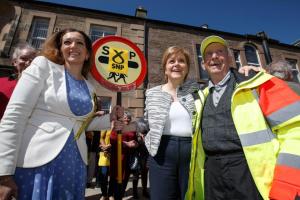
May 2015 General Election: Ochil & South Perthshire
A guddle of a constituency, grouping traditional labour voters in the old mining communities, farmers in the farmlands around Crieff and the rich people of Auchterarder. The seat throws up weird and wonderful results from time to time. But opinion polls suggest that the SNP could win a staggering 55 of Scotland’s 59 Westminster seats and the prize will fall to Tasmina Ahmed-Sheikh, an ex-Tory, ex-Labour ‘political butterfly’ who is now one of the SNP’s biggest hopes.
The Tory’s recruited a young Englishman, from Swindon, Luke Graham, to fight for the seat. He had no previous links to the constituency or indeed Scotland and his selection confirmed the lack of talent available to Ruth Davidson and her revitalized party.
He had no place of permanent residence in the constituency making use of an accommodation address satisfying candidacy qualification rules (Clearly no intention of hanging around if defeated).
It was hoped Graham would spring a surprise but this would be dependent on the bulk of the anticipated collapse in the labour vote transferring to his cause, which is not what the forecasting pundits were thinking.
The Tory’s encouraged constituents to vote tactically to defeat the SNP but this was a forlorn hope. There was an 18% + swing to the SNP. But the Tory candidate’s vote held up well.
Party 2010 2015 Change
SNP 27.63% 46.00% +18.37%
Lab 37.91% 28.43% -09.48%
Cons 20.49% 20.71% +00.22%
Lib Dem 11.40% 02.56% -08.84%
Summary
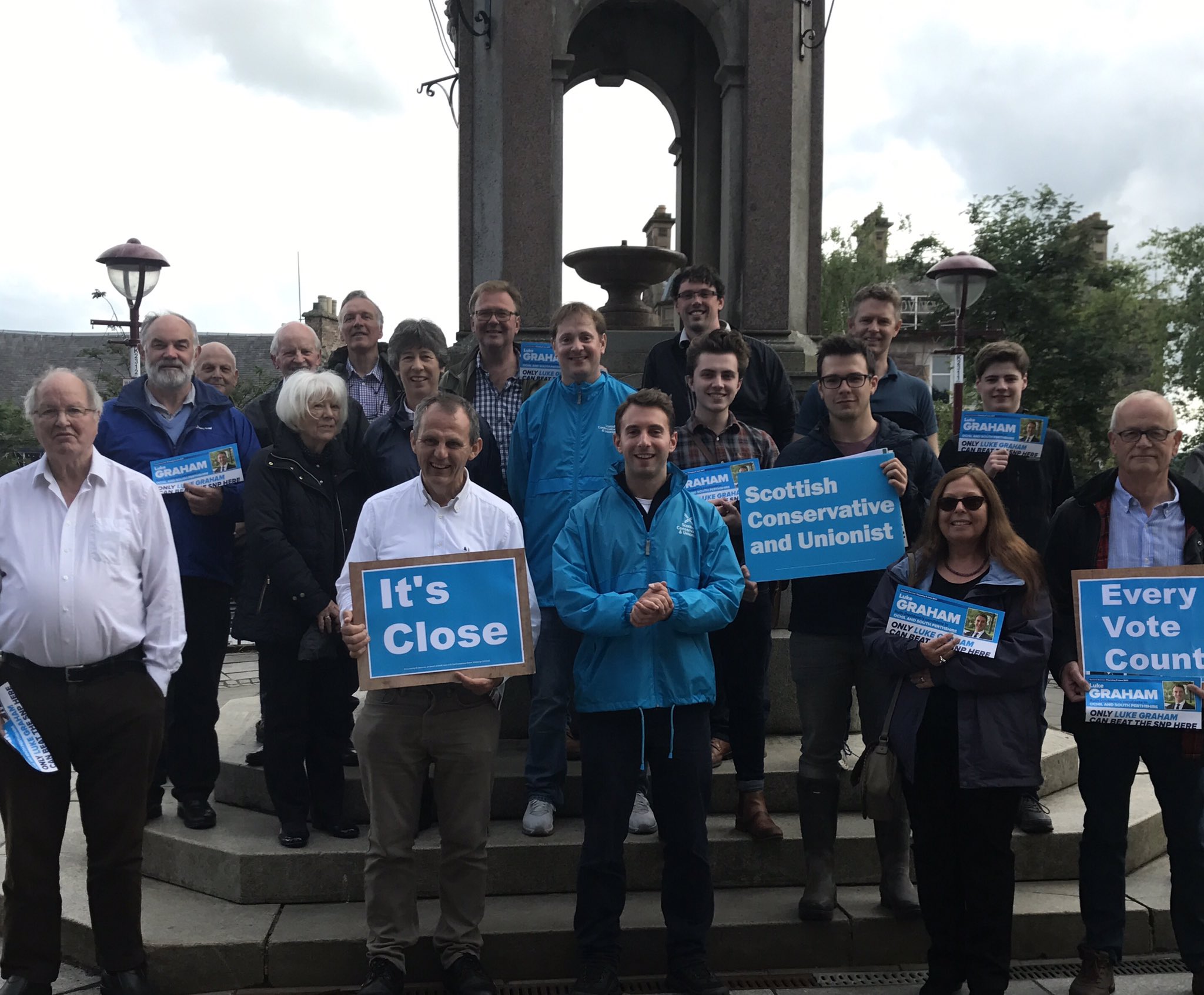
The Tory polling strategy was to conduct a high visibility public campaign concentrated on blanket canvassing of areas of the constituency where the Tory vote is traditionally strong.
The subsequent gathering of a Tory support figure more than matching that of previous elections proved this political judgement to be sound.
In contrast the SNP stuck to the old ways maintaining a high public profile in towns and larger villages with a higher population density, contacting rural voters by telephone and or promotion leafleting which is impersonal and less effective that doorstepping potential voters.
A campaigning policy weakness that went unnoticed by the SNP in the wake of the landslide victory gained from the collapse of Labour and Lib/Dems.

23 Jun 2016: EU Referendum – Britain Stronger In Europe Campaign
Luke Graham, an avid supporter of Britain’s membership of the EU took on the duties of finance director of, Britain Stronger In Europe, dubbed “Project Fear” by sections of the media.
The group unsuccessfully campaigned in favour of the United Kingdom continuing membership of the European Union in the 2016 British referendum. It was launched in London on 12 October 2015 and declared as the official “Remain” campaign for the referendum by the Electoral Commission .
In the referendum, 51.9% voted in favour of leaving the EU, which meant that the Britain Stronger in Europe campaign failed to achieve its goal.
In August 2016 the Electoral Reform Society published a highly critical report on the referendum and called for a review of how future events are run. Contrasting it very unfavourably with the ‘well-informed grassroots’ campaign for Scottish independence, It was described as “dire” with “glaring democratic deficiencies” which left voters bewildered.
The report noted a generally negative response to establishment figures with 29% of voters saying David Cameron (a Remain supporter) made them more likely to vote leave whilst only 14% said he made them want to vote remain.
Looking ahead, the society called for an official organization to highlight misleading claims and for Ofcom to define the role of broadcasters are expected to play in any future referendum.

05 Sep 2016: Tech and the Beancounters
Following his failure in Scotland and in the EU Referendum he made his way home to the more hospitable surroundings of Swindon with the purpose of getting back to work in finance and IT.
Thus motivated he first re-joined his parent’s company in January 2016 then formed a new company (with his father and brother), “Tech & the Beancounters”. Company Address: 50 Fairlawn, Swindon, Wiltshire, United Kingdom, SN3 6EU. Provision of financial management services. Directors and Main Shareholders: Luke Graham, Paul Sean Graham, (father) and Daniel Aaron Graham, brother?
 Liz Smith Landlady
6 Apr 2017: General Election – Ochil & South Perthshire
The UK Prime Minister called a surprise General Election, to be completed on 6 June 2017. The decision to go to the country seeking a new mandate to govern was prompted by opinion polls indicating the Tory Party would command a majority following the election.
The Tory’s in Scotland were also on a high following a good showing (overtaking labour) in the Scottish local elections.
Ruth Davidson was spotted riding a water buffalo across Scotland beating the drum for her party, promoting for all she was worth that the battle for the hearts and minds of Scots would be between the SNP and the Tory’s, the other party’s reduced to fringe voting status.
Key constituencies would be those previously commanding large numbers of Labour voters. Tactical voting would dictate the daily discourse of the media by party’s opposed to the SNP that the Labour vote was up for grabs. But to which political party would Scot’s Labour voters turn.
Tasmina Ahmed-Sheikh MP, would be defending the seat against a Tory candidate who at 6 May 2017 had not yet been chosen by Ruth Davidson. The SNP majority of around 9,000 votes was thought to be insurmountable and the seat unwinnable. Excepting that a scandal of significant proportion would engulf the SNP candidate which was unlikely. But!!!!!!
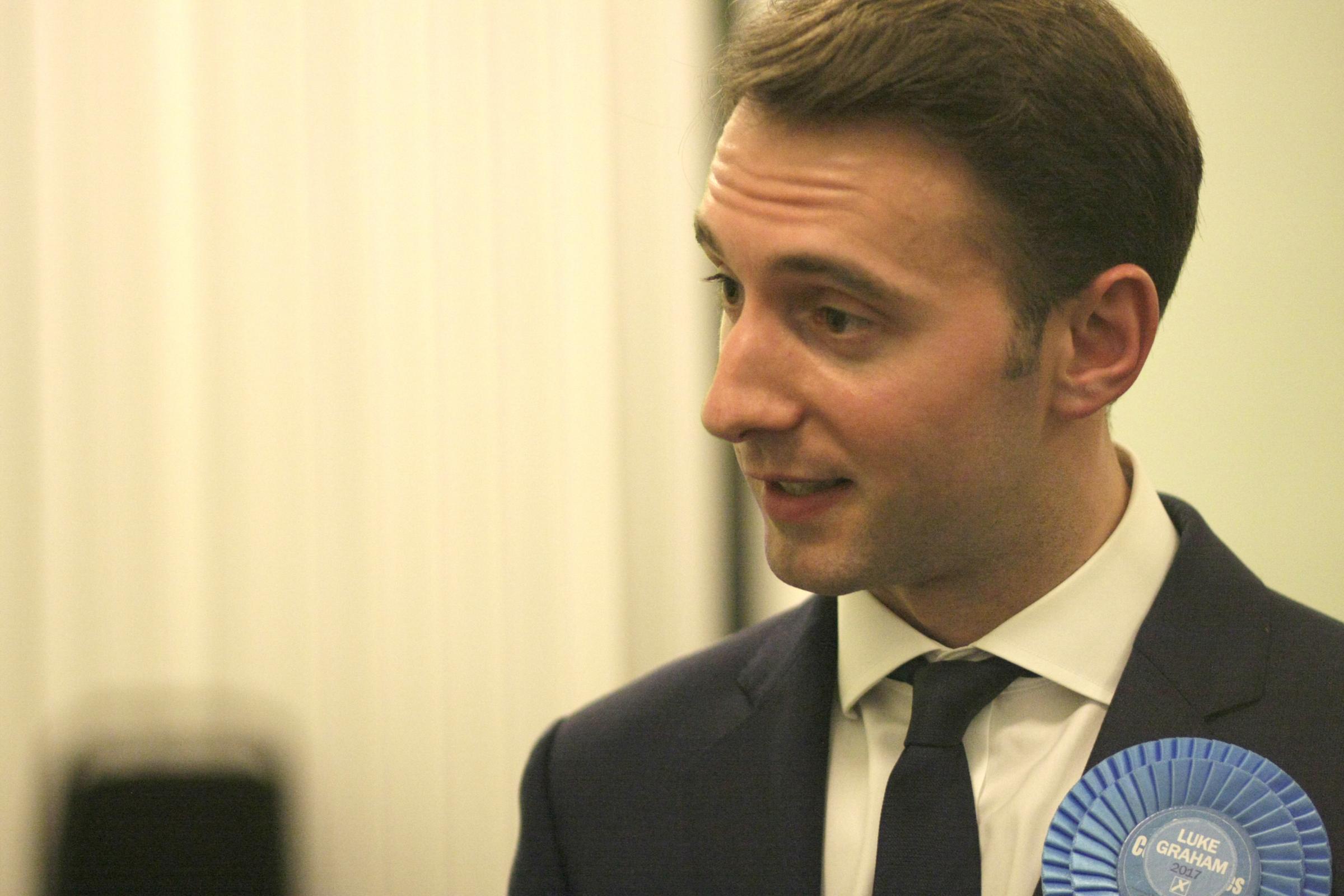
03 May 2017: Luke Graham Nominated Candidate for Ochil & South Perthshire General Election 8 Jun 2017.
Sponsored by: Alexander Stirling Fraser Mair, 82yo Perthshire, multi-millionaire landowner and entrepreneur, who leases, Stables Cottage, Madderty, Woodend, Crieff PH7 3PA to Elizabeth Smith, MSP, Shadow Cabinet Secretary for Education.
Luke Graham, the Tory carpetbagger from Swindon notified the Electoral Commission that his place of residence was Stables Cottage. It is assumed therefore that he was temporarily residing with Miss Smith when in the constituency whilst retaining his home address in Swindon.

12 May 2017: SNP General Election candidate, Tasmina Ahmed-Sheikh embroiled in misconduct probe by legal watchdog related to former career as lawyer
The spoiler
The revelation sparked calls from rivals for her immediate suspension and for Nicola Sturgeon to say when she found out about the matter. But in a statement, the SNP said the probe was over “administrative matters” and Ms Ahmed-Sheikh would be “continuing her campaign to be a strong voice for the people of Ochil and South Perthshire”.
Before her election in 2015, she worked with Glasgow law firm Hamilton Burns. The Law Society of Scotland does not comment on whether it is carrying out misconduct probes and would only confirm Ms Ahmed-Sheikh did not renew her annual practicing certificate last October.
In a statement released through SNP HQ, Ms Ahmed-Sheikh said: “I’m proud of my 17-year career in the legal profession. I am aware that issues have been raised with the Law Society in relation to administrative matters during my time at my former firm. The Law Society has a duty to uphold professional standards and they must be allowed to do so without prejudice. In the meantime, I’m getting on with fighting this election campaign and seeking re-election to stand up for the people of Ochil and South Perthshire.”
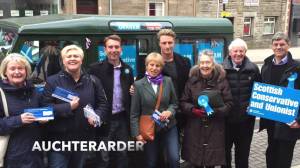
8 Jun 2017: Ochil & South Perthshire General Election Campaign
The Labour Party and Lib/Dems tried hard early on but then sunk without trace leaving it a two horse race between the SNP and the Tory’s for the seat.
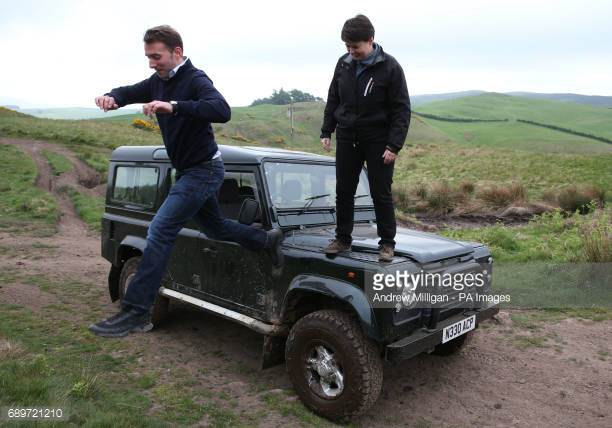
Graham was all over the constituency like a rash, in his battle bus (land rover) greatly assisted by a strong, brash Tory team of activists, not that many of whom spoke with a local dialect.
His daily schedule was always full of engagements and he milked the media for attention with great success getting them to repeat often and loudly his party dogma slogan, “no indy ref2”.
The Tory’s also constantly encouraged constituents to vote tactically to defeat the SNP
Tasmin’s campaign was rather muted although quietly effective by comparison but she appeared to be pre-occupied dealing with the unwelcome and intrusive media attention given over to her private life. but this was a forlorn hope.
There was a 21.00% swing to the Tory’s. The SNP candidate’s core vote held up well. But Labour and Lib/dem voters transferred their loyalty to the Tory’s.
Party 2010 2015 Change 2017 Change
SNP 27.63% 46.00% +18.37% 35.30% -10.70%
Lab 37.91% 28.43% -09.48% 20.00% -08.40%
Cons 20.49% 20.71% +00.22% 41.50% +20.80%
Lib Dem 11.40% 02.56% -08.84% 03.20% +00.60%
Summary: Graham deserved his win. He outclassed all other candidates, conducting doorstepping and canvassing in all weathers. The next election might well bring about a different result since Graham was elected due to the miserable performance of Labour and the Lib/Dems and any improvement next time would see the end of the Tory Party.

28 Jun 2017: Westminster: Queen’s Speech — Emergency Service Staffing and Pay
Opposition party’s called on the Government to end the public sector pay cap and give the emergency and public services a fair pay rise. The motion was denied by the Tory government. Scottish Tory MP’s including Graham, voted in support of the Westminster government.
Comment: The SNP Scottish government has lifted the pay cap awarding staff at least a 3% pay increase.
29 Jun 2017: Queen’s Speech — Energy Prices — Europe — Tuition Fees — Public Sector Pay — Minimum Wage — Student Grants — 29 Jun 2017
Tory MPs, including Luke Graham, other Scottish MP’s and the DUP voted:
Against an energy price cap.
Against a properly resourced industrial strategy.
Against maintaining the benefits of the European Single Market and Customs Union.
Against maintaining the existing rights of EU nationals living in the UK and EU nationals living in the EU.
Against increased funding of public services.
Against scrapping university tuition fees.
Against restoring Education Maintenance Allowance, maintenance grants and nurses’ bursaries.
Against ending the public sector pay cap.
Against increasing the minimum wage.
Comment: Brutal measures from a government determined to continue with the imposition of harsh austerity measures, rewarding the rich minority of society whilst destroying the will to live amongst the many.
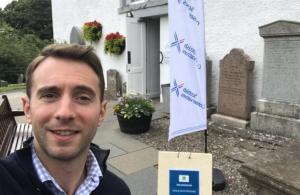
7 Jul 2017: Westminster Parliamentary Session: Register of Members’ Financial Interests – Luke Graham, (Ochil and South Perthshire)
Graham declared his financial interests indicating he would be in receipt of occasional travel and associated expenses from the companies with which he retained an interest.
1. Shareholdings: over 15% of issued share capital Tech & the Beancounters Ltd; accounting and finance (a subsidiary of Amplecom Ltd). (Registered 04 July 2017)
2. Miscellaneous Unpaid director of Tech & the Beancounters Ltd. I will receive occasional travel and associated expenses. (Registered 04 July 2017)
3. Unpaid adviser to the Finance and Resource Committee of Sheffield Union. (Registered 04 July 2017)
4. Until 30 June 2017, Director of Amplecom Ltd, 16 Dorcan Business Village, Murdock Road, Swindon, Wiltshire SN3 5HY. No payments since my Election. (Registered 06 July 2017)

10 Jul 2017: Telecom’s Bill (England) Luke Graham Contributes to the Debate
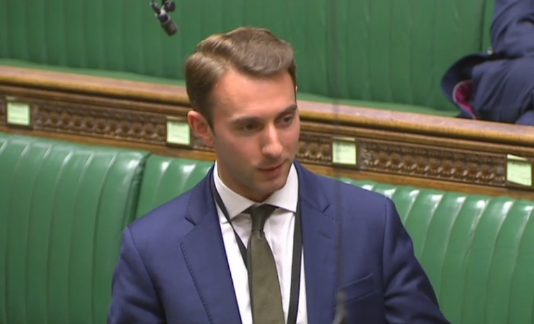
My hon. Friend will agree that the age disparity between young and old can be bridged through the internet and through proper broadband and mobile connections, particularly in rural constituencies and especially those in Scotland.
Although some powers have been devolved—unfortunately no SNP Members are here tonight to speak on such an important issue—I hope that my hon. Friend and the Minister will recognize the important role that Westminster can play in all the nations of the UK by giving funding and offering direction for broadband and mobile.
Intervention by Lindsay Hoyle Chairman of Ways and Means, Chair, Panel of Chairs. Order!!
Mr Graham. This Bill is for England and Wales, not for Scotland. So we need to deal with England and Wales and not drift too far
Comment: Dear! Dear! Luke. That is the reason no SNP members were present at the debate.

19 Jul 2017: Westminster Speech by Luke Graham – Armed Forces (19 Jul 2017)
On the positives, does the hon. Gentleman recognize the contribution of our cadet training forces across the United Kingdom, such as the 383 Alloa Air Training Corps in my constituency, and that we are investing in youth, which will help supply the manpower for our forces in the future?
Comment; Well then now we know the agenda. More young men and women to be recruited to be led by Donkey’s. Enough already I say!!!

31 Jul 2017: Luke Graham MP’s Office Opening in Alloa
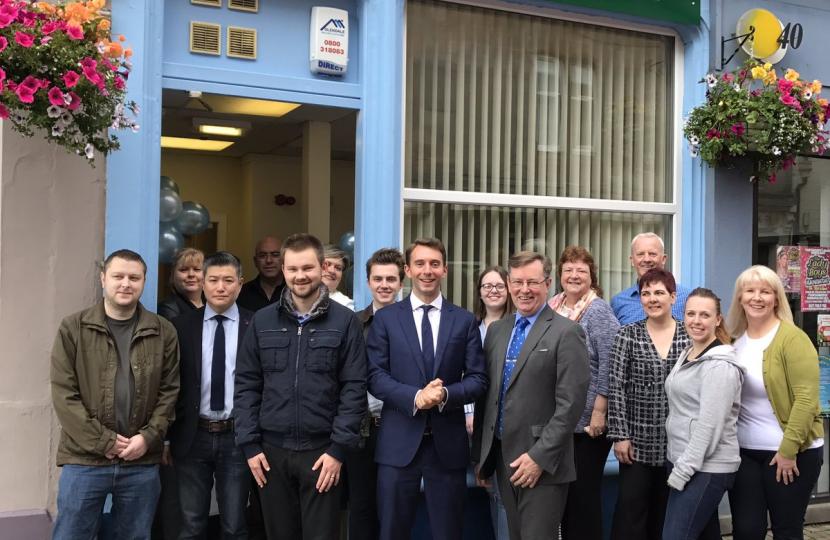
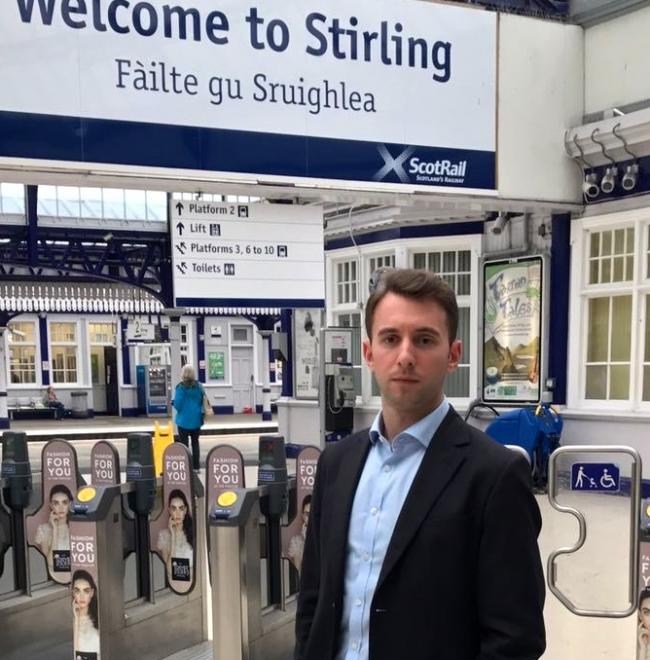
Luke Graham opened a constituency office at 32 Primrose Street Alloa.
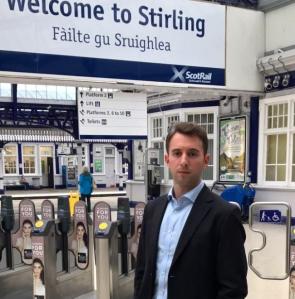
11 Sep 2017: Westminster Debates – European Union Integration
There have been votes in Parliament on the degree of the UK’s integration with the European Union. Specific matters voted on include the UK’s opt out from the European Union Police and Criminal Justice Measures and the establishment of a European Union External Action Service. Luke Graham consistently voted against more EU integration.
Remember, Graham is the chappie who took on the role of Finance Director of the “Britain Stronger In Europe Campaign.” He claimed to be a “die hard” Europhile. He speaks with forked tongue methinks
11 Sep 2017: Luke Graham voted to end the supremacy of EU law in UK law; to convert EU law into domestic law on the UK’s exit from the European Union and to give ministers the power to correct deficiencies in retained EU law.
11 Sep 2017: Luke Graham voted to end the supremacy of EU law in UK law; to convert EU law into domestic law on the UK’s exit from the European Union and to give ministers the power to correct deficiencies in retained EU law.
14 Nov 2017: Luke Graham voted not to require courts or tribunals to have regard to anything done on or after exit day by the European Court, another EU entity or the EU.
21 Nov 2017: Luke Graham voted against requiring the UK Government to report on changes to EU legislation which form part of UK law, and against requiring the Government to consider adopting such changes to ensure that the rights of workers and employees in the UK are no less favourable than they would have been had the UK remained a member of the EU or EEA.
21 Nov 2017: Luke Graham voted against the European Union Charter of Fundamental Rights remaining part of UK law on the UK’s withdrawal from the European Union.
21 Nov 2017: Luke Graham voted against retaining general principles of EU law derived from EU treaties, direct EU legislation and EU directives, as part of UK law after the UK leaves the EU, and voted to only retain those general principles deriving from European Court [of justice] case law.
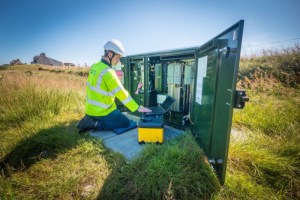
25 October 2017: Prime Ministers Questions – Luke Graham asks a Loaded Question
“As of 2016, 17% of premises in Scotland are without super-fast broadband, compared with just 11% for the UK as a whole. Will my right hon. Friend join me in calling on the Scottish Government to do more and to engage constructively with Departments here in Westminster to deliver this crucial service to communities in Scotland?”
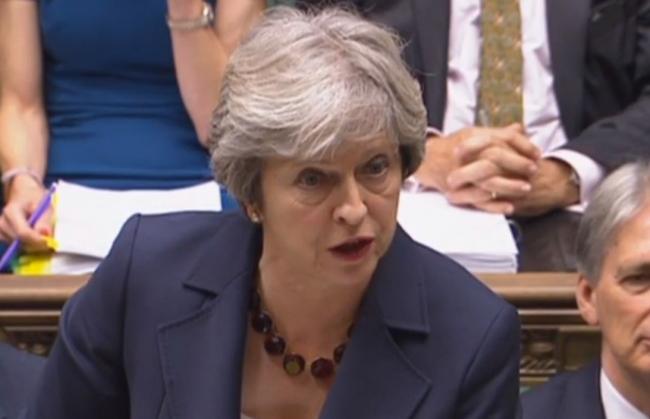
Mrs May: “I say to my hon. Friend that we all recognize the importance of broadband and of fast broadband being available to people in our constituencies. He is absolutely right—the Members of the Scottish National Party come down here and spend a lot of time talking about powers for the Scottish Government, but actually it is time that the Scottish Government got on with using their powers for the benefit of the people in Scotland.”
Comment: Telecom’s and broadband roll-out is not a delegated matter. It is for the Westminster government to decide and implement policy.

14 Sep 2017: Point of contact with Ochil and South Perthshire MP unveiled
Recently elected MP Luke Graham has opened a constituency office in Crieff. Located at 2 Comrie Street, the new office will give residents and business owners direct contact with their Conservative MP.

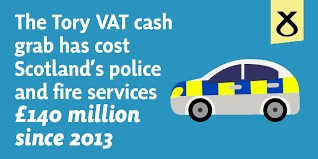
15 Nov 2017: Luke Graham and his Tory MP Colleagues Claim credit for sorting out the VAT charge on the Scottish Police Force
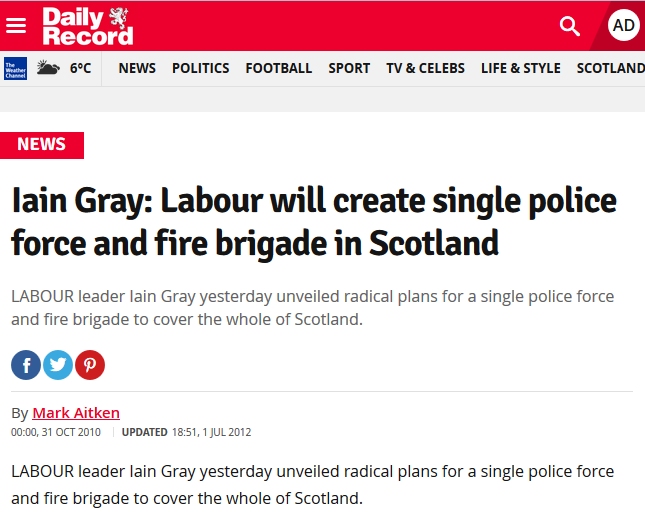
The Scottish government, with the support of the Tory Party merged its eight forces into a single body. HMRC indicated that the change would necessitate a change in VAT qualification since the new body would report direct to the Scottish Government which was not registered for VAT.
The SNP made representations over nearly 3 years, to the appropriate persons within HMRC and Tory government ministers at Westminster asking that a minor change be made to the legislation so that the Scottish Police force would not be disadvantaged over all other police bodies in other parts of the UK. Scotland’s plea for justice was rejected out of hand time and time again.
Then, late 2017 the Chancellor finally agreed the ruling was unfair and it was withdrawn, (but not backdated). The Westminster government broadcast the news through the usual media outlets praising the lobbying skills of the new group of Scottish Tory MP’s who had been sent to Westminster at the 2017 General Election. Needless to say Scot’s were outraged that their elected government requests had been studiously ignored over years, by the Tory government in Westminster. The matter also raised questions about the poor negotiating skills of David Mundell, the Scottish Tory Secretary of State for Scotland who had apparently done nothing to pursue the matter before the intervention of the little group of new blood Tory MP’s that had recently joined him at Westminster. An uninspiring lot of opportunists !!!
Luke Graham tweeted: “Great to hear PM recognize it is Scot Tory MPs representing Scot Police & Fire on VAT, not SNP who caused charge first place!”
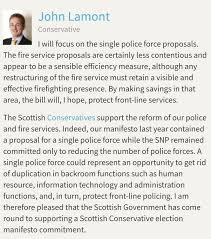
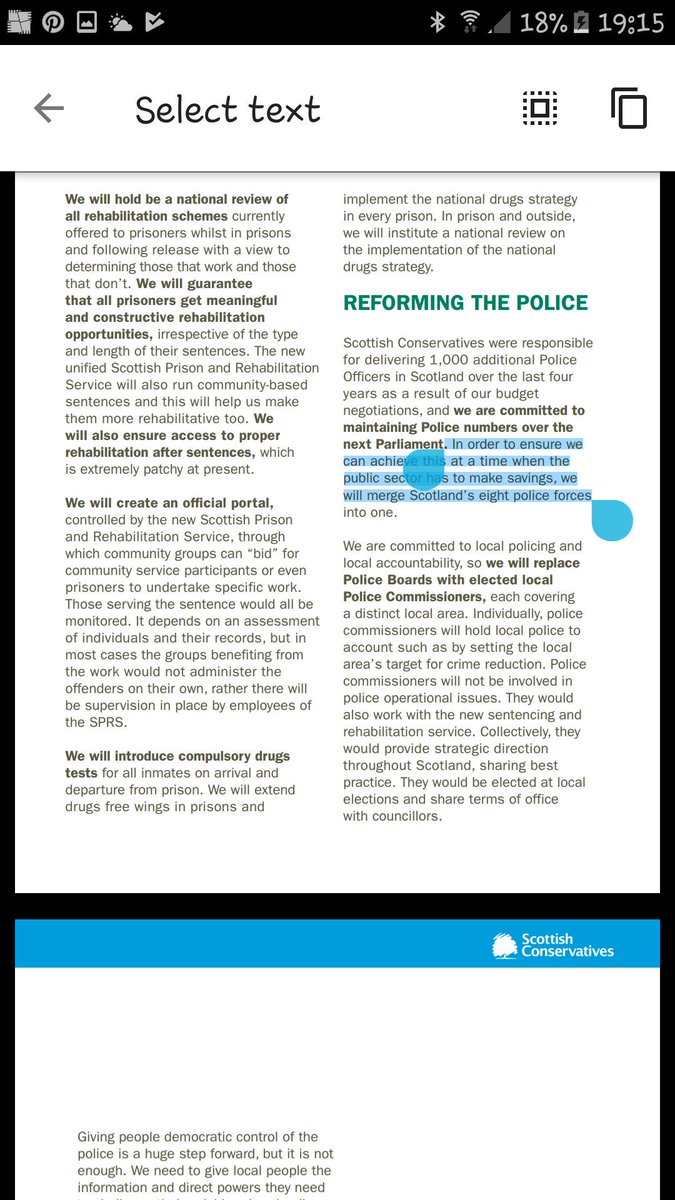
Comment: But the 2011 Tory Manifesto Committed the party to reforming the police forces in Scotland thereby incurring the Vat Charge. An extract:
“Scottish Conservatives are committed to maintaining Police numbers over the next Parliament and in order to ensure we can achieve this at a time when the public sector has to make savings, we will merge Scotland’s eight police forces into one.”

12 Dec 2017: Westminster – The “Meaningful Vote” amendment to the EU (Withdrawal) Bill
The Tory Government was defeated after the House of Commons voted in favour of former Attorney General Dominic Grieve’s Amendment 7 to the European Union (Withdrawal) Bill – to amend Clause 9 of the Bill to require the final Brexit deal with the EU to be approved by statute passed by Parliament – by a majority of just 4.
309 MPs voted for the Amendment, 247 Labour MPs, 34 SNP MPs, 12 Lib Dem MPs, along with 4 MPs from Plaid Cymru, the Green MP and one Independent.
305 MPs voted against the Amendment. All Conservatives, 2 Labour MPs (disobeying their whip to back the Amendment) and all 10 DUP MPs.

13 Dec 2017: Luke Graham’s Performance in the commons at Westminster
He has spoken in debates on 126 occasions which is very high.
He has voted 65 times after debates. Never once against the Tory government

Assessment
A very capable young man who has adapted to politics well. He is always ready to promote himself in the media. Interested in acquiring a good working knowledge of constituency matters and in this respect he has ensured his profile is always to the fore through his twitter and Facebook pages.
His stay in the constituency long term is not assured and so far as can be ascertained he simply lodges at the home of Liz Smith Tory MSP on some weekends when he returns to Scotland from Westminster to complete constituency surgeries etc.
His permanent address is still listed as being in Swindon, with his Dad and Mum and near to his business interests, declared to Parliament.
Getting inside his mind is impossible in normal circumstances but here is a short glimpse:
Swindon is never too far away in his mind and he often reminisces about his time in the town and at Dorcan.
Reflecting on his short time in Scotland he said:
“I’m proud of Swindon. It is where I come from and I think people see that. I have always felt very strongly about being British and my parents still live in Swindon so when I go to see them, I feel like I’m going home.”
Videos of interest: (https://www.youtube.com/watch?v=6PdgBswuYGk) and (https://ieondemand.com/presentations/rolling-forecasting-for-the-future)

2017/18 update
4 Sep 2018: Graham promoted to PPS for the Cabinet Office
Brown nosing has its rewards. His unqualified support of Theresa May and her government has been recognized by his very early promotion to the Cabinet Office as parliamentary private secretary.
His remit includes responsibility for the constitution, civil service and he is to lead on communication and relations between Westminster and Holyrood. The latter role will require his focus on Brexit, as it evolves, concentrating on constitutional issues.
His new duties will require a greatly extended presence in Westminster but Graham assured his constituents he would still give Ochil and South Perthshire his support.
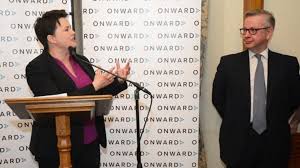
21 Jun 2017: Graham’s Place of Residence Questioned by Voters
Ian McCubbin (Wings over Scotland)
I have been researching Luke Graham MP. He is not resident in Scotland. Never has been. He apparently lives with Liz Smith MSP, in her rented accommodation at Madderty, Perthshire, at an address owned by Alistair Mair former director of Caithness Glass and STV. A well known Tory activist and benefactor. Graham’s home is in Swindon. Wonder how many other new Scots Tory MPs are not Scottish by residence?
Ken500 (Wings)
Luke Graham is committing electoral crime. He should be reported to the electoral authorities and the Police. He has made false declaration. Candidates have to be resident in the constituency. To stand for election. Liz Smith (Alistair Mair) has committed electoral fraud as well by aiding and abetting him to make false declaration. Gerrymandering. Punishable by prison.
Ken500 (Wings)
Candidates do not have to be resident in the constituency they are contesting (though I think they should).
Two of the four candidates on my ballot paper 2 weeks ago had addresses outwith the constituency, described only as “an address in Edinburgh West/Glasgow North East”.
It is necessary for ten people on the electoral roll in the constituency to nominate the candidate. That seems to be all, provided the candidate meets other criteria – UK/Irish/Commonwealth citizen with leave to remain, etc. I’ve read the Electoral Commission guidelines – if anyone else can find statements about residency qualifications, that would be interesting.
Police and Crime Commissioners in England and Wales have to be ordinarily resident in the area they seek to represent; one of them was accused of not doing so in 2012. The issue was whether or not he had lied on his nomination form (no, apparently).
Also, Paul Nuttall was criticized during the Stoke by-election because he claimed to be already living there, when he had not moved into the address he gave. Again, the issue was whether or not he lied. But it didn’t disqualify him.
If there is no is no need for residential requirement for election. Why was the Swindon address not given. Or is Luke Graham decamping in Liz Smith accommodation owner by the Tory donor guy. It is obviously not Luke Graham’s abode. Is he in temporary accommodation. Is there not a requirement for permanent residence. Voter need residential qualification. Often conforming with council tax information and confirmed declaration of residency. Does Luke Graham not pay council tax? Or have council tax record. A tax dodger?

23 May 2018: Graham Fully Supports “Made in Britain” Branding of Whisky and other Scottish Products
Theresa May condemned the Scottish Government’s “appalling” behaviour after MPs were told it did not want the Union flag and the word British on food and drink labelling.
SNP ministers were accused by Graham of leaning on Marks and Spencer after documents showed that officials telephoned the high street giant “to seek clarity on the situation” after Scotch whisky was listed on its website as being from the UK.
A separate briefing marked “urgent” was sent to Nicola Sturgeon over Tesco’s decision to change the branding on Scottish strawberries from the Saltire to a Union Flag.
Luke Graham, the Scottish Tory MP, and a former M&S employee, asked Mrs May at Prime Minister’s Questions if she would stand with him “against this petty bullying and support companies that are proud of Scottish and British produce”.
The Prime Minister said she “absolutely agreed”, adding: “We should all be proud of Scottish and British produce, of produce from any part of our United Kingdom.
“And I think it is frankly appalling that the Scottish government did not want to see the Union Flag and the word British on produce.
“It’s not only appalling, it fails to reflect the vote that took place in Scotland, which showed that people in Scotland want to stay part of the United Kingdom.”
It emerged last week that in a briefing to Fergus Ewing, the Scottish Rural Affairs Minister, a civil servant said that M&S had promised to “urgently investigate” the categorization of Scotch and reported back that there had been an error.
Although the company confirmed that the website had been changed, officials then suggested that it issue a public message to “clarify” that the mistake had been rectified. They also promised that Mr Ewing “would respond positively” if M&S did so.
A separate briefing on Tesco strawberries recommended that “no formal action is taken at Cabinet Secretary level at present”, but asked whether Mr Ewing wanted a meeting “in the near future” with the supermarket.
Both cases prompted a series of SNP supporters to write to Scottish ministers, with one questioning whether it was “an attempt by Westminster at a spot of brainwashing or is there something more sinister going on.”
The Scottish Government said the documents showed it had raised public concerns “in a constructive manner”. (Telegraph)

The Bonded Warehouse Association (Whisky Trade)
The BWA has over 80 companies as members throughout the UK and has established very close links to Government, regulatory bodies and other Associations. The BWA will engage on a strategic and partnership level to ensure that its members have a powerful voice which is acknowledged and listened to along with a consistent approach and vehicle to influence future policy.
And Graham sponsored this lot to a free dinner party at Westminster. https://www.thebwa.com/about-us
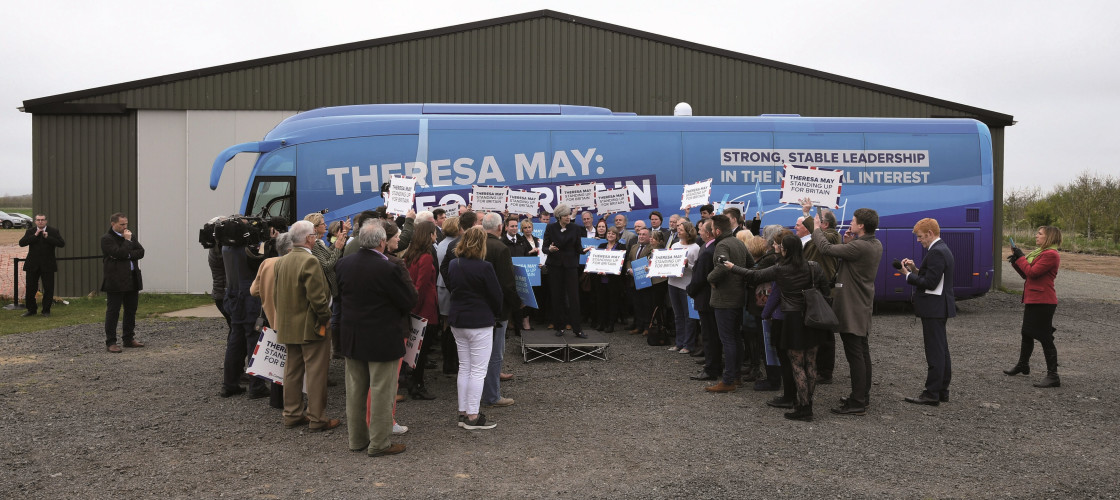
18 Mar 2018: Graham to lead Young Conservatives Campaign to Win Over Millennial Voters
The campaign follows yet another relaunch of the much maligned Young Conservatives, then called Conservative Future, following nearly three years in mothballs after a bullying scandal, (Mark Clarke, who ran the infamous Road Trip 2015 was accused of bullying a young activist, Elliot Johnson, shortly before he committed suicide).
The campaign, led by Scottish Conservative Luke Graham, (who, shocking political pundits unseated an opponent with a massive majority) is being being developed with the activist the recently formed and well funded “rust-belt Tory” group with seats in Scotland and the north of England and is aimed at appealing to a generation of young voters who the Tories claim are not as left-wing as portrayed.
Tory Party chairman Brandon Lewis said the youth arm of the party would seek to engage with “thousands of young people who keep being told they must be Corbynistas, but aren’t.”
Leading the Young Conservatives and discharging the duties of PPS in Theresa May’s cabinet office begs the question. Where does he find the time for constituency matters? The constituents of Ochil and South Perthshire are being short changed.

7 Oct 2018: Luke Graham (MP) Fully Supports Westminster Proposals For Farming in Scotland
The Scottish Conservative group submitted their own plans for farming, in Scotland, to Westminster, to be included in an amended bill, allowing amendments to be made to the draft Agriculture Bill so that it will have the same effect in Scotland as it does in Wales and Northern Ireland. The legislation outlining post-Brexit policy in Scotland subsequently had its second reading at Westminster.
Commenting on behalf of the Scottish Conservatives, Luke Graham MP said:
“Scottish Conservatives are doing what the Scottish Government failed to do, offering Scottish farmers a brighter future. Farmers need time and support to adapt to changes in agriculture policy. We have known since 23rd June 2016, that farming policy is going to change once we leave the European Union. The Scottish Government have had over 2 years to prepare and come up with a plan, but they have utterly failed to do so. They have continually let farmers down through playing grievance politics instead of doing their job of governing for Scotland. We are urging the Scottish Government to endorse these amendments so they can deliver for Scottish farmers. The U.K. Government offered to make provisions for the devolved administrations, creating a mirror framework to what is planned in England. Both the Welsh Government and Department for Environment in Northern Ireland have asked the U.K. Government to legislate on their behalf, but the SNP have rejected the proposals.”
What a perversion of the truth this chappie spouts. Agricultural policy was devolved from Westminster to Holyrood nearly twenty years ago. The Tory government is intent, (against the expressed wishes of Scots and their government) on centralizing farming policy on Westminster post-brexit.
The Westminster Tory agenda is now exposed. It will concentrate all decision making on Westminster over time, leading to the closure of Holyrood

Graham at Westminster Votes to remove all aspects of EU Integration from Statute
Avid supporter of Britain’s membership of the EU, Luke Graham, was the finance director of, Britain Stronger In Europe”.
The group was launched in London on 12 October 2015 and declared as the official “Remain” campaign by the Electoral Commission and unsuccessfully campaigned in the 2016 British referendum in favour of the United Kingdom retaining membership of the European Union.
Luke’ epiphany: His moment of sudden and great revelation or realization.
“But it happened that as I was on my way, approaching Westminster, a very bright light suddenly flashed through my rail carriage, and I covered my eyes then heard a voice saying Luke, Luke, why are you not supporting the Brexit? And I answered, who the hell are you? and the voice replied, I am a “silly billy” Tory who needs you to support Brexit, and those who were with me were also blinded by the light, but did not understand why the “silly billy” Tory was speaking only to me. And I said what do you want me to do? and the “silly billy” Tory said proceed to Westminster and follow the words and deeds of Saint Michael Gove. and I did.” and I have been well rewarded.”
Talk about a somersault:Ochil and South Perthshire voters were conned.
- On 11 Sep 2017: Luke Graham voted to end the supremacy of EU law in UK law; to convert EU law into domestic law on the UK’s exit from the European Union and to give ministers the power to correct deficiencies in retained EU law.
- On 11 Sep 2017: Luke Graham voted to end the supremacy of EU law in UK law; to convert EU law into domestic law on the UK’s exit from the European Union and to give ministers the power to correct deficiencies in retained EU law.
- On 14 Nov 2017: Luke Graham voted to end the supremacy of EU law in domestic law and to remove the mechanism which enables the flow of new EU law into UK law.
- On 14 Nov 2017: Luke Graham voted not to require courts or tribunals to have regard to anything done on or after exit day by the European Court, another EU entity or the EU.
- On 21 Nov 2017: Luke Graham voted against requiring the UK Government to report on changes to EU legislation which form part of UK law, and against requiring the Government to consider adopting such changes to ensure that the rights of workers and employees in the UK are no less favourable than they would have been had the UK remained a member of the EU or EEA.
- On 21 Nov 2017: Luke Graham voted against the European Union Charter of Fundamental Rights remaining part of UK law on the UK’s withdrawal from the European Union.
- On 21 Nov 2017: Luke Graham voted against retaining general principles of EU law derived from EU treaties, direct EU legislation and EU directives, as part of UK law after the UK leaves the EU, and voted to only retain those general principles deriving from European Court [of justice] case law.
- On 12 Dec 2017: Luke Graham voted to allow laws which were required by the UK’s membership of the European single market to be weakened, removed or replaced by Ministers after the UK’s withdrawal from the EU.
- On 13 Dec 2017: Luke Graham voted to allow ministers to withdraw the UK from the European Economic Area, the European single market.
- On 20 Dec 2017: Luke Graham voted against the UK retaining the EU’s common customs tariff and common commercial policy.
- On 17 Jan 2018: Luke Graham voted for the United Kingdom to leave the European Union.
- On 17 Jan 2018: Luke Graham voted for the United Kingdom to leave the European Union.
- On 13 Jun 2018: Luke Graham voted against making the UK’s withdrawal from the EU conditional on seeking, as an objective for the UK’s negotiation of the withdrawal agreement, full access to the internal market of the EU rather than merely European Economic Area membership.
- On 13 Jun 2018: Luke Graham voted against making the UK’s withdrawal from the EU conditional on seeking, as an objective for the UK’s negotiation of the withdrawal agreement, an international agreement which enables the United Kingdom to continue to participate in the European Economic Area.
- On 13 Jun 2018: Luke Graham voted against largely retaining the EU “Charter of Fundamental Rights” as part of UK law following the UK’s withdrawal from the European Union.
- On 13 Jun 2018: Luke Graham voted not to make incompatibility with the general principles of EU law actionable in the UK courts following the UK’s withdrawal from the union.
- On 13 Jun 2018: Luke Graham voted against steps designed to ensure that the UK’s withdrawal from the EU does not result in the removal or diminution of any rights, powers, liabilities, obligations, restrictions, remedies and procedures that contribute to the protection and improvement of the environment.
- On 17 Jul 2018: Luke Graham voted against making retaining membership of the European medicines regulatory network a government objective.
Graham launches new look young conservatives


























 caltonjock