Barnett Formula To Be Abandoned After Brexit – Little Englander Politicians in Scotland Ecstatic At the News


_74873615_ref_barnett


A Majority of Westminster and Scottish Unionist Politicians of all Party’s are Opposed to maintaining the Barnett Formula much beyond the completion of the Brexit process

An English political (Tory) insider recently let slip, “We are fed up financially subsidising the lazy Scot’s pampered welfare state philosophy. The time to act is after we persuade them their future is with the present setup.”

Plans are being put in place, (for implementation early in the next parliament, (2021-26) replacing, “Barnett” introducing an, “equality” formula, based on each individual within the UK being allocated an equal annual financial allocation. There will be, “few” riders allowing for social factors.

Estimates are that the North East & North West of England and South Wales will benefit but Scotland stands to lose between £8-12 billion.

The forecast reductions are exclusive of £4 billion austerity cuts already scheduled for implementation (2017-20)

The changes will require the Scottish government to drastically rethink strategy, regarding Welfare Benefits, Health Care and Care in the Community.

In addition financial support to local councils and other as yet undefined areas e.g. Charities, in Scotland will  be greatly reduced.

Be alert to Westminster and Scottish Unionist politicians announcing handouts and gifts in the  next 2 years.

The full might of the Westminster controlled BBC and other media will be released on Scots in the form of an extended charm offensive in the Brexit process.


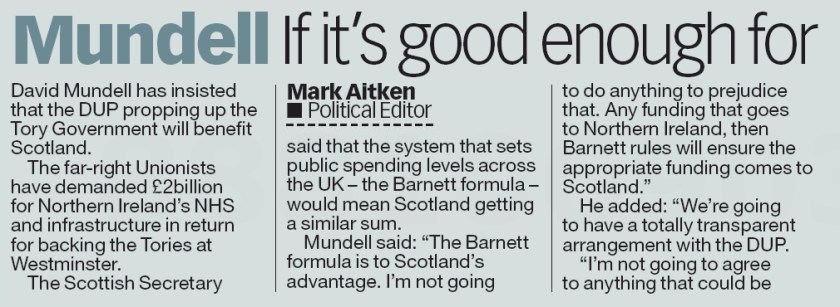
mundellbarnett


Barnett Formula in Action

Assume the UK annual national financial pot is:  £50,000

Assume contributions to the National pot, taxation, vat etc: England £30,500, Scotland £15,000, Wales £2500, Ireland £2000.

Westminster “top slices” government running costs, parliament, defence,etc; £20,000.

Add interest payment pertaining to National debt. £10,000.

Total centralized operating costs £30,000.

Residue of £20,000 is, “Barnett Shared” between the Countries that make up the UK.

England £15,000, Scotland £3000, Wales £1000, Northern Ireland £1000.


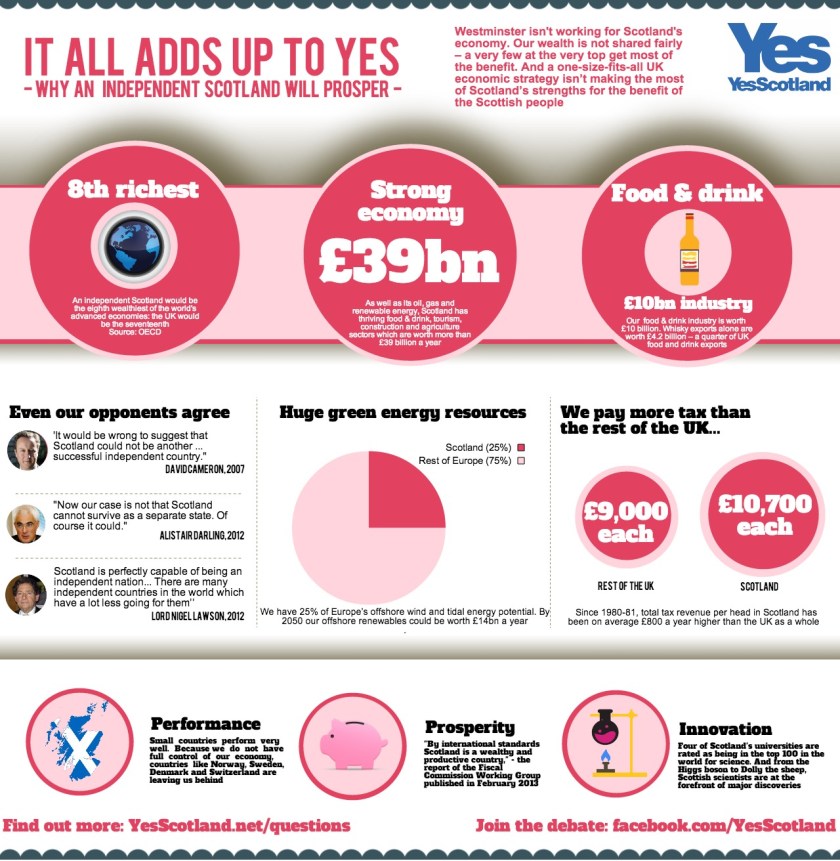
all_adds_up-1


Summary

Scots contribute 30% to the annual total income of the U.K. for a return of 15% plus the safety umbrella of the UK parliament”.

The State controlled media in the UK will be delivering the message that Scots are not meeting their obligations to Westminster and English taxpayers are subsidising lazy Scots (Ruth Davidson’s own words).

Do not fall for this many times stated untruth. Have the courage to vote Yes in any future Independence Referendum .


_77349827_77349823

Monetary Union Red Herring

I have kept my counsel until now but, in light of uncertainty maliciously created by Mr Darling, at the time of the debate last week, now is an opportune time to provide explanatory information completely debunking Flipper Darling and his erstwhile fellows. In the spitit of Clause 30 of the Edinburgh Agreement, lets put this matter to rest until after the referendum is complete

AGREEMENT between the United Kingdom Government and the Scottish Government on a referendum on independence for Scotland

Clause 30 – Co-operation

The United Kingdom and Scottish Governments are committed, through the Memorandum of Understanding between them and others, to working together on matters of mutual interest and to the principles of good communication and mutual respect. The two governments have reached this agreement in that spirit. They look forward to a referendum that is legal and fair producing a decisive and respected outcome. The two governments are committed to continue to work together constructively in the light of the outcome, whatever it is, in the best interests of the people of Scotland and of the rest of the United Kingdom.

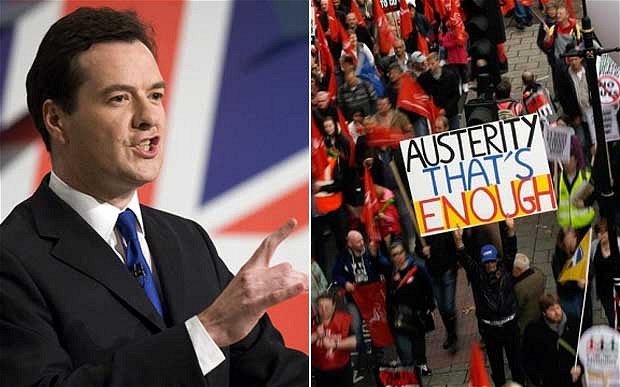
Recently, misleading presumptions about what international law requires and seeming indifference to the necessity of negotiations following a possible pro-independence vote in Scotland on 18 September have framed the referendum debate. Politicians can always craft arguments around faulty presumptions and then make a dire outcome sound eminently plausible. But the fate of Scotland cannot be so easily disposed of by George Osborne.

The Chancellor’s 13 February speech in Edinburgh, in which he rejected any currency union between Scotland and the remainder of the United Kingdom (rUK) in the event that Scotland’s voters approve independence, was partly based on the presumption that the rUK would be the “continuator” state of the existing United Kingdom. This means that the United Kingdom would continue as essentially the country it currently is (shorn of Scottish territory), oblivious to any equitable claims by Scotland and dictating that Scotland start from scratch, or with a “clean slate”, to establish a resurrected independent nation.

The alternative to the antiquated continuator argument would be to view both Scotland and the rUK as two co-equal successor states (even though the rUK is obviously the larger of the two) whose fates are tied to an amicably negotiated transition from one nation to two nations following a “yes” vote on the referendum. International law recognises that possibility of a negotiated outcome, one that can be easily embraced by both Holyrood and Westminster if their mutual intent is to facilitate a smooth transition, rather than one seeking to sabotage it.

By laying down the gauntlet of rejecting any currency union with Scotland even before any referendum vote has taken place, and promising to “punish” the Scottish people if they vote for independence, Osborne overlooked an inconvenient truth. His entire argument rests on the presumption that no workable currency union is plausibly negotiable between Scotland and the rUK in the aftermath of a vote for independence. He simply assumes nothing can or would be negotiated in terms of the character or functioning of a currency union that would work to the benefit of both the rUK and Scotland.

Yet there will be negotiations following a pro-independence vote. Otherwise, the rUK would have far too much to lose on other fronts that also require negotiations, talks London will be keen to take up but which the Scottish government, if it follows Osborne’s punitive example, could refuse to negotiate about at all. Scotland need not negotiate sharing the UK debt and could simply let Westminster shoulder the entire estimated UK debt of £1.6trn in 2016/17. That is certainly the logic of the rUK being a continuator state. Nothing in international law requires Scotland to pay one sterling pound of UK debt if the rUK is deemed the continuator state. Nonetheless, the Scottish government has already offered to accept the liability of an estimated £100-£130bn as an independent Scotland’s share of the overall UK debt, but only as the end point of post-referendum negotiations.

Dire warnings that Scotland’s credibility in the markets would somehow nosedive if this transfer of debt were to happen overlook two simple facts. First, the UK Treasury already has agreed to cover all UK gilts in the event of independence, a point Osborne made in his speech. So there is no default on the horizon to panic investors. Second, Scotland would start afresh as a debt-free nation with the apparent agreement, indeed blessing, of the rUK. Perhaps Westminster really has decided to absorb completely the UK debt and thus not negotiate, but rUK taxpayers may wonder about the wisdom of such folly, particularly by a Conservative government. Creditors and investors might view the Scottish position – one of willing to pay, in good faith, its fair share of the UK debt but reluctantly avoiding that financial burden if London insists on being a continuator state and rejecting negotiations – as a sign of financial strength and political acume, rather than weakness or naivety in Edinburgh.

If Osborne’s pre-emptive rejection of a currency union stands, Scotland could sit back in the aftermath of a pro-independence vote and watch the rUK potentially lose a permanent seat on the UN Security Council, impose extremely onerous conditions on removal of the entire British nuclear submarine fleet from Faslane by Independence Day, force the rUK into a much more difficult relationship with the European Union that may accelerate British withdrawal, and, perhaps most importantly, refuse to negotiate a reasonable division of UK assets in a manner that would hurt the rUK more than Scotland.

None of this silly face-off has to happen. The logical outcome of a pro-independence vote is negotiations to facilitate a smooth transition with the goal of advancing the best interests of the citizens of each nation. Indeed that is exactly what was indicated in Clause 30 of the Edinburgh Agreement signed in October 2012 and which is internationally admired as a model of consensual deal-making.

Instead, Osborne launched a pre-emptive strike to kill post-referendum negotiations. He may think he is a realist playing hard politics to bring Scotland to heel, but these are tactics the Scottish government could also successfully employ but smartly has rejected – at least for now.

http://www.newstatesman.com/politics/2014/02/flaw-osbornes-pre-emptive-strike-against-currency-union

Austerity Cuts England 2010-2014 – A Warning for Scotland

Austerity Cuts England 2010-2014

A recent report highlights reductions in council grants in England over the time the Con/Lib/Dem has been in power.

A few examples;

a. The ten most deprived councils reduced by £782 each household.
b. The ten most affluent councils £48.
c. The reduction in the most affluent council in England. Hart, Hampshire £28.
d. The deduction in the most deprived council in England. Liverpool District B. £807.

Contrast the foregoing with Scotland. Rates have been frozen for 4 years thanks to a caring government. Scotland needs more of this. Vote, “Yes” in the referendum. Joanne Lamont and her ilk are determined to re-introduce;

a. Council Tax charges, (backdated for 4 years meeting the market rate).
b. Prescription charges. (Pensioners and children over 14 to be subject to means testing)
c. Bridge Tolls on the two Fourth Road bridges.
d. Bridge tolls on the Skye and Tay bridges.
e. Student Fees to be introduced. (No exemption for those unable to fund loan repayments)
f. Pensioner Cold Weather Payments to be means tested.

Who Controls The Excesses of the Bankers?

Politicians might talk about reform or retribution of errant bankers when they are in opposition but once they are in power they invariably become pawns of the banking sector. This was true of Tony Blair and Gordon Brown – who frequently intervened on behalf of the bankers, for example, by heading off rules that would have impeded profit-making, kicking necessary reforms into the long grass and generally lowering the regulatory bar.

In November and December 2008, both David Cameron and George Osborne expressed a determination to jail criminal bankers, but have singularly softened their stance since entering Downing Street.

I conclude that, however badly high-level bankers behave, they have engineered a situation in which supposedly democratic governments will turn a largely blind eye, including management structures and record-keeping that make incrimination difficult. Our wonderful politicians have not just allowed banks to become too big to fail, they have also allowed them to become too big to prosecute. And too big to jail.

Shredded – Inside RBS: the Bank that Broke Britain Author; Ian Fraser

Warning ! Warning ! Warning ! Nothing much has changed and another burst bubble is just around the corner. Vote, “Yes” to independence so that Scotland will be able to properly our organize banking systems

The IMF & UK Treasury

In 2011 The International Monetary Fund spent time in the UK investigating events surrounding the London financial market banking crash and it’s adverse impact on the economy. A report was produced; http://www.imf.org/external/np/ms/2011/060611.htm

The report contained a number of tough remedial measures, (including cuts in welfare spending, reducing pensions, extension of working age before pension and other restrictions). It was the firm belief of the IMF that the changes, though unpalatable were necessary to assist recovery of the UK economy from further disaster should treasury officials and the Bank of England, (perish the thought) get their forecasts and policies wrong.

John Lipsky, “First Deputy Managing Director of the IMF”, offered, “The level of public spending as a percentage of GDP in our forecast has reduced by about half a per cent of GDP as compared to the previous fiscal year. However, it remains very far above the pre-crisis levels of spending and represents a long-term high in spending”.

Seemingly determined not to undermine George Osborne he refused to define a, “prolonged period of weak growth” that could trigger a hypothetical, “PLAN B”. “I wouldn’t want to get into any false precision about definitions” is how he put it. Yet, “PLAN B” was evident. Adoption of deeper long-run entitlement reform coupled with quantitative easing by the Bank of England, (printing money). In a, “post press conference meeting” treasury officials dismissed, “PLAN B” insisting it was an IMF recommendation and not government policy. Yet their was within the room a distinct impression that Tory MPs would soon be renewing calls for a speedy implementation of, “PLAN B”.

So, George Osborne refused to provide details of his, “PLAN B” to the UK public and Westminster politicians. Yet, “Bitter Together” keep rabbiting on about the, “Yes” campaign’s refusal to provide details of their currency, “plan B”. (If the cap fits wear it). You show me your’s and I’ll show you mine !!

Casino Banking RBS London

Casino Banking-London

The vast bulk of RBS losses are attributable to the, “Investment Banking Division”. A division registered, managed and staffed entirely in London. The, “bank of last resort” for the, “Casino Banking” losses of RBS is therefore the, “Bank of England.

The RBS division of the bank the headquarters of which is based in Scotland is, in effect a medium sized high street bank which is and always has been has been always profitable. In consequence it is a bit of a misnomer since just about all of the, “movers & shakers” are based at the London Headquarters of the Bank. Only the business licence plate is registered and posted in Edinburgh, nothing else of note. It follows therefore that any threat to transfer the headquarters of the bank to England is simply an exercise in bluster, transferring a 6″ metal plate from a door in Scotland to something similar in London.
Staff employed in Edinburgh supporting the profitable high street branch division would be unaffected by any change.

Mervyn King – Farting Against the Sound of Thunder – Brown – Darling and Balls Had Cloth Ears in the Face of Adversity


25 June 2009: Mervyn King – Governor of the Bank of England comments on the economic shambles – Jun 2008-9

King made a shocking charge that  “The “Bank of England” had not been party to discussions about Alistair Darling’s plans for the reform of banking regulations.” He also said that the tri-partite regulatory regime designed by Balls and Brown, “was a mess”.

Recent figures showed that Britain has the biggest budget deficit in the world. The global crisis had government borrowing at £20 billion in May, which means the government is overspending by nearly £30 million an hour.

Gordon Brown is spending way beyond the Nation’s means and forcing our children into debt at an unheard of rate and he boasts that he is going to spend, spend, spend.


King  testified that the UK government needed to cut spending much more dramatically than is currently planned or the Country faces financial ruin. But Brown is desperately hoping for a recovery (as Darling confidently predicts) to save him in time for a general election.

News from the “Organisation for Economic Co-operation and Developments” not encouraging.

In a statement recently released it said  “Britain is in severe recession and it is predicted the UK economy will shrink by 4.3%  in 2009/10.

http://order-order.com/2009/06/25/mervyn-on-the-economic-shambles/


Under a model devised by Gordon Brown when he was chancellor, consumer prices index (CPI) inflation should have been kept at 2 per cent.

If the target was missed by more than 1 per cent, the governor of the Bank of England was required to write an open letter to the Chancellor of the Exchequer explaining why it had been missed and what needed to be done to resolve matters.

Mervyn King dispatched 14 of these letters from April 2007, always because CPI has exceeded the target by more than 1 per cent. The Chancellor did nothing.

Mervyn King and Mark Carney caricature

Mervyn King & Mark Carney caricature

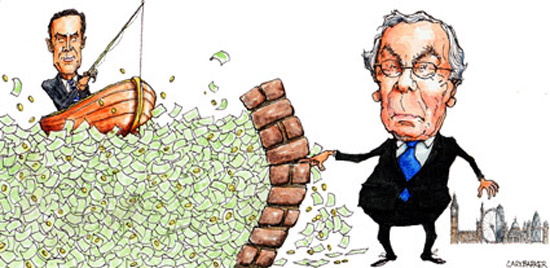
The outgoing but less outgoing governor of the London based Bank of England hands over the reigns to the younger photogenic ‘saviour’ of the Canadian economy.

The British Government hoping to inject new ideas and impetus in a flagging UK economy plump for the nearest thing the bankers have to a rock star.

Balance of trade figures going in the wrong direction, inflation still out-stripping wage rises and growth turgid it remains to be seen whether they made the right choice. Created for Financial Director Magazine.

https://www.garybarker.co.uk/mervyn-king-mark-carney-illustration.html


The General Election – Ignore All The Hype-Point Scoring-Red Herrings – The Agenda Is Clear- If You Are For-The Brutality Of Austerity-Vote For Any One Of The Three Amigo’s-If You Wish To Abandon It Vote SNP


AusterityKills


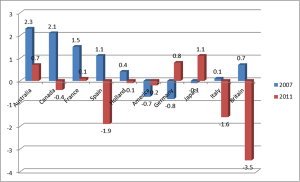
The Con/Dem coalition has accrued more debt than all governments since 1900. The current government bears responsiblity for £1.2 trillion of the nearly 1.8 trillion-pound UK public debt, compared to £472 billion they inherited. The figures look even worse when you adjust for inflation. When you do that, the Coalition’s share jumps to over three quarters of the total debt.

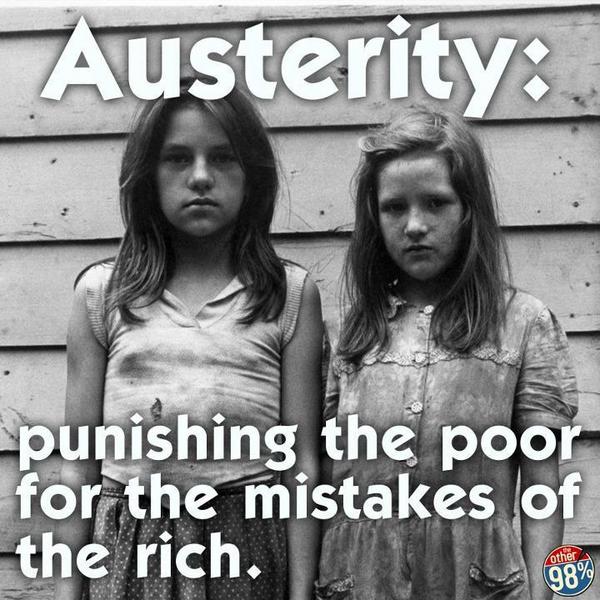
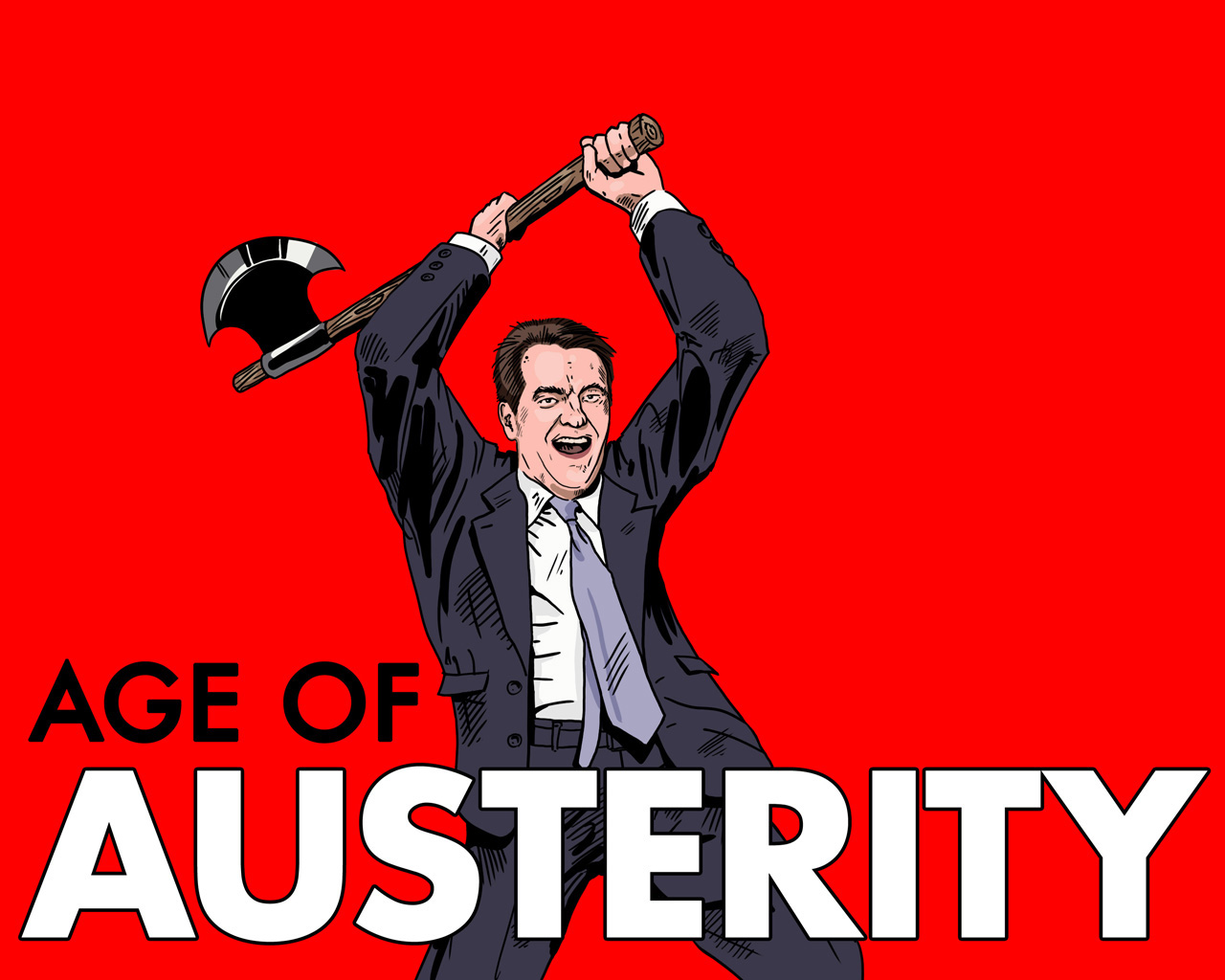
But the Con/Dems  do not meet the public needs, they simply serve the wishes of a powerful, wealthy elite. the Tories have bled the public dry. So, what have they done with the money? Because the public have seen only austerity cuts. And the most vulnerable bear the brunt of the cuts.


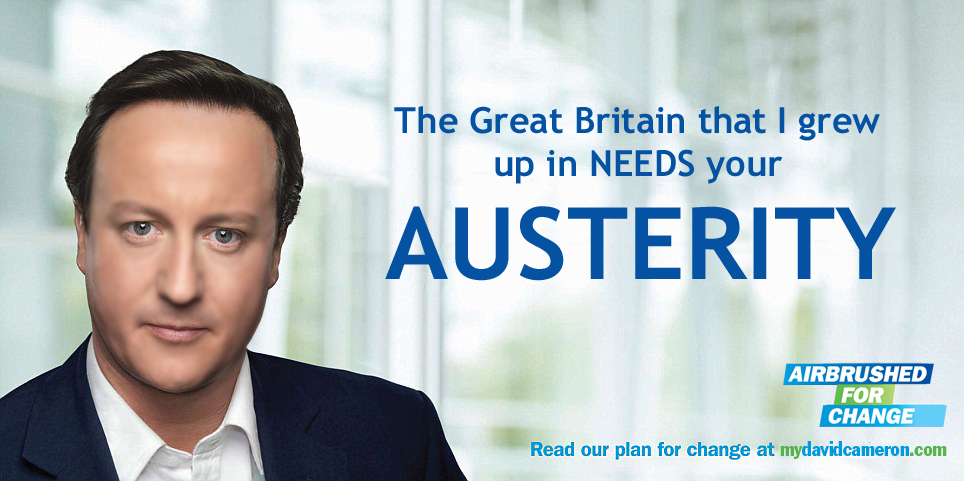
dcposterAusterity


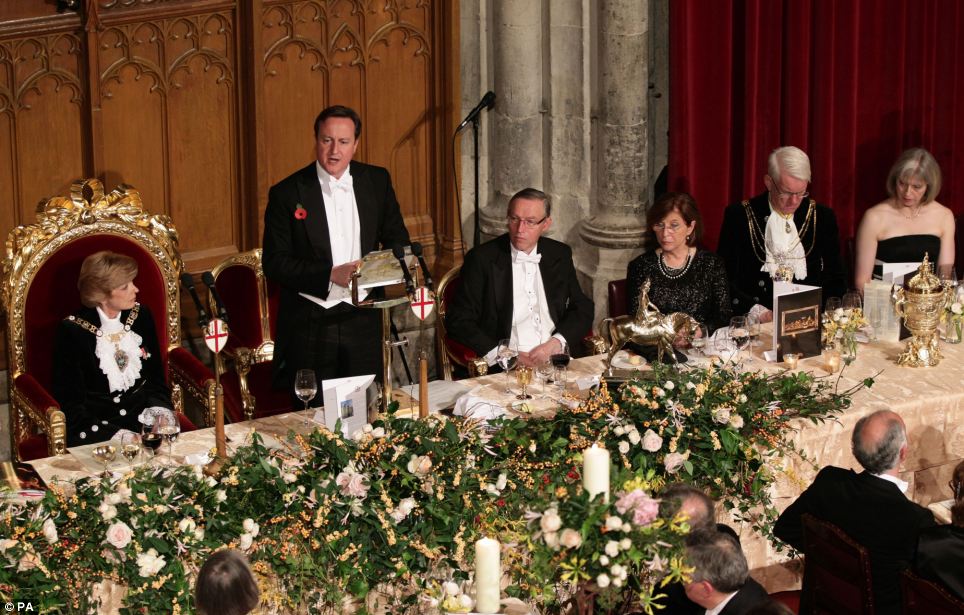
Oxfam’s director of campaigns and policy, Ben Phillips, said:“Britain is becoming a deeply divided nation, with a wealthy elite who are seeing their incomes spiral up, while millions of families are struggling to make ends meet.”  It’s deeply worrying that these extreme levels of wealth inequality exist in Britain today, where just a handful of people have more money than millions struggling to survive on the breadline.”


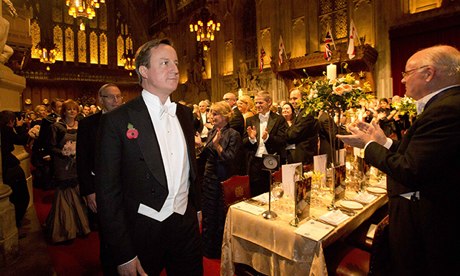
David Cameron Guildhallno-austerity-britain-uk


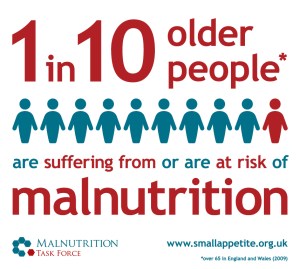
Diseases associated with malnutrition, which were very common in the Victorian era in the UK, became rare with the advent of our welfare state and universal healthcare, but are they are now are making a reappearance.
NHS statistics indicate that the number of cases of gout and scarlet fever have almost doubled within five years, with a rise in other illnesses such as scurvy, cholera, whooping cough and general malnutrition. People are more susceptible to infectious illness if they are under-nourished.


imagesdgt


In 2013/14, more than 86,000 hospital admissions involved patients who were diagnosed with gout – an increase of 78 per cent in five years, and of 16 per cent on the year before. Causes of gout include a lack of vitamin C in the diet of people who are susceptible, drinking alcohol (beer and spirits in particular) and a lack of a balanced diet generally.
 

article-2501697-195AD85200000578-424_964x615


The figures from the Health and Social Care Information Centre (HSCIC) show a 71 per cent increase in hospital admissions among patients suffering from malnutrition – from 3,900 admissions in 2009-10 to 6,690 admissions in 2013-14.
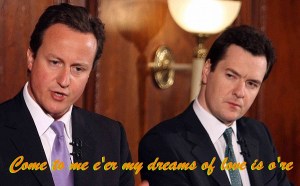


David Cameron and George Osbourne at Northern Rock Conference


Cases of scarlet fever admitted to hospital doubled, from 403 to 845, while the number of hospital patients found to be suffering from scurvy also rose, with 72 cases in 2009/10 rising to 94 cases last year.


Graph-by-year


The figures also show a steep rise in cases diagnosed with cholera, a water-borne disease which was extremely prevalent in the 19th century, causing nearly 40,000 deaths. While total numbers remain low, the 22 cases last year compare with just 4 in 2009/10, the statistics show.


Austerity-is-theft


Dr Theresa Lamagni, Public Health England’s head of streptococcal infection surveillance, said the total number of notifications of scarlet fever this year has already reached 12,580 cases – the highest since 1970.

Cases of measles in hospital rose, from 160 to 205 cases, with a small rise in admissions for whooping cough, from 285 to 289 cases over the five years examined.
 

imagesbg


The figures on malnutrition follow a series of scandals of care of the elderly, with doctors, remarkably, forced to prescribe patients with drinking water or put them on drips to make sure they do not become severely dehydrated.

Charities have warned that too many patients are being found to be malnourished after being admitted to hospitals from care homes, as well as from their own homes.


imageswe


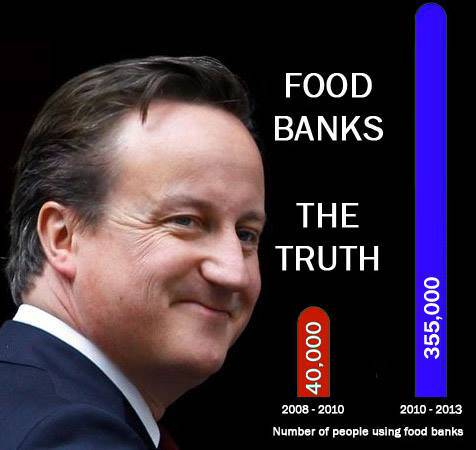
This shouldn’t be happening in 21st century Britain and the Government’s response is hopelessly complacent. People are living under greater pressure and struggling with the cost of living. Hundreds of thousands are forced to turn to food banks and sadly it’s unsurprising people are eating less, and eating less healthily too. David Cameron needs to listen to what the experts are saying and tackle the cost of living crisis that is driving people into food poverty. Cases of malnutrition have been steadily increasing since the 2010 general election:

*In 2009/10 there were 3,899, hospital admissions

*In 2010/11 there were 4,660,  hospital admissions

*In 2011/12 there were 5,396,  hospital admissions

*In 2012/13 there were 5,594, hospital admissions

*In 2013/14 there were 6686, hospital admissions

There has been a rise of 71 per cent from 3,899 in the year up to April 2010.
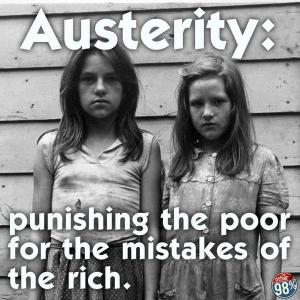


austerity-children


Chris Mould, chief executive of the Trussell Trust which runs a nationwide network of food banks, said:

“This shows increases in diseases related to poverty and that’s alarming. Our food banks see tens of thousands of people who have been going hungry, missing meals and cutting back on the quality of the food they buy. We know quite a large proportion of the population are struggling to get nutritious food on the table. And at the extreme end of that you get people who are malnourished. We don’t believe anyone should have to go hungry in the UK”. The scale of the increases we’re seeing must be further investigated to find out why this is happening.”


NoToAusterity99198633


Scurvy, a disease associated with pirates stuck at sea for long periods – has increased by 31 per cent in England since 2010. This is caused by a lack of vitamin C and is usually due to an inadequate diet without enough fresh fruit and vegetables.


AusterityKillshttps://www.youtube.com/watch?v=t1cUVg8n-uwmh_fitz_fig15-18.tif



Figures from January this year from the NHS indicate that there were 833 hospital admissions for children suffering from Rickets – a condition which is caused by a lack of Vitamin D, from 2012-13. Ten years ago, the figure was just 190.
The disease, which causes softening of the bones and permanent deformities, was common in 19th century Britain but was almost eradicated by improvements in nutrition.

The body produces vitamin D when it is exposed to the sun, but it’s clear that adequate diet plays an important role, too, since the decline of Rickets happened at a time when we saw an improvement in the diets of the nation as a whole.

It is thought that malnutrition is the main cause, children are most at risk if their diet doesn’t include sufficient levels of vitamin D. Low incomes, unemployment and benefit delays have combined to trigger increased demand for food banks among the UK’s poorest families, according to a report commissioned by the government and released earlier this year.

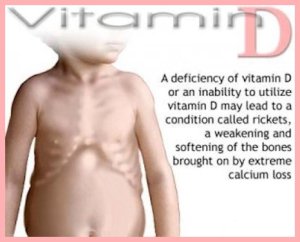


49F59C82-BFEB-4B14-85D4-082875B6E279Symptoms-Of-Rickets-5-300x240
The report directly contradicts the claim from a government minister that the rise in the use of food banks is linked to the fact that there are now more of them. It says people turn to charity food as a last resort following a crisis such as the loss of a job, or problems accessing social security benefits, or through benefit sanctions.

The review emerged as the government comes under pressure from church leaders and charities to address increasing prevalence of food poverty caused by welfare cuts. The End Hunger Fast campaign called for a national day of fasting on 4 April to highlight the issue.

The report was written by food policy experts from the University of Warwick, and it was passed to ministers in June 2013 but had remained undisclosed until February 2014, creating reasonable speculation that the government suppressed its findings.


get-attachment-1013-587x366


Examining the effect of welfare changes on food bank use was not a specific part of its remit, and the report is understood to have undergone a number of revisions since early summer, ordered by the Department for Food and Agriculture and the Department for Work and Pensions (DWP).

The researchers found that a combination of rising food prices, ever-shrinking incomes, low pay, increasing personal debt, and benefit payment problems meant an increasing number of families could not afford to buy sufficient food.
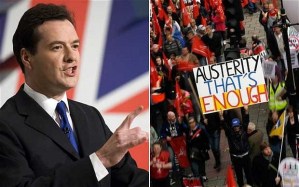


austerity-britain_2537768b
In a letter to the British Medical Journal, a group of doctors and senior academics from the Medical Research Council and two leading universities said that the effect of Government policies on vulnerable people’s ability to afford food needed to be “urgently” monitored.

The group of academics and professionals said that the surge in the number of people requiring emergency food aid, a decrease in the amount of calories consumed by British families, and a doubling of the number of malnutrition cases seen at English hospitals represent “all the signs of a public health emergency that could go unrecognised until it is too late to take preventative action”.


ageofausteritygeorgeosbornedesktop


The health specialists also said: “Access to an adequate food supply is the most basic of human needs and rights”.
The authors of the letter, who include Dr David Taylor-Robinson and Professor Margaret Whitehead of Liverpool University’s Department of Public Health, say that they have serious concerns that malnutrition can have a long-lasting impact on health, particularly among children.

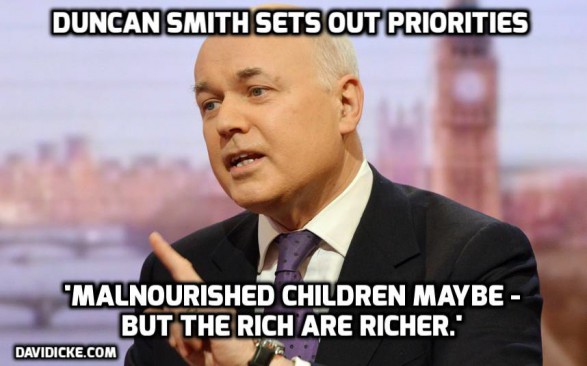
Tory ministers have repeatedly insisted that there is no “robust link” between the welfare reforms and rising food bank use, whilst welfare minister Lord Freud claimed the rise in food bank use was because there were more food banks and because the food was free.
 

COM-1-in-10-older-people-are-suffering-from-or-are-at-risk-of-malnutrition-INFOGRAPHIC


It ought to be noted, not least by the government, that people may only access food banks when they are referred by a professional agency, such as social services, the DWP or a Doctor. In particular, vouchers for emergency food parcels tend to be given by benefits officials.

In all but exceptional cases, Trussell Trust food banks will only issue a food parcel to someone with a voucher from an accredited agency. Claimants are limited to emergency aid on three occasions only. This indicates that need, rather than availability, is the key reason for the increased use of food banks since 2010.


article-2501697-195AD85200000578-424_964x615


Together with the pressure created by rising prices and falling wages, there has been a marked increase in demand for emergency food aid since the welfare reforms came into effect. And this is affecting both people in and out of work.

More than half of people who have visited a food bank since April were referred because of social security problems.


austerity-cau_napoli-6109177990-ccbyncsa2mh


The Government claimed the rapid increase in malnutrition cases “could be partly due to better diagnosis”.

I don’t imagine that it’s likely that Doctors have suddenly become better at diagnosis since 2010.

I do, however, think there is much scope for improvement in the capacity of Tory ministers for understanding correlation, basic cause and effect and simple connections.

However, Tory skills in mendacity, creating diversions and ad hominem are second to none.
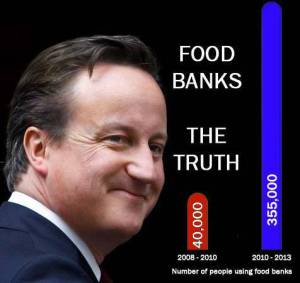


1390648_548165358586330_1740107407_n


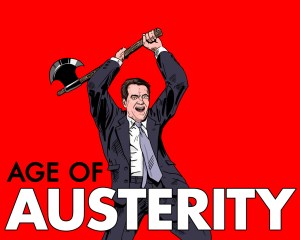
Tory, Labour and Liberal Democrat manifesto’s all broadcast messages of continuing austerity in the next parliament in the years 2015-2020 . Indeed the Tory’s are set to more than double hardship levels for the public. Labour and Liberal Democrats are intent on pursuing similar public punishing measures. These brutality of these agendas will take the UK back to the 1930’s. What a legacy we are passing on to our children.
 

11014676_818762251512308_9136272567327982096_n


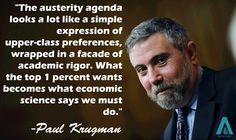
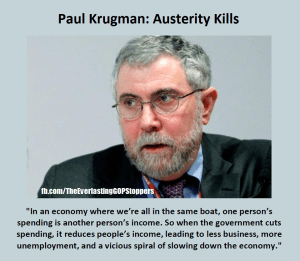
Paul Robin Krugman is an American economist, Professor of Economics and International Affairs at the Woodrow Wilson School of Public and International Affairs at Princeton University, Centenary Professor and Nobel Memorial Prize Winner in Economic Sciences


At the time of the 2010 General Election Paul Klugman urged British voters not to support the opposition  Conservative party in the 2010 General Election, arguing that Party Leader David Cameron “has had little to offer other than to raise the red flag of fiscal panic.”



resizetofit


The Austerity Delusion – Written in 2015 – Paul Klugman Urges the UK to turn away from austerity providing good reasons – All but Nicola Sturgeon are continuing to bury their heads in the sand determined to continue and increase the misery of the UK public

in May 2010, as Britain headed into its last general election, elites all across the western world were gripped by austerity fever, a strange malady that combined extravagant fear with blithe optimism. Every country running significant budget deficits – as nearly all were in the aftermath of the financial crisis – was deemed at imminent risk of becoming another Greece unless it immediately began cutting spending and raising taxes. Concerns that imposing such austerity in already depressed economies would deepen their depression and delay recovery were airily dismissed; fiscal probity, we were assured, would inspire business-boosting confidence, and all would be well.

People holding these beliefs came to be widely known in economic circles as ” Austerians”– a term coined by the economist Rob Parenteau – and for a while the austerian ideology swept all before it.

But that was five years ago, and the fever has long since broken. Greece is now seen as it should have been seen from the beginning – as a unique case, with few lessons for the rest of us. It is impossible for countries such as the US and the UK, which borrow in their own currencies, to experience Greek-style crises, because they cannot run out of money – they can always print more. Even within the eurozone, borrowing costs plunged once the European Central Bank began to do its job and protect its clients against self-fulfilling panics by standing ready to buy government bonds if necessary. As I write this, Italy and Spain have no trouble raising cash – they can borrow at the lowest rates in their history, indeed considerably below those in Britain – and even Portugal’s interest rates are within a whisker of those paid by HM Treasury.

All of the economic research that allegedly supported the austerity push has been discredited

On the other side of the ledger, the benefits of improved confidence failed to make their promised appearance. Since the global turn to austerity in 2010, every country that introduced significant austerity has seen its economy suffer, with the depth of the suffering closely related to the harshness of the austerity. In late 2012, the IMF’s chief economist, Olivier Blanchard, went so far as to issue what amounted to a “mea culpa” although his organisation never bought into the notion that austerity would actually boost economic growth, the IMF now believes that it massively understated the damage that spending cuts inflict on a weak economy.

Meanwhile, all of the economic research that allegedly supported the austerity push has been discredited. Widely touted statistical results were, it turned out, based on highly dubious assumptions and procedures – plus a few outright mistakes – and evaporated under closer scrutiny.

It is rare, in the history of economic thought, for debates to get resolved this decisively. The austerian ideology that dominated elite discourse five years ago has collapsed, to the point where hardly anyone still believes it. Hardly anyone, that is, except the coalition that still rules Britain – and most of the British media.

I don’t know how many Britons realise the extent to which their economic debate has diverged from the rest of the western world – the extent to which the UK seems stuck on obsessions that have been mainly laughed out of the discourse elsewhere.

George Osborne and David Cameron boast that their policies saved Britain from a Greek-style crisis of soaring interest rates, apparently oblivious to the fact that interest rates are at historic lows all across the western world.

The press seizes on Ed Miliband’s failure to mention the budget deficit in a speech as a huge gaffe, a supposed revelation of irresponsibility; meanwhile, Hillary Clinton is talking, seriously, not about budget deficits but about the “fun deficit” facing America’s children.

Is there some good reason why deficit obsession should still rule in Britain, even as it fades away everywhere else? No. This country is not different. The economics of austerity are the same – and the intellectual case as bankrupt – in Britain as everywhere else.

http://www.theguardian.com/business/ng-interactive/2015/apr/29/the-austerity-delusion


942836_577992482234692_1426885242_n1dcb5d4fb166d8a14ea023b6885588eae11-Sturgeon-getty


The SNP manifesto provides an agenda for change abandoning the failed austerity programme of the other parties in favour of growth  expanding the economy, creating jobs, security, and wages. This is a proven methodolgy which will do much to lessen the hardship of the UK public since it will bring about a transfer of money away from the richest 1% back to the public purse for use in expansionist programmes.




11013081_599357796860910_9185575790238061152_n 11021206_10153211719656979_8880438414920498678_n10888749_1057572220936088_6523621674862155261_n


Rigging the Currency

21 JUL 2014

Britain’s anti-fraud agency has launched a criminal investigation into alleged rigging of the $5.3 trillion (3.1 trillion pounds)-a-day currency market.

“The director of the Serious Fraud Office has today opened a criminal investigation into allegations of fraudulent conduct in the foreign exchange market,” the agency said in a statement.

It is alleged that traders used online chat-rooms to collude in the fixing of benchmark prices.
Scrutiny is focused on activity around London’s 4 p.m. currency fix, a 60-second window where key exchange rates are set. These prices are used as reference rates for trillions of dollars of investment and trade globally.
http://uk.reuters.com/article/2014/07/21/uk-fx-investigation-britain-idUKKBN0FQ19M20140721