The Unionist Scottish Fishermen’s Federation Leadership Are Spreading the Mists of Uncertainty Over Fishery Policies Post Brexit – This Should Clear the Air a Bit


The Laws of the Sea Convention

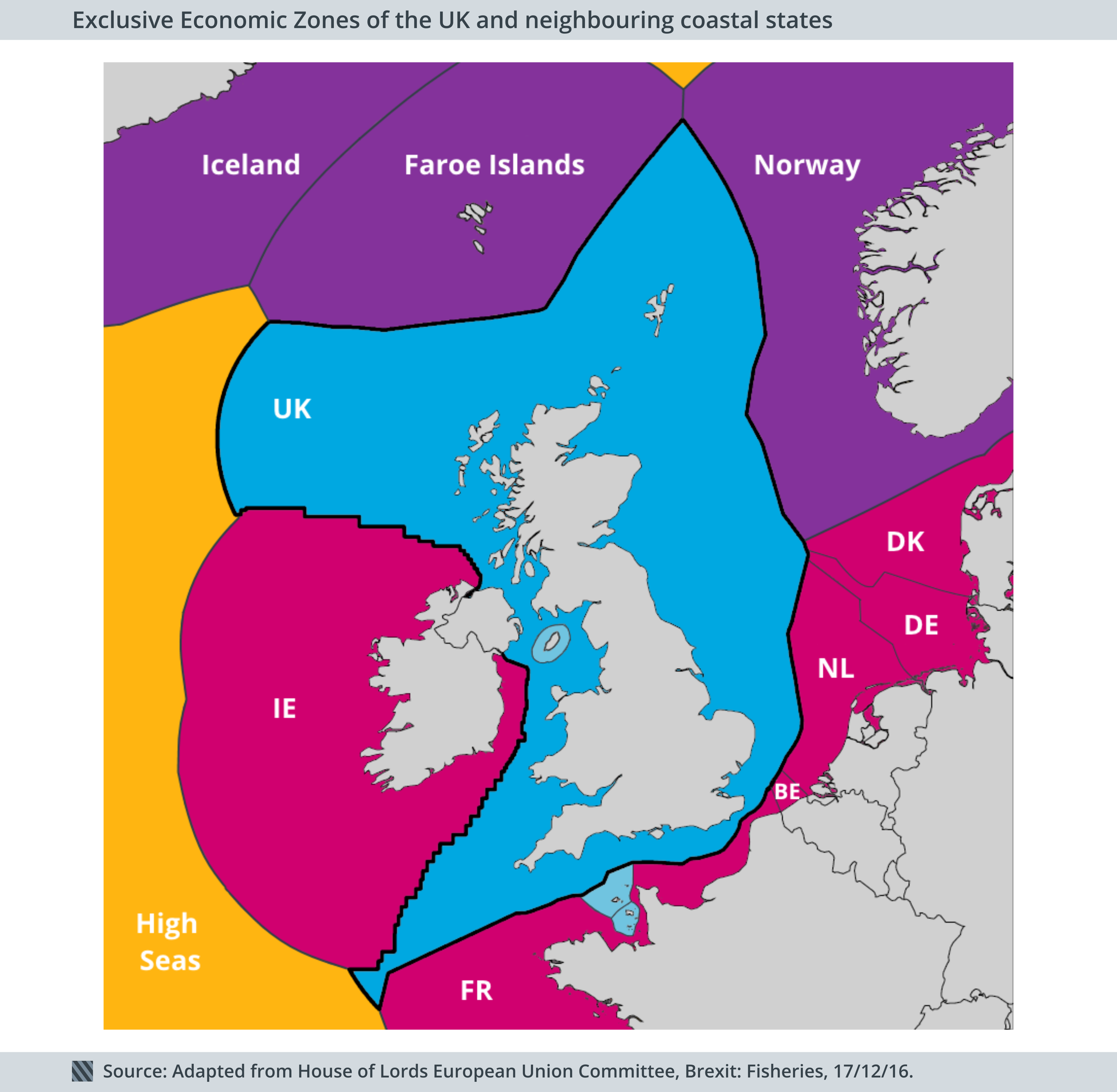
The Convention allows countries to establish an exclusive economic zone up to 200 nautical miles from the coast.

When UK leaves the EU it will have control of all fish within this zone.

But, there are “riders”, the laws place a commitment on countries to ensure fish stocks are conserved and allowable catches are specified and where applicable shared with other countries.

Norway which is not a member of the EU, maintains a 200 nautical mile exclusive economic zone, but it has agreements in place with a number of countries, both outwith and within EU allowing fishing in its waters.


The EU Common Fisheries Policy – How it Works

All member countries of the EU, with a fishing industry are allocated an annual fishing quota, being a share of the “total allowable catch” (TAC) within EU waters, for each type of fish, set by the European Council of ministers.

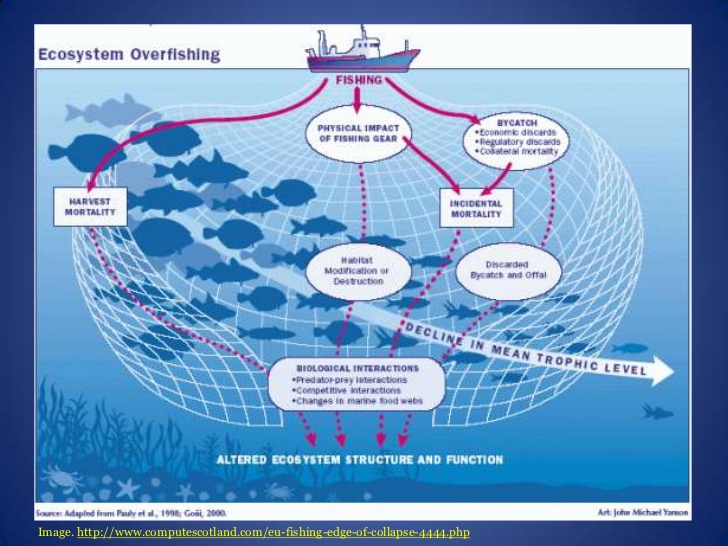
Quota’s are necessary to ensure fishing is sustainable and EU waters are not overfished.

In the case of non EU countries where fishing resources are shared E.G. Norway, similar quotas are put in place.

The quota system evolved through discussion over many years is now relatively stable and fair and is unlikely to change in the near future.

The UK was disadvantaged at the time it joined the EU since quota’s were allocated against the fishing patterns of member countries and the UK fishing fleet mainly operated in Icelandic waters, until 1976 and the introduction of the 200 mile exclusion zone which required the UK to give up fishing in Icelandic waters.

The quota system does not give licence to EU countries to fish anywhere within UK waters.

It is for each member state to permit or deny fishing rights and quotas up to 100 miles, for fleets that have traditionally operated in the area.

The laws applicable to this quirk time out in 2022 and it is doubtful they would be renewed after Brexit.


UK Fishing Catch 2004-2015

The UK catch has increased year on year between 2004 and 2014.

Total fish landed in 2004 was approximately 650,000 tonnes.

Annual increases in quota’s have increased the catch to the present day 775,000 tonnes.

The largest catch of any country in the EU.

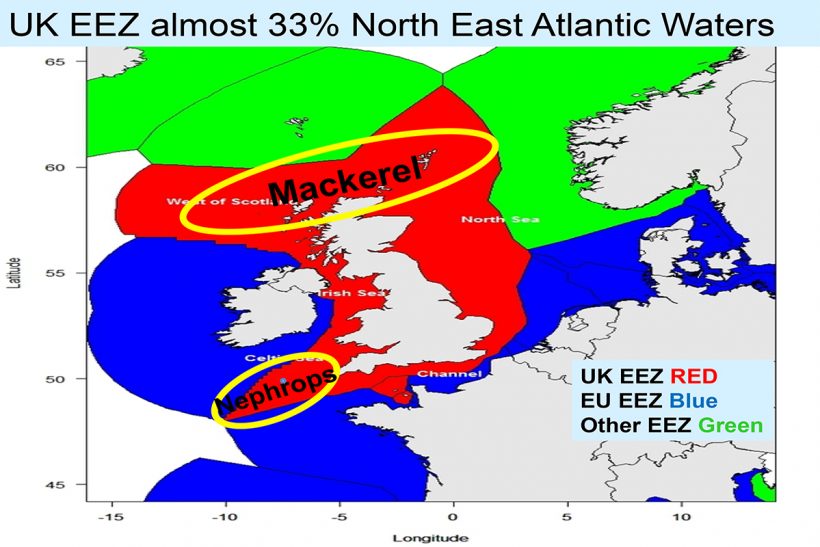
The UK (TAC) is estimated to be just over 30% of catchable fish in EU waters.

Discussions are on-going and it is expected the UK quota will be increased further in respect of cod stocks of which are increasing.


4 Dec 2015: Fish quota boost after Norway and EU talks

Significant increases in fishing quotas for Scottish fishermen have been agreed for key stocks in 2016.

The deal followed talks between the EU and Norway.

It was agreed that the total allowable catch (TAC) for cod could increase by 15% and North Sea herring by 16%.

Haddock catches were given a 30% boost with an extra 17% for vessels affected by the discard ban, taking the total increase to 47%.

Scottish Fisheries Secretary Richard Lochhead said: “These significant increases for both haddock and cod, in line with scientific advice, are good news for the fishing industry.

Following a year which saw landings up by nearly a fifth and revenues worth over £500m these increases in quota mean fishermen can further boost catch and profits and could be worth over £15m.

This will also help the fleet manage the discard ban, which will stop dead haddock being thrown back into the sea, which will in turn improve the stocks of fish.”

Conservative MEP for Scotland Ian Duncan said decisions for every species have yet to be taken, but he voiced his delight with the outcome reached on Friday.

He said: “Let me be clear, on the whole this is a fantastic result for the Scottish fishing industry and I pay tribute to them and all the hard work and pain they have endured over the last decade or so to be in a position today that sees cod TAC increase by 15% to 27,930 tonnes in EU waters.

Considering where we were not that long ago, this in itself would be incredible.

But the news for haddock; an increase of almost 50% and north sea herring; an increase of 16% on top of the cod figures leaves the industry in very good heart this evening.”

Bertie Armstrong, chief executive of the Scottish Fishermen’s Federation, said: “This agreement reflects the healthy nature of our stocks and will bring some welcome relief to our hard-working fishermen who are committed to a sustainable future.

Challenges remain, and while the quota uplift for haddock and other stocks to cope with the discard ban will be welcomed, only time and a great deal of effort from fisheries managers, the Scottish fleet and the supply chain as whole will help ensure the discard ban scheme works when it is phased in from 1 January 2016.


16 August 2016: The Repeal Bill – Regaining Control of Scottish waters – Scottish Fishermen’s Federation Statement

Brexit provides a once in a lifetime opportunity to restore normality and give our industry a real chance to prosper once again.

But what do I mean by restoring normality? Well, leaving the EU returns us to a position enjoyed by coastal states around the world in giving us control of the Exclusive Economic Zone (EEZ) around our coast.

Control of our fishing was traded away when we joined the European Economic Community in 1973. Our waters became “common grazing”.

Just look to Norway to see how its seafood industry has prospered outside the EU whilst ours suffered from being within.

The central point is that on Brexit the UK will be in charge of its own EEZ.

We will have the critical mass to control the bulk of fishing on the northern continental shelf, with some of the best fishing grounds in the world.

Nobody will suggest that we should overfish, ignore the science, immediately refuse access to other countries or suddenly abandon cooperation, but we will at last be a normal coastal state under international law, forging regulation, access and opportunity to fit our newly recovered rights.

In other words, we will be the managing partner of our EEZ and will be able to lead the way in developing fit-for-purpose management that will enable fishing to sustainably develop.

It has the potential to deliver a fishing management structure in our EEZ that supports communities, jobs, sustainable fishing and proper environmental protection.

It also gives us the chance to deliver fairer shares of catching opportunities in UK waters; our fish, our rights. That surely is a prize worth pursuing.

The kindest thing we can be say about the Common Fisheries Policy, given 28 Member States, the existence of the European Parliament of 751 MEPs and the decision-making processes of the European Union, is that if a least-worse option is achieved on any issue affecting the Scottish fleet, then it’s a matter for celebration.

Over the past 40 years the management of our fisheries through the (CFP) has been lamentable with this distant, centralised and monumentally inefficient management regime producing an endless stream of largely dysfunctional rules and regulations.

There is no doubt that the Brexit negotiations will be a difficult process, and the transition process will prove challenging.

Indeed, we have real fears that during the complex negotiations that a ‘conciliatory’ settlement will be made on fisheries with the aim of securing concessions elsewhere.

Such form of double jeopardy would be unacceptable – having been seriously damaged in the cause of EU entry, the fishing industry must not be damaged at EU exit, especially when there is so much potential to deliver economic benefit to the UK.

But make no mistake, the size of the prize is enormous, and if the right deal is reached on Brexit, it will turn us back into a world-class seafood harvesting and exporting country. (SFF)


18 Apr 2017: EU to contest UK efforts to ‘take back control’ of fisheries

The British government’s plan to “take back control” of its waters after leaving the EU is to be challenged by a claim from eight fishing states that their fishermen have a historical right to access to the seas around Britain dating back to the 1400s.

They are insisting that any Brexit deal recognises the right of their fleets to continue to exploit many shared stocks of species including cod, herring, mackerel, plaice and sand eel.

The development suggests that leaving the EU will not reap all of the dividends to Britain promised by prominent leave campaigners.

EU Officials said that 40% of their fishermen’s annual take is from waters within the 200-nautical mile exclusive economic zone around Britain and in consequence their coastal fishing communities are almost entirely economically dependent on access to UK waters.

They estimate that a loss of access to British waters would lead to a reduction of about 50% in European fleets’ net profit and the loss of 6,000 full-time jobs.

The strength of the EU “claim of right” is supported by the UN convention on the, “law of the sea”, to which the UK and EU countries are signatories, which instructs states to respect the “traditional fishing rights” of adjacent countries within sovereign waters.

The quota system currently in place within the EU is evidence of a historical right of access since they are firmly based on fishing patterns in place well before the existence of the EU.

A senior EU fishing policy negotiator said: “We have a common sea basin where we can fish. We have always had that.

The British claim of getting back their waters is a nonsense, because they never had them in the first place.

The waters might well be British but fish are transient and belong to no-one. (The Guardian)


10 May 2017: Tory duplicity on Fishing policy post brexit

The Tory policy on fishing, post Brexit is becoming clear.

In a letter to British fishermen’s leaders the Environment Secretary Andrea Leadsom suggested Tories were: “committed to ongoing cooperation with other countries over the management of shared stocks “.

A Scottish government spokeswoman said: “The cat is now out of the bag – while Ruth Davidson was recently in the North-east maintaining the pretence that the Tories were the Scottish fishermen’s friends, her Westminster bosses were plotting a gigantic sell-out.” (The Express)


“Fishing for Freedom: Lessons for Britain from Iceland’s fisheries experience”,

the analysis of an Icelandic expert based on his country’s experiences right back to the Cod Wars of the 1970s indicates that the UK should follow the example of its northern neighbours Iceland and Norway when it comes to managing fisheries – because they have been far more successful than the EU at conserving stocks and sustaining coastal communities.

Extracted comments from the analysis:

“The experience of Iceland and Norway emphasises the importance of having full authority over the fishing sector, the importance of sustainable and responsible management and of keeping the domestic fishing grounds, as a general rule for local fishermen for the benefit of the whole country”.

“Britain, post Brexit, as a sovereign country, will have an absolute and undisputed right to a 200-mile Exclusive Economic Zone (EEZ) or the median line under the UN Convention on the Law of the Sea (UNCLOS)”.

“Traditional fishing rights, real or purported, of other countries cannot override the Convention, otherwise no country would ever risk allowing fishing vessels from other countries to fish its waters.”

“Consequently, the EU and its member states have no legal arguments for demands to continue fishing in British waters as before. And they are very well aware of that”.

The British people both have strong conservation arguments on their side, like Iceland during the Cod Wars in the latter half of the 20th century, due to the failures of the Common Fisheries Policy (CFP) but also the sovereign right to a 200-mile EEZ which is today guaranteed by international law”.

“Leaving the EU offers the British government a once-in-a-lifetime opportunity to fundamentally rethink the way British fisheries are managed, with a long-term view of how the sector may prosper in the future, taking note of the best practices of other countries and ensuring sustainability and the creation of valuable British jobs.”

A Scottish Fishermen’s Federation spokesman said: “These are exactly the arguments we have been making to our governments, and what better validation of them than the experience of those fisheries nations outside the EU and its disastrous CFP. Iceland and Norway have different but successful fisheries management regimes and a much better record for sustainability – that is what we must insist upon for our indigenous industry.” (SFF)


2 Jul 2017: UK to ‘take back control’ of waters after exiting fishing convention

Michael Gove announced withdrawal from the 1964 “London Fisheries Convention” which allows vessels from the UK, France, Belgium, Germany, Ireland, Denmark and the Netherlands to fish within six nautical miles of each other’s coastlines. Interviewed by Andrew Barr he said:

“When we leave the European Union we will become an independent political state and that means that we can then extend control of our waters up to 200 miles or the median line between Britain and France, and Britain and Ireland.

One critical thing about the common fisheries policy is that it has been an environmental disaster.

And one of the reasons we want to change it is that we want to ensure that we can have sustainable fish stocks for the future … I think it’s important that we recognise that leaving the European Union is going to help the environment.” (SFF)


2 Jul 2017: The World Wildlife Fund and Greenpeace Offer a View

The head of campaigns at WWF, said:

“Achieving sustainable fishing is about much more than which country fishes where. It is about ensuring that fishermen use the right fishing gear, that fishing takes place at levels that maintain sustainable stocks and that we pioneer ways to monitor what is happening at sea in order to understand the impacts of fishing.

Leaving the EU means we could get these things right, but we will still need to cooperate with our neighbours, as fish do not recognise lines on a map.” (SFF)

Greenpeace UK’s head of oceans, said:

“For years, successive UK governments have blamed Brussels for their own failure to support the small-scale, sustainable fishers who are the backbone of our fishing fleet.

If Brexit is to herald a better future for our fishers, the Conservative party manifesto must honour the commitment to rebalance fishing quotas in favour of ‘small-scale, specific locally-based fishing communities’.”

A consultant at the environmental law firm ClientEarth, describing the move as a negotiating tactic, said:

“As a country outside the EU, we need to consider how we can best cooperate with our neighbours rather than unilaterally withdrawing from all agreements in the hope that standing alone will make us better.

Many fish stocks in UK waters are shared with our neighbours and so need cooperation and shared management.” (SFF)


3 Aug 2017: EU fishing boats can still operate in UK waters after Brexit

Gove, who was made environment secretary after June’s election, told the Danish fishing industry that Britain does not have the capacity to catch and process all the fish in British waters and thus boats from EU nations would be allowed continued access post-Brexit.

His comments prompted complaints from the Lib Dems and SNP that the government’s stance on the issue was confused.

Gove had previously said Britain was “taking back control” of its fisheries by departing from the EU common fisheries policy, which lets member states fish between 12 and 200 nautical miles off the UK’s coastline.

He also announced Britain’s withdrawal from the London fisheries convention, signed before the Britain joined the EU, which lets vessels from Britain, France, Belgium, Germany, Ireland and the Netherlands fish within between six and 12 nautical miles of each other’s coasts.

A Defra spokeswoman said the issue was that the UK would be able to control which foreign ships fished within its territory. “Leaving the EU means we will take back control of our territorial waters,” she said. “As we have always said, other countries will be able to access our waters – but for the first time in 50 years it will be on our terms and under our control. “We will allocate quotas on the basis of what is scientifically sustainable, making sure we have a healthy marine environment and profitable fishing industry in the UK.”


Friday 15 September 2017: Overfishing in the North Sea to be curtailed by EU

The European parliament has voted on a series of measures reducing overfishing in the North Sea. The vote imposes limits to fishing quotas so that they cannot exceed levels regarded as sustainable by scientists. The North Sea is one of Europe’s biggest fishing grounds, especially for key commercial species such as cod and haddock.

The Department for Environment, Food and Rural Affairs said: “Britain welcomes the vote on the North Sea Multi-Annual Plan which aims to secure the long-term sustainability of North Sea fish stocks and provide stability for fishermen in the region.

As we leave the European Union, we will continue to work closely with our neighbours to champion sustainable fishing.

Once we have taken back control of our waters, we will be able to ensure our fish stocks are managed more sustainably while also helping the UK fishing industry to thrive.

The multi-annual plan has the potential to end overfishing in the North Sea and provide healthy stocks and productive fisheries.

It is now the responsibility of EU fisheries ministers to make urgent progress in delivering it.


15 September 2017: The Multi-Annual Fishery Plan

The plan, recently approved by the EU, at last curtails damaging political interference, introducing from 2018, scientific management of EU fishing stocks.

At present, more than 40% of fish stocks in the North Sea – the most productive sea in Europe – are overfished.

Scientists estimate that if managed sustainably, stocks could produce an additional 1.45m tonnes of fish a year within the next 10 years.

Key species could fare well under a stock protection programme, meaning catches of cod and haddock could be increased fourfold within a decade.

Britain leaving the (CFP) could bring with it increased pressure on fish stocks as sustainability targets agreed by the EU would no longer be binding on Britain, and EU fisheries ministers would come under pressure from their domestic fishing fleets to allow greater catches in order to compete with the UK.

Environmental groups fear that the steady progress towards recovering fisheries stocks, hard won over the last two decades, could be wiped out in such a scenario. (The Guardian)


Comment:

If wise council prevails Britain will retain full membership of the EU common fisheries policy (CFP).

Seas are sub-divided simply by drawing a line on a map but fish belong to no-one.

Reflecting on personal experience a while back, in the North Sea we identified a potential catch near to the Scottish-Norwegian sea boundary.

Unwilling to give up the chase the skipper pursued and caught up with the target.

We returned home happy and well paid for our time away.

The primary catch was completed 20 miles inside Norwegian waters, which was legal. The EU has an agreement in place with Norway. A tangible benefit of the (CFP)

The Scottish fishermen’s leadership is comprised of very rich individuals whose political allegiance is tied to the Tory party regardless of any adverse effects which could be visited upon 5000 Scottish fishermen and their dependents should Britain divorce itself completely from the (CFP)

An uncertain future, without or with at best, a much restricted access to the EU market would bring great hardship to the Scottish Fishery, without any guarantee of new markets in the long term.

All of the foregoing coupled with the added disadvantage that control of their destiny is still dependent on Westminster governments whose support of Scottish Fisheries has been so appalling for so long.

If Scottish Fishermen really wish to establish control of their own destiny they should abandon any policy which ties their future to Westminster whose first commitment is always to protect the English fishing market.

Scottish independence is the way forward for Scottish Fisheries. Independence will ensure decisions about fishing policy will always be arrived at with the full support    of and in the interests of Scottish fishermen.


The Once Proud and Powerful Scottish Liberal Democratic Party Membership Should Exercise Its Right and Get Shot of Willie Rennie as leader if It Is to Survive


The remorseless decline of the Liberal-Democratic Party in Scotland

2007:

In the 2007 Scottish Parliament elections, the party won one fewer seat than in the two previous Scottish elections.

The experience led to criticism of the party’s election strategy.

Although it was arithmetically possible to form a majority coalition with the Scottish National Party and the Scottish Green Party, the party refused to participate in coalition negotiations because of a disagreement over the SNP’s policy of a referendum on Scottish independence, and sat as an opposition party in the Parliament.

The Tories, stepped forward and agreed to support the SNP minority subject to agreement to implement a number of measures, in the Tory manifesto.

2008:

On 2 July 2008, Party Leader, Nicol Stephen was dumped.

The former deputy leader Michael Moore MP served as acting leader of the party until Tavish Scott MSP was elected party leader on 26 August 2008.

2011:

At the 2011 Scottish Parliament elections, the party lost all its mainland constituencies, retaining only the two constituencies of Orkney and Shetland.

It also secured three List MSPs.

This was by far the party’s worst electoral performance since the re-establishment of a Scottish parliament in 1999.

Tavish Scott was dumped. Willie Rennie stepped forward and was elected leader unopposed.

2014

At the 2014 European Parliament elections, under the leadership of Willie Rennie, the party lost its only MEP.

2015

At the 2015 general election, under the leadership of Willie Rennie, the party lost 10 of its 11 MPs with only Alistair Carmichael narrowly retaining Orkney and Shetland with a 3.6% majority.

2016

At the 2016 Scottish Parliament elections, again under Willie Rennie’s leadership, the Party had 5 MSPs elected but was pushed into last place in Holyrood by the Scottish Greens.

While it gained the 2 constituency seats of Edinburgh Western and North East Fife from the SNP, its vote share was reduced further.


The Decline appears to be Terminal

Election

1999: Share of seats: 13%

2003: Share of seats: 13%

2007: Share of seats: 13%  Nicol Stephen dumped following disastrous performance. Tavish Scott took over.

2011: Share of seats: 4% Tavish Scott dumped following disastrous performance. Willie Rennie took over.

2016: Share of seats:  4% Wee Willie produced another disastrous performance but hangs on, no-one interested.


The European Referendum outcome – The Scottish Lib-Dem Party public statement

In the early hours of the morning of June 24th, everything we understood about the UK’s relationship with the rest of Europe changed.

The European Union and our belief in its goals of peace and economic prosperity is an enormous part of what it is to be a Liberal Democrat.

We are internationalist, co-operative, tolerant. And as that reality sank in we realised there was another consequence: What did this mean for our relationship with the rest of the UK?

And that is why Liberal Scotland in Europe has put forward a motion to this autumn’s Scottish Conference which aims to keep the party’s, and Scotland’s, options open.

Other parties may only be about unionism or nationalism, but the Liberal Democrats are about more than that. Our policies are decided by the membership, and as a membership we need to live up to our radical traditions and take on the challenge of finding a creative way forward for Scotland.

We want to encourage our leadership to explore all possibilities, with all parties, to pursue the best possible outcome for Scotland.

This period of political history may prove to be the most significant for our constitution in 300 of years.

It is for the Scottish Liberal Democrats membership to decide what role the party will play and what route we will choose.

But if we are to secure the best future for Scotland and the strongest relationship with both the UK and EU, we will need to leave no possibility unexplored.


Willie Rennie – a disastrous party leader and tediously boring speaker in Holyrood needs to give up the reins of leadership to a better qualified person

Witness his cynical manipulation of the Scottish Lib-Dem conference, (poorly attended by approximately 120 Delegates)

The afore-stated motion, proposed by Party members was not put to the wider party membership for discussion and likely implementation in the Party manifesto and was not excluded from discussion at the conference agenda.

The under-noted substitute proposal was included, with the full support of Willie Rennie

This substitute motion was placed before the conference by MSP for Edinburgh Western, Alex Cole-Hamilton encouraging the party to:

* seek to win support for a public vote across the whole UK on the final EU deal;

* persuade the rest of the EU to be pragmatic in response to such demands;

* work with colleagues across the UK to be the UK-wide rallying point for all those who are pro-EU;

* and campaign for re-entry in the event of EU withdrawal.

The motion was carried by conference and included in the Lib-Dem party manifesto – but conference votes are not binding on the Party membership.


Westminster Debate Israel-Palestine – Tory MP for Aberdeen South – Ross Thomson – seizes his chance to donate his own weird and wonderful interpretation of recent historical events


Westminster Debate Israel-Palestine – Tory MP for Aberdeen South – Ross Thomson – seizes his chance to donate his own weird and wonderful interpretation of historical events

In yesterday’s General Debate on Israeli-Palestinian Peace Talks, Conservative MP Ross Thomson said that his visit to Israel and the West Bank last year with CFI provided him with “the greatest insight possible into the issues” after “being able to speak to people on the ground, on both sides of the conflict”.

He described Israel as “a country that celebrates diversity”, where “you will find churches, mosques and synagogues standing almost side by side, and see Jews, Muslims and Christians living alongside each other in peaceful coexistence”.

He added that Israel is “truly is a beacon of democracy and hope in a troubled region”.

The MP for Aberdeen South expressed his deep concern over Boycott, Divestment and Sanctions (BDS) protests in his constituency, where anti-Israel activists have tried to drive an Israeli cosmetics company out of business, displaying “poisonous and divisive banners stating: ‘Anti-Semitism is a crime, Anti-Zionism is a duty'”.

He joined Conservative parliamentarians in calling for the Home Secretary to proscribe Hezbollah in its entirety, stating that “Hezbollah cannot be forgiven for its criminal, terrorist, or militant pursuits simply because it engages in political or humanitarian ones”.

The Conservative MP outlined the main obstacles to the advancement of peace, which include “Hamas’s rearmament drive in Gaza and internal fighting between Hamas and Fatah”, but underlined that as we “proudly mark the centenary year of the Balfour Declaration, we are presented with a unique opportunity to renew the Middle East Peace Process”.


Note:

But, “he walks on water” Ross rarely gives voice in public, except to advance his own agenda, in this case protests by Aberdonian’s about trade links with Israel. His contribution to the debate distorts facts, to his benefit and his colleagues, pertaining to the Tory Party delegation working holiday to Israel. And I have added a correcting record of events below.


Tory MSP’s enjoy an all expenses paid trip to Israel

The Electoral Commission released figures detailing expenses totalling £12,000 paid to six Conservative MSPs by the lobby group, Conservatives for Israel (CFI).

Data confirmed that the MSPs were each given £2,000 by the group, financed through Jewish sources, who support the maintaining of business, social and security connections between the UK and Israel in the political arena.

The financial gift fully funded the working holiday to Israel by the MSPs.

The group included:

The director of the Scottish Conservatives, Mark McInnes

The Scottish Conservative chief whip, John Lamont.

The shadow justice secretary, Douglas Ross.

The shadow economy, jobs and fair work cabinet secretary, Dean Lockhart.

The shadow environment secretary, Maurice Golden.

The tourism and small businesses spokeswoman, Rachel Hamilton>

The community safety spokesman, Oliver Mundell.

The digital economy spokesman, Jamie Greene.

The further education, higher education and science spokesman, Ross Thompson

The welfare, reform and equalities spokeswoman, Annie Wells.


November 2016: High-Level, Scottish Tory Party pro-Israel lobby group visit to Golan Heights

The UN, in 1981, issued a resolution saying that Israeli occupation of the Golan Heights was illegal.

The strategic ridge was captured by Israel from Syria during the 1967 Six Day War and formally annexed in 1981.

Since then, every year the UN passes a General Assembly resolution titled “The Occupied Syrian Golan” which reaffirms the illegality of the Israeli occupation and annexation.

A high-powered group of ten Scottish Tories visited an Israeli settlement in the occupied Golan Heights.

Called ‘Building Bridges with Israel’, the group was recently set up in a bid by the Tory Party to oppose anti-Semitism and offer an ‘alternative viewpoint’ to what it says is a pro-Palestinian stance that has been dominant since the Scottish Parliament’s inception in 1999.

The Scottish Palestine Solidarity Campaign, (formally given the support of the Holyrood parliament) strongly opposed the Scottish Tory Party pro-Israel lobby group’s message.

Their spokesman said: “Israel doesn’t build any bridges, it demolishes homes, farms and is demolishing Palestine.”

Al-Marsad, the only human rights organisation operating in the Golan Heights, is at loggerheads with the group after raising concern about the visit to the Golan Heights winery in Katzrin.

They say the delegation did not contact Al-Marsad or other representatives of the Syrian community in the “occupied Syrian Golan” to get a “balanced view”.

And they say they have repeatedly failed to get an explanation for the visit to the territory or any condemnation of the illegal settlement.

Al-Marsad, described as an independent, not-for-profit international human rights organisation, said it was “highly concerned” that the visit sends the message that Scotland endorses the illegal activities of such settlements.
http://www.impartialreporter.com/news/14884171.Ruth_Davidson_slammed_over_high_level_Tory_visit_to_illegal_Israeli_settlement/


Response by Al-Marsad, the Arab Human Rights Centre in The Golan Heights

Al-Marsad, which has previously voiced concern over what it deems Israel’s “ethnic cleansing” of the Syrian Arab population in the Golan, say they have written two letters to Ms Davidson asking in particular about the visit of the Scottish parliamentary pro-Israel lobby group to “occupied Syrian Golan” but without response.

Dr Nizar Ayoub director, said “Given this lack of clarification, I am highly concerned that the Scottish pro-Israel lobby group (Scottish Conservative party) appears to condone the construction and expansion of Israeli settlements – illegal under international law – in the occupied Syrian Golan.”

He went on to say: “it is “highly concerning” if human rights issues, in particular, in the occupied territories should not be “not considered or trumped by business interests”.

Dr Nizar Ayoub told Ms Davidson in his letters: “As I imagine that you are aware, such settlements are illegal according to international law, and their construction and expansion at the expense of the native Syrian inhabitants have been repeatedly condemned by the international community.

I am highly concerned that the delegation has visited a winery in an illegal Israeli settlement without providing any explanation of the purpose of the visit.

In effect, this sends a message that the Scottish parliamentary pro-Israel lobby group (Scottish Conservative party) endorses the illegal activities of this settlement – built on land illegally appropriated from its original Syrian owners.

Even more worrying is the fact that the Scottish pro-Israel lobby group (Scottish Conservative party) has refused to answer questions about whether the delegation raised the broader issue of the expansion of illegal Israeli settlements in the occupied Syrian Golan during its visit.”

He was further concerned that, describing the visit, Mr Lamont said “on Israel’s northern border with Syria we witnessed first-hand the devastating civil war raging metres away from Israel”

Dr Ayoub reminded Ms Davidson that: “The only part of Syria that Israel borders is the occupied Syrian Golan. The fighting in Syria is not taking place metres away from Israel, it is taking place metres away from the occupied Syrian Golan.

From Mr Lamont’s comments, it appears that he considers that the occupied Syrian Golan is part of Israel, which it is not.”

He added: “I am highly disappointed that the delegation did not contact Al-Marsad or other representatives of the Syrian community in the occupied Syrian Golan in order to discuss the daily challenges faced by the remaining native Syrian population in the Syrian Golan due to Israel’s illegal occupation.

This would have ensured that the delegation obtained a more balanced view of the situation in the occupied Syrian Golan.”  (http://golan-marsad.org/)


Lest Ye Forget – The aftermath of the 2014 Scottish Referendum


THE NO CAMPAIGN’S BROKEN PROMISES

The EU During the referendum, the Better Together website said : ‘Scotland enjoys membership of the EU because of our membership of the UK and if we no longer are members of the UK then it follows that we are no longer are part of the EU…
( http://web.archive.org/web/20140914205737/http:/bettertogether.net/blog/entry/eu-cant-trust-them)

Ruth Davidson said “I think it is disingenuous of Patrick [Harvie] to say that No means out and Yes means in, when actually the opposite is true, No means we stay in, we are members of the European Union.”

Better Together tweeted saying: “What is process for removing our EU citizenship? Voting yes. (https://twitter.com/hashtag/scotdecides?src=hash)


Devolution – The future is for Scots to decide

In the STV referendum debate, Ruth Davidson said “It’s disingenuous to say No means out and Yes means in, when actually the opposite is true. No means we stay in.”

Now, Scotland faces being dragged out of the EU against our will in the aftermath of the UK’s vote for Brexit. Extensive new powers

The then three Westminster party leaders promised “extensive new powers” for the Scottish Parliament.

However what they actually legislated for left decisions about 70% of Scottish taxes and 85% of current UK welfare spending in Scotland in the hands of the Westminster government.

The STUC and numerous third sector groups expressed disappointment at the limitations of what was finally legislated for.

The cross-party Devolution (Further Powers) Committee said that the Scotland Bill “falls short” in “critical areas”. (http://www.parliament.scot/newsandmediacentre/89468.aspx)

A YouGov poll in September 2015 found that only 9 per cent of people in Scotland believe that the promise of “extensive new powers” was delivered.


Power lies with the people of Scotland

In a joint statement of 5 August 2014 David Cameron and the Scottish Tory leader Ruth Davidson -along with the other party leaders, signed a pledge saying: “Power lies with the Scottish people and we believe it is for the Scottish people to decide how Scotland is governed.” (http://www.newstatesman.com/politics/2014/08/party-leaders-unite-promise-more-powers-scotland)

Yet when the very same people power supposedly lay with voted for 56 of Scotland’s 59 MPs to be SNP on a platform of even more powers within the UK the Tories MPs vote against those proposals and let 1 MP of Scotland’s 59 to decide to veto them.


Shipbuilding

Before the referendum, the No campaign said jobs in shipyards would be under threat if there was a Yes vote –including a leaflet saying that ‘Separation Shuts Shipyards’ and making promises that “Govan and Scotstoun will get the order for 13 Type-26 frigates from the Royal Navy”.

Better Together tweeted saying that a No vote would “ensure the future of Scotland’s shipbuilding industry.” (https://twitter.com/UK_Together/status/345468209916428289)

However, on 7 November 2015, the Scotsman reported that the programme could be slashed because funding was required to pay for Trident. (http://www.dailyrecord.co.uk/news/scottish-news/live-800-workers-set-go-2681909)

On 23 November 2015, the UK government announced that the number of frigates that would were intended to be built had been reduced from thirteen to eight.
The UK Government then announced the number of frigates would be reduced from thirteen to eight. (http://www.defensenews.com/naval/2015/11/23/royal-navy-to-reduce-frigate-buy-design-lighter-warship/)

It has since been reported that the continued delays to the works are to be delayed still further risking jobs on the Clyde in the process. (https://stv.tv/news/politics/1358829-no-warship-deal-until-value-for-money-is-ensured/)


Energy

At PMQs David Cameron argued for a No vote on basis that “…when it comes to vital industries like green technology, the combination of a green investment bank sponsored by the United Kingdom Government and the many natural advantages that there are in Scotland can make this a great industry for people in Scotland—but we will do that only if we keep our country together”. (http://www.telegraph.co.uk/news/uknews/scotland/8869455/David-Cameron-backs-report-warning-of-rising-energy-bills-in-independent-Scotland.html)

Also on 7 April 2014 Energy and Climate Change Secretary Edward Davey said: “The broad shoulders of the United Kingdom is unlocking the power of Scotland to take its place as one of the world’s great energy hubs -generating energy and generating jobs”. (http://www.telegraph.co.uk/news/uknews/scotland/8869455/David-Cameron-backs-report-warning-of-rising-energy-bills-in-independent-Scotland.html)

After the referendum on 18 June 2015 the BBC reported: “Scotland could lose £3bn in investment because of a UK government decision to exclude new onshore wind farms from a subsidy scheme a year earlier than planned, an industry body has said. ( http://www.bbc.co.uk/news/uk-scotland-scotland-business-33182367)

It was reported that German company Siemens will not invest in any further renewable s projects in the UK, as a result of uncertainty caused by Brexit.


HMRC jobs

Before the referendum it was claimed that HMRC delivered a ‘jobs dividend’ in Scotland and that this would be risked by a vote for independence. The UK Government has since announced closure of HMRC offices – 2,000 Scottish jobs to go.


Carbon capture

Before the referendum, the UK Government stated that “Scotland benefits from other competitions and grants provided by the UK Government and the wider UK consumer and tax base, such as a programme to support the commercialisation of carbon capture and storage” (https://www.gov.uk/government/uploads/system/uploads/attachment_data/file/301772/2901910__ScotlandAnalysis_Energy_acc.pdf) (page46)

This commitment to a £1billion investment in CCS was also set out in the Conservative’s 2015 manifesto.

The UK Government cancelled this investment six months before it was due to be awarded. Peterhead was expected to be the winning project https://www.theguardian.com/environment/2015/nov/25/uk-cancels-pioneering-1bn-carbon-capture-and-storage-competition) and there were financial consequences (https://www.theguardian.com/environment/2016/jun/19/carbon-capture-and-storage-uk-government-shell-drax)

Canada didn’t hang about and developed the technology. (https://www.theguardian.com/environment/2014/oct/01/canada-switches-on-worlds-first-carbon-capture-power-plant) Closing Longannet was a wilful act of destruction by a government hell bent on expanding nuclear power at the expense of new clean technology.


Social security

Before the referendum, the No campaign suggested that independence would be a threat to the welfare state –saying that “we are better placed to support the most vulnerable in Scotland ” with a No vote.

However, the July 2015 budget announced £12 billion cuts & changes to welfare and benefits. The Scottish Council for Voluntary Organisations (SCVO) said the budget was an attack on the poorest and most vulnerable people in communities and that the Chancellor was “demonstrating a cruel disregard for the impact this will have on hundreds of thousands of people’s lives”. The Child Poverty Action Group said the budget cuts damaged economic security of working families “with higher child poverty for millions and lower taxes for the better off”.


Civil service jobs

Before the referendum, the Scotland Office issued a press release boasting that the UK Government protects civil service jobs in Scotland. (http://www.heraldscotland.com/news/13171111.Scotland_s_3_200_tax_office__jobs_dividend_/)

Information from SPICe published this year shows that between 2011 and 2015, there has been a greater fall in UK Civil Service employment in Scotland than in any other UK nation–falling by 17.5 per cent in Scotland, compared to 12.4 per cent in England, 9.3 per cent in Wales and 16.1 per
cent in Northern Ireland. (http://www.bbc.co.uk/news/uk-scotland-34798266)


EVEL

Before the referendum, Scotland was told that we were an equal part of the UK ‘family of nations’ and were urged to ‘lead not leave’ the UK.

The morning after the referendum David Cameron announced English Votes for English Laws (EVEL) –creating two tiers of parliamentarians in the House of Commons and created the situation where Scottish MPs can’t properly consider the ‘Barnett consequentials’ on legislation branded English only.


Barnett Formula

The Vow, which was signed up to by each of the three main parties at Westminster clearly promised “the continuation of the Barnett allocation for resources”.
In the aftermath of the Brexit vote, fresh suggestions are being raised by the Tory-right wing and others about cutting Scotland’s budget further.

Brexit campaigner Lord Owen called for a vote to Leave the EU to be used as an excuse to axe the Barnett Formula, while Tory MEP David Bannerman tweeted that a “new Brexit Government should suspend the Barnett formula for Scotland” –raising the spectre of Tory government at Westminster initiating a systematic and cynical erosion of Scotland’s finances.

One time Tory leadership candidate Michael Gove again raised the prospect of axing the Barnett Formula.

(http://defiaye.com/wp-content/uploads/2016/07/No_Broken_Promises.pdf)

http://www.rusartnet.com/scottish-independence/postal-ballot-at-the-scottish-independence-referendum

The Machiavelli of his Time – King William 2 – Ordered the Execution of the MacDonald’s at Glencoe and Allowed the Campbells to Carry the Blame – Westminster Plotting Against Scotland Then and Now – Fits the Profile


Machiavelli (1459-1527) “The Prince” and William of Orange

Just over a century before William arrived on the scene the arch manipulator Machiavelli wrote his guide for William’s political career, “The Prince” the content of which William practised as a monarch. Machiavelli wrote:

“a prudent ruler cannot, and must not, honour his word when it places him at a disadvantage … Because men are wretched creatures who would not keep their word to you, you need not keep your word to them”.

“one must know how to colour one’s actions and be a great liar and deceiver”.

“a prince who neglected what was actually done by people for what (by rights) should be done was doomed to self-destruction”.

“someone who acted virtuously would quickly come to a sticky end among the multitude who were not as virtuous. Hence the successful political statesman had to learn how and when to act in a dishonest and immoral way, and must be much better at acting dishonourably than those around him”.

“use guile and cunning in order to guarantee the success and prosperity of the kingdom and the people, although this will also mean the preservation of the resplendent riches of political office”.

“The conquest of other states and foreign lands is best achieved either by devastating them totally, and living there in person, or by creating a loyal local oligarchy”.

“Whoever is responsible for creating someone else’s system of power brings ruin upon himself, as the demonstrated mechanism of power creation elevates the assistant into a potential challenger to the new ruler”.

“Political support is transient and men are ungrateful, fickle, liars and deceivers who shun danger and are greedy for profit. They will risk their lives for a ruler when the perceived danger is remote, but when such dangers became much more real they will quickly defect. The solution to this problem is for a ruler to make himself feared (although not hated), so that there is always a psychological dread of punishment. Execution, if properly justified, is sometimes a necessity in this respect, although only when there was a genuine reason for it”.

“Principalities have family rulers and can be hereditary, composite, constitutional and ecclesiastical. Republics are excluded from discussion, since they are unlikely to be controlled by prince-like figures”.

“New principalities can be obtained by various means – one’s own arms and military prowess, fortune and foreign support, constitutional astuteness and criminal behaviour, which, if accompanied with audacity and courage, can bring success. The end justifies the means”.


William & Mary


Early Indication of William’s Duplicity – Johan De Witt V William of Orange – Intrigue in the Orange State

At the conclusion of yet another of a long series of short wars with England, in which the Dutch were on the losing side, William plotted to takeover control of government.

To achieve this he published a letter from King Charles 1, in which Charles stated that he had only waged war on Holland because of the aggression of the ruling Dutch, De Witt faction.

The Orangist group in parliament ensured that William would be installed as the government leader forcing his rival, Johan de Witt to resign as Treasurer.

William once in office, went on to announce that those responsible would be held to account for their actions.

One of the first to be charged was Johan’s brother, Cornelis who had been the head of police. He was arrested and imprisoned in The Hague on the charge of treason.

On hearing that his brother was in prison Johan made the worst mistake of his life and paid him a visit. While he was in the prison a crowd gathered around the building demanding the imprisonment of Johan.

At this point a small contingent of soldiers guarding the prison left their posts. Without this deterrent the mob stormed into the prison. Johan and his brother Cornelis were butchered. Reports recorded that, in their frenzy, they ate the bodies of the two brothers.

Though William’s complicity in the lynching was suspected it was never proved and he thwarted attempts to prosecute the ringleaders, and even rewarded some, like Hendrik rhoeff, with money, and others, like Johan van Banchem and Johan Kievit, with high offices. This damaged his reputation in the same fashion as his later actions at Glencoe.


MacDonalds escaping from Glencoe


William of Orange (1650-1702) (52y)

William, inherited Holland, Zeeland, Utrecht and Gelderland (the principality of Orange) from his father, William II, (who died a week before his birth). He extended his control in 1672 to include Overijssel in the Dutch Republic.

His mother Mary, Princess Royal, was the daughter of King Charles I of England. She died in 1660 in London from smallpox, while visiting her brother.

The ten year old became the responsibility of the House of Orange and in consequence, his upbringing, education and mentoring was strongly influenced by Calvanist statesmen who persuaded him to distance the state from England.

England had, for some time been a major force in world trade, but, under the William’s stewardship, the Dutch began to dominate the high seas and trade with the new world as nations competed in an ever widening market.

The English did not let the challenge of the Dutch go unanswered and the countries went to war on a number of occasions. the confrontations, designed to weaken the navies giving one side a numerical advantage were almost exclusively conducted at sea and the Dutch rarely won the day.

William and the house of Orange had long coveted the thrones of England, Ireland and Scotland. Forming part of his strategy he proposed to Charles 2nd that the nations would benefit from peace if he married his cousin Mary,(1662-1694) daughter of Prince James, Duke of York (Commander of the English fleet).

James, Charles brother and successor was not of a mind to marry his daughter off to her cousin due to the twelve year age gap and William’s religious beliefs but Mary, who had been baptised into, and raised in the English Anglican faith was content with the arrangements, unlike her Roman Catholic father James.

But, bowing to pressure from King Charles 2nd he eventually relented and gave the marriage his blessing. The couple were married in London in 1677 and returned to Holland.

Mary soon fell pregnant, but miscarried, a fate that was to befall her on a number of occasions. The couple remained childless throughout their marriage.


No Quarter at Glencoe


James 11 and V11 (1633-1701)

The second surviving son of Charles I, James ascended the throne upon the death of his brother, Charles II.

He was crowned King of England and Ireland as James II and King of Scotland as James VII, in 1685.

He was deposed 4 years later, in 1668, in the English Glorious Revolution.

He was the last Roman Catholic monarch of England, Scotland and Ireland.

He married twice. Daughters, Mary and Anne, born and raised in the Anglican faith were from of his first marriage.

His second marriage produced a Catholic heir, a son called James Francis Edward.

The divine right of Kings stipulated James Francis Edward to be next in line to the throne of England Ireland and Scotland.

William of Orange, concerned that his plans for the future would be at risk if James remained on the throne in England, Ireland and Scotland covertly sponsored two rebellions.

The first, in southern England was led by his nephew, the Duke of Monmouth, and the second, in Scotland was led by Archibald Campbell, the Earl of Argyll.

Both Argyll and Monmouth began their invasions from Holland.

The rebellions were defeated easily but they increased the English suspicion of the Dutch and their leader.

Monmouth proclaimed himself King at Lyme Regis on 11 June 1685 and attempted to raise recruits but was unable to gather enough rebels to defeat even James’s small standing army.

Monmouth’s rebellion attacked the King’s forces at night, in an attempt at surprise, but was defeated at the Battle of Sedgemoor.

The King’s forces, led by Feversham and Churchill, quickly dispersed the ill-prepared rebels.

Monmouth was captured and later executed at the Tower of London on 15 July 1685.

The King’s judges, most notably, George Jeffreys, condemned many of the rebels to transportation and indentured servitude in the West Indies in a series of trials that came to be known as the Bloody Assizes. Some 250 of the rebels were executed.

The Earl of Argyll sailed to Scotland and, on arrival, raised recruits mainly from his own clan, the Campbell’s.

The rebellion was quickly crushed, and Argyll was captured at Inchinnan on 18 June 1685.

Having arrived with fewer than 300 men and unable to convince many more to flock to his standard, he never posed a credible threat to James.

Argyll was taken as a prisoner to Edinburgh. A new trial was not needed because he had previously been tried and sentenced to death.

The King confirmed the earlier death sentence and ordered that it be carried out within three days of receiving the confirmation.

Members of the Protestant political elite had become uneasy about the “equal rights” content of some of his declarations and increasingly suspected him of being pro-French and pro-Catholic and of having designs on becoming an absolute monarch.

In April 1688, James re-issued the Declaration of Indulgence, ordering Anglican clergy to read it in their churches.

When seven Bishops, including the Archbishop of Canterbury, submitted a petition requesting the reconsideration of the King’s religious policies, they were arrested and tried for seditious libel.

Public alarm increased when Queen Mary gave birth to a Roman Catholic son and heir, James Francis Edward, on 10 June 1688.

When James’s only possible successors were his two Protestant daughters, Anglicans could see his pro-Catholic policies as a temporary phenomenon, but when the prince’s birth opened the possibility of a permanent Catholic dynasty, they had to reconsider their position.

Threatened by a Catholic dynasty, several influential Protestants claimed the child was “suppositious” and had been smuggled into the Queen’s bedchamber in a warming pan.

They had already entered into negotiations with William, Prince of Orange, when it became known the Queen was pregnant, and the birth of James’s son reinforced their convictions.

leading nobles called on his daughter Mary to return to England to become monarch of England, Ireland and Scotland.

She turned the offer down, stating she had no desire to rule but the nobles persisted and extended the invitation to include William who would be crowned King with herself in the supporting role as queen.

Louis XIV of France became aware of the threat to James from William of Orange and offered military support, but believing that his own army would be adequate, James refused the assistance, fearing that the English would oppose French intervention.

William of Orange accepted the invitation and landed a 15,000 strong invasion army from the Dutch Republic, on 5 November 1688.

Upon William’s arrival, many Protestant officers, defected and joined William, including his own daughter, Princess Anne.

James then lost his nerve and declined to attack the invading army, despite his own army’s numerical superiority.

On 11 December, James attempted to to flee to France, first throwing the Great Seal of the Realm into the River Thames.

He was captured in Kent. later, he was released and placed under Dutch protective guard.

Having no desire to make his father-in-law a martyr, William let him escape on 23 December 1688.

James was received by his cousin and ally, Louis XIV, who offered him a palace and a pension.

William convened a Convention Parliament to decide how to handle James’s flight.

While the Parliament refused to depose him, they declared that James, having fled to France and dropped the Great Seal into the Thames, had effectively abdicated the throne, and that the throne had thereby become vacant.

To fill the vacancy, James’s daughter Mary was declared Queen.

She was to rule jointly with her husband William, who would be king.

The Parliament of Scotland on 11 April 1689, declared James to have forfeited the throne.

The English Parliament passed a Bill of Rights that denounced James for abusing his power.

The abuses charged to James included the suspension of the Test Acts, the prosecution of Seven Bishops for merely petitioning the crown, the establishment of a standing army, and the imposition of cruel punishments.
The Bill also declared that, no Roman Catholic would be permitted to ascend the English throne, nor could any English monarch marry a Roman Catholic.

James made one serious attempt to recover his crowns from William and Mary when he landed in Ireland in 1689. William’s victory at the Battle of the Boyne in Derry in 1690, achieved by a large Dutch invasion force of professional troops and a fleet of Dutch warships commanded by Dutch generals, is still commemorated by the Orange Order.

James returned to France and lived out the rest of his life as a pretender at a court sponsored by his cousin and ally, King Louis XIV.

His short reign in Britain marked the beginning of the transition from the personal rule of the Stuarts to the more Parliament-centred rule of the House of Hanover.

William, retained a large Dutch military force in occupation in Ireland keeping it subdued.

Then, assisted by a large English army and navy he gave attention to defeating the troublesome Scots and in the case of Ireland ruling them by proxy, restricting their political freedom and curtailing their ability to trade.

He achieved this by blockading and raiding defenceless Scottish ports and surrounding areas greatly hindering the ability of Scots to trade with countries in Europe and the wider world. Scotland had no ships capable of fighting the English.

William also approved multiple attacks by English and Spanish fleets of warships and settlers on the “Scottish Darien mission” to the Americas resulting in its eventual very costly failure

He then quartered around 5,000 professional soldiers in Scotland on the pretext that a “standing army” was necessary for its defence.

Actions contrary to Scottish tradition which permitted the formation of an army only when the country was at war.

William overruled their objections and ordered the Scottish parliament to finance and feed the army.

This created an unwelcome drain on Scotland’s funds and coupled with poor harvests brought hardship and famine to large parts of the country.

The main force of the army was deployed to areas of Scotland north of Perth where they conducted a long campaign of terror on the clans.

Adding insult to injury William insisted that Scottish soldiers, in sufficient numbers should be conscripted to join with his English and Dutch armies in his long war against France.

The so called “Standing Army” in Scotland was in reality an army of occupation.

In retaliation, a number of clans conducted campaigns of disobedience.

In response William issued an instruction requiring Scottish leaders to sign an oath of loyalty the crown.

A deadline was set after which anyone who had failed to add their signature would be regarded as traitors and dealt with.

It was alleged that the MacDonald Clan of Glencoe had failed to meet the deadline and would suffer the consequences.


1 February 1692: Massacre at Glencoe

The Myth

The Massacre of Glencoe is one of the most talked about and least understood episodes in Scottish history.

For many it is wrongly perceived as just one more savage episode in an age-old blood feud between the Campbell’s and Macdonald,s.

This, it has to be stressed, is not just popular prejudice.

The authors of one of the standard works on the reign of William and Mary claim that the crime was the work of the Campbell,s of Glenlyon, the most bitter enemies of the people of Glencoe, and that hardly any Macdonald’s escaped the carnage.

If serious historians can get away with this kind of ill-informed nonsense, what hope do ordinary mortals have?


The Facts

King William, acting on the advice of the Secretary of State for Scotland, Sir John Dalrymple, the Master of Stair and Secretary of State for Scotland. gave orders that a highland community should be exterminated sending a lesson to the many highland clans who opposed his rule from England.

Implementation was to be completed by professional soldiers of a lowland regiment commanded by a Scottish officer of the line.

The operation was allocated to the Argyll Regiment, commanded by Lieutenant Colonel Hamilton, based at Fort William under the command of General John Hill, an old Cromwellian Englishman who had been in Scotland policing the highlands for many years.

The smallest branch of Clan Donald, residing in Glencoe, a narrow valley accessed by small passes to the South and East was selected.

On 1 February 1692 Captain Robert Campbell of Glenlyon (related to the Macdonald’s through marriage) took two companies of Argyll’s to Glencoe.

It should be noted that the soldiers commanded by Campbell of Glenlyon were not of the Campbell Clan. This explodes the first myth.

Once there they were given quarters in the little MacDonald communities scattered along the valley.

There they remained for nearly 2 weeks enjoying the hospitality of their hosts.
late afternoon, Friday 12 February Glenlyon received written orders from Major Robert Duncanson, his commanding officer who was camped with the rest of the regiment, a few miles away, to the south, at Ballachulish. The orders stated:

“You are hereby ordered to fall upon the rebels the Macdonald’s of Glencoe, and put all to the sword under 70. You are to have special care, that the old fox and his sons do upon no account escape your hands. You are to secure all the avenues, and let no man escape. This you are to put in execution at five a clock in the morning precisely, and by that time or very shortly after it, I will strive to be with you with a stronger party. If I do not come at five, you are not to tarry for me, but to press on. This is by the King’s SPECIAL COMMAND for the good and safety of the country, that these miscreants may be cut off, root and branch. See that this be put in execution without feud or favour, else you may be expected to be treated as not true to the King or government, nor a man fit to carry commission in the King’s service. Expecting that you will not fail in fulfilling hereby, as you love yourself.”
The instructions were brought to Glenlyon by Captain Thomas Drummond, yet another Lowlander. His company was one of the two already stationed in Glencoe, but although senior to Captain Robert Campbell of Glenlyon he was not given command of the operation.

Care was taken to ensure Glenlyon would carry full responsibility for the planned massacre.

Duncanson did not appear at five, or even shortly after. It was not until seven o’ clock, two hours later, that he began his march along the shores of Loch Leven to the mouth of Glencoe, by which time the whole ghastly business was largely over, as he knew it would be.

Even Lieutenant Colonel Hamilton, commanding officer of the Argyll regiment, advancing from Fort William with Garrison Commander Hill’s regiment to block off the eastern exit from Glencoe, did not appear until late in the day, although this was perhaps owing less to design than delays caused by bad weather.

Glenlyon acted on cue. But from beginning to end he botched the whole affair.

The southern passes were not blocked, allowing most of the people to escape. Similarly, the killings began with gunfire, alerting people up and down the valley.

Maciain was one of the first to die, butchered by a party led by two Lowland officers, Lieutenant Lindsay and Ensign Lundie.

In all some thirty-eight people were murdered, men mostly, but also some women and children.

Many escaped across the snowbound passes, including John and Alasdair, the fox’s cubs. .

Glenlyon was moved to mercy on two occasions: but both young men were promptly murdered by Drummond.

The stock was rounded up and driven off, after which a terrible silence descended on Glencoe.

Captain Robert Campbell of Glenlyon left, pursued by his own personal demons. In Edinburgh some time after, he was seen drunkenly defending his actions.

True to form, the Garrison Commander Hill at Fort William immediately claimed credit for the massacre, saying that he had ruined Glencoe.

However, after the search for scapegoats began, he was just as quick to distance himself, making the usual defence that he was only obeying orders.

Dalrymple was only ever to express regret that the matter had been so badly handled.

King William cared little for the growing mood of outrage in Scotland.

He judged the effects of the massacre not by the impact it had on Scottish public opinion, but how effective it had been in ending Highland resistance to his rule.

And, as a piece of political terrorism, it enjoyed quick but short term success.


William and mary


8 July 1695: Survivors Petition Parliament.

This is a petition presented to his majesty’s high commissioner and the estates of parliament by John McDonald of Glencoe, for himself and in name of Alexander McDonald of Achatrichatan and the poor remnant left of that family, showing that it being then evident to the conviction of the nation how inhumanely as well as unchristianly the deceased Alexander McDonald of Glencoe, the deceased John McDonald of Achatriechatan and too many more of the petitioner’s unfortunate family were murdered and butchered in February, 1692, against the laws of nature and nations, the laws of hospitality and the public faith, by a band of men quartered amongst them, pretending peace though they perpetrated the grossest cruelty under his majesty’s authority.

And seeing the evidence taken by the right honourable the lords and other members of the commission, which his majesty was most graciously pleased to grant for inquiring into that affair, has cleared to the parliament that after committing the aforesaid massacre the poor petitioners were most ravenously plundered of all that was necessary for the sustaining of their lives and all of their clothing, money, houses and food, all burned, destroyed or taken away, that the soldiers did drive away over five hundred horses, fourteen or fifteen hundred cows and many more sheep and goats, and that it was a proper occasion for his majesty and the estates assembled in parliament to give a full vindication of their justice and freeing the public from the least imputation which may be cast thereon by foreign enemies, on the account of so unexplained an action, and that it is worthy of that honour and justice which his majesty and said estates have been pleased to show to the world with relation to that affair, to relieve the necessity of the poor petitioners, and to save them and their exposed widows and orphans from starving, and all the misery of the extreme poverty forced upon them were inevitably liable, unless his majesty and said estates provide them a remedy.

And therefore, most humbly begging that his grace and the said estates would from the principles of humanity to their petitioners sad circumstances, as well as that of honour and justice, ordain such relief and redress to the petitioners as in their wisdom should be found most fit.


King William in his Finery


Whatever Happened to the Killers of Glencoe?

Three years after the massacre the king was forced by the Scottish parliament to agree that a “Commission of Inquiry” be set up.

Guided by James Johnston, the new joint Secretary of State for Scotland, the 1695 Commission was never a serious attempt to discover the truth. Its aim, rather, was to exonerate the king.

In the search for scapegoats, Dalrymple was the obvious choice, and stood condemned by his plentiful and public correspondence on the matter. He lost office, but suffered no other penalty.

The Scottish Parliament, seeking to bring an end to the matter agreed with the finding of “murder under trust” and asked King William to return Captain Robert Campbell of Glenlyon and the Lowland officers under his command, at the time of the massacre to Scotland, for trial.

No trials were ever held. Campbell never returned to Scotland. After a long illness, he died in Bruges in August 1696, debt ridden and buried in an unmarked grave.


MacDonald Memorial at Glencoe


10 Jul 1695 – The Scottish Parliament letter to King William in the unresolved matter of the slaughter of the Macdonald’s of Glencoe

We, your majesty’s most loyal subjects, the noblemen, barons and burghs assembled in Parliament, do humbly represent to your majesty that in the beginning of this session we thought for the more solemn and public vindication of the honour and justice of the government, to inquire into the barbarous slaughter committed in Glencoe in February, 1692, which has been the subject of much public discussion, in Scotland and in other countries.

But we, being informed by your majesty’s commissioner that we were prevented from completing any enquires since a commission would investigate the matter under the great seal for the same purpose, we did, upon the reading of the terms and conditions of said commission, unanimously acquiesced to your majesty’s pleasure, and returned our humble acknowledgements for your royal care in granting the same,

and we only desired that the discoveries to be made should be communicated to us to the end that wee might add our zeal to your majesty’s for prosecuting such discoveries, and that in so national a concern the vindication might be also be as public as the reproach and scandal has been, and principally, that we, for whom it was most proper, might testify to the world how clear your majesty’ justice is in all this matter.

And now your majesty’s commissioner having, upon our repeated instances, sent to us a copy of the report compiled by the commission to your majesty with your majesty’s instructions, the master of Stair’s letters, the orders given by the officers and the depositions of the witnesses relating to that report, and the same being read and compared, we could not but unanimously declare that your majesty’s instructions of the 11th and 16th of January, 1692, concerning the highlanders who had not accepted your rule within the due period gaining the benefit of indemnity, did contain a warrant for mercy to all without exception, who should offer to take the oath of allegiance, and come in upon mercy on the first of January, 1692

prefixed by the proclamation of indemnity, was past and that these instructions contain no warrant for the execution of the Glencoe-men made in February thereafter, and here we acknowledge your majesty’s clemency. For had your majesty without new offers of mercy given positive orders for the executing the law upon the highlanders that had already despised your repeated indemnities, they had but met with what they justly deserved.

But, it being your majesty’s mind according to your usual clemency still to offer them mercy, and the killing of the Glencoe-men being upon that account unwarrantable, also, as the manner of doing it being barbarous and inhumane, we proceeded to vote the killings a murder and to inquire who had given occasion to it, or were the actors in it.

We found that the master of Stair’s letters had exceeded your majesty’s instructions towards the killing and destruction of the Glencoe-men. This appeared by the comparing of the instructions and letters , the just attested duplicates are enclosed, in which letters the Glencoe-men are over and over again distinguished from the rest of the highlanders, not as the fittest subject of severity in case they continued to be obstinate and made severe methods necessary according to the meaning of the instructions, but as men absolutely and positively ordered to be destroyed without any further consideration than that of their not having taken the indemnity in due time, and there not having taken it is valued as a happy incident since it afforded an opportunity to destroy them, and the destroying of them is urged with a great deal of zeal as a thing acceptable and of public use, and this zeal is extended even to the giving of directions about the manner of cutting them off, from all which it is plain that, the instructions be for mercy to all that will submit to the day of indemnity was elapsed, yet the letters do exclude the Glencoe-men from this mercy.

In the next place, we examined the orders given by Sir Thomas Livingstoun in this matter and were unanimously of opinion that he had reason to give such orders for the cutting off of the Glencoe-men upon the supposition that they had rejected the indemnity and without making them new offers of mercy, being a thing in itself lawful, and which your majesty might have ordered. And it appearing that Sir Thomas was then ignorant of the peculiar circumstances of the Glencoe-men, he might very well understand your majesty’s instructions in the restricted sense which the master of Stair’s letters had given [them] or understand the master of Stair’s letters to be your majesty’s additional pleasure. And it is evident he did by the orders which he gave, where any addition that is to be found in them to your majesty’s instructions is given not only in the master of Stair’s sense but in his words.

We proceeded to examine Colonel Hill’s part of the business and were unanimous that he was clear and free of the slaughter of the Glencoe-men, for your majesty’s instructions and the master of Stair’s letters were sent straight from London to him also we as to Sir Thomas Livingstoun, yet he, knowing the peculiar circumstances of the Glencoe-men, shunned to execute them and gave no orders in the matter till such time as knowing that his Lieutenant Colonel had received orders to take with him four hundred men of his garrison and regiment for the expedition against Glencoe.

He, to save his own honour and authority gave a general order to his lieutenant colonel Hamilton, to take the four hundred men and to put to due execution the orders which others had given him.

Lieutenant Colonel Hamilton’s part came next to be considered and he, being required to be present and called and failing to appear, we ordered him to be an outlawed, to be seized wherever he could be found. And having considered the orders that he received and orders he said before the commission he gave, and his share in the execution, we agreed that from what appeared he was not clear of the murder of the Glencoe-men, and that there was ground to prosecute him for it.

Major Duncanson, who received orders from Hamilton, is in Flanders, as well as those to whom he gave orders, we could not see these orders, and therefore we only resolved about him that we should address to your majesty either to cause him be examined there in Flanders about the orders he received and his knowledge of the affair, or to order him home to be prosecuted.

therefore, as your majesty shall think fit in the last place the depositions of the witnesses being clear as to the share which Captain Campbell of Glenlyon, Captain Drummond, Lieutenant Lindsay, Ensign Lundy and Sergeant Barber had in the execution of the Glencoe-men upon whom they were quartered, we agreed that it appeared that the said persons were the actors in the slaughter of the Glencoe-men under trust, and that we should address your majesty to send them home to be prosecuted for the same according to law.

This being the state of the whole matter as it lies before us, and which, together with the report sent to your majesty by the commission (and which we saw verified), gives full light to it, we humbly beg that considering that the master of Stair’s excess in his letters against the Glencoe-men has been the original cause of this unhappy business and has given occasion in a great measure to so extraordinary an execution by the warm directions he gives about doing it by way of surprise.

And considering the high station and trust he is in and that he is absent, we do therefore beg that your majesty will give such orders about him for vindication of your government as you, in your royal wisdom shall think fit.

And likewise, considering that the actors were barbarously killed [by] men under trust, we humbly desire your majesty would be pleased to send the actors home and to give orders to your advocate to prosecute them according to law, there remaining nothing else to be done for the full vindication of your government of so foul and scandalous an aspersion as it has lies under upon this occasion.

We shall only add that the remains of the Glencoe-men who escaped the slaughter, being reduced to great poverty by the depredation and devastation that was then committed upon them, and having ever since lived peaceably under your majesty’s protection, have now applied to us that we might intercede with your majesty that some reparation may be made to them for their losses.

We do humbly lay their case before your majesty as worthy of your royal charity and compassion that such orders may be given for supplying them in their necessities as your majesty shall think fit.

And this is the most humble address of the estates of parliament, is by order and their warrant and in their name, subscribed by, may it please your majesty, your majesty’s most humble most obedient and most faithful subject and servant. Annandale, president of the parliament of Scotland – 10 July 1695 voted and approved in parliament.

A comprehensive essay documenting the massacre can be found at: http://www.electricscotland.com/books/paterson/glencoe.htm


The Guid Men Of: Glasgow, Crail, Anstruther, Dysart, Kirkcaldy, Orkney and Perth Petition King William of Orange in 1701- Déjà Vu in 2017 – All Scots Should Honour their Antecedents and Regain Our Independence From Those That Blackmailed Our Country in 1707


King William 3rd of England and 2nd of Scotland – and the The Nine Years’ War (1688–97)

The War of the Grand Alliance was a major conflict between France and a European wide coalition of Austria and the Holy Roman Empire, the Dutch Republic, Spain, England, Scotland, and Savoy.

It was fought on the European continent and the surrounding seas, Ireland, North America and in India. It is sometimes considered the first truly global war.

It also encompassed a theatre in Ireland and in Scotland, where William 3rd and his father-in-law James 2nd battled for control of Scotland and Ireland, and a campaign in colonial North America between French and English settlers and their respective Indian allies.

The French had emerged victorious from the Franco-Dutch War in 1678 as the most powerful nation in Europe and using a combination of aggression, annexation, and quasi-legal means they set about extending their gains stabilizing and strengthening France’s frontiers, culminating in the brief War of the Reunions (1683–84).

French influence over military and political affairs in Europe gradually lessened and in an attempt to re-assert their authority they invaded Germany in 1688 with the purpose of forcing the Holy Roman Empire into accepting their territorial ambitions.

But when Leopold I and the German princes resolved to resist, and when the States General and William 3rd brought Dutch, English, Scottish and Irish into the war against France, the French King at last faced a powerful coalition aimed at curtailing his ambitions.

By 1696 all parties in the war were nearly bankrupt and a settlement was negotiated.

By the terms of the Treaty of Ryswick (1697) the French retained the whole of Alsace, but they were forced to return Lorraine to its ruler and give up any gains on the right bank of the Rhine.

In return the French withdrew support to King James 2nd of England/7th of Scotland (exiled in France) and accepted William 3rd of England and 2nd of Scotland as the rightful King of England, Ireland and Scotland.


The Nine year War. Scottish soldiers away in Europe for many years


The Navigation Acts

These were laws that, from the 1650s, prevented Scotland from trading with England’s colonies in India and the Caribbean. This was supported by King William and denied Scots the chance to profit from the trade opportunities that English merchants enjoyed, cutting off a possible source of wealth for Scots. Unlike England and some other European countries, Scotland had no colonies of its own so it continued to fall behind in terms of trade.

The scope of the act was surreptitiously extended by Westminster, in 1689, to include France, the low countries and any colony of England or Holland and was enforced by English and Dutch warships patrolling, controlling the high seas, the North Sea and the English Channel.

Scottish ships carrying fish and or other cargo would be stopped and boarded, the cargo confiscated, ships sunk and the crews press-ganged into the English navy. Westminster effectively placed an embargo on Scotland and enforced it by blackmailing the support of other countries dependent on England’s support at sea and in Europe and the new colonies.

What was particularly galling was that while their families starved at home in Scotland due to the adverse impact of the embargo thousands of Scots were conscripted to serve with newly formed infantry regiments fighting for the so called alliance under the command of incompetent English Generals.


England at war with France most of the 16th century


Rebellion against the Crowning of William and Mary

A large majority of English and Scots, supported by the clergy and bishops of the Church of England and the Scottish Episcopal Church and numerous laymen refused to take oaths of allegiance to William thereby dismissing his and Mary’s joint claim to the thrones of England and Scotland, believing in the divine right of kings, which held that a monarch’s authority derived directly from God rather than being delegated to the monarch by Parliament.

Adding complications, Ireland was controlled by Roman Catholics loyal to James, and Franco-Irish Jacobite’s arrived from France with French forces in March 1689 to join the war in Ireland and contest Protestant resistance at the Siege of Derry.

William sent his navy to the city in July, and his English/Dutch army landed in August.

After progress stalled, William personally intervened to lead his armies to victory over James at the Battle of the Boyne on 1 July 1690, after which James fled back to France.

Upon William’s return to England, his close friend Dutch General de Ginkell, who had accompanied William to Ireland and had commanded a body of Dutch cavalry at the Battle of the Boyne, was named Commander in Chief of William’s forces in Ireland and entrusted with further conduct of the war there.

Ginkell took command in Ireland in the spring of 1691, and following several ensuing battles, succeeded in capturing both Galway and Limerick, thereby effectively suppressing the Jacobite forces in Ireland within a few more months.

After difficult negotiations a capitulation was signed on 3 October 1691, (the Treaty of Limerick). Thus concluded the Williamite pacification of Ireland, and for his services the Dutch general received the formal thanks of the House of Commons, and was awarded the title of Earl of Athlone by the king.

In Scotland a series of Jacobite risings also took place, in the course of which Viscount Dundee raised Highland forces and won a victory on 27 July 1689 at the Battle of Killiecrankie, but he died in the fight and this much weakened the Scottish forces.

A month later Scottish Protestant Cameronian forces supporting King William subdued the rising at the Battle of Dunkeld.

William offered Scottish clans that had taken part in the rising a pardon provided that they signed allegiance by a deadline, and his government in Scotland punished a delay with the Massacre of Glencoe of 1692, which became infamous in Jacobite propaganda as William had countersigned the orders.

Bowing to public opinion, William dismissed those responsible for the massacre, though they still remained in his favour; in the words of the historian John Dalberg-Acton, “one became a colonel, another a knight, a third a peer, and a fourth an earl.”


Seige of Mons 1691


The ‘Ill Years’ famine

The ‘ill Years’ famine began in 1693 and is described as a period of bad harvests and famine in Scotland, which caused massive economic issues for the country. Over 600,000 men women and children died from hunger, cold or some other abuse inflicted upon them by the famine and Alliance embargo on trade.

Against the preceding background guid men of towns and villages across Scotland petitioned King William, through the Scottish parliament to intervene on behalf of loyal Scots bringing about relief through a reduction in the rate of taxation.

Removal of a standing army in Scotland, which had to be paid for by Scots and support for the secure establishment of the Darien colony which he had personally authorised and supported.


Sea Battle of The Hague


Petitions submitted 9 January 1701 to the Scottish parliament – for the attention of King William


9 January 1701: Petition from the Inhabitants of Glasgow

To his grace the duke of Queensberry, his majesty’s high commissioner, and the right honourable estates of parliament, the humble address and petition of the magistrates and town counsel of Glasgow.

Sir

That whereas we have petitioned John Anderson of Dowhill, present commissioner for Glasgow, that he might mind to the parliament, and having refused to do the same, therefore:

We represent that whereas there is nothing dearer to us then the free exercise of religion, which we now presently enjoy, and next the support of our trade, which we find is sensibly encouraged, even by the beginnings of the trade to our settlement of Caledonia, and except due encouragement be given as well for the maintenance of our settlement (in which this city is deeply concerned) as for carrying on our other foreign trade with advantage and encouraging our manufacturers at home, and of relieving us of the financial burden of keeping of so great a number of standing forces, we will not be able to survive under our present taxes considering our extraordinary losses during the latest long war.

May it therefore please your grace and the right honourable the estates of parliament to make such laws as your wisdoms shall think fit for the security of the Protestant religion and maintaining the Presbyterian church government as it is now established by law, the encouragement of piety and virtue, the suppressing of iniquity and vice, and to assert Scotland’s right to our colony of Caledonia, in which so great a part of our stock is employed, and to give such encouragement to our manufacturers at home that our poor, so very large in numbers, may be employed, and to discharge or discourage commerce with nations that refuse our fish and others the product and manufacture of Scotland, and to relive us of unnecessary taxes.

signed this day 9 January 1701: 400 guid men of Glasgow


Fort St Andrew Darien Excellent progress was being made despite constant attacks by the English &  Spanish navies and colonists


9 January 1701: Petition of the Burghs of Crail, Anstruther, Dysart

To his grace the duke of Queensberry, his majesty’s high commissioner, and the right honourable estates of parliament, the humble address and petition of the magistrates and town counsel of the burgh of Crail.

Sir

That since his majesty’s happy access to the throne of this kingdom and the ending of the late expensive war we expected the Presbyterian government of the church as now by law established should have been secured against all invasions, and that our exports should have increased bringing employment to the poor improving the natural product of the country and lessening the burden of the nation.

And we are extremely sensible of the decay of thread, both at home and abroad, and that our herrings and fish are prohibited in many places, especially in the kingdom of France, although the government doth allow all French commodities to be imported and sold in this nation, our manufacturers at home and the poor are not employed and encouraged as they ought to be, and our country much drained of money through these years of scarcity, and keeping up of a standing army in time of peace, which is burdensome to Scotland.

And we cannot but be sorry for the great loss and many discouragements our colony of Caledonia has met with through the inhumane attacks of wicked neighbours, and the measures that have been taken to destroy the said colony after so vast a treasure has been expended in that expedition, in the flourishing wherof was placed the hope of recovering much gain and advantage to the nation.

May it therefor please your grace and the right honourable the estates of parliament to take the petition into your consideration and to make such good and wholesome laws as you in your profound wisdom shall think fit for encouraging of trade at home and abroad by discharging the import of French commodities until the prohibition in France be taken off our fish and herrings, for employing the poor in improving the natural product of this kingdom, for easing the burden of so many forces in time of peace, and for asserting the just right to our colony of Caledonia.

signed this day 9 January 1701: 40 guid men of Crail: 20 guid men of Anstruther: 20 guid men of Dysart


Europe


9 January 1701: Petition of the town of Kirkcaldy

To his grace the duke of Queensberry, his majesty’s high commissioner, and the right honourable estates of parliament, the humble address and petition of the magistrates and town counsel of the burgh of Kirkcaldy

sir

After a long and expensive war we expected by now to have enjoyed the fruits of a happy peace in the encouraging of foreign trade and of manufacturing at home, in the employing the poor of the nation (which through the dearth of victuals are become very numerous), in improving the natural product at home and in lessening the burden of the nation.

But instead of these blessings, we are extremely aware of the decay in trade, that our export is prohibited almost everywhere, especially in the kingdom of France, that our nation is drained of coin, and though we have good and wholesome laws for encouraging trade, yet that they are not put in execution, that our poor are not employed as they ought to be, and, to compound our misery that a standing army in time of peace is kept up, a heavy burden to the nation.

Amongst other our misfortunes, we cannot but be sensitive to the repeated discouragement our colony of Caledonia has met with, which, though they had acts of parliament and his majesty letters patent in their favour, and though a vast amount of the nations money was expended in the expedition, yet measures have been taken to defeat the design, to dishearten the colony after their settlement, which, to our great grief, have proved effectual, by which means many of our countrymen have lost their lives through the inhuman abuse of their unkind neighbours, in the flourishing of which colony was placed the hopes of recovering our sinking state and nation.

May it therefore please your grace and the right honourable the estates of parliament to take the premise into your consideration, and to fall upon such proper and effectual measures as you and your wisdoms shall think fit for encouraging foreign trade and manufacturing at home, for employing the poor in improving the natural product of this kingdom, for supporting and protecting our interest of Caledonia, and for easing us of the burden of so many forces in time of peace.

signed this day 9 January 1710: 20 guid men of Kirkcaldy


The famine in Scotland


9 January 1701: Petition of the burgh of Perth

To his grace the duke of Queensberry, his majesty’s high commissioner, and the right honourable estates of parliament, the humble address and petition of the magistrates and town counsel of the burgh of Perth

Sir

That whereas these many years past we have (beside the calamities of war and dearth which were common to us with others of this kingdom) suffered most sensibly, as being the place of the greatest confluence of his majesties forces for reducing the highlands, whereby not only the corns of the crops 1689 and 1690, particularly these belonging to this community and the hospital and poor there, were almost entirely cut down by the troops, but also by the continuing forcing upon us in such numbers as the condition of the place can hardly support, the prices of victual and other revivers which we ordinary had here at the easiest rates of the kingdom have been these many years and doe yet continue to be at a greater height with us then any of the neighbouring places. And beside the manifest and known decay of our trade in those things that are the native product of this place of the kingdom, we do suffer in a singular manner in the trade of salmon, and that by reason of a extraordinary imposition thereupon by the French, beside the 50 sols per tonne imposed by them upon all Scots boats.

All which hardships and calamities we have hitherto most patiently suffered, albeit the pressures we had to bear by our losses and disadvantages and quartering such considerable numbers of forces upon us were just grounds of complaint and might have moved redress, especially seeing as to the losses of our corns. We had good reason to expect a effective course of action to be taken with us from that satisfaction proposed by the act of parliament these three months past and hearth money, and the peace gave us hopes that improvements would appear and recompense and make up all our other losses.

And seeing that we have repeated promises from his majesty for the encouragement of our trade and his gracious letter to the present meeting of parliament, in which he regrets the kingdom’s losses and is pleased to promise all favour and protection to his subjects of this kingdom, from all which we are encouraged to entreat that;

It may please your grace and the right honourable the estates of parliament to take this petition to your serious consideration, and find out proper and effectual methods for asserting the honour and independence of this kingdom, which now seems to be so much injured by the constant attacks on our colony of Caledonia, and to assert the nation’s right, which has been and still is called in question, and to give such support to trade as that colonists may be encouraged, which his majesty, by his gracious promises, has given them grounds to expect; and that trading with France may be discharged by removing the prohibition of their importing our herring and salmon and Scots ships used in the traffic; and also to remove the ban on the import of cloth so that Scots manufacturers may be encouraged and the poor rightly employed, and the import of English cloth, silk and woollen and the wearing of it in the nation, at lastly the ban on exporting our linen cloth to England be removed.

And to relieve our country of the large numbers of forces, which are so burdensome and unfriendly to the people, and to introduce other methods for securing the peace and support of the government as may be most for the satisfaction and interest of the kingdom.

And, to provide support to this burgh in its distress and decayed condition, to think upon some effectual means such that our ancient bridge upon Tay, which was so necessary and useful to the whole kingdom, and particularly of singular use and convenience to his majesty’s forces upon all occasions, may be rebuilt.

signed this day 9 January 1710: 40 guid men of Perth


New Edinburgh – Darien


9 January 1701: Petition of the stewartry of Orkney

To his grace the duke of Queensberry, his majesty’s high commissioner, and the right honourable estates of parliament, the humble address and petition of the stewartry of Orkney.

sir

That, after a long and expensive war we had expected to have enjoyed the blessings of a happy concluded peace by the re-establishing of our foreign trade, encouraging of home manufacturers, employing of the poor in the improvement of the native product of the kingdom and the lessening of our public burdens, but instead, to the unspeakable loss and almost ruin of the nation, we find the trade of the nation in general and ours in particular decay, and our coins taken away by the importation of commodities from places where ours are prohibited; our woollen and other manufacturers at home, by the same means and the remiss of magistrates in putting the laws in due execution, receive not that encouragement which the interest of the kingdom requires, our poor are neither supported nor employed as they should be; and that our Company trading to Africa and the Indies meets with so much opposition from abroad and gets so little support at home, that, after so great a loss of men and expense of the kingdoms treasure, their settlement in Caledonia is in great danger of a second time falling under the same untimely and unlucky circumstances as at first, if not prevented.

And yet after all these hardships which the nation groans under, numerous numbers of forces are still kept on foot while our much wealthier neighbours are disbanding, which occasions now in time of peace heavy and unnecessary taxes. It’s also well known to this honourable court of parliament what sad disadvantages our country lies under by reason of our situation in so northern and cold a climate, and in lying so far distant from the supreme courts of the kingdom where lasting relief is to be had in all cases, which distance is so much the more grievous because of the great and tempestuous seas to be negotiated, which disadvantages us.

we have also to add the extreme calamity of these five last years, which, due to miserable harvests, and the rigid oppression of taxmen and farmers of his majesty’s review, who are both our judges and executioners, that thousands of our people have been killed and starved and almost brought the whole country to ruin. And it’s very well known that when our country was under our Chamberlin, his majesty’s revenue was not only better paid, the king’s property fully possessed and laboured (which now for the most part is lying waste, only occasioned by the oppression and exorbitant actions of the taxmen as said is), but also is much paid by us to his majesty as the taxmen have paid for the several years of there tax.

And we must further lay before your grace and honourable estates of parliament that amongst others of our misfortunes and oppressions that although by the several acts of parliament and acts of the commissioners for payment of cess and supply to his majesty, there was always regard made to his majesty’s property and the bishopry in our country to bear and pay, conform to the valuation what was from time to time imposed. Yet the taxmen and farmers, through there wilful neglect in not paying their due proportions, although wee did pay our proportions on time, yet for the failures on the taxmens part we have been always forced upon, to our great loss, for remedy. we did apply to the lords of his majesty’s treasury, but got no answer from them.

May it therefore please your grace and right honourable estates of parliament to improve matters taking action curbing vice and putting in place good laws for maintaining and employing the poor, that they may be useful and not burdensome to the kingdom; and for the encouragement of our manufacturers and carrying on our trade with advantage, to withdraw such imposition on the branches of our import as may overbalance our export, and particularly that of France; and to assert the Indian and African Companies right to their colony of Caledonia, which is still called in question, and to give support to it, which, if vigorously carried out, may tend so much in the future to the wealth, honour and interest of the nation; and to relieve the kingdom of so great a number of forces now in time of peace so uneasy to the people; and to appoint tariffs yearly to be struck in our country for the several species of victual, oil and butter payable to his majesty, which his majesty’s other vassals in the kingdom have the benefit of (with regard to our grain, which is a third higher than any in the kingdom), and as to the butter and oil, to liquidate the same to sixteen pound per barrel of butter and twelve pounds per barrel of oil, conforming for the said duties in the said stewartry, whereby and by the blessing of God our poor, miserable and much depleted population may recover to its former consistency while under the chamberlains, his majesty’s property (now for most part waste) again possessed, wee will be more enabled to pay his majesty’s revenues. As also take some effectual course for preventing the said unjust quartering of forces for the deficiencies of his majesty’s property upon us, who are not liable.

signed this day 9 January 1710: 70 guid men of Orkney

Glasgow, Crail, Anstruther, Dysart, Kirkcaldy, Orkney, Perth  (others to be posted later).


The True Story of Darien – King William and Westminster Duplicity – The 1701 Letter of Protest From the Scottish Chancellor to the King – A Scot Who Lived Through the Abuse by Westminster Talks to You From the Past – Heed His Words


Patrick Earl of Marchmont


The Darien Scheme – Scotland Betrayed by a Monarch Who Had Their Trust

On Friday 7 January 1701 The Scottish Chancellor sent a Scottish parliament address to King William, in London concerning events in Caledonia.

The duplicity of the King and his support of England against Scotland were not common knowledge in Scotland but there was warning of his devious character at the time his English ministers intervened in Hamburg seeking to compromise Scottish plans to establish a marketing treaty assuring the success of the Darien Scheme.

William played a major role in ensuring the collapse of the Darien Scheme, critically important to the economy of Scotland, by ordering his English and Dutch subjects not to give any assistance to the Scottish colonists.

The address asked William to also order that there be no further hostile acts against Scottish settlers in Caledonia or elsewhere and that financial reparations be made to Scotland for the losses incurred due to the illegal attacks upon Scots by English, Dutch and Spanish settlers, in the new world acting upon instructions from their political masters.

William did not order an end to hostilities against the settlers in Caledonia preferring to keep the Spanish onside in his on-going confrontations with the French.

He fell from his horse and broke his neck in 1702.

He was succeeded by his sister-in-law Anne, on 8 March 1702, who was immediately popular in England.

In her first speech to the English Parliament, on 11 March, she distanced herself from her late Dutch brother-in-law and said, “As I know my heart to be entirely English, I can very sincerely assure you there is not anything you can expect or desire from me which I shall not be ready to do for the happiness and prosperity of England.” (1)

She subsequently took on the role of Queen of Britain & Ireland in 1707.

Anne, plagued by ill health throughout her life grew increasingly lame and obese from her thirties.

Despite seventeen pregnancies by her husband, Prince George of Denmark, she died in 1714 without surviving issue and was the last monarch of the House of Stuart.


King William


Scotland and the lean years 1690-1710

A series of bad harvests resulted in the death of around a third of the population of Scotland between 1690 and 1710.

In the same period Scots merchants were excluded from England’s rich overseas trade and poverty was rife.

The Darien Scheme provided opportunity to greatly improve trade with the expanding new world and its failure, brought about by the strangulation of supply and other support by the hostile acts of the English, Dutch and Spanish navies and more established settlements, resulted in a major loss of wealth by Scots


Queen Anne


Acts of Union 1707

While Ireland was subordinate to the English Crown and Wales formed part of the kingdom of England, Scotland remained an independent sovereign state with its own parliament and laws.

The Act of Settlement 1701, passed by the English Parliament, applied in the kingdoms of England and Ireland but not Scotland, where many wished to preserve the Stuart dynasty and its right of inheritance to the throne.

Anne had declared it “very necessary” to conclude a union of England and Scotland in her first speech to the English Parliament, and a joint Anglo-Scots commission met at her former residence the Cockpit to discuss terms in October 1702.

The negotiations broke up in early February 1703 having failed to reach an agreement.

The Estates of Scotland responded to the Act of Settlement by passing the Act of Security, which gave the Estates the power, if the Queen had no further children, to choose the next Scottish monarch from among the Protestant descendants of the royal line of Scotland.

The individual chosen by the Estates would not be the same person who came to the English throne, unless England granted full freedom of trade to Scottish merchants.

At first, Anne withheld royal assent to the act, but granted it the following year when the Estates threatened to withhold supply of finance and soldiers, endangering Scottish support for England’s wars.

The English Parliament responded with the Alien Act 1705, which threatened to impose economic sanctions and declare Scottish subjects aliens in England, unless Scotland either repealed the Act of Security or moved to unite with the parliament of England.

The Estates chose the latter option; the English Parliament agreed to repeal the Alien Act, and new commissioners were appointed by Queen Anne in early 1706 to negotiate the terms of a union.

In subsequent discussions Scotland’s landowners and influential citizens, many of whom would have been Darien shareholders, supported the Union of Parliaments, which provided a payment of £398,000 (a sum known as ‘the Equivalent’) as compensation for the Darien losses and provided much needed aid to the Scottish economy.

The articles of union approved by the commissioners were presented to Anne on 23 July 1706, and ratified by the Scottish and English Parliaments on 16 January and 6 March 1707 respectively.

Under the Acts of Union, England and Scotland were united into a single kingdom called Great Britain, with one parliament, on 1 May 1707.

In reality Scotland had become a colony of England

The formal joining of the two kingdoms was far from universally popular, and there were was an enduring belief that Scotland’s sovereignty was sold off in the Act of the Union.

Robert Burns would later famously write about the Parliamentarians who signed the Act: “I’ll mak this declaration; “We’re bought and sold for English gold- “Such a parcel of rogues in a nation!”

The irony is that the financial settlement of £398,000 known as “The Equivalent” was never fully paid by England.

The first of many betrayals of Scotland by the Westminster parliament over the next 300+ years.


Natives of Darien


5 August 1698: Early Warning of Westminster Treachery – Letter to King William 11

An address to your majesty by the parliament on behalf of the Company Trading to Africa and the Indies brought to the attention of the committee for security, to whom consideration of the companies petition was remitted, read, and, after debate and some amendments, again read, voted and approved, nemine contradicente, of which the address follows:

Address to the king on behalf of the African Company

We, your majesty’s most loyal and faithful subjects, the noblemen, barons and burgesses convened in parliament, do humbly represent to your majesty that, having considered a representation made to us by the counsel general of the company trading to Africa and the Indies, making mention of several obstructions they have met with in the prosecution of their trade, particularly by means of a memorandum presented on your behalf to the senate of Hamburg by your majesty’s English diplomats with the intent of lessening the authority of the rights and privileges granted to the said company by an act of the parliament of Scotland

We do therefore, in all humble duty, lay before your majesty the whole of Scotland’s concern in this matter. And we do most earnestly entreat, and most assuredly expect, that your majesty will, in your royal wisdom take such measures as to vindicate the undoubted rights and privileges of the said company and support the credit and interest thereof.

And, as we are in duty bound to return your majesty our most hearty thanks for the gracious assurances your majesty has been pleased to give us of all due encouragement for promoting the trade of the kingdom of Scotland, so we are hereby encouraged at present humbly to recommend to more special marks of your royal favour the concerns of the said company as that branch of our trade in which we and the nation we represent have a more peculiar interest.


17 January 1701 – The Address – May it Please His Majesty, King William 11

We your majesty’s most faithful and dutiful subjects, the noblemen, barons and burgesses of the Scottish parliament, do in all humility represent that we are of sound mind, and do and shall ever most heartily acknowledge, that God raised your majesty to be our great deliverer, by whom our religion, liberties, rights and laws were rescued and restored into the happy estate and condition within which we now enjoy them.

Not least amongst the blessings was that your majesty desired the Kingdom to introduce measures for raising and improving the trade of the nation, and you were pleased in the year 1693 to give the royal assent to an act of parliament authorizing societies and companies in general, and then by act of parliament in the year 1695, to elect and establish “The Company of Scotland, Trading to Africa and the Indies,” And, with the powers, privileges, liberties and immunities contained in the said act, by virtue and warrant whereof letters patent were also granted for the same effect under the great seal of this your ancient kingdom.

But though the act and patent contained nothing save what is agreeable to the law of nations and to the use and custom every where in like cases, yet no sooner were they expedited and the founders began to act than, to the great surprise of the said company and of this whole kingdom, the kingdom of England take offence and acting against the company place upon it great and grievous hardships.

First there was the address, made in December 1695 by both houses of the parliament in England wherein they complained to your majesty of our said act of parliament for granting to the said company the privileges and immunities therein mentioned, as likely to bring many prejudices and mischiefs to all your English subjects concerned in the trade or wealth of that nation


And at the same time the House of Commons ordered an inquiry to be made to establish who were the advisers and promoters of our said act of parliament and acting on the information so gathered did move and make several prosecutions, even against the subjects of this kingdom who did not so much as reside in England, and only were acting by virtue and warrant of our said act of parliament and your majesty’s patent, whereby our said company was also disappointed and frustrated at the loss of the subscriptions of our own country men and others in England to the value of about £300,000.

And further, the House of Lords, by another address to your majesty, upon the twelfth of February 1698, persisted with the opposition made against our company and their colony of Caledonia in Darien in the continent of America, on the grounds of it being prejudicial to their nation and detrimental to its trade.

They went on to use the aforementioned statement to justify certain proclamations emitted in the year 1699 by the governors of the English plantations against our said company and their colony as agreeable to the above mentioned address of both houses of parliament, alleging that the same did proceed upon the unanimous sense of that kingdom in relation to any settlement we might make in the West Indies, and gave forth their resolution that the settlement of our colony at Darien was inconsistent with the good of the plantation trade of England.

All which being laid before us by our said company, and having fully considered the same, we have unanimously concluded and passed the resolve that the votes and proceedings of the parliament of England and their address presented to your majesty in December 1695 in relation to our act of parliament establishing our Indian and African Company, and the address of the house of lords presented to your majesty in February last, were an unwarranted meddling in the affairs of Scotland and an invasion upon the sovereignty and independence of our king and parliament.


Secondly, when our company sent their deputies to the German City of Hamburg, about the month of April 1697, to establish a treaty with that city and its inhabitants establishing free commerce to join with them according to the warrant contained in our act of parliament and your majesty’s patent, these deputies were immediately upon their arrival opposed by Sir Paul Rycault, an Englishman resident in that city, and a Mr Cresset, your majesty’s English envoy at the court of Lunenburg.

Both then made several addresses to the senate of that city in prejudice of our company, and at length gave to the senate a memorial in your majesty’s name as king of Great Britain, (1) stating that they represented your majesty, and the said  (deputies endeavoured to open to England a commerce and trade with the City of Hamburg by making some convention or treaty with them and had commanded the City fathers to notify the Luneburg Senate that, if they should enter into any convention with Scottish men, your subjects, who had neither credential letters, nor were otherwise authorized by your majesty, you would regard such proceedings as an affront to your royal authority and would not fail to resent it.

And then, noting that the City of Hamburg, without regard to their remonstrations did offer to make conventions or treaties with the Scottish deputation, proceeding upon the supposition that they were vested with sufficient powers, they repeated their complaint beseeching the said Luneburg Senate, in your majesty’s name, to remedy the matter since the City of Hamburg were intent on proceeding to enter into a contract with said Scotsmen were not instructed with due credentials and also expressly invading their rights and privileges.

Your majesty was graciously pleased to signify to the company, once and again by your secretaries, that you had given orders to these ministers not to make use of your majesties’ name and authority to obstruct the company in the prosecution of their trade with the inhabitants of that city, which, nevertheless, the said English ministers altogether misrepresented.


Which being also complained of to us by the company and duly considered by us, we have unanimously concluded and passed another resolve that the memorial presented in your majesty’s name as king of Great Britain to the senate of Hamburg, upon the seventh of April 1697, by Sir Paul Rycault, then resident in that city, and Mr Cresset, your majesties’ envoy extraordinary at the Court of Lunenburg, were most unwarrantable, containing manifest falsehoods and contrary to the law of nations,(1)  injurious to your majesty and an open encroachment upon the sovereignty and independence of this crown and kingdom, the occasions of great losses and disappointments to the said company and of most dangerous consequence to the trade of Scotland now and in the future.

Thirdly, your majesty’s favour of forming the company, having been very acceptable to the whole of Scotland and having the financial support of many subscribers of all degrees and from all parts, and having procured a greater advance of money for a venture then was ever made before, the council and directors of the company thought good to make some settlement for a plantation. And, having considered that by the for-said act of parliament they were limited in their planting of colony’s either to places not inhabited or to other places with consent of the natives and inhabitants, and not possessed by any European prince or state.

And having investigated available information understood that that part of Darien in America, where they thereafter fixed, was no European possession, they set forth well equipped with ships, men and provisions, which, arriving upon that coast in November 1698, the founders of the colony did not only find the place uninhabited, but also treated and agreed with the chief men of the natives near to the place, whom they found in an independent and absolute freedom, and, being very kindly and friendly by them admitted, our colony took possession and settled upon the most complete right of a place, void and unoccupied and with the consent of all the neighbouring natives that could have any pretence to it, and thus the company hoped they had made a good settlement and happily prevented others having designs for the same place in such manner as might tend to the advantage of all your majesty’s dominions.


But when they believed that their matters were thus in a hopeful and prosperous condition, they were exceedingly surprised to hear that proclamations had been published by the governors of the English plantations placing an embargo on the company as enemies, debarring them from all supplies, and that these proclamations had been executed against Darien with the utmost rigour, forbidding our men wood, water and anchorage, and all sorts of provisions, even for money, contrary to the very rules of common humanity: and, within some weeks after, the company was informed that their colony had deserted Darien to the great loss and regret of the whole of Scotland.

And though the Company sent out a very considerable second mission to repossess Darien, the same rigorous execution was still continued against them. Which proclamations proceeding, as we believe, and that from the very style and variations that may be observed in them, from the error of the governor’s mistaking, as it is like from some cautions given them for prevention and not from direct orders, we are persuaded were not emitted by your majesty’s warrant, beside that they were executed with an unheard of rigour.

And therefore, upon a further complaint from our company in this matter, we have most unanimously concluded and past a third resolve in these terms: that the proclamations in the English plantations in April, May, June and September 1699 against our Indian and African Company and colony in Caledonia were and are injurious and prejudicial to the rights and liberties of the company, and that the execution of these proclamations against the settlers sent out by the said company was inhumane, barbarous and contrary to the law of nations and a great occasion of the loss and ruin of our said colony and settlement of Caledonia.

And we taking to our further consideration the proceedings of our company in making the said settlement and how they punctiliously observed the condition of the for said act of parliament and patent in making their plantations in no European possession, with the greatest caution both to fix in a place void and uninhabited and also with consent of all the neighbouring natives that could have the least shadow of pretence thereto, and that yet on the other hand the said planters have been treated by the Spaniards, first at Carthagena and then in the very seat of our colony and like ways in old Spain, with all insolences and hostilities, not only as enemies but as pirates.


We thought it our duty, for vindicating and securing our said company and colony from all imputation or charge that has been or may be brought against them, to pass and conclude with the same unanimity a fourth resolve: that our Indian and African Company’s colony of Caledonia in Darien in the continent of America was and is legal and rightful, and that the settlement was made conform to the act of parliament and letters patent establishing the said company, and that the company, in making and prosecuting the said settlement, acted warrantable by virtue of the said act of parliament and patent.

We, having thus found the for said invasions to be manifest encroachments upon the undoubted independence and sovereignty of this your majesty’s ancient crown and kingdom and unanimously passed the above mentioned resolves and votes for asserting the rights and privileges of our said company, and also for asserting our company’s right to their colony of Caledonia, we have further thought good to lay the same before your majesty by this our solemn address.

And, therefore, do with all humble duty and earnestness beseech your majesty to take this whole matter to your royal consideration and to prevent all encroachments for the future that may be made, either by your English ministers abroad or any other to the prejudice of this kingdom and our said company, or any project of trade that we may lawfully design, and to assure our said company of your majesty’s royal protection in all their just rights and privileges, and to grant them your countenance and concurrence for reparation of their losses, especially those great losses and damages that they and their colony have suffered by the injuries and violences of the Spaniards.

And further, we represent to your majesty that the press ganging of our citizens by the English for their sea service is contrary to the natural right and freedom of the subjects of this kingdom, ought to be absolutely discharged.

All which we represent to your majesty with the greater confidence, as being most assured that none of your kingdoms and subjects are or can be more dutifully and zealously affected to your majesty’s royal person and government than we and the good subjects of this your ancient kingdom are, and shall ever continue to testify by laying out our selves for your majesty’s service to the utmost of our power.


Signed in presence by warrant and in name of the estates of parliament by, may it please your majesty, your majesty’s most humble, most obedient and most faithful subject and servant, Patrick, Earl of Marchmont, Lord High Chancellor to the Parliament of Scotland, 17 January 1701


(1) Queen Anne revealed her hand when she was crowned Queen of England by clearly stating” As I know my heart to be entirely English, I can very sincerely assure you there is not anything you can expect or desire from me which I shall not be ready to do for the happiness and prosperity of England.” she had no thought for the Scots.

(2). King William was never crowned King of Great Britain yet his 2 representatives insist on addressing him as this in 1697, (10 years before the Treaty of Union was signed) reveals the duplicity of William and his cronies in Westminster. He sold out Scotland then fell of his horse and died before he could reap the benefits of his deceit


As Relevant Today as it was in 1701 When the Good People of Fife Wrote to the Rulers of Scotland- Is Your Ancestor listed? – Two of mine are!!!!


James Douglas, 2nd Duke of Queensberry


Petition from the people of Fife to the Scottish Parliament 9 January 1701

To his Grace his majesties High Commissioner (James Douglas, 2nd Duke of Queensberry) and the right honourable Earls and representatives of parliament, we submit this humble address and petition of the people of Fife.

That now after so long and expensive wars, attended with unheard scarcity and many other calamities, instead of enjoying the blessings of a happy peace, incentives for trade and manufacturing, providing employment for the poor and easing the burdens of state support.

We still find not only great discouragements to trade, increased numbers of poor and a lack of money sufficient to pay a standing army. But above all what we are deeply aware of is the violation of the sovereignty, freedom, and independence of Scotland which our predecessors so nobly defended with their blood.

And the encroachments by English and Spanish forces upon which seem to us to be the cause of the great losses which the African and Indian companies have sustained in their Caledonian colony settled in Darien.

Losses contrary to their human rights and the law of nations, and which we perceive to be of national concern affecting the hearts of every true-hearted Scot.

May it, therefore, please your grace and right honourable Earls and peers of the Scottish parliament to give serious consideration to asserting the Kingdom’s freedom, sovereignty, and independence.

Strengthen and support the people in Darien in their right to their settlement in Caledonia, make good their losses, assist them in their efforts so much that they are able to succeed for the honour and wealth of Scotland.

Introduce measures designed to provide a better future for the poor, encouraging Scottish manufacturers to invest in Scotland restraining the practice of transferring money to England.

Reduce the size of the occupying army bringing forward ways, other than force, of ensuring the security of peace and support of the government and the future and liberty of the Kingdom.


Signed 9 January 1701

Mr George Arnott of Grange

W. Anstruther,

Robert Forbes of Riris,

David Leslie, master of Lundors,

James Fairfull of Kilduncan,

John Preston, baronet,

David Corstorphine, portioner in Kingsbarns,

George Sinclair, baronet,

Henry Balfour of Denbre,

Alexander Bridge, portioner in Kingsbarns,

James Preston of Denbre,

Andrew Baillie of Parbroath,

T. Bruce of Blairhall,

Robert Herriot of Ramorny
J. Browne of Bogward,

Patrick Ross of Hilcairnie,

Robert Scott of Spencirfeild,

John Wemyss of Winthank,

David Lindsay of Kirkforther,

Thomas Weems of Fingask,

Henry Wardlaw of Pitravie,

D. Clephane of Carslogie,

William Henderson of Fordell,

R. Douglas of Glenbervie, baronet,

James Lindsay of Kavill,

James Holburne of Menstrie,

Archibald Makgill of Kemboke,

Robert Ged of Baldrige,

Captain Alexander Bruce of Petothe,

James Bennett of Graing,

W. Trent of Pitcullo,

John Stanhous of Southfod,

G. Paterson of Dinmuire,

Mr Duncan Whyte of Cruiks,

John Imrie of Crowie,

John Forrester of Carberrie,

George Hay of Mortoune,

John Dewar of Lafodie,

John Cuninghame of Banden,

H. Wardlaw of Luskar,

John Malcolm of Inverteill,

David Wardlaw of Craighouse,

James Law of Burntoune,

P. Seton of Lathrisk,

R. Balfour of Balbirne,

John Balfour of Fernie,

J. Balfour of Collachy,

J. Kinnier of Kinnier,

Michael Malcolm of Balbeadie,

J. Malcolm of Foxtoun,

Mr David Dewar of Balgonie,

John Crawford of Montquhne,

Boswell of Glenistoune,

J. Arnott of Woodmile,

J. Skene of Wester Bogie,

Russell of Balmalkim,

Rachie of Ballmedisyd,

James Walker of Daftmill,

John Aitoun of that ilk,

George Arnott of Woodmill,

Michaell Balfour, (the younger) baronet,

John Barclay of Colernie,

Charles Cheape,(the younger)of Rossie,

D. Anderson of Ferriebanck,

Alexander Spens of Beriholl,

David Orme of Amriecruik,

James Maxuell of Lekebank,

Patrick Forbes of Lumquhat,

Alexander Thomson of Yerdland,

James Nicolson, porshoner in Strakes,

Robert Maxwell of Brounbrae,

Walter Scot of Eadniehead,

Alexander Weymes, portoner of Ballow,

Alexander Nairne of St Foord,

A. Bruce of Earlishall,

Robert Lentron of Kincaple,

Philip Hamilton of Kilbracmonth,

James Martine of Clearmonth,

A. Balfour of Northbank,

John Bethune of Craigfudie,

William Jack of Possil,

James Scott of Dron,

John Pattullo of Balhoussie,

John Wemys of Lathockar,

Alexander Nairne of Friertoun,

D. Boiswell of Dovan,

W. Imrie of Flass,
T. Nairne of Craigtoune,

James Robertsone, portioner of Grange,

James Linsay of Balkirst,

P. Anstruther of Anstruther,

James Robertsone of Newbiging,

Robert Anstruther of Balcaske,

Alexander Aytoune of Inchdarnie,

John Leslie of Eastquarter,

John Watson of Dunekeir,

J Beatsone of Kilrie,

J. Alexander of Skeddoway,

James Betsone of Glesmonth,

Patrick Murray of Pittloche,

John Skene of Hallyards,

P. Greig of Ballingrie,

William Aytown Douglas of Kinglesy,

W. Arnott of Achmur,

Robert Douglas of Strahenry,

Arnott of Arnott, Archibald, portinor of Drumard,

Robert Bogie of Lennestoun,

William Dudingstone of St Foord,

James Archibald, portioner of Balbrikie,

John Carstairs of Kinneucher,

Col. Arthur of Ballon,

Henry Stephenson of Ballmoolde,

Alexander Monniepennie of Pitmillie,

William Lyell, portioner of Kingsbarns,

Robert Ged (the younger) of Baldrig,

William Wemyss of Cuttlehill,

John Aytoune of Kinnaldy,

Henry Wardlaw, portioner of Luskar,

Andreas Smith (the younger) of Food,

John Morres of Coldensbeath,

James Stenhouse of South Food,

John Stevenson of Stevenson Bath,

Andrew Smith of Food,

William Halkerstone of Halkerstons Beat,

John Dewar of Beath,

Laurence Walls of Mosyde,

J. Balfour of Baith,

Hendrie Belfrag of Coltstown,

Thomas Mwdie of Lassoddie,

David Douglas of Gellits,

John Aitken of Thorntoune Milln,

James Halkett of Pitfirren,

David Black of Cocklaw,

James Moutray of Rescobie,

David Aitken of Windag,

Michaell Balfour of Forrett,

J. Balcanquall of that ilk,

W. Aitoun, younger, of Aitoun,

J. Colqwhown of Corstowne,

William Schaw of Gospertie,

George Lundy of Drum,

G. Birrell, portioner of Kineskwood,

Mungo Law of Pitlouk,

William Arnot, portioner of Kinaskwood,

John Arnot of Chapell,

James Hoy Leslills of Riggs, 

Thomas Craige of Lamonths Law,

D. Balfour of Kinloch.


Comment: Three hundred and nineteen years later the content of this petition still holds relevance today.


I was asked recently why I wished to live in a Scotland independent of Westminster governance. My answer: Because I am a Scot.!!!  That’s it, folks, my heart dictates my actions.


Owners of Tracts of Forested Land in Scotland larger Than Renfrewshire – the Church of England Invests the Profits – Distributes the Proceeds in England and Claims Annual Subsidies in Excess of £650,000 From the Scottish Taxpayer


Welby


Who Owns Scotland?

The ever increasing calls for independence and land reform from Scots, fed up to the teeth with a grossly unfair feudal system of land distribution is the cause of desperation amongst those who fear they have most to lose.

The “old school” comprising dukes, peers and their ilk and landowners whose inherited estates were gifted to their forebears courtesy of the “clearances” which forced many hundreds of thousands of Scots from their land and country in support of the aims and aspirations of a corrupted system of privilege benefiting the lickspitals of British gentry.

And the “New School” made up of rich businessmen, British and, foreign and institutions of English Statehood.

This blog addresses one of the old School institutions; The Church of England!!

landowners in Scotland with forestry estates the combined size of which exceeds Renfrewshire.

All held business and tax free.

And they get a £650,000 tax free subsidy each year courtesy of the Scottish taxpayer, through the Common Agricultural Policy.

And all their profits from Scottish land goes back to England to be invested in all sorts of weird and wonderful ventures some of which are dubious.


Headquarters


The Church of England retains a Charitable Fund valued in excess of £8 Billion

The fund, managed by, “Church Commissioners generates Interest providing around 16% of the Church’s annual income requirements.
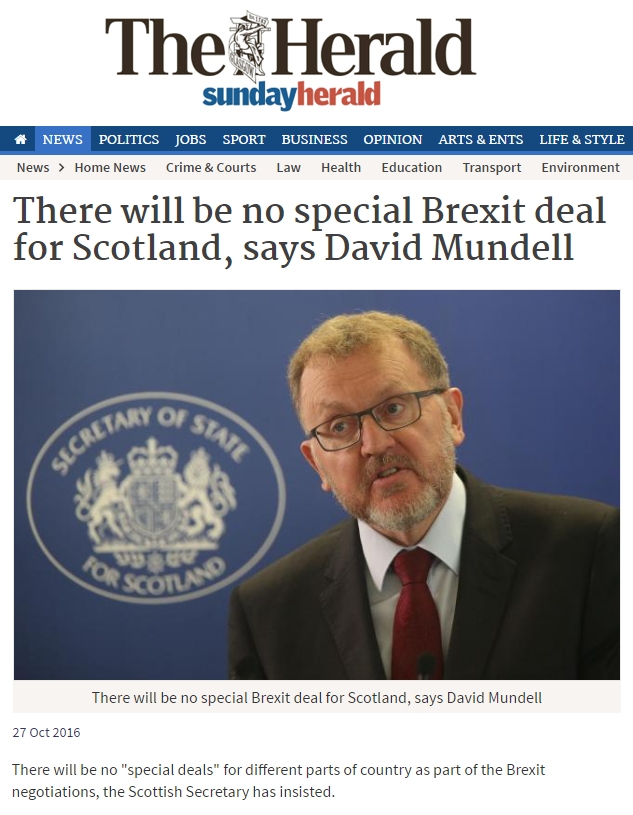
Historically the church inherited the wills of bishop’s and cathedrals over many years.

Church estates in rural areas, included agricultural land and residential buildings that were let to farmers, generating income needed to pay local clergymen and to meet other expenses.

But large tracts of church land were left undeveloped until the Industrial Revolution which brought with it a massive expansion of towns and cities throughout Britain.

Some of these ancient holdings, in Britain and abroad remain in the church’s’ ownership, e.g. the highly valued Hyde Park Estate in West London and a number of similar tracts of land and the church today still benefits financially from many prime central London residential property’s, department stores and media outlets built on this land.

Up to the end of WW2 the bulk of the church’s assets was in real estate and government securities, after which the commissioners widened the portfolio of investments to include; shares, bonds, commercial property, (including purchase of land for coal mining and planting of forestry) and other many other business assets.

In the latter part of the 20th century the task of effectively managing the fund overwhelmed the Commissioners and the Archbishop of Canterbury asked the Chancellor of the Exchequer and the Governor of the Bank of England to appoint policy committee to advise the Commissioners’ about ethical investment policy.

Over time the role of the policy advisory committee diminished in favour of retaining professional, “Fund Managers”  expected to subscribe to the Commissioners approach to ethical investments, which is always to avoid a short term quick profit in favour of more secure long term returns.


Eden


The Church of England investment portfolio includes ownership and development of forestry in the South of Scotland in excess of 120,000 acres.

In 2016 the Commissioners claimed £649,988 subsidy support through the CAP.(£6 million annual subsidy over 10 years.) No business rates and a very tidy tax free profit to the Commissioners through the sale of wood.


Affordable?


12 December 2014: UPM (Sweden) sells Scottish forest land to The Church Commissioners for England

The purchase includes 14 forests in Scotland extending to approximately 6,300 hectares in total.

The transaction price is £50.6 million.

The Church Commissioners for England are already a significant forest owners.

The agreement consolidates the Church’s forest holdings in Scotland.

UPM Tilhill , the UK’s largest forest management and timber harvesting company will be contracted to provide a full range of consultancy and contracting services to the new investors.

This is a nonsense. An English organisation of State buys a large bit of Scotland from a Swedish company


Angest


11 Jul 2014: Church of England finally severs financial links with Pay-Day Lenders

The Archbishop of Canterbury attacked payday lenders claiming that they destroyed lives and that the church should compete them out of existence.

But he was mortified when less than 24 hours later it was revealed by the press that the church of England had a £75,000 indirect investment in Wonga, despite having added payday lenders to its list of prohibited investments.

Months after, The Church of England Commissioners announced they had finally cut financial links with Wonga.

The commissioners also indicated that they had tightened restrictions on direct investments and would announce new controls on indirect investments later.

A new position was being created in the investment team to ensure that ethical policies were implemented, supporting the church’s investment advisory group.

The controversy deepened when David Cameron and the Tory party were linked to Wonga and another Pay-Day Lender through business links with party Donors

Conservative donor and government adviser Adrian Beecroft had a major stake in Wonga, Britain’s best-known payday lender, which charged borrowers more than 4,000 per cent APR.

Beecroft had given almost £800,000 to the Tories in the last seven years, contributing more than £100,000 last December.

And there’s more: Jonathan Luff, former senior adviser to David Cameron, (on the public payroll) quit Downing Street a few months before to become a lobbyist for Wonga.

And there’s even more: Henry Angest controlled the high-cost credit company , “Everyday Loans,” and charged members of the public interest at an average 74.8 per cent APR.

Financier, Angest – a friend of the Cameron’s and a former Tory Treasurer – gave the Conservatives a £5m overdraft facility shortly before the last General Election at an attractive interest rate of just 3.5 per cent.

The scandal of Conservative grandees seen to be benefiting financially from the misery caused to lower paid members of the public through their involvement in the high-cost lending industry might just prick the conscience of the Prime Minister who has dined privately with Angest and his wife Samantha at Chequers and Downing Street.


21 May 2017: The Church of England made a stunning 17% return on investments in 2016

A focus on ethical investing has long been part of the body’s mandate, although some of its investment picks have still provoked debate.

The church is facing questions about its holding in Alphabet Inc., Google’s parent company.

Google has been embroiled in a long-running battle over accusations of tax avoidance in Britain.

Earlier this year, the company agreed to pay £130-million and it has insisted that it has followed all tax rules.

The company generated around £24-billion of revenue in Britain between 2005 and 2015, the period covered by the settlement.

It paid a total of £180-million in tax over that time, including the settlement amount.

Archbishop Welby and other church officials criticized Google and other companies for not paying their fair share of taxes.

Welby said last year that companies should pay tax in the country where revenue is generated.

The Church Commissioners said returns meant it had contributed £230.7m to the mission of the Church of England, The Church Commissioners, whose target is making a return of inflation plus five percentage points. (The Guardian)
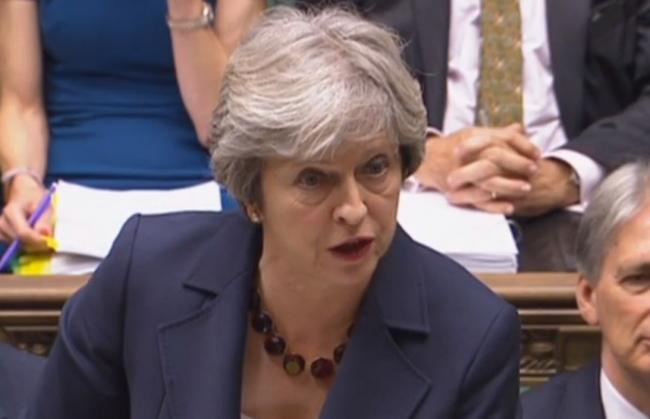


22 May 2017: The Church of England paid more than £1million in bonuses to its own fund managers last year

The payouts were given to 10 senior managers despite the Archbishop of Canterbury’s professed disapproval of the way banks use bonus systems to reward their staff.

The payments brought charges of hypocrisy from City critics who say the CofE has opened a gap between what it tells other people to do and what it does itself.

The annual report of the CofE’s financial wing, the Church Commissioners, showed that bonuses, which were first paid to managers in 2013, topped the £1 million level for the first time in 2016.

The biggest bonus went to investment chief Tom Joy, who was given a ‘long term incentive payment’ of £202,000 on top of his salary of £259,000, taking his full earnings for the year to £461,000.

Mr Joy’s bonuses from 2013 to 2016 have now totalled £661,000.

But there is a contradiction in the ethical policy advice of the Commissioners to companies in which they invest, namely, that: “long term incentive payment schemes, bonuses should reward work over five or seven-year timescales “and should normally be paid in shares held for the long term in order to reward permanent value creation.”

But there is an inconsistency which some people might see as hypocrisy.

Bonuses for the Church of England Commissioners’ staff are paid in cash.

And all this when the Church was later forced to admit paying workers in its care homes less than the living wage which its Archbishops had been urging other employers to pay. (The Mail)


Baron Fraser of Corriegarth – Tory Unionist – Bought and Sold for Anybody’s Gold – Sad to See Scotland’s Peers Are Still Desperately Clinging to the Corrupt Political System That Is Westminster


Baron Fraser


Alexander Andrew Macdonell Fraser, Baron Fraser of Corriegarth

Born in 1946, he is a treasurer of the Conservative Party and from 2016, (courtesy of David Cameron’s much criticised Resignation Honours list) a life Peer member of the House of Lords also called “God’s waiting room.”

The World’s second largest legislative body after the Chinese National People’s Congress.
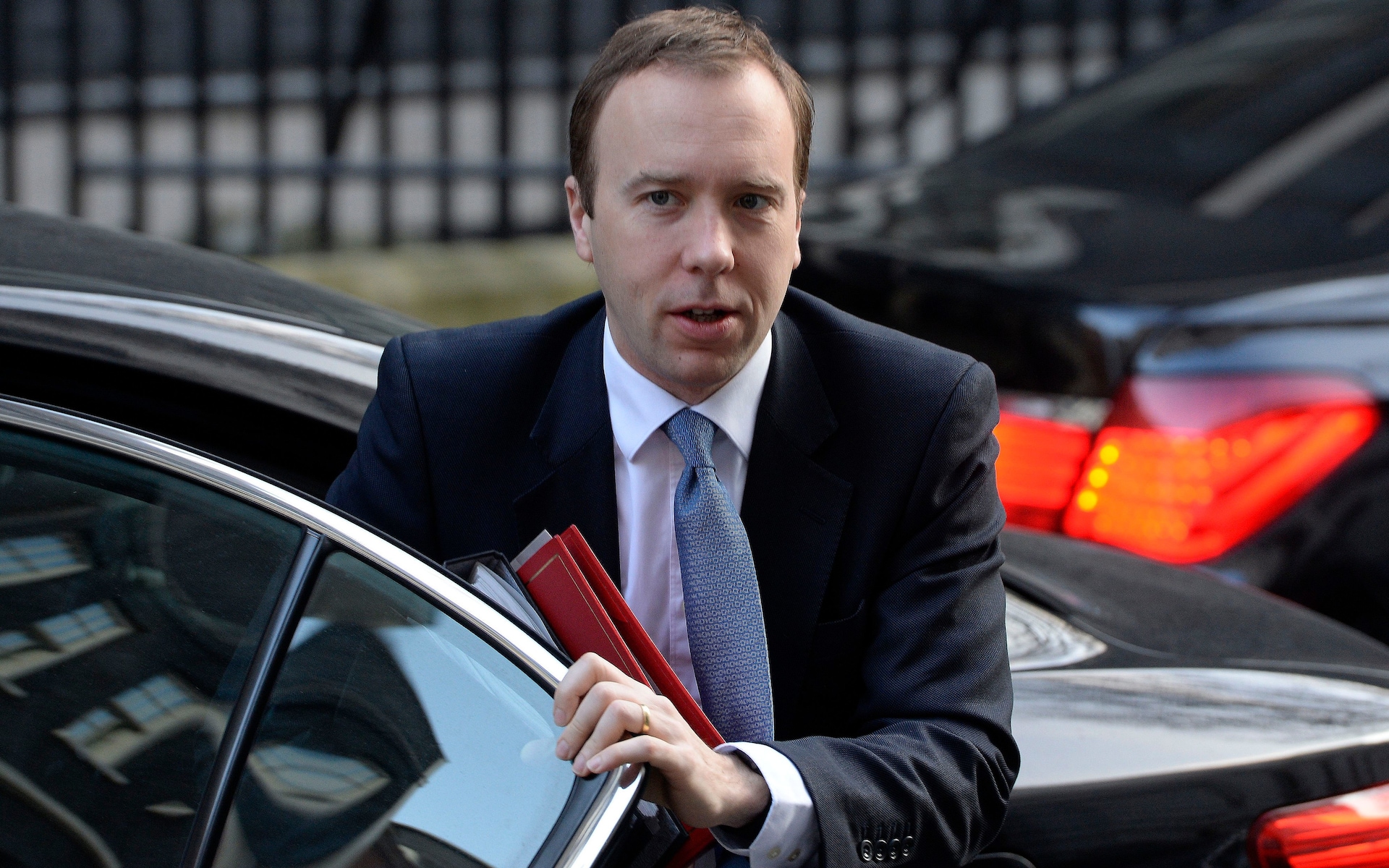
Whilst there is no record of a marriage before 2010, he has a son, Alexander Albert Henry Fraser (b1984), a property developer, who, together with his father controls Remenham Riverside Ltd., London.

His son is also one of 6 partners in Northampton registered property company, Vanneck Residential LLP and is one of 2 Directors of Container City Projects (London) Ltd., Property developers.

A major financial donor to the Tory’s, he has given many millions of pounds to the party since 2004.

He was also the second largest “Better Together” donor, giving £200,000 to the campaign for a no vote in the 2014 Scottish independence referendum.

His Garthbeg Farms enterprise in Scotland  claimed £84373.22 farming subsidies in 2016.

He was educated at Eton College and St John’s College, Oxford. After graduation (Master’s degree in Politics, Philosophy and Economics from St. John College, Oxford) he started his career covering equity markets in the Asian region, working at Vickers De Costa, Sun Hung Kai Securities and Henderson Crosthwaite.

He progressed and became a global investor and has held numerous posts in the financial sector both in the City of London and elsewhere.

He served as a director then President of Golden Bridge Investment & Securities Co., Ltd.

He served as a Director then Chief Executive at Nava Securities in London and Golden Bridge Investment & Securities Co., Ltd.

In 1984, he joined and served as a Director then CEO at Baring Securities, Far East and also established and managed the stock broking network and infrastructure in Australia and Asia ex Japan.

In 1985 he was listed as a Director at Ing Baring Securities (Japan) Limited holding the position of “Stockbroker”.

The company had been around since 12 Jul 1985 and lists its registered address as being in Grand Cayman, Cayman Islands.

He served as a Director, Chief Executive Officer and Chairman at Bridge Securities, with responsibility and oversight for all stock broking activities.

Note: His Wikipedia incorrectly quotes: “He is married to Rebecca (née Shaw-Mackenzie, formerly Ramsay), they have two daughters and three sons between them.”

This is incorrect the children father is William Alan Grant Ramsay. (https://en.wikipedia.org/wiki/Andrew_Fraser,_Baron_Fraser_of_Corriegarth)


William Alan Grant Ramsay


William Alan Grant Ramsay and Rebecca Mckenzie Shaw

Born in Canada in 1958, he resides at Newhall, Balblair, Dingwall, Scotland.

He currently holds the position of, Director of Closed Joint Stock Company, Aral Petroleum Capital, Mostostal Export, Sir Ian Noble & Partners Ltd. registered office; (Skye).

The company, incorporated in 2000 is classified as Fund management activities.

Ramsay has been engaged in private equity investments primarily in Kazakhstan since 1997.

From 2004-2014 he was, Chief Executive Officer, then President of Caspian Energy Inc. (Oil exploration company registered in Ontario, Canada.

(https://www.investegate.co.uk/article.aspx?id=200410280700105579E).

As a founder of Golden Eagle, he was actively engaged in advising companies on inward investment in the energy sector.

Following the acquisition of Golden Eagle by Central Asian Industrial Holdings, he worked closely with Kazkommertsbank CJSC during which time a group of investors from Kazakhstan acquired a majority stake in Nelson Resources Inc.

He became the chairman designate, and subsequently interim chairman of Nelson Resources Inc. on completion of the acquisition.

He has over 35 years experience in the Asian capital markets.

From 1984 to 1990 he served as a director of Baring International Investment Management, during which years he resided in Korea and Japan, with principal responsibility for managing funds investing in the Asian equity markets.

From 1991 to 1997, he was based in Hong Kong and worked for Jardine Fleming Securities as a director.

His geographical areas of responsibility included Korea, Taiwan, India, Pakistan and Sri Lanka.

He graduated from Magdalene College, Cambridge University UK and completed a Post-graduate degree at Peking University, China.

He married Rebecca Mckenzie Shaw, (b1961) on 4 May 1985.

The family was complete with the birth of their 5 children: Catriona Alexandra Ramsay, (1987), Douglas Shaw-Mackenzie Ramsay, (1989), Irene Lilian Ramsay, (1990), Euan Shaw-Mackenzie Ramsay, (1992) and Ruaridh Shaw-Mackenzie Ramsay (1996).

The couple suffered tragedy with the early death of their eldest son, Douglas Shaw-Mackenzie (b1989) who was found dead in his room at the Vimean Angkor Pich Hotel in Siem Reap Town, Cambodia, on December 26, 2012.

According to the medical report, he had died from a self-administered drug injection.

Her divorce date is not available, but from 2002-2014 Alexander Andrew Macdonell Fraser, Baron Fraser of Corriegarth and Rebecca with her children are recorded as living in Dingwall.

They went on to marry (3 Jun 2010)).

The couple split their time between their homes in London and the Highlands of Scotland.

Her father is the 22nd Chief of Clan Shaw and a feudal Baron.


Cameron created more Peers than any other PM in history


6 Aug 2016: New peer on David Cameron’s controversial honours list, Alexander Andrew Macdonell Fraser is exposed as a multi-millionaire Tory donor who donated millions of pounds to the party

Despite backing reform of the House of Lords, David Cameron nominated 245 peers during his time in office, working out at an average of 39 a year.

New analysis by academics shows that Cameron created lifetime peerages at a quicker rate than any Prime Minister in history.

The former Prime Minister has come under fire for the list he submitted just before leaving office, naming a total of 59 people, (including Fraser) in line to receive 13 peerages and 46 honours.

The latest honours list has reignited debate over reform to the unelected House of Lords, with questions being raised over who is being installed into the upper house,  one of the biggest legislative chambers in the world.

Fraser is estimated to be the fifth biggest individual donor to the party within the last parliamentary cycle.

He is one of the coveted few who donated enough to be part of Cameron’s exclusive ‘leader’s group’, an inner circle of businessmen who had access to the then PM and other ministers for lunches and other events.

Fraser, who has a net worth of £150 million, recently described the £300 daily allowance for Members of the House of Lords as “inadequate.” (7 Aug 2016)

Critics have complained that the list reeks of ‘cronyism. Also among the recipients is former chancellor George Osborne, Samantha Cameron’s stylist Isabel Spearman, his long serving aide Gabby Bertin, and Eton alumni Ed Llewellyn. (The Independent)


On your way up


3 Jul 1999: Nick Leeson, the trader who gambled and made £millions for Barings eventually lost £850 million and bust the Bank – is on his way home, released early due to cancer

Nick Leeson has dominated the lives of 1,200 bank workers who in 1995 lost their jobs and countless others who were deprived of their savings and his return to Britain after serving 4 years in Jail in Singapore will succeed only in adding to their torment.

Before Leeson flies to Britain, he will be questioned again by investigators who are unsure how he made losses of £850m and camouflaged them in an “errors” account, labelled 88888.

Yesterday, Baring’s liquidators in the UK, solicitors Slaughter and May, obtained a high court order freezing whatever assets he has here.

When Leeson was arrested in Germany, he fought hard to be extradited to Britain.

His lawyers argued he was a British citizen and the offences he had committed were against a British bank.

Leeson said he would plead guilty and offered a full, written confession to the serious fraud office (SFO).

He was desperate for the case to be heard in Britain and for his sentence to carried out in a British jail, and not in the Far East.

But his plea was ignored by the SFO, and many City commentators remain suspicious about the motivations behind the decision.

The Bank of England and the directors of Barings were no doubt relieved to see him go back to Singapore, where the two technical charges of fraud he faced would not necessitate calling witnesses from Britain to explain how a junior trader had precipitated an international banking crisis.

The SFO’s decision also prevented hundreds of Barings bond holders, investors who had put savings into the bank’s bonds, starting a private prosecution.

They were the only ones to lose money when ING bought Barings.

Leeson suspected that the establishment and the government conspired to keep him out of Britain.

“He was very angry and very bitter when he was extradited back to Singapore,” said a friend. “He never got over it. It meant serving his sentence on the other side of the world, away from his wife and his family.

Lisa, his wife, divorced him and remarried while he was behind bars.

He has been very isolated over the past three years.

The prison kept him away from English-speakers, so he hasn’t been able to talk to anyone.” (The Mail)


“All that Gltters – The fall of the Baring Bank” – John Gapper and Nicholas Denton

The book provides a definitive, classic account of the fall of the House of Baring and the ultimate rogue trader Nick Leeson.

It reveals the Faustian deal struck between the whizz-kid traders who seemed to be bringing in huge profits and the grandees who were happy to pocket them without asking too many questions.

For the first time, the actions and motives of all the participants are explained, including the final days when politicians and bankers made a last-ditch attempt to save the bank, as well as Nick Leeson’s actions and motives.

Extracts from the book:

“The Henderson Crosthwaite,(Far East) securities partnership was finalised in August 1983 with the recruitment of the Honourable Alexander Andrew MacDonell Fraser.

A tall, handsome man who previously worked as the London representative of Sun Hung Kai Securities, a Hong Kong broking firm.

He had been educated at Eton College and st John’s College, Oxford, which gave him a combination of laid-back charm and patrician haughtiness.

His first job after Oxford in 1968 had been at Kleiwort Benson, the merchant bank.

He had not blazed a distinguished trail there, being known as much for a dark blue velvet suit that he owned as for his merchant banking skills.

Fraser spent evenings at the New Casanova Club, a casino off Grosvenor Square, and was inclined to gamble to the limits of his means.

He had gone to Hong Kong in 1970 as an analyst with Vickers.

He was struck by the vitality of the colony compared with Britain at that time and felt an immediate affinity with the money making culture and with the Chinese love of gambling.

In 1977 he came back to London with Sun Hung Kai.

His job was to buy shares and bonds in the London market for Sun Hung Kai’s customers.

Fraser did well, partly because many of them wanted to trade gold and London was the centre of the world market.

Frasers contacts in Hong Kong would come in useful later when selling Japanese shares.

In 1984, Baring Brothers agreed to buy out Henderson Crosthwaite,(Far East) in which Fraser was a partner.

Baring Brothers would hold 75% of shares in the new broking firm called Baring Far East Securities Ltd whilst Henderson Croswaite,(Far East) would get 25%.

The quarter share in the new firm was divided among the partners. Fraser’s share was 10%.

The initial deal was for 7 years which would provide a good reward for all involved if projected operating profits were achieved.


Barings Bank management incompetent at every level


At the beginning of 1992, Baring Securities decided to set up a futures operation in Singapore to take advantage of the rapidly growing success of SIMEX (Singapore International Monetary Exchange).

Nick Leeson seemed to be the right person to head up the operation and, in April 1992, Nick and Lisa Leeson moved to Singapore.

Leeson was appointed general manager of Baring Futures (Singapore) and was responsible for organizing the settlements and accounting departments and acting as head of the SIMEX trading operations.

The true extent of Barings’ problems was not to be fully appreciated until February 1995. But even in 1992 there was a warning signal of potential problems ahead.

Before he took up the posting to Singapore, Leeson had applied to the Securities and Futures Authority (SFA ) for a Certificate in Corporate Governance London trading licence.

Despite his success with the settlements part of broking activities (often referred to as the ‘back office’), Leeson was keen to be involved in the more glamorous side of broking, that is dealing in futures and options (referred to as the ‘front office’).

In broking circles, those who worked in the back office were almost regarded as second-class citizens compared to the front office.

In the front office there was greater opportunity to earn sizeable bonuses, which came to be a feature of city financial institutions during the 1980s.

Leeson would not be able to actively trade securities unless he was licensed by the SFA. Baring Securities therefore submitted Leeson’s application to the SFA.

Leeson answered ‘no’ to a question whether he had any County Court judgements outstanding against him.

Following a routine check by the SFA, it was found that Leeson indeed did have an outstanding judgement.

In fact, in May 1992 Watford County Court, on behalf of National Westminster Bank, made a judgement of £2,426 against him.

The SFA returned the application to Baring Securities, who simply withdrew it.

It seems that no more was said about the misinformation and there was no negative impact on Leeson’s career, since he moved to Singapore shortly afterwards.

Leeson was to remain in Singapore, working for Baring Securities, for almost three years.

When Leeson arrived in Singapore in 1992, he was just 25 years old.

During 1992 it seems that Baring Futures (Singapore) was operating profitably, buying and selling futures and options on behalf of clients.

Leeson spent his mornings from Monday to Friday overseeing dealing at SIMEX and afternoons were spent reconciling the trades, working through the dealing slips.

On busy days the settlement process could take until midnight.

However, given the sometimes frenetic activity on the dealing floor at SIMEX, it was not unknown for errors to take place.

These were often no more than misunderstandings.

Normally the bank would accept the loss, on the assumption that the client had acted in good faith.

An error account, 99905, would be created in which the relevant transactions could be put until they had been resolved or else written off in the profit-and-loss account.

According to Leeson, he was asked by the London office of Barings to create another error account, to handle only trivial items arising in Singapore. Consequently, error account 88888 was created, this unusual number being chosen because in Chinese the number 8 is supposed to be lucky.

But within a few weeks, the London office of Barings decided that it needed to see all errors arising in Singapore and that its computers could cope with the numbers of errors being recorded.

Leeson was therefore asked to revert back to using only error account 99905.

The new error account 88888 therefore lay dormant.

According to Leeson, he first used it seriously on Friday 17 July 1992.

One of his employees had mis-understood a client’s orders and instead of buying 20 contracts had instead sold 20 contracts.

To rectify the mistake, Barings would need to buy 20 contracts to cancel out the original mistake and on top of that buy a further 20 contracts to satisfy the client’s order.

The hit to Barings’ profit-and-loss account amounted to about £20,000.

Because Leeson discovered the mistake on Friday 17 July after close of trading at SIMEX he was not able to rectify the situation until trading restarted on the following Monday, by which time the market price could have moved against him.

In order to hide the mistake Leeson made use of account 88888.

Leeson was reportedly annoyed that his superior in Singapore – Simon Jones, Operations Manager for South Asia – had not allowed him to employ sufficient qualified staff to cope with the expanding volume of work.

When Leeson asked Simon Jones for advice on resolving the 20 contracts, he advised him to sack the employee and inform Andrew Bayliss, Deputy Chairman of Baring Securities in London.

Leeson did not take Simon Jones’ advice and instead used the account 88888 to mask the error.

His justification was that he needed time to think how to hide the loss and also he wanted to protect his staff.

It is also possible that he was not keen for Barings in London to learn of this type of mistake, which could damage his reputation.

The problem was that Leeson found it remarkably easy to hide errors in this way, and this was facilitated by the fact that he was in charge of both the ‘front office’ and ‘back office’ for Barings Singapore operation:

Over the next few months, up to the end of 1992, he put over thirty errors into the 88888 account which although bad, was not catastrophic.

There were other errors in the London account, but he also put them into 88888 together with very large discrepancies, which he thought would get his newly recruited traders into trouble.

There was no hard and fast rule – an error’s was an error – but the traders knew that if they’d made a bad mistake they could refer it to Leeson who would resolve it by placing it in the 88888 account.


Nick Leeson (now)


Early Warning ignored

At the beginning of 1992, just before Nick Leeson’s deployment to Singapore, James Bax (Head of Singapore Operations) wrote to Andrew Fraser (Managing Director Baring Securities Far East), based in Hong Kong, to complain that:

“once again we are in danger of setting up a structure which will subsequently prove disastrous and we will succeed in losing either a lot of money or client goodwill, or probably both.”

He insisted Leeson should report solely to Simon Jones Operations Manager, South Asia).

It is clear that James Bax was concerned about the conflict of interest involved if there was not a clear demarcation between the ‘front office’ and the ‘back office’.

Bax’s recommendation was rejected, for Leeson reported directly to London once he began trading. In addition, Leeson was made basically a one-man show, permitted both to trade and to do all the paperwork and account for his investments.

This made Leeson, in effect, his own policeman, a practice nearly unheard of in the industry.

Leeson subsequently acknowledged that if the advice of Bax had been followed, such that Leeson had responsibility only for the settlements and accounting, he would not have been able to instruct the traders in the way he did, let alone indulge in trading himself.

Why did Barings ignore the advice of James Bax?

It is possible that Barings was keen to restrict costs.

If we are to believe Leeson’s version of events, he was having problems getting authority from Barings to recruit sufficient numbers of well qualified staff.

It was also possible, that over time, as the Singapore operation appeared to be making excellent profits, that Leeson’s superiors were reluctant to annoy Leeson by requesting him to curtail his trading activities which might have led to their ‘star trader’ resigning and moving to another broking firm.


According to Leeson:

“As my losses in Error Account 88888 began to creep up again from the zero balance I had managed to achieve in July, I found myself growing increasingly angry that I hadn’t shut the whole thing down and never used it again.

I began to trade aggressively to make the money back, and these trades never turned out the right way for me.”

A damming report on the scandal concludes that: Leeson managed to operate his 88888 account for three years without Barings’ senior management knowing about it yet they managed to unearth the account within hours of his disappearance.

The report alleged that Barings’ management structure was incompetent at every level, allowing Leeson a free hand to cripple the company.

10 senior managers at Barings were banned from the city fo periods between 4-6 years.

More details at: (http://online.wsj.com/public/resources/documents/barings.collapse-wsja.pdf) (http://www.independent.co.uk/news/business/cover-up-sealed-the-fate-of-barings-1578217.html)

Note: Someone is determined to change history in favour of Fraser. His Wikipedia quotes: “In 1992, Fraser had written a memo expressing concern about Leeson’s power.” Oh! no! he didn’t. James bax wrote a warning memo to Fraser. (https://en.wikipedia.org/wiki/Andrew_Fraser,_Baron_Fraser_of_Corriegarth)


Corriegarth Estate Wind Farm


22 December 2013: No vote donors caught in wind farm payments row

A Company involving two major donors to the pro-Union Better Together campaign has been accused of trying to short-change a Highlands community out of millions of pounds.

Stratherrick & Foyers ­Community Trust, on the southern shore of Loch Ness, is angry at North British Wind Energy Ltd (NBW) for offering to pay less than half the industry benchmark in “community benefit” compensation for a 23-turbine wind farm on the Corriegarth Estate

Corriegarth is the family estate of former Barings Bank stockbroker Andrew Fraser, who was last week revealed as one of the largest donors to Better Together, after giving £200,000.

Fraser first entered into an “option agreement and licence” with NBW in 2008. (The Herald)


The Singapore Trading Pit  where Leeson excelled


Asia Frontier Capital Fund (investing in high growth Asian frontier economies)

Fraser has greatly reduced his commitments in recent years but retains an active interest in Asia Frontier Capital Ltd., a major financial securities investment company which manages subsidiary operations: the AFC Asia Frontier Fund, AFC Iraq Fund, and AFC Vietnam Fund.

The company manages a portfolio of stocks in high growth markets focusing on consumer, financial and infrastructure stocks with the goal of offering investors high returns.

Over the last 3 years it has yielded benefits to investors in excess of 42%, the best of any of the top 10 companies in the World.

AFC Asia Frontier Fund invests in listed equities from Bangladesh, Bhutan, Cambodia, Iraq, Laos, Maldives, Mongolia, Myanmar, Nepal, Pakistan, Papua New Guinea, Sri Lanka and Vietnam.

AFC Iraq Fund invests in companies from Iraq and Kurdistan listed on the Iraq Stock Exchange (ISX) or listed at any other Stock Exchange.

AFC Vietnam Fund invests in companies listed on the Ho Chi Minh City Stock Exchange or Hanoi Securities Trading Center.

Baron Alexander Andrew Macdonell Fraser is a shareholder and Director.

The company, headquartered in Hong Kong and the Cayman Islands is licensed by the Hong Kong Securities and Futures Commission (SFC.)

More information can be found at: (https://readtiger.com/wkp/en/Asia_Frontier_Capital)


Fraser’s record of interests declared to the House of Lords provides a measure of his previous and current business activities.

Current Directorships

Remenham Riverside Limited (field used for rental purposes during Henley Regatta) – Director: http://www.asiafrontiercapital.com/

Current Shareholding and Investment management

AGET Inc (food company) – Energia Iberica Ltd (oil) – Nomad Energy UK Ltd (oil) – Nordaq Energy plc (oil) – Maitland Institutional Services Ltd (fund manager) – Chenavari Capital Solutions Ltd (investment managers) – P2P Global Investments plc (equity investment) – Ferox Salar Fund plc (investment managers) – Bacit Ltd (“battle against cancer” investment trust) – NB Private Equity Partners Ltd (specialist fund managers) – John Laing Infrastructure Fund Ltd (investment in PPP projects) – GCP Infrastructure Investments Ltd (invests in UK infrastructure debt) – Harbourvest Partners (UK) Ltd (property) – Empiric Student Property plc (property) – Royal Dutch Shell plc (oil) – Persimmon plc (property) – Reckitt Benckiser Group plc (chemicals) – Unilever plc (chemicals) – GlaxoSmithKline plc (pharmaceuticals) – Shire plc (pharmaceuticals) – Entertainment One (media) – WPP plc (advertising) – BT Group plc (telecommunications) – Vodafone Group plc (telecommunications) – HSBC Holdings plc (banking) – Lloyds Banking Group plc (banking) – Beazley plc (insurance) – Aviva plc (insurance) – Prudential plc (insurance) – Hansteen Holdings plc (real estate investment trust) – ARM Holdings plc (semiconductor and software design) – Franklin Templeton Investment Management Limited (fund manager) – Marlborough Fund Managers Fund Ltd Special Situations (UK small companies fund) – Apple Inc (information technology) – Boeing Company (aerospace) – JPMorgan Chase & Co (banking) – Walt Disney Company (media and entertainment) – Johnson & Johnson Services Inc (medical equipment and pharmaceuticals) – Activision Blizzard Inc (media) – CVS Health Corporation (health) – John Wiley & Sons Inc (publishing) – Aramark Corporation (conglomerate) – Bayer AG (chemicals) – BB Biotech AG (biotechnology) – Nestle SA (food) – Polar Capital Holdings plc (investment management) – Halley Asian Prosperity Fund (value investing in Asia) – Standard Life Investments Ltd (fund manager) – S&W Investment Funds (investment management) – Brompton Bicycle Ltd (folding bicycles) – Pigeon Land Ltd (property investment) – Pigeon Sawston LLP (property investment) – Pigeon Shelford Ltd (property investment) – Pigeon Wickford Ltd (property investment) – Waterbeach Promotions Ltd (property investment) – Secure Income REIT plc (real estate investment)


Closed accounts

Bank of Scotland plc 9.375% (banking) (interest ceased 25 July 2017) – LBG Capital 1 plc 11.04% (banking) (interest ceased 25 July 2017) – Lloyds Bank plc 13% (banking) (interest ceased 25 July 2017) – Pantheon Resources plc (oil) (interest        ceased 25 July 2017) – Cadiz Inc (water provider) (interest ceased 25 July 2017) – Ashtead Group plc (equipment rental) (interest ceased 25 July 2017)
Compass Group plc (services) (interest ceased 25 July 2017)