Plausible Paranoia – How Westminster hoodwinked the Scots in 1707 and 2014 and their Preparedness to Do So Again – Part2 – Defoe Strikes Again


Tommy Sheridan


2003: Shades of Daniel Defoe – The rise and fall of Tommy Sheridan and the Scottish Socialist Party

Tommy Sheridan, Colin Fox and other left wing activists had started making significant in-roads into Scottish politics causing concern in London, triggering long established controlling mechanisms implementation of which would be charged to the British Secret Service (MI5).

Politically active Tomkins established strong links with senior members of a rapidly expanding SSP through the common cause of republicanism.

In the 2003 Holyrood election the SSP increased their MSP representation from one to six and a number of independent MSP’s also entered the new “rainbow parliament”.

In the first year of the new parliament the SSP fought for policies such as free school meals and an end to prescription charges (both introduced in a later parliament by SNP) and campaigned against Home Office dawn raids to remove failed asylum seekers.

But the outward show of unity was deceiving, all was not well, the party was reported to be heavily in debt and in November 2004, its leader, Tommy Sheridan announced his resignation.

A Sheridan supporter of long standing, Colin Fox, who had been elected as a Socialist MSP in 2003, took over and in parliament under his leadership, the SSP continued to pursue its socialist policies, albeit frequently disrupting parliamentary business by way of volatile protest.

Not long after Rupert Murdoch’s, News of the World exposed and destroyed Sheridan’s political career alleging sexual misconduct in office, using information largely gathered through illegal phone tapping of Sheridan and SSP officers.

The editor was Bob Bird, then husband of BBC news-reader Jackie Bird.

Sheridan won a £200,000 defamation action and costs, despite eleven party figures, including Fox, Kane and Leckie, giving evidence against him and later announced he had left the Party.

He went on to set up a new left-wing party, “Solidarity.”

The News of the World refused to give up its attacks on Sheridan and the SSP and the case rumbled on between 2004 – 2016 triggering “Operation Rubicon” which was set up by Strathclyde Police in parallel to a wider inquiry into alleged criminality at the News of the World in London.

The fall out included: A jail sentence for Sheridan. The closure of the News of the World in Scotland then later in England and many charges of illegal phone tapping and fraud being lodged by legal authorities against Sheridan, Bob Bird and Andy Coulson.

A classic MI5 operation possibly never to be proved but the SSP and Solidarity was rejected by the electorate in the 2007 Scottish election and has never recovered its former status.
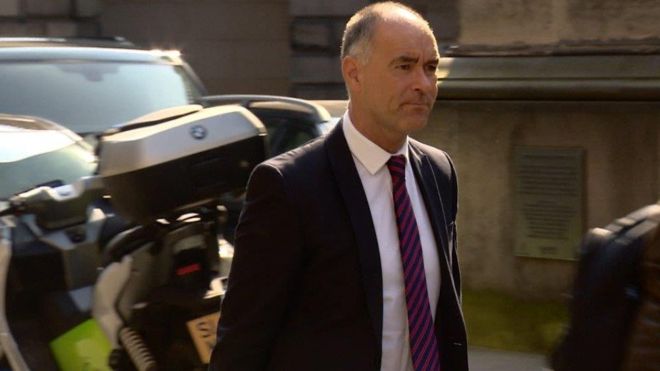
 

Tommy Sheridan


Afternote:

After closing arguments and before the jury retired to consider its verdict, Lord Turnbull said the conflicting evidence given to the court may have meant some people had been perjuring themselves – an offence which could lead to a prison sentence.

Tommy Sheridan won his defamation case against the News of the World and the tabloid was ordered to pay him £200,000 damages.

Bob Bird, (husband of BBC news presenter Jackie Bird) then editor in Scotland of the News of the World, said he was “absolutely astonished” at the outcome and indicated he would appeal the verdict.

Days after the closing of the case Lord Turnbull, registered a formal complaint against the conduct of Tommy Sheridan’s legal team, voicing concerns about allegations that had been put to a witness, that she had a conviction for credit card fraud and had served a prison sentence.

These turned out to be false and Sheridan sacked his legal team.

Two months later the Procurator Fiscal ordered police to carry out a criminal investigation into allegations of perjury during the case.

A Crown Office spokesman said it was not possible to speculate on the timescale for the investigation. Tommy Sheridan, dismissed the launch of the formal inquiry as “nothing new”.

In January 2011 Sheridan was found guilty of lying in order to win the £200,000 libel action against the News of the World tabloid, after the longest perjury trial in Scottish legal history.

Lord Bracadale said Sheridan had deliberately committed perjury after ignoring a series of warnings from friends not to sue the News of the World over its allegations about his sex life. He was jailed for three years. He served one year.

Sheridan who was denied the right of appeal, claimed he was the victim of a “conspiracy” involving the News of the World and other unspecified individuals.

Sheridan’s lawyer, Aamer Anwar, announced he would appeal and would start legal proceedings against News International, the owner of the tabloid, as well as the Metropolitan police and Glenn Mulcaire, the private investigator jailed for hacking mobile phones for the paper.

The trial had been told that Sheridan’s home address, phone number and pin code appeared in Mulcaire’s notebooks when the paper was preparing its exposés of Sheridan’s sex life.

A senior Metropolitan Police detective, admitted at the trial that the force never investigated why Sheridan’s name and details appeared in Mulcaire’s  notebook.

Andy Coulson, until early January 2011 David Cameron’s chief media adviser had given evidence during Sheridan’s trial about the hacking scandal – he had been the paper’s London editor when the stories of Sheridan’s sex life were published and it lost the defamation action.

Referring to Coulson’s very recent resignation as David Cameron’s head of communications, because of an escalating hacking controversy, Sheridan said Coulson should face “real justice” and be prosecuted for the alleged hacking.

The paper’s legal team confirmed it would be appealing against Sheridan’s libel victory and would demand that Sheridan pay all its legal costs if it wins, potentially bankrupting him. Under electoral law, Sheridan would be barred from standing again for parliament if he became an undischarged bankrupt.

The case rambled on for years and finally ended in 2018 with Sheridan retaining the £200k and costs awarded to him in the defamaton case. The News of the World closed.
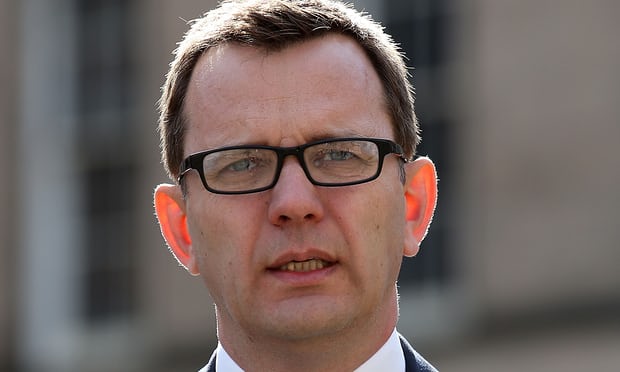
 

Andy Coulson


About Andy Coulson:

Coulson became the Conservative Party’s director of communications in July 2007 and following the 2010 general election, he was appointed by David Cameron to the post of Communications Director at 10 Downing Street.

It is alleged Cameron was persuaded by Rebekah Wade to appoint Coulson. The paper quoted: “an individual intimately involved in Mr Coulson’s recruitment” as saying “Rebekah indicated the job should go to Andy.

Cameron was told it should be someone acceptable to News International. The company was also desperate to find something for Andy after he took the rap when the phone hacking first became an issue. The approach was along the lines of, ‘If you find something for Andy we will return the favour”

About a year later, he was arrested over phone-hacking allegations. He was charged with conspiracy to illegally intercept communications and, in 2014, was sentenced to 18 months in prison, eventually serving just under five.

His arrest and subsequent conviction led some to question the prime minister’s judgment.

Coulson was also charged with having committed perjury during the trial in 2010 of Tommy and Gail Sheridan. He was scheduled to stand trial in April 2015 but the trial was postponed to 11 May 2015 because of the general election.

On 1 June 2015, Lord Burns, acquitted Coulson. Explaining his ruling, Lord Burns said that for Coulson to be found guilty it was necessary for the Crown to prove that the allegedly untrue evidence he had given at the 2010 Sheridan trial had been relevant to the issues in it.

Weird this!!! Surely the Crown needed only to prove Coulson to be a liar.

The judge added that it was for him, and not the jury, to decide on this aspect of the case and that the Crown’s legal submissions had failed to satisfy him that Coulson’s evidence had been sufficiently relevant to the Sheridan trial. (So the state intervened and closed all avenues of investigation)

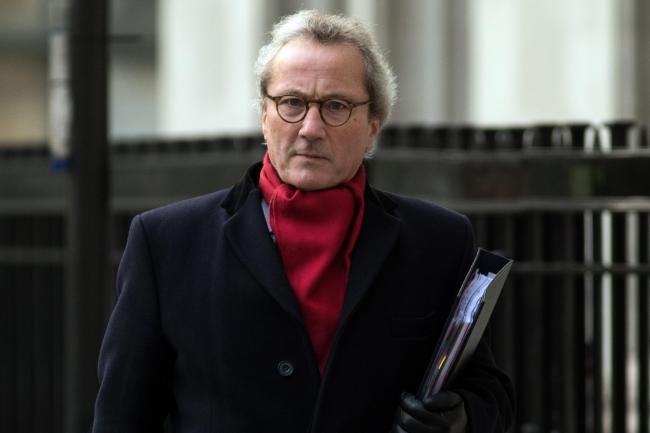
Coulson was defended by the most senior judge in Scotland Richard Keen QC (an old friend of whom there is much more to come)


Oct 2004: The Calton Hill Independence Rally

On the day her majesty, Queen Elizabeth officially opened the new £431 million Scottish Parliament building at Holyrood it was revealed that no one would face criminal charges over the fiasco of overcharging.

As expected the Crown Office and the Procurator Fiscal declared there was no grounds for complaint after a probe into the awarding of contracts for the Holyrood site.

The Scottish Socialist Party (SSP) co-ordinated a rally for independence at Calton Hill in October 2004 at which the “Declaration of Calton Hill”, setting out a vision of an inclusive and outward-looking Scottish republic was presented.

The case was advanced for a Scottish socialist republic without a monarchy or nuclear weapons, with a currency independent of England, a much reduced level of military spending and a relationship with the European Union safeguarding Scotland’s independence.

Addressing a cheering crowd, Law Professor, Adam Tompkins of Glasgow University, reminded them of the Queen’s previous reluctance to pay tax despite her massive income.

He said that the queen had special powers or `prerogatives`, which included being able to appoint anyone she liked as Prime Minister.

You cannot sue the monarchy. He said Tony Blair used these special powers to attack Iraq and there would have no Iraq war without the crown.

In a democracy it is the people who are sovereign and not the crown! He urged the abolition of the monarchy preaching, “If you want democracy down with the crown!”


The Declaration of Calton Hill - Scottish Socialist Party

Adam Tomkins addressing the rally


Oct 2004: The Declaration of Independence was presented to the rally – Did Professor Adam Tomkins Co- Write It With the SSP?

We the undersigned call for an independent Scottish republic built on the principles of liberty, equality, diversity and solidarity.

These principles can never be put into practice while Scotland remains subordinate to the hierarchical and anti-democratic institutions of the British State.

We believe these principles can be brought about by a freely elected Scottish Government with full control of Scotland’s revenues.

We believe that the right to self-determination is an inherent right, and not a boon or a favour to be granted to us whether by the Crown or the British State.

We believe that sovereignty rests in the people and vow to fight for the right to govern ourselves for the benefit of all those living in Scotland today, tomorrow and in future times.

The Government of a country is servant to the people, not master of the people.

We believe that a written Constitution will guarantee, under law, everyone’s right to freely vote, speak and assemble; and will guarantee the people’s right to privacy and protection, and access to information on all its Government’s doings.

We vow to fight for the power to refuse to send our sons and daughters to kill and die in unjust wars in foreign lands.

We vow to fight for the power to banish nuclear weapons of mass destruction from our land.

We vow to fight for the power to acquire and restrict the use of property or lands controlled by individuals, corporations or governments from beyond Scotland’s borders.

We vow to fight for the power to turn our depopulated land into a haven for those fleeing famine and persecution.

We vow to fight for the power to build a more equal society, free of poverty, through the redistribution of our vast wealth.

We vow to fight for the power to protect our soil, seas and rivers for our children and for the generations to come.

We swear to oppose all forms of national chauvinism, imperialism and racism.

We swear to oppose all forms of discrimination on the grounds of gender, ethnic origin, religion, place of birth, age, disability, sexuality or language.

We aim for an independent Scottish Republic in which people may live with dignity and with self-respect, free from exploitation, assuming the responsibilities of free women and men.

An independent Scottish republic will negotiate freely and as an equal with governments of other lands.

Our aim is not to erect walls of separation, but to build an outward looking, Scotland that will extend the hand of friendship to all the peoples of the world.

We vow to continue the struggle for a free, democratic Scottish republic for as long as it may take. The fight is for freedom.

Adam Tomkins


Viva la Republic - Scottish Socialist Party

Calton Hill rally


2005: Pamphlet, “How we Should Rule Ourselves” praising the benefits of a republic over the monarchy co-authored and produced by Prof Adam Tomkins and Alisdair Gray

Rafael Behr of the Observer reviewed the work and said.

Authors, Alisdair Gray and Tomkins make a strong case for establishing a Republican nation writing:

“Courtesy of Queen Elizabeth II, we will elect a new parliament on 5 May.

By Her Majesty’s leave, a victorious leader will then form a government. No royal assent, no power.

That’s the rule.”

It is, say Gray and Tomkins, a rum do. We are all subjects of the Crown, and the power that parliament and the courts wield over us is borrowed from hereditary sovereignty.

Should it not be the other way around, with sovereign people lending power to their leaders on condition of good behaviour?

The book makes the case for republican reform robustly and breathlessly, burning through the story of democracy from ancient Athens to the present day in one drag of a left-wing pamphleteer’s cigarette.

The merits and failings of the English Civil War, the French, American and Industrial Revolutions are emphatically flicked into the ashtray of history.

And, at the end of the yarn, the butt is stubbed out contemptuously on New Labour’s record of constitutional tampering.

What we need, argue the authors, is a parliament without whips and aconstitution without the Crown.”

 

TORY THIEVES AND LIARS MAKE A 'LIVING WAGE' A PAY CUT ...


A Briefing for the Serious Followers of Scottish Politics – Part3- British Secret Services in Scotland – I’m edging Closer to Identifying the SNP Affiliates

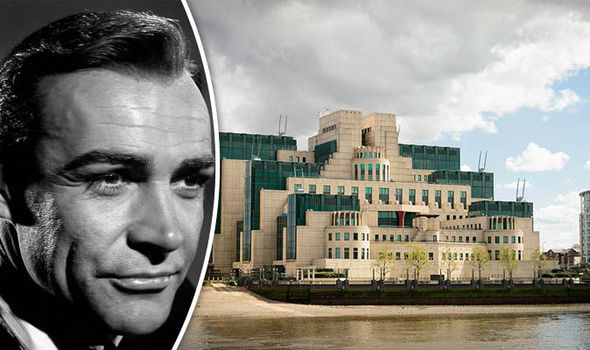
The British Secret Services (SIS)

The security services are comprised of three branches each of which provide graduates, post graduates, linguists, IT specialists and writers a wide range of career opportunities in intelligence work.

MI5:  Staff 4000: It is responsible for protecting the UK against covertly organized threats to national security encompassing terrorism, espionage and the proliferation of weapons of mass destruction.

MI6: Staff 3500: Operates in secret overseas, recruiting and developing foreign contacts and gathering intelligence. An opportunist organization it identifies then exploits favourable circumstances avoiding risks to national security, military capability and prosperity. Its remit also includes counter terrorism, resolving international conflict and prevention of the spread of nuclear and other non-conventional weapons.

GCHQ: Staff 6000: It is the UK government’s expert in cyber security, using technical expertise to provide intelligence, protect information and inform government policy.

Note: In the case of MI5 there are probably less than fifty agents fitting the James Bond profile. The bulk of the remaining group of specialist agents operate in England and Ireland with a cadre of around 250 likely to be permanently deployed in Scotland. Contrary to popular perception many agents fulfil mundane duties, such as research, office and other administration work. Once in there is no “out” although the pursuit of other careers is encouraged, if applicable.

There is another group recruited direct from Universities and deployed to intelligence gathering duties, media manipulation and deep penetration of subversive groups. Many of this last lot are “deep throat” agents located career term within the ranks of senior people in Universities, politicians, police, charities and other institutions of power.

About Secret Services operatives

Those who sign up to employment with the services swear allegiance for life to the “Crown” and the preservation of the “Union”. They owe fealty to no political party but, if deployed to that activity they are permitted to exercise a choice of the political dogma they wish to follow and if elected to office they will serve their constituents to the very best of their political ability but always mindful of the criteria that shapes their thinking.

See the source image

Are secret services persons easy to identify?

Only if information is released into the public domain, which isn’t that often. Unverifiable identification is possible, usually through the “association, utterances or actions” routes and as such assertions need to be taken on trust. The articles that follow will do just that.

See the source image

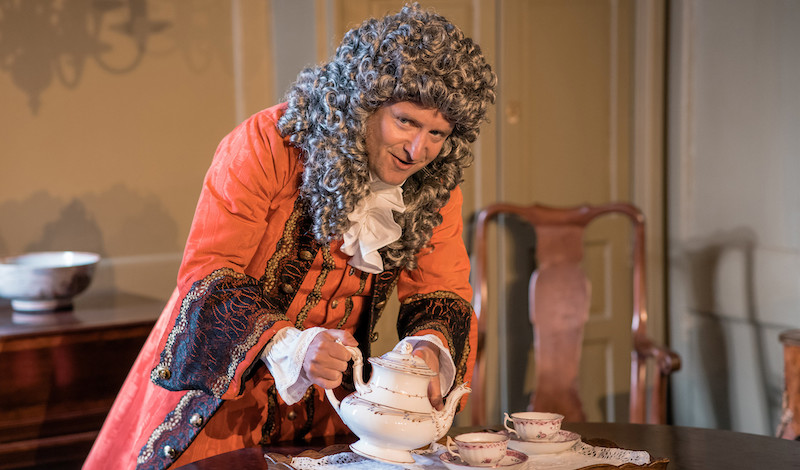
1703: Daniel Defoe – The first and very special British secret agent destroyed Scotland 

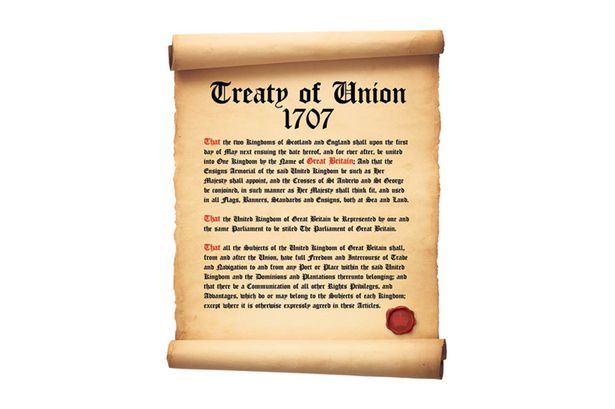
A close study of the activities and subterfuge of the English government and Daniel Defoe in the period before and after the 1707 Act of Union reveals a similar pattern of events occurred before and after the 2014 Scottish Referendum.

In 1704, Defoe, in jail at the time, offered his services to William Paterson, the London Scot and founder of the Bank of England and part instigator of the Darien scheme.

Dependent on his release from prison and a large fee he would, through his writings and subterfuge encourage a swithering English populace to support a union of Scotland and England and then go to Scotland, where he had extensive contacts with many highly placed sources in government to finish the job.

Paterson,  who had the confidence of Robert Harley, 1st Earl of Oxford and Earl Mortimer, leading minister and spymaster in the English Government consulted with his confidant. Harley accepted Defoe’s services and arranged his release in 1703.

Defoe wrote and published “The Review”, which appeared weekly, then three times a week. It soon became the main mouthpiece of the Westminster Government promoting an Act of Union with Scotland.

In an early edition “The Review” claimed an “act of union” with Scotland  would end the threat from the North, gaining for the Treasury an inexhaustible treasury of men for war’s in Europe and other places” and a valuable new worldwide market greatly increasing and expanding the power of England.

In September 1706, Harley ordered Defoe, (who was conscious of the risk to himself) to Edinburgh as a secret agent to do everything possible to help secure acquiescence in the Treaty of Union. His first reports to Harley were not encouraging since they contained vivid descriptions of violent demonstrations against any prospect of a Union with Westminster. “A Scots rabble is the worst of its kind”, he reported.

Years after, John Clerk, of Penicuik, a leading Unionist, wrote about Defoe in his memoirs:: “He was a spy among us, but not known as such, otherwise the Mob of Edinburgh would have pulled him to pieces.”

But Defoe, a Presbyterian who had suffered in England for his convictions, was readily accepted as an adviser to the General Assembly of the Church of Scotland and a number of the more influential committees of the Parliament of Scotland.

He told Harley that he was “privy to all their folly” but “perfectly unsuspected as with corresponding with anybody in England”. He was enabled to influence any proposals that were put to Parliament and reported;

“Having had the honour to be always sent for the committee to whom these amendments were referred, I have had the good fortune to break their measures in two particulars via the bounty on Corn and proportion of the Excise.”

In Scotland, he used different arguments, even the opposite of those which he used in England, usually ignoring the English doctrine of the Sovereignty of Parliament, for example, telling the Scots that they could have complete confidence in the guarantees in the Treaty.

Some of his pamphlets were purported to be written by Scots, misleading even reputable historians into quoting them as evidence of Scottish opinion of the time.

He disposed of the main Union opponent, Andrew Fletcher of Saltoun, by ignoring him.

Nor did he account for the deviousness of the Duke of Hamilton, the official leader of the various factions opposed to the Union, who seemingly betrayed his former colleagues when he switched to the  Unionist/Government side in the decisive final stages of the debate.

Defoe made no attempt to explain why the same Parliament of Scotland which was so vehement for its independence from 1703–1705 became so supine in 1706.

He received very little reward from his paymasters and of course no recognition for his services by the government.

Glaschu, described by Defoe as a “Dear Green Place” became a hotbed of sustained unrest against the Union prompting clergymen to urge their congregations “to up and anent for the City of God”. Which Scots did in their thousands tearing up copies of the “Treaty of Union” at every “Mercat Cross in Scotland. The response from Westminster was a deployment of a heavily armed English army to put down the rioters.

Years later he reflected on his experience and betrayal of Scots to write his Tour thro’ the whole Island of Great Britain, published in 1726, in which he admitted that the increase of trade and population in Scotland which he had predicted as a consequence of the Union was “not the case, but rather the contrary”.

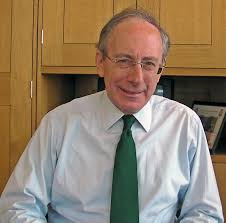
Apr 1998: Malcolm Rifkind – special agent never denied calls for political pact to block Scottish nationalists

Rikind: Tory and Foreign Secretary between 1995-2000 and in charge of Britain’s secret services accused Labour of fostering the mood of nationalism within Scotland by exploiting “nationalist language” during its spell in opposition saying; “The genie is out of the bottle and, like all genies, once they are out of the bottle they are difficult to put back in.” He then called for the formation of a cross-party movement to protect the Union and prevent the SNP taking power. He said: “I think there is a need for a non-party movement in Scotland to support the Union.” An agreed cross party action plan was put in place that same year and it has never been rescinded.

In 2009, Rifkind, became Chairman of the British Parliamentary Intelligence and Security Committee (ISC), which oversees MI5, MI6 and GCHQ – (the most important position in the UK intelligence community) and took overall charge of the “Better Together” disinformation campaign.
Andrew Fulton

2000: Glasgow University – A hotbed of powerful Unionist activity at the heart of Scottish education

Andrew Fulton – Former MI6 Head of Station (Washington) uncovered as a spy working for the University. Former Glasgow University, Law student Fulton, described as “more George Smiley than James Bond” served in Saigon, East Berlin, Bosnia, New York and Washington. At the peak of his career he was the sixth-most powerful official in the British Secret Service. In 1992, Fulton as head of European operations, was one of the MI6 chiefs who handled the aborted plans to kill Serbian President Slobodan Milosevic. He was also an adviser to the Armor Group, Chairman, Sir Malcolm Rifkind, a secretive organization that provided security services to national governments and large corporations.

He was forced to step down as a member of the Lockerbie Trial Briefing Unit (LTBU) which provided media briefings on the trial in Holland of the two Libyans accused of the Lockerbie bombing.

The revelation raised concerns that he may have been in a position to influence the way the Lockerbie trial was being reported to ensure the minimum of criticism of the British and American intelligence services.

The title, “Visiting Professor” was authorised by Glasgow University Principal Graeme Davis, also a member of the Scottish North American Business Council  (SNABC).*

The unusual thing about the Fulton professorship was that he had never worked in the legal profession in any capacity, had never taught classes and did no research at Glasgow University. So how was it he was considered to be qualified to be a “Visiting Professor of Law?”  The answer is that Graham Davis, Glasgow University Principal permitted MI6 to plant Fulton in the Media unit.

The American ambassador Philip Lader was also a member of the (SNABC) at the same time justifying claims that it was used as a front organization allowing Fulton and Lader to meet without drawing attention, to discuss Lockerbie the handling of the press corps steering them away from the Americans.

* The (SNABC) is the Scottish chapter of the secretive, well connected Atlanticist body aimed at fostering closer relations between the UK the US British-American Business Council and has interesting intelligence connections.

Its current Chairman is former MI6 Washington Station Chief Andrew Fulton. The Council retains Media House International for PR and its executive chairman Jack Irvine is also a former board member. (Powerbase)

Adam Tomkins

2. Professor Adam Tomkins appointed – Chair of Public Law (John Millar School of Law)

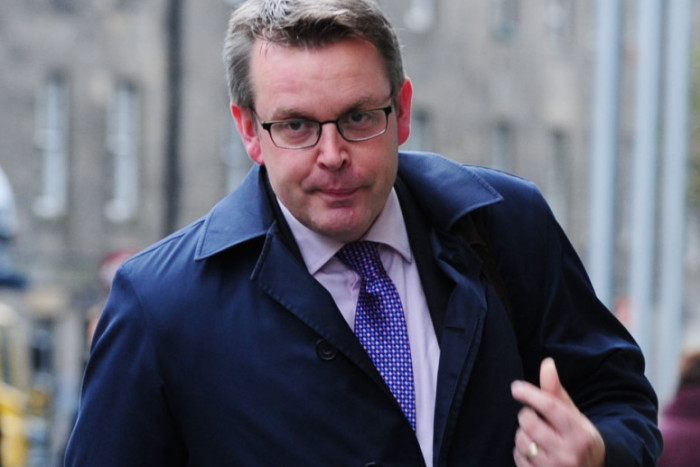
Tomkins, with established links to senior officers in the Foreign Affairs branch of the US State Department, is an intellectual and political genius, but perhaps only in his own mind and imagination and a leading constitutional scholar and hard line republican relocated to Scotland from England in 2003, taking up employment with Glasgow University as a lecturer in constitutional law.

His previous employment had been teaching English law in English educational establishments and his appointment to a prestigious post remitting him to inform students of Scottish law created disquiet in the minds of some and raised the question. Is this guy for real or is he a British Secret Service plant?

Adam Tomkins

Spies-R-Us

Is a recently created Glasgow University course covering Security, Intelligence & Strategic Studies – A two year post graduate course: Graduates from the programme are prepared to pursue careers in security-related posts in government offices and public administration, international organizations, non-governmental organizations, transnational business corporations and private security and risk analysis companies.

Andrew Dunlop

Graduated in economics from Glasgow University. Joined Thatcher’s inner circle as one of the seven members of her “policy unit”, specializing in defence, employment, tax reform and Scotland. Was a special adviser to former Defence Secretary George Younger. One  of the architects, together with David Cameon of the hated 1989 Poll Tax.  Left government, appointed managing director of top lobbying firm “Politics International.” David Cameron’s right hand man in the 2014 Scottish Independence Referendum. Ennobled by Cameron in 2015 then installed as, Parliamentary Under Secretary of State for Scotland working with Tomkins and Mundell maintaining the subjugation of the Scots.

Glasgow University Officers’ Training Corps

The University of Glasgow’s links with the British military can be traced back to the Jacobite risings of 1715 and 1745, when companies of Militia were raised to defend the unionist supporting University against the Jacobites.  During the First World War, Glasgow , by the summer of 1916, around 2,800 officers had been trained by the University. In the Second World War the UOTC’s role was to train officers from University students conscripted into the Army and to provide basic training for those who remained behind as a Home Guard unit. Glasgow UOTC still exists and remains based at the drill hall in University Place.

Ruth Davidson emerges from the shadows of Glasgow University

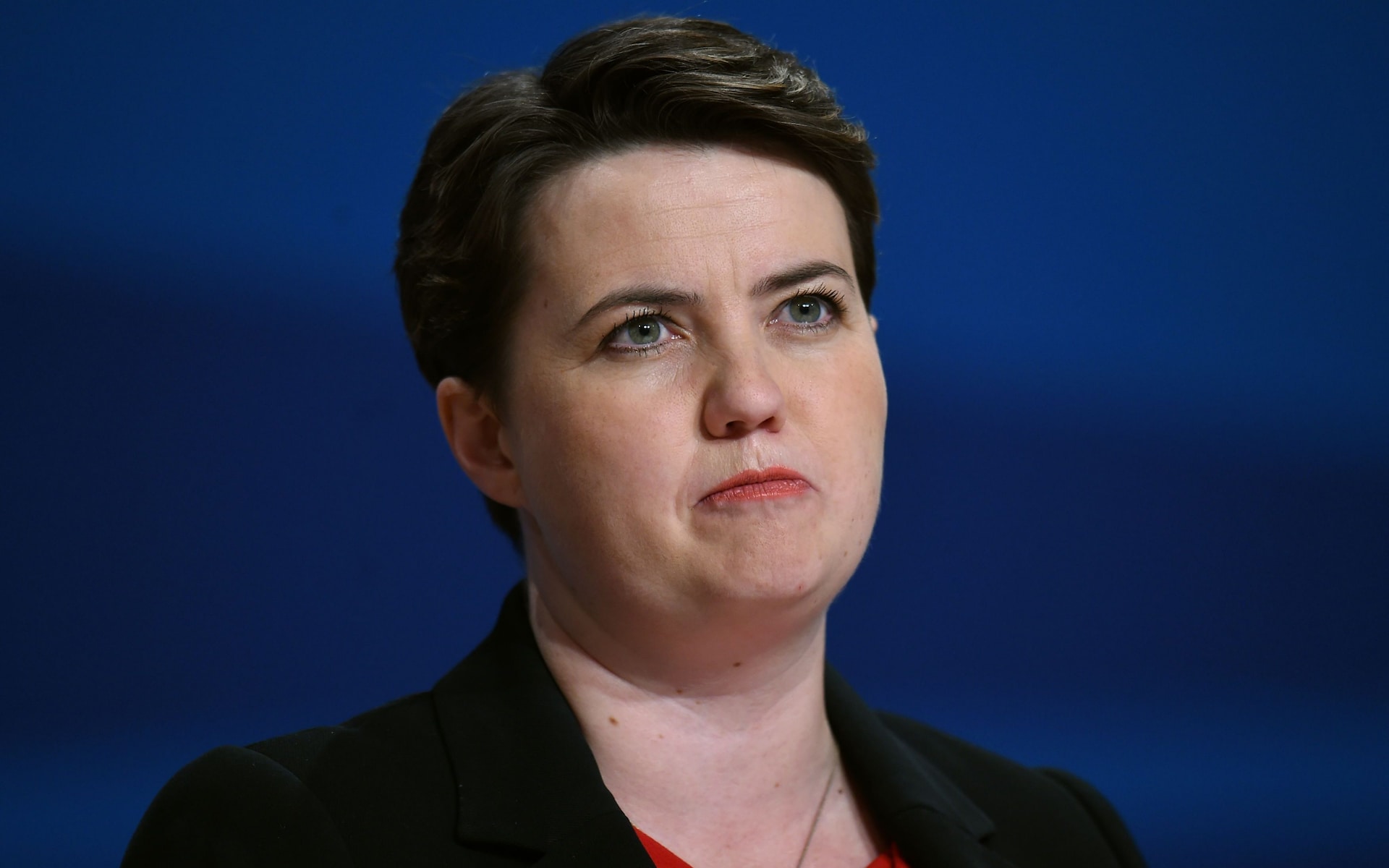
Davidson, was employed by the BBC for around eight years until 2009. In that employment she was deployed to Bosnia as a correspondent, at the time Andrew Fulton was head of the Secret Service in Bosnia. She resigned her employment with the BBC in 2009 and signed up to a one year post-graduate course in international diplomacy at Glasgow University. In that same year she joined the Tory Party, later claiming “I liked David Cameron’s looks”. A few months later, she assumed, the role of Chair of Glasgow University Young Conservatives. Only a year later she was appointed to the leadership of the Tory Party in Scotland by Andrew Fulton. Does the link to Fulton permit  Davidson to be exposed as a Secret Service agent? How does that smell to you?

Is the Tory Party clandestinely Driving the Anti-Semitism Charges Against Jeremy Corbyn and the Labour Party – Evidence Supports the Assertion – A Bunch of Chancers Without Scruples


Jeremy Corbyn – The Labour Party and anti-semitism smears

The Tory Party hit back at Labour because of its demands for an inquiry over the Tory Party inaction to interference in British politics by Israel

Israeli state sponsored strategy is focused on controlling public opinion in the UK. Israel’s objective is to harness the resources of grassroots Zionist supporters in order to buttress from below the British government’s traditionally staunch support for Israel and to combat increasing public antipathy to Israel, specifically in its military interventions in Gaza, known colloquially to IDF soldiers as ‘mowing the lawn’ (Rabbani 2014).


The strategy exposed

Al Jazeera recently broadcast a four-part series of undercover documentaries entitled “The Lobby”.

The series was to shatter any illusions about Israel’s capacity to influence British democratic processes.

Most controversially, the films exposed an Israeli Embassy official in the act of suggesting to a senior civil servant the ‘take down’ of British politicians, with Deputy Foreign Minister Sir Alan Duncan, a known supporter of Palestinian rights, at the top of the list.

The embassy official was Shai Masot, a former intelligence officer for the Israel Defence Forces (IDF).

Masot’s interlocutor, Maria Strizzolo, a former ministerial aide employed in the Education Department, was filmed agreeing: ‘If you look hard enough, I’m sure that there is something that they are trying to hide’

The scandal mongering attempts of the pair were hard to deny in the face of the filmed evidence and further footage showed Masot boasting about his recent success in influencing British government policy over local council boycotts of Israeli goods and services through the “Conservative Friends of Israel.”

Equally damaging, he was also seen mobilizing behind the scenes support for Israel through his close involvement with Zionist lobbyists amongst the British political elite and covertly fostering the spread of pro-Israel advocacy groups at the grassroots level of British society.

The documentaries caused outrage on all sides of the Israel-Palestinian debate in Britain and Labour leader Jeremy Corbyn demanded an inquiry on grounds of national security.

The public joined the protest arguing, with good reason that had Russia, Iran or indeed any other state been caught behaving in a like manner, there would have been a thorough investigation.

Taking a contrary view the Jewish press to minimized the importance of the exposure, scorning it as trivial and out of touch with the reality of everyday parliamentary lobbying.

Other israeli sources accused Al Jazeera of importing Middle Eastern anti-Semitism to Britain, or berated the deceitfulness of undercover reporting and complained to the communications regulator Ofcom.

The furore was short lived. House of Commons Speaker, John Bercow (Berkowitz) made short shrift of MPs’ demands for an inquiry, telling them it would not be ‘helpful to discuss it further’ (Middle East Eye 2017).

A public petition collected more than 12,000 signatories demanding an investigation into the embassy’s conduct but it too drew a terse response from the Tory controlled Foreign Office.

Stressing Britain’s strong ties with Israel, the response concluded: ‘We consider the matter closed’ (UK Government & Parliament 2017).

Credit: Jane Jackman (University of Exeter)

undefined


Westminster Dictates Scotland Submits – Time to Bring an End to This Nonsense


Independence – Now is the Time for Scots to stand up and be counted in

Events in London over the last week have left me feeling more than a bit deflated since I was cruelly reminded by the senior legal advisor of Queen Elizabeth of the reality of political governance in the islands of Britain.

His assertion that Scots, without exception, are nothing more than plebs to be cared for or not at the whim of Queen Elizabeth’s politically appointed masters is soul destroying and renders impotent the aspirations of devolved government in Scotland.

Reflecting on the arguments brought forward I was minded of my long career in business in which organisational and reporting structures mirroring those preferred by the Westminster elite prevailed.

In every case said Companies implementing English “class” driven “top down” management failed to compete with competitors who embraced devolved management systems.

I was once appointed to the post of Business Manager of a publically funded organisation with a remit to bring about organisational change improving efficiency.

Very few people readily adapt to change. The process is akin to the impact of  being informed of a death in the family. Denial; Resentment; Acceptance.

The first two parts of the process need to be handled with great care and must be fully supported by all members of the management team since any weakening of opinion  will be seized upon and the proposed changes will most likely fail.

Within weeks of briefing teams of proposals for change I noted an increasing number of junior managers and supervisory staff exiting the office of the Chief Executive and an marked unwilling on the part of staff represntatives to meet with myself and the “change team”.

I was being thwarted in my efforts by the Chief Executive who insisted on being kept fully informed of all details of any actions I proposed to introduce so that he would be able to decide if a change would be appproriate. Micro-management and undermining the authority of a colleague with a vengence.

Following on from many seemingly endless conversations of matters of little consequence I confronted my senior colleague with the purpose of discussing aspects of managerial styles with him and was shocked by his views.

He stated he had ultimate control of all aspects of the organisation and his chosen style of management was that of a “benign dictator” and any area of responsibility gifted to myself by himself would be subject to my understanding that any remit carried with it a “rider” that I would be held “accountable” for performance and results, but would have only limited  “authority”. I left the organisation soon after.

My bad experience almost mirrors the relationship that exists between Westminster and Holyrood.

Westminster, as the “Sovereign Power” is the “benign dictator” retaining ultimate control of all aspects of government in Scotland.

Like it or not the “benign” part of the power base can and is abandoned as Westminster sees fit and the “Scottish Executive” is in essence only “authorised” to manage a number of devolved powers on behalf of the “Sovereign Power” and then only with the “rider” that Westminster is the “accountable” body.

The “Act of Union” is sacrosanct and the only way forward for Scots is independence since nothing will be done to improve our lot.


Reactionary Tory Government Introduces Legislation Shielding Unlawful Politicians From Public and Press Exposure


30 Nov 2016: In the Honourable Cause of State Security Westminster Politicians Callously Exempted Themselves From Theresa May’s  New Wide-Ranging Spying Laws.

The Investigatory Powers Act, brought to statute by Home Secretary, Mrs May, and a reactionary Tory government introduced the most extreme and invasive surveillance powers ever given to state employed network eavesdroppers sniffing for individuals private data.

The new law required that those using its powers must be given a warrant signed by any appropriate official but for members of parliament and all UK and MEP politicians, additional protection was provided by the introduction of rules requiring warrants to be personally approved by the Prime Minister.

Essential Reading: https://www.theregister.co.uk/2016/11/30/investigatory_powers_act_backdoors/


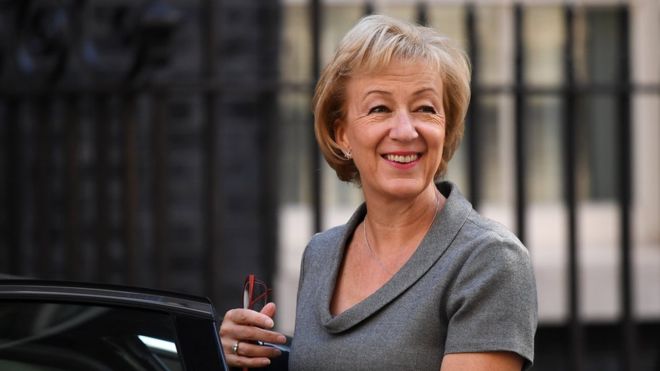
Andrea Leadsom


20 Jul 2018: Yet Again – Westminster MP’s Show Their Contempt for Public Opinion

MPs agreed to the introduction of a new draconian code of conduct for MPs, Peers, Parliamentary Staff and Civil Servants claiming it aspired to stamp out bullying and harassment.

But the new rules also ended the right of the Public and Press to be alerted to and name and shame MPs, Peers and Parliamentary Staff (including Civil Servants) accused of other offences such as fiddling expenses or conflicts of interest.

The new rules replace the previously introduced new rules just introduced in 2010 which replaced the existing ineffective rules that allowed for the mass defrauding of taxpayers by the previously mentioned group of individuals.

The Parliamentary Commissioner for Standards has been neutered, to the detriment of the public and press and to the benefit of wrongdoers  by the setting aside of the 2010 commitment of MP’s to the public to ensure a complete transparency of process, listing MPs, Peers, Parliamentary Staff and Civil Servants under inquiry and rulings

First example:

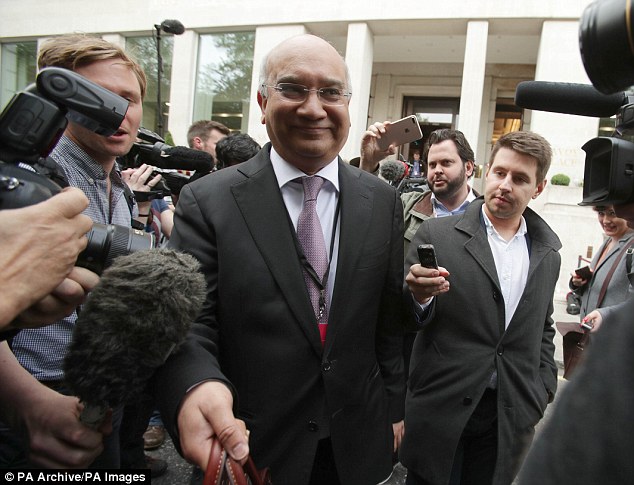
Within minutes of the vote in the Commons all information pertaining to separate investigations into two MPs – Labour MP Keith Vaz and Tory Robert Courts – was removed from the Commissioner’s website.


20 Jul 2018: The Tory Government Statement of Intent

Commons Leader Tory MP, Andrea Leadsom issued a statement proposing the change saying:

“We’re proposing that the Commissioners of both Houses will keep their investigations entirely confidential until such time as there is a finding. This is crucial if individuals are to place their trust in the new system.  There is clearly a balance to be struck between the public interest in transparency and putting the complainant at the heart of the process by protecting their identity. That is absolutely vital.”

Sir Alistair Graham, former chair of the Committee on Standards in Public Life, told the press that it would “seriously undermine our democratic system” and that MPs are “using something relating to sexual misconduct to get rid of something MPs haven’t liked for a long time”.

Sir Kevin Barron, chairman of the Cross-Party Committee on Standards in Public Life argued that MPs should not have anonymity over accusations of fiddling expenses or conflicts of interest. and said the new code was “a step backwards”. He also produced a letter written to himself by lay members of his committee:

Dear Sir Kevin,

Confidentiality regarding matters not related to the Behaviour Code

We are writing to you in your position as Chair of the Committee on Standards.

As lay members we wish to express our support to the elected members of the Committee on Standards for the amendment being tabled to the House, regarding matters of confidentiality on investigations, conducted by the Parliamentary Commissioner on Standards, relating to the Code of Conduct.
Through our involvement in the work of the Committee we recognise the unusual, and sometimes precarious, nature of the role of MPs, the media interest they deal with on a daily basis and therefore, the importance MPs rightly place on their reputation.

We also recognise the importance of the reputation of the House and the impact the actions and behaviours of MPs can have on how this is viewed.

Our experience to date suggests that publication of an announcement that an investigation is taking place does not cause significant damage to an MP’s reputation and, on a number of occasions, the matter is already in the public domain through the media.

Therefore, in our view, the announcement can provide assurance that concerns are being handled independently and in a fair and impartial manner.

Our view is that the current practice followed by the Parliamentary Commissioner on Standards, and explicitly agreed by the House in 2010, creates the right balance between the individual reputation of MPs and the collective reputation of the House.

Any proposals to limit this approach would be a detrimental step in continuing to build the credibility of the reputation of the House.

The letter, written on behalf of UK citizens was ignored

Lay Members of the Committee on Standards: Tammy Banks, Jane Burgess, Charmaine Burton, Rita Dexter, Dr Arun Midha, Sir Peter Rubin, Paul Thorogood


Jackie Baillie MSP says it is shameful that under the SNP and the Tories women earn less than men – But Jackie!! the Record of Scottish Labour in Office is Truly Appalling


16 Jul 2018: Working Women in Scotland Earn significantly Less than Men

Jackie Baillie MSP, Scottish Labour’s economy spokeswoman, said it was “shameful” that under the SNP and the Tories women were earning less than men over the course of their careers.

She added: “Closing the gender pay gap isn’t just a question of fairness – it is essential for our economy.

“There is so much more to do to shatter the glass ceiling for women.

Only Labour will take the radical steps to close the pay gap for good, like a real living wage and forcing companies to publish pay

“If companies think a woman is worth a lower wage than a man then under Labour, we’ll force them to admit it.”

Labour’s plan to close the gender pay gap includes fines to ensure compliance on pay, auditing more firms, publishing pay ratios and introducing a £10 an hour real living wage.

https://www.dailyrecord.co.uk/news/scottish-news/gender-pay-gap-exposed-women-12926733


But  the Labour Party record of gender equality and equal pay is abysmal. See below!!!!!


12 Jun 2017: North Lanarkshire Labour/Tory Alliance Council forced to pay pension costs of hundreds of women it underpaid

North Lanarkshire Labour/ Tory Alliance run Council is facing a £1million bill after systematically ducking its pension responsibilities to hundreds of female staff it previously tried to squeeze out of equal pay.

The Council has been ordered to cough up after a Scottish Public Pensions Agency (SPPA) investigation found it tried to “obstruct” a fair deal for almost 700 women.

The 681 women were systematically underpaid for years by the council, earning lower wages than male colleagues doing jobs of equivalent worth.

Last year, after initially forcing the authority to give them back-pay through a tribunal, they reached a second negotiated settlement worth a further £7.1m, after being represented by equal pay experts Action 4 Equality Scotland.

However, their final salary pension deals remained below those of male counterparts, as their contributions were lower while they were underpaid.

According to recent local government pension regulations, all back-pay must be treated as “pensionable”, meaning bigger pensions and bigger lump sums for those affected.

The change required the Council to top up their employer contributions to pension funds.

However in February, North Lanarkshire, once again tried to sidestep its duties to the Strathclyde Pension Fund, which covers the female staff, by claiming the women’s second round of back-pay was actually a form of negotiated “compensation” and therefore not pensionable.

The women’s lawyers appealed to the SPPA in March, pointing out the potential differences would be profound if the back-pay was not made pensionable.

Some of the North Lanarkshire women would be denied a pension rise of £1500 a year and lump sums of more than £4000, a lifetime difference of around £50,000.

The SPPA has now ruled the council “misconstrued” the law, and criticised its arguments as “confused and an obstruction to finding an equitable solution to the disagreement”.

It said the council must pay the income tax and national insurance on the second wave of back-pay as well as employer contributions, an estimated total of £1m. (The Herald)


Comment:

Glasgow City, North Lanarkshire and Aberdeen Councils have been Labour fiefdoms for many decades.

The May 2017 election delivered minority run SNP councils but, in the case of North Lanarkshire and Aberdeen an unholy Alliance with the Tory Party thwarted the change the Region so badly needs.

The electorate of the two regions voted for another five years of self inflicted abuse.

What a crazy world we live in!!!


21 March 2014: Glasgow Council Rips Off Female Employees – But the lamb Nips the Lion. Remember this fiasco- and the cost of Attempting to Defend Their Actions

In 2005 Glasgow Councillors guided by Stephen Purcell, with the full support of their Labour Party colleagues, in government, in Scotland created Arms Length External Organisations (ALEOs) and transferred large numbers of Council employees to said organisations.

Evading their responsibilities over equal pay they created “Cordia” a company providing care in the community services and moved a largely female workforce into it in a cynical attempt to locate the bulk of their low paid women workers together locking them into a low wage environment forever.

This would be achieved by implementing the “equal pay act” at the time of the transfer of staff, under ‘TUPE  regulations. The Council calculated that by putting many of its low paid female workers into (Cordia) – that the women would no longer be employed alongside their former higher paid male workers who, in the absence of change would have been used as comparators for equal pay purposes increasing salary costs.

Male employees on a much higher rate of pay, were all placed in their own ALEO (City Building) which was not the same or even an associated employer – so the Council was ‘off the hook’ as far as future equal pay claims were concerned.


The Unions

The unions in Glasgow kept their members in the dark about the huge pay differences between traditional male and female council jobs – and originally sided with the council when these big pay differences were exposed in 2005.

So the trade unions have a credibility problem because of their behaviour in Glasgow which remains to this day – since the trade unions Glasgow also failed to put up any serious resistance over the creation of ALEOs either.


Labour Party MSP’s

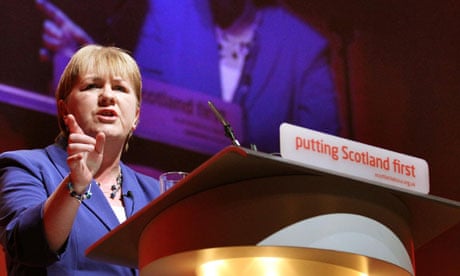
Not one of the local Labour MSPs spoke out against these payments at the time – including Johann Lamont, the Scottish Labour leader – whose partner/husband Archie Graham was a senior Labour councillor in Glasgow.


Litigation 2005 – 2014   (10 years of court sessions – Female staff V Glasgow City Council)

Action 4 Equality Scotland took up the case for equal pay for female staff transferred to  Cordia. Court representation was placed with Fox and Partners Solicitors – and Daphne Romney a leading QC who also represented the staff  during the successful genuine material factor  (GMF) hearing against Glasgow City Council in 2007.

But Glasgow City Council persisted with their argument that they had acted entirely within the Law and in 2013 their solicitors managed to persuade an Employment Tribunal that the newly created ALEOs were not an ‘associated employer’ – in employment law terms.

The significance of which was that staff transferred to Cordia had effectively lost their ability to continue with an equal pay claim – once they had been ‘TUPE transferred’.

Action for Equality Scotland submitted the finding to the “Court of Appeal” arguing that the decision of the Employment Tribunal was unfair – since the council retained control of all ALEO’s. Said control extending to  extra ‘top-up’ payments to Councillors for overseeing the ALEOs – which to many people, seemed like money for old rope.

The Council maintained their position that female employees could no longer compare themselves to male comparators who remained in the employment of the Council – the plain purpose of the Council’s strategy being to try and evade responsibility for equal pay claims.


The Court of Appeal (final outcome)

In the Inner House Lords Brodie, Drummond and Philip handed down a major decision affecting more than 2,500 Action 4 Equality Scotland clients with equal pay claims against Glasgow City Council.

Glasgow City Council lost a big appeal case, – over whether or not thousands of council workers transferred to various arms length bodies (known as ALEOs) – can continue with their equal pay claims.

The good news is that they can – so hip, hip, hooray – for the 2,700 claimants from Action 4 Equality Scotland who are affected by this decision!

Action 4 Equality Scotland now represents 5,500 clients in the ongoing equal pay claims against Glasgow City Council – whereas the trade unions represent only penny numbers.


Statement – Action for Equality Scotland

Whoever dreamed up this despicable plan – should be sacked forthwith by Glasgow’s ruling ‘socialist’ Labour administration – that is if they have not already departed the scene with an generously enhanced tax-free lump and final salary pension.

“We began this litigation back in 2005 and over the past 10 years we have witnessed Glasgow City Council enter into complicated and costly avoidance measures to escape their responsibilities to low paid.

https://caltonjock.com/2016/03/07/women-employees-betrayed-by-glasgow-councillors-the-labour-party-and-the-unions-not-worthy-of-your-vote/


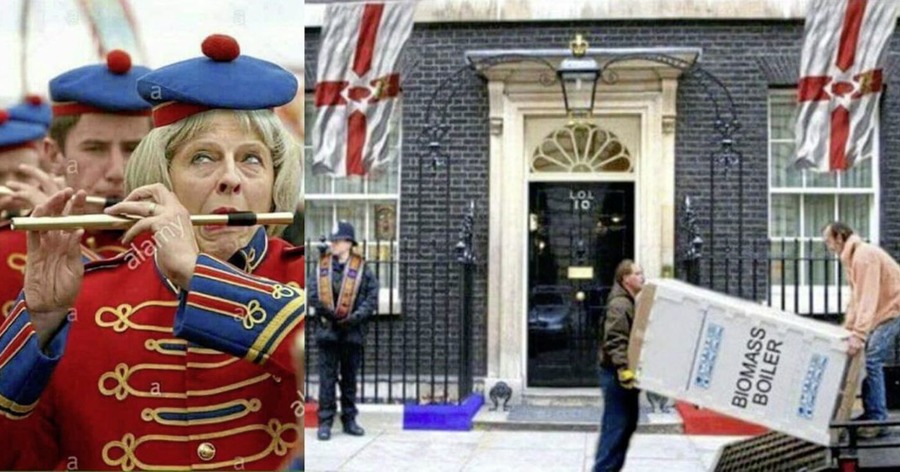
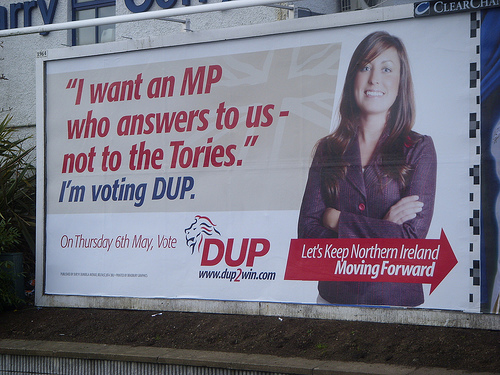
Conservative Party Voters With Their Hearts and Minds in Scotland Should Not be Prostituted Out to the Unionist Orange Order or Corrupt DUP of Northern Ireland – the Cash for Ash Scandal Provides Examples of Largesse to Their Supporters


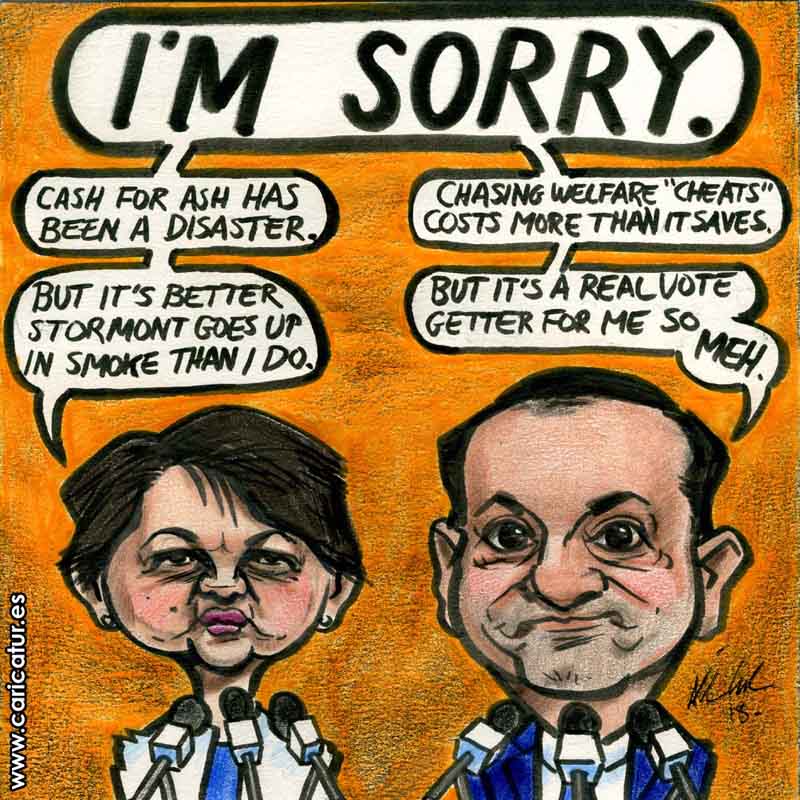
Renewable Heating Incentive Scheme (Cash for Ash)

The UK and Northern Ireland agreed to meet a EU target (15%) for obtaining energy from renewable sources by 2020.

Eligible homeowners and businesses were persuaded to install biomass boilers which create energy from woodchips or pellets, rotted trees, manure and sewage.

First Minister Arlene Foster, launched the scheme in 2012 and wrote to the banks of Northern Ireland actively promoting it so that they would provide loans to those installing RHI boilers.

Her letters stressed the long term security of the tariffs guaranteeing they would be exempt from any decreasing measures confirming ministerial approval endorsing claims of significant profits to be acrued by biomass boilers from taxpayers money. Subsidies which were “set in stone” for 20 years.

But the scheme was flawed since unlike legislation applicable to similar ventures in Scotland, England and Wales, a tarrif-tiering financial cap was removed before implentation leaving it vulnerable to abuse.

The media had a great time, publishing stories of wealthy homeowners milking profits by turning ‘green’ heating to maximum and opening windows and farmers heating barns night and day so as to burn as many wood pellets as they and other business owners could taking advantage of a subsidy that gave them £1.60 for every £1 spent, resulting in hundreds of millions of taxpayers money going up in smoke.

The final figure is not yet known, but at 2017 it was around £1.7 billion.

Subsequently reduced by £1 Billion meeting the terms of the propping up agreement keeping the Tory Government in power at Westminster.

But the bulk of the overspend was avoidable since, in 2013, “Cambridge Economic Policy Associates” gave warning to the offices of the First Minister that tiered tariffs should be introduced.

Their warning was ignored. But in 2014, Ofgem again, (without success) warned that tiered tariffs needed to be put into the scheme.


Scheme Review

At the time of adoption the letter of approval indicated it had to be reapproved in March 2015.

Responsibility for ensuring this happened rested with the “Department for the Economy” (DETI).

They failed in their duty and another opportunity for applying corrective measures (tariff tiering) was missed.

When the DETI finally realised in 2015 that the scheme needed to be formally reapproved, it was referred to the Department of Finance (DFP).

In October 2015 the Minister heading the Department that reapproved the scheme was Arlene Foster.


Public Outrage.

When the scam was finally exposed the public in Northern Ireland were outraged to be informed that so much money had gone up in smoke and allegations soon surfaced in the press and social media that the scheme had been kept open illegally in order for selected persons to avail themselves of its benefits.

Questioned by the media if anyone in the Party was connected to the scheme the Democratic Unonist Party (DUP) refused to answer.

But the press and the public were shocked at the scale of the overspend, attributed to the DUP and Party leader, Arlene Foster faced calls to resign from her role as Northern Ireland’s first minister. She refused and the Government collapsed.

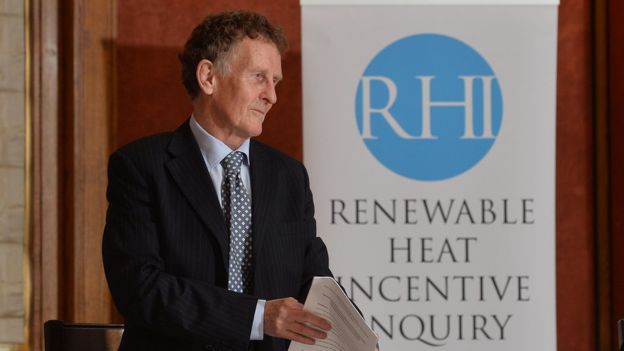
Proposals for an early General Election sparked alarm within the DUP and an inquiry was speedily set up, under the Chairmanship of Sir Patrick Coghlin, to report its findings after the election.

It is expected this will not be published before the end of 2018

The DUP also undertook to retrospectively introduce tarrif-tiering and attempt to recover any inappropriately claimed finance but it is unlikely any money could be recovered since contracts entered into might be impossible to set aside.

This site provides an explanation of the debacle: (https://rhani.org)


They Can Run But They Cannot Hide

Investigation of the scheme participants and identification of unauthorised political involvement is proving to be complex and time consuming as events contributing to the scandal unfold.

The undernoted list is indicitive of what might be be revealed in the final report.

1. Arlene Foster told the “cash for ash” scandal inquiry she had not read the legislation which she brought to the Assembly in her name in order to set up the RHI scheme.

The revelation that she had not read the legislation emerged during exchanges about one of several deficiencies in the regulations whereby they did not adequately define ‘useful heat’ which would be eligible for subsidies, making it more difficult to crack down on potentially fraudulent claims.

Her admission of failure to read the regulations contrasts sharply with how she presented them to the Assembly at the time.

In October 2012, as she asked MLAs to vote for the regulations, she took personal credit for the work, saying: “This demonstrates my commitment to the sector and my desire to see levels of renewable heating increase.”

She also told the Assembly – which subsequently passed the legislation unanimously after only a few minutes of debate – that the regulations “are set in a very clear framework for the scheme, including how payments will be calculated and made, as well as its conditions and eligibility standards”.

In her evidence to the inquiry the significance of the absence of records of key meetings or decisions about the RHI scheme became starkly apparent as she repeatedly used phrases such as “I don’t remember”, “I can’t recall” and “I don’t think I have any clear recollection” about key meetings.

But she insisted that she always believed minutes were being taken but that they never came to her for ratification.

The evidence to the inquiry of civil servants contradicted Foster.

Many had been clear there was a culture of not minuting meetings, particularly those of Arlene Foster and her Special Advisor.

During probing questioning, Sir Patrick put to Arlene Foster: “Can we just stand back for a moment and look at the system here?

“You’re head of the department and Fiona Hepper is the Head of Energy and Dr Crawford is your Special Adviser.

And you’re being asked to deal with a completely novel form of incentivised project in a market which nobody knows how it will respond; volatility, unpredictability is written all over it.”

“We know, or we appear to know that Dr Crawford doesn’t read any of the financial appraisal reports of which there are two full reports and an addendum, despite the public having paid money for those reports.

He doesn’t read any of those – and yet he is your trusted special adviser.”

“Fiona Hepper does a submission which at a minimum is a bit difficult to understand and – perhaps understandably again – a meeting is organised.”

“There is clear guidance that where a meeting is to take place that involves additional information …and indeed as a general proposition, meetings about submissions should be recorded and the guidance clearly says that the meeting should be recorded by the department making the presentation to the meeting.”

“Now, there are no notes or records about this. Does that not start to edge towards a dysfunctional department, if these are the two people that you trusted and one of them didn’t read any of the detailed appraisal documentation, the other one comes to you with an explanation that involves additional information but no notes are made of it, no enquiry is made as to whether notes are being made and yet this is a unique project?”

Foster: I was somewhat taken aback that there were no notes of the meeting. I would have expected notes to have been, if not taken at the meeting, at least after the meeting that there would have been some sort of record of what I had said at the meeting, of what she had explained to me.

Sir Patrick: “Absolutely. Neither you, nor Dr Crawford, thought it appropriate to ask Fiona to produce notes.”

Foster: “But that would not have been the normal practice. I would have expected notes to have been taken.”

Sir Patrick: “Yes, you would. And if notes hadn’t been forthcoming, either you or Dr Crawford might have thought as a common sense [reaction] ‘we’ve just been told more information; this submission has now been explained in a very different way. Could you give us the note please of what was said?’”

Foster: “All I can say is that I would have expected notes to be taken. I wouldn’t in the normal course have seen a copy of the note of a meeting; it wouldn’t have come back to me. I would have expected that to have been put…into the file…I didn’t see it as my role to check if a minute was put somewhere of the meeting… it wasn’t my normal practice to do that because I would have assumed…”

Sir Patrick: “Right, let’s accept that it wasn’t your normal practice. What seems to me to be incontrovertible is that your expectations of the two trusted people were completely unfulfilled.”

Foster: “Well, that’s something that you have to…”

Sir Patrick: “Well, if you can correct that, please do so.”

Foster: “Well, in terms of Andrew, he was a Special Advisor and I suppose the question is: What does ‘special’ mean in terms of adviser…I think it was the fact that he was a political appointee, yes, but also in his case because he has a doctorate in agriculture he does have a specialism in that direction.”

Sir Patrick: “I fully understand – you’ve told us you wouldn’t, and I can understand fully with the demands being made on you as head of the department – you wouldn’t have read technical reports.

That is why you expected Dr Crawford to have read them. That is why you would have expected Fiona to produce a note, and indeed there’s guidance for her to look at and read to see she has an obligation to produce a note.

I just wonder about how this department was actually working in practice.”

Foster: “Well…”

Sir Patrick: “One further point…I did pick up from the differences between Ms Hepper and Mrs Foster was Ms Hepper said Mrs Foster would have seen the paperwork and the documents from the business case whereas Ms Foster said she never looked at business cases, so again…

Foster: “Well, they weren’t sent to me, sorry…”

Sir Patrick: “Yes, I understand that. They weren’t sent to you. But she says she would have expected you to pick up on it. So you have these views from different people of considerable importance within the department which don’t seem to touch each other. She has an expectation that you say no, you wouldn’t do.”

Foster: “Well, having read the business case, I certainly would have had more questions if I had seen the business case.”

Full details here: (https://inews.co.uk/news/northern-ireland/rhi-inquiry-arlene-foster-admits-she-didnt-even-read-her-own-cash-for-ash-legislation)


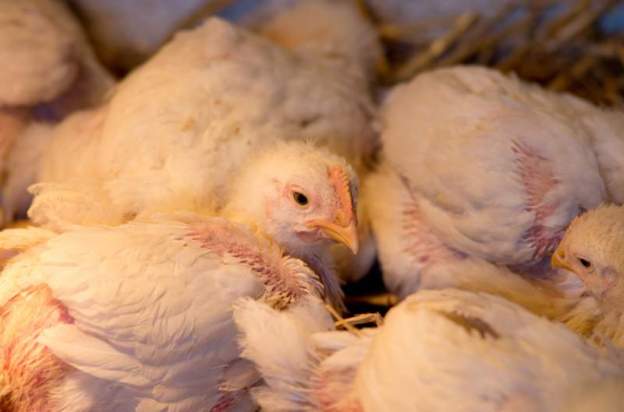
2. Poultry giant Moy Park maintains 1,520 hen houses in Northern Ireland, of which 943 were converted to biomass boiler heating between 2010 and 2018 providing opportunity for the company to expand its business from four million to six million birds each week.

Company executives became aware of allegations of abuse of the scheme around October 2014 prompting senior executive David Mark to comment in an e-mail to colleagues that there was “more money in burning pellets than raising chickens”.

He had also circulated within the company a “heads up” document he said he had received from an unknown “contact in government” about civil servants plans to combat increasing abuse of the scheme.

An examination of his e-mail correspondence indicated his contact was Andrew Crawford, at that time a Special Advisor to First Minister, Arelene Foster.

This provided irefutable evidence that Moy Park (Poultry) and the DUP were communicating in the summer of 2015, well before tariff changes were announced and when there was a recognition by the company of the advantage of getting their farmers accredited to the scheme before lucrative payments were cut.

Responding, David Mark admitted that at the end of July 2015 he had met Crawford at a poultry farm belonging to Crawford’s brother James, but he had no recollection that they discussed RHI. They just exchanged pleasantries.

Afternote: Crawford resigned from his post as Special Advisor admitting he had acted without authority providing information to his poultry farming brother and other persons.

But his departure from government and loss of his £92,000 job was short-lived when Arlene Foster re-hired him in another government financed job.

It was further revealed that Crawford had told a fellow DUP SPAD, Timothy Cairns, that David Mark was the person to talk to in Moy Park (Poultry) about the uptake of the scheme amongst its suppliers.

Comprehensive analysis can be found at: (https://www.bbc.co.uk/news/uk-northern-ireland-44660879)


3. The inquiry was told of an attempt to “protect” Arlene Foster during the closure of the scheme.

It was revealed by Deputy Permanent Secretary at the Department for the Economy, Chris Stewart that a former DUP adviser had made reference to protecting the former first minister from blame.

He also said there was a “desire” in the DUP to make it appear that former enterprise minister Jonathan Bell had sole responsibility for what was an unpopular decision to shut down the scheme in 2016.

In a follow up statement he said that civil servants’ attempts to curb the cost of the RHI scheme had been met with “surprising resistance” by a number of DUP figures and he never before been confronted with a similar phenomenon, from government Ministers during his career as a civil servant.

It was then revealed that, DUP Special Advisor, Timothy Cairns had ventured to Stewart that the addition of cost controls should be delayed as their introduction in October could lead to a spike in applications to the scheme.

The suggestion was dismissed by Stewart who countered that there was already an increase in applications and a well-informed industry would keep demand high.

Stewart commented: “I got the impression that the suggestions that were coming back were as a result of DUP considerations and civil servants, advisors and Ministers were not on the same team” as they struggled to rein in spending.

But Cairns would not be denied and discussed his proposals with another DUP adviser Dr Andrew Crawford, who subsequently proposed changes which Stewart would find acceptable.

Senior civil servant, Andrew McCormick told an Assembly committee that he believed Crawford to be the person who influenced the decision to keep the scheme open.

Crawford said he would only have offered “informal advice” on the basis of his experience and insisted that he did not attempt to prevent the scheme’s costs being curbed.

Co Tyrone farmer, Crawford, was also a Special Advisor in the office of the DUP Agriculture Minister, Michelle McIlveen, and had previously worked as a Special Advisor to Arlene Foster, in her roles as both Enterprise and Finance Minister.

His brother is a poultry farmer and a recipient of the financial benefits of the scheme.

More details here: (https://www.bbc.co.uk/news/live/uk-northern-ireland-politics-44641797)


4. Brothers-in-law, Timothy Johnston, Special Advisor to DUP Leader, Arlene Foster and John Robinson, Special Advisor to DUP Economy Minister Simon Hamilton and former Director of Communications for the DUP, were named as being the reason for a block on cost controls surrounding the Renewable Heat Incentive (RHI) scheme. Johnston is married to Robinson’s sister.

Suspended DUP MLA and DUP, Enterprise Minister, Jonathan Bell (former Party Leader, Peter Robinson’s most loyal lieutenant) used assembly privilege to name two Special Advisors and claimed he had been thwarted in his efforts to clamp down on the multi-million pound RHI overspend because the pair “have such extensive interests in the poultry industry”.

Johnston stated he had no personal direct connection to the RHI scheme but admitted his father-in-law and two brothers-in-law were in the poultry industry and his father-in-law had installed two green energy boilers under the scheme.

Robinson said he had no personal interest in the poultry industry but his father and two of his brothers were poultry farmers.

The two Spads are accused of “a conflict of interest given their roles in the DUP and the civil service is investigating.

More information here: (http://www.irishnews.com/news/2017/01/19/news/dup-spads-linked-892398)


5. Loyal servant to the DUP, Stephen Brimstone, the first Special Advisor confirmed to be a beneficiary of the scheme, departed his DUP government funded, £92,000 position in order to pursue “opportunities in the private sector”.

Arlene Foster confirmed that he had been a recipient of payments, but neither the DUP nor Brimstone would disclose how much he had received or when he signed up to the scheme.

Brimstone’s brother, Aaron, who runs a karting business in Co Fermanagh, is also a scheme claimant.

Assembly Member Jim Alister, used Stormont privilege to allege that former DUP Special Advisor, Stephen Brimstone, was “inappropriately claiming” on the non-domestic scheme using a non domestic boiler to heat his home.

Ofgem said that the accredited boiler was being used in a non-domestic capacity.

Details have been passed to the counter fraud team and a hold had been put on the payments.

More details here: (https://www.bbc.co.uk/news/uk-northern-ireland-43415487)


6. Long serving DUP member, Timothy Cairns, the discredited DUP Special Advisor to Enterprise Minister, Jonathon Bell gave up his £92,000 government funded post. He is now employed as the director of the Community Transport Association for Northern Ireland and has been appointed by the DUP, to the board of cross-border business body Inter-Trade-Ireland.

7. Ofgem official Teri Clifton helped monitor payments under the flawed green energy scheme.

In November 2015, she took a call from a business seeking accreditation to the scheme.

DUP MP Mr Ian Paisley participated in the call which she said was “very intimidating”.

She said that soon after she took the call, she realised she was on speakerphone and was speaking to the applicants, their representatives Action Renewables, Mr Paisley and someone from Moy Park Poultry.

She had received no prior warning of the phone call and did was not best pleased about the position she had been placed in.

Asserting it had been “very intimidating” she, added: “I don’t think it was intentionally intimidating, I think the intention was to catch me off guard and to make my decision look like I was the wrong one in front of a crowd of people.”

She went on to say that the business had missed the deadline for higher tariffs and, therefore, faced being put on less lucrative rates that had just been introduced.

The business blamed an IT problem at Ofgem for the delay and missed deadline but she advised it had simply not been submitted in time.

All participants on the call were persistent in their efforts to persuade her to accept the application onto the higher tariff because the applicants, otherwise stood to lose a considerable sum of money.

It later emerged that Paisley had written a letter about the case to the Special Advisor of the then DUP, DETI (Department of Enterprise, Trade and Investment) minister Jonathan Bell.

In the letter Paisley had given the impression that Ms Clifton had agreed with the applicant’s concerns about how their case had been handled.

But she said the letter wasn’t a “fair representation” of the discussions they’d had.

She also said the issue had been raised with OFGEM even though the applicant’s had missed the deadline by a matter of weeks.

It was later approved to the scheme, but on the lower tariff.

She said she believed the “lobbying” was due to the risk of reputational damage to “Action Renewables”, which had taken over responsibility for the application and had not submitted it when the applicant thought it had.

More details here: (https://www.bbc.co.uk/news/uk-northern-ireland-43415487)


8. DUP MLA Jim Wells revealed that his ‘brother, two cousins and the brother of a third cousin installed a combined total of eight boilers at three separate farms to heat their sheds.

9. DUP MLA Carla Lockhart said her farmer, brother-in-law is involved in the scheme.

10. DUP MLA William Irwin indicated that his his son-in-law had also benefitted.


Examples of the Scam in Practice

1. A farmer is in line to receive £1 million over the next 20 years for heating an empty shed.

2. A rich landowner heats his large outdoor swimming pool all the year round.

3. Large factories in Northern Ireland are on course to pocket £1.5 million over two decades for running incentivised biomass boilers all year round in premises that were not heated previously.

4. An unspecified number of scheme users were using boilers to dry wood, then burning the same wood in the boilers to dry more wood – creating a perpetual cycle of use just to claim money.

5. The usage policy of the near 2,128 users is “anything goes, you can do what you want because you can’t be expelled from the scheme”. Only 59 people had applications turned down or discontinued for non-compliance.

6. A Free Presbyterian Church in Ballymoney stands to receive £270,000 over a 20-year-period.

One of the church elders is DUP MLA Mervyn Storey, who was a DUP Minister in the last Executive.

He denied any involvement in the application for the scheme.

Asked if his church would consider paying back money over and above what it needs to pay for its heating costs, given that it is now accepted that the scheme was far too generous and is therefore going to be a drain on the public purse he said that he could not comment and it would be a matter for the church as a whole to consider.

The project had come to light because the company which installed the wood pellet boiler, Solmatix Renewables, publicised it on its website as a case study. Solmatix said that the “financial rewards” for the church were £13,500 per year, made up of £1,000 oil savings each year and an annual RHI payment of £12,500.

Church Elder Jonathan McAuley said: “We recognised that Biomass would meet all of our heating requirements for the church and free up around £10,000 a year for us to use in other mission works.

McAuley, who owns an engineering firm will receive £960,000 in grants from the Scheme. So much for being open and honest.

7. Leading Belfast car dealership Charles Hurst Ltd raked in over £250,000 to heat its plush Ferrari showroom,’ cash-for-ash’ figures reveal.

Full  list of applicants benefitting financially from the scheme are here: (https://www.belfasttelegraph.co.uk/news/northern-ireland/backlash-over-naming-of-rhi-green-energy-scheme-claimants-35751982.html)


The 2019 General Election is the Last Chance for Scots to Get Their Heads out of the Sand – Failure to Do So Will Signal to the Westminster Government That the Scottish Flirtation With Devolution is Over – Do as You Wish to Us Boris


Confirmation of the Intent of Westminster to Subjucate Scots is contained in the last verse of the UK National Anthem

Lord grant that Marshal Wade,
May by thy mighty aid,
Victory bring.
May he sedition hush,
And like a torrent rush,
Rebellious Scots to crush,
God Save The Queen.


The European Union (Withdrawal) Act 2018

The Devolved Government, Scotland Act 1998, was founded on the premise that EU membership would be permanent.

But Brexit has the potential to adversely impact upon the devolution settlement since the Tory Government is determined to ensure powers presently with the EU in Brussels, (to be returned to Scotland) will be held at Westminster unless and until they are transferred to Scotland.

The Scottish Government profoundly disagreed with the Tory Government approach and requested that existing lawful legislation be honoured.

This was ignored and in response the Scottish Parliament, on 21 March 2018 passed the EU (Legal Continuity Bill) preparing Scots law for Brexit.

The Tory Government continued to ignore the Scottish Government and on 26 June 2018, Royal Assent was granted passing the European Union (Withdrawal) Act 2018, making a significant number of alterations to the current devolution arrangements.

The Tory Government challenged the legal status of the Scottish Parliament Bill and the matter was referred to the UK Supreme Court under section 33 of the Scotland Act 1998, to determine whether the Scottish Parliament had legislative competence to pass it.

The Supreme Court hearing conceded that the Scottish government were legally entitled to introduce the Bill but it had no relevance since Royal assent to the Westminster legislation had been signed off before the hearing and it took precedence

A sad day for democracy and confirmation that devolved governance was a fallacy.


Legislative Competence

The Bill converted EU law into UK law, to be known as “retained EU law” so that, upon Brexit, the laws would apply immediately after exit as applied previously.

The Bill provisions prevent the Scottish government from legislating on “retained EU law”.

Scotland would be enabled to legislate only on EU derived domestic law and then only where this would have been wholly within the competence of the Scottish Parliament prior to Brexit.

Scottish devolved competence after Brexit is defined by reference to “retained EU law”.

The scope of the term is ambiguous and matters of competence will require precedence to be set so that it can be ascertained exactly what is and what is not within the competence of the Scottish Parliament after Brexit.

Noteworthy was the absence in the Bill of the statement that Whitehall ministers shall not “normally” act in relation to devolved matters without the consent of the Scottish Government.

This was relegated to the “explanatory notes” section of the Bill providing the Westminster Government with the ability to introduce “Secondary Legislation” across the entire range of devolved responsibilities in Scotland without the agreement of the Scottish Government.


Repatriation of Powers from Brussels

Planning ahead for the return of powers from the EU, the Westminster government, decided there was a need for “UK-wide common frameworks” to be established where EU law intersected with devolved competence. and brought forward  a programme of change rolling-back devolution through the adoption of a “conferred powers” model of devolution, conflicting with the “Devolved Governance, Scotland Act 1998”.

The Westminster Government identified 153 areas where EU laws “intersected with devolved competence,” including justice and home affairs, including equal treatment legislation, cooperation in cross-border family disputes, data sharing and combating child sexual exploitation.

Environmental matters (regulating air and water quality, chemicals and pesticide use) and all aspects of agriculture and fisheries.

Of concern was that many aspects of procedures for the implementation and duration of transitional “UK-wide common frameworks” were as clear as mud and Scots were expected to be satisfied with the comment in the “explanatory notes” section (not in the Bill) committing the Westminster Government only to “work closely” with the Scottish Government identifying (but not necessarily agreeing) where there is a need to establish such frameworks.


Some of the Powers to be Centred on Westminster

The Tory Government revealed it not allow the Scottish Government to continue interpreting and making laws across the entire range of devolved governance under the Scotland Act 1998 after Brexit.

In this respect powers of these 24 devolved areas were transferred to the control of UK ministers at Westminster, including:

1. Agricultural support: Farming.

2. Agriculture: Fertiliser regulations: “Regulations providing common standards for compositional ingredients, labelling, packaging, sampling and analysis of fertilisers.”

3. Agriculture: GMO marketing and cultivation: “Standards for marketing and cultivation of genetically modified organisms.”

4. Agriculture: Organic farming: “Regulations setting out standards for organic production certification.”

5. Agriculture: Zootech: “legislation providing a common framework of rules on breeding and trade in pedigree animals”.

6. Animal health and traceability: “Rules and standards that aim to maintain animal health and allow their movement”.

7. Animal welfare: “Rules relating to aspects of animal welfare including on-farm issues, movement of livestock and slaughter.”

8. Chemicals regulation (including pesticides): “Including the export and import of hazardous chemicals.”

9. Elements of reciprocal healthcare: “ensuring there are not different policies on reciprocal healthcare.”

10. Environmental quality: chemicals: “Regulation of the manufacture, authorisation and sale and use of chemical products”.

11. Environmental quality: ozone-depleting substances and F-gases: “phasing hydrofluorocarbons by 85% by 2036, licence imports and exports and report on usage to the UN”.

12. Environmental quality: pesticides: “Regulations governing the authorisation and use of pesticide products and the maximum residue levels in food, and a framework for action on sustainable use of pesticides.”

13. Environmental quality: waste packaging and product regulations: Policies to set product standards in areas such as “electrical and electronic equipment, batteries and vehicles” in order to manage waste.

14. Fisheries management and support: “Policies and Regulations relating to rules relating to the sustainability of fisheries (quotas), access to waters, conservation measures, enforcement and financial support.”

15. Food and feed safety and hygiene law: “Regulations laying down the general principles and requirements of food, feed safety, hygiene and law enforcement; food safety labelling, risk analysis and incident handling.”

16. Food compositional standards: “Minimum standards for a range of specific food commodities such as sugars, coffee, honey, caseins, condensed milk, chocolate, jams, fruit juices and bottled water.”

17. Food labelling: “Regulations setting out requirements on the provision of information to consumers on food labels.”

18. Hazardous substances planning: “Planning controls relating to the storage of hazardous substances and handling development proposals for hazardous establishments.”

19. Implementation of Emissions Trading System: “The scheme sets a maximum amount of greenhouse gas that can be emitted by all participating installations and aircrafts”.

20. Mutual recognition of professional qualifications (MRPQ): “Directives that create systems for the recognition for professional qualifications and experience.”

21. Nutrition health claims, composition and labelling: “Regulations and Directives on the nutrition and health claims made on food; food for special medical purposes and weight control; food intended for infants; the addition of vitamins and other substances to food; and food supplements.”

22. Plant health, seeds and propagating material: “Requirements in relation to the import and movement of plants and plant products, risk assessment of new plant pests and outbreak management.”

23. Public procurement: “Provide procurement Directives, covering public procurement contracts for supplies, services, works and concessions above certain financial thresholds awarded by the public sector and by utilities operating in the energy, water, transport and postal services sectors”.

24. Services Directive: “Directive that seeks to realise the full potential of services markets by removing legal and administrative barriers to trade by increasing transparency and making it easier for businesses and consumers to provide or use services”.


Henry VIII Powers and the Tory Government’s European Union (Withdrawal) Bill 2018

Described by the House of Lords Constitution Committee as a:

“constitutional oddity departing from the boundaries of the principle that only Parliament may amend or repeal primary legislation”

the illegal inclusion of Henry VIII powers in the Bill was an affront to parliamentary democracy and a naked power grab by the Tory Government.

The powers conferred on Tory Ministers, (without the approval of parliament) the right to introduce:

1. Powers by regulations to prevent, remedy or mitigate any failure of retained EU law to operative effectively or “any other deficiency in retained EU law”.

2. Powers by regulations to make such provision as they consider “appropriate” to prevent or remedy any breach of international law arising from the withdrawal of the UK from the EU.

3. Powers extend to the imposition or increase of taxation.

4. Powers by regulations make such provision as considered appropriate for implementing the withdrawal agreement if they consider that “such provision should be in force on or before exit day”.

5. Powers to “make such provision as the Minister considers appropriate in consequence of this Act”, including by modifying any provision made under primary legislation passed before the session in which the eventual Act is passed.


Implementation of Transferred Powers in the Transition Period

The “Transition Period”, extending from 7 years to infinity presents a substantial increase in the workload of Westminster based civil servants, accompanied by a significant reduction in the responsibilities of civil servants reporting to the Scottish Government.

Revised powers “intersecting with devolved competence” in respect of Scotland will be adjusted (in accordance with Westminster guidelines)  and returned to Scotland. (keeping the natives onside).

Facilitating the foregoing will bring with it a significant reduction in the establishment of civil servants presently based at Holyrood, together with a significant reduction in the annual financial block grant from Westminster to Scotland.

Avoiding redundancies, civil servants, in excess of establishment will be transferred from Holyrood to a “newly leased building” located at New Waverley, Edinburgh, which will provide office accommodation and services to around 2,900 civil servants, including the recently created and greatly expanded UK Government of Scotland, executive control of which will be given over to appropriate politicians appointed by Westminster. (Projected to be Scottish Tory MPs.

It is expected that the incumbent “Secretary of State for Scotland”, (Mundell) will most likely be elevated to the House of Lords.

The UK Government of Scotland sales pitch stated:

A new civil service hub will contribute to the creation of a modern Civil Service – with fit-for-purpose workspaces, cross-departmental collaboration, smarter technology, and enhanced career opportunities demonstrating the UK Government of Scotland’s commitment to engaging with and supporting Scotland.


Scottish Government Reaction

Scottish Brexit Minister Michael Russell said:

“The list simply confirms the UK Government’s plans for a power grab”.

“Under the EU Withdrawal Bill 2018, the UK will have the right to take control of any of the powers on the list”.

“However, the publication of the categories demonstrates the threat is most immediate in key devolved areas such as agriculture, GM crops, fishing, environmental policy, public procurement, food standards and a range of other areas.”

“Unless the bill is changed Westminster will soon be in control of these policies amounting to a major power grab and a re-writing of the devolution settlement the people of Scotland voted for so decisively.” (Westminster reply. Tough suck it up)

“I am also alarmed to see some powers included in a further category, which the UK Government says are reserved and would therefore in their view not even require consultation with the Scottish Government.”

“These include Geographical Food Indicators – vital for key Scottish industries – and State Aid which has a role in supporting our economy.”

“We do not agree, for example, that all of State Aid is reserved.”

“For the Scottish Government there is a clear principle at stake – what happens to any devolved power must be a matter for the Scottish Parliament.”

“The Parliament may decide that in some devolved policy areas it makes sense to have UK-wide frameworks, but this must be a matter for Holyrood, not the UK Government.”

“Already we have seen very worrying indications that the Scottish fishing industry may be sold out once again.”

“We are not opposed to working together on joint frameworks in some of these areas but we have been given no assurances on how frameworks will operate, who makes the decisions about them and how we would be able to ensure Scotland’s interests are properly protected.”

“The Scottish Government wants to reach an agreement with the UK Government but we cannot accept a power grab of devolved policies and are therefore proceeding with our own Continuity Bill to protect devolution.”

Westminster reply. Get stuffed. We will decide the extent of your remit to govern in Scotland and it will be much reduced from 2020. Get used to it.


What Does Brexit Mean for Children’s Rights?

Legislative and policy decisions taken in Scotland are subject to a higher standard of review from a children’s rights perspective than their equivalents made at UK-level.

The main factors are:

Children and Young People (Scotland) Act 2014

The Children and Young People (Scotland) Act 2014 places a duty on Scottish Ministers in relation to the rights of children.

It requires that they must consider whether further steps are needed to secure children’s rights and, where appropriate, take these steps.

Scottish Ministers are under a duty to report on what steps they have taken every three years.

The Act embeds child rights-based consideration into law and policymaking in Scotland.

There is no direct equivalent for decisions taken at UK level.

Accordingly, this is an area of concern given the Withdrawal Bill’s approach of “pooling” repatriated powers at Westminster.


Children’s Rights and Well-being Impact Assessments (CRWIAs)

(CRWIAs) have been used by Scottish Ministers since June 2015 as part of the implementation of the duties of the 2014 Act.

The aim of CRWIAs is to assess whether proposed Scottish Government policies, measures and legislation will protect children’s rights and promote the well-being of children and young people as defined under the 2014 Act.

CRWIAs have been used to scrutinise new primary and secondary legislation in Scotland, including the Carers (Scotland) Act 2016 and the Secure Accommodation Regulations, as well as developments at a policy level.

Impact assessments conducted for legislative and policy at UK level have been found to be insufficiently child-focused.

There is a real concern that when powers are centralised at Westminster, after Brexit that decisions made will lack the level of child rights-based scrutiny that would have been available in Scotland under a CRWIA.


Scotland Act 1998 and Incompatibility With Human Rights

A further concern arises in relation to protecting rights under the European Convention on Human Rights (ECHR), which is incorporated into domestic law by the Human Rights Act 1998.

Under the current devolution arrangements, acts of the Scottish Parliament or Scottish Ministers which are incompatible with the “Charter of Fundamental Rights of the European Union” are invalid.

The Scotland Act, therefore, provides for stronger procedural protection of human rights.

The European Union (Withdrawal) Act 2018 makes explicit that the “Charter of Fundamental Rights of the European Union” is reserved to Westminster and its regulations will cease to be a part of UK law after Brexit forcing Scots to accept a much lower standard of human rights protection.


Future Developments

In its “Programme for Government 2017-18,” the Scottish Government set out further steps that it intended to take to progress children’s rights in Scotland including an audit of effective ways to further embed the principles of the UNCRC into policy and legislation, including the option of full incorporation into domestic law.

The Programme also included a commitment to oppose any attempt to undermine the Human Rights Act or withdraw from the ECHR, and to ensure that existing and relevant future human rights protections provided under European Union Law were maintained following UK withdrawal from the EU.

Clearly the Scottish Government is pursuing a progressive approach strengthening human rights protections in areas of devolved competence, whilst the UK Government is intent on repealing human rights protections.

There is valid concern therefore that in retaining control over specific legislative areas at a UK-level, decisions impacting Scottish children will undergo lesser rights-based scrutiny than would have been available if they were made at Scottish level. (Maria Doyle, Assistant Research Officer, Together)


References:

1. Stephen Tierney, “The European Union (Withdrawal) Bill: Legal Implications for Devolution” (September 2017) (https://constitution-unit.com/2017/09/07/the-european-union-withdrawal-bill-legal-implications-for-devolution)

2. Michael Keating, “To devolve or not to devolve? The European Union (Withdrawal) Bill and devolution.” (https://constitution-unit.com/2017/07/25/to-devolve-or-not-to-devolve-the-european-union-withdrawal-bill-and-devolution)

3. Michael Russell, Minister for UK Negotiations on Scotland’s Place in Europe. “https://beta.gov.scot/publications/eu-withdrawal-bill-letter-to-finance-and-constitution-committee)

4. European Union (Withdrawal) Bill Explanatory Notes, para 36. (https://publications.parliament.uk/pa/bills/cbill/2017-2019/0005/en/18005en.pdf)

5. Discussion Paper on Brexit and devolution. (https://www.biicl.org/documents/1785_bingham_centre_eu_withdrawal_bill_-_discussion_paper_-_30_10_2017_-_final.pdf?)

6. Scottish Programme for Government 2017-18 (http://www.gov.scot/Resource/0052/00524214.pdf)


Austerity – Tory Government Policy – Let The Needy Starve – So That Foreign Aid Can be Sustained – Adding Profits to the Coffers of the Rich


Related image


11 March 2018. Millions of Scots families on brink face deepest benefit cuts in years

Not a lot of Scots are aware of this but the Tory Government, having inflicted austerity on the UK for 10 years provides £100 million annually in overseas humanitarian aid to Saudi Arabia which has gold reserves in excess of £16.20 trillion.

contrast the foregoing against:

A new study by the Joseph Rowntree Foundation shows that the decision to press ahead and freeze most working-age benefits and tax credits this year will see a couple with two children left £380 worse off compared with a scenario in which their universal credit claim had increased in line with prices. (The Observer)


Image result for universal credit


Tories in Scotland flirting with the Orange Order and DUP will encourage the return of this sort of terrestrial reptile


Tories in Scotland flirting with the Orange Order and DUP will encourage the return of this sort of terrestrial reptile

Pastor Jack Glass established his Zion Sovereign Grace Baptist Church in Glasgow’s Polmadie area in 1965.

From that place he conducted a near 40 year “fire and brimstone” crusade against the LGBT community and the Roman Catholic church.

In 1982 he inflamed local politics conducting an offensive aggravating hatred and bigotry on Scotland’s volatile streets attempting to force governmet and local authorities to ban the Pope from visiting Scotland.

In 2002 the Church of Scotland General Assembly formally apologised for its now abandoned sectarian policies.

Pastor Glass and his followers caused chaos in the streets outside the Assembly protesting that the measure was contrary to god’s will.

He and his congregation detested popstars and comedians claiming they were involved in the devil’s work corrupting the youth of Scotland.

The official policy of his church was that Xmas festivities were “pagan rituals” and had no place in christianity.

Jack Glass died of cancer in 2004.

A Church of Scotland minister commented that whilst there was sadness at his death he was a flawed christian, “was a flea who lived on the back of the established church’s elephant.

God forbid Scots might return to the arms of people like Pastor Jack Glass.