Politics, sex orgies and the Tory Party – Nothing new here then- but some of these guys are movers and shakers at the heart of the Westminster government


2005 – The Who’s Who of  the Tory apparatchik organisers of “Fever” the largest upper class only sex orgy ever held in Britain

The principle organiser was self made millionaire Eddie Davenport who gathered his  made his first £m in his teens through his organisation of the infamous underage sex Gatecrasher balls and is now a property tycoon worth £133m. He spends six months a year in Monaco as a tax exile sharing £200-a-night hotel suite with two women and shares a £15m London pad with three more. He was seen kissing and fondling a girl on the orgy bed  at his latest sex orgy venue, a luxury property in central London which he purchased from the Sierra Leone government in 2002 for a knock-down price of just £50k.

David Russell Walters: By day the ex-Tory candidate is the boss of the anti-Europe Democracy Movement. By night he is the orgy master tending to guests. At the party he looked on as four girls, one a Dutch rowing champ, pleasured each other.

Jonathon Friedman:– The brains behind Fever’s image. Spends hours “dressing” rooms with pink satin, chocolates, fruit, and jelly babies to energise the participants. Was seen canoodling on a bed with a stunningly beautiful American blonde.

Emma Sayle: A diplomat’s daughter. Dad, an OBE, was a colonel with the Welsh Guards. Regarded as one of Britain’s best and most upmarket swapping party organisers “Killing Kittens” she did not participate in the orgy.

James Hayter: A professional rugby player, around 6′ in height and weighing around 15 stone he was hired as a bouncer but lust got to him and he stripped off and got stuck into the action.

Dougie Smith: Senior Conservative Party strategist. A founding member of “Fever” the 42-year-old, who preached the Tories’ morally-focused back-to-basics policy, was forced to cut his links with “Fever” and now advises and writes speeches for senior Tory MPs.

Wealthy Good Looking Punters

The Charity Boss: International charity director had sex with a female TV production company boss.

The Crime Boss: Heir to a multi-million crime empire, bonked French, Russian, Italian models and a well known fashion designer.

The Wild Child: Raunchy daughter of a legendary rock star had public sex with a top media lawyer.

The Film Director: Movie bigwig and his catwalk model lover had sex with at least seven other couples.

The foregoing is the “cleaned up” version of events. Read the full report here: http://www.thefreelibrary.com/BIGGEST+EVER+FILTHY-RICH+ORGY%3A+WPC+COPS+OFF..+Royal+firearms+officer…-a0130542273


The heart breaking story of the betrayal of people that Trusted his Party to protect their interests – Gordon Brown the Chancellor who sold Scotland’s public utilities to the private sector for a pittance then committed Councils to endless costly leasing schemes

bates

Michael Bates: The Architect of PFI (Rewarded with a life peerage by John Major). As Lord Bates was responsible for administering overseas aid    through the Department for International Development (DFID)

Geoffrey Robinson, Labour Party Paymaster General (expanded PFI with a vengeance)

gold1

Private Finance Initiative (PFI) –

By 1997 the Tories had exhausted most of the possibilities for the direct sale of state-owned assets. Public transport, utilities, energy and communications infrastructure had all passed into private hands, raising £123bn. What remained was services – health, education and local government – impossible to privatise without guaranteed profits.

Facilitating the changes required the state to continue to levy charges from every individual taxpayer for the service concerned in the form of taxation and passing the collected revenue to the private sector as profit.

Gordon Brown talked of ‘risk transfer’ to the private sector, but, in reality the state retained the real risk so far as the private sector was concerned. That of getting the money out of the taxpayer.

Multinationals did not have to worry about whether or not they would collect payments from the ‘taxpayer’ the state would continue to take care of that.

This was not a problem for the new owners of gas, electricity and telecommunications industries: they would simply cut off consumers if they failed to pay their bills.

In education or health this was not acceptable but private capital still needed to make a profit from running these services, and that required cuts, whether in services, or in the pay of the workers providing them, or both.

Universal provision would be further eroded since it was services to the working class that bore the brunt of any cuts.

OR2hbYe7h_hIhbxx9KHI3Tl72eJkfbmt4t8yenImKBVvK0kTmF0xjctABnaLJIm9

Unelected Now Lord Dunlop Arch Right Wing Tory Minder at Scottish Office for Mundell

corrupt

PFI – Rejected by labour in opposition but embraced just as soon as they took office in 1997

When Labour first came to office in May 1997, PFI under the Tories had stalled.

On taking up office New Labour appointed Geoffrey Robinson to the post of Paymaster General.

Working with Gordon Brown’s Treasury team he proclaimed his and the labour Party’s support for PFI and contracted Michael Bates, (later knighted for his services to privatisation) then head of global finance services organisation AMP, to complete a review of PFI. His report presented a glowing future for the country under the PFI banner.

Tony Blair & Gordon Brown soon kick-started a programme of change through the establishment of a dedicated Treasury taskforce to handle the process across government.

From £7bn in April 1997, the value of PFI contracts rose to over £25bn by October 2000 with a further £11.5bn in the pipeline.

The first £14bn of PFI would yield the private sector a guaranteed £96bn income over a 26-year period and estimates were that PFI contracts could be worth £30bn per annum to the private sector, £5bn in education alone, including one in five schools.

To promote it, new quangos were formed. The New Local Government Network (NLGN) and its equivalent for the NHS, the New Health Network (NHN). Connecting them was the Institute of Public Policy Research (IPPR) and part-privatised Treasury taskforce, Partnerships UK.

Previously, public-private partnership used to be called corruption. Now it became the norm – private companies no longer needed to bribe public officials to influence policy; they worked openly with the enthusiastic support of said officials in deciding what service was next for sell off.

A typical example was the plan to close down Edinburgh Royal Infirmary and associated financially lucrative premises in the middle of Edinburgh, and replace them with a new hospital built by a private enterprise consortium on the outskirts the city. The area got a new hospital, the consortium got the business, but the people of Edinburgh got a hospital with 300 fewer beds than originally planned and substantial cuts in staff.

Major-and-Curri_466

John Major and his secret lover Edwina Currie. John sent the first PFI team to Scotland to kick-start the PFI process in Scotland (shades of the Poll Tax. Try it on the Jocks first)

Margaret Thatcher

1996: John Major Sent Civil Servant John G Henderson (Civil Servant) to Scotland to Develop PFI  – These are his memories of the Early Days of PFI:  “When I arrived as head of the Private Finance Unit PFU it was just after the 1997 General Election. I had some experience of PFI in my previous job funding further education colleges,  but I had much to learn. Fortunately, most other people had as well. It was a time of rapid change. There were doubts about the ability of local government and health bodies to undertake PFI, and the policy had yet to deliver its potential. The first Bates Review was quickly upon me, and I had to quickly assess its implications for Scotland. The key recommendation was the establishment of a Treasury Taskforce under Adrian Montague. I was very lucky over that first summer in having a mini-taskforce in Edinburgh in the Shape of Charles McLeod, who was at the time working with the Panel Executive. Charles was both a source of information and an inspiration with his can-do attitude. That, of course, led to his later success heading the 3ED team in the Glasgow schools project. Once Adrian was in post I recall meeting him in London when he came to brief the late Donald Dewar with Geoffrey Robinson, at the time Paymaster General. This was the beginning of a very constructive relationship with the Taskforce. Particular mention needs to be made to the assistance that David Goldstone and Lindsay Watson gave to pathfinder projects such as the Glasgow and Falkirk schools. On the delivery front a key requirement was to get PFI established in local government. It was natural that the focus should be on schools, with the new Government’s emphasis on ‘Education, education, education. To achieve success in schools projects we had to roll-out a system of revenue support, called level-playing field support. This helped make projects affordable and incentivised authorities to develop schemes. That combined with the skills in project teams, consultants and bankers led to breakthroughs such as the £65m Falkirk schools project, the first large bundled deal in the UK. http://www.gov.scot/Resource/Doc/1069/0005211.pdf

Image of Charles McLeod MBE

Labour Lib-Dem Coalition Government in Scotland –  Scottish Executive Private Finance Unit – The Key Role of Captain Charles McLeod MBE

McLeod’s employment record is chequered. Born in London, he spent his first seven years in Rhodesia, before moving back to England and Kent, where he spent much of his childhood. A spell in the army preceded his attendance at King’s College, London, where he gained a BA (Hons) in German, after which he went to the Royal Military Academy at Sandhurst. He served as a platoon commander with the British Army for 10 years, and saw service in Northern Ireland. He eventually became captain in the Queen’s Regiment and was later awarded an MBE for his services in Northern Ireland. He left the army after 10 years and joined the Foreign Office (diplomatic service) taking up a post as monitor (spook) for the European Community Monitor Mission in the former Yugoslavia, and went on to work as a political adviser to the International Conference in the region.

September 1995 – September 1997: On return to the UK from Europe he joined the Tory government’s “Private Finance Panel Executive”, working out of the Treasury Office developing with others the concept of using private finance to fund public utilities. Still with the team and now a civil servant he was seconded to the Scottish Office where he helped the Inland Revenue and West Lothian College with restructuring projects. He then worked out of the Scottish Office restructuring local government funding. He also worked with Falkirk Council procuring their first schools project for five new schools, the first grouped schools PFI project in the UK. Still with the Scottish Office he went on to prepare and introduce local government restructuring policies for the distribution of local government finance.

The Ugly truth of the labour Party and PFI – Typically the unitary charge is three to five times the capital cost, and on more egregious PFI projects as high as seven.

See the source image

May 1996: PFI conference in Edinburgh: The conference discussed what the establishment of a devolved Scottish Parliament meant for joint projects. Would a Scottish Parliament look to private finance to play a role in its plans for Scotland’s infrastructure? Speakers from local government, the construction industry, finance and business brought their views on current arrangements and possibilities for the future. Charles Mcleod, MBE  Alistair Darling MP led discussions outlining Labour Party’s proposals. https://mars.northlanarkshire.gov.uk/egenda/images/att45923.pdf

darling10a

1997: In Scotland the Directors of Education Services and Financial Services submitted a joint report to the “Scottish Executive Private Finance Unit” on a feasibility study for a PFI project in education.

February 1998: Glasgow City Council decided to reduce its secondary school estate from 38 to 29 secondary schools and reinvest the savings. An outline business case was prepared to assess the affordability and value for money of a PFI for the modernisation of its secondary school estate. Subsequent developments relating to the modernisation of Glasgow secondary schools buildings and the introduction of an ICT programme were based on this Council strategy.

August 1998: In November 1999 the 3ED Consortium was selected as the preferred bidder to provide accommodation services for 30 years and ICT  services for 12 years. The agreement was titled Project 2002.

September 1997 – January 2001 (3 years 5 months): Captain Mcleod resigned from the Scottish Office quango and transferred his employment the newly created 3ED Glasgow private Consortium. He assembled then guided his team setting up the award winning Glasgow Schools PPP.

The £225million construction programme of change included, establishing a 30-year maintenance and a 12-year programme of Information Technology Services for 29 secondary schools and one primary school. He further delivered 10 additional new secondary schools within the client’s affordability. Won Project of the Year Award at the 2001 PPP Awards and Education Project of the Year at the 2002 PPP Awards.

October 1997 – August 1998 (11 months): Captain Mcleod Departed 3ED and joined Miller Construction as Business Development Manager.

June 1998: Captain Mcleod directed the development of Group strategy, establishing a new division to secure major PPI regeneration and partnership projects. Teams were quickly formed and trained and bids submitted for a number of PFI projects.

Brian Wilson (Labour) Minister for Construction – Given a Key role implementing New Labour’s PFI policy

isolated-logo

April 1999: The row over Scottish Labour’s support for the Private Finance Initiative deepened after the party treasurer called on it to ditch the policy.

Bob Thomson’s appeal came just days after leading Unison union official Mark Irvine resigned from the party over policies, including the use of PFI to build hospitals and schools. http://news.bbc.co.uk/1/hi/events/scotland_99/news/321519.stm

June 1999: The Scottish Administration promised reform of the controversial private financing of public sector projects in Scotland.  Finance Minister Jack McConnell told MSPs new measures would be introduced to protect public sector workers’ pension rights and prevent revenue from surplus land being lost by the government. He also said the government would make it possible to buy back buildings when PFI contracts expired and return them to public control. In a debate initiated by the Scottish National Party, ministers were accused of allowing privatisation of school, hospital and transport projects “by the backdoor”.  http://news.bbc.co.uk/1/hi/uk_politics/377145.stm

November 1999: 3ED Consortium selected as the preferred bidder to provide accommodation services for 30 years and ICT services for 12 years. To start at the beginning of 2002.  http://news.bbc.co.uk/1/hi/scotland/502582.stm

January 2001 – March 2003 (2 years 3 months): Amey inc: restructured creating a Scottish corporate presence (Amey Scotland PLC) allowing it to “focus more closely on Scottish business opportunities, reducing operating costs”.

Amey: A FTSE 250 construction company metamorphosed into a support services business. Scottish turnover was c.£100m, generated by 1,400 employees.

Amey was the lead partner in the 3ED consortium formed specifically to provide £1.2b for the Project 2002 schools’ modernisation programme in Glasgow, the largest PFI scheme in British education.

The project included a £225m capital construction programme, establishment of 30-year FM and 12-year ICT services for 29 secondary schools and one primary school and delivered 10 additional new secondary schools.

Amey then won a £360m schools contract from the City of Edinburgh Council. Under the 30-year contract, 10 new primary schools, two special schools, two high schools, a secure unit and a community centre would be built, and three high schools and one special school would be refurbished.

Amey was also involved in running a large number of public sector services, including Railtrack (it was a contractor at the time of the Hatfield crash).

Amey also planned to expand into the health sector, specialising in the provision of back-office and administrative systems for hospitals rather than front-line medical care.

Amey won the right to provide road maintenance projects including a 176m contract to maintain eight motorways and 16 trunk roads from Perth to the Borders.

In addition, Amey won an 8m a year contract for 10 years to maintain all roads in North Lanarkshire.

Labour Party Minister of Construction PFI  Brian Wilson (Now semi-retired from politics and a Multi-millionaire) Nice one Brian

August 2001: an article in the Guardian reported that teachers at a Glasgow PFI school were threatening strike action due to the poor standard of rebuilding and refurbishment work.
Staff complained that on returning to the school for the new term building materials and equipment still lay in the corridors. Five schools involved in the scheme failed to open on time and teachers reported that classrooms were much smaller than promised and that there were fewer of them.

Poor school design led to soaring temperatures in classrooms. Children fainted in the heat.  The highest recorded temperature was 38 degrees in Home Economics department. It was later identified that designs did not take into consideration that departments had ovens. http://news.bbc.co.uk/1/hi/scotland/1500052.stm

March 2002: Amey announced radical changes in its accounting policies. Under the changes, Amey would write off all bidding costs and similar costs incurred in winning work as and when they were incurred. In addition Amey committed to spreading income it would have received on the closure of a project over its early years, so deferring this income. Previously, it had deferred or capitalised costs only when it was named preferred bidder. The changes led to a 17% decline in Amey’s share value and turned the company’s £55m profit for 2001 into a pre-tax loss of £18.3m. It also highlighted concerns that Government’s PPPs could be jeopardised by the City’s concerns over new accounting standards.

November 2002:  Amey reversed an earlier decision, announced to the City, to pay a 1.16p interim dividend costing £2.9m because it had “insufficient distributable reserves”. Shares in Amey slid a further 15% to 26p; meaning 90% of the company’s market value had been lost.  Amey tried to offload its equity stakes in all of its PFI contracts – with the exception of its one third share in the Tube Lines consortium. 

Poor building standards blamed for the collapse of PFI built building wall at Oxgangs Primary School in Edinburgh

December 2002: Amey announced plans to slash £85m from the book value of its assets and warned shareholders that pre-tax results would take a further hit because of contract delays on the London Underground public-private partnership. Amey hoped to offload its PFI contracts to John Laing before the year end raising around £50m – some £30m less than book value.

January 2003: Amey sold its stakes in eight PFI projects to rival John Laing, including 30-year building and maintenance contracts for Glasgow and Edinburgh schools, but retained sub-contracts to provide cleaning and IT services.

January 2003: Leading PFI firms including Amey, saw their share price fall. An investor who brought £100 worth of shares in each of 9 leading PFI education firms would be left with just £371 worth of shares – a loss of £529.

March 2003: Amey posted a pre tax loss of £129.5m for 2002 compared with £18.3m in 2001. Amey sacked its Chief Executive and two finance directors. The company stated it had incurred exceptional charges of £110.2m in 2002, mainly through writing down PFI investments such as the Croydon Tram-link. Figures illustrated the fluctuations in the stock market which characterised and influenced private companies’ performance and viability. This made clients of the consortium 3ED, which included schools in Glasgow, Edinburgh, Falkirk and other Council operations, very vulnerable. Private companies have no statutory responsibility nor public duty to provide education services nor are they democratically accountable to their communities. They are bound by contracts which can be varied or broken. Profit to the private sector from outsourcing to contractors arises from money previously ear-marked for the benefit of schools and their pupils. This is achieved by reducing the service through efficiency gains or reductions in provision. But the addition of a profit margin and the providers’ management and staffing costs to the contract mean that the real cost of providing services increases.

April 2003: Amey goes bust Sold for £81m to Ferrovial, a Spanish construction and business services giant, which assumed debts of £190m.

Ferrovial Servicios, whose British interests had been limited to a half-share in Bristol Airport, said it intended to use Amey as a stepping stone into the world of PPP in the UK and further afield.

April 2003: The board of troubled Amey PLC – once one of the biggest PFI firms – agreed to an £80m takeover offer by Spanish construction group Ferrovial. Amey was until recently a construction and services powerhouse worth £1bn. But it squandered its advantages – contracts to take over parts of London Underground and various Ministry of Defence and Network Rail deals – through mismanagement and too-fast growth. A black hole was found in the accounts, leading to the exit of two finance directors and, finally, the removal its of chief executive.

May 2003: The Glasgow Herald, reported that that the Financial Services Authority would investigate possible insider dealing following unusual share price movements before the takeover of Amey by Ferrovial Servicios. Shares in Amey had changed hands in unusually high volumes prior to the takeover by the Madrid.

https://www.teachers.org.uk/files/active/0/DfES_approved_service.2.doc

Meanwhile, the torrent of academic papers critical of the PFI continued.  Inveterate critic Allyson Pollock, head of health policy at University College London, shredded the performance of a PFI scheme for the new Royal Infirmary in Edinburgh.

In the Edinburgh Royal Infirmary a 24% reduction in numbers of acute beds was supposed to have been offset by efficiency improvements and greater use of care outside the hospital. But these aims had not been met, claimed Pollock and co-author Matthew Dunningan, writing in the British Medical Journal.  http://news.bbc.co.uk/1/hi/education/482840.stm

In the Glasgow City Council schools project charges for accommodation in year one grew from £24m in the feasibility study to £36.7m in the Full Business Case (FBC). Seven swimming pools were lost along with classrooms and staff common-rooms. The original requirement for refurbishment of 26 schools and the construction of two new schools changed to the construction of 12 new schools as this would be more profitable for the construction company.

Allyson-Pollock-feature

Allyson Pollock – Head of health policy at University College London

The National Audit Office – the spending watchdog, called for more transparency in PFI bond issues, while the Conservative Party accused Gordon Brown of being the “Enron chancellor” because he used PFI to push spending off his balance sheet. A recent study by consultancy “Capital Economic” suggested that £22bn had been moved in this way. The labour government insisted any criticism was simply petty politicking. Brian Wilson, Minister for Construction (in executive control of PFI policy in Scotland) claimed it was ludicrous to highlight as typical a few PFI deals that have gone wrong.

http://www.theguardian.com/society/2003/may/07/privatefinance.guardiansociety supplement

index

Brian Wilson and Fidel Castro discuss business

Did the labour Party set up it’s own PFI then sell Scottish utilities back to the party

A company that made many millions from the Scottish taxpayer was Amey’ It soared into the new PFI market, strongly backed by PricewaterhouseCoopers (Putr), the biggest accountancy firm in the county. It was PwC, for instance, which persuaded Glasgow and East Renfrewshire councils in Scotland to hand over the running of their schools to a consortium led by Amey. The public private partnership (PPP) for the Glasgow schools led to widespread protests in the city, especially over the closure of swimming pools. To make matters worse for the company, the Scottish government auditors were unhappy when they studied the “public sector comparator” in which private consortia bidding for PFI contracts are expected to show that their project is cheaper than additional procurement would have been. The auditors concluded:

“The result of the public sector comparator test does not indicate compelling evidence that the PFI deal offers the most economic option compared to conventional procurement.”

Few paid any attention to that warning. Amey and PwC were a convincing double act and went on winning PFI contracts to run schools all over the country, most notably in the London borough of Waltham Forest.

Into the bargain, and just to prove the firm’s close association with the government, Amey was awarded a £35million – 35-year contract to run an “accounts service” for the department of trade and industry.

A Closer Look at Amey PLC Scotland

Meantime there were warning signs that all was not well with Amey. At the beginning of 2002′ Amey was knocking at the door of the Footsie top 100 companies in Britain. But by late summer the share price had slumped. The firm was obliged to admit that its stated profits of £55m were in fact losses of £l8m. How had such a glaring mistake been made?Amey put most of the blame on something called Urgent Issues Task Force Note 51, a note issued by the accounting standards board. This specifically prevented an accounting trick which companies like Amey had used to massage their figures into something very different to the reality. One way they did this was to pretend that the vast costs of bidding for a PFI contract were “investment” and therefore need not be set against profit figures’.  This was nonsense and should not happen again the auditors note insisted. So Amey said publicly that because of the accounting standards note, with which it obviously disagreed, it had to admit that a hefty profit was really a hefty loss. Even this turned out to be deception. ln August 2002 David Miller, Amey’s finance director, resigned. He was replaced by Michael Kayser.  Kayser soon discovered that the Amey accounts were worse even than had appeared in the summer crisis, and that the firm’s prodigious losses were caused by much more than just a note from the accounting standards office. As soon as he absorbed the state of the accounts, Kayser resigned. The remaining directors brought in a partner from Deloitte and Touche who insisted that £122m – an enormous sum for a company the size of Amey – should be written off. The 2002 Amey accounts indicated that the huge write-off was necessary for reasons far wider than the accounting standards note. The accounts referred to “write-downs of construction work in progress balances and forward loss provision for which previous optimism as to the recovery. .. has not been born out in Practice”.

Amey charged Council £2000 to plant a tree

Amey had set up “a subsidiary appropriately called “Treasure Park,” half-owned by another company run by a businessman not entirely unknown to Brian Staples, Amey’s chief executive. Because this management was known as a JANE (‘joint arrangement not an entity’)

Amey hoped to avoid Losses on its Croydon Tramlink PFI catastrophe and at the same time book some profits to close the £55m hole.” This it plainly failed to do. Chief executive Staples took a pay off of a quarter of a million quid and went to join the board of a company called “IMI” and sat on the audit committee there. Amey, however, had lost an enormous sum of money, not just by fiddling the PFI books but also as a result of the deranged optimism that plagued a lot of construction companies at the time.

Part of the reason for this was the absurd faith placed in the company by the PFl – crazed New labour government. For instance, just as its 2002 financial difficulties were being unveiled, the Amey board was joined by a New Labour leader of utmost prominence. Baroness Jay had been New Labour’s leader in the Lords and a member of the cabinet.  She joined Amey when the company most needed her prestige. Among her fellow directors was former Tory secretary of state for education, John Patten whose abilities had been questioned by John Major, former Tory prime minister, who suggested his problems in the education department had brought about something close to a nervous breakdown. Patten’s job at Amey was to keep a reliable eye on PFI contracts in schools.

The three Amigo’s Falconer, Mandelson and Jay (chairman of Amey)

In 2003, Amey posted a loss of £130m and was duly gobbled up by a Spanish building company called Ferrovial. Sceptics in the City were surprised that the Spaniards would want to buy a clapped-out loss’ maker like Amey. But the Spaniards’ enthusiasm was easy to understand. Amey was still part of a consortium bidding for a PFI contract to run the London tube. The cream from the tube would easily drown the losses of the past. Thus was Amey’s survival due in no small part to the chancellor, Gordon Brown, described in the Eye as “the only person left in the country who still believes the London Underground should be flogged off to companies such as Jarvis and Amey“. There was, however, one other Person who, despite all the evidence to the contrary, continued to believe in the magic of Amey.  In August 2003, at the depth of Amey’s misfortune, Nigel Crisp, head of the NHS, put Ken Anderson in charge of Tony Blair’s ‘fast track’ hospitals”. Texas born Anderson, former development director of Amey, (now the new commercial director of the NHS) whose job included tempting private entrepreneurs with records as impressive as Amey’s to run newly privatised diagnostic and treatment centres.  So Amey owned Scotland’s public utilities and New Labour runs Amey!!!!!

http://drphilhammond.com/blog/wp-content/uploads/2014/12/PFI-Report-Private-Eye-2004.pdf

10603288_10152667059726047_8782007870087924874_n

Gordon Brown when Chancellor sold Scotland’s public utilities to the private sector for a pittance then committed Councils to entering endless leasing schemes at exorbitant cost to the taxpayer. Many people made multi £B’ns from the sweat of Scottish taxpayers. The buck rested at the doors of the Labour Party which was complicit in the transfer of massive amounts of real estate and services from Public ownership to the private sector. Adding insult to the injury is that the bulk of the money is now in the hands of foreign countries and off-shore hedge funds. Crazy.

Sturgeons wumen -“28 reviewed – 2 nationalist – 19 WOKE – struggling to find the Nationalists – Check daily

See the source image

The Women of the Scottish National Party

It is just over a century since women first gained the right to vote. Today their female descendents in Scotland continue to shape the evolving SNP.

Nicola Sturgeon is the first female First Minister of Scotland and leader of the Scottish National Party. On the importance of equality for women, she said:

“Celebrating a century of women’s suffrage is a great occasion. Not only does it remind us of women’s achievements – it provides the opportunity to inject new momentum into encouraging more women into politics and public life. While we’ve come a long way since 1918, much still needs to be done if we are to eradicate gender inequality and create a fairer and more prosperous country. Equality for women is at the heart of our vision for an equal Scotland. Our resolve is to use the powers we have – powers which in many ways we owe to the suffrage movement.

But Sturgeon’s rhetoric and the politics of her Party don’t match since her efforts and those she has gathered around her are evidenced by Scotland’s reputation as the fastest growing most unequal society in Western Europe.

Sturgeons Women

See the source image

Mhairi Black:

MP for Paisley and Renfrewshire South and the youngest MP in 350 years. Her message to young women who want to get involved in politics today is: “Have courage of conviction. Know your stuff inside and out and don’t be intimidated.”

This short video epitomises all that she stands for and I stand against: https://www.youtube.com/watch?v=9FlbIes2mlg&t=185s

See the source image

Susan Aitken:

Leader of Glasgow City Council said: “While I am leader, the administration of Glasgow City Government will be an unashamedly feminist one.

We will have women and women’s priorities and family priorities absolutely at the centre of our policies, in the political decision-making process.”

The Reality is Derelict libraries, shuttered museums and austerity max. Take a look at what the SNP administration has done to Glasgow, if you can stomach it.

Destitution, litter, fly-tipping, drug deaths, pothole-strewn roads, shuttered shops — and a city centre locked in a seemingly unstoppable downward spiral…

Of course Covid has contributed to these dire straits, but it only accelerated a process already well under way — and there’s even worse to come with a fresh round of swingeing cuts.

The city famously hosted the Commonwealth Games in 2014, but now it’s emerged that 40 sports venues or pitches, five libraries, and 11 community centres or halls will stay shut following lockdown. Three museums are also listed as not due for re-opening, including the city’s historic Scotland Street School, though it will ultimately be turned into a nursery under plans approved as the second lockdown hit. (Graham-Grant)

See the source image

Kirsten Oswald:

As Business Convener for the SNP she was responsible for overseeing operational matters and chairing the National Executive Committee and National Conference on female representation:

SNP Chair and East Renfrewshire MP Oswald was slammed for her party’s lack of co-operation with the Scottish Parliamentary inquiry into the Scottish Government’s botched handling of alleged harassment complaints against Alex Salmond. Asked repeatdly to clarify exactly when she became aware of the Peter Murrell, SNP Chief Executive texts advocating “pressure” be put on Police Scotland to investigate Mr Salmond and if she informed other party officials and what other action, if any, she, as chair, took. There has only ever been silence.

Oswld and SNP financial matters: Another scandal in which Oswald attacked long serving and loyal officers of the party for daring to expose potential fraud:

https://cc.bingj.com/cache.aspx?q=oswald+snp+scandals&d=4936506825381745&mkt=en-GB&setlang=en-GB&w=VkdxPk3lS8HE3WpVDmp-3osXm_I-ip_C

Question Time – Sturgeon lied and no amount of whataboutery from Oswald can save her

When challenged over the First Minister’s misleading of the Scottish Parliament, Kirsten Oswald MP did what the SNP have been getting away with doing for years — shifting the blame;

Changing the subject and making irrelevant comparisons with others. Oswald quickly pivoted to say it would be “inconceivable” to imagine the Prime Minister taking part in an eight hour committee session as Sturgeon had done.

Her clunky gear change caused Private Eye editor and fellow panellist Ian Hislop to pounce. With his trademark quizzical expression, he asked: “Do we have to change the subject, can we get back to Nicola Sturgeon please? I know it’s very impolite to interrupt but why are we talking about Boris?

Oswald repeated her wholly irrelevant comparison.

Hislop fired back: “He hasn’t lost £500,000 of public and given it to Alex Salmond. Can we never talk about Scotland, does it always have to be referred back down here? This tactic has got a name — whatabooutism (or whataboutery) — and has its roots in Soviet Russian propaganda. The SNP are its modern-day masters. The Nationalists came to power in Scotland in large part by relentlessly blaming everyone else, especially the UK government, for all of Scotland’s problems. For years under Sturgeon, the SNP have presided over a series of unmitigated scandals and incompetence. Our once world-leading education system has fallen down international rankings; infrastructure projects arrive late and massively over budget; the justice system is at breaking point. I could go on. But whenever anyone dares challenge their woeful record of misrule, whataboutery is deployed with a shameless zeal that would make the Politburo blush.

The sick kids’ hospital in Edinburgh late and over budget … what about English NHS waiting lists? An SNP MP travelled between England and Scotland knowing she was Covid-positive … what about Dominic Cummings? Sturgeon misled parliament … what about UK ministers? The difficulty is that after being in complete control of large swathes of devolved power for so long, the SNP’s finger pointing routine is wearing a bit thin. With power comes responsibility. (Lucia Gomez)

See the source image

Christina McKelvie, MSP for Hamilton, Larkhall and Stonehouse and Minister for Older People and Equalities and Shirley-Anne Somerville, MSP for Dunfermline and Cabinet Secretary for Social Security and Older People rake in an extra £65k and 50K on top of their near £70k salaries as MSP’s yet neither woman has raised a single motion relating to the elderly or the scandal of 1,949 Covid-19 deaths in Scottish care homes. And adding insult to injury they refused to support calls for the appointment of a Commissioner for Older People in Scotland to safeguard human rights, despite the creation of a similar post in England and Northern Ireland.

Elderly rights campaigner Helen Biggins said: “What is the point of having these ministers if they are not going to do their jobs and stand up for old people? Both Shirley-Anne Somerville and Christina McKelvie have said very little that I have heard to stick up for the citizens they are being paid well to represent. They have been missing in action. It is as if they think the part of their job to represent older people is a thing tagged on the end that they would rather forget about. The past six months have seen horrific deaths in care homes and in the community, as well as thousands of people really struggling in isolation. Serious questions need to be answered, yet these ministers don’t want to appoint a Commissioner for Older People. I think they should at least have to explain why that is and also explain why they have failed to table motions relating to older people since the beginning of this pandemic.”

Serious concerns have been raised over the elderly being pressured to sign Do Not Resuscitate notices and the transfer of Covid-19 patients into care homes, and hundreds of families remain furious at restrictions on care home visiting rights.

See the source image

Just for the record: McKelvie and Somerville have lodged a series of motions with the Scottish Parliament since the beginning of the Covid-19 crisis. But none of them relate to the plight of older people, despite their job titles and the loss of life in nursing homes and hospitals. Since March, none of Somerville’s nine motions or McKelvie’s two have related to the elderly. McKelvie’s ones were calling for Parliament to stand in solidarity with Black Lives Matter and in support of new laws on female genital mutilation. Somerville, meanwhile, lodged a motion calling for Parliament to support human rights for ethnic minority groups through Covid-19, for better social security support for children and in support of civil partnerships. A no comment response was received in answer to a request for comment from the persons concerned. The Scottish Government confirmed that a Commissioner for Older People was not under consideration (Daily Record)

See the source image

Councillor Mhairi Hunter, Convener for Health and Social Care Integration on Glasgow City Council and Carer for her dad: On why she’s involved in politics, she said: “I was brought up in a political household in London so it was quite normal to be involved in politics and be active. What makes me continue to be involved is just believing people together can achieve a fairer society and can improve the quality of life for people.”

So square that with this: Mhairi Hunter and Jennifer Layden are both senior councillors in Glasgow whose roles are regarded as a full-time commitment because of their additional responsibilities over a backbench councillor who is paid at two-thirds of the full time rate. The full-time rate can vary depending on the nature of the role and according to Glasgow’s Register of Interests Layden is paid a salary of £35,000 while Hunter receives £26,000.

Image

Yet both SNP councillors have other paid jobs – Layden works in Humza Yousaf’s office having previously enjoyed a similar role in Margaret Ferrier’s, while Hunter has a role in none other than Nicola Sturgeon’s office and a separate paid commitment as a member of Greater Glasgow and Clyde Health Board.

But of course councillors should be properly remunerated – The independent (SLARC) committee recommended a new salary structure for elected councillors in Scotland in 2006. But the committee is being systematically abused because no one has been scrutinising its work since the former SNP finance minister, Derek Mackay – who resigned in disgrace of course, decided that independent oversight was no longer necessary and that the SLARC committee should be disbanded. The upshot is that we have large sums of public money being used to pay Glasgow councillors decent salaries to perform a wide range of part-time and full-time jobs – yet these salaries are also being topped up by Holyrood and Westminster SNP MSPs and MPs employing councillors in their offices. The system is being ‘gamed’ when the public interest demands independent scrutiny, openness and transparency.

http://action4equalityscotland.blogspot.com/2021/09/snp-gaming-system-what-next.html

Gordon Dangerfield takes her to task over her sex and gender announcements

https://gordondangerfield.com/2020/12/11/sex-and-gender-a-request-for-clarity/

See the source image

Kirsty Blackman MP for Aberdeen North – former Deputy Westminster Leader. On the importance of diversity in politics, she said: “I am so passionate about trying to improve parliament to make it better reflect the diversity of those who live in our country. Being a member of parliament should not be a job only for middle-aged men. I believe better laws and decisions are made if they’re proposed and scrutinised by folk from a wide variety of backgrounds. I first became an elected councillor in Aberdeen when I was 21. Politics isn’t about making speeches in parliament or in council chambers – it’s about the people we help every day and the positive impact we can make in our communities.”

But what about Scottish nationalism?

She is markedly less keen to talk about Scottish independence, the SNP’s founding principle. She says she is not in Westminster to pressure the government for a referendum. “I don’t think most folk in their daily lives give two hoots about whether Scotland is a member of the union. The constitutional issues are not the biggest concern for an awful lot of people and, in fact, I very rarely talk about Scottish independence in the chamber.”
https://wordpress.com/post/caltonjock.com/19044

And all the media hype about being a leading light in the imposition on Scots of the insidious WOKE agenda”

One of the most disturbing group of exchanges between women and Blackman revealing just how dangerous Sturgeon, Blackman and her ilk are to the future of Scotland.

A summary from SilverDarling said it all:2 February, 2021 at 2:01 pm

Blackman embodies everything that is wrong with the SNP. She gives the petulant children a voice and sees no consequences for using ‘Feelings as Facts’.They egg her on and she likes to liked by them. Expertise and ability are nothing compared to ‘likes’. No doubt she will retreat into her personal problems as so many of the OutforIndy crowd do when confronted and it dawns on her what she has done. She was not up to her job as deputy Leader and the difference in competence between her and Cherry is so wide as to be ridiculous when you think of the role she had. Perhaps she got a few home truths as to her abilities and productivity? Like so many of her ilk she sees clever troublesome women as a problem. Better to all support each other’s incompetence and say how nice they all are. After that is what matters apparently. ‘Be kind’ Kirsty, that is the mantra isn’t it? Except when you are setting the hounds on a colleague with your shrill dog whistle. I know who I would want in my corner in the existential battle for Scotland and its people and it isn’t a woman who speaks, dresses and behaves like a overwrought toddler.

See the source image

Joan Sturgeon Mother of Nicola, a long-standing SNP activist and former Provost of North Ayrshire Council. On women leading the way, Joan said: “As the mother of a female political leader I have seen how difficult it can be to be taken as seriously as men in the political arena. Through history it was mainly women though who kept the home, saw to the children and dealt with the tasks thought to be beneath men….that takes strength and determination.

The North Ayrshire PPI Scandal

A contract was signed by North Ayrshire Council (NAC) for a PPP/PFI deal to build 4 schools. The council is now paying £1million a month to service the debt, and will be until about 2038.

At the time and leading up to its signature there were concerns amongst councillors about lack of transparency and procedures. A police investigation was launched in 2006 and “found no criminality”.

But the investigative skills of reporter Campbell Martin exposed clear evidence casting doubt as the probity of the bidding procedure (one of the two competitors was clearly a shell company created to give impression of multi-bidding. So there was no competition. Goddness and the police missed the obvious!!! Did they really investigate as they claimed they had?

Campbell Martin’s exposure rattled cages in the council and wiider afield and in February 2018, the Council, despite an amount of obfuscation and delaying tactics by senior Council officers asked the police to investigate the allegations again.

Feedback from the police revealed nothing new and reporter Campbell Martin submitted a number of Freedom of Information requests to the police whichlargely went unanswered. And despite a formal intervention from the Data protection ombudsman to release full details of their investigations not a lot was released

But the ever dogged Campbel Martin kept on digging and finally revealed a “can of worms” so rotten even Sturgeon would not take the bait.

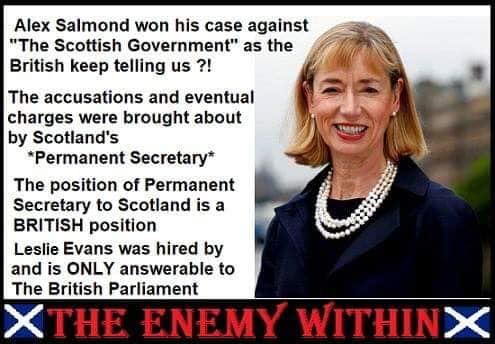
A bitter pill for the taxpayer to swallow was the action of a senior civil servant who, as a member of the government’s PFI team responsible for the imposition of the then Coalition government’s PFI policies attended a meeting with North Ayrshire Council councillors armed with with a brief to practice “mushroom management” and reveal little information of any consquence. Best for all concerned if theu councilllors were to be stonewalled. Which they duly were. The civil sevant was Leslie Evans!!!

Fast forward a few years and a slap in the face for Nicola Sturgeon’s mother,(Provost of North Ayrshire Council) when her daughter chose the self same Leslie Evans to be her Permanent Secretary in the Scottish Government. A decision without logic!!

Greater Pollok councillor reveals she suffered miscarriage | Glasgow Times

Councillor Rhiannon Spear represents Greater Pollok on Glasgow City Council and is an elected member of National Council.
On her own personal experience in politics, Rhiannon said: “My experience of being a young woman in politics is the very reason why I will continue to campaign for change. My experiences of sexism has been frequent and at times severe. No party is immune but within the SNP I have found a space that allows my voice to be heard and allows me to encourage more young women to let their voices be heard, long may that continue.”

Personality

She is strikingly attractive, highly intelligent and gifted with a natural ability to attract attention, unfortunately not always to her benefit. She is feisty, strong willed and determined to succeed at any task she is minded to take on. She is media savvy and possesses first class skills including the production of excellent graphics for social media presentation and discussion. One of her many character weaknesses is her abject inability to accept criticism and her single-minded approach to her work. She needs to learn that political life is not a Religion and she is not the Pope.

WOKE

She is the driving force behind informal WOKE campaigning individuals, groups, charities and formal groups promoting and implementing WOKE agenda’s in all of the state schools in Scotland. The bulk of WOKE activities, including resources and staffing, (£3-5M) is funded by the Scottish taxpayer through the SNP government. The unhealthy influence of WOKE minded politicians is being planted across all aspects of Scottish society as each day passes.

Politics

Joined the SNP in 2011. Jointly founded Generation Yes, the national youth campaign for independence in the run up to the 2014 referendum. National Convenor of YSI for two years from 2015–17. Elected to the SNP’s NEC in 2016. Scottish Parliament Candidate for the Glasgow List in 2016. Elected Councillor for Greater Pollok in 2017. Successfully proposed motions at SNP Conference on all female lists, inclusive education and raising the age of military recruitment to 18. Chairs TIE an LBGTI government funded charity which is remitted to support Scottish Education bodies providing LGBT-inclusive education in Scottish Schools. Actively promoted the #Metoo movement denouncing sexual harassment on campus at University of Glasgow.

Full picture here: https://wordpress.com/post/caltonjock.com/19575

The YSI - @YSINational Twitter Analytics - Trendsmap

Charlotte Armitage is an SNP activist and National Equalities Officer for YSI.
On her personal experience, Charlotte said: “As a young woman in politics, I know how it feels to be dismissed, or valued only for how I look rather than what I say. It is this reason why it is so important that we continue to campaign for gender equality and societal change, just like our suffrage sisters did before us. We have achieved hugely notable changes in the last 100 years and it is encouraging to see many strong female leaders in Scottish politics today. However, women remain underrepresented, harassed and in threat of violence. To me it is clear there is still a lot of work to be done to achieve absolute gender equality, but I am confident that the SNP is paving the way for an Independent Scotland that has gender equality at the forefront.”

WOKE but likeable character who has yet to fully develop her own political persona. Check her out here: https://nitter.fiat-tux.fr/YSINational

See the source image

Australian-born Deidre Brock is MP for Edinburgh North and Leith.
On helping other women, Deidre said: “A century ago some women got the vote. It took ten more years to get the same terms as men. In 2018 politics is a better place, but still an unequal place, and the best tribute to the women who led the way is to keep the campaign rolling.

Reach out a hand to help another woman up; be a role model so girls growing up today know it’s normal to have women in politics; stretch the hand of sisterhood across political divides – you don’t have to agree with her to defend her right to speak; look to the future and work for a better and more equal tomorrow.”

Westminster Career politician: Front-bench MP in the SNP group with responsibility for Devolved Government and Environment, Food and Rural Affairs. Sits on the Scottish Affairs Committee and is a member of a number of cross-party groups. Not a great deal of evidence to support any claims that she is interested in campaigning for Scottish independence. Most likely leans towards federalism.

Scottish children's author Lari Don tells of six-month coronavirus battle |  The National

Lari Don Born in Chile, and travelled widely in South and Central America as a child, before her family settled in North East …is a children’s author and a local activist in Edinburgh North and Leith.
On creating our future, Lari said: “As a writer, I spend a lot of time talking to kids about characters solving their own problems. I also tell lots of myths and legends where the girl doesn’t wait for a boy with a big sword to save her from the dragon. My feminism and my support for an independent Scotland come from the same determination not to wait for someone else to define and sort out our problems. Now, the ‘big boy with the sword’ next door is the one causing most of our problems. It’s time to use our votes to create our own future…”

See the source image

Farah Farzana is an SNP activist and Women’s and Equalities Officer for her local branch. On her personal experiences in politics, Farah said: “As a local election candidate, I became aware of the lack of equal and proportionate representation in local authorities. The SNP have led in gender balance but more work needs to be done to create an ethnicity balance too. If we don’t speak up for justice and fairness, then we will only hinder our progress.”

But BAME is what drives her politics. A summary of her argument in support of centralised directed selection

The 2021 election saw the first use of an equality mechanism in candidate selection. Not all members agreed with the strategy, posing the question, should selection of candidates come down to the person most capable, or is there more to it? But there are a fair number of people within the Party from minority ethnic groups who are more than capable of becoming an elected member. So why so are there so few? This is evidenced through each election campaign; most recently the constituency selection process saw one new ethnic minority candidate come through from a possible 22, plus an incumbent. As branch members, office bearers and executives we must examine our internal structures and ask, why? Be prepared for uncomfortable truths.

Inclusion, diversity and equity for a truly representative Parliament, was my maxim for the campaign as it will be for the upcoming Council elections. In an ideal world, there would be no need for any sort of equalities mechanism because our governments would be populated with, at least, minimal proportional representation. So how to do we get there and what has this issue got to do with the Independence referendum? Voters considered ‘hard to reach’ may feel like outcasts due to negative schooling, neighbourhood, employment, benefits, police or local authority experiences. This leads to another question: why would an individual participate in societal matters when that same society has marginalised them? The simple solution would be to reach out and be inclusive. However, if this were the case we wouldn’t have the problem in the first place. So we must continue to address the issue. The strength of the SNP BAME Network lies within proposed strategies to maximise voter and membership engagement:

  • Actively involve identified branch members in discussions and encourage their participation. There is no such thing as a stupid question.
  • Overcome communication barriers by using everyday English, and where possible, provide written and oral formats.
  • Provide alternatives to the pub to show respect to those who don’t drink or feel uncomfortable in an alcohol environment.
  • Encourage diverse members to come forward for office bearer positions or vice positions. This helps provide experience, confidence and guidance as they learn.
  • Listen to their perspectives with an open mind; these members have valuable lived experience, and chose the SNP to bring about political change. Let them know their opinion matters.

Being active within the Party helps activists communicate within their communities – a skill necessary to promote conversations around Independence and build rapport. If local people see a member of their own community elected then they are far more likely to engage in conversation, thereby encouraging trust and helping us gain support. We all have the same goal. Experiences from the BAME Network add quality to our efforts to spread our message of Independence, peace, respect and hope further than ever before.

Clare Adamson MSP (@ClareAdamsonSNP) / Twitter

Clare Adamson WOKE, MSP for Motherwell and Wishaw and Convener of the Education and Skills Committee. On breaking down barriers in the workplace, Clare said: “Thanks to the tireless work of thousands of women over the last hundred years, we have achieved great progress. However, it is still obvious that today women from all women from all walks of life still face institutional bias and we have to continue to move forward towards true equality. “Prior to becoming involved in politics, I worked in the male-dominated IT industry and became all too aware of the issues women still face in the workplace every day. I’m really proud that the SNP remains committed to empowering young women and I am pleased to see more women represented in politics and in STEM than ever before. We must remain steadfast until we see true equality in representation, pay and in the boardroom.”
National Women's Officer - Young Scots for Independence

Erin Mwembo is a WOKE SNP activist in East Lothian and local branch office bearer. On getting involved in politics, Erin said: “Over the last 100 years, we have made huge progress in equality. I’m so lucky to live in a time where strong, inspiring women are in positions of power and challenging the status quo. These women have made me feel like I have a place in politics, a place to make my voice heard, a voice that is as valuable as any one else’s. I joined the SNP to make my voice heard, after feeling incredibly empowered by the likes of our first minister. Although we have made progress, there’s still more to be made. We are only going to near genuine gender equality by getting more and more women involved in the decision process and in male-dominated industries. To people interested in getting involved: Do it. For the now and for the future.”

VOTING IS NOW OPEN!... - Councillor Michelle Campbell | Facebook

Michelle Campbell, Councillor, represents Erskine and Inchinnan and is the Council Group Secretary. On her hopes for the next 100 years, Michelle said: “As a women in politics, I work hard to rid gender typical views when I am working with some who may be assumptive – that is the challenge and I will always push for progress. My hope for the next 100 years is this becomes a history lesson and is no longer a relevant issue. In Scotland, we are at the helm of this progress and I am proud to be a women in politics within the SNP.”

Vote 100 — Scottish National Party

Kirsty Jarvis is an SNP activist in Fife and local branch office bearer.
On the importance of this centenary, Kirsty said: “100 years ago women won the right to vote, today we can vote, stand in elections and become the First Minister of our country. Women have just as much of a platform and as much of a right as men to make a difference to our society and have their voices heard and to represent the voices of other woman.”

Glasgow's Lord Provost Eva Bolander urged to resign after £8000 expenses  exposed - Daily Record

Eva Bolander is Lord Provost of Glasgow. On her personal experience, she said: “The experience of becoming a mother in Scotland made me more politically aware and later active. Having had the experience of growing up in Sweden, being young when the universal childcare reform and other equalities legislation were introduced there made me realise what a fundamental importance these political decisions had for creating a progressive, prosperous and inclusive society. And that is the Scotland I am working for now.

Vote 100 — Scottish National Party

Councillor Michelle Campbell represents Erskine and Inchinnan and is the Council Group Secretary. On her hopes for the next 100 years, Michelle said: “As a women in politics, I work hard to rid gender typical views when I am working with some who may be assumptive – that is the challenge and I will always push for progress. My hope for the next 100 years is this becomes a history lesson and is no longer a relevant issue. In Scotland, we are at the helm of this progress and I am proud to be a women in politics within the SNP.”

Gillian Martin is MSP for Aberdeenshire East and Convener of the Environment, Climate Change and Land Reform Committee.
On improving the political environment to encourage women to get involved, Gillian said: “It’s getting slightly better but more female voices on television, radio, in newspapers and events panels talking about political issues is an absolute must – if we’re not seeing women represented in any of those arenas it needs challenged. The Holyrood press pack is overwhelmingly male and I think it has an effect on the discourse. I hope in a future independent Scotland we’ll be able to leave the adversarial patriarchal style of politics behind that despite efforts to be different we seem to have inherited from Westminster and have a more can-do collaborative progressive style like our Nordic friends seem to have and that will encourage more women to stand.”

Ruth Maguire — Scottish National Party

Ruth Maguire is MSP for Cunninghame South and Convener of the Equalities and Human Rights Committee. On how it is ‘deeds not words’ that matter, Ruth said: “We’ve come so far since 1918 but we’re not there yet, amongst the myriad of inequalities girls and women are faced with we remain stubbornly underrepresented in politics and public life. If you are a women who cares about her community, her country, know that your voice, your ideas and your opinions matter and need to be heard.

“And for me and my colleagues in Parliament and Council chambers, it is not good enough for us to say, ‘Well, I’m here, so that’ll do.’ We need to do everything in our collective power to break down the structural barriers that are in the way of others, in particular BME women and women with disabilities. Deeds not words as our sister suffragettes would have said.”

Nicola Sturgeon has been asked to clarify the Scottish National party’s stance on transgender rights following the leak of private messages between three prominent female MSPs that claim the first minister is “out of step” with her party.

The conversation, which was tweeted as a screenshot on Tuesday evening but timestamped February, appears to have been prompted by Sturgeon’s comments in an interview that she recognised some women had concerns about the implications of her government’s proposed changes to the Gender Recognition Act 2004 (GRA), such as allowing individuals to change their legal gender by means of self-declaration.

https://www.theguardian.com/politics/2019/apr/17/sturgeon-asked-to-clarify-snp-stance-on-transgender-rights

Cathie Johnston represents Cumbernauld South on North Lanarkshire Council. She said: “Women over 30 getting the vote in 1918 was a positive step. Since then, women have became more confident in their own abilities. However, I would like to see women being stronger in their own beliefs and acknowledge their own strengths more. Always believe in yourself, work hard and don’t forget your roots – or those without a voice.”

Ash Denham is the MSP for Edinburgh Eastern and Minister for Community Safety. On representation, Ash said: “It’s 2018 but still neither Holyrood nor Westminster Parliaments have 50/50 representation. Gender balancing measures work, so the political parties that haven’t introduced them should be compelled to.”

An SNP junior minister is facing deselection amid unrest among activists over her hotel bills and decision to school her children privately. Community safety minister Ash Denham is engaged in a bitter fight for the party’s nomination for Edinburgh Eastern in the face of a challenge from a high-profile city councillor. Holyrood figures show the MSP, who lives in the Borders, claimed nearly £16,000 from public funds for Edinburgh accommodation and meals between 2017-18 and 2019-20, even though the parliament is in her constituency. Opponents have claimed Denham gave an undertaking to transfer her children to a state school, although she denies this.

The Scottish National Party has backed changes to prostitution laws to criminalise those paying for sex, but not those who sell it. Delegates at the party’s conference in Aberdeen voted in favour of a motion proposing a “Scottish model” to handle prostitution, similar to the “Nordic model” used in Scandinavian countries. The resolution, proposed by MSP Ash Denham, stated that “commercial sexual exploitation, including prostitution and human trafficking, is a form of violence against women”.

https://www.independent.co.uk/news/uk/home-news/scottish-national-party-conference-aberdeen-sex-work-prostitution-criminalisation-nordic-model-ash-denham-a7637261.html

Rona Mackay is MSP for Strathkelvin and Bearsden and Deputy Convener of the Justice Committee.
On delivering a better Scotland for future generations, Rona said: “I have been very lucky to have had strong, inspirational female role models throughout my life, leading me to feel able to be involved in politics. I am particularly proud of our party and how many female representatives we have. To me, it is so important we all work together and have as many women as possible in leadership roles to achieve a better and fairer Scotland for future generations.”

Maree Todd - Wikipedia

Maree Todd is MSP for the Highlands and Islands region and Minister for Children and Young People. On how far we’ve come and how far we’ve got to go, Maree said: “We have come a very long way in 100 years. My grannies had only two choices for careers – domestic service or following the herring. Not only did I have the chance to get a science degree at university, I now serve in Government!

“We still have a long way to go though. I hope that my doing this job, inspires girls growing up in the Highlands and Islands to believe they can do anything – including politics. We might be a bit reluctant to put ourselves forward still, but when we do speak up, we speak well and make a difference.”

Julie Hepburn is a long-standing SNP activist and member of the National Executive Committee. On her motivation for political activism, Julie said: “I’ve been a member of the SNP for almost two decades, and while political activism can be tough at times, for me it’s been an overwhelmingly positive and empowering experience. “Politics is the vehicle through which we achieve change, and I am determined to help change our communities and our country for the better. Securing independence for Scotland is the single most important change we can make to deliver a fairer society and better life for everyone who lives here. That’s why I’ve dedicated my adult life to campaigning for independence.”

I vividly remember attending my first SNP Conference 20 years ago in Dundee. The whole conference was alive with debate, ideas and personalities, and there was some stooshie over housing policy. It was fantastic. Like a number of people, I was hesitant about joining a political party, but was immediately reassured by the vibrancy of debate and room to contribute to those positive discussions. I felt genuinely empowered as a new member, and excited about my involvement. One of the huge strengths of the SNP is our internal democracy. So that’s why I was surprised to read the suggestion that the party should take a “command and control” approach to the selection of our parliamentary candidates. (https://www.thenational.scot/news/18264156.julie-hepburn-not-snp-hq-decide-will-stand/)

The SNP’s NEC needs to be more effective, transparent and accountable. (https://www.thenational.scot/news/18635022.snps-nec-needs-effective-transparent-accountable/)

We need tailored campaigns for different communities – whether this is a physical community or a community bound by a shared identity. It’s about how we communicate the arguments and benefits of independence to a diverse Scotland. (https://www.thenational.scot/news/16339305.dont-forget-need-convince-tory-voters-win-independence/)

I’m running to be the SNP’s depute leader for a number of reasons. I’ve made this choice because I was asked by so many activists across the country. They’ve asked me to stand because of my proven track record of service to the party, my previous commitment to driving forward internal reforms, and my work in supporting others across the SNP. However, most significantly for me, I want to use the skills, experience and networks I’ve built up over almost two decades in the SNP to help prepare us for another independence referendum and indeed future elections. (https://www.thenational.scot/news/16036107.julie-hepburn-use-experience-ready-snp-indyref2/)

A Briefing for the Serious Followers of Scottish Politics – Final Part – Overt British Secret Services in Scotland – Gathered under the Auspices of Baroness Smith – Add in the Coverts from the previous articles – Could Someone Good at Graphics Draw a Picture Showing Baroness Smith as the Spider at the Centre of Her Web?

See the source image

The John Smith Trust (JST) – The sales pitch

The Trust runs intensive, four-week Fellowship Programmes twice a year in the UK for emerging leaders from 12 countries of the former Soviet Union. The Programmes are built around three pillars – unique insight into UK institutions, personalized meetings and leadership skills development – which together offer both a broad picture and an individual focus.

What is really happening

The political psychology programmes delivered by the Trust are designed to influence the thought processes of individuals confronted with a wide range of political situations so that they select options that most reflect the political system chosen by the Trust. Achieving success means that it has imprinted on the minds of course participants that the ideal is the western-style democracy, with its human rights legislation protecting individual and minority rights and good governance. Shades of “The Manchurian Candidate”.

Social, Group, and Political Psychology Research Group | UWTSD


The Board

Baroness Smith of Gilmorehill: Board member of a number of organisations with interests in Russia and FSU countries. Very influential politically has had a very long career near the top of the British secret services. Widow of the late John Smith, Labour Party Leader.

Catherine Smith: An Advocate. Daughter of Baroness Smith. Vice Chair of JUSTICE Scotland, the Scottish arm of the London NGO. Involved in work promoting the rule of law and human rights in developing democracies and sustainable development in societies in transition.

Girodivite: Mind Manipulation and Brain Washing-The Price of a Predictable  Society

Stephen Gethins: Former SNP Member of Parliament for North East Fife. Worked with Craig Oliphant in Eastern Europe before entering politics for the SNP.

David Charters: Former diplomat. Particular personal interests include cyber security and evolving forms of conflict.

Alex Just: Transitioned from law to high-level strategic communications.

Prof. The Lord Alderdice: Liberal Democrat member of the Lords since 1996. Currently Director of the Centre for the Resolution of Intractable Conflict at Harris Manchester College, Oxford.


How A Murky Row Over Russia, Jeremy Corbyn And A 'Psyops Campaign' Went  Mainstream | HuffPost UK


(1) Craig Oliphant, is a senior member of the Integrity Initiative/Cluster/UK/Inner Core.[1] 

And the Integrity Initiative is:

In 2006, NATO Special Advisor Chris Donnelly co-founded a charity, the “Institute for Statecraft and Governance” (IfS) together with Daniel Lafayeedney, a man previously condemned as untrustworthy in business matters by a judge.

The IFS which authored and published articles on threats to NATO imperialism, the biggest being Russia, was registered to a semi-derelict mill in the Fife constituency of Board member and ex-SNP MP Stephen Gethins.

In 2015, the IfS established the Integrity Initiative, an organization that also received Tory Government funding from the Foreign and Commonwealth Office, initially to the tune of many millions.

The Integrity Initiative is described by the British government as a counter-Russia-disinformation campaign, which, in typically Orwellian language, means that it is a U.S.-British disinformation campaign.

Integrity Initiative is the biggest story of 2018 – but not because of  anything it did — RT World News

This is what the Scottish Charity Regulator thought of the organisation:

The Office of the Scottish Charity Regulator opened an inquiry into the Institute for Statecraft the 13 December 2018, which after 10 months found that “one of its most significant activities, a project known as the Integrity Initiative did not provide public benefit in furtherance of the charity’s purposes”. It also found that trustees had “breached their trustee duties to act with care and diligence in the interest of the charity, some of them to a serious extent”.[28]

Scottish Labour candidate facing questions over links to 'secretive  military propaganda unit' | HeraldScotland

The 77th Brigade and Scotland’s Independence

Black Watch soldier, Brigadier Alastair Aitken, formed the 77th (CYOPS Brigade, referred to in the media as ‘Twitter troops‘ or ‘Facebook warriors‘, which he described as  the largest integrated government communications organisation [in] Europe.

Scottish Labour has links

A Scottish Labour Party candidate and former “Better Together” boss has been called on to explain her links to a “military propaganda unit” within the British Army. Kate Watson is believed to be part of the Berkshire-based 77th Brigade, which was described by one newspaper as a “special force of Facebook warriors”.

She declined to comment, but David Miller, a professor of political sociology at Bristol University said: “The 77th Brigade is involved in manipulation of the media including using fake online profiles.

Why Political Psychology is Increasing in Popularity in 2016 |  CareersinPsychology.org

Respected elder statesman of the SNP give warning and advice

In an article published in the “National” (Dec 2018) George Kerevan wrote:

“In any future Scottish independence referendum will the 77th Brigade be neutral or see the yes campaign as a threat to national security and  conduct a campaign to protect the constitutional status quo?  SNP MSP’s and MP’s at Westminster should ask these questions now before it’s too late.”

The Glasgow University hosted John Smith Centre 

The recent purge of left wing politicians and their leadership brought about the return of power and influence to the “Fabian Society” and its right wing socialists, Tony Blair, Gordon Brown, Ian Murray and many other Unionist Labourites. One of the most insidious objectives of the Fabians is to create a One World (‘Third Way’) government linking with the “New World Order” (NWO) project financed and controlled by the USA. In furtherance of their aims the Fabian’s developed and implemented the highly secretive “educational charity”, “Common Purpose”, which now effectively controls many facets of local and mainstream politics and the media (BBC). More on “Common Purpose” here: http://www.stopcp.com and here: http://www.cpexposed.com .

With Blair then Brown in charge of government the NWO/Bilderberg movement enjoyed guarantees that the UK government would manipulate the electorate and parliament to support their efforts without question. War and War and yet more War. All unjustified. Scots need to be alert to the dangers of unwarranted and misleading statements designed to cause political instability, from persons who actively support the “new” venture which was sprung of Scots without warning. It should be remembered that the late John Smith was a leading Unionist politician and a Bilderberger to boot!!‌‌

Image result for John smith and blair

The Centre’ public sales pitch

A Board comprising members of the Smith family, University of Glasgow alumni, public service practitioners and academic staff oversees the conduct, leadership and management of the Centre. It sets the priorities; benchmarks best practice; and reviews performance to enable the Centre to achieve its aim to promote trust in politics and public service and to empower and attract more people to contribute to public life.

Image result for John smith and blair

membership of  the fluctuating Board 

Catherine Smith (Chair): Catherine is John Smith’s youngest daughter.

Professor Anne Anderson OBE: multi disciplinary educational activist.

Rt Hon Ed Balls: Hard right rich boy and “new Labour” politician

Dr Matt Carter: Blair’s man. Right wing “New Labour” political strategist.

Rt Hon Ruth Davidson MSP: Baroness Ruth. Her rise from nowhere is being guided by ??

David Muir: Ultra right wing “New Labour” strategist. Gordon Brown’s man.

The Baroness Smith of Gilmorehill: Very influential politically has had a very long career near the top of the British secret services. Widow of the late John Smith, Labour Party Leader.

Andrew Wilson: Held a number of posts, including Deputy Chief Economist and Head of Group Communications. at the financially incompetent and ultimately disgraced RBS Group. Founder of the increasingly influential political media company, Charlotte Street Partners.

Kezia Dugdale: Former leader of the Labour Party in Scotland is the Director of the Centre.

Image result for John smith and blair

Tony Blair’s cynical epitaph to the career of John Smith

Blair told his wife that John Smith would die prematurely and he, not Gordon Brown would win the race to become the next Labour leader. The statement was made in April 2004, only a month before Smith suffered a fatal heart attack. Blair woke his wife, Cherie, one morning and told her: “If John dies, I will be leader, not Gordon. And somehow, I think this will happen. I just think it will.” Smith had suffered a serious heart attack in 1988 and Blair argued this was thanks to his lifestyle and, in particular, his heavy drinking. Branding Smith a “stupendous toper”, Blair wrote: “He could drink in a way I have never seen before or since. If there was an Olympic medal for drinking, John would have contended with such superiority that after a few rounds the rest of the field would have simply shaken their heads and banished themselves from the track.” (The Telegraph)

Image result for blair and brown

George Robertson – the Labour Party visionary walks on water – those who mocked now come to worship him

See the source image

George Robertson, (Baron of Port Ellen)

In 1995, when Scottish nationalism began to find increasing favour with Scots as their preferred choice of government Robertson, then Shadow Secretary of State for Scotland said:

“let them have their way. Devolution now entrenches the Scottish parliament in the UK’s unwritten constitution, power devolved from Westminster is power retained by Westminster. It will kill Nationalism stone dead.”

In the years that followed the SNP gloated that the party had destroyed that fallacy by winning the Scottish Parliamentary Elections in 2007, 2011, 2016 and 2020. But “wise seer” George was right.

But his vision of Scots being “fitted up” with a poorly equipped and reversable devolved governance structure proved to be entirely accurate.

As at 2020 Scottish Nationalism is “stone dead” under the auspices of Labour Party apparatchiks, led by Daniel Defoe’s successor, Nicola Sturgeon who joined the nationalist cause falsely proferring to be committed to fighting tooth and nail for independence.

Scots will need to find a way of starting again only this time led by bone-fide Party members who declare “fealty” to a Scotland free and independent of any political interference from Westminster or any other country.

See the source image

New Labour corruptly embraced State Capture and screwed the Nation

Prime Minister Tony Blair and his cabinet after the 1997 election. Front Row from left to right: Secretary of State for Scotland, Donald Dewar; President of the Board of Trade, Margaret Beckett; Home Secretary, Jack Straw; Foreign and Commonwealth Secretary, Robin Cook; Deputy Prime Minister, John Prescott; Prime Minister, Tony Blair; Chancellor of the Exchequer, Gordon Brown; Lord Chancellor, Lord Irvine; Secretary of State for Education and Employment, David Blunkett; Minister of Agriculture, Fisheries and Food, Jack Cunningham; Secretary of State for Defence, George Robertson.
Back row from left to right: Chief Whip, Nick Brown; Chief Secretary, Alastair Darling; Chancellor of the Duchy of Lancaster, David Clark; Secretary of State for International Development, Clare Short; Secretary of State for Northern Ireland, Mo Mowlam; Secretary of State for National Heritage, Chris Smith; Secretary of State for Health, Frank Dobson; President of the Council, Ann Taylor; Secretary of State for Social Security, Harriet Harman; Secretary of State for Wales, Ron Davies; Lord Privy Seal, Lord Richard; Minister of Transport, Gavin Strang; Secretary of the Cabinet, Sir Robin Butler.

What is State Capture?

Transparency International, the anti-corruption watchdog, defines it as:

“a situation where powerful individuals, institutions, companies or groups within or outside a country use corruption to shape a nation’s policies, legal environment and economy to benefit their own private interests”.

An online search of ex-New Labour ministers career choices after moving on from government reveals a disturbing pattern. Many have taken up positions with major weaponry manufacturers.

Related image

Former Foreign Secretary, the late Robin Cook said of his time in office that he:

“came to learn that the chairman of BAE appeared to have the key to the garden door to number 10.  Certainly I never knew No 10 to come up with any decision which would be incommoding to BAE.”

As well as employing in-house lobbyists, BAE Systems also employs a lobbying agency called Portland PR.

Many of Portland PR’s staff have worked at the upper echelons of both Labour and Conservative governments.

Portland Communications Ltd is a political consultancy and public relations agency set up in 2001 by Tim Allan, a former adviser to Tony Blair and Director of Communications at BSkyB. Portland provides communications and public affairs advice to brands and high-profile individuals. Portland’s website states:

“Our team is recruited from the highest levels of the media, politics and government.”

In 2016, political blog The Canary alleged that Portland staff were behind the orchestration of a “coup” against, Jeremy Corbyn, after a wave of mass resignations from his front bench. Len McCluskey of British and Irish trade union Unite told Andrew Marr on his Sunday morning programme:

“I’m amazed that some of the MPs have fallen into a trap.”

Referring to Portland Communications as:

“a sinister force”

McCluskey said:

“This is a PR company with strong links to Tony Blair and right-wing Labour MPs who’ve been involved in this orchestrated coup, and the coup has failed”.

Image result for mod purchasing under new labour

Gordon Brown and new Labour Embraced the Practice

During his 10 years as Chancellor of the Exchequer and then as Prime Minister and First Lord of the Treasury, Gordon Brown cultivated a carefully crafted reputation as a prudent politician and trustworthy custodian of the public purse. Indeed, such was his penchant for using the word ‘prudence’ that political journalists took to playing a fun game of counting the number of times it was mentioned in his budget speeches, and then comparing it with appearances in previous deliveries at the despatch box – to gauge his commitment to balancing the books. Some even jokingly suggested that Prudence was the name of his girlfriend, who had been kept out of the public eye. Either way, managing the nation’s finances is no joke and Brown’s record in office, as a fiscally prudent politician, does not tally with the evidence. In his autobiography My Life, Our Times, Brown discusses among other things the financial crises, his economic record and that fateful promise made by Tony Blair. Not surprisingly, there is no mention of one of most disgraceful actions of his government. It concerns state-sponsored protectionism, blatant favouritism and failure to install genuinely independent regulators. This shameful episode, which marred Brown’s time in office, relates to the procurement of military equipment.

Image result for mod purchasing under new labour

New Labour Government Procurement Policy in Practice

What has been clear for many years is that, public subsidies handed out to defence equipment manufacturers over several decades, is the reason why they have failed so miserably, to deliver equipment to the Armed Forces which is fit for purpose, adequately sustained in-service and constitutes value for money through-life. In the UK, as in many western countries, the means of defence production, distribution and exchange is exclusively in the hands of private interests, that is to say, the State is entirely dependent on for-profit organisations for the design, development, manufacture and delivery of new military equipment to the Armed Forces. Consequently, the government has no choice but to rely on the Private Sector for all its military equipment needs, including its subsequent upkeep when in-service with the user. The harsh reality is that, no department of state in Whitehall is as dependent on the Private Sector, as is the Ministry of Defence – putting it at serious risk of capture by private interests (if it hasn’t already been) which allows them to bend policy to their will, as it relates to the expenditure of public funds. Equally, these private interests are entirely dependent upon a steady flow of taxpayer funds for their very survival – no least, because they have not bothered to diversify at all. It may be that senior executives seconded from the defence industry and embedded within the Ministry of Defence, who remain in the pay of their employers, may have something to do with this skewing of spending decisions, to favour their narrow commercial interests – at the expense of taxpayers and the national interest.

Related image

Secret Deals

Consider the case of the Terms of Business Agreement on naval shipbuilding, signed by the Brown government with BAE Systems during the dying days of the 2005-10 Parliament, which left the incoming administration no room for manoeuvre at all, as it set about undertaking a comprehensive Strategic Defence & Security Review – for the first time in 12 years. In fact, this agreement was signed in secret, in 2009, precisely because it locked the government into an appallingly poor 15-year contract laced with a punitive get-out clause which, if made public at the time, would have attracted criticism and negative publicity in the press and media during the run-up to the 2010 general election, potentially swinging the result in favour of the other party. The existence of the TOBA was only revealed to Parliament in 2011 by the Cameron-led coalition government, when it was confronted with the undeniable truth that MoD finances were in pretty bad shape and needed to be declared publicly, to garner public support for deep cuts in the defence budget that ensued.

Lack of Fiscal Prudence

It is an open secret that the even the most fiscally prudent people in government are prone to softening their hard-line stance just before a general election, when they are up for re-election, which makes them more likely to open-up the public purse. Equally, defence contractors are aware of this weakness in top politicians and will take full advantage, by surreptitiously intensifying their lobbying efforts in cahoots with labour trade unions, to apply political pressure spliced with threats of massive lay-offs, timed to coincide with the electoral cycle, to relieve politicians of taxpayers’ money and maximise their take – which is exactly what happened with this TOBA. So, instead of exposing defence equipment manufacturers to the full rigours of the free market, that is, not shielding them from “feeling the heat” of competitive market forces, the Brown government chose to engage in protectionism and favouritism by handing out uncontested, long-term shipbuilding contracts worth billions of pounds – with virtually no checks and controls, or even guarantees.

Image result for mod purchasing under new labour

Summary and the Way Ahead

People at the Ministry of Defence are, without exception, favourably disposed towards the defence industry because they are completely dependent upon it for their subsequent career choices (via the revolving door), when their time in public service comes to an end, or their employment contract is terminated abruptly by political edict. Indeed, it is very hard to find anyone at MoD who will aggressively defend taxpayers’ interests once they have enjoyed a cosy relationship with contractors. It is fair to say that they certainly know which side their ‘bread is buttered’! It is precisely to overcome this disastrous state of affairs that the government should set the objective of pulling back from the defence equipment market and allow the Private Sector to take-over, so that it can make the necessary capital allocation decisions for itself, as it relates to the development of its own products – instead of continually looking to intervene in the market with public funds which, as history has shown, will always be squandered. An innovative proposal on how to go about eliciting Private Sector investment capital in defence procurement programmes was set out in a written submission to the Business, Energy and Industrial Strategy Committee, which reported on its inquiry into Industrial Strategy in the last Parliament. It introduces a modern Defence Industrial Strategy that puts financial security and the national interest first, not military equipment manufacturers’ commercial interests.

Composed by Jag Patel

The pdf copy of the paper can be downloaded from here: http://data.parliament.uk/writtenevidence/committeeevidence.svc/evidencedocument/business-innovation-and-skills-committee/industrial-strategy/written/36606.pdf

Related image

And the Arms dealers have wormed their way into UK Schools and Colleges

In allowing the arms trade into schools and colleges we are teaching children that innovation for the sake of destruction is acceptable. Private arms companies and government-owned military organisations have wormed their way into the British education system. Global arms companies have links with many UK Universities; investing in research programmes, poaching recent graduates and funding new buildings.

Image result for weapons manufacturers in schools and colleges

But these links stretch further than this into our education system, as weapons manufacturers also invest their time and money into schools across the country. Raytheon, an American weapons and cyber security company with multiple UK sites, holds an annual “Quadcopter Challenge” in which children are encouraged to design the best drone they can. Billed as a means for the company to ‘invest in its future workforce’ by promoting STEM (science, technology, engineering and mathematics) subjects, this programme reached over 1,000 teenagers nationwide in 2018 with the full backing of the Westminster government. Pushing STEM subjects is most common amongst private arms manufacturers and government-funded military organisations; QinetiQ and BAE Systems each boast various outreach programmes. In 2017, BAE partnered up with the Royal Navy and the RAF to visit 420 schools with a workshop designed to encourage the uptake of science and maths amongst 10-13 year olds. That year, BAE Systems also joined forces with the Royal Navy, QinetiQ and the University of Portsmouth to open a college. Portsmouth’s University Technical College (UTC) allows students to complete GCSEs and further educational qualifications in STEM subjects, whilst giving them ‘regular engagement’ with ‘employers and partners’. These partners include the likes of Airbus, who build the fighter jets used by Saudi Arabia in the war on Yemen; and BAE Systems, who produced the missiles used by the UK in its bombing of Syria. In addition to encouraging young children and teenagers to take up sciences, dozens of universities from Southampton to Sheffield are making millions of pounds from arms industry investment. The University of Cambridge, for example, received £13.7m from private arms companies between 2008 and 2011. The University of Sheffield was also funded £13.7m during this period, along with Imperial College London, which was granted over £16m between 2008 and 2017. BAE Systems in particular has a vested interest in British higher education. Southampton, Strathclyde, Manchester, Cranfield and Birmingham are five “strategic partner universities”, which have all signed long-term partnership deals with BAE to be ‘mutually productive’.  Recently, the company handed out awards to PhD students from each of these institutions for various research projects. The overall winner was a project from the University of Strathclyde that developed new technology for detecting far away targets. The company responsible for the deaths of thousands of innocent Yemenis through the selling of arms to the Saudi-led Coalition, is being facilitated by universities and students across the country. BAE took on 700 apprentices in 2019 and boasts that it is ‘one of the biggest UK supporters of education’ that has links to ‘approximately 100 universities’ worldwide. It remains unclear if this commitment to education extends to the two million Yemeni children who can’t go to school because of the war BAE Systems is helping wage. These companies gloat that by promoting STEM subjects they are pioneering a better, safer future. The arms industry puts on a front of humanity and tells us that the good work it does in this country outweighs the destruction it unleashes overseas.  This is simply not the case. By allowing the arms trade into schools, colleges and universities, we are teaching children that innovation for the sake of destruction is acceptable and desirable. There is only a small leap between teaching schoolchildren to make toy drones and getting graduates to build real ones. (Stop the War coalition)

Related image

Part 5 – British Secret Services – agents operating in SNP – I could be wrong but!!! guilt by association and activity!!!

How A Murky Row Over Russia, Jeremy Corbyn And A 'Psyops Campaign' Went  Mainstream | HuffPost UK

The “Institute for Statecraft and Governance” (IfS)

In 2006, NATO Special Advisor Chris Donnelly and Daniel Lafayeedney co-founded a charity, the “Institute for Statecraft and Governance” (IfS). 

The pseudo “charity”, was registered  and headquartered, without his knowledge, in a derelict mill in the Fife constituency of SNP MP Stephen Gethins and adjacent to the constituency of Jenny Gilruth, partner of Kezia Dugdale, then leader of the Labour party in Scotland. The “Charity”!! produced and published copious articles on threats to NATO’s existence and expansion, from Putin’s Russia.

Image

In 2015, the IfS established the “Integrity Initiative”, an organization in receipt of significant financial support from the Foreign and Commonwealth Office of the British government who had to publicly confirm its existence and purpose to be a counter-Russia-disinformation campaigning unit, which, in typically Orwellian language, meant U.S.-British disinformation campaigning.

Integrity Initiative is the biggest story of 2018 – but not because of  anything it did — RT World News

This is what the Scottish Charity Regulator thought of the organisation:

Suspecting abuse of the charitable status the Office of the Scottish Charity Regulator opened an inquiry into the Institute for Statecraft in December 2018 and after 10 months of torturous investigation identified that “one of its most significant activities, the project known as the Integrity Initiative did not provide public benefit in furtherance of the charity’s declared purposes”. It also found that trustees had “breached their trustee duties to act with care and diligence in the interest of the charity, some of them to a serious extent”.

The same two people set up a number of dubious SLPs in their time – rendered all the more suspect by Lafayeedney’s business dealings being investigated by the Inland Revenue in 2004, and landing him in the High Court in 2006. In the latter case’s ruling, the judge savagely indicted his “lack of credibility”, and stated “there were certain specific matters…where I am bound to conclude Mr. Lafayeedney was not telling me the truth”.

Girodivite: Mind Manipulation and Brain Washing-The Price of a Predictable  Society

Parliamentary contributions by other SNP frontbenchers seem even more suspect. For example, on 3rd April Stephen Gethins, MP for North East Fife, submitted a loaded written question to then-Secretary of State for Foreign and Commonwealth Affairs Alan Duncan asking “what steps he is taking with his overseas counterparts to tackle the distribution of disinformation in Ukraine, Belarus and the Baltic States?”.

In response, Duncan listed a number of programmes his department was funding, including the “new Open Information Partnership” (OIP). a report on the OIP, exposed that far from fighting disinformation, the endeavour was in fact an avowed pan-European “disinformation factory” intimately connected to Integrity Initiative – furthermore, it was noted that Duncan’s low-key response was the only official announcement of OIP’s existence, and Whitehall was bizarrely keen to sweep the new venture under the rug.

This wall of silence is rendered all the more suspicious in light of Gethins’ Commons career – for in the four years since being elected MP he’s displayed little to no interest in any of the countries mentioned, or indeed the concept of ‘disinformation the query bore clear hallmarks of a planted question, seemingly serving no purpose other than specifically providing Duncan an opportunity to quietly but formally herald the Partnership’s inauguration.

Even more peculiarly, the only other occasion Gethins mentioned ‘disinformation’ in parliament was during an emergency debate on Integrity Initiative 12th December 2018, demanded by Shadow Foreign Secretary Emily Thornberry after it was publicly revealed the organisation’s Twitter account had published a number of posts hostile to Jeremy Corbyn and the Labour party, potentially breaching rules relating to state funding and charity activity in the process.

It wasn’t the first time Gethins had hailed the work of FCO-funded individuals in this manner – on 21st December 2017, during a debate on ‘Russian Interference in UK Politics’, Gethins singled out Craig Oliphant – former head of the FCO’s Eastern Research Group, and a member of the Initiative’s UK cluster – as an “extraordinary person” doing “extraordinary work”.

23 Aug, 2019: Ukrainian President Volodymyr Zelensky bestowed a State honour on SNP MP Stewart McDonald
 
McDonald has established himself as Scotland’s most voluble and zealous advocate for the Kiev regime, by some margin and has cemented himself as prominent and pugnacious critic of the Putin’s Russia through his daily. Russophobic conspiracy theorising on social media being an almost daily staple.

The catalyst for McDonald’s damascene conversion appears to be a trip he and fellow SNP MPs Douglas Chapman and Chris Law undertook to Ukraine in May 2018, which included a visit to Avdiivka, one of the “hotspots” in the ongoing war in Donbass.

The expedition evidently stirred something in him, for prior to the visit he’d mentioned Russia in parliament four times over the course of his Commons career, and Ukraine not once – in the year since returning, he’s mentioned Russia on 13 occasions (even inexplicably crowbarring a reference to the Kremlin into a Commons debate on the murder by the Saudi regime of Jamal Khashoggi)

Puzzlingly, while widely publicised at the time, the pilgrimage doesn’t appear in any of the MPs’ registers of members’ interests. The trio could’ve bankrolled the voyage themselves of course, but Scottish media reports suggest the trip was a “parliamentary fact-finding mission” undertaken at the invitation of Ukraine’s Ambassador to the UK, lending it an official character – the Commons also wasn’t in recess at the time, suggesting it wasn’t a mere vacation either.

Requests for clarity on who or what funded the visit submitted to McDonald, Chapman and Law have been ignored – SNP frontbench adviser Neal Stewart, who accompanied the lawmakers, likewise declined to provide information and also refused to explain the nature of his relationship with Integrity Initiative, the secret UK Foreign & Commonwealth Office military intelligence operation. 

OK his name name appears in just one of the organisation’s internal documents, the content suggests it could be intimate. The file in question is a report documenting the activities of organisation staffer – and potential MI5 operative – Euan Grant, 9th – 15th July 2018. Who, at some point that in the week wrote that he “attended the Neal Stewart event” at Two Temple Place, the secret London offices of the Institute for Statecraft, the Initiative’s shadowy parent organisation.

It is clear from Neal Stewart’s agitation there is still a widespread lack of interest in Russian influence among significant political groups in Scotland, with considerable sympathy for Russia. Questions about Neal Stewart to the SNP, including whether party chiefs were even aware of the event remain unanswered.

It is weirdly unsettling, when set against the Integrity Initiative’s hostility to Scottish Independence that the SNP hierarchy condone anti-Russia campaigning activities by their parliamentary representatives who purport to support the party ideal of independence.

An example of the Initiative’s scorn for Scottish independence is the March 2018 attack by the organisation who solicited an extensive briefing from David Leask, chief reporter at The Herald on the SNP’s internal dynamics and key figures and groups within the wider independence movement. A document which dubs independence movements as “separatist loons”.

Social, Group, and Political Psychology Research Group | UWTSD

The 77th Brigade and Scotland’s Independence

Black Watch soldier, Brigadier Alastair Aitken, formed the 77th (CYOPS Brigade, referred to in the media as ‘Twitter troops‘ or ‘Facebook warriors‘, which he described as  the largest integrated government communications organisation [in] Europe.

See the source image

In a 2018 article published in the “National” George Kerevan wrote:

“In any future Scottish independence referendum will the 77th Brigade be neutral or see the “Yes” campaign as a threat to national security and  conduct a campaign to protect the constitutional status quo?  SNP MSP’s and MP’s at Westminster should ask these questions now before it’s too late.” The questions have never been raised at Holyrood or Westminster

Mind blowing sources of information revealing the wide ranging scope of British intelligence activism within Scotland and worldwide.

https://sputniknews.com/20190827/integrity-initiative-political-parties-snp-uk-1076652122.html

 https://niqnaq.wordpress.com/2018/12/17/sinister-details-about-dan-edney-lafayeedney-of-sas-integrity-initiative-fame/

Briefing note on the Integrity Initiative

Scottish Labour links with the secret services

Kate Watson pulled off a remarkable feat in being selected as the Labour candidate for Glasgow East. For the best part of the last eight years she had worked full-time for Labour MP Douglas Alexander in the House of Commons. When Watson finished working for Alexander in Westminster is not stated but presumably, it would have been in 2015, when Alexander lost his seat in that year’s general election. Omitted from her sales pitch was that during that period she had discharged the role of Director of Operations for ‘Better Together’ in 2014. Also missing was her transfer to a post supporting Douglas Alexander as Chief of Staff of his “‘Consequitur” consultancy. which developed close working relationships with similar minded political organisations in the USA. But her absence from Glasgow and Scotland for an extended period did not prevent the Scottish Labour party leadership from extending to her the nomination  as candidate for Glasgow East for the 2017 election. More than a few labour hopefuls and activists were scunnered. 

Given the levels of social deprivation in parts of Glasgow East, a Masters in, say, Social Work or Community work would have been useful. But the Masters which Watson obtained from St. Andrews University in 2013 was in Terrorism Studies. Hardly a pressing problem in the East End of Glasgow. But a Masters in Terrorism Studies fitted well with Watson’s role as a Specialist Reserve Officer in the army’s 77th Brigade. The absence of any employment information in her biography history was matched by an evasiveness about her political record. Asked to explain her links to the military propaganda unit” 77th Brigade she refused to comment.

https://theclarionmag.org/2018/06/02/glasgow-east-selection-the-inside-story-2/

See the source image

CIA and British secret services agent Lord George Fowlkes

The “piss-artist” act is a well rehearsed tactic used by George to divert attention away from his work for Unionist causes and foreign affairs over 40 years in politics. It was George who tied the SNP government in knots for nearly 4 years when he was an MSP before moving south re-joining his labour colleagues at Westminster. But he left his protégé  Dugdale behind. 

See the source image

Kezia Dugdale recruited to the Scottish Labour Party by George Fowlkes

Born in Aberdeen in 1981 Dugdale studied Law at the University of Aberdeen for a time but gave up and  completed a Masters in Policy Studies at the University of Edinburgh. She then worked for Edinburgh University Students’ Association and the National Union of Students Scotland. Before entering the Scottish Parliament as a list MSP she was employed as a SPAD working for Lord George Foulkes as his office manager and political adviser. Her political acumen was zilch but Foulkes used his influence within the Party to fast track her to the leadership of the Scottish Labour Party. And there was reason in his apparent madness.

Jenny Gilruth, left, and Scottish Labour leader Kezia Dugdale. Pictures: TSPL

In Jun 2016 Dugdale abandoned her post as Labour Party  Scotland Leader and went off to the USA on a US State Department’s International Visitor Leadership Programme

It is the U.S. Department of State’s premier professional exchange program. Through short-term visits to the United States, current and emerging foreign leaders in a variety of fields experience this country first-hand and cultivate lasting relationships with their American counterparts. Professional meetings reflect the participants’ political interests and support the foreign policy goals of the United States mirroring the journey taken by Blair, Brown and others in New Labour before they took up the reins of government with New Labour. Blair, etc. left the UK unilateral anti-nuclear and returned pro-nuclear. Howzat!! 

On return to Scotland Dugdale advised the press that her new partner was, Jenny Gilruth, SNP, MSP for Mid Fife and Glenrothes who was elected to Holyrood in May 2016, and is a parliamentary liaison officer for John Swinney. Also on the US fully funded trip were: Jenny Gilruth, Liz Lloyd and David Clegg. Patrick Grady (SNP Westminster chief whip) and Angela Crawley (SNP member of the House of Commons Women and Equalities Committee) were also in the US at that time. Adds a whole new meaning to the WOKE attack on Alex Salmond under a year later.

The Monklands mafia were on the hook and under threat of political annihilation but escaped justice thanks to a lying young woman-Their response was to strip Scotland of its financial assets transferring the bounty to their friends in the Bahama’s and other tax

Gordon Beattie

Scotland and the Lobbyists

Gordon Beattie left the Evening Times at the age of 26 to set up a news agency and made it Scotland’s largest public relations company. In its early days the stories the young Lanarkshire news agency would flog to news desks were ‘crap’, according to one tabloid editor of the Eighties. Injuries in traffic accidents jostled alongside weak business stories, but editors admired the sheer work rate of the guy.

Beattie Media moved into PR and  news editors became aware that the local stories were promoting the same Lanarkshire businesses who just happened to be Beattie Media’s PR clients. The clients were paying Gordon Beattie who also charged the newspapers who ran the stories. Editors stopped running the copy.

It was a neat trick revealing Beattie’s ability to see a novel business opportunity. “He’s a very dynamic guy, into all that American business philosophy,” said one former employee. “PR is all about learning things about people they’d prefer you didn’t know and Gordon is a great exponent of trading stories,” said one of the many ex-journalists who have passed through Beattie Media’s doors

Beatie Media’s greatest fillip was to popularise the Tory policy of forcing public agencies to outsource services. Indeed all of the local enterprise companies within the Scottish Enterprise network, negotiated lucrative PFI contracts with private concerns.

Beattie Media was the first winner of a contract with the Lanarkshire Development Agency and speedily expanded its base adding the Glasgow Development Agency, Lothian and Edinburgh Enterprise Limited, and Ayrshire Enterprise. It also did the bulk of the PR work for Scottish Enterprise, including, Scotland the Brand and the Skills portfolio.

This domination of the enterprise sector led to concerns within the wider media that Beattie Media were monopolising the field and focused questions on just how a small and previously insignificant Lanarkshire based company had been so successful in winning big ticket contracts.

Losing PR companies were quick to suggest that Beattie Media owed its success to its benefactors, the aptly named and powerful Labour Party in Scotland “Monklands Mafia”

Scottish Water: Beattie Media inserted a PR team into West of Scotland Water before the contract had been advertised for tender. Losing rivals said Beattie Media had been in place for more than three months, the maximum limit for a public body to retain paid advisers without a competitive tendering process. A whistle blower source within West of Scotland Water  said that Beattie Media was originally in the running against Shandwick PR, but “it didn’t matter what Shandwick did, Beattie were going to get it”. The revelations caused anger among employee’s  that Gordon Beattie had been provided with privileged access to senior members of the board offering the services of Beattie Media when the in-house team was still in place.

An insider said:  “Scotland is a small place, and who you know counts for a lot and the employment of Andrew Livingstone, (son of the chief executive of Lanarkshire Development Agency, Ian Livingstone) and Debbie Allison, the daughter of Beattie Media client, Clydeport’s chief executive, Tom Allison) greatly assisted the awarding of the contract to Beattie Media”

thumb.aspx

March 1996: Lanarkshire Development Agency – to put its PR out to tender

The Lanarkshire Development Agency reviewed its annual £100K  PR account with Beattie Media which had been with the company since 1991. Managing Director, Gordon Beattie said: “The decision will be taken on the basis of cost and quality. As far as we’re concerned, if we retain the account it will be down to the quality of the proposal and the team we put in.’ Shandwick Scotland was one of the other companies chosen to pitch for the contract. Beattie media retained the account.

Corruption-621x330

Jan 1997: Quango Blows £100K to engage a Media Company

A quango was accused of squandering almost £100K of public money by hiring Beattie Media for the run-up to the General Election. Scottish Enterprise, set up to attract inward investment, already had a 12-strong press and publicity office but it was desperate to reclaim power lost to a network of smaller Local Enterprise Companies (LECs) and it engaged the PR firm at £10K monthly in a bid to win Labour Party backing. The move ensured another lucrative contract for Lanarkshire-based Beattie Media which had already won deals worth more than £150K from LECs in Lanarkshire and Lothian.

_458811_reiddewarandblair300


Apr 1998: Public Affairs Europe – Beattie Media and the the Jack McConnell affair

Gordon Beattie launched Public Affairs Europe, a joint venture with commercial lawyers Maclay, Murray and Spens. Jack McConnell (later the Scottish Executive First Minister) and former general secretary of the Scottish Labour Party, was recruited and employed as a director (for around 9 months) in which time he won no clients and brought in no fees. McConnell’s links with Beattie Media later became central to the Scottish Parliament Standards Committee’s investigation of the infamous Lobbygate affair which was told that McConnell had been recruited by Beattie Media because of his political connections and prospects:

Beattie said “We appointed Jack McConnell to head up our public affairs consultancy, in the certain knowledge that Jack would get a safe seat from the Labour Party, and in the hope and expectation that he would also get a cabinet position within the new administration. So we always knew that Jack was going to leave us. Our concern centred on the probity of such an overtly political appointment given the recent history of sleaze at Westminster which had brought down the Tory government.”

Damian Killeen, Director of the Poverty Alliance in Glasgow, wrote to The Herald expressing his fears:

“The growth in the number of lobbying companies in Scotland, in advance of the election of a new Scottish Parliament, is happening with relatively little critical comment. Some of these companies are staffed by people who recently or currently have occupied prominent political positions. There is little doubt that their access to senior politicians is an important part of these companies’ sales pitch. Government in Scotland has, so far, done little to disassociate itself from these developments. What signals does this send out to those who are looking to the new Parliament to provide a level of accessibility and inclusiveness? 

_460680_jackmcconnellintvu150

Apr 1998: McConnell quit Scottish Labour Party for an agency post with Beattie Media

Jack McConnell, general secretary of the Labour Party in Scotland for five years, resigned from his post to head up a new Edinburgh-based government relations consultancy to be known as Public Affairs Europe. It was a joint-venture between leading Scottish PR agency Beattie Media and commercial lawyers firm Maclay Murray and Spens.

Public Affairs Europe’s  aimed to provide legal and constitutional advice alongside traditional government relations counsel, in the run-up to the establishment of the new Scottish Parliament. McConnell said: ’I look forward to helping the public and private sectors have greater involvement in the democratic process in Edinburgh, Westminster and Brussels. My company will be at the cutting edge of the quality, innovation, ethical standards and success which must be central to the new Scotland’.

Chief Executive McConnell, headed a six-strong team including George McKechnie, (head of public affairs at Beattie Media) who took up the duty of chairman of the new agency. Other board memebrs included, Gordon Beattie, managing director of Beattie Media and Magnus Swanson, Bruce Patrick and Alec Barr, all partners at Maclay Murray Spens.

Gordon Reid

Oct 1999: Scottish Parliament hit by lobbying scandal

Scottish politics was convulsed by a row over a lobbying company’s access to ministers in the newly devolved parliament. The Observer newspaper, whose investigation exposed the scandal, likened it to the row that blew up around Labour Party aide Derek Draper some months before and redolent of the “sleaze” allegations that dogged the previous Tory administration, which contributed to their 1997 electoral collapse.

scottish_elections

Scotland’s “lobbygate” undermined the democratic illusions built up around the new parliament and exposed the sordid reality of the Blair Labour government’s Private Finance Initiative (PFI) scheme.

On August 31, in the Balmoral Hotel in Edinburgh, Ben Laurence from the Observer newspaper posed as a representative of principally American investors during discussions with Kevin Reid and Alex Barr of the public relations firm Beattie Media. Reid is the 24-year-old son of John Reid, Scotland’s Secretary of State.

The Observer’s investigation followed rumours that lobbying companies were increasingly targeting the Scottish executive, touting for business.

Laurence told the pair that his clients were interested in “PFI stuff over here.” PFI is a means through which private capital is invested in services, such as education and healthcare. Begun by the Tory Party in England it was dramatically expanded by Blair’s “New Labour” government, PFI was extensively promoted by Labour as the saviour of public services when in reality it was privatisation via the back door.

Under the initiative, improvements, refurbishment, or the new construction of hospitals, roads, prisons, schools, sewage and water treatment plants was only permitted if they promised a long-term profit to venture capitalists. Those unable to do so were ditched.

The bogus businessmen were looking to Scotland because it had been established under  the “New Labour” executive as a major area source of PFI contracting and “calculations suggested the level of financial return on PFI projects in Scotland provided financial rewards for foreign investors well above that in England.”

12029-itokvi7ke1se

His clients were aware that the initiative was “politically sensitive” and required a consultancy firm that would help them navigate Scottish politics and facilitate discussions with those political leaders whose approval would be essential for any project.

Invited to present their “USP” (unique selling point) for the role, Barr noted Reid’s parentage and boasted of his company’s relationship with Jack McConnell, ex-general secretary of the Labour Party in Scotland and current Scottish government finance minister.

Although no longer officially on their payroll, McConnell was recently appointed Chief Executive of Beattie Media’s public affairs consultancy and his personal assistant , Christina Marshall was formerly employed by Beattie.

Reid was previously head of the Labour Party’s Scottish monitoring and research department and several other leading politicians and their offspring had close relations with Beattie Media.

Their corporate clients included West of Scotland Water, Scottish Enterprise and local investment agencies and referring to this the Beattie men explained that “we work for them all full-time, so we’ve got our finger on the pulse of what’s happening in business and in construction.

Major capital projects don’t tend to happen especially within these areas without us knowing about it.” They then made it clear that the entire Scottish government was accessible to any company with money to invest, stating: “First of all, it’s been set up so there shouldn’t be a problem with meeting ministers, executive members.”

Reid then boasted: “I worked for Jack McConnell and for Wendy Alexander, Minister for Communities and for Henry McLeish, Enterprise Minister and for the First Minister, Donald Dewar on a one-to-one basis. I also daily briefed press officers of the Labour Party media monitoring team”.

images3

Reid then played his ace: “I know the Secretary of State very, very well, because he’s my father.” The father is John Reid, Secretary of State for Scotland, one of Prime Minister, Tony Blair’s closest allies and the man widely tipped to succeed George Robertson as Defence Secretary. The son is 24-year-old Kevin Reid, a former Labour Party helper who is now a key player in a “New Labour” lobbying firm peddling claims of influence and access to Ministers.

Whilst Reid said that he couldn’t promise access to people, he went on to explain how informal contacts could be arranged. He cited a meeting with Sports Minister Sam Galbraith in the Rangers football club directors’ box over a youth centre contract, and claimed to have helped win approval for a number of recent contracts involving freight transport from Prestwick and a £60 million tourist development around Loch Lomond.

Whilst media scandals are by no means new, this one drove the Labour Party in Scotland into crisis breaking as it did soon after the Party’s near defeat in the Hamilton bye-election.

John Reid and Donald Dewar reportedly came close to blows at the Labour Party conference over their differing responses to the scandal. Dewar called for a full enquiry, while Reid dismissed the revelations as a storm in a teacup. The press speculated that the spat involved broader rivalries between the two men. Blair was forced to dispatch a team north to investigate the whole sorry business and Beattie Media was instructed to close down its public affairs wing.

article-3653

The Scottish Parliament’s Standards Committee announced an “in camera” investigation but after the intervention of the press it was forced by the law courts to conduct an inquiry in public. So much for the Labour Party manifesto promise of no more sleaze and cover-ups. The scandal also contradicted and consigned to the dustbin of history the  political promotion of Scottish devolution as a “rebirth of democracy”.

Corporate control of politics in Scotland  was transferred wholesale to private contractors by politicians whose undeclared intent was to asset strip the nation ensuring financial reward for themselves and their political organisations at the expense of those who elected them to office. New  Labour’s programme of devolved government simply enabled a wide reaching exploitation of the electorate by transnational corporations and global money markets.

Leading Scottish National Party member George Kerevan commented, “The incestuous links between politicians, lobbyists—and journalists—means phone calls are returned. Cases are put to the right people. After all, in backward Scotland, trading influence is currency. Some day a politician might need a job or pertinent information or a message passed to the right ear.”

Christina Marshall

Sep 1999: more on Beattie Media and its role in the Lobbygate scandal

Beattie Media was allied with the second largest PR firm in the United States, APCO Worldwide. A global public affairs and strategic communications consultancy who put the Beattie Media public affairs wing in place in 1998 only months before the establishment at Holyrood of the New Labour executive. The company employed the offspring of no fewer than three MPs – two of them, including Reid, Cabinet Ministers. Malcolm Robertson, son of the outgoing Defence Secretary George Robertson, moved on to work as a lobbyist for the Scottish Airports Authority.

transparency

The third was Christina Marshall, daughter of David Marshall MP, chair of  the Scottish affairs select committee at Westminster who transferred her employment taking up a new post as personal assistant to Jack McConnell, the Finance Minister in the Scottish executive and former general-secretary of the Scottish Labour Party and a central figure in Beattie Media’s lobbying sales pitch, having headed its public affairs wing before the 1998 elections to the new Scottish Parliament.

static1-squarespace-com

At the Balmoral meeting, Reid said that, in politics ‘relationships’ mattered. before he reeled off a list of the people he had got to know while working in the Labour Party and what positions they now held in the new administration in Edinburgh.

‘Anthony James’ said his ‘American clients’ wanted reassurance before they would invest and needed face-to-face meetings with Ministers. They also needed information about public projects using private finance before they were announced.

In response, Barr indicated that Beattie Media’s status as Scotland’s largest public relations business gave it an excellent information network. Not much happened in business north of the border without the firm knowing about it. He also said that McConnell’s appointment to head the public affairs wing had been made: “in the certain knowledge that Jack would get a safe seat from the Labour Party, and in the hope and expectation that he would also get a Cabinet position within the new administration”.

At the time McConnell was employed by Beattie Media the firm, acting for the Scottish Premier League in October 1998, invited Sports Minister Sam Galbraith to a Rangers European Champions League game so that he could meet league chief executive Roger Mitchell. The league wanted to establish youth soccer academies, but needed government financial help.

Weeks after the election the Labour executive pledged £10 million to develop the academies. Barr described the outcome as, “a tangible example of our work'”

At the time McConnell was selected to stand in Motherwell and Wishaw, he announced his retirement from lobbying saying: “I have always made it clear that I would put the constituency I hope to represent first, and I would never contemplate any potential conflict of interest”. But not long after Barr told the press that: “McConnell is still in close contact with the company”.  A weird statement by Barr since McConnell, questioned only a day the day previously had stated: “I have only spoken to Beattie Media twice since I was selected by my constituents to serve as an MSP in the Scottish executive”.

Barr was right in his assertion but wrong headed to expose it. Measures had been put in place so that close contact by proxy could be maintained between Beattie Media and McConnell ( now a senior government minister). The measures!!!

Beattie Media permitted Christina Marshall, who worked at the firm at the same time as McConnell, to leave to work with him after the election ad it was through her that Beattie Media were enabled to to place appointments into McConnell’s diary.

In another example Barr said that Beattie Media handled PR for the Financial Director of the Year Award and he had rung Christina and said: “I’d love it if Jack could make the keynote speech. It would generate good coverage and provide opportunity for him meet movers and shakers.  Christina ‘s response: “Consider it done”!!!!!

Questioned on Barr’s assertion Marshall responded: “McConnell had not yet decided whether he would speak at the presentation which she had only pencilled into his diary. But, in any event I still talk to my former colleagues at Beattie Media and conversations are not always on business issues”.

Barr didn’t give up instead insisting that he, Kevin Reid and company boss Gordon Beattie were each able to contact the Finance Minister in person, as they wished. They had his office, home and pager numbers and, as a Labour “gofer”, Kevin Reid routinely briefed future Scottish Ministers on a daily basis and he had also become close friends with a number of Labour officials who had gone on to to become SPADS to other Ministers in First Minister Donald Dewar’s Cabinet. Reid also  implied that, through its connections, the company had influenced government policy on freight shipment rights at Prestwick Airport.

bb1

The US corporation Federal Express had threatened to pull out of Prestwick because under existing protocols it could not forward goods by air to Europe. Reid said: ‘I was quite pleased with the outcome of that bit of business” adding ” Our contact  in London, Lord Gus Macdonald, UK transport Minister was very, very, useful indeed”. The decision by the Westminster government to give Fed-ex trans-shipment rights out of Prestwick was a bitter blow to other British shipment carriers since an opportunity to secure reciprocal rights at US airports had been ignored.

Barr also claimed that Beattie Media scooped an environmentally sensitive but financially lucrative contract’ for a client to build the “Lomond Shores Centre”, a £60m tourist development on the banks of Loch Lomond.

Reid went on to say that the company could not promise meetings adding that its ethos was to fix face-to-face meetings rather than lobbying directly.

The potential clients ventured: “Can you actually arrange a meeting with a member of the Scottish Cabinet then”?

“What time scale are we talking about”? asked Alex Barr.

“In the next month”? the clients responded.

“That should be achievable,” replied Barr.

“Whom would Beattie approach”? asked the clients.

Barr and Reid looked at each other. “Probably Jack” ? Reid asked his senior colleague. “I would say so,” confirmed Barr.

Sadly,  less that 15 months into the New Labour government Party apparatchiks who had duped the electorate and helped the party to power were now filling their boots with finance looted as lobbyists providing  their services securing access to Ministers in government in Downing Street and Holyrood.

_460739_threeshot300
72645838

Sep 1999: The Scottish parliamentary inquiry

Scotland’s First Minister Donald Dewar asked the parliament’s standards committee to investigate reports of links between Beattie Media and Ministers of the executive. The chair of which was the ineffectual Lib/Dem, Minister Mike Rumbles. Events:

30 Sep 1999:  Donald Dewar an opening statement at Holyrood at the start of a debate on the matter

Full transcript here: “https://www.theyworkforyou.com/sp/?id=1999-09-30.937.0&s=speaker%3A14075”

Full transcript of the meeting in the Balmoral Hotel between Beattie Media and the Observer: ” https://www.theguardian.com/politics/1999/sep/29/scotlanddevolution.devolution1 ” “https://www.theguardian.com/politics/1999/sep/29/scotlanddevolution.devolution2”

money_1601163c

1 Oct 1999: It was reported that constituency case notes requested by the committee had not been provided because, McConnell claimed “they contained confidential information which if released to the public could place the lives of his constituents at risk”.

A notebook containing details of a private invitation to McConnell from Beattie Media to attend a  financial awards dinner had been destroyed. and it was  also alleged that a constituency diary entry containing details of a another Beattie Media event had been blotted out by tippex. A good start!!!

 6 Oct 1999: Trish Marwick, SNP list member for Mid-Scotland and Fife,  the real find of the Scottish Parliament got stuck into the stuttering Lib/Dem committee chairman Mike Rumbles and under her prompting the Standards Committee showed its teeth by holding a public morning matinee of the disgraceful Lobbygate video.

17720-itokit7jmmox

8 Oct 1999: Barr and Reid, the public relations executives embroiled in the Beattie Media Lobbygate row admitted they had “over-stated” their company as part of a sales pitch.

The Observer’s Scotland Editor, Dean Nelson, said the investigation began after the newspaper had been approached by concerned politicians. He went on to say that Beattie Media was targeted because it had employed Dr Reid’s son although he had no previous experience of lobbying. Nelson repeated allegations that Barr and Reid said they could influence McConnell’s diary and had close contacts with other ministers and advisors.

hacker-1

8 Oct 1999: Gordon Beattie, head of Beattie Media, told the Standards Committee that ‘people are employed by the company because of their abilities and skills, full stop.’ The growth of the company had ‘not happened because of political contacts,’ he said. But biographies of Beattie staff sent out to potential clients show that the political contacts of Kevin Reid, the son of Scottish Secretary John Reid, and Gordon Beattie were highlighted as key attributes when the firm was trying to win new business.

Beattie is described as ‘one of Europe’s leading communications professionals with contacts at the highest levels of political and business life’. Reid, who was recruited from his job monitoring the media for the Scottish Labour Party to head Beattie’s political lobbying operation, is described as having ‘extensive contacts in the Tony Blair Cabinet and throughout the Scottish political party network’.

734728af456df8c63e3e836fa36302ab

Reid met senior Scottish political figures in his Labour Party job. Former colleagues say his only contacts with the UK Cabinet were with his father and any Ministers he might have met through his father. John Reid was a Transport Minister when Kevin Reid was interviewed for the job with Beattie and later became Scottish Secretary. Giving evidence under oath to the Standards Committee, Beattie said: “I will tell you why I recruited Kevin Reid. I was extremely impressed by Kevin when he came along for an interview. I gave him the hardest interview that I have ever given anyone, because I was not going to recruit him just because his father was the Minister for Transport.” He went on to say: “I do not ask people whom I recruit who their daddy is.” Aye right and pigs fly”

rsz_screen_shot_2015-03-01_at_113639_am-2

10 Oct 1999: McConnell, the Scottish Executive, Finance Minister was forced to face the public embarrassment that he had been a abject flop in his short-lived business career – a career in which the lobbying company he headed attracted no clients and had no revenue. Members of the Scottish executive’s standards committee were convinced by McConnell’s business failings that the Media’s claims about access to the minister were justified but the revelations allowed the prospect of other Ministers being called before the Committee to recede. So McDonnell under the cosh!!!!

300px-lobbying_awards_logo

15 Oct 1999: Gordon Beattie refused to let the ’lobbygate’ scandal which engulfed his agency, bring him down but it triggered media and political interest in Beattie’s stranglehold on public sector PR contracts for agencies which compete for public money and inward investment.

7883-itokslte7agi

24 Oct 1999: The press kept applying the pressure alleging that Beattie Media boasted openly of close ties between Kevin Reid, head of its lobbying arm, and senior members of the UK Cabinet when it bid for new business. The revelation further undermined Gordon Beattie’s insistence that he hired employees for their abilities alone, rather than their contacts through friends and family with figures in the political hierarchy.

18028268-jpg-gallery

28 Oct 1999: Finance minister McConnell and his secretary Christina Marshall appeared before the Scottish Parliament’s standards committee and flatly contradicted claims made by Beattie Media executive Alex Barr about their conduct. Speaking under oath, McConnell said there was no truth to claims that Beattie Media, his previous employers could influence which events he attended as a minister. He told the Committee “I give a categorical assurance I have never at any stage breached the Ministerial Code. There is no evidence to suggest I have ever been, or would be, improperly influenced in conducting my ministerial duties.”

Marshall, previously questioned about Barr’s claim said she had not agreed to accept an invitation from Beattie Media for McConnell to speak at a dinner. Committee convener Mike Rumbles reminded her: “Alex Barr in his evidence on several occasions made it quite clear that he understood this would be confirmed.”

scottish_elections

But Marshall, 22, daughter of Labour MP David Marshall, said: “I cannot comment on Mr Barr’s evidence. “My version is different from Mr Barr’s. I never gave any indication that Mr McConnell would attend.” She said the shorthand notebook she was using at the time of Barr’s phone call had been destroyed. She said her only other contact with Beattie Media, other than through personal contacts with junior members of staff with whom she had worked, was an invitation to McConnell to attend a Scottish Premier League match.

McConnell backed Marshall’s version of events and claimed he had told her not to follow the matter up unless there was a formal invitation. It was the type of event he might like to attend, but had already decided to keep his diary clear in January and February because he would be responsible for piloting the first budget Bill through the Parliament. He said that since he had become an MSP, his only contact with Beattie Media had been two phone calls from owner Gordon Beattie – one to congratulate him on his election and the other about a mutual acquaintance who had taken ill And he insisted that he had had no contact whatsoever with Kevin Reid or Alex Barr.

e608b3f1f40af745ecedd835dbbee278

29 Oct 1999: The real star of the Holyrood horror show was Victoria Marshall who took centre stage and gave the performance of her life. As constituency secretary to McConnell, she became the focal point of the Lobbygate scandal. The final judgement of the Committee would come down to whether they believed her or Beattie Media. If the decision went against them McConnell and the Scottish Labour Party could be forced into another election and possible elimination from the Scottish political map. The Committee chose to ignore the wide discrepancies in Beattie Media and Marshall’s version of events. But one of the Party’s lied. !!!!

84d2e37d4c68aed02e7dd4e714a127d9

1 Nov 1999: The inquiry was forced to clear McConnell of any wrongdoing but highlighted differences in evidence between Barr and Marshall.

Committee member Tricia Marwick MSP said Marshall had called it “a difference of recollection”. She added: “In my view, there was a difference of fact but, “I don’t think it is the role of this committee to decide who, between Marshall and Barr, was not telling the truth.”

_526349_standcommittee300

Labour member Adam Ingram said: “I think a message has to be sent out loud and clear from here that if individuals do not take the oath seriously, then there are implications that follow from that.” Yesterday committee convenor Mike Rumbles said: “There are major concerns by committee members that we have conflicting evidence given under oath. “It is obvious in the view of members that one of these two people was not telling the truth.” But the Committee’s remit only extended to MSPs and its investigation can go no further.

Dewar favoured the appointment of a commissioner saying: ” I think there is a very strong feeling across the parliament that the procedure was clumsy and if there had been someone to sift the evidence and gather the facts before the Standards Committee then we would not have seen so much damaging speculation and difficulty.”

d32c1f7f9d3c2ab8eb4614c36356e1ef

19 Nov 1999: The son of Scottish Secretary John Reid resigned from his public relations job. A spokesman for Beattie Media stressed it was Reid’s own decision to leave.

fear-murphy

But this was not the end of the matter???? there was a lengthy epilogue!!

David marshallT

29 Jun 2008: It was revealed Christina Marshall’s daddy was not an  honourable member MP for Glasgow East. He was a crook who struggled with the truth. He resigned his seat at Westminster rather than face questioning by the Westminster ombudsman about illegal payments to his family members. In the 3 years leading up to his resignation he claimed nearly £220,000 to pay for staff, plus £7,000 for their travel expenses.

And what of Christina? Well she found herself having to answer questions from the fraud squad about £11,000 missing from the Red Rose Dinner Account, which managed cash raised at a Labour fundraiser attended by McConnell and the then Northern Ireland Secretary John Reid. McConnell also had to explain why one of three accounts under investigation had paid £168 for a five-star room for Christina Marshall’s father at Edinburgh’s Caledonian Hotel during a Scottish Labour conference in March 2000. Local Labour bosses called in the police after unearthing the shortfall and, as one of only three signatories to the fund, Christina was closely questioned. A charity she was working for at the time asked her to leave, telling her that it did not want its reputation to be tarnished by the affair.

free-auto-transport-quotes

Well – Well – Well  that’s it then!! No just a little bit more- Jack McConnell survived to Lobbygate scandal for the single reason that his Personal Assistant supported him and denied there had been open access to his diary.. Had she confirmed the allegation made by Mr Barr her boss would have been forced to resign and the future of Scotland would have been so different. The inquiry gave credence to her evidence. After all she was the daughter of an Honourable member of the Westminster Parliament. But was the inquiry willingly conned by a young lady??  I believe so. But just to confirm my thoughts are based on fact and not supposition read on;

Doyle’s car sales

4 Dec 2011: A convicted car fraudster is back in business selling second-hand motors to unsuspecting customers. James Doyle, 47, is the man behind the Glasgow Motor Company, based in Paisley. The father-of-two runs his new showroom with his wife Christina, 34, who is the daughter of former Labour MP David Marshall. They sell second-hand and luxury motors, including Maserati’s, Rolls-Royce’s and Audi’s. But people who flock to his forecourt will be unaware that Doyle served time in prison for duping past customers.

In February 2007 at Dumbarton Sheriff Court he admitted defrauding 57 people out of pounds £89k worth of deposits at his UK Vehicle Solutions Business in Clydebank and was jailed for eight months. The 57 victims had paid deposits in August 2005 for top-of-the-range luxury cars – but never received them. Trading standards investigators from West Dunbartonshire Council received 150 complaints about his firm the next month from furious customers. They passed the file to Strathclyde Police who launched a major fraud probe. But it took officers 18 months to bring Doyle to court because he disappeared after UK Vehicle Solutions shut down.

He was eventually traced and appeared in court on February 22, 2007, charged with 57 fraud offences equating to more than pounds £136k worth of stolen deposits. But the value of the fraud was reduced to pounds £90k after he agreed to plead guilty. It’s thought the total value of the cars ordered by customers was around £1m. But it is not known how many of the cars were Doyle’s to sell.

Company boss Stuart Green, from Birmingham, paid a £ 1176 as a deposit for a £40k Porsche Boxster in August 2005 to Doyle’s company. But when he phoned the next month to check on his delivery date, the lines to the firm’s offices were dead. He realised he had been duped and called the trading standards department, who told him of other victims. At the time Doyle was offering people the chance to acquire the luxury cars through a leaseback arrangement, paying so much a month for the first three years. After that they had the option of buying the car or trading it in.

Stuart, 39, said: “I felt very stupid being ripped off but Doyle and his firm seemed so genuine. “It is ridiculous that he can set up a car business after being sent to jail for defrauding previous customers. “There is surely a greater need for some sort of licensing or regulation. “I never saw a penny of my money but he doesn’t seem to be out of pocket.” A West Dunbartonshire Council spokeswoman said: “Officers are unaware if any consumers received a refund for deposits paid.”

glasgow-motor-company-premises-has-gone-bust-123005505

1 Jul 2012: Luxury car fraudster James Doyle is at it again. He is being probed by police after his latest business went bust. Customers of the Glasgow Motor Company looking for their cars or payment last week found the doors locked and Doyle nowhere to be seen. A notice said the firm had ceased trading. Scores of luxury and second-hand cars, including Maserati’s and Rolls-Royce’s, had ­disappeared overnight.

Police have been inundated with complaints from angry customers. Many had been sold faulty cars and were waiting for them to be fixed. Some of the victims had given Doyle cars to sell but haven’t been paid. Others had paid for cars but couldn’t collect them. Strathclyde Police said: “We are investigating a number of complaints from the public about the Glasgow Motor ­Company. ” Detectives and plain clothes police searched the premises in Ralston, Paisley, on ­Tuesday.

Renfrewshire Council trading standards officers are also probing complaints from people whose cars were faulty. And it’s been revealed the council are owed £82k by Glasgow Motor Company for three years of business rates. A few staff had been left to handle customers. One said: “We’ve been told to refer calls to police.” Dad-of-two Doyle, 48, ran the showroom, which he took over in 2010, with wife Christina, 35, the daughter of former Labour MP David Marshall. Records at Companies House show Christina resigned as a director on June 15 – 10 days before the firm shut down.

James Doyle

31 March 2013: Car fraudster sets up new business just nine months after his last firm went bust

Luxury car fraudster James Doyle is back in business only nine months after his last firm went bust with debts of £19k. Doyle did a runner at his Glasgow Motor Company business in Paisley, leaving customers out of pocket and 13 staff out of work.  He has now set up a business called the Maryhill Motor Company in the north west of Glasgow and advertises a range of cars, including an £18k Jaguar, a £19k BMW and a £60k Ferrari online through Auto-trader, using the name Jim Smith or Maryhill Motor Company.

A journalist posed as a customer to meet 48-year-old Doyle, who uses the name Mr Smith on his new lot in the city’s Maryhill Road, near Partick Thistle’s Firhill ground. The new premises have no signs marking out his new venture –keeping him disguised from former staff and creditors. When we confronted Doyle about his latest business, he refused to comment.

One victim of Glasgow Motor Company Andy Dunlop, the manager of Scots rock band Twin Atlantic, was stunned whenhe was told that Doyle was back in business. Andy, 31, bought a second-hand BMW from the Glasgow Motor Company in January 2012 for £2500 but the hand-brake, power steering and engine were faulty. He said: “I find it astonishing that this man is still able to sell second-hand cars.”

When Glasgow Motor Company went bust in June last year, scores of cars, including Maseratis and Rolls-Royces, disappeared from the forecourt overnight. Customers had been sold faulty cars and were waiting for them to be fixed. Some had given the firm cars to sell but haven’t been paid. Others had paid for cars but couldn’t collect them. One creditor gave a car to Glasgow Motor Company to sell, never got the money or the car back, and was then landed with the existing HP payments.

Renfrewshire Council trading standards officers also investigated complaints of faulty cars. The council were also owed £82k by Glasgow Motor Company for three years of business rates. Doyle ran the showroom, which he took over in 2010, with his wife Christina, 36.

Now do you believe Christina’s assertion that she told the truth to the Lobbygate inquiry???     The end

steve please find enclosed pictures from red rose dinner at dalziel country club JIM DONNELLY 116 MORVEN AVE BLANTYRE G72 9JS TEL 07774.636318

A Briefing for the Serious Followers of Scottish Politics – Part 4- British Secret Services in Scotland – Be Patient I am circling the wagons now. I bet some of the Fifers are sweating on the content of the next article

The USA/ GB Alliance

See the source image

1997: William Cohen – Defender of the United States of America

The Cohen Group is the largest and most influential political group in the world. William Cohen and George Robertson are key movers and shakers in it and have worked hand-in-glove since 1997. https://www.cohengroup.net/

Clinton’s Secretary of Defence, Cohen was the man who built a new security order in Europe by creating a European defence structure independent of the US, through the expansion of NATO and the EU towards eastern Europe. His moves tied in with Clinton’s policy of removing American forces from foreign wars in preference for providing “proxy support”. There was tacit agreement within Europe for the “new” policy but with the proviso that American assets within NATO would be made available to be used in any conflict. The British government accepted the role of “European Pillar” within the alliance and agreed to lead any independent European peacekeeping and crisis-prevention missions. Cohen would be the final arbiter of any mission.

See the source image

George Islay MacNeill Robertson, Baron Robertson of Port Ellen, KT, GCMG, PC, FRSA, FRSE: Labour Party Minister of Defence and an Alma mater of the University of Dundee-A pen picture.

https://www.heraldscotland.com/news/12196305.putting-on-a-front-george-robertson-may-seem-rather-priggish-but-what-lies-behind-the-inscrutable-facade-of-the-man-deemed-to-be-the-most-powerful-scotsman-in-the-world/

1997: George Robertson was appointed, Minister of Defence and immediately established a working relationship with the American Secretary of Defence, William Cohen. In that position, he committed the armed forces to a military role in the Kosovo conflict and participation in East Timor and in the 1998 air strikes in Iraq then Afghanistan.

He also initiated a Strategic Defence Review (completed in 1998) which he confidently stated would be “a force for good”. The review created a “Joint Rapid Reaction Force” equipped and capable of rapid deployment worldwide aimed at neutralising, putting down any threat to the interests of the UK or USA.

The review also reintroduced “gunboat diplomacy” which would be achieved through an ambitious project to build two new large “Queen Elizabeth” class aircraft carriers armed with 600 super duper new aircraft and accompanying armadas of cruisers, destroyers and a myriad of other support vessels to show the world that Great Britain under the Labour Party was committed to the defence of the nation.

But there was a major drawback which scuppered Robertson’s grandeoise plans. The Labour government had campaigned under the banner “things will only get better” but neglected to tell the public that the start of the “betterment” would be deferred for at least the first two years of the New Labour government. The defence budget was reduced by £2bn. Robertson and Labour had created an unaffordable dream and sold the nation a defective puppy.

But Blair/Brown and Robertson would not be thwarted in their intent to expand Britain’s influence in the world and soon found a way betray their manifesto promises.

They set about privatising the state owned defence industry raising finance necessary to fund the Labour Party plans for world domination with the USA, starting with the balkans. Their first venture was to set up a public/private partnership called QinetiQ which made 10 senior civil servants multi-millionaires overnight, as their total personal investment of £540,000 turned into £107 million. A National Audit Office (NAO) review concluded that the taxpayer had lost “tens of millions” on the sale.

Shifting the defence industry from being a “provider” to a “decider” resulted in the Ministry of Defence (MOD) losing the ability to act as an intelligent customer able to hold suppliers to account. Providers were made kings able to charge increasingly exorbitant fees for mediocre products.

In total “New Labour” sold state owned assets to a value of nearly £60bn. Much of the money raised was used to finance illegal wars in Iraq and Afghanistan in which many young Scottish men and women were needlessly killed, wounded and maimed. The survivors have since been abandoned and sentenced to live the rest of their their lives in pain and poverty denied the assistance of the State that condemned them to the scrap heap of society. Read on: https://socialistworker.co.uk/art/13460/Qinetiq%3A+Gordon+Browns+privatised+defence+scandal

See the source image

Robertson and his Wars

Bosnia was the first test of European resolve and Britain together with some other European countries responded deploying significant numbers of armed forces to police internal conflicts within the region that had been encouraged by many dozens of Daniel Defoe type agents acting under the guise of NATO “do gooders”. The countries of the Balkans and Serbia were bombed into submission during an air campaign in which more than 31,000 bombing raids were conducted by the US and Britain supported by British troops on the ground. Rebuilding the countries of the Balkans is still far from complete over twenty years later but NATO and the EU has been expanded.

In 1999, he was invited to serve as Secretary General of NATO and Chairman of the North Atlantic Council. In the four turbulent years that followed, he presided over the creeping enlargement of the Alliance to include member states in Central and Eastern Europe and was the first ever leader of NATO to invoke the Article V mutual defense provision, responding to the September 11, 2001, terrorist attacks on the United States. He was instrumental in getting NATO involved in Afghanistan.

See the source image

In November 2003, President George W. Bush presented him with the US Presidential Medal of Freedom, America’s highest civilian honour and only rarely given to foreign nationals.

In the 2004 Queens New Year Honours he received one of Britain’s highest awards, the Knight Grand Cross of the Order of St Michael and St George.

The following year he was made one of the Knights of the Thistle, chosen personally by Her Majesty The Queen, which is the highest honour in the UK, equal to the Order of the Garter.

He has the highest national honours from Italy, Germany, Spain, Portugal, Belgium, Poland, the Netherlands and many other countries.

Since 1997, he has served as a member of Her Majesty’s Privy Council.

He was Joint President of Chatham House (the Royal Institute for International Affairs) for a decade and serves today on its Panel of Senior Advisors and its North American Committee.

He is an Elder Brother of Trinity House, on the Councils of the European Council on Foreign Affairs and the International Institute of Strategic Studies.

He is a Prime Ministerial appointee to the World War One Commemoration Advisory Board, a Trustee of the Queen Elizabeth Diamond Jubilee Trust, and on the Board of the Royal Edinburgh Military Tattoo.

Robertson – The ardent Unionist

April 2014: In a speech to the Brookings Institution, in the USA, Robertson likened the honourable efforts of Unionists to keep Scotland tied to the UK with those of Abraham Lincoln’s fight against slavery when he stated:

“they might look more relevantly at the Civil War where hundreds of thousands of Americans perished in a war to keep the new Union together. To Lincoln and his compatriots the Union was so precious, so important, and its integrity so valuable that rivers of blood would be spilt to keep it together.”

See the source image

April 2004: Marriage unites the Robertson-Smith Labour Party Dynasties

Strengthening the Labour Party Dynasty in Scotland the daughter of the late Labour leader John Smith married the son of party colleague Lord Robertson on a picturesque Scottish island. Malcolm Robertson, 31, tied the knot with Jane Smith, 32, on Islay. Among those who attended were First Minister Jack McConnell, Liberal Democrat, deputy leader, Sir Menzies Campbell and former Lord Chancellor, Lord Irvine. The bride arrived at the church in a blue Rolls-Royce wearing a cream dress with a full-length veil along with her sister, Sarah, the Channel 4 News presenter who was the maid of honour.

2021: Malcolm Robertson-Charlotte Street Partners-Corporate Loyalists

Vulture capitalists are here in Scotland and increasingly running public services. Charlotte Street Partners headed by ex-SNP MSP Andrew Wilson, alongside Malcolm Robertson and Kevin Pringle are in “the business of government”, “strategic communications” and “message development” which sounds very much like lobbying for Vulture Capitalists.Their modus operandi is not better government and public policy but serving the interests of their clients. Charlotte Street will not reveal who their clients are or who funds them – and have consistently refused all requests, which breaks best practice in public affairs.

The reach of Charlotte Street Partners extends over large parts of public life. Angus Grossart, banker, is chair; Chris Deerin worked at Charlotte Street, then left and came back as head of the centre-right think tank Reform Scotland which also is secretive about who and what funds it (and was set up by another banker Ben Thomson).

Their clients include News Scotland (who publish “The Times” and “Sunday Times”. Pringle writes a column in The Sunday Times; and Times and Spectator commentator Alex Massie is also on the Charlotte Street payroll regularly writing a ‘Beyond the Street’ column on Charlotte Street Partners’ website.

A recurring critisim of London think-tanks such as the TaxPayers’ Alliance, Institute for Economic Affairs, and Centre for Policy Studies is their secretive funding and funders and who drives their agenda; the same has to be true about Charlotte Street. This is not a healthy state of affairs in public life in Scotland and the UK.

A company or those working for it cannot get away with declaring ” we are not corporate lobbyist’s”, while plying that trade and the potential for public scandal is ever present. Indeed what was Nicola Sturgeon thinking when she appointed Wilson to “chair” the recent “SNP Growth Commission”. The findings of which she was forced to reject.!!!! (extracted and summarised content from from open democracy) This article is an excellent read:

https://melkelly60.wixsite.com/whatthepapersdontsay/single-post/2017/05/16/snp-pay-better-together-pr-team-for-snp-currency-review

See the source image

1999: Scotland’s lobbygate-Observer reporters expose the links between Beattie Media and the Scottish executive

The lobbyist set out to impress the client. Grinning broadly he played his ace: “I know the Secretary of State very, very well, because he’s my daddy.”

“Daddy” was John Reid, Secretary of State for Scotland, Tony Blair’s closest ally and a man strongly tipped to succeed George Robertson as Defence Secretary.

The lobbyist was 24-year-old Kevin Reid, a former Labour Party helper and now key player in a “New Labour” lobbying firm peddling claims of influence and access to Ministers.

Reid and Beattie Media director, Alex Barr had met “Anthony James”, an Observer reporter posing as a businessman. “James” said he represented US investors who hoped to land lucrative Scottish government contracts to finance new schools and hospitals. The meeting, at Edinburgh’s Balmoral hotel, was secretly taped and filmed.

At the meeting the lobbyists boasted of their privileged access to a Ministerial diary and claimed they had assisted the process of winning approval for a £60 million tourist development and a decision on shipment rights at a British airport.

Beattie Media also employed the offspring of three MPs – two of which, John Reid and George Robertson are Cabinet Ministers.

Malcolm Robertson, son of Defence Secretary George Robertson, has since transferred his employment to is now working as a lobbyist for the Scottish Airports Authority.

The third is Christina Marshall, daughter of David Marshall MP, chair of the Scottish affairs select committee at Westminster. She is now personal assistant to Jack McConnell, Finance Minister in the Scottish executive and former general-secretary of the Scottish Labour Party. He is central to Beattie’s lobbying sales pitch, having headed its public affairs wing before this year’s elections to the new Scottish Parliament.

See the source image

After NATO

Robertson received numerous honours (including a total of 12 Honorary doctorates from various universities).

Took up the post of Senior Counsellor at The Cohen Group, a consulting firm in Washington D.C. that provides advice and assistance in marketing and regulatory affairs.

His Career

1968–1978, Official of the GMB Union for the Scottish whisky industry.
1978–1999, Member of the British House of Commons, member for Hamilton or Hamilton South, elected six times.
1979, Parliamentary Private Secretary to the Secretary of State for Social Services.
1979–??, Opposition Spokesman on Scottish Affairs.
19??–82, Opposition Spokesman on Defence.
1982–93, Opposition Spokesman on Foreign Affairs.
1983–93, Chief Opposition Spokesman on Europe.
1993–97, Shadow Secretary of State for Scotland.
May 1997, Appointed to the Privy Council
May 1997 – October 1999, Defence Secretary of the United Kingdom
October 1999–January 2004, Robertson who had never served in HM forces was appointed Secretary General of NATO after a number of more qualified politicians declined the position and former Royal Marine Paddy Ashdown was overlooked because he had been leader of a minor political party.

Other former or existing posts

Chairman of the Labour Party in Scotland
Vice-chairman of the Westminster Foundation for Democracy
Vice-Chairman of the British Council for nine years
Vice-Chairman of the Britain-Russia Centre
Member of the Council of the Royal Institute of International Affairs (Chatham House) seven years, now President
Member of the Pilgrims Society
Governor of the Ditchley Foundation
Trustee of the 21st Century Trust
Patron to the British-American Project
Currently serves on the board of Cable & Wireless International
Currently serves on the board of The Weir Group PLC
Currently serves on the board of The TNK-BP
Currently serves on the Global Panel Foundation|Global Panel America Advisory Board
Currently a member of the Top Level Group of UK Parliamentarians for Multilateral Nuclear Disarmament and Non-proliferation, established in October 2009.
Hon president of the Clan Donnachaidh Society

Honours Awards and Orders

United Kingdom 2003 Knight Grand Cross of the Order of St Michael and St George (GCMG) Scotland
Knight of the Order of the Thistle (KT)
Order of St. George (KT)
Grand Cross of the Order of Merit of the Federal Republic of Germany
Grand Cross of the Order of the Star of Romania
Knight Grand Cross of the Order of Orange-Nassau
Presidential Medal of Freedom, USA
Grand Order of King Petar Krešimir IV. Croatia
Knight Grand Cross of the Order of the Cross of Terra Mariana. Estonia

Organisations

Joint Parliamentarian of the Year for his role in the Maastricht Treaty ratification. European Union.
Atlantic Solidarity Award bestowed by the Manfred Wörner Foundation. Bulgaria
recipient of the Hanno R. Ellenbogen Citizenship Award. Czech Republic
Elder Brother of Trinity House. UK

Appointments

life peer as Baron Robertson of Port Ellen 1999. UK
Member of the Privy Council of the United Kingdom (PC)
Fellow of the Royal Society of Arts (FRSA)
Fellow of the Royal Society of Edinburgh (FRSE)
Honorary Degree of Doctor of the University (DUniv) from the University of Paisley.
Honorary Doctorate from the University of Dundee
Honorary Doctorate from the University of Bradford
Honorary Doctorate from Cranfield University (Royal Military College of Science)
Honorary Doctorate from the Baku State University. Azerbaijan
Honorary Regimental Colonel of the London Scottish (Volunteers)

See the source image

A Briefing for the Serious Followers of Scottish Politics – Part 3- British Secret Services in Scotland – I’m edging Closer to Identifying the SNP Affiliates

The British Secret Services (SIS)

The security services are comprised of three branches each of which provide graduates, post graduates, linguists, IT specialists and writers a wide range of career opportunities in intelligence work.

MI5:  Staff 4000: It is responsible for protecting the UK against covertly organized threats to national security encompassing terrorism, espionage and the proliferation of weapons of mass destruction.

MI6: Staff 3500: Operates in secret overseas, recruiting and developing foreign contacts and gathering intelligence. An opportunist organization it identifies then exploits favourable circumstances avoiding risks to national security, military capability and prosperity. Its remit also includes counter terrorism, resolving international conflict and prevention of the spread of nuclear and other non-conventional weapons.

GCHQ: Staff 6000: It is the UK government’s expert in cyber security, using technical expertise to provide intelligence, protect information and inform government policy.

Note: In the case of MI5 there are probably less than fifty agents fitting the James Bond profile. The bulk of the remaining group of specialist agents operate in England and Ireland with a cadre of around 250 likely to be permanently deployed in Scotland. Contrary to popular perception many agents fulfil mundane duties, such as research, office and other administration work. Once in there is no “out” although the pursuit of other careers is encouraged, if applicable.

There is another group recruited direct from Universities and deployed to intelligence gathering duties, media manipulation and deep penetration of subversive groups. Many of this last lot are “deep throat” agents located career term within the ranks of senior people in Universities, politicians, police, charities and other institutions of power.

About Secret Services operatives

Those who sign up to employment with the services swear allegiance for life to the “Crown” and the preservation of the “Union”. They owe fealty to no political party but, if deployed to that activity they are permitted to exercise a choice of the political dogma they wish to follow and if elected to office they will serve their constituents to the very best of their political ability but always mindful of the criteria that shapes their thinking.

See the source image

Are secret services persons easy to identify?

Only if information is released into the public domain, which isn’t that often. Unverifiable identification is possible, usually through the “association, utterances or actions” routes and as such assertions need to be taken on trust. The articles that follow will do just that.

See the source image

1703: Daniel Defoe – The first and very special British secret agent destroyed Scotland 

A close study of the activities and subterfuge of the English government and Daniel Defoe in the period before and after the 1707 Act of Union reveals a similar pattern of events occurred before and after the 2014 Scottish Referendum.

In 1704, Defoe, in jail at the time, offered his services to William Paterson, the London Scot and founder of the Bank of England and part instigator of the Darien scheme.

Dependent on his release from prison and a large fee he would, through his writings and subterfuge encourage a swithering English populace to support a union of Scotland and England and then go to Scotland, where he had extensive contacts with many highly placed sources in government to finish the job.

Paterson,  who had the confidence of Robert Harley, 1st Earl of Oxford and Earl Mortimer, leading minister and spymaster in the English Government consulted with his confidant. Harley accepted Defoe’s services and arranged his release in 1703.

Defoe wrote and published “The Review”, which appeared weekly, then three times a week. It soon became the main mouthpiece of the Westminster Government promoting an Act of Union with Scotland.

In an early edition “The Review” claimed an “act of union” with Scotland  would end the threat from the North, gaining for the Treasury an inexhaustible treasury of men for war’s in Europe and other places” and a valuable new worldwide market greatly increasing and expanding the power of England.

In September 1706, Harley ordered Defoe, (who was conscious of the risk to himself) to Edinburgh as a secret agent to do everything possible to help secure acquiescence in the Treaty of Union. His first reports to Harley were not encouraging since they contained vivid descriptions of violent demonstrations against any prospect of a Union with Westminster. “A Scots rabble is the worst of its kind”, he reported.

Years after, John Clerk, of Penicuik, a leading Unionist, wrote about Defoe in his memoirs:: “He was a spy among us, but not known as such, otherwise the Mob of Edinburgh would have pulled him to pieces.”

But Defoe, a Presbyterian who had suffered in England for his convictions, was readily accepted as an adviser to the General Assembly of the Church of Scotland and a number of the more influential committees of the Parliament of Scotland.

He told Harley that he was “privy to all their folly” but “perfectly unsuspected as with corresponding with anybody in England”. He was enabled to influence any proposals that were put to Parliament and reported;

“Having had the honour to be always sent for the committee to whom these amendments were referred, I have had the good fortune to break their measures in two particulars via the bounty on Corn and proportion of the Excise.”

In Scotland, he used different arguments, even the opposite of those which he used in England, usually ignoring the English doctrine of the Sovereignty of Parliament, for example, telling the Scots that they could have complete confidence in the guarantees in the Treaty.

Some of his pamphlets were purported to be written by Scots, misleading even reputable historians into quoting them as evidence of Scottish opinion of the time.

He disposed of the main Union opponent, Andrew Fletcher of Saltoun, by ignoring him.

Nor did he account for the deviousness of the Duke of Hamilton, the official leader of the various factions opposed to the Union, who seemingly betrayed his former colleagues when he switched to the  Unionist/Government side in the decisive final stages of the debate.

Defoe made no attempt to explain why the same Parliament of Scotland which was so vehement for its independence from 1703–1705 became so supine in 1706.

He received very little reward from his paymasters and of course no recognition for his services by the government.

Glaschu, described by Defoe as a “Dear Green Place” became a hotbed of sustained unrest against the Union prompting clergymen to urge their congregations “to up and anent for the City of God”. Which Scots did in their thousands tearing up copies of the “Treaty of Union” at every “Mercat Cross in Scotland. The response from Westminster was a deployment of a heavily armed English army to put down the rioters.

Years later he reflected on his experience and betrayal of Scots to write his Tour thro’ the whole Island of Great Britain, published in 1726, in which he admitted that the increase of trade and population in Scotland which he had predicted as a consequence of the Union was “not the case, but rather the contrary”.

Apr 1998: Malcolm Rifkind – special agent never denied calls for political pact to block Scottish nationalists

Rikind: Tory and Foreign Secretary between 1995-2000 and in charge of Britain’s secret services accused Labour of fostering the mood of nationalism within Scotland by exploiting “nationalist language” during its spell in opposition saying; “The genie is out of the bottle and, like all genies, once they are out of the bottle they are difficult to put back in.” He then called for the formation of a cross-party movement to protect the Union and prevent the SNP taking power. He said: “I think there is a need for a non-party movement in Scotland to support the Union.” An agreed cross party action plan was put in place that same year and it has never been rescinded.

In 2009, Rifkind, became Chairman of the British Parliamentary Intelligence and Security Committee (ISC), which oversees MI5, MI6 and GCHQ – (the most important position in the UK intelligence community) and took overall charge of the “Better Together” disinformation campaign.

Andrew Fulton

2000: Glasgow University – A hotbed of powerful Unionist activity at the heart of Scottish education

Andrew Fulton – Former MI6 Head of Station (Washington) uncovered as a spy working for the University. Former Glasgow University, Law student Fulton, described as “more George Smiley than James Bond” served in Saigon, East Berlin, Bosnia, New York and Washington. At the peak of his career he was the sixth-most powerful official in the British Secret Service. In 1992, Fulton as head of European operations, was one of the MI6 chiefs who handled the aborted plans to kill Serbian President Slobodan Milosevic. He was also an adviser to the Armor Group, Chairman, Sir Malcolm Rifkind, a secretive organization that provided security services to national governments and large corporations.

He was forced to step down as a member of the Lockerbie Trial Briefing Unit (LTBU) which provided media briefings on the trial in Holland of the two Libyans accused of the Lockerbie bombing.

The revelation raised concerns that he may have been in a position to influence the way the Lockerbie trial was being reported to ensure the minimum of criticism of the British and American intelligence services.

The title, “Visiting Professor” was authorised by Glasgow University Principal Graeme Davis, also a member of the Scottish North American Business Council  (SNABC).*

The unusual thing about the Fulton professorship was that he had never worked in the legal profession in any capacity, had never taught classes and did no research at Glasgow University. So how was it he was considered to be qualified to be a “Visiting Professor of Law?”  The answer is that Graham Davis, Glasgow University Principal permitted MI6 to plant Fulton in the Media unit.

The American ambassador Philip Lader was also a member of the (SNABC) at the same time justifying claims that it was used as a front organization allowing Fulton and Lader to meet without drawing attention, to discuss Lockerbie the handling of the press corps steering them away from the Americans.

* The (SNABC) is the Scottish chapter of the secretive, well connected Atlanticist body aimed at fostering closer relations between the UK the US British-American Business Council and has interesting intelligence connections.

Its current Chairman is former MI6 Washington Station Chief Andrew Fulton. The Council retains Media House International for PR and its executive chairman Jack Irvine is also a former board member. (Powerbase)

Adam Tomkins

2. Professor Adam Tomkins appointed – Chair of Public Law (John Millar School of Law)

Tomkins, with established links to senior officers in the Foreign Affairs branch of the US State Department, is an intellectual and political genius, but perhaps only in his own mind and imagination and a leading constitutional scholar and hard line republican relocated to Scotland from England in 2003, taking up employment with Glasgow University as a lecturer in constitutional law.

His previous employment had been teaching English law in English educational establishments and his appointment to a prestigious post remitting him to inform students of Scottish law created disquiet in the minds of some and raised the question. Is this guy for real or is he a British Secret Service plant?

Adam Tomkins

Spies-R-Us

Is a recently created Glasgow University course covering Security, Intelligence & Strategic Studies – A two year post graduate course: Graduates from the programme are prepared to pursue careers in security-related posts in government offices and public administration, international organizations, non-governmental organizations, transnational business corporations and private security and risk analysis companies.

Andrew Dunlop

Graduated in economics from Glasgow University. Joined Thatcher’s inner circle as one of the seven members of her “policy unit”, specializing in defence, employment, tax reform and Scotland. Was a special adviser to former Defence Secretary George Younger. One  of the architects, together with David Cameon of the hated 1989 Poll Tax.  Left government, appointed managing director of top lobbying firm “Politics International.” David Cameron’s right hand man in the 2014 Scottish Independence Referendum. Ennobled by Cameron in 2015 then installed as, Parliamentary Under Secretary of State for Scotland working with Tomkins and Mundell maintaining the subjugation of the Scots.

Glasgow University Officers’ Training Corps

The University of Glasgow’s links with the British military can be traced back to the Jacobite risings of 1715 and 1745, when companies of Militia were raised to defend the unionist supporting University against the Jacobites.  During the First World War, Glasgow , by the summer of 1916, around 2,800 officers had been trained by the University. In the Second World War the UOTC’s role was to train officers from University students conscripted into the Army and to provide basic training for those who remained behind as a Home Guard unit. Glasgow UOTC still exists and remains based at the drill hall in University Place.

Ruth Davidson emerges from the shadows of Glasgow University

Davidson, was employed by the BBC for around eight years until 2009. In that employment she was deployed to Bosnia as a correspondent, at the time Andrew Fulton was head of the Secret Service in Bosnia. She resigned her employment with the BBC in 2009 and signed up to a one year post-graduate course in international diplomacy at Glasgow University. In that same year she joined the Tory Party, later claiming “I liked David Cameron’s looks”. A few months later, she assumed, the role of Chair of Glasgow University Young Conservatives. Only a year later she was appointed to the leadership of the Tory Party in Scotland by Andrew Fulton. Does the link to Fulton permit  Davidson to be exposed as a Secret Service agent? How does that smell to you?