$3trillion spent on wars by the US and UK – Over 1.5 million deaths. No end to bloodshed – Assad will win his war by Christmas then turn his attention to recovering the oil rich Golan Heights from Israel – that’s a conflict to be avoided


Image result for iraq images


Iraq Under Saddam Hussein-the First War-UN Sanctions-the Second War-The New Iraq

In the 1970s and 1980s, under Saddam Hussein, Iraq boasted one of the highest standards of living and most educated and skilled populations in the Arab world.

After the First Gulf War in 1991, the quality of life deteriorated markedly and worsened throughout the UN sanctions period. The war dealt a severe blow to the country’s infrastructure, with enormously detrimental effects on public health: hospitals were forced to accommodate heavy patient loads, major cities lacked electricity for weeks on end, and communications systems and water purification systems were destroyed Throughout the 1990s, UN sanctions further eroded the medical system and led to severe shortages of basic goods.

The U.S. invasion and subsequent developments in Iraqi politics brought about an increasing fragmentation of social and political life along sectarian lines, rampant corruption, further breakdown of public services and declining well being in the population.

The root cause therefore of the poor quality of democratic governance in Iraq was a lack of inclusion in the post-invasion state-building process. Beginning in the immediate aftermath of the U.S. invasion, the processes that generated the new constitution and governing institutions were flawed. The rushed effort, (forced through by the USA) to draft the new Iraq Constitution excluded key stakeholders, most notably representatives from Iraq’s Sunni Arab population.


Image result for iraq images


The new constitution was approved in 2005 in a national referendum, despite continued Sunni Arab opposition. Since the drafting of the constitution, Sunni Arabs continued to feel excluded from the new Iraq. Then came the breakthrough. In late 2009, (following protracted discussions) a group of Sunni’s, led by Mr al-Hashemi agreed to join the coalition. A decision greatly welcomed by the USA.

Not long after, at the time of compiling electoral lists, the Supreme National Commission for Accountability and Justice announced, just before the 2010 election that hundreds of candidates were to be banned, for a number of reasons, from standing for election. lists of excluded candidates included many more Sunni’s than those of other sects, further enhancing fear and anger among Sunni’s that they had been sold out.

The move, perceived as gerrymandering by many Sunni voters, backfired on the authoritarian and unpopular, State of law Coalition government, since it simply garnered support for Mr al-Hashemi, a Sunni and leader of the Iraqiyya List coalition. Iraqis in Fallujah, the West and North of the country voted overwhelmingly in favour of the Iraqiyya List coalition, which ended up as the largest single party, (by 2 seats).

Following many rounds of discussions a government was formed, to be led by Mr Nuri al-malaki, a shi’a who had led the first government in the New Iraq. Mr al-Hashemi, (leading the al-Iraqiya List), the largest political group was appointed to the post of Vice President.

The new government soon fell apart, mainly due to the insistence of the Prime Minister Mr Nuri al-malaki that he would exercise direct control over just about all aspects of power in the country, including the military. The opposition parties fell into disarray and back-stabbing under the onslaught.

Then in May 2011 arrest warrants, alleging murder and other charges were issued against the Vice President al-Hashemi who, avoiding arrest, escaped to Turkey. He was subsequently found guilty, in a show trial, of all charges and sentenced to death, (in his absence).

Ankara, Turkey;  Exiled Iraqi Sunni Vice President Tareq al-Hashemi announcing his official resignation from post stated, “My post doesn’t have any value any more, Iraq’s political process is stuck in the mud by a man by the name of Nouri Maliki”. He went on to give his backing to Sunni opposition, in Anbar province against Nouri al-Maliki’s government.

Sunni Arabs protested against the President throughout January 2013 calling for him to resign his office in favour of a more unifying person. In recent days tensions and protests against Maliki have engulfed the western province of Anbar after Iraqi authorities arrested Iraqi Sunni MP Ahmed Alwani and murdered his brother on charges of helping Sunni militants.


Image result for iraq images


The New Iraq- A Success or a Failure?

The new, democratic Iraq is plagued by rampant corruption with bribes, kickbacks and embezzlement a routine part of politics and everyday life. In 2012, Transparency International ranked Iraq as the 8th most corrupt country in the world.

Furthermore, civil liberties are increasingly under threat, even if Iraqis enjoy far more freedom. Independent journalists are targeted for their coverage of anti-government protests and the government routinely fails to enforce laws designed to protect the media. In its 2013 World Report, Human Rights Watch reported that the Iraqi government uses draconian measures against opposition politicians, detainees, demonstrators and journalists

Sectarianism characterizes political and social life, a trend that dates back to many centuries. But the new Iraq is not supposed to allocate political offices according to sect. Rather, the new Iraqi political system of selecting leaders is based on negotiation among the winners of national parliamentary elections.

In practice, however, key offices are still distributed by sect and the largest communal group in the country garnered the largest number of votes, enabling them to claim the most powerful position, the office of the Prime Minister. Whilst the Kurd’s took the presidency. The trend towards political sectarianism, however, should not suggest that sectarian identity explains all politics in contemporary Iraq.

By a basic definition, Iraq is a democracy but the formal institutions of democracy, however, do not entail more than a minimum of democratic rights and they have not guaranteed tangible improvements in the lives of citizens. Nonetheless, the case of Iraq shows that the quality of democratic governance can be very poor, even after the institutionalization of formal democracy. Indeed, Prime Minister al-Maliki alienated Iraqis from all sects not just Sunnis for reneging on promises to form a unity government.


Image result for iraq images


Introduction of the Islamic State of Iraq and Syria (ISIS)

At the start of the Northern Iraq offensive, beginning in June 2014, the, “Islamic State of Iraq and Syria” (ISIS) vowed to take power over the state of Iraq away from al-Maliki. In response he called upon Kurdish forces to help keep Northern Iraq out of the hands of (ISIS), he also requested and was refused air support from American drones in order to eliminate dangerous jihadist elements in the country. The US position was that the United States was not actively considering using warplanes or armed drones to strike jihadist havens.

During the crisis, al-Maliki became the main target of a propaganda campaign by (ISIS), which made clear the group’s disdain calling him an, “underwear salesman,” stating he “lost a historic opportunity for your people to control Iraq, and the Shiites will always curse you for as long as they live.”

Prime Minister Nuri al-malaki resigned his office in August 2014, following months of pressure from the USA and a collapse of support in the Iraqi parliament.

The newly appointed Prime Minister, Mr Haider al-Ibadi (approved by Iran and the USA), is, not surprisingly a Shia and a member of the same political party as his predecessor. It is of the utmost importance therefore that the leaders of the two key ministries of Defence and the Interior, (presently vacant) be taken up by Sunni’s.

Allowing the return of former Sunni Vice President Tariq al-Hashemi, (who remains in exile in Turkey) to take up one of the posts would be major coup for the Sunni’s who would readily rally to his leadership and allow an early formation of an inclusive government, sealing an early defeat of ISIS who would retreat back to Northern Syria where they would be dealt with by the Assad forces.

The Formation of a truly national government would be one that honestly ensures the on-going needs and desires of all sects are met, thereby bringing about a feeling that all members of society are pulling together in the same direction.


Image result for Islamic state images


Easy Ask-So what can possibly go wrong?

Shia’s refuse to share power with any competent Sunni capable of exercising any measure of real authority over their sect. would leave the West and North of Iraq at the mercy of ISIS and may well result in an invasion, (by invitation of the US) by Turkish ground forces from the North.

What Turkey fears most is a powerful Kurdish state on the disputed border with Kurdistan/Iraq adding to continuing internal strife in the south of the country. They are also wary any major supply of arms to the Kurds by the US might encourage them to get involved in the north of Syria bringing about the overthrow of Assad which would result in an extension of the troubled border further to the West.

Repeated showing in the media of, “war porn” i.e. destruction, (using a missile costing £500,000) to destroy a Toyota pick-up or enemy machine gun post. This is an early indication that ISIS is operating, “Apache Indian” tactics. Melting away, in small groups before the onslaught of the major air-power of the Coalition. In this case the air war would be considered a failure and ground troops would need to be introduced.

Any further major setbacks for Iraqi forces to the West and North of the country could be catastrophic for the state of Iraq.

The continuing dominance in Baghdad and areas to the South of large groups of Sh’ia militia acting, often at odds with the regular army is counter productive.

Any move, on the part of the US to base air power in Iraq would be seen as a breech of trust between Iran and the US.

Any increase in air attacks by the coalition near to Baghdad and/or any incidents of collateral damage would be a setback.

Any involvement, tacit or otherwise, on the part of other Arab states, either in Iraq or Syria would result in a widening of the conflict.


Image result for Islamic state images


What About Iran?

Iran exercises great influence over the Shia’s in Iraq and as such it is central to any final settlement of conflict in Iraq and Syria. The active support of Assad in Syria is overt, resolute and includes a regular supply of weapons and manpower, usually achieved by overflying Iraq. So the airspace is getting a bit cluttered.

It might well be Syria will end up being partitioned, the northern half being administered by Turkey but there are many other conflicting outcomes.


Image result for Islamic state images


So where do we go from here?

The coalition would do well to maintain an air presence in the north of Iraq. Monitoring, but not getting involved in petty attacks, leaving ground forces to sort out their differences.

Hopefully the Iraqi’s will agree new ways of working so that they will be able to deal with the ISIS problem themselves.

The coalition should not become involved in any pursuit of ISIS in Syria. Assad and the Iranians are well capable of sorting ISIS and any other groups out themselves.

Funding should be provided to Turkey through the UN so that they will be able to maintain safe havens for refugees.

http://costsofwar.org/sites/default/files/articles/45/attachments/Democracy_in_iraq1.pdf        http://icasualties.org/OEF/Nationality.aspx?hndQry=UK


Image result for Islamic state images


Demography of Syria

Shiites worldwide are mainly supported and funded, where needed by Iran. Sunni Islam is the largest sect of Islam in the world, and is supported through Saudi Arabian efforts.

The Shiites (about 14% of the population) are viewed as heretics by many Sunni Islamists, and this guarantee’s Assad the support of Shias in Syria who fear, (with justification) a genocide should Sunni’s (about 68% of the population) ever gain power.

It is no surprise therefore that Syrian Sunni’s provide unqualified support to the rebel forces reflecting the hostility directed at Assad’s minority Shia Muslim government.

The Kurds are spread along the northern border of Syria and Iraq. They comprise about 10% of the Syrian population. Within Syria and Iraq they have largely been afforded a large measure of autonomy within the government’s of both countries.

Whilst the “civil war” has presented opportunities for the Kurds to join forces and create a new Kurdistan they have avoided the pitfalls of embarking on a dearly loved path of self governance in preference to attacking ISIS forces in Syria and Iraq.

Kurdish independence aspirations can only be deferred and at some future time in the near future the UN will need to give precedence to the Kurds and their passionate wish to become an independent nation.

Assad is very likely to give support to the creation of a Kurdish state along the border with Turkey since this would establish a border/buffer.

Assad has no love for Turkey which in turn would be vehemently against the creation of an independent Kurdistan since there is a very large Kurdish population in Turkey which has been brutally suppressed for many years.

The Druze, (who make up about 3% of the population) are regarded by all sides as a bit weird and friendless.  They live in close, often isolated communities and are treated badly by Muslims, of all sects.

The Assyrians, descendants of one of the oldest civilisations in the world (make up around 4% of the population) Assyrians are Christians and as such have been attacked by the varying Islamist sects in the course of the war. Their loyalties are split between Assad and the Kurds.

The Syrian Turkmen (make up about 1% of the population). The occupy an enclave in the North of Syria. They speak Turkish and enjoy full Turkish support.

Effectively the area is Turkish but perhaps recognising their position is tenuous they are extremely militant in the protection of their identity. They are anti Assad and just about any other group/sect.


March 2011: Clinton’s kiss of death – USA and Syria foreign  relations

Secretary of State, Hillary Clinton on Bashar al-Assad, 27 March 2011:

“Many of the members of Congress of both parties who have gone to Syria in recent months have said they believe he’s a reformer.”


May 2011: Syrian Insurrection

I advised previously that  the West (USA, France, UK etc.) should restrict military action against ISIS to those units operating in Iraq, allowing Assad, assisted by the Iranians to deal with any ISIS challenge to the state of Syria.

A few short months later the USA and some other coalition members expanded their attacks on ISIS to include Syria.

The war of attrition against ISIS became hopelessly confused, which soon  exposed the hypocrisy of Obama and Clinton who decided that “Regime Change” mirroring the brutal removal of Gaddafi in Libya would be to the benefit of Syrians and the free world.

President Assad and the predominant Alawite Shia Muslim ruling class, (which have retained control over almost all aspects of the government since 1971) chose to fight.

Regardless of the high risk of civilian casualties, the USA created, armed and provided extensive military support to a number of “fifth columnist” type militias gathered from  a number of sects opposed to the Syrian government, (including air cover and special forces on the ground in Syria).


Image result for syria images


December 2012: Assad, at the end of another day of intense fighting I.S

Assad, under increasing pressure to step down from  the USA , UK  and rebel groups. His Russian and Iranian allies to  meet in Moscow to discuss the crisis.


Image result for assad syria images


March 2014:  Israeli air-force launched air-strikes against Syrian Army positions in the Golan Heights claiming it to be in retaliation for an attack against Israeli forces the day before.

Tension in the disputed Golan Heights has increased recently and the exchange of fire was the heaviest since the Civil War in Syria started.


Image result for israel images images


April 2014:  President Assad praised a visiting Russian delegation thanking them for the assistance Russia is providing Syria in it’s time of need.

President Putin emphasised Russia’s pledge to support Syria during its “war against international terrorism,” which is also being supported by some Western and regional countries.


Image result for us uk war images images


October 2015:  Golan Heights oil discovery.

Reports of a huge Golan Heights oil discovery played down by Israeli press.

It is confirmed however that a robust oil-bearing strata has been identified but more tests will need to be completed to establish if hydrocarbons are extractable and usable.


Image result for golan heights oil images


May 2016: The centennial of the badly flawed Sykes-Picot Agreement looms

the Ottoman Empire collapsed at the end of the World War in 1918 providing opportunity for Britain and France to carve up the Middle East creating countries with borders that had never previously existed, installing puppet regimes, propped up, where needed by the British Army.

The agreement never worked and brought with it endless wars, death and destruction on a massive scale. Borders are being redrawn in blood with no end in sight.

It is time to sign its death warrant and recraft the cartography rather than continue to dress the agreement up and parade its rotting corpse.


Image result for us uk war images images


May 2016: The conflict in Syria is not between the regime and it’s rebels

Early on it seemed like a revolution similar to that which occurred in Egypt and Tunisia. But the conflict in Syria is more complicated.

Foreign powers have turned the situation from a public uprising into a bloodbath. It is no longer about replacing one regime with another – it’s a fight for existence.


May 2016:  Foreign diplomats from many of the world’s nations held a summit to discuss the humanitarian crisis in Syria with the expectation that a failing peace accord could be rescued.

The main power brokers; Russia, USA, Iran, Saudi Arabia, UK, France and a number of other European countries were in attendance.

But, presented with the usual impasse, even after nearly 5 years of brutality resulting in excess of 400,000 Syrians there was no way forward.


Image result for us uk war images images


May 2016:  The war against ISIS and President Assad and Syria provides opportunity to review strategies used by the US and Russia.

It reveals worrying patterns last witnessed at the time of the Cold War.


Image result for golan heights oil images


May 2016: Reinforcing Israel’s off stated claim to a part of Syria.

Netanyahu stated “Israel will never give up the Golan Heights. Damascus had the region for 19 years, but we’ve had it for 49.”

The response from Syria’s Foreign Minister was swift and direct. He said “We’re ready to retake the area by force. Syria is prepared to use military means to recapture the Golan Heights.”


Image result for golan heights oil images


May 2016:  The USA assisted by the UK has been fighting wars in the Middle East for 15 years.

The cost of conducting campaigns has cost the long suffering taxpayers in excess of  $2trillion.

The wars, with radical Islamist factions have not been won.

Governments deny the public the truth with result that the wars will probably continue for decades.


Image result for us uk war images images


May 2016: Dennis Ross,  veteran US diplomat

I worked with the administration of President Barak Obama who took a conscious decision to try to distance himself and his administration from Israel.

The White House policy assumes that “Israel to be more of a problem than  a partner.”


Image result for us uk war images images


September 2016: The U.S. military admitted it had unintentionally struck Syrian troops while carrying out a raid against the Islamic State group.

They said the strike had been halted “when coalition officials were informed by Russian officials that personnel and vehicles targeted were part of the Syrian military.”

The Syrian military said the air-strike hit a base that is surrounded by IS, allowing the extremists to advance.

Russia’s military said it was told by the Syrian army that at least 62 soldiers had been killed and more than 100 wounded.

The strike could deal a crushing blow to a fragile U.S. and Russian-brokered cease-fire that has largely held for five days despite dozens of alleged violations on both sides.

The cease-fire, which does not apply to attacks on IS took effect on Monday, and despite reports of violations, it has largely held.

However, aid convoys have been unable to enter rebel-held parts of the northern city of Aleppo — a key component of the deal.

Earlier, Russian President Vladimir Putin questioned the U.S. commitment to the cease-fire, suggesting that Washington wasn’t prepared to break with “terrorist elements” battling Assad’s forces.

Russia has also accused Washington of failing to rein in the rebels, and on Saturday Putin asked why the United States has insisted on not releasing a written copy of the agreement.

“This comes from the problems the U.S. is facing on the Syrian track — they still cannot separate the so-called healthy part of the opposition from the half-criminal and terrorist elements,” Putin said during a trip to Kyrgyzstan.  “In my opinion, this comes from the desire to keep the combat potential in fighting the legitimate government of Bashar Assad. But this is a very dangerous route.”

He appeared to be referring to the Fatah al-Sham Front, an al-Qaida-linked group previously known as the Al-Nusra Front, which is deeply embedded in rebel-held areas and fights alongside more moderate groups. Abu Mohammed al-Golani, the leader of the group, condemned the cease-fire agreement.


People dig in the rubble in an ongoing search for survivors at a site hit previously by an airstrike in the rebel-held Tariq al-Bab neighborhood of Aleppo, Syria, September 26, 2016. REUTERS/Abdalrhman Ismail

Aleppo


September 2016: On September 19, the US reported in breech of a peace deal that a convoy of trucks delivering aid to a rebel-held area of Aleppo had been attacked from the air. Anti-Assad government activists were emphatic the helicopters had dropped barrel bombs, followed by fighter jet strikes, which also used cluster bombs and-or machine gunned the area, keeping rebel help at bay so more witnesses would bleed to death. A video, submitted to the media by the US in support of the alleged attack showed trucks damaged by small-scale shrapnel (and/or bullets?) and gutted by fire It seemed to be consistent with the assertion, but it was unclear.

But Russia, which denied it’s aircraft or those of its Syrian government allies were involved, said it believed the convoy had not been struck from the air at all but had caught fire because of some incident on the ground.

It transpired that the US funded “White Helmets” had been involved in setting up the incident. See: http://21stcenturywire.com/2016/09/21/false-flag-us-nato-and-rebel-coalition-appear-to-have-fabricated-un-convoy-evidence/


Image result for aleppo syria images


October 2016: Aleppo: It may take some weeks but Aleppo will fall to Syrian government forces backed by Russian air power. Capturing the strategically important city, which is key to controlling Syria’s Northwest, will be an important military triumph for President Bashar al-Assad and his Russian and Iranian allies. But it will be a crippling setback for the Western-backed Syrian rebels who, without quick reinforcements from their foreign backers, will be forced out of their stronghold.

Russia says it is targeting the Al-Nusra Front, al Qaeda’s Syrian branch changed its name in July 2016 stating it had cut ties with the network founded by Osama bin Laden.


Image result for aleppo syria images


October 2016: U.N. envoy De Mistura has urged Moscow and Damascus to accept a deal under which the fighters around 1,000 members of the hard-line Islamist group Nusra would leave the city, while other insurgents and civilians would be allowed to remain. He offered to lead them out of the city himself to guarantee their safety.

It was put to De Mistura that his proposal getting the fighters out of Aleppo would make it easier for Syrian forces to take the city if their most effective opponents were removed, the official replied: “potentially.”  Russia accused the United States of failing to ensure that other rebels separated themselves from Al-Nusra, which Moscow and Washington both regard as a terrorist group excluded from the ceasefire.

Russian President Vladimir Putin will visit Paris on Oct. 19 to discuss Syria with his French counterpart Francois Hollande, the only diplomatic track still active over efforts to bring peace to the country.

President Assad, in an interview on Swedish television accused Washington of using al-Nusra as a proxy, and said this was why the ceasefire had collapsed. “It’s an American card. Without al-Nusra, the Americans cannot have any real, let’s say, concrete and effective card in the Syrian arena,” he said.


Image result for aleppo syria images


October 2016: The Syrian army has been greatly strengthened through the addition of Lebanon’s Hezbollah and Iran’s Revolutionary Guards. It is now a formidable fighting force and is well placed to win the war against rebel groups before the year end. What comes next?

Russia and Iran have proved to be unshakable in their support of Syria and this is unlikely to change in the foreseeable future. Recovery of any part of Syria not under the control of President Assad and the Syrian government would be given top priority.

The Golan Heights, illegally occupied for many years by Israel is very likely to be targetted by Assad, supported by his allies and this is a potentially catastrophic event since any involvement of Russian forces against the Israelis in support of Syria would bring about a confrontation with the USA.


Scottish Independence Referendum – Student and Student Organisations Actively Canvassed for Better Together But got their Comeuppance


Image result for scottish independence referendum and students


Students perverted the outcome of the 2014 Independence Referendum

A large number of students emigrated to Scotland for around a 3 month period before the referendum with the intention of campaigning for “Better Together.”

Recording their place of residence in Scotland gained many of them the right to a vote.

The English Labour Students Vice-Chair (Events & Communications) wrote in his blog.

“This summer I spent almost 12 weeks in Scotland campaigning daily with the “Better Together” campaign.

Actively campaigning to keep Scotland a part of the UK I had some great experiences and met some wonderful voters, being asked in for tea and a blether on countless occasions.

A lot of people like myself, came with me to Scotland to volunteer in what was the most historic vote of our generation.

The reason I chose to spend the summer months campaigning in Scotland was simple.

As an active member of the Labour Party my values are that we achieve more together than we achieve alone, that stands true for the nations of the UK as much as for ordinary people. (Labour Students)


Image result for scottish independence referendum and students


This lot believed the Unionist hype and actively worked against the wishes of Scots

The Scottish Council for Voluntary Organisations (SCVO), the Scottish Trades Union Congress (STUC) and the National Union of Students Scotland (NUS Scotland) all fully supported the “Better Together” campaign, to the hilt.

Expecting their significant support would be given  due credence and their voices would be given priority the group wrote a nice letter to Carmichael requesting that, as significant campaigners they be afforded access to himself so that they would be able to assist in the post referendum strategy planning process.

They were sorely disappointed. Their requests were totally ignored.

Politicians alone would be in charge of any and all measures to be put to Westminster.


Related image


The letter:

Dear Mr Carmichael – A New Politics, a New Democracy and a New Scotland

Congratulations to yourself and the “Better Together” team on the result of the Referendum campaign.

The debate over the two and a half years has been exciting and has engaged people in unprecedented numbers.

It has also offered a vision of how a more just and equal society might be created provided the Scottish people can work together to achieve those ends.

The result will hopefully act as the catalyst we need for people, communities, and organisations across all sectors – third, public and private – to work together in a new way to create real change in a new Scotland.

SCVO, STUC and NUS Scotland strongly believe that to deliver fundamental change in Scotland we need to significantly change the way we do things.

We want to see a citizen-led process that works to form Scotland’s new constitutional settlement – a new way of doing democracy and making decisions in Scotland, that puts the people first.

This must go beyond the existing model where government consults with communities and involve genuine ownership of the process by the people.

Such a process should, of course, include civil society organisations such as our own which represent those in workplaces, communities and students.

But it also requires a commitment to new ways of engaging citizens and small communities of interest more directly.

As well as shaping Scotland’s new constitutional arrangement, this process must consider other aspects of accountability and community empowerment.

It would also provide the foundation for the building of a successful social partnership model, similar to those which exist in many successful small countries in Europe.

Our organisations, and the millions of people in Scotland that we represent, need to know and trust that the people will not be locked out of what happens following this referendum.

We are therefore writing to you to ask you to endorse a citizen-led process to ensure the people decide the next steps for Scotland.

This citizen-led process, rather than one led by politicians alone, would have two elements:

Consideration of more powers for the parliament and consideration of how we empower our people over the decisions that affect their lives:

The citizen-led process looking at powers would potentially keep to the timeline proposed by Gordon Brown, but crucially, it would take the powers offered by the three main unionist parties in the campaign as a starting point and have a mandate to look beyond them.

The second element of the citizen-led process would look beyond constitutional powers, to how we can empower communities and citizens in the decisions that affect their lives.

This would likely have a longer timetable, perhaps in time for the Scottish Parliament elections in 2016.

The benefits of a citizen-led approach is that we will show that we wish to start as we wish to go on, genuinely changing how we make decisions in Scotland, empowering the people of Scotland over the decisions that affect their lives.

The SCVO, STUC and NUS Scotland hope that you will agree to an initial meeting with us, to agree the basis for the citizen-led process we describe and as the start of a process involving a wider range of civil society organisations.

We all recognize that as well as opportunities, Scotland faces significant challenges in the months and years ahead.

Those challenges will be easier to face if citizens feel genuinely empowered to make a difference.

We hope you will agree and we offer you the support of our organisations and our members to make this happen.

Best Regards.

Martin Sime: Chief Executive, SCVO

Grahame Smith: General Secretary, STUC

Gordon Maloney: President, NUS Scotland

CC:

Lord Smith of Kelvin

Johann Lamont MSP, Leader Scottish Labour Party

Willie Rennie MSP, Leader Scottish Liberal-Democrats

Ruth Davidson MSP, Leader Scottish Conservative Party​


Related image


An answer, if  there was a reply, was never publicized but a few days after they got an answer and it was not to their liking. A kick in the teeth by the very organisation they had worked so hard for in the months before.


Related image


Press reports (1 October 2014)

“A few short days after the much vaunted “Vow” was expanded on by the Unionist “Better Together” campaign and the three Unionist parties are at each other’s throats over constitutional reform, as the row over “English votes for English laws” threatens to derail the timetable for the devolution of substantial new powers promised after the “No” vote was delivered by campaigners. ”


Related image

Closing the Loopholes Would Provide Tax Revenues Sufficient to Permanently eliminate the Annual Deficit and Leave Enough as Reduce the National Debt

Closing the Loopholes Would Provide Tax Revenues Sufficient to Permanently eliminate the Annual Deficit and Leave Enough as Reduce the National Debt.

UK lax tax laws provide a myriad of loopholes which are widely used for tax avoidance and the Treasury is losing many billions of tax revenues each and every year.

Five of the UK’ largest banks use tax havens, namely Barclays, Lloyds, TSB, HSBC, and the Royal Bank of Scotland.

Just about all of the larger retailers, (supermarkets) and food manufacturers compete for places in the top 10 tax haven users.

A survey of the UK’s largest 100 public companies revealed that there are over 8,000 linking offshoots involved in business activities, (onshore and offshore) all registered in tax havens.

Only 2 out of the 100 public companies had no offshoots registered in tax havens.

George Osborne, in a recent speech brought the issue to the attention of the UK public stating the matter needed to be resolved but the task of closing the loopholes and recovering tax due is proving to be just about impossible since the bulk of the offshoot companies are registered in UK Crown dependencies such as, Bermuda, Gibraltar and Jersey.

Best read with:

https://caltonjock.com/2014/09/30/725/

Multi-Nationals & the Rich Pay No Tax on Riches – But the Poor Pay Tax on Every Penny

The Chancellor of the Exchequer this week, announced a marked increase and further extension of austerity measures designed to reduce public spending so that on-going budget deficits will be eliminated. Very many of those to suffer most will be the lower paid, unemployed, sick, disabled and elderly. But what of the multinationals and the richer members of society. Not a lot from the top earners. The troughs are open. The under noted report provides an explanation of difficulties, pertaining to an on-going disgraceful failure to recover tax due from Vodaphone, (just one of the multinationals). Introduction of a tax regime ensuring timeous recovery of tax due would eliminate any need to punish the poor for the greed and incompetence of the rich.

September 2011 – Vodaphone – Dave Hartnett and Tax Avoidance Schemes.

Appearing before the, Treasury Select Committee, investigating tax avoidance schemes operated, (to the detriment of the UK) by multinationals, Dave Hartnett, permanent secretary for tax at HM Revenue & Customs (HMRC) defended a, “sweetheart” deal he brokered with Vodaphone claiming he had achieved the best recovery of tax possible from the company.

In opening exchanges he questioned claims a figure of £6billion tax had been due, but avoided since Vodaphone’s company registration was in Luxembourg and this provided the means allowing operation of a legal tax avoidance scheme. The £6billion figure was very conservative, (some experts put it nearer to £15billion) had been obtained from an examination of the Luxembourg company’s accounts and sources within HMRC.

With at least several billions of pounds in tax at stake covering a decade of tax avoidance, HMRC’s lawyers and specialists were confident of victory, yet Hartnett told the committee: “There were plenty of tax QCs in the UK lined up telling us and the media that we weren’t going to get a penny through litigation.” Strangely, HMRC could not unearth a single such comment to the media.

In fact by the middle of last year, most tax lawyers understood that Vodafone was on shaky ground with its argument that UK laws designed to ensnare the scheme breached European law. Britain’s court of appeal ruled in 2009 that the laws were compatible with EU law, while the European court had judged that “artificial” arrangements could be taxed and companies don’t come much more artificial than Vodafone’s Luxembourg brass plate operation, betrayed by its employment of two men and a dog until well into 2008.

This was not enough for even one Luxembourgeois and his chien to run a company – plus its Swiss branch – that held in excess of £125billion in financial assets and subsidiary companies including the German engineering giant at the heart of the scheme, Mannesman. Few doubt the courts would have found this “artificial”, as even Vodafone appeared to acknowledge by belatedly deploying a handful more bean counters to Luxembourg.

Hartnett admitted that the case had been “escalated” away from inspectors, (who were specialists in the subject) first to a director and her deputy then, when their discussions “stalled” Hartnett stepped in personally and “negotiated a settlement with the chief financial officer of Vodafone”, aka Andy Halford. Coincidentally, of all Britain’s thousands of tax advisers, the company brought in Deloitte’s David Cruickshank, who just happened to have a long track record of doing cosy deals with Hartnett.

Hartnett with only a limited grasp of the relevant tax laws consulted nobody who understood the law properly, including the relevant lawyers, on the chances of legal success and thus what a suitable “deal” might be. Vodafone got what it wanted (including time to pay on a chunk of the bill, despite sitting on its own multi-billion pound cash pile) and the taxpayer was short-changed by a few billion. “Absurd” indeed.

And what a hefty deal it was. Vodafone’s own estimate of its bill, (£2.1billion) had been made as early as March 2006, more than four years before the July 2010 settlement of (£1.25billion). Between those dates, billions of pounds more profits were diverted offshore and interest continued to rack up on the old liabilities. Almost certainly unlawfully, HMRC also promised not to touch the scheme in future and other unrelated tax disputes were dropped as part of the deal.
Tuesday 28 May 2013 Dave Hartnett Ex Head of Tax at HM Revenue & Customs Takes up a Post With Deloitte’s

Dave Hartnett, until last summer the UK’s top tax official, is taking up a job with tax consultancy Deloitte. Does this matter? Yes, it does; both in its specifics, and the light it casts on the relationship between our governing elite and corporate interests.

Mr Hartnett left Her Majesty’s Revenue and Customs amid some controversy. It is not every civil servant who is accused of being a liar, as he was by Margaret Hodge. The chair of the public accounts committee accused him of lying over his claim that he did not deal with the tax affairs of Goldman Sachs. He had in fact struck a “sweetheart deal” with the bankers, letting them off a £10million interest bill. That revelation sat alongside other tittle-tattle such as his standing as the most wined and dined official in Whitehall, eating 10 meals with KPMG alone over three years. One doesn’t need to buy the accusations of a meals-for-deals strategy to see in all this a too – cosy relationship between the regulator and the businesses that he regulated. Even other tax professionals went along with that, especially outside the Big Four. Such criticism was justified by Mr Hartnett and his pushing of “enhanced relationships” with big companies. The commissioner might initially have intended the concept to denote more open dealing with big taxpayers and less of the old cat – and – mousery; but it ended up as a variant of the now-familiar light-touch supervision.

The great disappointment is that Mr Hartnett set out to be a much tougher taxman. It is hard to think of any senior official with as in-depth a knowledge of tax law, or with as great renown as a bruiser. Mr Hartnett was a Revenue lifer, yet the hard man ended his career by becoming a soft touch. His appointments to Deloitte and HSBC won’t alter that reputation. Mr Hartnett will help Deloitte to advise overseas governments on how to implement “effective tax regimes”, which seems rather like dispatching the top brass of Stella Artois to advise on alcohol abuse. The contrast between his soft landing and the brutal treatment administered to Osita Mba, the whistle blower who exposed the Goldman’s deal, is stark and troubling.

Provision must be made for top public servants to move on to other jobs, but the current system is not robust enough at detecting possible conflicts of interest. In its emphasis on avoiding personal lobbying of ministers and advisers by former colleagues, the advisory committee on business appointments pays too little attention to how they might otherwise massage relations between a company and Whitehall. It is thus worryingly narrow in how it interprets possible overlaps of corporate interest. The system must be recast to adopt a precautionary principle in looking for possible dangers of abusing insider expertise.
23 March 2013 David Cruickshank, chairman of Deloitte Interviewed

Britain’s biggest accountants have been under attack in recent weeks for their alleged involvement in tax-dodging schemes and last week the Chancellor said he would name and shame accountants and others involved in aggressive tax avoidance. But David Cruickshank, chairman of Deloitte, one of the Big Four firms, insists he has nothing to fear from a tougher regime. ‘That [aggressive tax avoidance] is not the business we are in,’ he says. Critics, including a number of MPs, might beg to differ.

It has been a difficult period for the big accountants, which as well as facing accusations from parliamentary committees of being part of the tax avoidance industry have been blamed for failing to spot the financial shenanigans at banks and elsewhere and of having a competitive stranglehold over accounting advice to Britain’s blue-chip firms.

But it is the tax issue that has prompted the most ire. Cruickshank claims companies have actually been cleaning up their tax act. ‘Most companies are doing now what I would regard as sensible planning, sensible housekeeping in line with their business,’ he says. ‘The environment’s changed an awful lot over the past ten years.’

But Cruickshank says that private individuals have been rather more colourful. ‘On the other hand, there definitely has been quite a lot of activity in the private client market – the sort of personal tax area,’ he says. ‘There’s been a bit of a lag in that market actually, where there are still a lot more schemes than in the corporate market.’ Cruickshank doesn’t name anyone in particular but in the public mind comedian Jimmy Carr has been the most obvious recent case of celebrity tax avoidance. The comedian’s tax arrangements were the most serious recent example – though nothing to do with Deloitte. ‘I won’t comment on Jimmy Carr,’ says Cruickshank. ‘I don’t know anything about the arrangements there or what he did, but I think generally prominent individuals in public life are now taking more care.’

On his corporate clients, Cruickshank is confident they will be on the right side of the Government’s crackdown, called the general anti-abuse rule. ‘The general anti-abuse rules would catch the very extreme stuff, particularly in the personal tax area and individuals,’ he says. ‘I think that will be a deterrent, particularly for some of the more egregious personal tax planning that’s been going on. But for the vast majority of companies, what they are doing wouldn’t fall foul of the rules.’

He suspects the Chancellor’s hope, outlined in the Budget, of raising £4.6 billion through the clampdown is inevitably a ‘guess’. ‘Those estimates are always really hard,’ he says. ‘You are talking about what people will or will not do, because they think they might be challenged. It is always a best guess. And it is very hard to be precise about the numbers. ‘It could put off hundreds or thousands of people from doing what they would have done, but it is hard to measure what you can’t see.’
Friday 06 June 2014 Vodafone’s Increasing Use of the Luxembourg Tax Haven

Vodafone is increasingly using the tax haven of Luxembourg as a base to manage its global spending, in a move that will reignite the controversy about its tax practices.

The company’s annual report, which showed the mobile giant is managing spending of £8.6billion through Luxembourg, also revealed Vodafone paid no UK corporation tax for a third year in a row despite making a post-tax profit of £59.4billion, thanks to the sale of its Verizon Wireless business.

Vodafone said its Luxembourg-based subsidiary, the Vodafone Procurement Company (VPC), “centrally manages the strategic procurement of the majority of our overall spend”. VPC managed spending on areas such as software in the year to March, which “represents around 50 per cent of our spend, up from £5.5billion in the prior year” and “allows us to leverage scale and achieve better prices and terms”.

The report added: “By utilizing the VPC we also learn how to apply best practice across different spend categories. For example, by applying techniques from how we manage the software licences for our data centres under a single contract to how we buy software for our network operations, we have achieved a 30 per cent reduction in prices.”

Vodafone’s use of Luxembourg in the past has been controversial, as critics allege the company has funneled revenues through the country to avoid tax in Britain.

Part of the reason Vodafone recorded a £59.4billion profit in the year to March was that it was able to benefit from historic tax losses of £17.4 billion in Luxembourg, despite limited operations there. Vodafone has previously said the losses relate chiefly to its acquisition of German telecom operator Mannesmann in 2000.

The FTSE 100 group has faced years of controversy over allegations of tax avoidance, in Britain but Vodafone strongly denies avoiding tax and maintains its UK operation makes slim profits in what it says is one of the toughest markets in Europe. “We are committed to acting with integrity in all tax matters,” it has said.

The annual report explained that it paid no British corporation tax as UK profits were again, “more than offset” by continuing payments to the Government towards the £6.8bn cost of its 3G and 4G spectrum.

Those close to Vodafone also insisted it had not shifted its purchasing from the UK to Luxembourg – rather that a lot of buying had been on a country-by-country basis previously and was now being centralised. The company added that the increase in spending to £8.20billion was partly because it has upped investment in new masts and other infrastructure.

Chief executive Vittorio Colao’s pay fell 20 per cent to £8.9m after Vodafone missed profit targets in Europe. But he will have had a huge dividend windfall from the Verizon Wireless sale in America.

Vodafone became the biggest dividend payer in the FTSE 100 this year as the Verizon deal led to a record-breaking £50billion return to shareholders. The sale was structured so it virtually wiped out any tax liability.
Tuesday 30 September 2014 Chancellor of the Exchequer Promises Clampdown on Corporate Tax Avoidance

Osborne announced he was going to tackle technology companies such as Apple and Google, which have been accused of going to extraordinary lengths to offshore profits to avoid corporation tax. Apple’s tax deals will come under further scrutiny this week amid a threat that the European Union will impose a multi – billion pound fine this week for its decades-long deals with the Irish government. Tory officials said detailed measures would be announced in the autumn statement, but hundreds of millions of pounds would be saved from the multinational clampdown on corporate tax avoidance

We seem to have been here before.
http://www.sunray22b.net/1285.htm

http://www.thisismoney.co.uk/money/markets/article-2298120/We-dont-tax-dodge-schemes-says-Deloitte-boss-David-Cruickshank.html

http://www.theguardian.com/politics/2014/sep/29/george-osborne-benefits-tax-credits-conservative

Strange Bedfellows Indeed – How the Torys, Labour and Israel Denied Scotland Independence

Strange Bedfellows Indeed – How the Torys, Labour and Israel Denied Scotland Independence

Scottish Referendum – Independence: Good or bad for Jews & Israel?

An independent Scotland would be no friend of Israel. While so many issues remain coloured in grey, heading into the referendum on Scottish independence, this one should be viewed as black-and-white. Over the past decade, Scotland’s First Minister – and the architect of Thursday’s historic referendum vote – Alex Salmond, has consistently presented an anti-Israel agenda to the people of Scotland.

In 2002, it was an attack on then-Foreign Secretary Jack Straw for the supply of parts used in fighter planes that Mr Salmond believed attacked “Palestinians in the illegally-occupied territories”.

Five years on and he trumpeted the difference between UK and Scottish foreign policy on Israel. He stated that he was “appalled by the British approach that runs contrary to our Scottish view of the world”. And over the course of the most recent conflict in Gaza, the de-facto Scottish Foreign Minister Humza Yousaf was unequivocal in what he saw as a “heavily disproportionate” response by Israel to Hamas rocket bombardment and terrorism. “With mounting evidence of possible violations of international law the UK must ensure that it is not complicit in the killing of innocent civilians through its supply of arms,” Mr Yousaf said last month. “There must be an immediate embargo on arms sales to Israel and an investigation into whether or not UK arms supplies might have been used in violations of international law.” “We stand ready to play our part as a good global citizen.”

The last line is particularly important. Because while it is obvious that Scotland alone, a would-be-nation of just over five-million people, cannot dictate or influence Israeli policy, its voice would carry a greater weight than ever before. It would join the legions of ‘global citizens’ – inactive in so many other conflicts – in condemning Israel’s right to defend itself.

An independent Scotland would be one extra vote in the United Nations and, probably, one extra voice in the European Union where every vote, voice and opinion of smaller nations counts more than ever and multi – million – euro trade contracts with the Jewish state hang in the balance. Presently, Holyrood has no say in British foreign policy. And although Mr Salmond retains a right to his views, both publicly and privately, they appear to be unwanted when it comes to Israel.
UNDER INDEPENDENCE, SCOTTISH JEWS WOULD LOSE THE PROTECTION AFFORDED BY THE ROBUST POLICIES OF PRIME MINISTER DAVID CAMERON

Earlier this year, the former Palaun ambassador to the United Nations explained to me that no voice was insignificant in the UN and most countries formed,  “cohesive voting blocks, with each vote becoming noticed and vied for”. Scotland, like its Celtic neighbour the Republic of Ireland, is a historically left-wing nation never likely to favour Israel in its battle over what the Celts see as an oppressed people, like themselves.

Ireland is a prescient example of what a yes vote may bring and is home to one of the most vocal anti-Israel atmospheres in Europe. The Israeli embassy in Dublin is routinely barricaded and ‘sieged’. The Irish Foreign Minister is routinely asked to expel the ambassador, while members of the Oireachtas (parliament) Friends of Israel are lambasted on social media for their membership of the group and boycotts are spreading.

The President of Ireland, Michael Higgins, is considered one of the most anti-Israel heads of state in Europe and a quick glance at some of the comments directed to @IsraelInIreland Twitter would be eye-opening reading.This is all before taking into account the impact of being ruled by a nationalist party – the Scottish National Party – which Mr Salmond leads. How do we know that, in the years to come, the question of “just how Scottish are you” won’t be asked of Scottish Jews?

In May, the former Foreign Secretary, Sir Malcolm Rifkind, himself a Scottish Jew, told me that “nations don’t just break up” and said he would “bet everything against a vote for Scottish independence”. Let’s hope he is right.

http://www.jewishtelegraph.com/

Labour Party Members Actively Supporting Israel

1. The National Union of Students has supplied many of the Labour Partys senior members over the years. Lot’s of them also joined:

a. Labour Friends of Israel

b. Britain Israel Communications and Research Centre BICOM, a powerful lobbying group always pushing the case for support of Israel in all things in Westminster.

2. This note addresses in brief a group of student friends and their links to each other and the foregoing activities:

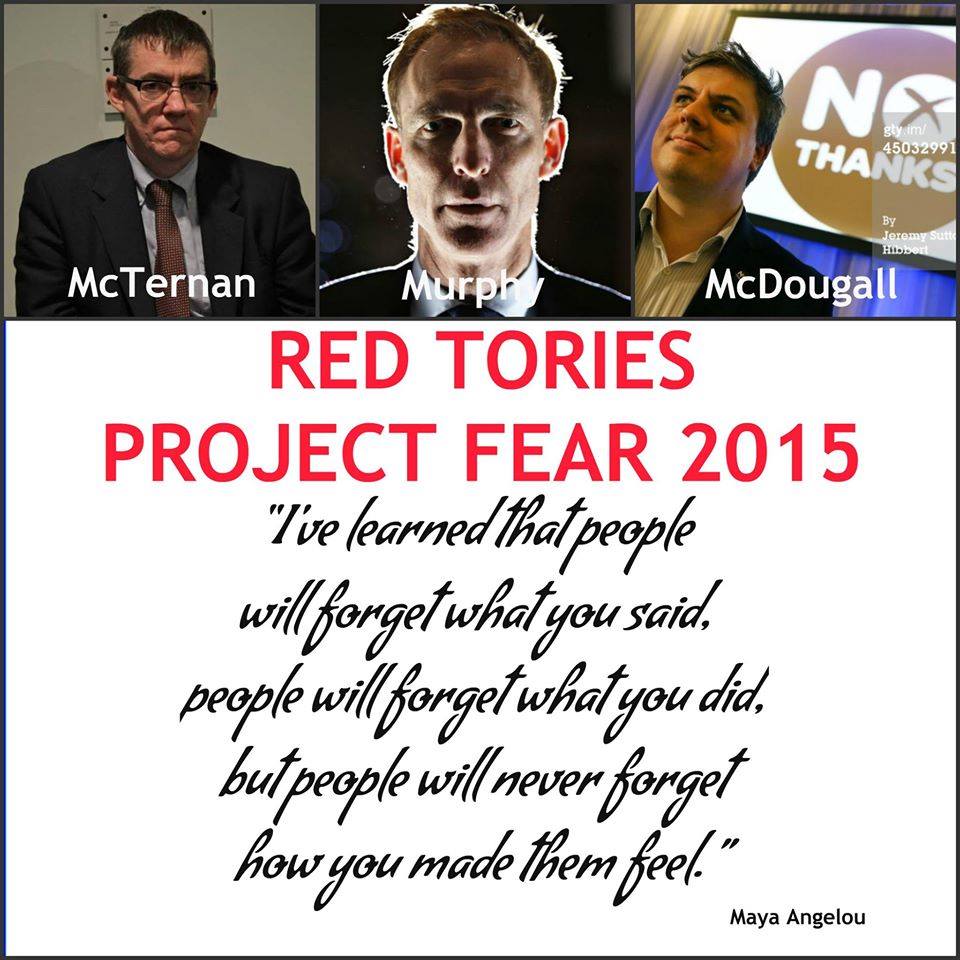
3. Jim Murphy was Chair (2001-2002) and still is a member of Labour Friends of Israel and has close links with members of BICOM.

a. WikiLeaks: In 2011, The Daily Telegraph published documents, compiled by a senior US official at the US Embassy in London and published by WikiLeaks, it was revealed that throughout 2009, Jim Murphy was in charge of organising a coalition of Unionist parties whose aim was to, “block an independence referendum” in Scotland. The documents state: Throughout 2009, UK Secretary of State for Scotland, Jim Murphy played a leadership role in organizing the opposition parties, hoping to move Scotland toward implementation of the Calman recommendations as an alternative to an independence referendum, according to Murphy’s advisors, Labour party insiders, and opposition party leaders. First Minister Salmond’s response to independence critics (such as Murphy) was to accelerate the implementation of the Calman recommendations as soon as possible – “to call the bluff.”

b. East Renfrewshire has the biggest Jewish community outside London and Murphy is noted for working hard for them. but the Scottish Palestine Solidarity Campaign is a lot more extreme than the English one. It is a very hostile political environment for a beleaguered Jewish community of 5,000, which needs to change.

c. Avoiding national service with the South African Army; “I saw for myself the legalization of grotesque theories of racial supremacy” he returned to Scotland, and took up studies at a University in Glasgow before dropping out to become president of the NUS. Then on to become an MP.

e. Murphy is a prominent member of the ultra right wing think tank, “The Henry Jackson Society Advisory Council”. The policies of the group conflict, at times with official Labour Party policy which causes conflict.
http://www.fifetoday.co.uk/news/general-election-2010-murphy-s-law-to-survive-political-jungle-be-yourself-1-1366299

http://www.bicom.org.uk/about/team/

4. Lorna Fitzsimons: Grew up in Rochdale where she still lives with her family and runs her two businesses, Lorna Fitzsimons Consulting and MK-LF Partnership.

a. She is currently the Director of The Alliance Project and the Textile Growth Program. The Alliance project was established by industry, Lord Alliance, (David Alliance, Baron Alliance, GBE is a British businessman and Liberal Democrat politician of Jewish origin from Iran). and the Combined Authority’s of Greater Manchester to work with Government on the growth potential in British textile manufacturing.

b. She has completed the biggest study of supply and demand in British textile manufacturing in the last twenty years and presented the findings and recommendations to Government. She is now working with Government, industry and GMCA implementing the recommendations. She directs a £12.8million textile growth fund investing in British textile manufacturing.

c. Lorna has also set up MK-LF Partnership with her business partners. The company runs The Pipeline, a program working with FTSE 100 company’s to develop executive female talent.

d. Lorna served as president of the National Union of Students from 1992 to 1994. She was a NED of Endsleigh Insurance and chair of the European Students Forum. From there she became an associate director at a Saatchi subsidiary. Lorna became the first ever winner of the IPPR’s Young Communicator of the Year award.

e. In 1997, Lorna was elected to Parliament as MP for Rochdale (29). She was PPS to Robin Cook. Lorna was a member of the Hansard Society Board and chair of the Historic Parliamentary Labour Party Women’s Committee, comprised of 101 female MPs.

f. On leaving Parliament in 2005, Lorna set up her own consultancy and became a senior visiting fellow at the Defence Academy.

g. Lorna became the CEO at the Britain Israel Communications and Research Centre (BICOM) in October 2006. She left BICOM after five and a half years in 2012 to set up her own company’s.

5. Dermot Kehoe has been Chief Executive of BICOM, Britain Israel Communications & Research Centre since 2012.

a. Dermot has over 20 years’ experience in public affairs, communications and journalism. A career in broadcasting that spans the BBC, ITV, GMTV and Channel 4 and in communications at the Home Office, Social Market Foundation and the Fabian Society.

b. His Credits include The Sunday Programme with Alistair Stewart, GMTV Election ’97, The Street Weapons Commission (C4) and The Iraq Commission (C4).

c. His partner John David Cairns MP died  from acute pancreatitis 9 May 2011

6. John David Cairns (7 August 1966 – 9 May 2011) was a Scottish Labour Party politician, who was a Member of Parliament (MP) from 2001 until his death.

a. He represented the constituency of Inverclyde.

b. He was the Minister of State at the Scotland Office until he resigned on 16 September 2008.

c. He died from complications of acute pancreatitis on 9 May 2011, aged 44.

d. He was a catholic priest but gave up his vocation to become a politician. Openly gay his long time partner was Dermot Kehoe.

e. He was a member of Labour Friends of Israel.

7. Michael Dugher was elected to serve as the Member of Parliament for the Barnsley East constituency at the 2010 General Election.

a. He is the Shadow Minister for the Cabinet Office, having been appointed as a full member of the Shadow Cabinet in October 2013.

b. He had previously attended the Shadow Cabinet as Shadow Minister without Portfolio since October 2013 and was also Vice-Chair of the Labour Party.

c. Prior to that, Michael was: Parliamentary Private Secretary to the Leader of the Opposition, Ed Miliband; Shadow Minister for Defence Equipment, Support and Technology; and briefly a member of the Public Administration Select Committee.

d. Jim Murphy and Michael compiled a document whilst in office setting out the benefits of defence purchasing from Israel

e. He is a member of Labour Friends of Israel.
8. Stephen Twigg is the Labour Co-operative MP for Liverpool West Derby and shadow Secretary of State for Education.

a. Openly gay he championed the removal of clause 28 from Schools.

b. He is a member of Labour Friends of Israel.

So Where is the Money Coming From George? Don’t Be Silly From the British Taxpayers of Course.

So Where is the Money Coming From George? Don’t Be Silly From the British Taxpayers of Course.

1. More problems, (other than the £4 billion annual cost of the war in the Middle East) for George to deal with in the next few weeks. All of which will be passed on to the taxpayer whether they agree with it or not.

2. George Osborne, (Chancellor of the Exchequer) in his autumn statement, for delivery to the country in November will announce an increase and extension of existing austerity measures. This will include a number of new cuts in welfare spending and public sector pay restraints, to last for the duration of the parliament and beyond.

3. But MP.s will take up their 11 per cent pay & expenses rise at the start of the new government in 2015.

4. Another bombshell, landing on the desk of the Chancellor is the report, (commissioned by the Speaker of the House, Mr Berkow) from an eminent group of building surveyors giving warning that the entire building is suffering from chronic and continuing deterioration due to subsistence.

5. Corrective measures will need to be put in place so that the Grade 1 listed building can be protected from any further deterioration. These will address;

a. Big Ben is off the vertical by around 18 inches.

b. Significant stress fracture cracks in the walls of the building.

c. Boilers and piping systems are in very bad condition due to their age.

d. Electrical wiring is badly in need of replacement due to fire risks and multiple safety hazards.

e. Internally the Commons chamber itself also needs extensive work and at some point during the next Parliament will have to be shut for 18 months. MPs are expected to relocate to the Lords, with peers probably meeting in the QE2 conference centre opposite Westminster Abbey.

6. The entire programme of works will take between 10 and 20 years to complete and will be tackled in stages so as to reduce disruption. Projected costs vary but conservative estimates are between £4 and £6 Billion over 10 years. Note: Forward planning costs for such a large project is an art not yet perfected and the eventual total cost to the nation may well be in excess of £10Billion.

7. Both Houses agreed that doing nothing is not an option and an independent appraisal of a range of options is under way. The priority will be to ensure value for money for the taxpayer while safeguarding the heritage of the Palace. The final decision will be taken in the next Parliament.
http://www.dailymail.co.uk/news/article-2644902/Osborne-fury-MPs-demand-4billion-save-Houses-Parliament-Chancellor-warns-better-think-again.html

Craig Murray Ex British Ambassador – A Lone Voice in the Political Wilderness

I compiled a few videos of Craig Murray in full flow setting out the facts, as he remembers them. In light of the, “New” campaign in the Middle East there must be doubts in the minds of many as to the real motivation behind the commitment of the UK to support of the USA in it’s efforts. Noteworthy is the absence of Germany, Italy and the country with the largest land army in NATO, Turkey. The videos present another, less heard of perspective and are useful in that respect.
UK Ambassador Blows Whistle on Torture

“Realism or Hypocrisy? – Western Diplomacy and Freedom of Expression”

Former British ambassador Craig Murray says UK and USA sent prisoners to Uzbek to be tortured

Murray: CIA used Uzbek torture to create false intelligence; support for regime continues

If you want to seize control of the massive natural gas deposits in Uzbekistan and Turkmenistan, but you can’t run a pipeline through Iran or Russia (because leaders there aren’t US puppets), what do you do?

This video presented by Journeyman Pictures. you could watch this video uncut at journeyman’s youtube. I am working on Uzbek version so people of Uzbekistan should know what we people in the West know about Karimov. .

Craig Murray, former British Ambassador to Uzbekistan, Provides Evidence on UK Government Complicity in Torture.

Craig Murray – Against Islamophobia

Scottish Independence

Must watch, Illustrated interview with Ambassador to Uzbekistan Mr. Craig Murray. Ex-British Ambassador about Uzbek Dictatorship; boiled alive prisoners, jailed mothers, prosecuted Muslims, etc..

“Truth is a universal concept, and the ability of governments to bury the truth is a universal problem.”

The Spirit of Independence caught up with Craig Murray whilst he was in the town to present at the Yes Fest. Here are his thoughts on why Scotland should be independent.

Scotland has Been Changed Forever by the Outcome of the Referendum

Scotland has Been Changed Forever by the Outcome of the Referendum

Lamont finally agrees Scotland has been changed forever by the outcome of the Referendum – But can the Labour Party in Scotland Change?? or Will it Still, “Cow Tow” to the Instructions of the English Labour Party??

Johann Lamont smiled for the cameras, ignoring the abject failure of her Party machine to motivate Labour leaning voters to support a, “No” vote in the referendum. Instead she weakly offered a view that it was clearly time for change. Addressing colleagues she went on to express concern that whilst Scotland had voted decisively to remain part of the UK significant numbers of Scots had expressed a strong wish to be independent and it was important that the establishment directed efforts towards healing wounds bringing Scotland together once more.

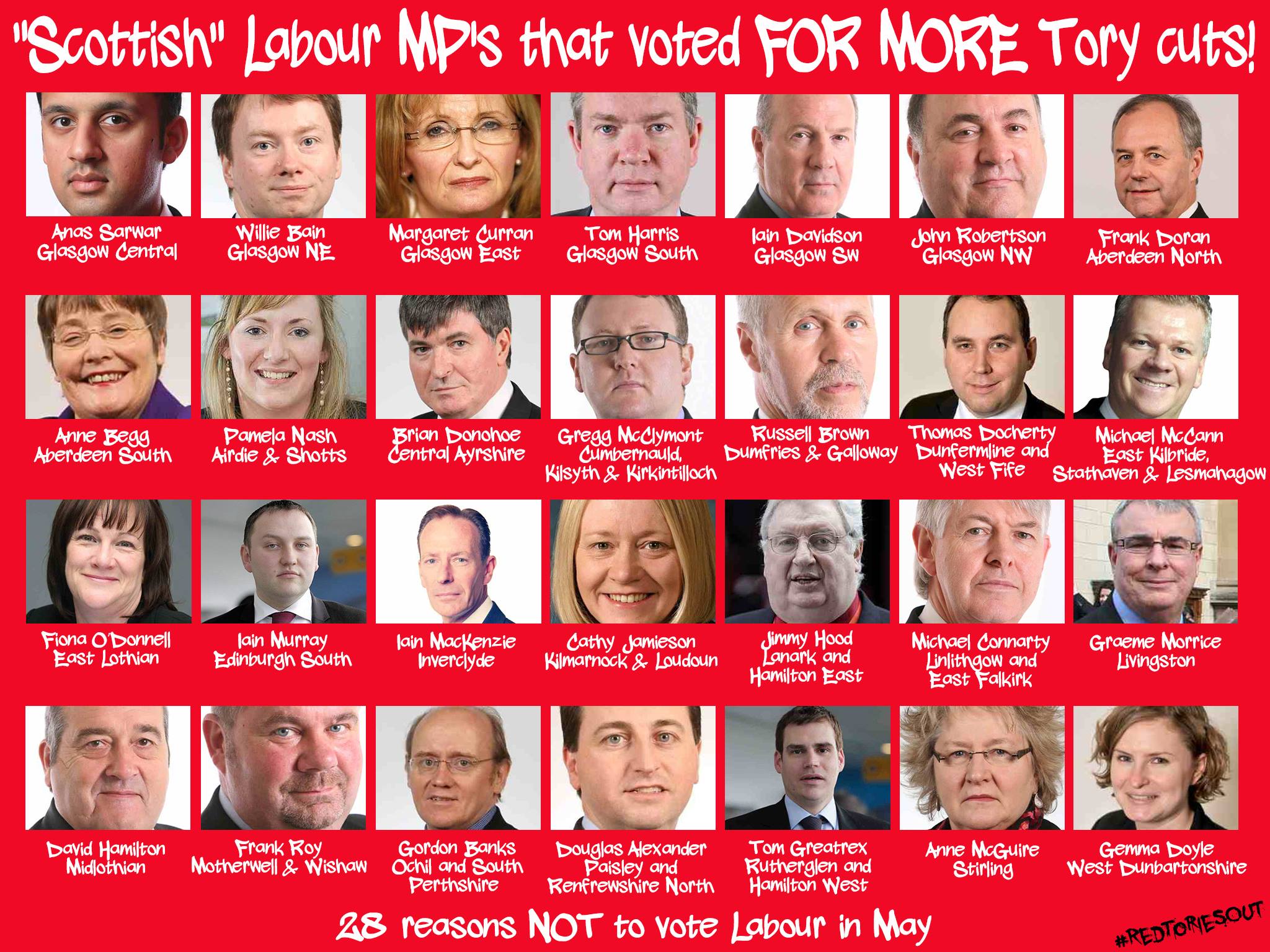
She studiously ignored the fact three of the four areas of Scotland that had voted, “Yes” were Labour Party controlled previously impregnable heartlands, (North Lanarkshire, Glasgow and West Dumbartonshire. Indeed the constituencies of MPs, Margaret Curran, Tom Harris, Willie Bain, Frank Roy, Ian Davidson, Anas Sarwar, Gregg McClymont and Tom Clarke, as well as MSPs Jackie Baillie, Paul Martin, Patricia Ferguson, Michael McMahon and Johaan Lamont herself were among those that voted, “Yes. As is always the case Labour sought to point the finger of failure at other parts of the, “Better Together” campaign asserting it was the barnstorming intervention of Gordon Brown that had saved the day.

But some Labour Party activists did accept there were many shortcomings in the entirely negative campaign and direction the Party had taken in recent times that would need to be addressed and corrected, if the Party was to recover it’s former place in Scottish society. Noteworthy comments;

“The problem has been too many in Labour politics believe they’ve a seat for life. There was a mini-cull of Labour councillors in Glasgow several years back and there may well be one in Lanarkshire very soon.

“The party is too remote from the voters and needs to talk about its failures and failings. [Council leaders] Gordon Matheson and Jim McCabe have serious questions to answer.”

Ruth the Mooth Gives Early Warning – When The Tory Party Takes Up the Reins of Government at Holyrood in 2021 Lazy Scots Will Be Forced Tae Get Tae Work Or Feel Her Wrath


10 August 2012: Bull in a china shop –  Ruth Davidson Castigates lazy Scottish Electorate for living off handouts from Westminster

Ruth Davidson, the leader of the Scottish Conservative Party, has claimed that nearly 90 percent of Scots households are currently “living off state’s patronage,”  reports.

Davidson cited that only about 283,080 households in Scotland – 12 percent of the total number – pay more in taxes than what they receive in public services from the state.

In addition, due to the dominance of the public sector in Scottish life, she said that state spending now represents at least one-half of Scotland’s wealth.

“It is staggering that public sector expenditure makes up a full 50 percent of Scotland’s GDP and only 12 percent of households are net contributors, where the taxes they pay outweigh the benefits they receive through public spending,” she thundered.

“The rotten system of patronage, which denies so many people real choices in their lives, has created a corrosive sense of entitlement which suits its political gang masters.”

Referring to the exalted 12 percent who are “responsible for generating Scotland’s wealth,” she rhetorically asked: “I wonder how many of them work on public sector contracts.”

Citing data from the Office for National Statistics, Davidson said that the average Scottish household uses £14,151 more in public services every year than it pays out in taxes.

Even middle-income Scots, she noted, consume £20,000 more in state spending than they pay out.

Only Scotland’s wealthy, that is, those who account for the top 10 percent of earners, pay £17,205 more in tax than they receive in public services.

She also alleged that over-dependence on the public trough has created a generation of Scots who are hopelessly loyal to the Labour and Scottish National Party, at the expense of the Tories.

“If the gang master state is the only provider people can see for their housing, education and employment, it’s no surprise those who seek to break the stranglehold find barriers in their way,” she declared.

But the facts are that Scotland pays 9.6 percent of the United Kingdom’s total tax bill, while accounting for only 9.3 percent of British public spending. (The btimes)

Davidson likes to get herself in the news just as often as she can.

Some of her more bombastic performances are listed below.


5 January 2012: RD keynote speech about Scottish Conservative Party policy.  http://www.youtube.com/watch?v=Re77JW_QkVg

29 January 2012: RD  and Cameron denying more devolution of tax powers to Scotland.  http://www.youtube.com/watch?v=EJra07D3jRc

29 January 2012: Too wee, too stupid, too poor, to be independent, what a shower of toe-rags.  http://www.youtube.com/watch?v=-FYDoXkSFZI

16 March 2012: RD Overstates her case again.  https://www.youtube.com/watch?v=OgRIvGz7v0o

10 May 2012: Scottish regiments betrayed by Tory Party.   https://www.youtube.com/watch?v=iWi-1BXhbqs

17 May 2012: The Leveson Inquiry. https://www.youtube.com/watch?v=IunXoaCms4U

28 May 2012: The big debate Part1.   https://www.youtube.com/watch?v=Vj-Z1nkC8Xc

28 May 2012: The big debate Part2.  http://www.youtube.com/watch?v=Vj-Z1nkC8Xc

31 May 2012: MSP’s agree that Scotland should be an independent country.  http://www.youtube.com/watch?v=–ET7PUI2wM

8 October 2012: RD. Scots are happy to live off welfare from England.  http://www.youtube.com/watch?v=Rnw0q-Msa5U

9 October 2012: RD. only 12% of Scots households are net contributors to tax revenues.  http://www.youtube.com/watch?v=mTHUD7ZGH0A


455531980


30 January 2013: Blair Jenkins and RD – Scotland Tonight.  http://www.youtube.com/watch?v=-VMXOy3TUdc

31 January 2013: RD has lost the plot on Europe – failed to keep up with events!  http://www.youtube.com/watch?v=eOYhdOIiJoU

8 March 2013: North Sea investments will generate an additional £3 billion by 2017. http://www.youtube.com/watch?v=cQ6l_FHiEG8

26 March 2013: RD – Speech on strengthening Scottish Devolution.    http://www.youtube.com/watch?v=M7-ShRJeLXc

29 March 2013: RD talking legal, political and constitutional nonsense.  http://www.youtube.com/watch?v=Ho_nkQUzqyk

23 May 2013: RD Gets over excited.  https://www.youtube.com/watch?v=c7pf4HorcJo

7 November 2013: RD questioned Scotland’s place in the EU following independence? The BBC said the Spanish Prime Minister said we would be out!  http://www.youtube.com/watch?v=pH58WbmXjhQ

20 November 2013: RD MSP speaks in the Equal Marriage Debate.   http://www.youtube.com/watch?v=Owi0H62g5Q8

12 December 2013: RD implied Alex Salmond was a liar by referring to him as Pinocchio.  http://www.youtube.com/watch?v=YaxIy17ybtw

12 December 2013:  RD calls FM Pinocchio – Reprimanded by PO.   http://www.youtube.com/watch?v=H59ArH3d6bo


0433783200000514-0-image-a-94_1428969694876


2 May 2014: Bested by Alex Salmond,  RD slams her pen down in fury.  http://www.youtube.com/watch?v=mBLNQcLEvOw

29 May 2014: RD rashly embarks on Treasury facts with predictable outcome.   http://www.youtube.com/watch?v=wIeQsXSU3dY2

2 June 2014: RD and Sarah Smith – More Powers for Scotland.   http://www.youtube.com/watch?v=BvPtCiJkgt4

7 June 2014: RD – Oil and the economy.   http://www.youtube.com/watch?v=Ki_HkXtXGO89

2 July 2014: Referendum two months away. Campaign takes priority.  http://www.youtube.com/watch?v=ae9e6JWfbow

21 August 2014: RD speaking in the Scotland’s future debate.   http://www.youtube.com/watch?v=tGFaQpkiG1g

14 September 2014:  Treasury briefing breaches Purdah.  https://www.youtube.com/watch?v=C3GTEIpVAwI
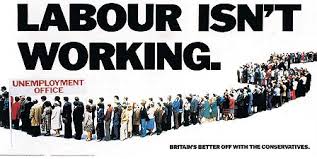
15 September 2014: RD “I do not want an equal society” – in her own words. http://www.youtube.com/watch?v=5neGzqUq3Aw
22 September 2014: RD  implies illegal collation of postal votes.  https://www.youtube.com/watch?v=DcL69gUtPb0

28 September 2014: RD Speech To the Tory Party Conference.  https://www.youtube.com/watch?v=NyOqHniEeuw

29 September 2014: RD waffles and refuses to reveal target seats.   https://www.youtube.com/watch?v=mpJ6tISKftU

10 October 2014: RD comprehensively demolished by the First Minister.    https://www.youtube.com/watch?v=I_PcvpQ05II

12 December 2014: RD Defends flat-lining Tory Party.   https://www.youtube.com/watch?v=JvIGYZEnaa8


pa-653x474


12 April 2015: Unionist leaders bullying Nicola Sturgeon. https://www.youtube.com/watch?v=y9sNS3NouNs

27 April 2015:  Tory Party not to blame for the alarming rise in food banks. https://www.youtube.com/watch?v=iWi-1BXhbqs

7 May 2015: RD wishes away the election outcome.  https://www.youtube.com/watch?v=Z1ujitG_pT

4 May 2015: RD and the success of the Tory party.   https://www.youtube.com/watch?v=WEmBH_cr2t4

14 May 2015: RD on education.   https://www.youtube.com/watch?v=X4UMiUXBGpc

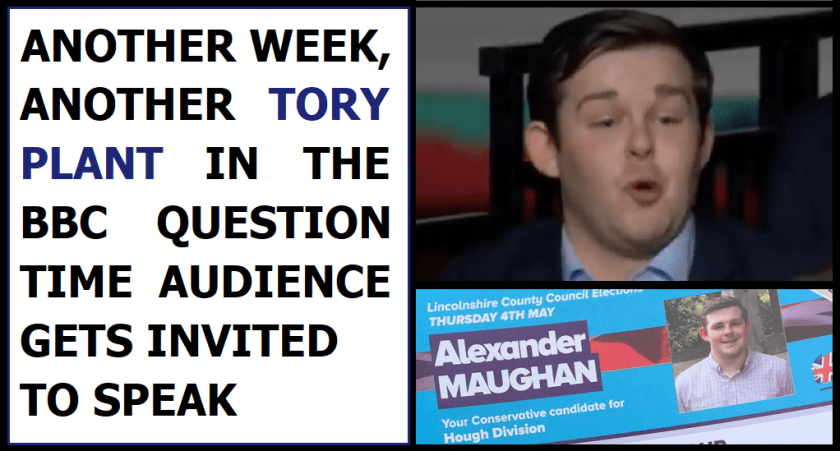
28 May 2015: Question Time Aberdeen “Mr Plant”  back in the audience. https://www.youtube.com/watch?v=_ptlJAMAhzo


3355128639


The Mansion Tax – Pie in the Sky?

Ed Balls, (Shadow Chancellor) in his speech, (explaining the monetary policy of a future Labour government) said that additional substantial finance would be found and allocated to the National Health Service. One of the measures proposed is the introduction of a, “Mansion Tax” on homes worth more than £2million. Reaction has been mixed but on balance there is doubt the tax would result in the release of any measurable amount of new money.
My Comment

There are many that would applaud the introduction of a mansion tax, but it would need to be modified in a number of areas so that cash poor, property rich owners, e.g. pensioners would not be punished for a house purchase made many years before in a now affluent area. Proposals are to defer tax collection in such cases until after death which would adversely impact upon inheritance benefits to be passed on to surviving family members.

Introduction would be made difficult since many owners, (assisted by estate agents and solicitors) would endeavor to find ways of reducing the sales value of their houses. Tax revenues would therefore, be difficult to identify and collect, possibly in the first 2 years of introduction and any measure of success might only be achieved through the establishment of a new government body payment of which would adversely impact on any net revenue. The roll back in property values under £2million would also add to the consequent depression in house values.

Net revenue from the tax, (95% of which would be gathered from homeowners in London and the South East of England) would be well below Labour Party projections, (most likely to be under £700Million). Transfer of finance to the National Health Service, would be put in place at the start of a new governments term of office. The Scottish National Health Service would benefit since £70Million would be given over to Scotland. A small re-distribution of wealth which, for the turmoil it is likely to bring with it is an exercise in futility.

I expect the Mansion tax will be, “kicked into touch” in favor of a UK wide property revaluation, since the last one was done over 25 years ago, well before the various property bubbles, crashes and subsequent increases occurred. The revaluation would increase the levels of, “Council Tax” substantially, but income generated, (which might be in excess of £15Billion would be spread evenly across the UK.