Westminster Governance and the role and responsibilities of MP’s
Representation of local constituency interests has always been central to the Westminster system of government and created strong bonds between elected representatives and their constituents.
In the course of the twentieth century the widening of the franchise, changes to the party system and the growth of the welfare state contributed to these relationships changing and indeed increasing in important ways. But the constituency role was of meaningful importance in Scotland.
A Westminster study completed in 1970 categorised MPs into four types depending on how they prioritised their roles. Namely:
Constituency members: Who concentrated first and foremost on serving the needs of their local areas.
Scottish MP’s allocated around 15 hours each week which was the highest concentration of such members.
The support of other activities eg. meeting local interest groups, attending local community and party meetings and promoting local business and public spending increased the total number of hours to 25 weekly.
The categories were not mutually exclusive since many MPs carried out both to some extent. And this local role was further split into two sub-categories:
The “self promoter” (current day selfie queen/king) who promoted a high visibility profile for themselves and their constituency with a view to improving their economic wellbeing and status by encouraging local investment and facilitating the activities of local businesses and other interest groups.
The “welfare officer” who supported the cases of individual constituents primarily through the provision of negotiating services such as housing and health provided by the welfare state, or dealing with government departments over benefit matters or immigration.
Welfare support expanded rapidly from the late 1950’s and led to the establishment of constituency welfare officers and or casebook workers and local office support within the constituencies. e higher allowances available to pay MPs’ staff – the ‘welfare officer’ or ‘casework’ role had grown in importance.
MP’s were provided with an annual financial allocation to meet the costs of providing these new services.
Policy Advocates: Who consistently advanced and argued for for particular causes.
Ministerial Aspirants: Party leader favourites who quickly gained front bench status
Parliamentarians: Back benchers, who wielded power in groups and focussed their attention on participating in committees benefitting from additional financial allowances.
The impact of devolution
The establishment of the Scottish Parliament in 1999 raised important questions about the future of these local representative roles.
The Scottish Parliament took over responsibility for many of the issues that individual constituents were likely to raise with their elected members, as well as important strategic matters such as economic development, transport and health which were central to the role previously remitted to MP’s.
Members of the Scottish Parliament MSPs assumed the duties of local representative and spend many hours each week fulfilling them. Their contact with interest groups and work with local community groups and party members is also more frequent. MSPs spent more time on these activities than did Scottish MPs previously
The traditional local role of the MP in Scotland, which was highly rated and significant in terms of commitment of time, has been given up to members of the Scottish Parliament.
But some MPs are determined to hold onto the past and the resulting duplication of roles can be the cause of an amount of confusion amongst constituents depending in part on whether co-operation exists between the two local members. A problem when the local MSP is a list member from another political party.
Benefits and Allowances
Gross Salary & Pension: £120-£140k
Staffing: Constituency based. Assistance with casework, correspondence, surgeries, visits, meetings, organising events, and outreach activities. Mainly covers payroll costs but can also be used for pooled staffing services and incidental expenses for volunteers. It is paid directly to the employee. Annual charge £150-180k.
Office costs: Covers rent, stationery, telephone, broadband, and other costs attributed to running a constituency office. Annual charge £14-£20k
Accommodation: To meet costs incurred as a result of working from two permanent locations. Unless there are exceptional circumstances, it is usually only possible to claim for accommodation and associated costs in either Scotland or London, not both. Annual Charge £25-£40k.
Travel and Subsistence Allowance: Is for travel between Scotland and Westminster, within the constituency, and elsewhere on parliamentary business. MPs can only travel First Class if the fare is demonstrably cheaper than a standard class ticket. Annual cost £12-£18k
MPs may only claim for the cost of food and non-alcoholic drinks where they have stayed overnight either outside the London area or Scotland. This is limited to £25 for each night of a stay but can be for purchases made in the day.
Summary: The role and responsibilities of Scottish MP’s at Westminster is greatly diminished following devolution.
And yet MPs still enjoy the same benefits, privileges and allowances as English MP’s who’s role has remained unchanged.
The admitted number of hours freed up for other duties at Westminster is around 25 weekly and the absence of any tangible promotion of the cause of Scottish independence and claims of MPs promoting LBGTQ agendas, wild partying, alcohol consumption, extra marital sex affairs and harassment both physical and sexual within the group is embarrassing and of concern to constituents.
Something needs to be done to ensure the Scottish taxpayer is provided with value for money. We are not getting it from the present group of SNP MPs.
Westminster Governance and the role and responsibilities of MP’s
Representation of local constituency interests has always been central to the Westminster system of government and created strong bonds between elected representatives and their constituents.
In the course of the twentieth century the widening of the franchise, changes to the party system and the growth of the welfare state contributed to these relationships changing and indeed increasing in important ways. But the constituency role was of meaningful importance in Scotland.
A Westminster study completed in 1970 categorised MPs into four types depending on how they prioritised their roles. Namely:
Constituency members: Who concentrated first and foremost on serving the needs of their local areas.
Scottish MP’s allocated around 15 hours each week which was the highest concentration of such members.
The support of other activities eg. meeting local interest groups, attending local community and party meetings and promoting local business and public spending increased the total number of hours to 25 weekly.
The categories were not mutually exclusive since many MPs carried out both to some extent. And this local role was further split into two sub-categories:
The “self promoter” (current day selfie queen/king) who promoted a high visibility profile for themselves and their constituency with a view to improving their economic wellbeing and status by encouraging local investment and facilitating the activities of local businesses and other interest groups.
The “welfare officer” who supported the cases of individual constituents primarily through the provision of negotiating services such as housing and health provided by the welfare state, or dealing with government departments over benefit matters or immigration.
Welfare support expanded rapidly from the late 1950’s and led to the establishment of constituency welfare officers and or casebook workers and local office support within the constituencies. e higher allowances available to pay MPs’ staff – the ‘welfare officer’ or ‘casework’ role had grown in importance.
MP’s were provided with an annual financial allocation to meet the costs of providing these new services.
Policy Advocates: Who consistently advanced and argued for for particular causes.
Ministerial Aspirants: Party leader favourites who quickly gained front bench status
Parliamentarians: Back benchers, who wielded power in groups and focussed their attention on participating in committees benefitting from additional financial allowances.
The impact of devolution
The establishment of the Scottish Parliament in 1999 raised important questions about the future of these local representative roles.
The Scottish Parliament took over responsibility for many of the issues that individual constituents were likely to raise with their elected members, as well as important strategic matters such as economic development, transport and health which were central to the role previously remitted to MP’s.
Members of the Scottish Parliament MSPs assumed the duties of local representative and spend many hours each week fulfilling them. Their contact with interest groups and work with local community groups and party members is also more frequent. MSPs spent more time on these activities than did Scottish MPs previously
The traditional local role of the MP in Scotland, which was highly rated and significant in terms of commitment of time, has been given up to members of the Scottish Parliament.
But some MPs are determined to hold onto the past and the resulting duplication of roles can be the cause of an amount of confusion amongst constituents depending in part on whether co-operation exists between the two local members. A problem when the local MSP is a list member from another political party.
Benefits and Allowances
Gross Salary & Pension: £120-£140k
Staffing: Constituency based. Assistance with casework, correspondence, surgeries, visits, meetings, organising events, and outreach activities. Mainly covers payroll costs but can also be used for pooled staffing services and incidental expenses for volunteers. It is paid directly to the employee. Annual charge £150-180k.
Office costs: Covers rent, stationery, telephone, broadband, and other costs attributed to running a constituency office. Annual charge £14-£20k
Accommodation: To meet costs incurred as a result of working from two permanent locations. Unless there are exceptional circumstances, it is usually only possible to claim for accommodation and associated costs in either Scotland or London, not both. Annual Charge £25-£40k.
Travel and Subsistence Allowance: Is for travel between Scotland and Westminster, within the constituency, and elsewhere on parliamentary business. MPs can only travel First Class if the fare is demonstrably cheaper than a standard class ticket. Annual cost £12-£18k
MPs may only claim for the cost of food and non-alcoholic drinks where they have stayed overnight either outside the London area or Scotland. This is limited to £25 for each night of a stay but can be for purchases made in the day.
Summary: The role and responsibilities of Scottish MP’s at Westminster is greatly diminished following devolution.
And yet MPs still enjoy the same benefits, privileges and allowances as English MP’s who’s role has remained unchanged.
The admitted number of hours freed up for other duties at Westminster is around 25 weekly and the absence of any tangible promotion of the cause of Scottish independence and claims of MPs promoting LBGTQ agendas, wild partying, alcohol consumption, extra marital sex affairs and harassment both physical and sexual within the group is embarrassing and of concern to constituents.
Something needs to be done to ensure the Scottish taxpayer is provided with value for money. We are not getting it from the present group of SNP MPs.
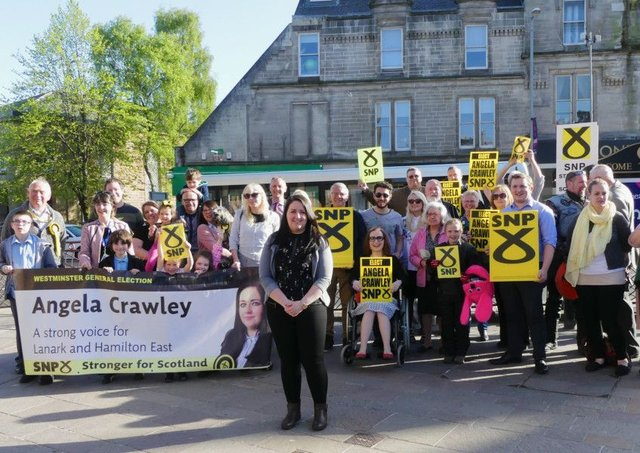
Born in Bellshill in 1987 she joined the SNP around 2010 and was the National Convenor of the SNP’s youth-wing, Young Scots for Independence, and sat on the SNP’s National Executive Committee. She was elected as a councillor for the Hamilton South ward in 2012.. Her political career progressed further when she was elected as the (MP) for Lanark and Hamilton East as part of the SNP surge in 2015 and was re-elected albeit with a much reduced majority in 2017.
House of Commons Women and Equalities Committee
Discussing her role as a member of the committee she was asked the question. What projects are you involved with that you can talk about? Her answer included the following: “In my first year on the committee we discussed issues faced by the transgender community.”
Quite where her answer fitted is beyond identification since the subject is outwith the remit of the committee and at odds with her declared mission as an MP that she was not in Westminster to simply accept the status quo, but to challenge it, and make real changes for the benefits of people’s lives and to deliver for the communities across her constituency including driving forward regeneration of the Hamilton Town Centre, bringing employment opportunities to the area and hosting specialised surgeries in Larkhall and Forth, helping people get the right advice and support to navigate their way through the welfare system, and tackling poverty.
Fantasy SNP Shadow Cabinet
She was appointed shadow minister for Defence Procurement in 2020 and took on the role of Shadow Attorney General since 2021. The posts are a total nonsense since the SNP are not the official opposition to the Westminster government but they serve the purpose of providing the SNP leadership access to £millions of “short money” which is given over to Sturgeon’s Shadow Cabinet favourite’s in the form of lucrative unearned additional duty allowances.
LGBTQ
Her campaigning on LBGTQ issues, in particular transgender equality borders on the obsessive. In December 2016, she stated in Parliament her view that: “the law must be updated to recognise an individual’s gender identity, which has nothing to do with their birth gender and everything to do with the gender they believe they are”.
In February 2017 she launched yet another campaign for transgender and non-binary equality stating: “The UK government must also follow the lead of the Scottish Government by committing to reform gender recognition law to ensure that all trans and non-binary people are fully and more easily able to access their human right to legal gender recognition – in line with international best practice. LGBTI equality activists and organisations have called for these reforms for many years and now we need to see action – not just more warm words.” (http://angelacrawleymp.com/angela-launched-new-campaign-transgender-non-binary-equality/)
Scottish Independence
In a “Q and A” article in “TheFemaler” she was asked 10 questions about her approach to politics and the ambitions that encouraged her to represent her constituents as a Scottish National Party MP. Her answers were revealing, at no time did she mention Scottish Independence preferring to address female and LBGTQ issues. (https://thefemailer.com/post/148239709616/an-interview-with-angela-crawley-mp-r-now-you-are)
She closed her maiden speech in the House of Commons with the following: “My team of 55 colleagues and I will work tirelessly with those on the opposition benches to ensure that we see an alternative to the damaging cuts to our public services.” Again no mention of Scottish Independence
British American Parliamentary Group (BAPG)
The Group was created in 1944 with the aim of promoting “friendly relations and mutual understanding between Members of Parliament in the U.K. and Members of Congress in the U.S. by arranging for the exchange of collegial visits and information between the two groups of legislators and providing opportunities for discussion on matters of common interest and concern.
Each year there is a 10 day exchange initiative funded by the US Department of State. In the course of the exchange British MP’s are welcomed to the U.S. in an exchange that includes Congressional appointments in Washington, several days of shadowing a Member of Congress in their home district, and a closing session in Boston that ties all of their experience.
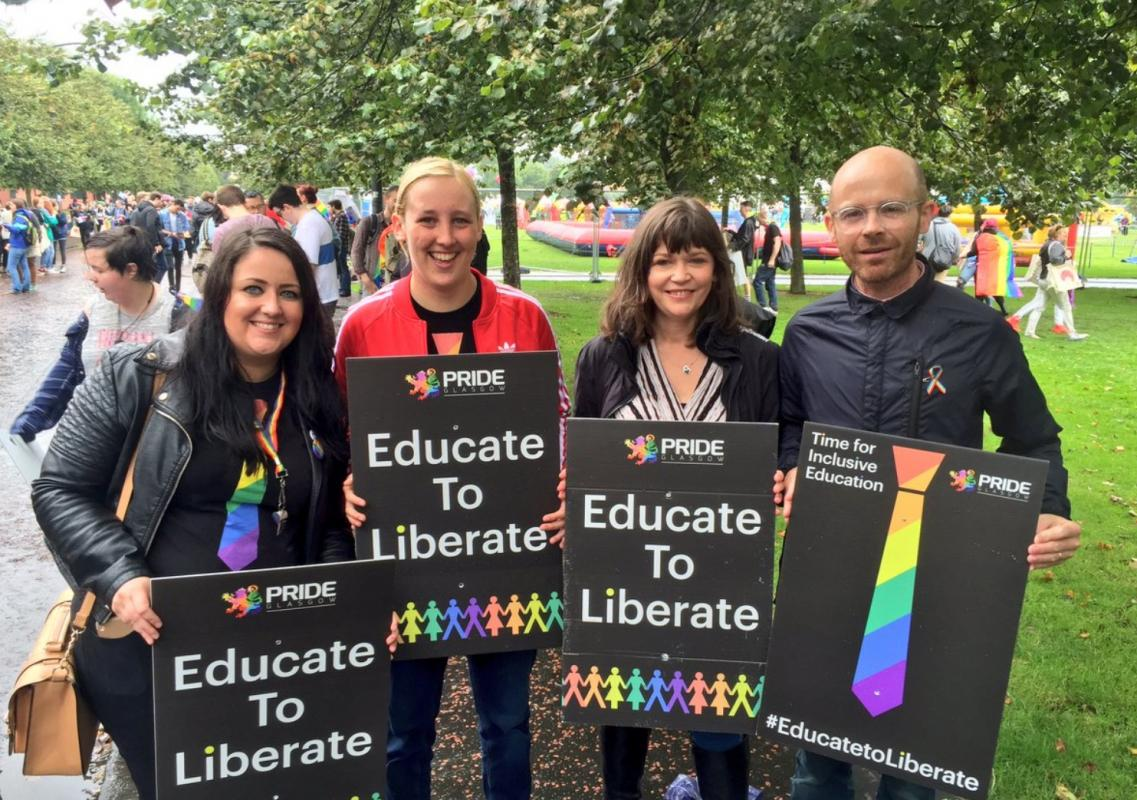
Group members SNP, MP’s, Angela Crawley and Patrick Grady spent ten (fully funded) days in the US in the summer of 2016. Activities of note included attendance at and marching in the San Diego LGBT Pride an annual three-day celebration held every July, focusing on the lesbian, gay, bisexual and transgender (LGBT) community.
21 April 2021: Counting Dead Trans People Karen Ingal Smith addresses Crawley misconceptions about LBGTQ matters
My name is Karen Ingala Smith and I prioritise women. I prioritise the well-being of women who have been subjected to men’s violence. I try to make sure I see the women that many others disregard. I’d like to contribute to ending men’s violence against women and girls. If I can’t do that, I’ll settle for helping ensure that women have access to specialist support from women, that victim-survivors’ needs are prioritised and wishes heard, and that more people understand the realities of men’s violence against women, girls and children.
In the Women and Equalities Select Committee on reform of the Gender Recognition Act on 21 April 2021, Angela Crawley, Scottish National Party MP for Lanark and Hamilton East and the SNP Shadow Attorney General asked:
” Would you agree, and I think we can all agree on the prevalence of male violence, and the instance of how often this occurs and often it is a male perpetrator against a female individual, would you agree that individuals who perhaps, perhaps a trans female has transitioned*, they are also at equally and perhaps greater risk of the same violence and the same issues that you’ve expressed around patriarchy.
Would it be possible for a women’s refuge to have a policy that is both inclusive provides that safety that provides those single sex spaces built also is able to provide a service that recognises that individuals who are transgender may also be the victims of the very same violence and they might also need protection from those very similar services that we’re discussing.”
(*It’s anyone’s guess who she means here? A trans female who has transitioned surely means female to ‘transman’, but I think she is so determined not to use words referring to maleness for ‘transwomen’ that she means a male who has so-called transitioned to ‘transwoman.’)
Firstly, let’s get this out of the way, you cannot be both single sex and trans inclusive, unless you mean women and ‘transmen’ together or men with ‘transwomen’. If you have transwomen in a women’s refuge it is not single sex. It cannot be.
Angela Crawley seemed to be trying to say that trans people are perhaps more at risk from the same men’s violence as women are. This isn’t true with regards to fatal violence. Men’s fatal violence against males who identify as transgender does not follow the same pattern as men’s fatal violence against women.
As far as I know, nine males who fall under the trans umbrella have been killed in the UK since 2009. I don’t know which of them would have described themselves as cross-dressers, transsexuals, transwomen, trans women, or even say that they are women but using Stonewall’s concept of the trans umbrella, there are nine and I don’t want to open myself to accusations of undercounting. There have been over 1,800 women killed by men in the UK in the same time. These 9 people are
Andrea Waddel, 29, killed by a punter (sex buyer), in Brighton in October 2009
Destiny Lauren, 29, killed by a punter (sex buyer), in London in November 2009
David/Sonia Burgess, 63, killed by a trans friend/associate (male who identified as trans at the time), in London in October 2010.
Lionel/Suzie Morl, 49, referred to in the press as a transvestite, who was killed by a couple with drug problems.
Chrissie Azzopardi, 22, who was killed by a neighbour, possibly over drug debts, in London in April 2012.
Vanessa Santillan, 33, who was killed by her husband in London in March 2015.
William Lound, 30, a gay man who occasionally wore women’s clothes, was murdered by a punter in Salford in August 2016.
Naomi Hersi, 36, who was killed by punter (sex buyer) after a drugs and sex hook-up in London in March 2018.
Amy Griffiths, 51, was killed in Worcestershire by a friend on 11 January 2019.
None of those above were killed in Scotland, where Angela Crawley is an MP. None. Since 2009, at least 129 women have been killed by men in Scotland. 17 women have been killed by men in Scotland since the last known murder of a trans person in the UK. Why can’t you see or why do you turn your back on the violence done to women by men, Angela?
We know from the Femicide Census that 62% of women who were killed by men between 2009 and 2018 were killed by a current or former partner. In the year ending March 2020, the Office for National Statistics says that 46% of adult females and 7% of males were killed in domestic homicides.
The ONS also said that 29% of female homicide victims recorded no suspect had been charged for the offence at the time of analysis. This will decrease as investigations proceed and the percentage of cases where a woman’s current or former partner is identified as being responsible for her death is likely to increase.
The proportion of males killed by current or former partners is consistent with previous years. 8% of male homicide victims were killed by a partner in the year ending March 2019, 1% in the year ending March 2018 and 3% in the year ending March 2017. Note also that males are much more likely to be killed by a same sex partner, fatal violence is very rare in lesbian relationships.
Given the number of trans people killed in the UK, annual trends in the composition of their relationships with their killer isn’t possible. There have been nine over eleven years and none since Amy Griffiths in 2019. Only one was killed by their partner.
Most women’s refuges work exclusively with women who are fleeing partners, ex-partners and in some cases, family members. That doesn’t mean other people don’t need places of safety or support but it does mean that their experiences are different and their needs are too. Women in refuges benefit from being able to place what was done to them in the context of the abuse that other women have been subjected to by men they loved.
Sometimes it is through seeing that another woman was not to blame for what was done to her that they are able to begin to stop blaming themselves. Sharing with and listening to other women is a huge part of healing and moving on. Women don’t enter refuges for fun. For most there is no other choice and many are in fear of their life.
The number of men who kill or attempt to kill their female partners shows that women’s fears are well grounded. I’ve written in other places about the importance of single-sex spaces for women who have been subjected to men’s violence, for example here, about the necessity of trauma informed services for women being single sex and here, more generally in a speech I delivered in Scottish Parliament in January 2020.
Looking beyond fatal violence and at childhood sexual abuse, prevalence is not equal or greater for males who identify as transgender than it is for females. We know that both girls and boys can be subjected to child sexual abuse and that grooming of younger gay males by older men is an established form of abuse normalised by some men.
Prevalence studies for England and Wales suggests that approximately 15% of girls/young women and 5% boys/young men are subjected to some form of sexual abuse before they are 16 years old and that the majority of perpetrators – prevalence studies always indicate over 90% – are male.[1] For women and girls, single sex space to address what has been done to them is vital. For males, who are far more likely to have been abused by someone of the same sex, the preferred or most beneficial sex of their therapist, counsellor, support worker or fellow therapeutic group members can be less clear.
Sometimes but not always depending on the sex of their abuser, they may or may not have a preference for or therapeutic issues with the sex of who supports them.[2] The needs of these men should be addressed but this necessary provision should not affect the needs of the majority of female victim-survivors and provision of single sex services to meet their needs; neither should the support and therapeutic needs of males survivors of childhood sexual violence and abuse who come to identify as transgender.
It should not be seen as, and it is not, an indication of disrespect to Andrea Waddel, Destiny Lauren, Sonia Burgess, Suzie Morl, Chrissie Azzopardi, Vanessa Santilan, William Lound, Naomi Hersi and Amy Griffiths to say that with regards to intimate partner homicide, the pattern of their relationships with the person who killed them is far closer to that of male-on-male fatal violence than that of men’s lethal violence against women. Of course what was done to them is abhorrent. But, the evidence suggests that the same services as those under short supply for women would not have saved the lives of most of these trans people.
By identifying the context of the sex industry, which inherently abusive; or substance use, I am not excusing what was done to these people any more than I would consider involvement in prostitution or drug use as an excuse for killing women, or any more than I would hold any woman responsible for abuse perpetrated against her.
Prostitution turns people into products and abusive, predatory men who fully recognise the power imbalance in the transaction, into consumers. Prostitution puts people, mainly women, in situations where they are easy prey to murderous men. It is the twisted logic of sex trade advocates that creates a space for victim blaming and denies that prostitution is abuse.
Where fatal violence is concerned, the evidence is that the violence perpetrated against trans people, is not the same violence as that which is perpetrated against women. It’s not the same, it might be proportionate, there aren’t reliable statistics on the number of trans identifying people in the UK so we can’t calculate.
Of course not all violence and abuse is fatal, but we can still learn a lot about violence from that which is. It is possible that rates of fatal violence against trans people by men are higher than those of males against women if we take population sizes into account, but this would make that violence more in line with men’s violence against other men, after all men kill more men every year than they kill women.
This does not justify removing the single sex exemptions permissible under the Equality Act in the provision of services for women who have been subjected to men’s violence and more than any other form of men’s violence against other men.
Like most people, I do not want to see trans people suffering violence, harassment and discrimination. Universal human rights are an important principle. If we want to stop violence, including fatal violence against trans people, we would be better placed addressing the drivers of violence and abuse of people who do not conform to the gender stereotypes associated with their sex.
As a feminist, I would say that we would be better placed dismantling sex-role or gendered stereotypes. Being abused and/or killed as or because you are a gender non-conforming man is not the same as being abused and/or killed as or because you are a women. We help no one if we don’t acknowledge who is doing what to whom and why, or by falsely claiming that that violence against trans people is the same as men’s violence against women. More information here: (https://kareningalasmith.com/category/trans/)
The 2020 high court trial of Alex Salmond, resulted in a jury finding him innocent of all charges of sexual harassment.
The Scottish public was outraged at the glaring incompetence of the Scottish Government leadership, Legal Services, Civil Servants and the Police Force and demanded an independent judicial review, in public, over the conduct an internal inquiry into two allegations of sexual harassment against Alex Salmond, that resulted in him being paid £500.000.
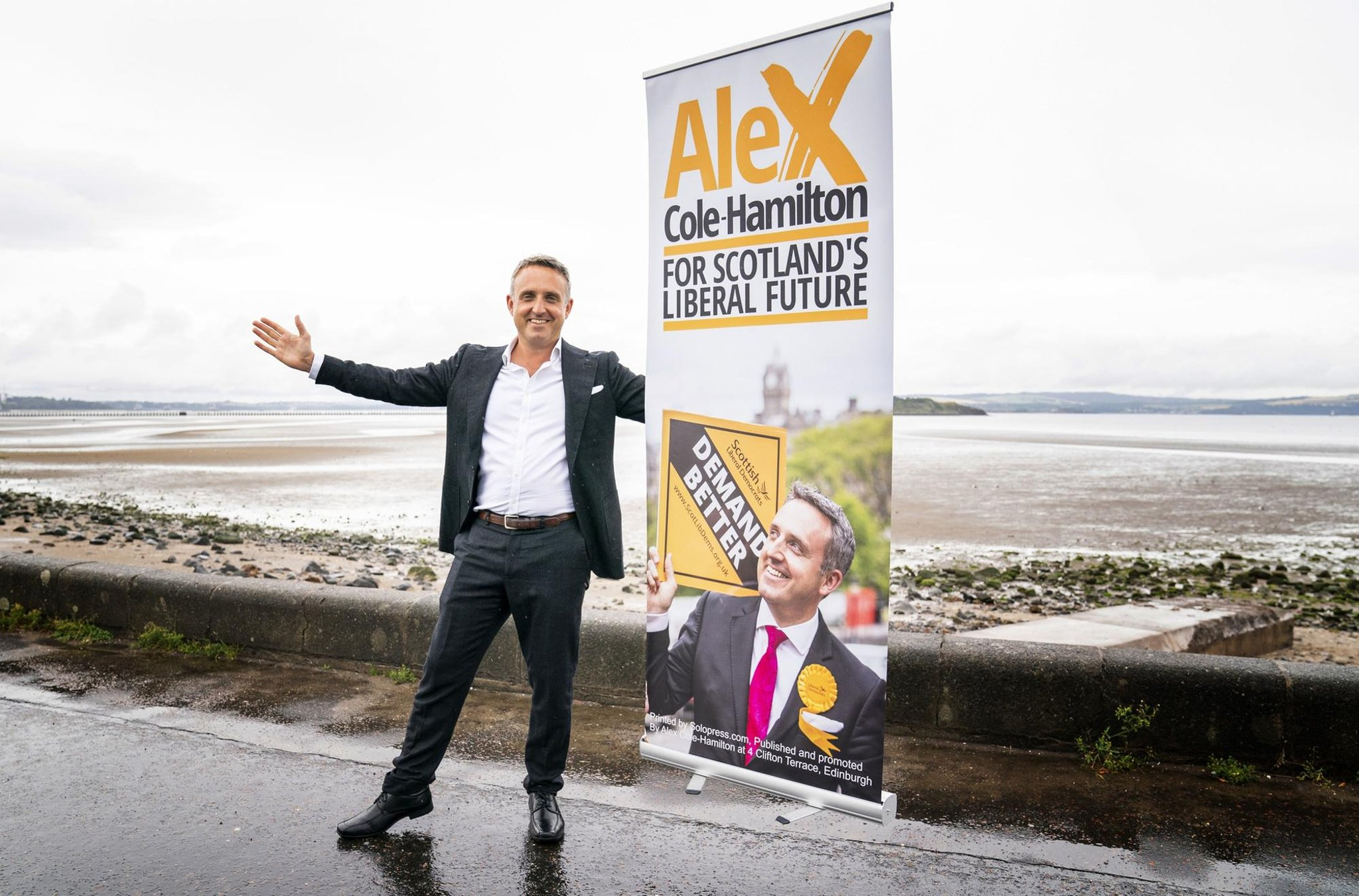
Alex Cole Lib/Dem MSP and Committee member
Admitting his membership of the Parliamentary Inquiry probably raised his profile across Scotland and assisted his successful bid for the leadership of his party he said: “but whether that was good or bad I don’t know but I regret my involvement in it.”
Of the inquiry he said: “It was awful, it was tawdry. It was it was full of smoke and heat, and not a lot of light, and at the end of the day, I don’t think we achieved a great deal.
I think that it probably harmed and upset the women at the heart of it more, even more, if that’s possible. And I, I regret my involvement in it… I would rather not have been part of it.
It was high pressure. I mean, it took up so much oxygen, so much time. But also, I’d been supporting a complainer privately who approached me, and I could see what every twist and turn of it was doing to her.
And I thought, well, that must be happening to all of the women at the heart of this. And you know, I think when you realise that you’re locked into this process, which is taking twists and turns and subject to massive media speculation and intrigue and you see privately the visceral human cost of that… it was just… it was awful. I realised quite quickly what it was doing to people. And that takes its toll.”
Asked if he believed Alex Salmond should be the leader of the Alba party he said: “No. I think that’s the worst part of it. I mean, he is a man desperate to clear his reputation.
I’m not sure that he deserves that opportunity, because irrespective of court judgements, and the rest of it, this is the man who has admitted some terrible, terrible behaviour and caused a lot of upset and heartache to women who deserve to be able to move on with their lives.”
Comment:
Cole-Hamilton, who before the start of the inquiry declared himself to be an unbiased member of the Committee revealed through his aggressive questioning that his agenda was entirely biased against Alex Salmond.
A puzzle for observers until following the publication of the wishy washy conclusion of the inquiry he revealed he had been representing one of the complainants whose allegation of sexual harassment against Alex Salmond had been found, in a court of law, to be a fabrication of the truth. And Cole-Hamilton spoke with a malicious forked tongue. Alex Salmond never uttered any of the words Hamilton attributed to him.
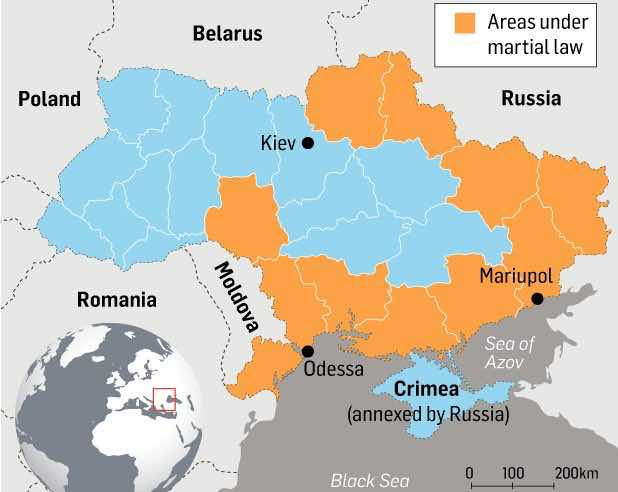
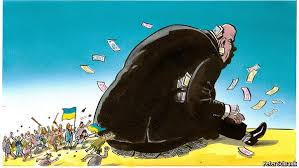
The Ukraine is being dismantled to satisfy the greed of the rich
President Zelensky in his campaign for the Presidency, declined to align himself with any political policies in preference for popularist addresses to the public in which he said that he represented a fresh start for Ukraine and he would end the graft, criminal influence and power of corrupt politicians and oligarchs who illegally transferred the wealth of the nation to personal off-shore accounts and properties all over the world. He failed to follow through on his rhetoric indeed the reverse is true.
Zelensky and the rich have got richer and poor Ukrainians are being sacrificed on the false honour of dying in their thousands to protect the State.
Oligarch’s and millionaires Control the wealth of Ukraine.
The top 5 richest Ukrainians in 2021 were:
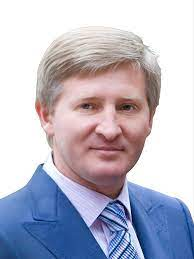
Rinat Akhmetov, $11.54 billion: The ironworks and energy tycoon was born in the Donbas and is the country’s wealthiest person. His assets in the metallurgical sector have shown excellent results this year on surging steel and iron ore prices. Strong demand for coal and electricity have added weight to his fortune.
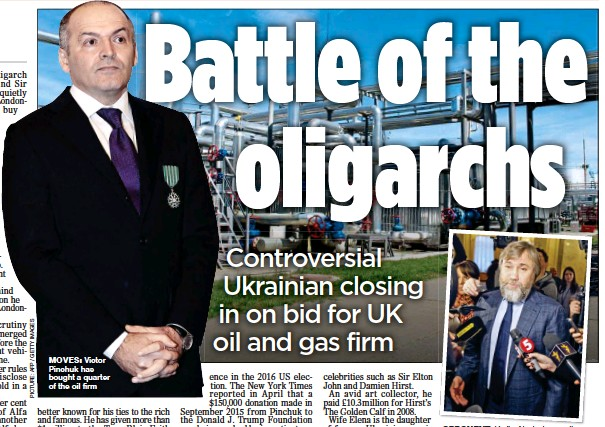
Viktor Pinchuk, $2.6 billion: Assets span from steel works to media, saw his net worth almost double in 2021 from $1.4 billion to $ 2.6 billion. Interpipe, his main business asset which produces steel pipes and railway wheels, is worth $500 million. He also owns Star Light Media Holding, which controls nearly 20% of Ukraine’s television market.
A recent article, “Survey: Western public backs stronger support for Ukraine against Russia,” notes it was commissioned by the Victor Pinchuk Foundation and Yalta European Strategy, which Pinchuk founded; without giving mention to his foundation being a large contributor to the “Atlantic Council”, donating up to $500,000 annually.
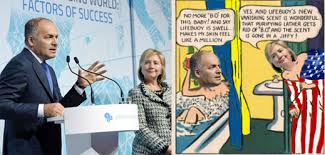
Between 2009 And 2013 including the period when Hillary Clinton was Secretary of State, the “Clinton Foundation” received at least $8.6 million from the Victor Pinchuk Foundation who is a proponent of closer ties between Ukraine and the European Union.
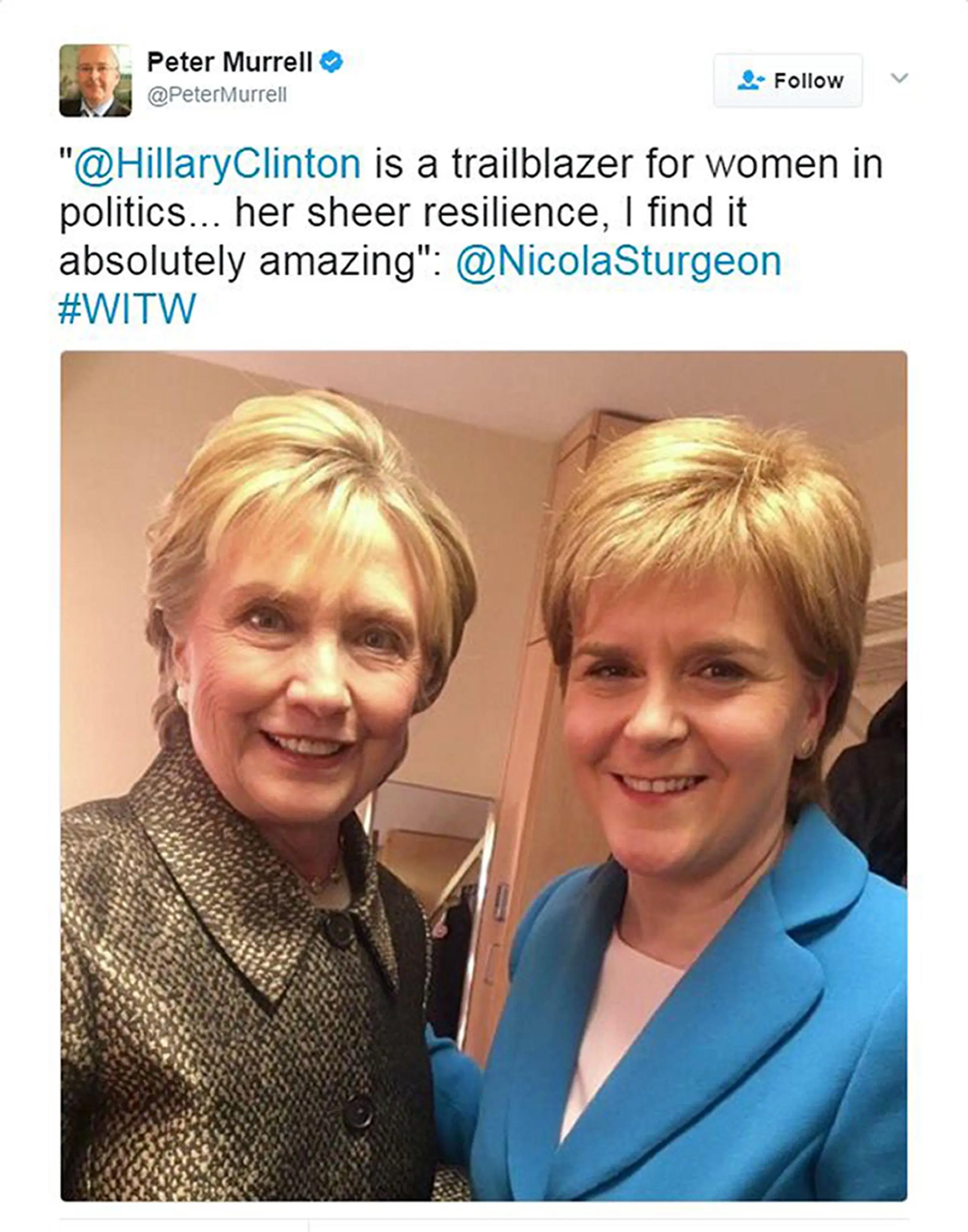
Sturgeon claims she speaks for Scots with her warning to Putin
She said: “The West has to keep its mind open to every way in which Ukraine can be helped. I understand and I share the concerns about a direct military confrontation between Russia and NATO that a no-fly zone may lead to. Nobody wants to see an escalation of that nature. But on the other hand, Putin is not acting in any way rationally or defensibly. We have a situation right now where perhaps the only thing nuclear weapons are deterring is the ability to properly and directly help Ukraine. All of these things must be considered on a daily basis right now because the world cannot stand by and watch Ukraine’s independence and sovereignty be extinguished – that would be morally wrong from Ukraine’s perspective, but the implications of that for the rest of us in terms of the values we hold dear would be severe too.”
Vadym Novinsky, $2.4 billion: Originally a Russian millionaire he acquired Ukrainian citizenship in 2012 from then-President Viktor Yanukovych. Rapidly increasing prices for ore and metal have increased the value of Akhmetov’s Metinvest steel holding and the wealth of minority shareholder Novinsky.
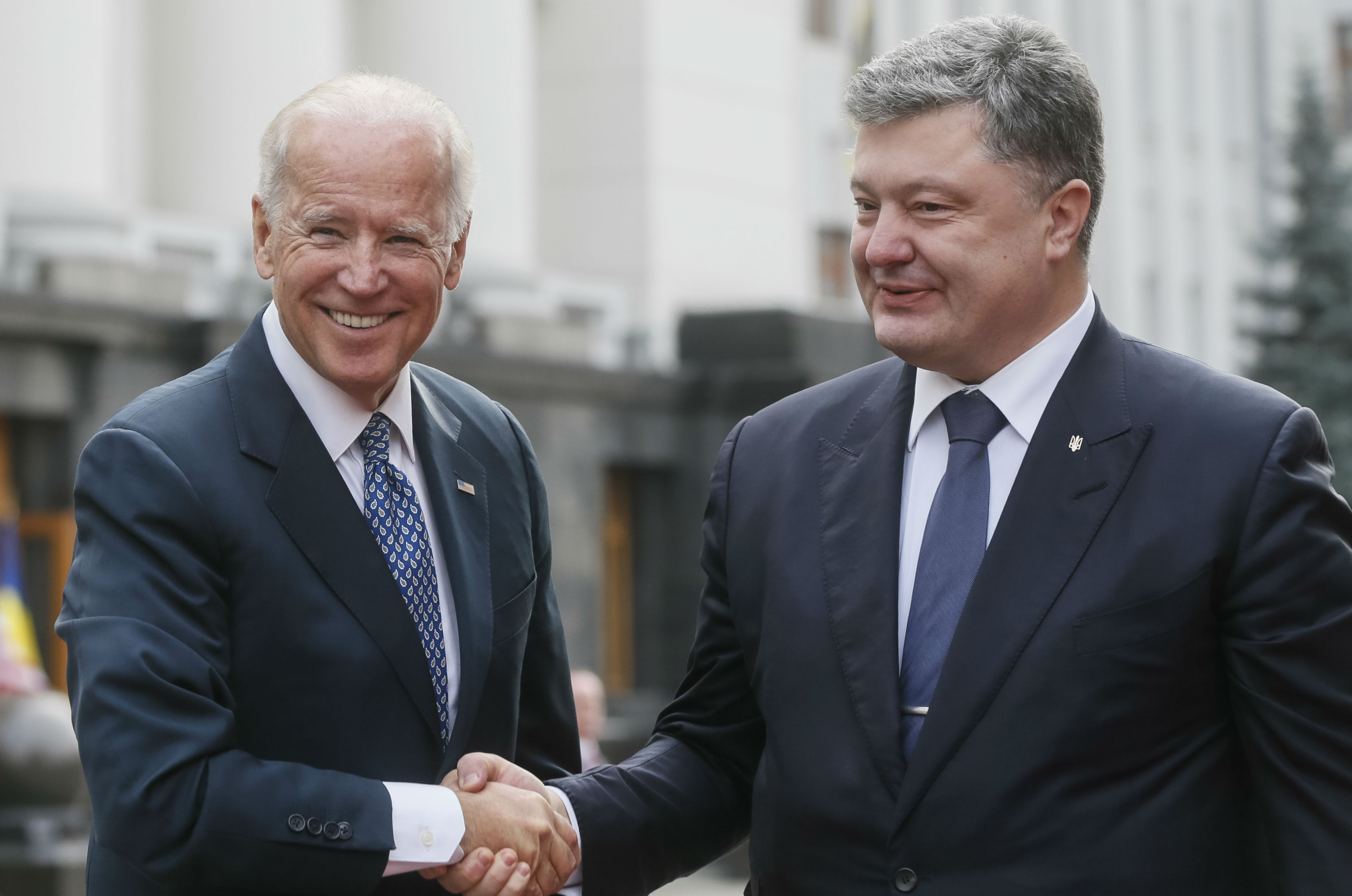
Petro Poroshenko, $1.5 billion: Ukraine’s fifth president, currently a lawmaker and leader of the 27-member European Solidarity faction in parliament, owns Roshen, the country’s top confectionary company. Poroshenko is also the official owner of opposition TV channel “Pryamy.”
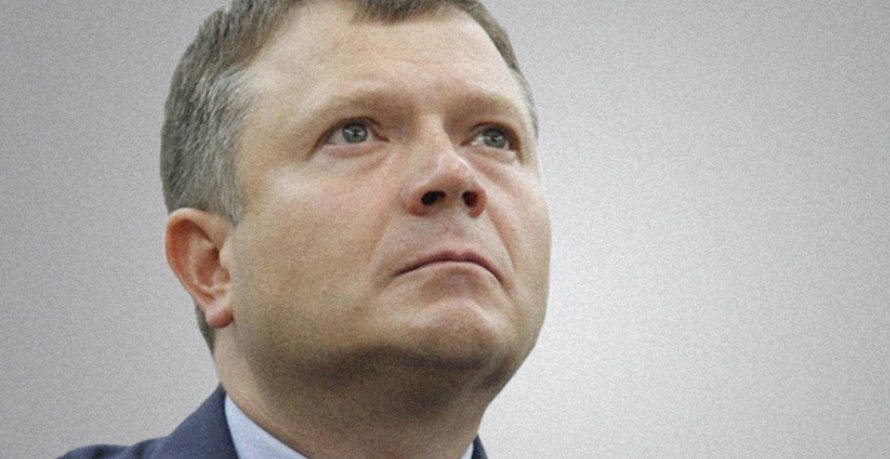
Kostyantyn Zhevago, $1.4 billion: Majority owner of London-listed Ferrexpo ore mining group, the 47-year old cannot set foot on Ukrainian soil.
In 2019, the Prosecutor General’s Office declared him internationally wanted for embezzling $90 million through his bank Finance and Credit. Since then, the businessman has run affairs remotely. In 2020, Ferrexpo’s earnings increased by 46% to $859 million.
The full list of Ukrainian billionaires and millionaires also includes:
Oleksander and Halyna Gerega: Epicenter-K – $1.5 billion Igor Kolomoisky: Privat Group – $1.4 billion Vlad Yatsenko: Revolut – $1.3 billion Gennady Bogolyubov: Privat Group – $1.2 billion Dmitry Firtash: Group DF – $1.7 billion Serhiy Tigipko: TAS – $833 million Yuriy Kosyuk: MHP – $581 million Viktor Medvedchuk: Energy and metallurgy – $569 million Maxim Polyakov: Firefly Aerospace – $540 million Andriy Verevsky: Kernel – $514 million Alexey Martinov: Privat Group – $505 million Vladislav Chechotkin: Rozetka.ua – $472 million Alexander Yaroslavsky: DCH Investment – $462 million Alexey Vadatursky: Nibulon – $459 million Vitaliy Khomutynnik: Cascade-Invest – $404 million Vagif Aliyev: Mandarin Plaza Group – $394 million Vladimir Kostelman: Fozzy Group – $388 million Dmitry Lider: Grammarly – $386 million Maxim Lytvyn: Grammarly – $386 million Oleksiy Shevchenko: Grammarly – $386 million Alexander Konotop: Ajax – $380 million Yevhen Yermakov: ATB – $378 million Victor Karachun: ATB – $378 million Gennady Butkevich: ATB – $378 million Dmytro Zaporozhets: GitLab – $375 million Georgy Skudar: Novokramatorsk Machine-Building Plant – $355 million Stepan Chernovetsky: CIG – $346 million Mykola Zlochevsky: Burisma Group – $338 million Fila Zhebrovska: Farmak – $333 million Pavlo Ovcharenko: Agrein – $331 million Adnan Kivan: Kadorr Group – $302 million Oleg Roginsky: People.ai – $279 million Igor and Hryhoriy Surkis: Dynamo Kyiv, Ukrenergoconsulting – $275 million Volodymyr Popereshnyuk: Nova Poshta – $ 73 million Vyacheslav Klimov: Nova Poshta – $273 million Yevhen Chernyak: Global Spirits – $249 million Taras Kitsmey: Softserve – $245 million Vasyl Khmelnytsky: UFuture Investment Group – $223 million Valery Kiptyk: Olvia Corporation (Varus, Eva) – $220 million Gleb Zagoriy: Darnitsa Pharmaceuticals- $217 million Vitaly Antonov: Universal Investment Group (UKCO) – $211 million Alexander Petrov: Industrial Milk Company – $208 million Kateryna Kostereva: Terrasoft – $207 million Serhiy Lyovochkin: Inter Media Group – $202 million Vadim Nesterenko: Ristone Holdings – $202 million Yaroslav Lyubinets: Softserve – $199 million Alexander Kosovan: MacPaw – $196 million Oleksiy Dubilet: Monobank / Fintech Band – $196 million Alexander Spector: Blockbaster Mall – $187 million Serhiy Krolevets: Eridon – $186 million Victor Polishchuk: Eldorado, shopping center and BC Gulliver – $183 million Oleg Vyshnyakov: Cosmopolitan shopping mall – $179 million Roman Chigir: Fozzy Group – $175 million Oleg Sotnikov: Fozzy Group – $175 million Vadim Yermolaev: Alef Estate – $173 million Vladimir Galanternyk: Odessa (Arcadia City) – $172 million Leonid Yurushev: Hotels InterContinental, Fairmont and Alfavito – $170 million Taras Vervega: SoftServe – $167 million Ruslan Shostak: Varus, & Eva – $165 million Taras Barshchovsky: T.B.Fruit group of companies – $165 million Viktor Yushkovsky: Megamarket, Manufactory, Butterfly Cinemas, Terminal Mall – $156 million Konstantin Grigorishin: Energy Standard – $155 million Vitaliy and Volodymyr Klitschko: Klitschko Management Group – $154 million Vyacheslav Boguslaev: Motor Sich – $152 million Zinoviy Kozytsky: Zakhidnadraservis, Next Bike – $145 million Sviatoslav Nechytaylo: Bayadera Group of Companies – $143 million Andriy Ivanov: Quarter Partners – $143 million Spy Family: Dairy Alliance – $137 million Roman Lunin: Retail Group (Big Pocket), Equator Mall – $136 million Pavel Fuchs, East Europe Petroleum – $134 million Nver and Artur Mkhitaryani: Taryan Group – $133 million Yuriy Vasylyk: SoftServe – $131 million Oleg Denis: SoftServe – $130 million Victor Ivanchyk: Astarta – $130 million Mykola Rudkovsky: Naftogazvydobuvannya – $129 million Serhiy Labaziuk: Vitagro – $128 million Valery Khoroshkovsky: Inter Media Group – $125 million Maxim Yefimov: Donbasenergo – $122 million Boris Kaufman: Tedis Ukraine, Vertex United – $118 million Boris Muzalyov: Tavriya B – $115 million Andriy Adamovsky: OLEDO Group – $114 million Yegor Grebennikov: TIS – $114 million Andriy Stavnitser: TIS – $113 million Boris Kolesnikov: APK-Invest & Konti – $112 million Dmytro Kravchenko, LNZ Group – $111 million Stanislav Ronis: Comfy – $111 million Oleksandr Pylypenko: Kowalska – $107 million Andriy Biba: BRSM – $105 million Anatoliy Skriblyak: Budhouse Group – $105 million Rafael Goroyan: Prometheus Group of Companies – $103 million Vitaliy Haiduk: Hyatt – $103 million Eduard Mkrtchan: Wind Parks of Ukraine, United Transport Holding – $100 million Oleg Gorokhovsky: Monobank / Fintech Band – $100 million Yevhenia Kryvenko: Monobank / Fintech Band – $100 million Mykhailo Rohalsky: Monobank / Fintech Band – $100 million.
The Council was formed as an offshoot of NATO and maintains extremely close connections to the military alliance.
It continues to receive major funding from Western governments and weapons contractors, and its board of directors is filled to the brim with former American foreign policy officials. Also appearing on the board are no fewer than seven former CIA directors and a number of top military generals.
Council employees have penetrated deep into big tech and social media organizations. In 2018, it announced it had partnered with Facebook to aid in the curation of Facebook news feeds of users worldwide, giving it considerable power over what sort of views to highlight and which to demote.
Its Deputy Director of Middle Eastern Strategy was appointed recently to the position of Director of Policy at Reddit, the eighth-most visited website in the United States. And it is not just Russia that is in the Council’s crosshairs.
The Council recently published an anonymous, 26,000-word report stating that its goal for China was regime change and advising President Biden to draw a number of “red lines” around it, beyond which the U.S. would respond militarily. Meanwhile, the head of STRATCOM, Admiral Charles A. Richard, wrote that the U.S. must prepare for a potential nuclear war with Beijing.
The military escalation has been mirrored by an intensifying online propaganda war, where the U.S. has attempted to isolate China economically and stop advancing Chinese technologies such as Huawei’s 5G network, mobile phone, and semiconductor manufacturer Xiaomi, and video sharing app Tik-Tok.
And the Council is guilty of ramping up suspicions of nefarious Chinese activity online, claiming the existence of a wide-ranging pro-Beijing bot network encouraging Americans to believe that China has handled the COVID-19 pandemic far better than the United States. That Americans might have come to that conclusion on their own appears not to have been considered.
There are on-going Western government efforts seeking to convince their populations of the existence of (foreign) government efforts to manipulate their opinions online.
Western governmental organizations point the finger at their enemies, all the while securing greater access and control over the means of communication themselves, to the point where it is now difficult to distinguish where the deep state ends and the fourth estate begins. (The Grayzone)
2019: Misinformation published by the “Atlantic Council” and “Integrity Initiative” helped destroy Corbyn’s leadership of the Labour Party
The “Integrity Initiative’s” official “Twitter” account posted numerous tweets and links to articles attacking Labour and Corbyn.
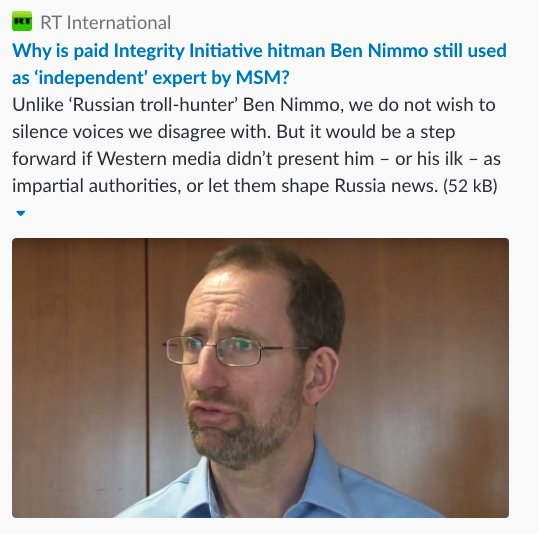
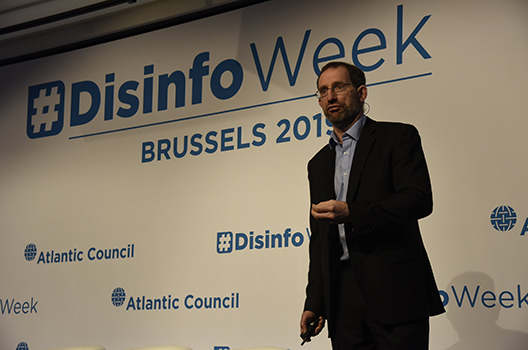
The agitator in chief was Ben Nimmo a senior fellow of the “Atlantic Council”, who repeatedly claimed the Labour leader was being supported by the Russian state through various means, including a “twisted cyber campaign”, without any supporting evidence whatsoever.
The public need to be very wary of anything “researched” by Nimmo. Any theory about Jeremy Corbyn’s campaign which has the “Atlantic Council” at its heart (and which may also involve the now largely moribund “Integrity Initiative”) is liable to be cobblers.
2019 Nimmo gerrymandered the general election enabling the success of the Tory party
Jeremy Corbyn revealed secret Conservative Party documents showing negotiations the Tory government had with the U.S. over the privatization of the National Health Service (NHS).
With just days to go before the general election, the scandal could have toppled the government and brought into power the most radical anti-war, anti-establishment government in the country’s history.
Corporate media went into overdrive to spin the news, and Nimmo was a key part of this, immediately announcing, without evidence, that the documents “closely resemble…a known Russian operation.”
His supposedly expert conjecture allowed the story to become “Corbyn’s links to Russia” rather than “Tories privatizing the NHS in secret.”
Nimmo’s work helped the Conservatives to an election victory and consigned Corbyn to the scrapheap. Much to the relief of the “Atlantic Council”, who through Nimmo had successfully branded Corbyn the “Kremlin’s Trojan Horse” — someone pushing Moscow’s agenda abroad.
And a British Army general was of a similar opinion, claiming that if Corbyn were to win the election, the military would respond. Secretary of State Mike Pompeo also said that the U.S. government was “doing its best” to prevent a radical leftist from winning power in the U.K.
Feb 2021: Facebook hires ex-NATO press officer and social media censor Ben Nimmo as intel strategist
Nimmo, a former NATO press officer and current senior fellow at the “Atlantic Council”, announced Facebook had hired him to “lead global threat intelligence strategy against influence operations” and “emerging threats.” He specifically named Russia, Iran and China as potential dangers to the platform.
His announcement was greeted with joy by several NATO officials but was not met with such enthusiasm by others. “More censorship on the way as the former NATO press officer turned Pentagon-funded ‘researcher’ who labelled real people as Russian bots and peddled disinformation to link Jeremy Corbyn to Russian active measures moves to big tech,” responded investigative journalist Max Blumenthal.
Nimmo’s questionable past certainly raises questions over whether such an official having a substantial say in what 2.8 billion Facebook users worldwide see in their feeds is such a positive step for the free and open exchange of information.
“DeeAnn Kirkpatrick, a civil servant employed in Marine Scotland, made allegations of sexual harassment, racism, bullying, and assault against some of her male colleagues.
An employment tribunal decided that her allegations were time spent after three years.
DeeAnn’s sister issued a statement through the Daily Record saying: “my sister has been left absolutely devastated and feeling betrayed. How can this be justice? It’s a disgrace. She can hardly bear to look at the photograph of herself gagged and taped to a chair. It suits Marine Scotland to say DeeAnn made it all up. She has been broken by this. My sister used to be strong, brave, and outgoing. Now she is a recluse who is afraid of her own shadow.”
The “Chair” incident
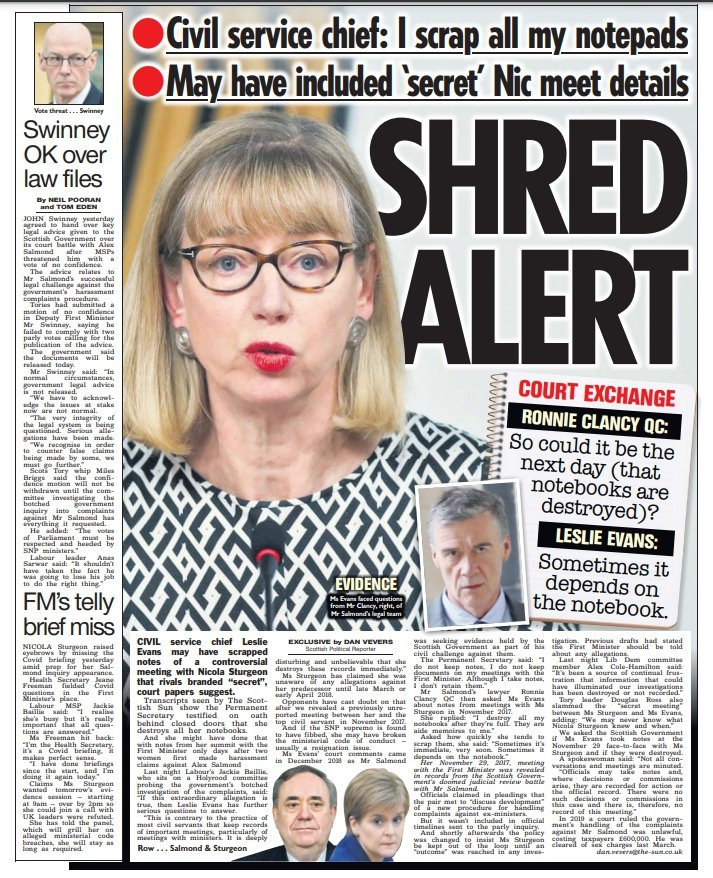
Nicola Sturgeon issued a statement saying that she was appalled at the revelations and pictorial evidence published in the Daily Record and ordered Leslie Evans, to personally investigate the incident involving the chair and to report back to her.
Leslie Evans reported: “A comprehensive internal review concluded that the Scottish Government has robust disciplinary procedures to address behaviour that falls below expected standards and I am satisfied that these have been followed thoroughly and objectively in relation to this incident. A broad set of actions are underway in Marine Scotland to ensure a working environment that meets both the Civil Service Code and Scottish Government Standards of Behaviour. I do not normally comment publicly on staffing matters but I am issuing this short statement to update the public record given the previous parliamentary and wider interest in this issue. My unwavering commitment to ensuring a positive workplace for all employees in the Scottish Government remains.”
Another one bites the dust
Mar 2019: The internal investigation revealed that the fake victimhood photo DeeAnn Fizpatrick virilised through the BBC and social media was actually taken a year earlier than she claimed, in 2009, not 2010 and was simply an office prank that bored staff in the Fisheries Office played and DeeAnn is said to have been a willing participant.
It seems DeeAnn Fitzpatrick saw the “MeToo” movement as an opportunity to succeed through the victimhood industry and she became the poster child for the much hyped issue of workplace harassment, misogyny, and patriarchy.
Oct 2019: DeeAnn was ordered to appear before a disciplinary hearing to face allegations that she gave dishonest accounts of events, made false representations, concealed material facts and submitted documents which she knew to be fake. She was also accused of using “deception with the intention of obtaining personal gain and causing loss to others.” including “false statements”.
She was unable to attend because her father had only recently died and her doctor had said she was not fit to travel. The hearing was conducted in her absence and she was dismissed.
The notice of dismissal procedure served on her was bizarre since it was carried out by two civil servants who despite travel restrictions being in place because of Covid-19 journeyed by car on a 16-hour return trip from Edinburgh to her home in Caithness to hand-deliver her dismissal letter.
Lawyers acting on LeeAnn’s behalf confirmed she would sue the Scottish government for wrongful dismissal, based on a defence of workplace stress and damage to her mental health and wellbeing.
Comment:
Deeann’s dismissal hardly compensated her male colleagues whose names she wilfully maligned, nor society who had accepted her misleading statements as truth. Her false victimhood began with what became popularly referred to as “the chair incident” in which she was widely portrayed as being punished by her male colleagues for speaking out against male bullies and misogyny, and perhaps as planned it became a “MeToo” sensation which morphed into the damaging Scottish civil service “chairgate” scandal. One fake photo was all it took to create an atmosphere of hysteria within the Scottish Government. The damage cannot be undone and yet DeeAnn, showing no remorse still claims to be the victim.
Civil servants and Spads and their false witness statements against Alex Salmond
Outstanding is the matter of the untrue allegations of sexual harassment alleged by a number of civil servants and Spads against Alex Salmond. As in the case of DeeAnn they also bore false witness against a colleague and should be dismissed from their employment with the Civil Service.
Politicians are comfortable with the truth as they tell it
Unravelling and reporting on the many plots and subterfuges of politicians is difficult but not impossible.
It is sadly often the case that they enjoy long and successful political careers within which the finger of fate may be pointed in their direction but never sticks.
This article highlights a small group of players who’s influence and machinations have shaped Scottish politics to their advantage but to the detriment of Scotland.
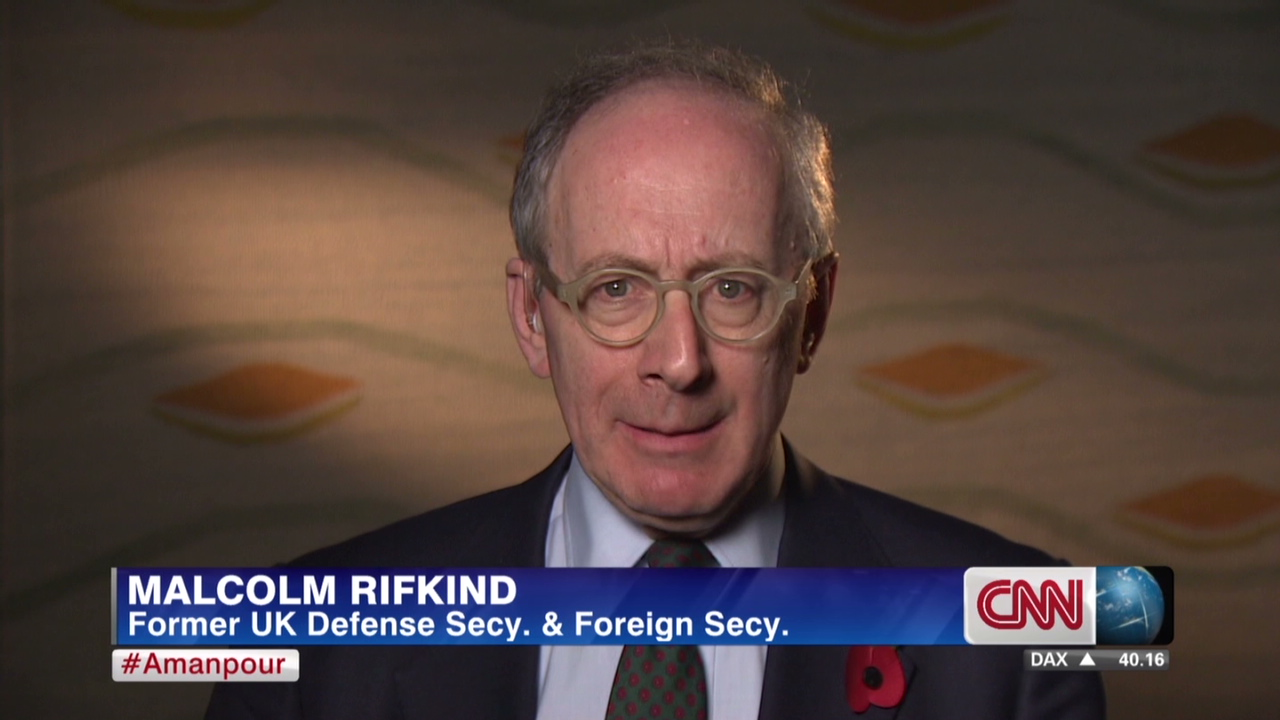
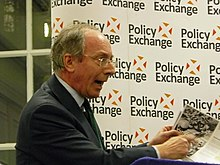
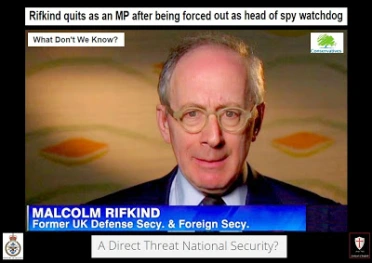
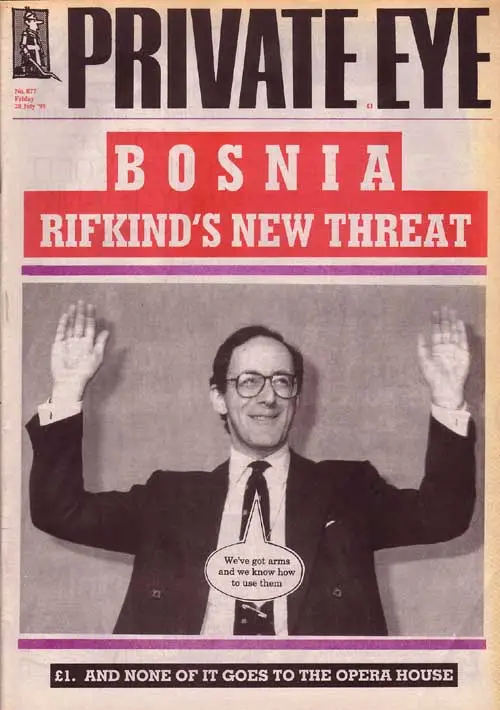
Malcolm Rifkind and
1986: One of the architects of the hated “Poll Tax”
1994: When Minister of Defence decimated the regular army transferring responsibility for the defence of the nation to “Cruise missiles” and the Territorial Army
1995-2000: As Foreign Secretary had charge of Britain’s secret services
1998: Founder of Better Together
2002-2004: Out of government. Took up executive roles in a number of security, defence, medical companies outside parliament.
2004: Rifkind, Armour Group, Executive Director awarded multi-million security contract in Iraq, by Jack Straw, Labour government Foreign Secretary .
2005-2010: Returned to Westminster, retained and expanded on a number of executive roles in private companies. Appointed Chairman of the Standards and Privileges Committee of the House of Commons
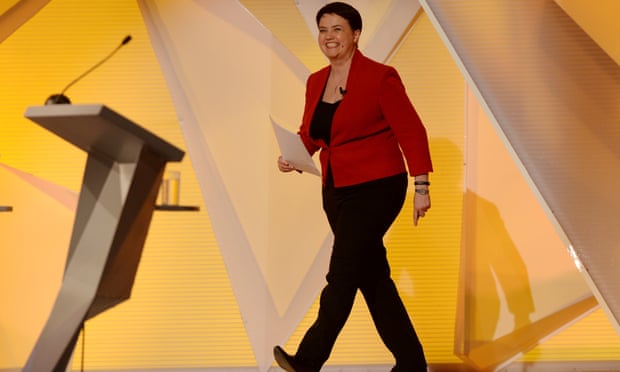
2008-2011: Andrew Fulton, ex MI6 senior spook appointed Chairman of the Tory Party in Scotland. Ruthlessly axed anyone not on board with Cameron’s government in Westminster. Gerrymandered the appointment of Ruth Davidson as leader of the party in Scotland.
2010-2015: Rifkind, Appointed Chairman of the British Parliamentary Intelligence and Security Committee (ISC), which oversees MI5, MI6 and GCHQ – (the most important position in the UK intelligence community) takes charge of the disinformation campaign.
2015: Craig Murray (ex British Ambassador) confirmed the Security Services had been active in Scotland throughout the Scottish Referendum campaign.
Jack Straw & Rifkind embroiled in “cash for access” scandal. Rifkind forced to retire from politics. Straw denied place in the House of Lords.
April 1998: Rifkind calls for pact to block nationalists
Rifkind called for the formation of a cross- party movement to protect the Union and prevent the SNP taking power.
The former foreign secretary’s comments were the first clear indication that the Tory party north of the Border believed that Labour, the Tory’s and the Liberal Democrats needed to make common cause in an attempt to halt the rise of the SNP.
He said: “I think there will be a need for a non-party movement in Scotland to support the Union.”
Scots soon got the message when “Better Together” was sent into action at the timeof the 2014 Scottish Referendum.
Rifkind accused Labour of fostering the mood of nationalism within Scotland by exploiting “nationalist language” during its spell in opposition.
He said: “The genie is out of the bottle and, like all genies, once they are out of the bottle they are difficult to put back in.”
2004: Rifkind secured new role in Armor Group
Rifkind became the non-executive chairman of Armor Group, the biggest private security company currently working in Iraq.
Rifkind, said: ”The work that the company does is of great importance at the moment. It is necessary to provide proper protection for people in dangerous locations.
A spokesman for the Institute of Directors said: ”It’s all about contacts. That’s the one thing former cabinet ministers bring to big companies, particularly a former foreign secretary. He’s going to be an invaluable asset.”
2004: Former Foreign Minister Rifkind cashes in on Iraq invasion
A private security company headed by former Foreign Secretary Rifkind is making millions from a contract to protect Foreign Office staff working in Iraq, it emerged last night.
Armor Group, the biggest ‘mercenary’ security firm working in Iraq, is one of two companies that have raked in a total of £15m between them for providing round-the-clock cover in the treacherous environment of post-war Iraq during the past year.
Foreign Secretary Jack Straw admitted the UK government is financing the company to the tune of £50K each and every day providing protection to British bureaucrats stationed in Iraq.
Furious MPs condemned the outlay as “appalling value for money”, and claimed the Labour government should not be ploughing money into a controversial industry that is making huge profits as part of the reconstruction effort in Iraq.
2007: Armour Group recruit former MI6 spymaster
Fulton (formerly MI6) became the first high-profile former spy to join a listed British company when he was appointed adviser to the Armor Group.
The company has more than 9,000 employees in 50 locations, (including 500 Gurkha’s and other ex UK and US military) providing security services in 38 countries.
It says its work is to ” identify, reduce and resolve exceptional risks in complex, sometimes hostile, environments”.
Early 2008: Increasing strength of the SNP in Scotland attracts the attention of the secret services
The continued growth in nationalist support in Scotland alarmed the US and Westminster. The Labour Party was in meltdown and it was entirely possible an SNP government would be in place at Holyrood in 2009.
This would bring with it calls for Scottish independence and a referendum. An anti-nationalist strategy was needed designed to neutralise any potential problems.
There were also on-going problems within the Scottish Tory Party, which had suffered yet another bad election defeat.
Voices within the Party in Scotland had begun to raise the spectre of a split from Westminster control so that the Party in Scotland would revert to its former Unionist Party status forming its own distinctly Scottish policies whilst retaining a more hands off relationship with the Conservative Party at Westminster.
Fulton, (former MI6 senior agent and close colleague of Rifkind’s for many years) was identified as the most effective “agent for change” available.
It was agreed he would apply himself and his extensive resources to the tasks of completing a root and branch reorganisation of the Tory party in Scotland, removing any person, (no matter how senior) who did not fully commit to Westminster Conservative Party ideals.
He would also design a long term strategy undermining the SNP government ensuring any referendum for independence would fail. It was believed that the SNP would fall apart in the aftermath of a failure to gain independence.
An informed insider wrote; “Fulton is a major player in the military corporate nexus. He has been placed in an overtly political position because the UK government is extremely worried about Scottish secession. He is there to coordinate the destabilisation of the SNP government. Golf and cappuccinos are just distractions, he is a very dangerous individual.”
Autumn 2008: Former spy takes top Scottish Tory post
Fulton a former high ranking MI6 intelligence officer who served behind the Iron Curtain at the height of the Cold War is in line to become chairman of the Scottish Conservative Party.
Fulton, whose last posting was “Head of Station” in Washington, has emerged as one of the favourites for the post that fell vacant when Peter Duncan, the former MP for Dumfries, stood down last summer.
The appointment of the former intelligence officer, will be seen as an attempt by senior Tories to inject fresh blood and new thinking into the Scottish party, which has struggled to recover from its 1997 wipe-out when it lost all its Scottish MPs.
Last year, he became the first high-profile former spy to join a listed British company when he was appointed as an adviser to the Armor Group, a firm that provides security services to national governments and large corporations. Its chairman is the Tory grandee Sir Malcolm Rifkind.
Fulton has operated in Scotland before. He was unmasked as a former spy in 2000 when he was forced to step down as a member of the Lockerbie Trial Briefing Unit which provided media briefings on the trial in Holland of the two Libyans accused of the Lockerbie bombing.
His cover was blown soon after he was included in a list of MI6 officers published on the internet by a disaffected agent in 1999.
The revelation raised concerns that he may have been in a position to influence the way the Lockerbie trial was being reported to ensure the minimum of criticism of the British and American intelligence services.
In his MI6 days, Fulton reportedly had been posted in East Berlin, Saigon, and New York.
He also served as “Head of Station” in Washington, D.C., and at the peak of his career he was the sixth-most powerful official in the organization.
In 1992, Fulton became the security officer who headed up European operations and was one of the MI6 chiefs handed the plans to kill Serb President Slobodan Milosevic.
He is presently the Senior adviser to the (All-Party Parliamentary MENA* Group at Westminster)
*The term MENA is an English-language acronym referring to an extensive region, extending from Morocco to Iran, including all Middle Eastern and Maghreb countries.
Fulton is the senior intelligence person advising the most senior political group in Westminster on all matters.
June 2009: Is Andrew Fulton, Tory Chairman still an MI6 Asset?
The former MI6 Station Chief, is currently Chairman of the Tory Party in Scotland.
He is also listed as an advisor to a number of organisations involved in intelligence matters.
He has history in Scotland. He was placed by the UK government with the Glasgow University Lockerbie Briefing Unit.
The title, “Visiting Professor” was awarded to him by then Glasgow University Principal, Graeme Davis who held membership of, “The Scottish North American Business Council” (SNABC), chaired by Fulton. (1)
The unusual thing about Fulton’s Professorship was that he had never worked in the legal profession in any capacity, had never taught classes and did no research at Glasgow University. So it beggars belief how he qualified as a Visiting Professor of Law?
Did Graham Davis permit MI6 to plant Fulton in the University Media unit. The American ambassador to the UK, Philip Lader was also a member of the (SNABC) at the same time. Useful front for meetings to discuss Lockerbie without attracting the attention of the UK press.
(1) The (SNABC) is a little known but well connected atlanticist body aimed at fostering closer relations between business in Scotland and the US. It is the Scottish chapter of the British-American Business Council. It has interesting intelligence connections.
The current Chairman is former MI6 man Andrew Fulton, who was exposed as having been a former MI6 agent whilst working inside Glasgow University based Lockerbie Commission. The former US ambassador to the UK Philip Lader (also chair of the board of spin conglomerate WPP) is also on board.
The Council retains Media House International for PR and its executive chairman Jack Irvine is a former board member.
July 2010: Veteran Rifkind Chairman of Westminster MPs’ Watchdog
Former foreign secretary and defence secretary Rifkind is to chair the Commons committee on intelligence and security.
For five years until 24 February 2015 he was responsible for the security service MI6.
He fully supported NATO military intervention in Libya and supplying arms to the Libyan rebels.
November, 2011: Scottish Tories elect Fulton’s protégé as new leader.
Order is restored in Scotland. The threat of a Scottish Unionist Party breakaway is extinguished.
Conservatives on-side with Cameron have been placed in all key posts.
Scottish Unionists told behave or to get on their bikes.
Joyous new party leader Ruth Davidson said, “This is the first time that our members have been asked to elect a leader for the whole party in Scotland and I’ve met our members from Selkirk to Shetland and all points in between.
They’ve been engaged, they’ve been enthusiastic, they’ve been welcoming and they’re excited about our bright future too.”
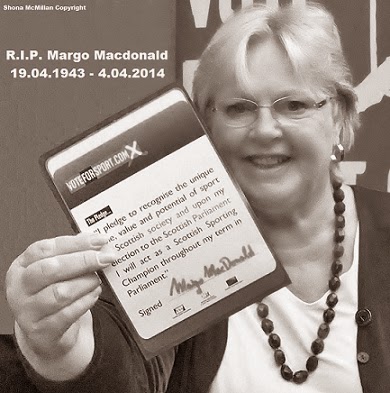
2013: Margo Macdonald wrote to the Head of the UK’s Security Service seeking an Assurance that MI5 Spies would not interfere in the Independence Referendum.
In a letter to MI5’s director general, Andrew Parker, Margo MacDonald wrote: “I will be obliged if you can give me an assurance that UK Security Services will not be used in any respect in the lead-up to the Scottish referendum on sovereignty, unless, of course, the Scottish police have sufficient evidence to justify normal responses to potentially overtly criminal acts.
I do understand that the Security Services are vital to all the countries and regions of the British Isles and the potential for law-breaking may be heightened during the forthcoming campaign.
As action on the Security Services’ part is calculated to keep communities safe and aid cohesion, I would welcome an assurance from you that this will continue, and that no other consideration will inform your Department’s work.”
At interview Margo said the recent comments of former chancellor Denis Healey, who said the Labour Government of the 1970s had underplayed the value of oil revenues, underlined her concerns.
She said: “The influence of the security services was insidious. If the opportunity came up to depress the self-confidence of Scots, then the opportunity was taken.”
Asked if she believed the SNP and the wider Yes movement was currently infiltrated, she said: “Of course the security services have people in the SNP.”
A former intelligence adviser to the Joint Intelligence Committee, said he believed MI5 would monitor the independence debate.
There’s definitely a national security angle to Scottish independence that the security services would be aware of and the agency would have a concern about the knock-on effect of independence on Northern Ireland.
Early 2013: Rifkind Controlled the Secret Services Throughout the Scottish Referendum Campaign
An ex-MI5/6 agent said: “Rifkind, known as “Malcolm the poof” is Chairman of the British parliamentary Intelligence and Security Committee (ISC), which oversees MI5, MI6 and GCHQ . The most important position in the UK intelligence community the ISC reports first to the prime minister, who retains – and uses – the right to censor material in ISC reports before parliament views them”.
2015: Craig Murray provides an informed insight into MI5 Activities
Is it not strange that such a broad spectrum of the mainstream media react with instant vitriol to the very notion that the security services are active against the Scottish independence movement, when we know for certain that environmental campaign groups have been heavily penetrated by agents and agents provocateurs?
When such tactics have been used against the Irish Republican movement for decades?
When our intelligence services were up to their ears in torture and extraordinary rendition and repeatedly lied about it?
When Edward Snowden revealed the massive scale of surveillance by GCHQ?
In the days when the corporate media had a monopoly on the dissemination of information, simply shouting “conspiracy theorist”, “tinfoil hat” and “lizards” at somebody, excluding them from corporate media access, would be enough essentially to prevent anybody from reaching the public with information. But that no longer works in the age of new media, and especially it doesn’t work in Scotland after the referendum experience.
For the avoidance of doubt, let me spell this out. I have certain knowledge from an inside source that disruption of separatist activity in Scotland now features in MI5 tasking.
The “tasking” of the security services – and that is what it is officially called – is a very formal written exercise conducted by the Joint Intelligence Committee on an annual basis, though it is possible (but very difficult) to insert new tasks in-year.
I have personally taken part – often – in Cabinet Office meetings of JIC sub-committees determining tasking, though in my case more for MI6 than MI5.
2015: Julian Assange says SNP right to be concerned about MI5 spying
Speaking via video link from the Ecuadorian Embassy in London, he said that Scottish nationalists were not paranoid to be concerned that they were under surveillance.
He told the Commonwealth Law Conference in Glasgow: “They are correct for a number of reasons.
The attitude of the UK government is that this is a national security issue, that Scottish independence is, in effect, a threat to the state. This means that the full capacities of the GCHQ, for example, will be deployed.
There is also the conduct of the Foreign and Commonwealth Office communicating secretly and extensively across the world lobbying other States to get involved influencing the Referendum result against the nationalists.
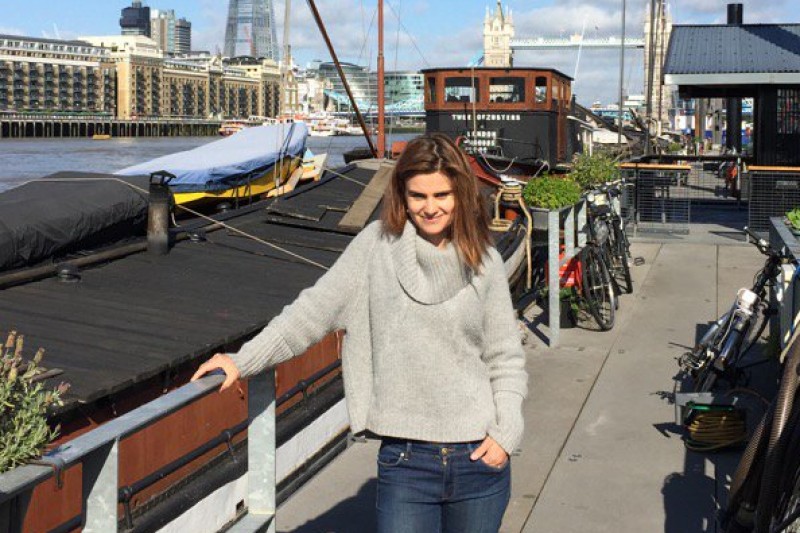
One million pounds raised in her honour in just three days. The scale and speed of the public response was overwhelming and showed how powerful her story was. Finance raised was to be used to support causes she believed in, including: The White Helmets: Volunteer search and rescue workers in Syria. Unarmed and neutral, these heroes have saved more than 51,000 lives from under the rubble and bring hope to the region.
Who are the White helmets?
The murder of a rising star in UK politics, Jo Cox, MP sent shock waves across the world. Within hours of her death, a special fund wasestablished in her name to raise money. One cause supported was the Syrian White Helmets.
But credible allegations soon surfaced that the plea for financial support was a cynical exploitation of Jo Cox’s murder to revive the flagging credibility of a US State Department & UK Foreign Office asset on the ground in Syria.
The alleged “non-governmental” organisation received funding from at least three major NATO governments, including $23 million from the US Government and $29 million(£19.7 million) from the UK Government, $4.5 million(€4 million) from the Dutch Government. In addition, it received material assistance and training funded and run by a variety of other EU Nations.
The White Helmets were established as a crucial component of a US, UK and NATO shadow state operation inside Syria. The group was essential to the propaganda stream that prosecuted a merciless media and political campaign against the elected Syrian government and permitted the US and NATO to justify their regime of crippling economic and humanitarian sanctions against the Syrian people.
The ‘NGO’ blueprint was successful and might well be deployed in future destabilizing operations providing a direct intra-venus line into the field of battle and acts as a conduit for information, equipment and medical support.
The foregoing matches the projected future of warfare, described as “swarming” and is outlined in a report produced by the RAND Corporation entitled: Swarming and the Future of Conflict.
“The emergence of a military doctrine based on swarming pods and clusters requires that defense policymakers develop new approaches to connectivity and control and achieve a new balance between the two. Far more than traditional approaches to battle, swarming clearly depends upon robust information flows. Securing these flows, therefore, can be seen as a necessary condition for successful swarming.”
Relevant articles and interviews are provided below. There needs to be a serious public and political re-evauluation of the morality of funding US,UK and NATO groups established to further “regime change” objectives.
White Helmets exposed as US , UK agents embedded with Al Nusra and ISIS
“Behind the Headline,” investigative journalist Vanessa Beeley pulled back the curtain on anti-Assad ‘freedom fighters’ and ‘moderate rebels,’ revealing a carefully calibrated propaganda campaign to drive the US / UK intervention in the war-torn country.” Watch:
“White Helmets primary function is propaganda” reported an independent journalist, who tied the group to George Soros and the controversial advocacy group Avaaz.”
“One of the largest humanitarian organizations operating in war-torn Syria – the White Helmets – has been accused of being an anti-government propaganda arm that encourages direct foreign intervention.”
This piece examines the role of the Syria Civil Defenceaka,’The White Helmets’ currently operating in Syria and take a closer look at their financial sources and mainstream media partners in order to better determine if they are indeed “neutral” as media moguls proclaim these “humanitarians” to be.
The NGO hydra has no more powerful or influential serpentine head in Syria than the Syria Civil Defence aka The White Helmets who, according to their leader and creator, James Le Mesurier, hold greater sway than even ISIS or Al Nusra confabs over the Syrian communities. This article explores the White Helmet involvement in terrorist executions of civilians particularly in Aleppo.
“The White Helmets in their haste to point the finger of blame at Moscow, managed to tweet about Russia’s air strikes several hours before the Russian Parliament actually authorized the use of the Air Force in Syria.” ~ Sott.net
This page will continue to expand as more so-called “Human Rights” groups are outed for propagating anti-Syria war rhetoric and false allegations against the Syrian government and Syrian Arab Army. As it is, the list of players is quite extensive. Below, I’ll list the known HR front people and groups (many, if not most, with links to the US State Department and criminals like George Soros).
We have demonstrated that the White Helmets are an integral part of the propaganda vanguard that ensures obscurantism of fact and propagation of Human Rights fiction that elicits the well-intentioned and self righteous response from a very cleverly duped public. A priority for these NGOs is to keep pushing the No Fly Zone scenario which has already been seen to have disastrous implications for innocent civilians in Libya, for example.
We will add to the above articles and interviews as they become available. Vanessa Beeley has just completed a speaking tour of the UK and Iran during which she highlighted the role of the NGO complex in general and the White Helmets in particular as a new breed of predatory humanitarianism being unleashed against target nations. Videos of her talks will be published as soon as they become available from the AV7 conference and Frome Stop War.
Author Vanessa Beeley is a contributor to 21WIRE, and since 2011, she has spent most of her time in the Middle East reporting on events there – as a independent researcher, writer, photographer and peace activist. She is also a member of the Steering Committee of the Syria Solidarity Movement, and a volunteer with the Global Campaign to Return to Palestine. See more of her work at her blog The Wall Will Fall.
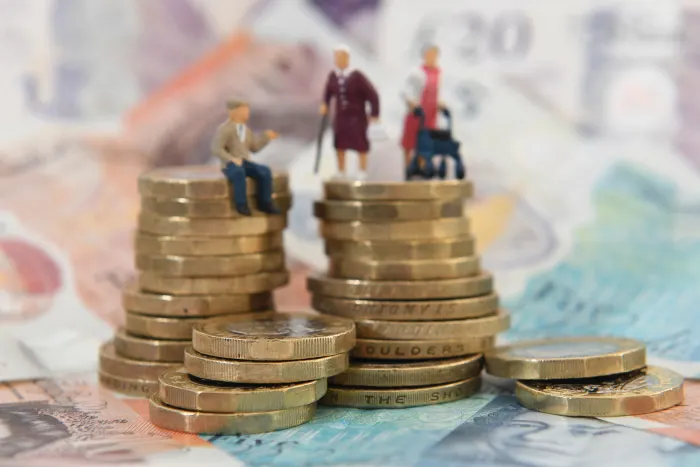
Up to the early 1950’s, Scottish mortality rates were broadly comparable with the rest of the UK. But from that time,attributed to increased levels of deprivation life expectancy, in Scotland hardly increased over a period of 60+ years whereas in England age survival rates increased year on year and there is now a very significant gap in life expectancy between England & Scotland.
England Home Counties & London
Male pensioners, in affluent areas of London & the South East of England enjoy a life expectancy of around 80 years. Female life expectancy is about 84 years.
Scotland
In Scotland, male life expectancy is 72 years. Female life expectancy is 78 years.
Scottish pensioners subsidise their English counterparts in the South of England
Pensions to Scots men before death. £8k x 7 years £56K
Pensions to English men before death. £8K x 15 years £120K
Pensions to Scots women before death. £6k x 13 years £78K
Pensions to English female before death. £6K x 19 years £114K
Conclusion
Scottish pensioners heavily subsidize pension payments to much longer living English pensioners.
The Office of National Statistics recorded age expectancy in the period 2010-2012:
London & SE England: Males 80y Females 84y.
Glasgow & West of Scotland; Males 73y Females 78y.
Percentage of newborns in Glasgow & West of Scotland who reach age 65y; Males 73% Females 79%.
27% of males and 22% of females in Glasgow & West of Scotland willcontribute to a pension all of their working lives and get NOTHING in return by way of pension.
So as to be fair, I selected one, (similar in population density) conurbation in each country: Glasgow & West of Scotland & London & S/East England.
Conclusion
Scottish pensioners are badly served by the Westminstergovernment. Our people die much earlier in life than the English. Indeed the life expectancy for 25%+ of Scottish children indicates they may not survive beyond age 65y. A damming indictment of the so called fair and equal distribution of resources in the UK. Time we were out of it.
Pensions were severely eroded when New Labour changed the rules and tied state retirement pension increases to the rate of inflation.
Gordon Brown, with his insider knowledge was aware that all was not well with the UK economy and the punishing adverse impact his change on pensioners income. In the first year the state pension increased by a miserable 14p.
Bailing out fraudulent bankers and austerity– pensioners driven to despair and early death
The 2008 financial crisis had a negative impact on pensions and pensioner poverty and continues unabated due to Westminster government fiscal policies.
Uk taxpayers, including pensioners are in debt to money lenders to the tune of nearly 3trillion. Interest payments are horrendous and it is doubtful the prime sum of loans will ever be repaid.
But UK bankers who plunged the nation into financial crisis escaped unpunished. Indeed many bankers and associated politicians have been appointed to high office as peers of the realm and sit in judgement over the many millions of citizens they ripped off.
Bankers who remained in the “bailed out by the taxpayer banking system” have been and continued to attract bonus payment measured in the hundreds of £millions. The rich have got much richer and old age pensioners and many disadvantaged members of society are dependent on charity being faced with a lack of support from an uncaring welfare state just to remain alive.
Apart from invidious severe cuts in welfare benefits the weapon favoured by successive Westminster governments has been the retention of interest rates at or near zero. The effect has been to reduce the value of pensions by around 35% over the past 10 years resulting in ever increasing numbers of pensioners requiring the assistance of means tested welfare benefits which cannot be guaranteed.
The final straw for pensioners is the removal of the triple lock which resulted in 60,000 of the UK’s least well-off pensioners, with partners of working age losing thousands of pounds a year as a result of benefit changes designed to save £1bn over the next five years.