Farming Subsidies – Ruth (the Golden Child) – A Timely Message From (Waiting in the Wings) Boris


Scottish farm subsidy payments

In the previous post I provided information providing information relating to dastardly attacks by Ruth (Golden Child) Davidson and her group of Gentlemen landowners on the Scottish government and Richard Lochhead the Scottish Minister for Rural Affairs, Food and Environment.

I highlighted that the Rural Payments Agency (under the Tory and Labour governments) had struggled and repeatedly failed, for many years to ensure farming subsidies were paid, in time and that the UK government, who had charge of the business had been fined nearly £700million in penalties.

Ruth Davidson and her MSP gentlemen landowners/ farmers made no reference to any of the many earlier failings of the UK government preferring to sew “seeds of discontent” through the use of a compliant television  and news media.

The “straw that broke the camels back” was that Ruth Davidson’s “cries  of farming crisis” had been false since the deadline for the conclusion of payments of farming subsidies was not until the end of June!!!!

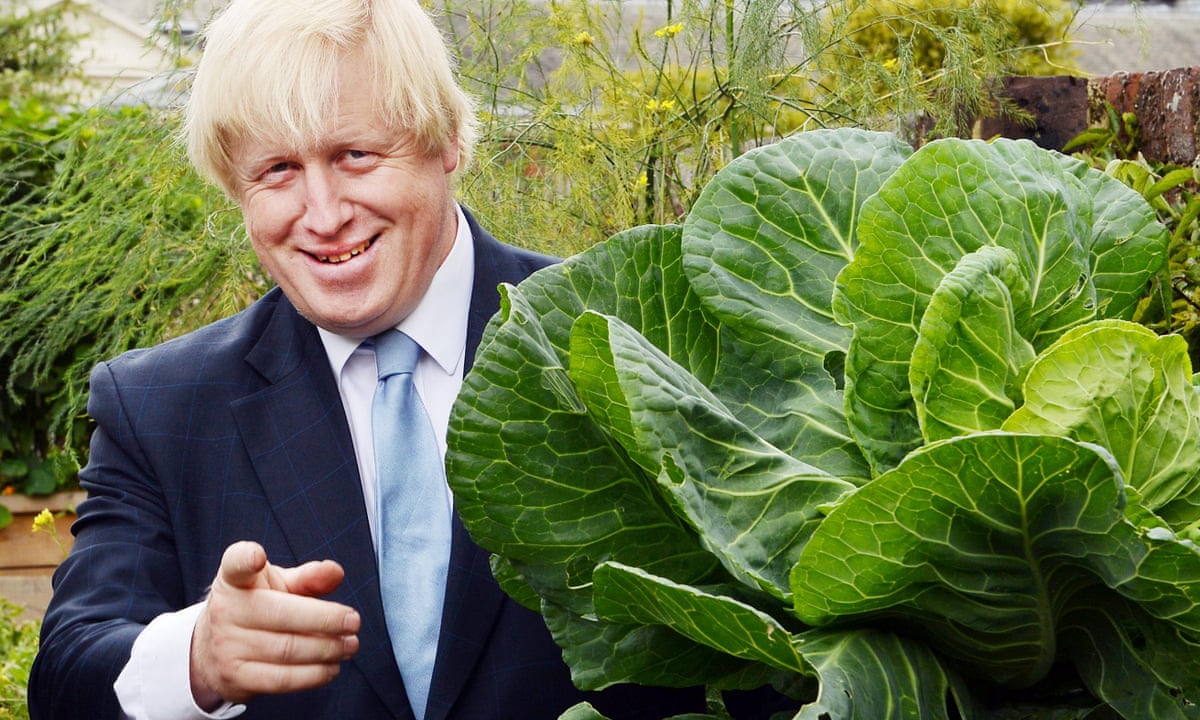
In the course of my investigations I happened across an article written by Boris Johnson with added comments of like minded Tories. Ruth Davidson might be best guided by Boris since he is touted as the leader-in-waiting of the Tory Party and her next boss.


May 11, 2006 – Rural Payments Agency – Acres and acres of madness – and they call this reform – Boris Johnson

At the bottom of the garden we have a paddock, and on evenings like this I can think of no lovelier place on earth. The buds have budded. The trees are in leaf. The lambs are making a racket. The rabbits show a boldness that verges on insolence. Everywhere I look I see nature transpiring at every pore with the green joy of photosynthesis. I see the hawthorn blossom, rolling for miles in great gun-smoke clouds. I see the shade starting to lengthen from the old oak, and the lovely rickety fence, on which I sometimes balance champagne bottles and shoot them off with an airgun, and I lie down on the springy grass and look up at the pale moon in the blue sky and I breathe a sigh of deep and unchallengeable contentment.

Sometimes, you know, I just can’t believe my luck. Because it turns out that I am not only the possessor of a magnificent paddock. I am a farmer. Yes, folks, I am a Tibullan agricola. I am Marie-Antoinette. I have managed to hitch my wagon to the gravy train of the CAP and clamp my jaws about the hind teat of Defra. By virtue of possessing 0.3 hectares of grass, excluding the dilapidated outside privy, I am apparently eligible for subsidy!

You think I am mad; but read the 98-page booklet provided by the Rural Payments Agency and you will find your lungs tightening and your lips blibbering into a pant-hoot of pure amazement at the insanity of our masters.

The government – Brussels – the taxpayer – whoever – is seriously going to pay me 10 euros a year merely for being the owner of this blissful patch of grass and rabbits. I don’t have to farm it, in any meaningful sense.

I don’t even have to graze a pony, though I could. I can use it for clay pigeons. I can use it for hot-air ballooning, it says here in the pamphlet. I can organise motocross events or nature trails across the paddock. Provided I don’t do it for more than 28 days a year, I can even have car-boot sales. I can invite Billy Smart’s circus to pitch their big top in the paddock, or I can let it out as a location for television. Year after year, the cheque will come in from Brussels via Defra, 10 princely euros, as a thank you to me and my family for doing – well, for doing absolutely nothing except luxuriating in the existence of this paddock.

Weeping with laughter, I decide to ring the Rural Payments Agency to find out if I can possibly have read this right. Yes, they say, it sounds like you qualify. Yes, they say, there are plenty of people who have been given subsidy entitlements for having pony paddocks, just like the one you describe. Yes, it is OK to mow it. Yes, it is acceptable to use the land for having barbecues, playing rounders or nude sunbathing. Yes, says the Rural Payments Agency, you can have a pony paddock and attract the subsidy, without going to the trouble of having a pony. Yes, says the agency (now with a tremor of exhaustion in its voice), you are right in thinking that you are getting the money for nothing at all except keeping the land in “good environmental condition”.

Fantastic! I say. Where do I send the form? And it is only then, of course, that I discover the catch.

My paddock qualifies in every respect. This beautiful, if tiny, corner of Oxfordshire is entitled to all the dignity that goes with being a CAP-funded estate – except that, like a complete fool, I missed the deadline, in May 2005, for registering my claim. Through sheer stupidity, I failed to grasp that last year the government changed the basis on which agricultural subsidy is to be paid. Under the reforms of the CAP, farmers are no longer rewarded for growing barley or rearing suckler cows. It is the end of paying Greeks for growing acres of fictitious olives.

Under the brilliant new single farm payment, the Greeks and the rest of us are to be rewarded simply for having grown acres of fictitious olives in the past. You no longer need even to pretend to grow the olives; you simply have to show that you have title to the land and that you are keeping it in good nick, olives or no olives; and that is why the pony paddocks of England are now accompanied by EU subsidy.

If I missed the deadline, there were thousands of paddock-owners who were quicker off the mark, who whanged those forms into the Rural Payments Agency – and who caused the monumental chaos with which you will be familiar. Across Britain there are farming families who have been driven deep into debt, and farmers who have contemplated suicide, because of the government’s disastrous failure to send out the single farm payments.

They were told they could expect the payment in December; then it was February; then March; and when, by mid-March, Margaret Beckett was forced to come to the Commons and apologise, it was obvious that the system was in meltdown. And the reason it was in meltdown was at least partly because no one had predicted that the number of subsidy claimants would rise – from 80,000 to 120,000 – as the paddock-owners, the raspberry-growers, the filbert-growers and the possessors of 0.3-hectare marrow patches piled in to register their land.

And, of course, there will be some optimists who point out that the expense can’t be overwhelming, not at 10 euros a paddock. But if you look at the Rural Payments Agency booklet, you will see how ever more of our countryside is now being sucked into a bureaucratic vortex of madness.If you claim a subsidy for your orchard (as you may), you have to prove that your trees are 10 metres apart and that the trunks are one metre in circumference; and if you have more than 50 trees a hectare, you’ve got to prove to the inspector that the bases of the trees have previously been nibbled by sheep. You can grow cucumbers, cabbages and cauliflowers, but not strawberries or mint!

Think of the new legions of bureaucrats being created, who will have to check whether or not you are running your subsidised nudist colony for more than 28 days.

Forty thousand new dependants have been created! Untold acres are now under new and pointless subsidy! And they call this reform? No wonder Margaret Beckett was promoted.

http://www.boris-johnson.com/2006/05/11/rural-payments-agency/


The Royal family, as well as oil-rich Gulf rulers could benefit from the increased subsidies.


Thoughts on the “Rural Payments Agency”

Scottish Government: Scotland needs a CAP that supports dirty wellies and not comfy slippers, and we need to ensure only active farmers are supported under any new CAP. Scottish farmers have the lowest payments rates in Europe and it is essential that any support is directed towards genuine farmers.


* Barry D: This subsidy would be the one that Scottish farmers, Welsh farmers and Northern Irish farmers have already received. But Defra in England still hasn’t managed to send out. The money that English farmers are taking out loans to cover not getting, and of course having to pay interest they can’t recover, and have to pay the quarterly taxes demanded by Defra, the revenue et al? The shame here is not CAP, but the fact the Defra still has not shared with English farmers money sitting in Westminster coffers, attracting interest.


* Joe M: The principle by which land-owners are rewarded to the tune of +/-20 quid/year/hectare for simply owning a chunk of land is wrong. I have no problem with land ownership; I do, however, have a serious problem with a government making a payment to anyone purely for the virtue of owning an asset.

Farmers need to practice farming, not landowning. If agricultural manufacturers produce a commodity that is under subscribed and which is consequently consigned to the tip (or third world aid) that is the farmer’s problem and no-one else’s. If they lose money they should not be compensated by taxpayers money for their stupidity in making something that they couldn’t sell.

If subsidies are withdrawn some farmers may go out of business because, perhaps, the bottom falls out of the market but other farmers will take their place, and they also may go under. But eventually, the land will be farmed and operated by a person or organisation who understands market forces and consequently plants things that sell.

I believe the UK electorate to be victims of the most expensive politically motivated ponzie scheme in history. In the early years of the Common Market the sales pitch by politicians was about the betterment of the EEC and how it would provide a platform for trade in and around Europe. There would be a fee involved but, theoretically, everyone’s market would be bigger. Pretty much like paying for a pitch at the local car boot sale; bit of an outlay, but there is always the possibility of a decent return. Of course, over the years the, apparently benign, EEC has transmogrified into the EU with a common currency (which, bizarrely the UK has not adopted), more rules than you can shake a stick at and a bureaucracy that would put the Ukraine’s internal affairs department to shame.

Great Britain is no more part of Europe than Japan is part of China or Cuba is part of the US. It’s a geographic accident, nothing else. This aside, the Franco-Germanic pact for total EU domination is progressing swimmingly. Whilst I have no doubt that many febrile British diplomats and MEPs are belligerently waving their bowlers and umbrellas in consternation, there is as much chance of them making a dent in Franco-Prussian self-help policies as there is of Jose Mourhonio admitting that he’s a second rate manager (on a dollar to trophy scale).


* Stephen L: A Tory government was in power at the time “Set-Aside” (paying farmers extortionate financial subsidies not to grow stuff) was introduced in 1992?

The UK and the rest of the the EU were producing more cereals than were needed by the consumer. It was expensive to store and exporting the surplus to other world markets required significant financial subsidies costly to the taxpayer and disruptive to world trade and would undermine development of local agriculture in Third World countries.

“Set aside” was introduced as part of a programme for tackling the over production of cereals within the EU. A major review of the CAP in 1992 (MacSharry reforms) addressed over production and agreed to reduce the amount of subsidies paid to to farmers for cereals by 35% over the proceeding three years.

To help compensate farmers for their loss of income the “Arable Area Payments Scheme” was introduced. Under this scheme, farmers were able to claim support payments based on the size of the area used to grow cereals, linseeds, oilseeds and protein crops such as peas, beans and lupins. However, to qualify for these payments, all but the smallest producers were required to ‘set aside’ part of their arable land, taking it out of production.


* John D: But are there compelling reasons for subsidising the less productive type of ‘farmer’? Arguments that have been presented include:
1) We eat therefore we must support farmers because this is a vital industry.

Response: I drink beer too but if a brewery starts to lose money I don’t see that it is incumbent on me (or the government) to bail them out if they fail to produce a commodity that is in general demand. Similarly, if an energy supplier goes belly up (even more vital than food, surely)? The company is liquidated and the assets/rights purchased by another company.
2) They look after the countryside.

Response: So does the National Trust, and I would prefer it if the latter owned these vast tracts of pretty but unprofitable land. We still have to pay for the privilege of it existing but it becomes a national asset not a cash cow for some inbred dynasty and paid for out of the electorates hard earned taxes.
3) They need specialised equipment to produce different crops and these tools are expensive

Response: So do almost all companies in niche production markets. Buying this equipment is called capital risk and any purchasing decision needs to be made very carefully. Under the existing rules such decisions are less carefully made since landowners and farmers know they will be compensated anyway (even if the product generated only fetches 3p a tonne on the commodities markets).
4) “Get real. A farm with hundreds of acres can’t suddenly turn to “premium products”

Response: A farm of a few hundred acres all under carrots could probably supply an entire county. However, A farm which predominantly produces, say, potatoes, might conceivably stick a few rows of carrots in. That is, if these “alleged” farmers are in the business of ‘business’ and not ‘gentlemen farming’.

I still remain totally unconvinced about the worthiness of (arbitrary and alleged) farmers pocketing vast quantities of taxpayers cash with about the same net effect as giving it to President Mugabe.


Brussels payouts: The Queen's Sandringham Estate received £7million in farming subsidies

The Queen’s Sandringham Estate received £7million in farming subsidies


Ruth (the Golden Child) Davidson – Farming Subsidies – Liars and Figures


The Golden Child and her leadership of the Tory party in Scotland

In recent months Ruth Davidson and the Tory Party have been actively working, together with the National Farmers Union (NFU) intent on placing blame, with the Scottish government for alleged late payments of financial support entitlement to farmers in Scotland.

But the truth of the matter will out since the sustained and unwarranted attacks on Rural Affairs Secretary Richard Lochhead  were without foundation, cynical and politically motivated by the Tory Party and its leader (the Golden Child) Ruth Davidson who also had the audacity to ask for a full and independent inquiry into alleged late payments calling the Scottish Government’s handling of the situation “shambolic”.

But, under European Commission rules, the Scottish government is required to make payments between 1 December of the scheme year and 30 June the following year and almost 50% of claims have been settled before the end of March!!!!

The Tory party in Scotland and the NFU of Scotland, in their campaign of mischief making conveniently ignored events in England in 2015/16 where the Tory Party government introduced a “super duper” computer system (cost in excess of  £155m) which failed to deliver resulting in many farmers being denied legitimate claims for support payments until well after the end of June deadline

They also failed to draw attention to the appalling performance of the Tory run UK Department for Environment Food & Rural Affairs (Defra)  which retained responsibility until recently, for the CAP and farming support payments. Over a number of years Defra repeatedly failed to implement the Single Payment Scheme (missing the June deadline) for payments to farmers. This resulted in the imposition of dis-allowance penalties. Cumulative total at  March 31 2015: £642m.

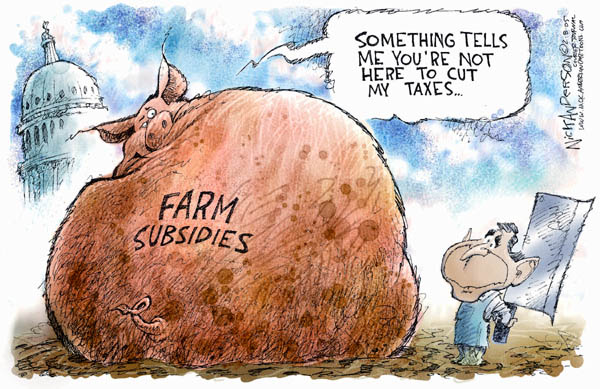
For briefing purposes I have set out in this article a brief history of the EU Common Agricultural Policy which continues to reward inefficiency and graft at the expense of the consumer


Farming subsidies within the EU

The Common Agricultural Policy (CAP) is an inefficient and costly farming policy, in existence since the signing of the 1957 Treaty of Rome.

Whilst the concept of a common policy was laudable, without a means of accurately measuring income and expenditure it was doomed to fail since the public would be required to bear the expense of any excess funding of farming.

In 2003, the European Court of Auditors recommended (later endorsed by the Council of Ministers) that a feasibility study should be undertaken using a uniform approach across the EU. This would entail a collection of information covering all households where at least one member derived some entrepreneurial income from farming. The information gathered by “Eurostat” would be termed “Income of the Agricultural Households Sector” (IAHS)

Authorising the measures recommended by the European Court of Auditors, the Council of Ministers were acutely aware that an annual spend in excess of £10billion annually on agricultural support was unsustainable in the long term.

But, as is the case in many EU policies the project lapsed in 2007 and the EU is still “whistling in the dark” as regards accurate income and expenditure information. perhaps it is the fear of the light that worries the EU agricultural policymakers and their statisticians.

A study of the statistical information gathered however revealed that far from being a disadvantaged sector of society, EU farm households as a group have relatively high incomes compared to the rest of society and are of even higher wealth.

While no doubt some farm families suffer from occasional low incomes, and rather fewer from persistent low incomes, targeting support at them could produce a very different pattern of benefits from what we see at present, where the larger farms still command the vast majority of public spending.

But, greater transparency in pursuit of a more efficient public policy could result in substantial private losses to these high-income farmers.

Taking the argument a step further, in Member States where effective social welfare nets exist to help alleviate poverty, and this must apply most if not all, a clearer picture of the low income problem in agriculture brought about by improved household statistics might well trigger questions over why income support via the CAP is needed at all. Perhaps that is the spectre that the EU agricultural policy community is trying to avoid.

But the EU changed nothing. Direct payments to farmers, introduced after the 1992 MacSharry reforms to compensate for the lowering of commodity support prices remain in place.

The scale of payments is mind boggling. In excess of 50% of farm business income is attributable to financial subsidy through the EU.

However, as compensation for the decoupling policy change that took place nearly two decades ago, its rationale has well passed its sell-by date. Tax-payers seem to be getting very little in return for what is, in effect, an income subsidy. It is very hard to justify either in terms of market failure or equity.

The EU is equivocal about what will happen when the next CAP reform takes place in 2013. While a recent (Dec. 2009) discussion paper on the CAP mentions the need to provide a safety net for farmers against volatile market conditions and to prevent land abandonment, it seems clear that the SFP will not survive in its present form.


2012: EU fails to grasp the nettle – Maintenance of direct payments To farmers from 2013 – Abstracts from the policy documents

“The Communication identifies crucial challenges, above all the need for EU agriculture to provide public goods. However, only limited changes to the CAP are proposed. Rather than making a determined move towards targeted measures, direct payments will continue forming the backbone of the support regime.”

The CAP and the opaque and complex protection policies are not justified by what they deliver – mostly to the benefit of the food industry rather than farmers, consumers or the environment. In 2009 sugar and dairy processing companies were once again among the largest recipients of European farm subsidies.

CAP funding has also been managed and distributed in an opaque way and distributed unfairly between farmers, with considerable sums also going to the biggest farms, food processing corporations, banks and other companies (see Annex 1 below).

The CAP is often seen as an overly bureaucratic fund and this has not helped to give agriculture funding and farming a good name among the European public and politicians.

The CAP is generally perceived as a huge sum of money that eats up the majority of the EU budget.

CAP subsidies are also bitterly opposed by developing countries which are pushed by Europe not to protect their own agricultural sectors. Therefore these policies are seen as lacking legitimacy by many.

So, no change. The inefficient and costly EU agricultural policies remain in place until at least 2020!!!
Annex 1 – Consumers, farmers and the environment lose out: Farming in the EU in Figures

About one quarter of the CAP goes to big business and industry, including:

* Nestlé (confectionery)

* Haribo Germany, sweet maker

* Groupe Doux in France (a chicken food processor that doesn’t actually raise chickens).

* Arids Roma in Spain that makes road construction materials for road-building, paid for the by the Rural Development Fund.

* Ligabue, an Italian catering company that produces dairy and creamer sachets for travellers onboard air-planes and cruise ships
In 2003, half of farms in the EU received less than 1250 euro per year whist 1650 of the largest farms were getting more than 300 000 euro per year. From 1995 till 2005 the share of agricultural value in the food supply chain dropped from 31% to 24%.

Preliminary figures for the following years show a further decrease in the share returning to farmers, against a constant increase of profits by processors and retailers Between 1975 and 2000, the European farm labour force dropped from 13 million to 7 million.

Agriculture is currently one of the three most hazardous industries (the other two are mining and construction)

Only 7.6% percent of farms in the European Union are managed by people under 35. And more than half of land holdings are run by farmers over the age of 50.

Existing measures to support young farmers are clearly not effective.

80% of farmers are expected to lose their livelihoods as farming intensifies in the new EU member states (Central and Eastern Europe) directly as a result of the Common Agricultural Policy

Fifty per cent of European wildlife species depend on farmland and the damage to key habitats has been severe – accelerated by the emphasis on mono-cultures, mechanisation and specialisation leading to the loss of mixed farms and the enlargement of fields across Europe.

The new member states include areas of important biodiversity for Europe but no special measures to ensure that this is protected under the CAP were taken during accession talks

Support for EU intensive farming that allows cheap meat and dairy has led to over consumption of high fat food in an increasingly affluent EU. Furthermore, food
companies’ aggressive marketing strategies, including using celebrities, have played a significant role in promoting unhealthy food.

As in other parts of the world, obesity and diet-related diseases are an increasing problem in the EU

http://www.reformthecap.eu/sites/default/files/EP%20note%20direct%20payments_Tangermann.pdf

https://www.foeeurope.org/sites/default/files/CAP_PP_full_final%5B1%5D.pdf


8 November 2013: Subsidy Payments to Farmers in Scotland – A row has broken out over the distribution of European subsidies for the farming sector in Scotland.

The Tory/LibDem coalition government announced that payments through the common agricultural policy (CAP) would be spread across the UK. But NFU Scotland and the Scottish government said the extra money, known as convergence uplift, should have been entirely directed to Scotland.

Scottish ministers claimed farmers north of the border would be deprived of hundreds of millions of euros in subsidies that were “rightfully theirs”, adding that the only reason the UK qualified for the uplift was because of Scotland’s low payments under the current system.

The coalition government’s decision means that farmers in England, Northern Ireland, Wales and Scotland will receive the same proportion of the CAP budget over the next seven years.

Rural Affairs Secretary Richard Lochhead described Westminister’s decision to share out the pot across the UK as “a disgrace”.

“I do not know how UK ministers will be able to look Scottish farmers in the eye after this outrageous decision that amounts to pocketing Scotland’s farm payments,” he said. I am aghast that Mr Carmichael the new secretary of state for Scotland can welcome the UK government’s decision to give Scotland the lowest farm payments in the whole of Europe and the UK. If Scotland had been a member state in our own right during those negotiations, we would have benefited from a one billion euro uplift. We have been denied that uplift and now we are even being denied up to 230 million euro uplift that the UK gets because of Scotland.”

NFU Scotland said farmers had been dealt “a bitter blow” by failing to win an immediate boost in European cash.

Scottish Conservative rural affairs spokesman Alex Ferguson said he was disappointed that all the extra convergence money did not go to Scotland.

Scottish Labour rural affairs spokeswoman Claire Baker said: “I am disappointed that Scotland has not received an immediate uplift as called for on a cross-party basis by MSPs.


20 March 2015: English – Online farm payment system to English farmers abandoned after ‘performance problems – But Scots, Irish and Welsh Farmers are financed within the EU time constraints

The Basic Payment Scheme (BPS) is the European Union’s biggest rural payments subsidy scheme for the farming industry.

A multi-million pound government IT system to process EU subsidy payments for farmers in England has been largely abandoned after “performance problems”. Farmers say they have struggled with the £154m website for months. Defra made the decision to “blend” new and existing forms and processes “to ensure that everyone who wants to make a claim this year can do so”, the chief executive added.

Farmers will now be asked to submit Basic Payment Scheme claims on paper forms. RPA staff will then input the data on to the system. A digital “mapping tool” to measure farmland boundaries has aslo been replaced with paper maps and forms.

One farmer said “I usually leave it to the last minute with the paper forms because they only take about three hours to complete, but so far I have spent three days working on the online version and I am only halfway through it. You have to enter what you’re growing in each field and a code for each crop. But we don’t have all the codes. It is just lack of information really, there is little or no information and the people on the switchboard when you ask the helpline are as much in the dark as we are.

Also talking to Farming Today, Guy Smith, from the National Farmers Union, said he had found the mapping programme “beyond comprehension. Our patience is worn really thin now and if we think that they’ve launched this again half baked, not ready to go, without proper back-up we will be complaining in the strongest terms.”

NFU president Meurig Raymond said: “The NFU has encouraged our members to register onto the new system in good faith, but we have been let down time and time again. We know that some farmers have already spent hundreds of pounds on agents’ fees and this is an unacceptable situation.”

Brian Glick, editor in chief of Computer Weekly, said: “The system hasn’t been permanently abandoned, it’s an embarrassment rather than a failure.”
http://www.bbc.co.uk/news/uk-31976230


14 July 2015 Revealed – huge cost of the maladministration of the previous CAP regime by the UK Department for Environment Food & Rural Affairs (Defra) and also the ever increasing cost of resolving IT problems that blighted this year’s BPS application

Defra has paid out more than £600 million in EU dis-allowance finances over the past eight years as a result of its disastrous implementation of the previous Common Agricultural Policy. Also revealed the cost to the UK taxpayer, or at least part of it, of the botched attempt to introduce an online only application for the new Basic Payment Scheme.

Defra was also forced to write off £5 million as a result of the switch to a paper-based system this spring.But this pales into relative insignificance against the vast cost to the taxpayer of previous failures to implement the Single Payment Scheme properly. The total cumulative value of dis-allowance penalties recognised in the Department’s financial statements March 31 2015 is £642m.


29 January 2016: Action to accelerate pace of implementing new CAP.

Rural Affairs Secretary Richard Lochhead has given an update on progress making payments under the new Common Agricultural Policy (CAP).

In a meeting with industry representatives, Mr Lochhead confirmed that over 5,000 farmers and crofters have now received the first instalment of their payment but due to the challenge of implementing the biggest CAP reform in a generation it was taking longer than expected to process applications – and EU rules expressly prohibit paying out on claims until they have been fully processed.

In response to the slower than expected progress, the Rural Affairs Secretary gave an update on the action being taken by the Scottish Government to pay farmers and crofters as quickly as possible.

He confirmed that as we near the end of January, first instalments have been paid to more than 5,000 farmers and crofters – almost 30 per cent of the 18,000 or so eligible claims – with more authorised payments expected to arrive in banks in the coming days.

Mr Lochhead said:

“This is the biggest CAP reform for a generation, and its implementation is tough – but we always knew this would be the case when we took the decisions with industry to tailor the policy to deliver the best possible outcomes for Scottish agriculture. In this transition year between the old CAP and the new CAP we are having to move to a whole new basis for allocating funds based on area of land, as well as implementing new greening measures and introducing a raft of new schemes to support agriculture.

“The Scottish Government has already made more than 5,000 payments – which is almost 30 per cent of the 18,000 or so eligible claims – with more initiated to arrive in the coming days. The first instalments we have paid are worth approximately 80 per cent of the value of Basic and Greening – much higher than the 70 per cent originally promised.

“I share the industry’s disappointment and frustration that we are not making faster progress, and I recognise the need to take further action to speed up payments. That is why I have instructed the deployment of additional staff to area offices and for applications to be processed seven days a week, and I will now ensure the Scottish Parliament and industry are updated more regularly on progress.

“I fully recognise the importance to farmers of receiving these payments as early as possible within the EU’s payment window of 1st December to June 30th and the Scottish Government is delivering, albeit at a slower pace than we’d all hoped.

“My officials have informed me the extreme complexity of the new CAP means claims are taking longer to process and EU regulations prevent us from issuing payments until all of the necessary checks have been completed. It is worth remembering that Scotland is well ahead of where other parts of the UK were at a similar stage in moving to area-based payments during the last CAP reform – and that was without having to implement greening and a new rural development programme at the same time.

“My officials are working as hard as possible to make as many first instalment payments as we can by the end of March, and the balance of payments soon after. The first instalments we have paid are worth approximately 80 per cent of the value of Basic and Greening – much higher than the 70 per cent originally promised.

Scotland’s Chief Agricultural Officer David Barnes added:

“This is the first time ever that Europe has simultaneously overhauled the direct payments system and rural development support – and EU rules now require Scotland’s CAP payments to be based on area rather than historic levels of production.

And – based on extensive consultation with industry – two Scotland-wide direct income support schemes are being replaced with six regionalised schemes, which add additional complexity this year, but will deliver long term benefits for Scottish agriculture.

We have also had a number of one-off first year tasks which will not have to be repeated in future years. For instance almost half a million fields have had to be allocated to one of the three new payment regions in this first year of the new CAP, alongside the processing of 21,000 Single Application Forms (SAF) as well as individually inspecting 1,300 farms.

While we’d all clearly hoped to be further ahead than we are, EU regulations prevent us from issuing payments until all of the necessary checks have been completed and we are doing everything we can to avoid claimants receiving incorrect payments or the loss of funding through EU dis-allowance that counterparts in other parts of the UK have faced in the past.

Despite the significant challenges we are facing, the Scottish Government has delivered at key stages of the process including registering for the new online system, opening to applications and starting payments. We continue to work flat out to process and pay as many claims as quickly as we possibly can. Of course, it is particularly challenging for the 1,300 farms which have been inspected as we must complete additional checks.”

The Scottish Government has paid first instalments worth 75 per cent of Basic and 90 per cent of Greening – much higher than the 70 per cent originally promised.

Administering the phased move to area-based payments for three payment regions, and with three coupled support schemes, means the Scottish Government has to issue around four million payment entitlements – covering around 400,000 fields – and inspect around 1,300 farms in addition to processing around 21,000 Single Application Forms. http://news.scotland.gov.uk/News/Farm-payments-update-220c.aspx


All benefit from annual grants through the CAP and they claim poverty


8 March 2016: Scottish government to speed up farmers’ payments

Scottish ministers have pledged to speed up payments to farmers. Up to £200m in national funds will be used to support thousands of farmers while Common Agricultural Policy (CAP) claims are being processed.

Payments have been affected by major issues with a £178m IT system set up in Scotland to administer the new CAP. But, by the beginning of March 10,164 first instalments worth about 80% of basic and greening payments had been made. That equates to about 56% of eligible claims.

The government pledge means that any farmers and crofters who have not yet received a first instalment by the end of March will automatically receive a cash advance worth 80% of their CAP claim. The move was announced by First Minister Nicola Sturgeon ahead of a meeting with NFU Scotland, who had warned of a “deepening cash crisis” facing farmers and crofters.
Ms Sturgeon said: “The transition to a new, more complex CAP that is affecting payment schedules right across Europe is happening as farmers and crofters are dealing with poor market prices and challenging weather conditions. We are less than half way through the payment window allowed by Europe, and the majority of Scottish producers – more than 10,000 – have already received a subsidy payment. However, payments are not being made as quickly as we would like. I very much recognise the cash flow issues facing Scottish agriculture, which underpins our £14bn food and drink industry. That is why the Scottish government has earmarked up to £200m of national funds so that any farmer or crofter who has not received an instalment by the end of March receive a nationally-funded payment from the Scottish government in April.”

Rural Affairs Secretary Richard Lochhead confirmed that the announcement would also enable Scottish Beef Scheme payments to be made in the middle of April, in line with previous years. He added: “We are continuing efforts to speed up progress, such as taking on extra staff, but given the current difficulties facing Scottish agriculture, the Scottish government will use national funds to ensure farmers and crofters will receive support, totalling hundreds of millions of pounds, in the coming weeks.”

NFU Scotland President Allan Bowie said: “The log jam has broken. For months, NFU Scotland has been looking for focused thinking and clear leadership from the Scottish government to resolve this farm payments crisis for the benefit of the whole rural economy. We welcome the first minister’s involvement and intervention and finally we have clear timelines drawn when all basic payment scheme claimants will receive the majority of their claims; when hill farmers and crofters will receive the majority of their Less Favoured Areas scheme money and beef payments have been promised in mid-April. That meets many of the demands that NFU Scotland has raised with Scottish government as a direct result of the cash flow crisis that has emerged in recent months. I praise the efforts of all those farmers, crofters and trade representatives who have taken time to brief politicians in the past few weeks. The flawed IT system to deliver CAP payments, funded by £180 million of taxpayers’ money, desperately needs to be addressed and investigated and that must happen in due course.


8 March 2016: Opposition parties call for a full and independent inquiry into delays to the support payments.

Calling the Scottish Government’s handling of the situation “shambolic” Tory leader Ruth Davidson tabled a motion, stating that farmers across the country have “lost trust” in the ability of Mr Lochhead to deliver the funding before the end of the financial year.

Scottish Labour’s spokeswoman for environmental justice, Sarah Boyack, said the Scottish government’s record over farm payments was “one of calamity, chaos and complacency. This is a real scandal, affecting real people and the minister just wrings his hands and complains that it is all very complicated. I’ve already asked him what representations he has made to Europe to speed things up and received no reply.Of equal importance is what the position is likely to be next year?”

Scottish Liberal Democrat rural affairs spokesman Tavish Scott said: “These payments are four months late. They could and should have been made in January or February or this month. But instead the delays have created financial chaos in the Scottish rural economy. This must now be the last rites for the Scottish government’s £178m computer that has utterly failed to deliver.” http://www.bbc.co.uk/news/uk-scotland-scotland-politics-35758263

The SNP accused its opponents of playing politics with the issue. SNP MSP Angus MacDonald said: “It is quite spectacular hypocrisy from the Tories to try and score political points over farm support – when their own Farming Minister is set on seeing the support abolished in its entirety by dragging Scotland out of the EU. The truth is that the Tory Government has refused to give our farming communities any information about the future of the support payments they’ll receive if we’re out of Europe – the Tories in Scotland should come clean on their own Farming Minister’s plans.”

http://stv.tv/news/politics/1345692-call-for-inquiry-into-delays-over-payments-to-farmers/


Basic Payment EU (Farmers) Rules

Under European Commission rules, the Scottish government must make payments between 1 December of the scheme year and 30 June the following year.

https://www.ruralpayments.org/publicsite/futures/topics/all-schemes/basic-payment-scheme/


Gentlemen Farmers & NFU Members Scottish Tory and Lib/Dem MSP’s

Alex Johnstone – NE Scotland

Alex Ferguson –  Galloway & West Dumfries

John Scott – Ayr

Jamie McGrigor – Highland’s & Islands

Jim Hume – South Scotland

Tavish Scott – N.F.U. member only

Ownership of a 400 Hectacre farm would attract a £50,000 per annum basic farm subsidy


scottish-tories-a-party-of-political-eunuchs-managed-by-mundell-and-davidson-left-in-place-by-cameron-to-watch-over-rebellious-scots-part-3


This post covers the period 2012-2016 concentrating on the 2 prime movers in the Better Together campaign group (Mundell and Davidson).

Mundell and Davidson went off to London (not long after Davidson had settled into her new job as leader of the Scottish Conservative Party) to meet with their mentors David Cameron and George Osborne and Andrew Dunlop.

The coalition government was beginning to fall apart as parliament progressed.

It was decided that the agreement between the Tory and Lib/Dem parties providing for the Lib/Dems to take the lead in Scotland would be set aside. Better Together would be led by George Osborne. Labour objected to the change and proposed that Alistair Darling should take the lead and the new arrangements were subsequently put in place following a meeting at Darling’s house in Edinburgh.

Gordon Brown did not participate in discussions and briefed Miliband that campaigning with opposition parties was mistaken and bad things would happen. He also had his own treasure chest (courtesy of JK Rowling) and would engage with the public in Scotland representing the Labour Party.


24 January 2012: Westminster parties have begun to recruit top names in the political battle for Scotland

The detail of how and when a Scottish independence referendum will take place may yet to be agreed, but already the campaign teams are being put in place by the pro-UK parties. Symbolic of that was the arrival this week of Ramsay Jones, the veteran Tory spin doctor in Holyrood, as a special advisor for the UK government.

The move, apparently planned for months, will mean that the Tory part of the coalition will at last have a direct Scottish link between the lobby in Westminster, where many journalists for London-based titles are still playing catch up on the issue, and will be able to get their message across as opposed to the Lib Dem side of the coalition which was meant to run Scotland.

Tory Chancellor George Osborne has taken change of the Scottish question. So the arrival of Mr Jones is significant because it is clear that the Tories have decided that the Lib Dems cannot be allowed to deal with Scotland alone, not least because the Conservative approach is far more aggressive than the one Michael Moore first pursued.

Mr Jones, who knows the patch inside out, will be working out of Dover House, the Scotland Office in Whitehall, but it seems he will be floating between there and Downing Street. And, although the talk is working in partnership, it seems obvious that this is part of the process of the Conservatives taking control of the policy.

The change will be good for Mr Jones as well after a difficult few months. Despite giving long service for the party in hard times he was not flavour of the month among some of the defeated candidates in the recent Scottish leadership election and at one point asked to take gardening leave for allegedly supporting the eventual winner Ruth Davidson. The suggestion was that Mr Cameron wanted Ms Davidson as leader as well so if there was a transgression it has now been rewarded with a promotion.


10 April 2012: The Scottish referendum – Mundell in Chicago Ropes In the USA against independence

Scotland Office Minister David Mundell will use a keynote speech to American business leaders to warn that independence would weaken Scottish business interests overseas.

Mundell will tell a gathering in Chicago today, as part of Tartan Week in the United States, to claim that being part of Britain “opens doors for Scotland” and allows the country to “punch above our weight”.

The Tory minister will claim the UK’s muscle of 270 diplomatic posts, employing more than 14,000 people, would deliver a better deal in terms of promoting overseas investment opportunities for Scottish firms.

http://www.highbeam.com/doc/1P2-31116524.html


15 April 2012: Mundell states Scottish ministers will only be given permission to meet foreign businessmen and politicians with London’s support.

David Mundell made the remarks ahead of a visit to the Far East by Scotland’s ruling party’s Finance Secretary John Swinney which is aimed at promoting trade.

Mundell further claimed that Scottish ministers will lose the ‘possibility’ of meeting their counterparts in foreign visits if Scotland ever becomes independent from Britain as it is London which is “opening doors” for Scotland. “It is not possible for the Scottish Government to orchestrate a visit without the help of the UK government.

David Cameron has just been in Japan. The idea that John Swinney would make a greater impact than David Cameron is preposterous,” Mundell said.

His comments drew an angry reaction from Scottish First Minister Alex Salmond’s office where a spokesman said Mundell’s tirade on a Scottish government trade mission is “extremely ill-advised and ill-informed.

This narrow, partisan attack on a Scottish Government initiative to boost jobs in Scotland  at a time when Mr Mundell’s government at Westminster is damaging jobs and recovery  will backfire very badly on him.

It shows just how out of touch Scotland’s only Tory MP is,” the spokesman added.

http://presstv.com/detail/236293.html


14 May 2012: Extreme right winger Mundell is a founder friend of the “Cornerstone Group” a forum for MPs who wish to defend traditional British values – faith, flag and family. The group mission statement:

“We are a group of Conservative MPs dedicated to the traditional values which have shaped the British way of life throughout this country’s history.

We believe in the spiritual values which have informed British institutions, her culture and her nation’s sense of identity for centuries, underpinned by the belief in a strong nation state.

We stand for the Monarchy; traditional marriage; family and community duties; proper pride in our nation’s distinctive qualities; quality of life over soulless utility; social responsibility over personal selfishness; social justice as civic duty, not state dependency; compassion for those in need; reducing government waste; lower taxation and deregulation; our ancient liberties against politically correct censorship and a commitment to our democratically elected parliament.”

http://www.conservativehome.com/parliament/2012/05/what-is-the-cornerstone-group-mbarrettch-profiles-the-socially-conservative-tory-backbench-group.html


17 June 2012: Ruth Davidson fined by Electoral Commission for failing to Declare Donations in Time

The commission last week issued a report stating that Davidson twice broke electoral law by missing the 30-day deadline for registering two donations totalling £14,500 in October. The Glasgow list MSP was fined £400, with each offence punished by a fixed penalty of £200. Davidson paid the fine on May 11.

The fine is embarrassing for Davidson, as it raises questions about her experience and competence. A senior Tory source said: “This is just not what the party needs. It’s the latest in a long set of embarrassing moments for Ruth.”

Davidson, 33, a former BBC broadcaster, became Tory leader in November following a bitter and divisive contest triggered by the resignation of Annabelle Goldie in May 2011.

She was made leader just six months after becoming an MSP for the first time. Despite being the favourite of the Tory hierarchy, she failed to secure the support of association chairs in her Glasgow seat, and her campaign was dogged by a series of self-inflicted errors.

In the closing days of the campaign, the three other Tory MSPs vying for the job accused her of receiving an unfair advantage through covert backing from Conservative HQ.

After a fleeting honeymoon period, Davidson has been the subject of mounting criticism from the Scottish Tories, with a surge in complaints after the party lost 20% of its vote and its councillors in May’s local elections.

Last week, Alex Salmond taunted her at First Minister’s Questions by reading out critical comments from Toryhoose – a Scottish Conservatives website – which had previously acted as Davidson’s cheerleader, about the party’s poor showing in the election.

The latest setback concerns money given to Davidson’s leadership campaign last autumn. Electoral Commission records show Davidson accepted £29,500 in four lots in her capacity as a “regulated donee”, the term used when an individual MP or MSP accepts a donation.

Two donations were accepted on September 19 – a sum of £2000 from James Stewart, director of a private equity company who has also in the past given money to Scottish Tory MP David Mundell; and £12,500 from Glasgow-based property company Alchemist Estates Limited, owned by Conservative donor Brian Gillies.

By law, these should have been declared to the Commission by October 18, but Davidson failed to register them until November 21, when she also declared a further £10,000 from Stewart and £5000 from London-based donor Carolyn Ward.

In its enforcement report, the Commission said it had fined Davidson for “failure to deliver two donation reports within 30 days of acceptance of donations”.

Davidson’s main rival for the Tory leadership, Murdo Fraser, reported all of his donations on time.

SNP deputy leader Nicola Sturgeon said: “This is a humiliation for Ruth Davidson and another blow for her flagging leadership.”

A Labour spokesman said: “These rules are in place for good reason to ensure fairness and transparency in elections and it is appropriate this action is taken against Ruth .Davidson.”

http://www.heraldscotland.com/politics/political-news/davidson-fined-for-declaring-election-donations-too-late.17871286


3 April 2013: Mundell Dodges Angry Protestors

Tory minister David Mundell was last night accused of “running scared” after swerving a confrontation with victims of the bedroom tax.

The Under-Secretary of State for Scotland had been due to meet Renfrewshire Council leader Mark Macmillan to discuss the controversial under occupancy legislation. But he called it off at the last minute on Monday afternoon, just as Work and Pensions Secretary Iain Duncan Smith was getting a public mauling over other cuts.

And pressure group Bin The Bedroom Tax Renfrewshire, who had been planning a protest outside the meeting in Renfrew yesterday, claim he called off because he was afraid to tackle the issue head-on.

http://www.highbeam.com/doc/1G1-324713917.html


15 Aug 2013: David Cameron ducks questions on bedroom tax and other big issues as he makes sneak visit to Scotland

David Cameron chickened out of answering questions on the big issues when he sneaked into Scotland yesterday. The Prime Minister’s entourage of spin doctors prevented other journalists from entering the Emirates Arena in Glasgow. They simply wanted to ask him about issues such as the Bedroom Tax, ATOS and the Remploy job losses. But “Scotland Adviser” Ramsay Jones told us we would not get in.

Later, Cameron left by a side exit to see the Commonwealth Games village. Again, access was restricted to just the chosen few. But we did photograph the PM as he skulked into his Land Rover.

http://www.dailyrecord.co.uk/news/politics/david-cameron-ducked-questions-bedroom-2169611


13 November 2013: Mundell, who very rarely speaks in the commons takes up a great whack of taxpayer’s money – Mundell’s 2012/2013 claims:

Constituency Office £19,991.45

Personal Accommodation, (London) £16,346.58

Travel/Subsistence £19,430.73

Staff’s expenses £3,960

Staffing Payroll £113,745.92

Parliamentary Assistant SPAD (his son Oliver Mundell). £25-20K

Total claim £173,474. plus on-costs, employers contributions.etc £200,000

5 year total approximately £1,500,000 (including Mundell’s salary etc.
Mundell was ranked among the worst performers in an analysis of MPs’ value for money. He came in 587th place for 2007/08 based on his contribution in parliament His attendance/speaking record in the Commons shows he attended only 47 per cent of votes, spoke in only 11 debates and submitted just 16 written questions in the year, much less than the overall average. Conversely his expense claims were in the top ten of over 600 MP’s.

http://www.bordertelegraph.com/news/roundup/articles/2013/11/13/478349-mp-takes-cold-comfort-in-the-taxpayer/


18 December 2013: Westminster debate on Low Pay & Food Banks

Labour: “Will he tell the House what the percentage increase in the number of people using food banks in Scotland in the past year has been? Given that it is Christmas, I will offer him a hand. Is it (a) 100%; (b) 200%; (c) over 400%?”

Mundell (Conservative): “What the hon. Lady omitted to tell us was that under her Government the increase in people using food banks was 1,000%. Our Government are concerned about people needing to use food banks in a moment of crisis in their lives.

We support the development of food banks and those who operate them, and I was very proud to open the food bank in Peebles in my constituency.

But to pretend that these crises are of this Government’s making and that they have not been going on for a continuing period is to mislead the House.”

Labour: “The Minister should know that the increase in the past year has been 435%, which is more than 34,000 people, including more than 10,000 children, using food banks in Scotland. Those are shameful figures and all Members of this House should pay attention to them.

He has refused to be drawn on why this is happening. Citizens Advice, the Trussell Trust and the Child Poverty Action Group are all saying that this Government’s policies are driving people in Scotland to use food banks. Are they all wrong?”

Mundell (Conservative): “Of course the hon. Lady does not acknowledge the 1,000% rise in the use of food banks under the last Labour Government. We want to look at, and understand, why there has been an increase in the use of food banks.

That is why the Department for Environment, Food and Rural Affairs has committed to an extensive study on the use of food aid across the United Kingdom, and she will be able to read that when it is published.”

Comment: Labour, Tory and Lib/Dem parties are jointly complicit abusing the people of Scotland whom they are sworn to protect.

http://www.theyworkforyou.com/debates/?id=2013-12-18b.724.7#g726.3


14 January 2014: Mundell accused of “bare-faced gall” over his claims the Scottish Parliament had sufficient powers to scrap the so-called ‘bedroom tax’.

Mundell was quoted as saying of the SNP government “It is the same as the childcare debate. It is a question of choices on where they want to spend their money.”

Housing and Welfare Minister Margaret Burgess responded “I was absolutely shocked to read Mundell’s comments. He is a member of the UK party, in government in Westminster, the place that imposed the bedroom tax on the people of Scotland.

Why should the Scottish government have to make up for the failings of Westminster and where, from an already much reduced national budget, the money should come from.”

Ms Burgess went on to explain that the Scottish government had already allocated the maximum amount of £20 million, this year and then again next, permitted under the Scotland Act, to mitigate some of the effects of the change to housing benefit.

She also called on the electorate to “vote yes” in the independence referendum claiming “there is only one solution – the Scottish Parliament should have control over welfare benefits and we could scrap the bedroom tax altogether.”

Scottish Labour MSP Jenny Marra asked Ms Burgess if Mundell “knows something the minister doesn’t, and had she instructed her officials to do a full audit to make sure that there might be a mechanism that could mitigate this bedroom tax now, rather than waiting for a vote in September?”

The minister replied “I don’t think he actually understands that the Scotland Act expressively reserves welfare spending related to an individual’s housing costs.”

Conservative MSP Alex Johnstone asked for “a commitment that these policies will be fully costed prior to the referendum in September”. The Minister replied “all the policies of this Scottish government are fully costed. I don’t think we’ll take any lessons from the Tories on budgets or costing”.

http://www.bbc.co.uk/democracylive/scotland-25731982


28 April 2014: Mundell creates mischief misquoting Alex Salmond about Scotlands fishery policy post referendum.

Mundell said “foreign fleets take a “very small proportion” of their catch from Scottish waters and in any accession negotiations, other member states would be more likely to press for improved access to Scottish fishing grounds in the North Sea than to make concessions for Scotland.

An independent Scotland would also be duty bound under international law to grant free passage to Scottish waters for vessels passing through en route to Norwegian waters.”

http://www.heraldscotland.com/politics/referendum-news/salmond-under-fire-over-ban-threat-to-eu-fleets.24085596

Salmonds response: http://www.sff.co.uk/sites/default/files/2014-05-30%20Response%20from%20The%20First%20Minister.pdf


27 June 2014: Mundell finally admits benefit cuts have forced poorest families into using food banks

Mundell finally admitted that the benefit sanction system is responsible for the sharp increase in the number of Scottish families relying on food banks.

In a humiliating climbdown he said there “isn’t any doubt” that the benefit sanctions system is responsible for the soaring numbers of Scots using food banks.

Defensively he added “Some of the increase in relation to the use of food banks may be down to more reporting of that use. Some is obviously down to the greater availability of food banks.

There is an increase in the use of food banks in other affluent countries. There isn’t any doubt that some people have gone to food banks because they have been subject, for example, to sanctions or a delay in getting benefits.”

Last night SNP MSP Annabelle Ewing blasted Tories for benefit cuts. She said: “A UK minister has finally faced up to the fact that Westminster’s attack on welfare is responsible for the growing number of people forced to rely on food banks, an admission that is long overdue.

For months, Westminster has ducked responsibility and had the audacity to blame the poor for the devastating impact cuts to benefits are having.

Mundell has said he would like to see a UK Government analysis on food banks – something that has not yet been produced, despite the fact reliance on food banks has grown 400 per cent.

Given we now have 22,387 children in Scotland relying on food banks, we desperately need a change of direction.” Mundell was facing the MSPs after Scottish Secretary Alistair Carmichael pulled out.

Committee member Annabelle Ewing went on to say “It is very disappointing that Alistair Carmichael did not attend the Welfare Reform Committee today.

While everyone understands the importance of the commemoration on World War 1, Alistair Carmichael has a duty to appear before the Scottish Parliament and explain why the UK welfare system is ‘fantastic’ as he has previously claimed, and it would be good if it could be rescheduled.”

Comment: Why the hell is he smiling? Appalling belated admission by Mundell. Only 6 months from the general election clearly putting a bit of distance between himself and Westminster.

Badly needed if he is to survive. As for Carmichael he couldn’t even be bothered to turn up, disgraceful but par for the course where he is concerned.

http://www.dailyrecord.co.uk/news/politics/benefit-cuts-forced-poorest-families-3774579


9 August 2014: Adviser to UK Prime Minister Says Scots to be Offered Devolution ‘Process’ if They Vote No

A special adviser to the UK Prime Minister, David Cameron, said that the pro-UK Better Together campaign will later this week outline a “process” whereby Scotland could obtain more powers, but only if they reject independence in a referendum to be held in ten days’ time.

Speaking from the Prime Minister’s official residence in Downing Street, Ramsay Jones said that comments made by the Chancellor George Osborne at the weekend – in which he implied additional powers for Scotland would be announced later this week – did not represent the UK Government’s official position, but instead reflected those of the wider cross-party No campaign. “What the Chancellor was talking about is something the wider cross-party campaign plan to announce this week in terms of the future of devolution, It is no different from the First Minister talking about the future of independence,” said Jones.

There had been widespread speculation that the Chancellor’s comments over the weekend suggesting “additional powers” for Scotland constituted a breach of the ‘Edinburgh Agreement’. That document, signed in 2012 by the Prime Minister and Scottish First Minister, obliged both Governments to avoid making any additional commitments during the final 28 days of the campaign. “This was not the Government making an announcement, this was George Osborne simply flagging up that the parties will be making an announcement this week,” said Jones.

Following Osborne’s comments Alistair Darling, the leader of the Better Together campaign, which opposes Scottish independence, was quick to clarify that what would be announced was not additional powers for Scotland, but simply a restating of what the No side had already outlined several months ago. “The additional powers coming to the Scottish parliament were announced by the party leaders, north and south of the border, some time ago,” Darling told the BBC.

Ramsay Jones said that the new announcement would clarify the processes around how new powers might be devolved to Scotland in the event of a No vote. “What the Chancellor was announcing was a plan of action that will be unveiled about how the next stage of devolution will go forward so people can see the process and allow them to see the timetable for that to happen. So he and Alistair Darling are talking about exactly the same thing. Additional powers may well emerge from that process. All the parties have made their various proposals and there will be other ideas out there. The question is – as has always been the case with devolution – there has to be some kind of process for those kinds of ideas to come together. Scotland has to have a conversation for these ideas to come together. You don’t go into that with an absolute proscription on what the outcome should be. That is not the way it’s done,” said Jones.

Joan McAlpine, a Member of the Scottish Parliament representing the pro-independence Scottish National Party said “People of Scotland will not be fooled by the No campaign’s panicked attempts to bribe them into voting No. As the polls show the referendum is closer than ever, more and more people are waking up to the fact that only the full powers independence will enable Scotland to thrive – and that is why we are confident of a Yes vote next Thursday.”

http://sputniknews.com/world/20140908/192746059/Adviser-to-UK-Prime-Minister-Says-Scots-to-be-Offered-Devolution.html


18 August 2014: Mundell issues fraudulent election campaign literature only just a month before the country goes to the polls.

A page-long “better together” promotion sent out to all of his constituents purporting to air the views of a constituency family backing the campaign message for the forthcoming Independence Referendum has caused anger.

The profile piece entitled ‘Putting family first – why we’re voting No’ features Keith and Michelle. But nowhere in the article does it reveal the couple’s surname or that Keith is an elected Conservative councillor for Tweeddale West.

Local music tutor Sarah Northcott from Tweedsmuir said “I received Mundell’s campaign leaflet and it contains a section where a family explains why they will be voting “No” , “I thought they looked familiar – the family portrayed is that of local Tory councillor Keith Cockburn, but nowhere is it mentioned in the leaflet that he is a local politician.

This is, at best, highly misleading – could they not find a local family without Tory party ties to speak against independence?” Councillor Cockburn, a local businessman, won the Tweeddale West by-election last year.

Calum Kerr from Cardrona heads up the pro-independence “Yes” campaign in the Borders. And he believes the region’s MP should be more forthcoming with the facts. He said “This is the kind of disingenuous thing that puts people off politics and undermines trust. This is an elected official that is being portrayed as an ordinary member of the public.”

A question-and-answer section in the same pro-union publication features a question from former Conservative deputy leader of Scottish Borders Council, Neil Calvert. Mr Kerr added “The Better Together campaign are using the same format and wording for their publications across the country – just putting in names of local people to match each area.”

http://www.peeblesshirenews.com/news/roundup/articles/2014/08/18/507052-mundells-misleading-media/


30 August 2014: At Westminster, Mundell expressed his great pride at being invited to open a foodbank in Peebles.

Interviewer: “How can anyone be proud to open a foodbank?”

Mundell: “I’m proud of the people who worked to make that happen .. providing support for people who are more vulnerable in the community. I very much regret the politicisation of food banks.”

Interviewer: “You told Holyrood’s welfare reform committee: There is no doubt some people have gone to food banks because they have been subject to sanctions or a delay in receiving benefits.”

Interviewer: “Are sanctions fair?”

Mundell: “We’re trying to ensure that they are …”I would rather see a situation where nobody felt that they needed to use a food bank. But I don’t believe that simply an increase in welfare payments or not having sanctions would lead to that.”

Interviewer: “Surely if folk had more money for food they would draw on ­food banks less?”

Mundell: “Well, you might make that supposition.”

Interviewer: “Is it a wild supposition?”

Mundell: “I don’t think it sounds a wild supposition. But in lots of wealthy countries people use food banks. It’s not straightforward. And it’s most certainly not the case that if Scotland became independent we wouldn’t have food banks and child poverty. That’s complete nonsense.”

http://www.heraldscotland.com/news/home-news/in-lots-of-wealthy-countries-people-use-foodbanks-its-not-straightforward-and-its-cer.25192356


Image result for mundell images


10 November 2014: Mundell betrays his promise to meet food bank providers.

Mundell told the Welfare Reform Committee he would meet with representatives from food banks.

Committee convenor Michael McMahon said that, despite repeated attempts, officials had been unable to contact him.

He said “It is time David Mundell put his words into action and does what he has said he will do. The UK Government is in denial on the impact of its welfare reforms on some of the most vulnerable of our citizens. People deserve the opportunity to put their views and experiences directly to the minister.”

Deputy Committee Convener Jamie Hepburn MSP said “It is shocking that he and his Government continue to exist in a state of denial on the impact of its welfare policies.” David Mundell owes it to food bank providers and their users to hear their concerns directly.

Mundell was also asked to provide a response to the committee’s report on the link between the rise in the use of food banks and the UK Government’s welfare policies.

http://www.eveningexpress.co.uk/news/scotland/mundell-must-hold-food-bank-talks-1.675012


3 February 2015: If you wish to keep a cobra as a pet – First remove it’s fangs

There is no guarantee that a future UK Government could not hold up Holyrood decision-making indefinitely under Scotland’s new devolution settlement, according to a Scotland Office minister.

The Westminster establishment has repeatedly dismissed SNP claims that they have written a right of “veto” into the draft devolution law to prevent Holyrood making benefit changes that Westminster might find unacceptable.

But implementation of any proposed Scottish benefit change must be agreed beforehand with the UK Government, fuelling SNP accusations that Westminster could use this clause to hold up benefit changes unpalatable to Westminster for years.

David Mundell, Scotland’s only Conservative MP and junior minister in the Scotland Office, told Holyrood’s Welfare Reform Committee that he would personally make sure an agreement on benefits does not take years.

But he said he “couldn’t guarantee” he would be around after the 2015 general election. But, he said it would “not be feasible in terms of the political reality” for any future government to hold up Scottish benefits amid the inevitable outcry it would provoke from MSPs.

But he refused to commit to redrafting the “Scotland Bill” removing the SNP’s supposed “implication” of veto, saying only that the clauses “are out for discussion and consideration” and open to Scottish Government “feedback”.

Q & A Session

SNP MSP Kevin Stewart: “Could you give us some clarity on how long a consultation between the two governments could go on for?”

Mundell: “Over my period in the Scotland Office I found that sometimes these matters can be resolved in hours and sometimes they take considerably longer. But I am making it clear that there is goodwill on our part in terms of bringing these objectives about.”

Stewart: “Can you confirm to the committee that it would not be a matter of many years for one of these consultations to be dragged over?”

Mundell: “If it’s anything to do with me, which I can’t guarantee, it would not be a matter of years.”

Stewart: “As you say, you can’t guarantee that it will be you. Could you confirm that one of these consultations cannot go on indefinitely, which is effectively a veto?”

Mundell: “Nobody wants to see that happening. I think everybody also understands the politics of Scotland, the respect that the UK Government has demonstrated for the Scottish Government and the Scottish Parliament, and would not engage in that sort of subversive delay because it would simply not be feasible in terms of the political reality. I’m sure you (MSPs) and others would be making that point. There would be no intention to veto proposals put forward by the Scottish Government, either upfront or by some sort of behind the scenes way.”

Stewart: “So it would have been better if the language in the draft clauses had been put in a different way?”

Mundell: “The draft clauses are out for discussion and consideration. There is an opportunity for the committee, for individuals within the parliament, for the Scottish Government, and we’re in a very close dialogue with John Swinney who is leading for the Scottish Government in these matters in relation to the clause. If there is particular feedback in relation to the clauses then that can be given.”

Stewart: “But you can categorically say that although the implication in the language in the clause is of veto that there is no veto.”

Mundell: “Well, I wouldn’t have taken that implication of veto. I take the clear position of working together, but there is no veto.”

http://www.thecourier.co.uk/news/politics/david-mundell-promises-goodwill-under-devolution-settlement-1.823271


28 March 2015: Scotland’s only Conservative MP has been caught putting out election leaflets which leave out one important fact – he’s a Tory.

David Mundell has been branded devious and disrespectful by constituents for failing to mention the T-word.

Constituent John Hodgman says he thought Mundell was standing for the SNP after reading the leaflet which was delivered last week.

Retired John, 67, said: “The words Conservative or Tory don’t appear in his campaign leaflet at all. “There is no reference to Mundell being a member of the Westminster government and not a single line about its record nor policies.”

John, from Moniaive in Mundell‘s Dumfriesshire, Clydesdale and Tweeddale seat, said “The leaflet is devious and disrespectful.

http://www.highbeam.com/doc/1G1-407221510.html


BBC Press Office (Scottish Referendum) ???


12 May 2015: Cameron Open to New Powers For Holyrood – Proposal Will Go Beyond the Vow

David Cameron is preparing to offer the Scottish Parliament powers in excess of of The Vow proposals agreed by the Smith Commission.

New Tory Scottish Secretary David Mundell has signalled that the Prime Minister is open to delivering full tax and spending powers to Holyrood.

Speaking in Downing Street after being appointed yesterday, Mundell – the sole Scottish Tory MP – said the all-party commission’s proposals for further devolution would be up for negotiation.

Echoing Nicola Sturgeon’s words after Scotland returned 56 SNP MPs, he added: “I can give the absolute guarantee it will not be business as usual.

http://www.highbeam.com/doc/1G1-413151451.html


11 June 2015: Tories Show Contempt for Scot’s Children

Scottish Secretary David Mundell was yesterday condemned for having a “contemptible” attitude to child poverty after claiming welfare cuts would have no effect on children.

He said there was “no evidence” there would be an increase in the number of children falling into poverty as a result of £12 billion of welfare savings due in the next few years.

During the first Scottish Questions of the new Parliament Mundell told MPs that there had been a “relative decrease” in child poverty in Scotland.


Davidson and Mundell giving it licks


The Spat – Davidson V Cameron

August 3rd, 2015 – Ruth Davidson, Scottish Tory leader tells Cameron not to stand in the way of a second referendum on independence.

Cameron, (without consulting Ruth Davidson) said last week the UK Government would stop another referendum. “It is important that a referendum is legal and fair and properly constituted. That’s what we had and it was decisive, so I don’t see the need for another one.” When asked if this meant he could rule another referendum out before the next UK General Election in 2020, he said: “Yes.”

First Minister Nicola Sturgeon reponded saying “David Cameron has no right to stand in the way” of a second poll, if it is supported by a majority of Scots.

Adding comment, Ruth Davidson, (Tory Party in Scotland Leader) warned Cameron that “such a move would put the party in a hellish position in Scotland. If the Nats won a majority having said in the manifesto that they would have a second referendum and the only thing standing in the way of having a second referendum was the UK Government, then that would be a pretty uncomfortable position for the Scottish Conservatives to be in.” http://www.thenational.scot/news/ruth-davidson-warns-david-cameron-not-to-block-a-second-independence-referendum.5903


5 October 2015 ; How do SNP vet their candidates?’: Scots Tory leader Ruth Davidson seeks explanation over suspended MP Michelle Thomson

Tory leader in Scotland Ruth Davidson last night called for an explanation over the SNP’s ­candidate selection and vetting procedures in light of the Michelle Thomson property scandal.

Davidson said there was a question over the integrity of the SNP’s MP candidate selection.

Scottish Labour said “real questions” had to be asked about the selection of the Edinburgh West MP.

http://www.dailyrecord.co.uk/news/politics/how-snp-vet-candidates-scots-6576022
Advice for Davidson and Dugdale:

Ruth Davidson should look to the recently catalogued breaches of peace, public nuisance and racist behaviour of members of her own party.

David Cameron, Mundell and the party in Westminster also overuled the Scots and ordered that Davidson would be included on the ballot for the Tory party in Scotland leadership effectively screwing poor Murdo Fraser whose ambitions were strangled at birth.

Labour needs to investigate their own officials. A serving Councillor of the Labour Party (Glasgow District Council) has reputedly bought up in excess of 300 ex-council properties purchased under the right to buy scheme.Unbelievable. Who vetted him??


13 January 2016: Scottish secretary Mundell comes out as gay

Scottish Secretary David Mundell wrote on his personal website that it was time to “acknowledge in public as well as in private, who I am”.

The 53-year-old MP said he hoped that coming out would not change anything about how he was treated. He is believed to be the first openly-gay Conservative cabinet secretary.

Mundell, who has three grown-up children, wrote in his online post: “New Year, new start! I have already set out my political priorities for the year and now I am setting out my personal one.

“Having taken one of the most important decisions of my life and resolved to come out as gay in 2016, I just want to get on with it, and now, just like that, I have said it.”

The MP said he “still cannot rationalise his feelings”, but said they were “not uncommon, particularly in men of my age”. and added of course, everybody who gets to this point, has had their own journey.

I have certainly been on mine – conflicting emotions, of doubts and fears, but ultimately positive and uplifting, with an unstoppable direction of travel.

Over time, I came to understand that, for me, the only way to be truly happy on a personal level is to acknowledge in public as well as in private, who I am.”

Mundell’s announcement brings the number of openly-gay MPs in the House of Commons to 33 – the highest proportion of any parliament in the world, according to a study by US academics – and means there are as many on the Tory as the Labour benches.

http://www.bbc.co.uk/news/uk-scotland-scotland-politics-35301898


Scottish Tories – A Party of Political Eunuchs Managed By Mundell and Davidson – Left in Place By Cameron to Watch Over Rebellious Scots part 2

This post covers 2011. In this period the party in Scotland elected a new leader.

Murdo Fraser, many of his supporters and Party financiers were brutally sidelined by David Cameron and his Westminster Tories in favour of his protege Ruth Davidson.

A chosen group of arrogant, bigoted and racist “Tory young Turks” studying at Glasgow University was put in place providing “troops on the ground” in support of Davidson.

Mundell, The old sweat of the Party in Scotland orchestrated events throughout the period ensuring success for Davidson
 

MalcolmMacaskill_1856932cMalcolm Macaskill


25 March 2011: The Scottish Tory party was plunged into pre–election turmoil last night when key donors were reported to have withdrawn their support from the party after the unwarranted sacking of Malcolm Macaskill

Senior party sources claimed last night that wealthy donors – believed to include Tom Coakley, a former footballer turned millionaire property developer and John McGlynn, an airport car park magnate – had told officials they would no longer contribute to party funds after Malcolm Macaskill, a Glasgow businessman and justice of the peace, was removed from the top slot on the Tories’ Glasgow list by Andrew Fulton, the party chairman.

Mr Macaskill, who was virtually guaranteed a seat in the Holyrood elections on May 5, was kicked out by Mr Fulton, a former MI5 official. Mr Fulton made no mention of the reason for the dismissal, merely saying Mr Macaskill had been dropped “following discussions between the candidate and the party’s candidates’ board”.

The chairman thanked Mr Macaskill for his service and announced that Ruth Davidson, a close aide of Annabelle Goldie and a former BBC producer, would be placed at number one on the list.

There was undisguised anger from Mr Macaskill’s supporters at his treatment last night. One senior party figure said: “This is outrageous. Malcolm has served the Conservatives loyally for over 30 years and is treated like this.”

Mr Macaskill was responsible for recruiting several wealthy donors, including Mr Coakley, a former professional footballer with Dundee FC who subsequently made his fortune buying and selling property in London’s Mayfair.

Estimated to be worth £70million, Mr Coakley announced two months ago that he would donate £100,000 per year for the next 10 years to Scottish Tory coffers.

However, a senior Tory with close links to the situation said last night: “Mr Coakley is furious and he has told the Tories that he will no longer be making any donations.”

The same source said Mr McGlynn, whose companies own airport car parks all over Europe, and who also donates funds to the party, may also withhold future donations. Last night, Mr McGlynn said “This is outrageous. to penalise someone in this way is completely wrong.

An SNP spokesman said it was the “worst possible” start to the Tory campaign, adding: “The first day and they have lost one of their top candidates, amid party infighting and internal allegations of malpractice. The Tories are not fit for purpose, fit for Glasgow, or fit for Scotland.”

http://www.telegraph.co.uk/news/uknews/scotland/8406040/Scottish-Tories-in-turmoil-after-top-candidate-sacked.html
 

David-MeikleDavid Meikle


29 March 2011: Tory Party’s Holyrood election campaign in disarray after a third candidate steps down, this time as a regional list hopeful.

David Meikle withdrew in Glasgow because he felt that his allegations of vote rigging on the list for the city had not been sufficiently investigated.

His complaints centre on the Conservative Rutherglen’s Association, whose membership shot up by about 150 members from a starting point of 17 in the months before the selections for Conservative lists

Mr MacAskill’s, who has been removed from the top of the Glasgow list will be replaced by Ruth Davidson, a former BBC journalist, this means she is likely to become an MSP.

Miss Goldie admitted that she did not have any say in the departure of Mr MacAskill. The Tory hierarchy in London, who are directing the campaign are said to be delighted with the way it is being run north of the Border.

The Tories also insist their budget for the 5 May election is in place despite reports that wealthy donors, including former Dundee FC footballer and property magnate Tom Coakley and airport car park magnate John McGlynn, had withdrawn their funding.

http://www.scotsman.com/news/tory-candidate-quits-list-but-campaign-is-not-collapsing-1-1559778


25 September 2011: Ruth Davidson in trouble again over her campaign tactics.

Ruth Davidson is facing more questions over her bid to lead the Scottish Conservatives after asking for funds to carry out campaigning measures which her team cannot be sure they can deliver.

Davidson, a Glasgow list MSP, has told supporters specific sums will cover the cost of producing leaflets, mailing personalised letters, and canvassing thousands of party members by phone.

Her website stated: “Every donation, no matter whether small or large, can make a real difference to Ruth’s campaign to become leader. “Any money you give will make a real difference”;

* £30 The cost of producing 1000 campaign leaflets.
* £50 This will enable us to send out 200 personalised letters.
* £365 The cost of telephone canvassing 2000 people.

But her team was last night unable to guarantee that donations to Davidson would actually deliver the services described on her website.

Her campaign manager admitted the figures and text had been cut-and-pasted from the UK Conservative Party website, and refused to say if Davidson actually had the addresses and phone numbers needed to make good on her pitch.

John Lamont MSP told the Sunday Herald: “We are relying on our supporters and activists to supply us with email addresses and names and addresses of people who might want to hear from Ruth.

“The figures on the website are notional sums for how much it costs, which are entirely standard and have been lifted from the…are consistent with what the Conservative Party site says.”

Pressed on whether Davidson’s campaign possessed the contact details needed to mail 1000 leaflets or phone canvass 2000 of the party’s activists – almost a quarter of its 8500 members – Lamont repeatedly refused to say if it had.

He denied Davidson’s campaign was raising money on a false prospectus. “It’s entirely consistent with how the party and other organisations have raised money in the past, and, you know, doesn’t break any rules. There’s nothing to apologise for. It’s consistent with the Electoral Commission rules.”

Davidson, 32, who has only been an MSP since May, is already facing questions about her judgement and relative inexperience. On Friday, it emerged her campaign team is being investigated by the UK Information Commissioner’s Office (ICO) after sending material to party members’ private email addresses.

A Tory councillor who received unsolicited updates from Davidson has asked the ICO to investigate how she got his private address.

Earlier this month, Davidson was forced to sack her parliamentary assistant, Ross McFarlane, after this newspaper uncovered mobile phone footage of him setting fire to an EU flag in a Glasgow street while dressed in a dinner jacket.

Davidson, a former BBC reporter, is the choice of the Tory establishment. She is backed by a number of party grandees, including Thatcher-era ministers Lord Sanderson and Lord Forsyth and donor Sir Jack Harvie, and is understood to have the support of David Cameron and the current leader, Annabelle Goldie.

However, an online poll of activists this weekend showed her trailing her main rival Murdo Fraser, who is backed by most Tory MSPs and a third of Tory councillors north of the Border.

Fraser is campaigning to abolish the “toxic” Scottish Conservative and Unionist Party and start afresh with a new centre-right party.

Speaking at a leadership hustings in Inverness yesterday, Davidson attacked Fraser’s big idea, saying if she won she did not want her first meeting with the Prime Minister to be about “suing for divorce”.

http://scottishpol.blogspot.co.uk/2011/09/doing-what-she-says-on-tin.html


1 October 2011: There’s yet more trouble for Tory establishment candidate Ruth Davidson today.

The rival camps in the leadership contest are angry that party spin doctor Ramsay Jones may have been giving her a hand in defiance of the chairman’s orders.

Ramsay Jones, who as head of media has to be neutral in the contest, recently attended a meeting at Ruth Davidson’s home with her campaign strategists. He appeared at the gathering after the party’s chairman instructed staff not to take sides.

The revelation will confirm suspicions among the other candidates that 32-year-old Davidson, the least experienced of the four contenders, is secretly being aided by the party establishment.

It will also raise questions about Davidson’s judgement in allowing a supposedly neutral member of staff to participate in her campaign.

Early last month, the campaign team of another candidate, Murdo Fraser, raised concerns with party chairman Andrew Fulton about whether Jones was helping Davidson.

Fulton told Fraser’s campaign that the matter would be looked into. The chairman then informed staff they had to remain “strictly neutral” during the contest. Fulton also gave Jones the same message face-to-face.

It is further understood that another candidate, Jackson Carlaw, spoke to Jones directly about his concerns.

However, despite Fulton’s order, Jones attended a meeting at Davidson’s home in Glasgow’s west end on Sunday September 18.

Jones lives in Dunbar, which would make his Glasgow visit a 150 mile round trip. The session focused on various strands of the Davidson campaign.

The Jones row is the latest blow to Davidson’s campaign. Last month, she was forced to sack a parliamentary assistant after mobile footage emerged of him setting fire to an EU flag as a friend made sectarian taunts in a Glasgow street in November 2010.

It was also revealed Davidson was under investigation by the UK Information Commissioner’s Office after her team sent unsolicited emails to members’ private accounts.

Davidson was facing even more questions last weekend for raising donations to fund campaign activity she was unable to guarantee, including canvassing almost 2000 members by phone for £365. A source close to Davidson said she and Jones had been friends for ten years.

Carlaw said yesterday: “In all my 30 years in the party, there has never been any misunderstanding amongst the professional staff I’ve encountered that for
internal party matters there must be a strict adherence to neutrality. Any divergence from this only undermines confidence.”

Liz Smith, Fraser’s campaign manager, said: “This is an important contest and there is, quite rightly, an expectation amongst the candidates, their campaign teams
and the membership that the rules set out by the Returning Officer are adhered to and that party employees remain neutral.”

Jones, 51, has worked for the party since 2000 and is one of Holyrood’s most tenacious political survivors. He is the Scottish Tory equivalent of former spin doctor like Alastair Campbell.

The former financial adviser worked for David McLetchie before his leadership of the Scottish Tories at Holyrood ended in an expenses scandal in 2005. Since then, he has worked for Annabelle Goldie and been one of her closest confidantes.

Davidson last night said there had been no “campaign team” meeting on September 18. However, her team did not deny there had been a meeting which focused on campaign issues.

Asked if Jones had attended any meeting at her house on that date, a spokesman for Davidson said: “She’s not going to expand on that one.” Asked if Davidson was denying that a meeting took place to discuss campaign issues, the spokesman added: “I’m just telling you there was no campaign team meeting.”

http://scottishpol.blogspot.co.uk/2011/10/alas-ruth-and-jones.html


5 October 2011: Scottish Tory chief spin doctor Ramsay Jones suspended

The Scottish Conservatives’ chief spin doctor Ramsay Jones has been suspended from his duties during the current leadership contest. It follows newspaper claims that he attended a meeting held by one of the candidates, Ruth Davidson. A voicemail on Mr Jones’s phone says he is taking time off.

Organisers in other campaign teams have been told that Mr Jones’s decision follows a meeting with the Scottish Party chairman Andrew Fulton. The chairman had previously informed Tory staff that they had to remain “strictly neutral” during the contest.

Miss Davidson is hoping to succeed current Tory leader Annabelle Goldie. She is competing against Murdo Fraser, Jackson Carlaw and Margaret Mitchell.

http://www.bbc.co.uk/news/uk-scotland-15192368


Ramsay Jones


7 October 2011: Mundell’s attack on ‘reactionary’ rival parties sparks row

A political war of words broke out yesterday after the Scottish Conservatives accused Labour and the SNP of being reactionary parties determined to prevent reform in Scotland.

David Mundell, the only Conservative MP in Scotland, also said that ideas which could improve heath and education were ignored because the “little book of Scottish Labour mythology” had spread “irrational fears” about the Tories.

But Labour and the SNP both immediately hit back accusing Mundell of insulting Scots.

Labour claimed the problem for many voters was that the legacy of the last Conservative government was “no myth”. Mundell told delegates at the Tory Party conference that Labour and the SNP were not interested in “Scottish solutions for Scottish problems”.

http://www.highbeam.com/doc/1P2-26049747.html


9 October 2011: Leadership race for the Scottish Tories mired in claims of bias in favour of Central Office candidate Ruth Davidson

Ruth Davidson suffered a blow to her credibility when it emerged she faced hostility from party activists in what should have been safe home turf in Glasgow. All five party chairmen in Glasgow pledged their support to other candidates.

The least experienced of the four candidates for the leadership, the 32-year-old was promoted as the favourite of the Tory establishment, with backing from Thatcher-era grandees Lord Forsyth, Lord Sanderson, and the sole Scots Tory MP, David Mundell.

Her campaign was plagued by gaffes and rumours that she received unofficial help from the Conservative Party hierarchy. She was also ordered to sack her parliamentary assistant Ross McFarlane after he was caught on camera drunkenly burning a European Union flag in a Glasgow Street as a companion made sectarian remarks.

In a further unwanted development the Director of media, Ramsay Jones, was suspended from his duties when it was revealed that he attended a meeting of campaign strategists at Davidson’s home, despite being ordered by the party chairman not to take sides and remain impartial.

Her camp insisted there was nothing untoward about the visit which required Jones to make a 150-mile round trip from his home in Dunbar, East Lothian, on a Sunday during the campaign.

Malcolm Macaskill, a former Holyrood candidate, claimed Jones had previously boasted he was a “big fan” of Davidson and had recruited her to the party about three years before.

He said “I was disappointed to hear he may have been supporting Ruth Davidson’s campaign for leader.

That would be wholly unprofessional. But it is no surprise, as Ramsay stated to me he was a big fan of Ruth and he had been responsible for bringing her into the party.”

Macaskill, a member of the Scottish Tories for 35 years had been the Tories’ No 1 candidate on the Glasgow list for Holyrood. but in a surprise move was deselected by the party hierarchy shortly before the election.

His removal meant Davidson, who was running Goldie’s Holyrood office, moved to the top of the list. Without the switch, Davidson would not have been elected as a list MSP for Glasgow.

http://www.heraldscotland.com/politics/political-news/scots-tories-are-rotten-to-the-core-says-ousted-holyrood-candidate.18210274


270785_1Ross McFarlane (Flag burner and racist)


9 October 2011: Ruth Davidson wants to revamp party funding

Ballot papers go out to around 9,000 Scottish Conservative members tomorrow, following a week in which the already bad-tempered contest turned increasingly bitter.

The debate has been charged by deputy leader Murdo Fraser’s plan to disband the party if he wins and form a new right-wing Unionist group.

Voting could still be halted after the Tories’ chief spin doctor, Ramsay Jones, was suspended over allegations of bias towards Ms Davidson who yesterday launched a five-point plan, including conquering “no go areas” for Conservatives in Scotland’s working class heartlands.

But with former leader David McLetchie declaring for Mr Fraser on Friday, the former BBC journalist has the backing of only two out of 15 MSPs.

Much of her support is from Westminster, including Scotland’s only Conservative MP David Mundell.

A member of Mr Fraser’s camp yesterday compared Ms Davidson to Labour leader Ed Miliband, who defeated brother David – who enjoyed the most parliamentary support – using trade union votes.

The source said: “Whoever wins we are all going to have to work together but in Ed Miliband we have seen the difficulties of somebody getting elected who doesn’t have the support of their parliamentary colleagues.

Members of the party will need to be assured that the outcome of this election is credible and an unfair advantage was not handed to any particular candidate.”

Launching her new plan, Ms Davidson described it as the “five big steps we need to take to make this the decade the Scottish Conservatives win again”. She wants to revamp party funding and stop the reliance on a handful of big donors; recruit thousands of new members; set up policy commissions on business and agriculture; introduce new campaigning methods; and bringing in better candidates to stand in every seat in Scotland.

Elsewhere, Mr Fraser said that he stood the best chance of the four candidates – made up by Margaret Mitchell MSP – against Alex Salmond’s thumping debating skills. He said: “I am uniquely placed with the proven ability to take on the First Minister on the biggest stage of all.”

http://www.heraldscotland.com/politics/political-news/scots-tories-are-rotten-to-the-core-says-ousted-holyrood-candidate.18210274


16 October 2011: Scots Tories torn apart by leadership contest

The Scottish Tory leadership race is in crisis with three of the four candidates demanding an independent inquiry into allegations of “party bias” in favour of Ruth Davidson, who has high-profile backing.

The campaign managers for the trio – Murdo Fraser, Jackson Carlaw and Margaret Mitchell – have written jointly to chairman Andrew Fulton calling for a probe into claims Davidson has received an unfair advantage in the increasingly bitter race.

In a sign of the civil war raging within the Tories, John Lamont MSP, Davidson’s campaign manager, hit back at what he called a “deliberate, vicious and frankly desperate” bid to smear her, and accused others of being prepared to embarrass the party in a “shocking display of naked self-interest”. The extraordinary developments suggest whoever replaces Annabelle Goldie as leader on November 4 will inherit a party riven by internal feuds.

Though only elected as a Glasgow list MSP five months ago, Davidson has support in the Tory hierarchy, with backing from grandees such as Lords Forsyth and Sanderson, and Scotland’s sole Tory MP, David Mundell.

Earlier this month the Scottish party’s top spin doctor, Ramsay Jones, was suspended after attending a meeting of campaign strategists at Davidson’s Glasgow home, despite being advised to stay neutral.

At a hustings last week, Davidson agreed under hostile questioning that the gathering had discussed the campaign. She said no more about the matter.

It is understood she had been advised it would be imprudent to discuss Jones’s situation as it concerned his contract of employment.

It is also understood that those claiming “institutional bias” have been told they must produce evidence to support their allegations.

The UK Information Commissioner’s Office has launched an investigation after Davidson’s campaign team contacted Tory party members via private email addresses.

Two of Davidson’s rivals, Fraser and Carlaw, asked for an external body to oversee the ballot of the party’s 8500 members. Scottish Tory HQ refused the request.

Now the Sunday Herald can reveal that Davidson’s rivals are calling for an interim inquiry while the contest is ongoing.

The decision followed a conference call between all four campaign managers and Fulton on Wednesday about disputed comments by Davidson at a leadership hustings in Glasgow two days earlier.

After the meeting failed to clear the air, the managers for Davidson’s rivals sent a letter to Fulton calling for an independent probe.

It is understood the party has asked for evidence of alleged bias.

One campaign source said: “There are people in the party paying scant regard to the proper procedures in an internal election”. There had been a “greying and blurring” of the need for neutrality, the source added.

A senior party source said: “We are all extremely concerned about these allegations. If any of them are proved to be correct the repercussions will be unfathomable.”

Despite being on political home turf for Monday’s hustings, Davidson received hostile questions from several members about controversies surrounding her campaign, including having to sack her Holyrood assistant Ross McFarlane for drunkenly setting fire to an EU flag in the street at two in the morning.

Reacting to the call for an inquiry, John Lamont said: “The latest attempt to try to smear Ruth Davidson and her campaign with unsubstantiated, false and potentially defamatory accusations is astonishing and deeply depressing.

“No one should be in any doubt that this is a deliberate, vicious and, frankly, desperate attempt to discredit Ruth in the eyes of our members and the general public.

Further, it underlines the hugely disappointing fact that some people are prepared to embarrass the party in a shocking display of naked self-interest.

The accusations that there has been institutional bias by officials within the party towards Ruth and her campaign are utterly false.

Those now pressing for an investigation have produced no evidence to support their accusations.

Despite the growing number and frequency of personal attacks on Ruth, she has been determined not to be brought down to this level.

For the sake of the party, we would appeal to all to withdraw these unsubstantiated accusations, to desist from any further attempts to smear Ruth.”

A Scottish Conservative spokesman said: “We do not comment on internal party affairs.”

http://www.heraldscotland.com/news/13038254.Scots_Tories_torn_apart_by_leadership_contest/


25 October 2011: Mundell a hypocrite calling for action on energy charges

Mundell’s said “it’s ‘time we got tough with the big six energy companies” and this just weeks after his Government refused Dumfries and Galloway MP Russell Brown’s calls to bring in the Competition Commission to “break the stranglehold” that the big six energy companies have on the market and for tough action to bring down bills.

Russell Brown said: “This is the absolute height of hypocrisy from Mundell. He can’t expect us to believe that he is serious about bringing down energy bills when the Government in which he a Minister refused my calls for tough action.

I wanted them to bring in the Competition Commission to break the stranglehold the big six energy companies have on the market, but they washed their hands of the problem and said there is nothing they can do.

The Tory’s are shifting the blame onto local people by criticising them for not switching their supplier.

Local people don’t want lectures from politicians, they want decisive action to bring down their gas and electricity bills.

While I agree that tariffs need to be made more transparent, it isn’t enough because that alone won’t bring down bills. The problem is that there is no real competition in the energy market because the big six suppliers act as a pack.

It’s time the Tories got on board with my calls for radical change to the way gas and electricity is sold to consumers because Mundell’s warm words won’t heat local people’s homes this winter.”

http://www.russellbrownmp.com/mundell%E2%80%99s-warm-words-on-energy-bills-branded-%E2%80%9Cabsolute-height-of-hypocrisy%E2%80%9D/


30 October 2011: Tory Leadership Candidate Ruth Davidson, under pressure after claiming on television to be committed to Scotland while failing to mention she was shortlisted to become an MP in England.

(talk about careerist Politician, this seat, that seat, Any seat’ll do). In a hustings broadcast by News-night Scotland last week, Davidson claimed never to have wanted to work outside her native land. She said: “I have lived and worked my entire life in Scotland. Never been anywhere else, never wished to be. I’m Scottish to my bones.”

However, only last year, Davidson was one of six figures shortlisted to be a Tory candidate for Bromsgrove, south of Birmingham. The English seat had been left vacant by the exit of sitting MP Julie Kirkbride, who chose not to stand again after a row over her expenses.

After local members in Bromsgrove chose Sajid Javid, Davidson stood for the Tories in Glasgow North East instead, a seat she had contested the previous year in a Westminster by-election.

She went on to slip from third place to fourth in Glasgow North East at the general election. Davidson’s spokesman said she had been put on the shortlist by Conservative Central Office in London.

Asked if she attended any selection meetings in Bromsgrove, her spokesman said Davidson “went down to see them” out of “courtesy”.

After the election, Davidson tried unsuccessfully to become the Tory candidate for the Holyrood seats of Edinburgh Central and North East Fife. She finally found a berth as candidate for Glasgow Kelvin, where she came fourth in May’s election after the Tory share of the vote fell.

Davidson, a former BBC reporter who joined the party less than three years ago, was then elected as a Glasgow list MSP.

Her Bromsgrove link is understood to have irked many Tory activists in Glasgow and contributed to her lack of support in the city in the contest.

The 32-year-old failed to win the backing of any of the five Conservative association chairmen/women in the city, or Glasgow’s only Tory councillor, David Meikle, or the former Glasgow MSP Bill Aitken.

The Bromsgrove episode appears to have been airbrushed from Davidson’s website and CV.

https://www.facebook.com/Buidheann.Dubh/posts/310049559010972


7 November 2011: Scottish Tory Party is subservient to Westminster

In her first official act the new Scottish Tory leader Ruth Davidson confirmed that she did not urge David Cameron to alter the Scotland Bill in order to reflect Scottish public opinion. Her position, bowing to London on the constitution emerged after she met with her party boss in Downing Street. She went on to stress her pleasure in meeting the Prime Minister and signalled that she would not adopt any policy positions which he might disapprove of.

She further stated that she had a mandate to speak for Scotland, claiming that the Coalition parties received more votes in Scotland at the UK general election than the SNP did in their historic victory in May.

The SNP immediately leapt on her claim, and issued a statement pointing out that the SNP received 902,915 votes in May 2011, 45.4% of the popular vote, whereas in May 2010 the Conservatives and Lib Dems together received a total of 878,326 votes, or 35.6%.

She then implied that she supported moves for Westminster to seize control of the timing and question of a referendum on Scotland’s place within the UK, a position taken by Michael Forsyth, a prominent supporter of Ms Davidson’s leadership bid. She claimed that the democratically elected majority Scottish government may “rig” the vote and that this would not be tolerated. She dismissed support for greater Scottish autonomy as “nationalist shenanigans”.

Commenting on the statement, SNP MSP Derek MacKay said:

“This is a real blunder by Ruth Davidson, continuing her bad start as the new Tory leader in Scotland.

“After talking big about David Cameron coming to Scotland and not being her leader, Ruth Davidson’s first act is a day trip to London where David Cameron is her boss, thus revealing the truth about Ruth’s leadership – the Tories remain the same London-led party, and they will continue to be rejected by the people of Scotland.

“She has also been caught out in a clear statistical fiddle. Far more people voted for the SNP this year than voted for the coalition parties at the UK General Election last year, and we also got a much higher share of the vote than these two parties combined – which came third and fourth in Scotland last year, behind the SNP. If Ruth cannot tell the truth about the dismal electoral state of the Tories in Scotland, and their Lib Dem hangers on, then she clearly doesn’t appreciate the scale of the challenge facing her – which at least Murdo Fraser showed an appreciation of.

“The inconvenient truth for the Tories is that the referendum, which will be held in the second half of this parliament, is a matter for Holyrood to scrutinise and deliver – not Westminster; it is part of the resounding Scottish democratic mandate achieved by the SNP in May. If the Tories and other Westminster parties have difficulty grasping that very basic concept, it is a good illustration of why they are so badly out of touch with the aspirations of the people of Scotland.

“The SNP Government have always made it clear that we are entirely willing to include a ‘devo-max’ option in the referendum. And a majority for independence on a straight Yes or No question will deliver independence – according to the democratic wishes of the people – and we are confident of success in securing a Yes vote.

“We know from the Scottish Social Attitudes Survey that a strong majority, 74 per cent, of people believe that the Scottish Government should have the most influence over how Scotland is run, compared with just 16 per cent who think it ought to be the UK Government.

“Just days into Ruth Davidson’s new leadership, the Tories continue to be on the wrong side of the argument in Scotland.”

David Cameron’s Statement:

“I am proud that it is the UK Government which is enacting a new Scotland Bill which will transfer significant extra powers to Holyrood and place the responsibility for raising billions of pounds of public spending in the hands of the Scottish Parliament.

This will meet the demands of the Scottish people for more say over how Scotland is run and clear the way for a straightforward and clear-cut referendum on ‘yes or no’ to Scotland in Britain.

I pledge myself to campaign to keep our United Kingdom and challenge Alex Salmond to set the date and to agree the question now.”

http://newsnet.scot/2011/11/ruth-davidson-reveals-the-tories-still-do-westminsters-bidding/


8 November 2011: Tory donor John McGlynn’s concern over new leader

“Ruth has to prove she is capable of coming up with ideas and policies that will resonate with the people of Scotland in the way that Murdo Fraser did and she has to prove that the Tory Party has learned the lessons of electoral defeat.”

Mr McGlynn went on to express his anger at the way in which Mr Macaskill had been removed from the Glasgow Regional list and the interference in the leadership election process by Tory Head Office and said he and other financial donors had made no decision on future donations, but he added that he “wanted to support” the party.

http://www.bbc.co.uk/news/uk-scotland-15635686


John McGlynn


12 November 2011 Two weeks since Ruth Davidson’s election as leader of the Scottish Conservative and Unionist Party and it has not been an auspicious start.

No sooner had she been elected than she sacked the Party Chairman Andrew Fulton and replaced him with David Mundell, probably the most divisive figure in the party, with immediate effect.

This of course cleared the way for the immediate re-appointment of Ramsay Jones as the Tory spin-doctor with the investigation into his help for Davidson apparently clearing him. As Annabelle

Goldie once said, “I smell fish” and we all know fish rot from the head down.

So two decisions that would hardly do anything to unite the bruised party behind her – what next the humiliation of her opponents?

Well Davidson tried but on this point she failed – and miserably.

Desperately rushing to Downing Street for a photocall with the prime minister she left behind her group of demoralised MSPs and the need to pull them together with the appointment of briefs that would make them feel valued.

On returning she tried to humiliate Murdo Fraser by keeping him as Deputy – a position that was clearly untenable for him to hold under the circumstances and showed her lack of experience in the chamber where he would have been ridiculed and she would have suffered regular shouts of “watch your back”.

Instead Murdo had made it known he could help Davidson by running the campaign against the break-up of the UK, something that would keep him out of her path and which in policy terms they could broadly agree on, but this would keep Fraser in the public eye and she was advised against it. Davidson decided she needed this role for herself.

Having already been Education and Health spokesman and, his offer being turned down, Fraser had no alternative but to go to the backbenches,. This would be spun later as him being unwilling to help, but the offer was there, it was Davidson that rejected it.

Next Davidson tried to demote Fraser’s campaign manager Liz Smith from Education to rural affairs, but Smith refused – clearly willing to go to the backbenches with Murdo if she was moved. This would look too dangerous and might have encouraged others to do so; certainly others were in a recalcitrant mood following the reappearance of Ramsay Jones. Davidson backed down and left Liz Smith alone – but it was now an open secret and Davidson’s reshuffle was looking like an utter shambles.

Flattered by the idea that he could later be lined up to become Party Chairman Jackson Carlaw agreed to become Davidson’s deputy, despite close friends telling him he should decline. That done the other positions became easier to accommodate but the damage to her reputation had been done and it was still the first week.

Other episodes added to the calamitous nature of her triumph. Davidson was quizzed on her support for bringing back prescription charges and asked at what level of income people would have to start paying – a question that flummoxed her and revealed a poor grasp of policy. The dog in the street could have told her that there never has been an income threshold – prescription charges were never means tested but given free by what is called the passport system – if you are on a benefit, in full time education, under 16, pregnant, blind etc. etc then you had a passport to free prescriptions – otherwise whatever your income you paid. The failure to grasp such a simple concept was damning. Davidson’s minders had better start the media training for the media professional, and fast.

Finally, as if to rub salt into the wounds of the 47.5% of voting members that supported Fraser, Davidson sent out a letter to everyone first class thanking them for electing her – no recognition that she had only a third of the members behind her, no recognition that the majority were against or indifferent to her – just a presumption she was the chosen one. One member I know cancelled his subs the day he received it. He won’t be the last.

What Davidson’s election does for the next five years is close the door on a new centre-right party in Scotland. Unless Davidson suffers such a bad first year and is forced out – and I do not expect that to be allowed by London – then the necessary change is not going to happen this side of any referendum on independence. As Murdo Fraser obviously deduced the referendum must now become the central focus for right-leaning unionists be they inside or outside the Tory Party tent.

For all my criticism of her poor start Davidson should be given time and support to show that youth and dynamism can change her party’s fortunes, for those are pretty much her sole strong points.

On a personal level Davidson must be congratulated for she has come a long way in the last few years. Only joining the party two years ago she was thrust into the limelight as the Tory candidate in the 2009 Glasgow North East by-election to offer a fresh face with a media savvy approach. She polled a poor 5.2 percent, only 62 votes ahead of the BNP on 4.9 percent, but saved the party from the embarrassment of losing its deposit. At last year’s general election she managed 5.3 percent but slipped to fourth behind the Liberal democrat.

Between the two elections she had sought the nomination for Bromsgrove when Julie Kirkbride announced her resignation but she was passed over. Looking to the Holyrood elections Davidson secured the candidacy for Glasgow Kelvin but was ranked second on the regional list by party members, a fate that guaranteed she would have to wait another four years.

Then came 2011 and what a year it has been. As the election kicked off the Conservative establishment removed Malcolm Macaskill from the head of the list by e-mail in circumstances that still remain shrouded in mystery and speculation.

True, Macaskill had a troubled financial history in the past but he had always been open about it and the party had not prevented him being a candidate for Westminster or Holyrood on three subsequent occasions.

Although the Tory vote in the Glasgow region fell to an all time low of 6.1 percent it was still enough to return Davidson as one of the seven list members.

It had all been a tough learning curve and does suggest she is a fighter – more a Joe Frazier than a Mohammed Ali – but Frazier did have his victories.

Finally she was elected and because of her breezy personality and the familiarity of being in front the cameras was soon tipped for the future – by which most people meant in five or ten years time, not six months.

When in May Goldie announced it was time to give up her crochet needles, many thought John Lamont would stand as the establishment candidate in an effort to prevent Fraser succeeding as leader, for fear that he would adopt a more obviously independent and resolutely Scottish approach.

Davidson’s fortune was still in when Lamont made an injudicious speech about faith schools that broke with party policy and countered the Tory ideal of parents choosing their children’s schools for themselves. Despite being heavily courted and talked-up Lamont displayed a glass jaw and withdrew.

The establishment’s attention switched to Davidson – it was a long shot but she has drive and a CV showing more life experience than the prime minister – and for modernisers the cachet of being gay – a counter-intuitive idea to most people who think Conservatives must be, well, socially conservative.

I should at this point reveal the unspoken truth that anyone active in British politics knows, there are more gay people in the Conservative Party than probably the other parties put together – it’s just that no-one makes a song and dance about it. Why would they, the market is blind to personal sexuality and most Tories think it matters not a jot to one’s politics.

When the leadership election was launched it was taken by the scruff of its neck by Murdo Fraser’s frank analysis that the Scottish Tory party was not fit for purpose and that he would create a new party that could give the wider right-of-centre constituency a fresh start.

Davidson was by now being implored by the vested interests within the old establishment to stand and save the likes of David Mundell, Lords Strathclyde and Forsyth and the 13th Marquess of Lothian, more commonly know as Michael Ancram, from being marginalised within the Scottish party. She accepted the offer but thanks to Fraser’s boldness was no longer the moderniser but the arch-traditionalist.

On Friday, after a long and often terse campaign, it was announced she had triumphed with 52.5 percent of the 63.4 percent of members that voted backing her.

It is a precarious mandate for she was supported by less than half of the members; more than 36% of the membership never voted – more than the 33% that took the trouble to back her.

She has at last enjoyed a victory of her own but the real job begins now and no matter how much support she receives from Mundell and Lamont (now Tory Business manager – the equivalent of Chief Whip) it will be upon her that the responsibility will be placed.

To date all that we know about Davidson has been the repetition of platitudes based upon her youth and commitment to radical change. Her age is beyond dispute, but so is her inexperience.

The radical change appears to be using social media (which is of course open to all the other parties too) and introducing the recommendations of Lord Sanderson’s report that will see constituency associations either disappear or become emasculated – an admission that membership numbers are more than halving every decade.

At the current rate of decline you will be able to get ever Tory member into Edinburgh’s Playhouse Theatre by 2020, by 2030 they will number fewer than the crowd watching Hamilton Accies on a Saturday.

With the dwindling membership comes a falling activist base. To deliver a revived dynamic party Davidson must therefore drive membership numbers up and get a larger share of them to come out and help.

A membership drive has been announced but how this will be funded remains to be seen. In a year’s time it will be a fair question to ask what the membership numbers are to see if Davidson’s dynamism is indeed the answer.

Then there is the identity issue. This is wrapped up in the inheritance of the past that Davidson, born in 1978, cannot be blamed for.

It was not Davidson that delivered the Poll Tax or introduced the cold economic reality that closed most of Scotland’s mines or steel mills – her first vote in a general election vote was not until 1997 when the Tories were wiped out in Scotland.

Her promise to have policy commissions on business and fishing offers nothing new – such is the self-imposed straitjacket her party will not dislocate its shoulder to escape from. More powers that will help business?

Davidson has ruled them out by saying the current Scotland Bill goes far enough. Giving Scotland its own fishing policy? That would mean Britain leaving the EU. I don’t think David Cameron will welcome that idea.

To establish a Scottish as well as a British identity Davidson has to show she runs the party, not Cameron (which is why rushing to London for that photocall sent the wrong message), and that she puts Scotland’s interests in Britain first.

We have heard nothing of how she will achieve this, only Fraser had offered a solution. Goldie accepted without a protest the English Oak as her party’s symbol, will Davidson challenge anything from London or do anything differently?

She also has to find the money to run the party. Sir Jack Harvie said he would not help fundraise for a new party – but many of the past Tory financiers backed Fraser and will not now be taking tables at his dinners.

Where will Sir Jack find the millions needed when the income plummets? Only Cameron’s London Central Office can bale her out and who pays the piper…

The irony of the leadership result is that Davidson would stand a far better chance of dealing with all of the problems of a falling membership, dwindling number of activists, policies relevant to Scotland, campaign finances and a damaged if not toxic brand if she had the new party that Murdo Fraser was proposing.

Indeed a new party would have been the obvious place for a 32 year-old lesbian kickboxing Sunday school teacher – along with all the many people that support right of centre policies but slam the door on canvassers’ faces when they finally mention the word Conservative. Davidson would have been an obvious leader for such a new party – but she rejected it.

Not one of her challenges will be easier to deal with using the existing moribund institution.

Easier to find new members, activists and candidates for a new party? Tick. Easier to raise funds for a new party? Tick. Easier to develop home-grown policies for a new party? Tick. Easier to allow even old faces to shed their skin accepting the mistakes of the past and be reborn through a baggage-free new party? Tick.

Unfortunately Davidson has turned her face against these advantages. How she will now attract the many people I met who had never voted Conservative in the past and held little interest in so doing in the future continues to baffle me. Shouting louder and working harder just cannot be enough.

On the eve of her election there was a council by-election in the Highlands after a Labour councillor was jailed for fiddling his expenses.

The Tory candidate, a keen and respected local lad shouted loudly and worked like a Trojan. He put out more leaflets than his opponents, indeed Labour didn’t even put out any at all. He came fourth.

This is the reality of the Tory position. Next May the Conservative Councillors face the same prospect and it will be the first real challenge by which Davidson’s youthful, dynamic shout louder and work harder solution will be tested.

Forget how she performs at First Minister’s Questions, it matters not one whit, forget how she does in debates, on committees and running her group – only those that play in the Holyrood village give these any credence.

It is the messages that she puts out and the positions she takes that will determine the perception of her party in the public mind and thus its fate at the ballot box.

The party’s decline has been masked by the proportional voting systems for Holyrood and our councils and is even worse than the electoral results suggest.

Having only one member at Westminster is no fluke for the party of Mundell is truly despised in Scotland. You don’t quite feel that when inside Holyrood but many people I know don’t have another Tory in their workplace.

Being proud of her party, as Davidson repeatedly tells us she is, when you haven’t been at the coal face of Scottish politics for twenty-eight of the last thirty years will count for naught with the Scottish electorate.

I’m sure Ruth Davidson was proud when she stood and lost twice in Glasgow North East but it didn’t get her even six percent. As a currency, pride in being Scottish Conservative and Unionist has been so debased it is practically worthless.

I wish Ruth Davidson well, I really do, it was my party for some thirty years and it remains for the moment the only serious advocate of centre-right policies, but I cannot help think that with such an inauspicious start the task is beyond her. I look forward to be proven wrong. Brian Monteith

http://www.thinkscotland.org/scottish-conservative-elections.html?read_full=11354&article=www.thinkscotland.org


445946097The Glasgow University Tory team


13 November 2011: Talkin’  ’bout Ruth’s generation

Tory leader Ruth Davidson cast herself as the face of “generational change” during the party’s recent leadership race. But what kind of generation is currently coming through the Scots Tories?  Judging by some of the senior members of the Glasgow University Conservative Association (Hon Pres: R Davidson), it could be rather interesting. This fascinating photo shows Ruth with a number of Glasgow University Conservative Association (GUCA) celebrating her election as a Glasgow list MSP in May.

The blonde chap kneeling in front with arms aloft is Ross McFarlane, her election agent and GUCA president. She later sacked him as her Holyrood assistant when mobile phone  after footage emerged of him drunkenly burning an EU flag in a street while a companion made sectarian remarks about referee Hugh Dallas and the Pope. The incident took place after a St Andrew’s Day dinner (30 November 2010) last year. Ms Davidson had attended the dinner together with guest speaker, UKIP MEP Roger Helmer.

http://www.express.co.uk/news/uk/270785/Scottish-Tory-leadership-candidate-sacks-assistant-filmed-trying-to-set-fire-to-flag
http://freethinker.co.uk/2011/09/11/tory-yob-sacked-over-anti-catholics-taunts-%E2%80%93-and-setting-fire-to-an-eu-flag/

Meanwhile, the poker-faced chap on the right of the photo with the square lapel badge is Stewart Green, the GUCA webmaster. He apologised after posting a number of dodgy Tweets about race, including one comparing an Asian festival to cats being strangled.

And finally, the dark-haired guy with the blue shirt and blue tie immediately above McFarlane is Colin James Taylor, a former GUCA president, who works for the Tory Press and Research Unit at Holyrood.  He posted song lyrics on Twitter glorifying Northern Irish terrorist group, the Ulster Volunteer Force. He also referred to Celtic Football Club as “Tims” on the popular blogging website. Rangers fan Taylor, from Belfast,  used the Twitter name “Ulster exile” to post offensive remarks while studying at Glasgow University, where he was president of the student Conservative Association (GUCA) from 2009 to 2010.

On Saturday, February 19, this year he posted lines from a notorious song, Here Lies a Soldier, about a UVF member awaiting execution. “Don’t bury me, in Erin’s Fenian vallies  [sic]. Oh take me home, to Ulster let me rest …” he wrote. Although he did not tweet the rest of the verse, it runs: “And on my gravestone carve a simple message, Here lies a soldier of the UVF.”

On that weekend, the UVF was much in the news as Northern Ireland awaited publication of a police ombudsman report into one of the terrorist group’s worst atrocities, the bombing of McGurk’s Bar in Belfast in 1971, which killed 15 people and injured 16. The report, published 48 hours after Taylor’s tweet, revealed that the Royal Ulster Constabulary wrongly blamed the IRA for the attack. The bombing was the worst during the Troubles until the Omagh bomb killed 29 people in 1998.

Taylor’s tweet also fell on the eve of the anniversary of the 1979 conviction of the notorious Shankhill Butchers, the ultra-Loyalist gang, many in the UVF, who tortured Catholic civilians and murdered at least 30 people.

On April 17, the day that Aberdeen and Celtic met in the Scottish Cup semi-final, Taylor posted on Twitter: “Hope the sheep absolutely hump the Tims today.” Tim is a term of anti-Catholic abuse. The anti-sectarian group Nil By Mouth said: “People have to realise that online bigotry is unacceptable.”

Taylor’s case has highlighted Davidson’s ties to Glasgow University Conservative Association. According to GUCA’s website, she is the body’s honorary president. She attended its annual dinner on Friday. After the Sunday Herald alerted the Tories about the matter, Taylor’s Twitter and Facebook accounts disappeared.

Last week, leading QC Paul McBride quit the Tories over the party’s hostility to an SNP bill aimed at tackling sectarianism in football.

http://glasgowunihumanrights.blogspot.co.uk/2011/11/glasgow-university-product-and-tory.html
http://scottishpol.blogspot.co.uk/2011/11/talking-bout-ruths-generation.html
 

CJT


10 March 2014: Green’s racist views exposed yet again three year’s later

Stewart Green, a parliamentary assistant to David Burrowes MP, was forced to stand down after after calling feminists “whingeing imbeciles” who “need a good slap round the face”. making a series of sexist and bigoted remarks on Facebook.

Green told his Facebook friends he was “sick to the back teeth” of “wretched women MPs who seem to be constantly going on about there not being enough women in front-line politics”.

He added: “This country has been a gradual decline southwards towards the dogs ever since we started cow-towing to the cretinous pseudo-equality demand of these whinging [sic] imbeciles.”

In another post last year, Green described an incident in which he offered a seat to a woman on a bus but was refused.

Referring to the woman as a “fat ginger b****,” he added: “I am absolutely sick and tired of this feminism nonsense. It really has gone too far. “Quite a few of these women need a good slap round the face.”

In another recent post on the social networking site, Green applauded proposals to close BBC3, saying that “all it seems to do is prop up the common scum lifestyle”.

http://www.politics.co.uk/news/2014/03/10/tory-aide-feminists-need-a-good-slap


25 November 2011: New Scottish Conservative Party leader Ruth Davidson reveals a shake-up of her back-room team.

Barely three weeks since she took over, it has been announced that the party’s director of media, Ramsay Jones, is to move to an expanded role as director of political affairs. He will work with Ms Davidson and party chairman David Mundell and will be based mainly at party headquarters in Edinburgh.


28 November 2011: Roger Helmer (UKIP) MEP Reports all is well with the Conservative Party in Scotland under Ruth Davidson’s management

I was invited to speak at the Glasgow University Conservative Association St. Andrews dinner, in the Bridie Library in the Students’ Union. Arriving in Glasgow around lunch-time, I was able to visit the Glasgow School of Art (Charles Rennie Mackintosh), and see their current “Glasgow Girls” exhibition.

Excellent – worth a visit. On then to the Willows tea-rooms in Sauciehall Street, again with a strong Mackintosh theme, where I was shown around by Rachel, a well-informed waitress at the Willows.

Shortly after seven, a taxi delivered me to the Union, all done up in black tie (OK, well burgundy velvet in this case), Crombie coat and trilby hat, every lefty’s stereotype caricature of a Tory politician – and straight into a couple of dozen vociferous student protesters, chanting slogans about education cuts and “Tory Scum”.

I anticipated problems, but I had reckoned without two of Glasgow’s finest, in hi-viz tabards, who elbowed me through the riot and into the building. I understand that a much larger force arrived soon afterwards and removed the unwashed proletariat.

The fracas on the pavement failed to deter sixty or so diners, who tucked into traditional Saint Andrews fare, Scotch broth, haggis with neeps & tatties, cranachan and port. The group included a couple of MSPs and a host of candidates for public office. Then it was time for me to sing for my supper, or at least propose the toast to Saint Andrew.

I have rarely met a more enthusiastic audience. I mentioned Dan Hannan, and they burst into spontaneous applause. I commended the Daily Express “Get Britain Out of the EU” campaign, and they cheered to the echo. I spoke dismissively about climate hysteria, and they roared approval.

It’s worth mentioning that the Glasgow University Conservative Association, under the leadership of its President Ross MacFarlane, is no mere debating or social club. These are serious campaigners who have been pounding the streets of Scotland on the Party’s behalf.

These are the future of the Conservative Party. And like so many Conservatives they’ve had enough of the EU, and they want out. They’ve also lost patience with the global warming lobby. They don’t believe it, and they won’t pay for it.

My fear is that the Party’s high command has simply failed to notice the way the wind is blowing. I wonder just how long David Cameron can lead us deeper into the EU, and into the battle for “climate mitigation”, before he notices that the troops aren’t following behind. He risks becoming dangerously exposed.

https://rogerhelmermep.wordpress.com/2010/11/28/when-will-cameron-catch-up-with-the-party-and-the-country/


rossRoger Helmer & Ross Macfarlane


Scottish Tories – A Party of Political Eunuchs Managed By Mundell and Davidson – Left in Place By Cameron to Watch Over Rebellious Scots part 1


This post exposes Tory Party in-fighting in Scotland in the period 2005-2016. The party is hopelessly divided in many areas of policy and the bitter legacy of battles for the hearts and minds of party members and officials will only be resolved when the Party in Scotland asserts its right to autonomy from Westminster control, enshrined in the Statutes of the Party.

David Mundell and Ruth Davidson have sold their souls to Westminster mirroring the actions of their forebears in 1707.


2005-2011: The Tory Party at War – Mundell the hit-man and Annabelle Goldie – One in the heart and One in the head

Recent evidence of the cynical approach of Cameron and his henchmen to political democracy in Scotland is to be found in the article below which tracks the Tory Party leadership record of Annabelle Goldie and her team in the period 2005-2011.

The manner of her unjustified removal from office gives warning to the SNP that the Westminster Tory elite have no honour and as such are not to be trusted.

November 2005 – Forced to step down in the face of a scandal associated with his misuse of the claims system David McLetchie’s resignation created yet another crisis in the ranks of an already decimated Tory Party in Scotland.

lumbered with a Leaderless, powerless, despondent and desperate party that had lost it’s way in Scotland and rejected yet again by the Scottish electorate the controlling Westminster elite, with very little recent knowledge or experience of Scottish affairs within the new Holyrood parliament were at a loss as to the way forward.

The first final decision arrived at by Tory Central Office was to transfer leadership of the party in Scotland to the shadow Secretary of State for Scotland but the favoured option was swiftly abandoned when rejected by the recently formed Tory MSP group at Holyrood. Melt down of the Tory party in Scotland beckoned.

Rescue manifested in the unlikely form of a hitherto undiscovered middle aged, grey haired spinster called Annabelle Goldie.

Her view of politics in Scotland was completely at odds with her predecessor, who had slavishly followed the Westminster Party line which was that devolution was an ever present odious threat to the Union and doomed to fail.

Annabelle worked hard, first off convincing her colleagues, garnering their thinking to the view that devolution was a reality and that it presented new opportunities for the Tory Party to become once more a “Tartan Tory” powerhouse providing Scotland with a centre-right alternative to an increasingly left leaning SNP and an incompetent Labour/Lib/Dem coalition government.


Murdo Fraser


Annabelle’s “new way” was actively supported by her deputy leader, Murdo Fraser and reflected her many years of politicking in Scotland, stretching back to the heady days of 1980/90 when Tory MP’s in Scotland numbered in double figures.

Facing the reality that, with only one MP left in place, (desperately clinging on for dear life down near the border) the future for the party in Scotland appeared gloomy and depressing.

It was against this background of unmitigated disasters that, in her acceptance statement to the party, at the time she took up the reins of leadership, she said “the wheels are back on the wagon and the nag hitched up to tow it”. She also gave warning, that “disloyalty or disobedience will not be tolerated so long as I am leader”. “I think you may take it matron’s handbag will be in hyper-action.”

Speaking directly to the Scottish public she said, “There is work to be done tackling the huge frustrations about what devolution is not delivering for Scotland and the Tory Party under my leadership will be united in doing it’s best to ensure there is a robust opposition presence in Scotland. The Tory party was back!!

In parliament, she proved to be a skilled debater. Possessing a dry wit and self deprecating humour, “the matron” very quickly established a positive image of herself and the party at Holyrood and with the Scottish public and press.

The first test of her leadership was not long delayed when after only a week in office she had to deal with a “deep throat” Tory who had released damaging evidence of David McLetchie’s improper claims to the press.

David Monteith MSP, (a right wing Thatcherite friend of Michael Forsyth) had admitted to being the source of the leak.

Annabelle immediately withdrew the party whip forcing him to remain at Holyrood, as an independent until his resignation at the time of the 2007 Scottish elections.

But, in banishing Monteith she reopened wounds that had barely healed and set Annabelle on a collision course with a small core of Thatcherite s remaining in Scottish politics, (including the party hierarchy and David Mundell).


Tom Coakley


25 March 2011: The Scottish Tory party was plunged into pre–election turmoil last night when key donors were reported to have withdrawn their support from the party after the unwarranted sacking of Malcolm Macaskill

Senior party sources claimed last night that wealthy donors – believed to include Tom Coakley, a former footballer turned millionaire property developer and John McGlynn, an airport car park magnate – had told officials they would no longer contribute to party funds after Malcolm Macaskill, a Glasgow businessman and justice of the peace, was removed from the top slot on the Tories’ Glasgow list by Andrew Fulton, the party chairman.

Mr Macaskill, who was virtually guaranteed a seat in the Holyrood elections on May 5, was kicked out by Mr Fulton, a former MI5 official.

Mr Fulton made no mention of the reason for the dismissal, merely saying Mr Macaskill had been dropped “following discussions between the candidate and the party’s candidates’ board”.

The chairman thanked Mr Macaskill for his service and announced that Ruth Davidson, a close aide of Annabelle Goldie and a former BBC producer, would be placed at number one on the list.

There was undisguised anger from Mr Macaskill’s supporters at his treatment last night. One senior party figure said  “This is outrageous. Malcolm has served the Conservatives loyally for over 30 years and is treated like this.”

Mr Macaskill was responsible for recruiting several wealthy donors, including Mr Coakley, a former professional footballer with Dundee FC who subsequently made his fortune buying and selling property in London’s Mayfair.

Estimated to be worth £70 million, Mr Coakley announced two months ago that he would donate £100,000 per year for the next 10 years to Scottish Tory coffers.

However, a senior Tory with close links to the situation said last night: “Mr Coakley is furious and he has told the Tories that he will no longer be making any donations.”

The same source said Mr McGlynn, whose companies own airport car parks all over Europe, and who also donates funds to the party, may also withhold future donations. Last night, Mr McGlynn said “This is outrageous. to penalise someone in this way is completely wrong.

An SNP spokesman said it was the “worst possible” start to the Tory campaign, adding: “The first day and they have lost one of their top candidates, amid party infighting and internal allegations of malpractice. The Tories are not fit for purpose, fit for Glasgow, or fit for Scotland.”

http://www.telegraph.co.uk/news/uknews/scotland/8406040/Scottish-Tories-in-turmoil-after-top-candidate-sacked.html


MalcolmMacaskill_1856932cMalcolm Macaskill


29 March 2011: Tory Party’s Holyrood election campaign in disarray after a third candidate steps down, this time as a regional list hopeful.

David Meikle withdrew in Glasgow because he felt that his allegations of vote rigging on the list for the city had not been sufficiently investigated. His complaints centre on the Conservative Rutherglen’s Association, whose membership shot up by about 150 members from a starting point of 17 in the months before the selections for Conservative lists

Mr MacAskill’s, who has been removed from the top of the Glasgow list will be replaced by Ruth Davidson, a former BBC journalist, this means she is likely to become an MSP.

Miss Goldie admitted that she did not have any say in the departure of Mr MacAskill. The Tory hierarchy in London, who are directing the campaign are said to be delighted with the way it is being run north of the Border.

The Tories also insist their budget for the 5 May election is in place despite reports that wealthy donors, including former Dundee FC footballer and property magnate Tom Coakley and airport car park magnate John McGlynn, had withdrawn their funding.

http://www.scotsman.com/news/tory-candidate-quits-list-but-campaign-is-not-collapsing-1-1559778


David-MeikleDavid Meikle


9 September 2011: Ruth Davidson draws a “line in the sand” on the constitution by promising “No More Devolution” no more powers for Holyrood if she wins Scottish Tory leadership.

At the official launch of her campaign she said “The time for arguing about the powers the people want is over. It’s time now to use the powers that we have. “the range of powers included in the Coalition Government’s Scotland Bill 2011 is the final word on devolution.

When the referendum is done and Scotland and the Union has won the day, that will be an end to it.” She added: “Under my leadership, there will be no existential crisis, no wringing of hands. Instead I want people to call themselves Scottish, Conservative and Unionist.”

http://www.telegraph.co.uk/news/uknews/scotland/8753684/Ruth-Davidson-promises-no-more-devolution-if-she-wins-Scottish-Tory-leadership.html http://www.theguardian.com/politics/2011/sep/08/scotland-tory-rejects-economic-powers


23 September 2011: Data Ding Dong for Davidson

Tory leadership hopeful Ruth Davidson is facing an inquiry after her campaign used the private email addresses of party members.

A Tory councillor has complained to the UK Information Commissioner’s Office (ICO) after the Glasgow MSP’s team sent unsolicited material to his personal account.

The ICO may now examine whether Ms Davidson or her campaign used data from restricted party membership lists.

The Tory leadership candidates are not supposed to see the national membership details.

The Scottish and UK Conservative parties are registered with the ICO as “data controllers”, and must keep their data secure.

However, dozens of Tory party activists have received unsolicited “Campaign Update” emails from Ms Davidson.

Despite only being elected in May, the 32-year-old has emerged as the establishment’s choice to replace Annabelle Goldie.

Her supporters include Thatcher-era grandees such as Lord Forsyth and Lord Sanderson, and the party’s biggest Scottish donor, Sir Jack Harvie and Prime Minister David Cameron.

Under the Tory leadership rules, candidates are allowed to send a single “election communication” to the party’s 8500 members when ballot papers are posted out next month.

Ms Davidson’s campaign is sending regular emails to party members via a commercial marketing service called Mail-Chimp.

One, sent September 12, just four days after her campaign launch, claimed there was already “a real groundswell of opinion” behind her.

Another, sent a week later, highlighted her national tour of constituencies, while a third sent last night said she had secured the 100 signatures needed to be a formal candidate. “I promise I won’t let you down,” she wrote.

A friend of the unnamed councillor who lodged the ICO complaint said: “He was concerned because there has to be a level playing field for candidates. “Where did Ruth’s campaign team get his email? “He has never met Ruth.”

Another Tory source said there were “widespread concerns” about her campaign. A third said several activists had complained to the party HQ in Edinburgh and received “incredibly defensive” responses.

Ms Davidson’s main rival for the leadership is Murdo Fraser who wants to abandon the “toxic” Scottish Conservative brand, and create a new centre-right party instead. His idea, which is backed by almost half the 15 MSPs at Holyrood and a third of Tory councillors, is disliked by the party hierarchy.

John Lamont MSP, Ms Davidson’s campaign manager, said: “We have collected email addresses from our activist base across Scotland. We also give people the chance to unsubscribe from the list.”

Asked how the campaign team had obtained the councillor’s private email address, he said: “It must have been one of our activists in his area.”

A spokesman for the Scottish Tories confirmed that a “query” had been received by Central Office about the issue of Davidson’s team and personal email, adding: “The member was told to go to the relevant campaign team

Ken Macdonald, Assistant Commissioner for Scotland for the ICO, said: “All organisations that handle personal data, including political parties, have a legal obligation to keep it secure.

It is also important to understand that most marketing emails require the consent of the recipient. we have received a complaint about this matter and will now make enquiries.”


Mundell made his move a few days ahead of the 2007 Scottish Tory annual conference (only a few weeks before the Scottish general election) when a four page memo (written by himself to David Cameron in June 2006) was released anonymously to the Scottish Daily Record.

In a longish ramble Mundell bared his thoughts to Cameron advising that MSP’s in Scotland lacked the skills necessary for political office. He also stated:

* There is a “simple lack of thinkers” on the Conservative benches at Holyrood, they don’t have the capacity to formulate their own policy independently.

* Annabelle Goldie had made a reasonable start but has been criticised for “lack of activity and strategic thought”, she also has “sensitivities” about how she is being presented alongside Cameron.

* The next Holyrood manifesto will simply recycle existing policy positions and that the Scottish party “don’t get” the new direction/moderation of the Westminster party.

MSP’s as one attacked Mundell, furious in their demand that the party whip should be withdrawn from him, (as it had in the case of Monteith).

Such action would limit the damage that his ill-advised and leaked memo threatened to cause to the party in Scotland. This was the only way of killing the story and distancing the Tory leadership from Mundell’s criticisms of the Scottish party leadership.

But there was a problem. Annabelle had no authority over Mundell and it soon became evident Cameron backed him over any of the Scottish Tories, including Annabelle.

Rallying to her side, Murdo Fraser, deputy Leader of the Tory Party in Scotland stoutly defended Annabelle stating “Everyone in the party owes her a debt of gratitude for the steadfast leadership she has provided over the past 16 months.

http://conservativehome.blogs.com/torydiary/2007/03/david_mundell_m.html


The 2007 election was near. Ignoring internal squabbles mischievously created and fuelled by Mundell, Annabelle gave the party the direction and leadership it needed.

She launched her party’s manifesto well before anyone else, ruling out any chance of a coalition deal – claiming eight years of a Labour/Lib Dem pact had done little to enhance the public perception of devolution. Her position paid off.

The Tories, whilst maintaining their independence and right to oppose policies it did not approve of, were able to extract a number of important concessions from the incoming minority SNP Scottish Government – including drugs policy, business rates and other benefits to Tory leaning constituencies including the much vaunted “Townscape Heritage Initiative” regeneration scheme.

The party also supported the SNP proposal to freeze the “Council tax” which was rejected by the Labour Party. She won the day for the SNP government simply telling her colleagues “We cannot not support a Council tax freeze? We’d be unelectable.” in return for supporting its first budget.

http://news.bbc.co.uk/1/hi/scotland/6604155.stm


Confidence renewed, Annabelle and the Tory Party in Scotland gained the respect of the Scottish electorate for their new found positive outlook at Holyrood and it appeared Annabelle had gained the ear of Cameron over Mundell (who continued with his undercover tactics always seeking to undermine the authority of MSP’s and Annabelle leadership).

Cameron then installed Annabelle in his shadow Cabinet in London as part of his strategy to bring Holyrood and Westminster closer together. She became the first Scottish Tory leader regularly to attend meetings of the shadow Cabinet as shadow First Minister for Scotland.

It was circulated that the break with tradition was another indication of Cameron’s apparent desire to make devolution work more effectively and also indicated his determination to increase the number of Tory politicians at Holyrood and Westminster.

Extending the hand of friendship to the SNP, (at the behest of Annabelle) Cameron, fiercely critical of the fractious relationship between Alex Salmond and Gordon Brown and SNP ministers in Edinburgh and the UK Labour Government pledged to work closely with the SNP if he defeated Labour at the General Election.

Adding her support Annabelle said: “Gordon Brown and Alex Salmond do not meet with each other to stand up for the people of Scotland. David Cameron and I will.”

http://www.scotsman.com/news/goldie-chosen-to-join-cameron-s-cabinet-1-1304310


In the period 2007-2011, (to the casual observer) all appeared to be well within the Tory party in Scotland but this was not the case.

Cameron, Mundell, Osborne and others conducted a war of attrition against Annabelle and (in their view) her outdated Unionist views of the UK which, whilst maintaining the Union gave precedence to the interests of Scotland over the wishes of Westminster.

In the 2010 General Election the Tory Party in Scotland failed to make any progress, asking the Scottish electorate to support a manifesto formulated in Westminster containing nothing of note for Scotland’s economy.

Annabelle, bound by party rules to accept and implement Shadow Cabinet decisions had advised, without success against a number of the proposals contained in the manifesto as being wrong for Scotland.

But Cameron had snookered her by adding her to his cabinet. Rumours also circulated widely throughout the period of the campaign that Cameron and his advisors had scant regard for the abilities of Annabelle and her team and moves were afoot to replace her regardless of the outcome of the election.

Annabelle’s arch nemesis, Mundell, the sole Scottish Tory MP in the last Parliament, held on to his seat of Dumfries shire, Clydesdale and Tweed dale. At interview he made a telling statement: “It wasn’t my intention five years ago to be the only Conservative MP in Scotland and it certainly wasn’t my intention tonight.

I’m not complacently brushing aside the fact that we haven’t made progress in the number of seats of Scotland, we haven’t and I accept that. That’s something that we have to look at very seriously in the aftermath of this election.”

Cameron speedily commissioned an investigation (without reference to Annabelle) into the poor performance of the party in Scotland and subsequently supported recommendations contained in the “Sanderson Report” which had advised a radical leadership and party structure overhaul as part of a battle plan to improve its future electoral prospects.

Power would be transferred to a group of Thatcherite driven slick Young Turks in Glasgow University a number of whom would work out of Annabelle’s office with immediate effect.

This included Ruth Davidson who had only recently returned to Scotland having failed to gain a seat in an English constituency. The die had been cast against Annabelle. Cameron’s long held plans for Scotland did not include her as leader of Scotland’s Tories.

http://www.bbc.co.uk/news/uk-scotland-11839934


But Scottish Tories hit back at Cameron and Mundell

Michael Crow, Director of Strategy, (with a remit to forge closer links between London and Edinburgh) was sacked by the Tory Party in Scotland, claiming that it could no longer justify or afford his £100,000 salary. One in the nose for Cameron.

In a leaked memo to the party’s ruling executive, Murdo Fraser, the Tories’ deputy leader at the Scottish Parliament, described the Conservative brand in Scotland as “toxic.” two in the nose for Cameron.

In a burst of frustration after the May 2010 results were declared, David McLetchie, the Tories’ former Scottish leader and business manager at Holyrood, said the party would have to prove that it “didn’t eat babies”, to get people to vote for them once again. three in the nose for Cameron.

There were suggestions that the Scottish party should revert to it’s pre-1965 status splitting from the party in the rest of the UK so as to revive its fortunes.

It was also mooted that the party should change its name — dropping the word “Conservative” — to distance itself from the memory of Margaret Thatcher, whose tenure as Prime Minister in the 1980s is widely blamed for the party’s dramatic downturn north of the Border. A final punch in the nose to Cameron’s authority.

http://www.telegraph.co.uk/news/uknews/scotland/7878728/How-David-Cameron-handed-Scotland-to-his-12-Scottish-MPs-a-shame-11-are-Lib-Dems.html


The growing dysfunctional nature of the relationship between the London and Scotland arms of the Tory Party became public knowledge as the party in Scotland became divorced from its Westminster masters.

On at least two occasions, major policy decisions were taken by Conservative leaders in London in direct contradiction to Scottish Tory policy.

On both occasions, sources say, the Scottish party had no idea what was going on before the decisions were taken and, therefore, had no chance to influence policy direction.

A party insider said: “There is no communication between the party leadership in London and the leadership in Scotland. Before the election, Annabelle Goldie used to sit in the shadow cabinet. She doesn’t now. There is a Cabinet and she is not there. She has been cast adrift.”

The revelation that, effectively, it had been cut loose by its parent party in London plunged the Tory Party in Scotland into a fresh crisis.

Since the general election, senior figures in the UK Conservative Party no longer consulted or communicated with their Scottish colleagues.

As a result, Scottish party leaders had been virtually shut out of all decision-making roles and were no longer invited to top-level strategy and policy meetings.

Indeed, the isolation of the Scottish party reached such a level when it was revealed Annabelle had not spoken to David Cameron since the election, while SNP First Minister Alex Salmond had held five conversations with the Prime Minister since he took office.

Presented with a poisoned chalice to hold close to her chest the ever loyal Annabelle put a brave face on matters and admitted that she had not spoken to the Prime Minister since the election, but denied there was any “disconnect” between the Scottish and London parties, insisting that she had a “line of communication” to No 10 which she could use at any time.

She said: “There is not a disconnect. We retain very good communications. I am in the position where I can communicate with him in his office any time I want and, obviously, I am not going to be on the phone every five minutes to the Prime Minister, he has an important job to do. The important thing is that I have a line to communication to him if I need to use it.”

She then made it clear that David Cameron had led the Tories in Scotland into the 2010 general election with his manifesto, not that of the Tory Party in Scotland. Her implication being: “It wasn’t my fault we only got one seat, it was David Cameron’s.”

She also pointed out that the Tory vote in Scotland had increased over her time in office as leader championing rising numbers of members, councillors and MSPs as evidence of progress.

In issuing a statement critical of Cameron and his Westminster team Annabelle had effectively sealed her fate.

Mundell, acting on instructions from Westminster orchestrated her removal from office ensuring the promotion of Ruth Davidson who had been waiting in the wings, (working out of Annabelle’s office for nearly a year.)


2014 – Scottish Referendum – State Subversion Denied Scots Their Freedom – Next Time We Will Be Wiser


Throughout the Scottish Referendum campaign the government in Westminster deployed the Civil Service against the Scottish electorate in direct contravention of the Civil Service Code – Facts supporting the many allegations of misconduct surfaced following many hours of investigation – even when confronted with evidence of State Subversion those responsible either denied the facts or shifted blame. – distribution through the internet of lies disguised as facts was commonplace – directed through the Scotland Office it proved to be a powerful but entirely inappropriate use of on-line media.

The Civil Service will be forever tainted in the minds of the Scottish electorate.


Posted 4:36 a.m. – 30 Apr 2014: Scotland. The UK. 10 Myths. 10 Facts.
https://twitter.com/UKGovScotland

Posted 9:31 a.m. 30 Apr 2014: Tweet by Ramsay Jones, UK Government Special Advisor Scotland. Tweets “my own views. Hopefully someone else’s later.” Tweet linked to Buzz-feed article.
Buzz-feed article traced back to the Scotland Office. https://mohkohn.wordpress.com/2014/04/30/the-curious-case-of-youdecide2014-tories-in-neutral-clothing/

posted 9:56 a.m. 30 Apr 2014: http://www.buzzfeed.com/youdecide2014/scotland-the-uk-10-myths-10-facts.

Posted 14:00 p.m. 30 Apr 2014: 10 Downing Street Facebook account. https://www.facebook.com/10downingstreet/posts/10152455544653453?stream_ref=10

The information was then shared or re-tweeted by a variety of Conservative Party SpAd’s, gaining maximum exposure of fantasy portrayed as fact, possibly concocted by Ramsay Jones (SpAd) at the Scotland Office.

https://twitter.com/youdecide2014. https://www.gov.uk/government/topical-events/scottish-independence-referendum

You can’t get a verified Twitter account except by arrangement with Twitter. Therefore, @YouDecide2014 must be an official account of the Scotland Office. That certainly explains why Tory special advisors were tweeting the Buzz-feed article.

So it’s official: the UK government has attacked the Scottish government on Buzz-feed. Is this a first in international (albeit intrastate) relations?  Will it set a precedent?  Will the next Ukraine crisis negotiations be carried out in the medium of ironic animated GIFs or viral video?

The absence of any clear statements of the UK government’s involvement looks like an attempt to mislead the public. But there are even more serious issues.

Presumably, someone at the Scotland Office wrote the article, as it’s been released through official Government channels. They couldn’t be an ordinary civil servant, who would be bound to impartiality – and if there’s one thing that’s had Unionist politicians and media in a froth of outrage throughout the independence campaign it’s the thought of civil servants being made to act in an improperly political manner.

So this kind of work would have to be carried out by a special adviser. Could it have been one of the special advisers who tweeted the article? (Ramsay Jones) Surely not, as that would breach their code of conduct:

“Special advisers should conduct themselves with integrity and honesty. They should not deceive or knowingly mislead Parliament or the public.

“Special advisers should not use official resources for party political activity.”

“They are employed to serve the objectives of the Government and the Department in which they work. It is this which justifies their being paid from public funds and being able to use public resources, and explains why their participation in party politics is carefully limited.”

“They should avoid anything which might reasonably lead to the criticism that people paid from public funds are being used for party political purposes.”

http://wingsoverscotland.com/picking-up-a-buzz/


30 April 2014: Scotland. The UK. 10 Myths. 10 Facts.

What would happen to Scotland if it became independent? From global relationships to oil revenues, this blog looks at the myths, and realities, of the Scottish independence debate. Note: The sources quoted contain figures produced by the author in support of their own assertions? Nice try.

1. Myth: Our global relationships won’t change

Fact: Scotland would be a new country. We wouldn’t inherit all the international deals the UK has struck over many years, decades, and even centuries (everything from extradition and trade treaties to the International Declaration Prohibiting the Discharge of Projectiles and Explosives from Balloons). So we’d have to start from scratch, negotiating to join everything from the UN to Nato. Source: https://www.gov.uk/government/publications/scotland-analysis-devolution-and-the-implications-of-scottish-independence

Contrary Fact: I want our global relationships to change. The UK currently resides in America’s back pocket. Over half a million people have been killed in Iraq alone because of this ‘special relationship’. The inherent implication here is that Scotland will find it hard to make friends and strike trade deals. What complete nonsense! Scotland will be welcomed to the family of nations without the political baggage of Westminster.

2. Myth: We’ll still play the National Lottery and share much-loved national institutions with the UK

Fact: It’s called the National Lottery – not the International Lottery. You can’t buy a ticket in France, so why would it run in an independent Scotland? The same goes for everything from the Met Office to the benefits system. We’d have to spend millions setting up new institutions. Source: https://www.gov.uk/government/publications/scotland-analysis-devolution-and-the-implications-of-scottish-independence

Contrary Fact: The National Lottery, seriously? Why not ask residents of Northern Ireland if they’re able to get their hands on Lotto tickets for the Republic of Ireland and vice-versa. I’ll think you’ll find that where there’s a market, there’s always someone ready to meet demand. We’ll have our own lottery anyway in an independent Scotland, with 100% of the good cause money going to Scottish projects.

3. Myth: We’ll be an EU member (and inherit the same terms and conditions that the UK currently enjoys)

Fact: We’d have to apply as a new state and negotiate entry – it’s hard to imagine it would be an easy process (look at how long it took Croatia to join – almost eight years), and even harder to imagine that we’d be given advantageous terms (like the UK rebate or opt-outs, including from the Euro). Source: https://www.gov.uk/government/publications/scotland-analysis-devolution-and-the-implications-of-scottish-independence

Contrary Facts: Suggest reading this impartial piece published today on New Europe. The residents of Scotland are already EU citizens, we conform with all EU regulations and laws, our fishing grounds are depended upon by 12 EU member states, we’ve got 60% of the EU’s oil reserves, 10% of its renewable energy potential, have ambitious green energy plans, would be one of the world’s wealthiest countries. Need I got on? We’ll be readily welcomed into the EU with open arms, and it’s safe to say it’s within everyone’s best interests (particularly the rest of the UK’s) for our transition to fully-fledged independent member state to go as smoothly as possible. It’ll be easier to fast track us than to create legislation to remove us!

4. Myth: We’ll keep the UK pound

Fact: Labour, Conservatives and Lib Dems have all made clear if we leave the UK we’ll also leave the UK pound. A currency union would not work for Scotland or the rest of the UK – it will not happen. Source: https://www.gov.uk/government/publications/scotland-analysis-eu-and-international-issues

Contrary Facts: The pound is an internationally traded currency and we cannot be stopped from using it. Many countries have, and continue to informally use sterling. If you’re so confident that there’ll be no currency union I’d suggest placing a bet with Ladbrokes. Last I heard they were offering odds of 100/1 that there would be no currency union.

5. Myth: We wouldn’t have to bailout our banks – international investors bailed them out before

Fact: During the last crisis the UK taxpayer shelled out £66 billion to bail out the banks – more than £1,000 for every man, woman and child in the UK. Including guarantees, UK taxpayers gave more than £320 billion of support to Royal Bank of Scotland alone. Could we really afford these sorts of sums on our own? Source: https://www.gov.uk/government/publications/scotland-analysis-financial-services-and-banking

Contrary Facts: The UK government wasn’t able to bail out Barclays to the tune of over half a trillion pounds (about ten times the RBS bail out). The US federal reserve and the Qatar royal family bailed out Barclays.

6. Myth: The answers are in the independence white paper and it all adds up

Fact: The white paper does not answer the key questions. Many of the independence plans, for example on currency and EU membership, are in the hands of foreign governments who would be acting in the interests of their own citizens ahead of Scotland’s. And the white paper does not add up – the plans to cut taxes and extend childcare need £1.6 billion of additional funding. Source: https://www.gov.uk/government/publications/unfunded-commitments-in-scotlands-future

Contrary Facts: The white paper is a discussion document. It is impossible to have all bases covered with absolute certainty. Interestingly you raise currency and EU membership. These are two issues that the UK government could help resolve now but refuse to do so in order to create fear and panic, suiting their agenda nicely.

7. Myth: There would be tax cuts and more spending in an independent Scotland

Fact: Scotland spent £12 billion more than it raised in taxes last year (that’s from the Scottish Government’s own figures, including North Sea revenues). So it’s hard to see how we’d be able cut corporation tax and air passenger duty on one hand but still spend more on benefits and create an oil fund on the other.
Source: http://www.scotland.gov.uk/Topics/Statistics/Browse/Economy/GERS

Contrary Facts: The Scottish Government has very little control over what is spent. Westminster controls the vast majority of the budget and so if there was a large deficit last year, they should shoulder the largest portion of the blame. Scotland is currently spending money on things it doesn’t want or need. Are you aware that we are paying roughly £32 million a year on nuclear weapons research & development (not to mention the grotesque amount also being spent on Trident)? That £32 million could be paying the wages of an extra 1,400 staff nurses every year alone. That only scratches the surface of the amount of money being squandered too.

8. Myth: Westminster won’t devolve more powers

Fact: More powers were devolved in the Scotland Act 2012 (the largest devolution of tax powers in the UK’s history). As a result we now set even more of our own laws, from motorway speed limits to regulating air weapons. Plus, all three main UK parties have promised more powers will be devolved in future. Source: http://www.legislation.gov.uk/ukpga/2012/11/contents/enacted

Contrary Facts: The extra powers from the Scotland Act 2012 are minimal and don’t present much opportunity. All three main UK parties have promised more powers in future? Yeah, well the Lib Dems promised not to raise tuition fees before the last election. How’d that work out? If any of the three parties were committed to more powers they wouldn’t have fought a ‘devo-max’ option on the ballot and would produce a document with concrete promises instead of dangling an imaginary carrot.

9. Myth: You can’t trust unionists, they’re just negative

Fact: The union has been a huge success story (from joint sporting glory to the amazing scientific collaborations that created Dolly the Sheep!) for more than 300 years – that’s why the rest of the UK doesn’t want us to leave.

Contrary Facts: The union has been a mixed success story. Whilst we have enjoyed certain achievements and advancements we also face a reality in which millions are living in poverty today, many reliant on food-banks.

The limited autonomy we have has shielded us from the privatisation of the NHS, as has happened in England & Wales.

We had to sit back and watch our Royal Mail get sold for a fraction of its worth to George Osborne’s hedge fund mates. We need to take control before the successes of the union are totally robbed from us.

10. Myth: Remaining North Sea oil and gas is worth £1.5 trillion – and at least £6.8 billion in Scottish tax revenues in first year of independence

Fact: The Scottish Government assumes that oil and gas can be produced at zero costs (so rigs and pipelines can be built and run for free, and oil workers don’t need to be paid), despite the remaining oil being further off-shore and deeper under the ocean, so it costs more to extract.

Over the last two years, taxes from the North Sea have been £3 billion below the Scottish Government’s most pessimistic forecast – that’s the same as our entire education budget.

http://www.scotland.gov.uk/Topics/Statistics/Browse/Business/Energy/OilGas   https://www.gov.uk/government/publications/statistics-of-government-revenues-from-uk-oil-and-gas-production

Contrary Facts: Even the smallest piece of research into North Sea oil & gas shows this is nonsense.

There has been significant investment in the North Sea in the last few years, and combined with Osborne’s tax raid of the oil industry this has engineered an artificial dip in revenues generated for the state.

Think the UK government wouldn’t lie about how much oil there is?

Do a search for the McCrone report – they suppressed the truth in the 1970s and hid the report for 30 years to make sure the people of Scotland didn’t find out. Lets not fall for the same trick twice!

http://www.buzzfeed.com/youdecide2014/scotland-the-uk-10-myths-10-facts-oykn


10 November 2014: Civil Servants deployed to work for the Scotland Office brag about their role in the referendum campaign

Speaking for the 20+ strong Civil Service Team, Mario Pisani Deputy Director at HM Treasury said:

“In the Treasury, everyone hates you. We don’t get thanks for anything. This is one occasion where we’ve worked with the rest of Whitehall. We all had something in common, we’re trying to save the Union here, and it came so close. We just kept it by the skin of our teeth. I actually cried when the result came in.

After 10 years in the civil service, my proudest moment is tonight and receiving this award. As civil servants you don’t get involved in politics. For the first time in my life, suddenly we’re part of a political campaign. We were doing everything from the analysis, to the advertising, to the communications.

I just felt a massive sense of being part of the operation. This being recognised (at the Civil Service Awards), makes me feel just incredibly proud.”

Paul Doyle;

“This award is not just for the Treasury, it’s for all the hard work that was done by all government departments on the Scotland agenda.

The reality was in all my experience of the civil service, I have never seen the civil service pull together in the way they did behind supporting the UK government in maintaining the United Kingdom. It was a very special event for all of us.”

Shannon Cochrane;

“we’ve learned that it is possible for civil servants to work on things that are inherently political and quite difficult, and you’re very close to the line of what is appropriate, but it’s possible to find your way through and to make a difference.”

William MacFarlane, Deputy Director at HM Treasury, (Budget and Tax Strategy);

“As civil servants you don’t get involved in politics. For the first time in my life, suddenly we’re part of a political campaign.

We were doing everything from the analysis, to the advertising, to the communications.

I just felt a massive sense of being part of the operation. This being recognised (at the Civil Service Awards), makes me feel just incredibly proud.”

http://www.civilserviceworld.com/articles/news/hm-treasury-team-wins-special-civil-service-award


Francesca Osowska


10 June 2015: Scottish Affairs Committee Meeting – 2015 – Scottish Office – Financial matters – Francesca Osowska OBE, Director, Scotland Office – Response to chairman in regard to duties and staffing deployment af civil servants based in the Scotland office

Chair: It would be helpful if you write to the Committee to explain properly what that £3.3 million did account for. What we are hearing is that this might have been the figure that was used for the referendum campaign, for the “No” campaign, and used by UK Ministers to take part in the referendum. Would that be roughly a correct characterisation of that spending?

Francesca Osowska: In answer to your question, Mr Chairman in relation to “was this a way of the Government funding the ‘No’ campaign?” No!

The finance was used to fund the activities of UK Government civil servants, in line with the civil service code.

All activities undertaken by civil servants in my Department would meet a propriety test, yet I think you would agree that in the run-up to a referendum, obviously when Ministers want to be more visible, when we need to ensure that there is a good flow of public information for example, via the Scotland analysis papers that increases our activity and that is why there was an increase between the 2013-14 out turn and 2014-15 out turn.

But this is not true. Refer to the above: November 2014: Civil Servants deployed to work for the Scotland Office brag about their role in the referendum campaign


Sir Jeremy Heywood


Damn, Damn and Double Damn – What a con – The civil service and their Janus-faced illegal political behaviour

Francesca Osowska in a number of her evasive statements to the Scottish Affairs Committee represented them misleadingly glossing over the expensive and extensive work of a large group of (supposedly politically neutral) Civil Servants who actively supported the objectives of the “Better Together” campaign.

A gross misuse of public finances and Civil Servants presumably authorised by David Cameron and Sir Jeremy Heywood.

The matter of the Scotland Office staffing establishment drew comment but did not address the previously advised 50+ excess staffing of the Scottish Office over the Welsh Office.

So the Scotland Office has retained 50+ unjustified posts the costs of which are charged to Scotland’s block grant at a cost of around 2.5million each year.

The annual slush fund is a never reducing financial nest egg ( it is skimmed off Scotland’s block financial grant) and used, abused by the Scottish Office for purposes such as the UK government anti-devolution leaflet production, printing and distribution.

Hiring of Special Advisors (SpAds), usually sons, daughters, other relations, friends of ministers or other MPs. Temporary secondment of Civil Servants from other Government Departments.


Picked up my #50/50by2020 lanyard at #civilservicelive @5050Parliament @5050by2020 http://t.co/BJoX4Tb5B4


Is This the New Dawn? – The Scottish Sun – Times and Sunday Times To Be Autonomous From April 2016


“News Scotland” (formally News Corp) has announced it has been given the freedom from London to govern itself from 7 April 2016.

It is unclear if the new business model includes maintaining the existing “namby pamby” editorial content, providing blanket support for anything that shines a positive light on Westminster and a negative outlook on the Scottish government.

Taking a more positive view it might just be autonomy will be truly genuine and the content of Scottish editions of “News Scotland”newspapers will be truly balanced reflecting the electorate’s views of politics in Scotland. Another false dawn? I hope not.


New UK began operations in Scotland in 1985


8 March 2016:  News UK has declared its commitment to news north of the border by re-naming its Scottish operations News Scotland.

News UK which publishes the Scottish Sun, The Times in Scotland and The Sunday Times Scotland said the rebrand was made to give the management of its Scottish titles more autonomy to operate as its own entity whilst “maintaining close ties” to the business’s London headquarters.


Richard Bogie will be joining the company on April 7th as General Manager for Scotland, with responsibility for delivering commercial targets and developing new opportunities for its Scottish business. He will be based in the Glasgow office of News UK, home to The Scottish Sun and the Scottish editions of The Times and The Sunday Times.

Richard has a wealth of experience in publishing, sales and marketing at media companies across the UK. He was previously Assistant Managing Director at Scotsman Publications.

His appointment comes amid plans for fresh editorial innovations at News UK’s Scottish titles, coinciding with the country’s recently invigorated cultural and political scenes.


Mike Darcey, Chief Executive Officer of News UK, said:

There is great potential to grow our Scottish business, and I welcome Richard to the team. I have every confidence in his extensive experience in publishing and sales, which will allow us to drive the operation forward and explore new opportunities.”


Richard Bogie, General Manager (designate) for Scotland, News UK, said:

“This past year has been an exciting one for Scotland, with the Referendum altering the balance of power in UK politics and I am delighted to be joining News UK at this exciting time for Scotland and the news media industry.”

He added “This is the start of a new chapter for our Scottish business and products and underscores our great belief and confidence in our Scotland operations.


“We made huge inroads with our exceptional coverage during the Scottish referendum and general election and this re-brands signals a further commitment to delivering the best news, commentary and analysis for the issues unique to Scotland.”

http://www.news.co.uk/2015/03/news-uk-announces-appointment-of-new-general-manager-for-scotland/

http://www.bbc.co.uk/news/uk-scotland-scotland-business-35754134


Richard Bogie


Women Employees – Betrayed by Glasgow Councillors – the Labour Party and the Unions – Not Worthy of Your Vote


21 March 2014: Glasgow Council Rips Off Female Employees – But the lamb Nips the Lion. Remember this fiasco- and the cost of Attempting to Defend Their Actions

In 2005 Glasgow Councillors guided by Stephen Purcell, with the full support of their Labour Party colleagues, in government, in Scotland created Arms Length External Organizations (ALEOs) and transferred large numbers of Council employees to said organizations.

Evading their responsibilities over equal pay they created “Cordia” a company providing care in the community services and moved a largely female workforce into it in a cynical attempt to locate the bulk of their low paid women workers together locking them into a low wage environment forever.

This would be achieved by implementing the “equal pay act” at the time of the transfer of staff, under ‘TUPE  regulations. The Council calculated that by putting many of its low paid female workers into (Cordia) – that the women would no longer be employed alongside their former higher paid male workers who, in the absence of change would have been used as comparators for equal pay purposes increasing salary costs.

Male employees on a much higher rate of pay, were all placed in their own ALEO (City Building) which was not the same or even an associated employer – so the Council was ‘off the hook’ as far as future equal pay claims were concerned.


The Unions

The unions in Glasgow kept their members in the dark about the huge pay differences between traditional male and female council jobs – and originally sided with the council when these big pay differences were exposed in 2005.

So the trade unions have a credibility problem because of their behaviour in Glasgow which remains to this day – since the trade unions Glasgow also failed to put up any serious resistance over the creation of ALEOs either.


Labour Party MSP’s

Not one of the local Labour MSPs spoke out against these payments at the time – including Johann Lamont, the Scottish Labour leader – whose partner/husband Archie Graham was a senior Labour councillor in Glasgow.


Litigation 2005 – 2014   (10 years of court sessions – Female staff V Glasgow City Council)

Action 4 Equality Scotland took up the case for equal pay for female staff transferred to  Cordia.

Court representation was placed with Fox and Partners Solicitors – and Daphne Romney a leading QC who also represented the staff  during the successful genuine material factor  (GMF) hearing against Glasgow City Council in 2007.

But Glasgow City Council persisted with their argument that they had acted entirely within the Law and in 2013 their solicitors managed to persuade an Employment Tribunal that the newly created ALEOs were not an ‘associated employer’ – in employment law terms.

The significance of which was that staff transferred to Cordia had effectively lost their ability to continue with an equal pay claim – once they had been ‘TUPE transferred’.

Action for Equality Scotland submitted the finding to the “Court of Appeal” arguing that the decision of the Employment Tribunal was unfair – since the council retained control of all ALEO’s.

Said control extending to  extra ‘top-up’ payments to Councillors for overseeing the ALEOs – which to many people, seemed like money for old rope.

The Council maintained their position that female employees could no longer compare themselves to male comparators who remained in the employment of the Council – the plain purpose of the Council’s strategy being to try and evade responsibility for equal pay claims.


City Council Leader


The Court of Appeal (final outcome)

In the Inner House Lords Brodie, Drummond and Philip handed down a major decision affecting more than 2,500 Action 4 Equality Scotland clients with equal pay claims against Glasgow City Council.

Glasgow City Council lost a big appeal case, – over whether or not thousands of council workers transferred to various arms length bodies (known as ALEOs) – can continue with their equal pay claims.

The good news is that they can – so hip, hip, hooray – for the 2,700 claimants from Action 4 Equality Scotland who are affected by this decision!

Action 4 Equality Scotland now represents 5,500 clients in the ongoing equal pay claims against Glasgow City Council – whereas the trade unions represent only penny numbers.

Glasgow City Council workers dress as suffragettes to march for equal pay. Picture: Robert Perry

Image result for action for equality scotland images


Statement – Action for Equality Scotland

Whoever dreamed up this despicable plan – should be sacked forthwith by Glasgow’s ruling ‘socialist’ Labour administration – that is if they have not already departed the scene with an generously enhanced tax-free lump and final salary pension.

“We began this litigation back in 2005 and over the past 10 years we have witnessed Glasgow City Council enter into complicated and costly avoidance measures to escape their responsibilities to low paid.


True to his word during the Scottish election campaign – John Swinney has now put a stop to the practice which has been widely condemned – as a ridiculous waste of public money.

Finance Secretary John Swinney said the new rules will end payments to Councillors who sit on bodies known as arms-length external organizations, after a Holyrood committee discovered that Glasgow Councillors had claimed £260,000 between them.

http://action4equalityscotland.blogspot.co.uk/2014/03/glasgow-city-council.html
http://www.employmentcasesupdate.co.uk/site.aspx?i=ed16273


What a bunch!!!!!


The fight continues delay, delay, delay the most invidious form of denial

http://action4equalityscotland.blogspot.co.uk/2016/02/glasgow-update.html


Corruption – Graft – Nepotism – Glasgow Controlled by the Labour Party


Sohan Singh – Profile of a Councillor

Councillor Singh apparently attempted to have the Council annul £1400 of private debts he had racked up.

Earlier in the year he participated in a business group aiming to partner with the Council linked to disgraced Council leader Stephen Purcell.

He has operated as a landlord with a licence on homes he bought in the East End from the Council for £1 which was sold on agreement that they would be renovated. They have not been renovated.

Unlicensed alcohol sales have been taking place at hotels he owns.

HMRC has taken the step of closing down one of his companies after he racked up huge unpaid bills.

He has recently been charged with perverting the course of justice.

Previously he was convicted for his part in a major VAT bootlegging operation.

He is a regular Labour donor, but was suspended for eight weeks not long after his election for parking in a disabled bay.

All of this information is in the public domain and provides explanatory briefing supporting the generally held public opinion that embattled Singh is not the best example of a public servant.


16 July 1999: The man behind Scotland’s biggest duty-free drink scam is jailed for six years.

Singh was at the centre of a fraudulent operation involving enough whisky and vodka to give every adult in Scotland two drinks each. Singh, 46, from Bishopbriggs, was found guilty of defrauding the country of £1.6m in duty on 16 lorry loads of whisky over a 10-week period. Customs investigators who brought him to justice reckoned the scam involved duty on more than eight million pub measures of whisky and vodka.

Sentenced with Singh at the High Court in Glasgow were two co-accused, James Sanderson, 43, and Craig McAteer, 29. Sanderson, from Nitshill in Glasgow, was found guilty of evading £399,000 in duty, and McAteer, from Motherwell, of evading £376,000 in duty. They were jailed for three years and 30 months respectively.

The case against a fourth man – spirits broker Kevin Burrage, 36, of Shoeburyness near Southend – was found not proven. Another accused, Anthony Sawers, 31, from Hamilton, also walked free from court.


Scam details

During the trial, the court heard how a series of phoney liquor exporting firms were set up to further the scam. Fake orders for drink were faxed to a London bond. Once paid for – free of duty – the drink was supposed to be exported to Germany, France, Italy and Denmark and Spain. But instead the consignments were driven to Scotland and hidden at secret storage places in Coatbridge, West Calder, Livingstone, Wishaw, Bannockburn, and Glasgow. Lonely farmhouses were also used by the gang. From there, cheap drink was sold in under-the-counter deals to off-licences all over the central belt and distributed in hired vans. Customs and Excise was so concerned at losses of duty and VAT in the west of Scotland that its elite National Investigation Service moved in.


Surveillance operation

The Customs officers secretly took photographs of the participants and the handover of drink to the buyers. They watched off-sales owners drive away with so much whisky and vodka that their cars and vans were down on their springs. On 11 March, 250 Customs officers swooped on 65 premises throughout the UK. Singh and his gang were arrested and charged, and spirits they had not yet sold – worth hundreds of thousands of pounds in duty – were seized. More than £40,000 in cash was ordered to be confiscated by the court. After the trial, Singh was notified of the Crown’s intention to seize his assets. Sentencing Singh, Lord Phillip told him: “You were in overall control in Scotland of a wide-ranging, carefully planned and efficiently run operation designed to defraud the state and you were making large profits.”

http://news.bbc.co.uk/1/hi/uk/396352.stm


10 April 2005: A Curry shop boss jailed over Scotland’s biggest duty-free fraud has been cleared after the Customs operation against him collapsed in chaos.

Singh, 51, was jailed for six years after being convicted of dodging pounds 1.6 million of tax due on lorry-loads of booze in one ten-week period. But he has been cleared after serious flaws were revealed in the Customs operation.

Singh, who runs the Bombay Blue curry house in Glasgow, spent just 10 months in jail after being convicted along with James Sanderson, who got three years, and Craig McAteer, who got two and a half. They stood trial in 1999 after undercover Customs officers claimed they sold 16 lorry-loads of whisky – meant to be sent abroad duty-free – on the British black market. Customs claimed the staggering haul was enough to give every adult in Scotland two duty-free drinks.

But the cleared Scots are just some of the prosecutions that have collapsed in the wake of the Customs operation. Up to pounds 2 billion was lost in unpaid taxes during the sting operation, centred on a tax-free warehouse called the London City Bond. Customs allowed the fraud to continue in the hope of catching Mr Bigs but the cases have collapsed since their informant was exposed as a main player in the scam.

Singh was released pending his appeal in March 2000. Last night he said: ‘My lawyers appealed against my conviction and my sentence. ‘At that time we didn’t know anything about what the Customs had been doing. ‘That didn’t come out until a court case in Manchester about six months after I had been released. ‘The prosecution were in no hurry for the appeal to go ahead but they eventually had to admit that I was not guilty. My conviction was quashed last year. ‘That means that everything has been scratched from my record. I am completely clear.’

Singh says he is not interested in suing and says compensation is not important. He said: ‘I am very lucky that I don’t have any problems or high blood pressure, despite everything that has happened. ‘I don’t need the money. If I got pounds 50,000 or pounds 100,000 then so what? ‘My children are happy, they are getting a good education and that is far more important to me than compensation.’

Singh was alleged to have been making pounds 40,000 profit on every lorry-load, selling the booze on for between pounds 4 and pounds 5 a bottle. On March 11, 1998, Customs officers ‘knocked’ the operation. More than 250 officers from Scotland and England arrested 21 suspects and executed 55 search warrants.


False

More than 2500 cases of spirits were seized to add to 4400 cases that had been impounded. Officers also found documents at the LCB showing that at least 15 lorry-loads traced to Scotland had gone overseas. A dozen export forms had false foreign stamps.During his trial, it was revealed that Singh had been a target for some kind of vengeance over a deal which went wrong. In July 1998, while he was on bail, three hooded men walked into his office and systematically clubbed him with baseball bats, breaking both of his legs. Singh’s sentence was a year short of the maximum possible.

The judge Lord Phillip told Singh: ‘You were in control in Scotland of a carefully-planned and efficiently-run operation designed to defraud the state and you were making huge profits.’ In 2000, Singh was released pending his appeal and when it eventually came to court, in June last year, the Crown told the court that they would not be resisting the appeals. Singh and McAteer walked free.


Hitman

McAteer, one of Singh’s alleged lieutenants, was the best friend of murdered drug dealer Justin McAlroy, shot dead after attending a Labour Party fundraiser at his dad’s club. Hitman William ‘Tiler’ Gage was convicted of McAlroy’s execution last year but the man who paid him has never been caught.

http://www.thefreelibrary.com/DUTY+FREED+..SUBH+Curry+king+is+cleared+of+dodging+pounds+1.6m+tax+on…-a0131301077


10 April 2005: UP to 20 Customs officers are under investigation by police after their disastrous operation against LCB.

The profits from the scam – which the fraudsters called ‘The Swerve’ – were enormous. Despite documents claiming they were heading abroad via ferry ports, the lorries full of duty-free vodka and whisky swerved off course and headed to Scotland. Their loads were hidden, mainly at warehouses in Coatbridge, West Calder, Livingston, Wishaw, Bannockburn and Glasgow. From there, plain white vans took the cheap drink to off-licences across the Central Belt.

But convictions linked to the massive operation were overturned after it emerged the key customs witness, Alf Allington – the managing director of LCB – lied under oath about his status as an informant. His customs handlers had turned a blind eye as he helped the huge fraud proceed with an estimated loss of pounds 2 billion in lost duty.

In the appeal of four men at the Court of Appeal in London last year, Customs admitted that they had intelligence that Allington himself was involved in committing frauds and was taking bribes. Customs now admit that Allington should never have been called as a witness ‘relied on by the prosecution’ in the trial in February, 1998. In the case against Singh and McAteer, Customs decided not to use Allington as a witness but to call an employee of his, Raymond Buckledee, instead. But Allington did give evidence in several trials after February 1998 and was still appearing for the prosecution as late as 2000.

http://www.thefreelibrary.com/Police+to+probe+Customs+fiasco.-a0131301076


14 February 2012: A curry entrepreneur has been accused of stealing £1.46 million of taxpayers’ cash after the £7.3million sale of his upmarket hotel and restaurant, it was reported in the Scottish press recently.

Archie Sharif, 43, sold the Lorne Hotel and Bukharah restaurant in Glasgow after his business hit the rocks. But instead of handing over £1.46 million in VAT from the sale, he is accused of transferring the cash to a bank in Pakistan. HM Revenue & Customs foiled the alleged fraud days after Sharif travelled to Karachi to try to access the money in November.

Lord Advocate Frank Mulholland then took Sharif to the Court of Session where judge Lord Brailsford agreed to freeze the businessman’s assets under proceeds of crime laws. One source said: “Glasgow criminals have been at the epicentre of the VAT fraud crimewave which has cost the UK economy billions of pounds. “It makes a welcome change if the taxman has managed to prevent one from taking place.”

Pakistan-born Sharif bought the A-listed Lorne hotel in Glasgow’s west end in 2007 after it had lain derelict for six years. Bankrolled with £11million from private investors and the Royal Bank of Scotland, he turned it into an upmarket 102-bedroom hotel, Indian restaurant and cocktail bar. At the time, he said: “This is the biggest thing I’ve taken on but I am proud to own this hotel and I want to restore it to its former glory.”

Two years ago, he admitted trading conditions were tough but saw the Bukharah named restaurant of the year at the Scottish Curry Awards. Just three months later, HMRC petitioned to wind up Sharif’s trading company Lorne Hotel Glasgow Ltd and a liquidator was appointed.

Sharif later sold the building for £7.3million to Bellhill Ltd, whose director is well-known curry restaurateur Sohan Singh. Singh, 58, has been chosen by Labour as a possible candidate in local elections later this year. He was jailed along with drug dealer Craig McAteer, 42, and another man in 1999 for a £1.6 million duty-free tax fraud but Singh’s conviction was overturned on appeal.

A petition lodged at the Court of Session accused Sharif of selling the hotel but failing to pay the VAT. The cash was instead sent to an account at the Standard Chartered bank in Karachi. On November 18, Sharif was accused of travelling to Pakistan to access the funds but HMRC flagged up their probe with bank bosses. Standard Chartered then returned the cash to a United National bank account in London.

The Lorne Hotel and the adjoining restaurant has become a favourite haunt of north Glasgow crime clan head Jamie Daniel and his mob. It was also where the shamed former Labour leader of Glasgow City Council Stephen Purcell, 39, held a party last week. The meal was staged to celebrate the Crown Office’s decision not to prosecute Purcell over alleged corruption and drug use. But Purcell spent the night of the party in a police cell following his arrest after a disturbance at his flat.

On November 25, Lord Brailsford agreed to freeze the United National account plus two others controlled by Sharif – one at Bank of Scotland branch in St Vincent Street, Glasgow, and another at RBS in Milngavie. It is not known how much money is held in the three accounts. The judge also agreed to freeze the sale of Sharif’s home in Newton Mearns, Glasgow, but allowed him to operate another bank account for “reasonable living expenses”. Sharif was personally bankrupted last July but the sequestration was recalled in September. HMRC refuse to reveal how much taxpayers are owed in connection with Lorne Hotel Glasgow Ltd.

http://www.menumagazine.co.uk/archive/feb2012/curryman.html


25 May 2012: A new Labour councillor and prominent businessman was operating as an illegal landlord for at least 11 months up until his election.

Singh was renting out some of the 28 properties in a block of flats in the north of Glasgow, which he bought from the city council for just £1 around 10 years ago. However, just over a month before the local elections a few weeks ago, neither the flats nor the landlord were registered with Glasgow City Council –despite having tenants for at least a year.

http://www.heraldscotland.com/news/13059214.Labour_councillor_operated_as_illegal_landlord/


sohan SINGH: Failed to appear at meeting of licensing board.

 
15 October 2012: Police target councillor over licence breaches at hotel

A Labour councillor exposed as operating unlawfully as a landlord has been targeted by police over alcohol licensing breaches at a hotel and claims of hampering criminal enquiries. Sohan Singh, a member of Glasgow’s ruling Labour administration, has been issued with a written warning by his own council after Strathclyde Police called on licensing chiefs to take action against his Lorne Hotel in the city’s west end.

Police complained that, in breach of alcohol laws, staff had not been trained, management structures were non-existent and staff were unable to help officers access CCTV footage following a string of assaults at the venue. Officers complained staff at the hotel could not give any contact details for managers when the police called on several occasions and that one supposed manager worked in a newsagents facing the hotel.

During the meeting it also emerged that Singh was employing the man from whom he had bought the hotel for around £7.5 million, who had his assets frozen following the deal. Archie Sharif sold the hotel to Singh at a loss of about £4m last year but was apprehended by HMRC after he attempted to move money to a bank in Pakistan from the sale.

Lord Brailsford froze the businessman’s assets under proceeds of crime laws late last year, as well as freezing the sale of Sharif’s home in Newton Mearns, East Renfrewshire.

Just before the sale to Singh, HMRC petitioned to wind up Sharif’s trading company Lorne Hotel Glasgow Ltd and a liquidator was appointed. Singh failed to appear at a meeting of Glasgow’s licensing board yesterday, to the obvious irritation of councillor colleagues on the body, with the company represented by Mr Sharif.

The Herald revealed during the summer how Singh, a well-known restaurateur, had been operating without a licence as a landlord for flats he had bought from the council for just £1 a decade earlier.

Singh had already been selected as a Labour candidate at the time and was operating unlawfully despite warnings from the council leader “rogue landlords” would be fined £50,000. He resigned from his ceremonial role as a city bailie – essentially a stand-in Lord Provost – as a result.

The latest brush with the authorities over failure to adhere to legislation will heap more embarrassment on Labour, with many in the party uneasy about Singh’s selection as a candidate. The 58-year-old was jailed along with two other men in 1999 for a £1.6m duty-free tax fraud, but his conviction was overturned on appeal. At yesterday’s meeting, board chairman and Labour councillor Malcolm Cunning said: “It seems there was a laxity in management, which existed on paper but not in reality.”

Archie Maciver, Singh’s legal representative, acknowledged the shambolic management but said this had been resolved with the installation of Mr Sharif as manager. The Lorne was the venue for the wake of notorious gangland figure Kevin “Gerbil” Carroll, who was murdered in 2010. It was also where Stephen Purcell, the shamed former Labour leader of Glasgow City Council, held a party to celebrate the Crown Office’s decision not to prosecute him over alleged corruption and drug use.


12_5_all_change_2


22 October 2012: Calls for city councillor to be expelled

Pressure is growing for a Labour councillor to be expelled from the party after he was allegedly caught using a blue badge belonging to a relative to access a disabled parking space.Sohan Singh, a prominent businessman elected to Glasgow City Council earlier this year and already stripped of a ceremonial role, will be interviewed by party enforcers tomorrow after his second brush with the authorities in a week.

Singh was representing Glasgow at the Strathclyde Fire Board at South Lanarkshire Council in Hamilton when he was spotted using the disabled bay, to the fury of his boss, city council leader Gordon Matheson. He is understood to have told colleagues that the blue badge belonged to a niece. Fraudulent use of the badge can carry a penalty of up to £1000.

Just last weekend, The Herald revealed how Singh’s hotel, the Lorne in Glasgow’s west end, had been sanctioned amid a variety of breaches of alcohol laws and claims of hampering police investigations, while it also emerged his manager had recently had his assets frozen under proceeds of crime laws. And just after his election in May it came to light that he had been operating illegally as a landlord in flats he had bought from the council for just £1. Sources within the Labour administration said that, while the party has procedures to adhere to, they expect “serious action” as the city’s leadership is “not at all happy”.

But despite promises of a “thorough investigation”, opposition politicians on the council have called for Singh’s removal from frontline politics. SNP group leader Graeme Hendry said: “Since being approved as a Labour candidate Singh has shown himself to have little regard for licensing laws in terms of housing and the sale of alcohol as well as showing a contempt for the disabled by abusing the blue badge scheme. “Surely he has now reached the end of the line with the Labour party and Mr Matheson will move to have him expelled from the Labour Group. If not, the public will wonder just what Labour regard as their so called A Team.”

Tory councillor David Meikle added: “It seems every week there is a scandal involving Sohan Singh and people are now rightly demanding that Labour take action against him. If they don’t, they will be right to wonder who or what is protecting him.” The Herald is aware of councillors from across the political spectrum having received letters from constituents expressing “disgust” that Singh has not been asked to resign.

Just weeks after being elected, Singh stood down as a city bailie – a ceremonial role which could have seen him stand in for the Lord Provost at official engagements – when it emerged that while a candidate for Glasgow North East he operated illegally as a landlord. He failed to register in a mandatory scheme, despite the council leader warning “rogue landlords” would be fined £50,000. During last week’s licensing board meeting it also emerged that Singh was employing the man from whom he had bought the hotel for around £7.5 million, who had his assets frozen following the deal. Archie Sharif sold the hotel to Singh at a loss of about £4m last year but was apprehended by HMRC after he attempted to move money from the sale to a bank in Pakistan.

Singh himself faces a court sequestration action in December over a £100,000 loan and could have his political career halted if he is made bankrupt. A Labour group spokesman said: “Abuse of blue badges is an extremely serious matter and the council’s business manager will carry out a thorough investigation into these allegations.”

http://www.heraldscotland.com/news/13077954.Calls_for_city_councillor_to_be_expelled/


24 October 2012: Glasgow Councillor suspended from the labour party

Glasgow City Council’s Labour group booted out Sohan Singh for eight weeks after he parked illegally using his niece’s disabled blue badge. The restaurant and hotel tycoon was also removed from the Strathclyde Fire and Rescue board. He was at a committee meeting in Hamilton when he parked his Mercedes in a disabled bay.

Singh, 59, is a pal of shamed ex-Glasgow council leader Steven Purcell. Earlier this month, Singh’s Lorne Hotel in the city’s west end was rapped for breaching booze laws. In May, just after he was elected, it emerged he had been operating as an illegal landlord. He also faces a bankruptcy action in December over an alleged £100,000 loan. A Labour spokesman said: “Councillor Singh committed a serious breach by failing to uphold standards.” Singh said: “I accept full responsibility and apologise unreservedly.”

http://www.thesun.co.uk/sol/homepage/news/scottishnews/4606046/Labour-axes-car-row-dad-Sohan-Singh.html


21 February 2013: RBS blames Crieff closure on Drummond Arms Hotel ruin

The state of a crumbling Perthshire hotel has come under attack after a bank was forced to close its doors as a result of structural damage. The Royal Bank of Scotland said that the deterioration of the Drummond Arms Hotel in Crieff’s James Square means it can no longer safely serve the people of the town. The bank has been operating from temporary premises but says that, as there is no solution in sight, it has decided to close in the summer. “Despite our best efforts, we cannot safely reopen the branch because of the disrepair of the Drummond Arms hotel,” said an RBS spokesman. “As an interim measure, we have been renting a portable building from the council. However, this is not a long-term solution and, as a result, we have taken the difficult decision to close the branch on June 19. “We have advised staff and will be helping our customers to make alternative arrangements. A mobile bank will provide regular banking services in Crieff.”

MSP Roseanna Cunningham expressed anger at the situation and laid the blame at the door of a Glasgow councillor who owned the hotel. “I had been in touch with the local manager trying to arrange a meeting to discuss their situation, since it was clearly unsustainable for them to continue to carry out their business from a portable building, but this news has come as an absolute bombshell,” she said. “My anger, however, is not directed so much at the RBS as at the owner — or immediate past owner — of the Drummond Arms Hotel, whose abject failure to maintain, let alone redevelop as promised, this historic Crieff building has to a great extent forced the hand of RBS. “Sohan Singh, who is a Labour councillor in Glasgow, bought the Drummond Arms and promised much, but delivered absolutely nothing.”

However, Mr Singh was adamant that he was not to blame for the situation. He said: “I have not owned the hotel since March 2012. Throughout my ownership, I sought support to redevelop the hotel, even speaking with RBS, but without success. “I regret that, given the recession, funding proved impossible. I sold the hotel to others who assured me of their desire to bring the building back into use.There has been no sleight of hand on my part. “I have had no correspondence from Roseanna Cunningham about the hotel when I owned it, so I am confused about why she has only now chosen to speak out and her accusations about me have no foundation. “If Ms Cunningham had spoken to me when I was the owner, then she would have understood what happened and the problems that I, along with others, faced in these economic conditions. “I regret that, as with so many other businesses in the recession, my business plans did not work out. “I am sorry that Crieff is losing out as a result. I can only hope that RBS can find a solution to ensure that it remains in Crieff.”

http://www.thecourier.co.uk/news/local/perth-kinross/rbs-blames-crieff-closure-on-drummond-arms-hotel-ruin-1.70152


16 July 2013: Scandal-hit councillor Sohan Singh involved in new row over unpaid bill which officials wanted to write off

A Controversial councillor is embroiled in a new row over an unpaid bill – which officials tried to write off. Glasgow councillor Sohan Singh’s Lorne Hotel in Finnieston owed almost £1400 to the council-owned Glasgow City Marketing Bureau. Despite repeated requests, the bill was not paid. And after four months, officials at the agency recommended to their board – which includes council leader Gordon Matheson – that the debt be written off.

But it was pointed out there could be a conflict of interest because the debtor was a councillor. A source said: “Gordon Matheson looked horrified when he realised whose business it was.” The hotel finally cleared their tab after the Daily Record approached Singh, 60, who said he had been unaware of the debt.

Singh, who was jailed in 1999 for tax fraud before being cleared on appeal, has been involved in a string of controversies over illegally-rented flats and using disabled bays unlawfully.

Tory councillor David Meikle said: “It’s a shame it took the Record’s intervention for Councillor Singh to do the right thing. “I hope in future he ensures that all his businesses pay up and the council take all steps to recoup bad debts.”

http://www.dailyrecord.co.uk/news/scottish-news/scandal-hit-councillor-involved-new-row-2056459


27 August 2013: Her Majesty’s Revenue and Customs (HMRC) has moved to wind up one of a raft of companies owned by a controversial Labour politician

In the latest in a string of revelations about his businesses which have embarrassed party bosses and colleagues, HMRC has presented a petition to the courts to wind up Bellhill Limited, one of a raft of companies owned by Glasgow councillor Sohan Singh. Bellhill is the vehicle for Singh’s Lorne Hotel in Glasgow’s west end. It has previously been targeted by police over alcohol licensing breaches and claims of hampering criminal enquiries, leading to Singh’s own local authority issuing him with a written warning.

A notice in the Edinburgh Gazette, an official publication of the UK Government which includes insolvency and bankruptcy announcements, said HMRC was calling on the court to appoint a liquidator to the company. The 60-year-old is listed as the sole director of Bellhill. Singh was recently suspended by the Labour Party after police moved on another of his Glasgow hotels, Artto, when it came to light it had been selling alcohol without a licence for over a year.

The Lorne Hotel has also been the subject of speculation among Singh’s estranged political colleagues after it emerged its electricity was being provided, at least partly, by a mobile generator parked outside the Sauchiehall Street venue. In little over a year in frontline politics Singh, who represents the north-east of Glasgow, has been affected by constant revelations.

It emerged he had operated unlawfully as a landlord in flats bought for £1 from the council, he was temporarily suspended by the council’s Labour administration for admitting to parking in a disabled bay while on council businesses and he quit the ceremonial post of bailie for the council. He also racked up debts to the city council’s marketing bureau and was accused by a Scottish Government minister of being responsible for the closure of a Perthshire bank because of the state of the adjoining property which he owns.

One source said: “This really does make it easier for Labour to keep Sohan out and close all doors to a return. It may not be the defining thing but as he continues to embarrass people he’s just hammering nails into his own coffin. “I can only begin to speculate how much he owes HMRC but it must be a considerable wedge if they’re seeking to liquidate. The generator outside the Lorne has been a topic of conversation for some time now.”

Glasgow SNP group leader Graeme Hendry said: “Cllr Singh’s track record is simply awful and an almost daily embarrassment to his political masters. I hope those controlling Glasgow Labour bring this rather sad episode to an end soon for all our sakes.”

It is also the second time the Lorne has been in trouble with HMRC. It emerged last year  Singh had been employing the man from whom he had bought the hotel for around £7.5 million, who had his assets frozen after the deal. Archie Sharif sold the hotel to Mr Singh at a loss of about £4m in 2011 but was apprehended by HMRC after he attempted to move money to a bank in Pakistan from the sale. Just before the sale to Singh, HMRC petitioned to wind up Sharif’s trading company Lorne Hotel Glasgow Ltd and a liquidator was appointed.

HMRC said that while the figures owed to it would be publicly available when the matter came to court it could not comment on individual cases and reveal the extent of the debt.

http://www.heraldscotland.com/news/13120058.Bid_to_wind_up_politician_s_firm/


7 September 2013: A Scottish Labour politician, currently suspended by the party, has appeared in court charged with attempting to pervert the course of justice.

Glasgow councillor Sohan Singh appeared on petition at the city’s Sheriff Court 10 days ago, along with another man, Mahesh Sharda. Singh, 60, made no plea or declaration and was bailed. No date has been set for Singh’s next court appearance. Mr Sharda was similarly bailed after making no plea or declaration.

Singh was only elected to Glasgow City Council in May 2012 and represents the North East ward. A well-known businessman before becoming the first Sikh elected to political office in Scotland, he owns a raft of hotels, including Artto in Glasgow city centre and the Lorne Hotel in the west end.

He had been suspended from the Labour group on the council in late 2012 after admitting to using a disabled parking space while on business for the local authority. His current suspension from Scottish Labour is not related to his Glasgow Sheriff Court appearance on August 28.

http://www.heraldscotland.com news/13121679.Controversial_Labour_councillor_charged/


30 September 2013: Glasgow and a tale of its first Sikh councillor

Sitting in the cubicles of one of his prime hotel properties on bustling Hope Street, a dapper-looking billionaire entrepreneur Sohan Singh has been busy drawing up the list of Indian dignitaries coming to attend the Commonwealth Games (CWG) 2014 in Glasgow. The 60-year-old, who had brought the Queen’s baton from India to Scotland last year, is the first Sikh to be elected to Glasgow as the city’s councillor. He ran the elections on Scottish Labour Party in 2012. He now sits on Glasgow’s CWG committee as its member.

“Being a councillor with my Indian and Sikh roots is a privilege for me. The Commonwealth Games represent a huge opportunity for Glasgow, especially in terms of the social and economic benefits and lasting legacy they will leave for the community of this city. It is the biggest event the city is ever likely to stage and I’m really looking forward to my role of showcasing Glasgow to the world and to my Indian colleagues,” Singh said

http://timesofindia.indiatimes.com/nri/nri-achievers/Glasgow-scotches-a-tale-of-1st-Sikh-councilor-3-8m-gurudwara/articleshow/23280146.cms


19 Jun 2015: In Crieff, the Drummond Arms Hotel has become a derelict eyesore in this picturesque Perthshire town.

Crieff Community Trust (CCT) had been in talks with the Royal Bank of Scotland with a view to establishing a Community Right to Buy (CRTB) that would enable a long-term solution to be found for the hotel.

Ailsa Campbell, chairman of CCT, expressed her exasperation to BQ about how a positive scheme – supported by 22% of the local electoral role in Crieff – had become stuck. “We’ve had massive local support to do something about the hotel. We’ve won the Community Right to Buy yet we have hit a brick wall. It has all been depressing. At the moment, we have a ‘watching brief’.”

The group sent its proposal, along with required signatures contained in a petition, to the Scottish Government, with the aim of finding a community or multi-purpose use for the James Square premises. Last December, a meeting between the trust’s representatives, Perth and Kinross Council, and Strathfare Ltd, the current owner of the derelict hotel, took place at Crieff Hydro.

Mrs Campbell said that the Royal Bank of Scotland, rather than helping the local community, closed the branch attached to the hotel and sold it to Strathfare.

Ranjeet Singh, a Strathfare director, and Sohan Singh, its former owner, told the meeting they intend to have the building wind, watertight and structurally safe, by the end of April, although the trust maintain the hotel is in a sorry state.

The building, estimated to be worth between £450,000 to £500,000, is not up for sale or being marketed, as the owners say the market isn’t conducive to achieving what they believe it is worth. Mrs Campbell reckons a further £4m will be required to refurbish the building and bring it back to life.

According to a minute “The owners made it clear that, for now, they did not intend to do anything that would trigger the CRTB, as they would be looking to achieve significantly greater than its current market value, and they would be happy to retain the property for years, until the property market had improved.”


14 December 2015: Glasgow councillor Sohan Singh cleared of perverting course of justice, following row over Hindu priest

A Glasgow councillor has been found not guilty of allegations of attempting to pervert the course of justice in a row involving a senior religious figure. Sohan Singh could now be in line for a Labour comeback after a long–term suspension was imposed on him due to an unrelated controversy.

Singh, who is behind the Artto hotel and popular Bombay Blues restaurant in the city, was elected as a Labour councillor for Glasgow North East in 2012. However, he was suspended by the party within months of getting elected over claims he misused a disabled parking badge at a fire board meeting in Hamilton. The councillor said of the incident at the time: “I fully accept my behaviour has fallen short of the standards expected of elected officials.”

Singh then appeared in court to face serious criminal allegations. He was on trial this year charged with attempting to pervert the course of justice after allegedly informing a woman that her immigration status would be affected if she continued a complaint against a Hindu priest.In evidence, the woman alleged that the priest had made inappropriate comments towards her and asked her to spend a night away with him.

She claimed she contacted Singh, a Sikh, after he was recommended to her about helping with her visa application. The woman claimed she met Singh at the Artto Hotel and alleged in court that he “started a conversation about the Hindu priest case”. She alleged he told her that it “shouldn’t go to court” and that “we should talk and resolve this matter”.

The woman also told the court: “He said that it can affect your visa status as well.” However, Singh denied the charges and was found not guilty on November 27 by a sheriff. A co-accused was acquitted.

http://www.eveningtimes.co.uk/news/14142406.Glasgow_councillor_Sohan_Singh_

cleared_of_perverting_course_of_justice__following_row_over_Hindu_priest/


A Scottish hotel has ended up with the rudest name imaginable after its Facebook page was C-bombed. The three-star Lorne Hotel in Glasgow was changed on the social media site to the C*** Hotel. The hotel’s page was hacked in the early hours of Monday morning.

The Lorne Hotel’s recent history has been as colourful as its new name, including serving as the venue for the wake of murdered gangster Kevin ‘Gerbil’ Carroll.

The change in Facebook name has not-so-funny potential consequences for unwitting visitors. Those who have in the past ‘checked-in’ to the hotel on Facebook are now listed as visiting the ‘C*** Hotel Glasgow’ on their own pages. And those who have tagged the establishment in pictures now may have to answer bemused questions from family and friends who will see that they stayed the night at the ‘C*** Hotel’.

The duty manager, who did not wish to be named, said: ‘We are aware of this matter. Obviously as admins we can see it. ‘But once a name is changed on Facebook you can’t physically change it for two weeks. We have been in contact with Facebook to get it changed back as soon as possible.

As well as serving as the venue for ‘Gerbil’s’ wake in 2010, it was also where Steven Purcell, the shamed former Labour leader of Glasgow City Council, held a party to celebrate the Crown Office’s decision not to prosecute him over alleged corruption and drug use.

Previous owner Sohan Singh, a former member of Glasgow’s ruling Labour administration, was targeted by police over alcohol licensing breaches at the hotel in 2012. He was issued with a written warning by his own council after Strathclyde Police called on licensing chiefs to take action. Archie Maciver, Singh’s legal representative, acknowledged the shambolic management but said this had been resolved.

At the time, board chairman and Labour councillor Malcolm Cunning said: ‘It seems there was a laxity in management, which existed on paper but not in reality.’

http://www.dailymail.co.uk/travel/travel_news/article-3360668/Glasgow-hotel-receives-world-s-rudest-thanks-Facebook-hack.html


Fraud – Corruption in Public Office – Glasgow’s Commonwealth Games Legacy


Glasgow Labour councillor in 'nepotism' row abandons Holyrood bid

Councillor Yvonne Kucuk (Calton Ward)


22 November 2015: Labour mired in ‘nepotism’ and ‘cronyism’ claims over Commonwealth Games legacy project run by Glasgow councillor Yvonne Kucuk

A £3.5 Million Commonwealth Games legacy project is embroiled in nepotism claims over a string of posts occupied by a local Labour councillor’s friends and family.

The project was overseen from the beginning by the People’s Development Trust (PDT), a charity that runs the Hub and which hired Kucuk as the £35,000-a-year regeneration manager. Another Labour councillor, Maureen Burke, also declares a paid job at the Trust.

Kucuk took up her post in 2011 and her cousin Alan Kennedy was appointed to the P.D.T. board in the same year. He left in July 2014 and his son Robert joined the board weeks later. Kucuk’s husband is also working at the Hub.

One of her local political allies, David Stewart, joined the board in 2011 as an 18-year-old before leaving last year. He describes himself on social media as a “founding director” of the PDT and has blogged on how he helped campaign for McAveety and his local councillors “I was actively involved in canvassing for my then local MSP Frank McAveety in the 2011 election and then again for my local Labour councillors in the local government elections of 2012.”

George Redmond, the only other Labour councillor who represents the Calton ward, was also on the PDT board for a spell. His cousin William Faulds has a job at the Hub and Kenneth Edward Faulds – the son of another of Redmond’s cousins – was briefly a PDT board member. Redmond said: “The entire Redmond family, inspired by the example and commitment of my late parents, have been active in community work in Bridgeton – Dalmarnock my entire life.”


Yvonne Kucuk  George Redmond (Centre)


* Malfeasance In Public Office At Glasgow City Council: The Case For A Public Inquiry. a dossier of available evidence compiled by the 100 Promises Community Campaign. George Redmond – Profile of a councillor.

Information we have gathered from an academics private investigations shows Councillor George Redmond owns 33 houses. The vast majority of landlords within Glasgow according to the Council’s own figures on the private rented sector own a handful of properties.

Of the 36,000 or so private rented properties there are only a handful of landlords with several dozens of properties available for rent.

We are unaware of whether Councillor Redmond rents out the majority of his own homes, but we know that most were acquired through right to buy arrangements and then sold to him.

His private residence has been valued at £430,000. Councillor George Redmond is a wealthy man. His career began in politics, and all of his private commercial appointments were preceded by his election as a Councillor.

Most of his commercial appointments concern his long term interest in regeneration, land and the housing market, and there is a strong cross over between his leadership in these fields and his role as a senior Councillor, and so it could well be said that his considerable personal wealth owes much to his public tenure.

That he has been able to leverage such considerable personal wealth from his public tenure is clearly not illegal, but it is also clearly not at the behest of his constituents.

His control of a housing association and a credit union, alongside his ownership of capital, and strategic involvement in regeneration also speak to a man who has very considerable commercial and public power, particularly in and around his constituency.

That his actions have frequently been instrumental in a range of the submissions of malfeasance to this dossier are why we have chosen to single him out and highlight his personal wealth and investments.

Yvonne Kucuk (Centre)


A complaint has been made to the council about the P.D.T.’s governance. The recruitment process that led to Kucuk’s appointment in 2011 was carried out by the Glasgow East Regeneration Agency (G.E.R.A.), a charity set up to tackle poverty.

In 2012, it was reported that outgoing G.E.R.A. chief executive Ronnie Saez had been given a golden goodbye worth £500,000 by Labour councillors.

A charity watchdog ruled that part of the pay-off agreed by G.E.R.A. amounted to “misconduct”.

David Meikle, a Tory councillor in the city, said “The Dalmarnock Legacy Hub was about regenerating the East End and helping local people – not employment opportunities for Labour councillors’ relatives.

It smacks of utter cronyism and nepotism. We need to see evidence of the PDT’s recruitment process for board members and employees. I think the Office of the Scottish Charity Regulator may need to look into this.”

http://www.eveningtimes.co.uk/news/14095299.Labour_mired_in__nepotism__and

__cronyism__claims_over_Commonwealth_Games_legacy_project/


The opening of the Legacy Hub in Dalmarnock Councillor Kucuk  second from right


29 November 2015: Glasgow Labour councillor in ‘nepotism’ row abandons Holyrood bid

A Labour councillor embroiled in a nepotism row has pulled out of the race to become a party candidate for Holyrood. Yvonne Kucuk, who has faced scrutiny over the number of relatives linked to a community centre she helps run, has not applied to be on the Glasgow Shettleston shortlist.

Kucuk, who represents the Calton ward on Glasgow city council, had been the favourite in the internal contest after Frank McAveety relinquished the candidacy due to becoming council leader again. However, senior party figures were said to be unenthusiastic about her winning the selection and re-opened the applications process.

Scottish Labour headquarters stated that the original shortlist did not “reflect the aspirations” of the party in respect of diversity. Kucuk was then at the centre of a storm over a Commonwealth Games legacy project she helped deliver in the Dalmarnock area of Glasgow.

SNP MSP John Mason said: “I’m not surprised. If Labour are now being more careful about who they select as candidates, I would welcome that.”

http://www.eveningtimes.co.uk/news/14111239.Glasgow_Labour_councillor_in__

nepotism__row_abandons_Holyrood_bid/


Frank McAveety


25 February 2016: International firm of auditors to investigate a Commonwealth Games legacy project managed by a Labour councillor in Glasgow.

The Big Lottery Fund (B.L.F.) called in outside help after reviewing how its £1.3m award for the multi-purpose Dalmarnock ‘Hub’ had been spent.

The project has been overseen by a charity – the People’s Development Trust – and a key staff member is Calton councillor Yvonne Kucuk, who was appointed as the P.D.T.’s £35,000 a year “regeneration manager”.

The Legacy Hub, located in the shadows of the Emirates arena in the east end, benefited from £3m from the Scottish Government and £1,295,000 from the B.L.F., while Glasgow city council sold land to the Trust for £1. Around £840,000 of the award was to part-fund the Hub’s construction and £455,000 was for four years’ operating costs.

However, the flagship scheme has been marred by splits. Board members, Reverend Alison Davidge, Nancy Clunie and Daniel Bradley quit their posts and a fourth individual quit as directors. The B.L.F. was notified about the departures by the individuals afore-named…

The quango subsequently launched a review to examine whether its funding had been used in line with its grant agreement. The probe escalated after the B.L.F.’s internal audit department contracted Mazars, one of Europe’s largest accounting firms, to carry out checks.

A B.L.F. spokesman said: “It’s a term and condition of our grant that we know our funds are being spent appropriately and in line with our agreement. With this in mind our internal audit department has appointed Mazars, an independent organisation who will begin their assessment mid next week with a view to report back to us in approximately a month’s time.”

Local SNP MSP John Mason said: “There is a general concern that Labour treats Glasgow as its personal fiefdom, where friends get positions and jobs and not in a transparent way. “It is the councillor’s dual role in this project that is concerning.

You should be a local councillor, or part of the development project. Or, you should have the development role and not be the local councillor. A sensible person would surely conclude that you cannot do both roles. It is about public perception.

http://www.heraldscotland.com/news/14299992.Auditors_probe_Commonwealth_

Games_project_managed_by_Labour_councillor/


A Glasgow street scene captured by Raymond Depardon in 1980. Picture: Magnum