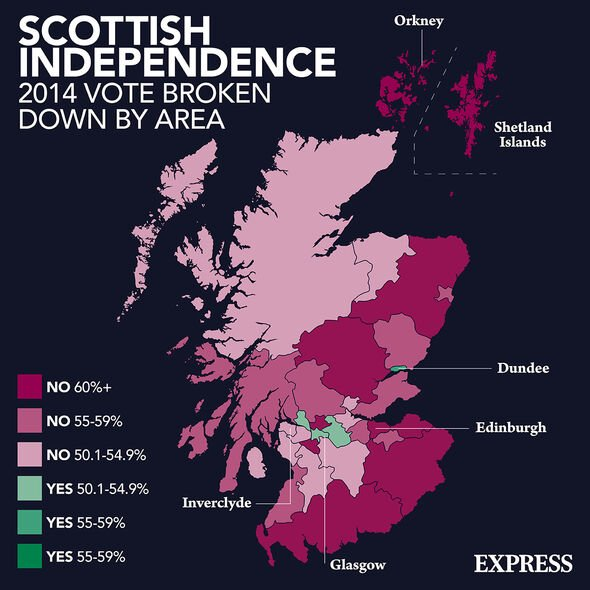
The 2014 Scottish Referendum gave hope to other secession movements
Even though it ultimately failed at the ballot box, the campaign for Scottish independence should cheer supporters of numerous secession movements springing up around the world.
In the weeks leading up to the referendum, it appeared that the people of Scotland were poised to vote to secede from the United Kingdom.
Defeating the referendum required British political elites to co-opt secession forces by promising greater self-rule for Scotland, as well as launching a massive campaign to convince Scots that secession would plunge them into economic depression.
The people of Scotland were even warned that secession would damage the international market for one of Scotland’s main exports, whisky. Considering the lengths to which opponents went to discredit secession, it is amazing that almost 45 percent of the Scottish people still voted in favour of it.
Widespread acceptance of the principle of peaceful secession and self-determination could resolve many ongoing conflicts
The Scottish referendum result did not discourage secessionist movements spreading across Europe. Just days after the Scottish referendum, the people of Catalonia voted to hold their own referendum measuring popular support for secession from Spain.
Support for secession is also growing in America. According to a recent poll, one in four Americans would support their state seceding from the federal government. Movements and organizations advocating that state governments secede from the federal government, that local governments secede from state governments, or that local governments secede from both the federal and state governments, are springing up around the country. Over one million Californians signed a ballot access petition in support of splitting California into six states. While the proposal did not meet the requirements necessary to appear on the ballot, the effort to split California continues to gain support.
Americans who embrace secession are acting in a grand American tradition. The Declaration of Independence was written to justify secession from Britain. Supporters of liberty should cheer the growth in support for secession, as it is the ultimate rejection of centralized government and the ideologies of Keynesianism, welfarism, and militarism.
Widespread acceptance of the principle of peaceful secession and self-determination could resolve many ongoing conflicts. For instance, allowing the people of eastern Ukraine and western Ukraine to decide for themselves whether to split into two separate nations may be the only way to resolve their differences.
The possibility that people will break away from an oppressive government is one of the most effective checks on the growth of government. It is no coincidence that the transformation of America from a limited republic to a monolithic welfare-warfare state coincided with the discrediting of secession as an appropriate response to excessive government.
Devolving government into smaller units promotes economic growth. The smaller the size of government, the less power it has to hobble free enterprise with taxes and regulations.
Just because people do not wish to live under the same government does not mean they are unwilling or unable to engage in mutually beneficial trade. By eliminating political conflicts, secession could actually make people more interested in trading with each other. Decentralizing government power would thus promote true free trade as opposed to “managed trade” controlled by bureaucrats, politicians, and special interests.
Devolution of power to smaller levels of government should also make it easier for individuals to use a currency of their choice, instead of a currency favoured by central bankers and politicians.
The growth of support for secession should cheer all supporters of freedom, as devolving power to smaller units of government is one of the best ways to guarantee peace, property, liberty — and even cheap whisky! (Ron Paul is a former member of the US Congress)
Scotland’s “no” vote for independence in 2014 brought an end to discussions about what an independent Scotland should do with its monetary institutions.
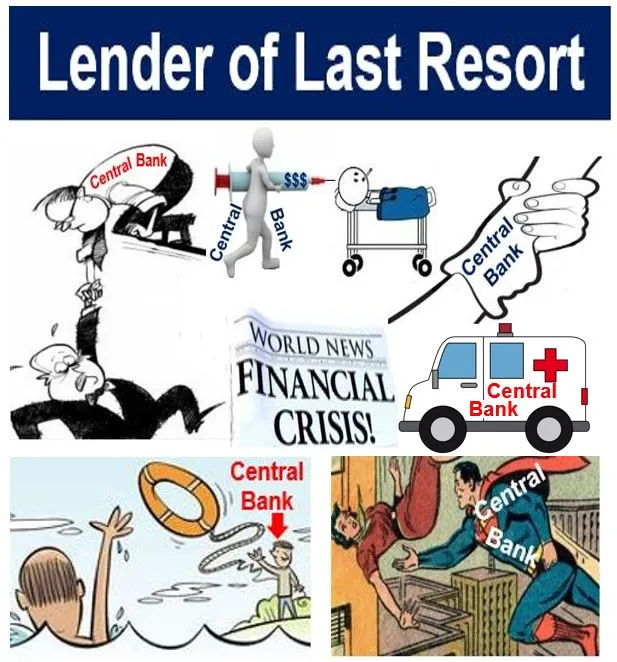
Throughout the 2014 independence campaign Unionists promoted a false narrative and convinced many Scots to the view that a secure banking system in an independent Scotland required a central bank to act as a lender of last resort. Their argument being that a bank was a necessary back-up not influenced by market forces thus able to provide stability in banking systems plagued by instabilities. But the Unionist reasoning was spurious with its acceptance that banking systems are inherently unstable and that to have a lender of “last resort,” meant having a central bank.
The truth of the matter was had Scotland voted for independence it could have unilaterally decided to keep using the UK pound (providing Scotland with greater flexibility than a bilateral agreement to change the currency if the British pound proved to be a bad choice).
In the case of such a unilateral choice, in principle, Scottish banks would not have been able to ask for support from the Bank of England as a lender of last resort.
But this did not mean that Scottish banks would have been short on lenders to go to since they had the financial markets of the entire world from which to find lenders willing to extend credit.
The 1689 – Scottish “Claim of Right” and Common Law
The document contains the assertion that ultimate power rests with the “Nation of Scotland”, and the UK Parliament is but their representative.
Claims by politicians that they represent “what the people want” are often exploited in the corridors of the Parliament at Westminster under the guise of representing the Nation state of the UK.
And in this respect letters from government ministers or other persons to the courts of Justice ordaining Judges to stop or desist from determining causes, or ordaining them how to proceed in causes depending before them is contrary to law.
Judicial decisions are legitimately open to comment and criticism. But more than one Home Secretary has sought to tell the judiciary how to apply (or how not to apply) the law and there is an increasing tendency to invoke the doctrine of Parliamentary sovereignty, which properly applies only to duly enacted legislation, to justify Ministers and other politicians in criticising, or even abusing, judges for disregarding their view of the law and how it is to be interpreted and applied.
SCOTLAND’S MAGNA CARTA: THE CLAIM OF RIGHT AND THE COMMON LAW Professor the Rt Hon Sir David Edward KCMG QC FRSE*
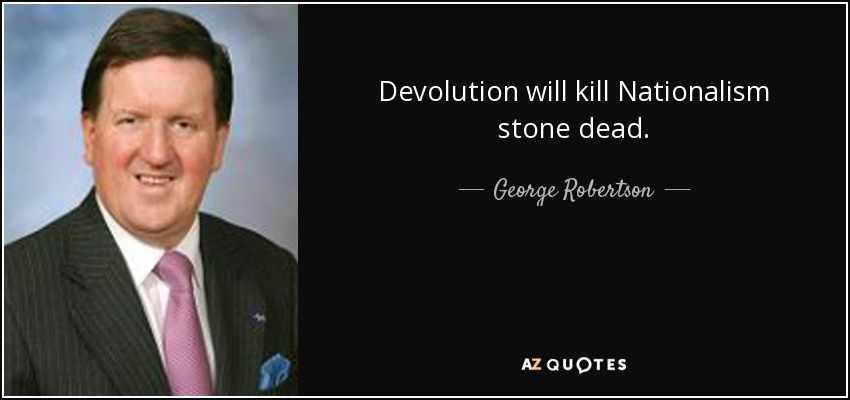
In 1995, when Scottish nationalism began to find increasing favour with Scots as their preferred choice of government Robertson, then Shadow Secretary of State for Scotland said:
“let them have their way. Devolution entrenches the Scottish parliament in the UK’s unwritten constitution, power devolved from Westminster is power retained by Westminster. It will kill Nationalism stone dead.”
In the years that followed the SNP gloated that the party had destroyed that fallacy by winning the Scottish Parliamentary Elections in 2007, 2011, 2016 and 2020. But “wise seer” George was right.
His vision of Scots being “fitted up” with a poorly equipped and reversable devolved governance structure proved to be entirely accurate.
As at 2022 Scottish Nationalism is faltering badly under the auspices of SNP WOKE minded Daniel Defoe’s who self recruited themselves to the nationalist cause falsely proffering to be committed to fighting tooth and nail for independence.
Scots will need to find another way of kick starting the drive for independence only this time ensuring the campaign is led by bone-fide Party members who declare “fealty” to a Scotland free and independent of any political interference from Westminster or any other country.
Duties and responsibilities of MP’ greatly diminished with devolution
The establishment of the Scottish Parliament in 1999 raised important questions about the future of local representative roles of MP’s.
The Scottish Parliament took over responsibility for many of the issues that individual constituents were likely to raise with their elected members, as well as important strategic matters such as economic development, transport and health previously central to the role remitted to MP’s.
Members of the Scottish Parliament, MSPs assumed the duties of local representative and spend many hours each week fulfilling them. Their contact with interest groups and work with local community groups and party members is also more frequent. MSPs spend more time on these activities than did Scottish MPs previously
The traditional local role of the MP in Scotland, which was highly rated and significant in terms of commitment of time, was given up to members of the Scottish Parliament, MSP’s.
But some MPs are determined to hold onto the past and the resulting duplication of roles are frequently the cause of confusion for constituents dependent in part on the level of co-operation existing between the two local members. A problem exacerbated if the local MSP is a list member from another political party.
Benefits and Allowances made available to MP’s
Gross Salary & Pension:£120-£140k
Staffing: Constituency based. Assistance with casework, correspondence, surgeries, visits, meetings, organising events, and outreach activities. Mainly covers payroll costs but can also be used for pooled staffing services and incidental expenses for volunteers. It is paid directly to the employee. Annual charge £150-180k.
Office costs: Covers rent, stationery, telephone, broadband, and other costs attributed to running a constituency office. Annual charge £14-£20k
Accommodation: To meet costs incurred as a result of working from two permanent locations. Unless there are exceptional circumstances, it is usually only possible to claim for accommodation and associated costs in either Scotland or London, not both. Annual Charge £25-£40k.
Travel and Subsistence Allowance: Is for travel between Scotland and Westminster, within the constituency, and elsewhere on parliamentary business. MPs can only travel First Class if the fare is demonstrably cheaper than a standard class ticket. Annual cost £12-£18k
MPs may only claim for the cost of food and non-alcoholic drinks where they have stayed overnight either outside the London area or Scotland. This is limited to £25 for each night of a stay but can be for purchases made in the day.
Summary: The role and responsibilities of Scottish MP’s at Westminster is greatly diminished following devolution. And yet MPs still enjoy the same benefits, privileges and allowances as English MP’s who’s role has remained unchanged.
The admitted number of hours freed up for other duties at Westminster is around 25 weekly and the absence of any tangible promotion of the cause of Scottish independence and claims of MPs promoting LBGTQ agendas, wild partying, alcohol consumption, extra marital sex affairs and harassment both physical and sexual within the group is embarrassing and of concern to constituents.
Something needs to be done to ensure the Scottish taxpayer is provided with value for money. We are not getting it from the present group of SNP MPs.
The company is a global leader in the design, supply and ongoing service of engineering equipment for the mining, oil and gas, power and industrial sectors and is listed on the London Stock Exchange. With annual sales in excess of 2 billion, it employs around 15,000 people and operates in more than 42 countries.
It maintains manufacturing facilities in North and South America, the UK, mainland Europe, Australia, South Africa, India and China.
Annual profits vary between 300-600 million.
Lord Smith of Kelvin was chairman of the Group between 2002 and 2013.
Additional information
The companies main operational thrust in the UK over the next few years (2016-2020) is to be directed at the development and expansion of Nuclear Power and Fracking
The Group has consistently and actively solicited support to its campaigns against any form of Scottish devolution or independence and although founded and registered in Scotland less than 5% of the Groups total workforce is Scottish based.
The Group is an active member of the networking organisation, “Common Purpose” which provides unique and highly productive opportunities through its extensive connections.
In 2013, a team of leaders undertook specialist leadership development programmes and attended a global leadership conference run by “Common Purpose” which had assembled exceptional senior people from across the Commonwealth to tackle challenges that businesses, governments and society face today with the aim of building global relationships for use in the future. The Weir Groups tentacles of influence spread far and wide.
Iraqi Oil for Food Programme
Trade sanctions against Iraq were introduced after Saddam Hussein invaded Kuwait in 1990 but the measures contributed to an increase in the suffering and starvation among the Iraqi population and the UN set up the Oil for Food Programme (OFFP).
From 1996 onwards, Saddam Hussein was allowed to sell oil, but all the receipts were placed in a UN account in Paris. Iraq was then able to use the funds to buy goods approved by the UN for the benefit of its population.
Using its French subsidiary Wemco to administer the deals (because of Iraq’s “Buy British Last” policy), the Weir Group tendered for and won several contracts which involved supplying spare parts for water and oil pumps to Iraq’s North Oil Company and South Oil Company.
How the Weir Group worked the scam
Knowing the money could not be paid into an Iraqi bank, it was agreed an Iraqi agent would pay it from his own pocket. When it received the money from the OFFP, the company paid a 10 per cent kickback plus a further 4 per cent for the agent’s services to a fake Geneva-based company, Corsin Finance Ltd. The payments did not arouse suspicion as paying an agent to act on overseas deals was in itself entirely legitimate.
Two meetings were held on 13 and 14 September 2001 at the behest of a group director who was not involved in the OFFP contracts but had become aware of what was going on. At the second meeting, the director gave the go-ahead for the kickbacks despite being told they were illegal. The first payment was made that same day. In total, Weir Group plc secured 16 contracts worth 35 million paying kickbacks of 3 million.
2010: Weir Group prosecuted for providing kickbacks to the Iraqi regime
The “Oil For Food Programme” OFFP was put in place by the United Nations UN to ensure sanctions would not punish Iraqi citizens for the excesses of their government.
The Weir Group agreed on supply contracts heavily overcharging the programme, between 2001 and 2003 diverting around £3.1 million away from humanitarian aid to the coffers of Saddam Hussein.
The company was fined £3 million. The judge said he was taking into account the company’s guilty plea and its willingness to pay back the £9.4 million profits it made from the deals and the £3.1 million it had diverted from the OFFP together with a £1.4 million sum it had paid to its Iraqi agent for acting as a conduit for the illegal payments.
Weir Group PLC put profits before ethics; when told it had to pay a 10 per cent kickback or it wouldn’t win contracts, any scruples about UN sanctions disappeared.
Not one, of the more than 50 employees of the Weir Group involved was identified or pursued through the courts. Despite the fact that a number of individuals from other UK companies charged with similar offences of corruption and violation of sanctions, were charged, tried and punished. Moreover, though most of those at the helm at the time had moved on, many secured prestigious posts elsewhere.
In a statement explaining its decision to keep individuals out of the frame, the Crown Office said: “In the course of this investigation it became clear that the decision to pay kickbacks to the Iraqi government and to pay fees to the Iraqi agent, was taken at Weir Group level. It was, therefore, deemed that the most appropriate course of action was to prosecute The Weir Group plc rather than any individual who may have been involved in these events.”
A critic of the Crown Office said “the fines levied against The Weir Group was a pittance when set against its overall turnover. And they will simply be incorporated into the annual profit and loss account reducing the corporation tax bill. The fines should have been made the personal responsibility of the directors which would have added bite to the punishment.”
Lord Smith of Kelvin, Weir Group’s chairman, said the judgement “finally drew a line” under the prosecution investigation. “What happened back in 2001 was wrong and we accept full responsibility”.
27 August 2014: Scottish referendum – Weir Group chief executive canvasses support of business leaders to Better Together
Announcing their opposition to a yes vote, 133 business leaders said: “Our economic ties inside the United Kingdom are very close and support almost 1 million Scottish jobs and the rest of the UK is Scotland’s biggest market by far. Our conclusion is that the business case for independence has not been made.”
Their intervention was coordinated by Keith Cochrane, chief executive of the Scottish engineering company the Weir Group and coincided with a campaigning visit to Scotland by David Cameron.
In a follow up on BBC Radio Scotland, Cochrane said he expected Scotland to face higher interest rates and higher costs for business if there was a yes vote. “Scottish business is deeply frustrated at the lack of answers to some basic questions which are pretty fundamental to business as we look forward. The economy is clearly one of the most significant concerns of voters and we felt it was important that Scottish business contributed to the debate. These are real businesses accounting for real jobs.”
RIVALS: Weir Group chief Keith Cochrane (left) “Better Together” and Clyde Blowers Jim McColl (right) “Yes”
12 September 2014: Weir Group threaten to move Glasgow HQ if Scotland votes ‘yes’
Chief Executive Keith Cochrane has said that the group could not guarantee that it would keep its Glasgow headquarters if Scotland became independent after the referendum, although the group’s three service centres would remain in the country.
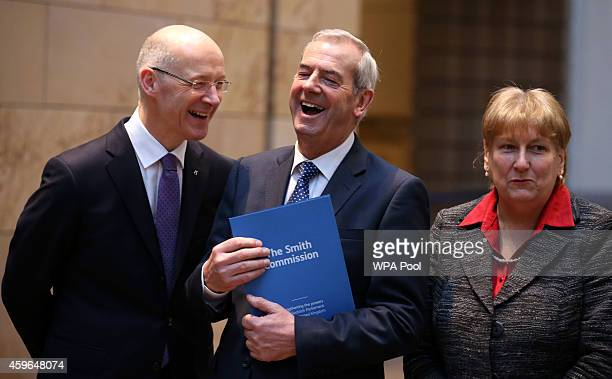
27 November 2014: Lord Smith of Kelvin, former chairman of the Weir group which championed the anti-independence campaign to chair the DevoMax commission
The Smith Commission issued its report on the shape and form of the devolved powers promised to Scotland by the political parties at Westminster in the days before and after the Scottish Independence referendum.
Billiesays: Common Purpose. Now what could that be.
As an active member and having been prosecuted and fined for paying millions in kick backs to gain contracts Weir Group will certainly know a thing or two. But it’s not just Weir Group.
Their ex Chief Executive Keith Robertson Cochran’s has form elsewhere. As an energetic supporter of common purpose businesses he has also been chief executive of SSE and Carillion.
Now for those who maybe don’t know Carillion was the UK’s biggest bankruptcy going down a couple of years ago with reported debts of £5.9 billion and £29 million in the bank. And who pray tell was the Chief Executive of this absolutely huge corporate failure. And a failure absolutely threaded through the common purpose of public works and service throughout the U.K.
No other it seems that the erstwhile ex Weir Chief Executive Keith Robertson Cochrane.
And have there been concerns about Mr Cochrane and his fellow band of directors. Well you bet there has as businesses have lost billions with the bankruptcy, employees have seen their pension scheme fail through underfunding, with the public sector having to pick up the pieces on collapsed projects. Good old common purpose shining through again one has to wonder why there have been calls to ban Cochrane and team for being directors for up to 15 years.
Better together in common purpose has a certain ring to it when you read about Weir Group Carillion. More like fill your boots bandit capitalism – with Common Purpose the new Cosa Nostra
But hey pensions come and go, SSE another corporate on the radar increase their electricity prices and make huge profits whilst recommending to old people to dance to keep warm in their cold energy poor houses. Common purpose thrives whilst the general population don’t.
Ah well, and to conclude on a happy side note it’s nice to hear that Prince Andrew is paying an undisclosed but anecdotally reported circa £12 million settlement to Virginia Giuffre. With all the public funding the Royal Family gets, would it be cynical to ask who is actually going to be paying out this money to a woman the Prince says he never met. At least now we can all cheer up and enjoy the Royal platinum jubilee.
The House of Lords historically has jurisdiction to hear appeals from the lower courts.
Theoretically, the appeals are to the Sovereign-in-Parliament, but the House of Commons does not participate in judicial matters.
The House of Lords does not necessarily include judges, but it was formerly attended by several judges who gave their opinions when the Lords desired.
They did not, however, have the power to vote in the House and “Lords of Appeal in Ordinary,” commonly known as Law Lords, were appointed under the Appellate Jurisdiction Act 1876 to the House of Lords of the United Kingdom in order to exercise its judicial functions, which included acting as the highest court of appeal for most domestic matters.
To be appointed a Lord of Appeal in Ordinary under the 1876 Act, an individual is required to have been a practicing barrister for a period of fifteen years or to have held a high judicial office (Lord Chancellor (before 2005) or judge of the Court of Appeal, High Court or Court of Session) for a period of two years.
They are required to retire from judicial office at 70 or 75 years of age, though as peers under the style of Baron they continue to serve as members of the House of Lords in its legislative capacity for life.
The Constitutional Reform Bill – A duplicitous “New Labour” designed to subjugate Scots
In 2003 the Lord Chancellor, Lord Falconer brought forward the “Constitutional Reform Bill” which contained proposals for reforming the powers of the Lord Chancellor and the dismantling of his office.
The argument advanced in support of his initiative was that this would formally separate the powers of law makers from the judicial authorities.
A major part of the reformation was the repeal of existing legislation replacing it with a “Supreme Court.”
At that time the, “Appellgate Jurisdiction Act 1876” acted as the final court on points of law for all UK jurisdictions in civil cases (and for England, Wales and Northern Ireland in criminal cases.)
In debate the Lords perceived there to be no need for a “Supreme Court” to replace the House of Lords as the final court of appeal.
They were also discontented about a lack of adequate warning of the proposed changes to remove the Law Lords from the upper house to a new court and the absence of public debate.
Warning was also given that the legislation, as drafted threatened the independence of Scots law which was guaranteed in perpetuity by the, “Claim of Right.”
The government was defeated and the matter was remitted to the “Constitutional Affairs Committee” for discussion and amendment.
The committee interviewed a number of eminent figures from the political and judicial system, including Scotland’s most senior judge Lord Cullen.
An amended bill was finally introduced into law in 2009 (roughly 5 years after).
From that time there has been an amount of controversy in regard to the operation of the court and the matter of the Scots “Claim of Right” , that pre-dates the 1707 “Act of Union” and dictates that the “Independence of Scots law” is guaranteed, in perpetuity and remains extant.
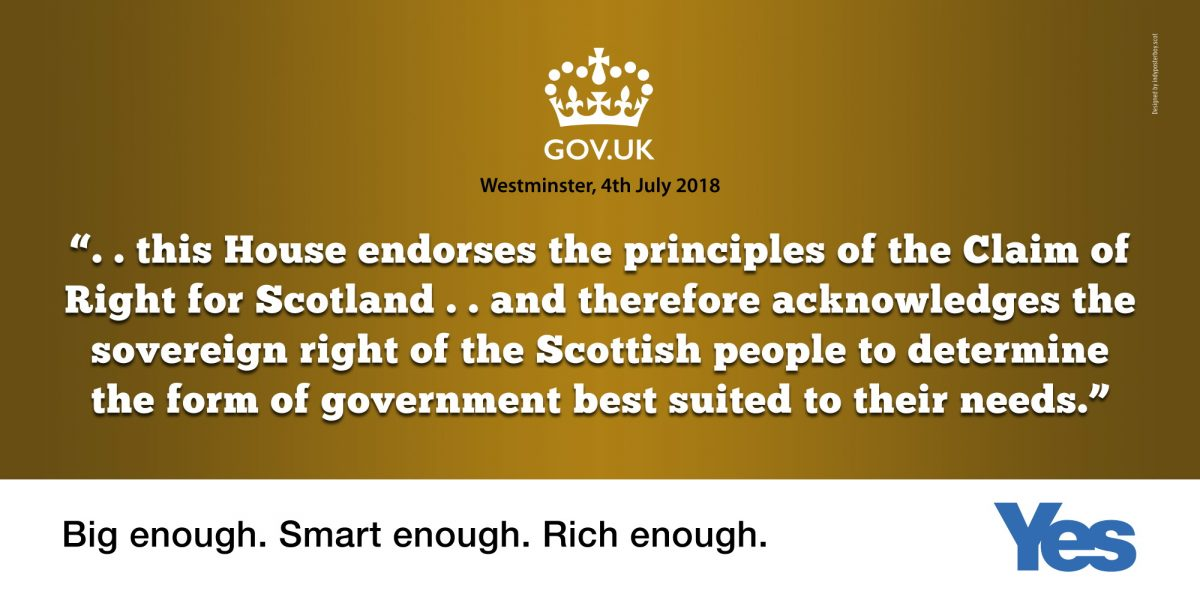
Afternote: On 4 July 2018, the House of Commons officially endorsed the principles of the Claim of Right, agreeing that the people of Scotland are sovereign and that they have the right to determine the best form of government for Scotland’s needs.
Tuesday 9 December 2003: Constitutional Affairs Committee – Examination of Witness – Rt Hon Lord Cullen, (Lord Justice General of Scotland and Lord President of the Court of Session)
Chairman: We are particularly pleased to have the head of judiciary in Scotland.
Lord Cullen: we have met before when we were carrying out our inquiry into the judicial appointments in Scotland before the Government announced its plans for England and Wales.
What we thought we might do is start by looking at the Supreme Court issue and initially looking at it in general terms before coming on to those aspects which are particular to Scotland.
Lord Cullen: It all depends what kind of Supreme Court we are talking about.
We seem to be talking about one which is simply taking over lock, stock and barrel the existing functions of the Appellate Committee and perhaps also the Judicial Committee of the Privy Council, so what is happening is to happen somewhere else in a different atmosphere and I do not quite see how that takes you any further.
There may be opportunities possibly for making pronouncements which would be of use to the whole of the United Kingdom, but one has to remember that the existing civil jurisdiction as far as Scotland is concerned is that the Appellate Committee functions as a Scottish court (with a wall, as it were) between it and its functioning as an English court.
Q: Could I address my comments to you, Lord Cullen. I understand from your evidence that you are not wildly enthusiastic about the proposed changes?
Lord Cullen: That is right.
Q: Many of us were astounded that the Government could come up with proposals to reorganize our court of final appeals without consulting the outgoing Lord Chancellor, the incoming Lord Chancellor, the present members of the Judicial Committee of the Lords, and I think we would do better to discuss this in terms of a court of final appeal and leave the title to be chosen afterwards. Referring to perceptions. What would be the minimal changes that might meet the perception point?
Lord Cullen: I am not sure what you mean by “minimal changes”.
Q: Largely that the Lord Chancellor should not be able to sit as a law lord.
The minimal change is the Lord Chancellor saying “I will not sit as a law lord” rather than throwing the whole system in the air.
People argue that having the law lords meeting in the House of Lords is somehow the executive interfering, forgetting of course that Parliament is not the executive and that any arrangements are likely to be more expensive. Could they be cheaper than the present arrangements?
Lord Cullen: I cannot say because I do not sit as a Lord of Appeal but my impression is that it would be cheaper to leave things as they are than to create something free-standing outside, and there also is the advantage at the moment, as I understand it, that the Appellate Committee is funded through the House of Lords whereas if it is to be exported to some other place it would then be funded by the Department of Constitutional Affairs, hence you get a closer association or greater association with the executive which did not previously exist. Now that itself raises a problem of independence.
Chairman: Turning, Lord Cullen, to the Scottish aspects of this, are the Government’s proposals compatible with the Act of Union, Article 19 and the “Claim of Right” and, if not, what would have to be done to them to make them compatible?
Article 19 of the Act of Union states “… that the Court of Justiciary do also after the Union, and notwithstanding thereof, remain in all time coming within Scotland, as it is now constituted by the Laws of that Kingdom, and with the same Authority and Privileges as before the Union, subject nevertheless to such Regulations as shall be made by the Parliament of Great Britain, and without Prejudice of other Rights of Justiciary…”
Lord Cullen:I venture this matter in my response really in order to make the point that this aspect ought to be considered by the Government.
Before the “Act of Union” there is the “Claim of Right”, which was a Scottish provision at the time when the monarchy was returning to Scotland in 1689 and there was then a declaration by the Scottish Parliament as to the right of subjects to protest for remede of law to the King and Parliament and that is the ancestor, so far as Scotland is concerned, of the hearing of civil appeals from the Court of Session to the House of Lords.
The “Act of Union” was silent on the question of appeal from the “Court of Session” or, indeed, the “High Court of Justiciary” but it was later, much later, interpreted in such a way as to indicate that the “Court of Session” and its decisions should be subject to review whereas the “High Court”, the criminal court, would sit its decisions to be regarded as final and conclusive, so what you have, firstly, is an interpretation of the “Act of Union.”
The second point is that, until now, it has been recognized that there are some situations, not easy to define, where certain elements in our constitution may be unalterable – that is a possible view.
It arises from time to time, most recently in the case involving Lord Gray’s Motion where certain members of the “Committee for Privileges” reserved their view on that matter.
So however strange it may seem there is an argument that Parliament might not be able to alter or undo certain elements of a constitutional nature. That is a sketch of the argument: whether it is good or not I do not propose to advance, but simply say it is there to be considered.
Chairman: Are you proposing any way in which the Government’s proposals might be modified to avoid collision with that argument?
Lord Cullen: I am inclined to think that it may very well be that so far as civil appeals are concerned there is not a problem, but it is simply something that ought to be looked at. Therefore my answer to that is probably that no alteration is, in fact, required.
Chairman: Do you agree that legislative competence so far as any changes to leave to appeal and things of that kind are concerned does not lie with Westminster under the devolution settlement but with the Scottish Parliament?
Lord Cullen: That is quite a difficult matter. If you look at the Scotland Act you will find that what is reserved is the continued existence of the Court of Session and the High Court of Justiciary.
The way that the Scotland Act is constructed certain matters are specifically reserved: the rest is not, and therefore it appears on the face of it that matters other than the continued existence of these courts is a matter for the Scottish Parliament.
Nobody is entirely clear as to that being the case but that seems to be the position, in which case there seems to be a role here for the Scottish Parliament.
Now I would hope that the matter was not, so to speak, nodded through in Scotland but given serious consideration, but that is the position, as I understand it.
Chairman: Lord Hope expressed the view that the Scottish Parliament would need time to deal with this matter before it proceeded at Westminster?
Lord Cullen: I would agree with that and the consultation paper, whereas it makes clear what the executive’s attitude is and we have seen the executive’s response since then, so far as I know as yet there has not been a considered discussion in the Scottish Parliament.
Chairman: There is a phrase which I think you may have challenged already which the Government use in respect of constitutional issues where they say that the establishment of the new court “accordingly gives us the opportunity to restore a single apex to the United Kingdom’s judicial system where all the constitutional issues can be considered”.
That is in the consultation paper. Is it your view that, leaving aside the devolution issues, there ever was or should be a single apex which combines the judicial systems of England and Scotland?
Lord Cullen: I do not think that is correct. The position until now is that the Appellate Committee functions sometimes as an English court and sometimes as a Scottish court, and I say that because what is binding in England is not binding in Scotland.
You have two completely separate jurisdictions so that whatever decision the House of Lords reaches in regard to a civil matter it does not bind in Scotland, and vice versa, so you really have two apices rather than one apex and, if the position is that that is to be taken over by the Supreme Court, it will have those two high points, whereas the paper tends to talk as if this is the opportunity for the United Kingdom court.
Well, I say that is obscuring the point: that you have two separate jurisdictions each with its own head happening to be administered under one device, namely the Appellate Committee.
That is what we have: it is a result of the separate growth of two legal systems, and it is preserved, of course, by the Act of Union.
1 October 2009: The Introduction of the UK Supreme Court
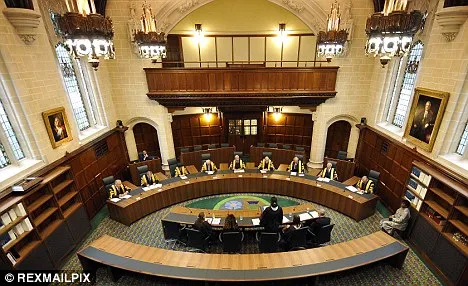
A new United Kingdom Supreme Court, separating the judicial function from Parliament (those who make the law from those who interpret it in courts).
It will be based in the Middlesex Guildhall, (opposite the Houses of Parliament in Parliament Square.)
From 1 October 2009, the Supreme Court of the UK assumed jurisdiction on points of law for all civil law cases in the UK and all criminal cases in England, Wales and Northern Ireland.
The 12 Lords of Appeal in Ordinary (the Law Lords) are the first justices of the 12-member Supreme Court and are disqualified from sitting or voting in the House of Lords.
When they retire from the Supreme Court they can return to the House of Lords as full Members but newly-appointed Justices of the Supreme Court will not have seats in the House of Lords.
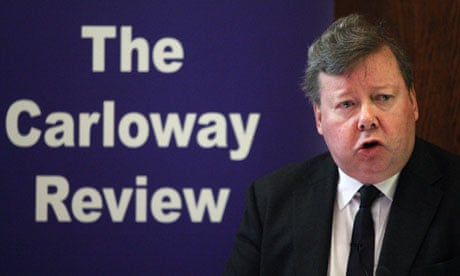
15 April 2015: Lord Carloway attacks Supreme Court and its ‘depressing influence’ on the Scottish legal system
The lord justice clerk has attacked the UK Supreme Court, calling it remote and “far removed” from the realities of Scots law.
Lord Carloway said the court had a “depressing influence” on the legal system in Scotland.
The remarks came in a speech made by the judge at a conference of Commonwealth Law Reform Agencies in Edinburgh.
He said: “The Supreme Court, which has hitherto sat only in London, may be deemed to exercise greater autonomy in the selection of topics for the reform of Scots civil law than the Scottish Law Commission itself.
While the criminal law court hierarchy in Scotland ends with the High Court of Justiciary, the Supreme Court can deal with particular questions relating to devolution and arising from civil or criminal proceedings.
In some respects, the oversight of Scots Law from a position that is relatively remote, far removed from the practical realities of operating the Scottish legal system and of Scots society as a whole, is apt to have a depressing influence on the efforts of those operating positively within the jurisdiction.”
Lord Carloway Blasted Supreme Court Interference in Scottish law
28 November 2015: UK Supreme Court overrules Scottish judges on two human rights cases
The UK Supreme Court has today over-ruled Scotland’s highest appeal court in two important human rights cases.
In both, judgements passed in Edinburgh were unanimously overruled by a five-judge panel sitting in London on fundamental legal issues.
Their decisions raise the possibility of another judicial and political cross-border row.
Senior political figures such as First Minister Alex Salmond and Justice Secretary Kenny MacAskill have already raised concerns about what they see as the Supreme Court interfering in Scottish legal affairs.
The Supreme Court bench in both cases was headed by Lord Hope, deputy president of the London-based court and former Lord President of the Court of Session in Edinburgh who has previously spoken out against the “corrosive anti-English sentiment” in Scotland’s courts, describing it as an obstacle to legal progress, and has been the subject of biting criticism by Mr Salmond, who accused Lord Hope of allowing “some of the vilest people on the planet” to win compensation from the taxpayer.
8 November 2016: Scotland applies to join Brexit triggers court battle
Scotland is to apply to the Supreme Court to be allowed to table a legal challenge at the Court on 5 December 2016, against the UK Government as it tries to overturn a Brexit court ruling.
The attempt is to make sure MPs and Scotland’s parliament have a say on triggering Article 50.
First Minister Nicola Sturgeon said “it simply cannot be right” that European Union membership “can be removed by the UK Government on the say-so of a Prime Minister without parliamentary debate, scrutiny or consent”.
She added: “So legislation should be required at Westminster and the consent of the Scottish Parliament should be sought before Article 50 is triggered.
Let me be clear – I recognize and respect the right of England and Wales to leave the European Union. This is not an attempt to veto that process.
But the democratic wishes of the people of Scotland and the national Parliament of Scotland cannot be brushed aside as if they do not matter.”
13 Dec 2018: Brexit Legislation – UK Supreme Court Upholds Scottish Parliament – But its ruling is thwarted by the Westminster Government’s Introduction of Counter Legislation, (with Royal Assent) before the Supreme Court Judged the Westminster Government Appeal.
Preamble:
Brexit legislation was drafted as an alternative to Westminster’s EU Withdrawal Bill, which MSPs refused to give their consent to following a row over how powers currently exercised from Brussels will be used after Brexit.
Holyrood Presiding Officer Ken Macintosh wrote an official memo saying the bill was “not within the legislative competence of the parliament”.
His assertions were denied by the Scottish government’s legal advisers.
But the delay paved the way for UK law officers to apply to the Supreme Court to provide “legal certainty” about whether the Holyrood vote was valid. A two-day hearing was held in London in July, with the UK government arguing that the bill should be struck down.
“On 4 July 2018, the House of Commons officially endorsed the principles of the Claim of Right, agreeing that the people of Scotland are sovereign and that they have the right to determine the best form of government for Scotland’s needs.”
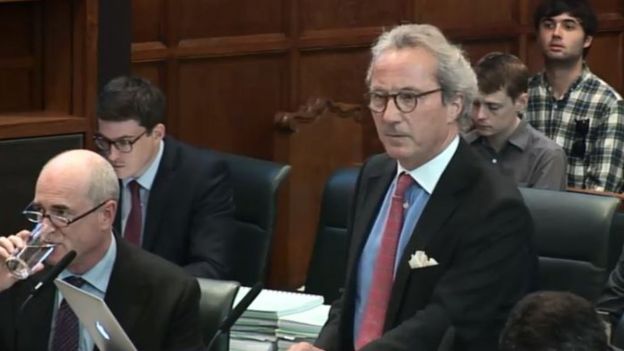
Lord Keen Advocate General argued the case for the Westminster government.
The Supreme Court judgement
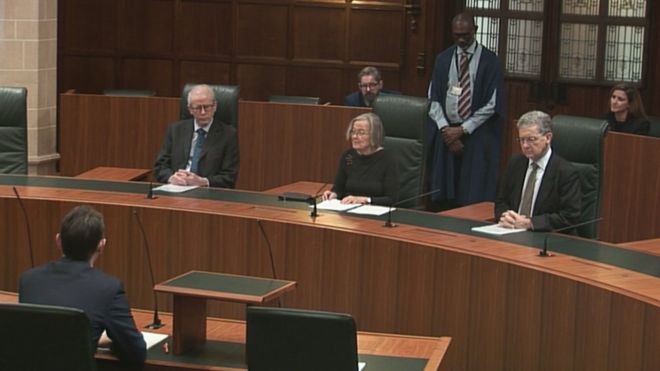
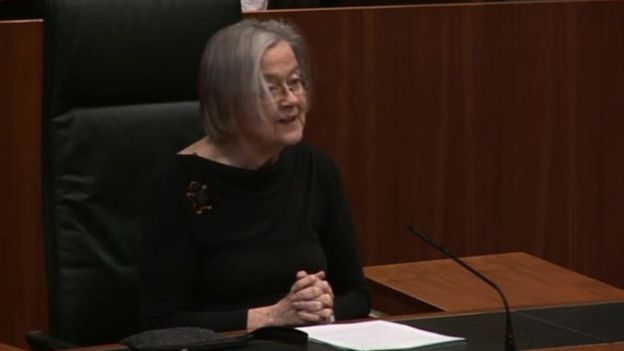
Lady Hale said the judges had unanimously rejected all but one section of the UK government’s arguments.
She said “the whole of the Scottish bill would not be outside the legislative competence of the Scottish Parliament”, but that one section – relating to MSPs having to give consent for UK Brexit laws – was not within Holyrood’s remit.
The judges explained in their ruling that changes had been made to the UK legislation, (before the appeal hearing) adding a special schedule of protected legislation which MSPs could not modify , returning to Westminster authority over 21 previously devolved provisions.
This meant that the bill was entirely competent when it was passed by MSPs in March 2018.
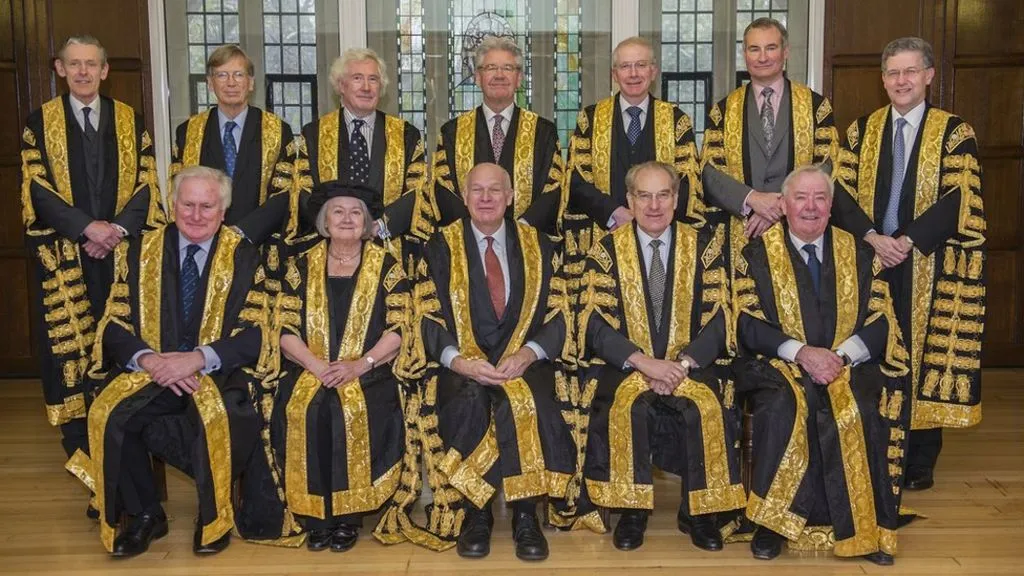
Lady Hale Supreme Court Judge
Review the disgraceful series of events, from March-December 2018
Only the Tory’s and a single Lib Dem MSP voted against it.
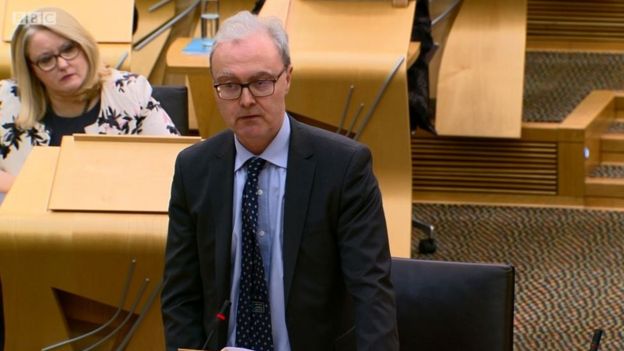
Lord Advocate James Wolffe
What will happen now?
The ruling means that the EU Withdrawal Act remains the basis on which Scotland’s statute book will be prepared for Brexit.
MSPs could potentially bring the continuity bill back for reconsideration at Holyrood, provided they take action on the areas highlighted by the Supreme Court.
Lord Advocate, Mr James Wolffe said ministers would seek talks with all opposition parties about “whether that’s the right way forward”.
Lord Cullen: we have met before when we were carrying out our inquiry into the judicial appointments in Scotland before the Government announced its plans for England and Wales.
Chairman:What we thought we might do is start by looking at the Supreme Court issue and initially looking at it in general terms before coming on to those aspects which are particular to Scotland.
We seem to be talking about one which is simply taking over lock, stock and barrel the existing functions of the Appellate Committee and perhaps also the Judicial Committee of the Privy Council, so what is happening is to happen somewhere else in a different atmosphere and I do not quite see how that takes you any further.
There may be opportunities possibly for making pronouncements which would be of use to the whole of the United Kingdom, but one has to remember that the existing civil jurisdiction as far as Scotland is concerned is that the Appellate Committee functions as a Scottish court (with a wall, as it were) between it and its functioning as an English court.
Q: Could I address my comments to you, Lord Cullen. I understand from your evidence that you are not wildly enthusiastic about the proposed changes?
Lord Cullen: That is right.
Q: Many of us were astounded that the Government could come up with proposals to reorganize our court of final appeals without consulting the outgoing Lord Chancellor, the incoming Lord Chancellor, the present members of the Judicial Committee of the Lords, and I think we would do better to discuss this in terms of a court of final appeal and leave the title to be chosen afterwards. Referring to perceptions. What would be the minimal changes that might meet the perception point?
Lord Cullen: I am not sure what you mean by “minimal changes”.
Q: Largely that the Lord Chancellor should not be able to sit as a law lord.
The minimal change is the Lord Chancellor saying “I will not sit as a law lord” rather than throwing the whole system in the air.
People argue that having the law lords meeting in the House of Lords is somehow the executive interfering, forgetting of course that Parliament is not the executive and that any arrangements are likely to be more expensive. Could they be cheaper than the present arrangements?
Lord Cullen: I cannot say because I do not sit as a Lord of Appeal but my impression is that it would be cheaper to leave things as they are than to create something free-standing outside, and there also is the advantage at the moment, as I understand it, that the Appellate Committee is funded through the House of Lords whereas if it is to be exported to some other place it would then be funded by the Department of Constitutional Affairs, hence you get a closer association or greater association with the executive which did not previously exist. Now that itself raises a problem of independence.
Chairman: Turning, Lord Cullen, to the Scottish aspects of this, are the Government’s proposals compatible with the Act of Union, Article 19 and the “Claim of Right” and, if not, what would have to be done to them to make them compatible?
Article 19 of the Act of Union states “… that the Court of Justiciary do also after the Union, and notwithstanding thereof, remain in all time coming within Scotland, as it is now constituted by the Laws of that Kingdom, and with the same Authority and Privileges as before the Union, subject nevertheless to such Regulations as shall be made by the Parliament of Great Britain, and without Prejudice of other Rights of Justiciary…”
Lord Cullen: I venture this matter in my response really in order to make the point that this aspect ought to be considered by the Government. Before the “Act of Union” there is the “Claim of Right”, which was a Scottish provision at the time when the monarchy was returning to Scotland in 1689 and there was then a declaration by the Scottish Parliament as to the right of subjects to protest for remede of law to the King and Parliament and that is the ancestor, so far as Scotland is concerned, of the hearing of civil appeals from the Court of Session to the House of Lords.
The “Act of Union” was silent on the question of appeal from the “Court of Session” or, indeed, the “High Court of Justiciary” but it was later, much later, interpreted in such a way as to indicate that the “Court of Session” and its decisions should be subject to review whereas the “High Court”, the criminal court, would sit its decisions to be regarded as final and conclusive, so what you have, firstly, is an interpretation of the “Act of Union.”
The second point is that, until now, it has been recognized that there are some situations, not easy to define, where certain elements in our constitution may be unalterable – that is a possible view.
It arises from time to time, most recently in the case involving Lord Gray’s Motion where certain members of the “Committee for Privileges” reserved their view on that matter.
So however strange it may seem there is an argument that Parliament might not be able to alter or undo certain elements of a constitutional nature.
That is a sketch of the argument: whether it is good or not I do not propose to advance, but simply say it is there to be considered.
Chairman: Are you proposing any way in which the Government’s proposals might be modified to avoid collision with that argument?
Lord Cullen: I am inclined to think that it may very well be that so far as civil appeals are concerned there is not a problem, but it is simply something that ought to be looked at. Therefore my answer to that is probably that no alteration is, in fact, required.
Chairman: Do you agree that legislative competence so far as any changes to leave to appeal and things of that kind are concerned does not lie with Westminster under the devolution settlement but with the Scottish Parliament?
Lord Cullen: That is quite a difficult matter. If you look at the Scotland Act you will find that what is reserved is the continued existence of the Court of Session and the High Court of Justiciary. The way that the Scotland Act is constructed certain matters are specifically reserved: the rest is not, and therefore it appears on the face of it that matters other than the continued existence of these courts is a matter for the Scottish Parliament.
Nobody is entirely clear as to that being the case but that seems to be the position, in which case there seems to be a role here for the Scottish Parliament.
Now I would hope that the matter was not, so to speak, nodded through in Scotland but given serious consideration, but that is the position, as I understand it.
Chairman: Lord Hope expressed the view that the Scottish Parliament would need time to deal with this matter before it proceeded at Westminster?
Lord Cullen: I would agree with that and the consultation paper, whereas it makes clear what the executive’s attitude is and we have seen the executive’s response since then, so far as I know as yet there has not been a considered discussion in the Scottish Parliament.
Chairman: There is a phrase which I think you may have challenged already which the Government use in respect of constitutional issues where they say that the establishment of the new court “accordingly gives us the opportunity to restore a single apex to the United Kingdom’s judicial system where all the constitutional issues can be considered”.
That is in the consultation paper.
Is it your view that, leaving aside the devolution issues, there ever was or should be a single apex which combines the judicial systems of England and Scotland?
Lord Cullen: I do not think that is correct. The position until now is that the Appellate Committee functions sometimes as an English court and sometimes as a Scottish court, and I say that because what is binding in England is not binding in Scotland.
You have two completely separate jurisdictions so that whatever decision the House of Lords reaches in regard to a civil matter it does not bind in Scotland, and vice versa, so you really have two apices rather than one apex and, if the position is that that is to be taken over by the Supreme Court, it will have those two high points, whereas the paper tends to talk as if this is the opportunity for the United Kingdom court.
Well, I say that is obscuring the point: that you have two separate jurisdictions each with its own head happening to be administered under one device, namely the Appellate Committee.
That is what we have: it is a result of the separate growth of two legal systems, and it is preserved, of course, by the Act of Union.
The 9 year war of the Grand Alliance against France
King Billy the Dutchman and his war of the Grand Alliance with France (1688–97)
The War of the Grand Alliance was a major conflict between France and a European wide coalition of Austria and the Holy Roman Empire, the Dutch Republic, Spain, Savoy and England, greatly aided by the newly formed “English Foreign Legion” comprised of Scottish soldiers forced by circumstance to support their sovereign.
It was fought on the European continent and the surrounding seas, Ireland, North America and in India and is sometimes considered the first truly global war.
It also encompassed a theatre in Ireland and in Scotland, where William 3rd and his father-in-law James 2nd battled for control of Scotland and Ireland, and a campaign in colonial North America between French and English settlers and their respective Indian allies.
The French had emerged victorious from the Franco-Dutch War in 1678 as the most powerful nation in Europe and using a combination of aggression, annexation, and quasi-legal means they set about extending their gains stabilizing and strengthening France’s frontiers, culminating in the brief War of the Reunions (1683–84).
French influence over military and political affairs in Europe gradually lessened and in an attempt to re-assert their authority they invaded Germany in 1688 with the purpose of forcing the Holy Roman Empire into accepting their territorial ambitions.
But when Leopold I and the German princes resolved to resist, and when the States General and William 3rd brought Dutch, English, Scottish and Irish into the war against France, the French King at last faced a powerful coalition aimed at curtailing his ambitions.
By 1696 all parties in the war were nearly bankrupt and a settlement was negotiated.
By the terms of the Treaty of Ryswick (1697) the French retained the whole of Alsace, but they were forced to return Lorraine to its ruler and give up any gains on the right bank of the Rhine.
In return the French withdrew support to King James 2nd of England/7th of Scotland (exiled in France) and accepted William 3rd of England and 2nd of Scotland as the rightful King of England, Ireland and Scotland.
English embargo on Scotland preventing exports
Trade embargo imposed on Scotland -The Navigation Acts
These were laws that, from the 1650s, prevented Scotland from trading with England’s colonies in India and the Caribbean. This was supported by King William and denied Scots the chance to profit from the trade opportunities that English merchants enjoyed, cutting off a possible source of wealth for Scots. Unlike England and some other European countries, Scotland had no colonies of its own so it continued to fall behind in terms of trade.
The scope of the act was surreptitiously extended by Westminster, in 1689, to include France, the low countries and any colony of England or Holland and was enforced by English and Dutch warships patrolling, controlling the high seas, the North Sea and the English Channel.
Scottish ships carrying fish and or other cargo would be stopped and boarded, the cargo confiscated, ships sunk and the crews press-ganged into the English navy. Westminster effectively placed an embargo on Scotland and enforced it by blackmailing the support of other countries dependent on England’s support at sea and in Europe and the new colonies.
What was particularly galling was that while their families starved at home in Scotland due to the adverse impact of the embargo thousands of Scots were conscripted to serve as a foreign legion force with newly formed infantry regiments fighting for the so called alliance under the command of incompetent English Generals.
Battle of Killiecrankie
Rebellion against the Crowning of William and Mary
A significant majority of Scots, supported by the Presbyterian clergy and the Scottish Episcopal Church and numerous laymen refused to take oaths of allegiance to William dismissing his and Mary’s joint claim to the thrones of England and Scotland.
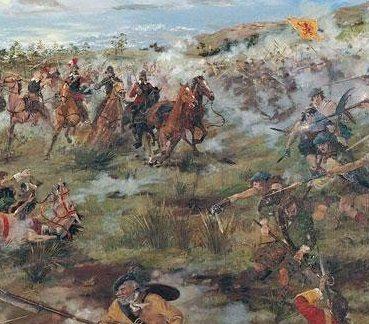
A series of Jacobite risings took place, in the course of which Viscount Dundee raised Highland forces and won a victory on 27 July 1689 at the Battle of Killiecrankie, but he died in the fight and this much weakened the Scottish forces.
A month later Scottish Protestant Cameronian forces supporting King William subdued the rising at the Battle of Dunkeld.
William offered Scottish clans that had taken part in the rising a pardon provided that they signed allegiance by a deadline, and his government in Scotland punished a delay with the Massacre of Glencoe of 1692, which became infamous in Jacobite propaganda as William had countersigned the orders.
Bowing to public opinion, William dismissed those responsible for the massacre, though they still remained in his favour; in the words of the historian John Dalberg-Acton, “one became a colonel, another a knight, a third a peer, and a fourth an earl.”
Massacre at Glencoe
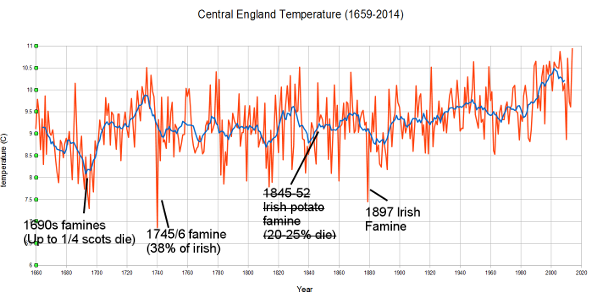
The ‘Ill Years’ famine
The ‘ill Years’ famine began in 1693 and is described as a period of bad harvests and famine in Scotland, which caused massive economic issues for the country.
Over 600,000 men women and children died from hunger, cold or some other abuse inflicted upon them by the famine and Alliance embargo on trade.
Against the preceding background guid men of towns and villages across Scotland petitioned King William, through the Scottish parliament to intervene on behalf of loyal Scots bringing about relief through a reduction in the rate of taxation.
Removal of a standing army in Scotland, which had to be paid for by Scots and support for the secure establishment of the Darien colony which he had personally authorised and supported.
Convention demands that “a good prince should hear the grievances of his people” and in this respect Scots had the right to petition their King
Letters to the sovereign were first sent to the Duke of Queensberry, the King’s high commissioner in Scotland copied to the right honourable estates of the Scottish parliament.
What follows are a few “petitions to King William from the citizens of the burghs of Scotland the content of which could be taken down and sent to the present Queen since the greivances outlined are fully applicable today.
9 January 1701: Petition from the citizens of Glasgow
Sir, We represent that whereas there is nothing dearer to us than the free exercise of religion, which we now presently enjoy, and next the support of our trade, which we find is sensibly encouraged, even by the beginnings of the trade to our settlement of Caledonia, and except due encouragement be given as well for the maintenance of our settlement (in which this city is deeply concerned) as for carrying on our other foreign trade with advantage and encouraging our manufacturers at home, and of relieving us of the financial burden of keeping of so great a number of standing forces, we will not be able to survive under our present taxes considering our extraordinary losses during the latest long war.
May it therefore please your grace and the right honourable the estates of parliament to make such laws as your wisdoms shall think fit for the security of the Protestant religion and maintaining the Presbyterian church government as it is now established by law, the encouragement of piety and virtue, the suppressing of iniquity and vice, and to assert Scotland’s right to our colony of Caledonia, in which so great a part of our stock is employed, and to give such encouragement to our manufacturers at home that our poor, so very large in numbers, may be employed, and to discharge or discourage commerce with nations that refuse our fish and others the product and manufacture of Scotland, and to relive us of unnecessary taxes.
Signed this day 9 January 1701 by 400 guid men of Glasgow
9 January 1701: Petition of the Burghs of Crail, Anstruther, Dysart
Sir, Since his majesty’s happy access to the throne of this kingdom and the ending of the late expensive war we expected the Presbyterian government of the church as now by law established should have been secured against all invasions, and that our exports should have increased bringing employment to the poor improving the natural product of the country and lessening the burden of the nation.
And we are extremely sensible of the decay of thread, both at home and abroad, and that our herrings and fish are prohibited in many places, especially in the kingdom of France, although the government doth allow all French commodities to be imported and sold in this nation, our manufacturers at home and the poor are not employed and encouraged as they ought to be, and our country much drained of money through these years of scarcity, and keeping up of a standing army in time of peace, which is burdensome to Scotland.
And we cannot but be sorry for the great loss and many discouragements our colony of Caledonia has met with through the inhumane attacks of wicked neighbours, and the measures that have been taken to destroy the said colony after so vast a treasure has been expended in that expedition, in the flourishing wherof was placed the hope of recovering much gain and advantage to the nation.
May it therefor please your grace and the right honourable the estates of parliament to take the petition into your consideration and to make such good and wholesome laws as you in your profound wisdom shall think fit for encouraging of trade at home and abroad by discharging the import of French commodities until the prohibition in France be taken off our fish and herrings, for employing the poor in improving the natural product of this kingdom, for easing the burden of so many forces in time of peace, and for asserting the just right to our colony of Caledonia.
Signed this day 9 January 1701 by 40 guid men of Crail, 20 guid men of Anstruther and 20 guid men of Dysart
9 January 1701: Petition of the town of Kirkcaldy
Sir, After a long and expensive war we expected by now to have enjoyed the fruits of a happy peace in the encouraging of foreign trade and of manufacturing at home, in the employing the poor of the nation (which through the dearth of victuals are become very numerous), in improving the natural product at home and in lessening the burden of the nation.
But instead of these blessings, we are extremely aware of the decay in trade, that our export is prohibited almost everywhere, especially in the kingdom of France, that our nation is drained of coin, and though we have good and wholesome laws for encouraging trade, yet that they are not put in execution, that our poor are not employed as they ought to be, and, to compound our misery that a standing army in time of peace is kept up, a heavy burden to the nation.
Amongst other our misfortunes, we cannot but be sensitive to the repeated discouragement our colony of Caledonia has met with, which, though they had acts of parliament and his majesty letters patent in their favour, and though a vast amount of the nations money was expended in the expedition, yet measures have been taken to defeat the design, to dishearten the colony after their settlement, which, to our great grief, have proved effectual, by which means many of our countrymen have lost their lives through the inhuman abuse of their unkind neighbours, in the flourishing of which colony was placed the hopes of recovering our sinking state and nation.
May it therefore please your grace and the right honourable the estates of parliament to take the premise into your consideration, and to fall upon such proper and effectual measures as you and your wisdoms shall think fit for encouraging foreign trade and manufacturing at home, for employing the poor in improving the natural product of this kingdom, for supporting and protecting our interest of Caledonia, and for easing us of the burden of so many forces in time of peace.
Signed this day 9 January 1710 by 20 guid men of Kirkcaldy
9 January 1701: Petition of the Burgh of Perth – The famine in Scotland
Sir, Whereas these many years past we have (beside the calamities of war and dearth which were common to us with others of this kingdom) suffered most sensibly, as being the place of the greatest confluence of his majesties forces for reducing the highlands, whereby not only the corns of the crops 1689 and 1690, particularly these belonging to this community and the hospital and poor there, were almost entirely cut down by the troops, but also by the continuing forcing upon us in such numbers as the condition of the place can hardly support, the prices of victual and other revivers which we ordinary had here at the easiest rates of the kingdom have been these many years and doe yet continue to be at a greater height with us then any of the neighbouring places. And beside the manifest and known decay of our trade in those things that are the native product of this place of the kingdom, we do suffer in a singular manner in the trade of salmon, and that by reason of a extraordinary imposition thereupon by the French, beside the 50 sols per tonne imposed by them upon all Scots boats.
All which hardships and calamities we have hitherto most patiently suffered, albeit the pressures we had to bear by our losses and disadvantages and quartering such considerable numbers of forces upon us were just grounds of complaint and might have moved redress, especially seeing as to the losses of our corns. We had good reason to expect a effective course of action to be taken with us from that satisfaction proposed by the act of parliament these three months past and hearth money, and the peace gave us hopes that improvements would appear and recompense and make up all our other losses.
And seeing that we have repeated promises from his majesty for the encouragement of our trade and his gracious letter to the present meeting of parliament, in which he regrets the kingdom’s losses and is pleased to promise all favour and protection to his subjects of this kingdom, from all which we are encouraged to entreat that;
It may please your grace and the right honourable the estates of parliament to take this petition to your serious consideration, and find out proper and effectual methods for asserting the honour and independence of this kingdom, which now seems to be so much injured by the constant attacks on our colony of Caledonia, and to assert the nation’s right, which has been and still is called in question, and to give such support to trade as that colonists may be encouraged, which his majesty, by his gracious promises, has given them grounds to expect; and that trading with France may be discharged by removing the prohibition of their importing our herring and salmon and Scots ships used in the traffic; and also to remove the ban on the import of cloth so that Scots manufacturers may be encouraged and the poor rightly employed, and the import of English cloth, silk and woollen and the wearing of it in the nation, at lastly the ban on exporting our linen cloth to England be removed.
And to relieve our country of the large numbers of forces, which are so burdensome and unfriendly to the people, and to introduce other methods for securing the peace and support of the government as may be most for the satisfaction and interest of the kingdom.
And, to provide support to this burgh in its distress and decayed condition, to think upon some effectual means such that our ancient bridge upon Tay, which was so necessary and useful to the whole kingdom, and particularly of singular use and convenience to his majesty’s forces upon all occasions, may be rebuilt.
Signed this day 9 January 1710 by 40 guid men of Perth
9 January 1701: Petition of the Stewartry of Orkney – New Edinburgh – Darien
Sir, After a long and expensive war we had expected to have enjoyed the blessings of a happy concluded peace by the re-establishing of our foreign trade, encouraging of home manufacturers, employing of the poor in the improvement of the native product of the kingdom and the lessening of our public burdens, but instead, to the unspeakable loss and almost ruin of the nation, we find the trade of the nation in general and ours in particular decay, and our coins taken away by the importation of commodities from places where ours are prohibited; our woollen and other manufacturers at home, by the same means and the remiss of magistrates in putting the laws in due execution, receive not that encouragement which the interest of the kingdom requires, our poor are neither supported nor employed as they should be; and that our Company trading to Africa and the Indies meets with so much opposition from abroad and gets so little support at home, that, after so great a loss of men and expense of the kingdoms treasure, their settlement in Caledonia is in great danger of a second time falling under the same untimely and unlucky circumstances as at first, if not prevented.
And yet after all these hardships which the nation groans under, numerous numbers of forces are still kept on foot while our much wealthier neighbours are disbanding, which occasions now in time of peace heavy and unnecessary taxes. It’s also well known to this honourable court of parliament what sad disadvantages our country lies under by reason of our situation in so northern and cold a climate, and in lying so far distant from the supreme courts of the kingdom where lasting relief is to be had in all cases, which distance is so much the more grievous because of the great and tempestuous seas to be negotiated, which disadvantages us.
we have also to add the extreme calamity of these five last years, which, due to miserable harvests, and the rigid oppression of taxmen and farmers of his majesty’s review, who are both our judges and executioners, that thousands of our people have been killed and starved and almost brought the whole country to ruin. And it’s very well known that when our country was under our Chamberlin, his majesty’s revenue was not only better paid, the king’s property fully possessed and laboured (which now for the most part is lying waste, only occasioned by the oppression and exorbitant actions of the taxmen as said is), but also is much paid by us to his majesty as the taxmen have paid for the several years of there tax.
And we must further lay before your grace and honourable estates of parliament that amongst others of our misfortunes and oppressions that although by the several acts of parliament and acts of the commissioners for payment of cess and supply to his majesty, there was always regard made to his majesty’s property and the bishopry in our country to bear and pay, conform to the valuation what was from time to time imposed. Yet the taxmen and farmers, through there wilful neglect in not paying their due proportions, although wee did pay our proportions on time, yet for the failures on the taxmens part we have been always forced upon, to our great loss, for remedy. we did apply to the lords of his majesty’s treasury, but got no answer from them.
May it therefore please your grace and right honourable estates of parliament to improve matters taking action curbing vice and putting in place good laws for maintaining and employing the poor, that they may be useful and not burdensome to the kingdom; and for the encouragement of our manufacturers and carrying on our trade with advantage, to withdraw such imposition on the branches of our import as may overbalance our export, and particularly that of France; and to assert the Indian and African Companies right to their colony of Caledonia, which is still called in question, and to give support to it, which, if vigorously carried out, may tend so much in the future to the wealth, honour and interest of the nation; and to relieve the kingdom of so great a number of forces now in time of peace so uneasy to the people; and to appoint tariffs yearly to be struck in our country for the several species of victual, oil and butter payable to his majesty, which his majesty’s other vassals in the kingdom have the benefit of (with regard to our grain, which is a third higher than any in the kingdom), and as to the butter and oil, to liquidate the same to sixteen pound per barrel of butter and twelve pounds per barrel of oil, conforming for the said duties in the said Stewartry, whereby and by the blessing of God our poor, miserable and much depleted population may recover to its former consistency while under the chamberlains, his majesty’s property (now for most part waste) again possessed, wee will be more enabled to pay his majesty’s revenues. As also take some effectual course for preventing the said unjust quartering of forces for the deficiencies of his majesty’s property upon us, who are not liable.
Signed this day 9 January 1710 by 70 guid men of Orkney






















 caltonjock