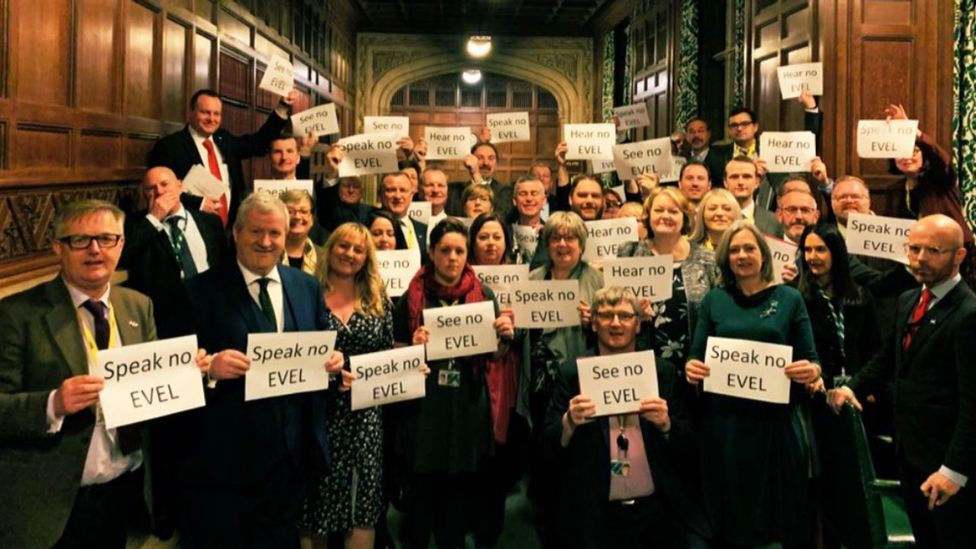
The silence from the Westminster MP’s is deafening -this explains why

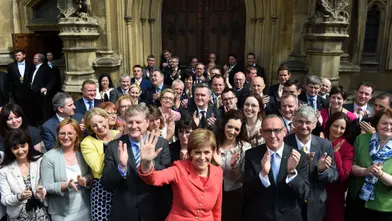
26 Sep 2015: The SNP run riot at Westminster

Standing on chairs in Parliament’s Sports and Social bar, a band of portly gentlemen are bellowing out Scottish folk songs.

A young barmaid, only in her early twenties yet a seasoned veteran when it comes to turfing out unruly Westminster soaks, approaches a new SNP MP and politely asks him to pack it in.

Words are exchanged.

Multiple witnesses allege a drunken ‘f— you’ is uttered.

Defeated, the barmaid retreats behind the bar to mocking male laughter.

So upset is she by the incident, she will leave her job a few weeks later.

A Labour wag reaches for his coat and sighs “They’re only just getting started.”

The conquering horde of Scots Nats have come to town and they are making themselves heard.

SW1 certainly expected the worst from the new SNP cohort.

As the Glasgow East MP Natalie McGarry puts it, “They thought we would come down waving flags, with our faces painted blue and white.”

Yet those preconceptions were not without substance.

An extraordinary, never-before-seen document written by disgruntled SNP aides reveals that even the party’s own employees have been horrified by their MPs’ behaviour for a while.

In their own staff’s words, this new Westminster group are described as “complete arseholes”

To find out whether the new intake are living up to their reputation, Westminster’s watering holes are the only place to begin.

The Sports and Social is traditionally a Labour haunt, earning it the nickname ‘Sports and Socialist’.

Just two weeks after polling day, to quote one Blairite boozehound, it had been ‘colonised’ by the Scots.

Such are their imperial ambitions, SNP MPs confirm with almost embarrassed smiles their plans to have it officially renamed the ‘Rabbie Burns Bar’.

At kicking-out time, it’s over to the infamous Strangers’ Bar.

A taxpayer-subsidised tot of Scotch here is just £2.55, yet despite the SNP’s arrival, the managers have not had cause to double their orders.

The man at the bar claims half jokingly “‘Most of them only drink champagne.”

His theory is that the £67,000-a-year MP’s salary is a considerable pay rise for many of his new punters, and that they are enjoying their newfound riches in style.

This is an allegation heartily rebuffed by ‘real ale man’ and Midlothian MP Owen Thompson, who is having beer from his local Stewart brewery shipped in and put on tap.

Bubbly or ale in hand, the terrace is a place where MPs forget the adversarial nature of the chamber and, their inhibitions loosened, have a good gossip with politicians from other tribes.

Not so the Nats, of whom one rival party hand complains they, “all stand together in a huddle by themselves, not talking to anyone else.”

A case of dour Scots?

Natalie McGarry insists she has had “a good bit of conversation” with “amenable” Labour colleagues, but that while, “some Tory MPs are unfailingly polite, some of them are stuck up their own bahookies.”

I barely have time to ask how one might spell that, before she is telling me what happens when the SNP stick to non-alcoholic beverages.

McGarry recalls, “a cabinet minister came up to us and said fruit juice? I would have thought you Scots would have been on the booze.”

In an example of Westminster Jockophobia, she claims the minister’s aide then turned to her boss and sneered, “Now they’re here we’ll have to start nailing things down.”

There are eight new SNP MPs under 30, and the younger generation have quickly taken over Westminster’s premier 3 a.m. dive, the Players Bar in the Charing Cross Theatre.

When 20-year-old Mhairi Black is not wowing the House with her eloquence, she is impressing revellers on the dance floor.

A fellow clubber reports, “She was a bit reserved early on, but that’s understandable.

She was dancing away with the rest of us by the end of the night.”

Black’s colleague Stuart Donaldson, the 23-year old MP for West Aberdeenshire, has meanwhile undergone something of a transformation.

An admiring colleague laughs and says, “He was the most socially awkward person here when he first turned up.

Now you never see him without his harem of attractive blonde girls.”

He would not be the first Honourable Member to find the trappings of power have improved his success with women, but he might be one of the youngest.

And after a night out, where do the SNP regiment go to lay their weary heads?

The highly rated Argyll and Bute MP Brendan O’Hara warns, with a hint of irony, “the last thing you want is folk swanning around Belgravia on the taxpayer.

O’Hara himself is taking advantage of gentrification, “I’m down in Elephant and Castle. I lived in London in the 1990s and it had an awful reputation. Someone said to me, “Look at Elephant and Castle,” and I thought, “Oh I don’t think so.” But what a transformation! What you could get in Glasgow for your IPSA [expenses] allowance here, well you could get anything you want. It’s remarkable.”

Ginger-bearded Owen Thompson is a Midlothian man at the weekend, but during the week he lives in Kensington.

He tells me of his initial shock at being quoted a price of £350 a week for a high-end property in west London, but was chuffed to haggle £25 off the final price: “Doing my bit for the taxpayer.”

Early hopes for flat shares between laddish MPs petered out, leaving much of the new contingent dotted around Vauxhall and Kennington.

O’hara explains, “almost everyone I know lives within walking distance of Parliament.”

A Tory source recounts recently bumping into Stuart Hosie, the SNP deputy leader and Westminster veteran outside the Scot’s ultra-luxury apartment at Great Minster House, where a flat can fetch up to £6 million. “Even I can’t afford to live here,” exclaimed the envious Tory, to which Hosie protested: “It’s a shoebox!”

Other than the cosy living arrangements, what has been the biggest surprise?

Gavin Newlands, MP for Paisley and Renfrewshire North gushes about the ‘good value’ of the subsidised Commons cafeteria.

Outside of the Parliamentary estate, the Nats have been a little more adventurous.

Natalie McGarry is outed by colleagues as the organiser of an SNP team dinner at the upmarket Cinnamon Kitchen in the heart of the City.

The sister restaurant of Westminster’s opulent Cinnamon Club, the Kitchen’s extensive menu offers spiced red deer for £29 and Pinot Noir at £100 a bottle.

Forty-five out of the 56 SNP MPs attended.

O’hara admits,”this isn’t a change of job, it’s a change of life,” and for him the most difficult adjustment has been the Palace of Westminster itself. He says. “Labyrinth doesn’t begin to describe it I find myself running up staircases and wandering around for hours thinking, How do I get back? I’d love to get into the mind of the architect.”

For McGarry, the change in climate has caused more serious concerns, “I woke up one morning and I had massive lumps all over me! I went into a tailspin thinking I had bed bugs, so I went to the nurse. She just scoffed at me.”

Had moving 400 miles nearer to the equator left her susceptible to tropical diseases? The Nats were expecting plenty of bite south of the border, but they had not bargained for mosquitoes.

Watching them sip champagne on the Commons terrace and hearing about their fine dining and luxurious flats, one cannot help but feel the SNP’s new intake are already becoming the very metropolitan elite they claim to despise.

Owen Thomson admits, “there is a real danger with that. It is absolutely in your face all the time. I hope we’re not showing we’re all getting caught up in the establishment.”

McGarry cautions, “You could get into bad habits. I think people could get swept into the Westminster state of mind. It is “not healthy” to ‘socialise too much.”

O’Hara disagrees, insisting, “it’s really important that we don’t go around as a tribe and that we get to know a lot of people down here.”

2015 Article published in the “Observer”
This will puncture the myth that Murrell was a strategic genius

Jan 2017: Use of Gathered Data – Analysis of Petition Outcome

I compiled an analysis using information available to the public and produced a predictive 2017 election outcome.

Electorate totals were included and a percentage signatory total was established for each constituency. From that I used the mean figure of 3.75% to forward project the outcome of an Independence referendum.

The figures suggested that from an electorate of 4,021,203 the outcome of another referendum would result in a: 48.00% “Yes” vote in favour of independence with 52.00% preferring to remain with the Union. 

This was important information which if used wisely would allow effective forward planning electioneering strategy.

As expected Edinburgh, Aberdeen, East Renfrewshire and East Dunbartonshire recorded higher than average figures favouring remaining with the Union.

SNP's Mr Invisible may be taking the flak from dissidents, but critics are  also targeting his wife

Jan 2017 General Election Calton Jock forecast 

The General Election in Scotland will not be a re-run of the 2015 General Election and the landslide victory achieved by the SNP cannot realistically be achieved.

My analysis suggests 25 seats might be lost to the Tory Party.

Significant SNP financial resources and additional teams of activists will need to be deployed in force in the under-noted constituencies otherwise they may be lost.

This group of seats are marginals – risk decreases as the % number drops:

71749: Edinburgh West, Michelle Thomson MP : 4388-6.12% Lost

69982: East Renfrewshire, Kirsten Oswald MP: 4241-6.06% Lost

66966: East Dunbartonshire, John Nicolson MP: 3977-5.94% Lost

73445: West Abdn, Stuart Blair Donaldson MP: 3961-5.40% Lost

80978: Edinburgh North & Leith, Deidre Brock MP: 4280-5.29% Held

66208: Paisley & Renfrew, Gavin Newlands MP: 3158-4.77% Held

68875: Argyll & Bute, Brendan O’Hara MP: 3277-4.75% Held

62003: North East Fife, Stephen Gethins MP: 2937-4.74% Held

67236: Stirling, Steven Paterson MP: 3175-4.72% Lost

77379: Ochil & Perth, Tasmina-A-Sheikh MP: 3645-4.71% Lost

79393: Gordon, Rt. Hon Alex Salmond MP: 3711-4.68% Lost

68056: Aberdeen South, Callum McCaig MP: 3618-4.65% Lost

79481: East Lothian, George Kerevan MP: 3676-4.63% Lost

72178: Edinburgh S-West, Joanna Cherry QC: 3283-4.55% ) Held

72447: Perth & N-Perthshire, Pete Wishart MP: 3033-4.19% Held

71685: Moray, Rt. Hon Angus Robertson MP: 2995-4.18% Lost

78037: Lanark & Hamilton-E, Angela Crawley MP: 3272-4.19% Held

74179: Berwick, Roxburgh, Selkirk: Calum Kerr MP: 3026-4.08% Lost

86955: Linlithgow, East Falkirk, Martyn Day MP:3570-4.11% Held

68609: Banff & Buchan, Dr Eilidh Whiteford MP: 2772-4.04% Lost

73445: W. Abdn,  Stuart-B-Donaldson MP: 3961-5.40% Lost

71685: Moray, Rt. Hon Angus Robertson MP: 2995-4.18% Lost

68056: Aberdeen South, Callum McCaig MP: 3618-4.65% Lost

Revealed: The secretive SNP chieftains helping Alex Salmond break up the  Union | Daily Mail Online

The 2017 General Election and the resurgence of the Tory Party in Scotland

The 2017 General Election in Scotland first exposed Scottish voters to “data mining”. A new form of politics imported from the USA, providing tools and profiling information allowing Tory candidates to communicate personally with their prospective constituents.

The benefits were astounding. The Tories gained a stunning result, increasing their MP’s from 1 to 13 in total.

Pollsters were flabbergasted at the turnaround in the voting since the SNP appeared to be invulnerable.

But Tory candidates had been well briefed about the individual targets within their constituencies. The new voting strategy used predictive data models which identified, engaged and persuaded swing voters to turnout.

This was achieved through the use of internet, phone and personal surveys combined with many other data sets, created by teams of contracted data scientists, psychologists and political consultants allowing the campaign to map the Scottish electorate based on ideology, demographics, religious beliefs, strongly held opinions on key issues e.g. Independence, the Orange Lodge, Celtic, Rangers, The SNP and or political personalities.

The information gathered provided Tory campaign strategists with a predictive analysis based on thousands of data points on just about every voter in Scotland.

From that teams of political consultants and psychologists, hired by the Party directed the campaign and candidates on what and how to say it to selected groups of voters.

Other voter targeting, included use of Facebook adverts, one to one scripted phone calls and provision of the content of messages for door-to-door canvassers ensuring consistent communication with voters on any issue.

What won the day for the Tory party in 2017 was that they utilised “data mining” to gain a comprehensive understanding of the Scottish electorate and then used every communication aid available facilitating discussions with voters about matters important to them as individuals.

Throughout the campaign the Tory tactic was to constantly broadcast the “no new referendum” message in the “no” constituencies stressing the major difference between the Tory and any other candidates firmly imprinting this in the electorate’s minds.

In contrast the SNP campaign lacked inspiration. It was poorly directed (Murrell deliberately starved “at risk” constituencies of financial and other resources) and failed to get the SNP voters out.

Information is power and the incompetent SNP strategist, Peter Murrell, was outwitted by the Tory Party.

Had he been the chief strategist of any political party other than the SNP he would have been given his marching orders.

Incredulously the First Minister, (his wife) awarded him a massive pay rise and an extended contract.

Mike Russell -Interim Chief Executive needs to sack Kirsten Oswald SNP Business Secretary and LBBTQ adherent who perverted an NEC vote in favour of LGBT

2021: NEC Meeting hijacked by LGBTQ activists

The LGBTQ group proposed that the SNP’s eight regional lists for the Scottish parliamentary election should include either a *BAME or a disabled candidate in the top place,.

Four regions would be allocated a BAME person and the other four a disabled person.

The proposal carried the commitment that disabled status would be by self-identification with no confirmatory checking being carried out.

Members in attendance believed it would be illegal to adopt the proposal under the equalities law.

The matter was deferred and referred to the Party’s legal counsel, Jonathan Mitchell QC who warned that the policy was legally dubious and open to challenge in the courts and any case brought by a person disadvantaged by the rule would probably succeed, and cost the SNP maany thousands of pounds in legal expenses.

But the LGBTQ group insisted the proposal should be decided upon by the NEC.

The Chairperson, Kirsten Oswald decided to put the matter to the vote.

The vote was tied and it was expected that in compliance with accepted practice the Chair would cast her vote for retention of the status quo.

She didn’t and passed the motion placing the Party at great risk of legal and costly claims of discrimination.

The SNP leadership is building a totalitarian edifice and it is depressing that it is doing so without the support and approval of much of the population – an example of totalitarian democracy at work

Forget the Soviet Union, Cuba, and North Korea. The new utopian master plan is about to unfold in Scotland. 

This year, we will celebrate the 34th anniversary of the fall of the Berlin Wall. Thanks in no small part to Mikhail Gorbachev, the Soviet Union went away peacefully, almost without military incidents. A new era of freedom and prosperity reached new lands across the world. 

Many of us thought that we would never see totalitarianism again. But the more time we put between ourselves and the country that President Ronald Reagan referred to as the “evil empire,” the weaker the memories of tyranny become. 

Perhaps this is why, in Scotland, a new government initiative can pledge to completely rewrite society—with government master planning—travel restrictions on private citizens, workforce dictates, and an end to free enterprise.

In a document called the , https://www.transformingplanning.scot/national-planning-framework the Scottish government’s “planning and architecture” authority lays out a vision that is nothing short of a green bureaucrat’s dream.

And a freedom-loving citizen’s nightmare.

Much like the communists of the early 20th century, the Scottish government aspires to completely transform society—whether people like it or not. However, unlike the communists who led hundreds of millions of people into a Marxist economic utopia, this time the people will be led by green bureaucrats. 

Scotland is going to become a perfectly environmentally friendly society. The greenocracy envisions a brave new world so virtuous that nobody can refute it.

At the same time, once you examine the plan a little bit below the shiny, green surface, it comes across as entirely unachievable—at least under a democracy that respects individual and economic freedom. This, however, should not surprise anyone: un-achievability is an essential component of every utopia, the path to which requires the citizenry to give up their freedom. 

If this new greenocracy gets what it wants, Scotland will aspire to become a recyclable North Korea. Since that is as unrealistic as creating the worker’s paradise was under Kim-Il Sung, the Scottish masterplan will require its citizenry to submit to three generations of benevolent expert rule. The Scotsmen will be asked to participate in a new, full-scale socioeconomic, utopian experiment, led by the enlightened few whose privilege it is to understand what the end product will be.

According to their ideological masterplan, these greenocrats claim that it will take some 20 years before the full brilliance of their efforts will be apparent to everyone. Until then, buckle up (but not in your private car—it will be phased out), bow your head, and join the long march.

There are, of course, many differences between Scotland’s green virtue crusaders and the red virtue crusaders of yore. For one, the former do not seem ready to resort to the kind of violent tactics that the latter used in order to impose their benevolence on their fellow citizens. The greenocrats have chosen another path: a master plan that carefully mixes politically correct terminology with seemingly analytical verbiage. 

Part 1 of the https://www.transformingplanning.scot/national-planning-framework opens with a shower of virtuous verbal emoticons. The world, they say, “is facing unprecedented challenges under a global climate emergency.” Within the opening paragraph, they throw in “climate change” and “nature crisis,” as well as “cost crisis” and “longstanding inequality.” Interspersed among these psychological trigger terms are calls to action: the Scottish people “will need to respond” and “work together” to bring about the utopia where all problems are solved.

The substantive difference between the Scottish green crusaders on the one hand, and communists or Nazis on the other, is the focal point of the negative emotions. Where communists appeal to hatred against the ‘bourgeoisie’ and Nazis stirred up rage against the Jews, the aspiring Scottish totalitarians stir up fear. They want people to be so afraid of economic inequality and a climate collapse that they will never, ever question what the greenocrats will require of them.

By rallying people based on fear, they hope to insulate their master plan against mentions of the hundreds of experts who have dismissed the so-called climate emergency. They hope that nobody will have the courage to explain that there is no data to support the climate catastrophe hyperbole. This is not surprising: the purpose of an ideological master plan, regardless of what ideology produces it, is to steer clear of scholarship, analysis, and rational inquiry. The purpose is to turn off the functions of reason in people’s minds.

All the greenocrats want is a big enough emotional investment from the populace so that they will obey and follow their leader, regardless of what recyclable environment he leads them into

Once people have been manipulated into submission before the master plan, the ultimate solution is laid out. Explains the https://www.transformingplanning.scot/national-planning-framework

We will plan our future places in a way that improves local living, so that we live in communities that are inclusive, empowered, resilient, safe and provides opportunities for learning. Quality homes will be better served by local facilities and services by applying the principles of local living to development proposals. The concept of 20 minute neighbourhoods will help support this, particularly in more urban areas. 

This paragraph is a blueprint of what awaits the Scottish people if this master plan is implemented. The concept of 20-minute neighborhoods is far more frightening than it seems to be in this innocuous piece of text. A couple of commentators, such as Hot Air and Big Issue, have written informatively about it, but its ideological significance, and its full totalitarian meaning, has yet to be explored. 

The neighborhood concept is a planning tool for the total reconfiguration of the way Scotsmen live their daily lives. Its purpose is to guide government, presumably at all levels, through a process that physically changes the layout of cities, towns, and even rural areas around Scotland. Although it is not spelled out in the National Planning Framework, it is made pretty clear between the lines that the geographical, or, to use the plan’s word, “spatial,” re-planning of Scotland’s economy and social life, must be done by the use of government force. 

If people have a say in the process, specifically, there is a risk that they reject the plan. If they do, we are led to believe, then the Earth’s climate will collapse. Since Scotland is responsible for saving the world, it is unwise—is it not?—to let the people have too much to say about the master plan.

As I explain in Democracy or Socialism: The Fateful Question for America in 2024 (see in particular pp. 11-16), Russian revolutionary leader V.I. Lenin thought it was so important to reconfigure Russian society in the image of his ideology that the very criticism of his communist master plan was made a crime.

How far along the path to a ban on ‘opposition’ will the Scottish greenocrats go, in order to put their plan to work? 

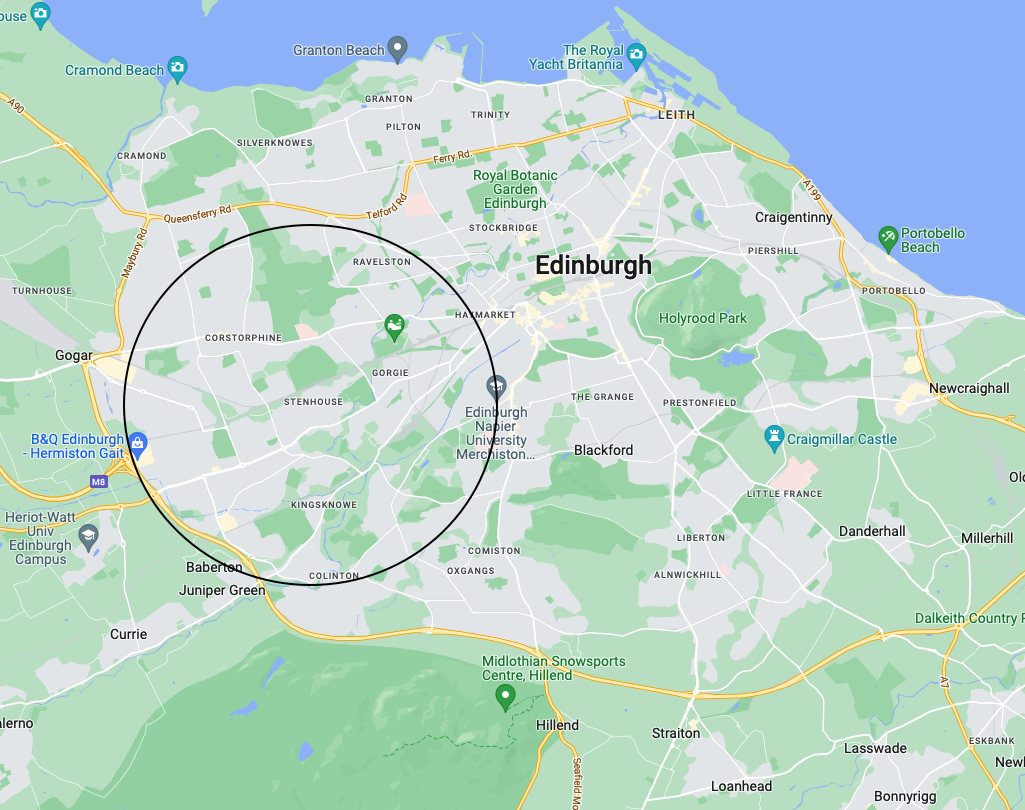
To see just how totalitarian this plan is, let us take a closer look at their 20-minute neighborhood concept. To take a random example, suppose you live in the Stenhouse neighborhood of Edinburgh. The border of your new neighborhood is a 20-minute radius, measured by an average ride by bicycle, from your home:

Map

Description automatically generated

Based on Google Maps

The plan says that residents within this circle should have access to:

  • Sustainable transportation, including electric buses and “high quality walking”;
  • Shopping;
  • Health care and social services;
  • Childcare and schools, including “lifelong learning opportunities”; and
  • Employment.

This list is not exhaustive, but already here we have items that raise prominent questions about how the master planners intend to create their new, ideologically correct neighborhoods. 

At the top of their list of challenges is the employment part. How are they going to guarantee everyone a job within 20 minutes of their homes? 

Personally, I am particularly concerned about all the younglings who graduate from university with a gender studies degree. Will the master planners be able to guarantee them jobs within their field of expertise within the 20-minute circle?

There is another option. The greenocrats can adjust the labor force to the employment needs identified by the master plan. That would be a model much like the one described by the late American economist Emily Clark Brown in her informative article “The Soviet Labor Market” (ILR Review, January 1957). 

The workforce is not the only part of the neighborhood economy that needs planning. Since people are promised shopping and health care within the 20-minute range, the new utopia must also secure everyone’s access to groceries, dentists, clothes (including shoes for “high-quality walking”), bicycle repair, barbers, therapists, home electronics, flowers, eyewear, brain surgery, and home improvement items. 

The master plan calls for everyone to have “lifelong learning opportunities” within their neighborhood. That is good news: students will no longer have to move far away from their parents to attend university. But wait—it seems a bit overly ambitious to secure everyone’s preferred university degree within 20 minutes of their home. What about those who do not live close to the fine academic institutions in Glasgow, Stirling, or St. Andrews? 

By now, it is clear that Scotland’s National Planning Framework will match the central-planning ambitions of their Soviet brethren. They cannot leave it to private entrepreneurs to open grocery stores, or fashion boutiques for that matter, with the desired density across both urban and rural Scotland. Inevitably, some entrepreneur is going to say that the market for his particular products is too small in East Kilbride or Stornoway

At that point, the greenocrats will have no other option but to take over.

When they do, they will have their hands full. Here is more of what they want in every 20-minute neighborhood:

  • Public bathrooms;
  • “Playgrounds and informal play opportunities, parks, green streets and spaces, community gardens, opportunities for food growth and allotments, sport and recreation facilities”; and
  • So-called affordable housing. 

In other words, everyone will have a vegetable garden of their own within 20 minutes of a home they can afford. If their neighborhood does not offer enough homes that anyone can afford, the government planners will use whatever power they need to make sure that those homes are there. 

All this, they promise, while securing anyone’s access to “playgrounds … parks, green streets and spaces, community gardens … and recreation facilities.” 

Perhaps the greenocrats are planning to seize private homes with more than one bedroom and turn them into multi-resident homes? Then they could allot living quarters based on what they deem a person needs, presumably along the lines of how this is done elsewhere

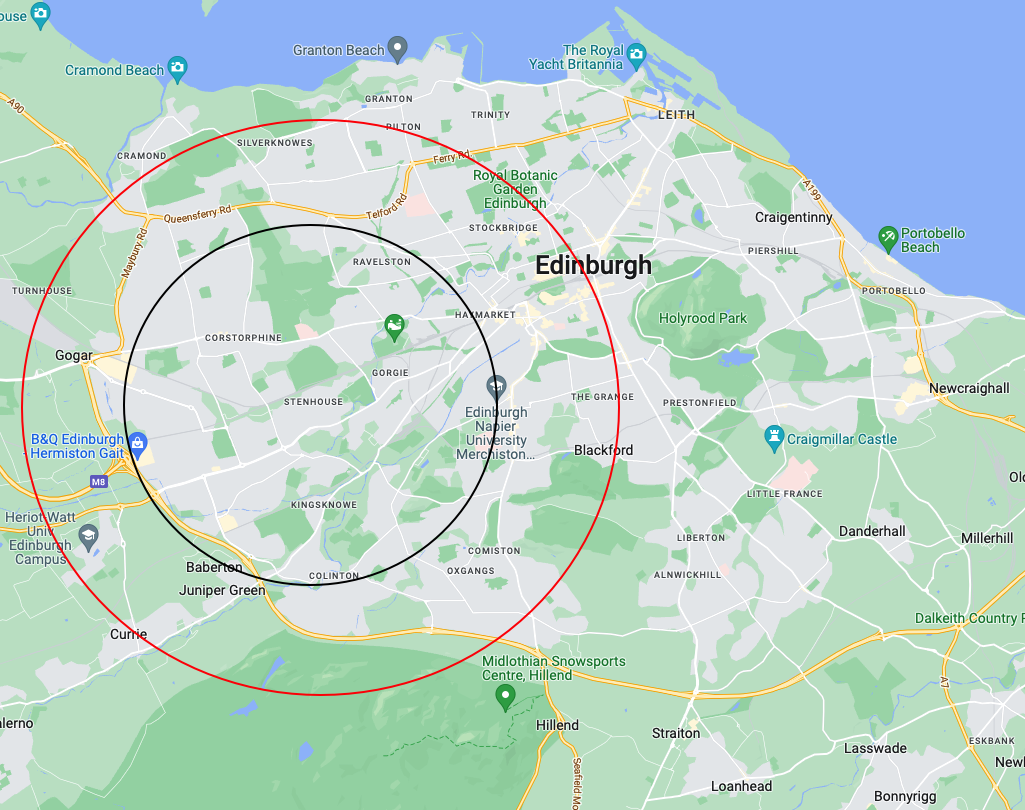
But are we not being a bit too tough on the Scottish greenocrats? Maybe their 20-minute neighborhoods are not limited by a bicycle ride, but by mass transit. A bus moves at 12-14 miles per hour, so let’s say that in a car-free Scotland, those buses can reach an average speed of up to 15 mph on their routes. 

Suddenly, the 20-minute neighborhood expands:

Map

Description automatically generated

Who would not be able to find a job of their dreams, affordable housing, or a good law school to attend, within the red circle? Of course, things change a little bit if you happen to live in other parts of Edinburgh, like Danderhall or Leith, but if the greenocrat master plan says you can still get everything within a 20-minute bus ride, then what can you do but trust them? 

There is one more thing with this plan: It wants Scotland to become a “circular economy.” How do the master planners intend to recycle the batteries from all the EV buses they are going to need? 

A very optimistic outlook suggests that it will take until 2050 before we can even recycle 22-52% of the metals in EV batteries. The Scottish greenocrats want their 20-minute utopia up and running by 2045; even if they wait five years, they still have to throw away most of the metals in worn-out bus EV batteries. 

Will they have toxic-metal scrap yards within 20 minutes of every bus garage?

Sven R. Larson is a political economist and author. He received a Ph.D. in Economics from Roskilde University, Denmark. Originally from Sweden, he lives in America where for the past 16 years he has worked in politics and public policy. He has written several books, including Democracy or Socialism: The Fateful Question for America in 2024.

We are WOKE. We are one We are the SNP

We are WOKE. We are one

There are many who believe the campaign for a new leader of the SNP is fixed in favour of one of the three candidates. This is a misnomer spread by SNP activists whose only interest is the pursuit of impossible goals such as independence.

We are WOKE. We think as one. We started recruiting normal people in the USA and nations sympathetic to our cause in time evolving into an political entity so far left of centre the boundaries had to be extended to accomodate us.

We first indoctrinated Nicola Sturgeon, the SNP’s new leader, in 2015, at the time she visited our chairperson, (Hillary Clinton) and with her support and direction we seized control of the Party from its weakly organised members.

All political and Party organisation matters are referred to our supreme leader for authorization and to facilitate this she ensures all who remain loyal are provided with secure, high pensionable employment regardless of ability. We think as one.

We tolerate no dissent and set the, hounds of hell, (the Scottish judiciary) on anyone foolish enough to incur our wrath. We are one.

Our leader recently decided to gain experience with like minded people elsewhere and has decided on a replacement, her close friend Humza (the humper) Yousaf. Since we all think as one there is no need to know anything about our Humza the Humper since he is the anointed one. But for a warning for anyone, in the media, or elsewhere might be considering asking questions about his policies. Be reminded we think as one. Be warned.

These questions are verboten:

1 Do you think homosexuality is forbidden by Islam?

2 Do you think Muslims should be allowed to change their religion?

3 Can Muslim men become women?

4 Would you prefer Scotland was a Muslim country?

5 Is it wrong for people to drink alcohol & eat pork?

6 Should women everywhere be free not to wear scarves or veils?

7 Do you regret the existence of the state of Israel?

8 Do you regret that Islam did not spread to Europe?

9 Would you prefer it if Islam were the only religion.

10 Are women equal to men in Islam?

  1. Did your cousin Osama Saeed, urged for the establishment of an Islamic caliphate in 2005?
  2. Did you, in 2013 when the SNP government’s minster for external affairs and international development, provide a £400,000 government grant to Islamic Relief, one of the largest Islamic charities in the world. A charity set up by prominent names from the Egyptian Muslim Brotherhood, and decried by European and Islamic governments for its links to Hamas and other terrorist groups?
  3. Did you, in 2008, together with your cousin Osama Saeed, arrange meetings between senior SNP politicians and three extremist Islamists, Mohammed Sawalha, (a fugitive Hamas commander) Anas Altikriti, (a prominent member of the Muslim Brotherhood) and Ismail Patel, (a hardliner supporter of Hamas who called for the killing of adulterers and punishment for “free mixing of men and women.”

14. Is it true that your very close and loyal colleague and senior NEC member, Emma Harper, met with yourself the day before she illegally accessed the SNP membership database and extracted information allowing her to send many thousands of unsolicited emails to those members who might be persuaded to support your bid for the leadership of the SNP?

15. Are Muslim clerics and officials illegally preventing the use of mosques by LBGTQ, trans and/or transvestite Islamists?

16. Homosexuality is outlawed by the Islamist faith. How does this fit with the actions of SNP Islamist politicians who voted for the introduction of the GRC self certification bill.

A £40 million plus public salary purse overrides all other commitments. Full list of WOKE, We are one supporters (late February 2023):

Thirteen MP’s (All WOKE)

Mahri Black, MP for Paisley and Renfrewshire South: Deputy leader at Westminster. LGBTG? No friend of any of the female candidates.

Ian Blackford, MP for Ross, Skye and Lockaber: Hopeful of senior post in the SNP government Likely to lose his Westminster seat.

Amy Callaghan, MP for East Dunbartonshire:

Stuart Hosey, MP for Dundee East: Dundee is home territory for Yousaf.

Chris Law, MP for Dundee West: Dundee is home territory for Yousaf.

Stuart MacDonald, MP for Cumbernauld, Kilsyth and Kirkintilloch East:

Anne McLaughlin MP for North-East Glasgow: Justice spokeswoman.

Anum Kaiser, MP for Airdrie and Shotts: A protegee and close friend of Yousaf.

Tommy Sheppard, MP for Edinburgh East:

Chris Stephens, MP for Glasgow South West: Close friend of Yousaf.

Alison Thewlis, MP for Central Glasgow: Westminster home affairs spokeswoman

Owen Thompson, MP for Midlothian: Chief Whip at Westminster under Blackford. Likely to lose his Westminster seat. His support is aimed at securing an MSP nomination.

Pete Wishart, MP for Perth and North Perthshire: Strongly supports the GRC bill hence his backing of Yousaf.

Hannah Bardwell, MP for Livingston East: Openly gay. Courts controversy with regular interventions in the Commons in support of LGBTQ matters.

Twenty-four MSPs (All WOKE)

Karen Adam, MSP at Banffshire and Buchan Coast:

Alasdair Allan, MSP for Nah-Eileanan an Iar:

Graeme Day, MSP for Angus South: Close friend of Yousaf.

James Dornan, MSP for Glasgow Cathcart:

Joe Fitzpatrick, MSP for Dundee City West: Dundee home territory for Yousaf.

Jenny Gilruth, MSP for Mid Fife and Glenrothes: Yousaf fails she’s out to pasture.

Neil Gray, MSP for Airdrie and Shotts: Very close friend and campaign organiser. Tipped for promotion if Yousaf wins the leadership position.

Emma Harper, MSP for Southern Scotland:

Jimmy Hepburn, MSP for Cumbernauld & Kilsyth:

Shona Robson, MSP for East Dundee: Scottish Social Justice Minister. Imposed a three line whip on SNP MSP’s forced the controversial Gender Reform Recognition Bill through Parliament.

Michael Matheson, MSP for Falkirk West: Minister for Net Zero, Energy and Transport. Yousaf fails he’s out to pasture.

Mahri Macallan, MSP for Clydesdale: Environment Secretary. Hotly touted for a promotion if Yousaf wins the leadership position.

Paul McLennan, MSP for East Lothian:

Mary McNair, MSP at Clydebank and Milngavie:

Jenny Minto, MSP for Argyle and Bute:

Emma Roddick, MSP of the Highlands and Islands:

Shirley Ann Somerville, MSP for Dunfermline: Education Minister. Yousaf fails she’s out to pasture

Kevin Stewart, MSP for Aberdeen Central:

Maree Todd, MSP at Caithness, Sutherland and Ross: Public Health Minster. Reports to Yousaf. Out to pasture if he fails.

Elena Whitham, MSP for Carrick, Cumnock and Doon Valley:

Collette Stevenson, MSP for East Kilbride:

Ben McPherson, Edinburgh Northern & Leith: Local government minister urged the SNP to ask for more powers for Holyrood instead of focusing on independence.

Natalie Don, Renfrewshire North and West:

Jackie Dunbar, MSP for Aberdeen Donside: WOKE

Humza Yousaf – free speech is not an unfettered right and my draconian hate crime bill will shut it down

The Hate Crime and Public Order (Scotland) Bill became law on 23 April 2021.

Scotland’s Justice Minister, Humza Yousaf, said: “Free speech in itself is not an unfettered right and must be balanced, with a need to protect vulnerable communities from discrimination.”

The SNP government said it made hate crime law in Scotland “fit for the 21st century”. But lawyers in Scotland, England, Wales, Northern Ireland and in Europe strongly believed the bill to be a draconian expansion of state power fostering as it does the removal of any need for a perpetrator to have shown an intention to “hate” in order to be indicted for a “hate crime” with the only exception being a “reasonable excuse” which is difficult to argue in a court of law.

Even more alarming is it undermines the distinction between public and private settings, meaning statements made in private conversations are vulnerable to being judged to be criminal.

The changes provide unprecedented power, to the police and courts to determine the criteria of a hate crime and threaten to criminalise speech which is now considered part of public debate and includes two significant modifications to the provisions of the Public Order Act of 1986:

a. Expanding the number of protected characteristics to include age and “variations in sexual characteristics”.
b. Changing the test of a crime against these groups from “where there is an intention to stir up hatred” to “where it is likely that hatred would be stirred up.”

Comment:

The use of laws to reform behaviour is a defining factor of Scottish political culture, highlighted by the unprecedented invasion of its citizens private space and the on-going interference of the SNP in social engineering witnessed by the intervention of the First Minister in the “culture wars” now besetting the nation.

The new bill does not satisfy the recommendations of the review that preceded it.

It is incompatible with Article 10 of the European Convention which protects freedom of speech from unjustified restrictions and provides to the state and individuals the facility to weaponize the law to settle personal grievances. eg “a casual acquaintance cracking a joke, at a private function which you find offensive generates the opportunity for you to prosecute”. Unlikely but only one source is needed to verify a hate crime.

The possibility would be there for you to prosecute.” This may seem an unlikely outcome, but only one source is required to verify a hate crime – the supposedly offended victim.

All criminal complaints must be investigated, adding an as yet unquantified new case load for the police based only on the hurt feelings of easily offended individuals.

And the complaints extend into the household, a change without precedent.

And it provides no indication of how discrimination based on ethnicity or sexuality is to be interpreted, leaving the police and judiciary to decide based on their own impressions.

Those could be subject to social and political pressure. Indeed, feminists comments on social media, in which they say that “people who menstruate” are “women”, would easily fall under the terms of the proposed bill, on account that they must have have caused offence to some.

But there is a fall-back position to be used in the event of ambiguity which is the “International Covenant on Civil and Political Rights”, ratified by the UK in 1976 and given further clarification by the UN Special Rapporteur in 2001 recommending that any law prohibiting “hate speech” must ensure that “no one is penalised for true statements” and that “no one should be subject to prior censorship.”

Impact on Scottish society following the introduction of the hate crime bill

Reports of hate crimes against trans people in Scotland tripled between 2014-2022, (53-185) and SNP, LBGTQ politicians warned that a “cynical campaign” against their community was the cause.

But the police did not support their allegations preferring to attribute the rise to an increased confidence in the reporting of instances of hate crime.

White young male perpetrators, represented around (98%) of all trans-related reported crime.

Race-related hate crime reports are still the most prevalent. The majority of victims were female (56%) while (43%) were male.

The majority of hate crimes were reported to Police Scotland by the victim (92%), and were perpetrated by young men under the age of 26.

(Thanks to Brent Haywood’s who wrote about his concerns and Scotland’s new hate crime bill).

Holodomor genocide Remembrance Day 2018 Holyrood Humza Yousaf self declared champion of the fight against racism did not speak to the subject

Holodomor genocide Remembrance Day 2018 Holyrood Humza Yousaf self declared champion of the fight against racism did not speak to the subject

The parliamentary debate was important—in highlighting a tragic event letting the world know the cruelty and viciousness of Stalin and his regime.

Europe’s recent history over the past 100 years or so is littered with war, conflict and death.

The first world war resulted in about 16 million deaths.

During the second world war, some 60 million people were killed worldwide.

However, those conflicts are well known. The Holodomor is almost unknown outside Ukraine, and it is time for that to change.

The Holodomor is based on two Ukrainian words: holod, meaning hunger, starvation or famine; and moryty, meaning to induce suffering to kill.

From 1932 to 1933, the Holodomor famine took the lives of between 7 million and 10 million innocent people, many of them children.

After the first world war and the fall of the Bolshevik regime, there was a downfall in the Russian empire, which resulted in the abolition of censorship and the establishment of an independent Ukrainian state, and allowed an astonishing renaissance of literary and cultural activity.

Many new writers and poets expressed their views on politics, and soon the people of Ukraine were working towards the elimination of illiteracy.

They were becoming a smart nation, which did not sit well with Joseph Stalin.

In the summer of 1932, Stalin saw the resurgence of the Ukrainian people as a threat. In a letter to one of his main associates, he wrote:

“If we do not start rectifying the situation in Ukraine now, we may lose Ukraine”.

There is a clear record of Stalin’s Government’s deliberate aims to inflict suffering on the people of Ukraine.

He systematically planned their starvation and death to hold on to their land.

That began in summer of 1932, when Stalin wrote a law that is now commonly known as the law of five ears of grain.

Ukraine was the most important agricultural part of the Union of Soviet Socialist Republics.

Despite making up only 2 per cent of the USSR’s total area, it harvested 23 million tonnes of grain, which was 28 per cent of the gross grain harvest of the whole USSR.

It was the bread basket for Stalin’s regime, and he used that to his advantage and subjected the nation to grain quotas, confiscating supplies down to the very last seed.

All farm land became the property of the Soviet Union.

Food in farmers’ homes was taken, and if they were caught taking food from the land that they had owned, they would face fines, imprisonment and even execution.

As they starved, it became harder to harvest what the Government requested and the punishments worsened.

From the implementation of the first grain quota, they became Soviet prisoners and slaves.

That suffering and starvation of the Ukrainian people was controlled through enforced isolation put in place to prevent starving peasants from going in search of food.

A resolution passed by Stalin and the Soviet regime in January 1933 stated:

“A massive exodus of peasants ‘in search of bread’ has started … without a doubt organised by the enemies of the Soviet Government. [Therefore, regional executive party bodies in Soviet Ukraine are ordered] … to prevent a massive exodus of peasants … [peasants from Soviet Ukraine who have crossed the borders to the north] shall be arrested… and deported back to their places of residence.”

It is recorded that the Soviet regime forcibly sent more than 186,000 people back to their homes to face certain starvation.

We know that the regime systematically sent people back to their villages knowing that there was no food and that those people would die a horrible lingering death.

As a result of the Holodomor, 20 to 25 per cent of the population of Ukraine were exterminated.

That enforced starvation reached its peak in the winter of 1932 and the spring of 1933, when 25,000 people died every day. Maria Kachur, a survivor of the Holodomor, said:

“My mother buried the children herself. When my brother was dying in February 1933, he pleaded for food; my other brother died in March and my sister died in May 1933.”

That harrowing account shows what many families had to endure: the horror of parents burying their own children.

The Holodomor had an extremely high mortality rate for children.

In September 1933, approximately two thirds of Ukrainian pupils were missing from schools.

Many desperate parents would risk being caught by the Soviet secret police and would take their children through the Ukrainian borders, abandoning them in urban areas in the hope that they would find more food there.

However, many died on the streets.

One of the difficulties with the Holodomor is that the death toll has never been known for sure, with many families having buried their own and there being mass graves in many villages.

The head of the secret police of Ukraine wrote a letter in June 1933, stating that

“the mortality rate has been so high that numerous village councils have stopped recording deaths”.

After all those deaths, Stalin used the depleted and barren land to resettle thousands of families from Russia.

By the end of 1933, more than 117,000 people were resettled in the Ukraine.

Alain Besanc¸on, a well-known French historian, stated:

“It was the well-organized executions that made the terror by starvation in Ukraine a genocide.”

That sums up that the orchestrated and systematic killing of the Ukrainian people by the Stalin-led Soviet regime was genocide, and we must recognise those whose lives were destroyed by the Holodomor.

As with other massacres down through the years, we must not forget; we must remember them.

Sturgeon – the inside agent who callously hampered Scotland’s aspirations for independence

Nicola Sturgeon

Her position as leader confirmed Nicola addressed an audience in an auditorium packed to the gunnels with many thousands of members all fully committed to the cause of independence and expecting a rallying call to renew the fight for freedom from their leader. But they were to be disappointed.

She used her acceptance speech as First Minister to reassure her Unionist opponents her administration would be more than just a vehicle for constitutional campaigning. It would provide good government for all Scots always fully operating within the rules put in place by Westminster

She dwelled longest on her achievement of becoming the first woman to lead a Scottish Government. Her election showed “the sky’s the limit” for women and girls across the country, she told the audience before then saying:

“But it is what I do as First Minister that will matter more – much more – than the example I set by simply holding the office.”

Then, Looking up towards her niece Harriet, eight, in the gallery, she added:

“She doesn’t yet know about the gender pay gap or under-representation or the barriers, like high childcare costs, that make it so hard for so many women to work and pursue careers. My fervent hope is that she never will; that by the time she is a young woman, she will have no need to know about any of these issues because they will have been consigned to history. If, during my tenure as First Minister, I can play a part in making that so, for my niece and for every other little girl in this country, I will be very happy indeed.”

She had set her priorities for the future. The fight for independence was to be continued but within the limits of responsible governance. But her primary mission was to advance the cause of women.

What followed was a media frenzy in which Nicola was feted by women’s rights organisations worldwide including invitations to visit the USA and address female leaders and human rights activists the UN. She would become the new “Angela Merkel” and inspire women to a better future in politics and business.

Ruthlessly exercising a policy of narrowly focused nepotism across all aspects of its organisation and management the SNP leadership and the NEC, have in post, in paid employment MP’s, MSP’s, Councillors, special advisors and admin staff in excess of 1,500 persons. Many of these individuals have voting rights in the Party and enjoy the largesse without which they would be out of politics in a jiffy due to their incompetence.

SNP Leadership campaigns

Julie Hepburn (member) who was defeated by Keith Brown in her bid for the post of Deputy Leader of the Party said that the SNP’s NEC needed to be more effective, transparent and accountable and the attention given to the campaigns of the candidates encouraged debate between Party members who called for a rethink on how the Party was run.

The main thrust from the regions being complaints that the running of the party was overly structured around Nicola Sturgeon, her husband, the SNP chief executive Peter Murrell and the NEC.

The SNP Eastwood branch at conference, suggested that “improvements were needed” to give members as many opportunities as possible to formulate policy and question elected representatives.

It advanced the argument by tabling the amendment “Conference calls on the NEC to bring forward constitutional amendments to restore the National Council as a forum for policy-making and scrutiny.”.

The response from Keith Brown, the newly appointed Depute Party Leader, appeared to be positive when he later convened and chaired a Party Governance Review Group.

Membership of which included Doug Daniel, Julie Hepburn and Jamie Szymkowiak, Dr Eilidh Whiteford, Kaukab Stewart, and Shona Morrison.

Numerous calls for the final report to be published were ignored but a statement was finally issued saying: “there wasn’t “significant demand to reintroduce a National Council.” End of matter. No change.

This prompted numerous negative comments from readers of the National. Reader- User ID: 1036134 wrote:

I think the biggest message for SNP members from this whole NEC debacle is that the party are taking our loyalty and membership fees for granted.

I’m not a post referendum member, I’ve been kicking about since just after Tony Blair took us into an illegal war.

Everything I left the Labour Party for, I am now recognising in the SNP. Nepotism – how many couples, including the ultimate power couple at the very top, are in positions of power within the party/government.

We have selection processes for candidates for elections, but most of us know that actually, we have little say.

The party parachute in their preferred candidate and put all their resources behind them and now they have gone even further by inventing new rules to stop people from standing if they don’t want to resign their MP position and out all their support team out of a job.

The irony being that less than a year ago, Daddy Smith did just that, holding onto his MEP position and being parachuted in to Stirling for the GE.

This is what happened to the Labour Party.

True political activists, the very people who live, work and socialise in the areas and communities they would represent and now no longer sexy enough, so don’t get encouraged to put themselves forward, and if they do, they rarely pass vetting so the SNP handpicked candidate goes forward unopposed.

Serial candidate the unelected Julie Hepburn will most surely have her eye on a seat too, and I’m sure her SNP minister husband Jamie will be using his leverage to make sure that happens.

This is happening in front of our eyes, and they just don’t care.

Exactly what happened with New Labour.

They have never recovered and can’t get the talent into their party because the people who would have joined Labour, joined the SNP instead and are filling up the list and constituency places where real SNP people should be.

Comment: Ruthlessly exercising a policy of narrowly focused nepotism across all aspects of its organisation and management the SNP leadership and the NEC, have in post, in paid employment MP’s, MSP’s, Councillors, special advisors and admin staff in excess of 1,500 persons. Many of these individuals have voting rights in the Party and enjoy the largesse without which they would be out of politics in a jiffy due to their incompetence.

The only game in town – North Ayrshire Council – Sturgeon-Evans and the PFI Scandal

A contract was signed by North Ayrshire Council (NAC) for a PPP/PFI deal to build 4 schools. The council is now paying £1million a month to service the debt, and will be until about 2038.

At the time and leading up to its signature there were concerns amongst councillors about lack of transparency and procedures. A police investigation was launched in 2006 and “found no criminality”.

But the investigative skills of reporter Campbell Martin exposed clear evidence casting doubt as the probity of the bidding procedure (one of the two competitors was clearly a shell company created to give impression of multi-bidding. So there was no competition. The police missed the obvious!!! Did they really investigate as they claimed they had?

Campbell Martin’s exposure rattled cages in the council and wider afield and in February 2018, the Council, despite an amount of obfuscation and delaying tactics by senior Council officers asked the police to investigate the allegations again.

Feedback from the police revealed nothing new. Reporter Campbell Martin submitted a number of Freedom of Information requests to the police which went unanswered. And despite a formal intervention from the Data protection ombudsman to release full details of their investigations not a lot was released

But the ever dogged Campbell Martin kept on digging and finally revealed a “can of worms” so rotten even Sturgeon would not take the bait.

A bitter pill for the taxpayer to swallow was the action of a senior civil servant member of the government’s PFI team responsible for the imposition of the then Coalition government’s PFI policies

She convened a meeting with North Ayrshire Council councillors and stonewalled it shutting down any questioning revealing little information of any consequence. The civil servant was Leslie Evans!!!