David Cameron’s Proudest Achievement in Government
“£11bn foreign aid budget is my proudest achievement” says PM after amount given to poorer nations rockets by more than 30%. But there are many who believe foreign aid does nothing to help the poor and needy but instead benefits large international corporations supporting “sustainable Agenda 21 policies” so loved by the World’s financers.
April 2014 – Anti-poverty group World Development Movement attacks Government for ploughing £600m into project warning of ‘corporate scramble for Africa’
Millions of pounds of taxpayers’ cash will be funnelled into a “scandalous” scheme to help big businesses boost profits in Africa at the expense of local farmers, say campaigners.
Anti-poverty group the World Development Movement attacked the Government for ploughing £600m into a project it warns will fuel a ‘corporate scramble for Africa’. The money, part of Britain’s £11bn-a-year foreign aid budget, will be used to back the New Alliance for Food Security and Nutrition. The scheme, under the auspices of the G8, claims it will lift 50m people out of poverty by 2022 in countries such as Tanzania, Mozambique and Malawi.
But the World Development Movement said the true beneficiaries will be multinational companies such as food firm Unilever and controversial US genetically modified chemicals group Monsanto. This is because African countries that want to receive aid will have to change their laws, making it easier for corporations to buy up huge tracts of farmland, the WDM said. Countries taking part in the scheme will also have to earmark crop harvests for export, instead of using them to feed starving local people, it said.
WDM campaigners said the scheme would lead to increased land-grabbing by big firms, soaring costs for small-scale farmers and much-needed food being shipped out of impoverished countries. Nick Dearden, director of the WDM, said: ‘It’s scandalous that UK aid money is being used to carve up Africa in the interests of big business. This is the exact opposite of what is needed, which is support to small-scale farmers and fairer distribution of land and resources to give African countries more control over their food systems.
The rating will come as a blow to Justine Greening, the international development secretary
May 2014 – Change to overseas aid ‘poor value for money’
A government drive to boost economic development overseas has been rated poor by the aid watchdog. The government has shifted the focus of the UK’s £10 billion aid programme towards helping countries to end their dependence on aid by encouraging business and growth. It plans to double its private-sector development aid to £1.8 billion by 2015-16.
A report by the Independent Commission for Aid Impact found that some initiatives made a positive impact, but it said that the programme had not “turned it’s high ambitions into clear guidance to develop a realistic well balanced and joined up programme http://www.thetimes.co.uk/tto/news/politics/article4090101.ece
Justine Greening, the international development secretary, has chosen to end Britain’s support to countries such as India
October 2014 – Corruption stops British aid from reaching poor
Britain’s efforts to tackle corruption overseas have had little success and are failing to meet the needs of the poor, the UK aid watchdog has warned. In a damning report, the Independent Commission for Aid Impact said that there was “little evidence” that taxpayer-funded programmes had reduced corruption levels. In at least one instance, a project not only failed to tackle bribery but actually increased the scope for it to occur. Nigerian police stations taking part in a scheme to reduce bribery were no more trusted – or less trusted – by the public than those outside their remit. http://www.thetimes.co.uk/tto/news/politics/article4253458.ece
Britain spends almost three times more per head on aid than the United States March 2015 – Britain is biggest spender on aid agencies overseas
Britain gives more taxpayer money to international aid agencies than any other country in the world, despite having virtually no control over how the cash is spent, it is revealed today. An investigation by the Commons international development committee suggests that the government is seeking to meet its target of spending 0.7 per cent of GDP by flooding agencies with cash. Britain spends almost three times more per head on aid than the US with £179 per person against £64.http://www.thetimes.co.uk/tto/news/politics/article4388880.ece
March 2015 – The aid budget has become a byword for extravagance
I’m just off to Waitrose to get some food for the weekend. I shall consider it a successful trip if I manage to spend at least £250. That would, of course, be a ridiculous way to approach shopping. What most of us do is to decide what we want and then try to get it for the lowest price. So why, then, does the government define it’s success in overseas aid mostly in terms of how much it has managed to spend, not what it has achieved with the money. http://www.thetimes.co.uk/tto/opinion/thunderer/article4373763.ece
Somalians queue for food at a refugee camp in Mogadishu March 2015 – Aid handouts ‘are a waste of money’
Officials at the Department for International Development have been criticised over their “weak management” and “poor supervision” of programmes for security and justice in developing countries. The department’s services are not effective and do not provide value for money, according to a report which is flagged amber-red by the overseas aid watchdog. The Independent Commission for Aid Impact criticised the department’s provision of police training, police stations and victim support services in unstable countries, claiming that it was not making enough of a difference to the lives of the poor.http://www.thetimes.co.uk/tto/news/uk/article4372477.ece
April 2015 – Overseas aid must rise by £1bn in next two years, says Europe
Spending on overseas aid is set to soar by an extra £1 billion over the next two years under new rules set by the European Union, it emerged yesterday. The Department for International Development (Dfid) is preparing to change accounting methods to bring Britain in line with EU countries which will make it much harder to meet the controversial aid target in the next parliament. The UK already spends more than any other country on international agencies and is the second largest aid donor in the World. http://www.thetimes.co.uk/tto/news/politics/article4401041.ece
April 2015 – Britain has no say how agencies use taxpayers’ £6bn
Britain’s decision to give more than half its £12 billion aid budget to international agencies with no control over how the money is spent is to be investigated by the overseas aid watchdog. The move follows concerns that Britain is “shovelling” at least £6 billion a year into agencies such as the EU, the UN and the World Bank because the government does not have the time or the resources to pick its own projects. Britain now spends more on these international agencies than any other country in the World,including the USA. http://www.thetimes.co.uk/tto/news/politics/article4414083.ece
April 2015 – Mis-spent Money
One of the coalition’s woollier ambitions in 2010 was to make Britain a soft power superpower. To this end David Cameron set a goal of spending 0.7 per cent of gross domestic product on foreign aid. He has stuck to this goal even as GDP has grown. Indeed, his government has enshrined it in law with the support of every major party, even as defence spending slips below the level Britain needs. The result has been a rush to spend taxpayers’ money without due oversight, fuelling corruption in the developing world and lining consultants’ pockets at home. http://www.thetimes.co.uk/tto/opinion/leaders/article4413904.ece
April 2015 – Revealed: scandal of squandered overseas aid
Britain is paying professional aid staff up to £1,000 a day to work in Africa and Asia as part of a spending frenzy to meet a government target. Spending on consultants has doubled in the past four years to £1.4 billion, with the bill for outside help now eating up more than 10 per cent of the aid budget. http://www.thetimes.co.uk/tto/news/politics/article4414250.ece
April 2015 – Corruption claims halt police aid for Afghanistan
Britain has suspended payments to a multi-billion pound aid project in Afghanistan following allegations of corruption and mismanagement of a UN-led payroll contract. The government has already spent about £22 million of aid money over the past four years to help to fund a system to pay the 155,000 strong Afghan police force, vital to security after the withdrawal of British troops. It had also been planning to raise its contribution to 70M this month. http://www.thetimes.co.uk/tto/news/uk/article4414097.ece
Philip Hammond, the foreign secretary, has ordered yet another review
June 2015 – Foreign aid money being spent on ‘lonely fish and fashion shows’
Philip Hammond, the foreign secretary, has ordered a review into the use of the Foreign Office’s aid budget in response to reports that it has not been used effectively. An investigation by The Sun found that the aid money has funded projects including a £970 course in responsible Facebook use in Laos and a £3,400 programme to find female mates for endangered Madagascan fish. http://www.thetimes.co.uk/tto/news/politics/article4479725.ece
June 2015 – British aid ‘paying for foreign armies’
Billions of pounds of British overseas aid is helping to subsidise the defence budgets of developing countries, MPs have claimed. Research from the House of Commons Library found that defence spending had increased in some of the countries that were the biggest recipients of British aid. The figures suggest that the money could have helped at least four countries to keep their defence budgets above the international benchmark of 2 per cent of GDP. http://www.thetimes.co.uk/tto/news/politics/article4462323.ece
David Cameron’s Jewish family name, Levita is the Latin form of the name Levite, a Jew descended from the Tribe of Levi, the son of Jacob and one of the original twelve tribes of Israel. The leader of the Levites at the time of the exodus from Egypt was Moses, who was married with two sons.
Emile Levita, a German Jew, was related to the German-Jewish Goldsmid banking family, who came to Britain as a German immigrant in the 1850’s is Cameron’s great, great grandfather. Granted citizenship in 1871, he enjoyed considerable financial success, becoming a director of the Chartered Bank of India, Australia and China, which had offices in Thread-Needle Street in the City of London.
He took on all the trappings of an English gentleman – he hunted, owned a grouse moor in Wales, and started an educational tradition which has continued through to today’s Tory leader, by sending his four sons to Eton. Emile’s eldest son, Arthur, a stockbroker, married Steffie Cooper, a cousin of the Royal Family making Cameron William IV’s great-great-great-great-great grandson, which Debrett’s says makes him fifth cousin, twice removed, of the Queen. http://en.metapedia.org/wiki/David_Cameron-Levita
King William iv
David Cameron’s Grandmother Father & Mother
Enit Levita
The Queen & David Cameron are cousins
The China Banking Syndrome & the Cameron’s
The Chartered Bank of India, Australia and China was founded in London in 1851 following the grant of a Royal Charter from Queen Victoria. It opened its first branches in 1858 in Calcutta and Bombay and then Shanghai. The Shanghai branch of Chartered bank began operation in August 1858. Initially, the bank’s business was in large volume discounting and re-discounting of opium and cotton bills.
Although opium cultivation gradually decreased in China, opium imports still increased by more than 50% between 1863 and 1888. Transactions in the opium trade generated substantial profits for the Chartered Bank and the Jews and Freemasons who controlled it.
Later, the Chartered Bank also became one of the principal foreign banknote-issuing institutions in Shanghai. In 1862, the bank was authorized to issue bank notes in Hong Kong, a privilege it continues to exercise to this day. Over the following decades, it printed bank notes in China and Malaya.
With the Rothschild’s’ opening of the Suez Canal in 1869 (Jewish Prime Minister Benjamin Disraeli was accused of undermining Britain’s constitutional system, due to his lack of consent from Parliament when purchasing the shares with funding from the Rothschild Jews), Chartered was well placed to expand and develop its dope-running and other rackets.
Besides usury, the bank also dealt in cotton from Bombay, indigo and tea from Calcutta, rice from Burma, sugar from Java, tobacco from Sumatra, hemp from Manila and silk from Yokohama. In 1912, Chartered Bank became the first foreign bank to receive a license to operate in New York.
In 1927, the bank acquired 75% of the P&O Bank, which had offices in Colombo, Shanghai, Hong Kong, Singapore, and Canton. P&O Bank also owned Allahabad Bank.
In 1957, the Chartered Bank acquired the Eastern Bank, giving it a network of branches in Aden, Bahrain, Beirut, Lebanon, Qatar and the UAE. It also bought the Ionian Bank’s Cyprus Branches.
The Chartered Bank merged with the Standard Bank of South Africa in 1969, and the combined bank became the Standard Chartered Bank. It’s motto is “Here for Good”.
Chartered Bank Director, Emile Levita married Catherine Plumridge Rée, the daughter of Hermann Philipp Rée (from an prominent Danish Jewish family.) Their children were Arthur Levita, Cecil Levita and Enid Levita.
Arthur Levita of Panmure Gordon stockbrokers, together with Sir Ewen Cameron (London head of the Hong-Kong and Shanghai Bank, and member of the Council for Foreign Bondholders and the Committee for Chinese Bondholders) played key roles in arranging loans from the Rothschild syndicate, including Jacob Schiff, to the Japanese central banker (later Prime Minister) Takahashi Korekiyo to finance the Japanese war against Orthodox Christian Russia in 1905. Cecil Levita was chairman of the London County Council. The Jewess Enid Levita married Sir Ewen Cameron’s son.
Enid Levita is David Cameron’s paternal grandmother. His father, Ian Cameron, was a successful stockbroker, a partner at Panmure Gordon, like his father and grandfather.
The Lover who charmed David Cameron’s grandfather
Marielen von Meiss-Teuffen’s wartime affair with Donald Cameron had repercussions that ricocheted down the generations, having a profound effect on the Prime Minister.
Behind the photograph of Marielen and Donald, taken in Copenhagen in 1947, lies a tale that scandalised high society, and led to what Mr Cameron this week characterised as the “hard work” ethic that his father, Ian, who died two years ago, impressed on his family.
The origins of Ian Cameron’s outlook on life, and his determination to be a better parent than his own father, came from the moment Donald abandoned his family for a woman with one broken marriage already behind her.
Donald Cameron was a stockbroker who married Enid Agnes Maud Levita in 1930, at the age of 24. Two years later Enid gave birth to their son, Ian. His legs were severely deformed below the knee, and by all accounts, his father coped badly. As Mr Cameron noted in his speech, the stigma of disability in the 1930s was profound. Just before Ian went to Eton, Donald announced that he wanted to marry his new lover.
Against his father’s judgment, Ian went on to join his firm, Panmure Gordon, and became extremely wealthy in his own right. Before his death aged 77, he spoke of his gratitude to his mother for pushing him beyond what he thought he was capable of doing.
In Britain, the link between private boarding education and leadership is gold-plated. If their parents can afford it, children are sent away from home to walk a well-trodden path that leads straight from boarding school through Oxbridge to high office in institutions such as the judiciary, the army, the City and, especially, government.
David Cameron was only seven when he was sent away to board at Heatherdown preparatory school in Berkshire. Like so many of the men who hold leadership roles in Britain, he learned to adapt his young character to survive both the loss of his family and the demands of boarding school culture.
The psychological impact of these formative experiences on Cameron and other boys who grow up to occupy positions of great power and responsibility cannot be overstated. It leaves them ill-prepared for relationships in the adult world and the nation with a cadre of leaders who perpetuate a culture of elitism, bullying and misogyny affecting the whole of society.
Nevertheless, this golden path is as sure today as it was 100 years ago, when men from such backgrounds led us into a disastrous war; it is familiar, sometimes mocked, but taken for granted. But it is less well known that costly, elite boarding consistently turns out people who appear much more competent than they actually are.They are particularly deficient in non-rational skills, such as those needed to sustain relationships, and are not, in fact, well-equipped to be leaders in today’s world.
With survival but not empathy on his school curriculum from age seven, Cameron is unlikely to make good decisions based on making relationships in Europe, as John Major could. He can talk of leading Europe, but not of belonging to it. Ex-boarder leaders cannot conceive of communal solutions, because they haven’t had enough belonging at home to understand what it means. Instead, they are limited to esprit de corps with their own kind. In order to boost his standing with the right-wingers in his party, Cameron still thinks he can bully for concessions, make more supposedly “robust” vetoes.
His European counterparts don’t operate like this. Angela Merkel has held multiple fragile coalitions together through difficult times by means of her skill in relationships and collaboration.
Though deadlocked at home, Barack Obama impressed both sides of British politics and in 2009 entered the hostile atmosphere of the Kremlin to befriend the then-president Dmitry Medvedev and make headway on a difficult disarmament treaty.
In a subsequent meeting with the real power behind the throne, Obama invited Vladimir Putin to expound for an hour on what hadn’t worked in recent Russian-American relationships, before responding.
Despite their elitist education, and because of it, our own “wounded leaders” can’t manage such statesmanship.
To change our politics, we’ll have to change our education system. Today, most senior clinicians recognise boarding syndrome, several of whom recently signed a letter to the Observer calling for the end of early boarding.
Its elitism ought to motivate the left. The Attlee government intended to disband the public schools, but not even Wilson’s dared to.
There’s a cash problem: boarding is worth billions and has a massive lobby.
Unlike most other European countries, our state does not contribute a per capita sum towards private education, so dismantling these schools, which still enjoy charitable status, (education is by result free of VAT which is not the case with state funded schools) would be costly. But can we really afford to sacrifice any more children for the sake of second-rate leadership?
Heatherdown An Exclusive Preparatory School. One Of the Finest Feeder Schools For Eton
Describing Heatherdown, a former teacher said “it was exclusive and rarely catered to more than 80 pupils at a time. It was a charming little school with lovely well maintained grounds and a miniature steam railway the children could ride, and where little boys in blue suits and Wellington boots spent a lot of time building dens in the woods. I remember the lovely sports days and the fathers’ day race where lots of beetroot-faced colonels took part. Three separate lavatories were provided on sports days at the school: one for ladies, one for gentlemen and one for chauffeurs.
Cameron started at the school in 1974, at the age of seven.
During his time at Heatherdown, he rubbed shoulders with the rich and famous, including Prince Edward, (Earl of Wessex).
Other old boys at the exclusive 80-pupil boarding school include the Duke of York; James Ogilvy, son of the Queen’s cousin Princess Alexandra of Kent; and George Windsor, son of the Duke and Duchess of Kent.
Peter Getty, the grandson of oil billionaire John Paul Getty, was a school friend.
In 1977 Cameron and two others jetted to the U.S. to stay with the Getty family.
Their teacher chaperone, remembers them tucking into caviar, salmon and beef bordelaise on board Concorde. Cameron, then 11, turned to him and raised a glass of Dom Perignon ’69 and exclaimed: ‘Good health, Sir!’
Revealed: David Cameron was class dunce at elite Heatherdown prep school
One of his teacher’s said of Cameron “Among all the titled children Cameron was a charming and bright pupil with a cheeky grin. One of the most normal, although, like any 10-year-old, he would get a bit out of line and need a metaphorical cuffing.”
At the age of 11, Cameron performed worst out of 13 classmates across eight different subjects.
The score sheet, for the summer term of 1978 indicates that he was bottom in Latin and maths, and second worst at geography and French.
The document, also reveals that the lacklustre result was not an isolated blip.
A zero next to his name in a column marked “New Order” suggests he had also languished in last place the previous term.
Even in his best subject – history – he was unable to break out of the bottom half of the pecking order.
He came 11th in his form in English and science, and had his second best result in scripture with a 10th place finish.
A late developer, he left the all-boys school in Ascot, Berks in 1979 after 5 years aged 12 having gained a place onto the automatic conveyor belt that transported many pupils to Eton.
Cameron rarely speaks publicly about his prep school experiences but one time recollecting the period with friends he said “I was a bit tubby at the start but I lost a stone every term because the helpings were so small.
I was smacked with a clothes brush few times for stealing strawberries from the headmaster’s wife’s garden. The school was incredibly old-fashioned and strict in terms of discipline.”
David Cameron, back row second left, Prince Edward, third row fourth left, at his prep school Heatherdown Berkshire. Headmaster Andrew Sadler far right in grey jacket
Cameron’s Paedophile Teacher at Heatherdown – Andrew Sadler
Andrew Sadler, was a teacher at the school at the time Cameron was a pupil.
He taught French and Spanish and was one of the staff members charged with keeping an eye on boys during dormitory duty.
He was promoted to headteacher at the school not long before it closed in 1982.
He went on to teach French at the exclusive Abberley Hall in Worcestershire.
He was reported to police in 1995 and took ‘early retirement’ from the historic school, which counts Lord (Geoffrey) Howe among its former pupils.
Sadler was later exposed as the ‘quartermaster’ of PIE the notorious Paedophile Information Exchange (PIE) – a vile web of perverts that at one stage was linked to three of Labour’s most senior figures, including deputy leader Harriet Harman.
As “quartermaster” of PIE – it was his “job” within PIE to help co-ordinate other abusers in their ceaseless search for the world’s most vulnerable children.
Police believe Sadler – who confessed to a colleague of having ‘sex with hundreds and hundreds’ of boys – was an associate of PIE leaders including its treasurer Charles Napier and founder-member Morris Fraser.
PIE, which in the 1970s lobbied for sex between adults and children to be decriminalised, helped paedophiles to secretly pass around their young victims.
His sickening double-life was finally exposed in 2000, when he was imprisoned for four years in Romania after abusing two 15-year-old child prostitutes.
British police who helped the Romanians convict him described Sadler as a key member of a network of public school paedophiles.
Cameron’s time at Eton began modestly, but an awakening interest in politics, a steely ambition and an academic facility flowered in him just in time for his A-levels.
He developed a reputation for being ‘hard as nails’ behind his now well-known affable exterior.
That’s not to say he did not have an attitude. He apparently once told the mother of a friend: ‘Women have the intellectual span of a gnat.’
A contemporary at Eton said he had a talent for impressing those who matter: ‘If you weren’t socially interesting, one of the in-crowd, he would be very dismissive.’
It was at Eton that he developed his ability to perform under pressure, suddenly performing well when exam season loomed.
This trait has been repeated in government, when his reputation for being an ‘essay crisis Prime Minister’ has been built on his habit of only raising his game when his back is against the wall.
In May 1983, Cameron was nearly expelled from Eton for his involvement in a minor drugs scandal which made the papers.
Teachers discovered found some boys were travelling to nearby Slough, buying cannabis and distributing it in the school.
Several confessed to being small-time dealers and were kicked out immediately.
Cameron admitted only smoking the drug, and escaped expulsion but was fined, banned from leaving the site – known as ‘gated’ – and made to do lines.
Cameron sat the entrance exam for Oxford at the end of the 1984 autumn term.
During his subsequent interview, he was caught bluffing about how much philosophy he had read but was still awarded a scholarship to study Politics, Philosophy and Economics at Brasenose college.
A Gap Year To Fill Before Oxford
Having left school a fortnight before Christmas 1984, Cameron had nine months to fill before going to Oxford – time enough for family connections to provide him with his first taste of politics.
In January 1985 he took up a temporary post as a researcher for Tim Rathbone, his godfather and Conservative MP for Lewes.
Three months later he headed for Hong Kong.
His father, Ian Cameron, through his employers Panmure Gordon, was stockbroker to the Keswick family, and Henry Keswick was chairman of Hong Kong-based conglomerate Jardine Matheson. Through that link, Cameron was given the chance to work for the company in Hong Kong.
In 1985, at the age of 19, David Cameron was in Russia, reportedly as a trainee MI6 agent.
While in Russia he and his friend from Eton may have been the target of a gay pick-up. Cameron said “I travelled on the Trans-Siberian railway… And then met a great friend in Moscow.
We went down to the Black Sea and were on the beach in Yalta.
These two Russians who spoke perfect English sort of turned up on the beach, which was mainly reserved for foreign tourists, and took us out to dinner, and interrogated us in a very friendly way about life in England and politics…
When I got to university my politics tutor (Oxford Professor Vernon Bogdanor) said that was a definite attempt at recruitment.”
Gennady Sokolov, a Russian author and intelligence historian, says: “If the KGB had a task to work with a 19-year-old unknown young man Cameron, there would have remained certain paperwork on this matter.
There is no such file in the archives…” Sokolov said that the two men who approached Cameron and his Eton friend on the beach were black market salesmen.
He explained “The pair planned to buy some foreign stuff like jeans to resell them later and, after all, to make friends with two nice looking British guys – there was also a gay motive.”
Sokolov says that Cameron’s trip across Siberia was ‘suspicious’ because this was five years before the end of the Cold War.
Sokolov says “somebody accompanied him” in a two person sleeping compartment.
This was before Cameron met his school friend in Moscow.
Sokolov said “There are grounds to suppose that young Cameron got his chance to enjoy such an exotic trip with the help of MI6.
At Oxford, Cameron’s membership of the Bullingdon Club has attracted much attention.
An elitist dining club, the Bullingdon is characterised by boozy dinners and debauchery.
Cameron was not a typical member. As one friend puts it, with some understatement: ‘Dave is a cautious man, someone who would think twice before throwing a bottle at a policeman.’ Some say the control he applied shows him to be more calculating than a carefree teenager ought to be.
When policemen’s helmets were being removed, shotguns being loosed off from cars or waitresses insulted, Cameron wasn’t there. ‘He would have got off his face at the Bullingdon,’ says a close friend, ‘but all that vomiting and so on would not have been him at all.’
A bit like the man who buys Playboy magazine for the interviews, Cameron seems to have gone to the Bullingdon for the conversation.
Did he take drugs at Oxford, as he had once at Eton? Lifelong friend Giles Andreae says: ‘I couldn’t swear on my life that he never smoked a joint at Oxford but I saw a lot of him and would be very surprised.’ Another close friend says that while others were trying ‘speed’ – amphetamine – the most Cameron had indulged in was ‘occasionally a joint or something’.
SPAD at Conservative Central Office
The mystery Palace caller who smoothed Cameron’s path to Conservative Central Office has, frustratingly, yet to be unmasked.
It might be fair to assume it was Captain Sir Alastair Aird, then Comptroller and later Equerry to the Queen Mother and husband of Fiona Aird, Cameron’s godmother.
That was Cameron’s belief, but the Airds vigorously deny it.
Cameron’s office suggested the caller might have been Sir Brian McGrath, a family friend who was private secretary to Prince Philip.
But he, too, though named as a referee for the job, denies it firmly.
No matter – the tale provides an illuminating insight into the family’s enviable social standing, and how the ambitious Cameron was helped by well-placed friends and family.
When Cameron reported for duty at Conservative Central Office on September 26, 1988, he stepped on to a fast track to political office.
Cameron soon impressed Central Office. By 1992, he was advising John Major during that year’s General Election.
Cameron’s Cock-Up at Central Office
Cameron and a casual misjudgement. Had this mistake came to light, it might have changed the course of the Election.
Labour had made a party political broadcast about a deaf girl forced by the Tories’ NHS cuts to wait six months for an operation that would restore her hearing.
Labour said the film was based on a real person, but patient confidentiality meant she could not be named.
The claims and counter-claims made over the next 72 hours blunted Labour’s most potent attack.
First, the girl’s identity emerged, prompting a row about who had leaked the information (it was a junior Central Office staffer). Then it became clear that the parents of the girl – Jennifer Bennett – differed over what caused the delay to her operation.
Finally, Jennifer’s GP, whose letter to her father had been the basis of the broadcast, recanted and said he should not have blamed lack of resources for the waiting time. The media firestorm became known as The War Of Jennifer’s Ear. Cameron’s role in this ‘war’ has until now remained hidden.
But a former colleague has revealed he tried to edit quotes given by Jennifer’s mother and GP to make them more ‘helpful’ to the Tories.
John Wakeham, then Energy Secretary who was also looking after Central Office, recalls: ‘I took the view that the public was more likely to believe the word of a doctor, so we wanted to get the doctor’s story written down to ensure that the story didn’t change.
‘The draft [Press release] was left lying around in Central Office and David saw it. He felt he could improve it and maybe he would have done.’ But the document was an agreed text from an independent witness.
Had Cameron’s re jigged version been issued as a Press release, it might well have been disowned by the GP, handing Labour victory in the row.
Wakeham laid into Cameron in front of his colleagues, according to a witness. Although Wakeham does not deny he was angry, he exonerates Cameron from wilful deceit. ‘He didn’t change the quotes from the doctor, he was just reorganising it and moving paragraphs around. He wasn’t to know what had been agreed.’ Veterans of the campaign say the incident marked a downturn in Cameron’s stock within Central Office.
Cameron Not That Loyal – Overlooked at Central Office
Cameron had hoped John Major would choose him to be one of two political secretaries in this period.
To Cameron’s annoyance, Major decided to have just one political secretary.
He chose Cameron’s colleague Tim Collins. Collins left politics and now chairs the lobbying firm Bell Pottinger.
Major had previously lost his temper with the smooth talking Etonian.
At briefing, Cameron said Major could expect hostile questions over a Conservative election broadcast which accused Labour of ‘running down Britain’.
When Major demanded of Cameron, to know what he was supposed to say, Cameron was stumped for words – leading, according to one who was present, to a ‘moment of temper loss’ by the Prime Minister.
Major’s attitude to Cameron is puzzling. Cameron briefed him twice a week for around a year before Prime Minister’s Questions and almost every morning throughout the 1992 Election campaign, but the former Prime Minister has let it be known he has no clear memories of him. It is difficult to resist the conclusion that Major’s silence is informed by a desire to be diplomatic.
Tory HQ
Cameron was careful to be seen as loyal, but in private he called Major a ‘loser’ and disagreed with his European policy.
In 1993, he could hardly contain his sniggers when he heard the outline of Major’s ‘back to basics’ speech. Perhaps he had knowledge of the Major and Edwina Currie affair.
Early the following year, Cameron, then working for Michael Howard, was blamed for leaking a story that Labour leader John Smith had secretly met Major to discuss on what terms Labour would drop its opposition to the renewal of the Prevention of Terrorism Act.
In what must qualify for an award in any pot-and-kettle name-calling competition, Cameron was accused by Peter Mandelson of practising media dark arts. He was interviewed in a Cabinet Office leak inquiry.
The Panmure-Gordon Scandal
Just as Cameron was struggling to establish his political career, Jeremy Gray another 27-year-old under the care of the future MP’s father was sentenced to 6 years in prison. for theft.
The trial had all the elements of a gripping and bizarre courtroom drama: drugs, international gay sex ring betrayal, money laundering, the Mafia and even British intelligence services.
Gray, who admitted to his father he was gay only when the crimes surfaced is the son of a Wiltshire doctor.
He was Ian Cameron’s personal assistant at stockbroking firm Panmure Gordon.
In 1994 he was arrested for stealing £3m in US investments from the British Heart Foundation charity, one of Ian Cameron’s clients. The profits had been siphoned off to Swiss bank accounts.
More interesting is whether David Cameron knew about the case before it came to court – as seems likely.
He had been in the Home Office when Gray’s theft was discovered.
The case was an embarrassment to Ian Cameron. The fact that such money had been moved about on his watch did not reflect well on him. Panmure Gordon was fined £60 plus the trial costs by financial regulators.
In spring 1994 Cameron announced he would be taking a job outside Westminster.
Experience away from politics was needed to impress local Conservative associations.
But how does a 27-year-old with no private-sector experience land a well-paid job?
Again, family contacts came to the rescue. Annabel Astor, the mother of Cameron’s fiancée Samantha Sheffield, asked her friend Michael Green, Jewish chairman of Carlton television and Margaret Thatcher’s favourite businessmen, whether he would employ Cameron. ‘She’s a very formidable lady,’ says Green. ‘When she says to me, ‘Do something’, I do it!”
Cameron started in the corporate affairs department in September 1994.
His job was held open for him during his unsuccessful campaign to become MP for Stafford in 1997, but his final four years at Carlton were tough.
Against a background of failed mergers and a disastrous foray into digital broadcasting, Cameron made enemies.
Chris Blackhurst, now City Editor of the London Evening Standard, says Cameron was ‘aggressive, sharp-tongued, often condescending and patronising, but when awkward questions were put to him, frequently obstructive and unhelpful.
If anyone had told me then he might [become Prime Minister], I would have told them to seek help.’
Jeff Randall, senior executive, The Daily Telegraph, “I would not trust him with my daughter’s pocket money. His approach to corporate PR is unhelpful, evasive and overstates by a wide margin the clarity and plain-speaking required of the job of being a chairman’s mouthpiece.
In my experience, he never gave a straight answer when dissemblance was a plausible alternative, which probably makes him perfectly suited for the role he now seeks.”
Ian King, Business Editor, The Sun “He is a poisonous, slippery individual”.
Cameron spent seven years at Carlton, as Head of Corporate Communications, travelling the world with the firm’s boss Michael Green.
But Mr Cameron’s period at Carlton is not remembered so fondly by some of the journalists who had to deal with him.
Green & Cameron at Carlton
Major’s Tory Government – Political Corruption Out of Control
A number of political scandals in the 1980s and 1990s created the impression of what was described in the British press as “sleaze”: a perception that the then Conservative Government was associated with political corruption and hypocrisy.
In particular, the successful entrapment of Graham Riddick and David Tredinnick in the “Cash for Questions” scandal of 1994, the contemporaneous misconduct as ministers by Neil Hamilton, Tim Smith, and the convictions of former Cabinet Member Jonathan Aitken and former party deputy chairman Jeffrey Archer for perjury in two separate cases leading to custodial sentences damaged the Conservatives’ public reputation.
Persistent rumours about the activities of the party treasurer Michael Ashcroft furthered this impression.
At the same time, a series of revelations about the private lives of various Conservative politicians such as Hague, Portillo, etc, etc., made the headlines.
Scallywag Magazine even accused Lord McAlpine of being a paedophile. However the investigation was stopped but McAlpine didn’t sue Scallywag Magazine as they had photographic evidence apparently which then subsequently disappeared. See the pattern? Paedophile rings all operate in the same way.
Child Actor Ben Fellows and the Queen
Kengate Tapes & Carlton Communications
The Metropolitan Police Paedophile Unit confirmed this week to me personally that there was indeed a government and Carlton Television conspiracy over the Kengate Tapes.
The police confirmed that Ian Greer along with Carlton Television conspired to cover up the “Cash for Questions” scandal for John Major’s government back in 1994.
So the Prime Minster David Cameron covered up a scandal of paedophilia in 1994 as a corporate “sleaze fixer” for Carlton Television, on behalf of John Major’s Conservative Government, through Ian Greer.
Now as Prime Minister, David Cameron is preventing the Metropolitan Police from investigating my case against Kenneth Clarke MP, who was involved in the scandal of sexually assaulting me in Ian Greer’s office, which Cameron helped cover up!
Detective Constable Ben Lambskin of the Met Police’s Paedophile Unit told me that Central Television had been bought by Carlton Television in order to shut down the Cook Report and control the now infamous Kengate Tapes.
DC Lambskin said, “The possible location for the tapes is that it was taken away by a Carlton Television lawyer who was dealing with the Cook Report and that was the last time it was seen.”
However I have discovered that the lawyer who took the tapes was indeed operating under the direct orders of our now Prime Minister David Cameron.
Andrew Mitchell Gets in the Way and Suffers the Consequences
Cameron left Carlton after being elected in 2001 as MP for Witney, a seat that became available after Shaun Woodward’s defection to Labour.
The Tory selection contest came down to two serious candidates – Cameron and Andrew Mitchell. The president of the local association, Lord Chadlington, recalls there was a ‘bigger buzz’ about Mitchell on the eve of the selection meeting in April 2000 but it was Cameron who prevailed.
The wide margin of victory might have had something to do with the last-minute production of a letter that gravely embarrassed his rival.
According to a report shortly after the vote, Mitchell had claimed that Business For Sterling, the Eurosceptic campaigning group, had invited him to join its ruling body.
But a letter from the group said Mitchell had offered his services but they had been declined.
Someone within Witney Conservative Association bore Mitchell a lot of ill-will – or was keen for Cameron to win.
Witney was the launch pad for a political career that would take Cameron to the top of Tory politics.
His background and character were under intense scrutiny. Friends hesitated to use the word “calculating” but his drive was acutely well known.
His friend Nicholas Boles said that Cameron had worked his way up on the inside floor by floor. He had enjoyed much good fortune. On almost every landing there has been luck or the helping hand of a family friend to assist the next ascent.
Michael Green, seen by some as something of a tyrant, believed Cameron could be ruthless. He said “I’m sure he’s got what it takes to be Prime Minister.
David had a very clear mind as to what had to be done and he is not a man to hesitate at all. I thought, here’s a decent English gentleman, well-spoken and well-educated, a man that played cricket. Actually, he is as tough as they come.”
25 June 2002 – Select Committee on Home Affairs Minutes of Evidence – Child Abuse
Cameron sat on a parliamentary committee examining police investigations of abuse at children’s group homes in 2002, when he was still an MP. In transcripts, Cameron’s questions have a sceptical tone: Could people be making fraudulent accusations to claim compensation? Were police questions triggering false memories? How many accusers had criminal backgrounds?
Phil Frampton, 61, who was sexually abused as a child in care, gave evidence to the committee.
In a phone interview, he recalled Cameron’s demeanour as “pretty arrogant and dismissive.”
He said “before Savile, that was the common attitude toward accusers raised in state institutions, who were often cast as troubled youth seeking money or attention. For us, who’ve been fighting for so long, [the national inquiry] is very, very important, and a chance to set the record straight,”
Selected by leading members of the Jewish business community to lead the Tory party, Cameron’s bid was championed and fully financed in his successful bid for power.
The biggest Jewish donor to the party, while Mr Cameron has been leader is gaming magnate Lord Steinberg, who has donated £530,000, plus a loan of £250,000.
Hedge-fund owner Stanley Fink has donated £103,000, even though he was a declared supporter of Mr Cameron’s leadership rival, Liam Fox.
A further £250,000 has been loaned by philanthropist Dame Vivien Duffield.
During Mr Cameron’s campaign to lead the Tory Party, Jewish figures gave his team (as opposed to the Party) additional donations of more than £60,000.
According to the JC’s inquiries, direct donations to, “Team Cameron” in the leadership battle came from philanthropist Trevor Pears (around £20,000), Bicom chair Poju Zabludowicz (£15,000 plus £25,000 to the party), Next chief executive Simon Wolfson (£10,000 plus £50,000 to the party), former Carlton TV boss Michael Green (£10,000) and Tory deputy treasurer and key Cameron fundraiser Andrew Feldman (£10,000 through his family firm, Jayroma).
Beyond the donors, a small but influential group of Jewish Conservative officials and politicians were also key players in Mr Cameron’s campaign for the leadership.
Among them was party treasurer and managing director of Cavendish Corporate Finance, Howard Leigh, who worked closely with Mr Feldman running the so-called “Team Cameron,” both were charged with broadening the party’s donor base.
Mr Feldman is a close friend of Mr Cameron, whom he met as an undergraduate at Oxford University. Other senior figures around the leader included Oliver Letwin, head of policy. A former shadow Home Secretary and shadow Chancellor, Mr Letwin, like Mr Cameron, is an Old Etonian.
Welwyn Hatfield MP Grant Shapps, who seconded Mr Cameron’s bid to become Tory leader, decided early on that he was the man “of the future.” He backed his campaign because, “I saw that he had great leadership qualities.”
Andrew Feldman – met Cameron at Brasenose College, Oxford.
He is a close friend and tennis partner of the leader.
A member of the Tories’ so-called Notting Hill set, he lives in West London with his wife and two children.
Mr Feldman attended Haberdashers’ Aske’s school, and, after qualifying as a lawyer, entered the family’s ladies-wear firm, Jayroma. Having acted as fundraiser for Mr Cameron’s leadership campaign, he is now deputy treasurer of the party and is in Mr Cameron’s economic-policy group.
Michael Green – former Jewish chairman of Carlton Television, gave financial support to David Cameron’s leadership campaign. He said, “I am a big supporter of David Cameron but I want to make it clear that I have not supported the Tory Party. I have supported David Cameron’s quest to become leader,” he said.
Lord Steinberg — formerly Leonard Steinberg — became a life peer in 2004 and is a major donor to the Conservatives.
Raised in Belfast and educated at Royal Belfast Academical Institution, the 70-year-old Baron Steinberg of Belfast was a founder of Stanley Leisure plc, the gaming company, serving as executive chairman from 1957 to 2002 and non-executive chairman since then.
He is a former deputy treasurer of the Tory party and is a founder and chairman of his family charitable trust. His political interests are listed in Dod’s, the parliamentary guide, as Northern Ireland, tax and gambling, and Israel.
Simon Wolfson – A donor to David Cameron’s leadership campaign and to the Conservative Party, Simon Wolfson, 38, continued a family tradition when he became an adviser to Mr Cameron on improving economic competition and wealth creation.
The son of Lord Wolfson, who was chief of staff to Margaret Thatcher, Mr Wolfson, chief executive of the Next clothing chain, was one of the youngest advisors to be appointed by Mr Cameron.
Along with MP John Redwood, Mr Wolfson jointly chaired the advisory group that sought to reduce red tape and improve education and skills in the workplace. It also examined the country’s transport infrastructure.
Grant Shapps MP – As vice-chairman of the Conservative Party and seconder to David Cameron’s campaign, backbencher Grant Shapps persuaded parliamentary and constituency Tories of the virtues of Cameron.
12 April 2010 – David Cameron Spoke to the Movement for Reform Judaism
Thank you for inviting me to write a few words for your newsletter. I have many friends on this mailing list, so as we’re now about to launch into a General Election campaign, this might be the last they hear from me for a few weeks. I would also like to send you my best wishes as you celebrate the festival of the Passover.
I am a great admirer of the Jewish people and your extraordinary achievements.
I’ve long seen your community as a shining light in our society. To me, one of the biggest contributions of Judaism is its understanding of what makes a responsible society. Last summer, I gave a speech to Jewish Care where I talked about this idea.
I quoted a phrase of Rabbi Hillel’s which I think captures it beautifully: “If I am not for myself, who will be for me? If I am not for others, what am I?” That urgent, selfless moral compulsion to change the world for the better is right at the heart of the Jewish way of life.
If I become Prime Minister, I want to see that idea of responsibility extend right across our society.
A key part of that will be about building a stronger, more cohesive society – and that means doing much more to tackle the rise of anti-Semitism.
I was appalled when the Community Security Trust told me that there were more anti-Semitic incidents in the first half of 2009 than in the whole of any previous year.
We need big changes to root out this extremism – stopping preachers of hate from entering this country, banning those extremist groups who are already here, and doing much more to tackle radicalisation in our universities.
But I don’t just want to make our society stronger. I also want to build a bigger society. And we can’t do that without backing faith-based organisations in the good work that they do. Take faith schools, for example.
They are a really important part of our education system and often have a culture and ethos which helps to drive up standards. Through our school reform plans, there will be a real growth in new good school places, and I’m sure some of these will be in faith schools.
So there is a lot I admire about your community, and a lot more that I think it can offer if given the chance. At this General Election, I’m asking the British people to have faith in me and the Conservative Party to bring change to this country.
The truth is that we can’t afford five more years of this tired Labour government making this worse.
A Conservative government will do much more to protect and empower the Jewish community in our society. Voting Conservative gives us a chance to make these changes and together, we can put this great country back on her feet.
12 April 2010 – Cameron declares himself a Zionist 2010
“I am a Zionist,” Conservative Party leader David Cameron told an audience of party supporters of Israel in London on Tuesday. “If what you mean by Zionist, is someone who believes that the Jews have a right to a homeland in Israel and a right to their country then, yes, I am a Zionist and I’m proud of the fact that Conservative politicians down the ages have played a huge role in helping to bring this about,” Cameron declared.
The Conservative leader was guest of honour at the Conservative Friends of Israel annual business lunch, which was attended by some 500 people – including half the parliamentary party, 30 Conservative parliamentary candidates, former leaders, lords and Israel’s ambassador.
9 November 2012 – HSBC tax leaks: Bank Hiding Clients’ Money in Offshore Jersey Accounts
Britain’s biggest bank HSBC has been dragged into yet another potential scandal over claims that it set up offshore accounts in Jersey for suspected drug-dealers and fraudsters.
HM Revenue & Customs launched an investigation after a whistle blower leaked details of £700m allegedly held in more than 4,000 accounts hidden in the island tax haven.
Many of the account holders are now being probed for tax evasion, while HSBC could face sanctions from regulators if it is found not to have flagged up suspicious deposits to the Jersey authorities.
The latest revelations come just months after it emerged that HSBC allowed rogue states and drug cartels to launder billions of pounds through subsidiaries in the US and Mexico.
It is expected to face fines of up to £1b over the affair. Tax accountant Richard Murphy, a long-time campaigner against Jersey’s tax haven status, said the leaked HSBC accounts could be the tip of the iceberg, claiming: “I don’t see any reason why HSBC is worse than any other bank in Jersey.”But he added of HSBC: “This bank was clearly out of control.”
It confirms what we’ve begun to realise, that this is a bank that was, during the period that the Reverend Lord Stephen Green was in charge, the world’s biggest money-launderer.’ Former chairman Lord Green, an ordained priest in the Church of England, is now a trade minister in the Coalition government.
June 2015 – HSBC Heavily Fined By the Swiss Finance Authority For Illegal Money Laundering
David Cameron was challenged over the long-standing links between scandal-hit HSBC and the Conservative Party, after Electoral Commission records showed three senior bank figures donated £875,000 to the party in recent years.
As Downing Street came under more pressure over revelations that the bank allegedly helped wealthy individuals evade tax through Swiss accounts, it was revealed that HSBC’s deputy chairman, Sir Simon Robertson, had made 24 separate donations totalling £717,500 in the last nine years.
He gave 17 donations to the Conservative Central Office between 2002 and 2014, and four totalling £100,000 to George Osborne between 2006 and 2009. The other three went to the party in East Hampshire. Sir Simon, who was knighted in 2010, is reported to have a personal wealth of £10m.
Stewart Newton, who was a director of HSBC Holdings from 2002 to 2008 donated £128,000 between 2001 and 2013, including payments to the Tory associations in marginal seats in Sussex, Essex and Suffolk. And Sir Adrian Swire, who was an HSBC director between 1995 and 2003, has given £30,000 to the party between 2003 and 2014.
In June 2015 HSBC was fined by the Geneva authorities after an investigation into money laundering within its Swiss subsidiary.
The fine was 40 million Swiss Francs. It is pertinent that although the incriminating documentation was stolen in 2007/8 and handed over to the French Government it was not made available to the UK Govt (by the French Govt) until May 2010.
This means that the last Labour administration were not made aware of the probable wrong-doing until they were leaving office. It also means that the Coalition knew all along (ie for almost 5 years) and did nothing… other than accept more bribes, that is.
Labour also pointed to the appointment of Dave Hartnett, the HMRC permanent secretary under Mr Osborne, (http://www.telegraph.co.uk/finance/personalfinance/7996652/The-free-drinks-and-dinners-of-Britains-most-senior-tax-man.html) and of Lord Rose, a Tory peer, as HSBC advisers as evidence of close links between the bank and the party. The Labour MP Sheila Gilmore said: “The revolving door between David Cameron’s government and HSBC casts new light on this Government’s failure to act over alleged wrongdoing.”
2 February 2015 – Former British Envoy To Canada Key To Paedophile Probe Shaking Britain
He was a diplomat – and reputedly also a Cold War spy – who was knighted by Queen Elizabeth II in 1971 while serving as her High Commissioner to Canada.
It would later come to light that Peter Hayman was also a member of an influential group that lobbied to legalize pedophilia in Britain.
The tawdry tale of the late Mr. Hayman’s secret life made headlines in 1981 after an envelope containing hard-core child pornography and diaries of his experiences and fantasies regarding sex with children was found on a London bus.
Now it has emerged again as a key element in a seamy political scandal amid claims he was part of a wider network of child abusers who worked – and were protected – at some of the highest echelons of power in this country.
The decades-old case of Mr. Hayman – and the establishment’s effort to sweep it under the carpet – has cast doubt on Prime Minister David Cameron’s pick to run a wide-ranging inquiry into allegations of child abuse and cover-up in and around Parliament in the 1980s.
Some say Baroness Elizabeth Butler-Sloss, a high-profile retired judge named by Mr. Cameron, was an inappropriate choice to head the inquiry since her brother was the attorney-general who decided not to prosecute Mr. Hayman.
Some of the names were included in a dossier of 114 files, handed by the late Geoffrey Dickens, MP to the Home Office in 1983, that detailed child abuse allegations against top political figures.
The files have since gone missing and their existence had been long forgotten until Labour MP Tom Watson raised the dossier again in the House of Commons in 2012, calling for police to investigate “a powerful pedophile network linked to Parliament and Number 10 [Downing Street, the prime minister’s residence].”
Police subsequently launched a sprawling investigation, known as Operation Fernbridge, that has focused on the widespread abuse of young boys at the Elm Guest House in Barnes, in southwest London, some 30 years ago. They are believed to be close to making several arrests in connection with the cases.
Some of the men police are believed to be investigating are dead, while others are reportedly still active in Westminster.
Whistle-blowers have also claimed that an organization known as the Paedophile Information Exchange, which lobbied to lower the age of sexual consent, received government money in the 1970s.
The name of Mr. Hayman – also known as “Member 330” of the exchange – is the only one made public so far.
The fact he escaped punishment after the incident with the envelope on the bus (until a 1984 arrest for gross indecency in a public toilet) has been held up as proof of an establishment effort to protect one of their own. Hayman died in 1992 at the age of 78.
Reflecting on statements Ruth Davidson made at the start of her period of office as leader of the Tory party in Scotland it is clear she is cut from the same stone as Annabel Goldie. In her heart she is an old fashioned Scottish Tory and her politics are driven by truths and principles strange to her colleagues at Westminster. She is now under the same threat of a corporate coup d’etat, (assuming a poor result in the 2016 Scottish election), which will culminate in her removal from office. Cameron, Mundell and his mates are in control of an agenda for change, details of which have yet to be shared outwith a small core group of top party officials reporting direct to Cameron. Evidenced by the latest Westminster/Scotland spat, Ruth Davidson does not enjoy corporate membership of the team.
The Spat – Davidson V Cameron
August 3rd, 2015 – Ruth Davidson, Scottish Tory leader tells Cameron not to stand in the way of a second referendum on independence.
Cameron, (without consulting Ruth Davidson) said last week the UK Government would stop another referendum. “It is important that a referendum is legal and fair and properly constituted. That’s what we had and it was decisive, so I don’t see the need for another one.” When asked if this meant he could rule another referendum out before the next UK General Election in 2020, he said: “Yes.”
First Minister Nicola Sturgeon reponded saying “David Cameron has no right to stand in the way” of a second poll, if it is supported by a majority of Scots.
Adding comment, Ruth Davidson, (Tory Party in Scotland Leader) warned Cameron that “such a move would put the party in a hellish position in Scotland. If the Nats won a majority having said in the manifesto that they would have a second referendum and the only thing standing in the way of having a second referendum was the UK Government, then that would be a pretty uncomfortable position for the Scottish Conservatives to be in.” http://www.thenational.scot/news/ruth-davidson-warns-david-cameron-not-to-block-a-second-independence-referendum.5903
The hitman and Annabel Goldie – One in the heart and One in the head
Recent evidence of the cynical approach of Cameron and his henchmen to political democracy in Scotland is to be found in the article below which tracks the Tory Party leadership record of Annabel Goldie and her team in the period 2005-2011. The manner of her unjustified removal from office gives warning to the SNP that the Westminster Tory elite have no honour and as such are not to be trusted.
November 2005 – Forced to step down in the face of a scandal associated with his misuse of the claims system David McLetchie’s resignation created yet another crisis in the ranks of an already decimated Tory Party in Scotland. lumbered with a Leaderless, powerless, despondent and desperate party that had lost it’s way in Scotland and rejected yet again by the Scottish electorate the controlling Westminster elite, with very little recent knowledge or experience of Scottish affairs within the new Holyrood parliament were at a loss as to the way forward.
The first final decision arrived at by Tory Central Office was to transfer leadership of the party in Scotland to the shadow Secretary of State for Scotland but the favoured option was swiftly abandoned when rejected by the recently formed Tory MSP group at Holyrood. Melt down of the Tory party in Scotland beckoned.
Rescue manifested in the unlikely form of a hitherto undiscovered middle aged, grey haired spinster called Annabel Goldie. Her view of politics in Scotland was completely at odds with her predecessor, who had slavishly followed the Westminster Party line which was that devolution was an ever present odious threat to the Union and doomed to fail.
Annabel worked hard, first off convincing her colleagues, garnering their thinking to the view that devolution was a reality and that it presented new opportunities for the Tory Party to become once more a “Tartan Tory” powerhouse providing Scotland with a centre-right alternative to an increasingly left leaning SNP and an incompetent Labour/Lib/Dem coalition government.
Annabel’s “new way” was actively supported by her deputy leader, Murdo Fraser and reflected her many years of politicking in Scotland, stretching back to the heady days of 1980/90 when Tory MP’s in Scotland numbered in double figures. Facing the reality that, with only one MP left in place, (desperately clinging on for dear life down near the border) the future for the party in Scotland appeared gloomy and depressing.
It was against this background of unmitigated disasters that, in her acceptance statement to the party, at the time she took up the reins of leadership, she said “the wheels are back on the wagon and the nag hitched up to tow it”. She also gave warning, that “disloyalty or disobedience will not be tolerated so long as I am leader”. “I think you may take it matron’s handbag will be in hyper-action.”
Speaking directly to the Scottish public she said, “There is work to be done tackling the huge frustrations about what devolution is not delivering for Scotland and the Tory Party under my leadership will be united in doing it’s best to ensure there is a robust opposition presence in Scotland. The Tory party was back!!
In parliament, she proved to be a skilled debater. Possessing a dry wit and self deprecating humour, “the matron” very quickly established a positive image of herself and the party at Holyrood and with the Scottish public and press.
The first test of her leadership was not long delayed when after only a week in office she had to deal with a “deep throat” Tory who had released damaging evidence of David McLetchie’s improper claims to the press. David Monteith MSP, (a right wing Thatcherite friend of Michael Forsyth) had admitted to being the source of the leak. Annabel immediately withdrew the party whip forcing him to remain at Holyrood, as an independent until his resignation at the time of the 2007 Scottish elections. But, in banishing Monteith she reopened wounds that had barely healed and set Annabel on a collision course with a small core of Thatcherites remaining in Scottish politics, (including the party heirarchy and David Mundell).
Mundell made his move a few days ahead of the 2007 Scottish Tory annual conference (only a few weeks before the Scottish general election) when a four page memo (written by himself to David Cameron in June 2006) was released anonymously to the Scottish Daily Record. In a longish ramble Mundell bared his thoughts to Cameron advising that MSP’s in Scotland lacked the skills necessary for political office. He also stated:
* There is a “simple lack of thinkers” on the Conservative benches at Holyrood, they don’t have the capacity to formulate their own policy independently.
* Annabel Goldie had made a reasonable start but has been criticised for “lack of activity and strategic thought”, she also has “sensitivities” about how she is being presented alongside Cameron.
* The next Holyrood manifesto will simply recycle existing policy positions and that the Scottish party “don’t get” the new direction/moderation of the Westminster party.
MSP’s as one attacked Mundell, furious in their demand that the party whip should be withdrawn from him, (as it had in the case of Monteith). Such action would limit the damage that his ill-advised and leaked memo threatened to cause to the party in Scotland. This was the only way of killing the story and distancing the Tory leadership from Mr Mundell’s criticisms of the Scottish party leadership.
Murdo Fraser
But there was a problem. Annabel had no authority over Mundell and it soon became evident Cameron backed him over any of the Scottish Tories, including Annabel. Rallying to her side, Murdo Fraser, deputy Leader of the Tory Party in Scotland stoutly defended Annabel stating “Everyone in the party owes her a debt of gratitude for the steadfast leadership she has provided over the past 16 months.http://conservativehome.blogs.com/torydiary/2007/03/david_mundell_m.html
The 2007 election was near. Ignoring internal squabbles mischeviously created and fueled by Mundell, Annabel gave the party the direction and leadership it needed. She launched her party’s manifesto well before anyone else, ruling out any chance of a coalition deal – claiming eight years of a Labour/Lib Dem pact had done little to enhance the public perception of devolution. Her position paid off.
The Tories, whilst maintaining their independence and right to oppose policies it did not approve of, were able to extract a number of important concessions from the incoming minority SNP Scottish Government – including drugs policy, business rates and other benefits to Tory leaning constituences including the much vaunted “Townscape Heritage Initiative” regeneration scheme. The party also supported the SNP proposal to freeze the “Council tax” which was rejected by the Labour Party. She won the day for the SNP government simply telling her colleagues “We cannot not support a Council tax freeze? We’d be unelectable.” in return for supporting its first budget. http://news.bbc.co.uk/1/hi/scotland/6604155.stm
Annabel Goldie
Confidence renewed, Annabel and the Tory Party in Scotland gained the respect of the Scottish electorate for their new found positive outlook at Holyrood and it appeared Annabel had gained the ear of Cameron over Mundell (who continued with his undercover tactics always seeking to undermine the authority of MSP’s and Annabels leadership).
Cameron then installed Annabel in his shadow Cabinet in London as part of his strategy to bring Holyrood and Westminster closer together. She became the first Scottish Tory leader regularly to attend meetings of the shadow Cabinet as shadow First Minister for Scotland. The break with tradition was another indication of Cameron’s apparent desire to make devolution work more effectively and also indicated his determination to increase the number of Tory politicians at Holyrood and Westminster.
Extending the hand of friendship to the SNP, (at the behest of Annabel) Cameron, fiercely critical of the fractious relationship between Alex Salmond and Gordon Brown and SNP ministers in Edinburgh and the UK Labour Government pledged to work closely with the SNP if he defeated Labour at the General Election. Adding her support Annabel said: “Gordon Brown and Alex Salmond do not meet with each other to stand up for the people of Scotland. David Cameron and I will.”http://www.scotsman.com/news/goldie-chosen-to-join-cameron-s-cabinet-1-1304310
In the period 2007-2010, to the casual observer, all appeared to be well within the Tory party in Scotland but this was not the case. Cameron, Mundell, Osborne and others conducted a war of attrition against Annabel and (in their view) her outdated Unionist views of the UK which, whilst maintaining the Union gave precedence to the interests of Scotland over the wishes of Westminster.
In the 2010 General Election the Tory Party in Scotland failed to make any progress, asking the Scottish electorate to support a manifesto formulated in Westminster containing nothing of note for Scotland’s economy. Annabel, bound by party rules to accept and implement Shadow Cabinet decisions had advised, without success against a number of the proposals contained in the manifesto as being wrong for Scotland. Cameron had snookered her by adding her to his cabinet. Rumours also circulated widely throughout the period of the campaign that Cameron and his advisors had scant regard for the abilities of Annabel and her team and moves were afoot to replace her regardless of the outcome of theelection.
Annabel’s arch nemisis, Mundell, the sole Scottish Tory MP in the last Parliament, held on to his seat of Dumfriesshire, Clydesdale and Tweeddale. At interview he made a telling statement: “It wasn’t my intention five years ago to be the only Conservative MP in Scotland and it certainly wasn’t my intention tonight. I’m not complacently brushing aside the fact that we haven’t made progress in the number of seats of Scotland; we haven’t and I accept that. That’s something that we have to look at very seriously in the aftermath of this election.”
Cameron speedily commissioned an investigation (without reference to Annabel) into the poor performance of the party in Scotland and subsequently supported recommenations contained in the “Sanderson Report” which had advised a radical leadership and party structure overhaul as part of a battle plan to improve its future electoral prospects. Power would be transferred to a group of thatcherite driven slick Young Turks in Glasgow University a number of whom would work out of Annabel’s office with immediate effect. This included Ruth Davidson who had only recently returned to Scotland having failed to gain a seat in an English constituency. The die had been cast against Annabel. Cameron’s long held plans for Scotland did not include her as leader of Scotlands Tories. http://www.bbc.co.uk/news/uk-scotland-11839934
Michael Crow, Director of Strategy, (with a remit to forge closer links between London and Edinburgh) was sacked by the Tory Party in Scotland, claiming that it could no longer justify or afford his £100,000 salary. One in the nose for Cameron.
In a leaked memo to the party’s ruling executive, Murdo Fraser, the Tories’ deputy leader at the Scottish Parliament, described the Conservative brand in Scotland as “toxic.” two in the nose for Cameron.
In a burst of frustration after the May 2010 results were declared, David McLetchie, the Tories’ former Scottish leader and business manager at Holyrood, said the party would have to prove that it “didn’t eat babies”, to get people to vote for them once again. three in the nose for Cameron.
There were suggestions that the Scottish party should revert to it’s pre-1965 status splitting from the party in the rest of the UK so as to revive its fortunes. It was also mooted that the party should change its name — dropping the word “Conservative” — to distance itself from the memory of Margaret Thatcher, whose tenure as Prime Minister in the 1980s is widely blamed for the party’s dramatic downturn north of the Border. A final punch in the nose to Cameron’s authority.
The growing dysfunctional nature of the relationship between the London and Scotland arms of the Tory Party became public knowledge as the party in Scotland became divorced from its Westminster masters. On at least two occasions, major policy decisions were taken by Conservative leaders in London in direct contradiction to Scottish Tory policy. On both occasions, sources say, the Scottish party had no idea what was going on before the decisions were taken and, therefore, had no chance to influence policy direction.
A party insider said: “There is no communication between the party leadership in London and the leadership in Scotland. Before the election, Annabel Goldie used to sit in the shadow cabinet. She doesn’t now. There is a Cabinet and she is not there. She has been cast adrift.”
The revelation that, effectively, it had been cut loose by its parent party in London plunged the Tory Party in Scotland into a fresh crisis. Since the general election, senior figures in the UK Conservative Party no longer consulted or communicated with their Scottish colleagues.
As a result, Scottish party leaders had been virtually shut out of all decision-making roles and were no longer invited to top-level strategy and policy meetings. Indeed, the isolation of the Scottish party reached such a level when it was revealed Annabel had not spoken to David Cameron since the election, while SNP First Minister Alex Salmond had held five conversations with the Prime Minister since he took office.
Presented with a poisoned chalice to hold close to her chest the ever loyal Annabel put a brave face on matters and admitted that she had not spoken to the Prime Minister since the election, but denied there was any “disconnect” between the Scottish and London parties, insisting that she had a “line of communication” to No 10 which she could use at any time.
She said: “There is not a disconnect. We retain very good communications. I am in the position where I can communicate with him in his office any time I want and, obviously, I am not going to be on the phone every five minutes to the Prime Minister, he has an important job to do. The important thing is that I have a line to communication to him if I need to use it.”
She then made it clear that David Cameron had led the Tories in Scotland into the 2010 general election with his manifesto, not that of the Tory Party in Scotland. Her implication being: “It wasn’t my fault we only got one seat, it was David Cameron’s.”
She also pointed out that the Tory vote in Scotland had increased over her time in office as leader championing rising numbers of members, councillors and MSPs as evidence of progress.
In issuing a statement critical of Cameron and his Westminster team Annabel had effectively sealed her fate. Mundell, acting on instructions from Westminster orchestrated her removal from office ensuring the promotion of Ruth Davidson who had been waiting in the wings,full working out of Annabel’s office for nearly a year.)
“Let us control the money of a nation, and we care not who makes its laws.” Banker and oligarch, Mayer Amschel Rothschild.
“Do we have the determination to confront the slow-motion moral collapse that has taken place in parts of our country these past few generations?” David Cameron. “No!” must be the answer to this question.
But what needs to be understood is that corruption does not merely arise due to a lack of moral values in politicians or leaders (though undoubtedly there will be some driven by personal ambition or material gain). They do not only arise due to a lack of checks and balances (though by-passing of the parliamentary standards commissioner is not difficult and shows how easy it is to manipulate the regulatory mechanisms).
They arise, in large part, due to the poisonous relationship between politics and business. It is a relationship that the Tory government inevitably encourages.
Government “of the people, by the people, for the people” is something the world has become conditioned to believe is a panacea for governance. Yet even a superficial cursory review of this system shows some inherent weaknesses.
One of those weaknesses is how the voices of the rich and powerful utterly dwarf the voices of millions of others, so rendering the system as one of government for the rich and powerful, by their friends and proxies.
All of this raises serious questions about what defines Britain’s military policies. What is it that defines where successive British governments send their troops to kill and be killed? What are the numerous conflicting interests that no one hears about that exist when Britain enters into its military ventures?
Information gathered from a number of investigative press reports reveal that for the 2015 General Election the Conservative party received well over £15million donations from hedge funds, financiers and private equity firms. It is impossible therefore to believe that their policy making will be in the ‘national’ interest as defined by what is in the interests of people – as opposed to the interests of the powerful financial lobby.
Indeed, the policies of successive governments have been firmly focussed on improving the climate for the financial sector. Such is the stranglehold that this sector has on politicians that it is well recognised that the fear of losing them from London is such that much needed financial sector reform has been postponed or diluted to appease this lobby.
It is of no surprise that Westminster adopted a method of governance based around the concept of ‘people’ making the laws. What is perverse is that the control of society by Jewish, Russian, Arab and other oligarchies) is presented to the masses as democracy, because the system allows it.
“The word oligarchy originated in Greece, was used by Aristotle to refer to political dominance by a few well-connected individuals by reason of wealth, title and/or military rank. Income inequality is the undisputed leading indicator of oligarchy, regardless of kind of government claimed, so political ideology is a mask, which every nation hides behind”.
(CFI) is an influential affiliate group of the Conservative Party which contains perhaps the largest number of Conservative MPs of any group in Parliament. At least half of the shadow cabinet are members and it’s membership extends to the highest echelons of power. It is dedicated to strengthening business, cultural and political ties with Israel.
It’s primarily concerns are with with foreign policy and it makes sure Israel’s case is heard in Parliament. It keeps MPs up to date with Israeli affairs and issues. A key part of this is the regular trips (CFI) makes to Israel with Conservative MPs and candidates. Inside Britain’s Israel Lobby claims that donations to the Conservative party “from all CFI members and their businesses add up to well over £10m over the last eight years”.
(CFI) was founded by Michael Fidler, who was the Conservative Member of Parliament for Bury and Radcliffe between 1970 and the October 1974 election. After losing his seat, he decided to focus on building a pro-Israel group within the Conservative Party – there had been a Labour Friends of Israel group since 1957 – so Fidler launched (CFI) in 1974, and served as its National Director. By the mid-1980s, more than 150 Conservative MPs had been recruited to the (CFI) cause.
Unlike most groups of Tory MPs, it has a staff and activist base that exists outside of Parliament. In other words, its core staff – including Director Stuart Polak – is not composed of MPs. Ordinary people are able to sign up for membership – there are roughly 2,000 members. However, its Parliamentary Group is said to include 80% of all Conservative MPs. Influential members:
James_Arbuthnot MP (Retd)
David Cameron MP
David Burrowes MP
Robert Halfon MP
Priti Patel MP
Lee Scott MP
Iain Duncan Smith MP
Graham Brady MP (1922 Committee Chair)
Alistair Burt MP
Timothy Kirkhope MEP (European group)
Theresa Anne Villiers MP
Sir David Anthony Andrew Amess MP
William James Clappison MP (Retd)
Sir Malcolm Rifkind MP (Retd)
William Hague MP (retd)
Liam Fox MP
Mike Freer MP
Richard Harrington MP
Sajid Javid MP
and many others
Role and Key Purpose of the Conservative friends of Israel (CFI)
The highlight of the (CFI) events calender is the Annual Business Lunch, held towards the end of each year, at which Michael Howard, William Hague, George Osborne and David Cameron have spoken in recent years. In 2010 the speaker was the Prime Minister, last year the Chancellor, and it is set to be Mr Cameron again later this year. One source in Parliament said the annual lunches “are attended by the lion’s share of the Parliamentary Party. They are the Manchester United of affiliate party groups.”
David Cameron (2006) said: “I am proud not just to be a Conservative, but a Conservative friend of Israel; and I am proud of the key role CFI plays within our Party. Israel is a democracy, a strong and proud democracy, in a region that is, we hope, making its first steps in that direction.”
David Cameron (2010) said: “The friendship we celebrate today has thrived in the long years of Opposition and I know in government, it will deepen, because the ties between this party and Israel are unbreakable. And in me, you have a Prime Minister whose belief in Israel is indestructible.”
The Atlantic Bridge – The USA and Israel absorbs the UK as the 51 State
1997 – The Atlantic Bridge Charity (UK) was a conservative atlanticist think tank in the United Kingdom. It was set up by Conservative politician Liam Fox as a registered charity with the declared purpose of promoting the “Special Relationship” between the United States and the United Kingdom. It was also a partnership program of the American Legislative Exchange Council (ALEC), a Conservative organisation with extensive links to corporate and industrial groups. http://www.stephennewton.com/tag/atlantic-bridge/
The Atlantic Bridge drew upon the experience and expertise of a board of directors, advisory council and an executive council. Each entity included experienced individuals from political, business and academic backgrounds on both sides of the Atlantic.
It hosted events with the Center for Security Policy, the Heritage Foundation and representatives from Lehman Brothers. Cabinet ministers, Michael Gove, George Osborne and William Hague sat on its advisory panel at some time, as did American senators, Jon Kyl, Lindsey Graham and Joe Lieberman.
The Atlantic Bridge gained charitable status in 2003 as an “education and research scheme”, but a 2010 report by the Charity Commission ruled that it was “not evident that [it] had advanced education” and “may lead members of the public to call into question its independence from party politics”. It was ordered to enact a 12-month review to bring it into line with its charitable objectives. http://powerbase.info/index.php/Atlantic_Bridge
In 2007, the American Legislative Exchange Council, set up a sister charity also known as Atlantic Bridge, which then funded the UK arm of Atlantic Bridge with £28,528. Other funders:
Sir Michael Hintze – He is a British-Australian businessman, philanthropist and Conservative Party patron, based in the United Kingdom. According to the 2014 Forbes magazine list of The World’s Billionaires, he was the world’s 1,016th richest person, with a net worth of approximately US$1.8 billion and according to the BRW magazine Hinze was Australia’s 23rd wealthiest individual with a net worth of A$1.37 billion in 2014. He is listed as having provided half the funding to the Atlantic Bridge venture. https://en.wikipedia.org/wiki/Michael_Hintze
Poju Zabludowicz, real estate/arms dealing billionaire and pro-Israel hawk also provided funding. Chaim “Poju” Zabludowicz is a London-based billionaire who has generously funded the Conservative Party in the UK and the Conservative Friends of Israel (CFI). Furthermore, most of the funding for the Conservatives is actually channelled via the CFI.
Zabludowicz is also the Chairman and main funder of the Britain Israel Communications and Research Centre (BICOM). Zabludowicz’s fortune derives from the Tamares Group which has large real estate interests and casinos, but originally from Soltam, the Israeli arms manufacturer set up by his father Shlomo Zabludowicz. NB: for some time Poju and Shlomo Zabludowicz were based in Finland.
Mick Davis – He served as Chief Executive of Xstrata from 2001 but left in 2013, after the company was taken over by Glencore. He subsequently formed mining venture, X2 Resources, with former colleagues including former Xstrata finance director Trevor Reid and executives Thras Moraitis, Andrew Latham and Ian Pearce.
He is also Chairman of UJIA, and a member of the Jewish Leadership Council. He is on the Board of Governors of the Jewish Agency for Israel, and a member of the World Executive of Keren Hayesod – Israel United Appeal. CEO of Xstrata Corp, a mining company.Funded the charity via “Pargav” a company set up by Adam Werritty.
Other sources of funding for the UK branch originated from pro-Israeli lobbying organizations BICOM and their billionaire backers. The Britain Israel Communications and Research Centre, better known as BICOM, is a British zionist hasbara organization which aims to monitor and influence the British media.
It has hundreds of thousands of pounds at their disposal, much of it coming directly from the United States, which sends a third of its whole, global foreign aid budget to Israel’s six million citizens (the real figure, including loan guarantees, tax breaks for charities and defence deals, could be as high as $10,000m annually, a sum which puts well into perspective last year’s USAID contribution of $8,800,000 to India’s population of 1,100m. Or, well over $1,500 per capita for Israelis, about $8.00 for an Indian)
This great flow of funds bypasses most ordinary Israeli citizens and poor and needy Jews in Israel and elsewhere and goes straight to the projection of Zionist causes and colonialism wherever it might be needed. These funds prop up, here in the United Kingdom, not just BICOM, but organizations such as Labour Friends of Israel, close to the heart of Tony Blair, the Jewish Agency (whose raison de vivre is to get as many Jews as possible to go to Israel), the World Zionist Organisation, Paoli Zion, a Labour Party affiliate, the Council of Christians and Jews, which keeps the Church of England leadership at Lambeth Palace in close self-restraint about Israel’s crimes against Christians and Christian institutions.
Stated Objectives:
To establish, and then develop rapidly, a strong, well-positioned, network of like-minded conservatives in politics, business, journalism and academe on both sides of the Atlantic.
* To develop new and relevant policy ideas, building on the common thinking which underpins the natural trans-Atlantic alliance between the UK and the USA;
* To publicise widely such policy initiatives and stimulate discussion of how best to develop them further.
* To establish a board of advisers whose role is to help oversee the expansion of the group. This expansion is a vital step in building the network that is essential to the overall aims of the group. The focus point of the group will be an ongoing series of bi-annual speaker dinners to be held in London and cities across the United States.
The dinners will have three aims:
1. To allow potential members to get a better understanding about who they are and what the group does.
2. To discuss policy issues and disseminate information.
3. To ensure the network is in regular active contact and to prevent it from becoming stale.
The Rt Hon Sir Malcolm Rifkind KCMG QC – He was born in Edinburgh to a Jewish family that emigrated to Britain in the 1890s from Lithuania. He was a British politician and former Member of Parliament (MP) for Kensington. He served in various roles as a cabinet minister under Prime Ministers Margaret Thatcher and John Major, including Secretary of State for Scotland (1986–1990), Defence Secretary (1992–1995) and Foreign Secretary (1995–1997). He became Chairman of the Standards and Privileges Committee of the House of Commons during the 2005–2010 parliament.
He was elected to the Kensington seat at the 2010 general election with a majority of 8,616 votes and was appointed chairman of the Intelligence and Security Committee by the Prime Minister, David Cameron, on 6 July 2010. He is an advocate for British military intervention in the Syrian Civil War, with or without a mandate from the United Nations. In 2014 he was appointed Chairman of the World Economic Forum’s Nuclear Security Council. In January 2015 he was appointed by the OSCE as a member of their Eminent Persons Panel on European Security.
In February 2015 he came under pressure to resign from his role as Chairman of Parliament’s Intelligence and Security Committee because he had been caught in a media sting operation where he agreed to help what he thought was a Chinese company to buy political influence. After initially refusing to resign and insisting he had done nothing wrong, the Conservative Party Whip was suspended pending an investigation, he resigned a few days later and also announced he would not be seeking re-election as an MP.
He is Co-Vice Chair of the Global Panel Foundation – America – with Dr. Dov S. Zakheim, the former U.S Under-Secretary of Defense and Comptroller of the Armed Forces. The Chair is former Canadian External Affairs and Minister of State for Finance Barbara McDougall.
The Right Honourable Norman Beresford Tebbit, Baron Tebbit, CH, PC – is a British politician. A member of the Conservative Party, he served in the Cabinet from 1981 to 1987 as Secretary of State for Employment (1981–83), Secretary of State for Trade and Industry (1983–85), Chancellor of the Duchy of Lancaster (1985–87) and Chairman of the Conservative Party (1985–87). He was a member of parliament (MP) from 1970 to 1992, representing the constituencies of Epping (1970–74) and Chingford (1974–92).
He considered standing for the Conservative leadership after Margaret Thatcher’s resignation in 1990, but came to the decision not to stand as he had earlier made a commitment to his wife to retire from front-line politics. He gave up his parliamentary seat for Chingford in 1992, and has since sat in the House of Lords.
The Lord Astor of Hever DL – Trying to make sense of the Astor family tree is enough to bring tears to the eyes of the most forensic of genealogists. For the mere amateur it is like navigating a maze while wearing a blindfold. Even clan members tend to fall back on the all-encompassing term ‘cousin’ when it comes to describing who’s who in the family.
In little more than 100 years, the Astors have, confusingly, produced two distinct aristocratic lines and many have remarried several times.
Suffice to say, the Astor name hums with posh scandal, fabulous houses and pots and pots of money. Nothing symbolises this collision of extreme wealth and disrepute more than Cliveden, the 19th-century Italianate pleasure palace that was the family’s ancestral home overlooking the Thames in Taplow, Buckinghamshire.
In the Thirties when Nancy Astor, Britain’s first woman MP, was its celebrated chatelaine, the mansion was synonymous with a smart-set of political and literary figures who supported the appeasement of Adolf Hitler.
Thirty years later, it was the location for the raffish party where the current Lord Astor’s father introduced War Minister Jack Profumo to a ravishing dark-haired beauty — naked but for a discreetly stationed towel — called Christine Keeler.
Their meeting and subsequent affair triggered one of the country’s greatest post-war political crises after it emerged that Keeler had also enjoyed a relationship with Soviet spy Yevgeny Ivanov.
The fallout from the Profumo affair, which scandalised the early Sixties Establishment, might have destroyed the Astor name and seen it shrink into the margins of aristocratic life.
But instead it has flourished and its prestige continues to grow. Today, the Astors are Britain’s answer to the Kennedys. The family is embedded at every level of the modern beau monde — from the royals and the landowning classes, to Hollywood, rock ’n’ roll and the Middletons.
They spend summers at their estate on the Hebridean island of Jura — a cooler (much cooler) location than Hyannis Port, the Kennedy family compound in Massachusetts — and their tentacles of influence reach everywhere.
They supplied two bridesmaids at the royal wedding of Prince William and Kate Middleton in 2011, they are millionaire entrepreneurs and they are part of the media landscape.
David Cameron, meanwhile, counts one of the two current Lord Astors as his stepfather-in-law and another as a minister in the Ministry of Defence.
Eleanor Fulton Laing, née Pritchard MP – is a British politician. She is the Conservative Member of Parliament for Epping Forest, a constituency she has represented since 1997. In October 2013 fellow MPs elected her as a Deputy Speaker of the House of Commons. She is a strong critic of devolution, and attacked the Labour government on many of the details of the transfer of power. In December 2000 she was appointed as opposition Scottish spokeswoman.
In 2007 she voted against MPs’ expense claims being made public. After details of MPs’ expense claims were released in the press, it was shown that she had avoided paying £180,000 capital gains tax on the sale of her Westminster flat by declaring it as her primary residence. This was due to its having a higher value than her constituency home, making it her primary residence under CGT rules. However she had registered the flat as her second home with the Parliamentary Fees Office, and by doing so had claimed through her Additional Costs Allowance some of the interest due on her mortgage. https://en.wikipedia.org/wiki/Eleanor_Laing
John Whittingdale OBE MP – He has been MP for the area since 1992 and lives in Maldon. He was educated at Winchester College and University College, London, where he graduated with a degree in economics. Prior to his election, John worked both in Whitehall and the City. Having worked in the Conservative Research Department, he was appointed Special Adviser to the Secretary of State for Trade and Industry in 1984, serving three successive Secretaries of State until 1987.
In 2007, he was appointed a Vice Chairman of the Conservative ParliamHe then went to work at NM Rothschild Merchant Bank in the City before returning to Government work in 1989 when he was appointed Political Secretary to the then Prime Minister, Margaret Thatcher.
He continued in that role until Margaret Thatcher left office in 1990 and he was awarded the OBE in her resignation honours list.entary Party 1922 Committee. In 2015, he became Secretary of State for Culture, Media and Sport. https://en.wikipedia.org/wiki/John_Whittingdale
Michael Gove MP – He is a British Conservative politician and the Member of Parliament (MP) for Surrey Heath. He is also an author and was formerly a columnist for The Times. Born in Edinburgh, Gove was raised in Aberdeen where he began his career as a journalist. He was first elected to the House of Commons in the 2005 election for the safe Conservative seat of Surrey Heath.
He was appointed to the Shadow Cabinet by David Cameron in 2007 as Shadow Secretary of State for Children, Schools and Families. After the formation of the Coalition Government in 2010, Gove was appointed Secretary of State for Education. In 2014, Gove was replaced as Secretary of State for Education in a Cabinet reshuffle and moved to the post of Chief Whip. Following the 2015 general election, Gove was promoted to the offices of Lord Chancellor and Secretary of State for Justice.
The Financial Times describes Gove as having “strong neoconservative convictions”. He proposed that the invasion of Iraq would bring peace and democracy both to Iraq and the wider Middle East. In December 2008, he wrote that declarations of either victory or defeat in Iraq in 2003 were premature, and that the liberation of Iraq was a foreign policy success.
He has described himself as “a proud Zionist”, and supports the United Jewish Israel Appeal’s fundraising activities. He has been accused of harbouring hostile attitude towards Islam after the publications of his book Celsius 7/7, though he distinguishes between “the great historical faith” of Islam, which he says has “brought spiritual nourishment to millions”, and Islamism, a “totalitarian ideology” that turns to “hellish violence and oppression,” likening Islamism to Nazism and Communism.
George Osborne MP – Born Gideon Oliver Osborne, he is a British politician and member of the Conservative Party who has been the First Secretary of State since 2015, the Chancellor of the Exchequer and Second Lord of the Treasury since 2010 and the Member of Parliament (MP) for Tatton since 2001. The Financial Times described Osborne as “metropolitan and socially liberal”.
He is hawkish on foreign policy with links to Washington neo-conservatives and ideologically committed to cutting the state. There is evidence of this commitment to cutting the state in his party’s manifesto, with Osborne and the Conservatives seeking to cut the deficit “faster and deeper” than any other main party as well as committing to various tax cuts such as inheritance tax and national insurance.
According to an IFS report before the 2010 election, the Conservatives needed to find more money from cuts beyond what they had outlined than any other major party.
William Jefferson Hague FRSL MP – He was a British Conservative politician who was the Member of Parliament (MP) for Richmond (Yorks) from 1989 to 2015. He was elected leader of the Conservative Party at the age of 36. He resigned as leader of the Conservatives after the 2001 general election following a second landslide defeat.
He returned to the backbenches, beginning a career as an author, writing biographies of William Pitt the Younger and William Wilberforce. He also held several directorships, and worked as a consultant and public speaker.
After David Cameron was elected Leader of the Conservative Party in 2005, Hague rejoined the Shadow Cabinet as Shadow Foreign Secretary. On 14 July 2014, Hague stood down as Foreign Secretary to become Leader of the House of Commons in preparation for his planned retirement from parliament, after 26 years as an MP He stood down at the 2015 general election.
Hague’s annual income was the highest in Parliament, with earnings of about £400,000 a year from directorships, consultancy, speeches, and his parliamentary salary. His income was previously estimated at £1 million annually, but he dropped several commitments and in effect took a salary cut of some £600,000 on becoming Shadow Foreign Secretary in 2005.
Alexander Boris de Pfeffel Johnson MP – He is a British politician and former journalist who has served as Mayor of London since 2008 and as Member of Parliament (MP) for Uxbridge and South Ruislip since 2015. He considers himself a One Nation Conservative. He is a controversial figure in British politics and journalism.
Supporters have praised him as an entertaining, humorous, and popular figure with appeal beyond traditional Conservative voters. Critics have accused him of laziness and dishonesty, racism, homophobia, and being out of touch with working people. The author of various books, he is also the subject of several biographies and a number of fictionalised portrayals.
He attended Oxford University. There, he was part of a generation of Oxford undergraduates who came to dominate British politics and media in the early 21st century, among them senior Conservative Party members David Cameron, William Hague, Michael Gove, Jeremy Hunt, and Nick Boles.
At the university he associated primarily with Old Etonians and joined the Old Etonian-dominated Bullingdon Club, an upper-class drinking society known for its acts of local vandalism and for wrecking restaurants before paying for the damage. Labour politician Hazel Blears called him “a nasty right-wing elitist, with odious views and criminal friends”.
Daniel Rosenberg – He is a partner in the Corporate group at Charles Russell Speechlys, which was created through the merger of Charles Russell and Speechly Bircham on 1 November 2014. He represents a broad spectrum of UK and international companies on a wide range of corporate issues, including M&A, joint ventures, strategic alliances and corporate finance transactions. He has a particular focus on inward investment, especially from the USA and Canada, and lead his firm’s US-facing activities.
From January 2001 – August 2011 (10 years 8 months)- He was a partner in Taylor Wessing LLP Expertise – Private Wealth – The cross-departmental Private Wealth group is recognised as a market leader. They are exceptional for a large international law firm in having a substantial private wealth capability, serving a large number of major families and their family offices.
They offer a fully integrated service for the ultra-wealthy who need expert and joined-up advice on their personal wealth structures, international tax planning, commercial and real estate investments, reputation management and immigration issues. As many major corporate businesses in Europe, the Middle East and Asia are still family-owned, They are ideally placed to serve the full range of their business needs.
Malcolm Scott – The Scottish Government’s bankruptcy agency has applied for curbs to be placed on a former tycoon who was the biggest Tory donor north of the Border. Malcolm Scott could face business restrictions for over a decade following an Accountancy in Bankruptcy (AiB) investigation. Scott was an Edinburgh-based property and grain merchant who ploughed over £1.6 million into the Conservatives. As part of a lavish lifestyle, he owned a private jet, hired singer Bryan Ferry to play at his 40th birthday party, and entertained Tory grandees at his nine-bedroom mansion in West Lothian.
He also became treasurer of the Scottish party and was heavily tipped for a peerage. However, his riches turned to dust in 2012 after his businesses failed to repay huge bank loans taken out by his company. Labour MP Graeme Morrice said: “It is very worrying that a businessman who gave so much money to the Tories was revealed to have had so many financial problems. Malcolm Scott’s financial relationship with the Conservatives should be investigated by Scottish leader Ruth Davidson.”
Grace-Marie Turner – She is president of the Galen Institute, a public policy research organization that she founded in 1995 to promote an informed debate over free-market ideas for health reform. She has been instrumental in developing and promoting ideas for reform that transfer power over health care decisions to doctors and patients. She speaks and writes extensively about incentives to promote a more competitive, patient-centered marketplace in the health sector.
She testifies regularly before Congress and advises senior government officials, governors, and state legislators on health policy. She is a co-author of Why ObamaCare Is Wrong for America, published by HarperCollins in 2011.
Senator Jon Llewellyn Kyl (/’ka?l/Jon Kyl – Honorary US Chairman – He is a former United States Senator from Arizona, where he served as Senate Minority Whip, the second-highest position in the Republican Senate leadership. He currently works in the lobbying group at the law firm Covington & Burling. Was ranked by National Journal as the fourth-most conservative United States Senator in their March 2007 conservative/liberal rankings.
In addition, in April 2006, Kyl was selected by Time Magazine as one of “America’s 10 Best Senators”. The magazine cited his successful behind-the-scene efforts as head of the Senate Republican Policy Committee.
Congressman John Bayard Taylor Campbell III – He is a former U.S. Representative, serving in Congress from 2005–2015. He is a member of the Republican Party. On June 27, 2013, Campbell announced that he would not seek re-election in 2014. After retiring from Congress, he moved to a farm near Cottonwood Falls, Kansas.
John Bayard Taylor Campbell III Senator Lindsey Olin Graham – He is an American politician and member of the Republican Party. He has served as a United States Senator from South Carolina since 2003, and has been the senior Senator from South Carolina since 2005. On June 1, 2015, he announced his candidacy for the Presidency of the United States in the 2016 election.
Referred to by some as a “war hawk” and “interventionist” he is known in the Senate for his advocacy of a strong national defense, his support of the military, and as an advocate of strong United States leadership in world affairs.
Senator Joseph Isadore “Joe” Lieberman – He is an American politician and former United States Senator from Connecticut. A former member of the Democratic Party, he was the party’s nominee for Vice President in the 2000 election. Currently an independent, he remains closely associated with the party. As a Senator he introduced and championed legislation that led to the creation of the Department of Homeland Security. He announced in January 2011 that he would retire from the Senate when his term ended in January 2013.
Following his retirement from the Senate, he became senior counsel of the white collar criminal defense and investigations practice at Kasowitz, Benson, Torres & Friedman, a law firm in New York City. In March 2013, it was announced that he would be joining the conservative American Enterprise Institute think tank as co-chairman of their American Internationalism Project, alongside former Republican Senator Jon Kyl.
In February 2014, he was named as Counselor at the National Bureau of Asian Research. Additionally, he serves as the Lieberman Chair of Public Policy and Public Service at Yeshiva University, where he teaches an undergraduate course in political science.
Senator Melquíades Rafael Martínez Ruiz, usually known as Mel Martínez – Served as United States senator from Florida also served as chairman of the Republican Party from November 2006 until October 19, 2007, the first Latino to serve as chairman of a major party. Previously, Martínez served as the 12th Secretary of Housing and Urban Development under President George W. Bush.
Martínez is a Cuban-American and Roman Catholic. Resigned his Senate seat in 2009 to become a lobbyist and partner at international firm DLA Piper. He left DLA Piper in August 2010 to become chairman of Chase Bank Florida and its operations in Mexico, Central America and the Caribbean. Martinez is currently Chairman of the Southeast and Latin America for JPMorgan, Chase & Co.
UK Board & Executive Council
Liam Fox – British Conservative politician, Member of Parliament (MP) for North Somerset, and former Secretary of State for Defence. Studied medicine at the University of Glasgow and worked as a GP and Civilian Army Medical Officer before being elected as an MP in 1992. After holding several ministerial roles in John Major’s Conservative government, Fox served as Constitutional Affairs Spokesman (1998–1999), Shadow Health Secretary (1999–2003), Conservative Party chairman (2003–05), Shadow Foreign Secretary (2005) and Shadow Defence Secretary (2005–10).
Fox stood unsuccessfully in the 2005 Conservative leadership election. In 2010, he was appointed Secretary of State for Defence, a position from which he resigned on 14 October 2011 over allegations that he had given a close friend, lobbyist Adam Werritty, access to the Ministry of Defence and allowed him to join official trips overseas.
Catherine Bray – US Executive Director – In 2007, Catherine helped to launch the ALEC Atlantic Bridge Project – a special partnership program with the Atlantic Bridge Group. This British non-profit organization was chaired by Liam Fox MP, and supported by Lady Thatcher. It focused on providing an arena for young conservative leaders on both sides of the Atlantic to build close personal and professional relationships.
Prior to joining ALEC, Catherine spent seven year’s in the European Parliament working for Conservative Members including previous ALEC International Legislator of the Year Roger Helmer MEP and former Chief Whip and EU Budget Spokesman Richard Ashworth MEP. Catherine holds a degree in politics and has been a candidate for local government in the UK.
Adam Werrity – Werritty graduated from Edinburgh University with a lower second-class degree, also becoming vice president of the Conservative And Unionist Students branch. After moving to London he initially worked for private healthcare provider PPP and lived in a series of flats, including a spell from 2002 to 2003 lodging rent free with Liam Fox at the MP’s taxpayer-subsidised apartment near Tower Bridge. Dr Fox installed Werritty as executive director of the charity Atlantic Bridge, funded by Tory donor Michael Hintze, which brought together Right-wing politicians from the US and UK. The position allowed him to travel the world regularly with Liam Fox and to the US for seminars and conferences.
Kara Watt – US Executive Director – Kara Watt lives and works in London. She previously held positions at the Heritage Foundation and interned at the White House during the 2004 re-election campaign.
Professor Patrick Minford – Trustee – Patrick Minford has been the Professor of Economics at Cardiff Business School, Cardiff University from October 1997. Between 1967 and 1976 he held economic positions in: the Ministry of Finance, Malawi; Directors’ staff, Courtaulds Limited; HM Treasury; HM Treasury’s Delegation to Washington, DC; Manchester University; and the National Institute for Economic and Social Research. From 1976-1997, he was a Professor of economics at Liverpool University.
Patrick Minford was also a member of the Monopolies and Mergers Commission between 1990 and 1996 and one of HM Treasury’s Panel of Forecasters (the ‘Six Wise Men’) between January 1993 and December 1996. He was awarded a CBE for services to economics in 1996 and is the author of: books, articles and journalism on exchange rates, unemployment, housing and macroeconomics. Patrick Minford currently directs the Julian Hodge Institute of Applied Macroeconomics at Cardiff University Business School.
Statement by Mersey Port Shop Stewards’ Committee – That is why Professor Minford along with the rest of his right-wing friends, demanded ‘flexible labour markets’ where workers are stripped of all rights and protection from either unions or the law. He worked with the Adam Smith Institute, the Centre for Policy Studies (CPS) and the Institute of Directors.
The CPS was founded in 1974 by Margaret Thatcher and Sir Keith Joseph to combat Edward Heath’s U-turn in front of working class resistance to his anti-union legislation. The Centre became the home of a group whose aim was to place Thatcher at the head of the Tory party. It was while he was working for CPS that Nicholas Ridley drew up the Ridley plan against the miners.
It is Minford’s type of economics that celebrates the low-wage economy, individual short-term contracts and the withdrawal of welfare benefits. They advocate the drive to casualisation, where employers can hire and fire as they want, take people on for longer or shorter periods as they see fit and sack any ‘militants’ who interfere with their plans.
Gabrielle Bertin – former equity trader at BNPParibas. Worked as a researcher for Liam Fox on the Atlantic Bridge project, funded by Pfizer the multinational drugs company who were pursuing a hostile bid looking to buy AstraZeneca for £63bn.
Gabby who was the prime minister’s external affairs director, was funded by the company to work for a charity and the press expressed concerns that David cameron was a little too close to the action. More recently she transferred to 10 Downing Street having been promoted to the role of special advisor SPAD to David Cameron.
Andrew Dunlop – Trustee – Worked for Margaret Thatcher as one of her advisers in 1988. Successfully progressed, with David cameron to her so called ‘inner circle’ as one of the seven members of her “policy unit”. There he specialised in defence, employment, tax reform and Scotland. After working for Thatcher he worked for the lobbying company Politics International, now known as Interel Consulting UK.
He retired from the company in 2010 to concentrate on his political work. He has also worked under John Major and Michael Howard. Dunlop graduated in economics from Glasgow University before becoming special adviser to former Defence Secretary George Younger. Dunlop was also a Conservative councillor in West Sussex. As an adviser to Mr Cameron, Dunlop was paid an annual salary of £74,000.
Has been a junior minister at the Scotland Office since May 2015 and has been awarded a peerage to sit in the House of Lords. Dunlop was UK Prime Minister David Cameron’s adviser on Scotland from March 2012 to 2015.
The appointment of Dunlop as adviser on Scotland came under intense scrutiny, as it is widely believed that he was involved in the controversial poll tax, which was introduced by Mrs Thatcher. When the poll tax was introduced, Dunlop was in charge of policy on taxation and Scotland, meaning that he would have been closely involved in the decision to introduce the tax.
Professor Robert MacLaren: No information available Craig Earnshaw: No information available
US Board & Executive Council
Amanda Bowman – The Founder of The Anglosphere Society, Amanda Bowman was previously the New York Director of the Center for Security Policy for eight years. Her principal focus was on policing terrorism and the home-grown threat posed by Radical Islam. In that capacity, she worked collaboratively with policy organizations and law enforcement in both the US and the UK.
She has over 20 years’ experience in corporate, philanthropic and consumer public relations, specializing in managing policy issues and public affairs, and has conducted numerous successful conferences and policy events on both sides of the Atlantic. http://www.theanglospheresociety.org/directors.html
She is also a Board member of the Intrepid Fallen Heroes Fund. When Chief Executive of Atlantic Bridge Inc, told the FT it had never received “a dime” from Mr Hintze or any of his companies. Ms Bowman said she had closed down Atlantic Bridge Inc last December “principally because of the problems that Atlantic Bridge UK was having”.
Scott D. Syfert – Executive Council Chairman – lawyer – When events occur in America, expenses are paid by the Atlantic Bridge Inc (US), run by Scott Syfert. If a British citizen wishes to attend an event in the US, and prefers to give a donation in GBP, the UK charity will accept the donations on behalf of Atlantic Bridge Inc. The two entities have been set up to mutually support each others aims”.
Ross Bevevino – Served as a Senior Vice President at Lehman Brothers in their Global Wealth Management Division from 2003 up to 15 September 2008 when the firm filed for bankruptcy protection following the massive exodus of most of its clients, drastic losses in its stock, and devaluation of its assets by credit rating agencies.
Lehman’s bankruptcy filing is the largest in US history, and played a major role in the unfolding of the late-2000s global financial crisis. Now works with Alexander Capital, New York.
Frank Fahrenkopf, Jr. – He is a U.S. lawyer, politician, and lobbyist, and was chairman of the Republican National Committee from 1983 to 1989. Fahrenkopf is co-creator, and currently co-chairman, of the Commission on Presidential Debates, which conducts the general election presidential and vice presidential debates in presidential election years. In the private sector, Fahrenkopf most recently served as the American Gaming Association’s first president, and retired from the position in 2013.
Alan Guarino – Vice Chairman, Global Financial Market – Mr. Guarino brings a unique perspective to Korn Ferry as a former chief executive officer and experienced consultant, working with corporate boards and executive teams to drive business and talent management strategies. He has public company board experience, deep expertise in corporate governance, and is internationally recognized as a key player within professional services, global capital markets, as well as technology/data analytics.
Clark S. Judge – He is the Managing Director of the White House Writers Group (WHWG. Member of the executive council of The Atlantic Bridge. an organisation with strong ties to the American Legislative Exchange Council (ALEC). Chairman of the Board of Directors of the Pacific Research Institute, a free market think tank that has associated with the American Enterprise Institute and the Cato Institute.
He also enjoys a “Revolving Door” profile on the Center for Responsive Politics’ OpenSecrets.org website. The American Enterprise Institute for Public Policy Research (AEI) is an extremely influential, pro-business, think tank founded in 1943 by Lewis H. Brown. It promotes the advancement of free enterprise capitalism and its people have served in influential governmental positions.
The Koch brothers – David and Charles – are the right-wing billionaire co-owners of Koch Industries. As two of the richest people in the world, they are key funders of the right-wing infrastructure, including the American Legislative Exchange Council (ALEC) and the State Policy Network (SPN). In SourceWatch, key articles on the Kochs include: Koch Brothers, Koch Industries, Americans for Prosperity, American Encore, and Freedom Partners.http://www.sourcewatch.org/index.php/American_Enterprise_Institute
Frank Swain – He is a Partner at Baker and Daniels law firm. His focus is advising clients on finance and government program issues. He has particular experience with the regulation of government sponsored loan and finance programs and budget expenditure issues affecting those programs. A related field is advising clients on opportunities and issues related to government contracts and privatization of government services. Previously, Frank served as the Chief Counsel for Advocacy at the United States Small Business Administration. He also served as legislative counsel to the National Federation of Independent Business and treasurer of the Thatcher Foundation.
Frank Swain
Paul Wright – Paul was appointed a Board Director on 23 April 2009. He is Finance Director of Towry, having previously been Finance Director for Man Investments and Coutts Group. Paul has also held senior finance roles with Standard Chartered Bank and Hambros. His most recent role was Chief Financial Officer for a company advising the Singapore Government on part of their investment portfolio.
John Falk – Fox had an American ‘adviser’ U.S. defence lobbyist John Falk boasted that he worked with Minister and his charity. Falk is managing director of Kestral-USA, the Washington DC branch of Pakistan-based Kestral Holdings which specialises in military logistics and private security. Reports mention that the company has been contracted by the USA to fight in Pakistan through Blackwater, the infamous American private security firm with deals worth hundreds of millions of dollars in Iraq, Afghanistan and Pakistan.
Michael Teden – He is Chairman and Managing Director of Whitehall Advisory Group, a business advisory firm dedicated to providing “Best Practices” to solve problems for mid-sized to Fortune 1000 companies. The firm has offices in London and Charlotte. He has extensive experience in the US domestic and international commercial insurance industries. He worked for ten years at Lloyd’s of London before starting up the US subsidiary of a Lloyd’s broking firm in Charlotte, North Carolina in February, 1979.
He has represented all areas of insurance and risk management – from underwriting to broking—and has traveled extensively both in the US and internationally to help clients manage their risk portfolios. He has focused on business development within the corporate and investment banking divisions of the larger financial institutions for such firms as Palmer & Cay, Sedgwick, and Marsh & McLennan.
Damaged Homes in Benghazi following heavy clashes between pro-government forces and the rebel Shura Council of Libyan Revolutionaries
24 July 2015: Foreign Office to face inquiry into role played by UK in Libya’s collapse
The Foreign Office is to face questions over Libya’s descent into a failed state, following the launch of an inquiry by an influential committee of MPs into Britain’s role in the overthrow of Muammar Gaddafi (1) and the troubled aftermath.
Launching the inquiry, (2) the Tory chairman of the foreign affairs select committee, Crispin Blunt, told the Guardian that the intervention and subsequent breakdown of the state had proved disastrous for Libya (3) and posed a global security threat. He said: “It has turned out to be a catastrophe for the people of Libya. And now it is a growing problem for us, with our undoubted enemy Isis beginning to establish control of areas of Libya. Plus the migration crisis (4) – any area where state authority collapses obviously poses problems for us all over the world.”
“Had we reasonably thought through the consequences of the action? If we hadn’t, that begs questions about the scale of resources inside the Foreign Office to have that capability.”
Blunt asked “We may wish to be a global player and as member of the P5 [of permanent UN Security Council members] think we have a duty to global security, but do we have the means?”
The former army officer voted in favour of the imposition of a no-fly zone over Libya in 2011, but rebelled against the government’s threat to intervene in Syria two years later.
He said the inquiry would look at whether the intervention in Libya went beyond the mandate of UN security council resolution 1973, as many have claimed, including those in the Russian government.
He said “The committee is going to look at how the UN security resolution was interpreted and implemented.”
Blunt pointed out that Moscow’s anger at how the resolution was interpreted has hampered diplomacy on Syria and Ukraine.
He said: “It has very strongly reinforced the sense in Russia of western exceptionalism, which has made negotiating with them on Syria and Crimea very difficult.
When we say to them, you have got to stick to the rules of the road, they can point to areas where they think we have bent the rules. Have we created a much more difficult relationship with the Russians?”
The Libya inquiry will be the first under Blunt’s chairmanship of the committee and seen as statement of intent to ask to difficult questions.
He said: “I hope all our inquiries will be awkward for the government – that’s rather the point of House of Commons oversight to the government.
“We could conduct inquiries into thoroughgoing success, but what would be the point? I’m not sure there is anyone who regards the intervention in Libya as a thoroughgoing success.”
Asked whether he regretted voting for the no-fly zone over Libya, Blunt said: “Only John Barron on our committee had the wisdom to vote against the no-fly zone over Libya.
We need to look at that decision and circumstances facing people in Benghazi … Faced with the imminent slaughter of a large number of people in Benghazi, what is the international community supposed to do?”
Earlier this month, Blunt criticised the government’s involvement in bombing Islamic State in Iraq as “unnecessary”.
Commenting on the Libya inquiry, Chris Doyle, the director of the Council for Arab-British Understanding, said: “It has the potential to be awkward, because Libya has not been a success and neither has the government’s policy in Iraq, Syria or Yemen. We are not in a good place in the whole region. So it is difficult not to be critical. I don’t think any MP would say they are happy with the way Libya has turned out. It is timely, because Libya is still potentially a failed state and it does pose security risks in Europe.”
The foregoing information is better understood by reading previous posts by myself. This disaster will haunt the West, and the UK in particular for many year’s to come
If you are all ready children Let me spin you a story
11 March 2016: Obama blasts Cameron and Sarkozy for Libya mess
Former French President Nicolas Sarkozy and British Prime Minister David Cameron carry the blame for the current “mess” in Libya said President Obama in comments likely to upset two of his countries closest allies. (So much for the “special relationship”
In an extensive interview with The Atlantic magazine published Thursday, President Obama discussed the conditions surrounding the 2011 British and French-led NATO bombing campaign that led to the end of Libyan dictator Muammar Gaddafi’s 41-year-rule.
While the military intervention succeeded in ousting the dictator, the power vacuum it created has seen Libya descend into near-anarchy, ruled by rival militias vying for power while the Islamic State group has gained influence in the country.
Obama believes that while deeper than expected Libyan “tribal divisions” are partly to blame, it was largely the failure of France and the UK to “follow-up” on the bombing campaign that led to the current situation.
“There’s room for criticism because I had more faith in the Europeans, given Libya’s proximity, being invested in the follow-up,” he told the magazine.
Sarkozy wanted to ‘trumpet’ own role
Cameron stopped paying attention soon after the military operation, he said, becoming “distracted by a range of other things”.
Meanwhile, Sarkozy was more interested in promoting the importance of his own role in bringing an end to Gaddafi’s rule, Obama seemed to suggest.
“Sarkozy wanted to trumpet the flights he was taking in the air campaign, despite the fact that we had wiped out all the air defences and essentially set up the entire infrastructure [for the intervention],” the US president said.
Obama rebuked the US’s European and Gulf allies for their habit of waiting for America to take the lead on international issues and therefore of assuming the risks associated with military intervention – what he dubbed “free riders”.
“What has been a habit over the last several decades in these circumstances is people pushing us to act but then showing an unwillingness to put any skin in the game,” he said.
This is why the US pushed for European and Gulf countries to take the lead in Libya, said Obama.
On France, Obama said that by allowing Sarkozy to take credit for the fall of Gaddafi, the US was able to “purchase France’s involvement in a way that made it less expensive for us and less risky for us”.
Obama also told Cameron that Britain needed to “pay [its] fair share” if it wanted to maintain a “special relationship” with the United States by ensuring that at least 2 percent of its GDP is spent on defence, the magazine said.
Annabelle Goldie and the months of back stabbing she suffered at the hands of her colleagues
Scottish public confidence in Unionist politicians never recovered from the many negative excesses it was subjected to by Thatcher and her successors over a long period of government and in the 2010 general election the Tory’s didn’t stand a hope in hell of gaining seats, indeed it was questionable they would be able to hold onto the one seat they had.
Adding to the disquiet rumours circulated throughout the period of the campaign that Cameron and his advisors had scant regard for the abilities of Annabelle Goldie and her team and moves were afoot to replace her regardless of the outcome of the election.
But Cameron had been badly advised. Annabelle Goldie was everything the Party needed at the time. She was well liked by Scot’s of all persuasions. No fun and games. No lies. No feigned concern. Nothing concealed. What you saw is what you got. She alone, of all the other opposition party leaders identified early on that the election of a minority SNP administration represented a fundamental change in the balance of power in Holyrood.
Her sound judgement establishing a working dialogue and relationship with Alex Salmond had brought benefits to Tory constituencies including the much vaunted “Townscape Heritage Initiative” regeneration scheme.
Winning over her more uncompromising senior colleagues had not always been easy, but she was invariably able to persuade them to her view. At the time of the SNP proposal to freeze the “Council tax” was rejected by the Labour Party she won the day for the SNP government by simply telling her colleagues “We cannot not support a Council tax freeze? We’d be unelectable.”.
She was also gifted with the ability to see through political waffle, avoiding tribal allegiances always intent on doing the right thing by the electorate regardless of political persuasion..
But Cameron’s plans were being progressed regardless. The Tory Party leadership in Scotland, (including Cameron’s bag carrier Mundell) were actively planning a future, (not including Annabelle) but with a number of slick Young Turks (including Ruth Davidson) in Glasgow University.
The Scottish Conservative Party was plunged into crisis after it emerged that, effectively, it had been cut loose by its parent party in London.
Since the general election, senior figures in the UK Conservative Party at Westminster no longer consulted or communicated with their Scottish colleagues.
By result, Scottish party leaders were shut out of all decision-making roles and were no longer invited to top-level strategy and policy meetings.
Indeed, the isolation of the Scottish party had reached a stage that Scottish leader Annabelle Goldie had not spoken to David Cameron since the election, while SNP First Minister Alex Salmond had held five conversations with the Prime Minister since he took office.
One party insider said the Scottish leadership had been “cast adrift” by Westminster, which had ceded political control of Scotland to its coalition partner, the Liberal Democrats.
The increasingly dysfunctional nature of the relationship between the London and Edinburgh arms of the Conservatives came to the notice of the public as the party was grappling with its most damaging publicity since Cameron came to power.
On at least two occasions, major policy decisions were taken by Conservative leaders in London in direct contradiction to Scottish Tory policy.
On both occasions the Scottish party had no idea what was going on before the decisions were taken and, therefore, had no chance to influence policy direction.
Party insiders revealed that the latest crisis within the Scottish party is as a direct result of its poor showing in the 2010 General Election in which it won only one seat.
A party insider was quoted saying: “There is no communication between the party leadership in London and the leadership in Scotland. Before the election, Annabelle Goldie used to sit in the shadow cabinet.
She doesn’t now. There is a Cabinet and she is not there. “David Mundell used to be there for shadow cabinet meetings, but he is not there now either. They have been cast adrift.”
Goldie and Mundell were replaced in the coalition cabinet by two Scottish Lib-Dem MPs, Chief Secretary to the Treasury, Danny Alexander and Scottish Secretary, Michael Moore.
Goldie admitted she had not spoken to the Prime Minister since the 2010 election, but denied there was any “disconnect” between the Scottish and London parties, insisting that she had a “line of communication” to No 10 which she could use at any time.
She was quoted as saying: “There is not a disconnect. We retain very good communications. I am in the position where I can communicate with him in his office any time I want, obviously, I am not going to be on the phone every five minutes to the Prime Minister, he has an important job to do. The important thing is that I have a line of communication to him if I need to use it.”
A senior Scottish Tory said: “I have never seen her so up for a fight,” And she needed to be. Life was about to get much harder.
Goldie was leading a party that had taken a battering from the electorate and was virtually estranged from its parent party in London. She had to lead a demoralised group of activists and MSPs into the Scottish Parliament elections, in which her party had to make substantial progress. If not, she would be finished as leader.
So there it is. Goldie was pilloried after the Scottish Conservatives’ dismal showing in the 2010 general election. A return of one seat was nothing short of a disaster for a party that was sweeping Labour aside in England.
If the Conservatives did well at the Holyrood elections adding to the party’s 17 MSPs, Goldie would (probably) have done enough to silence her detractors.But any slippage would signal the end of her leadership.
Goldie made two telling remarks exposing her awareness of the devious plotting being orchestrated behind her back .
First. She made it clear that David Cameron had led the Tories into the 2010 General Election, not her. The implication being: “It wasn’t my fault we only got one seat, it was David Cameron’s.”
Secondly. The Tory vote in Scotland had increased in the 2010 General Election.She went on to champion the increased numbers of councillors and MSPs as evidence of progress.
But critics reminded her that the Scottish Tories had failed to win all the seats they had targeted. Had they done so the Conservatives would have an overall majority at Westminster and would not be relying on the Liberal Democrat coalition.
It was a certainty that if the Tories failed to win enough seats at Holyrood, Annabelle would carry the blame and suffer the consequences. The Scotsman
A follow up to the foregoing reported that “Fifi La Bonbon” had commented lampooning Annabelle Goldie’s dealings with Downing Street saying:
“I am in the position where I can communicate with him in his office any time I want, and Sandra, the telephonist, is always very good about taking my messages and always explains why he can’t pick up the phone as he has just stepped out of the room.
Also, he’s got a new baby. There’s no problem, no problem at all. Me and Sandra get on very well indeed. She’s just had the sitting room done, apparently, and their girl did well in her A levels.”
Comment: Fifi-la-Bonbon’s brutal lampooning of Annabelle Goldie at the time she needed support and understanding provides warning for the future. Fifi is clearly deranged and should not be given any encouragement in her views
Stanley Fink’s table. Sponsored by Lord Fink (£400 per head. At least £130,000,000 in combined wealth at the table.
* Lord and lady Fink: Former Conservative party treasurer. Wealth: £130,000,000. Personal donations: £3,160,000. 691st on the 2014 Sunday Times Rich List 2014
Ed Miliband asked of the Prime Minister,David Cameron “Can the prime minister now explain what steps he’s going to take about the tax avoidance activities of Lord Fink?” Countered by the reply “Fink was living and working in Switzerland at the time he had a HSBC Swiss bank account — so no tax avoidance”.
But Fink’s intervention threatening legal action if the claims were repeated outside the Commons begs the question. How would the High Court look upon defamation proceedings brought on by a man who freely admitted that he lobbied George Osborne to turn the UK into a tax haven: Fink’s quote:
“I lobbied George Osborne when the Tories were in opposition. I have long felt that the British government loses jobs to tax havens by allowing the revenue to have these rather archaic rules”. And perhaps he might explain why he has been a Director of at least three different companies which have operated with parent companies or subsidiaries in tax havens?
* Marex Spectron — owned by Amphitryon Ltd (Jersey) and Ocean Ring Jersey Co Ltd (Jersey) * ISAM Services (UK) Ltd — Cayman Islands parent company * Earth Capital Partners LLP — investment partnership with subsidiaries in Guernsey
Not to mention the many shares he has wrapped in a “bare” trust, a type of vehicle which can be used to minimise capital gains and inheritance tax.
* Nicholas Candy: Property developer married to Australian pop star Holly Vallance. Personal + company donations: £73,706. Value of business 300million plus.
Candy is one of a number of businesses controlled by brothers, Christian and Nick including CPC Group, a Guernsey-based development firm owned by Christian Candy who resigned as a director of Candy, leaving Nick as the only Candy on the Candy board. The company previously explained the switch as part of a group reorganisation.
The brothers became London’s most recognisable property entrepreneurs and last month Nick was named entrepreneur of the year by GQ magazine. Their project to redevelop One Hyde Park into 86 luxury apartments, which the company sell for a minimum of £5m each, has become one of the highest profile developments in London. In the summer they announced sales had exceeded £1bn.
Earlier this year, Ukraine’s richest man, Rinat Akhmetov, paid the highest price for a UK residence after buying an apartment in the building for £136.4m. Buyers of the flats are treated as permanent guests of the Mandarin Oriental, the hotel adjacent to the development. Each lease document, as well as outlining the property bought in each case, also specifies which part of the development’s wine cellar the buyer is entitled to.
One Hyde Park is owned by Project Grande, a Guernsey-based joint venture between Christian Candy’s CPC and Waterknights, which is owned by the prime minister of Qatar, Sheikh Hamad bin Jassim bin Jaber al-Thani.
Analysis of the finances of the giant glass-and-concrete block of flats, sandwiched between Harvey Nichols and the Serpentine, reveals that the Candy brothers’ gamble has paid off. A letter from the developer’s lawyers, SJ Berwin, obtained by the Observer, reveals that the project has “fully discharged and repaid its £1.15bn development facility with Eurohypo AG”.
Records reveal extensive use of tax havens to purchase the properties at 1 Hyde Park with the British Virgin Islands, involved in 25 deals, the most popular choice. Critics of tax avoidance by the super-rich will point out that an estimated £750m a year has been lost nationally in duty due to the use of offshore vehicles. People who purchase the flats from the current owners can avoid stamp duty by buying the offshore companies used to buy them without triggering a taxable property transfer.
Westminster City Council launched an investigation into the current owners’ identities after discovering that only nine apartments have registered for council tax, five of which are for second homes. But the Candy brothers say all the buyers paid their stamp tax at the time of purchase, and they are not responsible for registering properties for council tax. Nick Candy said his hopes continue to be high for the development. “I am very confident of it as a solid investment for the future.
* Nathalie Dauriac-Stoebe: Is the founder and Chief Executive of the hedge fund Signia Wealth, a private banking and asset management company. She currently manages £2.2Billion for 93 clients worldwide. having previously been a Senior Client Partner at Coutts & Co and Lazards leading the international proposition for clients with foreign domicile. (Non-Dom’s)
She was one of the four founding members of the Coutts Private Office, which focused on advising Ultra High Net Worth clients.
She was elected one of the 40 Rising Stars by the 2008 & 2009 European Wealth Management Bulletin.
She was named in the Financial News 100 Rising Stars and won the Spear’s 2010 award for the Future Leader in the Wealth Management Industry.
She was nominated by Ernst and Young for their Young Entrepreneur of the Year Awards 2013.
Prior to joining the private banking industry, Nathalie worked at Lazard & Co in their M&A Corporate Finance division.
She is a member of The Committee of 200, (C200), an invitation only membership organization of the world’s most successful women business leaders.
She is also a member of YPO (Young Presidents’ Organisation). Also an invitation only membership which connects successful young Chief Executives in a global network.
She read Finance at Cambridge University graduating with a Master’s Degree.
She is from Saint Emilion in France and is still actively involved in running her very rich family’s vineyards in France and South Africa.
She currently lives in London with her husband private equity guru Konrad Stoebe.
* Liza Tchenguiz: Socialite and sister of the Tchenguiz brothers, London-based property tycoons. Personal donations: £100,000.
Princess Bea parties with birthday girl Lisa: If Princess Beatrice decides to marry her boyfriend Dave Clark and then it all goes horribly wrong, she can always turn to her new good friend Lisa Tchenguiz for advice. For Lisa is an expert on conducting a drawn-out divorce battle – she eventually won £15 million from her ex-husband, drinks tycoon Vivian Imerman, last February after a four-year fight.
And over the weekend she celebrated both her 49th birthday and the ending of her marriage at Annabel’s in Mayfair. Lisa’s boyfriend, aircraft entrepreneur Steve Varsano, had arranged a surprise – a 3ft-tall birthday/divorce cake. On one side it was a traditional party cake – but her 200 guests were amused to see that the back of it was full of references to Lisa’s divorce – including the image of a cheque which represented her long-awaited settlement. ‘It was all Steve’s idea — the cake was his birthday present to me,’ says Lisa, who has yet to open Beatrice’s birthday gift. ‘I’ve got 200 presents to open!’ she laughs.
Partygoers included Sir Philip Green and his wife, Tina, model and lingerie queen Caprice, Viscount Weymouth and his wife, Emma, and property figures Nick Candy and Jamie Reuben. How come Bea was in such august company? Apparently, Dave Clark – also at the bash – is pally with fellow American Varsano. ‘We see them all the time socially,’ adds Lisa.
Vincent Tchenguiz is close to offloading the £3 billion property empirethat helped make the colourful tycoon one of Britain’s richest men. The American financial giants AIG and Met Life are among a clutch of bidders for a sprawling portfolio of properties that ranks among the biggest in Britain. Prudential, Britain’s biggest insurer, has also expressed strong interest in buying the business, which owns the freehold of 250,000 houses and flats — roughly 1% of Britain’s housing stock. The company, owned by the Tchenguiz Family Trust, makes money from annual ground rent payments from leaseholders.
The Serious Fraud Office inquiry is understood to centre on how some major depositors in Kaupthing were able to withdraw their money just before it went under, leaving millions of other investors out of pocket. As investigators combed the brothers’ Mayfair offices, both men issued a strongly worded denial of any wrongdoing. Meanwhile, on board his £10million 130ft super-cruiser Veni Vidi Vici (Latin for I came, I saw, I conquered) on Thursday night, the guests – quite possibly wondering whether the good times would roll for much longer – made the most of his generosity. Vincent Tchenguiz is famed as much for his largesse as for the way he cut a flamboyant swathe through the City. He is said to throw St Tropez’s best party. Always extravagant, its chief characteristic is an abundance of beautiful girls.
* Allen Jackson: Businessman. Personal donations: £276,650. Made his fortune running a training organisation. Sold his business for £23 million. Planned on retiring. But got fed up lying on far flung beaches in the Caribean and decided he needed a project to keep his interests alive. He heard that the “Jamaica Inn” the location of Daphne du Maurier’s famous novel was up for sale and put in an offer the very next day. Allen is full of plans and enthusiasm for his new business. And if all the plans are approved, he will be spend close £1.5 million on renovations and rebuilds. But it is clear he won’t be doing anything that would detract from the incredible history of the Jamaica Inn.
The blogger and the major donor. Sponsored by Sir Michael Hintze (£400 per head) At least £1,055,000,000 in combined wealth at the table. * Sir Michael Hintze: Founder of the hedge fund CQS. Wealth: £1,055,000,000. Personal donations: £3,069,780. Personal + company donations: £3,181,473.
From the meeting room of the London headquarters of Convertible Quantitative Strategies (CQS) you can peer into the magnificent gardens and grounds of Buckingham Palace. It’s an appropriate vantage given the hedge fund’s extraordinary 59-year-old founder, Australian Michael Hintze, was knighted in this year’s Queen’s honours list.
Hintze’s is an Australian story like no other. He was born in 1953 in Harbin, China, to where his family fled during the Russian Revolution. The Hintzes made their way to Australia, where Michael studied physics, pure mathematics and engineering at the University of Sydney, and the science of acoustics at the University of NSW. Fluent in Russian, he served as a captain in the Australian Army, studied an MBA at Harvard and traded bonds for Goldman Sachs: it was a superhero CV even before his hedge fund elevated him to his status among Australia’s most wealthy investors.
CQS was founded by Hintze after he left Credit Suisse First Boston in 1999. The $200 million-odd of seed financing came from the Swiss bank’s equity division; Credit Suisse’s current global chief executive, Brady Dougan, approved the allocation that gave Hintze his start.
True to its name, CQS initially focused on convertible bonds but over the next decade added new strategies and expertise in credit and equities. Its proclaimed edge is in finding value along the corporate capital structure, be it equities or debt.
He is one of the British Conservative Party’s largest individual donors, and spent the latter part of 2011 in the British tabloids after being dragged into the influence-peddling scandal then engulfing David Cameron’s government.
Last year he was back there, after the Daily or worked out his CQS group had paid just £77,000 ($119,000) of corporate tax on revenue of £125 million, thanks to a Jersey-based headquarters.
He was also outed as the backer of a climate sceptic think-tank, the Global Warming Policy Foundation. Other than that unwanted attention it’s been a good year for Hintze since last year’s Rich 200. CQS, which he set up in 1999, grew funds under management from $11.2 billion to $11.9 billion, and its flagship Directional Opportunities Fund returned a cool 28.9 per cent to investors in 2012.
Paul Staines * Paul and Orla Staines: Feared political blogger, working under name of Guido Fawkes. The last 15 years have been grim for most UK newspapers. Circulation has fallen as readers and advertisers migrate online. Paul Staines – better-known for his cyber alter ego “Guido Fawkes” – has been at the forefront of this shift, with his political blog order-order.com and digital advertising agency MessageSpace. But Staines only got into blogging after an eventful career in finance.
He started out with futures firm Cargill, before helping to run a hedge fund specialising in technology. The dotcom boom “made me think I was a genius”, says Staines – he ruefully admits that the fund’s value halved after the bubble popped. Due to a long legal dispute with his deep-pocketed backer, he was forced to declare bankruptcy in 2003.
By then political blogging was taking off, spurred by debate over the Iraq war. But most bloggers “were either closet Guardian or Telegraph leader writers”. Staines wanted to do something “more gossipy”. His wife was “livid” about his career move. But he set up his website in 2004, and it paid off during the 2005 election. A post on a controversial election poster made the front page of London’s Evening Standard, catapulting his daily traffic “into the thousands”.
* Dean Godson: Director of centre-right think tank Policy Exchange. He first joined Policy Exchange in 2005, running the think tank’s security research until becoming Director in 2013. Prior to joining Policy Exchange Dean was Chief Leader Writer of the Daily Telegraph. He also worked as Associate Editor of The Spectator and was a Contributing Editor for Prospect Magazine. He is the author of Himself Alone: David Trimble and the Ordeal of Unionism (Harper Collins, 2004), widely hailed as one of the most authoritative books on the Troubles.
He is one of the leaders of British neo-conservatism, who has openly called on British officialdom to wage an ideological and propaganda war on Zionism’s enemies, similar to that waged by MI6 and the CIA against communism during the Cold War. He is well placed to make such comparisons, since his father Joe Godson was an American diplomat in London who handled the CIA’s patronage of ‘moderates’ in the British labour movement, much as his modern equivalents seek to patronise ‘moderate’ Muslims.
Dean’s brother Prof. Roy Godson of Georgetown University is president of the U.S. National Strategy Information Center. In 1996 Godson’s NSIC issued a report on the Future of US Intelligence, calling for an increased emphasis on “strategic deception”. One of the report’s co-authors, Abram Shulsky, was then put in charge of the Pentagon’s Office of Special Plans, which provided Donald Rumsfeld with intelligence suggesting that Saddam Hussein had weapons of mass destruction and links to Al Qaeda.
* Lord William David and lady Trimble: He was the first First Minister of Northern Ireland from 1998 to 2002, and the Leader of the Ulster Unionist Party from 1995 to 2005. He was also the Member of Parliament for Upper Bann from 1990 to 2005 and the Member of the Legislative Assembly for Upper Bann from 1998 to 2007. In 2006, he was made a life peer in the House of Lords and a year later left the UUP to join the Conservative Party.
Trimble began his career as a Professor of Law at Queen’s University Belfast in the 1970s, during which time he began to get involved with the paramilitary-linked Vanguard Progressive Unionist Party. He was elected to the Northern Ireland Constitutional Convention in 1975, and joined the UUP in 1978 after Former first minister of Northern Ireland who defected to the Conservatives in 2010.
At a time when many other couples their age are thinking about winding down and taking things a little slower, life has never been busier for Lord and Lady Trimble. While David (65) is relishing his work in the House of Lords, Daphne (56) has decided she wants to have a role at Westminster in her own right as MP for Lagan Valley. The seat is, of course, currently held by Jeffrey Donaldson, a former Trimble protege who famously absconded to the DUP at a critical time in the fall-out after the Belfast Agreement. Naturally if Daphne could wrest the seat from Donaldson it would be a particularly sweet victory for the Trimbles. Coupled with David’s recent return to prominence during the prolonged Hillsborough talks on policing and justice and his role as a bridge between the UUP and the Conservative Party leadership, the dynasty is far from dormant.
* Paul Goodman: Executive editor of Conservative Home website. He was the Conservative MP for Wycombe for the best part of ten years – between 2001 and 2010. During that time, he served on the Conservative front bench as a Shadow Minister for Communities and Local Government, Shadow Minister for Childcare, Shadow Minister for Disabled People and Shadow Minister for Work and Pensions.
He was also a member of the Work and Pensions Select Committee, and Parliamentary Private Secretary to David Davis MP when the latter was Party Chairman. In 2009, he announced that he’d stand down at the forthcoming general election, declaring that the Commons was becoming “a House in which professional politics predominates, entrenching and empowering a taxpayer-dependent political class distinct and separate from those who elect them…for better or worse, this future Commons isn’t for me”.
Let Me Entertain You – When Eric met Peter Sponsored by mixed sponsors (£1000 per head). At least £296,836 in personal donations received since 2001 from people at this table.
* Eric and Irene Pickles: MP for Brentwood and Ongar and communities and local government secretary. The communities secretary, praised by the chancellor for his ability to impose cuts on struggling councils, has been reprimanded by the Whitehall spending watchdog for running up an unauthorised departmental overdraft of £217m. The head of the National Audit Office, gave a qualified opinion on the Department for Communities and Local Government’s financial statements because of its breach of Treasury spending limits. The finding is an embarrassment for the communities secretary, who has regularly lectured local councils on the need to get their finances under control. It will also raise eyebrows around Whitehall because the accounting officer for his department is Bob Kerslake, the head of the civil service. In his Commons statement on the government’s spending review, George Osborne praised Pickles as “the model of lean government”. But the NAO disclosed that the Treasury had imposed a £20,000 fine on his department as a punishment for its poor financial management.
In a further setback, auditors found that the department’s local government capital expenditure limit of £80,000 had been exceeded by almost £1.2m as a result of overspending by two of its arm’s length bodies – the Valuation Tribunal Service and the Commission of Local Administration in England. Margaret Hodge, chair of the public accounts committee, said the department’s failure to control its finances was “a shocking example of incompetence. This is an unacceptable abuse and waste of public money that could have been avoided with the right financial oversight,” she said. “I am staggered that the department has been so blase with its resources and so poor at staying within some of its budgets. If local authorities, for whom the department is responsible, acted in this way the department would be down on them like a ton of bricks.”
Despite the overspends, Downing Street said David Cameron shared Osborne’s favourable opinion of Pickles. “I think the prime minister agrees with the chancellor’s assessment,” a No 10 spokesman said. Pickles has been forced to accept one of the highest cuts among Whitehall departments as Osborne looks for a further £11.5bn of austerity savings. http://www.theguardian.com/politics/2013/jun/28/eric-pickles-communities-department-overdraft
The former cabinet minister Eric Pickles is to be given a knighthood, Downing Street has announced. The secretary of state for communities and local government in the previous parliament will be made a knight bachelor in recognition of his public service as an MP, and his time in the cabinet and local government. Pickles, 63, who was first elected to parliament in 1992, lost his frontbench role during the reshuffle by the prime minister, David Cameron, on 11 May 2015.
He has since been made an anti-corruption tsar and remains the Brentwood and Ongar MP. He was re-elected with 59% of the vote at the general election. Pickles said his family were absolutely delighted at the news. He said: “I’m obviously very pleased with the honour and am looking forward to my day at the palace. When I left the cabinet, the prime minister asked if I would accept a knighthood and I indicated that I would, but it then has to go through a committee. I’m very pleased.” Pickles served as the Conservative party chairman from 2009-10. Before entering parliament, he had a long career in local government. He was elected to Bradford council in 1979 and was its leader between 1988 and 1990.
He has since changed his Twitter name to Sir Eric Pickles and uploaded a photo of the letter he received from the prime minister. It said: “I wanted to write to express my heartfelt gratitude for the outstanding service you have given to our great party and, in particular, for the loyalty you have always given me – both as prime minister and, before that, as leader of the opposition.”
* Donal Blaney: Co-founder and Non-Executive Chairman of The Young Britons’ Foundation. The Foundation was entirely inspired by the success, drive and spirit of the American conservative movement. “First introduced to organisations such as the American Conservative Union, the Young America’s Foundation, the Leadership Institute, Collegiate Network and the Heritage Foundation at the annual Conservative Political Action Conference (CPAC), it was clear to co-founder Donal Blaney and Greg Smith that Britain was behind in the training and development of younger political activists.
“Working together, US think-tanks, activist groups and training organisations ensure that the next generation of conservative activists are well-briefed on the academic backbone of conservative ideas, trained in campaign techniques, media skills and political organisation. No one group claims a monopoly, but all contribute to conservatism in America through their own initiatives. Equally, none of these groups are directly affiliated to or at all associated with the Republican Party.
“What is most striking about all of these groups, however, is their belief in principled conservatism which can be dated back precisely to the candidacy of Barry Goldwater for President of the United States in 1964. At that time, conservatives in America were beginning to recognise the importance of individual freedom, a strong national defence, free enterprise and traditional values…”
Donal is listed at number 50 in The Times Top 100 Right-Wingers in 2014. He is also the Chief Executive of the Margaret Thatcher Centre, which is dedicated to teaching future generations worldwide about the life, values and achievements of Britain’s greatest peacetime Prime Minister. He is a law graduate of Southampton University, a solicitor and owner of his own law firm and consultancy business which has offices in England and the United States. He is a former Chairman of Southampton University Conservative Association (1993-4) and Wessex Area Conservative Students (1993-5). He is also a former Students’ Union Officer and NUS delegate.
After graduating, He became involved in the National Association of Conservative Graduates, of which he became Chairman in 1997. In 1998, he was asked by then Leader William Hague to unite the Conservative Students, Young Conservatives and the Conservative Graduates into one new youth organisation – Conservative Future – of which he became the first National Chairman (1998-9).
He served a four year term as a local councillor in Hammersmith & Fulham, and is the Chairman of the Board of Conservative Way Forward. He blogged for The Daily Mail. His non-political interests include Liverpool Football Club, choral music and the cinema. Donal is married to Marci, a former US Army reserve soldier who served in Iraq. He has homes in Kent & Florida. He was the Chief Executive of the Young Britons’ Foundation until March 2014.
The Conservative chairman, Eric Pickles,appeared to disown the leadership of the Young Britons’ Foundation, a rightwing training organisation for young Conservatives whose officials have described the NHS as “the biggest waste of money in the UK” and suggested the waterboarding of prisoners can be justified. Pickles spoke last week at a YBF rally at the House of Commons and the group is working with Conservative Future, the party’s official youth wing, on pre-election training of young Tory activists.
But yesterday that relationship came under serious strain. “We don’t agree with these views,” a spokesman for Pickles said in a brief statement. “The YBF organisation is independent of the Conservative party.” The move follows revelations in the Guardian at the weekend that the YBF’s chief executive, Donal Blaney, has taken trainees to firing ranges as part of their courses and called for police to shoot down environmental protesters who trespass. Blaney has referred to the YBF as “a Conservative madrasa”. In recent years, the organisation has enjoyed widespread support from members of the shadow cabinet, including Liam Fox, the shadow defence secretary, and Michael Gove, the shadow education secretary, both of whom have spoken at its gatherings. The YBF has also helped train several prospective parliamentary candidates. This lot are much akin to Edward Mosley’s 1930-1939 British National Party
Claire Guyton (L)Inside the club * Claire Guyton: Is the Events Director for the Young Britons’ Foundation. A graduate from Portsmouth University reading politics, Claire was co-founder of the University Conservative Association and became secretary to the group. After graduation, Claire worked for a number of MP’s as a researcher/P.A. Her career has also included 7 years in marketing and advertising with Saatchi and Saatchi Advertising, Macmillan Publishing and Reed Elsevier.
* Peter and Bella Stringfellow: He is a British businessman and nightclub owner who has an estimated net worth of $50 million. Personal donations: £2,340.00. Personal + company donations: £39,340.
Born Peter James Stringfellow in Sheffield, he failed his 11 plus so he attended Burngreave Secondary School for a year. He then passed the exam for Sheffield Central Technical College and left three years later at the age of 15 with a 4th grade Technical Diploma. After he left school, he had multiple jobs including cinema projectionist, steel worker, member of the Merchant Navy, and a salesman.
He began running dance nights at his local church that led to launching his own club called Black Hat club in 1962. He began another club venture in 1963 called The Blue Moon. In the following year, he opened another club called King Mojo Club. The venue went on to host acts such as Jimi Hendrix, Stevie Wonder, and Ike and Tina Turner. After his success, he began opening more clubs after he relocated to London in the 70s. He then began launching additional nightspots in the United States especially in New York. Miami, and Los Angeles. Following a bankruptcy in the early 90s, he shifted the focus of all of his clubs and turned them to strip clubs.
The 2015 general election: On Friday night, while Labour-voting London congregated outside pubs to condemn the outcome of democracy, Tory supporters were celebrating the first majority Conservative government in over 20 years. And what better way to usher in five more years of neglecting the young, sick, old and disabled than by hurling cash at dancers and Dom Pérignon in the capital’s unofficial Conservative Party party HQ: Stringfellows strip club. Stringfellow, a Thatcher fan and the owner of the club he named after himself, was throwing a General Election “Victory Party”. There were no banners outside, no stream of jubilant bankers in cardboard David Cameron masks; just two intimidating bouncers and a very quiet smoking area.
After the door staff told me it was fine to hang around in the hope that I might be there when a Rolls Royce full of marauding Bullingdon boys turned up, I was approached by Derek, the biggest bouncer there. Lovely though he was, he didn’t seem to appreciate the concept of personal space. “So what are you doing here, then?” he asked, very close to my face. I explained that I was there to speak to the guests about their views on the Tory victory, but that it didn’t look like I’d be able to do much of that stuck outside the front door. So, instead, I asked Derek how he thought the clientele had voted. “It’s very much Conservative voters in there,” he said. “You’ll find people in there owe a lot to the coalition government. All these [other] people are looking back and complaining about Cameron winning, but if you think about it, what did the coalition even do that was that bad?
Derek is a long-serving member of staff at Stringfellows. The club opened as a flashy nightclub for the capital’s elite in 1980, and a decade later Peter Stringfellow introduced the table dancing. Derek has worked at the club for 25 years and remembers the transition. “It was all very fashionable back then, this table dancing,” he told me. “Last night we had an election party for the girls. We had some big spenders in that night. One guy came in and spent £29,000. That’s a lot to spend on just one evening. “What’s amazing is you still have people coming in and spending that kind of money here after all these years. I don’t know if it’s just because I’ve worked here for so long and the whole table dancing thing bores me now, but I think it’s starting to go out of fashion.” One thing Stringfellows is famous for is its loyalty to the Tory cause. A long-term donor to the conservatives, Peter Stringfellow gave over £35,000 to the party between 2003 and 2005.
“It’s true blue in there – all Conservative voters,” said another bouncer I spoke to after Derek. A guy called James – the only club-goer I was able to talk to – couldn’t vote this year, but has always been loyal to the Conservative party. “I’ve lived in America for several years, and missed the chance to register. But if I had, I would’ve definitely voted Conservative,” he told me. “Really, they are the only party right for the job now. I think they have very strong economic policies, and that’s still very important. David Cameron is the best of a bad bunch, really. The other party leaders were trying to seem appealing to people, but Cameron was the only one who seemed competent. He’s a competent person.” While the Tories enjoyed a surprisingly large share of the vote last week, some of their support – and a number of their MPs – had been snatched up by UKIP. Stringfellow himself made the headlines in 2012 for his surprise support of the party in a London by-election. “Businesses are doing a lot better round here, and there’s more of them than ever. It can’t have been all bad.”
“I think Farage is a very good businessman,” James told me as we got onto the topic. “He seems to understand what he needs to do, and executes it well. I don’t support those policies, but he’s a clever man.” This sentiment – that business is best – seemed to ring true among everyone I spoke to. Derek, for example, judged the coalition’s success on his boss’ success: “Businesses are doing a lot better round here, and there’s more of them than ever,” he said. “It can’t have been all bad.” Of course, that’s one of the main problems that non-Tories have with the Conservatives’ apparent worldview: that a happy economy is preferable to a happy society. I couldn’t get in to Stringfellows myself to pester the guests on how to justify that balance, but it’s safe to say that anyone spending almost £30,000 in one night would have their reasons.
David Edwards * David Edwards: CEO of the OGN Energy Group. The Group delivers industrial projects encompassing design, engineering, construction and installation such as for floating, production, storage and offloading (FPSO) vessels and subsea jacket structures which support oil and gas platforms. In the face of market volatility the CEO of OGN Group stated that project bids have become increasingly competitive with the international playing field difficult to keep level, and externally, young people are cautious about whether oil and gas, and manufacturing in general, is a viable long-term career path. To achieve a sense of evenness, he would like to see government become more involved with the process, as very good tax concessions typically accompany such projects, and should the UK adequately grasp the opportunities that lie inside renewable energy, the sector could increase in size dramatically, resulting in long-term, sustainable jobs.
Alexander Temerko * Alexander Temerko: Russia-born director of the OGN Energy Group. Personal donations: £289,230. Personal + company donations: £474,555. At the auction, bid £90,000 for a sculpture of David Cameron – months after his energy firm received £4.5million from taxpayers. snapped up the auction prize at the Tories’ summer bash in June, but the multi-millionaire’s identity can be revealed today for the first time. After his £90,000 bid, the PM strode over to his table at the £1,000-a-head fundraiser and slapped him on the back to congratulate him, onlookers said.
Electoral Commission records show director Mr Temerko, or his wind farm firm Offshore Group Newcastle, have donated £348,155 to the party since February 2012. Eight months before Mr Temerko’s bid for the bust, Temerko’s wind energy firm Offshore Group Newcastle, which has tipped nearly £350,000 into the Tory coffers in the last couple of years, has seen its investment repaid with £4.5 million from the government’s Regional Growth Fund.
Tories insisted the donations and the grant were not connected. A party source said: “All donations are fully transparent and declared to the Electoral Commission.” Mr Temerko is also in a group of donors who dine with Mr Cameron and Cabinet ministers. Members must give at least £50,000 to join the clique.
* Lord Macfarlane of Bearsden: Scottish industrialist. Personal donations: £5,266. Established in 1949 by Lord Macfarlane, Macfarlane Group PLC takes pride in delivering innovative and cost effective packaging and labelling solutions. The company was first floated on the London Stock Exchange in 1973. The group has over 20,000 customers and employs more than 800 staff throughout the UK. Now 85, He has recently given up the bulk of many commercial positions/chairmanships and charitable works
* Edward Sagar Fort OBE: 78y Director of an engineering company based in the north of England. Personal + company donations: £33,000. Company P/A turnover approx 31M
Table 5: Boris and the billionaires. Sponsored by Anita Zabludowicz (£1000 per head). At least 1,680,000,000 in combined wealth at the table
* Boris Johnson: Mayor of London. Alexander Boris de Pfeffel Johnson was born in New York on 19 June 1964 and this meant that, until recently, he was officially a US citizen. Johnson is the eldest of four children to English parents Stanley Johnson, a former Conservative MP, and his painter (first) wife Charlotte Johnson. Known as Al to his family, Johnson’s family tree makes for interesting reading: his maternal grandfather, Sir James Fawcett, was president of the European Commission of Human Rights and on his father’s side, he is the great grandson of Ali Kemal Bey, a Turkish journalist who was murdered during the Turkish war of Independence.
* Andrei Borodin: Russian financier wanted in Moscow for £220m bank fraud but who has been granted political asylum in Britain after he submitted evidence showing how he was targeted for a politically motivated prosecution. He denies the fraud allegations. paid £40,000 at the auction for a portrait of Thatcher Wealth. £180,000,000. 514th on the 2014 Sunday Times Rich List.
* Alok Sharma: MP for Reading West and member of the commons science and technology committee. Appointed Parliamentary Private Secretary (PPS) to Oliver Letwin MP, Chancellor to the Duchy of Lancaster. The appointment means Sharma, has responsibility for advising the Prime Minister on how to implement government policy, co-ordinating constitutional reform and reducing regulatory burdens through the Red Tape Challenge. Sharma said: “I am delighted to have been appointed as Parliamentary Private Secretary to Oliver Letwin, to support him in his brief working with departments across government in helping to deliver our manifesto commitments.
The Draft Communications Data Bill (nicknamed the Snoopers’ Charter or Snooper’s Charter) is draft legislation proposed by Home Secretary Theresa May in the United Kingdom which would require Internet service providers and mobile phone companies to maintain records (but not the content) of each user’s internet browsing activity (including social media), email correspondence, voice calls, internet gaming, and mobile phone messaging services and store the records for 12 months. Sharma is in favour of the legislation. The link provides information on other MP’s
* Sarah Weir:Chief Executive of Rothschild Waddesdon Manor in Buckinghamshire. Built by Baron Ferdinand de Rothschild as a private home and showcase for his extraordinary collection of decorative arts, the Manor was gifted in 1957 to the National Trust but remains under the stewardship of Lord Rothschild and his family.
Previously Sarah was Chief Executive of The Legacy List, the Queen Elizabeth Olympic Park charity (set up to encourage creative connections between people and the park, with a focus on arts and culture, education and skills); Head of Arts and Cultural Strategy for Olympic Delivery Authority; Executive Director, Arts Council England; London and Executive Director of the Almeida Theatre.
Started her career in the Lloyd’s insurance market. She worked for Aldgate Group Brokers, where she rose from office junior to non-marine managing director during a 15 year career and was the first female Managing Director in Lloyd’s.
* Jitesh Gadhia: Senior managing director of the Blackstone Group, a US private equity giant. Last summer Mr Gadhia was appointed to the board of UK Financial Investments (UKFI), a limited company set up in 2008 to manage the Government’s investments in banks bailed out during the credit crunch. Personal donations: £200,000. Former Barclays executive. Member of Cameron’s business delegation to India. With the total support of the Tory party heirarchy diverted significant funds away from the Party to the LibDem’s assisting them at the time of the referendum and general election. A senior SNP source said: “The LibDems have become a wholly owned subsidiary of the Tory Party – at a time when the polls are predicting a LibDem wipe out, the news that they are taking money from a long-standing Tory donor underlines why they have zero credibility in Scotland.” http://www.heraldscotland.com/news/13200721.Scottish_LibDems_took___25k_from_elite_Tory_donor/
Anita Zabludowicz & Poju Zabludowicz: * Anita Zabludowicz: Wife of Poju Zabludowicz. Born in Newcastle and now lives in London with her husband, Poju, and their four children. Anita studied Fine Art & History of Art in Newcastle’s College of Arts & Technology and subsequently spent ten years working as a project manager in interior architecture before going back to study Modern Art & Auctioneering at Christies. From the mid-1990s Anita and her husband have embarked on a number of philanthropic activities and together they founded the Zabludowicz Collection to collect international emerging art and create a public platform to examine contemporary art practices. Is a trustee of Legacy List, responsible for developing the Olympic Park. http://www.thelegacylist.org.uk/about-us/board-of-trustees/
* Poju Zabludowicz: Private equity, telecoms, minerals and property billionaire. Wealth: £1,500,000,000. Personal donations: £129,300. Personal + company donations: £301,105. 55th on the 2014 Sunday Times rich list. Head of Bicom, a prominent organisation which promotes Israeli-British relations. His companies have also donated loadsa money to the Conservative Party and he is a supporter of David Cameron.
* Richard Robinson: Chief executive of Legacy List, From an early career in journalism, Richard has raised the profile and funds for a number of worthy causes in art, education and healthcare. He spent time on the frontline in India developing the operations and communications strategy for an international NGO, to treat, educate and give a voice to people living on the margins of society. He also led a major PR campaign prompting celebrity endorsement and global media interest.
Back in the UK, he spearheaded the successful launch of a charity for ex-servicemen with mental health issues and designed the campaign to transform Gainsborough’s House Museum and Gallery, as well as raising significant funding for air ambulance and wildlife trusts. Since joining The Legacy List in 2012, Richard has led the charity’s drive to secure over £4 million, making it one of the most successful start-up charities in London.a charity which supports the Olympic Park.
Table 6: Transport. Sponsored by Christina Logothetis (£1000 per head). At least £56,046 in personal donations received since 2001 from people at this table.
Constantine Logothetis
* Constantine Logothetis and his Wife Christina: Based in London, he shares principal executive responsibility for the Libra Group, a privately owned international business group comprising 30 subsidiaries across five continents. The group is focused on shipping, aviation, real estate, hospitality and renewable energy as well as selected diversified investments. Constantine began his career in the Logothetis family’s London-based shipping company, Lomar Shipping, in 2000 where he was a key member of the management team before becoming the founding Executive Vice Chairman of the Libra Group when it was formed in 2003. As Executive Vice Chairman, Constantine has been at the forefront of the group’s diversification from shipping into other asset classes, notably the global hospitality, real estate and energy sectors. Constantine is married with three children and lives in London.Runs family shipping firm. Diversified into hospitality, real estate and energy. Personal donations: £56,046. Personal + company donations: £127,246.
* Laurent Cadji: He worked at Credit Suisse with focus on the energy sector and as as an energy trader with Morgan Stanley (U.K). He took over the West African logistics division of Union Maritime in 2006 and proceeded to expand it to encompass ship owning, ship management, ship brokerage (Rotterdam), and offshore logistics support. He has been instrumental in developing the most sophisticated offshore logistics platform in West Africa.
He set up Top Fenders in 2010 and it is quickly becoming one of the leading providers of ship-to-ship equipment and services in West Africa. Laurent holds a BSc. in Economics from the University College London (U.Koperator of chemical tankers. The company runs a fleet of tankers focusing on the clean petroleum products trade in West Africa, as well as a number of tankers trading in the international markets. Providing clients with secure, efficient, cost effective and flexible transportation of refined petroleum products.
Union Maritime angrily denied reports that a number of its tankers have been arrested in Nigeria for allegedly flouting cabotage laws. Media reports in West Africa suggest two ships controlled by Union Maritime have been served with arrest papers while two others left port before arrests could be implemented. The reported arrest actions, if correct, would be the latest in a series of actions taken by the Indigenous Shipowners’ Association of Nigeria (ISAN) against what it sees as breach of cabotage laws in the country.
* Patrick McLoughlin: MP for Derbyshire Dales and transport secretary. Under the “Green Book” of rules, MPs may not claim for “the capital cost of repairs which go beyond making good dilapidations and enhance the property”. During the past five years, Mr McLoughlin had his sitting room, bedroom and en suite bathroom decorated at a cost of £1,268, a bathroom repair for £847, external walls painted for £1,388, a bedroom and cloakroom decorated at a cost of £490, and new shower room thermostat installed for £450. He also charged for £442 for electrical work, £641 to have a play room redecorated, a new boiler for nearly £4,000 and more electrical work for £233. Despite naming the Derbyshire house as his “second home” for his parliamentary allowances, Mr McLoughlin’s name and his wife’s have appeared on the electoral roll there since 1992.
Table 3: The Russians: Sponsored by David Burnside (£400 per head) At least £1,100,000,000 in combined wealth
* David Burnside: Former Ulster Unionist MP turned public relations expert with Russian clients. Personal + company donations: £91,000.00. The cigar-loving 62-year old from Ballymoney was revealed to have taken a group of prominent Russians, including a close ally of Vladimir Putin, to the 2013 Conservative summer fundraising party and introduced them to David Cameron. Burnside, an Ulster Unionist who, a friend said, “marches with a bowler hat on”, has become a favoured adviser to what appears to be an ever expanding group of rich but politically controversial clients from behind the iron curtain.
Since losing his South Antrim parliamentary seat in 2005, he has built up a client list that has included a foundation run by a Ukrainian gas and chemicals oligarch wanted by the US for bribery, a Russian chemicals billionaire seeking a British passport and the Moscow International Financial Centre, a Putin-led initiative to boost the attractiveness of Russia’s markets to foreign investors.
The Russians Burnside represents are not the only ones enjoying closer relations with the Conservatives. In the last week, the Guardian has revealed how a firm linked to an exiled Russian banker, who was granted asylum in the UK last year, paid the Tories £40,000 for a portrait of Margaret Thatcher at a fundraising auction and how last week the wife of another Russian banker paid the party £160,000 for a game of tennis with Cameron and the London mayor, Boris Johnson.
* Vasily Shestakov: Vladamir Putin’s judo partner, businessman and member of the Russian parliament. In May 2013 Shestakov was made an honorary freeman of the City of London. Days later Cameron held talks in Sochi with Putin. In June, shortly before the Tory fundraiser, Shestakov hosted a sambo event at Kensington Palace. He read out a message from Russia’s president to guests including Prince Michael of Kent, Lord Reading and a Russian business delegation.
* Alex Nekrassov: Son of a former Kremlin adviser. Director of New Century’s Financial and corporate services practice, specialising in strategic communications and reputation management campaigns on behalf of FTSE100 companies, international financial and professional services firms, global energy corporates, private family offices and high-profile individuals. Alex advised BP on the communications strategy around the sale of its 50 per cent stake in TNK-BP to Rosneft, as part of the Russian-state oil company’s $55bn acquisition of TNK-BP. Alex joined New Century in the summer of 2009 from a City capital markets and private equity consultancy firm. He graduated from University College London in 2007. http://newcenturymedia.co.uk/alex-nekrassov/
* John Whittingdale: MP for Maldon and chairman of the culture, media and sport select committee. Personal donations: £3,000. Last year he was one of just six MPs to vote against equal-pay legislation, which would require all medium-sized companies to declare their average pay for male and female employees. He has also voted against LGBT equality, including moves to lower the age of same-sex consent and to legalise gay marriage. His appointment has also been accompanied by speculation that he will take a hard stance against the BBC, with some suggesting he will “go to war” with the broadcaster. He has previously been a vocal critic of the licence fee, saying: “It’s very regressive, expensive to collect, and you get these ridiculous letters threatening you with having your nails pulled out if you don’t admit you’ve got a TV… It’s a poll tax. Actually it’s worse than a poll tax.”
* Timothy Lewin: Set up the Positive Russia Foundation, a pro-Kremlin campaign in the UK. After a brief career as a journalist Tim Lewin joined the Financial Services industry in 1972, heading the physicals trading division of Edward Boustead & Co., one of the oldest trading houses in the UK. He is a former member of the Bank of England Committee supervision committee. In 1991 Tim was invited to join the team of consultants engaged by the British Government to lend support and techniques to the economies in transition. Clients included the Anti-Monopoly Service, the Bank of Russia, MICEX and RTS, Moscow Oil Exchange, several depository companies, different committees in the Federal Duma, RAO UES, and numerous regional Governments. Most recently, Tim has joined the board of a number of influential Russian investment funds and continues to work as advisor and consultant in countries such as Azerbaijan.
* Tony Lodge: Director at London PR firm New Century Media. Tony has worked in British politics for over ten years. He has worked for backbench MPs, Shadow Cabinet Members, Chairs of Parliamentary Select Committees and advised on policy, parliamentary procedure and media relations. He has taken an active part in developing political policies with numerous published contributions in areas ranging from transport to energy and EU policy. With an extensive list of parliamentary, trade, media and regulatory contacts Tony provides both political and wider public policy counsel. Having worked on many policy and parliamentary projects in areas including energy, infrastructure, the EU, environmental and industrial policy, Lodge brings a wealth of unique expertise to New Century.
* Andrei Kliamko: Belarus-born steel magnate worth £1.1bn. Wealth: £1,100,000,000. Co-owner of Smart Holding Group who has an estimated net worth of $1.9 billion according to Forbes. He is also the 53rd richest person in Russia and 792nd in the world. He also serves as the President of the Sambo Federation of St. Petersburg, a martial arts organization. Kyamko’s estimated net worth mostly came from Smart Holding which he co-owns with fellow billionaire Vadim Novinsky. It is one of the largest investment groups in the Ukraine with interests in the economy of metals and mining, oil and gas, shipbuilding, real estate, and agriculture. Its investment activities are focused on the investments in the Ukraine, CIS, and the Easter Europe countries.
* Lord Simon Reading: The first ever Jewish family gifted with a peerage. The Marquess of Reading and a member of the House of Lords (1980-1999), has been active for over 30 years in the mining sector in Africa and elsewhere. Lord Reading has a broad financial background, as a Member of the London Stock Exchange, and as a Member of Lloyds. He served as Director or Advisor for a number of companies and charities, including New Sage Energy Corp. (TSXV), Consegna (ASX), Dragonvision Corporation International, Willow Impact Investment Fund, the Great Turk Fund, and others. He was educated at Eton College. President of the Commonwealth Sambo Association, a Russian martial art. He is a close friend of Prince Charles and his family move easily in Royal circles. His son, Julian Michael Rufus Isaacs, Viscount Erleigh (born 1986), and one of his two daughters, Lady Natasha Rufus Isaacs (born 1983) are members of the Prince Harry set.
Lady Natasha Rufus Isaacs, 31, is the daughter of Simon Charles Henry Rufus Isaacs, the Marquess of Reading. The stylish socialite is the founder of Beulah London, an ethical luxury fashion label. Kate has been seen wearing her designs on many official occasions, despite having dated Natasha’s now-husband, Rupert Finch, while attending St Andrews. Hows that for a connection?
Julian Rufus Isaacs, styled Viscount Erleigh, is Natasha Rufus Isaacs’s older brother and the heir apparent of the Marquess of Reading. He reportedly introduced Prince Harry to his now-ex-girlfriend, Chelsy Davy.
The Bahrain Connection: Sponsored by Lord Clanwilliam. (£1000 per head). At least £100,000,000 in combined wealth at the table.
* Dr Afnan Al-Shuaiby: Saudi chief executive of the Arab British Chamber of Commerce. No friend of the Labour Party. As Tony Blair’s former Middle East envoy, Baroness Symons is used to trying to bring warring factions together. The ex-minister will, however, need all of her diplomatic skills in Mayfair if, as expected, she becomes the new chairman of the Arab-British Chamber of Commerce on Tuesday. Mandrake can disclose that the organisation, which is based opposite the American embassy, is in chaos after the resignation of its financial director, David Lewendon. His sudden departure comes amid claims that the leadership of the chamber’s first woman secretary general and chief executive, Dr Afnan al-Shuaiby, a glamorous close friend of the Saudi Arabian ambassador, Prince Mohammed bin Nawaf, is driving a wedge between its Arab and British members.
Lewendon’s exit was followed by the resignations of at least three more members of its board of directors. Sir Roger Tomkys, 70, the chamber’s long-serving chairman, has decided not to attempt to stay in his post. “It is a terible situation,” one member tells Mandrake. “More resignations are expected. There is growing resentment at the way Al Shuaiby runs things.”
bahrain Protests Human Rights Denial Darren Hughes, Deputy Chief Executive of the Electoral Reform Society, said: ‘This is the latest demonstration of why we need a new, more transparent system for funding political parties. Every time we get an insight into how parties raise money, it further cements the impression that our democracy is for sale. Earlier this year we found that three-quarters of the public believe big money has too much influence on political parties, and 61% believe the party funding system is corrupt. Revelations like this are only going to push those numbers in one direction. ‘Reform of our party funding system is long overdue. Every time party leaders get together to talk about how to fund parties fairly and transparently, discussions collapse because of partisan interests. And every time that happens, people’s faith in politics takes yet another nosedive. It is high time the parties get together and agree on how to raise money fairly and transparently, before people turn away from party politics for good.’
* Richard Sharp: Former banker, Tory donor and member of the Bank of England financial policy committee. Wealth: £100,000,000. Personal donations: £402,420. 863rd on the 2014 Sunday Times Rich List. A former banker hand-picked by chancellor George Osborne to help police the financial system donated hundreds of thousands of pounds to the Conservative Party.
Richard Sharp, a 23 year veteran of Goldman Sachs, donated £402,420 in the decade before the Conservatives returned to power in May 2010, according to official records. He was appointed in March to the Bank of England’s Financial Policy Committee, the new watchdog set up to protect the public from another financial meltdown.
Last night Sharp’s role on the committee was slammed as ‘wholly inappropriate’. One insider said the donations are likely to be scrutinised by the influential Treasury Select Committee of MPs, which will grill new committee members over the next few weeks. ‘The parameters against which these appointments are judged are independence and competence. So it’s likely this issue will be raised.’ There are no rules banning members from making political donations.
But in legislation published by the Treasury in January last year it said that the FPC may need to make unpopular decisions. It added that ‘it is vital that such decisions can be taken independently of undue political influence.’ The Bank of England’s code of conduct also stipulates that members must demonstrate they have no financial or other interests ‘that could give rise to a perception that the individual concerned could not be wholly independent, disinterested and impartial as a member of the committee.’
John Mann, Labour MP and member of the Treasury Select Committee said: ‘It’s wholly inappropriate for anyone giving a donation to any political party, particularly the party in power, to sit on that committee.’
Mr Sharp was one of the longest serving partners at investment banking giant Goldman Sachs – nicknamed Golden Sacks because of its lavish pay packages. He resigned at the end of 2006.
Observation: That puts paid to any denial of a conspiracy theory that the bankers rule the world and own the political class. High powered political positions in the Westminster system of government is a conspiracy fact?
* Lord Clanwilliam: PR adviser who works for the government of Bahrain. Personal donations: £11,450. Founder and chairman of PR firm Meade Hall & Associates (formerly Gardant Communications) which represents the Government of Bahrain.
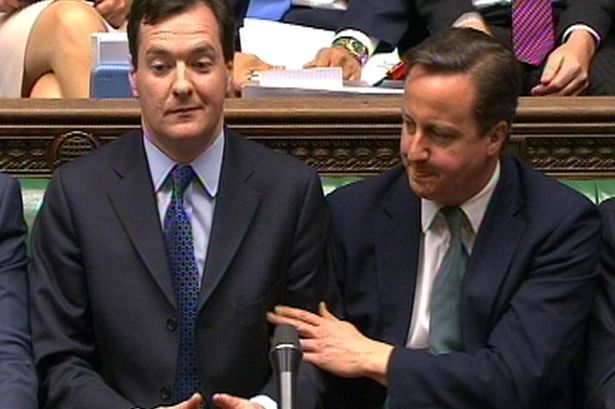


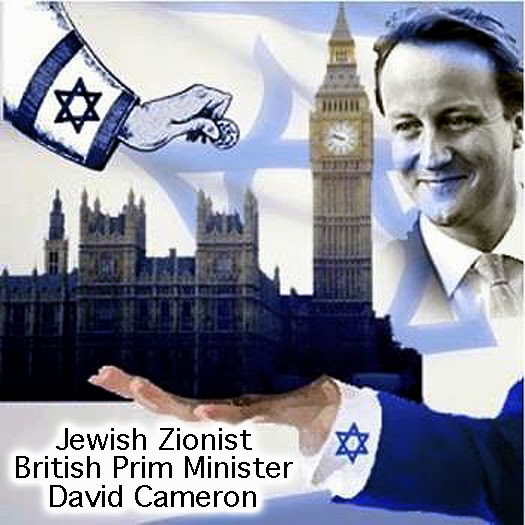

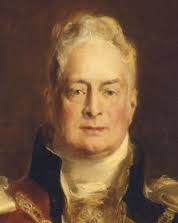


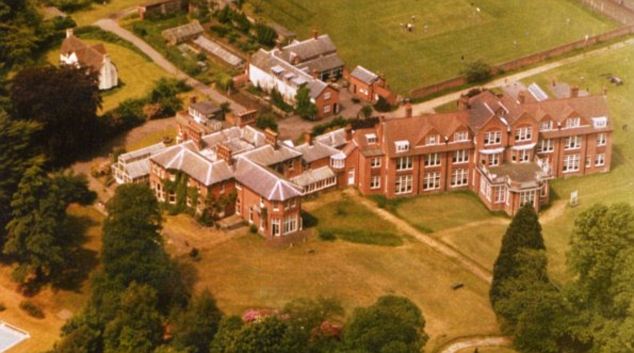
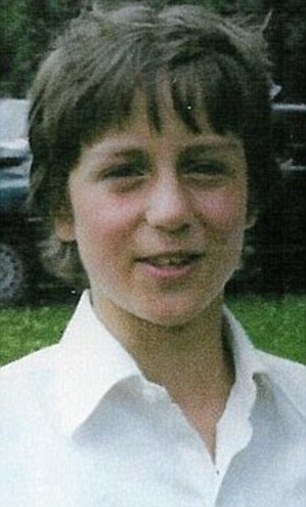

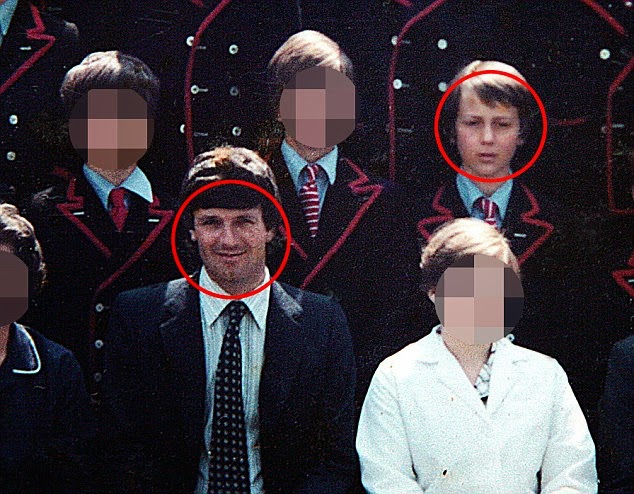
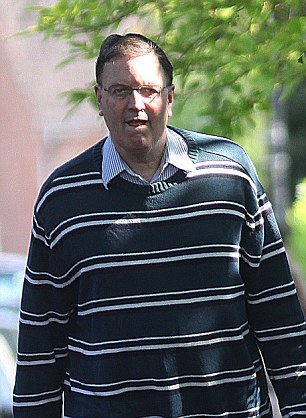
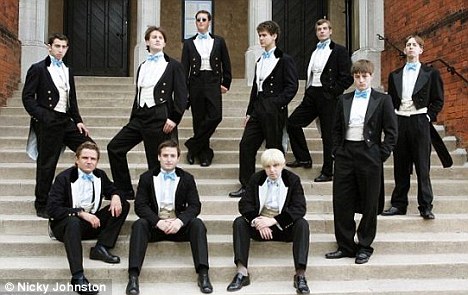

 Which Direction?
 MI6
MI6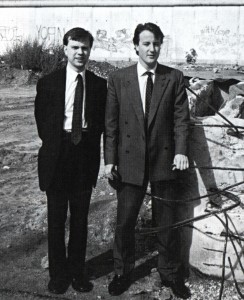

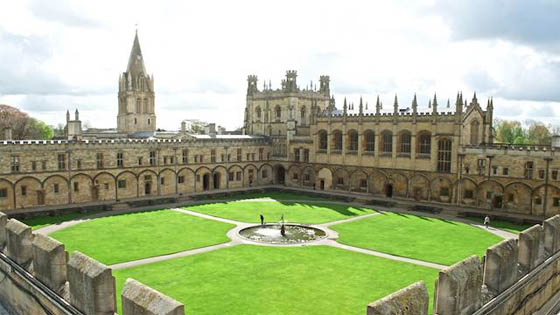


 Tory HQ



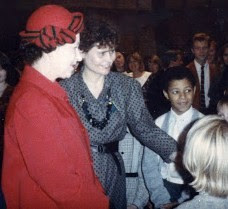
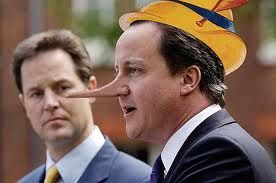


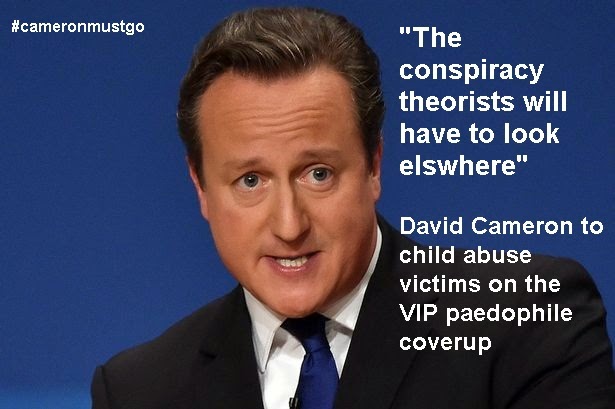





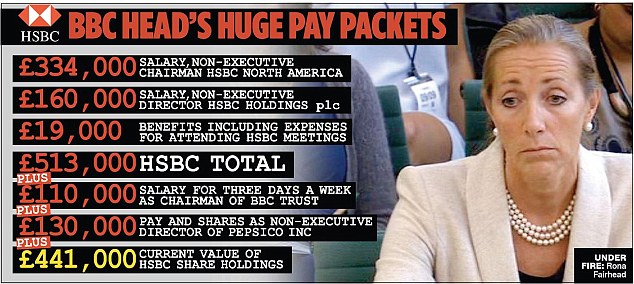
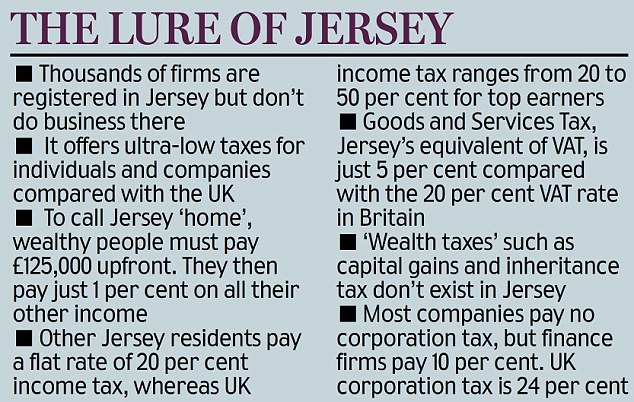


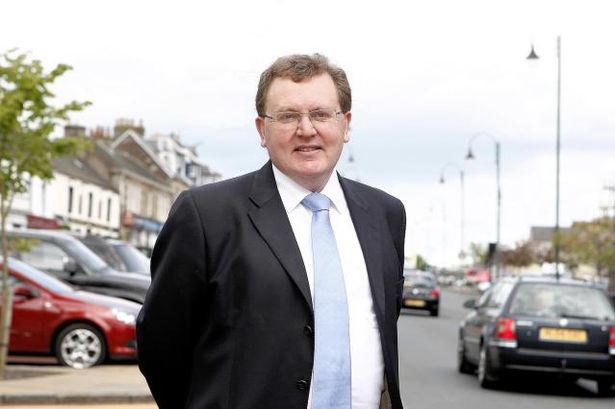
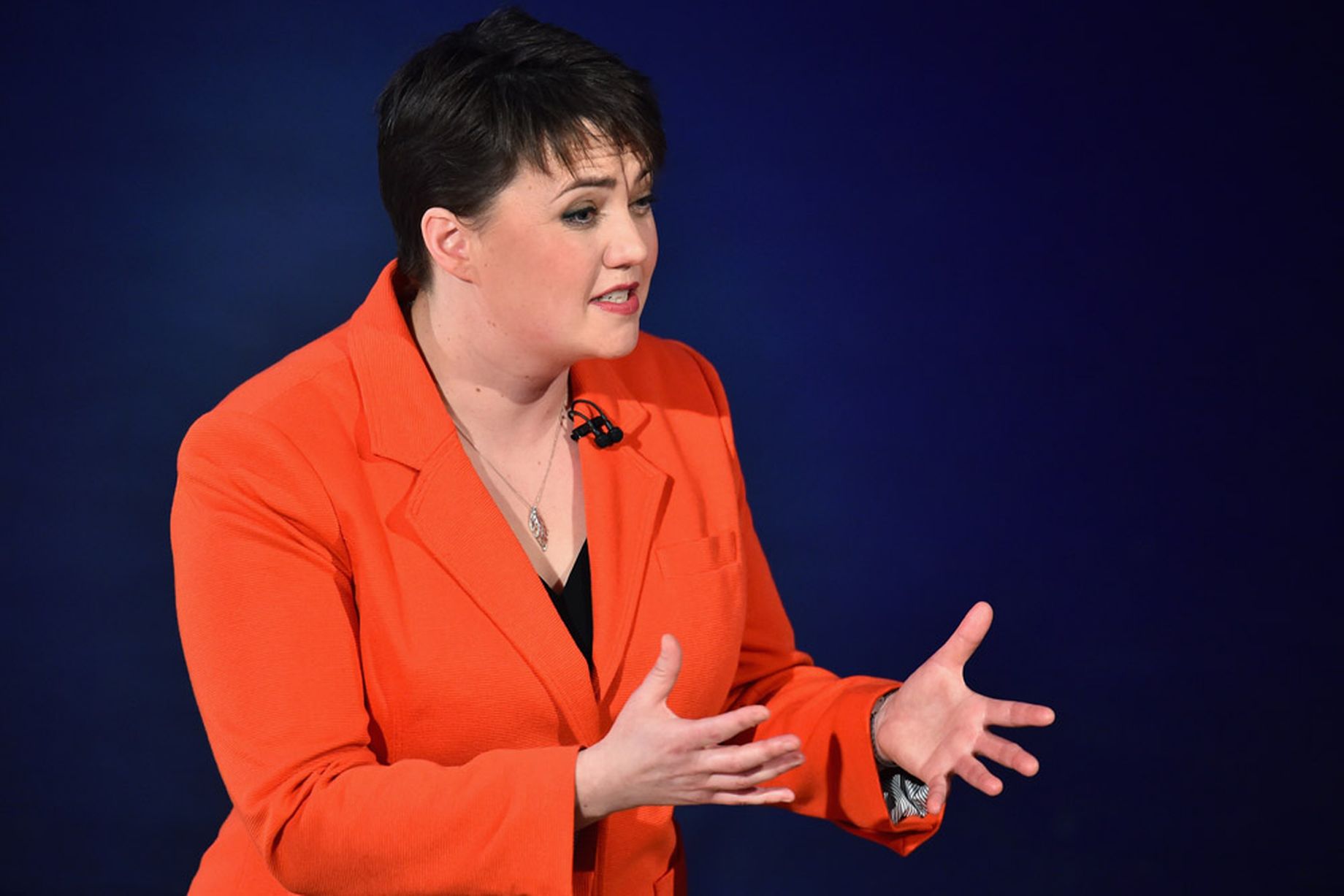

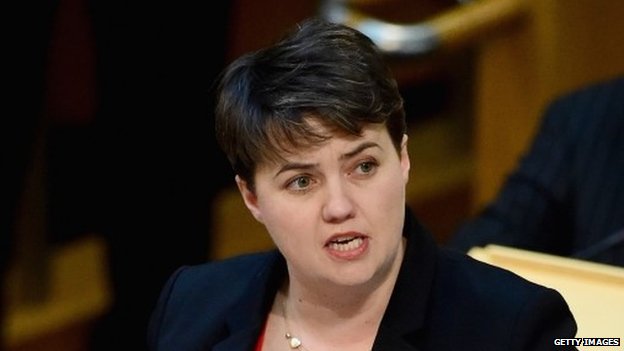
 Mundell Cameron and Annabel Goldie
 David Mundell
 Murdo Fraser
 Annabel Goldie
 David Mundell





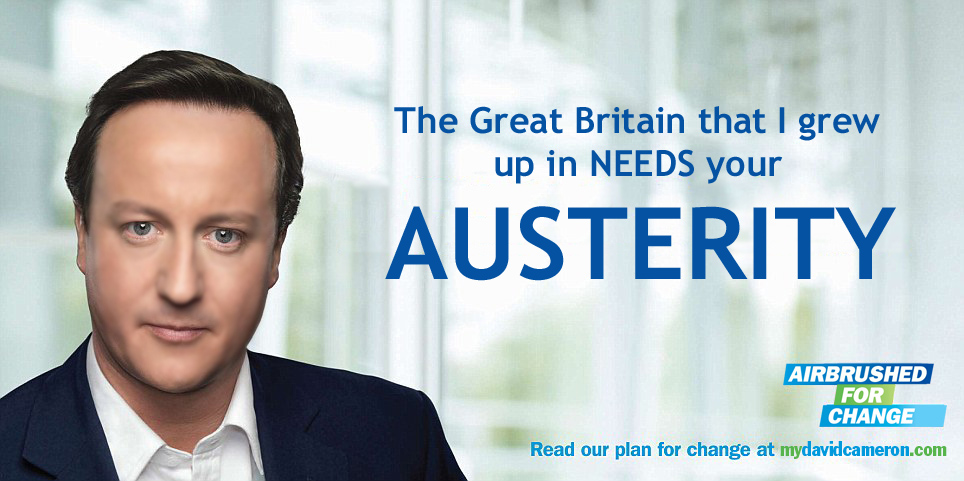
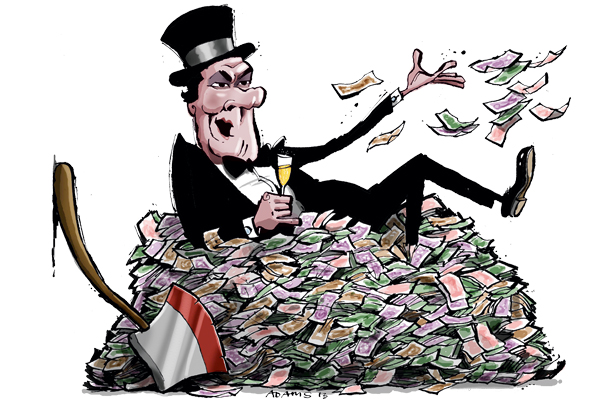

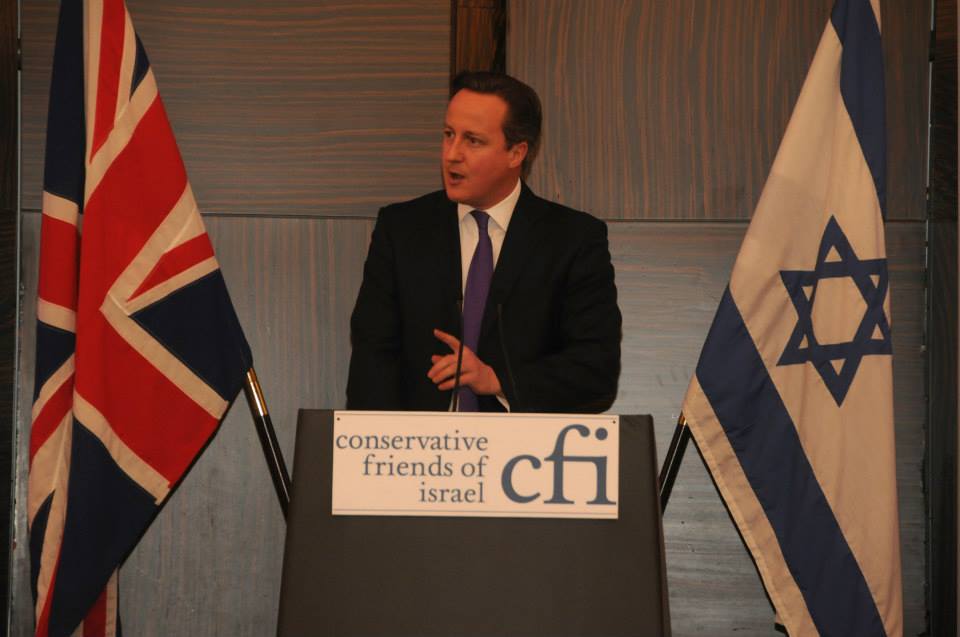

 Liam Fox
 Wilfred Pickles MP (Chair)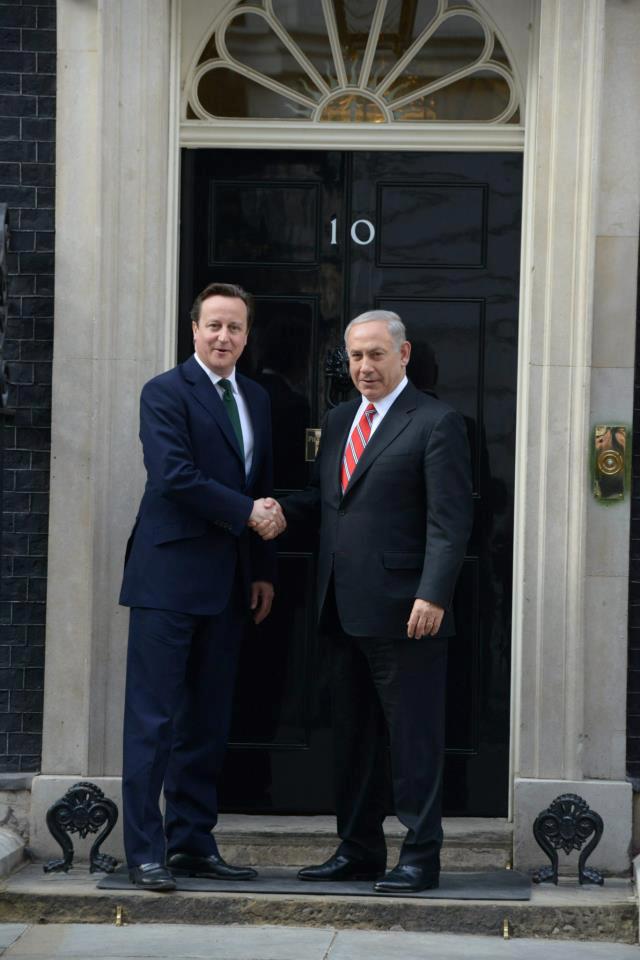
 CFI Staff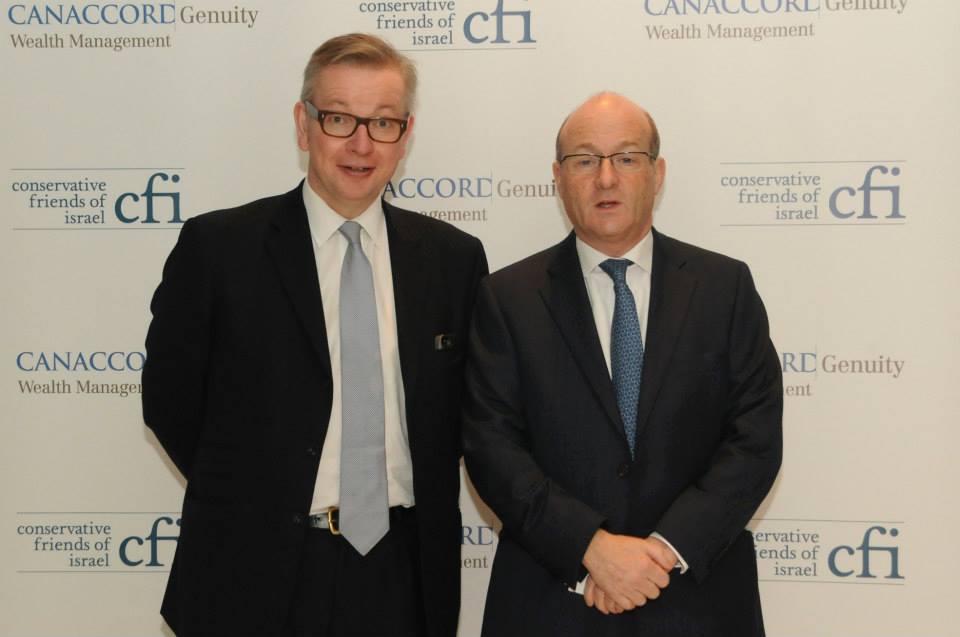
 Sir Michael Hintze & Liam Fox
 Poju Zabludowicz & Partner
 Mick Davis
 BICOM
BICOM

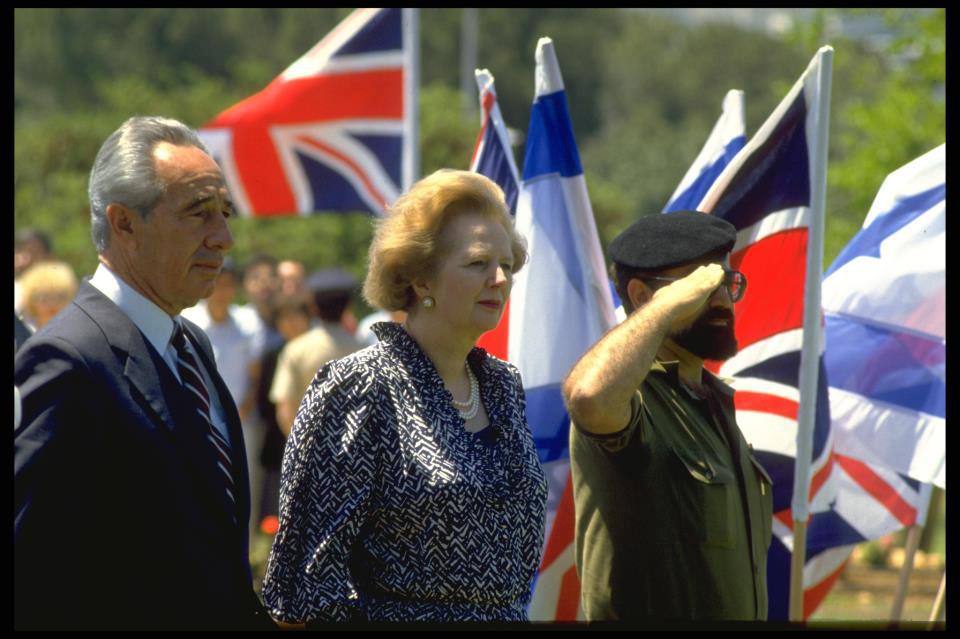 Honorary Patron – The Rt Hon. The Baroness Thatcher
 The Rt Hon Sir Malcolm Rifkind KCMG QC
 The Right Honourable Norman Beresford Tebbit, Baron Tebbit,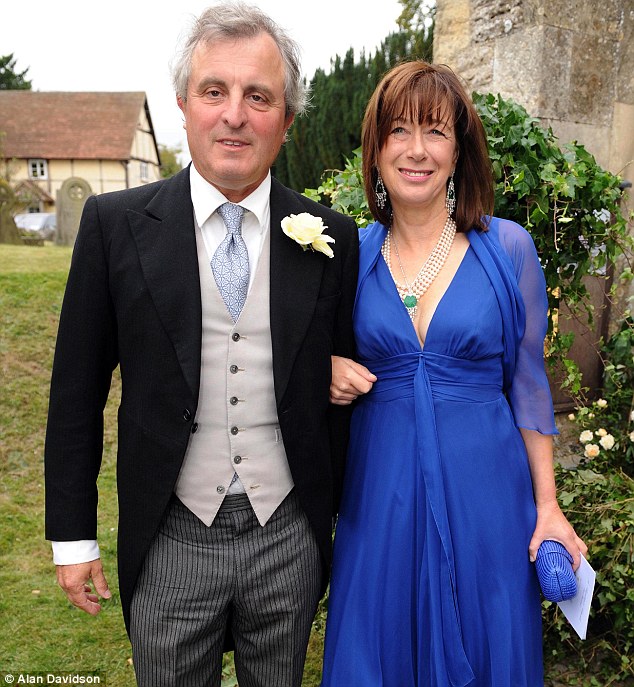
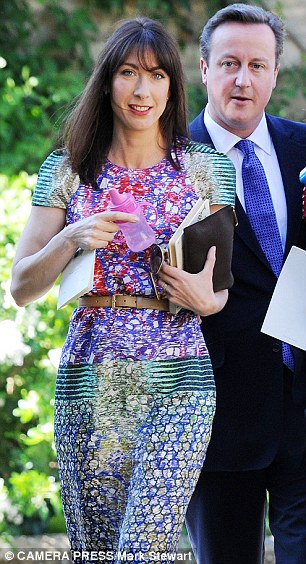 David & Samantha Cameron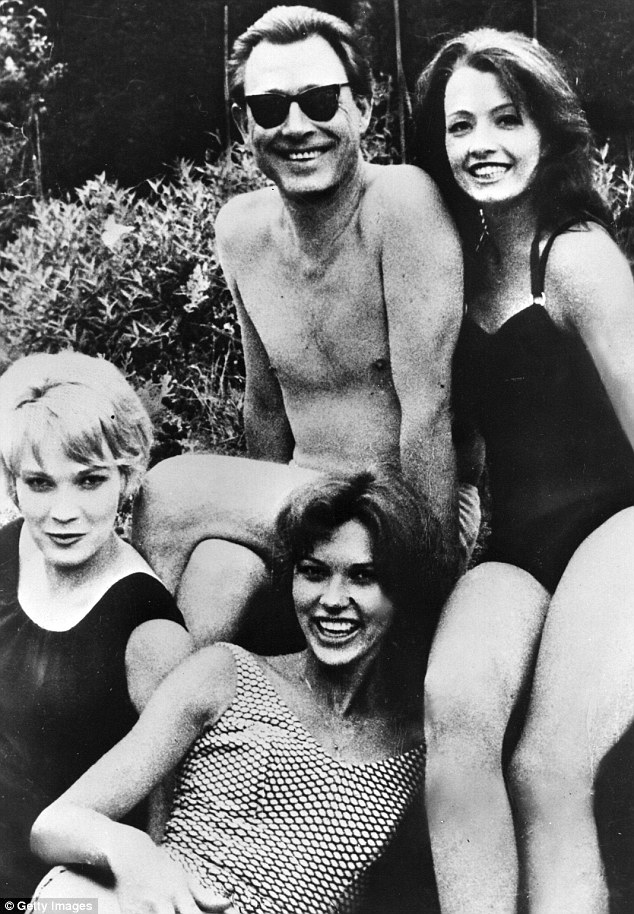
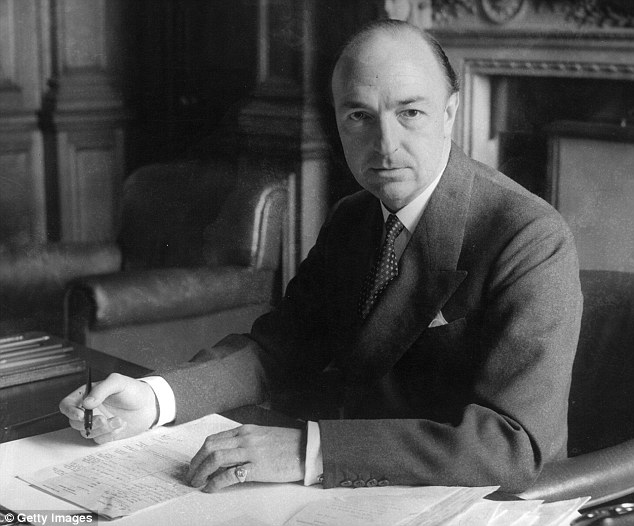 John Profumo
 Eleanor Fulton Laing
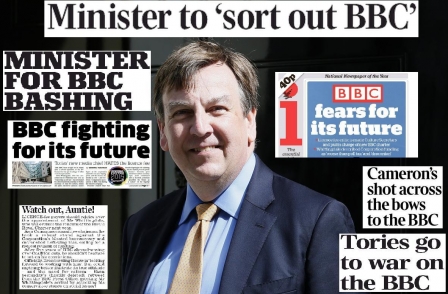 John Whittingdale OBE MP
  Michael Gove MP
 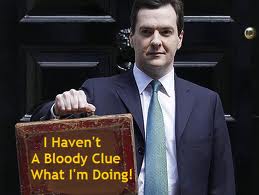 George Osborne MP
 Hague & Portillo
 Alexander Boris de Pfeffel Johnson MP
 Daniel Rosenberg
 Malcolm Scott

 John Bayard Taylor Campbell III
 Senator Lindsey Olin Graham
 Joe Leiberman (L)
 Liam Fox
 Adam Werrity
 Kara Watt
 Professor Patrick Minford
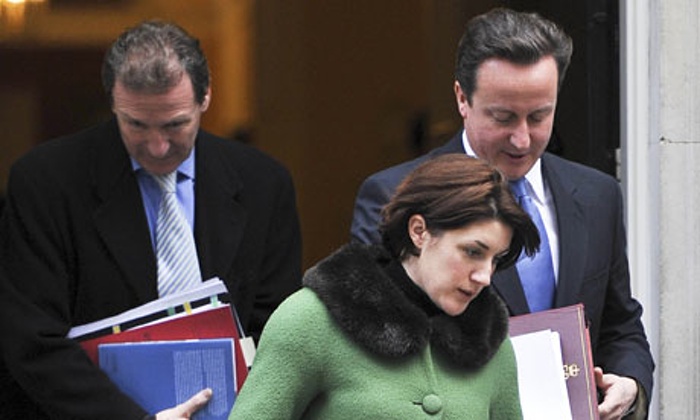 Gabrielle Bertin with Gus McPherson & David Cameron
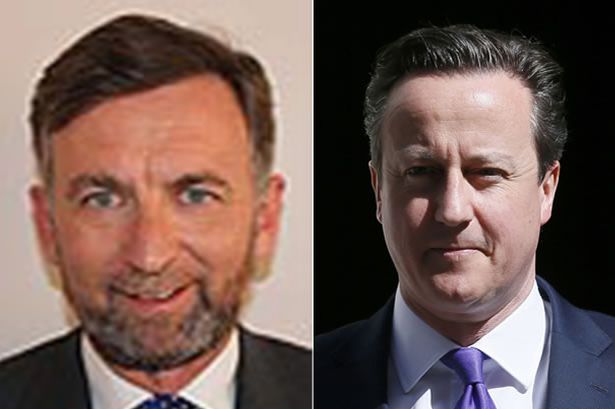 Andrew Dunlop & David Cameron
 Scott D. Syfert

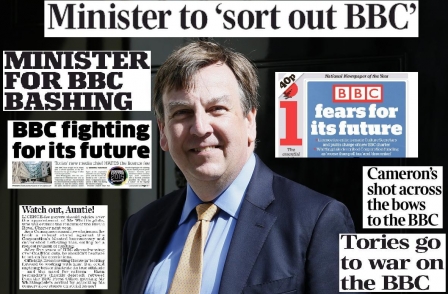 Frank Fahrenkopf, Jr
 Alan Guarino
 Clark-Judge
 Frank Swain
 Paul Wright
  John Falk
 Michael Teden





 The Young Turks of Glasgow University Celebrating


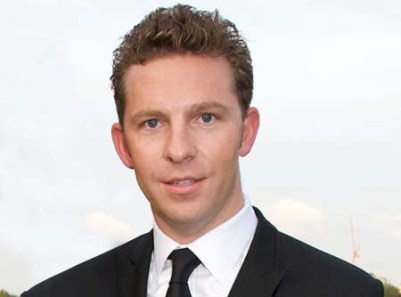

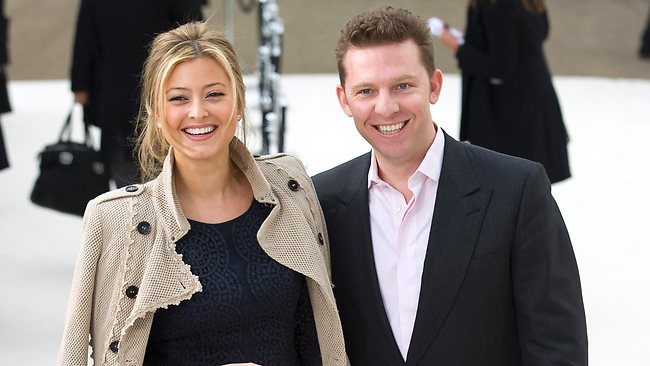

 Lisa and her brothers
 Princess Beatrice & Lisa

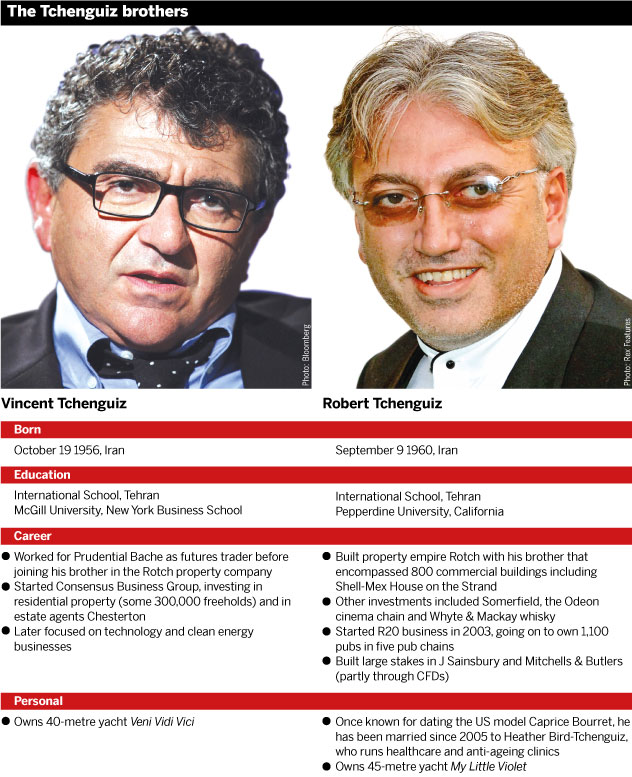
 Allen Jackson:
 Sir Michael Hintze: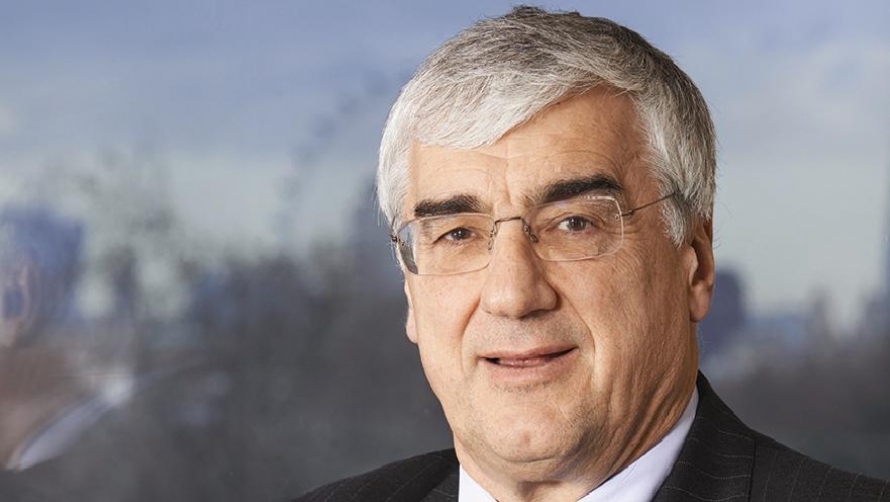
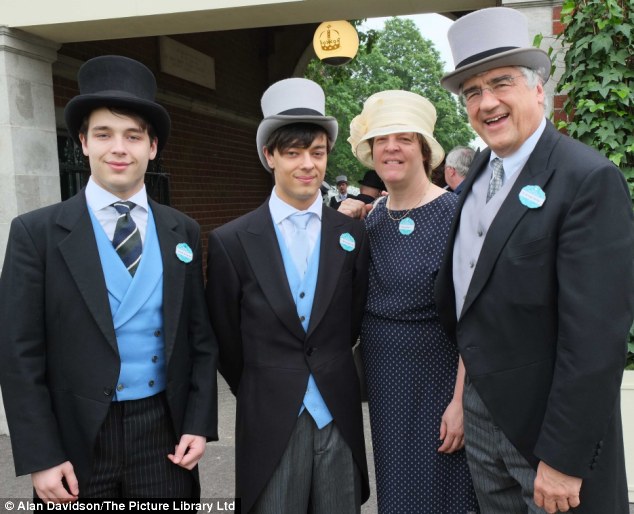
 Paul Staines
 Dean Godson
 Lord William David and lady Trimble
 Paul Goodman:
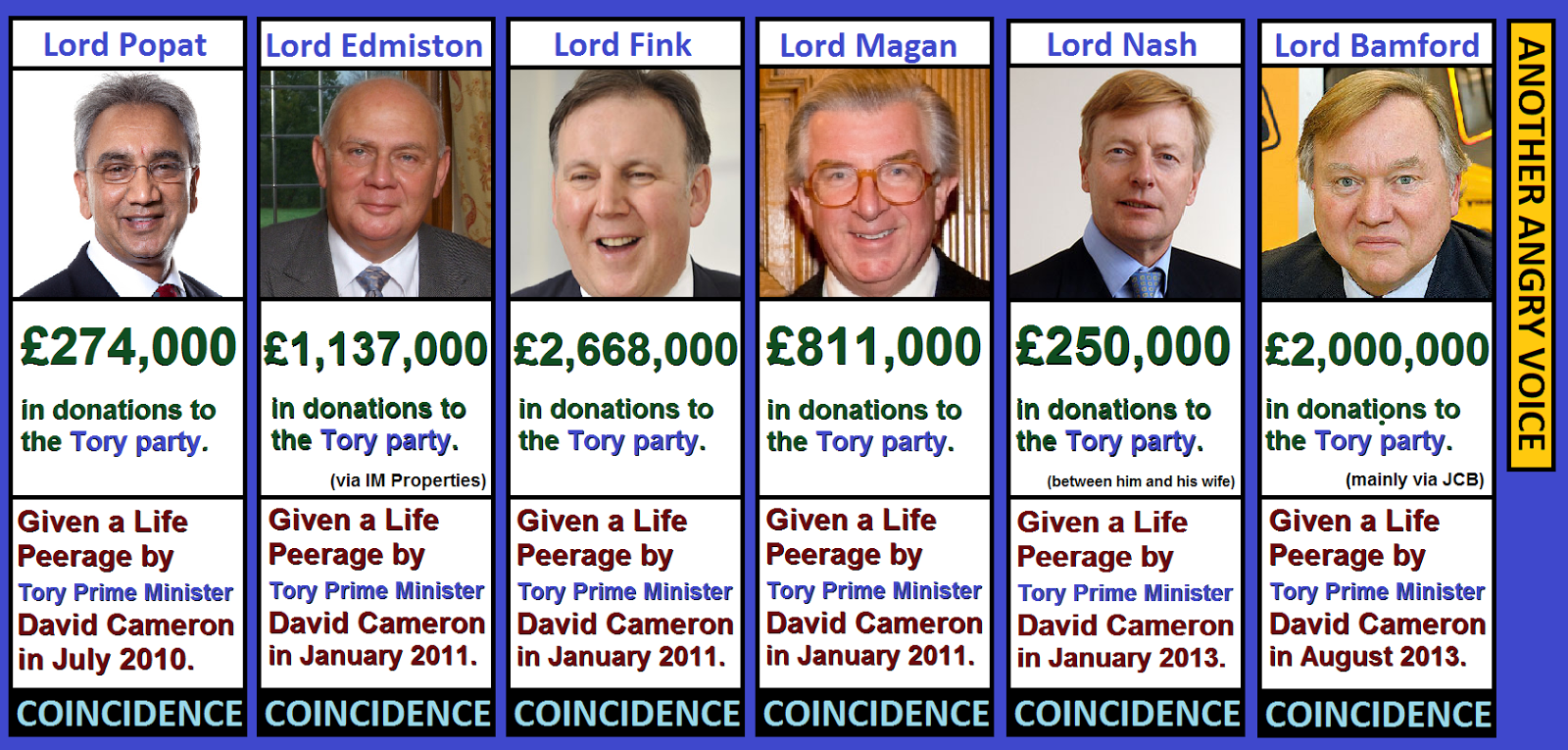
 Eric Pickles
 Eric Pickles
 Donal Blaney
 Claire Guyton (L)
 Inside the club
 Peter and Bella Stringfellow (L)

 David Edwards
 Alexander Temerko
 Lord Macfarlane of Bearsden
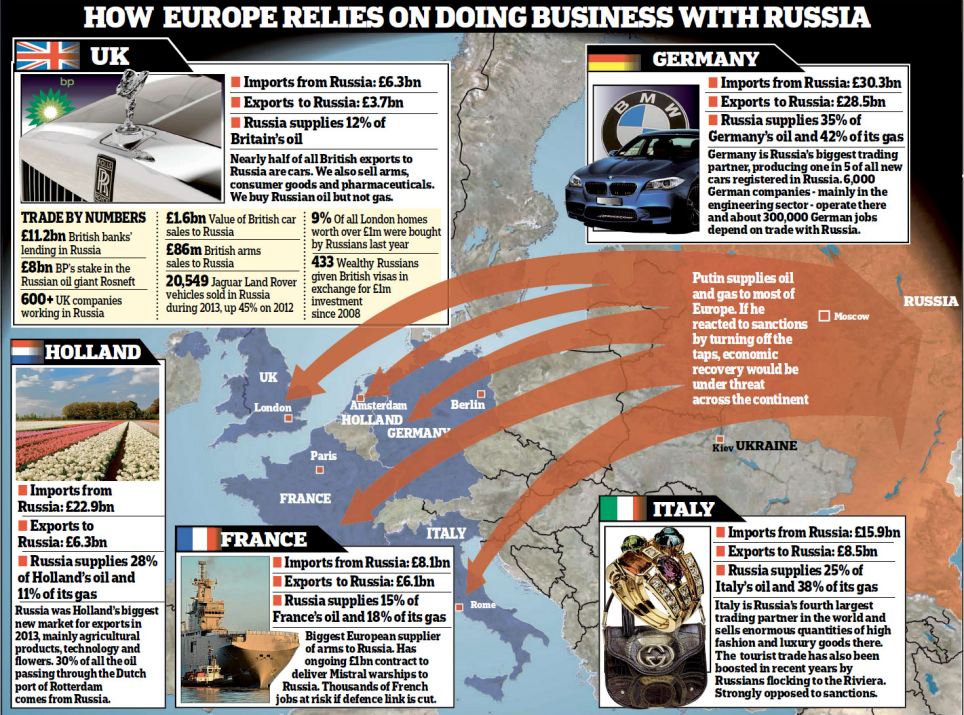
 Russian policewoman training

 Andrei Borodin and Tatanya Korsakova
 Andrei Borodin and Tatanya Korsakova
 Alok Sharma
 Sarah Weir (L) Boris Johnson
 Jitesh Gadhia
 Anita Zabludowicz & Poju Zabludowicz:
  Richard Robinson:

 Laurent Cadji
 Patrick McLoughlin
 Russian Policewomen
 Vasily Shestakov & His Friend Putin
 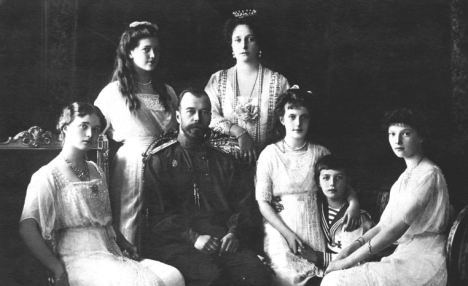 The Romanovs

 Timothy Lewin
 Tony Lodge
 Andrei Kliamko
 Kuznetsov
 Lord Reading with Duke of Kent

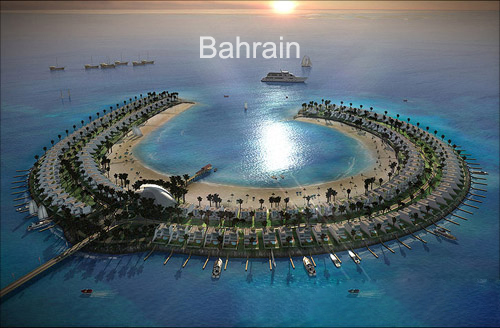
 bahrain Protests Human Rights Denial
 Philip Hammond:
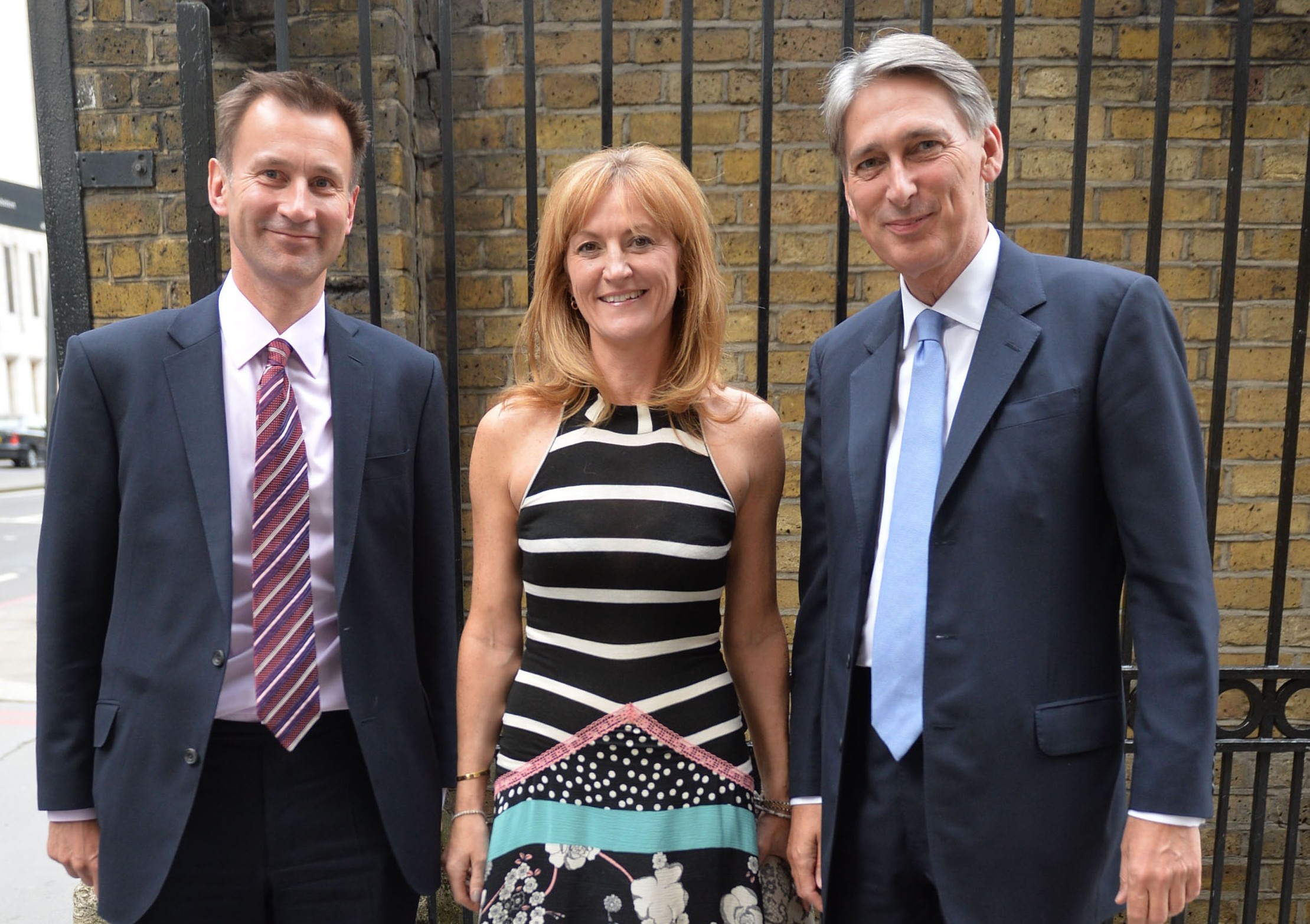 Hammond Wife Susan
 Connor Burns (L)
 Richard Sharp
 George Osborne
 Lord McWilliam (L)
 caltonjock