
Donald Trump is a man with a mission
and he is well on his way to completing it within the next 4 years. But if he falls short the next administration will complete the business which will completely change the trading map of the World
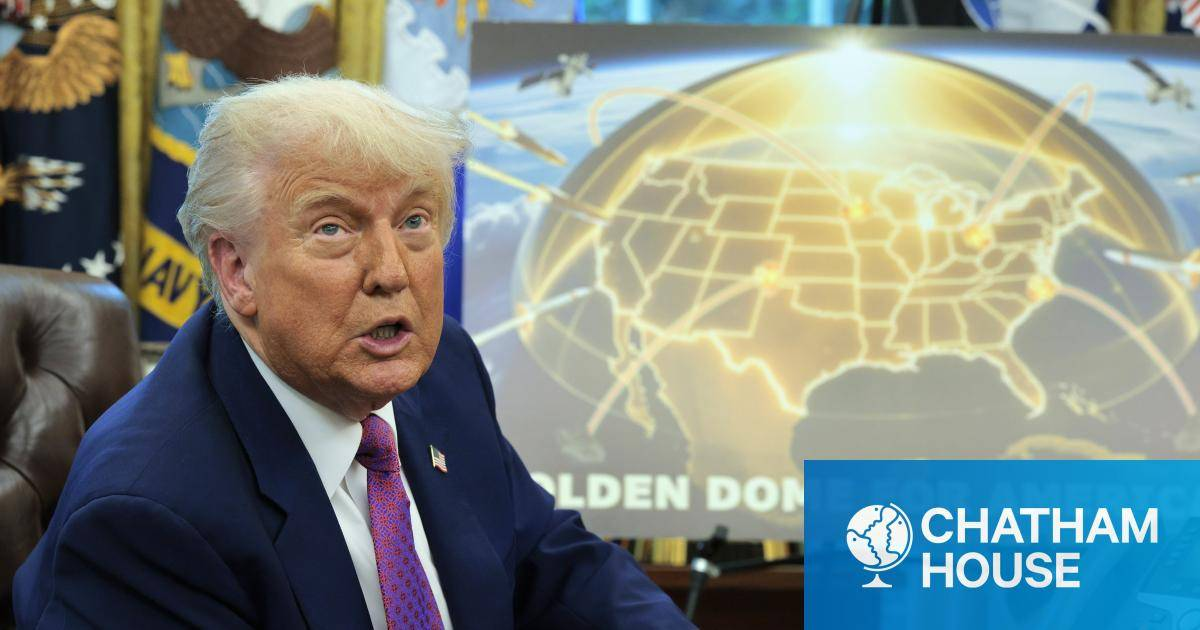
The starting point is the Golden Dome
The US plans to dramatically boost its procurement of Patriot Advanced Capability-3 Missile Segment Enhancement (PAC-3 MSE) interceptors as it moves forward and develops its, “Golden Dome” for America.
The MSE missile, a critical component of the defense concept, is a “hit-to-kill” interceptor missile designed to destroy incoming ballistic missiles, cruise missiles, and aircraft through direct impact.
The cost of one interceptor is around $3.871 milliona and, “The Army Requirements Oversight Council Memorandum (AROCM) approved a PAC-3 MSE AAO/APO increase from 3,376 to 13,773.
Finance required to complete the project will be around $2 billion including the which will include the funding of Operation Atlantic Resolve (OAR), the US government initiative providing military assistance to Ukraine.
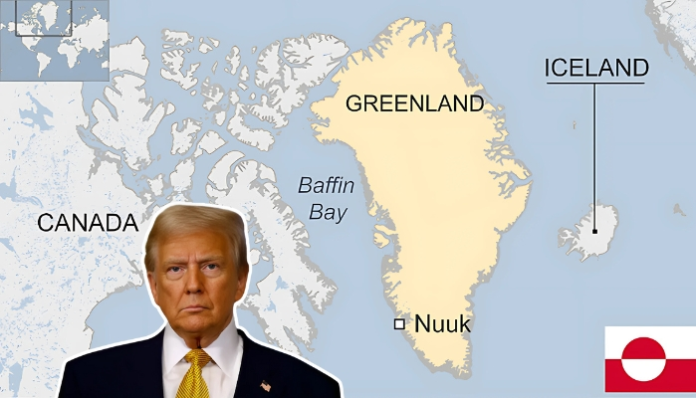
Next in line is Greenland
Greenland is an autonomous territory in the Kingdom of Denmark. Since the 19th century, the United States has made several attempts to purchase the island of Greenland from Denmark. After World War II, the United States secretly offered to buy Greenland; there was public discussion about purchasing the island during President Trump’s first term in 2019 and again In May 2025 after his 2024 reelection. On that occasion he stated that he would not rule out a U.S. annexation of Geenland.
The United States considers Greenland to be vital to its national security and in the early 20th century, it included it tgether with a number of European possessions in the Western Hemisphere to be preemptively seized and fortified in the event of a threatened attack on the US.
During World War II, the US invoked the “Monroe Doctrine” and occupied Greenland to prevent its use by Germany following the German occupation of Denmark. The US military remained in Greenland after the war, and by 1948, Denmark abandoned attempts to persuade the US to leave. The following year, both countries became members of the NATO military alliance. A 1951 treaty gave the US a significant role in Greenland’s defense, and, about 1953, construction began on Thule military base, now known as Pituffik Space Base, located in northwest Greenland.
The Department of Defense has redrawn its military combatant command responsible for defending the U.S. homeland to include Greenland. The change strengthens the Joint Force’s ability to defend the U.S. homeland, contributing to a more robust defense of the western hemisphere and deepening relationships with Arctic allies and partners. The adjustment will shift responsibility for Greenland from U.S. European Command to U.S. Northern Command. Aligning Greenland with NORTHCOM will mean that it is treated not as an outpost, but as a cornerstone of U.S. security posture in the High North. Announcing the change the Pentagon did not mention any intent to annex the territory, assuaging some Europeans’ concerns.

Why Greenland?
Global warming and the changing world economy have put Greenland at the heart of the debate over global trade and security, and President Trump aims to make sure that the U.S. controls the mineral-rich country that guards the Arctic and North Atlantic approaches to North America.
Climate change is thinning the Arctic ice, promising to create a northwest passage for international trade reigniting competition with Russia, China and other countries over access to the region’s mineral resources.
“Let us be clear: we are soon entering the Arctic Century, and its most defining feature will be Greenland’s meteoric rise, sustained prominence and ubiquitous influence,’’ said Dwayne Menezes, managing director of the Polar Research and Policy Initiative.
“Greenland — located on the crossroads between North America, Europe and Asia, and with enormous resource potential — will only become more strategically important, with all powers great and small seeking to pay court to it. One is quite keen to go a step further and buy it.”

The following are some of the factors that are driving U.S. interest in Greenland.
Arctic competition
Following the Cold War, the Arctic was largely an area of international cooperation. But climate change, the hunt for scarce resources and increasing international tensions following Russia’s invasion of Ukraine are once again driving competition in the region.
Strategic importance
Greenland sits off the northeastern coast of Canada, with more than two-thirds of its territory lying within the Arctic Circle. That has made it crucial to the defense of North America since World War II, when the U.S. occupied Greenland to ensure that it didn’t fall into the hands of Nazi Germany and to protect crucial North Atlantic shipping lanes.
The U.S. has retained bases in Greenland since the war, and the Pituffik Space Base, formerly Thule Air Force Base, supports missile warning, missile defense and space surveillance operations for the U.S. and NATO. The US will take over responsibility for monitoring what is known at present as the GIUK (Greenland, Iceland, United Kingdom) Gap,enabling it to moni all naval naval movements in the North Atlantic.
Natural resources
Greenland has large deposits of so-called rare earth minerals that are needed to make everything from computers and smartphones to the batteries, solar and wind technologies that will power the transition away from fossil fuels. The U.S. Geological Survey has also identified potential offshore deposits of oil and natural gas.
Climate change
Greenland’s retreating ice cap is exposing the country’s mineral wealth and melting sea ice is opening up the once-mythical Northwest Passage through the Arctic.
Greenland sits strategically along two potential routes through the Arctic, which would reduce shipping times between the North Atlantic and Pacific and bypass the bottlenecks of the Suez and Panama canals. The routes will become commercially viable an are attracting
Chinese interest
In 2018, China declared itself a “near-Arctic state” in an effort to gain more influence in the region. It also announced plans to build a “Polar Silk Road” as part of its global Belt and Road Initiative, which has created economic links with countries around the world. A Chinese-backed rare earth mining project in Greenland stalled after the local government banned uranium mining in 2021.
Independence
The legislation that extended self-government to Greenland in 2009 also recognized the country’s right to independence under international law. Opinion polls show a majority of Greenlanders favor independence, though they differ on exactly when that should occur.
Next follows NATO, Europe and GB
The US will withdraw from NATO. There will be no US military presence in Europe. Indirect contributions to NATO’s common budgets and programs and direct costs such as U.S. military presence and spending in Europe will cease saving the US around $15billion annually.
The rapidly expanding political influence of Islam in the UK and Europe causes concern. The US nuclear umbrella will no longer extend to Europe and maintenance of the UK’s, ” nuclear deterrent” will end, forcing the closure of nuclear facilities at Faslane.
90% of Americans couldn’t point out the UK on a map and the “special relationship” will end
The balance of trade between the US and Europe greatly disadvantages the US and more equitable arrangements will be established initially through increased tarrifs.
The Altlantic Ocean, the backdoor to the US, will be monitored by a reduced in size but still powerful US naval presence.
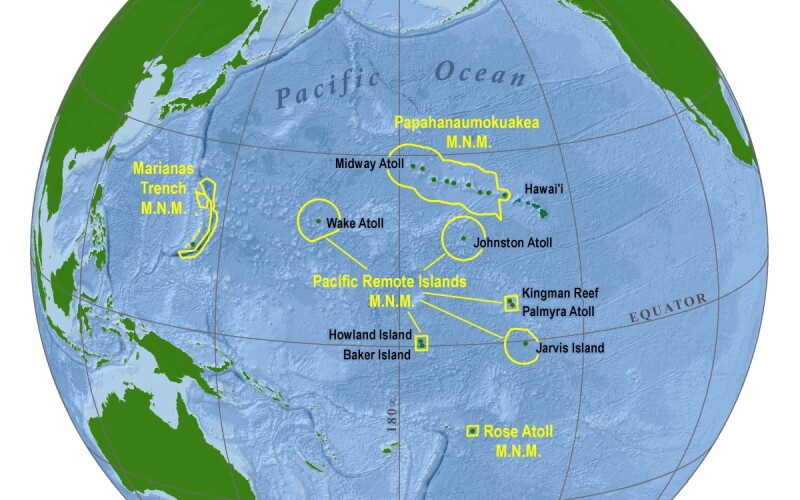
And finally the US will fully commit its trading might to the Pacific
The US will fully commit its energy to the Pacific developing trade with the many countries that have access to it. This includes China which has an economy much larger the whole of Europe and GB combined.
Its naval fleet will be permanently deployed in the Pacific
Military bases will be established in strategic locations in the Pacific

So what is to become of Europe and GB ?
With the US no longer in the frame holding their jackets Europe and Russia will be forced to open their borders and establish trade beneficial to all parties.
What is to become of Scotland if it the Westminster Government refuses to set it free from colonial status.
It will drift into oblivion with the rest of the UK, destroyed by the imposition of impossible levels of personal taxation necessary but failing to reduce obscenely high levels of debt.
Or
Scotland can fight hard, regain its independence. Develop its trade with EFTA, the EU and the rest of the World, from a position of strength as a rich country well blessed with many types of renewable resources.

 caltonjock
After Starmer unwavering support for Denmark and Greenland to decide, you couldn’t help but notice there wasn’t any comment from our FM and the National that supports the SNP but extremely soft on Indy if at all.
Lets not piss in the wind here the statement from Starmer was a colonial statement and it was also directed at Scotland with Westminster who has the only say.
Europe will never back a Independent Scotland leaving the UK this is a fact and Denmark would be one of the first to support England’s right to retain Scotland.
At some point Scotland is going to have to decide our own fiat regarding the constitutional question because it’ll never be granted from Westminster and the SNP will never delivery it. So it’ll have to be an event that involves an election and like I said without the approval of Westminster Europe will have to say it wouldn’t recognize Scotland without Westminster approval, well that is democracy and it certainly isn’t a partnership either.
Scotland should never ever join the EU. The SNP time is running out sooner or later no one in Scotland will believe them on the Indy question and when this happens Scotland will have to decide defy or comply.
The Fight between the EU and the USA I consider a blessing and welcome it with open arms, it might just be our exit from this Union.
LikeLiked by 2 people
The SNP is committed to compliance with Westminster rule in all respects persuaded by the near £40 million annually the Party extracts from the UK treasuary. Independnce is not on the SNP agenda.
LikeLiked by 2 people