
October 2017: The Cabinet of the Scottish Government provided its civil servants with a “commission” – a formal instruction – which was recorded in the Cabinet minutes under the heading of “Sexual Harassment” as follows: “While there is no suggestion that the current arrangements are ineffective, the First Minister has asked the Permanent Secretary to undertake a review of the Scottish Government’s policies and processes to ensure they are fit for purpose.”
Comment: Sturgeon’s own observation concluded that the procedures in place were effective and they contained no mention of retrospective allegations against former ministers. Perhaps because there was no precedence in employment law that would allow it.
The only recourse open to an aggrieved person was to inform the police.
If after reviewing the documentation Evans honestly thought that the Scottish Government’s policies and procedures would be fit for purpose, only after a retrospective clause had been inserted it was incumbent on her to conform with the “Ministerial Code” and provide Sturgeon with the evidence of the need to do so.
The Ministerial Code states: It is for the First Minister to judge the standards of behaviour expected of Ministers.
It is for the First Minister to decide whether there has been a breach of such standards. And, where the First Minister decides that there has been such a breach, it is for the First Minister to decide what the consequences for the Minister are to be.
Very explicit!!! Any allegations of misconduct against Ministers should be reported to Sturgeon immediately.
31 October 2017: Ann Harvey, principal assistant to the chief whip at the SNP’s Westminster Group reported to the Inquiry that she had received 16 text messages, some from SNP HQ, to her private number, each one fishing for information which could be damaging if used against Alex Salmond.
A few persisted in asking for confirmation that Sue Ruddick ( a personal friend and ex colleague of Ann) had been physically assaulted by Alex while they were campaigning together during the 2008 General Election campaign.
Her answer to that enquiry was a categorical rebuttal there was no physical aggression at any time on the part of Alex.
What’s up? Someone was after getting to Alex before the Civil Service got involved in pursuing long dead unproven allegations.
Note: Ruddick went on to report a common assault against her by Alex, to the police in August 2018 (10 years after the alleged incident).
The police investigated but said there was insufficient corroborative evidence to charge, however, the circumstances were included in a later report to the Crown Office and Procurator fiscal.
But they all count!!!! when the time is right!!!!!!!!“
Comment: Murrell, in a statement to the Holyrood Inquiry said that Party policy dictated the handling of complaints within the Party was the responsibility of the Party Executive and it did not share case details with any other organisation unless the complaint highlighted a “clear act of criminality”, and the Party had not informed the Scottish Government or any member of it of a any complaint from a Party member against a minister of the Government.
His assertion was at odds with the conduct of Lloyd who demanded from government Minister Mark Macdonald his immediate resignation after she and John Swinney concluded that he had sexually harassed a member of the Party. Her actions contravened the ministerial code applicable to Special Advisors. Conduct that warranted her immediate dismissal.
Click to access SP_SGHHC_-_FN10.pdf31 October
2017: David Clegg of the Daily Record telephoned Scottish Government contacts “acting on a tip-off” asking questions of Scottish Government contacts seeking to ascertain if any complaints about harassment had been made about Alex Salmond during his tenure as First Minister.
The responses were negative.
Comment: How could it be that David Clegg and the Daily Record were aware about complaints on 31 October 2017 when, the official briefing was that no-one in the Scottish Government, up to and including Nicola Sturgeon, had any idea about them at that time.
The sequence of events and comments outlined raise significant questions about the transparency, adherence to protocol, and motivations behind the handling of allegations against Mark Macdonald and then Alex Salmond in the context of the Scottish Government’s processes in 2017.
key points and analysis of and general principles of governance and accountability. The Cabinet Commission and Existing Procedures (October 2017)
The Scottish Government’s Cabinet minutes from October 2017 indicate that First Minister Nicola Sturgeon commissioned a review of the government’s policies and processes on sexual harassment, despite her own observation that the existing arrangements were effective. The absence of any mention of retrospective allegations against former ministers in these procedures confirms there was no precedent in employment law for such measures.
A critical point: If Permanent Secretary Evans believed a retrospective clause was necessary, the Ministerial Code required her to provide evidence to Sturgeon to justify change. In the absence of supporting evidence, the inclusion of retrospective provision confirms any new arrangements would be procedurally irregular and motivated by other factors.
The Ministerial Code is clear that allegations of misconduct against ministers must be reported to the First Minister immediately. It was for Sturgeon to judge standards of behavior and decide consequences. Bypassing the protocol indicated a breach of governance standards, undermining the integrity of the process.
2. Ann Harvey’s Report of Text Messages (31 October 2017)
Ann Harvey’s account of receiving 16 text messages, some from SNP HQ, seeking damaging information about Alex Salmond—specifically regarding an alleged assault on Sue Ruddick in 2008—is highly concerning. Her categorical denial of any physical aggression by Salmond suggests that these inquiries were speculative or agenda-driven.
The timing is also notable. The messages predate the formal involvement of the Civil Service in pursuing allegations against Salmond. implying that individuals or groups within or connected to the SNP were actively seeking to build a case against Salmond before any official process was underway.
The later reporting by Ruddick in August 2018, despite the police finding insufficient evidence, and its inclusion in a report to the Crown Office, further complicates the narrative.
Your comment that “they all count when the time is right” suggests a perception that allegations, even those lacking corroboration, were being strategically retained for future use. This raises questions about whether the process was being manipulated to target Salmond specifically.
3. Peter Murrell’s Statement and Lloyd’s Conduct
Peter Murrell’s assertion that the SNP’s policy was to handle complaints internally and only share details with external bodies in cases of “clear act of criminality” is significant.
If true, this would mean that no SNP complaints against Salmond should have been shared with Scottish Government civil servants or special advisors in Autumn 2017 unless they met this threshold.
However, you note that Special Advisor Liz Lloyd’s conduct allegedly contravened the Ministerial Code, which governs special advisors and requires adherence to strict standards of behaviour.
If Lloyd shared or acted on information improperly, this would constitute a breach of the Code, potentially warranting dismissal.
The failure to address such a breach could point to inconsistencies in how the Scottish Government enforced accountability.
4. David Clegg’s Inquiry (31 October 2017)
The fact that David Clegg of the Daily Record was inquiring about harassment complaints against Salmond on 31 October 2017, based on a “tip-off,” is striking, especially given the official stance that no one in the Scottish Government, including Sturgeon, was aware of such complaints at the time.
This discrepancy suggests either a leak of sensitive information or premature media involvement, both of which undermine the claim of ignorance within the government.
It also raises questions about who provided the tip-off and why, particularly if the government’s internal processes were still in the review stage and no formal complaints had been acknowledged.
Analysis and Implications:
The timeline and details, supported by the referenced document (SP_SGHHC_-_FN10.pdf), point to several potential issues:
- Procedural Irregularities: The introduction of retrospective allegations unsupported by evidence, exposes the revised sharassment policy as a violation of the Ministerial Code and principles of fair governance.
- The lack of precedent in employment law for such measures further questions their legitimacy.
- Potential Political Motivations: The text messages reported by Ann Harvey and the media inquiry by David Clegg suggest that efforts to gather damaging information on Salmond were underway before any formal process was established. This indicates a coordinated effort to target him, driven by political rather than procedural considerations.
- Breaches of Protocol: The actions of Liz Lloyd coupled with her failure to report misconduct allegations to Sturgeon immediately, as required by the Ministerial Code, suggests lapses in accountability.
- Murrell’s statement about SNP policy further complicates the picture, as it implied that any sharing of complaints with the government would have been improper unless criminality was evident.
- Transparency and Trust: The discrepancies between the official narrative (no knowledge of complaints) and external inquiries (Clegg’s tip-off) erode trust in the government’s handling of the situation. If information was being shared or pursued outside formal channels, it undermined the integrity of the process.
Conclusion: The events of October 2017, suggest a troubling pattern of procedural overreach, many breaches of the Ministerial Code, and malicious efforts by a number of people to gather allegations against Alex Salmond.
The lack of transparency, combined with the timing of media inquiries and internal SNP communications, raises legitimate concerns about whether the process was fair, impartial, and consistent with governance standards.
Permanent Secreary Evans, acting as she did without providing verifiable evidence to Sturgeon, and Special Advisor, Liz Lloyd, who wilfully and repeatedly contravened the Ministerial Code.
Their actions should be subject to a Public inquiry,since there is the broader implication that the unneccessary review of harassment policy may have been influenced by political factors beyond ensuring “fit for purpose” procedures, compromising the principles of fairness and due process.
 caltonjock
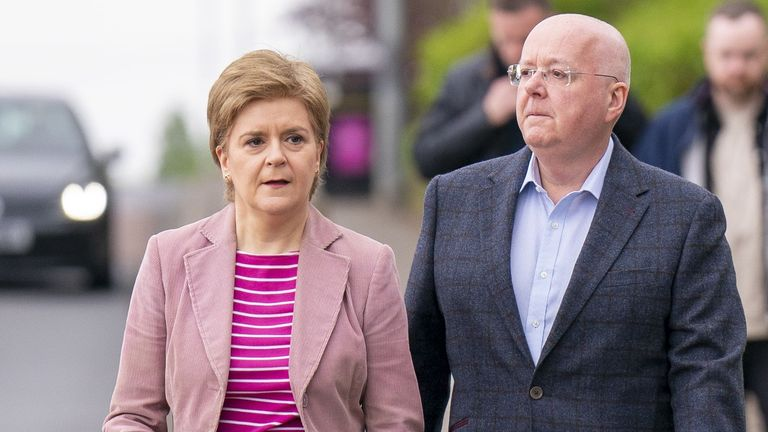
Thanks again for your fantastic information.If and when will this scandal every be reported by the media. The suffering that Alex endured because of these criminals came to a head resulting in an early death. Sturgeon and her cohorts should be in prison. I’m convinced that photograph was taken the day after she had spent the night crying because she thought she was going to be charged.Then along came the MI5 saved her brass neck. Destroy the Indy movement and we’ll protect you. Now it’s all smiles, and money making cons laughing at us all the way to the bank. Do you think she and her cabal will ever be brought to justice?
LikeLiked by 1 person
Sorry lost my comment. Your posts are great. I had written a big screed but I lost it in the log in page. Cutting a long story short. If and when will the media aknowlege this crime.
LikeLiked by 1 person
You would not be the first person to lose a posting at login. More than gremlins at bay I suspect!
Sections of the mainstream media being complicit in this sordid affair negates any acknowledgement any time soon particularly as (journalists)? some with known personal friendship ties to key movers and shakers within this conspiracy ensures this will remain the case.
LikeLike