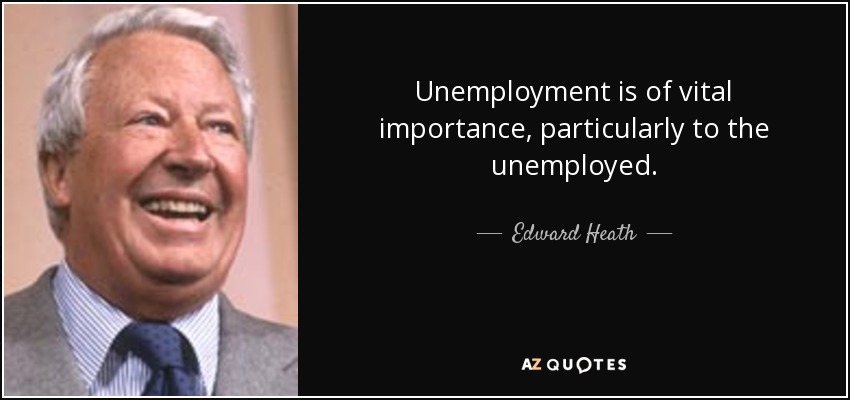
Finance from North Sea oil should be credited to Scotland so that a revival of its economy will be seen to be something from which Scotland is achieving from its own resources – not just by the grace and favour of the Government at Westminster – Edward Heath -Prime Minister

quote-unemployment-is-of-vital-importance-particularly-to-the-unemployed-edward-heath-71-11-23

1972. The discovery of oil in the North Sea, stirred Prime Minister, Edward Heath’s concerns about the poor state of the Scottish economy and perceiving a need for change, he initiated a policy review.

His secretary wrote to Cabinet members;

“As you know, the point has recently been put to the Prime Minister that the benefits of oil production brought ashore in Scotland should accrue, and be seen to accrue, to the Scottish economy.

The Prime Minister sees considerable force in the arguments, believing it would be difficult to stress too highly the psychological gains which would come from the revival of the Scottish economy being seen to be something from which Scotland was achieving from its own resources, not just by the grace and favour of the Government at Westminster or of English industry.” Adding: “The Prime Minister understands that novel arrangements may be required to achieve this result.”

Heath’s proposals created alarm at Westminster and led to many “on and off the record” meetings and an outpouring of confidential minutes and memos between various factions within and outwith government and the civil service,

Primary contributors objectors were: Gordon Campbell, (later Baron Campbell of Croy) the Scottish Secretary of State and head of the Department of Trade and Industry and Anthony Barber, the Chancellor of the Exchequer,
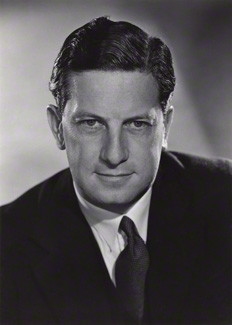
by Walter Bird, bromide print, October 1959

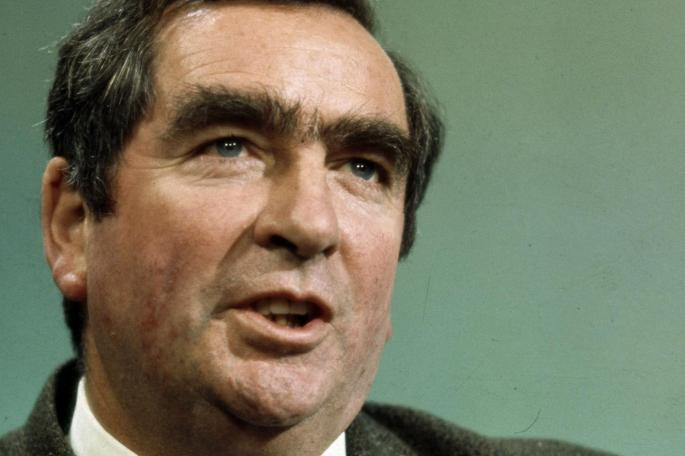
Baron Campbell of Croy

In stating their opposition to Heath’s proposals, the Westminster establishment voiced concerns about taking oil revenues away from the Treasury.

A senior official at the Scottish Office, in London, wrote in a memo to Downing Street:

“The oil discoveries have raised speculation in Scotland on the financial aspects and will continue to do so. But, the Secretary of State for Scotland, Mr Campbell, would not wish to see direct payments from the oil revenues, as these would be too late to be really useful and would raise a new principal causing difficulties if applied in other contexts.

On the general question of the financial relationship of central Government with Scotland, the present has been evolved over many years and the types and amounts of grants, for example to local authorities for housing and education…follow formulae which recognize special circumstances and needs where they exist. Mr Campbell considers that to dismantle this system, besides being a Herculean task, would resurrect innumerable issues now mercifully dormant.”

In a memo, Treasury officials said they too were looking at aspects of the Prime Minister’s request and argued against it strongly, saying that Scotland took a markedly larger share of public spending than she contributed to public revenue.”

The same Treasury officials later said there could be: “no question of hypothecation” of oil revenue to finance Scottish expenditure.

Other Unionists in opposition to Heath’s proposals presented a uniform front, unanimously suggesting that aims would be better met by investment in infrastructure and the fostering of fabrication yards and supply companies.

Their strident opposition to Heath’s proposal garnered support, and culminated in the submission of an alternative proposal, transferring all revenue gathered from the oil bonanza to the Treasury in Westminster.

The Unionist consensus was that, “any change in the financial relationship between Westminster and Scotland would resurrect innumerable issues, (a veiled reference to Scottish Independence) now mercifully dormant”.

Edward Heath, blindsided, and out-voted in cabinet, accepted their proposal. Scotland has been ripped off since.

http://news.bbc.co.uk/1/hi/scotland/2617525.stm
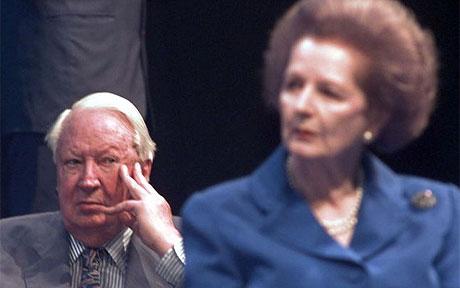
heath_1662259c

England would suffer enormously if the income from Scottish oil and gas and renewable energy stopped but if the Scots want independence they should have it and England would just need to adjust. Former Westminster Chancellor of the Exchequer

Scotland would thrive on its own

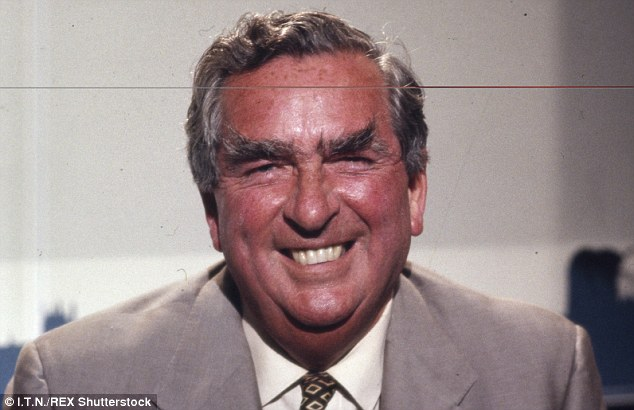
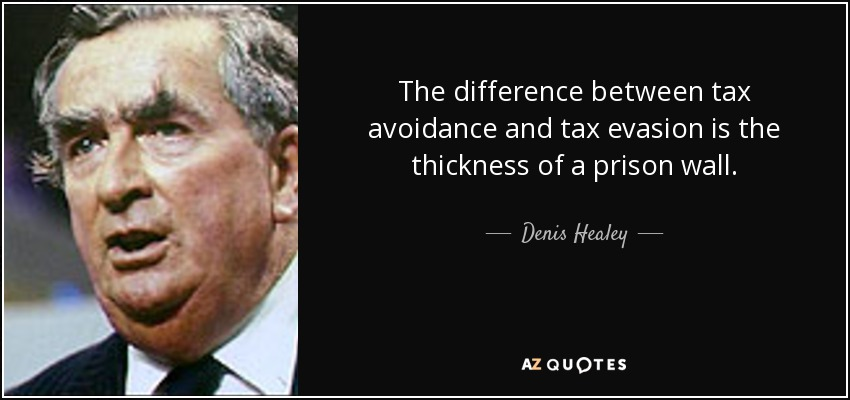
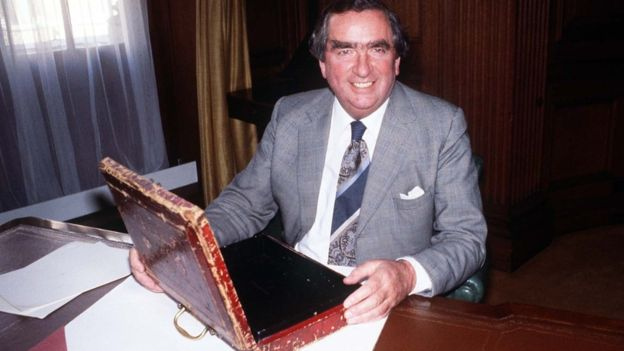
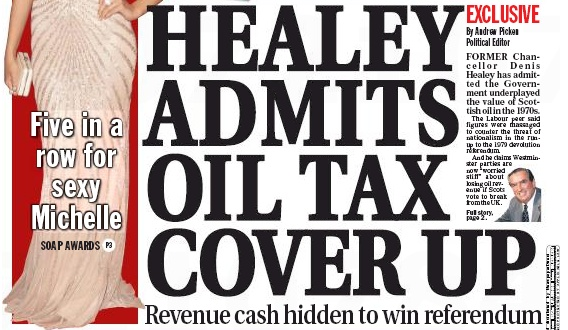
The views of one of the best economists in the UK in the last 100 years, the late Denis Healey, former Chancellor of the Exchequer in Labour governments 1970-1979 are as relevant today as they were in the past.

He was asked if he supported the cause of those who wished Scotland to become an independent nation once again given that the Scots were overly financially subsidized by England and the oil & gas resources were the property of the UK.

His answer was surprisingly blunt but not widely reported. He said:

“I think England would suffer enormously if the income from Scottish oil and gas and renewable energy stopped but if the Scots want independence they should have it and England would just need to adjust.

Asked if he expected an independent Scotland would survive, economically. he said:

“Yes, I would think so… and they have the oil, gas and renewable energy”.

Asked about his thoughts about claims that Scotland was being subsidized by England he reminded the questioner that Joel Barnett, (he of the Barnett formula), was his deputy at the Treasury at the time the share of the national income pot Scotland should receive was decided.

He added:

” Scotland pays more than its fair share and these myths are simply perpetuated to cloud the issue by those that are opposed to independence.”

On Scotland keeping the pound, he said:

“I don’t see why Westminster could say the Scots couldn’t share it. Scotland would gain from the arrangement but so would the rest of the UK”.

Pete Wishart – Impotent Chairperson of a Unionist dominated Committee manipulated to favour the Unionist cause at Westminster – But the money’s good!!!

Scottish Affairs Committee

The Scottish Affairs Select Committee is a Committee of the House of Commons. Its remit is to examine the expenditure, administration and policy of the Office of the Secretary of Scotland and relations with the Scottish Parliament. It also looks at the administration and expenditure of the Advocate General for Scotland.

Unlike the Scottish Grand Committee, MPs from constituencies outside Scotland can, and do, sit on the Scottish Affairs Committee.

Composition

Chairperson: Pete Wishart MP: Shadow Cabinet member, SNP Leader of the House of Commons. (Position attracts an annual salary around £20k.)

Members
Mhari Black: Shadow Cabinet Member SNP Spokesperson (Scotland)
Deirdre Brock: Shadow Cabinet Member SNP Spokesperson (Food and Rural Affairs)
Andrew Bowie: Tory MP, West Aberdeenshire and Kincardine
Alberto Costa: Tory MP, South Leicestershire
Sally Anne Hart: Tory MP, Hastings and Rye
Douglas Ross: Tory MP, Moray
John Lamont: Tory MP, Berwickshire, Roxburgh and Selkirk
John Cruddas: Labour MP, Dagenham and Rainham
Liz Twist: Labour MP, Blaydon
Wendy Chamberlain: Liberal Democrat MP, North East Fife

Note: Shadow Cabinet SNP, MP’s, are allocated a performance allowance, around £10k, using “short money” funding provided by Westminster.

11 members (3 SNP 8 Unionist)

Tensions on the Scottish Affairs Committee bubbled over, after MPs again pressed the idea of replacing Pete Wishart as chairman.

A number of MPs on the committee are unhappy that long-serving chairperson Wishart took up an SNP frontbench role that is “distracting” him from his duties.

MPs called for Joanna Cherry to take on the role after Wishart asked committee members to change the time of meetings to fit in with his new responsibilities as shadow Commons leader.

In a stormy clash before a meeting, MPs demanded Wishart put any proposals on changing committee three times to a vote, which he refused to do. Committee sources branded the row “pathetic”, adding:

“Pete is getting more and more desperate as he tries to cling on to his taxpayer-funded additional salaries as chair of the committee, and SNP, Shadow Cabinet Member, refusing to even consider other SNP members taking over. It’s been suggested that this is getting party political but, of course, we are only in this situation because he is putting his party role ahead of the committee continuing with its scheduled dates and times. The fact that Pete refused to allow a vote on the matter is pathetic. and disrespectful to the committee and its members. The time has come for Pete to choose between his party or the committee.”

Sturgeon snubs Scottish Affairs Committee chairperson, Pete Wishart’s invitation to discuss her record in government.

The Scottish Affairs Committee invited the First Minister discuss its recent inquiries, including into welfare, education and renewable energy. But she declined the invitation to appear with her office citing “responsibilities and range of commitments”.

In a letter to Pete she wrote: “Thank you for your invitation to appear before the House of Commons Scottish Affairs Committee. Unfortunately, due to my responsibilities and range of commitments, I will have to decline the invitation. In any event the committee is aware, I am accountable to the Scottish Parliament for the decisions and actions of the Scottish Government in relation to the issues you refer to.”

Committee chairman, SNP, MP, Wishart expressed disappointment at his Party leaders decision. He said: I am “surprised” at the length of time it took for her to respond. Our committee is focussed on reports and inquiries that are relevant to the people of Scotland, and it would have been helpful to have explored the issues with the her. In this Parliament we have had inquiries and reports on universities, renewable energy and public sector broadcasting issues that cut across responsibilities of both Parliaments. The invitation remains open to her and we hope that some time in the future she may be in a position to reconsider her decision.”

Nicola Sturgeon v Alex Salmond – Lets start at the very beginning – a very good place to start

Special Advisers are excluded from the line management structure of the civil service

The Constitutional Reform and Governance Act 2010 and the Ministerial Code, dictates that all appointments of special advisers in the Scottish Government are to be made by the First Minister who is personally responsible for the management, welfare and conduct of special advisers, including discipline.

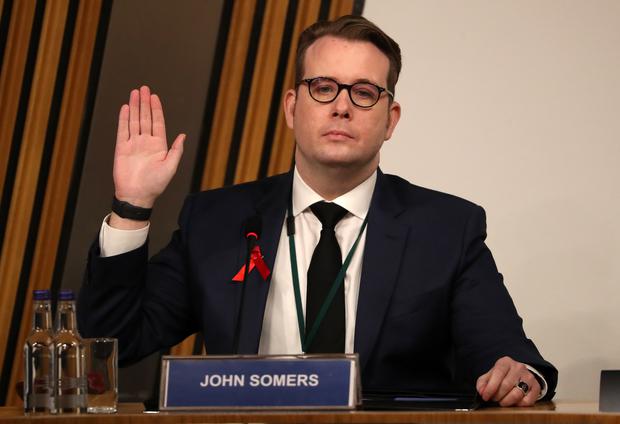
20 & 21 November 2017: John Somers, Principal Private Secretary, to the First Minister met privately with Ms “A”, at her request, in the First Minster’s office at which time she told him that she was not registering a formal complaint about Alex Salmond and said that she wished only to be permitted a personal meeting with Nicola Sturgeon.

Ms “A” was denied access to the First Minister by Somers and was instead subjected to intense pressure from senior civil service managers and other senior political and legal persons to register a complaint against Alex Salmond, with an assurance that it would be resolved to her satisfaction through use of “newly drafted” all-encompassing procedures, which she would have a hand in compiling. In this regard she placed her trust in and was used by the Scottish government as a sacrificial lamb in a political vendetta against Alex Salmond.

The foregoing reveals the duplicity of the Scottish Government’s assertions that it was only interested in the welfare of Ms “A”. If she was a civil servant then the actions taken may have been appropriate, but inexcusably inappropriate if she was a “Special Adviser”. Her line manager was Nicola Sturgeon!!!