Post Brexit – Another Independence Referendum – Another No Vote – Scotland Gets the Government of Ruth the “Mooth” Davidson and Her Unionist Tories – But it Can Be Avoided


455531980


Shocks in Store for Scotland if Ruth Davidson and her Tory Yes Ma’am politicians ever gain power in Scotland

Ruth Davidson and her Westminster Unionist Tory are not seen as an immediate threat to Scots, who through their SNP devolved government at Holyrood provide health care and some social services without reference to Westminster. But another referendum is in the offing and there is need to give consideration to the impact of another “no” vote.

The fallout in Scotland would be catastrophic. It is very likely the SNP government would resign and ask the electorate to decide its future within the UK. The electoral campaigns to follow would be greatly disappointing since the SNP would most likely split into factions leaving the Tories as the only united party.

A Tory victory would allow Davidson and her Unionist party to take up the reins of government in Scotland releasing the full might of Westminster on our country. In government she would be quick off the mark passing back to Westminster any devolved power that they required and then some.


ruthconf12-460x295


She is no supporter of the Scottish parliament. Reverting to type Davidson’s government would implement the Tory philosophy bringing in prescription charges, hospital car parking fees, University graduate charges, elderly care-home charges, tax cuts for the richest 10% and increases for the remainder of the population.

In short Scotland would be changed from a social caring society to a right wing “dog eat dog” country where the strong survive and the weak perish. Not much of an outlook for a once proud nation that has given so much to the world.

Next is an example of the Tories at work. They look after only those that vote for them. Lanarkshire, Glasgow, the West of Scotland, Fife and Dundee beware:

Residential care of the elderly in England is a privatised entity worth around £16billion to the private sector annually. There are regularity standards in place designed to provide protection to elderly residents. The Quality Care Commission routinely inspects homes in England with the purpose of monitoring the standard of care and welfare provision.

Their most recent report makes for startling reading. Homes in the South of England are doing well being adequately funded, staffed and equipped. Conversely home in the North are performing very badly due to inadequate funding, staff shortages etc. The Tory government provide more finance to the richest constituency’s in England at the expense of the poorest. That is the policy Ruth Davidson will bring to Scotland if she ever gains power. Scotland’s day of reckoning is not that far off. Hopefully Scots will see the Tories for what they are. A bunch of carpetbaggers intent on asset stripping Scotland.


Cover


11 April 2017: Tory cuts lead to shocking North-South divide in quality of care for Britain’s elderly

The Tories were last night accused of neglecting elderly people outside their heartlands by imposing bigger cuts to social care in those areas. A charity study uncovered a shocking North-South divide in the quality of council-run old folks’ homes. The North West, an area well known for its anti-Tory sentiment, has the worst performing care homes in England. In some towns, such as Stockport and Salford, families have little choice when it comes to choosing a quality spot as three in five are rated not good enough. But London, the South West and East contain the best. Labour accused Theresa May of “protecting” social care budgets in Tory areas at the expense of everywhere else.

Shadow Cabinet Minister for Social Care Barbara Keeley said: “We have a crisis in social care that has been driven by cuts to council budgets since 2010. “These cuts have hit councils in the North disproportionately when compared to many in the South, giving northern councils a much more difficult job in funding the quality of social care.”

The stark analysis of the state of social care was undertaken by the charity Independent Age. It was based on the Quality Care Commission’s inspections of homes, which rated them outstanding, good, requires improvement or ­inadequate. Fifteen of the 20 worst areas were in the North. Stockport was the worst performing local authority area, with 62.9% of its homes rated inadequate or requires improvement. Islington in North London, Rutland, East Midlands, and Isles of Scilly, South West were the best areas, with no poorly-rated homes.

Independent Age blamed cuts, low pay and staff shortages for the northern crisis. Director of policy Simon Bottery said: “No one should be forced to live in an unsatisfactory care home but our ­analysis shows this is the grim reality in some parts of the country. There is little indication local authorities or the Government are giving the problem the attention it deserves.” The care homes market is valued at £16billion. But social care faces a £2.6billion funding gap by 2019/20.


image


England’s worst 20 areas – Highest percentage of care homes rated ‘inadequate’ or ‘requires improvement’: (15 x worst performers are in the North of England)

1. Stockport, North West 62.9% 2. Salford, North West 61.5% 3. Tameside, North West 54.8% 4. Manchester, North West 51.3% 5. Kensington and Chelsea, London 50.0% 6. Oldham, North West 48.6% 7. Liverpool, North West 48.1% 8. Trafford, North West 47.2% 9. Hackney, London 47.1% 10. Bradford, Yorkshire & The Humber 46.3% 11. Wakefield, Yorkshire & The Humber 46.0% 12. Portsmouth, South East 44.8% 13. North Somerset, South West 44.7% 14. Calderdale, Yorkshire & The Humber 43.1% 15. Hartlepool, North East 42.9% 16. Wirral, North West 42.1% 17. Wigan, North West 42.0% 18. Westminster, London 41.7% 19. North Tyneside, North East 40.5% 20. Kirklees, Yorkshire & The Humber 39.7%


RD-and-T-at-C4


England’s best 20 areas – Lowest percentage of care homes rated ‘inadequate’ or ‘requires improvement’ (1 x Northern Region is performing satisfactory)

1. Isles of Scilly, South West, 0.0% 2. Islington, London, 0.0% 3. Rutland, East Midlands, 0.0% 4. Richmond upon Thames, London, 2.3% 5. Thurrock, East of England, 2.9% 6. Wokingham, South East, 6.3% 7. Slough, South East, 7.7% 8. Bracknell Forest, South East, 7.7% 9. Camden, London, 3% 10. Telford and Wrekin, West Midlands, 8.9% 11. Croydon, London, 9.2% 12. Blackburn with Darwen, North West, 9.4% 13. Bedford, East of England, 9.5% 14. Bournemouth, South West, 10.0% 15. Peterborough, East of England, 10.0% 16. West Berkshire, South East, 10.0% 17. Brent, London, 10.3% 18. Redbridge, London, 10.4% 19. Reading, South East, 10.5% 20. Worcestershire, West Midlands, 10.8%


Yes Complacent Westminster Establishment

The Tory Party in Scotland is Dead – Tory Central Office – the Unionist Media, the BBC and Ruth’s MI5 Connections in London Created the Ruth Davidson Appreciation Society- Scots Need to Send Her Home – to London Have Tumbled


Ruth-Davidson


Whatever Happened to the Tory Party in Scotland

The answer is that it perished. It is a dead party. It died the moment that Conservative Central Office in London decided it would take control of the party in Scotland and run it from London through a proxy leader called Ruth Davidson who was selected by the MI5 chairman and others of his ilk. The Scottish Tory is defunct.

In its place Tory Central Office and its MI5 connections created the Ruth Davidson appreciation society and gave her free rein (albeit strictly monitored by senior officers in the party) to rebuild the party from scratch. Initially things did not go well but Ruth struck lucky with the 2014 Scottish Independence Referendum.

The “Better together” campaign team, assisted by the entire mechanics of state at Westminster won the day and Scotland turned its face away from independence.

But the Tory success was gained at huge cost to the political scene in Scotland.

The referendum effectively polarized the political views of the electorate to those for and those against independence.

Ruth then calculated that the 55% gained by “Better Together” truly reflected the wishes of Scots and she set about cultivating this group increasing the Tory share of the Scottish vote.

Achieving this was relatively straight forward since the labour and Liberal Democratic parties had supported the “Better Together” Unionist campaign and were now lumped together with the Scottish Tory party.


OLYMPUS DIGITAL CAMERA


But, following the referendum she read badly misread events in the period up to the 2015 General Election.

The “little Englander” conduct of Cameron, Osborne, Hague and other members of the Tory Government in Westminster sickened many Scots who had changed their votes in the last week of the campaign believing Gordon (clunky fist) Brown’s rhetoric committing all political parties at Westminster to dramatically increasing the powers of the Scottish government, (Devo-max) in the early days of the new British government.

The Vow was not delivered and Scots just about eliminated the Unionist parties in Scotland when 56 of 59 SNP MP’s were elected to office reducing Unionist party representation to three Unionist MPs. Mundell, Murray and Carmichael.

As before stated, “in a cruel twist of fortune” Ruth Davidson and her party “jumped from the cliff” and landed on their feet.

The fallout from the 2015 General Election was spectacular.

The Unionist labelled Labour and Lib-Dem parties went into free-fall.

Various factions fought damaging battles each seeking to control the political future of their parties and Scottish voters with a unionist leaning deserted them in favour of the party (other than the SNP and Greens) which maintained a united front.

But Ruth Davidson had her problems. The Tory Party in Scotland was still not trusted by Scots and radical change was required if the party’s fortunes were to be improved.

Ruth consulted with her minder (Dr Adam Tomkins) who advised a root and branch clear out of deadwood Tory wannabes before the 2016 Scottish parliamentary election. The process was duly delivered. Ruth’s “advisers”, hand picked every candidate.

Not one candidate was ever elected at any time, not even through the party’s internal candidate selection.

The Scottish Tory party was eliminated. Davidson was ecstatic the party in Scotland was cloned from herself. Its image was her image. They were as one.

At the 2016 Scottish Elections Davidson’s entire campaign focused on retaining Scotland’s place in the Union.

There was little mention of Scottish polices since there was little of any merit in their manifesto.

So a party of clones asked Scots to elect them to office.

Of the 73 candidates seeking election to Holyrood through the first past the post system 7 Tories were successful.

A total of 66 Tory candidates were rejected.

There were 56 List MSP posts available of which 24 were allocated to the Tory party.

Ruth appointed 24 Tory MSP clones.

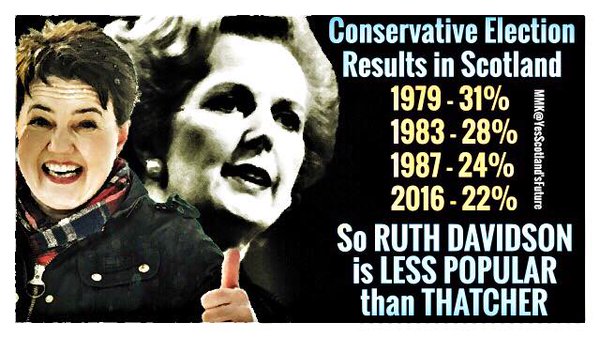
Ruth Davidson increased the Tory share of the Scottish vote by approximately 8%, taking the party share of the vote to 22% “all of it at the expense of the labour Party.”

In conclusion there is no Scottish Tory party.

The nearest thing to it is the Ruth (Minime) Davidson party.


imagesvvr


An observation by a former Scottish Tory Candidate

“Miracles of the Scottish Conservative variety seem to be based on delivering what the Scottish Conservatives want for the people even if they are against it.

If there is a miracle to be had for the Scottish Conservative it should be the awakening that given they don’t understand the poor they should get someone in who does and rewrites their social policies. And then if they don’t like it say nothing and smile.

Of course it would be a miracle to change the fortunes of the Scottish Conservatives because they don’t have big ideas.

It is true that Ruth Davidson had a good campaign in 2016 but remember she had intensive media training and guidance throughout .

She is a manufactured politician (view her poor performances at Holyrood when confronted by the wit of Alex Salmond).

Many Conservatives in Westminster and Scotland invested a lot of faith in Ruth Davidson getting the Scottish Conservatives back on the right track.

But she has offered Scots absolutely nothing. Her policies, such as they, are ‘tat’ and Scots will not buy them.

This forces her to concentrate the parties efforts on the fall back position, Scottish Independence.

A useful distraction which might yet bring more labour voters over to her cause.”


images


Kyle Thornton – Scottish Conservatives Candidate for Office in Glasgow – Issues Advice to Ruth Davidson

The Party should be a bit more Scottish and be bold enough to back holding a referendum on Scotland’s constitutional future.

As the Scottish Conservatives are examining their role in modern Scottish politics maybe we should take a look at our more successful colleagues in Wales.

The Welsh Conservatives should be held up as a success story for the Scottish Conservatives to look to.

From the 1997 wipe out, the Tories in Wales have built themselves back up to the point where the Conservatives topped the European Election poll in 2009, which has to be a fantastic achievement for a party that returned no MPs only 12 years previously. But how did they do it?

As I can see it, a factor in their success was that they simply became a bit more Welsh. (But Ruth Davidson is taking the Tory Party in the direction of Westminster control) I’ll put it another way:

They shrugged off all the talk of British this and British that and they were saying Wales this and Wales that.

That brings me to the Scottish Tories. We’ve been slowly recovering some ground in Scotland but at a very slow rate.

The General Election result must be a wake-up call to the party that we need to do something different.

Being on the ground during the election talking to people, I picked up the following broad message:

Scots feel that the Scottish Conservatives are just the English with a different name.

The talk of British General Elections and British Parliaments simply just makes the majority of Scots feel uncomfortable, it always has since 1707. So what can we do?

Simply, let’s become a bit more Scottish. There are many ways that we could approach this but I’d like to discuss just one method:

let’s support the idea of asking the Scottish people their view about Scotland’s constitutional future in a referendum.

As we should, we would be campaigning for a No vote to Independence, but we should support more powers for Holyrood as outlined by the Calman Commission.

It is my firm belief that by doing this we would show to the people of Scotland that:

We do trust them to decide their own future. (note the terminology he uses “them and us”)

We are confident that there will be a pro-union vote.

We accept that Scotland is a devolved nation, able to make its own choices on its home affairs and that it should be given greater flexibility.

Such a move would help the Scottish Tories to shrug off the words of electoral death in Scotland (Margaret Thatcher) and also to reduce the feeling that the Scottish Tories are just the English in disguise.

There is a saying that comes to mind when writing this: “Fortune Favours the Bold”. Well, if we do what I’m suggesting, we’ll be being very bold – but we may also just help save our electoral chances in Scotland from terminal decline. (conservative home)


t

Mary! They even knew the colour of your curtains!!! – How a Professionally Run Better Together Campaign Manipulated the Will of – Then Destroyed a Bunch of Enthusiastic Amateurs


uniontwat3-460x305


Obama and Blair Campaigns Contractors Awarded “Better Together” Exclusive Media Strategy Contract.

Blue State Digital is a powerful USA media strategy and technology company specializing in online fundraising, social networking and constituency development. The Company provided digital strategy and technology services (cost £2million) to the Barack Obama presidential and a number of Tony Blair campaigns. The mission statement of the Company states;

“A full-service new media agency, Blue State Digital develops and executes multi-platform digital marketing and online engagement campaigns for non-profit and advocacy organizations, political candidates, causes, brands and businesses. Our work inspires and mobilizes people, increases revenue, and cements lasting support and loyalty.”
A Company insider quoted; “Future elections will be won not because the candidate was anointed by a powerful party, but because he or she was best at using a Web and new-media strategy to rally the masses.”

Just who are these guys? (http://www.boston.com/news/politics/2008/articles/2009/01/08/the_geeks_behind_obamas_web_strategy/)

and the link to Tony Blair? (http://www.brandrepublic.com/news/994174/Blue-State-Digital-creates-TonyBlair4Labour-site/)

and the link to Scotland? The UK Director of Blue State Digital is Gregor Poynton – Poynton, from Falkirk, (whose family still live in the town) is a Labour party election strategy manager, Scottish Labour party organiser and a potential candidate for the Falkirk West seat following the resignation of Eric Joyce. He is married to the Labour MP Gemma Doyle.


darling_3037529b


19 May 2012: Blue State Digital’s Political Director UK, Poynton oversees all BSD’s political work from the Company’s London office and acts as Senior Account Director on the largest UK-clients across the non-profit and corporate sectors. He specialises in campaign organisation and strategy, he previously worked as Election Strategy Manager for the British Labour Party, a researcher in the Political Unit of the Labour Group of Members of the Scottish Parliament and for Catherine Stihler, Member of the European Parliament. Gregor holds a BA (Hons) in Politics from the University of Strathclyde in Glasgow. (https://www.youtube.com/watch?v=2ey-Z4U95-o)


Scotland-independence-referendum-poll-Scots-Nicola-Sturgeon-SNP-808150


7 July 2013: Gregor Poynton features on Sunday Politics Scotland selling the concept of online media strategy: (https://www.youtube.com/watch?v=-LnBsiYY8Vc)


headlineImage.adapt.1460.high.scotland_referendum_090914.1410393609242


7 November 2013: Gregor Poynton from Blue State Digital talks about how the Obama campaign used data to get the result it needed: (https://www.youtube.com/watch?v=eSNQK28ziJs)


IndyRefSept


29 January 2014: Hangout On Air with Gregor Poynton of Obama’s secret digital marketing weapon (https://www.youtube.com/watch?v=TAGZD_9B8XA)


Scotland_votes


30 January 2011: Credit check giant Experian accused of ‘ripping off’ its customers

Britain’s biggest credit reference agency has been accused of misleading customers who sign up for a supposedly free service to check their financial records. Experian advertises the service on its website, stating: ‘Get your free Experian credit report. The UK’s No1 credit report!’ Those who take up the offer are then required to provide a range of personal information, including their address and credit-card details. But after receiving their online credit report, customers are automatically signed up to a full service charging them £14.99 a month – and many claim that it is extremely difficult to opt out of the payments.

The full service includes a £6.40 identity fraud insurance and email alerts telling customers about any changes in their financial circumstances. One customer said: ‘I searched for hours on the Experian website to get out of paying any money. I couldn’t even locate the free-phone number which they say you have to ring to unsubscribe. Even when I said I didn’t want to pay I was offered another service costing £7.99 a month.’

Within hours of being approached Experian admitted that the wording on the website, saying that the customer had been charged immediately, was misleading and promised to remove it. A spokesman said: “we re grateful for you drawing this to our attention and we will immediately update the website to stop the wording from appearing.” However, he denied that the system for opting out of Experian’s premium service was unfair, insisting that it was transparent to all users adding: “There is a balance to be struck here. We don’t want to be so helpful that we encourage people to leave our service. After all, you don’t go into a supermarket and see signs for how to get a refund.”

Experian has seen its profits soar as consumers use its online service to check their credit-worthiness during the economic downturn. It has also seen rising numbers of users checking their profiles after having their debit or credit card cloned. Credit reports are one of the main sources used by financial institutions when deciding whether to offer loans. Experian’s profits rose from £297 million in 2007 to £436 million last year. Experian has twice as much credit report business as its nearest rival in the UK. (Daily Mail)


Scotland-independence-referendum-poll-Scots-Nicola-Sturgeon-SNP-808150


“Better Together” Gains Unfettered access to Experian’s Database

The credit-checking group Experian was contracted by “Better Together” to devise a new data management tool. The company created a software package from it’s extensive database named “Patriot” which stored all consumer data obtained from lenders and companies who voters had contracts with. This allowed “Better Together” to identify lifestyle indicators, categorise voters and link them with activists of a similar age or with similar social media friends in order to improve voter targeting and canvassing.

The initiative is another product of Better Together’s appointment of Blue State Digital, the agency that worked on the successful first election campaign for US President Obama. The drive, using social media and YouTube was launched in an attempt at recruiting volunteers who were given the personal details of members of the public and asked to cold-call them in order to canvass them for support. All information gleaned by the calls was then stored in the campaign database and transmitted to the three parties involved in Better Together.

The initiative was a follow to the “Better Together” April 2013 controversal campaign which included the widespread unauthorised distribution of unsolicited text messages releasing people’s personal details and information. The campaign was successful in terms of volunteer recruitment (more than 3,500 volunteers signed up).


-512175


Afternote: Scottish electorate should be concerned:

“Anyone with a credit card, bank account, loan, mortgage, store card or monthly/quarterly mobile phone will likely have an Experian profile. The company conducts millions of credit checks each year on many hundreds of thousands of UK citizens. The level of data they collect and hold is frankly staggering. Making matters worse, the information Experian hold on us is very often gathered without our knowledge.

Companies run credit checks on potential customers whenever a new application for credit is made, yet it is rarely explained what “doing a credit check” actually entails. In fact, the consumer has little to no choice over which company actually undertakes the credit check. They are chosen by the bank, estate agent, mobile phone network or any other commercial organisation.

Not engaging with a credit reference agency is almost impossible. It would entail not having a bank account, not having any direct debits, not having a credit card, not renting or owning a property. We have to, whether we like it or not, engage with these companies.

The consumer needs to be able to trust companies such as Experian that handle massive levels of personal data, more acute when we have little to no say over what data they hold.”

(http://www.experian.co.uk/assets/hitwise-support/inspires-report-scottish-referendum.pdf) (https://rfcb.revues.org/418?lang=en)


_77628862_rallypa


19 July 2013: Scottish independence: “Better Together” Targets Voter ‘Tribes’

The group campaigning for a no vote in Scotland’s independence referendum has said it will embark on the most sophisticated targeting of voters seen in British political history. Pro-union “Better Together” has launched its new “Patriot” system. It will divide Scotland’s four million voters into 40 different tribes. This will then allow the campaign to speak directly to undecided voters using letters, emails and face-to-face discussions.

Better Together said the technology, which has been developed with information from credit rating agency Experian (£500K) and input from advisers to President Obama, will allow them to identify lifestyle indicators like the number of cars a family has and local house prices. Voters will then be “linked” to activists of a similar age or with similar social media friends.
In a statement, Better Together campaign director Blair McDougall said: “We have to make sure that we are on the doorsteps and high streets, but also that we are also on peoples’ smartphones, tablets and PCs. This new tool will help bring our thousands of volunteers together with the key voters who will decide the outcome of the referendum.”

It is estimated “Better Together” had 10,000 volunteers signed up by the start of the campaign. IT expertise was utilised through the on-line presence of a significant number who were based in England throughout the campaign.

Social media played an important role in local campaigning especially as it enabled “Better Together” to more effectively mobilise more volunteers and disseminate information using the “Patriot” software. (http://www.bbc.co.uk/news/uk-scotland-scotland-politics-23379615)


rangers-fans-display-no-thanks-post


14 March 2017: Should Scotland be an independent country?

Scotland’s First Minister Nicola Sturgeon has demanded a second referendum on Scottish independence. Last time, the question was: “Should Scotland be an independent country?” We asked the same question again: All 13791 respondents live in Scotland:

Yes to Scottish independence. 8351 votes (61%) No to Scottish independence. 5374 votes (39%) I’d abstain. 66 votes (0%)


_77374079_salmond_sturgeon_cu

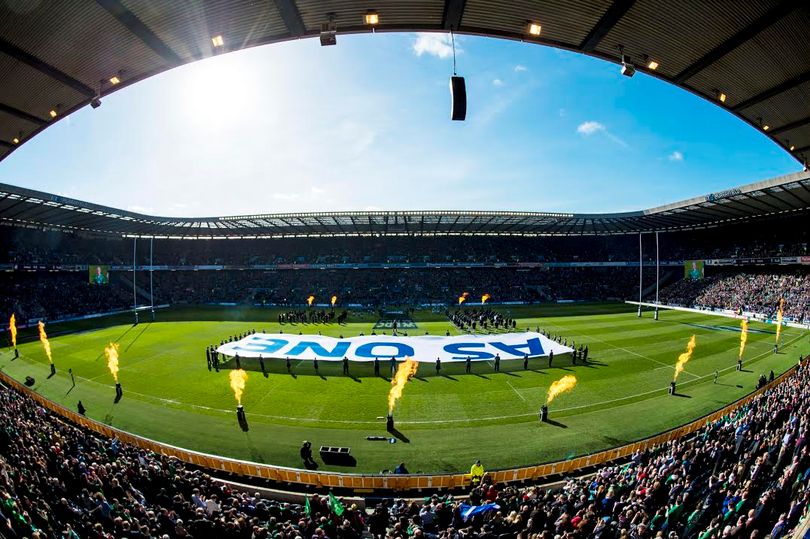
Scottish Rugby Union – Stuffed With Officials and Players No Better Than Financial Patriots – Staunch Unionists to the Core – They Brazenly Sing “Flower of Scotland” with Gusto – They Have No Shame


Scottish-Rugby


O flower of Scotland

“When will we see your like again, That fought and died for, Your wee bit hill and glen, And stood against him, Proud Edward’s army, And sent him homeward, Tae think again. The hills are bare now, And autumn leaves lie thick and still, O’er land that is lost now, Which those so dearly held, And stood against him, Proud Edward’s army, And sent him homeward, Tae think again. Those days are passed now, And in the past they must remain, But we can still rise now, And be the nation again, That stood against him, Proud Edward’s army, And sent him homeward, Tae think again”


sole


1995: Shamateur to Professional – Scottish Rugby Union’s Torturous Process of Change

Scottish Rugby Union hierarchy failed to adjust at the same time as other nations and missed out on at least one season of professional rugby which also saw a number of Scot’s players transferring their contracts of employment to clubs in England, Wales, Ireland, France and Italy. The blundering continued well into the new era of professional rugby as various factions battled for supremacy and as a consequence the performances of the Scottish national rugby team deteriorated.

Attendance at Murrayfield dropped by up to 40% and disillusioned fans found other sports to support. The process of change laid bare to the public extreme right wing attitudes prevalent within Scottish rugby and the areas of Scottish society from which it attracted players and supporters. The prevalence of rugby players and supporters for retention of the Treaty of Union was found to be markedly high in comparison with other sports and this was manifest at the time of the 2014 Independence Referendum. The years of torment:

1995 International Rugby Board announces that the days of amateurism and shamateurism are over and the sport is going open.

1996-97: The organisation tries to come to grips with the new era forming part-time professional district teams to take part in European competition after missing out on the first season of the Heineken Cup.
1998: A momentous year in which the SRU’s first full time chief executive calls for an overhaul of the entire structure of the game and a coup at Murrayfield brings about a number of resignations from the committee.

1999: Lord Mackay comprehensive review of all aspects of Scottish rugby, brings about major changes including, removal of unelected “special representatives” to the SRU committee. Also recommends that the Union formally delegate the day-to-day running of the sport to their executives meeting only four times per year to offer an overview on policy matters.

2000: Ken Scobies appointed as the SRU plc’s first executive board chairman with three more non-executive directors – Andrew Flanagan, Fraser Livingston and Bill Wilson – also introduced at board level.

2002: With friction between the general committee and the executive board growing, Scobie survives challenges from committee members who seize upon newspaper allegations about his munitions company’s involvement distributing land-mines.

2003: After Scobie completes his three-year term David Mackay becomes the SRU’s second chairman, promptly launching a 100-day stocktake at the end of which Watson is asked to resign and agrees to go, Mackay taking over as caretaker chief executive.

2004: With Mackay claiming it represents “the last chance saloon” for Scottish rugby, the Genesis Strategic Review gets under way. Phil Anderton is promoted to the chief executive’s office after a highly acclaimed four-year stint as commercial and marketing director and both chairman and new chief executive receive unheard of applause at the SRU’s annual meeting after unveiling in broad terms the findings of the review.


652856194


10 January 2005: David Mckay resigns from his post as Chairman following a vote of no confidence. it is alleged that some members of the general committee, (which was far from unanimous in registering its no confidence vote in the chairman,) were actually motivated by their opposition to plans to overhaul the governance of the game. That would have removed much of their capacity to interfere in the running of the sport on a day-to-day basis. Mackay is credited with cutting SRU losses, which had reached £10million when he was appointed in 2003, reducing to under £2million at the end of 2004.

11 January 2005: Three members of the Scottish Rugby Union executive board resigned in protest at the `no confidence’ vote which caused the departure of chairman David Mackay. The former SRU chair resigned from his position yesterday in the wake of the vote taken by the general committee of the Union. Now executive board members Fraser Livingston, Andrew Flanagan and Eric Hagman have stepped down in response.

A row has been simmering for months between Scotland’s clubs and the SRU executive, with club sides fearing a loss of policy-making power to the governing body. But the three outgoing executive board members lashed out at the exit of Mackay in their notice to quit. A statement from Livingston, Flanagan and Hagman said: “Replacing the chairman without prior notice or any consultation whatsoever with the executive board flies in the face of good governance.`

In David Mackay’s short term in charge of the board, enormous strides have been made in improving efficiency, planning debt reduction and developing a cohesive and comprehensive strategy for the game. “Sadly, the general committee’s actions do nothing to further the interests of taking Scottish rugby into the 21st Century.”

12 January 2005: Scottish rugby in turmoil with leading clubs threatening to break away from the SRU, senior figures resigning in droves, and a question mark over the future of the chief executive, Phil Anderton, and the technical director, Ian McGeechan.

13 January 2005: Chief Executive Phil Anderton the latest casualty of the bitter battle for power in the game when he resigned yesterday.


3500


13 January 2005: Scottish Rugby in Meltdown – MSP’s to Debate Matter at Holyrood: Susan Deacon MSP tables motion:

“That the parliament notes with extreme concern the current situation within Scottish Rugby which has seen the resignation of a number of senior figures within the organisation, including David Mackay as chairman of the executive board and Phil Anderton as chief executive, following a no-confidence vote in the chairman by the SRU general committee.

Recognises the importance of rugby at both a local and national level as one of Scotland’s major sports and applauds the efforts which had been made by the former chairman and chief executive to take forward a strategy which would secure a sustainable future for rugby in Scotland.

Believes it is vital that effective leadership and direction is restored within Scottish rugby at the earliest possible date, and supports calls for the reinstatement of David Mackay as chairman of the executive board and Phil Anderton as chief executive to secure this objective.”         (http://www.espn.co.uk/rugby/story/_/id/15377062/sru-row-becomes-political-issue)

17 Jan 2010: Five years on David Mackay looks back after he lost the battle but won the war in Scotland rugby’s revolution: There are many more pressing demands on Scottish Rugby’s resources right now, but if the big cheeses of the SRU’s administration ever wanted to scrape the bottom of the shortbread tin for funds for a work of public art they could do worse than raise a statue in honour of the 14 gentlemen who sat on their own general committee at the dawn of 2005.

The only drawback is it would take a sculptor of uncommon dexterity and craft to capture the myopia that characterised the actions of those individuals at the time. A handful – four, to be exact – came out of the administrative meltdown they had provoked with reputations intact, but the others could still serve, quite literally, as monuments to vainglorious stupidity.

Five years have now passed since the old committee unwittingly signed their own death warrants with a vote of no confidence in David Mackay, the much-respected businessman who had been called in as chairman a year earlier to steady a Union ship that had been holed below the financial waterline by the bungling of previous managements. ( http://old.glasgowhawks.com/news/7391)


rugbylegends


11 March 2017: Why is the Scottish Rugby Union So Strongly Anti Independence?

“O’ flower of Scotland, when will we see your like again?” Scottish fans of rugby union must find their nostalgic pre-match anthem, which commemorates the history of Caledonian resistance against the English, especially poignant. But In sport, patriotism is not always the same thing as separatism. A number of Scottish athletes opposed independence in 2014. Why? The primary reason was money. Gordon Brown, (Scottish born former prime minister,) warned that a divorce could cost Scottish sport its funding from the National Lottery.

But rugby is a rich game, with little need for Lottery handouts. So its unionism is partly explained by demography. Poor voters are the most likely to back independence, and rugby players and fans are a posh bunch. Only one of Scotland’s 37-man squad was born in a local authority that voted to leave in 2014. Rugby also embraces internationalism more than most sports. Nineteen of Scotland’s players were born outside Scotland, eight of them in England. Nine play for clubs outside Scotland. (The Economist)


411776916


3 February 2013: Phil Anderton Joins Better Together

Phil Anderton, who currently works as a management consultant based in Scotland, has been appointed to the board of the cross-party Better Together organisation. He will have specific board responsibility for the interaction between Better Together and the business community. The Edinburgh-born businessman, who has a degree in management and international relations from St Andrews University, has also worked in brand management for both Procter and Gamble, Coca-Cola and the Scottish Rugby Union which he joined in 2000 and was appointed as the Chief Executive Officer in February 2004, after several years of successful marketing within the SRU. He was nicknamed “Firework Phil”, because he provided lavish firework displays and entertainment before rugby games at Murrayfield Stadium. He resigned as CEO in January 2005 after David Mackay (Chairman of the SRU) was forced to resign by the SRU General Committee. (He retains strong links to Scottish rugby)


20170311_brp001


2 October 2013: Gavin Hastings – Avid Opponent of Scottish Independence

He stated: “it’s all about exposure to the bigger picture, and Scotland is not the bigger picture. It never will be. We will not be able to do it amongst ourselves – we need to see the global picture in front us and be part of that picture, and, in my opinion, we will never be part of that were we to be an independent nation – which, by the way, we won’t be. “People say ‘what’s the greatest honour you had as a rugby player?’ Being captain of the British Lions. That’s bigger than being captain of Scotland, so you know what I’m saying.”

Reader Rebuts Hastings Assertions: With respect, I disagree. We don’t need a larger neighbouring nation to govern us. I believe the Scots have the wits and ability to control their own affairs. We are every bit as good as any other nation. I happen to believe strongly that ALL countries should have the right to democratic self determination. We are not too wee, too poor, and too stupid, as the No campaigners spent two years telling us. We are not “subsidy junkies”, reliant on hand outs. I find the idea that we are “not genetically programmed to make political decisions” offensive. At the end of the day, I am simply fed up of people telling us that we can’t do it, that we’re scroungers who can’t survive without the generous hand-outs from our neighbours. Independence is about self respect. About belief in yourself and in your nation. I just wish more people had the courage to believe in themselves and their fellow countrymen. Yes, let Scotland take its place on the world stage, but lets do it standing shoulder to shoulder with other countries as friends and equals. (The Scotsman)


1410563186223_wps_2_Scottish_National_Party_L


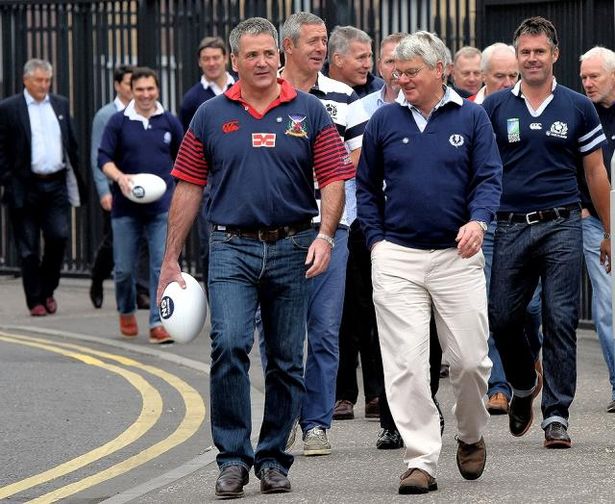
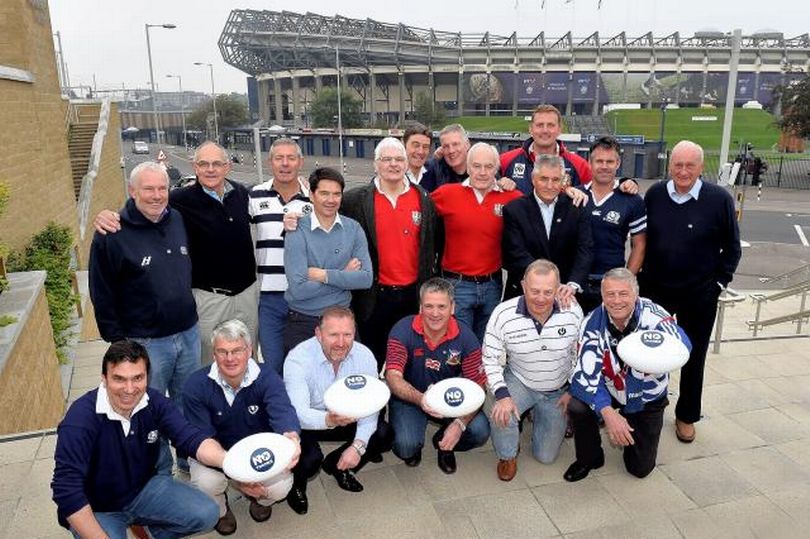
13 September 2014: Scottish Rugby Stars Tactical Strike 5 days before the Independence Referendum: Scottish Rugby Legends Urge Scots to Vote No

The all-star line-up re-enacted the national side’s iconic 1990 march in a show of support for the Better Together campaign. Stars backing the anti-independence vote also included Kenny Logan, Scott and Gavin Hastings, Andy Nicol and Finlay Calder. Speaking, Sole – who captained Scotland’s Grand Slam-winning side of 1990 – said: “I think the Yes campaign almost feel they have exclusive rights on the Saltire which I think is completely unjustified. “I’ve played for Scotland, I’ve played for my country, I’ve split blood for my country and I’m very passionate about that. (The Record)

  • What a stupid thing to say.  Many hundreds of young men and women killed or injured in Iraq and Afghanistan spilt their blood for their country he cut his head playing a game of sport.


25354491.jpg.gallery


13 September 2014: Scottish Rugby Players Attack Childless SNP chiefs Claiming That They ” Have no Feel For the UK family”‘ and Want to Break Up the Union Because They do Not Understand Families

Former Scottish rugby players said Alex Salmond and Nicola Sturgeon do not have to worry about future generations of Scots as they are childless. At a pro-union campaign event outside Murrayfield Stadium in Edinburgh, Steve Munro, who earned 10 caps for Scotland, said the pair ‘don’t have any understanding of kids as they don’t have children’. The 56-year-old former winger added: “I’ve got children and I’m thinking about their futures. Salmond and Sturgeon have re-established divisions in our country.”

Andy Irvine, 62, a former president of the Scottish Rugby Union who earned 51 Scottish caps, added: ‘I’m a parent of four children and four grandchildren. I may be coming towards the end of my life, but they’re starting theirs and they’d be better in the Union. I’m a proud Scot and a proud Brit too. I have to think about the impact on their livelihoods.” (The Daily Mail)


13510775_1133359866705583_6574538979639619333_n


17 Sep 2014: Scottish Rugby’s Bullingdon Boys Club Score an Own Goal

Much as I love the egg-chasing game, it has always struck me as rugby’s most profound weakness that it has nothing in its repertoire to match the sublime moment of sporting purity that is football’s own goal. Rugby is denied all this. Or rather it was until last week, when a group of Scottish ‘legends’ – a term that has clearly acquired a certain flexibility of late – gathered at Murrayfield to pledge their support for the referendum No campaign. Finally, rugby had its own goal.

As it happens, I have a lot of time for people such as David Sole, Gavin Hastings, Finlay Calder and the rest of them, just as I had a lot of admiration for them as individuals in their playing days. I also couldn’t really care less whether they favour Yes, No or Maybe. But for them to come together as they did, and where they did, was a monumental misjudgement.

By way of clarification, they weren’t actually in Murrayfield, the Scottish Rugby Union having made it crystal clear that they wanted nothing to do with the stunt. Instead, they hung about in Roseburn Street, just outside the stadium, which is where most of the photographs you might have seen were taken.

Now it can be dangerous to generalise but, from a brief look at the group shots of the former players, I reckoned that between two-thirds and three-quarters of them had attended private schools. A clear majority are Edinburgh-based. All had been retired a long time. All, of course, were male. Or, to put it another way, a bunch of well-off, middle-aged blokes want things to stay just the way they are. Staggering, isn’t it? Who knew? Well, most of the pollsters for a start. Which is why the number of votes added to their cause by this gathering is probably about the same as the number of points Scotland put on the scoreboard against England last February.

“What on earth were they thinking of?” was the comment of someone I met the following day. Now I have absolutely no idea whether the fellow who said this was in the Yes or No camp, but politics was not the issue for him. Instead, what incensed him was the fact the grey-templed Roseburn flash-mob’s reinvention of themselves as some sort of rugby Bullingdon Club only reinforced an image of the sport as the game of a privileged elite.

Yes, you can pick through the pictures and find John Rutherford and Colin Deans – both state-schooled in the Borders – in there as well, but the clear majority are from a different social sphere. Does this matter? Hugely. You can quibble over just about anything in this game – tactics, selection, league structures, governance – but the one overwhelming issue that holds Scottish rugby back is that its social and demographic base is far too narrow. It always has been. (The Herald)


64717435ad040659299de231b31d6c72


But hold on “Yes” Scotland had one supporter:

“Jim Telfer, a former coach of the national side, has suggested that any Scot seeking reasons for secession should spend ten minutes with smug English fans at Twickenham. The English don’t help themselves: they banned bagpipes from stadiums when hosting the Rugby World Cup in 2015.”    (Mercatornet)


hhn


30 November 2016: Scottish Rugby Agree New 10-year Hospitality Deal With Elior UK

Further confirmation supporters of independence will be whistling dixie to any help from the Scottish Rugby set. Based in Macclesfield, Cheshire PLC, Elior UK has provided corporate hospitality, conference and event and match day catering at BT Murrayfield for the last seven years and the new 10-year hospitality contract extension will deliver in excess of £1million each year to Scottish Rugby substantially growing its commercial income. (The Insider)


a5541b0384cb1e208a5239824f3d70b0


Lest Ye Forget – Ruth (the Mooth) Davidson – Elected Leader of the Tory Party in Scotland by 28% of the Party Membership – She Has No Mandate to Lead – Time to Stand Down Ruth


Ruth-Davidson


The Mantra of Unionist Supporters in Scottish Politics

“Ask not what I can do for Westminster,
But, what can Westminster do for me?”

Mundell to get a peerage for selling out his country? Ruth Davidson after? and what about the rest of them It’s all me me me me me!!! Oh and Annabel Goldie got her reward.


Carlaw-598695


October 2011:Tory Party in Scotland in Crisis

The Scottish Conservatives are looking for a new leader after Annabel Goldie decided to step down from the post in the wake of the party’s poor performance at the last UK and Scottish elections. As the Scottish government’s referendum approaches, the Scottish Conservatives are now fighting their own battle for independence, over whether the party should carry on as it is or disband in favour of a new, right-of-centre political group. Here is a look at the 2 leading contenders for the leadership of the party:


b658217711c1f88574071827a5a5dd3e


Ruth Davidson:

Key backers: Lord Sanderson, Lord Strathclyde, leader of the House of Lords, John Scott MSP, and deputy Holyrood presiding officer, John Lamont MSP, Murray Tosh, Lord Forsyth, Michael Ancram.

As a 32-year-old, newly elected, openly gay Tory MSP, Ruth Davidson has been described as the fresh-faced, new generation of the Scottish Conservative Party. But can looks be deceiving? When compared to Murdo Fraser’s radical plans for the party, Ms Davidson almost seems more of a status quo candidate. The former BBC journalist opposes further new powers for Holyrood, describing those to be delivered through the Scotland Bill as “a line in the sand”.

Ms Davidson, who became a Glasgow list MSP in May, says the leadership campaign has become distracted by the debate over disbanding and rebranding the Scottish Conservatives, arguing that real change only comes from asking people what matters to them, and bringing fresh thinking to important issues, such as health, education and justice. At a time when increased powers for the Scottish Parliament has become a popular issue, Ms Davidson is hoping party members will want a leader intent to make the best of what Scotland already has.


SNP-514831


Murdo Fraser:

Key backers: Sir Malcolm Rifkind MP, Jamie McGrigor MSP, Liz Smith MSP, Gavin Brown MSP, Alex Fergusson MSP, Alex Johnstone MSP, Nanette Milne MSP, David McLetchie MSP, Struan Stevenson MEP.

As the long-serving deputy leader of the Scottish Conservatives, Murdo Fraser was seen a frontrunner – but has he scared the horses too much with his radical plans? Essentially, Mr Fraser wants to get rid of the “Scottish Conservatives” – the so-called toxic brand – in favour of a new, right-of-centre progressive party. He says the Conservatives carry too much baggage in Scotland and splitting from the UK party means they stand a better chance of attracting more voters. Not only that, but the former UK Young Conservative chairman has taken a very different tack to his opponents when it comes to the constitutional question, currently all the rage in Scottish political debate. Mr Fraser favours more financial powers for Holyrood, but stops short of backing full fiscal freedom – “independence in disguise”, as he puts it.

The former lawyer, who became an MSP in 2001 after a vacancy arose on the mid-Scotland and Fife list, is seen by colleagues, commentators and others as a skilled debater and politician. His plans to set up a new party, which would ally itself with the UK Conservatives come election time, has been praised by many. But while the UK party leadership seems relaxed about the idea, Scotland’s sole Tory MP, David Mundell, has his reservations. Questions still remain, the biggest one being whether the approach will chime with long-serving Tory party members in Scotland when the time comes to vote in a new leader?


12067937064_c05001cfc2_b


Glasgow Conservatives Reject Davidson

Davidson is facing hostility from party activists in what should be safe home turf in Glasgow. Of the city’s five constituency association chairmen and women, two are supporting Davidson’s main rival, Murdo Fraser, two are behind Jackson Carlaw, and one has nominated Margaret Mitchell.

Supporting Fraser are Richard Sullivan, chairman of Glasgow Central & Eastern, and Archie McIntyre, of Glasgow South West association. Barbara McCulloch, in Glasgow North West, and John Anderson, in Glasgow North, back Carlaw. In Glasgow South, Alastair Mackenzie signed Mitchell’s nomination papers, though it is understood he will vote for Fraser.

In contrast, Fraser is backed by three in his Mid-Scotland and Fife region, while Carlaw is backed by two in West of Scotland. Sullivan said: “Ruth’s support does appear to be lacking in Glasgow.”


103295077-mundell-news-large_trans_nvbqzqnjv4bqrvgie60gqcavc-8sokfezadv2yecmy90v_cpvdig9u


Ruth Gets her Feet Under the Table – Malcolm Macaskill (35 years a Tory Party stalwart in Glasgow) on being deselected from the “Party List” in Glasgow in favour of Ruth Davidson:

“The Conservative party in Scotland is rotten to the core and I serve notice to Davidson that I intend to seek a judicial review of my dismissal since in my view the meeting leading to my removal did not have the quorate number of officials present to make the dismissal ruling. It is also my contention to prove that party rules do not contain any provision to remove a list candidate, therefore the party acted unconstitutionally.”  Despite protestations from many party members Davidson was confirmed as the number one list candidate for Glasgow and was subsequently elected to Holyrood then later to party leader.

Commenting Macaskill said: “Some have suggested that there was perhaps always a greater plan. In dismissing me, the next in line on the regional list was Ruth Davidson, who had earlier failed to be selected as a constituency candidate in other parts of Scotland. History shows that not only was Ruth elected in my stead, but she also went on to become the party leader in Scotland.”

Macaskill was also scathing of Davidson’s experience “I can’t help but feel that the leadership role requires greater experience and that it may have been better suited to any one of the other three candidates. It remains to be seen how she will fare as leader. Early signs are not promising. she has damaged her authority with ill judged comments about drawing a “line in the sand” over devolved powers to Holyrood.” Prime Minister David Cameron later contradicted the novice leader by suggesting more powers could be devolved.

A few weeks later, in a statement confirming he had quit the party he said: “All I ever wanted from the party was an apology. An admission that they were wrong in dismissing me and that they had on this occasion failed to follow their own procedures. This was never forthcoming. After discussions with my family, friends and legal team, I decided not to go to the Court of Session. This decision was made because I have now decided that I’ve had enough of the Tory Party. Over the past year, the treatment that I have been subjected to, along with the evidence that I have gathered, has convinced me that the party machine in and around Edinburgh central office is rotten to the core. I no longer wish to remain a member of such an inept and morally corrupt organisation.”

It is believed the Conservatives gave Macaskill a five-figure sum as an out-of-court agreement. “Rotten to the core and corrupt” the Scottish people realised this years ago after Thatcher laid waste to our industrial infrastructure”.


rut


A Leader without the Backing of a Majority of Party members has no credibility in the eyes of the electorate.

There were 8000 eligible Party member in Scotland at the time of the leadership election: Murdo Fraser secured 2,096 (26.20%) first preference votes against Ms Davidson’s 2,278 (28.48%). A win by 182 votes. Hardly a landslide victory. But she claimed it was that anyway. Only stretching the truth a little bit.

In an early statement she said: “I campaigned with a pledge to fight against further new powers for Scotland. The Scotland Bill to increase Holyrood’s financial responsibility, currently going through Westminster, is “a line in the sand and I strongly oppose Mr Fraser’s vision for a new party.”


thatcher


Al fair in Love and War, If You’re Blessed

In the campaign for the Scottish Tory leadership, Ruth Davidson was accused of illegally accessing party members data by searching and utilizing email lists to contact potential voters to her cause. Despite warnings from the party chairman reminding him of the need to remain impartial the party’s spin doctor, Ramsay Jones, was suspended. then sacked after attending a meeting of campaign strategists at Davidson’s Glasgow home. The sacking did not last long since he simply transferred to London taking up a £65K + expenses post within David Cameron’s inner office. All courtesy of the Taxpayer. She was also fined by the Electoral Commission after donations she received were not formally declared within the regulation time period.


38a25-malcolm2brifkind2bforced2bout


Other Davidson Boobies

She claimed (on BBC Radio Scotland’s ‘Good Morning Scotland’) that Conservatives were part of Stirling’s council administration saying: “We think that there are areas in which local councils can make a difference, for example in Stirling we are part of the administration.” The Stirling group of SNP councillors rebutted her assertion reminding her that Conservatives have only four out of 22 councillors in Stirling, which has been overseen by a minority SNP administration since 2008. An embarrassing gaff!!


images


Davidson Supports Use of Sterling in an Independent

A few day’s before David Cameron’s visit to Scotland she said she supported the use of the pound in an independent Scotland, directly contradicting briefings by her Westminster colleagues. In comments made in the Sunday Post, the Scottish Tory leader “seized on” a YouGov poll showing that a large majority of Scots favoured Scotland continuing to use the pound. However the poll in question was about an independent Scotland continuing to use sterling – matching SNP policy – and also showed that there was support across the UK for an independent Scotland to use sterling.
SNP MSP John Mason, a member of the Scottish Parliament’s Finance Committee, said at the time: “Ruth Davidson has now created even more confusion in the ranks of the anti-independence parties by endorsing the SNP’s policy for sterling. Sources at Westminster have briefed that Scotland wouldn’t be able to use the pound, followed by Michael Moore conceding we would. Now Ruth Davidson backs sterling as the answer to the poll question “Which of the following do you think would be best for an Independent Scotland?”. Just what is the position of the Tory party on this?”


cc73d-4225676243-jpg


Davidson Supports Alex Salmond’s Referendum Question

Amid attempts by anti-independence parties to claim that the Scottish Government could not be trusted to propose a fair and straightforward question in the independence referendum, when First Minister Alex Salmond revealed the question to Holyrood, Ms Davidson responded that it was “a fair and decisive legal question, which I welcome.” Ms Davidson’s statement seriously undermined attempts by the Conservatives in Westminster to claim that the question was biased and unfair.

An SNP representative commented: “The Tories don’t know if they are coming or going when it comes to Scotland. No wonder Mr Macaskill walked out on them. You might think it wasn’t possible for the Tories to sink any further but that is exactly what is happening here.”


170px-Margaret_Thatcher_cropped2


Paul McBride (high-profile QC) Quit the Scottish Conservatives following the election of Ruth Davidson

Voicing deep concern about Tory opposition to the SNP’s legislation to tackle sectarianism he was also critical of Ms Davidson’s campaign manager, MSP John Lamont, (the party’s justice spokesman) who recently called for an end to faith schools in Scotland. He described the party as “a bunch of unreconstructed morons” and said: “They have replaced one nice woman with one not so very nice woman.” Following up he added: “The Scottish Tories are no friends of the people of Scotland. The MSP group is divided and dysfunctional. Their only policy is to oppose everything and contribute nothing. Half the membership wants the party abolished and 87% of the electorate despise them. Their naked opportunism regarding the minimum pricing bill and the offensive behaviour bill demonstrates why they will remain unelectable. Nothing suggests they have the insight to change and I want nothing to do with them.”
Credits to: Newsnet,  BBC News


Scottish-Referendumnnm

Scottish Farming Subsidy Payments Pilfered by Westminster and Given to Obscenely Rich (Slipper Farmers) and Absent Landowners – Time to get Tough and demand they butt Out


16498591-Abstract-word-cloud-for-Common-Agricultural-Policy-with-related-tags-and-terms-Stock-Photo


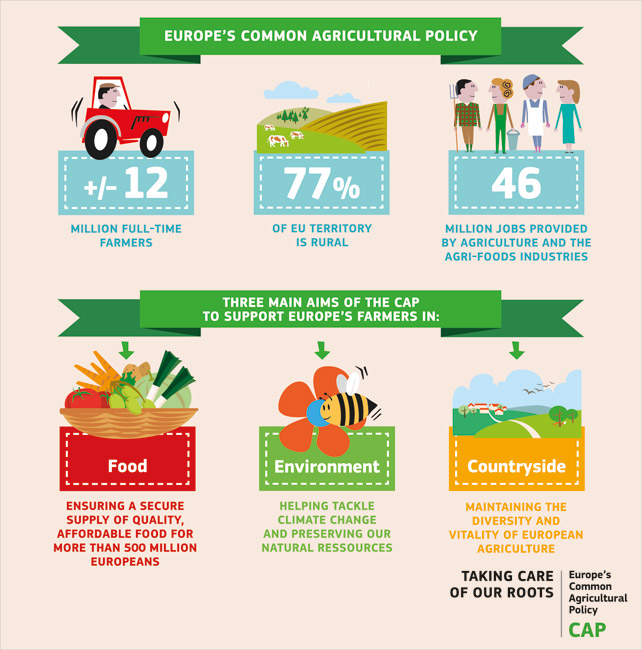
21 March 2017: NFU Scotland and Scottish Land & Estates call for UK-wide framework to replace Common Agricultural Policy

Westminster Policy Forward Planning

Scotland’s farmers and landowners are in support of the repatriation of agricultural policies from Brussels to Westminster, with the provision that support should then be devolved within the union.

A UK-wide framework replacement for the Common Agricultural Policy should also be put in place by Westminster so the British market will not be fragmented. This will also remove any need for the creation of internal UK trade barriers which would result as a consequence of maintaining entirely different systems of agriculture support north and south of the Borders.

The Prime Minister indicated that Westminster would set up the frameworks for the replacement schemes to the Common Agricultural Policy and the Common Fisheries Policy to ensure there was no fragmentation of the British market. Further powers over delivering would be devolved to give the Scottish Parliament flexibility.


infographic_en


Scottish government Policy Forward Planning

A Scottish Government spokesman said: “Agriculture and rural policy are fully devolved areas and the Scottish Government must retain its power to manage policy and determine funding levels appropriately. “We will strongly oppose any attempt to repatriate powers from Brussels to Westminster instead of the Scottish Parliament.”


b658217711c1f88574071827a5a5dd3e


Farmers Union and Landowners Proposals

Scottish Land & Estates agreed there needed to be “some sort of UK wide agricultural policy framework. This is simply a pragmatic position based on our belief that it is important to maintain a functioning UK-wide agricultural system. We believe that, ultimately, some level of UK cooperation or policy co-ordination will be required and that it should be possible to achieve that without Scotland losing any powers.”

NFU Scotland also said there must be a commonly agreed framework, with the UK and Scottish governments agreeing what measures should be included in it. “It is equally vital that, in order to prevent distortion of intra-UK trade, that devolved agricultural policies do not diverge significantly,” its submission said.

It said there were different ways of achieving this goal, including Scotland gaining total control over agriculture then bargaining with the UK Government, or via an agreement to share power through a CAP replacement. But offered a view that a complete devolution of agriculture powers repatriated from Brussels may make it more difficult for the UK Government to negotiate international trade deals and create internal barriers to trade. (http://www.telegraph.co.uk/news/2017/03/21/scottish-farmers-call-uk-wide-framework-replace-common-agricultural/)
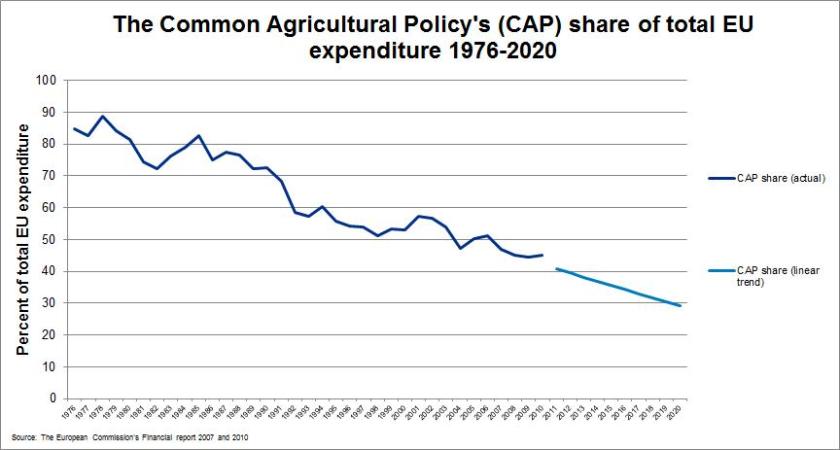


cap-share-1976-20201


Subsidy Payments to Farmers in Scotland – Convergence Uplift

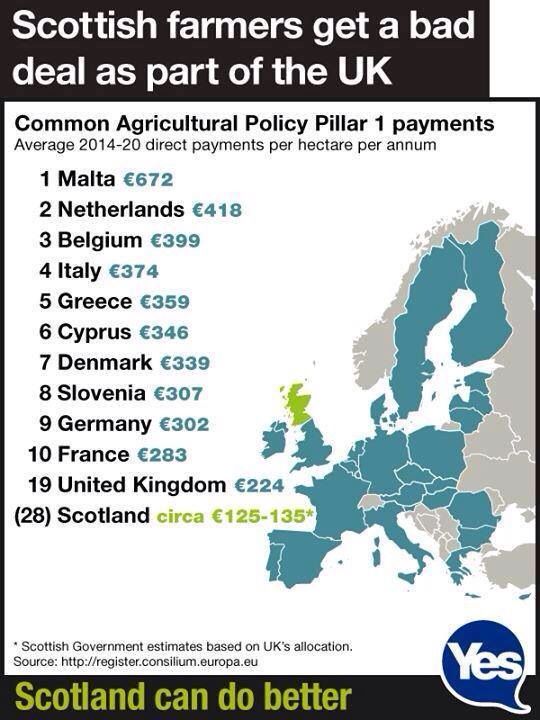
A major row has broken out over the distribution of subsidies specifically allocated by the EU for the farming sector in Scotland. The Tory government, took control of the new finance and announced that any payments from the new funds would be made through the common agricultural policy (CAP) and would be applied UK wide. The government’s decision means that farmers in England, Northern Ireland, Wales and Scotland will receive the same proportion of the CAP budget over the lifetime of the present agreement.

Scottish government ministers and the NFU in Scotland claimed farmers north of the border would be deprived of hundreds of millions of euros in “convergence uplift” subsidies that were “rightfully theirs”, adding that the only reason the UK qualified for the uplift was because of Scotland’s low payments under the current system.

Rural Affairs Secretary Richard Lochhead described Westminster’s decision to share out Scotland’s money across the UK as “a disgrace”. and said: “I do not know how UK ministers will be able to look Scottish farmers in the eye after this outrageous decision that amounts to pocketing Scotland’s farm payments,” he said.

“I am also aghast that Alistair Carmichael, can welcome the UK government’s decision to give Scotland the lowest farm payments in the whole of Europe and the UK.

“If Scotland had been a member state in our own right during those negotiations, we would have benefited from a one billion euro uplift. We have been denied that uplift and now we are even being denied up to 230 million euro uplift that the UK gets because of Scotland.”

NFU Scotland said farmers had been dealt “a bitter blow” by failing to win an immediate boost in European cash.

Scottish Conservative rural affairs spokesman Alex Ferguson said he was disappointed that all the extra convergence money did not go to Scotland.

Scottish Labour rural affairs spokeswoman Claire Baker said: “I am disappointed that Scotland has not received an immediate uplift as called for on a cross-party basis by MSPs.
 

vow

 
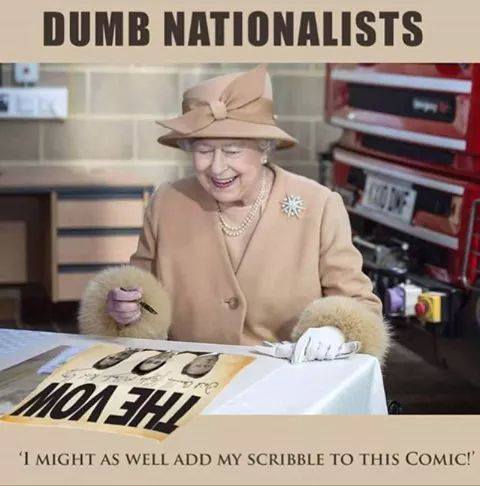
Queen Elizabeth – The Welfare Queen

Do Queen Elizabeth II and her children till the fields or milk cows? The answer is of course no! But qualifying conditions for the (European Common Market Policy (CAP))farming support says that the Queen and her family members are farmers. This allows them to claim large financial farm subsidies annually from taxpayers, in complete disregard of the fabulous financial fortunes worth many hundreds of millions of pounds that they inherit with their titles.

Subsidies are sold to the electorate as their duty to help struggling small farmers and is achieved through the media brainwashing of consumers convincing them that they need to possess a deep awareness of and sympathy for the long suffering rural community.

But when Westminster enacts the subsidies, the major share is allocated with well practised stealth to wealthy landholders and corporate interests. Robbing the poor and rewarding the rich is the mantra of Westminster governments and this will never change.

But the irony is that there are many farmers in Scotland struggling to stay afloat within the existing system and they throughly deserve more financial support. The irony is that they will be fleeced by Westminster forever unless they support an independent Scotland.
 

hqdefault


Rural Payments Agency – Acres and acres of madness – and they call this reform – Boris Johnson

At the bottom of the garden we have a paddock, and on evenings like this I can think of no lovelier place on earth. The buds have budded. The trees are in leaf. The lambs are making a racket. The rabbits show a boldness that verges on insolence. Everywhere I look I see nature transpiring at every pore with the green joy of photosynthesis. I see the hawthorn blossom, rolling for miles in great gun-smoke clouds. I see the shade starting to lengthen from the old oak, and the lovely rickety fence, on which I sometimes balance champagne bottles and shoot them off with an airgun, and I lie down on the springy grass and look up at the pale moon in the blue sky and I breathe a sigh of deep and unchallengeable contentment.

Sometimes, you know, I just can’t believe my luck. Because it turns out that I am not only the possessor of a magnificent paddock. I am a farmer. Yes, folks, I am a Tibullan agricola. I am Marie-Antoinette. I have managed to hitch my wagon to the gravy train of the CAP and clamp my jaws about the hind teat of Defra. By virtue of possessing 0.3 hectares of grass, excluding the dilapidated outside privy, I am apparently eligible for subsidy!

You think I am mad; but read the 98-page booklet provided by the Rural Payments Agency and you will find your lungs tightening and your lips blibbering into a pant-hoot of pure amazement at the insanity of our masters.

The government – Brussels – the taxpayer – whoever – is seriously going to pay me 10 euros a year merely for being the owner of this blissful patch of grass and rabbits. I don’t have to farm it, in any meaningful sense.

I don’t even have to graze a pony, though I could. I can use it for clay pigeons. I can use it for hot-air ballooning, it says here in the pamphlet. I can organise motocross events or nature trails across the paddock. Provided I don’t do it for more than 28 days a year, I can even have car-boot sales. I can invite Billy Smart’s circus to pitch their big top in the paddock, or I can let it out as a location for television. Year after year, the cheque will come in from Brussels via Defra, 10 princely euros, as a thank you to me and my family for doing – well, for doing absolutely nothing except luxuriating in the existence of this paddock.

Weeping with laughter, I decide to ring the Rural Payments Agency to find out if I can possibly have read this right. Yes, they say, it sounds like you qualify. Yes, they say, there are plenty of people who have been given subsidy entitlements for having pony paddocks, just like the one you describe. Yes, it is OK to mow it. Yes, it is acceptable to use the land for having barbecues, playing rounders or nude sunbathing. Yes, says the Rural Payments Agency, you can have a pony paddock and attract the subsidy, without going to the trouble of having a pony. Yes, says the agency (now with a tremor of exhaustion in its voice), you are right in thinking that you are getting the money for nothing at all except keeping the land in “good environmental condition”.

Fantastic! I say. Where do I send the form? And it is only then, of course, that I discover the catch.

My paddock qualifies in every respect. This beautiful, if tiny, corner of Oxfordshire is entitled to all the dignity that goes with being a CAP-funded estate – except that, like a complete fool, I missed the deadline, in May 2005, for registering my claim. Through sheer stupidity, I failed to grasp that last year the government changed the basis on which agricultural subsidy is to be paid. Under the reforms of the CAP, farmers are no longer rewarded for growing barley or rearing suckler cows. It is the end of paying Greeks for growing acres of fictitious olives.

Under the brilliant new single farm payment, the Greeks and the rest of us are to be rewarded simply for having grown acres of fictitious olives in the past. You no longer need even to pretend to grow the olives; you simply have to show that you have title to the land and that you are keeping it in good nick, olives or no olives; and that is why the pony paddocks of England are now accompanied by EU subsidy.

If I missed the deadline, there were thousands of paddock-owners who were quicker off the mark, who whanged those forms into the Rural Payments Agency – and who caused the monumental chaos with which you will be familiar. Across Britain there are farming families who have been driven deep into debt, and farmers who have contemplated suicide, because of the government’s disastrous failure to send out the single farm payments.

They were told they could expect the payment in December; then it was February; then March; and when, by mid-March, Margaret Beckett was forced to come to the Commons and apologise, it was obvious that the system was in meltdown. And the reason it was in meltdown was at least partly because no one had predicted that the number of subsidy claimants would rise – from 80,000 to 120,000 – as the paddock-owners, the raspberry-growers, the filbert-growers and the possessors of 0.3-hectare marrow patches piled in to register their land.

And, of course, there will be some optimists who point out that the expense can’t be overwhelming, not at 10 euros a paddock. But if you look at the Rural Payments Agency booklet, you will see how ever more of our countryside is now being sucked into a bureaucratic vortex of madness.If you claim a subsidy for your orchard (as you may), you have to prove that your trees are 10 metres apart and that the trunks are one metre in circumference; and if you have more than 50 trees a hectare, you’ve got to prove to the inspector that the bases of the trees have previously been nibbled by sheep. You can grow cucumbers, cabbages and cauliflowers, but not strawberries or mint!

Think of the new legions of bureaucrats being created, who will have to check whether or not you are running your subsidised nudist colony for more than 28 days.

Forty thousand new dependants have been created! Untold acres are now under new and pointless subsidy! And they call this reform? No wonder Margaret Beckett was promoted.

http://www.boris-johnson.com/2006/05/11/rural-payments-agency/


7ab5e8d9b7d16d4776ca265867eed29b


Beyond 2020

The Common Market Farming policy is scheduled for a major shake up, from 2020, as a direct result of the UK withdrawal from the EC and the culmination of discussions with World Trade countries including; Russia, China, South Africa, Brazil, India, New Zealand, Canada, Australia and a host of developing countries, for European negotiators to set a firm date for ending farm subsidies that effectively lock poor farmers around the globe out of profitable markets.

The USA, currently lukewarm on discussions operates a farm subsidies policy which also sustains a small percentage of farmers who earn more than $350K annually, and subsidies have notoriously benefited only the millionaires of US society. Which way will Trump jump?


slide_5

 
How are Payments calculated?

From 2015 -2020, the single payment scheme was replaced by the “basic payment scheme” (BPS), which was intended to close some of the loopholes in the previous system and give greater weight to the provision of environmental public goods.

However, the new system remains largely based on land ownership. Under the basic payment scheme around 30 per cent of a farmer’s payment depends on them meeting three “greening” rules. These require farmers to grow two or three different crops, to devote at least 5 per cent of their arable land to “ecological focus areas” like hedges and fallow land, and to take some responsibility for maintaining the proportion of permanent grassland in the country.

The new scheme also bars some businesses from claiming the subsidy if they also operate airports, railway services, waterworks, real estate services, or permanent sports grounds. However, these businesses are still able to claim BPS if, for example, they have more than 36 hectares of eligible.

http://ec.europa.eu/agriculture/sites/agriculture/files/direct-support/direct-payments/docs/direct-payments-schemes_en.pdf)
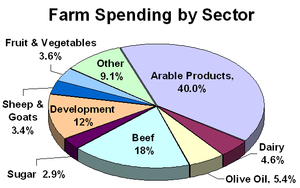


300px-CAPspendingbysector
Farming Subsidy Payments 2015/2016
Support in excess of £1million (12)

A P Jess (Brechin) Ltd DD9 BRECHIN £1,429,303.00

Ballindalloch Distillery LLP AB37 Ballloch £1,273,123.30

Catrine Community Trust KA5 Catrine £1,253,793.00

Frank A Smart & Son Ltd AB31 BANCHORY £2,986,506.48 Owns 85,000 acres+ from Aberdeenshire to the Western Isles. Claimed over £12million since 2010. A “slipper farmer”.

Glenfeshie Estate Ltd IV2 INVERNESS £1,781,486.64

Isle of Harris Distillers Ltd EH10 Edinburgh £1,539,049.00

John F Hartz OX18 OXON £1,318,912.12

John Fergus & Company Ltd KY13 MILNATHORT £1,263,294.00

R J & T J & M T Feakins TD9 HAWICK £1,270,281.64

RSPB EH12 EDINBURGH £3,584,031.90 Claimed 1,961,450 in 2014/15

SG:RPID:Futures EH11 Edinburgh £4,110,035.34

Strathvaich Farms LLP CO10 SUDBURY £1,429,303.00 English company. Owns Stravaich Estate at Garve, Ross-shire. Bulk of grant was for planting trees on its land.
 

big_thumb

 
Support in Excess of £500K (29)

A F Gospel DG13 Langholm £737,776.48

Adephi Distillery Ltd PH36 Ardnamuchan £623,236.00   Adelphi Distillery Ltd received a grant of  £1,148,736 (in 2014/15) for its new Ardnamurchan Distillery.

Balnagown Castle Prop Ltd IV18 KILDARY £605,942.89

Broadland Properties Ltd PH33 ARDGOUR £591,545.45

G Barbour & Co DG2 DUMFRIES £821,174.90    Claimed £649,306 in 2014/15. Farm in Dumfries

Gairloch & Conon Estate IV7 CONON BRIDGE £739,231.81

Genoch Mains Farms DG9 STRANRAER £857,168.32

Heidi Beers Ltd G40 Glasgow £575,623.00

Invercauld Estates AB35 BALLATER £761,179.11

J & T F Macfarlane Ltd TD3 GORDON £582,476.65     Major Livestock breeder. Claimed £525,567 in 2014/15

John Mark Gibson KA6 DALMELLINGTON £565,611.53

K & J Walker PH16 PITLOCHRY £600,768.71

Kevan Forsyth DG8 NEWTON STEWART £577,884.01      Dairy farmers in Dumfries and galloway. Claimed £473,929 in 2014/15.

Moray Estates Development Co IV36 FORRES £644,106.      19 John Stuart, 21st Earl of Moray, claimed £661,579 in 2014/15. Owns about 28,000 acres including 18 farms let to 16 tenants.

Mr A J Duncan (A Firm) AB53 TURRIFF £575,060.21          Ex Grampian Foods owner Claimed £565,650 in 2014/15

Mrs E V McCorquodale Trs PH2 PERTH £706,751.28

Novar Farms IV16 DINGWALL £755,103.23

Pitcastle Estate Management PH1 PERTH £551,496.32

Quality Meat Scotland EH28 Newbridge £507,060.58

Ross Bros AB43 FRASERBURGH £978,076.03           Large family owned business Claimed £978076 in 2014/15

Scottish Borders Council SRDP TD6 Newtown Bos £529,658.81

Soil Association EH12 EDINBURGH £526,616.46

SRUC/SAC Commercial Ltd AB21 BUCKSBURN £622,553.37           Claimed £412432.53p in 2014/15 Farms run by the Rural College

Strathdee Properties Ltd AB38 ABERLOUR £852,900.58           Owned by Stephen Strathdee, Claimed £976,917 in 2014/15.

The Church Commissioners For England DG1 DUMFRIES £649,987.98

The Woodland Trust PH2 PERTH £861,182.61

Torsa Holdings Ltd IV3 INVERNESS £876,006.69

Valley Fields (Scotland) DG4 SANQUHAR £518,791.88        Farm in Dumfies. Claimed £487,961 in 2014/15

William Hamilton And Son (No 2) KY15 CUPAR £692,816.62       Claimed £692,816 in 2014/15.


geography-glossary-46-638
Support in Excess of £250K (117)

A Macgregor(Allanfauld) G65 GLASGOW £266,295.14
Andrew B. Young KA26 GIRVAN £296,724.52
Andrew C Smith IV2 INVERNESS £399,979.58
Auchencheyne Ltd DG3 THORNHILL £408,690.54
Aucheneck Estate G63 GLASGOW £281,834.26

Auchmacoy Estate AB41 ELLON £372,293.27
Auchtydore Farms AB42 PETERHEAD £340,550.19
B Q Farms Ltd. DG3 THORNHILL £292,614.19
Backmuir Trading Ltd AB55 BANFFSHIRE £451,457.60
Balbirnie Home Farms KY15 CUPAR £258,820.66

Balcaskie Farms KY10 ANSTRUTHER £294,706.39
Balgreggan Farms Ltd DG9 STRANRAER £310,045.07
Balnaboth Home Farm DD8 KIRRIEMUIR £442,333.57
Baltier Farming Company Ltd DG8 NEWTON STEWART £433,694.67
Barstobrick Farms DG7 CASTLE DOUGLAS £251,631.32

Belcher Food Products Ltd KA9 Prestwick £250,079.00
Benson Wemyss Farms EH32 Longniddry £255,624.34
Birsay Community Association KW17 ORKNEY £288,426.77
Blackford Farms Ltd FK15 DUNBLANE £252,633.53
Blacklidge Brothers PR6 Chorley £271,131.21

BQ Farming Partnerships Ltd TD7 SELKIRK £325,210.34
Braegrudie Common Grazings IV27 Lairg £455,651.40


Buccleuch Estates Ltd DG3 THORNHILL £390,820.71   Scotland’s largest private landowner,Richard Scott,the 10th Duke of Buccleuch,routinely claims around £400K. Company value £85Million..


Burghill Farms DD9 BRECHIN £315,597.64
C & S Adams DG9 STRANRAER £387,116.82

Cadzow Bros PA34 OBAN £323,893.54
Careston Ltd DD9 BRECHIN £262,856.69
Charles M Kirkpatrick DG11 Lockerbie £330,990.95
Clan Donald Land Trust PH33 FORT WILLIAM£ £305,727.73
Conagleann Ltd t/a Dunmaglass Estate DD9 BRECHIN £381,778.87

Conon Brae Farms IV7 DINGWALL £350,919.53
Craigton IV20 TAIN £250,098.91
Crochmore Farms Limited DG2 DUMFRIES £329,887.10
Culfargie Estates Ltd PH1 BALBEGGIE £258,680.83
D R F Farmers Ltd AB43 FRASERBURGH £455,712.44 Claimed £455,712 in 2014/15

Dalhanna Farming Company DG7 CASTLE DOUGLAS £268,660.72
Dalmahoy Farms EH27 KIRKNEWTON £365,143.43
Des J Donohoe PH1 PERTH £346,455.01
Dindinnie Farming Co DG9 STRANRAER £375,329.03
Drummuir Home Farms AB55 KEITH £324,147.76

Dunecht Home Farms AB32 WESTHILL £435,616.34
Dunlossit (Farming) Ltd PA45 ISLE OF ISLAY £325,579.98
F Laing PH26 MORAYSHIRE £376,214.50
Fersness Farms KW17 ORKNEY £286,391.66
Firm Of Ardtornish Farms PA80 OBAN £264,412.58

Firm of John G Hamilton EH42 DUNBAR £400,986.88
Firm Of Peter Alexander PH10 BLAIRGOWRIE £317,887.47
Floors Farming TD5 KELSO £296,482.70
G Mcdougal (Bassendean)Ltd TD3 GORDON £323,977.62
Glenapp Estate Company Ltd KA26 GIRVAN £396,238.87

Glencorse Association EH26 Penicuik £387,806.96
Glenkiln Farms DG2 DUMFRIES £282,363.64
Glenrath Egg Products Ltd EH46 West Linton £381,876.00
Glenrinnes Farms Limited AB55 DUFFTOWN £315,699.68
Grahams the Family Dairy FK9 BRIDGE OF ALLAN £251,239.30 Claimed £471,821 in 2014/15

Greenshields Agri Ltd TD11 DUNS £269,463.58
Hawk Farming Ltd FK16 DOUNE £351,031.06
Iain Service & Co Ltd DG8 NEWTON STEWART £374,961.10
IAN WHITE LTD PH2 PERTH £389,233.27 Livestock breeder. Claimed £375,271 in 2014/15
Innishewan Farms EH26 PENICUIK £286,117.32

J C Innes & Sons AB54 HUNTLY £424,531.11 Claimed £455,712 in 2014/15
J P Campbell & Sons EH45 PEEBLES £348,194.87
J R Graham Ltd KY14 AUCHTERMUCHTY £487,327.33
James Forbes PH16 PITLOCHRY £252,139.45
James H Fowlie ( A Firm ) AB43 FRASERBURGH £401,331.85

John A Wallace & Sons DG8 NEWTON STEWART £257,713.43
John C Forbes-Leith PH2 PERTH £281,992.25
John C McIntosh AB21 ABERDEEN £441,636.85
John W McEwen & Son G63 GLASGOW £257,207.78
John Watson AB43 FRASERBURGH £278,749.59

John Wight & Sons ML12 ABINGTON £299,928.96
Kingsbarns Company Of Distillers KY10 Anstruther £252,156.00
Klondyke Farms Limited DG3 THORNHILL £382,434.94
L G Litchfield Bowland Farms TD1 GALASHIELS £404,513.54
Langholm Farms Ltd TD7 SELKIRK £380,679.45

Linlithgow Farms Ltd ML11 LANARK £320,504.39
Lour Farms DD8 FORFAR £299,271.17
Luss Estates Company G83 ARDEN £266,473.34
M & M Dudgeon KW8 SUTHERLAND £330,542.99
M/S A S & H M McGimpsey DG12 ANNAN £288,634.44

M/S John Stevenson & Co KY10 ANSTRUTHER £251,690.55
Macfarlane Farms Ltd TD11 DUNS £294,049.18
Malcolm Allan Ltd FK5 LARBERT £390,000.00
Mansionhouse Farm FK15 BRACO £256,410.11
MBM Farms Ltd KW1 WICK £297,687.44

Messrs A & J Craig DG7 CASTLE DOUGLAS £275,624.59
Messrs D G & J D Walker DG4 SANQUHAR £270,540.64
MESSRS GRAY & DALE DD11 ARBROATH £475,344.06
Messrs J Swanson KW14 THURSO £260,516.32
Messrs R & B Dickie DG4 SANQUHAR £329,657.20

Messrs S & J Fisher DG13 LANGHOLM £269,140.22
MR J D PATERSON KA27 SLIDDERY £293,268.23
Mr R McBride & Son DG1 DUMFRIES £274,391.10
Mr W J Henderson & Sons DG2 DUMFRIES £294,389.75
Ms E J Mackenzie & Co IV19 Ross-Shire £354,610.86

N Forsyth & Son DG8 NEWTON STEWART £299,104.20
Norman Thow & Partners AB30 LAURENCEKIRK £309,802.25
Old Cullen Farms AB56 Buckie £267,270.39
OLD HALL FARMS DG9 STRANRAER £401,173.37
Ordens Farms Ltd AB45 BANFF £261,091.96

Pat Wilson Farms PH1 ALMONDBANK £319,382.34
Perthshire Farms PH2 £402,561.05
R & J McDonald TD11 DUNS £276,383.15
Rottal Estates Partnership DD8 KIRRIEMUIR £283,956.04
Southesk Farms DD9 BRECHIN £308,234.51

Strathmore Farming Company DD8 FORFAR £354,520.35
T D Girvan & Sons IV63 GLENMORISTON £286,663.10
T W & T B Edgar Limited TD5 KELSO £290,977.81
THE ARDNAMURCHAN ESTATE. IV30 PLUSCARDEN £262,589.18
The Firm of Innerwick PH1 PERTH£ £276,240.81

The National Trust For Scotland EH11 EDINBURGH £462,693.71
The Rosebery Estate Partnership EH30 SOUTH Q/FERRY £348,235.88 Lord and Lady Rosberry Claimed £390,557 in 2014/15. Recently sold a Turner painting for 20million.

The Talla Farming Partnership TD1 GALASHIELS £315,732.88
Trustees of Cawdor Marriage IV12 NAIRN £311,234.23
W & A Oag KW14 THURSO £272,841.76

Welbeck Scottish Farms Ltd KW7 BERRIEDALE £350,731.21
WHS Hotts DG11 LOCKERBIE £291,629.98


cap-expo-extra_large


Scotland: 17847 Payments: £609,965,556.45p Scottish results do not include payments to the Royal Family

http://cap-payments.defra.gov.uk/SearchResults.aspx

England: 86139 Payments: £1,953,454,147.31p

Wales: 14271 Payments: £281,644,359.43p

N.Ireland: 24282 Payments: £315,484,690.68p

Total £3.2Billion Approx


rut