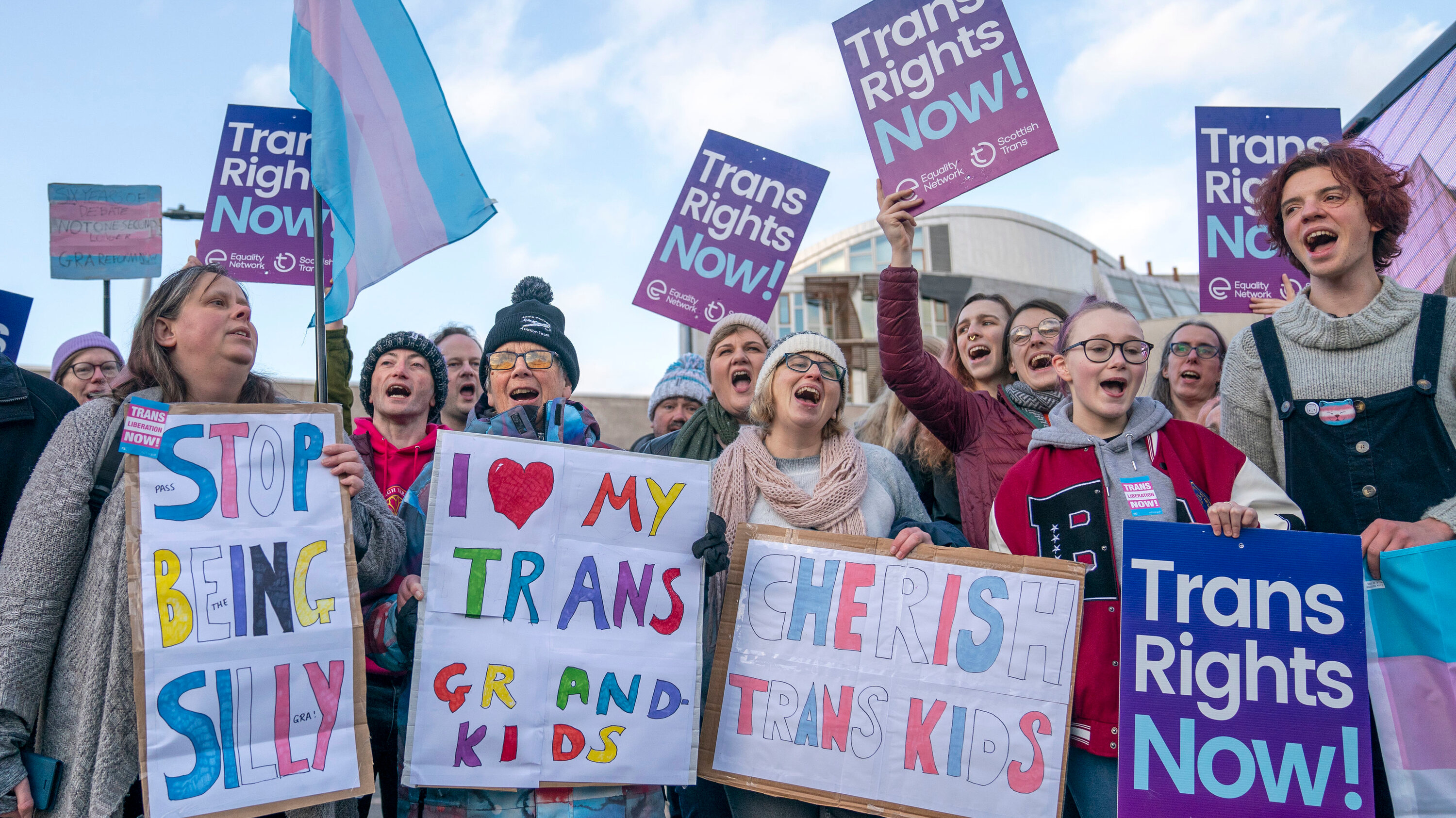
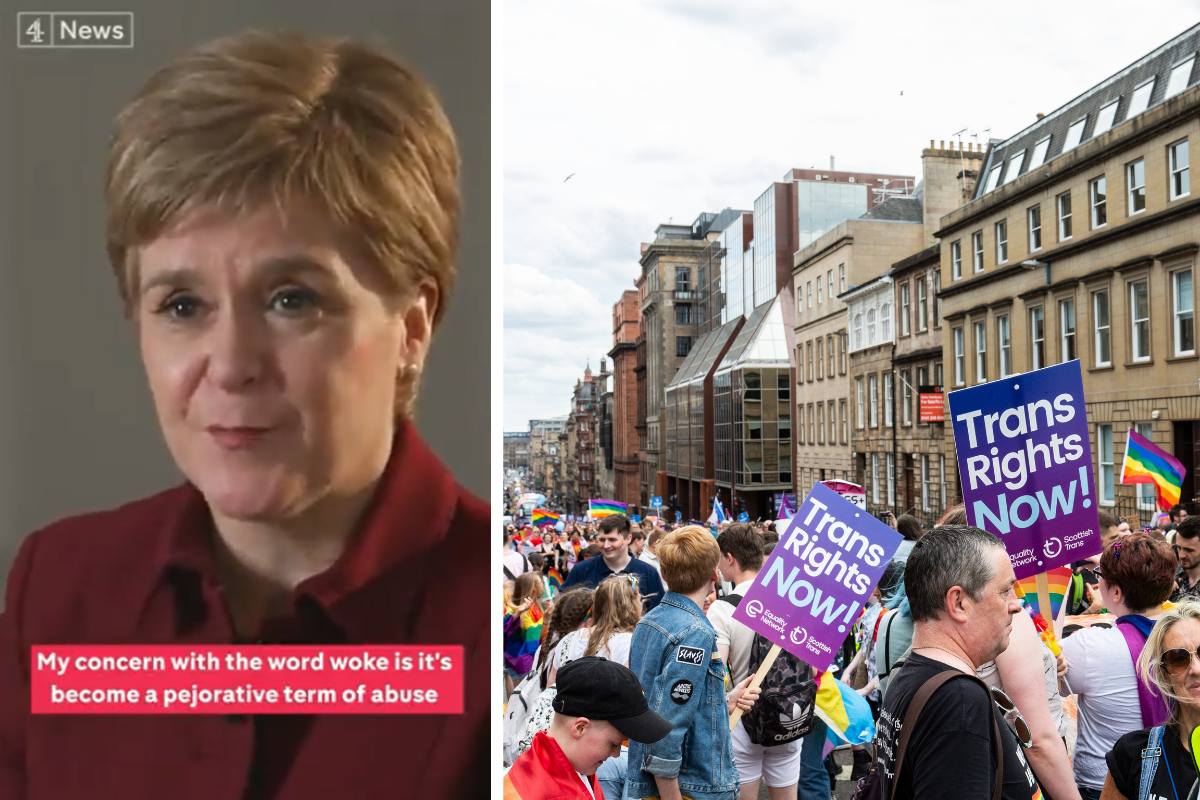
The SNP has admitted that its officials helped write NHS transgender guidance on the use of “preferred” lavatories and changing rooms.
The Scottish Government revealed that its civil servants were part of a policy development group charged with drafting a new “gender transitioning guide” for the NHS.
The guidance warned that telling a trans person they cannot use their “preferred facilities” could amount to “unlawful discrimination on the grounds of gender reassignment”.
A freedom of information (FoI) request disclosed that the “development process” for the policy involved “subject matter experts” from “both the Scottish Government and NHS Scotland”.
The response refused to disclose the legal basis for the guidance, and did not say whether the experts were affiliated to the trans lobby groups that have previously advised the SNP administration.
Feminist campaigners said the revelation was significant as ministers had been trying to avoid becoming embroiled in the public debate over trans women accessing single-sex spaces.
12 July 2023: Westminster’s Draft Guidelines for Civil Servants in the UK
New draft policies for civil servants block some trans staff from using single-sex spaces such as toilets, and force staff to accept transphobic views in the workplace.
The document was produced by the Cabinet Office and the Government People Group and outlines proposed changes to the UK Civil Service’s “Gender Identity and Intersex policies”.
The proposals state civil servants should equally recognise “gender critical beliefs” and “gender identity beliefs” – meaning that employees can openly share controversial views on trans lives without being penalised.
Responding, a trans civil servant commented: “My existence is not a belief. How can my safety be just as important as someone’s belief that I shouldn’t be safe? This feels like it was written by someone gender critical, just to give transphobes more clout.”
The leaked document also proposed “changes on access to toilets”, so that only trans people with a Gender Recognition Certificate (GRC) would be permitted to use single-sex facilities.
The leaked bathroom policy reverses existing Civil Service guidance, which states that trans employees are free to have a “flexible” gender expression and to use “any appropriate single sex toilets and other facilities”.
The proposals emphasise that “employees can hold different opinions and beliefs in the workplace” on trans and non-binary lives “as long as they engage in reasoned and rational debate.”
The document explains that “gender critical beliefs are protected” under the Equality Act and continues: “This affords protection from discrimination or harassment suffered as a result of holding that belief and insulting or offensive comments” about a person who holds anti-trans views “can amount to bullying, harassment of or discrimination against that person.”
The Civil Service HR Organisational Policy Team last updated its “Gender Identity and Intersex policies” in 2019. Since then, LGBTQ rights have slid backwards in the UK, with trans rights especially coming under attack from politicians and right-wing journalists.
The leaked document defines being trans as holding a “gender identity belief”, while a “gender critical belief” is the label for people with anti-trans views.
Defining “gender critical belief”, the document states: “A belief that recognises women only as adult human females and men only as adult human males and that it is impossible to change sex which is determined at conception.”
In a training session civil servants were told that using the phrase “adult human female” to define a woman could be seen as transphobic.
Network leaders are collecting internal views on the leaked document and its policies, with senior management meetings planned to occur over the next few weeks.
The Stonewallers are not happy bunnies
Responding to the leaked document, Jolyon Maugham, director of the Good Law Project, which has advocated for trans rights, said: “These measures are illegal – the Equality Act does not just protect trans people who have a gender recognition certificate”
Robbie de Santos, Stonewall’s director of external affairs, said: “The leaked guidance contains many highly exclusionary and reprehensible suggestions that, combined, would effectively make it impossible for trans people to work in the civil service.
Not only would this guidance be unworkable in practice, but it would be unlikely to stand up to legal challenge, as it brazenly ignores the long-established rules around single-sex spaces as outlined in the UK’s world-class Equality Act.
Everyone should have the same opportunity to thrive in the workplace. But these guidelines would serve only to promote bullying and exclusion of trans people – a group who already experience diminished career prospects.”
01: Seek full devolution from the UK government of employment, equality and immigration
02: Introduce measures ensuring LGBT+ and intersex people are treated with dignity, respect and free from discrimination
03: Reform Gender recognition laws and recognise non-binary people in all official documents
04: Pardon retrospectively where needed, pardons for gay and bi people criminalised for their sexuality
05: Provide funding for life-saving PrEP medication
06: Protect the Human Rights Act and the Equality Act
07: Outlaw conversion therapy
08: Champion LGBT+ equality and human rights worldwide
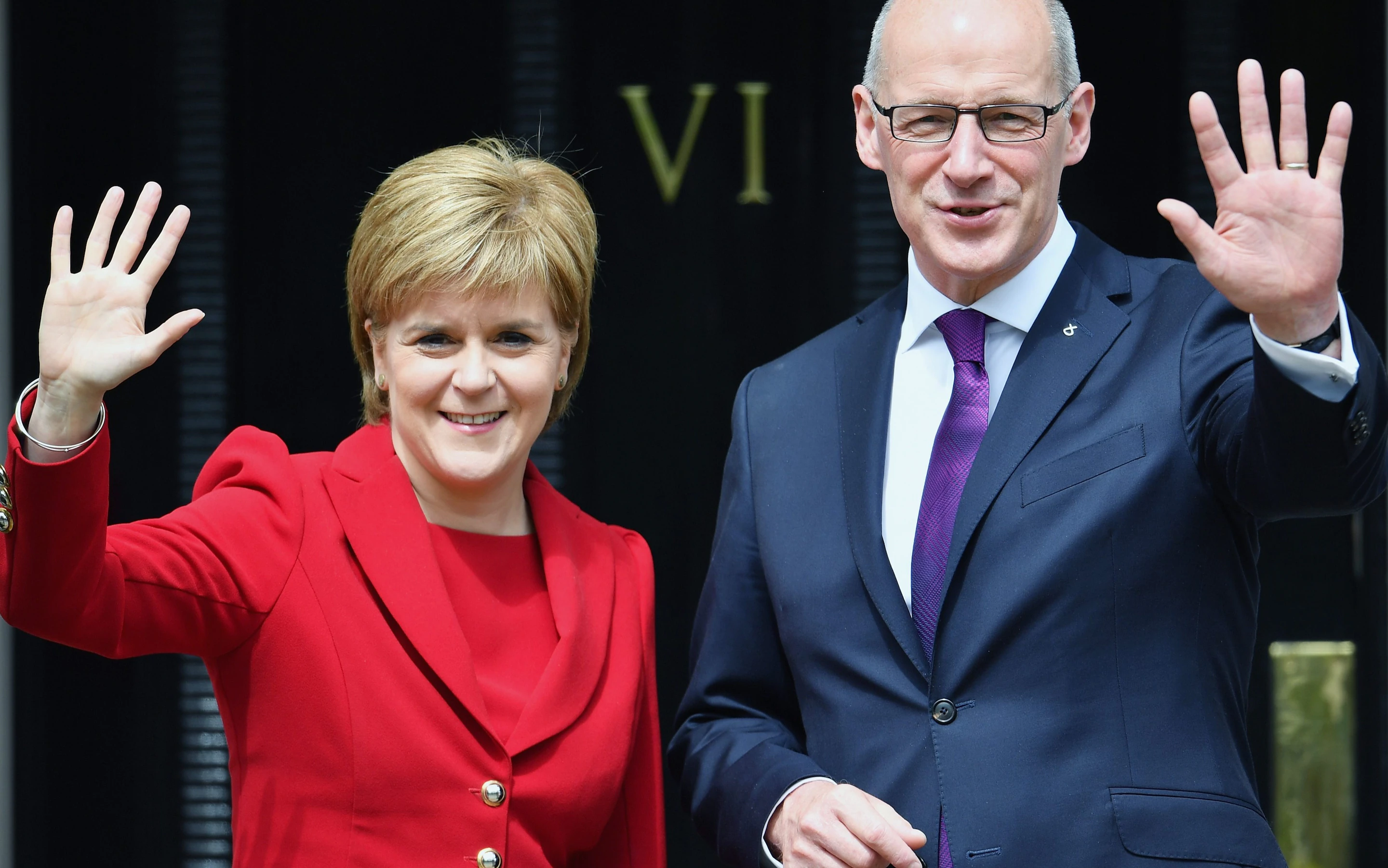
The inclusion of the radical programme of change in the manifesto, was approved by Sturgeon and Swinney without discussion with or support from party members and broke new ground for the Party and there are many in the Party who are very unhappy with the leadership. But the force is with the WOKE leadership who chose to be guided in their policy decisions by Scottish Government funded, pseudo LGBTQI charities.( £30-£40 million annually)
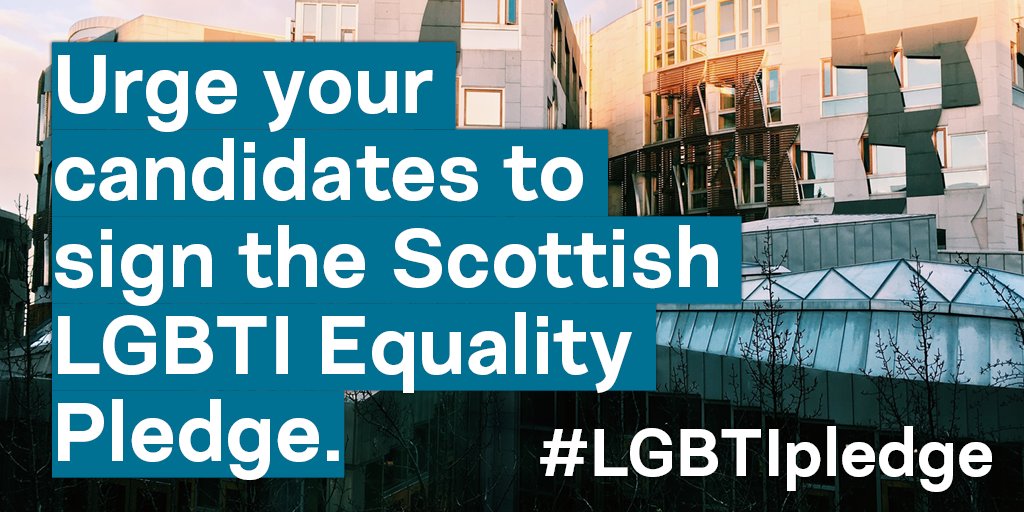
The Scottish LGBTI Equality Pledge
The Pledge has been developed by the Equality Network, Scottish Trans Alliance, Stonewall Scotland, LGBT Youth Scotland and other charities working for LGBTI equality and human rights in Scotland. It calls for candidates to commit to:
01: Promote positive mental wellbeing for LGBTI people, ensuring that actions to improve Scotland’s mental health specifically address the inequalities LGBTI people face.
02: Support LGBTI people to have equal access to health and social care services, including by reforming NHS gender identity services to be fit-for-purpose.
03: Improve LGBTI rights and protections in the law, including by reforming laws on gender recognition and ending conversion therapy.
04: Support LGBTI young people to flourish in schools through the continued implementation of inclusive education.
05: Stand up for all LGBTI people, including the most marginalised – LGBTI people of colour, refugees, disabled people, older people, and trans people.
We intend to get as many MSPs committed to LGBTI equality in the next Scottish Parliament as possible. Please take the time to email your candidates to let them know this matters to you, and ask them to sign our LGBTI pledge. It can make a real difference!
The undernoted SNP candidates signed the pledge
Aberdeen Central – Kevin Stewart Aberdeen Donside – Jackie Dunbar Aberdeen South – Audrey Nicoll Aberdeen West – Fergus Mutch Airdrie & Shotts – Neil Gray Banff & Buchan – Karen Adam Clydesdale – Màiri McAllan Dundee East – Shona Robison Dundee West – Joe FitzPatrick East Kilbride – Collette Stevenson Edinburgh Central – Angus Robertson Edinburgh North – Ben Macpherson Edinburgh South – Catriona MacDonald Glasgow Kelvin – Kaukab Stewart Hamilton-Larkhall – Christina McKelvie Shetland – Tom Wills Strathkelvin & Bearsden – Rona Mackay
List Candidates
Central Scotland – Neil Gray & Christina McKelvie Glasgow – Kaukab Stewart Highlands – Sarah Fanet & Emma Roddick & Tom Wills Lothians – Graham Campbell & Catriona MacDonald & Ben Macpherson & Angus Robertson Mid Scotland & Fife – Stefan Hoggan-Radu & Fiona Sarwar North East – Fergus Mutch & Lynne Short South Scotland – Màiri McAllan West Scotland – Michelle Campbell & Rona Mackay
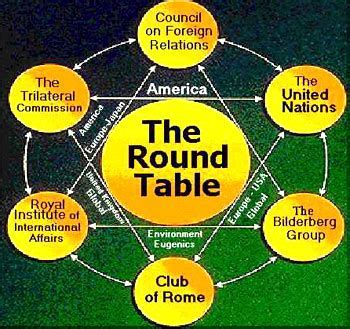
It was formed in 1973 by private citizens of Japan, North American nations (the U.S. and Canada), and Western European nations to foster substantive political and economic dialogue across the world.
The idea of the commission was developed in the early 1970s, a time of considerable discord among the United States and its allies in Western Europe, Japan, and Canada. To quote its founding declaration:
“Growing interdependence is a fact of life of the contemporary world. It transcends and influences national systems… While it is important to develop greater cooperation among all the countries of the world, Japan, Western Europe, and North America, in view of their great weight in the world economy and their massive relations with one another, bear a special responsibility for developing effective cooperation, both in their own interests and in those of the rest of the world.”
“To be effective in meeting common problems, Japan, Western Europe, and North America will have to consult and cooperate more closely, on the basis of equality, to develop and carry out coordinated policies on matters affecting their common interests… refrain from unilateral actions incompatible with their interdependence and from actions detrimental to other regions… [and] take advantage of existing international and regional organizations and further enhance their role.”
“The Commission hopes to play a creative role as a channel of free exchange of opinions with other countries and regions. Further progress of the developing countries and greater improvement of East-West relations will be a major concern.”
Canada is committed to Trilateral Commission agenda
Upwards of 75% of Canada’s economy is heavily dependent on its relationship with the USA. President Trump is not enthralled with the aims and aspirations of the leaders of countries who are committed to Trilateral policies, (Canada and the UK, etc) to which he attributes much of the discontent in the World through the unplanned and uncontrolled redistribution of humanity.
Canada’s is breaking away from USA control and is devloping new trading partners and alliances. This could reduce business between the countries by around $1 trillion, although retained trading may reduce this to nearer $400billion annually. Still a heavy hit on the USA economy, particularly near the border where many businesses are closely integrated.
President Trump will not be enamoured by Canada’s breakaway and he may respond by reducing the USA’s $1 trillion financial commitment to NATO to recover the loss. The finance recovered would be used to subsidise industry advesely affected by Canada’s new relationships. Canada the UK and the other EU nations will need to up their contributions to NATO which will hurt.
Warnings for Canada
Canada is diversifying its trading arrangements reducing its reliance on the United States, which currently accounts for over 75% of its exports. But there are pitfalls ahead, with little experience in trading with countries in the Pacific. Namely:
India
Communication Issues: A lot of factors to consider. Different time zones and work ethics can lead to misunderstandings and delays.
Regulatory and Banking: Banking and government regulations complex and vastly different to all other countries.
High Import Duties: Import duties are high, if imports are allowed.
China
Political and Trade Tensions: The arrest in Canada of a Huawei executive, has created significant trade tensions.
Market Access: China has strictly observed conditions for trade, such as agreeing that Taiwan is part of China.
Retaliatory Tariffs: China imposed a 100% tarrif in March 2025, on Canadian canola, pork and seafood.
The European Market: Canada is looking to strengthen trading with the EU, but meeting health, safety and other regularity requirements of the market will take a long time to absorb.
Asia-Pacific Region: There good openings with countries such as Japan, South Korea, Singapore, Australia, and New Zealand.
Logistics: Canada’s trading infrastructure, is not well developed on its Western seaboard and it will take around 5 years to correct this weakness.
Trade Wars and Protectionism: Global trading is high risk and newcomer to the world market, Canada, has not previously had to deal with protectionist policies which introduce potential for unscheduled disruption causing internal market problems.
Summary
The Donald is determined to “Make America Great Again” and he intends to achieve his goal by resetting relationships with countries who have been ripping America off for over a century. So its back to 1917 and start again.
Context:The European Union awaits a decision from President Trump regarding potential tariffs on its goods, threatening a significant trade relationship valued at trillions of dollars.
These tariffs, if implemented, could dramatically increase costs for consumers and companies on both sides of the Atlantic, sparking retaliatory measures from the EU. The core issue lies in trade imbalances and regulatory differences.
Detailed Summary:
Trade Volume:The EU-U.S. trade relationship is the most important globally, with goods and services valued at $2 trillion in 2024, averaging $4.6 billion daily.
Trade Imbalance:The U.S. has a trade deficit with the EU, largely due to a goods imbalance of approximately $233 billion, although the U.S. has a surplus in services.
Tariff Threats:Trump initially imposed a 20% import tax on EU-made products, later reduced to 10% but threatened to raise it to 50%. The EU is prepared to retaliate with tariffs on American products.
Key Issues:
The U.S. criticizes EU agricultural barriers, particularly health regulations.
Trump has also criticized EU value-added taxes (VAT).
Potential Impacts:
Higher tariffs could lead to increased prices for U.S. consumers.
Companies like Mercedes-Benz and Campari Group are considering their pricing strategies.
Some companies, like LVMH, may shift production to the U.S. to avoid tariffs.
Perspectives:
Economists warn of negative consequences.
Trump aims to stimulate American manufacturing with tariffs.
EU officials express a desire for a deal, but are prepared to retaliate if needed.
Scotland – The fight for home rule a stepping stone to independence
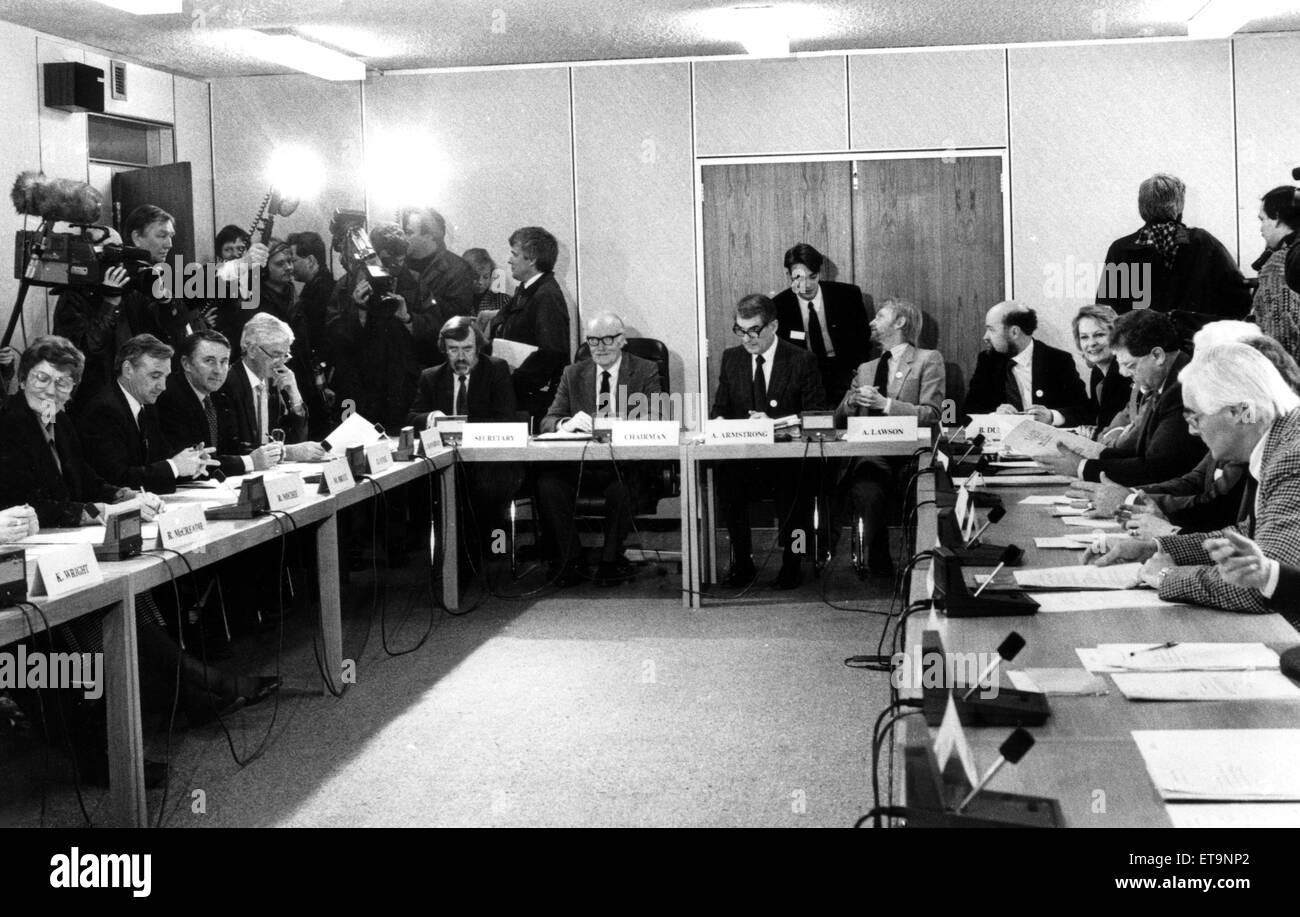
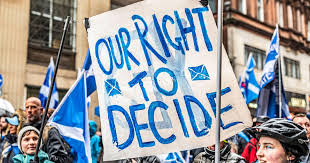
The movement for home rule evolved in the 1980s and 1990s with the Scottish Constitutional Convention emerging as a key player.
The Convention published the Claim of Right for Scotland, asserting the right of the Scottish people to determine their own form of government.
The Convention produced a report with detailed proposals for a devolved Scottish Parliament, which ultimately led to the 1997 referendum and the establishment of the Scottish Parliament in 1999.
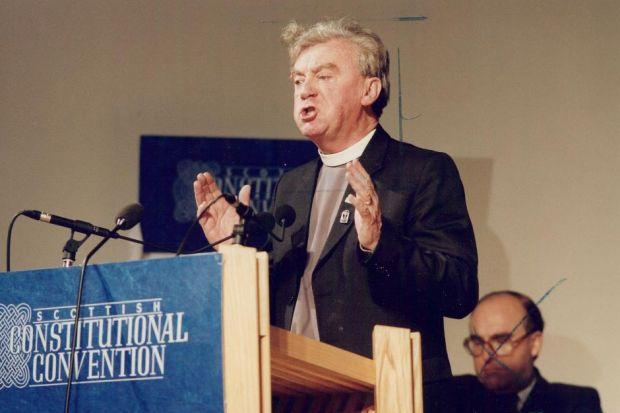
The Scottish Covenant and the subsequent Constitutional Convention was led by Paisley born, Canon Wright, an inspirational figure who played a crucial role in the long-term push for devolution and the establishment of a Scottish Parliament.
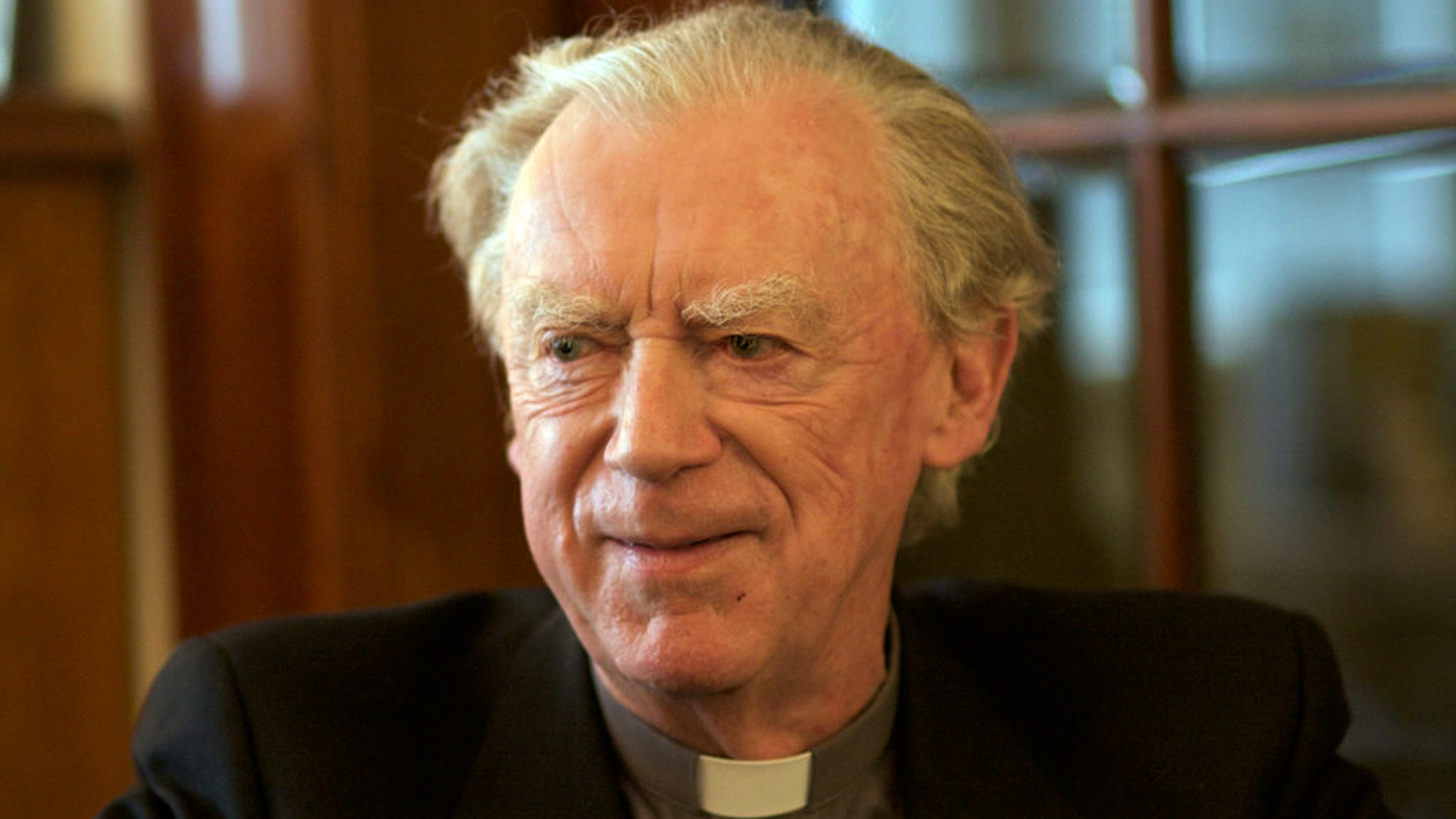
Canon Kenyon Edward Wright was born in Paisley, the son of a technician for the major local employer J&P Coats, he attended Paisley Grammar, studying later at both Glasgow and Cambridge universities.
He was the man who had possibly the strongest claim to have been the godfather of devolution. He will be remembered for his role in cajoling disparate Scottish opposition groups to work together and moulding a single coherent case for constitutional change.
He was invited to lead the seemingly impossible task of creating a consensus that was to drive the path towards a second devolution campaign and the resulting creation of the Scottish Parliament in 1999.
In doing so, he set a mark for political campaigning in Scotland. By the second referendum, he had even brokered the return to the fold of the Scottish National Party, which had boycotted the convention.
The arrival of Canon Wright to the political stage, as executive chair of the Scottish Constitutional Convention, kick-started the home rule campaign with an assertion of the sovereign right of Scots to determine their affairs. Although hardly a household name, he was recognised then as an articulate Church figure and an energetic campaigner fascinated by politics and community activism.
At 23, newly married, he travelled with his bride, Betty, to India as a Methodist missionary. Their sojourn was to last 15 years.
In 1970, he returned to the UK as director of urban ministry at the prestigious Coventry Cathedral. He was quickly promoted, and directed the cathedral’s international ministry.
Now a Canon, he returned home to Scotland in 1981 as general secretary of the Scottish Churches Council, an appropriate post for an Episcopal priest well used to working with other denominations to achieve shared goals. He was still in his forties and keen to make his mark. His arrival came as the Christian churches were experiencing decline. A once notably pious nation was lapsing rapidly into secularism, even agnosticism.
Inspired by the efforts of Roman Catholics aiding the Solidarity movement in Poland and at odds with the right wing politics of Margaret Thatcher which she proudly espoused to the General Assembly in her infamous Sermon on the Mound. He decided it was time Scots had a voice in decision making within the UK
The Conservatives had long opposed devolution, and relied on the internecine warfare between the opposition parties – particularly Labour and the SNP – to continue what was effectively “direct rule” from Westminster.
In this context, Canon Wright made his now-celebrated comment: “What if the other voice we all know so well responds by saying ‘we say no, and we are the state’? Well we say ‘yes – and we are the people’.”
When he arrived, the Campaign for a Scottish Assembly had produced the Claim of Right for Scotland, which was to be the basis of the convention’s work.
Canon Wright pulled together its constituent partners, including political parties, trade unions and other interests. He did so with a certain style, and produced the convention’s final report in 1995. Its main points were adopted by the New Labour government in 1997, and approved by referendum that same year.
2014: Protecting the Children-the regime’s first attempt at gaining control of children
The Children and Young People (Scotland) Act 2014 was an Act of the Scottish Parliament passed on 19 February 2014.
The legislation was part of the SNP Government’s “Getting it right for every child” policy implementation.
The scope of the act made provision for the rights of children and young people.
The provision of services and support for or in relation to children and young people. Children’s hearings, detention in secure accommodation and consultation on certain proposals in relation to schools.
The provisions of the act gained the support of parents, professionals involved in childcare provision, children’s organisations and charitable institutions and implementation of the new measures was scheduled to be implemented from 2015.
But the public became increasingly concerned about the wisdom of a “Named Person” when press coverage revealed the propensity for the abuse of children.
Press Report:
Dayna Dickson-Boath was appointed one of the first Named Persons in Scotland, but is now banned from working with children for the rest of her life.
She had held a senior position at a secondary school in Moray, but yesterday consented to being struck off by the General Teaching Council for Scotland on the charge that, between 8 August 2014 and 10 September 2014, she “did send, by means of a public electronic communications network, messages to another person that were grossly offensive or of an indecent, obscene or menacing character, in that you did converse regarding the sexual abuse of children”.
Dickson-Boath was placed on the Sex Offenders’ Register and ordered to undergo treatment when she was convicted in Elgin Sheriff Court.
A trickle of protests reached tsunami strength at the start of 2015 as concerns were raised about aspects of the legislation which were draconian, poorly drafted and “Big Brother State”.
The SNP government ignored requests for a dialogue and forced the new measures through.
But the public would not be denied and a number of Scots parents and Christian organisations took the SNP government to court in an effort to get parts of the act repealed.
They failed in their efforts and all appeared to be lost. But they gathered strength from increasing support of Scots who had been alerted to what the SNP government was seeking to impose on the nation.
They appealed to the UK Supreme Court.
2016: The Supreme Court Judgement – The Named Person Scheme
In their summary ruling against the introduction of the scheme the Supreme Court judges noted that the appropriateness of the novel new legislation hinged on the government’s assertion of a need to ensure the “wellbeing” of the child.
But “wellbeing” was not defined and reliance on SHANARRI indicators (standing for Safe, Healthy, Achieving, Nurtured, Active, Respected, Responsible and Included) were also not defined and were in some cases notably vague.
A unanimous ruling of Supreme Court judges also stated: “The first thing that a totalitarian regime tries to do is to get at the children, to distance them from the subversive, varied influences of their families, and indoctrinate them in their rulers’ view of the world.
They were also agreed that the idea that parents must comply with any advice given “could well amount to an interference with” Article 8 of the ECHR (the right to respect for private and family life).
The Court also held that the legislation’s data sharing provisions, which they held were central to the role of the named person, “are not within the legislative competence of the Scottish Parliament”.
And yet, In his 2016 speech to the Scottish Parliament following receipt of the judgement Swinney insisted that the judgment itself did not require current policy to change.
His message to local authorities and health boards was to continue to develop and deliver the named person service.
Encouraging the disregard of the Supreme Court ruling set a dangerous precedence since in continuing the development of the named person provision, its information gathering and sharing processes the Deputy First Minister encouraged unlawful practice by state bodies.
Dr Jenny Cunningham, a recently retired community paediatrician from Glasgow said that the named person scheme was “illegitimate and illiberal” and argued that an open democracy depended on the principle that “parents ought to be autonomous in relation to their own families”. he continued saying: “The underlying assumption by the SNP government is that adults are unable to identify vulnerable children – so the state has to intervene! This belittles parents. She concluded: “We should strongly resist and argue against this idea that parents are incapable of assessing children’s wellbeing needs and accessing services – parenting is about establishing good relationships with children and establishing parental authority.”
Maggie Mellon, an independent social work consultant said: “It’s important that we understand the rationale and the ideas underpinning the legislation. The SNP government has made it clear it thinks the Supreme Court judgment is purely technical and they’re going to plough on regardless. But there is no duty under the Act to consult or collaborate with parents. It’s just not there. We’ve been treated to flights of complete fancy about the voluntary nature of the scheme. We were told it was in response to parents’ demands – then we were told it was to save children from their parents. A Named Person can’t provide a hot meal, a pair of shoes, a warm home but they can spend time doing SHANARRI somersaults with 300 wellbeing outcome signifiers and 200 risk indicators! It wont work.”
Aug 2018: Plan B to by-pass MSP’s and implement the Named Person Scheme by the Backdoor
The SNP Scottish Government is considering controversial proposals to implement the detested named person scheme “by the back door” even if MSPs refuse to support changes to the law.
Discussion of a so-called “Plan B” is revealed in documents which were only made public, after a Freedom of Information (FoI) request was submitted.
The papers were produced following a meeting of unnamed top level government officials and advisors in February 2018. An annex under the headline “CONTINGENCY” stated: “Contingency plan?
What if the legislation is not passed?” And adds: “Plan B for if Bill fails to make sure parts 4&5 can be implemented without information sharing.” The scheme was riddled with problems and a delay was revealed.
Swinney set up a panel to produce a Code of Practice by September 2018, after Holyrood’s Education and Skills Committee said it would not pass the legislation without one.
But Professor Ian Welsh, chair of the panel, wrote to Mr Swinney to inform him that the panel would not be able to meet this deadline.
Lesley Scott of the TYMES Trust, said: “These worrying documents show the focus is clearly on implementing Named Person Scheme by the back door, regardless of whether the new Bill gets through Parliament.
Clearly, we are now dealing with a Government which is ignoring the UK Supreme Court, has no regard for the elected representatives of the Scottish people and is determined to shun public opinion. They are riding roughshod over the democratic system in pursuit of a flawed, failed and discredited project.”
Lesley asked to be provided with details from three key meetings of the Statutory Guidance Framework Group tasked to review the named person scheme in October and December 2017 and in February 2018.
Subsequently only one set of minutes was released and was useless since the names of all persons in attendance had been redacted. An appeal was submitted to the Information Commissioner’s Office seeking a review of this decision to withold the documentation.
Maggie Mellon, former chair of the Scottish Child Law Centre, said: “The names of all present including the chair are all redacted. So much for open government. There is no way of identifying which agencies are providing wrong advice or whether the persons present represent their colleagues and agencies properly.
Is it now so toxic to be associated with the named person scheme that people are not willing to have their names made known”? Adding: “These are presumably many of the same people who advised the government so badly first time round, that breaching confidentiality is ok even when any concerns fall well below the proper threshold. What is so important about this flawed scheme that it has to be pushed through” ?
Sep 2019: Named Person Scheme Scrapped?
Deputy First Minister John Swinney announced in the Scottish Parliament:
“We will now not underpin in law the mandatory named person scheme for every child. We will withdraw the Children and Young People (Information Sharing) (Scotland) Bill and repeal the relevant legislation. Instead, existing voluntary schemes that provide a point of contact for support will continue, under current legal powers, when councils and health boards wish to provide them and parents wish to use them.”
Summary
The July 2016 UK Supreme Court judgment stated:
“The sharing of personal data between relevant public authorities is central to the role of the named person scheme” and concluded that the information-sharing provisions were incompatible with the rights of children, young persons and parents under article 8 of the European Convention on Human Rights and may in practice result in a disproportionate interference with the article 8 rights of many children, young persons and their parents, through the sharing of private information were “not within the legislative competence of the Scottish Parliament”, deeming the legislation “defective” and blocked it from coming into force:
Bizarrely, Swinney responded to the ruling saying:
“I welcome the publication of today’s judgment and the fact that the attempt to scrap the named person service has failed”.
So after nearly three years of battling against the wishes of Scots and an order from the Supreme Court he refused to accept that his mandatory named scheme, with legal powers to grab and share private information could not be imposed without breaching the human rights of children and families. It had to be scrapped.
So, where did we go from there? Swinney, issued his dictate saying:
“Existing schemes that provide a point of contact for support will continue, under current legal powers, where councils and health boards wish to provide them and parents wish to use them.”
So schools are still able to operate a voluntary named person service, but it will have to adhere to current data sharing frameworks. There will no longer be a statutory Named Person service imposed on every child in Scotland.
As the 2016 Supreme Court judgment stated:
“Care should therefore be taken to emphasise the voluntary nature of the advice, information, support and help which is offered”.
Nicola Sturgeon and her personal advisors decided the WOKE agenda for change would be fully supported by the Scottish government
When complete Scottish society would be turned on its head fitting the concept of a fully integrated society modelled to the thinking of the WOKE activists.
But all of the electorate had to be on-board or there would be stress unhappiness and strife. The breakdown of the electorate in Scotland:
Heterosexual: 95%. LGBTQ/WOKE: 5%, of which 0.5% are transgender.
The adoption of the WOKE agenda by the SNP Government required full transparency in public life, (since WOKE was a campaigning body within the Party) and the change would introduce a legal obligation for any person seeking public office to declare their sexuality so the electorate would be informed before choosing a candidate at an election. A requirement callously ignored by Sturgeon.
Political representation
Why should Scots care about what is happening in the SNP? Canaries in coal mines springs to mind!
Political coups can be achieved through violence or WOKE style!! by abusing the institutions of democracy circumventing and ultimately destroy it.
Sturgeon responded to younger members leaving the Party with an extraordinary video saying she would personally deal with ‘transphobia’ within the Party, but she neglected to say what that meant. This would decided on by the National Executive Committee (NEC).
But her comments were widely taken to be a warning to feminist SNP politicians such as Joanna Cherry. The ‘dog whistle’ was followed up by action.
Joanna Cherry was sacked as shadow spokesperson on justice and home affairs by Ian Blackford, the SNP’s Westminster leader.
It was left to Cherry herself to inform the world. She tweeted: “Despite hard work, results & a strong reputation I’ve been sacked today from @ the SNP front bench.”
On 31 January 2021, the National Executive Committee of the SNP passed an extraordinary motion for the Scottish elections in May.
Members of the Scottish Parliament were to be elected through a combined constituency and list system. This meant that each constituency had an MP, the numbers being topped up through a regional list to ensure equity in terms of the votes. There were eight regions.
The NEC decided that in four of the regions, the SNP person at the top of the list (and therefore likely to get elected) would be BAME, in the other four they would be disabled.
The NEC were advised by a QC that the proposal would almost certainly be ruled illegal if challenged in court. Despite this they passed it through a casting vote of the chair.
two problems arose!
First; the changes were discriminatory. In half of the regions, all are excluded unless they were BAME (even though they might be disabled).
Second; in the other four all were excluded unless they were disabled (even if they were BAME). If they happened to be white and non-disabled, they were excluded from standing at all!
It is the second reason that was astonishing. The SNP – following the WOKE guide to self-declaration declared that disabled status would be granted by ‘self-declaration. The list included, asthma, depression, Tourette’s syndrome, borderline personality disorder, and diabetes.
The changes resulted in open warfare within the SNP between WOKE activists and traditional members which included feminists who were disparagingly referred to as TERFS (Trans-Exclusionary Reactionary Feminists).
The self-identification process meant that any wrong headed individual could legally self-identify as a disabled, BAME woman in order to get a job or political position and there would be nothing that anyone could do!
And in the night of the long sgian dubhs, Blackford, got rid of Joanna Cherry one of the most effective and intelligent politicians within the shadow cabinet.
The gerrymandered WOKE activist takeover of the NEC, heralded early dismissal from the Party for anyone not in support its agenda.
Scotland had morphed into Sturgeon’s WOKE Republic
SNP WOKE representation at Westminster
The demographics of Scotland indicated 95% of the population were heterosexual. LBGTQ/WOKE factions took up 5%, of which 0.5% claimed to be transgender.
The population of Scotland was around 5.5 million providing a split of 5,225,000 heterosexuals and 275,000 LBTQ/WOKE. The latter group would comprise 1375 people claiming to be transgender.
Accepting Sturgeon’s declaration of equality for all, the split of MP’s at Westminster should have been; Heterosexual: 42: LBGTQ/WOKE: 2:
But the gerrymandered NEC had done its job. The bulk of candidates selected were LGBTQ/WOKE. Sturgeon had succeeded The SNP was now a political Party in her own image.
The General Election contingent sent to Westminster comprised around 40% WOKE/transgender. The Party was unrepresentative of Scottish society.
Exacerbating the situation all but two were appointed to senior posts within the SNP Westminster leader’s Shadow Cabinet, (straight from the dole to cabinet status office). and there were financial perks/rewards.
Shadow ministers are not normally remunerated for duties additional to their MP commitments, (since there are none), but favoured WOKE/transgender MP’s were provided with additional payments using £1.5m short money allocated to the party which was a misuse of the finance and provided amotive explaining the methodology behind the group’s reluctance to fight for an independent Scotland.
The SMP shadow cabinet
Stuart McDonald: Home Secretary. LGBTQ
Stewart McDonald: Defence Secretary. LGBTQ
John Nicolson: Culture, Media and Sport. LGBTQ
Alyn Smith: Foreign Secretary. LGBTQ
Martin Docherty-Hughes: Industries Future/Blockchain LGBTQ
Joanna Cherry: LGBTQ
Angela Crawley: Attorney General. LGBTQ
Hannah Bardell: Foreign Affairs Team. LGBTQ
Mhairi Black: Secretary of State for Scotland. LGBTQ
Kirsten Oswald: Deputy & Minister for Women & Equalities. LGBTQ
Kirsty Blackman: Economy Team. LGBTQ
Patrick Grady: Chief Whip LGBTQ
Owen Thompson: Chief Whip. LGBTQ
Not declared status
Stephen Flynn: Business, Energy and Industrial Strategy Dave Doogan: Defence Team and Agriculture Brendan O’Hara: Cabinet Office Allan Dorans: Foreign Affairs Steven Bonnar: Agriculture and Rural Affairs Stewart Hosie: Independence campaigning Chris Law: International Development Douglas Chapman: Small Business & Innovation Tommy Sheppard: Cabinet Office Minister John McNally: Environment Spokesperson David Linden: Work and Pensions Chris Stephens: Fair Work & Employment Peter Grant: Chief Secretary to the Treasury Richard Thomson: Northern Ireland and Wales Ronnie Cowan: Infrastructure & Manufacturing Drew Hendry: for International Trade Alan Brown: Energy and Climate Change Martyn Day: Public Health & Primary Care Angus MacNeil: Gavin Newlands: Transport and Shadow Sport Spokesperson Pete Wishart: Leader of the House of Commons Ian Blackford: Westminster Dr P. Whitford: Health, Social Care and Europe Amy Callaghan: Pensions & Intergenerational Dr Lisa Cameron: Mental Health Deidre Brock: Environment, Food and Rural Affairs Alison Thewliss: Chancellor Carol Monaghan: Education and Armed Forces and Veterans Marion Fellows: Deputy Whip and Disabilities Patricia Gibson: Housing, Communities, Local Government
Westminster controlled Scotland with an iron fist from 1707 through to the 1920s: The only thing devolved was contempt, poverty, poor housing and starvation.
Hope of change for the better arose in the early 1920s as a direct consequence of Irish indpendence, which encouraged debate and activism within intellectual communities.
Through this medium discussion evolved in differing ways leading to an expansion of , “the Scottish Home Rule Association (SHRA) which embraced the concept of “home rule” and the recently formed and fast growing Scottish National League (SNL) which was adamant that independence, (as the Irish had achieved) was the only way forward.
The political differences between the two groups was fundamental and discouraged any coordinated political activity.
The first sign of positive connection between the SHRA and SNL arose in 1930 when both groups marched together for the first time, in Stirling.
The message the parade broadcast was that the SHRA under the leadership of Roland Muirhead, a Westminster parliamentarian had given up trying to grow the movement with support of the Labour Party.
Muirhead and Thomas Gibson, leader of the SNL met soon after the march and were agreed the best tactic to take both groups forward was to form a new political party.
But the gap in the aspirations of their supporters was a difficult nut to crack. Would the way forward be devolved governance or independence. Discussions between the two sides was protracted and seemingly impossible to resolve.
They needed someone to hold their jackets and John McCormack, former member of the Glasgow University Scottish Nationalist Association ( GUSNA) and the Independent Labour Party (IDP) was available and willing to take the task on.
McCormack had been active in Scottish politics for some time and persuaded Muirhead and Gibson to his view that there would be no progress without compromise.
They achieved this agreeing the best thing to do was to unite their supporters under one flag, (the saltire) other less pressing matters would be resolved at a later date.
The two groups, together with the Scottish National Movement (SNM) formed the National Party of Scotland (NPS) in 1928.
Bickering continued in the newly formed Party. One side preferring to campaign for home rule. The other, for independence, like Ireland.
A majority of Party members backed McCormick and Muirhead’s claims that the election of NSP, MP’s to Westminster provided the best opportunity with the assistance ot the Labour Party, to gain home rule within the Union.
The NSP had decided its political future. The nationalist faction went along with the policy in the belief that independence would evolve from a devolved government.
But the new party failed to make an impact. It had no clear policies to offer Scots beyond home rule, campaigning was uncoordinated and mixed messages promoted by candidates who reverted to advancing views at odds with Party policies.
McComack, a shrewd political operator knew urgent changes were required to ensure a future for the Party after the Labour Party ended its political friendship with Muirhead, compromising his usefulness.
There was another nationalist cause, the Scottish Party (SP) with policies much in line with those of the NSP. The barrier to linking the two parties was the radical members of the NSP. McCormack, agreed and in 1933 he banished independence activists from the Party.
An election opportunity surfaced providing an early test for the two Party’s, who agreed to campaign together. Their candidate did well gaining seventeen percent, exceeding anything previously achieved.
The Party’s merged in 1934 forming the Scottish National Party (SNP). Unity of purpose, home rule within the UK had been achieved, albeit without the independence activists on-board.