Tory – Labour – Lib Dem – Discredited Right to Buy Scheme – Buying and Selling Ex-Council Properties – A Story With a Moral


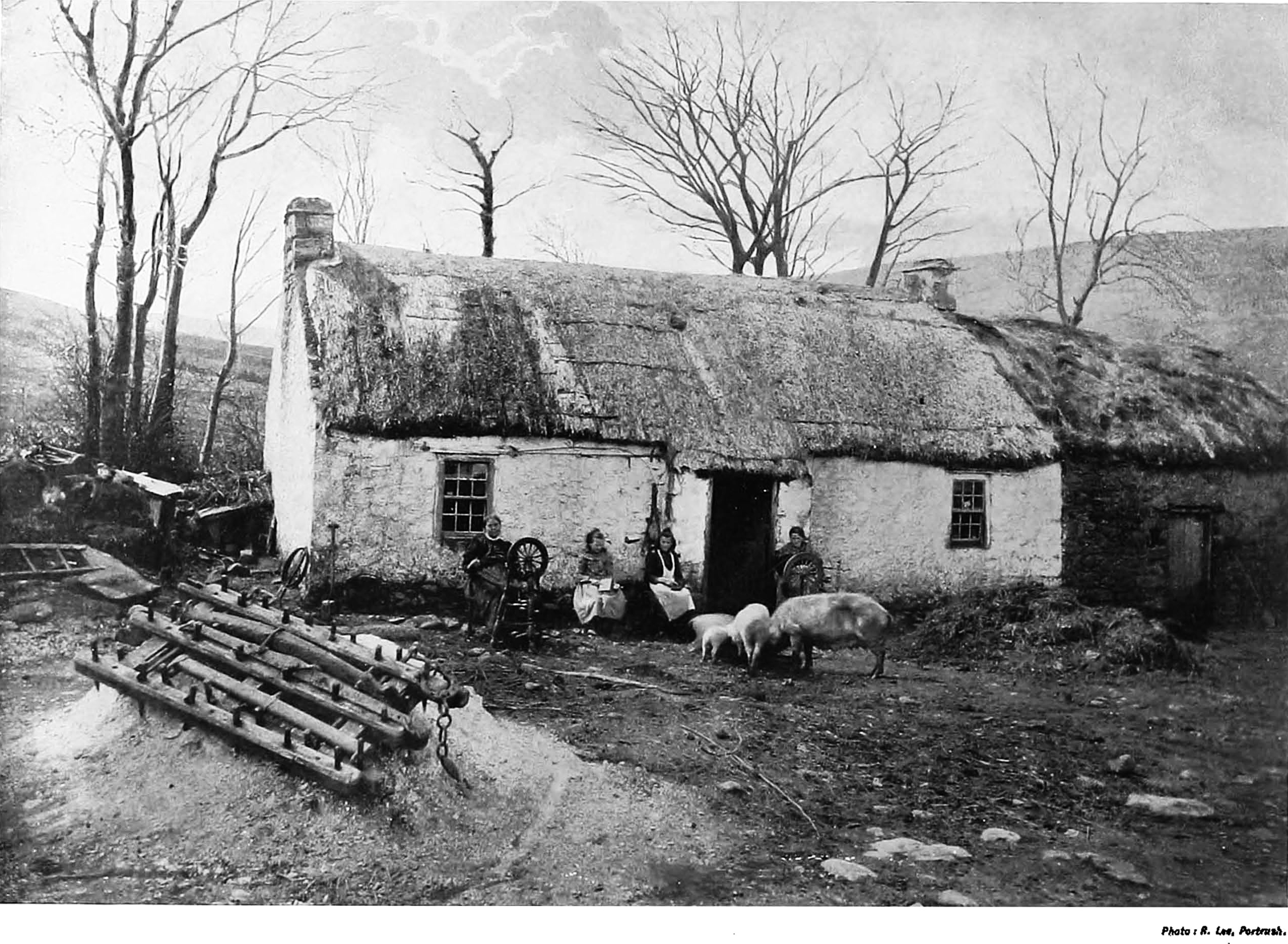
Sale of an ex-council house – This story is set in Aberdeen, but it could be applied anywhere in Scotland
On or around 2007, an Stonehaven couple reaching retirement age (lets call them Dougal & Ermitrude) purchased their council flat at a knockdown price of £21,000. They took out a mortgage to cover the cost of the purchase plus fees.

Formal advice, given to them in writing was that they could not sell the flat for at least 3 years without returning, to the council a significant part of any profit that might be realised from any such sale.

Their children, both adult were now married with children of their own. They lived locally, in Aberdeen, about 10 miles distant.

Ideally Dougal and Ermitrude would have preferred to be located nearer to their grandchildren but Aberdeen housing was extremely expensive and in any event they would need to sell their flat first. They were stuck. The years passed.

Around 4 years later a friend provided a possible solution which if implemented would provide opportunity allowing Dougal & Ermitrude to sell their house for much more than they had paid for it.


The plan formulated required only that they would be able to display an pressing need supported by medical evidence (if possible) to be nearer their immediate family, in Aberdeen. All necessary measures were put in place.

Dougal & Ermitrude completed and submitted application forms to two Housing Associations, in Aberdeen. They struck lucky. The Hanover Housing Association, (provider of sheltered housing for the over 60’s) undertook to provide a one bedroom flat in Aberdeen (http://www.hanover.scot/).

There was only one catch. Housing provision was on a first come first served basis, meaning that refusal of accomodation considered suited to their needs could signifacntly delay any other offer. Normally housing would not be forthcoming for around 3-6 months, which gave Dougal & Ermitrude time to sell their flat in good time.

Then the bombshell. Roughly 3 weeks after submitting the application forms they recived a letter of offer of accomodation from Hanover advise that a one bedroom flat would be ready for occupation within the month. The location of the flat was ideal, being within walking distance of their grandchildren’s homes. What a quandry.

Dougal had made arrangements placing details of their flat with a local solicitor so that it could be sold. There had been a couple of viewings but no offers had been forthcoming due to the extensive refurbishment that would be necessary to bring the flat up to an acceptable standard. An added difficulty was that the local housing sales market had taken a downturn. Things did not look good.


The friend who first muted the move to Aberdeen came to the rescue once more with a recommendation that they consider selling the flat to an equity buyer. The price realised would be much reduced over the market rate,(between 25-30%) but in the circumstances it seemed to be the only viable option. Arrangements were put in place so that such a sale would be achieved without undue delay. Dougal & Ermitrude accepted the offer of accomodation from Hanover.

The equity buyer valued the flat at £75,000 and offered to purchase it for £50,000. The offer would be available for 48 hours after which it would be withdrawn. Dougal was inclined to hold out for more money but Ermitrude insisted he accept. Which he did. The outstanding amount of the mortgage loan taken out on the flat was £15,000. This provided Dougal & Ermitrude with a windfall cash sum of £35,000 after paying off the mortgage.

In 2011, Dougal & Ermitrude moved into their new one bedroomed flat located within walkng distance of their grandchildren. They were content and reasonably well off in their retirement since their needs were centred around their grandchildren.

The moral of the story:  It is within the grasp of any ex-council house buyer under the right to buy scheme to do what Dougal and Ermitrude did. But they should have sold their flat before completing the application form seeking sheltered accomodation.


Afternote. The SNP government brought the right to buy scheme to an end since it had brought about an appalling shortage of council owned property for rent. Many properties sold off under the right to buy scheme had been susequently sold on to entrepreneurs increasing housing in the private sector which brought with it much increased rental charges  for vulnerable Scots. http://www.scotsman.com/news/politics/top-stories/right-to-buy-council-homes-to-be-scrapped-1-2986947


The scheme, introduced by the Thatcher govenment was supported by Labour government’s under Blair or Brown and the three  Labour governments in Scotland led by Dewar, McLeish and McConnell. Indeed Labours council house building record  in Scotland is disgraceful.  In the first 6 years of  the SNP government 4,432 new council homes were completed – compared to only 6 under in the last 4 years of the Labour-Lib Dem administration.


An aside: The couple in the news, Douglas and Jacqueline Wright sold their Cumbernauld property to M & F Property Solutions 2011. They took up residence in a one bedroomed flat, in pristine condition in a sheltered home complex in Bishopbriggs, (about 10 miles from Cumbernauld). The complex is one of a number of similar amenities built throughout Scotland over the last 10 years. It is run by the Hanover Housing Association


Thinking of Voting Lib/Dem ? – Catch Up on Willie Rennie’s Appalling Record in Public Office First – Chances Are Your Vote will go to the SNP


William Cowan Rennie – Liberal Democrat

William Cowan Rennie was born in Fife and grew up in Strathmiglo, where his family ran the village shop and still live today. His mother was secretary of the local community association and his grandfather was the local Minister. He lives in Kelty with his wife Janet and their two sons, Alexander and Stephen. He is a keen runner and is a member of Dunfermline’s Carnegie Harriers. He was also runner-up in the 2006 Scottish Coal-Carrying Championships held in Kelty. Rennie was one of the 50 MPs who ran a mile to raise money for Sport Relief finishing close behind the winner, David Davies.

He went to Bell Baxter High School in Cupar, Fife, before going to Paisley College of Technology, where he graduated with a B.Sc. degree in Biology. After that, he received a Diploma in Industrial Administration at Glasgow College. After college, Rennie spent most of his early career as a Liberal Democrat election campaigner and official before working as a public relations consultant in the private sector. He became the Member of Parliament (MP) for Dunfermline and West Fife after a by-election win in February 2006.


imagesbgrennie7


He lost this seat to Labour in the May 2010 UK general election but was subsequently appointed in the same month by the newly formed UK Conservative-Liberal Democrat Coalition as a Special Government Adviser (SPAD) working for the Liberal Democrat Scottish Secretaries of State Michael Moore then Danny Alexander at the Scotland Office. He later resigned from his special adviser role in June 2010 to stand for the Scottish Parliament in the May 2011 elections. Despite the overall collapse of the party in the election he was elected as a list member for the Mid Scotland and Fife region. He was soon after elected unopposed as leader of the decimated Scottish Liberal Democrat party, replacing Tavish Scott.

While a student at the Paisley College of Technology he was depute president of the student union. Rennie ran the Scottish Young Liberal Democrats (later reformed as Liberal Youth Scotland) and after graduation went on to work for the English Liberal Democrats in Cornwall. He then went on to work for the Liberal Democrats’ campaigns department, and was the successful agent in the 1993 Christchurch by-election in Dorset. After managing the party’s campaigns in the South West England region, securing the return of a sizeable number of new MPs in the 1997 General Election, he moved back to Scotland where he was Chief Executive of the Scottish Liberal Democrats from 1997 to 1999, and then the party’s Chief of Staff in the new Scottish Parliament from 1999-2001.

From 2001 to 2006 he worked for the small Scottish communications firm McEwan Purvis as an account director helping advise businesses and charities such as the Royal Society of Chemistry and Asthma UK. During his time at McEwan Purvis, Rennie was a press adviser to Fife Council’s Liberal Democrat Opposition Group and a member of the Dunfermline Focus editorial team, working with Dunfermline’s Lib Dem councillors on local issues.


mh


Following the death of Rachel Squire MP, Rennie stood in the Dunfermline and West Fife by-election on 9 February 2006 and overturned a huge Labour majority to win the seat. In the House of Commons, he was a member of the Liberal Democrat shadow defence team, chair of their parliamentary campaigns unit, and a member of the Commons Defence Select Committee. During his time as an MP, he campaigned on local constituency issues such as abolishing the bridge tolls, changing the law to protect female learner drivers from sex offenders, improvements to cancer services at Queen Margaret Hospital, and local jobs (including at Longannet Power Station and Rosyth Dockyard). In the General Election of 6 May 2010 Rennie lost his seat to the Labour candidate Thomas Docherty.

Rennie returned to front-line politics as an MSP when he won a regional list seat for the Liberal Democrats in the Scottish Parliament’s Mid-Scotland and Fife region at the Holyrood elections on 5 May 2011. He was the only new Lib Dem MSP to win a seat in this election. After the resignation of the Scottish Liberal Democrats’s leader, Willie Rennie was made their new leader. He vowed to stand up to the “SNP bulldozer” majority, and refused to distance his party from the UK Liberal Democrats.


rennie mag2


February 2006: Willie Rennie elected in Dunfermline by-election surprise

The one obvious thing that should happen – but probably won’t – in the wake of the ground breaking result in Dunfermline is that the ludicrous Labour-LibDem coalition that purports to run devolved Scotland should come to an end. That way we might return, at last, to a bit of honest politics.

Able candidate that he is,  the truth is that Rennie and the Liberal Democrats fought an entirely fraudulent campaign based on a wholly bogus prospectus. The plain fact is that, while that perennial curse of governing parties – the fed-up factor – as well as general disillusionment over things like the Iraq war played a part in turning voters against Labour, the big issues were local issues.

And whereas in the past the Lib Dem “pavement politics” enabled them to cash in on these local gripes they were, in those cases, a party of opposition. In Dunfermline and West Fife they were in part responsible for the causes of these local gripes. They are a party of government in Scotland but they pretend, when it suits them, to be something else.

The deciding role on the Forth Road Bridge tolls and the downgrading of Queen Margaret Hospital is the responsibility of the Scottish Executive, yet the Lib Dem’s come over all hurt and innocent – who us? – when you remind them that their ministers play key roles in that administration.

The writing was on the wall for this disaster for Labour last May when the Lib Dem’s finished second in 15 Westminster constituencies. I wrote then that Alistair Darling, for one, was getting mightily fed up of Holyrood Labour’s accommodations with the greatest bunch of chancer’s Scottish politics has ever seen. With just over one year to go before the elections to the Scottish Parliament, is Labour to continue allowing the Lib Dem’s to claim all the credit for what little good has come out of devolution, yet blame them when things come unstuck? If they do, they might well find that this cuckoo in their nest will oust them completely.

They must tear up the partnership agreement as soon as possible, form a minority administration and bring back some plain dealing into our political life. That way might threaten Jack McConnell’s continued tenancy of Bute House, but it would also get the Lib Dems out of their limousines and back on the buses. I suspect the pressure for this sort of draconian action must be ferocious right now from the likes of Mr Darling and his boss, Gordon Brown. Devolution is killing off what we used to know as the Scottish Labour Party.

Westminster Labour and Holyrood Labour is the real coalition in Scottish politics now. It’s not a proper party any more, merely a loose grouping of disparate politicians all pulling in different directions and held together by an increasingly distant folk memory of how things used to be. Devolution did this to them. And don’t let them say they weren’t warned. Only scrapping their dirty deal with the Lib Dem’s can save them. http://www.scotsman.com/news/make-the-coalition-chancers-come-clean-1-1409170


Fib launcherrennie10Raytheon Cluster Bomb Launcher


November 2006: Ban the bombs I helped sell! says Willie Rennie

This week’s Westminster PMQ’s were full of Fib,dem screamers! Rennie (Lib/dem defence spokesperson) did not want to be outdone by his leader,(Clegg) so he decided to get in on the fibbing. He asked the Prime Minister:

Rennie (Dunfermline and West Fife) (LD): “After the conflict ended, cluster bombs used in Lebanon by Israel had resulted in 159 casualties, including 23 deaths so far. In Geneva last week, why did the UK not support calls from the UN Secretary-General, the International Committee of the Red Cross and 27 nations for urgent action? In Oslo next year, will the Prime Minister push for a ban on those indiscriminate bombs, or does he agree with the Minister of State, Ministry of Defence, who has responsibility for the armed forces, who strongly advocates the use of such bombs?”

But he should have declared an interest. Faithful readers will be aware we flagged up Rennie’s past before and his association with Raytheon. He was a top PR man at McEwan Purvis who had the merchants of death as their client. Yes, it is the Raytheon – the weapons manufacturer. Looks like “Oor Willie” is not only a political opportunist but the worst kind of hypocrite seeing as Raytheon is a proud manufacturer of, you guessed it, CLUSTER BOMBS.

You can see also see Willie meeting the Acting Director of Raytheon in a press release drafted by none other than McEwan Purvis! Of course he went to the factory in his capacity as a new MP. (Note the picture of the F-18 that carries the very same cluster bomb below. Also his ol’workmate’s email address at the top. Willie, Willie, Willie, we couldn’t even make this stuff up.) Is there no depth-charge to which two-faced fibbers will sink?

http://fibdems.blogspot.co.uk/2006/11/ban-bombs-i-helped-sell.html
http://www.fibdems.blogspot.co.uk/2006_11_01_archive.html
http://chrispaul-labouroflove.blogspot.co.uk/2007/01/lib-dem-willie-rennie-mp-happy-burns.html


Willie+Rennie+Scottish+Liberal+Democrats+Launch+QsbW46qUUodl


December 2006: The Dundee Courier – Willie Rennie – for whom the bridge tolls

The Lib Dem’s pledged their support for The Courier’s “Scrap the Tolls” campaign yesterday when they launched a petition to abolish the “Toll Charge” to cross the Forth. Until yesterday, the party had been sitting on the fence in relation to the Forth Road Bridge toll. Lib Dem’s sitting on the fence?!? Surely not! But it gets better.

Dunfermline and West Fife MP Rennie said he had been reluctant to jump on the anti-tolls bandwagon because of concerns about congestion. Really?!? This wouldn’t be the same Rennie who centred his Dunfermline & West Fife by-election swindle victory on a petition against an increase in tolls, would it?!?! I mean, there cannot be any photographic evidence of Willie being against tolling on the Forth Road Bridge, can there?

The article then continues at pace to point out that the person in charge of tolling on the Forth, is none other than our favourite road safety campaigner and property market guru, Ravishing Tavish-ing Scott. So, Willie, when will you be lobbying your own party hierarchy on this one then? Rather than duping the electorate with a “petition” which always seems to rear its head at election time? http://fibdems.blogspot.co.uk/2006_12_01_archive.html


cef026b7-1d51-46c6-8bb7-cd882f8a1201-620x372


February 2007: Rennie just can’t help himself.

After the fraudulent and bogus circumstances of his election which saw him take a low profile and the blasting he got for his hypocrisy and lack of commitment on cluster bombs, we have his latest initiative to con the good people of Fife – abolishing tolls on the Forth Road Bridge.

Obviously Rennie is desperate to protect his ill gotten seat by getting a FibDem MSP elected in the area. However this little local plan has now gone a bit awry leaving Rennie’s future as an MP after the next election a little forlorn.

In true FibDem hypocrisy the party most to blame for the continuation of tolls on the Forth Road Bridge is, erm, the FibDems since the Scottish Transport Minister is, aherm, a FibDem – aka the hapless Tavish Scott. It all came to head this week when a vote on abolishing tolls on the Forth Road Bridge saw Mr Scott lead the opposition and say it would be bad for the environment if they were scrapped. However Tavish seems to have missed how this statement has screwed up not only his party’s chances of taking Dunfermline West from Labour but effectively ended Rennie’s future as an MP.

No wonder Rennie was squirming on Politics Scotland as Isobel Fraser skewered him into saying he had “faith” in Tavish after exposing the lack of “credibility” he now has on the issue of tolls. Poetic justice indeed. Elected on the issue of tolls and exposed and rejected on the issue of tolls.


rennie fleet


May 2008: Rennie enjoys a fully funded 5 day trip to Israel

Liberal Democrat Friends of Israel (LDFI). Air travel, transport within Israel and West Bank and some hospitality paid for by LDFI. Accommodation paid for by our hosts the Israeli Ministry of Foreign Affairs.


article-2284225-121EC0D3000005DC-123_634x642


July 2009: Willie Rennie in sleaze probe

A Parliamentary sleaze probe is to be held into expense claims made by Liberal Democrat Willie Rennie MP who paid his local party £14,000 for an office which cost them half that to lease. John Lyon, the parliamentary standards commissioner, has agreed to Labour Party calls for an investigation into the rental arrangements of Rennie, Lib Dem MP for Dunfermline.

Last month, it emerged that Rennie and fellow Lib Dem MSP Jim Tolson had paid a total of £21,000 in rent to the local Lib Dems who paid just £7,050 to lease the property in the Fife town. Rennie denies channelling funds to his local party and insists that the sums he and Tolson pay are justified as they include bills for telephone and electricity costs which, he says, make up the difference between the two amounts. http://www.highbeam.com/doc/1P2-20528679.html


Liberal+Democrats+Launch+Their+2015+Election+8TXiPw8XPNel


May 2010: Former MP Willie Rennie to repay £2,000 in office costs

Rennie, the former Liberal Democrat MP, who lost his Dunfermline and West Fife seat at the general election and now working as a SPAD for the Scotland Office has apologised after he wrongly claimed for office costs on his local office, premises shared with his local party. He has accepted he will be required to pay back more than £2,000.

House of Commons authorities found that Rennie, who now works as a special adviser to the Scottish Secretary, was paid £2,647 too much for the upkeep of the office and equipment since 2006. Political opponents said the findings were “deeply embarrassing” for the Lib Dem’s as they accused him of trying to divert funds to the party’s election campaign.

Thomas Docherty, the Labour MP who unseated Rennie at the general election, said: “(Rennie] has been ordered to repay thousands of pounds of money and has had to apologise for the misuse of his expenses. “He wrongly directed public funds towards the Lib Dem election drive.”.

Mr Docherty also questioned the decision to appoint Rennie to such a high civil service role, adding: “Now he has been rewarded with a job as a special adviser, a political appointee who has access to extensive government facilities, (the Scottish Secretary] must guarantee his new employee does not misuse public resources once again.”

Rennie defended his conduct, saying: “The matter, as far as the standards commissioner is concerned is now concluded. There were end-of-year adjustments and mistakes made in the paperwork, but I have agreed to settle all of those matters.” http://www.scotsman.com/news/politics/top-stories/former-mp-willie-rennie-to-repay-163-2-000-in-office-costs-1-806396


Comment: Despite the foregoing nonsense Danny “Beaker” Alexander the newly appointed Chief-Secretary to the Treasury, gave Rennie a job as his SpAd after he lost his seat to Labour in the general election.

Rennie was using a scam widespread amongst Lib/Dem MPs, renting his constituency office off his local Lib/Dem constituency party and shifting his campaign costs onto his parliamentary expenses. It is usually difficult to prove, Rennie was unlucky to get caught, it was only that his campaign team made canvassing telephone calls to Labour activists from a phone number paid for out of parliamentary funds that also appeared on his party letterhead that did for him.

Rennie was according to a report in the Scottish Sunday Post renting the office space off his party, which meant that Commons expenses cash was going directly into the local Lib/Dem coffers. Effectively the local Lib/Dem party was his landlord and taxpayers’ money was being used for Lib/Dem campaigning. Not a frugal sign from the right-hand-man of a Chief Secretary charged with cutting public expenditure.


rennie56s


April 2011: The Scottish Parliamentary election – Why did the Sun back the SNP?

Just under three weeks before the election the Sun gave it’s backing to the SNP. Rennie was not happy and started to stir the ****, but without foundation his attempts at smearing Alex Salmond were doomed to fail.

It was the judgement of the public that the decision to support the SNP had been based on blatantly obvious commercial logic. The Sun’s main competitor, the Record, being unshakably Labour, a traditional position it has taken for decades.

Taking a contrary position to the Record made obvious sales sense, particularly outside the Record’s core area of Glasgow, but the Sun could equally be agnostic; after all, not all of its readers would vote SNP. Insiders say the paper likes winners, and since in the last election when it unfairly suggested Scotland might need to consider suicide if Salmond was elected, it evidently decided this time round that the SNP leader was indeed a winner.

They also argue the SNP’s aspirational tax-cutting, and upbeat electioneering is more in tune with their readers’ outlook than the Record’s more biased reporting. Sun readers are younger, more upwardly mobile, as are SNP voters. Salmond’s advisers deny that the first minister and Murdoch have recently met, but do not deny that conversations have taken place at a senior level between Salmond and senior News International (NI) officers.

Other political observers – including those with powerful Tory allegiances – took a more jaundiced view of NI’s motives. Preventing Labour from winning back power in Edinburgh suited the Tories in London very nicely indeed, cynics say.

So with Salmond happy to do business with the Tories at Holyrood and clearly unable to deliver independence in the near future, backing the SNP is a much more attractive short-term bet for Wapping. At least, that is the very strong suspicion, and in Tory quarters too.

http://www.theguardian.com/politics/blog/2011/apr/18/why-is-the-sun-backing-alex-salmond?utm_source=feedburner&utm_medium=feed&utm_campaign=Feed%3A%20theguardian%2Fmedia%2Frss%20%28Media%29


imagesaadfimagesThe-Liberal-Democrats-Hol-006


Willie “off with his head” Rennie and his double standards
Willie Rennie, at the time he was elected leader of Scotland’s Lib Dem’s after their demolition in the 2011 Holyrood elections promised to “rediscover the party’s soul and rebuild trust with voters”. Willie claimed to be an honourable man who would have no truck with anyone in public office who did not measure up to exacting standards he demanded of himself. Those who failed, for any reason would be expected by Willie to resign. Indeed there were occasions when it seemed Willie couldn’t rise to speak or give interview to a compliant Unionist press without a shout of “Off with his/her head”. In his time as leader Willie has called for the resignation of:

* Former First Minister, Alex Salmond
* Former SNP Justice Secretary, Kenny MacAskill.
* The Head of Police Scotland, Stephen House.
* The head of the Scottish Council for Voluntary Organisations, Martin Sime.
* Former SNP Transport Minister Stewart Stevenson. (Forced from office because he failed to control extreme weather conditions and heavy snowfall.) But should we be expecting a politician to control the weather? Willie had no doubt. The answer was a resounding Yes!! He had to resign.But hold on just a mo! What about “Frenchgate”? The exposure of former Scotland Secretary Alistair Carmichael, after much prevarication by himself, of his disgraceful, underhand leadership and devious direct involvement, with others in an attempt to smear Scotland’s First Minister Nicola Sturgeon. There have been strident calls from across the political spectrum, the public and the press for the exposed rogue and liar to stand down from the seat he won by a whisker in the Westminster Election for Orkney and Shetland. Based on voters intent throughout Scotland it is extremely doubtful that (given his deceitful behaviour, without shame lying about Nicola Sturgeon) Carmichael’s ability to retain his seat would have been very badly compromised. So that he took his place at Westminster brings politics into disrepute.


imagesnnmj_83174913_letter


And what about Willie and his principles? Scotland waited and waited for an utterance and the word “Resignation” It was not to be. Finally, after much pressure Willie issued the following contemptible statement:

“I have discussed the serious nature of the publication of the Scotland Office document with Alistair Carmichael. He fully understands the impact it has had on his reputation. He deeply regrets his actions, has accepted responsibility for his error of judgement, apologised to Nicola Sturgeon and the French Ambassador and declined his ministerial severance payment. I have known Alistair for almost thirty years and have worked closely with him in parliament for almost a decade. I have always been impressed by his energy, dedication and professionalism. He has served Orkney and Shetland for fourteen years and has been elected on four separate occasions. It is clear to me that recent events are an aberration. As a liberal I believe that people deserve a second chance. I hope fair minded people would agree that Alistair Carmichael should be given that second chance.”

The Scottish public are not stupid. Willie Rennie’s blind hatred of the Scottish National Party has no place in Scottish politics. He should resign his post immediately and allow some other fair minded person to lead the Lib/Dem Party before he leads it to oblivion.


3 October 2015: questions raised about the past conduct of Caithness, Sutherland and Easter Ross MP Paul Monaghan – The Scottish Liberal Democrat leader Willie Rennie urges the SNP to review vetting procedures to ensure candidates are suited to political office

He said: “These are very disturbing reports about another SNP MP, and it raises questions about the party’s vetting procedures. I would urge the SNP to establish an immediate review of not only Dr Monaghan’s individual case but their whole approach to candidate selection.”

Rennie’s uncalled for intervention challenging the integrity of the SNP is breathtaking in it’s arrogance. I well remember, at the time he was elected leader of Scotland’s Lib Dems after their demolition in the 2011 Holyrood elections his promise to “rediscover the party’s soul and rebuild trust with voters”. He claimed, with a straight face to be an honourable man who would have no truck with anyone in public office who did not measure up to exacting standards he demanded of himself. Those who failed, for any reason would be expected by him to resign. Indeed there were occasions when it seemed Willie couldn’t rise to speak or give interview to a compliant Unionist press without a shout of “Off with his/her head”. In his time as leader willie has called for the resignation of:

* Former First Minister, Alex Salmond
* Former SNP Justice Secretary, Kenny MacAskill.
* The Head of Police Scotland, Stephen House.
* The head of the Scottish Council for Voluntary Organisations, Martin Sime.
* Former SNP Transport Minister Stewart Stevenson. (Forced from office because he failed to control extreme weather conditions and heavy snowfall.) But should we be expecting a politician to control the weather? Willie had no doubt. The answer was a resounding Yes!! He had to resign. A bit rich coming from Willie Rennie whose own conduct at the time he was an MP was hardly scandal free.  http://www.scotsman.com/news/politics/top-stories/snp-selection-under-fire-over-second-mp-1-3906656


December 2006: The Dundee Courier – Willie Rennie – for whom the bridge tolls

The Lib Dems pledged their support for The Courier’s “Scrap the Tolls” campaign yesterday when they launched a petition to abolish the “Toll Charge” to cross the Forth. Until yesterday, the party had been sitting on the fence in relation to the Forth Road Bridge toll. Lib Dems sitting on the fence?!? Surely not! But it gets better.

Dunfermline and West Fife MP Rennie said he had been reluctant to jump on the anti-tolls bandwagon because of concerns about congestion. Really?!? This wouldn’t be the same Rennie who centred his Dunfermline & West Fife by-election swindle victory on a petition against an increase in tolls, would it?!?! I mean, there cannot be any photographic evidence of Willie being against tolling on the Forth Road Bridge, can there?

The article then continues at pace to point out that the person in charge of tolling on the Forth, is none other than our favourite road safety campaigner and property market guru, Ravishing Tavish-ing Scott. So, Willie, when will you be lobbying your own party hierarchy on this one then? Rather than duping the electorate with a “petition” which always seems to rear its head at election time? http://fibdems.blogspot.co.uk/2006_12_01_archive.html


February 2007: Rennie just can’t help himself.

After the fraudulent and bogus circumstances of his election which saw him take a low profile and the blasting he got for his hypocrisy and lack of commitment on cluster bombs, we have his latest initiative to con the good people of Fife – abolishing tolls on the Forth Road Bridge.

Obviously Rennie is desperate to protect his ill gotten seat by getting a FibDem MSP elected in the area. However this little local plan has now gone a bit awry leaving Rennie’s future as an MP after the next election a little forlorn.

In true FibDem hypocrisy the party most to blame for the continuation of tolls on the Forth Road Bridge is, erm, the FibDems since the Scottish Transport Minister is, aherm, a FibDem – aka the hapless Tavish Scott. It all came to head this week when a vote on abolishing tolls on the Forth Road Bridge saw Mr Scott lead the opposition and say it would be bad for the environment if they were scrapped. However Tavish seems to have missed how this statement has screwed up not only his party’s chances of taking Dunfermline West from Labour but effectively ended Rennie’s future as an MP.

No wonder Rennie was squirming on Politics Scotland as Isobel Fraser skewered him into saying he had “faith” in Tavish after exposing the lack of “credibility” he now has on the issue of tolls. Poetic justice indeed. Elected on the issue of tolls and exposed and rejected on the issue of tolls.


July 2009: Willie Rennie in sleaze probe

A Parliamentary sleaze probe is to be held into expense claims made by Liberal Democrat Willie Rennie MP who paid his local party £14,000 for an office which cost them half that to lease. John Lyon, the parliamentary standards commissioner, has agreed to Labour Party calls for an investigation into the rental arrangements of Rennie, Lib Dem MP for Dunfermline.

Last month, it emerged that Rennie and fellow Lib Dem MSP Jim Tolson had paid a total of £21,000 in rent to the local Lib Dem’s who paid just £7,050 to lease the property in the Fife town. Rennie denies channelling funds to his local party and insists that the sums he and Tolson pay are justified as they include bills for telephone and electricity costs which, he says, make up the difference between the two amounts. http://www.highbeam.com/doc/1P2-20528679.html


May 2010: Former MP Willie Rennie to repay £2,000 in office costs

Rennie, the former Liberal Democrat MP, who lost his Dunfermline and West Fife seat at the general election and now working as a SPAD for the Scotland Office has apologised after he wrongly claimed for office costs on his local office, premises shared with his local party. He has accepted he will be required to pay back more than £2,000.

House of Commons authorities found that Rennie, who now works as a special adviser to the Scottish Secretary, was paid £2,647 too much for the upkeep of the office and equipment since 2006. Political opponents said the findings were “deeply embarrassing” for the Lib Dem’s as they accused him of trying to divert funds to the party’s election campaign. One said “(Rennie] has been ordered to repay thousands of pounds of money and has had to apologise for the misuse of his expenses. “He wrongly directed public funds towards the Lib Dem election drive.”. He also questioned the decision to appoint Rennie to such a high civil service role as a SPAD, adding: “Now he has been rewarded with a job as a special adviser, a political appointee who has access to extensive government facilities, (the Scottish Secretary] must guarantee his new employee does not misuse public resources once again.”

Rennie said “I have agreed to settle all matters” ” http://www.scotsman.com/news/politics/top-stories/former-mp-willie-rennie-to-repay-163-2-000-in-office-costs-1-806396


May 2011: Willie Rennie, newly-elected Liberal Democrat MSP, has become the party’s Scottish leader from a short list of one.

Rennie took over from Tavish Scott when the deadline for the contest passed at noon without any other candidates stepping forward. The Lib Dem’s were reduced from 16 to just five MSP’s in a disastrous election result earlier this month. The other Lib Dem’s re-elected to Holyrood are Alison McInnes on the North East list, Jim Hume on the South of Scotland list and Liam McArthur, in the Orkney constituency. Two days after the election, Shetland MSP Mr Scott resigned as leader with immediate effect.


July 2011: Willie Rennie tries to pin Alex Salmond down on News International dealings

“Dear First Minister, In light of the deeply shocking events, (phone hacking) that have unfolded over the last week, I am writing to urge you to disclose the details of your dealings with News International while seeking their endorsement. Following the criticism that you levelled at the corporation this weekend, it is inconsistent for your party to continue to accept News International’s support.

The allegations that have surfaced over recent days are dreadful, yet these follow on from those that were made a number of years ago. People in Scotland want to know what questions you asked of News International before accepting their backing for the election in May. Did you raise any concerns about phone hacking during these discussions and, if so, what assurances did you seek about the previous allegations? This scandal has shocked people throughout the country and I believe that, as First Minister, you must now make your position clear. Will you now set out the details of all discussions and negotiations between your party and News International?

http://carons-musings.blogspot.co.uk/2011/07/willie-rennie-tries-to-pin-alex-salmond.html
http://carons-musings.blogspot.co.uk/2011/07/back-from-holiday-have-i-missed.html
comment: As the old saying goes “Empty vessels make the most sound” and Rennie is just confirming that. For a career politician I suppose that is all he has had any experience at just to please his boss Nick. The Sun endorsed the SNP on the 19th of April less than 3 weeks before the election because they saw that they were going to be the winners. See previous post


renniemag1


October 2011: Willie Rennie involved in a controversy over an unjustified attack on Alex Salmond

Rennie was at the centre of controversy after an offensive cartoon was published in his name depicting Scottish First Minister Alex Salmond MSP in Arab dress with his skin apparently artificially darkened. The cartoon, which was published on Rennie’s Facebook page and through his Twitter feed, followed a comment in which Alex Salmond noted “remarkable similarities” between Scotland and Qatar.

The cartoon suggested an independent Scotland would share such attributes of Qatar as an absolute monarchy, the rejection of gay rights and the imposition of the death penalty. Rennie later publicly apologised for the cartoon. http://www.libdemvoice.org/willie-rennie-apologises-for-unintentional-offence-of-lib-dems-alex-salmond-cartoon-25818.html


jo-swinson-morning-star2


November 2011: Rennie highlights independence threat to Scottish research funding

He said: “Scotland is at the cutting edge of research and development work in the UK. Our universities are doing work which is producing technologies which the applications for could almost be limitless. The expertise exists in Scotland, but we could not do all of this exciting new research without the extra bonus funding that we receive from across the border.

The real danger of splitting Scotland from the UK is that you also split our universities from this vital source of funding which helps to fuel the innovation. We do not want to see a repeat of ‘Silicon Glen’ or cause a brain-drain to better funded projects south of the border.

Scotland is punching well above our weight in terms of funding. I am puzzled why the SNP would want to jeopardise this. Mr Salmond cannot guarantee that there would be alternative funding sources to fill the funding gap of £210 million every year.

It is clear that remaining a strong and prosperous part of the UK is best for Scotland’s bright future in research and development.” http://carons-musings.blogspot.co.uk/2011/11/rennie-highlights-independence-threat.html

Comment: Usual Rennie twaddle. Read these: https://caltonjock.com/2014/08/30/research-funding-scares/ https://caltonjock.com/2014/08/28/major-indian-medical-and-biological-research-institutions-with-scottish-universities/


https://i0.wp.com/www.libdemvoice.org/wp-content/uploads/2011/11/Salmond-cartoon.jpg


December 2011: Wise words from Willie Rennie at Christmas

This is a brief extract from Scottish Liberal Democrat Leader Rennie’s 2012 Christmas message: “While the Nationalists play a game of political poker, bluffing their way from one missed opportunity to the next”

Full text: http://carons-musings.blogspot.co.uk/2011/12/wise-words-from-willie-rennie-at.html

Comments:

“A sad and inaccurate statement. But just what we’ve come to expect from Rennie. Sold out in England and nasty in Scotland with no Christmas spirit of goodwill. Oh and remember that the cuts in Scotland are due to the imposition of much reduced financial allocations from Westminster don’t you ? From Danny and his team ? You know Danny from up in Moray who closed Leuchars and kept Lossie open ? And that the Lib Dems reneged on their pledge to scrap tuition fees in England ? Just checking.”


November 2011: Rennie highlights independence threat to Scottish research funding

He said: “Scotland is at the cutting edge of research and development work in the UK. Our universities are doing work which is producing technologies which the applications for could almost be limitless. The expertise exists in Scotland, but we could not do all of this exciting new research without the extra bonus funding that we receive from across the border.

The real danger of splitting Scotland from the UK is that you also split our universities from this vital source of funding which helps to fuel the innovation. We do not want to see a repeat of ‘Silicon Glen’ or cause a brain-drain to better funded projects south of the border.

Scotland is punching well above our weight in terms of funding. I am puzzled why the SNP would want to jeopardise this. Mr Salmond cannot guarantee that there would be alternative funding sources to fill the funding gap of £210 million every year.

It is clear that remaining a strong and prosperous part of the UK is best for Scotland’s bright future in research and development.” http://carons-musings.blogspot.co.uk/2011/11/rennie-highlights-independence-threat.html

Comment: Usual Rennie twaddle. Read these: https://caltonjock.com/2014/08/30/research-funding-scares/ https://caltonjock.com/2014/08/28/major-indian-medical-and-biological-research-institutions-with-scottish-universities/


January 2012: Rennie Raises Salmond’s disrespect in Parliament

Ever the opportunist, Rennie complained that Alex Salmond arranged news interviews, where, appearing in front of a cosy fire and saltires at Bute House, he made his announcement of the referendum date before briefing his MPs who were in the Commons listening to Moore. It had all the impression of being done completely on the spur of the moment. But, why the need for the high drama? Why not just make a statement to Parliament on Wednesday lunchtime? and it was disrespectful to the Holyrood Parliament. He said:

“On a point of order, Presiding Officer. Yesterday, Scotland’s ministers at Westminster set out the United Kingdom Government’s proposals for a fair, legal and decisive referendum in two statements: one to the House of Commons and one to the House of Lords. They took 47 questions from members of Parliament.

In Scotland, the First Minister announced his date for the referendum, not to the Scottish Parliament but to Sky News. Given that the decision relates to what the First Minister called the biggest question for Scots in 300 years, and given that the Scottish Government is always concerned about the respect agenda, has the Scottish Government made a request to make a statement to this Parliament today?

Is there any reason why you, Presiding Officer, would not be able to respond positively to such a request if it were made by the Scottish ministers?” Presiding Officer Tricia Marwick said she’d not had any request for a statement.

Rennie followed up outside parliament “This shows the SNP’s disrespect for the Scottish Parliament. Instead of choosing to make a statement to the Scottish Parliament on Scotland’s biggest question for 300 years, Mr Salmond instead chose to make his statement to the media. With the SNP’s majority in Parliament, it is obvious that they feel they can do anything. The bulldozer is out of the garage.” http://carons-musings.blogspot.co.uk/2012/01/rennie-highlights-salmonds-disrespect.html

Comment: I think the headline should read “Rennie highlights his total lack of judgement yet again”.


It is public knowledge that Salmond expressed only his Preferred Timeline for a Referendum in advance of publishing a Consultation document. Therefore, whatever the language used, there is no question that ‘the date of the Referendum was announced’ anywhere other than in Rennie’s head. All that has been done is an expectation set. And by the way, why should Salmond announce anything to the Scottish Parliament when, in Rennie’s view, the Scottish Parliament doesn’t have the competence to legislate for the Referendum? Rennie’s intervention yesterday was sheer petulance probably borne out of frustration that Michael Moore was getting all the attention after he had been chosen by his Tory bosses to make a clown of himself on Tuesday. I don’t think Cameron could believe his luck that he found such a willing and able stooge.


Willie Rennie – A confidence trickster who repeatedly tries to deceive the Scottish electorate with false claims and innuendo seeking to gain political advantage over the SNP government via some form of pretence or deception.

Rennie is readily available to the right-wing Scottish press and media frequently and with ever increasing vigorous impetuosity making statement’s calling for government intervention or apology, challenging the integrity of the SNP. His public performances are breathtaking in their arrogance.

I well remember, his promise to “rediscover the party’s soul and rebuild trust with voters” at the time he was elected leader of Scotland’s Lib Dems after their demolition in the 2011 Holyrood elections

He claimed, with a straight face, to be an honourable man who would have no truck with anyone in public office who did not measure up to exacting standards he demanded of himself. Those who failed, for any reason would be expected by him to resign.

But. True to form his own performance in public life has been less than honourable but he still clings to public office like a “chit-chat on a wall”

For details of Rennie’s rise to the top of the cesspit that is the Liberal Democratic Party in Scotland read my previous blogs on this person:

https://caltonjock.com/2014/08/31/wee-willie-rennie-whit-a-toastie/
https://caltonjock.com/2015/05/16/willie-rennie-man-of-many-failings-driven-by-hatred-but-seeking-only-to-do-good-things-for-himself/
https://caltonjock.com/2015/10/04/willie-rennie-advises-snp-to-review-candidate-selection-procedures-ensuring-they-are-fit-persons-to-hold-public-office-a-bit-rich-coming-from-a-party-leader-whose-colleagues-are-struggling-in-the-sl/


March 2012: Rennie attacks Alex Salmond stating he would dine out with Devil to further independence cause

Rennie alleged “By seeking to exploit Rupert Murdoch’s spiteful revenge for phone hacking the First Minister has confirmed that he will dine out with the devil to get his way on independence. The First Minister has already defended News International in his recent Sun on Sunday column and now he’s seeking a grubby deal with the media tycoon to support splitting Scotland from the rest of the UK.

This is a cynical attempt to exploit Rupert Murdoch’s personal grudge and grievance against UK politicians who rightly criticised the News of the World and the Sun over phone hacking. The real substance of last week’s cosy fire-side chat with Rupert wasn’t jobs but his revenge over Leveson. Has the First Minister no shame?”  http://carons-musings.blogspot.co.uk/2012/03/rennie-salmond-would-dine-out-with.html

Comment: Alex Salmond is well aware he is taking a risk being seen with Murdoch but until it is proven that he was doing anything other than his job as Wee Rennie’s comments are, as usual, an attempt to smear his and the SNP’s name!!

Speeches by lib/Dem leaders at their conference showed an incredible level of duplicity on Home Rule and disgusting slurs on the party you hate show much..I hope there is somewhere for the membership to go when the Lib/Dem party is cast into the wilderness for a generation.

In fact their only hope for the future is Independence when honest Scottish Liberals may be able to regroup – having fired their previous leaders!

Lets just look at how the two party’s compare. Alex Salmond meets Rupert Murdoch who through his large shareholding in Sky TV has 6000 employees in Scotland.

The Lib /Dems take £2.5 million of what turns out to be stolen money from a donor. Now any party that is happy to criticise another party over just about anything, and had any scruples themselves, would return that money, but it appears the Lib/Dems have no such scruples.

Keep up the moral indignation all you Lib/Dems, you will find out in May just what the Scottish electorate think of you.


Cartoon--Maguire-Benefits-Cap


April 2012: Willie Rennie: Murdoch says “Jump”, Alex Salmond says “How high?

Rennie, Leader of the Scottish Liberal Democrats, said that First Minister Alex Salmond had been sullied by James Murdoch’s revelations at the Leveson Enquiry. Amongst e-mails filed for the Enquiry to consider, was one from Frederic Michel, News International’s Director of Public Affairs, about a meeting with Alex Salmond’s advisers on 15 June 2010: Rennie called for an urgent investigation into the circumstances behind this exchange. He said:

“It is difficult to understand why the First Minister has allowed himself to be sullied to such an extent. When the troubled media mogul said jump, it is clear that Alex Salmond was quick to say ‘how high?

We need an immediate investigation into the circumstances which led to such an outrageous exchange taking place. Alex Salmond will do anything to split Scotland from rest of UK, even cosy up to a disgraced media tycoon. http://carons-musings.blogspot.co.uk/2012/04/willie-rennie-murdoch-says-jump-alex.html

Comments:

I agree that there should be an inquiry into the alleged suggestion that a News International (NI) employee emailed advice that Mr Salmond could seek to influence “Hunt” if he was asked to. (Rennie seems to be keen to accept without question what an NI employee had written about what spokesmen for the First Minister might have have said. I’m sure there must be some doubt about the credibility of NI staff…?)

Mind also that Hunt was always 100% for Murdoch in the first place, so any need for a functionary of the FM to contact Hunt would be in doubt. A note to Cable, who had declared war on Murdoch would have been a different story.

But yes. Absolutely 100% let’s have an inquiry into Salmond’s relationship with Murdoch, Hunt, Cable and anyone else. We absolutely need to know that despite the LibDem Westminster government being corrupt beyond belief and having no regard whatsoever for the law, the Scottish government and its first minister MUST be above that.

Incidentally the gripe about only the two possible first ministers debating in Scotland: The Lib/Dem’s were happy to take part in a debate that ignored anyone but the three party leaders from England. No UKIP, BNP, or Celtic country parties involved.

The Lib/Dem’s are given mention twice in the “extracts” supporting Murdoch’s bid? Very strange. They further quote the support of the Scottish LibDems.

Tavish Scott has already denied this. But, is Tavish to be believed yet Salmond must be a liar? Seems to me Willie Rennie is making an excellent attempt to steal Labour’s mantle for hypocrisy.

http://www.levesoninquiry.org.uk/wp-content/uploads/2012/04/Exhibit-KRM-18.pdf


rennie anti toll charge


August 2012: The Herald and Willie Rennie accuse the SNP of secret push to obtain a devo max option

Private correspondence obtained by The Herald shows Mr Salmond’s office had been helping campaigners wanting to widen the referendum to build the case for putting “devo max” to voters in the poll. Publicly Mr Salmond has maintained his preference is for a single question on independence, while leaving the door open in case other options emerge.

He has argued it would be his duty to include a second question if there is a groundswell of support. However, an email obtained by The Herald shows the First Minister has been working behind the scenes to generate such support.

The message was sent from Mr Salmond’s special adviser Alex Bell to Martin Sime, chief executive of the Scottish Council for Voluntary Services (SCVO) and a leading proponent of a two-question poll.

The SCVO is the driving force behind the Future of Scotland group, a loose coalition of charities, churches, student organisations and trade unions which, since launching earlier this year, has been developing a possible second question on greater devolution.

Mr Bell’s email, on June 14, provides a link to an internal report by the Unite trade union showing 62% of their members favoured a second question on devo max, according to a poll. A message attached said simply: “Read this.”

Scottish Liberal Democrat leader Rennie said: “Despite his public protestations, Alex Salmond is increasingly desperate to get a second question on the ballot paper. The fact his henchmen are manipulating independent organisations behind the scenes to achieve that second question shows just how desperate he is.”

Yesterday, an SNP representative said “Unlike the anti-independence parties, we acknowledge the strong support within civic Scotland for a second question, as underlined by the poll of Unite members.” http://www.heraldscotland.com/politics/referendum-news/salmond-in-secret-push-to-obtain-a-devo-max-option.18556202


But, determined to make mischief, as is his want Rennie put pen to paper and wrote to Alison Elliot, the Convener of SCVO, asking her to consider the position of Martin Sime. His letter said:

“I am sure your members will be dismayed to learn that Mr Sime is allowing the SNP to use the SCVO as a front organisation to make its case for a second question. As you are more than aware the SVCO exist to represent the views and interests of Scotland’s third sector.

Mr Sime has displayed poor judgement by involving himself in a highly polarised debate on matters of process regarding the constitutional referendum. SCVO provides expert opinion to decision makers on a range of subjects including health, education, justice and regeneration.

I value the critical role the organisation plays. However, Martin Sime is undermining the impartiality of that opinion by backing the SNP in a highly polarised debate on constitutional process matters on which he has neither locus nor expertise. I believe that Mr Sime should consider his position as Chief Executive of SCVO.”

Alison Elliot’s reply: “I consider your allegations preposterous, your interpretation of the incidents fanciful and your attempt to interfere in the business of an independent organisation unworthy of a public leader. I have no intention of asking Martin to resign.” http://carons-musings.blogspot.co.uk/2012/08/scvos-alison-elliot-proves-willie.html

Rennie’s further comment: “I’ve clearly touched a raw nerve. These are serious concerns about the impartiality of the Chief Executive of SCVO and clearly deserve a better response. I think people will be concerned that SCVO has taken one side of a highly polarised, political debate.

First we had the attempt to undermine the launch of Better Together and now hard evidence of collusion with one of Alex Salmond’s close advisers. SCVO are in serious danger of undermining their reputation.”

Final comment from Rev Stu: “I’m still keen to hear what Mr Sime actually did to merit Willie Rennie’s ire other than receive an unsolicited email. Perhaps there’s a vital aspect of the story I’ve missed, because it’s staggeringly, blindingly obvious even to a total idiot that calling for someone to lose their job because a twisted, moronic person sent them an email is.”


rennie8


August 2012:  Willie Rennie attacks Alex Salmond for “pandaing” to China over Dalai Lama

So, now we know. Rennie was right all along. Scotland’s First Minister didn’t put up any sort of a fight when China sent the boys round to talk about the Dalai Lama. Today’s Scotsman has the details.

The Scottish Government didn’t get involved in meeting the Dalai Lama when he visited Scotland between 21 and 24 June. Alex Salmond refused point blank to meet him, and nor did any other member of his Government. He had no problem giving time to the Chinese Consul General two weeks before, though. The Scotsman have obtained a record of that meeting and it makes no mention of any discussion taking place on human rights.

This is what the note says about the Dalai Lama’s visit:

“The Ambassador asked the First Minister about the Dalai Lama’s visit to Scotland in June. The First Minister clarified that is a private visit at the invitation of the Conference of Edinburgh’s Religious Leaders and the Edinburgh Interfaith Association, amongst others. The Scottish Government is not involved in the visit.”

It almost sounds apologetic. A “Yes, he’s here, but it’s now’t to do with us.” Not “We welcome the fact that he’s coming. He’s an important figure in the world who stands for peaceful protest and human rights. I’m going to meet him. I know you don’t like it, but that’s the way it is. I hope that you’ll reflect on the way your Government treats your citizens.” http://carons-musings.blogspot.co.uk/2012/08/willie-rennie-was-right-alex-salmond.html
Comment: Rennie Quote“This is what the note says about the Dalai Lama’s visit:

“The Ambassador asked the First Minister about the Dalai Lama’s visit to Scotland in June. The First Minister clarified that is a private visit at the invitation of the Conference of Edinburgh’s Religious Leaders and the Edinburgh Interfaith Association, amongst others. The Scottish Government is not involved in the visit.”

So – it was a pastoral visit, not a political one, as I believe the Dalai Lama himself confirmed. No Government ministers anywhere in the UK met with Tenzin Gyatso during his recent visit. When he visited the religious communities, the Dalai Lama did not request a meeting with any political figures in the UK. Why should Scotland’s First Minister be the only one in the UK to be criticised for not forcing his presence on this homophobic, pro-life, CIA-backed religious leader? If Rennie cares so much about Human Rights, then why didn’t he take up the issue of the Dalai Lama’s persecution, discrimination and repression of the Dorje Shugden sect?


lib-dems-party-con_1999913c


August 2012: Rennie questions Alex Salmond’s £400k spend on “London embassy” for the Olympics

The Scottish Government, understandably enough, had decided to showcase Scotland to the representatives of business and government from all over the world who are currently visiting London for the Olympics. Showing Scotland off is never a bad thing, especially when we are hosting the Commonwealth Games in 2 years’ time. http://wayback.archive-it.org/3011/20130201200407/http://www.scotland.gov.uk/News/Releases/2012/07/FM-Scotland-House27072012#

According to First Minister Alex Salmond, visitors can see what a great place Scotland is to have a holiday or do business in, and what wonderful food and drink and culture we export all across the globe – not to mention our pride in our sporting history, personified by heroes like Eric Liddell.

That’s all very well, but it turns out that they were offered the use of rooms in Dover House, where the Scotland Office is based not just at cheaper cost, but at no cost whatsoever. Not only that, but that building overlooks Horse Guards Parade, so they would have been able to take in the Beach Volleyball at the same time. What possible reason could they have had for refusing that offer?”

It’s a bit rich for Mr Salmond to complain about a lack of funds for schools and hospitals while spending almost half a million pounds on a plush London address during the Olympics. Spending the equivalent of a nurses’ annual salary every day on the exclusive Pall Mall address when Dover House was available free of charge is a colossal waste of money.

An invitation was made to the Scottish Government to use Dover House to promote Scotland, something that both the UK and Scottish Government are keen to do during the Olympics. It is one of the government’s finest buildings and Michael Moore has already hosted receptions there this week to take advantage of its prime location to promote Scotland on the world stage.” http://carons-musings.blogspot.co.uk/2012/08/rennie-questions-salmonds-400k-on.html

Comment: Widely distributed, Westminster Council Public Notice: “The area where Dover House is located will be extremely busy throughout the entire Olympic Games as Beach Volleyball is also taking place at Horse Guards Parade. Whitehall and Parliament Street will be access only 6am – midnight between 25 July – 14 August as the road will be used for athlete and other Olympic Family members to access the Horse Guards venue. Roads in the area (particularly Trafalgar square, Parliament square and Victoria Embankment) will be busiest when spectators, workforce and members of the Games Family are travelling to and from venues before the start and after the end of sessions. There we have it. An underhand offer from the Lib/Dem Scottish Minister of State. Use of Dover House would have been a disaster.

But surely this can’t be right, cynical, or at the very least, Wee Rennie (the man who can do no wrong) must not have been aware of that fact. After all, Wee Rennie is a man of integrity.

Recently, after writing to the head of Scotland’s civil service to complain about their politicisation, he was straight on the blower to Whitehall, complaining about the UK government using departments such as DWP and HMRC to come up with positive arguments for the Union. Oh, wait, I remember now, “No” he didn’t because he has no integrity, no principles and absolutely zero credibility. To say Dover House would not have been suitable simply makes no sense. It smacks of putting party politics ahead of taking advantage of the Olympics to benefit Scotland.


rennie mag1


October 2012: Willie Rennie’s leader’s speech to Scottish Liberal Democrat Autumn Conference in Dunfermline.

I am not printing it but you can read the entire long winded diatribe here: http://carons-musings.blogspot.co.uk/2012/10/willie-rennies-speech-in-full-to-lib.html
Comments:

“I.AM. Jolly is funny. Wee Rennie is just pathetic. Congratulating a council candidate who came third in a three horse race! How high the fortunes of the Lib/Dem’s are at present. If you ever come second any place will you have a party?

“I was going to read Rennie’s speech but I see that its only slightly longer than the Gettysburg Address so I can’t be bothered. The first few gripey lines are enough to more than set the tone and calibre of all the rest.

“Rennie and his erherm….”parliamentary party” turned up in a Mini. And instead of an inspiring eulogy he delivered a 3,000 word address that was an inspiration to nobody at all. Full of catty remarks, trite rather than pithy and much much too long. Clearly he has not heard that brevity is the sole of wit!


rennie6


March 2014: Willie Rennie unhappy with his own party’s bedroom tax said in a BBC webcast that the bedroom tax ‘should just go’.

Lib/Dem leader Rennie has called for the bedroom tax to be axed because the controversial welfare reform isn’t “working as intended.”

The measure has been at the heart of the welfare reforms being imposed by the Coalition Government and Rennie has steadfastly defended it. But, in a shock climbdown today and contrary to his own party policy, he said it should be scrapped. Asked if the “tax” should go, he told the BBC: “I don’t think it should stay.”

Rennie had always described the changes to housing benefits as “tough”, but had never signalled that he may be in favour of scrapping the policy altogether. But he said in a BBC webcast today: “The principle behind [the spare room subsidy] I can understand, but to be honest I don’t think it is working as it was intended and I think it should just go, and it should go quickly.”

Meanwhile, his Westminster colleagues continue to support the tax on the poor. Here are the names of 7 Scottish Lib/Dem MPs who voted against scrapping the bedroom tax:

Sir Alan Beith (Berwick-upon-Tweed), Sir Menzies Campbell (Fife North East), Alistair Carmichael (Orkney & Shetland), Michael Moore (Berwickshire, Roxburgh & Selkirk), Sir Robert Smith (Aberdeenshire West & Kincardine), Jo Swinson (Dunbartonshire East), John Thurso (Caithness, Sutherland & Easter Ross.)

And the names of 3 Scottish LibDem MPs who abstained from voting against the bill:

Danny Alexander (Inverness, Nairn, Badenoch & Strathspey), Charles Kennedy (Ross, Skye & Lochaber), Alan Reid (Argyll & Bute.)

http://www.scotsman.com/news/uk/willie-rennie-calls-for-bedroom-tax-to-be-axed-1-3356980


343774-liberal-democrat-leader-willie-rennie-msp-at-pedal-on-parliament-event-april-25-2015-quality-news-im


April 2015: GPS tracking system puts Willie Rennie in the spotlight after he leaves it on following a bike ride only for it to record his car breaking the speed limit.

Rennie had just led the Fife feeder ride to a “Pedal on Holyrood” event on Saturday using a state of the art tracking application called Strava to log his route and time. The application, popular with runners and cyclists, uses GPS sateliite technology in mobile devices to map a user’s position and speed. Users sign up to the service and can then share their journeys publicly. Throughout the event the 47-year-old was logged at an average of a leisurely 11mph.

But after returning to Inverkeithing it appears he got into his car to drive home and forgot to switch off his GPS. Strava then tracked the MSP’s journey back to his home near Kelty, Fife. At one point on the M90, near Hill of Beath, the tracker clocked him travelling at 81.2mph. A Scottish Liberal Democrat spokesman said: “This is an app for measuring running and cycling, not cars travelling on motorways. “Willie always tries to stick to the speed limit and does not believe he broke it on this drive, but it is always worth everyone remembering the importance of driving safely.”

http://www.dailyrecord.co.uk/news/politics/cycling-app-shows-lib-dem-5596733


rennie1


April 2015: Before the general election – For Willie Rennie, the Scots Lib Dem leader, it seems tactical voting has begun to haunt his dreams.

Here is his favourite story from the campaign trail so far. “I met a lady in Crammond,” he says. “She said to me, ‘I hate you. I hate your leader. I hate your party. You’ve done nothing in the coalition. I love Ruth Davidson. I love the Conservatives, I’ve always voted for them. But I’m going to have to vote for you to stop the SNP’. “If we can get people like that voting for us, anything is possible.”

Such unabashed talk of tactical voting is a sign of how the country has split down the middle since the referendum. It is also an unsubtle commentary on the Lib Dems’s whole campaign.

http://webcache.googleusercontent.com/search?q=cache:387XjWsLadEJ:www.heraldscotland.com/politics/scottish-politics/willie-rennie-why-scots-should-vote-tactically.123924166+&cd=16&hl=en&ct=clnk&gl=uk


refer rennie


April 2015: Willie eyes a return to power

He laughs a lot, Rennie. It is a contagious chuckle, the kind blurted by a duvet-cloaked schoolboy tearing through a Beano annual by torchlight. Contrition, though, is his main thing. An outmoded virtue, perhaps, but the leader of the Scottish Liberal Democrats happily admits to some conservat… well, let’s say old-fashioned values.

This is a man worth the watching. Strives to present as affable yet underneath that is a chauvinistic nature. In debate with Nicola Sturgeon he repeatedly said ‘she’ and ‘her’ as if she didn’t warrant enough respect to be called by her name.
Comment: This is a joke right? Why is this clown being given media coverage, he is an embarrassment, his party is poison, Its Ex leaders Steel and Ashdown covered up and protected paedophile Cyril Smith, offered him up for a knighthood and refuse to discuss the child sex abuse scandals which their MP was involved in. and this paper gives them good press. What a joke.

http://www.scotsman.com/news/politics/top-stories/interview-willie-rennie-eyes-a-return-to-power-1-3746783


rennie 5


April 2015: Liberal Democrat Party and Willie Rennie hypocrisy continues

The Liberal Democrats are running their election campaign on double-standards, the Scottish Conservatives said, today. LibDem leader Rennie is quoted as openly criticising plans for English votes for English laws (EVEL) today. However, in the UK Government paper on the issue, the Liberal Democrats section reads:

“It cannot be right that a future government could pursue policies in England in areas devolved to the Scottish Parliament using the votes of Scottish MPs, even if this was not supported in England.

The so-called West Lothian question can no longer go unanswered. The Liberal Democrats believe that English MPs at Westminster should have a stronger voice and a stronger veto over purely English only issues.”

http://www.scottishconservatives.com/2015/04/liberal-democrat-hypocrisy-continues/


Willie+Rennie+Scottish+Liberal+Democrats+Launch+7gEs3DliKNtl


April 2015: Rennie appeals to public for tactical voters

Rennie has backed an anti-SNP tactical voting strategy in the hope that it will shore up his party’s dwindling support going into the general election.

The leader of the Scottish Liberal Democrats said that unionist Scots were already backing the party in some seats to stop the Nationalists. He made a direct plea to others who “might oppose a lot of what we say” to use “smart thinking” when they voted.

http://www.thetimes.co.uk/tto/news/uk/scotland/article4403966.ece


new-liberal-democrat-anorak


May 2015: Before the general election – Vote intelligently says Willie Rennie

The Scottish Liberal Democrat leader said the choice voters are facing in the general election is “quite straightforward”, adding: “No one party will have a majority, so therefore we have to decide who do we want to have the biggest influence in the next parliament?
Comment: The hatred of the SNP knows no bounds from these utter cartoon politicians. Willie Rennie is a complete balloon, whom, like his lapdog Unionist companions are saying absolutely anything to win votes, I heard him this morning literally trying to take credit for anything that was remotely positive.

He forgets that the facts are public knowledge and he and his party sold their political soul 5 years ago never to be forgiven. As soon as they are gone the better it will be for Scotland. We do not need two faced political parasites and that is what the Fiberals are.

http://www.scotsman.com/news/politics/top-stories/vote-lib-dem-to-stop-snp-says-willie-rennie-1-3750795


Lembit-Opik-Book


May 2015: Post election – Willie Rennie claims he is ‘hopeful for the future’ after SNP tsunami sweeps across Scotland.

The Liberal Democrats lost 10 of the 11 Scottish seats they had held at Westminster.

Nicola Sturgeon’s party now has 56 MPs, with only Alistair Carmichael, who had been the Scottish Secretary in the coalition government, managing to retain his Orkney and Shetland seat.

Despite that Rennie said: “Our vision for Scotland is hopeful for the future, founded on opportunity and liberty for all.

http://www.dailyrecord.co.uk/news/politics/despite-losing-10-out-11-5668091


Leader of the Scottish Liberal Democrats, Willie Rennie, speaks during the Liberal Democrats annual conference in Brighton, southern England September 25, 2012. REUTERS/Luke MacGregor (BRITAIN - Tags: POLITICS)


May 2015: Post election – Message to Liberals from Willie Rennie

“We have an ongoing duty to the people who voted for us to promote liberal values.”
Comment: I’m sorry but Rennie has his head in the sand. I can’t understand why, as a failed leader, he hasn’t come under pressure to stand down in the same way that Murphy has. I think it is more to do with the fact that he is not taken seriously really by anyone in politics.

http://www.libdemvoice.org/a-message-from-willie-rennie-45851.html


stevebell


May 2015: Salmond given new foreign affairs role

Alex Salmond has been named SNP foreign affairs spokesman at Westminster.  Lib Dem Leader Willie Rennie said “Alex Salmond’s recent mantle of foreign affairs spokesperson for the SNP is the equivalent of putting Mr Bean in charge of the World Bank.”

http://www.eveningtimes.co.uk/news/salmond-given-new-foreign-affairs-role-206654n.126009784
Comment: The bile from Rennie knows no end. His blind hatred of Alex Salmond and the SNP is well documented and the Scottish public are fed up with the constant “SNP Bad, Bad, Bad,” utterings. Rennie should do the honourable thing and resign his position as have other political leaders tarnished with the mantel of failure.


Scottish-Referendum43Scottish-Referendum42Scottish-referendum46


March 2014: Willie Rennie unhappy with his own party’s bedroom tax said in a BBC webcast that the bedroom tax ‘should just go’.

Lib/Dem leader Rennie has called for the bedroom tax to be axed because the controversial welfare reform isn’t “working as intended.” The measure has been at the heart of the welfare reforms being imposed by the Coalition Government and Rennie has steadfastly defended it. But, in a shock climbdown today and contrary to his own party policy, he said it should be scrapped. Asked if the “tax” should go, he told the BBC: “I don’t think it should stay.”

Rennie had always described the changes to housing benefits as “tough”, but had never signalled that he may be in favour of scrapping the policy altogether. But he said in a BBC webcast today: “The principle behind [the spare room subsidy] I can understand, but to be honest I don’t think it is working as it was intended and I think it should just go, and it should go quickly.”

Meanwhile, his Westminster colleagues continue to support the tax on the poor. Here are the names of 7 Scottish LibDem MPs who voted against scrapping the bedroom tax:

Sir Alan Beith (Berwick-upon-Tweed), Sir Menzies Campbell (Fife North East), Alistair Carmichael (Orkney & Shetland), Michael Moore (Berwickshire, Roxburgh & Selkirk), Sir

Robert Smith (Aberdeenshire West & Kincardine), Jo Swinson (Dunbartonshire East), John Thurso (Caithness, Sutherland & Easter Ross.)

And the names of 3 Scottish LibDem MPs who abstained from voting against the bill:

Danny Alexander (Inverness, Nairn, Badenoch & Strathspey), Charles Kennedy (Ross, Skye & Lochaber), Alan Reid (Argyll & Bute.)

http://www.scotsman.com/news/uk/willie-rennie-calls-for-bedroom-tax-to-be-axed-1-3356980


April 2015: GPS tracking system puts Willie Rennie in the spotlight after he leaves it on following a bike ride only for it to record his car breaking the speed limit.

Rennie had just led the Fife feeder ride to a “Pedal on Holyrood” event on Saturday using a state of the art tracking application called Strava to log his route and time. The application, popular with runners and cyclists, uses GPS satellite technology in mobile devices to map a user’s position and speed. Users sign up to the service and can then share their journeys publicly. Throughout the event the 47-year-old was logged at an average of a leisurely 11mph.

But after returning to Inverkeithing it appears he got into his car to drive home and forgot to switch off his GPS. Strava then tracked the MSP’s journey back to his home near Kelty, Fife. At one point on the M90, near Hill of Beath, the tracker clocked him travelling at 81.2mph. A Scottish Liberal Democrat spokesman said: “This is an app for measuring running and cycling, not cars travelling on motorways. “Willie always tries to stick to the speed limit and does not believe he broke it on this drive, but it is always worth everyone remembering the importance of driving safely.” http://www.dailyrecord.co.uk/news/politics/cycling-app-shows-lib-dem-5596733


Willie Rennie at the Pedal on Parliament event but he later outpaced the police cyclists


April 2015: Willie eyes a return to power

He laughs a lot, Rennie. It is a contagious chuckle, the kind blurted by a duvet-cloaked schoolboy tearing through a Beano annual by torchlight. Contrition, though, is his main thing. An outmoded virtue, perhaps, but the leader of the Scottish Liberal Democrats happily admits to some conservat… well, let’s say old-fashioned values. This is a man worth the watching. Strives to present as affable yet underneath that is a chauvinistic nature. In debate with Nicola Sturgeon he repeatedly said ‘she’ and ‘her’ as if she didn’t warrant enough respect to be called by her name.
Comment: This is a joke right? Why is this clown being given media coverage, he is an embarrassment, his party is poison, Its Ex leaders Steel and Ashdown covered up and protected paedophile Cyril Smith, offered him up for a knighthood and refuse to discuss the child sex abuse scandals which their MP was involved in. and this paper gives them good press. What a joke. http://www.scotsman.com/news/politics/top-stories/interview-willie-rennie-eyes-a-return-to-power-1-3746783


If your stuck in a hole stop digging Willie


April 2015: Liberal Democrat Party and Willie Rennie hypocrisy continues

The Liberal Democrats are running their election campaign on double-standards, the Scottish Conservatives said, today. Lib/Dem leader Rennie is quoted as openly criticising plans for English votes for English laws (EVEL) today. However, in the UK Government paper on the issue, the Liberal Democrats section reads:

“It cannot be right that a future government could pursue policies in England in areas devolved to the Scottish Parliament using the votes of Scottish MPs, even if this was not supported in England. The so-called West Lothian question can no longer go unanswered. The Liberal Democrats believe that English MPs at Westminster should have a stronger voice and a stronger veto over purely English only issues.  ”http://www.scottishconservatives.com/2015/04/liberal-democrat-hypocrisy-continues/


One more nail in this chappies coffin.

Searching back through Holyrood records I was reminded of another of Rennie’s dishonourable performances at the time in September 2003 the Scottish Parliament launched a science project to afford MSPs access to ‘reliable and factual information’.

A one-year pilot Science Information Scheme for MSPs was launched at the Scottish Parliament in 2003. The Scheme was a collaborative project between the Scottish Parliament Information Centre (SPICe), the Royal Society of Edinburgh (RSE) and the Royal Society of Chemistry (RSC) in association with the Institute of Physics in Scotland and the University of Edinburgh.

The main purpose of this service was:

* To ensure that all MSPs had access to rapid, reliable and factual information on science, engineering and technology-related issues in order to help inform Parliamentary debates on scientific issues.

The scheme was operated through a group of 52 Topic Co-ordinators who acted as “sign posts” directing MSP queries to the appropriate expert. Queries were directed to these topic co-ordinators through the RSC Parliamentary Liaison Officer or SPICe.

The contacts named at the end of the press release included the Parliament, the RSE and the Royal Society of Chemistry. The contact for the latter was Willie Rennie, at that time in the employ of company McEwan Purvis.

Rennie had passed himself off as working for a learned society while in reality he was employed by and a shareholder in the PR firm. Rennie, subsequently elected to Westminster as an MP now leads the Lib/Dem party,in Scotland as an MSP.

Furthermore all of the science related organisations involved have strong corporate links and are known to take pro-corporate views on science issues. For example:

* The Royal Society of Edinburgh
* Royal Society of Chemistry
* Institute of Physics


Biased briefings?

The service promoted as ‘rapid, and impartial’ was run jointly by the parliament, the Royal Society of Chemistry and the Royal Society of Edinburgh, in association with other learned or scientific bodies.

But Corporate influence was kept hidden from the public and MSPs. Some briefings for MSPs were provided through the scheme on an anonymous basis and initially the list of “topic co-ordinators” was kept confidential to avoid “inhibiting” their ability to provide “free and frank” advice.

Much later, when Greens finally gained access to the list under “Freedom of Information Act,” they found that, among a number of academics with strong ties to industry was Sir Tom McKillop, the chief executive of Astra-Zeneca, who went on to become the Chairman of the Royal Bank of Scotland and who presided over the bank’s worst ever performance when the value of the bank’s shares dropped by over 75% following criticism from the press for the takeover of ABN AMRO and the UK government having to bail out the bank.

Announcing his early retirement as Chairman of the Royal Bank of Scotland at a meeting of the Treasury Select Committee of the House of Commons on 10 February 2009, he admitted to having no qualifications in banking. Like other retired bankers present, he apologised for the financial crisis at the Royal Bank of Scotland, and other academics with strong ties to industry which the Greens said made them partisan.

The GM crops/agrochemical divisions of Astra-Zeneca and Novartis were merged in 2000 under the name Syngenta. As of 2008 Syngenta became one of the major producers of GM crops.

Perhaps not coincidentally, the SPICe briefing on GM crops were described by Dr Sue Mayer, director of campaign group Genewatch and a member of the UK Government’s Agriculture and Environment Biotechnology Commission, as “highly biased and pro-GM”.

https://en.wikipedia.org/wiki/Tom_McKillop
http://powerbase.info/index.php/Scottish_Parliament_Science_Information_Service


Addressing ethics and politics within the Lib Dem party it is relevant, since Rennie raised the matter of vetting potential party representatives with care so as to avoid any scandals: Is the Party Scandal Free?

* Alistair Carmichael: Hold on just a mo! What about “Frenchgate”? The exposure of former Scotland Secretary Alistair Carmichael, after much prevarication by himself, of his disgraceful, underhand leadership and devious direct involvement, with others in an attempt to smear Scotland’s First Minister Nicola Sturgeon. There has been strident calls from across the political spectrum, the public and the press for the exposed rogue and liar to stand down from the seat he won by a whisker in the Westminster Election for Orkney and Shetland. Based on voters intent throughout Scotland it is extremely doubtful that (given his deceitful behaviour, without shame lying about Nicola Sturgeon) Carmichael’s ability to retain his seat would have been very badly compromised. So that he took his place at Westminster brings politics into disrepute.

And what about Willie and his principles? Scotland waited and waited for an utterance and the word “Resignation” It was not to be. Finally, after much pressure Willie issued the following contemptible statement:

“I have discussed the serious nature of the publication of the Scotland Office document with Alistair Carmichael. He fully understands the impact it has had on his reputation. He deeply regrets his actions, has accepted responsibility for his error of judgement, apologised to Nicola Sturgeon and the French Ambassador and declined his ministerial severance payment. I have known Alistair for almost thirty years and have worked closely with him in parliament for almost a decade. I have always been impressed by his energy, dedication and professionalism. He has served Orkney and Shetland for fourteen years and has been elected on four separate occasions. It is clear to me that recent events are an aberration. As a liberal I believe that people deserve a second chance. I hope fair minded people would agree that Alistair Carmichael should be given that second chance.”

The Scottish public are not stupid. Willie Rennie’s blind hatred of the Scottish National Party has no place in Scottish politics. He should resign his post immediately and allow some other fair minded person to lead the Lib/Dem Party before he leads it to oblivion.


* Tavish Scott: The Edinburgh Accommodation Allowance Scheme scandal. November 2006:

One of the biggest winners from the scheme appears to be Tavish Scott, the Liberal Democrat MSP for Shetland, who is responsible for Scotland’s transport network. He is charging the public nearly £1000 a month in mortgage interest payments to help him buy a £380,000 house in Edinburgh. He has doubled the amount he bills the taxpayer for the property perk despite making a £36,000 profit last year on another flat bought with assistance from the public purse. And he previously claimed rent on a flat which at the time was owned by his sister.

The allowance is deeply unpopular with the public because it has allowed several MSPs to make substantial profits on properties bought with the help of taxpayers’ money. One of the biggest winners from the scheme appears to be Scott. Land registry documents show that most MSPs have used the allowance to buy small flats in central Edinburgh costing between £80,000 and £100,000. But Scott took advantage of the generous system by purchasing a house last year in Morningside worth £380,000, on a mortgage of £265,000.

Parliamentary records show he is now billing the public £979 a month in interest payments on his mortgage – the highest charge of any MSP. Scott is also entitled to claim the £1920 council tax on his new band-G house. An identical property for sale in the same street, inviting offers over £350,000, has three bedrooms, a “lovely private garden”, and a conservatory and patio.

The purchase of the house is only part of the Lib/Dem minister’s use of the accommodation allowance. The MSP bought his first property through the scheme in 2002, a £112,000 flat at Lower London Road sold to him by his sister. Figures show he claimed around £500 a month in mortgage payments for the property. He sold the flat last year for £148,000, pocketing £36,000 in profit. This allowed him to buy the much bigger property in Morningside.

This purchase coincided with Scott’s changed personal circumstances. By 2005, he was separated from his wife and dating BBC journalist Kirsten Campbell, (the person who misreported an extreme weather incident) bringing about the resignation of an SNP government minister. The electoral roll shows a “Kirsten Campbell” is registered at the new property. The minister is now charging the public almost double the amount he charged for his previous flat, up from £500 to £979 a month.

Scott has also left himself open to criticism regarding his rental arrangements prior to buying his first taxpayer-funded flat in 2002. That property was bought by Scott’s sister in 2000 – just months after her brother was elected to Holyrood – and sold to him two years later. However, council records show a Tavish H Scott was on the electoral roll for this flat in 2001. The LibDem MSP was claiming rent for staying in his sister’s property.

Scott, a business studies graduate, earns around £50,000 for representing Shetland, while ministers are entitled to a further £39,000. He has claimed more than £50,000 in Edinburgh Accommodation Allowance payments since 1999. http://forum.caithness.org/archive/index.php/t-16987.html


* David Laws: The young upwardly mobile Lib Dem MP who joined the Lib Dem coalition government as a cabinet minister to a “fanfare of trumpets” only to be forced from office for claiming expenses enabling him to pay rent to his partner. http://www.dailymail.co.uk/news/article-2210277/David-Laws-Father-Tony-ashamed-Lib-Dem.html


* Mike Hancock MP: Was stripped of his Lib Dem membership over a series of texts, lewd comments and sexual advances that he allegedly made to a woman with a history of mental health problems. http://www.telegraph.co.uk/news/politics/liberaldemocrats/10590782/New-Lib-Dem-scandal-as-Mike-Hancock-MP-is-suspended.html


Chris Huhne & Vickie Pryce
* Chris Huhne MP: Convicted and jailed for perverting the course of justice by allowing his partner to accept speeding points on his behalf. http://www.independent.co.uk/news/uk/crime/how-speeding-scandal-put-the-brakes-on-chris-huhne-the-ruthless-political-operator-who-could-have-8480673.html


* David Ward:  had the whip withdrawn after writing on Holocaust Memorial Day that he was “saddened that the Jews, who suffered unbelievable levels of persecution during the Holocaust, could within a few years of liberation from the death camps be inflicting atrocities on Palestinians”. http://www.dailymail.co.uk/news/article-2268344/David-Ward-Lib-Dem-MP-FINALLY-apologies-unintended-offence.html


* Chris Rennard: Former chief executive of the Party, was suspended after allegations of sexual harassment. http://www.dailymail.co.uk/news/article-2283097/Nick-Clegg-Women-claim-Lib-Dems-Chief-Executive-Chris-Rennard-molested-them.html


* Paddy Ashdown: In 1992, the party’s first leader was exposed an an adulterer when an affair with his secretary Tricia Howard was revealed by the press. He had to go to the electorate as “Paddy Pantsdown”. http://www.dailymail.co.uk/femail/article-1363112/Paddy-Ashdowns-mistress-behaved-like-real-trouper–threw-dogs.html


* The late Charles Kennedy: Was forced to resign from the leadership of the party after he was forced to reveal his problems with alcohol. http://www.channel4.com/news/articles/world/timeline%20kennedy%20resignation/160480.html


* Mark Oaten MP: Resigned as Liberal Democrats home affairs spokesman (two weeks after Kennedy resigned) after a scandal emerged over his affair with a rent boy. http://www.walesonline.co.uk/news/wales-news/oaten-quits-over-rent-boy-2359464


* Simon Hughes: A favourite to become the party leader, has come out as bi-sexual. Apparently, M.P. has had both homosexual and heterosexual relationships, “So what?” you cry! Well, it means that Hughes lied on many occasions about his sexuality. Rumours circulated that he was gay ever since he became an M.P., which he denied repeatedly. And this despite running a homophobic campaign against Labour candidate Peter Tatchell during the 1983 Bermondsey by-election in which he was presented as “the straight choice” (for which he has since apologised). http://londonist.com/2006/01/inside_westmins_4


The late Cyril Smith: The politician’s predilection for young boys was the stuff of gossip and jokes in pubs around Rochdale, a close-knit community where secrets did not remain hidden for long locally. But the full damming extent of his abuse of young boys was hidden from the public until well after he died. http://www.dailymail.co.uk/news/article-2237627/Cyril-Smith-child-abuse-Chilling-claims-Smith-child-abuse-scandal-concealed-avoid-crisis-Westminster.html
In conclusion, having highlighted only a few of the Lib Dem scandals which have blighted the Party over many years it follows that in consideration of his own conduct, Willie Rennie is unfit for office and should resign. If he is minded to stay on as the Lib Dem Party leader in Scotland he should refrain from publicly imparting advice to other political party’s pertaining to conduct in public office


The BBC – Scottish Press and Other Media – Exist to Further the Policies of the Westminster Elite


The BBC, Other Media Outlets and the Scottish Press

Black propaganda, authorised by the Westminster government,  is routinely used by the BBC, other media outlets and the Scottish Press to vilify, embarrass or misrepresent those in Scotland who support Scottish independence.


Media Bias against Scottish Independence

The coverage of political events in Scotland’s press and television is devastatingly fraudulent so far as unbiased reporting is concerned. This is primarily due to the right wing policies of their owners and the adverse impact of the companies that place their advertising with the various media outputs.

Without advertising revenue, or state funding in the case of the BBC and Channel 4 many newspapers and the BBC Channel 4 would very quickly fold.

The foregoing indisputable fact completely dismantles any concept of democracy in the UK and subjects Scots to a society ruled by financial oligopoly’s interested only in the furtherance of an insatiable greed determined to ensure an accumulation of wealth to themselves and those to whom they might have an obligation.

But the present unsatisfactory state of affairs was not always the way in which the press went about its business. In times past the press and the BBC were much admired because of the plurality of opinion they brought to the nation.

The coverage of daily newsworthy events was indeed superb and senior political journalists were placed highly in society due to their unbiased delivery of news matters and political comment.

No politician or political party was ever given a cosy slanted bedtime interview which is often the case nowadays. Perhaps the most factor was that Editorial output was never driven by an need to satisfy the Advertising Department.

Scotland, up to the late seventies enjoyed a media largely free of unfettered bias, although there was always a right and left wing political banter for the nation to enjoy each day.

The Times (the voice of the UK) was a newspaper considered to be above political persuasion committing only the truth to print. All other newspapers served their readership dependant on their political stance but journalists would always demand of their editors that their copy would be presented to the readership nearly always unaltered so that their words would be presented accurately.


The Impact of Thatcher and Murdoch

The demise of the British press started at around the time Margaret Thatcher and the ultra right wing Tory party took up the reigns of government.

She adored Ronald Reagan and embracing the ideals of the Americans forced change on UK society. Overnight large tracts of the population of England dumped the British way of life and embraced with an indecent haste the “dog eat dog” approach actively promoted by the Tory party.

Scotland rebuffed Thatcher and her drive to create a Kingdom full of “Gordon Greco’s” preferring to retain political systems driven by the desire to ensure communities would always be at the forefront of individual thought.

An example is The Blood Transfusion Service. In England and in Scotland the Services had, up to 1980 been self sufficient in the collection of blood from volunteers within the community. The bulk of companies placed their facilities at the disposal of the service free of charge and allowed staff to be away from work to give their donation.

Very quickly after the election of the Tory Party to power things changed in England. Employers became increasingly reluctant to release their staff and free use of facilities markedly dried up.

The Blood Transfusion Service in England & Wales failed to collect enough blood and the NHS in England was forced to import blood and blood products from abroad, primarily the US, (and the problems that brought with it) who collected much of their blood from paid donors. Just at the time the Aids epidemic hit the world.

Scotland remained self sufficient in blood and blood products until the md- 1990’s due to the retention of the community ideal, until this was overtaken by the spread of the Thatcher Dogma.


The introduction of the press baron, Rupert Murdoch, his British American Society cohorts, and the secret service agencies of the UK and the USA was akin to releasing Dracula on a blood bank.

He purchased a poorly performing Sun newspaper and converted it into a “slick chick” rag with an approach radically at odds with the mainline press in the UK.

Page three photographs of topless young ladies, (often paid around £50 for the shoot) and similar pleasurable, superficial and erotically titillating headlines dominated its coverage.

He then followed up purchasing the News of the World, introducing “sex expose” headlines requiring access and financial persuasion of the protectors of society releasing information that would not normally have been in the public domain.

Not content he went on to purchase “The Times” and almost overnight destroyed its reputation for unbiased reporting of news and politics.

The final act of political vandalism supported by Thatcher was Murdoch’s destruction of “Fleet Street” which brought about the situation which is of relevance today.

Many newspapers followed Murdoch’s lead and went for American ownership and the US dollar. It is therefore the needs, foibles and vices of the US that are driving UK press policies today.

The search for the truth no longer occupy’s the thoughts and actions of News Editors. It has been replaced with a driving force of “media control” ensuring the public is provided with news copy heavily slanted in favour of the politics of the news Barons and whichever government holds the reins of power in Westminster and the US.

http://www.theguardian.com/uk-news/2015/apr/28/how-margaret-thatcher-and-rupert-murdoch-made-secret-deal


The widespread and increasing failings of the BBC as an organisation reporting political and world events independent of government

BBC senior management in Scotland, an anti-independence Scottish press and a UK body corporate are determined upon the elimination of anything Scottish in the mantra of the Scottish electorate support policies only wholly favourable to the Westminster government.

This was demonstrated at the time of the Scottish referendum by the much reduced role required of BBC Scotland, Scottish journalists and the very expensive transfer from England to BBC Scotland of (British American Society), right wing political presenters Sarah Smith and James Naughtie who in the course of their secondment contributed, by their performances in the course of the referendum coverage to the biased reporting against the Yes campaign.

https://caltonjock.com/2015/04/11/the-new-world-order-part-two-the-british-american-project-bap-the-bbc-disinformation-service/


James Naughtie


Sarah Smith


Paul Mason: BBC Newsnight’s former economics editor who is now at Channel 4 News said  “Not since Iraq have I seen BBC News working at propaganda strength like this. So glad I’m out of there,”

On Twitter, he posted a link to a U-Tube video claiming that the BBC had been “completely biased and unbalanced in their reporting of the referendum”, adding the comment: “Media students, journos, (coughs loudly) this is well worth watching.”

http://www.independent.co.uk/news/media/bbc-scotland-protests-scottish-independence-referendum-coverage-institutionally-biased-salmond-9732095.html

In recent weeks appeasement policies in favour of the government were given a further boost with the controversial appointment of Laura Kuenssberg to the post of BBC Political Editor replacing Nick Robinson. Kuenssberg, whom I have written about in my blog:

https://caltonjock.com/2015/04/02/people-of-influence-whom-you-hardly-know-well-connected-laura-kuenssburg-bbc-newsnight-senior-correspondent-dad-an-admirer-of-wendy-alexander/

.…………. is a right wing, lightweight, opinionated, increasingly nasty political interviewer who follows the lead of her mentor, Andrew Neil – the BBC’s other very senior political commentator who, by chance is a former Murdoch employee and current Chairman of Press Holdings (viz the Spectator and the Barclay Brothers).

So at the very top of the political journalism tree of the BBC there are two ultra right-wing journalists. Kuenssberg and Neil are also Scots, so the anti Scottish independence bias is assured through all aspects of the BBC’s political coverage.


Laura Kuenssberg


Andrew Neil


17 February 2015: The naked power of HSBC – Why I have resigned from the Telegraph -Peter Oborne – former chief political commentator of the Telegraph

This brings me to a second and even more important point that bears not just on the fate of one newspaper but on public life as a whole. A free press is essential to a healthy democracy.

There is a purpose to journalism, and it is not just to entertain. It is not to pander to political power, big corporations and rich men. Newspapers have what amounts in the end to a constitutional duty to tell their readers the truth.

It is not only the Telegraph that is at fault here. The past few years have seen the rise of shadowy executives who determine what truths can and what truths can’t be conveyed across the mainstream media.

The criminality of News International newspapers during the phone hacking years was a particularly grotesque example of this wholly malign phenomenon. All the newspaper groups, bar the magnificent exception of the Guardian, maintained a culture of omerta around phone-hacking, even if (like the Telegraph) they had not themselves been involved.

One of the consequences of this conspiracy of silence was the appointment of Andy Coulson, who has since been jailed and now faces further charges of perjury, as director of communications in 10 Downing Street.

Last week I made another discovery. Three years ago the Telegraph investigations team—the same lot who carried out the superb MPs’ expenses investigation—received a tip off about accounts held with HSBC in Jersey.

Essentially this investigation was similar to the Panorama investigation into the Swiss banking arm of HSBC. After three months research the Telegraph resolved to publish. Six articles on this subject can now be found online, between 8 and 15 November 2012, although three are not available to view.

Thereafter no fresh reports appeared. Reporters were ordered to destroy all emails, reports and documents related to the HSBC investigation. I have now learnt, in a remarkable departure from normal practice, that at this stage lawyers for the Barclay brothers became closely involved. When I asked the Telegraph why the Barclay brothers were involved, it declined to comment.

This was the pivotal moment. From the start of 2013 onwards stories critical of HSBC were discouraged. HSBC suspended its advertising with the Telegraph. Its account, I have been told by an extremely well informed insider, was extremely valuable.

HSBC, as one former Telegraph executive told me, is “the advertiser you literally cannot afford to offend”. HSBC today refused to comment when I asked whether the bank’s decision to stop advertising with the Telegraph was connected in any way with the paper’s investigation into the Jersey accounts.

Winning back the HSBC advertising account became an urgent priority. It was eventually restored after approximately 12 months. Executives say that Murdoch MacLennan was determined not to allow any criticism of the international bank. “He would express concern about headlines even on minor stories,” says one former Telegraph journalist. “Anything that mentioned money-laundering was just banned, even though the bank was on a final warning from the US authorities. This interference was happening on an industrial scale.

“An editorial operation that is clearly influenced by advertising is classic appeasement. Once a very powerful body know they can exert influence they know they can come back and threaten you. It totally changes the relationship you have with them. You know that even if you are robust you won’t be supported and will be undermined.” When I sent detailed questions to the Telegraph about its connections with advertisers, the paper gave the following response. “Your questions are full of inaccuracies, and we do not therefore intend to respond to them. More generally, like any other business, we never comment on individual commercial relationships, but our policy is absolutely clear. We aim to provide all our commercial partners with a range of advertising solutions, but the distinction between advertising and our award-winning editorial operation has always been fundamental to our business. We utterly refute any allegation to the contrary.”

The evidence suggests otherwise, and the consequences of the Telegraph’s recent soft coverage of HSBC may have been profound. Would Her Majesty’s Revenue and Customs have been much more energetic in its own recent investigations into wide-scale tax avoidance, had the Telegraph continued to hold HSBC to account after its 2012 investigation? There are great issues here. They go to the heart of our democracy, and can no longer be ignored.

https://www.opendemocracy.net/ourkingdom/peter-oborne/why-i-have-resigned-from-telegraph


Qinetiq – Owned by the UK Taxpayer But Flogged Off For A Pittance Labour Party Financial Incompetence or Some Other Reason?

The Qinetiq Financial Fiasco

What follows is a report providing evidence and example of the massive mis-management of public finances by the last Labour government so that no-one will be tempted to give their vote to the Labour party at the next Scottish election or any future similar event.


4 September 2014: George Robertson demeans his nation

Robertson in full flow. The scathing put-down of his nation is revealing since it mirrors that of Labour politicians presently in Westminster. https://www.youtube.com/watch?v=xm-nTYXmofc

The audacity of the man attacking those who proffered a look forward to the possible future size and shape of Scottish defence forces. But he was responsible for giving away the UK defence force’s entire research programme for a pittance, against the wishes of just about anyone with any common sense.

The UK National Audit Office (NAO, investigated the circumstances that had brought about the ill-judged hastily prepared plan bringing about the almost total privatization of a key part of the Defence Department.

At a NAO interview, Lord Gilbert, former Minister of Procurement for the UK Defence Department, advised he had warned, (before the sale) that the Treasury Department’s (Gordon Brown’s) proposed sell-off, to a US private equity company of the UK Defence Department’s research arm was, “a disaster in the making”.

He further stated he had personally warned the UK Defence Secretary (Lord Robertson) that the sale would be a, “bloody scandal” but the stake in the agency was subsequently sold. The article; http://www.theguardian.com/uk/2007/nov/21/military.immigrationpolicy


Robertson knows no shame

Today, the Center on the United States and Europe (CUSE) and the Project on International Order and Strategy (IOS) at Brookings hosted Lord George Robertson for an address on the historic Scottish referendum and the international consequences of the decision. Lord Robertson, taking the “no” position on the vote asked “who would cheer loudest on the 19th of September. Robertson’s absurd statement:

“The loudest cheers for the breakup of Britain would be from our adversaries and from our enemies. For the second military power in the West to shatter this year would be cataclysmic in geopolitical terms. If the United Kingdom was to face a split at this of all times and find itself embroiled for several years in a torrid, complex, difficult and debilitating divorce, it would rob the West of a serious partner just when solidity and cool nerves are going to be vital. Nobody should underestimate the effect all of that would have on existing global balances and the forces of darkness would simply love it.”

http://www.brookings.edu/blogs/brookings-now/posts/2014/04/lord-george-robertson-forces-of-darkness-love-scottish-split-from-united-kingdom


20 June 2000: Defence laboratories sell-off criticised

Plans to sell off most of the government’s secret defence research laboratories were attacked by an all-party committee of MPs. In a report on the sell-off, the defence select committee said the risks far out-weighed the “hypothetical benefits”. It also said the privatisation plans could endanger the UK’s ability to get effective military equipment for the armed forces. The Labour chair of the committee, Bruce George MP, said the plans were “fundamentally flawed”. The future of defence research was far too important to be pushed into a public private partnership with a wing and a prayer.

Intially the government planned to sell off the entire agency but stopped short of that following widespread concerns about national security, particularly from the United States. But Mr George thinks the new plans are unlikely to silence critics.

Mr George said he was certain that the decision had been forced by the chancellor of the exchequer, Gordon Brown as it is thought the sale could raise up to £1bn. “The drivers are the Treasury,” he said. He rejected the idea that the Ministry of Defence was too inflexible for effective research to be carried out under its auspices. “There’s ample scope within the existing framework with a little more flexibility to continue to do the job,” he said.

Under the plans, a core of around 3,000 staff would stay in the Ministry of Defence to give the government access to in-house impartial advice. Sensitive sites including Porton Down in Wiltshire, where chemical and biological weapons research is carried out, would also remain under state control. More than 9,000 defence scientists would be employed by a private company that would be sold off and floated on the stock market. Unions say a further 3,000 jobs will be lost. http://news.bbc.co.uk/1/hi/uk_politics/798097.stm


30 April 2002: The birth of Qinetiq

Qinetiq is a silly name for a deeply serious company, one whose founding principle is nothing less weighty than the defence of the realm. Until the middle of last year, Qinetiq was the main part of the Defence Evaluation and Research Agency (DERA), the British Government’s secret military laboratories. Now, Qinetiq – currently owned by the Ministry of Defence – is on course for privatisation, wooing venture capitalists with a view to a stock market listing. But can secretive government scientists hope to thrive in the private sector?

DERA was a child of the Cold War, a means of channelling scientific expertise in the struggle with the Soviet Union. Beginning in the 1950s with some of the pioneering work into chemical and biological warfare, the agency had reached a peak of sophistication by the end of the 1980s. But then the sudden end of the Cold War eliminated DERA’s raison d’etre at a stroke.

Margaret Thatcher, then prime minister, cut off funding for DERA and similar agencies. “She wanted to find out what they were good for by making them go out and find customers for themselves,” says Sir John Chisholm, Qinetiq ‘s chief executive. At first, self-reliance did not come easy. “Everything was upside down from the commercial point of view,” says Sir John. “Under the old regime, if you won any business from the outside world, that subtracted from the revenue coming in from the Treasury – so winning business was a bad thing.”

A decade on, and the agency has found its commercial feet. “Profit is not in itself an objective, but it is a measure that you are really good at what you’re doing”, Sir John Chisholm, Qinetiq

Last year, the bulk of DERA – excepting the super-secret Defence Science and Technology Laboratory –  the newly formed private shareholder company, renamed itself Qinetiq, and began the slow process of piecemeal privatisation.

Qinetiq still earns some 80% of its £800m annual sales from winning Ministry of Defence tenders. But it is the remaining 20% that is the firm’s main growth area, what Sir John calls “managing the interface between ideas and business”. Qinetiq hopes to prosper by taking the ideas and technologies it learns from defence contracting, and seeking out ways to apply them to problems in the civilian field. “A feature of warfare is solving problems at the frontier of knowledge,” says Sir John. “That gives us intellectual property that our business model allows us to spin off in different directions.”

The new company will have an operating turnover of £800m and employ 8500 staff in 42 MOD stations…It will also inherit (free of charge) in excess of 5000 patents. http://news.bbc.co.uk/1/hi/business/1957320.stm


Enter the Carlyle Group

In December 2002, one third of the company was sold to the American investment group Carlyle for £150 million. Carlyle owned a number of defence and technology companies in the United States and amongst its senior management team were a number of high profile individuals with links to President George W. Bush and previous Republican administrations including:

* George Bush Senior, acting as a senior advisor.

* Ronald Reagan’s Secretary of Defence Frank Carlucci, who was also the Chair for the RAND Organisation’s Centre for Middle East Public Policy.

* James A. Baker III, a lawyer who led the election campaigns of the last four Republican Presidents and who was George W. Bush’s spokesman at the 2000 election. He was also Secretary of State from January 1989 through August 1992 in Bush Senior’s administration, Secretary of the Treasury in the Reagan administration and was President Reagan’s White House Chief of Staff from 1981 to 1985.  His work at the White House began in 1975 as President Ford’s Under Secretary of Commerce and ended with his service once again as White House Chief of Staff for President Bush from August 1992 to January 1993.

* Richard G. Darman who served as Director of the U.S. Office of Management and Budget and as a member of President George Bush Senior’s cabinet. He also held senior policy positions under four Presidents in six Cabinet Departments and the White House.  These positions included: Assistant to the President of the United States (1981-85); Deputy Secretary of the U.S. Treasury (1985-87); and Assistant U.S. Secretary of Commerce (1976-77).

* John Major former Conservative Prime Minister was Chairman of the Carlyle Group in Europe.

* Arthur Levitt, Former chairman of the US Securities and Exchange Commission acted as a senior advisor

* Karl Otto Pohl ex-Bundesbank president acted as a senior advisor.

Besides the wealthy bin Laden family, which had disowned Osama, the Carlyle Group managed funds for Prince Alwaleed and the likes of George Soros, earning its investors spectacular returns by taking strategic stakes in everything from Socpresse, parent company of French newspaper Le Figaro, to a subsidiary of the Japanese supermarket giant Daiei.


Sir John Chisholm, QinetiQ’s chief executive, went some way to assuaging the fears of MP’s stating: ‘Carlyle has undertaken to select investors who are predominantly UK or European, so economic ownership remains overwhelmingly British, while QinetiQ business management will continue to remain the responsibility of the QinetiQ management team and the board.’

There was still a huge public outcry that the government which had argued its plans were good for the taxpayer was seen to be let the taxpayer down. And the National Audit Office heavily criticised the Carlyle deal, the public accounts committee claimed the MoD had behaved like “an innocent at a table of card sharps” during the deal.


15 September 2002: The Carlyle Group makes a financial killing

Not even Tom Clancy could have dreamt it up. The UK government sells a stake in its top secret defence laboratories – responsible for inventing the sort of hardware that would make 007’s Q green with envy – to a shadowy American organisation that boasts ex-Presidents and Prime Ministers as special advisers and has invested millions of dollars for the bin Laden family and Saudi royalty.

This is not paperback fiction, however. It is the Government’s latest plan for QinetiQ, the rebranded Defence Evaluation and Research Agency (Dera) that in recent years had developed a diverse portfolio of inventions, including a plastic tank that avoids radar, a new system for mapping the seabed, and technology that allows third-generation mobile phone masts to be installed in churches.

Having opted against floating the company on the stock market because of the global economic downturn, the government decided instead earlier this month to invite venture capital firms to take a stake in the business, which employs more than 9,000 people.

The deal was hugely controversial. The government’s plans to privatise the defence laboratories drew fierce criticism when they were announced four years before. Experts warned it was a way of allowing Ministers to distance themselves from allegations that Britain was underfunding such research.

Now, by opening up QinetiQ to outside interests, the government stood accused of sacrificing the crown jewels of the UK defence industry because of the Treasury’s addiction to public private partnerships at the expense of all other funding alternatives.

Few were surprised when the Carlyle Group emerged at the head of the stampede to acquire the QinetiQ stake, beating fierce competition from a reputed 40 firms. Carlyle is one of the biggest venture capital groups, a leviathan that commands respect and inspires awe in equal parts. Chaired by former US Defense Secretary Frank Carlucci, the group’s tentacles spread far and wide.

The group, which has invested more than $13.5 billion across 20 private equity funds, was renowned for investing in the defence industry, and QinetiQ fitted its portfolio perfectly.

‘It’s a good, solid, well-run company. We believe it’s well established as a supplier to the Ministry of Defence and the non-MoD sector. We conduct a lot of due diligence checks before making any proposals,’ a Carlyle spokeswoman said.

Some have suggested that the MoD was keen to see a US firm win the bidding war. ‘The Americans were very concerned when the government announced it was privatising its research arm because of the close relationship between the US and the UK defence departments. There were huge ministerial efforts to reassure the Americans that nothing would change, and it might have crossed the government’s mind that bringing a US venture capital firm in might not be a bad thing,’ said one expert familiar with the situation.


15 September 2002: The Carlyle Group -an American view

Carlyle is no stranger to controversy. In 2001 the group floated its biggest defence holding, the armoured vehicle and howitzer manufacturer United Defense, on the New York Stock Exchange via an initial public offering. The timing of the float – announced a couple of months after the 11 September atrocities – drew criticism that it was cashing in on terrorism.

US pressure groups such as Judicial Watch started to point out links between Carlyle and the White House. The close friendship between Carlucci and Defense Secretary Donald Rumsfeld – wrestling buddies from university – was subjected to intense scrutiny.

Under the US Freedom of Information Act, Judicial Watch obtained letters exchanged between the two men in which they discussed the ‘restructuring’ of the Defense Department. ‘Dear Don, thanks for lunch last Friday. It was great seeing you in such good spirits,’ writes Carlucci in February 2001, before going on to introduce his ideas for the project.

Two months later Rumsfeld wrote back, congratulating Carlucci and his fellow director William Perry on their work. ‘I may ask the two of you to come in and meet with some of the key staff folks who are working on those types of things here in the department,’ Rumsfeld says.

As concerns about the links between the White House and Carlyle grew, pressure groups campaigned for George Bush Sr to relinquish his links with the group after its relationship with the bin Laden family was exposed. Carlyle and the bin Ladens dissolved their relationship, but critics continue to harry the former President. ‘Bush Sr has to seriously consider the propriety of sitting on the board of a group that was impacted by his son’s decisions,’ said the campaign group, the Center for Public Integrity.

Attention also focused on links between Bush Jr and Carlyle. In 1991 the firm gave George W. a seat on the board of the Texas-based Caterair International, an airline meals firm. Now history was repeating itself, as Carlyle’s defence interests again came under the spotlight. http://www.theguardian.com/business/2002/sep/15/businessofresearch.arms


15 September 2002: Money Money Money – QinetiQ floats on the stock exchange

In 2006 the company hit the headlines for all the wrong reasons when it floated on the London Stock Exchange, a move that saw its private equity owners make a staggering return on their investment. Shares were floated on the London stock exchange at a price of 200p, putting a value of £374m on the Carlyle stake.

US private equity group Carlyle, which had bought a 31% stake in the business from the British government for just £42m in 2003, raised around £160m by selling part of that stake in the flotation that was six times oversubscribed.

Sir John Chisholm, the chairman, and Graham Love, the chief executive, saw their stakes, for which they paid several hundred thousand pounds, valued at about £27m and £23m respectively.

Mr Love took the first opportunity he had to realise some of that windfall earlier this year when a “lock-in” that prevented him from selling shares expired. He sold 2.9m shares – worth just under £6m – for “personal reasons”.

Carlyle, meanwhile, cashed in its chips around the same time. The private equity company, best known for hiring high profile politicians such as Sir John Major as advisers, sold its remaining holding for about £140m.

The National Audit Office (NAO) also lambasted the “excessive” share incentive scheme that netted QinetiQ’s 10 most senior managers £107.5m – a return of 19,900% for their £540,000 investment in shares at the time Qinetiq moved onto the stockmarket: http://www.theguardian.com/politics/2008/jun/10/whitehall.defence

Sir John Chisholm, chairman Invested £130,000. Worth: £25.97m

Graham Love, chief executive Invested £110,000. Worth: £21.35m

Hal Kruth, group commercial manager. Invested £70,000. Worth: £13.88m

Brenda Jones, marketing director. Invested £60,000. Worth: £11.18m


23 March 2003: High-flying venture capital firm Carlyle Group cashes in when the tanks roll

It is the sort of thing they really could have done without. For 15 years one of America’s most powerful venture capital groups tried to play down suggestions that its multi-billion dollar funds get fat on the back of global conflict. But now, with the invasion of Iraq under way, a new book chronicling the relatively short history of the Carlyle Group threatens to draw attention to the company’s close links with the Pentagon.

Dan Briody, author of the Iron Triangle, Inside the Secret World of the Carlyle Group, alleges the company’s executives were so worried about his book they told staff not to talk to him. The Carlyle Group rejects this and argues the book is little more than a cuttings job based around some of the more crazy conspiracy theories found on the internet. It also points out that only around 7 per cent of its funds are invested in defence companies, far less than several other venture capital groups.

‘Peel away the layers of factual errors and self-righteousness and all you’re left with is baseless innuendo. This book should be exposed for what it is: a compilation of recycled conspiracy theories masquerading as investigative journalism,’ said Chris Ullman, Carlyle’s spokesman. http://www.theguardian.com/business/2003/mar/23/iraq.theobserver


10 September 2008: Pigs in the Trough Not that unusual – Taxpayers ripped off again

QinetiQ is now an international defence and security technology company The company’s vision is to be the world’s leading provider of defence and security-based technology solutions and services.

The Labour government, desperate for money at the height of the financial crisis completed the privatisation of the military research company raising a pitiful £260m for the Treasury. The Ministry of Defence (MoD) said it had disposed of its 18.9% stake in QinetiQ but would retain a golden share to prevent any unwelcome bids. “The government always made it clear that ultimately it anticipated selling its entire financial investment to achieve the best value for money for the taxpayer,” said an MoD spokesman.

Sir John Chisholm, QinetiQ’s chairman, said: “The MOD retains its special share in the company which has no financial value but, in common with other privatised companies with strategically important roles, allows the government to protect the national interest.”

The company has over 8,000 employees in Europe, the Middle East and Australasia, over 5,500 in North America and 14,000 at 39 sites in Britain and enjoys long term protected contractor status in its operations within Scotland, including St Kilda and abroad. http://www.microwavejournal.com/articles/print/7206-uk-mod-sells-shareholding-in-qinetiq


St Kilda

The Ministry of Defence Site on Hirta was established in 1957 as a radar tracking station for the missile range in Benbecula, Outer Hebrides. The site is now run by QinetiQ for the Ministry of Defence, and is staffed by civilian workers employed by Qinetiq, Amey and ESS. The base is manned throughout the year by about 15 staff and provides an infrastructure of power, water supply, logistics transport and medical aid.

The ‘Puff Inn’ is a canteen facility for use by QinetiQ and MOD staff and their contractors, and NTS sponsored staff only. It is not open to members of the public. The name ‘Puff Inn’ is a colloquial term for this facility which has been used, misleadingly, for a number of years. It never was, or will be, a licensed public house or ‘Inn’.

When QinetiQ took over the management of areas of St Kilda from the MOD, it was evident that, historically, members of the public had been allowed to use the canteen and toilet facilities. Members of the public are not allowed to use facilities at other QinetiQ operated MOD owned sites (or indeed any military establishment) and it was vital that procedures were tightened up to ensure the St Kilda site is managed in accordance with standard MOD practice. Therefore the public – day trippers, divers, yacht crews etc are not entitled to use QinetiQ managed facilities on St Kilda. Very sad news for the fishermen who enjoyed a tipple for many a year in the remotest pub in Scotland


St Kilda Now                                                                                St Kilda early 1900’s


So what has the taxpayer missed out on?

The global defence market is estimated at £82 Billion annually. The UK taxpayer gains little financial benefit from the international arms trade since the source of any income was sold off on the cheap by Brown & Robertson with the support of their labour party colleagues. The politics of the madhouse.      http://www.theguardian.com/business/2008/sep/10/qinetiqgroup.defence


Faslane – The Legacy Scottish Unionists are Content to Hand Over to Their Children – P3 – The Holy Loch After 30 Years Occupation By The Yanks – To Be Continued

The US nuclear submarine re-fitting base at the Holy Loch

The Holy Loch based US submarine refit facility

In autumn 1959, the US Government decided to provide forward servicing facilities for a submarine squadron to be based in the UK. Studies were carried out to determine the most suitable location for such a refit facility, leading to a final selection of the deep, sheltered access Holy Loch in July 1960. Following an approach to the British government, requesting permission to establish a refit site in the United Kingdom for Fleet Ballistic Missile (FBM) submarines, an agreement was negotiated which permitted the US to use the Holy Loch, on the Firth of Clyde, for the anchorage of a submarine tender, a large dry dock, and other supporting craft.

The number of submarines supported varied over the years however an indication of the scale of the operation can be seen in the number of patrols carried out. On April 2, 1987, a US submarine completed the 2,500th Ballistic Missile Deterrent Patrol to be carried out by the submarine fleet.

The facility expanded rapidly from 1961 as personnel gained experience and the number of supported submarines grew. But there was never a base at Holy Loch, instead, the US Navy facilities were integrated with the local community, with Sandbank and Dunoon providing shore facilities. In May 1962, the US Navy arranged for the old Ardnadam Hotel to be converted into an enlisted mens’ club, commissary and exchange. All personnel lived ashore, residing in rooms or homes rented from members of the local community. American children received their education in primary schools in Dunoon, Kirn, Sandbank and St Munn’s, then in Dunoon Grammar School when they were older. Americans became active participants in many community related events.

As tensions eased over the years, and the Cold War eventually came to an end with the demise of the Soviet Union, the closure of the base became inevitable, with the announcement being made February 6, 1991. In March 1992, the last US Navy ship, the submarine tender USS Simon Lake, sailed out of the Holy Loch, ending thirty one years of American presence in the area.

 http://secretscotland.org.uk/index.php/Secrets/HolyLoch


The Holy Loch – the aftermath

For thirty years, between 1961 and 1992, the Holy Loch was the location of a base for the U.S. Navy’s 14th Submarine Squadron. It was handed back to the MoD in June 1992.

During its time as an American base, a vast amount of waste, some of it toxic, was dumped into the loch, and was left on the seabed when the Americans departed.

In 1992, due to concerns from local residents in Sandbank, a team of marine scientists undertook an underwater camera survey to examine the amount of waste on the seabed. The survey revealed that levels of some elements, including nickel, zinc, cadmium and selenium were well above the national averages and there were about 60 drums filled with an unknown substance.

It was not until 1998, however, that work began to clean-up the waste as there were disagreements about whether the waste removed would pose a risk to local residents and marine life.

Tonnes of waste was slowly and systematically removed from the area of the former base between February 1998 and February 2001 at a cost of nearly £11million. The work was carried out by a contractor on behalf of the Ministry of Defence.

During the recovery process, an assortment of objects were found including propellers, cables, scaffold towers, wire reels and gas cylinders of acetylene, oxygen, nitrogen and carbon dioxide. In total, over 2,700 tonnes of waste and debris was recovered from the site of the naval base and the MoD claimed that the vast majority of the site had been cleared. Responsibility for the Holy Loch was handed to Clydeport Authority in April 2002.

However, in August 2002, a number of local people complained that their boats were losing anchors because they were being caught on debris on the seabed. The MoD admitted that some debris, including shipwrecks and other non-hazardous objects had not been cleared. The cryptic justification provided by the Westminster government was that to do so would cause more harm than good to the natural habitat. So just what is sitting on the seabed on the Holy loch???  Extracted and modified – Fortress Scotland published by Scottish CND

Submarines being stacked for refitting on the Holy Loch

Submarine being raised onto te floating dock on the Holy Loch

The Legacy Scottish Unionists are Content to Hand Over to Their Children – P2 – To Be Continued

more powers to remove Trident nuclear weapons from Scottish waters     whatscotlandthinks.org


Faslane – A Clean bill of health? – A look back in time

From the date of their introduction nuclear submarines berthed at Faslane have been plagued by problems with their nuclear propulsion systems and accidents. In 1995, HMS Sceptre returned suddenly to Faslane from sea with problems that at the time were reported as a radiation leak.

It returned to sea but a defect in the reactor was discovered in 1998, early on during its’ refit at Rosyth where the full seriousness of the problem was not recognised until the middle of 2000.

During Sceptre’s refit the submarine broke free from its’ mooring and shot forward 30 feet inside the dock. Some Rosyth workers said that this was the most serious accident that had ever taken place in the yard. In January 2002, Defence Minister Adam Ingram admitted that the problem on Sceptre was due to “small original fabrication imperfections” in the Reactor Pressure Vessel.

Despite a refit already extended by 18 months the Minister said that the MoD could not accurately say how long it would take to inspect and repair the problem. Sceptre eventually sailed from Rosyth in March or April 2003.


During the same period, HMS Sovereign, the oldest submarine in service, primarily used as a training boat, had similar problems. Sovereign was in Rosyth dockyard for several years on a very long refit and finally being rededicated in January 1997.

Shortly afterwards cracks were discovered in its tail shaft during post refit sea trials and it was sent back to Rosyth in June 1998 needing emergency repairs. In 2000 it was reported that Sovereign has been withdrawn from operational service because of a potential reactor fault and a statement made in January 2002 indicated that Sovereign had the same problem as Sceptre (i.e. “small original fabrication imperfections” in the Reactor Pressure Vessel.)


In September 2000, HMS Splendid was the only operational Swiftsure class submarine allowed to continue to be operational until February 2001. However when the submarine sailed from Faslane on 16 October 2000, it was subsequently recalled to Faslane on 21 October to be removed from service until checks were carried out into its reactor. An earlier decision made in 1998 was that Splendid would not be given the refit it had been due in 2003 and the submarine was taken out of service.

In January 2002 it was revealed that there was concern that HMS Superb could have the same problem as Sceptre and Sovereign as it shared the same reactor design. However a safety case was made for it to return to duty, pending a further inspection later in 2002.

HMS Spartan arrived at Rosyth in January 1999 for a refit that would start in March 1999 but was not due to be completed until April 2003 – twice as long as the two years nuclear submarine refits normally take.

Also at the same time, Trafalgar class submarines (based at Devonport, but regular visitors to the Faslane base) faced just as many difficulties. On 19 November 2000, HMS Triumph hit the seabed when 3 miles off course during a ‘Perisher’ submarine commander training exercise off the west coast of Scotland.

Two junior officers were subsequently court-martialled – neither of them taking the Perisher course. It was revealed during the court-martial that prior to the accident they had gone 12 days with only 4 hours sleep a night.

Their defence lawyer said that one of the officers was suffering from extreme fatigue. Defence Minister Adam Ingram described the incident as ” a glancing contact with soft sand and shells”.

The Vanguard


The troubled HMS Trafalgar hit the news on several occasions (and the sea-bed) as well, whilst in Scottish waters. In November 2002 the submarine hit rocks near the Isle of Skye during submarine captain’s training resulting in damage to the hull.

The vessel returned to Faslane for inspection and repairs costing £5m. Three sailors were injured after they had been violently thrown to the deck. Two officers were subsequently court-martialled for the collision and the Naval Enquiry found “lapses” from usual Navy standards including, unbelievably, ‘Post-it notes’ covering navigational display screens.

As part of a training exercise, the yellow notes were covering the display screens of the navigational systems the officer in charge of the vessel normally relied on, and the navigation charts were allegedly difficult to read because of poor lighting.

If that wasn’t enough, in April 2004, only a month after the court-martial for the collision with the Isle of Skye had concluded, diesel fumes circulated through Trafalgar’s ventilation system while it was in Devonport dockyard, triggering an alarm forcing crew to breath through masks. Three of the crew had to be treated for gas inhalation. Shortly afterwards this was followed by a freon gas leak, (used as a refrigerant gas) which escaped in another incident when the submarine arrived at Faslane to start sea trials.


Reports have it that there had been a total of 270 defects on the submarine before it sailed from Devonport. The Navy denied all allegations, except one. That was that there was a ‘minor problem’ with the nuclear reactor’s control rods that are used to prevent a runaway nuclear reaction.

On 28 April 2004, eleven of the crew refused to go to sea on Trafalgar from Faslane, in what was widely described in the media as ‘mutiny’. A Ministry of Defence spokesman said however that, that was not the case. “They did not refuse orders. They expressed concerns and their commanding officer felt it prudent to land them,”

Concern was also raised about the number of fires and false alarms in Faslane and Coulport. The sites are protected by “Crown Immunity” and as such are not licensed by the government’s Nuclear Installations Inspectorate, so are only subject to limited independent inspection. Safety is is overseen by the Royal Navy’s own Naval Nuclear Regulatory Panel, based in Bristol. In October 2004, The Sunday Herald revealed there had been 14 fires and 486 false alarms at the two sites over the previous year.

Previously unpublished reports from the Naval Nuclear Regulatory Panel criticised “weaknesses” and “shortfalls” in safety procedures. The panel’s three latest reports, covering the period from November 1 2003 to July 31 2004, revealed the panel’s misgivings about safety at the two bases. “The naval base has acknowledged that its arrangements and current safety justifications are not consistent with current standards,” says one report. Advice was issued that the bases planned to implement a site-wide safety improvement programme “to address these shortfalls”.


Another report revealed arrangements for managing the construction of a new radioactive waste processing facility at Faslane “were not considered adequate”. An emergency exercise held in November 2003 identified the same “areas for improvement” highlighted in previous exercises. The panel noted “weaknesses in arrangements for undertaking periodic safety reviews” and said the base did not have a formally agreed programme for such reviews. It also expressed concern about arrangements for the training, management and deployment of suitably qualified and experienced staff.

During the nine months covered by the report, 14 fires at Faslane and Coulport, (more than one a month) were caused by electrical components overheating, faulty wiring in engines, cigarettes in bins and welding equipment. They were all attended by Faslane’s own fire service, but in seven serious cases Strathclyde Fire Brigade was also called in.

Coulport’s emergency control centre (where Coulport’s Emergency Plan for dealing with major incidents involving the nuclear weapons stored at the depot would be implemented from) was “stood to” (or activated) on four separate occasions. These emergency procedures were started at a frequency of nearly once every two months during the nine months. Most of the 486 false alarms were reported as being caused by dust, insects, power fluctuations or smoke from cigarettes and bonfires. Many were due to faulty equipment, and a few to honest mistakes and malicious acts by workers.

Larger and more substantial new jetties needed to be built to accomodate the new generation of nuclear-powered Astute class submarines. Fortunately the programme was delayed for around 4 years allowing time for the work to be completed. Cost over-runs totalled around £500 million. This was met by the taxpayer, not the company.

Astute and its sister boats were, the biggest and most powerful attack submarines ever built for the Royal Navy with a weapons load 50% greater than the previous Trafalgar class submarines.


And a look forward to the future?

The proposed Trident replacement, due to be in place by 2020 will further increase the payload of each missile adding yet more nuclear  muscle to the devastating power already available. But is the journey really necessary?


Extracts from Fortress Scotland – Published by Scottish CND, 15 Barrland Street Glasgow, G41 1QH


Faslane – The Legacy Scottish Unionists are Content to Hand Over to Their Children – P1 – To Be Continued


Faslane on the Gare Loch.

Faslane is home to Britain’s strategic nuclear submarine fleet and is the headquarters of the Royal Navy in Scotland. All four of Britain’s Trident operational strategic intercontinental missile submarines are based at Faslane. More than 7,000 navy and civilian staff work at Faslane – the largest number employed on a single site in the country.

In 2002 the bulk of the operations at Faslane were handed over to Babcock & Wilcox Enterprises, Inc.(BWXT) (sole manufacturer of naval nuclear reactors for submarines and aircraft carriers) who also own Rosyth, in Fife, in a controversial privatisation with the loss of 500 jobs, in a move opposed by trade unionists within the base as well as anti-nuclear campaigners BWXT manage all engineering work on Submarines and Minor Surface Warships including emergency and scheduled maintenance on both Royal Navy and foreign naval vessels;

BWXT provides hotel accommodation on site at Faslane and manages naval messes, accommodating all Royal Navy personnel. It also manages all storage facilities at both Faslane and Coulport and provides cleaning services and grounds maintenance as well as berthing services and radioactive waste processing. At Faslane BWXT also operate the 25,000 DWT Ship-lift, which is capable of docking a Trident Class Submarine. Additionally, at Coulport, the unique floating berthing facility for loading and unloading Trident warheads (the Explosives Handling Jetty) is also operated by BWXT.


The Trident Submarine Fleet 1990 – 2015 – A catalogue of delays and disasters great and small

Commencing early in the new millenium, a multi-billion pound Trident fleet refitting programme, installing a new type of nuclear reactor core (same design as fitted to the Astute class of nuclear hunter-killer submarines) was scheduled to be to be completed at Rosyth. But politics demanded otherwise and the work, together with the multi-billion investment was transferred to HMS Devonport in Plymouth. The result was a massive multi-million cost over-run and the Trident submarine fleet being rendered almost useless for extended periods.

The first of the fleet, HMS Vanguard, was scheduled to complete its refit at the end of 2004 and return to operational use at the beginning of 2005. but extensive fitting problems were encountered replacing the original reactor with the new reactor design (they were different sizes) and delays resulted in the return being eight or nine months late.

The setback was so serious the Ministry of Defence considered sending HMS Victorious, next in line for a refit, and the remaining submarines to the US navy submarine base in Kings Bay Georgia in the US so that the work could be completed within agreed time constraints. Additional information:

 
* Papers reveal nuclear sub doubts. http://news.bbc.co.uk/1/hi/uk/1484952.stm


* Nuclear blunder delays sub refit. http://news.bbc.co.uk/1/hi/uk/1484567.stm


* Trident switch costs extra £180m. http://news.bbc.co.uk/1/hi/england/1761245.stm

 
The proposed Trident replacement, if approved and implemented, is scheduled to start within the next few years will bring with it a myriad of difficulties, hopefully nothing major but history is often repetitive.


Other uses for Faslane

Additional to the nuclear powered and nuclear-armed Trident fleet, Faslane also houses up to five conventionally armed nuclear submarines and Mine Countermeasures ships. Also at Faslane is a Diving Group, who are deployed to clear explosives over a huge remote area off the West coast of Scotland, including Cape Wrath. The Base is also a training centre for naval staff and provides Nato berthing and Command and Control facilities. It also routinely hosts visiting American and French nuclear submarines. In 2001, the marine base at Condor near Arbroath was transferred to Faslane so that marines would provide protection for the nuclear submarine fleet.


The future of the base

The government recently announced that the base is to be massively extended so that the entire UK fleet of submarines, (including conventional submarines)  and submarines laid up, (no longer in operational use) are to be located at or near to Faslane.

Possibly up to 30 deactivated nuclear submarines are docked at Rosyth and Davenport pending a determination about their eventual safe dismantling and disposal.  “Pigs might fly” before a decision is taken and it is possible they will be barged to Scotland for long term docking in some quiet loch not that far from Faslane.

Work commenced at the beginning of 2015 and will take 5 years or more to complete. The end result will be the largest deep water submarine base in the world. Scotland is so lucky (pun)


Tritium is Routinely Dumped in the Gareloch at Faslane – Never Heard of it? – Tritium Can Cause Cancer, Genetic Mutations, or Developmental Defects in Unborn Children – No Threshold or “Safe Dose” of Tritium Has Been Scientifically Established For Any of These Effects.

Fukushima considers ‘controlled discharge’ of toxic water into ocean

Tokyo Electric Power Corp's (TEPCO) official (C) and journalists wearing protective suits and masks stand in front of storage tanks for radioactive water in the H4 area, where radioactive water leaked from a storage tank in August, at the tsunami-crippled TEPCO Fukushima Daiichi nuclear power plant in Fukushima prefecture November 7, 2013.(Reuters / Kimimasa Mayama)

Currently, 400 metric tons of highly contaminated water is being produced at the site on a daily basis. In response, TEPCO has been running a test operation of a high-tech water processing machine called ALPS, which can remove all radioactive materials from the tainted water except tritium. In line with IAEA recommendations, the utility hopes to discharge the processed water after diluting the level of tritium to legally acceptable limits.


Trident nuclear submarine HMS Victorious


TRITIUM – What is it and why all the fuss?

Tritium is radioactive hydrogen a product generated by nuclear power reactors. Like all radioactive substances, tritium is a carcinogen, a mutagen, and a teratogen. The radiological significance of tritium is not related to its inherent toxicity, as it is a very low energy form of radiation, but to its easy incorporation into all parts of the body that contain water.

Tritiated water can be ingested in the liquid form. It can also be inhaled or absorbed through the skin in the form of water vapour or steam, which makes tritium an occupational hazard for nuclear power plant workers.

In pregnant females, tritium ingested by the mother can cross the placenta and be incorporated directly into the foetus. Like all radioactive substances, tritium can cause cancer, genetic mutations, or developmental defects in unborn children (the latter following pre-natal exposure of the foetus). No threshold or “safe dose” of tritium has been scientifically established for any of these effects.


Plymouth march                  Devonport Dockyard                                  Chernobyl nuclear plant

People in Plymouth are fighting plans to dump tritium      Infant leukamia increased in the UK after Chernobyl     Devonport Dockyard processes tritium from submarines


5 July 2001: Scientist raises radiation fear

A scientist has warned that radioactive materials being released in Britain are many times more dangerous than previously believed. Dr Chris Busby says he has found that low-level radiation from the Chernobyl nuclear disaster caused a sharp rise in infant leukaemia in Wales and Scotland.

His warning comes as the Environment Agency considers whether to allow Devonport Dockyard to dump TRITIUM from submarines into the River Tamar in Plymouth. Campaigners had been assured that low-level radiation would not be a health hazard – the same advice given after the Chernobyl disaster in 1986. Devonport Dockyard processes tritium from nuclear submarines.

Leukaemia rates in Plymouth were recently shown to be 25% above the national average among males and 29% above average in females. Some tritium – a weak radioactive form of hydrogen – is already released into the Tamar from the city’s historic naval dockyard.

Dr Busby says the risk of people contracting cancer from low-level radioactivity could be far greater than calculated by the Environment Agency’s advisers. He told BBC News Online: “We have sent the Environment Agency a solicitor’s letter saying they can no longer accept risk levels are safe. “So if they go into court saying they didn’t know, this letter will show they were warned.” Their model fails to predict all sort of risks. Their understanding of radiation risk is faulty.

Last month Dr Busby, from Aberystwyth, presented a paper at a World Health Organisation conference on Chernobyl in Kiev. He said the Chernobyl findings cast serious doubt on the internationally-adopted model used to calculate health risk. His paper says the increased danger comes from radiation absorbed into the body through food and drink. That makes that health risk many times greater than from external exposure. Radiation levels in the UK after Chernobyl were considered too low to have a measurable effect on health.

Dr Busby’s paper says: “Government advice was that food was safe to eat and water and milk safe to drink.” He said: “The models being used to calculate risk to health from low-level radiation are out by a factor of between 100 and 1,000. “When they apply this risk model they find hardly anybody will become ill – the figure is point-zero something. “But their model fails to predict all sort of risks.

“The whole basis of their understanding of radiation risk is faulty. Dr Busby has been advising anti-radiation campaigners who live close to the River Tamar, which divides Devon and Cornwall. They launched Cansar – Campaign Against Nuclear Storage And Radiation – when the Environment Agency announced a public consultation on Devonport Dockyard.

The operating company, has applied to increase tritium emissions by 700%. The tritium is a created in submarine reactors but cannot be dumped legally in international waters.   http://news.bbc.co.uk/1/hi/health/1422130.stm


27 April 2009: Failure after failure at home of Trident fleet

Faslane has been home to the UK’s nuclear missile fleet since Polaris came into service in the mid-1960s, and is now the base for the four Trident missile submarines that replaced it. The facility, known formally as HM Naval Base Clyde, is also the base for the last remaining nuclear-powered Swiftsure hunter-killer and its replacement: four Astute class submarines.

Alongside seven Trafalgar class hunter-killers based at Devonport in Plymouth, these vessels are routinely serviced at Faslane: their nuclear reactors produce radioactive coolant that has to be replaced and need regular maintenance. That waste, which can contain radioactive tritium, cobalt-60, nickel-63, iron-55 and argon-41 gas, is handled and stored using a complex series of storage barges, tanks and pipes deep within the base.
And for nearly five decades, that process has been managed by the Ministry of Defence. That system of self-policing is now under increasing strain. Shocked by repeated safety breaches, the Scottish Environment Protection Agency (Sepa), the government authority that oversees radioactive emissions from civil nuclear sites, is pressing for the legal power to inspect and control Faslane’s nuclear operations.

The most damning report, produced by the MoD in September 2008 after complaints by Sepa, states that failing to abide by safety procedures is a “recurring theme” at Faslane. “This is a cultural issue that HM Naval Base Clyde needs to find a way to address,” it says. The 100-page report, released by Sepa to Channel 4 News, concludes that many of the ageing facilities used to process, store and dispose of radioactive waste at Faslane are not fit for purpose.

Other documents disclose that there have been at least eight radioactive leaks in the last 10 years, bringing the total number acknowledged at Faslane over the last three decades to more than 40.

The MoD admits its facilities fail to meet safety standards requiring that the “best practicable means” are used to control waste. In one case, the poor design of holding tanks has meant radioactive sludge has built up, which presents a “significant radiation hazard”. Those tanks are now going to be taken out of service.

http://www.theguardian.com/environment/2009/apr/27/nuclear-waste-scotland


Faslane naval baseasdsdsadas


16 March 2014: Nuclear bases plan to discharge more radioactive waste into the Clyde

The nuclear bomb and submarine bases at Faslane and Coulport near Helensburgh are seeking permission to increase the amount of radioactive waste they discharge into the Clyde and the air. But the Scottish Environment Protection Agency (Sepa) is coming under mounting pressure to delay giving the go-ahead to the increases until it has been given the tough new statutory powers promised by the Scottish government last week.

The Ministry of Defence (MoD) has submitted plans for the Faslane naval dockyard to pour more liquid waste into the Gareloch as the number of UK nuclear submarines based there rises from five to 14 by 2019. The waste comes from the submarines’ reactors and includes radioactive cobalt-60 and tritium.

The MoD also wants to keep emitting tritium gas to the atmosphere from the nuclear weapons stored at Coulport on Loch Long. Annual emissions of tritium have doubled between 2008 and 2012, and are expected to rise with the introduction of upgraded warhead designs.

TRITIUM: Like all radioactive substances, tritium can cause cancer, genetic mutations, or developmental defects in unborn children (the latter following pre-natal exposure of the foetus). No threshold or “safe dose” of tritium has been scientifically established for any of these effects.

Proposals to shift some submarine work to Coulport will also mean radioactive waste being transported by road between the two bases. The amount of solid waste to be treated and disposed of at Drigg near Sellafield in Cumbria is also due to increase.

The MoD stresses that all the discharges will be within authorised limits, which are being reduced. But critics say that Sepa and the Scottish government should crack down on the pollution.

In the wake of the MoD’s failure to reveal a 2012 radioactive incident at the Vulcan naval reactor in Caithness, the Scottish environment minister, Richard Lochhead, last week promised to end the MoD’s crown immunity from regulation on radioactive pollution.

“This is not the time for an informal gentleman’s agreement,” said John Ainslie, coordinator of the Scottish Campaign for Nuclear Disarmament. “After being bullied by the MoD at Vulcan, Sepa should wait until the Scottish Parliament gives them full power.”

Then they should set legally enforceable limits for discharges from Faslane, he argued. “If Scotland votes Yes, Trident and all nuclear submarines will go and the limits for nuclear discharges can then be reduced to zero.”

http://www.robedwards.com/2014/03/nuclear-bases-plan-to-discharge-more-radioactive-waste-into-the-clyde.html


A Tokyo Electric Power Co. employee monitors the discharge of groundwater into the Pacific Ocean from the Fukushima No. 1 plant, in the facility’s control room


28 May 2014: Tritium levels at Fukushima Excee Pacific Ocean dumping limits

Water sampled from a well at the crippled Fukushima No. 1 nuclear plant has been found to contain levels of radioactive tritium that exceeds the limit for dumping it into the Pacific, operator Tokyo Electric Power Co. said. The discovery was the first report of over the limit tritium in groundwater at the wells since Tepco began discharging water into the ocean last week.

In samples taken from one of the 12 wells on Monday, 1,700 becquerels per liter of tritium was detected, exceeding the maximum limit of 1,500 becquerels, the utility said on Tuesday. Tritium levels in samples taken last month also topped the limit. Tepco stopped pumping water from the well on Tuesday night, and said it plans to step up groundwater monitoring.

http://www.japantimes.co.jp/news/2014/05/28/national/tritium-in-fukushima-groundwater-tops-limit-for-discharge-into-sea#.VgRo42t25Vc


Westminster Unionists Retaining Trident – Scotland To Store Nuclear Weaponry -But There Is a Solution


“Those whom the gods wish to destroy they first make mad!!!!” – Westminster Makes it’s move on the SNP

The Unionist parties at Westminster are agreed on a pact establishing, maintaining and strengthening formal and informal contact with the Scottish Government in Edinburgh effectively sidelining Scottish MP’s at Westminster. It is likely discussion of  “Scottish Business” at Westminster will be restricted to one day weekly so that Scotland’s first minister will be forced to recall MP’s back to Scotland 3-4 days a week to find them something to do!!

The Westminster establishment is making it’s statement, “do not mess with our haloed place. We call the shots.  So there it is Westminster is unafraid of Scottish representation so what is to be done? Well!  unionist MP’s are afraid they may be outflanked by a Scottish Government who may well call upon the people of Scotland once more, to give voice through a referendum requiring the UK government to accept the will of the people in a matter of concern. The Scottish National Party might include in their manifesto a commitment to hold a referendum on Trident.

It is a fact Westminster will refuse to give up Trident and the SNP needs to recognize this. And also that so long as Scotland remains within the Union, Faslane will be used as the operational base for the UK submarine fleet (conventional and nuclear). But!!

Nuclear warheads are another matter. There is nothing to be lost and everything to gain from relocating all warheads to the US submarine base at Subic Bay. British nuclear submarines are wholly compatible with those of the USA and routinely “drop in” to Kings Bay for many operational reasons. Removal of the warheads would be welcomed by the USA and since all the facilities are in place the costs would be very low.

Weapons bunkers at Faslane would be utilised for storage of conventional weaponry so there would be a full take up of facilities in support of the increased fleet. The foregoing might well be put to the people of Scotland in a referendum in  2016-17.  Assuming a positive vote, Westminster would need to give careful thought to the matter. I doubt they would decline the request.  So.  A win win situation is possible.  But Westminster politicians might just “cut their throats” and say No!! Forcing a second independence referendum.


Cameron & Osborne – The Ham & Bud of Politics – Abandon Clean Energy – Financing Exorbitant Nuclear Developments – Politics of a Madhouse ,


Andrew Brown: Brother of the Prime Minister Gordon Brown – Studied journalism at Edinburgh University

2004: Brown was appointed “head of media relations” at EDF, the French utility company. He is now the director of corporate communications. When he took the job, Andrew admitted that, “the energy industry is not something I knew much about before”. Nevertheless, he has been at the forefront of EDF’s expansion in Britain after it bought London Electricity, Sweb and Seeboard. He lives with his wife, Clare, 49, in Victoria, central London, less than half a mile from Gordon’s flat.


11 July 2007 – EDF – UK government clears the obstacles so that EDF can make it’s bid for the nuclear energy market

French energy giant EDF has been at the forefront of the campaign to change perceptions of nuclear power. The company, which operates 58 nuclear reactors in France and is already a big player in the UK electricity market, has said it is ready to invest in a new generation of plants in the UK, provided it gets the go-ahead from government. It has successfully lobbied ministers to introduce a fast-track planning process to make it easier to build new plants avoiding the need for lengthy public enquiries. Chancellor Gordon Brown’s brother, Andrew, is EDF’s head of media relations in the UK. http://news.bbc.co.uk/1/hi/uk_politics/5149676.stm http://www.theguardian.com/business/2006/jul/11/greenpolitics.nuclearindustry1


2 November 2013 – Fergus Ewing raises grave concerns in letter to Ed Davey.

Scotland’s Energy Minister, Fergus Ewing, has warned that the UK Government’s Electricity Market Reform proposals could undermine Scotland’s renewables sector and supply chain, while threatening security of supply across the UK, and further price increases on consumers bills as a result.

Mr Ewing also challenged Mr Davey to explain a last minute amendment to the UK Energy Bill that will remove the Scottish Government’s existing powers and discretion over support for renewable technologies across Scotland. The UK Government’s amendment is to be debated by the House of Lords on Monday November 4, 2013.

“We now know that the UK Government has also proposed a last ditch amendment to the Energy Bill, which will allow UK ministers to close the Renewables Obligation in Scotland. I find it extraordinary that the UK Government has chosen to act in this way, and to strip Scottish Ministers and the Scottish Parliament of their powers and discretion in an area of such vital importance.

“The UK Government has produced this amendment with no consultation or explanation. We are deeply concerned about this summary removal of the Scottish Government’s discretion in an area of such vital importance to our people and economy. “As a matter of urgency the UK Government must provide a detailed justification for its action.

http://news.scotland.gov.uk/News/Ewing-highlights-UK-threat-to-Scottish-energy-5be.aspx


4 November 2013 – Lords axe Holyrood’s power over Scottish renewables

Commenting on the debate in the House of Commons on the Lords’ amendment to the UK Energy bill – and in particular Amendment 54 which removed the Scottish parliament’s powers in respect of renewables obligation in Scotland – SNP Energy spokesman Mike Weir said:

“This is an outrageous example of the unionist parties ganging up to remove powers from the Scottish parliament. Worse still they did so by introducing last –minute amendments in the unelected House of Lords, rather than even having the courage to debate it on the floor of the House of Commons. There was no consultation with the Scottish Government or the Scottish parliament prior to the introduction of this amendment, nor when challenged in the Commons did the minister or his Labour front bench counterpart have any reasonable explanation as to why this happened in such an underhand manner.” http://www.scottishenergynews.com/lords-axe-holyroods-power-over-scottish-renewables/


Most political parties are funded by corporations of one sort or another – & thus in turn are open to abuse.

In the UK, 50% of the people working in DECC come from power companies such as EON, EdF RWE etc. It is they who set government energy policy – which naturally suits the power companies. The Tories are highly influenced by the power sector lobby – which cruises around giving money to whoever is in power.

Playing with peoples’ lives for profit seems to be part of what big business is all about. A responsible government wouldn’t allow such cynical views to infect their policies and drive their actions, but the Westminster government seems to share the corporate perspective of seeing pound signs where they should be seeing people, fellow human beings. It’s not simply putting profit before people to say “we want softer targets regardless of what harms our products and actions incur”, it’s treating people as profit; treating humans as fodder, units of expendable cost against the potential to make money. It’s disgusting, and it has to stop. I bet there are a number of politicians and highly placed mandarins receiving bungs or later “moving on” to highly paid “jobs” in the companies they helped. This is not just corruption, it’s the kind of corruption that kills tens of thousands of people every year.


14 January 2014 – UK Energy Policy The Next Ten Years -Industry Insiders Comment

Niall Stuart, Chief Executive, Scottish Renewables: “it is important that both governments return to working together to meet the incredibly important challenges facing our country, such as tackling climate change and growing the economy. Renewables can make a significant contribution to both. Scottish Renewables is calling for a new joint Scottish and UK Government energy policy that balances the interests of Scotland within a single GB energy market; a more open and accountable energy regulator; our islands connected up to the grid and coordinated investment by the UK and Scottish Governments to support our flourishing marine energy sector.”

Infinis Energy: “Preservation of an integrated UK energy market and the UK-wide applicability of the RO-legislative framework in support of continued investment in renewable energy is necessary.”

Tony Ward, Head of Power & Utilities at EY UK & Ireland: “The established dynamic in the energy markets needs to continue its current course. The UK markets have developed ever-closer and more integrated systems and ways of operating that serve to reduce, then smooth, the cost burden across all users. This also enables investment choices to be made on system-wide merit and help achieve a degree of energy security that can often be taken for granted.”


30 August 2014 Wind Energy Smashes UK Electricity Share Record

According to RenewableUK, Britain’s fleet of onshore and offshore wind turbines met 22 per cent of electricity demand during Sunday 17 Aug 2014, setting a new record, comfortably outperforming coal, which met just 13 per cent of demand. Nearly 5.8MW of wind power was generated, which is equal to the power demand of 15 million homes. August 2014 already looks set to be a particularly strong month for the UK wind energy industry, with reports confirming wind turbines also met 21 per cent of demand last week as the UK felt the tail end of Hurricane Bertha. “We’re seeing very high levels of generation from wind throughout August 2014 so far, proving yet again that onshore and offshore wind has become an absolutely fundamental component in this country’s energy mix. It also shows that wind is a dependable and reliable source of power in every month of year – including high summer,” said RenewableUK’s director of external affairs, Jennifer Webber.

Critics pointed out that the National Grid is forced to pay wind turbines millions of pounds to switch off on windy days in order to balance out demand. Last week, it paid wind developers £2.8m and £1.1m to other generators in balancing payments at the time high winds coincided with a period of low demand. Constraint payments are necessary but only until electicity storage capacity is put in place and they will be further reduced following upgrades to the national electricity network, such as the Western Link – a £1bn subsea cable that will bring renewable energy from Scotland to the rest of the UK. Yesterday’s record is the latest in a string of strong performances across Europe for the renewables industry over the past 12 months. Recent data has suggested that Germany and Spain have also delivered record levels of clean energy output in the past six to 12 months, as surveys across Europe have also demonstrated high levels of public support for renewable energy.


8 October 2014 – Why is Hinkley a bad deal for the UK consumer?

The world of energy is changing. The world’s largest private bank, UBS, has recently advised its clients that large centralised power stations (like Hinkley) are not the future (1) solar power, electric cars and cheaper storage batteries are. Meanwhile, tech leaders Google have invested $3.2bn in Nest, a smart home energy company. (2)

Yet our energy policy in the UK seems stuck in the past, with government’s Electricity Market Reform seemed largely to be based on getting nuclear stations built – with a generous price for 35 years of supply (3) for the proposed new 3.2GW EDF reactor at Hinkley which will cost £24.5bn to build and open at the earliest in 2023. (4)

Today the European Commission has decided to approve state aid subsidies for two reactors at Hinkley Point, Somerset – despite the Commission estimating the deal between UK government and NNBGeneco (a subsidiary of EDF) will cost up to £17.6bn in subsidies from the British energy billpayer. (5) However, according to calculations the total (undiscounted) subsidy to Hinkley over its lifetime would be much higher at £37bn, with a £14 increase per household per year. (6)

This is based on a 35-year index-linked price guarantee (‘strike price’) of £92.50 per MWh, which is is almost twice that of the UK wholesale electricity market price of around £50/MWh. This means that the British public funds the difference between the amount EDF will be paid and the market price – which at present seems unlikely to go up much. Nuclear has been delivering power at the same real cost for over 50 years and it would require a huge level of optimism based on little evidence to suppose that historic flat-lining would be changed now. (7)


Already, the cost benefits of learning from building a number of EPRs (the proposed reactor model for Hinkley) (8) across Europe seems to have disappeared because the price for Hinkley seems to be as big or bigger than the first plants in Finland and France. In contrast renewable energy is on a downward price curve, in the case of solar very rapidly indeed, and subsidy may be justified in bringing a technology to its technological potential. Also part of the deal is a whole host of protections – implicit subsidies by any other name – that are specific to Hinkley, including:

* Loan guarantees – If costs overrun or the plant defaults the government (read billpayers) will cover the repayment of the first £10bn to investors.

* There will be two re-negotiations of the strike price, 15 and 25 years after the plant starts to generate. At these two re-openers, the strike price might be increased following raises of operating costs, including increases in fuel costs and maintenance. (9)

* And, another interesting detail is that the deal includes protection against curtailment (the plant stops running) in case of “the evolution of power systems”, according to the CEO of EDF. (10) What this means is that if the energy mix changes to include more renewables, storage, and demand-side management, the plant will be given preferential grid access or payment for power (presumably at the strike price) that would otherwise have been produced. This curtailment risk cover is also understood to extend to changes in political decision making or changes in law based on environmental and safety reasons. (11)

* As a large generating unit, having 3.2GW on the Grid potentially going off at short notice requires the rest of the Grid to accommodate it and these costs – £160m a year – are being shared by everyone including renewable generators, not paid for by the Hinkley development. (12)

In addition to all this – on top of of the Commission’s estimate and outside of state aid considerations – Hinkley will also receive other long-standing protections that are given to all nuclear plants. Firstly, limitations on liability in case of an accident up to £1.06bn (13) – after which bill payers foot the bill (liability costs from Fukushima are around $100bn and rising). And secondly, planned subsidies of as much as £15.72bn for radioactive waste management from new reactors. (14)

All of this adds up to the fact supporting Hinkley is not a cost-effective option for the UK power supply. (15) As Professor Mitchell of Exeter University puts it in relation to the grid arrangements: “There is no justification for nuclear being exempted from paying the additional costs to the system other than to make nuclear look cheaper than it is relative to other sources of electricity.”

The Chief Technology Officer at Siemens has said (16) that renewables developers would ‘give an arm and a leg, at least’ for the kind of terms being offered to nuclear in UK – yet even so, some renewables will be cheaper at a headline level than nuclear by the time Hinkley opens in 2023 at the earliest. But most of the support for Hinkley is not available to low carbon generators like renewables, or not available at the same rate. For example onshore wind will have a lower ‘strike price’ than Hinkley from 2017, (17)
and will in any case now be subject to competitive bidding processes which would lower the price further, again, unlike the Hinkley project. (18)


Hinkley’s 35-year strike price contract is unprecedented – and will mean someone leaving school now could still be paying for this contract after they retire. Not only is Hinkley set to become a huge drain on the public purse, and shifting a huge amount of risk onto the public, but neither of the coalition government parties wanted this heavily subsidised plant in the first place – as you can see from the Coalition Agreement at the start of government. The Lib Dems opposed nuclear and the Conservatives wanted a free market – not subsidies.(19) And it seems that the Commission has done a similar policy volte-face:

* The original Commission analysis was scathing about the deal – especially the lack of competitive tendering for the scheme, (20)

* EDF may be overcompensated for what it is doing (21)

* Energy commissioner Gunther Oettinger described the concept as Soviet’. (22)

The question of the state aid stamp of approval arises because as part of the EU we should be heading to a single market in power, resulting in lower electricity prices. The Hinkley deal is therefore troublesome because of the precedent that is sets, shielding EDF from risks that other market operators are subject to, and meaning an EU member state can arbitrarily buy any power it wants to, leading to an end of any meaningful single market. (23) But this isn’t the end of the Hinkley state aid saga – Austria confirmed it will appeal against the EU Commission decision to allow generous subsidies for Hinkley. (24)

(1)    http://www.theguardian.com/environment/2014/aug/27/ubs-investors-renewables-revolution-
(2)    http://www.utilitydive.com/news/is-google-becoming-an-energy-company/216848/
(3 )   http://markjohnston.org/2014/09/30/hpc-cabinet-briefing/
(4)    http://europa.eu/rapid/press-release_IP-14-1093_en.htm
(5)    http://markjohnston.org/2014/09/30/hpc-cabinet-briefing/
(6)    https://docs.google.com/spreadsheets/d/1FrKsTokbMohXAQp2VMtBCdJ1RrhD5mxsBUHSFPilCn4/edit?pli=1#gid=213032988
(7)    http://www.provedor.nuca.ie.ufrj.br/eletrobras/estudos/thomas1.pdf
(8)   http://millicentmedia.com/2014/01/04/why-will-hinkley-point-c-cost-16bn/
(9)   http://millicentmedia.com/2014/01/04/electricite-de-france-sa-update-on-hinkley-point-cs-project-conference-call-21-october-2013/
(10) http://millicentmedia.com/2014/01/04/electricite-de-france-sa-update-on-hinkley-point-cs-project-conference-call-21-october-2013/
(11) http://markjohnston.org/2014/09/30/hpc-cabinet-briefing/
(12) http://www.theguardian.com/environment/2013/mar/27/renewable-energy-cost-nuclear-reactors
(13) http://www.mng.org.uk/gh/private/nuclear_subsidies1.pdf
(14) http://www.greenpeace.org.uk/media/reports/subsidy-assessment-waste-transfer-pricing-disposal-spent-fuel-new-nuclear-power-stations
(15) http://www.theguardian.com/environment/2013/mar/27/renewable-energy-cost-nuclear-reactors
(16) http://www.carbontrust.com/about-us/press/2014/09/global-wind-expert-offshore-wind-one-of-cheapest-uk-energy-sources-by-2025
(17) https://www.gov.uk/government/uploads/system/uploads/attachment_data/file/263937/Final_Document_-_Investing_in_renewable_technologies_-_CfD_contract_terms_and_strike_prices_UPDATED_6_DEC.pdf
(18) http://www.nortonrosefulbright.com/knowledge/publications/119318/contracts-for-difference-first-allocation-round
(19) https://www.gov.uk/government/uploads/system/uploads/attachment_data/file/78977/coalition_programme_for_government.pdf (page 17).
(20) http://www.greenpeace.org/eu-unit/Global/eu-unit/reports-briefings/2014/State aid SA.34947 (2013C) Greenpeace 2nd Submission (Article 8 Electricity Directive.pdf
(21) http://energydesk.greenpeace.org/2014/01/31/briefing-european-commission-decision-uk-state-aid-hinkley-point-c-nuclear-plant/
(22) http://www.theguardian.com/environment/2013/may/01/nuclear-power-soviet-eu-energy-commissioner
(23) http://markjohnston.org/2014/09/30/hpc-cabinet-briefing/
(24) http://www.greenpeace.org.uk/newsdesk/energy/analysis/comment-why-hinkley-bad-deal-uk-consumer


22 January 2015 – Stop Hinkley welcomes Austrian Government’s legal move against Hinkley

The Stop Hinkley Campaign has today welcomed the Austrian Government’s announcement that it will go ahead with a legal challenge against the European Union’s (EU) decision to allow billions of pounds of subsidies for Hinkley Point C. The group also welcomed the opinion expressed by Dr Dörte Fouquet, a lawyer for the Brussels based law firm Becker Büttner, which specialises in energy and competition law, that Austria’s chances of success were “pretty high.”

Stop Hinkley Spokesperson, Alan Jeffery said: “If Hinkley C goes ahead it would be the most expensive project of any kind ever built, yet it is not what is needed. What people want are warm homes, efficient appliances and bills that are affordable. We need renewable energy sources that aren’t going to damage our climate. We don’t need a massive project that is going to leave us with a legacy of highly dangerous nuclear waste and radioactive emissions into our environment.” http://www.stophinkley.org/PressReleases/pr150122.pdf


24 January 2015 – Japan follows Germany and other european countries – Abandoning Nuclear Power In Favour Of Clean Energy

Japan said that it would seek to phase out nuclear power by 2040 — a historic shift for a country that has long staked its future on such energy, but one that falls far short of the decisive steps the government had promised in the wake of the world’s second-largest nuclear plant disaster last year. By comparison, Germany, which in 2010 relied on reactors for 26 percent of its electricity, was rattled enough by the Fukushima disaster to announce a move away from nuclear power by 2022.

With the long-term energy plan set, the political battle is set to refocus on the struggle by the government to build consensus for reopening the vast majority of the country’s reactors, which were idled after the nuclear catastrophe, amid public opposition to restarts until better safety regulations were in place.


With only two reactors operating, Japan struggled through a sweltering summer after parts of the country were asked to conserve electricity use by as much as 15 percent, the second year such requests were made. Power companies fired up old gas- and oil-powered stations and scrambled to secure imported fossil fuels. Despite fears of widespread blackouts, however, none materialized, strengthening nuclear critics’ argument that Japan could do without nuclear energy.

Japan is set to significantly increase its investment in clean energy sources. In previous government estimates through 2030, eliminating nuclear power would require investment of $548 billion in solar, wind and other types of renewable energy and $66 billion on power grid technology.

Under the new goal, Japan’s greenhouse gas emissions in 2020 would be between 5 percent and 9 percent less than levels in 1990, the documents said. Environmentalists say that a more aggressive push to develop clean energy can further reduce Japanese emissions. “The government must use its new energy strategy as a starting point for a far more ambitious renewable policy, greater energy efficiency measures, and increasingly bold strides toward the sustainable green economy that will secure Japan’s future prosperity,” Greenpeace said in a statement. “A nuclear-free future is not a choice, it’s an inevitability,” it said. http://www.nytimes.com/2012/09/15/world/asia/japan-will-try-to-halt-nuclear-power-by-the-end-of-the-2030s.html?pagewanted=2&_r=0


Scotland – World leader in the production of clean energy

Clean energy produces more power in Scotland than nuclear, coal or gas and this is set to increase significantly. The expertise of Scottish industry is being exported to other countries worldwide and the decision of Japan to embrace renewables over nuclear vastly increases opportunities for Scottish outward looking firms. Recent developments have brought forward the use of wave power and Scotland is in the vanguard in the development of this new technology which the island country of Japan will embrace. Scotland is getting it right but we need Westminster to provide funds allowing an extension of the national grid to our offshore islands since it is a lack of grid access and capacity that is delaying clean energy development and power production which in turn is preventing the UK from meeting emission targets. http://www.environment.scotland.gov.uk/get-learning/energy/third-and-fourth-level/


The Inefficient UK National (Electricity Supply) Grid

The electrical grid is viewed by the public as a natural and strategic asset. As such it is, in the view of many, totally unsuited to the pressures of market forces. But if a market is to operate then application of variable transmission costs make sense.

Electricity transmission loss in transfer forms a small part of overall electricity loss. The real problem with the grid is capacity crunch. The lack of a transmission cable from the islands to the Scottish mainland brings with it much reduced amounts of electricity transfer from the North of Scotland. Supply of electricity to the grid is therefore rationed and this brings with it increased transmission costs. In England there is a lot of demand, but not much generation.

The option of expanding Coal, Gas and Nuclear power stations, (using lease lend contracting) funded, designed, built and operated, using foreign finance and workforces may appear to be attractive and cost effective but fossil-fuels and nuclear have been indulged for far too long. When the cost of cleaning up their long-term residual mess is factored in renewable energy is by far the most cost effective.

But, at this time, entirely due to a lack of forward planning by Westminster governments, short term measures are considered necessary and the Tory government is determined to expand nuclear production, (although the preferred options would breech EU financial rules). The Department of Energy and Climate Change, (DECC) a government funded and civil service staffed, (blinker wearing) policy think tank strongly believes in market forces, but only so far as nuclear is good and renewables are bad. So the future of UK renewable energy looks bleak.

Scotland is rich in renewable energy production resources but this is of no consequence since the “No” vote brought with it the introduction in the next parliament of a “National UK Energy Production Policy Unit” which will direct the development of ALL energy production within the UK. All that has been achieved in Scotland will be set aside in favour of the pursuit of nuclear power expansion.


20 April 2015 – There are tough choices ahead on energy that need to be underwritten by a long-term strategy

David Cameron’s promise in 2010 to lead the greenest government was much welcomed by the UK public. Yet it was abandoned less than two years into the coalition. There were some solid achievements, but too much was lost as the Conservative climate-sceptic right, led for a time by the environment secretary Owen Paterson was allowed to undermine the more ambitious Liberal Democrat-led Department of Energy and Climate Change.

The deal with EDF on the new nuclear power station at Hinkley Point is a significant contribution to meeting targets for a decarbonised energy supply and an 80% reduction in emissions by 2050. But it is telling that the coalition has had to rely so heavily on the one technology that is most compatible with “business as usual”.

The chancellor, George Osborne, has become the leading nay-sayer after scoffing in 2011 that he would never “save the planet by putting Britain out of business”. Lib Dems lost out on ambitious plans for home insulation through the green deal that was compromised by an over-complicated structure, while the green investment bank never got the borrowing rights it needed to fulfil its promise.

The Tories have cast off their green disguise. They have ended subsidies for onshore wind power relying on the market to bring down prices, they are enthusiastic about fracking and they want to build more roads. The Greens, remain committed to creating a zero-carbon economy, even if that is at the cost of economic growth. That will alienate many cash-strapped voters, but their willingness to say the unsayable about the polluting way in which we run UK plc is one reason why, for all the party’s shortcomings, the Green voice deserves to be heard. http://www.theguardian.com/commentisfree/2015/apr/20/guardian-view-britain-choice-2015-energy-policy
Statement: “The deal with EDF on the new nuclear power station at Hinkley Point is a significant contribution to meeting the targets for a decarbonised energy supply.”

Comment: Oh! No it isn’t!!! What is the carbon equivalent of managing ten thousand years of nuclear waste? What is the carbon equivalent of releasing radioactive material from mining, transportation, use and inevitable accidents of radioactive material? What is the carbon equivalent of Three Mile Island and Chernobyl? Buying into the utter bullshit of the nuclear industry is one thing. Fawningly spouting the ‘decarbonising’ agenda is equivalent to suggesting that four-by-fours are environmentally friendly so long as they replace Trabants. Decontextually true and monumentally trite.


8 May 2015 – Contrast the forward looking plans of Germany, most european countries and Japan against the Nuclear energy policy of the Westminster government

Development plans are to build at least 8 new nuclear power plants in England, which it is projected will provide around 16 gigawatts of power. The plants are to be built by:

i. EDF Energy intends to build 4 new EPRs (6.4GW) at Hinkley Point in Somerset and Sizewell in Suffolk.

ii. Hitachi Ltd. has confirmed plans to build 2 or 3 new nuclear reactors at Wylfa on Anglesey and the same at Oldbury in South Gloucestershire.

iii. Nu-Generation plans to build up to 3.6GW of new nuclear capacity at Moorside, near Sellafield.

https://www.gov.uk/government/policies/increasing-the-use-of-low-carbon-technologies/supporting-pages/new-nuclear-power-stations


2 June 2015 – The 2015 Paris Summit

Governments of more than 190 nations will gather in Paris to discuss a new global agreement on climate change, aimed at reducing global greenhouse gas emissions and thus avoiding the threat of dangerous climate change.

Why now? Current commitments on greenhouse gas emissions run out in 2020, so at Paris governments are expected to produce an agreement on what happens for the decade after that at least, and potentially beyond.

Why is this important? Scientists have warned that if greenhouse gas emissions continue to rise, we will pass the threshold beyond which global warming becomes catastrophic and irreversible. That threshold is estimated as a temperature rise of 2C above pre-industrial levels, and on current emissions trajectories we are heading for a rise of about 5C. That may not sound like much, but the temperature difference between today’s world and the last ice age was about 5C, so seemingly small changes in temperature can mean big differences for the Earth. http://www.theguardian.com/environment/2015/jun/02/everything-you-need-to-know-about-the-paris-climate-summit-and-un-talks


2 June 2015 – Plan launched to prevent critical climate change by making green energy cheaper than coal

Scientists and economists have joined forces to launch a global research initiative to make green energy cheaper than coal within 10 years, a target they believe is critical to avoid dangerous climate change. Leading academics warn that the world cannot be saved from global warming unless coal – the dirtiest fossil fuel – is put out of business.

They have called the plan the “Global Apollo” programme and hope to recruit countries from around the world in an international commitment to boost research and development into key areas of renewable energy, storage and electricity transmission. By 2025, they hope the research will mean that wind, solar and other forms of green energy will be able to undercut the cost of burning coal to generate power, making it feasible to keep within the critical 2C increase in global temperatures needed to prevent dangerous climate change.

Sir David King, former UK Government Chief Scientist and one of the architects of the programme said “It all starts with this climate-change risk we’re facing. It’s a looming catastrophe that I think can be avoided. This is a massively important global opportunity and we need to commit ourselves to action. To stay below 2C is going to be very challenging. We need to treat this as an extremely urgent problem. If we delay the progress towards that required pathway it will become far more painful to do so in the future.”

World leaders agreed in 2010 that it was important to limit global temperature increases to 2C which would mean keeping atmospheric carbon dioxide concentrations to within 450 parts per million. However, the burning of fossil fuels, and coal-fired power stations in particular, has resulted in carbon dioxide emissions continuing to increase, with concentrations reaching 400ppm with no signs of abating. Meanwhile, global energy demands are expected to rise by a further third by 2035.

the “Global Apollo” report says “The average temperature is already 0.8C above the pre-industrial level. If it rises to over 2C above that level, there will be serious environmental consequences for billions of people – including increased droughts, floods and storms. Millions will lose their livelihood and have to migrate.”


Renewables:

The worldwide, publicly-funded research and development of renewable sources of energy, such as wind and solar, is estimated to be around $6bn (£4bn) a year. This compares to $101bn spent on annual production subsidies for renewables and $550bn in subsidies for the fossil fuel industry. Research and development could dramatically change the economics of solar energy, for instance, given that the Sun provides 5,000 times more energy to the Earth’s surface than our total human demand for energy. The cost of solar panels, which convert sunlight directly into electricity, has fallen dramatically from just under $10 (£6.60) in 1992 to less than $0.50 today. Wind energy costs are falling more slowly, but this could be transformed with further innovation, the report says.


Electricity storage

Both wind and solar energy are intermittent generators of electricity. If spare electricity generated when the sun is shining and the wind is blowing can be stored for when it is needed on cold nights and windless days, this would help make these renewables more cost effective. The Global Apollo Programme identifies much-needed research into batteries, thermal storage, compressed air, fuel pumps, flywheels, molten salt and pumped hydro-electricity and hydrogen fuel, as the key goals for improving energy storage.


Smart grids

More efficient transmission of electricity by balancing supply and demand more carefully, and improving electricity grid software, could dramatically reduce the unnecessary losses. A major obstacle in the deployment of renewable energy beyond 30 per cent of the grid power is the poor integration of current electricity grids. Smart grids could improve this, and so make green energy more efficient and cost effective. http://www.independent.co.uk/news/science/plan-launched-to-prevent-critical-climate-change-by-making-green-energy-cheaper-than-coal-10290467.html?origin=internalSearch


18 June 2015 – Tory plans to end onshore wind farm subsidies will see ‘bills rise or climate targets missed’, campaigners warn

Conservative plans to end subsidies for onshore wind farms will push up energy bills and leave thousands of jobs in the balance, campaigners have warned. The Government proposal to close the existing scheme for new onshore wind projects a year early has been criticised by campaigners for hitting the cheapest form of clean energy.

Energy Secretary Amber Rudd today announced the plans to close the “renewables obligation” scheme for onshore wind farms from April 2016, fulfilling a Tory election manifesto promise. The Tory Government has said onshore wind farms “often fail to win public support and are unable by themselves to provide the firm capacity that a stable energy system requires” – despite latest Government survey statistics suggesting 67 per cent of people support them.

WWF Scotland director Lang Banks said: “This decision risks undermining the development of the cheapest form of renewables in the country, and is bad news for Scotland’s clean energy ambitions. “Cutting support early for the lowest cost renewable technology is a backward step that will either see bills rise or climate targets missed.” Campaigners have also warned the move sent a “chilling signal” to investors across the UK’s infrastructure sectors – and will leave millions of pounds of investment in the balance.

RenewableUK chief executive Maria McCaffery said: “It means this Government is quite prepared to pull the rug from under the feet of investors even when this country desperately needs to clean up the way we generate electricity at the lowest possible cost – which is onshore wind. “People’s fuel bills will increase directly as a result of this Government’s actions. “Ministers are out of step with the public, as two-thirds of people in the UK consistently support onshore wind. “Meanwhile the Government is bending over backwards to encourage fracking, even though less than a quarter of the public supports it.”

Alasdair Cameron, Friends of the Earth’s renewable energy campaigner, said: “Slashing wind support on the day the Pope calls for stronger climate action, and 24 hours after thousands lobbied their MPs to do more for the environment, shows the Government is living in a different world. “Far from showing global leadership ahead of the crucial Paris climate summit later this year, the government appears to be making the environment pay the price for rash pre-election promises.”

Greenpeace UK energy and climate campaigner Daisy Sands said: “Ministers have just moved to raise everyone’s energy bills by blocking the cheapest form of clean power, whilst continuing to back the impossibly expensive Hinkley C and going ‘all out’ for unpopular, risky, and unproven fracking. “Even if this omnishambles of an energy policy survives the many legal challenges threatened against it, it will send a clear message to international investors that the UK Government is willing to wreck our power sector to please their most ideological backbenchers. “This mistake will cost the UK dearly.” http://www.independent.co.uk/environment/onshore-wind-farm-subsidies-cut-tory-plans-to-end-scheme-for-cheapest-form-of-renewables-will-see-bills-rise-or-climate-targets-missed-10328975.html


25 July 2015 – Energy Secretary Amber Rudd must not let the anti-wind lobby decide Government policy

The UK Government is dressing up drastic cuts in spending on things we need as “cold, hard economic sense”. Ministers seem to be competing in a “Britain’s got austerity” contest with the Chancellor in the role of Simon Cowell. But history shows that markets can be free only if they are regulated to be free. The alternative is that those with the power and capital to pursue their own selfish interest control markets at the expense of society. A free-for-all economy is not capitalism; it is a form of feudalism. Competition is ruthlessly crushed.

The UK has the resources to be a green-energy powerhouse for Europe, it is are blessed with copious wind and bountiful solar potential, from the South-west to Scotland. Green energy represents the biggest potential investment in the rural economy since the agricultural revolution and will help keep farmers, the custodians of our rural environment, on the land. The levy on energy bills has helped leverage billions of pounds of inward investment, long-term skilled jobs and financial support for communities who have seen their other local infrastructure spending slashed.

The previous government had put together, with cross-party consensus, a series of initiatives to support the growth of this market, and help it move to being sustainable; which means being able to compete with established, highly subsidised industries such as fossil fuels. Just as that was about to happen, the support has been cut and the industry left to fend for itself.

What about competition? Surely this will drive down energy prices and make us all better off? We should ask where this competition comes from.The cheapest sources of energy are gas, onshore wind and solar. However, the Government wants nuclear to be competitive (which has a guaranteed price that rises with inflation from 2020, and perverse incentives for the constructors to take their time getting the thing built so that its price could rise to 40 per cent above the “market” rate).


The other alternative is offshore wind, which despite its huge production potential, is still more expensive than nuclear. So Amber Rudd’s competition solution is to subsidise the technologies that are more expensive and undermine the technologies that have used subsidies to reduce their costs to the bill payers.

So here is a problem for Ms Rudd to consider in that “cold, hard economic”’ way she espouses. Capital has choices. There are lots of incentives out there, especially if you want to risk your money developing shale gas or draining the last of the oil from under the North Sea. It is the nature of big capital that it avoids things that look “difficult” and it is unlikely to want to bet against government policy. It will seek the line of least resistance and choose the path to easy money if it can. She needs to understand that her rhetoric, directed as it is towards a narrow interest group of anti-wind campaigners, does make markets. I will say it again: we make the markets we deserve.

A free-for-all energy market will see capital go where it thinks it can make the best (and easiest) returns in the short term, which, right now, are to the expensive but politically palatable technologies such as offshore wind and nuclear. And, of course, oil and gas. It would be easy to say that energy is too complicated and should be left to the experts to argue it out. But remember that your money, via your energy bills, is paying for the next generation of the energy market to be created. You can choose to let the anti-wind lobby put up your energy bill and push us towards technologies that will get only more expensive with time or you can make your voice heard. The voice of cold, hard democratic finance. (Bruce Davis is co-founder of Abundance and visiting research fellow at Bauman Institute, Leeds University) http://www.independent.co.uk/voices/comment/energy-secretary-amber-rudd-must-not-let-the-antiwind-lobby-decide-government-policy-10416197.html


Nuclear Plant Contracts

Proposed new nuclear power stations — are set to cost British taxpayers £20 billion more than predicted in subsidies over their lifetime, according to environmental groups. Adding to problems over operational viability the cost of building the UK’s next-generation nuclear power stations is set to soar by billions of pounds despite massive taxpayer subsidies, according to environmental campaigners.

The Austrian government confirmed it is to take the European Commission to the European Court of Justice over its agreement to a deal that would allow EDF Group and the UK Government to build a new nuclear power station at Hinkley Point C in Somerset

The agreement contains a controversial promise that the UK Government will guarantee the “strike price” (a guaranteed minimum energy price) for Hinkley Point C of £92.50 per MWh. Effectively, the Commission has agreed state subsidies by the UK Government. Independent energy supplier Ecotricity said it is among other companies and organisations considering joining the legal challenge against the European Commission decision.


Cracks, Weird Welds and Delays

The Hinkley Point C proposal has already been hit by many years of delay — mostly because the reactor it is considering using has been plagued with problems. EDF has chosen the European Pressurised Reactor (EPR), a third generation pressurised water reactor (PWR) design. It has been designed and developed mainly by Framatome (now Areva), EDF in France and Siemens in Germany.

However, the first ever EPR nuclear power station under construction in Flamanville, in northwest France, is already massively over budget and seriously delayed. Since construction began In April 2008, the French nuclear safety agency has found that a quarter of the welds inspected in the secondary containment steel liner were abnormal, cracks were found in the concrete base and it also ordered a suspension of concrete pouring on the site.

In November 2014 EDF announced that completion of construction was delayed to 2017 due to delays in component delivery by Areva. In the same month, Areva issued a profit warning and said it would suspend future profit predictions because of problems on a similar EPR power station project at Olkiluoto in Finland.

None of which bears much hope for plans to build a similar one at Hinkley Point. Environmental groups dispute the UK Government’s figures on agreeing a set price — effectively a 35-year taxpayer subsidy to an energy giant to produce electricity. Other energy companies and at least one European country are now taking legal action against the European Commission for agreeing the deal they say is illegal, even calling the technology at the heart of the EPR reactor into question.


3 September 2015 – Former minister Ed Davey says chancellor is pursuing ideologically driven campaign against renewable energy

Ed Davey, the former energy and climate change secretary, has accused George Osborne of putting tens of billions of pounds’ worth of private sector investment at risk with an assault on the green agenda he pioneered. The Liberal Democrat said the chancellor was pursuing “bonkers economics” and an ill-advised and ideologically driven campaign against renewable energy that risked leaving the UK hopelessly dependent in the longer term on fossil fuels such as gas.

Phasing out aid for zero-carbon homes, onshore windfarms and solar arrays are among a raft of measures introduced by the Tories which represented “disastrous” economics, said Davey in his first interview since losing his seat in parliament. “What is frightening is that, despite all that success in low-carbon energy infrastructure, [Osborne] is prepared to send those disastrous signals. It was bad enough in the coalition when they were sending mixed signals but now there is no mixed about it. (http://www.theguardian.com/environment/2015/jul/24/the-9-green-policies-killed-off-by-tory-government)


“It is ‘we don’t want it’ and [renewable energy investors] will go elsewhere and we will lose out on tens of billions of pounds of private sector investment. Canals and railways would not have been built if people had taken this kind of short-term, unimaginative, inward approach. [Osborne] is the opposite of an entrepreneur when it comes to green energy.”

Davey, who lost his parliamentary seat at the last election, revealed that he had been engaged in an almost permanent struggle against leading Tories when he was energy secretary. “We battled every day. There were some Conservatives who were supportive like Greg Barker and Charles Hendry but they were a minority and the push was against the green agenda.

“Onshore wind was the one everyone knew about where we were having daily battles sometimes with Eric Pickles and the Treasury, but it was not just onshore wind – it was everything. I had to fight like a tiger to stop him [Osborne] slashing the budget on fuel poverty and on renewable energy. We succeeded although he still took a chunk out of the ECO [Energy Company Obligation] energy efficiency programme. It was much less than he originally wanted and that fight went on for two months. It was huge.”


Davey, who was tipped as a potential future Lib Dem leader until his election defeat in May, said the Treasury was endlessly trying to underplay the major advances achieved in the energy field because the department was being run by a Lib Dem who was convinced that energy security and climate change were vital issues. “It’s frustrating because we [the UK] were doing so well and also alarming for the economy.

It was an inconvenient truth for George Osborne that the green economy was doing extraordinarily well and the investment in energy infrastructure – primarily low-carbon energy infrastructure – that happened under the coalition government and is in the pipeline to continue was the infrastructure success story of the government. Not transport that he used to go on about, not telecoms, not water – it was energy.”

A Treasury spokesman said: “The government is committed to cutting carbon emissions while also controlling energy bills and saving consumers money. That’s why we’ve taken urgent action on spending to protect households and businesses from higher than expected costs.Government support has already driven down the cost of renewable energy significantly, but it is important that this support is affordable and offers good value for money.” Amber Rudd, Davey’s successor as energy and climate change secretary, has previously insisted that the government takes global warming seriously and subsidies have only been cut where they are not needed any more.


Davey said he had to constantly battle with some of the top bosses from the big six energy suppliers. A couple of them were happy to lobby the Conservatives against him, He has major fears about Osborne becoming prime minister. “I am not convinced he is a climate change sceptic but he is driven by [short-term] economics and I think if he became leader of the Conservative party he would want to scrap the Climate Change Act. Someone ought to ask him that question.”


Ed Davey


But Davey’s main complaint is that the government is happy to build roads or rail with taxpayer money – but will attack subsidies for renewables. “This is another thing I don’t get about Osborne’s economics. They are really bonkers. The vast majority of this investment is private sector. Compare that with roads or railways or flood defences where it’s always the taxpayer. Forget climate change, this is disastrous economics. This is not statesmanship. This is not a good chancellor; this is an ideological, ill-advised chancellor.” http://www.theguardian.com/environment/2015/sep/03/george-osborne-accused-of-disastrous-assault-on-green-agenda