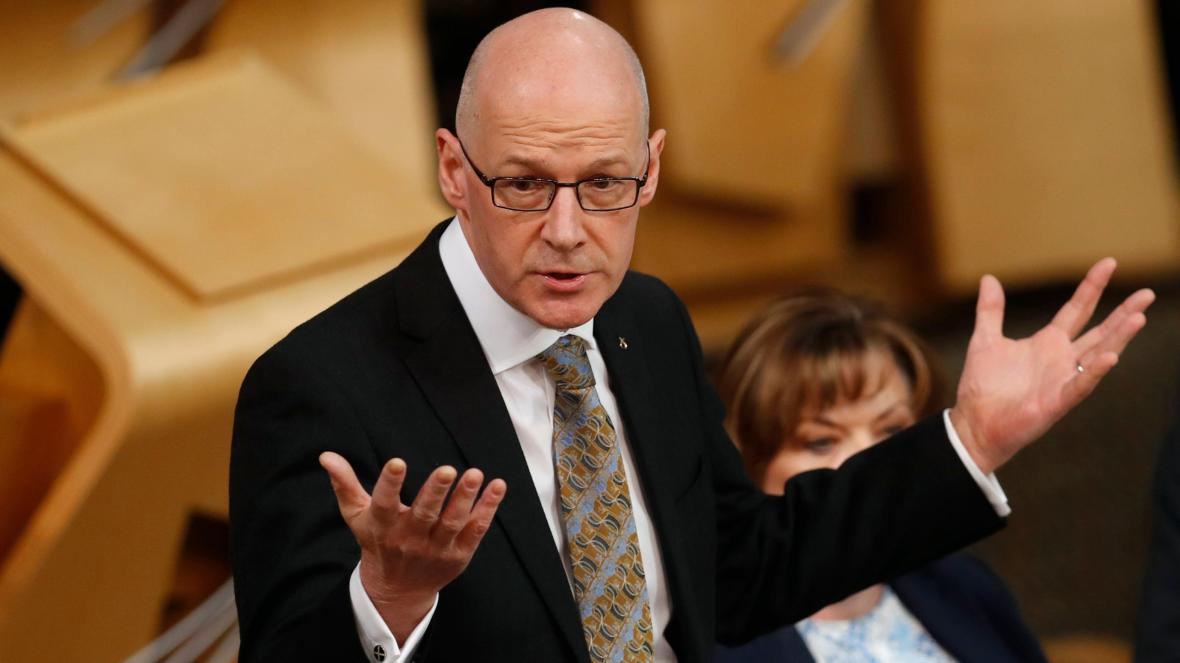
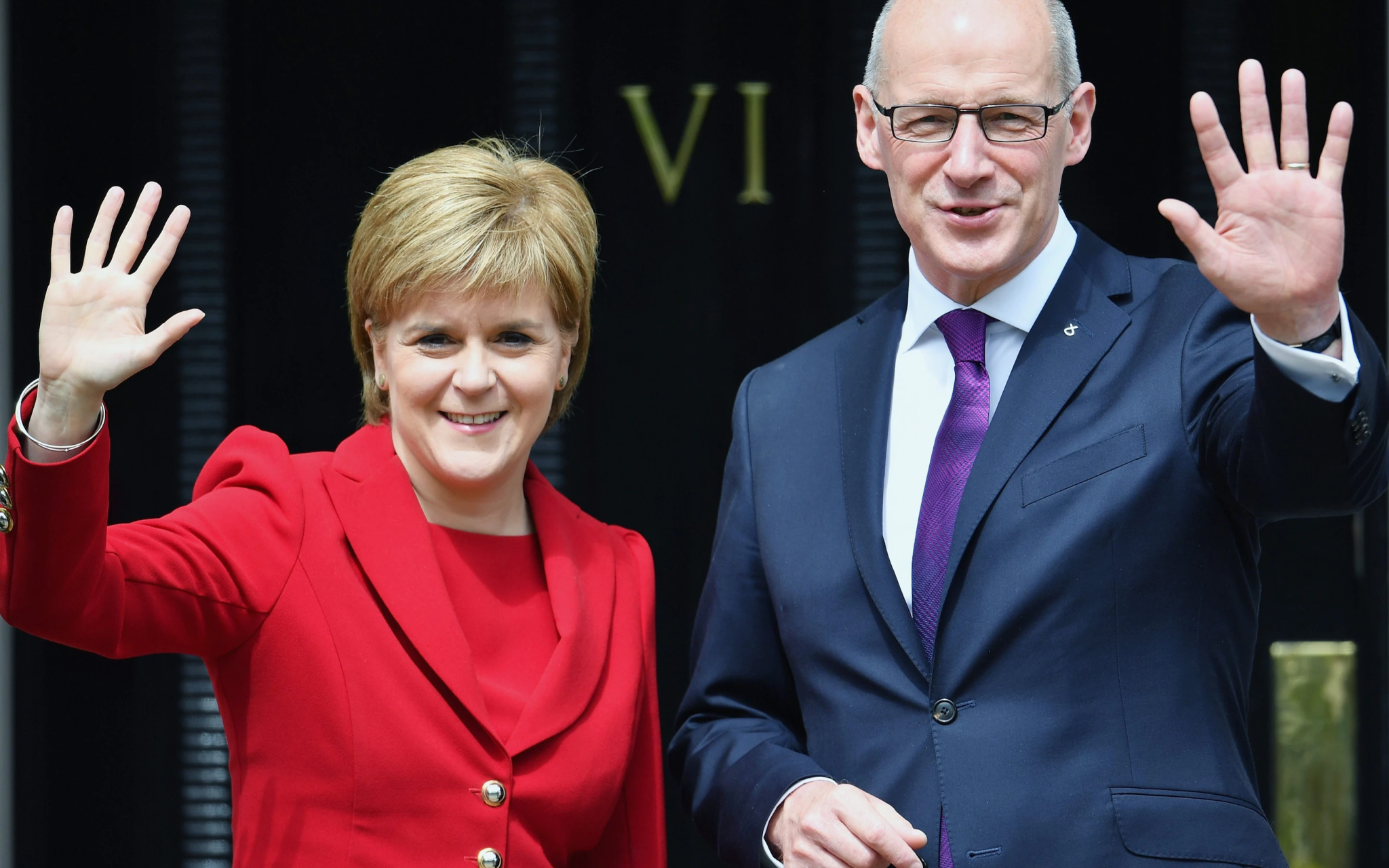
A blogger: “GaynotQueer” is outraged at the conduct of the WOKE anarchists and has posted graphical examples of the “PRIDE” agenda being imposed on children through school curriculums without parents knowledge or consent. So Swinney bypassed the Supreme Court and exposed Scottish children to the full assault of the Stonewall directed WOKE agenda.
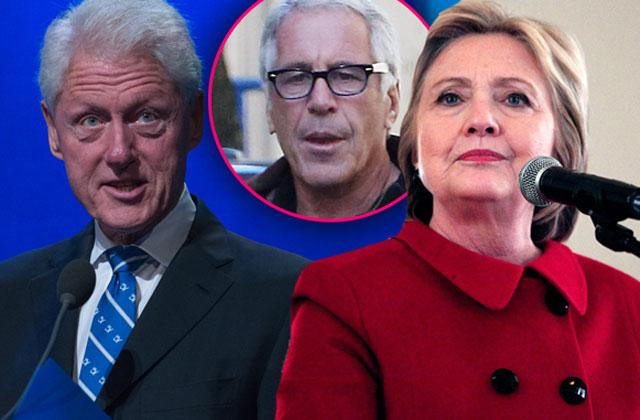
Records revealed that Epstein had donated US$10K to the White House Historical Association and attended a Clinton donor reception alongside Ghislaine Maxwell as early as 1993.
Clinton’s long-time friend from his college days, A. Paul Prosperi, was the facilitator of that early relationship, as Prosperi had a decades-long relationship with Epstein and visited Epstein at least 20 times while he was in jail in 2008.
Prosperi was intimately involved with the above noted 1993 fundraiser for the White House Historical Association.
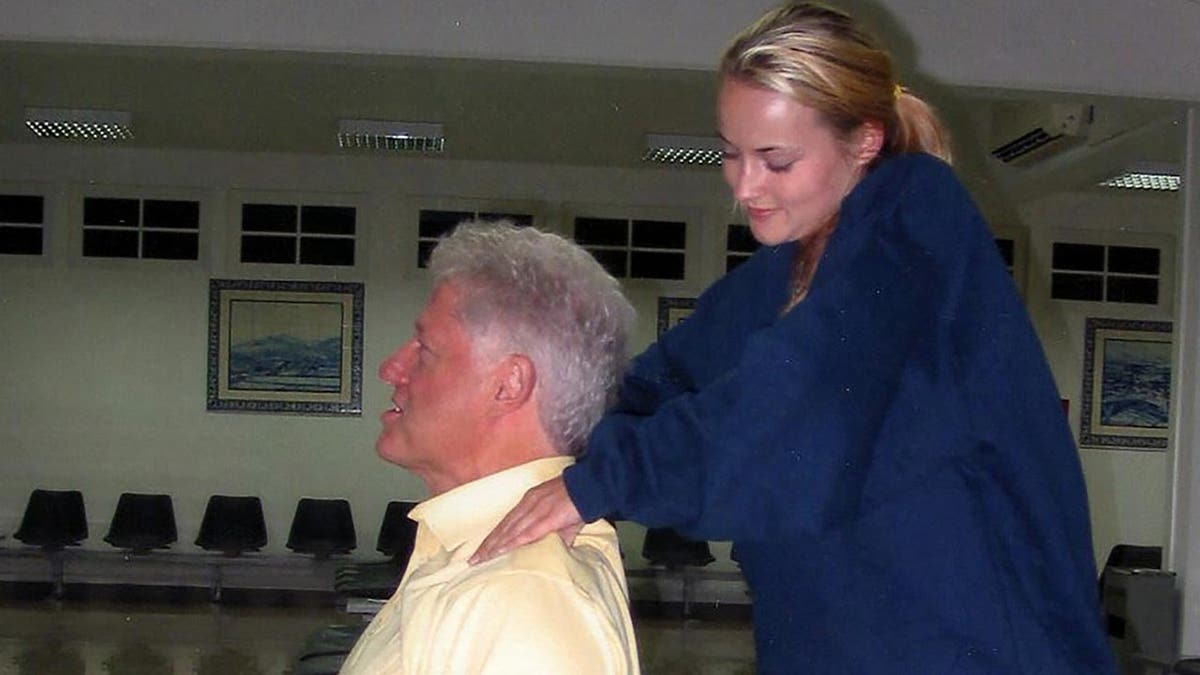
The relationship between Epstein and Clinton continued well after Clinton left office in 2001, a fact well-documented by Clinton’s now-infamous 26 flights on Epstein’s private “Lolita Express,”jet .
Arguably the most infamous flight taken by Clinton on Epstein’s jet was a lengthy trip to Africa, where actor Kevin Spacey, accused of raping minors; Ghislaine Maxwell; and Ron Burkle, a billionaire friend of Clinton’s accused of soliciting the services of “super-high-end call girls,” were also present.
Clinton specifically requested that Epstein make his jet available for the trip well in advance, with Doug Band as the intermediary.
In addition to flights, an Epstein-run foundation gave US$25K to the Clinton Foundation according to the 2006 filing tax return of Epstein’s former charity, the C.O.U.Q. Foundation.
Notably, Epstein’s lawyers, Alan Dershowitz among them, claimed in 2007 that Epstein had been “part of the original group that conceived the Clinton Global Initiative, which is described as a project ‘bringing together a community of global leaders to devise and implement innovative solutions to some of the world’s most pressing challenges.’”
Before the associations between Epstein and the Clinton White House in the early 1990s were made public, Ghislaine Maxwell was thought to have been the bridge between Epstein and the Clinton family because of her close relationship to the family.
However, the close relationship between Maxwell and the Clintons appears to have developed in the 2000s, with Politico reporting that it began after Bill Clinton left office.
Clinton associate Doug Band was also reportedly friendly to Maxwell, appearing at an exclusive dinner party she hosted at her residence in New York in 2005.
Maxwell later became particularly close to Chelsea Clinton, vacationing with Chelsea in 2009 and attending her wedding a year later. Maxwell was also associated with the Clinton Global Initiative at least up until 2013.
Other close Clinton associates and officials in the early 1990s also had notable relationships with Jeffrey Epstein, including Mark Middleton, who was a special assistant to Clinton Chief of Staff Mack McClarty beginning in 1993, and met with Epstein on at least three occasions in the White House during the early Clinton years.
In addition, White House social secretary under Clinton, Ann Stock, appears in Epstein’s “little black book” as does Doug Band, once referred to by New York Magazine as “Bill Clinton’s bag carrier, body man, fixer, and all-purpose gatekeeper.” Band also appears several times in the flight logs of Epstein’s private jet.
Epstein was also associated with both Bill Richardson, former ambassador to the UN and former secretary of energy under Clinton, and Larry Summers, secretary of the treasury under Clinton.
Both Richardson and Summers sit on the advisory board of controversial energy company Genie Energy, alongside CIA director under Clinton, James Woolsey; Roy Cohn associate and media mogul, Rupert Murdoch; Mega Group member Michael Steinhardt; and Lord Jacob Rothschild.
Genie Energy is controversial primarily for its exclusive rights to drill in the Israeli-occupied Golan Heights.
Bill Richardson also has ties to Lynn Forester de Rothschild as she was on the Secretary of Energy’s Advisory Board while Richardson was secretary of energy.
Bill Richardson appears to be among the Clinton era officials closest to Jeffrey Epstein, having personally visited Epstein’s New Mexico ranch and been the recipient of Epstein donations of US$50K to his 2002 and 2006 gubernatorial campaigns.
Richardson later gave Epstein’s donation in 2006 to charity after allegations against Epstein were made public.
Richardson was also accused in recently released court documents of engaging in sex with Epstein’s underage victims, an allegation that he has denied.
Matthew Bronfman and Lynn Forester De Rothschild jointly purchased a wealth management company in 2013 named it “Bronfman/Rothschild”, and managed an investment portfolio totalling around US $ 1,200 Billion.
Clinton’s and Bronfman families were more than just friends
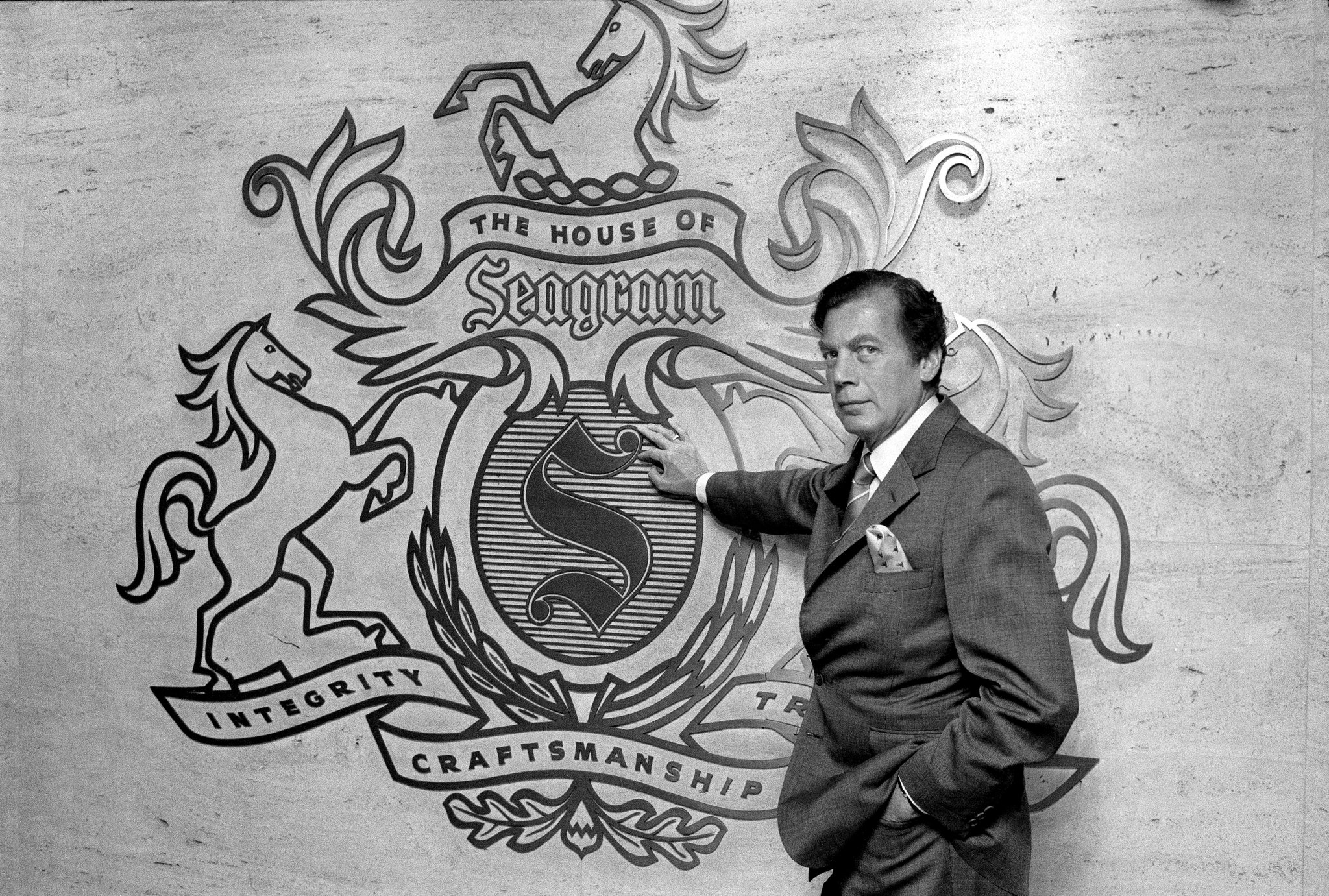
President Clinton sat next to Bronfman at his 75th birthday celebration at Seagram Company headquarters in New York City in 2004.
In 1999 President Clinton awarded Bronfman the Presidential Medal of Freedom. The highest honor that can be given to a civilian in the U.S.
In 2014 Hillary Clinton spoke at Bronfmans memorial where she revealed they had been long time friends and that Bronfman had a pretty good channel to the White House.
One major player who has been largely overlooked in bringing Epstein and the Clintons together is Lynn Forester de Rothschild.
Notably, Forester de Rothschild has long been connected to neoconservative Reagan era officials — the Lewis Rosenstiel/Roy Cohn network, as well as the Mega Group.
Lynn Forester de Rothschild became involved in the world of Democratic Party politics in the late 1970s when she worked on the 1976 campaign of hawkish Senator Daniel Patrick Moynihan (D-NY) alongside now-notorious neoconservatives like Elliott Abrams, who would go on to play an important role in the Iran-Contra affair during the Reagan era and later serve in the State Department under Trump.
She was also introduced to her second husband, Evelyn de Rothschild, by Henry Kissinger at a Bilderberg conference.
Several of the individuals connected to the Mega Group and the Mossad-linked media mogul Robert Maxwell — including Mark Palmer, Max Fisher and John Lehman — were one-time aides or advisers to Henry Kissinger.
Before marrying into the Rothschild family in 2000, Lynn had previously been married to Andrew Stein, a major figure in New York Democratic politics, with whom she had two sons.
Andrew’s brother, James Finkelstein, married Cathy Frank, the granddaughter of Lewis Rosenstiel, the mob-linked businessman who ran a sexual blackmail operation exploiting underage boys.
Rosenstiel’s protege Roy Cohn was the lawyer for Cathy Frank and James Finkelstein and it was at their behest that Cohn attempted to trick a nearly comatose Rosenstiel to into naming Cohn, Frank and Finkelstein the executors and trustees of his estate, valued at US$75m (more than US$334m in today’s dollars).
According to the New Yorker, Lynn Forester de Rothschild requested “financial help” from none other than Jeffrey Epstein in 1993 during her divorce from Andrew Stein.
As far as Forester de Rothschild’s ties to the Mega Group go, she is currently on the board of directors of Estee Lauder companies, which was founded and are still owned by the family of Ronald Lauder — a member of the Mega Group, a former Reagan official, a family friend of Roy Cohn, and the alleged source of Jeffrey Epstein’s now-infamous Austrian passport.
In addition, Forester de Rothschild also partnered with Matthew Bronfman — son of Mega Group member Edgar Bronfman and grandson of Samuel Bronfman, who had close ties to Meyer Lansky — in creating the investment advisory firm Bronfman E.L. Rothschild LP.
It is unclear when Lynn Forester de Rothschild first met Jeffrey Epstein, but she was one of his leading advocates and had the ear of then-President Bill Clinton in the early 1990s, speaking to Clinton specifically about Epstein during her “fifteen seconds of access” with the president and also introducing Epstein to lawyer Alan Dershowitz in 1996.
Forester de Rothschild is a long-time associate of the Clintons and has been a major donor to both Bill and Hillary Clinton since 1992. Their ties were so close that Forester de Rothschild spent the first night of her honeymoon at the Lincoln Bedroom in the White House while Clinton was president.
A leaked email between Forester de Rothschild and Hillary Clinton saw Clinton request “penance” from Forester de Rothschild for asking Tony Blair to accompany Clinton on official business while she was secretary of state, preventing Blair from making a planned social visit to Forester de Rothschild’s home in Aspen, Colorado.
Humbly requesting forgiveness is not something Hillary Clinton is known for, given that her former bodyguard once said she could “make Richard Nixon look like Mahatma Gandhi.”
In 1995, Forester de Rothschild, then a member of Clinton’s National Information Infrastructure Advisory Council, wrote the following to then-President Clinton:
Dear Mr. President: It was a pleasure to see you recently at Senator Kennedy’s house. There was too much to discuss and too little time. Using my fifteen seconds of access to discuss Jeffrey Epstein and currency stabilization, I neglected to talk to you about a topic near and dear to my heart. Namely, affirmative action and the future.”
Forester de Rothschild then states that she had been asked to prepare a memo on behalf of George Stephanopoulos, former Clinton communications director and currently a broadcast journalist with ABC News. Stephanopoulos attended a dinner party hosted by Epstein at his now infamous Manhattan townhouse in 2010 after Epstein’s release from prison for soliciting sex from a minor.
While it is unknown what Forester de Rothschild discussed with Clinton regarding Epstein and currency stabilization, a potential lead may lie in the links of both Forester de Rothschild and Epstein to Deutsche Bank. Journalist Vicky Ward reported in 2003 that Epstein boasted of “skill at playing the currency markets ‘with very large sums of money’” and he appears to have done much of this through his long-standing relationship with Deutsche Bank.
The New York Times reported last month:
[Epstein] appears to have been doing business and trading currencies through Deutsche Bank until just a few months ago, according to two people familiar with his business activities. But as the possibility of federal charges loomed, the bank ended its client relationship with Mr. Epstein. It is not clear what the value of those accounts was at the time they were closed.”
In the case of Forester de Rothschild, she served as an advisor to the Deutsche Bank Microfinance Consortium for several years and is currently a board member of the Alfred Herrhausen Society of International Dialogue of Deutsche Bank.
The same year that Forester de Rothschild made the above-noted comments to Bill Clinton about Jeffrey Epstein, Epstein attended another Clinton fundraiser, hosted by Ron Perelman at his personal home, that was very exclusive, as the guest list included only 14 people.
President Clinton and Edgar Bronfman, regularly communicated through email becoming friends after meeting in the late 1990s when Clinton was being presented with the Nahum Goldmann Award from the World Jewish Congress, (Bronfman was the Congress leader) after getting Swiss banks to pay billions of dollars in restitution to relatives of Holocaust victims.
Bronfman, was a financial supporter of Hillary Clinton’s candidacies, including her unsuccessful 2008 presidential campaign.
illegal campaign contributions
The Bronfman sisters Clare and Sara were Hillary’s campaign donors and members of the Clinton Global Initiative.
Clare Bronfman tried to buy influence for the cult by illegally raising money for Hillary Clinton’s 2008 presidential campaign by funnelling thousands of dollars into Clinton’s coffers exceding the legal limits to contributions to “curry favor” with the powerhouse political family.
She approached people and said she would like to make a campaign contribution but she couldn’t make it above a certain amount. A number of those she solicited contributed up to US$3k directly to the campaign (around US$30k in total). She reimbursed them.
In 1963, in Dallas, a Jewish alcohol wholesaler, Julius Schepps, held the distribution rights for the Bronfman family’s Seagram’s products.
Jack Ruby was on the payroll of the Bronfman family, whose fingerprints are to be found all over the JFK assassination conspiracy.
JFK’s Dallas trip was officially designated as “non political” in contrast to other Texas stops such as Houston and Austin which were designated “political”.
This provided the opportunity for the private entities paying for the Dallas trip to gain control of the agenda, taking it out of the hands of the JFK-controlled Democratic National Committee.
A “host committee” was established, the chairman of which was Dallas Jewish leader and public relations man, Sam Bloom.
There was an immediate confrontation between Bloom and Jerry Bruno, JFK’s veteran advance man. Bruno wanted the president to speak at the Women’s Building, but the committee insisted JFK speak at the Trade Mart.
Applying pressure the committee gained control. Bruno commented later: “this was one of the few fights like this that I had lost. On things like this my judgment was usually taken. This time it wasn’t.”
In forcing JFK to speak at the Trade Mart, the committee had positioned the JFK motorcade to take the now-infamous “dog-leg” turn into what was a classically sniper friendly “kill zone” on Elm Street just below the Texas School Book Depository (T.S.B.D), from where it later was claimed the alleged assassin, T.S.B.D employee Lee Harvey Oswald, fired the fatal shots.
The spot was also in easy range of the “grassy knoll” and the nearby Dal-Tex Building, where assassination researchers believe snipers were located.
Had JFK’s security team prevailed, JFK (on his way to the preferred location) would have travelled two blocks farther away from the T.S.B.D out of the kill zone at a greater speed.
The Secret Service also objected (for security reasons) to the publication of JFK’s motorcade route, but Bloom ensured a map of the route was published in the Dallas newspapers providing a plausible explanation as to how Lee Harvey Oswald knew JFK would pass by his workplace.
That an assassin most likely fired at JFK from the Dal-Tex Building is most relevant in the context of an Israeli connection since JFK was trying to stop Israel’s nuclear arms program, which had smuggled uranium from U.S. sources.
Co-owned by David Weisblat, a major financial backer of the Israeli lobby’s Anti-Defamation League, Dal-Tex housed, on different floors, a number of firms that utilized the telephone number of Morty Freedman, an attorney, garment manufacturer, and activist in Jewish affairs.
One of the Dal-Tex firms linked to Freedman was the Dallas Uranium & Oil Company. This is relevant since one of Freedman’s Dal-Tex business partners was Abe Zapruder, the Jewish dress manufacturer who filmed the assassination and profited immensely. It is conjectured that Zapruder had advance knowledge of the assassination.
Once Oswald was in custody, it was Sam Bloom, who pressured Elgin Crull, the city manager, to apply pressure on Dallas Police Chief Jesse Curry into making Oswald accessible to the press and to move him publicly from the Dallas police station to the city jail providing the opportunity for Jack Ruby to assasinate Oswald.
A number of sources, including Dallas FBI agent James Hosty, stated that Bloom and his backers were the forces behind the incident and when the police searched Ruby’s home, they found a slip of paper with Bloom’s name, address and telephone number on it.
Events in Dallas will be difficult to accept by those who believed the city to be an anti-Jewish stronghold when in reality it was was an outpost for the advancement of the interests of Israel and seekers of the truth should be guided by the “Final Judgement”.
Edgar Bronfman, the president of the World Jewish Congress, the honorary vice chairman of the Anti-Defamation League and the chairman of th ADL’s key fundraising arm, the Northeast Appeal, was a major beneficiary of the Skadden Arps law firm’s expertise in corporate takeovers.
In the mid-1980s, Irving Hapiro, the chairman of the board of the DuPont Company, one of America’s oldest and largest industrial concerns, retired from his corporate post to become a partner in Skadden Arps.
Shortly after his arrival at the law firm, Edgar Bronfman’s Seagrams Corporation began buying up stock in the DuPont Company, eventually taking over a controlling interest.
Shapiro, who worked closely with Bronfman during his tenure as president of the Business Roundtable, was reportedly a key inside player in the Bronfman takeover of DuPont.
After his move from DuPont to Skadden Arps, Irving Shapiro helped recruit his son Isaac to the firm. Isaac brought with him the lion’s share of Japanese real estate investors in the United States, who had been his clients at his previous firm, the blueblood-run Milbank, Hadley, Tweed and McCoy.
Armed with a string of prestigious titles as a leading Zionist philanthropist and corporate billionaire, Edgar Bronfman launched a systematic effort in the mid-1980s to implement Meyer Lansky’s second dream the syndicate takeover of Israel.
If there was a single official of the ADL equipped to convince the Soviet government to open the floodgates of Jewish emigration and to ensure that the Russian Jews landed in Israel, it was Edgar Bronfman.
Through his Seagrams distributorships, Edgar and his brother Charles had cultivated a cozy relationship with some of the most powerful and brutal figures in the Communist world, beginning with East German Communist Party chief Erich Honecker.
Through the West German branch of Seagrams, the Bronfmans had arranged to supply the East German Communist Party with unlimited quantities of Seagrams alcohol, which was provided free of charge to the most senior ranking members of the party.
By 1986, a Bronfman emmisary in East Berlin had established close ties with the East German minister of religious affairs and Gregor Gysi the father of Honnecker’s successor as head of the the Communist Party (SED). The Gysis are Jewish.
In 1988, Edgar Bronfman travelled to East Berlin to meet with Honecker and East German Communist Party official Herman Axen. During the visit, Bronfman pledged to arrange a state visit for Honecker to Washington, D.C.
A year later, on the eve of Honecker’s ousting and the overthrow of the communist dictatorship in East Germany, Bronfman received the highest civilian award given by the state, the “Peoples Friendship Medal in Gold.”
Even as the Berlin Wall was on the verge of collapsing, Bronfman began an ambitious diplomatic drive on Moscow, paralleling his successful courting of the East Germans.
On Jan. 23, 1989, according to a report published by syndicated columnists Evans and Novak, Edgar Bronfman held a secret meeting at his New York City penthouse to plan out the Soviet Jewish exodus.
In attendance at the session was Dwayne Andreas, the chainnan of the grain cartel Archer Daniels Midland (ADM), who was identified in the Wall Street Journal as Gorbachov’s “closest pal ” in the West.
Bronfman’s plan was simple: in return for assurances that the United States would supply urgently needed grain shipments to the Soviet Union, Moscow would allow Soviet Jews to move to Israel.
To assure that the Soviet Jews who arrived in the West would have no alternative other than immediate migration to Israel, Bronfman’s World Jewish Congress had already launched a vicious slander campaign against Austrian President Kurt Waldheim, branding him as a wartime Nazi collaborator who had participated in the extermination of the Jews of Eastern Europe.
Bronfman campaign was aided by forged documents allegedly provided by the Soviet KGB and other Soviet bloc secret police agencies.
The scandal led to a serious rift in American-Austrian relations. As a result, Austria, which had previously been the major transit point for Soviet Jews fleeing to the West, was shut off to Soviet Jewish emigres. Alternative routes were established through Hungary and Poland-with the caveat that the Soviet Jews would only be allowed to emigrate to Israel.
Evans and Novak denounced the Bronfman scheme as a cynical effort to trade “Jews for rain.” The harsh words did not bother Bronfman in the least. As the heir to the “Bronfman Gang, ” his family had been called worse. Besides, the ADL man realized that he was personally repaying a longstanding family debt to Meyer Lansky-and was fulfilling the second grand dream of the crime czar: the takeover of Israel.
Even while the Bronfman family maintained a steady march toward respectability, some members of the family could not wholly abandon the old syndicate ties.
In 1972, the Montreal Crime Commission issued a report identifying Edgar Bronfman’s nephew Mitchell Bronfman as a crime partner of Willie Obront, one of Montreal’s leading gangsters, .
According to the report, Mitchell Bronfman’s link to Obront “extends into illegal activities in which they mutually or jointly indulged The special kinds of favours they did for each other and the resulting advantages of each in the fields of loan sharking, gambling, illegal betting, securities, tax evasion and corruption.”
In the mid-1970s, Obront and another Mitchell Bronfman crony, Sam Rosen, were both jailed for drug-money laundering.
One joint venture of Obront and Bronfman, the North Miami nightclub Pagoda North was identified by American law enforcement authorities as a syndicate hangout frequented by Vito Genovese, the New ‘York City mafia boss.
During 1963, President John F. Kennedy was preoccupied with issues such as Vietnam, the nuclear test ban negotiations, civil rights protests, and Cuba. It is less well known, however, that one of his most abiding concerns was whether and how fast Israel was seeking a nuclear weapons capability and what the U.S. should do about it. Beginning in April 1963, Kennedy insisted that the Israeli leadership accept regular bi-annual U.S. inspections, or in diplomatic language, “visits,” of Israel’s nuclear complex at Dimona in the Negev Desert. Prime Minister David Ben-Gurion and his successor, Levi Eshkol, tried to evade and avoid inspections, but Kennedy applied unprecedented pressure, informing them bluntly, in a near ultimatum tone, that Washington’s “commitment to and support of Israel “could be “seriously jeopardized” if it was thought that the U.S. government could not obtain “reliable information” on the Dimona reactor and Israel’s nuclear intentions.
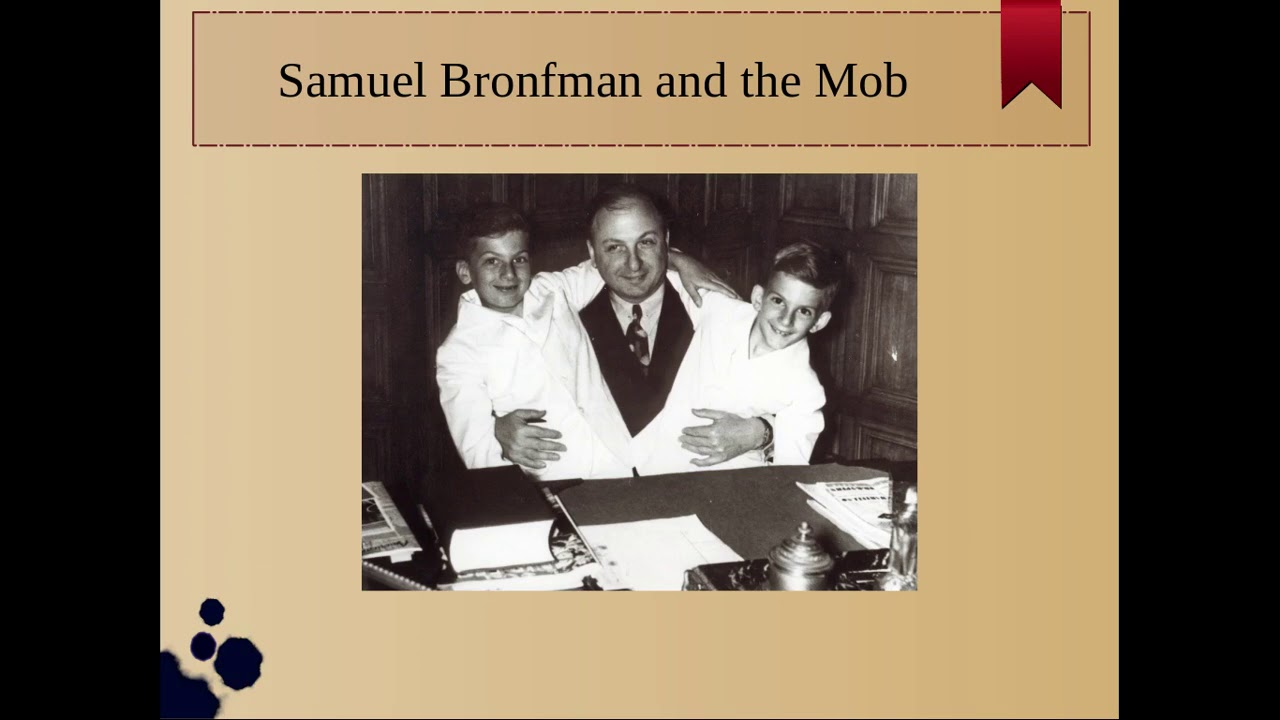
A significant fact pointing to Israeli involvement in President Kennedy’s assassination was Samuel Bronfman’s mysterious oil investments.
In 1963, the former bootlegger embarked on an unfamiliar business venture by aggressively purchasing the huge oil holdings of “Ranger Oil” and “Texas Pacific Oil” and its subsidiaries in India, Malaysia, Guatemala, Indonesia, and Italy. plus.
When John F. Kennedy became President in 1961, the oil industry felt secure. But he soon began an assault on the power of the oil giants directly, introducing the Kennedy Act, and shortly after the “oil depletion allowance.”
The Kennedy Act, passed on October 16, 1962, removed the distinction between repatriated profits and profits reinvested abroad. Both were now subject to US taxation. The measure also was aimed at preventing taxable income from being hidden away in foreign subsidiaries and other tax havens. While this law applied to industry as a whole, it particularly affected the oil companies, which were greatly diversified with large overseas operations.
By the end of 1962, oilmen estimated their earnings on foreign investment capital would fall to 15 percent, compared with 30 percent in 1955.
One of the most sacred of provisions in the eyes of oilmen was the oil depletion allowance, which permitted oil producers to treat up to 27.5 percent of their income as tax exempt. In theory this was to compensate for the depletion of fixed oil reserves but, in effect, it gave the oil industry a lower tax rate. Under this allowance, an oilman with a good deal of venture capital could become rich with virtually no risk. For example, a speculator could drill ten wells. If nine were dry holes and only the tenth struck oil, he would still make money because of tax breaks and the depletion allowance.
It was estimated that oilmen might lose nearly $300 million a year if the depletion allowance was diminished.
Attempts to eliminate or reduce the depletion allowance were rebuffed year after year by congressmen, many of whom were happy recipients of oil-industry contributions.
Speaking of his tax reform act of 1963, President Kennedy pointed the finger at the oil companies, saying: “… no one industry should be permitted to obtain an undue tax advantage over all others.”
Included in Kennedy’s tax package were provisions for closing a number of corporate tax loopholes, including the depletion allowance. Needless to say, oilmen both in Texas and elsewhere felt threatened by Kennedy and his policies.
By 1975, Texas Pacific had paid off its debt, while in the process its oil and gas reserves expanded phenomenally. A handsome legacy to Seagram, bought with only US$50M in borrowed cash, it was sold in 1980 to the Sun Oil Company for a grand total of US$2.3B.
In 1934, Samuel Bronfman was made president of the National Jewish Peoples Relief Committee of Canada.
In 1939, he was named director of the Jewish Colonization Committee, formerly the Baron de Hirsch Fund (the same agency that had paid his father’s way to Canada exactly fifty years earlier).
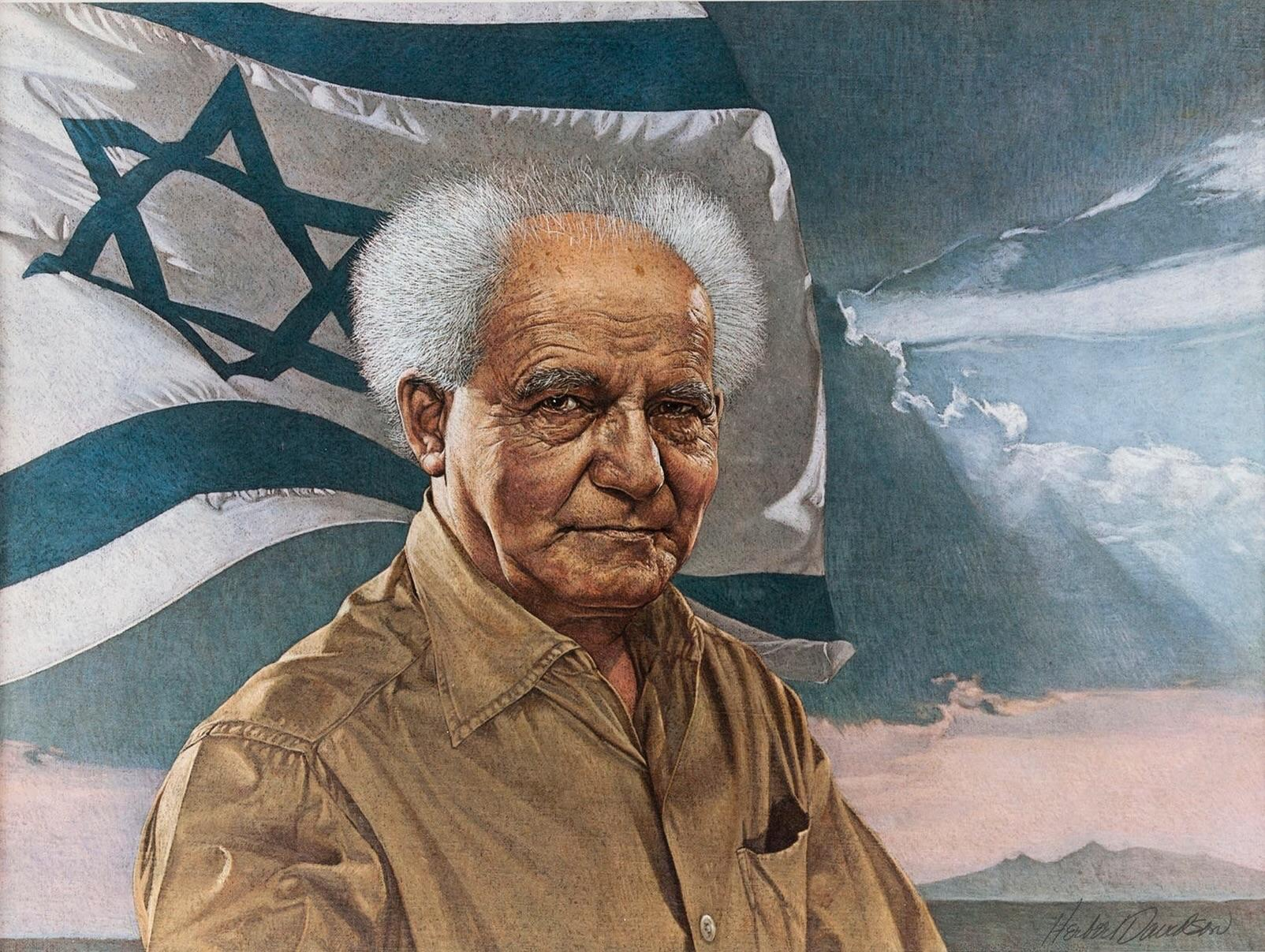
Links to David Ben-Gurian and the Haganah (Israeli Defence Force)
At the close of World WWII, Samuel Bronfman established the National Conference of Israeli and Jewish Rehabilitation. Despite the fancy name, the organization was principally involved in smuggling military equipment to the Haganah Jewish underground in Palestine.
In the spring of 1947, David Ben-Gurion took it upon himself to direct the general policy of the Haganah, in preparation for the impending Arab attack. On May 26, 1948, the Provisional Government of Israel decided to transform the Haganah into the regular army of the State, to be called “Zeva Haganah Le-Yisrael” the Israel Defense Forces (IDF).
On May 31, 1948, as part of the order of the day establishing the IDF, David Ben-Gurion said: “With the establishment of the State of Israel, the Haganah emerged from the underground to become a regular army. Both the yishuv and the Jewish people are greatly indebted to the Haganah for its contribution during the various phases of its existence and development….In the chronicles of the people of Israel, the saga of the Haganah will shine with splendor and majesty that eternally will never dim.”
By this time, the Bronfman sons had transformed their bootleg fortune into a “legitimate” business-Seagrams Distillers of Canada.
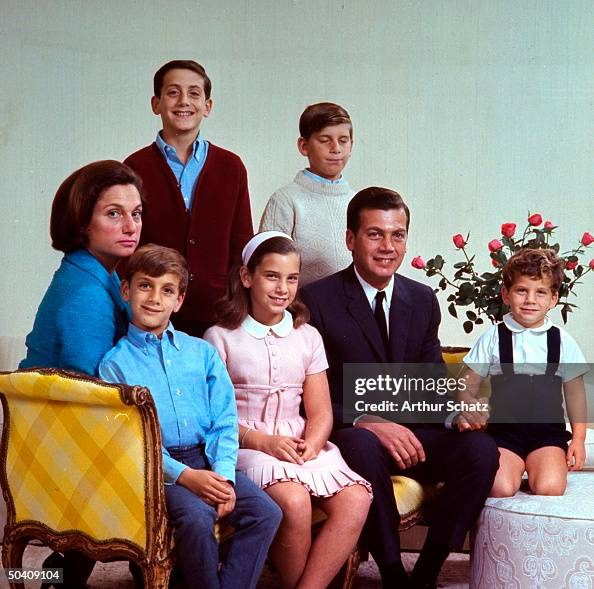
In the next generation, the family would move, by marriage, into the very center of the Zionist Establishment of North America.
Edgar Bronfman married Ann Loeb, thereby becoming attached to the Loeb Rhodes interests of Wall Street.
Phyllis Bronfman married Jean Lambert, and suddenly the Bronfman’s were in the extended Rothschild family. Baron Lambert was part of the Belgian branch of the Rothschild clan. The New York investment house of Drexel Burnham Lambert, which had a pivotal role in Kenneth Bialkin’s later corporate takeover schemes, was drawn into the Bronfman’s orbit.