In December 2017 the Scottish Government adopted a new procedure entitled “Handling of harassment complaints involving current or former ministers” (subsequently referred to in this report as the Procedure) which is described as an “internal procedure agreed in December 2017 and published in February 2018 on the Scottish Government intranet”.
Mr Geoffrey Aberdein, former Chief of Staff to Mr Salmond, met Liz Lloyd on or about 5 March 2018. He said that she informed him that two complaints had been made against Mr Salmond and named one of the complainers. She disputes this. Where and why?
Having discussed the matter with other persons Mr Aberdein decided to inform Alec Salmond of what he had been told and did so by telephone later that week. By that time Mr Salmond had already received the letter of 7 March 2018 informing him that complaints had been made.
Afternote. The duties and responsibilities of Sturgeon’s Chief of Staff are very clearly explained in her terms of employment. She is not a civil servant but is expected to adhere to the Civil Service Code of Conduct. She is not permitted to freelance and cannot fart without the authority of the First Minister. That being the case her meeting and agenda for discussion with Aberdein would be previously agreed with Sturgeon’s authority.
Did Hamilton gather the aforementioned very relevant information?
CCDH’s funding comes from 17 funders, many operating through Donor-Advised Funds (DAFs), such as Prism the Gift Fund, which obscures donor identities.
Key funders include Paul Hamlyn Foundation, Esmee Fairbairn Foundation, and Schwab Charitable Fund alongside seven anonymous contributors through Prism.
The UK Foreign Office played a key role advising the Biden-Harris administration on censorship strategies, marking a global push to curtail free speech under the guise of fighting hate.
In an alarming push against free speech, the Center for Countering Digital Hate (CCDH) appears to have received significant funding from a network of 17 dark money organizations, many of which operate through Donor-Advised Funds (DAFs).
These financial mechanisms allow donors to contribute anonymously, shielding their identities and intentions while enabling CCDH’s aggressive push to target Elon Musk’s X platform and shape public discourse.
CCDH lists its funding structure on its website, noting: “Center for Countering Digital Hate (UK) Charitable Fund is a restricted fund operating under the auspices of Prism the Gift Fund, Registered Charity Number: 1099682.”
This fund facilitates anonymous contributions from a range of sources, many of which are difficult to trace. CCDH openly solicits the public for DAFs on its website at:
Through Prism the Gift Fund, seven additional UK-based funders contribute anonymously to CCDH:
STP Ecclestone Foundation: A private family foundation associated with the Ecclestone family, focusing on various philanthropic initiatives.
The Genie Trust: A charitable trust with limited public disclosure, primarily engaged in undisclosed philanthropic activities.
Kohn Foundation: Supports scientific research, educational programs, and various cultural projects.
Edith and Ferdinand Porjes Charitable Trust: Focuses on humanitarian causes, particularly in supporting vulnerable communities.
The Harbour Charitable Trust: Provides grants for healthcare, education, and social welfare projects.
The Vail Foundation: Primarily funds environmental conservation and community development initiatives.
The David Goldman Foundation: Focuses on supporting arts, education, and cultural initiatives.
These funds, obscured by Prism’s DAF structure, can earmark donations for specific campaigns like targeting Musk’s platform or influencing U.S. policies regarding free speech.
The Primary 10 Funders of CCDH
These 10 organizations are integral to the Center for Countering Digital Hate’s operations.
Paul Hamlyn Foundation: Amount: £100,000 (2021) Purpose: Supporting CCDH’s digital growth and expanding its reach.
Esmee Fairbairn Foundation: Amount: £213,333 (2021-2023) Purpose: Core costs and digital strategy.
Joseph Rowntree Reform Trust: Amount: £53,400 (2020) Purpose: Whistleblower portal for social media.
Oak Foundation: Amount: $100,000 (2020) Purpose: Combatting digital misinformation on climate change and social justice.
Barrow Cadbury Trust: Amount: Undisclosed. Purpose: Social justice initiatives.
Laura Kinsella Foundation: Amount: Undisclosed. Purpose: Mental health and inclusion projects.
Pears Foundation: Amount: £150,000 (2019-2022). Purpose: Supporting anti-Semitism initiatives and social equality.
Hopewell Foundation: Amount: $15,000 (2021) Purpose: Progressive social causes.
Unbound Philanthropy: Amount: Undisclosed. Purpose: Advocacy for immigration and social justice.
The involvement of UK-based charities, such as those funded through Prism the Gift Fund, raises significant concerns about undue influence in U.S. affairs.
These organizations, while operating under the banner of philanthropy, are funneling dark money into the Center for Countering Digital Hate (CCDH), which has launched targeted campaigns against free speech platforms like Elon Musk’s X.
The anonymity provided by Donor-Advised Funds (DAFs) allows these donors to shape U.S. discourse, potentially undermining constitutional freedoms and influencing domestic policies without transparency or accountability.
Indeed, the Trump campaign filed an offiicial complaint with the FEC against the British government on Oct. 21st due to their clear interference in US elections.
According to CDC internal documents obtained by America First Legal, the UK Foreign Office was instrumental in providing the Biden-Harris administration with a masterclass in censorship in August 2021. This meeting, involving 20 bilateral organizations and 5-Eyes nations, was part of a broader international effort to curb free speech under the guise of regulating online hate.
This global effort utilizes organizations like CCDH to enforce speech restrictions, making platforms like X primary targets for deplatforming.
The 17 funders behind CCDH form a dark money network that collaborates with international governments to suppress dissent and influence public discourse.
Global Influence and Erosion of U.S. Civil Liberties
By using Prism’s DAF system, foreign donors and U.S. contributors alike can shape domestic policy in the U.S., undermining constitutional rights to free speech. This funding model enables donors to remain anonymous while wielding influence over legislation and digital platforms. As Elon Musk seeks to protect freedom of expression on X, CCDH’s funders are pushing to discredit and de-platform him.
Conclusion: A Call for Transparency
The dark money network backing CCDH is part of a coordinated effort to silence free speech under the guise of combating disinformation. The use of DAFs and international coordination allows funders to avoid accountability while influencing U.S. policy. To safeguard civil liberties, the public must demand transparency from organizations like CCDH and their financial backers.
References
“9 Dark Money Sources Funding CCDH: A Foreign ‘Digital Hate’ Group Which Used the White House to Quash Free Speech” Published on: July 31, 2023
“killing” the X platform under Elon Musk was the top agenda item and included reference to a “meeting with 16 congressional officers … to give updates on an Elon lawsuit” which accused the CCDH organization of manipulating data to claim that X hosted hate speech.
Tactics discussed included CCDH’s possible contact with Thierry Breton, then-European commissioner for internal market and services. The French politician and former business executive had singled out Musk for attack during his time as a senior official with the EU in Brussels.
Breton had reiterated in a letter in 2022 that Musk had a “legal obligation” to censor “harmful content” on X. and would need to operate within the EU rules.
CCDH’s founder is British political operative Morgan McSweeney, chief of staff to British Prime Minister Keir Starmer and an advisor to the presidential campaign of Vice President Kamala Harris.
CCDH also maintains ties to key Democrats, including U.S. Sen. Amy Klobuchar (D-MN) who has introduced multiple bills to regulate online “misinformation.”
“The CCDH documents carry particular importance because McSweeney’s “Labour Together” political operatives have been teaching election strategy to Harris and [Minnesota Gov.] Tim Walz, leading to a general acceptance that Labour and the Democrats are now formally “sister parties.”
Eon Musk Battles Back Against the Imposition of Regulatory Restrictions Constricting Freedom of Expression on the Internet Required by the UK and EU Through the all Embracing Digital Services Act
The European Union is poised to impose a fine exceeding $1 billion on Elon Musk’s social media platform, X, for alleged violations of the Digital Services Act (DSA), marking a significant escalation in EU’s digital regulation efforts.
X is accused of refusing to share data with external researchers, lacking transparency about advertisers and verified accounts, and adopting a lax approach to content moderation, which the EU argues makes the platform susceptible to abuse and foreign interference.
The core of the dispute lies in X’s commitment to free speech and minimal moderation, clashing with the EU’s stringent regulatory approach that emphasizes centralized moderation and data transparency.
Elon Musk has vowed to fight the EU’s ruling in court, framing the potential fine as an act of political censorship and an attack on free speech. He accuses the EU of using the fine as a political tool and criticizes the DSA as a source of misinformation.
Conclusion
As the EU prepares to levy a potential $1 billion fine against Elon Musk’s X, the stakes are high. The case is not just about one platform or one billionaire; it is about the principles of free speech, the role of government in regulating the internet, and the future of digital discourse. The coming months will reveal whether the EU’s regulatory muscle can bend one of the world’s most influential tech platforms to its will, or whether Musk’s defiance will spark a broader movement against what he and his supporters see as an overreach of power.
The Centre for Countering Digital Hate (CCDH) a non-profit organisation, NGO founded in Great Britain with close ties to Prime Minister, Keir Starmer, made headlines recently after a leak of internal emails revealed its top current goal is to “Kill Musk’s Twitter.”
Founded by Morgan McSweeney, the top aide to Starmer, whose Labour party recently won a large majority, CCDH was from the beginning a partisan project masquerading as a neutral non-profit. Its earliest activities focused on undermining Starmer’s rivals inside his own political party, the left-wing populist supporters of former Labour leader Jeremy Corbyn.
McSweeney, along with Starmer’s Labour party, is accused of meddling in the 2024 presidential election. The Labour party paid for McSweeney to attend the Democratic National Convention in August, where he met with presidential candidate Kamala Harris. The Labour party is also the subject of a Federal Election Commission (FEC) complaint filed by the Trump campaign, after sending nearly 100 party activists to campaign for Harris in battleground states.
The Center for Countering Digital Hate (CCDH) and its use of Antisemitism – the tried and trusted weapon of zionist activists
On May 23, 2024 US Special Envoy to Monitor and Combat Antisemitism Ambassador Deborah Lipstadt hosted a symposium to combat online antisemitism, which was touted as the “first of its kind.” CCDH was, by then, well enough regarded by the State Department to warrant an invitation.
White House Domestic Policy Council Chair Neera Tanden, White House Deputy National Security Advisor Anne Neuberger, as well as big tech platforms such as Google, Meta, and TikTok, other special envoys from Canada, Israel, and Germany, as well as NGOs such as CCDH, Cyberwell, and the American Jewish Congress attended the meeting.
One day later, a press release noted that big tech platforms promised to address antisemitism, “including establishing dedicated expert positions on policy teams, implementing antisemitism training for key personnel, and increasing transparency by publicly reporting on trends in antisemitic content.”
Combating antisemitism was the founding pretext of CCDH, before it broadened its approach to target other forms of alleged hate and “disinformation.” The purpose of this focus was political: CCDH’s founder, Morgan McSweeney, masterminded the takeover of the UK’s Labour party by the current Prime Minister, Keir Starmer, with the issue of antisemitism playing a key role.
Starmer’s rise to the top involved undermining the authority of the previous leader, left-wing populist Jeremy Corbyn, whose leadership of the party was marred by constant accusations of antisemitism. CCDH amplified these accusations at every turn, while McSweeney also sought to bankrupt the UK’s leading pro-Corbyn news site – as well as right-wing populist website Westmonster – through advertiser boycotts.
Antisemitism is no longer the sole focus of the CCDH, and it now enjoys influence not just with the current Labour Prime Minister, but also with the leadership of Starmer’s opposition in the Conservative party. Kami Badenoch, who was recently elected as leader of the Conservative party, praised CCDH’s work on “anti-Muslim hate” while she was a minister in the previous Conservative government.
CCDH’s board includes Damian Collins MP, who led the previous Conservative government’s efforts to regulate so-called “online harms.” Collins served as the former Parliamentary Under Secretary of State for Tech and Digital Economy at the Department for Digital, Culture, Media, and Sport (DCMS). He left his post in October 2022. He also served as the chair of the DCMS committee from 2016 to 2019.
Collins also met with the CCDH while he was drafting the government’s Online Safety Bill” as part of “stakeholder engagement.”
In October 2024, Collins joined Orbis Business Intelligence as a non-executive director; the founder of Orbis is none other than Christopher Steele, the creator of the Steele dossier against former President Donald Trump.
Collins has frequently commented on the need for social media companies to take action against content that allegedly incites violence and harassment.
Despite broadening its focus to cover “anti-Muslim hate,” “disinformation,” and other forms of “online harm,” CCDH’s original pretext of combating antisemitism remains an effective weapon for online censorship. One day after the State Department’s symposium, a press release noted that big tech platforms promised to address antisemitism, “including establishing dedicated expert positions on policy teams, implementing antisemitism training for key personnel, and increasing transparency by publicly reporting on trends in antisemitic content.”
The full article can be found here. It is a revealing expose of criminals posing as politicians. A murky world indeed.
The Society of the Friends of the People was an organisation in Great Britain that was focused on advocating for parliamentary reform. It was founded by the Whig Party in 1792.
The Society in England was aristocratic and exclusive but Friends of the People groups in Scotland and Ireland, drew their membership from the upper and lower classes in equal numbers.
Members wanted parliamentary representatives to reflect the population of Great Britain, which could be achieved by making voting more accessible, by granting more men the right to vote, and by making it possible for a broader variety of men to take part in the government.
Attached is a record of events in Scotland including the show trials of a number of Scots on charges of sedition (usually printing and distributing leaflets and pamphlets) and their draconian sentencing (14 years).
Minded of the progress being made including the petition to the UN seeking recognition of Scotland’s colony status I spent some time reading the article that explains events that occurred in 1793 – 1794. It was not a pleasant read but I commend it to you.
The website, address below, provides details of the sterling efforts of dedicated volunteers who freely give their time and expertise to the task of gaining independence for Scotland.
The Al Jazeera Labour files programmes show the party is corrupt to the core
5 October, 2022: An Al Jazeera investigation highlighted the unlawful use by Labour party officials of data stolen from “Inside Croydon”, the local blog.
“Inside Croydon” recovered other documents including a chain of email correspondence between the Croydon Councillor, Jerry Fitzpatrick a retired barrister and Alex Barros-Curtis – Director of Legal Affairs and Labour HQ, indicating that knowledge of the illegal hack attack was sourced to the headquarters of the Labour Party.
David Evans, the party’s General Secretary, and Labour HQ’s lawyers had chosen to ignore the incident that should have been notified to the police.
Fitzpatrick’s warning were ignored
Before his retiral Councillor Fitzpatrick had been the local Labour group chief whip. In early 2021, he inherited from his predecessor, “Thirsty” Clive Fraser, a file of emails and documents that were being used selectively to persecute three fellow councillors who had blown the whistle on the dysfunctional council that had gone bankrupt in 2020.
The Al Jazeera programme makers had also displayed an extract from Fitzpatrick’s correspondence to Labour HQ written after he had had a chance to assimilate the information that Fraser had hoarded and which the Labour official – a close ally of discredited ex-Council leader Tony Newman and Blairite MP Steve Reed – had for some reason failed to hand over to the police. Other documents produced later by “Inside Croydon” showed that Fitzpatrick had indeed written to Labour HQ on a number of occasions seeking guidance. The correspondence was acknowledged by both Evans and Alex Barros-Curtis, Labour’s executive director of legal affairs.
About Alex Barros-Curtis – Director of Legal Affairs
A shadowy operator he secretly set up the companies that ran the Smith and Starmer campaigns and claimed to be a trusted adviser to Smith and the campaign’s chair and vice-chair. His contribution to the Owen Smith leadership campaign commenced with the ill advised “Chicken Coup” which sought to undermine Jeremy Corbyn, the democratically elected Labour leader, prompting the local membership to re-elect Corbyn with more than 61per cent of the vote.
Prior to taking up his post at Labour HQ, Curtis was employed for four months in a senior position in Keir Starmer’s Labour leadership campaign. His political affiliations are well known but in the case of stolen data the recently retired barrister is no stranger to the law. His duty required him to report the incident to the police.
Councillor Fraser
“Croydon Council Labour Group – disciplinary issues – legal advice sought – legal confidentiality applies”.
In March, 2021, Barros-Curtis’s was the recipient of the first in a series of emails from Councillor Fitzpatrick who wrote: “I am chief whip of the Croydon Labour group. I am a retired barrister, having practised for 20 years at the family bar. I am writing to seek legal advice.”
Noting he had not succeeded Fraser until 17 March, he wrote: “On 10 March 2021, I embarked on a disciplinary investigation, writing to three Group members who allegedly passed (and continue to pass) confidential matters relating to Group business to Steven Downes, the editor of, ‘Inside Croydon, the editor of the blog and the three councillors are aware that their emails were hacked and given to Clive Fraser.”
Fitzpatrick also attached a copy of an email, (hacked from “Inside Croydon”) that he had sent to Hamida Ali, the leader of the Croydon Labour group at the time. Ali had not responded. In the email he had written: “In the past I have reported how Fraser repeatedly failed in his public and legal duties to report crimes to the proper authorities. On this occasion, his actions and abuse of my documents open you all to accusations of criminal conduct. The documents appear to have been obtained in breach of the Computer Misuse Act 1990 and the Data Protection Act 2018. You appear to be guilty of an offence under these Acts, either as a principal or an accessory. I have reported this matter to the police and to the Information Commissioner. If you should decide to do the right thing and have all the documents handed in to the police and provide evidence in a statement, you might wish to note that the Metropolitan Police’s crime reference number is xxxxxxxxx.” ‘What he provided does not even begin to dispose of my concerns’
Hamida Ali
In his initial email to Barros-Curtis’s office, Fitzpatrick confirmed that Fraser had previously sought advice from Labour’s London regional office. The London office had provided him with a step-by-step guide on how to share hacked data. Fitzpatrick wrote: “This [is] no criticism of [the named London region official] but what he provided to Fraser does not even begin to dispose of my concerns. The information he has given does not answer the legal questions which need to be considered. I am not acting with judicial powers either criminal or civil… I am not assuming that someone conducting an investigation within the Labour Party has the same power as a judge to review illegally obtained evidence. But case law does suggest that there is a public interest in the right of a journalist to protect confidential sources and the right of an elected representative to put into the public domain matters in which the public may have a legitimate interest. unfortunately, Croydon has received criticism from auditors and a government team in respect of opaque decision-making processes. These decisions have had disastrous financial consequences for the borough… This makes it politically more difficult for those in the leadership of the Croydon Council Labour group to say that those who acted to put information in the public domain are wrong-doers. Should I deliver up to the police the evidence in the party’s possession (and which it continues to receive) which has been obtained illegally?”
He also raised the possibility that any disciplinary taken against the officials using the hacked data, might prejudice any future police criminal inquiries and sought reassurance from Labour chiefs on telling points: would he be indemnified by the party for pursuing the disciplinary cases using the hacked data, and will the party meet all reasonable legal costs?
On 25 March 2021, Barros-Curtis’s department forwarded Fitzpatrick’s email to the party’s “Data Protection! department.
On 11 April 2021, with no response to his initial email, Fitzpatrick sent a reminder.
On 19 April, Fitzpatrick wrote directly to Evans “seeking to expedite a response.” He later wrote: “David kindly responded… committing to ask [Barros-Curtis] “to see where we are and what we might do.” Clearly, the General Secretary of the Labour Party had knowledge of the case, but did nothing to stop stolen data being used to purge Labour councillors.
Evans’s “history” in Croydon, his past relationship with Alison Butler, Croydon Labour’s deputy leader until October 2020, his backing of Tony Newman’s council, and the £200,000-plus that his company, The Campaign Company, received from the council following Labour’s 2014 Town Hall election victory, has been well-documented elsewhere.
Yet by May 3 2021, Evans had still not managed to summon up a reply for Fitzpatrick.
19 April 2021: Fitzpatrick wrote to Barros-Curtis again, updating that since his email to Evans on April 19, “I have become aware that someone has hacked into the email accounts of at least two members of our group”. Blind copies of emails were being whizzed off to Fraser and Ali.
Fitzpatrick had additional questions. Did Fraser and Ali have “a legal obligation to inform the councillors whose account has been hacked”? And “Do Cllr Ali and Cllr Fraser have an obligation to inform the police that they are receiving information which appears to have been illegally obtained?”
There’s nothing further in the Labour files from that email chain. It seems that David Evans never did find out “what we might do”, or get back to Fitzpatrick to assure him that, if he and Fraser were to be sued for handling stolen data, the Labour Party would pay their legal costs.
No one from the Labour Party in Croydon, nor current group leader Stuart King – has ever handed over the stolen data files nor made a statement to the police about how they received them.
Later in 2021, Fitzpatrick stood down as Croydon Labour group chief whip, officially on “health grounds”. He did not seek re-election to the council in May 2022.
Clive Fraser was de-selected as a candidate for the 2022 local elections by Labour Party members in his home ward, South Norwood but incredibly managed to get selected to stand for the party in the May 2022 elections in Addiscombe West– the third different ward he had sought election at in three successive council elections. The current leadership of the Labour group at Croydon Town Hall have appointed Fraser to the council’s ethics committee…
Lawless Labour: Keir Starmer and his chum, Croydon MP Steve Reed, who ordered spying on party colleagues in 2012
Not long after the General Election Sue Gray quit her role as Prime Minister Keir Starmer’s chief of staff. Her departure came after she was caught up in rows over her pay, which at £170k is higher than the Prime Minister’s, and claims of tensions with other staff. Retaining her salary she will take up a newly created post as the PM’s envoy for nations and regions. She was replaced by Morgan McSweeney, who was previously chief adviser to the PM.
Starmer’s political mastermind was duly rewarded for his campaign planning and delivery which delivered a landslide victory for Labour. But tempering the plaudits the number of votes gained by the party was well below that achieved by Jeremy Corbyn in the 2019 GE.
The deciding factors assisting McSweeney was the abysmal performance of the Tory Party whose voter base collapsed under the assault of the fledgling Reform Party and the unpalatable antics of a number of SNP, WOKE, MP’s whose “Stonewall” led LGBTQ commitment scunnered the Scottish electorate.
And what of his wife Imogen, the former actress and philosophy graduate of Edinburgh University, whose political career, to date had been carefully nourished in London.
She was “parachuted” into the safe Hamilton and Clyde Valley constituency, just up the road from her and her husbands newly purchased, near £1m home in the Clyde valley.
But London Labour’s manipulative “shoo-in” was very nearly derailed by local party activists who preferred their man, Gavin Keatt. Walker’s victory was narrow, 62 votes to her opponent’s, 55.
Noteworthy was the hustings count which much favoured the local man but Walker won through with a larger number of postal votes prompting one wag to remark; “Voter ID and no postal voting is the only way to be sure of an honest outcome.” An astute observation or a hint of skulduggery!!!
Her coffers boosted by a £10k campaign donation from her husband’s “Labour Together” organisation she went on to win the seat easily defeating a very young and uninspiring SNP WOKE candidate with a majority of 9,472.
Walker had only just settled into her new office at Westminster when she received a call from Rachel Reeves, the newly appointed “Chancellor of the Exchequer” who congratulated her friend on her promotion to the post of Parliamentary Private Secretary to herself. Walker’s well used “eyes and ears” skills are a known and useful asset.
Rumbles in the Jungle – Accusations of Cronyism
Walker was at the centre of a “cronyism” row after she was allocated a Westminster office located near to her husband’s place of work, in addition to an office in another part of the parliamentary estate which she shares with a fellow MP. And this despite her only being elected as MP for Hamilton and Clyde Valley in July 2024. The recently appointed Parliamentary Private Secretary (PPS) to Chancellor Rachel Reeves enjoying the perks of the job perhaps.
A disgruntled senior Labour source said: “the way in which MPs’ offices are allocated has long been a mystery. The decisions are made by the whips as part of the dark arts which they use to reward some and punish others. It shouldn’t be like this. Occasionally office allocations by the whips give raise to serious accusations of favouritism or nepotism because the MP is related to someone more senior. This should not happen, especially when more senior MPs get worse treatment.”
Back to Hamilton
And an opportunity for advancement opened up for Walker’s defeated opponent, Councillor Gavin Keatt (who took on the role of her caseworker) after the recent death of SNP MSP Christina McKelvie which means there will probably be a June by-election in Hamilton, Larkhall and Stonehouse.
This is the leading SNP candidate whom walker beat in Hamilton
Labour Together Think Tank
Steve Reed from Lambeth Council and Morgan McSweeney formed the think tank in 2017. McSweeney was appointed director of the influential policy group with the primary aim “to move the Labour Party from the hard left” and replace the then leader, Jeremy Corbyn. McSweeney ruthlessly removed supporters of Corbyn soon after his arrival in the leader of the opposition’s office after Starmer’s leadership victory in 2020.
McSweeney’s wife Imogen Walker received £10,000 from the organisation which donated £210,000 to members of Starmer’s top team in 2024. The group was fined by the Electoral Commission for failing to declare £730,000 in donations.
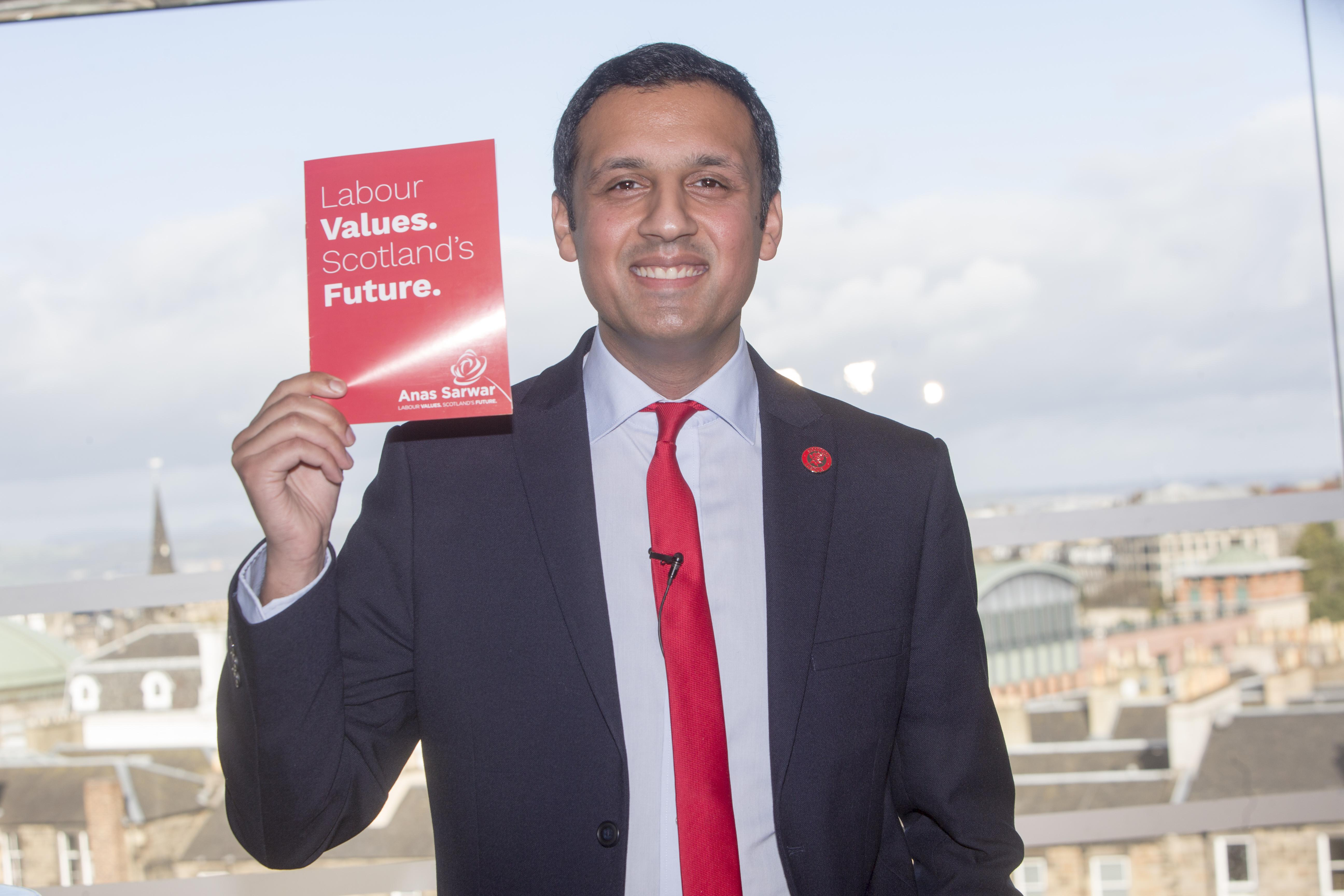
Sarwar’s Dilemma – toe the line or your’e out – or packed off to the Lords like daddy
Relations with the increasingly right wing Westminster based Labour politicians and the left leaning Party members and leaders in Scotland is always tense and unproductive with cracks appearing early on when Scottish MSP’s failed to support Starmer’s decision to cut winter fuel payments.
Scottish leader Sarwar was all over the place in his failed attempts to steady the ship and a number of Labour MSP’s voted with the SNP when the Scottish Parliament voted by 99 to 14 in favour of a motion (ignored by Westminster as expected) insisting the Labour government at Westminster change course and reverse its decision to means test the support.
The perpetual diminishing of the electorate and its politicians by Westminster is not, as yet compelling enough to persuade a majority of Scots to consider the option of independence but the British body politic is mindful of the fall of of Rome and other similarly ill-fated empires which were poisoned with nepotism and cronyism and withered morphing into kleptocracies masquerading as democracies. Scots would be much better off as an independent nation.
In 2016, a Scottish Government, “employee survey” highlighted that around (10%) of responders said they had experienced bullying or harassment.
Reviewers of the survey judged that the very low number of formal complaints raised suggested a lack of awareness or confidence in the existing processes and procedures and this led, in spring 2017, to the appointment of a Director to champion work tackling bullying and harassment.
AfterNote:
Permanent Secretary Evans and her senior managers were disingenuous about the need for a “Civil Service Champion” since the small number of complaints did not justify any procedural changes. The truth of the matter was that Sturgeon and the senior civil servant management team were fully subscribed to the ideals of “Stonewall” and implementation of the organisation’s mission statement.
4 Nov 2017: Government Minister Resigns
Children’s Minister, Mark McDonald resigned from his post offering that some of his previous actions “have been considered to be inappropriate” and was suspended from both the SNP parliamentary group and the party pending an investigation whilst retaining his MSP status.
The event reinforced the importance of ensuring that robust policies and procedures were in place capable of responding appropriately to allegations and prompted yet another review which identified that while options were available to consider sexual harassment complaints about serving Ministers, no such option was available in respect of former Ministers.
A case of need for an extended procedure did not exist since there had never been an allegation against a former Minister and the motivation of Sturgeon and Evans who between themselves decided that a non-existent gap in coverage should be closed with procedures extended to include historical complaints remains a riddle wrapped in a mystery inside an enigma.
Afternote:
The use by Sturgeon and Evans of the Mark Macdonald incident as justification for extending the well tried and trusted “Fairness at Work” procedure in place for a number of years to include historical allegations of sexual harassment and/or bullying was opportunistic and unsustainable since Mark Macdonald retained his status as an MSP.
Introduction of new untested procedures
In December 2017 the Scottish Government adopted an “internal procedure” entitled “Handling of harassment complaints involving current or former ministers” and published it on the Scottish Government intranet on February 2018. Surprisingly, (since it was written by a senior civil servant) it did not cover historical claims against former civil servants.
The process of developing the policy and the consultations involved were described in a document entitled “Response to Committee of the Scottish Government Handling of Harassment Complaints” which explained the motive behind the policy review was to address and eliminate bullying and harassment within the Scottish Government. A draft copy was shared with the Cabinet Office of the United Kingdom Government and the Scottish Government Trade Unions.
Consideration was not given to implications that there might be legal obstacles to applying the Procedure, designed and described as an internal Scottish Government procedure, to rope in former Ministers who were no longer in a contractual or statutory relationship with Scottish Government. Written legal advice was not provided to Scottish Government
2017: Stonewall and Woke obsessed Nicola Sturgeon and her similarly affected Civil Servants decide upon a strategy designed to rid Holyrood of anyone guity of harassment
In the Autumn of 2017, Nicola Sturgeon instructed Leslie Evans to complete a review of the harassment policy of the Government and if required, to bring forward proposals for change drafting revised procedures in line with the Scottish Government’s transparency in government drive.
The review was completed and the consensus was that the existing procedures required very little updating but for no identifiable reason a decision was taken to write up new procedures which when in place would render the long standing and successful ” fairness at Work” policy redundant.
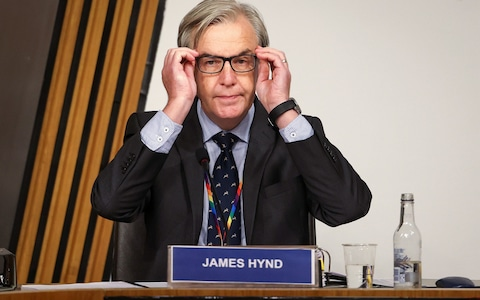
James Hynd: Head of Cabinet, Parliament and Governance Division, Scottish Government was the lead officer of the review process and subsequent update of the Scottish Government policy on handling harassment complaints replacing tried and tested “Fairness at Work” procedures that had been in place for many years initially encompassing current Ministers, then expanding it introducing a new unique procedure for receiving and resolving complaints of harassment against former Minsters without the required authority of the UK Government.
Ignoring all warnings the new procedures were signed off by Nicola Sturgeon in late December 2017. Less than 2 weeks later, in January 2018, two complainants came forward with allegations of harassment against Alex Salmond under the new rules.
it appeared there had been “malice aforethought” and the complainants had been waiting for the new rules to come into force since no effort had been made by them to register allegations over the past 4 years. The complainants alleged incidents they said had occurred in 2013 (four years before).
2020: Sturgeon was accused of misleading MSPs when she gave evidence about the sexual misconduct probe into Alec Salmond, after failing to recall when she first heard about the allegations
Irish lawyer, James Hamilton was commissioned to independently investigate the accusation Nicola Sturgeon had breached the ministerial code by misleading MSPs over her involvement in the botched investigation of sexual misconduct claims against Alex Salmond.
John Swinney arranged the secondment of a secretariat of Civil Servants to assist Mr Hamilton in his investigations. Their names were kept secret.
The Hamilton report said she had not breached the code, but he left it up to her peers to decide if they had been misled.
2025: A Freedom of information request inadvertently revealed Hynd to be a coordinating officer of the supposedly independent Civil Servant secretariat that assisted Hamilton.
In August 2020, Hynd wrote to the government’s Handling of Harassment Complaints committee. Claiming to be working for Mr Hamilton he wrote: “As you know, the Convener wrote to James Hamilton, the independent adviser on the Scottish Ministerial Code on 7 July. he has asked that I pass on to you his response, as attached. For the avoidance of doubt, I am sending this on Mr Hamilton’s behalf as the independent adviser and not on behalf of the Scottish Government. We are planning to put in place a secretariat to support Mr Hamilton during the referral. Until that is in place I am happy to liaise with Mr Hamilton as required.”
The impartiality of the Hamilton report is in doubt since Hynd, the architect of the botched harassment policy is currently being investigated by the police, (Operation Broadcroft) for allegedly lying under oath to the Salmond Inquiry.
Swinney has spent £118,000 of public cash, to date, in defence of his view that the Scottish Government has a right to refuse to release the Hamilton report to the public despite being ordered to do so by the court. He is the law!!!!
Kenny MacAskill, the Leader of “Alba” commented: “It gets murkier and murkier. Deliberate obfuscation, inappropriate redaction and now individuals with clear conflicts of interest appointed to critical positions. There has to be end to this cover up and individuals must be held to account. Both Ministers and senior officials must be fully held to account and that requires full disclosure”
A summary of a press article written by David Walker politics reporter of the Daily Express
Kristen Keeffe’s evidence at the trial of Raniere, Clare Bronfman and other cult officials
Prosecution witness, Kristen M. Keeffe stated that Raniere’s NXIVM organisation hacked billionaire Edgar Bronfman’s computer correspondence with the Clinton’s and world leaders and plotted to lure former cult members to Mexico to be imprisoned.
Keeffe, a former confidant of Raniere, alleged that Clare had secreted a “key logger” virus on the computer of her late father, Edgar M. Bronfman Sr., allowing officials of the cult to monitor his emails, including exchanges with world leaders and Democratic presidential candidate Hillary Clinton.
Keeffe, who worked with Raniere for more than 20 years was part of the cult’s litigation team that worked under Clare Bronfman and her allegations about the hacking of Edgar Bronfman’s computer was only one of a series of accusations she levelled against cult officials after a State Police investigator secured her safety in a domestic violence shelter following her hasty departure from the cult in February 2014.
She said that she gathered information about the activities of the cult for a number of years before leaving and had tried to “deprogramme” the cult’s president, Nancy L. Salzman adding; “in the three and a half years leading up to when I left, I was a spy. I went to great lengths to make them think I was going along with things when in reality I was trying to deprogramme Nancy and a couple of others that l was close to”.
Keeffe and Barbara J. Bouchey, another former cult executive board member were charged with computer trespassing charges accusing them and three others of improperly accessing the cult’s website. Bouchey, a financial planner, denied hacking into the cult’s social website counter claiming that cult officials had filed 13 eronious lawsuits and a criminal complaint in retribution for her 2009 defection from the cult.
Emails attributed to Keeffe, alleged that the cult senior management team contracted a Canadian investigative firm to secretly obtain the financial records of U.S. Sen. Chuck Schumer and six federal judges who presided over cases involving the cult. The same company also obtained financial information on Edgar Bronfman and his colleague members of the Jewish World Congress, which Bronfman headed from 1981 to 2007.
Federal court records show the Canadian investigative firm, Canaprobe Group, invoiced Clare Bronfman for US$10k for “banking sweep services” performed by Rick A. Ross, a “recognized expert” in cults. Keeffe said she routinely processed many Canaprobe invoices and that the company had been paid “well over a million dollars.”
Keeffe, also claimed that Clare Bronfman and Pamela A. Nichols, a shareholder with Albany law firm O’Connell & Aronowitz and one of the cult’s attorneys, were closely involved with the Canaprobe transactions.
Key-loggers are used to monitor the keystrokes of a computer, enabling someone other than the computer user to access personal account information, including passwords. In a telephone conversation, Keeffe claimed Clare Bronfman’s initial attempt to hack into her father’s email account failed after she sent him an email that had a digital photo of a bear attached and which contained a key-logger computer-hacking virus. The photo was meaningful because Clare’s father called her “Clare-bear” as a nickname.
The digital photo of the bear would have infiltrated Edgar Bronfman’s computer if he opened it, Keeffe added: “But he never opened the picture,” Keeffe said in the telephone call with Bouchey. “So Clare went to his office, met with him and said, “I want to show you this picture” and downloaded the virus onto his computer herself.
Keeffe further claimed that Raniere was involved in the plan and he had taught computer hacking to a young female Mexican immigrant and cult member. The woman spent a year reading Bronfman’s emails, including correspondence with Hillary Clinton and leaders of the World Jewish Congress, reporting the contents to Keith and Clare.
Bronfman later discovered the bug and attached blame onto a disgruntled former executive director of the World Jewish Congress.
Clare, testified in a 2011 civil lawsuit that Raniere had discussed with his broker whether her father had traded against them in the commodities market undermining trades that Raniere directed when he lost $65m of Clare and Sara Bronfman’s money.
The cult conducted around 35% of its affairs in Mexico and retained a strong presence in Central America.
Keeffe, accused cult officials of plotting to lure four former girlfriends or female associates of Raniere’s, to Mexico in order to have them arrested on false charges and thrown in prison.
The women targeted included Raniere’s former girlfriend, Bouchey, and another former girlfriend of Raniere’s, Toni F. Foley, a co-defendant of Bouchey’s in the computer logger case and a cult board member for nine years and Susan Dones, a former cult trainer from Washington who was sued by the cult and accused of violating a confidentiality agreement.
Keeffe, said the plan to lure the women to Mexico was formalised by Raniere and the venture capitalist and cult leader, Emiliano Salinas, (the son of the former Mexican president, Carlos Salinas).
In an email, filed in Albany County Court, Keeffe wrote: “Emiliano went so far as to have a Mexican journalist contact (Foley) et. all. (sic) to invite them to an “anti-cult conference”. Ranieri intended to subject the women to serious, emotional and physical harm.”
The trial and sentencing of influential NXIVM officials
The trial judge sharply questioned why authorities in Albany, who were aware of illegal wrongdoing and abuses had failed to bring a criminal case against Raniere and his cult-like organization before, saying: “How in the world this went on for so many years in Albany, New York, and its environs will forever be a sad mystery to this court.”
Seagram’s’ heiress Clare Bronfman, NXIVM’s operations director and long-time bankroller, was sentenced to six years and nine months in prison for conspiring to harbour or conceal illegal immigrants for financial gain, and fraudulent use of identification.
Allison Mack, a former actress, was sentenced to three years in prison for racketeering and racketeering conspiracy.
NXIVM bookkeeper Kathy Russell, who pleaded guilty to visa fraud, awaits sentencing.
NXIVM co-founder, Nancy Salzman, a “senior proctor” was the organization’s director of education. Raniere, known within the group as “Vanguard,” became her mentor and conducted a long-term sexual relationship with her. She was sentenced to three and a half years in prison.
Lauren Salzman, Nancy’s daughter who was lauded for her four days of testimony and the information she provided about other NXIVM members, including her mother was sentenced to five years probation and 300 hours of community service. She told prosecutors about Raniere’s role in the secret “master/slave” group, Dominus Obsequious Sororium (DOS), in which various levels of “slaves” took lifetime vows of obedience to “masters” and “grand masters” all of whom answered to Raniere.
Content of this article is summarised from a number of articles writtten and published by:






























 caltonjock