Category: Uncategorized
This report outlines the known, alleged, and circumstantial connections between Russian individuals, organizations (including criminal and intelligence services), and the networks surrounding Donald J. Trump and Jeffrey Epstein.

June 14, 2025: White Paper: Russian Connections to Donald Trump and Jeffrey Epstein – Prepared by: Stephen Pain & Zoosemiotics
Executive Summary
This document outlines the known, alleged, and circumstantial connections between Russian individuals, organizations (including criminal and intelligence services), and the networks surrounding Donald J. Trump and Jeffrey Epstein. While definitive conclusions of illegal activity remain outside the scope of available public evidence, the documented proximity of both Trump and Epstein to Russian-linked entities merits serious analysis.

Section 1: Donald Trump and Russian Connections
1.1 Russian Business and Political Ties
Felix Sater: Russian-American businessman, convicted felon, and longtime FBI informant. Partnered with Trump via Bayrock Group. Had links to Russian organized crime, including Semion Mogilevich.
Semion Mogilevich: Considered the “boss of bosses” of the Russian mafia. Has deep ties to FSB and GRU. Sater had business ties with individuals close to Mogilevich.
Aras and Emin Agalarov: Russian oligarchs who hosted the 2013 Miss Universe pageant in Moscow. Helped facilitate the 2016 Trump Tower meeting with Kremlin-linked lawyer Natalia Veselnitskaya.
Trump Tower Moscow: Proposed deal during 2015–2016 campaign, involving Russian officials and Sater. No deal finalized, but active communication occurred during the election period.
1.2 Intelligence and Surveillance
Miss Universe 2013 was held at Moscow’s Ritz-Carlton, a site believed to be under FSB surveillance. Allegations (unverified) suggest possible kompromat was obtained.
Russian intelligence agencies (FSB/GRU) are known to deploy “honeytrap” and kompromat tactics through hospitality and luxury networks, such as beauty pageants and clubs.

Section 2: Jeffrey Epstein and Russian Connections
2.1 Recruitment and Exploitation Networks
Jean-Luc Brunel: Ran MC2 Model Management. Recruited many girls from Eastern Europe and Russia. Worked closely with Epstein.
MC2 Model Management: Allegedly used to supply Epstein with underage girls, some of whom came from Russia and Eastern Europe.
2.2 Intelligence Interactions
Dossier Center (2024 Report) revealed Epstein’s communications with Sergei Belyakov, a former Russian Deputy Minister with FSB Academy background.
Belyakov allegedly helped Epstein obtain visas and introduced him to networks associated with Russian elites and economic forums (e.g., SPIEF).
No confirmed record exists of Epstein physically entering Russia, but intent and facilitation networks were active.

Section 3: Shared Themes and Overlaps
3.1 Modeling Agencies as Vectors
Trump Model Management: Brought in Eastern European models, many without proper work visas.
MC2 Model Management: Focused on similar demographics, often underaged, with known abuse by Epstein.
Both organizations operated in elite social spaces attractive to intelligence and criminal exploitation.
3.2 Use of Pageants and Events
Miss Universe (Trump) and elite parties (Epstein) both served as environments where powerful men and vulnerable women were brought together — classic conditions for kompromat.
Overlapping presence of oligarchs, FSB-linked figures, and modeling talent increases plausibility of indirect asset recruitment or surveillance.
3.3 Russian Mafia
Both Trump (via Sater and real estate) and Epstein (via social contacts like Brunel) existed in ecosystems where Russian organized crime — often intertwined with FSB — played a role in money laundering, trafficking, and elite access.

Section 4: Conclusion
While no direct, proven collaboration between Epstein and Trump involving Russian intelligence has been uncovered, their shared use of modeling pipelines, proximity to Russian elites, and interest from intelligence services — especially the FSB — reveal an environment highly vulnerable to foreign influence and exploitation. The overlap in locations, methods (pageants, models, exclusive events), and persons of interest (Sater, Brunel, Agalarov) suggests a complex network where illicit and state interests may have intersected.
Further investigation — especially with access to Russian visa records, surveillance archives, and intelligence files — is necessary to fully assess the depth of these entanglements.

Part Two: White Paper: The Under reported and the Unknown Aspects of Trump and Epstein’s Relations with Young Women
Executive Summary
This white paper investigates the lesser-known and under-reported aspects of Jeffrey Epstein’s and Donald Trump’s associations with young women, specifically focusing on the trafficking and exploitation of Russian and Eastern European girls.
While definitive legal conclusions are limited due to systemic opacity, the paper outlines financial trails, witness suppression, and immigration manipulation, drawing from lawsuits, investigative reporting, and government settlements.

Section 1: Recruitment and Exploitation of Russian & Eastern European Women
1.1 Jean-Luc Brunel and MC2 Model Management
Operated as a primary recruitment channel for girls from Russia, Ukraine, Slovakia, and other post-Soviet states.
Brunel, Epstein’s close associate, allegedly trafficked “over a thousand girls” under the guise of modeling contracts.
Recruited girls were often as young as 14–16 and sent to Epstein’s U.S. properties.
1.2 Modus Operandi
Victims were brought in using tourist, student, or fraudulent marriage visas.
Modeling contracts provided a false veneer of legitimacy.
Some underage girls were married to U.S. citizens to secure longer stays—allegations made in lawsuits against Epstein’s estate.

Section 2: Financial Evidence
2.1 Deutsche Bank Settlement (2020)
Deutsche Bank was fined $150 million after regulators discovered transactions from Epstein to “Russian models and women with Eastern European surnames.”
Internal emails acknowledged the risk: staff noted the pattern but allowed transactions to continue.
2.2 Structured Payments and Hidden Transfers
Payments were typically small and recurring—hallmarks of trafficking-related financial flows.
These transactions took place between 2013–2017, aligning with allegations in civil suits.

Section 3: Absence of Testimony and Legal Barriers
3.1 Anonymity and Intimidation
Most Eastern European victims were never publicly identified; many appeared as “Jane Does.”
Threats, NDAs, and fear of deportation discouraged testimony.
Women were often dependent on Epstein’s network for housing, money, or legal status.
3.2 Immigration Leverage
Victims on temporary visas feared exposure if they cooperated with investigators.
Some may have been incentivized—or coerced—to leave the U.S. quietly after Epstein’s first conviction in 2008.
3.3 Nadia Marcinko (a.k.a. Marcinková)
Slovak national, Epstein’s pilot, and alleged participant in abuse.
Invoked the Fifth Amendment during questioning; granted immunity in earlier plea deal.
Reported missing in 2024, with no clear status update.

Section 4: Ties to Trump’s Modeling and Pageant Networks
4.1 Trump Model Management
Recruited Eastern European models, some underage, working without proper visas.
Allegations of exploitative labor and overcharging for rent, with models’ passports withheld.
4.2 Miss Universe Moscow 2013
Co-hosted by Kremlin-linked Agalarovs.
Held at Ritz-Carlton Moscow—alleged to be monitored by FSB.
Provided an ideal platform for both recruitment and kompromat tactics.

Section 5: Analysis & Implications
Patterns of trafficking, financial secrecy, and strategic silence suggest systemic abuse.
Russian and Eastern European girls were both high-risk and high-value within these networks.
Lack of public testimony may stem from coercion, cultural stigma, or legal exposure.

Conclusion
The fate of many Russian and Eastern European girls in Epstein’s and Trump’s shared orbit remains undocumented. Financial records, recruitment strategies, and immigration manipulation point to a coordinated system of exploitation. Yet the stories of most victims remain silenced by fear, bureaucracy, and untraceable departures. Without transparency, justice for these women remains elusive.
I took a closer look at the Scottish Government’s commitment to the WOKE agenda. Swinney and Sturgeon have created and funded to the tune of many million of pounds, a whole new LBGTQI, sub-society in Scotland and I do not think that even if he wanted to Swinney is capable of reversing their policy- Armageddon awaits in 2026
LGBTIQ+ Equality

Shirley-Anne Somerville – Cabinet Secretary for Social Justice
responsible for:
- Baby Box
- benefit automation
- human rights
- minimum income guarantee
- national mission for tackling child poverty
- Office of Chief Social Policy Advisor
- Scottish Government benefits (development and delivery)
- Scottish Welfare Fund and Discretionary Housing Payments (DHPs)
- social justice, tackling poverty and inequalities
- Social Security Scotland
- third sector, social enterprises and Office of the Scottish Charity Regulator (OSCR)
- UN treaty incorporation including United Nations Convention on the Rights of the Child (UNCRC)

Kaukab Stewart – Minister for Equalities
Specific responsibilities are:
- displaced peoples
- diversity, inclusion and equalities; including disability, older people, women, gender, LGBTI, religion, race, and Gypsy Traveller community
- Equally Safe strategy
- faith and belief
- New Scots strategy
- population and migration (inc. Ministerial Taskforce on Population)
- refugees and asylum seekers
- social isolation and loneliness strategy

Rebecca Don Kennedy CEO – Equality Network
Equality Network: The Network is run by a Board of Trustees, who are all volunteers. They oversee the organisation, take strategic decisions, and are ultimately responsible for all our activities. The Network aims to create lasting improvement in the situation of LGBTIQ people in Scotland.
The day to day work of the organisation is delegated by the Board to our staff –There are currently 9 full-time staff and 6 part-time staff.

The Trustees
Dr Kevin Guyan (Convener)
Dr Kevin Guyan is a writer and researcher whose work explores the intersection of data and identity. He is the author of ‘Rainbow Trap: Queer Lives, Classifications and the Dangers of Inclusion’ (Bloomsbury Academic, 2025) and ‘Queer Data: Using Gender, Sex and Sexuality Data for Action’ (Bloomsbury Academic, 2022). Kevin is a Chancellor’s Fellow at the University of Edinburgh and Director of the Gender + Sexuality Data Lab. Further information: kevinguyan.com
Judi Syson (Deputy Convener)
Judi has supported LGBT+ community organisations since joining the LGBT Health & Wellbeing board in 2004, and served as their chair for 5 years. With a background in STEM innovation and clinical research Judi brings leadership and people management experience to the Equality Network Board, along with a youth charity management perspective as a current trustee for the YMCA in Edinburgh & Scotland. Judi enjoys participating in LGBT community activities with women’s hill walking groups, the Loud & Proud Choir and watching rugby. linkedin.com/in/judisyson
Daniel Clayton (Treasurer)
Daniel qualified as a Chartered Accountant in 2002. He is an Investment Management specialist and has held several senior roles within Audit and Risk, Investment Operations, Investment Change and Product Design and Strategy. He has worked for several leading companies including PwC, Aegon Asset Management, Citi, Standard Life Investments, First State and Abrdn. He has a keen interest in promoting LGBTIQ representation at senior levels within the financial services industry and has been an active part in both establishing, chairing and being part of LGBTIQ networks within the various companies he has worked for. Currently he is the Inclusion and Diversity Lead for the Investment Office at his current employer, Scottish Widows. Daniel is the Treasurer of the Equality Network and oversees the financial governance, controls and overall financial position of the charity.
Cecilia Righini: Cecilia Righini is the Founder and Creative Director of Studio Lutalica, a non-profit design agency supporting women and LGBTQ+ communities. With a focus on intersectional feminism and sustainable practices, Cecilia leads projects that empower diverse identities. Their work has been recognised with awards for its impact in the creative industry. Cecilia also serves on the board of Proud Futures and is a visiting practitioner at in Design Management at UAL: London College of Communication. linkedin.com/in/ceciliarighini
Christina Tatlow: Christina is currently on a short sabbatical from our Board.
Katherine O’Donnell: Katherine O’Donnell is a journalist and writer of more than 35 years’ experience in print, broadcasting and digital media. She has a longstanding interest in human rights and equality. She is a former night editor of The Times and the only trans person ever to have held a senior editorial role in the UK national press.
Peter Hope-Jones: Peter is a civil servant with twenty years’ experience in different roles in the Scottish Government. Currently working on higher education institutional stability, he previously led on taking the Gender Recognition Reform (Scotland) Bill through the Scottish Parliament, and has also been Private Secretary to the Cabinet Secretary for Justice, Head of Human Trafficking Policy, and Interim Chief Executive of Parole Scotland.
Stella Sibbit-Johnston: Stella works in international education, with experience living and working in New Zealand, Australia, Japan, and Scotland. She brings a global perspective to the Board, and as a migrant and a parent is passionate about intersectionality within the LGBTIQ community. Having recently completed the Radius Employee Network Leadership Programme, she leads the EDI Committee in her workplace.
Tristan Grayford: Tristan Grayford is a software engineer and author who moved to Scotland from Jersey in 2014 and joined Equality Network’s board in 2024. He is the co-founder of the End Conversion Therapy Scotland Campaign and QUILL Scotland. He has previously worked at the Scottish Parliament and written policy for multiple political parties. In his career he has chaired LGBTQ+ employee networks and spoken on panels from the risks of Generative AI to inclusive practice in tech and genre fiction.
Staff:
Chief Executive Officer: Dr Rebecca Don Kennedy (she/her)
Finance and Business Coordinator: Claudia Russo (she/her)
Communications Officer: Chris Timmins (he/him)
Branding and Publications Officer: Nathan Skye (he/they)
Training Officer: James H. Verardi (he/him)
Community Engagement and Development Officer:Ruth McGill (she/her):
Disability and Neurodiversity Officers: Mel Maguire (she/her) Rowan Alison (they/them)
Policy Coordinator: Erin Lux (she/her)
Policy and Campaigns Officer: Christopher Clannachan (he/him)
Policy Officer: Eleanor Sanders White (she/her)
Scottish Trans: Strives to be inclusive and open, to challenge discrimination and to consult, involve and inform the individuals and the communities for which we work.
Partnership is a key part of our approach, and much of what we do involves working in partnership with diverse LGBTI people, other trans and LGBTI organisations, and with organisations working in the wider equality and human rights field.
There are currently three full-time Scottish Trans staff within the Equality Network:
Scottish Trans Manager: Vic Valentine (they/them)
Scottish Trans Policy & Public Affairs Officer: Florence Oulds (she/her)
Scottish Trans Community Engagement Coordinator: Oceana Maund (They/Them)
Scottish Trans is also currently hosting a fourth full time member of staff, as part of the Scottish Government’s NHS Gender Identity Services Strategic Action Framework 2021-2024:
Lived Experience Officer: Ryan Butter (he/they)
Government Finance: 2024 Scottish Government grants : £576,316 of which £450,000 was spent on staff costs.
LEAP Sports Scotland: Scotland’s LGBTIQ+ sports charity campaigning for equality, visibility and greater participation for LGBTIQ+ people in all areas of sport.
2024 Scottish & Local Government grants : £126,000: Total funding all organisations £550,000 of which approx £320,000 was spent on staff costs.
LGBT Youth Scotland: Scotland’s national charity for LGBTQ+ young people, aged 13-25. Supports young people in all aspects of their lives through the provision of youth work, supporting them to use their voice to create change in equality and human rights.
2024 Scottish Government grants: £1,871,046 of which £1,500,000 was spent on staff costs (17 Operational 32 Project work)
Stonewall
Stonewall Equality Ltd: Over the past 35 years, Stonewall has primarily focused its activity in two key domains – influencing legislation and policy, and creating change through research, programming and leadership development.
Stonewall has played a very significant and important role in changing the law to improve the lives of LGBTQ+ people. This includes:
The repeal of Section 28: We were founded in direct response to Section 28, the homophobic legislation that prevented young people learning about homosexuality in schools.
Equalising the age of consent: The Sexual Offences Amendment Act (2001) lowered the age of consent for gay and bi men to 16, aligning the age of consent with heterosexuals.
Lifting the ban on military service: Until 2000, LGBTQ+ people were banned from the British military, often dismissed or stripped of medals. Stonewall campaigned to end this discrimination, leading to the ban’s repeal in 2000.
The right for LGBTQ+ couples to adopt: The Adoption and Children Act came into effect in 2002 and allowed unmarried couples, including LGBTQ+ couples, to apply for joint adoption.
Marriage equality: The Marriage (Same Sex Couples) Act made history by legalising same-sex marriage in Scotland 2014,
2024 Scottish Government grant: Around £110,000 of which £3000 was SG membership fees. Note Company folded but S.G. maintained the funding support.
LGBT Healthy Living Centre: LGBT Health and Wellbeing was set up in 2003 to improve the health, wellbeing, and equality of lesbian, gay, bisexual and transgender (LGBT+) people in Scotland. It provides responsive support services, a social programme for the community to connect with each
other in sober and safer spaces, and supports mainstream services to become more inclusive.
Trustees

Yorath Turner: Chair (he/him)
Yorath is currently Head of Digital Capability and Talent in Scottish Government and leads the Digital profession development as well as initiatives responsible for building digital skills, capability and diversity across the public sector in Scotland. After 10 years in the finance sector, he joined the UK Civil Service in 2015 and has worked in a number of central government departments in Whitehall and beyond. He has experience in a range of HR roles from business partnering, strategic workforce development, and organisation design and development. He is a Chartered Fellow of the CIPD.

Jon Dye: Vice Chair:
Jon graduated from St Andrews with a degree in Mathematics and went on to train as an accountant with the international accountancy firm PwC. After 10 years with PwC, Jon joined the Clydesdale Bank. Since then, Jon has held a number of senior Finance roles in the commercial and third sector. Jon has also been a Trustee and Officer of a number of local and national charities. Jon sits on the Audit, Finance and Funding sub committee of the Board.

Daniel Clayton: Treasurer (he/him)
Daniel qualified as a Chartered Accountant in 2002 with PwC where he worked for 6 years as an auditor. He has held a number of senior positions in financial service companies, specialising in investment management operations. Daniel has a keen interest in and experience of: operations, audit (internal and external), risk, finance, project management, financial controls and strategy. He has taken an active part in equality groups at the companies he has worked for, in particular the push to gain fair LGBT+ representation in senior roles at financial service companies.

Zyra Evangelista: (they/them)
Zy is a PhD researcher at the University of Glasgow. Their primary area of research is LGBT+ psychology, with a specific focus on LGBT+ inclusion and well-being. They are currently one of the University of Glasgow Future World Changers, the PsyPAG representative for the British Psychological Society Psychology of Sexualities Section, and Book Review Editor for the Psychology of Sexualities Review. Outside of academia, Zy has been selected as one of the See Me Proud LGBT Community Champions and has co-founded the LGBTQI+ basketball group, the Rainbow Glasgaroos. Zy is bringing in their experience in psychology to help address issues related to anti-LGBT+ prejudice, stigma, and discrimination. Zy’s work in improving LGBT+ inclusion in higher education can contribute to developing policies and programmes that promote diversity, inclusion, and well-being across the LGBT+ community.

Robin Gay: (he/they)
Robin is currently the Student Voice Manager at Edinburgh University Students’ Association, where they oversee the Association’s democratic processes and support for over 1500 student representatives. They have previously worked directly with marginalised student communities, including Black and Minority Ethnic, disabled, and LGBT+ students, and empowered elected student representatives to campaign on a range of issues affecting these groups. They bring a range of experience to the Board including membership engagement, community development, and effective governance.

Nick Ward: (he/him)
Nick graduated from Edinburgh University before moving to London and becoming a secondary school teacher in some of the most challenging schools in the UK. He completed a Masters in Leadership at UCL and entered the charity sector, becoming the regional director for a large teacher training charity. He was also an elected councillor for the borough of Islington. After nearly 10 years in London he returned to Edinburgh and is now the Director of the National Autistic Society Scotland. He is a keen history geek and runner and is a member of the LGBT+ running club Frontrunners.
LGBT Health and Wellbeing is comprised 0f 26 full time staff.
The strategic aim is to attract and retain the best
possible team of staff. We do this by ‘offering
clear pathways to volunteering, employment, and
development within the organisation ensuring
the team feels supported, valued and listened to.
We recognise that being an LGBT+ person, or an active ally, whilst serving our community can cause particular and nuanced challenges for colleagues. Exposure to continuous microaggressions and political or media negativity that might otherwise be avoided, and an impact on our social relationships or use of queer spaces can risk having a detrimental impact on the health and wellbeing of colleagues.
Above our competitive Terms and Conditions of employment, colleagues are offered monthly support and supervision meetings, externally facilitated peer supervision, access to an
Employee Assistance Programme, access to Learning and Development opportunities, and a Staff Wellbeing programme.
We aim to nurture a culture where colleagues feel empowered to provide direct and continuous feedback to their managers and our People Support Coordinator about their experience as an employee, and for them to ask for what they need. We also conduct an anonymous annual staff survey in order to proactively check-in with our team.
The organisation continues to secure new contracts with a range of partners, along with the extension of previously-awarded contracts.
NHS Lothian (£205,500)
Glasgow Health and Social Care Partnership (£136,045).
The Scottish Government (£68,400) continue to fund specific projects and services within the organisation.
Edinburgh Integration Joint Board provides some core funding (£101,456).
2024 Scottish Government grants: £895,000 of which £870,000 was spent on staff costs.
2024: Total Government grants to LGBTIQ+ Equality support organisations: £3,578,000. Staff costs around 60%
The Scottish Government distributes around £32 million annually in support of a huge number of “do gooder” organisations including just short of £4 million to LGBTQI groups. One of them, “Stonewall” went belly-up many months ago but is apparently still in receipt of finance on Swinney’s instructions
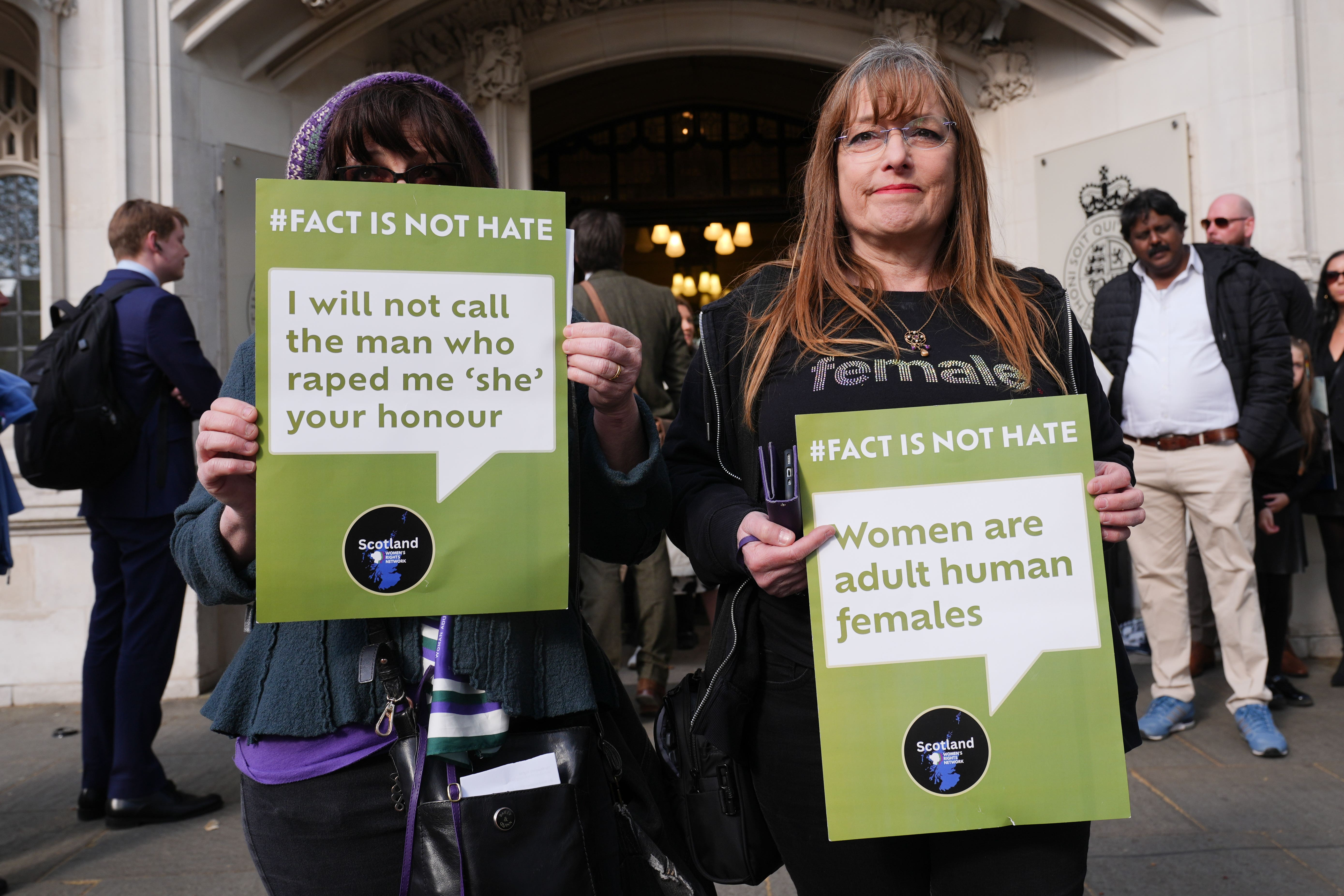
LGBTIQ+ Equality
Equality Network Ltd: The aim of the Equality Network project is to create lasting improvement in the situation of LGBTIQ people in Scotland. Director, Peter Hope-Jones, (also employed by the Scottish Government).
2024 Scottish Government grants : £576,316 of which approx £450,000 was spent on staff costs, (14-16).
LEAP Sports Scotland: Scotland’s LGBTIQ+ sports charity campaigning for equality, visibility and greater participation for LGBTIQ+ people in all areas of sport.
2024 Scottish & Local Government grants : £126,000: Total funding all organisations £550,000 of which approx £320,000 was spent on staff costs.
LGBT Youth Scotland: Scotland’s national charity for LGBTQ+ young people, aged 13-25. Supports young people in all aspects of their lives through the provision of youth work, supporting them to use their voice to create change in equality and human rights.
2024 Scottish Government grants: £1,871,046 of which £1,500,000 was spent on staff costs (17 Operational 32 Project work)
Stonewall Equality Ltd: Over the past 35 years, Stonewall has primarily focused its activity in two key domains – influencing legislation and policy, and creating change through research, programming and leadership development.
Stonewall has played a very significant and important role in changing the law to improve the lives of LGBTQ+ people. This includes:
The repeal of Section 28: We were founded in direct response to Section 28, the homophobic legislation that prevented young people learning about homosexuality in schools.
Equalising the age of consent: The Sexual Offences Amendment Act (2001) lowered the age of consent for gay and bi men to 16, aligning the age of consent with heterosexuals.
Lifting the ban on military service: Until 2000, LGBTQ+ people were banned from the British military, often dismissed or stripped of medals. Stonewall campaigned to end this discrimination, leading to the ban’s repeal in 2000.
The right for LGBTQ+ couples to adopt: The Adoption and Children Act came into effect in 2002 and allowed unmarried couples, including LGBTQ+ couples, to apply for joint adoption.
Marriage equality: The Marriage (Same Sex Couples) Act made history by legalising same-sex marriage in Scotland 2014,
2024 Scottish Government grant: Around £110,000 of which £3000 was SG membership fees. Note Company folded but S.G. maintained the funding support.
LGBT Healthy Living Centre: LGBT Health and Wellbeing was set up in 2003 to improve the health, wellbeing, and equality of lesbian, gay, bisexual and transgender (LGBT+) people in Scotland. It provides responsive support services, a social programme for the community to connect with each
other in sober and safer spaces, and supports mainstream services to become more inclusive.
2024 Scottish Government grants: £895,000 of which £870,000 was spent on staff costs.
2024: Total Government grants to LGBTIQ+ Equality support organisations: £3,578,000. Staff costs around 60%

Inspiring Scotland Fund: The £28 million funds key themes and challenges of the undernoted E&HR funded organisations.
Autism 2023/2024 Autism ATLAS Ltd. £6,276
Autism Understanding Scotland £28,344
Central Advocacy Partners £9,249
HOPE for Autism £8,425
Inspired Community Enterprise Trust Ltd £26,443
Into Work £28,349
IWORK4ME £5,528
Perth Autism Support SCIO £14,174
SWAN Autism Scotland £13,104
Autism Initiatives £36,363
Cosgrove Care £14,351
Home-Start Caithness £14,590
Home-Start East Highland Ltd. £14,604
HOPE for Autism £7,518
Networking Key Service Limited £12,280
Perth Autism Support SCIO £13,537
Salvesen Mindroom Centre £10,115
SensationALL £10,325
SWAN Autism Scotland £28,482
The Autism Network £9,070
The National Autistic Society £30,116
Aberdeen Foyer £26,381
Callander Youth Project Trust £21,480
FARE Scotland £30,000
Grassmarket Community Project £25,193
Inspired Community Trust Ltd £23,941
Move On £22,658
Ando Glaso £26,052
Common Wheel £15,815
Glasgow Disability Alliance £26,666
Govanhill Baths Community Trust £17,602
Impact Arts (Projects) Ltd £11,101
LGBT Youth Scotland £23,429
Refuweegee £15,258
The Sound Lab £19,991
The Village Storytelling Centre £26,644
Toonspeak Young People’s Theatre £24,839
Delivering Equally Safe £50,341
Aberdeen Cyrenians Ltd £36,578
Aberlour Child Care Trust £49,759
Action for Children £24,764.42 £24,764.42 £24,764
Muslim Women’s Resource Centre £20,589
Angus Women’s Aid £52,386.
Argyll & Bute Rape Crisis £46,195
Argyll & Bute Violence against Women and Girls £8,606
Argyll & Bute Women’s Aid SCIO £82,521
ASSIST, Glasgow City Council £69,047
Barnardo’s £44,000
Border Women’s Aid Ltd £8,368
British Red Cross Society £13,461
Caithness & Sutherland Women’s Aid £36,134
CEA Committed To Ending Abuse £18,978
Central Advocacy Partners £36,625
Children 1st £55,700
Clackmannanshire Women’s Aid £28,073
Close the Gap (SCIO) £40,261
Cumbernauld & District Women’s Aid SCIO £26,250
Deaf Links £30,633
Dumbarton District Women’s Aid £29,900
Dumfries & Galloway Council £16,006
Dumfries & Galloway Rape Crisis Support Centre £48,282
Dumfriesshire & Stewartry Women’s Aid £22,076
Dundee City Council £33,552
Dundee International Women’s Centre £6,044
Dundee Women’s Aid £54,982
East Ayrshire Health & Social Care Partnership £12,865
East Ayrshire Women’s Aid £27,924
East Dunbartonshire Assn For Mental Health 24,375.00
East Dunbartonshire Women’s Aid SCIO £22,678
East & Midlothian Public Protection Committee £28,784
Edinburgh Rape Crisis Centre £101,474
Edinburgh Women’s Aid Ltd £52,164
EmilyTest £15,614
Engender £25,884
FENIKS Counselling, & Support Service Ltd £31,794
Fife Council £33,941
Fife Rape and Sexual Assault Centre £46,069
Fife Women’s Aid £38,500
Forth Valley Rape Crisis Centre £63,756
GEMAP Scotland Ltd £60,043
Glasgow and Clyde Rape Crisis £121,894
Glasgow East Women’s Aid Ltd £38,454
Glasgow Women’s Aid £107,078
Grampian Women’s Aid £48,506
Hemat Gryffe Women’s Aid Limited £57,12
INVERCLYDE WOMEN’S AID SCIO £48,750
JustRight Scotland SCIO £9,267
Kenyan Women in Scotland Association (CIC) £7,683
Kibble Education and Care Centre £14,020
Kingdom Abuse Survivors Project £10,424
Lanarkshire Rape Crisis Centre £62,380
LGBT Youth Scotland £12,372
Liber8 (Lanarkshire) Ltd £114,905
Lochaber Women’s Aid £47,358
Monklands Women’s Aid £56,078
Moray Rape Crisis £59,978
Moray Women’s Aid £41,324
Motherwell & District Womens Aid £53,449
Multi-Cultural Family Base £23,386
North Ayrshire Womens Aid £21,869
North Lanarkshire Council £35,505
Orkney Rape Assault Service (ORSAS) £28,432
Perth & Kinross Council £10,606
Perthshire Women’s Aid £60,500
Rape and Sexual Abuse Centre, Perth & Kinross £58,229
Rape and Sexual Abuse Service Highland £62,965
Rape Crisis Grampian £44,805
Rape Crisis Scotland £234,000
Renfrewshire Council £30,000
Renfrewshire Council, Children, Women Children £40,008
Renfrewshire Women’s Aid SCIO £24,191
Respect £8,839
Ross-Shire Women’s Aid £58,947
Rowan Alba Ltd £16,976
Sacro £34,549
SafeLives £20,123
Saheliya £37,688
Sandyford– NHS Greater Glasgow and Clyde £4,391
SAY Women £13,002
Scottish Borders Council £11,175
Scottish Borders Rape Crisis Centre (SBRCC) £42,327
Scottish Commission for Learning Disability £24,502
Scottish Women’s Aid £135,000
Shakti Women’s Aid £75,000
Shetland Rape Crisis £43,274
Shetland Women’s Aid (SCIO) £47,820
South Ayrshire Women’s Aid £41,496
South Lanarkshire Council £9,456
South West Grid for Learning Trust Ltd £14,533
Stirling & District Women’s Aid £43,461
The Highland Council £46,550
The Improvement Service £48,467
The Star Centre £32,632
University of Glasgow Court £16,171.88
Venture Trust £17,273.88
West Dunbartonshire Council £23,439.88
Western Isles Rape Crisis Centre £21,007.94
Western Isles Women’s Aid SCIO £13,000.00
West Lothian Council £45,184.94
West Lothian Women’s Aid (WLWA) £18,707.63
White Ribbon Scotland £18,750.00
Wigtownshire Women’s Aid £22,500.00
Women’s Aid East and Midlothian Ltd £113,084.25
Women’s Aid Orkney £63,466.41
Women’s Aid South Lanark & East Renfrew £100,000.00
Women’s Rape & Sexual Abuse undee and Angus £96,879.88
Women’s Support Project £52,656.00
Young Women’s Movement £6,754.46
Zero Tolerance £75,621.75
EMDR – Supervision Survivors Unite £600.00
EMDR – Travel Grant Survivors Unite £365.00
Equality & Human Rights – 028 Age Scotland £101,685.88
Amina – the Muslim Women’s Resource Centre £51,754.75
BEMIS Scotland £53,750.00
Boots and Beards £18,915.13
British Deaf Association £57,545.63
Central Scotland Regional Equality Council £18,769.25
Civil Rights First £17,640.00
Close the Gap (SCIO) £56,634.88
Coalition for Racial Equality and Rights £36,119.88
Ethnic Minority Voluntary Sector Organisations £49,775.00
Deafblind Scotland £18,744.75
Disability Equality Scotland £41,205.25
Disability Information Scotland £41,934.38
Equate Scotland £90,935.75
Elect Her £25,011.88
Engender £89,951.63
Environmental Rights Centre for Scotland (ERCS) £13,203.25
Equality Network Limited £125,816.25
Ethnic Minorities Law Centre £47,678.38
FENIKS Counselling, Development Service Ltd £20,370.50
Friends of Romano Lav £18,399.38
Generations Working Together £51,732.69
Glasgow Council for the Voluntary Sector £61,486.25
Glasgow Disability Alliance £83,334.38
Glasgow Women’s Library Ltd £31,264.00
Grampian Regional Equality Council Ltd. £7,111.25
Inclusion Scotland £206,250.00
Intercultural Youth Scotland (IYS) £54,023.93
JustRight Scotland SCIO £24,360.50
Kairos Women+ £11,611.13
(LEAP) in Sports Scotland £17,850.63
Legal Services Agency Ltd. £34,289.13
LGBT Healthy Living Centre £47,483.00
LGBT Youth Scotland £72,717.63
Minority Ethnic Carers of People Project £38,102.25
Multi-Cultural Family Base £11,429.25
Neighbourhood Networks £23,489.13
Outside the Box Development Support £14,756.75
Scottish Ethnic Minority Deaf Charity £19,663.75
Scottish TUC (Scottish Pensioners’ Forum) £12,228.25
Scottish Women’s Budget Group £18,595.75
Scottish Women’s Convention £49,166.75
STEP £42,784.38
Stonewall Equality Limited £26,626.25
The Poverty Alliance £33,497.13
The Scottish Older People’s Assembly £12,275.00
West of Scotland Regional Equality Council £36,915.13
Young Women’s Movement £36,163.00
Aberlour Child Care Trust £12,186.00
Action for Children £9,157.00
Barnardo’s £8,5941.00
Befriend a Child £8,459.00
COVEY £9,411.00
Kirkcaldy YMCA £9,366.00
Move On £8,325.00
Quarriers £9,962.00
Right There £9,697.00
Volunteer Glasgow £6,424.00
YMCA Edinburgh £10,735.00
Y Sort It £5,340.00
Crowdfunder 2023 Aberlour Child Care Trust £980.00
Action for Children £1,541.00
Barnardo’s £1,401.00
Befriend a Child £1,401.00
COVEY £840.00
Kirkcaldy YMCA £1,401.00
Move On £840.00
Quarriers £840.00
Right There £3,221.00
Volunteer Glasgow £980.00
YMCA Edinburgh SCIO £3,222.00
Y Sort It £840.00
2025 Action for Children £10,012.00
Barnardo’s £5538.00
Befriend a Child £10,088.00
Right There £15,951.00
YMCA Edinburgh £13,966.00
Y Sort It £1,624.00
Values Into Action Scotland £75,000.00
Learning Disabilities
get2gether £13,500.00
Inspired Community Enterprise Trust Ltd £25,000.00
musicALL £22,500.00
People First (Scotland) £85,348.00
Promoting a More Inclusive Society £112,500.00
Values Into Action Scotland (VIAS) £64,800.00
Link Up Kirkcaldy YMCA £46,667.00
North Edinburgh Arts £11,872.00
The Ayrshire Community Trust £41,395.00
Aberdeen Foyer £25,964.00
Action for Children £130,351
Calman Trust £9,625
East Ayrshire Carers Centre £13,375
ENABLE Scotland £59,784
FARE Scotland £82,344
Hot Chocolate Trust £7,780
Move On £31,324
RUTS £52,750
Street League £144,318
Tullochan £23,324
yipworld £13,000
Enterprise Queen Margaret University £7,000
Human Development Scotland £4,015
3D Drumchapel £4,000
Aberlour Child Care Trust £20,000
Home-Start East Highland Ltd. £15,000
Home-Start East Lothian £4,000
Home-Start Glasgow North & North Lanarkshire £19,956
Home-Start Glasgow South £4,000
Home-Start Levenmouth £3,633
Home-Start Renfrewshire and Inverclyde £3,679
Let’s All Talk North East Mums £3,997
Mellow Parenting £3,803
Midlothian Sure Start £19,976
Mind Mosaic Counselling & Therapy £4,000
Multi-Cultural Family Base £4,000
Nurture the Borders £3,873
PMH Borders £11,250
Pregnancy Counselling and Care (Scotland) £4,00
Quarriers £19,874
Starcatchers Productions Ltd £3,333
Stepping Stones North Edinburgh £13,314
With Kids £3,960
Advocacy Orkney £7,565
Advocacy Aberdeen £16,454
Advocacy Western Isles £24,902
Ayrshire Independent Living Network £22,296
Borders Direct Payment Agency £14,780
Braemar Care £3,250
Capability Scotland £25,430
Carr Gomm £68,006
Circles Network £28,522
Clyde Shopmobility £5,547
Cornerstone Community Care £17,890
Disabled Person’s Housing Service Fife £17,309
East Ayrshire Carers Centre £18,495
ENABLE Scotland £24,964
Equal Say Limited £20,080
Glasgow Centre for Inclusive Living £58,697
Improving Lives £15,291
Independent Living Association Forth Valley £12,833
Lothian Centre for Inclusive Living £39,751
Minority Ethnic Carers of People Project £18,504
Perth & Kinross Association of Voluntary Service £10,678
Self -Directed Suppor, East Renfrewshire £34,041
Shetland Community Connections SCIO £26,075
Support Choices £18,305
The Advisory Group £16,548
The Advocacy Project £21,313
The Community Brokerage Network £43,268
Thistle Foundation £27,277.
VOCAL – Voice of Carers Across Lothian £26,411.
Voluntary Action North Lanarkshire £26,487
Award 2023 Ayrshire Independent Living Network £3,563
Capability Scotland £1,781
Circles Network £3,563
Glasgow Centre for Inclusive Living £3,563
Self-Directed Support Forum East Renfrewshire £1,781
STAND £1,781
Support Choices £1,781
The Community Brokerage Network CIC £403
Voice of Carers Across Lothian £1,781
Survivors 2023/2024 The Body Mind Studio £3,754
3D Drumchapel £5,820
Belville Community Garden Trust £6,211
Bridgend Farmhouse £7,770
Canongate Youth £4,726
Children 1st £7,791
Concrete Garden £6,801
Earthtime for All Ltd £2,541
East Lothian Play Association SCIO £7,785
Family and Community Development West Lothian £4,522
Getting Better Together Ltd £5,176
Include Us £7,737
Jeely Piece Club £7,744
Kingsway Community Connections £9,591
Kirkcaldy YMCA £7,700
MADE4U IN ML2 £7,770
North Edinburgh Arts £7,252
OutLET Play Resource £6,847
Parent Action for Safe Play £7,643
PEEK- Possibilities For Each and Every Kid £7,791
Play Scotland £7,545
Project 31 £7,633
Renfrew YMCA £7,684
Royston Youth Action £7,772
Smart Play Network £7,187
The Ecology Centre £4,855
The Urban Roots Initiative £7,576
The Venchie Children and Young People’s Project £7,712
Under The Trees £6,381
YMCA Edinburgh £6,805
East Lothian Play Association £8,137
Include Me 2 Club £9,450
Scotland Yard Adventure Centre £9,450
Under The Trees £9,450
Thrive Outdoors Active Play £7,500
FARE Scotland £15,000
Jeely Piece Club £15,000
Possibilities For Each and Every Kid £15,000
FARE Scotland £1,850
Jeely Piece Club £1,850
Possibilities For Each and Every Kid £1,850
Care and Learning Alliance £36,157
FARE Scotland £12,875
Jeely Piece Club £12,875
Possibilities For Each and Every Kid £12,875
Scottish Sports Futures £12,000
Care Antonine Care Ltd £10,000
Beyond Limits Dumfries & Galloway £1,000
Bhart Ltd Trading £1,000
Carers Scotland Ltd £2,126
Clacks & Stirling (Stirling Adult Social Care Team) £5,000
Clece Care Services £5,000
Drylaw Rainbow Club Day Centre £786
East Dunbartonshire Assoc For Mental Health £2,100
ENABLE Scotland £9,950
Falkirk Council (Burnbrae Home) £4,200
Greencross Care Home £5,000
Hillview Care Home £6,980
Lancefield Care Home £5,200
Marchglen Care Centre £5,000
Norwood Care Home £2,000
Park Homes Carlingwark House Care Home £1,850
Parklands Limited (Burnbank Care Home) £2,500
Parklands Limited (Parklands Care Home) £5,000
Perth & Kinross Council (LD and Autism social work £560
Quality Care Scotland Ltd £3,600
Shetland Islands Council Outreach, £1,600
Shetland Islands Council Outreach, flexi workers £700
Shetland Islands Council,Outreach, St Sunniva £1,600
Summerdale Care Home £2,700
Turning Point Scotland (Ayr) £3,500
Turning Point Scotland (Dundee) £6,550
Turning Point Scotland (Prestwick) £3,300
Turning Point Scotland (Renfrewshire) £8,868
Aberdeen Foyer £25,000
Action for Children £62,500
ENABLE Scotland £46,250
FARE Scotland £40,000
Street League £59,829
The Talk About Trust £12,088

I emailed Sir Brian Souter, a committed Scottish independence supporter and asked him to front Liberate Scotland in its bid for independence in the 2026 Scottish GE.
He didn’t reply
Sturgeon – the early days rejected twice by the voters in Glasgow
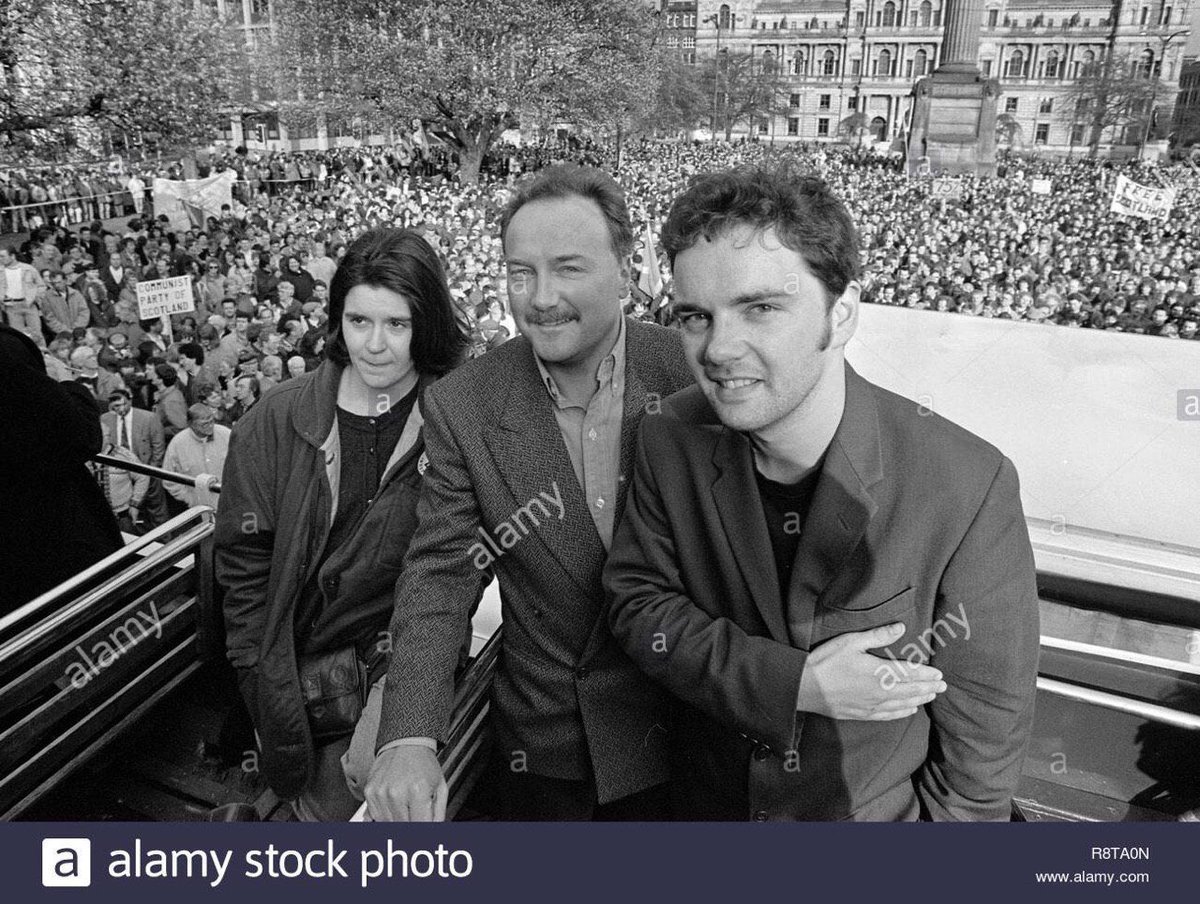
campaigning with friends in the early days
1986: Just 17 years old and wet behind the ears a youthful Nicola Sturgeon joined the SNP and got stuck into political arguments with politicians many years her senior.
Her speedy acceptance as a budding politician was remarkable given her attention was also taken up with studies for a law degree at Glasgow University at Glasgow University and her early days in employment as a trainee solicitor at Drumchapel Law Centre.
1992 Her problem politically was that she was universally disliked by many of her political colleagues and the public who viewed her as an aggressive hard-line humourless harpy with an unhealthy preference for trouser suits.
But at the time she emerged there was a dearth of young talented Scottish nationalists and she was able to apply for and be elected onto the SNP National Executive. She failed, as a candidate for the Shettleston seat in the Scottish parliamentary elections.
1997: She stood as a shoo in candidate for the Westminster seat of Glasgow Govan and lost.
The Glasgow electorate did not rate her. Rejected twice and the SNP were popular at the time.
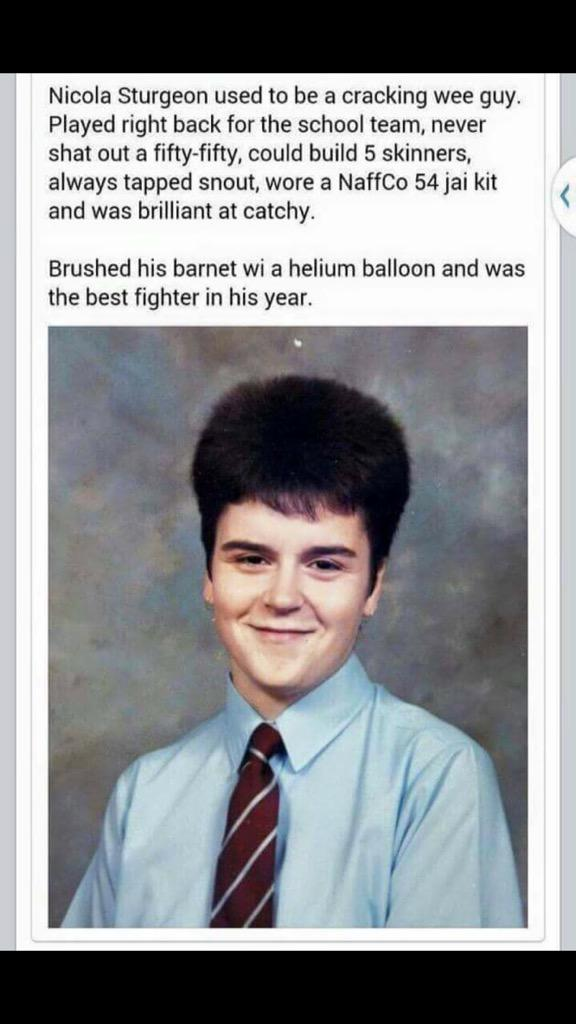
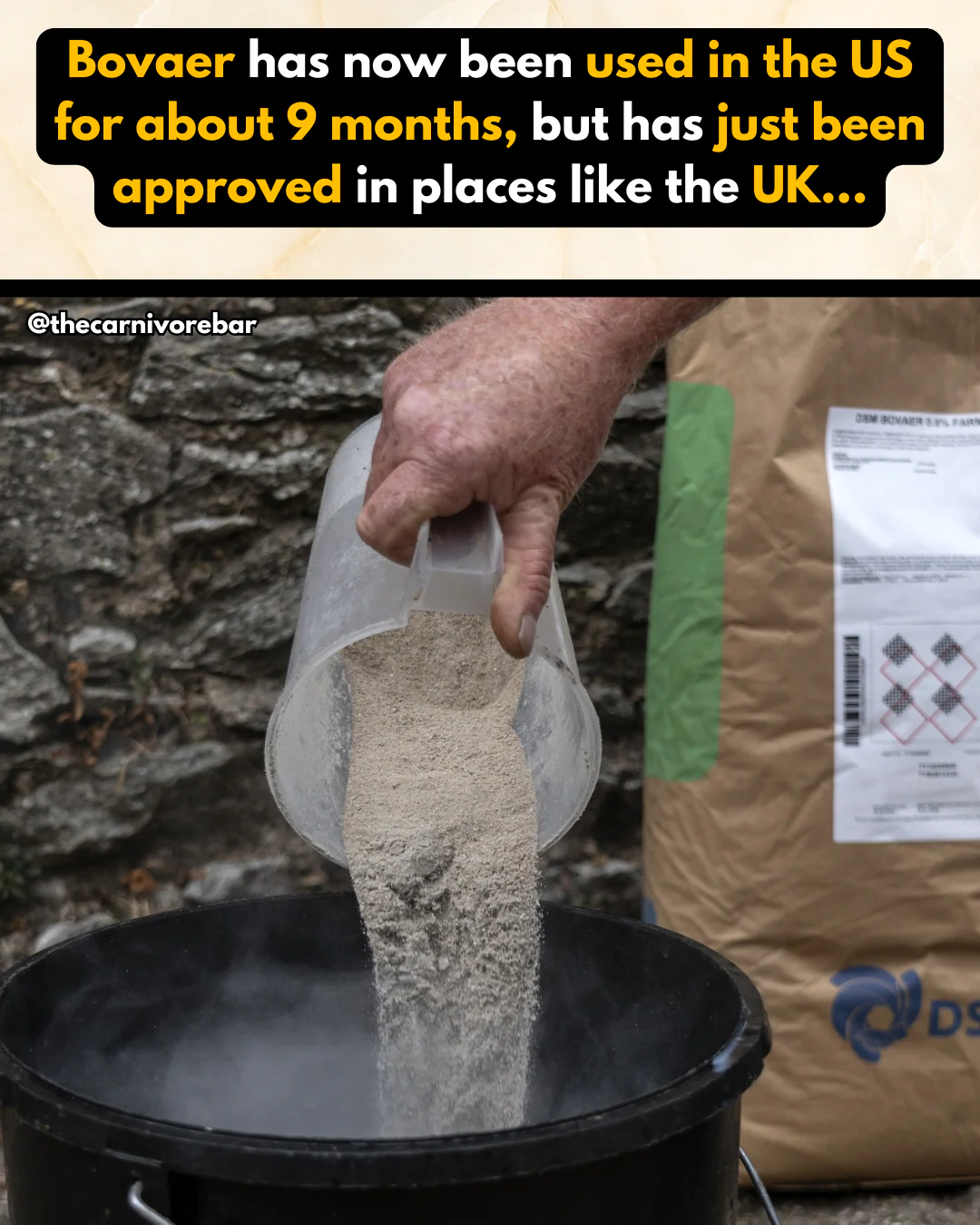
When you hear that Bovaer is “safe and effective,” you might want to take a pause. That phrase has become a corporate smokescreen—used to market glyphosate, fluoride, red dye 40, BPA, GMOs, aspartame, sucralose… the list goes on. These additives were once waved through by regulatory agencies despite limited long-term research. Only years later did the real effects emerge—endocrine disruption, neurological issues, cancer risks, reproductive harm.


The “Special Relationship with the USA” stretches in one direction only -The 1956 Suez Crisis -and Iraq
Lessons from history – The Suez Crisis
Anthony Eden, (Conservative Party) took on the role of Prime Minister of the UK in 1955, shortly after the death of Churchill. His party had a healthy parliamentary majority and for the first year things went well.
Problems arose in the course of 1955 when Eden started to suffer from recurring illnesses and many important policies were left to, “Rab Butler” to attend to including forming partnerships with other European countries.
Butler failed to take up the invitation to meet with, “the Europeans” and the chance to be in at the start of the EEC was missed.
At around the same time Colonel Abdul Nasser came to the fore in Egypt and nationalized the Suez Canal.
Eden and the Conservative Party still believed the UK to be one of the World’s great powers, (although the country was skint and up to it’s ears in debt to the USA).
Fearing the canal would be closed to Europe, acting together with France and the fledgling state of Israel, Eden ordered the invasion of Egypt taking the Suez Canal back under the control of the UK, France and Israel.
The invasion was costly. Eden, seeking support from the, “special relationship” was shocked to be informed that the USA would not aid the UK.
Instead, giving support to the United Nations, (who had ordered the UK to withdraw from Egypt) the USA threatened to impose aid, trade and financial sanctions on the UK.
UK forces withdrew from Egypt within days.
In a later parliamentary inquiry Eden admitted lying to Parliament and to ordering civil servants to destroy anything that might provide evidence of the agreement he had entered into with France and Israel. He was forced to resign not long after.
Eisenhower threatened to bankrupt Britain unless it complied with US intructions and withdraw from Suez immediately
 Harold Macmillan and President Dwight Eisenhower
Harold Macmillan, (supermac) took over the Party and limiting damage, set about modernising the country, increasing living standards, putting, “the pound in the pocket of the working man”. His 1959 electoral boast was, “You’ve never had it so good”.
The Conservative party increased its majority in the General Election. The Suez fiasco was erased from history, (almost). Eden might have avoided disgrace had he heeded the content of the extract from Harold Macmillan’s diaries from September 27th 1952. The Special Relationship:
“We are threatened by the Americans with a mixture of patronizing pity and contempt. They treat us worse than they do any other country in Europe. They undermine our political influence all over the world. They really are a strange people. Perhaps the mistake we made is to continue to regard them as an Anglo-Saxon people. That blood is very much watered down. Now they are a Latin-Slav mixture with a fair amount of German and Irish. They are impatient, mercurial and panicky.”
Fast forward from 1956 to 2003. Change the headline name to Blair then change Suez Canal to Iraq and you have history repeated.
Oh!! one difference this time the USA assisted by the, “puppy dog UK” invaded a middle east country and created chaos resulting in the deaths of in excess of 650,000 Iraqis’ and 5000 USA/UK servicemen and women, (casualties an additional 30,000+. Just what gave Blair & Bush cause to wreak such horror on nations?
1. Eden & Blair, both Westminster Prime Ministers, sent UK armed forces to invade a middle eastern country, having lied to Parliament, to gather support to their decision.
Many Scottish soldiers were wounded, maimed and died. Independence would allow our parliament to decide when it is right to commit our armed forces to war.
2. The, “special relationship” quoted by, Blair, Brown, Cameron, Obama and Clinton is a myth since it implies mutual support.
At the time of Suez the USA ordered Eden to withdraw UK armed forces from Egypt within 48 hours or suffer sanctions, withdrawal of financial support and other restrictions.
- The, “special relationship” enjoyed a rebirth, through Blair & Bush, so that they would be able, (through emotional blackmail) to garner support of the UK public for invasion of Iraq.
- When the strategy failed the, “Weapons of Mass Destruction” story was concocted.
- The so called “Special Relationship” is more astutely described by, Harold “Supermac” McMillan. Additionally, since that time the population of the USA is markedly changed. There are more citizens of Spanish, Asian and Indian descent than white Anglo Saxons. Gives substance to my view that there is no, “special relationship”. There never was.
- Recent, “staged” press conference statements, (blatantly organized by Cameron) in support of the, “no” campaign by, Obama and Clinton should be treated by the UK public with contempt.
- Lessons from History.
1. The, “Special Relationship” is easy to explain. The UK supports the USA.
2. Westminster politicians are well versed in the matter of being, “economical with the truth”. Remember Thatcher’s representative’s performance in Australia at the time she sought to block diary revelations damaging to the Conservative Party?
3. Committing UK forces to war, on a lie is commonplace in Westminster.
Vote, “Yes” to independence in September free Scotland from the sickness that is Westminster.
Forbes 2026 political retiral is a defeatist reflection of Swinney’s decision to change the rules rendering it near impossible for anyone to launch a challenge to his leadership enabling him to lord it over Scots for many years to come – Welcome to many more years of political policy driven by the crazy antics of WOKE activists
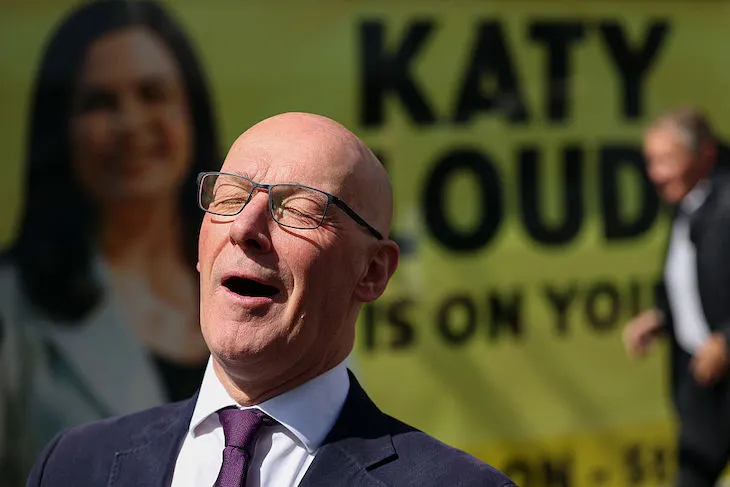
Swinney is determined to remain as SNP leader, without a challenge until he decides to stand down. Facilitating his intent was done in secret by Swinney’s WOKE clique who changed the existing rules rendering leadership challenges almost impossible. Leadership challenges:
Before: 100 nominations from 20 Party branches.
Now: 2.5% of Party members nominations from 20 branches.
Party membership at July 2025 is around 55,000 x 2.5% = 1375 nominations. Swinney and his WOKE inspired leadership is bullet proof rgardless of the outcome of the 2026 Scottish G.E.
This is the real reason Kate Forbes and many other Scottish MSPs, (of the old school conviction) have recently announced their retirment from politics in 2026.
I fear independence for Scotland will be on the back burner unlit for many more years under the pervasive influence of Swinney’s insidious WOKE governments.

The Billionaire’s Playboy Club – written by Virginia Giuffre the girl who destroyed Jeffery Epstein and Ghislaine Maxwell – After reading the journal I am of the view that the record of abuse Virginia Giuffre experienced was inappropriately used by the prosecution and society to demonise the actions of Epstein and Maxwell by attributing all of the events in her sad life to them. It is a fact that she was first abused aged only four years old and from that time she was placed in numerous institutions away from the environment of her family. And even those supposed safe places were, for her unsafe and she absconded from them to live on the streets. Where she was introduced to prostitution
Every single person in this shared world together has a unique story of his or her own to tell, this one is mine. lt was coming up to my third night camping out at Miami Beach in the summer of 1997. I was thirteen years old and hiding from a world full of hurt. Sitting on the shoreline for hours watching the sunset fall deeper into the horizon, my eyes were glazed over with tears, not from being wind-whipped by the rough sea breeze, but from reflecting on the abuse I encountered as a young girl and how everyone in my life who was supposed to be there for me had now turned their backs on me in abandonment. My fears crept up and the excitement of escaping all of them faded now realizing how alone I really was now, and for the hunger
that was paining my belly. At this point, with nowhere to go and only time to waste, I wiped the tears from my eyes and set out to find an empathetic person that I could manage to get dinner money from. If not, it wouldn’t have been the first time I had gone hungry for the night. I walked to the nearest bus stop and asked a handful of people for any spare change, none of whom that could help me. Sitting down on a nearby curb disappointed in grief of my current state, I put my head into
my knees and began to sob. Out of nowhere, it seemed, a black stretch limousine turned the corner and stopped in front of the curb where I had been hopelessly lost. The back door opened to reveal a heavy overweight, balding, old man with a big cheesy smile. Neatly dressed in black trousers and a collared shirt, he was sitting next to a striking young, blonde girl, drop dead beautiful and dressed in a foxy red mini dress she looked like a model. They smiled and greeted me wamly and he kindly asked, “What is such a sweet little girl like you doing sitting alone on the street looking so upset?” Shocked from this strangers concern l was hesitant in telling him the truth. Reluctantly I decided to tell him that I was a runaway, not from around here and really hungry. Hoping at most, I would get some money for food from him. He instantly displayed a chilling excitement and offered me to come into his car so we could talk some more. I proceeded to introduce myself, besides what he had found out about me on the curbside. Telling him my name and a little about how I ended up on the streets explaining that l could take care of myself and didn’t need my family or anyone to look after me anymore. Looking back later in life I can now admit l was in a terrible state, but being such a headstrong teenager, l refused to give in. He asked my age and l told him I was sixteen at first. He coyly replied, “Are you sure? I think you could be telling me a fib? How old are you … really, I wont be mad” Being a terrible liar, I knew had been caught out and couldn’t deny it any further. I told him the truth and he chuckled then paused and answered in a very serious tone “As long as you never lie to me again I will take you in.” Right away l pondered to myself what did he mean … take me in? He gave the driver the location of our destination and rolled the middle window back up to then tell me a story of how his daughter had passed away seven years before from a horrific car accident in which four other teens were killed and he had never gotten over it. What he didn’t tell me was that his modeling agency was only posing for an undercover trade. By the time I found out I thought it was too late to run. His business was really an illegal immigrant trafficking ring of young women mostly consisting of underage girls that he was using as escorts to make him uber rich. Only available to a selective clientele costing them anywhere from SI 000.00 and over per hour of erotic entertainment, the girls were trained to fulfill every sexual desire asked of them, no matter how bizarre the requests might be. The high paid escorts, for Ron’s super rich clientele, such as Yana and many other charismatic beauties would only benefit a fraction of their earnings for themselves, Ron reaping in the majority of the financial rewards and being they were all illegal immigrants they were further trapped by his enslavement. That should’ve been my first clue to get out of there quick but with nowhere to go, and so na’ive I didn’t realize how much worse it could get. Setting foot into that limo, I made my first entrance into a world that would entrap me for many years to come. He introduced himself immediately as Ron Eppinger, a businessman and owner of a successful modeling agency, called “Perfect IO”. Flaunting his oozing wealth by introducing one of his many girlfriends, the beauty next to him was Yana, a supposed model from the Czech Republic who looked like she could be in her early twenties with the heavy load of makeup she was wearing, but really was only in her late teens. She kissed me on both cheeks and politely said “Hello” in a thick Czech accent, making me feel a little more at ease. Convinced it couldn’t be that bad there was another girl in the car, right? I couldn’t have been more wrong.
Ron introduced me to his business partner and told me to go get dressed. He had my whole day planned out for me already. Booked into get my hair colored, a much lighter tint of blonde, and afterwards a day of shopping with the girls I was becoming exactly what he wanted me too, a carbon copy of the teenage Barbie … only I wasn’t plastic and came with many benefits.
Days turned into weeks, being a servant to the sexual desires of this distorted pervert. I dreamt of escaping but where would I go and how would I get away from Ron with him controlling my every second of my day. Separating myself from the other girls being so uncomfortable with enduring the everyday occurrences I was longing for the solitude of the beach again. They were training me up to be an escort prodigy or something like it.
Outrageous orgies were conducted as my lessons with the girls teaching me all of their tricks in the game, it was all for the sake of men’s perverted fantasies, they didn’t get anything from being sexually exploited and molesting each other, except getting paid for it. Everything from oral sex too penetration with toys, I was expected to not only to join in but even perform ludicrous acts of hedonism. I was Thirteen years old and had never heard the terminology of these sexual acts before, and definitely shouldn’t have been learning them first hand. Thrown into a world of chaos, I didn’t know what to do except be as compliant as possible, even when asked to do the most degrading tasks.
The excitement of the lifestyle he offered quickly diminished once I had to pay so dearly for it. The girls that subdued to this lifestyle and enjoyed it definitely put on a good act, but no little girl with hopes and dreams of their untainted future, turns to her mother and say’s “one day I dream of being a prostitute, passed around from man to man, only to grow older regretting so much of my life”
It was all a part of an illusion that Ron painted for us that made it seem so alluring in the first place. Spending my days with Ron, he took advantage at every chance given. Even in his convertible with the top down I would be forced to go topless while he drove around, when I asked him why one day, it was supposedly so I could maintain an even suntan, but I knew it was his way of showing off his treasures. It was a far cry from the simple country life I had been raised in. Wearing designer miniskirts and tops that always revealed too much, of course due to Ron and the girls determining everything I wore, ate, or spoke. We would spend our days at hair laser clinics, shopping, tanning beds, and eating as little as possible.
Through the nights we were expected to become party animals and greet Ron’s clientele with the upmost flirtatious attention and doting as possible. Then whether we were out for dinner, at a party, or at a club, the men would choose his girl and take her home. Every girl had a different price and so did the charges depending on the various clienteles but Ron always kept me for himself.
This way of life was just mind blowing to even comprehend at first. With such a new outlook of the world to try and grasp at my young age I was listening to every word spoken to me with such attentiveness, I was going to try and model what I was observing from the girls. I justified their way of thinking in my head for now, thinking if all these girls seem happy enough, why couldn’t I try to be, it was this or the streets for me. Ron came back for me not long after our conversation got out of hand and took me to a bathroom down the hall. He opened the tap and filled a small plastic cup with water and handed me two small blue oval pills. Telling me to take them both as they would help me to relax a little bit more. I swallowed the pills just following his orders. I put the cup on the counter top and turned back around to face him. Backing me up against the wall and now cornered by this large man I felt his slithering hands began to creep under my shirt, writhing my skin. I closed my eyes tightly and turned my head away from him, hoping he would take my actions as a sign of being extremely uncomfortable but that wouldn’t bother him at all. He was half enjoying my reaction from the smug look on his face, and persisted through it. Continuing to undress my clothes he said he wanted to look me over and clean me up. It was so humiliating having to expose myself to this ageing man and now I knew he was going to end up with his hands and
whatever else all over me. All too soon I hated to be right, as I stood naked before his widened eyes, he told me “you’re a hairy bugger I’ll have to shave you right up young lady”, and I didn’t know he wasn’t just talking about my legs. Standing with my legs wide apart while this man coaxed me through the entire ordeal of shaving, his hands made me feel so dirty. “Have I lost my mind?” I thought to myself but I had to play nice until I had an opportunity to get away, this was not as fun as the girls made it out to be after all, this was utterly disgusting. I had no idea what was going to happen next with this guy, and due to whatever pharmaceuticals he gave me, I still don’t know to this day. Waking up the next morning my head was pounding in an agonizing thumping pain and I was so thirsty. The satin sheets thankfully covered my body, which was still nude from the night before, and I could hear hushed voices standing over the bed where I was pretending to still be asleep. Listening in on their conversation I kept my eyes shut. I knew Ron’s voice from two of the men but not recognizing the other guys I just stayed quiet hoping they’d soon leave. Ron was telling the other man what atrocities he got up to the night before with me and I heard him say, “Doesn’t she even look like an angel the way she sleeps? She’s my own little angel!” He exclaimed proudly. I opened my eyes and rolled over to face them both having to wrap the sheets over my body, really not
knowing what to say except “Good-morning” in a blushful tone.
He gave me sympathy and I gave him my pity, believing this man had a heart. His next proposal was eerie, he said,” If you want, I can be your new Daddy. Someone to take care of you and you’ll be my new baby forever” he stroked my hair such as a caring parent would comfort a scared child. A part of me wanted to accept his words and believe he really could feel that way, and then I also considered how hard it was living on the streets. In the end I convinced myself this would be the lesser of two evils.
The car stopped at a plaza on the water, surrounded by little boutique shops, restaurants, and little stalls with items for sale like sunglasses and costume jewelry. I didn’t know what to say or do or how to act, it all happened so fast I just went along with everything he said, for now. We went to a take out restaurant and ate on the waterside, and afterwards he took me to G.A.P Kids co. to dress me in his idea of proper attire, tiny cutoff shorts revealing the cusp of my buttocks and some shirts
that barely fit, even the sales assistant was shocked at what she thought was my Grandfathers choice in clothing. I couldn’t even believe it myself only an hour ago I was begging for money living on the streets and now I was dining alfresco and shopping at name brand outlets. We then hit a couple of more specialty stores afterwards. He said he had to buy me a
few more necessities to start with. Lacy G-strings and what looked to me like lingerie pieces I had only seen grown women wearing in magazine ad’s or movies was now a part of my wardrobe, in my mind it was a big step up from being a little girl any longer. The driver took us back to Ron’s grand apartment overlooking the isle of Key Biscayne and a large bridge leading into a Miami Harbor. Entering his residence, I was blown away by the spectacular view, rich decor, and white marble floors that were so glossy it looked as if I was stepping on glass. He took my shopping bags to a large room at the back of the apartment and put them into a small closet. The room was considerably large with glass exterior walls that maximized the potential of the panorama landscape soaking in the seascape of Miami. In the room was a gigantic round bed raised off the floor by three steps and mirrors on the ceiling. It looked like a honeymoon suite out of a raunchy hotel. He then exclaimed, “This is my room here and you will be sharing it with me” When I asked him where I would sleep he then sickly replied “With
me silly, where else of course?” With no room for argument I pretended to be O.K with everything that my common sense was screaming out in my head to run. Next I was taken down a long hall at the other end of the apartment to meet five more exotic beauties. Three girls were in their late teens and the other two in were in their early twenties. All of them were from the Czech, here under false passports provided by Ron and his contacts. Yana held my hand while introducing me to the group of girls as “Baby” a pet name she came up with for me, being l was the youngest one among them or ever to be brought in by Ron for that matter. It became my new identity not even worrying to mention my real name to anyone anymore. My identity was no longer important to myself, I wanted to become someone new and “Baby” is who I was. A shocking first impression, the girls were completely nude revealing their voluptuous young bodies with such a careless ease and others were in just a G-string, similar to the one’s Ron had bought me earlier. They were all stunning girls and full of life. Charismatic and beautiful, they were the girls who should be on the front of billboards not selling their bodies to old crewed men for sex. Doing each other’s make-up in front of the mirror and chatting away on the bed with no care in the world, aiming at persuading me to see the highlights of the life Ron gave them and they almost did. Ron left the room for a few moments, letting us all get to know each other a little better and that’s when I started to compile an understanding of what really went on here. Just catching a bit of their conversation from before my introduction, I heard them chatting about the night they were preparing for. Speaking excitedly about some men they would be entertaining in a few hours, one girl was talking about going out to sea with one of these clients on a yacht for a few days. Since none of the girls seemed shy to talk about their professions or anything for that matter, I decided to ask them a few questions about what they did. They were more than happy to expand on their point of view in the conversation, attempting to paint a pretty picture of what they were paid to do. They all began to jump up and down with excitement like giddy school girls at a slumber party. Another girl with jet-black hair and a thick accent, wearing absolutely nothing at all, grabbed me onto the bed with them and into their fiasco, instantly making me feel accepted into their sorority, like I actually belonged somewhere for once. Yana went on to
explain a little more in detail,” We accompany the wealthy friends of Ron. They want only beautiful girls by their side so we come and act however they want us too but most importantly we make them think we want them back too.” Other girls began to jump in with their vivid points of view while playing with my hair, they were taking turns brushing and styling it as they were filling my head with all of the prospects I could have as an escort too. They made me feel beautiful like them, too
beautiful for what a girl beyond my years should feel. I was simply being lured into a dangerous trap, just like they had been at a young age too. It pretty much all came down to two things in their game, the money they would make and the lifestyle they were given. Their enthusiasm only interested me further, making it not only sound like an acceptable way of living but also appearing to keep them all vivaciously satisfied.
I would always dread the end of every night, fearing what new desires
he had in-store for the evening. Sometimes he would hurt me and tell me
to try and enjoy it then do it over and over again until I gave him exactly
what he wanted, I always resisted until I could no more, he was too
overpowering and relentless at getting the results he wanted. At other
times he could be so gentle and caress my skin, worshiping every inch of
my body, all relying upon on what mood he was in. Often though he liked
to play the teacher role and instrnct me on every motion and explain what
would happen when I did those certain things to him. No matter what he
did to me I was only disgusted with myself more and more. I still shudder
at the thought of how he used my body.
I turned fourteen in August that same year and was spending my
birthday loaded on a concoction of pharmaceuticals and alcohol, being
generously supplied by the very man who swore his devotion to caring
for my every need. I didn’t even know myself any longer, completely
shying away from the girl I had grown up to be until to this point. The
apartment was empty except for me, for the time being, and that was
God’s own little present for me … some solitude for once I thought.
Pouring myself another drink I opened the sliding glass doors to the
balcony and walked to the edge. Looking down from the many stories
where Ron’s apartment was, l wished myself a happy birthday out loud
and wondered ifmy family even remembered the day’s occurrence.
Dwelling in my sadness for the fourteen years of suffering and
loneliness I had already endured, the tears swelled up in my eyes,
trickling downwards making my eyeliner inevitably leak down my
cheeks. Inside I felt so trapped and began to entertain the thought of
jumping over the edge, it all seemed much easier, and the simple
blackness that death had to offer rather than the tangled mess I was so
tired of fighting to get out of seemed a much easier approach. Detached
from wanting to feel anything, I became so numb towards my life’s own
tragedies. I couldn’t live like this any longer. I lifted my bare legs over
the edge of the railing and sat looking at the ground beneath me so close
to even just slipping off the edge to my very death. I couldn’t think of any
reason not to fall. I thought I had made too many bad decisions to keep
going on but some force of a higher nature had other things in store for
me.
The sliding door slammed open with a burst of speed and Ron scooped
me up in his big arms and brought me inside to our bedroom. Laying me
down and seeing the look of despair in my eyes from my tear stained face
he went into the bathroom cupboard and returned with three pink pills.
Forcing me to swallow them using the angered tone of his voice he
thought he was turning my sorrows into a distant dream as I passed out in
his tight clutches, crying myself all the way to sleep. He didn’t even ask
me what was wrong, probably because he knew already.
Soon enough the crnmbling of his evil empire in the underworld of
selling sex for his own advantage began with a single crack in his perfect
scheme, and proudly it all started with me. Ron got a scare one-day and
rampaged through his apartment telling us girls to only pack our
important belongings and some clothes as we all had to leave right away.
I didn’t have much belonging to me so I basically sat there watching
everyone rush around frantically and was curious what could’ve gotten a
man like Ron so scarred. Once we were packed up and in the limo he was
trying to calm the frantic girls down after all the panic that spread through
the apartment like wildfire, l was the only one sitting there half amused at
the entire situation.
He began by assuring us that everything was going to be fine. Calmly
he continued to tell all ofus packed in tightly, even for a limo, that we
were all taking a long trip to Florida’s countryside because someone has
reported an anonymous tip to the missing persons unit at the local police
station identifying a very young girl as a possible victim of abuse living
at his apartment. Ron knew what a landmine of trouble he had brought
upon himself making an exhibition out of me on the streets of Miami, I
didn’t pull off the older look like the other girls, l actually looked
younger than my age with my blue eyes and freckles always giving the
impression of my youthful innocence. Now he just had to do whatever it took to ensure he stayed as far away
from the authorities as possible. Arriving at a ranch in central Florida
many hours later and I assumed it belonged to Ron knowing never to ask
him things like that. I knew my purpose and it wasn’t prying into his
personal life outside of the bedroom. There was a main house, a few
cottages, some staff quarters and paddocks where the horses were kept.
was in heaven … ! thought at first. Finally, something I could really enjoy.
Riding was my passion, basically growing up on the backs of horses since
I was just able to walk. Not surprisingly I began to despise Ron and all of the girls for the
gross exploits they made me do with them. Beginning to isolate myself
from everyone I’d rather spend my time sitting under a tree watching the
horses graze, writing in my journal or painting but mostly avoiding
everyone possible unless Ron required me elsewhere. Nighttime was
always a reoccurring nightmare for me. Relived over and over again in
many various ways. Ron would always start by making me some drinks
and offering an assortment of pills before indulging himself by
grotesquely putting his genitals in my mouth and tell me how to give him
what he would call a “first-class blow-job”, and I was being judged every
minute of it. Ordering me to slowdown or speedup or maintain a perfect
the phone were nothing short of desperate plea to keep me on as long as
possible. I thought he was just trying to help in someway. Giving him
assurance in the fact I had survived this long obviously I can hold off a
while longer I gave him my love and told him I’d be in touch.
Thinking I had slipped away unnoticed I entered into the room that I
shared with Ron, hoping I got away with my brief and very needed phone
call. The place looked empty and everyone else seemed to be out and
about so I decided to have a bath in the spa and try to relax before the
night’s precautions. My body glided into the steamy water as I began to
think about T.J and how good it felt just to hear from a friendly voice. My
thoughts drifted into the days I missed when I felt I could be silly and
childlike and I nearly forgot for a moment how grown up I was acting
these days. My first glimpse at the image surrounding me when I resurfaced above
the water was daunting. There was Ron was standing over my tub,
looking down at me with an eager display of his arousal. He began to
undo his pants and take them down when he told me “put your lips on my
cock”, I was too slow in responding to his request so he grabbed me by
the back of the head and forced me into his groin. I had tears streaming
down my face as I looked up to him with the saddest blue eyes hoping he
would take pity and stop, but he never did. I was really hurt by his
aggression and he definitely knew it this time, which I believe only made
him more heated. I closed my eyes and began to count using the time to
keep my thoughts elsewhere believing every number I counted only
furthered me to the end of this. I just got over a hundred when he finally
exploded in fulfillment still half submerged in the deep bath I was
struggling to gain my bearings in as Ron was picked me up out of the
bath and carried me to go to the bedroom, which was just outside the
French adjoin doors. Still damp from the hot water in the spa I had goose
bumps from the chill of the fresh air where he brought me to the bed and
proceeded to deeply violate my every being. Eventually his scars that he
left were too deep ever to be healed and would even carry on through the
years to come. Upon his bursting with pleasure for the second time, he just got up
and left, without even saying a word to me. Left alone I was awake for
hours after that. There was no escaping the pain that night. I lay naked
wrapped in the sheets, sobbing in the dark. My feelings of being hurt and
disgusted after his abusive ordeal “When will it ever stop” I prayed to
God and begged for death rather than face another day in my life. I woke
up still alone the next day and exasperated from the misery I felt the night
before. Ushering through my drawers to find something to throw on I
could care less what lay in store for me today, couldn’t be as bad as being
raped by a scary man repeatedly.
rhythm I was constantly being criticized for my efforts in pleasing him.
was eager when he actually gave me a compliment. The rest of the
evening was always a surprise left up to a moments notice. Quite
regularly he would proceed with having the girls dress me up in some
sexy outfit and loads of makeup then entertain him with a lesbian
reenactment revolving him in the center. Sometimes they would use
dildos and other foreign sex toys, Ron liked to see us hurt during sex,
sometimes even penetrating me anally but I always resisted and would try
to redirect him with another sexual desire of his but I had no excuses
when it came to me having to use the sex toys on him, he told me how
men have g-spots in their rectum and instructed me on how to precisely
penetrate him. These nights went on what seemed like an eternal sentence
for the price of not living on the streets, where unfortunately for the one’s
still there, I feared and knew from my own personal experience, could be
much worse. Needing some contact with someone ofmy adolescent mentality I
called one ofmy school friends from the past, whom I wont name out of
privacy, but I’ll call him T.J. We were so close and I knew very well, so
well, I had memorized his number a long time before. He was my first
puppy love sprung from of a childhood friendship. Being my very first
crush the summer before all of this happened he was the only person I
could think of that would care enough to talk to me. In the middle of the day, the least busy time to be noticed, I snuck into
one of the vacant guest rooms and used the phone to call my good friend.
The sound of my voice radiated a chill in him. “It’s you, oh my God
Jenna! Are you okay?” he was so shocked to hear from me and the sheer
fact I was still alive. Nearly three months now without a single word to
my family or friends, every one doubted my return. My attempt to forge a
happy voice when I spoke to him failed and I absolutely crumbled when
he was at a loss for kind words for me. I told him ofmy current state of
affairs. Telling him of Ron and how I was terrified of him, trying to
escape in the middle of nowhere was useless. It was like being kept in
cage that I was unable to break free from. Going on to dump my issues on
T.J, I proceeded with how I longed to call my family and to be with my
them for good but was too afraid they didn’t want me, knowing I’d just
be sent away somewhere else again and to me after all this time was like
going from one cage to another. He had been called by them numerously and promised me that they
were very worried and even hired private investigators to try and find me.
Given I was eleven years old the first time I was sent away, my trust in
there sincerity he spoke about was seriously doubted. I kept the
conversation short just in case my absence was being noticed and I left on
the note that I would speak to him again shortly. His attempts to get off
them that the confession came from the house-keeper who said she saw
me use the room regularly but was never messed up, so Ron looked at the
recent telephone bills and found the same number dialed from that room
consecutively, he knew it was me right away. At least he didn’t know it
was another guy, I thought to myself, or I probably wouldn’t have made it
out of there alive. Ron came back to usher the girls out of my room and told me I had five
minutes to pack my clothes, which he made clear were to be my only
belongings to take with me. He washed his hands clean of me that night,
or so he thought. The driver came knocking at my door, just as Ron said,
no longer than the five minutes that he had offered me and he took my
single bag to the car. I didn’t want all the jewelry, music or books that he
so caringly bought me as tokens of his twisted affection. Only taking my
clothes and a wad of hundred dollar bills I had been saving, l slit a hole in
my scrnnchie inserting my cash for a rainy day that I was more than sure
was just around the corner. We drove for hours, until I started seeing familiar surroundings. I
couldn’t believe my own eyes. I was back in Miami, but not on the
beaches, somewhere in the CBD this time. The Driver delivered me to the
front door with my one bag and waited at the door with me. Now I knew
how it felt to be a puppy picked from her litter as you can only hope your
next owner would treat you with some sort of kindness. Another balding man answered the door but he wasn’t so grotesquely fat like Ron, but still a new owner at that. He looked me up and down and
seemed amused as he snickered to himself. With one last look to the
driver over my shoulder it was almost an appeal to him for some way to
help me. I knew he couldn’t anyways, l was just hoping. He told me his
name was Charlie but didn’t even bother in asking me for mine. I was
sure Ron already filled in all ofmy details when he arranged this.
Charlie picked up my bag and led me into his bachelor pad townhouse.
I was never given a welcoming tour of my new residence or made to feel
comfortable. He walked me up the stairs and opened one of the doors in
the small hallway. Telling me this would be my room, he showed me into
it and told me to wait, he would be back shortly. I sat on my bed afraid to
touch anything and after the warning Ron gave me I knew I had to watch
my step around here. I put my head down onto the pillows my where
world was falling apart and let my emotions downpour. Exhausted from
the days emotional tum10il I ended up falling asleep. I don’t even know if
he ever came in at all that night. The next morning I looked out of the window to see my new
surroundings. It was a beautiful sunny day outside, unlike the dreary cell
I was locked away inside of. Feeling the sun warm up my face through
the glass, it radiated a familiar sense of comfort from the days of the good
Starting my day with a few of the supplied oxytocin ‘s and a bloody
mary, made by the live-in house chef. Having two celery sticks for my
breakfast, I wanted to lye out by the pool and forget the world. Ron hated
tan-lines so to be caught with a bikini top on was a big no-no in his mle
book but after my cries to stop were so blatantly ignored last night, I was
out to piss him off so I didn’t remove my shirt. I put on my headphones
and before I knew it had fallen into a deep slumber from my self-made
therapeutic cocktail, the only way I knew how to cope with the emotional
turmoil on the inside.Desperate to hear his voice I called my friend T.J a few more times that
week. I needed to feel like someone out there really knew me. Sometimes
we could just chat like old friends with no care in the world and laugh at
a distant memory from too long ago. Then would come the good-bye part
of the conversation and we would both get teary-eyed not knowing what
could happen next or if this would even be the last time we ever spoke to
each other again. My biggest fear came to reality when I was in our bedroom one
afternoon, just lounging around out of boredom. Ron came bursting in
through the door, red as a tomato. l couldn’t help but feeling I was in big
trouble. His face was distorted and raging towards me. I knew right away
he must have found out that I was calling T.J, but how, I had no idea. l
had always tried to be as invisible as possible, soon enough it was all
explained. “Are you trying to get me caught? You are nothing but a stupid girl
you know that! What am I supposed to do with you now?” He was
tearing up the room while his rants gave me something else to think
about. What would he do with me if he had no use for me any longer? I
wasn’t even thinking about him being caught for soliciting illegal
immigrants for the purpose of prostitution. I was more worried that he
would be upset at the fact l was talking to another guy, maybe even
jealous that he was at least my age. I replied with simple sentences that I
could manage to get out between all the shouting. I kept saying, ‘Tm
sorry” and putting my head down in shame. He picked me up by my
throat pinning me against the wall, “You are going away, far -far away
from me and you better be nicer to the next man I send you to, I’ve heard
he’s not a nice as most would like. Are you fucking hearing me Bitch?” I
slid down the wall, choking on the first air entering my lungs, breathless
and terrified, I never thought Ron was a nice guy but I had never seen
him lose it this bad. Now I was being sent me away to another stranger,
another man, it only terrified me more. The girls came in to say their good-byes all of them were crying and
asking me in their best English languages, why l had to call someone and
lose everything? l was able to find out through the broken sobs off of
parts of my childhood. I reminisced how it had used to be before all my
life turned upside down. Before all of the fights with my family, before I
had to look after myself, and before I was a slave to men.
Those days were too long gone now. With too many hard times passing
me by it seemed surreal to think that life had ever even existed in the first
place. With that thought I shook myself out of reminiscing that way.
Whatever was going to happen was out of my control now, I just had to
give myself some hope that I would have the strength to get myself out
these circumstances before anything really bad happened.
knew what I had to do to get this over and done with as quick as possible,
but I was dreading this moment from the second he greeted me at the
door last night.
I fell to my knees and gave into his demented perversions. Thankfolly
it didn’t last long before he climaxed and I was allowed to get myself
dressed and ready to go out. I was nothing but money well spent in his
mind. This was another extremely wealthy man with a completely new
set of wants and needs asking a fornieen year old girl to affectionately
dote on sexual desires to a man in his mid forties. I really bated myself
these men, and just about everything my life had boiled up to by this
point, but I knew from a young age that to survive in this harsh world I
would have to do many things I would not willingly choose to. At the shops he decided he would choose the clothes he paid for, which I might as well have been declared a teenage prostitute. Just like Ron he
also liked it that way. The more degrading he was to me only proved his
ownership ofmy body. He bought me tiny cocktail dresses, and skimpy
outfits, which I thought closely, resembled the lingerie he’d also bought
for me to wear for him. I noticed that day that he enjoyed parading me
around the shopping mall and out for lunch at hooters, even joking with
the waitress that he’d like to buy her unifonn because he thought it’d look
sexy on his new girlfriend. We arrived at his two in one, Restaurant and Club, at around nine
o’clock in the evening. It was a revolving tower called “Hot Chocolates”
in downtown Ft. Lauderdale. The food was delicious and for the first time
since being with Ron, I ordered a hefty meal with steak and mashed
potatoes with a scrumptious gravy smothered on top. Charlie ordered
strong cocktails for us both and before l knew it my head was spinning
and we were on the dance floor together. The music blared in my head
and the rhythm ofmy body took over, completely forgetting about even
dancing with Charlie and letting the music take ahold and work it’s
magic. It didn’t do me any justice though as Charlie watched me imagining
what pleasures lay in store for him later on. Taking me home before the
club had even closed, he just couldn’t wait to indulge on exactly what he
was fantasizing from beforehand. Once back at his townhouse he led me
up the stairs into his bedroom and pushed me down in the middle of his
bed. The motions from the wavy mattress made me dizzy and feel even
dmnker when he lay on top of me. Coming at me like a hungered beast
wanting to ravage his next meal, it was intimidating as he entered into me
with a forceful thmst, he moaned out in delectable heaves. I looked away
while he self indulged his own gratifying needs using my body as his
instmment in pleasure. I only grew stronger in my head letting the hatred
for men desires intensify.
Chapter 2
The house was quiet so I just assumed Charlie was still asleep. I
decided to get cleaned up and have a shower. Not even a knock on the
door when Charlie walked in with ease. “Typical” I thought. It was an
easy way for Charlie to break the ice. “You really are as beautiful as Ron
said” as he opened the curtain. Watching me rinse myself in the shower
and me knowing I had no way out of this except to go along with
whatever he wanted. !just looked down at the mention of Ron’s name
wondering what else he had told Charlie about me. Realizing later that he
wouldn’t have said anything anyways, in fear I would’ve been a damaged
product that wouldn’t make him the money that young girls go for.
He just sat on the side of the vanity top and continued to take observations of me standing submerged under the falling water. I avoided looking at him and let him do all the talking, after all I knew what I had
to say was of no importance, that is ifhe was anything like Ron. Between
the water beating down over my head I could slightly hear him ramble on
about some club and restaurant he owned in FT. Lauderdale. He said he
was going to take me shopping for some club outfits and we would party
together tonight, as if I was supposed to be excited over this so-called
treat of his. I looked up and gave him a quick smile adding a compliant nod and
turned my attention to turning off the faucets and quickly grabbing my
towel. I was falling so far from who I used to be, shying away from my
outgoing personality to a quiet girl that didn’t even recognize herself in
the mirror anymore. I dried myself off and looked at the man standing
between the doorway and me. He was still watching me with a sleazy
look on his face but now preceded to move in my direction, arms wide
open. He embraced me, running his hands up around my youthful curves,
licking my neck and earlobes. Then his large, rough hands cupped my
small breasts and continued downwards to feel in between my legs. I
at first. I couldn’t even comprehend what was happening so rapidly. 1
thought Charlie could’ve been in some kind of trouble with a business
friend he had done wrong too, but then one of the men in black shouted
“F.B.I this is a raid get down with your hands on you head”, in too much
shock to move three of the men grabbed Charlie and threw him to the
floor and cuffed him. I sat up in bed with my sheets covering my naked
body and watched as they dragged Charlie from the room. Still completely nude he wasn’t even aloud to get dressed. Another agent had to come back in to the room to find him a pair of shorts. I could hear him
screaming at the top of his lungs all of the way outside He was screaming
and the last thing I heard him yell was “If you say anything you know
who will find you!” I could hear more threats being yelled at me but I
couldn’t make out what it was that he was saying. I was in total confusion
and couldn’t believe what was happening. There were so many unifom1ed
agents I felt so small compared to all of them but they were all very kind
and helped me out of bed allowing me to remain covered up with the bed
sheets so I could get dressed. The first decency I had been showed in a
long time. It was an odd feeling to acknowledge. I knew the life I had
come accustomed to for the last six months was now over, and in so
many ways I was relieved but was also very nervous about what lay
ahead of me. I excused myself to the bathroom to put some clothes on. Not having
anything half decent, like a pair of jeans and a t-shirt. The best I
could come up with was a metallic blue miniskirt and a tiny matching top
that fell just below my breasts, hardly clothing at all it was more like
scraps of cloth. Putting my hair up in a tight bun with the scrunchie that
held my five hundred dollar bills I was led out of Charlie’s townhouse for
the very last time. Starting my life over … again, I wanted to leave behind
my every memory belonging to these horrid times. Only taking small
sack containing my underwear, makeup bag, and journal with me.
The agents led me down the staircase and my last vision’s of Charlie
was bent over the hood of a police vehicle still screaming and
handcuffed. I slipped into the backseat of the car and was driven to
Broward County Police Station where the Federal Agents interviewed me
about my entire whereabouts for the last six months. I was so scared of
what Ron would do if I told the agents what really happened but at the
same token I knew he’d most likely kill me anyways for being such a
liability. Over the next few hours I sat down and told the agents how Ron’s
business worked and what l part l had to play to him. I was able to ask
how they found out I was at Charlie’s house and they informed me that I
was being followed all the way from Ocala, Florida where Ron had me
stowed away for the last four months. T.J, my friend, called my parents
The next two weeks I was expected to be at Charlie’s beckon call, never
aloud to leave his side, even making me sleep in his bed from the second
night onwards. I never even got the chance to call T.J again. It was too
much of a risk anyways. Thus pushing him further out of my memory,
too afraid, of the emotional repercussions. Our typical routine was to wake up get showered and dressed and I
would put on my make-up while Charlie made his business calls for the
day. We would leave the house mid-afternoon and nm his errands do
some shopping, sometimes meeting his friends or business partners for
lunch, none of the men he introduced me to seemed offended at his
choice of adolescent eye candy. They’d just continue to chat away as ifit
was nomial to be in public with his arms draped over a girl young enough
to be his granddaughter, not too shy by giving me a flirty tap on my
bottom or even try to kiss me. My last night was no different from every other night. We went
shopping that day and out for lunch alone. Later we headed to a club his
friend just launched and it was his grand opening that night. The club was
called “Iguana Joe’s”. We met up with his friend and said our hellos.
They both seemed so excited about the club and Charlie was full of
compliments all around. The club did have a line out the door which
looked a mile long coming in, luckily we didn’t have to use the front
door. Charlie returned from the bar with two giant long-island iced teas,
which were his favorite drink to start with and then we just sat for a while
watching people dancing. Occasionally conversing about passing
thoughts. We danced for a while having a few more drinks and after
about two hours, Charlie said he was ready to go home. What a daunting
time to look forward to, he always liked to have a brief sexual encounter
before drifting off to sleep with my naked body intertwined between his
arms and legs. It was bad enough to have to entertain him at every given second of the
day but his grip on me was so stifling I felt so chocked I could hardly
breathe much less sleep. Eventually my over-worked mind would drift inand-out of a restless sleep, but constantly on edge. I thought many of nights of escaping, but where would I go? Would one of Ron’s ever-soconnected infom1ants finds me and turns me into him to be disposed of for good? I just prayed that I wouldn’t be another missing person to add
to the list of girls found in the local ditches. I knew that’s where I was headed if I screwed this up for Ron again.
As if my guardian angel was there the whole time listening to my secret prayers, my rescue came the next morning with an abrupt bursting through the bedroom door at about six am. Charlie and I were still lying in bed together and his grip on me was still tight. The men dressed in all black military gear had large guns and helmets on. It was so frightening
whole life they ended up repeating the same attributes as the people who
initially hurt them in the first place. One very sad girl I’ll never forget her,
had a father who had been a heroine junkie and decided to play
Russian Roulette with some of his addict friends and by fate or chance
took the bullet straight through his brain, killing him instantly. Her mother
being a heroine addict herself spiraled downwards after his death and gave
her four year old child to her ageing grandmother that eventually had
to put my twelve year old friendin this un-dire circumstance. I can only
have he highest hopes for hertoday but unfortunately for most girls that
have been victimized by society aren’t able to ever stop being a victim
for the rest of their lives or
go on to make other people victims themselves. A sad and unfortunate
fate for so many innocent, and it happens so much more than anyone
would rather admit too instead of just trying to find a solution.
after our first phone conversation and ever since then, the F .B.I were
tapping the phone lines and recording every conversation. Completely
unaware of T.J’s caring act of deceit, I was in such shock that they had
been tracking us for so long. I knew now, with or without my help, the
F.B.I had enough on Ron to put him away for a very long time, if they
could catch him, that is. Having so many crooked people working for you
can be an advantage when you’re in trouble. Like having a pair of eyes in
every city. Ron was somehow able to find out about Charlie’s arrest and
immediately deserted the country to avoid legal punishment, not to mention
the discretization of his esteemed clientele that the feds were now on to.
Ron had so many countless charges put up against him, eventually when the F.B.I were
able to track him down they were able to have him arrested in Yugoslavia
and extradited back to Miami, he was finally held accountable for being a
pedophile, soliciting women for prostitution, and running many
illegitimate and illegal businesses. By the time the F.B.I caught him he
was in his mid-seventies when he died of old age serving his second year
prison for a lengthy sentence. Coincidentally I was told of his punishment
and death many years later by one of the same F.B.I agents that had
rescued me from Charlie’s arms. I was taken out of the interrogation
room after the interview was over
with and told to sit at one of the officer’s desk while I was waiting for
someone to pick me up. Uncertain of who that someone would be I
assumed it would be someone from the juvenile delinquents division to
take me back to some state operated lockdown facility. Not the nicest of
places to call home, but I had no choice in this matter. Sitting back in
the revolving chair I was twirling out of boredom and
listening to the roaming conversations within the office. I pondered in
fearful anticipation of the dreadful places that lay in store for me. Having
to of spent a lot of my adolescence in these kind of places for the sheer
factor that my mother said “I was out of control and unable to handle” by
eleven years old. There was plenty of just reason for me to be so scared of
those places. What I knew lay in store for me were constant fights
between the rough girls being settled with violent raids then out came the
pepper spray and then the strip-searches and worst of all, no sunlight. It
didn’t matter if you were a quiet, shy girl that didn’t belong there, when
there was a fight, which was could be like a few times a week, every
person in the room was considered a threat and were treated like a violent
criminal. I hated those places and the memories they gave me. That’s
why I always ended up back on the streets. No child or even a juvenile
should have to be subjected to such unreasonable force and neglect. Some
of the girls were so used to being subdued to this kind of treatment their
Chapter 3
Hours later I was still twirling myself in the same office chair when 1
spun around to see my Father walking in my direction. I nearly fell off
my seat at the sight of him. Gripping the chairs handles I couldn’t
imagine what in the world I would say to the man I once used to call
Daddy but now hated for the abandonment and unforgiving wounds he
instilled inside of me. He contemplated putting his anns out to hold me
but instead anger and shame took over and he just shook his head. I never
saw my Dad cry until that day and I have to say it made me feel young
again and sad I had disappointed my parents again. The agents now
standing beside us led both of us together back into the interrogation
room to re-tale my journey to my father who they said I had no choice to
tell, or they would have to tell him for me, being I was an under-aged
minor and Ron violated the statutory rape law, among many others, when
he took me back to his apartment and kept me as his sex slave. My Dad
couldn’t believe what he was hearing and for his lack of better choice in
words asked me to stop talking, he was just happy to know I was alive.
Like everyone I’d known in life they would rather brush it under the
carpet and not deal with the pain rather than realizing sooner or later it all
comes out sometime in our life even if it transgresses into our future then
becomes what we are willing to accept out of partners, work, and people
in general. Simply saying in other ways than with words that our bad
decisions befall our tragedies later on in life. The next discussion was led to
where I would go to from here. Before anyone could put his or her suggestion
forward I leapt in with my two bits and made it obviously clear to my Dad
that if I was sent away to
conformity and unwilling to participate in their drilling regime. I didn’t
feel like I owed any.explanation to these people even when they brought
a physiologist in to speak with me, “What was the point when I would be
gone any day now” and as if any of these people even cared in the first
place, I was just another number in the system and they had a job to do.
There was one mega-bitch, female guard, named Evelyn and she used
to either really like you or really hate you and God-forbid you were one
of the unfortunates that she didn’t like, she’d make your entire stay their
an agonizing nightmare. Constantly picking on girls who were not strong
enough to cope with their predicament or past issues, she’d stand them up
and publicly humiliate them, and even when they begged her through
their sobs to let them sit down, she’d only tom1ent them worse. Which
only made the strong girls want to antagonize the fragile one’s with more
malicious intent. Luckily when I had previously been there she didn’t
take much notice of me, but I stayed out of harms way with her, just
being quiet and observant. Being back here seemed like an eternity
while I held my end of the bargain but unfortunately my Father didn’t.
The first chance I saw to run I took it. I was being sent to go get my blood
and urine taken for drug and disease analysis. My driver would be a
volunteer from the community and it was the perfect getaway for me.
I was brought from the white solitaire room and led into the bright sun,
feeling like today would befavorable in my escape. We got to the doctors
office, my whereabouts
told me I had plenty of ways to run and I scouted out the best looking
route. My plan was to barge through the volunteer’s inexperienced grip
and wriggle my way out if needed, then hit the asphalt, running until my
legs couldn’t carry me any further. Playing it out in my mind felt
different to the anticipation that led up to actually doing it. The inner
strength I had was the only thing going to help me in this circumstance.
We arrived in the parking lot and I hadn’t said a word to him the entire
drive, the small framed Spanish man tried to make pleasant conversation
but I couldn’t see him as anything but a challenge, so I kept quiet instead,
ignoring his humorous attempts to befriend me. The car pulled to a stop
and he came around the side to unlock my door, this was it, “here we go”
1told myself, and pushed past the volunteer. His arms grabbed out at me
but only caught me by my shirt, he didn’t even put up much of a struggle,
like some of the other trained one’s I had gotten before, they would put
me into body locks of all sorts but he just tore at the collar of my shirt
letting me break free. 1had done this many times before so I knew I
wasn’t gone yet, l had to first get out of these clothes. The cops would be
looking for someone of my description in the area with a blue shirt and
khaki pants, so my first stop was a busy shopping complex. I took the
money from my scrunchie and bought myself a pair of jeans, a shirt, and
another lockdown facility and if he betrayed my trust, again, he would
never see me again. I would disappear for good this time and for all he
would know I could be dead in no time on the streets. He looked at me
and for the first time in my life he saw the many years I had grown up in
the time J was gone and heard the seriousness in the tone of my voice
when I made my vow to him. He put his head in his hands and told me
the bad news, my Mom didn’t want me to come home and she was
making his life hell for even suggesting bringing me back into their lives.
I for some reason threatened her lifestyle and drove her crazy. I had been
surprised about a lot of things lately but not that one. The last time I saw
my Mom she ever so carefully lied to me and told me she was bringing
me to an eye-doctor for an infection. Instead we walked into this tall blue
building with people in unifom1s holding clipboards and a few muscly
guards, she ushered me inside and hurried up to close the large auto lock
doors behind her leaving me there alone and imprisoned, which is what
led me to recently living on the streets. My life was hell as long as she
was in control ofit, so when she didn’t want me back at home I was fine
with that too, but there had to be somewhere else I could go. My dad said
he had no choice but to put me back into the facility, but he made a
sincere promise that he would not take any longer than a week to try to
find a place for me to stay and to go to school. A week I could deal with,
but I was still unsure if I could trust my father and hold him to his word,
but yet again, I had no choice. Being my legal guardian he could send me
anywhere he wanted and there would be nothing I could do, except for
keep running. I gave in, and before he left the officers to take me back lo
the last facility I had run from, 1 gave him one last hug and reminded him
“one-week and I’m gone”. Nodding his head and squeezing his arms
tighter around me, 1 could only hope he meant it, but he didn’t look too
optimistic. In the police car on the way back to the facility they had to handcuff me
in case I ran again, but I had no intentions to anyways. I was going to
give my dad the week before I began to search for the right opportunity to
jolt again. I was like a “ghost come back,” said so many ofmy girlfriends
from the past and there was now a lot of new faces there too. At night
when we were all in bed and supposed to be sleeping, J would be
daydreaming of better days and imagine myself somewhere in a
comfortable bed, actually enjoying my life for a change. A week went by
in this facility spending most ofmy days locked up in what they called
“The White Room”, a bare room with concrete flooring, no toilet or even
a chair to sit on. The only comfort I had was the blue sweater that was
provided as part of the uniform, and my hair scrunchie filled with my
stowed away cash that no one had found during my unpleasant stripsearches.
I would spend hours in the white room for objecting to their
waited for me to come find her outback smoking cigarettes and having a
beer. She stood up from her seat and squinted her eyes loathing in her
hatred she coldly slapped me hard in the face. The slap stung, but I
matched her look with a familiar stone-coldness that only she could
understand. Immediately we both started to cry and we washed away our
anguish and resentment through our tears and consolidated our feelings
for the first time since the chaos first affected our lives. She didn’t want
to know much of my whereabouts and she still had a lot of anger to get
over but she asked me to stay home at least. My little brother ran through
the back door and hugged me so tight, I started to cry again and was
saddened by how much time I had missed the time I had lost just hanging
out with my brothers and it took me even longer to realize how precious
time really is. We were never going to be the average Joes next door but
at least this was better than nothing. I loved being with my family again.
We had BBQ’s and bon-fires with each other and life began to slowly
piece back together. It was bizane how normal it was when I first got
home. I turned fifteen that year and it was the exact cup of tea that I had
needed to boost me up and get me on the right track. I decided to go
school to acquire my general education diploma or G.E.D and got
a summer job with my Dad at Mar-A-Lago, Donald Trumps
exclusive country club in Palm Beach. Surrounded by lush acres of
tropical landscapes, manicured gardens, and a mansion made into a beach
club for the rich and famous it is known as the was in sheer awe at the gold
arched ceilings and the grandeur ballrooms. The spa where I worked was
world class, not only oozing in style but inthe way each and every clientele
was treated with the upmost service. Myfocus was now set on becoming a
massage therapist, and working my way into a luxurious spa like the one
I worked for now, only I was a locker-room attendant there. I studied many
books about the anatomy of the human body and how you can affect a
person’s well-being and health for the better through a simple healing touch.
It was amazing to me the way the body responded to massage. I was more
than just interested. I was determined to become a therapist. It was one of
those anatomy books that I had my nose buried in one afternoon on a
quiet Tuesday and it could get pretty lonely in the locker roo, so if! weren’t
busy I’d sit outside by the spa’s reception and read my books in the warmth of the Florida sun.
A lovely looking woman in her late thirties who spoke with a proper
English accent approached me. I assumed it was a general question, “like
where’s the ladies room or was that the famous model from so-and-so “
but she was more interested in the book I was reading. Only believing
at first we were just making small talk she was really intrigued at my
choice of reading. She then asked if l
a sweater for disguise and my next stop was Dunkin Doughnuts’ to get a
chocolate iced doughnut and a cup of coffee. I didn’t have doubts about
getting out of the facility but I wasn’t expecting it to be so easy this time.
My past excursions all began with an abrupt struggle sometimes ending
in a brutal state of affairs after being pepper sprayed and fastened into
some painful lock by forceful men four- times my size, then tossed into
solitary until I saw my next chance to desert. I got to know the guards
real well, as I spent a lot ofmy time being dragged down to the white
room by them. There was Jim, a large black man who could’ve doubled
for a “Miami Dolphin’s” defensive linebacker. John was another big man
with a ponytail and a mustache, and he looked like someone who
definitely owned a Harley. The last guy Scott had a smaller build but
made up for it with his steroid injected muscles bulging out of his neck
and their was the added height from his curly fro. When they weren’t
restraining me and holding me captive in solitaire, they were actually
pretty nice guys, not afraid to have a laugh after some explosive incident
and I held no contempt towards them either, they were just doing their
jobs. It was de’ja’vous all over again, free at last but where would I go now.
With Ron’s scouts on the lookout for me, and now the authorities being
notified I was a runaway again, I would have a lot of people searching for
me, so I knew I had to be careful where I went. My last stop before
leaving the shopping center was to use a payphone to call my parents, my
Dad answered completely surprised to hear me on the other end, I wanted
to sarcastically thank him for breaking his promise to me and I hope he is
happy now, he just lost his daughter for good. I stopped to listen to what
he was trying to say and he told me “I was getting you out in a few days,
I found you somebody to stay with, she’s a good person who has got
teenagers your age, I was just trying to convince your Mother to sign the
papers to get you out of there”. I was so outraged at her ability to put her
own wants before the needs of her own flesh and blood daughter. I told
him to come pick me up and bring me to the house so I could speak with
her for the first time in over a
year, but if I felt threatened for one second I will be on my way quicker
than a blink of an eye and on my own for good. He wasn’t overjoyed at
my proposition, knowing what position this put him in as her husband but
as my father he decided to put me first for once and take me home to
confront my mother. I arrived at my house for the first time in a long time
and everything looked different. My parents refurnished and renovated
the house. I didn’t even have a room anymore, my old belongings and bed
were removed and it was now the office. Of course my Morn didn’t meet
me at the gate or the front door like her long lost offspring reunited. No,
instead she ever pleasantly. She said the boss was upstairs and waiting
my arrival, so with that I said bye to my dad and began to follow Ghislane
up the stairs. I was so nervous, but I didn’t show it. J kept my reserve and demeanor
cool as ice, trying show maturity for the open position. We continued on
to the massage room, passing by a grand crystal chandelier, and a couple
lengthy wooden hall tables displaying a multitude of photos displaying
young girls and beautiful women, trying not to gawk at them I didn’t
even notice that some of those girls were only wearing their smile.
Ghislane asked me how my day at work was and I told her it was easy
peasy as always just trying to make simple conversation. There was a
fork at the end of the staircase and she led me to the right hand side. The
lights were dimmed in the bedroom but I could still see the King Size bed
in the middle of room, we did a U-tum around the bed, which led us into
a massage room. Dripping in luxury I could’ve definitely compared it to
the renowned Mar-a-Lago’s spa’s, it had marble walls and a glass
enclosed shower and self-automated steam room at the very end of the
Burberry carpeted room. There was a large mirror over a basin to the
right of the room with an array of oils, ointments, soaps, and lotions and a
small closed door, which l assumed must be a closet. The only thing that
struck awkward about this room was the naked man laying face down
atop of the turquoise massage table in the center of it. “I had to be
prepared for this,” I told myself. Massage was something I had never
done before so l quickly brushed away my thoughts of possible schemes,
wanting to believe whole-hearted this was going to be legit. Ghislane
introduced us to each other and l proceeded to make his acquaintance.
Looking up at from his downwards position, he looked me over and
gave a smile to Ghislane, an obvious notion of his approval. He was
Jeffrey Epstein as she pronounced for him, as if I was supposed to recognize
his name or something. He affirmed, “It was his pleasure” and replied to
just call him Jeffrey, “No need for formalities” he answered, cleverly
putting me at ease. This man did not look like someone to beware of.
Both he and Ghislane appeared to be very nice people and conscious of
their health as their need for massages and spa visits, no alarm bells went
off, yet. I was prepped by Ghislane to “treat this as a lesson from her and
follow her exact lead, ifJ did good tonight then maybe I would become
Jeffrey’s Travelling Masseuse, seeing the world and getting paid well for
it”. I was very hopeful, a job like this could really make my dreams come
true. l followed suit and washed my hands with warm water so the coldness
would not shock Jeffery’s naked body, then lathered them in rich body
butter. Ghislane told me to always keep one hand on Jeffrey, even when
getting more lotion, so it didn’t make him lose concentration on being
relaxed. She gave me a tip and told me to keep a blob of lotion high up on
did massage on the side, I stated I was only reading the book and had not
yet began to study but one day I would love to practice massage therapy.
She introduced herself as Ghislane Maxwell. I would later find out that
she was the daughter of the late prominent businessman and disgraced
newspaper tycoon, Robert Maxwell. J told her my name is Jenna pointing
to my nametag on my shirt and offered her a cold or hot beverage, as
those were my instructed duties at work. She accepted a tea and went on
to chat a bit about this rich guy that she worked for and she knew offhand
that he was looking for a massage therapist. Just doing me a good deed out
of her kindness of her heart, I’m sure, she offered to introduce
me to him. I declined her first proposition, thinking out loud, told her I
didn’t know the body well enough to even attempt an interview. She
didn’t seem worried at all by my fear of incompetence saying that if he
liked me enough he would get me the best training in the industry.
Ghislane thought I had a cheery persona and fit the quota for what he was
looking for and as she put it an enthusiastic learner that she said she
gathered from the sticky notes popping out of the various sections in my
book. l accepted her phone number and the house address and told her I
would call her if l was able to come over after work. I rushed over to the
tennis courts where my dad was working and told him of the news. We
both thought this could be a wonderful opportunity to get my accreditation
in massage therapy. Seeing that it was a lady in her late thirties who came off
as more of a nurturer rather than a procurer, neither of us saw any reason to
be hesitant.
Chapter 4
At around Five p.m. my dad drove me down to the bottom of”El Brillo
Way.” on the Palm Beach intercostal. We pulled into a short driveway
beckoning a large pink mansion with heavy wooden doors. I was so
excited about this chance and asked my dad to wish me luck. He gave me
a big squeeze and wished me the best. He walked me to the front door
and I rung the door chime. Moments later we were greeted by an older
gentleman dressed in a casual butler uniform. I told him l was here to
meet Ms. Maxwell for a massage trial and he opened the doors for my
father and I telling us to wait in the entry as Ms. Maxwell would be on
her way any second, and she was. Down the stairs she walked with a
warm smile, her short black hair seeming very proper and elegant, for
now. She shook my fathers hand and thanked him for bringing me and
kissed us both on the cheeks. They spoke briefly about whom she worked
for and about Mar-a-Lago where we worked. She was in hurry, you could
tell to end the conversation and say good-bye to my dad, which she did so
“what have I been trained up for until now”. Nobody ever stopped to ask
if I was comfortable or if I wanted to stop, no, instead, Ghislane only
directed me to conclude the massage session by climbing up on the table
to be fixated on Jeffrey, straddling him so he could penetrate me.
When it was all done and over with, I was taken into the steam room
with just Jeffrey to get further aquainted, as Ghislane left the room to go
get dressed. He asked me to grab his feet and rub them not saying a word
about what just happened, like it was all normal and accepted. I listened
to him ramble on about the health benefits of a sauna and the history of it,
ignoring the fact of the matter of his pretentiousness degrading my spirit.
I figured I had gone too far already, what would be the point in throwing
in the towel now after I had done exactly what these people wanted.
Whilst we were sweating out our bodies’ toxins, and the steam was
blasting my burning face I listened to his lessons, entertaining his ego, I
let him become my teacher, he seemed to like that. He sounded like a
very clever and intelligent man though. Telling me his story of how he
made himself an empire of billions from being a middle-class professor to
an elite financial advisor for clientele with only billions in their bank
accounts and through his so-called “lessons”, He became my mentor and
I emerged as his pupil, the teacher’s pet.
After the sauna we went to the next glass door beside us where the
shower was. He turned tap outwards and stood underneath the water as I
stood naked and cold from the temperature difference. Instead of asking
me to join him under the warm stream, like I thought he was going to, he
handed me a bar of soap and asked me to wash his body from top to toe.
It didn’t stop there I had to massage the shampoo and conditioner into his
scalp as well. I was bewildered someone would ask this off of someone
else, wasn’t it belittling enough having to endure the illicit massage from
beforehand but now this. The surprises kept corning that night, as this
was definitely not how I expected my interview to turn out, but that’s
what I had learned in my short time on this earth, life was full of
disappointment.
! let everyone else take the power of authority from myself and use me
in whatever way he or she wanted instead of standing up and giving
myself the respect I deserved, which in turn would’ve helped me get
through life without all of the abuse I ended up copping. Not given the
belief in myself from an early age on I suppose is what affected my sense
of control. Always letting the one’s with power and strength reduce my
inner-self to shreds until I was cut so tiny in size I would be completely
subdued to only their wants and needs left ignoring mine. The men I had
encountered in my short experience with them only repeated their
inflictions convincing me there was no running away from the sick world
I lived in, not yet understanding it all came down to the choices I had
my foream so it prevented me from having to keep going back for more
and was less disruptive to Jeffrey. This all seemed for real to begin with, I
was being educated about the body and splitting Jeffrey’s body with
Ghislane, mimicking her every motion. Starting with his feet, we began
with his heels and arches of his soles. Pushing the blood up his calves in
upward strokes to rejuvenate the body’s blood supply and being careful to
mind his leg hair didn’t pull. I was keeping up with her and enjoying the
education. It was so interesting how the body worked and I couldn’t
believe I was learning all of this for free. Once I got a bit of a groove
following Ghislane, they began asking me all sorts of questions about my
past and it didn’t take long before the conversation led down the darker
experiences ofmy young life. When they found out that I hadn’t led
much of a nomial existence they only probed me with more questions,
which being put on the spot answered honestly. The funny thing was they
didn’t seem appalled at all by my statements, rather entertained if
anything. Jeffrey called me a “naughty-girl” with that wry smile of his,
and half playful and half defensive, I answered “no I’m not, I’m really a
good girl, just always in the wrong places” he then replied, “It’s O.K, I
like naughty girls” and rolled over onto his front side to expose his
complete nude self. He wasn’t the first man to show me his penis, so I
wasn’t shocked at the appearance of his manhood but I was incredibly
shocked at his complete ease to present himself with an erection. I tried to
ignore it waiting to follow the next directions off of Ghislane, who
surprisingly now stood behind me bare breasted. Before I had a chance to
even think of replying hastily she began to slowly undress me, while
Jeffrey started to stroke his manhood while watching us. She unbuttoned
my blouse and removed my bra, revealing my bosoms. Cupping them in
her hands she moved her lips across my nipples, licking and teasing them
with her tongue making them cold and stiff. Next her hands moved down
to my little white skirt, removing the final piece of my remaining
uniform. She slid my skirt down my legs with ease, for a moment keeping
on my love-heart panties, so they could both take notice of my apparent
youth. They even snickered to each other about ” How cute she still wears
little girl pantie’s” Jeffrey said, and Ghislane joined in his laughter.
Acting as my madam, she instructed me to start by licking his nipples
and after I had sufficiently pleasured both of them, then prompted me to
go down on Jeffery orally while she rubbed her breasts along his body
tantalizingly. She moved behind me again this time to remove my panties
and start fondling the delicate folds between my legs. I was still in shock
from the initial degrading blow. I hadn’t even let the reality sink in, it was
all too much for me to emotionally handle so instead I hid behind my
fears, which I told myself”! wasn’t going to ever be worth anything at all
and this would probably be as good as it gets for me” after all I thought,
made for myself, I needed some encouragement and the right words to
unlock my very soul. Jeffrey told me the towels were on the heated rack just outside the
shower and asked me to get one and pat him down. Again putting himself
first as I sat there freezing while I compliantly patted down his body with
the white fluffy towel until he was dried. I nearly expected him to ask me
to dress him as well, but not surprisingly that came later down the track
too. I dried myself off and wiped the make-up from under my eye’s,
keeping quiet not sure what to really say and half-embarrassed from the
entire evening’s events that just took place. l just remained silent whilst
we both got dressed until he brought me downstairs where Ghislane was
sitting at a desk holding his black leather duffel bag. When she moved
from the chair to let Jeffrey sit down, she passed him the bag and began
to tell me that l had great potential to be a massage therapist, they really
liked my style and who knows where this could lead too. She asked to see
me again tomorrow, same time after work. He opened the bag, revealing
stacks of brand-new hundred dollar bills separated with rubber bands to
count by the thousands. He grabbed one stack and took out two crisp
notes, placing them in my hand. He laughed that it was nearly my whole
week’s wage at Mar-A-Lago. Only there I didn’t have to degrade myself
as his new little toy. When l got home my parents were anticipating my arrival. I kept it
simple and sweet with my folk’s, only telling them of the lessons about
the body l had received and the future prospects in massage therapy that
lie ahead. Nobody questioned who I was working for and complimented
my ability to be a hard worker. I quickly got out of that conversation
afraid I might give away a hint of shame in my eyes but no one caught
on. I excused myself to the bathroom to have a shower and stared into the
mirror for a moment, asking myself if l could really go through with this
only to mentally respond by reminding myself this would be as good as it
gets for a girl of my stature and limitations. I scrubbed myself rigidly in
the shower as ifit would wash away the filthiness of the night, but it
didn’t help, l could still feel their hands in me and all over me and inside
of me. Trying to sleep that night was nearly impossible too, closing my
eyes only to drift away to flashbacks of the moments I had to give myself
to Jeffrey and Ghislane, each replay an exploitation ofmy vulnerability.
The next morning I awoke feeling anxious about the day ahead, trying to
push yesterday’s memory from my thoughts, I was quiet for the whole
trip to work with my Dad. Before we got out of his car in the parking lot
he asked me if everything was okay, l lied, for his sake and mine. My life
was being transformed and I didn’t even know it yet, but soon enough I
would be a brainwashed tool only used for the sexual pleasure of others.
About to be entrapped in the same life I had broken free from only
months ago. Convincing myself in order to succeed I had to step up from being a
girly teenager and start thinking like a young woman, it would be my
ticket to a great career and a fortunate life. I told myself “So what if I had
to bargain my body to this rich old geezer, some girls get themselves
through college by becoming a stripper and using their bodies to pay for
degrees, others go down even worse paths.” I guess it was just another
way to fathom the road I was going down, the effectiveness of the lies l
forced myself to believe was working as I continued to tell myself I had
to make it any way I could rather than ever letting myself sleep on the
streets again. I was trading one shocking lifestyle for another, thinking I
was choosing the right one. If I could go back in time to ever meet myself
I would choose this time in my life. I’d start with a good hard smack to
my head to first shake some things up in there and next I would tell that
girl she could actually make it on her own if she just worked hard at
earning an honest wage and built her life up slowly. There is no rush or
time limit to ever stop reaching for achievement. Sadly enough I probably
wouldn’t of even believed myself anyways, learning my life’s hard
lessons through the experiences I continued to suffer.
I went to work at Mar-A Lago that day trying hard not to think of what
lay ahead in the afternoon too come, but the later the hour got the more
distinguished the knots became in my stomach. I spoke to no one of the
details to my explicit interview but told one girl how I was so happy I
was now officially studying massage therapy, another lie. My friend was
surprised and intrigued that these people who could afford the best of the
best of therapists in the world chose an untrained fifteen-year-old girl to
perform a massage. She never said it in words, but her body language told
me she knew exactly why they wanted to use me and it wasn’t for a
therapeutic reason either and deep down inside I understood.
The rest of the afternoon slipped away quickly and before I knew it I
was standing before those large wooden doors again, giving a moments
pause but long enough to draw in my breath and exhale some of the
anxiety before ringing the doorbell. Juan answered the door again and
told me Ghislane would be down in a few moments and asked to follow
him into the kitchen. There was a pleasant looking young girl with blonde
spirals in her hair that glanced up from the mound of paperwork before
her. Her shocking blue eye’s and appealing English accent seemed
delightful and she introduced herself as “Emmy”, Ghislane’s Personal
Assistant. I introduced myself as “Jenna” which is what most people
knew me as and told her I was on an employment trial to become
Jeffrey’s massage therapist. She had a coy smile on her face that told me
she knew exactly what I was on trial for. Something in my gut told me
and temperamental in the seconds that she appeared. She told me I would
be on my own today as she had business to attend to, so make sure I
remembered what she had taught me, as my trial depended on it. this
wasn’t the first time a young girl had been trialed for the same position
I was about to fill.
We were only chatting for a moment before Ghislane appeared and told
me Jeffrey was ready for his massage. I was led through the extensively
large house to the winding staircase that would lead me up to the same
dreaded room where I would have to re-enact last night’s performance. I
wasn’t far from wrong. I gave Jeffrey a massage with Ghislane leading
the way again, this time we surprisingly made it to the front of his body
and she continued to show me how to massage all the way up to his
stomach pushing my hands in a spiraling clockwise circular motion to not
disrupt the bowels and then we came up to his chest. He couldn’t dare
contain himself for one second longer, telling me to put my lips on his
nipples and give them a kiss. Jeffrey moaned in pleasure and Ghislane
started to undress me from behind. Within moments I was completely
naked and Ghislane had her top off. She was caressing my body with her
hands while Jeffrey moved his hands down to stroke his loins while he
watched her and I kiss and touch each other. I didn’t know if she was
doing this for the sake of his eye-candy but she sure did act like she loved
having the control over me telling me what to do throughout the entire
threesome. Jeffrey’s climax was always the end to our sessions and this
time he wanted to have me make him orgasm orally. Afterwards we went
for the ritualistic steam-room, this time Ghislane joining in with us for
conversation. She asked me to massage her feet this time while we were
in the steam room, showing me that Jeffrey wasn’t the only one I had pay
my homage to. We all had a shower next and then we all went downstairs
to pay me and have Juan drop me off back home.
The following afternoon I received a call at work, surprisingly it was
Ghislane asking me to come over when I got off of work again. The
compliant side took over and I told her I looked forward to meeting with
them today, instead of telling her to go screw herself for lying to me and
making me degrade myself more each time I saw them. I finished work
for the day and my Dad brought me over to El Brillo Way again, where
the vultures were patiently waiting in their lair, he wished me well as I
hopped out of his big truck, looking ever so much like his little girl again.
I gave him a smile and a wave as he drove down the long driveway,
waiting for him to suddenly tum back and not leave me alone to my task.
I shook myself out of that calamity and put on my “big girls” face.
Juan brought me to the kitchen again as I waited for Ghislane. He
offered me a cold drink and some fruit on a platter, I accepted and was
grateful for the rejuvenation before I went to work again. It wasn’t long
before Ghislane approached me from behind with a cold intense look in
her eye. I jumped from my seat, feeling like maybe I shouldn’t have been
eating and drinking while on the job, as her demeanor seemed annoyed
Chapter 5
I walked up the stairs by myself this time, taking in more of the decor,
noticing the more I looked around the more I noticed a different girl in
each photograph in his collection of half-nude and topless girls on display
around his mansion. I couldn’t believe how many girls there were, it’s not
like Jeffrey was much to look at. He was an aging man in his early fifties
with shiny grey hair and characteristic lines drawn down his face as if he
had seen harder days. With no prospects of ever settling down or having a
family of his own, Jeffrey treated us girls like a piece of clothing he could
try on for the day and get rid of the next. So why was there so many girls
in these photo’s? I wondered to myself if I would end up one of those
girls among his collection of forgotten relationships and broken promises.
I continued to make my way up the stairs, and as if all of my senses
were heightened from my bare nerves being exposed, I could smell the
cleaning detergents recently used by the housekeepers, my observations
of the shade of lighting through the concealed blinds as I entered Jeffrey’s
bedroom appeared golden, and the sound of stillness except for the thud
of my rapid beating heart all made me more aware of how nervous I was
to be on my own. Not that Ghislane was anything of a comfort, but I
didn’t know what to expect or how I was going to lead myself into
upholding my obligation in pleasing him. I would hope for the best I
thought, trying to uplift my confidence as I opened the door to the
massage room with the typical scene of Jeffrey laying naked facedown in
the massage bed waiting for his entertainment. It was de’ja’vous’ all over
again. Repeating what Ghislane had taught me, with him commenting on
what else I should be doing, until it got to the end and I was expected to
grant him all of his spoken desires. We finished up with the shower again
and he seemed very pleased in my contribution of myself to him, giving
in to every request. He told me to go ask Juan to pay me, as he was lethargic after the
massage and intimate affair between us and now was going to have sleep.
I walked back down stairs and told Juan that Jeffrey was asleep and said I
had to ask him for my pay. He went to Jeffrey’s desk and took out the
exact amount I was owed without even asking how much I normally get
paid. He then drove me home, only to be back the next afternoon.
wall’s built in jets. There was a bench coming out of the wall also made
out of marble that went from either side of the room and had a step
underneath it where I was instructed to sit on so that I could begin giving
Jeffery his massage. Our conversation started off about simple things like
how was your day at work, and I asked Jeffrey how his day was lounging
around, just being polite to each other. He was acting out of character
being a lot more attentive and conversing with me about other things than
sex or massages for once. Starting with his heels, ankles, toes and arches
in the soles of his feet I massaged all the way up to his calves. lt took a
lot more strength to massage in the steam room without oils or lotions
and the constant blowing of steam in your face making me twice as
exerted. I was beginning to really start to heat up when the door to the
room suddenly opened to reveal two naked women. Ghislane and Emmy
acted as if they came in to join us for a steam bath, but my instincts were
telling me otherwise. At least the cold burst of air and escaped steam
revived me a bit.
So there was Jeffrey and Ghislane sitting on top of this marble bench,
each with a young girl at their feet. Emmy and I continued with the
massage until they were ready to head into the shower. There were two
showerheads that Ghislane and Jeffrey both stood under while they were
being lathered with soap bubbles as we washed their bodies. After the
shower Ghislane led us into Jeffrey’s bed to finish today’s session with
Emmy, Ghislane and I performing lesbian acts of foreplay on each other
while Jeffrey laid back and watched. Stroking his manhood in much
delight, he brought himself to climax, and the session was over within
moments. We all got dressed and went downstairs to the kitchen for some
refreshments. Like nothing had happened at all, it was all so bizarre for
me, the whole ordeal with them since this all began. I couldn’t understand
why Ghislane and Jeffrey had such an openly intimate relationship but
yet never regarded themselves as partners. They rarely kissed and never
held hands or even slept in the same bed. It was more like a sexual
arrangement between the two of them. She brings in the girls for his
peculiar taste and he supplies the lavish lifestyle she was accustomed too
before her family lost all of their fortunes. I wasn’t sure how to act or
feel, always obi iging to their needs but reserved enough not to get
attached, as ifthere was this invisible hierarchy and by instinct I knew
my place.
We all hung out in the kitchen for a while before I asked when Juan
could bring me home as I had work in the morning and was tired. They
said no problem and called Juan on the intercom right away, but said
we’d all have something to talk about tomorrow. I knew it had something
to do with my employment trial and from the way they were acting
tonight, I could only assume I got the job, but you never know with these
The following week was a daily routine, providing Jeffrey with
massages and continuously being groomed to fulfill all his needs. Often
joined by Ms. Maxwell and her assistant Emmy for sexual trysts of all
kinds. I was mentally and physically exhausted from the week of working
and having to keep up with Jeffrey’s strenuous late night activities. I
couldn’t believe what I was doing but it was all starting to sink in fast.
Most nights when I got home, I’d briefly say “Hi” to Mom and Dad
before heading straight to my bedroom. I couldn’t even sleep well
anymore. Closing my eyes at night I would fight the inevitable flood of
thoughts, replaying the moments of shame that ate away myself piece by
piece. My only reasoning being I just had to keep telling myself it would
all be worth it in the end.
This afternoon Ghislane appeared to be in a much better mood. Instead
of taking me straight up to Jeffrey she took me to a yellow guest room
where Emmy mostly stayed. It had a balcony where Emmy was already
outside reading a magazine and puffing on a cigarette. Ghislane lit one up
too and then offered me one. I hadn’t smoked cigarettes much before,
besides trying to look cool in front of one of my friends, but never really
took to them, so when I started to cough from the inhalation of smoke,
the girls began to laugh and joke about my in-experience. It was an
icebreaker for all of us to laugh and poke fun at me. I was then able to
give it back to them saying I would rather be an in-experienced nonsmoker
than an old lady with a raspy smokers cough. I don’t think Ghislane was used
to somebody giving it back to her, but she seemed to like it, as long as she
was able to have the last say. I knew my boundaries and she liked that I
wouldn’t cross those invisible lines. All three of us
chatted like friends and it started to feel like some kind of a strange
relationship was budding. After about fifteen minutes of chatting away,
Ghislane instructed me to wash my hands thoroughly, as Jeffrey hated the
smell of smokers, and to follow her down the hallway to the massage
room where he’ll be expecting me shortly. I did what she asked and
sprayed myself with the body spray that I always carried in my purse and
headed down the hall to Jeffrey’s room. When I opened the door to the
massage room surprisingly it was empty. I sat down on the already made
up massage table and was careful not to mess up the neatly folded towels
on the end of the bed. It was a good fifteen more minutes before Jeffrey
made his appearance. It was strange seeing him in clothes for the first time.
He wasn’t wearing what you would expect your typical billionaire’s attire to be.
He was wearing a pair of sweatpants and a Harvard sweatshirt, which he
began to remove. This time he wanted to commence our session in the steam
room, so I began to undress as well. We went into the steam room and he
pushed a few buttons and the steam began to pour in from the marble
types of people. Their friendships and partnerships can change like the
weather. I went home that night still confused on how I could let myself sink so
low, I had to put on an act like I enjoyed submitting my body and being
their new subservient plaything all for the fact that I was making
anywhere between $200-$400 for just a couple of hours. Then spent the
rest of the night regressing on the entire event in my head over and over
again. I battled those thoughts with the hope that I was receiving a
profession out of this and making good money in the meantime. All I had
to do was keep lying to myselflong enough until I eventually believed it.
Arriving at Jeffrey’s on time the next afternoon, as I always did,
understanding punctuality was a sign of respect and I wanted them to feel
as if they had my deepest appreciation for the once in a lifetime chance
they had given to a girl ofmy history. This time when Juan answered the
door he told me Mr. Epstein and Ms. Maxwell were waiting for me
upstairs in the massage room. I began my hike up the familiar spiraling
staircase and through to the room where my arrival was being deeply
anticipated. They were already in the steam room awaiting me to join
them. I undressed out of my uniform and folded them in a neat pile,
which I placed upon the marble basin. Having one last look in the mirror
before I exhaling a deep breath as if I was plunging into deep water, I
knew today was a big day. I either accepted their offer and trade my
morals for opportunity, or walk away with the prospect of one day many
years from now trying to make it on my own which I knew endowed
hardships of there own.
So confused about what decision to make, I just opened the door to the
steam room and let them do the talking. Used to the routine by now I sat
below Jeffrey and began to massage his feet and legs as I listened in on
their ongoing conversation about travel plans for the next few weeks.
Ghislane and Jeffrey turned their attention to me and he asked me how
would I like to go see the big city of Manhattan. l told them I had never
visited New York before and it sounded like an adventure but my job at
Mar-A-Lago was only a summer job and wouldn’t be able to get the time
off, especially that summer was so busy anyways.
Jeffrey then made his announcement, that I should just quit my job at
Mar-a-Lago and become his permanent travelling masseuse. He then
further persuaded me with all of the luxuries that came along with my
acceptance. Rather than being paid $9 dollars per hour at my current job I
could be earning $200 dollars per massage, which he even said could be a
few times a day. Tomorrow we could be leaving Palm Beach together in
his private jet first heading to his residence in the upper east side of
Manhattan, also the largest mansion in N.Y, and would next be setting off
to the Caribbean, where he owned a secluded island just past Little St.
James for a bit of relaxation. The temptation of his grandeur offer wasn’t
hard to give into, my vulnerability to be lewd into his grasp seemed
comforting at the time. The idea that females were nothing more than an
empty shell of beauty bound by only a body to offer was a notion I had
accepted a long time ago with my first teacher, Ron.
My reaction had to be more than amusing for their egos, even though I
was excited to be traveling I could only imagine the likeliness of having
to be at their beckon call as well. In my head I just told myself we all do
what we have to do in our lives to succeed no matter what it takes, and
with no one knowing the truth, I had no one to talk me out ofit. I
accepted his offer and knew from here on out l would be his servant to
his sexual desires until one day I would gain my credentials and only then
could I go out on my own and make it in this world that when so young
seems so unconquerable. The night advanced into the usual grooming of
his requirements, for the next hour and a half being exploited to satisfy
Jeffrey’s every sexual whim.
My mom cornered me that night, before I had a chance to avoid
speaking to anyone, heading to the shower then my bedroom, like I had
been the last week. She knocked at my door with a hostile look in her
eyes,” Virginia, what exactly does an older couple want with a fifteen
year old girl, who has no credentials and with no experience in massage
therapy?” She used that stern tone of voice that she’s always had, when I
was in trouble.
Thus, as impressionable as I was, my blue eyes batted their innocence
in her direction and I flashed her a girlish grin selling her the pitch that I
had been given earlier that night. Not mentioning the other side to the
glamorous lifestyle I would soon be living in. I told her about the money
I’d be earning, the places I’d be seeing, the people I could meet and most
of all the trade I’d be learning. It all sounded so good, except it was a
bunch oflies I had to tell her and myself to otherwise convince us, that
this was a once in a lifetime opportunity, and I had to take it.
She asked when all of this would start, and I as shocking as it was to me
too, I told her I had to go start packing. We were leaving the next
morning off to N.Y.C. At fifteen most girls would be sucking up to their
parents to go to a high-school dance or to go on a date to the movies with
a nervous chap, but I wasn’t even asking her. I was simply letting her
know that I would be away for the next couple weeks, maybe three and
would keep in contact when l got free time. Her daughter was lost a long
time ago, and she just now realized it. Backing out of the bathroom, with
nothing she could say, she left me wondering to myself who I was
becoming.
Instead of driving me to work the next morning my Dad dropped me off
at Jeffrey’s mansion, he told me not to worry about calling Mar-A-Lago,
often found it hard to sleep and was comforted in the early morning hours
with his literature, or sometimes in other ways I would come to find out.
There was a mantle piece and a sofa with two annchairs next to the grand
piano that flaunted more of Jeffrey’s beautiful conquests, young women
posing in salacious pictures, suggesting I could be easily replaced next to
one of those girls if I failed in keeping him satisfied. There were also
some pictures with recognizable political and royal figures either shaking
Jeffrey’s hand, or with an ann around each other, even one with Jeffrey
and the Dali Lama, although his church was the bank. He liked to use his
power, wealth, and money to manipulate everyone in his life.
He made a phone call that sounded business like and I didn’t mind, I
was quite enjoying taking in all of the beauty around me, I was blinded
by all of it. I was still waiting for him when, Ghislane came in. She asked
me what I thought so far ofmy trip to N.Y.C, l knew she was talking
about the house, she loved to gloat, even though none of it actually
belonged to her, she wanted everyone to believe that it did. I
complimented her on the mid-evil looking tapestries and a few other
adornments, when she cut me off mid-sentence to compliment it herself,
telling me the history about one of the 17th century tapestry’s which to an
unsophisticated eye, looked to me like a mg on the wall.
Jeffrey hung the phone up and walked over to the sofa where we were
sitting next to the mantle piece and took a seat on one of the armchairs.
He didn’t seem worried from the phone call but his mind was definitely
somewhere else from the hard look on his face. We all spoke for a few
moments more about the splendid decor before Jeffrey had enough small
talk and needed some of his own relaxation time. He told Ghislane he
was going to show me to the massage room and he’d be back in a couple
hours. She agreed he looked like he could use some time to unwind and
with that wry grin of hers, she gave me a look that told me precisely how
he was expecting to be relaxed.
We left his office all together, Ghislane going downstairs, and Jeffrey
showing me to the lifts. The lift looked like it’s original that came with
the school. It was made out of brass antique with archaic cuts throughout
the arches at the top. It wasn’t the only lift in the house, but certainly the
most beautiful. We walked down a long hall carpeted in a royal red and
golden trim, passing by a bronze pagan statue of the horny little goat God
“Pan”. How adequate, I thought, fit Jeffrey to a tee. We walked into this
dimly lit room. Another daunting chamber that looked like we had
stepped back in time to the dark ages. It took a second for my eyes to
adjust to the darkness, and Jeffrey beckoned me to follow him through
the room to the open adjoin shower, toilet and steam room. The room was
in black marble to accent the dreariness, and smaller than the one in Palm
he’d take care ofit for me. We said our good-byes outside in the
driveway, Jeffrey even coming outside to meet with my father to shake
his hands and assure him that his daughter will be more than looked aft.er.
I hugged my dad tightly, feeling like I was on the verge of a steep cliff,
when he let go, so did the last ofmy innocence.
Juan drove Jeffrey, Ghislane and I to Palm Beaches’ Private Airport
and the luggage handlers escorted us on the tar mat where we all boarded
on Jaffrey’s black jet. Larry was his main pilot, he had shiny grey hair
and long lanky legs, but a very sincere smile that instantly made you feel
at ease. He greeted us at the staircase that led into the main cabin. It was
as lavish as I imagined it would be. The seats were enveloped in the finest
beige leather with polished wood grain finishes and there was a kitchen in
the back with an adjoining toilet. Jeffrey saw the amazement in my eyes
and to make it more thrilling he brought me up to the cockpit and let me
watch with a bird’s eye view of the take off. I was on a natural high when
I came back to the cabin and was instantly brought back down when
Jeffrey rested his bare feet on top of the reclined seat and instructed me to
get to work and start massaging him. My future was in his hands now, so
when he wanted something, I wouldn’t hesitate in giving it to him.
Chapter 6
Upon our arrival at New Jersey’s Private Airstrip, the driver Jo-Jo met
us. His name was most likely shortened for something of his oriental
decent. Jeffrey liked to shorten the names of his multi-cultural staff into
American names. Even Juan and Maria were known as John and Mary.
We arrived in the Upper East Side of Manhattan. His principal place of
residence was the largest home in Manhattan, eight stories of opulence. It
used to be a Private School for boy’s many years ago, until Les Wexner,
Jeffrey’s best friend and mentor bought it for him as a mysterious gift.
There were two large Chinese gargoyles outside the entrance, and
beside the heavy looking wooden doors there was an intercom with a
camera overlooking us. I walked up the concrete steps into a realm of
wealth, glamour and most of all influence. My eye’s glistened at the
splendor of his palace. Caramel colored marble tiles spread through the
first floor, where his gounnet kitchen and dining hall were also located.
Then I came to this sweeping staircase that curved into the next level
where Jeffrey and I went into his office, even though it looked more like
a museum exhibit. Ancient draperies that told lascivious stories of their
own covered parts of the elevated walls, and the remaining wall spaces
were taken up by rows on top of rows of books. He loved to read, as he
into the artistry, the intercom buzzed on the telephone next to the bed and
it was a housemaid letting me know Jeffrey wanted to see me in his office
now. “Already” r thought to myself, I was just getting settled in. r was
worried I was going to get lost in this ancient museum, but r got myself
back to his office with no trouble, it was kind of hard to miss. r knocked
at the slightly ajar door and Jeffrey called for me to enter. r walked over
to his desk, where he was just ending a phone call and he opened his
duffel bag full of money. ”I’ll be out at my other office for most of the
day, so instead of being locked inside I thought you should go do some
sightseeing for the day since it is your first trip to the Big Apple” He
didn’t count how much he was giving me he just handed me a bundle out
of the banded $100 dollar bills. He knew just how pull the right st1ings,
making me squeal in delight and give him a kiss in the cheek, since we
were never really emotionally intimate, it would be odd to act in any
other way, but he seemed to like it.
I ran upstairs to get dressed for “City” shopping and put my make-up
on, then hit the streets of N.Y.C, looking for a place to start spending this
load of dosh. When I got to the end of 72 one street on 5th Avenue, I had no
idea which way to turn, left or right. I thought I’d just follow the lights
past Central Park and see the local sights on my way. My eyes were once
again peeled back in splendor. 1had never imagined a place so busy with
the hustle and bustle of all the walks of life. My first stop was to buy a
disposable camera and I was off taking photos of every wonder that
caught my attention. 1 didn’t do much shopping as 1 had planned too; 1
was having too much fun exploring this capacious metropolitan.
When it started to hit dusk I began walking back to Jeffrey’s but not
before stopping off to enjoy a giant slice of pepperoni pizza, it was the
best I had ever had, and considering I was going back to Jeffrey’s
chickpea and tofu salad’s or such. 1 really hated the healthy cuisine
served by Jeffrey’s personal chef. I was a naturally skinny girl, never
watching what I ate and to eat that food I might as well have chewed on
hay. I strolled back to Jeffrey’s and was missed. Ghislane scolded me
“You shouldn’t have been gone so long young lady”, “We need to know
where you are at all times, you are on call for Jeffrey” I started to
apologize, feeling guilty, I didn’t want them to think I didn’t take my job
with them seriously. She cut off my explanation with a short conclusion
to this conversation “We will get you a cell phone tomorrow, so we can
always find you”. I thanked her for her generosity, and she dismissed me
to my room. So I wasn’t even needed after all, it was just a way for her to
place me deeper in their control. The next few days I was on call, as
Ghislane said I’d be. Venturing out to the city for only an hour or so at a
time, I looked most forward to my outings. I would return to Jeffrey’s
Beach, but it had it’s own witchery feel to it. Another unseen side to this
Man I was coming to know. We both undressed and I followed Jeffrey
into the steam room first. He loved feeling clean, teaching me that the
steam would deplete the toxins from your skin, which was great during
a massage when your blood flowis being replenished. I grabbed his foot
out of instinct, knowing I had to be constantly on alert to keep this man
satisfied. He looked down at me with a nod and reclined back against the
wall as the steam pored in, this was his idea of alleviation. I worked up
to his calves and within a few minutes, he said he was ready for his massage
on the bed. We got out and towel dried off, both still nude, he asked me
to stay undressed, then we headed to massage bed in the middle of the room.
He lay down on the bed and told me to tum on the CD player on the wall hutch
where all of the oils and lotions were set out, I hit play and a collection of mixed
classical symphonies began to fill the silence. I could tell he wasn’t in
one of those moods to be uplifted with idle chat, so I remained silent,
letting him enjoy my slow movements, making my way up his body. My
instincts told me I was right about his mood, as he seemed to appreciate
the quietness of moment and the leisurely of the strokes I was using to
massage him. When I got to his scalp he turned over, and grabbed my
hand to put on his erect manhood. No words spoken yet, I took the
gesture and initiated what I had been taught over the last week. While
pleasing my master his hands groped my young flesh, penetrating my
insides with his fingers, he was only concerned with what he wanted, as
If I was a new car out for a test drive and he was pressing his new
gadgets. His soft moans were soon brought to louder heaves of breath and
my job was done. No intimate kisses, or sweet pillow talk. He showed his
appreciation with money, never attachment. We concluded with a shower
and he told me he had some business to conduct. He walked me to the lift
and told me go to the next level and my room was the first one on the
right, it had an intercom in which he can contact me when needed.
I hit number 5 on the lift and took his directions to my room. I opened
the door to this massive loft, the size of an adequate house. I walked
down the long hall and my eyes took in the magnificence of my
surroundings. It was a room fit for royalty, and later would find out had
been stayed in by some. The room was trimmed in gold paint and had
another eerie tapestry on the main wall as feature. There was a T.V and a
huge king sized bed, with goose feathered comforter and pillows.
All of the glitter from Jeffrey’s lifestyle he was offering me finally
covered the last bit of sight I had left and I let go of my consciousness.
Excited by my enthralling day, not having anyone around to have to act
reserved, I jumped into the soft bed and lay looking around, thinking
about how quick life could change based upon one swift decision. Dazing
happened within the next hour and be able to become someone without a
battling conscious. I spent my sweet 16th birthday on his island in the Caribbean next lo
“St. James Isle” he liked to call it “Little St. Jeffs”, his ego was as
enormous as his appetite for fornicating. I was given a birthday cake and
a new collection of designer make-up from London. Ghislane made a
joke after I blew out my array of candles and said, “I’d be soon getting
too old for Jeffrey’s taste, and soon they’d have to trade me in.” She was
only half joking in a sad reality though. A few days after my bitthday, a
girl was flying out to the island to join us for a few days before flying
back to N.Y.C. I was introduced to a pretty girl a few years my senior,
named Sarah. She had long ash blonde hair and big brown eyes that
hinted she had a cheeky nature. She had known Jeffrey before I had, and
he was supposedly trying to help her get an acting job in L.A. She was
obviously accustomed to the lifestyle he provided her, making it ever so
apparent with her prompt attention she lavished on him. She would do
things like strip nude and bathe around the swimming pool, taunting him
for sex. She was good at what she did, even putting me at ease with her
cool persona and funny jokes. Jeffrey told me privately that she was one
of his best at procuring young girls into her entrapment and delivering
them to him when he was in town, and when it came to time in the private
chambers with Jeffrey, Her and I, it wasn’t hard to comprehend. She was
devoted to the moment, giving Jeffrey every imaginable lustful desire he
could fathom. On the last night there we all took a trip over to St. James
to go for a stroll, odd I thought, it was past 7pm and Jeffrey rarely strayed
out past then, unless it was some event or dinner party. While Ghislane
and him looked the average couple strolling arm in arm through the
streets, he said to Sarah and I, “Why don’t you two hit the night club here
and see if there is anyone interesting to bring back for the evening?” It
was more of an order than a request and then I knew why we came out
tonight and why Sarah was invited, tonight was all about training, and
Sarah was going to show me the ropes in picking up girls. Although there
was no one to accustom to Jeffrey’s distinct taste to bring back, watching
Sarah flirt from girl to girl like a floating butterfly, gave me enough
insight into what I was expected to do.
Within Months I had become his handy little helper. Not only would I
run to his beckon call, but I also aided Ghislane in bringing in more girls
to keep the appetite of our sexually starving chief from going hungry. I
once asked Ghislane, why she did what she did for him, instead of having
a common monogamous relationship and getting jealous like nom1al
partners would? She replied simply “It takes the pressure off me having
to do it”. That said it all, we were all under the shade of Jeffrey’s money
tree, and not even someone like her could escape from its lure.
mansion to attend to his sexual desires and when he was finished with
me, I’d be off to my adventures. On the day before we were to be
heading back to Palm Beach, Jeffrey had a new proposition for me. I
could make double the money I was making, if I would look for pretty
girls and convince them to come back to Jeffrey’s to be further persuaded
with money to engage in bi-sexual and sexual acts with Jeffrey and I
asked him how does one actually propose such a thing to a complete
stranger? “Well” he said in a build up to another kind of lesson.
“If I were you I would use your charm to entice them and my money to
bring them, I would tell them you work for a multi-billionaire who has a
taste for young, beautiful girls and with his contacts in the acting, modeling,
or rich husband world, your boss could help them. All they have to do is
come meet me first.” If I wasn’t so naive at the time I would’ve seen that’s
exactly what he was doing with me, my prospects were massage credentials,
but with too much pain from my past, I could only have hope. Not that I
was a shy girl, but picking up girls for one reason alone, only to be endorsed
for her body, didn’t sound like something I could do. But not wanting to
displease my master, I told him that I would give it a go. You could tell he
was instantly excited with my agreement, he started to reveal the politics
of what kind of girls he was looking for. He wasn’t into multi-cultural girls
a very chauvinistic perception; he said they had to be uniquely gorgeous
to be accepted by him, but definitely no African-American girls, he was
racist against anything different to his kind, a very narrow minded way
of thinking for such a supposed brilliant man. The list went on and on.
No girls with tattoo’s or piercing’s, or gothics, no drug users, or prostitutes.
Basically he wanted everyone’s daughter that looked like the girl next door, with
blue eyes and blonde curly ringlets. I just nodded and smiled, wanting
this to be over with and move on to another conversation, but so worked
up from our previous talk, instead he persisted to show me exactly what I
was good for to him. He took me up to the highest loft in his large
mansion and he lay down on his large bed, expecting me to know exactly
what he wanted done. As always, I complied. Part of me hating him for
having to degrade myself to be so subservient to his sexual whims, and
another part ofme was telling myself to be grateful for the opportunities I
was being given.
The battles in my head were beginning to cause me too much anxiety,
when we got back to Palm Beach, I asked my Mom to make me a
doctor’s appointment for some headaches I had been getting lately, so she
wouldn’t question me. I walked out of the doctor’s with a prescription for
a mind-altering anxiety tablet called “Xanax”, not only did it help with
anxiety but it also acted as blanket over terrible memories. So when I had
to perfom degrading acts, I would take a few pills and forget what
Chapter 7
Just like Ghislane had trained me it was now my job to reiterate that
onto other girls and thus the cycle of girls trying to climb the chain of
hierarchy would start all over each time I brought a new one in. The
sessions rarely differed much. They would mostly start out with Jeffrey
on top of the massage table already naked and me leading a girl into
massaging him until his instructions came to remove our clothing and if
they agreed to that, then Jeffrey knew he had them in his pocket, and
could do what ever else he wanted. He was never turned down in the
many years I stayed with him. Never being shy, he would tell us to start
kissing each other or depending on what he wanted we would perform
erotic acts sometimes with him fondling us, or just masturbating while he
watched. On explicit occasions, sex toys would be used on us girls,
making it all the more exciting for him to observe. Ending with a
payment of$200 for the new girl and $400 to me for bringing her. He
would then wait for us to leave before adding the events details of names
and payments in a little black diary he kept with him wherever he went,
so ifhe were in anyone of the city’s he lived in, he would always have
contacts for sex.
I was slowly climbing the ladder, as Jeffrey was happy taking me
everywhere with him, within the States. Merely at home I distanced
myself from my Family altogether and with Jeffrey renting me an
apartment in Royal Palm Beach as well as a plush furnished apartment in
N. Y .C, there was hardly a need to see them. I just couldn’t face everyone
thinking they all knew what I was really doing travelling around with a
man old enough to be my grandfather who supposedly only wanted me
for massages. Much further convincing myself of the lies I told myself, I·
took a liking to the Xanax, it felt like it was all a dream at times, even
meeting up with old contacts from school years who experimented with
drugs. I was flying around the country, seeing so many places in America
I had only heard about in Movies and making more money than anyone
my age and loving it. My friends didn’t believe the lies I told them about
only being a massage therapist, some of them even asking if they can
meet Jeffrey too. At this point in my life my heart went missing for a
while and I stooped so low, I was even bringing my friends, I just saw
them as easy commission. When I wasn’t playing servant to my master, I
was partying hard, eventually using ecstasy pills, acid, and marijuana to
disillusion the times I would’ve had away from Jeffrey to think about
what l was actually doing with my life. I realized something one day
while I was alone, although I had Jeffrey to attend to sexually, it was not
gratifying. l needed someone to come home to, someone I could call my
boyfriend and that showed me emotion not just a job to get done.
A knock came to my apartment door one lazy afternoon while we were
in Palm Beach. I looked through the peephole and didn’t recognize the
once familiar face. I asked from behind the closed door “Who is it”? The
voice of the reply was one I wasn’t anticipating to ever hear again. lt was
my Junior-High crush and childhood friend, T.J. The last time I saw him I
was a runaway and he had let me stay at his house for a few days, telling
his parents nothing, he kept me hidden away in his room. At nightfall he
said to knock on his window and I could jump through and stay the night.
Until I was picked up by authorities during school hours and questioned
why I wasn’t in school they did some resourcing finding out I was a
runaway, then delivered me back to my angry parents.
“Oh My God- You finally answer your door girl”, and in a whirlwind,
T.J stormed back into my life. Even moving into my apartment, secretly,
within two weeks of his arrival. He had changed so much from the last
time I had seen him. He used to be this hard looking rocker type, now he
was cleaned up wearing preppy clothes and shooting out Tupac Lyrics.
He had the same old big brown eyes though, and when he told me he had
heard I was back in town but he was unable to ever get ahold ofme he
just kept knocking at my door every so often, I was sold. How sweet I
thought, he must care about me ifhe was so intent on approaching me,
not even thinking he would’ve spoken to the girls from our junior-high
circle and they would’ve mentioned him I was back in town, what I was
doing and where to find me. We were a drug-induced romance, which
budded from fake emotions the affects made us feel. He got what he
wanted, a free ride and not having to work, and l got what I deserved, a
man who could let me go away with this multi-billionaire I regarded as
my second boyfriend.
I didn’t want to alarm Jeffrey in me having a boyfriend so I kept it
quiet, until during a massage I was giving to him one afternoon. We were
having a conversation about some of my friends, the party girls I had
brought in to meet him. Jeffrey started asking questions about the
different types of drugs they used hearing them speak about it in his
presence. ” I thought a person on drugs would be all strung out and
looking like hell, but the girls you know look great” he stated face down
during the massage.
That’s when I told him I had been dabbling in ecstasy lately too, and I
thought it was the most amazing feeling one could even fathom. I tried to
describe the euphoric feelings it gave me and even joked with him about
wanting to pet anything furry that was around and then there was the
constant need to flick my tongue-ring around my mouth. It was great
her white uniform to reveal her beautiful nude body and a much darker
side to her personality. I couldn’t believe it at first it was such a state of
shock and I began to question myself if this was normal in the massage
profession to expect this kind of clientele to request such degrading tasks
even though they were professionals.
At the end of the session she was paid $300 dollars an additional hundred
for helping to train me as well, and I was paid my
usual $200 dollars then we were both invited by Jeffrey to join him out
by the pool for a cool dip. With Jeffrey making a few phone calls while
her and I undressed again for a swim, I wanted to ask her a few personal
questions about what she’s come to learn about the Massage Therapy
game, but I never got the chance as we were joined by Ghislane moments
later. She was asking how my training was going and booked the
therapist in for herself in the following morning. Where she was invited
back to do another training session with me. It didn’t take me long to
figure out why.
I was at my apartment when I received a phone call from Jeffrey, I
thought it was the usual call to come over to his house, but he surprised
me. Instead I would be going to the exclusive hotel in Palm Beach
tonight, The Breaker’s, where I would be meeting my first ever clients.
Only told their first names I was given some instructions and the address
where to meet Glen and Eva. They were a married couple with one on the
way. I was quite concerned when I heard she was pregnant, being I really
didn’t know the body that well and didn’t want to inflict any wrong doing
on the unborn baby but Jeffrey insisted I take this job. Just massage her
gently where she wants to be rubbed and to save all of my energy for
Glen’s massage, since it was going to be a four-hour job. In an
emphasized tone of voice I was being coached by Jeffrey to treat Glen
with exactly whatever he wanted, just like I do for Jeffrey himself. It was
my last bit of preparation before he sent me out to his friends and my first
taste of responsibility in upholding his reputation.
At around seven pm I took a taxi to the address I was given and found
them on the residential side of the giant hotel’s extensive property. When
I arrived in their apartment it was a far cry from the lavish place I was
expecting, still really nice but had a cozier family feel to it. It was just
beginning to get dark when Eva and I went into the Master Bedroom and
she undressed to reveal the first naked pregnant body I had ever seen. It
was fascinating to see her in the later stages of maternity, and strangely
enough it was a miraculous and wondrous sight. She was a fonner model
and one of Jeffrey’s many entourages from his past that had gotten to old
for his taste and was married off to a wealthy colleague of his. Lying down
on the bed I adjusted the pillows to try and make her more comfortable
and I began to massage her as Jeffrey had instructed me to,
having such an open conversation about things Jeffrey had never
experienced before and he seemed okay with everything I was telling him
as we were having a good laugh together, so I thought I could push it a bit
further and tell him the trnth about T.J, since it was bound to come out
sooner than later I’d rather not the latter, when it would look even worse
that I kept the trnth from him for so long. “Well why were opening up
about things together”, I continued by saying “I had met someone from
my past and we have been hanging out a lot lately. When I haven’t been
travelling with you I have been with him and I was wondering if you minded
if I started to see this guy.” He started to laugh out loud, “Are you serious?
Of course not, no one in this world is monogamous, why would I expect you
to be?” I was smitten with relief, but a little bit dis-heartened when I heard
him speak that way and I wondered to myself if he’d had his own personal
encounter with heartache.
Of course the evening concluded in the same way it always had, the only
reason I was really even there in the first place. Upon his request I
straddled him on top of the table and let him explode with pleasure inside
of me. Thinking the entire time about T.J, I felt so terrible but I quickly
had to wipe the thoughts of guilt from my mind not to give Jeffrey the
wrong impression. So I had myself busy with two men in my life, but
that’s not what I really wanted for myself. I wanted an occupation that
would eventually set me free from depending on a man as my source of
survival.
I asked Jeffrey before I left for the evening, when my real training was
going to begin and he liked my assertiveness. I thought it meant to him
that I was taking my job with him seriously, but it was all part of his
master plan to keep me by his side. Within a couple of weeks of my
persistence, Jeffrey introduced me to a couple of real working massage
therapists, not only with credentials but with their own clientele too. I
was in awe of their teachings, it all made so much sense about the body
and what they were saying. I felt like I had picked myself up out of the
lurches and had a direction again.
I was in the middle of another training session, with Jeffrey the
recipient as usual, being it was rare for Ghislane to ask for a massage
unless of course it was for Jeffrey’s own pleasure to watch the punch line
of the session, when I was shocked to hear Jeffrey ask one of the
therapists to now remove her shirt. He had no shame I thought. Even
though she was above his usual age criteria, she was still a pretty woman
in her early 30’s with curly blonde hair and had an athletic body for a
mother of two children. She didn’t hesitate in his request. It looked like
something out of a role-playing porn scene with the therapist removing
Lying out on one of the pool decks blue and white striped lounge beds
I was waiting for Jeffrey to finish his business so I could give him his
massage. He never took too long with his work, unless there was
something wrong and then we would all have to wear his mood but today
he seemed fine though, when we went up the stairs he told me we would
be leaving for his ranch in Santa Fe’, New Mexico in the morning and I’d
need to be packed and ready tonight. They loved leaving in the spur of
the moment, Jeffrey once said he checks with his pilot Larry on the best
weather before he heads to a different destination. I enjoyed spending
time at his ranch being it was my favorite of all of his residences. He had
a lavish Mediterranean looking castle on top of a hill that over looked his
extensive 7,500 acres of property. It has an indoor pool, gym, and all the
trimmings of extravagance I could only imagine. I had a great time on the
quad bikes, Sarah and I often got scolded for tipping one over going to
fast or trying to go up a steep hill, but we knew those weren’t the things
he cared about, so it wouldn’t matter. My favorite of it all was his little
town with it’s own fire station and truck, stables full of horses, and little
cottages where the housekeepers and ranch hands lived.
On my own time I would take one of the quad bikes down to the
stables and saddle up on one of his beautiful horses and go for a ride in
the open terrain. It was coming up to the end of a very cold winter and it
still had the snow covered mountaintops and brisk air that I loved to take
in during my many trail rides. I have been an experienced horse rider
since my childhood, and could honestly pinpoint some of the best
memories of my life being on the back of a horse. I acclaimed with thrill
in my voice “Great, I’ll get packed as soon as I get back to my apartment”
he threw in “Pack for a few weeks, as we will also be making a pit stop
to L.A for some business afterwards and then to N.Y.C.” I was used to
these round trips with him, it was great as I was saving loads of cash and
about to buy myself my first car.
Jeffrey, Ghislane, Emmy and I all left the following morning, as
planned. Arriving in only a few hours at his awe-inspiring Santa Fe
Palace was always a delight. Still frisk in the air, my petite frame looked
even smaller in these gigantic overcoats. Nonetheless I was looking
forward to spending time out in the fresh clean air and open land. After a
few days of leisurely spending our time on the ranch, we went to the
Indian markets in Albuquerque for a bit of shopping and sight seeing.
Jeffrey wasn’t the most off road kind of gny, so when we went sight
seeing it was more like museums, boutique shopping, and local art
galleries. Still a splendid trip though. With me picking up a few nifty
collectables to bring back for my family and knowing how much my
mom loves Indian apparel, I thought it would put me back in her good
books for awhile, I hoped at least. There was some lengthy time to put a
softly and slowly. So at ease with her nude body she even asked me to
massage her swelling breasts, in a non- sexual way. Not knowing any
other way but that way, I was trying to oblige in her request doing the
very best I could to relieve her but couldn’t help but giggle to myself at
the very sight of this. She said she was very happy at the end of the
massage and rolled over to go to sleep, asking me to tum out the light at
the end of it. I closed the door gently as if not to disturb her, and went to
find my other client.
The apartment’s lights had been turned out for the sleeping children and
I found Glen awaiting for me in the lounge room where I had to call out
“Excuse me?” as I couldn’t see him in the dark. There was a throw rug on
the ground that he had already placed out as he began to strip down in
preparation of the massage. Lying frontwards facing me with his exposed
and ever growing manhood, I asked him to roll over to begin the
massage. He complied with a cheeky smile and from his eagerness to
show he was not shy indeed, I already knew where this was going to end
up.
I found it much more strenuous to massage on the floor but I wouldn’t
let that hold me back I wanted to have a career and this being my first
ever clients, I didn’t want them to disapprove. Nearly four hours after I
had gotten there I was still hard at work. Mentally preparing for the end
of the session he let me know when he was ready to begin the other side
to my job and just like Jeffrey did the first time, he requested me to take
off my clothes starting with my shirt. When I complied, the requests kept
coming in and before I could change my mind and run away, I was
having intercourse with this man that was so comfortable doing all of this
while his pregnant wife and children slept in the room beside us. When
he had climaxed, we both got up and dressed and he paid me a large tip
even though Jeffrey would be the one to actually pay me for my time
spent there. Just like it had all started, it had also ended so quickly and
now that was that. I had to accept what my duties were and now I could
go back to Jeffrey who would be further pleased in my demonstrations to
keep him happy.
I was called the next morning to come over to Jeffrey’s mansion that
afternoon for lunch, a swim and of course a massage session. Knowing
all too well they’d be expecting the gory details of last nights events with
my new clientele. I came there at I pm as requested and sat down for a
light lunch and a swim. Jeffrey was mostly conducting business from his
offside pool office, but he came to ask me if everything went well the
night before. I told him I did everything asked of me and I am quite
confident both my client’s were more than pleased with me. He gave me
a quick grin, before he headed back to the office, throwing a purple grape
down his throat as he walked away.
something he’d say nice to all the girls, but in the time I had known him I
could honestly say it wasn’t like him to compliment girls in any other
way than regards to a sexual performance or their looks. I was flattered at
his praise and when the massage was over, so were the sentiments. I was
back to being used for my body and what I could do with it.
With him satisfied and off for a nap, I could go do what ever I wanted,
like usually I would go down to the stables or something adventurous, but
today I was in a melancholy mood, just wanting to relax and unwind
myself in a giant tub in my bathroom. I got out some of the oils I used on
Jeffrey putting them in the steaming water and popped two of my Xanax
pills, forgetting about my troubles and focusing on the quiet moment at
hand, just wanting to soak up the peacefulness of it. Nearly slipping away
to sleep in the tub, I was startled when I got the call on the intercom to
come down for dinner.
Everybody seemed in good spirits at dinner, which helped to lift mine.
We all ate our meals and went into the movie room to watch a newly
released movie. It was a ritualistic scenario, most nights that everyone
was at ease we would all sit in one of his various located movie rooms
and hang out together. Just as he always would Jeffrey asked Emmy and
me to both grab a foot during the movie that night and just keep
massaging through the film. We were always on call for duty, no matter
where we were or what ever time it was. He would just plop a foot up or
pass over his hand at any given time and require a massage, even if the
film went on for over two hours, I would still be required to sit on the
floor rubbing his feet or hands, and even his scalp at times. After the
credits had rolled Ghislane got up to close the door to the room and I
knew she had received the signals herself and would proceed to
manipulate, violate, and use us to satisfy Jeffrey’s urges once more before
he went to bed.
The blue illumination from the empty T.V screen was glaring in the
tenebrous room as we watched her undress in a light that relied on the
reflection of the moon through the windows peek to show it’s proceeding
display. She walked back to the sofa where I was sitting at Jeffrey’s feet
still rubbing away and uncovered her shirt displaying ample bosoms for
his appeal. Approaching me like a lioness hunting her prey she stood me
up and led me to the other couch across from Jeffrey and situated herself
on top of me, sliding her fingers through my dress to unbutton my attire,
revealing my girlish figure and two small peaks. Pushing my head into
her breasts I was being fondled by Emmy at the same time, which took
her cue when she saw Ghislane look in my direction. From an occasional
glance upwards, I could see that Jeffrey was up to his methodical foreplay
stroking his manhood while watching the build up to his main event.
They both took turns making me moan from their touches and when
little water under the bridge between my folks and I. With my life
heading in a different direction I didn’t see any use in holding on to so
much hate especially that I didn’t even have to see them that much.
We got back to “Zorro Ranch”, the name Jeffrey chose to call the
massive land he bought to build his fortress on, and Jeffrey told me that
he was looking forward to one ofmy famous relaxing massages and with
that notion he gave my bags of shopping to one of the many housemaids
who greeted us at the front door and asked her to bring my bags to the
exquisite room I was staying in. We headed straight downstairs just past
the massage room and gym there is an indoor heated pool, shower and
spa. First Jeffrey wanted to warm up in the spa underneath a decorated
ceiling of clouds and blue skies. Starting the massage in the spa I rubbed
his feet while he reclined into the spa’s jets. We spoke of the museum and
some of the knick-knacks I had bought and I thanked him for the
turquoise earrings and necklace he had got for me as a gift, joking about
not ever knowing what to get for him, being that he was richest man I’d
ever known. By no far means did we ever have any kind of a mutual
respectful bond between us, but there was a significant softer side he
began to share with me that was different from how he treated his other
girls. Maybe it was my feet that filled the shoes for that time being, or the
fact my novelty hadn’t worn off yet, but what ever it was I was getting
confused from the double-sided life I was leading.
He got up from the spa tub shortly thereafter and asked me to come
wash him in the shower. It was nothing unordinary to me, I was used to
his need to be nurtured and pampered. I performed his request with a
cheerful mannerism, letting him think I was taking care of him out ofmy
sheer sweetness. I got the towels ready for him to get out of the shower
and towel dried him, patting his skin instead of rubbing as previously
instructed. “You know you have a very maternal instinct, you’ll make a
fine mother someday”, he would constantly acclaim at my gentleness. “I
hope so” I replied, I would love to have my own babies one day, but not
any time soon”. Laughing at the very thought of that.
We walked up the steps and through the French doors into the gym’s
adjoining massage room. It was smaller room than in his other houses,
placing the emphasis on the large massage bed in the center. I grabbed
another clean towel to keep him wann while I prepared the music, lights,
and oils. He liked me to use mostly lavender or other aromatherapy
scents, which reminded me of woodlands in the spring. Always enjoying
the beginning of the massage, I put my heart and soul into training in my
profession. I could just close my eyes I would see only with my hands the
areas that needed the most work, and even though I wasn’t a professional
yet, Jeffrey could feel and told me there wasn’t many that could please
him during a massage being untrained. I’m sure now it was just
Jeffrey and I left two days later, heading off to Carmel in California for
a business trip of his, leaving Ghislane and Emmy to catch a commercial
flight back to N.Y.C, where we would meet up with them later. When we
arrived at the hotel we were given badges for the meeting tomorrow and
settled into our rooms. We got adjoining rooms, keeping the doors open
at all times, but sleeping in different beds. He liked sleeping alone, even
after a late night session I would always go back to my own room. I think
that’s why he liked me so much I never put pressure on him to become
intimately more than what we were already, never giving him the
impression I wanted more than what we had. It seemed to keep him
happy just the way we were together. I hung out with Jeffrey that night,
gomg to a restaurant for dinner and afterwards watching a movie back at
the hotel.
The next morning we went for an early morning breakfast before the
conference and Jeffrey gave me some money to go shopping instead of
attending the all day meeting with him. 1 was more than obliged to accept
his request, and wished him a good day before planning to meet back in
the room around six pm. He gave me five hundred dollars. He said it was
just enough to go have fun for the day and a girl of my means could find
plenty to do with that kind of money. I walked around the many
boutiques that lined the streets of the picturesque cozy town, and picked
up some bits of clothing here and there and even met a girl who was
passing through on a road trip. She was somewhere in her late teens with
gol_densunshine tresses, olive skin and blue eyes. Her name escapes me,
as it was so unexpected, I think it was Tina or something like that but she
was your typical California carefree chic, offering me a few tokes of her
jay as we ducked down a side street together. I was so happy I had met
this girl, as she was fun spirited and charismatic a relief from the social
expectations I had come to know lately, but always being “on-call” as I
had been trained up to be, 1 ended up inviting her back to meet Jeffrey at
our hotel later on as a surprise for him. Maybe she was just a bit too
carefree for Jeffrey’s taste but anyhow she was pretty enough to let him
be the judge of that matter.
Over the next hour of hanging out together I found out that she was on
a road trip with her best friend who was still sleeping off the hard night of
partying from the night before. She was originally from the southern
states as she had a bit of draw still left in her accent, and she had recently
left her boyfriend because he was leaving for a college too far away not
believing in long distance relationships. Then it was my tum to dish out
my contribution to the conversation of getting to know each other better. I
always got anxiety before I would tell a girl what I did for work and
romance (as such), morally I was ashamed of who I was especially with a
girl having led somewhat of a normal life. Next, as always, I expected to
Ghislane was ready too she would insinuate we do the same to her. She
urged me downwards, until my head was between her opened legs and
giving into her wanton indulgence. Twenty minutes passed before Jeffrey
exerted his last energies for the night, the only advantage of being with an
old man was they could never last long.
Departing to our own separate quarters for the night, I called T.J for
condolence. It was so important for me to feel like I had someone out
there who saw me as more than a pretty girl with vulnerabilities. I needed
to maintain some sort of a connection to my youthful side. But it would
be to no avail as I was getting used to being badly disappointed by all the
men in my life.
Chapter 8
The phone nearly rang out and as I was about to hang up the receiver
when he finally picked up. On the other end of the phone I could hardly
hear T.J above the background noises. When I asked where he was he
told me “At our place baby”, meaning the apartment Jeffrey had rented
for me to be staying in alone. He already sounded off his chops
elongating his words and slurring his speech. There was music pumping
and people shouting behind him and every one sounded like they were
having a great time. I was so sick of his friends coming over using my
house as a place to party and then trashing it so bad I would even have to
sometimes throw my furniture out. I blew up at him over the phone and
threatened to kick him out, back to his parent’s house, so much for my
relaxing evening I thought to myself venturing on to tell him “You leech
off me using the money I leave behind for you for drugs and throw these
gigantic parties while I’m away.” Also mentioning the disastrous messes
I would come home too. “I am so close to ending it with you”, I would
openly threaten, but he knew better than I did, that I just couldn’t bring
myself to do so, needing some attachment to my youth through all of this.
“Don’t worry baby” he would say attempting to soothe me with his false
words going on to tell me how much he was missing me and how he was
always thinking about me when I was away which was like all the time.
I would soon be buttered up and soft for serve. This was my penalty for
choosing a guy that accepted my lifestyle with my “Other-Man” as I had
so eloquently put it to him once as not only acceptable but deemed it
“Cool”. The conversation ended with an easy good-bye and no “1-LoveYou ‘s”
or anything sweet. We weren’t those kinds of partners yet, so
much time spent away from each other and the lifestyles we both led, I
couldn’t expect much more from him than what we already had.
collared shirt and put on his normal attire of sweatpants and a sweatshirt.
Ushering him out the door for dinner when he was more relaxed I was
lucky when he said he was starving and quickly got dressed. We just
found a quite spot to eat that was next to the wharf and got back to the
hotel just in time for our surprise guest. He wanted to go have a shower
and settle down for a massage, so I told him I’d join him in a minute, I
just had to make a phone call real quick which he thought was odd and
asked me if everything was alright, I reinstated that I’d just be a minute,
trying not to let on about anything. The knock came quietly on my
room’s door just on time, as we had planned and I told her my idea to
surprise him. I let her into the bathroom where she orchestrated my plan
perfectly. Jeffrey finished his shower without me and when he called out
for me I told him that I needed him to have a look at something in my
room real quick. Not giving in to what it was that he would be looking at,
he came into the room where I opened my bathroom door to reveal a
beautiful nude girl bathing in a thick amount of soap bubbles in my tub
looking at him with an alluring intrigue. His grin went from ear to ear
when she stood up and introduced herselfletting the bubbles run down
her glistening body at an ever-slow pace. It was a proud moment for
Jeffrey, I had done well in his eyes, and she was not like the other girls I
had brought to him before, degraded from a lifetime of abuse off the
streets. This girl was exactly his pro quo looking sweet and innocent as
the girl next door. My efforts were to show him I knew that my only
responsibility was to keep him happy at all costs. I led her through the
massage on Jeffrey and of course afterwards gratifying his perversion
with his lustful requests to be fondled and watch us become more than
just friends. I didn’t feel too bad at the time with his coercion providing
many financial rewards making his scheme enticing to a young,
impressionable teen not realizing the terrible memories left to come from
all of this. Afterwards he paid her the usual two hundred dollars he gave
to everyone for their time and took down her name and phone number
writing it in his infamous little black book of the contacts he met in every
city but only the ones he really liked made it down in his records.
We went out the next afternoon as I had suggested last night and we ate
our clam chowder breadbaskets over looking the wharfs bay, watching
the seals playfully barking at each other on the rocks nearby. Shortly after
we were driven to the private airstrip and took off for Los Angeles. On
the plane was an unexpected visitor. Matt Groening the producer of the
“The Simpson’s” T.V show was catching a ride with us. I was so excited,
as I loved watching his show and acted like a star struck fan, asking him
everything from his initial idea for creating the show to where he got his
characters from. He told me it was all based on his own family make up,
be probed with so many more questions and having to make Jeffrey
sound ideal and hot for the taste of a young girl and knew I would be
point blank lying, so I told her some of the truth which was that he was
really rich and paid good money for a massage and useful to have around
as a contact. I told her he’d give her two hundred dollars for a two-hour
massage with me leading the way and warning her he was known to be
frisky during the session. Unexpectedly she said she could use the money
and then came the part that I hated the most, but had to do so they
wouldn’t be as shocked as I was the first time I had met him. “He does
like us to be nude though and sometimes asks for more than just the
massage itself’. All I could do was wait for a response after a shocking
sentence like that, and depending on the girl, most were sadly taken back
by the money. Her carefree attitude seemed to disillusion for a moment
when she gave it some thought and asked me “He’s not like, fat and ugly,
is he”?”” No … no … not at all” I replied, “He’s got more ofa Richard
Gere appeal to him”. Trying to make him sound a little more measurable
than just a rich old man that likes to be with girls younger than half his
age. “Well then, what time shall we meet tonight”? She asked next.
Great, I thought, Jeffrey would be most pleased with my find. “Knock on
my room quietly, you’re going to be a surprise. Be there at around half
past seven tonight and I will introduce you to Jeffrey”. She threw the butt
of the second jay we shared in the bushes and we strolled into a
homemade fudge boutique to get some relief for the munchies we now
had.
When I got back to the hotel at around a quarter to six o’clock pm as
requested I’d be, nobody was back yet, so I took the time to set up the
oils and bath in my room for his massage tonight. I thought I would plan
it so the girl would be cleaning off, as Jeffrey liked before he had sexual
contact with a new girl and he could walk in and be surprised to find a
strange beautiful girl in my room who wanted to massage him. Jeffrey
walked through the door not long after I was done prepping for the night
ahead, looking like he had a rough day at the office, which was very rare
for him. He sat down on the bed and I asked him how his day was. He
didn’t want to talk much about it, saying it was boring and long, rather
asking what I got up to for the day. Being coy about having a jay and his
unexpected surprise to come, I told him it was a great day of shopping
and sight seeing and I even brought him back some local made fudge
from the shop that had fulfilled my chocolate cravings only hours ago.
Telling him of the places I ventured into I mentioned to him “We’d
have to hit the fishennan’s wharf tomorrow. I saw some locals walking
around with breadbaskets filled with creamy clam chowder and it smelled
absolutely scrumptious.” He said if the weather were nice we’d check it
out tomorrow before we left for L.A. He wanted to take off his jeans and
but without the crazy father and son scenes of Homers hand around Bart’s
throat. I was enjoying our conversation, when Jeffrey insisted that I give Matt
a foot massage throughout the duration of the short flight. I never turned
down a client but when I saw the shape of his feet, I nearly threw up at
the thought of having to touch them. He had yellow crusty toenails that
even someone with a chainsaw would’ve had troubles cutting through
and then there was the fluffy balls of leftover pieces of sock wedged
between the crevices of his sweaty toes, now that was the real icing on
the cake for me, no way could I attempt this I thought. Then I had an
idea. I went to the back of the plane and rinsed a wash cloth in warm
soapy water and returned for his dreaded foot massage but not before
attempting to clean them first. In return for my services Matt was kind
enough to draw me two quick sketches on blank paper from his briefcase
of my two favorite characters, Homer and Bart. I asked if he would make
them out to my little brother and dad, the true fans of the family not missing
an episode during dinner over the past ten years or so. Next to the A-4 size
drawing he was able to fit in the quote “To my greatest fan from Matt Groening”
and their names next to it. I knew they’d absolutely love it, and it was such
a nice gesture his feet were no longer an issue as I laughed it off and even
made a joke to the comedian about getting a pedicure before hitting L.A’s beaches.
The flight was only short and we arrived in busy L.A within the hour,
saying Good-Bye to Matt, who was a pleasure to meet. Jeffrey had a
meeting at a production studio for one of the girls he was keeping lured in
his grasps, so we were off yet again for more business. We were staying
with one of his old girlfriends, Jeffrey’s code for “She got to old for my
taste, but was still nice enough to keep around”. She was a tall blonde
with blue eyes, a stereotypical Barbie doll. In her younger years she had
been a successful model and now lived on the beaches of Santa Monica
with a sweeping view of the oceans landscape as her backyard.
The next morning Jeffrey and I went out to breakfast. He said Sarah
Keller, would be joining us with another one of Jeffrey’s girls I hadn’t
met yet, her name was Nadia Bjorlin and she was a Yugoslavian model
turned aspiring actress, with the help of Jeffrey, as he so proudly
remarked at the table before they arrived shortly thereafter. She was a
stunning brunette with olive skin tones and shocking blue eyes. By far
one of the most beautiful girls I had ever met before. She and Sarah
approached the table, shopping bags in hands already in the early hours of
the day. They both pulled out a chair and showed us their new pair of
Jimmy Choo’s they had bought on their way here this morning, and
excitedly asked for Jeffrey’s opinion. He loved the doting attention and
anyone who could make him feel important. We all went back to Sarah’s
apartment that Jeffrey rented for her on Malibu Beach. This was the first
time Jeffrey came to visit and when we got there you could see why. It
was a tiny one-bedroom shack, too small for his likes of accommodation,
but she loved it and it was plain to see why, the waves lapped underneath
her porch twice a day, what else could anyone want. Before even walking
through her door, you could hear the commotion of excitedly screaming
females voices coming from inside. There were about five other girls in
Sarah’s living room and she had invited them so Jeffrey could have a few
different girls to choose from. Jeffrey looked at Sarah and smiled, aren’t
you sweet, as all the girls rushed to introduce themselves, hoping for the
opportunities Sarah had offered them to come in the first place.
We all had some coffee and biscuits while the conversation kept getting
louder and louder, every girl trying to talk over the next one. Jeffrey
could handle only so much of that before getting too annoyed. Instead of
choosing one of the other new girls, Jeffrey wanted Sarah to show Nadia
and I into her bedroom. He was anticipating the introduction of his two
favorite girls together, what mischief he had hoped we would get up to
was apparent when he asked where Sarah had kept her play toys and not
the fisher price ones. Sarah brought out quite a collection of her personal
toys and was giggling on her way out as she shut the door. Suddenly the
room behind us went quiet, probably hoping to catch a moan or groans
too laugh at and I felt so degraded having everyone knowing exactly what
was going on. Knowing my duties well I was baffled this time as there
was no ritualistic massage wanted. He immediately instructed us to start
kissing and fondling each other with the provided toys straight away
seeing his excitement grow watching us try and out do the other one with
pleasure, he couldn’t keep restraint any longer and started to have
intercourse with the both of us, taking his erect penis out of the other to
only swap to the other girl, back and forth. This continued for a good
fifteen minutes or so while we continued to engage in lesbian acts on
each other while the other girl was being subdued by Jeffrey’s thrust’s of
penetration. Nadia was just as dutiful as I was in fulfilling his demented
requests, willing to lend her body to Jeffrey and those he sent her too, for
the sake of keeping her acting career and putting on a good act at that.
She was never competition though. Once I found out where she actually
came from I took pity on her for the similar life of servitude we were both
accustomed too and not that we ever became good friends but we had
reason to relate to each other. Later on Jeffrey, Nadia and I went to a
production studio in L.A, wherewe had to meet with Nadia’s agent as well
as the producer of “Day’s Of Our Lives”. The meeting lasted five minutes,
with everyone in consent to the proposal. We flew all the way out there to
talk about money, only to be leaving that evening back to N.Y.C. On the way
to the airport we stopped at a fifties looking diner and got a cheeseburger and vanilla
milkshake, the first and only time I saw Jeffrey eat what I considered to
be real food. Seven lanes to drive in and the freeway was still lined
bumper to bumper in the heavy rain. The sound of downpour on the
rooftop of the taxi and the rhythm of the windshield wipers was making
me sleepy. I was looking forward to sleeping through the long flight
back. Thank goodness we had a private jet to catch back, the trip would
be comfortable and not rushed to get there on time through the daily peak
hour traffic. Jeffrey asked me what I thought of Nadia, more of a kiss and
tell kind of thing for him, so proud to admit some of his tenacious acts of
pedophilia to me that I knew most people would be embarrassed to even
think aloud but I said what he wanted to hear when he asked me what I
had thought of her on the way back. I replied, “She is attractive, funny,
and seems to know what she is doing with you.” Laughing at my
statement, he then started to tell me the history behind where he got her.
Five years ago when she was merely a teenager just turned thirteen. Her
father had recently passed away, leaving Nadia’s mother in a tremendous
amount of debt and living in a third world country, she didn’t have the
means necessary to raise her own daughter. When Ghislane approached
Nadia for the first time at a music school, she seemed like a maternal,
caring stepmother. Telling Nadia’s mother if she let Nadia go with her,
she would se to it personally that Nadia receive the best education and
chances in life to make it. In her customs it wasn’t odd for a young girl to
be married off to bring the family good fortune, so she kissed her baby
girl good-bye and sent her off to commence her life of servitude. I sat
there speechless listening to Jeffrey brag about his endeavor to get her
over here, shocked that he could stoop as low to use a barely teen to
oblige his sexual desires. He was laughing and giddy as he replayed the
memories of her arrival over in his head, painting me a horrific picture I
had no choice but to imitate a smile to face him with.
No pretty girl is safe from the allurement of these villains procuring the
youth off of every street in the world. I knew that day more than ever
before those morals did not exist for people like this. Jeffrey once told me
that every girl he has had sexual relations with has benefited in their
career, finances, or an achievement in marriage with a successful
colleague of his. Mine was the massage career, ever so often still giving
me a lesson from a professional, which kept me quiet for a while longer.
I thought I was already knee deep in this world, if I gave up after putting
myself through all of this hell it would’ve all been be for nothing. So I
treaded lightly, constantly at a risk of being replaced by another willing
participant and playing the eager student he wanted me to be.
We met Ghislane and Emmy in N.Y.C, and it wasn’t a blissful reunion
as I hoped for, wanting a break from all of this I was just looking forward
to getting back to Palm Beach, not leaving for a further four more days. 1
got home late in the evening as Jeffrey invited me out to the movies after
we had relaxed at his house for a while after landing.
I put my keys through the door to my apartment and walked in to a
quiet house. Not thinking anyone was at home I set my suitcase on the
floor and put my cell phone on charge as I always did to be accessible for
whenever Jeffrey or Ghislane could call. I went to get a drink out of the
fridge when I heard some noises coming from the back ofmy apartment
where my bedroom was. I started back there and slowly turned my
doorknob to reveal T.J on top of another girl. When they noticed they
weren’t alone anymore, T.J got off her with promptness. l recognized the
girl from seeing her around at parties, and she was the town lowie,
scattering her trail of guys along with her presumable diseases, and l
wasn’t shy to verbalize that when she tried to open her mouth and calm
the heated situation between T .J and I. She didn’t like her cards on the
table in front of the guy she was screwing around with and got up in a fit
ofrage to attack me. Still nude with only my new white sheets to cover
her body, I threw her out ofmy house along with T.J. “l have been
paying your way for months, only finding out your sleeping with the
biggest slut in Royal Palm Beach, at least have some dignity and higher
your standards.” I didn’t really have a leg to stand on since I had started
this relationship giving him the knowledge I had a sugar daddy to answer
to above him. “You’re gone all the time and with that old man, what did
you expect me to do”? He was right, I wanted what I couldn’t have, but I
needed some time to cool down and accept my situation. I loved having
T.J around to come home too, and he used to be my best friend in my
school days. I convinced myself of the lies I continued to accept.
Days later I was still not speaking with T.J, mentally adjusting to my
circumstances, I thought I’d have the day off to relax since I hadn’t been
called all day. Until about five pm when Ghislane called and said Jeffrey
would like a massage in an hour. Grudgingly 1 got up from relaxing on
the couch, got dressed and put my make-up on, meeting Juan downstairs
a half an hour later. Jeffrey was already lying on the massage table when
I walked in. I started the massage being very quiet from my somber
mood, when Jeffrey picked up on it and said “you know it’s not good to
massage people when you’re angry, you could pass on negative energy”.
I wasn’t sure if he was serious or just trying to be nice so l could speak
about what was bothering me. Ending up not being able to contain my
dilated into little black diamonds. We were all having in depth
conversations about life and where we would all end up when this
charade was all said done. Nobody got to sleep that night as the room
slowly dwindled in numbers as people were finding their way home to
recover from the repercussions of drugs wearing down out of their
intoxicated system.
When I flew out to N.Y.C to meet Jeffrey the next day, I was still in a
horrible state. Not knowing what was wrong with me, thinking it was just
a bad come down, I rushed out of the elevator and down the hall to my
room, sweating profusely, to make it just in time to the toilet to throw up
bile again for the uncountable time since getting off the plane. I was
having intense cramps in my stomach and when I was called down to
meet Jeffrey in the massage room, I had to decline for the first time. I told
the housekeeper that I was feeling very ill after the flight, maybe some off
food for lunch and needed to lie down for a while. Nobody came up to
check on me for hours or even called. Waking up from my much-needed
nap, I pulled back the expensive white sheets to find myself in a pool of
my own sweat and blood. I was covered in the red stains that drenched
the pants I was wearing. I had no idea what was going on, I could only
focus on the dire amount of pain I was in. In between the heaves of
throwing up and crying simultaneously I was able to reach the phone and
called the housemaid on the intercom. I told her I needed to go to a
hospital immediately and slammed the phone down only to fall back to
the floor hurdled in a ball. She didn’t hesitate in calling Ghislane who ran
up to see what was wrong. Ghislane then called Jeffrey who was in his
office at the time and told him to hurry up to my level, stressing to him
that it was an emergency. Thinking they really cared about me for the
first time since I had known them, they came with me to the hospital with
me. Now I realize I was only a liability in getting them caught and they
needed to get to the doctors before I could say anything incriminating.
They were suspecting the worst now and seeing he never wore a condom
with me and from our previous conversations they knew I always made
T.J wear one, they feared the situation at hand. When he saw the catastrophic
state I was in at that point, it was the housemaid who helped me get up and
assisted me down to the car where Jo-Jo was waiting for me. He drove us to
either Lennox Hill Hospital or Mount Sinai, I can’t remember, as it was so blurry
in such a bad condition. Rushed in for immediate testing I was uncontrollably
vomiting and in so much agony, I was given an injection to help me to subside the
intense pain. A nurse came in to ask who would pay for this and although
I insisted my parents insurance still covered me, Jeffrey persisted that he
take care of all the medical bills and gave the nurse his information.
emotion any further I told him what happened with T.J and broke down
in tears, a little heart broken from living in such a lie. He turned around
from his massage and sincerely paused for a second thinking he was
going to console me but instead he laughed at the very prospect ofmy
notion that monogamous relationships ever existed. “Are you serious, he
was only doing what every guy in the world does, you can’t hold that
against him”. I replied in a lighthearted gesture “whose side are you on
anyways”? His answer stuck with me for many years to come ‘Im on
your side which is why I’m going to save you a lot of grief with this one
tip, Never expect a man to be faithful and you’ll never be let down, it’s
just the way us men are genetically imprinted.” The remainder of the
massage I had to pretend like I wasn’t further saddened by his response,
but in fact having to act enlightened. I would never come to him for any
other relationship advice, ever again. He told me I’d be fine if l just
listened to my mentor. He still loved role-playing the teacher and me the
pupil, like the old days before he got rich and only used to be a college
professor. I finished the massage and fulfilled my sexual duties before
being sent home wanting to collapse in anguish.
T.J was outside my apartment door when I got there, his mom waiting
downstairs in her minivan just in case I kicked him out again. He pleaded
his guilt and promised that he would never see her again, agreeing with
me that she was the town slut and he screwed up big time. I let him. back
into my apartment and back into my life for that matter but more aware of
the world I was being led into believing was of normal conduct accepted
by everyone in this sick world. Jeffrey was going back to N.Y.C and told
me to have a few days off before his assistant at his office would arrange
an E-Ticket on a commercial flight for me to join him later in the week. I
had just made loads of money from my previous trip and wanted to relax
like any teenager does, so I threw a hotel party that weekend on Singer
Island in Rivera Beach, inviting only a small group of friends to begin
with. The hotel room quickly filled up with a flood of teens and the pumping
music was blaring. The room had a balcony overlooking the pool and the
beach that became the smoker’s section. I wasn’t a real smoker at that
point, preferring to have a puff of a spiffed blunt instead so I made it my
rule to go outside trying to prevent holes in the carpet, but it didn’t last
too long when our forbidden walls came tumbling down. Making so
much money that I could supply my wild parties with an assortment of
drugs like trips, ecstasy, and coke as well as an abundance of alcohol, that
T.J had all the contacts for, made my fellow teens admire me. It definitely
gave me a head swell, thinking here l was so young but so grown up
already with all ofmy peers from high school looking up to me. In the
wee hours of the morning we were all still going hard with our eyes
When the pain relief kicked in, everything and everyone dwindled
away until I felt like Alice in Wonderland whojust swallowed the
shrinking tablet and everyone standing around me seemed to move so
quick, speak so loud and hover above me. When I awoke from my
induced state, I was alone in a different room. Not knowing at all what
went on but feeling a little better, I called in the nurse who looked
through my charts and checked my vital signs. Then told me the doctor
would be in shortly to inform me ofthe conclusion to my illness.
He was a tall man with dark hair, and a hardened look about him
obviously from hisjob and constantly seeing the worst horror stories man
could think of, hejust bluntly told me I had miscarried in early stages of
pregnancy. I should be fine to go home as soon as my course of
intravenous antibiotics was complete. The news sunk in fast and hit a
deep nerve. I waited for the doctor to close the curtain before I let out any
emotion and cried for my disastrous lifestyle that was dragging me into a
world that I wanted to break out of. This reoccurring cycle of believing I
needed men like Jeffrey to succeed in my life was draining the last bits of
sensitivity left in my heart. I was picked up by Jeffrey himself who took
the doctor alone to the side of the busy hallway to have a private
conversation about something. Jeffrey wasn’t comforting at all, instead he
sent me back home to rest for a couple weeks, and I only fell deeper into
a depression, using all forms of self medication to treat my sorrows.
Two weeks later, as if Jeffrey was trying to lighten my spirits, he told
me I would be going to his island to meet a new client He is a Harvard
Professor, named Stephen I would be spending two days with
him showing him around the island, dining with him, and treating him to
a massage whenever he wanted. Without Jeffrey even verbalizing the
need to have sex with him, he told me to keep him happy like I had my
first client. I packed my suitcase with island apparel, and kissed T.J good-
bye, who had at least offered me a warm embrace upon the news of my
miscarriage but none other than that knowing it wasn’t his.
Stephen was a quirky little man with white hair and a mad scientist look
about him. We arrived separately and greeted him when one ofthe
housekeepers picked him up from the airport and arrived by boat, instead
of helicopter as Jeffrey and Ghislane often arrive on. We made our
acquaintances and he looked as if he was tripping over himselfwith
words, obviously delighted with his company and location for the
weekend. I showed him around as Jeffrey had asked and took him on an
adventurous quad bike ride around the small curvy paths, leading the way
and letting loose my hair, doing something that gave me a natural high
instead of the prescription one. The sights alone were breathtaking from
the mountainous peaks ofthe untouched parts ofthe island, we sat at a
cliff andjust sat there, not saying a word to each other besides to compliment
the sights mother nature that appealed to us. I didn?t feel as if I owed this
stranger anything but what was expected of me by Jeffrey and I could be
polite, I just couldn’t be myself.
We got back to the main villa to see what time dinner would be served
so we could have time to unpack and clean up beforehand. We both met
at six pm for dinner on the outside veranda. He sat at the head ofthe
table and I sat next to him, politely folding my napkin to put in my lap.
The first time Jeffrey and Ghislane had seen me cut meat and eat with a
fork and knife they were so appalled, making fun of my unsophisticated
habits. Ghislane took the fork and knife in her hands and proceeded to
show me how to politely cut my food and eat. Now that my mannerisms
had improved they wouldn’t have to be worried about my etiquette when
someone important was around anyone. We both drank the red wine
supplied on the table and it seemed to warm me up on the breezy night
By the time dinner was served and another red wine bottle later, he
seemed to get funnier. I made fun of his tousled hair and he poked at me
for my skinny legs, calling me a wanna be? anorexic. When dessert was
brought out, he asked if he could receive one of the delightful massages
he has been hearing about from Jeffrey. I gulped more red wine down and
sweetly complied with his offer, dreading the moment I’d have to see his
naked body, let alone touch it. I asked the housekeeper Kathy that had
been serving us that night to please have someone set up a massage bed
in one of the cabanas. I went to my room to down a few Xanax, telling
him I wanted to freshen up after dinner but to meet me in his cabana in
twenty minutes or so. I was ready to go as I had said, twenty minutes
later, with the effects ofthe tablets mixed with the red wine, and I would
be free not to feel anything. He was still dressed when I got in the cabana,
obviously not accustomed to this and a lot shyer than what I had been
used to, I told him he’d need to undress and lie face down on the table,
putting a towel to cover his bare bottom to prevent him feeling
embarrassed during the massage. I gave the massage my earnest as I
always had, and quickly got through having intercourse with him. Not
wanting to make any foreplay or anything extravagant out of it, I let him
think that’s as good as it got, and by the smile on his face, I thought I had
done enough.
The next day Itook him down to the beach for a real massage under a
tiki-hut on the waters edge. It was one of Jeffrey?s favorite places to have
a massage, as he droned out to the sound ofthe waves and my gentle
therapeutic strokes. Afterwards we had lunch back at the main villa and
went back down to the beach to swim out to the water trampoline about
one hundred meters off the dock. He didn?t do any bouncing around or
anything like that. It was just a good base point for a rest spot after a long
To my own amazement Rena was to be assisting me in Jeffrey’s
massage this day, not being a total knockout or anything spectacular, looks wise that is, but for some reason he seemed intrigued enough. As we made our way through his spectacular mansion she was in total awe at every comer. Commenting on the present artwork and decor that we passed in every hall, it no longer seemed so grandeur to me anymore but hearing someone else speak about it in such excitement reminded me of
the days when all of this seemed so unforeseen.
When we got to the massage room, or ‘The Dungeon” as l used to put it for it’s medieval looking appearance, we firstly out of custom all had a steam shower, where Jeffrey expected me to walk her through a servants duties, telling her to take his other foot and sta1i rubbing in small circles and stroking the arches of his foot rhythmically. Rena took the instructions well and began to massage him too. When we all went to the
shower next and she followed in my exact lead washing his body as well. Jeffrey absolutely loved the fact that two teenage girls were dually pampering him. Jeffrey wanted to move to the massage bed and I had to further begin to show her about the body, upon his accord. She mimicked my every move up his legs and buttocks, keeping up with every stroke until he could not contain his arousal any longer and was already requesting us to start kissing each other, the start of the very reason we had even met in the first place. He blatantly stopped the massage nowhere near being complete and turned over to announce his increased arousal in a physical abundance of grotesqueness. Moving over to the small couch in the comer of the room he made a space for her to lie me down on the massage table as she had commanded him to do in such a domineering tone that he
wasn’t used to being spoken down to with. From that very moment onwards and from the look on his face he was yearning for her to orchestrate an hour of deliverance upon my meek nature. He started to stroke his erect manhood as he was being tantalized watching her take over every inch of my body
in a dominating act of seduction. I was left breathless and soar after my first introduction into the world of S&M.
Rena considered herself a dominatrix, she loved bondage, whipping
hitting, and eventually cutting her sex partner with little sharp knives
until they subdued to her punishment in agonizing pain. She was
absolutely crazy if you were to ask me, and I couldn’t help but wonder
what got her into this in the first place. All I knew was that Jeffrey was
absurdly taking into the appeal of watching us two interact, often with her
acting as my mistress who would fondle me with an insurmountable
amount of whips and toys. Then she would love to finish off every
session by hitting me across my face with a hard blow from the back of
her hand and sneering over my curled up body showing Jeffrey her ability
swim. What was really cool about it though, was you could see through
the mesh and watch fish swimming underneath.
The rest of the afternoon we spent by the pool reading magazines and
eating fruit plates. Eventually he went to his cabana to have a nap later
on. That night after dinner and my mixed cocktail of Xanax and red wine,
I asked if he’d like another massage before I went to bed. He just wanted
to stay up watching movies in Jeffrey’s theatre room. As peculiar as that
request was to me I didn’t argue it, I just hoped I hadn’t disappointed him
in any way that could make it back to Jeffrey. l showed him how to use
the remote and turn off the T.V when he was finished before going to
bed. The next morning we were both catching a flight from St. Thomas
and we had no time for anything other than breakfast and packing, which
saved me from having to be too polite as we said our good-bye’s from the
tem1inal in the airport, both hurriedly off in separate directions, thankfully.
I arrived back in Palm Beach, only to be told to catch another flight the next
day to N.Y.C, where Jeffrey would fix me up the money he
owed me for treating his colleague out to an entertaining weekend.
Chapter 10
1was fixed up more than what I had usually made for two days, which
was great because that car I had been saving for was finally within my
reach. 1had been waiting for the freedom a car gives every teenager for a
long time, and now that I had over fifteen thousand dollars saved up I
could pretty much afford to go buy myself a nice car outright. Looking
much better than the last time I saw him Jeffrey acknowledged it. I went
to his office where he was waiting for me and he had a guest with him.
She was unusual looking to the common stereotype drop dead gorgeous
girls Jeffrey had normally introduced me to. Of Asian decent, her name
was Rena. Jeffrey had met her at an art gallery where some of her own
artwork was on display. She had a bubbly persona about her and I could
then understand why Jeffrey liked her so much, she fit into the
subservient category that he liked his girls to fall under. It was apparent
to me that they had already slept together in the short time span they had
met, as there closeness was oddly noticeable and I wondered what it was
he was offering to her in exchange for her body. I found out later from
Jeffrey that he was buying her artwork, promising her the world as an
artist, telling her he’d have her work in the all the museums in N.Y.C and
the best art exhibits. Everyone was promised something, and seemed to
be bought off in someway or another to be in his company. It was only a
matter of time that the truth would come out.
to make others surrender to her extreme force. She could be so opposite
all of the sudden and be tenderly intimate with Jeffrey stroking his penis
lovingly and even speaking in baby talk to him, which he seemed to
adore.
He loved us pairing up so much that within months he made Rena an
official even renting her an apartment at the same place he had one for me
during my extensive trips out to N.Y.C. Sending us out shopping together
at all of the underground seedy sex stores downtown we would bring him
back thousands of dollars worth of sexy outfits, sex toys and bondage
material. His favorite one was a black leather studded collar that lead
down the back ofmy spine to cuff my hands and feet together, offering
Rena the most compromising positions to wield her afflictions, one she
was excited to pick out for my usage.
She was good at eradicating my softer side though. Helping me forge
an unpredictable scenario of me turning the tables on her, making her at
my will instead ofme always being at her twisted discretion. Jeffrey
loved the rivalry between us, both striving to dominate the other one but
to me it was just another way of surviving her punishment. All for show I
thought she was a madman let loose in a torturesome domain of violent
sex and unbearable beatings. I wasn’t sure how long I could hold off this
charade of S & M, I just didn’t want Jeffrey to think I couldn’t give him
everything that she could, always being replaceable in his company.
She and I could often come across as good friends to his blind eye but
it was only a matter of time before the animosity inside ofme was going
to snap. Doing normal things too made it all half bearable. Having a lot of
similar interests we did fun things like go to the theatre to watch
“Phantom of the Opera” or visit several historical and art museums
together, afterwards treating ourselves for a giant piece of greasy N.Y .C
style pizza. Like I said, we really liked each other purely as friends but
the dominance in the massage chambers was taking it’s toll on our
strange friendship. One average trip back to N.Y.C, she surprised Jeffrey
with a six foot by six-foot oil painting of her and I lying nude in a ying
and yang position facing each other. Although we were soliciting each
other with sexual innuendo the picture was still very carefully
orchestrated to perfectly portray the darker side of Jeffrey’s thrills. It was
an amazing piece of work, besides the lewdness of it, but she would’ve
known that’s exactly what kind of art Jeffrey liked. He was so astounded
by her gift as he had previously asked her to constmct a small painting of
us together but was not expecting anything of this grand magnitude she
had presented him with. He lifted her from the ground and twirled her
around before he thanked her profusely and embellished her with his
profound gratitude, the only thing Jeffrey had to offer, he handed her a
small wad of cash as her payment. It was the most appreciation I had ever
seen him show a girl. Obviously moved by her gesture, he got her an
exhibit in N.Y.C’s “Metropolitan Museum of Art” where she submitted
her very own piece. She sculpted an image of my headshot out of clay,
shaping it with the strands of my long hair blowing across my face. I was
taken aback myself at her creation. She really did have an amazing talent
if not for her meaner streak she \Vould’ve been a great friend. I ,vi!! never
forget Rena, for all of the ups and the downs we endured together.
It wasn’t too much longer before I finally had enough of the abuse in
the bedroom and I had to tell Jeffrey what I was feeling. She was getting
even more violent as time went on, and with her questioning me and
Jeffrey why she didn’t get brought on long trips with him, she didn’t get
the fact that she was just a tool for him to use. Jeffrey said he was already
thinking about getting rid of her off of his “regular list”. He said she was
becoming too clingy and he didn’t like dinginess or jealousy. I never
even got to say good-bye or take the opportunity to keep her as a friend,
like a girlfriend to catch up with once and awhile, but that’s how it was
with Jeffrey, one day you sat under the blanket of his comfortably and the
next without any warning you could be discarded like yesterdays news.
She would’ve taken it hard but that’s the game we were playing and it
was for those who knew what lines not to cross.
I was further surprised the next day when Jeffrey gave me a thousand
dollars to go shopping in downtown Manhattan to find a classy dress, on
top of being sent to the exclusive beauty salon of celebrity stylist
“Frederic Fekkai” for a new look. It was amazing, to be pampered like
royalty. I walked out of there feeling like I had replaced a young girl with
a young woman, I felt beautiful. He had yet another surprise in store for
me. Ghislane called me and told me I need to go to a photo-developing
store and ask them for two I.D photos then bring them downtown to
Jeffrey’s Manhattan office. Weird request I thought. I was more used to
posing in full body shots being sexually exposed as a gift for Jeffrey. I
did as they asked and took my two photos into the office where Jeffrey’s
assistant was waiting for my arrival. Still not telling me what the
headshots were for, she took them from me and told me to have a seat for
a second. A moment later I heard Jeffrey call me into the office. “I like
what you’ve done with your hair, you’ve gone more blonde, suits your
glowing tan”. I replied with an appreciative “thank-you” for sending me
to such a renowned hairstylist, and shopping money. I showed him my
finds for the day, an elegant off the shoulder navy blue dress that had two
layers that would swoosh and sway with my every stride. I couldn’t wait
to wear it on a special occasion, and I wouldn’t have to. The pictures I
had to bring to him, as he would proceed to tell me, were for my first
passport. I was so excited, we were going to France for a close friend of
Jeffrey and Ghislane’s birthday party, famed super-model Naomi
was, only to grab another glass of champagne every now and then. Every
so often he’d introduce to me to someone new, pulling me aside to show
off his eager young masseuse to his fellow pedo’s. These people had so
much money pouring out of them. I don’t know why he even thought
they’d care in the first place. It made me feel good though. At least I
knew I made him proud to have me in his company.
Being surrounded by so many of Jeffrey’s colleagues and his
likeminded people that were considered the most sophisticated and the
highly esteemed of today’s world nearly made the way I was living lately
more fathomable, at least to myself. I thought if everyone looks up to
these people and they are all accepting of it, it must be just the way the
world turns. I danced with a young prince that night and with all of the
help from the bubbly champagne I couldn’t remember his name for the
life ofme. On one ofmy trips back to the table for another glass, Jeffrey
leaned over to quietly whisper in my ear that it was a prince that l had
actually been dancing with and l didn’t phase me in the least way. l went
back to the dance floor and continued to let my hair down. It was a fun
bash, the entire crowd sang “Happy Birthday” to Naomi and by the time
we got back in the car to retreat for the night, I was giddy from the
drinking and dancing all evening. We had a guest in the car, and
apparently we had already been introduced, but I couldn’t even remember
his name in the first five minutes of our meeting again. He was the hotel
owner of some large chain in America called “Hilton”. Staying at one of
the cottages near Jeffrey, he saw it quaint to loan me out for a night’s
massage to ruin an “almost” perfect evening. Jeffrey told me to come
back to his room after I was finished with Rick, thankfully he reminded
me of his name but also odd I thought, being so late I would’ve never
imagined Jeffrey could stay up this late but I never made a fuss out of his
requests. I gave him affirmation ofmy understood instructions and
headed off with this stranger into the darkness.
l dimmed the bright lights in his bedroom to a softer tone as if it might
aid the vision of this short, balding man with straggling remnants of curly
brown hair left to show for the remaining bits of youth left in him. l had
to ask him to undress and lay on top of the towel that I had picked up
from the neatly folded pile at the end of his bed and spread it over the
duvet. I didn’t want to waste a second in his place, getting right to the
very reason I was even there. Turning around while he was getting
undressed, being our first time together, I wanted to give him the
impression I was actually a therapist and not a finale to the end of the
nights entertainment. Not exactly what he had in mind though, given that
my impression was already made for me when Jeffrey arranged for our
meeting in the first place. His chuckle to my response was condescending
as he came up behind me and unzipped my dress which floated to the
Campbell. I was so over-joyed with excitement, what girl my age with a
background like mine was attending socialite parties and globetrotting the
world. It only made it harder for me to see beyond the elusive walls I had
put up to protect myself from the appalling truth.
We left in early April first going to London, Paris and then our final
destination being St. Tropez in Southern France. If Hallmark had a
postcard, St. Tropez would definitely be on the front ofit. It was beautiful
spring weather and every where you looked women were dressed in
bikini tops branded with some kind of designer label embedded into it
and the men were following them around like harping dogs in heat. In all
of the elegance of the Mediterranean, “La Bastide De St. Tropez” was an
impressive landmark. Jeffrey and Ghislane were staying in one of the
private cottages, on the park on the grounds, while Emmy and I stayed in
separate quarters inside the hotel. The old style cobblestone streets were
lined with boutique shops and beauty parlors. It was the hedonistic
stomping grounds of the beyond rich and famous.
The next day we went out to lunch at the grand opening of the
infamous Nikki Beach Club, where a cheap glass of champagne costs
around two hundred dollars and if your not keeping the alcohol
consumption flowing like water, you’d be asked to leave to make way for
the constant flow of prospectus patrons. That’s where I first got to meet
Naomi Campbell. She was wearing the typical attire strutting around
southern France, a D&G bikini top and a wrap around mini skirt to go
over the swimsuits bikini. She was so tall and stunningly beautiful. Her
charisma was energetic, funny, and everyone seemed to hang off of her
every word and laugh at her every joke. Ghislane and Jeffrey kissed her
cheeks and wished her a happy birthday, and then I was introduced and
followed in their suit. She was surrounded by a league of assistants,
friends and fans, which didn’t make it easy for us to all converse but she
got enough time in to invite us abroad a yacht ofa fellow she was “kind
of seeing” at the time for the before party ahead of tonight’s event. We
went back to the hotel and I gave Jeffrey a massage in his room before we
all headed down to the pool to soak in some of the year’s first sun’s rays.
I loved wearing my new ball gown and feeling like a princess. It was
absolutely sensational and made me feel as ifl floated in the dress. I
swept up my long hair in a twisted clip, only letting down a few curly
strands and layered on the mascara. Receiving many compliments
throughout the evening when we eventually left the Yacht to make our
appearance at the main birthday bash, I couldn’t help but feel excitement
for the party to come it was the first celebrity birthday bash l had ever
been to. Being introduced to model after model and the rich men that
followed them around became dizzying. Jeffrey sat back and watched as I
buoyantly worked the dance floor, coming back to the table where he
our trip and commenced our flight back into the U.S. I was paid a
generous amount and set off to go car shopping as soon as I got back to
Florida. Through a private seller, I was able to pay out right for my car. I
got a Dodge Dakota in cherry red, and immediately had an impressive
sound system put in. She was my first pride and joy and taste of freedom.
I would love to drive her down to Lakeworth Beach to sit in my car and
watch the waves while I listened to my stereo blare music and puffed on a
jay. Letting the rest of the world pass by while I sat back and watched
them walk past wondering to myself what their story was about.
I turned seventeen that summer and had accumulated a string of exotic
destinations that I had travelled in such a short time. I was given more
make-up and a pair of diamond earrings from Jeffrey. Ghislane only
wished me a happy day, wondering at times if she felt threatened by
Jeffrey’s and my closeness. We went to the island after we left N.Y.C and
I asked If Sarah would be meeting us, mentioning it had been a while
since we had last seen her. He said he had some bad news about her.
Expecting the worse, thinking she had gotten hurt or something, I was
astounded when Jeffrey told me that she had been sent to his island with
one of his friends for a couple days and when the housekeepers were
cleaning her room and they found a stash of cocaine left out carelessly in
the bathroom.
He said he had no choice but to let her go. Addicts with no respect for
themselves or his wishes had no leeway in Jeffrey’s book. He didn’t mind
that I dabbled in drugs once in a while as long as I never brought them
along with us on any trips, except for my Xanax, which he didn’t mind
because it was pharmaceutical and most of all wouldn’t cause him trouble
being a legal narcotic. Sarah took it too far when she crossed international
borders with an illegal drug, risking her welfare and almost costing
Jeffrey public attention. She lost her apartment and contacts in the acting
world, only hearing from acquaintances once in a while that she was
sinking deeper and deeper into the black hole of addiction. It was sad to
find out, as I always did like her.
At the island, Ghislane had just recently obtained her helicopter pilot’s
license and wanted to get some practice airtime and flew Jeffrey and I to
St. John where we picked up Alexandria Cousteau, the grand daughter to
the inventor of the scuba tank and underwater explorer Jack Cousteau.
Ghislane was out to set us affright in the air, but it was all talk, she was
actually an impressive pilot. Still a daredevil though, she got her kicks
out of hearing us fret on the earmuffs intercom’s. Jeffrey made it clear
that Alexandria was a guest when I was told to adhere to her if she
wanted a massage, which 1 obliged her with several times during our first
meeting. It was Jeffrey who instigated that her and I reenact as lovers in
lesbian acts of foreplay and penetration. I couldn’t imagine a girl with
bottom of the floor as he was saying “You can’t really expect to give a
massage wearing this, here sweetie, I’ll help you out of it.” He just
wanted to see the hidden bounty my clothes were hindering his eyes from
seeing. I just went about my way trying to get his hands off of me and to
get him to lie down for a massage. Making quaint conversation with him
was pointless as I was trying to send his thoughts elsewhere other than
the apparent perverted schemes replaying in his mind from the heavy
breathing he was making and the looks he was giving to me. I was using
all of the tricks in the “tum-off’ book even asking him about his wife and
kids.
Unquestionably he was in seventh heaven turning every one ofmy
distractions into another flattering compliment. He was saying things like
“I love what you do you to me, I have never felt like this before, come
stay with me and I will pay you double, no, triple whatever Jeffrey pays
you I” Knowing he was just a dmnk idiot, I wasn’t being lured in by any
of his offers of money or a privileged lifestyle, I knew these cages all too
well and I was better off sticking with the one that I was at least
accustomed to already. Holding back any composure now, he was going
extremely wild ravishing at my body trying to tear off my panties like a
hungered wild animal. After all of the champagne I had dmnk that night
it gave me the nerve that I needed to know exactly how to handle perverts
like this one, who had been no different from every other shmuck in my
life, and I quickly shut him up with a blowjob lasting no longer than two
terrible minutes. It had only been shy of a half an hour before I was
already getting quickly get dressed and hurrying out his cottage door.
When I got to Jeffrey’s cottage I rushed through the door and told
Jeffrey and Ghislane, who were sitting front of the fireplace reading a
books, that I never ever wanted to see that guy ever again. When they
asked me what was the matter, I told them of every thing that had
happened that night even how he offered me to come work for him
getting paid triple. I established a lot of trust with Jeffrey that night. He
asked me why I didn’t accept the offer and I responded with” Who
would look after you, if I were gone?” Like a caring grand father would
do, he pulled me into his chest for a hug and told me that it meant a lot to
him. It was so late and I was so tired but I still had to give Jeffrey his
massage that night. He asked me to just rub his feet as he fell asleep, and
thankfully he was out like a light in no time. The next morning I took two
headache tablets and a ginger ale instead of a coffee. Trying to contain
my hangover as best as possible behind a pair of sunnies it was mid
afternoon by the time I had felt like myself again. We spent the day Yacht
hopping, soaking in the sunny weather while Jeffrey and Ghislane caught
up with old acquaintances, Emmy and I were just accessories to look
good on the arms of them. The next day we wrapped up the tail end of
such high prospects lowering herself to something of Jeffrey’s standards,
but I later found out through Jeffrey that he had donated money to her
continuous exploration into marine life and habitats. She had followed in
her family’s footsteps, all of them involved in Marine Biology in some
way or another. We actually got along really well, she was a real decent
girl, and loved talking about her passion, everything underneath the
waters surface.
When I wasn’t busy giving massages to everyone around, her and I
would hang out together. Often we go swimming in the crystal clear pool
of ocean that the Caribbean had to offer. Once we swam out so far not
paying attention to our location and were carried out to sea by the current.
We took turns on the backs of each other, taking breaks against the strong
ocean tide. It was almost a possibility that we nearly drowned out there, if
it weren’t for some guys on a boat out fishing for the day when they
caught us in their view. They picked us up and brought us back to the
island where we were reprimanded by a worried Jeffrey and Ghislane to
first of all let someone know where we are going at all times, and never
to lose sight of the shore while out for a swim. After that learning
experience I took their heed and proceeded with caution. I had a
newfound respect for the ocean and it’s mysteries.
Having such a lover of the water as a guest, made Jeffrey want to
explore parts of his Caribbean he had never seen before. The next
morning we were met by a scuba instructor in St. James and given a few
lessons in how to use the gear and more tips like how to descend slowly
to the ocean floor as not to cause blood clots as well as visual hand
signals to communicate underwater. It was so exhilarating beneath the
waters surface. No voices to listen too, only the enchanting sights to take
in. We explored the surrounding reef and found a large squid, many of
sea urchins, and the magnificent colored coral that housed a many of the
rich variety of the local species of fish. It was such a great sight to take
in. Holding a pemianent mental picture of those adventures to carry in my
head for all times.
We all had such a great time that Jeffrey hired the same scuba
instructor to come out the next day to scuba dive the safer parts around
his island. We got bored quickly with not much to see but seaweed and a
fish here and there. It didn’t take long before Ghislane decided for us all
to explore other numerous locations by boat, Jeffrey needed a bit of
convincing at first and the instmctor was quick to assure him that he
knew his way well around these waters, of course he would say that, he
was getting paid a hell of a lot to do this in the first place, why not extend
it a few more hours?
The clear water glistened and the tropical array of marine life was on
display as we wanted to stop at so many places but you could see as
beautiful as it was it could be as equally dangerous. It took so long as we
had to veer away from so many desirable spots. Finally we found a good
place that the scuba instructor thought was safe. He buddied us up in to
pairs and we jumped off the back of the boat into the crystal aqua blue
waters beginning our descent slowly into the darker regions of the oceans
floor. We were situated on open water with a cavern of reefs to venture in
and around down below. It seemed to be quite a choice to scuba in, one
that our guide said he wasn’t familiar with but to alleviate his bored
clientele deemed safe to swim around.
It was Jeffrey and the Guide together, Ghislane and Emmy, and I was
paired up with Alexandria. Miles, the houseman, came with us and stayed
on the boat just in case something went wrong and lucky he did. We were
all too far under the water to hear his alanning screams of distress when
shadow’s lurking in the murky distance started appearing closer and
closer. Ghislane actually looked frightened for once as she gave us the
signal to start ascending upwards, reminding us by holding her ears not to
go up to quick or as we were previously warned before we could pop a
blood vessel in our brain and hemorrhage to death, not a very lovely
image but neither was getting torn apart by sharks.Those giant shadows
became clearer and soon enough we could recognize their indistinct
species as the terrifying and more aggressive breed of sharks, the
hammerhead. Grabbing Miles hand I was the last one ahead of the Guide
to get on the boat imaging the worst as I waited behind Emmy and
Alexandria who were the next to follow after Jeffrey and Ghislane I was
in too much shock to scream or cry, I just told myself I had to stay calm
to get out of this alive. Unlucky for us we found out later on that we were
in their breeding territory and being sent a clear message that we were
soon to be on the menu to their feeding frenzy.
We all felt like we had cheated death and I know it wasn’t only my
heart that was still beating out of my chest when we headed back to
Jeffrey’s island. Jeffrey was pale as his designer sheets and looked like he
had aged another ten years in such a scared state. Ghislane took the heat
off herself even barely taking a notice of beforehand and decided to poke
fun at all ofus frantically scurrying to get out of the water, it was just her
nature, as I had never seen her move so quickly either. We got back to the
island and all collapsed our fatigued bodies in our own beds for a long
nap. Freshened up and much more relaxed we regaled our horrendous
story again over dinner, this time in laughter. The following afternoon
Ghislane piloted us all in the helicopter to St. John’s Airport and we said
good-bye to Alexandra where we all parted ways. I met her a few more
separate times in Palm Beach at Jeffrey’s Mansion, but she wasn’t a
regular of his, probably not as easy as the troubled girls were to bribe.
We also visited his up and coming Paris apartment. It was a modem,
typical flat being refurbished, and we went to see how it was all looking.
Jeffrey liked to fuss about every detail and harass the builder’s about their
work, changing last minute details at a whim.
Days and many croissants later we left for Spain feeling bloated and
sleepy. We only stayed in Spain for the afternoon, going to see another
astounding Moroccan castle for Jeffrey to replicate at one of his many
mansions. It was only a short plane ride to Tangier, Africa for more
castles hopping. We arrived at the historic landmark and the only five star
hotel in Tangier called El Minzah in the village of Ville Nouvelle. The
city and outskirts were still very hostile at the time, females being warned
to not walk the streets alone and not to leave the house after dark or be at
risk of being raped or worse.
When we got to the room, it was oozing with every expected bit of
extravagance that a luxurious historical palace should offer until I was
greeted with a pile of monkey poo in the very middle ofmy bed. Not a
happy camper I called Jeffrey, Ghislane and Emmy into my adjoining
room and they all had quite a good laugh at my expense. Within a
moments notice of a complaint call to the front desk and we had an
attendant cleaning up my bed linen. The cleaner noticed the window was
still opened, he warned not to leave it ajar at night just in case
another monkey wanted to make himself comfortable in my quarters.
Ghislane joked that maybe I should keep it open I might find a suitable
husband before I get any older. Always the instigator of a good joke but
unable to take one herself she didn’t like when I poked back that it was
more in her recent taste of men, since she loved to brag about her
rendezvous with her various lovers. Once she came back giddy as a
schoolgirl with an explosion of news, with all the build up and excitement
in her voice you’d think she was the next crown princess, but she had
given George Clooney a blowjob in the bathroom at some random event,
she never let that one down.
We all went to explore the towns surrounding Moroccan castles and
meet their royalty that lived in them. Jeffrey’s personal interior designer’s
met us at the residences. They walked around hurriedly, scribbling notes
into their clipboards and whispering between themselves. The palaces
were historically unique and beautiful but I wondered how could they live
so grandeur behind these walls when they lived in a city of such poverty
stricken squabble. Beggars lined the streets, people could just go missing
and no one could care less, and you heard of barbaric murders happening
every night. Against the advice of the Palace Attendant and Jeffrey’s
wishes, I decided to take a stroll one afternoon, mainly just to take photos
of exotic Africa and do some shopping in the village markets but I ended
up being intrigued by a group of young children playing in the streets.
Chapter 11
Throughout the remainder of the quickly passing year I was on a
constant move with Jeffrey. Attending various dinner parties, mostly with
other esteemed billionaires and widely acclaimed scientists. Jeffrey likes
to surround himself with the most brilliant and powerful of minds, filling
his little black book with some of the most esteemed and even infamous
people in today’s wealthy society. It was during those intellectual
gatherings that my body was also put on the banquet menu but this time
for a powerful senator George Mitchell and another prominent NobelPrize winning scientist who’s name would be mentioned but for all the
life ofme can no longer remember. They would be only some of the
recognizable figures of the high society that became added to my list of
clientele, of course being introduced to for a lot more than just a client of
massage.
As an amusement to Jeffrey’s associates I also knew my place was to
entertain but not to every desired content. I was to show them a good time
but not the way I would have to use technique and effort for Jeffrey. The
very teachings from Jeffrey himself, or my tutor, as he liked to so
eloquently put it. Consistently being used and adored for the likeliness of
my youthful looks I was becoming very accustomed to my lifestyle with
Jeffrey, never really relaxing into it, but just accepting this as being as
good as it will ever get for me. I didn’t think I should be complaining,
wasn’t I being offered a life in exchange for servitude? Just letting the
signs of my anxiety and depression pass me by while I blanketed them
with my pills, suffocating under a blanket of pain is all I was really doing.
I spent Christmas and the New Years holidays with Jeffrey in N.Y.C,
who doesn’t celebrate the occasion, as he is of Jewish descent. Not that
he was a religious man anyways, I never even saw him celebrate
Hanukah either. We firstly stayed at his ranch in Santa Fe for a week,
then left for a long plane trip to Paris, France where we all suffered jet lag
for the next twenty four hours. We all stayed in a grand hotel with a view
the Champs’ Elyse.
Emmy and I shared a room and with her gifted ability to make new
contacts in just a few hours, she brought out a jay to share on the rooftop
at nighttime while we were overlooking the lit up Eiffel Tower. We never
got really close as buddies but we both knew what we were indebted to
and felt each other’s sorrows. All four ofus went out shopping at Chanel,
D&G, Ralph Lauren, and many other little exclusive boutiques the
following afternoon. As a gift Jeffrey bought me a white terry clothed
goose feathered sofa and had it sent back to my apartment in Florida, and
bought some new tapestries to have sent back to Santa Fe for his ranch.
When I was noticed watching them, about fifteen of them came up to me
and began to beg for money and food. I was over taken by the poor,
hungty children and I felt sad for them all and wished I could help out
somehow. When the tide of kids washed away and the street went empty,
I was overcome with intrigue at these two little boys. Brothers I found out
later on, and there only toy was an empty can they were kicking to each
other in the middle of the street. Intelligent kids, they were able to speak
three different languages, including English and I was interested to ask
them about life here. They didn’t seem to notice or be bothered by their
poverty stricken lives. They told me about their school and parents and I
thought I had just heard the saddest story ever but they were accustomed
to living like that like I had been so accustomed to my degrading lifestyle
for so long.
I was compelled to empty out the contents of my purse, giving them
over two thousand dollars in U.S currency. A passer-byer snapped a
photo of the kids and me for myself to take home as a personal souvenir
before they rushed home to proudly show there parents the money. I told
Jeffrey later on ofmy good deed and he couldn’t believe I’d give away
my money so carelessly. He told me I had set up their parents with
enough money to feed and shelter their family for a year. Wasn’t that a
good thing? I couldn’t believe it, not that I was well off or anything close
too it, but to realize how lucky I was and to not have compassion for the
lesser off, especially children of a third- world country, I wouldn’t be
human anymore. Then again what did I expect from someone who could
numerously steal another man’s daughter for the use of his own sexual
pleasure with great ease.
We went out to lunch the following day with Jeffrey’s team of
designers to wrap things up and after Jeffrey’s afternoon massage he went
to the palace to have a nap. When I was all alone I thought I’d go see the
culture of the local unique markets again and this time buy some trinkets
to bring home. I got to sightseeing and took pictures of the legs of lamb
hung over the blood drenched doorway over people’s homes as to warn
off evil spirits and the ghettos where the local villager’s called home. I
walked into many of the market’s stalls and saw the most peculiar
antiques, such as weaponry with the blood of it’s last victim stained on
it’s sharp blades and body pieces of various animal’s for the use of
religious sacrifices. I was more interested in the different culture and
respecting their ancient way of life with interest, instead of squirming like
a tourist and getting grossed out. I thought it was so educational and
enthralling in fact, I ended up buying a few sacrificial trinkets to have
sent to my apartment in Palm Beach. Not to say that 1 wasn’t looking
forward to getting back to the luxuries of western civilization it was a bit
like camping, fun and adventurous but as equally dangerous and thrilling.
When we left for the final destination of our trip I was looking forward to
eating normal food again, not one to stray for foreign dishes, l ‘m a more
of a cheeseburger and pizza kind of girl, a true sign of my American
heritage.
We landed at the Heathrow Int’! Airport and greeted by a driver that
would take us to Ghislane ‘s town house in London’s central that Jeffrey
had recently bought and refurbished as a gift for her. Emmy said “GoodBye”
at the airport, leaving us to go to her hometown in the rural
countryside nearby to visit family for a six-week holiday from work. It
wasn’t a very long drive before we were in the heart of the city and at
Ghislane’s place. I thought it was a cheery townhouse that had character
and the historical pub in front of it and cobblestone streets only added a
unique charm to its presence. They were going out for dinner and invited
me along with them but seeing I was so exhausted from all the travelling
and looking a bit melancholy, I apologetically declined going out for
dinner that evening, I rather would be taking a few pills to catch up on
some needed sleep. “Are you sure your Okay”? Ghislane asked as she
showed me to my room, more considerate than she normally was but I
assured her that I was in absolute good health, just tired from all of the
recent jet lag. Without another word said she whisked off downstairs, to
the car where Jeffrey was waiting for her.
I took the liberty to call my parents house to say “Hello” and catch up
with them since I hadn’t been home at all for the holiday season this year,
always too busy working. They sounded really happy to hear from me
and my mom put me on the phone to talk to my brothers as well. I got to
tell them about my travels abroad and I had some cool tribal stuff from
Africa that I bought for them. They sounded so proud of me, all of them,
and why shouldn’t they be? In everyone’s convinced mind I was making
great money, travelling the world, and meeting new faces everywhere I
went, why should I spoil anyone’s delusions, especially mine. I took my
sleeping tablets and had a bath before falling into a deep and much
needed sleep.
The next morning I was woken up by Ghislane who I could tell was in a
chirpy mood by the way she paraded through my closed door saying
“Wake-up sleepy head” and opened the window’s shutters to let in the
bright sunlight, she had never done anything like this before and I knew
immediately something big was happening. She sat down on my bed as I
rolled over from my deep slumber and I was able to mutter for an
explanation as to why she was awake so early. “Besides the fact it is ten
o’clock in the morning and nearly time for brunch, we have a big day
planned out for you today.” She was waiting for my cue to ask her “What
are we doing”, when I did, she responded with a convincing enthusiasm
“We’re going shopping for a new ensemble” she paused for a moment to
build the suspense, before completing her sentence” To go dancing with
a Prince of England this evening”. Hoping it would be one of the younger
generations, I was disappointed when she told me he was the Duke of
York, Charles’s younger brother Andrew. I looked at her with a fake
surprised look, one I had to use on many occasions in my time with them,
to give an impression of excitement. “What. .. wow!” I exclaimed with my
gifted acting ability. It is a sad realization but I had grown more
accustomed to seeing people for their significance rather than the good
qualities they possessed, and was able to grin & bear the thought of what
I expected lay in store for me.
Ghislane and I left shortly thereafter for the many lanes of designer
shops to choose from in London. Her pep talks to prepare me for my
duties towards royalty went on and on, giving me the obscure impression
I was something of importance, at least for more than an evening. “Make
sure your bubbly and energetic, nobody want’s a dead horse” was one of
the cheap tools she instilled me with. “Who knows where this could lead
for you” was another. As the day grew shorter my anxiety only
heightened, anticipating the Prince’s arrival and unable to decide on an
outfit, I picked out three. Our last stop for the day was Burberry’s for a
nice handbag to compliment our chosen attire. We got back to her
townhouse with still a couple hours spare to get ready. After trying on all
three outfits and many mental debates with myself later, I decided on the
pink mini-tee and dazzling pair of denims with horses embroidered into a
pattern. It seemed a lot more my style and age group rather than the other
two older looking sophisticated dresses I had picked out. I told myself I
was going dancing at a club not to an opera. As most young girls can be
during their body changes into womanhood, I felt awkward, you know,
big feet, freckles and body hair in unwanted places. They ‘re things you
just don’t want when your seventeen and then you see these iconic
billboards of what femininity is supposed to represent and just don’t fit
into that picture, never feeling what we all are already … absolutely
perfect. By the time I had got ready I was a nervous wreck, but trying to
keep my cool on the outside was an act. I thought it’d be a good idea to
take a few Xanax before the evening unraveled and my anxiety went
through the roof.
Jeffrey and I were sitting in the lounge room downstairs, waiting for
Ghislane to finish getting ready. The room was silent, only stillness in the
air. I stared at the mural painted onto the wall that I was facing. It was an
interesting piece of artwork. In great detail it illustrated a happy looking
family sitting on a bench overlooking a pond that resided on a large piece
of land with a beautiful home displayed. There were also hunting hounds
and the hunters chasing a game of fox like the notorious “English Hunt
Pieces” throughout history. Jeffrey took notice ofmy enchantment into
the picture and in a hushed voice proceeded to tell me that it was a
portrait of Ghislane’s childhood, the part she could be proud of. I never
realized how prominent her family’s history was in England, apparently
as to Jeffrey’s attest, her Father was born of poor Jewish decent in
Czechoslovakia, most of his family being killed upon Nazi invasion in
- Fleeing to join the British Army as a young man, he changed his
name a few times and made a lot of contacts in the field. After the war, a
newfound Robert Maxwell went into publishing using his army contacts
to establish a business initially built upon publishing scientific books
from occupied Germany. In time, Maxwell acquired several British
newspapers, among them the Daily Mirror, countering his wits against
the likes of Rupert Murdoch along the way. However, whilst constmcting
his publishing empire, Maxwell compiled astronomical debts, and his
equivocal financial dealings attracted the attention of governing
authorities that judged him not to be looking out for his companies best
interest and in the end it transpired that Robert Maxwell had been using
proceeds from his employees pension funds to meet his financial debts,
ruining the futures of thousands of employees. Once an esteemed
Member of Parliament and publishing mogul, Robert’s body was found
floating in the Atlantic Ocean after he was found to be missing from his
yacht, the Lady Ghislane (named after his favorite child), whilst cruising
the Canary Islands in I99I. Jeffrey went on to tell me that when her
Father died she was inconsolable, and in a very bad state. He picked her
up from the trenches of despair and took her under his wing, and it’s there
she has stayed comfortable ever since. To Ghislane his peculiar need to
have so many woman around and even his taste in younger than legal
one’s didn’t seem unconventional to her. It was her own Father who was
deemed a womanizer and even took a second wife whilst still married to
Ghislane’s mother. I would have never guessed this carefree, spirited, and
vivacious woman had ever endured such sorrows. I couldn’t help but look
at her in a different light from then on, but not letting her know that I
knew, to avoid any altercations between us.
Like clockwork Ghislane came downstairs five minutes before Prince
Andrew were to arrive, wearing a tight-fitted white wooly turtleneck
singlet and a nice pair ofloose fitting trousers. Looking elegant and
casual at the same time, a very hard look to achieve but one Ghislane had
always easily mastered. They both seemed at ease poking fun at my
obvious nervous state, just another ordinary night out for this
extraordinary couple. The knock came at the door just after six o’clock in
the evening. Ghislane greeted him and the guard who would wait for his
return in the car. She led him down the hall to where Jeffrey and I were
sitting. We both stood up and Jeffrey shook his hand, while Ghislane
proceeded to introduce me and as I was taught by her was English
that he was in public, he was whispering sweet nothings into my ear and
kissing my neck. I would just giggle not really knowing how to reply to
an aging man with a bad smile and terrible moves, it would sound too
much of a lie if I retaliated back about his swagger. He was the most
incredibly hideous dancer I had ever seen and couldn’t help but laughing
on the dance floor and shooting glances of embarrassment to Jeffrey and
Ghislane who were having a good time laughing at my expense … as they
always did.
After an hour of pelvic smashing to the DJ’s pumping mixes we finally
exited the floor, his royal highness was dripping with sweat and ready to
embark onto a quieter scene where he said we could be alone, not
knowing that it had already been arranged for all ofus to meet back at
Ghislane’s place but complied with his so called thoughtful request. I was
so anxious about getting back to the townhouse, knowing what
expectations I would have to not only have meet but also exceed in this
case. Ghislane and Jeffrey seemed impressed at my attempts to entertain
his royal highness, so far giving him exactly what he wanted the
impression that I idolized him. They told me that he really liked me and
was having a great time, so far tonight. When we got to the townhouse,
his guards walked him to the door, staying to wait outside in the car.
Ghislane met him and brought him upstairs where Jeffrey and I were in
the study. We all chatted in the hall for a few minutes and I was able to
have Jeffrey snap a photo ofus together, one that would cause much
controversy for the Buckingham Palace in many years to come. The
conversation didn’t linger on much longer before Jeffrey and Ghislane
dispersed downstairs together, leaving me to my own sort of royal duties.
They walked away giddy as if they were teenagers imposing on young
lovers about to embark on a romantic evening.
Next to the study was the bathroom where I led him to next. The room
was dimly lit masking the light from showing the disparity in my eyes. It
was a beige marble tiled floor with porcelain Victorian style bathtub in
the middle of the room and nowhere near the size of Jeffrey’s residences.
I turned on the taps for the tub and the heat from the water began to steam
up the small room. On the basin were aromatic oils, lotions and soaps,
loving the scent of floral notes, I poured in the lavender bath oil. Trying
to do the best of my youthfulness to try and act seductive, I gradually
began to strip off my clothing, piece by piece. Giving him time to savor
the moment to come. He loved every second ofit as I went over to where
he was waiting and watching, then began to undress him at a much
quicker pace. We kissed and touched each other before submersing into
the hot water, where we both continued to reenact foreplay. He was
adorning my young body, particularly my feet, caressing my toes and
licking my arches. That was definitely a first for me and I couldn’t help
custom, we both kissed on the check. We all sat down on the lounges for
some tea and biscuits while conversing idle chitchat. By the sounds of it,
Ghislane knew well of his recently divorced x-wife Fergie, whom they
were all taking turns in slandering her for one reason or another. It was
apparent there were some fresh wounds still lingering on and as good
friends do, it was their way of helping him get over her. When his
daughters were mentioned, Ghislane and Jeffrey treaded lightly, only
speaking highly of them, and offering their sympathy to the young ones.
The conversation turned to a much lighter subject. Andrew wanted to
know more about this young guest they had to join them out for dinner
and dancing that evening and then the spotlight turned on me. I was more
nervous than I had ever been before a night out with someone, probably
the build-up Ghislane and Jeffrey had hyped this meeting up to be. To
break the ice, she played her favorite guessing game … “how old do you
think Jenna is”? When Andrew guessed correctly, I was seventeen years
old, she was surprised, thinking I could have passed for younger. “I guess
we are going to have to trade you in soon” she laughed, always the first
one to throw in her quick-witted two bits, all of them chuckling along
with her. Hardly a laugh at all, unknown to me at the time his eldest
daughter is only five years my junior. I was finding it hard to make much
conversation in the beginning, just laughing when the occasion called for
it, and keeping up with Andrew’s constant glances in my direction, was
all I could manage.
The restaurant was a close drive for us with Andrew, his two guards and
his driver following behind us. I was seated next to the Prince for dinner
and Ghislane and Jeffrey next to each other, an evening pre-ordained. I
was supposed to flatter him with compliments and dote on his every word
spoken, but I didn’t even do that for Jeffrey blatantly, it would’ve felt
awkward to act like a bimbo for him. Instead I remained calm, cool, and
collected, hoping that my nervousness wouldn’t spill out at any given
moment. The next place we were going was much more my style, and I
found it easier to relax. We pulled up next to a Nightclub called “Tramp”,
a member’s only nightclub, and one of the most exclusive haunts in the
world for the rich and famous to be seen for the last forty or so years
since it’s doors first opened. Andrew’s guards waited outside while we all
went in to hit the dance floor. Jeffrey being the social introvert that he
was found the first available empty seat in the comer but facing the dance
floor to spend the evening watching everyone else have fun and Andrew
went to the bar to grab us all drinks. He came back with sparkling water
for Jeffrey and a cocktail for the rest ofus, already knowing that Jeffrey
never drank alcohol. We downed our glasses and made our way to the
crowded dance floor, where I had the Prince’s upmost attention. Moving
his hands across the curves of my body, not to shy away from the fact
like minds. Jeffrey didn’t want to know the grim details of how it all
happened on my intimate night with the Prince, he just asked simply if I
thought that I did well in keeping his friend happy. Knowing already that
the evaluation of my performance I gave was already discussed between
them, I just as simply replied back with a nod of approval. Though I did
have a laugh with Jeffrey about the Prince’s weird fixation on my feet
and lets just say that he was quite tickled with Andrew’s quirky
obsession, having a good ol’chuckle at my eccentric encounter. I was
paid extremely well this time, putting my money earned into nothing but
popping pills and alcohol by shouting my so called friends a good time,
aiming for the attempt to forget about my experiences abroad. I partied
like that to feel young again, my age and most of all to self-anesthetize
my troubles from within. It wasn’t like I was waiting for someone to
arrive on his white horse and take me away to a magical world. I simply
yearned for more out of life than being someone’s replaceable
amusement. Still a romantic at heart I would often get lost in my
daydreams, imagining a new beginning with a strong man that would
show me an enduring love, safety in his anns, and a lifetime friendship.
Though the suggestion of true loves existence was only a dream for now,
something I could only read about in novelistic fairytales but the passing
thought from time to time was warmly envisioned. With my inner most
desires being locked away in a deep crevice ofmy heart, I knew my
romantic notions would be absurd in Jeffrey’s eyes. For some unknown
reason to me he couldn’t allow himself to give love or receive someone’s
heart in return. Once he said to me when I asked him ifhe ever thought
he would settle down and find Mrs. Right and he told me he didn’t
believe that love with one monogamous partner was possible but he
found that love with many was. I thought at the time it had something to
do with having so much money and everyone wanting him for that
instead of seeing him as a person and even felt bad for him, but now I can
understand from his recent lessons unlearned that it was a simple
equation of his twisted perversion to become infatuated with the
vulnerable youth off the streets. Spending so much time in the entrapment
of Jeffrey’s embrace, I was becoming numb to the feelings and aspiration
to ever climb above this deep hole I had dug myself into. I knew I wanted
to escape from this bizarre form of first class slavery but I still didn’t
have the tools necessary to help me get out. How could I have? Everyone
that knew me believed I was living this enchanting life, a rags to riches
success story that most people dream of, only I knew the price to be paid
for all of this and I was the only one who could pay for it.
Underestimating my true self, I was settled by Jeffrey’s side for now
considering him to be someone to look up to, my mentor. Such a
but laugh, I hoped he didn’t expect the same treatment back. Through my
recent experiences with Rena, I drew a line with extreme fetishes,
especially ones that would involve my tongue and feet in the same
sentence. It wasn’t hard to get him wound up to the point where he just
wanted to have the rest of me so we dried off from the cold and retired to
my bedchambers for the longest ten minutes ofmy life. Moments later
and without any real emotional attachment, he burst in ecstasy, leaving
me to my own feelings of dismay. As relieved as I was to see the
experience come to pass with him, it was finally sinking in that I would
never be anything more than but a muse. Still trying to ascertain a surreal
dream a young girl once held but no longer the same girl I was no longer
sure that the dream was even real anymore. In the whirlwind thrown
together by wealth, power, and privilege I was but a grain of sand and felt
helpless down the road I was naively being led down. When the real
picture was unveiled, later in my life, I had nothing but memories filled
with sorrow to remember of my teenage years.
Jeffrey, Ghislane, and I left for the states to conclude our long journey
home to the U.S.A. I was so happy when we landed on our soil and called
T.J from my cell phone to see if he’d meet me at the airport instead of
going back to Jeffrey’s, he’d be there within twenty minutes, he was so
happy to hear my voice and that I was back in town. So ecstatic to be
getting away from my life of servitude for the next few days, I was sourly
disappointed when I got off the phone. As if he’d been listening to my
entire conversation, Jeffrey told me he’d like a massage back at his place
and he could pay me at the same time for my trip with him. With much
dismay l had to call T.J back and cancel the arrangements, I wouldn’t see
him until later that night, in which one of Jeffrey’s staff would drive me
home and I would be too exhausted to do anything.
Chapter 12
When we got back to Jeffrey’s mansion in Palm Beach he wanted to
thank me for showing his friend, the Prince, such a good time. Rewarding
my diligence with an extra sum of money and luring me deeper into his
goal of keeping me at his side as his personal amusement that he could
lend out at anytime. Further proving his capability of using the vulnerable
impressions of a young girl to influence and intimidate his fellow peers of
encounters with Jeffrey’s “staff’ but I led the way anyways, as if he was
now my guest of honor. Entering into the dim room it took a few minutes
for my eyes to adjust to the darkness, but knowing my way around the
room was enough to find the shower. I turned on the steam room and
began to undress myself. Andrew followed my lead and disrobed,
throwing his attire to the floor. I wanted to nm and hide feeling his hands
touch me again, but my servitude for Jeffrey kept me there. Getting out of
his stronghold I turned my attention to the steam filling up and tried to
turn his attention to the marble bench where I suggested he take a seat
while I rubbed his feet. By the look in his eyes I knew he could care less
about a foot massage, his real desires were being shown by the arousal
his body was forming. He indicated where he wanted me to touch him
and how. I fulfilled his seedy requests, but only just. There was no
pleasure in this for me, the only thing I derived from this event was to
sink further into my slumber of depression. I couldn’t remember a time
when I felt needed for anything other than my body or amusements
thereof. After his massage was thoroughly conducted I couldn’t wait to
get back to my room for another shower. Sitting on the floor of the
shower under the harsh spray of water, I scrubbed my body where he
touched me. Feeling abhorrent and ashamed what I had become, I let the
water wash away the grime.
As the days progressed into nights and the nights followed a trail of
destructive months, my outlook on life had diminished into utter sadness.
I had lost my spark and my ability to look like I could handle the abusive
state of affairs I had drifted into. Sinking deeper in the euphoric state of
being on coke and pills, not only was my mentality dwindling away but
also my looks. I sure as hell didn’t feel like a seventeen year old anymore
and now I wasn’t looking like one. My eyes had dark circles underneath
them from not sleeping and my bones protruded from my skinny
waistline and chest. This made Jeffrey apprehensive in keeping me
around as often and before I had a moments notice, I was out of money
and looking for a job. When I questioned him what was happening, he
told me I wasn’t the same girl he had first met some time ago now and
looked like I needed a break from working so much.” I’ll call you next
time I’m in town” was the last thing he said to me.
complicated battle within myself, it is one I still ache to fully comprehend
today.
Sunny spring days melted away the ice off the frozen streets of New
York and the harsh winter winds begun to gently blow away the dead
leaves, making the caged trees appear to have some form of life again. I
hated the cold winters there, it would only add to my depression being
locked indoors. Give me hot Florida days blistering in the sun where I
can swelter by a cool pool and sip cocktails with pieces of frnit and little
oriental umbrella’s floating around. What a vision of solace? Looking
around my extravagantly decorated mid-evil room I was reminded of the
desolation that I was more than accustomed too. Knowing it wouldn’t be
long before I was summoned again for another ritualistic occurrence in
fornicating with my master, I hardly bothered to leave my assigned
chambers, scarcely being sent home for a moments break, I just accepted
my fate. As I predicted the intercom buzzed momentarily and I heard
Ghislane’s voice come over and request to meet them in Jeffrey’s study.
Not an odd call, I would often meet him there first so he could tie up
some unfinished business before heading to the dungeon, or what was
thought to be the massage room. Making my way down the hall, I had an
eerie feeling wash over me, as if I had several pairs of eyes on me,
watching my every move. A cold chill moved up my spine and I had to
move my thoughts elsewhere, too easy behind these walls to succumb to
my fearsome anxieties. I punched in number one once inside the elevator
and it took me down to the floor where Jeffrey and his surprise guest
were waiting with anticipation behind closed doors. I cracked open the
heavy wooden doors and a familiar face revealed itself. Definitely not
expected or pre-warned on my part but I already knew what he was here
for or at least why I was called down to the study. Prince Andrew had
that notorious cheesy grin slapped over his face, as he looked me up and
down like a shiny new car on display and he was about to take it for a test
drive. Ghislane led me to the decadent sofa he was lounging on and
twirled me around to give him a good lookover before sitting me down on
his lap. Like a show pony I knew exactly how they wanted me to be
paraded around, with the last of my dignity long lost, I had nothing more
to lose. It was easy to give them the reaction they desired, all I had too do
was pretend to be entertained by their lewd gestures, and when Andrew
cupped my breast with a doll made in his image, I only giggled away.
Ghislane wanted to take a picture of the bizarre scene and even got
Johanna, another one of Jeffrey’s so-called personal assistants, to come
sit on his other knee for the snapshot, giving the impression girls couldn’t
stay away from Randy Andy. Many crude jokes later and I was asked to
show Andrew to the upstairs massage room. I’m sure he already knew
where it was from previous
Chapter 13
Going back to an average teenagers life was more of a harder transition
than I would’ve ever thought. Jeffrey stopped paying my expensive rent
and I was forced to get off the drugs and look for a real job to feed and
shelter T.J and I. It was much harder than it sounded, but I was craving
Obviously mentally distorted from whatever choice of drugs he was
smoking that night. He screamed down my apartment complex, going
mad and scaring my neighbors I felt like I had no choice but to let him
inside. I tried talking to him as a good friend would, just wanting him to
see what he was doing to himself and what he had become. Part of me
still loved him and took pity on watching him spiral downwards. Taking
him back into my life was not a decision I made whole-heartedly, but was
something I did out of guilt and what I thought was loyalty. He moved his
clothes back to my place, which was all he ever owned anyways and we
tried to pick up the broken pieces. T .J being still badly addicted to many
drugs, I had to be very careful where I kept my jewelry and expensive
items. I decided to rent out a space at a local spot and store my cherished
items away, just taking the necessary precautions, I thought.
Still not working I knew how he was scraping by money and I didn’t
agree with it, T.J was a known thief and had been caught several times
attempting to steal things, even as stupid as DVD’s and PS2 or Xbox
games from a local Blockbuster. He even stole from his parents, his sister
and his brother and would probably steal a piece of candy from a five
year old kid ifhe knew that it would get him his next fix. He hated the
change in myself, realizing I couldn’t be brought back down by his ways
but knowing I still stuck by his side and defended him from anything that
would hurt him wanting to believe that he still wanted show the bits of
human nature left in his empty heart.
Unable to stand by and see me do well for myself he contemplated a
way to try and bring me down. After a busy shift one night, he retaliated
with another show of control. I had just finished cleaning up my area and
setting out the tables to be ready for the next day when I went to the bar
to hang up my apron and put my nights tips in the tip bowl on the counter
by the beer tap. On one of his drug induced rampages he stormed into the
restaurant where I was working and started to pick a fight with me. I
knew he was off his face when he started accusing me of sleeping with
my manager on shift that evening. Having no bias or ground to stand on
in his attempt to make me look bad in front of eve1yone, I just laughed
him off as a drunk idiot who needed to go home and sleep off the night’s
repercussions, although I was fuming inside that he embarrassed me but I
still made excuses for him and told my boss I had to leave early to bring
him home.
The bar was deserted as T.J waited alone for me slumped in a barstool
and looking worse for wear. I had to go to the back of the restaurant and
do some explaining to the manager on duty, I couldn’t afford to lose my
job over this incident. Surprisingly he was sympathetic towards my
dilemma and even told me I could do a lot better than that schmuck,
patting my back and telling me to have a couple days off. I punched out
this in every possible way. Even though a week’s wages for working a
full-time job as a waitress didn’t come close to the money I had made in a
couple hours of working for Jeffrey, I was happier than Thad been in a
long time. I made some friends at my new job and found my duties to be
easy and pleasant. I was good at making customers smile and keeping
them happy becoming the waitress that made the most tips for the night,
which in turn made my co-workers happy since we’d all split the tips at
the end of the week. For the first time in a long time I had boys my age
hitting onto me, and not that I was ever taken aback by there attempts but
it reminded me of how it felt to be around a younger crowd. I missed so
much of what I couldn’t get back and the more I tasted it, the more I
remembered how to smile. The relationship between T.J and I began to
falter in a way that was beyond reconciliation. Fights became physical
and I saw sides to him that only pushed me away more. He refused to
look for work to help pay bills and he became utterly frustrated not
having his usual cocktail of assorted drugs to keep him from feeling
anything at all. He didn’t like the fact I was growing inside and thinking
beyond his elusive world. I had gone through too much to accept another
fom1 of abuse and degradation. Making that point very clear to him by
kicking him out ofmy apartment back to live with his parents, I felt
liberated like never before. I kept up with my rent and cleaned my act up.
Enrolling in a yoga course and keeping my focus on staying fit and
healthy became my only source of enjoyment. I was free and living for
myself.
While out doing the grocery shopping one evening I couldn’t help but
stop at the local pet store and fell in love with a furry pooch. She was a
Japanese Chow-Chow and a bundle of fur that more resembled a baby
brown bear than a dog. I took her home with me and instantly she became
my best friend. We went for several walks a day and she bore the brunt of
many tear filled conversations, she was my loyal companion who
understood more than anyone had before, all I really need was someone
to listen and funny enough it was her that filled that hole.
Nearly three months had gone by and not a word from Jeffrey or
Ghislane. With T.J out of the picture now too all I had to concentrate on
was work, my parents and brothers, and of course my dog, Mary-Jane. I
was going to family night dinners and bon fires again. My older brother
was getting married to an amazing woman in a few weeks and I got to be
apart of their beautiful ceremony. Small details of life’s journey that I
already missed so much of and now being able to smile at the simple
things day in day out really seemed to put the real value of life into
perspective for me. Everything seemed to be working out for itself and I
was really happy, until he came back, T.J thought he’d come over my
place one evening while Twas sitting at home just watching TV.
desk and told me to have a seat across from him. He took a sip of water
from an already poured glass and asked if I’d like some. “Yes, Thank
you” My reply was short and polite, already just wanting to get this
meeting done and over with. His face was like steel and his expressions
were stern, I felt like a child in trouble sitting in the principles office.
He cut straight to the chase wanting to know “Are you on drugs
anymore?” There was a moment’s pause as I took a deep breath and told
him the entire trnth. “I got really depressed for awhile and coped with my
emotions by blanketing them with mind-altering substances. Just smoking
a jay to relax wasn’t good enough anymore. I needed to be high and
flying to believe I was happy and dealing with all of life’s curveballs.
Snorting things like coke and popping amphetamines replaced my
sorrows with an overflow of endorphins, making it possible to keep up
with everything, until I would come down and the cycle just kept on
repeating itself’.
He listened to me continue to tell him about the good things that have
come from the break. Like my dog, yoga, and working at a restaurant,
making lots of new friends but most of all, I got my smile back, without
the drugs this time. He was really happy to hear the upside of everything,
but there was one thing I was reluctant to tell him about. My recent
travail that T.J effortlessly caused at the restaurant where I was so happily
employed. As my manager had warned he had to file a police report
stating that after I had left, the tips were gone, putting the blame solely on
me.
Giving Jeffrey a clear picture of the entire ordeal he exclaimed “What
are you doing with this idiot Jenna, he is no good for youl I know you can
do better for yourself, why do you let him drag you down every time?”
Nodding my head in concurrence I went on to finish my epic drama. “I
received a phone call from the PBCP asking me to come in about the
money, I told them what happened over the phone but they still want me
to come in. I don’t want to have a record for something I never did or
ever would do!” I put my face into my hands and covered the tears now
trickling down my cheeks. “I just can’t believe this is happening to me
when everything has been going so uphill, now I’m out of work and in
trouble” I wiped my face and looked up at him “What do I do?” Enabling
him as my mentor once again, his sly grin said it all. Jeffrey norn1ally
hated when girls made waves in any way and this one would be
considered a tsunami but this time it worked to his favor. He wanted me
to come back to work for him, continuing my massage studies and I
needed his help. In his eyes he was doing me a solid, which in return l
would have to scratch more than his back for. Taking his time to
contemplate what to respond back and what solution he could offer, I
began to worry that maybe I shouldn’t have done this.
and headed to my car with T.J in tow. For the rest of the night he was
oddly quiet and asked to be dropped off at his parent’s house, I was more
than obliged to do so. I couldn’t stand the sight of him let alone want to
be around him tonight. Being so revved up it didn’t yet dawn on me that
something wasn’t right. The next morning I was woken up by an alerting
phone call, I had the manager from the restaurant where I worked, on the
other end screaming at me and asking where the money is. I sat up in bed,
completely awake now, and asked him back, “What are you talking
about, what money?” His tone had calmed a bit and he could hear the
earnestly in my voice and explained his accusations “The tip jar was
empty after you had left last night and there was over a hundred and fifty
dollars in there, now it’s missing”. The answer hit me instantly and I got
a terrible knot in my stomach … T.J. When I left him at the bar not even
thinking about the tip bowl to talk with the manager, he saw an
opportunity to fund more drugs and he took it. That’s why he didn’t even
want to come back to my apartment last night. It was all too clear for me
now and I tried to explain to my manager about my boyfriend’s sickness
and asked him to take the lost money out ofmy wages. “I have no choice
but to let you go and file a police report for the missing money”. I
couldn’t believe what I was hearing. How did things turn upside down so
quickly. I exclaimed “Even though I’m paying you from my pocket for
money I didn’t even steal and you’ve never even had any problems from
me before?”. His apologies were short and icy, nothing that could be
done. I slammed down the receiver only to pick it up again to dial T.J’s
parents house and to no surprise he hadn’t slept there last night and was
not able to be reached. I felt like I was in a bad dream I couldn’t wake up
from and with no money to pay rent, eat, or even survive, I was back to
the drawing board.
The week passed without hearing from T.J, he was in hiding, for now.
When the phone rang early one morning I expected it to be him, instead it
was a surprise phone call from a familiar voice. Jeffrey decided to give
me a call to invite me over to his Palm Beach mansion for some lunch
and to catch up, it really was just his way of finding out if I was cleaned
up and ready to come back to work for him. With my life in chaos once
again and having to borrow money off my parents for grocery food, I saw
a quick solution to my situation and was even convinced this is what I
had to do to take care of myself.
He greeted me at the door and led me inside. Ghislane was at her usual
spot, her desk working away, and we headed past her with a quick wave
and lip-synced a “Hello”, not wanting to disturb her important sounding
phone call. She glanced up quickly and gave a brisk wave my way, then
put her attention back to the computer. Once we were inside the poolside
cabana, which was Jeffrey’s office, & gym, Jeffrey took a seat behind his
ultimately became close pals and he invested one million dollars into
Brunel’s company. In return Jeffrey now had supply of girls on tap for
him to choose from. With the assistance of each other, Brunel obtaining the illegitimate
visas for underage-overseas girls and Jeffrey housing them at his
brother’s apartment complex in Manhattan, they were quite the team.
Jeffrey and Brunel would charge them for rent, forcing them to work for
them selling their bodies for money, nude pictures, and
even pornography. These were what seemed like really nice people with
not so nice intentions setting an impression of how the dignified wealth
play and behind closed doors they had as much civilized manners as a
barbaric chimpanzee in heat. Giving a girl a step-up in finances by
teaching them there only worth is what lay between their legs, us girls all
were the same in the end, regardless of what country we came from, what
language we spoke or our cultural indifferences, we all were being used
for one thing alone, our youthful looks and beautiful bodies.
Being Jeffrey’s permanent sidekick, I would have to part-take in a
many of the hedonistic exploitations that went on at one of his many
residences, which meant having to be uninhibited with many girls my age
and younger. Being complete strangers was hard enough but we couldn’t
even understand each other, speaking in different tongues we were
expected to excel at preforming many acts of lovemaking and foreplay on
each other, while being observed by a man in a corner jerking off. Not
exactly what I would call an advantage in my stage of life, but in my head
I was convinced we all had to do what we had to do to get on with life
and if that meant doing all of this to keep .Jeffrey happy, then I would do
that. It didn’t take long in the accompaniment of Brunel for Jeffrey to hit an
all time low, at least one that [ knew about. Stupid enough or sick
enough, I don’t know which one it is or both but Jeffrey bragged about
his birthday present from Brunel, once accepting three, twelve year old
girls, sisters at that. He replayed the descriptive events with me telling me
how they all massaged him and finished him off orally. He was so excited
about the entire event, replaying over and over again over the next course
of weeks how cute they were and how you could tell they were really
young by the small amount of hair growth in their pubic region and
nonexistent breasts. A twelve year old, are you serious? I thought to myself.
I still can’t shake the feeling of disgust when I recall the look on his face
as he told me time and time again of how his lust brought him to that
profound low. He went on to tell me how Brunel bought them in Paris,
France, from their parents. Offering them the usual sums of money, visas,
and modeling career prospects was a bribe of the worst kind, they were
just children. Laughing the whole way through, Jeffrey thought it was
Pulling a few tissues out of the box, he passed them across the desk to
me. Trying to retract any damage done I said to him “I must look like
such a mess to you and making you listen to my saga, I am so sorry … I
shouldn’t have come to you with all of this.” He looked surprised and
sympathetic “Quite the opposite actually. I’m glad you’ve come to me for
help. I have got a lot of connections especially with the Palm Beach
County Police Department. I give them regular hundred thousand dollar
donations, and after I speak with them there will be nothing more to
worry about. To be honest I’m more in shock about how much can
happen to you in such a short time, your life is one big soap opera”
Now he was chuckling and trying to make light ofmy somber mood.
Laughing along too I replied, ” [ know right? Drama just hangs around
me like a bad smell”. We did some more light-hearted catching up and
went out to the poolside for some lunch and a swim, concluding the
evening with an erotic massage upstairs. He paid me the usual two
hundred dollars and asked me to come back tomorrow. “In the meantime
I don’t want you thinking about your sticky situation, consider it dealt
with”. His attempt to brighten my spirits had worked relieved about
money and the police but now I owed myself to him feeling indebted to
him more now than ever.
Chapter 14
As was promised I never heard back from the Police Department and
Jeffrey had his favorite girl back by his side. We picked up where we left
off ever better than before, I being entirely subservient to every sexual
desire of his engaging myself in any role he wanted me to play. As he
was getting older his appetite for sex never hazed, if anything it only
increased. The orgies with other girls got larger in numbers and his
appeal to younger girls, new toys and wilder nights expanded from once
and awhile to quite an often occurrence in Jeffrey’s company. I put it
down his new friend and business investment, Jean-Luc Brunel.
A long time agent for young and upcoming models, Brunel, a French
citizen, was known for roaming the world in search of young, naive
beauties living in poverty stricken countries and willing to do just about
anything for money. He would procure them mostly from Clubs in South
America and the Former Soviet Republic. Filling their heads with
fairytales of America and large amounts of money, he would promise
them all of the finer things in life, sometimes even throwing a pill in their
drink, if that meant getting them in his bed was becoming too much of a
task. What he wanted is what he got, which is why him and Jeffrey
I still was given proper training in massage therapy from time to time,
keeping me from looking back at being a teenager with no responsibilities
to being a young adult with prospering titles. He knew I wanted to be self
sufficient so bad I would do anything for it and by giving me this dream
to hold to only kept me in check. I looked forward to my training
sessions, holding onto every word passed down to me and after the
session was complete I would hurry back to my room and transfer the
information into a workbook with associating exercises.
Trying my new moves on Jeffrey always impressed him, he would get
excited hearing about my passion for knowledge and would tell me he
could see it transfer into my massages, always giving it my all, my hands
were a focused energy when I was at work. Using every ounce of strength
to apply on a body, many were astounded in what I could do for being
such a small girl, and Jeffrey loved it, using me for a two-hour massage
“with benefits” sometimes being over twice a day. Ghislane would
sometimes use me to massage her still but it wasn’t as common, she
preferred a man for that job.
Then would come the odd client here and there, of course set up by
Jeffrey. Most of which were orchestrated to get beautiful girls
comfortable and consequently naked then he would go in for the kill, so
to speak, touching them intimately, in their most private of places like
their vagina, breasts or anal. When he had us where he wanted, willing
and able, then would come the toys, outfits and so on. A scheme he has
used time and time again, telling those who know him well “he had never
been turned down yet”. It was starting to dawn on me how I wasn’t
getting any clientele that weren’t used for Jeffrey’s benefit and would
make me wonder if I just wasn’t good enough for that, but I kept quiet,
never wanting to make waves like I had before.
To give me a break from it all as if Jeffrey didn’t want to overload me
again, he would send me away to his ranch for a few days, what he knew
I considered being a small slice of heaven on earth. I’d spend my days
roaming the hills, riding horses, and enjoying the solitude of my own
company. One afternoon I was out exploring the land on Jeffrey’s ranch
which covered hundred’s of acres with nothing but a bottle of water, my
sketchbook and a small case of oil paint. I was on the search for
something interesting to paint. A great pastime of mine, it made my soul
quiet by creating beauty with my bmsh. I loved to recreate the images I
saw on paper. I would paint anything beautiful that caught me eyes
interest, from underwater scenes, animals to people and even fruit, I loved
vibrant colors and emotion on display but my favorite soon became the
landscape of the Santa Fe’s rolling hills and earthly green and beige tones
and in certain light it would illuminate into a golden shine. To grasp that
feeling I was absolved in at the hardest of times became my greatest inner-
absolutely brilliant how easily money seduced all walks of life … nothing
or no one that couldn’t be bought in his eyes. Behind the two of them
followed a destructive trail of those in their path that were misused,
violated, degraded in a variety of ways for one purpose … to satisfy the
desires of the perversion that rotted their hearts.
The next couple of months I spent in Jeffrey’s company, my life was
revolved around him and his petty happiness. Arising to the occasion, I
was no longer his teenage sidekick, I was growing into being a young
woman and my body was blossoming like never before. Out of the
awkward stages of my life, I now took to looking after myself like never
before. Regular sessions in tanning beds and keeping fit became my life
outside of Jeffrey. He kept telling me what a beautiful woman I was
developing into and would offer suggestions to help me look good.
Sending me to dentists for regular teeth whitening consultations or
helping me choose my attire for the evening, he was ushering me into a
whole new position, training me up for something else, but I was unsure
of what that was.
Being a snotty little teenager was a girl of the past. Now I had to be his
eloquent speaking, desirable to all and almost his personal porcelain doll.
I went everywhere with him again, all of his eclectic dinner parties,
conferences, and meetings with various members of parliament, famous
celebrities, and other esteemed billionaires … most of whom lived by the
same rule of thumb as Jeffrey did. Quite an alarming realization having to
accept this world the way it is. Jeffrey knew all of the right people in this
game, and trading girls for favors is how he kept in the circle. He was at
the center ofit all, blackmail being the only thing next to money with the
ability to pull a many of strings, his conniving ulterior motive was to drag
all that he could down to his pitiful state of mind. Inviting easily tempted
acquaintances to his island or his other various residences he would bring
out the assortment of young girls and pass them around like they were
cocktails on a platter. No girl had a choice in whom they went with, only
completing a task, we would have to charm and bedazzle these ageing fat
men who other than paying for it would’ve never had a shot at getting to
know a beautiful girl intimately. I personally belonging to Jeffrey rarely
had to be loaned out and it was a big occasion, or should I say favor, ifl
was. I’ll never really know what made me so important or special to
Jeffrey, it definitely had nothing to do with love. I guess in the end I will
always put it down to my capability of being whomever he wanted when
he wanted, so compliant it just made it easy for him to have a personal
toy at his constant disposal. All I can say is I lived in a jail with no bars,
and in a country where slavery was supposedly abolished a long time ago
but still existed right underneath everybody’s noses. Myself and so many
other girls were walking proof of it.
could become a sight for historical preservation and that means the
government could ultimately own my land.”
I acknowledged his request and told them they were just a gift for my
Mom, who was in love with Indians “Wait until she see’s I brought her
back real artifacts, she is going to totally freak out.” He didn’t mind that r
was taking them. In fact he admired my curiosity and adventurous spirit.
He reminded me that tomorrow was my last day. I would be driven to the
Albuquerque International Airport the day after next, to meet Jeffrey in
New York, for how long, only he knew. Giving Jeffrey many thanks for a
great week, letting him know how much I appreciated these small breaks
away, we then said goodnight. Hanging up the phone I had caught my
second wind and set out to the kitchen to find a late-night snack. Raiding
the fridge and pantry, I found some frozen pizzas and popcorn. I put on a
movie and munched on the popcorn while the pizza cooked. Some 1980’s
dreadful alien flick got the better of me that night. It was based on a true
story about people abductions from extraterrestrial beings, which were,
like I was, visiting a remote area. I suddenly hated being alone on a ranch
in the middle of nowhere. I munched down my burnt, crunchy pizza and
became further enveloped in the thick plot. Leaving on the TV and the
lights on that night, I spent my night tossing and turning, peeking through
the small open crevices of the comforter, half expecting to see an alien
being in my bedroom.
Living through the night was a relief and I laughed at myself in the
morning, how spooked did I get? When I got to New York, Jeffrey, and
Ghislane had a good laugh over my tale of survival in the wilderness and
then the alien scare. “Your always having the best adventures” Ghislane
exclaimed. We were similar in that way, both beings bit of free spirits it
was really only her non-existence of moral standards that differentiated
the two of us, in that way. “How do you know you weren’t abducted and
probed? I mean look at you and all that time alone on the ranch, what do
you think Jeffrey, could she pass off as an alien?” Expectedly, Ghislane
poked fun at me, her usual fun past time. Our relationship was an odd
one, never threatened by each other but always precautious towards one
another nonetheless able to crack a joke together, but when it came time
to “work” it was no fun and games, she was intensely serious. “With a
sense of humor like yours I would tend to think that you are the one from
another planet.” Just friendly banter between the two of us, then Jeffrey
had to jump in with his two bits, “I think you might be onto something
Ghislane.” I squinted my eyes and gave them both an exaggerated death
stare and pretended to grab my stomach in pain, “I think some things
trying to get out of me”, putting my fist in my shirt to reenact a scene
from Alien, I fell onto the couch and faked my death. “I knew it”
Ghislane shouted and jumped on me to begin tickling me all over and we
achievement, like taking a piece of that serenity and putting on paper for
me to keep in my heart where it still is today, closing my eyes I am able
to see it, being there anytime I need to. I was enjoying the heat and taking
in the deserts sights when I stumbled off the track and into the
wilderness. Exploring everything new to me was my second nature and
never even entered my mind what would’ve happened if! went too far or
got lost. I would rather face Mother Nature’s wrath than humankind’s any
day!
After about an hour of drifting off track I came to a pile of rubble,
looking like the remnants of an old pueblo made out of clay and rock. I
picked up what looked like half of a clay bowl and noted that it had
Indian designs etched into the side ofit. Excited about my findings I
decided to do some more exploring around the fields surrounding the
historic site. I collected rare pieces of arrowheads, utensils, and parts of
many broken bowls with artwork telling tales of their own. Time was of
no essence here and before I even realized the sun had sunk deeper into
the hills leaving me without any light to find my way back to the
pathway. Feeling silly now after passing by a familiar looking boulder
twice over, I was startled when I heard some poor animal become dinner
for another, it’s screams of agony only amplified louder and echoed in
my ear drums, heightening the hairs on the back of my neck and making
my heart beat nearly out of my chest.
I was lost and confused before but now I was petrified with fear.
Taking me over three hours to find my way back to the path and in the
direction of Jeffrey’s mansion was a mission, so relieved in the end and
so were the housemaids after I hadn’t showed up for dinner, assuming I
must’ve been out for one ofmy usual adventures. I went to bed
strenuously exhausted that night and as I was falling asleep the phone
rang, it was a call from Jeffrey who had been alerted of my
disappearance. “What happened tonight, one of the maids called me to
tell me you hadn’t come back from your walk this evening” Detecting a
tone of anger in his voice I tried to distract him by telling him of my
findings and he scolded me for being gone for so long without anyone
knowing where I was. Going back to the Indian remnants, I persisted on
telling him what I had found. In the end he was just worried about me
becoming a liability, but had to make it sound as if he cared.” Don’t
worry Jeffrey, I won’t be doing that again. I can honestly say I have
learned my lesson and the next time I want to explore I promise to take
someone with me”. I satisfied his worry of me being a future nuisance
and with that I was finally able to tell him what I had discovered on my
walk. He was impressed but did not sound surprised. “You must’ve been
gone a long time if you found the old Indian pueblo’s, justbe careful you
don’t say anything about where you found the stuff on my property, it
I joined him for a shower, steam bath and concluded his needs with a
massage while listening to classical music. I knew he didn’t want
anything sexual from me now seeing he got what he already wanted
downstairs, no this one was purely therapeutic. My favorite massages to
give, making me feel like an actual real therapist. I lathered him in
aromatic oils and let my hands discover the ways to unlock the stresses
that his body held. After the massage was concluded we were going
downstairs to get ready to go see Ghislane’s townhouse as he had
promised her earlier. He loved taking the hidden staircase while I hated it.
I was so creeped out by his choice of decor, the blood red carpets, violent
medieval paintings, and sculptures of the pagan god Pan, all of it
representing the darker side of hedonism his lifestyle provoked. Spiraling
down the hallway along with each step you took came with a pair of eyes
that followed your every step. Brown, blue, green, hazel, all of the colors
were there, staring at you the entire way down. As each step progressed,
so would my anxiety to get out of there.
We found Ghislane where we had left her, in her office. She had just
received an order in, a satellite camera with a twelve-inch flat screen. She
told us how it was used to pick up any person in any location with the
quick insert of an address. Quite a powerful new toy I thought, but it was
only a minute display of what the rich could afford, what use they would
get out of it was another concern. Soon after she was done figuring out
the controls on the camera, we made a rare and first for me pit stop, the
security room. What I thought was our way out by the front door was
another hidden door. I was in shock as I was led into a room, so discreet
that in three years I never even knew it existed. I kept my head down
most of the time, knowing how secretive this must be being another door
was an entire security base within his mansion. What I could see when I
stole a glimpse here and there was an array of tiny screens, twenty odd or
something. Small screens showing various rooms of the mansion I had
recognized. The images were constantly changing so I found it hard to
pinpoint an exact location but from the decor and short glimpses I
suddenly knew from then on that my feelings ofmy every move being
watched inside his corridors was now more than a possibility but was
actually happening. Jeffrey spoke to an obese Spanish guy at the desk,
whose job was to disgustingly overlook all of the video feedback. Kill
two birds with one stone Jeffrey thought, free porn to share with all of his
pedophile friends and when the occasion called for it, a security system
all at one expense. Ever consumed with making money as well as saving
it, I was again astonished at Jeffrey’s capabilities. l didn’t want to even
think how deep the video infiltrated, pretending like I never saw anything
at all I put the memory to the back of my mind and went on about my
day. Stopping at Ghislane’s new townhouse, another gift bought and paid
all broke out into laughter. It was those fun times that made me feel like
we were all apart of this really perplexed family. We did everything
together similar to normal families like eat dinner, watch TV, and travel it
was only the hedonistic and cormpt side to these two deviates that made
them a peculiar pair.
Getting turned on at the two of us playing together, Jeffrey came over
to the couch we were on and pulled down his sweatpants revealing his
erect manhood. All of the laughter stopped, now it was time for work.
Pushing my head into his pubic region I had to give into his perverted
wants. Ghislane started to undress me. Once I was bare she loved starting
with my breasts. She cupped them in her hands and brushed her fingers
over my hardened nipples heading downwards pressing her lips deeply
into my skin, I had to maneuver my body on the couch in a complex
position to give them both what they wanted. And just like that, without
even a moment’s notice I could be put on the spot and have to amuse
them in any way they wanted. A shameful way to make someone feel like
a used toy, I wasn’t around for companionship I was there for one thing, I
was a compliant piece of eye candy.
Twenty minutes later and Jeffrey had erupted in pleasure. Ghislane sat
up, still fully dressed, and wiped the sides of her mouth with her hands,
giving a vindictive little chuckle, “That was fun.” Jeffrey concurred with
a sly grin arching his back for a stretch just looking able to utter the
request “Why don’t you come up with me upstairs for a steam bath and
massage, I need to be loosened up after that?” It was more of a statement
than a request, as if I had the choice to say “No thanks, I’m actually tired
myself and would love to just relax” instead I would reply with my
accustomed trained obedience, “No problem, when your ready lead the
way.” I had to get dressed again being that we were in Ghislane’s
downstairs office. Putting my clothes back on, Ghislane thought she had
buttered him up just where she wanted him to ask for him to come have a
look at her new townhouse renovations when he was finished with his
massage. A very strange relationship those two have, there’s a definite
love flowing between them but not a passionate one, more like a
respectful business, he gets what he wants … an uncountable number of
girls and she gets what she wants, simple and sweet. .. an uncountable
amount of money. The two things in life that can create such beautiful
moments or the most horrendously terrible of them all, is sex and money.
fill his appetite, so on occasion I would meet a pretty girl around my age
and invite her back to his place to make some quick money by offering
her a really good contact in the modeling and acting business. Keeping
him satisfied and in need of me was a tiring job. With so much
competition I had to be on the ball, seeming ambitious to grant him all of
his desires. It was a lot of pressure and a spotlight of a role to undertake
at such a young age but I told myself this is what my life’s training had
led me up to be.
My Birthday was around the corner and turning eighteen had lost all of
its sparkle and pizzazz. There were no more surprises in store for me,
nothing that would bedazzle me I hadn’t done already. I spent my
birthday on the island, having a quiet dinner and watching “Sex and the
City” on the couch with Jeffrey, Ghislane and Emmy. There was no cake
or a celebration of any sort but I did get a couple of presents that I opened
outside underneath the main cabana. Jeffrey gave me a beautiful pair of
sapphire and diamond encrusted earrings and Ghislane bought me another
designer makeup case. I thanked the two of them with a tight squeeze and
a gratuitous short spiel. As it went quiet, I looked out to the ocean and
wondered if across these waters was there ever going to be happier days
spent with someone special to me. Would he be kind, compassionate, and
always be there when I needed him most. Or would I end up settling for
my final bit of training, a marriage to a greedy old scrooge? Either way
what I wanted most didn’t matter right now, I was still bound by Jeffrey’s
hold over me and all I had to keep telling myself to get through this epic
journey was, this is just the way it was for now.
Around the table for breakfast Jeffrey announced that he was expecting
a few guests corning over with Brunel, no one of importance, just his
usual entourage of beautiful girls. Russian models this time and Jeffrey
was also having a photographer flown in to take modeling photos using
the island as the perfect background for a sexy shoot. All of us girls were
ushered onto rocks, hammocks, dug into sand and displayed just about
anywhere they wanted. We were being photographed in next to nothing,
like a netted fabric placed over us if the shot called for it, but the more
provocative the more Jeffrey and Brunel loved it.
After the photo shoot we did some outdoor watersports. While us girls
raced the jet skis around and jumped on the water trampoline, the men
stayed on dry land to watch us from the beach. I was so used to this
constant charade of girls and I didn’t mind having a bit of fun but this
was different, I had to be more than just polite because I already knew it
wouldn’t be long before we were all intimate with each other as well.
Being the only girl that spoke English out of all of them was also a huge
blunder. The only way we could communicate was through hand gestures
for by Jeffrey, he pointed out needed changes all over the place, driving
the builders mad, as always. He wanted the place to scream out
“GHISLANE” with a bold statement. Checkered floors and bold colors
was the theme, like the queen of hearts from Alice in Wonderland, very
well suited I thought.
The dust from the walls being tom down chocked my throat and the
elevator was not in use, the stairs were hardly either. The whole house
was in bad shape then having to go up three flights of rickety steps was a
bit of a risk too but worth it once you made it to her future walk in
wardrobe or to us commoners, a closet the size of a small a house.
Complete with a dressing room, luxurious bathroom and plenty of storage
for her every ensemble. Even without it being finished it was already a
work of art, a sanctuary for any woman. She adorned herself in her future
home, finally her own, relishing every inch of it, she already put in a
work desk and spoke constantly of its ongoing renovations. About an
hour later we were off to pick out curtains and look at some paint samples
at a couple different boutique looking shops. Easily passing off as an
ordinary couple for the day, they walked arm in ann strolling the streets
of the Upper East Side. Except to me, still replaying the early afternoon’s
events, shaking my head over the echoed images in my mind, I followed
behind just waiting to be needed again.
Over the course of the next few months was a constant influx of
exorbitant excursions at Jeffrey’s mansions, mainly to his island, to keep
up with his ever-demanding sexual appetite with various young women
and teenage girls. I got back on the Xanax, an old habit that I felt at the
time would stop my memories from flowing back, rehabilitate my
problems and relax me enough to deal with any situation at hand, no
matter what the circumstance revealed itself to be. lt was a drug that
would blind my eyes to everything I should’ve been running from.
Having Brunel always in the picture these days wasn’t helping me at all
either. Sending his girls for Jeffrey at all of his places now and at a
vigorous flow, they had an abundance of girls at their disposal. If I were
to count one girl for everyday of the week, it would be the
underestimated statement of the century. So many girls between the two
of them, some nights it would be a free for all frenzy for Jeffrey and
Brunel, seven or so girls giving them their upmost attention, doting on
their every moan and whimper, Jeffrey being the main concern since
Bmnel worked for him and we were all aware of that too. If there were
heaven on earth for men like Jeffrey, than he would be their God. Every
one of his inner most desires was fulfilled when his harem of women was
around. No wonder he didn’t travel much abroad these days, all he ever
wanted was right at his doorstep. I couldn’t believe that he was still
asking me to bring girls to him as well. There was never enough girls to
day or retiring for the evening, an outside shower was always splendid.
Under a thick dark cloak of the night sky only the moon and stars to shed
enough light for me to see my way around. T could feel the soft breeze
lick the droplets falling off ofmy bodies’ curves in the reflection of the
moonlight. It only encouraged me to stay longer under the warmth from
the spray of rushing water. I let the hot water run out before I was
sufficed enough to go back inside. Lounging around the bed in my
panties and a tank top I was still sweltering from the heat. Trying to tire
myself out, I did some reading and eventually fell asleep. I needed those
times to unwind after such an ordeal, letting the Xanax wash away all of
the pain I could then forgive the mistakes I had made, blaming myself for
staying around for this I had wished I was never born at all. The pills
would take all of that away for me. My heart was a tangled weave of
deception and pain, only reassured by the lies that were told to me and the
lies I would have to convince myself of.
and body language, a very primitive form of speaking, but what choice
did we have?
I did my best to get acquainted and as I had previously assumed after
lunch on the beach we were again ushered into another part of the island,
Jeffrey’s cabana. There was no need for words here, as the girls already
knew exactly what to do. Without saying anything they undressed me and
began to ravage my body with their hands, tongues, lips and fingers. I
was delirious, never having done anything like this before with so many
girls. It was sheer chaos; I don’t honestly know how men could fantasize
over this. Through the glimpses in between bodies crossing over me I
could see Jeffrey and Brunel watching us, sitting in a chair with their
hands around their penises, stroking themselves together ‘The best part is
they don’t even speak English so there’s never a need to have to keep
them amused” I could hear one of the men divulge and pretty sure it came
from Jeffrey laughing out loud to Brunel. I just closed my eyes and went
somewhere else in my mind until it was all over. That was that, life went
on and we all moved on to eat dinner together.
It couldn’t be more awkward as Jeffrey and Brunel were beside
themselves with their ego’s beaming, and the girls chatted like busy little
chipmunks with each other. Ghislane and Emmy on the other end of the
table were being amused at the entire racquet around the table and then
there was me. Sitting quietly and smiling in people’s direction when
needed, I was counting down the minutes until I could go lay down in my
giant comfortable bed, slipping away to the gentle noises the island
created and sink comfortably into a deep sleep with the assistance of my
Xanax. Scratching at the plate in front ofme with my fork out of
boredom, I wasn’t even hungry. I had lost my appetite for food. Rather
sipping on the champagne I wanted to feel as far away from here as
possible. What seemed like hours for everyone to finish their meals we
were finally all saying goodnight and goodbye to each other, as Brunel
was off early in the morning and taking the eight beauties with him.
“Thank God” I told myself, once was more than I could handle of that in
one day.
It didn’t take me long to get back into my own comfort zone. Heading
straight back to my cabana after dessert was served nearly tripping over
my own two feet as I tried to scuttle off in a hurry. As soon as I entered
my domain, I drew a breath and sighed a deep exhale outwards, finally
alone and at peace … for now at least. Although the sun had set hours ago
the high temperatures of the Caribbean were still an affliction, plaguing
my cabana I was welcomed by a rnsh of warm air as I opened the door. I
hit the switch to the fan and stripped down for a shower. Preparing my
towel and toiletries I opened the back door to the outside shower and
placed them on the floor. Whether I was cleaning up in the midst of a hot
Chapter 16
When we flew back into Palm Beach, Juan drove me back to my
apartment. Lonely for some companionship I decided to call an old
friend. I was longing to be important to someone and unfortunately with
such little time to have a social life ofmy own I was compelled to call T..J
again. His Mom answered the phone and sounded quite surprised to hear
my voice on the other end. She was always kind to me, I even used to
bring her back “Cola” cans from other countries a bizarre hobby she
loved collecting. She just didn’t know what I saw in her son, even saying
that to his face many times over. Not blind to his ways of cheating and
stealing, being a personal victim of it, she made it apparent that she did
not approve of T.J’s choice in lifestyle. It used to really hurt him how his
parents thought so badly of him, so he gave up trying to earn their love a
long time ago. As long as he didn’t steal from them anymore he was
allowed to live there. Instead of that being a lesson to him, he would just
try to be more clever in what he would steal, less obvious things. He
would steal the toaster and sell it for five dollars if he knew it would help
to get him his next high. Nonetheless and at my expense I had a sweet spot
for him. With enough water under the bridge, I was able to forget about
the troubles he caused. His Mom told me she’d pass on the message when he got home,
but that could be days from now. The last time he had been home was
over a couple of weeks now. He only stopped by to get something to eat,
have a long sleep and to beg her for a few bucks, supposedly to help him
buy food. Then he was off again without a single word said, only leaving
by his allegations I could only mutter out a whisper “Did you just say that
Adam is dead, what happened?” “Oh snaps, I thought you knew, where
have you been girl, under a rock or something?” Marcus was less than
sensitive about his statements. “He got shot in the head by two black guys
who got suspicious when their usual supplier didn’t show up, your boy
T.J was so fucked up he didn’t even remember to turn up at Ritchie’s for
the delivery, so Ritchie sent Adam alone and now he’s dead.” Adam was
a sweet kid who just happened to be born living on the. wrong block. Best
friends with T.J since childhood, the two were inseparable until puberty
hit and even then they would chase girls together. Adam followed in I.J’s
every footstep, mimicking his shadow, if T.J jumped off the Eifel Tower
then so would Adam so when T.J got hooked on dmgs consequently
Adam did too, leading ultimately to his death. Wanting to end the
conversation with Marcus quickly I scribbled down the phone number on
a blank piece of paper in front ofme and hung up the phone to call
Ritchie’s place immediately.
“Yeah?” It was Ritchie whom bluntly answered the phone after the first
ring. “Hi-Uh- Rich, It’s Jenna, TJ’s ex, we met a couple of times at a
few parties” I was trying to remind him of who I was knowing how
paranoid he was about people having his number. “Oh yeah, I know who
you are, what is it you want?” He answered with a dry tone.” 1 was
hoping you could tell me where I could find T.J, I’ve heard some stuff
and am really worried about him, is he alright?” Ritchie snickered at my
concerns. “What are you his Mom or something? He’s fine, he should be
back here around five o’clock, I’ll tell him you called.” In the middle of
me saying “Thanks and good-bye” he hung up the phone, as there is no
room for manners in his line of work. I waited until five o’clock watching
the minutes on the clock tick past and when five o’clock came and passed
by with still no phone call, 1 couldn’t deny to myself that I wasn’t
stricken with distress. Falling asleep wasn’t easy either. I ended up
crashing out on my sofa watching T.V, half expecting to hear of another
murder on the news and it being T.J.
Forgetting to put on my eye mask before I went to bed, I was woken up
the next morning by rays of the sun beaming into my living room. When I
sleep I am a creature of darkness, avoiding any window light at all costs.
Staggering to the coffee pot not used to getting up this early, my first
thought that day was T.J and why he hadn’t called. A million thoughts
rnshed through my head like a steam train .. .is he ok? Is he not calling
because he is still mad from our last breakup? Has he moved on to
someone else? Is he in any trouble? Did Ritchie even pass on my
message? The thoughts were an endless infliction, consuming my entire
day.
his parents to their own assumptions, which were pretty much correct
anyways. I then called around a couple of mutual friends to see if anyone had
heard from him. Everyone I spoke to pointed their fingers in the same
direction and the worst place possible, Ritchie’s house. One of his best
friends told me of how bad he was doing, “He’s not the same guy
anymore, and all he cares about is the next high he gets. Ifwe don’t get
anything for him he just loses it and goes off somewhere.” It was hard to
hear how badly affected my best friend was and a part of me secretly
hoped they weren’t right. Still defending him, I told everyone I had spoke
too while trying to find him that T.J would be fine, he’s just probably
going through a bad phase, like we all do sometimes and needs people to
have his back more than ever now. I was pretty much laughed at on the
spot, most people that I considered my friends at the time were only
friends by association. As long as we all looked the part, acted the part,
and could handle the part, only then did they want to be around us. The
last person I called was the last person I had hoped he wasn’t with and it
turned out that everyone was right.
He was with one of the biggest Coke dealers in our area, Ritchie-Rich,
as everyone used to call him. He didn’t look like a typical strung out
junkie or dealer. Instead he looked like your average preppy college grad
with aspiring propositions. He dressed well and acted like a nice guy to
imminent clients only to get them hooked on his drugs and then turns
them out onto the streets. He was a businessman and his business was
thriving. He carried everything from most drugs to guns and knives.
Having ears in all places made him a dangerous acquaintance. Using kids
off the local Palm Beach streets to run his dirty errands and the errands of
the others above him, he made his money by using these teenagers, who
as hard as it was to believe was once somebodies sweet child.
I knew T.J didn’t have the finances to support himself or his drug habit
so the likelihood of him being indebted to Ritchie in other ways was a
safe assumption. Obtaining Ritchie’s number from one of T.J’s friends
Marcus he asked me, “What do you want to call Ritchie for? Come over
to my place and I can get you whatever you want” Marcus was a sleaze
bag who would tirelessly continue to try to appeal to my lesser sense of
judgment, never getting the hint or just not caring that I could never and
would never be interested in him. “No Thanks Marcus, can I just get the
number please, it’s very important that I get ahold ofT.J, I’m really
worried about him.” I hated having to call this guy let alone have to ask
him for something. “ls this about the Adam bullshit? Cause if it is you
can let him know what a fucking bitch he is for not showing up to be
there for him, you can tell him from me that it’s his fault and it should’ve
been him that’s lying in the morgue now, not Adam” I was totally thrown
Until finally he called my cell phone later in the afternoon, relief swept
over me when I heard his voice on the other end. “Thank God you called,
I have been so worried about you, are you alright?” I jumped in without
letting him get past saying “Hello”. “Yeah, I’m fine. Ritchie told me you
called his house looking for me yesterday and gave me shit for it saying
you were upset or something, what’s up?” I knew I would have to be
delicate about asking what happened to Adam, thinking he’d be a mess
over it. “I heard from Marcus that something happened to Adam and I got
worried about you, what is going on?” T.J sounded scared, for what
reasons were beyond my knowledge but I was going to find out, he
replied” I don’t want to talk about it over the phone. Are you in town so
we can meet up or something?” It was obvious 1 wanted him to know that
I was more than willing to lend my shoulder for his problems. ‘Tm home
now if you want to come over whenever you feel like it.” He didn’t
hesitate in taking me up on the offer. “But I won’t be able to get there
until later, I’m downtown at Ritchie’s place unless you want to come pick
me up.”
It was more of a request than a favor to myself which is what he was
making it out to sound like, knowing him all to well I didn’t make a fuss
of his ill-contemplated attributes. I got the address off him and made my
way into the ugliness of the not so dazzling parts of the Palm Beaches
downtown area. Rolling up my windows and locking the doors to my
truck I nervously drove through the rough streets trying to find Ritchie’s
apartment complex. Knowing all too well the history of the area, it’s not a
place a lone white girl in a nice truck wants to be seen, many reports of
the locals rushing up to a vehicles with a weapon demanding money,
cars, or just angry and out to hurt someone. I was speeding through the
streets wanting to get out of there as quick as I could. A sad world we live
in with so much hurt everywhere you look and nobody wanting to do
anything about it, just accepting the hopelessness of never being able to
achieve anything more than what our civilization has succumbed to.
Being among one of those people, we were similar in so many ways.
Only separated by our own personal fears and the different direction they
pulled us into.
I drove straight through the open gates at the entrance to the complex
and parked on the gutter in front of Ritchie’s block of units. A crowd of
people stood outside the blocks Twas entering. Being hit on and offered
drugs simultaneously my cheeks went flush and I put my head down not
saying a word. Walking up the corridors of the staircase looked like a
scene out of a horror flick. Graffiti covered the peeling of green paint on
the walls and the pungent stench of something rotting, only to the worst
of my imagination, filled my nostrils. I could hear babies screaming
through the thin walls and trying to find the unit number was difficult
from the sporadic flickering of the fluorescent lights above me.
At last I found Ritchie’s one, quite astonished with myself that I even
made it this far. I had to knock loudly on the door a few times before a
young girl answered the door with eyeliner bleeding down from her eyes,
her jet black hair was strung out and a mess and she looked off her face
on some hard drug. She had only her bra and a short skirt on to cover her
private areas and a cigarette hung out of her mouth to complete the full
picture of terrible state she was in. She looked me down with contempt
and snubbed at me “What do you want?” I maintained my politeness and
told her T.J was expecting me. She opened the door and walked away,
leaving me by myself to venture through looking for T.J.
Passing through the kitchen it looked like a hospital lab with syringes on
the counter tops and medicine containers lying around everywhere.
Minding my steps through the dirty house, I walked to the back to the
living room and found T.J in a K-Hole strung out on a filthy couch.
“Hey … there” he acknowledged me with a giant smile spread across his
face. He probably didn’t even know who I was from the dreadful state he
was in. My first look at him in months and I was in utter shock. My jaw
must have dropped to the floor at the very sight of him. Never seeing him
so skinny and unhealthy looking I took pity and wanted to help him
before things got even worse and he ended up like Adam, dead.
“T.J, hey buddy its Jenna, remember I was coming to pick you up
today. You don’t look so good, what are you doing so messed up?” I
don’t think he could even understand what I was even saying because he
could only reply by giggling and rolling over, patting the couch as if it
were a fluffy animal. I stood over him now and raised my voice so he’d
know I was serious and snap out of it a bit. “Get Up T.J, Nowl” I ushered
at him to get off the couch, repeating myself a few times over and with no
response I knew I had to get physical. Rolling him back over to face me
again I smacked his face hard and I’m sure it stung but I got the reaction I
had wanted. He sat up and looked at me confused.
At least now he was able to focus on my words requesting him to come
with me. He was getting up from the couch and stumbling around before
falling down to the floor again. Putting his arn1 around my neck and
carrying the majority of his weight, I helped him up many times over and
down three flights of stairs into my truck and drove him back to my
place. It was a triumph on it’s own arriving downstairs in one piece.
Being the only person who really cared if T.J lived or died I felt like the
responsibility of helping him was my concern alone.
Thankfully Jeffrey was in Palm Beach for the next couple weeks
entertaining royalty, which gave me a little time to try and clean T.J up.
called a few of his friends that I knew and asked them not to score any
that I hated every minute of it, seething through all of my duties until he
climaxed.
Most days I could take this kind of treatment, it was only seldom I
couldn’t hold in the way Jeffrey disregarded my feelings. He had me just
where he wanted me, like a pawn piece on a checkers board I was his
own personal sex slave. For the remainder of the evening I stayed quiet,
not sure of what to say after an episode like that. It was a vigorous
display of how calumniating he could really be. He required me to clean
up his spilled semen off of his genitals with a wet wann washcloth before
he retired to his bedroom for a good night’s sleep. Only a monstrous
creep could sleep easy at night knowing what pain he caused others.
I went downstairs and asked Juan, who was still in the kitchen to pay
me for the evening telling him that Jeffrey had gone to sleep for the night.
It wasn’t an unusual request. Juan would often have to fix up “the girls”
after the sessions and sometimes even drive them home. He went to
Jeffrey’s desk and underneath was his duffel bag that always held
insurmountable bundles of crisp hundred dollar bills. He took out two for
me and handed them over. I thanked him and said goodnight, as I was
always polite to Juan and his wife, Maria. His eyes were gentle and told
me more than what he was allowed to say. I understood well. We all
needed to eat and pay bills unfortunately even sometimes at our own
moral expense.
Putting the keys into the ignition I started up the engine and reversed out
of Jeffrey’s driveway with promptness. I didn’t want to be there a
moment longer than I had to. Not much to look forward too getting back
to my apartment either, I needed some time to filter my emotions.
Parking my truck in front of a nearby beach I took my shoes off gradually
stepping out of the door into the fog. I walked down to the edge of the
sand where the water licked at my toes. My life was slipping away from
me and I was really beginning to question the difference between living
and dying. I was so tired of everything, my whole existence revolved
around being everything to everyone, forgetting about being something
for myself altogether. Pretending to be someone else became an attribute
I was better than good at, probably much of why Jeffrey liked me in the
first place. This time I held back my tears back and only let the anger
fester into a deep pit in my stomach. My rage was aimed at the very
people who abandoned me to fend for myself in the first place and
accepted this life as nonnal for me, my parents.
When I got back to my apartment I was expecting to have to look after
T.J, but to my surprise he had come around good that night. He greeted
me at the door and asked how my evening was. “It was all fine” I easily
lied. I never let anyone inside close enough to see my vulnerabilities.
They were mine alone to battle. In my head they were too shameful to
drugs for him any more, pleading with them and telling all of them he
was on the brink of death, reminding them of the friendship between us
all that once existed before the drugs corrupted so many of us. Some of
them laughed at me telling me I was wasting my time with T.J and others
were nice enough to at least lie to my face politely and promise not to
help him feed his addiction.
I just wanted to remedy all of his pain and problems but I felt so
helpless fighting his battle against the streets. I bought some marijuana
for him to smoke hoping to subside the withdrawals he was facing over
the next few days but with no avail. The only thing that would help him
was my Xanax, a few of those pills and he would go back to sleep, only
waking up to get more of them. I would have to force him out of bed to
have a shower once a day and make sure he ate something. He was more
like a baby right now than he was a boyfriend, too much in need of
something I couldn’t give.
Chapter 17
When I went to see Jeffrey over the next course of days he picked out
the dilemma I wore spread across my face straight away. “Your back with
T.J aren’t you” It was so funny that he knew me so well. “Yeah, he’s in a
real bad place in his life right now and needs my help.” He looked
astonished and replied, “You’re a much better friend than I am, I know
people like him and trnst me they never change, no use in even trying” I
believed him too knowing I was stupid for even attempting to change T.J,
but my heart felt differently, he was still a human being and a good friend
of mine just down at his worst. “That’s what good friends are for” I
laughed back at his remark, not wanting to take this conversation too
much further. ” I admire your loyalty at least, but take my word for it, he
will hurt you again.” His words were chilling but true, I had to find out
for myself though.
Almost seeming like an actual friend for a second he ruined his brief
momentary image by turning over from the unfinished massage that I was
giving to him and acquired his sexual longings from my worn down soul.
Not only did he know that I didn’t want to endure any more demands
tonight, but his energy enhanced from knowing it too. Looking up at him
during the foreplay, it was an easy observation from the look in my eyes
talk about anyways. He wanted to talk about something else anyways.
Sitting me down at the dining room table he began his spiel. “I know you
don’t think much of me anymore, how could you? I’m a junkie who
steals and sells drngs for a living, but I promise that’s all going to change
now. Adam is dead because ofme and the only way I can make it up to
him is to get away from it all. I promise things are going to get better.” It
was a convincing talk, but I knew him all too well. His demon inside
yearned for him to fail but who was I to second-guess him out loud, I
could only try to give him hope. “No one is perfect T.J. At least you’re
trying now and that’s all that matters to me. I am so proud of you.” I gave
him a sincere hug and kissed him for the first time in a long time. “I love
you,” he said to me and I returned my love back. We slept in the same
bed together that night and were officially back on together.
Two days later I was gone again, beckoned to be in Santa Fe. Ghislane
only told me that I was to meet someone there, not sure of whom that
was. It wasn’t my place to ask questions. As far as I knew it could be
anyone and I had no choice but to be compliant to their needs. It was the
middle of the day when I arrived at the airport. One of the ranch hands
came to pick me up in a big work truck that smelled like dirt and sweat
but I didn’t mind that’s what I loved about the countryside.
When we arrived at the mansion my guest was already there waiting for
me. I couldn’t wipe the look off my face as he turned around from the
bookshelf that he was standing at. “Hello” that same old cheesy grin
greeted me once again. It was his highness Prince Andrew, and what a
sight. He wrapped his arms around my waist and greeted me like an old
friend. I hugged him back rolling my eyes at the same time, already
dreading what lay in store over the next couple of days. My job was to
entertain him endlessly, whether that meant having to bestow him my
body during an erotic massage or simply take him horseback riding. For
the next couple of days he was to be my only concern, but he wasn’t. I
called in checking on T.J a few times a day, not wanting to be a nag but
just hoping he hadn’t had any thoughts about relapsing. He was doing
great, even applying for a couple jobs. Being reassured by him made my
time away less complicated and thankfully with the help of my everready
Xanax I was able to cope with the ordeal.
The mansion was completely empty save a couple of maids who also
cooked our dinners for us, and a couple bodyguards that we hardly even
saw at all. The time dragged by slowly for me as I was counting down the
hours until I flew away again, anywhere but here I thought. It wasn’t easy
meeting the sexual desires of these strange men, the Prince being one of
them. He loved my feet and even licked in between my toes. Then there
was the lack of passion in the intimacy we shared, to him I was just
another girl and to me he was just another job. Not the right reasons to be
together but I thought in this world and to these monsters, there didn’t
need to be a reason. To them it’s nothing but a reenactment of their
personal fantasies. To me it was a living nightmare.
Thankfully one of Jeffrey’s assistants from New York called me on my
cell phone early in the morning on the second day to fill me in on my
next adventure. I had a flight booked for me to leave that afternoon to
arrive at La Guardia airport in the evening. Even though I had to go back
to yet another controlling man, I was still relieved. At least I was used to
the confinements of Jeffrey’s control and in some twisted way he was
more comforting than these strangers he sent me to. Overlooking the city
of New York as the plane landed felt like I was flying from one cage to
another. Entrapped by falling victim to the predators that lured me into
their enclosure. I didn’t know how I would ever get out again. That deep
pit in my stomach began to chum again, a physical reaction to the anxiety
I was plagued with. Before getting off the plane I touched up my makeup
to hide any signs of the frailty I was feeling.
Jo-Jo met me at the arrival terminal and picked up my luggage for me.
He never said much at all, nodding to any reciprocating conversation. 1
don’t think he could really speak that good of English anyways. It was
better for me as I preferred the quietness for the moment. He opened the
back door for me and we headed off for my next prison cell. When we got
to Jeffrey’s mansion the place looked empty. l walked up the
staircase to Jeffrey’s office and he wasn’t there. Feeling a bit hungry I
walked back down to where the kitchen was. I opened the fridge and
found some leftovers that Adam, Jeffrey’s chef, had cooked. I loved his
cooking, when it wasn’t filled with beansprouts and tofu. He used to
make me the best pizza upon request, or whenever he was cooking
seafood, which he knew I hated. He had an honest appeal about him and
never even took notice when on many occasions us girls would be
prancing around topless, sometimes even stark naked around the pool or
beach. He would have to serve us our meals and would do it with such a
casual professionalism, never making anyone uneasy at any occasion.
Halfway through my meal the kitchen doors swung open and incoming
was Jeffrey and Ghislane. Choking down my bite of food down, I got up
from my seat and kissed them both on the cheeks. “Hi guys, how are
you?” I greeted them and Ghislane answered for them both “Good, good.
Sit down and finish your meal, don’t let us interrupt you.” I hated eating
alone in front of people, chewing food and maintaining a conversation at
the same time didn’t give off the best look. “l was just finishing anyways,
can I get you guys anything, maybe a tea or something?” Always playing
my part, another reason to keep me around l guess, I went beyond the call
of duty and after the last period with them, I had been reminded ofmy
place. “Yes, I’ll take a one” Ghislane stated. “Jeffrey how about you,
reading the backs of interesting looking books. I bumped into a girl
looking down the same aisle I was down. “Sorry, I’m so clumsy” she was
apologizing for my mistake. “No, no, it was. my fault, I wasn’t looking at
where I was going. I get so wrapped up with my nose in a book and trip
over my own two feet if I’m not careful enough.” We were both giggling
now and I farther introduced myself to her. Her name was Valerie or
Vickie or something like that, anyways she was a student at a school for
hairdressing nearby. Chatting away both young and similar interests in
each other’s choice of reading we found it easy to speak with one another.
She wasn’t from around here only being in the city for the last two
months, her parents hated her being here, but were also suppottive in her
big decision to move from the countryside in hopes of her accomplishing
her own dreams. Aside from not having her near them, they just wanted
her to be happy and supported in her big decision to move to the city,
helping her pay some of the way.
She was a pretty girl with cherry red hair and soft white skin. Her long
legs were emphasized by the short flowery dress that complimented her
hourglass figure. She would definitely fit the pro quo for going down in
one of .Jeffrey’s little black books. Only imagining the look on his face
upon meeting her I could already see his sly grin spread from ear to ear.
Knowing exactly what he would do with her and the very thought of him
tarnishing a sweet country girl such as her just couldn’t be done. It was
the beginning of a turning point in my life that started with realizing I had
a choice at hand and the effect I could have on one person alone. “I must
be off, but it was really nice to meet you.” Bidding her goodnight and
paying for my books I turned around with one last glance over my
shoulder and said. “Good luck in the city!” Leaving that bookshop was a
small step in a growing abundance of larger strides to come. Turning the
corner onto 72nd street I had an undeniable feeling in the pit of my
stomach again but this time it wasn’t the familiar hurl of anxiety I was
used too after I had done something I had wrong that I had regretted, it
was a new feeling of pride and inner strength. I quite liked it a lot, I held
my head high and smiled on the inside when .Jeffrey asked me how my
day was and what I got up to, not mentioning I had let one girl slip on
bye.
The icy winter winds faded away making way for the approaching
sunny days that blossomed the colorful shades of spring. This was my
favorite time of the year. Making the most use of his island we spent
countless days of the increasingly hot days there. A constant array of
visiting guests and plentiful young women to flock around keeping them
entertained was the typical lazy afternoon on Little St. Jeff’s. We ate,
drank, and played under the blue blanket of cloudless skies. To many this
lifestyle could seem idyllic, unless you were like me, the one on the other
anything I can get for you?” I asked again and he answered, “No thanks,
we just ate and I’m still full” and they sat down together on the stools at
the kitchen bench.
I got out the shiny red kettle from the cupboard, knowing my way all
too well around the kitchen and put it over the hot stove plate. Turning
around to face them, I thought they were acting peculiar. “So … “Ghislane
started the conversation, “How was the ranch with the Prince?” It was a
natural reaction for me to blush, knowing exactly what she was referring
too. Keeping busy preparing her cup of tea and avoiding eye contact with
both of them I started to unpack the counter where I had been eating, “I
think he had a really good time, he seemed relaxed during the trip and
when we said good-bye to each other he gave me a kiss.” I went on to tell
them what we did together “I took him horseback riding, nowhere to far
just around the property, um … we went swimming in the pool, and of
course I gave him plenty of massages. He had a massage at least couple
times each day really seeming to enjoy his time there.” It’s what they
wanted to hear, not the truth of how disgusting I had felt over the whole
thing but they already knew the truth anyways, it’s what they had trained
me for in the first place.
Like two proud parents they both looked over me with such content.
“Good, you did really well” Jeffrey complimented me. Turning around to
the boiling kettle, I finished Ghislane’s tea for her and the conversation
led on to other subjects. We all ventured up to Jeffrey’s office and out
came the infamous duffle bag that went wherever he did. I was given
close to a thousand dollars for my time in Santa Fe, more than what I
thought anybody at my young age could make for a couple days of work.
It was fulfilling the obscene vulgar needs of the so-called privileged that
earned me so much.
Chapter 18
I spent the next few days in New York, venturing out to do some
shopping therapy. I loved the eccentric parts of the city. Every street was
different but the same energetic vibe filled all of them, animated with all
different walks of life. Hanging out at coffee shops reading the newspaper
or a good book was a favorite pastime while in the big apple. Being close
enough to get back to Jeffrey for when he needed me but also far enough
to get away from all ofit. Most of the day slipped by without being
missed and I made my way back to Jeffrey’s.
Making one last pit stop, I walked into an old bookshop to browse at
their assortment of old titles. I wasn’t in any hurry so I took my time
enough to find some old coins here and there. It wasn’t easy though, both
loving a challenge it was perfect for us. Enduring many scratches from
the bushes we would be searching through and then the soar am1s from
digging all day, but it was worth it in the end. After nearly two years of
collecting items and saving them, we made Jeffrey a mosaic table out of
the remaining pieces left from the era of the pirate’s day. Upon
completing it we were both astounded in our creation, it was such an item
ofrarity and an interesting piece of work. When we presented it to .Jeffrey
he was even impressed not only in our amazing finds but what we did
with them. The table became an important work of art that Jeffrey
showed off inside the main house’s lounge room, sparking a much
intrigue and table conversation by many of the visiting guests to his
island.
The next morning was good-bye for most of the visitors, leaving just
the usual behind. Soaking in the sun and living it up in the lap of luxury is
how the next few weeks were spent before having to get back to the
dredge of the city. Sometimes we’d have to go to St. Johns island for
Jeffrey to do some work in the office. It was so boring for me to sit in
their listening to him on the phone or coming down on some poor
employee for something stupid like not answering the phone correctly. If
I knew he was going to be awhile I would excuse myself for a bit of
shopping. Not that the Caribbean had much to offer in the world of
fashion but there was never an amount of bikinis one girl could own and I
loved all the little knick knacks one could find there. Flying back on a
private jet was the best part because I could transport just about anything
1wanted back to my apartment, which was already filled with an
assortment from my shopping ventures and collection of seashells from
the Caribbean.
The next big dinner party on the island had another significant guest
appearance being, the one and only, Bill Clinton. He is the only president
in the world to be dismissed from his role as a world leader because he
was caught with his trousers around his ankles and had the stain to prove
it. Publicly humiliating his wife and himself he retired from his title but
not from his lifestyle. This wasn’t a big party as such, only a few ofus
eating at the diner table. There was Jeffrey at the head of it all, as always.
On the left side was Emmy, Ghislane and I. Sitting across the table from
us was Bill with two lovely girls who were visiting from New York.
Bill’s wife, Hillary’s absence from the night made it easy for his apparent
provocative cheeky side to come out. Teasing the girls on either side of
him with playful pokes and brassy comments, there was no modesty
between any of them. We all finished our meals and scattered in our own
different directions.
side of the fence where the grass wasn’t so green. Fortunately for me and
in some ways not, 1 was mostly expected to attend to only Jeffrey’s
insurmountable of sexual desires. Whereas the other girls who came one
day and went the next were promised a multitude of open doors just for
there meager participation in sexual acts with random men, only to be
disappointed when they realized they were nothing more than a single
night out for these geriatric senior citizens who most likely due
Alzheimer’s would sooner forget the entire experience let alone their first
name.
Surrounded by those in our world who many looked up too but not
seeing them from where l was standing, l didn’t have the highest of
standards in humanity. Then l met Al Gore and his lovely wife during
one of those many weekends away in the Caribbean. 1 was blown away
by the amount of attention Al doted on his wife, it was so sweet to watch.
They sat next to each other at the dinner table gazing into one another’s
eyes having an intimate conversation between them. Among the many
guests visiting that night and many of them young beautiful women, not
once did Al’s eye’s stray elsewhere, to them they were the only ones
there. He was up for a presidential election that year and he definitely had
my vote. Anyone that could show that much devotion and passion
towards his loved ones could have the same devotion towards running a
country, or at least l thought so. He only left his wife’s side to have a
walk down to the beach with the host of the weekend, Jeffrey. The
weather was still warm in the evening when l decided to break away from
the idle chat around the table and take a stroll too.
Not wanting to interrupt the conversation between Jeffrey and Al, I
walked in the opposite direction plucking the washed up sea shells
imbedded in the sand along the way. I enjoyed the serenity in the solitude
of the island. So many nooks and crannies to get lost in, I could imagine
that I actually disappeared from the entire world for a moment. By the
time I came back to the main house majority of the small crowd had been
long gone retired to their cabanas. Even Jeffrey had gone off to bed but
trust party animal Ghislane to still be up entertaining the remaining guests
left at the table, regaling her wild stories of people and places she has
embarked on. Trying not to make eye contact as I walked past them on
my way back to my cabana carrying my seashells inside my curled up
blouse, I wasn’t up for anymore pointless talking tonight. Emptying out
my seashells into a plastic bag, I went over my new treasures one by one.
I loved collecting odd things, shells being one of my favorites.
Ghislane and I shared that interest together. We would enjoy walk
abouts around the island searching for lost pieces of the remnants that
pirate’s had left behind centuries ago. It was mostly broken plates or
smashed glass from bottles of ale, and even occasionally getting lucky
Jeffrey’s business was running well from the looks of his attentiveness
the office he owned in the Upper East Side of Manhattan. Alan
Dershowitz, his colleague in finances and personal solicitor, a bird of the
same feather, I had seen hanging around the island and Jeffrey’s
Manhattan mansion, more and more these days. Alan’s taste for the
young and beautiful was a bias for a blooming business relationship
between him and Jeffrey. After an explicit session of Jeffrey’s vulgar
pilgrimage into my body, we were interrupted by a knock at the door by
Jeffrey’s good friend, Alan. I wrapped myself up in Jeffrey’s pink bed
sheets, which is the color preference he chose to sleep in because it
reminded him of the same color of his own words “Pussy”, and covered
my face from the unexpected intrnsion. Jeffrey got up and wrapped a
towel around his loins and answered the door completely calm. Opening
the bedroom door and letting Alan inside they began to converse about
business immediately, right in front ofme. Jeffrey started to tell Alan
what needed to be done while he jostled some notes down quickly. I
peeked my head from underneath the covers thinking they were too
wrapped up in their work to notice me get up and dressed, and Jeffrey
turned back to me and told me to just stay there this would only take a
second. Going back to Alan he turned his focus back into work and
hustled out a few more orders before letting Alan out of the door and
returning his attention to me.
“Sorry about that, work never stops and neither will the money coming
in. How else am I going to make a million dollars while I’m sleeping?”
Jeffrey chuckled as he sat back down on the bed next to me. I laughed at
his humorous and mostly true statement, then a strand of hair fell in front
ofmy face. Before I could get to it he put it back behind my ears and
sweetly stroked my face, for a moment we just looked into each other’s
eyes and he nearly seemed almost human lo me. It was bizarre how he
could be so kind and gentle one moment and the second beforehand I was
being treated like no more than a common plaything left out for display.
Nothing more than an ego trip, Jeffrey got off on letting the ones he
wanted to know that he could own anything and anyone he wanted in this
world. Maybe for a brief minute I believed the sincerity behind his eyes
but that vision would quickly fade away and I would be left second guessing
why I even fell for his deceitful tricks for a moment.
Jeffrey got up from the bed and asked me to join him for a shower. In
his bedroom, which was the entire top floor, he had a glass shower
enclosed underneath a glass skylight right in the middle of the room. It
was perfectly accessible feature for a man that loved both being clean and
nude, but still an odd feature at that. As I always did whenever I
showered with him, I lathered a loofa with soapsuds and would scrub his
body, up and down, in between his toes, even behind his ears and of
Jeffrey wanted his evening massage before bed and Ghislane and
Emmy went to their office to talk about something, leaving our guest of
honor to find company elsewhere. Strolling into the darkness with two
beautiful girls around either ann, Bill seemed content to retire for the
evening. He wanted to have a hot bath before bed while I began the
massage in the tub. Starting with his feet and calves, he wanted to end the
night quickly. Never showing any restraint he sat up on the edge of the
tub and asked me to preform on him orally. I did my job, but that’s all our
relationship was these days, a dreadful job. Getting it over and done with
as quick as possible was my hope but I couldn’t let him pick up on those
vibes, to make him enticed I had to act like his little porn star, knowing
exactly how he wanted it. Only then would my duties be fulfilled and I
would be able to get back the reality of my complicated life. Before I
could say goodnight, Jeffrey had one more request. He wanted me to tuck
him under the blankets and fluff his pillows for him. Then I had to reach
under the covers and massage his feet while watching him fall asleep, he
even wanted me to wait like twenty minutes or so after he fell asleep
before I could leave. It wasn’t unusual for him to ask it but God I hated it,
never offering it I would always wait for him to request it. Once he was
snoring gently I wiped my hands clean of the lotion and quietly closed the
doors to his room. Making my way up the outdoor spiraling staircase, I
felt the breeze blow through my hair and looked up to the heavens. The
stars shown so bright out here in the middle of nowhere with no big city
lights to hinder their effect I could get lost in time staring into them. No
matter how far gone I really felt there was always something about a
simple caress from the wind or the reflection of the star sweeping sky in
the black glossy ocean that would always remind me ofmy fond love of
nature’s blessings.
Back in New York, there was nothing left of nature to adorn. It was a
dwelling for those who no longer saw the use for trees without cages or
blue skies without clouds of man made fumes and gases. Unfortunately if
we weren’t in the Caribbean, we were there in New York. Hardly going
back to Palm Beach, barely even seeing my family, my dog or T.J these
days at all. In my parents heads I was all grown up and educated in the
world of wealth not needing them any longer they would just wait for my
call once in a while to let them know how I was doing and that was the
extent to our restricted relationship. The road my life has led down never
has kept me close to home anyways so to me it wasn’t anything
unordinary but still a sad existence to be without a family ofmy own. It
would’ve been nice to be missed though, rarely letting myself think like
that. No room for pity in my heart, if I did, the floodgates could open and
I’d have enough grief in one lifetime to go around a few times that they
would’ve never been closed.
lt all came to a sudden conclusion one sunny afternoon in the Caribbean.
Jeffrey pulled himself up to the ladders first step and climbed up the next
four steps to the top of the dock. His chest was heaving rapidly as he sat
down catching his breath. Ghislane was the next one up and then I
followed lastly behind them. To me it was an invigorating snorkel around
the shal_]owreefs within the radius of the dock, but to Jeffrey the half an
hour swim in the ocean was enough to overexert his ageing limbs. I took
off my snorkel gear and placed it in the storage bench, grabbing us a few
towels at the same time. Wrapping a towel around Jeffrey’s backside and
handing one to Ghislane, I sat down next to them on the dock and we
laughed how fatigued Jeffrey was, poking fun that he really is getting
older. A very touchy subject for the vain at heart but he didn’t seem to
mind it, probably knowing we’d never take the joke too far. We sat there
in silence for a moment, an odd silence at that. Jeffrey looked at Ghislane
and then Ghislane looked at me, placing me once again in the spotlight.
They both scooted closer to where I was sitting and I felt something
stirring in the air. The biggest turning point of events in all of my time
spent with them.
Jeffrey sat next to me and put his hand on my back and looked at me
with a certain kind of sincerity I hadn’t seen in him before. “I want to
first of all tell you that over the last few years you have shown me the
kind of devotion and loyalty that I believe is rare to find among people
these days, qualities I hold that high in regard.” Bewildered by the whole
scenario I just nodded every time he paused, trying to grasp what his
intentions were getting at. He continued to praise my nature saying” I
hope you know my appreciation for your embracing of my lifestyle, you
have been achieving a name for yourself among the friends I have
introduced you to. Everybody says basically the same thing about you,
the same thing I believe. You are a delightfully funny girl who has
developed into a mature graceful young woman and l could think of
nobody else I’d rather have a child than with than you.”
And just like that he created a whole new dilemma for me to face. In
utter shock from the completely unexpected proposition and before I
could even think of anything to respond with, Ghislane made the
finishing touches with the business end of the deal starting with the pros
before the cons “You would have around the clock nannies to help you.
Jeffrey would pay for a mansion of your choice in either Palm Beach or
New York” and as if the drumrolls were beckoning” and … you would
have a hefty montlily allowance from Jeffrey’s bank account” Astonished
at their first offers I nearly took the bait. Then she continued to finish the
terms of our pre-agreement with “But you would have to travel with the
child where and when Jeffrey wanted you to be, and most importantly
you would have to sign a contract stating that Jeffrey and you are not
course his genitals area. The sunlight shown through the glass ceilings
into where we were standing, making the moment feel even more surreal
on top of the already popped Xanax I had popped before for breakfast
earlier that morning. Jeffrey was in such a lighthearted mood that day,
making funny cracks at me, and acting like a flirt. When I was finished
washing him he actually wanted to wash me too, which was another
totally out of his character suggestion.
For the rest of the day, he took me everywhere with him, the office and
then to a friends place, even just wanting to hang out with me for a while.
I wasn’t used to being treated like anything more than a dog on a leash,
when he acted like this it just completely spun me around confusing me
even more.
We were spending heaps of time together these days, a lot more than
usual. At the ranch we would do things together, alone, and not just the
usual perverted things I was accustomed to doing with him alone.
Horseback riding on his ranch during weekends away by ourselves and
movie nights snuggling up over a bucket of popcorn instead of having to
massage his feet during the entire film became his way to alter my
perception ofmy original notion that I wasn’t just his sex slave, I thought
I was finally becoming his friend.
When we went quad biking he no longer wanted me to take my own
bike, he preferred me to sit on the back of his, holding onto him tightly
and he even tried to teach me how to drive a manual stick shift car. He
was definitely trying to show a softer side of himself, different to the
stone cold slave driver I had to come to respect out of fear over the many
years. Still a hard image to change after all I had been through and seen
over the years I had been with him. Nonetheless he was still my “boss” so
I humored his attempts and matched his caring demeanor, giving him the
impression I was intrigued in our new kind of affair.
Chapter 19
His attentiveness led into the warmer months that commenced the
beginning of long summer days that I looked forward too. I couldn’t help
but enjoy his eagerness to see me more relaxed these days. He wasn’t
even bothering me to find alternate sources of girls for his twisted
satisfaction anymore and although I was still being used for his distorted
sexual enjoyments he further seduced me into believing I meant a lot
more to him than I ever did.
glasses off while granting me a big smile. “Come over here and sit down
with me” as he ushered me to come sit on his lap. Pulling me onto him he
had a funny look on his face, like he had something really big to tell me
and was letting the anticipation build in the thickness of the silence.
“What???” I laughed at the way he was looking at me now. “First of
all. .. Happy birthday today.” Was only the beginning of his
announcement and he proceeded to tell me “I know how much you have
wanted this for so long and you are more than deserving ofit. You are
going away to Thailand to learn authentic Thai Massage and within eight
weeks you’ll receive a certificate for being a qualified Thai Massage
Therapist.” Astonished at his attempts to see me get what I wanted, not
exactly the type of massage I was interested in but it was a start and a
first certificate for me to acquire. My eyes lit up and I threw my anns
around his neck, planting a big kiss on his lips, which I rarely ever did.
“Wow, I don’t know what to say, this is beyond my wildest
dreams … thank you so much!” I did well to let him know I appreciated
his grandeur offer. He went on to give me the details of where I’d be
staying, the school’s schedules, and how much he loved Thai massage,
apparently it was the next big thing to hit the shores of America. He had
planned out an entire itinerary for me. I was to depart at the end of
August and he had already enrolled me in a class at “TM Massage
School”. I would only have a few days to settle in before I would be
attending classes five days a week over eight hours a day. He even had an
assignment for me to do while I was over there. I was to meet up with a
girl who was also being put up at the “Princess Hotel” where I was
staying. She had an Asian sounding name so I just assumed she was a
local girl hoping for an opportunity of a lifetime, if she only knew what
she would be getting herself into. If I decided that she met Jeffrey’s
particular quota of approval then she would be sent over to the U.S to
meet with him or one of his esteemed colleagues. Besides the guilt of
having to decide a stranger’s uncertain fate, everything else sounded
more than wonderful. Eight weeks gone from Jeffrey sounded like a
lifetime away and I couldn’t be more excited at this chance. It was the
opportunity ofmy lifetime and I wasn’t going to waste a second of it.
Ghislane came in a few minutes later and the look on her face told me
she already knew. I got up from Jeffrey’s lap and gave her a big hug and
told her, “This is so nice of you guys, Thank you so much!” She didn’t
share my enthusiasm of excitement. In a dull tone she responded, “I
didn’t have a thing to do with it, it was all Jeffrey’s idea but good-luck
anyways.” She gave me her best impression of being human for a brief
second and hugged me back. It was just her way and I had come to accept
it. Depending on the level of slander her insults provoked was just her
way of telling you she cares without really ever showing it. Probably
monogamous and that the child would belong in Jeffrey’s custody in the
event of a falling out between the two of you.” She kind of threw that last
one in there quickly, as if she could get away with me not hearing that I
would basically have to relinquish the rights to my own flesh in blood
and surrender them to a life of servitude and abuse with these people. My
maternal alarm bells went off straight away and I already knew my
answer. No way I could I do that to any poor baby, God only knew what
these monsters had in store for me let alone a baby, but it was an instant
reaction that saved me. “I don’t know guy’s, I mean I’m really young
and never really even thought about having kids yet. Wow, I just don’t
know.” I slicked my hand through my hair nervously and took in a silent
breath. I had to go beyond what I was tmly feeling and give them the
feeling that I’d never let them down. Putting an eager smile on my face
and sucking up my gut’s intuition I told them “You know what, Jet me get
my certificates in massage and have some time to prepare for this and get
healthy then next year we’ll all think about having a baby together.” It
was crazy to even hear me say out loud but from the expressions on their
faces I had fulfilled their wishes.
Much reason to celebrate that night they were both in a cheery mood
around the dinner table. Except for me who had taken double the dosage
of Xanax to even cope with the high amounts of anxiety I had been
suffering from since we got back from the dock. I wasn’t sipping the
champagne that night, I was gulping it and when their moods turned from
cheery to raunchy later that evening it wasn’t hard for me to comply.
From the full effects of the state I was in I would’ve agreed to just about
anything, allowing them to treat themselves to ravishing the tender parts
of my body.
Over the next few weeks everything went on as it normally would, and
not another mention of their proposal. My birthday was only a week away
and I was turning nineteen that year. All I wanted was to get my
certificates before I got any older and get trapped into this life for good.
When my big day rolled around I was in New York with Jeffrey and
Ghislane. Sitting on my bed listening to MTV’s channel blare in the
background of my room I was painting my toenails when I was suddenly
buzzed on the intercom. It was Jeffrey calling himself to ask me to meet
him in his office in ten minutes. Perfect timing to let my nails dry I
thought to myself. Already contemplating his desire lo come downstairs I
knew it had something to do with my birthday present but I was more
expecting the usual shopping money or piece of jewelry, definitely not
what he had in store for me.
l knocked on the slightly ajar door to Jeffrey’s office and heard him
beckon me inside. “Hello, what cha up too?” I asked in a cutesy tone of
voice. Walking over to his desk he looked up at me taking his reading
doesn’t make sense to most sane people but after all of the time spent
with them, I had gotten to understand a few of their quirky ways. Even if
I didn’t agree with them, they knew I would for their sake of opinion.
What did it matter anyways I thought, I had been degraded in every other
physical way what’s the difference from taking their mental abuse too.
Not the exact choice of employers I would’ve chosen over again if given
the opportunity but here I was and doing my very best to excel at their
demands.
I was sent home for a little over a week to pack for the long trip and
make the rounds visiting my family before I left overseas on my first trip
all by myself. It was great to see my family after such a long time away.
My older brother and his wife even came down to visit for the well
wishing of my departure. Everyone in my family seemed stoked at the
prospects my long journey had led me down. Here I was jet setting
around the world in my teens and getting paid to study the course of my
dreams at a cost that I only knew I would have to pay. It was a wonderful
get together with all of them around, a great way to remember them. If 1’d
only known it would be the last time I would see any of them I would’ve
emphasized to my brothers how much I really loved them both and how
much I would miss them in the decade to come! But I didn’t know what
my future held for me, I had nothing planned out I was just hoping for the
right opportunities.
I also had a few good friends to catch up with before I went. Every
night was another party and by the end of the week I had drunken enough
to drown an Irishman on St. Patty’s Day. I was given the lists to all of my
friends email addressess and told to keep in touch. Yeah right I thought, I
was going to be too busy having too much fun to be thinking about sitting
on a computer emailing people, but I told them I would anyways. Save
myself the point of having to explain that in many different ways to a
group of already tipsy slurring teenagers. Out of everyone who was really
happy for me, T.J wasn’t. He hated the idea of me leaving him to have a
non-stop party in Thailand without him. He was just starting to seem like
he was coming good and I didn’t like having to leave him at such a
vulnerable state but in my young years I had already realized I needed to
do some things for myself and this was one of them. There was still a
huge amount of broken trust between us, trust that could probably never
be rendered again so I thought I was being decent enough letting him stay
at my apartment while I was gone, but he was not to drive my truck, at
all. l paid too much money on insurance for that thing and knowing his
driving record I didn’t want the risk of something happening while I was
gone for so long. He didn’t agree with me at all, throwing a grown up
tantrum all over my apartment. Hitting the walls and doors, shouting the
entire complex down, there was nothing I could say or do at this point in
time so I just put my dog on the lead and took her for a walk to calm
down the situation and give me some time to be alone. Mary Jane was the
only one I hated leaving behind. When we got back from the long walk
she barricaded my suitcase while I was packing the horrendous amount of
clothing that I always did. I was promising her I wouldn’t be long and
told her how much I loved her giving her a big hug. I choked back on the
tears that were swelling up in my eyes, it was like she already knew the
night before I flew out to New York that this would be my final trip.
There was a commercial flight booked for me in the morning and I
needed the rest that night to fully recover from my binge of celebration
drinking. T.J crept into bed later that night and tried to redeem his
behavior with sweet nothings and dry humping my backside. It did
nothing for me sexually. I didn’t feel like that for him any longer and the
sooner he realized that, the better he’d be off. I told him I wasn’t up for it
and he picked up a pillow and slammed the door behind him. It didn’t
matter I told myself, the next day I was off and wouldn’t have to deal
with him or anyone. T.J caught a cab with me to MIA, the airport in Miami.
He walked with me to the furthest point he was allowed to go by the security
gates and as we stood in line together it was almost heartbreaking seeing him
cry. I told him I’d try to call him everyday, attempting to give him optimistic
ways to look at this time away from each other. In the end he had me
crying and I had to give into my remaining feelings I had for him. One
last kiss under the x-ray bridge and he vanished out of my sight as I
furthered down the terminals long hall.
Chapter 20
It was only a short flight to New York and I just couldn’t wait until next
week when I’d be jetting ofto an exotic destination all by my lonesome
self. It was all I could think about talk about and dream about, finally my
break. Ghislane did what she did best that week and prepped me for
everything I could imagine under the sun. Do ‘sand Don ‘ts, emergency
numbers and western union locations were among some things on the list
she gave me. Like I said, she showed her caring side in other ways.
There was also the name of the girl I was supposed to be meeting, the
room she was in and what dates she would be staying there.
When I got out of Ghislane’s office I was instructed to meet Jeffrey in
his office. She had to stay back for some paper work that she had to catch
up on pronto. Making my way up the red and gold trimmed carpeted
staircase I prepared myself for some major sucking up before I left, he
would be expecting it for his recent generosity, or so I had thought.
Opening those familiar heavy doors the first thing I saw was an
unfamiliar face standing over Jeffrey’s shoulder.
She was a tall girl with blonde hair twisted up in a professional looking
knot. Her big smile was flashing at him with hints of her cheekiness to
come and she was dressed to kill with a short tight grey skirt and a
matching suit jacket over her white buttoned down blouse, revealing her
voluptuous ample cleavage. She looked like the old college professor’s
wet dream. When she introduced herself to me, a thick Czech accent
presented itself. Her name was Nadia Marcinkova and Jeffrey looked just
about as smitten as a victim of a love strnck arrow from no one but the
cupids themselves. Jeffrey further introduced her as his new assistant and
masseuse while I would be away, barely taking his eyes off her for one
second. It was a bit of a blow to take, being so easily replaced but also a
part of me already knew this was expected off someone like him. Good
for him I thought to myself: why should I have bitterness over someone I
never had intimate feelings for and knew had never really cared for me in
the first place. Kissing her on the cheeks and telling her my name, I was
doing my best to grin and bear it. We hugged for a brief show of
uniformity but it was just that, a show for Jeffrey to see. When he was
away for the moment or she wasn’t busy hanging off his every word, the
way we all started out, she would snub me off to only head off in another
direction. A real bitch if anyone was to ask me but no one would anyways
it wasn’t my job to like her.
Over the next course of days it was my task to show her some of my
techniques in massaging Jeffrey and the erotic side of finishing it off.
Nadia despised me even more when Jeffrey told her to follow my lead
during the massage as she tried to take over and do her own thing a few
times. To me it was quite funny her competitive side, I had nothing more
to prove so watching her put on an act of seduction and scream out her
every body function during a faked orgasm was nothing but entertaining
in my eyes. After a few sessions together it was my time to be off on
another adventure far, far away from here or from the chains that I wore
for way too long. Jeffrey had someone else to fit the chains that kept me
so close to him. Even though she wasn’t the nicest of girls I still couldn’t
help but feel sorry for her. No girl should belong to someone out of
servitude, but unfortunately it is the way our civilization has been for
many centuries before us and l don’t see changing any time soon or as
long as perverts like Jeffrey are allowed to walk around freely and
procure our daughters off the streets all because he’s got a lot of money to
pay many, many, many people off.
Throw out your confetti because here I come Chang-Mail! My
celebrations started the second I landed, it didn’t take me long to make
myself aquatinted with a few fellow travelers and find the hot spots of the
hustling city. It was like nowhere I had ever been before. The streets were
lined with stalls offering an assortment of souvenirs, clothing, and knickknacks.
Everyone lived so freely and was in such great spirits. The parties
raged on until the wee hours of the morning and people became best
friends over night. From the second I got there I knew Thailand was
going to be a lot of fun and I was right! Popping bottles of champagne,
dancing all night to the beat of every club’s rhythm’s along my way and
carrying on like it was my birthday … every night was a repetition l could
definitely get used too. During the day I was a real good girl, the teachers
pet even. Showing the credibility of my experience in massage from over
the last few years and already ahead of the class the teacher was using me
to help instrnct the others with demonstrations. Mostly in a class full of
males it wasn’t a surprise that I made friends with quite a few of them,
some of them with ulterior motives, but for the most part the sleazebags
were none of my concern, I had already dealt with a lifetime of them to
be able to spot one out and steer clear of his approaches. Ont of the entire
class I had made friends with only one girl from Wisconsin. She was a
plain looking girl with big brown puppy dog eyes and a long drawn out
accent. Her first time leaving the States or Wisconsin itself for that matter
so it was easy to acknowledge that she was a little taken aback by all of
the bustling city life so becoming her friend felt like I was doing a good
deed showing her around the hot spots of the Chaing-Mai nightlife.
Eventually I even ended up inviting her to stay with me at my hotel. She
was running out of money to party every night then pay for school on top
of her accommodation, it was all becoming too much out of her small
budget. So I thought about it and offered her a bed in my room, I had two
of them anyways. Plus she was a really nice girl and if I could help make
her first time out of the country an unforgettable experience then I was
also gaining something from it as well.
The first month in quickly passed me by. Having such an incredible
time on my own and putting my heart into learning Thai Massage it
seemed to just fly past. Routinely I had to call in and check in with
Jeffrey and Ghislane letting them know my whereabouts and progression
in class. Counting down the time left until my course finished Jeffrey was
anticipating my departure back to New York. “I can’t wait to get my first
Thai massage from you. I’ve got you booked to come straight back to
New York for my first one as soon as your course finishes next month.”
His eagerness put a twisted familiar knot in my stomach. Reminding me
of the dream I have to awake from soon and the reality of the certain
homecoming I would be arriving to. “It’s such a great course, thank you
It was an average evening getting ready in front of the bathroom mirror
on just an average Sunday, though unbeknownst to us girls as we sat
there chatting away carelessly, this night was already written in the stars
for me. It was a very long time ago now when I was still a young child
that I sat looking up to those same stars from my bedroom window with
my hands pressed tightly together as I cried for God to hear my prayers.
All I asked him for was death. My precious life was already such a
hopeless battle that I felt too small to fight alone for. Begging him to
deliver me from this cruel world I would pray for all of my pain would to
away for good. My only clause in my prayers was the possibility that
there was somebody in this wide world that I was meant to love,
something much bigger than I could have even imagined yet. This
invocation of mine was forgotten about long ago now, until tonight.
I wish I had known that night I sat crying beneath the stars that it
would all be different one day and that I hadn’t sold myself short to the
accustomed lifestyle I was brought up to believing was acceptable. It was
this night my very soul was about to cosmically collide with the man I
was always meant for, the man my heart already belonged to and would
know from the instant we met. This night would be the first day to the
beginning ofmy new life to come.
I blushed my cheeks and put on my mascara before me and my
girlfriend headed out to hit the town. We were dressed to kill and looking
for something to do when we ran into a few of our class mates at one of
our favorite drinking spots. They were meeting up for some drinks before
a Muay- Thai kickboxing tournament. It sounded like fun when they
invited us along to watch it with them. The massive crowd lined the street
where the fight was being held and once I got inside the arena it was push
and shove to try to find a spot to watch from. The friends that we were
hanging out with were meeting up with another group of guys that were
training for the kickboxing tournaments that we were watching.
Then it happened it was the first moment I laid eyes on the man that
would love me for the rest of my life. I wasn’t expecting the most
amazing time of my life to happen right there and then but it did and I
would never be the same again. Destiny fell right smack into my lap and
there was no stopping it’ It wasn’t just his smoldering appeal that was
obvious at first sight it was the entire package of mannerism and chivalty
that made him stand out of the crowd. Stepping right out of the pages of
the fairytales I used to read, he was nothing like I had ever come to know
before.
Watching him from a close distance he was playfully shadow boxing
one of the guys from my massage class and it was at that moment that
this handsome stranger first caught me staring at him. From top to toe this
athletically built man was intriguing to watch, I couldn’t take my eyes off
him like I was magnetically drawn to his power of attraction. He further
interested me when he wasn’t acting like the majority of harping dogs
that would jump at the eyes I was giving him now. Instead he coyly
played hard to get, making me work for any conversation with him. The
fight started and the men were going bezerk, screaming at the fighters in
the ring offering either fighter their support or discrimination depending
on whom they were batting for. It was like watching a primitive scene out
of the days when the cavemen ruled the earth but it was as equally
alluring to watch unfold, the sweat, the blood and the absolute brut
fascination of it all.
After the fight and all of the men revved up from the fight, I suggested
that we all head to the pizza joint in front of the Princess Hotel where I
was staying for a late night snack. I made it my goal to make myself
known to this appealing stranger. In the tuk-tuk on the way there I made
sure I sat next to Robbie. Scooting my knees closer and closer to him on
the short ride he continued his chase by moving further away from me, a
game of cat and mouse that I loved. When he answered back the array of
my questions he had the cutest Aussie accent that drove me absolutely
wild.
Gradually we got to know each other better over a pie of peperoni
pizza and two can’s of coke. Too me he might as well have been the only
other person in the restaurant, he knew he had my undivided attention and
I think he liked it. There was no one like him that I had ever met before
and I knew there was no other who could make me feel the way that I felt
at the first sight of him. Being charming and suave was all an accidental
front. It was easy to read him. Immediately it wasn’t hard to see his sweet
side, holding the door and pulling out my chair at the restaurant, I was
so much for sending me here to learn this. You are going to love my new
area of expertise I I am having such an amazing time over here!!” I had to
let him know how much I appreciated what he had done for me and he
loved the head swell that it would make him feel as well. Hating the
thought of going back to him, I wasn’t going to let that put a damper on
my spirits while I was still out there. It was my time to party harder than
ever before. Every night was a new adventure for me. Chang-Mai was a
maze of places to get lost in and the vibrant city was my playground. The
way I saw it this was my last chance to get out and break free, letting
loose my inner girl it felt so good to take the lead of my own life.
already smitten. After pizza he walked me across the street to my hotel
where we made plans to meet up again. There was no kiss goodnight or
anything like that. No, he was too polite for that, he wanted to prove
himself different and different he was. Walking through the hotel’s
revolving doors I watched as he walked away and when he was finally
out of sight, I sung my way up to my room. Floating on cloud nine I was
free falling into a deep pit of love.
The next day I attended my class as usual but not able to concentrate
like I normally did, too excited about when I’d be seeing Robbie that
night again. As I walked out of class that afternoon even the teacher
noticed a difference in my performance and asked me if I was feeling
well, “On top of the world actually” I smiled back at the old instructor
and it wasn’t far from the exact truth either. I hadn’t ever felt the
churning of butterflies in my stomach and the constant thoughts of
anyone else like this before. My girlfriend and Tgot a tuk-tuk back
together as we usually did after school and I couldn’t shut up about the
night before. She was laughing at my girlishness telling me that anyone
who just met me would think I had never been let out before, but little did
she know that I had more than my fair share in experience with men and
never had I ever come across anyone that could make me feel this way,
and what spun me out even more was that it was such an instant
attraction. Never considering myself a person who believed in the
existence of “Love at first sight”, but a true romantic deep at heart, I
couldn’t help but believe in it now. He is my walking proof of it!
Waiting for me in the hotel lobby was the very person I couldn’t stop
entertaining the thought of all day long, there he was looking ever so fine
standing in front ofme now. The whole entire world faded away and all
that was left for the moment was this complete stranger I had only met
last night but somehow captivated the very essence of my very heart.
There was no need for me to try and act cool now. He already knew I was
snagged hook, line and sinker. Smiling all the way up the many stories in
the elevator up to my room he took notice of the posh decor of the hotel.
“You should see where l ‘m staying, this is a royal palace compared to it”
His first impression ofme he automatically thought I was going to be a
spoiled high-maintenance girl that had money coming in from a parents
hefty trust fund. Casually he got to find out through many deep and
meaningful conversations that my life’s grim story wasn’t that pretty at
all. For some reason beyond my knowledge I had the need to tell this
stranger almost everything.
Wanting to be judged and looked down upon for everything about my
life that I knew was wrong and being the first time I had spoken about my
years with Jeffrey to anyone honestly like that ever before, I had felt like
I had deserved punishment. He offered me no judgment, instead only
gave me his warmth and compassion as he wrapped his strong arms
around me, making me feel so meager and small but so safe at the same
time. Encouraging me to see the worthiness of myself and leave that life
behind, he adorned me with a kind love that I wasn’t accustomed too.
He took me in and made me feel so at home. It was like I had known
him my whole life. I couldn’t bear to be without him another second
while I was away on this dream holiday. When he wasn’t training for
Muay-Thai tournaments and I wasn’t in school, nobody would ever see
us. Too enveloped in each other in my hotel room to care about anything
else. Which is why I asked him to come stay at my hotel with me, seeing
he was never at his own anyways. My girlfriend was soon departing back
to Wisconsin, making my room more than available for him. Enchanted
by his words and tender touch, the way he made love to me was again
like nothing I had experienced before. Even down to after sex as I had
been routinely instructed by Jeffrey to get up for a wann washcloth to
clean his genitals afterwards, he refused it, telling me I was no longer a
slave and that he didn’t want me acting like one. He’d just rather lay
down together afterwards and repeat our sweet nothings with many
adjoining kisses.
On our third night together with nothing but the bed sheets between us,
we had spent all night looking into each other’s eyes sharing such an
undeniable passion for one another. In the deepest caverns of my heart I
knew this man would give me what I had never experienced
before … True love. We were still laying in each others arms when the
orange and pink sunrise began to rise slowly through the peak’s of my
rooms windows, enticing me to come feel the freshness of the morning’s
chill. Only the bed sheets were still wrapped around my body as I went
the balcony. It was overlooking the city in a valley surrounded by
mountainous tops. My thoughts began to rampage through my head and I
knew this could only be a dream for me. It was getting serious now, too
serious for the life that I led back home. As if he sensed my anxiety
Robbie walked up behind me and wrapped his strong anns around my
waistline, gently kissing my neckline and pausing with his ever so
thoughtful stares and gave me the exact opening that I needed to expel
my thoughts. “Back home, as you already know, I am going back to
someone else, it’s my job, and as much as I really like you, this guy that I
kind of see is going to expect me to be putting him first, Tam so sorry to
say all of this after such a wonderful few days we have spent together, but
you need to know this thing happening between us can’t get anymore
serious than what we have for now. I am so sorry” I looked down to the
floor with nothing else I could say to alter his perception of me now that I
had told him the truth and it never dawned on me that thought he
wouldn’t be out the door before I could even finish my sentence but he
out. I still had to believe in something better than what I was accustomed
too and here he was right smack dab in front ofme.
Giggling at all of the lace and frills they were trying to dress me up in,
looking more like an antique porcelain doll than anything else I closed
my eyes and pictured the day that I thought would never come, starting to
imagine the kind of dress I would like to wear I envisioned a simple
sleekness, a complimentary figure hugging gown with a small train but
long enough to distinct it as an actual wedding dress. After we settled on
what we were going to wear for the big day, we would next have to
decide where we would hold the ceremony. Not before celebrating the
entire week beforehand though. We started our honeymoon early
celebrating every night spending our time between my hotel room and
sending our heads spinning on the dance floor at many different clubs.
Only with each other in sight, the dance floor was ours, we were out to
give each other something to remember each night by. I whispered all of
the things I couldn’t wait to do him once we got back to the hotel room
and watching him heat up on the dance floor I was never able to get
enough of him driving me crazy. Like a thirst I was unable to quench, his
lips were like a fountain of deep springs that I could never reach the
bottom of
Seven days, exactly a week after his proposal I sat on my bed in distress,
contemplating what I would say to the man who I was about to call.
There was no nice way to go about it. I couldn’t last forever with him and
this was my one chance to get out ofit for good. I was leaving him, never
to return to him ever again. I just had to go ahead and do it. Part of me
was hoping he’d be at least a little happy for me and the sudden change in
my life’s direction but the other part ofme knew I was already asking too
much of him.
Calling his office in New York I was transferred to Jeffrey’s personal
office. He picked up the phone on the third ring, pausing before I could
get any of the words to come out of my mouth but I mustered up my
courage eventually and gave him my prepared spiel. Beginning with how
much I had appreciated everything he has done for me up until this point.
I hoped he would be understanding but he just wanted me to hurry up and
get to the point. Trying to contagiously pass on my excitement through
the phone lines, I finally screamed out “I’m getting married! Can you
believe it?” No reply was given only a silence on the other end. Trying to
make some conversation ridding the uncomfortable silence, I went on to
tell him about Robbie and how I had fallen madly in love with him over
the last amazing few days we’d spent together. The absence of sound
made my thoughts begin to run wild and to get some response I had to
ask him what he thought about everything I was telling him. Finally a few
seconds later his reaction to the news sunk in and his only and final reply
continued to surprise me with his efforts to make me believe we were
more than just friends with a summer crush. “You see … your problem is
that you don’t see what I am looking at right here in front of me, a
beautiful girl who is completely lost in a game that she has no control
over. Get out of it now, take my hand and follow me back to my home in
Australia.” I heard what he had said but I found it hard to comprehend
what he was actually talking about. “What?” I asked him with a look of
confusion on my face. “Your nobody’s property, you can do this. Marry
me.” His statements got more and more profound as he went on.
Repeating the question he got on one knee and proposed again” Jenna, I
am in love with you and want to spend the rest of my life making you
happy. Please don’t go back to him. I know that I am the only one for you
and I will always treat you right. He paused for another second and
repeated his question “Jenna, will you please marry me?” My hands fell
into my face after that and without even letting myself think through the
answer, l let my heart do all of the talking. Looking back up at him I said
“Yes!” l almost shouted the answer at him, as if saying it louder would
give the word more meaning. Wanting to believe him and everything that
he was saying felt like a vacation from all of the suffering and loneliness
that I had endured over a lifetime of abuse and degradation but knowing
what you want and getting it are two different things that rarely went
hand in hand … or so I thought. All I knew from the brief period I had
known this stranger was that he was offering me a life and love down an
unfamiliar path and it was a gamble to believe a complete stranger but
somehow I knew he was right. My heart was beating so loud I thought it
was going to jump right out of my chest. With the earnestly in my reply
he picked me up in his strong arms and took me back to the bed and
reiterated his words in a more physical sense this time. Never had I felt
loved like this before, so swept off my feet and unable to even think, eat,
or do anything for that matter which would involve leaving the hotel
room without him.
Everyday after school would be my Robbie waiting to take me back to
the hotel room for another night’s passionate rendezvous, but a few
nights after his proposal, he had another surprise in store. He didn’t just
want to get married someday. He wanted to get married now, this week
even. I walked into the fabric store and was attended too by several
seamstresses who were already be expecting my arrival. I was there to
design and have fun designing my own dream wedding dress. While I
was busy picking out fabrics and having measurements taken I would
look away for a moment only to catch his tender eyes staring in my
direction. Such adoration behind his looks … could it be real? I would
often ponder it to myself just hoping for the gamble I was taking to work
Falling asleep was easy to do in his arms that night. I laid my head on
top of his chest listening to the drum of his beating heart. I had never felt
like I was more at home than ever before in my life. He pulled me gently
in closer to him, letting me know that he was there for me even when the
lights went out and the thoughts would usually creep in. Amazing how he
knew what I needed without even asking for it. Wishing for something
like this my whole life I thought I was being such a fool in so many ways,
but I was so wrong. The way his pretty eyes looked at me with such an
understanding and compassionate sincerity made me want to trnst his
words and believe the love that he was offering me was indeed real.
The next morning, Robbie was up and out of bed early to pick up our
tailored wedding suits and dresses for our big day at Doi Cept Temple.
His best friend from high school days that was travelling with him from
Australia met him in the hotel lobby at seven o’clock. He was going to be
joining us for the wedding as Robbie’s best man. He still hadn’t been able
to find black shoes to go with the suit, so after he dropped off my dress
back to me he was off again to try and find himself a pair of decent
looking ones. Overjoyed with excitement I was thrilled from the second I
kissed Robbie good-bye for the last time before we were officially
married. Looking in the same mirror only a week ago I was now a
different person, I felt like I was plunging into a bottomless abyss. Here I
go, I thought to myself as I plunged out the door letting the butterflies in
my stomach carry me all the way to my nearly husband.
l had to go to the beauticians that morning for my pre- wedding makeup
and dressing. The ladies who were doing my hair and face at the salon did
a great job making me feel so beautiful for my special occasion that every
girl dreams about their whole entire life. Requesting simplicity at best,
not wanting to go overboard with all of the wedding apparel they tied my
long hair up into a knot wrapping around it a veil of flowers made up of
baby’s breath and small yellow and purple budding flowers. I couldn’t
have dreamt it up better myself and when l met my husband to be at the
bottom of the mountain he stood before me speechless “You look so ..
beautiful!” were his first words that his mouth formed almost whispering
them. He took my hand and we walked into the sky lift together. Behind
us followed an interpreter that Robbie hired to translate the Buddhist
Monks ceremony speech for us English only speakers and then his best
friend, who only moments before gave him the best mans speech about
being the last chance to walk away from this and not get married to a girl
he hardly knew, but my Robbie wouldn’t hear a word of it. He already
made up his mind the instant he proposed and I said yes, “I was born to
be with this girl,” he told his best mate. “Alright then lets go do this
then!” Once he knew Robbie was sure in his decision he was more than
ecstatic for him. We were slowly lifted up the tremendous mountainside,
until many years to come was” Have a good life!” With that statement he
slammed down phone receiver. Leaving only an echo of the dial tone to
answer back too. I was to paralyzed from the shocking response. “What
have I just done?” was the first thing that entered my thoughts.
Overwhelmed with guilt I felt like I was falling down a deep and dark
hole and then the tears began to flood in. Here I was standing at the dawn
of a new happy life for myself and I couldn’t see past how bad I had let
Jeffrey down not yet seeing the hold he had on me.
Like my knight on a white horse, in came my hero to soothe my
somberness. He rnshed over to the bed where I was beating myself up
mentally and wiped the falling tears from my cheeks. “I take it that it
didn’t go so well … huh?” Sniffling through my sobs I managed to tell
him that “It doesn’t matter anymore all I care about is you and leaving all
of that life behind me'” I wrapped my anns around him and he asked me
in a half joking voice ‘Then why are you crying?” He got me almost
laughing now too “I guess it’s just so scary taking such a huge plunge
away from what I’m used too and taking such a big move to another
country. It’s just all so different and I’m just trying to comprehend
everything that is happening in such a short time.” Always out to lift my
spirits his next comments made me gush in laughter “You think that was
a hard phone call wait until I call my Sicilian mother! Watch this, I know
exactly what she’ll say. First it’ll be a saga about how I’m killing her with
my selfish actions then it’ll be about how she’s going to kill herself for
doing such a terrible job raising normal children. Don’t worry though,
she’ll love every second ofit. Wogs thrive off of the drama in their lives
and off everybody else’s for that matter!'” He was pretty much on the dot
when he told me how she’d react to the news. In the end after relentlessly
trying to change his mind, she sighed, “If it was going to be anybody to
do something as crazy as this, Robbie, it would be you!” It wasn’t a
blessing as such but at least she wasn’t threatening suicide any longer.
Calling the closest of our families the night before our wedding to share
with them our announcement wasn’t celebrated by any members of either
sides but that didn’t discern us one bit. My parents took it well,
considering their only daughter was marrying a foreign man that they
didn’t know from the next guy on the street and too top it off I was
moving to Australia, permanently. When I asked my Dad many years
later why they hadn’t put up a fight, he just simply replied that nobody
expected it too last very long. Fair enough, I thought. I don’t think
anyone did at first. .. even us at our toughest times. We were a rare
attribute these days in the numb era we have all been accustomed to
living in, turning nothing into something, which I had also come to
realize, was the most precious gift in life … Love.
whole life around and how I would dedicate my entire being to loving
him and only him until I blew my final breath.
I meant every word that I said to him, this was it for me, wanting
nothing more out oflife than to be with someone like him to raise a few
kids together and grow old on the front porch letting the days fade us by.
I know it probably sounds boring to most and it would’ve to me as well
many years ago but after the life I had led, I had enough experience in the
real world for my liking and now all I want to do is to enjoy the
remaining days ofmy life for what it is … a simple and satisfying
existence. Our day was so special but not only to us, even too the Monk
that married us. Upon our descent down the lifts he asked if he could take
a photo with the bride and groom in front of their symbolic liberty bell
signifying the union between east and west. It represented a lot for us too,
it was the commencement of a new life together and just the beginning of
battling each other’s past demons together.
Kissing the bridal party goodbye, who were just the local girls I had
met on some of our many nights out of having fun. I threw my arranged
bouquet of Thailand’s white wedding floras mixed with colorful orchids
to the screaming Thai women behind me and we were given one last
tradition to take with us, the release of caged doves. It was such an
incredible gesture, especially for me. Symbolizing their freedom as well
as mine I opened the cage’s door to let them free to decide our own fates.
As the wings on the birds began to spread open and they took their final
decent into the blue skies granting themselves freedom I knew mine had
finally come too. The relevance of watching them fly away and how I had
perceived my own day of marriage related to the identical feeling of
fleeing an entrapment ofmy own kind. I was liberated from the bounds of
slavery I had come to know over the many years 1 had spent with my fair
share of greedy perverted old men only to have serendipity mend my
scars with the powerful healing of what true love has to endeavor on.
As customary in the romance novels I had read as a young girl he
picked me up in the hallway before our hotel suite and carried me over
the threshold, poufy dress and all. My arms were tightly squeezed around
his neck never once taking my eyes off of him until he revealed yet
another sweet surprise. Besides the cleaners tiding up my room while we
were gone they were also given instructions by none other than the groom
himself to pick the petals off the stems of red roses to place on our bed in
the shape of a giant heart. The rose petals led the way to where we
consummated our love physically and it was undeniably the first time in
my life I had really ever been made love too. Hours had passed by before
we thought about anything else besides one another’s words of arousal,
tantalizing touches, and lingering kisses. We ate a quiet dinner at a local
restaurant and went straight back to the arn1s of each other again, so
surrounded by the floral green carpet of mossy grass that covered the
earthly skyscraper and falling fog, it was like being carried to heaven or
the closest thing to it! Taking my eyes off the scenery and catching him
adoringly staring at me again, I welled up with unstoppable tears. “I am
so lucky, is this really happening?” He squeezed my hands and replied
back “You’re the only one for me .. .I love you!” relieving the anxiety
written all over my tear stained face.
Chapter 22
Getting out of the carriage we were greeted by good fortune from the
Gods above. A sun shower cascaded over us at we advanced into the
ancient holy temple. My tears of joy dried and my happiness was glowing
for all to see. The many visitors to the temple stopped and took photos of
the passing bride and groom, no other foreigners had ever been married
there and certainly anyone wearing traditional western wedding attire,
such a sight had never been seen behind these religious walls, we became
a pennanent icon at the temple. The ceremony was done in the Buddhist
customs according to their ancestral accordance, and translated for us in
our own language. Both Robbie and l were anointed with a blessing from
the monk with a splash of water and seven sacramental bracelets, each
one representing another meaning to the longevity of our union together.
We signed our names in the Buddhist wedding registry of Doi Cept
Temple and officially became Mr. & Mrs. Roberts at least officially in
our hearts knowing the laws of Australia only recognize certified
weddings, meaning when we got back to his homeland we’d have to
make a run for the courthouse. This was our real wedding though, perfect
down to every detail. Walking up to the highest point of the temple to the
balcony hanging over the edge of a cliff side over looking the city of
Chang-Mai, we knew we had found the perfect spot to recite our vows of
love to each other. Providing everything for me and more than I could
ever ask for, his vows were to love me unconditionally until death do we
part, shelter me from all the cruelty in the world that I was so accustomed
too and to be like the bear, because the bear never forgets. Tears once
again streamed down from my eyes as he made this moment
unforgettable. Wiping the mascara fading underneath my eyelids whilst
giggling at my embarrassment l took his hands back into mine again and
gave him the vows that were the sacred prepared words from my heart.
My ears were thundering the sound of a million horses hoofs descending
downhill and my heart was beating so fast my words barely trembled out
of my mouth when l began to tell him how much he had changed my
intentions but still recovering from old wounds. It was only natural and
important that we fought just as much as we made passionate love
together. Countlessly proving to one another the true intentions of each
other loves but sometimes in not so seemingly actions.
Finally arriving at the hotel it was like a scene out of a hmrnr flick. We
were showed up to the room that looked like someone had been bmtally
killed in. The bed sheets were torn apart and the bed was stained with
blood from some poor helpless victim. Nearly vomiting at the pure sight
of the room and the stench that accompanied it, I was now tearing at the
thought of even staying here for a single moment longer. “No way!” I
told my new husband and from the tone in my voice he knew I was
serious. Not that I was not denying the fact I have never been an outback
type of girl. I was fine with that impression, I am no snob but give me the
simple luxuries ofa clean bed and a shower then I’ll make myself at
home, but this was just the epitome of filth and even possibly an act of a
horrendous event but who knows, the lady who showed us to the room
seemed fine with it passing it off as a hooker on her period. In some ways
that was even worse … “Yuk … Okay Robbie it’s time to go … now 1” we
were heading back down hill back to the passport center declaring our
passage back into Thailand. Considering us a risk due to the short time
we spent crossing the border and back, the officials held us at gunpoint
while others rummaged through our luggage for drugs or whatnot.
Finding nothing of course they released us and stamped our passports,
making us good for another three months ifwe wanted. We were thankful
for escaping with our lives alone, although we had nothing to hide but
still an endearing experience nonetheless in the first days of our
honeymoon of all days.
profoundly in love with one another it was the ideal display of what the
“honeymoon period” should have to show for. It was crazy, young and
energetic,just what it should be between two blossoming lovers.
The following morning we left the Princess Hotel, no longer under any
of Jeffrey’s financial privileges or control so to speak, continuing our
love spree in another dwelling of our own accord. Three days later when
we finally showed our face for the first time since checking in downstairs
in the new hotel lobby, besides to request fresh sheets and towels, the
entire staff of the hotel had a good laugh at our expenditure, from their
reaction it must’ve been nice to see a couple so affectionately fond of
each other.
Now we wanted to have another type of fun, Robbie had visited a
tourist agent by himself before we got hitched to book a honeymoon
itinerary for us to explore Thailand and beyond together, another surprise
he had in store for me. We left early in the morning and joined the
crowded bus for our journey beyond the border of Thailand to a village in
the war torn nation of Laos. When we got through the extremely annored
visa office eight hours off the beaten path, we then had to cross a flooding
river from a recent heavy downpour of rain in a slim banana boat that
looked like it could barely handle our weight let alone the excess ofmy
luggage that Robbie was so kind to trek around the world for me.
Unbelievably we did make it to the other side only to find that my
honeymoon in the tropics wasn’t exactly how it had been explained to
me. Naked children ran through the dirty streets, with one boy that
decided to release his bladder on the pathway where we were walking as
we passed by him on the way to our hotel. My doubts of his choice in
destinations became apparent after that sight. Robbie was getting hungry
after we hadn’t eaten the entire duration of the trip and being such a
rugged man he could digest just about anything. Deciding to stop on the
side of the road he ordered some kind of seafood dish … daring I thought,
settling for some toast and jam, something safer I thought. Then I saw the
lady behind the counter dip some plates in a dirty bucket full of dirty
water and then rinse in another bucket of water that didn’t look as bad as
the previous mud drenched one and then further proceeded to put my
toast and his food on top of them serving it to us all in a clear view. I just
couldn’t bring myself to even fathom it “I can’t eat that!” I mouthed in a
hushed voice trying to quietly make my point clear but was made public
with his loud mouth outburst of”Why not? Looks fine to me. You have
to try and eat something, you haven’t eaten all day!” I know it was just
his caring side that was trying to force me and to top it off he is Sicilian
and they’re all about eating so it was our first debate and now we were
officially married with many more marital conflicts to subsequently
follow. Two head strong and stubborn people both with the right
Chapter 23
Arriving in Koh Samui for finally a bit of relaxation in the tropics, it
was my idea of how a holiday should be, sunny warm, and clean … well,
clean enough. We lived it up like kings for the next six weeks. Making it
an ideal way for two strangers to properly get acquainted. Dancing into
the wee hours of the night and making love in the blistering heat of the
sunny days we discovered everything on that island … mostly being each
other. We made friends of all sorts, mostly travelers, but everyone the
same in being taken aback by our fairytale romance. With our captivated
eyes never straying too far from one another anyone could easily see the
strong chemistry between us.
Trying to find the woman in me wasn’t difficult, as I took to the bounds
of marriage with such ease, no longer a girl I loved the idea of being a
wife and belonging to a husband like Robbie. Marriage was bliss for the
duration of our honeymoon until we had to ride coach on our way to
Bangkok Airport to fly out to Australia. Chatting away with always so
much to say to each other we watched a movie and finally got
comfortable leaning up against each other as pillows. We both fell asleep
on the long ride and when we woke up to the sound of the buses brakes
coming to a halt we initially realized my purse and Robbie’s wallet with
all of our money and cards in it was missing. Stranded in the city of
Bangkok was frightening enough as it was but too make matters worse a
lady looking in her mid-seventies, scrawny and hunched over from an
obvious lack of nutrition lifted up her skirt to a passer-byer with a shemale
hanging off his arm and began smacking her vagina blaring out
“Look! No cock … Pussy, pussy! Only five baht” repeating herself many
times over the man just walked on past as she sat back down on the curb
waiting for the next alluring customer. Robbie and I shook our heads in
disgust and disbelief, things could really be that bad for someone, I would
know best as it wasn’t far off the life Jeffrey had been training me up for.
Completely broke at two o’clock in the morning and with no one to call
for help, I panicked right away. Robbie rubbed my back and his tired eyes
trying to make the situation better. Luckily we had made friends with
some really nice people from the resort on the island who gave us about
two thousand bah! when they saw how devastated Robbie and I were.
With just enough money to rent a really cheap room for the night at a
backpackers hostel and pay for a taxi to the airport the following day, we
were saved.
Early the next morning we were off in separate planes, since Robbie’s
ticket was pre-booked and no available seats left for me to join him meant
we would be landing in Australia separately. Fortunately we had found a
corresponding flight that arrived within the same hour of each other but I
would have to make a stop over to the Philippmes. The lengthy hours of
the duration on the flight seemed to stretch on with only the thoughts of
the journey ahead of me I couldn’t wait to get back to my husbands
loving arms. The trip was going well, sleeping the majority of the flight
until I had to change planes in the Philippines.
After the plane landed and before any passenger was allowed to get off
we were handed a declaration statement that informed us that ifwe were
carrying any drugs or weaponry, we would be arrested and face charges
with death as the ultimate penalty. Not that I had anything to worry about,
but what a thought to willingly sign over your life. I got the chills
handing over my signed declaration and traveling documents to the
customs officer. Obtaining my passport he additionally asked to see my
departing ticket. No problem I thought, just I had done many of times,
and I handed over the requested information. The officer looked me over
and got on the phone immediately which sounded like a phone call to his
superiors but I couldn’t tell since it was in another language. A brief
conversation but long enough to get me thinking, he then called over two
guards who took me by the am1s and brought me into an empty room but
for a desk and three chairs to be interrogated. No one would tell me what
was going on they all just scattered around in frenzy, ignoring all ofmy
hysterical inquisitions. Leaving me by myself and alone with my thoughts
I couldn’t help but panic even worse now.
This was a total bombshell of confusion on my part, what had I done
wrong? Minute’s later a large-framed women in a green uniform entered
the room with the guards from before and sat down across from me with
a stern look in her eyes. She placed my documents on the desk in between
us. Not saying a word to me she was waiting for me to give her an
explanation for something. “Can you please tell me what this is about,
have I done something wrong?” I asked her politely, trying to restraint
any animosity towards her. Her reply sounded as grim as she looked.
“You have been in Thailand for three months and now you have only a
one way ticket booked to Australia with no visa. What exactly are your
plans once you get there, Ms. Roberts?” To myself I wondered what
business it was to her, don’t people travel with one-way tickets all the
time? Knowing I was in no position to be able to say anything like that or
even at all I just gave in nicely and told her my intentions to travel over
there. Crying through my entire explanation I wasn’t sure if I was going
to even make my flight now. She had to think about everything I had told
her for a moment, deciding whether or not she would grant me
permission to meet my husband in Australia or send me back alone to
Bangkok. With only time on my side she had to make a hasty verdict
now. One more question had to be answered before I was let go, she
wanted some proof.” If you have just got married can you show me your
marriage certificate then?” This didn’t help my stories credibility at all
seeing that we were married in a Buddhist temple and given woven
bracelets instead of certificates. Explaining to her that I didn’t have one to
show her yet but was already aware that I would have to obtain a legal
marriage certificate through a courthouse upon my arrival in Australia to
stay there legally, it was only because ofmy husbands beliefs we wanted
to get married in a Buddhist ceremony. She must have shared a common
interest in religion or something like that as she finally cracked a smile
upon the photos of the wedding day that I showed her and carrying in my
purse since getting them developed, if she wanted proof, well this is all I
really had.
Handing me back my documents and ticket I was now free to leave but
she wasn’t leaving me much time to run through the airp01is tenninal to
get to my departing plane. Expeditiously bolting through the busy airport
taken a lot of hard work and doesn’t come without its flaws but no matter
what it is just perfect for the two of us. He helped me how to remember to
smile again and life has slowly began to sort itself out. They say that time
heals all wounds but what I had experienced in my young years wasn’t
nearly long enough to let all of the hurt go. Seeking help through many
counselors and psychiatrists I was doing everything I could do to deal
with the scars and all of the pain left behind. Completely off of any
pharmaceuticals, since the last day of our honeymoon, and healing my
heart with love instead of hate our marriage is my foundation and Robbie
is my solid rock. We have to be for one another, putting the bonds of our
union through the wringers and back, as neither ofus expected my past
life eventually to come back and haunt me after so long.
Our blissful life came to a sudden halt one day when we were out
visiting my in-laws at their nearby house on just another plain afternoon.
There was a knock on the front door and my father in law got up from
watching TV on the couch to answer it. He rushed back quickly coming
into the dining room, where I was feeding my nineteen months and five
month old boys at the table, and he blurted out, “Jenna there are three
police officer’s at the door asking for you by the name of Virginia
Roberts!” I asked my mother in law to stay with the babies to find out
what this was all about. I didn’t even think it had anything to do with
Jeffrey at first and wasn’t even worried when I opened the door to offer
them to come inside to talk.
They weren’t actually police officers and two federal agents of
Australia with one F.B.I agent from America. The American agent asked
if I wouldn’t mind actually coming outside so that I may speak with them
in private. “Okay” I said, as well as mentally preparing myself for
something big from the look ofit, it’s not over a parking ticket or
anything small that you get three federal agents knocking at your in-laws
front door asking to speak in private. “Can we first ask you if you are in
fact Ms. Virginia Roberts and originally from Palm Beach County in the
United States?” I confirmed my name and previous state of residence
then they even asked, “May we see some identification please?” A
different agent asked the question this time and I told him “I will have to
go and grab it, my purse is inside. I’ll just be one second.”
Robbie was standing on the other side of the door trying to figure out
what they were doing here talking to me and when I rnshed through it to
grab my purse and saw him standing there looking puzzled, I told him I
had no idea what this was about yet, but not too worry everything was
going too be just fine. Taking a deep breath and slowly exhaling
outwards, I opened the door to find out exactly what the agents wanted to
talk about.
my adrenaline was still pumping from the previous encounter with the
officials of the Philippines who had enough power to condemn me if they
had felt like it. I caught my plane in the knick of time and once I was
settled in my seat my thoughts went back to my dear Robbie and how
much I was missing him. I was just relieved that I was on my way to be
back with him again soon.
Looking out the window l could see the red earth beneath me. As I
landed for the last time I took notice of the first steps I walked off the
plane and onto a new soil for the first time. I had so much to be looking
forward too in my new homeland. In my heart I knew this was all I ever
wanted, this was going to be my haven. There was another surprise in
store for me when two elder strangers walked up to me and asked my
name. “Are you Jenna?” Nodding at their question they gave me their
first names and wrapped their arms around my neck. My new mother-in
law then said,” We are Robbie’s parents. We wanted to be the first ones
who welcomed you to Australia and into our family” It was my in-laws
meeting me for the first time. Handing me some balloons and flowers
they even had gifts for their new daughter-in law. While waiting for
Robbie’s plane to arrive we all chatted about many things like the flight
over from Thailand and the scare at the previous airport in the
Philippines. I asked them how they knew whom to look for? My father in
law laughed, saying recognizing me was easy from Robbie’s detailed
description. He told them to look out for a petite, young blonde carrying
an abundance of luggage. Laughing together over a few more brief
conversations of getting to know each other better they seemed relieved
to finally meet me compared how stressed she sounded in the
conversations 1 overheard Robbie having with her while in Thailand.
Watching the arrivals board I knew Robbie’s plane had landed ages ago
but was just waiting for him to get out of customs. It didn’t bother me
anyhow, I was enjoying get accompanied with his parents for the first
time. Eventually I saw my husband walking down the runway behind the
gates, I just couldn’t wait a second longer. I ducked underneath the gates
and ran all the way up the runway to jump excitedly into his arms. I
wrapped my arms and legs around him holding onto him for dear life. I
just missed him so much I knew I would never let him go, theoretically
speaking that is, and I never have nearly a decade later.
Chapter 24
Over the near decade we spent together, Robbie and I have shared the
common highs and lows that every determined marriage endures. It has
Pulling out my Australian drivers license from my wallet, I was going
to hand it over to them but they were sufficed at a quick glance. There
was no meet and greet, they went straight to the point. One agent picked
up a briefcase off the porch floor and opened it up taking out a stapled
stack of paper. Then that same agent asked me if I had ever known an
affiliate by the name of Mr. Jeffrey Epstein. All of the sudden my
stomach tangled in a familiar knot that I hadn’t felt in many years from a
past life that I was trying to forget about. I nodded in affirn1ation of their
question and said “It was a long time ago and he’s no longer an affiliate
of mine, but yes, I did know him once.” It was shameful enough to think
about let alone talk about with them for the first time since I had started
my entire life over. His next response left me nothing short of speechless.
The United States Attorney’s Office for the district of Florida was giving
me a notification of being an identified victim. Jeffrey was finally caught
for his atrocious acts of perversion on girls who were barely old enough
to even comprehend “the birds and the bees” so to speak.
On June 30 th 2008, Jeffrey Epstein pleaded guilty for procurement of
minors to engage in and solicitation of prostitution. More than a dozen
girls had been named as victims of Jeffrey’s federal offense’s and without
ever stepping a day in court he was granted a plea bargain consenting to
charges that named him a registered pedophile for only two of the minor
girls. Getting away with even serving only twelve of the sentenced
eighteen months behind bars be that in the evening alone and in the
morning he was released during the day. Restricted to the confinement of
his lavish mansion in Palm Beach only to be with his original sex slaves
from over ten years ago, Nadia Marcinkova and Sarah Kellen, and
knowing Jeffrey all too well, they wouldn’t be the only ones there while
he was pulling his laughing stint of retribution. Even at nighttime the girls
were still allowed to visit him, accounting to nearly seventy times while
serving his time in incarceration.
No justice had been served for any of us victims. Denied the very
constitutional rights allegedly there to protect and serve us. We weren’t
allowed to have a voice in front of a jury and judge or even informed for
that matter. Instead we were handed this notification of being a victim but
told we were all too late to do anything about. To make matters worse
part of that plea bargain was that we had the option to sue him with the
lawyers he provided for us, and conveniently enough I found out later
they were also his lawyer’s old friends from the college days.
I felt my knees go weak and the anxiety churning in my stomach was
now making me feel sick. Taking the bundle of paperwork from the agent
who was now handing it to over me, I had to excuse myself before my
legs actually buckled. Closing the door behind me I couldn’t even find
the words to tell my husband what was going on. I rushed to the back of
the house and went out to the back yard where I wanted a minute to
compose myself and process the information I had just been told. Robbie
followed behind me but the stillness in my eyes convinced him to give
me that moment to compile my emotions.
A few moments later and I was ready to talk. Collapsing into his arn1s
with such anguish, he just held me until my sobs subsided and I was able
to tell him what actually happened. Starting with an apology, I began to
tell him how I was so sorry but my troubled past has come back to plague
our simply sweet lives and was just about to turn it all upside down. He
was so understanding from the beginning of all this, telling me that he
will always be behind every choice that I make in mending the sorrows of
my tormenting past and there he has been through all of the thick and
thins.
Deciding to call the lawyers on the victim suit provided for me was a
big decision but one I had to do to seek the unanswered questions from
my battered heart. The two women at the firm that I spoke to treated me
so wonderfully, like long term friends they counseled me not only in the
terms of a lawsuit towards Jeffrey but also in the matters of being
emotionally and sexually abused. I chose to proceed with the lawsuit at
least to make a statement to a man that tried to make a degrading
statement about me so long ago. Now it was my turn, I had the choice to
tum the tables on him hoping he would feel embarrassed and in the
spotlight for everyone’s entertainment where he had kept me for so many
years.
Winning my lawsuit against him was not enough to heal old wounds, I
never got the chance to stand up in front of a jury and tell them how
much pain I had endured and still endure throughout the many nightmares
I face when darkness hits and the silence of the sleeping household fills
my head with pictures ofreliving my past with him or the others he sent
me too. Or did I even get to hear him confess his guilt and suffer the way
I did locked in confinement for many years? No, instead I got to see a
picture of Jeffrey with his anus around a very youthful looking teenager,
if even that, parading the streets of New York, the very way he had with
me and so many other girls long before.
As if it were a public display intended for not only his many victims to
see but also a spectacle for the public justice system, it was bold show of
insolence laughing in our faces while we all sat by not being able to do
anything to help these young girls from the streets still suffering his
perverted afflictions. Not much longer there was another story on Jeffrey
I saw in the papers of him and Prince Andrew having a stroll together in
Central Park. It instantly sparked my concerns for other girls in the very
same position I was in so long ago and he was obviously up to the same
old tricks, I had to do something now. Not being able to sit by any longer
with the knowledge of being able to help out in some way. I had to tell
my story no matter how shameful it was to even speak about. Putting my
shame aside I had to derive every bit of courage I could sustain and now I
am ready to tell it. The hardest lesson I had failed at learning until later
on in my life became my strength, the belief in my inner voice and the
ability to speak up. I do have a voice and now the world is going to hear
it in my whispered cries for justice. Swept away by a surge of media with
one phone call I sent Jeffrey’s publicist into frenzy. Not to mention the
release of the photos showing the first night that Prince Andrew and I
shared together that I so happened to unveil for the public to see.
I spent too much of my life going out of my mind waiting for the
rescue that never came until it was too late and then the scars were
already imbedded deeply within. Thankfully I am now free from the
struggles that nearly destroyed the love inside of my heart. I only wish it
could be the same for the other victims, not just of Jeffrey’s inflictions
but every person who has ever suffered at the hands of another.
I’m here to tell you from my own experience that the moon is yours if
that’s what you want, all you have to do is stand up and take it. If some
girl off the streets of Florida, like me, can stand up against the tyrants that
mn the deep pockets of our world, than anyone can. Just like I needed to
believe that someone stood up for me once like Robbie did long ago, I
now stand up for us. For all of us girls, the ones who are still on the
streets and think they don’t deserve better or it’s an unachievable dream
to be entitled to more out of life. For all of the beautiful girls who don’t
see beyond they ‘re outside appearance. For all the girls still trapped in
enslavement and unable to get out of the abuse that holds them down. But
most of all, I stand up for every girls belief in love, because it is the very
savior of my spirit and soul.
The End
https://embed.documentcloud.org/documents/6251258-Virginia-Roberts-Memoir/?mode=text&embed=1
After reading the journal I formed the view that the record of abuse Virginia Giuffre experienced was inappropriately used by the prosecution to demonise the actions of Epstein and Maxwell by attributing all of the events in her sad life to them. It is a fact that she was first abused aged only four years old and from that time she was placed in numerous institutions away from the unsafe environment of her family. And even those supposed safe places were, for her unsafe and she absconded from them to live on the streets. Where she was introduced to prostitution.
 caltonjock