Sturgeon’s failure to sack or at the very least discipline Liz Lloyd for her improper involvement in Minister, Mark MacDonald’s dismissal was a failure to enforce the Special Advisers’ Code, breaching her responsibilities under it. Nicola evidently adhered to the code only when it suited. I wonder if Special Investigator Hamilton, was informed before he submitted his report.

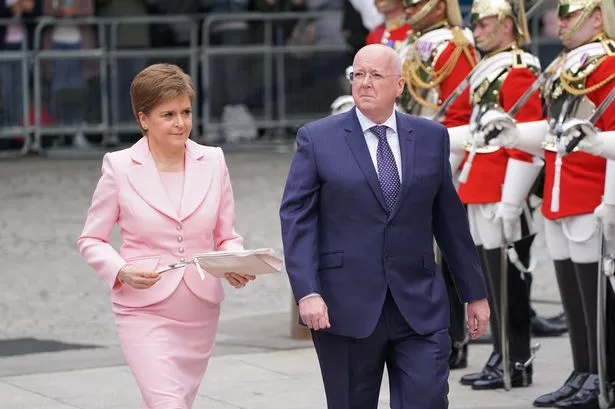
The Chief Executive of the SNP, Peter Murrell, is married to Nicola Sturgeon, First Minister of the Scottish Government. An arrangement unique and universally deprecated in Western democracies since it blurs the division of responsibilities and in consequence can lead to a form of Government detrimental to the well being of the electorate.

In Jan, 2021, in a statement to the Holyrood Harassment Inquiry, Peter Murrell categorically stated that Party policy dictated the policing of complaints within the Party was the responsibility of the Party Executive and it did not share case details with any other organisation unless the complaint highlighted a “clear act of criminality”, and at no time in the Autumn of 2017, did the Party inform any Scottish Government civil servant or special advisor of a complaint by a Party member against a minister of the Government.

02 Nov, 2017: SNP disciplinary procedures complaints handling and the cynical removal of from office of government minister Mark Macdonald

Mark Macdonald, MSP and Government Minister, was invited to attend a meeting with Deputy First Minister, John Swinney and Liz Lloyd, at which he was informed that there had been “chatter” among Party members about him in relation to the “MeToo” movement.

03 Nov, 2017: Liz Lloyd, Special Advisor and Chief of Staff to the First Minister convened a second meeting with Mark and informed him that a sexual harassment complaint that had been lodged against him by a Party member. She went on to advise him that his position as a minister of the government was no longer tenable and he would need to resign or be sacked. The conduct of Liz Lloyd breeched the ministerial code applicable to Special Advisors and should have resulted in her immediate dismissal. It also begged these questions? But they were not asked!!!

Why was the complaint not dealt with by Peter Murrell, since it had been lodged by a Party member to a Party official and was therefore a Party matter? (See opening paragraph)

Who authorised her actions?

Where did she get her information from?

04 Nov, 2017: Nicola Sturgeon phoned Mark in the afternoon and told him he would be expected to resign from the Government that evening, which he did.

Key points about procedures relevant to Sturgeon’s adherence to the Ministerial Code

The Ministerial Code requires ministers to act with integrity, avoid conflicts of interest, and ensure transparency in government business. Responsibility for upholding the code is vested in the office of the First Minister and ministerial misconduct should be reported directly to the First Minister.

The removal from office on 04 Nov 2017, of Government Minister, Mark MacDonald, raises questions about Sturgeon’s adherence to the Ministerial Code, particularly regarding the conduct of her Special Adviser, Liz Lloyd, and the handling of SNP disciplinary matters versus government processes.

The Special Advisers’ Code of Conduct, requires Special Advisers to act with integrity, avoid conflicts of interest, and not use their position for party political purposes.

They are temporary civil servants bound by the Civil Service Code, which emphasizes impartiality and objectivity, though they are exempt from the merit-based appointment requirement to provide politically aware advice.

Lloyd’s involvement in addressing a complaint lodged by an SNP member against MacDonald, a government minister, blurred the lines between party and government roles.

The involvement of Lloyd, who was informed of the complaint and briefed MacDonald, raises questions about whether she accessed information improperly or acted beyond her remit.

The Ministerial Code requires ministers (including the First Minister) to ensure their Special Advisers adhere to their Code of Conduct.

Sturgeon’s failure to address Lloyd’s actions were a lapse in oversight, breaching the Ministerial Code’s requirement to manage Special Advisers’ conduct.

Murrell, Sturgeon’s husband and SNP Chief Executive, testified to the Holyrood Harassment Inquiry in Jan, 2021, that the SNP did not share complaint details with government officials or Special Advisers unless there was a “clear act of criminality.”

He claimed he was unaware of the MacDonald complaint until 03 Nov 2017, the day before MacDonald’s resignation, during a meeting with Lloyd.

This contradicts suggestions that Lloyd acted on SNP-related information, raising questions about how she obtained details of the complaint and who authorized her to confront MacDonald.

The Ministerial Code states that the First Minister is responsible for approving Special Adviser appointments and can terminate their employment.

Sturgeon’s failure to discipline or dismiss Lloyd for her involvement in Mark MacDonald case, despite her improper conduct, should be seen as a failure to enforce the Special Advisers’ Code, breaching her responsibilities under the Ministerial Code.

Sturgeon’s call to MacDonald on 04 Nov 2017, confirming acceptance of his his resignation suggests she was aware of the complaint and endorsed Lloyd’s actions.

Her statement to the Holyrood inquiry emphasizes that she always ensured government business was conducted through official channels and subject to FOI legislation, but the MacDonald case suggests an overlap between party and government matters, which the Ministerial Code is in place to prevent.

The lack of clarity about how Lloyd accessed the complaint details and why the matter was not handled solely by the SNP (as Murrell claimed was party policy) raises questions about Sturgeon’s adherence to the Code’s requirement to maintain a clear distinction between roles.

UK “ups the ante” Prodding the bear will generate a reaction but it might be this is what Starmer is anticipating. The future not looking rosy – Targets are already selected and there is no defence. Zelensky has shown the way the war will be conducted

Concerned Citizen

Subscribe

🚨

UK “ups the ante” Prodding the bear will generate a reaction but it might be this is what Starmer is anticipating. The future not looking rosy

Russia have publicly & formally declared that The UK were the main instigators in supporting Ukraine’s attack on The Crimea Bridge. The British Government are actively taking the UK into a Hot War with Russia.

Reuters reported that two US government sources (probably either military or intel) had told them that their agencies estimated: around TEN planes wrecked and in total, twenty damaged by the Ukraine drone attacks. So, not forty (and Russia has many hundreds of aircraft in service that are fully capable of launching hypersonic missiles)

This is extremely serious and should concern every UK citizen. When Russia formally accuses the UK of instigating attacks like the one on the Crimea Bridge, it signals a dangerous escalation. Instead of working toward de-escalation and peace, it seems our government is pushing us closer to a direct conflict with a nuclear power — and without public debate or consent. The British people deserve transparency and a voice in decisions that could lead to war. Are we being dragged into a conflict that serves foreign interests rather than our own? What do you think — should the UK Parliament be forced to debate and vote before taking any further military actions in this conflict? #ChrisWickNews #NoMoreWars #UKPolitics #RussiaUkraine #StopTheEscalation #TruthMatters #PeaceNotWar

6 Jun 2025: Russia shoots down 174 drones across country, MoD says

Russia says it downed 174 Ukrainian drones and three cruise missiles overnight. In a statement by the defence ministry, cited by Interfax news agency, Moscow said those drones were downed over several regions. These include: the Moscow region, Bryansk, Rostov, Saratov, Voronezh, Kaluga, Kursk, Oryol, Ryazan, Tula, Belgorod, Tambov regions and Crimea. “Also, air defence systems on duty over the Black Sea destroyed three Ukrainian Neptune-MD guided missiles,” the ministry added.

Updated blog

Rapid development of drone strike capability has been a key priority for many countries. Its use by the USA as a weapon of terror in Iraq, Libya, Afghanistan, Syria, and countries in Africa justified its deployment.

This is the future of warfare. Most recently used by Ukraine in strikes by swarms of Kamikaze drones deep inside Russia. Reports indicate upwards of 600 drones were used but this is considered to be a small venture.

An attack on a city, nuclear plants, oil rigs, aircraft carriers ports might entail the use of 50,000 drones. Impossible? Don’t bet on it. Effective drones are being mass produced for under £100.

Welcome to a world free of nuclear weapons replaced with a much greater threat to humanity.

This incident provided an early warning of what is to come

31 October 2014: France’s security fears over mysterious drones seen flying above nuclear plants

France launched an investigation into unidentified drones spotted over nuclear plants operated by state-owned utility EDF.

Seven nuclear plants across the country were flown over by drones . A judicial investigation is being conducted and measures are being taken to know what these drones are and how to neutralise them.

The drone sightings renew concerns about the safety of nuclear plants in France, the world’s most nuclear-reliant country with 58 reactors on 19 sites.

France’s nuclear research institute CEA near Paris wA also flown over, citing unspecified sources.

the plants over which drones were spotted include: Creys-Malville and Bugey in the southeast, Blayais in the soutwest, Cattenom and Chooz in the northeast, Gravelines in the north and Nogent-sur-Seine, the closest plant to Paris.

But the Alex Salmond Inquiry was not informed that Hynd had led a Civil Servant Secretariat put in place by John Swinney and tasked with providing Hamilton with guidance & investigative support. Hamilton’s investigation was supposed to be free from Government influence or interference but was compromised fitting the assertion “That’s how to be certain the outcome suits the aims of the agenda.”

James Hynd, Head of the Scottish Government Cabinet, Parliament and Governance Division

Was central to a review and update of the parliaments harassment complaint policy, when he wrote new procedures, under duress giving advice to politician’s and Civil Servant Managers senior to himself that there were dangers inherent in creating precedence with a new untested procedure with which the controlling authority in London had deprecated.

The Holyrood Inquiry gave very little consideration to Hynd’s concerns with the undernoted statement in the Inquiry report:

“For all these reasons, the Committee believes that James Hamilton’s report is the most appropriate place to address the question of whether or not the First
Minister has breached the Scottish Ministerial Code.”

But the Inquiry was not informed that Hynd had led a Civil Servant Secretariat put in place by John Swinney tasked with providing Hamilton with guidance and investigative support. Hamilton’s investigation was supposed to be free from Government influence or interference but was compromised fitting the assertion “That’s how to be certain the outcome suits the aims of the agenda.”

A review of events from 1 November 2017 to the introduction of new harassment procedures

Initially, the review focused on current ministers, but it was extended to include former ministers, a change proposed by senior Civil Servant MacKinnon on 7 November 2017.

Hynd was unhappy, and sought advice and legal opinion before proceeding, indicating concerns about the scope of MacKinnon’s proposal.

Hynd’s role involved compiling eight draft procedures, responding to suggestions from senior civil servants and Sturgeon’s Special Adviser, a politically appointed figure exempt from civil service impartiality.

This adviser, personally recruited by Sturgeon, was also actively involved in draft reviews and advised changes, adding a political dimension to the process.

Key dates include:

  • 7 November 2017: Hynd met with Richards and MacKinnon; MacKinnon proposed including former ministers, tabling a “routemap” draft, which Hynd was reluctant to adopt without legal advice.
  • 8 November 2017: Hynd delivered the first draft, noting “neither of the pathways involving Ministers look right,” indicating procedural concerns.
  • 13 November 2017: Hynd wrote to senior civil servants about alerting Sturgeon to complaints against current ministers, emphasizing her involvement.
  • 15 November 2017: Hynd emailed Evans’ private secretaries, doubting informal resolution of ministerial complaints, especially sexual harassment, would be acceptable to Sturgeon, underscoring her desire for direct involvement.
  • 16 November 2017: The draft was sent to the UK Government’s Cabinet Office for approval, which was not forthcoming on 17 November 2017, citing implications for UK-wide politicians and double standards compared to civil servants.
  • 17 November 2017: Hynd circulated a second draft to senior management, including Liz Lloyd at her request, and met with Somers, Evans, and Lloyd to discuss progress, though no record was kept.
  • 24 November 2017: A meeting occurred to discuss Sturgeon’s instructions and revise the draft, ensuring Evans could investigate complaints without Sturgeon’s interference, highlighting tensions in responsibility.
  • 27 November 2017: Hynd emailed Richards, saying, “Have looksee at the next draft procedure. All hands to the deck!!! Why so much urgency over one man??,” the focal point of this analysis. Well, Well, Well.

GROK: Analysis of the “One Man” Reference

Hynd’s email on 27 November 2017, expressing urgency over “one man,” must be contextualized within the procedure’s development and subsequent events. The timing, just before the procedure’s finalization, and the allegations against Alex Salmond in January 2018, suggest Salmond was the target.

The extension to former ministers, despite resistance and UK Cabinet Office concerns, aligns with this view, especially given allegations of coaching and delays in complaints, implying preparation for specific action against Salmond.

Nicky “no mates” Sturgeon agreed a murky deal with controversial steel GFG Alliance tycoon Sanjeev Gupta – so where is our £600 million ? the Serious Fraud Office (SFO) is investigating  for suspected fraud, fraudulent trading and money laundering

The Scottish Government provided a guarantee of £586 million to Sanjeev Gupta’s company GFG Alliance as part of the company’s purchase of the Lochaber smelter. The figure was made public for the first time after a two-year transparency battle.

The revelation surfaced after ministers were slapped on the wrist for withholding the information from the public, with opposition leaders labelling it a “dodgy deal” and claiming the SNP was “desperate to avoid scrutiny”.

The agreement saw the Scottish Government guarantee 25 years of power purchases by Gupta’s company from another business owned by his father, with the guarantee funding the purchase of the aluminium smelter.

The guarantee allowed Greensill Capital to transform the guarantee into nearly £300m of debt with a credit rating equivalent to UK sovereign bonds to be created, funding the purchase.

The deal with the Scottish Government was provided when the smelter in Lochaber was purchased by GFG Alliance alongside two hydropower plants from Rio Tinto in 2016.

GFG Alliance also promised the construction of an alloy wheels factory near the smelter, which was scrapped last year in favour of a £94m recycled aluminium factory, which could have created 2,000 jobs. Earlier this year the government admitted just 50 additional jobs had been created by the deal.

Gupta’s company hit the skids earlier this year due to the collapse of Greensill Capital, which was partially blamed as Gupta’s company began to default on the more than $5bn (£3.7bn) of debt GFG Alliance had borrowed from Greensill.

The guarantee was reportedly provided, covering annual amounts between £14m and £32m, in return for a fee initially valued at £21.4m, but later written down to zero with a £33m provision due to the potential exposure of the deal.

GFG Alliance said: “The Lochaber aluminium smelter is a profitable operation, and GFG Alliance’s commitment to invest in a new recycling and aluminium billet plant there will secure the future of the operations, create new high-quality employment in the area and provide opportunities for the local supply chain.”

Ministers were also criticised by Scotland’s information watchdog for failing to release the total value of the deal after they claimed their commercial interests would be harmed by its release.

In a decision notice published in mid-October, Scottish Information Commissioner Daren Fitzhenry criticised the use of commercial interest as a defence, saying it was unlikely the release of the information would prejudice the negotiation of future guarantees. He said:

“The ministers do not, in general, operate in a commercial environment and the commissioner does not consider them to be doing so simply because they are providing funding to, or guaranteeing the liabilities of, business.

“They do not undertake such activities as participants in the market with the businesses concerned, in pursuit of profit, but rather to promote the economic and social well-being of the country, or parts of it, in furtherance of the wider public good.”

“Nothing in the submissions offered here persuades the commissioner that the ministers’ interests should be regarded as especially ‘commercial’ here.

“There might be prejudice to the public purse if the guarantee were to be called up, and disclosure might (although the commissioner considers this less likely) prejudice the negotiation of future guarantees, but neither of these considerations suggests an interest that should properly be considered commercial (as opposed to more widely economic, or social).”.

A summary of an August 2017 meeting led by First Minister, Nicola Sturgeon, warned the government had “reached the very limits of what was possible” and noted: “the potential to be overexposed to one company – a company that we know is on an aggressive expansion drive elsewhere”.

Sep 2024: Panic button pressed £585 million government guarantee called in as Guptas business collapses. More incompetence

The Scottish Government’s Ministerial Code is adhered to by SNP Ministers when it suits and ignored when it doesn’t and it is time they were held to account for their actions which destroyed Alex Salmond, Mark Macdonald & probably other unfortunate people that challenged their abuse of power. (This is part 1 and its a longish read, without pics for a change)

The Scottish Government’s “Fairness at Work” policy, in place up to Dec, 2017, provided a framework for addressing workplace issues, including harassment, but it was primarily designed for Civil Servants and did not explicitly cover complaints against ministers.


A specific procedure for handling harassment complaints involving current or former ministers was introduced in Dec, 2017, building on the expectations of the Ministerial Code and the existing Fairness at Work policy.

Below is an overview of the harassment reporting procedures, focusing on the Permanent Secretary’s role in reporting ministerial misconduct and the requirement to advise the First Minister, based on available information.

The, “Fairness at Work” policy was the Scottish Government’s internal framework for addressing workplace concerns, including bullying and harassment, primarily for Civil Servants.

While the policy set out mechanisms for reporting workplace issues, it was not specifically tailored to handle complaints against ministers until the new procedure was introduced in Dec, 2017.

Staff could raise concerns through various channels, such as a senior manager, HR, or a trade union representative.

These concerns would typically be escalated to the Director of People for consideration and to ensure support for the complainant.

The policy focused on workplace issues among Civil Servants, with limited guidance on handling complaints against ministers.

Allegations involving ministers were generally addressed under the Scottish Ministerial Code, which outlined expectations for ministerial conduct but lacked a detailed process for harassment complaints.

The policy encouraged informal resolution where possible, such as mediation or discussion, but formal complaints could be pursued if informal routes were insufficient.

The process emphasized fairness, dignity, and respect, with support offered to staff raising concerns.

Prior to Dec, 2017, the Permanent Secretary, as the head of the Scottish Civil Service, had a duty to ensure a safe workplace and uphold the Civil Service Code’s values of integrity, honesty, objectivity, and impartiality.

However, there was no specific, formalized procedure for the Permanent Secretary to report ministerial misconduct, particularly harassment, until the new procedure was established.

The Ministerial Code placed responsibility on the First Minister to oversee ministerial conduct, but the process for handling complaints against ministers was less defined.

The Permanent Secretary is responsible for the day-to-day management of Civil Servants and ensuring compliance with workplace policies.

If a complaint involved a minister, the Permanent Secretary would typically need to navigate the Ministerial Code, which required the First Minister to address breaches of conduct.

The “Fairness at Work” policy did not explicitly mandate the Permanent Secretary to report ministerial misconduct directly to the First Minister.

Instead, such issues were handled on a case-by-case basis, often relying on informal escalation or consultation with HR and legal advisors.

In the absence of a dedicated procedure, any allegations of ministerial misconduct would likely be escalated to the Permanent Secretary, who would then decide how to proceed, potentially involving the First Minister or legal advisors, depending on the severity of the issue.

There was no explicit requirement in the “Fairness at Work” policy or the Ministerial Code, as they stood before Dec 2017, mandating the Permanent Secretary to advise the First Minister “timeously” (promptly) about ministerial misconduct.

The Scottish Ministerial Code (pre-2017, versions) placed ultimate responsibility for ministerial conduct with the First Minister.

If a serious issue arose, the Permanent Secretary would likely need to inform the First Minister to ensure compliance with the Code, but the timing and process was not strictly codified.

In practice, the Permanent Secretary would likely advise the First Minister of significant issues, such as harassment allegations, as part of their duty to maintain a safe workplace and support the government’s operations.

However, without a formal procedure, this depended on the Permanent Secretary’s discretion and the specifics of the case.

The #MeToo movement and increased public attention to workplace harassment in 2017, prompted a review of the Scottish Government’s procedures.

31 Oct 2017, Scottish Ministers commissioned the Permanent Secretary to review and update harassment policies, leading to the development of the new procedure before the end of Dec 2017.

Before this, the process for advising the First Minister was less structured.

The new procedure, agreed in Dec 2017, and published in Feb 2018, formalized the process for handling harassment complaints against current or former ministers.

Formal Reporting to the First Minister: The new procedure explicitly required the Permanent Secretary to inform the First Minister when a formal complaint of harassment was raised against a current minister.

The First Minister would then instruct the Permanent Secretary to investigate the complaint and provide a report of the facts or seek a mutually agreed resolution.

The Permanent Secretary was tasked with ensuring that staff raising complaints received necessary support throughout the process and that any further action within the civil service was addressed.

For complaints against current ministers, the Permanent Secretary would oversee the investigation, ensuring it adhered to HR best practices and legal advice.

For former ministers, the Permanent Secretary would inform the relevant Party leader if the minister belonged to a different administration, and the investigation would proceed as far as possible, even if the former minister declined to cooperate.

The First Minister would not be involved in an investigation process to maintain impartiality, but would be informed of the outcome and be responsible for any further action if the minister was from the ruling administration.

The “Fairness at Work” policy lacked a specific mechanism for handling harassment complaints against ministers, and there was no explicit requirement for the Permanent Secretary to advise the First Minister timeously.

Such notifications were likely handled informally, guided by the Ministerial Code and the Permanent Secretary’s discretion.

The new procedure introduced in Dec 2017 addressed these gaps by formalizing the Permanent Secretary’s role in reporting to the First Minister and outlining a clear process for handling complaints against ministers.

The review commissioned in Oct 2017, spurred by the #MeToo movement, indicates that the Scottish Government recognized the need for a more robust process, leading to the formalized procedure by Dec 2017.

Special Advisers are temporary civil servants appointed under Article 3 of the Civil Service Order in Council 1995.

They are exempt from the general requirement that civil servants should be appointed on merit and behave with impartiality and objectivity.

But they are otherwise required to conduct themselves in accordance with the Civil Service Code.

As set out in the Ministerial Code, all appointments of special advisers require the prior written approval of the First Minister, and no commitments to make such appointments should be entered into in the absence of such approval.

Their appointment ends at the end of the Administration which appointed them or when the appointing Minister leaves the Government or moves to another appointment.

The responsibility for the management and conduct of Special Advisers, including discipline, rests with the Minister who made the appointment.

It is, of course, also open to the First Minister to terminate employment by withdrawing consent to an individual appointment.

Special Advisers should conduct themselves with integrity and honesty.

They should not deceive or knowingly mislead Parliament or the public.

They should not misuse their official position or information acquired in the course of their official duties to further their private interests or the private interests of others.

They should not receive benefits of any kind which others might reasonably see as compromising their personal judgement or integrity.

They should not without authority disclose official information which has been communicated in confidence in Government or received in confidence from others.

The principles of public life set down by the Committee on Standards in Public Life, at Annex B, provide a framework for all public servants.

Special advisers should not use official resources for party political activity.

They are employed to serve the objectives of the Government and the Department in which they work.

It is this which justifies their being paid from public funds and being able to use public resources, and explains why their participation in party politics is carefully limited.

They should act in a way which upholds the political impartiality of civil servants and does not conflict with the Civil Service Code.

They should avoid anything which might reasonably lead to the criticism that people paid from public funds are being used for party political purposes.

The highest standards of conduct are expected of special advisers and, specifically, the preparation or dissemination of inappropriate material or personal attacks has no part to play in the job of being a special adviser as it has no part to play in the conduct of public life.

Any Special Adviser found to be disseminating inappropriate material will automatically be dismissed by their appointing Minister.

The employment of special advisers adds a political dimension to the advice and assistance available to Ministers while reinforcing the political impartiality of the permanent Civil Service by distinguishing the source of political advice and support.

Special Advisers are employed to help Ministers on matters where the work of Government and the work of the Government Party overlap and where it would be inappropriate for permanent civil servants to become involved.

They are an additional resource for the Minister providing assistance from a standpoint that is more politically committed and politically aware than would be available to a Minister from the permanent Civil Service.

The sorts of work a Special Adviser may be called upon to do if their Minister wishes it comprise: Reviewing papers, drawing attention to any aspect which they think has party political implications and ensuring that sensitive political points are handled properly.

Giving assistance on all aspects of departmental business, providing advice when matters arising are party political in nature.

Checking facts and research findings from a party political viewpoint.

Preparing speculative policy papers reflecting the political viewpoint of the Party.

Contributing to policy planning including ideas which extend the existing range of options available with a political viewpoint in mind.

Liaising with Party officials ensuring that policy reviews and analysis take full advantage of ideas from the Party.

Encouraging presentational activities from the Party which contribute to the Government’s and Department’s objectives.

Helping to brief Party MPs and officials on issues of Government policy. Liaising with outside interest groups including groups with a political allegiance assisting their contribution.

Speechwriting and related research, including adding party political content to material prepared by permanent civil servants.

Representing the views of the First Minister to the media from a Party viewpoint, if it is authorised by the Minister.

Providing expert advice as a specialist in the political field.

Attending Party functions (but not to speak publicly at Party Conference’s) maintaining contact with Party members.

Taking part in policy reviews organised by the Party, or officially in conjunction with it, for the purpose of ensuring that those undertaking the review are fully aware of the Government’s views and the First Minister’s thinking and policy.

SNP disciplinary procedures complaints handling and the cynical dismissal of government minister Mark Macdonald

The Chief Executive of the SNP, Peter Murrell, is married to Nicola Sturgeon, First Minister of the Scottish Government.

An arrangement unique and universally deprecated in Western democracies since it blurs the division of responsibilities and in consequence can lead to a form of Government detrimental to the well being of the electorate.

In Jan, 2021, in a statement to the Holyrood Harassment Inquiry, Peter Murrell categorically stated that Party policy dictated the policing of complaints within the Party was the responsibility of the Party Executive and it did not share case details with any other organisation unless the complaint highlighted a “clear act of criminality.”

At no time in the Autumn of 2017, did the Party inform any Scottish Government civil servant or special advisor of a complaint by a Party member against a minister of the Government.

02 Nov 2017, Mark Macdonald, MSP and Government Minister, was invited to attend a meeting with Deputy First Minister, John Swinney and Liz Lloyd, at which he was informed that there had been “chatter” among Party members about him in relation to the “MeToo” movement.

03 Nov 2017, The rules of conduct pertaining to Special Advisers created a conflict of interest when Liz Lloyd, Special Advisor and Chief of Staff to the First Minister convened a second meeting with Mark at which she briefed him about a sexual harassment complaint that had been lodged against him by a Party member.

She went on to advise him that his position as a minister of the government was no longer tolerable and he would need to resign.

The conduct of Liz Lloyd breeched the ministerial code applicable to Special Advisors and should have resulted in her immediate dismissal. It also begged the questions? Why was the complaint not dealt with by Peter Murrell, since it had been lodged by a Party member to a Party official and was therefore a Party matter? Who authorised her actions? Where did she get her information from? These questions remain unanswered.

04 Nov 2017, Nicola Sturgeon phoned Mark in the afternoon and told him he would be expected to resign from the Government that evening, which he did.

16 Nov 2017, Mark was suspended by the SNP after a second complainer came forward against him.

The entire event was investigated and concluded by the SNP without reference to the Scottish Government.

The Scottish Government’s “Fairness at Work” policy (in place until Dec, 2017) was primarily designed for civil servants and did not explicitly address complaints against ministers.

A new procedure for handling harassment complaints against current or former ministers was introduced in Dec 2017, prompted by the #MeToo movement.

Key points about the pre Dec 2017, procedures relevant to Sturgeon’s adherence to the Ministerial Code:

The Permanent Secretary was responsible for maintaining a safe workplace and upholding the Civil Service Code but had no explicit mandate under the “Fairness at Work” policy to report ministerial misconduct directly to the First Minister “timeously” (promptly).

Such issues were handled ad hoc, often relying on the Ministerial Code, which places responsibility for ministerial conduct with the First Minister.

There was no formal requirement for the Permanent Secretary to advise the First Minister immediately, though in practice, serious allegations would likely be escalated at the Permanent Secretary’s discretion.

The Ministerial Code requires ministers to act with integrity, avoid conflicts of interest, and ensure transparency in government business.

Sturgeon’s statement emphasizes her adherence to these principles by forwarding SNP or MSP-related communications to her ministerial office and ensuring all government business is recorded and subject to FOI legislation.

This suggests an effort was made to maintain a clear distinction between her government and party roles, as required by the Code.

Mark MacDonald, a former SNP minister who resigned on 04 Nov 2017, raises questions about Sturgeon’s adherence to the Ministerial Code, particularly regarding the conduct of her Special Adviser, Liz Lloyd, and the handling of SNP disciplinary matters versus government processes. The details provided, combined with web sources, highlight potential issues:

02 Nov 2017, Mark MacDonald met with Deputy First Minister John Swinney and Liz Lloyd, where he was informed of “chatter” among SNP members related to the #MeToo movement.

03 Nov 2017, Liz Lloyd, Sturgeon’s Chief of Staff and a Special Adviser, convened a second meeting with MacDonald, informing him of a sexual harassment complaint lodged by an SNP member and advising him that his position as a minister was untenable, effectively prompting his resignation.

05 Nov 2017, Sturgeon personally called MacDonald, confirming he was expected to resign that evening, which he did.

16 Nov 2017, MacDonald was suspended by the SNP after a second complaint, handled entirely within the party without reference to the Scottish Government.

The Special Advisers’ Code of Conduct, requires Special Advisers to act with integrity, avoid conflicts of interest, and not use their position for party political purposes.

They are temporary civil servants bound by the Civil Service Code, which emphasizes impartiality and objectivity, though they are exempt from the merit-based appointment requirement to provide politically aware advice.

Lloyd’s involvement, addressing a complaint lodged by an SNP member against MacDonald, a government minister, blurred the lines between party and government roles.

Critics, including Alex Cole-Hamilton MSP, argued that Lloyd’s role as a Special Adviser made her involvement in handling an SNP complaint “improper,” as it should have been managed by SNP officials like Peter Murrell, the party’s Chief Executive.

The involvement of Lloyd, who was aware of the complaint and briefed MacDonald, raises questions about whether she accessed information improperly or acted beyond her remit.

The Ministerial Code requires ministers (including the First Minister) to ensure their Special Advisers adhere to their Code of Conduct. Sturgeon’s failure to address Lloyd’s actions could be seen as a lapse in oversight, potentially breaching the Ministerial Code’s requirement to manage Special Advisers’ conduct.

Murrell, Sturgeon’s husband and SNP Chief Executive, testified to the Holyrood Harassment Inquiry in Jan 2021, that the SNP did not share complaint details with government officials or Special Advisers unless there was a “clear act of criminality.”

He claimed he first became unaware of the complaint against Macdonald on 03 Nov 2017, at a meeting with Lloyd the day before MacDonald’s resignation,

This contradicts suggestions that Lloyd acted on SNP-related information, raising questions about how she obtained details of the complaint and who authorized her to confront MacDonald.

The Ministerial Code states that the First Minister is responsible for approving Special Adviser appointments and can terminate their employment.

Sturgeon’s failure to discipline or dismiss Lloyd for her involvement in the MacDonald case, despite allegations of improper conduct, could be seen as a failure to enforce the Special Advisers’ Code, avoiding her responsibilities under the Ministerial Code.

Sturgeon’s call to MacDonald on 04 Nov 2017, to confirm his resignation suggests she was aware of the complaint and endorsed Lloyd’s actions.

Her statement to the Holyrood inquiry emphasizes that she ensured government business was conducted through official channels and subject to FOI legislation, but the MacDonald case suggests an overlap between party and government matters, which the Ministerial Code is in place to prevent.

The lack of clarity about how Lloyd accessed the complaint details and why the matter was not handled solely by the SNP (as Murrell claimed was party policy) raises questions about Sturgeon’s adherence to the Code’s requirement to maintain a clear distinction between roles.

When questioned about the MacDonald case, a Scottish Government spokesperson stated only that MacDonald resigned following allegations “from outside the Scottish Government” about his personal conduct, without addressing Lloyd’s role or the process. The limited response did not clarify whether Sturgeon ensured proper procedures were followed, as required by the Ministerial Code.

The MacDonald case provided a “template” that should have been applied to complaints against Alex Salmond but was not.

The Salmond case, which involved allegations of sexual misconduct, further complicates the assessment of Sturgeon’s adherence to the Ministerial Code.

Salmond accused Sturgeon, Lloyd, and others of a “malicious and concerted effort” to damage his reputation, alleging Lloyd was involved in the civil service investigation as early as 01 Nov 2017, months before Sturgeon claimed to have known about it.

A 2019, judicial review found the Scottish Government’s investigation unlawful due to procedural flaws, costing taxpayers over £500,000.

Sturgeon referred herself to an independent inquiry led by James Hamilton, which cleared her of breaching the Ministerial Code.

in 2021, A Holyrood committee found she had misled parliament (but not knowingly).

Allegations surfaced that Lloyd had leaked information about the Salmond probe to the Daily Record in Aug 2018, (later deemed potentially unlawful).

Her alleged interference in the investigation process raised similar concerns about her conduct as in the MacDonald case.

Sturgeon’s continued retention of Lloyd as Chief of Staff, despite these allegations, is inconsistent with the Ministerial Code’s requirement to ensure Special Advisers act within their Code of Conduct.

Unlike the MacDonald case, where Lloyd directly confronted the minister, the Salmond investigation involved a formal (albeit flawed) process under the new harassment procedure introduced in Dec 2017.

The MacDonald case was handled as a party matter with government involvement (via Lloyd and Swinney), while the Salmond case was a government led investigation.

The inconsistency in applying a clear process, suggests potential lapses in adhering to the Ministerial Code’s emphasis on transparent and proper procedures.

The Permanent Secretary, Leslie Evans, was not explicitly mentioned in the MacDonald case, but the “Fairness at Work” policy would have required her involvement if a formal government complaint had been lodged.

Since the complaint came from an SNP member and was initially handled as a party matter, it’s unclear whether Evans was informed.

However the absence of a formal government complaint about MacDonald meant the Permanent Secretary had no clear obligation to advise Sturgeon timeously under the pre-Dec 2017, framework.

If Evans was aware of the “chatter” or complaint, her role would have been to escalate it to Sturgeon, but no evidence suggests she did so.

The new procedure, effective from Dec 2017, would have required the Permanent Secretary to inform the First Minister of formal complaints against ministers and oversee investigations.

The MacDonald case predates this, highlighting the ad hoc nature of the earlier process.

Sturgeon’s adherence to the Ministerial Code in the context of harassment complaint procedures and the MacDonald case can be evaluated as follows:

Strengths:

Sturgeon’s submission to the Holyrood inquiry emphasizes her efforts to maintain separation between her government and SNP roles, forwarding party-related communications to her ministerial office and ensuring compliance with FOI legislation.

She referred herself to an independent inquiry (led by James Hamilton) regarding her conduct in the Salmond case, demonstrating a willingness to be scrutinized, and was cleared of breaching the Ministerial Code.

Her commissioning of a new harassment procedure in Oct 2017, following the surfacing of the #MeToo movement, shows proactive steps to improve complaint handling, addressing gaps in the “Fairness at Work” policy.

Lloyd’s involvement in the MacDonald case, confronting a minister about an SNP complaint, contravened the Special Advisers’ Code by engaging in party political matters.

Her failure to discipline or dismiss Lloyd suggests a potential breach of her responsibility to manage Special Advisers’ conduct, as required by the Ministerial Code.

The MacDonald case highlights a lack of clarity in separating SNP and government processes, particularly with Lloyd’s role and Sturgeon’s subsequent call to MacDonald.

This was inconsistent with the Ministerial Code’s requirement to avoid conflicts of interest and maintain clear distinctions between roles.

The lack of answers to questions about how Lloyd obtained complaint details and who authorized her actions (as you noted) undermines transparency, a core principle of the Ministerial Code.

The Scottish Government’s vague response about MacDonald’s resignation does not fully address these concerns.

Allegations of Lloyd’s interference in the Salmond probe and Sturgeon’s delayed reporting of meetings with Salmond (e.g., not mentioning a 29 Mar 2018, meeting until later) led to a Holyrood committee finding that she misled parliament, though not knowingly. While the Hamilton investigation cleared her of a Code breach, the committee’s finding suggests potential lapses in transparency.

The lack of disciplinary action against Lloyd, despite allegations of improper conduct in both the MacDonald and Salmond cases, raises questions about Sturgeon’s enforcement of the Special Advisers’ Code which could be considered to be a failure to uphold the Ministerial Code’s standards for managing advisers.

The MacDonald case was handled as a Party matter with government involvement, while the Salmond case followed a flawed government process.

Peter Murrell’s claim that the SNP did not share complaint details with government officials contradicts Lloyd’s actions in the MacDonald case, suggesting either a breakdown in communication or undisclosed coordination.

This raises further questions about conflicts of interest, given Murrell’s universally deprecated marriage to Sturgeon blurring responsibilities.

Nicola Sturgeon’s adherence to the Ministerial Code in the context of harassment complaint procedures up to Dec 2017 is mixed.

She took steps to maintain separation between her government and SNP roles and commissioned a new harassment procedure to address systemic gaps, aligning with the Code’s emphasis on integrity and accountability.

However, the Mark MacDonald case revealed potential lapses, particularly in overseeing Liz Lloyd’s improper involvement in a party complaint, which blurred government and SNP roles and may have violated the Special Advisers’ Code.

The Permanent Secretary’s role in reporting ministerial misconduct was not clearly defined pre-Dec, 2017, and there’s no evidence Leslie Evans was required to advise Sturgeon timeously in the MacDonald case, as it was initially an SNP matter. The lack of transparency about Lloyd’s actions and the inconsistent handling of complaints (compared to the Salmond case) suggest weaknesses in Sturgeon’s adherence to the Ministerial Code’s requirements for transparency, conflict avoidance, and adviser management.

Transgendered people suffer unimaginable levels of pain in their fruitless quest to change their sex and the rejection of their radical gender agenda by society inclines them in increasing numbers to join a far-left activist movement named “Trantifa” which is gaining notoriety for its intimidation, harassment and violence

Transgender Activism: A growing extremism movement, known as Trantifa, combines far-left activism with intimidation, harassment and violence to advance their radical gender agenda.

Violent ideologies: The loose affiliation of trans activists argue that laws against certain gender-related practices amount to a ‘trans genocide’, fuelling their promotion of radical ideas.

Incidents of trans extremism: Incidents of trans extremism, particularly in the US, have received significant attention and raised concerns about the potential for violence.

One particular alarming incident involved Audrey Hale, a trans shooter who carried out a mass shooting at a Christian elementary school in Nashville. Hale, who had recently adopted he/him pronouns and the name Aiden, tragically took the lives of three children and three adults at the Covenant school.

In another incident, former NCAA swimmer Riley Gaines was assaulted by a trans activist at San Francisco State University after speaking out against the inclusion of female athletes in women’s sports. The physical assault highlights the growing hostility faced by individuals who express dissenting views on this topic.

Additionally, cyclist Hannah Arensman made the difficult decision to quit her sport due to harassment she faced for opposing competition against biological males. Members of the John Brown Gun Club, a pro-trans antifa group, were among those involved in the harassment.

The rise of Trantifa videos posted by trans people advocating for armed self-defence is another concerning trend. In a now-deleted Tiktok post, Tara Jay, with 2,400 followers, warned about using guns against anyone who tried to prevent them from using women’s bathrooms.

Such incidents, along with the sale of shirts displaying the slogan ‘trans rights …. Or else’ alongside the images of guns, contribute to the climate of extremism and intimidation surrounding transgender ideology.

OthersA collection of “Trans Rights or Else” T-shirts available for sale on Amazon sparked major outrage on social media in the wake of the Nashville school shooting.

Cancel culture mentality

The cancel culture mentality finds its way into the realm of transgender activism, as exemplified by the case of the author of the Harry Potter series, JK Rowling.

Rowling tweeted her support for Maya Forstater, a tax specialist who had lost her job for what was deemed ‘transphobic’ tweets. She later published a 3,600-word essay on her reasons for speaking out on sex and gender issues.

In her article, she mentioned that she is “deeply concerned” about the “huge explosion in young women wishing to transition” and the “increasing numbers who seem to be detransitioning”.

She then goes on to say that she believes that “biological sex is real” and that “sex matters”.

Rowling argues that the erosion of the concept of biological sex is harmful to women, particularly in the context of single-sex spaces such as prisons and changing rooms.

Her views on trans people led to her exclusion from Harry Potter projects which are her own creative products, demonstrating the harsh implications of expressing opposing views on gender problems.

Moreover, after openly speaking up against controversial transgender ideology both on social media platforms and on her website, transgender activists targeted J.K. Rowling on Twitter with threats of rape and other violence for comments she made about transgender people.

In a recent example of this issue, Matt Walsh’s documentary “What is a woman?” (2022) faced backlash and restrictions on social media.

The film, which questions the logic behind gender ideology and its impact on women and children, received attention and controversy online. Twitter flagged the documentary as “hateful”, limiting its visibility on the platform. However, after public outcry, the limited visibility was revoked, and the documentary is now available for free streaming.

The incident highlights the ongoing debate surrounding transgender ideology and the challenges faced by those who challenge it. Notably, Twitter’s owner, Elon Musk, acknowledged the controversy and expressed support for the documentary’s availability, emphasising the importance of free expression and manners in discussions about preferred pronouns.

UN investigator’s concerns

Reem Alsalem, a UN investigator, has voiced concerns about the intimidation and harassment faced by women who speak up for women-only spaces, sports, and prisons.

She highlights instances where women have been ambushed, physically attacked, or subjected to online harassment by shouting trans activists, emphasising the need to protect freedom of speech and thought on matters related to sex and gender identity.

As tensions rise within the controversial transgender activism sphere, Trantifa’s radicalised fringe continues to push boundaries through its tactics of intimidation and violence.

Summarised from article “perspectives/unmasking-trantifa-the-extremely-violent-side-of-transgender-activism”

The 126 signatories to the January 9, 1701, petition from Fife represent a broad coalition of the region’s gentry, united in their outrage over Scotland’s economic woes, the Darien Scheme’s collapse, and perceived English oppression. Their names—Arnott, Balfour, Anstruther, and others—reflect Fife’s influential families, making the petition a significant expression of pre-Union resistance. The document underscores the desperation and defiance of a Scotland on the brink, with the signatories’ call for sovereignty and economic reform highlighting their refusal to accept subjugation.

Jams Douglas, Duke of Queensberry

This is a transcript of the letter. Remember this was 6 years before the mis- called union.

To his Grace his majesties High Commissioner (James Douglas, 2nd Duke of Queensberry) and the right honourable Earls and representatives of parliament, we submit this humble address and petition of the people of Fife. That now after so long and expensive wars, attended with unheard scarcity and many other calamities, instead of enjoying the blessings of a happy peace, incentives for trade and manufacturing, providing employment for the poor and easing the burdens of state support. Take carful note of te content of the letter which was written 6 years before the Union!!! What a hellish place to live in Scotland must have been. The English screwed Scots Lords, gentry and ither well off folk but not the Scots of Fife and other places in the country into submission for nearly a decade.

(Referring in Europe involving England against its neighbours. No peace and widespread food shortages. Manufacturing and trade almost non-existant). What they were not aware of was that James Douglas had already sold out Scotland. He was a Unionist and traitor to his core.

We still find not only great discouragements to trade, increased numbers of poor and a lack of money sufficient to pay a standing army. But above all what we are deeply aware of is the violation of the sovereignty, freedom, and independence of Scotland which our predecessors so nobly defended with their blood.

And the encroachments by English and Spanish forces upon which seem to us to be the cause of the great losses which the African and Indian companies have sustained in their Caledonian colony settled in Darien. Losses contrary to their human rights and the law of nations, and which we perceive to be of national concern affecting the hearts of every true-hearted Scot.

May it, therefore, please your grace and right honourable Earls and peers of the Scottish parliament to give serious consideration to asserting the Kingdom’s freedom, sovereignty, and independence. Strengthen and support the people in Darien in their right to their settlement in Caledonia, make good their losses, assist them in their efforts so much that they are able to succeed for the honour and wealth of Scotland.

Introduce measures designed to provide a better future for the poor, encouraging Scottish manufacturers to invest in Scotland restraining the practice of transferring money to England. Reduce the size of the occupying army bringing forward ways, other than force, of ensuring the security of peace and support of the government and the future and liberty of the Kingdom.

(Scots were forced to meet the cost of maintaining an English standing army in Scotland? whilst the Darien colony was being decimated through illness and injury and starved to submission or death by English and Spanish blockaders. Fully supported the English monarch). Darien was not the foolhardy adventure portayed by the English who had long coveted Scotland. It was a dishonest characterisation of events spread by the English to disguise their participation in the destruction of Scotland’s desire to widen trade opportunities). First reference to an occupying army and hinting at the use of force in Scotland against Scots, in 1700.

The letter was signed by the people of Fife (names available for the interested fifers. Let me know in the comments

GROK concurs:

https://twitter.com/i/grok/share/tGsDPZQEBSC9Fzl2ivh7SIkPh

Scotland’s media should cease moaning about Angus Robertson influencing SNP policy in favour of supporting Israel – He is jewish after all !!

Angus Struan Carolus Robertson

File:Angus Robertson Conference.jpg - Wikipedia

Feb 2017: How the Israel lobby influences British politics

A now disgraced senior diplomat at the Israeli embassy in London spent several hours courting the Scottish National Party’s deputy leader ahead of his official trip to Israel, raising further questions over Israel’s interference in British politics.

In undercover footage recorded as part of Al Jazeera’s investigation “The Lobby”, Shai Masot, a senior political officer at the embassy who was forced to quit after the film exposed his attempts to manipulate British politics is seen boasting of his relationship with Angus Robertson to an undercover reporter “Robin Harrow” (alias).

Maria Strizzolo, a British civil servant was with Masot when he said to Robin “I spent many hours with Angus. I think nine hours in total, sitting around inside the embassy. We had a lot of meetings and he told us many stories. He feels really close to the Jewish people and he has a great trip to Israel lined up”.

Over dinner at a Kensington brasserie, Masot recounted a story told to him by Robertson about his German grandfather who was a politician in the Reichstag and was persecuted by the Nazis. Following his arrest, his grandfather’s birth certificate was changed identifying him as Jewish making him de facto an enemy of the state.

Masot went on to relate another Robertson story from Scotland’s history of a 14th-century manuscript that laid claim to the Scottish nation by declaring that the Scots were in fact one of the lost tribes of Israel. “Mmm … I love Angus,” Masot stated, apparently keen to let his companions know that Robertson was someone Israel could work with at a political level.

Strizzolo, an activist with the Conservative Friends of Israel parliamentary group, was also won over by Robertson. “I actually really like him,” she said. Full story and video here:(https://www.aljazeera.com/news/2017/2/14/shai-masot-courted-snps-angus-robertson-ahead-of-trip)

Scotland is a colony and not a Commonwealth nation stated Foreign Secretary, William Hague, who clarified Westminster’s official view of Scotland’s Colonial status as host of the 2014 Commonwealth Games

William Hague (acknowledged as an expert in the field of diplomacy) insisted that while Scotland would be permitted to fly the Saltire (without the Yes motif) and dress its team in sportswear in the Scottish colours, individuals resident in the, “British Isles” will be representing, “Team GB” since it is the UK and other countries of the Commonwealth that are member states.

Scotland is not a state, it is a dependency and Westminster simply decided to delegate the games to be held in Glasgow, a city of the UK.

He went on to express his confidence, (and that of the UK Government) in the superpower that is Team GB will be a success in Glasgow and in the future, the world. So there it is, Scotland does not exist.

Seems to me Hague called it right. Scotland needs to be an independent country (a State) to be able to legally join the Commonwealth on an equal footing with 50+ other states, the vast bulk of which are former colonies of England. It would be nice though to be competing on an equal footing alongside sports people from the state of Nauru, population around 15,000.

Hague’s clarification eases the nightmare somewhat since it provides an enabling factor which explains why Scotland lacks the productivity output required to provide for the nation without substantial financial assistance from the Colonial power operating out of Westminster. I identified a source of information which explains things in simple terms. Information that has been withheld from Scotland by Westminster to prevent unrest.

Colonialism makes rich countries rich and poor countries poor by:

  1. Stealing land and resources decimating the local population through slavery, disease and displacement.
  2. Increasing internal conflict by selecting one group or class to govern over all other groups.
  3. Making the colony dependent on low value exports hampering growth.
  4. locking the colony into unequal relations with the much richer colonial power ensuring the colony will always remain poor and dependent.

GROK has views to air:

https://twitter.com/i/grok/share/WjZ34W3GU8tlVbOUwIQaufGzi

The Duke of Hamilton was against the Union and wrote to Robert Harley saying he opposed the union because: “Scots will never swallow it.” He followed up with an observation, “it is reported that there are troops coming to the borders to make good the votes we pass. God knows if that looks like an agreeable Union.” part2

Robert Harley and England’s 1707 Union with Scotland

Commissioner Harley, leader of England’s 31 strong group of commissioners went away from the negotiations to complete a number of commitments but before doing so he, (typical of his need to control the agenda) tried to persuade the Earl of Mar to convince Carstares that it would be prudent to leave any reference to religion out of the negotiations.

Aware of the keen interest of the Dutch in the outcome of the discussions he took the time to meet with and brief England’s relevant foreign service ambassadors and personally briefed the Dutch Pensionary of the progress being made “to bind the Scots forever by the benefits they shall enjoy.”

The process of negotiating the treaty had been hard work for Harley and his team. Ratification by the Scottish estates proved to be just as difficult and to be sure of success in that process he had to revert to the use of his spies who had been in Scotland for some time and were aware of local issues and how to deal with them.

It was Defoe’s contention that based on population Scotland should be represented in parliament by 85 members. Based on taxation the number would be reduced to 13. The final decision after a long and intense session settled on 45.

A somewhat stressed negotiator in a letter to Harley, after the settlement: “I suppose our pilots, by the hand they have in the present negotiation, hope afterwards to steer these northern vessels.”

Harley’s success getting the ratification of the treaty approved, was largely due to the efforts of his chosen instrument, Daniel Defoe. But he prepared the groundwork well before sending his agents to Scotland by encouraging Defoe to use the pages of the “Review” to dampen down criticism of Scotland and encourage favourable views of England.

He also cultivated the support of Scottish nobility and gentry through the secretive deployment to Scotland of a well connected young debonaire man about town, English barrister Barrington-Shute.

He impressed on the English ministers the advisability of appointing the Duke of Queensberry to the post of Lord Commissioner for the deciding session of 1706, taking time to ensure the duke knew he was the chosen one and he expected him to deliver the treaty.

Further consolidating his control over the process and just before the meeting of the Scottish Estates, he wrote to his confidant Carstares who controlled the clergy, “I am making it plain that it is of the highest consequence to the interest of the nation and the island in general terms that this opportunity should not be lost.” He reiterated the same message to the other Scottish commissioners including the refractory Duke of Hamilton.

The input of the spy, William Greg, who had been located in Edinburgh for over a year was important since it was through his regular reports that Harley was kept fully informed of the violence and intrigue that accompanied events in the Scottish parliament which was meeting under the leadrship of the Duke of Argyle before the decision was taken to enter into negotiations for a union.

A few days after the treaty was agreed the Duke of Hamilton wrote to Harley to explain his reluctance to be involved. He said that he opposed the union because he thought: “Scots will never swallow it.”

He followed up with the observation: “It is reported that there are troops coming to the borders to make good the votes we pass. God knows if that looks like an agreeable Union.”

He denied that he encouraged rioting but insisted that he did not want the union implemented with unseeming haste.

The roles and responsibilities of Harvey’s spies in Scotland

John Ogilvie was employed chiefly for the detection of Jacobite plots on the continent and in Scotland.

Fearns, who had once been employed on a judicial circuit in Scotland, was well in with the kirk. In his letter introducing himself to Harley, he wrote: “No other person can pretend to know Scotland so particularly, the people’s constitution, tempers, estates, powers and weaknesses, for there is not one part of the county that I have not relations and clients in it.”

It was, because of this intimate knowledge of Scotland that Harley sent Fearns into Scotland to prepare a list of all the, “chief men in each county,” recording their military strength, political party, religion and attitude toward the succession.

Fearns fulfilled the commission and also wrote to Harley keeping him informed of the proceedings of the estates. All for £5 per month.

Scottish financier, William Paterson, was one of the founders of the Bank of England and the Darien scheme, had for many years been a friend and to some extent a protege of Harley.

His employment was not entirely of Harley’s choosing. In his letter to Harley, Paterson wrote, “it was not my business so much as that of the commissioners of both kingdoms to press that I or somebody who understands finance should be in charge.

Lord Somers and my other friends asked me to speak to you about this matter and if it is not done, it will be understood to be for want of affection to the union, to me, or to both and the doing of it speedily will be more than twice doing it afterward.”

The foregoing is evidence that Lord Somers and the Whig unionists were in a position to see that Paterson was gainfully employed. Harley, who had no problem to the use of a, “financial expert”sent him to Scotland where he took an active part in lengthy committee meetings on taxes, “drawbacks,”and the “equivalent.”

He also reported on important transactions and on the activity of parliament in a perfunctory manner confirming his loyalty rested with the Whigs of the English Government not Harley.

Ogilvie was a Scottish soldier of fortune who had followed James II and was refused indemnity on his return to England. His petition to the queen passed through Harley’s hands, and he was determined to free him for use as a spy. He was sent abroad in 1705 and informed Harley of Nathaniel Hooke’s missions to Scotland.

His expense accounts were large for, as he wrote to Harley: “at court I must make acquaintances and drink a bottle and eat a dish of meat with those I think proper for my use.’’and continually pleaded that, “bricks cannot be made without straw.” Harley deployed him to Scotland in 1707.

But Harley’s “key man” in Scotland was Defoe. There is some indication that the secretary once planned to send him to the continent in 1706, then changed his mind and decided to make use of his moderating influence and powers of observation in the northern kingdom.

During the month of August Harley broached the subject of the trip to Defoe. By the thirteenth of September it was clear, from Defoe’s answer, that he was equipped and ready to start.

characteristically, Harley delayed sending instructions until Defoe, “as Abraham, went cheerfully out not knowing whither he went.” But being a man of infinite resource he drew up an outline of his objectives and submitted them to Harley. They were clear and succinct:

  1. To inform myself of the measures taken, or parties formed against the union, and apply myself to disable them.
  2. In conversation and by all reasonable methods to dispose people’s minds in favour of the union.
  3. By writing and discussion, to answer any objections, libels, or reflections on the union, the English, the court, relating to the union.
  4. To remove jealousies and uneasiness of people about secret designs in England against the Kirk.

To make smooth the path of union was uppermost in his thoughts and no doubt conversations with Harley had given him an indication of what was expected of him.

Defoe reached Leicester, on 22 September and Newcastle on the 30th, where he was given a financial grant sent there by Harley. He also received instructions which filled in the gaps left in Defoe’s own paper which were:

(a). To disguise all connections with the ministry in England.

(b). To write at least once weekly about the true state of affairs in Scotland.

(c). To convince those with whom he came in contact of England’s sincerity and support for the union.”

Defoe had a very low opinion of Paterson’s work in Scotland. He wrote to Harley that: “He is full of calculates, figures, and unperforming numbers, but I see nothing he has done here, nor does anybody else speak highly of him but in derogatory terms the mannr of which I care not to repeat.”

That there was a real need for last point is evident from the correspondence of James Johnston, a Scot who resided at the English court, who knew Defoe was a master of improvisation, who was best left to implement his own initiatives. Indeed, the way in which Defoe could appreciate the difficulties of a situation and construct plans for meeting them marked him out as a genius and put him in a different category from other agents who preceded or accompanied him.

Thus from October, 1706, until Defoe returned to England almost two years later, Harley continued to receive letters from Defoe at times as many as three each week when exciting events were in progress. Had he been on the spot, Harley could scarcely have gained a more vivid impression of the intensity of feeling, the excitement of action, and of the motives and interests of the champions for and against the union.

Defoe began his work in a truly Jesuitical manner by being, as he said, “all to everyone that I may gain some.” He had “faithful emissaries in every company” and concentrated his first efforts on soothing the Scottish Presbyterians. I work incessantly with them and they go away from me seemingly satisfied and pretend to be informed, but are the same men who plead ignorance when they come to be among their party’s. In judgement they are the wisest weak men, the falsest honest men and the steadiest unsettled people I have ever met.

I mitigation the Presbyterian clergy were greatly perturbed at the prospect of an “unholy alliance” with the Church of England, and at the imposition of oaths and sacramental tests. Thus Defoe attended church gatherings and assemblies and wrote soothing answers to their inflammatory pamphlets, continually warning his friends “that Harley is certainly against the Union.” He also accused Godolphin of lukewarmness, but his letters were remarkable for their continual change of opinion. He elaborated on that with these words :

“I talk to everybody in their own way, to the merchants I am about to settle here to trade . . . with the lawyers I want to purchase a house and land to bring my family. . . . Today I am going into partnership with a member of parliament . . . tomorrow with another in a salt work . . . with the Glasgow mutineers I am to be a fish merchant . . . and still at the end of all discussions the union is essential.” He also called the Scots a “hardened, refractory, and terrible people.”

The third aspect of Defoe’s great service to Harley and to the union was the considerable part he took in thwarting an intended rising in November, 1706. A plot had been formed by certain Jacobites to unite the western Cameronians (a band of fanatical Presbyterians from Dumfries and Glasgow), with some of the Duke of Hamilton’s men from Stirling and Hamilton. These were to meet and join with highlanders who were already in Edinburgh, for the purpose of breaking up the parliament. Defoe, employed John Ker of Kersland to mix in with the Cameronians and persuade the leaders of the folly of the plan. By the end of December the group had disbanded and the union was nearing completion.

On 2 January, 1707, Defoe wrote to Harley, “The Union proceeds apace,” and asked that, “if nothing better can be found I could wish you will please to settle me here after the Union.” Harley was more than willing to accede to this request so Defoe lingered on in Scotland for another year, writing conciliatory articles for the Review, collecting materials for his great History of the Union, keeping Harley informed of the movements which threatened to disrupt the union during its first year of existence.

During these last days of the Scottish parliament Harley remained active. He renewed his appeals to Carstares and to Leven to urge moderation on the Kirk, making free use of the scripture in his condemnation of the zealots and in his praise of the work of his correspondents and he exerted pressure on the Duke of Hamilton, recalling, “the day will com when he will thank me for it. “

Defoe defended the proceedings of the Kirk in the Review, “not that I like them, but to check the ill use that will be made of it in England.”

On 16 January, 1707, Queensberry, “touched” the treaty as finally ratified by the Scottish estates. The month following it passed the English parliament. Unfortunately, Harley, who had done so much to bring about the union, lay ill at the time of its completion.

Robert Burns was critical of the Treaty of Union (1707) between Scotland and England. He viewed it as a betrayal of Scottish independence and famously criticized the Scottish elite who signed the treaty, referring to them as:

“a parcel o’ rogues in a nation” who were “bought and sold for English gold.”

A statement to which many Scots still subscribe to 318 years later.