Libya – Ghaddafi – Blair – Lockerbie – Al-Meghri – Rothschild – Ghaddfi’s Son – Mandelson – The True Story

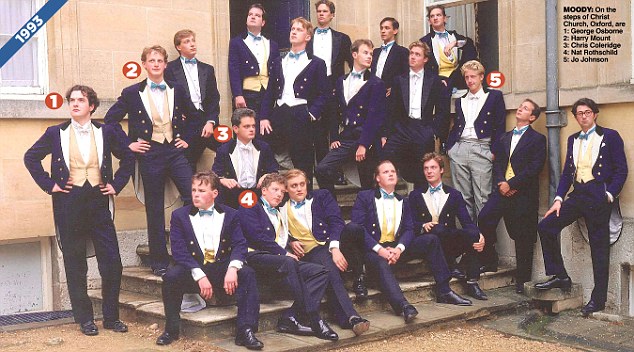
osborne (2)OsborneMoS2 Template MasterBullindon Club


August 10 2009; From Libya to London – The World of a Wild Child Turned Power – Broker. The Financier Nat Rothschild is at The Centre of a Web of International Intrigue

Once again, the name of Nat Rothschild has emerged at the centre of web of intrigue, with questions over his links to Libya, his friendship with Peter Mandelson and his alleged role in the release of the Lockerbie bomber. Indeed, his name seems to be linked with almost every influential, rich and powerful person on the globe, from billionaires to presidents and royalty. But it wasn’t always like that.

For years Nat Rothschild appeared destined to be yet another scion of the rich and famous who had it all and blew it all – mainly through partying. At some point in the mid-1990s he underwent an almost Damascene conversion into a responsible financier, who managed to channel his gambling instincts into money-making investments for a hedge fund. As his skills in handling investments helped turn the Atticus hedge fund into a multi-billion pound concern, so his personal stock rose – in the 13 years he has been with Atticus he has built up his own multimillion pound fortune, quite apart from the £500m he is expected to inherit one day from his father, Jacob, the fourth Baron Rothschild. He has also become an increasingly influential figure not just in the world of finance but in political circles.

Influence is something deeply familiar to the Rothschilds, whose banking concerns have been a force in Europe for two centuries, but for the member of the Bullingdon Club who once rolled an occupied portable loo down a slope, it seemed an unlikely future. Instead of partying with models and socialites, these days he is more likely to be found hob-nobbing with some of the world’s richest and most powerful people. His sphere of influence, it has been revealed, now extends even into Libya, which during the 1980s and 1990s was reviled as a terrorist state. Seif Gaddafi, President Muammar Gaddafi’s son, was the guest of honour at a party held by the financier in New York in 2008 and this year he allowed his home in Corfu to be the venue for a meeting between the Libyan and Lord Mandelson.

The meeting took place earlier this month, just a week before it emerged that the Scottish executive was considering the release from prison of the Lockerbie bomber Abdelbaset Ali al-Megrahi. Lord Mandelson accepted that Megrahi’s name came up in the discussions but he strongly denied any suggestion he interfered in the decision to release the prisoner.

Nat Rothschild’s interests are further thought to overlap with those of Seif Gaddafi in Montenegro, where he has been linked to investments in the £500m Porto Montenegro project, which is intended to give the country a leading marina. Gaddafi is thought to be keen, signing up to a range of deals in Montenegro to benefit Libya.

Prior to winning friends in Tripoli, the former wild child had built up enviable contacts and deals with Russian oligarchs. Roman Abramovich, the billionaire owner of Chelsea Football Club, is reported to be one of Rothschild’s closest friends and he has been appointed as an adviser to Oleg Deripaska, the owner of Rusal, which became the biggest aluminium company in the world as part of a merger deal with two other companies that Rothschild helped to put together.

Deripaska, described as Russia’s richest man and the Kremlin’s favourite oligarch, had a fortune estimated at more than £16bn in 2007 and is believed to be close to Vladimir Putin, the Russian prime minister.

It was Deripaska whom George Osborne, the Conservative front-bencher, was said to have spoken to about a £50,000 donation to the Tory party. The MP admitted he discussed a donation but denied asking for or receiving any money. The row blew up when Mr Rothschild accused Mr Osborne of approaching the oligarch for a donation. He is thought to have been prompted by a breach of etiquette on the MP’s part by leaking the story of Lord Mandelson meeting the oligarch on a yacht – the two politicians were Rothschild’s guests. The row soured a friendship between the MP and the financier which dated back to contemporary membership of the Bullingdon Club.

Mr Rothschild’s success in recent years has come as a surprise to many who knew him in his wilder days. Peter Munk, the founder and chairman of Barrick Gold, the world’s largest gold producer, recalled meeting the future fifth Baron Rothschild in the lobby of a London hotel in 2001. The financier was hoping to persuade Mr Munk to invest in Atticus but failed to impress at first hearing. “He did not carry the halo of being the future of the family. I wanted to get rid of the boy,” said the gold producer who now has him on his own advisory board. It is thought that as a young man Nat Rothschild was intimidated by the prospect of having to live up to the achievements of his father and ancestors. Now, he is seen as a man who may well set new high standards for his family. Mr Munk added: “This kid is special. It’s back to when they [the Rothschilds] were ruling the world.” “He is one of the few sons of great men who has enhanced the family stature and created his own wealth,” said Charles Phillips, who supervised him when he worked at the investment firm Gleacher & Co.


Rothschild Mover & Shaker SupremeNat Rothschild


Spheres of influence: Rothschilds connections:  Business associates:

Oleg Deripaska: The Russian oligarch owns Rusal, the world’s biggest aluminium company. Rothschild has won a position as an adviser to Deripaska and one of his select inner circle.

Seif al-Islam Gaddafi: Investment interests thought to overlap in Montenegro. He recently hosted a party with guests including Rothschild Prince Albert of Monaco and steel magnate Lakshmi Mittal.

Roland Rudd: Atticus employed Finsbury, which is run by Rudd, as its PR firm. Rudd is a friend of Lord Mandelson and Oleg Deripaska is another of Finsbury’s clients.

Timothy Barakett: The founder of the hedge fund Atticus took on Rothchild in 1995. The two have never looked back. Atticus is now a multi-billion concern and its success has enabled Rothschild to make his own fortune instead of relying on his father’s money.

Friends:

Roman Abramovich: The Russian oligarch and billionaire owner of Chelsea Football Club is a close friend of Rothschild. It was through Abramovich that Rothschild met Deripaska.

Peter Mandelson: The depth of the friendship is uncertain but Lord Mandelson has been linked to Rothchild on several fronts, including as a guest at his Corfu home.

George Osborne: Having known each other for years relations soured when Rothschild accused him of seeking donations for the Conservative Party from a Russian oligarch.

Matthew Freud: Rothschild was a guest at the 40th birthday party that Freud, the PR guru, threw for his wife, Elisabeth, Daughter of media mogul Rupert Murdoch, in Corfu last year.


jacob rothschild


Love Interests:

Annabelle Neilson: Rothschild married the model and friend of Kate Moss at a ceremony in Las Vagas after eloping. The marriage lasted less than three years, with a divorce being agreed in 1997.

Petrina Khashoggi: The daughter of Jonathan Aitken, Ivanka Trump, the socialite and businesswoman daughter of Ivana and Donald Trump, and the actress Natalie Portman are among the women Rothschild has dated. Princess Florence von Preussen: The great great granddaughter of Kaiser Wilhelm II, the last German Emperor, is the latest woman to be romantically linked to the financier. http://www.independent.co.uk/news/uk/home-news/from-libya-to-london-the-world-of-a-wild-child-turned-powerbroker-1776482.html
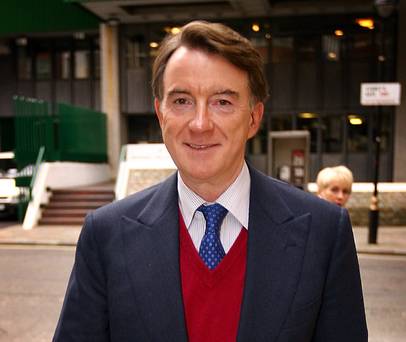
 

Peter Mandelson Mellowing


August 17 2009; Mandelson Met Gaddafi’s Son Before Lockerbie Bomber Move

Lord Mandelson met Colonel Gaddafi’s son at a Corfu villa only a week before the announcement that the perpetrator of the Lockerbie bombing could be released from prison. Seif al-Islam Gaddafi, widely seen as the Libyan leader’s most likely successor, was a fellow guest of the Rothschild family at its Greek property a fortnight ago in a wider annual gathering of powerful friends. Stays by the two men overlapped by only one night, according to Lord Mandelson’s spokesman. He said the pair spoke only briefly but they did discuss Abdelbaset Ali al-Megrah. “There was a fleeting conversation about the prisoner; Peter was completely unsighted on the subject,” he said.

It was only one week later that news emerged that Mr Megrah could get an early release on compassionate grounds because he is suffering from terminal cancer. Lord Mandelson said through his spokesman that he had had no involvement in the decision and only learnt of it through the BBC. Mr Megrah’s possible release was a decision entirely for the Scottish government rather than London. “It was entirely coincidental,” the spokesman said.

The government is likely to portray the meeting as unexceptional because relations between the UK and Libya have normalised in recent years. It was in 2003 that Muammer Gaddafi surrendered his weapons of mass destruction programmes and helped deliver the Lockerbie bombing suspects for trial. In November 2008 he agreed a $1.8bn (£1.1bn) compensation package for bomb victims.

Libya’s role as a large oil producer, with the potential for much greater mineral discoveries in the future, has made it a magnet for international business – including British oil companies. “Libya is . . . very much back in the mainstream of international affairs,” the British ambassador to Libya, Sir Vincent Fean, said this summer.

However, news of the meeting could renew questions about Lord Mandelson’s affinity for rich and powerful individuals and his ability to create controversy. Seif Gaddafi antagonized relatives of some of the 270 Lockerbie victims last year when he said in a BBC interview that they were “very greedy” and “trading with the blood of their sons and daughters”. 501 of 2845 https://archive.org/stream/ABCNews19781979/Libya-FT-2007-to-2012-b.txt


al-Megrahi at the time of his arrest for the Lockerbie bombingAbdelbaset Ali Mohmed al Megrahi


August 17 2009; Mandelson Sends Signals From Corfu

The business secretary used his summer break to convey contempt for his critics, By returning to the Rothschild family’s estate in Corfu for his summer break a fortnight ago, Lord Mandelson was making a characteristically defiant gesture. The veiled riposte to critics who question the company he sometimes likes to keep seemed to reinforce his intensifying sense of purpose and confidence as Labour’s most effective operator. As Matthew D’Ancona wrote in yesterday’s Sunday Telegraph: “It was a positive crowd-pleaser showing that the old stager is still ready to please himself and the punters with a bit of old-fashioned New Labour ligging and poncing off rich folks.”

Last summer the business secretary’s holiday with his friend Nat Rothschild led to his stay on the yacht of Oleg Deripaska, a Russian oligarch – and raised questions about a potential conflict of interest. A dinner at the local “Taverna Agni” with George Osborne, shadow chancellor, also ended up in the newspapers – although it was Mr Osborne whose reputation took a temporary knock.

This summer, as Lord Mandelson was spotted once again flying to Greece, his spokesman declared: “Peter is not going to allow what happened last year to put him off Corfu. He is there for a week – but this time without Russians, yachts or George Osborne.” True, of course. But it was an apparently chance encounter with another character – this time the son of Muammer Gaddafi, the Libyan leader – which could reignite questions of the business secretary’s judgment. Such is the secrecy surrounding the annual shindig at the Rothschild’s luxurious £30m estate that most conversations stay -private.

But the Financial Times has been told of another conversation, between Saef Gaddafi and Lord Mandelson, which touched briefly on a more serious issue: Abdelbaset Ali Mohmed al-Megrahi, the man imprisoned for the Lockerbie bombing of 1988 that killed 270 people. The two men had met on at least one previous “official” occasion – a formal event in London.

Both are mutual friends of Nat Rothschild, co-founder of the Atticus hedge funds and an international socialite. Mr Rothschild hosted a party for the Libya powerbroker at his New York townhouse last autumn – although Lord Mandelson was not present.

But the conversation’s timing, days before news of Mr Megrahi’s possible release, is an unfortunate coincidence for the business secretary. Feelings are running high on Mr Megrahi, with the US state department stating flatly last week that he should “spend the rest of his time in jail.” It could be seized upon by those who believe the British government is overly keen to improve relations with Libya because of the north African state’s large oil reserves. Asked if the two men discussed the oil industry, Lord Mandelson’s spokesman said: “[In] the context of this party, discussions on bilateral relationships cannot be very extensive.”
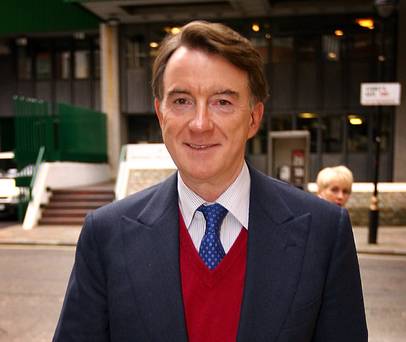
 

Peter Mandelson MellowingLord Mandelson       al-Megrahi on his return to Libya.Abdelbaset Ali Mohmed al Megrahi,


August 22 2009; Lord Mandelson Faces Fresh Questions Over His Links to Libya Following the Decision to Free the Lockerbie Bomber.

The Business Secretary denied that the Government had done a deal to free Abdelbaset Ali Mohmed al Megrahi, who was convicted of the 1988 terrorist atrocity that claimed 270 lives. However, his claims were contradicted by Saif Gaddafi, the son of the Libyan leader, in a conversation with Megrahi as the pair flew home from Glasgow. In a transcript obtained by The Sunday Telegraph, Mr Gaddafi tells Megrahi: “You were on the table in all commercial, oil and gas agreements that we supervised in that period. You were on the table in all British interests when it came to Libya, and I personally supervised this matter.

Also, during the visits of the previous prime minister, Tony Blair.”Downing Street confirmed last night that Gordon Brown had discussed the possible release of Megrahi with Colonel Gaddafi when the two men met on the fringes of the G8 summit in Italy last month. A letter the Prime Minister sent to the Libyans, dated last Thursday, the day of the release, said: “When we met I stressed that, should the Scottish Executive decide that Megrahi can return to Libya, this should be a purely private, family occasion.”

Libya’s talk of trade deals has shone the spotlight on Lord Mandelson, who is facing mounting questions over his links with Mr Gaddafi, 37, the man widely tipped as his country’s next leader. An investigation has disclosed that the Business Secretary’s controversial businessmen friends, Oleg Deripaska and Nat Rothschild, have a closer relationship with Mr Gaddafi than has so far been publicly known. Earlier this summer Mr Gaddafi hosted a birthday party at a resort where Mr Deripaska, a billionaire Russian oligarch, and Mr Rothschild, a wealthy British financier, held a business meeting the following morning. The 37th birthday celebrations took place in Montenegro, a tiny country whose interests have been championed by Lord Mandelson and where Mr Deripaska and Mr Rothschild have substantial business interests. Late last year Mr Rothschild hosted a party in honour of Mr Gaddafi in New York.

Lord Mandelson has met the Libyan at least twice in the past four months. Last week he admitted to a “fleeting” discussion with Mr Gaddafi about the convicted Lockerbie bomber at the Rothschilds’ family estate in Corfu. It came just days before it emerged that preparations were being made for Megrahi’s release and raised questions from opposition politicians.

Douglas Carswell, the Tory MP, said yesterday that the public would wonder whether Lord Mandelson had “once again” allowed his private life to mix with controversial decisions made in his role as Business Secretary. Edward Davey, the Liberal Democrat foreign affairs spokesman, demanded greater transparency over the Government’s role in the release. “The evidence is mounting that there was far more to the release of Megrahi than simply a judicial decision based on compassion,” he said.

Yet Saif Gaddafi said in his conversation with Megrahi, which was filmed for broadcast on Libyan television: “Frankly, we did a lot of work, secret and public, which involved all parties and took years. The work was constant to get your release.” The Business Secretary has denied acting improperly and his spokesman said claims of a conflict of interest were “farcical”, adding: “People are reading far too much into this.”

Colonel Gaddafi heaped further embarrassment on Britain by praising “my friend” Gordon Brown and his government for their part in securing Megrahi’s freedom. It also emerged that a Foreign Office minister had written to the Scottish government in what critics claimed was an attempt to put pressure on Scotland to set Megrahi free. Ivan Lewis, the minister responsible for Libya, wrote to Kenny MacAskill, the Scottish justice secretary, less than three weeks before Megrahi was freed. He is said to have explained that there was no legal reason not to accede to Libya’s request to transfer him into its custody under the terms of a treaty agreed between Tony Blair and Colonel Gadaffi in 2007.

Whilst confirming the letter, the Foreign Office last night insisted that it was only an explanation of the legal position, which Mr Lewis had given in response to a letter requesting clarification of the Treaty from Mr MacAskill. “Ivan Lewis reiterated our understanding of the legal situation. It is absolute rubbish to suggest that this letter provided any encouragement to transfer Megrahi to Libya.” http://www.telegraph.co.uk/news/worldnews/africaandindianocean/libya/6073631/Lockerbie-bomber-Lord-Mandelson-faces-new-questions-over-Libya-links.html


mandelsonLord Mandelson


23 August 2009; Mandelson Denies Release Linked To Deal

Lord Mandelson has dismissed claims the release of the Lockerbie bomber is linked to a trade deal – as the head of the FBI has slammed the Scottish government. The trade deal claims were made by the son of Libyan leader Colonel Gaddafi, Seif al Islam, in a television interview filmed as Abdel Baset al Megrahi was flown home. He said: “In all commercial contracts, for oil and gas with Britain, (Megrahi) was always on the negotiating table. “All British interests were linked to the release of Abdel Baset al Megrahi.” The claim was rejected by the Foreign Office, and was followed by an angry response from the Business Secretary. “It’s not only completely wrong to make such a suggestion it’s also quite offensive,” Lord Mandelson said. He said he had met Colonel Gaddafi twice in the past year, and on both occasions he had raised the issue of Megrahi. “They had the same response from me as they would have had from any other member of the Government. The issue of the prisoner’s release was entirely a matter for the Scottish Justice Minister,” Lord Mandelson said. “That is how it was left, that is how it was well understood.”

Meanwhile, head of the FBI Robert Mueller, who as a US Justice Department lawyer led the investigation into the 1988 bombing, said the decision to release Megrahi made a “mockery of justice”. His comments came in a letter written to Scottish Justice Secretary Kenny MacAskill, the man who made the decision to the release the bomber. In Libya, Colonel Gaddafi met Megrahi and praised the Scottish authorities for their “courage” in releasing him. He thanked his country’s “friends” in the Scottish Nationalist Party for the early release on compassionate grounds.

Megrahi is suffering from terminal cancer and is said to have less than three months to live. According to the Libyan official news agency Jana, he said: “I congratulate (the Scottish authorities) on their courage and for having proved their independence despite the unacceptable and unreasonable pressures they faced.”The British and US governments have expressed outrage at the “hero’s welcome” Megrahi received on returning to Libya.

Megrahi is the only person to have been convicted of the attack, which killed 270 people in the air and on the ground in the Scottish town of Lockerbie. He has always denied involvement in the bombing and has told The Times he will produce new information that will prove his innocence. http://news.sky.com/story/718710/mandelson-denies-release-linked-to-deal


ap_saif_al_islam_gadhafi_ll_111221_wmainSeif al Islam  Gaddafi


August 24 2009 The Libyan Despot’s Son, The Rothschilds and Other Questions For Lord Mandelson

The Rothschild villa on Corfu and the oligarch-rich coast of tiny Montenegro have once more hosted what could easily be mistaken as a Mandelson – orchestrated salon of mutual backscratching. The despot’s son, a Corfu soiree and yet more questions for the Fixer Supreme. Mutual connections, ‘chance’ meetings and social back channels are often what make the diplomatic and economic worlds go round. But Lord Mandelson’s Adriatic vacations with his rich friends are in danger of becoming an annual cause celebre. Last summer they resulted in ‘ Yachtgate’ – his vicious spat with Shadow Chancellor George Osborne over what was said on their high seas holiday in Corfu with controversial Russian oligarch Oleg Deripaska.

This year the Business Secretary faces growing speculation over his part in the release last week of Abdelbaset Al Megrahi, the Libyan convicted of the Lockerbie bombing which killed 270 people. The backdrop to this fresh controversy is a very familiar matrix of exotic faces and locations. We have the involvement of Mr Deripaska, the Russian oil and metals baron, and British financier Nat Rothschild – two Mandelson cronies who were also central to Yachtgate.

But the crucial new figure this year is that of Saif al-Islam Gaddafi, second son of Libyan dictator Colonel Muammar Gaddafi, whom he is widely expected to succeed.

Lord Mandelson denies that he had any influence over Megrahi’s release and triumphal return home, which has so infuriated the United States. But he has already had to admit that the matter was discussed at least once in private with the urbane Saif, who then declared on Libyan TV. ‘In all commercial contracts for oil and gas with Britain Megrahi was always on the negotiating table.’

It is worth remembering that last year it took some little time before Lord Mandelson admitted that he had known Mr Deripaska for at least two years longer than his office had previously let on. Will the forgetful Business Secretary have to make similar admissions this time round?

There is no doubt that Saif is the coming man on the Libyan scene and already an international player in both politics and business. If his one-time pariah father has managed a remarkable rehabilitation in the West – thanks in no small part to the 44billion barrels of oil as yet untapped on Libyan territory – then the London School of Economics educated Saif, who has exhibited as an artist, appears to be the regime’s more palatable future. And it is a future which offers immensely lucrative trade deals for the UK – one hint of the emerging relationship between Libya and Britain came with the news this weekend that Saif has just purchased a £10m mansion in Hampstead, North London.

Saif’s official role is that of running a Tripoli – based family charitable foundation. Last year he foreswore any active part in Libyan public life. He declared that democracy was the only way forward and that North African politics – Libya aside – was a ‘ forest of dictatorships’.

Such noble utterances are greeted with skepticism by Libyan dissidents. It is difficult to tell the truth about what Saif’s true politics and intentions are,’ says Ashour Shamis, a leading London-based Libyan opposition activist. ‘Saif says he wants a new beginning and for the country to be run with more freedom. We shall see. Do not forget that in Libya there is no opposition, only Gaddafi and his sons. They treat Libya as their own possession. Its assets belong to their family. ‘Saif is not rebelling against this regime. He is part of it. I place no credence in his saying that he has no interest in succeeding his father.’

Another Libyan exile was even more cynical: ‘Saif is his father’s son. The idea that anything dramatic will change under him is laughable. He is very good at presenting himself as a reformer and blaming the excesses for people around his father. But I for one do not believe him.’ Saif is not the only son of a head of state to appear in this circle of friends. Our own Prince Andrew, the UK’s special trade envoy, is a friend of his, having met him on a number of occasions in private and public capacities.

Saif has also been a guest at Buckingham Palace and Windsor Castle. The Gaddafi family are particularly keen to nuture this connection it seems. Another boost for them on the global stage. And what a small world it is. In March this year, Andrew went to Montenegro to open the new British embassy there. During the trip he took time out to be shown round the £500m Porto Montenegro marina which is being developed on the coast near Tivat. Two of the main investors in the project are Mr Deripaska and his financial adviser Mr Rothschild. Indeed, the former’s business interests make him the largest private employer in Montenegro.


formerly_lehman_brothers_by_bigunknown-d39xn43


Early last year, when he was still EU Trade Commissioner and not yet ennobled, Peter Mandelson announced that he had secured a bilateral agreement with the tiny Adriatic nation. ‘Today’s signature is an important milestone,’ he declared at the time. Montenegro’s progress toward becoming a reliable world trading partner had been ‘ remarkable’. Mr Deripaska must have been delighted. It later emerged that during Lord Mandelson’s tenure as commissioner, there had also been two cuts in EU aluminium import tariffs, which has benefitted Mr Deripaska’s company Rusal – the EU’s biggest importer of the raw metal – by tens of millions of pounds a year.

In June this year what was described as the most lavish celebration ever held in the Adriatic took place near the Tivat marina. Saif Gaddafi had chosen the Splendid hotel in Becici as the location for his 37th birthday party. Among the guests, who flew in on a fleet of a dozen or more private jets, were Prince Albert of Monaco, Mr Deripaska and Mr Rothschild. Saif is said to be interested in investing in Montenegro. Presumably he and Mr Deripaska had plenty to talk about – the Russian also controls the oil company Russneft and Libya is looking for foreign investors in the energy industry. Business and pleasure combined in one ostentatious display.

August came and the Mandelson circus arrived back on Corfu. Displaying his trademark rhino hide, he brushed off the 2008 imbroglio and returned once again as a guest at the Rothschild villa. No Mr Deripaska this time. But sharing the Rothschild hospitality for 24 hours of his holiday was someone with the potential to be equally if not more controversial: Saif al-Islam Gaddafi. Lord Mandelson has admitted to having met the despot’s son at least once before, in May this year. On Corfu they chatted. And, inevitably, the subject of Megrahi came up. Within the month the convicted mass murderer was free and being welcomed at Tripoli airport by a jubilant Saif.

We are asked to believe by the Foreign Office that there were no linked trade deals, and no input by Lord Mandelson. Unfortunately experience has taught us to be more than a little circumspect about the Business Secretary’s declarations. His soiree with Saif on Corfu, at a time when the Megrahi affair was about to reach a crisis, leaves too many questions unanswered from the fixer supreme.

For the moment there is only one clear beneficiary of the affair: Saif’s father. ‘Gaddafi is reaching a crescendo of success as he approaches his 40th anniversary,’ says Mr Shamis. ‘He is the chairman of the African Union, has visited most of the European and world capitals that were once closed to him and now he has freed Megrahi. He has achieved most of the things he wanted to do. ‘Lord Mandelson and other politicians in the West have fallen completely into his lap.’ http://blacklistednews.com/?news_id=5297


Qaddafi_Chavez_Tripoli_060306_by_AFP_Getty1


August 29 2009; Lord Mandelson Accused of Secretly Lobbying For The Interests of Libya at The Time of The Alleged Prisoner-For-Oil Deal With Britain.

Informed sources say that, nearly a year after Lord Mandelson stepped down as European Trade Commissioner to return to the Cabinet, he continued to push personally for a new and quick European Union (EU) trade deal with Libya. The persistence of his lobbying on Baroness Ashton, his successor as Trade Commissioner, is said to have alarmed officials at the EU headquarters. “Mandelson has been putting Ashton under pressure to give something quicker to Libya,” said one European official close to the trade talks.

The Business Secretary has however strongly denied the allegation. Lord Mandelson’s growing links to Libya can be revealed just days after Saif Gaddafi, the Libyan leader’s son, insisted that freedom for the Lockerbie bomber was directly linked to lucrative deals in the North African country for British firms.

It has been revealed that Mr Gaddafi last week repeated his earlier claim that Megrahi’s release was always “on the table” during talks about trade agreements. Deals included a £545 million deal for BP. Last night there was more evidence to support this theory as it emerged that the British government had decided in 2007 that it was “in the overwhelming interests of the United Kingdom” to pave the way for his return to Libya.

Letters were sent two years ago by Jack Straw, the Justice Secretary, to Kenny MacAskill, his counterpart in Scotland, which show the government was abandoning its attempt to prevent Megrahi from serving out his sentence in his home country. The decision was taken after discussions between Libya and BP over the multi-million pound oil exploration deal hit difficulties.
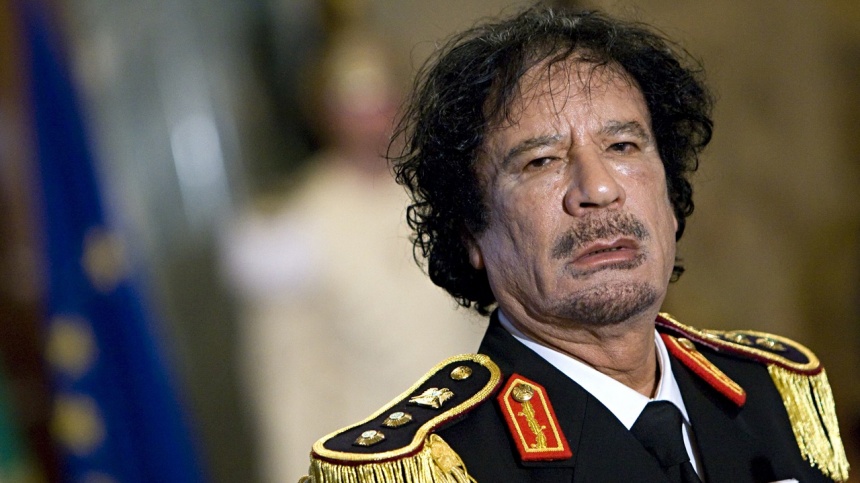
 

Libya-Muammar-Gaddafi-004


Fresh information comes to light

The Business Secretary, Gordon Brown’s right-hand man, faced fresh calls yesterday to “come clean” over his links to Mr Gaddafi and Libya. The country was a pariah nation until six years ago when, in return for a lifting of economic sanctions, it accepted responsibility for the bombing of Pan Am Flight 103, above Lockerbie, in December 1988.

On February 27 2008, Lord Mandelson, as Trade Commissioner, proposed that the EU should start negotiations for a “Framework Agreement”, to develop trade and other links, with Libya. He said: “An ambitious Free Trade Agreement would intensify co-operation between the EU and Libya on trade and economic issues and would further strengthen and deepen our relationship.” Such an agreement usually takes up to 10 years to arrange.

In June of this year, British officials lobbied other EU member states to give interim trade breaks to Libya by scrapping tariffs on certain textiles and engineering products. In Montenegro, where Mr Deripaska and Nat Rothschild, two of Lord Mandelson’s most wealthy and controversial associates, have invested, their £500-million new marina project is on the site of a shipyard that had Libyan links. After the Porto Montenegro marina project, in which Mr Deripaska, Mr Rothschild and others have invested millions, was launched in 2007, some 100 workers from the former government shipyard on which it is being built were transferred to Libya. The workers had previously been overhauling Libyan warships.

The heat is on Lord Mandelson, the Prime Minister and David Miliband, the Foreign Secretary, this weekend after William Hague, the Shadow Foreign Secretary, demanded answers over their conduct. “If there was no UK government involvement in the decision to release Megrahi then Gordon Brown and Lord Mandelson should have no objection to releasing details of the government’s dealings with Libya,” he said.

The 24-hectare marina site in Montenegro was sold to Peter Munk, the Canadian mining tycoon, for a reported price of only £3.2 million in a deal personally overseen by Milo Dukanovic, Montenegro’s controversial prime minister. Mr Gaddafi, who was a guest of Mr Rothschild at his villa in Corfu earlier this summer at the same time as Lord Mandelson, was actively promoting Libyan business interests in Montenegro, which is aggressively courting high-profile foreign investors.

During his time as EU Trade Commissioner in Brussels, Lord Mandelson championed the cause of Montenegro, supporting its entry into the World Trade Organisation and ending EU trade tariffs on the country’s largest export, aluminum. That move benefited Lord Mandelson’s friend Mr Deripaska, who bought Montenegro’s former state aluminum plant.


images


27 November 2009; Peter Mandelson’s Closeness to Gaddafi’s Son ‘Is Sickening’

Lord Mandelson should use his friendship with the son of Colonel Gaddafi to help negotiate compensation for people injured by IRA bombs, a victims’ campaigner has said. Willie Frazer, who lost his father and two uncles during the Troubles, said he was “sickened” by reports that the former Northern Ireland Secretary of State had attended a shooting party with Saif al-Islam Gadaffi in England earlier this week. He said: “At the minute, at the very least it is distasteful for that man, Lord Mandelson, to be affiliating himself with Colonel Gaddafi. “Has he forgotten what happened to British citizens and British victims? Until that’s dealt with there should be some respect for the people that have lost their lives and given their lives for the defence of British cities.”

Lord Mandelson and Saif al-Islam Gaddafi reportedly met at Lord Rothschild’s villa in Corfu, days before the announcement earlier this year that Lockerbie bomber Abdelbaset Ali Mohmed Al Megrahi was to be freed on compassionate grounds. Saif Gaddafi later accompanied the dying terrorist back to Libya. A Conservative frontbencher said victims of Libyan-sponsored terrorism would be “sick to the stomach” at reports of the country house social event. Conservative Scotland spokesman Ben Wallace said: “The hundreds of victims of Libyan Semtex will be sick to the stomach to see Lord Mandelson gallivanting around the countryside with Gaddafi’s son.” http://www.belfasttelegraph.co.uk/news/local-national/peter-mandelsons-closeness-to-gaddafis-son-is-sickening-28504340.html


strawJack Straw


August 31 2009; Home Secretary Jack Straw Letter Rekindles Megrahi Row – Opposition MPs Call For An Inquiry

The government dropped an attempt to exclude the Lockerbie bomber from its prisoner transfer agreement (PTA) with Libya two years ago after resistance from Tripoli, it emerged yesterday. Jack Straw, justice secretary, decided it was in the UK’s “overwhelming interests” to agree to Libyan calls for Abdelbaset Ali Mohmed al-Megrahi to be included in the deal. In a letter, Mr Straw wrote: “The wider negotiations with the Libyans are reaching a critical stage and, in view of the overwhelming interests for the United Kingdom, I have agreed that in this instance the [PTA] should be in the standard form and not mention any [specific] individual.”

Within six weeks of the decision on December 19 2007, Libya had ratified an exploration deal for oil and gas made with BP seven months earlier.

Mr Straw said yesterday that the decision was “academic” to this month’s release of Mr Megrahi, which was taken by the Scottish executive on humanitarian grounds outside the prisoner transfer agreement (PTA). But the disclosure, made in letters to Kenny MacAskill, the Scottish justice secretary, and leaked to a Sunday newspaper, prompted a strong reaction from opposition MPs yesterday, who said the government should hold an inquiry into the affair.

Ed Davey, Liberal Democrat foreign affairs spokesman, said the letters were evidence that the government had been talking to the Libyans about Mr Megrahi with a view to safeguarding Britain’s commercial interests. Document 552 of 2845 https://archive.org/stream/ABCNews19781979/Libya-FT-2007-to-2012-b.txt


Blair Ghaddafi 2007 Does he ever change his clothes


September 2 2009; Oil Helps Grease Improvement In Relationship

The surge in Libya’s oil exports to the UK coincided with Britain becoming a net importer of oil since 2005. Mr Blair’s meeting with Colonel Muammer Gaddafi in March 2004, followed by a second visit in 2007, helped cement Libya’s re-admission into the international community. For oil companies the company that has the most riding on Libya is BP. The deal it signed in 2007 gave it a huge area to explore, and it plans to start drilling wells next year, but any discoveries are unlikely to result in production until late in the next decade. Document 555 of 2845 https://archive.org/stream/ABCNews19781979/Libya-FT-2007-to-2012-b.txt


blair-gadaffi Just Good friends


June 5 2010; Tony Blair Our Very Special Adviser by Dictator Gaddafi’s Son

Tony Blair has become an adviser to Colonel Gaddafi, the Libyan dictator’s son has sensationally claimed. Saif al-Islam Gaddafi said the former prime minister has secured a consultancy role with a state fund that manages the country’s £65billion of oil wealth. In an exclusive interview, Saif described Mr Blair as a ‘personal family friend’ of the Libyan leader and said he had visited the country ‘many, many times’ since leaving Downing Street three years ago. Personal friends? If true, the claims will plunge Mr Blair – now a Middle East peace envoy – into a fresh row over potential conflicts of interest between his public and private roles.

His business affairs have attracted widespread controversy because they are deliberately shrouded in secrecy. Last night, families of the 270 Lockerbie victims accused Mr Blair of breaking bread with people who ‘have blood on their hands’. They have in the past raised questions about Mr Blair’s relationship with Colonel Gaddafi especially over a prisoner transfer agreement with Libya that paved the way for the return of the Lockerbie bomber last year.

Saif made clear that the agreement – drawn up when Mr Blair was prime minister – was key to creating a ‘special relationship’ between Britain and Libya. Saif suggested Mr Blair was involved in ‘Africa projects’ with his father, alleging: ‘He also has some consultancy role with the Libyan Investment Authority.’ Mr Blair was adamant last night he had no relationship whatsoever with the LIA. However he is advising several firms seeking a slice of the massive revenues from Libya’s oil reserves.
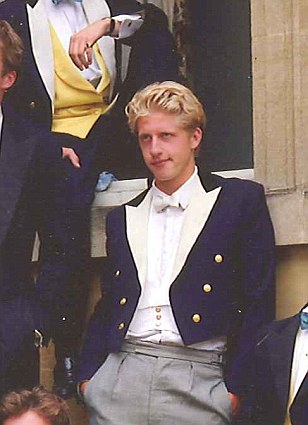
 

Bullingdon Boy Jo


Saif, speaking in his private suite in Mayfair’s five star Connaught Hotel, said: ‘Tony Blair has an excellent relationship with my father. ‘For us, he is a personal family friend. I first met him around four years ago at Number 10. Since then I’ve met him several times in Libya where he stays with my father. He has come to Libya many, many times. ‘He’s adviser to the LIA, the Libyan Investment Authority. He has some consultancy role.’ Saif defended Mr Blair’s right to exploit his contacts in Libya. ‘Many people are unhappy with him [Blair] because of Iraq,’ he said. ‘It’s much easier to deal with the LIA than the Middle East. Tony Blair has the right to earn money. ‘It’s a good thing to be a businessman.

The LIA is ready to talk to anybody who wants to do business in Libya.’ Last night, Mr Blair’s spokesman said: ‘Tony Blair does not have any role, either formal or informal, paid or unpaid, with the Libyan Investment Authority or the government of Lybia. But sources close to the Gaddafi family said Saif – tipped to succeed his father as leader of his country – stands by his comments.

Colonel Gaddafi is understood to be on first name terms with Mr Blair, who saw his work in Libya as one of the great foreign policy successes of his premiership. Mr Blair has always insisted he played no role in the return of Lockerbie bomber Abdelbaset Ali Al Megrahi, who was sent home last August by the Scottish government on compassionate grounds after doctors wrongly said he had only three months to live. But Saif said Megrahi’s release was ‘always on the negotiating table’ in discussions about ‘ commercial contracts for oil and gas with Britain’.

Frank Duggan, president of the Victims of Pan Am Flight 103, told the Mail: ‘If this is true, I guess this is Tony Blair’s reward from the Libyan government for what he has done. It’s important for world peace that Libya is brought back into the community of nations but that doesn’t mean that you have to honour people with blood on their hands.’

Saif, 37, was a key player in Libya’s bid to end its pariah status and renounce nuclear weapons. That decision led to Mr Blair’s trip to Tripoli in 2004, where he shook Colonel Gaddafi’s hand and declared a ‘new relationship’. The meeting led to lucrative Libyan oil contracts for Shell. A month before stepping down as PM, Mr Blair visited-Colonel Gaddafi in Tripoli again at the same time that BP signed a $900million deal with the Libyan National Oil Company.

Saif said: ‘Libya has a special relationship with Britain.’ Since becoming a part-time Middle East peace envoy on leaving office in 2007, Mr Blair has exploited his contacts to amass a personal fortune in excess of £20million. He has a lucrative contract to advise JP Morgan, which pays him £2million a year. Part of his job for them is to develop banking opportunities in Libya. It is understood that British firms Mr Blair is linked to are also being given contracts to tap Libya’s massive natural resources, and to help rebuild the country’s outdated infrastructure.The details are sketchy because he has built a labyrinthine business empire of interlocking partnerships designed, it seems, to conceal the sources and scale of his income.
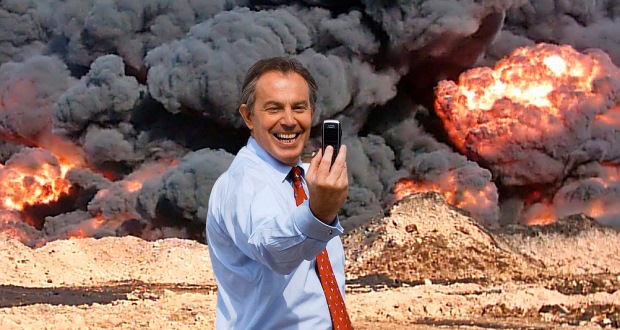
 

??????????


Tory MP Daniel Kawczynski, who chairs the all-party Commons committee on Libya, said Mr Blair should spend more time on his role as a Middle East envoy than allegedly exploiting his links with the Gaddafi family. He said: ‘Mr Blair has a very important job. It does concern me greatly that he seems to spend so much time with the Libyans, who are not key players in the Arab-Israeli conflict. ‘There should be greater transparency to ensure that Tony Blair is not using his current position and his previous position to assist his business interests.’

Sources close to Mr Blair said it was a matter of public record that he has visited Libya since leaving office, where he has discussed a range of issues. They said he fully supported the decision to integrate Libya back into the international community and is proud of the role he played in the process.

Saif Gaddafi sits at the centre of a remarkable social web that has ensnared both Tony Blair and Lord Mandelson. The men are bound together by their interests in Libyan business and their friendship with the multi-billionaire financiers of the Rothschild family. Lord Mandelson once remarked that he was ‘intensely relaxed’ about extreme wealth, a position he has justified ever since. It was only natural that he should share an interest in networking and wealth with one of the world’s oldest banking families.

But even the Rothschilds have probably never described him as a ‘killer of a man’. That was Saif Gaddafi’s take on the former Business Secretary. After Labour’s election defeat, Mr Gaddafi said: ‘It’s bad news for the UK that he left because he is a killer of a man. It’s a loss for the UK.’  The two men met briefly last summer at the secluded cliff top mansion compound of the Rothschild family on the holiday island of Corfu. Curiously, their stays overlapped by one night and came only a week before the announcement-that the perpetrator of the Lockerbie bombing could be released from prison. They ‘fleetingly’ discussed the fate of the bomber Abdelbaset Ali Al Megrahi but Lord Mandelson’s spokesman said he was ‘ completely unsighted’ on the impending release.

Last November, Lord Mandelson spent more time in the company of Saif during a shooting weekend at Waddesdon Manor, Lord Rothschild’s mini-Versailles in Buckinghamshire. Cherie Blair was also a guest. Earlier this month, the former business secretary was seen zipping around the Swiss ski resort of Klosters in Nat Rothschild’s £250,000 Ferrari convertible. http://www.dailymail.co.uk/news/article-1284132/Tony-Blair-special-adviser-dictator-Gaddafis-son.html
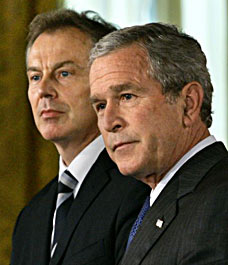
 

Bush-Blair-0555


September 19 2011; Blair Made Two Secret Visits to Gaddafi in Libya Before Lockerbie Bomber’s Release

Tony Blair held secret talks with Colonel Gaddafi in the months before the release of the Lockerbie bomber, letters and emails uncovered in war-torn Tripoli reveal. After he stepped down as Prime Minister, Mr Blair was twice flown to Libya on a Gaddafi private jet. He visited the dictator in June 2008 and April 2009, when Libya was threatening to cut all business ties with Britain if Abdelbaset al-Megrahi stayed in a Scottish jail. At one of his encounters, Mr Blair took a billionaire U.S. businessman with him. The Libyans wanted to discuss a beach resort deal.

The revelation of the meetings will provoke further claims that Mr Blair worked behind the scenes on behalf of the tyrannical regime to get the bomber released. But despite admitting that Gaddafi brought up the issue of Megrahi, Mr Blair strenuously denied having anything to do with his release, saying it had always been solely a matter for the Scottish Executive.

Pam Dix, whose brother died in the 1988 Lockerbie bombing, said: ‘The idea of Gaddafi paying for Mr Blair’s visits is deeply offensive. ‘These new meetings are disturbing, and details of what was discussed should be made public. I am astonished Tony Blair continued to have meetings like this out of office.’ The emails and letters, in which Gaddafi is referred to as ‘The Leader’, show that in 2008 and 2009, Mr Blair negotiated to fly to the Libyan capital from Sierra Leone, where he was promoting tourism, in a jet provided by Gaddafi.

One letter was written on June 2, 2008, by Gavin Mackay, from Mr Blair’s office, to Libya’s ambassador to the UK. It said: ‘Let me begin my [sic] saying that Mr Blair is delighted that The Leader is likely to be able to see him during the afternoon of June 10, and he is most grateful that the Libyan authorities have kindly offered an aircraft to take him from Freetown to Tripoli and back to London.’

Another letter shows that Mr Blair took billionaire Tim Collins to the April 2009 meeting. Mr Blair’s events organiser Victoria Gould wrote to the British ambassador in Tripoli, Sir Vincent Fean, to ask whether the former PM could stay at his residence. She wrote: ‘If we were able to stay at the Residence, I know TB [Mr Blair] would be really grateful (as would we all).’ Sir Vincent wrote back: ‘Just to confirm that the residence is at your disposal.’

A week later, Miss Gould wrote in an email: ‘We have asked the Libyans to collect us from Sierra Leone and bring us to Libya. In terms of calls, if you could note that TB would like to do the following: a meeting with The Leader (partly 1:1 and partly with Tim Collins).’ The meeting came a day after Britain signed an agreement with Libya which paved the way for Megrahi’s release. This happened in August 2009 after doctors gave him three months to live because of cancer.

He is still alive. A spokesman for Mr Blair said: ‘The subjects of the conversations during Mr Blair’s occasional visits was primarily Africa, as Libya was for a time head of the African Union; but also the Middle East and how Libya should reform and open up. ‘Of course the Libyans, as they always did, raised Megrahi. Mr Blair explained, as he always did, that it was not a decision for the UK Government but for the Scottish Executive. As we have made clear many times before, Tony Blair has never had any formal role, paid or unpaid, with the Libyan Investment Authority or the Government of Libya and he has no commercial relationship with any Libyan company or entity.’ The former prime minister continues to have round-the-clock armed protection, and it is understood that Scotland Yard spent up to £20,000 during the trips to Libya. http://www.dailymail.co.uk/news/article-2038765/Tony-Blair-secret-meetings-Gaddafi-Lockerbie-bomber-release.html


Tony Blair and George Bush


August 4 2013; Tony Blair Assisted Colonel Gaddafi in £1bn Legal Dispute With Victims of a Libyan Terrorist Attack

Documents show that Gaddafi turned to Mr Blair after a US court ordered Libya to pay $1.5billion (£1billion) in damages to relatives of seven Americans killed when a bomb exploded on a Paris-bound passenger jet in west Africa. According to the email, Mr Blair approached President George W Bush after promising the Libyan leader that he would intervene in the case. Mr Bush subsequently signed the Libyan Claims Resolution Act in August 2008, which invalidated the $1.5billion award made by the court.

UTA Flight 772 from Chad was blown up on Sept 19, 1989, by Libyan intelligence services, killing all 170 passengers. The attack took place nine months after Pan Am Flight 103 was blown up over the Scottish town of Lockerbie killing 270 people. The relatives of UTA Flight 772 had won the billion-pound court case in January 2008 after a seven-year legal battle, causing serious difficulties for the Libyan regime in the US. The ruling meant the proceeds of Libyan business deals, mainly in oil and gas but including other investments, could be seized in the US.

Mr Blair’s involvement in the case is outlined in an email obtained by The Sunday Telegraph. The document was written by Sir Vincent Fean, the then British ambassador to Libya, and was sent to Mr Blair’s aides on June 8, 2008, two days before Mr Blair met Gaddafi in Libya. It was one of at least six private trips made by Mr Blair to Libya after he quit as prime minister in June 2007. The first trip to meet Gaddafi was made in February 2008. The previous month a US federal court had made the $1.5billion award to Flight 772 victims. The email written by Sir Vincent outlines points for Mr Blair to raise in his meeting with Gaddafi. It also shows that a key aide to Mr Blair had met with a senior US diplomat to discuss the Flight 772 case.

Sir Vincent wrote: “On USA/Libya, TB should explain what he said to President Bush (and what Banner [a Blair aide] said to Welch [a US diplomat]) to keep his promise to Col Q [Gaddafi] to intervene after the President allowed US courts to attach Libyan assets.” The memo went on: “He [Blair] could express satisfaction at the progress made in talks between the US and Libya to reach a Govt to Govt solution to all the legal/compensation issues outstanding from the 1980s. It would be good to get these issues resolved, and move on. The right framework is being created. HMG is not involved in the talks, although some British citizens might be affected by them (Lockerbie, plus some UK Northern Irish litigants going to US courts seeking compensation from Libya for IRA terrorist acts funded/fuelled by Libya).”

The memo reveals that Nick Banner, Mr Blair’s chief of staff in his role as Middle East peace envoy, had spoken to David Welch, the US official who was negotiating with the Libyans over compensation for victims of terrorism. The American lawyer who had won the court order in January 2008 only to have it made invalid by the act signed by Mr Bush said his clients had “got screwed”.


Blair Ghaddafi 2007 Does he ever change his clothes


Stuart Newberger, a senior partner at the international law firm Crowell & Moring, said: “This case was thwarted by President Bush, who directed the State Department to negotiate a package deal that ended all Libyan-related terrorism cases, including my judgment. I had heard rumours about Blair’s involvement but this is the first time that role was confirmed.” He added: “I never considered this an honourable way to carry out diplomacy. It sent the wrong message to terrorist states – don’t worry about these lawsuits and judgments as the politicians will eventually fix it.”

Under the terms of the Libyan Claims Resolution Act, Libya made a one-off payment to victims of all Libyan state-sponsored terrorism including the bombings of Pan Am Flight 103, UTA Flight 772 and a Berlin discotheque. The payment, totalling $1.5billion, gave Libya immunity from all terrorism-related lawsuits. The relatives of victims of UTA 772 received about $ 100million, rather than the court award of $1.5billion. Relatives of victims of Pan Am 103 welcomed the agreement which saw them get the final instalment of compensation already agreed. The deal meant all victims of Libyan terrorism received the same award.

The Sunday Telegraph has also obtained a separate letter, sent on June 2 from Gavin Mackay – a Foreign Office official seconded to Mr Blair in his role as Middle East peace envoy at the Office of the Quarter Representative (OQR) – to Libya’s ambassador in London. The letter, on OQR-headed notepaper details Mr Blair’s gratitude that Libya is providing him with a private jet to fly him from Sierra Leone to Tripoli for a four-hour stopover and then on to the UK.

Sir Malcolm Rifkind, the former Foreign Secretary, expressed concern that the trip appeared to be arranged through Mr Blair’s public role as Middle East envoy. He said: “Unless Mr Blair can come up with a convincing explanation as to why the Quartet secretariat should have been involved in this visit, it would indeed be a reason for legitimate and serious criticism.”

A spokesman for Tony Blair said: “The only conversation he ever had with regard to this matter was to give a general view that it was in the interests of both Libya and the USA to resolve those issues in a fair manner and move on.” http://www.telegraph.co.uk/news/politics/tony-blair/10220684/Tony-Blair-helped-Colonel-Gaddafi-in-1bn-legal-row.html
 

blair-gadaffi Just Good friendsPeter Mandelson Mellowing

Vicki Greig Abuse of Impressionable young woman through Use of Lies About NHS Funding

The Lie: SNP to cut financial allocations to the NHS by 500K. The Vicky Greig Video

Mainstream media in support of “Better Together” spread the lie Vicky was raising the Spectre of Privatisation but this was not the case. She was referring to a maliciously mis-reported release, by a so called “whistleblower” of plans by Mr Salmond to DRASTICALLY cut NHS funding which would result in a reduction in the quality of exisiting service provision in Scotland. https://www.youtube.com/watch?v=ux34YUORtQk

The Truth:

http://news.stv.tv/politics/293405-nhs-planned-cuts-of-450m-a-myth-despite-leaked-report-msps-told/
http://www.bbc-now.co.uk/news/uk-scotland-29213416
http://www.thelyonyawns.com/?p=20

Vicky at the Ball 2

Vicky Greig at the Ball

Glasgow City Council Corruption – Greens and Blues Exchange Views – Is There Consensus?

Glasgow’s Corrupt Council. The Green and the Blue

1. Expected to rubber stamp the move today to transform the east end of the city into a thriving hub of activity including bars, restaurants, improved transport links, leisure facilities and a museum for the manky mob, it also will install the infrastructure for links and walkways from the beggardome to all the other commonwealth games venues, even though it will only be used for the opening ceremony porkheid is in line to be revamped under the guise of the commonwealth games. GCC is expected to give full backing to the spend of millions of taxpayers money to completely transform the area surrounding the beggardome and hand over car parking facilities and the new veladrome to the manky mob once complete, nothing will stand in the way of this unprecedented transformation of a part of the city and money will be no object. Meanwhile over at Ibrox the residents who live around the magnificent Ibrox stadium look out their windows onto waste ground as GCC refused planning permission until the building game went t1ts up and refused to allow the Rangers to buy the land and transform it themselves, it now lies as a wasteland because the cooncil dont have the money to rededvelop the area, the Hinselwood project has been shelved again. Blue

2. Blast, if it wisnae for these pesky kafflicks. Blue

3. The East End of Glasgow is a complete sh**ehole, so this gets my backing. I also happen to own a flat in the East End. Cannae be a bad thing though. Development like this will bring jobs, lower crime, create a new buzz. That’s good for the city as a whole. Also, the improved links to Celtic Park are well over-due. Tens of thousands of people go there every other weekend. Why shouldn’t it be more well connected to the city centre? Will be great news for the value of my flat, too. Green

4. Apart from pure self interest, can anyone offer rational and accurate reasons for these cooncil’s planning decisions without resorting to bigotted name calling. I’m sure those recently made redundant by the self same cooncil will be more than happy that their “employer” will still be able to carry out this development. Neutral

5. Ok, let’s look at it the other way. Why would you oppose the council doing these 3 things:

i. Regenerating a very shabby part of the city. Regeneration has been shown the world over to reduce crime.
ii. Adding proper transport links to the biggest sports arena in the city.
iii. Providing jobs to a poverty-ridden part of the city.

What on earth is your problem with this? Other than that it is based near Celtic…Car parking for Parkhead? Fantastic! It’s a nightmare taking the car there. Tranposrt links? Great! Jobs, safer streets… What on earth is your problem with this? If it was on the other side of the city you’d be right behind it, I’d imagine. Green

6. No problem with investing in the East End it is good for the city and porkheid could do with a refurb it is an absolute shytehole. Glad to chip in to help the needy. Pity the council can’t buy sellik a few more league trophies to help them with their chase of scotland’s top club. Green

7. I think a lot of his problem with it is the sour taste left when the same cooncil dragged it’s feet over plans to regenerate the area around Ibrox, the same cooncil who refused to allow Rangers to build their training complex down the road claiming it was earmarked for retail…before allowing a massive new police station to be built there. As for your contention that regeneration has been proved the world over to reduce crime….by your rationale, given the amount of regeneration carried out in Glasgow over the last 25 years then surely the city must be almost crime free? Blue

8. It’s a fairly widely recognised technique in fighting crime son. Same principle as the Gorbals regeneration, lots of cities in Poland are using it too now. Make a place look nicer and crime falls. I fail to see how anybody could have a problem with this in the east end. Neutral

9. Any Rangers fan that still votes Labour and sadly there are far too many …..the excuse usually being, ” Cause ma Da always did”, should hang their heads in shame !! The corruption jobs for the bhoys scandal from the sectarian Monklands council a few years ago shaould have been the final nail in the coffin for the Scottish Labour party, sadly the whole matter was covered up in the usual manner. To think the same Labour mhob denied Rangers the right to upgrade the area where St Anthonys used to play and yet within a couple of years later they allowed Celtic to purchase part of Janefield st for the grand sum of ONE PENNY so they could build (with again the help of a grant from Scottish Labour) the Mechano ground that we the Tax payer will soon have to pay to re-upgrade …. and people ask why the Mhanks are often called the Beggars !!!!!!! Blue

10. Dont think anyone has a problem with a part of Glasgow getting a facelift, the problem maybe that the cooncil denied the Rangers planning for the area surrounding Ibrox for years, they came up with one reason or another to stall and with hold the planning consent until eventually the market went t1ts up, the area around Ibrox now is wasteground and the council will have to find the money from somewhere to do it up in time for the commonwealth games, had they given the consent when it was asked the area would be developed and unrecognisable to what it is today, it would also have been done at very little expense to the taxpayer. Unsuprisingily they have found the money and had no problem in giving consent to another deprived area of the city and will use taxpayers cash to fund this pet project, the plans of which are being kept under wraps until its given the green light and cannot be overturned. In the current financial climate it is incredible that these crooks have the brass neck to carry on with these plans under the guise of the games, they will have the opening ceremony in a stadium which houses thousands each week that dispise the very existence of the commonwealth, these same people will benefit from this upgrade in the close vicinity to the stadium with leisure facilities and such like while the true needs of this area will go unchanged. Neutral
11. Perhaps the cooncil will sell it for a penny to seletic once it’s done

12. And of course, none of the decision makers are Celtic shareholders wwith an interest in the regeneration happening. Absolutely certain of that. Glesga Cellik Coonsil operate to the highest standards of proberty and ethics. Blue

13. Re. the Commonwealth Games. I wonder how many Union Jacks will be flying at the opening ceremony ? Neutral

14. As expected the plans were given the green light, the area surrounding the mankdome will be completely transformed costing tens of millions of pounds funded by the taxpayer, meanwhile the cooncil are making cuts in other areas..Scotland’ biggest local authority is considering a plan to cut more than £30 million from its budget. Proposal’s will;

i. axe 600 jobs, including 228 middle management posts.

ii Reduce opening times at city museums.

iii. increase charges for some pupils for school breakfast.

iii. closure of community halls, swimming pools and a library.

iv. Land and environment services, which looks after the city’s parks and roads, will have £1.6 million cut from its budget.

v. Cuts will also be made to the development and regeneration budget, corporate services, financial services, car parking and marketing for tourists and businesses.

council chiefshave said compulsory redundancies will not be be necessary next year. The cuts, aimed at saving £30.3 million, will take £3.1 million off the council’s education budget and £5.5 million off social services, as well as £1.7 million from the budget for Culture and Sport Glasgow, which runs the city’s museums, galleries and sports facilities. Baillie Gordon Matheson, the city treasurer, said the budget is “tight” but will be “the best for years to come”. Neutral

People loosing their jobs, services being cut, the regeneration budget being cut,(no the one concerning porkheid) and parents having now to pay for what used to be free breakfast and child care, all this to fund the redevelopment of the city fathers favourite past time. I wonder how many manky season ticket holders they have on this committee now, there was 12 out of 14 when our fab council sold a whole street to rasellic for the grand sum of 1 new pence to build the brendanbeau. They should be exposed for what they are. Green

15. It is excellent news for the East End but dont expect the Billy Bigots to be crash hot about it. BTW- I presume their is evidence of the corruption at GCC? Green

16. ‘Corruption’ – now that is a rather extravagant and libellous claim isn’t it? You can only hope there is ‘evidence’ or he’ll surely be banned. Blue

17. The east end does require a facelift, but to spend millions on a small area of the east end is criminal. As for the transport links, porkheid is a 10 minute walk from the city center, there are two train stations a few ***dred yards away from its front door, several buses run past the mankdome and the M74 extension is nearing completion, does it really require more transport links? The council is corrupt to the core, the city will loose millions on the commonwealth games and sellic will be the only beneficiary of this scandal. Neutral

18. Look yah coward, you can post throw away phrases like “The council is rotten to the core” all you want but unless you can back it up wae some evidence, we will all just continue to recognise you as being the same old cowardly lying hvn that you are. Green

19. Oh dear, the permaraging h-un said it again. Green

20. Corruption’ – now that is a rather extravagant and libellous claim isn’t it? You can only hope he has the ‘evidence’ or he’ll surely be banned. This “corruption” word is used regularly Of course, it is never backed up with bombproof evidence. Green

21. How many years have we been hearing these stories from the Buns? They never come to fruition. Green

22. Put up or shut up yah coward. Green

23. Yea, come on bring forth the cast iron ‘evidence’, you know the sort that will interest the courts i.e. not the foamings at the mouth of Follow Fascist Green

24. I think the number of Celtic shareholders on the various coonsil committees that gave various planning permissions would be enough. Blue

25. GCC was exposed on private eye when they sold a whole street to allow rasellic to build the brendanbeau that they only charegd the rotten mob 1p. 13 of the 15 members voting on the committee were either season ticket holders at the ******* or shareholders, they voted overwhelmingly in favour of selling the land for a nominal fee, the land today would be worth millions to any developer or even to the council. This in an area crying out for social housing. Rasellic also had no problem with planning permission and even built over a graveyard with no opposition whatsoever.

5 years ago the Rangers asked for planning permission to redevelop the land around Ibrox, it was to be transformed into retail, social housing, business, hotel, leisure developments with the cost being made by the Rangers and investors, this would have cost the council zero but for their own reasons they refused planning permission and allowed the area to fall into a state of disrepair, they have now had to demolish almost all the housing and it will cost the taxpayer millions to redevelop the land which now lies as wasteground.

We can also throw in the lord provost using the taxpayers cash to ferry himself and fiends to and from the beggarbowl and using the shoitehole to entertain again at our expense.

The mankies oan this thread are doing what they always do when they are caught bang to rights, play the victim card and call all those who question them “bigots”, your fathers have taught you well bhoys but we can see right through you. Blue

26. Would it?

i. prove they are

ii. prove they made the decision exclusively or primarily to benefit Celtic

iii. provide the paperwork/tape recordings/hard data confirming the above

If you cant shut the F up or face a long ban, ya daft h-un Green

27. Same old FF excrement from the same old excremental Green

28. What is wrong with Glaswegians, an area of their city which is a f*cking eyesore is to be regenerated and you get complaints. Neutral

29. just an anti Irish/Catholic bigot……best ignored Green

30. what a rancid bigot you are. I have been on to my local councilor and asked him to look into this misuse of public funds, he assures me he is looking into it and will do all in his power to end this shameful behaviour, he is also one of the brotherhood and phukin hates the ratcatchers. Green

31. just an anti Irish/Catholic bigot……best ignored. I repeat for the hard of learning….The mankies oan this thread are doing what they always do when they are caught bang to rights, play the victim card and call all those who question them “bigots”, your fathers have taught you well bhoys but we can see right through you. Green

33. what a rancid bigot you are. Surely yer local councillor is part of GCC, so he must be corrupt as well. Green

34. He is not on the voting committee numbnuts, jesus some of you c*nts are hard work. Green

35. Picture this. He approaches his ‘councillor’ wih his devastating portfolio of ‘evidence’ culled from his collection of Follow Fascist posts. Perry mason it isn’t. The only counsellor he’ll be needing is the one who’ll have the misfortune to be listening to his inane ramblings in a secure mental institution, the daft h-un. Green

37. its simple, any self respecting Rangers fan should not vote for the political wing of Celtic in the city of Glasgow. Green

38. There’s a strong stench of the Follow Fascist party line about many of the h-uns on here. They’ll be quoting their messiah the gub shortly. Green

39. They can spend as much moolah as they like on Glashgowww, but it will make no difference to they kwality of life – – because it will still be inhabited by Glaswegians, who in their own fashion will pi&& it up against the nearest wall. Neutral

40. 100% spot on. Holding the ‘Commonwealth’ Games in Glasgow is about as ironc as it gets, every bit of common wealth seems to be appropriated by these people and promptly wasted. The place is just a black hole of subsidy without any progress ever being made because of the mentality of the population. The games should be in Edinburgh anyhow – Promoting Glasgow to the World will be an embarrassment to the nation. Neutral

GOLD CARD cover-up: Ministers blame head of the Civil Service for blocking exposure of abuse

1. August 2011; Fury over taxpayer GOLD CARD cover-up: Ministers blame head of the Civil Service for blocking exposure of abuse

a. Cabinet Secretary Sir Gus O’Donnell is being blamed by key members of the Government for blocking moves to reveal the true extent of spending on the cards, which are given to officials to pay for their ‘expenses’. Ministers fear a cloak of secrecy is being used to conceal widespread abuse of £1?billion plus of public money spent on the cards every year. Some officials have already been caught using them for personal items such as hamburgers or supermarket shopping trips – but the real number of culprits is suspected to be far higher. About 140,000 Government Procurement Cards (GPC) are in circulation, and any bills lower than £1,000 a month are not routinely audited.

b. Now, amid growing public anger over the revelations, Whitehall finance mandarins have issued secret advice warning Ministers against publishing information that exposes exactly how much has been spent using the cards since their introduction in 1997. The advice says the Cabinet Office opposes the release of backdated information, including the identity of cardholders, as it would be a ‘poor use of resources’. Claiming the backing of Downing Street in opposing wider publication, the guidance declares that £235,000-a-year Sir Gus is personally resistant to the idea. The row coincides with the release today of bank statements revealing how officials at the Commons racked up a £1.5?million bill on taxpayer-funded credit cards over the past three years. The list of nearly 4,000 purchases, released under Freedom of Information rules, includes £3,700 on The Claridges hotel in New Delhi.

c. The Coalition’s drive to persuade the Civil Service to be more open about its credit-card spending is being spearheaded by Cabinet Office Minister Francis Maude, but Mr Cameron’s influential strategy director Steve Hilton is believed to be a strong advocate of the ‘transparency agenda’. Most of the credit-card disclosures have been driven by open-government campaigners, although some Cabinet Ministers, such as Communities Secretary Eric Pickles, have voluntarily released details of their department’s spending.
Drive.

d. Mr Maude has now brokered a compromise deal under which Government departments will next month publish a list of items purchased using the cards. But to the anger of some senior Coalition members, the list will cover only items costing more than £500 bought in the current financial year. And it will not identify cardholders. Last night, one Minister who has lobbied behind the scenes for full disclosure said: ‘We have been banging our heads against a brick wall trying to get all this information out there. ‘We are convinced there has been an abuse of this perk on the scale of the MPs’ expenses scandal, but the Cabinet Office has resisted at every turn. And it has been made clear to us that Sir Gus is not on our side.’ And a Whitehall insider said: ‘For too long officials have treated this perk like a Gold Card on the taxpayer.’

e. In recent months The Mail on Sunday has revealed a series of eye-catching and exotic purchases made by civil servants and local government officials on taxpayer-funded cards, including £25?million spent last year on first-class flights, exclusive restaurants and shopping sprees. And last week this newspaper disclosed how officials working for a Government policing quango had used the cards to buy items including exotic lingerie and beehives, racking up bills of more than £3?million a year.

f. Sir Gus – known by his staff as ‘GOD’, after his initials – is a long-serving high-flyer who has been head of the Civil Service for nearly six years. The 58-year-old joined the Treasury as an economist in 1979, serving as Press secretary to Chancellor Nigel Lawson and later to Prime Minister John Major. He was Permanent Secretary at the Treasury when Gordon Brown was Chancellor, before being promoted to serve Tony Blair, Mr Brown and now David Cameron as Cabinet Secretary. He is planning to leave his post before the end of the current Parliament.

g. When the Cabinet Office was approached about the Ministers’ claims that Sir Gus is opposed to the wider publication of the credit-card statements, a spokesman said: ‘This is untrue. The Cabinet Secretary has not resisted the release of this information.’ When asked if that meant the Cabinet Secretary was in favour of the release of all backdated information, the spokesman said: ‘The Government’s position is clear: we intend to publish GPC transactions and the first set will be published shortly.’ Sources close to Mr Maude said: ‘We are pushing for maximum transparency, both for now and for what happened under Labour.’ Downing Street said: ‘As part of the Government’s commitment to transparency, we are working with card providers to provide a consistent method of reporting GPC spending data for transactions above £500, so this is available for publication from the end of September 2011.’

2. Oh! and about the men in tights in Westminster

a. Parliament’s ‘Men in Tights’ have racked up a £1.5?million bill on official credit cards to pay for items including French lessons, iTunes downloads and dress hire. Luxury hotels, long-haul flights and restaurants also feature in a new list of ‘procurement card’ spending released by Commons authorities. They reveal senior House officials used the cards to pay for: A £3,701.05 bill for the exclusive The Claridges hotel in New Delhi. Almost £2,000 of car hire from the Bermuda Motor Car Renting company. French lessons costing nearly £190. A Moss Bros bill for £392.73. The officials, who wear elaborate 19th Century court dress on Commons occasions, even lived up to their nickname in one case by flashing the taxpayer-funded cards to buy a pair of tights. The cards were used to cover more than £200 of spending at Tesco, a £76.65 item billed to Decanter Magazine and an £885 food blender. There was also evidence that staff were using them to withdraw more than £500 in cash, which is forbidden for procurement cards used by Government departments. Last night it was unclear if the same rules applied to the Commons cards.

b. A Commons spokesman said the bulk of the £1.5?million spending over three years was on behalf of MPs on official business either in the UK or abroad. But the House authorities faced challenges to justify some of the purchases. Tory MP Aidan Burley said: ‘No one begrudges Commons officials spending money on items essential to their work. But I fail to see how that includes language lessons or living it up in luxury hotels. ‘Asking the taxpayer to pay for that sort of expenditure can never be justified.’ Just like Government departments, the Commons issues the special payment cards to senior staff, including Select Committee clerks who look after MPs. About 230 cards are in use. According to House managers, the system allows staff ‘to pay for relatively low-value items in a cheap, secure, and quick way. ‘The use of the cards reduces the House’s processing costs and enables suppliers to be paid more quickly, delivering savings. ‘The cards are held by a limited number of staff and have strict controls for the authorisation of all transactions. All cards have an individual transaction limit and a monthly transaction limit.’

c. Staff are strictly advised that they can be used only for ‘business purposes and never for personal expenditure other than in exceptional circumstances where private expenditure is incidental to official business’. Any spending in that category must be reimbursed by the card user, say managers. But even though Commons auditors are supposed to exercise strict controls over authorising all transactions, details of the bills brought surprise last night. As well as minor items such as £4.99 at Snappy Snaps in July last year, a £3.02 Burger King bill from May last year and £8 last November on a spare set of keys, officials spent thousands settling up at exclusive hotels around the world. The biggest single entry on the list of bills for the 12 months to May is £3,700 for the luxurious Claridges hotel in New Delhi. The hotel, the flagship of an Indian chain not connected to Claridge’s hotel in Mayfair, offers club rooms from £200 a night or luxury suites from £290. Commons sources last night said the hotel had been used by MPs on a visit to the Indian capital in March. In the same month, a Commons card took care of a £1,705 account at a Ritz-Carlton hotel, although officials were unable to say whether this was the Ritz in Piccadilly or one of the chain’s overseas locations.

d. Commons officials faced questions over purchases not obviously relevant to MPs’ work. A Thermomix blender and processor ‘combo’ was bought for £885 last February, while £450 went on a bill from Majestic Wine. Other payments included £1,280 to the Cotswold Water Park in July last year, £10.78 at a Giraffe family restaurant a year ago and £7.21 in May last year at Nando’s. Language lessons were paid for on the Commons card, including £189.70 worth of tuition at London’s French Institute. Last night, a Commons spokesman could not say whether the lessons were for MPs or parliamentary officials. She was also unable to shed any light on the purchase of the food mixer or the wine bill. But she could explain iTunes transactions ranging from just 47p to £21.57. Officials had been acquiring software as part of a trial on using iPads in the Commons. She also stressed that the annual credit-card bill would be reviewed as part of wider plans by to cut expenditure by 17 per cent by 2014-15. In the 12 months to May, the Commons credit-card bill came to £414,000, down on the £608,000 spent in 2009-10. One MP last night explained how on Commons committee trips overseas, parliamentarians were always relieved to see accompanying officials ‘put out the Commons plastic’. ‘If we’ve been staying at a big hotel, it’s always a relief to see the clerk settle the bill with the Commons card,’ one said.

e. But Matthew Elliott, of the TaxPayers’ Alliance, said: ‘When a House of Commons official gets out their company credit card, they need to think about whether they could justify the expenditure to an ordinary taxpayer. ‘Only the very rich on their holidays stay in the sort of hotel MPs used in India, so it is absolutely unjustified that officials should do so when they go on work trips. http://www.dailymail.co.uk/news/article-2025760/Fury-taxpayer-gold-card-cover-Ministers-blame-head-Civil-Service-blocking-exposure-abuse.html

The British American Project (BAP) the BBC and New Trust chairman Rona Fairhead

The British American Project (BAP), the BBC and New Trust chairman Rona Fairhead

The acting chair of the BBC Trust this year was Diane Coyle, an early recruit to the BAP at the same time as Naughtie and Peter (now Lord) Mandelson. The new BBC trust chair, Rona Fairhead, is a close Tory friend of Chancellor George Osborne. Lord Stevenson, (a key figure in the BAP network and in the 2008 banking collapse), appointed Rona Fairhead to her first senior position at Pearson Publishing.

Margaret Hill, BBC chief editorial adviser, is a long-standing member of the British American Project whose members now seem to fill more and more of the time of the corporation’s cash-strapped current affairs output. Newsnight’s Jeremy Paxman was for many years poster boy on the BAP website (his photograph was recently removed); James Naughtie and Evan Davis, (now with Newsnight) regularly host the BBC Radio 4 Today programme with frequent BAP guests including David Willetts, Col.Bob Stewart, Ed Miliband and Douglas Alexander. A typical Today schedule is likely to contain three or four BAP members, none of whom disclose their membership to the listeners who have funded their extracurricular transatlantic bonding through licence fees or taxes going towards the Foreign Office subventions to the BAP.

Click to access lob68-tittle-tattle.pdf

Mexican Drug Cartels – Money laundering – HSBC – New BBC Trust Chair Appointment Akin to Putting Bankster Foxes In Charge Of The BBC Henhouse

BBC Trust chairman scandal – money laundering – HSBC $1.9bn fine – deferred prosecution agreement – What Next?

rona

1. Rona Alison Haig – Her career before the BBC trust chairman appointment

a. Rona Haig was born in Cumbria in 1961. Her parents are Scots who hailed from Edinburgh where their families were well connected in Scottish society. Educated at Yarm Grammar School, near Stockton-on-Tees, North East England before attending St Catharine’s College, Cambridge; she was president of the University’s law society before graduating with a double first in law (LL.B). She later obtained a Masters in Business Administration from Harvard Business School.

bain

b. Haig’s early business career was spent at consultants Bain & Company. She was one of the 100-plus “Bainies” who worked on the notorious Guinness acquisition of Distillers. “It was a huge success aside from the scandal,” she says.  http://fortune.com/2012/01/15/bain-a-consulting-firm-too-hot-to-handle-fortune-1987/   The business exposed one of the all-time financial scandals which resulted in Ernest Saunders, Chairman of Guinness and three other senior financial movers being jailed for corruption and fraud. Full report here: http://news.bbc.co.uk/1/hi/business/1723136.stm

guiness1

c. She also worked for Morgan Stanley, again in the 1980s, before she moved to British Aerospace as an independent consultant in 1991. Later in 1991 she moved to Short Brothers shortly after it was bought by Bombardier Inc. She rose to become vice-president for corporate strategy and public affairs in 1994 and then vice-president, UK aerospace services in 1995.

rona-alison-fairhead-rona-alison-fairhead-arrives-at_4402171

d. In 1996, she became director of planning and acquisitions for Imperial Chemical Industries before joining the company’s executive management team as executive vice-president for planning and communications in 1997, and continuing as executive vice-president for strategy and control from 1998 to 2001. From 2002 to 2006, Haig served as chief financial officer for Pearson PLC.

rona-alison-fairhead-rona-alison-fairhead-arrives-at_4402165

e. As Fairhead she moved to the Financial Times Group (a subsidiary of Pearson) in 2006 as chief executive. She oversaw the sale of several of the group’s other titles during her tenure. She also serves as a non-executive director on the boards of several large corporations, including HSBC Holdings and PepsiCo and as a “business ambassador” for UK Trade & Investment.

Rona Fairhead

f. She stepped down from her Financial Times role in 2013 after being overlooked for the position of Chair of the Pearson Group when the post was vacated by the previous incumbent, Marjorie Scardino. Her leaving package was estimated to be worth over £1 million in addition to stock options estimated at over £3 million—a contributing factor to a shareholder revolt at Pearson’s annual general meeting in April 2014. Comments in the press at the time:

“It’s unusual—rare, even—for the CEO of a major financial news and information concern to serve on the board of directors of a giant global bank. There’s a reason for that. Rona Fairhead, who heads the Financial Times Group, the unit of British publishing and education giant Pearson PLC that owns the Financial Times newspaper, sits on the board of HSBC, the banking behemoth now engulfed in a money-laundering and corporate-governance scandal.

rona-fairhead

Long story short, a Senate report this week found that HSBC let Mexican drug lords launder billions in blood money, intentionally helped rogue states, especially Iran, get around U.S. sanctions, and did business with an Al Qaeda-connected Saudi bank. That’s quite a list, and it’s just a partial one for the sake of brevity.  So, the FT has to cover the HSBC scandal, while the CEO of its parent is on the board responsible for the bank’s oversight. Not helping matters, Fairhead chaired the board’s Audit Committee, which at the time, was broadly responsible for making sure management’s internal controls were adequate. Those systems failed, and amidst several law-enforcement investigations into its anti-money laundering controls, the bank created a Risk Committee, which Fairhead heads. The FT hasn’t mentioned its boss’s position in its coverage, though to be fair, no one else has either. But it’s the FT reporters who must report on a company that includes the boss on the board. – See more at: http://www.cjr.org/the_audit/when_a_news_executive_sits_on.php

fairhead

g. She and her husband Tom are close friends of George Osborne, his wife and the Tory party inner circle. They also readily mix with the Downton Abbey estate set in which they have one of their homes.

Downton Set

2. July 31 2014: The hunt for a new BBC Trust boss has become a mess

a. Two more leading candidates have pulled out of the race to become the new head of the BBC Trust amid accusations that the process has descended into a “mess”. Sir Howard Stringer, the former Sony chief executive, and Michael Portillo, the former Conservative defence secretary, were both approached about the role but decided not to apply. A total of nine candidates have now pulled out including Lord Coe, the Olympics chief who had been the Prime Minister’s preferred choice, Dame Marjorie Scardino, the former chief executive of Pearson, and Sir Peter Bazalgette, chairman of the Arts Council.

images

b. Despite the setbacks Sir Jeremy Heywood, cabinet secretary, and leader of the UK’s civil service exercising his power decided to press on and will begin interviewing the remaining shortlisted candidates today. Sajid Javid, the Culture Secretary, believes that the shortlist remains “strong”. However Greg Dyke, the former director general of the BBC, said that the job is “unattractive” because the trust is likely to be abolished under the royal charter review in 2016.
http://www.telegraph.co.uk/culture/tvandradio/bbc/11001396/Greg-Dyke-Hunt-for-BBC-Trust-boss-has-become-a-mess.html

money-graphics-2006_971205a

3. August 31 2014: Rona Fairhead named as the government’s favoured candidate to take over as BBC Trust chairman.

a. Fairhead, a non-executive director of HSBC and PepsiCo, (she chairs the bank’s North American board and sits on the nominations and risk committees) will be questioned by the Commons media committee before ministers make the final decision. If selected, she would make history by becoming the first female chairman of the trust.

bbc-trust_logo

b. Announcing the selection of Mrs Fairhead yesterday, Mr Javid appeared confident she had all the necessary attributes to take on the job. He said: “Rona Fairhead is an exceptional individual with a highly impressive career history. Her experience of working with huge multinational corporations will undoubtedly be a real asset at the BBC Trust. “I have no doubt she will provide the strong leadership the position demands and will prove to be a worthy champion of licence fee payers. “I am sure that under Rona’s leadership the BBC will continue to play a central role in informing, educating and entertaining the nation.”

c. Fairhead has strong Conservative Party political connections serving as a non-executive director at the Cabinet Office, a role she will be required to relinquish if her appointment is confirmed. Awarded a CBE in 2012 and appointed as one of the Prime Minister’s business ambassadors earlier this year she, at the start of her tenure of office will take on the difficult task of renegotiating the corporation’s funding agreement ahead of the new royal charter being granted in 2016. There is also likely to be a heated debate over the future of the licence fee, with many complaining that they should not have to pay the £145.50 annual levy.

MoS2 Template Master

d. Fairhead said: “The BBC is a great British institution packed with talented people, and I would be honoured to have the opportunity to be the chairman of the BBC Trust. “I am under no illusions about the significance and the enormity of the job but I am excited to have the chance to lead the BBC through the coming years.”. David Cameron will have a final official say on the appointment, ahead of formal approval from the Queen. http://www.telegraph.co.uk/culture/tvandradio/bbc/11065639/Businesswoman-Rona-Fairhead-the-preferred-choice-for-next-BBC-Trust-chairman.html

Hague-Cameron-adn-Osborne-007

4. September 1 2014: Rona Fairhead to be the Chair of the Board of Trustees of the BBC – Excuse me but I am still reeling from shock

a. Rona Fairhead is Chair of HSBC North America Holdings Inc. According to Andrew Trotman in the Telegraph, at the time HSBC were fined $1.9bn in the US for money laundering, she was chair of the, “group risk committee” and was replaced in that role when the bank signed their deferred prosecution agreement.

3e9710c8-08c3-43fe-b6d8-a6cd237a53fa-1020x562

b. David Cameron approved her appointment (probably insisted on it). Remember it was David Cameron who made Stephen Green a Lord and trade minister, the man who was the Chair of HSBC Group at the time of the Mexican drug money laundering and sanctions busting/terrorist connections.

c. This is extraordinary arrogance by the establishment – to blatantly appoint people involved in such crimes. Laundering drug/terrorist money is not just about money and the law – it is about large scale murder, torture and human suffering. Rather than holding top positions in the establishment these people should be in prison.

HSBC-ali-baba-cave

d. I guess the appointment might help explain why 2 teams from Panorama; Newsnight, Moneybox and Radio5 Live have all looked with at the story and subsequently not reported it. They certainly won’t now.

e. I assume that Rona Fairhead will relinquish her role at HSBC on taking up the appointment, but given the arrogance of these people I wouldn’t bet on it.  http://nicholaswilson.com/crime-pays-in-camerons-uk-plc/

hsbc-money-laundering-scandal-cartoon-optionsclick-blogart

5. September 1 2014: Rona Fairhead, the Government’s preferred candidate to take over as the BBC’s first female chairman faces a grilling from the Media Select Committee

a. Fairhead will appear before a Commons select committee next week before a final decision is reached over the BBC Trust role. The former head of the Financial Times group has been approved by the Prime Minister to succeed Lord Patten. If confirmed in the post, she will be paid £110,000 a year for a three-day working week.

Steve Bell 28.11.14

b. Tory MP Philip Davies, a member of the culture, media and sport select committee, said she faced questions over her role as a non-executive director on the board of banking giant HSBC. The banking group was fined £1.2billion in 2012 for breaching US money-laundering laws and was described as the ‘bank of choice’ for Mexican drug gangs. Mr Davies said: ‘I want to know what she knew about that scandal and what she did to try to prevent it and what she did to investigate it. ‘Second, there is a question mark over her lack of experience in broadcasting and the regulation of broadcasting, which are obviously key elements of being the BBC Trust chairman.’ Mr Davies added: ‘We need to ask if she only got the job because she is a woman. I am not saying that Rona Fairhead is the wrong candidate, but our job as a committee is to ask searching questions of any candidate who is put forward for this job.’

c. She could also face questions over her political links, having been appointed as a British business ambassador by David Cameron earlier this year. She is also a non-executive member of the Cabinet Office board but will stand down if her selection to chair the BBC Trust is confirmed. Cabinet Secretary Sir Jeremy Heywood was on the preliminary interview panel for candidates for the BBC Trust role. After questioning Mrs Fairhead on Tuesday of next week, members of the Commons select committee will vote on whether they believe she is a suitable candidate and their decision will be put before Mr Cameron for final approval.

Cameron Largess
http://www.dailymail.co.uk/news/article-2739365/City-executive-set-BBC-s-female-chairman-face-grilling-MPs-role-HSBC.html

6.September 10 2014: Preferred BBC Trust chair candidate Rona Fairhead defends licence fee during CMS committee appearance

a. Businesswoman Rona Fairhead told MPs on the Culture, Media and Sport Committee she was not “an establishment figure” and shrugged off reports she had been offered the job because the Government wanted a woman in the role. She said she had been approached by head-hunters and had not discussed her application with anyone in the Government, saying: “I felt the process was, for my mind, a standard process.”

B9leS42IUAAiQf7.jpg large

b. Fairhead said the BBC’s governance structure was “very complex”, but added: “If I didn’t think it was workable at all, I wouldn’t have taken on the role”. She told MPs the licence fee was the “most appropriate way to fund” the corporation. She said: “When I look at the current system on a licence fee basis, I think there are some very, very, significant benefits of the licence fee. It ensures independence, it ensures a universal service for a universal fee and I think it ensures creative freedom.”

c. The former chief executive of the Financial Times group is the Government’s “preferred candidate” to head up the Trust. Asked by committee member Philip Davies MP if she was “an establishment figure”, she said: “I would not have counted myself as an establishment figure and I hope through this process you’ll see I’m independent of mind and view.”

hsbc-post

d. Fairhead said there was “very little doubt” the BBC “has had a tough time over recent years” but it remained “a vitally important institution in the UK”. She refused to comment on whether her immediate predecessor, a former Conservative MP, had done a good job and said she had never “been politically active”. She told MPs her husband had been a Conservative councillor, adding: “But it’s not my husband applying for this role, it’s myself.”

e. Fairhead, who confirmed she received a pay-off of more than £1m when she left her previous role at Pearson, said criticism of excessive pay-offs at the BBC had been “legitimate”. The corporation was heavily criticised over excessive payouts given to senior staff including £470,000 to former director general George Entwistle after only 54 days in the job and £680,000 to former chief operating officer Caroline Thomson. Deputy director general Mark Byford departed the BBC with a total payout of £949,000. Fairhead said her pay-off was “clearly a lot of money”, adding: “I’m not going to apologise that I came from the private sector but I think when you’re in the public sector world you have to look at funding through a different lens.”

20121215_FNC637

f. Alternatives to the BBC’s traditional funding method have been proposed by politicians, performers and former corporation staff in the run-up to the renewal of its charter, which expires in 2016. In May, Culture Secretary Sajid Javid said “everything” would be looked at, including licence fees and governance structures, when negotiations get under way. Senior Tories have previously called the compulsory annual charge made to viewers – currently frozen at £145.50 a year – out of date and warned it faces the axe but BBC executives insist a subscription system could end up costing more money. The renewal negotiations will take place on the back of a torrid few years that have seen the corporation lambasted for its handling of the Jimmy Savile scandal, massive executive pay-offs and a Newsnight investigation that led to the late Lord McAlpine being wrongly accused of child abuse. http://www.pressgazette.co.uk/preferred-bbc-trust-chair-candidate-rona-fairhead-defends-licence-fee-during-cms-committee

7. September 2014: Rona Fairhead. The BBC’s chairman-elect is being sued over her involvement in the HSBC money-laundering scandal.

a. Rona Fairhead, who is set to become the first woman to lead the corporation, had her appointment approved by MPs yesterday. But hours after the Commons hearing it emerged the 53-year-old is facing a class action lawsuit by HSBC shareholders over allegations the bank allowed terrorists and Mexican drug cartels to launder money. Mrs Fairhead chaired the bank’s ‘risk committee’ in 2012, when it was fined £1.2billion by US authorities to settle allegations that it allowed drug traffickers to launder millions of pounds. The bank was also accused of breaching sanctions against Cuba, Iran, Libya, Burma and Zimbabwe.

125348_600

b. Michael Mason-Mahon, an HSBC shareholder who filed the case in a New York court on May 7, said it would be an ‘obscene joke’ to appoint Mrs Fairhead to head the BBC given her senior role at the bank. He wants the US courts to force her and 88 other directors to repay the fines the bank incurred over the scandal. He said: ‘Mrs Fairhead’s credentials are great, as long as you ignore what she’s done at HSBC for the past ten years. Read more: http://www.dailymail.co.uk/news/article-2750024/New-BBC-chief-sued-allegations-HSBC-laundered-terrorists-drug-cartels-money-time-chairman-bank-s-risk-committee.html

December 16, 2012

8. September 12 2014: Putting the bankster foxes in charge of the BBC henhouse

a. What a rare moment of razor-sharp clarity this week as a spotlight was shone deep into the rotten heart of Westminster, Whitehall and the City of London. The Daily Mail revealed, one day after her appointment, that new BBC chief, Rona Fairhead, is being sued for supervising the laundering of billions of dollars for the Mexican drug cartels. From the Establishment dominated corporation there was not a hint of repentance, instead a secret gagging edict was issued to BBC staff not to mention or discuss the fact anywhere, specially on social media. Rather than running the BBC as HSBC ‘Head of Risk’ Ms. Fairhead has just been appointed to do, the bank’s crooked bosses should be being investigated by the corporation and prosecuted by Scotland Yard.

b. Not only have the bank that was built on the illegal Hong Kong Shanghai opium trade committed every fraud in the book, they were also fleecing rail passengers in a cartel of three Rolling Stock Operating Companies (ROSCOs). HSBC owned until 2010 ‘Eversholt Rail Group’, which has a virtual monopoly in leasing trains to privatised operating companies which mean British commuters pay up to ten times more than their continental counterparts to get to and from work every day. Millions of Brits await the BBC Panorama documentary exposing Rona’s firm’s crimes but we better not hold our breath if she is allowed to take up her post. http://rt.com/op-edge/187340-bbc-911-money-tv/

72dc6120-9e3d-49b8-b0b4-07b23a619c08-1020x743

9. October 9 2014: Rona Fairhead, former head of the Financial Times Group, has been officially confirmed as the chairwoman of the BBC Trust.

a. The new chair remains a non-executive director of both HSBC and PepsiCo. As the first woman to be appointed, Rona Fairhead had to answer MP’s questions about her ability to look after her children if she took on the extra workload and about her husband’s political affiliations. She also refuted the implication that she had been favoured for the role because she is a woman – Is gender important to the trust role? “No, it should be the person who has skills for role.” – If it is true that PM Cameron preferred a woman for the role he did indeed get his wish on gender and merit. Fairhead is widely accepted as a worthy choice and a strong leader.

10. November 13 2014: BBC Trust Chairman, (chairman of HSBC North America Holdings Inc) caught up in bank scandal

a. The new, £110,000, part-time BBC Trust chairman, Rona Fairhead – there to keep the Corporation honest – must be embarrassed by HSBC’s multi-million-pound fine for rigging foreign exchange markets. She is a highly-paid non-executive director of the bank in Britain and chairman of HSBC North America, which in 2012 was fined $1.9billion by US authorities for failing to implement money-laundering controls. I hope this doesn’t deter the BBC from opening this can of worms.
http://www.dailymail.co.uk/debate/article-2832466/EPHRAIM-HARDCASTLE-New-BBC-Trust-chairman-embarrassed-HSBC-s-fine.html

thieves-operate-in-this-area-bankers-cartoon-chris-madden

11. October 21 2014: BBC Trust chair and culture secretary give evidence to the Commons culture, media and sport committee

a. Grilled on the future of the BBC. Culture Secretary Sajid Javid says a “fresh look” at BBC governance model is needed and he is “ruling nothing out” looking at future funding options for the BBC but the Royal Charter will remain in place, other options risk threat to independence.

b. Fairhead denies “going native” after just two weeks in the role but says the controversial plan to move BBC3 online only “in and of itself good”
http://www.theguardian.com/media/live/2014/oct/21/bbc-trust-chairwoman-rona-fairhead-commons-committee-live

BBC_Three_blobs

12. November 7 2014: MP’s write to BBC Tust chairman asking that all Political parties be included in the 2015 election television debates. https://www.snp.org/sites/default/files/news/file/cross_party_letter_to_bbc_trust.pdf

13. Thomas Fairhead Husband of Rona Haig. fingers in many pies.

a. His family tree can be traced back to the 13th century. Major landowners in Essex and the south East of England – Tory party – major figures in London financial markets  http://www.fairhead.org.uk/histories/essexfarmers.pdf

RexBabin39

b. Tom is chief executive of Campbell Lutyens. a group of private companies focused on building materials and waste management and renewables infrastructure. He is an Honorary Alderman of The Royal Borough of Kensington & Chelsea, a London Borough which is one of the few European public authorities rated AAA by Standard & Poors, and for 6 years from 2004 to 2010 he was the Cabinet Member with responsibility for its finances. Previously he had spent ten years at Credit Suisse First Boston specialising in international mergers and acquisitions and in technical and financial engineering.

c. September 15 2014: But the neighbours are not happy. Tom Fairhead, plans to construct a huge waste centre in rural Essex, to the horror of the locals.

ms2007-01-15a

d. New BBC Trust chairman Rona Fairhead, won over MPs when she was grilled at Westminster last week, but her husband Tom needs to embark on his own charm offensive. His company, Gent Fairhead, plans to construct a huge waste centre in rural Essex, to the horror of the locals. Mirroring a storyline from BBC radio drama The Archers, the plans include a controversial anaerobic digestion plant, which treats organic waste to create electricity. Opponents point to the smell and noise, as well as heavy vehicles coming in and out of the plant, which will be one of the largest waste facilities in Europe.

e. James Abbott, a Green Party councillor, leading opposition to the waste centre. ‘The Fairheads are big landowners who are trying to urbanise and industrialise this area. I own land myself, but I want to keep it countryside.’ the proposed plant, at RAF Rivenhall, a disused Second World War airfield near Braintree, will handle more than 800,000 tonnes of industrial and commercial waste. Abbott opposes the size of the plant, arguing that waste will be brought in from around the country and Europe to a location that is completely unsuitable. He claims up to 400 vehicle movements a day will be added to a busy A-road that is already a hotspot for collisions.

20110403_04+Webpage$2B+Dioxin+Cartoon+Poster+Generic$2BBubbles

f. Ex-merchant banker Tom is a former Tory councillor in Kensington and Chelsea, who lives with Rona in a £4million home in West London. They are said to be friendly with Chancellor George Osborne and his wife, Frances. They also rent a home in the grounds of Highclere Castle — where Downton Abbey is filmed — in Hampshire. ‘He is from a big land-owning family in the area and yet not one of the Conservatives who control the county council declared an interest,’ says Abbott. ‘It could be that none of them know him, but I’d be surprised.’

2736bwc

g. A spokesman for Fairhead’s project team has said it is committed to sustainability. ‘The project will provide a fully integrated state-of-the-art recycling and recovery facility,’ he said. ‘Work that has been completed over the past few years has developed a design that promotes best technology and environmental sustainability.’
Read more: http://www.dailymail.co.uk/debate/article-2757054/SEBASTIAN-SHAKESPEARE-BBC-chief-s-husband-stink-waste-centre-Essex.html#ixzz3IzJhJL1b

quarry-cartoon

The British American Project – The Corrupting Secret Alliance Hidden From The Public


British-American Project. A leadership network celebrating and encouraging the transatlantic relationship


Political Elite Networks Exercise Real Power

The power of networks is considerable – they ensure the flow of money, people, and ideas that strengthen certain lines of thought and action while simultaneously marginalising others. Networks tend to legitimise some ideas and policies, making them “normal” or “conventional”, beyond dispute at basic level. They tend to unify a range of people and organisations – public and private – and help develop new ideas or leaders. Being elite networks, they are by definition well connected with the media and politics and thereby gain a broader audience, skewing the “free market of ideas” in specific directions.

it is not only the extreme right in British and American “mainstream” politics that maintains such “charitable” networks: the British-American Project, funded by major oil and other corporations and by the Foreign and Commonwealth Office, the subject of little public awareness or enquiry, represents a similar network on the centre-left, along lines Tony Blair and Gordon Brown approved. Indeed, it complemented the various schemes under which the future leaders of “New” Labour were primed for high office, under the tutelage of the FCO’s Jonathan Powell, who later went on to become Blair’s chief of staff. Indeed, Powell was a member of BAP, as was David Miliband for many years.

The leftwing journalist John Pilger, who has been uncovering American manipulation of other countries’ politics for decades, described BAP as a “casual freemasonry” and “by far the most influential transatlantic network of politicians, journalists and academics”. The historian Frances Stonor Saunders, who has written extensively about the American use of earlier, similar networks to influence western opinion during the cold war, sees close parallels with BAP: “All that’s changed is that BAP are much more sophisticated.”


How the Anglo-American Elite Shares It’s ‘Values’

When the then Prime Minister Gordon Brown spoke about his government’s devotion to the United States being, “founded on the values we share”, he was echoing his then Foreign Office minister Kim Howells, who was preparing to welcome the Saudi dictator to Britain with effusions of “shared values”. The meaning was the same in both cases. The values shared are those of rapacious power and wealth, with democracy and human rights irrelevant, as the bloodbath in Iraq and the suffering of the Palestinians attest, to name only two examples. The “values we share” are celebrated by a shadowy organisation. This is the British-American Project for the Successor Generation (BAP), set up in 1985 with money from a Philadelphia trust with a long history of supporting right-wing causes. Although the BAP does not publicly acknowledge this origin.


The British-American Project for the Successor Generation is a Transatlantic Fellowship (BAP)

November 1981, three weeks after CND had held its biggest ever protest in London, Reagan made a speech in Washington warning that “some young people do not understand. why we need nuclear weapons and Nato’s roots in defending freedom.”Margaret Thatcher was deeply unpopular, and the Labour opposition influenced by an anti-Washington party membership, a new British official attitude to America looked quite likely. “It is possible to argue that had a Labour government been formed,” the historian Peter Jones wrote of the early 1980s in his book America and The British Labour Party, “it would almost certainly have led to a complete collapse of the ‘special relationship’.”

A 27-year-old British economist called Nick Butler decided to intervene. For someone of his age and profession, he already had unusually useful and diverse connections: he worked for BP, but he was also treasurer of the influential left-leaning pressure group the Fabian Society and a promising junior player in the Labour party. He also loved America. “The UK was in a bad state,” he says. At the same time, he felt the Labour party needed fresh ideas from abroad. “My perspective then was that my generation – I would have been described as ‘right wing’ in the 1982 Labour party – were totally stifled here. No prospect of being in power.”

That spring, Butler wrote a memo proposing “some form of regular contact for Britons and Americans”, to reduce “hostility to all things American” promoting “mutual understanding over a wide range of policies, how cities are regenerated, how market forces worked, and so on.” For the membership of what was to become BAP, he had a specific transatlantic group in mind: “Bright people, in many different fields, who were likely to influence outcomes in those fields. People who were interesting. Interested in change. In doing things. In progress.”


In tandem with Butler, responding to a growing anxiety in Washington about the increasing opposition in Britain to nuclear weapons, especially the stationing of cruise missiles in Europe, President Reagan in 1983 making numerous references to “shared values” called for “successor generations” on both sides of the Atlantic to “work together in the future on defence and security matters”. “A special concern,” he said, “will be the successor generations, as these younger people are the ones who will have to work together in the future on defence and security issues.” A new, preferably young elite – journalists, academics, economists, “civil society” and liberal community leaders of one sort or another – would offset the growing “anti-Americanism”. Attending the opening ceremony in the White House Situation Room were the ideologues George Gallup, chairman of the polling organisation, Joachim Maitre, “coming as personal representative of Axel Springer, German publishing executive.” Rupert Murdoch and the late James Goldsmith, founding members of  ‘Project Democracy’ a group of wealthy businessmen,(each contributing $300,000) President Reagan had put together to ‘support democratic institutions abroad’.

Butler’s gifts for alliance-building and persuasion turned BAP from a paper proposal into an international organisation in less than three years. Between 1982 and its first conference in 1985, he recruited a shrewdly broad range of supporters, co-founders and financial backers: Sir Charles Villiers, a liberal Tory businessman with a long personal attachment to America; the US embassy in London, which gave Butler a grant to go to Washington to test reactions to the BAP idea; and the Pew Charitable Trusts, a very large and wealthy American foundation.

BAP was subsequently founded in 1985 “to perpetuate the close relationship between the United States and Britain through transatlantic friendships and professional contacts”.  Regular meetings would be instituted comprising 24 Americans and 24 Britons aged between 28 and 40 who by virtue of their present accomplishments had given indication that, in the succeeding generation, they would be leaders in their country and perhaps internationally.


Rupert Murdoch


Subsequent discussions resulted in a grant underwriting the first three years of the Project. Advisory Boards were established in the US and Britain. The School of Advanced International Studies (SAIS) of the Johns Hopkins University, Washington DC, would administer the American side. The Royal Institute of International Affairs at Chatham House, London, would serve a similar function in Britain. From that time, alternate conferences lasting approximately four days have been held annually in the US and Britain. All expenses including travel are paid for first-time delegates. Initially topics for study and discussion were proposed by Chatham House and SAIS.

There are now over 1,000 leaders, rising stars and opinion formers from a broad spectrum of occupations, backgrounds and political views. It is an elite corporate/political talking and networking organisation. Members include some of the most powerful men and women in the UK. Its aims are to ensure that the left and liberal intelligentsia are not hostile to US foreign policy interests. It holds an annual conference to which journalists are not invited and at which everything said is, officially at least, not to be repeated to outsiders. It rarely features in the mainstream media, instead, it makes tantalisingly vague and fleeting appearances in those corners of the internet where conspiracy aficionados gather.

BAP is unashamedly a vehicle for American foreign policy, recruiting Britons of liberal or left-of-centre inclinations and political talent and connections when they are young, indoctrinating them with propaganda about the virtues of American capitalism and America’s role in the world, and then watching them approvingly as they steer British politics in an ever more pro-Washington direction. The project’s greatest success has been New Labour.


Sir James Goldsmith


BAP conferences are held alternately in the US and Britain. Since 1985, BAP “alumni” and “fellows” have been brought together courtesy of Coca-Cola, Unilever, Monsanto, Saatchi, Philip Morris, Coopers & Lybrand, American Express, Apple, British Airways, BP, Cadbury Schweppes, Camelot and other multinationals. Busy politicians and other public figures have crossed the Atlantic, some of them repeatedly, to attend BAP conferences, which can last for five days. One member describes proceedings as “a quasi-religious experience. Nick Butler, formerly a top dog at BP, continues to be a leading light.

The aims of the network, according to David Willetts, the former director of studies at Britain’s right-wing Centre for Policy Studies, are simply to “help reinforce Anglo-American links, especially if some members already do or will occupy positions of influence”. A former British ambassador to Washington, Sir John Kerr, was more direct. In a speech to BAP members, he said the organisation’s “powerful combination of eminent Fellows and close Atlantic links threatened to put the embassy out of a job”. An American BAP organiser describes the BAP network as committed to “grooming leaders” while promoting “the leading global role that [the US and Britain continue to play”.


1997-New Labour Elected to Office

In the summer of 1997, a few weeks after New Labour won power, a striking article about the election appeared in a privately circulated newsletter. Under the cryptic headline Big Swing To BAP, the article began, “No less than four British-American Project fellows and one advisory board member have been appointed to ministerial posts in the new Labour government.” A list of the names of these five people and of other New Labour appointees who were members of BAP followed, Mo Mowlam, Chris Smith, Peter Mandelson, Baroness Symons, George Robertson, Jonathan Powell (Blair’s chief of staff), Geoff Mulgan and Matthew Taylor.

Other New Labour names: Baroness Scotland, Douglas Alexander, the precocious Foreign Office and Trade Minister, Baroness Scotland, the politically favoured criminal justice minister; Julia Hobsbawm, a prominent public relations executive and New Labour associate; Adair Turner, a senior business ally of Labour and author of the recent official report on the future of pensions, Geoff Mulgan, Matthew Taylor and David Miliband. Some are Fabian Society members and describe themselves as being “on the left”. Trevor Phillips, chair of the Equality and Human Rights Commission, is another member.

Prominent journalists also mentioned; David Lipsey, who offered the view that, “BAP was one of a number of streams that came together in New Labour.” Yasmin Alibhai-Brown and assorted Murdochites. The BBC is well represented: James Naughtie, whose broadcasting has long reflected his own transatlantic interests, has been an alumnus since 1989. Newsnight’s newest voice, Evan Davis, formerly the BBC’s zealous economics editor, is a member. BBC broadcaster Jeremy Paxman is a BAP poster boy.


The Blair Brown years

Butler has maintained and extended his political and commercial connections like a model member of the “successor generation”. He remains close to Mandelson and other senior New Labour figures. Thanks in part to Butler, BP – where he became, Group Vice-President for Strategy and Policy Development – became known as “Blair Petroleum” for the warmth of its relations with Downing Street.

December 2001, in response to a parliamentary question from the Liberal Democrat MP Norman Baker, Tony Blair said that the organisation “arranges meetings, including with ministers, for young leaders from the business, economic, professional, cultural, artistic, governmental, academic, scientific, medical, military and social life of the two countries”.

Each autumn, BAP hires a hotel, or a large part of one, for a long weekend, alternating between British and American venues. Conference rooms are reserved, boardroom-style tables arranged, themes chosen for discussion. A purposeful timetable of seminars and larger gatherings, dinners and group excursions is drawn up. Lighter interludes are scheduled for drinking and bonding and organised fun- but the overall atmosphere remains somewhere between an international summit and a corporate retreat for young executives. Even at the more intimate seminars, there are papers and water jugs on the tables, and some of the men like to keep their ties on.

The 2002 conference reported, “Many BAP alumni are directly involved with US and UK military and defence establishments. An account followed of a conference excursion to the Pentagon: “Our BAP group was welcomed as ‘old friends’.” Butler is frank about the link. “The military are quite important, quite influential.”


UK members of the British-American Project include:

Douglas Alexander; Foreign Office and trade minister.

Wendy Alexander; former Scottish Executive minister.

Allyson Stewart-Allen; Brand expert Allyson Stewart-Allen, founder and CEO of global consultancy International Marketing Partners. An active Fellow of the Chartered Institute of Marketing, Fellow of the British American Project, Member of the Marketing Society, Member of the American Marketing Association, International Women’s Forum and Senior Advisory Board member of the Institute for Leadership Studies at Loyola Marymount University in Los Angeles. Allyson holds a BSc in International Business from the University of Southern California and MBA from Claremont Graduate University under the direct tutelage of Dr. Peter Drucker. A British and US dual-national, she has been London-based since 1988.

Michael Barber; University of London education specialist. Was, for a short time, a policy official at the National Union of Teachers. Undertook role of principal policy adviser to then Education Secretary, David Blunkett.

Brian Barton; 1998. MD, The Turquoise Holiday Company, Beaconsfield

Rob Beckley; 1997. Chief Operating Officer, College of Policing, London

Douglas Board; Member of Treasury team with Jill Rutter. Attended 1988 BAP gathering in St Louis.

Group Captain David Bolton; Director of the Royal United Services Institute, Britain’s senior defence forum Provided a different professional perspective on traditional links across the Atlantic: even in the military sphere,”connections had faded”. With the reduction in the size of forces and the opportunities to serve together, the number of personal contacts was greatly diminished.


George Brock; Foreign editor of the Times. Was a BAP participant in 1990.

Caroline St John-Brooks; Former colleague of David Lipsey at New Society and the Sunday Times. After a spell working with the Organisation for Economic Cooperation and Development in Paris was appointed to edit Rupert Murdoch’s Times Educational Supplement.

Yasmin Alibhai Brown; Columnist and broadcaster. Editor of the New Statesman. Freelance writer whose work appears widely. Attended 1988 BAP gathering in St Louis.

Becky Bryan; Defence analyst, later BBC reporter. SDP candidate for East Hampshire in 1983.

Tom Burke; Director of the Green Alliance. Adviser to David Owen. Adviser to Conservative governments. One of a batch of younger SDP figures selected by the UK board for Successor Generation membership in its early days a decade ago.

Nick Butler; BP group vice-president, strategy and policy development. An old Streatham Labour party friend of Lipsey’s from the Seventies, Butler is a central figure in the British-American Project. Alongside a career in British Petroleum, Butler combined political activity in the Fabians (for many years he was its treasurer), Chatham House and Konigswinter with writing for the US Council for Foreign Relations journal Foreign Affairs. The Cambridge-educated Butler jointly authored with Neil Kinnock Why Vote Labour in 1979 and through the Fabian Society was deeply involved in the former Labour leader’s successful efforts to move the party away from unilateral nuclear disarmament in the late Eighties. His wife, a former senior BBC current affairs executive, now works for the Institute for Public Policy Research. Butler has been deeply involved in the BAP programme from the outset. He was UK treasurer when, in 1984, the Pew Trust – a big funder of the right-wing Heritage Foundation and American Enterprise Institute at the time – chipped in with the $425,000 launch money. After Robertson, he is the senior Labour member of the UK advisory board, which is chaired by the former conservative Foreign Secretary and NATO secretary general Lord Carrington. The two other party political members of that board are Alan Lee Williams and Lord Holme of Cheltenham.

Sarah Churchwell; 2007 UK’m Professor of American Literature and Public Understanding of the Humanities at UEA, and a journalist and broadcaster.

Murphy Cobbing; Senior BBC producer. Treasurer of BAP.


Image result for uk usa images


Dr Christopher Coker; Original member of BAP. Defence expert and lecturer at the London School of Economics with distinctly conservative views.

Hillary Coffman; Married to David Hill, (see below)

Stephen Colegrave; 1999. Managing Director & Founder, Boston Books Ltd, London

Penny Cooper; Communist party and NUS colleague of Sue Slipman’s. Founder member of the SDP.

Christopher Cragg; Financial Times. Was a BAP participant in 1990.

Diane Coyle; Treasury economist and former economics editor of the Independent. Acting head of the BBC Trust following resignation of Lord Patten.

Stephen Dorrell; former Conservative health secretary

Iain Elliott; Associate Director of the CIA-funded Radio Liberty and former editor of Soviet Analyst. Attended 1988 BAP gathering in St Louis.

Peter Florence; 1993 Runs the Hay Festivals which are held every year in Europe, Latin America, the Middle East, India and Africa.

Daniel Franklin; Executive Editor of the Economist

Gloria Franklin; Headed the Ministry of Defence’s civilian think-tank. Responsible for the annual Defence White Paper.

Tim Gardam; Editor of the BBC TV current affairs programme, Panorama,


Sarah Gee; 2004 Sarah was elected as a fellow of the British American Project and in 2009 was made a Fellow of the Royal Society for the Arts (FRSA).

Andrew Gimson; Conservative Central Office researcher who was then editorial page editor of the Independent newspaper. Attended 1988 BAP gathering in St Louis.

Colleen Graffy; Academic director of Pepperdine’s London Law Program, has become the new chairwoman of the Society of English and American Lawyers (SEAL), an organization designed to promote friendship, co-operation and understanding among English and American lawyers.

Haani Ul Hasnain; 2006. Chief Inspiration Engineer, Harmonised World, Newcastle

David Hill; onetime bagman for Roy Hattersley, who now works for the giant Bell Pottinger PR operation so successfully stung by The Independent under its new editor Chris Blackhurst. Sister is Margaret Hill (below). Married to Hillary Coffman, (see above).

Jane Hill; BBC news presenter. Attended 2005. has a Politics degree from London University, and worked for the Democrats in the US Senate after graduation in 1991. Jane is a Fellow of the British American Project

Margaret Hill; BBC chief editorial adviser current affairs. Was a BAP participant in 1990.

Isabel Hilton; Editor-in-Chief of Open Democracy (left 2007). Formerly a BBC journalist. Expert in Chinese affairs MA Edinburgh.

Steve Hilton; Conservative special adviser.


Julia Hobsbawm; public relations consultant. trustee of the Jewish Community Centre for London

Peter Jukes; 1999 Dramatist, Author, Screenwriter, Speech writer, Lyricist,

Lord Richard Holme of Cheltenham; came to the SDP via the Liberal party of which he was president in the year it was launched. After Oxford and Harvard, he became active in the Liberal party and stood for them unsuccessfully on several occasions. A director of RTZ-CRA, which now helps fund the Successor Generation project, Holme is a central figure in “centre” politics. He has directed the Campaign for Electoral Reform; chaired the Constitutional Reform Centre; remains a director of Political Quarterly, as well as vice-chairman of the Hansard Society for Parliamentary Government and, in addition, chairs Threadneedle Publishing, a major publisher of political reference works. He has been chairman of Brassey’s, the defence publishers once owned by Robert Maxwell with a US subsidiary chaired by the late Senator John Tower, (President George Bush’s unsuccessful nomination for Defence Secretary). He took over the chairmanship of the consultancy firm Prima Europe from Dick Taverne, the former Labour MP turned Social Democrat. Until his election as policy adviser to the Blair government, Holme acted as treasurer of the Green Alliance for 11 years.

Frederick Kempe; Wall Street Journal

Lord David Lipsey; author, economist, political editor and Labour peer. Started working life as a researcher with the G.M.W.U. After Oxford got to know and admire Anthony Crosland, the Gaitskellite MP, author of The Future of Socialism and one-time consultant to the CIA-funded Congress for Cultural Freedom. Crosland became Lipsey’s mentor, hiring him as adviser at the Department for Environment and then at the Foreign Office. After Crosland’s death in 1977, Lipsey moved to the office of Prime Minister James Callaghan. With the defeat of Labour in 1979 Lipsey switched to journalism, first at New Society and then the Sunday Times before returning as editor of New Society in 1986. At the time he was helping to launch the BAP he was also involved in setting up the Sunday Correspondent, the short-lived and largely US-funded weekly. When it folded in 1990 he became associate editor of Murdoch’s Times, quitting that for the Economist in 1992 and becoming its political editor two years later. Along the way he has been chairman of the Fabian Society, a visiting professor at the University of Ulster and a non-executive director of the Personal Investment Authority.

Roger Liddle; Employed by consultancy firm Prima Europe. Former SDP candidate. Jointly authored “The Blair Revolution” with Peter Mandelson.

John Lloyd; Of the electricians union, the EEPTU, as it was once called. Attended the 1987 BAP conference. (Lloyd’s successive bosses at the union, Frank Chapple and Eric Hammond, are/were long-standing anti-Communist, pro-NATO figures in the trade union movement. Both were active in the US-funded Labour Committee for Transatlantic Understanding.

Edie Lush; 2005 Chairman. Journalist & Communications Coach, London

Michael Maclay; An interesting figure in the BAP network. A career Foreign Office official, he left the diplomatic service for a media career, first at LWT and then, with David Lipsey, as a founding figure of the Sunday Correspondent. After that paper’s collapse he was rapidly recruited to Robert Maxwell’s new newspaper venture, The European. His latest appointment has taken him out of journalism and back into diplomacy as special adviser to the European Union’s High Representative in the former Yugoslavia, the Swedish Conservative, Carl Bildt.

Calum McDonald; University of California-educated Labour MP for the Western Isles, is a stalwart opponent of unilateralism

Peter Mandelson; Director of Campaigns and Communications. EU trade commissioner. Attended 1988 gathering of the BAP in St Louis. The theme for discussion was, “Present Alliance, Future Challenges”, which was very relevant to a world in which the Cold War was moving into a new phase with the crumbling of the former Soviet empire. Kurt Campbell, a Harvard academic who had lectured on Soviet studies in what was then apartheid South Africa, led the first session on “New Empires for Old”. In the subsequent discussion – led, according to the conference report by British participants.


Steve Mannix; 2004 Treasurer. Freelance Consultant, London.

Lucy P. Marcus; CEO, Non-Exec Board Director, Prof IE Biz School, Project Syndicate & BBC columnist, host Reuters Lucy is the founder and CEO of Marcus Venture Consulting, Ltd, which works with venture capital and private equity funds, institutions and corporations to build strong funding businesses. She is also Professor of Leadership and Governance at IE Business School focusing on corporate governance, ethics and leadership. Lucy writes opinion columns for Project Syndicate and the BBC and hosts a tv show, Reuters “In the Boardroom with Lucy Marcus”, on the intersection of boards and leadership. non-executive director, board treasurer and fellow of the British-American Project. She served on the board of the Wellesley College Business Leadership Council, chaired The Global Task Force on Building Women Leaders, and founded High Tech Women.

Ed Miliband; Leader of the Opposition.

Jason Mitchell; 2012. Co-Manager, GLG Global Equities Fund, London

Charles Moore; former editor of the Spectator then the Daily Telegraph

Mo Mowlam; Former Labour Northern Ireland Secretary (deceased). Attended Durham University then studied and taught in American universities for most of the Seventies. After winning Redcar in 1987 she followed Chris Smith as secretary of the Tribune group at the time it was becoming less the voice of the radical Left in the parliamentary party and more of a support group for Neil Kinnock in his “modernising” moves, particularly on defence. She attended the 1988 gathering of the BAP in St Louis.


Geoff Mulgan; former head of Downing Street’s policy and strategy unit.

Rabbi Julia Neuburger; Member of the government-backed multilateralist Council for Arms Control in the early Eighties. Prominent member of the SDP national committee.

James Naughtie; Broadcast journalist and author. Naughtie’s postgraduate studies were in New York at Syracuse. In 1981 he was awarded the Laurence M Stern Fellowship to spend a summer working on the Washington Post. A review of his radio documentary output makes it clear that transatlantic relations are a key field of interest.

Richard Norman; 2012. Head of Strategy for Defence Information Business, BAE Systems, Lancaster

Sir Michael Palliser; One of the original BAP members. Former head of the Foreign Office. Special adviser to Margaret Thatcher during the Falklands War.

Jeremy Paxman; Broadcast journalist and author. The former,”Newsnight” interviewer was a BAP participant in 1990.

Rowan Pelling; 2004. Writer, Journalist and Presenter.

Trevor Phillips; Ex-National Union of Students president. Employed first with LWT then the BBC and Pepper Productions, a joint UK/USA/South Africa production company. Chairman of the Commission for Racial Equality.

Nicola Pitts; 2013 Head of Process, National Grid, London

Jonathan Powell; Tony Blair’s chief of staff. The career diplomat who gave up his posting at the Washington embassy to work for Tony Blair in opposition then in government, as chief of staff. Powell is the youngest of the Powell brothers, of whom Charles, the eldest, was Thatcher’s foreign policy specialist and the middle one, Chris, Advertising Adviser to the Labour party. Jonathan Powell was the smiling presence at the Successor Generation’s 10th anniversary get-together at Windsor in 1995.

Gideon Rachman; The Spectator Chief Foreign Affairs Columnist.

Hugh Raven; Sunday Telegraph.


Barry Reamsbottom; Former editor of the Civil Service union paper Red Tape. Since 1992 he has been General Secretary of the Civil and Public Servants’ Association – the other end of the public service spectrum represented until last year by Baroness Symons at the FDA.

Laura-Jane Rich; 2013. Presenter, Programme-Maker & Professional Composer, London

Lord George Robertson; Former Nato secretary-general. Former secretary of the right-wing Labour Manifesto group, member of the British Atlantic Committee. Member of the Council of the Royal Institute for International Affairs (Chatham House) from 1984 to 1991. Long term member of the steering committee of the annual Konigswinter conference. A Governer of the Ditchley Foundation since 1989. Vice-chairman of the Westminster Foundation for Democracy from 1992 to 1994.

Aaron Ross; 2011. Founder, Ruffl, London

David Ruebain; Chief Executive of Equality Challenge Unit; solicitor; former director of legal policy at Equality and Human Rights Commission; widely published on education, disability and equality law; member of editorial board of Disability and Society; fellow of the British-American Project; founding member of The Times newspaper law panel


Jill Rutter; Private secretary to John Major. Attended 1988 gathering in St Louis, during her Harkness Fellowship studies at the University of California, Berkeley. Took up the role of Treasury Publicity Chief to Gordon Brown.

Baroness Scotland; Home Office minister. Attorney general for England Wales & Northern Ireland. It is considered preferable to exclude Attorneys General from cabinet meetings so as to draw a distinct line between them and the political decisions on which they are giving legal advice. As a government minister, the Attorney General is directly answerable to Parliament
Scotland’s husband, Richard Mawhinney, (the brother of former Tory chairman Brian) is a barrister specialising in personal injury at London’s Outer Temple Chambers. She returned to the Bar in 2011 after stepping down as Attorney General. She practises at 4 Paper Buildings and last year was made Prime Ministerial Trade Envoy to South Africa.

Maggie Semple; 1992. Responsible for creating the great cultural monument, the Greenwich Dome. Boasting of her achievement she said, it’s ‘high enough to contain the Statue of Liberty… if inverted under Niagara Falls it would take 10 minutes to fill with water’ – before unveiling the main attraction. ‘A highlight of the Dome will be the McDonald’s Our Town Story where for 210 days, people will perform and exhibit their town’s past, present and future. An earlier post revealed the true cost of the shambolic project mis-managed by John Prescott.

James Sherr; A New Yorker based in Britain who has worked for Group Captain Bolton’s RUSI and the Heritage-funded Institute for European Defence and Strategic Studies, the latter, a fierce opponent of the Labour party and the Campaign for Nuclear Disarmament in the Eighties.

Sue Slipman; former Communist president of the National Union of Students. Founder member of the SDP.

Michael Smeeth; Conference Co-Chair. Director, Healthcare Infrastructure, GE Global Operations, London


Lord Chris Smith; former Labour culture secretary. MM for Islington South. Between his first degree at Cambridge and his doctorate there gained a Kennedy scholarship which took him to Harvard for a year. A few years in local government earned him the chance of a seat and shortly after being elected became, first, secretary and then chairman of the Tribune group of Labour MPs. attended first BAP gathering in 1986 in Philadelphia.

Steve Smith; University of East Anglia. Lectures on strategic issues.

Colonel Bob Stewart; former commander of British forces in Bosnia. Attended 1988 BAP gathering in St Louis with Peter Mandleson and Mo Moulam. Widely known through television for his presence in Bosnia. Less well known, is that Stewart was a key figure on NATO’s military committee and between 1994 and 1995 was chief of policy at Supreme Headquarters, Allied Powers, Europe. Since resigning from the Army in 1996 Stewart has been hired by the international public affairs consultants, Hill and Knowlton.

Lord Dennis Stevenson; A key figure in the BAP network and in the 2008 banking collapse. Chairman of Pearson, the media conglomerate, appointed Rona Fairhead to her first senior position at Pearson Publishing.

Baroness Elizabeth Symons; Attended the 1990 BAP conference. The BAP’s 1996 newsletter welcomed her elevation to the Lords and Foreign Office minister, as follows: “Baroness Symons of Vernham Dean, aka Liz Symons, has tendered her resignation as general secretary of the Top Civil Servants Union (FDA) following the announcement of her life peerage in August. She will continue there until the end of 1996. After that she can be reached at House of Lords, London SW1A 1AA. Congratulations from all of us. Symons came to trade unionism by a somewhat unusual route, being an official of the Inland Revenue Staff Federation while her father, Ernest Vize Symons, was on the Board of Inland Revenue’s director general. Her partner is Phil Bassett, Labour editor of the Times.


Matthew Taylor; Head of Downing Street.

Raj Thamotheram; Founded Saferworld, a defence and foreign affairs think-tank opposed to unilateralism.

Colonel Tom Thomas; is a NATO adviser with expertise in counter-insurgency.

Gregory Treverton; Princeton and Harvard has worked closely with the Council for Foreign Relations, the US sister organisation to Britain’s Chatham House.

Adair Turner; head of pensions commission and ex head of CBI

Martin Vander Weyer; 1994 UK Advisory Board member and former UK Executive Chair. Business editor and columnist for The Spectator magazine. Regular contributor to the Daily Telegraph. Author and playwright.

Pieter Vlieland; Original BAP founder. Sunday Telegraph journalist. Involved. together with his wife (below) in organising Königswinter. They also ran a business called Specialist Conferences.

Maxine Vlieland; Original BAP founder. General secretary of the Hansard Society for Parliamentary Government and organiser of the British side of the Königswinter conferences.


Colin Walters; Head of the Police Division at the Home Office attended 1988 BAP gathering in St Louis.

David Willetts; Attended the 1988 Gathering of BAP in St Louis. Entered Parliament in 1992 as MP for Havant. quickly established himself in Parliament, becoming a Whip, a Cabinet Office Minister, and then Paymaster General in his first term . During this period Willetts gained “Two Brains” as a nickname. Forced to resign from his post by the Standards and Privileges Committee over an investigation into Neil Hamilton in 1996, when it found that he had “dissembled” in his evidence to the Committee over whether pressure was put onto an earlier investigation into Hamilton. On return to government of the Tory Party he was appointed, Minister of State for Universities and Science. A post he held until the July 2014 cabinet reshuffle. He is the Member of Parliament (MP) representing the constituency of Havant in Hampshire.

Alan Lee Williams; Labour party national youth officer under Hugh Gaitskell’s leadership before becoming an MP. He was parliamentary private secretary when Roy Mason was Defence Secretary and he followed when Mason became Northern Ireland Secretary. Defence was a driving interest of Williams, chairing the Parliamentary Labour Party’s Defence Committee and, after losing his Hornchurch seat in 1979, chairing Peace Through NATO. In addition to work for the European Movement – he was treasurer from 1972 to 1979 – he has strong US links. He is currently director of the Atlantic Council. He became one of David Rockefeller’s Trilateral Commission members in 1976 and has chaired the European working group of the right-wing Centre for Strategic and International Studies in Washington since 1987. In 1981, Williams was one of the founding members of the SDP Alliance. Was director-general, of the English-Speaking Union, and one of the first members of the UK Advisory Board.

Lucy Winskell; heavily involved in the British American Project (BAP), a networking organisation which aims to enrich the relationship between the two countries and to which she is deeply committed. She is currently UK chairman of BAP. A licensing and gaming specialist at Sintons Solicitors in Newcastle, Winskell also works as a consultant with the College of Law in addition to serving on the boards of organisations as diverse as the Arts Council North-East and the Darlington Building Society. She is also a governor at her old school in Gosforth

Benjamin Zephaniah; poet and activist.


Credits to the original writers. 

http://www.theguardian.com/world/2004/nov/06/usa.politics1. 

http://johnpilger.com/articles/how-the-anglo-american-elite-shares-its-values.

http://www.urban75.net/forums/threads/the-british-american-project-for-the-successor-generation.327839/

http://powerbase.info/index.php/The_British_American_Project_for_the_Successor_Generation September 2014:

BBC-Scotland-Powerful-Politically-Corrupt-and-Biased-Shameful-Abuse-Of-The-Scottish-Electorate


Pro Unionist Bias – Who Us?

A well respected and truly impartial journalist was asked if the perception that BBC Scotland was anti-SNP was, in his view, justified. “Put it this way,” he said, “It probably comes more naturally to them to attack the nationalists than to attack the union.”

But how is this the case? A wee bit of history. From 1946 to 1991 media affairs in Scotland were subject to the moderating influence of the BBC Scotland Controller who effectively reported to the “Broadcasting Council for Scotland”, on which many distinguished Scot’s served over the years.

That was abandoned and control of BBC output in Scotland was transferred to the Board of Governors of the corporation in England then onto the BBC trust Chairman, in London.


So what’s the problem?

The way in which BBC Scotland is run, the quality of care it shows for the many good people who work for it, the standard of what it does, the public service in Scotland ethos it supposedly represents are some of the more important questions facing the Scottish nation.

But it is doubtful they can be successfully addressed within the control systems that prevail at the present time.

The BBC fails Scotland when it is needed most.

The two main blockages are in the minds of those who retain control of the state media output:

The BBC is part of the glue that holds together the very idea of Britain.

Take it away and the whole package starts to fall apart and we are left to wonder at the fragility of the paste.

The BBC is how we talk to each other, where we go in the morning.

We need to trust it and to feel a personal investment in it.

Otherwise, it’s lost – and part of us with it.


Image result for bbc bias


Is the alleged bias in BBC Scotland endemic or confined to a few employees?

The huge number of unresolved complaints and public demonstrations all voicing concern and anger about a blatant lack of impartiality by the news reporting/discussion teams in the course of the recent independence referendum and since  gives support to the public perception that there is an on-going agenda within BBC Scotland ensuring support to Unionist Party ideals, to the exclusion of other political parties in Scotland.

Yes” campaigners  “anti-bias” march on the BBC Headquarters in Glasgow.

http://www.youtube.com/watch?v=ttDkVoTYpLA#t=18


Related image


The organisation also needs to be formally separated from London so that it can be truly independent.

The over arching Scottish body, including members of the public, should be reinstated.

A Unionist Party pedigree is a predominant requirement within the BBC Scotland senior management team and a number of line managers and reporters, are in place appointed through nepotism.

This needs to eradicated so that the BBC is enabled to fulfil it’s remit, to be impartial and accountable to the Scottish public.

The current “modus-operandi” cannot be allowed to remain in place and there should be a cull of management and media correspondents that have abandoned the Journalist’s Code in favour of their politically minded colleagues.

https://www.nuj.org.uk/about/nuj-code/


John Boothmanp00sk29l

John Boothman & Derek Bateman


Nepotism/Cronyism & Protection of The Unionists

John Boothman head of BBC Scotland News and Current Affairs, (formerly Editor of Elections and Political Output).

In 1979 he was the Chairperson of Strathclyde University Labour Club, Chairperson Scottish Organisation of Labour Students in 1980 and Chairperson of the National (UK) Organisation of Labour Students 1981.

According to former BBC broadcaster Derek Bateman,  Boothman questioned the political output of radio broadcasts after receiving complaints from Paul Sinclair.

Sinclair, (SPAD to Johann Lamont) is said to enjoy a special relationship and regular contact with Boothman through both men’s links with the Labour party.

Writing on his blog, Mr Bateman claimed that Boothman was “famous for his unrivalled network of contacts in the Labour movement.” adding that, “…Sinclair had a name for trying to interfere in BBC news decisions to influence output.”

Such attempts at interference were, according to Mr Bateman, something all parties tried to do

But, according to the former BBC presenter, Sinclair and Boothman developed an unhealthy relationship with the Labour advisor calling the shots.

He added: “But what I didn’t like about Sinclair – Boothman was the informal and insidious way it developed, so instead of old pals, it became almost one of master and servant.

“Sinclair seemed to assume the right to call the BBC head of news to account.

It was going on right up to the final weeks before my departure.”

Mr Bateman also claimed that Boothman had, on more than one occasion, questioned him about the political content of his radio programme after receiving complaints from Sinclair.

http://www.glawest.org/bbc-scotland-head-of-news-an-agent-of-labour-party/


susan deacon324367-former-scottish-labour-spin-doctor-paul-sinclair

Susan Deacon & Paul Sinclair (labour Press Officer)


John Boothman is married to Susan Deacon: Former Chairman of Scottish Labour Students.

She served on the Scottish Labour Party’s, National Executive. MSP and Labour government minister.

Recently put her parliamentary career on hold to raise her family.

http://www.heraldscotland.com/news/home-news/bbc-chief-too-close-to-labour-claims-ex-colleague.22317694


10426081_1562703747302743_5101074687051208751_n_57428920_johann_lamont


John Boothman, Margaret Curran and Johann Lamont as students were actively involved in Labour Party politics at Glasgow and Strathclyde Universities.

Curran is a Labour Party Executive member and MP.

At university she was, Secretary of Glasgow University Labour Club, Secretary of the Scottish Organisation of Labour Students, Chair of that organisation, and Vice-Chair of the Labour Club(the biggest of its kind in the UK) at the time.

Lamont is an MSP and former leader of the Labour Party in Scotland.

At university, she was an active member of Glasgow University Labour Club.


_78721459_024513724

Sarah Boyack (labour MSP)


Sarah Boyack; Labour Party List MSP. Attended Glasgow University.

Active in politics as a student, (taken under her wing and promoted by Margaret Curran).

Chair of the National Organisation of Labour Students in 1985-86


0I6vk5qn_400x400susan deacon

Catrina Renton & Susan Deacon


Catriona Renton: Reporter for the BBC Politics Show and BBC Presenter.

Renton is a former Glasgow Labour Councillor, who represented Kelvindale before losing her seat to the LibDems in 2003.

She was “Glasgow’s Youth Tsar” she is a product of Balliol College, Oxford who went on to represent Labour in both the 2003 Holyrood elections and the 2004 European elections.

She was apparently recruited by BBC Scotland’s parliamentary unit in 2006, where John Boothman, husband of Labour MSP and ex-Health Minister Susan Deacon, was a senior producer.

Her personal Facebook has listed the following as friends: Jackie Baille Labour MSP, Yousuf Hamid Labour Activist, Tom Harris Labour MP, Mike Dailly Labour Activist, David Martin Labour MEP, Frank McAvetty Labour MSP, John Robertson Labour MP John Park Labour MSP, Steven Purcell Labour Glasgow Leader, Dave Watson Vice-chair of the Scottish Labour Party.

At the centre of a bias storm after an item broadcast on Sunday 18 October 2009 she attributed views to senior SNP MSP Alex Neil that he had not expressed.

When filming at the SNP conference in Inverness, Catriona Renton had claimed on BBC Scotland’s Politics Show that Alex Neil had confirmed the SNP’s desire to see David Cameron become the Prime Minister at the next general election.

The recorded interview with Mr Neil that followed Ms Renton’s claim contained no such confirmation.

The BBC was forced to issue a personal apology to Alex Neil.


Tom Connor; BBC Head of Online News and Sport.

Long term friend and colleague of John Boothman, Department Head.

Responsible for ensuring the continuation of censorship and blockage of comments to BBC Scotland political blogs.

No adding comment or disputing views with the likes of Brian Taylor or Douglas Fraser account any-more. Yet England, Wales and Northern Ireland blogs all allow comments.

Tom, together with his boss John Boothman was censured a number of years ago for offering Media training to Labour candidates!

http://auldacquaintance.wordpress.com/2013/05/19/drooket/


John Boothman

John Boothman


John Boothman, head of news and current affairs at BBC Scotland, is being shifted with immediate effect to join the team overseeing the BBC’s preparations for charter renewal next year, staff were told on Tuesday by the controller of BBC Scotland, Ken McQuarrie.

It was revealed that Boothman had lost a grievance complaint against him taken out by Zoe MacDonald, a BBC camerawoman and daughter of the late nationalist politician Margo MacDonald after she recorded him being abusive about her and her mother in February.

An internal staff survey had meanwhile confirmed there was widespread unhappiness in BBC Scotland’s newsroom about management decision-making, while a health and safety survey commissioned by the National Union of Journalists found very high levels of stress in the department.

The BBC survey showed that only 19% of news and current affairs staff believed bullying complaints against their managers would have a “positive outcome”, only 20% felt bullying would be fairly dealt with and only 16% had confidence in Boothman’s decision-making.

In a letter emailed to BBC Scotland staff, MacQuarrie said: “We are now entering the most important period of work ahead of the forthcoming charter review discussions as we shape our plans for the future of BBC Scotland.

“I am writing to let you know that John Boothman, head of news and current affairs, will be joining the team working on Scotland’s proposals for charter review.

Working [for] Bruce Malcolm, he will play a key role focussing on service development for Scotland including our news offer for audiences for the new charter period.

“Pete MacRae will take on the role of head of news and current affairs on an interim basis until a permanent appointment is made.”

Boothman had had a private discussion about Zoe MacDonald and other BBC staff with a personnel executive, who has since left the BBC, in a broadcasting gallery at its Edinburgh studios without realising the microphones were live.

MacDonald was eating lunch in the next gallery, and overheard their conversation, recording it on her mobile phone.

Backed by colleagues and her stepfather, the former Scottish National party MP Jim Sillars, she made a formal complaint against Boothman.

The complaints were raised earlier this month with Tony Hall, the BBC’s director-general, during a meeting with unions, where Hall requested a written summary of the grievances circulating within BBC Scotland.

Paul Holleran, the national organiser for the NUJ in Scotland, said there would be “palpable relief” in the newsrooms after the announcement and said the union believed that industrial relations at BBC Scotland could be “turned around very quickly” after Boothman’s transfer.

“The NUJ welcomes the transfer of John Boothman out of his current role, he has overseen a period of damage to the health and morale of many of our members which we believe has affected the quality of news delivery during his tenure,” Holleran said.

“We have seen industrial action including strikes and work to rules; stress levels have gone through the roof as highlighted in union and BBC surveys and mainly because of his management style there has been a complete breakdown in industrial relations at times.”

Boothman offered MacDonald a “fulsome” apology last week, more than a month after he lost the grievance hearing, after the NUJ and broadcast union Bectu told management of growing discontent amongst BBC Scotland journalists and camera crews.

The crisis culminated on Friday in a tense meeting between the NUJ and BBC management, where the NUJ warned that unless Boothman was moved, the union would ballot BBC Scotland journalists on taking industrial action.

They were surprised that MacQuarrie, who oversaw the BBC’s investigation earlier this year into bullying allegations against Top Gear presenter Jeremy Clarkson, had not acted earlier.

Staff sources say there had been a series of conflicts and grievances involving Boothman and journalists.

Senior staff at BBC Scotland feared the controversy has potentially significant political implications for the corporation after it came under intense criticism last year from nationalists for alleged bias against Scottish Independence.

Regarded by some colleagues as a gifted political journalist and news editor, Boothman is also married to a former Scottish Labour MSP and minister, Susan Deacon, fuelling nationalist claims of bias by the BBC.

http://www.theguardian.com/uk-news/2015/jun/16/bbc-scotland-news-executive-john-boothman-moves-jobs


Image result for bbc bias


Sir Jeremy Heywood – Politics, Scandals, Cuts, Destruction and Chaos – Yet He Seems to Thrive On It

December 23 2013: Politics, scandal, cuts, destruction and chaos. Would anyone working in the public sector actually recommend it anymore?

At the very top is, Sir Jeremy Heywood, the cabinet secretary. Will he be prepared to rap ministers’ knuckles or demand David Cameron corral special advisers when they use the machinery of state for party advantage?

Political pundits say the general election of 2015 will be dirty, putting permanent secretaries on their mettle. But the fact that since 2010 none of them have sought a, “direction” from ministers – an explicit order from a minister to pursue action about which they have financial or administrative doubts – suggests they might not erect much of a barrier against politicisation. Civil servants face trial by ordeal – keeping public business (and ministers) honest as politicking hots up, as grave doubts grow about Whitehall’s capacity and ethos. NHS managers will struggle to survive amid resource crisis and the chaos created by healthcare “reforms”. In town and county halls, despair may overcome executives contemplating impossible financial arithmetic while dealing with the latest example of government’s simultaneous bid to control and blame them.

Coalition government has proved a dark hour for council executives and their troubles will deepen. There is no sign of relenting in the pursuit by government of their pay and pensions. Their national organisations, Solace and the Local Government Association, are silent, pale shadows. Bright spots include imaginative rethinking of conurbation governance as councils in Manchester, Merseyside and London come together in new combinations and some shire districts rationalise services.

The professional bodies representing clinicians specialising in emergency medicine say hospitals can neither recruit nor retain staff to work in A&E. In the new year, the Trust Development Authority (the body supposed to help NHS trusts make the leap into foundation status) will report that attracting both managers and board members is increasingly difficult.

If all that paints a gloomy picture of 2014, don’t forget it is meant to be that way. Oliver Letwin, chief policy strategist for the government, embraces, “creative destruction”. Francis Maude says the Tories are deliberately demolishing the state. Justice secretary Chris Grayling and other ministers are powering ahead with the replacement of public by private provision. The calamity that is the NHS was willed by the authors of the 2012 Health and Social Care Act.

Which is not to say that a change of government at Westminster in 2015 would suddenly see dawn’s rosy fingers caressing public service management. The safest prediction for next year (and possibly several years after) is that things are going to get worse before they have any prospect of getting better.
http://www.theguardian.com/public-leaders-network/2013/dec/23/doom-gloom-public-services

June 6 2014: Labour makes official complaint over use of Conservative slogan in Queen’s Speech

I am writing to express concerns that taxpayers’ money is being routinely used to promote the Conservative Party’s messages. It is, of course, the role of the Civil Service to communicate official government information to the public. However, it is vital that this work is clearly confined to non-party political activity. It would be completely inappropriate for the work of the Civil Service to be manipulated to support party political messaging. The Civil Service Code itself states that civil servants must not, “use official resources for party political purposes”. I believe there are serious questions to be asked as to whether the Code is currently being upheld. I therefore ask that you investigate urgently whether official government resources are being used to promote Conservative Party communications. In particular, I hope you will be able to answer the following questions:

Do you consider the slogan ‘long-term economic plan’ or ‘long-term plan’ to be government brands? If so, do you think it is appropriate for it to be used in the Conservative Party’s political and campaign communications materials?

What measures have been taken to ensure that none of the £290 million earmarked for external communications this year will be used to promote a political party’s message?

What processes have you put in place to ensure that public resources are used only for impartial and official government business?

What processes have you put in place to ensure the Conservative Party will not seek to use official government messaging for party political ends?

What communication has been had with the Conservative Party to ensure that this is the case?

In considering these questions, I would draw your attention to the fact that in 2009 the then Shadow Minister for the Cabinet Office Francis Maude wrote to the then Cabinet Secretary seeking assurances that the work of civil servants was not being used inappropriately. He argued that “addressing this issue is crucial to maintaining the integrity of the work of the civil service”. This statement is as true now as it was then. It is essential that the public has clarity and confidence over the proper use of public funds and impartiality of the civil service and as such I look forward to your response. In light of the obvious public interest in this matter I am releasing a copy of this letter to the media. Michael Dugher MP, Shadow Minister for the Cabinet Office.

July 7 2014: Treasury has not signed off on Duncan Smith’s universal credit

The Treasury is keeping a very close eye on the universal credit development, the responsibility of work and pensions secretary, Iain Duncan Smith, after it was criticised by the National Audit Office for its “weak management, ineffective control and poor governance”.

Sir Jeremy Heywood, the cabinet secretary, said the Treasury and the Cabinet Office’s Major Projects Authority, “played a very, very clear role in bringing it to the attention” of Duncan Smith that the project was, “way off track” at the start of last year. However, he said it was a good example where the most senior people in Whitehall had, “intervened very strongly” to help sort it out. Heywood also admitted that Duncan Smith’s department had mishandled Atos contracts, which has been responsible for delays in the implementation of a new personal independence payment to the disabled. He said there was an issue about whether the department responsible was, “sufficiently alive to the emerging picture”. “That comes down, in my view, to; first of all, was there, before the thing became a project to start with, before it became announced as a priority of the government, was there a sufficiently hard-headed assessment done at the gateway stage? Secondly, there is the perennial problem of whether we had adequate timely real-time information as to what was going on,” he added.

Universal credit has the support of all the major parties but Labour has pledged to, “pause” and conduct a three-month review if it wins the general election. Chris Bryant, shadow minister for welfare reform, said it was, “more evidence of the chaos surrounding universal credit”. “It raises worrying questions about George Osborne’s refusal to endorse his government’s flagship welfare reform scheme,” he said. ‘It’s time for David Cameron to call in the National Audit Office as a matter of urgency to get to the bottom of the true extent of the chaos surrounding universal credit.” A Department for Work and Pensions spokesman insisted there was no contradiction between McVey’s claims and the admission from Kerslake. “Universal credit is on track to roll out safely and securely against the plan set out last year.
http://www.theguardian.com/society/2014/jul/07/treasury-not-signing-off-duncan-smith-universal-credit

July 31 2014: The hunt for a new BBC Trust boss has become a mess

Two more leading candidates have pulled out of the race to become the new head of the BBC Trust amid accusations that the process has descended into a “mess”. Sir Howard Stringer, the former Sony chief executive, and Michael Portillo, the former Conservative defence secretary, were both approached about the role but decided not to apply. A total of nine candidates have now pulled out including Lord Coe, the Olympics chief who had been the Prime Minister’s preferred choice, Dame Marjorie Scardino, the former chief executive of Pearson, and Sir Peter Bazalgette, chairman of the Arts Council. Despite the setbacks Sir Jeremy Heywood, the cabinet secretary, will begin interviewing the remaining shortlisted candidates today. Sajid Javid, the Culture Secretary, believes that the shortlist remains “strong”. However Greg Dyke, the former director general of the BBC, said that the job is “unattractive” because the trust is likely to be abolished under the royal charter review in 2016.

June 25 2014: David Cameron’s judgment in the dock after phone-hacking case – Labour claims he ignored warnings – Why was he not vetted

Miliband also raised again the issue of why Coulson was not given the highest security clearance – something that would have required him to be deep vetted, including a months long investigation into his private life. Cameron insisted that the initial decision not to seek the highest-level clearance for Coulson – in contrast to the six previous press secretaries – was made by the then Downing Street permanent secretary, Sir Jeremy Heywood. It has been previously reported that Sir Jeremy made the decision on the basis of cost saving, but Labour is to ask the commissioner for public appointments, Sir David Normington, to look into the procedure.
http://www.theguardian.com/uk-news/2014/jun/25/1

June 9 2014: David Cameron no longer scares his ministers

The Prime Minister, David Cameron, is damaged by an unspoken element in the public feud between Home Secretary Theresa May and Education Secretary Michael Gove. It is that his ministers do not fear him. Cameron’s continuing, baffling reliance on fingers-in-every-pie Cabinet Secretary, Sir Jeremy Heywood, is in evidence yet again. Heywood was asked by the PM to conduct a ‘review’ of the May-Gove spat — over whose department was to blame for Islamic extremism in schools. Afterwards, Heywood told Cameron he must take firm action against Gove and Ms Cunningham. This turns out to be Gove having to say sorry and Ms Cunningham getting the sack. Neither Gove nor Mrs May can be sacked. That would imperil Cameron’s own position. But the unfortunate Ms Cunningham is deemed dispensable.

Gove started the row by criticising Mrs May and counter-terrorism boss Charles Farr in remarks he made in private over lunch to cronies at The Times. Ms Cunningham, who is romantically involved with Farr and an often aggressive supporter of Mrs May, made public a private letter the Home Secretary wrote to Gove accusing him of failing to act on concerns about Islamic activity in schools. Leaking private communications between ministers is deemed to be very bad form. But why do ministers write complaining letters to each other if the intention is to keep their contents secret? They do so in order to put on record their grievances. So, if disagreements boil over — and there’s an inquiry into the matter — they can produce their letters as evidence. Ms Cunningham acted prematurely, that is all. http://www.dailymail.co.uk/debate/article-2652454/PETER-MCKAY-Why-Dave-no-longer-scares-ministers.html

March 5 2014: Patrick Rock arrest: Sir Jeremy Heywood’s reply to Labour letter

I will try to respond to your specific questions but, as you recognise, in doing so my overriding concern must be to avoid doing anything to prejudice or undermine an on-going police investigation. Downing Street became aware of a potential offence relating to child abuse imagery on the evening of 12 February. I was immediately informed of the allegation and the Prime Minister was also briefed. Officials then contacted the NCA to seek advice on how to report suspected criminality. Our subsequent actions were driven by the overriding importance of not jeopardising either their investigation or the possibility of a prosecution.

Patrick Rock resigned on the evening of 12 February. His resignation was not made public as we judged it was inappropriate to make an announcement while the NCA investigations were continuing. A few hours later he was arrested. We also arranged for officers to come into Number 10 to have access to all IT systems and offices they considered relevant. There has been no contact from officials with Mr Rock since his arrest. Mr Rock was cleared to the standard SC level which was appropriate for the classification of material to which he needed to have access.

You ask a number of questions about a separate sexual harassment allegation. Let me start by saying that we regard our duty of confidentiality to staff who make complaints as extremely important. Confidentiality is essential if we are to ensure that people feel able to raise issues freely, and without fear of subsequently being identified. I am therefore not in a position to provide any information that might breach our duty of confidence or allow an individual to be identified.

On the specific questions you raise in relation to what you describe as “an allegation of sexual harassment”, again let me make clear that as you would expect we take any issue raised by staff about behaviour very seriously indeed. The complaint was acted upon immediately at a senior level and in accordance with Cabinet Office HR policy. The issue was resolved with the consent of, and in consultation with, the individual who raised the complaint. Both civil service and special adviser line managers were involved. I was briefed on the case and concluded that the matter had been dealt with appropriately. The Prime Minister was also made aware. You imply that the member of staff who raised the complaint was moved to another Government department against their wishes. This is completely untrue – no member of staff was moved as a result of the case. I am not aware of any other complaint about Patrick Rock’s behaviour while he was working at No 10

Sir Jeremy Heywood – New Civil Service Chief Executive Appointed – Track Record? Failure.

August 21 2014: New Civil Service CEO should report to PM, says think-tank founder

The new chief executive of the civil service will only have “sufficient authority” if he/she reports directly to the prime minister, rather than Cabinet Secretary Sir Jeremy Heywood,  John Healey, co-founder of new think-tank GovernUp, has said. November is the earmarked start date for the new CEO whose line manager will be Heywood, according to the job spec produced by the  cabinet Office last month. But, speaking in a joint CSW interview with think-tank co-founder CSW Nick Herbert MP , Healey MP said that, “unless they are in a position with sufficient authority”, the new person will struggle to exert enough influence in Whitehall. Asked what he means by “sufficient authority”, Healey said: “For me, it means reporting directly to the prime minister. It doesn’t mean reporting to some other civil servant.”

Healey said that he was, “sceptical” about whether creating a, “freshly designated post will make a sufficient difference”, adding that it will be hard to find both, “the skills to know how you can make big organisations that are disparate in their functions and structure perform, report and deliver better.” Herbert, who co-founded GovernUp with Healey 18 months ago to produce a range of radical ideas to reform government, was more optimistic about the new role. He described the new person, who must, according to the job ad, “demonstrate that he or she has had a successful career in the private sector”, as “a huge opportunity to bring in someone with real commercial acumen which is what Whitehall needs.”

The Financial Times newspaper reported on Monday, 18 August, that Whitehall is struggling to recruit anyone for the new post, “with several business leaders having turned down approaches from head-hunters less than three weeks from the closing date for applications” – 5 September. The FT quoted a “person familiar with the [recruitment] process” who said that the government has “drawn up a ‘plan B’ to appoint John Manzoni, a former BP senior executive and now the head of the Major Projects Authority, if a suitable candidate does not come forward”. Candidates who have been approached are, the FT reported, concerned that, “you sign up now and then six months later get a Miliband government.” http://www.civilserviceworld.com/articles/news/new-ceo-should-report-pm-says-think-tank-founder

October 27 2014: Controversial former BP executive appointed to the top of the Civil Service

A former BP executive criticized for his role in the Texas oil refinery explosion which killed 15 people in 2005 is to become the first chief executive of the Civil Service. The controversy at BP arose when Mr Manzoni was blamed by an internal report for failing to heed, “serious warning signals” prior to the Texas explosion. Mr Manzoni ran about half of BP’s global operations before moving on to Talisman Energy, a company heavily involved in fracking in the US, which was fined over dozens of health and safety violations.

John Manzoni will be responsible for making savings across Whitehall in areas such as IT, procurement and contracts. For the past six months, he has been overseeing the Government’s watchdog scrutinizing major projects such as HS2 and the nuclear programme. He is due to start his new role as civil service chief on 13 October, with a salary of £190,000 a year. He will report not only to the Cabinet Secretary, Sir Jeremy Heywood, but also to the Chief Secretary to the Treasury, Danny Alexander, and the Cabinet Office minister, Francis Maude. Sir Jeremy admitted that the Civil Service still needed to be, “much better at doing commercial stuff”, such as contract management, which will be an early priority for the new chief executive.

Mr Manzoni’s role will be vital as the Civil Service attempts to find about £13 billion of extra cuts in the spending round after the general election. Mr Maude said he expected efficiency would have a “very big role” whoever was elected, and Mr Manzoni would be closely involved in delivering that. One of Mr Manzoni’s priorities will be to drive the expansion of the Government Digital Service that aims to transform the way in which people interact with government online. However, this has not been entirely smooth so far, with a website designed to allow people to renew their tax disk online crashing on its first day.

Yesterday’s announcement comes alongside a new progress report on Civil Service Reform. The report says that more people from outside the Civil Service will be brought in to fill skills gaps, with more training and support for existing civil servants. By April 2015, there will be a presumption that senior civil service appointments below permanent secretary level should be open to external candidates. Applicants for permanent secretary posts will be expected – and, after summer 2016, required – to have completed an appropriate business school leadership course, ensuring that leadership skills are prioritised.

Announcing the chief executive appointment, David Cameron said that Mr Manzoni’s private sector experience put him in the, “perfect position to accelerate the pace” of civil service reform. Sir Jeremy added: “We have all been impressed by John’s leadership of the Major Projects Authority.” Mr Manzoni was chosen after an external competition which some believed would result in a high-profile outsider being brought in to run the Civil Service. However, there was thought to be little interest in so called heavyweight business figures, and ministers decided to stick with someone who was a known quantity. http://www.independent.co.uk/news/uk/politics/controversial-former-bp-executive-rises-to-the-top-of-the-civil-service-9771334.html