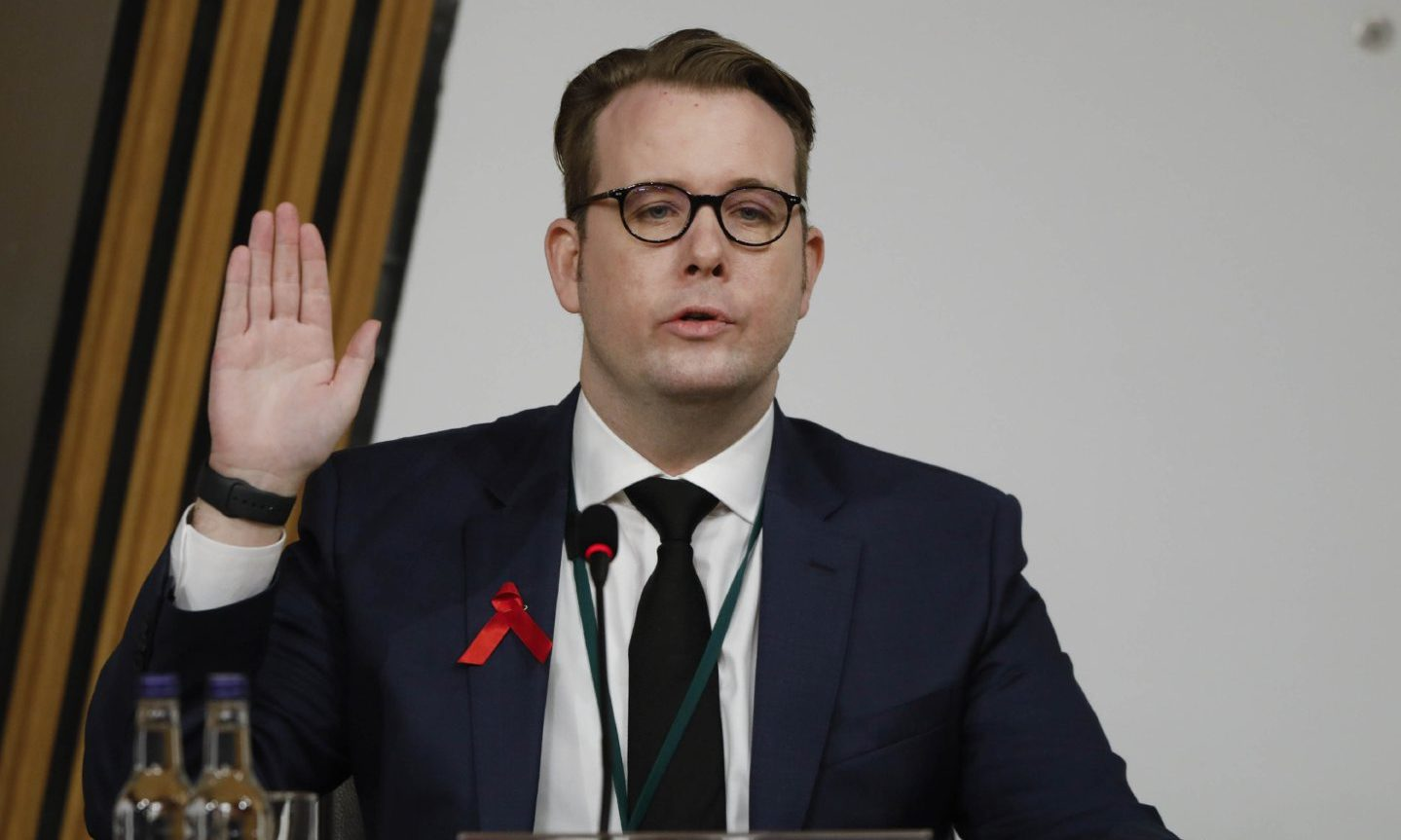
Civil Service senior managers rewarded for their loyalty to the Scottish Government in the botched attacks on the integrity of Alex Salmond

Civil servant John Somers – Nicola Sturgeon’s former principal private secretary (PPS) has been promoted by her to the post of Deputy Director of the newly created Police Division of the Scottish Government

Somers, who gave evidence to the Scottish Parliament inquiry into the handling of harassment allegations against Alex Salmond in December last year, became deputy director in the police division in August.

He had served as Sturgeon’s principal private secretary since February 2017.

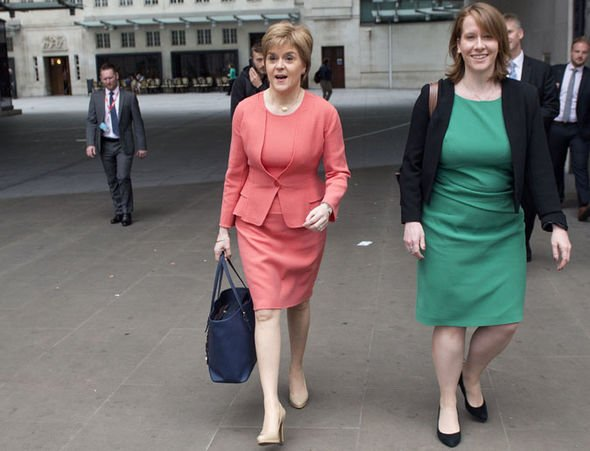
It is the latest change among the first minister’s closest aides since the May election, with Colin McAllister recently replacing Liz Lloyd as chief of staff.

It has also recently been confirmed that the government’s most senior civil servant, Leslie Evans, is stepping down, having survived calls to quit over her role in the handling of harassment allegations against Alex Salmond.
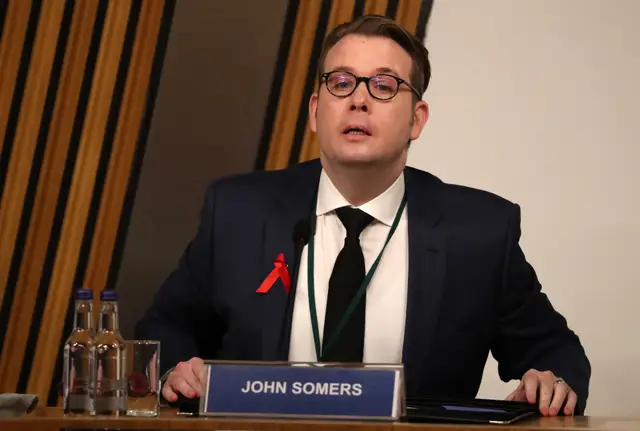
John Somers pivotal role and conduct in the Sturgeon Salmond debacle

16 Nov 2017: Hynd emailed (Private Secretary 1 to Leslie Evans). (Policy on Complaints Against Ministers.” As requested”. James.

16 Nov: Hynd circulated to the Scottish Government civil service senior management team, and Liz Lloyd (first sight, at her request) a second draft procedure titled “Handling of sexual harassment complaints involving current or former ministers.”

16 Nov: A copy of the draft policy was forwarded to the UK Government’s Cabinet Office in Westminster for approval.

17 Nov: Approval was not forthcoming. Instead the response expressed grave concerns about implications for politicians throughout the UK if the Scottish Government would be permitted to act in isolation from the other governments of GB and Northern Ireland introducing a process for complaints about ministers and former ministers which had not been universally approved. The cabinet Office instructed that the policy changes should be deferred until such time as the other governments had completed their own reviews. Reference was also made to the unfairness of the revised policies which demanded standards of personal conduct for Scottish politicians greatly in excess of those for civil servants which had remained unchanged. Double standards were not acceptable. The document was unfit for introduction.

Afternote: The Westminster “Cabinet Office” exposed the hypocrisy of the intent behind the proposed changes and rightly blocked the proposals.

17 Nov: Hynd forwarded the Cabinet Office response to an unnamed private secretary in the Scottish Government, (possibly Somers) who replied: “Oh dear, I did wonder if that would be their reaction. Not sure how long their review will take but the First Minister and Leslie Evans are keen to resolve quickly and discuss on Tuesday. I suspect we don’t have a policy on former civil servants. But we are looking at this in the context of the overall review of policies and the justification for having something about Ministers is the action that Parliament is taking in light of allegations about MSP conduct which includes a recent SG Minister?”.

Afternote 1: Questioned by the Inquiry Hynd said: “Nicola Sturgeon was keen to take national leadership on the matter and delaying implementation of the new procedure was not an option for consideration.”

Comment: But of note was that the procedure for civil servants was not updated to include retrospective consideration of harassment allegations.

Afternote 2: Lloyd stated that the inclusion of herself in the circulation of the draft procedure created a requirement to identify and amend the ministerial code, if necessary since the code was the responsibility of the First Minister.

Comment: But the Ministerial Code and the proposed complaints procedure were the business of the Civil Service and Miss Lloyd had no legitimate input.

20 Nov: Somers said  complainer, Ms A, arranged a meeting with him at which she told him of her past experiences in a way that would improve the organization and make sure that no one else would have to go through that sort of thing again.

She stressed she was not making a complaint, she simply wanted to assess her options for how she could best share the information. Her wish was to be allowed to speak to the First Minister which was why she had approached him.

Somers (gatekeeper to the First Minister) said he had not briefed the First Minister about his meeting with Ms A or her request for a private meeting with the First Minister upholding his commitment to her to keep the details of their conversation secret. He said: “I wouldn’t tell the First Minister because it wasn’t my experience to share. That was my first priority. Secondly, had I done that, I would have put the First Minister in a state of knowledge about something she couldn’t have taken action upon at that point.”

Somers went on to state he was “overwhelmed” by Ms A’s disclosure and with her permission he advised his line manager Barbara Allison and the Director of Safer Communities, Gillian Russell.

Comment: If factually correct Somers escalated matters and failed in his duties as gatekeeper to the First Minster by not allowing Ms A to meet privately with the First Minister.

21 Nov: Somers and two unnamed officers met with Ms A and advised she would need to further discuss the matter with his line manager Barbara Allison, with a proviso that if she felt she was not being taken seriously or no one was listening to her, she should get back in touch with Somers who would set-up a personal meeting for her with the First Minister. He never heard from her.

Somers went on to say that he did not tell the First Minister that Ms A had confided in him because it wasn’t his experience to share and had he done so he would have put the First Minister in a state of knowledge about something she could not have taken action upon at that point?”

Afternote 1: This is weird. Ms A advised Gillian Russell on 10 November. Somers decision not to inform the First Minister denied Miss A the informal meeting she had asked for and escalated events from informal to formal. His reasoning was flawed since it was based on a rebuttable assumption. His choice of words is also significant. “at that point” would be a reference to the draft policy which he was working on with Lloyd. He fine well knew what he was doing.

Afternote 2: In her statement to the inquiry the Scottish Government’s Director for Communications, Ministerial Support & Facilities, Barbara Allison, who was Director of People from 2009 to 2016, said that Alex Salmond was a “visionary and dynamic” and although demanding and difficult to work for people also expressed that they enjoyed working for him. She had never heard of sexual misconduct concerns about him while he was the First Minister. Nor had she heard of any concerns being escalated to the status of formal complaints while she was in charge of human resources.

Afternote 3: Allison said she had not raised any issues of bullying or harassment with either Evans or Nicola Sturgeon and for clarity, she emphasized to the inquiry that she was not aware of any issues about sexual harassment” and added that she was a “huge advocate” for informal resolution, stating that if a matter could be resolved through this process, then “absolutely people must have recourse to a formal process”.

She went on to tell the inquiry that she was first notified of concerns in November 2017 when two unnamed female civil servants, (Ms A and Ms B) raised them with her.

It is for readers to question whether it is “plausible” that Nicola Sturgeon did not know until April 2, 2018, about the internal probe into her predecessor, (some 5 months after allegations were first raised about Alex Salmond.). If she did know she misled the public in her evidence to the inquiry

22 Nov: Nicola Sturgeon’s “instruction from the First Minister” was sent to to Leslie Evans. It read:

“As is clear from the continued media focus on cases of sexual harassment, in many instances, people are now making complaints regarding actions that took place some time ago. I wanted to make clear that in taking forward your review, and the new arrangements being developed, you should not be constrained by the passage of time. I would like you to consider ways in which we are able to address if necessary any concerns from staff, should any be raised, about the conduct of current Scottish Government ministers and also former ministers, including from previous administrations regardless of party. While I appreciate that the conduct of former Ministers would not be covered by the current Ministerial Code, I think it fair and reasonable that any complaints raised about their actions while they held office are considered against the standards expected of Ministers. I would be grateful for confirmation that this particular aspect is being included as part of the review you are leading.”

Note: The letter of instruction makes no sense since the newly written draft procedure was already in place and circulated within the senior Civil Servant management team. And James Hynd, the person who wrote the new procedure was not copied into the correspondence.

24 Nov: A fifth draft of Hynd’s, policy delegates authority to the Permanent Secretary to investigate complaints but makes clear the First Minister should also be alerted. A copy was also sent to the First Minister.

23 Nov: Nicola Richards sent an e-mail to Leslie Evans, copied to Judith Mackinnon “we would need to consult with the individual before disclosing to another party or the Police because of the risk of the matter getting into the press and the individuals being identified.

We have a duty of care for our staff which means we shouldn’t do something that puts them at risk, so if they don’t want us to share information or go to the police, it would be very difficult to justify (sic) doing so (without putting them at risk of being identified and wider impacts).

This was subsequently changed on 9th January 2018 to read “SG as employer will not refer specific cases to police without the knowledge/consent of the employee.”

24 Nov: Lloyd, Somers, Hynd and a member of the Permanent Secretary’s office, attended a meeting to further discuss the content of the “instruction from the First Minister” and to establish and agree clear lines of responsibility between the First Minister and the Permanent Secretary. A second purpose was to reword the second draft procedure inserting changes designed to prevent the First Minister from stopping the Permanent Secretary, who has a duty of care to civil servants, from investigating a sexual harassment complaint made by a civil servant against a minister if the Permanent Secretary judged there was something to investigate.

Additional input from Liz Lloyd included the view that it was essential that the First Minister should be made aware of an investigation or allegation into a serving minister, before the event, in order to determine if, under the ministerial code, that minister could remain in post whilst an investigation was conducted. Yet she later stipulated that on that date she had no knowledge, of any of the allegations against Alex Salmond that were subsequently investigated under the new procedure.

29 Nov: Gillian Russell wrote to Ms A “as agreed, I sent your narrative on in confidence to Nicky (Richards) and Judith (Mackinnon). I have now been asked by Nicky and Judith if you would be prepared to speak to them following receipt of your narrative. As part of this discussion Nicky would like to share with you the developing policy for handling complaints against former and current ministers. This would give you an opportunity to test whether this would have helped at the time and also to consider next steps.” Later that day Ms A agreed to do so but reiterated her wish to speak first personally with Nicola Sturgeon.

29 Nov: Ms Richards, met with Ms Evans, who then went on to have a “summit meeting with the First Minister, “to discuss the development of the proposed procedure”.

30 Nov: Richards emailed Hynd, the Head of the Cabinet Secretariat: “Would you be able to send me the latest version of the process I agreed with Leslie Evans that I would test against some key individuals?”

01 Dec: Hynd sent the “eighth” harassment policy draft to Ms Richards.

04/05 Dec: Richards, redrafted parts of the “eighth” draft procedure completing her work 2334 hours on the evening of 5 Dec. She then forwarded it under cover of an email, to Evans, Hynd, MacKinnon, and an unnamed lawyer. The email stated: “As discussed earlier today, I’ve made some revisions to the process.”

06 Dec: Richards, met with Ms B and shared with her the content of the revised 8th draft procedure, seeking and gaining from Ms B confirmation that had the procedures been in place at the time she claimed she had been sexually harassed it would have been of benefit providing clear instructions as to the courses of action available to her.

06 Dec: Mackinnon, met with Ms A and after sharing the draft procedures gained from her confirmation that had the new procedures been in place at the time she was sexually harassed it would have been of benefit providing clear instructions as to the courses of action available to her.

06 Dec: At 0528 hours Evans emailed Richards, Hynd, and a third person writing, “Spoke with John S (Swinney?) last night. We agreed you would send up tweaked codes in draft without any letters just now. and as discussed, info on the steps and touchpoints involved in the process also useful. Keep me posted back in the office tomorrow but happy to talk. John (Swinney?) also I’m sure.”

Afternote 1: Evans told the inquiry team that she did not see a “natural role” for Special Advisor (Liz Lloyd) in the Scottish Government response to the judicial review brought by Alex Salmond. But a freedom of information response listed 17 meetings at which lawyers involved in the judicial review met with Nicola Sturgeon or senior staff, with Liz Lloyd present at three meetings in Oct and Nov 2018. Evans, faced with the facts, was forced to correct her evidence to confirm that Nicola Sturgeon’s political special advisor, Liz Lloyd, did fully participate in meetings at which the allegations against Alex Salmond were discussed.

Afternote 2: Somers told the inquiry that he had no involvement in the development of the procedure used against Alex Salmond. This is not true. Somers, in his capacity as Sturgeon’s Principal Private Secretary, had a key role in developing the policy at a critical time.

5 Dec 2017: The “letters” that Somers was subsequently instructed “not” to send to Sturgeon were the “tweaked codes” which Somers and Hynd had been instructed by Evans to draft in line with the procedure as it had existed prior to her discussion with Somers, and for the purpose of intimating the new procedure to former Ministers and former First Ministers when it would be approved by the First Minister in due course. The “letters” disappeared from the development process after the discussions and the Scottish Government has persistently refused to disclose the contents.

Exactly what comprised the “steps and touchpoints involved in the process” was discussed by Evans and Somers but the content remains guesswork since no-one at the Inquiry asked Somers, or has ever asked Evans, what was meant by these terms. But what is clear is that both Evans herself and Somers were “happy to talk” to Richards, Hynd, and the third person about these “steps and touchpoints” in the radically recast procedure.

There is a hugely significant context of the very obvious involvement of Somers, acting on behalf of Sturgeon, in the development, actually, in the complete recast of the procedure. For now, it is worth noting that Somers’s evidence on affirmation was given, as Somers himself pointed out, with the specific advance endorsement of the Scottish Government.

Civil Service jargon for “not my words guvnor !!””
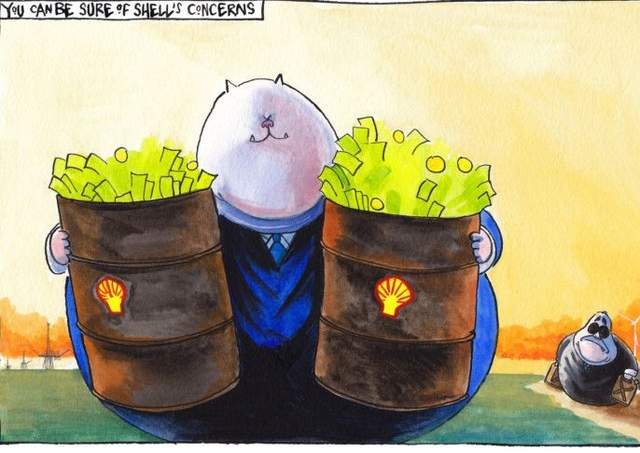
Disregard political rhetoric Shell PLC and Whitehall are agin Scottish Independence so it will never happen

6 Mar 2014: Shell PLC hosts David Cameron at its Aberdeen HQ in direct opposition to a meeting of the Scottish Government

Shell PLC allowed David Cameron to hold a one-off UK government cabinet meeting at its headquarters in Aberdeen in direct competition with a Scottish government cabinet meeting only six miles away in Portlethen.

Following the meeting the chief executive of Shell played down the significance of the event at the time, saying that a decision on independence was a matter for Scottish people and that “it would be wrong” for Shell to intervene in the debate. But then announced he would prefer Scotland to remain in the UK because of the risks and uncertainties to his company posed by independence. Adding that his company valued the continuity and stability of the UK and Scotland staying part of it.
Shell PLC & the British Secret Services (one and the same)

In a previous article I provided a “through the keyhole report on the activities of Hayluyt, a Whitehall controlled British secret services organisation. It generated public concerns over just how deeply entrenched in the British state is this bunch of very rich individuals?

This follow up provides some answers but also raises even more concerns, such as: What was the level of their interference in the 2014 Scottish Independence referendum?

Shell PLC & Hakluyt Destroy any opposition (An example)

Colin Joseph and his son operated a successful business, designing, providing and running scratch card competitions (out of Shell garages) for Shell UK.

Without reasonable cause Shell terminated the contract and the Josephs could not remain in business.

Over an extended period Shell refused to provide good reason for their actions and the case ended up in the courts.

But that was only the start. Hakluyt got involved and conducted a disinformation campaign against the Joseph’s for many months.

When the case eventually reached the high court Shell dragged their evidence out milking what information it had to its full extent.

But, just as Shell solicitors were about to apply the coup de grâce the Josephs produced irrefutable new evidence proving their case.

Shell settled out of court, including all of the Joseph’s trial expenses but the damage had been done.

Joseph senior was bankrupt and his son had to re-mortgage his house. A bad day for British justice.

But Scots are able to benefit from the misfortunes of the Joseph’s. I commend their story to you.

Shell Transport & Hayluyt MI6 Spy Firm – One and the Same

Letter from John Joseph to Shell:

Sir, You have written off my account of the cloak and dagger events leading up to the last settlement as being a “parody of the truth and characterized it generally as being “nonsensical” and based on “wider conspiracy theories”.

The problem you have is that you cannot change what you and Shell director Richard Wiseman have already admitted in writing about undercover activity by Shell agents involving fraud and deception. Your letters are now a matter of historical fact.

I will deal directly with your accusations by separating fact from theory. However we must obviously reconsider the relevant past sinister events in the light of the latest revelations.

As I have indicated, I never imagined even in my “wider conspiracy theories that a shadowy corporate intelligence organization was at the time in question, led by Shell Transport directors and staffed by former MI6 Officers.

I refer of course to Hakluyt & Company Limited and The Hakluyt Foundation.

Sir William Purves was simultaneously a director (and shareholder) of Shell Transport, and the Chairman and major shareholder in Hakluyt & Company Limited.

The late Group Chairman of the Royal Dutch Shell Group, Sir Peter Holmes, was until 2002 simultaneously a director (and shareholder) of Shell Transport and also President of the Hakluyt Foundation – a “Supervisory” Board overseeing spying operations.

He took over the role from the late Brigadier Sir Fitzroy Maclean – the model for Ian Flemings “James Bond” character.

I note that you ignored my comments and questions about Hakluyt. I wonder why?

For your information I now have in my possession a Hakluyt & Company Ltd document co-signed by Sir William Purves and Mr Christopher James, a co-founder of Hakluyt.

Christopher James is a former senior British Secret Intelligence Service MI6 officer and was in the SAS before leading a section of MI6 which liaised with British firms.

This applies to many of the staff at Hakluyt. So is his Hakluyt co-director, Mr Mike Reynolds.

Reynolds founded MI6’s counter terrorism Branch and was Head of Station in Berlin. Richard Dearlove, the head of MI6 is reportedly “a close friend”.

Sir David Spedding, the head of MI6 in 1995 when Hakluyt was launched “wished him luck with the venture”.

Shell/Hakluyt used freelance serving intelligence agents when deemed appropriate, as revealed in The Sunday Times article of 17 June 2001 entitled:  “MI6 Firm Spied on Green Groups”.

Hakluyt modus operandi is that when an assignment is received, it calls up to five associates to London (often from overseas) to be briefed and then re-deploys them.

Each agent works independently. No doubt other spy firms work on a similar basis.

Hakluyt is identified on a number of credible websites as being a front for the SIS; the commercial arm of MI6.

With the written permission of Jyoti Munsiff and Sir Mark Moody-Stuart, our dossier complaining about the “cloak and dagger” activity directed against us was sent to all Shell Transport directors, including Sir Peter Holmes and Sir William Purves.

Of course we did not know that Sir Peter and Sir William were the Spymasters of Hakluyt which engaged in the type of sinister clandestine operations that we were drawing to their attention.

Evidence of corporate espionage on an epic scale on behalf of Shell is given in The Sunday Times article.

Perhaps as a lawyer you would argue that such conduct is unseemly but not illegal? But what if the same conduct occurred in connection with a pending High Court trial – the SMART trial for example? Would not everyone involved, including relevant Shell directors, the spy firm, relevant agents and any lawyers knowingly involved, be part of a criminal conspiracy to pervert the course of justice?

Of course it would make it harder to prove anything if the spies were called in from overseas.

As I have now set out some of the salient information which has recently emerged, I will, as promised, separate fact from theory.

I sold my house to pay legal fees; my son ended up having to sell his. This was all in the reasonable expectation of a fair trial.

Due to the undercover activities, some of which has been admitted in writing by you and your client, that was not what we ended up with.

It was more like going up against the Mafia. My son even faced outright deception during his cross examination by Geoffrey Hobbs QC.

The perceived reality at that time was of a highly reputable multinational – the public could be sure of Shell, its senior management GUARANTEED honesty, transparency and integrity in all of its dealings.

The actual reality was that Shell was secretly running sleazy covert operations against its perceived enemies including us (as has been admitted in writing).

The operations were directed against people and organizations campaigning against Shell for one reason and another.

We were in 1995 given a substantial consideration to close down one such organization – The Shell Corporate Conscience Pressure Group (another fact).

Another indication of the way in which our hard hitting campaign impacted on the reputation and competence of Shell’s most senior management was the eventual personal intervention of Lady Judy Moody Stuart. I have the correspondence to prove it.

Time has shown that our criticisms were well-founded in terms of Shell’s performance compared with its rivals and in regards to the deeply ingrained cover-up/subterfuge mentality which has led to the current difficulties which have made headlines around the world.

(I refer of course to the accusations of fraud and deception made in US class action suits currently underway, plus the investigations by regulatory bodies including the US Securities & Exchange Commission, and the criminal investigation by the US Department of Justice.)

The scale of the clandestine activity undertaken at the behest of Shell senior management at the time of our litigation against Shell was breath-taking.

(1) According to the Mail on Sunday article on 4 April 2004, headlined: “Shell Chief had a private army”: Sir Philip Watts helped to organize and pay for a 1400 strong private army of Police spies in Nigeria in conclusion with a murderous regime;

(2) Shell Transport directors were the Spymasters of Hakluyt, whose secret agents targeted groups campaigning against Shell, including human rights and environmental groups e.g. Greenpeace, Friends of the Earth, The Campaign for Nuclear Disarmament, Body Shop etc. Indeed any group whose campaigning activities might impact on the reputation of Shell.

The alleged activities of my son and I obviously fell within that definition, as alleged in the Counterclaim.

(3) And I should not forget the admitted undercover activities involving Mr Phillips and other agents you refused to name.

It is quite a collection of trickery and deception. And it involves so many titled people. A roll-call of establishment grandees are directors and shareholders in Hakluyt & Company Limited:

Sir Brian Cubbon, former permanent Under-Secretary of State at the Home Office;

Lord Inge, former Chief of the Defence Staff;

Lord Trotman, former Chairman and Chief Executive of Ford and a director of the New York Stock Exchange;

Colonel Sir Piers Bengough;

Sir William Purves, formally a director of Shell Transport and Chairman of HSBC Bank;

Lord Renwick, Chairman of Robert Fleming Merchant Bank:

Sir John Weston;

Sir Anthony Hammond;

Sir Ralph Robins;

Sir John Jennings;

Sir Mark Moody-Stuart;

Sir Philip Watts;

Sir Peter Holmes;

The foregoing names are from the Annual Return filed at Companies House just a few months ago – 23 December 2003.

A number of them, including Sir William Purves, are also directors of The Hakluyt Foundation.

The following prominent people are also connected with Hakluyt:

Sir Malcolm Rifkind, Former Foreign Secretary;

Ian Lang, former Secretary of State at the Department of Trade and Industry;

Earl Jellicoe, President of the SAS Association;

Sir Peter Cazalet, former Deputy Chairman of BP;

Baroness Smith of Gilmorehill.

Hakluyt also has a strategic agreement with Henry Kissinger, the legendary former US Secretary of State and guru of realpolitik.

Mr Kissinger’s company, Kissinger Associates, apparently facilitates top-level introductions for Hakluyt. It must be good to have friends in high places.

Common-sense suggests that Shell Transport management was more likely to use what is in effect an in-house resource rather than taking their dirty washing outside of the company.

That ties in with what we were told at the time by the claimed “Shell insider” about an investigative resource.

Related image

Members of Parliament accuse MI6 of using Hakluyt as a front to spy on activists.

In the case of the Shell/Hakluyt agent featured in The Sunday Times story of 17 June 2001, it was reported that there seemed to be no boundaries between his activities working for state or business.

It was also stated in the same revealing article:

“MP’s believe the affair poses serious questions about the blurring of the divisions between the secret service, a private intelligence company and the interests of big companies.”

Yours sincerely
Colin Joseph

https://i1.wp.com/royaldutchshellplc.com/wp-content/uploads/2018/02/Screen-Shot-2018-02-01-at-20.45.42.jpg?w=597

Earthquake damage in Holland due to fracking

Present Day

20 years after the names might have changed the system of privilege and protection of the wealth of the “in Crowd” continues to be fully protected by the British state and the secret services cabal of Hakluyt.

A comprehensive record of events including the foregoing article, (in full) can be viewed at:

http://shellnews.net/images/ShellHakluyt.html

The Blog that reveals the news Shell Oil and the government would deny the public, if it could:

https://royaldutchshellgroup.com/2018/10/13/99622/embed/#?secret=xGARyayP1N

The umbrella group under which three subsidiary companies operate

http://holdingham.com/directors

https://beta.companieshouse.gov.uk/company/03481321/officers – The present day composition of Hakluyt.

https://i2.wp.com/royaldutchshellplc.com/wp-content/uploads/2015/01/Screen-Shot-2015-01-07-at-09.02.16.jpg?resize=277%2C300&ssl=1

Other articles exposing the extent of the Hakluyt network

https://www.newstatesman.com/business/2008/08/private-security-company

https://www.theguardian.com/uk-news/2015/nov/05/former-head-gchq-sir-iain-lobban-adviser-shell-hakluyt

https://www.shellnazihistory.com/?cat=158

https://www.thetimes.co.uk/article/company-spies-get-pay-rise-as-city-deals-soar-ss95jtd8359 – TATA Steel?

https://www.zerohedge.com/news/2018-03-18/meet-hillary-clintons-other-much-more-powerful-and-shadowy-oppo-research-firm

https://www.smh.com.au/business/be-careful-of-the-company-you-keep-20120330-1w35j.html

http://cecaust.com.au/main.asp?sub=articles&id=2018_05_25_halper.html

https://www.afr.com/business/death-in-china-sheds-light-on-shadowy-hakluy-20120524-j2q0u

https://opportunitynetwork.org/about-us/associate-board/varun-chandra/

http://mtlandreliance.org/about-us/mlr-people/legacy-committee/jon-selib/

https://money.cnn.com/2017/01/13/smallbusiness/trump-dossier-corporate-intelligence-business/index.html

https://twitter.com/johnwhuber/status/994010765886672896”

https://i0.wp.com/royaldutchshellplc.com/wp-content/uploads/2013/03/Screen-Shot-2013-03-26-at-23.26.03.jpg

To the Cabinet Secretary for Infrastructure Investment and Cities – In the absence of Mackay will you please sign the bloody contract for the two ferries?? Part2

Financial issues

  1. The contract value is £96m. This is higher than the £80m included in the VRDP – which will be updated prior to publication – and the revised estimate of £90m included in CMAL’s 3-year Corporate Plan, which has already been published.
  2. This capital funding commitment will fall over 3 financial years to 2017-18 and has been submitted to Scottish Government Finance for consideration. The cost in 2015-16 can be covered from within the capital allocation to the Ferries Budget. The cost in 2016-17 will however require an increased capital allocation of around £20m.
  3. Capital funding will be provided by loans from Transport Scotland to CMAL, repaid with interest over an agreed period , usually 25 years. An initial business case was drawn up by CalMac to inform the recommendation to initiate the procurement by CMAL. This is currently being updated to reflect the increased capital cost. Over the estimated 30-year lifetime of these ships, the capital cost represents a small share of overall costs.

Presentational issues

  1. Subject to Ministerial approval and the clearance by SG Finance of the in-year and future funding commitments, CMAL will formally offer the contract to FMEL on 31 August which will be confirmed following the statutory 10 day standstill period. An initial announcement can be made to coincide with the formal offer, in agreement with the shipyard, rather than waiting for the 10 days.
  2. Given the significance of the award in respect of Scottish Government investment in the ferry fleet, retention and creation of jobs at a resurgent Ferguson shipyard and the scale of the costs, we will work with Press TS colleagues and CMAL to ensure maximum positive publicity from this significant announcement. We will ask Press TS to lead on a Communications Plan.
  3. It would be appropriate for Mr Mackay as Minister for Transport and Islands to lead on this announcement, highlighting the benefits to the islands as well as the jobs and training opportunities in Inverclyde.
  4. As with any procurement, a legal challenge from one of the unsuccessful shipyards cannot be discounted. CMAL have not identified any particular risks in this regard and, in any case, are confident that any challenge can be defended. That said, the relationship between Scottish Ministers and Ferguson’s owner is well known.

Recommendation

  1. We recommend that you approve the award of the two shipbuilding contracts by CMAL to Ferguson Marine Engineering Ltd.

Transport Scotland Ferries Unit 20 August 2015

Copy List:

Minister for Transport and Islands

DG Enterprise, Environment and Innovation
PS/Transport Scotland

David Middleton, CE, Transport Scotland
TS Directors

Alexander Anderson, Special Adviser to the First Minster

To the Cabinet Secretary for Infrastructure Investment and Cities – In the absence of Mackay will you please sign the bloody contract for the two ferries?? Part1

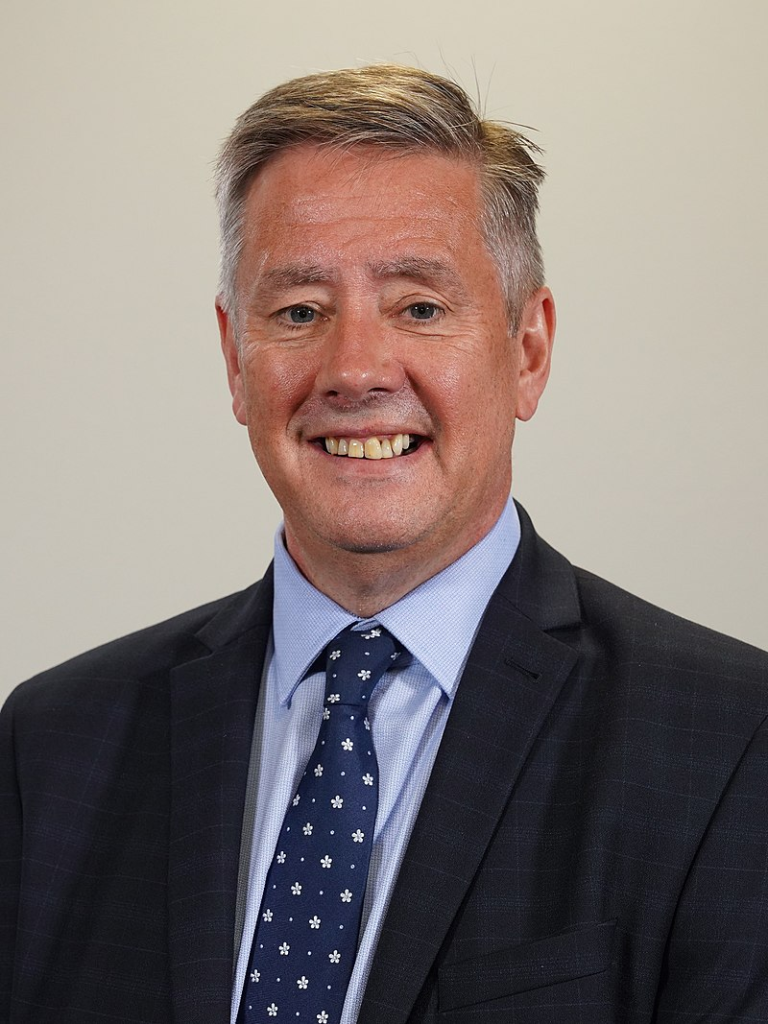
Keith Brown Cabinet Secretary for Infrastructure Investment and Cities

Official Sensitive
From: Transport Scotland Ferries Unit
Date: 20 August 2015
To: Cabinet Secretary for Infrastructure Investment and Cities
Subject: VESSEL REPLACEMENT – PROCUREMENT OF 2 NEW MAJOR VESSELS

Purpose

  1. In the absence of the Minister for Transport and Islands on leave, your approval is sought for CMAL to award shipbuilding contracts of a total cost of £96m for 2 new major ferries for the CHFS network to Ferguson Marine Engineering Ltd (FMEL).

Priority Urgent.

  1. Given procurement deadlines, Caledonian Maritime Assets Ltd (CMAL) are required to issue a notification of contract award letter to FMEL, and ‘Alcatel’ letters to the 5 unsuccessful bidders no than Monday 31 August – after that date the tenders will no longer by valid: the original 3 month validity period has already been extended for 2 months with the agreement of all the bidders. Subject to consideration by the CMAL Board on Tuesday 25 August and feedback from CalMac Ferries Ltd, Ministerial approval in principle is sought by Thursday 27 August.

Background

  1. The Vessel Replacement & Deployment Plan 2014 (VRDP), approved by Mr Mackay on 14 July (and to be published shortly) set out the case for the procurement of 2 new major vessels for the Clyde & Hebrides Ferry Service (CHFS) network. On the basis of the initial analytical work behind the VRDP, and the indicative vessel replacement proposals set out in the 2012 Ferries Plan, you announced the start of the procurement process for these 2 new vessels by CMAL on 15 October 2014.
  2. Following consideration of Pre-Qualification Questionnaire responses, CMAL issued Invitations to Tender to the following shipyards on 10 December 2014: Redacted

Tender evaluation

  1. 7 tenders from these 6 shipyards were submitted by the deadline of 31 March 2015. After detailed consideration of the quality and costs submissions by the CMAL vessels team, with technical input from CalMac Ferries Ltd, the CMAL executive team are recommending the award of the contracts to FMEL.
  2. It was made clear to tenderers that the quality/price ratio for assessment of proposals was 50:50. FMEL was the highest quality bid received but also the highest price. Taken together, the FMEL tender achieved the highest overall evaluation score.
  3. Although CMAL are responsible for vessel procurement, under the tripartite arrangements in place CalMac have been consulted extensively at technical level to achieve their endorsement of the detailed specification and designs which will form part of the shipbuilding contract. Intensive exchanges between CMAL and CalMac on the one hand and CMAL and FMEL on the other have resolved the vast majority of the issues identified by CalMac. CalMac are currently carrying out a final review of documentation, due to complete on 25 August.
  4. On the basis of discussions at the project steering group today, we anticipate that CalMac will not be in a position to fully endorse the shipbuilding documentation by the required deadline. However, under agree procedures this does not prevent CMAL from awarding the contract and further efforts will be undertaken during the detailed design of the vessel by FMEL to address any outstanding points. These issues largely concern the access of the vessels to the various ports that they may serve during their working lives and the potential requirement for modifications at some ports. However, on the basis of the information available to us at this point, the risk of major infrastructure requirements to accommodate these vessels – such as those at Stornoway and Ullapool to accommodate the MV Loch Seaforth – is considered to be low. That said, the CHFS port infrastructure as a whole, which was largely designed for a very different size and type of vessel – requires ongoing investment in order to continue to support safe and reliable ferry services which can meet the growing demand for travel to and from the islands.
  5. The vessels have been designed as ‘dual-fuel’ so they can operate on LNG and marine diesel. LNG is significantly cleaner and is being adopted increasingly by ferry operators in northern Europe largely in response to tighter sulphur regulations which will apply on the west coast from 2020. LNG brings some logistics challenges, which CalMac are looking into, and may require some additional fuelling infrastructure. The benefit of ‘dual-fuel’ is that the vessels can be run on conventional fuel if there is any interruption in LNG supply. When the initial business case for this project was drawn up, the forecast price of LNG compared to marine diesel made a compelling case for its adoption. Since then, the fall in oil prices has, at this point in time, removed the price benefit of LNG; however, historically gas prices follow oil prices and over the long-term we would expect a financial as well as an environmental benefit from using gas.

Delivery timetable

  1. Under the draft contracts, the first vessel will be delivered in January 2018 and the second in March 2018, subject to final clarification and permissible delays. As previously announced, these ships are earmarked for Ardrossan-Brodick and the Uig Triangle although the final decision on vessel deployment rests with the operator and will be informed by further analysis of demand on all major routes.

Sturgeon’s “Special Advisers” are enamoured with power and can be likened to a sick cancer bleeding off the efforts of hard working Scots

Sturgeon’s ever expanding army of “Special Advisers”

“Special Advisers” are political appointments and are exempt from impartiality requirements normally expected of civil servants in order to provide them with the freedom to give political advice to Ministers. Although never elected by the public nor subject to the normal rules of employee recruitment and formal interview they are gifted, courtesy of Nicola Sturgeon, and her alone, with a huge amount of power.

The leader of the “Special Adviser Team, (Liz Lloyd 2015-2021) has the authority to issue instructions to civil servants on behalf of Nicola Sturgeon.

The Devolution Act permitted recruitment of up to twelve “Special Advisers” to the First Minister.

But at 2022 Sturgeon employs nineteen, including a new adviser who supports the Green Party dual leadership and two new Green Party ministers in the Scottish Government.

At a total annual approximate gross cost to the Scottish taxpayer of £2 Million

Over two-thirds of Sturgeon’s special advisers are friends with senior SNP figures or are the partners Party influencers.

A self-perpetuating elite that thrives on patronage, using it to by-passing democracy and being surreptitiously slipped into positions of power and influence.

Responsibility for the recruitment, employment, management, conduct and discipline of “Special Advisers” rests with Nicola Sturgeon.

An informed ex servant of the crown commented:

“The introduction of “Special Advisers” into the Scottish Government established an alternative civil service.

They are an ill-disciplined bunch whose conduct is reported on through a “rebuttal unit” who feed distortions of the truth to the electorate, all with the purpose of ensuring the public are denied the truth of any given matter where the “image” of the Nicola Sturgeon or the SNP might be at risk.

In their efforts to establish and maintain their superiority they routinely pass negative value judgements on the ability of long term, full-time established civil servants.

They are immune to embarrassment and strangers to the appropriate and legal use of taxpayers monies.

They and their newly partnered green acolytes are enamoured with power and can be likened to a sick cancer bleeding off the efforts of hard working Scots.

The entire establishment should be sacked!!!!!

Special Adviser Team: April 2022

Colin McAllister – Chief of Staff to the First Minister: Briefs: First Minister’s Strategic Programme in Government including Inter-governmental relations co-ordination of the Special Adviser team.

Stuart Nicolson – Head of Communications: Briefs: Senior Political Spokesperson for the First Minister. co-ordination of the Special Adviser Communication Team.

Jeanette Campbell – Briefs: social justice and housing.

Gavin Corbett – Briefs: zero carbon buildings, active travel and tenants’ rights.

Ewan Crawford – Senior Special Adviser: Briefs: constitution and external affairs portfolio (except culture).

Leanne Dobson – Special Adviser: Briefs: finance and the economy portfolio (excluding Local Government Finance and Business, Trade, Tourism & Enterprise). Programme for Government.

Jennie Gollan – Special Adviser: Briefs: justice portfolio (inc. veterans). culture portfolio (except broadcasting).

Kate Higgins – Special Adviser: Briefs: local government (including local government finance). business, trade, tourism and enterprise. transport portfolio.

Davie Hutchison – Special Adviser: Briefs: health and social care portfolio. broadcasting policy. First Minister’s Questions.

Harry Huyton – Special Adviser: Briefs: green skills, circular economy and biodiversity.

Ross Ingebrigtsen – Deputy Political Spokesperson for the First Minister. Briefs: strategic communications planning. First Minister’s Questions.

David Livey – Special Adviser: Briefs: education and skills portfolio.

Liz Lloyd – Strategic Policy and Political Adviser to the FM: Briefs: strategic advice to the First Minister on transformational policies and projects.

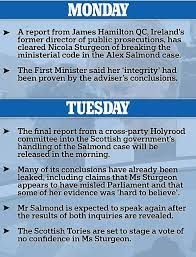
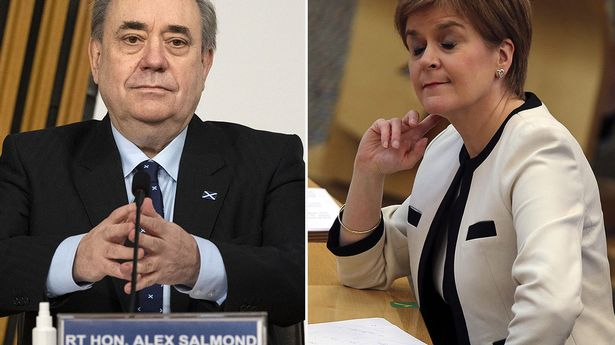
Comment: March 2021: An investigation by a Scottish parliament committee into the government’s unlawful handling of harassment allegations against Alex Salmond concluded that Nicola Sturgeon had misled parliament.

A few weeks after, Liz Lloyd was dismissed from her post as Chief of Staff to Nicola Sturgeon and took an extended leave of absence, returning to the Scottish Government in August 2021 as a “Special Adviser” reporting direct to the First Minister fulfilling a new role, created by Sturgeon with responsibility to work across government and with stakeholders to provide strategic advice on the delivery of the government’s policy programme.

A kick in the teeth for many Scots who thought that a small amount of justice had been gained by her dismissal. No chance!!!!

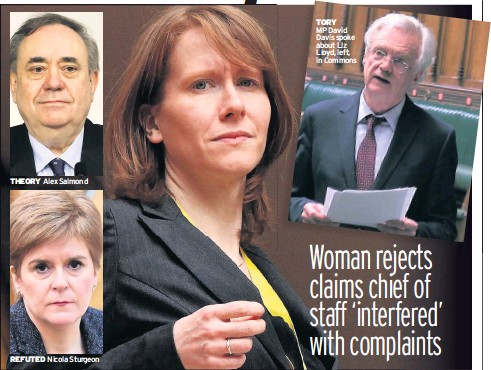
More here: (https://www.heraldscotland.com/news/19165243.mps-hear-claim-sturgeon-chief-aide-interfered-v-bad-salmond-complaints-process)

John MacInnes – Special Adviser: Briefs: political research. support for First Minister’s Questions and Parliamentary debates. support to communications and policy Special Advisers

Emily Mackintosh – Special Adviser: Briefs: media communications including communications and events support for the First Minister. support for the First Minister and the First Minister’s Private Office. outreach and stakeholder engagement

Callum McCaig – Special Adviser: Briefs: COVID recovery portfolio.

John McFarlane – Special Adviser: Briefs: rural affairs and Islands. net zero portfolio (except transport). parliamentary business and parliamentary liaison. First Minister’s Questions.

Gavin Corbett – Special Adviser to the Green Party dual leadership and two new Green Party ministers in the Scottish Government.

Comment: Canadian born, Lorna Slater, in her quest for a place in Holyrood in 2021 asked the voters of Edinburgh North and Leith for their nomination.

Of the 80,000 strong electorate she gathered a measly 1,727 votes.

But Sturgeon was determined to destroy the hopes of other Scottish independence supporting Party’s with her instruction to SNP supporters not to give their constituency vote to ALBA and Slater, who topped the Green Party LIST benefitted greatly from Sturgeon’s largesse and was elected as a constituency MSP.

The reasoning that drove Sturgeon to act as she did became clear soon after the 2021 election when she committed the SNP to the establishment of a coalition government within which the Green Party would nominate two Green Ministers to serve in the Scottish Government and there would be consultation and agreement with the green Party leaders on all matters of policy. What a bummer of a deal!!!!!

“Special Adviser” activities are constrained by a number of restrictions. They are:

Not permitted to participate in Westminster or Scottish political activities, including, in a party political organisation, any office which impinges wholly or mainly on party politics.

Not permitted to speak in public on matters of Westminster or Scottish political controversy.

Not permitted to express views on Westminster or Scottish politics in letters to the Press, or in blogs, books, articles or leaflets

Not permitted to being announced publicly as a candidate or prospective candidate for the Westminster or Scottish Parliament.

Not permitted to canvass on behalf of a candidate for the Westminster or Scottish political institutions or on behalf of a political party.

Comment: In reality all of the foregoing restrictions are, with the tacit support of senior government ministers routinely ignored by Sturgeons “Special Adviser” team whose conduct is placed above the laws of good political practice.

16 Feb 2021: Nicola Sturgeon’s special advisers accused of ‘pumping out blatant propaganda’

Sturgeon has been urged by opposition politicians to curtail the inappropriate and scurrilous political activities of Liz Lloyd and her ever increasing number of “Special Advisers”.

The allegations of misbehaviour were supported by a damming dossier of evidence including reference to Lloyd’s breach of the “Special Adviser” code of conduct through the use of blatant propaganda on more than 100 occasions.

Sturgeon’s commitment to open government is at odds with her imposition on Scots of a rigid secrecy obsessed regime reminiscent of the Stasi

Sturgeon’s Commitment to open government

Sep 2016: The Open Government Partnership (OGP) was launched in 2011 to provide an international platform for those committed to making governments more open, accountable, and responsive to citizens. In each member country, government and civil society are working together on government reforms which ensure people can see, understand, participate in and influence the workings of government and to hold government to account. Until now all of the action has been on governments eligible for full United Nations membership. Each ‘subnational’ pioneer involved is not a full member country, but does have a substantially devolved legislature. During its Pioneer year, Scotland will be able to work directly with the OGP, sharing learning with the other Pioneer Governments, as well as learning from the wider international OGP community. The Scottish Government is working in partnership with civil society to create an open government movement in Scotland. More here (http://www.opengovpartnership.org/how-it-works/subnational-government-pilot-program)

United Nations Sponsors Open Government Partnerships

Scotland is one of 15 pioneer members of the Open Government Partnership’s inaugural International Subnational Government Programme. This places Scotland in the world spotlight on its commitments to democracy, human rights and how it engages its citizens. Scotland was chosen because of its commitment to Open Government reforms‎, including community empowerment and improvements in democracy.

In committing to the programme the Scottish Government established itself as one of the “global leading light in the campaign for more open and accessible government” in partnership with all branches and interests in Scottish society to create an open government movement in Scotland. In a statement, Parliamentary Business Minister Joe Fitzpatrick welcomed the new status, which places Scotland as a leading pioneer state of the world, saying:

“Scotland’s involvement in this programme holds us as a government up to the light over our promises to be honest, transparent and reachable. “Nicola Sturgeon has already committed us to being ‘an outward looking Government … more open and accessible to Scotland’s people than ever before’. This pioneer status puts us on the world stage and gives us the opportunity to really prove ourselves. More than any of this, it gives us the motivation to continue to be a beacon of good government, the kind that Scotland truly deserves. Our action plan will show clear commitments to making Government in Scotland more open, accountable and responsive. We are working with people from all walks of life to shape and create Scotland’s OGP agenda, increase awareness of the benefits of open government and the importance of increasing democracy and participation. This is a huge learning opportunity, allowing us to highlight our strengths and share our own learning and to create a clear story about how Scotland is reforming government and public services, and the impact this has – from the streets of our towns to the United Nations.” (https://www.gov.scot/news/world-leaders-on-openness-and-transparency)

(https://www.gov.scot/publications/open-government-partnership-scottish-action-plan/pages/2/)

Not so open government

Parliamentary convention requires the timeous announcement of changes to numbers and/or duties of “Special Advisers”, rather than a reliance on on Twitter or little accessed website updates. The social grapevine is no place for government announcements but it appears the Scottish government quickly beats a retreat from openness and accessibility where it concerns Special Advisers. I wonder why? (https://jamesmcenaney.co.uk/2018/11/03/sensitive-scotgov-documents-cast-new-light-on-spads-foi-role/#lizlloyd)

Example: Added costs of Lloyd’s soirees abroad with Sturgeon: Nice for some!!! 

8 Jun 2018: “Special Adviser” expenses and travel and subsistence costs (primarily Liz Lloyd)

The total cost of “Special Adviser” expenses and travel and subsistence costs for 2017/2018 was £26,029.40.

The figure includes expenses claimed through the Scottish Government iExpenses system and expenditure under the Scottish Government travel and accommodation contracts is broken down as follows:

iExpenses = £1,455 (sweeties etc.)

Hotel accommodation = £6,188.06

Travel = £18,386.34

The expenses were primarily incurred by “Special Advisers” supporting the First Minister and Scottish Ministers at events in other parts of the United Kingdom, including intergovernmental negotiations and on foreign visits to Europe and the United States of America taking forward the Scottish Government’s programme. Examples of such visits include:

Supporting the First Minister in New York and San Francisco on visits to discuss potential trade and investment opportunities for Scotland and to boost Scotland’s tourist industry;

Supporting the First Minister at a range of engagements associated with her attendance and speech to the Arctic Circle Assembly in Reykjavik;

Accompanying the First Minister to Dublin to meet with the new Taoiseach and engage with potential Irish investors at the Dublin Chamber of Commerce;

Supporting the First Minister when she addressed the COP21 Plenary in Bonn on behalf of the UNFCCC Marrakech Partnership for Global Climate Action Change;

Accompanying the First Minister to the British Irish Council in Jersey;

Supporting Ministers at meetings of the Joint Ministerial Committee on EU Negotiations in London and in Cardiff;

Supporting Ministers in London at the Devolved Administrations’ meeting with the Department for the Environment and Rural Affairs;

Supporting Ministers in London at the Joint Ministerial Working Group on Welfare; and

Supporting Ministers at the Confederation of the Highlands and Islands in Shetland.

Profiling Sturgeon’s large Praetorian Guard of Special Advisers- Ex protector Alexander Anderson knows who signed off the Cal-Mac ferry debacle and much more.

Alexander Anderson

Centrica: Head of Public Affairs (Scotland, Wales and the English Regions). Jan 2016 – Present. Group Deputy Head of Corporate Communication Aug 2018 – Feb 2020.

Scottish Chambers of Commerce: Member, Scottish Business Advisory Group. Apr 2019 – Present. CBI (Confederation of British Industry) Council Member. Jan 2019 – Present.
Elected to CBI Scotland Council for three-year term from January 2019.

Senior Special Adviser to the First Minister of Scotland. Nov 2014 – Jan 2016. Portfolio responsibility for Transport, Infrastructure, Investment and Cities – including: European structural funds, government procurement, Scottish Futures Trust, Scottish Water, cities, transport policy, public transport, air, rail and ferry services, roads, veterans and cross-government co-ordination on Scotland’s islands. Also, portfolio responsibility for Rural Affairs, Food & Environment – including: Rural Scotland, land reform, the physical and marine environment, agriculture, forestry, fisheries, aquaculture, food and drink, crofting, sustainable development, biodiversity, natural heritage, environmental protection, flooding, water quality, national parks and environmental & climate justice.

In addition to serving as Deputy Head of Communications and Official Spokesperson to Alex Salmond I held portfolio responsibility for Culture, Europe and External Affairs. Responsibilities included: Culture and the arts, national records, national identity, built heritage, architecture, broadcasting, cross-government co-ordination on European Union and international relations, international development, fair trade, the Scottish diaspora and cross government co-ordination on bringing major events to Scotland. Aug 2012 – Nov 2014.

House of Commons: Head of Press and Communication, (SNP). Aug 2007 – Aug 2012.

Westminster Foundation for Democracy (WFD) Expert Adviser, politics. In the wake of the Arab Spring, I delivered a series of cross-party workshops in Tunisia for the Westminster Foundation for Democracy (an independent democracy-building public body supported by the UK Foreign and Commonwealth Office) on parliamentary procedure, effective communication, political campaigning and mass mobilisation.

Centrica Energy policy

2020: Anderson is a member of the Fuel Poverty Partnership Forum Whose mandate is to alleviate fuel poverty in Scotland. Jun 2018 – Present. The forum brings together partners between public sector, private sector, agencies and third sector delivery bodies to understand the issues facing those in fuel poverty in Scotland, and advise Ministers on issues and potential policy changes required. Quite how this squares with his role with Centrica is puzzling.

https://www.gov.scot/publications/scottish-fuel-poverty-partnership-forum-minutes-june-2019/

https://committees.parliament.uk/oralevidence/10102/default/

2020: Centrica chief executive Chris O’Shea advised consumers the energy crisis may last for two years. He said: “the market suggests high gas prices will continue for the next 18 months to two years. The high demand for gas is partly driven by a move away from coal and oil. As we move towards net zero, gas is a big transition fuel, and so as you turn off coal-fired power stations in other countries, there isn’t an abundance of gas that you can just turn on quickly.”

He also threw cold water on the idea of boosting supply from the North Sea as a domestic solution to the crisis, saying: “I’m not sure an increase in UK supply would have brought the price down. We bring gas in from the United States, from Norway, from Europe, from Qatar, from other places. So we’re not in a position to simply have the UK as an isolated energy market. We are part of a global market.” And Anderson is a member of the Fuel Poverty Partnership forum!!!

Comment: Promises, promises: On 14 June, 2016, 13 Government ministers and senior Conservatives pledged to abolish VAT on household energy bills in an open letter. Signatories included George Eustice, Michael Gove, Chris Grayling, Boris Johnson, Penny Mordaunt, Dominic Raab, Iain Duncan Smith, Desmond Swayne, Theresa Villiers and John Whittingdale. We are still waiting on the promised action!!!

2022: British Gas owner Centrica posted a surge in profits amid soaring gas prices and announced that its CEO will waive his annual bonus after the company was bombarded with complaints from angry customers. Chris O’Shea will forfeit the £1.1 million award he is due on top of his annual £775,000 a year salary.

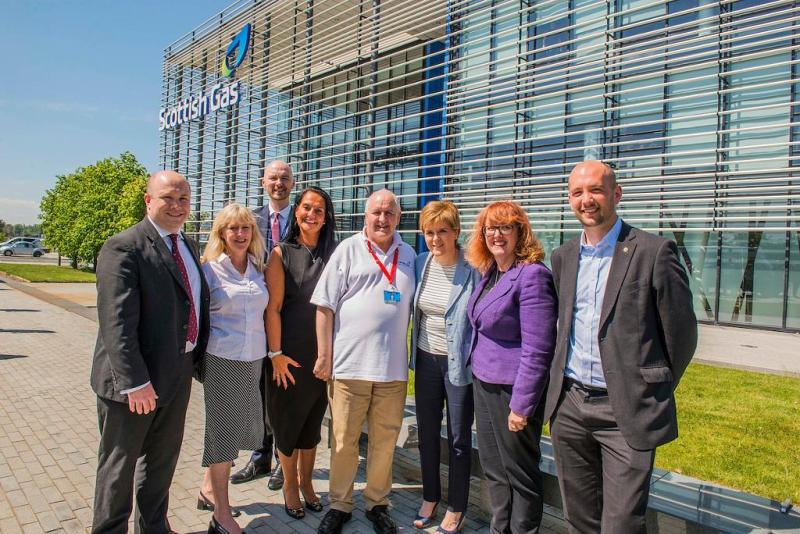
Adjusted operating profit for the year to 31 December more than doubled to £948m from £447m a year earlier. Statutory operating profit came in at £954m against a loss last time of £362m. No dividend was proposed but the company, which trades as Scottish Gas north of the border, is repaying £27m received in 2020 through the UK Government’s Coronavirus Job Retention Scheme.

Centrica said its 2022 outlook was broadly positive, but cautioned that “high and volatile wholesale commodity prices and a changing regulatory environment create a wider range of outcomes than normal.” (Daily Business)

Cal-Mac Ferry contract

To: Keith Brown: Cabinet Secretary for Infrastructure Investment and Cities

CC: Alexander Anderson. Senior Special Adviser to the First Minister of Scotland. Nov 2014 – Jan 2016. Portfolio responsibility for Transport

Subject: Vessel Replacement – Procurement of 2 new Major vessels

Date: 20 Aug 2015

Purpose: In the absence of the Minister for Transport and Islands on leave, your approval is sought for CMAL to award shipbuilding contracts of a total cost of £96m for 2 new major
ferries for the CHFS network to Ferguson Marine Engineering Ltd (FMEL).

Full document here: (https://www.gov.scot/binaries/content/documents/govscot/publications/transparency-data/2019/12/ferguson-marine-key-documents-2015/documents/ferguson-marine-submission-to-ministers-recommending-contract-award-20-august-2015/ferguson-marine-submission-to-ministers-recommending-contract-award-20-august-2015/govscot%3Adocument/Ferguson%2BMarine-%2Bsubmission%2Bto%2Bministers%2Brecommending%2Bcontract%2Baward%2B-%2B20%2BAugust%2B2015.pdf)

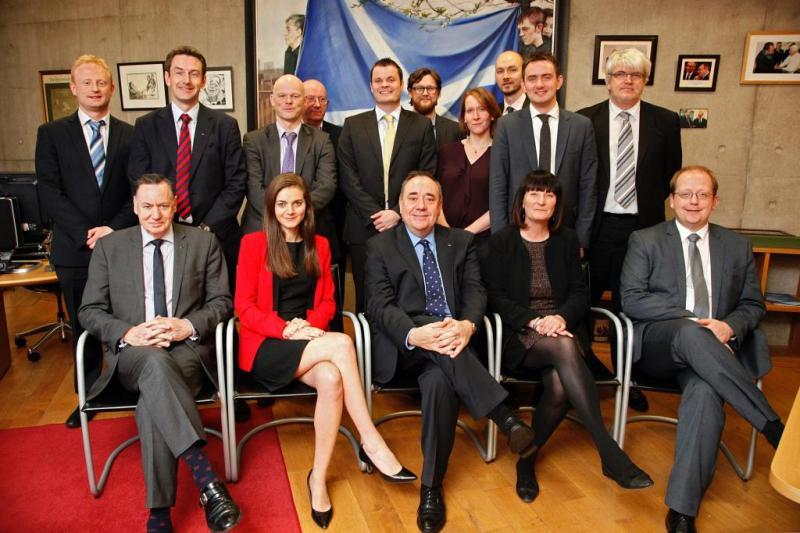
Special Advisers to Alex Salmond, November 2014.

Alex Salmond’s trial

Tasmina Ahmed-Sheikh, the former SNP MP, and the first witness to swear her oath on the Koran (“I swear by Allah that I will tell the truth …”) was asked about an incident at Stirling Castle where Mr Salmond had allegedly touched a female member of his staff on the bottom as a photograph of them both was being taken. “Did you see anything untoward?” she was asked. “Did [the woman] show any discomfort while the photo was taken?” “No,” answered Ms Ahmed-Sheikh to both questions.

Mr Jackson wanted to know from Ms Kay whether the former first minister was a “tactile” person, “touchy-feely, an old-fashioned man?” “Yes, definitely,” Ms Kay said. “He was mannerable in an old-fashioned way,” as she put it. “He was always hugging people — that was his way.” “But did he go over the line, was there inappropriate sexual behaviour?” asked Mr Jackson. “No,” she said.

Alexander Anderson, who worked for him as special adviser, agreed. “Mr Salmond has always been tactile,” he said. Campaigning with him meant a succession of selfies, with hugs in the streets, at bus stops and in any business he entered. “At party conference there would be hugs and kisses for everyone,” he added.

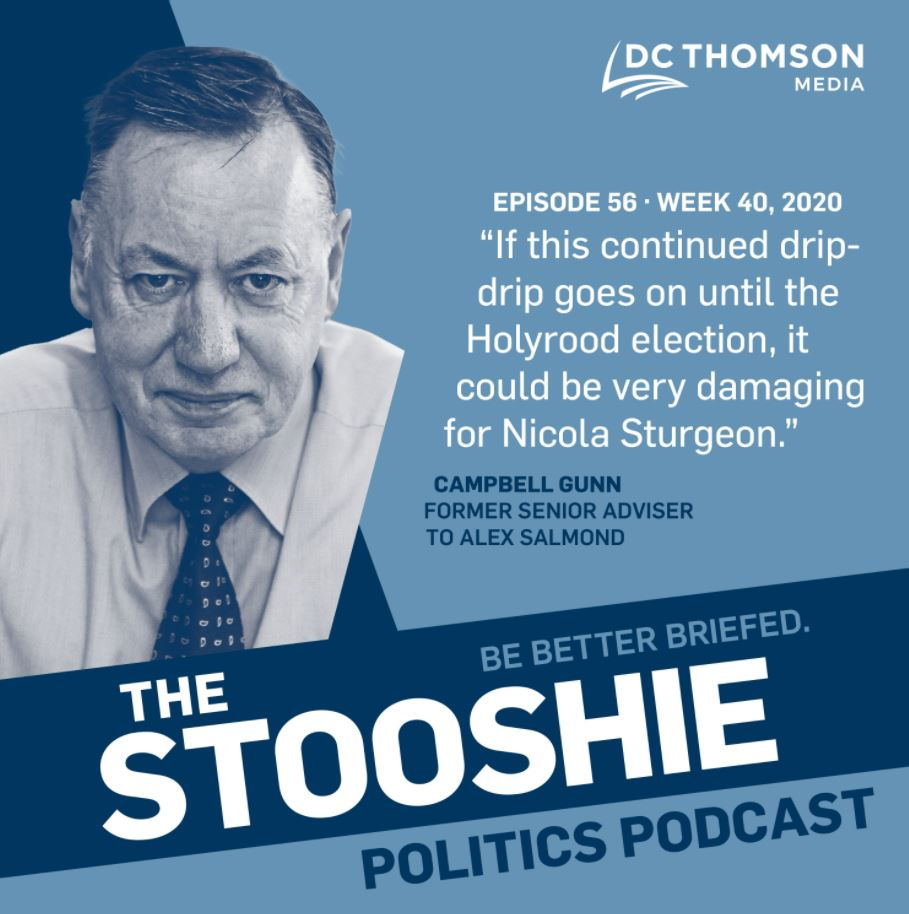
Profiling Sturgeon’s large Praetorian Guard of Special Advisers- Ex protector Campbell Gunn has his say

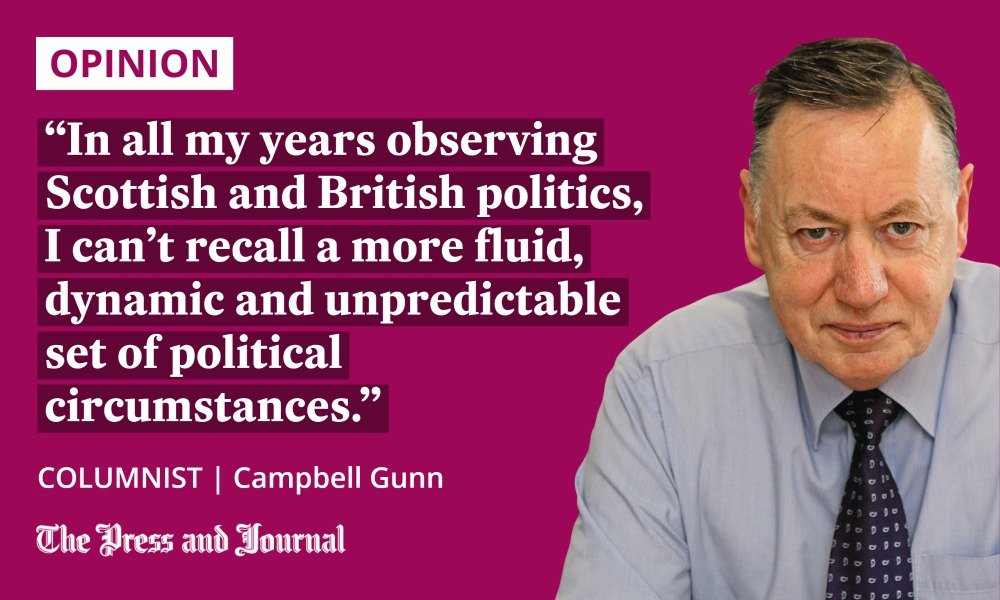
Campbell Gunn: Member of Runrig for a brief spell in 1976. Political journalist of note for many years. Retired then appointed “Special Adviser” to Alex Salmond in 2013. Deputy Spokesperson for the First Minister and Communications Adviser. Retained by Sturgeon finally packed it in around 2018. Regular contributor to Twitter. 8 July 2013

Leadership styles

Alex Salmond was “collegiate and would take advice from everyone”, observed Campbell Gunn, who worked for both the former and current first ministers, Sturgeon relies on a small group for advice. The close circle includes Liz Lloyd, her chief of staff, and her husband. Gunn recalls that when he was working for Salmond and monitoring press coverage over the weekend they would be in constant communication. In contrast, Sturgeon is happy to delegate. “Call me if there’s ­something urgent,” she’d say. “Otherwise leave me alone.”

The Alex Salmond debacle

“If, as they say, they have nothing to hide, then surely they shouldn’t hide things. Do ministers, advisers and senior civil servants have any conception of how their current position looks from the outside? When I was involved in the case as media spokesperson for Mr Salmond two years ago, during the judicial review, few, if any, of my former press colleagues actually believed any of the ‘Salmond conspiracy’ allegations. Now most of them do. And that change in attitude is entirely down to the way the Scottish Government has dealt with the parliamentary committee.”

Supporters of Mr Salmond have claimed figures within government conspired against the former first minister by creating an anti-harassment policy that was out “to get” the ex-politician.
Civil servants, appearing in front of the Salmond inquiry, denied such suggestions. Gunn was also critical of Lord Advocate James Wolffe QC’s appearance in front of the Salmond inquiry last week and his response to MSPs’ questions about the legal advice. He accused Scotland’s most senior law officer of “breath-taking” obfuscation and also claimed the Scottish Government’s botched handling of the claims against Mr Salmond would have cost the taxpayer “well in excess” of £1 million. His remarks were made as MSPs on the inquiry prepared to meet in private after Deputy First Minister John Swinney blocked two Spad’s from giving evidence in public. (https://www.thecourier.co.uk/fp/politics/scottish-politics/1755322/campbell-gunn-says-scottish-government-just-fuelling-alex-salmond-conspiracy-theory)

So what should Nicola Sturgeon have done? By last autumn, it was obvious the game was up. If, at that stage, the First Minister had ordered the release of everything the committee wanted, probably including documents of which at that stage they were still unaware, there would undoubtedly have been a media storm. But it would have been short-lived, over in a week or so. Instead, she has had to suffer month after month of a continuous drip-drip of damaging revelations.

And that, it appears, is where loyalty has come in. Nicola Sturgeon is fiercely loyal to her staff, particularly the small group closest to her. Political expedience should have seen two or three senior people being sacrificed – in popular parlance, thrown under the bus – to save her own skin.

Top of the list should have been Permanent Secretary Leslie Evans, the head of the civil service in Scotland, who defiantly proclaimed the flawed procedure ‘her’ policy. Instead, she was handed an extension to her contract. Then there’s the small matter of the First Minister’s husband, Peter Murrell, who just happens to be the SNP’s chief executive. That cosy situation should never have been allowed to exist in the first place, and he should have gone. Sturgeon’s chief of staff Liz Lloyd too should have been sacrificed.

Instead, all three – and others perhaps equally culpable – are still in their well-paid jobs, and we’re still not sure if everything relevant has been published. Full disclosure, a few bodies to satisfy the baying media mob, and a fulsome apology might well have seen the entire affair consigned to history. Instead, Nicola Sturgeon will continue to face questions over the issue for some time to come. (https://www.spectator.co.uk/article/is-nicola-sturgeon-s-loyalty-her-big-weakness)

Holyrood not fit for purpose

Given recent events, it may now be time for reflection on how the Act is working in practice. Holyrood was designed as a unicameral legislature, a single body, with scrutiny and amendments to legislation being undertaken by what was supposed to be a powerful committee system. Those of us who have been forced to sit through various committee sessions over the years have known for some time that this system is unfit for purpose.

The problem was brought into sharp public focus with the high-profile appearance of First Minister Nicola Sturgeon before the Committee on the Scottish Government Handling of Harassment Complaints. Thanks to partisan, soft-ball questioning by the majority SNP members and frankly, some political grandstanding by opposition representatives, the committee got nowhere, and the first minister was able to emerge virtually unscathed, having skilfully avoided any awkward pitfalls by claimed lapses of memory and in some cases obfuscation.

And recent behind-closed-doors shenanigans by the SNP reserving places for members of specific groups has effectively blocked the chances of many potential list candidates ever being elected, while virtually guaranteeing seats for others. It may well be time for an overhaul of the Scotland Act. Let’s learn the lessons of the past couple of decades. Replacing the current electoral system with multi-member wards elected by alternative vote and the addition of a second chamber would be, I suggest, good starting points. (https://www.pressandjournal.co.uk/fp/opinion/columnists/2974336/right-time-for-overhaul-of-scotland-act)

National grid outrage

Nowhere is better placed for renewable energy than the north of Scotland. But development here is being constrained by outdated electricity transmission charges, imposed by the UK Government. The system was introduced almost 30 years ago to encourage the establishment of power stations near where they were most needed – close to city conurbations, and in particular the heavily populated south-east of England. It is an extremely complex charging system, but basically the idea was that transmission of electricity over a short distance was charged less per megawatt-hour than power sent from further away. The system was initially introduced only for England and Wales but was later extended to Scotland.

And that brings us to the present situation, where the expansion of renewable developments in the north of Scotland is now being seriously held back by these charges. A wind farm in the north of Scotland pays £5.50 per unit of electricity, while a wind farm in Wales is paid £2.80 per unit. Transmission charges in the north of Scotland are £7.36 per megawatt-hour, compared to £4.70 in southern Scotland. In some areas of the south of England, generators are actually paid to use the transmission network. It produces the ludicrous situation where a wind farm in the north of Scotland pays £5.50 per unit of electricity, while a wind farm in Wales is paid £2.80 per unit. The knock-on effect on the economy of the north is palpable. (https://www.pressandjournal.co.uk/fp/news/environment/3207658/net-zero-scotland-transmission-charges-campbell-gunn-opinion)

Profiling Sturgeon’s large Praetorian Guard of Special Advisers – Ex protector Noel Dolan offers a view!!

Noel Dolan:

11 Aug 2019: Noel Dolan, born in Balham of Irish descent, sounds about as Scottish as Bob Hoskins was Nicola Sturgeon’s most senior adviser for nine years. Dolan first worked for Sturgeon in 2004 when she was depute SNP leader and was her senior special adviser until his recent retirement. 26 May 2011.

25 Mar 2020: Dolan, said Permanent Secretary Leslie Evans had to go for the “good” of the Scottish civil service. He added: “As she cost the Scottish taxpayer a large amount of money, she should have gone in 2019.” Alex Salmond was cleared of sexual assault allegations by nine women after a two week trial at the high court in Edinburgh. He had initially been accused of sexual misconduct against two civil servants and the Government reported the findings to the police.

Alex Salmond funded a judicial review against the Government and a judge ruled in 2019 that the internal probe had been biased and unlawful. The botched investigation cost the taxpayer over £700,000 in legal and associated fees. Evans, who earns around £175,000 a year, did not carry out the probe herself, but as the most senior civil servant in the Government she had responsibility. Although she was criticised for the fiasco, she remained in post and even had her contract extended.

Dolan hit out at the way the initial probe was carried out saying: “For the good of the Scottish civil service, she should go.” During a procedural hearing of the criminal trial, Alex Salmond’s defence team claimed the Government and those working there turned to the criminal process to try to “discredit” him after he won the civil case.

Judge Lady Dorrian rejected an application for the evidence to be led at the trial, saying the judicial review was “wholly irrelevant”. In a text message read out at a hearing ahead of the criminal trial, Alex Salmond’s QC Gordon Jackson said Evans had texted a civil servant, saying: “We may have lost the battle – but we will win the war.” Dolan said: “A general may survive a battle, but if she loses a war, she should go.” (the Record)