The Clans of Scotland, primarily Catholic and numbering many thousands had been resident for many centuries in the isles and mainland of the north of Scotland.
The English invaded Scotland in 1707, using the pretence of a treaty, which never existed and established military rule, brutally extinguishing any form of protest.
The Westminster government in London were determined to change the demographics of Scotland and achieved this through the eradication of the Catholics whose homes were destroyed forcing them to exist in the open on the beaches surviving on seaweed, before being put on coffin ships and transported to the new colonies, in North America. Many died before reaching their destinaton and many thousands were sold as indentured slaves to wealthy landowners in the Caribbean.
Their lands were given to those close to the English monarchy so that they could establish and sustain huge numbers of sheep and enjoy hunting and fishing with their friends at their leisure. The highlands of Scotand were transferred wholesale to the ownership of England’s lords a situation which prevails to this day.
But the winds of change are making inroads on the arbitary colonisation of Scotland in 1707. Scots are rebelling politically determined to right the evils visited upon their country and establish it as a nation independent of England. To achieve this two groups were formed, Independence Scotland and SALVO both of who are experiercing sustained growth.
They have taken Scotland’s grievance to the UN asserting that It’s continued status as a colony of England breaches many of the UN statutes. Developments are progressing but we need the active support of the descendants of the many Scottish Catholics settled in the USA.
An independent Scotland will address the brutal events of the past which I expect will include the right of Americans to return to Scotland and reclaim the property of their forebears and their birthright rightfully establishing Catholicism in the North of Scotland.
In the Scottish Independence referendum, the voter list included anyone entered on the current electoral roll, over the age of 16,, whose place of residence was in Scotland, regardless of nationality. The usual caveats about Service personnel also applied.
Voter turnout was 84.59%.
The result:
Yes, 1,617,989, 44.70%.
No, 2,001,926, 55.30%
There is an acceptance that a majority of the 240,000 immigrant voters and many voters of Scottish birth and residence had been forced to vote “no” frightened into submission by a Westminster Unionist politically directed campaign of disinformation.
Indeed not long after the referendum Unionists “screamed from the rooftops” fighting each other for media space each claiming it was their disinformation output that had been the most influential in gaining the “no” vote.
But an award went to a covert Civil Service anti-independence team, funded by the Scottish taxpayers who worked out of Downing Street under the guidance of the late Sir Jeremy Heywood, Cabinet Secretary and Head of the Civil Service.
Postal Voting
790,000 postal voting forms were issued, completed and returned within the notified time period.
But the novel and as yet unproven voting procedure, heavily promoted by the governing authority, was sullied when, just after voting closed, Ruth Davidson, and other influential supporters of the “no” campaign boasted they had known well before 18 September 2014 that postal votes indicated a win for their campaign.
There was a police investigation into the matter but the findings were never notified to the Scottish public who are still waiting for answers, with the result that many Scot’s believe the outcome of the referendum had been fixed ensuring a win for the “no” campaign.
Edinburgh University 2014 Referendum Analysis
The largest study of how Scotland made its historic decision on 18 September 2014 found that the votes of people born outside Scotland were crucial to the result.
52.7 percent of native-born Scots voted Yes.
72.1 percent of voters from England, Wales or Northern Ireland backed the Union.
There were more than 420,000 Britons from elsewhere in the UK living in Scotland when the last census was taken and if they cast their ballots in line with the findings of the Edinburgh University study, more than 300,000 of them will have voted No.
That’s a significant number in a contest that ended with 2,001,926 no votes and 1,617,989 for yes.
Voters born outside the UK also rejected independence, with 57.1 percent voting no.
Political scientist Professor Ailsa Henderson, who wrote the study said it showed the influence of “Britishness” among voters born elsewhere in the UK in deciding the result.
She said: “Scottish-born people were more likely to vote Yes and those born outside Scotland were more likely to vote No. But the least sympathetic to Yes were the people born in the UK, but outside Scotland. We think they are more likely to feel British. They are more likely to feel a continued tie to the UK as a whole – because that’s where they are from.”
How the electorate voted (by place of birth) – [Blue = YES] [Green = NO]
52.7 percent of native-born Scots voted Yes
72.1 percent of voters from England, Wales or Northern Ireland voted No.
There were more than 420,000 Britons from elsewhere in the UK living in Scotland when the last census was taken. And if they cast their ballots in line with the findings of the Edinburgh University study, more than 300,000 of them will have voted No.
How the electorate voted (by sex) – [Blue = YES] [Green = NO]
56.6 percent of women voted No
53.2 percent of men voted Yes.
How the electorate voted (by age) – [Blue = YES] [Green = NO]
62 percent of voters aged 16-19 voted Yes.
A majority of voters aged 20-39 voted Yes.
Voters aged 40-49 were split 50/50.
Voters aged 50-70 or older primarily voted No with the majority increasing by age.
How the electorate voted (by social status) – [Blue = YES] [Green = NO]
Yes had majorities among people who classed themselves as working class, people at the bottom of the earnings scale and people in rented social housing.
The highest earners, homeowners, and people who described themselves as middle class were more likely to vote No.
Recommendations for the next referendum
Westminster will use every trick in the book and many not yet identified to deny Scots an independence referendum free of external influences and the Scottish government will need to be alert to state-sponsored shenanigans. Experience before, during and after the 2014 referendum supports the need for major changes to procedures in any future referendum. To ensure a level playing field the following changes are recommended:
Voting is to be restricted to Scottish income taxpayers whose main place of residence is and has been in Scotland continuously from the beginning of January 2015.
Voting rights are to be extended to persons aged sixteen on the date of the referendum.
Voting papers are to be bar coded and checked for authenticity before counting.
Proxy voting is to be restricted to applicants who are able to provide verifiable justifiable reason. eg infirmity or other qualifying illness.
Completed proxy returns are to be retained, unopened, in secure locations in Scotland possibly under the control of the Scottish Police Force.
Proxy votes are to be delivered to counting officers between 2000-2200 on the day of voting, to be opened from 2200 hours, verified for correctness and counted.
Exit polling at voter venues is to be permitted.
State-funded (Westminster or Scottish governments) production or distribution of literature to households, in the course of the campaign is to be deprecated.
The Scottish Government, Scottish Parliament, Scottish public authorities and the UK Government are to strictly observe a 28 day, “pre-vote period” of restriction on publications, (including those which might be published on their behalf, by public media outlets by proxy) relating to the referendum.
A media monitoring panel is to be appointed and authorized to review and instruct amendments to BBC and independent radio and television content before broadcasting. It is to comprise two “Yes”, two “no” supporters and an independent chair and vice-chair, (recruited from The Republic of Ireland and Iceland. The panel’s decisions are final.
In a previous post I advised that, “Satchi Media” (media manipulators) were appointed to manage the campaign for, ” Better Together”.
The BBC, witnessed by its biased views also confirmed their partnership with, “Better Together”.
Media Manipulation
In the trade, “Below the line” advertising is known as, “the art of the devil” and the BBC and Satchi are well versed in the ways of Beelzebub.
The attached photograph is very informative, providing evidence of their use of the black arts: The saltire is dirty, badly worn, frayed and dwarfed by the huge well presented Union Jack in the background. The subliminal message of the photograph is:
Know your place Jock, Westminster is the dominant force. You must vote, “no” in the referendum, if you value your life. The campaign for independence is over. (http://www.bbc.co.uk/news/uk-scotland-28442439)
Having proved its value in 2014 this form of propaganda has been greatly refined since 2014 and is now routinely used by government to influence and control the UK electorate. In its drive to control outcomes propadanda is a serious threat to infomed decision taking by individual.
Informed Comment
The concerns about media manipulation, subliminal messaging, and propaganda in political campaigns are serious and touch on the integrity of democratic processes.
Addressing the threat of such tactics requires a multi-faceted approach that empowers individuals, strengthens institutional accountability, and promotes transparency.
Practical steps to help reduce or mitigate this type of threat:
Enhance Media Literacy Education:
Introduce media literacy programs to teach people how to critically analyze news, advertisements, and political imagery. Including understanding subliminal messaging, recognizing bias, and questioning sources.
Public campaigns to encourage skepticism toward media narratives and tools provision to decode manipulative tactics.
Regulate Political Advertising:
Introduce stricter regulations on political advertising, particularly “below the line” tactics, to ensure transparency about who funds and creates campaign materials.
Require clear labeling of political ads, including subliminal or emotionally manipulative content, to alert viewers to their intent.
Enforce independent oversight of campaign materials to flag and penalize deceptive or coercive messaging.
Strengthen Independent Media Oversight:
Establish or empower independent bodies to monitor media outlets, including public broadcasters like the BBC, for bias or partisan partnerships.
These bodies could investigate claims of propaganda, issue public reports, and recommend corrective actions, such as retractions or balanced coverage.
Ensure these organizations are free from government or corporate influence to maintain credibility.
Promote Transparency in Media Partnerships:
Require media organizations and political campaigns to disclose partnerships, funding, or collaborations (e.g., BBC’s alleged partnership with “Better Together” or firms like Saatchi & Saatchi).
Publicly accessible databases could track these relationships, allowing voters to evaluate potential biases.
Encourage Grassroots Counter-Narratives:
Support independent journalism, citizen media, and grassroots campaigns to provide alternative perspectives and challenge dominant narratives.
Platforms like X can amplify voices that expose manipulative tactics, as your post aims to do, though care must be taken to verify information to avoid misinformation.
Reform Electoral Laws:
Limit the scope of emotionally manipulative or subliminal messaging in political campaigns through updated electoral laws.
Ban tactics that exploit psychological vulnerabilities or rely on fearmongering, as implied by the imagery you describe.
Enforce spending caps on media campaigns to level the playing field and reduce the influence of well-funded propaganda.
Foster Civic Engagement and Debate:
Encourage public forums, debates, and town halls where voters can engage directly with issues, bypassing filtered media narratives.
Promote fact-based discussions and provide access to raw data or policy documents so individuals can make informed decisions without relying on manipulative imagery or messaging.
Leverage Technology for Accountability:
Use AI and data analysis tools to detect and flag propaganda or biased content in real time, making it easier for regulators and the public to respond.
Develop apps or browser extensions that highlight manipulative tactics in news articles, ads, or social media posts.
Challenges and Considerations
Balancing Free Speech:
Any regulation must avoid stifling legitimate political expression. Defining “propaganda” or “manipulative content” can be subjective and risks overreach.
Media Independence: Ensuring that oversight bodies or regulators remain impartial is critical to avoid accusations of censorship or bias.
Global Context: Propaganda tactics evolve with technology (e.g., deepfakes, algorithmic targeting). Solutions must adapt to new forms of manipulation.
Conclusion
Reducing the threat of media manipulation and propaganda requires a combination of education, regulation, transparency, and civic empowerment. By equipping individuals with critical thinking skills, holding media and campaigns accountable, and fostering open debate, societies can better protect reasoned decision-making.
The 2014 Scottish referendum highlights the need for vigilance—encouraging voters to “ignore the hype” and focus on evidence-based choices is a powerful starting point.
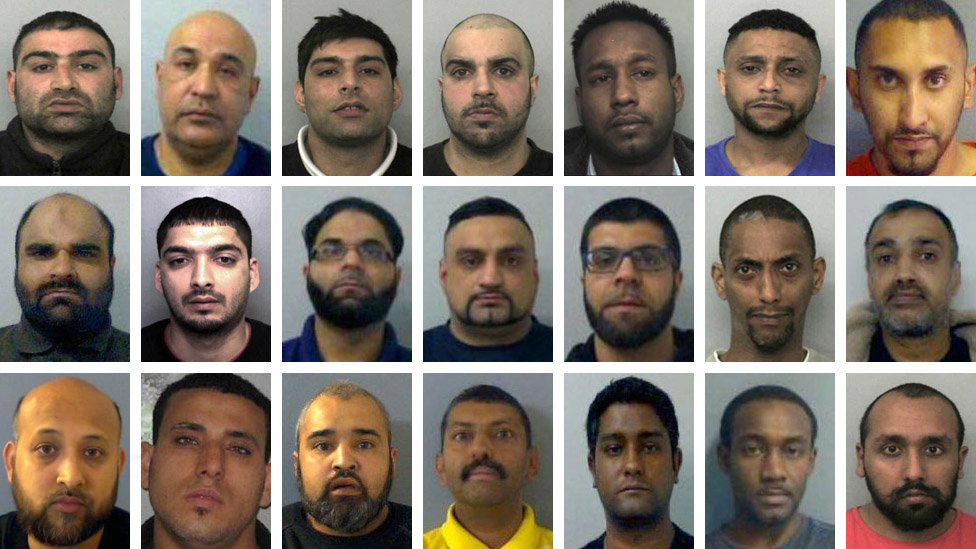
These are must-watch conversations for anyone who wants to understand the truth behind the scandals the Labour government refuses to acknowledge.
Until the Second World War, Britain was a largely ethnically homogeneous country with a strong national identity and proud culture. In recent decades, the country’s borders were opened to the world and millions have come. Some were doctors and came from other skilled professions; many came from complete poverty and brought their extended families. Leicester, a city where I asked if people were proud to be British, is now the least white city in Britain (just 41% of people identified as such in the latest census).
Key Topics Covered:
✔️ How grooming gangs operated under police protection
✔️ Why the UK government ignored these crimes for years
✔️ How media bias controls public opinion
✔️ The dangers of Islamist extremism in Britain
✔️ What needs to change for real justice to be served
Epstein had a key role in the Iran- Contra operation
In the 80s Ronald Reagan became President of the United States. Everyone knew him as the man from Hollywood. But only a few knew he was the protégé of Jewish media moguls and Kosher Nostra. No wonder then that when Reagan became President the Zionists finally became the power behind the throne in the USA. Mossad was now an equal partner with the CIA. which offered possibilities for global cooperation. Thus was born Iran-Contra. The biggest dark operation of the 1980s which itself was part of a covert operation to undermine the enemies of US and Israel.
It is a work in progress and future articles will be added. It is comprised of undisputed facts from mainstream sources but of necessity does include some speculation. Of particular note is that the intelligence agencies in the West are allied in the Anglo-Saudi-Zionist network and cooperation and information sharing is normal. But they each operate independently and at times at cross purposes. Mossad is the most ruthless of the group since it is operations outside Israel are dominated by ultra-rich Jewish Zionists and their supporters.
Jeffrey Edward Epstein
He was born in Brooklyn on 20 January 1953 -The first child of Seymour G. Epstein(J), a groundskeeper for New York City’s parks department. His mother, Pauline(J), was a school assistant. He was raised in New York city’s oldest gated community, Sea-Gate, an area located in South Brooklyn near to the Western edge of Coney Island. It has been home to a Jewish community for near to a hundred years. His family home was located just across the street from Keneses Israel, Sea Gate’s oldest synagogue. The neighborhoodwas home to a large community of Orthodox Jews, including many Chabad and Satmar Hasidim. Some Orthodox sects condone pedophilia.
Abuse of children in Jewish Schools Two reports revealed a similar phenomenon: Many people knew or had heard of sexual abuse of children perpetrated by administrators, teachers, parents, and students. And yet in neither school (nor in similar episodes elsewhere in the orthodox community) did anyone report the allegations of misconduct to law enforcement, nor to the press, nor to the wider Jewish community alerting to the presence of predators. (The Times of Israel)
Epstein’s schooling
1959: Public School near his Sea-Gate home.
1965: Mark Twain Junior High School.
1967: Interlochen Arts summer camp. Epstein was a talented piano player who learned to play piano at the of five which qualified him for attendance at the camp for talented young artists. 1968-69: Lafayette High School, in Coney Island. The school was a working class high school with a prevalence for ”antisemitism.” It was formerly a blue-collar area and 90 percent Italian. Then a small number of Jews moved in. The Italians did not welcome the Jews and fights routinely featured in the schools. The conflict got so bad that Sea Gate was forced to introduce a private police force and erect barbed-wire fences at trouble spots. Epstein did not get involved in fights in the school preferring to concentrate on his studies. He was a talented student, and his efforts allowed him to skip two grades and graduate at the age of 16. 1969-71 – Cooper Union College Is one of the most selective colleges in the world and unique in offering full-tuition scholarship education for all students. A perfect school for Epstein whose parents were not rich. Epstein, earned money by tutoring classmates, in their homes but was never happy at the school and transferred, with little warning, to New York University Courant Institute of Mathematical Sciences. he also left Courant for unspecified reasons.
Epstein and Dalton College : Well respected Donald Barr (J) was the Chair of Dalton College. His career was stellar. He joined the Office of Strategic Services (OSS) in Germany, aiding the de-Nazifying of companies and individuals. He also investigated German industrialists and SS men who had fled to South America.
Barr was an important intelligence asset. In fact, while in the OSS he hunted Nazis and was involved in “Operation Paperclip”, secretly recruiting ex-Nazis to the CIA and other American agencies including NASA. He was involved in the operation since it was the ultimate proof that although Jewish he was loyal to the CIA.
He converted to Catholicism, married a Gentile and helped Nazis to settle in America. This made the Barr family a perfect fit for liaisons between the CIA and Mossad and explained how Donald’s half-Jew son William Barr(J) enjoyed a stellar rise in the CIA.
In the early 70s William was already a junior analyst at CIA and a major player in the intelligence community. In fact, it may have been William who told his father Donald to make sure Epstein would be hired.
Later in the 80s and 90s William Barr would be known as the ”Cover-up General” who as Attorney General would stop the investigation of many Iran-Contra criminals and other intelligence assets.
He was helped in this by his close friend Robert Mueller, who in the early 90s was the Assistant Attorney General for the Criminal Division.
Barr tried to hinder the “Church and Pike” committees investigation of the CIA in 1974.
Barr (J) became the Attorney General and supervised the investigation of Epstein, and Ghislaine Maxwell.
Together with special counsel Robert Mueller they would cover up Trump’s connections to Epstein, Russian oligarchs and the Israeli interference in the 2016 presidential elections.
So Ronald Barr (J),made sure that Epstein got a job at Dalton College, before he left his post in the early summer of 1974.
Epstein, started teaching in September 1974. Why was Epstein, so cocky despite lying about his degree and knowing he could be fired at any moment?
Did he already have powerful protectors? Was he already an agent of Mossad? Was his job to find out embarrassing facts about powerful families? Was this one reason why he liked to hang around the students so much? Epstein, was kicked out of the school for vague reasons.
The math and science faculty teachers pressured the head master Peter Branch(?), to fire Epstein, because his ”teaching skills had not improved.” Possibly they did not refer to his skills as a mathematics teacher but to his outrageous behaviour.
A former student told the newspaper that Epstein, conducted himself in a strange manner with female students, giving them unwanted attention and even showed up at a student party where teens were drinking. “I can remember thinking at the time, ‘This is wrong,’” former student Scott Spizer, told the newspaper.
1975-Epstein & the Bear Stearns Bank: Epstein was invited to join the bank by Bear Stearns bosses Alan Greenberg(J) and James Cayne(J). Epstein had taught Greenberg’s son Ted at Dalton and was rumoured to have dated his daughter Lynne. Greenberg was also good friends with Donald Trump’s mentor, Roy Cohn who ran extensive paedophile sex rings for personal and blackmail purposes.
Epstein met both Cohn and Trump in the early 1970’s. Both worked for the CIA or Mossad. and were allies in the underworld of intelligence operations. Greenberg was a proud Jew who never shied away from emphasizing his Jewishness and Zionism. After his death he was honoured by the ex-PM of Israel, Shimon Peres.
Epstein worked for Michael Tennenbaum(J), a senior executive, selling the firm’s analyses of stock options to clients. Tennenbaum learned that Epstein had padded his resumé, falsely claiming to have graduated from Stanford University. Epstein confessed, telling Tennenbaum he had embellished his background to get a teaching job. “I wanted to tell you the truth,” he told Tennenbaum, who gave him a second chance.
Epstein, was promoted by Cosmopolitan magazine as its “Bachelor of the Month” and became a limited partner at Bear Stearns. In just 4 years!
Not long after Epstein was questioned about fraudulent insider trading activity and resigned the day after but still received a $100,000 bonus. Several of his contemporaries recall that Epstein left the company very suddenly. Within the company there were rumours also that he had been involved in a technical infringement, and it was thought that the executive committee asked that he resign after his two supporters, Ace Greenberg and Jimmy Cayne were outvoted. Greenberg later said he couldn’t recall the event. also Cayne denied it happened and Epstein denied it as well.
The official statement: “Jeffrey Epstein left Bear Stearns of his own volition, It was never suggested that he leave by any member of management, and management never looked into any improprieties by him. He simply wished to work for himself.”
But this is at odds with the story that Epstein related to the S.E.C. in 1981 and to lawyers in a 1989 deposition involving a civil business case in Philadelphia. In 1981 the S.E.C.’s Jonathan Harris and Robert Blackburn took Epstein’s testimony and that of other Bear Stearns employees in part of what became a protracted case about insider trading around a tender offer placed on March 11, 1981, by the Seagram Company Ltd. for St. Joe Minerals Corp.
Ultimately several Italian and Swiss investors were found guilty, including Italian financier Giuseppe Tome, who had used his relationship with Seagram owner Edgar Bronfman Sr. Canada’s finest upstanding family to obtain information about the tender offer.
After the tender offer was announced, the S.E.C. began investigating trades involving St. Joe at Bear Stearns and other firms. Epstein resigned from Bear Stearns on 12 March 1981. The S.E.C. was tipped off that Epstein had information on insider trading and was obliged to question him.
In his S.E.C. testimony, given on 1 April 1981, Epstein claimed that he had found “offensive” the way Bear Stearns management had handled a disciplinary action following its discovery that he had committed a possible “Reg D” violation—evidently he had lent money to his closest friend. (In the 1989 deposition he said that he’d lent approximately $20,000 to Warren Eisenstein, to buy stock.) Such an action could have been considered improper, although Epstein claimed he had not realized this until afterward.
According to Epstein, Bear Stearns management had questioned him about the loan around 4 March 1981. The questioners, Epstein said, were Michael (Mickey) Tarnopol and Alvin Einbender. In his 1989 deposition Epstein recalled that the partner who had made an “issue” of the matter was Marvin Davidson. On 9 March 1981, Epstein said, he had met with Tarnopol and Einbender, again, and the two partners told him that the executive committee had weighed the offense, together with previous “carelessness” over expenses, and he would be fined $2,500. “There was discussion whether, in fact, I had ever put in an airline ticket for someone else and not myself and I said that it was possible, since my secretary handles my expenses,” Epstein told the S.E.C.
In his 1989 testimony he stated that the “Reg D” incident had cost him a shot at partnership that year. What the S.E.C. seemed to be especially interested in was whether there was a connection between Epstein’s leaving and the alleged insider trading in St. Joe Minerals by other people at Bear Stearns.
Despite the circumstances of Epstein’s leaving, Bear Stearns agreed to pay him his annual bonus—which he anticipated as being approximately $100,000. The S.E.C. never brought any charges against anyone at Bear Stearns for insider trading in St. Joe, but its questioning seems to indicate that it was sceptical of Epstein’s answers.
Some sources have wondered why, if he was such a big producer at Bear Stearns, he would have given it up over a mere $2,500 fine. It seems he was guilty of insider trading involving the Mafia-connected Seagram Company led by ”the boss of Canadian Jews” Edgar Bronfman Sr.(J). Epstein remained a client of Bear Stearns.
Epstein, started his own consulting company International Assets Group (IAG), offering wealth management services to millionaires in U.S. and overseas. He later claimed to be a high-level bounty hunter, i.e. assisting clients either to recover stolen money from fraudulent brokers, lawyers and governments or vice versa, i.e. hide their stolen money. Epstein was also contracted to work with the richest man in the world”, Adnan Khashoggi (part-J, part-S) and Les Wexner who were both involved in top secret projects like the Iran-Contra affair.
Epstein, found guilty ofviolation of the rules of the “Securities and Exchange Commission.” lost all his trading licenses and relocated to England.
His first contact soon after arrival in England was Nick Leese, who invited him to a family gathering at which he impressed all those present. Nick’s father, Douglas Leese, had built a very successful rack-and-pinion steering business and sold it on taking up other interests including arm’s dealing and money laundering through counties in the middle East and Asia.
Epstein, joined Leese, expanding their business relationships . They had a bust-up and split when Leese, discovered that Epstein, was booking flights on “Concorde” and rooms in five-star hotels on Leese’s, account. But Leese, retained a grudging admiration for Epstein.
1987: Epstein obtained an Austrian passport listing him as a resident of Saudi Arabia, using a fake name, (more than likely through Ronald Lauder(J) who had previously been the US ambassador to Austria.
Epstein’s links to Khashoggi opened doors and he became good friends with the Saudi crown prince, Mohammed bin Salman who visited Epstein often and stayed with him at his New York residence.
The duo were also aided by John Mitchell(A), Richard Nixon’s brother Edward(A) and John Lehman(J), the former secretary of the Navy.
1988: Epstein had proved he was a reliable operator and this allowed him to branch out on his own. He established a financial consulting company, J. Epstein & Co. through which he claimed to manage the assets of billionaires. But hedge fund managers agreed in unison that Epstein was a fraud and a front man who probably was running blackmail operations.
Little Israel: In the late eighties Epstein/Wexner developed a new town in New Albany near Columbus, Ohio. Epstein established himself as a partner in the New Albany, Real Estate Property Holding Company, and managed all matters pertaining to the development. Facebook, Amazon and Google moved into the town and built their businesses there. The rapid growth of the companies and close association with Israel more than hinted that Mossad financed the development to which some now refer to as Little Israel.
1989: The Manhattan Townhouse. Leslie Wexner bought a seven storey, 40 room mansion, on East 71st Street, Manhattan for $13,2 million and completely renovated it. Strangely he never lived there and sold it to Epstein for $1 dollar. Epstein modernised the bland décor replacing it with sexually explicit paintings, photos and weird apparel. Epstein gained access to Wexner’s Victoria’s Secret models.
1991:The only client of J. Epstein & Co. was multi-billionaire Les Wexner who authorised Epstein to manage his financial affairs including, authority to borrow money, pay expenses, sign contracts and handle other financial dealings. Power-of-Attorney documents confirming the arrangement were filed in Franklin County, Ohio. Epstein also ran the Wexner foundation that provided leadership programmes for American and Israeli Jews.
Hoffenberg, a key player in the Iran-Contra operationsaid he and Epstein, were introduced by Douglas Leese, a British defence contractor. Leese was involved in brokering the first of a series of controversial British arms deals that involved Khashoggi, known as the “Al Yamamah” deal which allegedly involved the bribery of members of the Saudi royal family and top Saudi officials. In addition to Khashoggi, several of those officials and royal family members had deep ties to BCCI.
Hoffenberg & Epstein, set up the Tower Financial Corporation with its offices in Villard House, on Madison Avenue. Hoffenberg, who was always up to no good, briefly owned the New York Post, and rented a floor in the nearby Trump Tower. The business relationship flourished. Hoffenberg and Epstein, refashioned themselves as corporate raiders using Towers Financial, as their raiding vessel.
One of Epstein’s first assignments for Hoffenberg, was to implement what turned out to be an unsuccessful bid to take over Pan American World Airways in 1987. A similar unsuccessful bid in 1988, was made to take over Emery Air Freight Corp.
During this period, Hoffenberg and Epstein, worked closely together and travelled on Hoffenberg’s, private jet. Hoffenberg, began using company funds to pay off earlier investors and service a lavish lifestyle that included a mansion on Long Island, homes in Manhattan’s Sutton Place and Florida, and a fleet of cars and planes.
The Ponzi scheme collapsed losing over US$450 million of its investors’ money (equivalent to $1 billion in 2024). Hoffenberg, was sent to jail but Epstein, escaped justice confirming his immunity as an important intelligence asset. Insiders said Hoffenberg, had been told to keep his mouth shut, a threat similar to that faced by the prosecutors who were successfully pressurised to drop charges against Epstein.
Inexplicably the trial judge was Robert W. Sweet, who had strong connections to the top Jewish elite through his wife whose great-grandfather was the ”King of American Jews”, Jacob Schiff.
Sweet was loyal to the hugely powerful Schiff family and Israel and in 2017 Sweet, then aged 94 would be taken out of retirement to preside over the criminal case against Ghislaine Maxwell and Epstein and in a separate case involving Harvey Weinstein.
It was not coincidental that Epstein’s former headmaster’s son William Barr was blocking any criminal investigations into Iran-Contra and other similar operations in the early 90s.
His successor Janet Reno continued the cover-ups for the next decade, under the Clintons.
Epstein and Trump also conducted business with the notorious homosexual blackmailer, Roy Cohn. They operated within the same circles but with divided loyalties, Epstein preferred a social and business life with other Jews and their banks such as Bear Stearns, Goldman Sachs and Lehman Brothers.
Trump’s Swedish-Celtic Trump family was ethno-culturally on an entirely different spectrum from the Jews but Donald’s father Joe was a realist and a businessman who provided living accommodation to many immigrant Jewish tenants in New York.
Through this medium the Trump’s attached their business future to Rockefeller, who controlled Citibank and Chase Manhattan.
When Donald Trump’s business faced financial ruin because of some poor choices it fell to the banks to rescue him from bankruptcy. His saviours were, Citibank (C), Bankers Trust, Chase Manhattan Bank, and Manufacturers Hanover Trust Co. (now owned by JPMorgan Chase Bank, National Association.)
Inexplicably the trial judge was Robert W. Sweet, who had strong connections to the top Jewish elite through his wife whose great-grandfather was the ”King of American Jews”, Jacob Schiff. Sweet, was loyal to the hugely powerful Schiff family, and Israel and in 2017 Sweet, then aged 94 was taken out of retirement to preside over a criminal case against Ghislaine Maxwell and Epstein, and in a separate case involving Harvey Weinstein.
Hoffenberg claimed before a grand jury in Illinois that Epstein had come up with the idea of financing the company through Towers’, acquisition of two ailing Illinois insurance companies, Associated Life and United Fire. He said, “Epstein was hired to work on the securities side of the insurance companies and Towers Financial. He was the, “technician” responsible for executing the schemes, although, having no broker’s license, he had to rely on others to make the trades.
In his deposition Epstein, claimed he was only asked how the bids could be accomplished and he had nothing to do with the financing. Yet Richard Allen, the former treasurer of United Fire, recalled seeing Epstein two or three times at the company. He and another executive said they had direct dealings with Epstein over the finances.
To win approval from the Illinois, insurance regulators for Towers’, acquisition of the companies Hoffenberg, promised to inject $3 million of new capital into them. In fact, in his grand-jury testimony Hoffenberg, claimed that he, his chief operating officer, Mitchell Brater, and Epstein, came up with a scheme to steal $3 million of the insurance companies’ bonds to buy Pan Am and Emery stock.
Hoffenberg, said, “Jeffrey Epstein and Mitch Brater, arranged the various brokerage accounts for the bonds to be placed with in New York, and I think one in Chicago, Rodman & Renshaw, while making it appear as though they were investing the bonds in much safer financial instruments, they used them as collateral to buy the stock. Epstein was the person in charge of the transactions, and Mitchell Brater, assisted on behalf of the insurance companies’ money.”
Epstein lived large even then. One friend recalls that when he took Canadian heiress Wendy Belzberg, on a date he hired a Rolls-Royce, especially for the occasion. (Epstein claimed he owned it.)
Prior to starting work with Hoffenberg, Epstein, had been running International Assets Group Inc. (I.A.G.), a consulting company, out of his apartment in the Solo building on East 66th Street in New York. He claimed that he managed money for billionaires only, but in his 1989 deposition he testified that he spent 80 percent of his time assisting people recover stolen money from fraudulent brokers and lawyers.
But he was also not above entering into risky, tax-sheltered oil and gas deals with much smaller investors. A lawsuit that Michael Stroll, the former head of Williams Electronics Inc., filed against Epstein, shows that in 1982 I.A.G. received an investment from Stroll of $450,000, which Epstein, put into oil. In 1984 Stroll, asked for his money back; four years later he had received only $10,000. Stroll, lost the suit, after Epstein, claimed in court, among other things, that the check for $10,000 was for a horse.
At one point, according to Hoffenberg, a broker forged documents necessary for a $1.8 million cheque to be written on insurance company funds. The cheque was used to buy more stock in the takeover targets. Meanwhile, in order to throw the insurance regulators off, the $1.8 million was reported as being safely invested in a money-market account.
United Fire’s, former chief financial officer Daniel Payton, confirmed part of Hoffenberg’s, account. He said he recalled making one or two telephone calls to Epstein, (at Hoffenberg’s direction) about the missing bonds. “Epstein, said, ‘Oh, yeah, they still exist.’ But it was discovered later that he had sold those assets … leveraged them … [and] used some margin account to take some positions in Emery and Pan Am.”
Epstein’s, extraordinary creativity was, according to Hoffenberg, responsible for the purchase by the insurance companies of a $500,000 bond, with no money down. He said, “Epstein, created a great scheme to purchase a $500,000 treasury bond that would not be shown … [as] margined or collateralized. It looked like it was free and clear but it actually wasn’t.”
Epstein, denied he ever had any dealings with anyone from insurance companies. But Richard Allen, said he recalled talking to Epstein, at Hoffenberg’s, direction telling him it was urgent that the missing bonds be recovered. According to Allen, Epstein said, “We’ll get them back.” He had “kind of a flippant attitude,” says Allen. “They never came back.”
Epstein, according to Hoffenberg, also came up with a scheme to manipulate the price of Emery Freight stock, in an attempt to minimize the losses that occurred when Hoffenberg’s, bid went wrong and the share price began to fall. This was alleged to have involved multiple clients’ accounts controlled by Epstein.
Eventually, in 1991, insurance regulators in Illinois sued Hoffenberg. He settled the case, and Epstein, who was only a paid consultant, was never deposed or accused of any wrongdoing.
Barry Gross, the attorney who was handling the suit for the regulators, said of Epstein, “He was very elusive…. It was hard to really track him down. There were a substantial number of cheques that were paid to him, I remember…. He was this character we never got a handle on. Again we presumed that he was involved with the Pan Am and Emery run that Hoffenberg, made, but we never got a chance to depose him.”
“From the government’s discovery in the main sentencing against Hoffenberg, it would seem the government was perhaps a bit lazy,” said David Lewis, who represented Mitchell Brater. “They went for what they knew they could get … and that was the fraudulent promissory notes [i.e., the much larger and unrelated part of Hoffenberg’s, fraud, based in New York State]…. What they couldn’t get, they didn’t bother with.”
Another lawyer involved in the criminal prosecution of Hoffenberg, said, “In a criminal investigation like that, when there is a guilty plea, to be quick and dirty about it, discovery is always incomplete…. They don’t have to line up witnesses; they don’t have to learn every fact that might come out on cross-examination.”
Epstein, was involved with Hoffenberg, in other questionable transactions. Financial records show that in 1988 Epstein, invested $1.6 million in Riddell Sports Inc., a company that manufactured football helmets. Among his co-investors were the theatre mogul Robert Nederlander, and attorney Leonard Toboroff. A source close to this transaction claims that Epstein, told Nederlander and Toboroff, that he had raised his share of the money from a Swiss banker, whose identity they could not be allowed to know. But Hoffenberg, claimed the money came from him, and Towers’ financial statements for that year show a loan to Epstein, of $400,000. (Epstein said he couldn’t remember the details and has disputed the accuracy of the Tower’s financial reports.)
Around the same time, Nederlander and Toboroff, let Epstein, come in with them on a scheme to make money out of Pennwalt, a Pennsylvania chemical company. The plan was to group together with two other parties to take a substantial declared position in the stock. According to a source, Epstein was supposed to help Nederlander and Toboroff, raise $15 million. He failed to find other investors (Epstein, said he was merely an investor and had invested $1 million, of his own money. But in his 1989 deposition he said he put in only $300,000 of his own money. Hoffenberg, said the final amount came from him, in a loan that Nederlander and Toboroff, didn’t know about.
Two things occurred that alarmed Nederlander and Toboroff. After the group signalled a possible takeover, the Pennwalt, management threatened to sue the would-be raiders. Epstein, was reluctant initially to give a deposition about his share of the money, telling Toboroff, there were “reasons” he didn’t want to. Then, after the opportunity for new investors was closed, co-investors recall Epstein, announcing that he’d found one: Dick Snyder, then C.E.O. of the publisher Simon & Schuster, who wanted to put up approximately $500,000. (Neither Epstein nor Snyder, can now recall the investment. Yet in the 1989 deposition Epstein, said that he had recruited Snyder, whom he had met socially, into the deal.)
According to a source, Toboroff and Nederlander, told Epstein, that Snyder, was too late, but, without their realizing it, Hoffenberg, claimed, Snyder wrote a check to Hoffenberg, and bought out some of his investment. But then Snyder, wanted out. “Nederlander, started to get irate calls from [Snyder,] who wasn’t part of the deal, and he was owed all of the money,” Hoffenberg, paid Snyder off.
In 1987: Epstein obtained an Austrian passport listing him as a resident of Saudi Arabia, using a fake name, (more than likely through Ronald Lauder(J) who had previously been the US ambassador to Austria.
Epstein’s links to Khashoggi opened doors and he became good friends with the Saudi crown prince, Mohammed bin Salman who often visited Epstein and stayed with him at his New York residence.
The duo were also aided by John Mitchell(A), Richard Nixon’s brother Edward(A) and John Lehman(J), the former secretary of the Navy.
Ronald Reagan became President of the United States in the early 1980’s. Everyone knew him as the man from Hollywood. But only a few knew he was the protégé of Jewish media moguls and Kosher Nostra. No wonder then that when Reagan became President the Zionists finally became the power behind the throne in the USA.
Mossad was now an equal partner with the CIA. which offered possibilities for global cooperation. Thus was born Iran-Contra. The biggest dark operation of the 1980s which itself was part of a covert operation to undermine the enemies of US and Israel.
The plan was to: Support both sides in the Iran-Iraq War by selling and smuggling them arms so that they would destroy each other and not be able to threaten Israel. Get Iran to release American hostages held by Hezbollah and not to reveal the secrets of the October Surprise. Use the money from the arms sales to Iran to buy and smuggle arms to the Contras in Nicaragua. Help and finance the Contras by transporting South American drugs to US through the Rockefeller-controlled and Clinton led mob state of Arkansas. Gain control of organized crime and global drug trafficking. Launder money on an industrial scale and finance secret projects to topple hostile governments with the help of both organised crime and terrorist groups.
Organize child sex trafficking into a global blackmail operation involving as many state and business leaders as possible. Outsource the operations to front men like Robert Maxwell, Adnan Khashoggi and Jeffrey Epstein.
The beauty of the plan was that even if CIA and Mossad were to be caught in some operations they could claim that US was just trying to free the hostages and help free the world from the scourge of communism. In fact, this is just what Reagan said and the mainstream media bought it.
Khashoggi’s Jewish and Arab mixed background made him perfect to serve the interests of the de facto allied Zionists and Saudis. He was involved with Iran-Contra – or rather Israel-Iran-Contra – which included arms and drug smuggling with the help of Bill Clinton who ran the mob state Arkansas where much of the drugs were distributed to America.
British journalist Nigel Rosser reported in the Evening Standard in January 2001, that Epstein had claimed that he was also working for the CIA during this same time period. Records of Rosser’s article were removed from British newspaper archives, including the Evening Standard’s archives following the arrest of Epstein.
The Journal MintPress, independently confirmed with Bob Fitrakis, whom Rosser had interviewed for the article in question, that the article did in fact allege that Epstein claimed he worked for the CIA.
In addition, other reports from the time period cited excerpts of Rosser’s article, including the reference to Epstein’s past claims of involvement with the CIA. Specifically, Rosser’s article had included the following passage: “Epstein had a license to carry a concealed weapon and claimed to have worked for the CIA.
The financing of many of Khashoggi’s deals went through the notorious CIA-linked bank BCCI, also known as the Bank of Crooks and Criminals International. Interestingly BCCI was closely linked to Epstein’s former bank, Bearn Stearns. The bank served as a broker to BCCI, a fact that remained hidden until a lengthy court battle in the U.K. concluded in 2011.
Iran-Contra and the BCCI bank were not only involved in arms and drug smuggling but were active participants in sex trafficking of underage girls for sex as a means of obtaining favours from and gaining leverage over powerful individuals, something in which Epstein would later become deeply involved.
A number of individuals who were running sexual blackmail operations involving minors or child trafficking operations were connected to CIA front companies like BCCI, and other organizations connected to the Iran-Contra scandal, and several individuals close to the Reagan White House.
The CIA director at the time, Bill Casey, was a close friend of Roy Cohn, who also ran a sexual blackmail operation involving underage boys out of Manhattan’s Plaza Hotel. According to his long-time secretary Christine Seymour, Casey was one of Cohn’s most frequent callers.
Robert Maxwell, assisted by his daughters, was also involved with the Iran-Contra operation on behalf of Israel and MI6. A fact confirmed by Ari Ben-Menashe, a former arms dealer who served as A senior executive for Israel’s Directorate of Military Intelligence (1977 to 1987).
Ben Menanshe further revealed that in the early 80s at the time he worked with Robert Maxwell in Iran-Contra operations he met Maxwell who said to him: “I want you to accept Epstein, as part of our group. Your Israeli bosses have already approved this.”
Epstein, became increasingly involved with Leslie Wexner, whom he had met through insurance executive Robert Meister, and his late wife. Epstein, told people that he met Wexner, in 1986 in Palm Beach, and that he won his confidence by persuading him not to invest in the stock market, just as the 1987 crash was approaching. His story subsequently changed. When asked if Wexner , knew about his connection to Hoffenberg, Epstein said that he began working for Wexner, in 1989, and that “it was certainly not the same time.”
Wherever and whenever it was that Epstein, and Wexner actually met, there was an immediate and strong personal chemistry. Wexner, said he thought Epstein, was “very smart with a combination of excellent judgment and unusually high standards. Also, he was always a most loyal friend.”
Sources said Epstein proved that he could be useful to Wexner as well, with “fresh” ideas about investments. “Wexner had a couple of bad investments, and Jeffrey cleaned those up right away,” said a former associate of Epstein’s.
Before he signed on with Wexner, Epstein, had several meetings with Harold Levin, then head of Wexner Investments, in which he enunciated ideas about currencies that Levin, found incomprehensible. “In fact,” said someone who used to work very closely with Wexner, “almost everyone at the Limited, wondered who Epstein was; he literally came out of nowhere.” “Everyone was mystified as to what his appeal was,” said Robert Morosky, a former vice-chairman of the Limited.
Much of Epstein’s, work was related to cleaning up, tightening budgets, and efficiencies. One person who worked for Wexner, and who saw a contract drawn up between the two men said Epstein, was involved in “everything, not just a little here, a little there. Everything!” In addition, he said, “Wexner, liked having a hatchet man…. Whenever there was dirty work to be done he’d stick Jeffrey on it…. He had a reputation for being ruthless but he got the job done.” Epstein had been asked to fire personal-staff members when needed. “He was that mysterious person that everyone was scared to death of,” said a former employee.
Meanwhile, he was also less than popular with some people outside Wexner’s, company with whom he now dealt. “He ‘inserted’ himself into the construction process of Leslie Wexner’s yacht, resulting in litigation between Wexner, and the shipyard that built the vessel,” said Lars Forsberg, a lawyer whose firm at the time, Dickerson and Reilly, was hired to deal with litigation stemming from the construction of Wexner’s Limitless—at 315 feet, one of the largest private yachts in the world.
Epstein stalled on paying Dickerson and Reilly for its work. “It’s probably once or twice in my legal career that I’ve had to sue a client for payment of services that he’d requested and we’d performed … without issue on the performance,” says Forsberg.
The matter was settled, but Epstein, claimed he had no recollection of it. The incident is one of a number of disputes Epstein, became embroiled in, some for tiny sums. Epstein, sued investment adviser Herbert Glass, who sold him the Palm Beach house in 1990, for $13,444—Epstein, claimed this was owed him for furnishings removed by Glass.
In 1998 the U.S. Attorney’s Office sued Epstein, for illegally subletting the former home of the deputy consul general of Iran to attorney Ivan Fisher, and others. Epstein, paid $15,000 a month in rent to the State Department, but charged Fisher and his colleagues $20,000. Though the exact terms of the agreement were sealed, the court ruled against Epstein.
Offering an insight into his friend’s combative style. Wexner said: “Many times people confuse winning and losing. Jeffrey had the unusual quality of knowing when he was winning. Whether in conversations or negotiations, he simply stood back and let others determine the style and manner of the conversation or negotiation. He then responded in their style. Jeffrey sees it in chivalrous terms. He does not pick a fight, but if there is a fight, he will let you choose your weapon.”
One case was rather more serious. Citibank, sued Epstein, for $20 million for defaulting on loans from its private-banking arm . Epstein, claimed that Citibank, “fraudulently induced” him into borrowing the money for investments. Citibank, disputed the charge.
The legal papers for another case offer a rare window into Epstein’s, finances. In 1995, Epstein, stopped paying rent for his office in the Villard House to his landlord, the non-profit Municipal Arts Society. He claimed that they were breaking the terms of the lease by not allowing his staff to work at night. The case was eventually settled. However, one of the papers filed in this dispute is Epstein’s, financial statement for 1988, in which he claimed to be worth $20 million. He listed that he owned $7 million in securities, $1 million in cash, zero in residential property (although he told sources that he had already bought the home in Palm Beach), and $11 million in other assets, including his investment in Riddell.
A co-investor in Riddell, said: “The company had been bought with a huge amount of debt, and it wasn’t public, so it was meaningless to attach a figure like that to it … the price it cost was about $1.2 million.”
The co-investors bought out Epstein’s, share in Riddell, in 1995 for approximately $3 million. At that time, when Epstein, was asked, as a routine matter, to sign a paper guaranteeing he had access to a few million dollars in case of any subsequent disputes over the sale price, Wexner, signed for him. Epstein, explained this was because the co-investors wanted an indemnity against being sued by Wexner. One of the investors called it “bullshit.”
Epstein’s, appointment to the board of New York’s Rockefeller University, lasted a year. According to New York magazine, it was because he didn’t like to wear a suit to meetings. But a spokesperson for the Rockefeller, board said Epstein, left because he had insufficient time to commit; a board member recalled that he was “arrogant” and “not a good fit.” The spokesperson admitted that it was “infrequent” for board members not to be renominated after only one term. Still, the spate of publicity Epstein, inspired did not appear to faze him.
Biologist, Martin Nowak, said it was thanks to Epstein, that he relocated from Princeton to Harvard, where he assumed the joint position of professor of mathematics and professor of biology.
Epstein, pledged at least $25 million to Harvard, to create the Epstein Program for Mathematical Biology and Evolutionary Dynamics. Epstein, was provided with an office at the university.
The program was dedicated to searching for nature’s algorithms, a pursuit that was a specialty of Nowak’s. For Epstein, this was the summit of everything he had worked toward. He had been seen proudly displaying Harvard president Larry Summers’s, letter of commitment but offered he was reluctant to have his name attached to the program, but Summers, persuaded him. He rang his mentor Wexner, about it, and Wexner, told him it was all right.
Epstein, was an insatiable, restless soul, always on the move. Nowak, said that, when he stayed with Epstein, in the Caribbean, they would be awake at six and enjoy a three-hour conversations about theoretical physics.
Alan Dershowitz, said as he got to know Epstein, his wife asked him if he would still be close to him if Epstein, suddenly filed for bankruptcy. Dershowitz replied, “Absolutely. I would be as interested in him as a friend if we had hamburgers on the boardwalk in Coney Island, and talked about his ideas.” The talented Mr Epstein: By Vicky Ward
Writing in “Salon”, a former friend of Epstein’s, Jesse Kornbluth(J), stated that Epstein had claimed to be a ’bounty hunter’ for the rich and powerful: ”When we met in 1986, Epstein’s double identity was intriguing . He claimed he didn’t just manage money for clients with mega-fortunes, he was also a high-level bounty hunter who worked for governments to recover money looted by African dictators. These dictators, in turn hired him to help them hide their stolen money.”
Les Wexner mastermided the Iran-Contra operation. Robert Meister(J), former vice chairman of Aon, the world’s biggest insurance brokerage introduced Epstein to Wexner(J) in 1975, through friends who vouched for and recommended him as a knowledgeable financial professional.
Wexner and Charles Bronfman formed the Mega group. A club of 20 of the nation’s wealthiest and most influential Jewish businessmen” focused on “philanthropy and Jewishness”. It included at least two World Jewish Congress presidents, Edgar Bronfman and Ronald Lauder, both with connections to ultra-Zionists Ronald Lauder, Lester Crown, Michael Steinhardt and Max Fisher, also had ties to the Jewish mafia, the Kosher Nostra. The Mega Group manipulated the financial markets of the world, all for the good of Israel.
In the late eighties Wexner, developed a new town in New Albany near Columbus, Ohio. Epstein, established himself as a partner in the New Albany, Real Estate Property Holding Company, and managed all matters pertaining to the development. Facebook, Amazon and Google moved into the town and built their businesses. The rapid growth of the companies and close association with Israel more than hinted that Mossad financed the development to which some now refer to as Little Israel.
Wexner bought a seven storey, 40 room mansion, on East 71st Street, Manhattan for $13,2 million and completely renovated it. He never lived there and sold it to Epstein for $1 dollar. Epstein, modernised the bland décor replacing it with sexually explicit paintings, photos and weird apparel. Epstein gained access to Wexner’s Victoria’s Secret models.
Wexner, owned the multi-billion dollar Limited Brands Inc. (L-Brands) clothes retail business. New York Magazine described him as an ”Orthodox Jew from kosher home in the Midwest”. His lawyer, a prominent local attorney was slain in a 1985 “mob-style murder”, reports were lost, believed destroyed until a copy surfaced confirming that Wexner had been linked “with associates reputed to be organized crime figures”.
It was not entirely a coincidence that Epstein and Wexner, became very close around the time of Shapiro murder? Wexner, authorised Epstein, to manage his financial affairs including, authority to borrow money, pay expenses, sign contracts and handle other financial dealings. Power-of-Attorney documents confirming the arrangement were filed in Franklin County, Ohio. Epstein, also ran the Wexner foundation, that provided leadership programmes for American and Israeli Jews.
Many people found this to be inexplicable including Sandy Lewis(J), the son of Cy Lewis(J), who had run Bear Stearns, for decades. Lewis couldn’t figure out why Wexner, had turned to Epstein, to manage his money when Lewis, already had an unparalleled track record managing some of Wexner’s money, returning more than 30% a year to his partners for 10 years.
In any event Epstein, ended up running Wexner’s business, and that brought with it involvement with shady characters of the the underworld of New York. The clothes industry was dominated by Jewish financiers, Jewish unions, and the mob which kept socialist Jewish unions, in line with the blessing of the elite Jews, police and politicians.
The mob also controlled trucking and Wexner’s trucking company, was protected by the Lucky Luciano(A) Genovese crime family, who were in an alliance with the Jewish godfather of organized crime, Mayer Lansky(J).
Wexner and Epstein, later transferred the Iran-Contra connected Southern Air Transport airline (SAT) from Miami to Columbus Rickenbacker Airport and changed its name to Southern Air.
In 1998 the CIA, admitted that SAT, had been involved in drug running. Known as Spook Air, it flew anything anywhere, including criminal hot spots like Colombia, Somalia, Iraq, Afghanistan, Bosnia and Kosovo.
Clinton was the Governor of Arkansas at the time. and It seemed likely that he allowed the arms-drug trafficking to proceed as part of the Iran-Contra operation through Mena airport, and allowed the creation of a Contra training camp, just 10 miles, to the north of the airport.
The bulk of the legal work surrounding the arms and drug trade was sourced through “Rose Law” a company where Hillary Clinton was its first ever female partner suggesting that Epstein and the Clintons may have been colleagues in the Iran-Contra operation and after.
Robert Maxwell: Born in 1923 Easter Czechoslovakia, Ruthenia, near the border of Romania, into an Ultra-Orthodox Hasidic Jewish family. During the Second World War he joined the British army and changed his name to Robert Maxwell. He was ruthless against Germans and was accused of war crimes, investigated and cleared of all charges.
After the war he worked for British intelligence, utilizing his (Jewish, Ruthenian and Czech), connections behind the Iron Curtain to trade, especially in arms. He was provided with financial assistance by the richest Jewish family of Finland, the ultra-Zionist Zabludowich (J) who sold Finnish Tampella mortars.
With the help of the Finnish-Zabludowich family he illegally shipped both Czech and Finnish arms to Israel during its War of Independence/Occupation. Maxwell and Zabludowich, family members, created a strong Israel lobby in Westminster.
MI6 and/or Mossad helped Maxwell acquire Pergamon Press, the publisher of scientific journals. MI6 agent Paul Rosbaud(wJ), retained 25% of the stock for the British Government. This didn’t last long, Maxwell, removed him and with his Jewish connections gained a monopoly to publish Russian and Eastern European, scientific publications in English.
In the 1950s and 60s: Maxwell, participated in Israel’s top secret project to develop a nuclear bomb. This involved the Israeli orchestrated assassination of John F. Kennedy, (A) and stealing scientific information. Maxwell, with his contacts and Pergamon Press, was ideally placed to assist with the plan.
In 1959, Maxwell, leasedHeadington Hill, mansion from the local council. His family was comprised of 9 children, the youngest of whom was daughter Ghislaine. His eldest son, Michael died in a mysterious car accident. His second son, Philip won an Oxford scholarship at 16 then relocated to Argentina to be, “as far away from my father as possible”.
Maxwell became obsessed with Ghislaine, after Michael’s death and groomed her to take over when he retired.
Maxwell, a Labour member of the British parliament, Lost his seat to the Conservative Party, in 1970, and again 1974.
Ghislaine joined the business after university and diversified the company strategy investing in computer and information technologies, sparking the interest of Mossad who recruited her to the organisation.
She was very intelligent, hyper-sexed and raunchy a legacy perhaps of an early introduction to sexual activity, a common occurrence within ultra-Orthodox Jewish communities.
Mossad, helped Maxwell, purchase Mirror Group Newspapers, the publisher of six British newspapers, including the Daily Mirror, leading to the infamous media war between Maxwell and Rupert Murdoch, who was allied with Donald Trump and Roy Cohn.
Maxwell,, weathered the storm and went on to expand his empire to include the New York Daily News, the publishing house Macmillan Inc., and the now defunct paper, the European. (Business Insider).
According to Victor Ostrovsky(J), a former Mossad case officer: Mossad financed its operations in Europe using money stolen from Maxwell’s newspaper pension fund.
The organisation got their hands on the finance just after Maxwell completed the purchase of the Mirror Newspaper Group with money loaned to him by Mossad.
Maxwell biographers Gordon Thomas and Martin Dillon wrote: Maxwell used the power of all his newspapers to attack Israel’s enemies.
Not publicly known is the part Maxwell played in the theft and sale of Mossad bugged computer software programs like Promis thanks to the FBI who withheld his file from the public.
The files accused Maxwell of illegally accessing an NSA database and acquiring information on tapping government databases. When the Promis affair, which was actually part of the larger Inslaw scandal was close to being exposed, William Barr came to rescue and helped bury the whole affair.
Maxwell’s Pergamon press invested in information technology companies which developed computer software for internet use. Maybe they were all infected by Mossad!!!!
Maxwell’s twin daughters, Christine and Isabel helped to develop software products and later assisted with the development of advanced software for internet use. Bugged??
1986: Maxwell promised to help Mordechai Vanunu(J) to blow the whistle on secret Israeli nuclear weapon programme but had set him up so that Mossad could kidnap him.
1989: Robert Maxwell partnered with the Bronfman family and tried but failed, to purchase the Jerusalem Post in order to make it, ”the international voice of Israel by publishing it daily, simultaneously in Britain and the United States.”
1989 Robert Maxwell bought a luxury motor yacht from Iran-Contra wheeler-dealer Adnan Khashoggi and named it “Lady Ghislaine”, after his favourite daughter. Many Iran-Contra wheeler-dealers were guests on the yacht.
Maxwell was good friends even with the most right-wing leaders of Israel, including the Prime Minister Ariel Sharon, also known as the Butcher of Beirut.
He also had extensive dealings with bankers and financiers, including the Rothschilds[J], his “trusted friends” Goldman Sachs[J], and Lehman brothers ()J Maxwell was also connected to Epstein through his first wife Ivana who like Maxwell was Czechoslovakian.
Her background was murky through her father who worked for the Cech intelligence agency, the StB which was considered to be the best of all the Eastern Block agencies.
Was Ivana one of Trump’s secret contacts to Eastern Europe? Was Trump working together with Maxwell making deals with the Soviets and especially with the Jews of the Soviet Union?
Jews like the mafia boss Semion Mogilevich who got an Israeli passport from Maxwell. Naturally this would also have involved delineating spheres of influence not only politically but also in drug trade. After all, KGB and the Russian-Jewish mafia were at least as big drug dealers as CIA and Mossad.
Epstein’s mentor, Robert Maxwell, was one of the architects of the implosion of the Soviet Union. He had an excellent relationship with the communist elite and realized they could just be bought off.
Maxwell biographers Gordon Thomas and Martin Dillon wrote that Maxwell had “acquired a rare and privileged position in the communist world.” 1978 Maxwell met the leader of the USSR, Leonid Brezhnev and through him gained permission for Russian Jews to emigrate to Israel and US.
A condition was the transfer of military technology to the Soviet Union. The rise of Andropov(J) and his protégé Gorbachev gave even more power to Jews in Russia so Maxwell helped the Jewish oligarchs take over and destroy the biggest enemy of Israel, the Soviet Union from the inside.
In the task he was helped by the ”boss of Russian mob bosses” Semion Mogilevich(J), also known for sex trafficking young girls.
Maxwell obtained an Israeli passport for Mogilevich through Mossad. Epstein, was allowed access to the resources of Mogilevich’s Russian Jewish mob and through this gained his first taste of Eastern European girls who were not only sex slaves but literally slaves. (At this time Epstein was not yet much abusing American girls because they are much more risky than mob-connected girls).
Epstein was assisted by another Maxwell protégé Bill Browder(J) whose grandfather had been the chairman of the Communist Party of USA. Browder had many (mainly Jewish) connections to the Soviet Union.
In the 90s Browder ran the Russian desk at the notorious Solomon Brothers(J) and helped Anatoly Chubais(J) and Yegor Gaidar(J), to ”privatise” the Russian economy straight into the pockets of oligarchs, virtually all of whom were Jewish businessmen with Israeli passports.
Several billions flowed also to Browder’s company Hermitage Capital Management that he ran with Edmund Safra(J), and Israeli investor Beny Steinmetz(J), both notorious wheeler-dealers. At one point Hermitage was the largest foreign portfolio investor in Russia.
Putin tried to purge some of the oligarchs and Browder, was charged with tax fraud. In retaliation Browder together with his oligarch friends helped create the Magnitsky Act and encouraged Russophobia in the mainstream media that even included outright censorship of any TV program or movie critical of Browder. Considering that both Epstein and Browder were Maxwell’s proteges one would expect that Epstein would also be also involved with the operations in Russia and Eastern Europe.
1991: On 5 November, Robert Maxwell died: Recession exposed Maxwell’s over-leveraged investments. A rumour was floated that he had placed demands on Mossad that he should be rescued from his financial difficulties using the money he had allowed Mossad to steal from the Mirror Group pension funds.
Mossad does not respond well to blackmail and Maxwell, was becoming a liability for Mossad more so when the Labour MP, George Galloway, exposed him in the House of Commons.
Goldman Sachs started selling shares of Maxwell’s companies, (which they held in collateral for £50 million unpaid loans in November. Ghislane Maxwell, took on the task of handling Epstein, providing continuity for Maxwell’s, Mossad work. Epstein, also secured what remained of Maxwell’s fortune so Ghislane’s, lifestyle would be assured.
1992: The Mail on Sunday published an article, (The mystery of Ghislaine Maxwell’s secret love with a crooked financier) It questioned the nature of the relationship :
Ghislaine Maxwell, the youngest and most pulchritudinous of the disgraced tycoon’s children, was photographed boarding Concorde to return to her adopted city, New York. The bankers cheated by her father and pensioners left destitute as a result of Robert Maxwell’s, wickedness were incandescent with anger. A one-way trip on Concorde costs more than £2,000 – a lot of money for a young woman reported to be living on a “meagre” £80,000 trust fund set up by her father.
Travelling with her was a greying, plumpish, middle-aged American businessman who managed to avoid the photographers. It is to this man that 30-year-old Ghislaine has turned to ease the heartache of her father’s shame. His name, Jeffrey Epstein, a shadowy, almost maverick New York “property developer “who, for over a year, helped Ghislaine become a coveted fixture on the Manhattan social scene.
During the last year, say friends, she has fallen in love with him, and the couple are inseparable. Before her father died the year before, Ghislaine had split from her great love, Count Gianfranco Cicogna. A dashing, charming member of the Ciga hotels clan, Cicogna was the man who moulded the Ghislaine we now see. He told her where to get her hair cut, and what to wear. Their affair lasted for four years, and finished in 1990.
On the rebound, Ghislaine had no permanent boyfriend. And when her father died, she went into a deeper malaise. But at Epstein’s side, Ghislaine built respectability in New York which would have been impossible in London, where the wounds created by her father cut deepest. In New York, they adored the progeny of felons as much as the felons themselves.
1992: Ghislaine showed her risqué side. Posing for photo’s for a publication meant to promote Sotheby’s vintage fashion collection, she allegedly let slip comments that hinted at a twisted double life. “She didn’t talk about Epstein, but during the shoot she did tell a story about how she just hosted a dinner party for a number of young girls, and she put dildos at each place setting,” the source said. “she then described how during the dinner two guests, who were a couple, began demonstrating how to do the perfect fellatio on a man. She laughed about it.” “A friend of mine has a whole theory about her, that Epstein was like her father Robert Maxwell, who himself is believed to have had some strange sexual practices.”
1992: Epstein and Ghislaine partied with Trump: Epstein and Ghislaine were invited by her friend Donald Trump to a special party at Mar-A-Lago.
1993: Epstein’s Zorro Trust, bought land from members of the King family, a powerful New Mexico agricultural and political dynasty.
The year Bill Clinton became president, Governor Bruce King, removed any obstacles from Epstein’s plans to expand his real estate in commercially advantageous areas of the State.
Jim Baca was appointed Director of the Bureau of Land Management by President Clinton, and Bill Richardson was working hard on NAFTA.
Epstein was lining everyone’s pockets, and one by one, there names were added to his little black book. New Mexico was taking over drug running and sex trafficking from Arkansas.
Epstein and several of his associates, donated to Gary King’s (A) efforts to be appointed State Governor, and later his successful campaign for Attorney General.
His wife Yolanda, served as chair for the NATO RTO Sensors ad Electronics Technology Panel. Epstein, donated hundreds of thousands of dollars to the Santa Fe Institute (SFI), a think tank for theoretical researchers, where he befriended co-founder and quark-theory pioneer Murray Gell-Mann(J), an old family friend of the Maxwells.
In New Mexico it was relatively easy to smuggle people and especially children in and out of the country since the state had a very corrupt reputation. 1998 Epstein built a mansion on Zorro ranch.
1993: Epstein, Ghislaine & the Clintons. Epstein donated $10,000 to the White House Historical Association, and attended a donors’ reception hosted by Bill and Hillary Clinton.
Around the same time Epstein, visited presidential aide Mark Middleton, several times at the White House.
Two years later, business woman Lynn Forester de Rothschild, wrote a personal letter to Clinton, thanking him for their talk about the financier.
Lynn Forester would later marry Evelyn de Rothschild, and help Hillary Clinton’s bid for presidency.
Epstein, was invited to join the ultra powerful elite group, The Council of Foreign Relations.
Lynn Forester de Rothschild, introduced Epstein, to ultra Zionist, Alan Dershowits(J), at a party for Lord Rothschild. That Epstein was friends with the Rothschild family impressed Dershowits greatly.
Epstein and his mentor Leslie Wexner were also good friends with the most powerful man in Israel, Shimon Peres and Dershowits wanted to get into this powerful circle.
Epstein visited Dershowitz in Cambridge, and sent him a thank-you bottle of wine, then a week later called to invite him to the 59th birthday party of Victoria’s Secret founder Leslie Wexner.
It was not the supposed super intelligence of Epstein, but his close connections both to the Rothschild’s and Israeli leadership that enamoured Dershowits, to Epstein and he became Epstein’s de facto and later de jure lawyer.
Dershowits, was not only a fierce Zionist, but also the most feared lawyer in America, known for his aggressiveness. Having Dershowits, in his corner enabled Epstein, to ensnare more people of influence in his corruption ring.
The Mossad-protected blackmail operation was now able to catch some big fish. But, one last step needed to be made: J. Epstein & Co. was changed to the Financial Trust Company, and registered in the U.S. Virgin islands, for tax purposes.
The US Virgin Islands, is known for its corrupt politicians and Epstein, was assured of the support of the local big-wheelers Pamela Berkowsky(J) and Adam Shapiro(J). Epstein, bought Little St. James island through them.
1997: Netanyahu, became Prime Minister of Israel with the support the American Mega Group and Ronald Lauder, (the same person who ten years before had helped Epstein, get an Austrian passport). Of relevance is that Lauder and the Israelis, continued to employ George Nader, even after he was convicted in 1991 of possession of child pornography and trafficking. Epstein and Nader were both agents for Mossad.
1996 Maria Farmer, filed a sworn affidavit in federal court in New York, stating that she had been sexually assaulted and her then-15-year-old sister molested by Epstein and his companion, Ghislaine Maxwell, in 1996. An art student in New York, at the time, Farmer said she reported her assault to New York police and the FBI in 1996. FBI documents released confirmed Farmer had been interviewed but the FBI did not take any action against Epstein or Maxwell.
1997: Alicia Arden. claimed that Epstein treated her like a prostitute and groped her during an interview for the Victoria’s Secret catalog. The detective recorded that Arden did not wish to press charges against Epstein but wanted him to be warned about his behaviour, an assertion that she strongly denied.
Around the time that Arden, claimed she was assaulted by Epstein, two executives at “L Brands” discovered that Epstein had been approaching young women purporting to be a Victoria’s Secret modelling scout, and told Wexner, who promised to speak to Epstein, but it was unclear what, if any, action he actually took against his friend. It appears the police lied about Arden’s wishes, to prevent an investigation which might have opened a can of worms.
2000: The Maxwells were the, “must be seen with girls of New York society” Ghislaine, was wealthy again and respected, and through them Epstein was able to exploit his supposed prowess as a financial guru. Which he wasn’t.
But he had gained membership of the “Council of Foreign Relations” and the “Trilateral Commission” organisations controlled by the Rockefellers and Rothschilds. Epstein had achieved his lifes ambition. He had gained the respect of the “Zionist elite”.
2000: Ghislaine resided in New York’s opulent neighborhood, at East 65 Street, just off Park Avenue.
Home was a 7,000-square-foot townhouse less than 10 blocks from Epstein’s New York mansion. The house was purchased for $5 million by an anonymous limited liability company, with an address that matched the office of J. Epstein & Co. Representing the buyer was Darren Indyke, Epstein’s longtime lawyer.
Reports have it that the property was previously owned by the person who introduced Epstein and Ghislaine to the Clintons and Alan Dershowits, namely, Lynn Forester de Rothschild, wife of British financier Sir Evelyn de Rothschild. 16 years later was sold for $15 million.
A nice little earner for Ghislaine whose neighbour was the patriarch of the Rockefeller family, David Rockefeller(A) who was often visited by the patriarch of the Rothschild family, Jacob Rothschild(J).
Ghislaine routinely partied with Jacob’s son Nathaniel Rothschild, who together with his father was often involved in shady business in Russia just like her father Robert Maxwell. Many of the emerging Russian oligarchs were proteges of the Rothschilds.
And it was not only Ghislaine but her sisters and brothers whose stock had risen again with the support of Mossad. Her twin sisters Christine and Isabel were connected to top scientists and spy networks.
Christine Maxwell, married Roger Malina, the son of Frank Malina, the leader of the famous Suicide Squad and the first Director of the NASA Jet Propulsion Laboratory. Frank was a communist and had worked under Theodore von Karman(J) who was suspected of spying for the Soviet Union and Israel. Frank’s close friend Parsons was also a communist and would become one of the earliest consultants to the Israeli rocket program. Some, like Jack Parsons were members of occult sex cults and followers of Alistair Crowley, who thought up the satanic motto “Do what thou wilt shall be the whole of the law.”
Robert Maxwell’s, Pergamon Press published scientific literature. and was early starter, developing computer based information tools and was destined to be swallowed up by a globalist organisation and monitored by the FBI and intelligence agencies. Great hunting grounds for Mossad.
Christine Maxwell went on to co-found, “Chiliad” a software company involved in the progression of on-demand, massively scalable, intelligent mining of structured and unstructured data through the use of natural language search technologies. Chiliad software is the data search technology used by the FBI’s counterterrorism data warehouse. Isabel Maxwell was even more fanatical Zionist than her sisters. and became the Director of Israel’s “Venture Network.”
Isabel and her husband David Hayden(J) created “Magellan” one of the earliest search engines. Hayden was certain that they would become billionaires and when that didn’t work out he succumbed to megalomania and started spending enormous amounts of money. He became bankrupt and this led to a divorce from Isabel. She married Al Seckel, an optical illusionist, who had many connections to intelligence agencies. He later partnered with Edge foundation, and Epstein and he organised meetings, on Epstein’s island with leading scientists. He was later exposed s a swindler and died in mysterious circumstances. Many believe he faked his own death.
Isabel and Christine together with Mossad assisted Sergey Brin(J) and Larry Page(J) developing and marketing the “Google search engine.”
From 1997 to 2001,Isabel Maxwell was also president of “COMM touch, Inc.”, an Israeli-American e-mail messaging and security company. The company went public on NASDAQ in 1999. and in 2014, the company name was changed to, “Cyrene.”
Google Gmail, the email anti-virus was integrated with COMM touch Software Development Kit (SDK) – a set of software libraries which was integrated into Gmail software.
One of the reasons why Epstein was able to get so close to so many leading scientists and internet billionaires was the Maxwell family, especially Christine and Isabel Maxwell. After all, for a half a century the Maxwell family had had a very big impact in the development not only of the computer software industry but also the internet and social media. Could it be that they helped Israel to create a global electronic spy network? through Google?
2000: Epstein, partied at Mar-A-Lago with his new girlfriend Melania, Ghislaine and Prince Andrew.
May 2000:Epstein and Ghislaine enjoyed an early summer vacation in Florida together Victoria and Prince Andrew. It was not all fun and time was taken up with the spying business, Prince Andrew for MI6 and Epstein & Ghislaine for Mossad.
June 2000: Epstein and Ghislaine attended the “Dance of the Decades”, a spectacular party hosted by Queen Elizabeth at Windsor Castle, in England, to celebrate the birthday’s of Prince Andrew 40, Princess Anne 50, Princess Margaret 70 and Prince William 18.
Autumn 2000: PrinceAndrew and Ghislaine attended Heidi Klum’s, ”hookers and pimps” Halloween party in New York. Ghislaine was aptly dressed as a prostitute.
2 September 2000:Prince Andrew and Ghislaine attended the Salisbury, England, wedding of his ex-girlfriend, Aurelia Cecil to Rupert Stephenson.
18 September 2000: Donald Trump and Ghislaine attended a fashion show
December 2000: Prince Andrew organised a birthday party for Ghislaine at Sandringham, England at which Epstein was a guest.
January 2001: Epstein, Ghislaine and Prince Andrew celebrated the New Year at Phuket Thailand. Andrew, was snapped sunbathing on a yacht with topless young women.
March 2001: Virginia Giuffre and Prince Andrew were pictured together at Ghislane’s Belgravia home in London. Photo later challenged as a photoshop Epstein had been removed and replaced with Andrew).
2001: Formula One manager, Silvio Briatore, invited Epstein, Ghislaine and Virginia Giuffre to his super model girlfriend Naomi Campbell’s, birthday party.
2001: Epstein was enjoying the high life and many girls, always white and gentile) who were invited to stay over and party for days.
2001: Epstein reputedly formed a relationship with 15yo Jennifer Araoz who accused him of rape then disappeared.
2002:Epstein reputedly formed a relationship with Courtney Wild.
2002: Virginia Guiffre, faced competition from ever younger girls and wanted out. Not long after an opening emerged when she was given an assignment abroad, (her first and last solo mission). Ghislaine, gave Giuffre, travel tickets and booked hotel reservations in Thailand, where she was to meet a young girl and “bring her back to the U.S.” Virginia went to Thailand, but did not return. After 10 days she married Australian, Robert Giuffre. Virginia was free.
2000: 15 year old Nadia Marcinkova, from Eastern Europe (possibly Slovakia or Bosnia) was sold to Epstein to provide services. She often persuaded other girls to have threesome’s with Epstein and lost no time in becoming Epstein’s number one girl.
2006 July 15: Epstein and Harvey Weinstein, went off to England to attend the 18th birthday party of Prince Andrew’s daughter Beatrice.
2006 July 23: Epstein was arrested. State Attorney, Barry Krischer(J) wanted to charge him one count of aggravated assault without intent to commit a felony.
Epstein took the view that the Palm Beach Police Force was anti-sematic, and there was a conspiracy to get him although he had done nothing unlawful.
He contacted his trusted, “Dream Team” of defence lawyers who included Alan Dershowits(J), Jay Lefkowitz(J) (from Kirkland & Ellis), and the local lead lawyer Jack Goldberger(J).
In 2007 and 2008 the FBI intervened, producing a 53-page indictment that would charge Epstein, with sex crimes. An unexpected development that forced Epstein’s powerful legal team to implement their “influence” strategy.
2007: Krischer took the matter to the grand jury but provided minimal information. Presenting only one victim (when he was fully aware that the Palm Beach police, had identified multiple girls who had been molested by Epstein). with result that Epstein, faced probation with little or no jail time. Krischer, later received an award from the Jewish Anti-Defamation League.
Following a meeting with Krischer the then-U.S. Attorney Acosta, at which “intelligence” was discussed, the indictment was shelved and, instead, Epstein signed a non-prosecution agreement with federal prosecutors, pleading guilty to one count of solicitation of prostitution and one count of procurement of minors for prostitution. Epstein’s under-age victim was labelled a prostitute.
Despite substantial physical evidence and multiple witnesses backing their stories, the secret deal allowed Epstein, to enter guilty pleas to two felony prostitution charges. Epstein, admitted one offense against one underage girl, who was labelled a prostitute, even though she was 14, which is well under the age of consent — 18 in Florida. Spencer Kuvin, the lawyer who represented the girl said: “She was taken advantage of twice — first by Epstein, and then by the criminal justice system that labelled the 14-year-old girl a prostitute. The sweetheart deal also included a federal non-prosecution agreement with immunity for co-conspirators, i.e. Epstein’s top girls and confidants!
Four women — Sarah Kellen, Nadia Marcinkova, Adriana Ross, and Lesley Groff were identified as co-conspirators, though none was charged. The word is that Epstein, paid them $200,000 a year. Marcinkova, referred to in court documents as Epstein’s “sex slave,” was from former Yugoslavia. Ross, a another model, was from Poland. Kellen, who went on to marry a NASCAR driver, was a scheduler, who made sure Epstein, always had a slate full of girls. It was she who sometimes walked the girls up the stairs in the Florida mansion and laid the oils out on the massage table. Marcinkova would have sex with the girls for Epstein’s viewing pleasure. Groff booked travel, and Ross also helped with his calendar. Epstein wired the “possible co-conspirators.”
Lawyers close to the case were horrified and dumbfounded: One attorney said: “I have never seen, I have never heard of, a plea bargain in which not only the prospective defendant but the defendant’s named and unnamed co-conspirators were granted blanket immunity for unnamed crimes. That just doesn’t happen. That’s inexcusable.”
But the deal was even worse. Adding insult to injury, the whole deal was kept secret from Epstein’s victims. This was clearly illegal and provided lawyers an opening to try to revoke the sweetheart deal and consequent immunity of the culprits: A senior legal officer commented: ”There is no justification for keeping this deal secret, for violating the Crime Victims Rights Act, that affords victims an opportunity to be able to address the court before any plea bargain is approved by a judge.”
2008: Given the number of victims and the severity of the allegations, Epstein got off lightly with a sentence that saw him serve just 13 months in jail. During his sentence, Epstein was allowed out to work in his private office for 12 hours a day, six days a week, in a breach of jail norms.
2010: Holywood film publicist and power broker friend Peggy Seigal also spoke out in Epstein’s defence saying he was a major public figure and charitable donor whose two main charitable causes were science and Israel.
And in a statement to doubters in 2010, she organized a dinner party for Prince Andrew, at Epstein’s Manhattan mansion. In attendance were Katie Couric, Charlie Rose, Woody Allen, Chelsea Handler, and George Stephanopoulos.
2016: Peggy also accompanied Epstein, to the March 2016 premiere of Warner Brothers’ Batman V. Superman: Dawn of Justice. Just as his friend Harvey Weinstein was being drummed out of public life, in the wake of the #MeToo, movement. Epstein was the life and soul of a party after the Gotham Awards.
2018: Julie K Brown published a three-part exposé in the Miami Herald that lifted the lid on the “non-prosecution agreement” that had been reached covering up Epstein’s sex trafficking operation. She reporter managed to identify 80 potential victims, some as young as 13 and 14.
Following the exposé, a judge ruled that the secret agreement was illegal, opening up the possibility of a renewed federal prosecution.
2018: In her expose “Perversion of Justice” she wrote that Starr, had been brought into Epstein’s legal team because of his connections in Washington to the Bush, administration.
The role of Former special prosecutor Kevin Starr, the chap who hounded Bill Clinton, over his affair with Monica Lewinsky, had come to the aid of Epstein by waging a “scorched-earth” legal campaign aimed at persuading federal prosecutors to drop the sex-trafficking case against Epstein relating to the abuse of multiple underaged girls.
Of Starr’s role in securing the secret 2008 sweetheart deal that granted Epstein effective immunity from federal prosecution she wrote that emails and letters sent by Starr, and Epstein’s then criminal defense lawyer Jay Lefkowitz, showed that the duo were “campaigning to pressure the Justice Department to drop the case”.
When Epstein’s lawyers appeared to be failing to get results, with senior DoJ officials concluding that Epstein was ripe for federal prosecution, Starr pulled out the stops. Brown disclosed that he wrote an eight-page letter to Mark Filip, who had just been confirmed as deputy US Attorney General, the second most powerful prosecutor in the country. Filip, was a former colleague of Starr’s. at the law firm Kirkland & Ellis. Brown wrote that Starr deployed “dramatic language” in the letter which Starr began affably, invoking the “finest traditions” of fairness and integrity of the DoJ. He then went on to deliver what Brown called a “brutal punch”, accusing prosecutors involved in the Epstein case of misconduct in trying to engineer a plea deal with the billionaire that would benefit their friends. Starr’s request was denied, and he was not afforded a meeting with the DoJ. But the outcome of the process was the secret deal.
Starr also went after Marie Villafaña, the lead federal prosecutor in the case, accusing her of similarly distorting negotiations to benefit a friend of her boyfriend, an allegation she denied.
An unnamed prosecutor linked to the case, said Starr’s campaign was central, it was, “a scorched-earth defense the like of which I had never seen before.
Marie broke her back trying to do the right thing, but someone in Washington was calling the shots and kept telling her to back off. It was clear that she had to find a way to strike a deal because a decision had already been made not to prosecute Epstein.
Starr’s handling of sexual assault scandals had dogged him during other phases in his career. In 2016, he was stripped of the presidency of Baylor University, after the institution, under his watch failed to take appropriate action over a sexual assault scandal involving 19 football players and at least 17 women.
Epstein, was arrested on sex trafficking charges in July 2019 – 11 years after Starr, and the rest of his legal team had worked so hard to shield him – and died in jail the following month in what was ruled a suicide.
Miami’s top federal prosecutor at the time who signed off on Epstein’s sweetheart deal, was forced to resign as Donald Trump’s labour secretary. Epstein, was granted a highly unusual non-prosecution agreement that shielded him from all federal criminal charges relating to his more than 30 incidents of potential abuse of young girls.
Under the deal, the FBI investigation the 53-page draft indictment abandoned in favour of Epstein pleading guilty to two lesser state charges that controversially labelled his victims as prostitutes.
Immunity was also granted to Epstein’s “potential co-conspirators”, though it did not identify the individuals. Epstein ended up serving just 13 months in jail with the ability to leave the prison every day to attend his luxury business premises.
The renewed focus on Epstein, and in turn on Acosta, was triggered in part by an in-depth investigation by the Miami Herald.
The plea deal struck by Acosta, was conducted in secret. None of the women were informed of the deal or allowed to express their opinion about it. Under federal law, plea deals have to be presented to victims in advance to ensure that they have input.
In a withering ruling, Federal Judge, Kenneth Marra, found that federal prosecutors led by Acosta had broken the law by hiding the agreement and concluded that a prosecution should have been conducted. In his written judgement he said: “Epstein worked in concert with others to obtain minors not only for his own sexual gratification, but also for the sexual gratification of others,’’
Virginia Giuffre commented, “It is time for Jeffrey Epstein and those who participated and enabled his sex crimes to be brought to true justice.”
Fellow survivor, Sarah Ransome, said, “The news of my abuser’s arrest today is a step in the right direction to finally hold Epstein, accountable for his crimes. It restores my faith that money and power cannot triumph over justice.”
Note: Ghislaine Maxwell distanced herself from Epstein’s activities in 2001
2000: Epstein, formed Liquid Funding Ltd. 40% of it was owned by Bear Stearns, Epstein’s former bank. The Central Bank of America, the Federal Reserve, gave the venture its full support. Epstein arranged outrageously complex securities bundles which heavily contributed to the financial crisis of 2007, and the later collapse of Bear Sterns, but increased Mossad’s finances by billions of dollars.
And it was not coincidental that Epstein’s former headmaster’s son William Barr,was blocking any criminal investigations into Iran-Contra, and other similar operations in the early 90s. His successor Janet Reno, continued the cover-ups for the next decade, under the Clintons.
Epstein and Trump, conducted business with the notorious homosexual blackmailer, Roy Cohn. They operated within the same circles but with divided loyalties, Epstein preferred a social and business life with other Jews and their banks such as Bear Stearns, Goldman Sachs and Lehman Brothers.
Trump’s Swedish-Celtic Trump family was ethno-culturally on an entirely different spectrum from the Jews. Donald’s father Joe, was a businessman who provided living accommodation to many immigrant Jewish, tenants in New York, and through this medium the Trump’s,attached their business future to Rockefeller, who controlled Citibank and Chase Manhattan. When Donald Trump’s business, faced financial ruin because of some poor choices it fell to the banks to rescue him from bankruptcy. His saviours were, Citibank (C), Bankers Trust, Chase Manhattan Bank, and Manufacturers Hanover Trust Co. (now owned by JPMorgan Chase Bank, National Association.)
1990: Palm Beach Mansion. Epstein purchased the Palm Beach mansion and smaller house nearby, through a mysterious company, Laurel Inc. Official address, Tampere, Finland.
The Finnish connection was picked up from Robert Maxwell who introduced Epstein to the ultra-Zionist and gangster friendly, Finnish-British, Zabludowich (J) family who had worked with Maxwell in the 1940s and smuggled Tampella mortars from Tampere, to Jewish terrorist groups in Palestine.
Shlomo Zabludowich later formed a joint arms manufacturing venture between Tampella and Israel. For over half a century the patriarch of the Zabludowich family, Shlomo and his son Poju were members of a close-knit group of ultra-Zionist billionaires who maintained close links to the Kosher Nostra.
Son Poju, emerged unscathed from many self created difficulties, including allegations of sexual harassment, questionable sex parties, the Panama papers scandal and knocking down a church. He is suspected of bribing Benjamin Netanyahu, the Prime Minister of Israel. The Times of Israel called it a ”gifts affair.”
He is the largest landowner in Las Vegas and was a major financial donor to David Cameron’s Conservative Party. His co-investor, exposed in the Panama Papers revelations was controversial businessman Scot Young who was found impaled on the railings outside his London flat in 2014.
An inquest on his death found insufficient evidence of suicide, and his family suspected he had been murdered. and Poju had been long exposed to the lifestyle Epstein, himself aspired to and the Florida properties, paved the way for Epstein and his co conspirators, to entertain important people and couple them with young girls.
More on Epstein’s gun- running activities
Epstein began working in the realms of shadow finance as a self-described “financial bounty hunter,” where he would both hunt down and hide money for powerful people. One of these powerful individuals was Adnan Khashoggi, a Saudi arms dealer with close ties to both Israeli and U.S. intelligence and one of the main brokers of Iran-Contra arms deals between Israel and Iran.
Epstein would later forge a business relationship with a CIA front company involved in another aspect of Iran-Contra, the airline Southern Air Transport, on behalf of Leslie Wexner’s company, The Limited.
In an interview with Zev Shalev, former CBS News executive producer and investigative journalist for Narativ, the former senior executive for Israel’s Directorate of Military Intelligence, Ari Ben-Menashe, who was involved in Iran-Contra arms deals, told Shalev, that he had been first introduced to Epstein by Robert Maxwell in the mid-1980s while Maxwell’s and Ben-Menashe’s involvement with Iran-Contra was ongoing. He did not specify the year. claiming not only to have met Jeffrey Epstein and Ghislaine Maxwell, back in the 1980s, but that both them were already working with Israeli intelligence.
Previous reports by Seymour Hersh and others revealed that Maxwell and Ben-Menashe were involved in the transfer and sale of military equipment and weapons from Israel to Iran on behalf of Israeli intelligence during this period.
Ben-Menashe added that Maxwell had stated during the introduction that “your Israeli bosses have already approved” of Epstein. Shalev later noted that Maxwell “had an extensive network in Israel at the time, which included [the later Prime Minister] Ariel Sharon
Ben-Menashe went on to say that he had “met him [Epstein] a few times in Maxwell’s office, that was it.” He also said he was not aware of Epstein being involved in arms deals for anyone else he knew at the time, but that Maxwell wanted to involve Epstein in the arms transfer in which he, Davies and Ben-Menashe were engaged on Israel’s behalf.
Ariel Sharon (right) meets with Robert Maxwell in Jerusalem on Feb. 20, 1990. Photo | AP
However, as MintPress reported in Part IV of the investigative series “Inside the Jeffrey Epstein Scandal: Too Big to Fail,” Epstein was involved with several arms dealers during this period of time, some of whom were directly involved in Iran-Contra arms deals between Israel and Iran. For instance,
During this period, it is also known that Epstein, became well acquainted with the British arms dealer Sir Douglas Leese, who collaborated with Khashoggi on at least one British-Saudi arms deal in the 1980s. Leese would later introduce Epstein, to Steven Hoffenberg, calling Epstein, a “genius” and describing his lack of morals during that introduction. Thus, there are indications that Epstein, was involved with Middle Eastern arms deals, including some related to Iran-Contra. In addition, Epstein, would later claim (and then subsequently deny) having worked for the CIA during this period.
After having been introduced to Epstein, Ben-Menashe claimed that neither he nor Davies, were impressed with him “not very competent.” He added that Ghislaine Maxwell, had “fallen for” Epstein, and that he believed that the romantic relationship between his daughter and Epstein, led Robert Maxwell, to bring the latter into the “family business” — i.e., Maxwell’s, dealings with Israeli, intelligence.
This information is very revealing, given that the narrative, until now at least, had been that Ghislaine Maxwell and Jeffrey Epstein, did not meet and begin their relationship until after Robert Maxwell’s , death in 1991, after which Ghislaine, moved to New York.
Ben-Menashe, says that well after the introduction, though again he does not specify what year, Ghislaine Maxwell, and Jeffrey Epstein, began a sexual blackmail operation with the purpose of extorting U.S. political and public figures on behalf of Israeli military intelligence. He stated:
In this case what really happened, my take on it, in the later thing, is that these guys were seen as agents. They weren’t really competent to do very much. And so they found a niche for themselves — blackmailing American and other political figures.”
He then confirmed, when prompted, that they were blackmailing Americans on behalf of Israeli, intelligence.
In response to his statement, Zev Shalev, replied, “But, you know, for most people it’s hard for them to think of Israel, as being … blackmailing their leaders in the United States, it’s a very …” at which point, Ben-Menashe, interrupted and the following exchange took place:
Ari Ben-Menashe: You’re kidding? [laughs]…. It was quite their M.O. Sleeping around is not a crime, it may be embarrassing, but it’s not a crime, but sleeping with underage girls is a crime.
Shalev: It was a crime in 2000 as well, but they let him off that…
Ben-Menashe: And that it is [why] always so he [Epstein] made sure these girls were underage.
In addition, when Shalev, asked Ben-Menashe, about the relationship between Jeffrey Epstein, and former Israeli Prime Minister Ehud Barak, Ben-Menashe stated “After a while, you know, what Epstein, was doing was collecting intelligence on people in the United States. And so if you want to go to the U.S. if you’re a high-profile politician you want to know information about people.” Ben-Menashe, subsequently stated that Barak, was obtaining compromising information (i.e., blackmail) that Epstein, had acquired on powerful people in the United States.
PROMIS, sex and blackmail: Hoffenberg added to the story, stating that: “Epstein presented himself as a Wall Street investment banker and financial expert who could advise Robert Maxwell and Ghislaine Maxwell in the problems they were having on Wall Street.” The Maxwells needed a $50 million bridge loan. Epstein helped them secure it and a greatly impressed Maxwell, recruited Epstein. Ghislaine took a shine to Epstein and they became an item then with her father’s blessing they started to dabble in blackmail.
If Robert Maxwell, did recruit Epstein, and bring him into the “family business” and the world of Israeli, intelligence, as Ben-Menashe, claimed, it provides supporting evidence for information provided by a former U.S. intelligence official, who chose to remain anonymous in light of the sensitivity of the claim.
The source, who had direct knowledge of the unauthorized use of PROMIS to support covert U.S. and Israeli intelligence projects said that “some of the proceeds from the illicit sales of PROMIS were made available to Jeffrey Epstein, for use in compromising targets of political blackmail.”
As was noted in a Mintpress series on the Epstein scandal, much of Epstein’s, funding came from Ohio billionaire Leslie Wexner, who has well documented ties to both organized crime and U.S. and Israeli intelligence.
After the PROMIS software was stolen from its rightful owner and developer, Inslaw Inc., through the collusion of both U.S. and Israeli officials, it was marketed mainly by two men: Earl Brian, a close aide to Ronald Reagan, later U.S. envoy to Iran, and close friend of Israeli spymaster Rafi Eitan, and Robert Maxwell. Brian sold the bugged software through his company, Hadron Inc., while Maxwell, sold it through an Israeli, company he acquired called Degem. Before and following Maxwell’s, acquisition of Degem, the company was a known front for Mossad, operations and Mossad, operatives in Latin America, often posed as Degem, employees.
With Maxwell, Epstein’s, alleged recruiter and father of Epstein’s, alleged madam — having been one of the main salespeople involved in selling PROMIS, software on behalf of intelligence, he would have been in a key position to furnish Epstein’s, nascent sexual blackmail operation with the proceeds from the sale of PROMIS.
This link between Epstein’s, sexual blackmail operation and the PROMIS , software scandal is notable given that the illicit use of PROMIS, by U.S. and Israeli, intelligence has been for blackmail purposes on U.S. public figures and politicians, as was described in a recent MintPress report.
Can an ex-spy be trusted? When dealing in the world of deception and intrigue that defines intelligence operations, it is often difficult to determine whether any individual linked to an intelligence agency is telling the truth.
Indeed, in the United States, there are examples of elected intelligence officials committing perjury and lying to Congress on several occasions with no consequences, and of intelligence officials feeding politically motivated and untrue information to agency assets in the media.
So, are Ari Ben-Menashe’s, claims regarding Epstein, and the Maxwells, trustworthy? In addition to the aforementioned, corroborating information for his claims, a review of Ben-Menashe’s, post-intelligence career suggests this is the case.
Ari Ben-Menashe, arrives at Harare International Airport, in Zimbabwe, Feb. 22, 2002. Photo | AP
Prior to his arrest in November 1989, Ben-Menashe, was a high-ranking officer in a special unit of Israeli, military intelligence. He would later claim that his arrest for attempting to sell American-made weapons to Iran, was politically motivated, as he had threatened to expose what the U.S. government had done with the stolen PROMIS, software if the U.S. did not cease providing Saddam Hussein’s, Iraq with chemical weapons. Ben-Menashe, was later acquitted when a U.S. court determined that his involvement in the attempted sale of military equipment to Iran, was done on behalf of the Israeli state.
After his arrest, Ben-Menashe, was visited in prison by Robert Parry, the former Newsweek contributor and Associated Press reporter who would later found and run Consortium News, until his recent passing. Parry, remembered that, during that interview, “Ben-Menashe, offered me startling new information about the Iran-Contra, scandal, which I thought that I knew quite well.”
Israel’s, government immediately began to attack Ben-Menashe’s, credibility following his interview with Parry, and claimed that Ben-Menashe, had never worked for Israeli, intelligence. When Parry, found evidence that Ben-Menashe, had indeed served in Israeli, military intelligence, Israel’s, government was forced to admit that he had worked for military intelligence, but only as a “low-level translator.” Yet, the documentation Parry, had uncovered described Ben-Menashe, as having served in “key positions” and performed “complex and sensitive assignments.”
A year later, Ben-Menashe, would be interviewed by another journalist, Seymour Hersh. It would be Ben-Menashe, who first revealed to Hersh, secrets about Israel’s, nuclear program and the fact that British media mogul Robert Maxwell, was an Israeli spy, revelations that Hersh, would not only independently corroborate but include in his book The Samson Option: Israel’s Nuclear Arsenal and American Foreign Policy. Hersh, was then sued by Robert Maxwell, and the Maxwell-owned Mirror Group, for libel. The case was later settled in Hersh’s, favour, as the claims Hersh, had made were true and not libellous. As a result, the Mirror Group, paid Hersh, for damages, covered his legal costs, and issued him a formal apology.
After Ben-Menashe’s, interviews by Hersh and Parry, Israel’s government was apparently concerned enough about what Ben-Menashe, would tell congressional investigators that it attempted to kidnap him and take him back to Israel, to face state charges, much like Israeli, intelligence had done to Israel’s, nuclear-weapons whistle-blower Mordechai Vanunu. The plan was foiled largely thanks to Parry.
Parry, who broke many key stories related to the Iran-Contra scandal in the 1980s and beyond, was tipped off by a U.S. intelligence source about a joint U.S.-Israel plan to have Ben-Menashe, first be denied entry to the United States on his planned trip to give congressional testimony. Per the plan, Ben-Menashe, would be denied entry to the U.S. in Los Angeles and then be deported to Israel, where he would stand trial for “exposing state secrets.” Parry, called Ben-Menashe, and convinced him to delay his flight until he secured a guarantee for safe passage from the U.S. government.
Ben-Menashe, subsequently gave a sworn statement to the House Judiciary Committee, that mostly focused on U.S.-Israel, collusion regarding the theft and creation of a “backdoor” into the PROMIS, software. Ben-Menashe, offered to name names and provide corroborating evidence for several of his claims if he was offered immunity by the committee, which, for whatever reason. declined that request.
Prior to the conclusion of the Hersh, “libel” trial, which would later uphold Ben-Menashe’s, claims regarding Robert Maxwell’s, Mossad, activities as true, there was a concerted effort in the U.S. press to downplay Ben-Menashe’s, credibility. For instance, Newsweek — in an article on Ben-Menashe, entitled “One Man, Many Tales” — claimed that “inconsistencies may undermine Ben-Menashe’s, testimony in the British courtroom proceedings,” citing inconsistencies from sources in Israel’s, government and Israeli, intelligence as well as Ben-Menashe’s ex-wife and Israeli journalist Shmuel (or Samuel) Segev, a former IDF colonel. It goes without saying that such sources had much to gain from any effort to discredit Ben-Menashe’s claims.
According to Parry, the media campaign, which employed American journalists with close ties to Israel’s, government and intelligence agencies, was very successful “in marginalizing Ben-Menashe, by 1993, at least in the eyes of the Washington Establishment.” After a years-long media campaign to discredit Ben-Menashe, “the Israelis seemed to view him as a declining threat, best left alone. He was able to pick up the pieces of his life, creating a second act as an international political consultant and businessman arranging sales of grain.” The effort to marginalize Ben-Menashe, continued into recent years, with mainstream news outlets still referring to him as a “self-described ex-Israeli spy” — despite the well-documented fact that Ben-Menashe, worked for Israeli, intelligence — as a means of downplaying his claims regarding his time in Israel’s, intelligence service.
After the conclusion of the Hersh libel trial, Ben-Menashe, became an international political consultant who “surrounded his far-flung business activities in secrecy and got involved with some controversial international figures, such as Zimbabwe’s leader Robert Mugabe,” and “conducted his international consulting business … in a wide variety of global hotspots, including conflict zones,” according to Parry. In addition to Mugabe, Ben-Menashe, has also recently come under fire for his consulting work on behalf of Sudan’s, military junta and Venezuelan, opposition politician Henri Falcón.
Ben-Menashe, has also maintained ties to several different intelligence services and eventually became a controversial whistle-blower whose information led to the arrest of the former head of Canada’s Security Intelligence Review Committee, Arthur Porter.
As far as his character is concerned, Parry noted that Ben-Menashe, could often be “his own worst enemy” and that, even though Parry, considered his information regarding Iran-Contra and PROMIS reliable and noted that much of it was later corroborated, he “often compound[ed] his media problem by treating journalists in a high-handed manner, either due to his suspicions of them or his arrogance.”
Bill Hamilton, the original developer of the PROMIS, software and head of Inslaw Inc., also found Ben-Menashe’s, claims regarding the illicit use of PROMIS, by U.S. and Israeli intelligence agencies to be credible, though he expressed doubts about Ben-Menashe’s character.
Hamilton said this about Ben-Menashe:
Ari Ben Menashe, was the first source to tell us reliable information about the role of Rafi Eitan, and Israeli intelligence vis-a-vis PROMIS but, in the end, of course, he was a clandestine services-type guy whose official duties include the ability and willingness to lie, cheat, and steal.”
A threat revived
While Ben-Menashe, may have been viewed as a “declining threat” after the early 1990s, his plans to meet with Robert Parry, of Consortium News years later in 2012 to discuss Iran-Contra, and other covert dealings of the 1980s appeared to change that. Right before he planned to travel from Canada, to the United States, to meet with Parry, and “finally prove” the truthfulness of his past claims, a fire-bomb was thrown into his Montreal home, destroying it.
Ari Ben-Menashe surveys the damage to his home after it was mysteriously firebombed. Photos | Robert Parry
Though Canadian media referred to the incendiary device as a “molotov cocktail,” Consortium News reported that “the arson squad’s initial assessment is said to be that the flammable agent was beyond the sort of accelerant used by common criminals,” leading to speculation that the accelerant was military-grade.
Had it not been for the bomb, the origins of which Canadian police failed to determine, Ben-Menashe, would have travelled to the U.S. alongside a “senior Israeli intelligence figure” to be interviewed by Parry. The other intelligence-linked individual, according to Parry, “concluded that the attack was meant as a message from Israeli, authorities to stay silent about the historical events that he was expected to discuss.”
Though neither Ben-Menashe, nor Parry, directly blamed Israel’s government for the destruction of Ben-Menashe’s home, Parry noted that the bombing did succeed in “intimidating Ben-Menashe, shutting down possible new disclosures of Israeli, misconduct from the other intelligence veteran, and destroying records that would have helped Ben-Menashe, prove whatever statements he might make.”
While Ben-Menashe’s, post-intelligence associations with controversial governments and individuals have given plenty of fodder to the still thriving media campaign to discredit his claims about covert U.S.-Israeli, operations in the 1980s, there remain troubling indications that the Israeli, government still sees his information on decades-old events as a threat.
Now, with the major efforts by powerful Americans, and Israelis, to distance themselves from Jeffrey Epstein, and other figures associated with his sex trafficking operations, Ben-Menashe, may soon again find his reputation — and perhaps more — under fire.
Ben-Menashe, Robert Maxwell’s, Israeli espionage “handler” explained: “They used to compromise people in different ways, especially embarrassing them or catching them in sexual misbehaviour with underage girls. Epstein, “started working with the Israelis, bringing them information about the people he was meeting and so on and so forth, and he made them an offer. He said, “We can do this permanently but I need Ghislaine to partner me.”
Ghislaine Maxwell’s lovers at Oxford University: The two main loves – and diabolical influences – of Ghislaine Maxwell’s, life are now so well documented in the grisly account of her downfall from society darling to prison convict, that you would have to be an alien not to know that she fell from the arms of one monster, her domineering father Robert Maxwell, into the arms of Jeffrey Epstein. But who were the other loves of Ghislaine Maxwell, and what do they tell us about her?
Prior to Robert Maxwell’s, pension fund scandal in the late Eighties, when he siphoned off £500 million from his employees pensions to fund his limitless lifestyle, and his subsequent mysterious death when he fell off the back of his yacht, the Lady Ghislaine, in the Canary Islands in 1991, Ghislaine’s, romantic life spilled straight on to the society pages.
Her first serious boyfriend was David Faber, chiselled cheek-boned scion of an aristocratic political family and grandson of former prime minister Harold Macmillan. They met when both were undergraduates at Balliol College and were regularly photographed together on the London social scene at Annabel’s and the Chelsea Arts Club.
Dafydd Jones, a society photographer who chronicled the Eighties, recalls Ghislaine, being David Faber’s girlfriend, but she also was regularly seen out with Robert Hanson, son of industrialist Lord Hanson, and James Sainsbury, heir to the supermarket fortune. “They were the crowd of people she mixed with. All incredibly well-connected, wealthy and the sort of men she made a beeline for,” he said. “She just ignored normal students because that’s just who she was.”
Given Robert Maxwell’s, vaulting ambition to become accepted amongst the establishment, it was high on his list of hopes that Ghislaine, would marry into the aristocracy. With Maxwell, money, she could have sealed the age-old contract of social cachet for cash. Apparently, Maxwell, dreamed that he might one day forge an alliance with the powerful American Kennedy clan by marrying Ghislaine to John F Kennedy Jr. But although Ghislaine and JFK Jr, became close friends, they were never romantically linked.
It must have been to her father’s delight, then, that Ghislaine’s first great love, Count Gianfranco Cicogna Mozzini, didn’t need Maxwell’s millions as the Italian Milanese nobleman was a member of the wealthy Ciga hotels clan.
Gianfranco Cicogna, educated at Millfield, worked at Credit Suisse First Boston when he went out with Ghislaine. Like a European James Bond, Cicogna was dashing and suave. He skied competitively and flew helicopters. his next girlfriend was, television presenter Tania Bryer, who remembers Cicogna as a perfect gentleman; charming, good-looking, with impeccable manners.
As it would have been inconceivable to consider thug Robert Maxwell, as his father-in-law, I imagine that Gianfranco, saw Ghislaine, also multi-lingual and a proficient skier as great fun. But a good time girl for now, as opposed to a worthy wife for later. To Ghislaine’s, devastation she had apparently hoped to become Gianfranco’s Contessa – he ended the relationship in 1991, after four years. She was nursing her broken heart when her father fell to his ignominious death.
She moved to New York, embraced Manhattan’s high society, and introduced Epstein to it. His insatiable appetite for young girls meant he was incapable of sustaining an intimate or stable relationship with Ghislaine and apart from business interests they soon went their separate ways. An old Oxbridge acquaintance of Ghislaine’s, banker Euan Rellie, recalled: “Ghislaine seemed to be half ex-girlfriend, half employee, half best friend and fixer.”
Epstein, was arrested in 2008 and pleaded guilty to soliciting and procuring a minor. Ghislaine, publicly distanced herself from Epstein, agreed a severance payment of $30 million with him and ended their partnership.
In 2009, Ghislaine, entered into a long-distance relationship on the west coast of America with the founder of Gateway Computers, American billionaire Ted Waitt, a philanthropist, was worth around $800 million.
Ghislaine made herself indispensable to Waitt, and found him a 240 foot yacht and, just as she had decorated and run Epstein’s homes, she undertook the renovation and decoration of the vessel which housed a helicopter pad and crew of 25. In return, Waitt, took her as his “plus one” to Chelsea Clinton’s wedding.
The tech mogul had given a minimum of $12 million to Bill Clinton’s philanthropic foundations, which ensured that Maxwell, went on to maintain a foothold with the former president’s family.
According to reports in the New York Times, Waitt’s, “cheque-writing helped secure her a place at conferences as they replaced benefit galas as the first tier social gatherings.”
It was also from Plan B, where Ghislaine, had a submarine installed, that she began deep-sea diving. She saw the human-made debris over the ocean floor, which precipitated her own attempts at philanthropic rehabilitation when she founded the TerraMar Project, an environmental non-profit organisation, after she and Waitt split up in 2011.
Which brings us to her curious secret wedding to another American tech millionaire, Scott Borgerson, 16 years her junior. Ghislaine, met the ex-military man via their mutual interest in ocean preservation at, yes, a conference in Iceland in 2013.
Married at the time with two children, he left his wife, Rebecca, for Maxwell and for a while they lived at his sprawling seaside mansion in Massachusetts. In 2018 they were spotted together at the pinnacle of power-broking, the Jeff Bezos campfire conference, in Santa Barbara.
Yet in 2019, Ghislaine, moved to Tuckedaway, the secluded home in New Hampshire, where she was arrested by the FBI, the following year. She had allegedly transferred $20 million, to Borgerson’s bank account, which, it is believed, he later used to try and post bail.
It has since been reported that Borgerson, who once described Ghislaine as “a wonderful and loving person” but did not attend his wife’s trial, told her via telephone that their marriage was over.
But Maxwell’s, lawyers stated in a motion that she had discussed divorce with her husband prior to her arrest in order to “protect” him from “being associated with her”. Too late for that. He now keeps a low profile with new yoga-teacher girlfriend, Kris McGinn.
Like all her relationships after her father’s death, this weird alliance appears to have had a financially beneficial basis. For her entire life, Ghislaine Maxwell, has endeavoured to please and placate difficult men, with geisha-like acquiescence.
She basically became the posh paid help for entitled egoists. And always, she tried to ensure her own financial security and protection from the powerful. And where did it get her? In a prison cell, all alone. Written by: Anna Pasternak – “Ghislaine Maxwell and the complicated love life of a she-devil”.
Oxford University- Ghislaine and the elitist Bullingdon Diners Club-boozy dinners and evenings of debauchery reminiscent of the “Hellfire Club”
The Class of 1987: 1. Sebastian Grigg 2. David Cameron 3. Ralph Perry Robinson 4. Ewen Fergusson 5. Matthew Benson 6. Sebastian James 7. Jonathan Ford 8. Boris Johnson 9. Harry Eastwood. (More members not in picture)
Being the daughter of a boorish, vulgar, Jewish refugee, immigrant was not easy for Maxwell, who overcompensated for never being one of the University in-crowd with displays of wild behaviour. She, was a follower of The Bullingdon Diner Club, a male exclusive Oxford University clique full of people with rich families behind them and personal fortunes soon to follow. She provided prostitutes to and participated in their outrageous after diner events.
A member said: “Women of our class invited to social gatherings were encouraged to commit degrading acts. “At informal gatherings they would be made to get down on all fours like a horse, whinny, and we would bring out our hunting horns and whips.
In her giddy 20s, Maxwell combined nepotistic ally awarded jobs in journalism with her main occupation, being a “socialite” – that is, someone who throws parties without having anything to celebrate but the party itself.
Overbearing confidence and aggressive attention-seeking are core qualities of anyone fulfilling that role, and some of the stories related here about Maxwell’s time as a queen bee in yuppie late-80’s London are eccentric or awful, while still being relatively unremarkable – rudely dismissing a woman at a party before marching off with her husband, for instance, or hosting an event wearing just a bra and pants, teamed with full jewellery and makeup.
If there is a wider lesson to be learned, it’s about how the empty, untethered lives of the very rich create a breeding ground for sociopaths, but other anecdotes about Maxwell’s behaviour offer a direct foreshadowing of her future as a handmaiden for extreme misogyny.
One appalled witness recalls a party game in which male guests were blindfolded, presented with a series of topless female guests, and challenged to match the breasts they were groping to their owners: “If a man suggested it, I don’t think the women would have done it.”
There are some nuggets of gossip that don’t help with the specific task at hand, but which only a supremely restrained documentarist would leave out, such as Maxwell apparently claiming she maintained the svelte physique deemed essential for a host on the social circuit by following “the Nazi diet” – that is, aping the very low-calorie intake of concentration-camp inmates.
The joke would be transgressive in any circumstances but, coming from someone with a father who lost his parents, four siblings and scores of extended family members in the Holocaust, it acquires a different flavour.
Whatever your take on that, there is a long leap to be made from Maxwell’s life as a doyenne of high society, albeit an obnoxious and occasionally disturbing one, to her becoming the monster of the title, a procurer of girls for a paedophile rapist.
What is clear is that Maxwell’s life pivots around the night in November 1991, when her father fell off the side of his superyacht – the Lady Ghislaine – and drowned.
At this point she based herself in New York and quickly became Jeffrey Epstein’s, partner, best pal, consigliere or some combination of all four, replacing the malign patronage of her father with another wealthy, powerful, poisonous man.
John Kiriakou, an ex-CIA agent outlined the artistry of the “honeypot” spy craft. He explained, “What any intelligence officer wants to do, needs to do to get promoted, to make a name for himself or herself is to recruit spies to steal secrets.
The job really is as basic as that. Your job is to recruit spies to steal secrets. And one of the oldest tricks in the intelligence book is the use of what are called honeypots. What 50 or 60- or 70-year-old man doesn’t want to have a beautiful blonde on his arm, right? And usually, men who are powerful and wealthy are willing to pay for it.”
He also noted that spy agencies liked to work with families. Robert Maxwell’s daughter was of value because Maxwell himself, had been of value passing on invaluable information on Britain, the Soviet Union and many other countries to Israel.
“Of Ghislaine Maxwell, his immediate thoughts were, “what a terrific natural operations officer. A social butterfly who liked partying and being with people. An extrovert. Good looking. Loads of money. A people person. A case officer’s dream. Who would not want Ghislaine Maxwell.
Epstein and Maxwell, fully engaged in their blackmail business once Maxwell had set up in New York City, which she officially did after the death of her father.
But Ghislaine Maxwell, and Jeffrey Epstein, were together in London, in the mid-to-late 1980s, and ex-CIA agent John Kiriakou believed that Epstein, was helping Maxwell hide his money,—money that would eventually land back in his lap with Ghislaine.
“One of the things that people aren’t talking about is Ghislaine Maxwell’s father’s money,” said Kiriakou. “He had his own criminal past. It involved vast sums of money. He’s been accused of all different kinds of financial crimes over the years, and I can’t help but to think that he helped her hide her money, she helped him hide his money. Epstein, helped Maxwell hide his money, and vice-versa. Can you imagine how complicated this is? Can you imagine the details involved in hiding these vast sums of money?”
And in order to understand just how much money could have been “hidden” we need to go back to March 1991, when Robert Maxwell, was the toast of New York City, for buying and saving the city’s iconic paper, the Daily News.
His daughter Ghislaine, was in the city as well, working with her father on his latest media baron venture. And during that time, she was laying the foundation for her work as a sex trafficker and blackmailer with Jeffrey Epstein.
A former friend, writer for the London Standard, Anne McElvoy, remembers Ghislaine as a socialite in thrall to power: The Ghislaine Maxwell I met as a young women back in the heady Eighties at Oxford, was the kind of student to excite envy, even among the bright young things of the latter half of that decade of glitz and greed.
She was tall and striking, with a great mane of glossy dark hair and a fondness for showing off her lithe figure in bright clothes, adorned with proper jewellery, as the rest of us were scouring second-hand shops or Monsoon.
It’s a jolt to think back on that time and realise that Ghislaine, in her early twenties was only a few years older than the girls she was accused of procuring for her friend and employer, Jeffrey Epstein.
Ghislaine had the glamour, she could throw parties at her father Robert Maxwell’s house, Headington Hall, the vast property outside the city where Oscar Wilde had attended fancy-dress parties.
But she already had duties which seemed fantastically grown-up and came with her father’s insistence that his children were close to his businesses and earned their way. They were completely in thrall to him.
So Ghislaine, not yet in her mid twenties, was a director of Oxford United Football Club, and on hand to host receptions at Pergamon Press, run from offices at their Headington home.
As a product of Marlborough College, she had a network of well-connected girlfriends, but to judge by her Oxford set, she was already in thrall to a more urban, older group.
One friend was the late Gottfried von Bismarck, whose combination of hard-partying and a vast knowledge of European aristocracy and history she adored.
Ghislaine, while herself on a pedestal of privilege, was armed with a self-confidence so bullet-proof that she could joke about “making Diana (later Princess of Wales) cry” in a world where “teasing” about everything from the wrong boyfriend to the wrong designer could come uncomfortably close to bullying.
It’s easy to forget how stratified the social world of the late Eighties was. There was an unspoken turf war at Oxford between the private and state-educated and a much wider gap in their friendship groups and cultures. Those with a cosmopolitan background stood out.
Ghislaine had a French mother and could slip in and out of English and French (she was not above doing so if she wanted to make an adverse comment about some poor Sloane not quite sotto-voce). It’s easy to retrofit psychology, but hard to avoid the conclusion that the attraction to Epstein, echoed her devotion to her father, the bullish late newspaper tycoon.
He was an often oppressive figure towards his children — but he held a special flame for Ghislaine (which meant that by the time she was a student, she had a vast yacht named after her). That relationship came with strings attached. She was allowed, indeed encouraged, to have a social life which could burnish his reputation.
But Maxwell, was squeamish about the idea of her having boyfriends. A mutual friend, who spoke to her on such matters, tells me that the tycoon “wanted his daughter to be the ultimate prize and marry accordingly”.
At Balliol college, renowned for its lofty seriousness, she worked hard. Indeed, while being morally repugnant, the allegations that emerge of Ghislaine being an “enforcer” for Epstein, running his complex network of houses and the role of alleged procurer sound like hard work, and she always had a capacity for that.
Like her brothers Kevin and Ian, she felt a need to stand out in Maxwell’s critical eyes. On the way to my morning tutorials at Oxford, I would bump into Ghislaine when she was in her final year. She once confided that she was “going to the college library straight from a party which had lasted till dawn.”
When her father died in 1991, in the Atlantic, off the coast of the Canary Islands, after vanishing from the yacht Lady Ghislaine, and his empire, fell into a rubble which exposed debt and double-dealing, the years of plenty and admiration came to an abrupt end. Ghislaine fled to New York, to rebuild her life, but the career trajectory floundered, business enterprises came and went and it never matched the promise of those assured early years.
She stayed close to a network of Britons in New York, but her emotional and financial dependency on Epstein, appeared to become the centre of her life and the vortex which sucked her into a role which brought her the power to damage and control.
She still sought the kudos and intellectual heft of academia, becoming friends with East Coast writers and academics. One such acquaintance said she was “controlled” by Epstein, throughout their relationship.
We met only once again a few years later and talked about the Balliol years, and how much we missed our old friend von Bismarck, who died of a drug overdose. Though we didn’t know it, the net was closing in on Epstein. “We had a great time,” she said ruefully. “It’s tragic how things turn out”.
1990: Palm Beach Mansion. Epstein purchased the Palm Beach mansion and smaller house nearby, through Laurel Inc. of Tampere, Finland.
The Finnish connection was with Robert Maxwell who introduced Epstein to the ultra-Zionist and gangster friendly, Finnish-British, Zabludowich (J) family who had worked with Maxwell in the 1940s and smuggled Tampella mortars from Tampere, to Jewish terrorist groups in Palestine. Shlomo Zabludowich later formed a joint arms manufacturing venture between Tampella and Israel. For over half a century the patriarch of the Zabludowich family, Shlomo and his son Poju were members of a close-knit group of ultra-Zionist billionaires who maintained close links to the Kosher Nostra. Son Poju, emerged unscathed from many self created difficulties, including allegations of sexual harassment, questionable sex parties, the Panama papers scandal and knocking down a church. He is suspected of bribing Benjamin Netanyahu, the Prime Minister of Israel. The Times of Israel called it a ”gifts affair.” He is the largest landowner in Las Vegas. A major financial donor to the Conservative Party and enjoys friendships with many senior government ministers, in particular David Cameron.
Pojo’s co-investor, exposed in the Panama Papers revelations was controversial businessman Scot Young who was found impaled on the railings outside his London flat in 2014. An inquest on his death found insufficient evidence of suicide, and his family suspected he had been murdered. Poju had been long exposed to the lifestyle Epstein himself was party to and the Florida properties paved the way for Epstein and his co conspirators to entertain important people and couple them with young girls.
Lord Andrew Hay, of the elite real estate broker Knight Frank wrote letters of recommendation describing Young as “the most important single private client the firm has within the UK”.
Emails reveal Young and Berezovsky were invited by Poju Zabludowicz to a “boys’ dinner” in London. Special guest Bill Clinton. Retail billionaire Sir Philip Green, the Ivy group owner Richard Caring, and the reality TV mogul Simon Cowell were also present.
How JP Morgan enabled the crimes of Jeffrey Epstein
A Times investigation found that America’s leading bank spent years supporting — and profiting from — the notorious sex offender, ignoring red flags, suspicious activity and concerned executives.
One day in October 2011, Jeffrey Epstein walked into the cavernous lobby of 270 Park Avenue in Midtown Manhattan. The skyscraper was home to JPMorgan Chase, arguably the world’s most prestigious bank. The sex offender — who barely a year earlier was under house arrest after serving 13 months in a Florida jail — was ushered onto an elevator and whisked to a top floor where Jamie Dimon, the bank’s chief executive, and the rest of the senior leadership had their offices.
Epstein had long been a treasured customer at JPMorgan. His accounts were brimming with more than $200 million. He generated millions of dollars in revenue for the bank, landing him atop an internal list of major money makers. He helped JPMorgan orchestrate an important acquisition. He introduced executives to men who would become lucrative clients, like the Google co-founder Sergey Brin, and to global leaders, like Prime Minister Benjamin Netanyahu of Israel. He helped executives troubleshoot crises and strategize about global opportunities.
But a growing group of employees worried that JPMorgan’s association with a man who had pleaded guilty to a sex crime — and was under federal investigation for human trafficking — could harm the bank’s reputation. Just as troubling, anti-money-laundering specialists within the bank noticed Epstein’s pattern of withdrawing tens of thousands of dollars in cash virtually every month. These were red flags for illicit activity.
That was why Epstein was at the bank’s headquarters. JPMorgan’s top executive in charge of ensuring compliance with laws and regulations had already pushed to fire him as a client. Now Stephen Cutler, a former federal securities regulator and the bank’s general counsel, had added his voice to the chorus.
Epstein’s chief defender at the bank was Jes Staley, a top contender to one day succeed Dimon as chief executive. Staley persuaded Cutler to sit down with Epstein and “hear him out.” It was a high-stakes meeting for Epstein; his close ties to JPMorgan had been invaluable in his quest for money, influence and legitimacy. The bank lent him money. Staley dished confidential information to him. At Epstein’s behest, JPMorgan set up accounts — into which he routinely transferred huge sums — for young women who turned out to be victims of his sex-trafficking operations. It wired his funds overseas. It even paid him millions of dollars.
Jes Staley, once the leading contender to succeed Jamie Dimon as chief executive of JPMorgan, repeatedly went to bat for Jeffrey Epstein at the bank.Credit…James Manning/PA Images, via Getty Images
Epstein’s crimes have been exhaustively documented, and elements of JPMorgan’s relationship with Epstein have become public via legal proceedings in the United States and Britain. But the full story of how America’s leading lender enabled the century’s most notorious sexual predator has not been told. This account has been pieced together from thousands of pages of internal bank records, sealed deposition transcripts and other court documents and financial data, as well as interviews with people with direct knowledge of the Epstein relationship. Among the findings: Bank officials for more than a decade were anxious about Epstein’s prolific wire transfers and cash withdrawals — JPMorgan ultimately processed more than $1 billion in such transactions for him — and warned senior management about his suspicious activities. But on at least four occasions over five years, the bank’s leaders overrode those objections and continued to serve Epstein.
Joseph Evangelisti, a spokesman for JPMorgan, said in a statement that the bank’s relationship with Epstein “was a mistake and in hindsight we regret it, but we did not help him commit his heinous crimes.” He added, “We would never have continued to do business with him if we believed he was engaged in an ongoing sex trafficking operation.” The bank has pinned blame for the scandal on Staley, a trusted confidant to Dimon. “We now know that trust was misplaced,” Evangelisti said.
Tales of greed trumping ethics and morals are older than Wall Street itself, and the story of how and why JPMorgan spent years serving Epstein is a case study in that dynamic. But it is instructive in other ways as well. More than six years after his death in a Manhattan jail cell, where he was awaiting prosecution on federal sex-trafficking charges, mysteries continue to swirl around how Epstein amassed and deployed money and influence on a grand scale. Over time, those mysteries curdled into conspiracy theories — most of them unsubstantiated — that placed Epstein at the center of a vast global pedophilia ring or as a foreign intelligence operative compiling dirt on the rich and powerful. The Trump administration’s refusal to release files gathered by federal investigators as they built a case against Epstein — aside from unsuccessfully seeking to unseal an F.B.I. agent’s grand-jury testimony — has only added to the frenzied speculation.
In Epstein’s lengthy alliance with JPMorgan, we found a more mundane, if no less damning, explanation for Epstein’s remarkable success. He was, in the words of one friend, the former Israeli prime minister Ehud Barak, “a collector of people.” He used those relationships to cultivate new connections and establish his legitimacy. He traded favors and gossip and advice. He created an aura of indispensability and of being so plugged-in that he bordered on omniscience — traits that made him a vital asset for a worldwide cast of government and business leaders. That, in turn, gave Epstein access to more money and connections that he could use to power his criminal activities.
But in 2011, this edifice of power and influence was at risk of crumbling. His conviction and incarceration led some of his powerful friends to back away and threatened to leave him an outcast from the financial world. His relationship with JPMorgan was therefore more important than ever. The fact that he remained a client in good standing conferred on him respectability and helped him foster new ties to corporate elites. He was determined not to blow it. Sitting in Cutler’s office that autumn afternoon, Epstein assured the general counsel that he had “turned over a new leaf.” And he rattled off names of prominent figures who, he told Cutler, could vouch for his character. “Go talk to Bill Gates about me,” Epstein said at one point.
Afterward, Cutler sat alone, trying to figure out what to do. He kept brooding for weeks. Epstein struck him as a smooth operator; it wasn’t hard to imagine him charming powerful people. Yet Cutler didn’t see how he would be able to explain to his female colleagues that JPMorgan was keeping Epstein as a client, he would later say. After a second conversation with Epstein, he informed Staley that he still thought the bank should cut ties.
But the recommendation came with crucial caveats. Cutler considered his primary job to be protecting JPMorgan from legal risks, and from his perspective, the Epstein relationship was a threat to the bank’s reputation. He did not see evidence that Epstein was using his accounts for criminal purposes. As a result, he would not insist that the bank expel him as a client. Nor would he escalate the matter to Dimon, the chief executive. And so Epstein was allowed to stay.
Jamie Dimon has said he did not “recall knowing anything about Jeffrey Epstein” until 2019, even though his subordinates were fighting over whether to keep him as a client.Credit…Tom Williams/Associated Press
The story of JPMorgan’s relationship with Epstein begins in the late 1990s in the canyons of Manhattan’s financial district. Epstein was in his 40s, a college dropout who briefly worked on Wall Street after a time as a high school math teacher, and he had a gift for making it seem as if he belonged. He had gone on to advise and manage money for some big-name clients. In 1985, he opened a bank account at a company that is now part of JPMorgan, but it wasn’t until more than a decade later, as his wealth and renown grew, that he began getting noticed at the bank.
A JPMorgan client suggested to Sandy Warner, the bank’s chief executive at the time and a titan of American finance, that he meet this up-and-comer. Warner invited Epstein to a meeting in his 20th-floor office in the bank’s neoclassical headquarters at 60 Wall Street. (JPMorgan would move to Midtown a couple of years later.) The pair talked about markets and policy, Warner recalled in an interview. Epstein presented himself as a heavyweight, claiming to manage money for the Rockefellers.
That meeting was followed by a well-attended gathering at Epstein’s Manhattan home. Warner today insists that he was immediately creeped out by Epstein. Even so, he phoned one of his lieutenants to encourage him to meet Epstein, “who drops 50 names in an hourlong conversation.” That lieutenant was Jes Staley.
Staley had joined JPMorgan in 1979 after graduating from Bowdoin College in Maine with an economics degree. He worked for the bank in Brazil, where he met his future wife, and then relocated to New York. His star rose rapidly inside the storied investment bank. In 1999, Warner promoted him to run JPMorgan’s private-banking division, which catered to ultrawealthy clients. Not long after, at Warner’s urging, Staley visited Epstein at his office in an old mansion across the street from St. Patrick’s Cathedral in Midtown Manhattan. It was the beginning of a long, fateful friendship. (Staley, as well as some other current and former senior bank executives, did not respond to our questions or declined to comment for this article.)
Epstein was on his way to becoming one of JPMorgan’s most important clients. A 2003 internal report pegged his net worth at about $300 million. The report, which hasn’t previously been disclosed, noted that Epstein’s occupation was advising wealthy individuals like Leslie H. Wexner, the billionaire operator of brands like Victoria’s Secret and the Limited, though bank documents at the time did not list any other clients. That year, JPMorgan attributed more than $8 million in fees to Epstein, making him the biggest revenue generator among investor clients in the private-banking division.
But the report overlooked something that, had it been taken seriously, might have dimmed the bank’s enthusiasm. In 2003, Epstein withdrew more than $175,000 in cash from his JPMorgan accounts — a huge haul, even for someone with millions at the bank. Outside investigators later found that Epstein paid almost that exact amount to women that year. JPMorgan recognized that those withdrawals needed to be reported to federal regulators that monitor large cash transactions. But the bank failed to treat those withdrawals as an early-warning system for itself. Indeed, JPMorgan’s anti-money-laundering specialists subsequently acknowledged that such withdrawals should have alerted the bank to the possibility that Epstein was committing crimes.
JPMorgan did financial work for Epstein’s company that handled the affairs of his private island Little Saint James in the U.S. Virgin Islands. The bank later paid settlements to victims who were sexually abused there.Credit…Emily Michot/Miami Herald/Tribune News Service, via Getty Images
JPMorgan, however, was all in. Soon it opened accounts not just for Epstein but also for his companies, including one that handled the affairs of his private island, Little Saint James, off the coast of St. Thomas in the U.S. Virgin Islands. The bank also provided financial backing for Epstein to help Jean-Luc Brunel, a French modeling scout who had been the subject of media reports about drugging and raping women, start a modeling agency called MC2. JPMorgan would ultimately open at least 134 accounts for Epstein, his companies and his associates.
Wittingly or not, the bank was supporting important cogs in Epstein’s sex-trafficking machinery. On the island, Epstein would compel teenage girls and young women to give him nude massages and have sex with him. Some of Epstein’s underage victims said MC2 lured them to the United States with the prospect of paid modeling work. (In 2022, Brunel died by suicide in a French jail cell after being charged with raping teenage girls.)
The millions of dollars in fees that Epstein was paying the bank was only part of his allure. Arguably more important, he was identifying potential new clients and business opportunities. In 2003, for example, he introduced Staley to Brin, the co-founder of Google and one of the world’s richest men. Brin hired JPMorgan to help manage his immense fortune — he would eventually park more than $4 billion in assets at the bank — a decision that Staley credited to Epstein. Staley later said in a deposition that a parade of other Epstein referrals — including to Gates, Elon Musk and Sultan Ahmed bin Sulayem, an Emirati billionaire — followed, though not all became clients.
Just as JPMorgan landed Brin, Epstein made an even more consequential contribution to the bank’s growth. Hedge funds were all the rage among America’s rich, and Staley thought that if he could offer clients access to these investment vehicles, it would help distinguish JPMorgan from rivals. As it happened, Epstein had a useful point of contact: Glenn Dubin, who co-founded a $7 billion hedge fund called Highbridge Capital Management, and his wife, Eva Andersson-Dubin, a former Miss Sweden whom Epstein once dated. Epstein was the godfather to the Dubins’ daughter, and photographs and paintings of the girl were ubiquitous in Epstein’s colossal Upper East Side townhouse. (Epstein would later name Andersson-Dubin as a beneficiary of his estate. Her lawyer said she learned she was a beneficiary only after his death and rejected the bequest.)
In 2004, with Epstein acting as middleman, JPMorgan agreed to pay $1.3 billion for a controlling stake in Highbridge. The acquisition would turn into a landmark for the bank — and for Staley, who described it as “probably the most important transaction in my professional career.” Staley, who by then was running JPMorgan’s asset and wealth management business, was soon reporting to Dimon, the bank’s No. 2 executive and C.E.O.-in-waiting.
Epstein, for his part in arranging the Highbridge deal, pocketed a $15 million fee from the hedge fund that JPMorgan now controlled. The payout reflected a crucial reality: Epstein was the rarest of customers, one whose moneymaking potential extended far beyond his own accounts. It was imperative to keep this superclient happy.
A few months later, in early 2005, Staley emailed an underling in the private bank about bringing on another new client. Her name was Ghislaine Maxwell. She was Epstein’s ex-girlfriend and remained entwined in his life. (She would later be convicted of playing a central role in his sex-trafficking operations and is serving a 20-year sentence.) “Ghislaine is a good friend of one of our very big clients in the US,” Staley wrote. “Can we please try to help her.” Epstein later transferred millions of dollars into Maxwell’s JPMorgan account, including $7.4 million to buy a green Sikorsky helicopter to fly people to Little Saint James.
Epstein’s waterfront home in Palm Beach, Fla., was the site of the sex crime he was charged with in 2008. Even after he was a registered sex offender, JPMorgan did not end its relationship with him.Credit…Pedro Portal/Miami Herald/Tribune News Service, via Getty Images
By then, Epstein’s abuse of young women and girls was attracting the notice of law enforcement. In March 2005, the parents of a 14-year-old girl filed a complaint with the police in Palm Beach, Fla., alleging that Epstein had molested her. The police opened an investigation, and soon other teenage girls shared similar stories of abuse. (Women have subsequently accused Epstein of raping them as teenagers as far back as 1985.)
Even before the investigation became public, warning lights should have been flashing inside JPMorgan. Epstein’s huge cash withdrawals continued — a total of more than $1.7 million in 2004 and 2005, according to records we reviewed — much of which was used to procure girls and young women. Some of the withdrawals took place at the bank branch in JPMorgan’s Park Avenue headquarters, where Epstein’s accountant regularly arrived to cash huge checks written from Epstein’s various accounts.
At Epstein’s request, the private bank also agreed to open accounts for two young women without actually speaking to either of them. Instead, one of Epstein’s minions provided bare-bones information, and JPMorgan couldn’t confirm one woman’s Social Security number. A banker was supposed to meet with the woman to verify her details but never did, according to a report prepared for the U.S. Virgin Islands, which later sued JPMorgan. (Evangelisti, the bank spokesman, said the accounts “were properly verified and documented.”)
Decades of scandals — in which banks facilitated drug smuggling, human trafficking, money laundering, terrorism and even genocide — gave rise to requirements that lenders vet their customers, closely monitor their activities and flag suspicious transactions to the government. Among its many lapses with Epstein, JPMorgan often failed to alert federal watchdogs to transactions that the bank later acknowledged were suspicious. And by opening accounts for young women without meeting them, the bank was missing a well-known hallmark of human traffickers: that they control victims’ interactions with the outside world.
Not until Epstein was arrested and indicted in July 2006 on charges of soliciting prostitution from a teenage girl did JPMorgan start paying more attention. In a deposition in 2023, Staley said that he phoned Dimon to tell him an important client had just been indicted and that the two executives later met in person to discuss the situation. (Dimon has denied this under oath.) “So painful to read,” Mary Erdoes, who had succeeded Staley at the helm of the private bank, emailed her boss, attaching an article about the indictment. Staley responded that he had just met with Epstein the previous night. “I’ve never seen him so shaken,” he typed on his BlackBerry, saying that Epstein “adamantly denies” being involved with girls.
Mary Erdoes, a top JPMorgan executive, signed off on a new loan to Epstein months after his indictment in Florida on a charge of soliciting prostitution from a teenage girl.Credit…Steven Ferdman/Getty Images
In private, Staley and Erdoes seemed to make light of their client’s predilections. That August, Staley attended a Hamptons fund-raiser and was struck by the crowd’s composition. “The ages between husband and wives would have fit in well with Jeffrey,” he told Erdoes in an email. She replied that Epstein’s name had come up at an event the night before. An acquaintance noted how another prominent New York businessman liked to surround himself with beautiful assistants. “Lots of comparisons to JE,” Erdoes wrote, adding that people were “laughing about Jeffrey.”
JPMorgan pulled together a team to decide what to do about their indicted but lucrative client. Around this time, the Justice Department charged another bank customer, the actor Wesley Snipes, with tax fraud. JPMorgan quickly kicked Snipes out of the bank, according to sealed court records we reviewed. (Snipes was later convicted on tax-related misdemeanors but acquitted of more serious fraud charges.)
But the Florida sex-crime charge against Epstein — even when coupled with news that the Justice Department had opened its own investigation into his activities — didn’t lead to a similar result. The team assigned to the Epstein matter noted his suspicious pattern of large cash withdrawals but, after discussing things with Staley and Erdoes, opted to keep him as a client. The one condition: JPMorgan “will not proactively solicit new investment business from him,” an internal memo said. But that did not preclude continuing to lend him money. The following year, Erdoes signed off on a new loan to Epstein. “I am relieved to hear,” a banker wrote after learning that Erdoes had approved the new credit line despite concerns raised by others within the bank.
In 2008, the situation again seemed to grow untenable. A parade of victims had sued Epstein for sexually abusing them, and the ugly details in the court filings caught the attention of JPMorgan executives. Then, in June, Epstein pleaded guilty to soliciting sex from a minor and was sentenced to 18 months in the Palm Beach County jail. It was a sweetheart deal — among other things, he avoided prosecution on more serious allegations — but even so, he was now a felon and a sex offender. The bank’s general counsel was supposed to sign off on doing business with felons.
The rank and file in the private-banking division pushed to expel Epstein. “No one wants him,” a banker noted in an email. The decision was made to tell Staley that “we are uncomfortable with Epstein” and that they shouldn’t bother going to Cutler, who had become general counsel the previous year after being the top enforcement officer at the Securities and Exchange Commission. They should just boot him out of the bank.
Staley later testified under oath that he alerted Dimon to Epstein’s guilty plea and that Dimon told him to talk to Cutler. Staley made no secret about his desire to retain his star customer, and when he and Cutler met, “the decision was made to keep Mr. Epstein as a PB client,” according to an internal write-up. Around that time, as two executives in the private bank emailed about whether Epstein’s accounts would be closed, one of them said the decision was “pending Dimon review.” Another internal email noted that Cutler was reviewing Epstein-related documents “for Jamie.” Yet in his own sworn deposition, Dimon said he did not “recall knowing anything about Jeffrey Epstein” until 2019.
Regardless of who made the decision, Epstein remained a client — “no change to relationship approach” was the final verdict — and even during his jail sentence, JPMorgan continued wiring money from his accounts to banks in Russia and Eastern Europe, where young women were being drawn into his sex-trafficking network, according to sealed court records.
All the while, Staley was regularly backchanneling with his buddy. “I hope you’re hanging in there,” Staley wrote at one point. “Just think of the island and my boat anchored in front.” (Staley had a 90-foot yacht, Bequia, named after the Caribbean island on which he and his wife honeymooned.)
Staley sailed his 90-foot yacht, Bequia, to stay on Epstein’s private island in 2011, telling Epstein it was “paradise.”Credit…Bing Guan/Bloomberg, via Getty Images
When Bernie Madoff’s Ponzi scheme collapsed in late 2008, Erdoes asked Staley to call Epstein “to get the scoop” about how wealthy clients in the Palm Beach area were faring. Around the same time, a rumor was circulating that Dimon might become the Treasury secretary in the Obama administration — in which case Staley would be a prime contender to succeed him as chief executive. Staley emailed Epstein about Dimon’s status. Epstein responded, “We can help push Obama.”
Epstein was a master manipulator who sometimes exaggerated or lied about his access and power. It is not clear whether he had sway with officials in Barack Obama’s inner circle at the time, though he and a top Obama economic adviser, Lawrence Summers, were friendly. In any case, there is no question that Staley and at least some of his colleagues trusted Epstein.
Staley at times shared confidential information. As the world descended into a deep financial crisis in 2008, Staley divulged to Epstein that the bank was trying to buy one company and sell another. The next month, he revealed that JPMorgan’s private bank had been inundated by $44 billion in new assets in the past two weeks. He disclosed that JPMorgan was working on a deal for the Pritzker family, and he detailed the bank’s talks with the Federal Reserve about how to stabilize the financial system. Over and over, Staley passed what he later acknowledged was potentially market-moving information to a criminal.
Epstein cultivated relationships with other JPMorgan bankers and executives, and it is possible that Staley was not the only one leaking to the sex offender. In the fall of 2009 — barely two months after Epstein was released from jail and began a period of home arrest — he learned that Staley was in line for a big promotion, this time to run JPMorgan’s investment-banking division. He seemed to know more about Staley’s future than Staley did. “I am told you are on track,” Epstein wrote more than three weeks before Staley was formally tapped for the job.
The public announcement made clear that Staley was now the front-runner to one day inherit Dimon’s throne. “Jes has impeccable character and integrity,” Dimon told Fortune magazine. (When Bin Sulayem emailed Epstein about Staley’s promotion, Epstein implied that he himself had masterminded it.) Staley immediately began turning to Epstein for advice. How much should he earn in the new gig? How should he handle the job transition? What should his priorities be? To that last question, Epstein urged Staley to embrace China, perhaps by moving some banking operations there. He arranged for Staley to get “a quick tutorial” about China from an Oxford-educated expert.
What did Epstein get out of this? Clearly he wanted to endear himself to bank executives. But there was more to it. In his New York townhouse, Epstein kept framed stock certificates of iconic American companies like General Motors, AT&T and JPMorgan. A felon and sex offender under house arrest, he was at risk of becoming a pariah. Yet he was also proving indispensable to top executives at one of the world’s premier banks. The intimate relationship imbued him with prestige in the eyes of those he hoped to impress.
Staley would later be asked under oath why Epstein introduced him to the China expert. “Epstein relied on his network for his legitimacy,” Staley answered. “And I, as running the largest investment bank in the world, was part of that network for him.”
While Epstein was serving his sentence in Florida, Staley visited his Zorro Ranch in New Mexico. “I owe you much,” Staley wrote to Epstein from the ranch’s hot tub.Credit…Drone Base/Reuters
One of the enduring mysteries about Epstein is why so many rich and powerful men risked their reputations by continuing to spend time with him after he was registered as a sex offender. Did they value his advice? Consider him a friend? Like tapping into his network? Or was it about sex with the young women who always seemed to be around him?
At least with Staley, the answer might have been all of the above. While Epstein was under house arrest in November 2009, Staley visited his sprawling Zorro Ranch in New Mexico, where girls and young women later accused Epstein of raping and trafficking them. (Epstein also discussed using the desert compound as a venue for inseminating women in order to seed the human race with his DNA.) Staley emailed Epstein while sipping white wine in the hot tub. “Next time, we’re here together,” he wrote. “I owe you much.” Other messages were littered with apparent sexual references. “That was fun. Say hi to Snow White,” Staley emailed in 2010. Epstein responded by asking which character he would like next. “Beauty and the Beast,” Staley answered.
How JPMorgan Enabled the Crimes of Jeffrey Epstein – The New York Times
One day around then, while visiting Epstein’s New York townhouse for a meeting, Staley had a conversation with a woman in her 20s. She had been with Epstein since around 2003, making her one of the longest-serving women in the retinue that surrounded Epstein. The woman would later allege in a class-action lawsuit, which was eventually settled, that Epstein sexually abused her for more than a dozen years and that he forced her and other victims to engage in commercial sex with “certain select friends.”
According to Staley, the woman suggested that he come by her apartment in an Upper East Side building owned by Epstein’s brother. On the appointed day, Staley arrived, and after chatting in the living room, they went to her bedroom and had sex. Afterward, Staley took a shower. He was out of the building in less than an hour and walked back to work. (Staley, who is married, has publicly acknowledged having sex with one of Epstein’s assistants, but the details have not previously been reported. Staley swore in a deposition that it was his only Epstein-connected sexual encounter.)
Late in 2010, JPMorgan approved $50 million of additional credit to facilitate market trading by Epstein, whose criminal history would have rendered him untouchable at many mainstream banks. By now, he had about $212 million at the bank, nearly half of his estimated net worth. Yet fresh concerns were brewing.
Employees in JPMorgan’s anti-money-laundering division learned from media reports that the Justice Department was investigating whether Brunel’s MC2 modeling agency was feeding Eastern European girls and women into Epstein’s suspected sex-trafficking network. Plus, there were Epstein’s regular wire transfers, the credit cards and bank accounts he requested for teenagers and young women and his voluminous cash withdrawals. The anti-money-laundering employees were waking up, even if they didn’t grasp the significance of what they were seeing. “Sugar Daddy!” one exclaimed after noting that Epstein had sent about $450,000 to an 18-year-old. The bank’s head of compliance, William Langford, was especially alarmed. “No patience for this,” he emailed a colleague. Langford had joined JPMorgan in 2006 after years of policing financial crimes for the Treasury Department. He knew — and had warned colleagues — that companies can be criminally charged for money laundering if they wilfully ignored such activities by their clients. He saw ultrawealthy customers as a particular blind spot; all the time that private bankers spent wining and dining these lucrative clients could cloud judgments about their trustworthiness. It looked like that was what was happening with Epstein. One of Langford’s achievements at JPMorgan was the creation of a task force devoted to combating human trafficking. The group noted in a presentation that frequent large cash withdrawals and wire transfers — exactly what employees were seeing in Epstein’s accounts — were totems of such illicit activity.
Early in the new year, Langford approached Erdoes, who was now running JPMorgan’s asset-and-wealth-management group. He told her that Epstein should be “exited.” Erdoes, however, said Staley was responsible for the Epstein relationship — an odd deflection, because Staley now worked in the investment-banking division, which didn’t control Epstein’s private-banking accounts. Yet JPMorgan’s “rapid response” team — activated at Langford’s urging — reached a similar conclusion: Langford should talk to Staley, because he “is friends with Epstein. He needs to understand the potential backlash to the firm given all of the work done to root out clients involved in human trafficking.”
Staley, Erdoes and other JPMorgan employees were among the visitors to Epstein’s palatial townhouse on Manhattan’s Upper East Side.Credit…Bebeto Matthews/Associated Press
The meeting took place in January 2011. Staley by then had a reputation for running interference on Epstein’s behalf, repeatedly telling colleagues that he would trust Epstein with his daughters. (He meant it literally: Staley arranged for Epstein to coach one of his daughters on her education and career.) Now he allotted all of 15 minutes for the discussion with Langford. Langford said in a deposition that he started off by quickly explaining the human-trafficking initiative. In that context, how could the bank justify working with someone who had pleaded guilty to a sex crime and was now under investigation for sex trafficking?
Staley pushed back, saying that Epstein hoped to get his plea deal overturned in court. He told Langford to speak with Epstein’s attorneys. Langford was surprised — he had never spoken to a client’s criminal lawyer — but a month later, he got on the phone with Ken Starr, the former special prosecutor who pursued Bill Clinton for his sexual relationship with Monica Lewinsky and who was now representing Epstein. “Got all my points in,” Starr reported to his client afterward. “I said, no crimes, period. Inappropriate, yes. criminal, no. Bragged on you.”
At the request of Langford and other executives, Staley asked Epstein whether he was involved in sex trafficking. According to an internal bank memo, Epstein replied that “there was no truth to the allegations” and that he “was not expecting any problems” from law enforcement. Staley seemed to believe him.
Langford now had a choice. He could make a fuss about Epstein by talking to Dimon, appealing to the bank’s board of directors, pushing Staley or going back to Erdoes. But, he said in the deposition, he did none of those things.
That week, Staley sailed his yacht to Little Saint James. Epstein was on his way to Paris, and Staley emailed to let him know that the island was “paradise.” Days later, JPMorgan agreed to keep Epstein as a client.
Staley and at least one other executive alerted Epstein to the bank’s heightened sensitivity about his constant cash withdrawals. Apparently in response, Epstein altered his tactics. Instead of taking cash out of his personal accounts, he withdrew money from a JPMorgan account for Hyperion Air, which owned Epstein’s jets. In 2012, for example, nearly $300,000 was withdrawn from Hyperion’s account, more than enough to cover Epstein’s roughly $225,000 in payments to procure women that year, according to records we reviewed. Epstein told executives in the private bank that the withdrawals were to pay for jet fuel and other aviation expenses.
Where was all this money coming from? Epstein’s nine-figure fortune derived from multiple sources. Much originated with Wexner, the Limited founder who, to the everlasting bafflement of his friends, granted Epstein power over his personal finances and would later accuse him of misappropriating huge sums.
After that billionaire cut ties to Epstein around 2007, tens of millions of dollars poured in from another billionaire, Leon Black, a founder of the private-equity firm Apollo Global Management; Black, himself a JPMorgan client, said the payments were for Epstein’s advice about taxes and estate planning.
And then there was JPMorgan. In addition to giving Epstein crucial access to the global financial system, the bank directly enriched him. There was $15 million from the Highbridge acquisition. And in 2011, even as senior officials like Langford wanted Epstein out, the bank paid him an additional $9 million. It was to settle a lawsuit that Epstein had brought years earlier against the Wall Street firm Bear Stearns, which JPMorgan bought in 2008. Erdoes went to Epstein’s Manhattan townhouse to discuss the settlement.
To Epstein’s critics, the resolution of the Bear Stearns litigation was a fresh chance for JPMorgan to cut off the sex offender. And those critics now had a powerful new ally: Cutler, the general counsel.
Back in 2008, Cutler had signed off on Epstein remaining a customer. Now things were different. “This is not an honorable person in any way,” Cutler emailed Erdoes, Staley and others in July 2011. “He should not be a client.” Staley, however, insisted that the relationship was safe. Surely, if billionaires and prime ministers trusted Epstein, so could JPMorgan. Plus, it was a matter of fairness. Epstein had served his time. He deserved a second chance, Staley argued.
That was when Cutler invited Epstein to the bank’s headquarters for a meeting, the first of two conversations he had with the felon that fall. (Epstein also tried to arrange a meeting with Dimon, though there is no evidence that he was successful.) Around then, Cutler also learned that Epstein was classified as a Level 3 sex offender, meaning he had a high risk of committing additional crimes. Yet despite his misgivings, Cutler didn’t insist upon dismissing him.
It was another blown opportunity — and it showed how, despite the bank’s later attempts to pin the blame on Staley, responsibility for Epstein was shared across the institution. Executives like Cutler and Langford, while united in believing that he was a threat to the bank’s reputation, didn’t take a stand. Elsewhere in the bank, the combination of a thirst for profits and Epstein’s knack for making himself seem indispensable proved potent and hard to kick, the financial equivalent of a powerful narcotic.
Sure enough, just as more bank employees were losing patience with Epstein in 2011, he began dangling more goodies. That March, to the pleasant surprise of JPMorgan’s investment bankers in Israel, they were granted an audience with Netanyahu. The bankers informed Staley, who forwarded their email to Epstein with a one-word message: “Thanks.” (The bank spokesman said JPMorgan “neither needed nor sought Epstein’s help for meetings with any government leaders.”) And around that same time, Epstein presented an opportunity that, like the Highbridge deal years earlier, had the potential to be transformative.
This one involved Bill Gates, who had only recently entered Epstein’s orbit. In an apparent effort to ingratiate — and further entangle — himself with his bankers and the Microsoft co-founder, Epstein pitched Erdoes and Staley on creating an enormous investment and charitable fund with something like $100 billion in assets. The so-called donor-advised fund would be seeded with billions from the Bill and Melinda Gates Foundation. More would come from JPMorgan clients. The bank would collect fees for administering the fund. Naturally, Epstein hoped to get a slice, too.
The idea gained traction inside JPMorgan — it was given the code name Project Molecule — but never came to fruition, apparently too big and complex to get off the ground. Epstein was frustrated, but in a few months he faced a much greater problem at the bank: His patron was suddenly on the outs.
Dimon had several core traits as the leader of America’s biggest bank. One was his willingness to micromanage; a 2010 profile in this magazine mentioned that “Dimon seemingly meddles in every detail.” The tendency is hard to square with his insistence that he didn’t know Epstein was a client even as his subordinates battled about the propriety of working with him. (As David Boies, one of the lawyers representing Epstein’s victims, told us, either Dimon knew about Epstein and lied in a sworn deposition or his subordinates kept him in the dark. “Neither is good,” Boies said.)
Another defining characteristic was Dimon’s habit of ruthlessly cycling through top executives. In 2009, Dimon pushed aside the two longtime executives running the investment-banking division and replaced them with Staley, who immediately became Dimon’s heir apparent. But by 2012, Staley was out of favor. That summer, in the wake of an investing fiasco that cost the bank billions, he learned that Dimon planned to shake up his leadership team — including by demoting him. (Dimon and others suspected that Staley had been leaking information about the so-called London Whale scandal to the media.)
Staley broke the bad news to Epstein, who had spent years nurturing his relationship with the would-be chief executive. Epstein devised a plan to salvage his investment. The British bank Barclays was searching for a new chief. Epstein enlisted a London power broker to plant seeds about Staley with senior bank officials. Staley was interviewed for the job, but it ultimately went to a Barclays executive. Six months later, in January 2013, Staley decided to leave JPMorgan after 33 years.
Stephen Cutler (second from right), JPMorgan’s general counsel, wanted the bank to cut ties with Epstein in 2011 but ultimately didn’t insist on it, and the relationship continued.Credit…Daniel Rosenbaum for The New York Times
Epstein’s days at the bank also were numbered. That same month, federal banking regulators issued a cease-and-desist order against JPMorgan for anti-money-laundering lapses, including not adequately monitoring its customers’ transactions and failing to report suspicious activities to the government. The order was part of a wave of government actions against the bank, and it prompted the compliance department to get more aggressive — including when it came to Epstein. As part of a broader effort to reduce risk in the private-banking division, his accounts were among those marked as ripe for elimination.
Epstein’s personal banker, Justin Nelson, balked; he prepared a memo trumpeting Epstein’s large volume of business with JPMorgan and noting that despite his status as a sex offender, he was “still clearly well-respected and trusted by some of the richest people in the world.” But when JPMorgan convened its latest meeting to determine Epstein’s future, the decision was made to kick him out of the bank.
In mid-July, Erdoes returned to Epstein’s townhouse. A deputy prepared talking points. Erdoes was to tell Epstein that “the repetitive nature of your cash transactions is a problem for us and our relationship with you.” Banking regulators had “a very low tolerance for cash activity when combined with your personal history.” These were essentially the same arguments that JPMorgan employees had made as far back as 2006. Finally, the bank was acting on them.
That fall, Epstein began moving his $176 million from JPMorgan to his new home at Deutsche Bank. (Years later, Deutsche would pay more than $100 million in settlements with victims and regulators who sued over the bank’s relationship with Epstein.) But JPMorgan was not ready to fully part ways with Epstein. He remained in regular contact with Nelson, his personal banker. A big reason was Epstein’s relationship with Leon Black, the private-equity billionaire. Epstein was acting as an intermediary between the bank and Black, trying to secure him loans and other financial services.
Erdoes and at least one other senior JPMorgan executive knew that Nelson was continuing to interact with Epstein, and for years after JPMorgan ostensibly washed its hands of its notorious client, the banker included Epstein in meetings with Black, showed up at Epstein’s Manhattan townhouse and even visited his Zorro Ranch in New Mexico. It was a testament to Epstein’s remarkable staying power — and to JPMorgan’s inability, when potential profits were on the line, to just say no.
Staley and Epstein were both gone from JPMorgan, but they remained close. There were dinners at Epstein’s townhouse, supportive messages (“The strength of a Greek army was that its core held shoulder to shoulder, and would not flee or break,” Staley wrote to his friend in 2015. “That is us”) and a visit that year with his family to Epstein’s island. Later in 2015, Staley landed a plum job: the chief executive of Barclays. Given Epstein’s role in putting Staley on the bank’s radar three years earlier, he deserved at least partial credit for what would most likely be Staley’s final act.
For a spell, everyone was happy. But in the summer of 2019, Epstein was arrested on his plane after it landed at Teterboro Airport in New Jersey, and federal prosecutors charged him with sex trafficking; he then died by suicide in his jail cell. Suddenly, investigators, journalists and others were racing to understand how this man had prospered for so many years. His longtime bank was an obvious place to look.
JPMorgan went into damage-control mode. It opened an internal review — code name: Project Jeep — and discussed Epstein at board meetings. Late that year, the bank did something it should have been doing all along: It filed a report with federal regulators that retroactively flagged as suspicious some 4,700 Epstein transactions — totaling more than $1.1 billion and including hundreds of millions of dollars in payments to Russian banks and young Eastern European women who were brought to the United States, according to investigators working for Senator Ron Wyden who have been digging into Epstein’s financial backers. Banks are required to file such reports in real time to alert law enforcement to things like money laundering, sex trafficking and drug dealing. Doing it after the fact might have provided JPMorgan with legal cover, but it did nothing to help identify Epstein’s crimes as they were happening.
The bank’s current and former executives began pointing fingers. Erdoes and others blamed Staley for pushing to keep Epstein as a client. (The bank even sued him; the litigation was settled under confidential terms.) Staley — who would resign from Barclays in 2021 and be barred from being an executive in the British financial-services industry after an investigation into his relationship with Epstein — faulted Erdoes and others. Dimon said under oath that the decision to keep Epstein ultimately rested with Cutler.
The fallout for JPMorgan has been limited. In 2023, it paid $290 million to settle a lawsuit brought by roughly 200 of Epstein’s victims and an additional $75 million to resolve related litigation brought by the U.S. Virgin Islands, where many of Epstein’s crimes took place. The payments were a rounding error for a company that raked in more than $50 billion in profits that year. (The bank didn’t admit wrongdoing and is trying to force its insurers to cover some of the litigation costs.) No regulator took action against JPMorgan. No executives lost their jobs. Dimon remains one of the most powerful bankers in the world.
The apparent impunity alarmed Bridgette Carr, a law professor and human-trafficking expert whom the U.S. Virgin Islands hired after Epstein’s death to analyze JPMorgan’s role. Carr concluded that the bank enabled his crimes. “I am deeply worried here that the ultimate message to other financial institutions is that they can keep serving traffickers,” she told us. “It’s still profitable to do that, given the lack of substantial consequences.”
The timeline is complete with the death of Epstein but there is a need to record his behaviour from the time he was released from the 18 month semi-custodial sentence in 2009.
2008: July: Epstein sent to jail but the rules of the sentence permit him to work from home in the daytime.
2008: September: Epstein provided valuable information to the CIA completing his side of the plea bargaining process.
2009: Epstein retained membership of the elite group the Council of Foreign Relations. Epstein had given the council $350,000 over a decade of membership in the group’s top-level donor category, the Chairman’s Circle, and council leaders acknowledged that they never discussed what to do about Epstein’s donations after he pleaded guilty to sex crimes in 2008. Epstein’s membership lapsed not because of his crimes but because he did failed to pay his dues to the group.
2009: July: Epstein released from custody after 13 months, with a 12 month probationary period attached. Throughout his sentence he was routinely visited by Sarah Kellen(J) (changed later to Kensington) one of the confidants who received immunity and her friend Story Cowles, who said she was his personal assistant. Coules is related through marriage to the influential Kennan-Flagner family, descendents of the founders of Standard Oil and the Rockefellers. Flagners built most of the railroads of Florida. Flagner was called the ”father of Miami, Florida” and founded the city of Palm Beach, which he turned into an international tourist destination.
2009: September: A condition of his limited release from custody required him to remain at his Palm Beach home or office at West Palm Beach. Records revealed later showed frequent trips to his home in Manhattan and to his other home in the U.S. Virgin Islands.
2009: Donald Trump helped the lawyer for the victims, Brad Edwards. who commented: ”The only thing that I can say about President Trump is that he is the only person who, in 2009 when I served a lot of subpoenas on a lot of people, or at least gave notice to some pretty connected people, that I want to talk to them, is the only person who picked up the phone and said, let’s just talk. I’ll give you as much time as you want. I’ll tell you what you need to know, and was very helpful, in the information that he gave, and gave no indication whatsoever that he was involved in anything untoward whatsoever, but had good information. That checked out and that helped us and we didn’t have to take a deposition of him in 2009.”
Note: Just before her departure to Bankok, Virginia Giuffre, told Trump that Epstein, was an unhinged sex maniac. Trump realized he was a dangerous liability and cut all personal connections with him whilst retaining his friendship with Ghislaine Maxwell.
2009: A number of civil law lawsuits were lodged againstEpstein, requiring him to answer depositions brought by his victims. He avoided this intrusion by pleading harassment. A Judge ruled in his favour. No more questions or answers.
2009: December Calvin Klein(J), Aby Rosen(J), and Ghislaine Maxwell joined Epstein for dinner at a resturant in Miami Beach, Florida.
2010: Epstein’s confidant Nadia Marcinkova, was provided with a plush office in a desirable building at 301 E. 66th Street owned by Mark Epstein, Jeffrey’s brother Mark, who, when questioned said he had never heard of Aviloop, a company registered there for at least 7 years. But evidence later revealed Sarah Kellen had accepted deliveries at that address over a number of years. Immunity misplaced. Both girls remained very close to Epstein.
2010: Maxwell still mixing with her high society friends. Partying with the owner of the News Corporation, Rupert Murdoch(J?/Z).
2010: July: Maxwell attended the wedding of Chelsea Clinton(A) and Marc Mezvinsky(J) whose father Ed Mezvinsky(J) spent five years in federal prison for running a $10 million Ponzi scheme.
2010: Maxwell received a subpoena in a lawsuit filed by Giuffre, as she was leaving a session of the Clinton Global Initiative at the Sheraton Hotel.
2010 August Epstein’s probation and house arrest ended.
2010: September: Epstein is welcomed back to high society. He had monarchy in-house and famous faces at his table. Former Bear Stearns CEO James Cayne[J] had just endorsed Epstein on his science foundation’s website and it appeared that he had joined the ranks of former President Clinton, director Roman Polanski[J], and former New York Governor Eliot Spitzer[J], whose sex scandals faded in comparison with their celebrity. The conventional wisdom among his friends was that Epstein has been victimized by greedy, morally dubious teenage girls and unscrupulous lawyers. ”I’ve never condoned paying for sex, but if a young lady lied about her age it’s her own fault,” explained one socialite, who along with hedge-fund manager Wilbur Ross[J] and real-estate magnate Leon Black[J] hobnobbed with Epstein at a Southampton movie screening just two months after his release from ”community control” in Florida.
2010: Top socialite Peggy Siegal(J), invited Epstein to a party. Three guests were noted actively chatting with him: his close friend, Jonathan Farkas(J), Rothshild’s man Wilbur Ross(J) and hedge-fund manager Leon Black(J), who would support Epstein almost to the end..
2010: September: Epstein and Peggy Siegal(J) co-hosted breakfast after Yom Kippur, the holiest day of the year in Judaism and a day of fasting. A group of 120 influential friends and their children attendad. An attendee, Jonathan Farkas, a New York real-estate heir, and friend of Epstein for 35 years and visitor to him in prison commented: ”The side I’ve been reading about is a side I don’t know. He is one of the smartest guys I know and I trust his investment advice implicitly.
2010: Epstein is not required to register as a sex offender in New Mexico and nor does he have to check-in with the New York police department.
2010: December 2 -6: Prince Andrew,stayed over with Epstein at his New York mansion. Peggy Siegal(J) and Epstein arrange a party for him. There were around 15 people present, including, journalist Katie Couric(J), comedienne Chelsea Handler(J), former Clinton communications chief George Stephanopoulos(A) and Woody Allen(J) with his wife. Allen would remain Epstein’s faithful friend.
2011: January: Epstein and Prince Andrew were seen walking togther in New York’s Central Park
2011: January: Assistant District Attorney Jennifer Gaffney(?) then-deputy chief of Cyrus Vance Jr.’s sex-crimes unit asked a Manhattan judge to downgrade Epstein’s status in the New York sex-offender registry from the most-dangerous Level 3 to least-restrictive Level 1. Manhattan Supreme Court Justice Ruth Pickholz, was stunned and said to Gaffney, “no!!!! I have never seen the prosecutor’s office do anything like this,” It was revealed later that at the time she submitted her request Gaffney was in possession of, “graphic and detailed evidence” of Epstein’s assault of minor girls.
2011: February: Interviewed by the Washington Post said, “I’m not a sexual predator, I’m an offender. It’s the difference between a murderer and a person who steals a bagel.” Arrogance personified!!!!
2011: Virginia Roberts Giuffre provided detailed information about Epstein’s sex trafficking enabling prosecutors to use the, “Victims Crimes Rights Act” to challenge the “non-prosecution agreement”, claiming that the victims had not been consulted.
2011: The rich and powerful Jewish and Zionist elite rally support to Epstein. Namely: Katie Couric (journalist), Woody Allen (director), Chelsea Handler (actor), James Cayne (banker), Peggy Siegal (top socialite), Wilbur Ross (billionaire banker), Leon Black (hedge fund manager billionaire), Jonathan Farkas (Broadway producer), Lawrence Krauss (professor), Ghislaine Maxwell and, the leader, Ehud Barak.
2011: Epstein attended Brockman’s(J) “Billionaires’ dinner.,” Other guests included: [Amazon], Brin [Google], Myhrvold [Microsoft], Elon Musk [Tesla], Marissa Mayer [Yahoo], Zack Bogue [husband of Mayer], Anne Wojcicki [23andMe and sister of Susan Wojcicki, CEO of YouTube], and David Brooks [NYT journalist], a page for the dinner shows. (Yahoo)
2011: March: Lawrence Krauss(J) who was gifted $250,000 by Epstein one of Epstein’s followers defended Epstein in a press interview when he said: “Jeffrey surrounded himself with beautiful women and young women but not as young as the ones claimed, as a scientist I always judge things on empirical evidence and he always has women ages 19 to 23 around him, but I’ve never seen anything else, so as a scientist, my presumption is that whatever the problems were I would believe him over other people.” Krauss insisted that despite receiving criticism from colleagues about his alignment with the sex offender, ”I don’t feel tarnished in any way by my relationship with Jeffrey; I feel raised by it.” Krauss, himself would get into trouble later on.
2012: Epstein’s biggest client deserted him, his money management firm lost more than $150 million during the financial crisis, and he was a registered sex offender. But he started a new company with a wildly speculative business plan in 2012, and had no difficulty getting it financed. His start-up, Southern Trust, reported more than $200 million in revenues over the next five years, according to a review of previously unreported financial statements filed in the Virgin Islands. …. But the documents did not reveal who paid in vast sums of money to Epstein’s new venture.
2012 Epstein advertised his foundation’s sponsorship of an academic conference organized by Marvin Minsky(J).
2013: Woody Allen and his group of friends are often seen in the company of Epstein pals around with Epstein.
2013: Forbes Magazine lauded Epstein as a genius and a great benefactor of science adding: ”He currently sits on the board of the Mind, Brain and Behavior Committee at Harvard.”
April: 2013: Ghislaine partied with Lloyd Blankfein, then chief executive of Goldman Sachs, at a benefit supporting marriage equality. In October the same year she was pictured with Michael Bloomberg, then the mayor of New York, at a book party for Tamara Mellon, the Jimmy Choo matriarch.
2014 Ghislane and Elon Musk(J?)met at the Vanity Fair Oscar party. Epstein and Maxwell’s rehabilitation was made easy because of strong support from three socially powerful persons: top publicist Peggy Siegal(J), Dr. Eva Andersson-Dubin, wife of a billionaire hedge fund manager Glenn Dubin(J) and the billionaire investor and chairman of the Museum of Modern Art, Leon Black(J) who as late as 2015 seems to have given 10 million to Epstein’s new foundation Gratitude America.
2014: April: Virginia Roberts (Giuffre) went public with allegations that Ghislaine Maxwell, had procured her for sex work when she was 15, and that she was repeatedly assaulted by Epstein, who forced her to have sex with Prince Andrew, at an orgy with other under-age girls on Epstein’s private Caribbean island, as well as in a private house in London and in Epstein’s New York mansion. An American judge threw out the allegations and ordered them to be removed from the record as they were ‘immaterial and impertinent’. Ghislaine said Virginia’s claims were, “obvious lies” and Virginia sued her for defamation. The case was settled out of court and Ghislaine dropped out of the high society circuit.
2015: January: The English press brought the story of Epstein and his activities to the attention of the public revealing many associate’s names, including the banker David Rockefeller, all extracted from Epstein’s, “little black book” which had been stolen by Epstein’s former house manager Alfredo Rodriguez, and released onto the internet.
2015: January: Virginia Roberts Giuffre accusedAlan Dershowits of rape. In his deposition Dershowits noted that his attorney was Louis Freeh, a former head of the FBI. The “Jerusalem Post” published a plea from Rabbi Boteach who asked the Jews of America to support Dershowits dfending his honour against the spurious allegations of Giuffre. The Zionist Organization of America answered the call and granted Dershowits the Defender of Israel Award.
2015: February: Donald Trump, in an address to the Conservative Political Action Conference was answering ad-hoc questions put to him by the host Sean Hannity, of Fox News who asked for his views on the revelation of ex President Clinton’s association with Epstein. Trump replied: “Nice guy but he has got a lot of problems coming up, in my opinion, with the famous island and Jeffrey Epstein.”
2015: Epstein and Ex President of Israel, Ehud Barak, who had been a guest on the “island” had retained their close friendship and Epstein invested a million dollars in Barak’s company, “Carbyne”. In doing so he became the principal investor in a spyware company, staffed by Israeli intelligence officers. The publicity blurb states the company is an emergency response concern but a close examination of its directors and advisory board reveals they have little or no knowledge of emergency response systems but they do enjoy very deep ties to Israel’s intelligence services or the United States’ military-industrial complex.
Promoting the sale of Carbyne’s modified “Promis”software, (also marketed as a tool to improve government efficacy) was actually a tool of mass surveillance for the benefit of Israeli intelligence and the overlapping between “Carbyne and Promis” is inviting trouble. More so since Israel’s, intelligence Unit 8200, which is closely involved with “Carbyne” specialises in Epstein-style honeytrap operations.
The owners and board members of Carbyne are very powerful and include the father of American police state legislation and author of the Patriot Act, Michael Chertoff(J) and the Russian-Jew Viktor Vekselberg(J) (presently under American sanctions for being part of Putin’s inner circle of advisers). With Barak, the former Israeli prime minister and former head of Israeli military intelligence as its chairman and Epstein as its main financer, and an executive team comprised of former members of Israeli intelligence, including the elite military intelligence unit, Unit 8200, it is no surprise the company is referred to, in intelliggence circles, as Israel’s National Security Agency.
Unit 8200 is also known for spying on civilians in the occupied Palestinian territories for “coercion purposes” i.e., gathering information for blackmail spying on Palestinian-Americans via an intelligence-sharing agreement with the NSA.
And the links to “Carbyne” bring Robert Mueller and William Barr, (who first introduced Epstein into intelligence work) into the brief through their work with Epstein and the Israeli’s in the 1980’s and after and as Director of the FBI. Mueller, had opportunity to add positive influence to Epstein’s 2007 sweetheart deal. Strange then that the press never questioned Mueller about his links to Mossad agent Epstein and the Sweetheart deal.
Then in 2017, as “Special Counsel”, investigating foreign interference in the 2016 presidential elections Mueller did not find any Israeli influence nor did he note Mossad agent Epstein’s involvement with Israeli-Russian oligarchs and in 2019 his old friend William Barr, as Attorney General, agreed with Mueller’s report that there was nothing of substance to be found.
2016: January: Ehud Barak, masked with a heavy coat, scarf and large hat was photographed by a journalist attempting to gain access to Epstein’s, 66th St, New York home. The Daily Mail published the photography under the headline: “The busy life of Jeffrey Epstein and the group of gorgeous Manhattan “it” girls in and out of the billionaire sex offender’s mansion, before Clinton’s friend flies off in his private jet.”
Tucked away in the article was the photo of Barak with the caption: “an unidentified man… with his own security detail at Jeffrey Epstein’s empty New York Mansion.” But that everyone and his uncle knew who the man was and confirmed Barak’s power over the media.
This was the same Ehud Barak, who gained notoriety as the man who advised Harvey Weinstein—not to repent, but to hire a notorious group of ex-Mossad agents known as “Black Cube” to intimidate and slander his accusers.
The modelling agency Mc2, funded by Epstein, and run by his friend Jean-Luc Brunel, operated from the 66th Street address and housed underaged models from South America, Europe and States of the former Soviet Union. Brunel routinely pimped the girls out to wealthy clients to earn their keep.
2014 Epstein was photographed with Stephen Pinker(J) and Lawrence Krauss(J). Pinker had a long history with Epstein. In 2006 he assisted Dershowits, in Epstein’s, defence against sex trafficking accusations. His name also featured a number of times in the flight logs of the “Lolita Express.”
2014: September: MIT Media Labs asked for and received $100k from Epstein to support the research of an unnamed individual. Peter Cohen(J), the M.I.T. Media Lab’s Director of Development and Strategy at the time confirmed the arrangement. The president of the company was Leo Reif(J), (originally Leo Reif Groisman).
Ronan Farrow, (son of Mia Farrow)who accused his father and Epstein’s close friend, Woody Allen of pedophilia revealed the company was very closely linked to Epstein. He said Epstein, helped MIT to get $2,5 million from Bill Gates(A), $5 million from billionaire Leon Black(J), founder of Apollo Global Management, one of the world’s largest private-equity firms, who also contributed $10 million to the Epstein Foundation.
Documentary evidence obtainedlater indicated Epstein was the front man for the company. In a throwaway remark Ronan said: “Epstein always attended meetings with two female assistants and he informed the Media Lab Chairman, Swenson of his intent to bring girls to meetings at Media Lab. Swenson refused permission but said the girls could wait outside the Conference Room. On the day of the first meeting Swenson expressed his concern that the girls were very young eastern European models and wondered why Epstein, with his record took so many risks.”
2015: Epstein was actively involved with Jewish Zionist, controlled MIT and Harvard Universities, two of America’s richest and most prestigious American universities. They form part of a Jewish-Zionist network that not only finances science projects but also controls them in order to politicise science, especially the internet in the belief that the entity that controls science and information networks controls the world. Especially if there was a secretive nuclear weapons programme in devlopment.
During Iran-Contra in the 1980s Epstein, acted as liaison between the intelligence agencies and money laundering banks. And in the 1990’s he assisted Mossad and Jewish banks in the creation of a network of Jewish Zionist hedge fund billionaires.
Little wonder then that he was appointed the liaison contact, between the hedge fund billionaires and the universities. All for the good of Israel and Saudi Arabia through his powerful friend the Crown Prince Mohammd Bin Saman who between the two of them contolled $ trillions which they invested through their hedge fund billionaires.
2016: The fashion world continued to use Epstein’s, ultra-sleazy MC2, modelling agency.
2016: Epstein purchased,”Great St. James Island” in the Virgin Islands and started construction work, including a rumoured tunnel, without a permit.
2017: Judge Robert Sweet (94yo wJ) sealed the records of thecivil case Ghislaine Maxwell settled with Virginia Roberts Giuffre. The same Judge that allowed Epstein to walk away, scot-free from his first Ponzi scheme collapse in 1993.
Mike Cernovich and Alan Dershowits requested that the records be unsealed.Judge Sweet refused to do soprompting a flurry of appeals culminating in an appeal court decision that the ruling should not apply to all records but they were undecided on which records should be opened an if it should be for Judge Sweet to review his ruling. Which he didn’t. The immunity from prosecution deal was solid. Epstein and Maxwell were safe.
Of relevance is that Judge Robert Sweet’s wife is Adele Hall Sweet(J), daughter of publisher Dorothy Schiff(J). Adele’s mother, Dorothy Schiff was the grand-daughter of Jacob Schiff, ”the King of American Jews” who was one of the founders of the Federal Reserve Bank. Dorothy was a political powerhouse in New York, for over a half century. She was also the publisher of New York Post until she sold it to Rupert Murdoch. The 94-year old Judge was also involved in the Harvey Weinstein(J) case.
2017: April: Alexander Acosta(A), Trump’s, Labour Secretary nominee, attended confirmation hearings. When asked about the Epstein, deal he responded: “Is the Epstein case going to cause a problem? I had one meeting concerning the Epstein, case and cut a non-prosecution deal with his attorney because I was told to back off, that Epstein, was above my pay grade. I was told Epstein, belonged to intelligence and to leave it alone.” The transition hearing confirmed his appointment.
2018: August: Told New York Times columnist, James B. Stewart, that he knew a “great deal” about rich and powerful figures and had an insurance policy in place comprising embarrassing and potentially career ending information on many of them……Epstein was confident he would never be held accountable.
2018: Protected by his influential mentor (Barak) Epstein’s business, legal and illicit continued unaffected and his private jets criss-crossed the Atlantic twice weekly.
2018: October: Woody Allen(J)and Michael Wolff(J), (Allen’ defence lawyer) dined at Epstein’s New York Townhouse prompting speculation something might be in the offing.
2018: November: The Miami Herald kept the Epstein affair in the minds of the public airing dissatisfaction with the ill treatment of Epstein’s accusers. But to no effect.
2019: January: William Barr(J) (snr) was nominated for the post of Attorney General. At his hearing Senator Ben Bass(A), referred to the Miami Herald, and asked when the Department of Justice would be bringing Epstein to justice. Barr said he might have to recuse himself since he had been employed previously by Kirkland Ellis law firm that had defended Epstein. Bass was skeptical about Barr’s answer and said justice must prevail.
2019: February: Judge Marra, ruled that the 2007 Epstein sweetheart deal was illegal. The ruling found that victims had been kept in the dark and misled by prosecutors in violation of the Crime Victims’ Rights Act. The decision was a victory for crime victims but the Judge, Kenneth A. Marra, did not overturn Epstein’s plea deal, or issue an order resolving the case. The mainstream media took an interest in events and focused on Epstein’s and Ghislaine’s connections to intelligence agencies and President Trump whose team hit back pointing out that ther was a much deeper connections between Epstein and the Clintons.
2019: March: Judge Robert Sweet died at the age of 96.
2019: Spring: Barak, emergedfrom political retirement as the head of the recently formed Democratic Israel Party, and challenged Netanyahu for the Premiership of Israel. A political battle between the previous allies hastened doom for Epstein and a Netanyahu win would provide the impetus the American-Zionist-Likudnik officials required to persuade President Trump to order the arrest of Epstein whose activities (legal and illegal) were was closely linked to Barak and his Mossad group.
2019 June: Epstein sold the “Lolita Express”. He must have been warned by Barak that his arrest was imminent
2019: 2 July: Judge Sweet’s death provided the opportunity for the appeals court to order the files of the civil suit against Maxwell by Virginia Roberts Giuffre to be opened.
2019: 6 July: Epstein was arrested at Teterboro Airport in New Jersey when he returned from a business trip to Paris.
2019: 6 July: Police searched Epstein’s Manhattan townhouse and discovered an expired 1980s passport, diamonds, $70,000 and photos of nude girls in safe.
2019: 7 July: Netanyahu and his son start an on-line twitter war with Barak accusing him of backing Epstein’s illegal activities.
2019: 8 July: Epstein charged with sex trafficking. He is defended by attorney’s Martin Weinberg(J), a good friend of Alan Dershowits, and Marc Fernich(J), who calls himself an unrepentant Zionist.
Key players:
Judge Richard Berman(J), nominated by President Bill Clinton in 1998. Prosecutor Geoffry Berman(J), who was also involved in Israel-Iran-Contra affair. Attorney General William Barr(J), whose father Donald Barr(J) had hired Epstein to become a teacher at Dalton school. William Barr was also involved in Israel-Iran-Contra affair as ”the Cover-up General” when he also protected Epstein.
2019: 9 July: Kamala Harris demanded that Attorney General William Barr(J) and Deputy Attorney General Jeffrey Rosen(J) recuse themselves because they previously served as a counsel at law firm Kirkland and Ellis when Epstein secured his lenient 2007 non-prosecution deal. Barr had another reason to recuse himself: His father Donald Barr(J) in 1974 hired or helped hire Epstein to become teacher at Dalton school. Barr first announced that he would recuse himself but changed his mind. There was a need for an experienced cover-up General.
2019: 9 July: The mainstream media alerted the public to ask questions about Robert Mueller’s participation in Epstein’s 2007 sweetheart deal.
2019: 10 July: Epstein’s assets were listed as $550 million. The accounting Federal Prosecutor said in court” The figure is significant not for what it includes but for what it does not.” There are no debts, no art and no indication of off-shore or foreign accounts.
2018: 17 July: The media war betweenNetanyahu and Barak goes into overdrive when Barak accused Netanyahu of blood libel.
2019: 18 July: Epstein denied bail.
2019: 19 July: Ryan Dawson from Anti-Neocon Report published his Epstein Crime Map that shows how Epstein was surrounded by Zionist Jews.
2019: 23 July: Epstein was found in his cell unconscious. He recovered and was put on suicide watch.
2018: 30 July: Epstein was removed from suicide watch
2019: 31 July: Epstein spent hours in a ’private room’ with a mysterious woman not long after he was taken off suicide watch.
2019: 9 August: Epstein wrote his willplacing all of his assets in a trust in a final effort to deny his accusers any financial reward from his estate. The will was filed in the U.S. Virgin Islands. He requested that Darren K. Indyke[?] and Richard D. Kahn[J] be appointed as executors.
2019: 10 August: Documentation naming high-profile individuals was released to the public. Those named included: Sen. George Mitchell (D), former Maine Rep. Bill Richardson (D), former New Mexico Governor. Glenn Dubin [J], money manager. Marvin Minsky [J], MIT professor. (The last two were named in the 2015 lawsuit brought by Virginia Roberts Giuffre, against Ghislaine Maxwell.)
2019: 11 August: Epstein was found dead in his cell after his cellmate has been removed. The two guards on duty said they had fallen asleep for around 3 hours.
Matters arising: It is normal practice to review and in most cases remove an inmate from suicide watch if their behaviour has returned to normality but measures should be taken to reduce risk including checking the internal area of the inmates cell every 15 minutes and through the use of a monitored video link
2019: 12 August: Epstein’s Island was searched by the FBI. No mention of tunnels in their report.
Matters arising: The source of his assets remains a mystery. Speculation is that Epstein rose to the top of the “Hedge Fund” tree through his management of the assets of clients with a net-worth of $1 billion or more. However many people in the “Hedge Fund” business had never dealt with Epstein in any of his trades and there were no regulatory filings of trading recorded against his purported “Hedge Fund” firms.
Transgender Activism: A growing extremism movement, known as Trantifa, combines far-left activism with intimidation, harassment and violence to advance their radical gender agenda.
Violent ideologies: The loose affiliation of trans activists argue that laws against certain gender-related practices amount to a ‘trans genocide’, fuelling their promotion of radical ideas.
Incidents of trans extremism: Incidents of trans extremism, particularly in the US, have received significant attention and raised concerns about the potential for violence.
One particular alarming incident involved Audrey Hale, a trans shooter who carried out a mass shooting at a Christian elementary school in Nashville. Hale, who had recently adopted he/him pronouns and the name Aiden, tragically took the lives of three children and three adults at the Covenant school.
In another incident, former NCAA swimmer Riley Gaines was assaulted by a trans activist at San Francisco State University after speaking out against the inclusion of female athletes in women’s sports. The physical assault highlights the growing hostility faced by individuals who express dissenting views on this topic.
Additionally, cyclist Hannah Arensman made the difficult decision to quit her sport due to harassment she faced for opposing competition against biological males. Members of the John Brown Gun Club, a pro-trans antifa group, were among those involved in the harassment.
The rise of Trantifa videos posted by trans people advocating for armed self-defence is another concerning trend. In a now-deleted Tiktok post, Tara Jay, with 2,400 followers, warned about using guns against anyone who tried to prevent them from using women’s bathrooms.
Such incidents, along with the sale of shirts displaying the slogan ‘trans rights …. Or else’ alongside the images of guns, contribute to the climate of extremism and intimidation surrounding transgender ideology.
OthersA collection of “Trans Rights or Else” T-shirts available for sale on Amazon sparked major outrage on social media in the wake of the Nashville school shooting.
Cancel culture mentality
The cancel culture mentality finds its way into the realm of transgender activism, as exemplified by the case of the author of the Harry Potter series, JK Rowling.
Rowling tweeted her support for Maya Forstater, a tax specialist who had lost her job for what was deemed ‘transphobic’ tweets. She later published a 3,600-word essay on her reasons for speaking out on sex and gender issues.
In her article, she mentioned that she is “deeply concerned” about the “huge explosion in young women wishing to transition” and the “increasing numbers who seem to be detransitioning”.
She then goes on to say that she believes that “biological sex is real” and that “sex matters”.
Rowling argues that the erosion of the concept of biological sex is harmful to women, particularly in the context of single-sex spaces such as prisons and changing rooms.
Her views on trans people led to her exclusion from Harry Potter projects which are her own creative products, demonstrating the harsh implications of expressing opposing views on gender problems.
Moreover, after openly speaking up against controversial transgender ideology both on social media platforms and on her website, transgender activists targeted J.K. Rowling on Twitter with threats of rape and other violence for comments she made about transgender people.
In a recent example of this issue, Matt Walsh’s documentary “What is a woman?” (2022) faced backlash and restrictions on social media.
The film, which questions the logic behind gender ideology and its impact on women and children, received attention and controversy online. Twitter flagged the documentary as “hateful”, limiting its visibility on the platform. However, after public outcry, the limited visibility was revoked, and the documentary is now available for free streaming.
The incident highlights the ongoing debate surrounding transgender ideology and the challenges faced by those who challenge it. Notably, Twitter’s owner, Elon Musk, acknowledged the controversy and expressed support for the documentary’s availability, emphasising the importance of free expression and manners in discussions about preferred pronouns.
UN investigator’s concerns
Reem Alsalem, a UN investigator, has voiced concerns about the intimidation and harassment faced by women who speak up for women-only spaces, sports, and prisons.
She highlights instances where women have been ambushed, physically attacked, or subjected to online harassment by shouting trans activists, emphasising the need to protect freedom of speech and thought on matters related to sex and gender identity.
As tensions rise within the controversial transgender activism sphere, Trantifa’s radicalised fringe continues to push boundaries through its tactics of intimidation and violence.
Summarised from article “perspectives/unmasking-trantifa-the-extremely-violent-side-of-transgender-activism”
Transgender Activism: A growing extremism movement, known as Trantifa, combines far-left activism with intimidation, harassment and violence to advance their radical gender agenda.
Violent ideologies: The loose affiliation of trans activists argue that laws against certain gender-related practices amount to a ‘trans genocide’, fuelling their promotion of radical ideas.
Incidents of trans extremism: Incidents of trans extremism, particularly in the US, have received significant attention and raised concerns about the potential for violence.
One particular alarming incident involved Audrey Hale, a trans shooter who carried out a mass shooting at a Christian elementary school in Nashville. Hale, who had recently adopted he/him pronouns and the name Aiden, tragically took the lives of three children and three adults at the Covenant school.
In another incident, former NCAA swimmer Riley Gaines was assaulted by a trans activist at San Francisco State University after speaking out against the inclusion of female athletes in women’s sports. The physical assault highlights the growing hostility faced by individuals who express dissenting views on this topic.
Additionally, cyclist Hannah Arensman made the difficult decision to quit her sport due to harassment she faced for opposing competition against biological males. Members of the John Brown Gun Club, a pro-trans antifa group, were among those involved in the harassment.
The rise of Trantifa videos posted by trans people advocating for armed self-defence is another concerning trend. In a now-deleted Tiktok post, Tara Jay, with 2,400 followers, warned about using guns against anyone who tried to prevent them from using women’s bathrooms.
Such incidents, along with the sale of shirts displaying the slogan ‘trans rights …. Or else’ alongside the images of guns, contribute to the climate of extremism and intimidation surrounding transgender ideology.
OthersA collection of “Trans Rights or Else” T-shirts available for sale on Amazon sparked major outrage on social media in the wake of the Nashville school shooting.
Cancel culture mentality
The cancel culture mentality finds its way into the realm of transgender activism, as exemplified by the case of the author of the Harry Potter series, JK Rowling.
Rowling tweeted her support for Maya Forstater, a tax specialist who had lost her job for what was deemed ‘transphobic’ tweets. She later published a 3,600-word essay on her reasons for speaking out on sex and gender issues.
In her article, she mentioned that she is “deeply concerned” about the “huge explosion in young women wishing to transition” and the “increasing numbers who seem to be detransitioning”.
She then goes on to say that she believes that “biological sex is real” and that “sex matters”.
Rowling argues that the erosion of the concept of biological sex is harmful to women, particularly in the context of single-sex spaces such as prisons and changing rooms.
Her views on trans people led to her exclusion from Harry Potter projects which are her own creative products, demonstrating the harsh implications of expressing opposing views on gender problems.
Moreover, after openly speaking up against controversial transgender ideology both on social media platforms and on her website, transgender activists targeted J.K. Rowling on Twitter with threats of rape and other violence for comments she made about transgender people.
In a recent example of this issue, Matt Walsh’s documentary “What is a woman?” (2022) faced backlash and restrictions on social media.
The film, which questions the logic behind gender ideology and its impact on women and children, received attention and controversy online. Twitter flagged the documentary as “hateful”, limiting its visibility on the platform. However, after public outcry, the limited visibility was revoked, and the documentary is now available for free streaming.
The incident highlights the ongoing debate surrounding transgender ideology and the challenges faced by those who challenge it. Notably, Twitter’s owner, Elon Musk, acknowledged the controversy and expressed support for the documentary’s availability, emphasising the importance of free expression and manners in discussions about preferred pronouns.
UN investigator’s concerns
Reem Alsalem, a UN investigator, has voiced concerns about the intimidation and harassment faced by women who speak up for women-only spaces, sports, and prisons.
She highlights instances where women have been ambushed, physically attacked, or subjected to online harassment by shouting trans activists, emphasising the need to protect freedom of speech and thought on matters related to sex and gender identity.
As tensions rise within the controversial transgender activism sphere, Trantifa’s radicalised fringe continues to push boundaries through its tactics of intimidation and violence.
Summarised from article “perspectives/unmasking-trantifa-the-extremely-violent-side-of-transgender-activism”