The British American Project – The Corrupting Secret Alliance Hidden From The Public


British-American Project. A leadership network celebrating and encouraging the transatlantic relationship


Political Elite Networks Exercise Real Power

The power of networks is considerable – they ensure the flow of money, people, and ideas that strengthen certain lines of thought and action while simultaneously marginalising others. Networks tend to legitimise some ideas and policies, making them “normal” or “conventional”, beyond dispute at basic level. They tend to unify a range of people and organisations – public and private – and help develop new ideas or leaders. Being elite networks, they are by definition well connected with the media and politics and thereby gain a broader audience, skewing the “free market of ideas” in specific directions.

it is not only the extreme right in British and American “mainstream” politics that maintains such “charitable” networks: the British-American Project, funded by major oil and other corporations and by the Foreign and Commonwealth Office, the subject of little public awareness or enquiry, represents a similar network on the centre-left, along lines Tony Blair and Gordon Brown approved. Indeed, it complemented the various schemes under which the future leaders of “New” Labour were primed for high office, under the tutelage of the FCO’s Jonathan Powell, who later went on to become Blair’s chief of staff. Indeed, Powell was a member of BAP, as was David Miliband for many years.

The leftwing journalist John Pilger, who has been uncovering American manipulation of other countries’ politics for decades, described BAP as a “casual freemasonry” and “by far the most influential transatlantic network of politicians, journalists and academics”. The historian Frances Stonor Saunders, who has written extensively about the American use of earlier, similar networks to influence western opinion during the cold war, sees close parallels with BAP: “All that’s changed is that BAP are much more sophisticated.”


How the Anglo-American Elite Shares It’s ‘Values’

When the then Prime Minister Gordon Brown spoke about his government’s devotion to the United States being, “founded on the values we share”, he was echoing his then Foreign Office minister Kim Howells, who was preparing to welcome the Saudi dictator to Britain with effusions of “shared values”. The meaning was the same in both cases. The values shared are those of rapacious power and wealth, with democracy and human rights irrelevant, as the bloodbath in Iraq and the suffering of the Palestinians attest, to name only two examples. The “values we share” are celebrated by a shadowy organisation. This is the British-American Project for the Successor Generation (BAP), set up in 1985 with money from a Philadelphia trust with a long history of supporting right-wing causes. Although the BAP does not publicly acknowledge this origin.


The British-American Project for the Successor Generation is a Transatlantic Fellowship (BAP)

November 1981, three weeks after CND had held its biggest ever protest in London, Reagan made a speech in Washington warning that “some young people do not understand. why we need nuclear weapons and Nato’s roots in defending freedom.”Margaret Thatcher was deeply unpopular, and the Labour opposition influenced by an anti-Washington party membership, a new British official attitude to America looked quite likely. “It is possible to argue that had a Labour government been formed,” the historian Peter Jones wrote of the early 1980s in his book America and The British Labour Party, “it would almost certainly have led to a complete collapse of the ‘special relationship’.”

A 27-year-old British economist called Nick Butler decided to intervene. For someone of his age and profession, he already had unusually useful and diverse connections: he worked for BP, but he was also treasurer of the influential left-leaning pressure group the Fabian Society and a promising junior player in the Labour party. He also loved America. “The UK was in a bad state,” he says. At the same time, he felt the Labour party needed fresh ideas from abroad. “My perspective then was that my generation – I would have been described as ‘right wing’ in the 1982 Labour party – were totally stifled here. No prospect of being in power.”

That spring, Butler wrote a memo proposing “some form of regular contact for Britons and Americans”, to reduce “hostility to all things American” promoting “mutual understanding over a wide range of policies, how cities are regenerated, how market forces worked, and so on.” For the membership of what was to become BAP, he had a specific transatlantic group in mind: “Bright people, in many different fields, who were likely to influence outcomes in those fields. People who were interesting. Interested in change. In doing things. In progress.”


In tandem with Butler, responding to a growing anxiety in Washington about the increasing opposition in Britain to nuclear weapons, especially the stationing of cruise missiles in Europe, President Reagan in 1983 making numerous references to “shared values” called for “successor generations” on both sides of the Atlantic to “work together in the future on defence and security matters”. “A special concern,” he said, “will be the successor generations, as these younger people are the ones who will have to work together in the future on defence and security issues.” A new, preferably young elite – journalists, academics, economists, “civil society” and liberal community leaders of one sort or another – would offset the growing “anti-Americanism”. Attending the opening ceremony in the White House Situation Room were the ideologues George Gallup, chairman of the polling organisation, Joachim Maitre, “coming as personal representative of Axel Springer, German publishing executive.” Rupert Murdoch and the late James Goldsmith, founding members of  ‘Project Democracy’ a group of wealthy businessmen,(each contributing $300,000) President Reagan had put together to ‘support democratic institutions abroad’.

Butler’s gifts for alliance-building and persuasion turned BAP from a paper proposal into an international organisation in less than three years. Between 1982 and its first conference in 1985, he recruited a shrewdly broad range of supporters, co-founders and financial backers: Sir Charles Villiers, a liberal Tory businessman with a long personal attachment to America; the US embassy in London, which gave Butler a grant to go to Washington to test reactions to the BAP idea; and the Pew Charitable Trusts, a very large and wealthy American foundation.

BAP was subsequently founded in 1985 “to perpetuate the close relationship between the United States and Britain through transatlantic friendships and professional contacts”.  Regular meetings would be instituted comprising 24 Americans and 24 Britons aged between 28 and 40 who by virtue of their present accomplishments had given indication that, in the succeeding generation, they would be leaders in their country and perhaps internationally.


Rupert Murdoch


Subsequent discussions resulted in a grant underwriting the first three years of the Project. Advisory Boards were established in the US and Britain. The School of Advanced International Studies (SAIS) of the Johns Hopkins University, Washington DC, would administer the American side. The Royal Institute of International Affairs at Chatham House, London, would serve a similar function in Britain. From that time, alternate conferences lasting approximately four days have been held annually in the US and Britain. All expenses including travel are paid for first-time delegates. Initially topics for study and discussion were proposed by Chatham House and SAIS.

There are now over 1,000 leaders, rising stars and opinion formers from a broad spectrum of occupations, backgrounds and political views. It is an elite corporate/political talking and networking organisation. Members include some of the most powerful men and women in the UK. Its aims are to ensure that the left and liberal intelligentsia are not hostile to US foreign policy interests. It holds an annual conference to which journalists are not invited and at which everything said is, officially at least, not to be repeated to outsiders. It rarely features in the mainstream media, instead, it makes tantalisingly vague and fleeting appearances in those corners of the internet where conspiracy aficionados gather.

BAP is unashamedly a vehicle for American foreign policy, recruiting Britons of liberal or left-of-centre inclinations and political talent and connections when they are young, indoctrinating them with propaganda about the virtues of American capitalism and America’s role in the world, and then watching them approvingly as they steer British politics in an ever more pro-Washington direction. The project’s greatest success has been New Labour.


Sir James Goldsmith


BAP conferences are held alternately in the US and Britain. Since 1985, BAP “alumni” and “fellows” have been brought together courtesy of Coca-Cola, Unilever, Monsanto, Saatchi, Philip Morris, Coopers & Lybrand, American Express, Apple, British Airways, BP, Cadbury Schweppes, Camelot and other multinationals. Busy politicians and other public figures have crossed the Atlantic, some of them repeatedly, to attend BAP conferences, which can last for five days. One member describes proceedings as “a quasi-religious experience. Nick Butler, formerly a top dog at BP, continues to be a leading light.

The aims of the network, according to David Willetts, the former director of studies at Britain’s right-wing Centre for Policy Studies, are simply to “help reinforce Anglo-American links, especially if some members already do or will occupy positions of influence”. A former British ambassador to Washington, Sir John Kerr, was more direct. In a speech to BAP members, he said the organisation’s “powerful combination of eminent Fellows and close Atlantic links threatened to put the embassy out of a job”. An American BAP organiser describes the BAP network as committed to “grooming leaders” while promoting “the leading global role that [the US and Britain continue to play”.


1997-New Labour Elected to Office

In the summer of 1997, a few weeks after New Labour won power, a striking article about the election appeared in a privately circulated newsletter. Under the cryptic headline Big Swing To BAP, the article began, “No less than four British-American Project fellows and one advisory board member have been appointed to ministerial posts in the new Labour government.” A list of the names of these five people and of other New Labour appointees who were members of BAP followed, Mo Mowlam, Chris Smith, Peter Mandelson, Baroness Symons, George Robertson, Jonathan Powell (Blair’s chief of staff), Geoff Mulgan and Matthew Taylor.

Other New Labour names: Baroness Scotland, Douglas Alexander, the precocious Foreign Office and Trade Minister, Baroness Scotland, the politically favoured criminal justice minister; Julia Hobsbawm, a prominent public relations executive and New Labour associate; Adair Turner, a senior business ally of Labour and author of the recent official report on the future of pensions, Geoff Mulgan, Matthew Taylor and David Miliband. Some are Fabian Society members and describe themselves as being “on the left”. Trevor Phillips, chair of the Equality and Human Rights Commission, is another member.

Prominent journalists also mentioned; David Lipsey, who offered the view that, “BAP was one of a number of streams that came together in New Labour.” Yasmin Alibhai-Brown and assorted Murdochites. The BBC is well represented: James Naughtie, whose broadcasting has long reflected his own transatlantic interests, has been an alumnus since 1989. Newsnight’s newest voice, Evan Davis, formerly the BBC’s zealous economics editor, is a member. BBC broadcaster Jeremy Paxman is a BAP poster boy.


The Blair Brown years

Butler has maintained and extended his political and commercial connections like a model member of the “successor generation”. He remains close to Mandelson and other senior New Labour figures. Thanks in part to Butler, BP – where he became, Group Vice-President for Strategy and Policy Development – became known as “Blair Petroleum” for the warmth of its relations with Downing Street.

December 2001, in response to a parliamentary question from the Liberal Democrat MP Norman Baker, Tony Blair said that the organisation “arranges meetings, including with ministers, for young leaders from the business, economic, professional, cultural, artistic, governmental, academic, scientific, medical, military and social life of the two countries”.

Each autumn, BAP hires a hotel, or a large part of one, for a long weekend, alternating between British and American venues. Conference rooms are reserved, boardroom-style tables arranged, themes chosen for discussion. A purposeful timetable of seminars and larger gatherings, dinners and group excursions is drawn up. Lighter interludes are scheduled for drinking and bonding and organised fun- but the overall atmosphere remains somewhere between an international summit and a corporate retreat for young executives. Even at the more intimate seminars, there are papers and water jugs on the tables, and some of the men like to keep their ties on.

The 2002 conference reported, “Many BAP alumni are directly involved with US and UK military and defence establishments. An account followed of a conference excursion to the Pentagon: “Our BAP group was welcomed as ‘old friends’.” Butler is frank about the link. “The military are quite important, quite influential.”


UK members of the British-American Project include:

Douglas Alexander; Foreign Office and trade minister.

Wendy Alexander; former Scottish Executive minister.

Allyson Stewart-Allen; Brand expert Allyson Stewart-Allen, founder and CEO of global consultancy International Marketing Partners. An active Fellow of the Chartered Institute of Marketing, Fellow of the British American Project, Member of the Marketing Society, Member of the American Marketing Association, International Women’s Forum and Senior Advisory Board member of the Institute for Leadership Studies at Loyola Marymount University in Los Angeles. Allyson holds a BSc in International Business from the University of Southern California and MBA from Claremont Graduate University under the direct tutelage of Dr. Peter Drucker. A British and US dual-national, she has been London-based since 1988.

Michael Barber; University of London education specialist. Was, for a short time, a policy official at the National Union of Teachers. Undertook role of principal policy adviser to then Education Secretary, David Blunkett.

Brian Barton; 1998. MD, The Turquoise Holiday Company, Beaconsfield

Rob Beckley; 1997. Chief Operating Officer, College of Policing, London

Douglas Board; Member of Treasury team with Jill Rutter. Attended 1988 BAP gathering in St Louis.

Group Captain David Bolton; Director of the Royal United Services Institute, Britain’s senior defence forum Provided a different professional perspective on traditional links across the Atlantic: even in the military sphere,”connections had faded”. With the reduction in the size of forces and the opportunities to serve together, the number of personal contacts was greatly diminished.


George Brock; Foreign editor of the Times. Was a BAP participant in 1990.

Caroline St John-Brooks; Former colleague of David Lipsey at New Society and the Sunday Times. After a spell working with the Organisation for Economic Cooperation and Development in Paris was appointed to edit Rupert Murdoch’s Times Educational Supplement.

Yasmin Alibhai Brown; Columnist and broadcaster. Editor of the New Statesman. Freelance writer whose work appears widely. Attended 1988 BAP gathering in St Louis.

Becky Bryan; Defence analyst, later BBC reporter. SDP candidate for East Hampshire in 1983.

Tom Burke; Director of the Green Alliance. Adviser to David Owen. Adviser to Conservative governments. One of a batch of younger SDP figures selected by the UK board for Successor Generation membership in its early days a decade ago.

Nick Butler; BP group vice-president, strategy and policy development. An old Streatham Labour party friend of Lipsey’s from the Seventies, Butler is a central figure in the British-American Project. Alongside a career in British Petroleum, Butler combined political activity in the Fabians (for many years he was its treasurer), Chatham House and Konigswinter with writing for the US Council for Foreign Relations journal Foreign Affairs. The Cambridge-educated Butler jointly authored with Neil Kinnock Why Vote Labour in 1979 and through the Fabian Society was deeply involved in the former Labour leader’s successful efforts to move the party away from unilateral nuclear disarmament in the late Eighties. His wife, a former senior BBC current affairs executive, now works for the Institute for Public Policy Research. Butler has been deeply involved in the BAP programme from the outset. He was UK treasurer when, in 1984, the Pew Trust – a big funder of the right-wing Heritage Foundation and American Enterprise Institute at the time – chipped in with the $425,000 launch money. After Robertson, he is the senior Labour member of the UK advisory board, which is chaired by the former conservative Foreign Secretary and NATO secretary general Lord Carrington. The two other party political members of that board are Alan Lee Williams and Lord Holme of Cheltenham.

Sarah Churchwell; 2007 UK’m Professor of American Literature and Public Understanding of the Humanities at UEA, and a journalist and broadcaster.

Murphy Cobbing; Senior BBC producer. Treasurer of BAP.


Image result for uk usa images


Dr Christopher Coker; Original member of BAP. Defence expert and lecturer at the London School of Economics with distinctly conservative views.

Hillary Coffman; Married to David Hill, (see below)

Stephen Colegrave; 1999. Managing Director & Founder, Boston Books Ltd, London

Penny Cooper; Communist party and NUS colleague of Sue Slipman’s. Founder member of the SDP.

Christopher Cragg; Financial Times. Was a BAP participant in 1990.

Diane Coyle; Treasury economist and former economics editor of the Independent. Acting head of the BBC Trust following resignation of Lord Patten.

Stephen Dorrell; former Conservative health secretary

Iain Elliott; Associate Director of the CIA-funded Radio Liberty and former editor of Soviet Analyst. Attended 1988 BAP gathering in St Louis.

Peter Florence; 1993 Runs the Hay Festivals which are held every year in Europe, Latin America, the Middle East, India and Africa.

Daniel Franklin; Executive Editor of the Economist

Gloria Franklin; Headed the Ministry of Defence’s civilian think-tank. Responsible for the annual Defence White Paper.

Tim Gardam; Editor of the BBC TV current affairs programme, Panorama,


Sarah Gee; 2004 Sarah was elected as a fellow of the British American Project and in 2009 was made a Fellow of the Royal Society for the Arts (FRSA).

Andrew Gimson; Conservative Central Office researcher who was then editorial page editor of the Independent newspaper. Attended 1988 BAP gathering in St Louis.

Colleen Graffy; Academic director of Pepperdine’s London Law Program, has become the new chairwoman of the Society of English and American Lawyers (SEAL), an organization designed to promote friendship, co-operation and understanding among English and American lawyers.

Haani Ul Hasnain; 2006. Chief Inspiration Engineer, Harmonised World, Newcastle

David Hill; onetime bagman for Roy Hattersley, who now works for the giant Bell Pottinger PR operation so successfully stung by The Independent under its new editor Chris Blackhurst. Sister is Margaret Hill (below). Married to Hillary Coffman, (see above).

Jane Hill; BBC news presenter. Attended 2005. has a Politics degree from London University, and worked for the Democrats in the US Senate after graduation in 1991. Jane is a Fellow of the British American Project

Margaret Hill; BBC chief editorial adviser current affairs. Was a BAP participant in 1990.

Isabel Hilton; Editor-in-Chief of Open Democracy (left 2007). Formerly a BBC journalist. Expert in Chinese affairs MA Edinburgh.

Steve Hilton; Conservative special adviser.


Julia Hobsbawm; public relations consultant. trustee of the Jewish Community Centre for London

Peter Jukes; 1999 Dramatist, Author, Screenwriter, Speech writer, Lyricist,

Lord Richard Holme of Cheltenham; came to the SDP via the Liberal party of which he was president in the year it was launched. After Oxford and Harvard, he became active in the Liberal party and stood for them unsuccessfully on several occasions. A director of RTZ-CRA, which now helps fund the Successor Generation project, Holme is a central figure in “centre” politics. He has directed the Campaign for Electoral Reform; chaired the Constitutional Reform Centre; remains a director of Political Quarterly, as well as vice-chairman of the Hansard Society for Parliamentary Government and, in addition, chairs Threadneedle Publishing, a major publisher of political reference works. He has been chairman of Brassey’s, the defence publishers once owned by Robert Maxwell with a US subsidiary chaired by the late Senator John Tower, (President George Bush’s unsuccessful nomination for Defence Secretary). He took over the chairmanship of the consultancy firm Prima Europe from Dick Taverne, the former Labour MP turned Social Democrat. Until his election as policy adviser to the Blair government, Holme acted as treasurer of the Green Alliance for 11 years.

Frederick Kempe; Wall Street Journal

Lord David Lipsey; author, economist, political editor and Labour peer. Started working life as a researcher with the G.M.W.U. After Oxford got to know and admire Anthony Crosland, the Gaitskellite MP, author of The Future of Socialism and one-time consultant to the CIA-funded Congress for Cultural Freedom. Crosland became Lipsey’s mentor, hiring him as adviser at the Department for Environment and then at the Foreign Office. After Crosland’s death in 1977, Lipsey moved to the office of Prime Minister James Callaghan. With the defeat of Labour in 1979 Lipsey switched to journalism, first at New Society and then the Sunday Times before returning as editor of New Society in 1986. At the time he was helping to launch the BAP he was also involved in setting up the Sunday Correspondent, the short-lived and largely US-funded weekly. When it folded in 1990 he became associate editor of Murdoch’s Times, quitting that for the Economist in 1992 and becoming its political editor two years later. Along the way he has been chairman of the Fabian Society, a visiting professor at the University of Ulster and a non-executive director of the Personal Investment Authority.

Roger Liddle; Employed by consultancy firm Prima Europe. Former SDP candidate. Jointly authored “The Blair Revolution” with Peter Mandelson.

John Lloyd; Of the electricians union, the EEPTU, as it was once called. Attended the 1987 BAP conference. (Lloyd’s successive bosses at the union, Frank Chapple and Eric Hammond, are/were long-standing anti-Communist, pro-NATO figures in the trade union movement. Both were active in the US-funded Labour Committee for Transatlantic Understanding.

Edie Lush; 2005 Chairman. Journalist & Communications Coach, London

Michael Maclay; An interesting figure in the BAP network. A career Foreign Office official, he left the diplomatic service for a media career, first at LWT and then, with David Lipsey, as a founding figure of the Sunday Correspondent. After that paper’s collapse he was rapidly recruited to Robert Maxwell’s new newspaper venture, The European. His latest appointment has taken him out of journalism and back into diplomacy as special adviser to the European Union’s High Representative in the former Yugoslavia, the Swedish Conservative, Carl Bildt.

Calum McDonald; University of California-educated Labour MP for the Western Isles, is a stalwart opponent of unilateralism

Peter Mandelson; Director of Campaigns and Communications. EU trade commissioner. Attended 1988 gathering of the BAP in St Louis. The theme for discussion was, “Present Alliance, Future Challenges”, which was very relevant to a world in which the Cold War was moving into a new phase with the crumbling of the former Soviet empire. Kurt Campbell, a Harvard academic who had lectured on Soviet studies in what was then apartheid South Africa, led the first session on “New Empires for Old”. In the subsequent discussion – led, according to the conference report by British participants.


Steve Mannix; 2004 Treasurer. Freelance Consultant, London.

Lucy P. Marcus; CEO, Non-Exec Board Director, Prof IE Biz School, Project Syndicate & BBC columnist, host Reuters Lucy is the founder and CEO of Marcus Venture Consulting, Ltd, which works with venture capital and private equity funds, institutions and corporations to build strong funding businesses. She is also Professor of Leadership and Governance at IE Business School focusing on corporate governance, ethics and leadership. Lucy writes opinion columns for Project Syndicate and the BBC and hosts a tv show, Reuters “In the Boardroom with Lucy Marcus”, on the intersection of boards and leadership. non-executive director, board treasurer and fellow of the British-American Project. She served on the board of the Wellesley College Business Leadership Council, chaired The Global Task Force on Building Women Leaders, and founded High Tech Women.

Ed Miliband; Leader of the Opposition.

Jason Mitchell; 2012. Co-Manager, GLG Global Equities Fund, London

Charles Moore; former editor of the Spectator then the Daily Telegraph

Mo Mowlam; Former Labour Northern Ireland Secretary (deceased). Attended Durham University then studied and taught in American universities for most of the Seventies. After winning Redcar in 1987 she followed Chris Smith as secretary of the Tribune group at the time it was becoming less the voice of the radical Left in the parliamentary party and more of a support group for Neil Kinnock in his “modernising” moves, particularly on defence. She attended the 1988 gathering of the BAP in St Louis.


Geoff Mulgan; former head of Downing Street’s policy and strategy unit.

Rabbi Julia Neuburger; Member of the government-backed multilateralist Council for Arms Control in the early Eighties. Prominent member of the SDP national committee.

James Naughtie; Broadcast journalist and author. Naughtie’s postgraduate studies were in New York at Syracuse. In 1981 he was awarded the Laurence M Stern Fellowship to spend a summer working on the Washington Post. A review of his radio documentary output makes it clear that transatlantic relations are a key field of interest.

Richard Norman; 2012. Head of Strategy for Defence Information Business, BAE Systems, Lancaster

Sir Michael Palliser; One of the original BAP members. Former head of the Foreign Office. Special adviser to Margaret Thatcher during the Falklands War.

Jeremy Paxman; Broadcast journalist and author. The former,”Newsnight” interviewer was a BAP participant in 1990.

Rowan Pelling; 2004. Writer, Journalist and Presenter.

Trevor Phillips; Ex-National Union of Students president. Employed first with LWT then the BBC and Pepper Productions, a joint UK/USA/South Africa production company. Chairman of the Commission for Racial Equality.

Nicola Pitts; 2013 Head of Process, National Grid, London

Jonathan Powell; Tony Blair’s chief of staff. The career diplomat who gave up his posting at the Washington embassy to work for Tony Blair in opposition then in government, as chief of staff. Powell is the youngest of the Powell brothers, of whom Charles, the eldest, was Thatcher’s foreign policy specialist and the middle one, Chris, Advertising Adviser to the Labour party. Jonathan Powell was the smiling presence at the Successor Generation’s 10th anniversary get-together at Windsor in 1995.

Gideon Rachman; The Spectator Chief Foreign Affairs Columnist.

Hugh Raven; Sunday Telegraph.


Barry Reamsbottom; Former editor of the Civil Service union paper Red Tape. Since 1992 he has been General Secretary of the Civil and Public Servants’ Association – the other end of the public service spectrum represented until last year by Baroness Symons at the FDA.

Laura-Jane Rich; 2013. Presenter, Programme-Maker & Professional Composer, London

Lord George Robertson; Former Nato secretary-general. Former secretary of the right-wing Labour Manifesto group, member of the British Atlantic Committee. Member of the Council of the Royal Institute for International Affairs (Chatham House) from 1984 to 1991. Long term member of the steering committee of the annual Konigswinter conference. A Governer of the Ditchley Foundation since 1989. Vice-chairman of the Westminster Foundation for Democracy from 1992 to 1994.

Aaron Ross; 2011. Founder, Ruffl, London

David Ruebain; Chief Executive of Equality Challenge Unit; solicitor; former director of legal policy at Equality and Human Rights Commission; widely published on education, disability and equality law; member of editorial board of Disability and Society; fellow of the British-American Project; founding member of The Times newspaper law panel


Jill Rutter; Private secretary to John Major. Attended 1988 gathering in St Louis, during her Harkness Fellowship studies at the University of California, Berkeley. Took up the role of Treasury Publicity Chief to Gordon Brown.

Baroness Scotland; Home Office minister. Attorney general for England Wales & Northern Ireland. It is considered preferable to exclude Attorneys General from cabinet meetings so as to draw a distinct line between them and the political decisions on which they are giving legal advice. As a government minister, the Attorney General is directly answerable to Parliament
Scotland’s husband, Richard Mawhinney, (the brother of former Tory chairman Brian) is a barrister specialising in personal injury at London’s Outer Temple Chambers. She returned to the Bar in 2011 after stepping down as Attorney General. She practises at 4 Paper Buildings and last year was made Prime Ministerial Trade Envoy to South Africa.

Maggie Semple; 1992. Responsible for creating the great cultural monument, the Greenwich Dome. Boasting of her achievement she said, it’s ‘high enough to contain the Statue of Liberty… if inverted under Niagara Falls it would take 10 minutes to fill with water’ – before unveiling the main attraction. ‘A highlight of the Dome will be the McDonald’s Our Town Story where for 210 days, people will perform and exhibit their town’s past, present and future. An earlier post revealed the true cost of the shambolic project mis-managed by John Prescott.

James Sherr; A New Yorker based in Britain who has worked for Group Captain Bolton’s RUSI and the Heritage-funded Institute for European Defence and Strategic Studies, the latter, a fierce opponent of the Labour party and the Campaign for Nuclear Disarmament in the Eighties.

Sue Slipman; former Communist president of the National Union of Students. Founder member of the SDP.

Michael Smeeth; Conference Co-Chair. Director, Healthcare Infrastructure, GE Global Operations, London


Lord Chris Smith; former Labour culture secretary. MM for Islington South. Between his first degree at Cambridge and his doctorate there gained a Kennedy scholarship which took him to Harvard for a year. A few years in local government earned him the chance of a seat and shortly after being elected became, first, secretary and then chairman of the Tribune group of Labour MPs. attended first BAP gathering in 1986 in Philadelphia.

Steve Smith; University of East Anglia. Lectures on strategic issues.

Colonel Bob Stewart; former commander of British forces in Bosnia. Attended 1988 BAP gathering in St Louis with Peter Mandleson and Mo Moulam. Widely known through television for his presence in Bosnia. Less well known, is that Stewart was a key figure on NATO’s military committee and between 1994 and 1995 was chief of policy at Supreme Headquarters, Allied Powers, Europe. Since resigning from the Army in 1996 Stewart has been hired by the international public affairs consultants, Hill and Knowlton.

Lord Dennis Stevenson; A key figure in the BAP network and in the 2008 banking collapse. Chairman of Pearson, the media conglomerate, appointed Rona Fairhead to her first senior position at Pearson Publishing.

Baroness Elizabeth Symons; Attended the 1990 BAP conference. The BAP’s 1996 newsletter welcomed her elevation to the Lords and Foreign Office minister, as follows: “Baroness Symons of Vernham Dean, aka Liz Symons, has tendered her resignation as general secretary of the Top Civil Servants Union (FDA) following the announcement of her life peerage in August. She will continue there until the end of 1996. After that she can be reached at House of Lords, London SW1A 1AA. Congratulations from all of us. Symons came to trade unionism by a somewhat unusual route, being an official of the Inland Revenue Staff Federation while her father, Ernest Vize Symons, was on the Board of Inland Revenue’s director general. Her partner is Phil Bassett, Labour editor of the Times.


Matthew Taylor; Head of Downing Street.

Raj Thamotheram; Founded Saferworld, a defence and foreign affairs think-tank opposed to unilateralism.

Colonel Tom Thomas; is a NATO adviser with expertise in counter-insurgency.

Gregory Treverton; Princeton and Harvard has worked closely with the Council for Foreign Relations, the US sister organisation to Britain’s Chatham House.

Adair Turner; head of pensions commission and ex head of CBI

Martin Vander Weyer; 1994 UK Advisory Board member and former UK Executive Chair. Business editor and columnist for The Spectator magazine. Regular contributor to the Daily Telegraph. Author and playwright.

Pieter Vlieland; Original BAP founder. Sunday Telegraph journalist. Involved. together with his wife (below) in organising Königswinter. They also ran a business called Specialist Conferences.

Maxine Vlieland; Original BAP founder. General secretary of the Hansard Society for Parliamentary Government and organiser of the British side of the Königswinter conferences.


Colin Walters; Head of the Police Division at the Home Office attended 1988 BAP gathering in St Louis.

David Willetts; Attended the 1988 Gathering of BAP in St Louis. Entered Parliament in 1992 as MP for Havant. quickly established himself in Parliament, becoming a Whip, a Cabinet Office Minister, and then Paymaster General in his first term . During this period Willetts gained “Two Brains” as a nickname. Forced to resign from his post by the Standards and Privileges Committee over an investigation into Neil Hamilton in 1996, when it found that he had “dissembled” in his evidence to the Committee over whether pressure was put onto an earlier investigation into Hamilton. On return to government of the Tory Party he was appointed, Minister of State for Universities and Science. A post he held until the July 2014 cabinet reshuffle. He is the Member of Parliament (MP) representing the constituency of Havant in Hampshire.

Alan Lee Williams; Labour party national youth officer under Hugh Gaitskell’s leadership before becoming an MP. He was parliamentary private secretary when Roy Mason was Defence Secretary and he followed when Mason became Northern Ireland Secretary. Defence was a driving interest of Williams, chairing the Parliamentary Labour Party’s Defence Committee and, after losing his Hornchurch seat in 1979, chairing Peace Through NATO. In addition to work for the European Movement – he was treasurer from 1972 to 1979 – he has strong US links. He is currently director of the Atlantic Council. He became one of David Rockefeller’s Trilateral Commission members in 1976 and has chaired the European working group of the right-wing Centre for Strategic and International Studies in Washington since 1987. In 1981, Williams was one of the founding members of the SDP Alliance. Was director-general, of the English-Speaking Union, and one of the first members of the UK Advisory Board.

Lucy Winskell; heavily involved in the British American Project (BAP), a networking organisation which aims to enrich the relationship between the two countries and to which she is deeply committed. She is currently UK chairman of BAP. A licensing and gaming specialist at Sintons Solicitors in Newcastle, Winskell also works as a consultant with the College of Law in addition to serving on the boards of organisations as diverse as the Arts Council North-East and the Darlington Building Society. She is also a governor at her old school in Gosforth

Benjamin Zephaniah; poet and activist.


Credits to the original writers. 

http://www.theguardian.com/world/2004/nov/06/usa.politics1. 

http://johnpilger.com/articles/how-the-anglo-american-elite-shares-its-values.

http://www.urban75.net/forums/threads/the-british-american-project-for-the-successor-generation.327839/

http://powerbase.info/index.php/The_British_American_Project_for_the_Successor_Generation September 2014:

Care and support services are means-tested and services are not free to everyone – The Care Cap Calculator Will Identify Your Payments from 2016

Care Cap Calculator

How Will Changes to Legislation Affect State Support in England For Care Funding From April 2016?

Care and support services are means-tested and services are not free to everyone. The Government has announced plans for 2016 to put a limit on how much people might pay.

This calculator has been designed to help people’s understanding of how the £72,000 care cap will affect them financially from April 2016. The ‘Dilnot’ care cap model is still in development and the Department of Health will be making further announcements between now and its implementation, clarifying how the cap will work. This calculator should be used for illustrative purposes only, for residential and nursing care.

http://www.payingforcare.org/care-cap-calculator

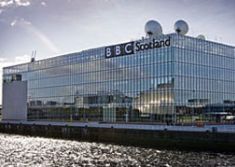
BBC-Scotland-Powerful-Politically-Corrupt-and-Biased-Shameful-Abuse-Of-The-Scottish-Electorate


Pro Unionist Bias – Who Us?

A well respected and truly impartial journalist was asked if the perception that BBC Scotland was anti-SNP was, in his view, justified. “Put it this way,” he said, “It probably comes more naturally to them to attack the nationalists than to attack the union.”

But how is this the case? A wee bit of history. From 1946 to 1991 media affairs in Scotland were subject to the moderating influence of the BBC Scotland Controller who effectively reported to the “Broadcasting Council for Scotland”, on which many distinguished Scot’s served over the years.

That was abandoned and control of BBC output in Scotland was transferred to the Board of Governors of the corporation in England then onto the BBC trust Chairman, in London.


So what’s the problem?

The way in which BBC Scotland is run, the quality of care it shows for the many good people who work for it, the standard of what it does, the public service in Scotland ethos it supposedly represents are some of the more important questions facing the Scottish nation.

But it is doubtful they can be successfully addressed within the control systems that prevail at the present time.

The BBC fails Scotland when it is needed most.

The two main blockages are in the minds of those who retain control of the state media output:

The BBC is part of the glue that holds together the very idea of Britain.

Take it away and the whole package starts to fall apart and we are left to wonder at the fragility of the paste.

The BBC is how we talk to each other, where we go in the morning.

We need to trust it and to feel a personal investment in it.

Otherwise, it’s lost – and part of us with it.


Image result for bbc bias


Is the alleged bias in BBC Scotland endemic or confined to a few employees?

The huge number of unresolved complaints and public demonstrations all voicing concern and anger about a blatant lack of impartiality by the news reporting/discussion teams in the course of the recent independence referendum and since  gives support to the public perception that there is an on-going agenda within BBC Scotland ensuring support to Unionist Party ideals, to the exclusion of other political parties in Scotland.

Yes” campaigners  “anti-bias” march on the BBC Headquarters in Glasgow.

http://www.youtube.com/watch?v=ttDkVoTYpLA#t=18


Related image


The organisation also needs to be formally separated from London so that it can be truly independent.

The over arching Scottish body, including members of the public, should be reinstated.

A Unionist Party pedigree is a predominant requirement within the BBC Scotland senior management team and a number of line managers and reporters, are in place appointed through nepotism.

This needs to eradicated so that the BBC is enabled to fulfil it’s remit, to be impartial and accountable to the Scottish public.

The current “modus-operandi” cannot be allowed to remain in place and there should be a cull of management and media correspondents that have abandoned the Journalist’s Code in favour of their politically minded colleagues.

https://www.nuj.org.uk/about/nuj-code/


John Boothmanp00sk29l

John Boothman & Derek Bateman


Nepotism/Cronyism & Protection of The Unionists

John Boothman head of BBC Scotland News and Current Affairs, (formerly Editor of Elections and Political Output).

In 1979 he was the Chairperson of Strathclyde University Labour Club, Chairperson Scottish Organisation of Labour Students in 1980 and Chairperson of the National (UK) Organisation of Labour Students 1981.

According to former BBC broadcaster Derek Bateman,  Boothman questioned the political output of radio broadcasts after receiving complaints from Paul Sinclair.

Sinclair, (SPAD to Johann Lamont) is said to enjoy a special relationship and regular contact with Boothman through both men’s links with the Labour party.

Writing on his blog, Mr Bateman claimed that Boothman was “famous for his unrivalled network of contacts in the Labour movement.” adding that, “…Sinclair had a name for trying to interfere in BBC news decisions to influence output.”

Such attempts at interference were, according to Mr Bateman, something all parties tried to do

But, according to the former BBC presenter, Sinclair and Boothman developed an unhealthy relationship with the Labour advisor calling the shots.

He added: “But what I didn’t like about Sinclair – Boothman was the informal and insidious way it developed, so instead of old pals, it became almost one of master and servant.

“Sinclair seemed to assume the right to call the BBC head of news to account.

It was going on right up to the final weeks before my departure.”

Mr Bateman also claimed that Boothman had, on more than one occasion, questioned him about the political content of his radio programme after receiving complaints from Sinclair.

http://www.glawest.org/bbc-scotland-head-of-news-an-agent-of-labour-party/


susan deacon324367-former-scottish-labour-spin-doctor-paul-sinclair

Susan Deacon & Paul Sinclair (labour Press Officer)


John Boothman is married to Susan Deacon: Former Chairman of Scottish Labour Students.

She served on the Scottish Labour Party’s, National Executive. MSP and Labour government minister.

Recently put her parliamentary career on hold to raise her family.

http://www.heraldscotland.com/news/home-news/bbc-chief-too-close-to-labour-claims-ex-colleague.22317694


10426081_1562703747302743_5101074687051208751_n_57428920_johann_lamont


John Boothman, Margaret Curran and Johann Lamont as students were actively involved in Labour Party politics at Glasgow and Strathclyde Universities.

Curran is a Labour Party Executive member and MP.

At university she was, Secretary of Glasgow University Labour Club, Secretary of the Scottish Organisation of Labour Students, Chair of that organisation, and Vice-Chair of the Labour Club(the biggest of its kind in the UK) at the time.

Lamont is an MSP and former leader of the Labour Party in Scotland.

At university, she was an active member of Glasgow University Labour Club.


_78721459_024513724

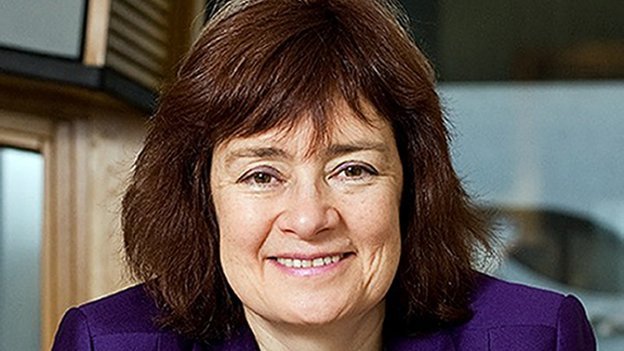
Sarah Boyack (labour MSP)


Sarah Boyack; Labour Party List MSP. Attended Glasgow University.

Active in politics as a student, (taken under her wing and promoted by Margaret Curran).

Chair of the National Organisation of Labour Students in 1985-86


0I6vk5qn_400x400susan deacon

Catrina Renton & Susan Deacon


Catriona Renton: Reporter for the BBC Politics Show and BBC Presenter.

Renton is a former Glasgow Labour Councillor, who represented Kelvindale before losing her seat to the LibDems in 2003.

She was “Glasgow’s Youth Tsar” she is a product of Balliol College, Oxford who went on to represent Labour in both the 2003 Holyrood elections and the 2004 European elections.

She was apparently recruited by BBC Scotland’s parliamentary unit in 2006, where John Boothman, husband of Labour MSP and ex-Health Minister Susan Deacon, was a senior producer.

Her personal Facebook has listed the following as friends: Jackie Baille Labour MSP, Yousuf Hamid Labour Activist, Tom Harris Labour MP, Mike Dailly Labour Activist, David Martin Labour MEP, Frank McAvetty Labour MSP, John Robertson Labour MP John Park Labour MSP, Steven Purcell Labour Glasgow Leader, Dave Watson Vice-chair of the Scottish Labour Party.

At the centre of a bias storm after an item broadcast on Sunday 18 October 2009 she attributed views to senior SNP MSP Alex Neil that he had not expressed.

When filming at the SNP conference in Inverness, Catriona Renton had claimed on BBC Scotland’s Politics Show that Alex Neil had confirmed the SNP’s desire to see David Cameron become the Prime Minister at the next general election.

The recorded interview with Mr Neil that followed Ms Renton’s claim contained no such confirmation.

The BBC was forced to issue a personal apology to Alex Neil.


Tom Connor; BBC Head of Online News and Sport.

Long term friend and colleague of John Boothman, Department Head.

Responsible for ensuring the continuation of censorship and blockage of comments to BBC Scotland political blogs.

No adding comment or disputing views with the likes of Brian Taylor or Douglas Fraser account any-more. Yet England, Wales and Northern Ireland blogs all allow comments.

Tom, together with his boss John Boothman was censured a number of years ago for offering Media training to Labour candidates!

http://auldacquaintance.wordpress.com/2013/05/19/drooket/


John Boothman

John Boothman


John Boothman, head of news and current affairs at BBC Scotland, is being shifted with immediate effect to join the team overseeing the BBC’s preparations for charter renewal next year, staff were told on Tuesday by the controller of BBC Scotland, Ken McQuarrie.

It was revealed that Boothman had lost a grievance complaint against him taken out by Zoe MacDonald, a BBC camerawoman and daughter of the late nationalist politician Margo MacDonald after she recorded him being abusive about her and her mother in February.

An internal staff survey had meanwhile confirmed there was widespread unhappiness in BBC Scotland’s newsroom about management decision-making, while a health and safety survey commissioned by the National Union of Journalists found very high levels of stress in the department.

The BBC survey showed that only 19% of news and current affairs staff believed bullying complaints against their managers would have a “positive outcome”, only 20% felt bullying would be fairly dealt with and only 16% had confidence in Boothman’s decision-making.

In a letter emailed to BBC Scotland staff, MacQuarrie said: “We are now entering the most important period of work ahead of the forthcoming charter review discussions as we shape our plans for the future of BBC Scotland.

“I am writing to let you know that John Boothman, head of news and current affairs, will be joining the team working on Scotland’s proposals for charter review.

Working [for] Bruce Malcolm, he will play a key role focussing on service development for Scotland including our news offer for audiences for the new charter period.

“Pete MacRae will take on the role of head of news and current affairs on an interim basis until a permanent appointment is made.”

Boothman had had a private discussion about Zoe MacDonald and other BBC staff with a personnel executive, who has since left the BBC, in a broadcasting gallery at its Edinburgh studios without realising the microphones were live.

MacDonald was eating lunch in the next gallery, and overheard their conversation, recording it on her mobile phone.

Backed by colleagues and her stepfather, the former Scottish National party MP Jim Sillars, she made a formal complaint against Boothman.

The complaints were raised earlier this month with Tony Hall, the BBC’s director-general, during a meeting with unions, where Hall requested a written summary of the grievances circulating within BBC Scotland.

Paul Holleran, the national organiser for the NUJ in Scotland, said there would be “palpable relief” in the newsrooms after the announcement and said the union believed that industrial relations at BBC Scotland could be “turned around very quickly” after Boothman’s transfer.

“The NUJ welcomes the transfer of John Boothman out of his current role, he has overseen a period of damage to the health and morale of many of our members which we believe has affected the quality of news delivery during his tenure,” Holleran said.

“We have seen industrial action including strikes and work to rules; stress levels have gone through the roof as highlighted in union and BBC surveys and mainly because of his management style there has been a complete breakdown in industrial relations at times.”

Boothman offered MacDonald a “fulsome” apology last week, more than a month after he lost the grievance hearing, after the NUJ and broadcast union Bectu told management of growing discontent amongst BBC Scotland journalists and camera crews.

The crisis culminated on Friday in a tense meeting between the NUJ and BBC management, where the NUJ warned that unless Boothman was moved, the union would ballot BBC Scotland journalists on taking industrial action.

They were surprised that MacQuarrie, who oversaw the BBC’s investigation earlier this year into bullying allegations against Top Gear presenter Jeremy Clarkson, had not acted earlier.

Staff sources say there had been a series of conflicts and grievances involving Boothman and journalists.

Senior staff at BBC Scotland feared the controversy has potentially significant political implications for the corporation after it came under intense criticism last year from nationalists for alleged bias against Scottish Independence.

Regarded by some colleagues as a gifted political journalist and news editor, Boothman is also married to a former Scottish Labour MSP and minister, Susan Deacon, fuelling nationalist claims of bias by the BBC.

http://www.theguardian.com/uk-news/2015/jun/16/bbc-scotland-news-executive-john-boothman-moves-jobs


Image result for bbc bias


Sir Jeremy Heywood – Politics, Scandals, Cuts, Destruction and Chaos – Yet He Seems to Thrive On It

December 23 2013: Politics, scandal, cuts, destruction and chaos. Would anyone working in the public sector actually recommend it anymore?

At the very top is, Sir Jeremy Heywood, the cabinet secretary. Will he be prepared to rap ministers’ knuckles or demand David Cameron corral special advisers when they use the machinery of state for party advantage?

Political pundits say the general election of 2015 will be dirty, putting permanent secretaries on their mettle. But the fact that since 2010 none of them have sought a, “direction” from ministers – an explicit order from a minister to pursue action about which they have financial or administrative doubts – suggests they might not erect much of a barrier against politicisation. Civil servants face trial by ordeal – keeping public business (and ministers) honest as politicking hots up, as grave doubts grow about Whitehall’s capacity and ethos. NHS managers will struggle to survive amid resource crisis and the chaos created by healthcare “reforms”. In town and county halls, despair may overcome executives contemplating impossible financial arithmetic while dealing with the latest example of government’s simultaneous bid to control and blame them.

Coalition government has proved a dark hour for council executives and their troubles will deepen. There is no sign of relenting in the pursuit by government of their pay and pensions. Their national organisations, Solace and the Local Government Association, are silent, pale shadows. Bright spots include imaginative rethinking of conurbation governance as councils in Manchester, Merseyside and London come together in new combinations and some shire districts rationalise services.

The professional bodies representing clinicians specialising in emergency medicine say hospitals can neither recruit nor retain staff to work in A&E. In the new year, the Trust Development Authority (the body supposed to help NHS trusts make the leap into foundation status) will report that attracting both managers and board members is increasingly difficult.

If all that paints a gloomy picture of 2014, don’t forget it is meant to be that way. Oliver Letwin, chief policy strategist for the government, embraces, “creative destruction”. Francis Maude says the Tories are deliberately demolishing the state. Justice secretary Chris Grayling and other ministers are powering ahead with the replacement of public by private provision. The calamity that is the NHS was willed by the authors of the 2012 Health and Social Care Act.

Which is not to say that a change of government at Westminster in 2015 would suddenly see dawn’s rosy fingers caressing public service management. The safest prediction for next year (and possibly several years after) is that things are going to get worse before they have any prospect of getting better.
http://www.theguardian.com/public-leaders-network/2013/dec/23/doom-gloom-public-services

June 6 2014: Labour makes official complaint over use of Conservative slogan in Queen’s Speech

I am writing to express concerns that taxpayers’ money is being routinely used to promote the Conservative Party’s messages. It is, of course, the role of the Civil Service to communicate official government information to the public. However, it is vital that this work is clearly confined to non-party political activity. It would be completely inappropriate for the work of the Civil Service to be manipulated to support party political messaging. The Civil Service Code itself states that civil servants must not, “use official resources for party political purposes”. I believe there are serious questions to be asked as to whether the Code is currently being upheld. I therefore ask that you investigate urgently whether official government resources are being used to promote Conservative Party communications. In particular, I hope you will be able to answer the following questions:

Do you consider the slogan ‘long-term economic plan’ or ‘long-term plan’ to be government brands? If so, do you think it is appropriate for it to be used in the Conservative Party’s political and campaign communications materials?

What measures have been taken to ensure that none of the £290 million earmarked for external communications this year will be used to promote a political party’s message?

What processes have you put in place to ensure that public resources are used only for impartial and official government business?

What processes have you put in place to ensure the Conservative Party will not seek to use official government messaging for party political ends?

What communication has been had with the Conservative Party to ensure that this is the case?

In considering these questions, I would draw your attention to the fact that in 2009 the then Shadow Minister for the Cabinet Office Francis Maude wrote to the then Cabinet Secretary seeking assurances that the work of civil servants was not being used inappropriately. He argued that “addressing this issue is crucial to maintaining the integrity of the work of the civil service”. This statement is as true now as it was then. It is essential that the public has clarity and confidence over the proper use of public funds and impartiality of the civil service and as such I look forward to your response. In light of the obvious public interest in this matter I am releasing a copy of this letter to the media. Michael Dugher MP, Shadow Minister for the Cabinet Office.

July 7 2014: Treasury has not signed off on Duncan Smith’s universal credit

The Treasury is keeping a very close eye on the universal credit development, the responsibility of work and pensions secretary, Iain Duncan Smith, after it was criticised by the National Audit Office for its “weak management, ineffective control and poor governance”.

Sir Jeremy Heywood, the cabinet secretary, said the Treasury and the Cabinet Office’s Major Projects Authority, “played a very, very clear role in bringing it to the attention” of Duncan Smith that the project was, “way off track” at the start of last year. However, he said it was a good example where the most senior people in Whitehall had, “intervened very strongly” to help sort it out. Heywood also admitted that Duncan Smith’s department had mishandled Atos contracts, which has been responsible for delays in the implementation of a new personal independence payment to the disabled. He said there was an issue about whether the department responsible was, “sufficiently alive to the emerging picture”. “That comes down, in my view, to; first of all, was there, before the thing became a project to start with, before it became announced as a priority of the government, was there a sufficiently hard-headed assessment done at the gateway stage? Secondly, there is the perennial problem of whether we had adequate timely real-time information as to what was going on,” he added.

Universal credit has the support of all the major parties but Labour has pledged to, “pause” and conduct a three-month review if it wins the general election. Chris Bryant, shadow minister for welfare reform, said it was, “more evidence of the chaos surrounding universal credit”. “It raises worrying questions about George Osborne’s refusal to endorse his government’s flagship welfare reform scheme,” he said. ‘It’s time for David Cameron to call in the National Audit Office as a matter of urgency to get to the bottom of the true extent of the chaos surrounding universal credit.” A Department for Work and Pensions spokesman insisted there was no contradiction between McVey’s claims and the admission from Kerslake. “Universal credit is on track to roll out safely and securely against the plan set out last year.
http://www.theguardian.com/society/2014/jul/07/treasury-not-signing-off-duncan-smith-universal-credit

July 31 2014: The hunt for a new BBC Trust boss has become a mess

Two more leading candidates have pulled out of the race to become the new head of the BBC Trust amid accusations that the process has descended into a “mess”. Sir Howard Stringer, the former Sony chief executive, and Michael Portillo, the former Conservative defence secretary, were both approached about the role but decided not to apply. A total of nine candidates have now pulled out including Lord Coe, the Olympics chief who had been the Prime Minister’s preferred choice, Dame Marjorie Scardino, the former chief executive of Pearson, and Sir Peter Bazalgette, chairman of the Arts Council. Despite the setbacks Sir Jeremy Heywood, the cabinet secretary, will begin interviewing the remaining shortlisted candidates today. Sajid Javid, the Culture Secretary, believes that the shortlist remains “strong”. However Greg Dyke, the former director general of the BBC, said that the job is “unattractive” because the trust is likely to be abolished under the royal charter review in 2016.

June 25 2014: David Cameron’s judgment in the dock after phone-hacking case – Labour claims he ignored warnings – Why was he not vetted

Miliband also raised again the issue of why Coulson was not given the highest security clearance – something that would have required him to be deep vetted, including a months long investigation into his private life. Cameron insisted that the initial decision not to seek the highest-level clearance for Coulson – in contrast to the six previous press secretaries – was made by the then Downing Street permanent secretary, Sir Jeremy Heywood. It has been previously reported that Sir Jeremy made the decision on the basis of cost saving, but Labour is to ask the commissioner for public appointments, Sir David Normington, to look into the procedure.
http://www.theguardian.com/uk-news/2014/jun/25/1

June 9 2014: David Cameron no longer scares his ministers

The Prime Minister, David Cameron, is damaged by an unspoken element in the public feud between Home Secretary Theresa May and Education Secretary Michael Gove. It is that his ministers do not fear him. Cameron’s continuing, baffling reliance on fingers-in-every-pie Cabinet Secretary, Sir Jeremy Heywood, is in evidence yet again. Heywood was asked by the PM to conduct a ‘review’ of the May-Gove spat — over whose department was to blame for Islamic extremism in schools. Afterwards, Heywood told Cameron he must take firm action against Gove and Ms Cunningham. This turns out to be Gove having to say sorry and Ms Cunningham getting the sack. Neither Gove nor Mrs May can be sacked. That would imperil Cameron’s own position. But the unfortunate Ms Cunningham is deemed dispensable.

Gove started the row by criticising Mrs May and counter-terrorism boss Charles Farr in remarks he made in private over lunch to cronies at The Times. Ms Cunningham, who is romantically involved with Farr and an often aggressive supporter of Mrs May, made public a private letter the Home Secretary wrote to Gove accusing him of failing to act on concerns about Islamic activity in schools. Leaking private communications between ministers is deemed to be very bad form. But why do ministers write complaining letters to each other if the intention is to keep their contents secret? They do so in order to put on record their grievances. So, if disagreements boil over — and there’s an inquiry into the matter — they can produce their letters as evidence. Ms Cunningham acted prematurely, that is all. http://www.dailymail.co.uk/debate/article-2652454/PETER-MCKAY-Why-Dave-no-longer-scares-ministers.html

March 5 2014: Patrick Rock arrest: Sir Jeremy Heywood’s reply to Labour letter

I will try to respond to your specific questions but, as you recognise, in doing so my overriding concern must be to avoid doing anything to prejudice or undermine an on-going police investigation. Downing Street became aware of a potential offence relating to child abuse imagery on the evening of 12 February. I was immediately informed of the allegation and the Prime Minister was also briefed. Officials then contacted the NCA to seek advice on how to report suspected criminality. Our subsequent actions were driven by the overriding importance of not jeopardising either their investigation or the possibility of a prosecution.

Patrick Rock resigned on the evening of 12 February. His resignation was not made public as we judged it was inappropriate to make an announcement while the NCA investigations were continuing. A few hours later he was arrested. We also arranged for officers to come into Number 10 to have access to all IT systems and offices they considered relevant. There has been no contact from officials with Mr Rock since his arrest. Mr Rock was cleared to the standard SC level which was appropriate for the classification of material to which he needed to have access.

You ask a number of questions about a separate sexual harassment allegation. Let me start by saying that we regard our duty of confidentiality to staff who make complaints as extremely important. Confidentiality is essential if we are to ensure that people feel able to raise issues freely, and without fear of subsequently being identified. I am therefore not in a position to provide any information that might breach our duty of confidence or allow an individual to be identified.

On the specific questions you raise in relation to what you describe as “an allegation of sexual harassment”, again let me make clear that as you would expect we take any issue raised by staff about behaviour very seriously indeed. The complaint was acted upon immediately at a senior level and in accordance with Cabinet Office HR policy. The issue was resolved with the consent of, and in consultation with, the individual who raised the complaint. Both civil service and special adviser line managers were involved. I was briefed on the case and concluded that the matter had been dealt with appropriately. The Prime Minister was also made aware. You imply that the member of staff who raised the complaint was moved to another Government department against their wishes. This is completely untrue – no member of staff was moved as a result of the case. I am not aware of any other complaint about Patrick Rock’s behaviour while he was working at No 10

Sir Jeremy Heywood – New Civil Service Chief Executive Appointed – Track Record? Failure.

August 21 2014: New Civil Service CEO should report to PM, says think-tank founder

The new chief executive of the civil service will only have “sufficient authority” if he/she reports directly to the prime minister, rather than Cabinet Secretary Sir Jeremy Heywood,  John Healey, co-founder of new think-tank GovernUp, has said. November is the earmarked start date for the new CEO whose line manager will be Heywood, according to the job spec produced by the  cabinet Office last month. But, speaking in a joint CSW interview with think-tank co-founder CSW Nick Herbert MP , Healey MP said that, “unless they are in a position with sufficient authority”, the new person will struggle to exert enough influence in Whitehall. Asked what he means by “sufficient authority”, Healey said: “For me, it means reporting directly to the prime minister. It doesn’t mean reporting to some other civil servant.”

Healey said that he was, “sceptical” about whether creating a, “freshly designated post will make a sufficient difference”, adding that it will be hard to find both, “the skills to know how you can make big organisations that are disparate in their functions and structure perform, report and deliver better.” Herbert, who co-founded GovernUp with Healey 18 months ago to produce a range of radical ideas to reform government, was more optimistic about the new role. He described the new person, who must, according to the job ad, “demonstrate that he or she has had a successful career in the private sector”, as “a huge opportunity to bring in someone with real commercial acumen which is what Whitehall needs.”

The Financial Times newspaper reported on Monday, 18 August, that Whitehall is struggling to recruit anyone for the new post, “with several business leaders having turned down approaches from head-hunters less than three weeks from the closing date for applications” – 5 September. The FT quoted a “person familiar with the [recruitment] process” who said that the government has “drawn up a ‘plan B’ to appoint John Manzoni, a former BP senior executive and now the head of the Major Projects Authority, if a suitable candidate does not come forward”. Candidates who have been approached are, the FT reported, concerned that, “you sign up now and then six months later get a Miliband government.” http://www.civilserviceworld.com/articles/news/new-ceo-should-report-pm-says-think-tank-founder

October 27 2014: Controversial former BP executive appointed to the top of the Civil Service

A former BP executive criticized for his role in the Texas oil refinery explosion which killed 15 people in 2005 is to become the first chief executive of the Civil Service. The controversy at BP arose when Mr Manzoni was blamed by an internal report for failing to heed, “serious warning signals” prior to the Texas explosion. Mr Manzoni ran about half of BP’s global operations before moving on to Talisman Energy, a company heavily involved in fracking in the US, which was fined over dozens of health and safety violations.

John Manzoni will be responsible for making savings across Whitehall in areas such as IT, procurement and contracts. For the past six months, he has been overseeing the Government’s watchdog scrutinizing major projects such as HS2 and the nuclear programme. He is due to start his new role as civil service chief on 13 October, with a salary of £190,000 a year. He will report not only to the Cabinet Secretary, Sir Jeremy Heywood, but also to the Chief Secretary to the Treasury, Danny Alexander, and the Cabinet Office minister, Francis Maude. Sir Jeremy admitted that the Civil Service still needed to be, “much better at doing commercial stuff”, such as contract management, which will be an early priority for the new chief executive.

Mr Manzoni’s role will be vital as the Civil Service attempts to find about £13 billion of extra cuts in the spending round after the general election. Mr Maude said he expected efficiency would have a “very big role” whoever was elected, and Mr Manzoni would be closely involved in delivering that. One of Mr Manzoni’s priorities will be to drive the expansion of the Government Digital Service that aims to transform the way in which people interact with government online. However, this has not been entirely smooth so far, with a website designed to allow people to renew their tax disk online crashing on its first day.

Yesterday’s announcement comes alongside a new progress report on Civil Service Reform. The report says that more people from outside the Civil Service will be brought in to fill skills gaps, with more training and support for existing civil servants. By April 2015, there will be a presumption that senior civil service appointments below permanent secretary level should be open to external candidates. Applicants for permanent secretary posts will be expected – and, after summer 2016, required – to have completed an appropriate business school leadership course, ensuring that leadership skills are prioritised.

Announcing the chief executive appointment, David Cameron said that Mr Manzoni’s private sector experience put him in the, “perfect position to accelerate the pace” of civil service reform. Sir Jeremy added: “We have all been impressed by John’s leadership of the Major Projects Authority.” Mr Manzoni was chosen after an external competition which some believed would result in a high-profile outsider being brought in to run the Civil Service. However, there was thought to be little interest in so called heavyweight business figures, and ministers decided to stick with someone who was a known quantity. http://www.independent.co.uk/news/uk/politics/controversial-former-bp-executive-rises-to-the-top-of-the-civil-service-9771334.html

Sir Jeremy Heywood – Warns – Cut’s You Aint Seen Nuthin Yet!!

1. July 2 2013: Sir Jeremy Heywood, Britain’s most senior civil servant said, “Britain is in a 20 year battle to rebalance the economy, returning the country to financial health

a. Sir Jeremy Heywood also suggested that the cuts made to public services to date were not sufficient and that austerity measures would have to continue for “at least” another four years. The comments from the Cabinet Secretary will have a sobering effect on ministers, who were buoyed last week by the announcement from the Office of National Statistics that Britain had avoided a double-dip recession last year.

b. They will also be noted by all three major parties as they draw up their manifestos for the 2015 general election. Sir Jeremy said that the cuts pushed through by the Coalition did not go nearly far enough. He said that there was a “very long way to go” and added: “This is not a two-year project or a five-year project. This is a 10-year project, a 20-year generational battle to beef up the economy in ways that we have not seen for many, many decades.” Sir Jeremy, who is close to Prime Minister David Cameron, was making a speech to an audience of civil servants at Civil Service Live in West London.

c. Sir Jeremy told the civil servants: “There is a very, very long way to go. We were reminded only last week that the economy as a whole remains about 4 per cent below the size that it was in 2008. “Five years on from the bottom of the recession we have still not even near recovered all the output we lost in that terribly deep recession that we suffered in 2007-08. “Those are really daunting numbers that just show the size of the challenge; there is no alternative.” Sir Jeremy said that rebalancing the economy away from financial services and more in favour of manufacturing was “much easier said than done”. He made clear that the cuts introduced by Chancellor George Osborne had not gone far enough because the deficit was still rising.

d. He told his audience of about 200 Whitehall officials: “All the civil servants in the room will be well aware that the last three or four years have been tough. There have been years of austerity, years of pay freezes, of pay restraint; every part of government has been told by ministers — and rightly so — to hunt out waste and tackle inefficiencies. “But despite all these efforts we have made over the last three years … our debt/GDP ratio is still rising, debt interest payments are rising. “There is still an enormous amount of work to get that deficit down to a balanced level to get the debt/GDP level falling rather than rising.” Sir Jeremy praised the “remarkably smooth” spending round for 2015-16 which was unveiled by Mr Osborne last week but warned that austerity would go on until 2017, and possibly longer.

e. Despite his gloomy assessment, Sir Jeremy said that for Mark Carney, the new Bank of England Governor, it was a, “good time to join”. Describing the Canadian as “the world’s most impressive central banker”, he said that it showed Britain’s “self confidence” that it could have a “foreigner come to work in such an important symbol of the country as its central bank. He added: “We will give him every support he needs.”
http://www.telegraph.co.uk/news/politics/10156170/Twenty-years-to-fix-economy.html

2. September 26 2014: Britain faces five more years of cuts, head of civil service warns

a. Britain faces five more years of public sector cuts which are likely to prove “even harder” than those which have already been made, the outgoing head of the civil service has said. Sir Bob Kerslake, who stepped down as head of the home civil service as part of a Whitehall shake-up ordered by David Cameron in July warned that the, “easier savings” had already been made and staff are, “looking for some relief”. In an address at the Institute for Government, a think tank, he said: “The first five years have been challenging but the second five years are likely to prove even harder for three reasons. The easier savings have already been made. We are likely to be doing it against a background of a growing economy and greater competition for good staff. The sense of urgency that underpinned the first savings programme will be reduced.

b. Sir Bob, who will remain permanent secretary at the Department for Communities and Local Government until he retires at 60 in February, said the plan devised in 2012 when he took office was supposed to amount to, “radical change” and he felt the service had “excelled” in delivering it. He said: “I have gone on at length about these drivers because I think they provide the enduring reasons for change and reform that go beyond current individuals and even governments. “The civil service is not and never was broken. But if it wants to stay relevant and be the best it can be, it must continue to reform. “Let me move on to the question ‘How far have we got?’ In short, I think that a great deal has been delivered that the civil service should take great pride in.” Sir Bob was replaced as head of the home civil service by cabinet secretary Sir Jeremy Heywood.

Martin Carter commented: ‘The easier savings have already been made’ What rubbish:

i. 850 ‘Lords’, including another tranche of unheard-of Lib/Dem councillors recently given an undeserved sinecure for life?

ii. Councillors drawing millions of pounds a year in, “allowances” for merely being locally elected representatives with responsibility for ensuring even more highly paid council officers do their jobs properly (if only).

iii. Unsackable police and crime commissioners (and their cronies appointed as deputies from the political lists) drawing £70,000+ a year.

iv. Up to six layers of governance over the lives of every individual in the UK.

v. Vanity projects all over the UK, including loss-making entertainments activities and venues, hopeless transport schemes and spending on little performance areas in front of town halls and civic halls.

There is plenty of fat to keep trimming away at, without even beginning to impact on front line services. But as long as it’s paid politicians who are doing the cutting, the front line services will be chopped every time. http://www.telegraph.co.uk/finance/11122896/Britain-faces-five-more-years-of-cuts-head-of-civil-service-warns.html

Sir Jeremy Heywood – The Referendum – The Dirty Tricks Department Run By Civil Servants

1. June 14 2014; Queen ‘will not back the Union’ ahead of independence referendum

a. The Queen will not publicly back the Union ahead of Scotland’s independence referendum, Buckingham Palace has said. A number of news outlets have been anticipating a royal seal of approval for the Better Together campaign but their hopes appear to have been dashed by the palace. A report in Private Eye magazine claimed that Her Majesty had rebuffed attempts by David Cameron to get her to encourage a No vote in September. It said: “Two attempts to insert gentle references in support of the Union in speeches over the past year have been rebuffed by the palace, which suggested that Her Majesty’s ministers in Edinburgh might offer conflicting advice.

b. “Buckingham Palace has even set up a task-force, headed by private secretary Sir Christopher Geidt, to ensure her absolute neutrality is maintained.” A spokesman for Her Majesty said the report was “not true” — but confirmed the UK’s head of state would not be attempting to influence Scots’ choice at the ballot box in three months’ time. He said: “As far as we are concerned it’s just business as usual and there is no task-force.” Asked if requests had been made by the Prime Minister for an official backing of the Union, the spokesman said: “I think No. 10 completely understand the Queen is completely neutral on this question and I don’t recognise that description. “We have been very clear from the beginning, as have they, that the Queen thinks this is a matter for the people of Scotland and is above political affray.”

c. Under Scottish Government plans, the Queen would be retained as head of state should Scotland vote Yes on September 18. The Queen did appear to come out against devolution and independence in a Silver Jubilee Speech in 1977. She said then: “Perhaps this Jubilee is a time to remind ourselves of the benefits which union has conferred, at home and in our international dealings, on the inhabitants of all parts of this United Kingdom.”
http://www.thecourier.co.uk/news/politics/queen-will-not-back-the-union-ahead-of-independence-referendum-1.422113

2. September 12-2014; Scottish independence: UKIP leader Nigel Farage urges Queen to back No vote

a. Ukip leader Nigel Farage has called on the Queen to intervene in the Scottish independence referendum. Buckingham Palace issued a statement earlier this week saying the monarch was “above politics”. The palace said it was “categorically wrong” to suggest she would wish to influence the vote in next week’s referendum. But speaking on LBC radio, Mr Farage said it could be argued that the Queen had a responsibility to speak. The Ukip leader, who will be holding a rally in Glasgow later, said: “I completely understand her wanting to keep out of politics and she has done it brilliantly over 60 years. “But there are times where if the United Kingdom, over which she is the monarch, is threatened itself, it might be right for her to say something.
“Let’s say we got to this Sunday and it was still 50/50 in the polls, I personally think she should say something.” Mr Farage said there was a precedent for the Queen intervening because she addressed independence in her Silver Jubilee speech in 1977.

b. Queen Elizabeth II attends a Garden Party at Balmoral Castle in 2012 “She said very clearly I am the Queen of the entire United Kingdom,” he said. “So she said it before and it might be handy if she said it again.” Sources in Better Together, which is campaigning for a No campaign, dismissed Mr Farage’s call for the Queen to intervene as “absolutely preposterous”.

c. Earlier this week Scotland’s First Minister Alex Salmond said the Queen “will be proud” to be the monarch of an independent Scotland. The palace later insisted the referendum was “a matter for the people of Scotland”. A spokesman said: “The sovereign’s constitutional impartiality is an established principle of our democracy and one which the Queen has demonstrated throughout her reign. “As such the monarch is above politics and those in political office have a duty to ensure that this remains the case. “Any suggestion that the Queen would wish to influence the outcome of the current referendum campaign is categorically wrong.”

d. The BBC’s royal correspondent Peter Hunt said he understood that the comments were made in response to calls for the Queen to speak out in favour of the union and not in response to Mr Salmond’s remarks. Under the plans for independence outlined in the Scottish government’s white paper, the Queen would remain head of state. BBC assistant political editor Norman Smith said sources in the Better Together campaign strongly criticised Mr Farage for suggesting the Queen should make a public statement of support for the union. They insisted it would not be appropriate for the Queen to become involved.
https://archive.today/nBsrw#selection-699.0-699.75

3. September 12 2014; Jeremy Heywood tells SNP BBC did not breach code

a. Scottish Independence. The head of the civil service Sir Jeremy Heywood has said there was no breach of the Ministerial Code in relation to BBC reporting of RBS’s headquarters moving to England. Sir Jeremy wrote to Alex Salmond to say no rules had been broken when the BBC reported that RBS had a contingency plan to move its legal office south of the border in the event of a Yes vote.

b. The senior civil servant was replying to Mr Salmond’s call for an investigation into the BBC’s reporting of the move. The First Minister reacted to news that Scotland’s five major banks were considering moving their legal-bases out of Scotland by claiming that the Treasury had briefed the BBC with “market sensitive information” about RBS before the markets opened.

c. Sir Jeremy’s letter said the Treasury had simply been confirming the position after reports appeared elsewhere in the media and there had been no breach of the Ministerial Code.
“This was not a UK Government announcement – it was simply a confirmation of the Treasury’s understanding of RBS’ contingency planning,” he wrote. “In response to …. informed media reports about RBS, the Treasury judged that it was important to set this out – at a time when the UK financial markets were closed – given their overarching responsibility for maintaining financial stability in the UK.”
http://www.scotsman.com/news/uk/jeremy-heywood-tells-snp-bbc-did-not-breach-code-1-3539869

4. September 13-2014; Farage compares David Cameron to Edward II at Bannockburn

a. Mr Farage said: “From the beginning I was astonished that the Prime Minister allowed for the separatists to be given the Yes side of the referendum question. “Far better from his point of view, you would have thought, would have been to have asked the question “should Scotland remain part of the United Kingdom?” “And to keep the positive on his side. “But no, on this he blundered. But more fundamentally he blundered by not offering the Scottish people, the devo max option. “I have absolutely no doubt that if that had been on the ballot paper it would have secured a large majority of the votes. “However, arrogant as Edward II was at Bannockburn, Cameron has walked straight into this long planned ambush. “Now of course, he and the others in Better Together are offering the devo max option. “They’re not giving people directly the chance to vote for it and the Labour Party led by Ed Miliband has totally failed to connect, despite the fact that electorally they have the most to lose.”

b. Earlier Mr Farage risked invoking the wrath of Buckingham Palace when he called on the Queen to make a public statement in support of the Union if the campaign was still on a knife-edge by Sunday. The palace took the unprecedented step earlier this week of warning campaigners not to politicise the monarch but the Ukip leader pointed out that the Queen backed the Union in her 1977 Silver Jubilee speech and “it might be handy if she said it again”.
http://www.thecourier.co.uk/news/politics/nigel-farage-compares-david-cameron-to-edward-ii-at-bannockburn-1.573755

5. September 14-2014; Queen hopes Scottish independence voters will ‘think carefully about future’

a. The Queen has made a rare intervention on the political stage to express the hope that voters will “think very carefully about the future” before the Scottish independence referendum on Thursday. Speaking after the Sunday morning service at Crathie Kirk near her Balmoral estate in Scotland, the Queen told a well-wisher: “Well, I hope people will think very carefully about the future.” The remarks were interpreted by no campaigners as being helpful to their cause. British prime minister David Cameron will on Monday use his final visit to Scotland before the referendum to say that a yes vote will lead to a split “for ever”.

b. The Queen made her remarks after a well-wisher joked that they would not mention the referendum. The Queen, who remains above the political fray as a constitutional monarch, observed the proprieties of not endorsing either side in the referendum. But her remark was seen to tally with no campaigners claims that a vote for independence would lead to an irrevocable break with the UK. A Buckingham Palace spokeswoman said: “We never comment on private exchanges or conversations. We just reiterate what the Queen has always said: she maintains her constitutional impartiality. As the Queen has always said, this is a matter for the people of Scotland.”

c. But the Queen’s remarks, which were first disclosed by the Times’s Scottish political editor Lindsay McIntosh, were warmly welcomed in private by the pro-UK side, who are keen to impress on voters that they will make an irrevocable decision if they vote for independence. The prime minister will reinforce this point on Monday when he says: “This is a decision that could break up our family of nations and rip Scotland from the rest of the UK. And we must be very clear. There’s no going back from this. No rerun. “This is a once-and-for-all decision. If Scotland votes yes, the UK will split, and we will go our separate ways for ever.”

d. The remarks by the Queen came after the palace insisted last week that the monarch, who spends every summer at her Balmoral estate and whose mother was Scottish, was remaining above the fray in the referendum. This followed reports that the Queen was horrified by the prospect that her kingdom may be broken up.

e. Nigel Farage, the Ukip leader, weighed in last week when he said it “might be handy” if the Queen intervened on behalf of the pro-UK side. Some campaigners for the union have pointed out that in 1977, the year of her silver jubilee, the Queen said in a speech in Westminster Hall: “I cannot forget that I was crowned Queen of the United Kingdom of Great Britain and Northern Ireland.”

f. It has been stressed that the speech in 1977 was made in different circumstances when there was no devolution legislation before parliament. A proposal to establish a Scottish assembly was narrowly passed in a referendum in 1979. But it ultimately failed because the yes vote was below 40% of the overall electorate.

g. Alex Salmond, the Scottish first minister, highlighted the significance of the monarchy when he moved on Sunday to reassure traditionalists when he said the “Queen and her successors” would remain as head of state in an independent Scotland. He told The Andrew Marr Show on BBC1: “We want to see Her Majesty the Queen as Queen of the Scots. That is a fantastic title and a fantastic prospect.”
http://www.theguardian.com/politics/2014/sep/14/queen-scottish-independence-voters-think-carefully-referendum-balmoral

6. September 15-2014; David Cameron makes emotional plea to Scotland as independence vote looms

a. In an emotional speech on his last visit to Scotland before Thursday’s independence referendum, the prime minister warned that a yes vote would end the UK “for good, for ever” and would deprive the Scottish people of a shared currency and pooled pension arrangements. He also asked people not to mix up the temporary and the permanent, saying neither he nor the government would “be here forever”.

b. A Guardian/ICM poll shows that 63% of voters in England and Wales objected to the post-independence currency union sought by Alex Salmond, the Scottish first minister. Most people in Scotland, previous polls have shown, want a deal on sterling. Cameron, whose voice was close to breaking, spelled out what he believed would be the costs of independence. “It is my duty to be clear about the likely consequences of a yes vote. Independence would not be a trial separation. It would be a painful divorce,” he said. He said he would be “utterly heartbroken” by a yes vote and listed the benefits of UK membership that the people of Scotland would lose, including a shared currency, armed forces built up over centuries and pension funds that would be sliced up “at some cost”. Independence would mean Scotland’s border with England – and the sea routes to Northern Ireland – would become international frontiers, Cameron said, and that more than half of Scottish mortgages would suddenly be provided by banks in a foreign country.

c. “We want you to stay,” he said. “Head and heart and soul, we want you to stay. Please don’t mix up the temporary and the permanent. Please don’t think: ‘I’m frustrated with politics right now, so I’ll walk out the door and never come back.’ “If you don’t like me – I won’t be here forever. If you don’t like this government – it won’t last forever. But if you leave the UK – that will be forever,” he said.

d. In the short term, Cameron has to decide whether to recall parliament in the event of a yes vote, as early as the weekend or next Monday, a move that would disrupt Labour’s annual conference in Manchester. Blair Jenkins, chief executive of Yes Scotland, said Cameron’s speech “was the same litany of empty threats and empty promises we have come to expect from the no campaign – and he is the prime minister who has been orchestrating the campaign of ridiculous scaremongering being directed against Scotland”. A yes vote would give Scotland its “one opportunity” to ensure it had job creation powers, Jenkins said, and end government by parties that Scottish voters did not elect, which presided over a vast increase in food banks and new nuclear weapons systems its politicians had rejected. “Instead of believing the word of a Tory prime minister on a very few more powers, the people of Scotland can get all the powers we need to build a better, fairer country by believing in ourselves and voting yes,” he said.

e. Cameron’s comments came as Ed Miliband prepared for a return visit to central Scotland on Tuesday when the Labour leader is expected to try to woo back disillusioned Labour voters who have largely driven a late surge in support for independence.
Taking the opposite tack to Cameron, his ally in the Better Together campaign, Miliband said he believed the yes campaign had delivered a clear message to UK parties that change was needed. He insisted Labour would be the best vehicle for unseating the Tories in 2015 and delivering more progressive policies. “The will of the people of Scotland for economic and political change has been heard and we will deliver,” he is expected to tell a rally. Contrasting his offer with “a future of separation and risk” offered by an irreversible yes vote, Miliband added: “I ask the people of Scotland to lead that change of our whole British constitution.”

f. That message risked being undermined by a Guardian ICM poll which showed Labour’s support has dipped by three points to 35% across the UK, bringing the Tories to within two points at 33%. The findings are likely to increase voter anxieties in Scotland that Labour could fail to beat the Tories next May. Miliband’s offers of further significant tax and welfare powers for Holyrood were challenged by one of Scotland’s leading campaigners for greater devolution. Writing for the Guardian, Ben Thomson, founder of campaign group Devo Plus, said he was close to voting yes to independence because he was so disappointed by the failure of the UK parties to make an ambitious, concrete offer for greater tax powers, beyond a promise to agree new powers next year.

g. In a further push by the no campaign, all three UK leaders – Cameron, Miliband and Nick Clegg, the Lib Dem leader – signed a front page pledge in the Daily Record newspaper entitled “the vow”. It promised they would give the Scottish parliament a legal guarantee of its independence from Westminster and to protect the Treasury’s funding system, known as the Barnett formula. Along with a “categoric” statement that Holyrood had the final say on Scottish health service spending, both are major new commitments, pushed for by the paper after it accused the three leaders last week of making weak promises on devolution.

h. Giving Holyrood its own legal standing instead of having its power gifted to it and controlled by Westminster under Labour’s original devolution settlement in 1998 was a key demand of Gordon Brown, the former Labour prime minister, earlier this year. The Scottish National party has repeatedly claimed that English and Welsh politicians would force Scotland to accept cuts or the loss of the Barnett formula if there was a no vote, accusing Westminster parties of being fickle.

i. Miliband is due to spend the rest of the week in Scotland, making a series of speeches in central Scotland and campaigning into polling day on Thursday, as Labour attempts to persuade its core vote to back the UK and to vote heavily in the referendum. Brown sought to bolster that offensive by insisting that his party’s plans to increase the tax powers and legal status of the Scottish parliament were “locked-in by a triple guarantee”. Brown said the three guarantees were that Holyrood would be given legal protection from meddling by Westminster, as well as extra powers; there would be a “clear statement of purpose for the UK guaranteeing fairness”; and a guarantee that Holyrood had the freedom to spend more on the NHS, using its new powers to set income tax rates.

j. On Monday the Organisation for Economic Cooperation and Development, an international thinktank, warned that a yes vote was a potential risk to the global economy, the eurozone and emerging markets. Arguing that the UK was an important member of the group of rich countries, its secretary general, Angel Gurria, said: “We clearly believe that better together is perhaps the way to go.”

k. Property website Zoopla said a flood of homes being put up for sale in the event of a yes vote could lead to a repeat of a 17.5% fall in Scottish house prices, which took place during the financial crisis of 2008.

l. Albert Edwards, strategist at French bank Société Générale, questioned whether a yes vote could have wider implications across Europe. “The obvious market conclusion is for a weaker sterling – but a proper old fashioned crisis is plausible. But maybe that is too parochial a vision. The sequence of events which might flow from a yes vote may be as unpredictable and as uncontrollable as those of the late 1980s in eastern Europe, which led to the ultimate demise of the USSR,” said Edwards.

m. The White House reaffirmed on Monday its belief that it would be better for Scotland to stay in the UK. Press spokesman, Josh Earnest, repeated what President Obama said in Brussels earlier this year. “The president said that from the outside the US has a deep interest in ensuring that one of the closest allies that we’ll ever have remains strong, robust and united and an effective partner with the US. This is a decision for the people of Scotland to make; we certainly respect the right of the individual Scots to make a decision along these lines, but as the president said, we have an interest [pause] in seeing the United Kingdom remain strong, robust, united,” Earnest said.
http://www.theguardian.com/uk-news/2014/sep/15/david-cameron-emotional-plea-scotland-independence

7. September 18-2014; The British state is an imperial behemoth that can only look on in panic as Scots scramble for the lifeboats

a. In Scottish city centres right now, you’re rarely out of sight of a yes badge. The vibe was summed up by an Edinburgh cabbie: “We’re being invited to run our country. It’s very exciting. Maybe we can show how things can be done differently”. It’s not just him. Polls have shown the yes vote surging. It’s worth noting how remarkable this is. The only UK party supporting independence is the Greens. Of all of the local Scottish and British papers, only the Sunday Herald backs yes. The official story has long been that it’s only a few angry men in kilts who care about this.

b. But in the internet age, officials don’t get to write the stories any more. There were always people who had little time for flags, tartanry and shortbread, but who wanted to escape a political system that has made Britain one of Europe’s most unequal counties. And it is these people – a better organised and vastly more powerful version of the Occupy movement – that the Westminster parties and their media partners failed to consider.

c. It’s this movement that has mobilised thousands to come together at meetings and online to imagine and plan out a better country; which has spurred them into activism, often for the first time in their lives; which has laughed together at the arrogance of disconnected rulers; and which has learned together as it has gone along. It’s this movement that attracted my cabbie to the first, then second, then third political meetings of his life – all in the past month.

d. These people created their own media and founded their own organisations. They are young, energetic, enthusiastic, funny. They looked the British state straight in the eye and saw through its illusions. The hierarchies of a steeply unequal country reward loyalty and elite connections while punishing independence of mind. No wonder kids from “the regions” are running rings around the “gurus” of a floundering establishment.

e. It isn’t just about activist groups. Visiting one of Edinburgh’s gurdwaras with Scots Asians for Yes, the people I met were typical. Some were undecided; some were no. Most were yes. And what distinguished the yeses was this: they were discussing how to persuade relatives and friends. They collected data-filled booklets to talk through with their families. They had become Google and Twitter aficionados, digging out and sharing information that debunks the horror stories our politicians use to frighten us away from any notion that another world is possible. With social media, Paul Mason once wrote, “truth moves faster than lies, and propaganda becomes flammable”.

f. It’s against this self-organised network that the British state is flagging. Research from Edinburgh University shows that the more information people have, the more likely they are to vote yes. In the face of mass peer-to-peer education, the puffed-up power of elites melts away: polls show most Scots no longer believe what Westminster MPs say. As David Cameron and George Osborne and Ed Miliband huff and puff and woo and cajole the people of Scotland, more and more simply look these politicians up and down, shrug, and say: “You have no power over us any more.”

g. It’s their own fault. Westminster’s parties have made conventional politics so bland that people barely pay attention. To win elections they have got used to flashing simplistic messages in front of our eyes – we don’t notice or care that we’re being patronised. And because they destroyed their pesky grassroots, they failed to spot that the referendum isn’t an election. People are paying attention, are thirsty for information, and don’t take kindly to their leaders treating them like idiots or trying to bully them.

h. Yet as the polls narrow, they offer a timetable to nowhere and fly from Downing Street a blue and white symbol of their utter failure to understand what’s happening. In a sense, this gets to the core of what the referendum is about. Because the vote on independence isn’t just about escaping Westminster’s supercharged neoliberalism – though it offers that chance too. There’s also a different story of the modern age here: the network v the hierarchy. Do Scots want to huddle behind the clumsy, centralised British bureaucracy, or join the network of nations? Now the age of empires is over, do we want to stay on a Titanic, which once brutally ruled the waves? Or is it time to join Europe’s flotilla of more human-sized countries, more responsive to each of our needs, but capable of huddling together in a storm?

i. The British state was built for a previous era, to run a vast and violent empire built at a time when centralisation brought power. In the roaring flames of the second world war it was softened enough to be bent a little towards justice. But that was a blip. Those days are gone.

j. The rebellion in Scotland right now is against a rapidly centralising state in an age when information is diffuse and people have the capacity to organise themselves more than ever. It’s against an elitist structure in an age of mass education. It’s against a system built to keep us out. And there’s a simple way to tell, whatever the result, that yes voters have history on their side: look at the pathetic campaign mustered by the British state to defend itself. Watch Westminster’s wide-eyed panic as a widely predicted surge in the polls emerges. And ask yourself – would a functional state have failed to see this coming?
http://www.theguardian.com/commentisfree/2014/sep/18/scotland-yes-campaign-voting-british-state

8. September 19-2014; Scottish referendum: David Cameron and the Queen seek to ease tensions

a. David Cameron and the Queen will hope to calm tensions after the heated Scottish referendum campaign when they make conciliatory statements on Friday after the formal declaration of the result. The prime minister is planning to make an early appearance in Downing Street to outline a package of constitutional reforms, amid increasing confidence in No 10 during the early hours of Friday that the pro-UK side would prevail. Cameron is expected to use the occasion to show that the coalition is committed to delivering the pledge, outlined by the leaders of the three main UK parties in the final days of the campaign, to deepen Scotland’s devolution settlement.

b. But Michael Gove, the Scottish-born Tory chief whip, made clear early this morning that the prime minister would present a balanced package to ensure that voters in England, Wales and Northern Ireland do not feel they have lost out. Gove even suggested that Scottish MPs may be banned from voting on English-only matters at Westminster as government sources said that the Barnett formula, which guarantees extra public spending in Scotland, would be part of the changes.

c. The Queen, who is understood to have watched the referendum debate with close interest, is planning to issue a written statement in the afternoon. It is understood that the monarch, who was praised by both sides during the campaign, believes that it is important to send a message of reconciliation after the heated debates. In a rare intervention on the political stage the Queen said last weekend that she hoped voters would think “very carefully” before voting. Her remarks, delivered outside Crathie Kirk near her Balmoral estate in Aberdeenshire after the Sunday morning service, were interpreted by the no camp as a helpful intervention.

d. The prime minister wants to move quickly to show he will stand by his word as he confirms the timetable to devolve greater powers, over taxation and welfare, to the Scottish parliament. Cameron, Ed Miliband and Nick Clegg issued a joint pledge after Gordon Brown warned the main UK party leaders that they needed to make a dramatic intervention to fight a late surge to the SNP.

e. Cameron is facing calls from Tory MPs to balance the powers for Holyrood by denying Scottish MPs the right to vote on English-only matters at Westminster and to reform the favourable funding arrangements for Scotland in the Barnett formula. Claire Perry, the rail minister, became the first Conservative frontbencher to speak out when she warned against “promises of financial party bags”.

f. Gove, who has been canvassing opinion among Tory MPs, indicated that the prime minister is heeding the concerns of Perry and scores of backbenches. The chief whip told the BBC: “If, as seems likely, there is a no vote then the prime minister will be saying more not just about the need to make sure that the interests of Scotland are protected but how we bring the whole UK together and what the means for Northern Ireland, Wales and England. The critical thing is there needs to be change in order to ensure that Westminster works better for the people of England, Wales and Northern Ireland.”

g. Gove ruled out the idea of an English parliament. But he suggested that the West Lothian question, which asks why Scottish MPs are entitled to vote on education and health in England while English MPs are unable to influence such matters in Scotland. He indicated that this could involve denying Scottish MPs to ability to vote on such areas.

h. The indication from Gove that No 10 is prepared to restrict the voting rights of Scottish MPs may spark a coalition row after Danny Alexander, the Liberal Democrat chief secretary to the Treasury, ruled out the proposal on Wednesday. Labour, which holds 41 of the 59 Scottish seats at Westminster, will be opposed to tinkering with the Barnett formula.

i. It is understood that the prime minister will move to reassure Tory MPs who are alarmed at the favourable funding arrangements for Scotland enshrined in the Barnett formula which ensures that an extra £1,200 per head of public money is spent per head in Scotland. Many Tory MPs were alarmed when the joint guarantee by Cameron and the other UK leaders appeared to guarantee the Barnett Formula. But the commitment was carefully worded to guarantee “the continuation of the Barnett allocation for resources”.

j. It is understood that this means that devolving greater tax raising powers to the Scottish parliament will lead to a claw back in the Scottish block grant which is underpinned by the Barnett Formula.

k. A command paper setting out the reforms will be published within the next few months. This will be followed by draft clauses on a proposed bill in the new year that will be formally introduced to parliament after the UK general election next May. Conservative backbenchers lined up to demand separate powers for English MPs shortly after the polls closed, underlining the pressure on Cameron to act. Many are angry at what they see as their leader’s complacency that forced him to offer “bribes” to the Scots to stay in the last day of the campaign. Led by former cabinet minister John Redwood, up to 100 MPs could be prepared to veto the Scottish devolution package if England is not given what they consider to be an equal deal.

l. Their core demands are that Cameron must address the West Lothian question – why Scottish MPs are allowed to vote on English-only issues – and the Barnett formula – the Treasury mechanism that divides up funding between the four nations of the union. They are unlikely to be placated if the prime minister simply says he will implement the McKay Commission, which recommended a greater say for English MPs on English issues without banning Scottish MPs from voting on any legislation.

m. One of the new voices to pile pressure on Cameron was Boris Johnson, the London mayor and candidate for Uxbridge, who said Scottish MPs should no longer have a say on legislation that just affects England. He told Sky News: “Let’s not give any more sauce to the goose until we’ve given some sauce to the gander.”

n. Liam Fox, a former Tory defence minister, also said the West Lothian question and the funding settlement between all UK nations would become “unavoidable” . Others to raise concerns included transport minister Claire Perry, Conor Burns, Andrew Percy, and Michael Fabricant. From Labour, Diane Abbott, a former shadow minister, and John Denham, a close adviser to Miliband, said it would have to be considered.

o. Others senior figures in Labour, including Jim Murphy, the shadow development secretary, expressed reluctance to ban Scottish MPs from voting on English issues. Allowing this to happen would put any Labour prime minister dependent on Scottish MPs for a majority in a very difficult position. For example, Scottish MPs would potentially not be able to vote for a budget, after tax powers have been devolved.
http://www.theguardian.com/politics/2014/sep/19/scotland-independence-david-cameron-queen-address-tension

9. September 19-2014; Scotland votes no: the union has survived, but the questions for the left are profound

a. Like the battle of Waterloo, the battle for Scotland was a damn close-run thing. The effects of Thursday’s no vote are enormous – though not as massive as the consequences of a yes would have been. The vote against independence means, above all, that the 307-year Union survives. It therefore means that the UK remains a G7 economic power and a member of the UN security council. It means Scotland will get more devolution. It means David Cameron will not be forced out. It means any Ed Miliband-led government elected next May has the chance to serve a full term, not find itself without a majority in 2016, when the Scots would have left. It means the pollsters got it right, Madrid will sleep a little more easily, and it means the banks will open on Friday morning as usual.

b. But the battlefield is still full of resonant lessons. The win, though close, was decisive. It looks like a 54%-46% or thereabouts. That’s not as good as it looked like being a couple of months ago. But it’s a lot more decisive than the recent polls had hinted. Second, it was women who saved the union. In the polls, men were decisively in favour of yes. The yes campaign was in some sense a guy thing. Men wanted to make a break with the Scotland they inhabit. Women didn’t. Third, this was to a significant degree a class vote too. Richer Scotland stuck with the union — so no did very well in a lot of traditonal SNP areas. Poorer Scotland, Labour Scotland, slipped towards yes, handing Glasgow, Dundee and North Lanarkshire to the independence camp. Gordon Brown stopped the slippage from becoming a rout, perhaps, but the questions for Labour — and for left politics more broadly — are profound.

c. For Scots, the no vote means relief for some, despair for others, both on the grand scale. For those who dreamed that a yes vote would take Scots on a journey to a land of milk, oil and honey, the mood this morning will be grim. Something that thousands of Scots wanted to be wonderful or merely just to witness has disappeared. The anticlimax will be cruel and crushing. For others, the majority, there will be thankfulness above all but uneasiness too. Thursday’s vote exposed a Scotland divided down the middle and against itself. Healing that hurt will not be easy or quick. It’s time to put away all flags.

d. The immediate political question now suddenly moves to London. Gordon Brown promised last week that work will start on Friday on drawing up the terms of a new devolution settlement. That may be a promise too far after the red-eyed adrenalin-pumping exhaustion of the past few days. But the deal needs to be on the table by the end of next month. It will not be easy to reconcile all the interests – Scots, English, Welsh, Northern Irish and local. But it is an epochal opportunity. The plan, like the banks, is too big to fail.

e. Alex Salmond and the SNP are not going anywhere. They will still govern Scotland until 2016. There will be speculation about Salmond’s position, and the SNP will need to decide whether to run in 2016 on a second referendum pledge. More immediately, the SNP will have to decide whether to go all-out win to more Westminster seats in the 2015 general election, in order to hold the next government’s feet to the fire over the promised devo-max settlement. Independence campaigners will feel gutted this morning. But they came within a whisker of ending the United Kingdom on Thursday. One day, perhaps soon, they will surely be back. http://www.theguardian.com/commentisfree/2014/sep/19/scottish-independence-union-survived-put-away-flags

10. September 25-2014; Cameron to Apologise to Queen for gaffe

a. David Cameron is to make an unprecedented apology in person to the Queen, after being caught privately describing her as “purring” in pleasure at the result of the Scottish referendum result. A chastened Prime Minister admitted he was “very embarrassed” and “extremely sorry” over the gaffe, which came as he chatted with billionaire media tycoon Michael Bloomberg in New York. Downing Street has already contacted Buckingham Palace to offer the PM’s apologies and it is understood that Mr Cameron will say sorry in person when he next meets Her Majesty for one of his regular audiences.

b. The Prime Minister came under fire after being picked up by a TV microphone on Tuesday telling former New York mayor Bloomberg of the relief he felt at not having to inform the Queen that Scotland had left the United Kingdom. As the pair arrived for a press photo-opportunity, the PM smiled broadly as he recalled how he was able to tell her it was “all right” after the referendum resulted in a victory for the No camp. “The definition of relief, if you are Prime Minister of the United Kingdom, is ringing up Her Majesty the Queen and saying ‘Your Majesty, it is all right, it’s okay’,” he said. “That was something. She purred down the line.”

c. The comments were condemned as “crass and incompetent” by SNP MSP Dennis Robertson, though Buckingham Palace declined to comment. Speaking to reporters in New York, Mr Cameron was asked whether he regretted the comment and whether he would apologise. He replied: “Yes and yes.” And he added: “Look, I’m very embarrassed by this. I’m extremely sorry about it. “It was a private conversation, but clearly a private conversation that I shouldn’t have had and won’t have again. “My office has already been in touch with the Palace to make that clear and I will do so as well.”
http://www.thecourier.co.uk/news/politics/pm-to-apologise-for-queen-gaffe-1.593841

11. September 28-2014; Cameron red-faced over Purrgate

a. David Cameron today vowed “never again” to discuss his conversations with the Queen after being challenged whether he was ashamed to have been overheard saying she had “purred” when told the result of the Scottish independence referendum. The Prime Minister told the BBC One Andrew Marr programme he regretted the exchange between himself and former New York mayor Michael Bloomberg, which was overheard by TV cameras at the United Nations this week. Mr Cameron said: “(It is) one of those moments when you look back and kick yourself very hard. “It was not a conversation I should have had, I am extremely sorry and very embarrassed about it. “I have made my apologies and I think I’ll probably be making some more.” Asked if he felt ashamed, the Prime Minister added: ” I’m very sorry about it… I’m not going to ever discuss my conversations with the Palace ever again.”

b. Downing Street has already contacted Buckingham Palace to offer the Prime Minister’s apologies and it is understood that Mr Cameron will say sorry in person when he next meets Her Majesty for one of his regular audiences. As the Prime Minister and Mr Bloomberg arrived for a press photo-opportunity, Mr Cameron smiled broadly as he recalled how he was able to tell the Queen it was “all right” after the referendum resulted in a victory for the No camp. “The definition of relief, if you are Prime Minister of the United Kingdom, is ringing up Her Majesty the Queen and saying ‘Your Majesty, it is all right, it’s okay’,” Mr Cameron said. “That was something. She purred down the line.”
http://www.thecourier.co.uk/news/politics/pm-reveals-fresh-talk-with-queen-1.603248

12. September 30-2014; PM ‘reveals fresh talk with Queen’

a. David Cameron has reportedly breached royal protocol once again by sharing another private conversation he had with the Queen on a visit to Chequers. It has been claimed he told Tory MPs gathered at his country retreat last week to discuss English devolution about a time the monarch had to be corrected by his curator. She apparently said the original of the Anthony van Dyck painting they were viewing – described as A Family Group – was in the Royal Collection at Windsor Castle. The awkward moment – when she was informed her version was a copy – was said to have unfolded during a tour of the stately home with the Queen and the Duke of Edinburgh in February, their first visit in almost two decades.

b. The faux-pas, revealed in the Evening Standard, could see Mr Cameron forced to make a second apology in a week after he was recorded saying the Queen had “purred” down the phone to him when he called with the Scottish independence result. And to add to his embarrassment, an art historian has since claimed the Queen was in fact right. Bendor Grosvenor, who writes the blog Art History News, says he has consulted the index of a catalogue of van Dyck works which indicates the Prime Minister’s residence only has copies of the group pictures that match the description of the piece apparently discussed.

c. He went on: “The Queen – who knows her art – was absolutely right. The two group portraits by van Dyck that would match the description given here of A Family Group are the so-called ‘Great Piece’ of Charles I and Henrietta Maria with Charles II and Princess Mary, and The Five Eldest Children of Charles I. “Both are in the Royal Collection. Chequers has a copy of part of the former – with just Henrietta Maria and Princess Mary – and a full-scale copy of the latter. “These are both listed in the 2004 Van Dyck catalogue raisonne as copies.

d. “If the curator at Chequers really did not know that van Dyck’s original was indeed in the Royal Collection, they should be sent to the Tower. Equally, if the PM was making the story up as a good yarn, he should be sent to the Tower too. “There are two genuine van Dycks at Chequers, small head and shoulders portraits of Charles I and Henrietta Maria.” Asked what advice he had for Mr Cameron, Mr Grosvenor quipped: “Perhaps he needs a new curator.”

e. Ukip leader Nigel Farage told the newspaper: “I’m pleased the Tower of London moat is being filled with ceramic poppies at the moment to commemorate First World War soldiers. “But if the prime minister makes any more comments like this we should start to think about using the inside of the Tower as well.” On Sunday, the Prime Minister told The Andrew Marr Show that he regretted being recorded telling former New York mayor Michael Bloomberg that the Queen had “purred” down the line to him. He has indicated he will say sorry in person when he next meets the Queen for one of his regular audiences. Downing Street refused to comment on the latest matter, saying it was a “private conversation”.

f. Mr Cameron made the first gaffe during a private conversation with US media tycoon Michael Bloomberg during a visit to New York last week, which was overheard by television cameras. Asked whether he had given his apologies to the Queen about that incident yet, Mr Cameron told ITV1’s Good Morning Britain: “My office has already registered that very strongly with the Palace and I will do so in person when we next have our audience. “But I think I have probably said enough about those audiences, so I won’t say any more.” In an interview with Channel 4 News, Mr Cameron was asked whether his description of the Queen “purring” was demeaning to women in general and the monarch in particular. He replied: “I deeply regret that entire conversation. It was a private conversation but nonetheless it’s a conversation I shouldn’t have had. “I’ve said what I’m going to say about that. I regret it, I’m sorry about it, it won’t happen again.”
http://www.thecourier.co.uk/news/politics/pm-reveals-fresh-talk-with-queen-1.603248

13. October 24 2014: Revealed: Treasury’s RBS email leak came from Westminster ‘referendum dirty tricks’ department

a. The UK Treasury has been accused of running a, “political dirty tricks department” spinning against Scottish independence after it emerged sensitive information about Royal Bank of Scotland plans to leave the country in the event of a Yes vote was leaked by a civil servant in charge of, “referendum communications” within the department. The email, sent to journalists the week before the referendum, stated RBS had plans to move its base to London in the event of independence, triggering headlines viewed as a blow to the Yes campaign.

b. It was issued while the RBS board was meeting to discuss the matter, and before the bank had made a statement to the financial markets – a breach of trading rules. First Minister Alex Salmond demanded a criminal investigation into the matter, while Edinburgh financier and Independent Midlothian councillor Peter de Vink, an RBS shareholder, also asked the Financial Conduct Authority (FCA) and police to investigate.

c. The Sunday Herald has now obtained a copy of the email, which shows it was sent by a civil servant who is head of Scottish Referendum Communications at the Treasury. City of London Police are also now probing the complaint by de Vink and are in the process of contacting, “relevant individuals and organizations”. SNP Treasury spokesman Stewart Hosie MP yesterday said the fact the email had been sent by the head of Scottish Referendum Communications was an, “extraordinary revelation”. He said: “The previous claims by the Cabinet Secretary [Sir Jeremy Heywood] that the Treasury was, “promoting financial stability” in revealing RBS plans has been totally blown apart by the revelation that it was actually a pro-active email from an official in a so-called, “Scottish referendum unit” and released while the RBS board was actually in session.

d. “It seems that the London Treasury had a political dirty tricks department operating throughout the referendum campaign. However, the huge problem they now face is the increasing likelihood that this particular trick was not just dirty but illegal.” Hosie added: “I will now table a series of Parliamentary questions on this issue to add to the proper and comprehensive investigations which must now take place.”

e. The Treasury email was sent to journalists at 10.16pm on September 10, around 25 minutes before the RBS board meeting on the issue had finished. It contained a response to a statement issued by Lloyds Banking Group which stated it had contingency plans to establish “new legal entities” in England in the event of a Yes vote. But it also gave a quote from a “Treasury source” which said: “As you would expect, RBS have also been in touch with us and have similar plans to base themselves in London.” The following day, RBS issued a statement to the markets which confirmed its intention to, “redomicile” in the event of a Yes vote, but added it would intend to retain a, “significant level of its operations and employment in Scotland”.

f. RBS chief Ross McEwan also issued a letter to staff in the morning saying the business was based in Scotland because of the, “skills and knowledge of our people, and the sound business environment”. It added, “So far, I see no reason why this would change should we implement our contingency plans … I know many of you will have already heard about this first in the media. My apologies for that, on this occasion this was unavoidable.”

g. Heywood, head of the civil service, subsequently rejected demands by Salmond that the matter be investigated. He stated the Treasury email had been issued following a newspaper report, which quoted an RBS source as stating that the bank would follow Lloyds in its plans to move its registered HQ out of Scotland in the event of a Yes vote.

i. In a response to Salmond, he claimed it was, “simply a confirmation of the Treasury’s understanding of RBS’ contingency planning”. He added, “The Treasury judged that it was important to set this out – at a time when the UK financial markets were closed – given their overarching responsibility for maintaining financial stability in the UK.”

j. Salmond subsequently wrote to the head of the FCA, the Chief Constable of Police Scotland, and the Commissioner of Police for the City of London urging action over the alleged leaking of market-sensitive information. He stated the grounds for his belief a criminal offence may have been committed, including: that decisions of such a substantial nature should be a matter for the bank to report “openly and transparently” to markets; and that there had been improper disclosure of market-sensitive information, which is “tantamount to insider dealing”. He also raised concerns the action by the Treasury would have potentially created uncertainty if its information had differed from the position taken by the RBS board when its meeting had concluded.

k. De Vink, who filed complaints on the potential leaking of market sensitive information two days after the Treasury email was sent, said he has now been contacted by City of London Police and invited to attend an interview next month. He said: “They have asked would you come in and talk to us, which is what I am going to do in November. “I told them while it is a political issue, that doesn’t take away that what happened was absolutely unacceptable.” De Vink also criticised the FCA for a lack of response, describing its attitude as “lackadaisical”. “I find it incredible that these things are allowed to happen,” he added, “If anyone else would have done that they would have had the book thrown at them and quite understandably.”

l. The Sunday Herald asked the FCA if the complaints were being investigated. A spokeswoman said it was unable to comment on individual complaints. A spokesman for City of London Police confirmed it had received the letter from de Vink and added: “We are now speaking to the relevant individuals and organisations.” The Treasury claimed the person who sent the email was a “junior civil servant”, despite his position as head of Scottish Referendum Communications.

m. In a previous role he was press officer to former financial secretary to the Treasury, Greg Clark. The Treasury also refused to give any details of who approved the email being sent out. Last night, a spokesman for the Treasury said: “As is a matter of public record, the Cabinet Secretary has written to the former [sic] First Minister on this matter, and rejected any suggestion of improper actions by civil servants.”

n. Jim McKay commented. Heywood stated the Treasury email had been issued following a newspaper report, which quoted an RBS source. He must have reference for that report? Newspaper, date and edition. And what RBS source? Smoke and mirrors. He’s lying.
http://www.heraldscotland.com/news/home-news/revealed-treasurys-rbs-email-leak-came-from-westminster-referendum-dirty-tricks-depar.25688878

14. December 16-2014; Westminster Civil Service, “Devolved Countries Unit”, (Dirty Tricks) campaign team wins “special” Cabinet Secretary and Head of the Civil Service Award

a. The award, in recognition of the team’s outstanding achievement in making a difference on an issue of national significance, (the Referendum) was presented by the ”Cabinet Secretary and civil service head Sir Jeremy Heywood. The proud team commented afterwards;

i. Paul Doyle; “This award is not just for the Treasury, it’s for all the hard work that was done by all government departments on the Scotland agenda. The reality was in all my experience of the civil service, I have never seen the civil service pull together in the way they did behind supporting the UK government in maintaining the United Kingdom. It was a very special event for all of us.”

ii. William MacFarlane, Deputy Director at HM Treasury, (Budget and Tax Strategy); “As civil servants you don’t get involved in politics. For the first time in my life, suddenly we’re part of a political campaign. We were doing everything from the analysis, to the advertising, to the communications. I just felt a massive sense of being part of the operation. This being recognised [at the Civil Service Awards], makes me feel just incredibly proud.”

iii. Shannon Cochrane; “we’ve learned that it is possible for civil servants to work on things that are inherently political and quite difficult, and you’re very close to the line of what is appropriate, but it’s possible to find your way through and to make a difference.

iv. Mario Pisani Deputy Director at HM Treasury, (Public Policy); “In the Treasury, everyone hates you. We don’t get thanks for anything. This is one occasion where we’ve worked with the rest of Whitehall. We all had something in common, we’re trying to save the Union here, and it came so close. We just kept it by the skin of our teeth. I actually cried when the result came in. After 10 years in the civil service, my proudest moment is tonight and receiving this award. As civil servants you don’t get involved in politics. For the first time in my life, suddenly we’re part of a political campaign. We were doing everything from the analysis, to the advertising, to the communications. I just felt a massive sense of being part of the operation. This being recognised [at the Civil Service Awards], makes me feel just incredibly proud.”
http://www.civilserviceworld.com/articles/news/hm-treasury-team-wins-special-civil-service-award

b. Comment; Any mention of the team members in the New Year honours list would be the ultimate kick in the teeth. It was always my understanding that Civil Servants were strictly apolitical and deployment to duties such as described is forbidden. But Sir Jeremy Heywood simply ignores the rules as he sees fit.
http://www.civilserviceworld.com/articles/news/hm-treasury-team-wins-special-civil-service-award

15. Scottish independence: Queen was asked to intervene amid yes vote fears. Amid No 10 meltdown, cabinet secretary and monarch’s private secretary crafted words that voters should ‘think very carefully’

a. Senior figures in Whitehall and Downing Street became so fearful that the Scottish independence referendum could lead to the breakup of the United Kingdom that the Queen was asked to make a rare public intervention in the final days of the campaign.

b. Britain’s most senior civil servant and the Queen’s private secretary crafted a carefully worded intervention by the monarch, as No 10 experienced what one senior official described as “meltdown” in the closing stages of the campaign after polls showed growing support for a yes vote.

c. The discussions between Sir Jeremy Heywood, the cabinet secretary, and Sir Christopher Geidt for the palace, led the Queen to issue an appeal to the people of Scotland four days before the referendum in September to “think very carefully” before casting their vote.

d. The delicate negotiations in the run-up to the intervention by the Queen, which were described by one senior Whitehall source as a warning to voters that they were facing “a decision filled with foreboding”, are revealed by the Guardian on the final day of a two-part series about the Scottish referendum campaign.

e. The Queen, who has been scrupulous during her 62-year reign in observing the impartiality expected of a constitutional monarch, intervened publicly on 14 September. Speaking after Sunday service outside Crathie Kirk near her Balmoral estate in Aberdeenshire, the Queen told a wellwisher: “Well, I hope people will think very carefully about the future.”

f. She spoke out after senior Whitehall figures, who were apprised of David Cameron’s concerns that the yes camp was developing an ominous momentum in the final period of the campaign, suggested to the palace that an intervention by the Queen would be helpful.

g. The suggestion was made during the last few weeks of the referendum after a You Gov/Times poll on Tuesday 2 September reported a six-point fall in support for the pro-UK side in a month. Key figures in Downing Street and Whitehall, led by the prime minister and the cabinet secretary, assessed all the options they could deploy to halt what appeared to be the yes side’s momentum.

h. Cameron discussed the referendum with the Queen a week before her public intervention when he travelled to Balmoral with his wife, Samantha, for their annual visit. On that trip, there was a particular focus on the referendum when the campaign was electrified by the publication of another poll, a Sunday Times/You Gov survey on 7 September, the final day of the prime minister’s Balmoral visit, which gave the yes side its first lead – by 51% to 49%.

i. The Whitehall source added that the referendum was discussed during Cameron’s Balmoral stay. “I don’t think it was frosty. I think there might have been the odd humorous comment over the porridge about supposing he had some work to do next week.”

j. The prime minister is said to have talked about the Queen’s humour on the occasion to friends. There was also a suggestion that the atmosphere had, at times, been frosty. You could imagine the chilly atmosphere at the breakfast table, the prime minister is said to have remarked to friends afterwards.

k. Discussions about interventions by the monarch are by convention a matter for the cabinet secretary and palace officials. This explains why the contacts in the run-up to the Queen’s public comments took place between Heywood and Geidt, described by the Whitehall source as the two key figures at the heart of Britain’s “deep state”.

l. The two men are understood to have initially discussed the wisdom of a public intervention by the monarch, who is scrupulously impartial. Once it became clear that the Queen was minded to speak out, Geidt and Heywood then needed to fashion language which, while broadly neutral, would leave nobody in any doubt about her support for the union.

m. There was a determination to ensure she did not cross a line, as some said she did when she spoke of the benefits of the UK in her silver jubilee address to a joint session of parliament in 1977. In remarks which were seen as an attempt by the Labour government of Jim Callaghan to warn of the dangers posed by the Scottish National party after it had won 11 seats in the October 1974 general election, she said: “I cannot forget that I was crowned Queen of the United Kingdom of Great Britain and Northern Ireland. Perhaps this jubilee is a time to remind ourselves of the benefits which union has conferred, at home and in our international dealings, on the inhabitants of all parts of this United Kingdom.”

n. The Whitehall source said the Queen’s intervention was carefully calibrated. “She knew exactly what she was doing, which is, there are two possible responses on the referendum. [They are] either: one, you buy into this is a fantastic festival of democracy, or two, you suggest this is a decision filled with foreboding. So by saying I hope people will think carefully you imply the second. So if they’d said: ‘What do you think of the referendum ma’am?’ and she’d said: ‘Oh it’s lovely’, that would be very different. Without her taking a side, it cast just the right element of doubt over the nature of the decision.”

o. The final day of the Guardian’s Scotland referendum series also highlights Gordon Brown’s pivotal role in helping to save the UK in the final period of campaigning. Cameron and George Osborne were so nervous about a yes vote, which would have thrown his premiership into a potentially fatal crisis, that camp beds were laid on for senior officials in Downing Street on the night of the referendum count.

p. The dominance of the referendum explains why a relieved Cameron told the former New York mayor Michael Bloomberg, in an overheard conversation days after the referendum, that the Queen had “purred down the line” when he told her the result.

q. Buckingham Palace declined to comment on the discussions between Geidt and Heywood. A Cabinet Office spokeswoman said: “We do not comment on discussions between the Queen’s private secretary and civil servants.” A Downing Street spokesman said: “No comment.”

r. A palace spokesman said of the prime minister’s discussions with the Queen at Balmoral: “As is the convention, we do not comment on conversations between the prime minister and the Queen.” A Downing Street spokesman said: “We do not discuss the prime minister’s conversations with Her Majesty the Queen.”
https://archive.today/Sr5Ul

16. Comments submitted by the public

16 December 2014; So she’s not neutral then. She willingly took part in a PR campaign to influence a democratic vote. I would have some respect if she had just come out and said it, but the way it was stage-managed, to make it look as if she just happened to say it as she was meeting a member of the public, leaves a bad taste in the mouth.

16 December 2014; The Queen’s neutrality is a bit of a con, really. She gets time with the PM every week to provide ‘guidance’ – in effect, she’s the only lobbyist with a codified constitutional position.

16 December 2014; I find it depressing we’ll end up seeing more monarchical interventions.

16 December 2014; So she’s not neutral then. Only fools ever thought she was. Ever heard of a monarch in favour of breaking up their kingdom? The ‘No’s’ were shafted, fooled by their ‘betters’ and conned by the lying Unionist politicians. We warned you. but you fell for it anyway.

17 December 2014; You can tell by her expression in that photo what a lowlife cretin she thinks Dave is. She probably envies her predecessor, of the same christian name, who could (and very probably would) have ordered him taken to the tower to be beheaded.

16 December 2014; Iain Glasgow blatant fraud

16 December 2014; If I were a Scot I’d want another ballot. Pronto!

16 December 2014; A Constitutional Monarch? Lying bastards.

16 December 2014; Next time we include an independent Republic on the manifesto – ditch the anachronism and make a modern state for the 21st century.

16 December 2014; I agree. Constitutionally this is a game-changer. The Queen intervened in politics at the behest of the ruling party. Republic of Scotland, anyone?

16 December 2014; As the queen represents Wales, leeks are obligatory.

16 December 2014; So the sniveling toerag Cameron got the Queen, Gordon Brown and Alastair Darling to save his ungrateful butt – Then he repaid them by revealing private conversations with the Queen and immediately screwing over Brown and Darling in order to advance his feeble position. The bloke is devoid of a moral compass.

16 December 2014; I look at Cameron and I see a walking void, not just sans morality, but sans vision, sans hope, sans thought. He’s a grasping, hungry nothing clad in a suit. There’s not even a will to power there, he lacks the blood-lust of a true Tory that at least marks them out as living creatures.

16 December 2014; The final execrable product of the machine-production of politicans for the media age. A hologram reading lines scripted by committee. A golem running on tabloid instructions. A focus-grouped ghost.

16 December 2014; I thought it was a moral compass and then the fog cleared and there was just a middle digit pointing north.

16 December 2014; One of the (many) advantages of an independent Scotland is we could choose to ditch the Windsor benefit fraudsters and forge ahead as a new republic. That would be a grown-up country for the 21st century.

16 December 2014; errmmm – Salmond wanted to keep this anachronism.

16 December 2014; Only because he feared ditching them would be unpopular, for sentimental reasons. I would have gone for Yes with ditching the royals. I would have left NATO too, and established a Scottish currency or joined the euro. But then I wasn’t in charge of the campaign, Alex Salmond was. Maybe next time we will get it right. 2016?

16 December 2014; Y’mean he was bein’ dishonest ! Next you’ll be telling me his plans for Scotland’s economy was based on Scotch mist ! A Scottish currency – good idea if Scotland wanted true independence. Who’d have backed it though ? Join the Euro ? thought you wanted independence ?

16 December 2014; I wonder what the result would be of a referendum now

16 December 2014; I think there has been a moral victory for the yes, nationalists. The establishment is holding this country back

16 December 2014; I wonder what the result would be of a referendum now

16 December 2014; At least now the truth is coming out, kudos to the guardian for that, what little difference it makes now.

16 December 2014; Now repeat after me – “Oil revenue was always seen as a bonus….”

16 December 2014; Wow, who would have thought it? You mean a ‘well-wisher’ did not just happen to ask the queen that question and it wasn’t just coincidentally overheard by a reporter and it didn’t get reported on national news by accident? Well I never. What a great day for democracy.

16 December 2014; Buckingham Palace issued a statement which read: “The sovereign’s constitutional impartiality is an established principle of our democracy and one which the Queen has demonstrated throughout her reign. “As such, the monarch is above politics and those in political office have a duty to ensure this remains the case. “Any suggestion that the Queen would wish to influence the outcome of the current referendum campaign is categorically wrong. Her Majesty is simply of the view this is a matter for the people of Scotland.” So …. the Palace lied……………….. http://www.bbc.com/news/uk-scotland-scotland-politics-29200359

16 December 2014; I was definitely on the side of no, but the fact the Queen’s neutrality was publicly breached was one of those moments where I genuinely questioned what the fuck this country is even about. It just goes to show what a fustercluck this government is. I see that Cameron’s been trying to position his party as competent and Labour as inviting chaos. What an absolute killer of a joke after the past five years of car-crashes, train-wrecks, blatant mismanagement and unforced errors. The irony of it is so thick and multilayered it’s like a gateaux of whipped double-fat bullshit and thick, moist slices of naked hypocrisy. Christ. It’s getting to the point where I look at our unelected, octogenarian hereditary monarch and go “could she really do a worse job than the clown-show we’ve got running things at the moment?”

16 December 2014; They are there to preserve their rule, as they are ‘superior’ to us oiks who actually make this country work.

16 December 2014; It’s obvious that the Queen & the rest of her family are right wing Tories, this article is wrong, she has not been “Scrupulous” about getting involved in political issues, in 1977 she spoke out against Scottish independence as well. Funny how she never spoke up for the miners, unemployed or homeless in the Eighties, only when it affects her selfish family. (Independence affects them, due to the vast amount of land they own in Scotland).

16 December 2014; Charles wanted to join the Labour party when he was at college, but was told he couldn’t.

16 December 2014; Yeah, too patronising…

16 December 2014; It’s not difficult to imagine which side of the referendum the Queen was on, really.

16 December 2014; Well it’d be a bit embarrassing to be the monarch who presided over the break up of one’s own country.

16 December 2014; She’s compromised now. The lid has been lifted on our so-called ‘benign’ monarchy. They still rule this country. This isn’t a democracy.

16 December 2014; All those ballot boxes are just a sham then?

16 December 2014; Most of them were – mainly the tampered ones..
.
16 December 2014; No actually. The crooked leeches in the City of London bought our Political Class. The Self Proclaimed Talent. The biggest spongers of all. Royal Family is sideshow nowadays. Rather boring one in my book.

16 December 2014; You should think very carefully before lending credence to information provided by unattributable whitehall sources.

16 December 2014; Quite right, that’s Malcolm Rifkind’s job.

16 December 2014; There should be no ‘Queen’ in a modern democracy – anywhere, including those lauded elsewhere in Europe, imho.

16 December 2014; Your statement might be correct but for one point. There is NO modern democracy in the UK. So until there is, I’d prefer Elizabeth remain where she is.

16 December 2014; errmmm… if push came to shove how far do you think she would go to preserve any sort of democracy ? Not very – she must keep ‘the firm’ in business. I can see why, though.

16 December 2014; Another vow broken then. As if we didn’t know what side she was on. Protecting her real estate methinks!

16 December 2014; Amazing. Idiots ruin the country then ask the one person who is expected to shut up and not air her own opinion, to intervene. I bet she’s well impressed with her current prime minister.

16 December 2014; I admire the Queen but I am very disappointed if she allowed herself to be used in this way, There needs to be another vote in Scotland. Polling already shows Yes ahead, if there was to be a rerun now.

16 December 2014; I’m a yes voter and Scotland does not deserve another referendum. The Scots must now face the full onslaught of the austerity agenda that is coming their way maybe then in 10 years they’ll finally making the right choice. I’m am deeply ashamed of Scotland. I live here and I really wish didn’t at the moment.

17 December 2014; Are you being too harsh on yourself and others? Remember the propaganda and fear that Scotland was bombed with. To say ‘does not deserve’ fulfills that awful old saying that ‘the Scots are half in love with failure’. But only half were in love with that. And their regrets are coming out now. It won’t be 10 years.

16 December 2014; Here’s how it was reported at the time: A Buckingham Palace spokeswoman said: “We never comment on private exchanges or conversations. We just reiterate what the Queen has always said: she maintains her constitutional impartiality. As the Queen has always said, this is a matter for the people of Scotland.” Except, of course, she did not. In fact she plotted with the government, PM and civil servants to do exactly the opposite and hoodwink the Scottish electorate into favouring a particular choice. All with the connivance and complicity of the media. Failing to remain constitutionally impartial surely forfeits the position of the monarchy as head of state. Republic now! If I were a Scot I’d want a second vote – they’ve been duped.

16 December 2014; It also shows the BBC complicit in the charade.

16 December 2014; Don’t worry Liz we are definitely listening carefully now, just check the polls….

16 December 2014; As a druid, I can’t see why asking voters to “think very carefully” is controversial. Her Madge was basically asking them not to vote frivolously – a trait well-known in the happy-go-lucky Scottish psyche.

16 December 2014; I reckon The Queen would still quite enjoy being the Queen of the two existing kingdoms of Great Britain, even if Scotland were an independent/separate place (delete independent/separate according to one´s preferred thoughts on Scotland´s constitutional debate). On 24 June 1953, following her coronation at Westminster Abbey, the crown was carried before Queen Elizabeth II in a procession from the Palace of Holyrood-house to the High Kirk of St Giles, Edinburgh, where the Honours of Scotland, including the crown, were presented to The Queen during a National Service of Thanksgiving. http://en.wikipedia.org/wiki/Crown_of_Scotland This Pathé News reel footage of the St Giles ceremony is quite remarkable as the Honours of Scotland are handed over and the Scottish Crown is offered to the Queen: http://www.britishpathe.com/video/scotland-welcomes-the-queen-1. Certainly reminds people the United Kingdom isn´t quite a “United Kingdom” as it sometimes seemed before the recent debate. And I´m sure the Queen knows this more than most since the crown has been present and represented at the Official Opening ceremonies of sessions of the Scottish Parliament since 1999.

16 December 2014; The Pathé reel is also interesting because the Queen, at the advice of the then government, wasn’t dressed for a coronation — lest it inflame nationalist sentiment.

16 December 2014; Now you mention him – should we tell him that Princess Margarita of Romania is 93rd in line to the throne? He’d do his nut.

16 December 2014; I am somehow bemused by the moral high ground the Guardian takes now. The Guardian made very clear that it opposes the separation. The Guardian threw down the gauntlet. It should have known that others did as well. So why the outrage that they did? The Guardian is equally responsible for the fact that the Scots were taken for a ride.

16 December 2014; As a Londoner, I no longer have any belief in the United Kingdom anymore. I’m for a united island but the political paradigm that currently holds it together is inherently right wing and malignant. This latest stunt by the Conservative Party is utter cowardice, as they refrained from such a bellicose vernacular over English sovereignty in the period running up to the referendum, because they knew it would serve to confirm the hatred that the Scots quite rightly have for the Tories. What Cameron wants to preserve England as a matriarchal state that would effectively negate and weaken any form of Left Wing Coalition that decided to form a government. It’s good ol fashioned gerrymandering , the same they used in Northern Ireland.

16 December 2014; Well said and entirely correct.It’s just a pity that they are being allowed to get away with this betrayal of Labour after saving Camerons political hide by campaigning to keep the Union intact. It just shows the Tories do not deserve any support by fair minded people.English votes for English people, a ruse to keep the Tories in, that’s what it’s all about. By announcing it against all advice to the contrary Cameron has fueled nationalism even more and guaranteed another referendum in the future just to get his rotten stinking Government another flip of the coin.

16 December 2014; Once a dictator, always a dictator. I always thought the Monarchy would save us from Presidents and Dictators who could do what they want, but unfortunately this current Coalition has changed my mind. Bring on the revolution.

16 December 2014; Given the Guardian’s pursuit of the publication of Prince Charles’ letters, I look forward to your editorial condemning the monarch’s intervention in party politics. We deserve an apology, not “no comment”.

16 December 2014; Reading the article, I think the Queen has intervened in Tory party political matters more than she should.

16 December 2014; “This is purely a matter for the Scots” said Cameron. …………And the Queen and the Treasury and the BBC and the MSM and every World Leader that Westminster could rope-in and some of their Lordships who stated that Independence would lead to the “forces of darkness” taking over the World and causing more children to die in the Third World/Africa and even Saint Bob Geldof giving his tuppence-worth. Yep……a matter “purely for the Scots”, right enough!

16 December 2014; I think the one that annoyed me the most, well aside from the prat who sprouted that Scottish Independence would mean the terrorists will win, was that fud Obama. Bet that particular fud couldn’t even find Scotland on a map, if we didn’t have the Nuke Boats here.

16 December 2014; The Queen didn’t need to voice her opinion on the referendum – she has the entire establishment in Britain, powerful allies and friends abroad and a not inconsiderable band of obsequious, subservient subjects at her disposal. Nonetheless, independence I feel will come in the next 10 years – I think we needed a kind of dress rehearsal to build up our confidence – but that is growing and consolidating gradually. And in time getting rid of the monarchy and all the inequality and elitism that it represents would please me a great deal.

16 December 2014; the ‘think carefully’ remark was carefully planned and thought about and not just an off the cuff remark.

16 December 2014; So the monarch did the one thing they are expressly forbidden to do. Become politically active.

16 December 2014; Wow, so the queen was part of a thing, a conspi.., no, a thing where powerful people agreed to try to stop Scots voting for the right to self-determination? It’s incredible. Next, someone will say that the media consp.., no, agreed to help spread fear and stifle the debate.

16 December 2014; Just relieved that Severin Carrell is there to keep us informed, the intrepid, investigative sort that he is! I have a queasy feeling that this is all heading to a Tory/UKIP coalition to coincide with the coronation of King Charles.

16 December 2014; The hoo-haw is around the fact that it only needed to swing the minds of 1% of the voters in the Scottish referendum, because the vote was that close. And although it is being officially admitted today, “the intervention” was effectively declared on Radio 4 on the day after the election. I remember one particular interviewee, I can’t remember his office, but in a very Toff accent, he was overjoyed at the Scottish Referendum “No” vote, and he was boasting about how wonderfully tactful had been the Queen’s finely delivered plea at that Sunday Church service. There was no question that this man was a monarchist and a unionist and that he thought the world had been saved from a fate worse than nuclear Armageddon. The manner of his boasting was so suggestive that political intervention had been manipulated! Well, the Queen doesn’t care. She’s practically retired anyway, and just more interested in collecting her pension. But if I had been part of the Scottish “Yes” campaign, I would be pissed at her Government.

16 December 2014; The Scots were cheated and I wish the Queen hadn’t been stained by this crap.

16 December 2014; The Scots were conned into voting ‘No’ by the British establishment, (including the monarchy), with the connivance of the Labour Party. They should be given another chance to decide their own destiny without interference, and be offered another referendum.

16 December 2014; We will have another referendum and this time we start with a support base of 45%+ not the 25% we did last time. I have spoken to dozens of No voters that regret their choice. Plus we know where our political classes went wrong last time and won’t make the same mistakes.

16 December 2014; The Queen should have absolutely no influence over politics – constitutional or otherwise, full stop. That sleazy politicians were prepared to grovel for help just further illustrates their depravity.

16 December 2014; Cameron and George Osborne were so nervous about a yes vote, which would have thrown his premiership into a potentially fatal crisis’ thus says it all Britain. … they don’t give a toss about Scotland or the union just their own brass necks.

Sir Jeremy Heywood – Sell-off of BAE, the Last of Britain’s Great British Defence Manufacturers

October 5 2012: Sir Jeremy Heywood, Cabinet enforcer and a web of cronies, at centre of incestuous NEXUS lobbying to end independence of BAE

The controversial merger of the defense giant BAE Systems with a foreign conglomerate has been described by one respected global affairs expert as the ‘biggest redrawing of global defenses since the Cold War’.

The Government is now under intense pressure to stop the deal by refusing to sell its golden share in BAE (which last year sold £19?billion of defense and aerospace equipment). The golden share gives ministers the power to block a change of control of the company, to bar any non-UK nationals from top jobs at the firm and prevent any foreign investor owning more than 15 per cent of the company. Yet there are widespread fears that the merger is a done deal and that David Cameron doesn’t mind that one of the last great British manufacturing institutions, whose history dates back to Vickers-Armstrong which built the Spitfire, will fall into foreign hands.

The Prime Minister is said to be in favour of the move after coming under pressure from the Cabinet Secretary, Sir Jeremy Heywood. He has been advocating the merger to the PM and has had a series of meetings with BAE and Morgan Stanley, the American investment bank which is advising the firm and which is in line to get millions from its work on the deal.

However, there is profound disquiet over the fact that 50-year-old Heywood has very strong personal links with Morgan Stanley staff, having worked at the bank as a director during a four-year break from the civil service. There is no suggestion, though, that he will benefit financially from the BAE merger. There have been claims that as the most important civil servant in government, the uber-ambitious Heywood (who was knighted by Cameron in January) is in danger of opening himself to charges that he could compromise the scrupulous independence expected of someone in his position. Heywood’s involvement has also led to widespread suspicions that the £28?billion BAE deal is being stitched together by the Whitehall establishment.

Several MPs want him to be questioned by the Commons defense select committee, which is investigating the merger. Heywood was a highly-paid director of Morgan Stanley as recently as 2007 — having taken a break from his Whitehall career. (Previously he had been Principal Private Secretary to Prime Minister Tony Blair and Head of Domestic Policy and Strategy at the Cabinet Office under PM Gordon Brown.)

Heywood’s stint at the U.S. bank was itself highly controversial. He was accused of making a large sum of money while employed by Morgan Stanley, which dealt with the ill-fated Southern Cross care homes group. Heywood was the ultimate head of the Morgan Stanley team which advised on the sale of Southern Cross in 2006 to a U.S. equity firm which soon hived off many of the freeholds of the homes to another company. In turn, that company sold them off. The result was that 31,000 frail and elderly residents in 750 homes faced being made homeless and 3,000 jobs were lost. Although he was not directly involved in the deal, it was never made clear how much money Heywood was paid by Morgan Stanley at the time, but banking sources said it would have been a handsome sum. Justin Bowden, a union boss, said Heywood was in the scandal ‘up to his neck.’
http://www.dailymail.co.uk/news/article-2213626/SPECIAL-INVESTIGATION-Sir-Jeremy-Heywood-centre-incestuous-nexus-lobbying-end-independence-BAE.html

Sir Jeremy Heywood – The Big Society Debacle & Allegations of a Misuse of Government and Charitable Funds.-

July 26 2014: David Cameron’s Big Society in tatters as charity watchdog launches investigation into claims of Government funding misuse

David Cameron’s flagship Big Society Network is being investigated by the Charity Commission over allegations that it misused government funding and made inappropriate payments to its directors – including a Tory donor. The organization, which was launched by the Prime Minister in 2010, was given at least £2.5 million of National Lottery funding and public-sector grants despite having no record of charitable activity. The Independent has learnt that it has now been wound up, having used much of the money on projects that came nowhere near delivering on their promised objectives.

Two senior figures on government grant awarding bodies have also made allegations that they were pressured into handing over money to the Big Society Network despite severe reservations about the viability of the projects they were being asked to support. Liam Black, a former trustee of Nesta, which was then a public body sponsored by the Department for Business, said Nesta had been “forced” to give grants that totalled £480,000 to the Big Society Network in 2010 without a competitive pitch. He described it as a “scandalous waste of money”. Another senior figure involved in the decision to award £299,800 from the Cabinet Office to the organization said the funding request had initially been turned down. “When we did the analysis we turned them down because the bid did not stack up,” they said. “But we were told to go back and change the criteria to make it work.”

Tonight Labour said it was writing to the Cabinet Secretary, Sir Jeremy Heywood, asking him to investigate whether political pressure had been applied to give an organization with close ties to ministers, “special treatment”. The Independent understands that the Charity Commission is also looking into allegations that some of the “restricted funds” given by the Cabinet Office for a childhood obesity project were transferred to pay down the deficit of a linked company. It is also investigating payments made by the charity, “for consultancy services” to two directors of the charity and its chair, Martyn Rose. Mr Rose, who helped set up the Big Society Network, also contributed more than £54,000 to the 2010 Conservative election campaign.

Tonight he said he had no memory of the payment but added that it was possible “one of my companies did work on its behalf”. He said he had personally put £200,000 into the Big Society Network which he had not got back. “With hindsight, of course, if we had all known that the projects were not going to work we would have been idiots to do them,” he said. “[The truth] is that in the early stages of social investment some will work and some won’t.” Giles Gibbons, a trustee of the charity and a former business partner of Steve Hilton, David Cameron’s “blue skies thinker”, added that he did not believe any of the payments made by the charity had been in any way inappropriate.

An examination of the Big Society Network projects, funded by the Government and the lottery, reveal a marked discrepancy between what they claimed they would achieve and what they did. They included: A project called “Your Square Mile” whose purpose was to encourage and enable local people to improve their community. It was awarded £830,000 by the Big Lottery Fund – despite officials assessing the application as “weak” in three out of the six criteria. In February 2012 the project had attracted just 64 signed-up groups compared with the one million predicted in the funding application.

A project called Get In – to tackle childhood obesity through sport. In April 2012 it was awarded a grant of £299,800 from the Cabinet Office despite officials concluding it was unlikely to meet its stated objectives. They were told to change their selection criteria and approve the grant. The project was never even launched.

Britain’s Personal Best, which aimed to build on the Olympic Games by encouraging people to excel in athletic, educational or creative challenges. Given £997,960 in April 2013 by the Big Lottery Fund, it claimed it would sign up 120,000 people to take on challenges in their community – but was wound up within months after failing to meet all the milestones the Big Lottery Fund had set.

A long-running investigation by Civil Society News into Big Society Network funding has also discovered that the organization was given statutory grants totalling £480,000 in 2010 by Nesta – which was then an arms-length body of the Department of Business – without a competitive pitch being held. About £150,000 was to part-finance the core costs of running the organization in its early stages and £330,000 was to support four projects – called Nexters, Spring, Your Local Budget and It’s Our Community. Nesta is now an independent charity but said, “While the vast majority of Nesta’s grants are made following open calls for proposals, we do have the ability to provide grants to projects that fit with our vision and advance our objects outside of open calls for proposals. That is what happened with the grants to the Big Society Network.”

Labour is now demanding an inquiry into links between the Big Society Network and senior Conservatives. Several members of the network’s staff had worked with and for ministers including Michael Gove and Theresa May, and two had stood as Tory candidates. Giles Gibbons had been a partner in the same firm as Steve Hilton and co-wrote a book with him. He said tonight: “Am I disappointed that the network didn’t have a more positive impact? The answer is 100 per cent yes. Do I think we could have done more about that? Yes I think we could have. “There was powerful core at the heart of what we were trying to do but was our delivery was not good enough. Is there anything untoward in the way in which we have worked? I genuinely don’t think there is.” But Lisa Nandy, the shadow minister for civil society said: “It’s bad enough that millions of pounds of public money were squandered, but the connections between these organizations and the Conservative party are deeply concerning.”

A spokeswoman for the Charity Commission said: “Our case into the Society Network Foundation remains open and ongoing. We have received a response to questions we had relating to connected-party transactions and the use of a grant. “However this does not fully address our concerns and we are in the process of engaging further with the trustees. We are also awaiting copies of documents that explain the grounds on which a grant was given.”

Key players

Steve Hilton: A former advertising executive who became David Cameron’s, “blue skies thinker”. He championed the idea of the Big Society, and was instrumental in getting government backing for it when the Tories came to power.

Martyn Rose: A businessman who gave £60,000 to the Tories in the run-up to the last election and became chairman of the Big Society Network. Worked with both Theresa May and Michael Gove.

Giles Gibbons: Co-wrote a book with Steve Hilton called Good Business. He became a trustee of the Society Network Foundation – the charitable arm of the Big Society Network. It is now being investigated by the Charity Commission.

Steve Moore: Worked for the Tories in the late 1980s and became chief executive of the Big Society Network. Was ultimately responsible for delivering the projects that failed. Had close links with Mr Hilton and the Nick Hurd, the minister responsible for the Big Society.

http://www.independent.co.uk/news/uk/politics/exclusive-camerons-big-society-in-tatters-as-charity-watchdog-launches-investigation-into-claims-of-government-funding-misuse-9629848.html

August 20 2014: Since publication of the above, an application dated 7 August 2014 has been made by the Trustees to have the corporate entity Society Network Foundation Ltd struck off the Register of Companies. The controversial charity that received over £2.5m of lottery and government grants is to be wound up amid allegations that it misused funding and made inappropriate payments to its directors. The Society Foundation Network, which ran the Big Society Network, is being probed by the Charity Commission following several failed projects.

The Network was also investigated by the National Audit Office over allegations that Government money was incorrectly allocated. The charity denies all the allegations. Yesterday, “The Independent” revealed that one project run by the organization had made a series of claims for nearly £1m of lottery funding that are now being disputed by other charitable organizations it referred to. The Charity Commission said that the trustees of the organization had contacted it to tell them that they planned to voluntarily wind it down. It said its “operational compliance” case into the terms and conditions of a grant awarded to the charity and other accountancy issues were still on-going and the trustees were co-operating.
http://www.independent.co.uk/news/uk/politics/big-society-charity-winds-up-after-claims-it-misused-up-to-25m-in-funding-9681836.html

Supply of a Corona Vaccine to the UK is awarded to AstraZeneca – Tory Financial Backers are Happy Bunnies Yet Again


Editorial cartoons


Coronavirus – A Safe Vaccine ??

Drug manufacturers and regulators have been under intense political pressure from Governments to deliver a safe vaccine and AstraZeneca recently reported it expected to be able to introduce to the market before Christmas 2020, a coronavirus vaccine with a success rate of 90%-10%. But the announcement was premature.

Shortly after US (Food and Drug Administration) regulators, the FDA stopped trials enabling it to conduct a probe into an adverse event in the UK involving a patient on a trial of the vaccine falling ill with unexplained neurological symptoms, previously believed to be consistent with transverse myelitis.

Trials were not halted in the UK since the regulation of vaccines, which are technically biologics, falls to the (European Medicines Agency) EMA’s remit, until the UK leaves the EU.

But Boris Johnson recently announced that the UK will bypass the EMA’s regulatory regime and grant a production and distribution license to AstraZeneca enabling the roll-out of a vaccination programme in the UK, from December 2020.


AstraZeneca's Covid trial pause a reminder of huge challenges in race for vaccines | Free to read | Financial Times


The EMA Rolling Review Procedure

At the beginning of October 2020, the EMA started the first ‘rolling review’ of a COVID-19 vaccine being developed by the company AstraZeneca in collaboration with the University of Oxford. This meant that the committee had started evaluating the first batch of data on the vaccine, which had come from laboratory studies (non-clinical data). It did not mean that a conclusion had been reached on the vaccine’s safety and effectiveness, as much of the evidence had not yet been submitted.

A rolling review programme is a regulatory tool that the EMA uses to speed up the assessment of a promising medicine or vaccine during a public health emergency.

Normally, all data on a medicine’s effectiveness, safety, and quality, and all required documents must be submitted at the start of the evaluation in a formal application for marketing authorization.

In the case of a rolling review, EMA’s human medicines committee (CHMP) reviews data as they become available from ongoing studies before a formal application is submitted.

Once the CHMP decides that sufficient data are available, the formal application should be submitted by the company.

By reviewing the data as they become available, the CHMP can reach its opinion sooner on whether or not the medicine or vaccine should be authorized.

There are at least 64 companies worldwide involved in the research and production of a safe vaccine and many are nearing production.

So it is expected that a number of vaccines, perhaps safer and more efficacious will become available to the market in the early months of 2021.

Time will be the judge that will decide if the UK Governments’ decision is right.

(https://www.ema.europa.eu/en/news/ema-starts-first-rolling-review-covid-19-vaccine-eu)


AstraZeneca shares gain as coronavirus vaccine trials resume | Reuters


2 June 2014: Just let me ask the wife!!! says Civil Servant and UK Tory Government Cabinet Secretary

Heywood advised the Prime Minister on the view to take on the Pfizer takeover bid for its British rival AstraZeneca.

And just as it happened that Heywood’s wife (who worked for McKinney’s) had only just recently written a report, circulated to Tory politicians, advising pharmaceutical firms to restructure, including mergers with rivals, ‘to navigate turbulent times’.

The Pfizer bid was subsequently withdrawn. Heywood and his wife’s role needed to be independently investigated. But it didn’t happen.


AstraZeneca to receive over Rs 140 crore grant from promoter - The Economic Times
Brexit Uncertainty

 AstraZeneca, headquartered in Cambridge UK  is headquartered in Cambridge and is the world’s fifth-largest pharmaceutical company. It is on record as saying that a hard Brexit would mean moving some of its operations away from the UK.

An organization spokesman said that moving manufacturing takes several years but the likelihood of the company relocating to the EU is high in the event of a hard Brexit and the company has taken the first steps in planning for a scenario in which no divorce deal is reached between the UK and the EU by the 31 December 2020 deadline.

AstraZeneca bid is threat to UK science, says committee chair | Business |  The Guardian