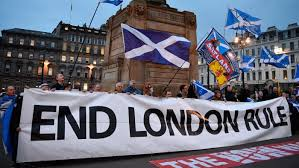
Westminster controlled Scotland with an iron fist from 1707 through to the 1920s: The only thing devolved was contempt, poverty, poor housing and starvation.
Hope of change for the better arose in the early 1920s as a direct consequence of Irish indpendence, which encouraged debate and activism within intellectual communities.
Through this medium discussion evolved in differing ways leading to an expansion of , “the Scottish Home Rule Association (SHRA) which embraced the concept of “home rule” and the recently formed and fast growing Scottish National League (SNL) which was adamant that independence, (as the Irish had achieved) was the only way forward.
The political differences between the two groups was fundamental and discouraged any coordinated political activity.

The first sign of positive connection between the SHRA and SNL arose in 1930 when both groups marched together for the first time, in Stirling.
The message the parade broadcast was that the SHRA under the leadership of Roland Muirhead, a Westminster parliamentarian had given up trying to grow the movement with support of the Labour Party.
Muirhead and Thomas Gibson, leader of the SNL met soon after the march and were agreed the best tactic to take both groups forward was to form a new political party.
But the gap in the aspirations of their supporters was a difficult nut to crack. Would the way forward be devolved governance or independence. Discussions between the two sides was protracted and seemingly impossible to resolve.
They needed someone to hold their jackets and John McCormack, former member of the Glasgow University Scottish Nationalist Association ( GUSNA) and the Independent Labour Party (IDP) was available and willing to take the task on.
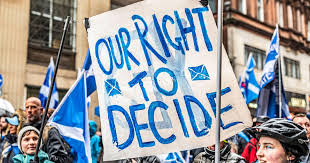
McCormack had been active in Scottish politics for some time and persuaded Muirhead and Gibson to his view that there would be no progress without compromise.
They achieved this agreeing the best thing to do was to unite their supporters under one flag, (the saltire) other less pressing matters would be resolved at a later date.
The two groups, together with the Scottish National Movement (SNM) formed the National Party of Scotland (NPS) in 1928.
Bickering continued in the newly formed Party. One side preferring to campaign for home rule. The other, for independence, like Ireland.

A majority of Party members backed McCormick and Muirhead’s claims that the election of NSP, MP’s to Westminster provided the best opportunity with the assistance ot the Labour Party, to gain home rule within the Union.
The NSP had decided its political future. The nationalist faction went along with the policy in the belief that independence would evolve from a devolved government.
But the new party failed to make an impact. It had no clear policies to offer Scots beyond home rule, campaigning was uncoordinated and mixed messages promoted by candidates who reverted to advancing views at odds with Party policies.
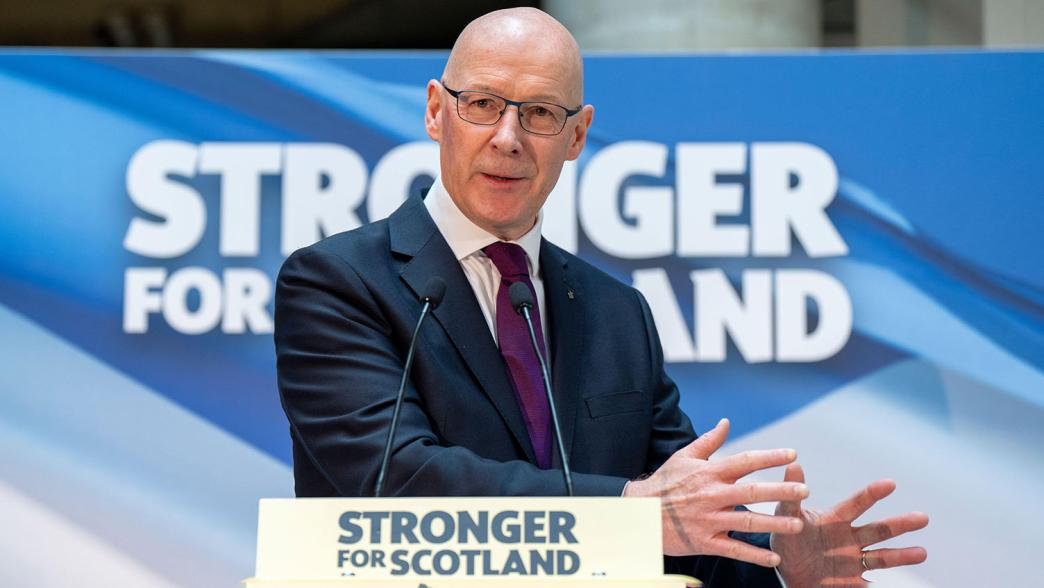
McComack, a shrewd political operator knew urgent changes were required to ensure a future for the Party after the Labour Party ended its political friendship with Muirhead, compromising his usefulness.
There was another nationalist cause, the Scottish Party (SP) with policies much in line with those of the NSP. The barrier to linking the two parties was the radical members of the NSP. McCormack, agreed and in 1933 he banished independence activists from the Party.
An election opportunity surfaced providing an early test for the two Party’s, who agreed to campaign together. Their candidate did well gaining seventeen percent, exceeding anything previously achieved.
The Party’s merged in 1934 forming the Scottish National Party (SNP). Unity of purpose, home rule within the UK had been achieved, albeit without the independence activists on-board.

 caltonjock